


Abstract
Global Navigation Satellite Systems (GNSSs) are exploited in a wide range of applications, and their reliability and accuracy are more critical than ever. Weak GNSS signals are extremely susceptible to intentional or unintentional interference. The Joint Research Centre has explored the potential of leveraging the ubiquitous presence of Android smartphones for interference monitoring. Automatic Gain Control (AGC) measurements provided by the Android GNSS API are used for this purpose. A proof-of-concept, including an App to collect data and a back-end server for processing, has been developed and tested. The proposed approach demonstrates the potential to detect both intentional and unintentional interference. However, the approach has limitations, such as small AGC variations that cannot always be linked to GNSS interference and significant differences among smartphone models, which need to be considered for effective crowdsourcing.
1. Introduction
In the Global Navigation Satellite System (GNSS) field, interference refers to disruptions generated by external radio-frequency signals affecting GNSS signals. Interference can be intentional, such as deliberate attacks or unintentional due to signal leakage from non-GNSS equipment. Jamming is a specific type of interference [1], where an external device, termed a jammer, transmits signals that interfere with the weak GNSS signals. When jamming occurs, it can severely impair the receiver’s performance, and in extreme cases, the affected device may become inoperable. In this context, often the same individual acts as both the victim and the perpetrator. GNSS jamming is frequently employed to prevent third-party tracking of position, velocity, and time (PVT). As a result, not only is the intended target receiver impacted, but many other devices near the jammer may also experience interference. Therefore, there is a clear need to monitor the radio spectrum to protect users and ensure that their devices can operate without disruption. More sophisticated interference can be generated and can affect the receiver, including meaconing and spoofing. Meaconing is another interference type where a transmitter rebroadcasts a GNSS signal. Spoofing involves more sophisticated attacks in which manipulated GNSS signals are transmitted, potentially altering range or navigation messages and causing the receiver to report incorrect position and/or time information. All these interference types significantly impact various applications, including:
- Aviation and maritime navigation: Disrupting GNSS signals can lead to loss of navigation and critical safety-of-life information, which can potentially cause accidents. The aviation community has extensively analyzed GPS interference and its impact on aviation safety [2].
- Road transportation: Interference can affect GNSS-based navigation systems in vehicles, leading to incorrect routing or loss of location information [3].
- Surveying and mapping: Interference can disrupt the precise positioning required for surveying and mapping applications.
- Telecommunications: GNSS signals are used for synchronization in mobile networks, so interference can impact network performance.
- Emergency services: GNSS interference can affect emergency response systems, such as those used for search and rescue operations.
Given the significant impact and increasing frequency of interference, there is a growing need to monitor the GNSS radio-frequency band to detect both intentional and unintentional interference [4]. Radio Frequency Interference (RFI) monitoring can be performed using dedicated networks that are usually expensive to deploy and maintain [5]. An alternative to the traditional method for RFI monitoring is the crowdsourcing paradigm. In this case, information related to the performance of a large group of GNSS users across diverse locations could be exploited to monitor RFI. The widespread availability of smartphones has opened new opportunities for RFI monitoring, including GNSS interference detection; the European Agency for the Space Programme (EUSPA) 2022 market report [6] also anticipates that by 2031, over 10 billion GNSS devices will be in use globally, with smartphones and wearables currently making up about 91% of global shipments. In May 2016, Google announced that raw GNSS measurements would be available starting with Android 7, giving developers the ability to access carrier and code measurements, internal clock details, and decoded navigation messages on consumer devices. Recently, Google introduced Automatic Gain Control (AGC) measurements through updated Android classes with the release of Android API 9.0. However, not all GNSS chipsets are fully compatible with these measurements, and the quality can vary between devices. Access to this data allows for enhanced GNSS performance through advanced processing techniques that were once exclusive to high-end GNSS receivers [7,8,9]. Beyond positioning enhancements, raw measurements provide insights into the chipset’s processing activities, enabling the analysis of RFI affecting GNSS signals [10]. In [11], there were demonstrations of spoofing attacks against Google’s Android. In [12], a method for detecting spoofing based on the carrier-to-noise ratio was presented; ref. [13] provides a detailed mathematical explanation of how various types of GNSS interference affect AGC behavior and performance. In [14], a demonstration of a server-phone system to locate the RFI emitter quickly and accurately was provided.
This paper presents research by the Joint Research Centre (JRC) on using smartphones for RFI detection. The focus is on Android devices, as Android provides an API that allows access to the GNSS receiver and collects raw data, while iOS devices do not offer a similar API for retrieving detailed GNSS information. Specifically, Automatic Gain Control (AGC) measurements retrieved from the Android API have been analyzed as potential indicators for detecting RFI affecting GNSS. Our research centered on developing a proof-of-concept Android app used to collect AGC data from the smartphone’s GNSS receiver and verify its behavior under various types of interference signals. The proof-of-concept is centered around two key components: an Android application designed to collect data and a back-end server tasked with processing this information. The application has undergone a comprehensive cycle of design, development, and rigorous testing. This paper elaborates on the findings from a series of tests conducted to evaluate the system’s performance. These tests include controlled laboratory experiments, which provide a highly regulated environment for assessing baseline functionality, as well as live trials in real-world scenarios to examine how the system performs under typical operating conditions. Additionally, the system was tested in the presence of interference, specifically at the Jammer 2024 event, to assess its robustness and reliability when faced with strong interference.
2. From NetBravo to Enhanced-NetBravo
NetBravo is an innovative Android app developed by the JRC, designed to leverage crowdsourcing for monitoring wireless and cellular network availability across Europe. By gathering data from a broad user base, NetBravo offers valuable insights into the performance and coverage of mobile networks.
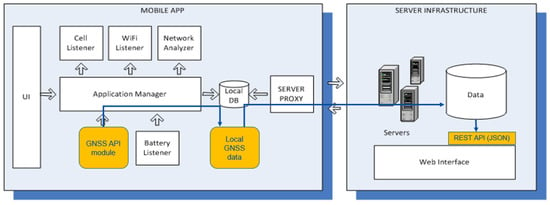
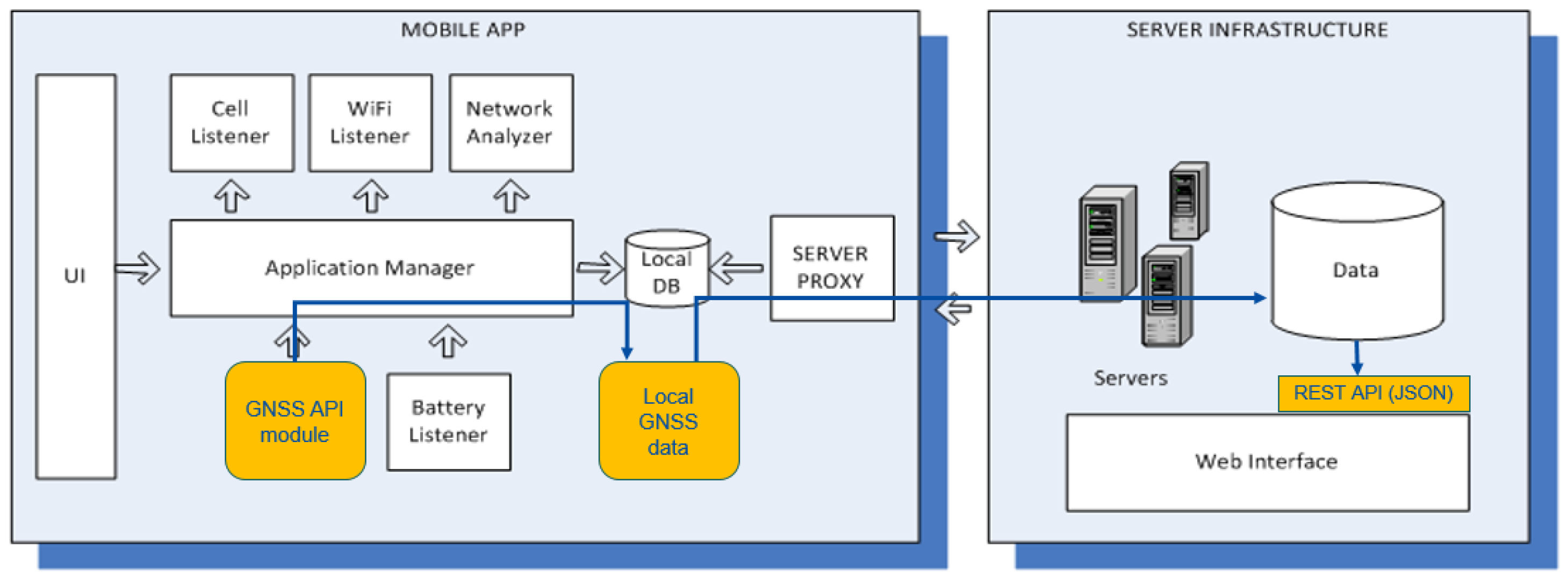
In this research, the NetBravo app has been enhanced to collect data using the Android GNSS API. The exploitation of the NetBravo framework facilitated the rapid development of a prototype to explore the feasibility of using smartphones for monitoring RFI interference. As illustrated in Figure 1, the new GNSS API module extracts raw GNSS measurements from the phone’s chipset and stores them locally. When an Internet connection is available, these measurements are uploaded to a backend server, where the data can be accessed via a JSON-based REST API for further analysis. The figure also shows the architecture of the Enhanced-NetBravo and its backend server.
Figure 1.
Enhanched-NetBravo architecture.
The AGC functions as a variable-gain amplifier positioned between the antenna and the ADC (Analogue to Digital Converter) in the chipset. This configuration helps to prevent RF front-end saturation, optimize dynamic range, and minimize quantization losses. When interference is present, increased power in the relevant GNSS frequency band reduces AGC gain. The Android API provides different AGC gains for various frequency bands, offering a straightforward mechanism to detect excessive signal power (i.e., interference) in different GNSS bands. The AGC monitoring process involves:
- Calibration: recording the maximum AGC value for each constellation and frequency band as the reference value in the absence of interference.
- Measurement: instantly retrieving the current AGC value for each constellation and frequency band and displaying the absolute difference from the maximum value. To reduce noise, a 15-s moving average is applied to the current AGC values. A significant difference between the current and maximum AGC values indicates potential interference in that specific frequency band. The app is configured to change color when the difference exceeds 5 dB.
The app also offers the option to log all GNSS satellite measurements (pseudorange, carrier-phase, etc.). This feature is available for completeness, but the default setting only stores AGC values to limit storage and bandwidth usage. Additional information is displayed by the app, including:
- Compatibility of the specific phone and Android version with AGC value monitoring
- The number of constellations/satellites tracked
- The number of GNSS measurements stored in the local phone database
- The number of GNSS measurements pending upload to the server, awaiting an Internet connection.
3. Testing
This section presents the results of a series of tests conducted to validate the proof-of-concept app across different signal conditions. The testing encompassed both laboratory simulations and real-world scenarios, including indoor and outdoor environments and various dynamic conditions. An overall description of the test set-up used for different scenarios is also provided.
3.1. Lab Test
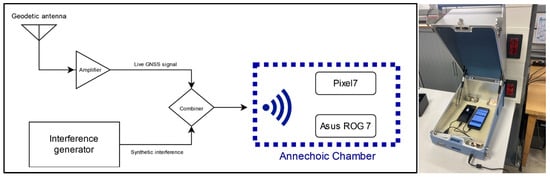
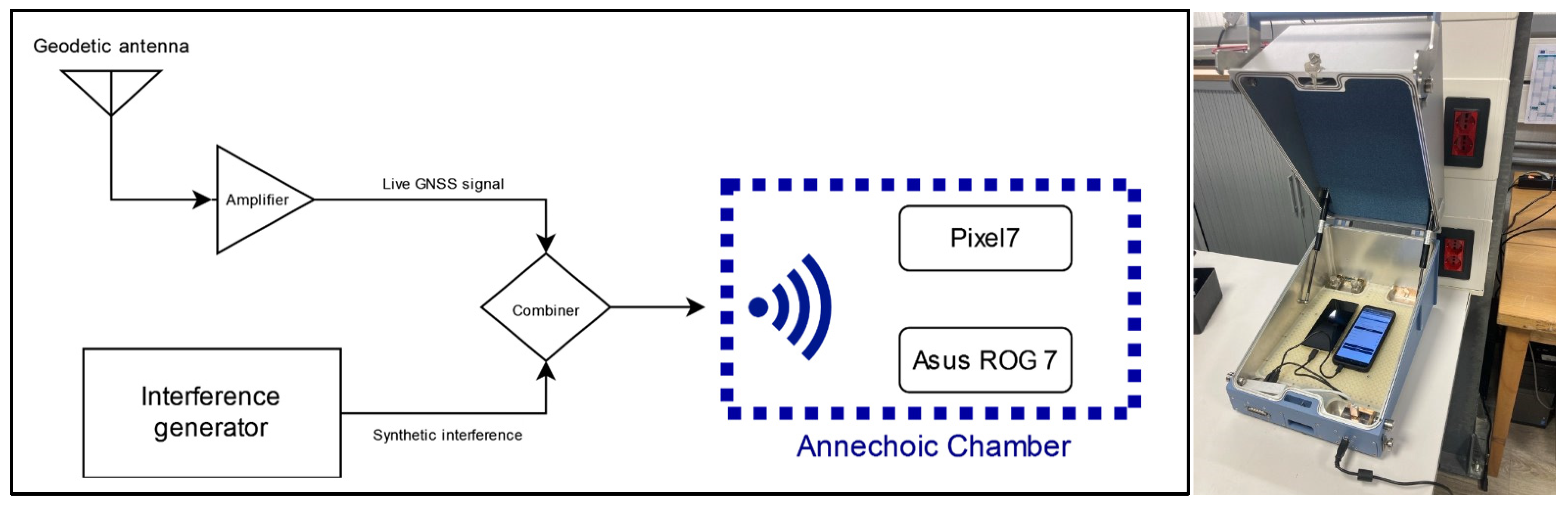
The initial set of tests was conducted in the JRC testing and demonstration hub for the GNSS component of the EU space program [15], where GNSS and interference signals can be combined under controlled conditions. During these tests, the NetBravo app was installed on two Android devices: an Asus ROG 7 and a Google Pixel 7. In the left part of Figure 2, a schematic representation of the experimental set-up used in the lab test is shown, while on the right side of the figure, the small anechoic chamber with the two devices under test is shown. For the tests, two types of interference were considered: Continuous Wave (CW) and 1 MHz Wideband interference. These are generated with a Keysight E8257D Signal Generator.
Figure 2.
Schematic representation of the set-up used for the lab test.
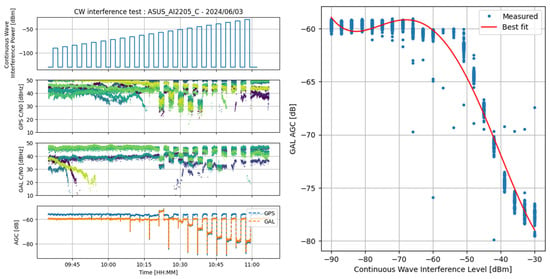
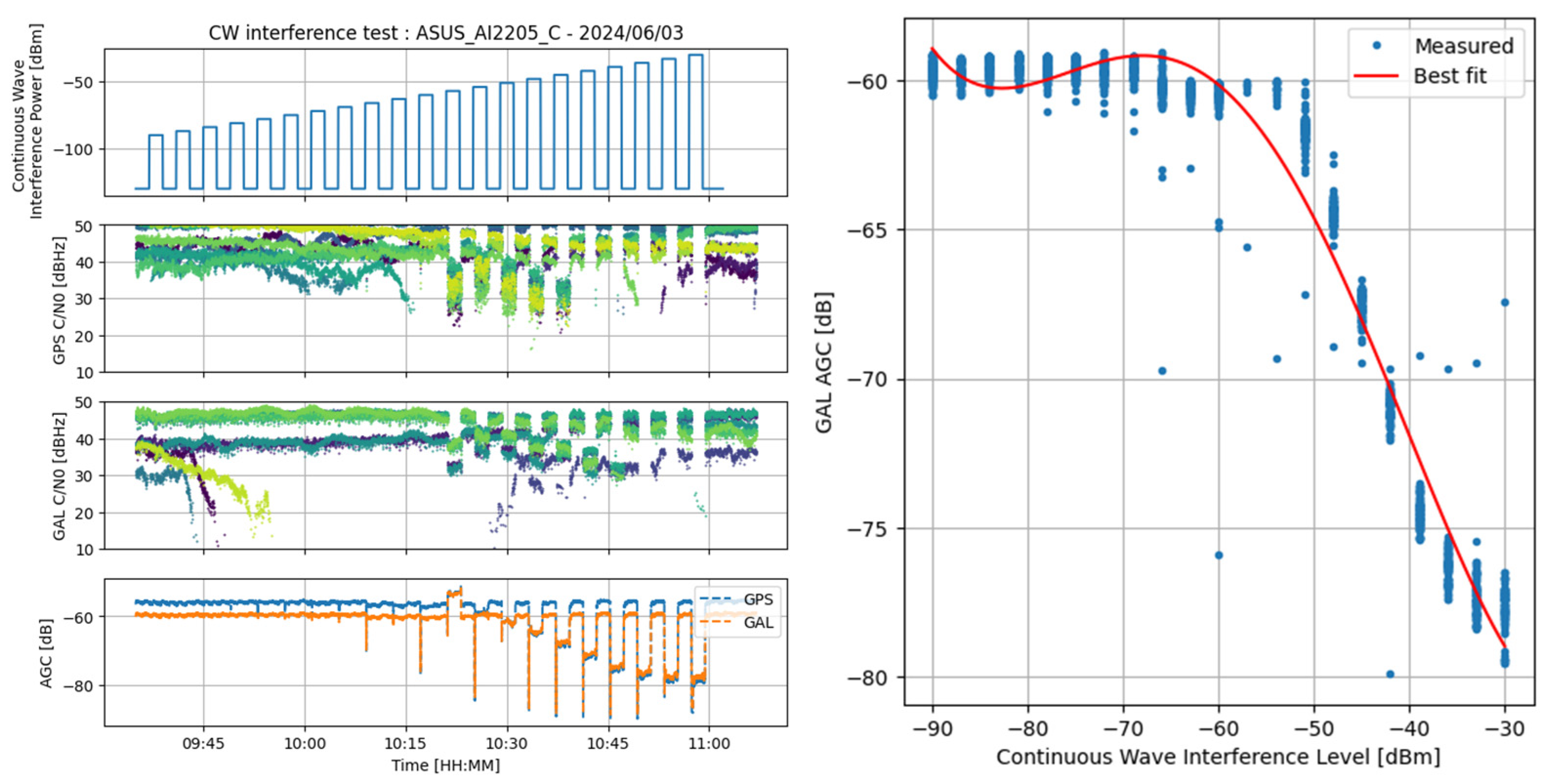
For the test, the interference signal is generated at E1/L1 (1575.42 MHz) with 2-min intervals, alternating with 2-min periods without interference. Figure 3 displays the results for the Asus phone, with similar outcomes observed for the Google Pixel 7. To avoid repetition, only the results from a single phone are shown. The figure illustrates the amplitude (power) of the continuous wave signal (top), the C/N0 measurements for each GPS/Galileo satellite in the two central boxes, and the AGC values evolution in the lower part. It is important to note that the Android API reports separate AGC values for GPS and Galileo, even within the same frequency bands (E1 and L1, E5a and L5). From the figure, it can be noted that the Asus ROG 7 reports two different values of AGC for GPS and Galileo: a constant difference of about 3 dB has been observed. In addition, occasionally the phone reports abnormally low AGC values (<−80 dB), which are not meaningful for RFI monitoring. At the start of the test, the interference had minimal impact due to its low power, as evidenced by the absence of visible degradation in C/N0 or decreases in AGC values. However, as the interference power increased, a change was observed. After 10:15, the device showed a marked decrease in AGC values, and a reduction in C/N0 was noted towards the test’s conclusion. Toward the end, the phone experienced consistent loss of lock, leading to noticeable gaps in C/N0 values. Before the loss of lock occurred, a clear trend in AGC and C/N0 values was observed, which could potentially be used to warn users before their device is completely overwhelmed by interference power. The relationship between the AGC value and the CW power is shown on the right side of Figure 3; the Galileo E1 case is shown, but similar results were obtained for GPS.
Figure 3.
Test results for CW interference signal for Asus Rog 7.
3.2. Live Test on the JRC Site Ispra
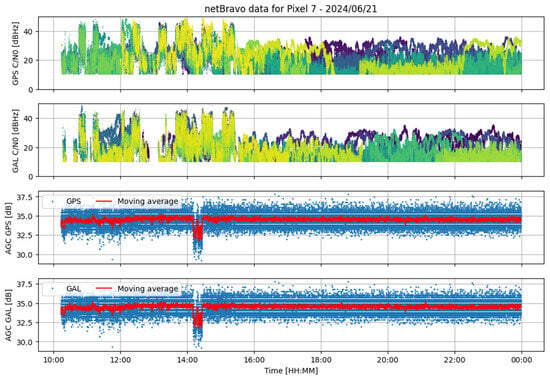
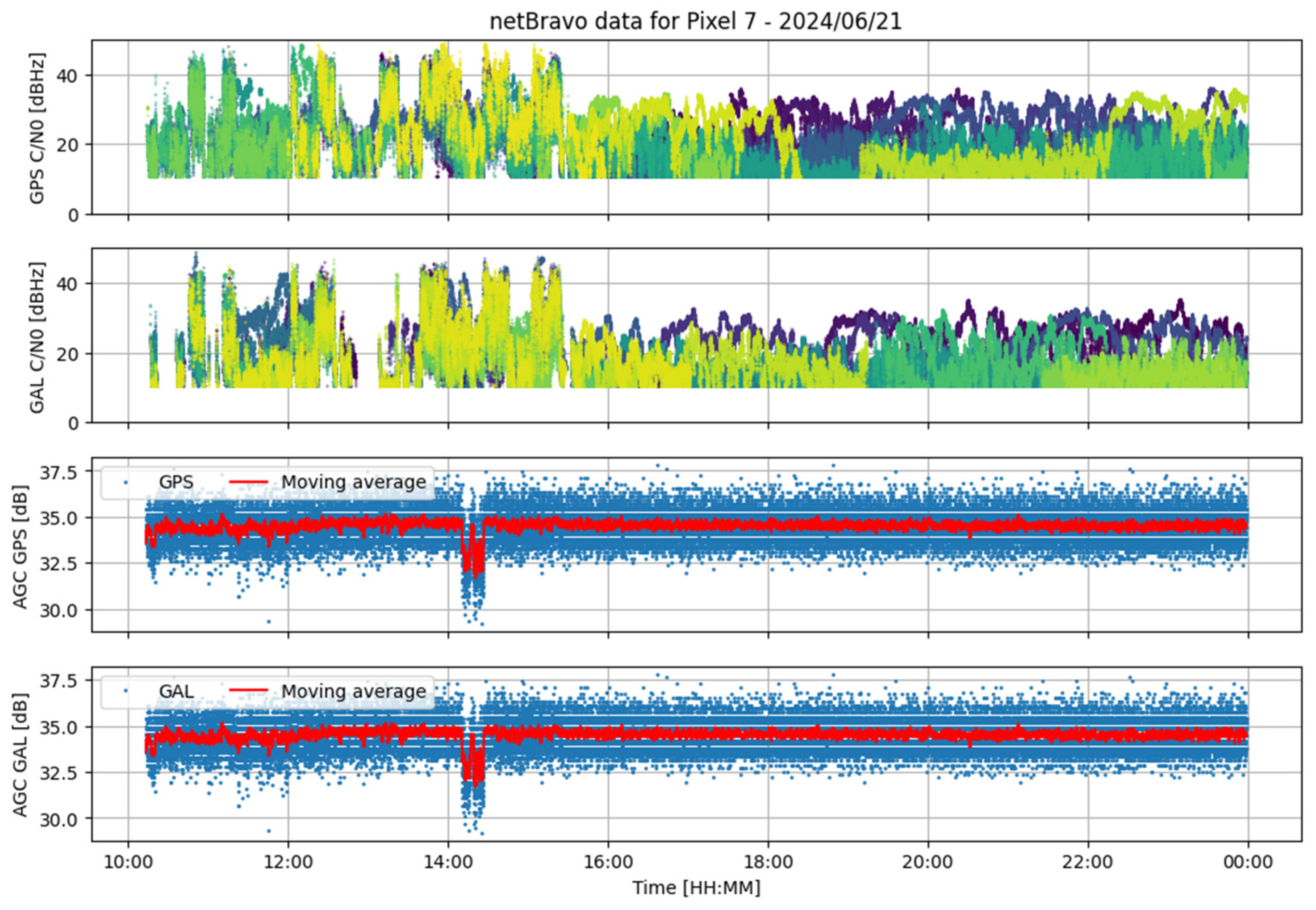
To verify the capability of the system in operational conditions, a data collection was conducted in a real-world environment at the JRC campus in Ispra, Italy. For this test, the two phones mentioned in the previous section logged AGC values at various locations across the campus for 14 h, both indoors and outdoors. The time evolution of the C/N0 and AGC values for the Google Pixel 7 is shown in Figure 4. The findings reveal that while C/N0 values vary considerably throughout the day due to factors such as satellite position, indoor versus outdoor settings, and phone orientation, the AGC values remain largely consistent. Shortly after 14:00, a drop of approximately 3 dB in the AGC values was observed. These values were recorded inside the offices of the firefighting building, and the interference likely originated from some communication equipment within the building.
Figure 4.
Test results for CW interference signal for Asus Rog 7. Each color in the C/N0 plots represent a different satellite.
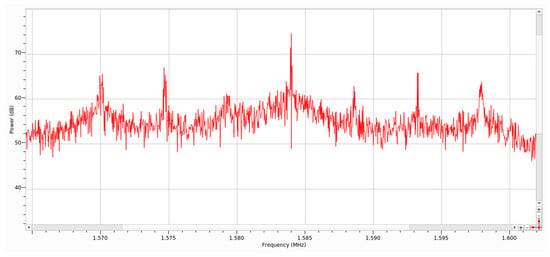
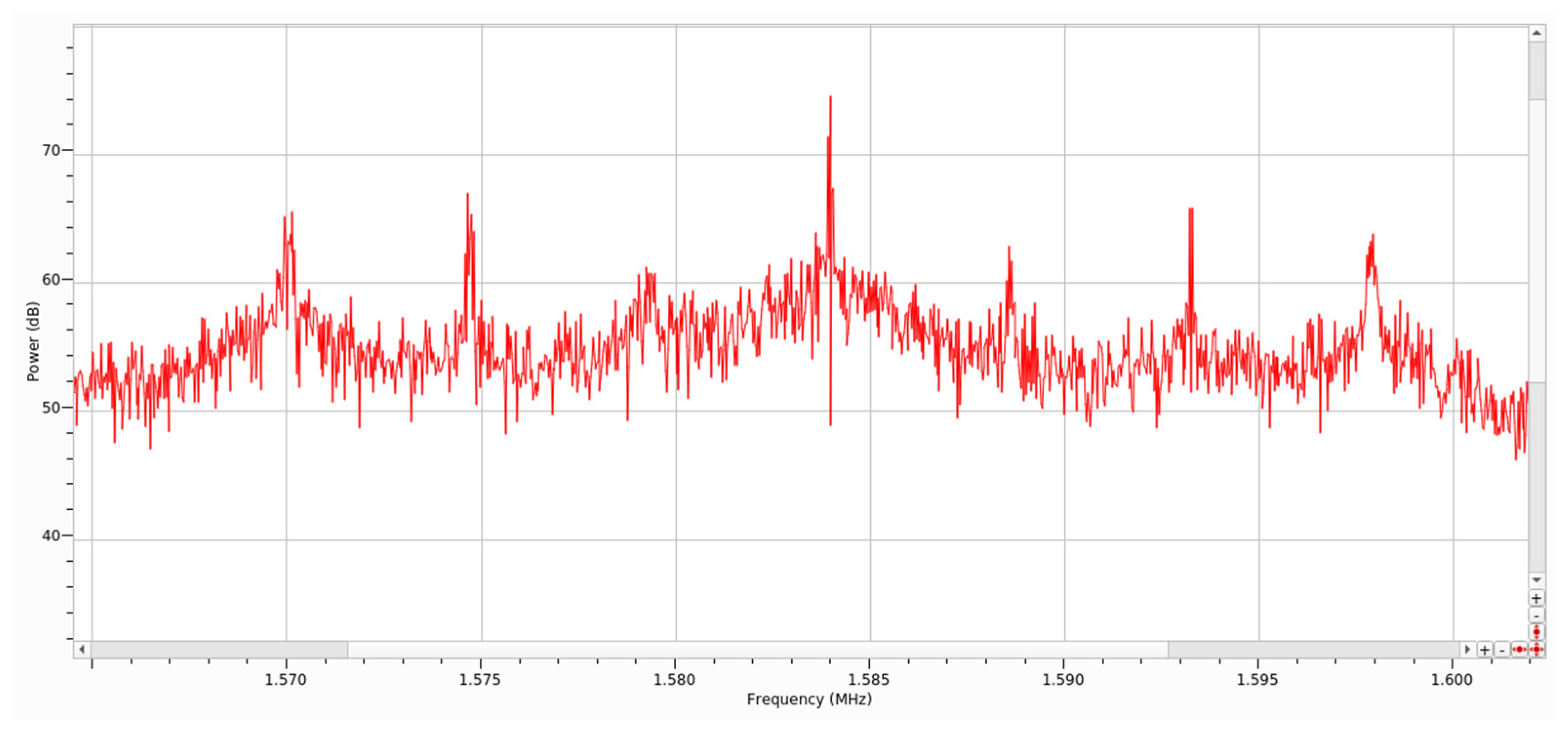
This was confirmed by more detailed spectrum analysis, which detected several harmonics spaced about 4 MHz apart within the Galileo E1 band, explaining the AGC drop observed on the smartphones, as shown in Figure 5.
Figure 5.
E1/L1 spectrum at the location of detected low AGC values.
This test serves as a clear example of how GNSS users can be affected by unknown interference sources even indoors. By utilizing AGC values and specific thresholds, users could be alerted to such interference.
3.3. Jammertest 2024
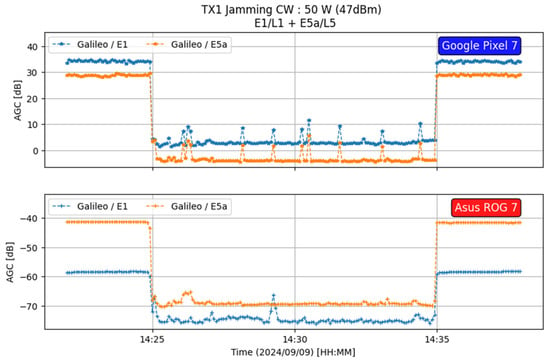
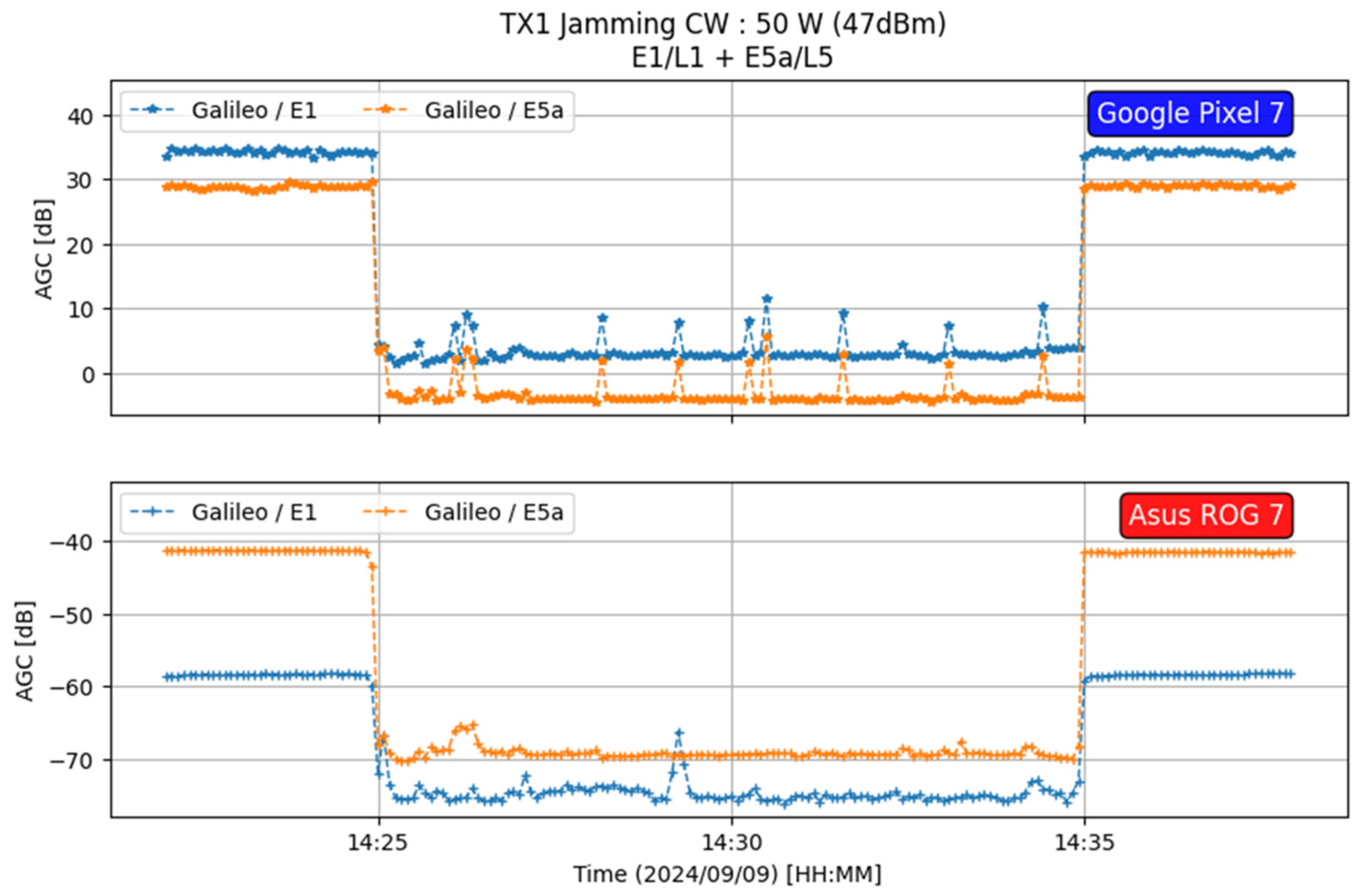
For Jammertest 2024, the two smartphones mentioned before (Pixel 7 and Rog 7) have been included in the JRC equipment setup, with the objective of understanding how AGC parameters behave under real-world interference conditions. The tests were conducted in an open area and included various jamming, meaconing, and spoofing scenarios over 5 days. The results of a single test are presented herein. During the considered test, a high-power CW jamming of 50W in both E1 and E5a frequencies was activated for about 10 min. The time evolution of the AGC values reported by the phones is shown in Figure 6. From the figure, a drop of about 30 dB can be noted for the AGC values of the E5 frequency for both devices. For the E1 case, the Pixel 7 showed a drop of 30 dB, while a decrease of only about 20 dB for the ROG 7 device was observed; in any case, a clear detection of the interference is possible with both devices.
Figure 6.
Jammertest CW jamming in E1/L1 and E5a/L5 frequencies—AGC results.
4. Conclusions
This paper presents laboratory and field tests for detecting RFI affecting GNSS using Android smartphones. The proposed method leverages AGC measurements provided by the Android GNSS API to detect intentional and unintentional interference. The results of the experiments demonstrate the potential of this approach, showing that AGC values can be used as an effective indicator of RFI presence.
The development of the Enhanced-NetBravo app has enabled the collection of AGC data from Android smartphones, which can be uploaded to a backend server for processing and analysis. The tests conducted in laboratory and real-world scenarios have validated the app’s ability to detect RFI.
While the approach has shown promising results, it is essential to acknowledge its limitations. Small AGC variations may not always be linked to GNSS interference, and significant differences among smartphone models can affect the accuracy of detection. However, these limitations can be addressed through adequate crowdsourcing aggregation techniques and calibrating the AGC measurements across different smartphone models.
The use of crowdsourcing and smartphone-based RFI monitoring offers a cost-effective and widely deployable solution for detecting GNSS interference. This approach can be particularly useful for applications where dedicated RFI monitoring infrastructure is not available or feasible. The proposed method can also be integrated with existing GNSS receivers and systems to facilitate monitoring of interfering signals.
In conclusion, this paper has demonstrated the feasibility of using Android smartphones for RFI detection and has paved the way for further research in this area. Further work includes testing additional smartphone models and performing tests on a larger scale to demonstrate the feasibility of the crowd-based RFI monitoring approach.
Author Contributions
Conceptualization, J.T. and C.G.; software, M.B., S.L. and G.F.; validation, J.T.; writing—original draft preparation, C.G. and J.T. All authors have read and agreed to the published version of the manuscript.
Funding
This research received no external funding.
Institutional Review Board Statement
Not applicable.
Informed Consent Statement
Not applicable.
Acknowledgments
The authors would like to acknowledge the work of the organizers of Jammertest 2024 (Norwegian Public Roads Administration, Norwegian Communications Authority, Norwegian Defence Research Establishment, Norwegian Metrology Service, Norwegian Mapping Authority, Norwegian Space Agency and Testnor), at Andøya, Norway, for arranging a live test environment with jamming, spoofing and meaconing of GNSS signals.
Conflicts of Interest
Authors Stefano Luzardi and Gianluca Folloni were employed by the company Trasys International. The remaining authors declare that the research was conducted in the absence of any commercial or financial relationships that could be construed as a potential conflict of interest.
References
- Graham, A. Communications, Radar and Electronic Warfare; John Wiley & Sons, Ltd.: Hoboken, NJ, USA, 2010. [Google Scholar]
- Felux, M.; Fol, P.; Figuet, B.; Waltert, M.; Olive, X. Impacts of Global Navigation Satellite System Jamming on Aviation. NAVIGATION J. Inst. Navig. 2024, 71, navi.657. [Google Scholar] [CrossRef] [Scilit]
- Jada, S.; Bowman, J.; Psiaki, M.; Fan, C.; Joerger, M. Time-Frequency analysis of GNSS jamming events detected on U.S. highways. In Proceedings of the 35th International Technical Meeting of the Satellite Division of The Institute of Navigation (ION GNSS+ 2022), Denver, CO, USA, 19–23 September 2022; pp. 933–946. [Google Scholar]
- OPSGROUP Team. GPS Spoofing: Final Report of the GPS Spoofing Workgroup; OPSGROUP: Amsterdam, The Netherlands, 2024. [Google Scholar]
- Dovis, F. GNSS Interference Threats and Countermeasures; Artech House: London, UK, 2015. [Google Scholar]
- European Union Space Programme Agency. The EUSPA Earth Observation (EO) and Global Navigation Satellite System (GNSS) Market Report; EUSPA: Prague, Czech Republic, 2022. [Google Scholar]
- Bakuła, M.; Uradziński, M.; Krasuski, K. Performance of GPS smartphone positioning with the use of P(L1) vs. P(L5) pseudorange measurements. Remote Sens. 2022, 14, 929. [Google Scholar] [CrossRef] [Scilit]
- Lachapelle, G.; Gratton, P. GNSS precise point positioning with Android smartphones and comparison with high performance receivers. In Proceedings of the IEEE International Conference on Signal, Information and Data Processing 2019, Chongqing, China, 11–13 December 2019. [Google Scholar]
- Dimc, F.; Bažec, M.; Borio, D.; Gioia, C.; Baldini, G.; Basso, M. An Experimental Evaluation of Low-Cost GNSS Jamming Sensors. NAVIGATION J. Inst. Navig. 2017, 64, 93–109. [Google Scholar] [CrossRef] [Scilit]
- Gogoi, N.; Minetto, A.; Linty, N.; Dovis, F. A controlled-environment quality assessment of Android GNSS raw measurements. Electronics 2018, 8, 5. [Google Scholar] [CrossRef] [Scilit]
- Zeng, K.; Liu, S.; Shu, Y.; Wang, D.; Li, H.; Dou, Z.; Wang, G.; Yang, Y. All Your GPS Are Belong To Us: Towards Stealthy Manipulation of Road Navigation Systems. In Proceedings of the 27th USENIX Security Symposium (USENIX Security), Baltimore, MD, USA, 15–17 August 2018. [Google Scholar]
- Minetto, A.; Rustamov, A.; Dovis, F. Detecting Single-Antenna Spoofing Attacks by Correlation in Time Series of Raw Measurements. In Proceedings of the 36th International Technical Meeting of the Satellite Division of The Institute of Navigation (ION GNSS+ 2023), Denver, CO, USA, 11–15 September 2023; pp. 73–84. [Google Scholar]
- Ghizzo, E.; Djelloul, E.-M.; Lesouple, J.; Milner, C.; Macabiau, C. Assessing jamming and spoofing impacts on GNSS receivers: Automatic gain control (AGC). Signal Process. 2025, 228, 109762. [Google Scholar] [CrossRef] [Scilit]
- Gattis, B.; Pyke, E.; Akos, D.; Crews, M.; Robertson, S. Real-Time Emitter Localization Using Crowdsourced Date from An-droid Smartphones Tested with Real-World Interference. In Proceedings of the IEEE/ION Position, Location and Navigation Symposium, Salt Lake City, UT, USA, 28 April–1 May 2025. [Google Scholar]
- Piccolo, A.; Cucchi, L.; Gioia, C.; Tegedor, J.; Damy, S.; Beatrice, M.; Menzione, F.; Bonenberg, L.; Zoccarato, P.; Ottavio, P.; et al. JRC Testing and Demonstration Hub for the GNSS Component of the EU Space Programme; Publications Office of the European Union: Luxembourg, 2024. [Google Scholar]
Disclaimer/Publisher’s Note: The statements, opinions and data contained in all publications are solely those of the individual author(s) and contributor(s) and not of MDPI and/or the editor(s). MDPI and/or the editor(s) disclaim responsibility for any injury to people or property resulting from any ideas, methods, instructions or products referred to in the content. |
© 2026 by the authors. Licensee MDPI, Basel, Switzerland. This article is an open access article distributed under the terms and conditions of the Creative Commons Attribution (CC BY) license.