


Abstract
A strategic approach to integrating generative AI (GAI) into design education is explored in this article to enhance students’ creativity, critical thinking, and practical skills. Based on a cross-departmental initiative at National United University, Taiwan, a multi-level curriculum is proposed, combining foundational to applied courses. A five-phase design process, problem definition, attribute framing, keyword extraction, AI generation, and refinement, was used to guide student learning tools, including ChatGPT (powered by GPT-4o), Stable Diffusion XL (SDXL) 1.0, and Leonardo.ai (Phoenix model), supporting rapid ideation and decision-making. Case studies in industrial and architectural design demonstrate practical applications. Ethical issues are reviewed. The results show increased engagement, idea diversity, and faster iteration in student design work.
1. Introduction
The rapid advancement of AI, particularly the breakthroughs in generative AI (GAI) for text and image generation, impacts the design industry. GAI offers designers new tools and techniques to accelerate the design process and enhance quality, but also enables the generation of new designs based on large-scale design datasets and specific prompts, facilitating the rapid exploration of diverse design options and the discovery of new possibilities [1,2]. In design education, this technology supports novice designers in learning design patterns and trends, while enhancing their understanding of design principles and aesthetic perception [3].
The College of Design, National United University, Taiwan, recognizes the importance of this transformative wave. With support from the Ministry of Education, it launched the project, ‘AI-Driven Design Revolution: Integrating Generative AI in Creative Education.’ This initiative aims to establish an AI teaching strategy for the college that strengthens design fundamentals and innovation capabilities, while enhancing students’ design skills to meet the future demands of the creative technology service industry. The college comprises the Departments of Architecture and Industrial Design, and the Bachelor’s Program of Indigenous People (Culture and Creativity), offering students interdisciplinary design education and a comprehensive platform for academic-industry collaboration.
Recently, faculty members have independently explored the integration of AI into their courses, yielding preliminary outcomes. Building upon these efforts, the current project aims to establish a coordinated, college-wide initiative by developing a cross-departmental AI teaching strategy, refining instructional materials, and launching an interdisciplinary Generative AI Creative Design Course Series. Therefore, this study aims to investigate the strategic implementation of generative AI within design education as proposed by the project. It outlines the rationale behind the planning process, presents a multi-tiered curriculum framework, and details specific course implementations. Furthermore, the proposed strategy is examined to address the challenges associated with rapidly evolving AI technologies. The project’s outcomes and future directions are analyzed for talent development in the design discipline.
2. Theoretical Framework
2.1. Integration of Design Process and GAI
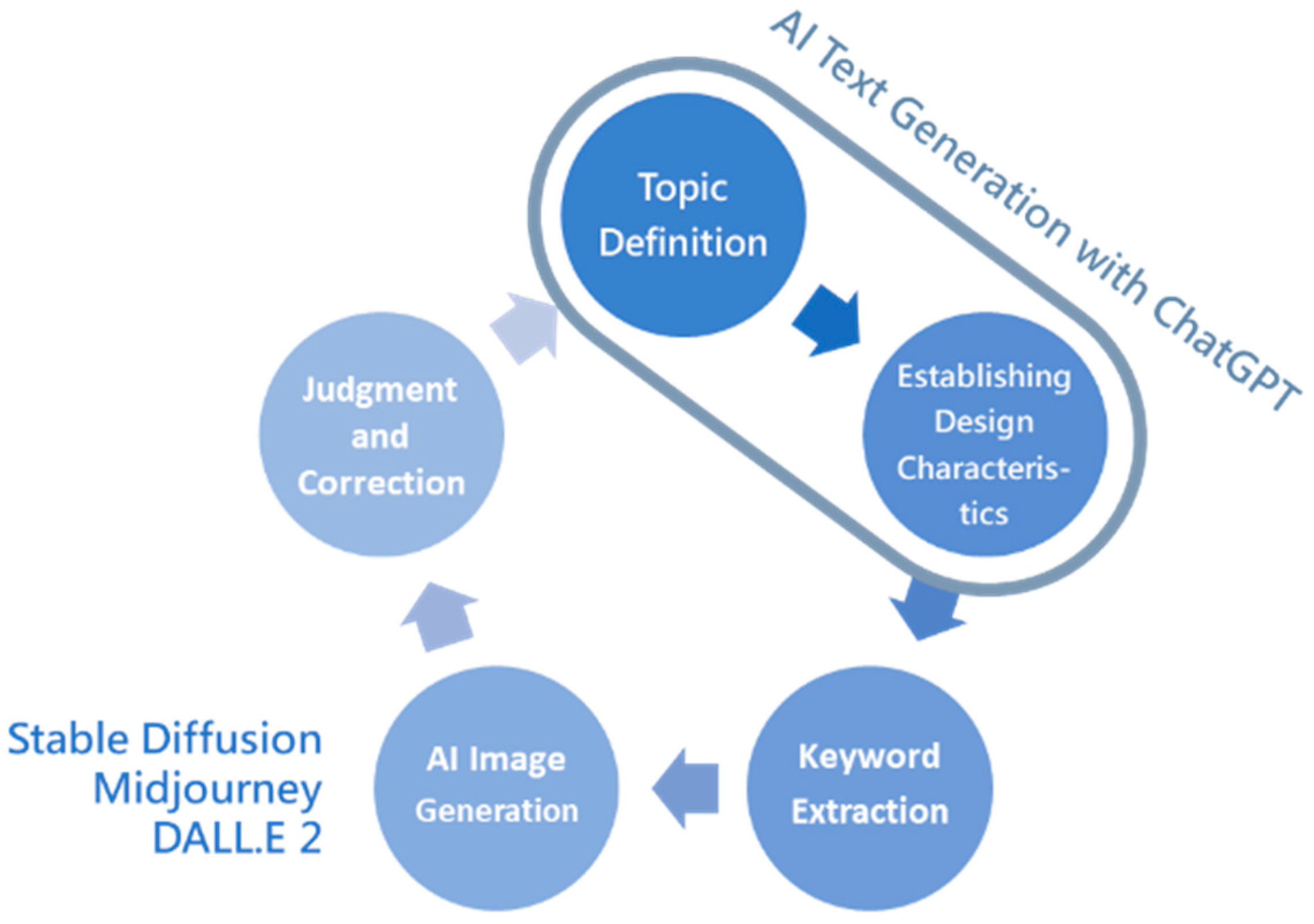
Traditional design processes comprise definition, divergence, convergence, and formation [4]. To effectively integrate GAI into the design process, the existing instructional framework was examined. As a result, five AI-assisted steps were proposed as the foundation for the course series: defining the design topic, identifying relevant design features, extracting keywords, generating AI-based visual content, and making final decisions and refinements.
GAI technologies are capable of producing novel text and image outputs by leveraging large-scale datasets. In design education, GAI is applied in the five defined steps to enhance concept development and creative exploration [3]. As illustrated in Figure 1, the workflow is visually distinguished by color: the dark blue nodes represent the text generation phase, where ChatGPT is used to analyze design topics and suggest professional characteristics. The light blue nodes indicate the subsequent image generation and evaluation phase, involving keyword refinement, visual output generation, and final design judgment.
Figure 1.
GAI assists in the creative development of industrial design process [3].
2.2. Competency Requirements in Design: Knowledge and Experience
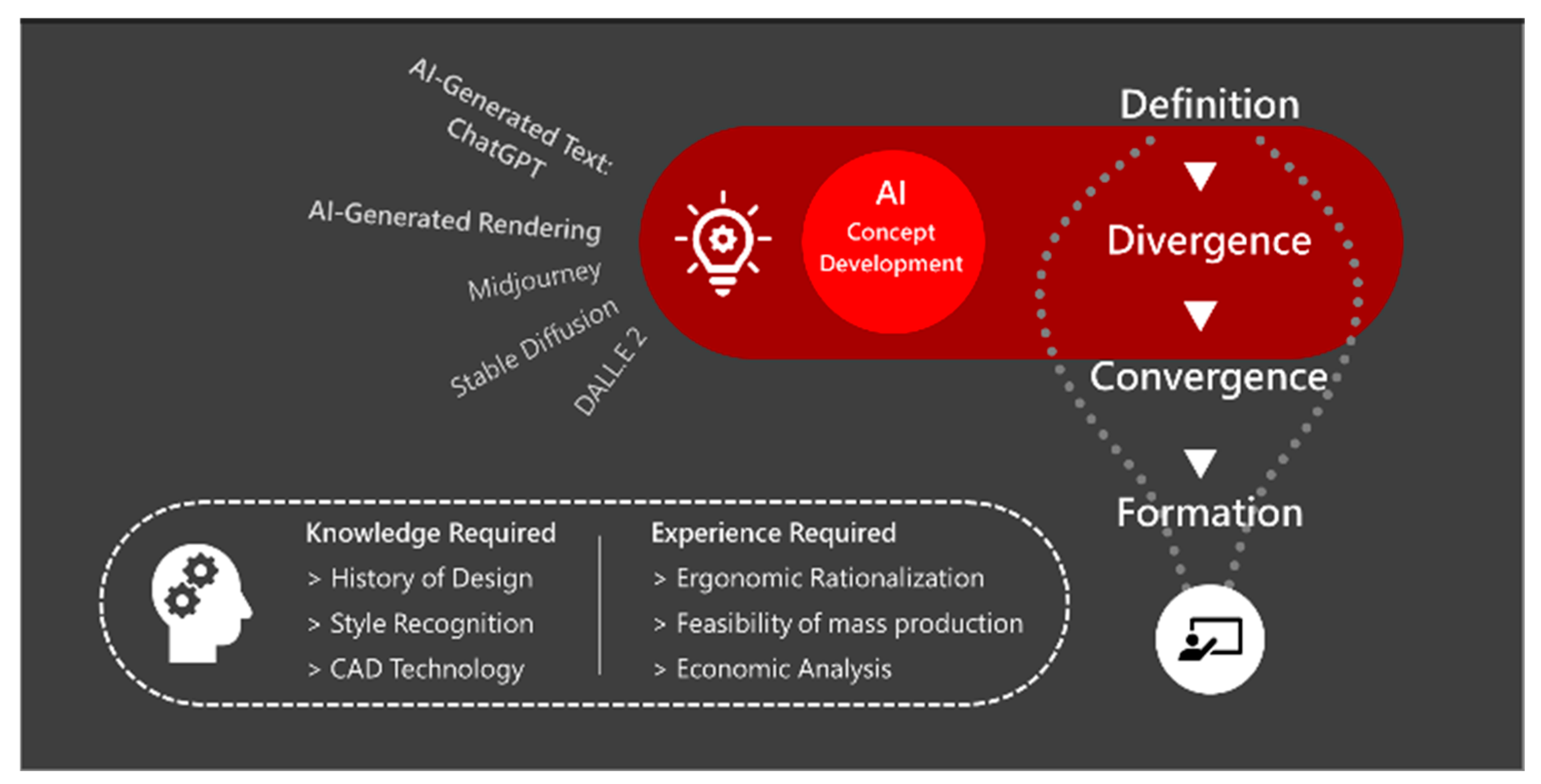
The application of GAI requires specific professional knowledge and experiential understanding. Essential knowledge includes design history, recognition of design styles, and computer-aided design (CAD) techniques [5,6]. In addition, making design decisions requires experience in ergonomic rationality, feasibility of construction or manufacturing, and project cost analysis (Figure 2).
Figure 2.
Design knowledge and experiential requirements for applying GAI [3].
2.3. Industry-Oriented Talent Development in Design Education
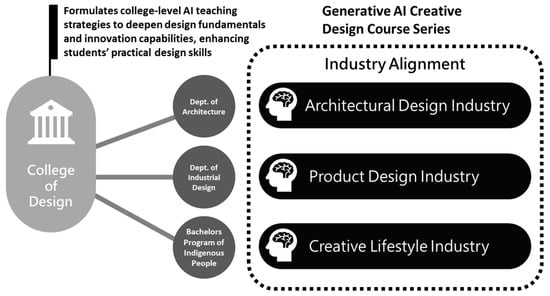
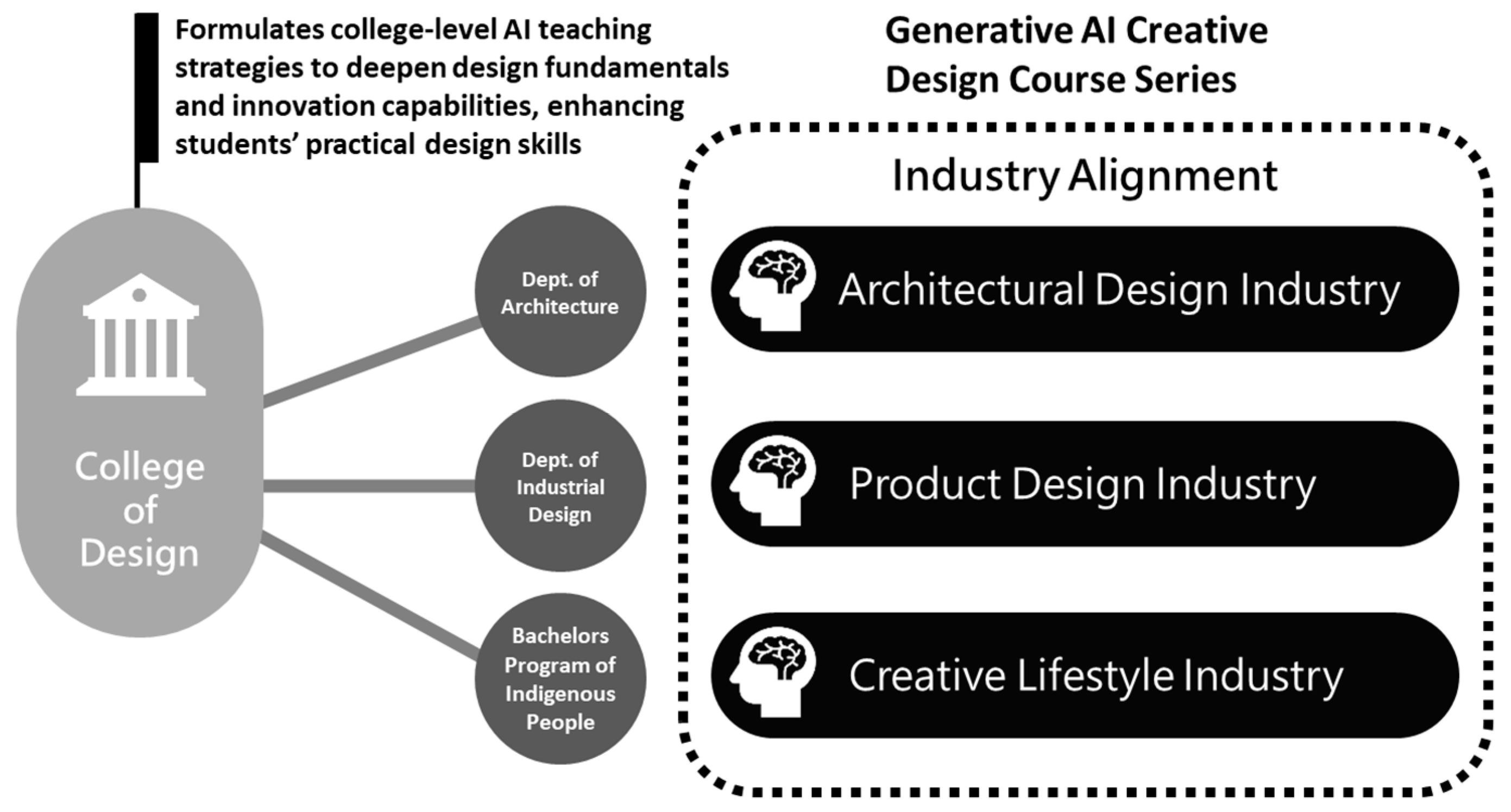
The talent cultivation needs to respond to the future needs of the creative technology service industry. According to the Ministry of Culture’s definition, the College’s AI education planning aligns with the Departments of Architecture and Industrial Design, and the Bachelor’s Program of Indigenous People (Culture and Creativity), addressing the sectors shown in Figure 3.
Figure 3.
College’s AI education planning for architecture, industrial design, and indigenous people studies.
The architectural design industry encompasses both architectural and interior design practices, focusing on the planning and creation of built environments. The product design industry includes a wide range of activities such as product research, design planning, appearance design, mechanical structure design, human–computer interaction design, prototyping, packaging design, and design consulting. These areas collectively contribute to the development and refinement of functional and aesthetically appealing products. The creative lifestyle industry integrates core knowledge from everyday life sectors through creative approaches. It offers immersive and aesthetically rich experiences in domains such as culinary culture, life education, ecological exploration, fashion, heritage interaction, and crafts-based cultural engagement.
To meet the industry goals, target sectors are identified for AI teaching strategies to select representative industries as focus areas, and design curriculum and practical training. Interdisciplinary course design was formulated by industry experts for lectures and workshops to ensure the content aligns with current AI advancements and accurately reflects real-world demands.
3. Curriculum Structure and Design
3.1. Curriculum Content and Structure
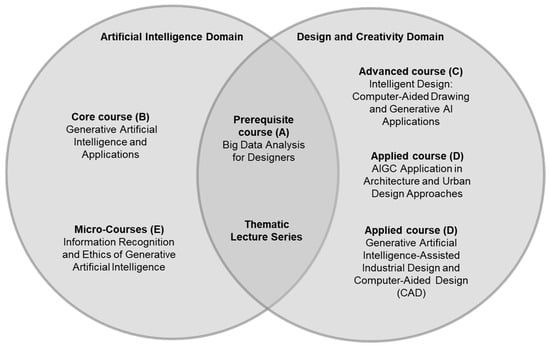
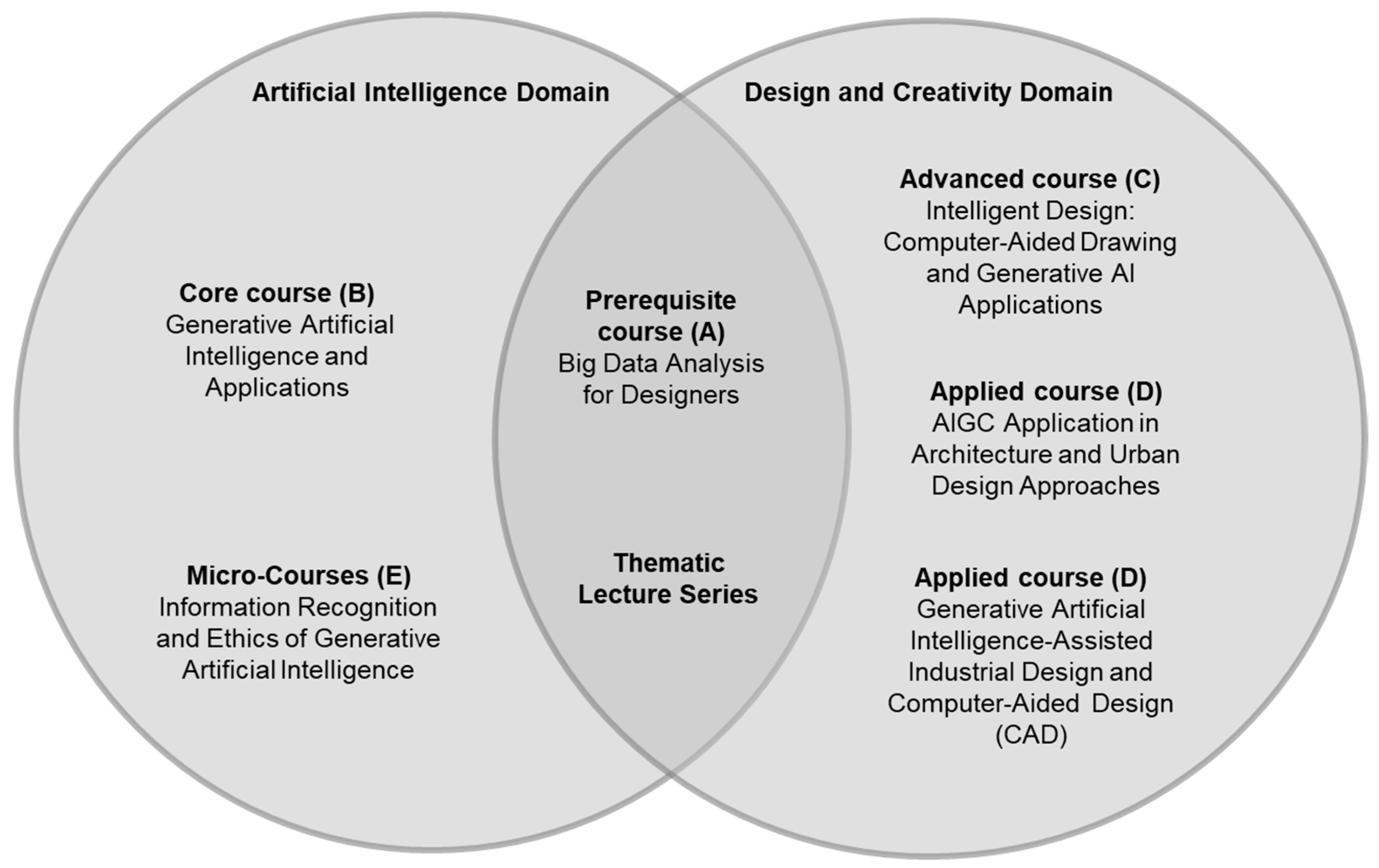
The college has launched the course series “AI-Driven Design Revolution: Integrating GAI in Creative Education” to establish a comprehensive AI teaching strategy. This initiative aims to strengthen foundational and innovative capabilities in AI-assisted design and enhance students’ practical design skills. The curriculum comprises two domains: AI and creative design, ensuring that students develop basic skills, core understanding, advanced knowledge, and applied competencies through a well-structured learning pathway. The curriculum includes prerequisite courses (A), core courses (B), advanced courses (C), and applied courses (D). It also offers micro-courses (E) and a series of lectures (Figure 4).
Figure 4.
The curriculum includes prerequisite courses (A), core courses (B), advanced courses (C), and applied courses (D). It also offers micro-courses (E) and a series of lectures.
In addition, discussion groups under the topic of “AI-Driven Design Revolution” were formed to promote communication and mutual learning. Each group requires five instructors, a college secretary, and a teaching assistant, who participate in project meetings, AI knowledge exchange, curriculum planning, activity execution, and outreach. Furthermore, a dedicated Facebook group “AI-Driven Design Revolution @NUU.Design” was established as a sharing platform for GAI in the College of Design. As of 2 June 2025, the group had 496 members, with 185 users posting or commenting and a total of 2995 views within 60 days, demonstrating effective social engagement and dissemination of results.
3.2. Curriculum Content and Structure of the Course Series
Throughout the implementation of this project, student instruction encountered unprecedented challenges. In the absence of established pedagogical models for AI-assisted design education, instructors were required to take an active role in constructing the initial course framework and experimenting with teaching workflows. Their direct involvement was instrumental in advancing the development and innovation of AI-integrated design pedagogy. For instance, Professor Shang-Yuan from the Department of Architecture instructed students to document the entire image generation process and critically reflect on the role and value of AI within the design workflow. Similarly, course assignments were structured to include the creation of Part Breakdown Analysis diagrams, ensuring that students engaged with AI-generated outputs through the lens of their own design expertise. This approach encouraged students to evaluate, select, and make decisions based on both computational results and disciplinary knowledge.
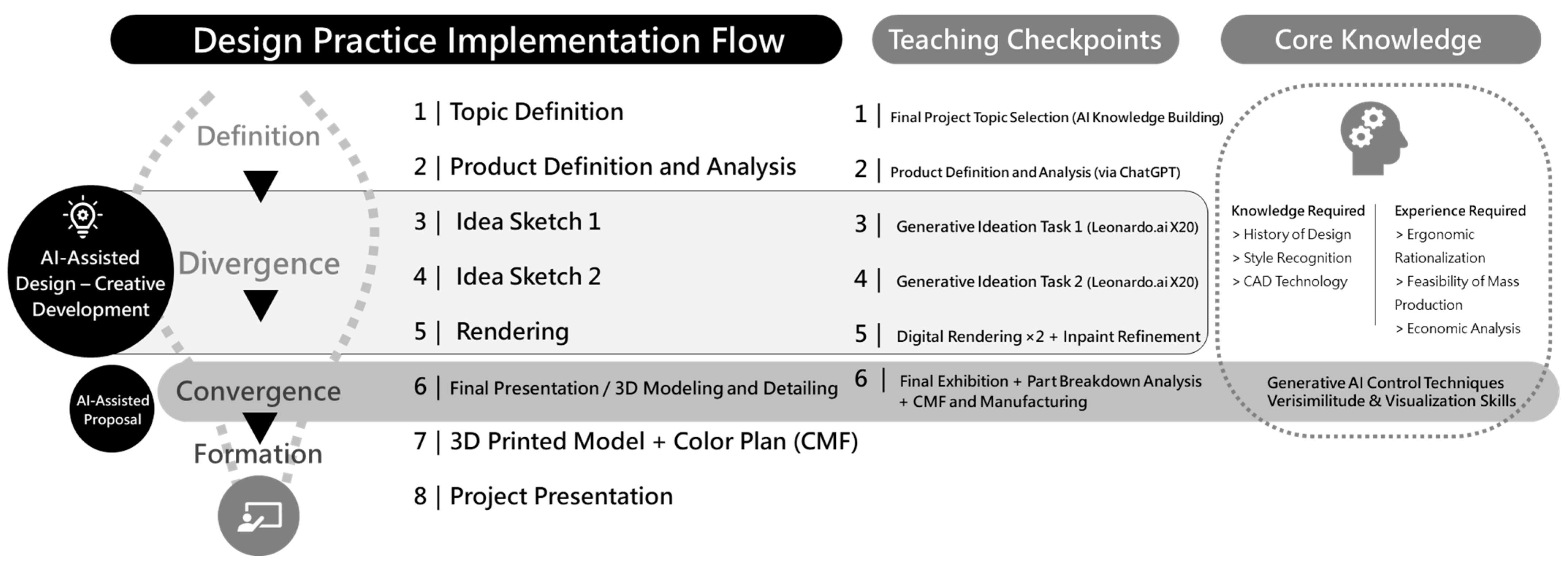
Such instructional strategies embody the core philosophy of the College’s AI initiative, which positions AI as an assistive tool rather than a substitute for human creativity. The initiative prioritizes the cultivation of design thinking and professional competence, marking a distinct departure from pedagogical models in computer science and engineering that often emphasize technical implementation and model training. Figure 5 presents the AI-Assisted Design Implementation Flow developed by instructors during the project. In light of the limited availability of pre-existing teaching models, faculty members served as co-creators in shaping innovative design methodologies and instructional practices.
Figure 5.
AI-Assisted design implementation flow with pedagogical checkpoints and core knowledge mapping.
The process comprises the following two phases.
- Divergence phase (creative development): Students use GAI tools such as Leonardo.ai to develop conceptual ideas and visual representations. This includes idea sketches, detailed digital renderings, and Inpaint corrections, resulting in a wide range of creative proposals.
- Convergence phase (refinement and production): Students integrate projects, build models, and prepare for final presentations, incorporating color, material, finish (CMF) thinking, and part segmentation logic to convert AI-generated content into feasible, tangible design outcomes.
To prevent students from merely operating AI tools without engaging in design fundamentals and critical thinking, instructors embedded pedagogical checkpoints at each stage. Through practical exercises, submitted outputs, and oral presentations, students were evaluated on whether they possessed the core competencies expected in the design process. The right side of Figure 5 maps these stages to the core knowledge targeted in the course, including required skills for AI operation and experiential insight for design decision-making. This process enhances students’ technical proficiency with AI tools and their ability to integrate design thinking, visual language, and project execution—thus achieving the course’s intended learning outcomes.
4. Achievements and Conclusions
As of June 2025, this project has achieved substantial outcomes, demonstrating the high potential of GAI in design education. A total of five cross-level AI-themed courses were offered, along with eight professional lectures, attracting 530 participants, including faculty and students. These activities spanned across architecture, industrial design, and cultural creativity disciplines. The course design covered four sequential levels—prerequisite, core, advanced, and applied—emphasizing the integration of AI tool proficiency and design knowledge. Learning outcomes were assessed through midterm and final projects, participation in competitions, and public exhibitions.
In course implementation, 267 students enrolled—exceeding the original target of 200. The students’ learning progression encompassed stages such as big data visualization, idea generation, digital rendering, 3D modeling, and CMF design, gradually building up their capacity for AI-assisted design.
The industrial and architectural design courses placed special emphasis on the practical application of generative AI within professional workflows. Examples include using ChatGPT for product concept definition, employing Leonardo.AI for visual generation and Inpaint-based refinement, and integrating Stable Diffusion and Grasshopper (integrated within Rhinoceros 8) for spatial simulation and parametric modeling. The student work was diverse, covering cultural reinterpretation, urban design proposals, and cross-media integration. Some students received honorable mentions in national AI design competitions and participated in the MATA Indigenous Animation Contest, reflecting the program’s blend of innovation and practicality.
The highlight of this project was the instructors’ proactive involvement in developing AI-assisted design teaching workflows in the absence of established curricula or case studies. Through experimental teaching and iterative refinement, a pedagogical framework based on the sequence of definition-divergence-convergence-refinement was constructed. This framework included well-defined learning checkpoints that ensured students developed both AI tool proficiency and design competencies such as visual language, originality, and logical structure. In addition, a learning community and Facebook group titled “AI-Driven Design Revolution” were established to support teacher collaboration, lesson planning, knowledge sharing, and technical exchange, effectively enhancing professional development and AI literacy among faculty.
Although certain metrics—such as competition participation (57 out of 210) and student project submissions (31 out of 80)—fell short of expectations, other indicators significantly exceeded targets. For instance, the number of class sessions (18 vs. the target of 12) and social media outreach (291 posts vs. the target of 8) demonstrated the project’s strong impact in course dissemination and knowledge transfer. Another notable achievement was the development of a certificate system: students could earn certificates for foundational literacy and AI-driven creative design based on accumulated hours in courses and micro-courses, thus boosting both motivation and a sense of accomplishment.
In response to challenges such as varying student proficiency and the rapid evolution of AI platforms, it is necessary to implement several adaptive measures. Supplementary tutorial videos and visual guides must be implemented with organized and staged exhibitions to encourage reflection to enhance micro-course content on AI ethics and information literacy. These efforts helped students move from mere “tool operation” toward informed “design decision-making.”
The project in this study has successfully established a strategic and scalable model for GAI design education. It enables students to acquire not only technical skills but also critical thinking and creativity. Teachers have also gained experience in curriculum design, resource integration, and interdisciplinary collaboration, laying the foundation for institutionalized and sustained innovation in teaching. These achievements not only respond to current industry demands for AI-literate design professionals but also provide a replicable paradigm for the deep integration of AI and design education.
Funding
This research was funded by the National Science and Technology Council of Taiwan, grant number NSTC 114-2410-H-239-008 -.
Institutional Review Board Statement
Not applicable.
Informed Consent Statement
Not applicable.
Data Availability Statement
The data presented in this study are not publicly available due to privacy restrictions.
Acknowledgments
This project gratefully acknowledges the participation and co-leadership of Yong-Ping Chou, Ming-Feng Tsai, Shang-Yuan Chen and Chiu-Hsueh Liu. Their contributions were instrumental in the planning, execution, and interdisciplinary integration of the project.
Conflicts of Interest
The authors declare no conflicts of interest.
References
- Quan, W. Artificial Intelligence in the Creative Industries: A Systematic Literature Review. Int. J. Latest Res. Humanit. Soc. Sci. 2025, 8, 23–31. [Google Scholar]
- Lee, C.-W. Application of Generative Artificial Intelligence in Design Education: An Exploration and Analysis to Enhance Student Creativity. Eng. Proc. 2025, 98, 29. [Google Scholar] [CrossRef] [Scilit]
- Fang, Y.-M. The Role of GAI in Industrial Design: Enhancing the Design Process and Education. In Proceedings of the International Conference on Innovation, Communication and Engineering (ICICE 2023), Bangkok, Thailand, 9–13 November, 2023; pp. 135–136. [Google Scholar] [CrossRef] [Scilit]
- Howard, T.J.; Culley, S.J.; Dekoninck, E. Describing the creative design process by the integration of engineering design and cognitive psychology literature. Des. Stud. 2008, 29, 160–180. [Google Scholar] [CrossRef] [Scilit]
- Onatayo, D.; Onososen, A.; Oyediran, A.O.; Oyediran, H.; Arowoiya, V.; Onatayo, E. Generative AI Applications in Architecture, Engineering, and Construction: Trends, Implications for Practice, Education & Imperatives for Upskilling—A Review. Architecture 2024, 4, 877–902. [Google Scholar] [CrossRef] [Scilit]
- Ploennigs, J.; Berger, M. GAI and the History of Architecture. arXiv 2023, arXiv:2312.15106. [Google Scholar]
Disclaimer/Publisher’s Note: The statements, opinions and data contained in all publications are solely those of the individual author(s) and contributor(s) and not of MDPI and/or the editor(s). MDPI and/or the editor(s) disclaim responsibility for any injury to people or property resulting from any ideas, methods, instructions or products referred to in the content. |
© 2026 by the author. Licensee MDPI, Basel, Switzerland. This article is an open access article distributed under the terms and conditions of the Creative Commons Attribution (CC BY) license (https://creativecommons.org/licenses/by/4.0/).