Proceeding Paper

Spatiotemporal Variability of Heat Waves in Egypt: Duration, Intensity, and Frequency (1990–2023) †

by
Fatma R. A. Ismail
1,*,
Zeinab Salah
1,
Moetasm H. ElTaweel
2 and
M. M. Abdel Wahab
2
1
Egyptian Meteorological Authority (EMA), Cairo 11784, Egypt
2
Astronomy, Space Science and Meteorology Department, Faculty of Science, Cairo University, Giza 12613, Egypt
*
Author to whom correspondence should be addressed.
Presented at the 6th International Electronic Conference on Applied Sciences, 9–11 December 2025; Available online: https://sciforum.net/event/ASEC2025.
Eng. Proc. 2026, 124(1), 71; https://doi.org/10.3390/engproc2026124071
Published: 10 March 2026
(This article belongs to the Proceedings of The 6th International Electronic Conference on Applied Sciences)

Abstract

Heatwaves are among the most significant climate extremes affecting Egypt, with direct impacts on human health, energy demand, water resources, and overall thermal comfort. Although several previous studies have examined heatwave characteristics in Egypt, most have relied on station-based or localized analyses, limiting the understanding of national-scale patterns and recurrence behavior. To address this gap, this study provides a comprehensive national-scale assessment of the spatiotemporal characteristics of heatwave occurrences across Egypt from 1990 to 2023 using daily maximum and minimum temperatures derived from the ERA5 reanalysis dataset. Daytime and nighttime heatwaves were defined using the 90th percentile temperature thresholds and a minimum duration of three consecutive days. This made it possible to study their frequency, duration, severity, seasonal distribution, and how often they happened again. The results demonstrate that heatwaves happen more often and with more severity in late July and August. This is especially true for nighttime heatwaves. These findings indicate that daily baseline temperatures in Egypt have been rising steadily since 2010. Nighttime heatwaves show a notable increase in frequency and persistence, indicating a sustained rise in baseline temperatures and reduced nocturnal cooling. By providing the first long-term, spatially consistent national-scale heatwave assessment over Egypt, this study contributes to a more comprehensive understanding of extreme temperature behavior under ongoing climate change.

1. Introduction

Heatwaves are one of the most serious climate extremes, presenting significant threats to human health, infrastructure, energy systems, and natural ecosystems. Evidence from around the world shows a significant rise in the frequency, duration, and intensity of heatwaves, primarily due to climate change. Heatwaves are now acknowledged as one of the most important extreme weather events globally, significantly affecting public health, agriculture, and energy consumption. In Europe, it was estimated that over 60,000 deaths related to heat occurred in 2022, underscoring the increasing frequency of extreme heat events [1].
The health effects of heatwaves are frequently overlooked, as highlighted by the World Health Organization (WHO), since their impacts are not always apparent right away. From 2000 to 2019, there were about 489,000 heat-related deaths each year globally, with more than 70,000 fatalities reported during the 2003 heatwave in Europe. The global population exposed to extreme heat has risen significantly, with around 125 million more people facing heatwaves from 2000 to 2016. The seriousness of heat-related effects is greatly influenced by the intensity and length of heatwaves, how well the population can adjust, their ability to adapt, and the effectiveness of infrastructure and early-warning systems.
Recent extreme events demonstrate the growing intensity of heatwaves worldwide. For example, the UK experienced unprecedented temperatures exceeding 40 °C for the first time, with a record high of 40.3 °C reported in 2022 [1]. Such events reflect the increasing likelihood of extreme heat under ongoing climate change.
Despite their significance, there is no universally accepted definition of a heatwave, as identification criteria vary depending on regional climate conditions and research objectives. The Intergovernmental Panel on Climate Change (IPCC) defines a heatwave as “a period of abnormally hot weather, often defined with reference to a relative temperature threshold, lasting from two days to months” [2]. Similarly, the World Meteorological Organization (WMO) describes heatwaves as a period where local excess heat accumulates over a sequence of unusually hot days and nights [1]. Accordingly, heatwaves may be identified using absolute thresholds, temperature anomalies, or percentile-based methods, depending on the climatic context.
Africa has experienced substantial warming since the early twentieth century, with North and Northeast Africa identified as regions of pronounced temperature increase. Climate projections indicate significant future increases in the frequency, duration, and intensity of heatwaves across the continent [2].
In 2023, Africa continued to experience a warming trend, with temperatures across the continent above long-term averages. North Africa, particularly Morocco, Algeria, and coastal Mauritania, recorded the highest anomalies, followed by East and Central African countries such as Sudan, South Sudan, the Democratic Republic of the Congo, and the Central African Republic. Southern African nations, including Namibia, Botswana, Zambia, Angola, and Madagascar, also experienced multiple heatwave events. Across all these regions, the number of heatwaves exceeded the climatological mean, with the most extreme temperature anomalies concentrated in northwestern Africa and along the Sudan–South Sudan border, as well as in northwestern Ethiopia. The July heatwave broke records in Tunis, Tunisia, where the temperature reached a high of 49.0 °C. In August, the heatwave set a new record of 50.4 °C in Agadir, Morocco, marking the first time that 50.0 °C was reached in Morocco [3].
In 2024, Africa recorded one of its warmest years on record, with near-surface air temperatures significantly exceeding long-term averages. The continental mean temperature anomaly reached approximately +0.86 °C relative to the 1991–2020 baseline and about +1.53 °C compared to 1961–1990. At the sub-regional level, North Africa exhibited some of the most pronounced positive temperature anomalies, consistent with the persistent warming trend observed since the early 1990s. The period 1991–2024 shows a statistically significant increase in temperature across the region, reinforcing the evidence of accelerated warming and its associated impacts on water resources, ecosystems, and socio-economic systems [4].
In Egypt, heatwaves occur predominantly during summer but can also arise in spring and autumn. Spring heatwaves are typically associated with Khamsin depressions, while autumn events are linked to semi-Khamsin systems, which are generally weaker and slower. Summer heatwaves, however, are often influenced by large-scale atmospheric circulation patterns, including the Asian and Indian monsoon systems, leading to prolonged and intense heat events [5].
Globally, most heatwave studies adopt percentile-based approaches, as mentioned, particularly the 90th percentile of daily temperatures calculated for each calendar day. However, this study may occasionally identify heatwave events during winter, which are less relevant in arid and semi-arid climates such as Egypt. In contrast, some regions, including India, apply absolute temperature thresholds to define heatwaves, for example, when maximum temperatures reach at least 40 °C in plains or 30 °C in hilly areas. Given Egypt’s climatic conditions, focusing on heatwaves occurring during summer, as well as spring and autumn, provides a more meaningful assessment of extreme heat impacts, as these seasons exert the greatest societal and environmental stress.
Heatwaves are commonly characterized by three key aspects: duration, defined as the number of consecutive hot days; intensity, which reflects the degree to which temperatures exceed climatological norms; and frequency, representing how often heatwave events occur. Concentrating on warm-season heatwaves, therefore, offers a more robust evaluation of heat stress impacts in arid and semi-arid regions such as Egypt.
Previous studies on heatwaves in Egypt have primarily focused on localized regions, particularly the Greater Cairo area and selected coastal stations along the Mediterranean, such as Marsa Matrouh, Ras El-Tin, Abu Qir, Port Said, and El Arish. These investigations have examined heatwave characteristics—including frequency, intensity, duration, and timing—often using percentile-based thresholds ranging from the 85th to the 99th percentiles, and have also explored the relationships between heatwaves and air pollution, including PM10, NO2, and O3. Findings indicate that intense heatwave events are frequently associated with elevated particulate matter and ozone concentrations, thereby increasing heat-related health risks. Despite these contributions, most research has either focused on individual stations or urban regions, lacking a comprehensive nationwide assessment of heatwave characteristics. Comprehensive nationwide assessments that differentiate between daytime and nighttime heatwaves, evaluate recurrence patterns, and investigate the longest and most persistent events over recent decades are still lacking. In particular, identifying repeated heatwave occurrences and their temporal clustering across years is essential for understanding emerging climate risks under accelerating warming trends [6,7].
In particular, previous studies did not fully examine: (1) the recurrence patterns and clustering of heatwave events across Egypt; (2) the differentiation between daytime and nighttime heatwaves; and (3) the intensity, duration, and longest events in a multi-decadal context.
Building on these findings, the present study seeks to address the following research questions: Have heatwave frequency, intensity, and duration increased across Egypt over the past four decades?
Are nighttime heatwaves intensifying more rapidly than daytime events?
Do heatwave events exhibit temporal recurrence or clustering during the warm season? Have the longest and most persistent heatwaves become more pronounced in recent decades?
This study provides a more spatially comprehensive and impact-relevant assessment of extreme heat dynamics in Egypt.
Therefore, this study aims to fill these gaps by providing a systematic analysis of heatwave characteristics across Egypt from 1990 to 2023, differentiating between daytime and nighttime events, and examining their frequency, intensity, duration, recurrence, and longest occurrences. By focusing on warm-season heatwaves, this research offers a more regionally relevant assessment of extreme heat impacts in arid and semi-arid climates.
This study seeks to identify and describe heatwave events in Egypt from 1990 to 2023, differentiating between daytime and nighttime heatwaves using the 90th percentile thresholds of maximum and minimum temperatures [8]. This study looks at the intensity, frequency, and recurrence of heatwaves. It explores whether heatwave activity has risen in recent years, identifies common times when heatwaves occur repeatedly, and analyzes the longest heatwave events in recent history. The findings are important for understanding increasing daily temperature baselines, aiding in energy-demand planning for summer, and guiding evaluations of drought conditions and agricultural water needs.

2. Data and Methodology

2.1. Study Area

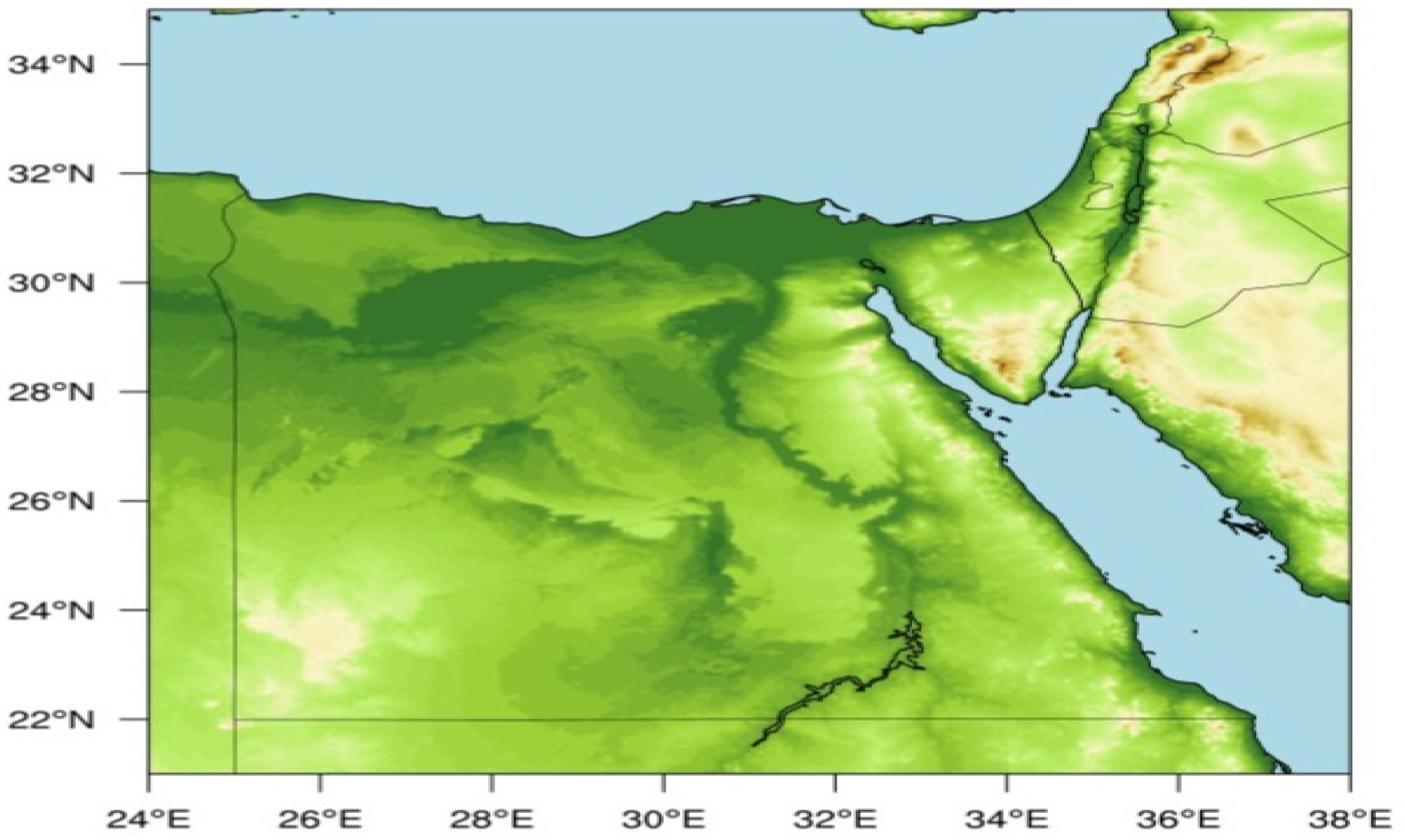
Egypt is located in the northeastern corner of Africa and extends into southwestern Asia through the Sinai Peninsula, making it an intercontinental country. It is bordered by the Mediterranean Sea to the north, the Red Sea to the east, Libya to the west, and Sudan to the south, as shown in Figure 1. Egypt extends between the width lines of 22° N and 32° N, and between the length lines of 24° E and 37° E [9].
According to the Köppen–Geiger climate classification, Egypt is mainly characterized by a hot desert climate (BWh), with semi-arid regions (BSh) in the northern parts [10], which makes it mainly hot and dry, featuring a mild winter with little rainfall along the northern coast and a hot, dry summer that lasts from May to September with significant seasonal temperature changes and are greatly affected by the dominant wind patterns.

2.2. Data

This study used near-surface air temperature data (2 m air temperature (T2m)) obtained from the ERA5 reanalysis dataset for the period 1990–2023. The retrieved data have an hourly temporal resolution and cover the geographical domain of Egypt between latitudes 22–32° N and longitudes 24–37° E.
ERA5 reanalysis data were selected for this study because they provide complete spatial coverage across Egypt, whereas ground-based meteorological stations are insufficient to cover most of the country. Using ERA5 allows for a consistent, high-resolution assessment of temperature and heatwave events at a regional scale, aligning with the objectives of this study. This is particularly important for analyzing heatwave events that may develop over large spatial domains during summer and occasionally extend into spring or autumn. ERA5 integrates observations with numerical weather prediction models, ensuring physically consistent datasets suitable for climate extreme analysis. However, as a reanalysis product, due to its horizontal resolution (~0.25°), ERA5 may not fully capture local-scale variability or urban heat island effects, and its representation of extreme temperature magnitudes may differ slightly from in situ measurements. These limitations are acknowledged when interpreting the results.

2.3. Methodology

The ERA5 reanalysis dataset provides spatially and temporally consistent temperature fields, making it suitable for long-term climate variability and extreme-event analyses. Therefore, hourly near-surface air temperature data were obtained from ERA5 for the period 1990–2023 over the geographical domain covering Egypt between latitudes 22–32° N and longitudes 24–37° E and processed using Python 3.12.4 within the Anaconda distribution (Anaconda3-2024.06-1-Windows-x86_64) and Jupyter Notebook (7.0.8) environment.

2.3.1. Temporal Aggregation and Interannual Temperature Variability Analysis

Temperature values were first converted from Kelvin to degrees Celsius. To obtain a national-scale representation of temperature variability over Egypt, a spatial averaging approach was applied. Hourly near-surface air temperature values from all ERA5 grid cells within the Egyptian domain (22–32° N, 24–37° E) were averaged to produce a single representative hourly time series for the country. From this spatially averaged hourly series, daily temperature indices were derived, including daily maximum temperature (Tmax), daily minimum temperature (Tmin), and daily mean temperature (Tmean). These daily values were subsequently aggregated to compute monthly mean temperatures for each month and year over the study period (1990–2023).
To assess interannual variability and identify anomalously warm or cold conditions, the monthly mean temperatures for each year were compared against a climatological baseline calculated for the reference period 1991–2020. The climatology was computed as the long-term average of each calendar month over this reference period.
Monthly temperature anomalies were then determined as the deviation of each monthly mean from its corresponding climatological value. This approach enabled the identification of:
Months with above- or below-normal temperature conditions. The warmest and coldest months within individual years. The warmest and coldest years relative to the climatological baseline
Overall, this framework provided a comprehensive assessment of both short-term variability and long-term temperature trends at the national scale.

2.3.2. Heatwave Detection Methodology and Time-Series Validation

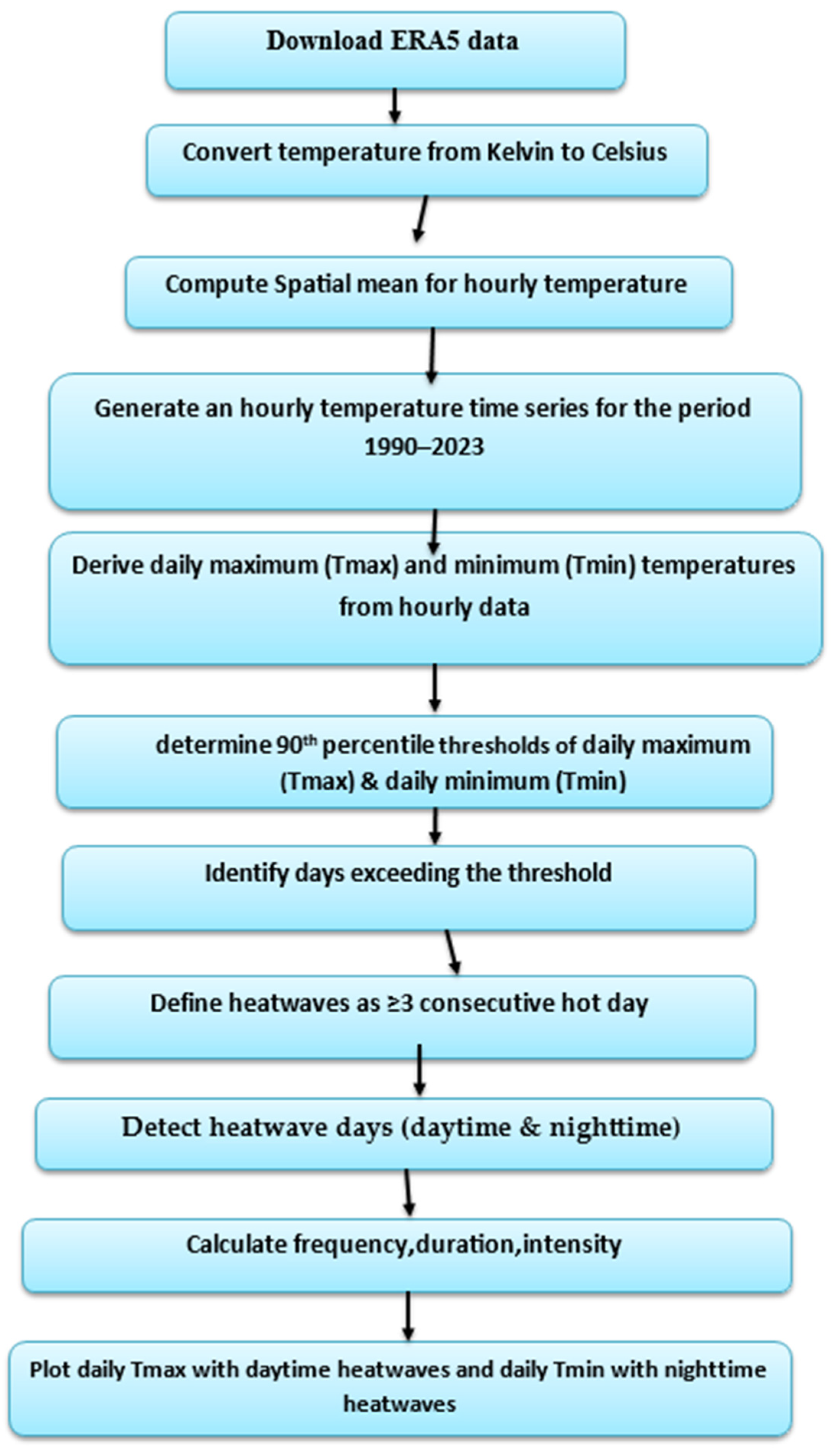
Temperature values were first converted from Kelvin to degrees Celsius. To obtain a national-scale representation, a spatial mean was calculated across all grid cells within the Egyptian domain for each hourly time step, resulting in a single representative hourly temperature value. The spatially averaged hourly data were subsequently aggregated into daily maximum (Tmax) and daily minimum (Tmin) temperatures, forming the basis for heatwave detection and analysis, as shown in Figure 2.
In this study, a relative threshold approach was applied. A single threshold for daily maximum and minimum temperatures was defined using the 90th percentile of the temperature distribution over the entire study period. Daytime and nighttime heatwave events were identified as periods during which Tmax or Tmin exceeded the respective percentile thresholds for three or more consecutive days.
Seasonal time-series decomposition was additionally performed to examine the internal structure of the temperature data prior to heatwave detection. The hourly and aggregated daily temperature series were decomposed into trend, seasonal, and residual components using classical additive decomposition techniques implemented in Python.
This analysis was conducted to assess the temporal consistency, long-term variability, and seasonal behavior of the dataset over the study period (1990–2023). The decomposition results confirmed the stability of the seasonal cycle and the presence of a gradual warming trend, supporting the suitability of the dataset for extreme-event analysis.

3. Result

3.1. Temperature Variability over Egypt (1990–2023)

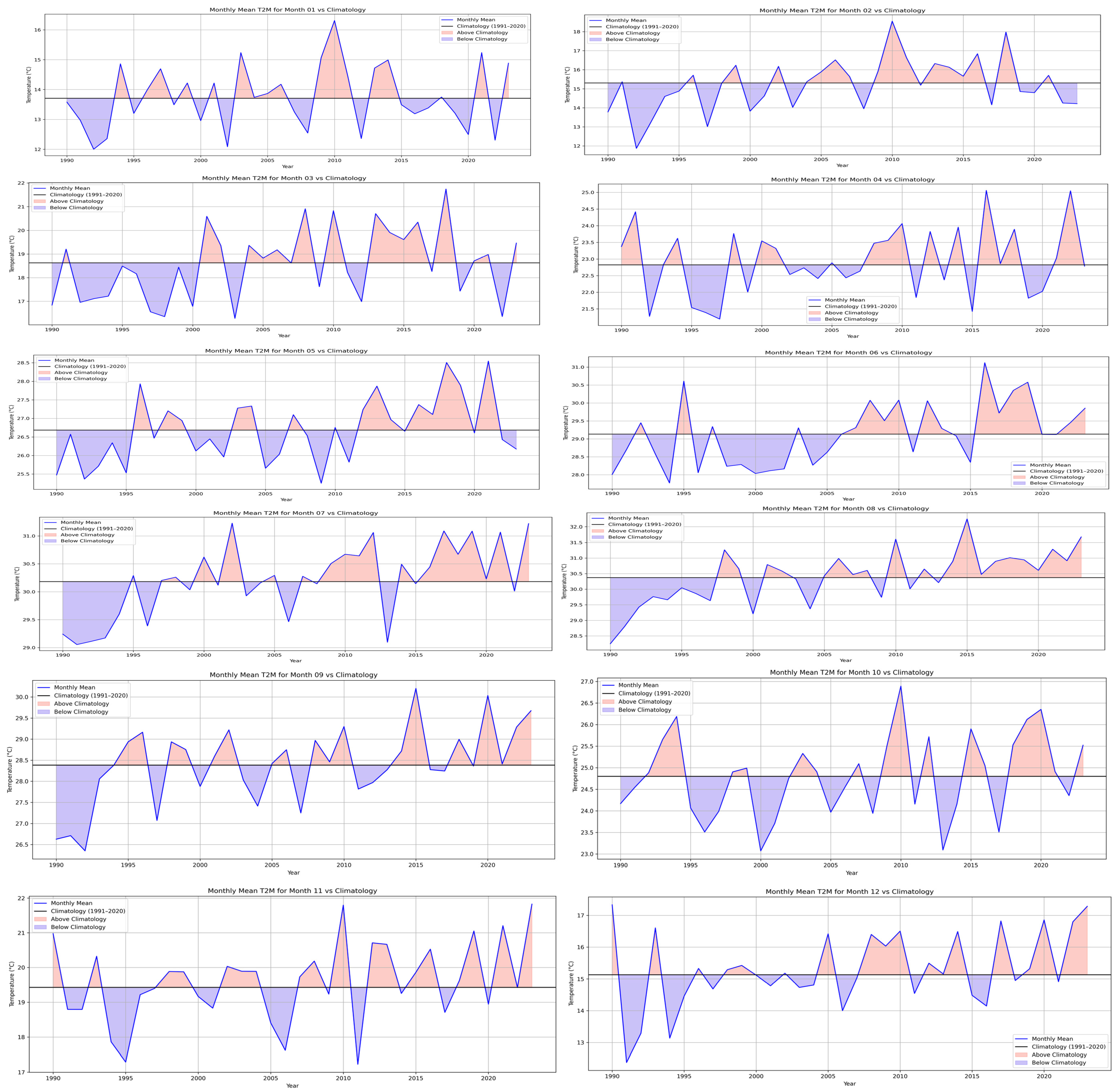
Analysis of monthly mean 2 m air temperature (T2m) anomalies for the period 1990–2023 relative to the 1991–2020 climatology reveals pronounced interannual variability across all months. Several years stand out as anomalously warm, particularly 2010, 2015, 2016, 2021 and 2023. Winter and early spring months show notable warming episodes in 2010 and 2018, while summer months exhibit strong positive anomalies during the mid-2010s, especially in July and August. Figure 3 shows that positive temperature anomalies dominate the warm season, with July and August exhibiting the most persistent departures above climatology. This pattern indicates a sustained shift toward higher baseline temperatures during summer, which increases the likelihood of heatwave initiation and persistence.

3.2. Annual and Monthly Temperature Trends

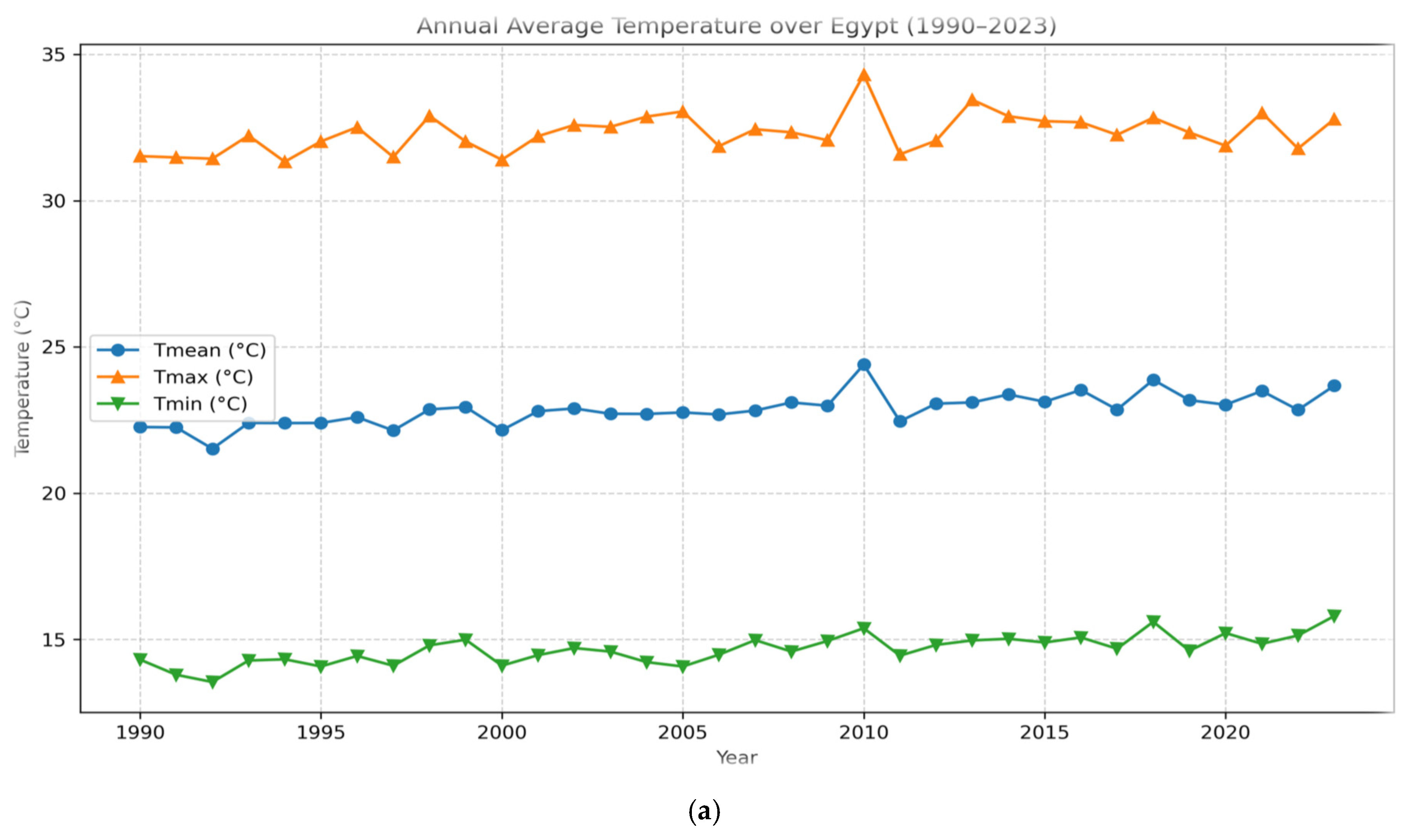
The annual mean temperature analysis demonstrates a clear warming tendency over Egypt during the study period. Among all years, 2010 emerges as the hottest year, with an average maximum temperature of approximately 34.3 °C (Figure 4a). This year is characterized by exceptionally high summer temperatures, with monthly maxima exceeding 38 °C from May through September.
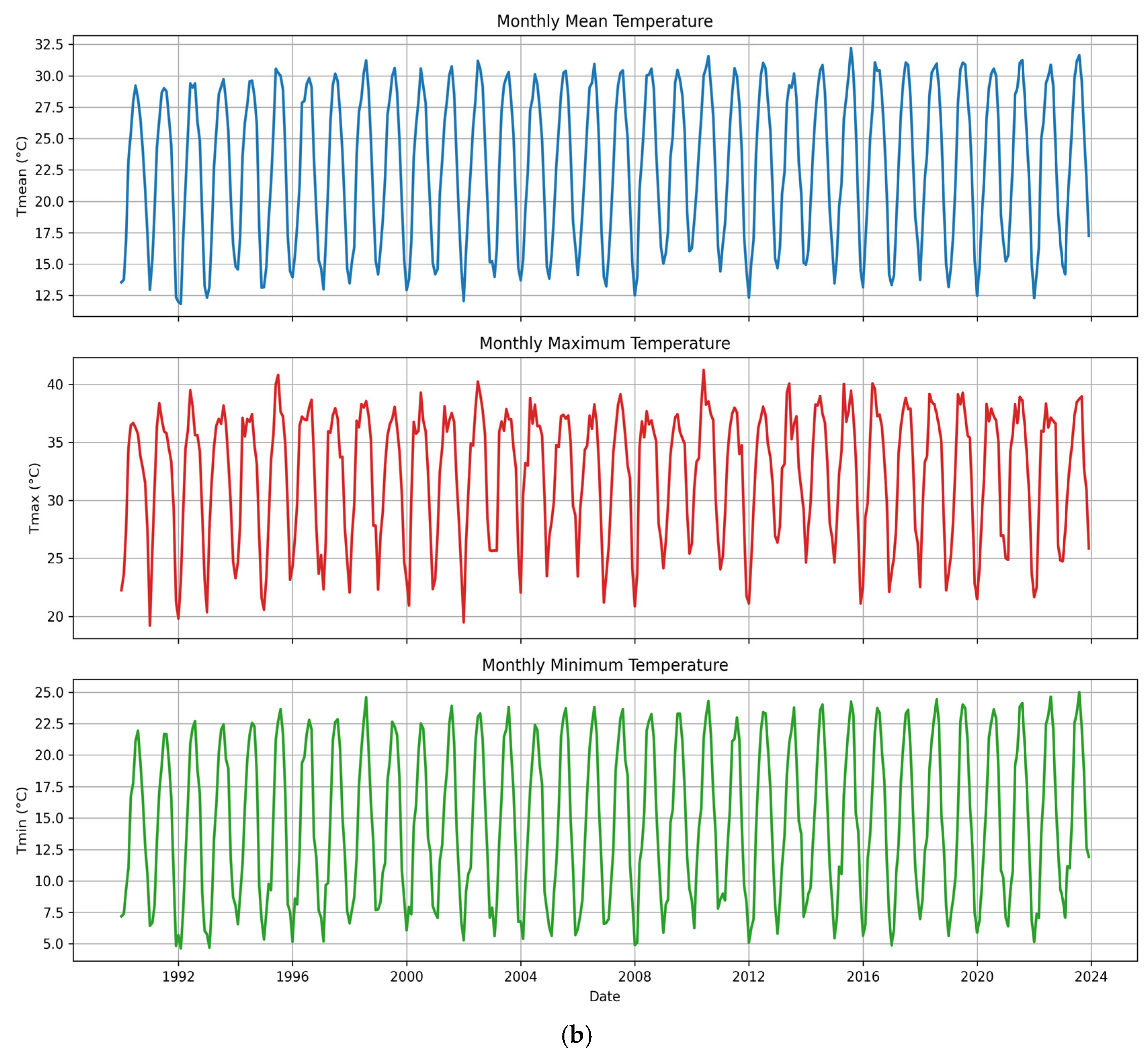
Monthly temperature variations further confirm the dominance of extreme summer heat, with peak monthly maximum temperatures recorded in June, July, and August (Figure 4b). The concurrence of elevated maximum and minimum temperatures during these months suggests reduced nocturnal cooling, a key factor in intensifying heat stress conditions.

3.3. Heatwave Thresholds and Event Identification

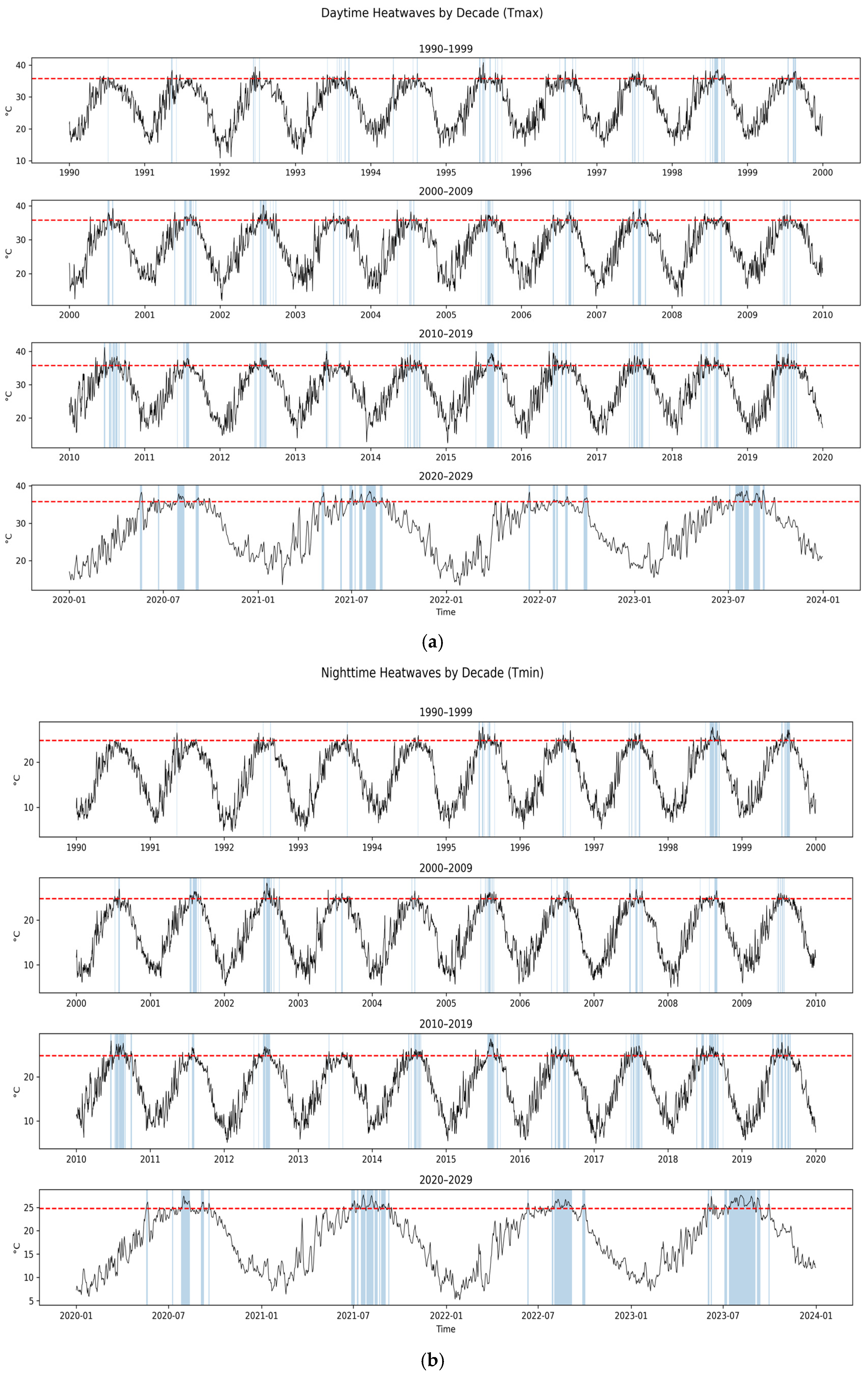
Using the 90th percentile of the daily temperature distribution over the study period, threshold values of approximately 35.8 °C for daily maximum temperature (Tmax) and 24.8 °C for daily minimum temperature (Tmin) were identified. Heatwaves were defined as periods of three or more consecutive days exceeding these thresholds, allowing for the detection of both daytime and nighttime heatwave events.
Application of these thresholds reveals a clear seasonal clustering of heatwave events, with the majority occurring during July and August. Daytime heatwaves dominate the warm season, while nighttime heatwaves show an increasing tendency in recent decades, reflecting rising minimum temperatures.

3.4. Daytime and Nighttime Heatwave Characteristics

Time series analysis of daily Tmax highlights frequent and persistent daytime heatwave events during the summer months, particularly after 2010 (Figure 5a). These events often extend over multiple consecutive days, indicating prolonged exposure to extreme daytime temperatures.
Nighttime heatwaves, identified using Tmin, display a similar seasonal pattern but show a more pronounced increase in frequency in recent years (Figure 5b). The persistence of elevated nighttime temperatures limits physiological recovery and exacerbates cumulative heat stress.

3.5. Seasonal Distribution and Recurrence of Heatwave

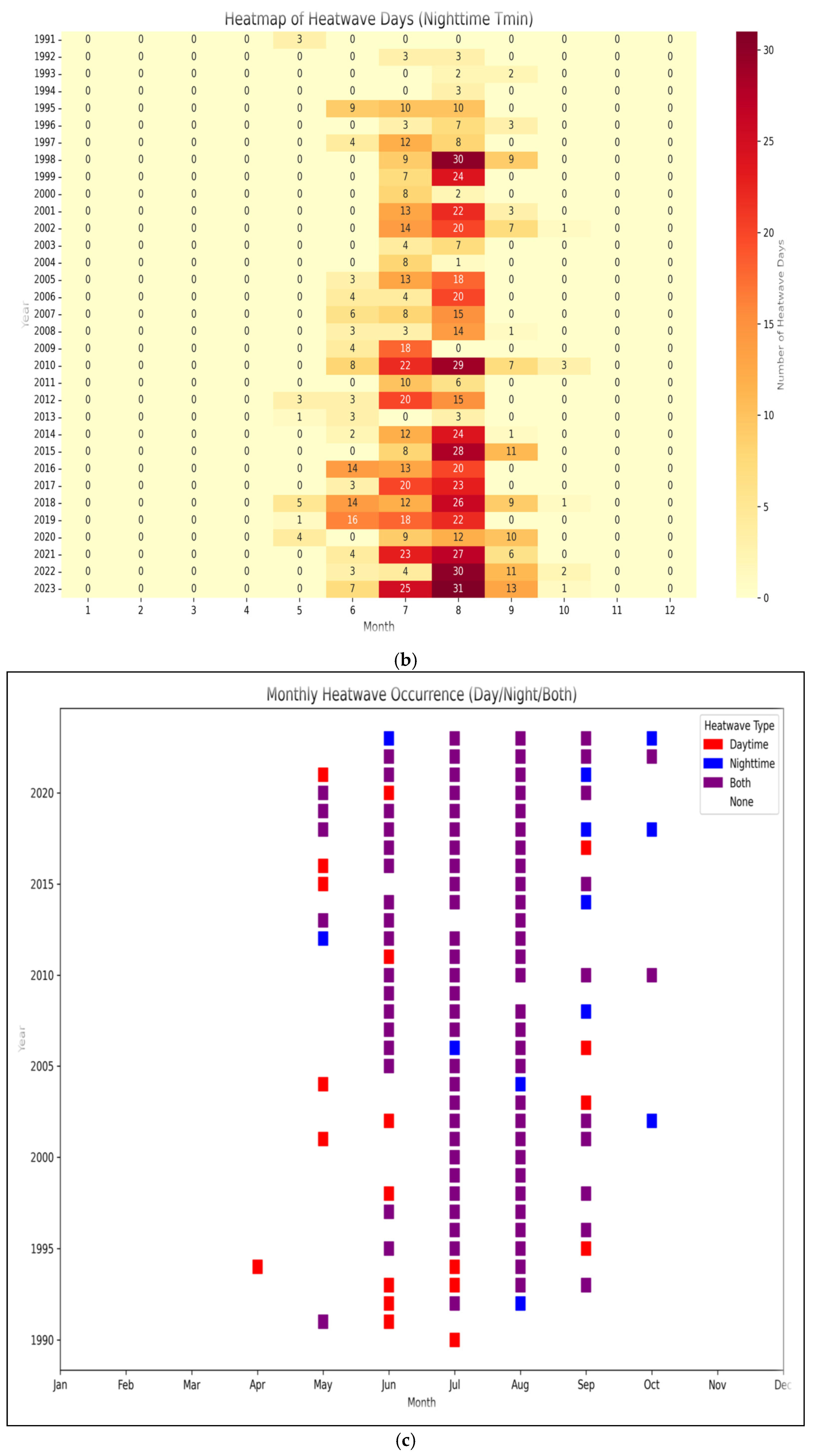
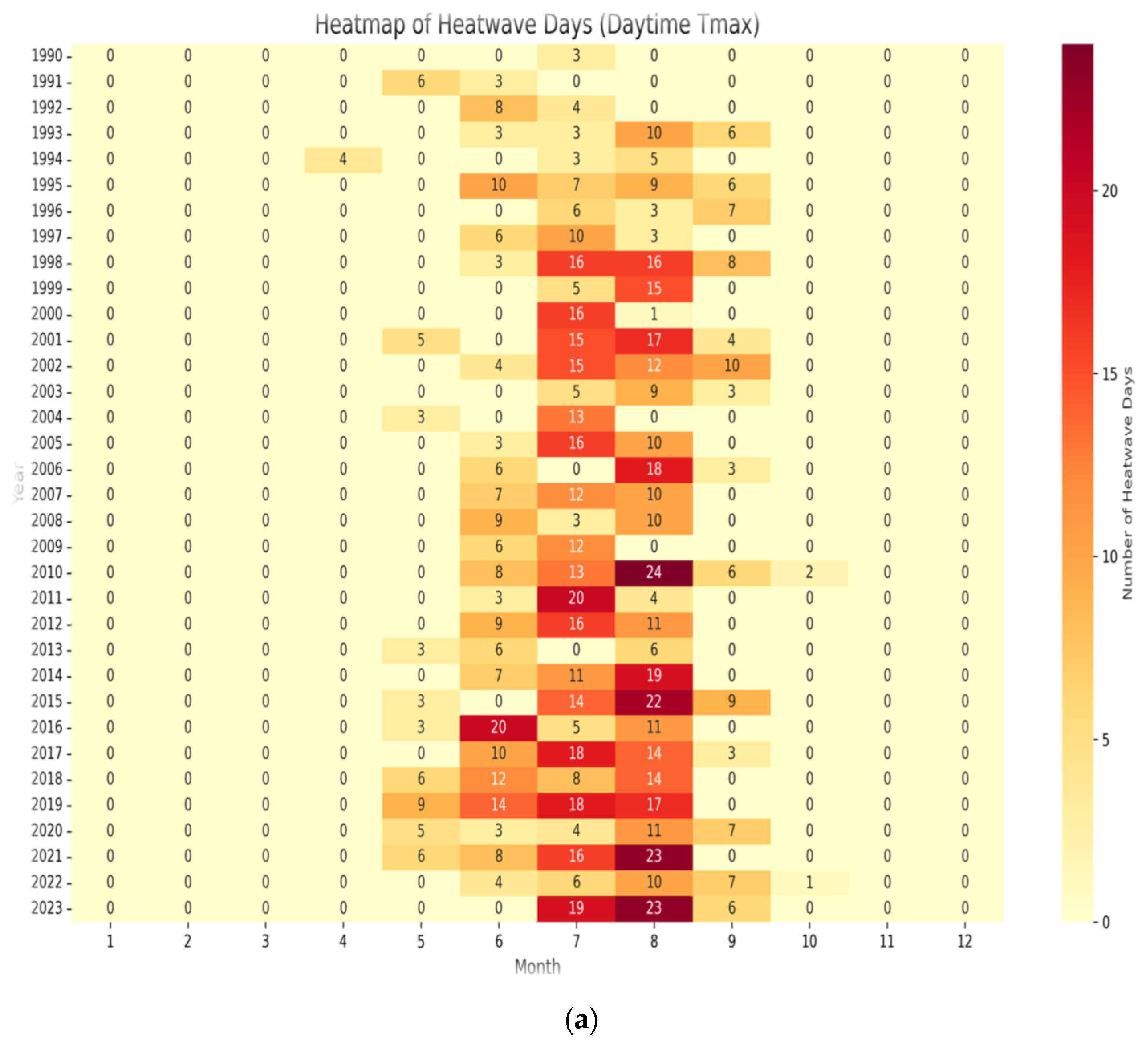
Heatmap analysis of heatwave occurrence reveals that both daytime and nighttime heatwaves are strongly concentrated in July and August, with a noticeable increase in event frequency after 2010 (Figure 6a,b). Earlier years exhibit more sporadic occurrences, while recent years show sustained and repeated heatwave activity.
Heatwave events occurring both during the day and at night are most common from mid-June to August, indicating times of increased thermal stress (Figure 6c). These simultaneous events emphasize the circumstances in which both daytime heating and nighttime cooling are interrupted.

3.6. Common Heatwave Periods and Long-Term Shift

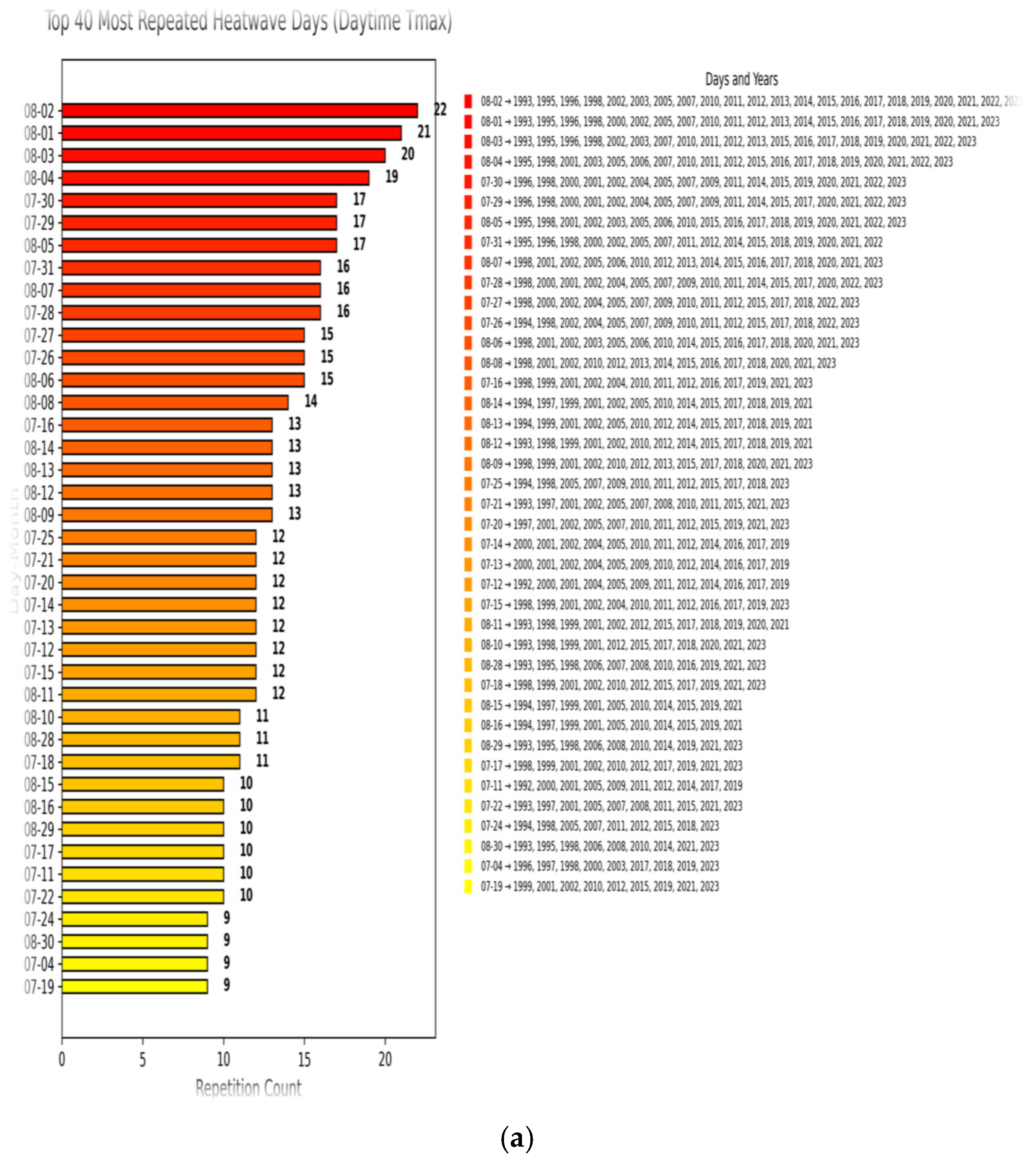
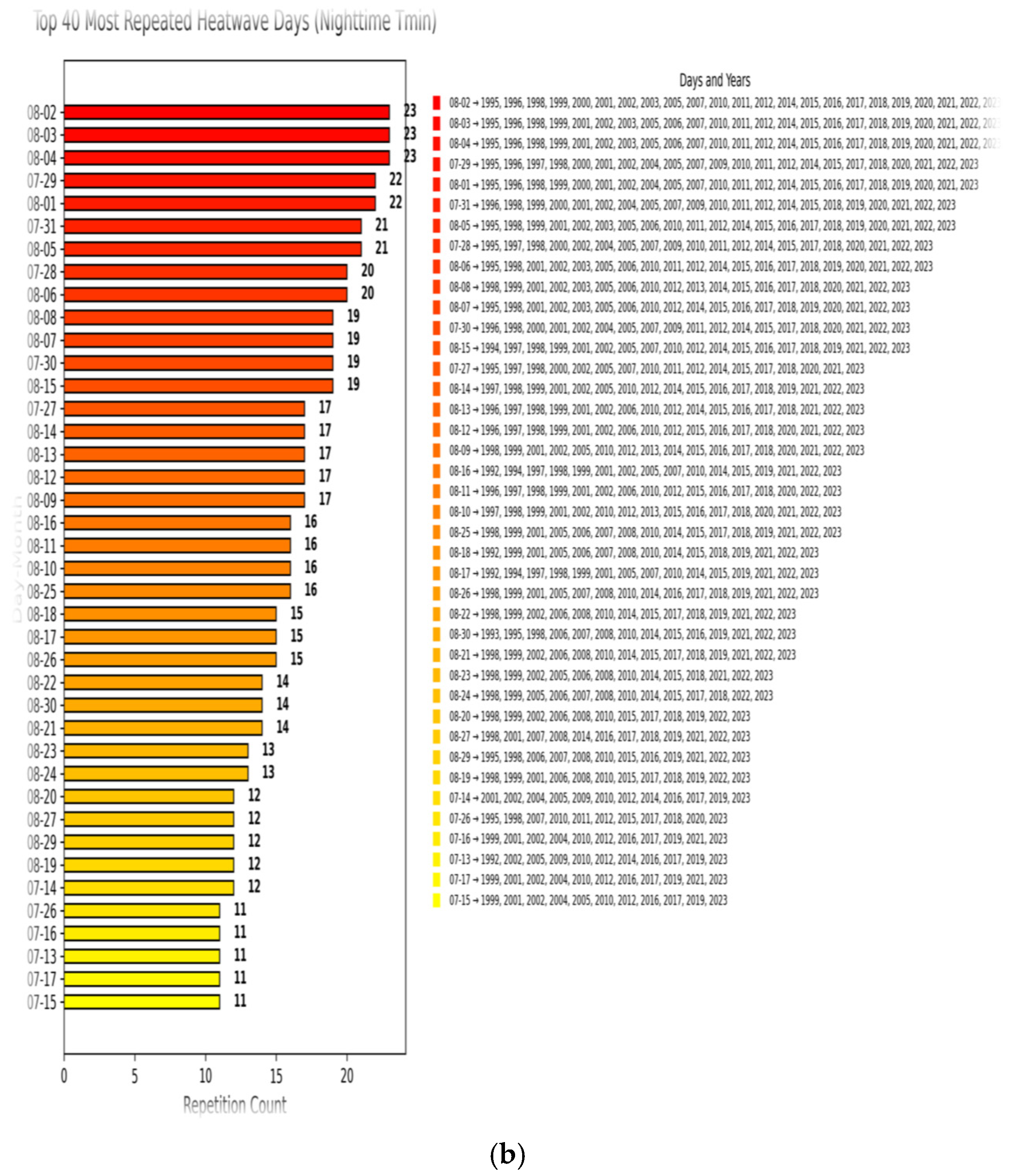
Analysis of recurrent heatwave days reveals that the most common periods of occurrence are concentrated in the last week of July and the first two weeks of August. These periods show strong annual recurrence beginning around 2010, particularly for both daytime and nighttime heatwaves (Figure 7a,b).
The increasing regularity of these events suggests a systematic shift in the seasonal timing and persistence of extreme heat over Egypt, consistent with long-term warming trends.

4. Discussion

The observed intensification and increasing frequency of heatwave events in Egypt are consistent with the broader continental warming trend reported across Africa in 2023. Several regions, particularly North Africa—including Morocco, Algeria, coastal Mauritania, and Tunisia—recorded pronounced temperature anomalies and exceptional heatwave events, with record-breaking temperatures such as 49.0 °C in Tunis and 50.4 °C in Agadir. Similar increases in heatwave frequency were also documented in East, Central, and Southern African countries. These continental-scale patterns highlight the role of large-scale atmospheric circulation combined with rising background temperatures, reinforcing the interpretation that the escalating heatwave activity observed in Egypt is part of a wider regional climate signal rather than an isolated phenomenon.
The results indicate an intensification and an increasing frequency of heatwave events in Egypt from 1990 to 2023, especially following the year 2010. The concentration of heatwaves in July and August corresponds with earlier regional studies. This phenomenon is a result of the combined effects of large-scale atmospheric circulation patterns and increasing background temperatures. The increase in nighttime heatwaves is significant. Elevated minimum temperatures lead to reduced nighttime cooling. This situation amplifies cumulative heat stress, which poses increased risks to human health and energy systems.
The occurrence of heatwaves in certain summer periods indicates a trend towards more consistent and extended extreme heat events. This trend has significant implications for early-warning systems and strategies for heat preparedness. Recent years show higher frequencies and longer durations of heatwave events compared to earlier decades. This indicates a transition toward more severe thermal conditions. The findings align with observed warming trends in North Africa. They provide support for the increasing evidence that climate change is affecting both the intensity and timing of heatwaves in arid and semi-arid areas.
In addition, while this study provides a comprehensive national-scale characterization of heatwave trends, a detailed dynamical and synoptic analysis of the atmospheric circulation patterns associated with extreme heatwave episodes is currently underway and will be addressed in future work.

5. Conclusions

This study provides a comprehensive assessment of heatwave characteristics over Egypt during 1990–2023, revealing a clear intensification and increasing recurrence of heatwave events, particularly after 2010. Heatwaves are strongly concentrated during late July and August, with nighttime heatwaves becoming more frequent, indicating a sustained rise in daily baseline temperatures and reduced nocturnal cooling. These findings highlight the growing thermal stress faced by Egypt and underscore the importance of incorporating heatwave behavior into climate adaptation strategies, energy planning, and water-resource management under ongoing climate change.
Future research will extend the present national-scale assessment by incorporating CMIP6 climate model projections under multiple Shared Socioeconomic Pathways (SSPs), particularly SSP2-4.5 and SSP5-8.5. Historical simulations will be used to evaluate model performance and to establish consistent heatwave thresholds. Subsequently, future projections will be analyzed to assess changes in heatwave frequency, duration, and intensity across Egypt up to 2100. This approach will enable a comparative assessment of scenario-dependent risks and provide long-term insights into potential climate extremes under different emission pathways.
In addition, the results of this study provide a foundation for examining the relationship between heatwave events and energy demand. The increasing frequency and intensity of daytime and nighttime heatwaves, particularly during peak summer months, suggest that future research could investigate how extreme heat contributes to higher electricity consumption for cooling purposes. Understanding this linkage would support climate-adaptive energy planning and management strategies in Egypt under ongoing and projected climate change scenarios.
The findings of this study have broader implications within the framework of the United Nations Sustainable Development Goals. The documented intensification of heatwaves provides evidence-based insights into climate extremes at the national scale, supporting efforts toward effective climate action and long-term adaptation planning. The increasing frequency of nighttime heatwaves is particularly relevant to public health, given the well-established association between prolonged heat exposure and elevated heat-related risks. In addition, the spatial assessment of extreme heat patterns can inform urban planning strategies, resilience-building measures, and sustainable city development under a warming climate [11].

Author Contributions

F.R.A.I.—Data curation, Formal analysis, Investigation, Methodology, Software, Validation, Visualization, Writing—original draft; Z.S.—Visualization, review & editing; M.H.E.—Investigation, Methodology, review & editing; M.M.A.W.—Conceptualization, Methodology, Supervision, review. All authors have read and agreed to the published version of the manuscript.

Funding

This research received no external funding.

Data Availability Statement

The original data presented in this study are publicly available from the Copernicus Climate Data Store (CDS) and were obtained from the ERA5 reanalysis single-levels dataset (https://cds.climate.copernicus.eu/datasets/reanalysis-era5-single-levels?tab=download (accessed on 16 February 2026)).

Conflicts of Interest

The authors declare no conflicts of interest.

References

  1. World Meteorological Organization. Heatwaves. 2023. Available online: https://wmo.int/topics/heatwave (accessed on 21 January 2026).
  2. Intergovernmental Panel on Climate Change (IPCC). Climate Change 2021: The Physical Science Basis; Contribution of Working Group I to the Sixth Assessment Report of the Intergovernmental Panel on Climate Change; Masson-Delmotte, V., Zhai, P., Pirani, A., Connors, S.L., Péan, C., Chen, Y., Goldfarb, L., Gomis, M.I., Robin Matthews, J.B., Berger, S., et al., Eds.; Cambridge University Press: Singapore, 2021. [Google Scholar] [CrossRef]
  3. World Meteorological Organization. State of the Climate in Africa 2024; WMO-No. 1370; World Meteorological Organization: Geneva, Switzerland, 2025; Available online: https://wmo.int/sites/default/files/2025-05/Africa_2024final1.pdf (accessed on 3 March 2026).
  4. World Meteorological Organization. State of the Climate in Africa 2023; WMO-No. 1360; World Meteorological Organization: Geneva, Switzerland, 2024; Available online: https://uneca.org/sites/default/files/ACPC/publication/State-of-the-Climate-in-Africa-2023_en.pdf (accessed on 3 March 2026).
  5. Kamel, H. Climate of the Arab Republic of Egypt; Egyptian Meteorological Authority: Cairo, Egypt, 1978. [Google Scholar]
  6. Mostafa, A.N.; Alfaro, S.C.; Robaa, S.M.; Zakey, A.S.; Abdel Wahab, M.M. Heatwaves and their impact on air quality in Greater Cairo, Egypt. Atmosphere 2024, 15, 637. [Google Scholar] [CrossRef]
  7. Moustafa, M.; Abdelhamid, A.; Adel, A.; Elbessa, M.; Farag, M.; Shaltout, M. Monitoring heat wave characteristics depending on surface air temperature variability along the Egyptian Mediterranean coast. Egypt. J. Aquat. Biol. Fish. 2024, 28, 2229–2260. [Google Scholar] [CrossRef]
  8. Climate Impact Indicators (Climpact). Climate Extremes Indices. 2019. Available online: https://climpact-sci.org/indices/ (accessed on 21 January 2026).
  9. Mohamed, M.A.E.H.; Darrag, M.H.; Ahmed, M.A.; El-Mahdy, M.E.S. Spatiotemporal Assessment of Daily Temperature Extremes in Egypt During 1980–2023. 2023. Available online: https://www.researchgate.net/publication/393718535_Spatiotemporal_Assessment_of_Daily_Temperature_Extremes_in_Egypt_during_1980-2023 (accessed on 3 March 2026).
  10. Kottek, M.; Grieser, J.; Beck, C.; Rudolf, B.; Rubel, F. World map of the Köppen–Geiger climate classification updated. Meteorol. Z. 2006, 15, 259–263. [Google Scholar] [CrossRef]
  11. United Nations. Transforming Our World: The 2030 Agenda for Sustainable Development. 2015. Available online: https://sdgs.un.org/2030agenda (accessed on 26 February 2026).
Figure 1. Illustrates the map of Egypt, showing the regions included in this study.
Engproc 124 00071 g001
Figure 2. A flowchart illustrates the steps applied to the dataset, outlining the processing and analysis procedures that led to the results presented in this study.
Engproc 124 00071 g002
Figure 3. Monthly mean air temperature over Egypt (1990–2023) against 1991–2020 monthly climatology over 12 months. Black line represents climatology from 1991 to 2020. Blue line represent monthly mean for each month for period 1990–2023. Area above the black line represents above climatology. Area below the black line represents below climatology.
Engproc 124 00071 g003
Figure 4. (a) Annual mean temperature over Egypt during period 1990–2023: orange line represents mean of maximum temperature; blue line represents mean of temperature; green line represents mean of minimum temperature. (b) Monthly mean temperature over Egypt during period 1990–2023: blue line represent monthly mean temperature; red line represent monthly maximum temperature; and green line represent monthly minimum temperature.
Engproc 124 00071 g004aEngproc 124 00071 g004b
Figure 5. (a) Daily Tmax with highlighted daytime Heatwave events lasting for 3 days or more during period 1990–2023 and Tmax-threshold with red line and The blue shaded area represents consecutive daytime heatwave days. (b) Daily Tmin with highlighted nighttime Heatwave events which lasting from 3 days or more during period 1990–2023 and Tmin-threshold with red line and The blue shaded area represents consecutive nighttime heatwave days.
Engproc 124 00071 g005
Figure 6. (a) Heatmap of number of daytime heatwave events occurring every month across 1991–2023 over Egypt. (b) Heatmap of number of nighttime heatwave events occurring every month across 1991–2023 over Egypt. (c) Heatmap representing periods when daytime and nighttime heatwave events occurred simultaneously.
Engproc 124 00071 g006aEngproc 124 00071 g006b
Figure 7. (a) The most common days (Top 40 most repeated heatwave days (daytime) with repition count) during daytime heatwaves were identified for each month and year. These events have exhibited an annual recurrence, particularly after 2010, whereas prior to this, they occurred more irregularly. (b) The most common days (Top 40 most repeated heatwave days (nighttime) with repition count) during nighttime heatwaves were identified for each month and year. These events have exhibited an annual recurrence, particularly after 2010, whereas prior to this, they occurred more irregularly.
Engproc 124 00071 g007aEngproc 124 00071 g007b
Disclaimer/Publisher’s Note: The statements, opinions and data contained in all publications are solely those of the individual author(s) and contributor(s) and not of MDPI and/or the editor(s). MDPI and/or the editor(s) disclaim responsibility for any injury to people or property resulting from any ideas, methods, instructions or products referred to in the content.