Proceeding Paper

Assessing the Environmental Sustainability and Footprint of Industrial Packaging †

by
Sk. Tanjim Jaman Supto
* and
Md. Nurjaman Ridoy
Department of Environmental Research, Nano Research Centre, Sylhet 3114, Bangladesh
*
Author to whom correspondence should be addressed.
Presented at the 4th International Electronic Conference on Processes, 20–22 October 2025; Available online: https://sciforum.net/event/ECP2025.
Eng. Proc. 2025, 117(1), 34; https://doi.org/10.3390/engproc2025117034
Published: 27 January 2026

Abstract

Industrial packaging systems exert substantial environmental pressures, including material resource depletion, greenhouse gas emissions, and the accumulation of post-consumer waste. As global supply chains expand and sustainability regulations intensify, demand for environmentally responsible packaging solutions continues to rise. This study evaluates the environmental footprint of industrial packaging by integrating recent developments in life cycle assessment (LCA), ecological footprint (EF) methodologies, material innovations, and circular economy models. The assessment examines the sustainability performance of conventional and alternative packaging materials, plastics, aluminum, corrugated cardboard, and polylactic acid (PLA). Findings indicate that although corrugated cardboard is renewable, it still presents a measurable environmental burden, with evidence suggesting that incorporating solar energy into production can reduce its footprint by more than 12%. PLA-based trays demonstrate promising environmental performance when sourced from renewable feedstocks and directed to appropriate composting systems. Despite these advancements, several systemic challenges persist, including ecological overshoot in industrial regions where EF may exceed local biocapacity limitations in waste management infrastructure, and significant economic trade-offs. Transportation-related emissions and scalability constraints for bio-based materials further hinder large-scale adoption. Existing research suggests that integrating sustainable packaging across supply chains could meaningfully reduce environmental impacts. Achieving this transition requires coordinated cross-sector collaboration, standardized policy frameworks, and embedding advanced environmental criteria into packaging design and decision-making processes.

1. Introduction

Industrial packaging has emerged as a major driver of global environmental pressure, contributing substantially to greenhouse gas emissions, resource depletion, and post-consumer waste across supply chains. As global production and logistics expand, the environmental footprint of packaging continues to grow, intensifying concerns about material sustainability and end-of-life impacts [1]. These pressures have been further amplified by regulatory shifts and rising expectations for low-impact packaging solutions, which have placed sustainability performance at the core of industrial decision-making. Existing research demonstrates that comprehensive evaluation tools, particularly LCA, EF accounting, and circular-economy metrics, are essential for understanding packaging’s environmental burdens. LCA-based studies consistently show that fossil-based plastics and energy-intensive materials generate high emissions and environmental persistence, while bio-based and fibre-based alternatives offer variable but often lower-impact profiles depending on feedstock origin, production energy, and waste-management pathways [2,3,4]. However, despite their promise, emerging bio-based materials face challenges related to scalability, composting infrastructure, and real-world biodegradability, highlighting the need for system-level evaluation rather than material substitution alone [5,6]. Based on the available evidence, this study contends that assessing industrial packaging through standardized LCA (ISO 14040/44), [7] EF modelling, and circularity metrics is essential to identify realistic pathways toward sustainable, low-carbon packaging systems. The central thesis is that no single packaging material represents an inherently sustainable option; instead, environmental performance depends on interactions across the entire value chain from raw-material extraction to end-of-life treatment and must be evaluated through transparent, comparable, and multi-criteria frameworks [1,3]. This study integrates LCA, EF assessment, Multi-Criteria Decision Analysis (MCDA), and circularity indicators and evaluates the environmental performance of major packaging categories: conventional, fibre-based, and emerging bio-based materials, drawing from recent peer-reviewed findings. Finally, it outlines value-chain challenges and policy directions, including Extended Producer Responsibility (EPR) and harmonized recyclability standards, which are necessary for accelerating a transition toward environmentally responsible industrial packaging.

2. Analytical Framework and Evaluation of Packaging Material

The evaluation of packaging materials is grounded in a life cycle perspective that encompasses raw material extraction, production, use, and end-of-life management. Within this perspective, the leading framework emphasizes three core aspects: the direct environmental effects of packaging, packaging-related food losses and waste, and circularity, including recyclability, reusability, and material recovery [1]. To ensure methodological consistency, the assessment should be practicable through standard LCA tools and datasets and should employ clear calculation procedures for key environmental indicators such as carbon footprint, resource use, and waste generation [2]. To manage complex packaging choices, MCDA integrates environmental, economic, and functional criteria through weighted scoring systems [3], while Qualitative and Quantitative Integration (QQI) combines LCA with expert judgement methods such as AHP and stakeholder input to balance measurable impacts with contextual factors [4]. Comprehensive frameworks rank parameters including resource extraction, renewability, energy and water use, emissions, recyclability, functional performance, and food waste reduction potential [1,4]. Collectively, LCA, MCDA, Circularity Assessment, and QQI constitute the core elements of analytical frameworks [4]. Evaluations typically span packaging, environmental, circularity, economic, and social criteria within holistic roadmaps for bioactive and bio-based packaging [8,9]. Large-scale screening and optimization depend on robust data and assumptions regarding pathways and adoption readiness [10]. Building on recent studies that link life-cycle-based indicators with circularity metrics through MCDA for packaging and related products, the proposed framework follows a structured six-step approach [11]. First, the problem definition and identification of alternatives focus on functionally equivalent industrial packaging options within the same use context, such as conventional polymer trays, fibre-based solutions, or emerging bio-based and compostable alternatives [12]. Second, criteria and indicator selection encompasses environmental indicators (e.g., LCA midpoint indicators, carbon footprint, ecological footprint, or biocapacity), circularity metrics (such as the Material Circularity Indicator, material reutilisation scores, recyclability, and compostability), and, where relevant, economic and technical criteria including costs, mechanical strength, and barrier properties [11,13]. Third, quantification and normalization involve calculating all indicators per functional unit using LCA and related methods, followed by normalization procedures such as min–max scaling to ensure comparability across heterogeneous indicators [14,15]. Fourth, weighting is performed using equal-weight scenarios, literature-based weighting schemes, or stakeholder-derived preferences, reflecting current practice in sustainability-oriented MCDA applications within packaging and food systems [16,17]. Fifth, MCDA aggregation and ranking integrate the weighted indicators into an overall performance score using transparent decision-analysis methods, such as Technique for Order Preference by Similarity to Ideal Solution (TOPSIS), Multi-Attribute Value Theory/Analytic Hierarchy Process (MAVT/AHP), or ÉLimination Et Choix Traduisant la Réalité (ELECTRE), thereby enabling explicit consideration of trade-offs between environmental impacts and circularity performance [18]. Finally, sensitivity and robustness analyses examine how rankings respond to alternative weighting schemes and methodological assumptions, consistent with recent LCA–MCDA studies [17]. The applicability of this general framework is illustrated through a preliminary food-packaging case study, presented in Section 4.4.

3. Environmental Assessment of Industrial Packaging

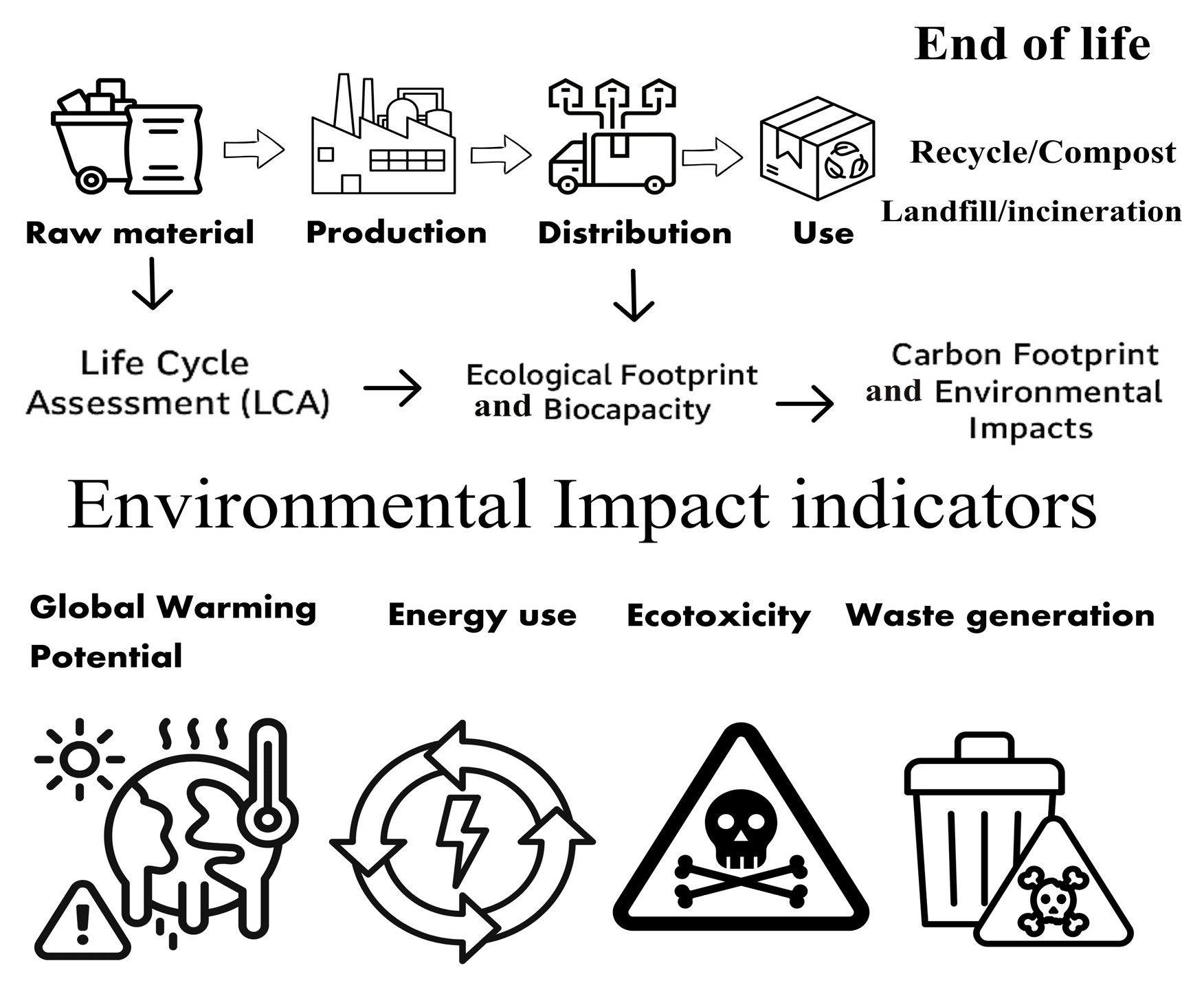
Environmental assessment of industrial packaging involves evaluating the environmental impacts throughout the packaging life cycle, including design, production, use, and disposal. Frameworks have been proposed to measure environmental impact using multiple parameters, such as those identified through Delphi studies, enabling quantitative comparison of packaging alternatives for the same product [19]. Figure 1 highlights the life cycle of a package from beginning to mixing it into the environment.

3.1. Life Cycle Assessment for Packaging

LCA is a standardized method for quantifying the environmental impacts of industrial packaging across raw material extraction, production, use, and end-of-life processes, with ISO 14040/44 [7] ensuring consistency across studies. LCA follows four phases: Goal and Scope Definition, Life Cycle Inventory (LCI), Life Cycle Impact Assessment (LCIA), and Interpretation [20,21]. Goal and Scope Definition sets the purpose, system boundaries, functional unit, and impact categories, which determine the relevance and comparability of results [22]. LCI compiles data on material and energy inputs and outputs, while LCIA translates these flows into impacts such as global warming potential, resource depletion, water use, and toxicity. Interpretation identifies hotspots and supports improvement or comparison of packaging options [21]. Application of LCA enables material comparisons across packaging materials such as plastics, glass, metals, paper, and biopolymers, as well as formats including rigid, flexible, and multilayer, revealing trade-offs in energy use, greenhouse gas emissions, and recyclability [23]. End-of-life choices strongly influence outcomes, with recycling capable of reducing CO2 emissions by up to 48% [24]. While most LCAs focus on direct impacts such as material production and disposal, there is increasing recognition of the importance of including indirect effects, such as packaging’s influence on product shelf life and food waste reduction [25]. Methodological guidance stresses defining system boundaries and functional units carefully, addressing both direct and indirect impacts, and modelling end-of-life scenarios in detail [26].

3.2. Ecological Footprint and Biocapacity of Packaging Materials

The EF quantifies the total environmental impact of packaging materials throughout their life cycle, encompassing raw material extraction, manufacturing, distribution, use, and end-of-life management. Studies consistently show that conventional fossil-based packaging materials, such as plastics, have a higher ecological and carbon footprint compared to bio-based and biodegradable alternatives [27]. Substituting fossil-based polymers with bio-based materials can reduce the carbon footprint of packaging [21]. EF is influenced not only by carbon emissions but also by energy and water consumption, resource depletion, and waste generation [28]. Comparative analyses indicate that bio-based packaging materials such as PLA and starch-based polymers generally exhibit lower carbon emissions and energy use than conventional plastics, although they may require higher water consumption during production [27]. The end-of-life scenario, whether recycling, landfill, or incineration, significantly affects the overall ecological footprint, with recycling and composting typically with lower impacts than incineration or landfill [28].

3.3. Carbon Footprint and Environmental Impact

The carbon footprint of packaging varies significantly by material, and bio-based and biodegradable materials such as PLA generally exhibit a lower carbon footprint compared to conventional fossil-based plastics [6]. Studies indicate that substituting polyethylene (PE) for other packaging materials, such as glass, aluminum, or steel, can decrease life cycle greenhouse gas emissions by up to 70% [29]. However, in some cases, replacing plastics with alternatives such as corrugated cardboard or composite materials may not reduce the carbon footprint, particularly when the alternative increases packaging weight or transport emissions [30]. Waste management strategies play a critical role in determining carbon outcomes. Incineration generally results in higher carbon emissions, whereas recycling and, in some contexts, landfill can lower the overall carbon footprint of packaging materials [6]. Environmental impact assessments frequently include additional categories such as acidification, eutrophication, resource depletion, and ecotoxicity. Paper-based packaging may outperform plastics in most impact categories, although the production phase and end-of-life treatment can shift this balance [28]. The food packaging component typically contributes less than 10% of total life cycle emissions [31]. In the case of seafood and canned products, packaging can account for up to 42% of the product’s climate change impact [25]. There is often a gap between consumer perceptions of environmentally friendly packaging and scientific assessments; plastics are sometimes underestimated in terms of environmental impact, while glass and biodegradable plastics are overestimated [32]. Although paper-based packaging often outperforms plastics across multiple environmental indicators, life cycle assessment evidence consistently shows that these advantages are strongly product- and context-specific. For example, in chocolate-bar packaging, paper-based wrappers were found to be preferable in 10–16 out of 18 impact categories, including climate change, fossil resource depletion, and selected toxicity indicators. However, impacts were dominated by electricity use during production and converting processes, and the relative benefits diminished under carbon-intensive energy mixes or poorly managed end-of-life scenarios [2,33]. Similarly, comparative LCAs of food-packaging films report that coated paper packaging achieves 25–34% lower energy use, 34–62% lower greenhouse gas emissions, and 81–83% lower fossil resource scarcity than multilayer plastic films. The incorporation of 75% recycled fibre further reduced energy demand and greenhouse gas emissions by up to 41% and 11%, respectively [23,34]. In rigid food-packaging applications, paperboard trays with Polyethylene Terephthalate (PET) coatings have been shown to exhibit lower climate change impacts than Crystalline Polyethylene Terephthalate (CPET) and rPET trays when effective paperboard recycling is assumed. However, this advantage diminishes when recycling is unavailable or when heavier structures are required to meet functional performance requirements [35]. Beverage cartons, which are predominantly paper-based multilayer systems, generally achieve the lowest impacts for climate change, fossil resource use, and acidification when compared with PET and HDPE bottles. At the same time, they exhibit the highest forestry land occupation, illustrating a clear trade-off between fossil resource savings and land-use intensity [36]. Together, these findings demonstrate that while paper-based packaging can outperform plastics in key impact categories, particularly under high recycling rates its energy- and chemical-intensive production, water use, and forestry land requirements can offset or even reverse these advantages in certain contexts. This variability underscores the need for product-specific, system-sensitive, and end-of-life-aware life cycle assessment when comparing packaging alternatives [37].

4. Environmental Performance of Industrial Packaging Materials

Industrial packaging materials exhibit widely varying environmental footprints depending on their origin, production processes, functional properties, and end-of-life pathways shown in Table 1. A comparative assessment of conventional, fibre-based, and emerging bio-based materials provides critical insight into their sustainability trade-offs. Understanding these differences is essential for guiding material substitution, life-cycle optimization, and long-term circular-economy strategies [38,39].

4.1. Conventional Packaging Materials

Conventional packaging materials, including petrochemical plastics, metals, and glass, remain dominant due to low cost, durability, and well-developed supply chains, yet their environmental impacts are substantial [38]. Life cycle assessments show that fossil-derived plastics such as PET and HDPE generate high greenhouse gas emissions, persist for decades, and contribute to microplastic pollution, while metals and glass, though more recyclable, are energy-intensive to produce [41]. Recycling inefficiencies, low plastic recovery rates, and limited biodegradability undermine resource efficiency and circular-economy alignment, and increasing regulatory pressure further challenges their long-term viability [42].

4.2. Renewable and Recyclable Fibre-Based Materials

Fibre-based materials such as paper, cardboard, moulded pulp, and advanced fibre composites offer a lower-impact alternative due to renewable biomass sourcing and high recycling rates. Their carbon footprint is generally lower than plastics, and well-established collection systems enable efficient material recovery and compostability when coatings are absent. However, functional limitations, including weak moisture and oxygen barriers and the frequent use of plastic coatings, can compromise recyclability and biodegradability, indicating the need for improved barrier technologies to fully realize circular-economy potential [2,43].

4.3. Emerging Bio-Based and Compostable Alternatives

Bio-based and compostable materials such as PLA, PHA, starch polymers, and cellulose derivatives show strong long-term sustainability potential, especially when derived from agricultural residues or non-food biomass. Their impacts depend on feedstock, land use, and processing energy, and effective degradation requires appropriate waste-management systems. Challenges, including limited recyclability, higher costs, variable standards, and technological immaturity, still restrict large-scale adoption, but these materials remain a promising pathway toward low-carbon, circular packaging [5,44].

4.4. Illustrative Case Study: Food Packaging Application

To demonstrate the practical applicability of the proposed framework as a decision-support tool, a preliminary case study was developed for a food company selecting primary packaging for a shelf-stable product, such as ketchup or a comparable sauce. Four industrial packaging alternatives were evaluated, drawing on recent food-packaging case studies: (A) a conventional polypropylene (PP) bottle, (B) a glass bottle, (C) a fibre-based carton with a polymer liner, and (D) an emerging bio-based or compostable plastic bottle [45,46]. Environmental performance was assessed using a set of key indicators climate change, abiotic resource depletion, acidification, and water consumption derived from streamlined life cycle assessments and published literature on food-packaging systems [45]. Circularity performance was characterized through indicators including recyclability, recycled content, end-of-life options, and the Material Circularity Indicator, in line with recent circular-economy-oriented packaging studies [11]. For illustrative purposes, indicator values were compiled from published ranges and generic databases rather than company-specific life cycle inventories, reflecting common practice in early-stage and prospective sustainability assessments [47]. All indicators were normalized, and three weighting scenarios were examined to explore the influence of decision priorities: (i) an environment-focused scenario, (ii) a circularity-focused scenario, and (iii) a balanced scenario. The Technique for Order of Preference by Similarity to Ideal Solution (TOPSIS), which is widely applied to integrate LCA and circularity indicators at the product level, was used to aggregate the indicators and rank the packaging alternatives [11]. Across all weighting scenarios, mono-material and highly recyclable options such as lightweight plastic bottles and recyclable fibre-based cartons consistently rank higher than heavier, single-use glass packaging. This outcome is consistent with earlier findings for comparable food-packaging systems. When circularity indicators were prioritized, fibre-based and recyclable plastic options performed best, whereas scenarios emphasizing climate change and resource depletion favoured lightweight packaging designs [12]. The stability of the rankings across different weighting schemes is comparable to results reported in previous MCDA–LCA studies on packaging systems [48]. The case study is intentionally simplified and relies on secondary data; it does not yet incorporate social indicators or detailed company-specific cost information. These limitations reflect typical constraints encountered in early-stage or prospective assessments [11]. Nevertheless, the exercise illustrates how the proposed framework can be implemented using readily available data to support engineering and packaging-selection decisions in a real industrial context, in a manner comparable to existing simplified tools and case-based frameworks developed for food-packaging applications [12].

5. Industrial Packaging Value Chain Framework for Packaging

A modern industrial packaging value chain for sustainable food packaging integrates circular design, advanced technology, and systemic collaboration [49]. The carbon footprint of packaging varies significantly by material, and bio-based and biodegradable materials such as PLA generally have lower carbon footprints than conventional fossil-based plastics, with reductions of up to 49% reported in certain applications [6]. Studies indicate that substituting PE for other packaging materials, such as glass, aluminum, or steel, can decrease life cycle greenhouse gas emissions by up to 70% [29]. However, in some cases, replacing plastics with alternatives such as corrugated cardboard or composite materials may not reduce the carbon footprint, particularly when the alternative increases packaging weight or transport emissions [30]. Waste management strategies play a critical role in determining carbon outcomes. Incineration generally results in higher carbon emissions, whereas recycling and, in some contexts, landfill can lower the overall carbon footprint of packaging materials [6]. Blended bio-plastics may not consistently offer environmental advantages when the blending material increases emissions [40]. Environmental impact assessments frequently include additional categories such as acidification, eutrophication, resource depletion, and ecotoxicity. Paper-based packaging may outperform plastics in most impact categories, although the production phase and end-of-life treatment can shift this balance [28].

6. Policy and Governance and Future Framework

A durable transition toward sustainable and environmentally responsible food packaging depends on coherent regulatory action, scientifically grounded standards, and coordinated governance across jurisdictions. Current momentum illustrated by the EU’s binding restrictions on single-use plastics, its updated Packaging and Packaging Waste Regulation, and emerging international negotiations on plastic pollution, demonstrates a global shift toward circular-economy principles, though implementation capacity remains uneven [50,51]. Extended Producer Responsibility continues to serve as a central mechanism for reallocating end-of-life costs to producers and stimulating eco-design, yet its effectiveness depends on stronger enforcement, transparent reporting, and explicit incentives for reuse and toxicity-free materials [52]. Advancing this transition requires harmonized biodegradability and recyclability standards, investment-driven public–private partnerships to expand recycling and composting infrastructure, and fiscal instruments such as green procurement, targeted subsidies, and differentiated fees that reward recyclable and low-impact packaging [53]. At the same time, emerging challenges, including complex multilayer materials, rapid growth of e-commerce packaging, and disparities in waste-management capacity, necessitate adaptive governance frameworks that incorporate lifecycle and toxicity assessments and integrate scientific evidence into regulatory revisions. A strengthened global policy architecture that aligns standards, enhances compliance mechanisms, and supports innovation ecosystems offers the most viable pathway to reducing environmental burdens while safeguarding food safety and economic resilience [54,55,56].

7. Conclusions

Industrial packaging generates significant environmental pressures across its life cycle, including raw material extraction, production, transportation, and disposal, with fossil-based plastics showing the highest greenhouse gas emissions and persistence in ecosystems, while fibre-based and bio-based alternatives offer measurable but context-dependent improvements. LCA evidence shows that substituting conventional plastics with PLA can reduce carbon emissions. Yet alternatives may increase water consumption or transport-related impacts, and in many cases, switching to heavier materials such as glass or aluminum raises total emissions rather than lowering them. EF assessments reveal that packaging demand can exceed local biocapacity, leading to ecological overshoot in industrial regions and intensifying long-term sustainability risks. End-of-life pathways are decisive: recycling can reduce emissions, while incineration consistently yields higher carbon outputs and resource loss. Persistent challenges, including low recycling rates for multilayer plastics, the limited scalability of biopolymers, and the mismatch between consumer perception and scientific evidence regarding “green” packaging, highlight the need for systemic interventions. Policy directions include binding global standards for recyclability and compostability, strengthening Extended Producer Responsibility to internalize disposal costs, and integrating ISO-based LCA into packaging design regulations. Also, accelerating research on recyclable barrier coatings should be conducted to improve packaging performance. The most effective and widely supported way to reduce packaging-related environmental harm is a nationwide, legally binding Extended Producer Responsibility (EPR) scheme covering all packaging types combined with gradual bans or strict limits on single-use plastics and clear, enforceable recycling and reuse targets over a 5–10 year period. Under properly designed EPR systems, producers bear the full cost and responsibility for post-consumer waste, which strongly incentivizes eco-design, improves collection and recycling rates, and reduces landfill/incineration burdens. Policies increase substantially, packaging recycling and reducing waste. Further, by internalizing end-of-life costs and discouraging single-use packaging, this policy mix drives the shift toward circular-economy practices and sustainable resource use.

Author Contributions

Conceptualization, S.T.J.S.; methodology S.T.J.S.; investigation, S.T.J.S. and M.N.R.; writing—original draft preparation, S.T.J.S.; M.N.R.; writing—review and editing, S.T.J.S. and M.N.R.; visualization, M.N.R.; supervision, S.T.J.S. All authors have read and agreed to the published version of the manuscript.

Funding

This research received no external funding.

Institutional Review Board Statement

Not applicable.

Informed Consent Statement

Not applicable.

Data Availability Statement

No new data were created or analyzed in this study. Data sharing is not applicable to this article.

Conflicts of Interest

The authors declare no conflicts of interest.

References

  1. Pauer, E.; Wohner, B.; Heinrich, V.; Tacker, M. Assessing the Environmental Sustainability of Food Packaging: An Extended Life Cycle Assessment including Packaging-Related Food Losses and Waste and Circularity Assessment. Sustainability 2019, 11, 925. [Google Scholar] [CrossRef]
  2. Arfelli, F.; Roguszewska, M.; Torta, G.; Iurlo, M.; Cespi, D.; Ciacci, L.; Passarini, F. Environmental impacts of food packaging: Is it all a matter of raw materials? Sustain. Prod. Consum. 2024, 49, 318–328. [Google Scholar] [CrossRef]
  3. Jagoda, S.; Gamage, J.; Karunathilake, H. Environmentally sustainable plastic food packaging: A holistic life cycle thinking approach for design decisions. J. Clean. Prod. 2023, 400, 136680. [Google Scholar] [CrossRef]
  4. Frojan, J.; Bisquert, P.; Buche, P.; Gontard, N.; Boone, L.; Thuy, T.N.; Vermeulen, A.; Ragaert, P.; Dewulf, J.; Guillard, V. Scoring methodology for comparing the environmental performance of food packaging. Packag. Technol. Sci. 2023, 36, 439–463. [Google Scholar] [CrossRef]
  5. Reichert, C.L.; Bugnicourt, E.; Coltelli, M.-B.; Cinelli, P.; Lazzeri, A.; Canesi, I.; Braca, F.; Martínez, B.M.; Alonso, R.; Agostinis, L.; et al. Bio-Based Packaging: Materials, Modifications, Industrial Applications and Sustainability. Polymers 2020, 12, 1558. [Google Scholar] [CrossRef]
  6. Nejad, B.F.; Smyth, B.; Bolaji, I.; Mehta, N.; Billham, M.; Cunningham, E. Carbon and energy footprints of high-value food trays and lidding films made of common bio-based and conventional packaging materials. Clean. Environ. Syst. 2021, 3, 100058. [Google Scholar] [CrossRef]
  7. ISO 14040; Environmental management—Life cycle assessment—Principles and framework. International Organization for Standardization: Geneva, Switzerland, 2006.
  8. Rathore, S.; Schuler, B.; Park, J. Life cycle assessment of multiple dispensing systems used for cosmetic product packaging. Packag. Technol. Sci. 2023, 36, 533–547. [Google Scholar] [CrossRef]
  9. Arias, A.; Feijoo, G.; Moreira, M.T. Establishing the multi-criteria roadmap and metrics for the evaluation of active films for food packaging. Curr. Res. Green Sustain. Chem. 2021, 4, 100160. [Google Scholar] [CrossRef]
  10. Thakker, V.; Bakshi, B.R. Ranking Eco-Innovations to Enable a Sustainable Circular Economy with Net-Zero Emissions. ACS Sustain. Chem. Eng. 2023, 11, 1363–1374. [Google Scholar] [CrossRef]
  11. Barrak, E.; Rodrigues, C.; Antunes, C.H.; Freire, F.; Dias, L.C. Applying multi-criteria decision analysis to combine life cycle assessment with circularity indicators. J. Clean. Prod. 2024, 451, 141872. [Google Scholar] [CrossRef]
  12. Mudgal, D.; Pagone, E.; Salonitis, K. Selecting sustainable packaging materials and strategies: A holistic approach considering whole life cycle and customer preferences. J. Clean. Prod. 2024, 481, 144133. [Google Scholar] [CrossRef]
  13. Zambujal-Oliveira, J.; Fernandes, C. The Contribution of Sustainable Packaging to the Circular Food Supply Chain. Packag. Technol. Sci. 2024, 37, 443–456. [Google Scholar] [CrossRef]
  14. De Laurentiis, V.; Amadei, A.; Sanyé-Mengual, E.; Sala, S. Exploring alternative normalization approaches for life cycle assessment. Int. J. Life Cycle Assess. 2023, 28, 1382–1399. [Google Scholar] [CrossRef]
  15. Zanghelini, G.M.; Cherubini, E.; Soares, S.R. How Multi-Criteria Decision Analysis (MCDA) is aiding Life Cycle Assessment (LCA) in results interpretation. J. Clean. Prod. 2018, 172, 609–622. [Google Scholar] [CrossRef]
  16. Ferla, G.; Mura, B.; Falasco, S.; Caputo, P.; Matarazzo, A. Multi-Criteria Decision Analysis (MCDA) for sustainability assessment in food sector. A systematic literature review on methods, indicators and tools. Sci. Total Environ. 2024, 946, 174235. [Google Scholar] [CrossRef]
  17. Azzini, I.; Munda, G. Sensitivity and Robustness Analyses in Social Multi-Criteria Evaluation of Public Policies. J. Multi-Criteria Decis. Anal. 2025, 32, e70006. [Google Scholar] [CrossRef]
  18. Sałabun, W.; Wątróbski, J.; Shekhovtsov, A. Are MCDA Methods Benchmarkable? A Comparative Study of TOPSIS, VIKOR, COPRAS, and PROMETHEE II Methods. Symmetry 2020, 12, 1549. [Google Scholar] [CrossRef]
  19. Singh, S.; Kumar, J.; Rao, P.V.M. Parameters for Environmental Impact Assessment of Product Packaging: A Delphi Study. J. Packag. Technol. Res. 2018, 2, 3–15. [Google Scholar] [CrossRef]
  20. Šuput, D.; Popović, S.; Ugarković, J.; Hromiš, N. Application of life cycle assessment in the packaging sector for the environmental assessment of polymer and biopolymer based materials: A review. J. Process. Energy Agric. 2022, 26, 75–78. [Google Scholar] [CrossRef]
  21. Vassallo, N.; Refalo, P. Reducing the Environmental Impacts of Plastic Cosmetic Packaging: A Multi-Attribute Life Cycle Assessment. Cosmetics 2024, 11, 34. [Google Scholar] [CrossRef]
  22. Bher, A.; Auras, R. Life cycle assessment of packaging systems: A meta-analysis to evaluate the root of consistencies and discrepancies. J. Clean. Prod. 2024, 476, 143785. [Google Scholar] [CrossRef]
  23. Mousania, Z.; Atkinson, J.D. A cradle-to-grave life cycle assessment of multilayer plastic film food packaging materials, comparing to a paper-based alternative. Waste Manag. 2025, 200, 114747. [Google Scholar] [CrossRef] [PubMed]
  24. Sazdovski, I.; Bala, A.; Fullana-I.-Palmer, P. Linking LCA literature with circular economy value creation: A review on beverage packaging. Sci. Total Environ. 2021, 771, 145322. [Google Scholar] [CrossRef] [PubMed]
  25. Almeida, C.; Loubet, P.; da Costa, T.P.; Quinteiro, P.; Laso, J.; de Sousa, D.B.; Cooney, R.; Mellett, S.; Sonnemann, G.; Rodríguez, C.J.; et al. Packaging environmental impact on seafood supply chains: A review of life cycle assessment studies. J. Ind. Ecol. 2021, 26, 1961–1978. [Google Scholar] [CrossRef]
  26. Molina-Besch, K.; Wikström, F.; Williams, H. The environmental impact of packaging in food supply chains—does life cycle assessment of food provide the full picture? Int. J. Life Cycle Assess. 2018, 24, 37–50. [Google Scholar] [CrossRef]
  27. Anggraini, W. Development of Biodegradable Materials for Consumer Product Packaging: Environmental Impact and Consumer Preferences. J. Pijar Mipa 2025, 20, 304–310. [Google Scholar] [CrossRef]
  28. Mannheim, V.; Moor, U.; Laumets, L.; Szita, K.T. Evaluating the Energy Resources and Environmental Impacts for Blueberry Packaging Materials with a Focus on End-of-Life Scenarios. Energies 2025, 18, 3232. [Google Scholar] [CrossRef]
  29. Avery, E.; Nduagu, E.; Vozzola, E.; Roux, T.W.; Auras, R. Polyethylene packaging and alternative materials in the United States: A life cycle assessment. Sci. Total Environ. 2025, 961, 178359. [Google Scholar] [CrossRef]
  30. Meng, F.; Brandão, M.; Cullen, J.M. Replacing Plastics with Alternatives Is Worse for Greenhouse Gas Emissions in Most Cases. Environ. Sci. Technol. 2024, 58, 2716–2727. [Google Scholar] [CrossRef]
  31. Krauter, V.; Bauer, A.-S.; Milousi, M.; Dörnyei, K.R.; Ganczewski, G.; Leppik, K.; Krepil, J.; Varzakas, T. Cereal and Confectionary Packaging: Assessment of Sustainability and Environmental Impact with a Special Focus on Greenhouse Gas Emissions. Foods 2022, 11, 1347. [Google Scholar] [CrossRef]
  32. Otto, S.; Strenger, M.; Maier-Nöth, A.; Schmid, M. Food packaging and sustainability – Consumer perception vs. correlated scientific facts: A review. J. Clean. Prod. 2021, 298, 126733. [Google Scholar] [CrossRef]
  33. Recanati, F.; Marveggio, D.; Dotelli, G. From beans to bar: A life cycle assessment towards sustainable chocolate supply chain. Sci. Total Environ. 2018, 613–614, 1013–1023. [Google Scholar] [CrossRef] [PubMed]
  34. Sampaio, A.P.C.; Müller-Carneiro, J.; Pereira, A.L.S.; Rosa, M.d.F.; Mattos, A.L.A.; de Azeredo, H.M.C.; Freire, F.; de Figueirêdo, M.C.B. Ecodesign of bio-based films for food packaging: Challenges and recommendations. Environ. Dev. 2023, 48, 100926. [Google Scholar] [CrossRef]
  35. Oloyede, O.O.; Lignou, S. Sustainable Paper-Based Packaging: A Consumer’s Perspective. Foods 2021, 10, 1035. [Google Scholar] [CrossRef]
  36. Boesen, S.; Bey, N.; Niero, M. Environmental sustainability of liquid food packaging: Is there a gap between Danish consumers’ perception and learnings from life cycle assessment? J. Clean. Prod. 2019, 210, 1193–1206. [Google Scholar] [CrossRef]
  37. Dolci, G.; Puricelli, S.; Cecere, G.; Tua, C.; Fava, F.; Rigamonti, L.; Grosso, M. How does plastic compare with alternative materials in the packaging sector? A systematic review of LCA studies. Waste Manag. Res. J. Sustain. Circ. Econ. 2024, 43, 339–357. [Google Scholar] [CrossRef]
  38. Mafe, A.N.; Edo, G.I.; Akpoghelie, P.O.; Joshua, O.A.; Isoje, E.F.; Igbuku, U.A.; Essaghah, A.E.A. Comparative Analysis of the Environmental Impact of Biopolymer-Based and Conventional Plastic Packaging in Food Engineering Applications. Al-Mustaqbal J. Sustain. Eng. Sci. 2024, 2, 4. [Google Scholar] [CrossRef]
  39. Yadav, K.; Nikalje, G.C. Comprehensive analysis of bioplastics: Life cycle assessment, waste management, biodiversity impact, and sustainable mitigation strategies. PeerJ 2024, 12, e18013. [Google Scholar] [CrossRef]
  40. Choi, B.; Yoo, S.; Park, S.-I. Carbon Footprint of Packaging Films Made from LDPE, PLA, and PLA/PBAT Blends in South Korea. Sustainability 2018, 10, 2369. [Google Scholar] [CrossRef]
  41. Ncube, L.K.; Ude, A.U.; Ogunmuyiwa, E.N.; Zulkifli, R.; Beas, I.N. Environmental Impact of Food Packaging Materials: A Review of Contemporary Development from Conventional Plastics to Polylactic Acid Based Materials. Materials 2020, 13, 4994. [Google Scholar] [CrossRef]
  42. Vinitskaia, N.; Lindstad, A.J.; Lev, R.; Kvikant, M.; Xu, C.; Leminen, V.; Li, K.D.; Pettersen, M.K.; Grönman, K. Environmental Sustainability, Food Quality and Convertibility of Bio-Based Barrier Coatings for Fibre-Based Food Packaging: A Semisystematic Review. Packag. Technol. Sci. 2024, 38, 255–280. [Google Scholar] [CrossRef]
  43. Eissenberger, K.; Ballesteros, A.; De Bisschop, R.; Bugnicourt, E.; Cinelli, P.; Defoin, M.; Demeyer, E.; Fürtauer, S.; Gioia, C.; Gómez, L.; et al. Approaches in Sustainable, Biobased Multilayer Packaging Solutions. Polymers 2023, 15, 1184. [Google Scholar] [CrossRef] [PubMed]
  44. Al Mahmud, Z.; Mobarak, H.; Hossain, N. Emerging trends in biomaterials for sustainable food packaging: A comprehensive review. Heliyon 2024, 10, e24122. [Google Scholar] [CrossRef] [PubMed]
  45. Foschi, E.; Zanni, S.; Bonoli, A. Combining Eco-Design and LCA as Decision-Making Process to Prevent Plastics in Packaging Application. Sustainability 2020, 12, 9738. [Google Scholar] [CrossRef]
  46. Raut, J.M.; Pande, P.B.; Madurwar, K.V.; Bhagat, R.M.; Uparkar, S.S.; Shelke, N.; Isleem, H.F.; Vairagade, V.S. Life cycle assessment and multicriteria decision making analysis of additive manufacturing processes towards optimal performance and sustainability. Sci. Rep. 2025, 15, 1–18. [Google Scholar] [CrossRef]
  47. Niero, M. Implementation of the European Union’s packaging and packaging waste regulation: A decision support framework combining quantitative environmental sustainability assessment methods and socio-technical approaches. Clean. Waste Syst. 2023, 6, 100112. [Google Scholar] [CrossRef]
  48. Zuliani, F.; Fedele, A.; Manzardo, A. Life cycle assessment-based decision making under methodological uncertainty: A framework proposal. J. Clean. Prod. 2024, 445, 141288. [Google Scholar] [CrossRef]
  49. Jäger, J.K.; Piscicelli, L. Collaborations for circular food packaging: The set-up and partner selection process. Sustain. Prod. Consum. 2021, 26, 733–740. [Google Scholar] [CrossRef]
  50. Thapliyal, D.; Karale, M.; Diwan, V.; Kumra, S.; Arya, R.K.; Verros, G.D. Current Status of Sustainable Food Packaging Regulations: Global Perspective. Sustainability 2024, 16, 5554. [Google Scholar] [CrossRef]
  51. Filho, W.L.; Barbir, J.; Venkatesan, M.; Salvia, A.L.; Dobri, A.; Bošković, N.; Eustachio, J.H.P.P.; Ingram, I.; Dinis, M.A.P. Policy Gaps and Opportunities in Bio-Based Plastics: Implications for Sustainable Food Packaging. Foods 2025, 14, 1955. [Google Scholar] [CrossRef]
  52. Igwe, A.N.; Eyo-Udo, N.L.; Toromade, A.S.; Adewale, T.T. Policy implications and economic incentives for sustainable supply chain practices in the food and FMCG Sectors. Compr. Res. Rev. J. 2024, 2, 023–036. [Google Scholar] [CrossRef]
  53. Arnaud, B. Extended Producer Responsibility and Green Marketing: An Application to Packaging. Environ. Resour. Econ. 2015, 67, 285–296. [Google Scholar] [CrossRef]
  54. Saldaña-Pierard, C.; Nguyen, P.M.; Debeaufort, F.; Vitrac, O.; Auras, R. Impact of emerging packaging regulations on international trade and product safety with emphasis on plastic reuse and recycling in Europe and North America. J. Ind. Ecol. 2025, 29, 1473–1504. [Google Scholar] [CrossRef]
  55. Joltreau, E. Extended Producer Responsibility, Packaging Waste Reduction and Eco-design. Environ. Resour. Econ. 2022, 83, 527–578. [Google Scholar] [CrossRef]
  56. González-López, M.E.; Calva-Estrada, S.d.J.; Gradilla-Hernández, M.S.; Barajas-Álvarez, P. Current trends in biopolymers for food packaging: A review. Front. Sustain. Food Syst. 2023, 7, 1225371. [Google Scholar] [CrossRef]
Figure 1. The life cycle of an industrial package.
Engproc 117 00034 g001
Table 1. Environmental performance of major packaging materials.
Type of MaterialOriginCarbon FootprintBiodegradabilityRecyclability
PET (Polyethylene Terephthalate)Fossil-basedModerate to HighNoneModerate to High [20]
HDPE (High-Density Polyethylene)Fossil-basedModerateNoneModerate [20]
PP (Polypropylene)Fossil-basedModerateNoneLow to Moderate [20]
GlassMineral-basedVery HighNoneVery High [29]
AluminumMineral-basedHighNoneVery High [29]
PaperRenewableLowHighVery High [27]
CardboardRenewableLow to ModerateHighVery High [27]
Moulded PulpRenewableLowHighHigh [27]
PLA (Polylactic Acid)Bio-basedLow to ModerateCompostableLow [40]
PHA (Polyhydroxyalkanoates)Bio-basedLowHighLow [40]
Disclaimer/Publisher’s Note: The statements, opinions and data contained in all publications are solely those of the individual author(s) and contributor(s) and not of MDPI and/or the editor(s). MDPI and/or the editor(s) disclaim responsibility for any injury to people or property resulting from any ideas, methods, instructions or products referred to in the content.