SOC Estimation-Based Battery Management System for Electric Bicycles: Design and Implementation †



Abstract
1. Introduction
- To design and implement a compact, low-cost Battery Management System (BMS) tailored for electric bicycle (E-Bike) applications, with emphasis on enhancing safety, reliability, and battery performance.
- To improve the accuracy of State of Charge (SOC) estimation by developing a method that integrates open-circuit voltage (OCV) and Coulomb counting (CC) techniques.
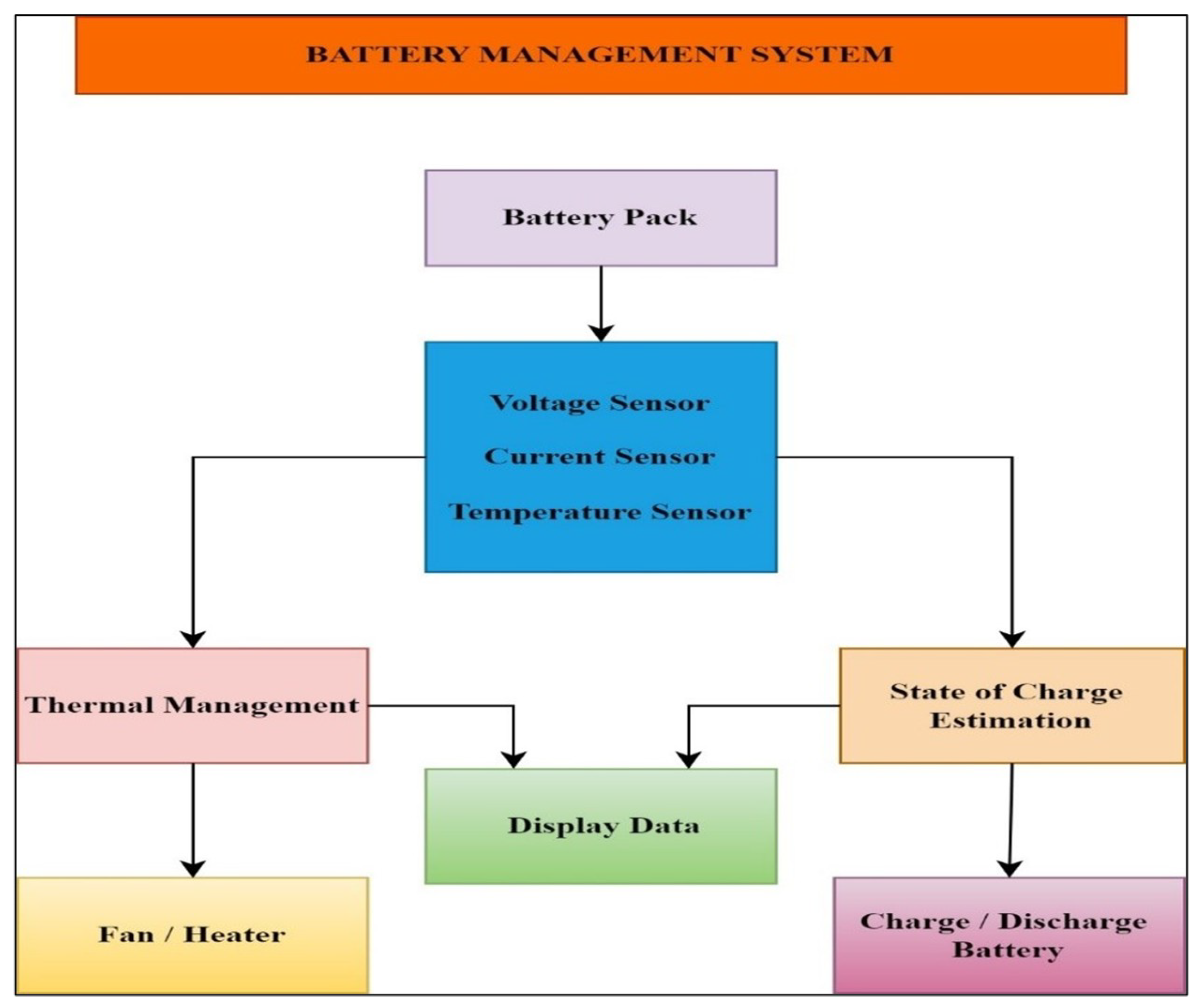
- To incorporate real-time monitoring and protection features, including temperature sensing, overcharge and under-voltage protection, and automated cooling control, ensuring safe and efficient battery operation.
- To validate the proposed BMS design through both simulation and hardware implementation, utilizing Proteus 8.8, MATLAB Simulink 14.0, and an Arduino-based hardware for testing and performance evaluation.
2. Literature Review
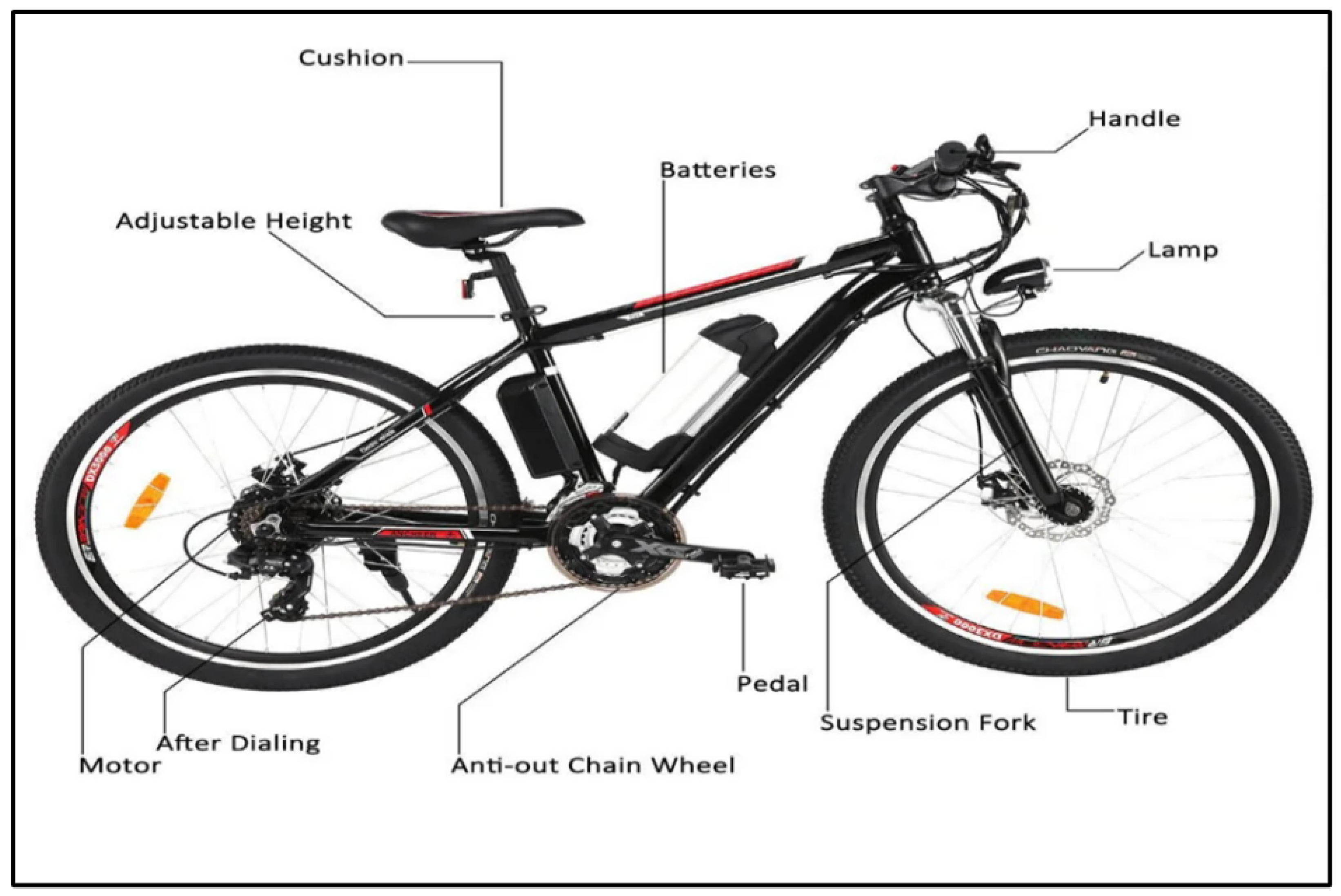
2.1. Electric Bicycles and Battery Management Systems for Pacific Island Conditions
2.2. Battery Technologies for EVs
- Lead-acid
- Lithium-ion (Li-ion)
- Zinc–bromine flow battery (ZBFB)
- Sodium–sulfur (NaS)
- Nickel–cadmium (NiCd)
- Sodium–nickel–chloride (NaNiCl)
- Vanadium redox flow battery (VRFB) [14]
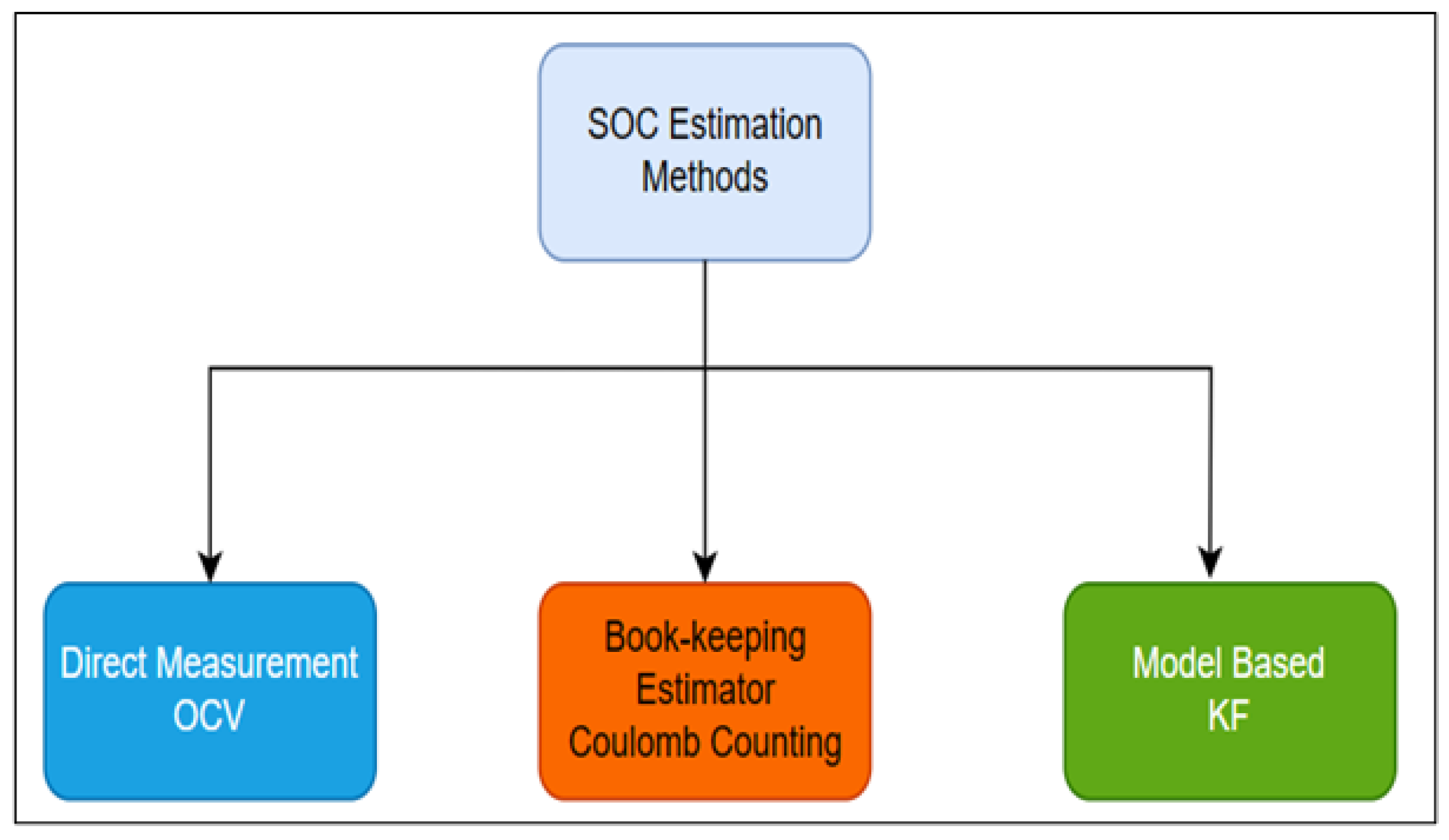
2.3. SOC Estimation
2.3.1. Direct Measurements
2.3.2. Book-Keeping Estimations
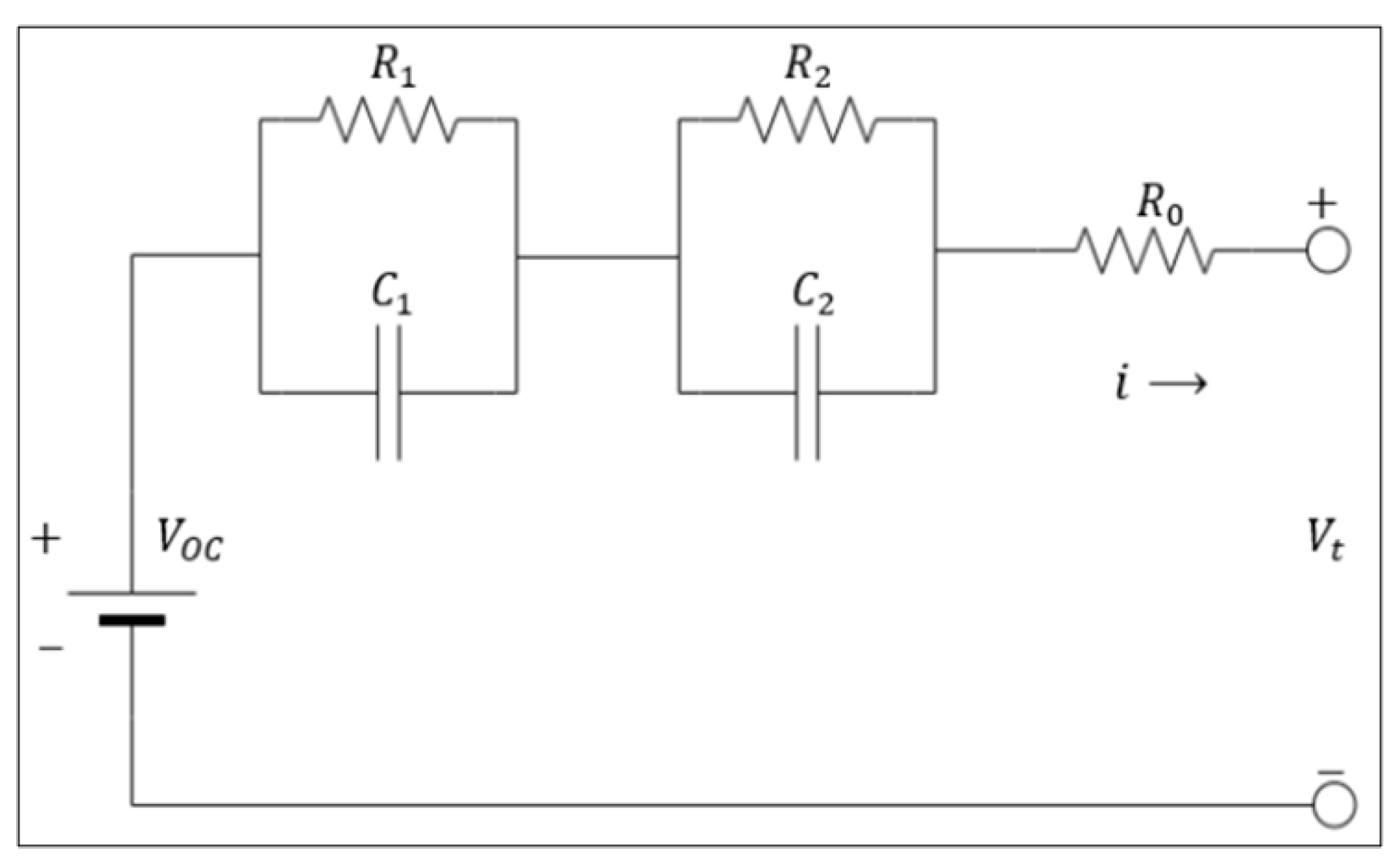
2.3.3. Model-Based Methods
2.4. Battery Thermal Management
2.5. Charging Methods Used for EV and E-Bike Batteries
- Level 1 Charging: This method uses a standard 10 A household power outlet. It is the slowest form of charging, typically requiring 8–12 h to fully charge an EV battery.
- Level 2 Charging: Faster than Level 1, this method uses a dedicated 16 A power point. It generally takes 4–8 h for a full charge.
- Level 3 Charging: These are DC fast chargers, commonly found in public areas, workplaces, and charging stations. They can charge an EV from 0% to 85% in just 30 min to 1 h.
3. Sensor Integration in the Design of a Battery Management System
- LM35—for temperature measurement
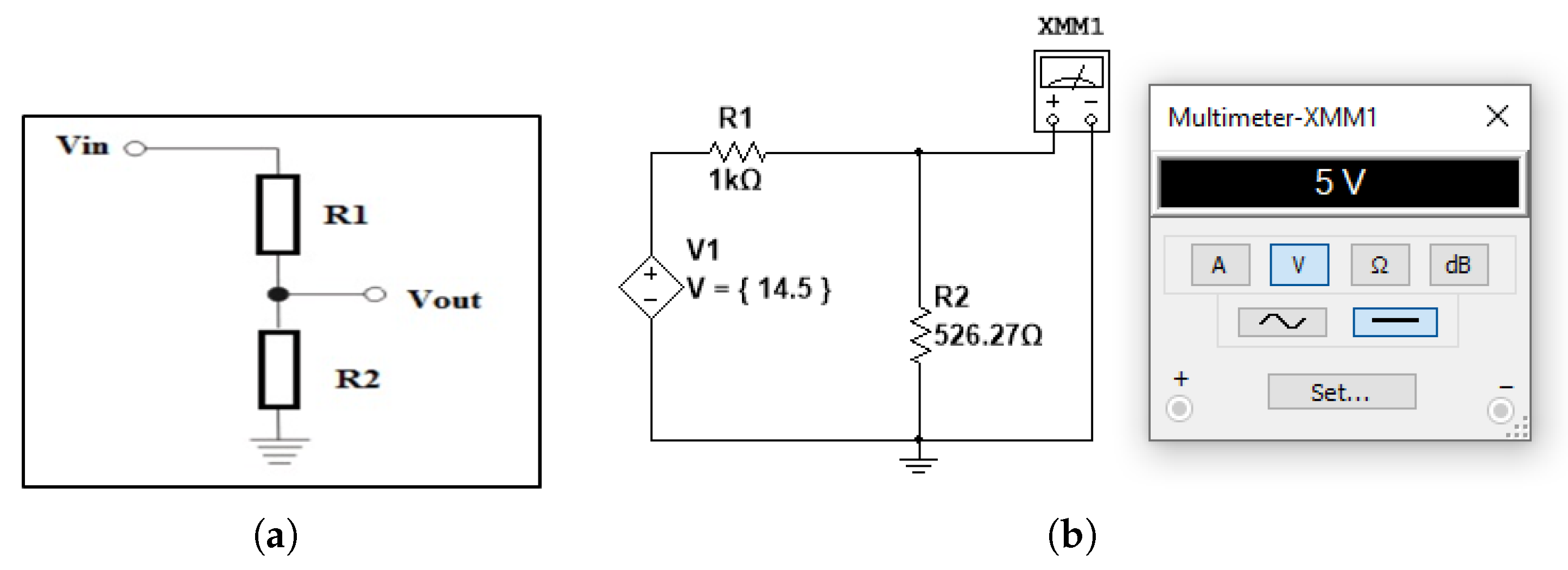
- Voltage divider circuit—for voltage measurement
- ACS712—for current measurement
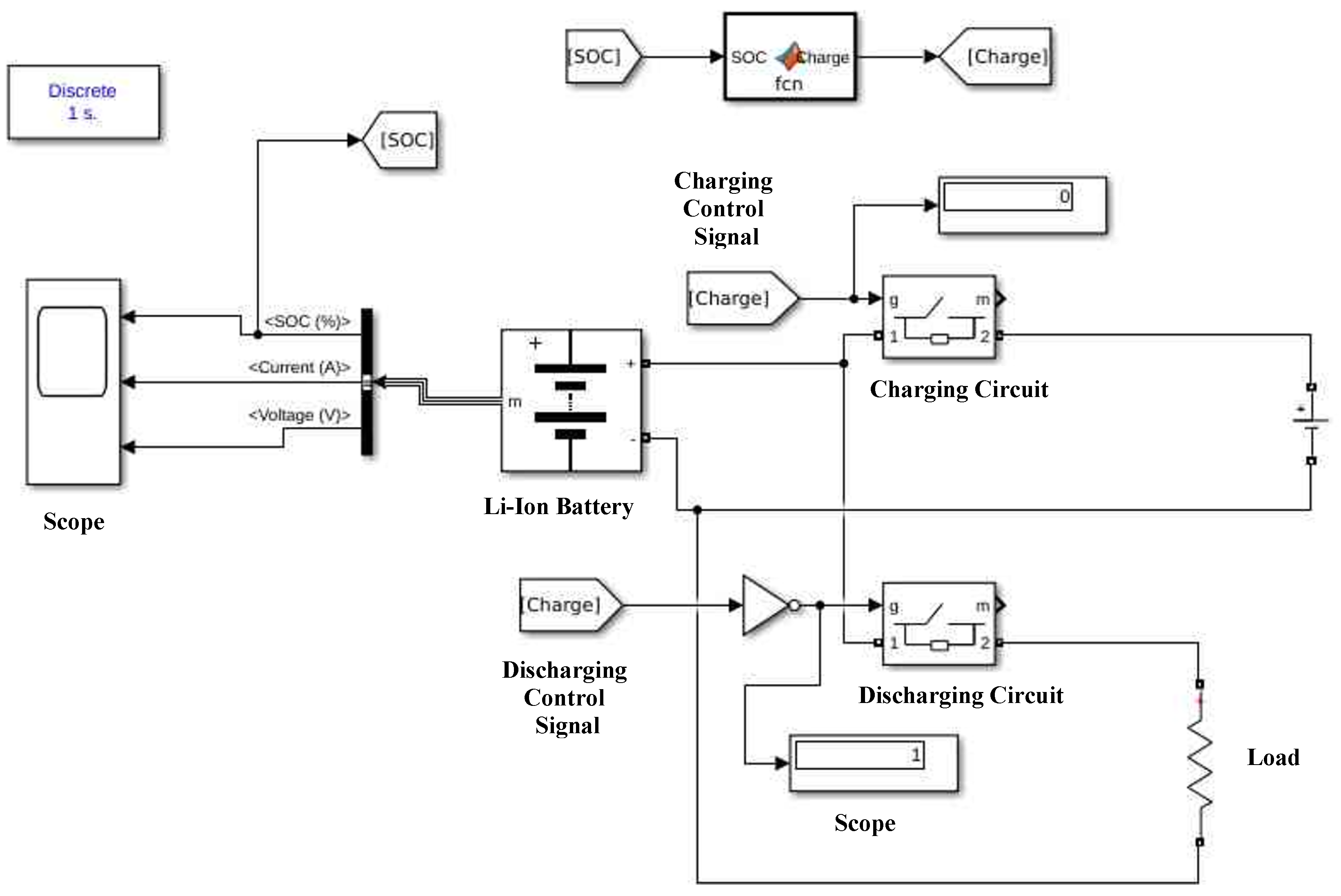
3.1. Battery Charging Control
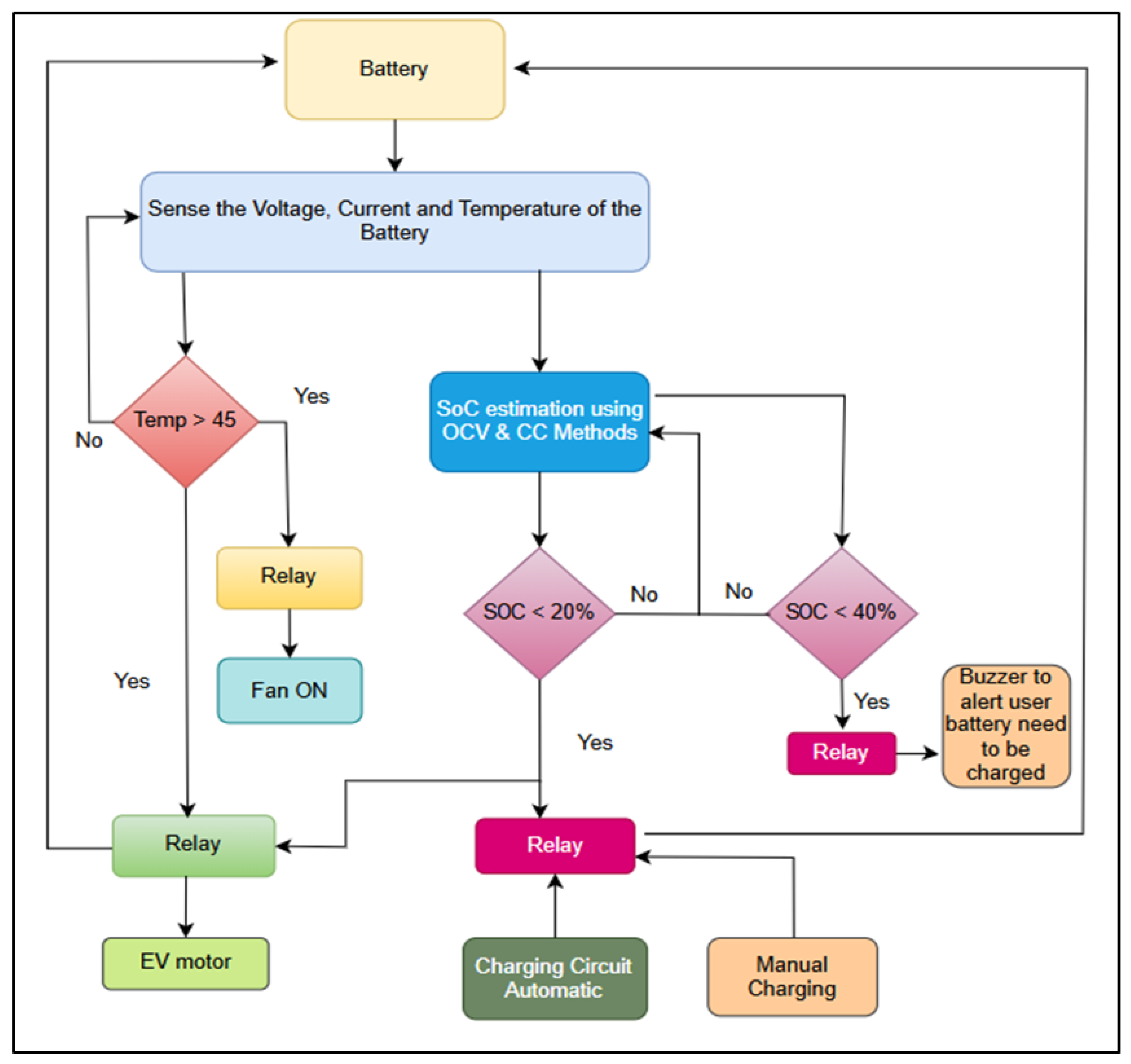
- If SOC drops below 20%, an external charger will be activated to recharge the battery.
- Additionally, four electro-dynamometers will be installed on the bicycle chain. These will generate energy to charge the battery when the user is pedaling—only when the battery is not connected to the load, as lithium-ion batteries cannot charge and discharge simultaneously.
- Once the battery reaches 100% SOC, the charger will automatically disconnect to prevent overcharging.
- If SOC falls below 40%, a beep alarm will sound to alert the user that recharging is needed soon.
3.2. Thermal Management
- Cooling fans will be installed near the battery to dissipate heat.
- If the battery temperature rises above 45 °C, the controller will cut off the load and activate the fan to cool down the system.
- Maintaining optimal temperature is critical, as high temperatures degrade battery life, while low temperatures reduce performance and efficiency.
4. Battery Mathematical Modeling
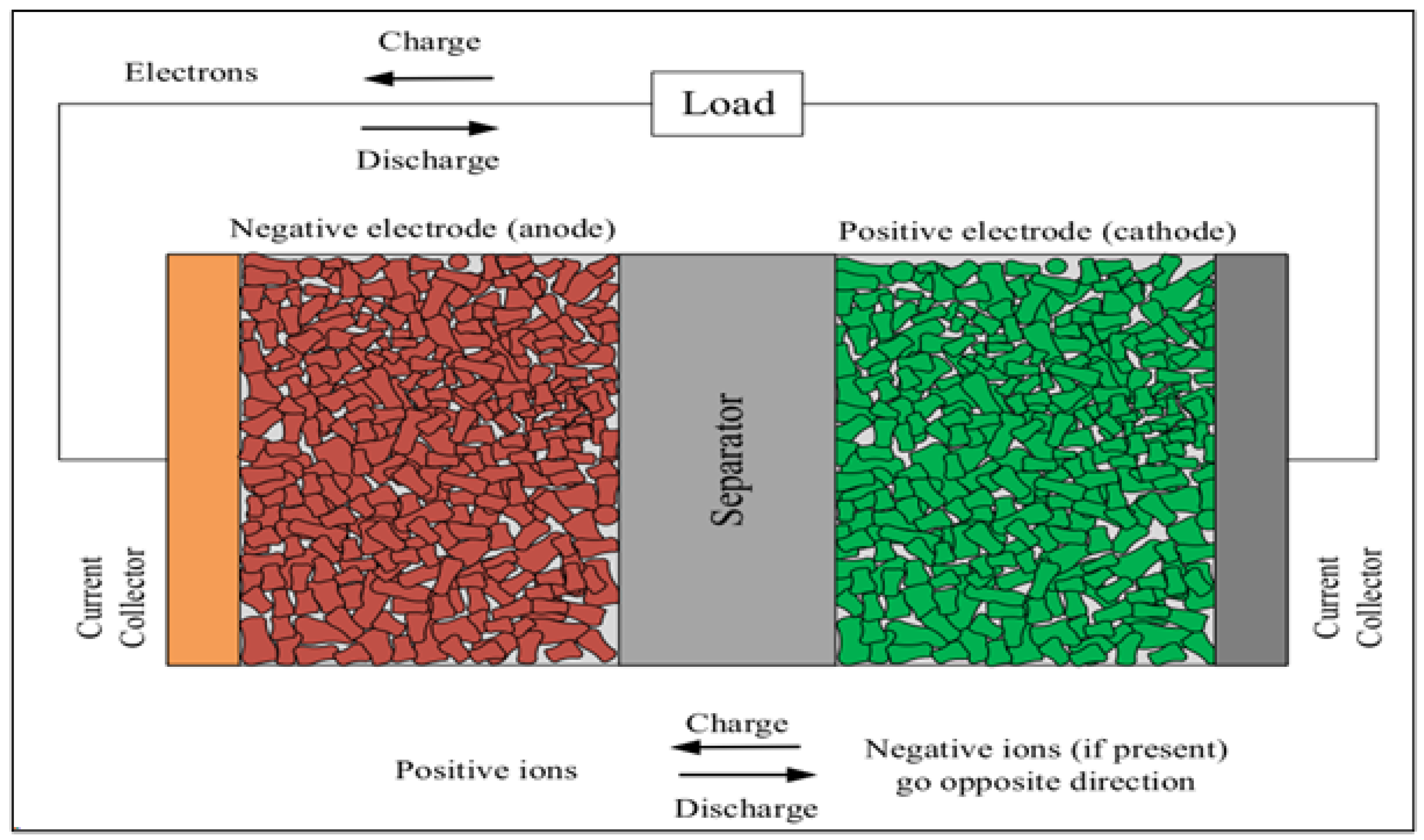
4.1. Battery Charge and Discharge
- Discharging Equation
- Charging Equation
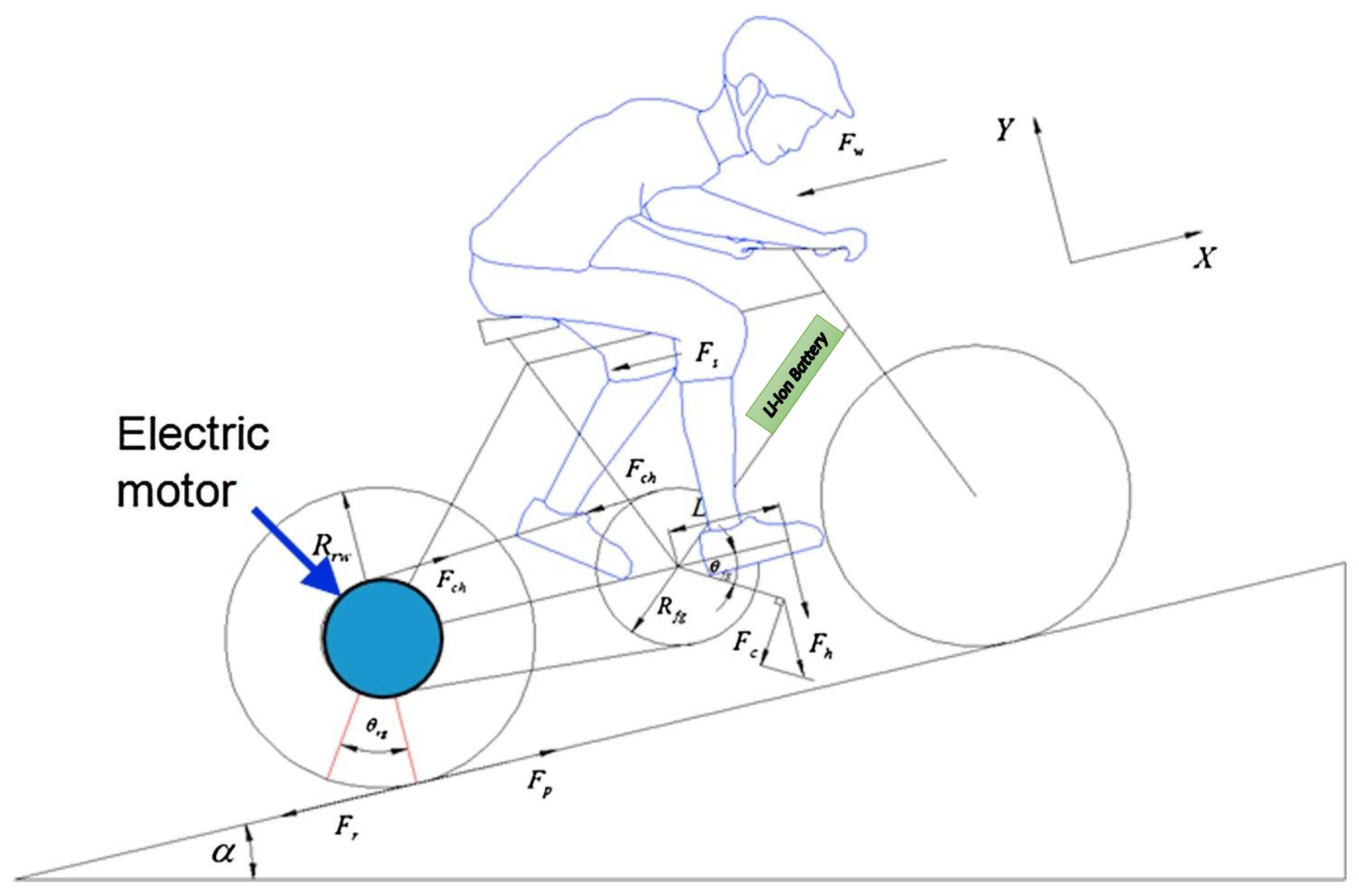
4.2. Electric Bicycle Motor Modeling
4.3. Electric Bicycle Uphill Friction
5. Experimental Design and Simulation Results
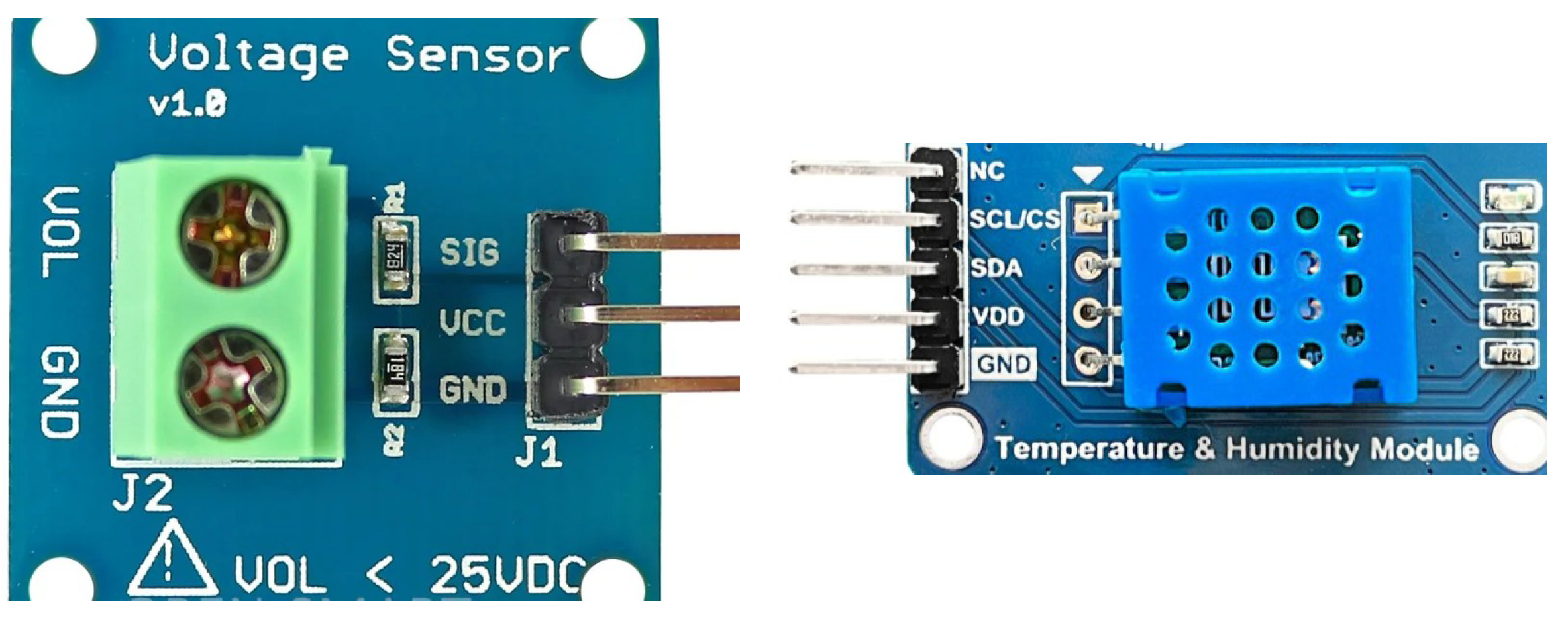
5.1. Voltage Sensor
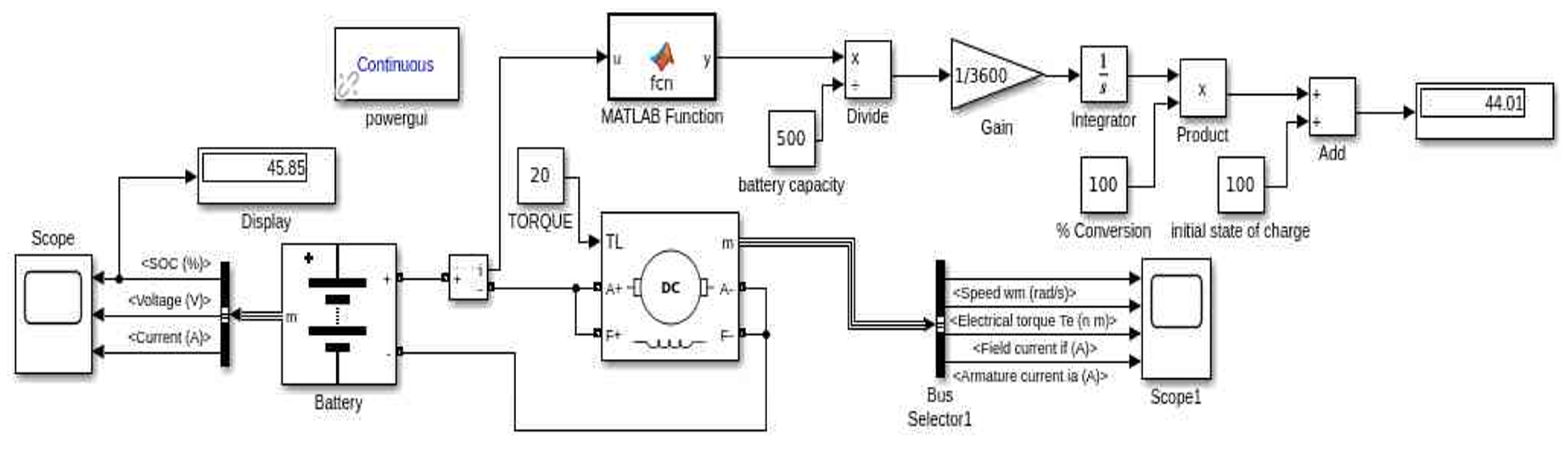
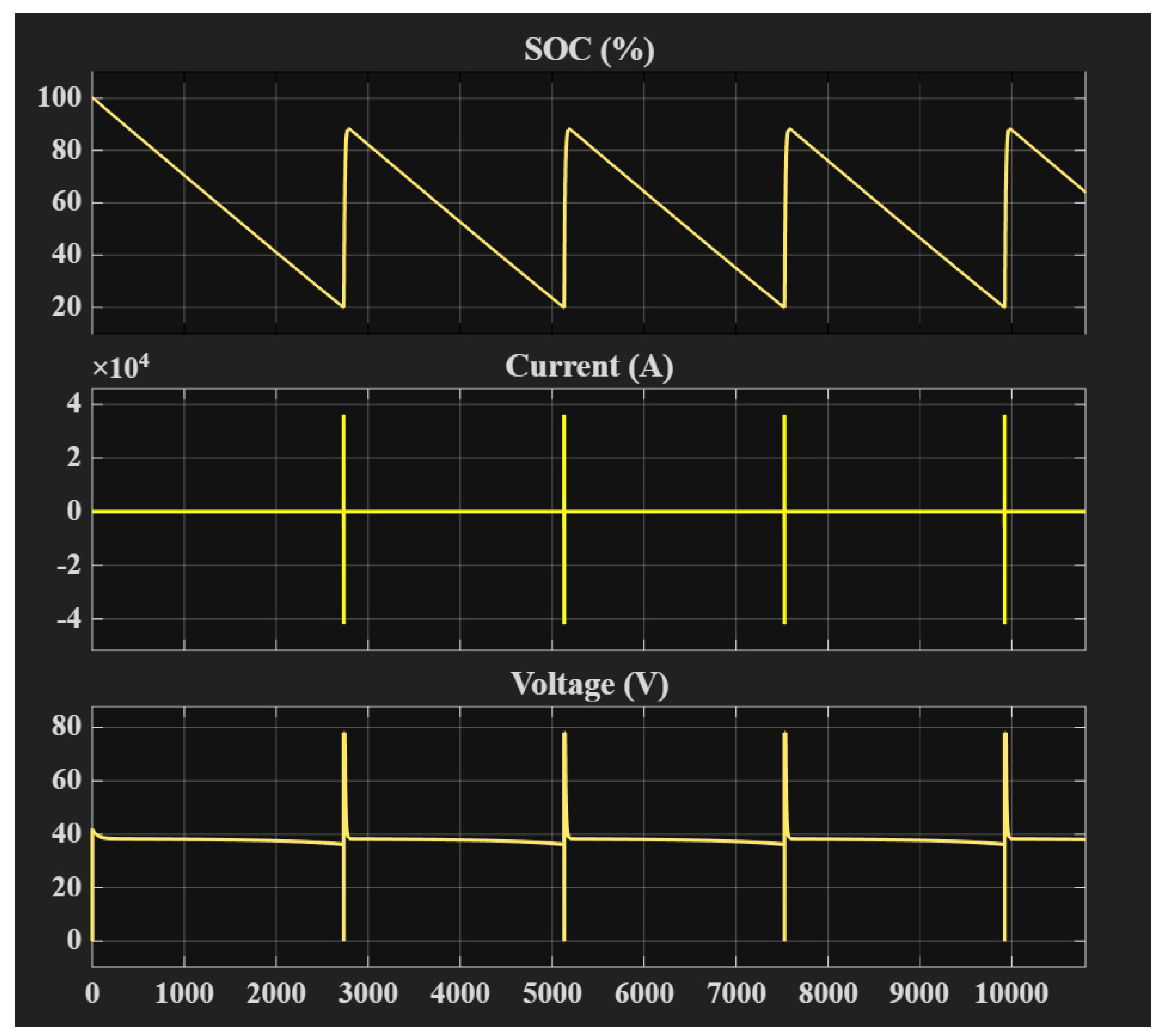
5.2. Matlab Simulation: Coulomb Counting Method of SOC Estimation
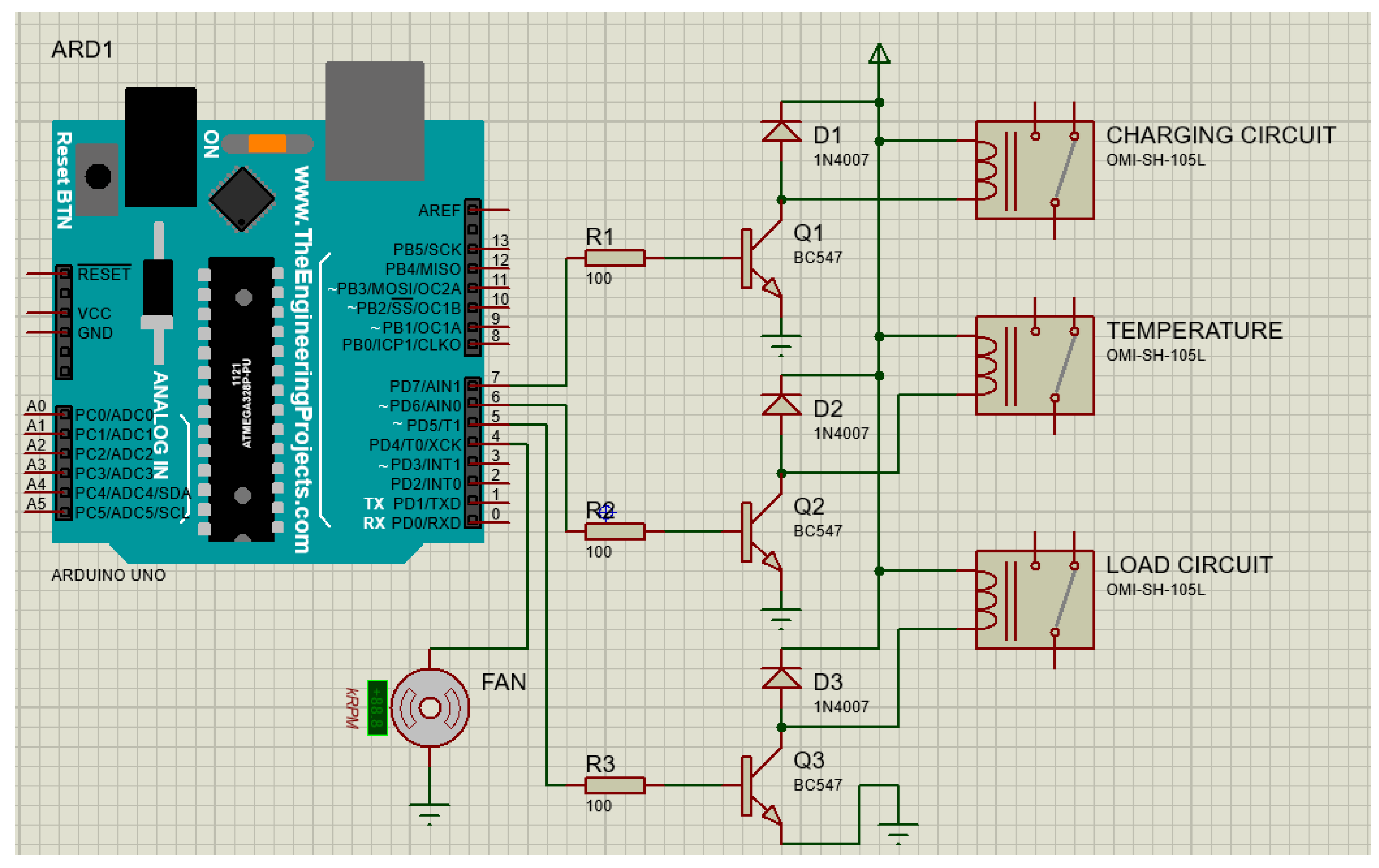
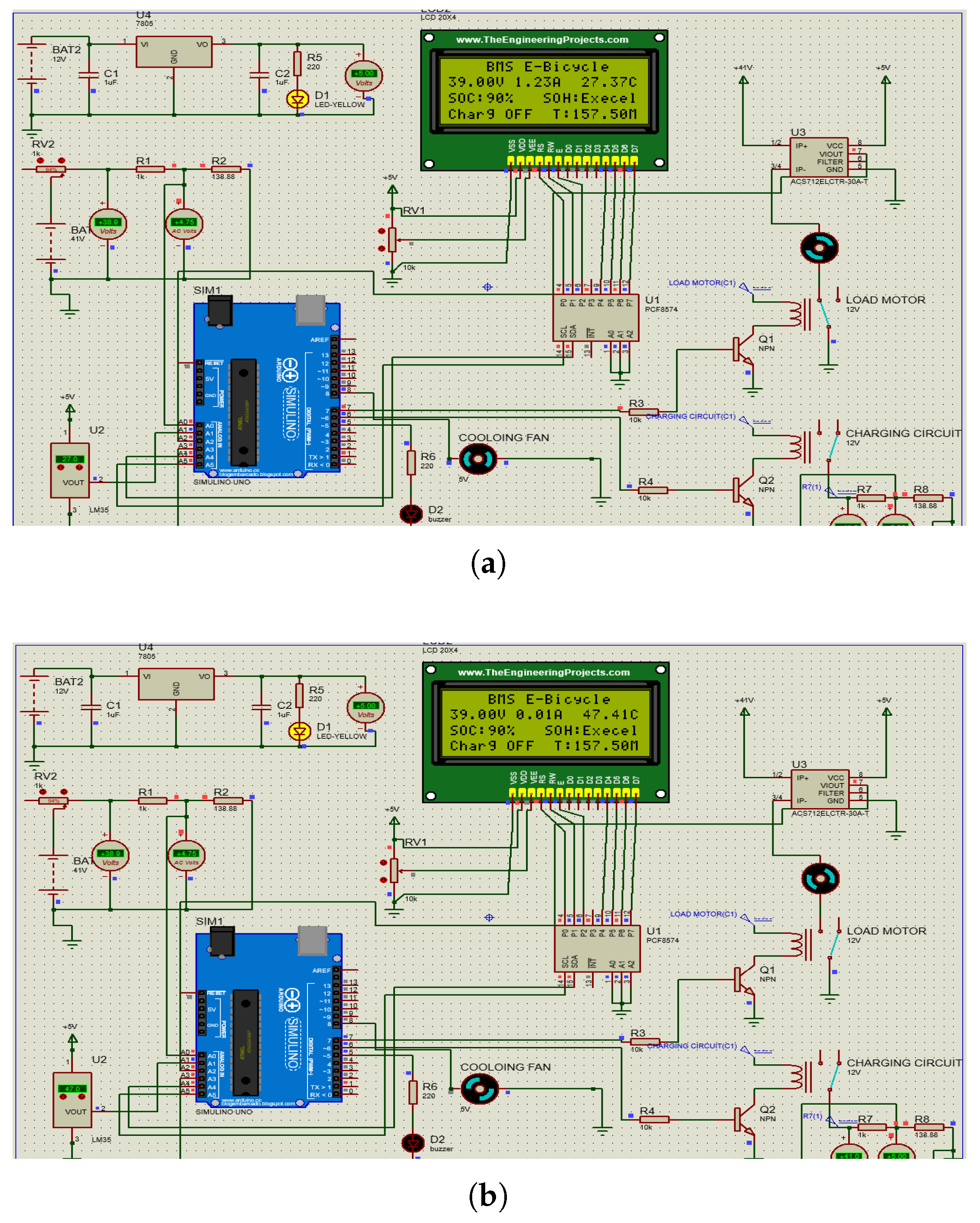
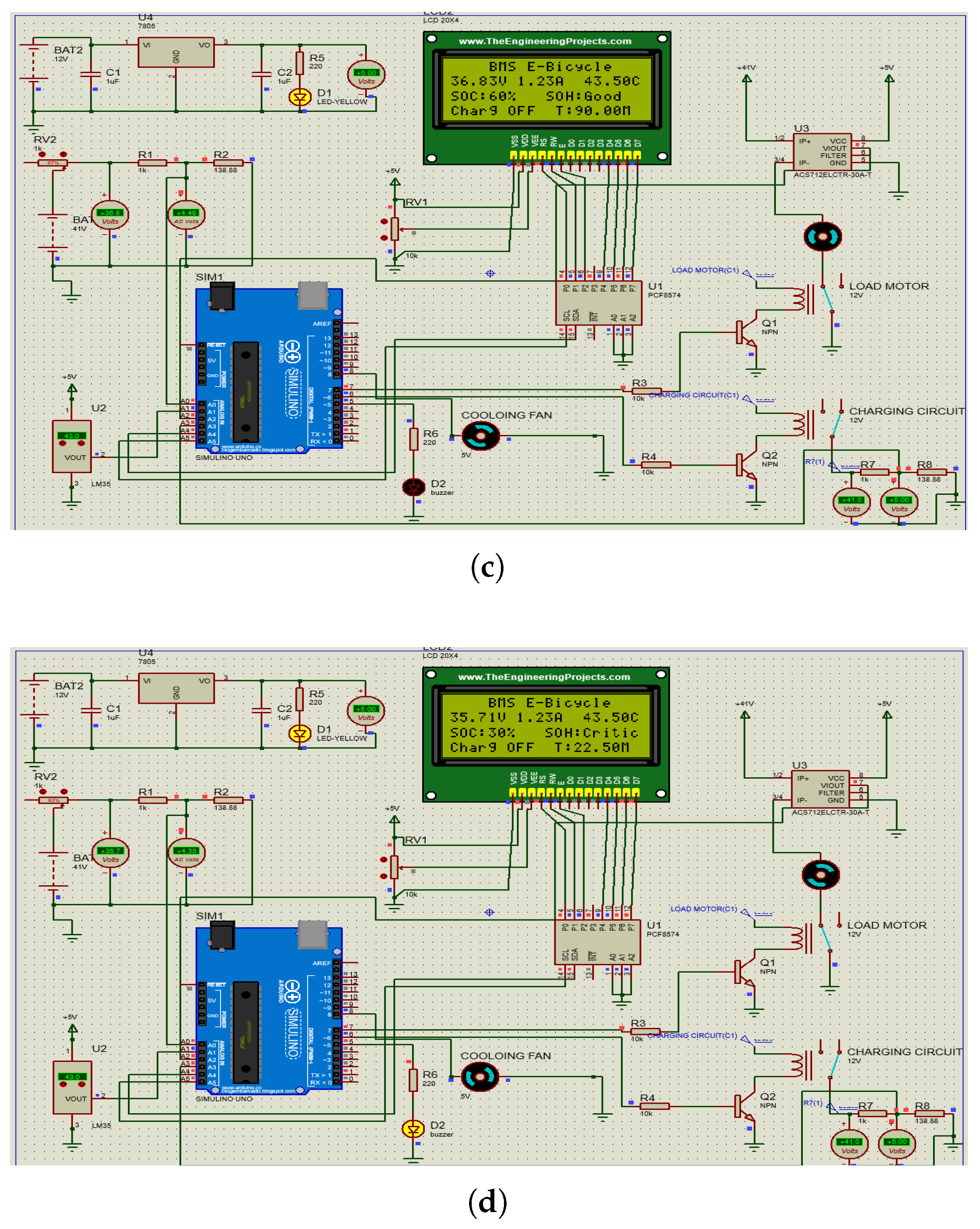
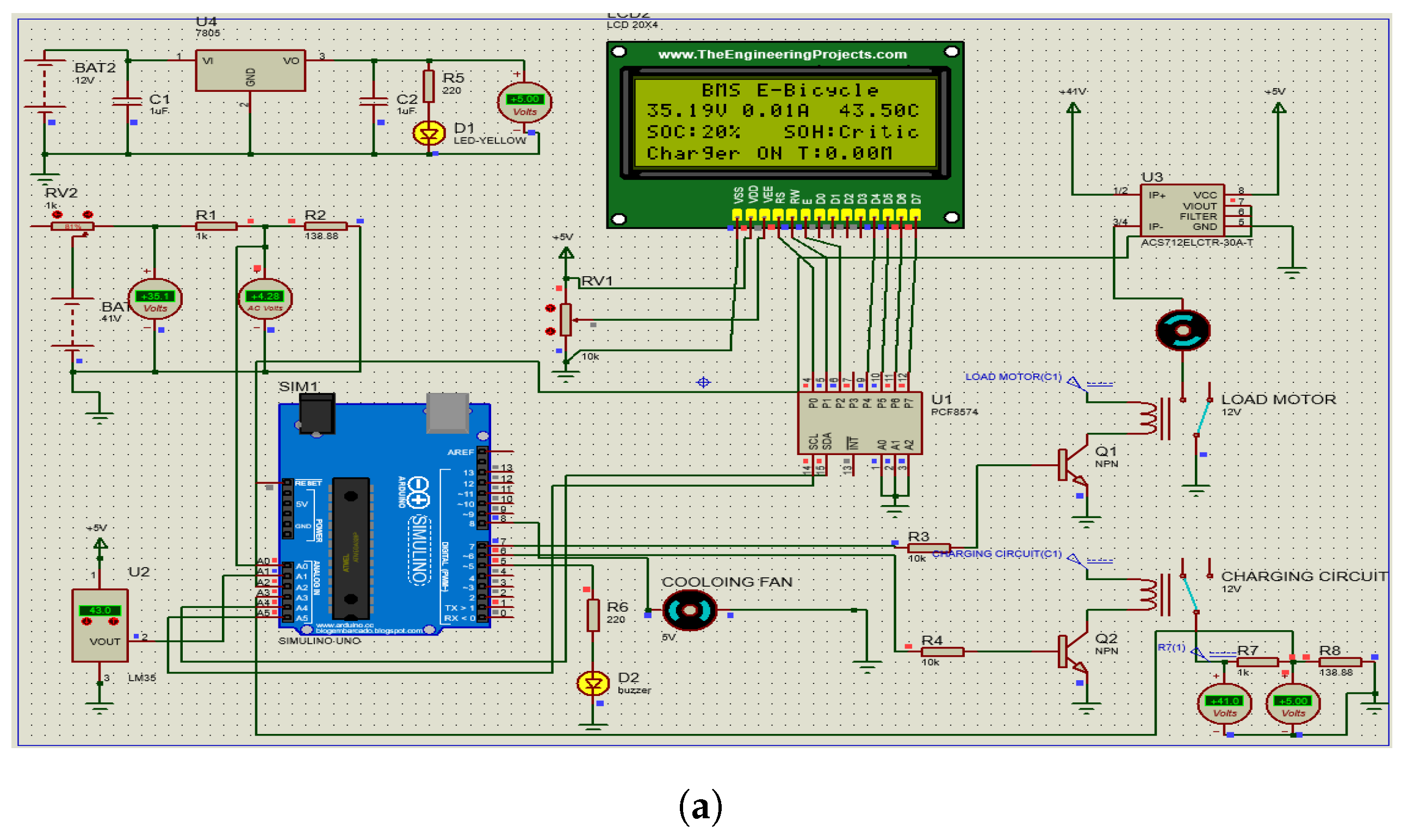
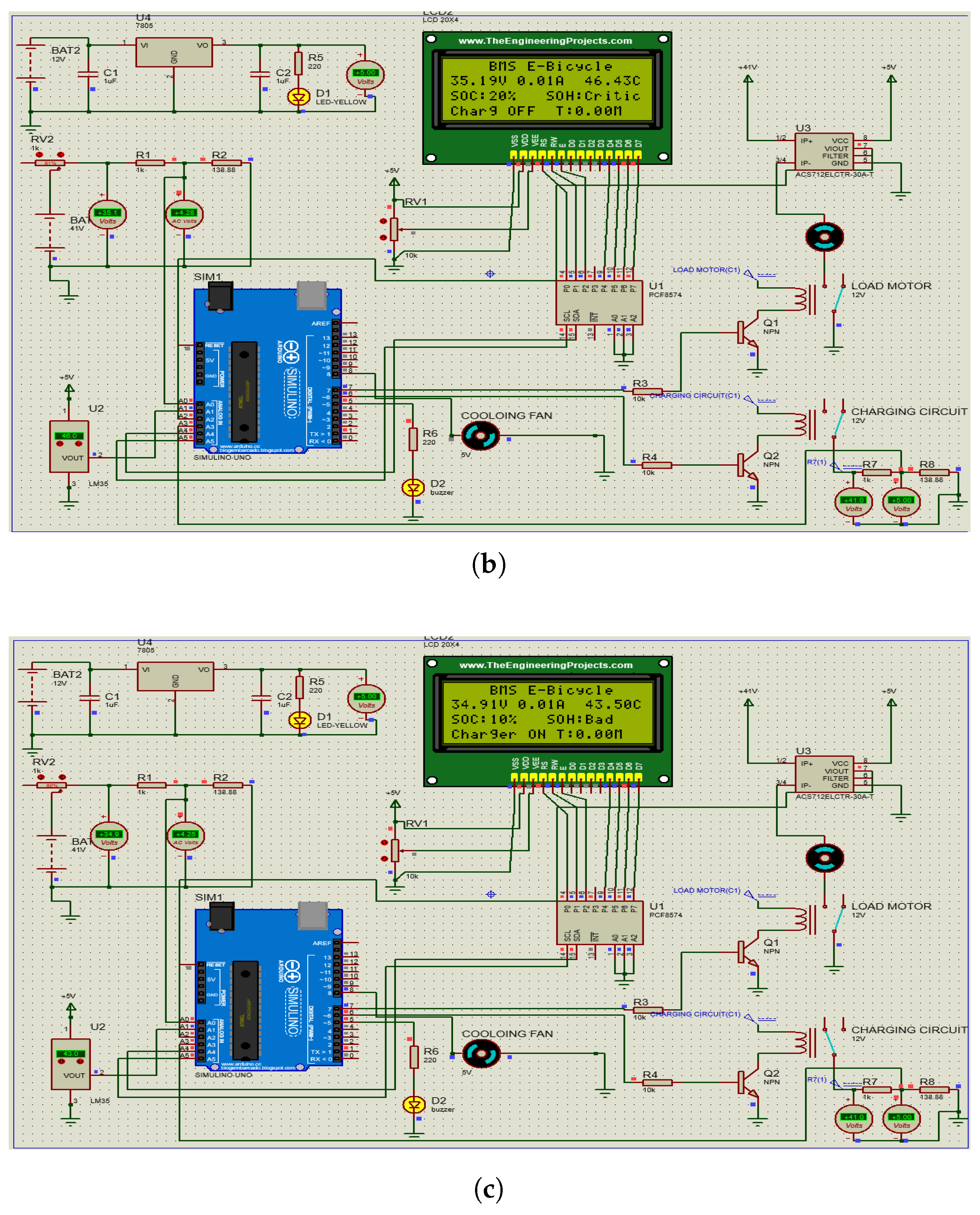
5.3. Hardware Simulation Results: Proteus
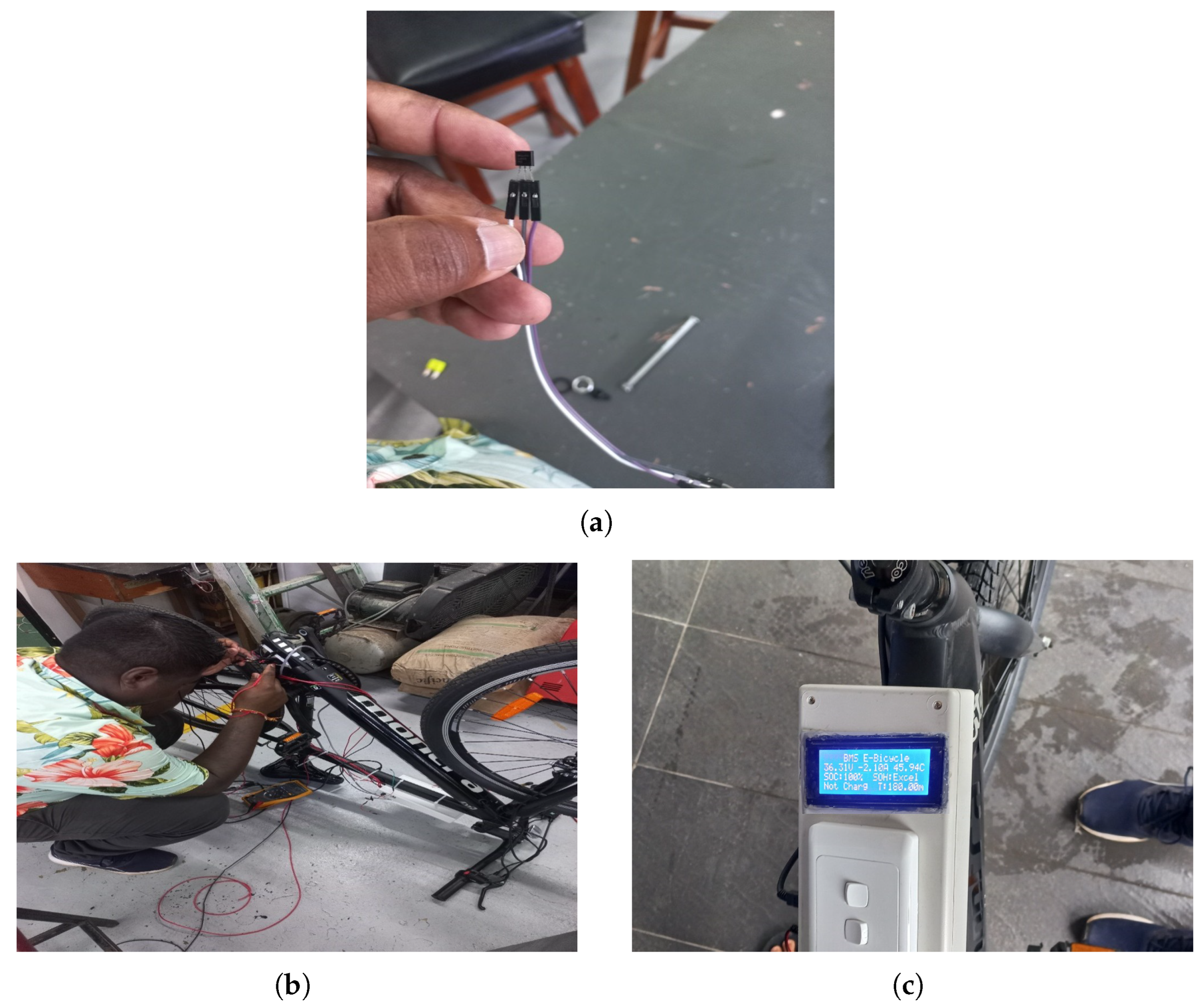
5.4. Sensor-Based BMS Hardware Implementation
6. Conclusions
Author Contributions
Funding
Institutional Review Board Statement
Informed Consent Statement
Data Availability Statement
Conflicts of Interest
References
- Harwardt, K.; Jung, J.H.; Beiranvand, H.; Nowotka, D.; Liserre, M. Lithium-Ion Battery Management System with Reinforcement Learning for Balancing State of Charge and Cell Temperature. In Proceedings of the 2023 IEEE Belgrade PowerTech, Belgrade, Serbia, 25–29 June 2023; pp. 1–6. [Google Scholar]
- Kumar, R.R.; Bharatiraja, C.; Udhayakumar, K.; Devakirubakaran, S.; Sekar, K.S.; Mihet-Popa, L. Advances in batteries, battery modeling, battery management system, battery thermal management, SOC, SOH, and charge/discharge characteristics in EV applications. IEEE Access 2023, 11, 105761–105809. [Google Scholar] [CrossRef]
- Pande, A.; Sharma, A.; Soni, B.P. Deep learning based state of charge estimation of lithium ion battery for electric vehicle application. Discov. Internet Things 2025. [Google Scholar] [CrossRef]
- Sasirekha, P.; Sneka, E.; Velmurugan, B.; Hameed, M.S.; Sivasankar, P. A Battery Monitoring System based on IoT for Electric Vehicles. In Proceedings of the 2023 5th International Conference on Smart Systems and Inventive Technology (ICSSIT), Tirunelveli, India, 23–25 January 2023; pp. 204–210. [Google Scholar]
- Chehade, A.A.; Hussein, A.A. A collaborative Gaussian process regression model for transfer learning of capacity trends between li-ion battery cells. IEEE Trans. Veh. Technol. 2020, 69, 9542–9552. [Google Scholar] [CrossRef]
- Hu, X.; Che, Y.; Lin, X.; Onori, S. Battery health prediction using fusion-based feature selection and machine learning. IEEE Trans. Transp. Electrif. 2020, 7, 382–398. [Google Scholar] [CrossRef]
- Ananthraj, C.R.; Ghosh, A. Battery management system in electric vehicle. In Proceedings of the 2021 4th Biennial International Conference on Nascent Technologies in Engineering (ICNTE), Navi Mumbai, India, 15–16 January 2021; pp. 1–6. [Google Scholar]
- Kim, S.W.; Lee, G.M. Estimating increase of electric energy according to penetration of electric vehicles at the Jeju Island in Korea. In Proceedings of the 2016 IEEE Transportation Electrification Conference and Expo, Asia-Pacific (ITEC Asia-Pacific), Busan, Republic of Korea, 1–4 June 2016; pp. 947–949. [Google Scholar]
- Faisal, S.; Goyal, G.R.; Soni, B.P.; Husain, D. Design analysis of matrix converter for wireless Vehicle-to-Vehicle charging system and ecological footprint assessment of electric vehicle charging station. Int. J. Emerg. Electr. Power Syst. 2025. [Google Scholar] [CrossRef]
- Totev, V.; Gueorgiev, V. Batteries of electric vehicles. In Proceedings of the 2021 13th Electrical Engineering Faculty Conference (BulEF), Varna, Bulgaria, 8–11 September 2021; pp. 1–6. [Google Scholar]
- Li, S.; Zhang, C. Study on battery management system and lithium-ion battery. In Proceedings of the 2009 International Conference on Computer and Automation Engineering, Bangkok, Thailand, 8–10 March 2009; pp. 218–222. [Google Scholar]
- Shareef, H.; Islam, M.M.; Mohamed, A. A review of the state-of-the-art charging technologies, placement methodologies, and impacts of electric vehicles. Renew. Sustain. Energy Rev. 2016, 64, 403–420. [Google Scholar] [CrossRef]
- Khan, M.A.; Zeb, K.; Sathishkumar, P.; Ali, M.U.; Uddin, W.; Hussain, S.; Kim, H.J. A novel supercapacitor/lithium-ion hybrid energy system with a fuzzy logic-controlled fast charging and intelligent energy management system. Electronics 2018, 7, 63. [Google Scholar] [CrossRef]
- Manzetti, S.; Mariasiu, F. Electric vehicle battery technologies: From present state to future systems. Renew. Sustain. Energy Rev. 2015, 51, 1004–1012. [Google Scholar] [CrossRef]
- Iclodean, C.; Varga, B.; Burnete, N.; Cimerdean, D.; Jurchiş, B. Comparison of different battery types for electric vehicles. IOP Conf. Ser. Mater. Sci. Eng. 2017, 252, 012058. [Google Scholar] [CrossRef]
- Umair Ali, M.; Hussain Nengroo, S.; Adil Khan, M.; Zeb, K.; Ahmad Kamran, M.; Kim, H.J. A real-time simulink interfaced fast-charging methodology of lithium-ion batteries under temperature feedback with fuzzy logic control. Energies 2018, 11, 1122. [Google Scholar] [CrossRef]
- Ralon, P.; Taylor, M.; Ilas, A.; Diaz-Bone, H.; Kairies, K. Electricity Storage and Renewables: Costs and Markets to 2030; International Renewable Energy Agency: Abu Dhabi, United Arab Emirates, 2017; pp. 154–164. [Google Scholar]
- Che, Y.; Deng, Z.; Li, P.; Tang, X.; Khosravinia, K.; Lin, X.; Hu, X. State of health prognostics for series battery packs: A universal deep learning method. Energy 2022, 238, 121857. [Google Scholar] [CrossRef]
- Che, Y.; Deng, Z.; Lin, X.; Hu, L.; Hu, X. Predictive battery health management with transfer learning and online model correction. IEEE Trans. Veh. Technol. 2021, 70, 1269–1277. [Google Scholar] [CrossRef]
- Pande, A.S.; Soni, B.P.; Sharma, A.K. Modeling of one and two RC model and state estimation of Lithium-Ion Battery using Thevenin’s equivalent Circuit Model. Procedia Comput. Sci. 2025, 259, 494–503. [Google Scholar] [CrossRef]
- Zhang, R.; Xia, B.; Li, B.; Cao, L.; Lai, Y.; Zheng, W.; Wang, M. A study on the open circuit voltage and state of charge characterization of high capacity lithium-ion battery under different temperature. Energies 2018, 11, 2408. [Google Scholar] [CrossRef]
- Tang, X.; Wang, Y.; Chen, Z. A method for state-of-charge estimation of LiFePO4 batteries based on a dual-circuit state observer. J. Power Sources 2015, 296, 23–29. [Google Scholar] [CrossRef]
- Coleman, M.; Lee, C.K.; Zhu, C.; Hurley, W.G. State-of-charge determination from EMF voltage estimation: Using impedance, terminal voltage, and current for lead-acid and lithium-ion batteries. IEEE Trans. Ind. Electron. 2007, 54, 2550–2557. [Google Scholar] [CrossRef]
- Bao, Y.; Dong, W.; Wang, D. Online internal resistance measurement application in lithium ion battery capacity and state of charge estimation. Energies 2018, 11, 1073. [Google Scholar] [CrossRef]
- Lu, L.; Han, X.; Li, J.; Hua, J.; Ouyang, M. A review on the key issues for lithium-ion battery management in electric vehicles. J. Power Sources 2013, 226, 272–288. [Google Scholar] [CrossRef]
- Dini, P.; Colicelli, A.; Saponara, S. Review on modeling and soc/soh estimation of batteries for automotive applications. Batteries 2024, 10, 34. [Google Scholar] [CrossRef]
- Rivera-Barrera, J.P.; Muñoz-Galeano, N.; Sarmiento-Maldonado, H.O. SoC estimation for lithium-ion batteries: Review and future challenges. Electronics 2017, 6, 102. [Google Scholar] [CrossRef]
- Saji, D.; Babu, P.S.; Ilango, K. SoC estimation of lithium ion battery using combined coulomb counting and fuzzy logic method. In Proceedings of the 2019 4th International Conference on Recent Trends on Electronics, Information, Communication & Technology (RTEICT), Bangalore, India, 17–18 May 2019; pp. 948–952. [Google Scholar]
- Vattem, S.; Gorantla, S.R. A critical review on available methods for estimating the present state-of-charge of the batteries used in EV/HEV. In Proceedings of the 2023 International Conference on Advanced & Global Engineering Challenges (AGEC), Kakinada, India, 23–24 June 2023; pp. 26–31. [Google Scholar]
- Jiang, B.; Dai, H.; Wei, X. A cell-to-pack state estimation extension method based on a multilayer difference model for series-connected battery packs. IEEE Trans. Transp. Electrif. 2021, 8, 2037–2049. [Google Scholar] [CrossRef]
- Rao, P.N.; Lavanya, V.; Manasa, D.; Boggavarapu, S.; Soni, B.P. Battery models and estimation techniques for energy storage systems in residential buildings. J. Mod. Technol. 2024, 1, 47–58. [Google Scholar] [CrossRef]
- Khanum, F.; Louback, E.; Duperly, F.; Jenkins, C.; Kollmeyer, P.J.; Emadi, A. A Kalman filter based battery state of charge estimation MATLAB function. In Proceedings of the 2021 IEEE Transportation Electrification Conference & Expo (ITEC), Chicago, IL, USA, 21–25 June 2021; pp. 484–489. [Google Scholar]
- Taborelli, C.; Onori, S. State of charge estimation using extended Kalman filters for battery management system. In Proceedings of the 2014 IEEE International Electric Vehicle Conference (IEVC), Florence, Italy, 17–19 December 2014; pp. 1–8. [Google Scholar]
- Zhang, Z.; Jiang, L.; Zhang, L.; Huang, C. State-of-charge estimation of lithium-ion battery pack by using an adaptive extended Kalman filter for electric vehicles. J. Energy Storage 2021, 37, 102457. [Google Scholar] [CrossRef]
- Cui, Z.; Kang, L.; Li, L.; Wang, L.; Wang, K. A hybrid neural network model with improved input for state of charge estimation of lithium-ion battery at low temperatures. Renew. Energy 2022, 198, 1328–1340. [Google Scholar] [CrossRef]
- Makuwatsine, T.T.; Gill, A.; Mishra, P.K. Battery Pack Modeling for the Analysis of Battery Temperature and Current Control. In Proceedings of the 2023 3rd Asian Conference on Innovation in Technology (ASIANCON), Ravet, India, 25–27 August 2023; pp. 1–6. [Google Scholar]
- Nerkar, M.; Mukherjee, A.; Soni, B.P. A review on optimization scheduling methods of charging and discharging of EV. AIP Conf. Proc. 2022, 2452, 040002. [Google Scholar] [CrossRef]
- Blazek, V.; Pergl, I.; Kedron, P.; Piecha, M.; Bajaj, M. Effect of ambient temperature on EV charging curves after seven years of EV operation. In Proceedings of the 2023 23rd International Scientific Conference on Electric Power Engineering, Brno, Czech Republic, 24–26 May 2023; pp. 1–5. [Google Scholar]
- Bunyamin, W.M.H.W.; Baharom, R.; Munim, W.N.W.A. Wireless Battery Charger with Power Factor Correction for Electric Bike. In Proceedings of the 2023 IEEE Industrial Electronics and Applications Conference (IEACon), Penang, Malaysia, 6–7 November 2023; pp. 139–144. [Google Scholar]
- Baharom, R.; Muhamad, S.M.; Munim, W.N.W.A.; Radzi, M.A.M.; Hashim, N.; Bunyamin, W.M.H.W.; Shaffee, S.N.A. Energy Analysis Between Wire-Connected and Wireless Battery Charger Systems for Electric Bike. In Proceedings of the 2023 IEEE Industrial Electronics and Applications Conference (IEACon), Penang, Malaysia, 6–7 November 2023; pp. 134–138. [Google Scholar]
- Guna, A.; Kumari, S.; Sivapriya, G. State of Charge based Charging Controller with Temperature monitoring system for Lithium ion Battery in Electric Vehicle. E3S Web Conf. 2023, 399, 01008. [Google Scholar]
- Hung, N.B.; Lim, O. A simulation and experimental study of dynamic performance and electric consumption of an electric bicycle. Energy Procedia 2019, 158, 2865–2871. [Google Scholar] [CrossRef]
- Yildiz, A.B. Electrical equivalent circuit based modeling and analysis of direct current motors. Int. J. Electr. Power Energy Syst. 2012, 43, 1043–1047. [Google Scholar] [CrossRef]
- Hung, N.B.; Jaewon, S.; Lim, O. A study of the effects of input parameters on the dynamics and required power of an electric bicycle. Appl. Energy 2017, 204, 1347–1362. [Google Scholar] [CrossRef]



| Battery Type | Energy Density (Wh/L) | Power Density (W/L) | Nominal Voltage | Life Cycle | Depth of Discharge % | Charging Efficiency % |
|---|---|---|---|---|---|---|
| Lead-Acid | 30–50 | 180 | 2 | 200–300 | 50 | 50–95 |
| Sodium–Sulfur | 140–300 | 140–180 | 2.08 | 1500 | 100 | 70 |
| Sodium–Nickel–Chloride | 160–275 | 150–270 | - | 3000 | 100 | 84 |
| Nickel–cadmium | 50–80 | 150 | 1.2 | 1000 | 85 | 70–90 |
| Lithium-ion | 100–270 | 250–680 | 3.2–3.7 | 600–3000 | 95 | 80–90 |
| Battery Type | Charging Efficiency | Self-Discharge Rate (% Months) | Charge Temperature (°C) | Discharge Temperature (°C) |
|---|---|---|---|---|
| Li-ion | 80–90 | 3–10 | 0 to 45 | −20 to 60 |
| NiCD | 70–90 | 20 | 0 to 45 | −20 to 65 |
| Lead-Acid | 50–95 | 5 | −20 to 50 | −20 to 50 |
| NiMH | 65 | 30 | −20 to 65 | −20 to 65 |
| Aspect | Bicycle Without BMS | Bicycle with Proposed BMS | Benefit and Contribution of Proposed BMS |
|---|---|---|---|
| Safety | High risk of overheating, overcharging, and deep discharging | Actively monitors voltage, current, and temperature to prevent unsafe conditions | Enhances safety and reduces fire/explosion risks |
| Cell Balancing | Cells operate at different charge levels, leading to reduced efficiency | Actively balances cells to ensure uniform charging/ discharging | Extends battery life and maintains consistent performance |
| Performance | Unstable output, poor efficiency under load | Stable and optimized performance under varying load conditions | Reliable power delivery for real-world applications |
| Battery Life | Shortened due to frequent overcharging/ deep discharging | Significantly extended by maintaining optimal operating conditions | Cost savings through longer usable lifespan |
| Monitoring and Control | No real-time data or fault detection | Continuous real-time monitoring with fault detection and protection | Supports predictive maintenance and reduces downtime |
| Environmental and Sustainability Impact | More frequent replacements increase e-waste | Longer lifespan reduces frequency of disposal/ replacement | Contributes to sustainability and green engineering practices |
| User Confidence | Uncertainty due to lack of protection features | Provides clear operational limits and fault alerts | Builds trust in battery reliability and performance |
Disclaimer/Publisher’s Note: The statements, opinions and data contained in all publications are solely those of the individual author(s) and contributor(s) and not of MDPI and/or the editor(s). MDPI and/or the editor(s) disclaim responsibility for any injury to people or property resulting from any ideas, methods, instructions or products referred to in the content. |
© 2025 by the authors. Licensee MDPI, Basel, Switzerland. This article is an open access article distributed under the terms and conditions of the Creative Commons Attribution (CC BY) license (https://creativecommons.org/licenses/by/4.0/).
Share and Cite
Reddy, P.; Soni, B.P.; Singh, S. SOC Estimation-Based Battery Management System for Electric Bicycles: Design and Implementation. Eng. Proc. 2025, 118, 76. https://doi.org/10.3390/ECSA-12-26513
Reddy P, Soni BP, Singh S. SOC Estimation-Based Battery Management System for Electric Bicycles: Design and Implementation. Engineering Proceedings. 2025; 118(1):76. https://doi.org/10.3390/ECSA-12-26513
Chicago/Turabian StyleReddy, Pranid, Bhanu Pratap Soni, and Satyanand Singh. 2025. "SOC Estimation-Based Battery Management System for Electric Bicycles: Design and Implementation" Engineering Proceedings 118, no. 1: 76. https://doi.org/10.3390/ECSA-12-26513
APA StyleReddy, P., Soni, B. P., & Singh, S. (2025). SOC Estimation-Based Battery Management System for Electric Bicycles: Design and Implementation. Engineering Proceedings, 118(1), 76. https://doi.org/10.3390/ECSA-12-26513