Proceeding Paper

Fatigue Performance of Hot-Formed Automotive Antiroll Bars †
1
Laboratory of Machine Elements and Machine Design, Mechanical Engineering Department, Aristotle University of Thessaloniki, 54124 Thessaloniki, Greece
2
Shandong Leopard Automotive Holdings Ltd., Zibo 255130, China
*
Author to whom correspondence should be addressed.
Presented at the 8th International Conference of Engineering Against Failure (ICEAF VIII), Kalamata, Greece, 22–25 June 2025.
Eng. Proc. 2025, 119(1), 27; https://doi.org/10.3390/engproc2025119027
Published: 17 December 2025
(This article belongs to the Proceedings of The 8th International Conference of Engineering Against Failure)

Abstract

This study investigates the fatigue life of heat-treated and shot-peened antiroll bars used in heavy-duty truck suspensions. These components enhance vehicle stability by increasing torsional stiffness. Experimental tests, including microstructure inspection, hardness, and roughness measurements, assess material properties and manufacturing effects such as decarburization and shot peening. Subjected to multiaxial proportional loading, the bars present complex fatigue behavior. The study focuses on fatigue life influencing factors and the determination of S-N curves for the fatigue-based design of full-scale components.

1. Introduction

The automotive industry’s efforts to reduce manufacturing costs and vehicle emissions have led to the adoption of lightweight, high-strength spring steels and advanced manufacturing processes for components, such as anti-roll bars. These bars typically undergo a comprehensive manufacturing process consisting of hot forming, quenching, tempering, and shot peening to enhance their fatigue life [1]. However, heat treatment can cause surface decarburization, degrading local mechanical properties [2,3], while shot peening improves fatigue life through residual stresses but may also promote crack initiation due to increased surface roughness [4,5].
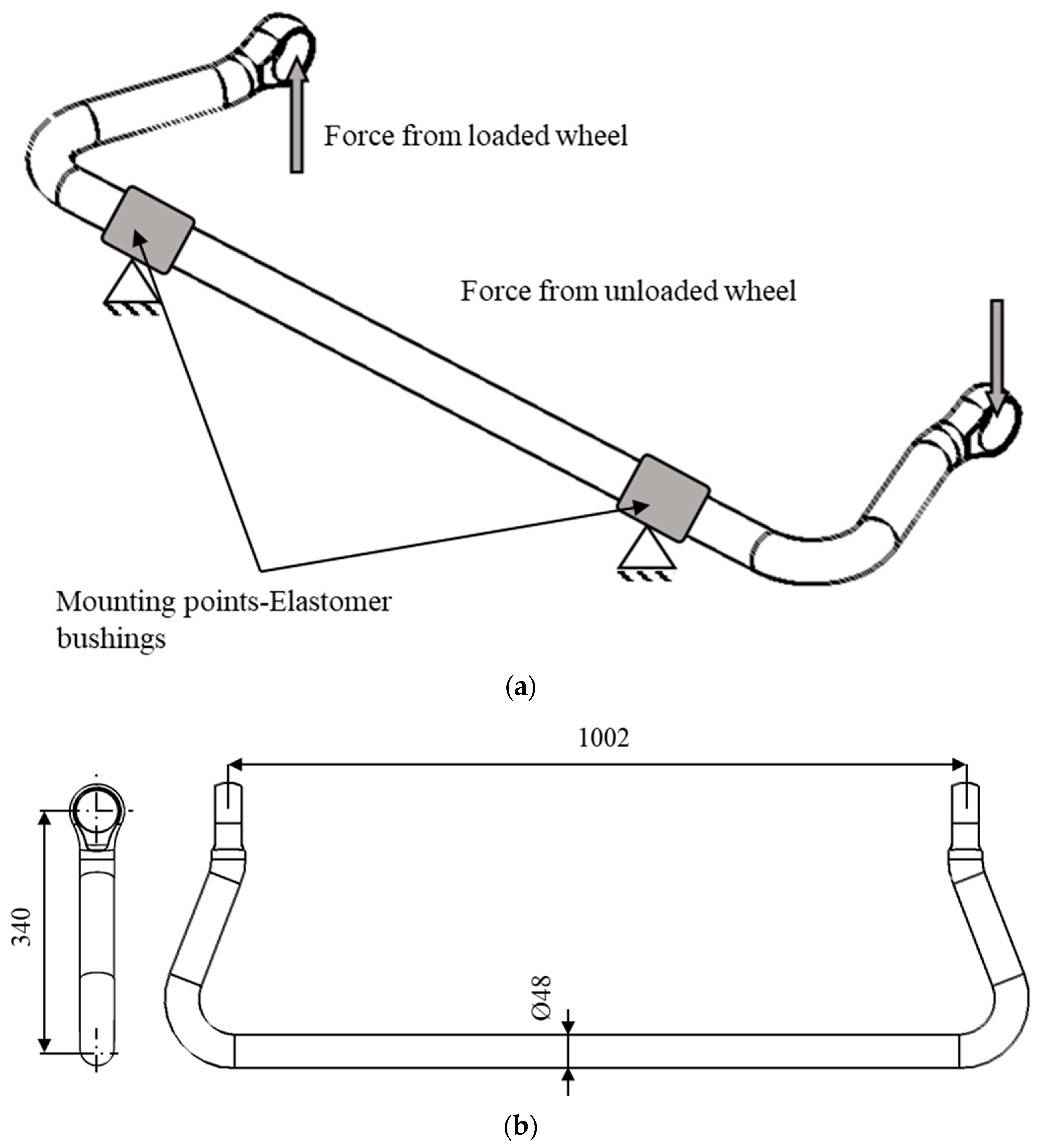
The tested antiroll bar, used in heavy trucks, is a hot-formed cylindrical U-shaped component. It connects the left and right sides of the vehicle frame and mounts to the axle via elastomer bushings, as it is schematically presented in Figure 1. Its purpose is to reduce axle roll, especially during cornering or zigzag maneuvers, by increasing suspension torsional stiffness—hence the name “antiroll bar”. Due to its function, the bar is subjected to fully reversed loading (R = –1) [6,7]. Given its U-shape and loading conditions, it experiences multiaxial, proportional stresses from both cyclic bending and cyclic torsion.
Since modern literature still lacks studies on full-scale industrial components in conjunction with high-strength materials under multiaxial (here proportional) loading, this paper aims to present a way of implementing these loading conditions in a single load-cycle to failure curve appropriate for the design of corresponding full-scale components. To address this, a thorough characterization of the material state and properties in the core and the decarburized surface area has been performed to reveal the effect of material degradation. Fatigue tests under fully reversed loading at various levels were conducted and evaluated to determine fundamental experimentally verified S-N curves that can be used by design engineers for a practical and cost-effective, fatigue-based design approach applicable to stabilizer bars and similar components [8,9,10].

2. Material and Manufacturing

To meet strict requirements for weight, stiffness, and fatigue life, the antiroll bar is made from alloyed (Cr, V) high-strength spring steel and manufactured through the following process:
  • Hot forming of the bar, decreasing the initial diameter from 49 mm to 48 mm
  • Hot forming to a U-shape and cooling in oil at 60 degrees C.
  • Tempering at 600 degrees C.
  • Shot peening to increase endurance by introducing compressive residual stress up to a depth of approximately 300 μm.
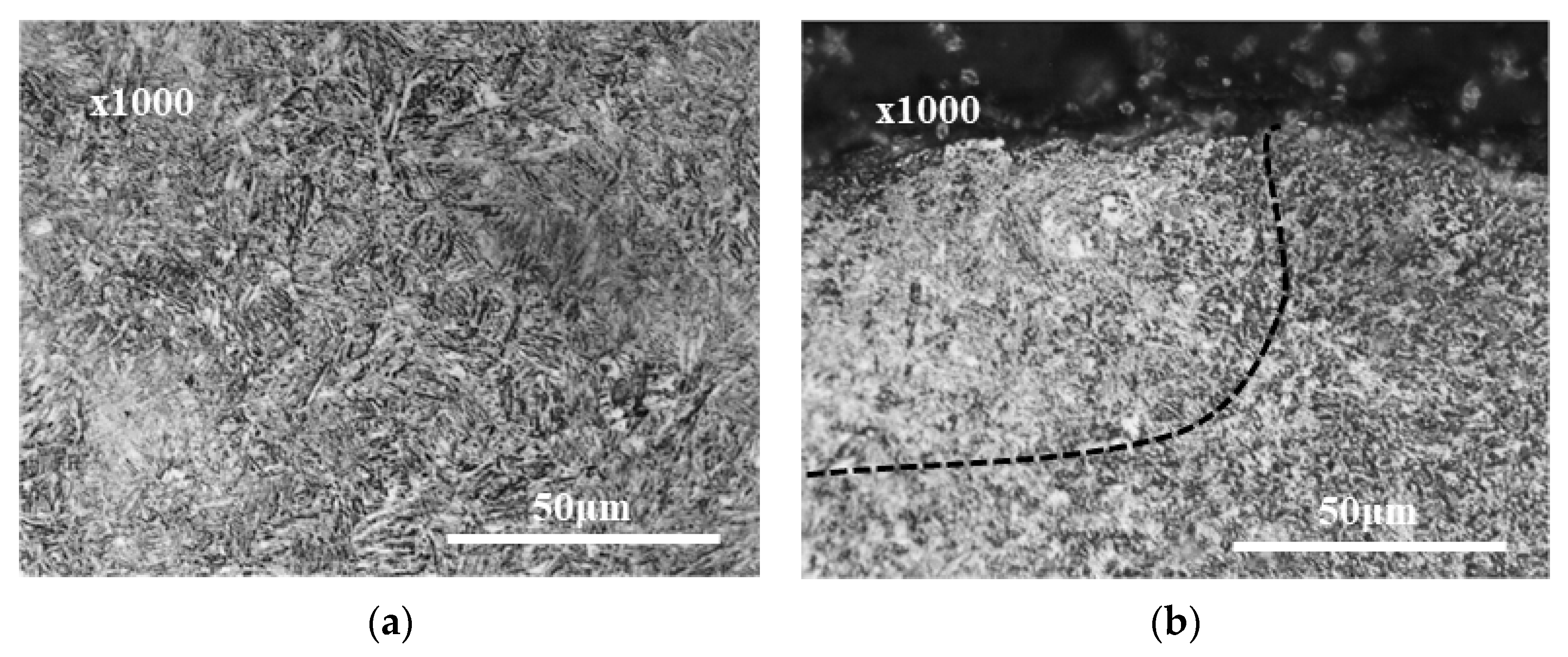
Notice that the heat treatment process yields the desired martensitic structure but also induces decarburization on the top layers of the surface, and especially intense on individual spots. At first, samples were taken from the bar curvature, the most highly stressed area, to characterize the microstructure at both the core and surface regions. Figure 2 presents images taken by an optical microscope, indicating also a decarburized spot on the surface. (marked with black dashed line).
The image on the left-hand side of Figure 2 reveals a martensitic structure in the core, induced by the heat treatment, and thus, the Ultimate Tensile Strength (UTS) of the material is expected to be high, 1200 MPa or above [11]. Also, from the surface microstructure image on the right-hand side of Figure 2, a typical, intense decarburized spot can be identified (washed-out, white area), which leads to the conclusion that near the surface, the mechanical properties are degraded. Further investigations followed to quantify the effect of the heat treatment process on specific mechanical properties.

3. Surface Properties

3.1. Hardness

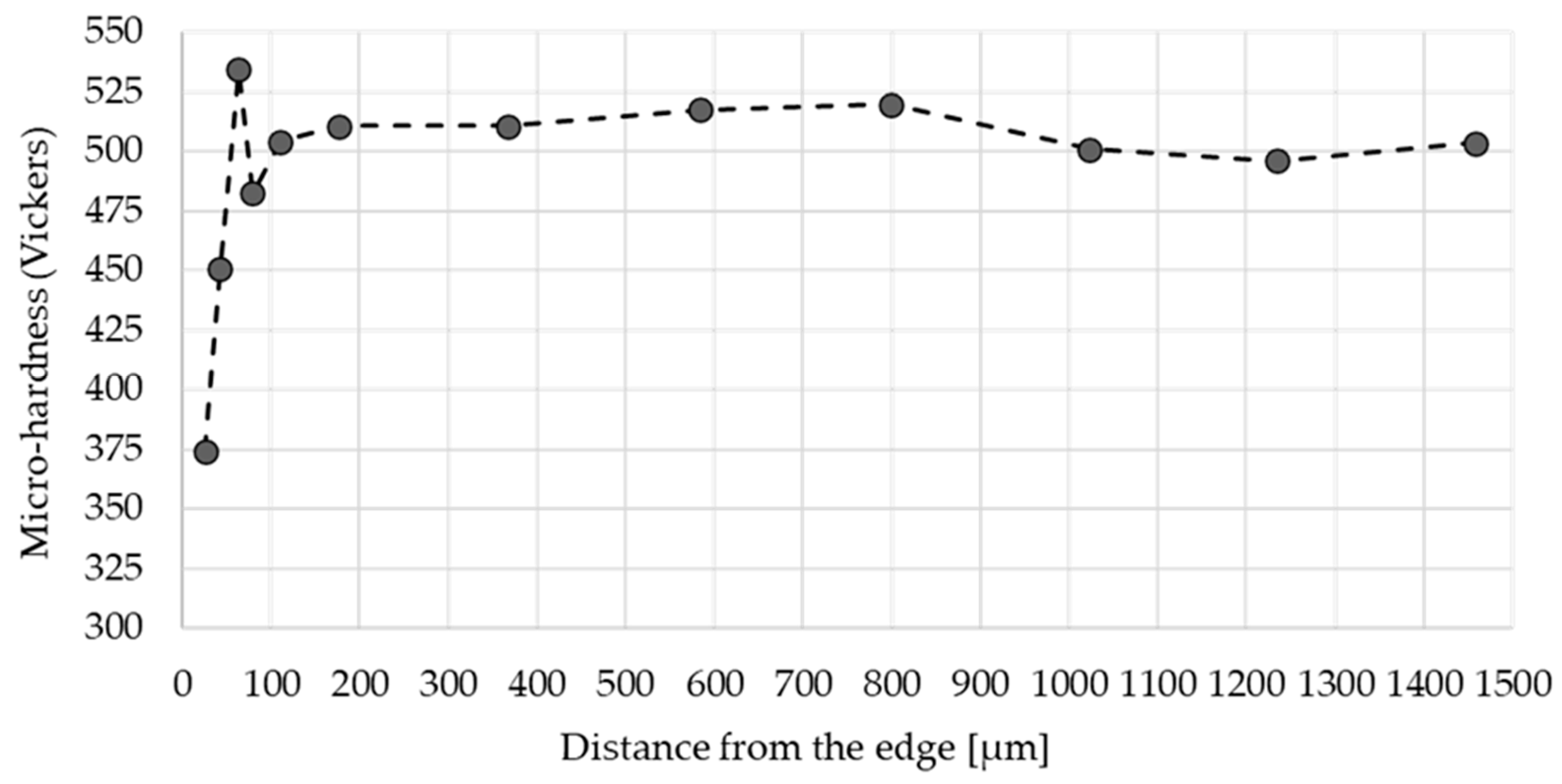
Vickers micro-hardness measurements were conducted to evaluate the hardness distribution from the surface towards the core, in small intervals, applying a load of 2.94 N (or 0.3 kgf) for 15 s. The results from micro-hardness measurements evaluate the above-mentioned statements, the martensitic structure in the core, and the degraded surface properties due to decarburization. In Figure 3, the hardness distribution is presented.
The low surface hardness of 375 HV confirms the presence of decarburized zones near the surface. At a depth of ~80 μm, hardness peaks at ~535 HV due to shot peening-induced work hardening. Deeper into the core (beyond ~200 μm), values stabilize around 500 HV, consistent with the martensitic structure’s properties [2,12], as shown in Figure 2. The decarburized depth can also be estimated based on methods in [13,14].

3.2. Roughness

Surface characterization was completed with roughness measurements, performed according to ISO 4287 [15] using a Taylor Hobson contact instrument with a 200 μm gauge range. Roughness values were calculated per DIN 4768 [16], focusing on the average roughness depth Rz. For this, the evaluation length was divided into five sections (i = 1–5), each 2 mm long, and Rz was calculated as the average of the total heights Rt,i from each section.
Across multiple specimens, the average value of Rz was 17.4 μm—typical for shot-peened, high-strength steel components used in suspension systems [8,17].

4. Fatigue Testing and Results

4.1. Fatigue Testing Principle

Fully reversed fatigue tests (R = –1) were performed on full-scale components. Loading was applied at the bar’s left and right tips, while mounting was achieved via two brackets with inner elastomer bushings positioned along the straight section, following the principle shown in Figure 1.
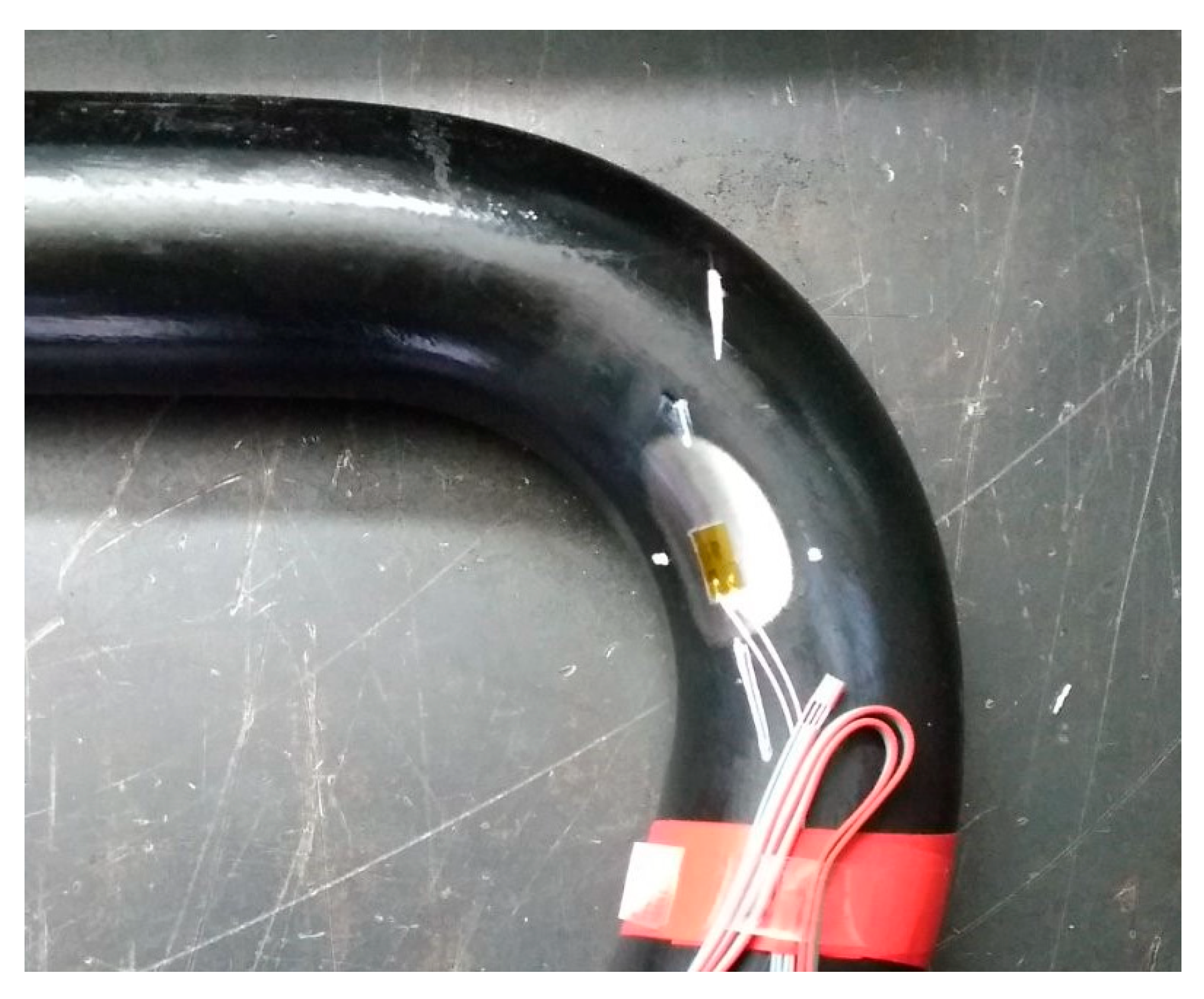
Finite Element (FE) analysis identified the curved sections as failure-critical due to peak major principal stresses. To validate these results, strain gauges were installed in the direction of the first principal stress at those locations, as shown in Figure 4.
The gauges were aligned ~2–3° from the vertical axis to match the estimated direction of the maximum principal stress. Due to the complex geometry and potential manufacturing variations, precise placement at the stress peak was technically challenging.
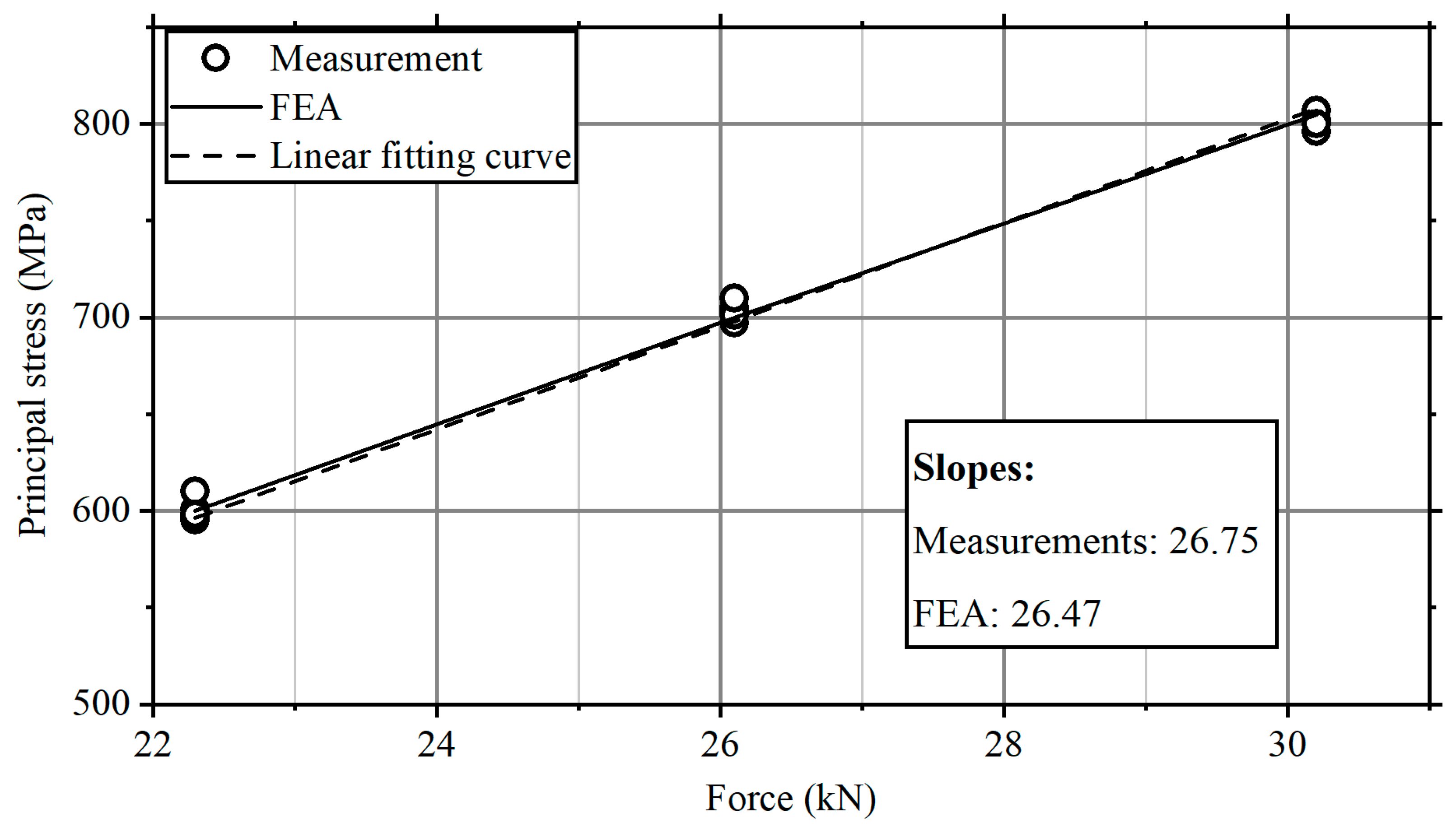
Moreover, the relation between the major principal stress on the failure critical area and the applied force was calculated and compared with the corresponding relation from FE calculations with negligible deviations. This relation was found to be linear for the range of the examined forces. This relation is visually presented in Figure 5 below, and the corresponding calculated slope values are mentioned.

4.2. Failure Behavior

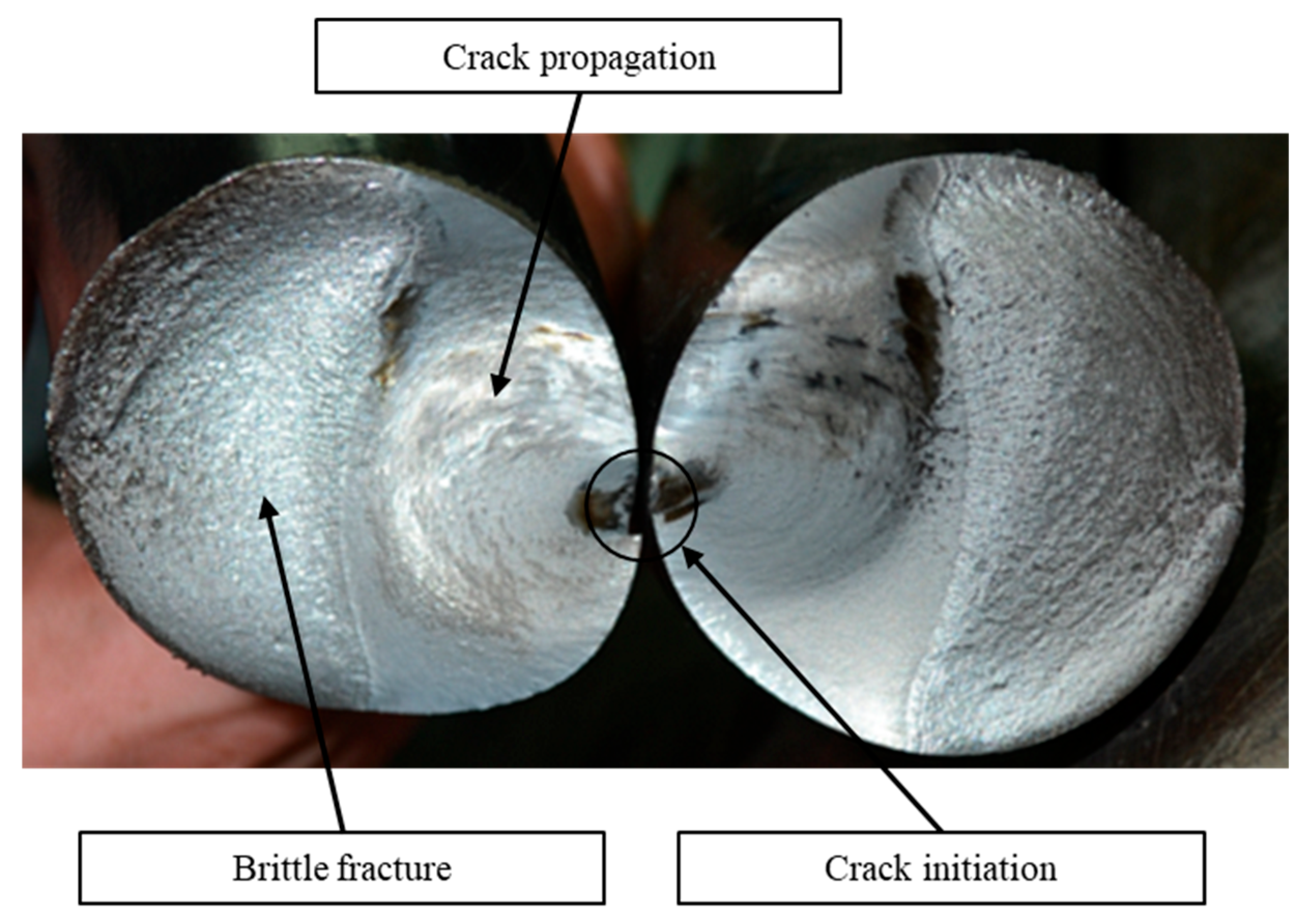
Fifteen antiroll bars were tested under fully reversed force-controlled loading (minimum to maximum force ratio R = −1). Hereby, three different force levels were selected to cover the whole fatigue life range of technical interest, i.e., from approximately 104 to 106 cycles-to-failure. All specimens failed in one of the curvature areas, on or very close to the calculated highly stressed positions. Figure 6 shows a typical fracture, exemplarily.
On the front view of the fracture area (right image), the two separate areas (crack propagation area and brittle fracture area) can be identified. Crack initiates on the upper surface of the curvature area and then moves toward the core.

4.3. Fatigue Life Results and Load-Cycles Curves

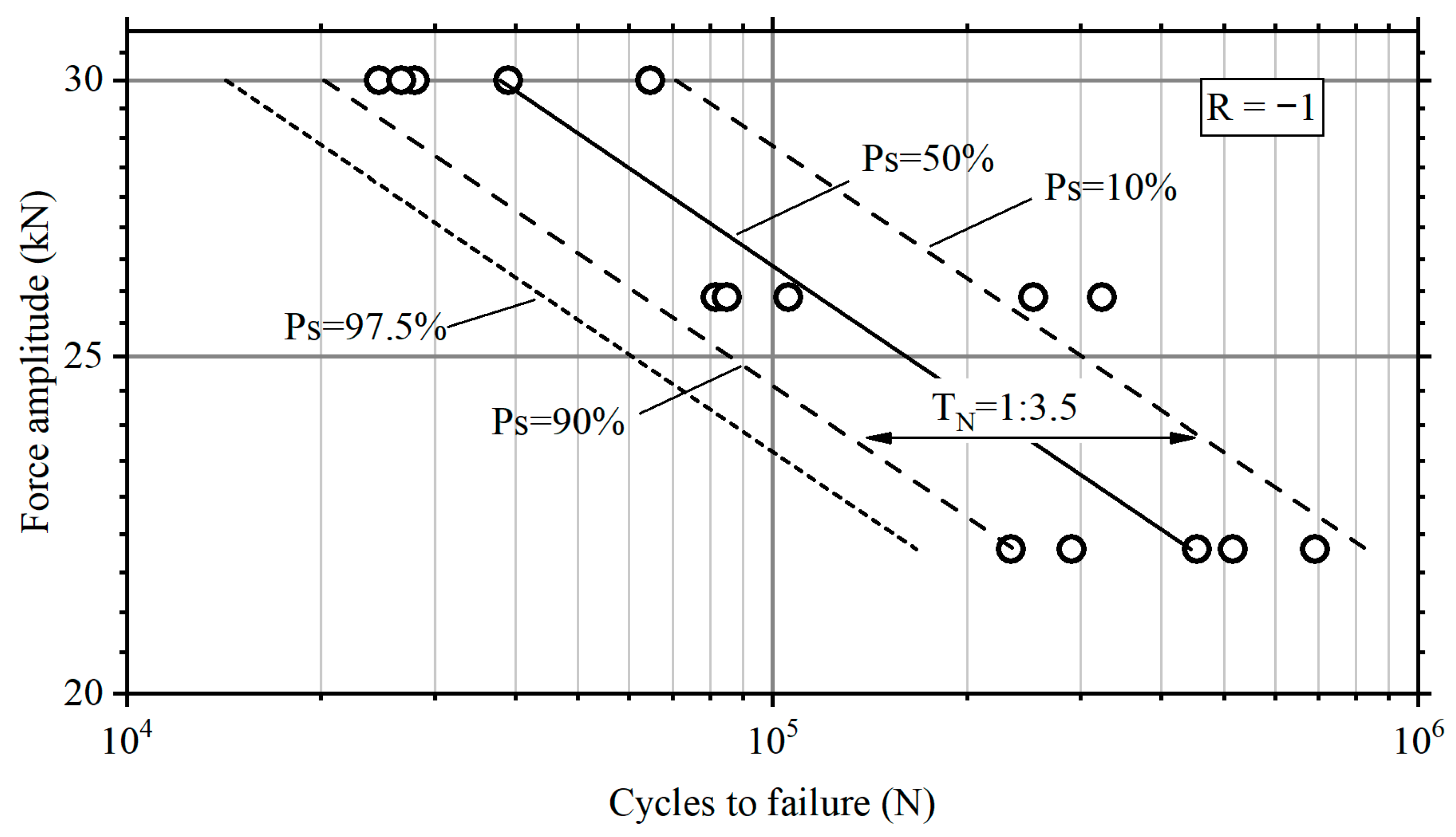
The fatigue life results of the tested bars determined at three force levels are presented in Figure 7 below by means of circle symbols.
The measured data corresponds to the specimen fracture. However, it should be noticed that the crack propagation phase is small, relative to the number of cycles until the development of a small fatigue crack of ~1 mm length on the surface.
Typically, an S-N curve in the area of middle and high cycle fatigue (104 < N < 106) is expressed by the well-known Basquin’s law for a constant stress ratio [18]. Substituting the stress value with the corresponding applied force, the equation becomes
F a = A 2 N f k
where Fa stands for the force amplitude, A is the fatigue strength coefficient, and k is the fatigue strength exponent. Linear regression of the test data yields the median Force-Cycles to failure curve equipped with 50% survival probability (see the solid line in Figure 7), assuming a normal distribution. Lower-bound force-cycles to failure curves are used to reflect higher survival probabilities (e.g., 90% or 97.5%), derived by shifting the median curve using
Y P = Y 50 % a · s ,
where YP is the target Load-Cycles to failure curve, Y50% the median curve, a stands for the shift coefficient, and s for the standard deviation of the fatigue life. There are many suggestions for choosing the shift coefficient, such as the Owen tolerance limit [19] or according to the ASTM standard [20], but these are not covered here. Instead, a factor of a = 1.28155 for probability of survival PS = 90%, and a =1.9755 for PS = 97.5% according to the FKM guideline [6], were used for this study. Notice that the curve for PS = 97.5% (dotted curve in Figure 7) is recommended in the FKM guideline [6] for fatigue design of metallic components, before applying any additional safety factor.
Furthermore, the width of the scatter band TN is introduced, expressing the ratio of the cycles for 90% to 10% probability of survival (see the two dashed lines in Figure 7). The width of the scatter band amounts to TN = 1:3.5, which is considered relatively high, since typical scatter values for suspension components made of high-strength steels usually lie between 1:2 and 2.5 [8].

5. Conclusions

The present study demonstrates (a) the extraction and processing of the design fatigue properties of hot-formed antiroll bars and (b) the characterization of the material core and surface of the component.
The characterization of the material using optical microscopy and micro- and macro-hardness measurement provided a valuable insight into material quality and an assessment of the mechanical properties without performing conventional tensile tests, which are not possible in the case of the very thin surface state. Surface roughness information may be used as a macroscopic factor of surface quality, since high roughness values have a negative impact on fatigue life [6,7].
Fatigue tests at various load levels have been performed and assessed to determine fundamental S-N curves, covering various probabilities of survival and the whole fatigue life range of practical interest. These curves can be directly used by design engineers for fatigue-based design of antiroll bars.
This study may be expanded by investigating analytical or computational fatigue life assessment, following existing guidelines and theory, such as the Nominal Stress Concept, Local Stress Concept, or the FKM guideline, as previous studies suggest [6,17,21,22].

Author Contributions

Conceptualization, C.G. and G.S.; methodology, E.G.; validation, C.G., E.G. and P.A.; formal analysis, C.G. and P.A.; investigation, C.G. and P.A.; resources, G.S. and Y.W.; writing—original draft preparation, C.G.; writing—review and editing, G.S.; visualization, P.A. and E.G.; supervision, C.G. and G.S.; project administration, G.S.; funding acquisition, G.S. and Y.W. All authors have read and agreed to the published version of the manuscript.

Funding

This research was funded by the Ministry of Science and Technology of the People’s Republic of China—MOST and co-financed by the European Union (European Regional Development Fund) and Greek national funds under the Operational Programme “Competitiveness, Entrepreneurship and Innovation” (NSRF 2014–2020), within the framework of “Novel Methods for Design and Development of Lightweight, High Performance Axle Suspensions of Road transportation Vehicles and for Durability Testing on Triaxial 6-Channel Testing Rig—SLIMSUSPENSION” project Grant Agreement number T7DKI-00054.

Institutional Review Board Statement

Not applicable.

Informed Consent Statement

Not applicable.

Data Availability Statement

The raw data supporting the conclusions of this article will be made available by the authors on request.

Acknowledgments

The Department of Science and Technology of Shandong Province, China, in gratefully acknowledged. BETA CAE is gratefully acknowledged for the provision of ANSA and META software. The Center for Interdisciplinary Research and Innovation (CIRI AUTH—ΚΕDΕΚ, DRAM Group) is gratefully acknowledged.

Conflicts of Interest

Author Yucheng Wang was employed by the company Shandong Leopard Automotive Holdings Ltd. The remaining authors declare that the research was conducted in the absence of any commercial or financial relationships that could be construed as a potential conflict of interest. The funders had no role in the design of the study; in the collection, analyses, or interpretation of data; in the writing of the manuscript; or in the decision to publish the results.

References

  1. SAE Spring Committee. Spring Design Manual, 2nd ed.; SAE Spring Committee: Warrendale, PA, USA, 1995. [Google Scholar]
  2. Pappa, M.; Savaidis, G.; Michailidis, N. Stress-Shot-Peened Leaf Springs Material Analysis through Nano- and Micro-Indentations. Materials 2021, 14, 4795. [Google Scholar] [CrossRef] [PubMed]
  3. Kirk, D. Decarburization: The Silent Enemy. Shot Peen. Mag. 2018, 26–34. [Google Scholar]
  4. Scuracchio, B.; Lima, N.; Schön, C. Residual Stresses Induced by Shot-Peening and Fatigue Durability of Leaf Springs. In Proceedings of the 19th European Conference on Fracture, Kazan, Russia, 26–31 August 2012. [Google Scholar]
  5. Lai, J.; Huang, H.; Buising, W. Effects of Microstructure and Surface Roughness on the Fatigue Strength of High-Strength Steels. Procedia Struct. Integr. 2016, 2, 1213–1220. [Google Scholar] [CrossRef]
  6. Grubisic, V.; Fischer, G. Automotive Wheels, Method and Procedure for Optimal Design and Testing. SAE Trans. 1983, 92, 508–525. [Google Scholar]
  7. Giannakis, E.; Sivena, E.; Malikoutsakis, M.; Savaidis, G. Fatigue Design and Testing of Automotive Stabilizer Bars. MATEC Web Conf. 2018, 188, 02014. [Google Scholar] [CrossRef][Green Version]
  8. Rennert, R.; Kullig, E.; Vormwald, M.; Esderts, A.; Siegele, D. Analytical Strength Assessment, 6th ed.; VDMA Verlag GmbH: Frankfurt am Main, Germany, 2012; ISBN 978-3-8163-0649-8. [Google Scholar]
  9. EN 1993-1-1:2005; Eurocode 3—Design of Steel Structures Part 1.1 General Rules and Rules for Buildings—Fatigue. European Committee for Standardisation: Brussels, Belgium, 2005.
  10. Giannakis, E.; Savaidis, G. Local Stress Based Fatigue Assessment of Multiaxially Stressed Automotive Antiroll Bars. Eng. Fail. Anal. 2021, 126, 105472. [Google Scholar] [CrossRef]
  11. Chen, H.; Zhao, L.; Lu, S.; Lin, Z.; Wen, T.; Chen, Z. Progress and Perspective of Ultra-High-Strength Martensitic Steels for Automobile. Metals 2022, 12, 2184. [Google Scholar] [CrossRef]
  12. ISO 18265-:2013; Metallic Materials—Conversion of Hardness Values, 2nd ed. International Organization for Standardization: Geneva, Switzerland, 2013.
  13. ASTM E1077-01(2005); Standard Test Methods for Estimating the Depth of Decarburization of Steel Specimens. ASTM: West Conshohocken, PA, USA, 2005. [CrossRef]
  14. ISO 3887-2023; Steels—Determination of the Depth of Decarburization, 4th ed. ISO—International Organization for Standardization: Geneva, Switzerland, 2023.
  15. ISO 4287; Geometrical Product Specifications (GPS)—Surface Texture: Profile Method—Terms, Definitions and Surface Texture Parameters. International Organization for Standardization: Geneva, Switzerland, 1997.
  16. DIN 4768; Determination of Values of Surface Roughness Parameters Ra. Rz, Rmax Using Electrical Contact (Stylus) Instruments Concepts and Measuring Conditions. German Institute for Standardisation (Deutsches Institut für Normung): Berlin, Germany, 1990.
  17. Savaidis, G.; Karditsas, S.; Savaidis, A.; Fragoudakis, R. Microstructural, Surface and Fatigue Analysis of Stress Peened Leaf Springs. Int. J. Struct. Integr. 2015, 6, 589–604. [Google Scholar] [CrossRef]
  18. Lee, Y.-L.; Taylor, D. Stress-Based Fatigue Analysis and Design. In Fatigue Testing and Analysis; Elsevier: Amsterdam, The Netherlands, 2005; pp. 103–180. [Google Scholar]
  19. Shen, C.L.; Wirsching, P.H.; Cashman, G.T. Design Curve to Characterize Fatigue Strength. J. Eng. Mater. Technol. 1996, 118, 535–541. [Google Scholar] [CrossRef]
  20. Standard Practice for Statistical Analysis of Linear or Linearized Stress-Life (S-N) and Strain-Life (ϵ-N) Fatigue Data. In Statistical Analysis of Fatigue Data; ASTM International: West Conshohocken, PA, USA, 1981; pp. 129–137.
  21. Radaj, D.; Vormwald, M. Advanced Methods of Fatigue Assessment; Springer: Berlin/Heidelberg, Germany, 2013; ISBN 978-3-642-30739-3. [Google Scholar]
  22. Dowling, N.E. A Review of Fatigue Life Prediction Methods. SAE Trans. 1987, 96, 1117–1138. [Google Scholar]
Figure 1. Sketches of the examined antiroll bar, under operational loading (a), and (b) with basic geometric dimensions.
Engproc 119 00027 g001
Figure 2. Microstructure at the (a) core and (b) the surface of the highly stressed and failure-critical area of an antiroll bar.
Engproc 119 00027 g002
Figure 3. Vickers micro-hardness profile from the surface towards the core.
Engproc 119 00027 g003
Figure 4. Strain gauge in the major principal stress direction at the failure critical curvature.
Engproc 119 00027 g004
Figure 5. Relation between stress at failure critical location and applied force; measurements and FE calculation.
Engproc 119 00027 g005
Figure 6. Typical fracture image of a failed specimen.
Engproc 119 00027 g006
Figure 7. Characteristic Load-Cycles to failure curves of the examined antiroll bars for various probabilities of survival.
Engproc 119 00027 g007
Disclaimer/Publisher’s Note: The statements, opinions and data contained in all publications are solely those of the individual author(s) and contributor(s) and not of MDPI and/or the editor(s). MDPI and/or the editor(s) disclaim responsibility for any injury to people or property resulting from any ideas, methods, instructions or products referred to in the content.