Proceeding Paper

Measuring Air Pollution in Populated Areas Using Sensors Installed on Vehicles and Drones †

by
András Molnár
1,2,
Saidumarkhon Saidakhmadov
3,
Azizbek Kamolov
4,* and
Botir Usmonov
4
1
Faculty of Economy, J. Selye University, Bratislavská cesta 3322, 945 01 Komárno, Slovakia
2
John von Neumann Faculty of Informatics, Obuda University, Becsi ut 96/b, 1034 Budapest, Hungary
3
Department of Chemical Technology of Oil and Gas Processing, Tashkent Institute of Chemical Technology, Tashkent 100011, Uzbekistan
4
Department of Automation and Digital Control, Tashkent Institute of Chemical Technology, Tashkent 100011, Uzbekistan
*
Author to whom correspondence should be addressed.
Presented at the 4th International Electronic Conference on Processes, 20–22 October 2025; Available online: https://sciforum.net/event/ECP2025.
Eng. Proc. 2025, 117(1), 68; https://doi.org/10.3390/engproc2025117068
Published: 16 March 2026
(This article belongs to the Proceedings of The 4th International Electronic Conference on Processes)

Abstract

Residential heating is a major contributor to atmospheric pollution, especially in populated areas. Traditional methods for measuring emissions, such as chimney probes, are limited due to the need for prior owner consent, which can compromise the reliability of results—particularly when detecting the illegal burning of materials like plastic or waste oil. This study introduces a mobile air pollution monitoring system using compact sensor modules installed on vehicles and drones. These autonomous modules are equipped with gas, particulate matter, and environmental sensors, along with Global Positioning System (GPS) tracking to record pollutant concentrations in real time and associate them with specific geographic locations. Field experiments conducted in Hungary and Uzbekistan demonstrated the system’s effectiveness in detecting elevated pollutant levels in rural areas with solid fuel heating and in urban zones affected by industrial activity and traffic. For instance, PM2.5 concentrations ranged from 15 μg/m3 in forested areas to as high as 160 μg/m3 in industrial zones, while CO2 levels near chimneys exceeded background values by 15–25 ppm. Drone-based measurements enabled vertical profiling and direct analysis of emissions from individual chimneys, providing detailed spatial distribution data. The proposed mobile sensing approach allows for the accurate localization of pollution sources and the assessment of air quality variations within small-scale environments. This method overcomes limitations of stationary or pre-announced inspections and supports proactive environmental monitoring and enforcement.

1. Introduction

Air pollution caused by human activity remains a significant environmental and public health concern. Among its many sources, emissions from residential heating—particularly from small, individually operated stoves and boilers—are especially difficult to monitor. Traditional flue gas analysis requires physical access to the chimney and the cooperation of the homeowner, meaning that measurements must be pre-arranged and announced in advance. As a result, these methods are ineffective for detecting the illegal burning of waste materials such as plastics, rubbish, or used oils, because offenders typically cease such activities when inspections are expected [1,2,3,4].
Most countries rely on fixed air quality monitoring stations to assess atmospheric pollution, but these systems have inherent spatial and temporal limitations [5]. Stationary sensors provide high-quality measurements, yet they represent only a small number of points within a much larger and heterogeneous environment. Pollutant concentration can vary dramatically within short distances, especially in areas with mixed land use, narrow streets, variable heating practices, or complex terrain. As a result, fixed monitoring networks often fail to capture local emission peaks, such as those originating from individual residential chimneys or small industrial workshops. This lack of granularity leads to significant gaps in assessing local health risks and enforcing environmental regulations [6].
In recent years, the demand for high-resolution environmental data has increased as municipalities and researchers seek more accurate tools to evaluate air quality at the neighbourhood or even building scale. Mobile air quality monitoring platforms—mounted on vehicles, bicycles, or drones—have emerged as a promising approach to bridge the gap between point-based monitoring and large-scale remote-sensing methods. These platforms can cover extensive areas rapidly, follow flexible routes, and be deployed in response to time-sensitive environmental conditions such as smog events or suspected illegal burning. By synchronising pollutant concentration data with precise Global Positioning System (GPS) coordinates, mobile systems enable detailed spatial mapping of emissions and provide a basis for targeted interventions [7,8,9,10].
Deploying sensors on drones further enhances monitoring capabilities by allowing measurements at different heights, including within atmospheric layers that traditional ground-based sensors cannot reach. Vertical profiling helps identify stratification patterns, such as the accumulation of pollutants in valley inversions or the uplift of emissions into dispersive layers [11]. Moreover, drones can approach emission sources directly, including chimneys, industrial vents, and open burning sites, without requiring physical access or prior notification. This ability makes aerial sensing particularly valuable for detecting unreported emissions, evaluating compliance with environmental standards, and studying the behaviour of pollutants in complex meteorological conditions [4,11].

2. Methodology

2.1. Measurement System, Its Design, and Sensor Modules

To address the limited spatial resolution of stationary air quality monitoring networks and the inefficiency of pre-announced chimney inspections in detecting localized and short-term emission sources, compact mobile sensing modules were developed for deployment on vehicles and drones to measure airborne pollutants directly in the surrounding environment. By continuously recording pollutant concentrations together with precise GPS coordinates, these modules enable the spatial mapping of emissions and the identification of specific pollution sources in a reliable and unobtrusive manner.
In recent years, increasing attention has been given to the use of mobile low-cost sensing platforms as complementary tools for high-resolution air quality monitoring and exposure assessment. Several studies have investigated the performance, calibration, and practical deployment of such systems in urban environments and along mobile transects [12,13,14]. However, the primary aim of the measuring modules in this study is the relative spatial detection and localization of pollution sources, rather than reference-grade quantification. Therefore, the sensing elements were evaluated according to manufacturers’ specifications, and the complete modules were verified through functional in-field consistency checks, including baseline recordings and repeated stationary measurements.
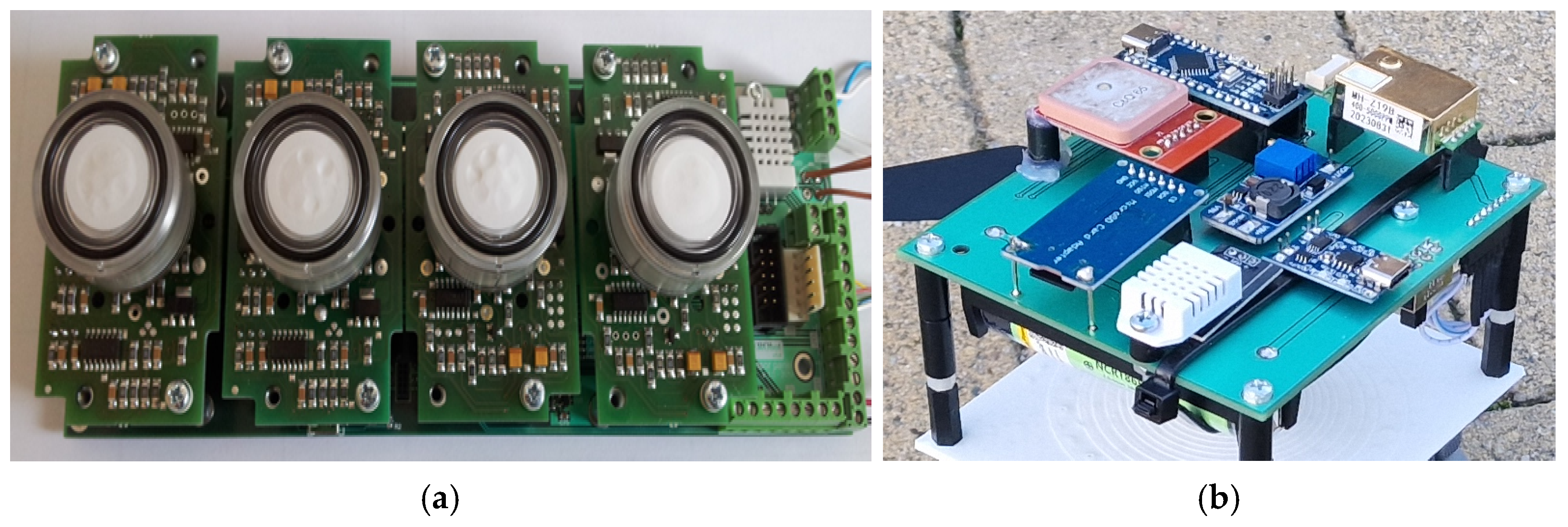
The first version of the measuring module (Figure 1a) incorporates multiple electrochemical sensors capable of detecting gases such as CO, CO2, NO, and NO2, along with sensors for air temperature and relative humidity. Because electrochemical sensors have a limited service life, the system was designed in a modular format to allow for easy replacement and recalibration. Additional environmental detectors—such as O2, O3, UVA/UVB sensors, and a Geiger–Müller tube (Model 7808, LND Inc., Oceanside, NY, USA)—were also integrated, resulting in a total module weight of approximately 800 g.
For subsequent targeted measurements, a lighter, more specialized module was developed (Figure 1b). In this version, the electrochemical CO2 sensor was replaced with a long-life Non-Dispersive Infrared (NDIR) CO2 sensor (Winsen Electronics, Zhengzhou, China), and a particulate matter sensor was added. Like the first module, it includes sensors for humidity and temperature.
During the development of the modules, fully autonomous operation was set as the main objective. Both modules operate fully autonomously: they do not rely on any data or power from the vehicle or drone carrying them. Each unit contains its own signal-processing electronics, data storage, GPS, and power supply, enabling versatile deployment in a wide range of field conditions.
The earlier module contained a relatively large battery composed of two Li-Poly cells. Accordingly, its voltage was 7.2 V and its capacity was 2200 mAh. With this battery, more than 2 h of continuous operation was achievable.
The newer generation modules use single-cell Li-ion batteries. Consequently, their operating voltage is 3.7 V, and their capacity is dimensioned according to the maximum flight time. This means that with a capacity of 800–2400 mAh, an operating time of 40–120 min can be achieved.
Data are written by the system to removable SD cards installed in the modules. The measurement frequency is determined by the data frequency of the applied GPS module (NEO-7, u-blox AG, Thalwil, Switzerland). Accordingly, one complete measurement record is recorded every second. No direct signal processing is performed within the module.
The module contains a small Arduino processor (Arduino S.r.l., Monza, Italy) whose task is to read the sensor data, convert them into a unified data format, and write them to the SD card. Since the raw sensor data require further processing, data evaluation is carried out offline on a desktop computer using the calculation methods provided in the datasheets of the respective sensors.
During the research and development period, several modules were developed. The operating principle of the modules is identical; the differences lie in the sensors used. The measurement frequency is matched to the data repetition frequency of the GPS unit applied in the module. For each newly measured position, which in our systems is repeated at 1-s intervals, we assign the measurement data of the sensors integrated into the module. In our modules, we used the following sensors:
  • Ambient temperature and relative humidity sensor: DHT22 (Aosong Electronics, Guangzhou, China). Its operating principle is a capacitive humidity sensor and an NTC thermistor. Factory-calibrated, with a digital output.
  • Particulate matter concentration sensor: SDS011 (Nova Fitness, Jinan, China). Measurement principle is light scattering. Factory-calibrated, with PWM output.
  • Carbon dioxide (CO2) sensor: SCD30 (Sensirion, Stäfa, Switzerland). Measurement principle is NDIR (Non-Dispersive Infrared). PWM output, not factory-calibrated. The sensor output was very noisy; therefore, it was not used in later modules.
  • Carbon dioxide (CO2) sensor: MH-Z19C (Winsen Electronics, Zhengzhou, China). Measurement principle is NDIR (Non-Dispersive Infrared). Factory-calibrated PWM output.
  • Carbon monoxide (CO) sensor: MQ7 (Winsen Electronics, Zhengzhou, China). Measurement principle is based on resistance change in a heated tin oxide (SnO2)-coated anode. Analog, non-calibrated output. The sensor is sensitive to other gases as well and is not selective. Due to its high measurement uncertainty, the data are mainly indicative.
  • Sulfur dioxide (SO2) sensor: SEN0470 (DFRobot, Shanghai, China). Electrochemical sensing principle. The sensor ages relatively quickly, with a maximum lifetime of about 2 years. Output can be analog or digital. Factory-calibrated, with its own transmitter module.
  • Nitric oxide (NO) sensor: Membrapor NO/C-25 (Membrapor, Wallisellen, Switzerland). Electrochemical sensing principle. Factory-calibrated analog output with an integrated transmitter. Limited lifetime and rapid aging characteristics.
  • Nitrogen dioxide (NO2) sensor: Membrapor NO2/C-20 (Membrapor, Wallisellen, Switzerland). Electrochemical sensing principle. Factory-calibrated analog output with an integrated transmitter. Limited lifetime and rapid aging characteristics.
  • Carbon monoxide (CO) sensor: Membrapor CO/CFA-200 (Membrapor, Wallisellen, Switzerland). Electrochemical sensing principle. Factory-calibrated analog output with an integrated transmitter. Limited lifetime and rapid aging characteristics. In newer modules, it has been replaced by NDIR sensors.
  • Ozone (O3) sensor: Membrapor O3/C-5 (Membrapor, Wallisellen, Switzerland). Electrochemical sensing principle. Factory-calibrated analog output with an integrated transmitter. Limited lifetime and rapid aging characteristics.
  • Oxygen (O2) sensor: KE-25 (Figaro Engineering Inc., Minoh, Japan). Electrochemical sensing principle. Non-calibrated, analog output. Limited lifetime and rapid aging characteristics.
  • Gamma (γ) radiation detector: Measurement principle is a Geiger–Müller counter (model 7808, LND Inc., Oceanside, NY, USA). Output is an analog pulse signal.
The target of the experiments was to study the concentration of individual pollutants in the air along extended routes using a specially developed measuring module. It was assumed that during the winter heating season, when travelling along routes passing through populated areas and alternating with unpopulated forest and agricultural areas, changes in pollutant concentrations would be clearly detectable.
In this regard, measurements were taken at night to minimise the impact of road traffic and ensure smooth traffic flow. During the measurements reported in the article, the vehicle was able to maintain a steady speed of approximately 60 km/h without stopping or slowing down due to road conditions or traffic jams throughout the entire data collection period.

2.2. Limitation of the Study

2.2.1. Limitation Related to Sensor Calibration and Accuracy

The monitoring system is based on low-cost sensing elements, most of which are factory-calibrated according to manufacturer specifications. The system was designed primarily for detecting relative spatial variations and local pollution patterns rather than for providing reference-grade concentration measurements. Functional in-field consistency checks (baseline measurements, repeated stationary phases, and ascent–descent profile comparisons) were performed; however, no direct co-location with regulatory air quality monitoring instruments was conducted. Consequently, the reported pollutant concentrations should be interpreted as indicative and comparative values, suitable for identifying spatial trends and potential emission hotspots rather than for regulatory or absolute quantitative assessment.

2.2.2. Limitations Related to Humidity Effects on PM Measurements

Particulate matter levels were monitored using an optical sensor whose readings can be influenced by ambient relative humidity due to hygroscopic particle growth. Thus, majority of the measurement campaigns were intended to be conducted under dry weather conditions and were avoided during rainfall. Although relative humidity was continuously recorded, no specific correction was applied to the PM data. Considering the short duration of the campaigns and the study’s focus on identifying spatial patterns instead of determining absolute concentrations, the PM results are interpreted in a qualitative and comparative manner. Therefore, the system is intended for detecting pollution trends and potential emission hotspots.

2.2.3. Limitations in Source Attribution

The presented methodology is not intended to perform formal source apportionment of particulate matter. Observed spatial variations in pollutant concentrations are interpreted as indicators of potential local emission sources based on environmental context and measurement conditions. Contributions from other sources, secondary aerosol formation, and meteorological effects cannot be excluded. Therefore, the results should be interpreted as indicative of pollution patterns and hotspots rather than definitive source attribution.

3. Results and Discussion

During the experiment, the measuring module was placed in the vehicle so that the sensors were constantly in contact with fresh outside air. The main focus of the measurements was on changes in the concentration of suspended particles (dust pollution) in the atmosphere.
During the winter, when there is little wind, heating in residential buildings and vehicle exhaust fumes significantly increase the concentration of suspended particles in the air in this region, which, under unfavourable weather conditions, can lead to the formation of dense smog.

3.1. Results of Measurements Performed by a Ground-Based Sensor Module Installed on a Vehicle

3.1.1. Measurement Results on the Budapest—Tinje Route

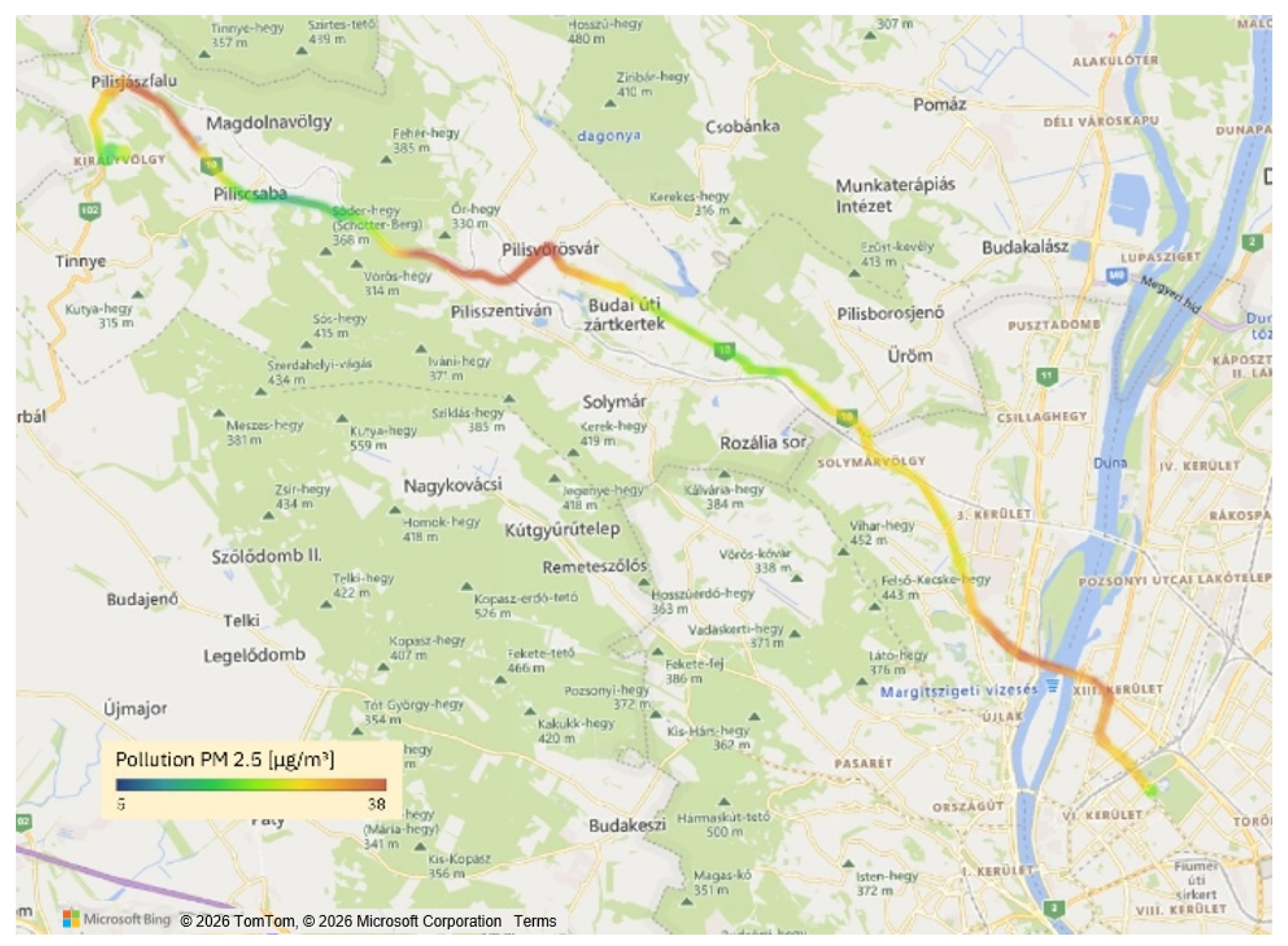
Figure 2 illustrates the results of measurements taken along a route starting in a large city (Budapest) and passing through several rural settlements. The colour of the route is proportional to the measured concentration of PM2.5 particulate matter. It can be seen that when leaving the capital, on the bridge over the Danube River and in its vicinity, there is an increase in dust concentration, despite the absence of industrial activity nearby. The main reason for the relatively high level of pollution is heavy road traffic, especially in the section where the bypass road is located, which is used by transport even at night.
It is interesting to note that in the settlement of Pilisvörösvár, along the route, the level of pollution exceeds the concentration recorded in the area of the bridge across the Danube in Budapest. This is primarily due to the predominant method of heating in this settlement. While the measurement area in the capital is dominated by multi-family buildings with centralised, mainly gas heating, rural areas, including Pilisvörösvár, are dominated by detached houses with independent heating.
In addition, a characteristic feature of rural settlements, including Pilishvoryoshvara, is that a significant proportion of houses are commonly heated using wood, coal or combined solid fuel boilers. Such systems emit large amounts of dust compared to gas heating, which produces virtually no solid combustion products [15,16,17].
The cleanest section of the route is just before the village of Pilisbaba (in the direction of Budapest). Here, the road passes through mountainous terrain, surrounded by forest on both sides. There are no residential buildings or other structures near the road. Smoke from heating in the surrounding villages settles in the valleys. Although this road is quite busy, the level of dust in the mountainous forest area remains low, confirming the hypothesis that air pollution in rural areas is primarily caused by the combustion of solid fuels.
Given that there are no significant road branches from the main route between the heavily polluted Pilishvoryoshvar and the also polluted Pilishyasfal, it can be assumed that the intensity of car traffic on the section under consideration during the study period was approximately the same. Consequently, significant differences in pollution levels are not caused by transport, but by the characteristics of the settlements themselves.

3.1.2. Measurement Results on the Route Tignes–Un–Dag–Cholnok–Dorog–Tignes

Similarly to the Budapest–Tinje route, air pollution measurements were taken on a route passing exclusively through rural settlements. The experiment was conducted in the evening hours when traffic was light, with the vehicle speed maintained at 60 km/h. The air temperature was around 0 °C. As there was virtually no wind in the days leading up to the measurements, pollutants accumulated in the atmosphere.
The route passed through several sections of forest or extensive grasslands with no buildings or other possible sources of pollution nearby. Therefore, low concentrations of suspended particles in the air could be expected on these sections.
When selecting the route, we also sought to ensure that, after uninhabited areas, the route passed through small settlements and a larger industrial zone (a chemical plant), which allowed us to record characteristic differences in pollution levels depending on the type of environment.
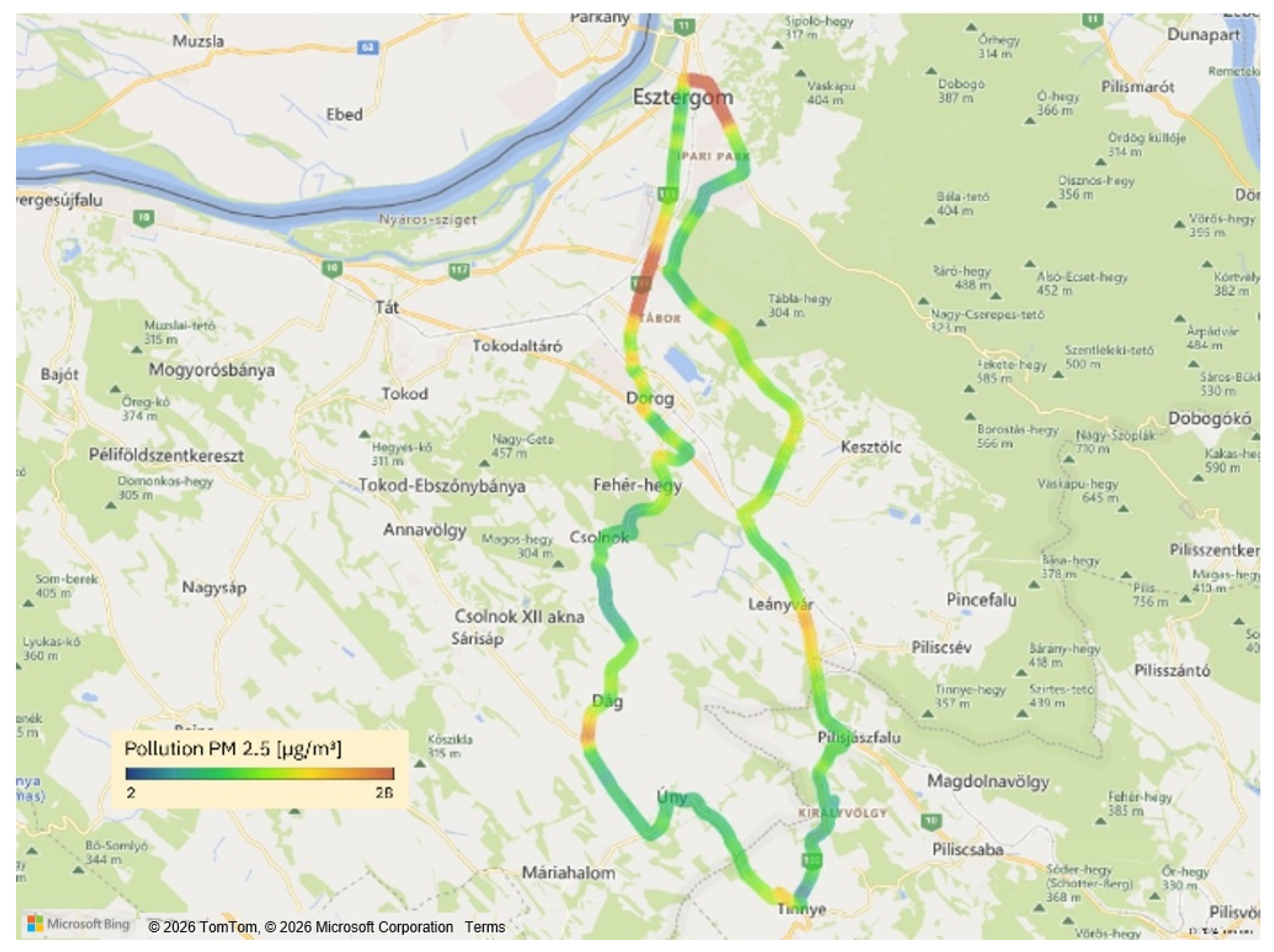
Figure 3 shows that the concentration of particulate matter (PM2.5) remains low in several uninhabited sections of the route. These sections include, in particular, the Tinje–Dag, Dag–Cholnok and Pilishiasfal–Tinje sections. Low levels of air pollution were also recorded near small settlements such as Un and Cholnok. These villages, in addition to their small populations, are surrounded by forests, which contributes to more intensive natural air purification.
The largest city on the route is Esztergom, where air pollution levels, including particulate matter concentrations, increase significantly. There is also a section between Dorog and Esztergom with high pollution levels. A large chemical plant and the railway station serving it are located here.
The results obtained are largely similar to those recorded on the Budapest–Tinje route. Processing of the measurement data clearly highlights the impact of residential and industrial activities on atmospheric pollution. Since the primary objective of the experiments was to determine the potential for smog formation, the processed and presented data reflect the concentration of particulate matter (PM2.5).

3.1.3. Measurement Results on the Djizzakh—Tashkent Route in Uzbekistan

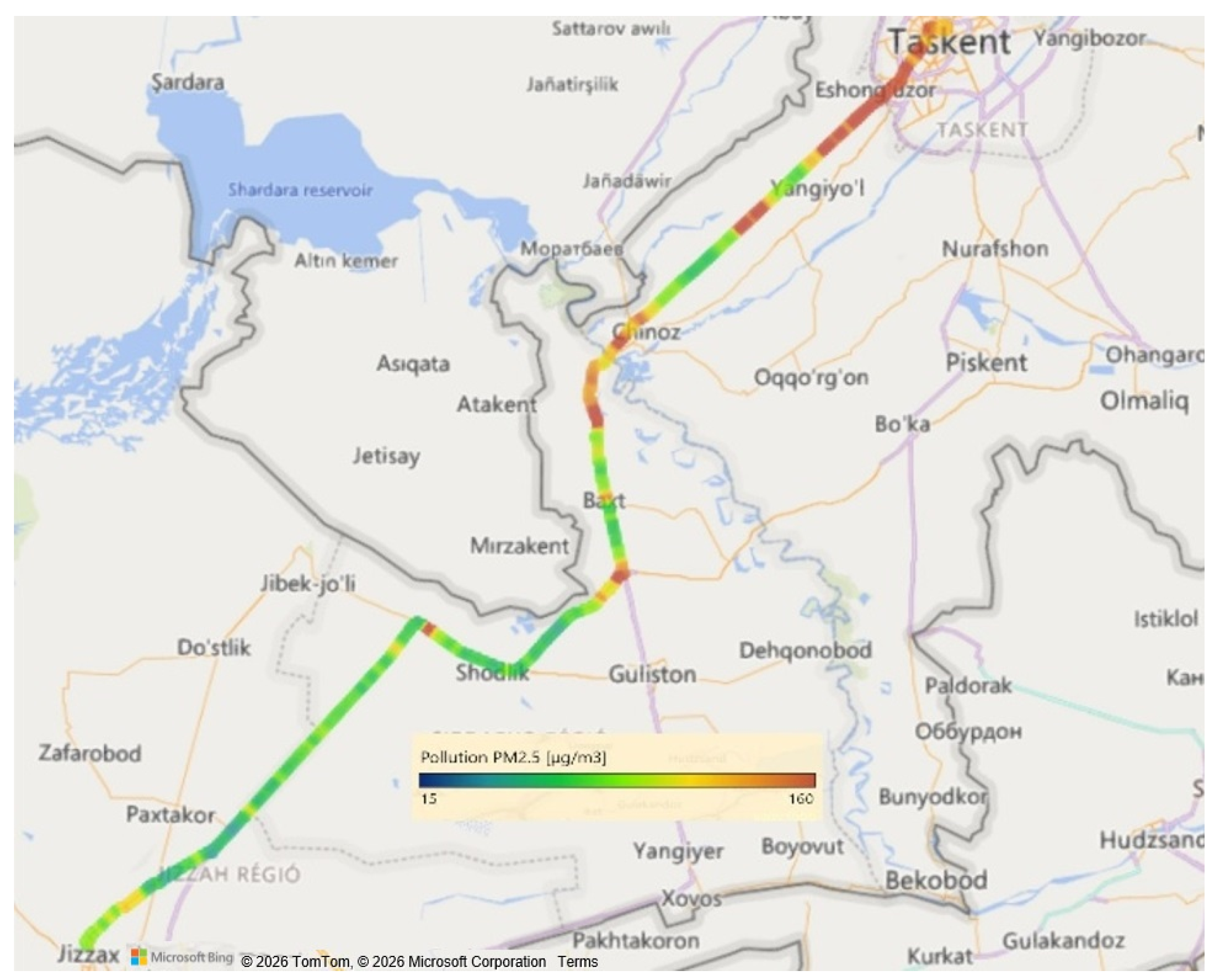
Figure 4 shows the results of measurements taken in Uzbekistan. The measurements were taken after rain, in sunny weather with a light wind. The study area is characterised by intensive industrial and infrastructure development. Despite weather conditions that would normally be expected to result in low dust concentrations, even relatively low PM2.5 values were found to be quite high along the measurement route. The minimum concentration of suspended particles recorded was 15 μg/m3, while the maximum values reached 160 μg/m3.
The figure shows that the lowest particle concentration was observed in the uninhabited section of the route. Upon entering the capital, the level of dust in the air increased significantly. Since the heating season had already ended at the time of measurement, the source of dust pollution was mainly active construction work.
Sensors installed on a vehicle allow measurements to be taken only near the surface and strictly along the route. However, in many cases, it is necessary to measure the concentration of pollutants at a height corresponding to the chimneys of buildings or even higher. Drones, which have recently undergone significant technological advances, can be particularly useful for such tasks.

3.2. Results of Measurements Performed Using a Sensor Module Installed on a Flying Drone

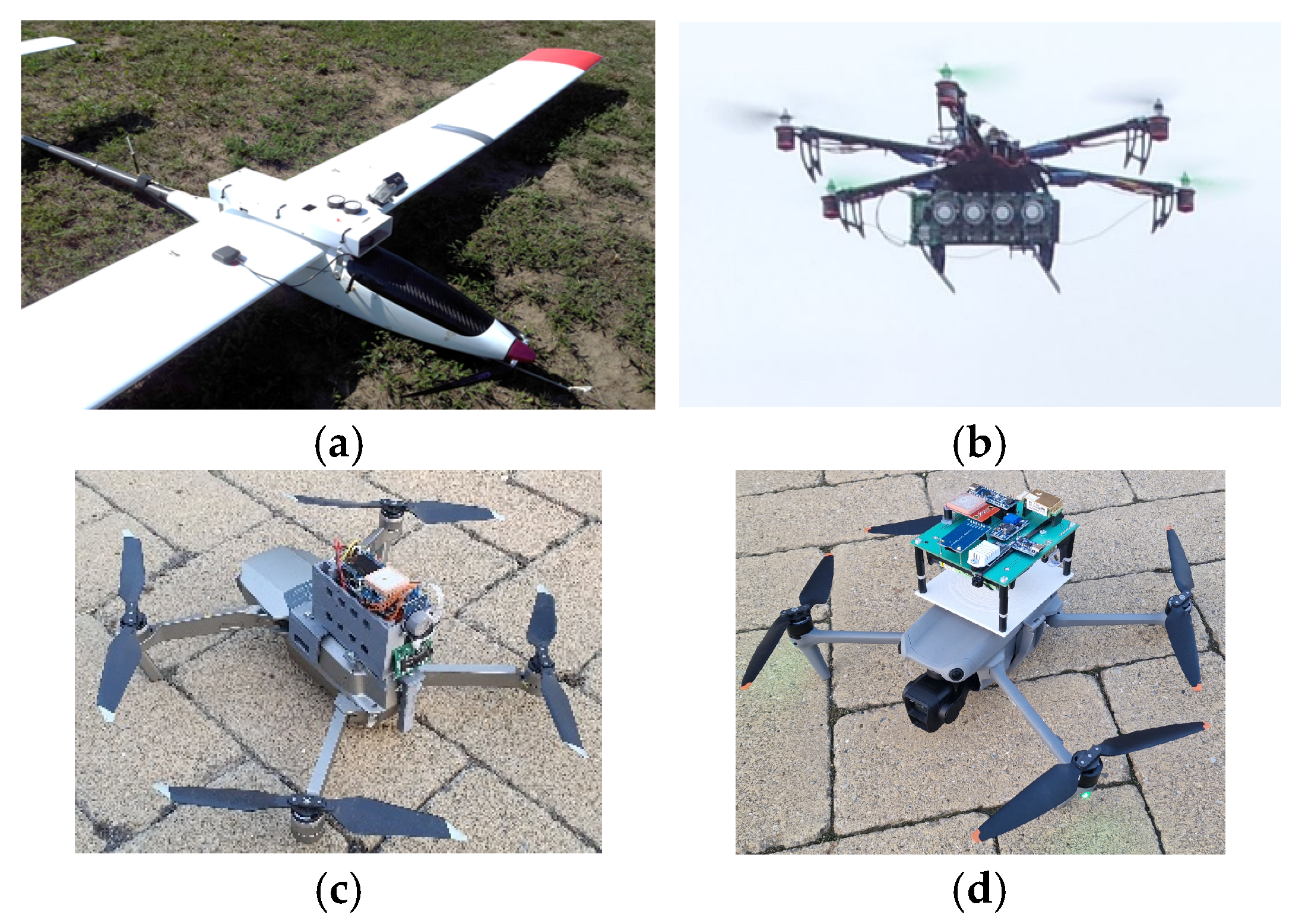
Figure 5 shows drones equipped with various measuring modules developed in-house. The first versions of the modules were equipped with sensors designed to detect O2, CO2, NO, and NO2 gases, as well as temperature, relative air humidity and radioactive radiation levels (using a Geiger–Müller tube (Model 7808, LND Inc., Oceanside, NY, USA)).
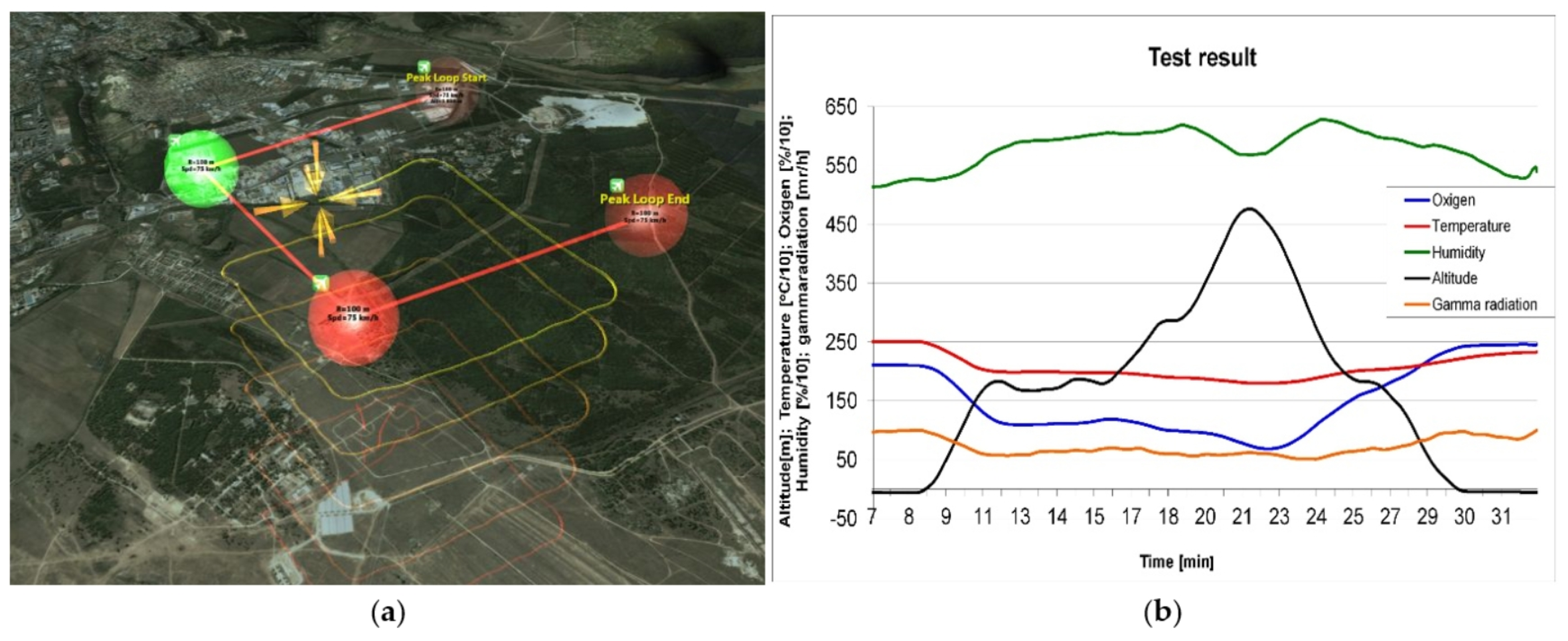
Figure 6 shows a rigid-wing drone developed by us with a measuring module installed on the upper part of the fuselage. The main advantage of such a rigid-wing aircraft is that even with an additional load of about 800 g (the weight of the module), it is capable of providing a flight time of more than 30 min, despite the use of an electric drive.
Another important advantage of the rigid wing design is that if the motor stops (e.g., due to a discharged battery), the drone can continue flying in gliding mode, like a glider. Using this feature, we conducted a series of experimental measurements in which the drone gained altitude along a closed route (a circle or rectangle, as shown in Figure 6) and, after the batteries were discharged, switched to gliding mode and descended along the altitude gain trajectory to the landing point.
Figure 6 shows the data recorded during the climb to 500 metres above the starting point (Figure 6b—diagram). Figure 6a shows a fragment of the flight path during the experiment. The purpose of the initial test was to verify the module’s performance by measuring known atmospheric characteristics. The measurements were taken during the day in summer.
The Figure 6b clearly shows that oxygen (O2) concentration decreases with increasing altitude (blue curve). A decrease in temperature (red curve) at high altitudes is also clearly visible.
Figure 5b shows a hexacopter equipped with a gas analysis module. Using this system, a method was developed to determine the location of pollution sources and the degree of air pollution. As part of the experiments, various pollution sources were placed on the test site in accordance with the types of gas sensors used. Then, data was collected by performing a planned flight over the site at different altitudes.
The data obtained from the gas sensors was synchronised with the GPS coordinates recorded during the measurements. These multidimensional data vectors were displayed in 3D space. A typical data vector included the following components: Latitude, Longitude, Altitude, and Sensor value.
This data can be visualised in different ways depending on the purpose. In simplified cases, only individual elements of the vector are used, for example, a graph showing the dependence of the sensor value on altitude, where only the Altitude and Sensor value components are used. In a full 3D display, the entire vector of four elements is used to represent each point.
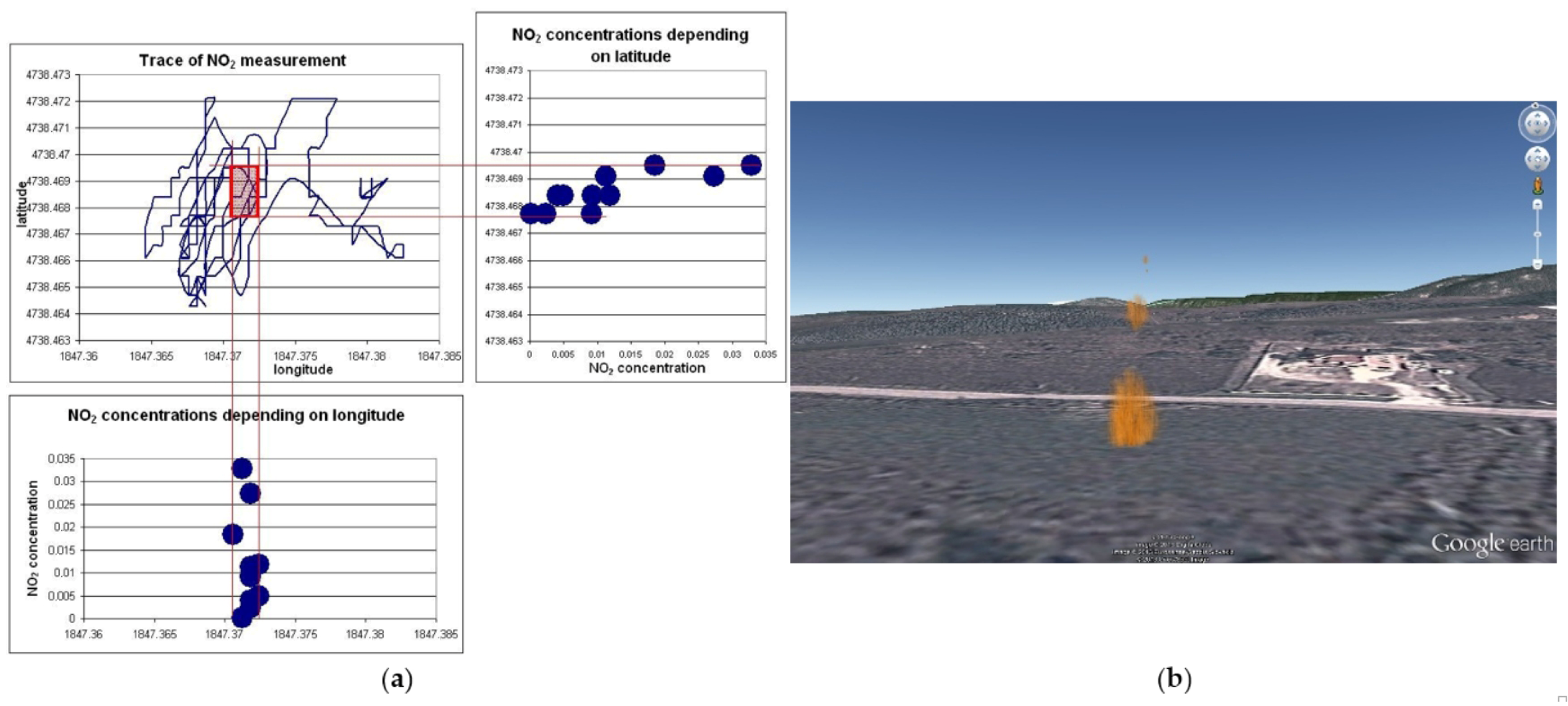
Figure 7 shows the results of measurements to identify and localise emissions from an artificially placed NO2 source at the test site. The diagram in Figure 7a shows the flight path of the drone and the visualisation of the sensor data depending on the longitude and latitude coordinates. Using this method, it is possible to clearly identify the area where the sensor detected the presence of NO2.
Only the following data vector components were used for this visualisation: Latitude, Longitude, and Sensor value.
Figure 7b shows a 3D visualisation of the same measurement, with the Altitude component added.
Although NO2 gas has a characteristic reddish hue, due to its extremely low concentration in this experiment, the gas cloud was not visible to the naked eye. To make the gas trail more visible, artificial colouring was used.
Based on the experience gained during the experiments, new lightweight measuring modules were designed and assembled, containing only the sensors necessary for specific measurement tasks. This reduced the size and weight of the modules, allowing them to be used on more compact drones.
Figure 5c,d show the DJI Mavic Pro and DJI Air 3 drones, which, with the measuring module installed, provide a flight time of 20–25 min. This has expanded the scope of research in terms of both the areas and heights at which measurements are taken.
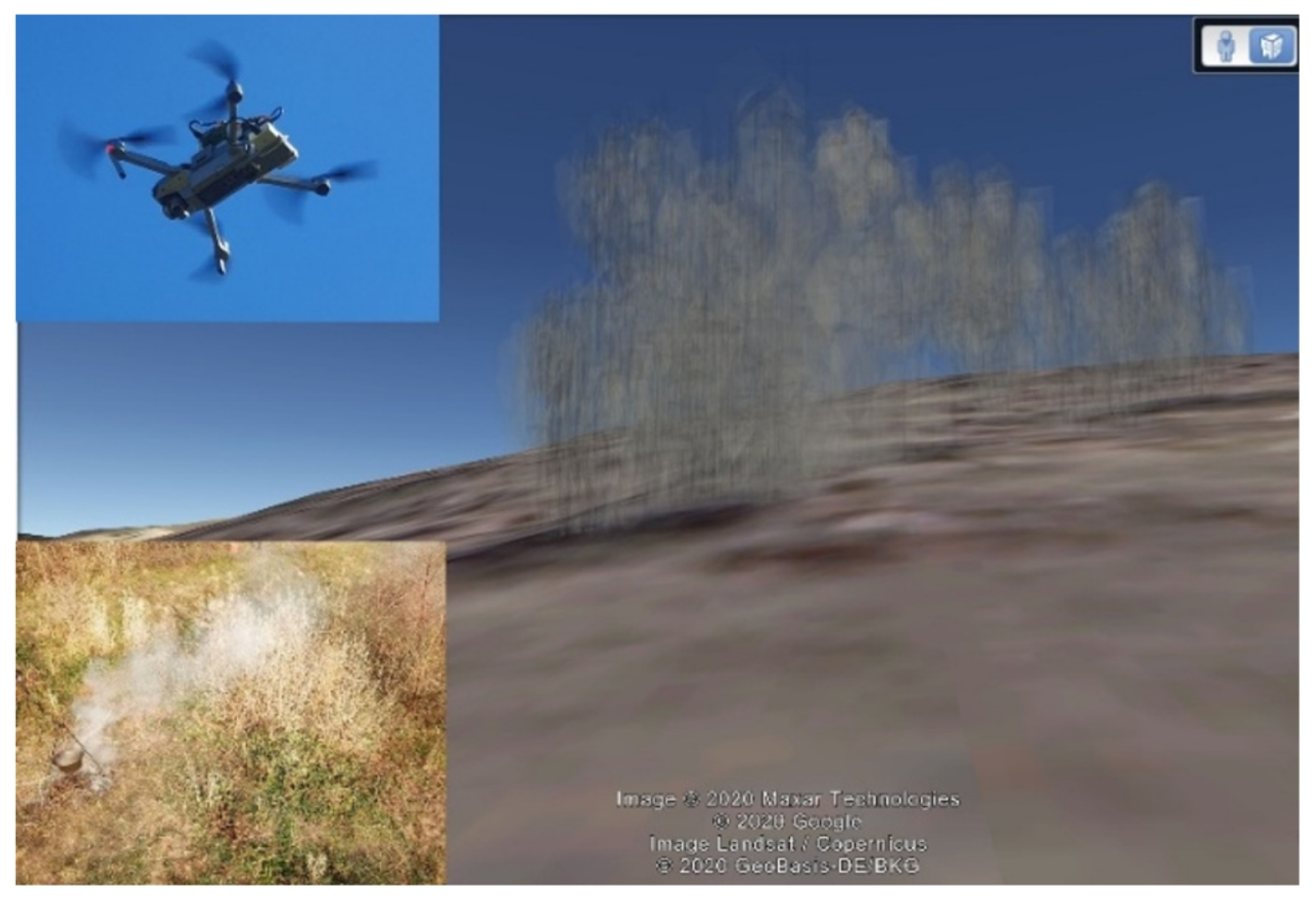
Figure 8 shows a visualisation of a carbon monoxide (CO) cloud obtained during an experiment in an open area. The source of the emission was the burning of wood in the open air, with combustion taking place without an excess supply of air and using damp fuel, which led to incomplete combustion. As a result, the smoke contained not only soot, water vapour and CO2, but also carbon monoxide (CO).
In Figure 8, the grey smoke cloud is shown using artificial colouring based on measurement data, as CO itself is an invisible gas.
Each measurement point recorded by the module was assigned spatial coordinates, which were used to form semi-transparent grey ‘clouds’ whose colour intensity corresponds to the CO concentration level—the higher the value, the darker the ‘cloud’ appears. The combination of these elements forms the cloud visible in Figure 8.
Since the drone performed a planned flight at different altitudes during the experiment, the measured data does not correspond to a single point in time, but reflects the values obtained throughout the entire flight interval. Consequently, the visualised cloud is not an ‘instantaneous snapshot,’ but represents a generalised picture of the spatial distribution of smoke over the entire measurement period.

3.3. Comparison of Air Pollution in Mountainous Areas and Lowland Rural Environments

The purpose of atmospheric measurements was to identify changes in air pollution levels depending on altitude. The studies were conducted in winter, mainly in the early evening hours, when air pollution in populated areas increases due to intensive heating.
In addition to recording ambient temperature and relative humidity, the measuring module’s sensors also allowed the concentration of CO2 and particulate matter (PM) in the air to be determined.
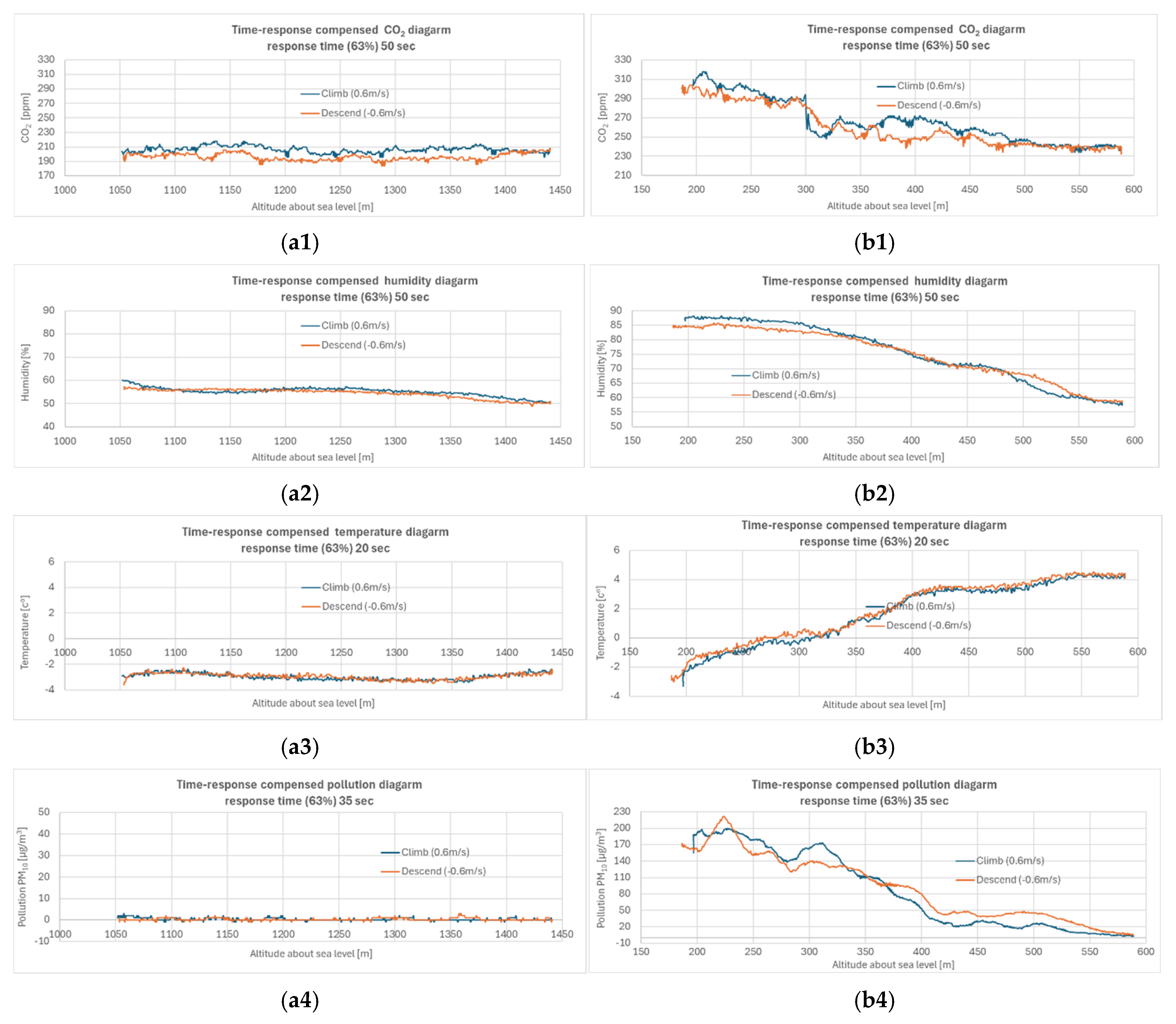
Figure 9 displays the results of two measurements. The diagrams marked ‘a’ illustrate data obtained during flight near a populated area located in the Alps at an altitude of more than 1000 metres. The measurements were taken using the method described earlier: a smooth ascent at a speed of 0.6 m/s and a descent at the same speed. The temperature and humidity sensors were equipped with a fan to ensure forced air circulation. The measurements were taken in winter, in the early evening, in clear and windless weather. Diagrams ‘b’ represent data collected near a low-lying settlement under similar weather conditions and with the same equipment, making the two data sets highly comparable.
  • Diagrams a1 and b1 show CO2 concentrations as a function of flight altitude.
In diagram a1, in the area of the mountain settlement, the CO2 concentration corresponds to the average level of clean air or even slightly lower and remains virtually unchanged throughout the entire 400-metre altitude range.
In contrast, diagram b1 shows that the CO2 concentration above the low-lying settlement is significantly higher and only drops to the level of the mountainous area at an altitude of about 400 metres. Since CO2 molecules are heavier than air, they accumulate near the surface. In calm weather, as in this experiment, CO2 emissions from heating are trapped in the air mass above the settlement, which can lead to a significant deterioration in air quality during prolonged cold and windless periods.
  • Diagrams a2 and b2 show relative humidity values. Higher near-surface humidity in low-lying areas (b2) suggests more favourable conditions for fog formation, while humidity decreases significantly at an altitude of 400 m. In mountainous areas (a2), surface humidity is lower, indicating less favourable conditions for fog formation. It should be noted that fog formation depends on several factors, including humidity and temperature.
  • Temperature data are shown in diagrams a3 and b3. In mountainous terrain (a3), the temperature remains consistently below zero throughout the entire flight altitude.
In low-lying terrain (b3), the temperature at the surface is also below zero, but with increasing altitude, gradual warming is observed. Together with the humidity data, this significantly increases the likelihood of fog formation.
  • Diagrams a4 and b4 show the concentration of PM10 suspended particles.
In mountainous areas (a4), the values are at the sensor’s sensitivity limit, which corresponds to virtually clean air.
In low-lying areas (b4), the PM10 concentration is significantly higher and only decreases towards the target altitude, approaching the minimum values.
Although even higher levels of pollution may be recorded near large cities, the values already recorded in this measurement can cause long-term damage to health.
Thus, the combined assessment of data on four parameters (a1–a4 and b1–b4) confirms that the air in mountainous areas is significantly cleaner and less affected by anthropogenic sources of pollution than in low-lying settlements, especially in winter.
Measurement of emissions from residential building chimneys
Among unmanned aerial vehicles (UAVs), multicopters are ideal platforms for delivering compact mobile measuring modules in close proximity to various emission sources.
The study of atmospheric air above populated areas or individual territories is usually aimed at determining the average level of pollution characteristic of the entire area. However, stationary systems, aerostats, and other methods, including drones, when used in vertical ascent above a single point [own vertical measurements], do not allow the determination of emissions from specific buildings, private houses, or industrial facilities.
At the same time, multicopters equipped with a special measuring module can fly directly to individual emission sources, right up to the point where smoke emerges from a chimney. This makes it possible to perform direct analysis of flue gases coming from a specific object.
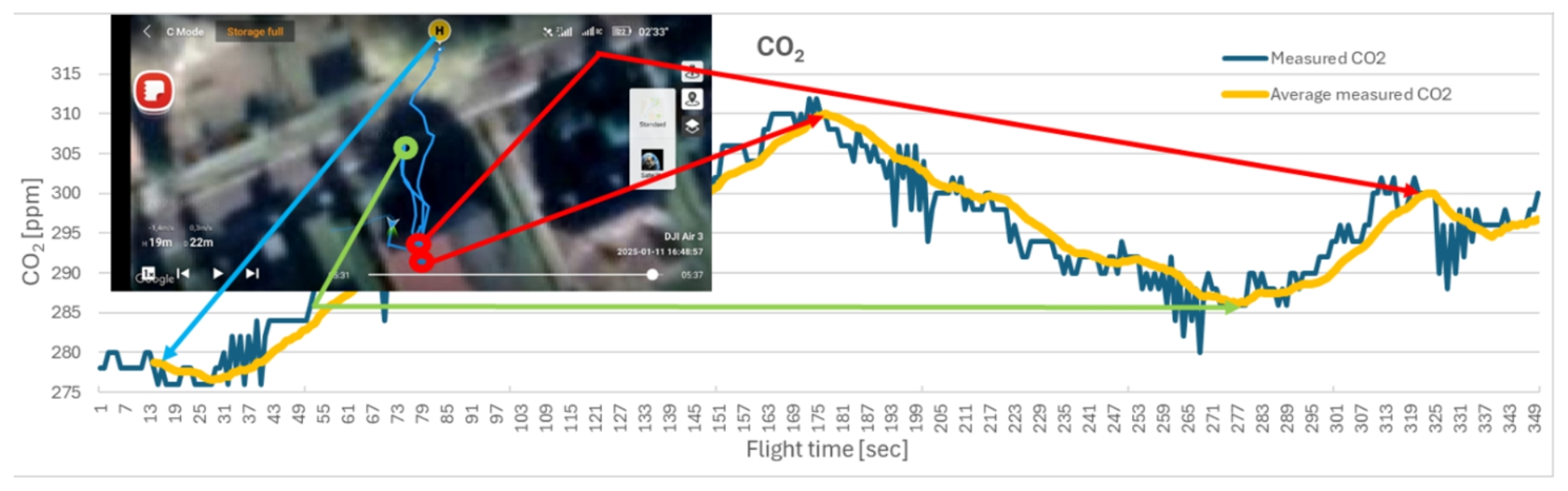
Figure 10 shows the results of CO2 concentration measurements in flue gases emitted through the chimney of a private residential building. The measurements were taken in the early evening hours in calm weather. The ambient temperature was −2 °C, and the relative humidity was 91%.
Measurements were carried out during uniform ascent at 0.6 m/s and uniform descent at −0.6 m/s. The ascent and descent speeds were determined by the drone’s flight time. At this speed, sensor data could still be handled reliably, while an altitude of 400 m above the launch point could be reached. The duration of a single measurement was therefore 15–20 min, with approximately half of the time spent ascending and the other half descending.
During the measurement, the drone with the measuring module installed first hovered over the chimney (marked in red), then moved to the same height away from the chimney (marked in green) to determine the background concentration, and then returned back over the chimney (again marked in red). The values recorded on the ground before take-off are marked in blue.
In this area, heating is usually provided by natural gas or wood. Given the cold and windless weather, smoke from neighbouring houses mixed with the fog and remained over the settlement.
The diagram in Figure 10 shows that before take-off (indicated by the blue arrow), the CO2 concentration was slightly above 275 ppm. The drone’s flight altitude was 15 metres above the take-off point.
At this height above the chimney, values of 300–310 ppm CO2 were recorded (red arrows), and at the same level but further away from the chimney, 285 ppm (green arrow).
The results of numerous experiments conducted by us show that a cloud of polluted air ‘hangs’ over the area under investigation. Suspended particles and CO2, which is heavier than air, concentrate in a specific altitude zone depending on the air temperature gradient. Accordingly, at a height of 15 metres, the CO2 concentration (285 ppm, green arrow) is higher than at ground level (275 ppm, blue arrow), which is consistent with previously obtained data.
Although the difference is only 10 ppm, the graph clearly shows that it significantly exceeds the measurement error and is therefore reliable.
The CO2 concentration measured directly above the chimney exceeds the background level by 15–25 ppm, confirming that the measuring module on the multicopter is capable of reliably detecting emission sources even in conditions of complex background pollution.

4. Conclusions

During development, numerous experiments were conducted. This article presents the measurements and their analysis that most effectively and clearly demonstrate the results and effectiveness of the proposed method. Both the measurements presented here and the others were generally performed during a single flight or a single continuous route, which made it possible to complete the survey in a relatively short period of time.
For aerial platforms (drones), the typical measurement duration is 15–30 min, which allows repeated measurements to be taken at different times and thus track the dynamics of the spread and change in pollutant concentrations even at short intervals.
One of the key advantages of small drones as sensor carriers is their suitability for measurements in polluted environments and close to specific sources, as demonstrated by the example of measuring smoke from the chimney of a private house. In addition, drones allow the vertical distribution of pollutants to be investigated, as in the case where the maximum concentration of suspended particles was recorded not at the surface but at a height of 35–50 metres.
Since clouds of polluted air (smog) can move away from the source of emissions and cause pollution in other areas, it is important to consider not only ground-based emissions but also the content of pollutants in moving air layers.
The proposed system, using various platforms, enables such measurements to be taken at heights of up to 400–500 metres above ground level.
When measurements are taken using a sensor module installed on a ground vehicle, the measurement time can be significantly increased, allowing monitoring at distances of up to 100 km. However, the disadvantage of this approach is that it is only possible in passable areas (usually roads) and only close to the ground surface.
Overall, the developed and tested system is a flexible, versatile tool which, thanks to its mobility, provides additional information compared to stationary measuring stations.

Author Contributions

Conceptualization, A.M. and B.U.; writing—original draft preparation, A.M. and A.K.; visualization, A.M. and S.S.; writing—review and editing, A.K., B.U. and A.M.; supervision, A.M., B.U. and A.K. All authors have read and agreed to the published version of the manuscript.

Funding

This research received no external funding.

Institutional Review Board Statement

Not applicable.

Informed Consent Statement

Not applicable.

Data Availability Statement

The original contributions presented in this study are included in the article. Further inquiries can be directed to the corresponding author.

Acknowledgments

The authors would like to express their sincere gratitude to the Tashkent Institute of Chemical Technology in Uzbekistan, Óbuda University in Hungary, and the Faculty of Economics, János Schell University in Komárno, Slovakia, for their continuous support, collaboration, and invaluable contributions throughout the course of this research. Their guidance, shared expertise, and academic resources have played a crucial role in advancing the study and achieving the results presented in this work.

Conflicts of Interest

The authors declare no conflicts of interest.

References

  1. Liu, Z.; Huang, J.; Huang, J.; Luo, R.; Wu, Z. Three-Dimensional Air Quality Monitoring and Simulation of Campus Microenvironment Based on UAV Platform. Appl. Sci. 2024, 14, 10908. [Google Scholar] [CrossRef]
  2. Song, J.; Han, K. Deep-MAPS: Machine Learning Based Mobile Air Pollution Sensing. arXiv 2019, arXiv:1904.12303. Available online: https://arxiv.org/abs/1904.12303 (accessed on 7 February 2026).
  3. Messan, S.; Shahud, A.; Anis, A.; Kalam, R.; Ali, S.; Aslam, M.I. Air-MIT: Air Quality Monitoring Using Internet of Things. Eng. Proc. 2022, 20, 45. [Google Scholar] [CrossRef]
  4. Penza, M.; Pfister, V.; Suriano, D.; Dipinto, S.; Prato, M.; Cassano, G. Application of Low-Cost Sensors in Stationary and Mobile Nodes for Urban Air Quality Index Monitoring. Eng. Proc. 2023, 48, 62. [Google Scholar] [CrossRef]
  5. Suriano, D.; Prato, M.; Penza, M. Air Quality Monitoring in a Near-City Industrial Zone by Low-Cost Sensor Technologies: A Case Study. Eng. Proc. 2023, 48, 26. [Google Scholar] [CrossRef]
  6. Xu, R.; Yao, D.; Pian, Y.; Cao, R.; Fu, Y.; Yang, X.; Gan, T.; Liu, Y. Integrating Mobile and Fixed Monitoring Data for High-Resolution PM2.5 Mapping Using Machine Learning. arXiv 2025, arXiv:2503.12367. Available online: https://arxiv.org/abs/2503.12367 (accessed on 14 December 2024). [CrossRef]
  7. Oкceнeнко, A.; Epимбeтовa, A.; Kyaнaeв, A.; Myxaмeдиeв, P.; Kyчин, Я. TEXHИЧECKИE CPEДCTBA ДИCTAHЦИOHHOГO MOHИTOPИHГA C ПOMOЩЬЮ БECПИЛOTHЫX ЛETATEЛЬHЫX ПЛATΦOPM. Phys.-Math. Ser. 2024, 3, 152–173. [Google Scholar] [CrossRef]
  8. Yang, Y.; Hu, Z.; Bian, K.; Song, L. ImgSensingNet: UAV Vision-Guided Aerial–Ground Air Quality Sensing System. arXiv 2019, arXiv:1905.11299. Available online: https://arxiv.org/abs/1905.11299 (accessed on 6 December 2024).
  9. Elen, B.; Peters, J.; Van Poppel, M.; Bleux, N.; Theunis, J.; Reggente, M.; Standaert, A. The Aeroflex: A Bicycle for Mobile Air Quality Measurements. Sensors 2012, 13, 221–240. [Google Scholar] [CrossRef] [PubMed]
  10. Fattoruso, G.; Toscano, D.; Cornelio, A.; De Vito, S.; Murena, F.; Fabbricino, M.; Di Francia, G. Using Mobile Monitoring and Atmospheric Dispersion Modeling for Capturing High Spatial Air Pollutant Variability in Cities. Atmosphere 2022, 13, 1933. [Google Scholar] [CrossRef]
  11. Panday, U.S.; Pratihast, A.K.; Aryal, J.; Kayastha, R.B. A Review on Drone-Based Data Solutions for Cereal Crops. Drones 2020, 4, 41. [Google Scholar] [CrossRef]
  12. Desouza, P.; Kahn, R.; Stockman, T.; Obermann, W.; Crawford, B.; Wang, A.; Crooks, J.; Li, J.; Kinney, P. Calibrating networks of low-cost air quality sensors. Atmos. Meas. Tech. 2022, 15, 6309–6328. [Google Scholar] [CrossRef]
  13. Ganji, A.; Youssefi, O.; Xu, J.; Mallinen, K.; Lloyd, M.; Wang, A.; Bakhtari, A.; Weichenthal, S.; Hatzopoulou, M. Design, calibration, and testing of a mobile sensor system for air pollution and built environment data collection: The urban scanner platform. Environ. Pollut. 2022, 317, 120720. [Google Scholar] [CrossRef] [PubMed]
  14. Barbano, F.; Brattich, E.; Cintolesi, C.; Nizamani, A.G.; Di Sabatino, S.; Milelli, M.; Peerlings, E.E.M.; Polder, S.; Steeneveld, G.-J.; Parodi, A. Performance evaluation of MeteoTracker mobile sensor for outdoor applications. Atmos. Meas. Tech. 2024, 17, 3255–3278. [Google Scholar] [CrossRef]
  15. Day, R.-F.; Yin, P.-Y.; Huang, Y.-C.T.; Wang, C.-Y.; Tsai, C.-C.; Yu, C.-H. Concentration-Temporal Multilevel Calibration of Low-Cost PM2.5 Sensors. Sustainability 2022, 14, 10015. [Google Scholar] [CrossRef]
  16. European Environment Agency (EEA). Europe’s Air Quality Status 2023; European Environment Agency: Copenhagen, Denmark, 2023; Available online: https://www.eea.europa.eu/en/analysis/publications/europes-air-quality-status-2023 (accessed on 7 February 2026).
  17. van der Gon, H.A.C.D.; Bergström, R.; Fountoukis, C.; Johansson, C.; Pandis, S.N.; Simpson, D.; Visschedijk, A.J.H. Particulate emissions from residential wood combustion in Europe—Revised estimates and an evaluation. Atmos. Meas. Tech. 2015, 15, 6503–6519. [Google Scholar] [CrossRef]
Figure 1. (a) First-generation measuring module; (b) second-generation lightweight measuring module.
Engproc 117 00068 g001
Figure 2. Results of PM2.5 air pollution measurements on a suburban road using a sensor installed on a vehicle.
Engproc 117 00068 g002
Figure 3. Results of PM2.5 air pollution measurements on a suburban route using a sensor installed on a vehicle.
Engproc 117 00068 g003
Figure 4. PM2.5 concentrations measured along the Djizzakh–Tashkent suburban road in Uzbekistan using a vehicle-mounted sensor module.
Engproc 117 00068 g004
Figure 5. Drones equipped with sensors for measuring air composition. (a) Fixed-wing drone; (b) multirotor drone; (c) quadcopter with measuring module; (d) quadcopter platform with sensor unit.
Engproc 117 00068 g005
Figure 6. Trajectory of the experiment with a rigid-wing drone and diagram of measurement results. (a) Fragment of the flight path of the rigid-wing drone during the experiment; (b) recorded atmospheric parameters during the climb to approximately 500 m altitude.
Engproc 117 00068 g006
Figure 7. Experimental measurement: detection of NO2 source using a measuring module installed on a drone. (a) Drone flight path during the measurement (blue line) together with the detected NO2 signal locations (blue points); the red rectangle indicates the area where elevated NO2 concentrations were detected, and the red lines mark the corresponding latitude and longitude ranges used for the analysis; (b) three-dimensional visualisation of the same measurement including altitude information.
Engproc 117 00068 g007
Figure 8. Measurement and visualisation of CO emissions during open combustion.
Engproc 117 00068 g008
Figure 9. Experimental measurements with forced (fan) air flow during actual flight in two different locations. Both measurements were taken in calm, clear weather in the early evening. The diagrams marked ‘a’ were obtained near a settlement located on high ground, and the diagrams marked ‘b’ were obtained near a low-lying settlement. (a1a4) Altitude-dependent atmospheric parameters measured above a high-altitude settlement; (b1b4) altitude-dependent atmospheric parameters measured above a low-lying settlement.
Engproc 117 00068 g009
Figure 10. Results of measuring CO2 concentration near the chimney of a private residential house. Blue: Background concentrations at ground level before takeoff. Red: Measurements directly above the chimney (emission source). Green: Background concentration at flight altitude away from the chimney. Arrows: Indicate specific measurement phases and the corresponding CO2 levels.
Engproc 117 00068 g010
Disclaimer/Publisher’s Note: The statements, opinions and data contained in all publications are solely those of the individual author(s) and contributor(s) and not of MDPI and/or the editor(s). MDPI and/or the editor(s) disclaim responsibility for any injury to people or property resulting from any ideas, methods, instructions or products referred to in the content.