Proceeding Paper

Improving Preventive Maintenance Efficiency in University Laboratories Using Radio Frequency Identification-Based Decision Support System and Rapid Application Development Method †
by
Rizky Fajar Ahmad Gurnita
1,
Rayinda Pramuditya Soesanto
2,
Amelia Kurniawati
1 and
Fahmy Habib Hasanudin
2,*
1
School of Industrial Engineering, Telkom University, Bandung 40257, Indonesia
2
The University Center of Excellence for Intelligence Sensing-Internet of Things, Telkom University, Bandung 40257, Indonesia
*
Author to whom correspondence should be addressed.
Presented at 2025 IEEE International Conference on Computation, Big-Data and Engineering (ICCBE), Penang, Malaysia, 27–29 June 2025.
Eng. Proc. 2026, 128(1), 41; https://doi.org/10.3390/engproc2026128041
Published: 18 March 2026

Abstract

Laboratory asset maintenance in higher education institutions often suffers from inefficiencies due to incomplete data and reactive maintenance practices. We designed a radio frequency identification (RFID)-based information system that supports preventive maintenance and decision-making for laboratory asset management. Utilizing the rapid application development method, the system was developed through iterative prototyping and stakeholder engagement. The system integrates RFID-based asset identification with a web-based interface for real-time monitoring and log management. A decision-support module was also implemented, allowing stakeholders to prioritize maintenance tasks based on asset age, repair frequency, and usage patterns. Evaluation results of user acceptance testing showed an average score of 82%, indicating strong usability and relevance. The results demonstrate that integrating RFID with decision-support features significantly improve maintenance planning, reduce operational risk, and optimize resource allocation in academic laboratory environments.

1. Introduction

The Laboratory of the Faculty of Industrial Engineering at Telkom University, Indonesia, conducts practicum activities as part of its educational programs. These activities are carried out continuously, utilizing various assets such as computers and other teaching aids. Constant use inevitably reduces the functional value of these assets, making maintenance essential to preserve and extend their lifespan. Within the broader scope of asset management, maintenance represents a critical activity. At present, asset maintenance in the laboratory remains reactive. While reactive maintenance sustain asset value to some extent, it is not optimal, as it increases the likelihood of severe damage, higher repair costs, and elevated safety risks. Such risks lead to workplace accidents, particularly for students who interact with laboratory assets during practicum sessions. Consequently, proactive and systematic asset maintenance is vital to ensure both the longevity of assets and the safety of campus stakeholders.

2. Literature Review

2.1. Asset Management in Higher Education

Assets are defined as goods that have economic value, commercial value, or exchange rates, owned by business entities, agencies, or individuals [1]. An asset is described as an entity that has value, creates, and maintains that value through its use, and adds value through its future use. An asset is something owned by an organization or person that has economic value, measured financially [2]. Broadly speaking, assets in an organization are divided into physical assets, financial assets, human assets, information assets, and intangible assets. Physical assets are tangible assets such as machines. Meanwhile, in addition to physical assets, financial assets, human assets, and information assets are used to support the management of physical assets. Intangible assets are physical intangible assets, such as intellectual property [3]. In higher education, assets are important because asset processing is underpaid, so that it becomes a challenge in its management [4].

2.2. Radio Frequency Identification (RFID) in Maintenance Systems

RFID provides accurate information in real-time to improve the quality and timeliness of decision-making based on the information obtained [5]. RFID is a wireless technique that is capable of identifying or tracking RFID tags that are attached to objects or even humans. Conventional barcodes that use RFID techniques have advantages, such as remote access to simple computing capabilities [6]. RFID technology for maintenance has been widely used. Nappi [7] used RFID to predict the use of water filters in chemical mixing materials. The accuracy of RFID predictions reached 100% if it continued to be improved. In addition, Kameli et al. [8] used RFID to simulate parts or models of buildings in stadiums to predict what parts or parts are old and must be checked again.

2.3. Decision Support in Maintenance Planning

A decision support system (DSS) is a computer-based system designed to assist stakeholders in making decisions by utilizing data and models to address both unstructured and semi-structured problems [9]. The fundamental concept of DSS is a system-based model comprising procedures for processing and analyzing data to support decision-making [10]. Rosati et al. [11] investigated the integration of machine learning with DSS for predictive maintenance by collecting damage data. Although this method presents significant challenges, the results successfully identified components most prone to failure, enabling timely and appropriate repairs. Similarly, Arena [12] demonstrated that combining Machine Learning with DSS not only predicts which parts require replacement but also reduces operational costs by extending equipment durability.

2.4. Rapid Application Development (RAD) Method

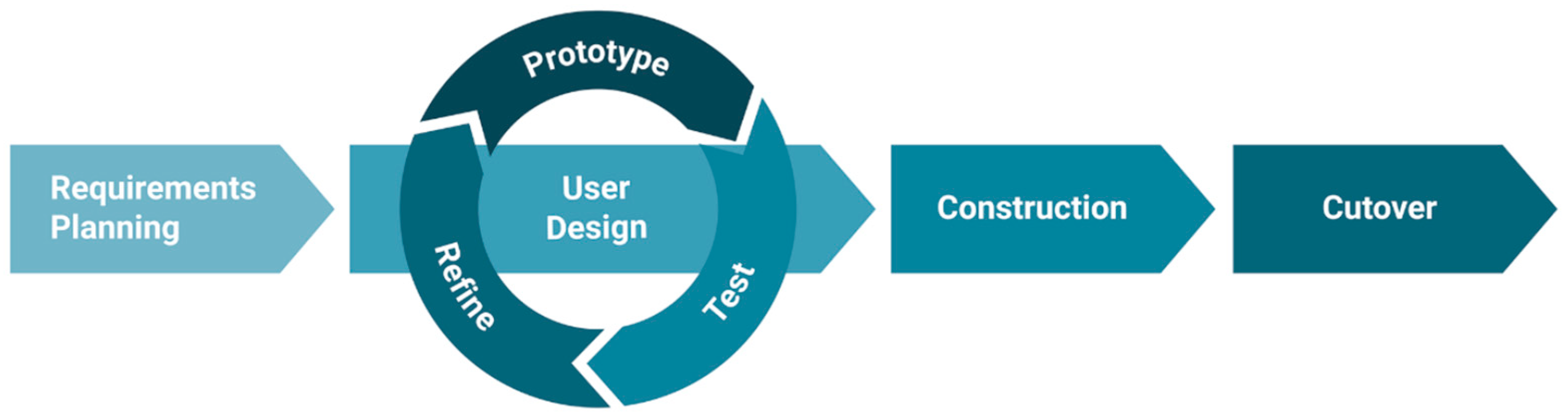
The RAD method emphasizes speed through iterative and incremental prototyping, where successive prototypes evolve into the final system [13]. The RAD method consists of several stages, each of which must be completed sequentially (Figure 1) [14].
The requirement planning stage involves collaborative discussions to identify existing problems and determine the specific needs required for system development. This phase is critical, as the success of the system begins with clearly defined requirements.
The user design stage focuses on creating system designs that align with the requirements established in the previous phase. At this stage, Unified Modeling Language (UML) is commonly employed, typically using three diagram types: use case, sequence, and activity diagrams [15]. These tools help visualize system functionality and ensure that the design addresses identified problems.
The construct stage marks the beginning of system development, where coding transforms the user design into a functional application. Continuous feedback between users and developers is integral to this phase, often requiring multiple iterations to ensure the system meets user needs effectively.
The cutover stage is the final phase of RAD, encompassing comprehensive system testing. Black-box testing is applied to evaluate the system against its functional specifications, while validation is further supported through user acceptance testing (UAT) [16].

3. Methodology

A system was developed using RAD as follows.

3.1. Requirements Planning

The requirements planning stage involves identifying stakeholder needs for the functions required in the information system. This process is performed through interviews with relevant stakeholders, followed by the identification of system actors, the development of user stories, and the specification of system requirements.

3.2. RAD Design Workshop

The design stage focuses on system modeling using UML, which includes use case, activity, and sequence diagrams. Once the UML models are established, a database is designed to support asset maintenance data integration and facilitate coding activities. Through coding, system requirements are transformed into a functional application, and the system is developed using hypertext preprocessor with the Laravel framework version 11 and MySQL for database management. At this stage, RFID technology is also integrated into the system.
The system is tested to ensure the application meets the identified requirements. Two methods are employed. Black-box testing is used to verify system functionality against predefined specifications without examining the underlying code, focusing on button functions and output validation [17]. User acceptance testing (UAT) is conducted by stakeholders to validate the system against user needs. If the system fails to meet requirements, re-evaluation and redevelopment are undertaken. If successful, the design is accepted and proposed as the final information system [18].

3.3. Implementation

The implementation stage concludes the RAD design process. The system is refined through multiple stakeholder evaluations and deployed. In this study, the design was created for application in laboratory asset maintenance processes.

3.4. Evaluation Methods

Black-Box Testing is conducted to verify system functionality against specifications. In this study, testing was conducted by individuals not involved in system development, using 11 predefined scenarios to assess application performance [17]. Additionally, UAT statements were created based on the standard (IEC) 25010:2023 International Organization for Standardization (ISO) and the International Electrotechnical Commission [19], which provides a framework for assessing the quality of ICT products and software [20]. Nine categories from ISO/IEC 25010:2023 form the basis for evaluation, as outlined in Table 1.

4. Result and Discussion

Applying Daellenbach’s stakeholder analysis framework, the key actors in the project were identified and classified into distinct categories based on their role, influence, and relationship to the problem and its resolution.

4.1. Stakeholder Identification

The primary problem owner is the Vice Dean of Resource and Logistics of the Faculty of Industrial Engineering, who holds strategic responsibility for asset management policies and budget allocations. As the individual accountable for ensuring that laboratory assets are maintained efficiently and cost-effectively, the Vice Dean of Resource and Logistics perceives the problem at a strategic level. The incomplete asset database and reactive maintenance approach hinder their ability to make informed policy and investment decisions.
The problem users comprise the Head of Laboratory Affairs and laboratory staff who are directly involved in daily asset management activities. They are responsible for recording, tracking, and maintaining laboratory assets, and they experience the direct consequences of inefficient data collection, limited asset visibility, and the inability to plan preventive maintenance effectively.
The problem customers are the students and academic support staff who rely on laboratory assets for academic activities, research, and administrative operations. Their interest is in having access to functional, safe, and reliable equipment that supports uninterrupted learning and working processes. The effectiveness of the asset maintenance system directly affects their productivity, safety, and satisfaction.
The problem analyst is represented by the system design and development team, consisting of the researcher, system analysts, and software developers. This group is responsible for interpreting the needs of both strategic and operational stakeholders, conducting the necessary system analysis, and designing the RFID-enabled asset maintenance management system using RAD.

4.2. Challenges in Current Laboratory Asset Maintenance

The asset maintenance process in the Faculty of Industrial Engineering laboratories currently relies on a reactive approach, wherein maintenance actions are initiated only after an asset failure is reported. This practice is compounded by incomplete and inconsistent asset data, resulting from the ongoing revitalization process and the absence of a structured asset tracking mechanism. A lack of a preventive maintenance schedule increases the risk of severe equipment damage and poses safety hazards to users, particularly in assets that directly interact with students, such as laboratory computers and projectors. Furthermore, the dispersed location of numerous assets across 23 laboratories and the limited number of laboratory staff hinders effective supervision and timely interventions. These factors collectively reduce operational efficiency, elevate maintenance costs, and disrupt academic activities, underscoring the urgent need for a more proactive, data-driven maintenance system.

4.3. RAD Implementation

4.3.1. Requirements Planning

During the requirements planning stage, functional and non-functional needs were identified through interviews and discussions with key stakeholders, including the Vice Dean of Resource and Logistics (problem owner), the Head of Laboratory Affairs, laboratory staff (problem users), and representatives of students and academic support staff (problem customers). The functional requirements include real-time asset tracking using RFID tags, automated condition logging, rule-based preventive maintenance scheduling, multi-user dashboards with role-specific access rights, and integrated reporting features. Non-functional requirements focused on system reliability, ease of use, compatibility with existing IT infrastructure, and the ability to handle bulk asset data with minimal latency. These requirements formed the baseline for the subsequent system design.

4.3.2. Design and Feedback

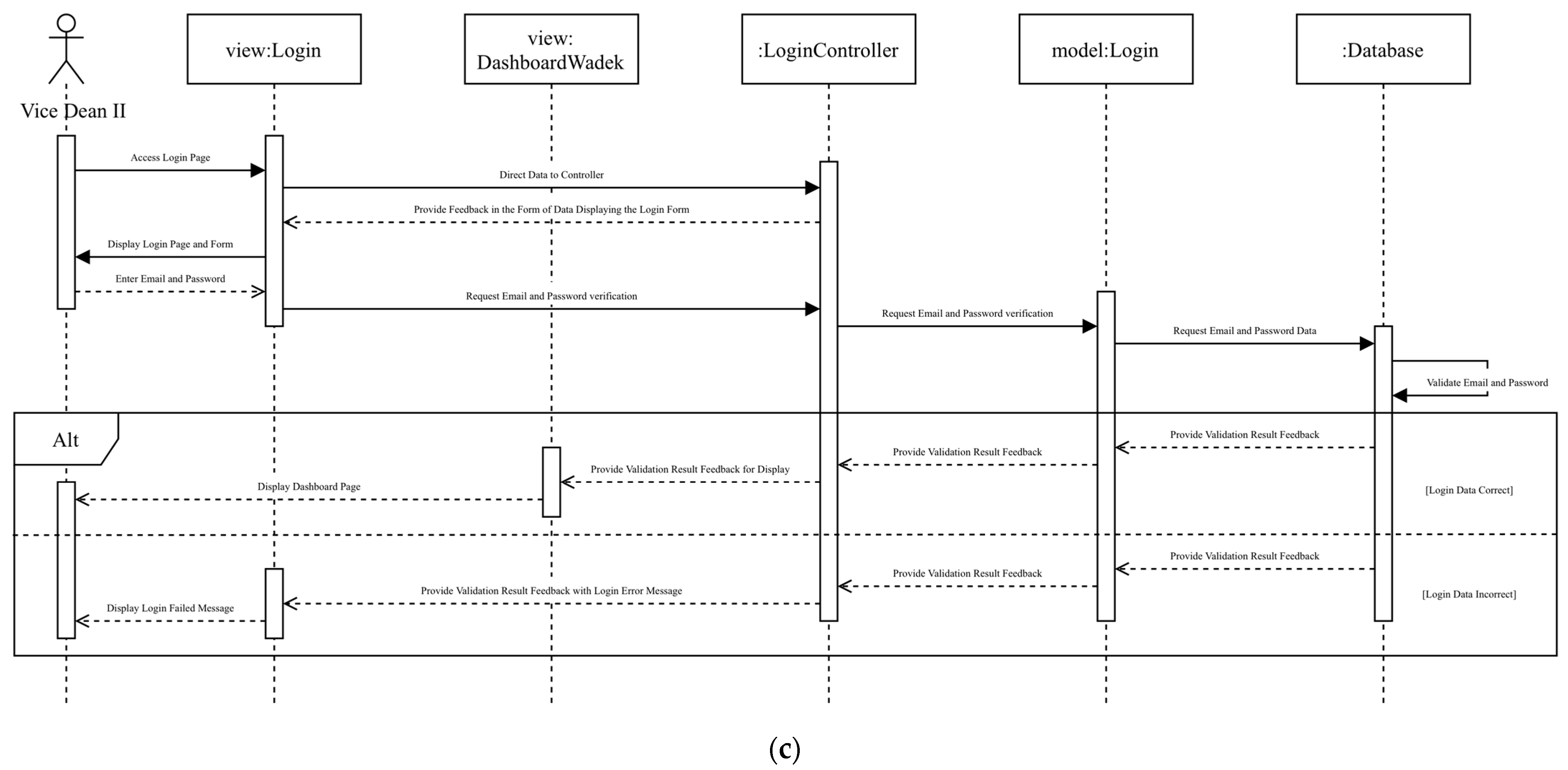
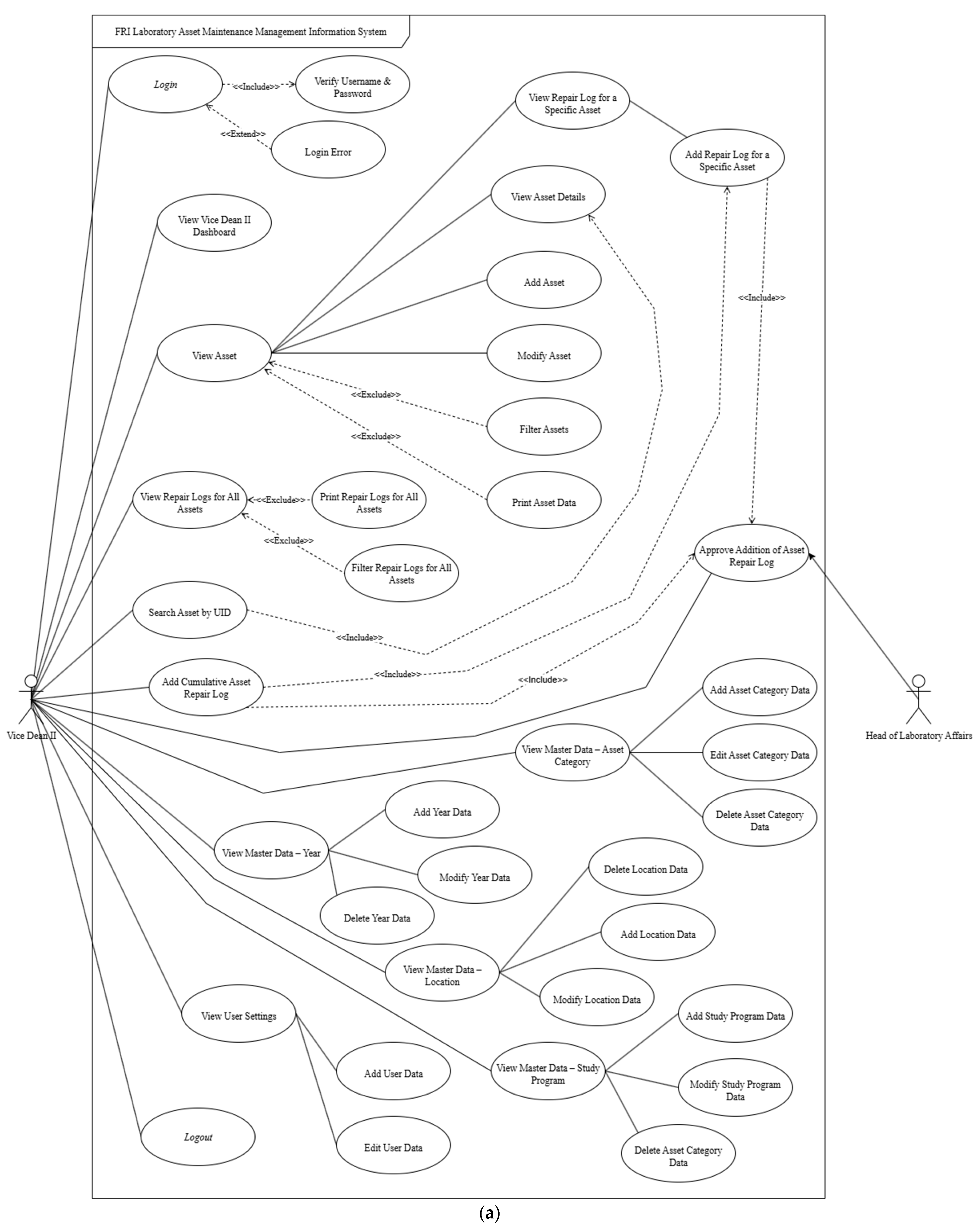
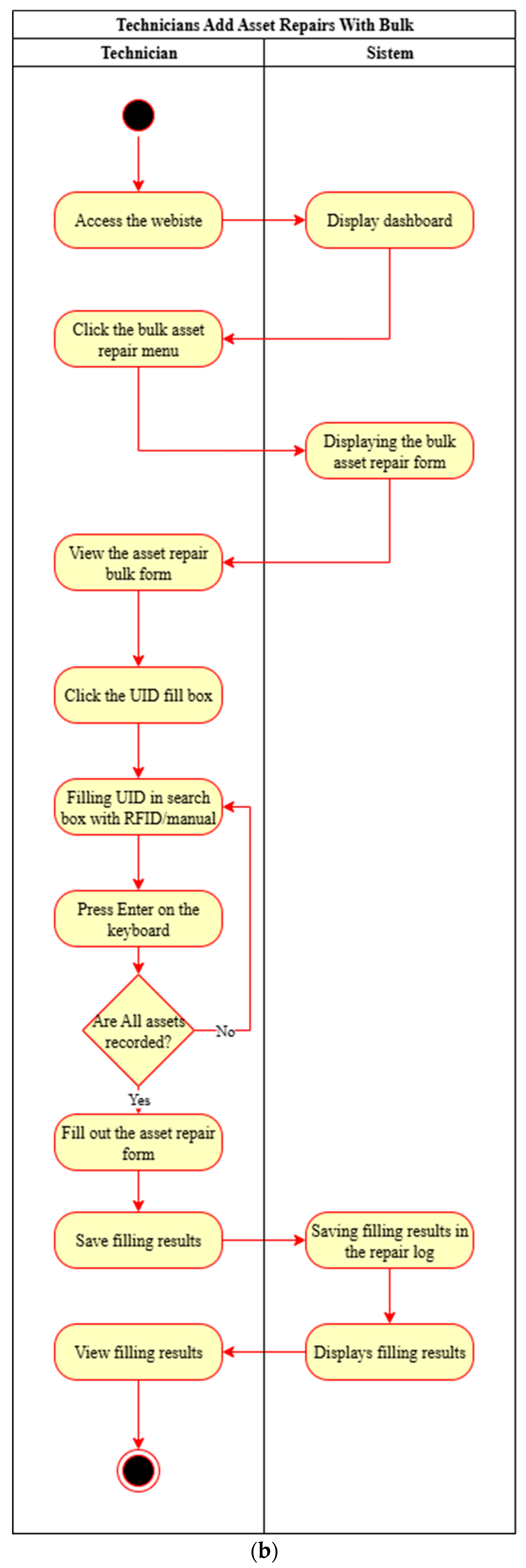
In the design stage, the initial system architecture was developed using UML diagrams, including use case, activity, and sequence diagrams for each stakeholder role (Figure 2). Mockups were created to visualize the dashboard layouts, asset data input forms, search functions, and preventive maintenance alerts. Early prototypes were presented to the problem users for evaluation, leading to simplifying the asset search interface, adding tiered filter functions, and adjusting preventive maintenance alert rules to better match the laboratory’s operational schedule. This iterative feedback loop ensured that the system’s design aligned closely with user expectations and operational realities.

4.3.3. Implementation

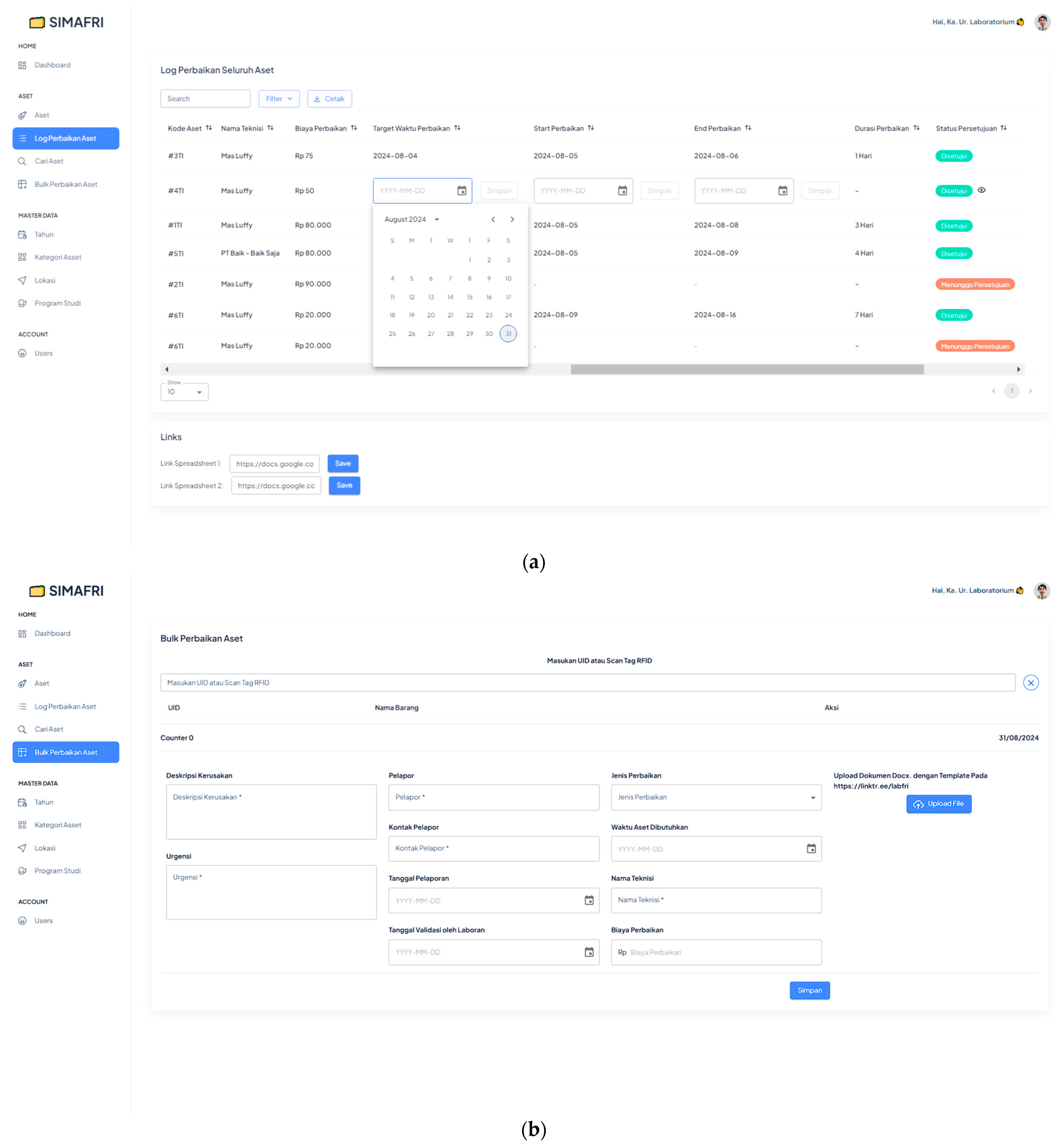
The implementation stage involves building the RFID-based asset maintenance management system prototype, integrating UHF RFID readers and passive RFID tags with the backend application developed using the RAD approach. The system was deployed in a test environment connected to the faculty’s network, enabling real-time data capture and synchronization with the database. Initial testing focused on verifying RFID read accuracy, system response time, and dashboard functionality. Feedback from the test deployment prompted iterative improvements, such as optimizing bulk asset scanning performance and refining the preventive maintenance rule engine. Each iteration resulted in measurable performance gains and enhanced user satisfaction, culminating in a stable version ready for full-scale implementation. Figure 3 shows the user interface for asset repair.
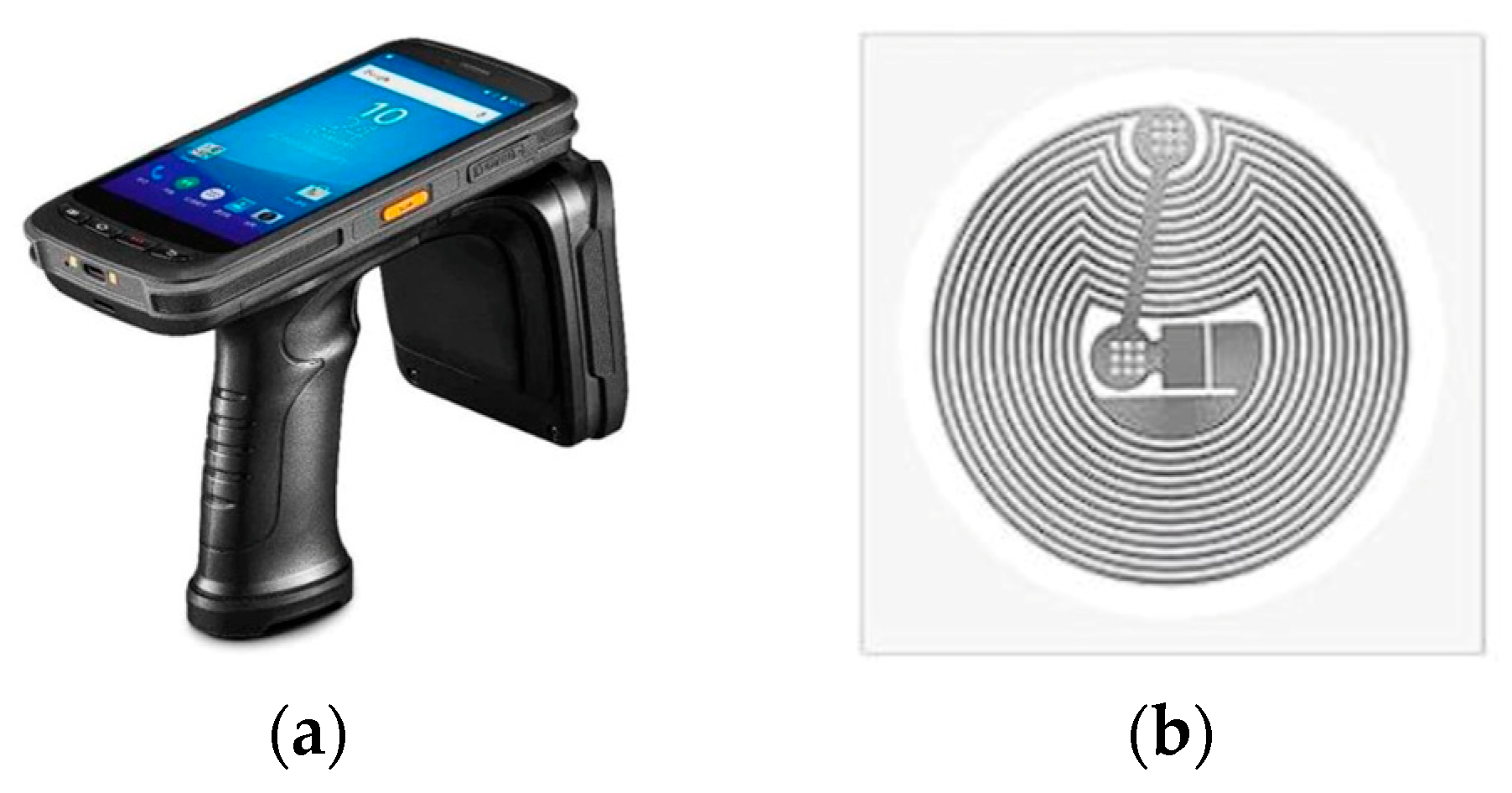
Figure 4 shows the hardware employed in this study, this application is implemented at one of the universities in Indonesia, so the language used is Indonesian. Figure 4a shows the asset repair log data available here showing the name of the repairing technician, the date of the repair and the repair status. Figure 4b shows the bulk of the repair, including who reported, the type of damage and the date of the repair. An Android 6.0 Handheld Ultra High Frequency (UHF) RFID Long-Range Reader (5.2-inch display, 2 GB RAM, 16 GB storage) is made by Electron Indonesia which is located in Bandung, West Java, Indonesia, which operates on the UHF RFID standard. This device functions as the main instrument for reading RFID tags attached to each laboratory asset. It is also configured to interface with an indoor laptop or desktop computer, enabling the encoding of unique identification codes onto the RFID tags through a dedicated software interface. For asset tagging, NFC Tags NTAG213 Stickers are utilized as durable asset identifiers. These tags store essential asset data, which can be dynamically configured or updated to accommodate the faculty’s operational requirements, particularly in relation to preventive maintenance scheduling and asset procurement management.

4.4. Final System Implementation and Key Features

For the implementation of the system, RFID technology is integrated with a rule-based DSS to support preventive maintenance decision-making in the Faculty of Industrial Engineering laboratories. The system was deployed as a web-based platform, enabling multi-user access with role-based dashboards for the Vice Dean of Resource and Logistics, Head of Laboratory Affairs, laboratory staff, and other authorized personnel.
The core of the system’s decision-making capability lies in its rule-based DSS, which processes asset condition data to generate prioritized maintenance recommendations. The rules, defined in collaboration with laboratory management, consider parameters such as asset age, frequency of reported issues, and criticality to academic operations. For example, assets classified as critical for teaching or research are automatically queued for urgent preventive maintenance when predefined thresholds are met. Table 2 shows the decision table that is used in this study. This integrated RFID–DSS platform streamlines maintenance operations and ensures that decision-making is proactive, data-driven, and aligned with the preventive maintenance objectives of the faculty.

4.5. System Performance and Impact

The developed RFID-based DSS underwent two evaluation stages: functional testing using the black box testing method and UAT to assess stakeholder adoption. In the functional test, all implemented features were evaluated against the predefined functional requirements. The test scenarios included asset registration via RFID scanning, automated data synchronization, rule-based maintenance recommendation generation, and maintenance history retrieval. Each scenario was executed multiple times under controlled conditions, and all features demonstrated correct outputs with no critical errors or failures. The results confirm that the system meets its functional specifications as designed in the RAD stages.
The UAT phase involved two stakeholder groups: laboratory staff and academic support personnel. Participants interacted with the system over a two-week trial period during routine laboratory operations. Feedback was collected through structured questionnaires measuring dimensions such as ease of use, perceived usefulness, system responsiveness, and overall satisfaction. Results indicated a high acceptance rate, with over 85% of respondents rating the system as ‘Very Useful’ for streamlining preventive maintenance processes. Participants reported significant time savings in asset verification, improved accuracy of maintenance scheduling, and reduced reliance on manual records. These findings demonstrate that the integration of RFID technology with a rule-based DSS fulfils the functional requirements and aligns with user workflows, ensuring smooth adoption within the university laboratory environment. Table 3 shows the UAT result.

4.6. Effectiveness of RFID in Real-Time Tracking and Data Automation

The implementation of RFID technology within the asset maintenance management system demonstrated significant improvements in the speed and accuracy of asset tracking. Before implementation, asset verification and inventory checks relied on manual data entry, which was prone to human error and required substantial time investment. With RFID-enabled asset tags, the system automatically captures asset identifiers from a distance, reducing verification time for bulk assets and eliminating the need for line-of-sight scanning. Furthermore, real-time synchronization with the management information system ensured that asset location, condition, and status updates were available to all relevant stakeholders immediately, thereby enhancing transparency and operational responsiveness.
A key feature of the system is its rule-based decision support mechanism, which utilizes asset condition data to generate maintenance recommendations automatically. In an academic environment where laboratory asset downtime can directly affect teaching schedules and research activities, the ability to prioritize maintenance tasks based on predefined rules is critical. For example, assets flagged as critical for academic delivery can be automatically queued for urgent preventive maintenance, while less critical items follow standard maintenance intervals. This approach not only streamlines decision-making for laboratory management but also ensures equitable resource allocation and reduces the likelihood of academic disruptions.
The adoption of the RAD methodology proved highly effective in aligning the system design with user needs. The iterative prototyping process enabled the problem user, laboratory staff, and the Head of Laboratory Affairs to evaluate system features at an early stage and provide feedback that guided subsequent refinements. Lessons learned include the importance of involving end-users from the earliest design phase to avoid misalignment between functional requirements and system capabilities, and the value of maintaining short iteration cycles to ensure rapid integration of feedback. Additionally, the RAD approach minimized resistance to system adoption, as stakeholders were able to see tangible progress and influence the system’s evolution.

5. Conclusions

We developed and implemented an RFID-based DSS to enhance preventive maintenance efficiency in the laboratories of the Faculty of Industrial Engineering. The system contributes to (1) the deployment of RFID technology for real-time asset tracking and automated data acquisition, significantly improving asset visibility and reducing manual recording errors; (2) the integration of a rule-based DSS that processes asset condition data to generate prioritized preventive maintenance recommendations, thereby minimizing downtime and avoiding disruptions to academic activities; and (3) the achievement of successful user adoption through the application of the RAD methodology, enabling iterative design refinement in close collaboration with stakeholders.
Several enhancements are proposed to broaden the system’s functionality and institutional impact. First, the development of a mobile version enables performing RFID scanning, maintenance logging, and decision support interactions directly from handheld devices, improving operational agility. Second, through the integration with procurement systems, maintenance requirements are associated with purchasing workflows, enhancing budget planning and asset lifecycle management. Third, the inclusion of predictive analytics using sensor-generated data enables DSS to move from rule-based to data-driven predictive recommendations, further optimizing preventive maintenance strategies. These developments can strengthen the system’s role as a scalable, intelligent solution for asset management across university faculties.

Author Contributions

Conceptualization, R.F.A.G.; methodology, A.K., R.P.S. and F.H.H.; software, F.H.H., R.P.S. and R.F.A.G.; validation, R.F.A.G.; formal analysis, A.K., F.H.H. and R.P.S.; investigation, F.H.H.; resource, R.F.A.G.; data curation, F.H.H. and R.P.S.; writing-original draft preparation, R.F.A.G.; writing-review and editing, F.H.H. and R.P.S.; visualization, R.F.A.G. and A.K.; supervision, A.K.; project administration, R.F.A.G.; funding acquisition, A.K., F.H.H. and R.P.S. All authors have read and agreed to the published version of the manuscript.

Funding

The APC was funded by Telkom University.

Institutional Review Board Statement

Not applicable.

Informed Consent Statement

Not applicable.

Data Availability Statement

The data presented in this study are available on request from the corresponding author.

Conflicts of Interest

The authors declare no conflict of interest.

References

  1. Campiglio, E.; Daumas, L.; Monnin, P.; von Jagow, A. Climate-related risks in financial assets. J. Econ. Surv. 2023, 37, 950–992. [Google Scholar] [CrossRef]
  2. Ferreira, A.; Sandner, P. Eu search for regulatory answers to crypto assets and their place in the financial markets’ infrastructure. Comput. Law Secur. Rev. 2021, 43, 105632. [Google Scholar] [CrossRef]
  3. Anthony, N.; Hastings, J. Physical Asset Management With an Introduction to the ISO 55000 Series of Standards, 3rd ed.; Springer: Cham, Switzerland, 2021. [Google Scholar]
  4. Purnawan, R.; Aldy. Systematic Literature Review: Asset Management System for Educational Institutions. Technovasia J. Technol. Comput. Res. Innov. Sci. Appl. 2025, 1, 1–16. [Google Scholar]
  5. Costa, F.; Genovesi, S.; Borgese, M.; Michel, A.; Dicandia, F.A.; Manara, G. A review of rfid sensors, the new frontier of internet of things. Sensors 2021, 21, 3138. [Google Scholar] [CrossRef] [PubMed]
  6. Munoz-Ausecha, C.; Ruiz-Rosero, J.; Ramirez-Gonzalez, G. Rfid applications and security review. Computation 2021, 9, 69. [Google Scholar] [CrossRef]
  7. Amendola, S.; Ramacciotti, M.; Zambonini, E.; D’Uva, N.; Camera, F.; Miozzi, C.; Occhiuzzi, C.; Marrocco, G. RFID based predictive maintenance system for chemical industry. In Proceedings of the 2021 IEEE International Workshop on Metrology for Industry 4.0 and IoT, Rome, Italy, 7–9 June 2021; pp. 654–658. [Google Scholar]
  8. Kameli, M.; Hosseinalipour, M.; Sardroud, J.M.; Ahmed, S.M.; Behruyan, M. Improving maintenance performance by developing an IFC BIM/RFID-based computer system. J. Ambient. Intell. Humaniz. Comput. 2021, 12, 3055–3074. [Google Scholar] [CrossRef]
  9. Angesti, R.G.; Ramadhan, A.T.; Hanifah, F.N.; Agustina, G.; Rizana, A.F.; Kurniawati, A. Decision Support System for Determining Flood Evacuation Locations in Kabupaten Bandung Using the Simple Additive Weighting (SAW) Method. J. Ilm. Tek. Ind. 2022, 21, 11–20. [Google Scholar] [CrossRef]
  10. Gantika, R.T.; Kurniawati, A.; Hasanudin, F.H. Design of Decision Support System for New Employee Recruitment at PT Motekar Edukasi Indonesia Using Scrum and SMART Methods (Perancangan Sistem Pendukung Keputusan Rekrutmen Pegawai Baru di PT Motekar Edukasi Indonesia Menggunakan Metode Scrum dan SMART). J. Rekayasa Sist. Ind. 2024, 11, 75–83. (In Indonesian) [Google Scholar]
  11. Rosati, R.; Romeo, L.; Cecchini, G.; Tonetto, F.; Viti, P.; Mancini, A.; Frontoni, E. From knowledge-based to big data analytic model: A novel IoT and machine learning based decision support system for predictive maintenance in Industry 4.0. J. Intell. Manuf. 2023, 34, 107–121. [Google Scholar] [CrossRef]
  12. Arena, S.; Florian, E.; Zennaro, I.; Orrù, P.F.; Sgarbossa, F. A novel decision support system for managing predictive maintenance strategies based on machine learning approaches. Saf. Sci. 2022, 146, 105529. [Google Scholar] [CrossRef]
  13. Nalendra, A.K. Rapid Application Development (RAD) model method for creating an agricultural irrigation system based on internet of things. IOP Conf. Ser. Mater. Sci. Eng. 2021, 1098, 022103. [Google Scholar] [CrossRef]
  14. Haq, M.D.; Anggraeni, L.; Zein, A.S.; Petrovic, N.; Indhirawati, R. A RAD-Based Approach to eMonevCLC for Monitoring and Evaluation in Community Learning Center. J. Adv. Res. Appl. Sci. Eng. Technol. 2025, 51, 70–84. [Google Scholar] [CrossRef]
  15. Pratiwi, M.; Mayola, L.; Laoli, V.K.H.; Arsyah, U.I.; Pratiwi, N. Medical Record Information System with Rapid Application Development (RAD) Method. JISTR 2022, 1, 124–130. [Google Scholar] [CrossRef]
  16. Hossain, M.I. Software Development Life Cycle (SDLC) Methodologies for Information Systems Project Management. Available online: www.ijfmr.com (accessed on 11 August 2025).
  17. Bodria, F.; Giannotti, F.; Guidotti, R.; Naretto, F.; Pedreschi, D.; Rinzivillo, S. Benchmarking and survey of explanation methods for black box models. Data Min. Knowl. Discov. 2023, 37, 1719–1778. [Google Scholar] [CrossRef]
  18. Natasia, S.R.; Wiranti, Y.T.; Parastika, A. Acceptance analysis of NUADU as e-learning platform using the Technology Acceptance Model (TAM) approach. Procedia Comput. Sci. 2022, 197, 512–520. [Google Scholar] [CrossRef]
  19. ISO/IEC 25010:2023; Systems and Software Engineering—Systems and Software Quality Requirements and Evaluation (SQuaRE)—Product Quality Model. International Organization for Standardization: Geneva, Switzerland, 2023.
  20. Ariningsih, P.; Muhammad, A.H. Quality Evaluation of Ticketing Management System Using ISO/IEC25010:2023 Standards and AHP Method. Inf. Technol. J. 2024, 6, 86–94. [Google Scholar] [CrossRef]
Figure 1. RAD method.
Engproc 128 00041 g001
Figure 2. (a) Use case diagram example; (b) Activity diagram example; (c) Sequence diagram example.
Engproc 128 00041 g002aEngproc 128 00041 g002bEngproc 128 00041 g002c
Figure 3. (a) User interface log repair of all assets; (b) User Interface bulk assets repair.
Engproc 128 00041 g003
Figure 4. (a) RFID reader; (b) NFC tag.
Engproc 128 00041 g004
Table 1. UAT aspect.
AspectBrief Description
Functional suitabilityAbility of the system to provide functions that meet stated and implied user needs under specific conditions.
Performance efficiencyAbility to perform functions within specified time and throughput parameters while using resources efficiently.
CompatibilityAbility to exchange information or perform functions while sharing the same environment and resources with other products.
ReliabilityAbility to operate without interruption or failure for a specified time under certain conditions.
Interaction capabilityAbility to interact effectively with users via the interface to complete intended tasks.
SecurityAbility to protect data, enforce access control, and defend against malicious attacks.
MaintainabilityAbility to be modified effectively and efficiently by authorized managers.
FlexibilityAbility to adapt to changing requirements, usage contexts, or environments.
SafetyAbility to avoid situations that endanger human life, health, property, or the environment.
Table 2. Decision table rules.
ConditionThresholdThen (Action)PriorityDue in
criticality = CRITICALfaultCountLast90d ≥ 2 OR lastServiceDays ≥ 180Schedule PM + safety inspectionURGENT≤7 days
criticality = HIGHlastServiceDays ≥ 120 OR ageMonths ≥ 36Schedule preventive maintenanceHIGH≤14 days
utilizationPct ≥ 80lastServiceDays ≥ 90Calibration checkHIGH≤14 days
faultCountLast90d = 1 AND criticality = MEDIUMInspectionNORMAL≤21 days
elseNo actionLOW
Table 3. UAT result.
MetricIndicatorTargetResult
Ease of useUsers can navigate and operate the system without prior training≥80% positive responses88% positive responses
Perceived usefulnessSystem helps improve maintenance efficiency≥80% positive responses92% positive responses
System responsivenessPages and actions load within acceptable time (<3 s)≥80% positive responses90% positive responses
Accuracy of dataRFID scanning and DSS outputs match manual records≥95% accuracy98% accuracy achieved
Overall satisfactionUsers satisfied with system features and performance≥80% positive responses85% positive responses
Disclaimer/Publisher’s Note: The statements, opinions and data contained in all publications are solely those of the individual author(s) and contributor(s) and not of MDPI and/or the editor(s). MDPI and/or the editor(s) disclaim responsibility for any injury to people or property resulting from any ideas, methods, instructions or products referred to in the content.