1. Introduction
The presented article focuses on geodetic measurements in the area of the Horní Bečva reservoir. Its main objectives include surveying the immediate surroundings of the reservoir, mapping its bottom, and creating the corresponding cartographic documentation, including a digital terrain model.
The revitalization of water reservoirs and their surroundings involves a set of measures aimed at restoring or improving the natural functions of ecosystems and landscape structures that have been degraded by human activity. The main goals of such projects typically include improving water retention in the landscape, restoring the natural course and function of watercourses, or mitigating the effects of earlier inappropriate interventions, often carried out to increase agricultural productivity. In the given location, the primary issue is the accumulation of sediment on the reservoir bottom, which was last removed during a complete drainage in 2005–2006.
The geodetic survey, including the bathymetric measurement of the reservoir, was conducted in December 2023. To determine the planimetric and altimetric situation around the reservoir, a control point network was first established using GNSS technology with the rapid static method. From this network, detailed points—including the shoreline—were surveyed using the spatial polar method.
The bottom of the reservoir was surveyed from an inflatable boat powered by an electric motor. A sonar probe and GNSS equipment were mounted on the boat and recorded position and depth every second. This approach resulted in a very dense point cloud, which was subsequently reduced for the purposes of cartographic documentation by selecting every fifth point, i.e., using a five-second interval. The position of the measured bottom points was derived from the GNSS device, while the depth was obtained from the sonar. Due to the timing of the survey, a small part of the reservoir at the inflow of the Rožnovská Bečva River was inaccessible, as it was covered by ice and could not be mapped in detail.
2. Site Characteristics
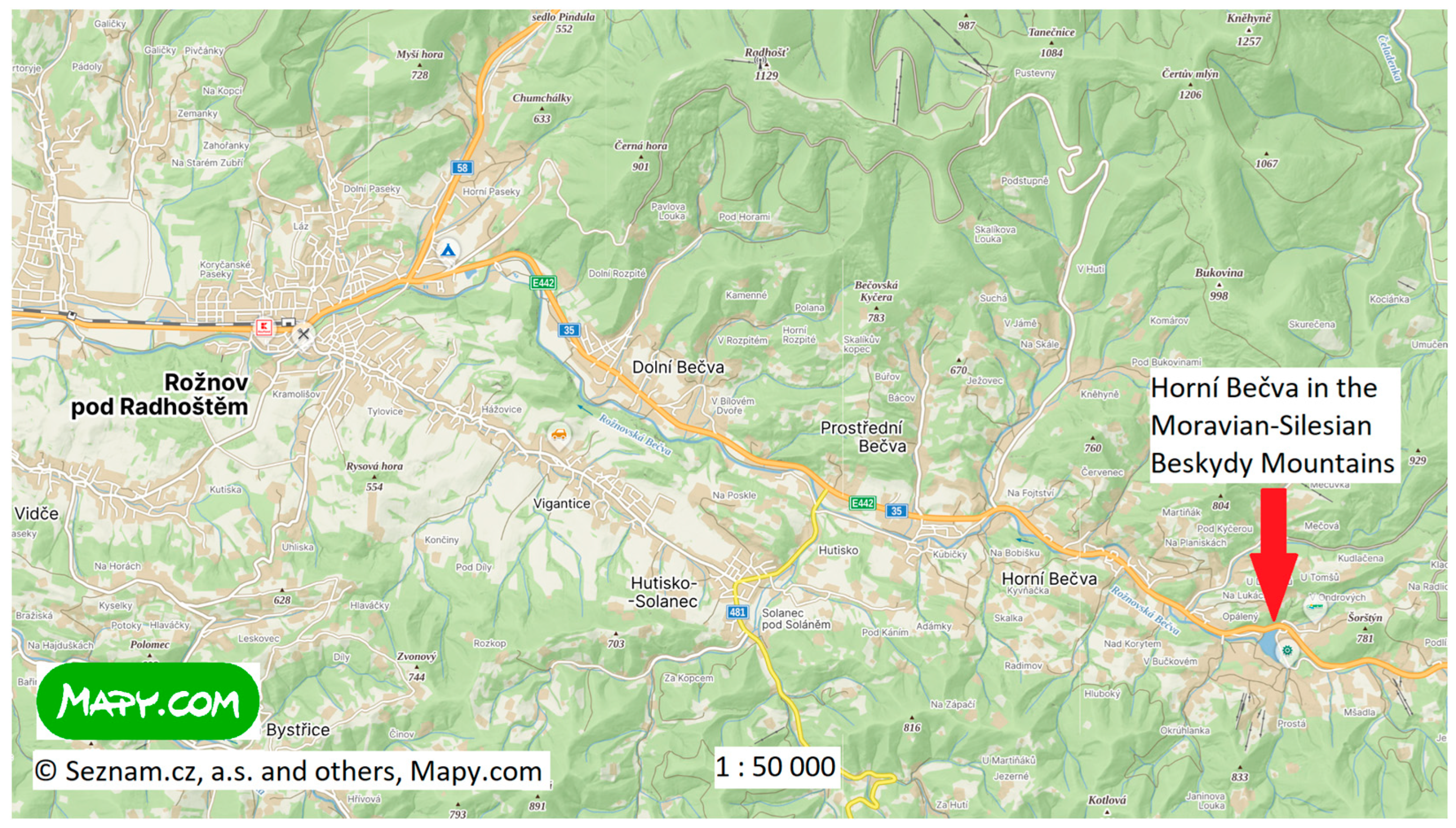
The municipality of Horní Bečva is located in the Zlín Region, within the Vsetín District, in the Beskydy Protected Landscape Area. It lies approximately 12 km east of Rožnov pod Radhoštěm, on the banks of the upper course of the Rožnovská Bečva River, which forms a natural boundary between the Vsetín Hills and the Moravian–Silesian Beskids. It is a typical mountain village situated at an elevation of 505 m above sea level in its center. The extensive area of the municipality reflects its mountainous character, and it is home to approximately 2500 inhabitants. The highest point in the area is the peak Vysoká (1024 m a.s.l.), beneath which the Rožnovská Bečva originates. The municipality also encompasses the cadastral area of the same name. The location of the Horní Bečva reservoir is shown in
Figure 1 [
1].
A water management structure is a construction designed to retain and regulate surface water, manage runoff regimes, utilize water resources, protect against the harmful effects of water, or modify hydrological conditions. Such structures include not only dams, reservoirs, and hydroelectric power plants but also river training structures, water supply and sewer systems, water treatment facilities, and wastewater treatment plants.
The Horní Bečva water management structure is located on the Rožnovská Bečva River at river kilometer 32.10, within the territory of the Horní Bečva municipality. The dam construction project was approved in 1932, and construction began the following year. Prior to construction, several farmsteads had to be purchased and demolished, and the local road was relocated to the right slope above the future reservoir. The structure was put into permanent operation in 1947. The main impetus for the project was the occurrence of devastating floods at the beginning of the 20th century [
2].
The dam is an earthfill embankment with a ground plan curvature of 220 m. The upstream and central sections of the dam are composed of graded clay material, which also serves as a sealing core. On the upstream side, this section is followed by a layer of ungraded material, terminated by a stone toe. The upstream face of the dam is reinforced with rock fill and stone paving.
The outlet and intake facilities are concentrated in a single tower structure that houses the lower machine room for the bottom outlets and the discharge chamber for the operational gates. The upper part of the tower contains a machine room with a steel support structure, which is accessible via a footbridge from the dam crest. The bottom outlets consist of two pipes with a diameter of 1000 mm leading into the lower machine room. A small hydroelectric power plant with a capacity of approximately 16 kW, utilizing low flow volumes, is also installed within the tower [
2].
The primary function of the reservoir is flood protection. Additional functions include ensuring surface water withdrawal, maintaining minimum residual flow, and supporting recreational activities such as summer sports and fishing. The reservoir also serves a power generation role today.
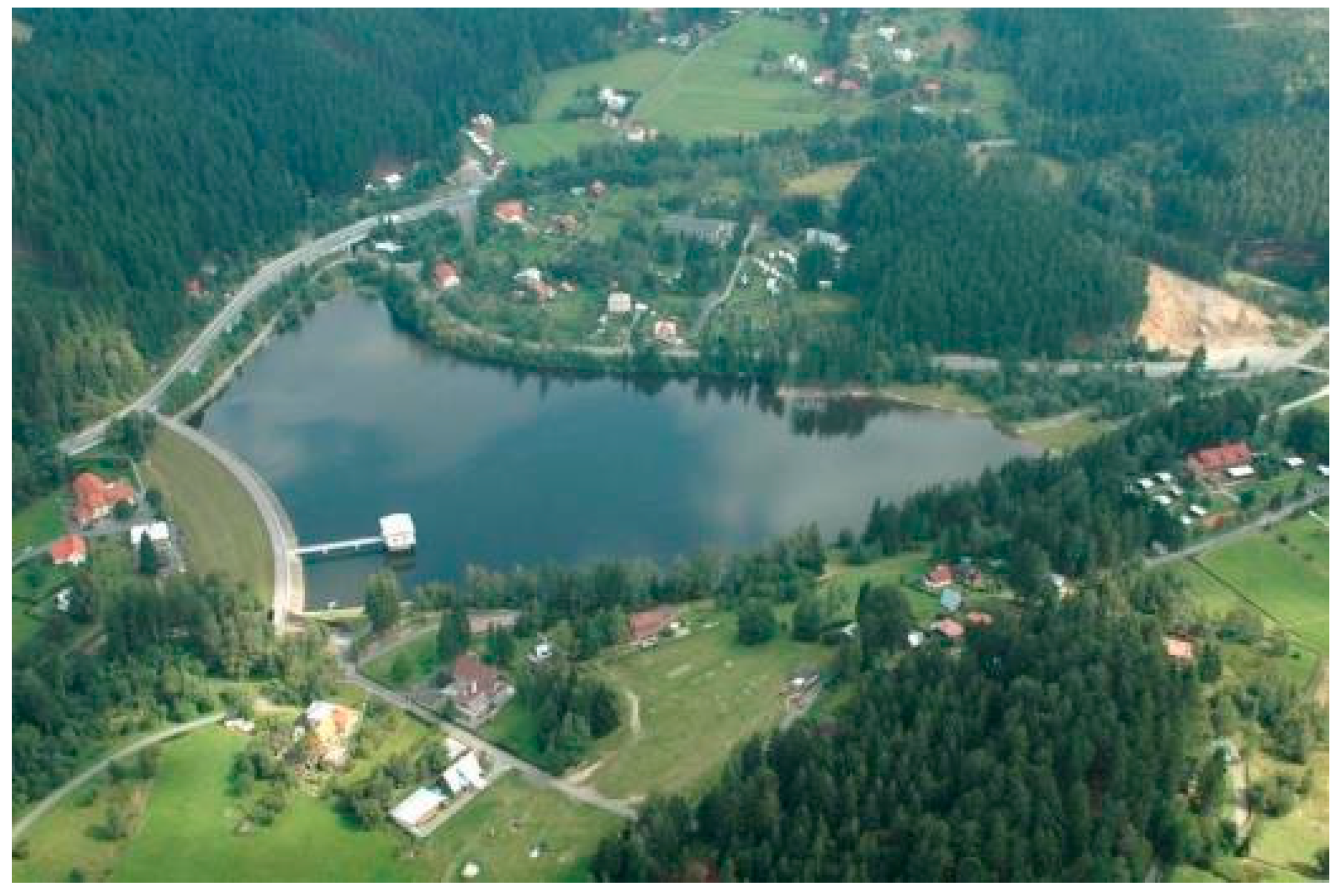
Materials for dam construction were sourced primarily from the local area. Stone was quarried in nearby locations, while higher-quality material was transported from the Kněhyně Valley. Clay for the sealing core was extracted from within the future reservoir basin. The reservoir is shown in the aerial photograph presented in
Figure 2.
The normal water level is at an elevation of 554.10 m a.s.l., and the storage level is at 561.10 m a.s.l., providing a storage volume of 0.395 million m
3. The controllable retention level is at 562.10 m a.s.l., at which point water begins to flow over the spillway. The uncontrollable retention level is at 563.60 m a.s.l., with the total reservoir volume from the normal level up to this point reaching 0.665 million m
3. The dam crest is at 564.60 m a.s.l., with a crest width of 5 m and a total length of 250 m. The reservoir is equipped with four outlets—two bottom outlets (Ø 1000 mm) and two sanitary outlets (Ø 200 mm) [
2].
3. Pre-Survey Preparations and Site Reconnaissance
This section summarizes all preparatory activities that had to be carried out prior to the actual field surveying. These included the acquisition of reference data from the Czech Office for Surveying, Mapping and Cadastre (ČÚZK), the arrangement of access permits from the state enterprise Povodí Moravy, and the execution of a reconnaissance survey of the terrain [
2].
Geodetic data for the detailed control points were obtained via the ČÚZK online geoportal. By enabling the control point layer, relevant geodetic control points in the area of interest were displayed along with their identifiers and coordinate data [
3].
It was also necessary to obtain a permit from Povodí Moravy, s. p., allowing access to restricted areas, such as below the dam or near the spillway, in order to carry out shoreline surveying. This permit was requested on the day of the survey directly on site from the local dam manager. A second permit, required for accessing the reservoir surface to conduct depth measurements, was applied for in advance through the relevant facility of the Upper Morava Branch in Valašské Meziříčí.
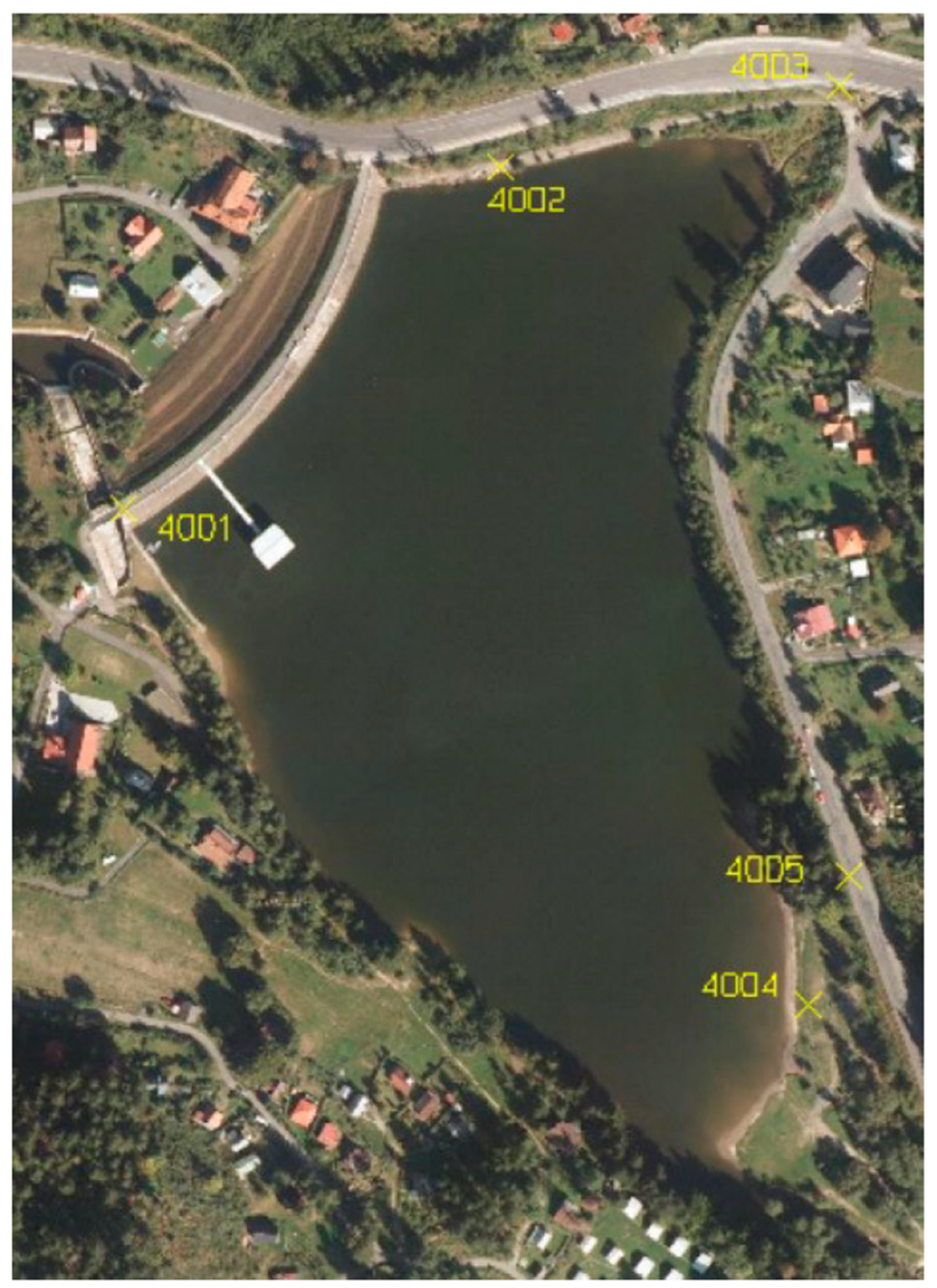
The reconnaissance survey of the site was conducted several days before the actual fieldwork. During this phase, several selected geodetic control points were identified in the field, visibility towards shoreline sections was assessed, and suitable locations for instrument stations were selected. The observation stations were chosen to ensure the feasibility of using GNSS technology while maintaining sufficient observation conditions. Stations No. 4001–4005 were stabilized using driven steel nails. All stations were additionally marked with spray paint. The distribution of the geodetic control points used for the survey is shown in
Figure 3 [
3].
4. Surveying Work in the Field
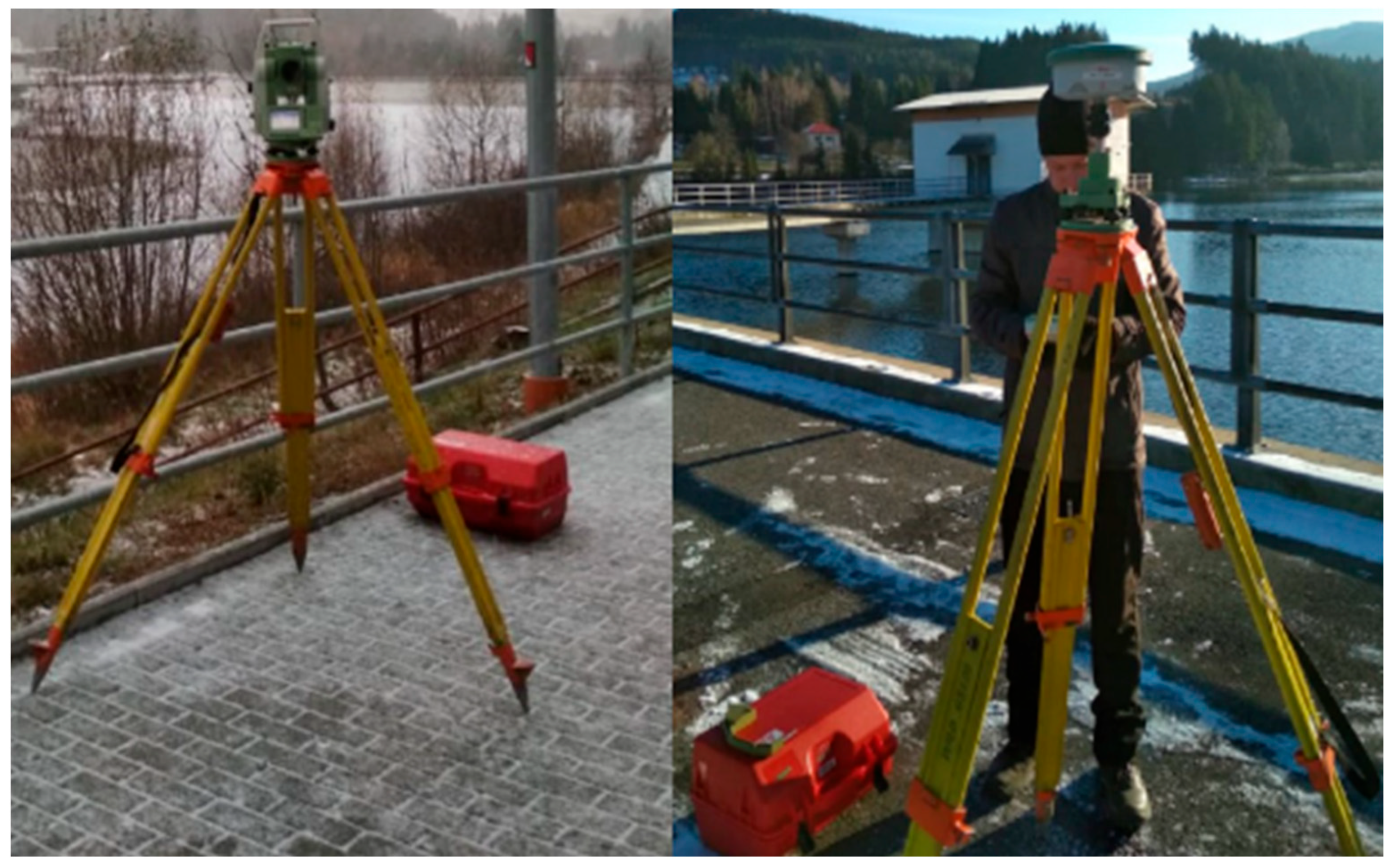
The detailed survey was carried out over two days with the aim of accurately capturing the terrain shape and locating objects in the immediate vicinity of the reservoir. The measurement was conducted by a two-person team: a surveyor operating the instrument and an assistant equipped with a telescopic surveying rod, known as a prism pole. Although modern technologies allow for the use of robotic total stations and one-man operation, this approach is not suitable for the given type of area, which is characterized by dense vegetation, rugged terrain, and limited visibility. Therefore, the measurement was performed using a conventional total station, the Leica TCR 1202+.
After the survey stations were determined using GNSS, the detailed measurements were conducted from the auxiliary points of the network (No. 4001–4005). At each station, orientation was carried out using at least two points from the geodetic control network. The assistant worked with a prism pole, whose height was recorded in the instrument for each individual measured point, along with an assigned survey code. The coding was prepared by the surveyor directly within the project to facilitate subsequent data processing in graphic software [
4,
5,
6].
The measured features included roads near the reservoir, the dam crest, the spillway, distinctive terrain shapes, and other elements. A key focus of the survey was the detailed mapping of the shoreline around the entire reservoir, as well as shallow areas of the reservoir bed where the use of a motorboat was not possible. As with the GNSS measurements, data from the total station were exported after the completion of fieldwork for further processing.
Figure 4 shows the surveying work for mapping the water reservoir [
5].
5. Bathymetric Survey Using a Sonar Device
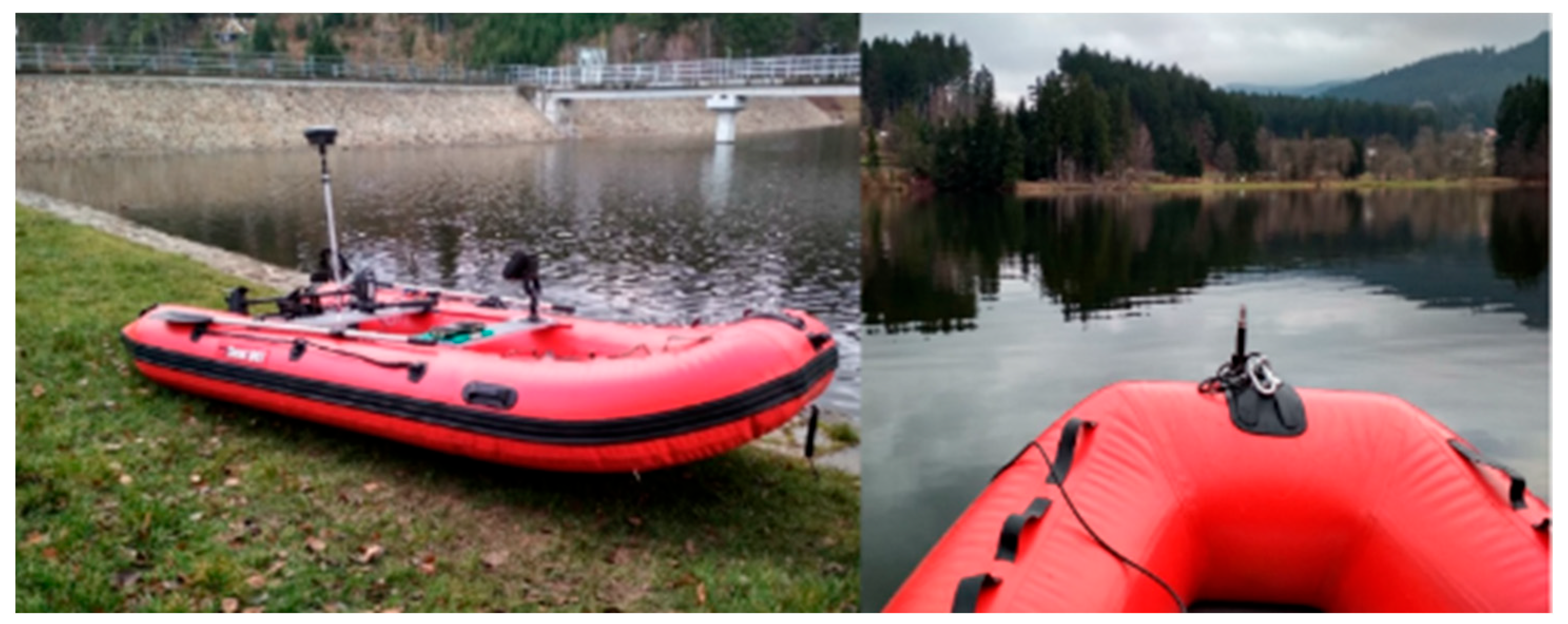
The bathymetric survey of the reservoir bed was carried out using a Humminbird HELIX 9 CHIRP MEGA SI+ GPS G3N sonar device. The initial phase involved the preparation of the vessel—an inflatable boat equipped with an electric motor. The boat was inflated using a compressor, fitted with a rigid floor and two bench seats, and equipped with two paddles as a safety backup. An electric motor powered by a battery was mounted on the stern. Next to the motor, the sonar transducer and a modified surveying pole (with the tip positioned at the water surface) were installed. The sonar display was placed in a custom holder integrated into one of the bench seats and connected to a battery power source.
A Leica GS18T GNSS receiver with an integrated IMU (tilt sensor) was mounted on the surveying pole, which was extended to a height of 2 m. Once the boat was placed on the water, the transducer was submerged, and the motor was started [
7].
During initial testing, several issues occurred. The sonar experienced intermittent power outages due to voltage drops, which were resolved by adding a second battery dedicated exclusively to powering the sonar. Another issue was the inaccurate depth readings, caused by the transducer being mounted too close to the water surface and near the electric motor. After relocating the transducer to the bow of the boat, the sonar functioned correctly. Exceptions occurred only in very shallow areas, where the sonar was too close to the bottom to provide accurate readings; these data points were excluded during post-processing. The immersion depth of the transducer below the water surface was measured with a tape measure for future reference.
Figure 5 shows the assembly of the inflatable boat and the surveying equipment [
7].
After the survey was completed, the sonar data were exported. The boat crew consisted of three operators: one responsible for steering and navigation, one for operating the sonar, and one for controlling the GNSS receiver. Both devices were set to automatically record points at one-second intervals. For the sonar, this function is known as “Track Recording”, with a predefined logging interval. Synchronization of both devices was achieved by starting them simultaneously and using an identical starting point numbering, beginning with number 1. This procedure resulted in approximately 4000 recorded points from each device.
The effect of the eccentricity between the RTK rover (stern) and the sonar transducer (bow) was corrected using a fixed lever-arm vector Δ, which was transformed into the mapping coordinate system according to the current vessel heading. The position of the sonar transducer was calculated as , where is the rotation matrix about the vertical axis corresponding to the vessel heading. Pitch and roll of the vessel were neglected, as they were considered insignificant under calm-water conditions.
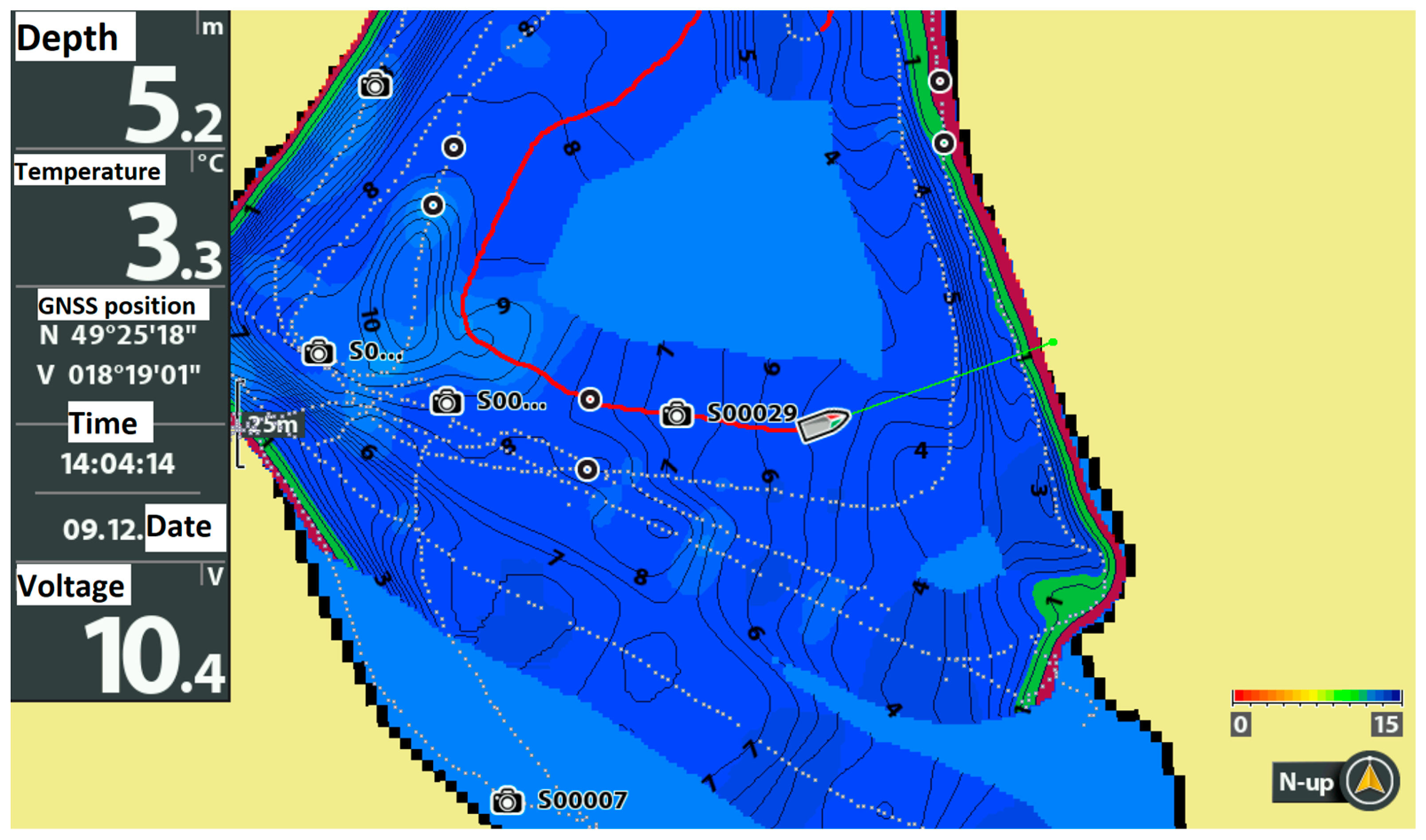
The sonar memory contains a database of water bodies in the Czech Republic, so upon startup, the system automatically displayed a map of the Horní Bečva reservoir with the real-time boat location. After surveying each portion of the water surface, a separate track was saved; in total, 19 tracks were created. In addition to displaying the current position and recorded tracks, the sonar continuously calculated depth values. The device allows switching between several display modes—such as map view, traditional sonar view, or advanced sonar imaging technologies. The display can also be split into multiple sections for simultaneous viewing of different outputs. An example of the sonar display is shown in
Figure 6.
6. Data Processing
For the calculation of the coordinates of the geodetic control network points measured using GNSS technology, the LEICA Geo Office v. 7.0 software was employed. This comprehensive software package enables post-processed data handling, supports real-time measurements, data management, and measurement planning. In this study, the post-processing approach was selected, meaning that the coordinate computation was performed after the completion of the field measurements, without the need for real-time correction data.
As a reference station, a permanent station of the CPEPOS network located in Vsetín was used. The transformation into the official national coordinate reference systems of the Czech Republic—S-JTSK (for planar coordinates) and Bpv (for heights)—was carried out using a global transformation key without the use of identical (common) points.
The computation of detailed survey points was performed using Geus, a geodetic software package functioning both as a computational tool and a basic CAD system. Its computational component includes various geodetic calculation methods (e.g., polar and orthogonal methods), coordinate list management, and a height computation feature, which was utilized in this study. The graphical part of the program allows for the creation of drawings and provides options to download background data from the internet, such as orthophotos or control point grids in the S-JTSK coordinate system.
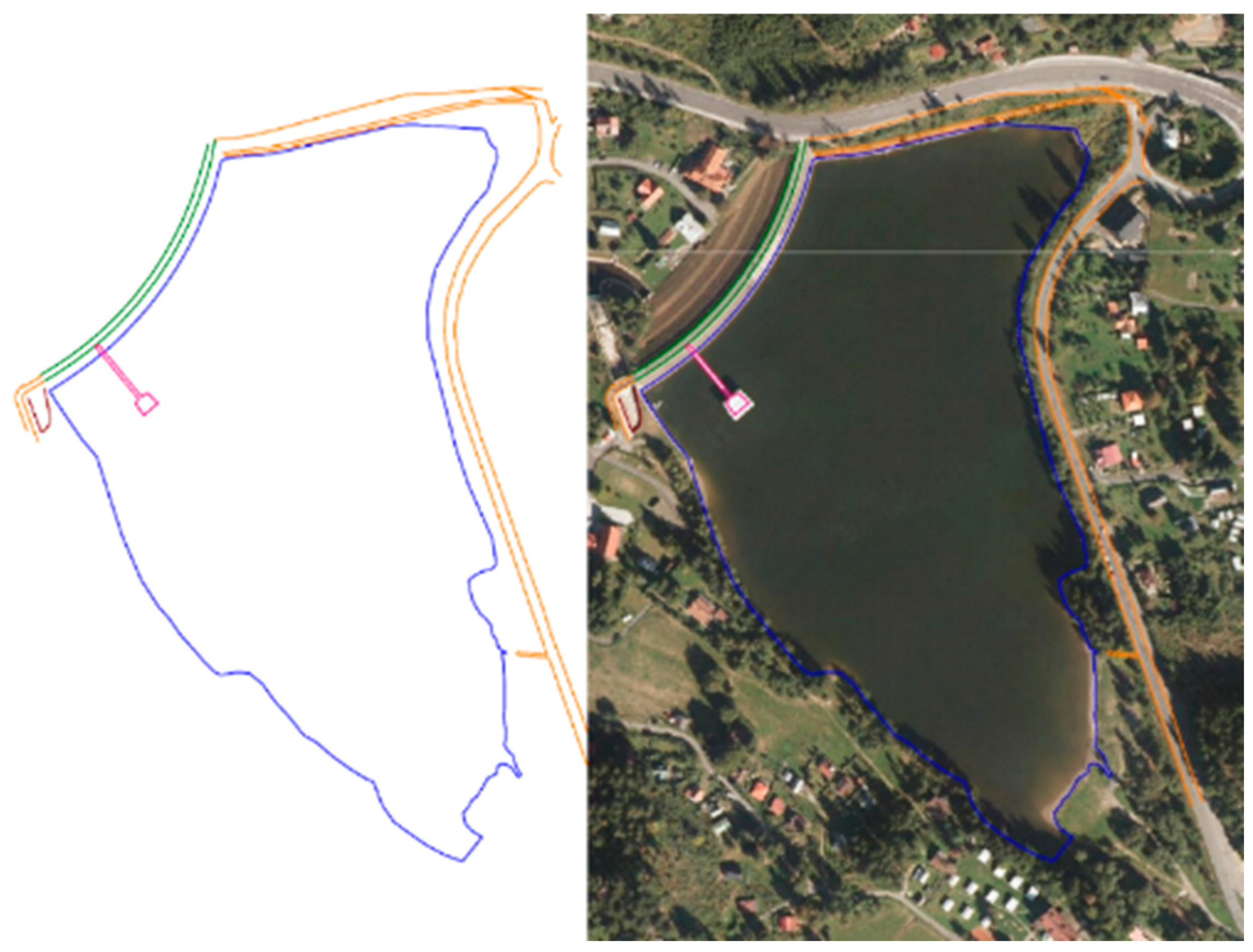
To ensure clarity and systematic visualization, individual points were sorted into layers based on their codes. Sequentially connected points—such as shoreline edges, road boundaries, the dam body, spillway, footbridge, or sluice—were linked by lines.
Figure 7 shows an example of graphical processing [
7].
Data from the sonar survey were processed using Humminbird PC 4.5.7, a software tool for managing navigation data. After data import, all measured information became accessible. The Waypoints tab contains all screenshots captured by the sonar, while the Tracks tab displays the recorded tracks, including detailed information about each point in the format: geographic latitude, geographic longitude, and depth in meters. The track header includes data on time, number of points, and starting and ending positions [
7].
Although the sonar is equipped with an integrated GNSS antenna, its positional accuracy does not meet the requirements for geodetic applications (typically on the order of a few centimeters). Therefore, a Leica GS18T GNSS receiver was used in parallel. Planar coordinates Y and X obtained from this receiver were paired with depth values measured by the sonar. This matching was enabled by synchronizing both devices—setting an identical automatic point recording interval (1 s), matching point numbering, and initiating simultaneous data logging. This approach ensured the generation of an equal number of points from both devices, with corresponding spatial coordinates and depth values.
7. Creation of the Digital Terrain Model
The digital terrain model (DTM) represents a mathematical expression of the Earth’s surface shape in the form of digital data. It consists of elevation data and an interpolation algorithm that allows for the derivation of the altitude of any point within the modeled area. The DTM describes the so-called “bare terrain,” meaning the Earth’s surface without vegetation or anthropogenic objects such as buildings, bridges, etc. [
7].
For the creation of the DTM, the software Atlas DMT 6 was used, whose main purpose is to generate and edit digital terrain models and produce graphical outputs. However, the program also supports working with vector and raster graphics within graphic documents (drawings). Atlas DMT creates the model exclusively using the TIN (triangulated irregular network) method, which utilizes an irregular triangular mesh. The basic elements of the model are triangles formed by vertices with spatial coordinates (X, Y, Z), edges connecting pairs of vertices, and faces bounded by three vertices. The result is a spatial polyhedral model that accurately follows the morphology of the terrain. The program also allows the definition of so-called mandatory breaklines, which serve to refine and adjust the final model—e.g., to ensure smoothness along terrain feature boundaries [
7].
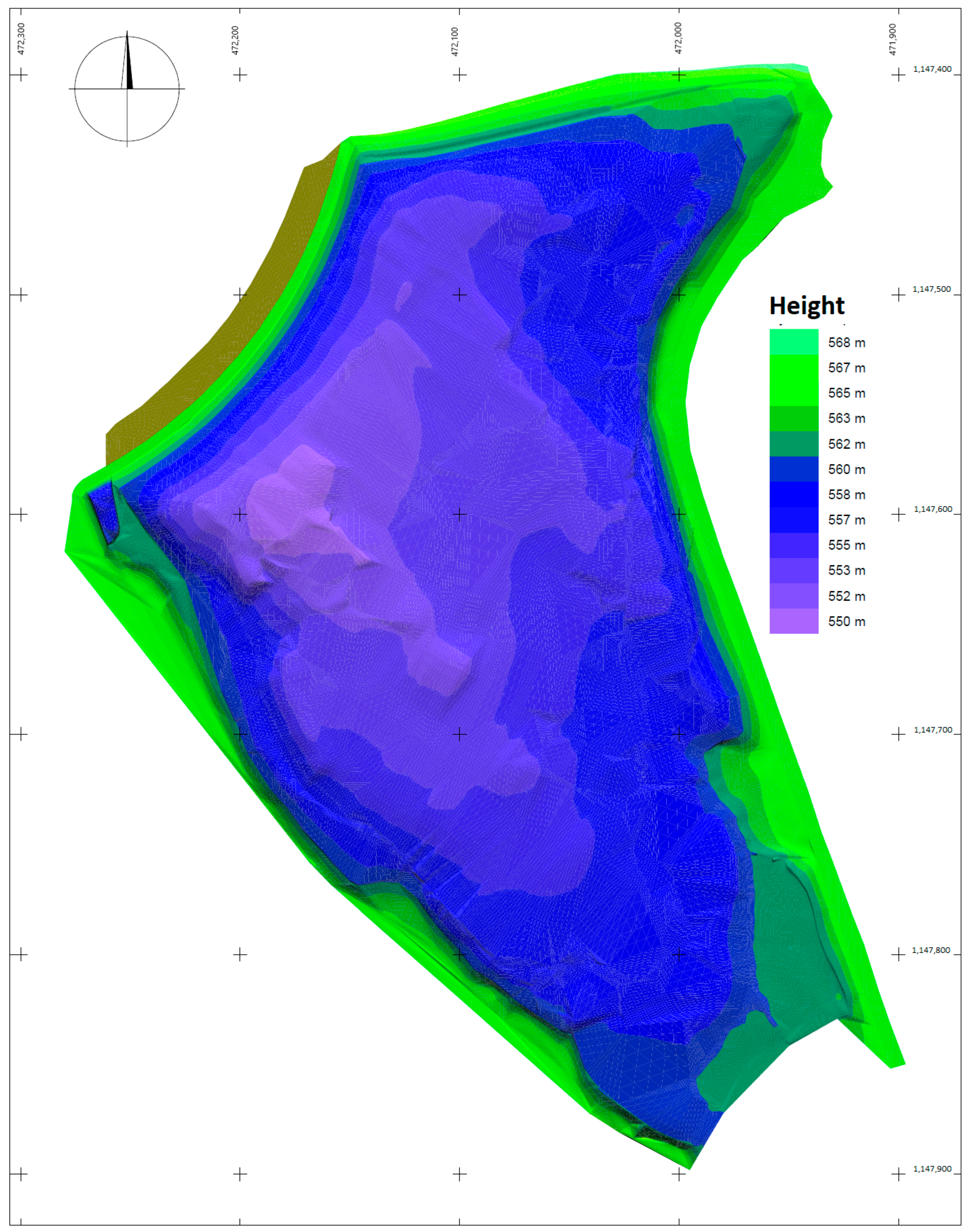
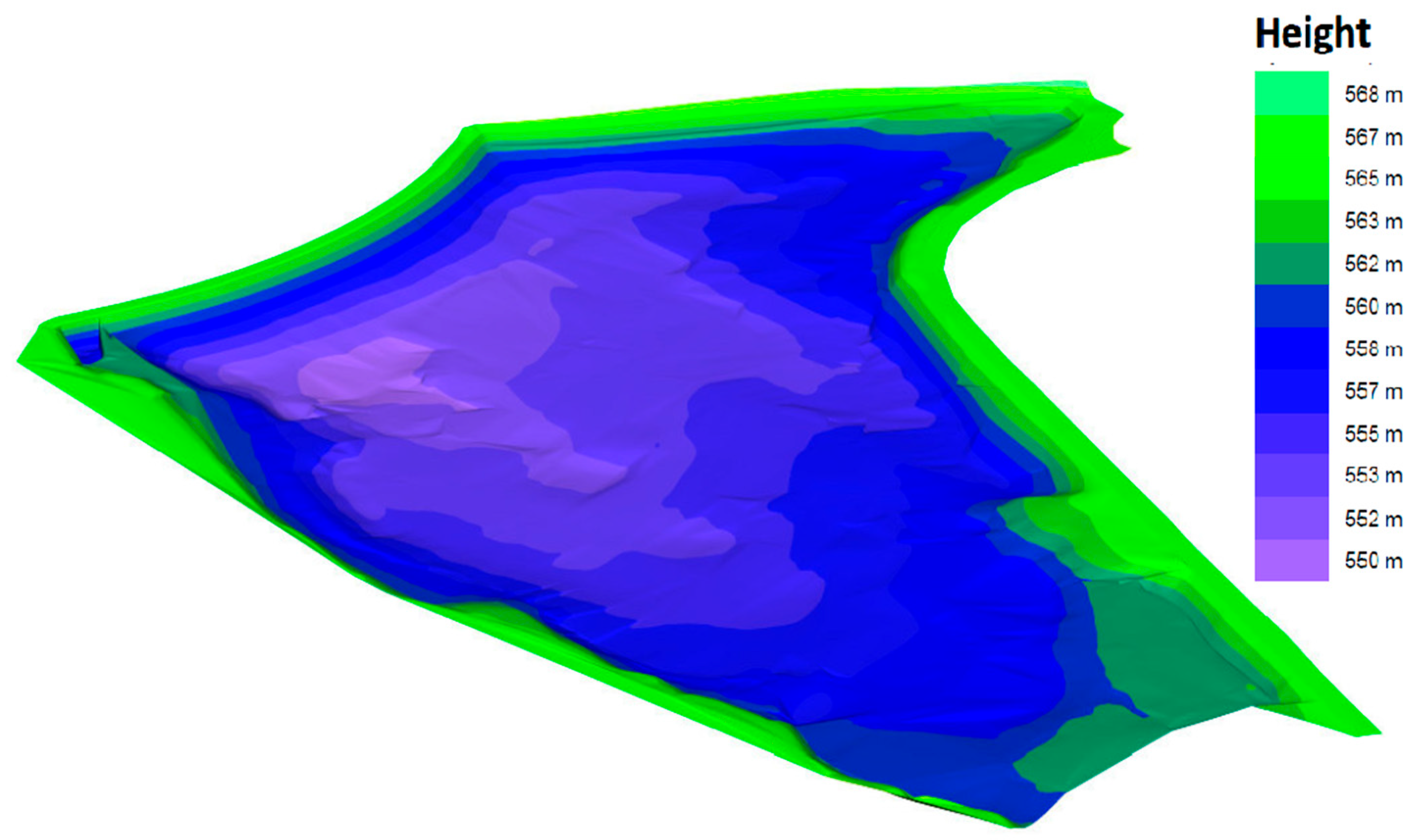
The modeling process involved creating a new document, into which a text file (*.txt) containing coordinates of all points—both from detailed geodetic surveying and sonar measurements—was imported via the “Generate Terrain Model” function. After the model was generated, the output was placed into a drawing sheet. At this stage, the DTM consisted of contour lines, i.e., lines connecting points of equal elevation.
The user was then able to adjust the model’s display parameters. Filling between triangles was activated, resulting in a single-color surface. This fill was subsequently replaced by hypsometric coloring—color shading based on the selected elevation intervals. The color scheme was set to correspond to real terrain conditions: elevations below the water level were represented by blue shades, while those above were green. Boundary elevations were automatically set according to the minimum and maximum values, with the water level inserted as a dividing value between elevation intervals. The smoothing function enabled a more continuous visualization of the model. The completed hypsometric map is shown in
Figure 8.
Due to the one-second recording interval used on the vessel, a high density of points was recorded along the measurement route. This caused breaks and local inaccuracies in the TIN model due to automatic triangulation. Therefore, for modeling purposes, the sonar points were partially thinned—only a representative subset of points was retained, significantly improving the model quality.
Atlas DMT also offers the possibility of 3D terrain visualization. In this mode, the model can be freely rotated and zoomed in and out using a control panel. Viewing positions can be saved and played back as animations or exported as video files compatible with standard video players. The user can also configure environment parameters, such as lighting and background color, or add a base under the model. Similar to the Geus software version 24, Atlas supports connecting raster backgrounds from the internet, such as orthophotos, which can be displayed together with the model in the 3D view.
The program further includes a function for calculating the volume of the digital model. Although calculating the total volume of the DTM is not practically useful, this feature can be used, for example, to determine the volume of a water body [
8,
9]. The procedure involves selecting the main terrain model, defining a reference plane—in this case, the water level—and specifying the output model. The result is the determination of the water surface area, which exceeded 80,000 m
2, and the volume of the water reservoir, which exceeded 416,000 m
3 [
9].
8. Conclusions
The subject of this study was the comprehensive surveying and subsequent data processing of the Horní Bečva reservoir using modern geodetic methods and software tools. To ensure the accuracy and reliability of the results, classical GNSS techniques, detailed geodetic surveying, and sonar bathymetry were combined.
The coordinates of the control network points were calculated using post-processing in the LEICA Geo Office software, while adhering to the official reference systems of the Czech Republic (S-JTSK and Bpv). The subsequent processing of detailed measured points in the Geus software environment enabled the creation of a clear and structured drawing output, with emphasis placed on systematic layering and logical connections of linear features.
Sonar data were verified and synchronized with GNSS records from the Leica GS18T receiver. Thanks to a unified recording interval and simultaneous data capture, it was possible to pair spatial coordinates with depth values, resulting in a comprehensive dataset describing both the shoreline and the reservoir bed.
The resulting data were then used to generate a digital terrain model (DTM) in the Atlas DMT 6 software—see
Figure 9. The model was created using the Triangulated Irregular Network (TIN) method and enhanced with hypsometric shading, contour lines, and other graphical elements. During the modeling process, it was necessary to optimize the number of input points to improve clarity and eliminate local inaccuracies caused by the high density of bathymetric measurements. Finally, the model was also used to calculate the volume of the water body, which exceeded 416,000 m
3.
In conclusion, the combination of precise geodetic surveying and appropriately selected software tools enabled the creation of a high-quality spatial model of the reservoir. This model may serve as a foundation for further analysis, technical documentation, or planning of maintenance and reconstruction activities.