Proceeding Paper

Application of Reduced Graphene Oxide in Biocompatible Composite for Improving Its Specific Electrical Conductivity †

by
Mikhail Savelyev
1,2,*,
Artem Kuksin
1,
Ekaterina Otsupko
1,
Victoria Suchkova
1,2,
Kristina Popovich
1,2,
Pavel Vasilevsky
1,
Ulyana Kurilova
1,2,
Sergey Selishchev
1 and
Alexander Gerasimenko
1,2
1
Institute of Biomedical Systems, National Research University of Electronic Technology (MIET), 124498 Zelenograd, Russia
2
Institute for Bionic Technologies and Engineering, I. M. Sechenov First Moscow State Medical University (Sechenov University), 119991 Moscow, Russia
*
Author to whom correspondence should be addressed.
Presented at the 4rd International Electronic Conference on Processes—Sustainable Process Design, Engineering, Control and Systems Innovation (ECP 2025), 20–22 October 2025. Available online: https://sciforum.net/event/ECP2025.
Eng. Proc. 2025, 117(1), 11; https://doi.org/10.3390/engproc2025117011
Published: 8 December 2025

Abstract

The reduced graphene oxide (rGO) combination in association with the single-walled carbon nanotubes (SWCNTs) in a dispersion minimizes the number of carbon particles to obtain a hydrogel with the same level of specific conductivity. When developing neuroimplants intended to restore damaged neural networks or modulate pain transmission, biocompatibility and the permeability of stimulating currents are key requirements. The specific conductivity of the resulting hydrogels with the addition of different carbon nanoparticles was 19 mS/cm (1-SWCNTs), 17 mS/cm (2-rGO), and 35 mS/cm (3-SWCNTs/rGO). The results confirm the possibility of regulating the degradation time. Colorimetric assay for assessing cell metabolic activity (MTT) assay using the Neuro 2A cell line showed sufficient biocompatibility for the amount of SWCNTs and rGO used.

1. Introduction

One of the principal challenges in neurostimulator applications is electrode encapsulation, which compromises the transmission of necessary stimulating impulses [1,2]. In this study, we investigated a hydrogel designed to enhance the biocompatibility of electrodes while preserving adequate electrical conductivity. The incorporation of single-walled carbon nanotubes (SWCNTs) enables the formation of electrically conductive percolated networks within a bovine serum albumin (BSA) matrix [3], which reduces the required contact area and ensures more effective interaction with cell membranes. As a result, the stability of neurointerfaces is improved, an effect not achieved with conventional platinum–iridium electrodes [2]. Moreover, the use of hydrogels may enable the application of relatively inexpensive stainless steel [1], and these materials could represent a feasible replacement for metal components in neural interfaces [4].
To minimize the contact area, we introduce a carbon-based structure containing SWCNTs and reduced graphene oxide (rGO), which enhances the specific electrical conductivity of the photopolymerized composite. In our previous work, a similar effect was achieved without the inclusion of protein components [5]. Another advantage of this combination is the potential for improved biocompatibility, which is higher for graphene than for nanotubes [6]. Consequently, this enables the incorporation of a greater amount of carbon material, which is important for enhancing electrical conductivity.

2. Research Methods and Materials

2.1. Manufacturing of a Dispersed Medium of Collagen/BSA/Chitosan/SWCNT/rGO/Eosin Y

The preparation of a dispersion (Table 1) containing chitosan (Bioprogress LLC., Losino-Petrovsky, Russia), BSA (BioClot, Eidenbach, Germany) and collagen (MacMedi LLC., Moscow, Russia) is divided into a number of stages, which allows for the creation of homogeneous compositions for the components used. An aqueous solution is prepared using a magnetic stirrer MS-01 (ELMI, Riga, Latvia) with the photoinitiator eosin Y (Agat-Med, Moscow, Russia). A dispersion medium containing TUBALL™ SWCNTs (OCSiAl, Moscow, Russia) and rGO (Graphenox LLC, Chernogolovka, Russia) is prepared in parallel. A homogeneous dispersion is obtained with application a Q700 Sonicator ultrasonic equipment (Qsonica, Newtown, CT, USA) by mixing for 120 min at 20 kHz and ~200 W. Thermostatic cooling is used to provide protection against boiling. BSA is added to the chitosan solution in water and mixed through a stirrer MS-01.

2.2. Photopolymerization

Photopolymerization of the prepared dispersion to obtain a composite was performed using an HTTP MARK MOPA ytterbium laser (Bulat Design Bureau, Zelenograd, Russia) at a wavelength λ = 1035 nm with a pulse width τ = 100 ns, a repetition frequency ν = 30 kHz, and a power P = 550 mW. The setup is described in detail in our work [3]. This material acted as a negative photoresist. The studied compositions differed in their carbon components: 1—SWCNTs 0.6 mg/mL, 2—rGO 0.6 mg/mL, and 3—SWCNTs (0.3 mg/mL)/rGO (0.3 mg/mL). The final biohybrid structure contains bovine serum albumin, type II collagen, chitosan, and eosin Y.

2.3. Determination of Specific Conductivity

The specific electrical conductivity of 15 layers measuring 5 × 5 mm2 is determined using the four-probe ST2258C method (Suzhou Jingge Electronics Co., Ltd., Suzhou, China). It is taken into account that photopolymerization has a specific site effect, manifesting itself in the area of high intensity, and not across the entire coverage area [3]. The laser spot area at focus is 1135 µm2. The scanner traveling speed is 0.24 m/s with a single total pulse energy U = 0.14 mJ.

2.4. Determination of Biocompatibility

The degradation (erosion, swelling, passive hydrolysis) of hydrogel 3 was studied. Experiments were conducted in an isotonic saline solution (0.9% aqueous NaCl) (Spaz Farm LLC., Saratov, Russia) at 37 °C to simulate the intraorgan environment. The degradation rate was assessed over 91 days, with control measurements performed every seven days. The structures were immersed in 5 mL of isotonic solution and maintained at a constant temperature of 37 °C. The repeated degree of swelling was calculated using the following equation [7]:
S t = m w t m t m 0 × 100 % ,
where St is the degree of re-swelling after t days of degradation, mwt is the mass of the wet swollen sample after t days, m0 is the initial mass of the dry sample before decomposition, and mt is its mass after t days.
The mass loss was estimated using the formula [7]:
M t = m 0 m t m 0 × 100 % ,
where Mt is the loss of mass after t days of degradation.
A gravimetric biodegradation study was conducted. The enzymes lipase (25,000 Ph.Eur.), proteases (trypsin and chymotrypsin) (18,000 Ph.Eur.), and amylase (1000 Ph.Eur.) (Abbott Laboratories, Gurnee, IL, USA) were added. The structures were incubated in 40 mL of isotonic solution containing 100 mg of enzymes.
For in vitro studies, the obtained hydrogel was used on the Neuro-2A cell line (Ministry of Health of the Russian Federation, National Research Center for Epidemiology and Microbiology, Moscow, Russia). Prior to the experiment, the hydrogels were sterilized with ultraviolet (UV) light and it were placed in a culture medium for washing. The neuroblastoma cells were grown in Dulbecco’s modified eagle medium (DMEM) (BioloT LLC., Saint Petersburg, Russia) supplemented with 10% fetal calf serum (BioloT LLC., Saint Petersburg, Russia) in 12-well plates. The hydrogel and the control (clean coverslip) were placed at the bottom of each well and populated with the cells in liquid. The cells quantity was determined using a Scepter Millipore (Merck KGaA, Darmstadt, Germany). Cells seeding density was 2700 cells/μL. The cells were grown at 37 °C in air of 5% CO2 for three days. After cultivation, viability was assessed using the MTT method [8] and morphology using fluorescence microscopy. Optical density was measured using an Immunochem-2100 microplate photocolorimeter (High Technology Inc., North Attleboro, MA, USA) at a λ = 492 nm. For visualization, cells were marked by 33342 Hoechst (Life Technologies, New York, NY, USA) at a concentration of 10 g/L and grown for 15 min at 37 °C. An FV3000 (Olympus Corporation, Tokyo, Japan) microscope was used with FV31S SW software version 2.3 (Olympus Corporation, Tokyo, Japan).

3. Results and Discussions

3.1. Electrical Conductivity Properties

After manufacturing, the hydrogels were fixed on a thin plate made of dielectric material for electrical conductivity measurements. Table 2 and Figure 1 show the electrical conductivity measurements for samples 13. Hydrogel 3 yielded the highest value. When SWCNTs and rGO were used separately (samples 1 and 2, respectively), lower values were observed.
Molecular dynamics simulations based on time-dependent density functional theory (TD-DFT) demonstrated the rearrangement of SWCNTs and graphene flakes into hybrid nanostructures under laser irradiation [8], leading to the formation of non-hexagonal graphene domains [5]. As a result of electron charge density redistribution [8], a dipole moment is induced within the hybrid structure, oriented along—and aligned with—the applied field [5]. Scanning electron microscope (SEM) imaging confirmed the reorientation of SWCNTs and recombinant graphene/SWCNT structures when exposed to pulsed laser radiation above the threshold energy density [5]. This effect contributes to an increase in field emission.

3.2. Biocompatibility

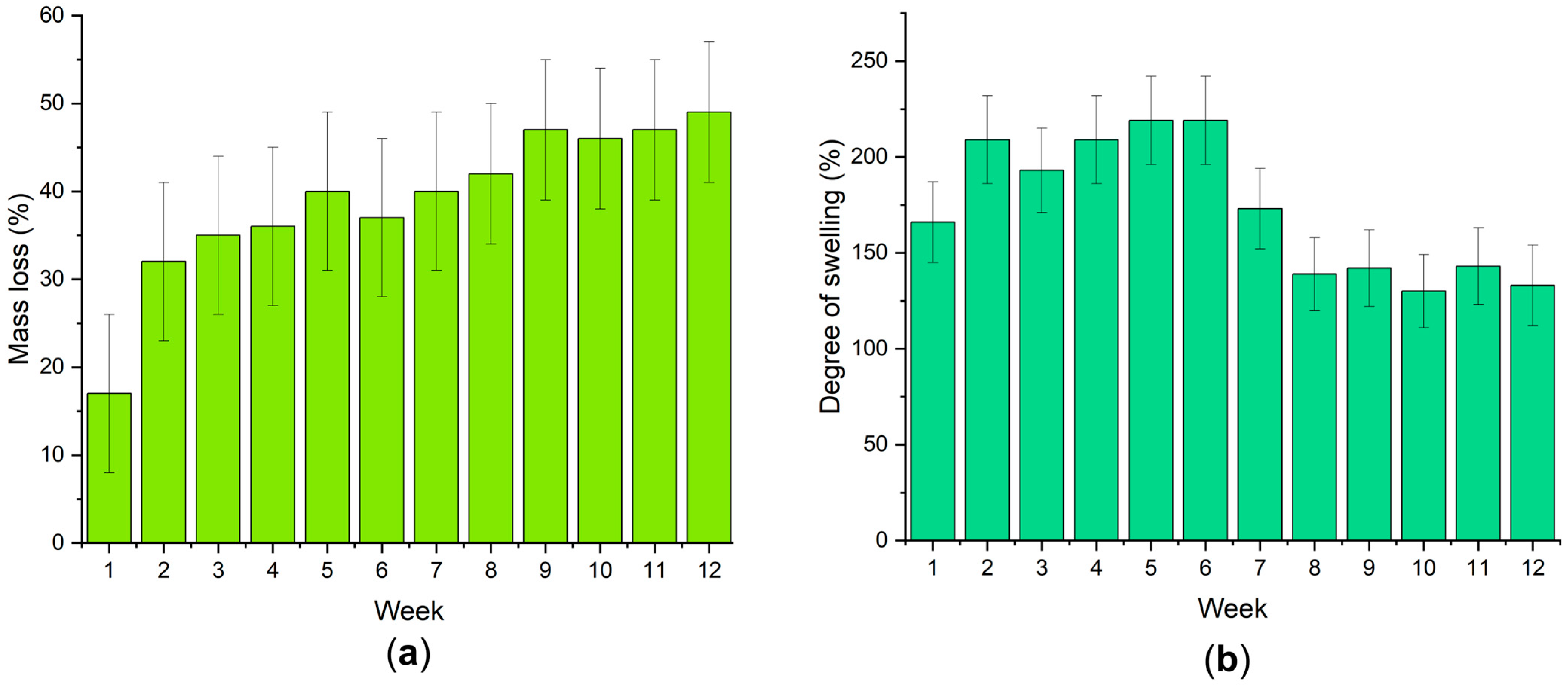
According to the study results, the average mass loss of hydrogel 3 over 84 days was 48% (Figure 2a). The initial swelling of the samples averaged 160% in isotonic solution (Figure 2b). After 84 days of hydrolysis, the swelling level returned to 130%.
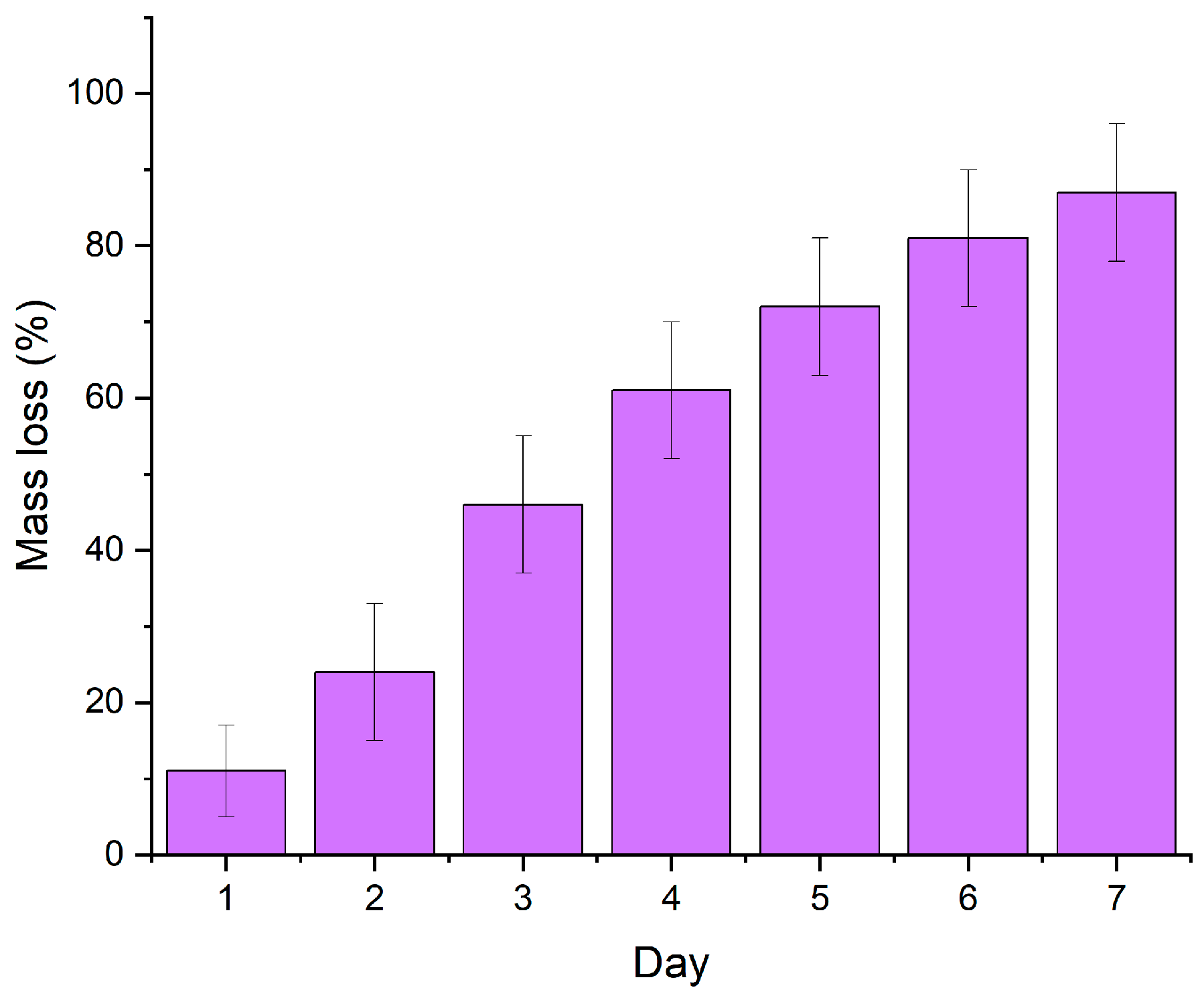
After one week of testing, sample 3 was almost completely dissolved in the presence of enzymes, with a mass loss of approximately 80% (Figure 3). The observed high rate of biodegradation is directly related to the elevated levels of model enzymes in the test medium. Protease, which cleaves peptide bonds, is the primary contributor to the degradation of the material’s protein matrix. Monitoring the pH of the medium revealed that during biodegradation, the acidity increased from 5.4 to 5.8. The slight alkalization of the medium is attributed to protein breakdown during enzymatic hydrolysis.
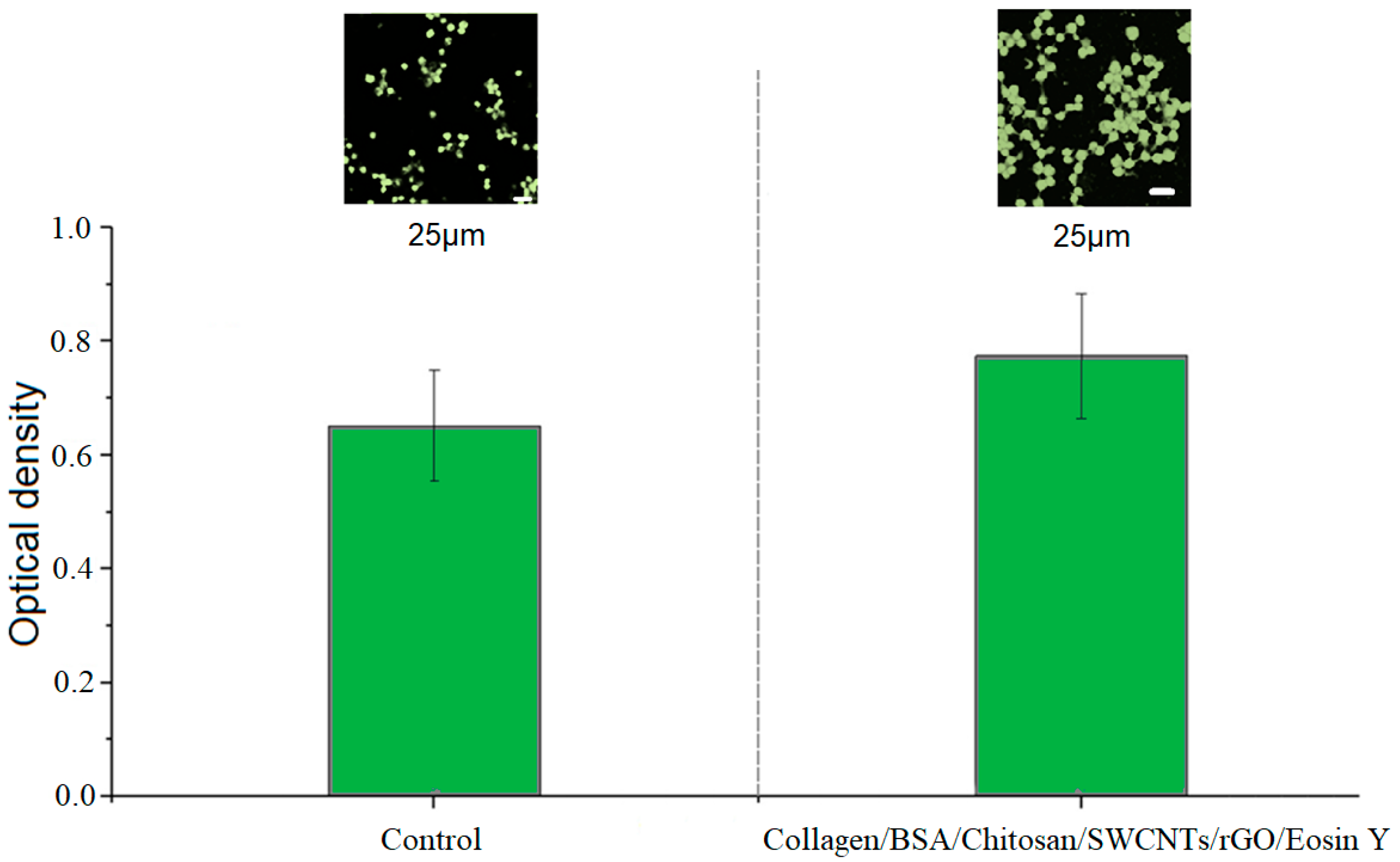
At the final stage of the study, biocompatibility was evaluated according to the research protocol. Figure 4 presents the results of the MTT assay. The analyzed hydrogels were found to stimulate the proliferation of Neuro 2A cells, resulting in a 15% increase in cell number compared to the control sample. The MTT results are complemented by data obtained through fluorescence microscopy (Figure 4). For the collagen/BSA/chitosan/SWCNTs/rGO/eosin Y hydrogel, a larger number of cells was observed on the surface, and the cells were more evenly distributed. The cellular morphology on the test sample corresponded to normal morphology, indicating that the hydrogel exhibits no cytotoxic effects. For the previously used gelatin [3], cell numbers were within acceptable limits.
The current results confirm that hydrogel 3 supports the required cell density. Studies of the collagen/BSA/chitosan/SWCNTs/rGO/eosin Y hydrogel showed a 15% higher cell number than the control, which also allowed the incorporation of a larger amount of carbon material. Upon culturing with this hydrogel, cells exhibited increased size, which promotes more efficient signal transmission between neurons [9]. Furthermore, non-spherical cells predominated, characteristic of neuronal differentiation and active proliferation [10].

4. Conclusions

The developed hydrogel 3 can be gradually replaced by biological tissue during degradation, as demonstrated by its cytocompatibility with the Neuro 2A cell line (optical density in the MTT assay was 0.76, compared to 0.62 for the control coverslip) and its biodegradability (sample 3 exhibited a 48% mass loss and a 30% decrease in swelling). The material also exhibited a specific electrical conductivity of 35 mS/cm, which is higher than that of samples 1 and 2, which measured 19 mS/cm and 17 mS/cm, respectively. The swelling capacity further indicates the potential for forming a tight interface between the electrode and the nerve, which could improve electrode stability during neurostimulation.

Author Contributions

Conceptualization, A.G. and M.S.; methodology, M.S. and U.K.; software, M.S., P.V. and A.K.; validation, V.S. and K.P.; formal analysis, A.G. and S.S.; investigation, V.S., A.K., P.V., U.K. and E.O.; resources, A.G. and M.S.; data curation, P.V., M.S. and S.S.; writing—original draft preparation, M.S. and E.O.; writing—review and editing, U.K., V.S. and K.P.; visualization, E.O.; supervision, A.G., S.S. and M.S.; project administration, M.S. and A.G.; funding acquisition, S.S. and A.G. All authors have read and agreed to the published version of the manuscript.

Funding

The work was supported by the Ministry of Education and Science of the Russian Federation (project FSMR-2024-0003).

Institutional Review Board Statement

Not applicable.

Informed Consent Statement

Not applicable.

Data Availability Statement

Data underlying the results presented in this paper are not publicly available at this time but may be obtained from the corresponding authors upon reasonable request.

Acknowledgments

The authors would like to thank their colleagues who assisted in assessing the biocompatibility of the hydrogels: Irina A. Suetina, Leonid I. Russu, and Marina V. Mezentseva.

Conflicts of Interest

The authors declare no conflicts of interest.

Abbreviations

The following abbreviations are used in this manuscript:
SWCNTsSingle-wall carbon nanotubes
BSABovine serum albumin
rGOReduced graphene oxide
Eosin YEosin Yellow
DMEMDulbecco’s modified eagle medium
TD-DFTTime-dependent density functional theory
SEMScanning electron microscope
MTTColorimetric assay for assessing cell metabolic activity

References

  1. Staples, N.A.; Goding, J.A.; Gilmour, A.D.; Aristovich, K.Y.; Byrnes-Preston, P.; Holder, D.S.; Morley, J.W.; Lovell, N.H.; Chew, D.J.; Green, R.A. Conductive Hydrogel Electrodes for Delivery of Long-Term High Frequency Pulses. Front. Neurosci. 2018, 11, 748. [Google Scholar] [CrossRef] [PubMed]
  2. Wang, M.; Mi, G.; Shi, D.; Bassous, N.; Hickey, D.; Webster, T.J. Nanotechnology and Nanomaterials for Improving Neural Interfaces. Adv. Funct. Mater. 2018, 28, 1700905. [Google Scholar] [CrossRef]
  3. Savelyev, M.S.; Kuksin, A.V.; Murashko, D.T.; Otsupko, E.P.; Kurilova, U.E.; Selishchev, S.V.; Gerasimenko, A.Y. Conductive Biocomposite Made by Two-Photon Polymerization of Hydrogels Based on BSA and Carbon Nanotubes with Eosin-Y. Gels 2024, 10, 711. [Google Scholar] [CrossRef] [PubMed]
  4. Wang, K.; Tian, L.; Wang, T.; Zhang, Z.; Gao, X.; Wu, L.; Fu, B.; Liu, X. Electrodeposition of Alginate with PEDOT/PSS Coated MWCNTs to Make an Interpenetrating Conducting Hydrogel for Neural Interface. Compos. Interfaces 2019, 26, 27–40. [Google Scholar] [CrossRef]
  5. Gerasimenko, A.Y.; Kuksin, A.V.; Shaman, Y.P.; Kitsyuk, E.P.; Fedorova, Y.O.; Murashko, D.T.; Shamanaev, A.A.; Eganova, E.M.; Sysa, A.V.; Savelyev, M.S.; et al. Hybrid Carbon Nanotubes—Graphene Nanostructures: Modeling, Formation, Characterization. Nanomaterials 2022, 12, 2812. [Google Scholar] [CrossRef] [PubMed]
  6. Valentini, F.; Mari, E.; Zicari, A.; Calcaterra, A.; Talamo, M.; Scioli, M.G.; Orlandi, A.; Mardente, S. Metal Free Graphene Oxide (GO) Nanosheets and Pristine-Single Wall Carbon Nanotubes (p-SWCNTs) Biocompatibility Investigation: A Comparative Study in Different Human Cell Lines. Int. J. Mol. Sci. 2018, 19, 1316. [Google Scholar] [CrossRef] [PubMed]
  7. Dias, J.R.; Sousa, A.; Augusto, A.; Bartolo, P.J.; Granja, P.L. Electrospun Polycaprolactone (PCL) Degradation: An In Vitro and In Vivo Study. Polymers 2022, 14, 3397. [Google Scholar] [CrossRef] [PubMed]
  8. Slepchenkov, M.M.; Barkov, P.V.; Glukhova, O.E. Hybrid Films Based on Bilayer Graphene and Single-Walled Carbon Nanotubes: Simulation of Atomic Structure and Study of Electrically Conductive Properties. Nanomaterials 2021, 11, 1934. [Google Scholar] [CrossRef] [PubMed]
  9. Purves, D.; Augustine, G.; Fitzpatrick, D.; Hall, W.; LaMantia, A.-S.; White, L. Neuroscience, 5th ed.; Sinauer Associates, Inc.: Sunderland, MA, USA, 2012; ISBN 978-0878936953. [Google Scholar]
  10. Blanco, V.; Camelo, J.L.; Carri, N.G. Growth inhibition, morphological differentiation and stimulation of survival in neuronal cell type (Neuro-2a) treated with trophic molecules. Cell Biol. Int. 2014, 25, 909–917. [Google Scholar] [CrossRef] [PubMed]
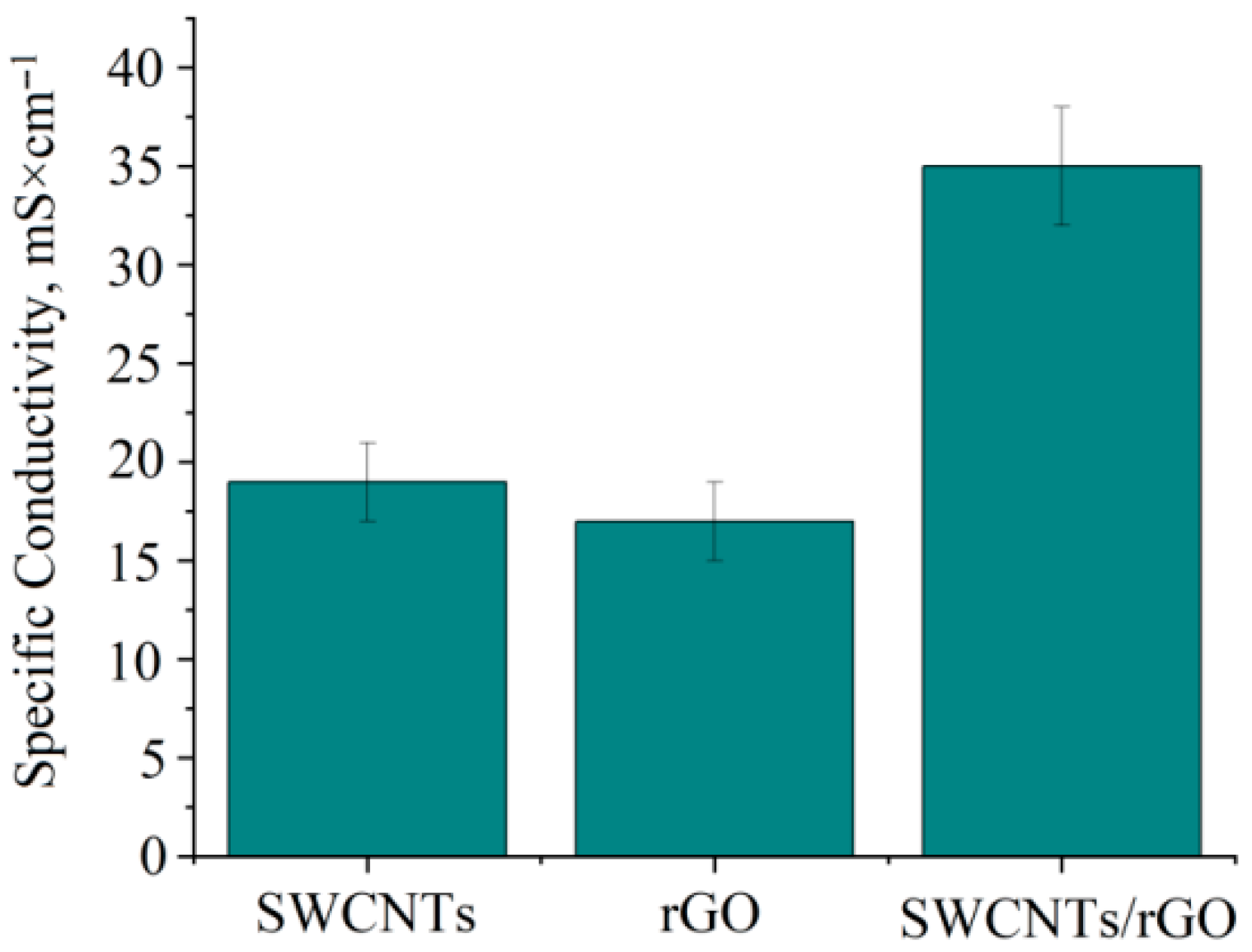
Figure 1. Specific conductivity of hydrogel.
Engproc 117 00011 g001
Figure 2. Evaluation of the degradation of collagen/BSA/chitosan/SWCNTs/rGO/eosin Y composite 3 after nine weeks: (a) Mass loss; (b) Re-swelling relative to the initial value.
Engproc 117 00011 g002
Figure 3. Mass loss in seven days with enzymatic digestion for composite 3.
Engproc 117 00011 g003
Figure 4. Image of cells and MTT assay results. Scale bar is 25 µm.
Engproc 117 00011 g004
Table 1. Components of dispersion.
DispersionsSWCNTs,
g/L
rGO,
g/L
BSA,
g/L
Collagen,
g/L
Chitosan,
g/L
Eosin Y,
g/L
10.6 ± 0.150.0 ± 1.025.0 ± 2.0100.0 ± 5.01.0 ± 0.1
20.6 ± 0.150.0 ± 1.025.0 ± 2.0100.0 ± 5.01.0 ± 0.1
30.3 ± 0.10.3 ± 0.150.0 ± 1.025.0 ± 2.0100.0 ± 5.01.0 ± 0.1
Table 2. Electrical conductivity of samples.
HydrogelsSWCNTs
Concentration,
g/L
rGO
Concentration,
g/L
Specific Electrical Conductivity,
mS/cm
10.6 ± 0.119
20.6 ± 0.117
30.3 ± 0.10.3 ± 0.135
Disclaimer/Publisher’s Note: The statements, opinions and data contained in all publications are solely those of the individual author(s) and contributor(s) and not of MDPI and/or the editor(s). MDPI and/or the editor(s) disclaim responsibility for any injury to people or property resulting from any ideas, methods, instructions or products referred to in the content.