
Proceeding Paper

Explainability of Diabetic Retinopathy Detection and Classification with Deep Learning Hybrid Architecture: AlterNet-K and ResNet-101 †
1
Department of Computer Science, Shyama Prasad Mukherji College for Women, University of Delhi, Delhi 110026, India
2
Department of Computer Science & Engineering, School of Engineering Sciences & Technology, Jamia Hamdard University, Delhi 110062, India
*
Author to whom correspondence should be addressed.
Presented at the 29th International Electronic Conference on Synthetic Organic Chemistry, 14–28 November 2025; Available online: https://sciforum.net/event/ecsoc-29.
Chem. Proc. 2025, 18(1), 141; https://doi.org/10.3390/ecsoc-29-26888
Published: 13 November 2025

Abstract

Diabetic retinopathy (DR), an eye disease that is a threatening cause of irreversible blindness, always challenging to detect and diagnose on time. There are many ophthalmic invasive procedures which exist in medical science for the diagnosis of oculi (eyes). These all require highly skilled medical practitioners with operational knowledge of diagnosing sensitive organs like the retina and its tiny vessels. Due to the dearth of retinal specialists, the eye’s organs’ sensitivity, and the complexity of retinal therapy, invasive procedures are time-consuming, costly, and have slow progress. The fundus images are the visual information of the rear part of the retina. The progression of lesions around the retinal tissue’s surface causes the electric signals to not able to reach at the visual cortex, thus causing blurry vision or vision loss experienced by patients. The older methods using retinal fundus images for diagnosing lesions and symptoms of DR take time, causing delays in treatment and hence reducing the chance of success. Therefore, for early diagnosis, using fundus or retinal images can save the required effort and time of both doctors and patients. Artificial intelligence (AI) techniques have the capability to learn the tissue structures of the eye’s anatomy and to provide an analysis of the disease through the retinal fundus images. This process consists of operations, first apply the image preprocessing techniques followed by segmentation and filtering, then classify the disease using the artificial intelligence-based model. The proposed model trained over a dataset of DR images, for the prediction of accurate results, followed by deciding if the diagnosis by the model is correctly classified or not using the Explainable AI (XAI) algorithm. The rapid growth and better outcome of machine learning and deep learning algorithms are reasons to adopt, enhance the early diagnosis and treatments of patients.

1. Introduction

Diabetes mellitus (DM) is the most widespread chronic metabolic disorder. Diabetes mellitus occurs due to extra glucose circulation in blood plasma, called hyperglycemia in medical terminology. It refers to non-manageable glucose amounts due to an imbalanced secretion of insulin by the pancreas. This diabetes leads to various types of complications in the form of microvascular and macrovascular diseases, for example, neuropathy, nephropathy, retinopathy, and cardiovascular diseases [1]. Hyperglycemia is a primary biomarker that leads to imbalances in the metabolism of carbohydrates, proteins, and lipids also [2]. The significant classifications of diabetes are the forms of type 1 and type 2 according to their management strategies. Type 1 diabetes is immune-radiated and it occurs suddenly most of the time. Its causes are not well known, that means, it is an idiopathic disease, while type 2 diabetes is related to insulin deficiency or insulin secretion and resistance, and sometimes patients require doses of extra insulin for balancing the amount of glucose in the body [2,3]. Diabetic retinopathy (DR) is a microvascular eye disorder that affects retinal vessels and various types of cells, along with neural and glial tissues in the retina, which leads to vision loss or permanent blindness [4]. DR is asymptomatic and irreversible in some cases. The occurrence of DR is typically higher in type 1 diabetic patients as compared to type 2 with 77.3% for type 1 and 25.2% for type 2, respectively [5]. DR incidence is highest among the working age populations of 20 to 65 years [6]. The diabetic macular edema (DME) is more probable in type 2 diabetic patients, in which the swelling affects the retina. The major factors responsible for the growth of DR in oculi are hypertension, chronic diabetes with poor hyperglycemia, dyslipidemia (high cholesterol and lipids in vessels), and genetic factors [7].
The chemical compounds advanced glycation end products (AGEs) are produced when sugar interacts with proteins or fats in the bloodstream, and high levels of AGEs have been linked to diabetic retinopathy [8,9]. Organic chemical agents such as glucose, sorbitol, AGEs, and oxidized lipids are all part of a biochemical cascade triggered due to high blood sugar. These chemical molecules damage retinal blood vessels, promote inflammation, and cause the characteristic bleeding and vision loss seen in diabetic retinopathy.
Mostly in each developed and developing countries like USA, India & Canada, the usage of many organic chemical compounds like pesticides and herbicides are in excess for repelling insects in agriculture plants that affect health, especially about retina damage [10]. There are some changes which occur in the formation or growth of retinopathy disorder due to the formation of new blood vessels at the retinal surface that start to cover up the surface of retina, called neovascularization, ischemia leakages [11], and lipid–proteins at the retinal surface due to poor maintenance of lipid profiles in vessels, which cause the different tiny spots covering the retinal area of vision that leads to vision impairments.
In a few research study reports related to DR, the authors explained the proportionality among DR and diabetic kidney functional diseases and cardiovascular diseases [12]. Other complications which happen in oculi due to DR are pericyte loss, capillary occlusion, basement membrane thickening, vascular shunting, and vitreous hemorrhages [13]; these factors break the blood retinal barrier in DR [14].

2. Related Works

In this section, we have explored about the few major research works on diagnosing diabetic retinopathy using machine learning models and deep learning architectures. Deep learning techniques for diabetic retinopathy detection and classification explores a diverse range of approaches, each one has unique advantages and disadvantages. While Kumar, Devinder et al. [15] focus on developing deep radiomic sequencers designed specifically for diabetic retinopathy diagnosis with Accuracy was 73.2%, Gangwar et al. [16] proposed Inception ResNet-V2 model for Messidor 1 and APTOS datasets, found accuracy 72.33%, 82.18%, respectively. Uddin, et al. [17] worked with Logistic Regression and found the Accuracy metric is only 75% and ROC curve performance is 83%. Zhen, et al. [18] worked on DenseNet, a CNN architecture got the performance accuracy of 75.5%.
After some more studies, it was found that the benefits of transfer learning and semi-supervised learning techniques also providing better results. Additionally, studies highlight the effectiveness of combining transfer learning techniques with data augmentation techniques to improve model performance. Instead of such advancements, challenges such as dataset diversity, model generalizability, and scalability to real-world clinical setups remain. Many different techniques have been proposed for diabetic retinopathy detection and classification from colored fundus images over the years. While machine learning approaches focused on extracting features and using classifiers like support vector machines, naive Bayes, fuzzy logic, or K-nearest neighbors, deep learning approaches have achieved state-of-the-art results by utilizing convolutional neural networks (CNNs); however, all methods are of black box nature, and they do not provide any explanations and interpretations for classification or misclassification. As such, further research efforts in this direction are needed to address these challenges and advance the field towards more sturdy and widely applicable solutions for diabetic retinopathy detection.

3. Methodology

In this section, we are discussing the different datasets of diabetic retinopathy disease; these are usually called retinal image or fundus image datasets.
A. 
Dataset
B. 
Proposed Model
A. 
Dataset:
For experiments in proposed model for the diagnosis of diabetic retinopathy, there are standard datasets publicly available: ATPOS, ARIA, CHASE-DB1, DIARETDB0, DiaretDB1, Kaggle—Diabetic Retinopathy 224 × 224, EyePacks, E-Ophtha, Messidor, and the INDIAN DIABETIC RETINOPATHY IMAGE DATASET (IDRID), APTOS 2019 Blindness Detection [19] (Figure 1).
According to the International Clinical Diabetic Retinopathy Disease Severity Scale (ICDRDSS), the stages of DR grading is divided as follows. These datasets contain fundus images with different stages of diabetic retinopathy:
(a) 
Grade 0 (Healthy eye)—It represents no abnormalities in the eyes, i.e., no symptoms of diabetic retinopathy shown in the fundus images.
(b) 
Grade 1 (Mild DR)—This grading represents the mild stage of DR, mostly occurring in type 2 diabetic patients at initial stages; however, there is no vision loss occurring at this stage. The microaneurysms may be found in this stage.
(c) 
Grade 2 (Moderate DR)—This grading stage represents the starting stage of DR when treatment is important, and the disease can be reversible if detected in a timely manner.
(d) 
Grade 3 (Severe DR)—In this stage, patients mostly experience complications in their vision. The new vessel formation at the retinal vasculature covers the retina. If treatment of DR has not started, then loss of vision is highly expected.
(e) 
Grade 4 (PDR)—This level is the most advanced and worst stage of DR, when the entire retina is covered by new vessels and hemorrhage spots. In a few cases, the macula of the retina becomes affected, which causes Maculopathy.
Tariq, Maria et al. [21] discussed the stages of DR signs for disease classification. The grading of retinal images is decided based on lesion shapes and symptoms of the tiny spots around the retina. The worst case of PDR is referred to as diabetic maculopathy, in which the macula (the central vision point of the eye) is damaged completely [22].
B. 
Proposed Model AlterNet—K
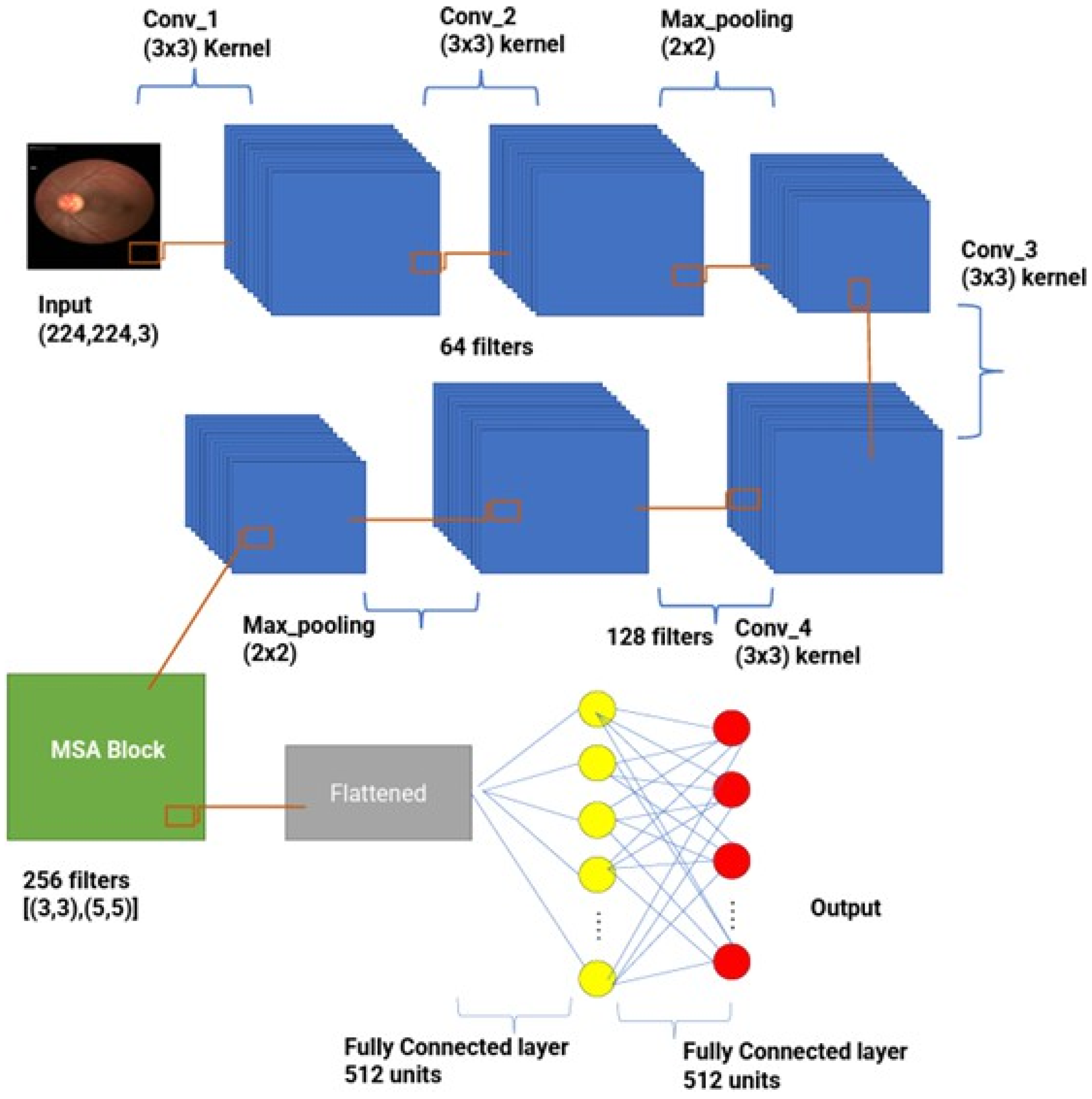
The proposed model, AlterNet is a type of hybrid model that takes convolutional layers (conv) from convolution neural networks (CNNs) and multi-head self attention (MHSA) blocks from vision transformers by “alternately replacing convolutional blocks with MHSA blocks from the end of a baseline CNN model”. If the performance of the model has not improved, an additional convolutional block “located at the end of an earlier stage” is replaced with an MHSA block, and “more heads and higher hidden dimensions for MHSA blocks” are used in later stages [23].
The following are some deep learning models for diabetic retinopathy detection and classification (Table 1):
In the above list of deep learning techniques, AlterNet-K outperforms the other models.
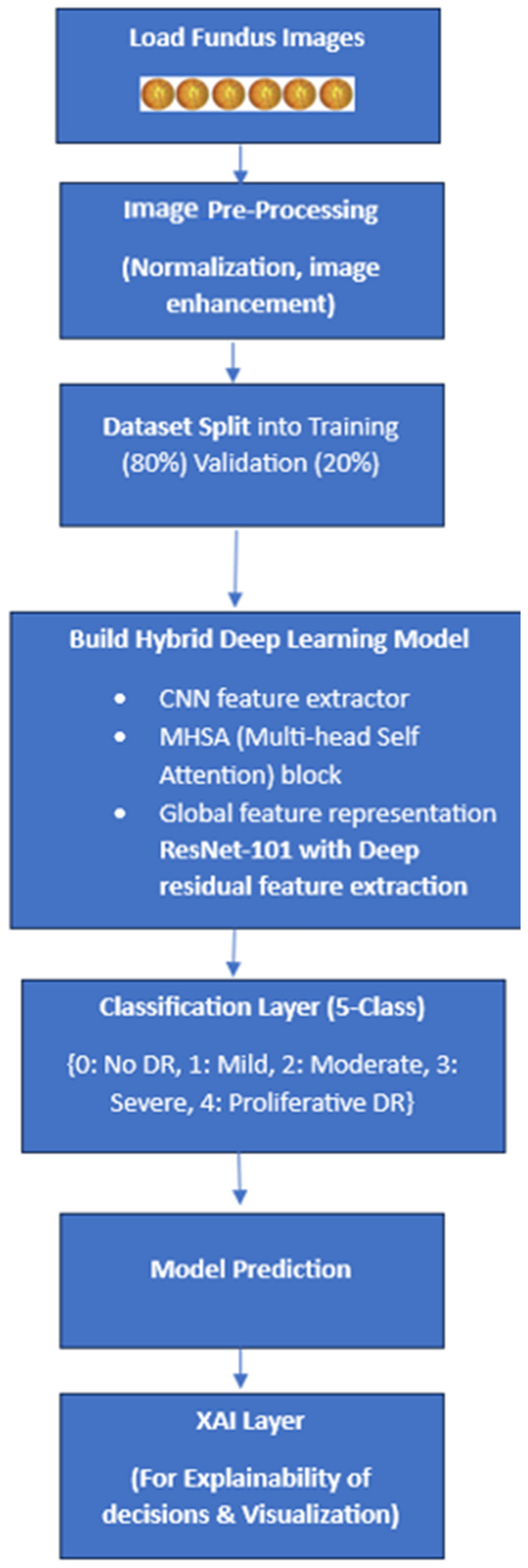
The aim of the research is to address the critical issues by proposing a deep learning-oriented approach for diabetic retinopathy detection with the learning capability of the AlterNet—k architecture. The flow diagram for the proposed model is given below (Figure 2).
The detailed diagram for the AlterNet architecture is given as follows (Figure 3):
The proposed work follows the workflow of the involved layers in the experiment. The dataset source is from Kaggle with 3662 retinal images (Figure 4).

4. Results and Descriptions

In the proposed model, we implement the AlterNet-K model for diabetic retinopathy detection and classification following the architecture, as shown in Section 3. The work started with preprocessing and data augmentation, followed by splitting the dataset into training and validation subsets. The model includes convolutional layers, max pooling, an Multi head self attention block, and fully connected layers. We used TensorFlow and Karas for the implementation.
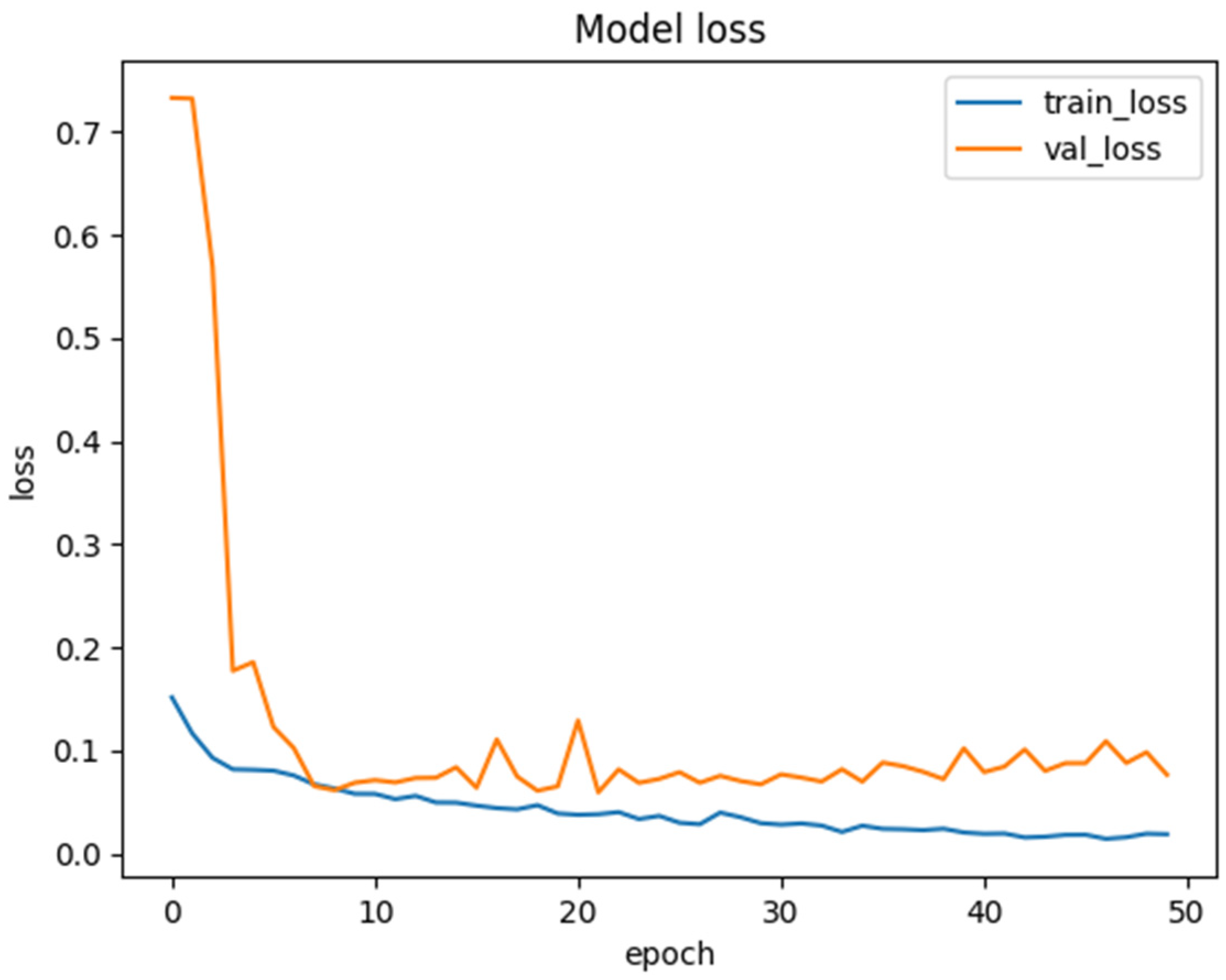
With the aim of avoiding overfitting the model, add batch normalization and drop out layers. For hidden convolution layers, use the relu activation function. Use the SoftMax activation function at the last output layer for multiclass classification. The model was trained for 50 epochs. The graph is presenting the comparison of training loss, validation loss, and the number of epochs after completing model training is shown below (Figure 5):
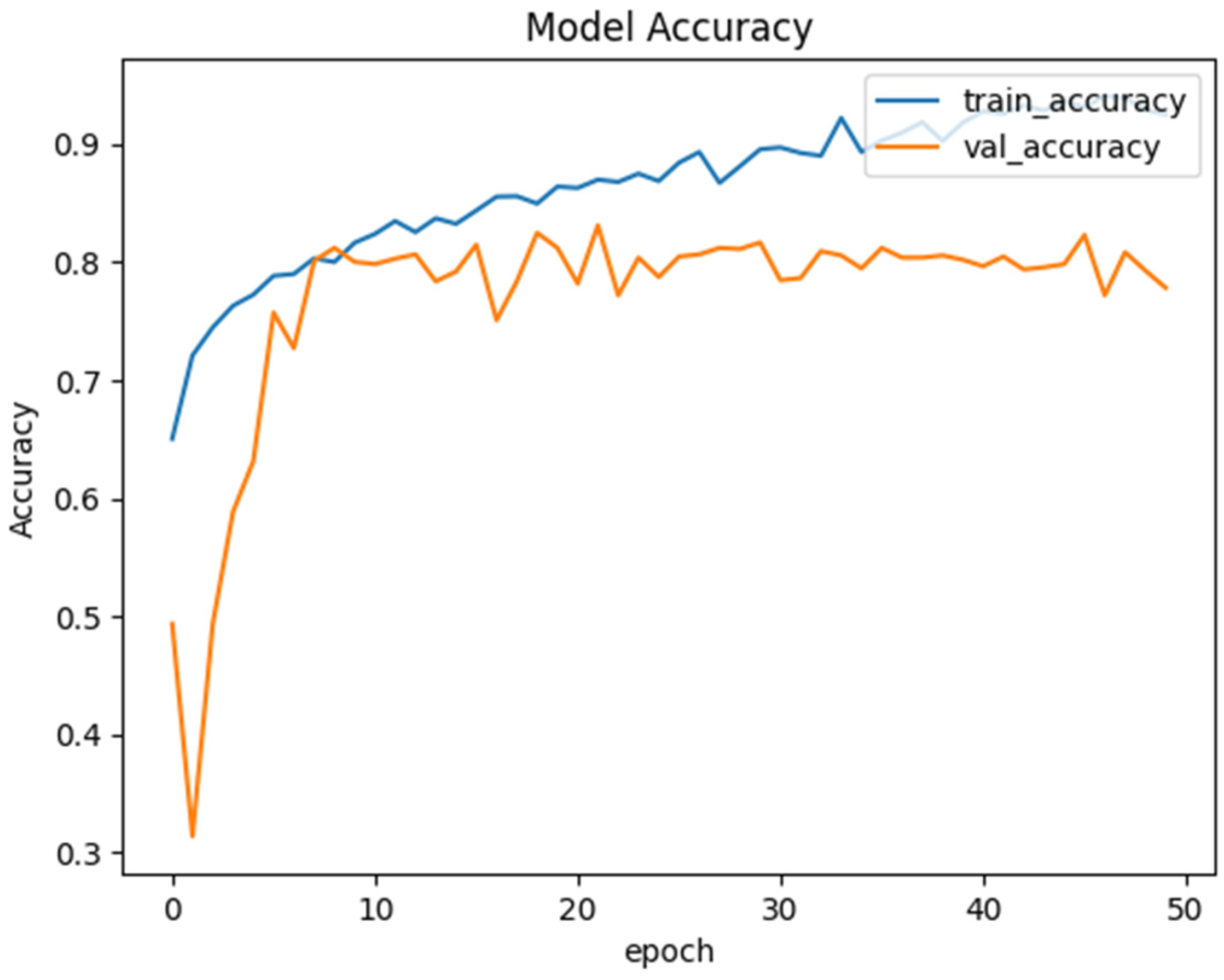
The graph comparing training accuracy, validation accuracy, and the number of epochs is shown below (Figure 6 and Figure 7):
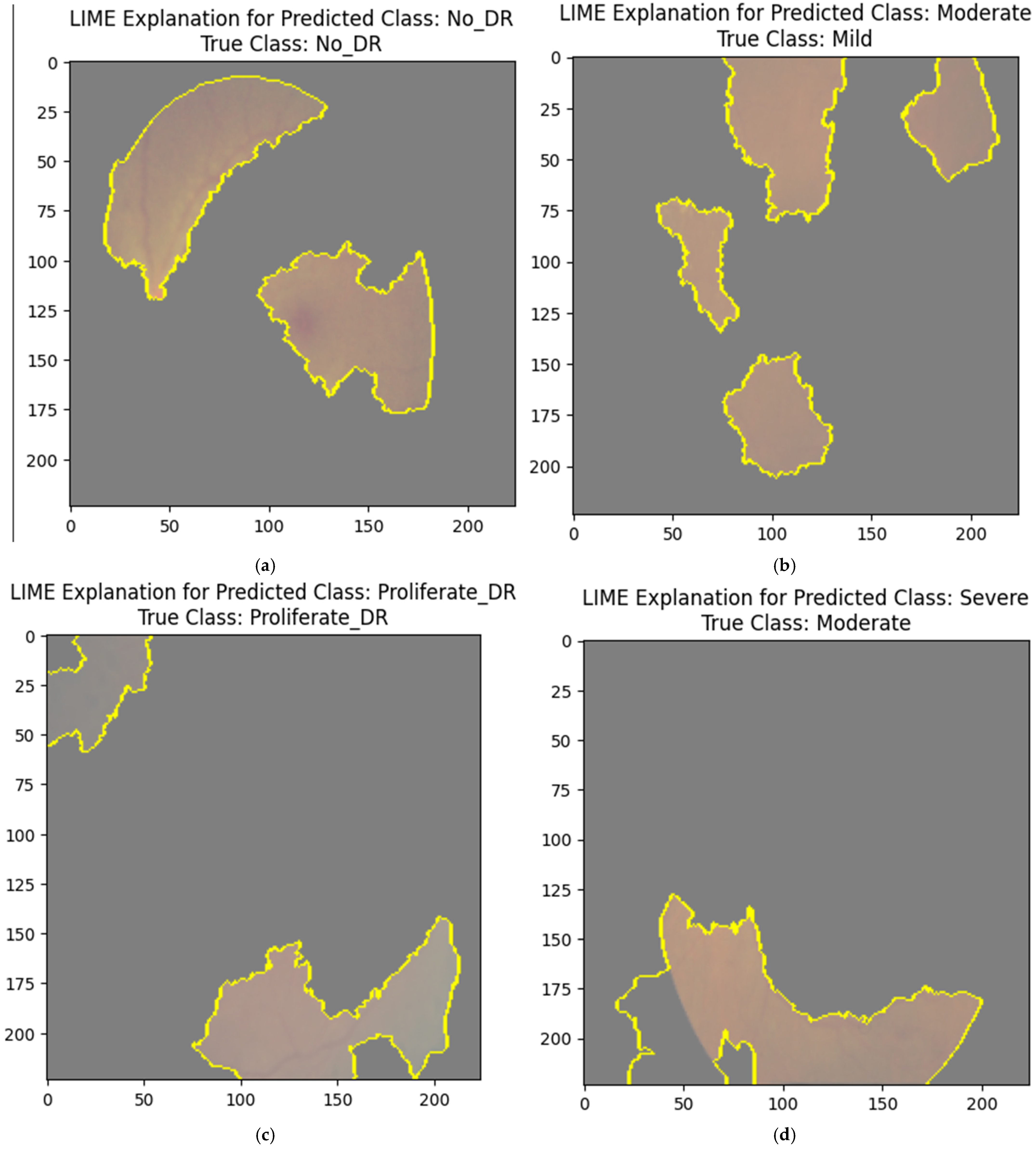
In the above DR images, LIME explains a single image prediction performed by our hybrid model (AlterNet-K and ResNet-101). It highlights which regions (super-pixels) of the input image contributed most to the model’s predicted class.
The highlighted regions (outlined in yellow) represent the most influential image areas for the model’s decision and the gray background represents regions which the model found to be less important or irrelevant.
Each image shows the following:
A. 
Predicted Class (what the model decided)
B. 
True Class (the correct label from your dataset)
The model correctly identifies the healthy eye images (no DR). The yellow-highlighted regions likely correspond to the retinal background and vessels, which the model associates with non-diseased eyes. Smooth, uniform regions without bright lesions or hemorrhages are important features here. The model slightly overestimates severity (predicts moderate instead of mild). The yellow areas may correspond to small lesions or early microaneurysms—LIME shows these as features the model found to be important. This suggests that the model is sensitive to small bright or dark spots but may be confused about their severity.
The model correctly identifies severe proliferative DR. The yellow-highlighted regions indicate active lesions, possibly exudates or neovascular formations. These regions strongly influenced the model’s decision, showing that it focuses on the disease-specific patterns. The model sees the lesions as more severe than they are. The yellow contours highlight large lesion-like patterns, perhaps due to contrast or uneven lighting.
The model may be confusing moderate DR lesions (hemorrhages or exudates) with proliferative-like features, indicating the need for improvement in fine-grained severity discrimination.

5. Conclusions and Future Directions

Imaging of the retina helps in the diagnosis of early DR by using different methods of artificial intelligence, including machine learning and deep learning with image and digital filter processing algorithms.
The accurate, clear imaging of the retina can be able to predict DR at the primary proliferative stage of diabetic macular edema, which can be easily treatable without surgery, reducing the possibility of vision loss [25]. The image processing techniques are used for feature extraction and the preprocessing of undesired pixels and parts of images, enhance the image quality. Then, the filtered image requires splitting into training and validation set in ratio of 80:20. The training using machine learning models that make it able to test further images and classify the results according to class labels [26]. The classification algorithms are used to assign a label or class category to the image data based on the set of lesions. The prediction capacities of classification algorithms performed well over the different classes.
The proposed model is effective for diabetic retinopathy (DR) detection and classification. The model integrates convolutional layers for feature extraction and max pooling layers for removing unnecessary features. The multi-head self attention (MHSA) block enhances feature learning by applying different receptive field sizes. The fully connected layers ensure the final classification.
Although this proposed model is novel in detecting diabetic retinopathy disease, the work has the scope to be further optimized with hyperparameter tuning and data augmentation, and to scaled up also with another dataset. The different explainable AI techniques can also be used for showing the explainability and interpretability-based decisions regarding the classified results. The same work can also be applied for optical coherence tomography (OCT) images.

Author Contributions

All authors contributed to conceptualization, methodology, experimental work, result analysis, and manuscript preparation. All authors have read and agreed to the published version of the manuscript.

Funding

There is no funding received for this research.

Institutional Review Board Statement

Not applicable.

Informed Consent Statement

Not applicable as publicly available datasets with prior patient consent approval were used.

Data Availability Statement

The data which are used in research work, available in public domain.

Conflicts of Interest

The authors declare no conflict of interest.

References

  1. Ohiagu, F.O.; Chikezie, P.C.; Chikezie, C.M. Pathophysiology of diabetes mellitus complications: Metabolic events and control. Biomed. Res. Ther. 2021, 8, 4243–4257. [Google Scholar] [CrossRef]
  2. Baynes, H.W. Classification, pathophysiology, diagnosis and management of diabetes mellitus. J. Diabetes Metab. 2015, 6, 1–9. [Google Scholar]
  3. Banday, M.Z.; Sameer, A.S.; Nissar, S. Pathophysiology of diabetes: An overview. Avicenna J. Med. 2020, 10, 174–188. [Google Scholar] [CrossRef] [PubMed]
  4. Wang, W.; Lo, A.C.Y. Diabetic retinopathy: Pathophysiology and treatments. Int. J. Mol. Sci. 2018, 19, 1816. [Google Scholar] [CrossRef] [PubMed]
  5. Kusuhara, S.; Fukushima, Y.; Ogura, S.; Inoue, N.; Uemura, A. Pathophysiology of diabetic retinopathy: The old and the new. Diabetes Metab. J. 2018, 42, 364–376. [Google Scholar] [CrossRef] [PubMed]
  6. Ansari, P.; Tabasumma, N.; Snigdha, N.N.; Siam, N.H.; Panduru, R.V.N.S.; Azam, S.; Hannan, J.M.; Abdel-Wahab, Y.H.A. Diabetic retinopathy: An overview on mechanisms, pathophysiology and pharmacotherapy. Diabetology 2022, 3, 159–175. [Google Scholar] [CrossRef]
  7. Fung, T.H.M.; Patel, B.; Wilmot, E.G.; Amoaku, W.M.K. Diabetic retinopathy for the non- ophthalmologist. Clin. Med. 2022, 22, 112. [Google Scholar] [CrossRef] [PubMed]
  8. Ehlers, J.P.; Jiang, A.C.; Boss, J.D.; Hu, M.; Figueiredo, N.; Babiuch, A.; Talcott, K.; Sharma, S.; Hach, J.; Le, T.; et al. Quantitative ultra-widefield angiography and diabetic retinopathy severity: An assessment of panretinal leakage index, ischemic index and microaneurysm count. Ophthalmology 2019, 126, 1527–1532. [Google Scholar] [CrossRef] [PubMed]
  9. Ying, L.; Shen, Y.; Zhang, Y.; Wang, Y.; Liu, Y.; Yin, J.; Wang, Y.; Yin, J.; Zhu, W.; Bao, Y.; et al. Association of advanced glycation end products with diabetic retinopathy in type 2 diabetes mellitus. Diabetes Res. Clin. Pract. 2021, 177, 108880. [Google Scholar] [CrossRef] [PubMed]
  10. Xu, J.; Chen, L.J.; Yu, J.; Wang, H.J.; Zhang, F.; Liu, Q.; Wu, J. Involvement of advanced glycation end products in the pathogenesis of diabetic retinopathy. Cell. Physiol. Biochem. 2018, 48, 705–717. [Google Scholar] [CrossRef] [PubMed]
  11. Souza Monteiro de Araújo, D.; Brito, R.; Pereira-Figueiredo, D.; dos Santos-Rodrigues, A.; De Logu, F.; Nassini, R.; Zin, A.; Calaza, K.C. Retinal toxicity induced by chemical agents. Int. J. Mol. Sci. 2022, 23, 8182. [Google Scholar] [CrossRef] [PubMed]
  12. Radi, R.E.; Damanhouri, E.T.; Siddiqui, M.I. Diabetic retinopathy causes, symptoms, and complications: A review. Int. J. Med. Dev. Ctries. 2021, 5, 390–394. [Google Scholar] [CrossRef]
  13. Dascalu, A.M.; Serban, D.; Papanas, N.; Kempler, P.; Rizzo, M.; Stana, D.; Roman, G.; Stoian, A.P. Microvascular Complications of Diabetes Mellitus: Focus on Diabetic Retinopathy (DR) and Diabetic Foot Ulcer (DFU). In Type 2 Diabetes-From Pathophysiology to Cyber Systems; IntechOpen: Rijeka, Croatia, 2021. [Google Scholar]
  14. Uzun, S.L. Pathogenesis of diabetic retinopathy and diabetic macular edema. In Diabetic Retinopathy and Diabetic Macular Edema; Livre de Lyon: Lyon, France, 2021; Volume 11. [Google Scholar]
  15. Kumar, D.; Taylor, G.W.; Wong, A. Discovery radiomics with CLEAR-DR: Interpretable computer aided diagnosis of diabetic retinopathy. IEEE Access 2019, 7, 25891–25896. [Google Scholar] [CrossRef]
  16. Gangwar, A.K.; Ravi, V. Diabetic retinopathy detection using transfer learning and deep learning. In Evolution in Computational Intelligence: Frontiers in Intelligent Computing: Theory and Applications (FICTA 2020); Springer: Singapore, 2021; Volume 1. [Google Scholar]
  17. Emon, M.U.; Zannat, R.; Khatun, T.; Rahman, M.; Keya, M.S. Performance analysis of diabetic retinopathy prediction using machine learning models. In Proceedings of the 2021 6th International Conference on Inventive Computation Technologies (ICICT), Coimbatore, India, 20–22 January 2021; IEEE: Piscataway, NJ, USA, 2021. [Google Scholar]
  18. Zhen, Y.; Wang, L.; Liu, H.; Zhang, J.; Pu, J. Performance assessment of the deep learning technologies in grading glaucoma severity. arXiv 2018, arXiv:1810.13376. [Google Scholar] [CrossRef]
  19. APTOS Dataset Source. Available online: https://www.kaggle.com/c/aptos2019-blindness-detection/data (accessed on 23 November 2025).
  20. Dubey, S.; Dixit, M. Recent developments on computer aided systems for diagnosis of diabetic retinopathy: A review. Multimed. Tools Appl. 2023, 82, 14471–14525. [Google Scholar] [CrossRef]
  21. Tariq, M.; Palade, V.; Ma, Y.; Altahhan, A. Diabetic retinopathy detection using transfer and reinforcement learning with effective image preprocessing and data augmentation techniques. In Fusion of Machine Learning Paradigms: Theory and Applications; Springer International Publishing: Cham, Switzerland, 2023; pp. 33–61. [Google Scholar]
  22. Rahim, S.S.; Palade, V.; Almakky, I.; Holzinger, A. Detection of diabetic retinopathy and maculopathy in eye fundus images using deep learning and image augmentation. In Proceedings of the Machine Learning and Knowledge Extraction: Third IFIP TC 5, TC 12, WG 8.4, WG 8.9, WG 12.9 International Cross-Domain Conference, CD-MAKE 2019, Canterbury, UK, 26–29 August 2019; Springer International Publishing: Berlin/Heidelberg, Germany, 2019. [Google Scholar]
  23. Park, N.; Kim, S. How do vision transformers work? arXiv 2022, arXiv:2202.06709. [Google Scholar] [CrossRef]
  24. Kumar, S.S.K.; Sri, K.S.H.; Bindu, A.; Thangavel, S.K.; Somasundaram, K.; Parthasaradhi, S.; Shunmugapriya, M.C.; Shanmugam, S.K. Explainable AI for Glaucoma Detection: Integrating Alternet-k and LIME. In Proceedings of the 2024 15th International Conference on Computing Communication and Networking Technologies (ICCCNT), Kamand, India, 24–28 June 2024; IEEE: Piscataway, NJ, USA, 2024. [Google Scholar]
  25. Reddy, G.T.; Bhattacharya, S.; Ramakrishnan, S.S.; Chowdhary, C.L.; Hakak, S.; Kaluri, R.; Reddy, M.P.K. An ensemble based machine learning model for diabetic retinopathy classification. In Proceedings of the 2020 International Conference On Emerging Trends in Information Technology and Engineering (IC ETITE), Vellore, India, 24–25 February 2020; IEEE: Piscataway, NJ, USA, 2020. [Google Scholar]
  26. Chua, J.; Sim, R.; Tan, B.; Wong, D.; Yao, X.; Liu, X.; Ting, D.S.W.; Schmidl, D.; Ang, M.; Garhöfer, G.; et al. Optical coherence tomography angiography in diabetes and diabetic retinopathy. J. Clin. Med. 2020, 9, 1723. [Google Scholar] [CrossRef]
Figure 1. Representative retinal fundus images showing the five stages of diabetic retinopathy [20].
Chemproc 18 00141 g001
Figure 2. Flow diagram for the proposed model.
Chemproc 18 00141 g002
Figure 3. AlterNet-K architecture [24].
Chemproc 18 00141 g003
Figure 4. Methodology of AlterNet—K model [24].
Chemproc 18 00141 g004
Figure 5. Epochs vs. Loss.
Chemproc 18 00141 g005
Figure 6. Epochs vs. Accuracy.
Chemproc 18 00141 g006
Figure 7. LIME explanation of DR images (a) for healthy image, (b) for moderate image, (c) for proliferative DR, and (d) for severe DR.
Chemproc 18 00141 g007
Table 1. Comparison of proposed model with other existing models.
ModelMetricsClassification MethodsExplainability
Devinder et al. [15]Accuracy—73.2%Deep Radiomic SequencerNo
Gangwar et al. [16]Accuracy for Messidor 1 and APTOS datasets are 72.33%, 82.18%, respectively.Inception ResNet-V2No
Uddin, et al. [17]Accuracy is only 75% and ROC curve performance is 83%Logistic RegressionNo
Zhen, et al. [18]Accuracy is 75.5%DenseNetNo
Proposed ModelAccuracy is 92.47%Hybrid Method: ResNet—101 and AlterNet—kYes
Disclaimer/Publisher’s Note: The statements, opinions and data contained in all publications are solely those of the individual author(s) and contributor(s) and not of MDPI and/or the editor(s). MDPI and/or the editor(s) disclaim responsibility for any injury to people or property resulting from any ideas, methods, instructions or products referred to in the content.