
Proceeding Paper

Tocopherol–Doxorubicin Conjugate as a Lipid–Prodrug: Synthetic Methods, Self-Assembly, Breast Cancer Cell Inhibition, and Theoretical Analysis †
1
CQM—Centro de Química da Madeira, Universidade da Madeira, Campus da Penteada, 9000-390 Funchal, Portugal
2
Institute of Organic Chemistry and Technology, Faculty of Chemical Engineering and Technology, Cracow University of Technology, 24 Warszawska Street, 31-155 Cracow, Poland
*
Authors to whom correspondence should be addressed.
Presented at the 29th International Electronic Conference on Synthetic Organic Chemistry, 14–28 November 2025; Available online: https://sciforum.net/event/ecsoc-29.
Chem. Proc. 2025, 18(1), 118; https://doi.org/10.3390/ecsoc-29-26716
Published: 11 November 2025

Abstract

Developing natural lipid-based conjugates/prodrugs has emerged as a promising topic in pharmaceutical chemistry and biomedicine. In this work, a natural antioxidant lipid, α-tocopherol (vitamin E), was covalently connected with doxorubicin (Dox) to synthesize a Toco–Dox conjugate through two approaches: triphosgene activation (method A) and 4-nitrophenyl chloroformate activation (method B). The latter method is non-volatile and generates safe-to-handle byproduct 4-nitrophenol, making it much less hazardous and more eco-friendly. The molecular structure of Toco–Dox was characterized by 1H, 13C NMR, FT-IR, and MALDI-TOF-MS. Toco–Dox could self-assemble into nanoparticles in the DMSO/water mixture and Toco–Dox nanoparticles were further characterized by DLS. Moreover, the molecular properties of Toco–Dox were theoretically calculated or virtually analyzed (Dox as a control). In addition, unlike (free) Dox, Toco–Dox showed moderate MCF-7 breast cancer cell inhibition (cytotoxicity) and a cytoplasm localization behavior. This work provided an efficient approach to develop a natural (fat-soluble) vitamin-based prodrug system for breast cancer chemotherapy.

1. Introduction

Doxorubicin (Dox) is a topoisomerase II inhibitor and DNA intercalator widely employed as a chemotherapeutic agent [1,2,3,4,5]. However, its clinical utility and application was largely limited by its severe toxicities, autophagy induction, and multidrug resistance (MDR) effect [6]. To address these drawbacks, covalent chemical modifications have been employed to improve the bioavailability, therapeutic efficiency, and tumor selectivity of Dox [7,8]. Natural lipid-based chemical modification of Dox [9,10], especially at the primary amino group (–NH2) on the daunosamine moiety, has been extensively explored. The amide-containing lipid–Dox conjugates often exhibited improved physicochemical stability, enhanced intracellular uptake, controllable degradability and pharmacokinetics, and specific intracellular localization behaviors [11,12]. In previous works, our research team developed a natural cholesterol (lipid)–Dox conjugate via degradable carbamate linkage and prepared its supramolecular (nano-)assemblies as anticancer nanoprodrugs, which showed controllable and quantitative drug loading capacity, high storage stability, tunable nanoparticle size and zeta potential, and enhanced breast cancer cell uptake and inhibition effects [13,14].
Among the natural lipid or lipid-like molecules [15,16], α-tocopherol, a fat-soluble vitamin, plays essential roles in many biochemical processes, including membrane formation, signal transduction, hormone metabolism, and cellular communication. The physicochemical properties, biocompatibility, and biological activities of α-tocopherol make it a sustainable building block for prodrugs and nanotherapeutics [17].
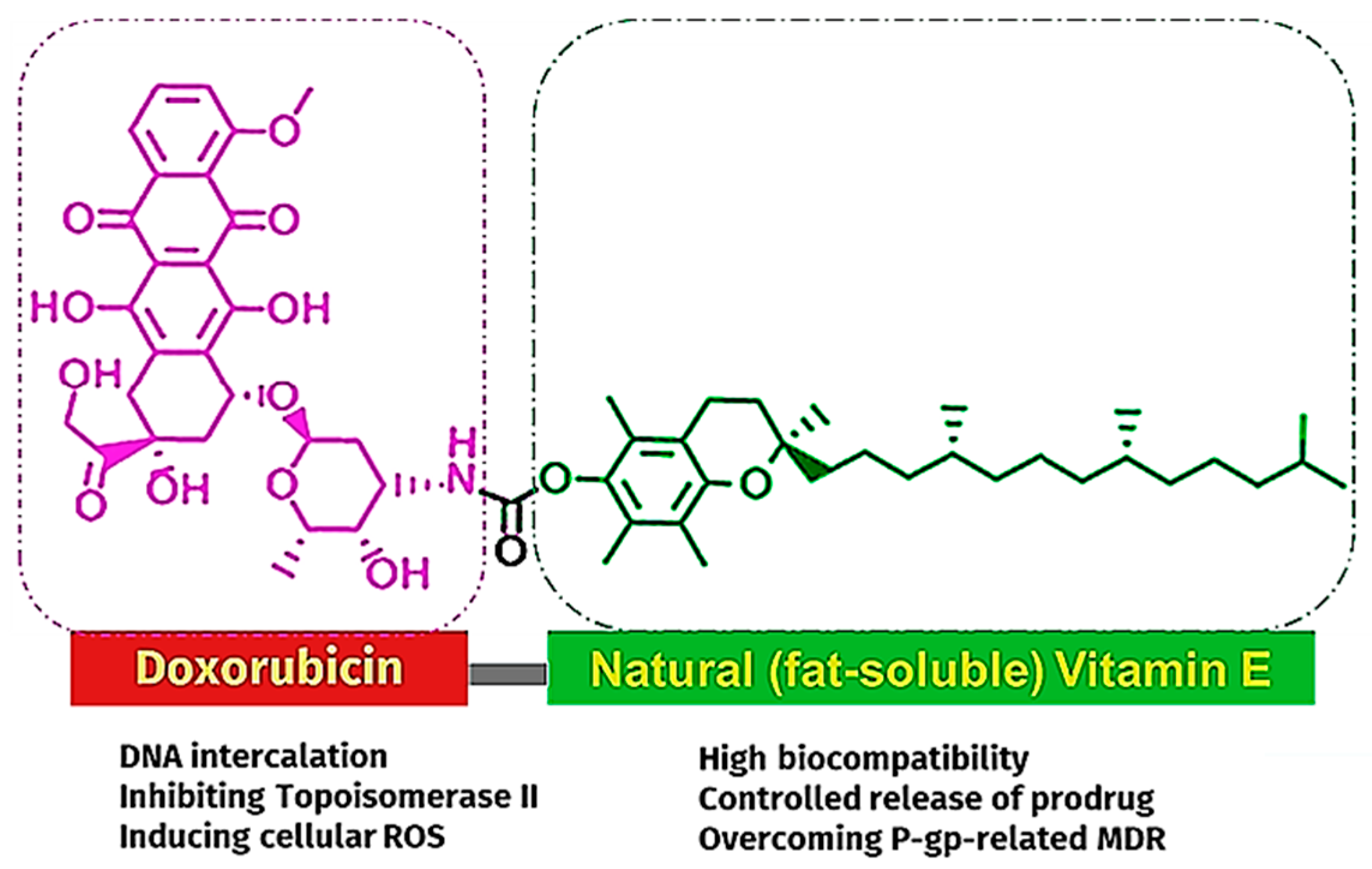
In this work, we synthesized an α-tocopherol-based doxorubicin conjugate (Toco–Dox) by connecting Dox and α-tocopherol via a carbamate linkage (Scheme 1), in which Dox acts as a topoisomerase II inhibitor, DNA intercalator, and ROS inducer; meanwhile, α-tocopherol offers cell membrane affinity, hydrophobicity, and the ability to overcome MDR. Accordingly, Toco–Dox was prepared via two strategies: triphosgene activation (method A) [13], and 4-nitrophenyl chloroformate activation (method B) [18], and was characterized by NMR and MALDI-TOF-MS. Toco–Dox could self-assemble in aqueous solution to form Toco–Dox nanoparticles [19], which were characterized by dynamic light scattering (DLS) analysis. Moreover, in silico theoretical analysis was conducted to predict the properties of Toco–Dox. Finally, the in vitro cytotoxicity of Toco–Dox against MCF-7 breast cancer cells and the intracellular localization was preliminarily investigated.

2. Materials and Methods

2.1. Materials

All chemical reagents and solvents were directly utilized without further purification.

2.2. NMR and Mass Spectral Measurements

1H (400 MHz) and 13C (100 MHz) NMR spectra were recorded on an Avance II+ 400 spectrometer (Bruker, Wissembourg, France) at 299 K (probe temperature). The chemical shifts (δ) are recorded in parts per million (ppm) and tetramethylsilane (TMS, δ = 0 ppm) as the internal chemical shift reference. The mass spectrum with electrospray ionization technique (ESI-MS) was conducted on a Bruker Autoflex maX MALDI-TOF-Mass Spectrometer (Bremen, Germany, in positive mode).

2.3. Synthesis of Toco–Dox Conjugate

2.3.1. Method A (Triphosgene Activation)

Tocopherol (1.0 equiv.) was dissolved in anhydrous dichloromethane under nitrogen atmosphere, followed by the addition of triphosgene (0.38 equiv.) with triethylamine (3.0 equiv.). The mixture was stirred at room temperature for 2 h. Doxorubicin hydrochloride (1.0 equiv.) with triethylamine (1.0 equiv.) was then added, and the reaction was stirred at room temperature for 12 h. After completion, the mixture was concentrated, and the crude product of Toco–Dox conjugate was purified by silica gel chromatography. (Note: highly toxic triphosgene or phosgene residuals should be carefully removed by treating excessive saturated NaHCO3 solution before silica gel chromatography purification).

2.3.2. Method B (4-Nitrophenyl Chloroformate Activation)

Tocopherol (1.0 equiv.) was reacted with 4-nitrophenyl chloroformate (1.3 equiv.) and triethylamine (3.0 equiv.) and purified by silica gel column chromatography to generate the intermediate tocopheryl-4-nitrophenolate. After that, doxorubicin hydrochloride (1.0 equiv., with 2 equiv. triethylamine) and tocopheryl-4-nitrophenolate (1.3 equiv.) was added into a DMSO/THF/MeOH solution, the reaction was stirred for 12–16 h at 40–50 °C, and the crude product of Toco–Dox conjugate was concentrated and purified by silica gel chromatography.

2.4. In-Solution Self-Assembly of Toco–Dox and Dynamic Light Scattering (DLS) Analysis

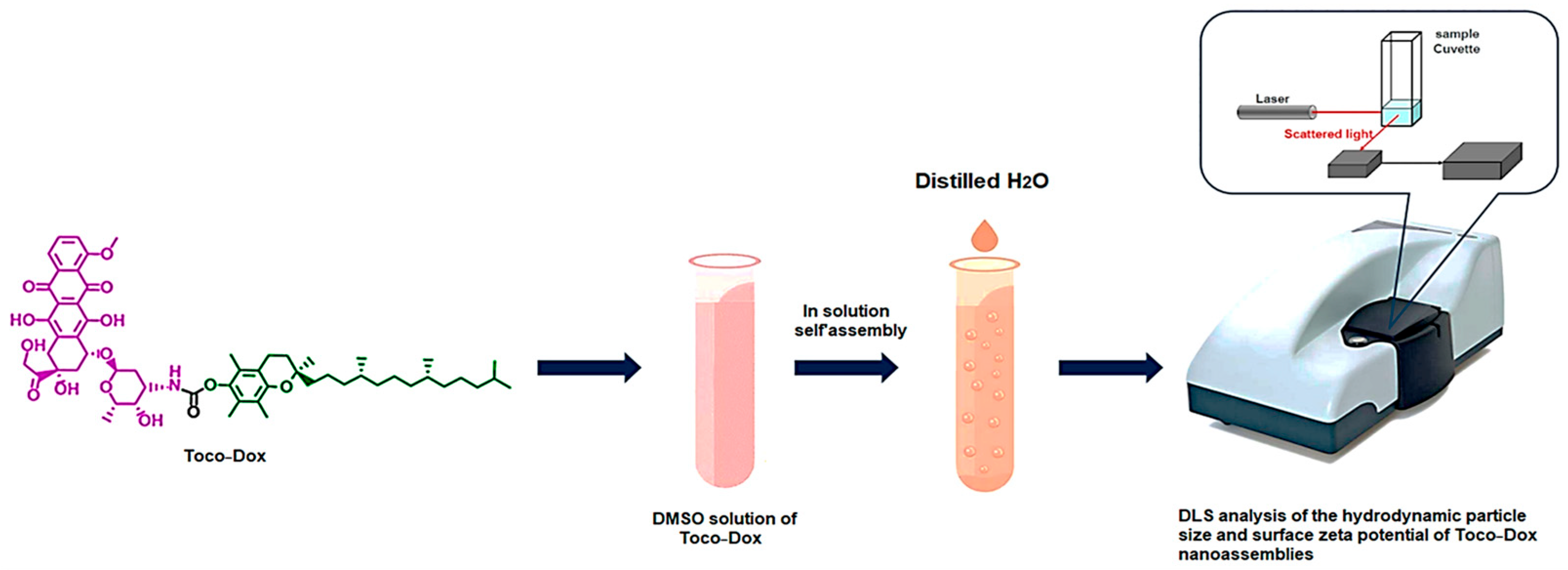
Toco–Dox was self-assembled in a DMSO/distilled water (DMSO:H2O = 1:9, v:v) mixture to form nanoparticles (final concentration 10 μg/mL). The hydrodynamic diameters of the resulting aggregates were measured using a Malvern Zetasizer Nano ZS (model ZEN3600, Worcestershire, UK) equipped with a 633 nm He–Ne laser. Measurements were performed in triplicate (n = 3) for each sample at 25 °C. (Scheme 2) Surface zeta (ζ) potential of Toco–Dox nanoparticles was measured using disposable folded capillary cells (DTS1060C) and cuvettes (ZEN0040) on a Malvern Zetasizer Nano ZS at 25 °C.

2.5. In Vitro Cytotoxicity of Toco–Dox Conjugates in MCF-7 Cells

2.5.1. Cell Culture

MCF-7 breast cancer cells were cultured in RPMI 1640 medium supplemented with 10% fetal bovine serum (FBS) and with 1% antibiotic–antimycotic (penicillin, streptomycin). Additionally, MCF-7 cells need to be complemented with 1% (v/v) 100× NEAA (Non-Essential Amino Acids, Gibco, Waltham, MA, USA) 1 mM sodium pyruvate (Sigma-Aldrich, St. Louis, MO, USA), and 3.3 μg/mL human insulin (Biomedicals, Santa Ana, CA, USA) cells were maintained at 37 °C in a humidified 5% CO2 incubator (Nuaire, Plymouth, MN, USA) and sub-cultured every 3–5 days. For cytotoxicity assays, cells were seeded into 96-well plates at 5000 cells per well.

2.5.2. Resazurin Cytotoxicity Assay of Toco–Dox

Test solutions of the Toco–Dox and Dox (0–50 μg/mL, 2% DMSO in RPMI) were prepared and added to wells in quadruplicate (n = 4). MCF-7 cells were incubated for 48 h at 37 °C. After incubation, RPMI 1640 medium was replaced with 200 μL of 10% resazurin solution (in RPMI) per well. Plates were incubated for 3 h at 37 °C, and fluorescence was measured (λexem = 530 nm/590 nm) using a microplate reader. Cell viability was expressed as relative fluorescence units (RFU) compared to untreated controls.

2.6. Confocal Fluorescence Imaging for Studying the Intracellular Localization of Toco–Dox

Following the Toco–Dox condition of resazurin assay, MCF-7 cells in 96-well plates were washed with PBS and fixed with 100 µL/well of 3.7% (v/v) formaldehyde for 20 min. After fixation, the wells were washed with PBS and stained with 100 µL of the respective fluorescent dyes (DAPI: cell nuclei staining. Alexa Fluor 488: cytoskeleton staining) for 20 min each. Intracellular localization of Toco–Dox was visualized using a Leica Mica Microhub confocal fluorescence microscope (Leica Microsystems, Wetzlar, Germany).

3. Results and Discussion

3.1. Synthesis of Toco–Dox via Triphosgene (Method A) and 4-Nitrophenyl Chloroformate (Method B) Activation

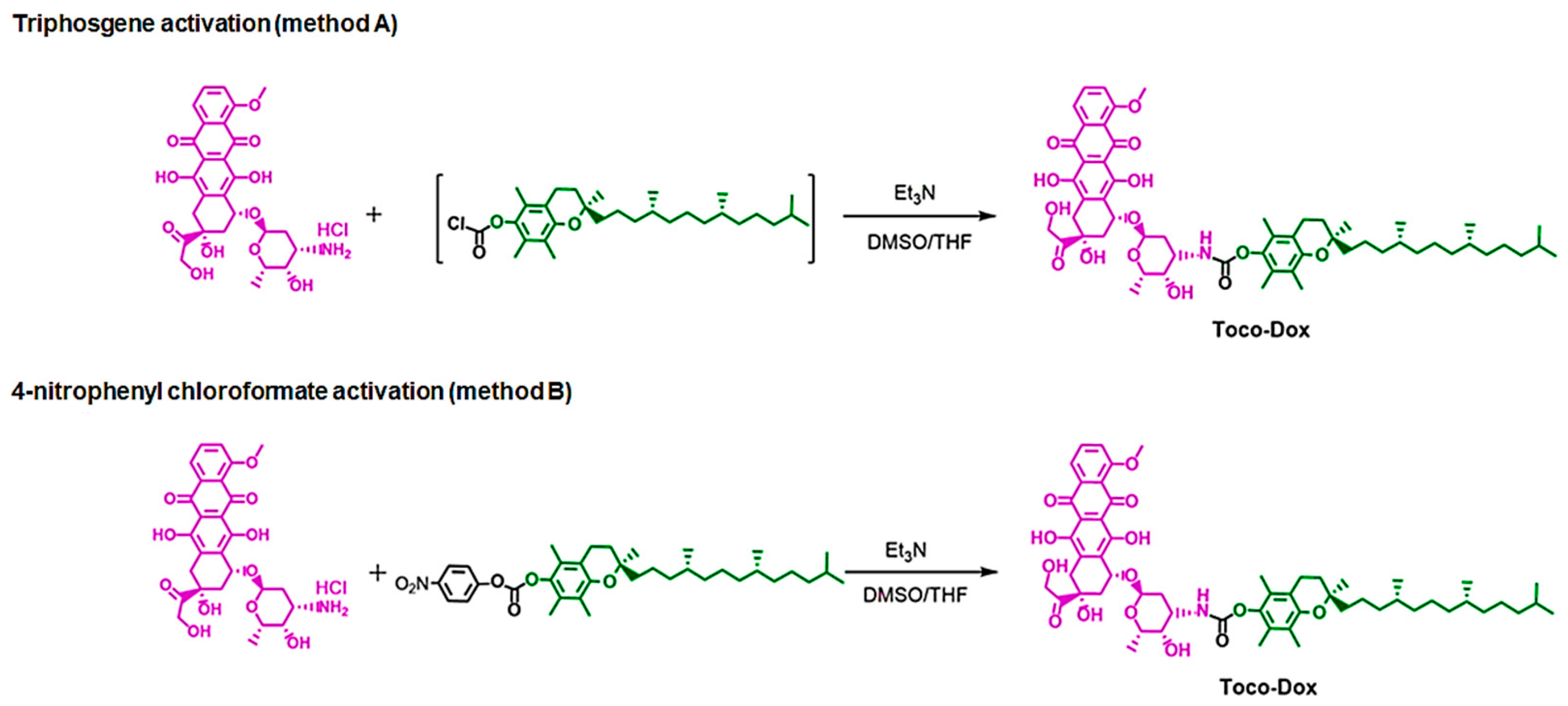
Herein, the Toco–Dox conjugate was synthesized by two different strategies: (traditional) triphosgene activation (method A) and 4-nitrophenyl chloroformate activation (method B). The reactions are shown in Scheme 3.
Method A used 0.38 equiv. of triphosgene relative to α-tocopherol and the activation proceeded rapidly at room temperature. However, the in situ generation of phosgene (COCl2) may cause severe safety issues and handling risks. Notably, the triphosgene activation reaction also requires strictly anhydrous conditions and extensive post-reaction purification, which largely reduced the ‘green chemical efficiency’. In contrast, method B used 1.2 equiv. of 4-nitrophenyl chloroformate and proceeded under mild heating (40–50 °C) with 61–70% conversion after 12–16 h. Despite the higher stoichiometric excess, method B is relatively safer and more eco-friendly. The hydrolysis of tocopheryl-4-chloroformate intermediate produces only CO2 gas and less-toxic 4-nitrophenol, which could be easily precipitated and handled upon addition of metal (e.g., Al3+, Cu2+) salts, thus minimizing the production of hazardous byproducts and improving the sustainability. The detailed comparison of method A and method B is shown in Table 1.
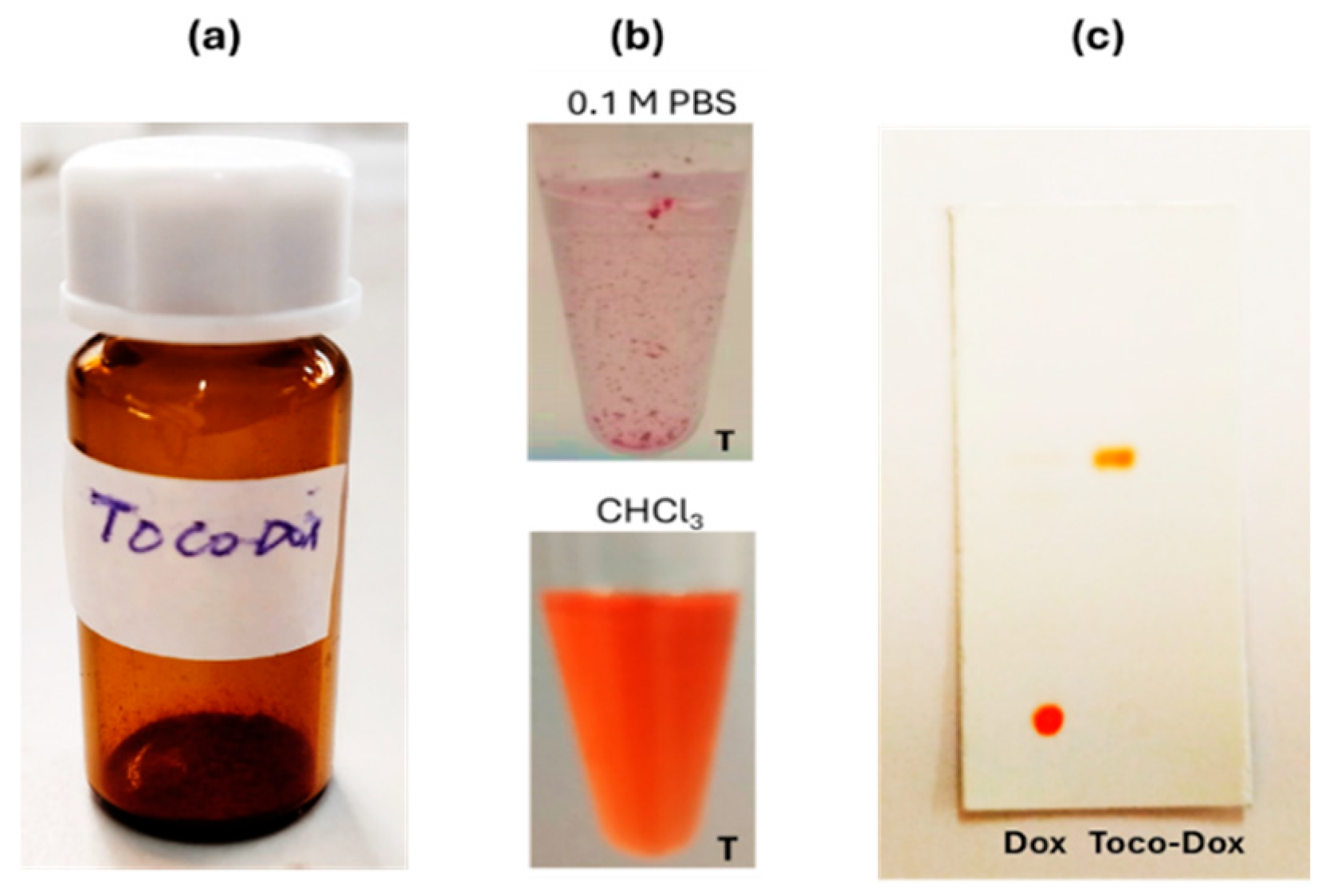
The synthesized Toco–Dox was obtained as a dark red powder in the solid state (Figure 1). Toco–Dox is easily dissolved in CHCl3 but almost insoluble in aqueous solution (PBS, 0.1 M, pH 7.4), indicating strong hydrophobicity of Toco–Dox conjugate. This observation was confirmed by thin-layer chromatography (TLC) analysis [20]. Toco–Dox exhibits a much higher Rf value (0.88) compared to free Dox (Rf = 0.05) under the same eluents (CHCl3:CH3OH = 10:1, v/v). The results implied that the tocopherol conjugation of Dox might facilitate the hydrophobic-induced assembly of Toco–Dox into nanoparticles and further enhance their cell membrane fusion, permeation, and cellular uptake ability.

3.2. NMR and MS Characterization of Toco–Dox

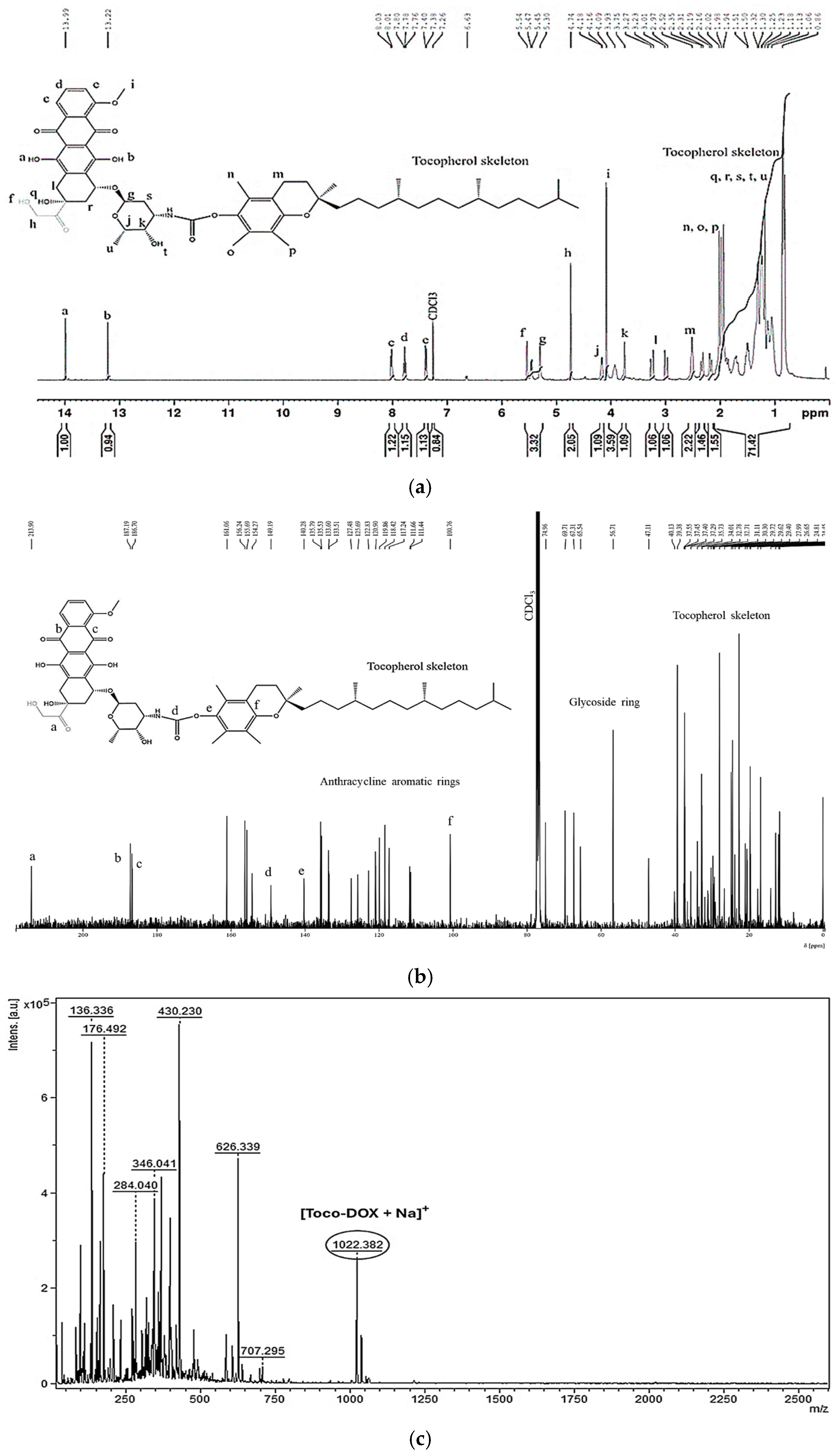
The molecular structure of the synthesized Toco–Dox was characterized by 1H NMR, 13C NMR, FTIR, and MALDI-TOF-MS. As shown in Figure 2, the NMR and MS spectra confirmed the successful synthesis of the Toco–Dox conjugate with the desired molecular structure.

3.3. Theoretical Analysis and Calculation of the Synthesized Toco–Dox Conjugate

To better understand the molecular properties of Toco–Dox, theoretical analysis was conducted using SWISSADME and hyperchem 8.0 software. As shown in Table 2, significant differences between the calculated properties of Dox and Toco–Dox could be observed. Conjugation with tocopherol largely increased the molecular weight from 543.52 g/mol to 1000.22 g/mol, thus remarkably enlarged the van der Waals surface area (492.72 to 916.66 Å2), while the total polar surface area slightly increased (206.07 to 227.61 Å2). Toco–Dox showed higher molar refractivity (274.97) and lower molecular dipole moment (5.96 Debye), indicating its larger structure and higher hydrophobicity. Accordingly, the hydrophobicity/lipophilicity values (Log Po/w) drastically increased from 1.27 (Dox) to 12.62 (Toco–Dox), accompanied with a significant decrease in water solubility (Log S: −3.91 to −12.79), which might be of benefit for cell membrane fusion and penetration.

3.4. Self-Assembly of Toco–Dox in Aqueous Solutions and Characterization

Toco–Dox was self-assembled in both distilled water and RPMI culture medium, which could provide insight into the differences between the ideal solution and in vitro biological conditions for nanoparticle formation. Toco–Dox nanoparticles formed in distilled water showed a smaller hydrodynamic diameter of 117.5 ± 0.8 nm with a low PDI of 0.124 (Table 3). In contrast, when Toco–Dox assembled in RPMI cell culture medium, the particle size drastically increased to 2063.7 ± 290.0 nm with a high PDI of 0.642. This might be attributed to the ionic interactions of phenyl (-OH) groups in Toco–Dox with the electrolytes (e.g., Ca2+, HPO42−) in the RPMI medium, which reduced the Toco–Dox nanoparticles’ stability and resulted in particle aggregation. These results suggest that the colloidal stability of Toco–Dox strongly depends on the ionic environment, which might significantly influence their related cellular uptake, trafficking, and intracellular distribution.

3.5. In Vitro Cytotoxicity of Toco–Dox and Intracellular Localization

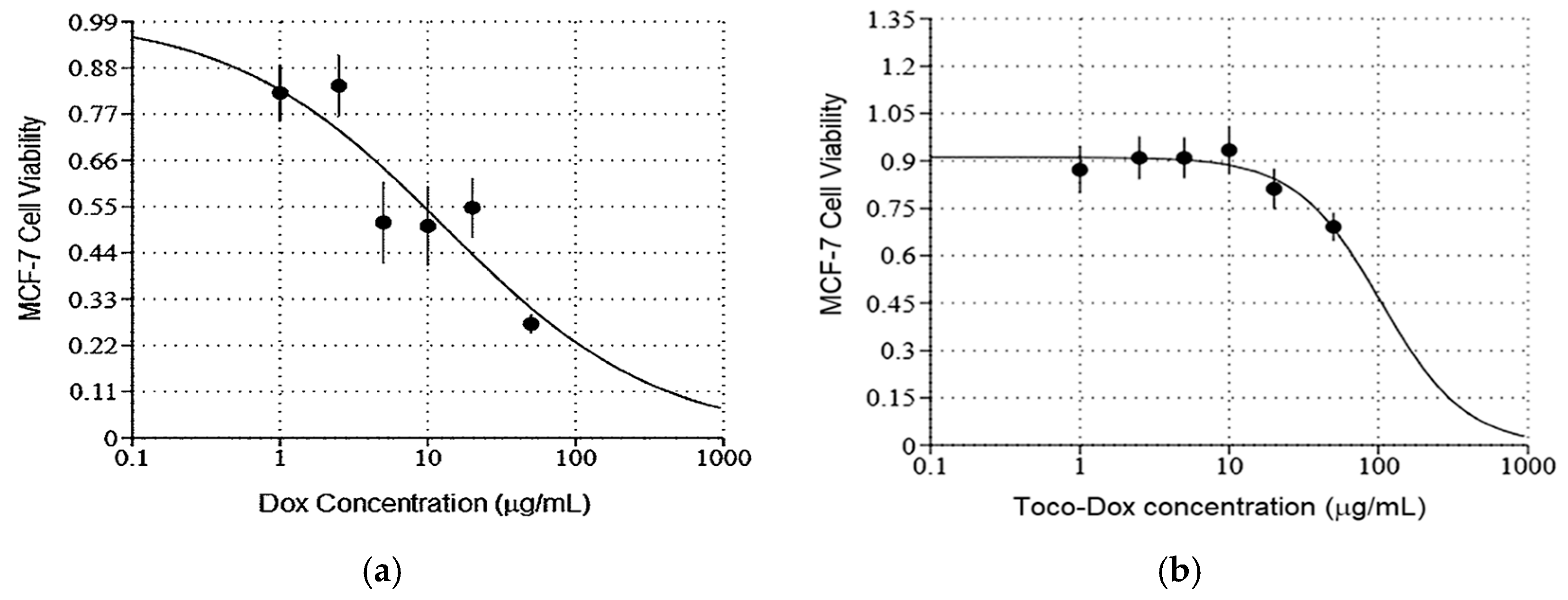
In vitro cytotoxicity of Dox and Toco–Dox was measured by resazurin assay (Figure 3); compared to free Dox, Toco–Dox exhibited less cytotoxicity/inhibition to MCF-7 cells within the range of 1–50 μg/mL. Interestingly, a hormetic (low-concentration exposure-induced stimulatory) effect on MCF-7 cell growth was observed at 1.0–10.0 μg/mL. The cytotoxicity/inhibition was enhanced at 20–50 µg/mL (~84–68% viability), suggesting that Toco–Dox possesses degradability and enables slow release of Dox. A UHPLC assay suggests that the degradation of the Toco–Dox prodrug is likely mediated by enzymatic (cellular hydrolase-catalyzed) cleavage of the carbamate or amide linkages between the lipid chain and Dox, rather than simple acidic (H+-based) hydrolysis.
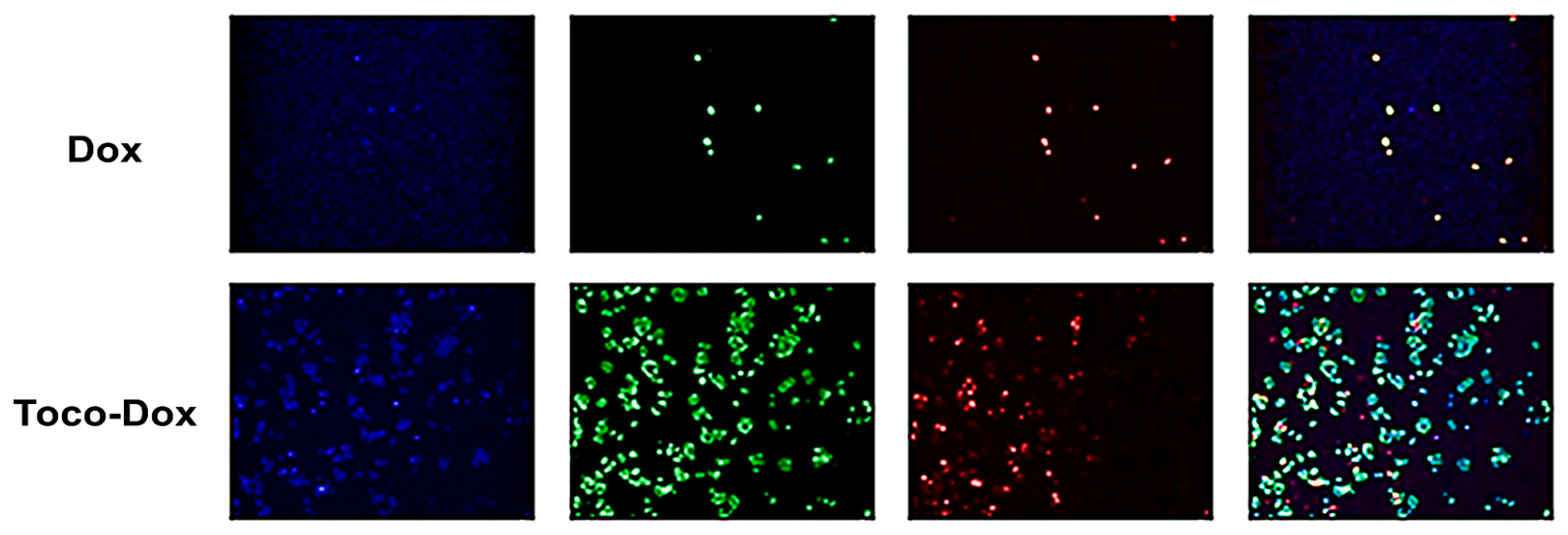
The intracellular localization of Toco–Dox was preliminarily investigated (Figure 4); the Toco–Dox mainly localized in the cytoplasm of MCF-7 cells, while free Dox tended to localize inside cell nuclei [21,22]. The intracellular uptake trend of Toco–Dox and Dox correlates well with their observed cytotoxicity. After cellular uptake, Toco–Dox may undergo lysosomal or cytoplasmic enzyme-mediated cleavage, intracellularly releasing free Dox and subsequently inhibiting MCF-7 cell proliferation. Notably, unlike Dox, the cytotoxicity, cellular uptake, and intracellular localization of Toco–Dox suggested that the attached tocopherol lipid chains play important roles in cellular behaviors.

4. Conclusions

In summary, we synthesized a Toco–Dox conjugate through two approaches: triphosgene activation (method A) and 4-nitrophenyl chloroformate activation (method B). Method B generates safe-to-handle byproduct 4-nitrophenol, making it less hazardous and more eco-friendly. The molecular structure of the Toco–Dox was characterized by 1H, 13C NMR, FT-IR, and MALDI-TOF-MS. Toco–Dox could self-assemble into nanoparticles in the DMSO/water mixture. The molecular properties of Toco–Dox (Dox as a control) were theoretically calculated in silico and virtually analyzed. Moreover, cellular results showed that Toco–Dox has moderate (~84–68% viability at 20–50 µg/mL) MCF-7 inhibition ability and cytoplasm localization. This work provided an efficient approach to develop a natural (fat-soluble) vitamin-based prodrug system for breast cancer chemotherapy.

Author Contributions

Conceptualization, R.S.; methodology, R.S.; software, J.J. and R.S.; validation, D.M., R.C. and M.G.; formal analysis, J.J.; investigation, L.C., D.M., R.C., J.R., J.J. and R.S.; resources, J.A.M.P., J.S.C., J.R., H.T. and R.S.; data curation, L.C., D.M., R.C., J.R. and R.S.; writing—original draft, L.C. and R.S.; writing—review and editing, all the authors; visualization, L.C., R.C. and R.S.; supervision, D.M., R.C. and R.S.; project administration, H.T. and R.S.; funding acquisition, J.R. and R.S. All authors have read and agreed to the published version of the manuscript.

Funding

This research was funded by FCT-Fundação para a Ciência e a Tecnologia (UID/00674/2025-national funds, https://doi.org/10.54499/UID/00674/2025, FCT individual employment grant 2021.00453.CEECIND) and ARDITI-Agência Regional para o Desenvolvimento da Investigação Tecnologia e Inovação for the sponsorship.

Institutional Review Board Statement

Not applicable.

Informed Consent Statement

Not applicable.

Data Availability Statement

All data are contained within the article.

Conflicts of Interest

The authors declare no conflicts of interest.

References

  1. Gonçalves, M.; Mignani, S.; Rodrigues, J.; Tomás, H. A Glance over Doxorubicin Based-nanotherapeutics: From Proof-of-concept Studies to Solutions in The Market. J. Control. Release 2020, 317, 347–374. [Google Scholar] [CrossRef] [PubMed]
  2. Peter, S.; Alven, S.; Maseko, R.B.; Aderibigbe, B.A. Doxorubicin-Based Hybrid Compounds as Potential Anticancer Agents: A Review. Molecules 2022, 27, 4478. [Google Scholar] [CrossRef] [PubMed]
  3. Sritharan, S.; Sivalingam, N. A Comprehensive Review on Time-tested Anticancer Drug Doxorubicin. Life Sci. 2021, 278, 119527. [Google Scholar] [CrossRef] [PubMed]
  4. Gautam, S.; Joshi, S.; Jindal, P.; Patel, P.; Pal, R.; Kumar, M.; Gupta, G.; Kurmi, B. Recent doxorubicin-conjugates in cancer drug delivery: Exploring conjugation strategies for enhanced efficacy and reduced toxicity. Int. J. Pharm. 2025, 675, 125556. [Google Scholar] [CrossRef]
  5. Bhadran, A.; Polara, H.; Babanyinah, G.K.; Baburaj, S.; Stefan, M.C. Advances in Doxorubicin Chemotherapy: Emerging Polymeric Nanocarriers for Drug Loading and Delivery. Cancers 2025, 17, 2303. [Google Scholar] [CrossRef]
  6. Mirzaei, S.; Gholami, M.H.; Hashemi, F.; Zabolian, A.; Farahani, M.V.; Hushmandi, K.; Zarrabi, A.; Goldman, A.; Ashrafizadeh, M.; Orive, G. Advances in Understanding the Role of P-gp in Doxorubicin Resistance: Molecular Pathways, Therapeutic Strategies, and Prospects. Drug Discov. Today 2022, 27, 436–455. [Google Scholar] [CrossRef]
  7. Sun, J.; Liu, Y.; Chen, Y.; Zhao, W.; Zhai, Q.; Rathod, S.; Huang, Y.; Tang, S.; Kwon, Y.T.; Fernandez, C.; et al. Doxorubicin Delivered by a Redox-responsive Dasatinib-containing Polymeric Prodrug Carrier for Combination Therapy. J. Control. Release 2017, 258, 43–55. [Google Scholar] [CrossRef]
  8. Butowska, K.; Han, X.; Gong, N.; El-Mayta, R.; Haley, R.M.; Xue, L.; Zhong, W.; Guo, W.; Wang, K.; Mitchell, M.J. Doxorubicin-conjugated siRNA Lipid Nanoparticles for Combination CancerTherapy. Acta Pharm. Sin. B 2023, 13, 1429–1437. [Google Scholar] [CrossRef]
  9. Wang, M.; Bergès, R.; Malfanti, A.; Préat, V.; Bastiancich, C. Local Delivery of Doxorubicin Prodrug via Lipid Nanocapsule–based Hydrogel for The Treatment of Glioblastoma. Drug Deliv. Transl. Res. 2023, 14, 3322–3338. [Google Scholar] [CrossRef]
  10. Irby, D.; Du, C.; Li, F. Lipid–Drug Conjugate for Enhancing Drug Delivery. Mol. Pharm. 2017, 14, 1325–1338. [Google Scholar] [CrossRef]
  11. Li, F.; Snow-Davis, C.; Du, C.; Bondarev, M.L.; Saulsbury, M.D.; Heyliger, S.O. Preparation and Characterization of Lipophilic Doxorubicin Prodrug Micelles. J. Vis. Exp. 2016, 54338. [Google Scholar] [CrossRef]
  12. Mielczarek-Puta, M.; Struga, M.; Roszkowski, P. Synthesis and Anticancer Effects of Conjugates of Doxorubicin and Unsaturated Fatty Acids (LNA and DHA). Med. Chem. Res. 2019, 28, 2153–2164. [Google Scholar] [CrossRef]
  13. Olim, F.; Neves, A.R.; Vieira, M.; Tomás, H.; Sheng, R. Self-Assembly of Cholesterol-Doxorubicin and TPGS into Prodrug-Based Nanoparticles with Enhanced Cellular Uptake and Lysosome-Dependent Pathway in Breast Cancer Cells. Eur. J. Lipid Sci. Technol. 2021, 123, 2000337. [Google Scholar] [CrossRef]
  14. Sheng, R. Steroid-Based Supramolecular Systems and their Biomedical Applications: Biomolecular Recognition and Transportation. In Chemistry and Biological Activity of Steroids; IntechOpen: London, UK, 2020; p. 111. [Google Scholar] [CrossRef][Green Version]
  15. Han, S.; Mei, L.; Quach, T.; Porter, C.; Trevaskis, N. Lipophilic Conjugates of Drugs: A Tool to Improve Drug Pharmacokinetic and Therapeutic Profiles. Pharm. Res. 2021, 38, 1497–1518. [Google Scholar] [CrossRef] [PubMed]
  16. Vogel, F.C.E.; Chaves-Filho, A.B.; Schulze, A. Lipids as Mediators of Cancer Progression and Metastasis. Nat. Cancer 2024, 5, 16–29. [Google Scholar] [CrossRef] [PubMed]
  17. Wang, M.; Malfanti, A.; Bastiancich, C.; Préat, V. Synergistic Effect of Doxorubicin Lauroyl Hydrazone Derivative Delivered by α-tocopherol Succinate Micelles for The Treatment of Glioblastoma. Int. J. Pharm. 2023, 5, 100147. [Google Scholar] [CrossRef]
  18. Freitas, P.; Maciel, D.; Jaśkowska, J.; Zeńczak-Tomera, K.; Zhou, Y.; Yin, G.; Sheng, R. Facile Synthesis of a Cholesterol–Doxorubicin Conjugate Using Cholesteryl-4-nitrophenolate as an Activated Ester and Biological Property Analysis. Organics 2025, 6, 6. [Google Scholar] [CrossRef]
  19. Couvreur, P.; Lepetre-Mouelhi, S.; Garbayo, E.; Blanco-Prieto, M.J. Self-assembled Lipid–prodrug Nanoparticles. Nat. Rev. Bioeng. 2023, 1, 749–768. [Google Scholar] [CrossRef]
  20. Chaikomon, K.; Chattong, S.; Chaiya, T.; Tiwawech, D.; Sritana-Anant, Y.; Sereemaspun, A.; Manotham, K. Doxorubicin-conjugated Dexamethasone Induced MCF-7 Apoptosis without Entering the Nucleus and Able to Overcome MDR-1-induced Resistance. Drug Des. Dev. Ther. 2018, 12, 2361–2369. [Google Scholar] [CrossRef]
  21. Zhang, X.; Shastry, S.; Bradforth, S.; Nadeau, J. Nuclear Uptake of Ultrasmall Gold–doxorubicin Conjugates Imaged by Fluorescence Lifetime Imaging Microscopy (FLIM) and Electron Microscopy. Nanoscale 2015, 7, 240–251. [Google Scholar] [CrossRef]
  22. Wang, Z.; Sun, J.; Jia, L.; Sheng, R. Glycopolymer Nanomicelles: pH-responsive Drug Delivery, Endocytosis Pathway, Autophagy Behavior, and the Effect of Autophagy Inhibitors. J. Mater. Sci. Mater. Med. 2025, 36, 47. [Google Scholar] [CrossRef]
Scheme 1. Designation of the α-tocopherol-based doxorubicin conjugate (Toco–Dox).
Chemproc 18 00118 sch001
Scheme 2. In-solution self-assembly to prepare Toco–Dox nanoparticles and DLS analysis.
Chemproc 18 00118 sch002
Scheme 3. Synthesis of Toco–Dox using (traditional) triphosgene activation (method A) and 4-nitrophenyl chloroformate activation (method B).
Chemproc 18 00118 sch003
Figure 1. (a) The synthesized Toco–Dox in a solid state (dark red powder), (b) 0.2 mg Toco–Dox in 0.2 mL PBS (0.1 M, top) and CHCl3 solution (bottom), and (c) a molecular polarity comparison of the synthesized Toco–Dox (right spot, Rf = 0.88) and free Dox (left spot, Rf = 0.05) on a silica gel 60 F254 aluminum TLC plate (eluent: CHCl3:CH3OH = 10:1, v:v).
Chemproc 18 00118 g001
Figure 2. 1H NMR (a), 13C NMR (b), and MALDI-TOF-MS (c) spectra of the synthesized Toco–Dox.
Chemproc 18 00118 g002
Figure 3. In vitro cytotoxicity of Dox (a) and Toco–Dox (b) at 0–50 µg/mL in MCF-7 cells (48 h) measured by resazurin assay (solid lines: the fitted trend lines of cytotoxicity).
Chemproc 18 00118 g003
Figure 4. Intracellular fluorescent imaging of Dox and Toco–Dox in MCF-7 breast cancer cells (48 h incubation); free Dox was employed as a control. Blue fluorescence: DAPI-stained cell nuclei. Green fluorescence: Alexa Fluor 488-stained cytoskeleton. Red fluorescence: lipid–Dox and free Dox.
Chemproc 18 00118 g004
Table 1. Comparison of Toco–Dox synthesis via triphosgene activation (method A) and 4-nitrophenyl chloroformate activation (method B).
FeaturesMethod A: Triphosgene
Activation
Method B: 4-Nitrophenyl Chloroformate Activation
Reagent ratio0.38 equiv. to tocopherol1.2 equiv. to tocopherol
Reaction rateFastModerate
Reaction
temperature
Room temperatureMild heating (40–50 °C)
Solvent conditionsOrganic solvents (strictly anhydrous conditions)Organic solvents (normal or ambient conditions)
Reaction toxicityIn situ generates
highly toxic phosgene gas
Produces less-toxic 4-nitrophenol and CO2 gas by hydrolysis
Product handling or purificationRequires careful handling to remove triphosgene or phosgeneSafer to handle or purify
Product purityHigh (>95% by UHPLC)High (>95% by UHPLC)
Eco-friendlinessLowMedium–high
Table 2. Theoretical analysis of the molecular properties of Dox and Toco–Dox.
PropertiesDoxToco–Dox
Chemical formulaC27H29NO11C57H77NO14
Molecular weight (g/mol)543.521000.22
Total polar surface area
(TPSA, Å2)
206.07227.61
Van der Waals surface area (Å2)492.72916.66
Molar refractivity132.66274.97
Molecular dipole moment (Debye)11.055.96
Log Po/w (XLOGP3)1.2712.62
Water solubility
Log S (ESOL)
−3.91−12.79
Table 3. Hydrodynamic particle size and polydispersity (PDI) of the self-assembled Toco–Dox nanoparticles (final concentration 10 μg/mL) in different mediums.
SampleMediumHydrodynamic Diameter (nm)Polydispersity Index (PDI)
Toco–DoxDMSO:H2O = 1:9 (v:v)117.5 ± 0.80.124
Toco–DoxRPMI culture medium2063.7 ± 290.00.642
Disclaimer/Publisher’s Note: The statements, opinions and data contained in all publications are solely those of the individual author(s) and contributor(s) and not of MDPI and/or the editor(s). MDPI and/or the editor(s) disclaim responsibility for any injury to people or property resulting from any ideas, methods, instructions or products referred to in the content.