
Discovery of a Selective PI3K Inhibitor Through Structure-Based Docking and Multilevel In Silico Validation †
Abstract
1. Introduction
2. Methodology
2.1. Molecular Docking
2.2. Molecular Dynamics Simulation
2.3. MM-GBSA Binding Free Energy Calculations
2.4. Principal Component Analysis (PCA)
2.5. Free Energy Landscape (FEL)
3. Results and Discussion
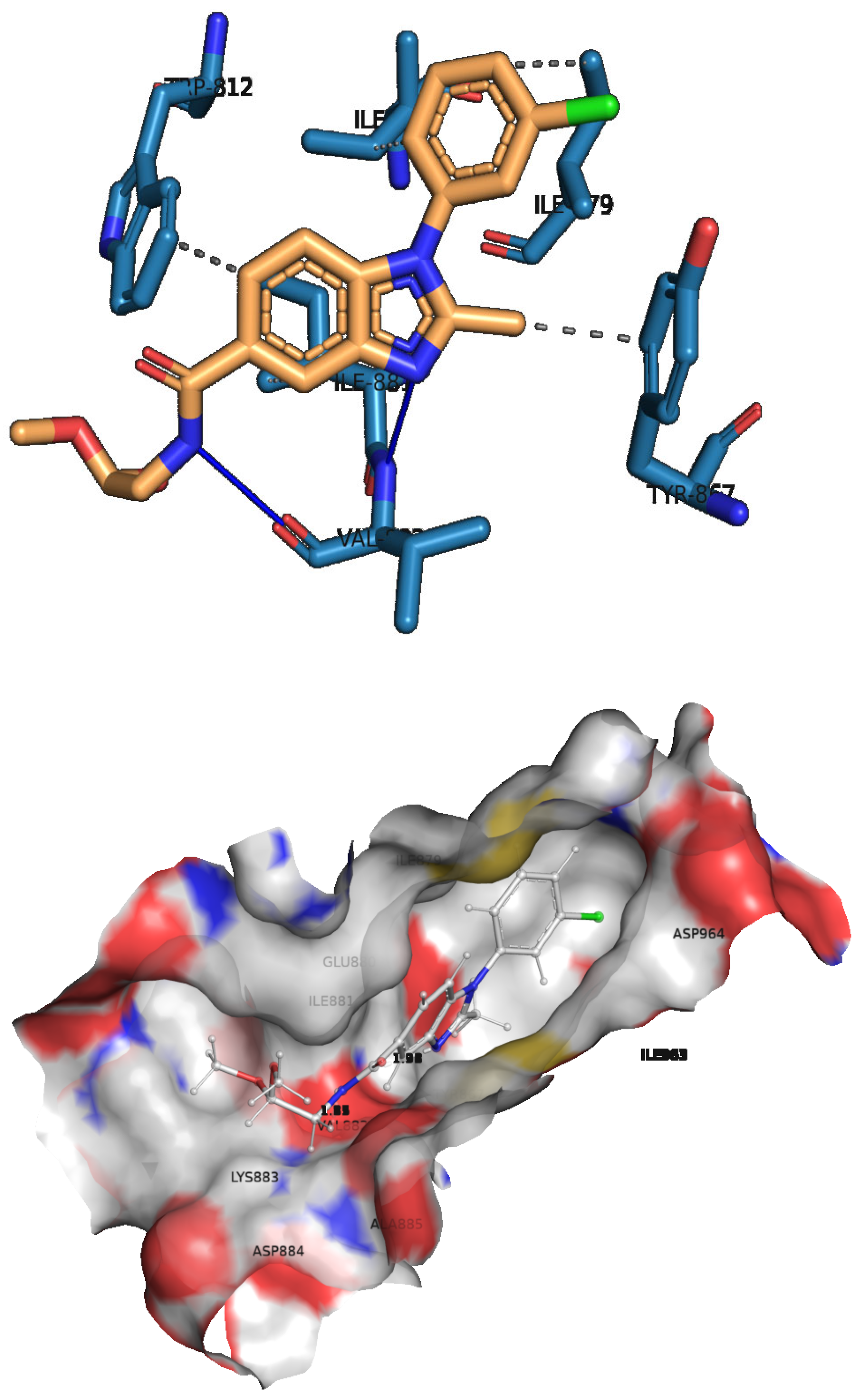
3.1. Molecular Docking and MMGBSA Study
3.2. MD Simulation Analysis
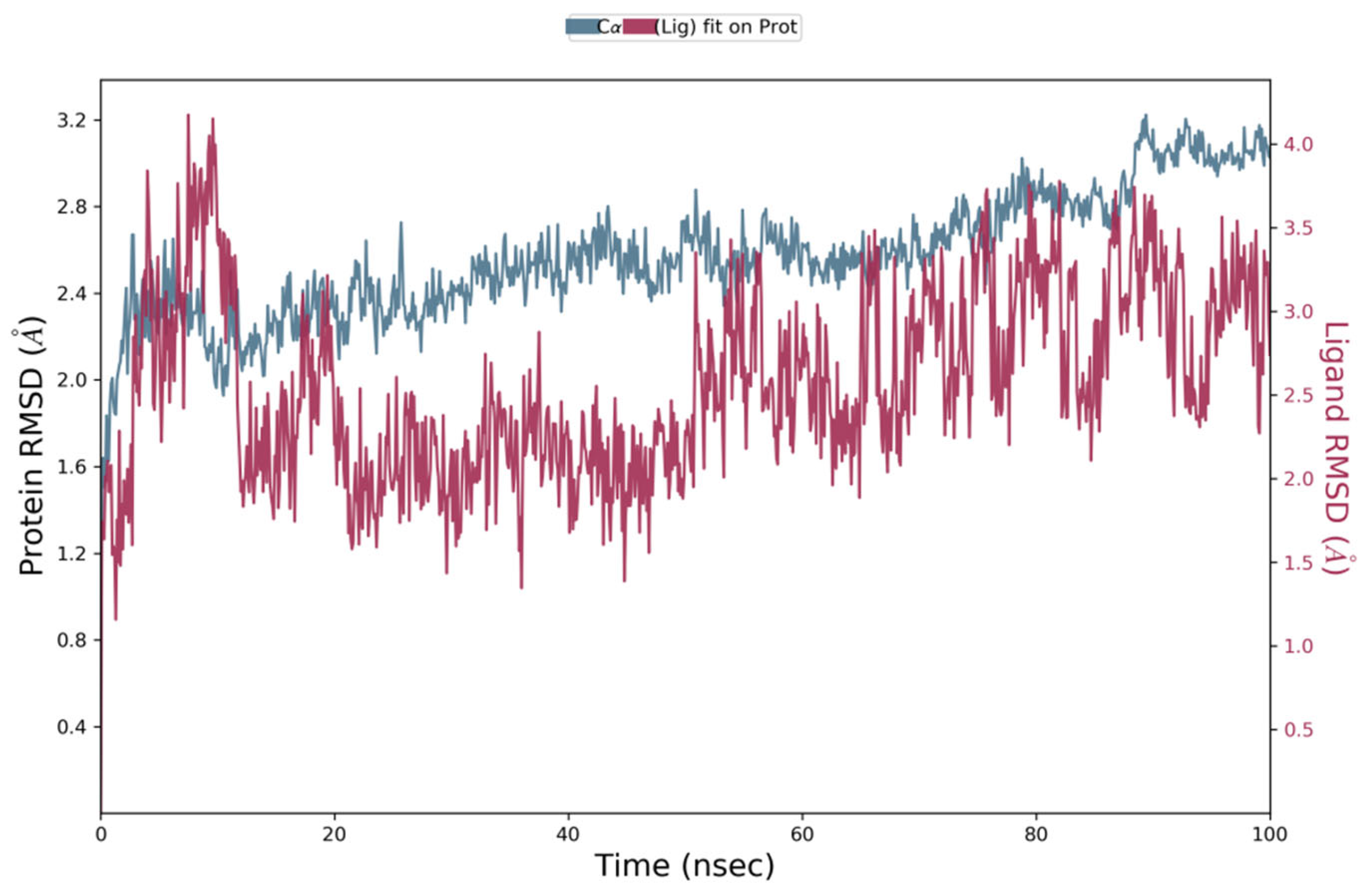
3.2.1. RMSD
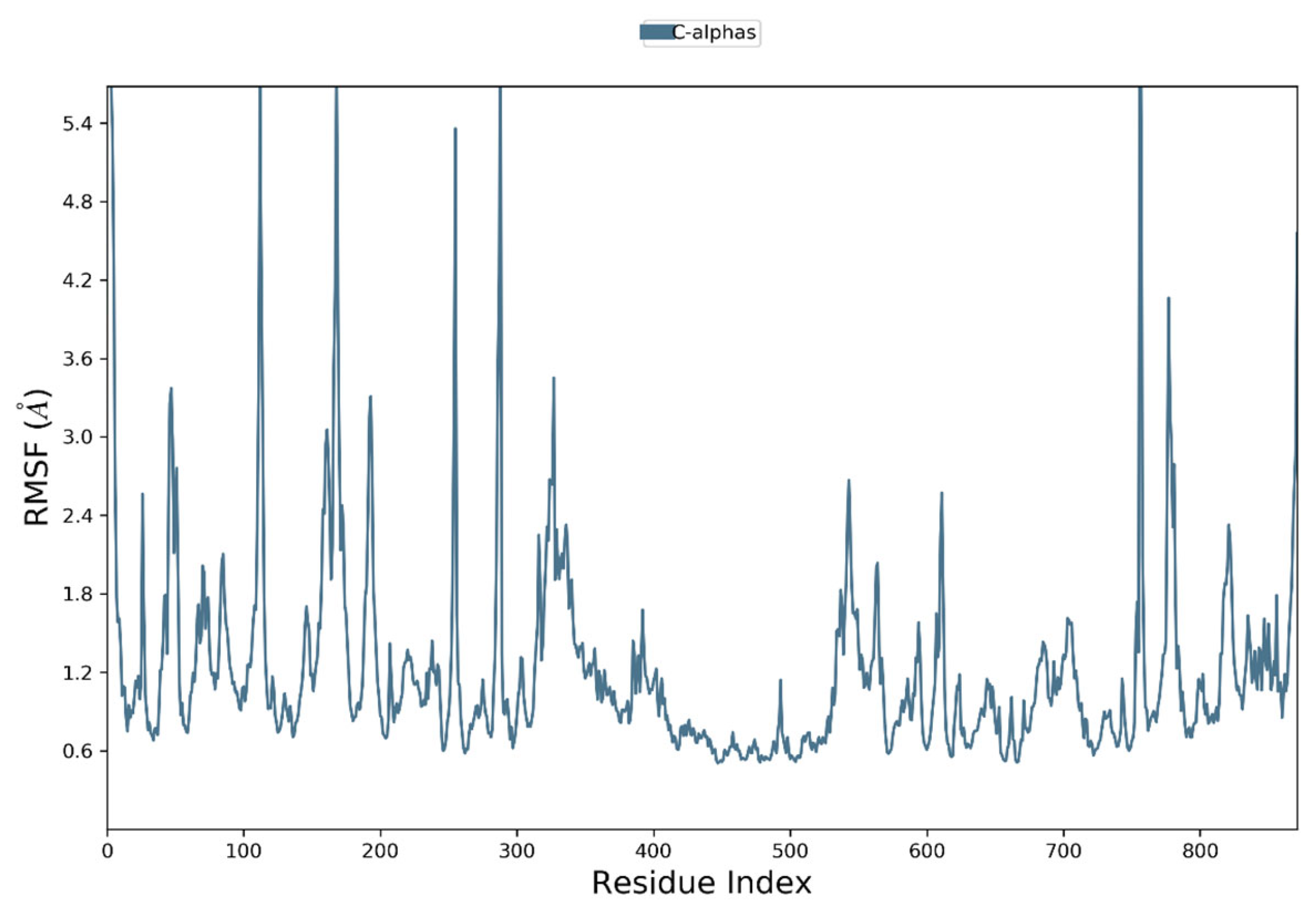
3.2.2. RMSF
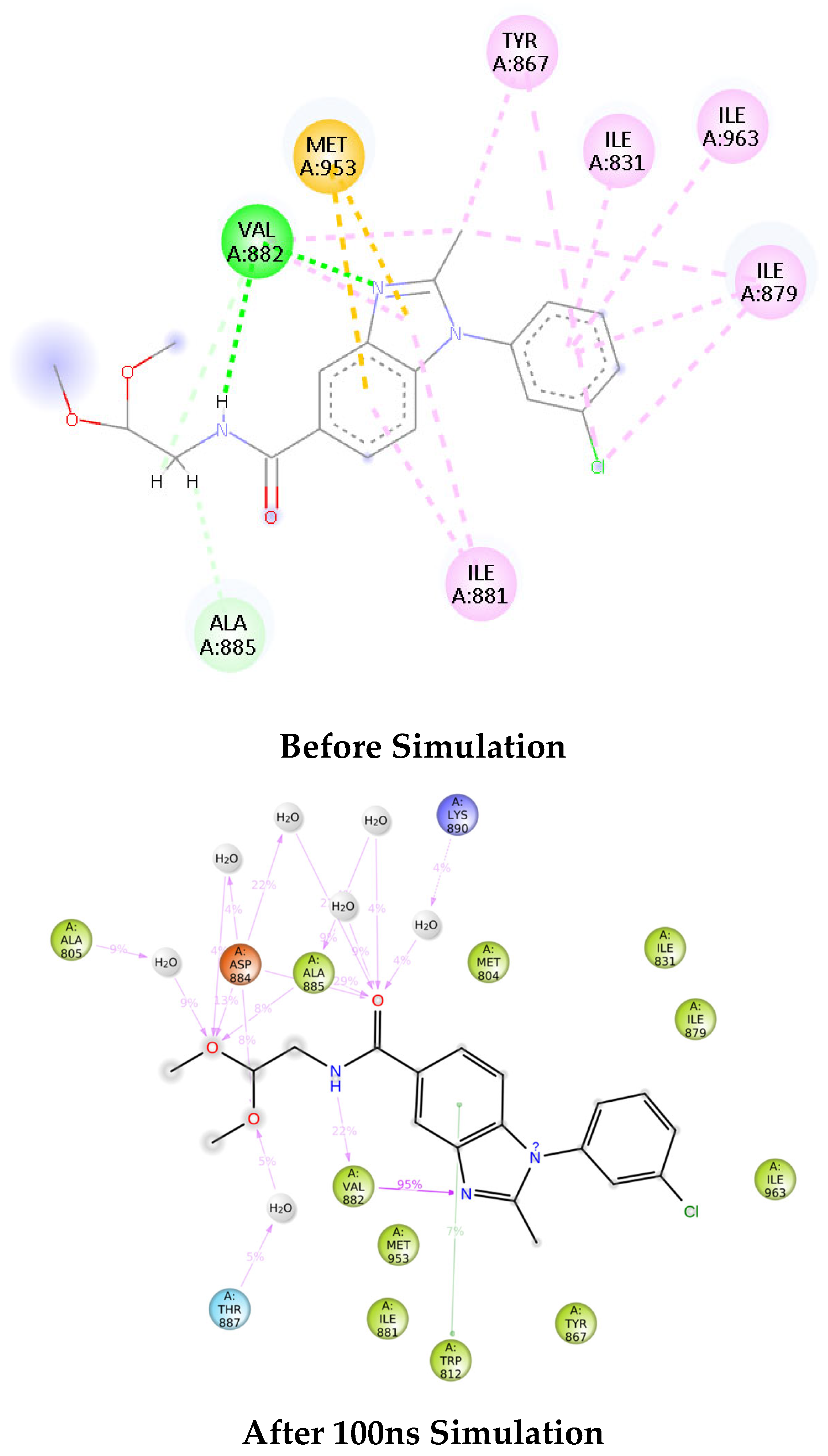
3.2.3. Analysis of 11325 Phosphoinositide 3-Kinase (PI3K; PDB: 1e7u) Receptor Interactions Before and After MD Simulation
4. ADME Study
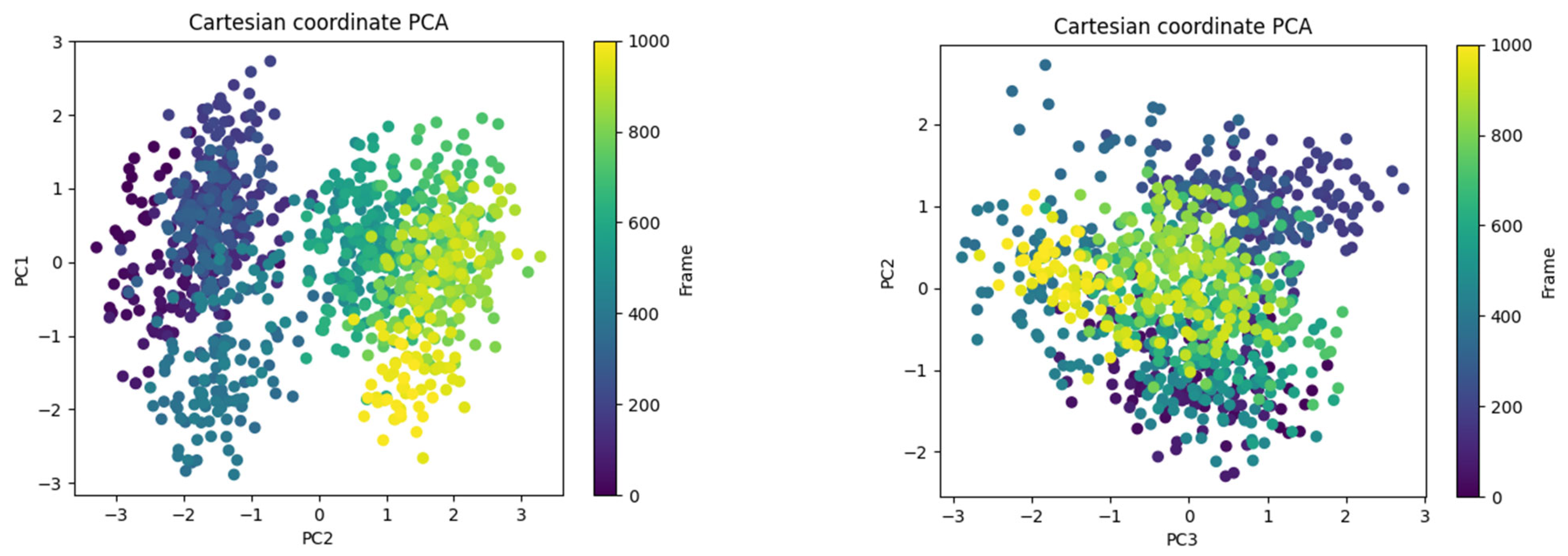
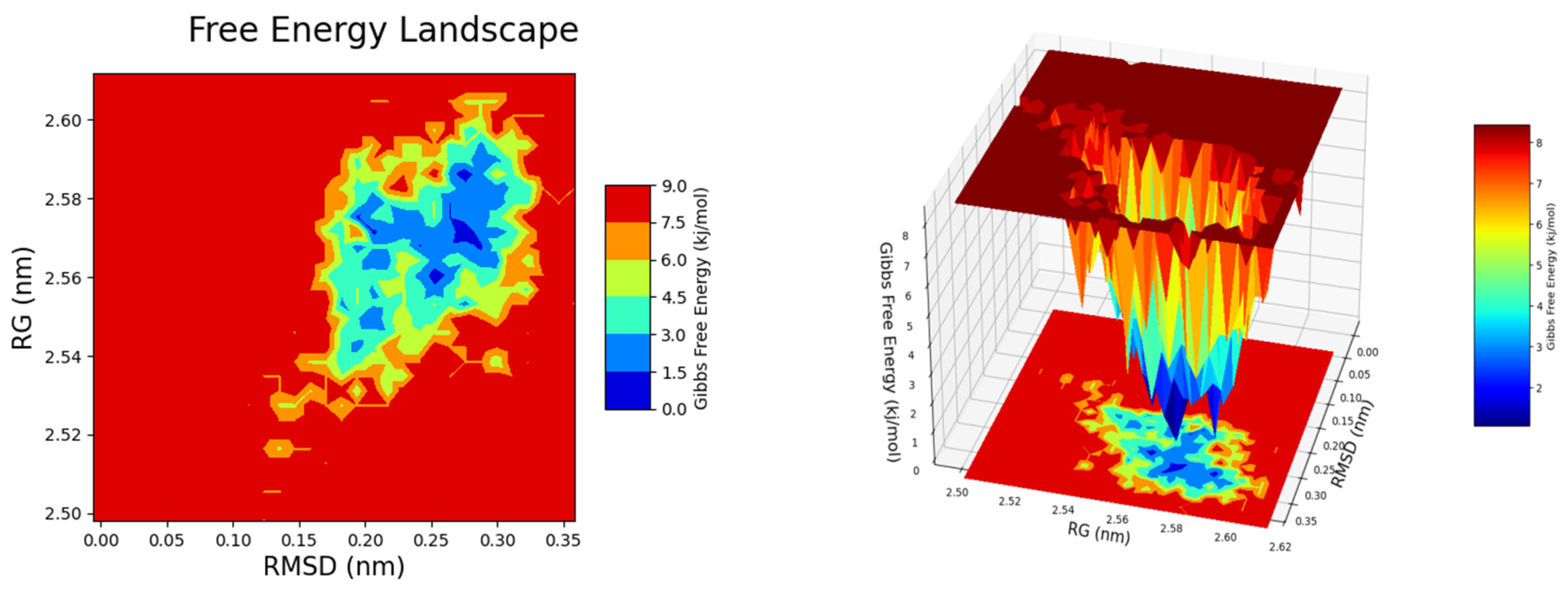
5. PCA and Free Energy Landscape Study
6. Conclusions
Supplementary Materials
Author Contributions
Funding
Institutional Review Board Statement
Informed Consent Statement
Data Availability Statement
Acknowledgments
Conflicts of Interest
References
- Murga, C.; Fukuhara, S.; Gutkind, J.S. A Novel Role for Phosphatidylinositol 3-Kinase β in Signaling from G Protein-coupled Receptors to Akt. J. Biol. Chem. 2000, 275, 12069–12073. [Google Scholar] [CrossRef] [PubMed]
- Houslay, D.M.; Anderson, K.E.; Chessa, T.; Kulkarni, S.; Fritsch, R.; Downward, J.; Backer, J.M.; Stephens, L.R.; Hawkins, P.T. Coincident signals from GPCRs and receptor tyrosine kinases are uniquely transduced by PI3Kβ in myeloid cells. Sci. Signal. 2016, 9, ra82. [Google Scholar] [CrossRef] [PubMed]
- Rathinaswamy, M.K.; Burke, J.E. Class I phosphoinositide 3-kinase (PI3K) regulatory subunits and their roles in signaling and disease. Adv. Biol. Regul. 2020, 75, 100657. [Google Scholar] [CrossRef] [PubMed]
- Schiebel, C.S.; Mazeti, S.S.S.; Gois, M.B.; Maria-Ferreira, D. Editorial: Gastrointestinal damage and metabolic disorders. Front. Physiol. 2025, 16, 1648739. [Google Scholar] [CrossRef]
- Shaikat, A.H.; Azad, S.M.A.K.; Tamim, M.A.R.; Ullah, M.S.; Amin, M.N.; Sabbir, M.K.; Tarun, M.T.I.; Mostaq, M.S.; Sabrin, S.; Mahmud, M.Z.; et al. Investigating hypoxia-inducible factor signaling in cancer: Mechanisms, clinical impli-cations, targeted therapeutic strategies, and resistance. Cancer Pathog. Ther. 2025, in press. [Google Scholar] [CrossRef]
- Kim, B.-S.; Kim, B.; Yoon, S.; Park, W.; Bae, S.-J.; Joo, J.; Kim, W.; Ha, K.-T. Warburg-like Metabolic Reprogramming in En-dometriosis: From Molecular Mechanisms to Therapeutic Approaches. Pharmaceuticals 2025, 18, 813. [Google Scholar] [CrossRef]
- Cantley, L.C. The Phosphoinositide 3-Kinase Pathway. Science 2002, 296, 1655–1657. [Google Scholar] [CrossRef]
- Cancer Genome Atlas Network. Comprehensive molecular portraits of human breast tumours. Nature 2012, 490, 61–70. [Google Scholar] [CrossRef]
- Samuels, Y.; Wang, Z.; Bardelli, A.; Silliman, N.; Ptak, J.; Szabo, S.; Yan, H.; Gazdar, A.; Powell, S.M.; Riggins, G.J.; et al. High Frequency of Mutations of the PIK3CA Gene in Human Cancers. Science 2004, 304, 554. [Google Scholar] [CrossRef]
- Mayer, I.A.; Arteaga, C.L. The PI3K/AKT Pathway as a Target for Cancer Treatment. Annu. Rev. Med. 2016, 67, 11–28. [Google Scholar] [CrossRef]
- Okkenhaug, K.; Vanhaesebroeck, B. PI3K in lymphocyte development, differentiation and activation. Nat. Rev. Immunol. 2003, 3, 317–330. [Google Scholar] [CrossRef] [PubMed]
- Lannutti, B.J.; Meadows, S.A.; Herman, S.E.M.; Kashishian, A.; Steiner, B.; Johnson, A.J.; Byrd, J.C.; Tyner, J.W.; Loriaux, M.M.; Deininger, M.; et al. CAL-101, a p110δ selective phosphatidylinositol-3-kinase inhibitor for the treatment of B-cell malignancies, inhibits PI3K signaling and cellular viability. Blood 2011, 117, 591–594. [Google Scholar] [CrossRef] [PubMed]
- Apostolidis, J.; Mokhtar, N.; Al Omari, R.; Darweesh, M.; Al Hashmi, H. Follicular lymphoma: Update on management and emerging therapies at the dawn of the new decade. Hematol. Oncol. 2020, 38, 213–222. [Google Scholar] [CrossRef] [PubMed]
- Yu, M.; Chen, J.; Xu, Z.; Yang, B.; He, Q.; Luo, P.; Yan, H.; Yang, X. Development and safety of PI3K inhibitors in cancer. Arch. Toxicol. 2023, 97, 635–650. [Google Scholar] [CrossRef]
- Lin, X.; Zhang, Y.; Huang, H.; Zhuang, W.; Wu, L. Post-marketing safety concern of PI3K inhibitors in the cancer therapies: An 8-year disproportionality analysis from the FDA Adverse Event Reporting System. Expert Opin. Drug Saf. 2024, 24, 925–936. [Google Scholar] [CrossRef]
- Vangapandu, H.V.; Jain, N.; Gandhi, V. Duvelisib: A phosphoinositide-3 kinase δ/γ inhibitor for chronic lymphocytic leu-kemia. Expert Opin. Investig. Drugs 2017, 26, 625–632. [Google Scholar] [CrossRef]
- Shi, M.; Chen, T.; Wei, S.; Zhao, C.; Zhang, X.; Li, X.; Tang, X.; Liu, Y.; Yang, Z.; Chen, L. Molecular Docking, Molecular Dynamics Simulations, and Free Energy Calculation Insights into the Binding Mechanism between VS-4718 and Focal Adhesion Kinase. ACS Omega 2022, 7, 32442–32456. [Google Scholar] [CrossRef]
- Sadybekov, A.V.; Katritch, V. Computational approaches streamlining drug discovery. Nature 2023, 616, 673–685. [Google Scholar] [CrossRef]
- Gajulapalli, V.P.R. Development of Kinase-Centric Drugs: A Computational Perspective. ChemMedChem 2023, 18, e202200693. [Google Scholar] [CrossRef]
- Kato, K.; Nakayoshi, T.; Kurimoto, E.; Oda, A. Molecular dynamics simulations for the protein–ligand complex structures obtained by computational docking studies using implicit or explicit solvents. Chem. Phys. Lett. 2021, 781, 139022. [Google Scholar] [CrossRef]
- Rastelli, G.; Rio, A.D.; Degliesposti, G.; Sgobba, M. Fast and accurate predictions of binding free energies using MM-PBSA and MM-GBSA. J. Comput. Chem. 2010, 31, 797–810. [Google Scholar] [CrossRef] [PubMed]
- Salmaso, V.; Moro, S. Bridging Molecular Docking to Molecular Dynamics in Exploring Ligand-Protein Recognition Process: An Overview. Front. Pharmacol. 2018, 9, 923. [Google Scholar] [CrossRef] [PubMed]
- Halder, D.; Mukherjee, S.; Jeyaprakash, R.S. Exploring target selectivity in designing and identifying PI3Kα inhibitors for triple negative breast cancer with fragment-based and bioisosteric replacement approach. Sci. Rep. 2025, 15, 1890. [Google Scholar] [CrossRef] [PubMed]
- Zhang, M.; Jang, H.; Nussinov, R. PI3K inhibitors: Review and new strategies. Chem. Sci. 2020, 11, 5855–5865. [Google Scholar] [CrossRef]
- Jia, W.; Luo, S.; Zhao, W.; Xu, W.; Zhong, Y.; Kong, D. Discovery of Novel PI3Kδ Inhibitors Based on the p110δ Crystal Structure. Molecules 2022, 27, 6211. [Google Scholar] [CrossRef]
- Tang, S.-L.; Sumitra, M.R.; Kuo, Y.-C.; Hsu, H.-L.; Ansar, M.; Huang, S.-L.; Lee, S.-Y.; Wang, H.-J.; Lawal, B.; Wu, A.T.; et al. Computer-aided drug discovery of a dual-target inhibitor for ovarian cancer: Therapeutic intervention targeting CDK1/TTK signaling pathway and structural insights in the NCI-60. Comput. Biol. Med. 2025, 193, 110445. [Google Scholar] [CrossRef]
- Ketcham, J.M.; Harwood, S.J.; Aranda, R.; Aloiau, A.N.; Bobek, B.M.; Briere, D.M.; Burns, A.C.; Haatveit, K.C.; Calinisan, A.; Clarine, J.; et al. Discovery of Pyridopyrimidinones that Selectively Inhibit the H1047R PI3Kα Mutant Protein. J. Med. Chem. 2024, 67, 4936–4949. [Google Scholar] [CrossRef]
- Drew, S.L.; Thomas-Tran, R.; Beatty, J.W.; Fournier, J.; Lawson, K.V.; Miles, D.H.; Mata, G.; Sharif, E.U.; Yan, X.; Mailyan, A.K.; et al. Discovery of Potent and Selective PI3Kγ Inhibitors. J. Med. Chem. 2020, 63, 11235–11257. [Google Scholar] [CrossRef]
- Zhu, J.; Li, K.; Xu, L.; Cai, Y.; Chen, Y.; Zhao, X.; Li, H.; Huang, G.; Jin, J. Discovery of novel selective PI3Kγ inhibitors through combining machine learning-based virtual screening with multiple protein structures and bio-evaluation. J. Adv. Res. 2022, 36, 1–13. [Google Scholar] [CrossRef]
- Mishra, R.; Patel, H.; Alanazi, S.; Kilroy, M.K.; Garrett, J.T. PI3K Inhibitors in Cancer: Clinical Implications and Adverse Effects. Int. J. Mol. Sci. 2021, 22, 3464. [Google Scholar] [CrossRef]
- Nunnery, S.E.; Mayer, I.A. Management of toxicity to isoform α-specific PI3K inhibitors. Ann. Oncol. 2019, 30, x21–x26. [Google Scholar] [CrossRef]
- Sabbah, D.A.; Hu, J.; Zhong, H.A. Advances in the Development of Class I Phosphoinositide 3-Kinase (PI3K) Inhibitors. Curr. Top. Med. Chem. 2016, 16, 1413–1426. [Google Scholar] [CrossRef] [PubMed]
- Sabbah, D.A.; Vennerstrom, J.L.; Zhong, H. Docking Studies on Isoform-Specific Inhibition of Phosphoinositide-3-Kinases. J. Chem. Inf. Model. 2010, 50, 1887–1898. [Google Scholar] [CrossRef] [PubMed]
- Morris, G.M.; Huey, R.; Olson, A.J. Using AutoDock for Ligand-Receptor Docking. Curr. Protoc. Bioinform. 2008, 24, 8–14. [Google Scholar] [CrossRef] [PubMed]
- Morris, G.M.; Huey, R.; Lindstrom, W.; Sanner, M.F.; Belew, R.K.; Goodsell, D.S.; Olson, A.J. AutoDock4 and AutoDockTools4: Automated docking with selective receptor flexibility. J. Comput. Chem. 2009, 30, 2785–2791. [Google Scholar] [CrossRef]
- Al Hasan, M.; Sabirianov, M.; Redwine, G.; Goettsch, K.; Yang, S.X.; Zhong, H.A. Binding and selectivity studies of phosphatidylinositol 3-kinase (PI3K) inhibitors. JMGM 2023, 121, 108433. [Google Scholar] [CrossRef]
- Wang, Z.; Sun, H.; Yao, X.; Li, D.; Xu, L.; Li, Y.; Tian, S.; Hou, T. Comprehensive evaluation of ten docking programs on a diverse set of protein–ligand complexes: The prediction accuracy of sampling power and scoring power. Phys. Chem. Chem. Phys. 2016, 18, 12964–12975. [Google Scholar] [CrossRef]
- Laskowski, R.A.; Swindells, M.B. LigPlot+: Multiple ligand–protein interaction diagrams for drug discovery. J. Chem. Inf. Model. 2011, 51, 2778–2786. [Google Scholar] [CrossRef]
- Jorgensen, W.L.; Maxwell, D.S.; Tirado-Rives, J. Development and Testing of the OPLS All-Atom Force Field on Conformational Energetics and Properties of Organic Liquids. J. Am. Chem. Soc. 1996, 118, 11225–11236. [Google Scholar] [CrossRef]
- Hoover, W.G. Canonical dynamics: Equilibrium phase-space distributions. Phys. Rev. A 1985, 31, 1695–1697. [Google Scholar] [CrossRef]
- Nosé, S. A molecular dynamics method for simulations in the canonical ensemble. Mol. Phys. 2006, 52, 255–268. [Google Scholar] [CrossRef]
- Bowers, K.J.; Sacerdoti, F.D.; Salmon, J.K.; Shan, Y.; Shaw, D.E.; Chow, E.; Xu, H.; Dror, R.O.; Eastwood, M.P.; Gregersen, B.A.; et al. Molecular dynamics—Scalable algorithms for molecular dynamics simulations on commodity clusters. In Proceedings of the 2006 ACM/IEEE Conference on SUPERCOMPUTING—SC’06, Tampa, FL, USA, 11–17 November 2006. [Google Scholar]
- Jorgensen, W.L.; Chandrasekhar, J.; Madura, J.D.; Impey, R.W.; Klein, M.L. Comparison of simple potential functions for simulating liquid water. J. Chem. Phys. 1983, 79, 926–935. [Google Scholar] [CrossRef]
- Kumar, S.; Rosenberg, J.M.; Bouzida, D.; Swendsen, R.H.; Kollman, P.A. THE weighted histogram analysis method for free--energy calculations on biomolecules. I. The method. J. Comput. Chem. 2004, 13, 1011–1021. [Google Scholar] [CrossRef]
- Grant, B.J.; Rodrigues, A.P.; ElSawy, K.M.; McCammon, J.A.; Caves, L.S. Bio3d: An R package for the comparative analysis of protein structures. Bioinformatics 2006, 22, 2695–2696. [Google Scholar] [CrossRef] [PubMed]
- Hollingsworth, S.A.; Dror, R.O. Molecular Dynamics Simulation for All. Neuron 2018, 99, 1129–1143. [Google Scholar] [CrossRef]
- Wang, E.; Sun, H.; Wang, J.; Wang, Z.; Liu, H.; Zhang, J.Z.H.; Hou, T. End-Point Binding Free Energy Calculation with MM/PBSA and MM/GBSA: Strategies and Applications in Drug Design. Chem. Rev. 2019, 119, 9478–9508. [Google Scholar] [CrossRef]
- Genheden, S.; Ryde, U. The MM/PBSA and MM/GBSA methods to estimate ligand-binding affinities. Expert Opin. Drug Discov. 2015, 10, 449–461. [Google Scholar] [CrossRef]
- David, C.C.; Jacobs, D.J. Principal Component Analysis: A Method for Determining the Essential Dynamics of Proteins. In Protein Dynamics; Humana Press: Totowa, NJ, USA, 2014; pp. 193–226. [Google Scholar]
- Maisuradze, G.G.; Liwo, A.; Scheraga, H.A. Principal Component Analysis for Protein Folding Dynamics. J. Mol. Biol. 2009, 385, 312–329. [Google Scholar] [CrossRef]
- Abraham, M.J.; Murtola, T.; Schulz, R.; Páll, S.; Smith, J.C.; Hess, B.; Lindahl, E. GROMACS: High performance molecular simulations through multi-level parallelism from laptops to supercomputers. SoftwareX 2015, 1–2, 19–25. [Google Scholar] [CrossRef]
- Amadei, A.; Linssen, A.B.M.; Berendsen, H.J.C. Essential dynamics of proteins. Proteins Struct. Funct. Bioinform. 2004, 17, 412–425. [Google Scholar] [CrossRef]



| HYDROPHOBIC INTERACTIONS | |||||||
|---|---|---|---|---|---|---|---|
| 1 | 812A | TRP | 3.40 | 14222 | 9843 | ||
| 2 | 831A | ILE | 3.79 | 14228 | 10125 | ||
| 3 | 867A | TYR | 3.23 | 14227 | 10733 | ||
| 4 | 879A | ILE | 3.60 | 14233 | 10901 | ||
| 5 | 881A | ILE | 3.69 | 14218 | 10934 | ||
| HYDROGEN BONDS | |||||||
| 1 | 882A | VAL | 1.85 | 2.75 | 145.58 | 14221 [Nam] | 10950 [O2] |
| 2 | 882A | VAL | 1.98 | 2.98 | 172.45 | 10947 [Nam] | 14212 [Nar] |
Disclaimer/Publisher’s Note: The statements, opinions and data contained in all publications are solely those of the individual author(s) and contributor(s) and not of MDPI and/or the editor(s). MDPI and/or the editor(s) disclaim responsibility for any injury to people or property resulting from any ideas, methods, instructions or products referred to in the content. |
© 2025 by the authors. Licensee MDPI, Basel, Switzerland. This article is an open access article distributed under the terms and conditions of the Creative Commons Attribution (CC BY) license (https://creativecommons.org/licenses/by/4.0/).
Share and Cite
Bharasakare, M.; Jawarkar, R.D.; Khatale, P.N.; Burakle, P.V. Discovery of a Selective PI3K Inhibitor Through Structure-Based Docking and Multilevel In Silico Validation. Chem. Proc. 2025, 18, 124. https://doi.org/10.3390/ecsoc-29-26881
Bharasakare M, Jawarkar RD, Khatale PN, Burakle PV. Discovery of a Selective PI3K Inhibitor Through Structure-Based Docking and Multilevel In Silico Validation. Chemistry Proceedings. 2025; 18(1):124. https://doi.org/10.3390/ecsoc-29-26881
Chicago/Turabian StyleBharasakare, Manjiri, Rahul D. Jawarkar, Pravin N. Khatale, and Pramod V. Burakle. 2025. "Discovery of a Selective PI3K Inhibitor Through Structure-Based Docking and Multilevel In Silico Validation" Chemistry Proceedings 18, no. 1: 124. https://doi.org/10.3390/ecsoc-29-26881
APA StyleBharasakare, M., Jawarkar, R. D., Khatale, P. N., & Burakle, P. V. (2025). Discovery of a Selective PI3K Inhibitor Through Structure-Based Docking and Multilevel In Silico Validation. Chemistry Proceedings, 18(1), 124. https://doi.org/10.3390/ecsoc-29-26881