Proceeding Paper

Structural Insights into Plasmepsin Inhibition by Phenolic Compounds from African Mistletoe (Tapinanthus globiferus) Parasitizing Vitex Doniana †

1
Department of Pharmaceutical and Medicinal Chemistry, Ahmadu Bello University, Zaria 810107, Nigeria
2
Department of Pharmaceutical and Medicinal Chemistry, University of Abuja, Abuja 900105, Nigeria
3
Department of Pharmacology and Therapeutics, Ahmadu Bello University, Zaria 810107, Nigeria
*
Author to whom correspondence should be addressed.
Presented at the 29th International Electronic Conference on Synthetic Organic Chemistry, 14–28 November 2025; Available online: https://sciforum.net/event/ecsoc-29.
Chem. Proc. 2025, 18(1), 114; https://doi.org/10.3390/ecsoc-29-27270
Published: 21 November 2025

Abstract

The parasitic disease malaria necessitates novel drug targets due to increasing Plasmodium falciparum resistance. The purpose of this work was to investigate the antimalarial properties of four metabolites, namely catechin (Y10), catechin-3-gallate (Y11), 4-methoxyphenyl acryl aldehyde (Y12), and 4-hydroxy-3-methoxy acryl aldehyde (Y13), derived from Tapinanthus globiferus, a traditional medicinal plant. Docking studies with important Plasmodium aspartic proteases, Plasmepsins I and II, showed good binding affinities, and Y11 showed the best binding affinity and a critical interaction with the catalytic dyad of Plm-II. The ADMET profile showed drug-likeness with low toxicity. These findings therefore position these metabolites, particularly Y11, as promising lead compounds for the development of antimalarial drugs.

1. Introduction

Malaria is an ongoing global health crisis, severely endemic in sub-Saharan Africa and under attack by the relentless emergence of resistance to first-line drugs like Artemisinin-based Combination Therapies (ACTs) [1]. This issue warrants serious consideration to discover new antimalarial chemotypes with novel modes of action. This research work bridges this critical gap by looking into Nigeria’s rich botanical resources, focusing on the ethnomedicinal species Tapinanthus globiferus, which is utilized in traditional medicine to treat febrile conditions and malaria but never investigated scientifically for antimalarial activity.
Tapinanthus globiferus from the family Loranthaceae is a tropical African parasitic flowering plant that has been widely used in the control of various conditions, including inflammation, bacterial infections, and diabetes [2,3]. Such traditional uses are indicative of the presence of secondary metabolites with potent antioxidant, antimicrobial, and anti-inflammatory properties. Ethno-medicinal studies indicate its use in traditional medicine, although the single bioactive chemicals responsible for its pharmacological properties are relatively poorly studied. Although phytochemical screening of T. globiferus previously identified the general classes of compounds present, such as alkaloids, flavonoids, tannins, and phenolic acids like chlorogenic acid and rutin [4], there is a dearth of systematic studies aimed at the isolation, purification, and full structural elucidation of individual bioactive principles from T. globiferus, especially from its leaves [4]. These phytochemicals have been associated with antioxidant, antimicrobial, and anti-inflammatory properties, suggesting a wide array of pharmacological activities [5].
This research work presents an in silico analysis of T. globiferus secondary metabolites for their potential to act as antimalarial agents targeting proteases of Plasmodium falciparum. Interactions between these natural compounds and various important enzymes in the malaria life cycle, like Plasmepsins I and II, will be examined to explore newer strategies to combat malaria. Identification of these plant-derived molecules as putative inhibitors of essential malaria-associated proteases may prove to be a promising avenue toward the development of effective antimalarial therapies.

2. Materials and Methods

2.1. Software, Hardware, and Databases

AutoDock Vina version 1.5.6, MGL tools (version 4.26) [6], UCSF Chimera (version 1.11) [7], ChemDraw ultra.12, Discovery Studio (version 2020), Spartan 04 (version 14), SwissAdme (online server), Mac OSX (version 10.5.6), and Windows (Intel processor, Corei5).

Protein Crystal Structures

High-resolution, non-mutant crystal structure files of the following enzymes from P. falciparum were obtained from RCSB Protein Data Bank (https://www.rcsb.org/ accessed on 17 November 2023): plasmepsin I [Plm-I; PDB ID: 3QS1] [8], plasmepsin II [Plm-II; PDB ID: 1LF3] [9].

2.2. Computational Studies

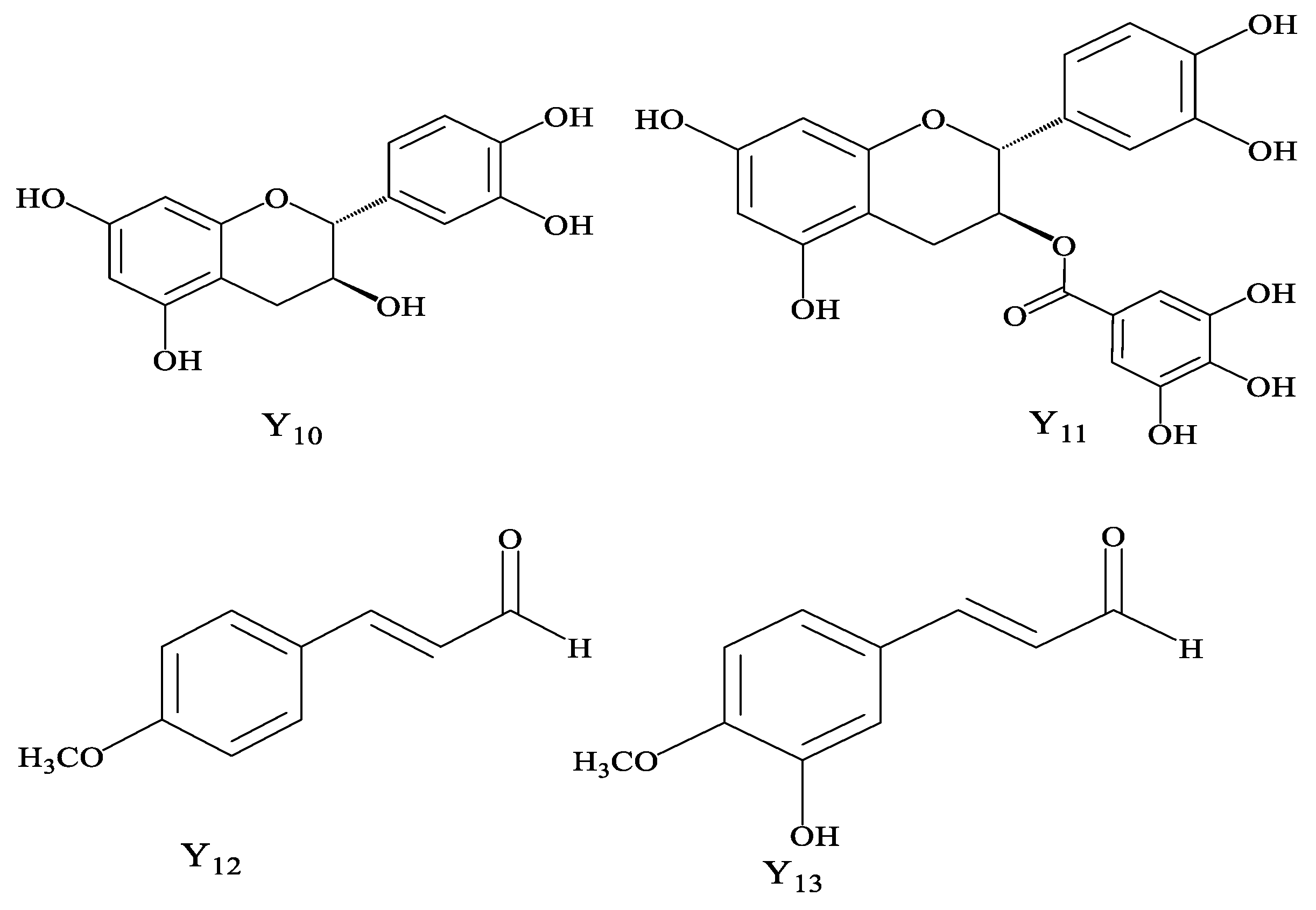
Secondary metabolites such as catechin (Y10), catechin-3-gallate (Y11), 4-methoxyphenylacrylaldehyde (12), and 3-hydroxy-4-methoxyphenylacrylaldehyde (Y13) (Figure 1) were isolated from Tapinanthus globiferus; they were docked into the crystal structures of malaria proteins.

2.2.1. Evaluation of Theoretical Oral Bioavailability

The oral bioavailability of the characterized compounds (Y12, Y13, Y17, and Y18) was predicted theoretically based on Lipinski’s rule of five before molecular docking studies on the SWISSADME online server (http://www.swissadme.ch/index.php, accessed on 10 July 2025), while the PROTOX-III (https://tox.charite.de/protox3/ accessed on 10 July 2025) servers were used for properties defining the absorption, distribution, metabolism, excretion, and toxicity (ADMET) of the test compounds, respectively. Based on extensive utilization of the database, the servers accurately predict various physicochemical properties, including lipophilicity, water solubility, pharmacokinetics, drug-likeness, medicinal attributes, and compound toxicity with remarkable precision.

2.2.2. Preparation of Protein

The crystal structures of the proteins were obtained from a protein data bank (PDB). Residues located within 5.0 Å of the ligands were identified prior to docking studies. Chimera UCSF was used to remove all crystallographic water molecules, ions, and bound ligands from the 3D structures acquired from PDB [7]. Chimera was used to separate and prepare the co-crystallized ligands, which were then stored as lig.mol. The receptors were isolated and prepared and saved as rec.pdb. After being imported into AutoDock Tools [6], the output files from Chimera were altered by adding polar hydrogen and Gastegier charges to the lig.mol and rec.pdb files before being saved as pdbqt files.

2.2.3. Ligand Structure Preparation

The 2D structures of the characterized compounds (Y10, Y11, Y12, and Y13) were generated using ChemDraw, and Spartan was used to convert the 2D structures to 3D. Using the AMI semi-empirical technique, geometrical optimization was carried out on all the compounds using the Spartan software, and the optimized structures were stored as mol2 files. Using AutoDock Tools, hydrogen and Gastegier charges were added to the mol2 files before they were transformed into pdbqt format.

2.2.4. Molecular Docking Analysis

The docking procedure for each protease enzyme was validated before docking the test compounds by separating the co-crystallized ligand from the enzyme crystal structure and redocking it using the setup parameters. The procedure that produces confirmation superimposable with a geometrical conformation of the co-crystallized ligand in the active site was chosen [10]. Before molecular docking, the active sites were defined according to the coordinates of the crystallographic structures of both enzymes by defining the grid box, and the best pose was obtained, which was used for further studies. The UCSF Chimera was further used for post-docking visualization and pre-MD preparations of all systems (ligands and receptors).

3. Results

3.1. Analysis of Theoretical Oral Bioavailability

Table 1 presents the theoretical oral bioavailability, molecular weight, hydrogen bond donor, hydrogen bond acceptor, MLogP, and GI values of the four isolated compounds to predict the theoretical oral bioavailability according to Lipinski’s rule of five [11]. The toxicity class was also predicted for the four isolated compounds.

3.2. Molecular Docking Studies

3.2.1. Grid Box

The configuration file (config.txt) was created based on the grid box parameter. AutoDock Vina generated results in pdbqt format. The ViewDock feature of Chimera was employed to identify compounds with the best binding energy, optimal geometric conformation, and broad inhibition across all the enzymes studied. The compounds were saved in complexes with the reference enzymes. The preparation of the enzymes and ligand for each system was conducted using Chimera, as outlined by Pettersen and colleagues [6]. The grid box parameter is shown below in Table 2.

3.2.2. Validation of Docking Procedures

The docking procedures applied to the five enzymes were well validated, as shown in Table 3. All the co-crystallized ligands re-docked on their respective proteins and are well superimposed on their original Protein Data Bank (PDB) structures.

3.2.3. The Binding Energies of the Co-Crystallized Ligands and Isolated Compounds Against P. falciparum Targes

The binding energies of the co-crystallized ligands and the four isolated compounds against protease enzymes are presented in Table 4.

3.2.4. The Binding Poses and Binding Interactions Analysis of the Top Isolated Compound Against Plasmodium falciparum Enzymes

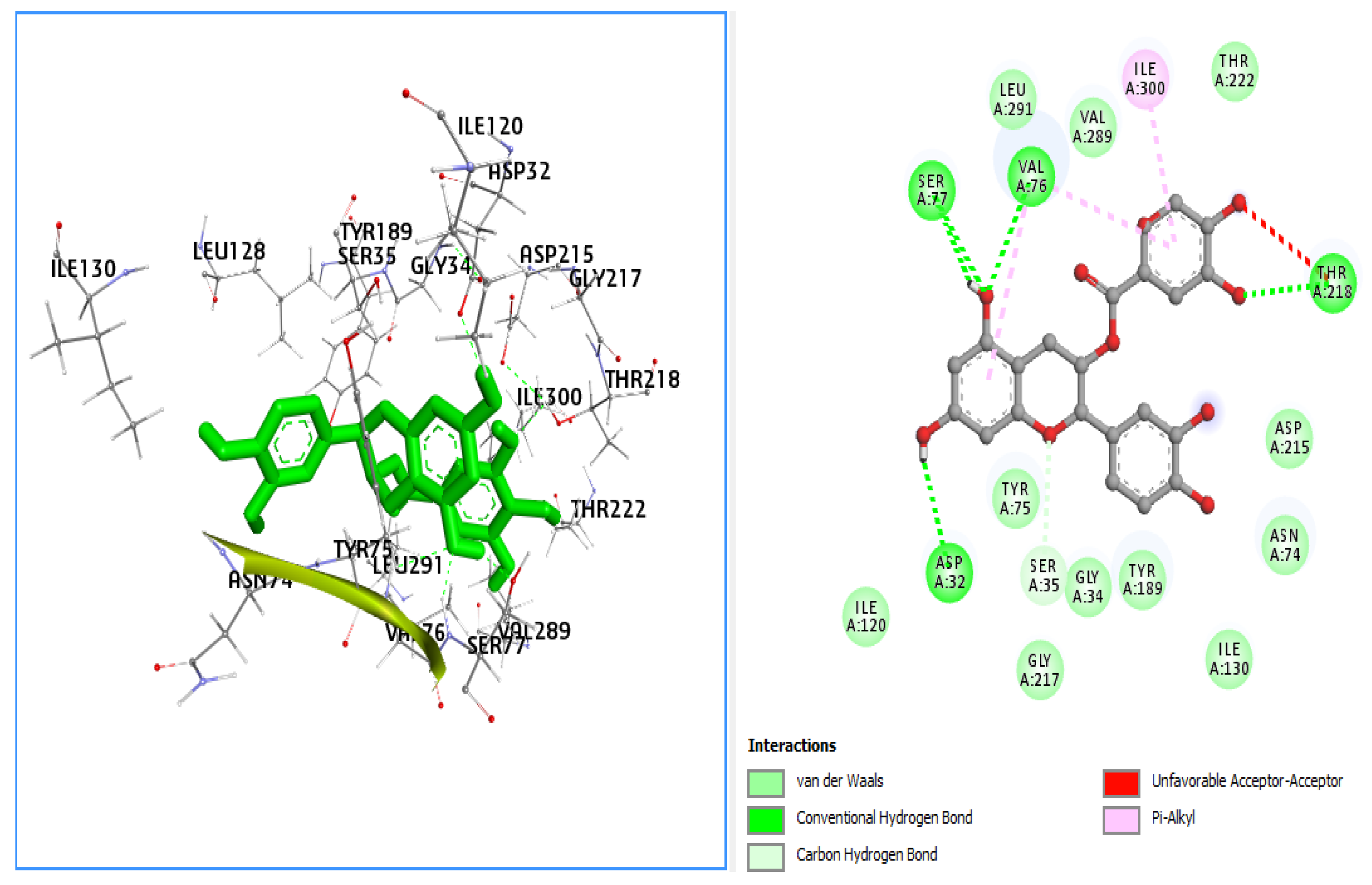
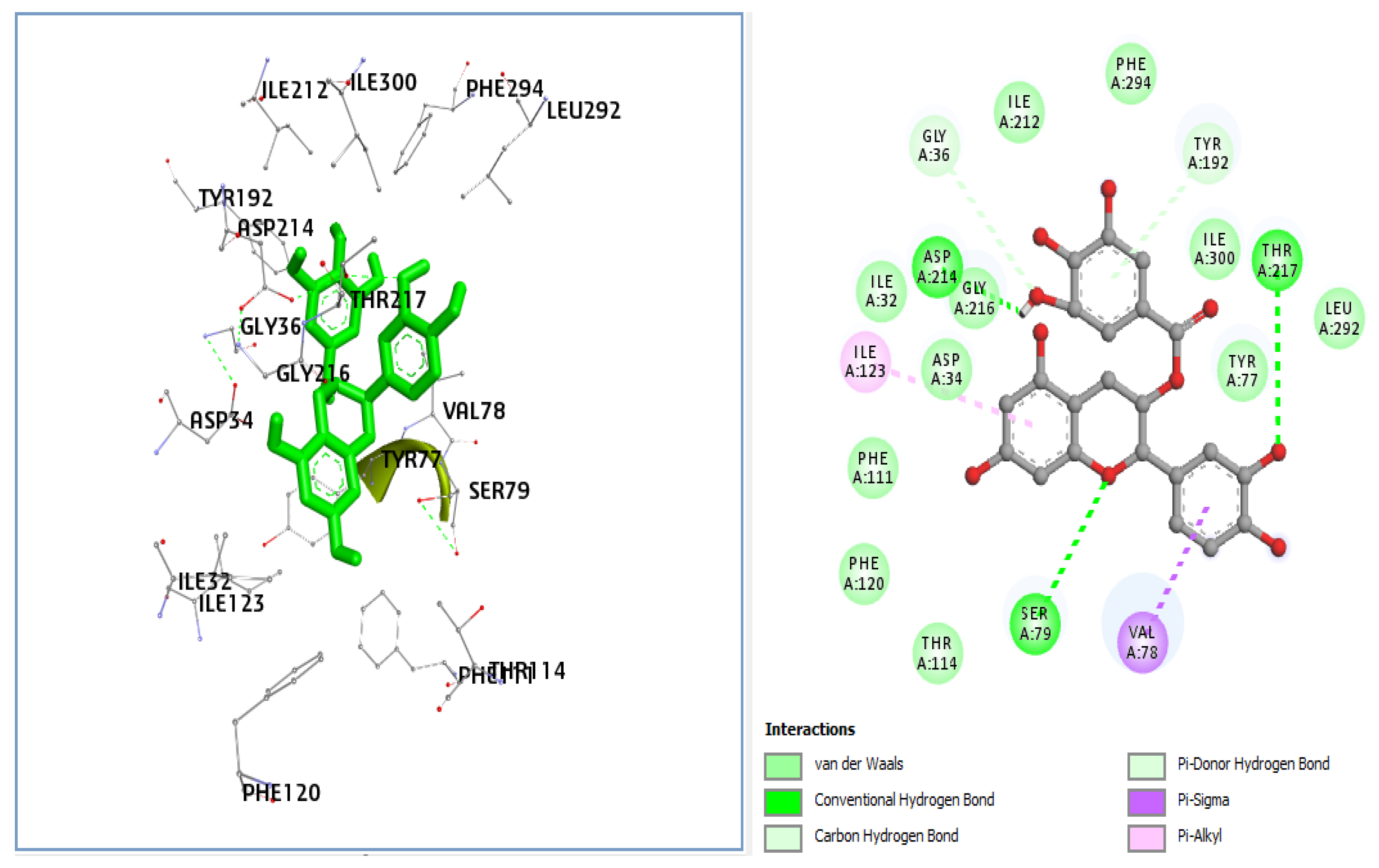
The binding conformation and interaction of the top isolated compound (Y11) with residues on the active site of Plasmepsin I and II were studied using Chimera [7] and Discovery Studio Suite and are shown in Figure 2 and Figure 3.

4. Discussion

  • Analysis of Theoretical Oral Bioavailability
The initial evaluation using Lipinski’s Rule of Five is crucial for predicting the oral bioavailability of the four isolated compounds (Y10, Y11, Y12, Y13). All compounds “Pass” the rule, suggesting they have physicochemical properties conducive to oral absorption. However, compound Y11 stands out with a “Low” GI absorption prediction despite passing the rule, which could be a point of concern. Its higher molecular weight (442.37 g/mol) and number of hydrogen bond donors/acceptors (7 and 10, respectively) might be pushing it towards the boundaries of drug-likeness. Y11 also has a higher predicted toxicity (Class 4, LD50 = 1000 mg/kg) compared to the others (Class 5 or 6), indicating a less favorable safety profile.
  • Molecular Docking Studies
The docking methodology was rigorously validated by re-docking the native co-crystallized ligands into their respective enzyme active sites. The successful superimposition of the re-docked poses with the original crystal structures (Table 3) confirms the reliability and accuracy of the chosen docking parameters (grid box size and center) for each target protein. This step is essential to trust the subsequent docking results for the test compounds.
  • Binding Affinity Analysis
The molecular docking results (Table 4) reveal the binding energies (affinities, in kcal/mol) of the compounds against five key Plasmodium falciparum enzymatic targets. Compound Y11 is the most promising candidate across both targets; compound Y11 consistently demonstrates the strongest (lower energy, i.e., most negative) binding affinity among the four isolated compounds. Its affinities range from −6.7 to −8.1 kcal/mol, even though not as compared to the native co-crystallized ligands (e.g., it binds to Plasmepsin I less strongly, 006: −6.7 vs. −9.4; Plasmepsin II (EH5): −8.1 vs. −10.1). Y11 shows significant binding to all tested enzymes (Plasmepsin I and II), suggesting it could act on multiple stages of the malaria parasite’s life cycle, potentially reducing the likelihood of resistance development. Y10 also shows good, broad-spectrum binding but is generally less potent than Y11. Compounds Y12 and Y13 exhibit the weakest binding affinities, making them less interesting from a potency standpoint.
  • Binding Poses and Binding Interactions Analysis of Isolated Compounds against P. falciparum Enzymes
The top ligand Y11 interaction and binding conformation with active site residues of two P. falciparum are illustrated in Figure 2 and Figure 3. The ligand (Y11) was found to bind at the native ligand binding site of the enzyme. The detailed 2D and 3D interaction diagrams (Figure 2 and Figure 3) for Y11 with each enzyme provide a rationale for its strong binding. These figures typically show that Y11 forms key interactions such as hydrogen bonds, hydrophobic interactions, and π-π stacking within the active sites. These specific interactions are crucial for stabilizing the ligand-protein complex and inhibiting the enzyme’s function.
  • Binding Poses and Binding Interactions Analysis of catechin-3-gallate against plasmepsin-I
From the molecular interactions of catechin-3-gallate with plasmepsin-I, five hydrogen bonds were formed through the ortho-substituted hydroxyl group of the benzene ring and that of the gallate sugar moiety at the active site, including SER77 92-bonds, VAL76, THR218, and ASP32 (Figure 3). Sixteen (16) hydrophobic interactions were predicted between plasmepsin-I and catechin-3-gallate with residues LEU291, VAL289, ILE300, THR224, THR218, ASP215, ASN74, ILE130, GLY217, TYR189, GLY32, SER35, TYR75, ILE120, and VAL76 (2 bonds), which contributed to the binding affinity of the catechin-3-gallate molecule (Figure 2).
  • Binding Poses and Binding Interactions Analysis of catechin-3-gallate against Plasmepsin-II
As observed from the molecular interactions of plasmepsin-II with catechin-3-gallate (Y11), 3 hydrogen bonds were formed through the ortho-substituted hydroxyl group of the benzene ring, the hydroxyl group of the gallate sugar moiety, and the central pyrone ring in the nucleus of the molecule with the enzyme target, including ASP214, THR217, and SER79 (OH) (Figure 3). Plasmepsins contain two catalytic dyads, which include ASP34 and ASP214. One catalytic dyad, ASP214 was seen to form hydrogen bond interaction with catechin-3-gallate, which could be due to the high binding affinity observed in the molecule. Hydrophobic interactions were predicted between Plasmepsin-II and catechin-3-gallate with residues ILE212, PHE294, TYR192, ILE300, LEU292, TYR77, VAL78, THR114, PHE120, PHE111, ASP34, ILE123, ILE32, GLY216, and GLY36, which might have contributed to the observed binding affinity of compound Y11. Studies have shown that a combination of hydrophobic interactions results in higher binding affinity of ligand molecules.
The discovery of multiple robust bonds formed between the test compounds and the enzymes examined has significantly bolstered the stability of the resulting complexes, thereby elevating the overall binding affinity. This investigation has unveiled compelling evidence showcasing the test compounds’ ability to engage actively with key amino acid residues within diverse receptor types. These findings strongly suggest that the compound holds promise in altering the active sites of enzymes associated with Plasmodium falciparum, potentially impeding their binding. Such interference could lead to the inhibition of these malaria-related enzymes, disrupting their standard functionality. An intriguing aspect of the compound lies in its consistent structural elements, notably the presence of ortho hydroxyl, carbonyl carbon, and a pyrone ring attached to the molecular nucleus. These features are believed to confer the compound with the capacity to effectively inhibit the enzymes of Plasmodium falciparum that were under scrutiny. Noteworthy from the docking simulations are the hydrogen bonds evident in the protein-ligand complexes (as depicted in Figure 2), known to play crucial roles in facilitating protein-ligand interactions. These bonds, along with other interactions like van der Waals forces and electrostatic charges, underscore the high-quality docking and stability observed in this study. Of particular interest is the carbonyl carbon’s involvement in hydrogen bonding within the active site, a factor believed to enhance solubility. Furthermore, the presence of various interactions, including van der Waals forces and electrostatic charges, serves as an indicator of robust docking quality and complex stability. The substantial side chain in compound Y11 appears to be more advantageous than other molecules without sugar moiety groups in ligand-protein interactions, aligning with insights from structure-activity relationships (SARs) [11,12,13].

5. Conclusions

Four secondary metabolites of Tapinanthus globiferus were assayed in this research, and all the compounds (Y10, Y11, Y12, and Y13) possessed theoretical oral bioavailability as per Lipinski’s Rule of Five. Molecular docking identified compound Y11 as the most effective multi-target inhibitor with improved binding against two target malarial enzymes—Plasmepsin I and Plasmepsin II. But Y11 also should have poor gastrointestinal absorption and higher toxicity compared to the others. Therefore, even though Y11 is an excellent in silico candidate as a highly active, multi-target antimalarial drug, its potential for poor absorption and higher toxicity render it a prime target for proper validation in vitro and in vivo of its antimalarial activity and pharmacokinetic profile.

Author Contributions

Conceptualization, M.H. and D.G.; methodology, M.H., J.Y., and D.G.; software, Y.J. and D.G.; validation, M.H., Y.M.S., Y.J., and M.I.S.; formal analysis, M.H., Y.J., and D.G.; investigation, M.H.; resources, M.H.; data curation, M.H., J.Y., and D.G.; writing—original draft preparation, M.H., J.Y., Y.J., and D.G.; writing—review and editing, M.H., Y.J., and D.G.; supervision, Y.J., Y.M.S., and M.I.S.; project administration, Y.J., Y.M.S., and M.I.S.; funding acquisition, M.H. All authors have read and agreed to the published version of the manuscript.

Funding

This research received no external funding.

Institutional Review Board Statement

Not applicable.

Informed Consent Statement

Not applicable.

Data Availability Statement

All data generated are included in the work.

Acknowledgments

We are thankful to all staff members of the Department of Pharmaceutical and Medicinal Chemistry, Ahmadu Bello University, Zaria, Kaduna, Nigeria.

Conflicts of Interest

The authors declare no conflicts of interest.

References

  1. World Health Organization. World Malaria Report (2022); World Health Organization: Geneva, Switzerland, 2022. [Google Scholar]
  2. Bassey, M.E. Phytochemical Investigations of Tapinanthus Globiferus (Loranthaceae) from Two Hosts and the Taxonomic Implications. Int. J. Pharm. Res. 2012, 3, 174–177. [Google Scholar]
  3. Celestine, J.; Katsayal, U.A.; Nuhu, A.; Nuhu, H.D. Pharmacognostic and Elemental Analysis of the Leaves of Tapinanthus globifer (A. Rich). Tiegh. Res. J. Pharmacogn. (RJP) 2018, 6, 11–18. [Google Scholar]
  4. Adekunle, A.S.; Aline, A.B.; Afolabi, O.K.; Rocha, J.B.T. Determination of free phenolic, flavonoid contents and antioxidant capacity of ethanolic extracts obtained from leaves of mistletoe (Tapinanthus globiferus). Asian J. Pharm. Clin. Res. 2013, 5, 36–41. [Google Scholar]
  5. Oche, J.-R.I.; Johnson, T.O.; Akinsanmi, A.O.; Jaryum, K.H.; Francis, T. In vitro Antioxidant Activity and Inhibition of Fe2+ and SNP Lipid Peroxidation of African Mistletoes (Tapinanthus globiferus) from Three Selected Host Plants in Jos Plateau State Nigeria. J. Appl. Life Sci. Int. 2019, 20, 1–10. [Google Scholar] [CrossRef]
  6. Trott, O.; Olson, A.J. AutoDock Vina: Improving the speed and accuracy of docking with a new scoring function, efficient optimization, and multithreading. J. Comput Chem. 2010, 31, 455–461. [Google Scholar] [CrossRef]
  7. Pettersen, E.F.; Goddard, T.D.; Huang, C.C.; Couch, G.S.; Greenblatt, D.M.; Meng, E.C.; Ferrin, T.E. UCSF Chimera—A visualiza tion system for exploratory research and analysis. J. Comput. Chem. 2004, 25, 1605–1612. [Google Scholar] [CrossRef]
  8. Bhaumik, P.; Horimoto, Y.; Xiao, H.; Miura, T.; Hidaka, K.; Kiso, Y.; Wlodawer, A.; Yada, R.Y.; Gustchina, A. Crystal structures of the free and inhibited forms of plasmepsin I (PMI) from Plasmodium falciparum. J. Struct. Biol. 2011, 175, 73–84. [Google Scholar] [CrossRef] [PubMed]
  9. Asojo, O.A.; Gulnik, S.V.; Afonina, E.; Yu, B.; Ellman, J.A.; Haque, T.S.; Silva, A.M. Novel uncomplexed and complexed structures of plasmepsin II, an aspartic protease from Plasmodium falciparum. J. Mol. Biol. 2003, 327, 173–181. [Google Scholar] [CrossRef] [PubMed]
  10. DeOliveira, M.E.; Cenzi, G.; Nunes, R.R.; Andrighetti, C.R.; de Sousa Valadão, D.M.; Dos Reis, C.; Simões, C.M.; Nunes, R.J.; Júnior, M.C.; Taranto, A.G.; et al. Antimalarial activity of 4-metoxychalcones: Docking studies as falcipain/plasmepsin inhibitors, ADMETandlipophilic efficiency analysis to identify a putative oral lead candidate. Molecules 2013, 18, 5276–5287. [Google Scholar]
  11. Lipinski, C.A. Lead-anddrug-like compounds: Therule-of-five revolution. Drug Discov. Today Technol. 2004, 1, 337–341. [Google Scholar] [CrossRef] [PubMed]
  12. Akar, S.; Çırak, T.; Hüsunet, M.T.; Turkdonmez, I.; Kenger, İ.H.; Aslan, F.; Kardöl, A.; Yıldız, H.; Zencir, S.; Emek, A.G.; et al. Determination of mutagenic potentials of diarylmethylamine based imine compounds by ames test and computational molecular docking. Exp. Appl. Med. Sci. 2003, 4, 610–620. [Google Scholar] [CrossRef]
  13. Garba, D.; Ali, B.H.; Bawa, B.; Maryam, A.; Nasiru, H.A.; Sani, Y.M.; Magaji, M.G.; Abdullahi, M.I.; Musa, A.M.; Sadiya, H.H. Phytochemical Constituents from Globimetula oreophila as Plasmepsin I and II Inhibitors in Antimalarial Drug Discovery: An In Silico Approach. Chem. Proc. 2024, 16, 42. [Google Scholar] [CrossRef]
Figure 1. Structures of isolated compounds from T. globiferus plant.
Chemproc 18 00114 g001
Figure 2. Three-dimensional molecular pose and 2D interactions of Y11 on the binding cavity of Plasmepsin-I.
Chemproc 18 00114 g002
Figure 3. Three-dimensional molecular pose and 2D interactions of Y11 on the binding cavity of Plasmepsin-II.
Chemproc 18 00114 g003
Table 1. Analysis of the theoretical oral bioavailability of the characterized isolated compounds from Tapinanthus globiferus based on Lipinski’s rule of five, GI absorption, predicted LD50, and toxicity class.
Compound IDLipinski’s Rule of Five b
Mol.Wt aHbAHbDMLogPGIInferenceLD50 (mg/kg)Toxicity Class
Y12290.27650.24HighPass10,0006
Y13442.371070.32LowPass10004
Y17178.18311.59HighPass29805
Y18178.18311.04HighPass25005
a Molecular weight in g/mol, b Lipinski et al., 2004 (Mwt ≤ 500, MLogP ≤ 4.15, N or O ≤ 10, NH or OH ≤ 5, and number of rotatable bonds ≤ 10); nRB: Number of rotatable bonds; LogP: Partition coefficient; HbA: Hydrogen bond acceptor; HbD: Hydrogen bond donor.
Table 2. Grid box parameter for the enzymes.
EnzymeGrid Box SizeCenter
XYZXYZ
Plasmepsin I44404027.55−9.9254.252
Plasmepsin II40404016.2156.8527.605
Table 3. The crystal structures of enzyme complexes and re-docked ligands superimposed on the crystal structures for validation.
Enzyme Code and NameCrystal Structure Complex
(Enzyme and Native Ligand)
Crystal Structure Complex (Apo)
Validation
Plasmepsin I
(3QSI)
Chemproc 18 00114 i001Chemproc 18 00114 i002
Plasmepsin II
(1LF3)
Chemproc 18 00114 i003Chemproc 18 00114 i004
Apo (enzyme, native ligand, and redocked ligand).
Table 4. Binding affinities of the characterized isolated compounds from Tapinanthus globiferus with target enzymes.
COMPOUND CODE(3QS1) Plasmepsin1(1LF3) Plasmepsin2
006−9.4_
EH5_−10.1
Y12−6.3−7.4
Y13−6.7−8.1
Y17−5.0−6.0
Y18−5.5−5.6
3QS1: 006; ILF3: EH5 are the co-crystallized ligands for the respective enzymes.
Disclaimer/Publisher’s Note: The statements, opinions and data contained in all publications are solely those of the individual author(s) and contributor(s) and not of MDPI and/or the editor(s). MDPI and/or the editor(s) disclaim responsibility for any injury to people or property resulting from any ideas, methods, instructions or products referred to in the content.