1. Introduction
Chiral 2,2-diarylnitroethanes occupy a potentially interesting place in modern organic synthesis. Their structural features, particularly the presence of a chiral carbon atom bearing both aromatic substituents and a methylene-nitro group, make them versatile intermediates in the construction of complex molecules. These scaffolds are directly relevant for the synthesis of pharmacologically active compounds such as dopamine receptor agonists [
1], adenosine analogs [
2], etc. In many cases, the biological activity of the final compounds depends critically on the enantiomeric purity of the intermediate, which makes the development of efficient asymmetric syntheses of paramount importance.
The Hayashi–Miyaura reaction [
3] has proven to be a particularly powerful transformation for the enantioselective addition of arylboronic acids to aryl alkenes. Since its discovery, it has been expanded from rhodium to palladium catalysis [
4,
5,
6], broadening its scope and reducing the cost. Nevertheless, several limitations remain. In particular, sterically demanding
ortho-substituted substrates and those bearing free hydroxyl groups have been recognized as problematic. Hydroxyl substituents can coordinate to the metal center, inhibiting catalysis, while
ortho-substitution can dramatically decrease reactivity due to steric congestion. Exploring whether these challenges can be overcome is crucial for extending the applicability of the methodology.
2. Methods
To address these questions, the present study was designed around a systematic exploration of different substrate classes. Four β-nitrostyrenes were prepared, incorporating electron-donating methoxy groups, sterically demanding
ortho-substituents, and free hydroxyl functionalities. These substrates were combined with a variety of arylboronic acids, both unsubstituted and
ortho- or para-substituted. The palladium precursor Pd(TFA)
2 served as the metal source. Acquired
1H NMR spectra of the prepared compounds were comparable with the literature [
7,
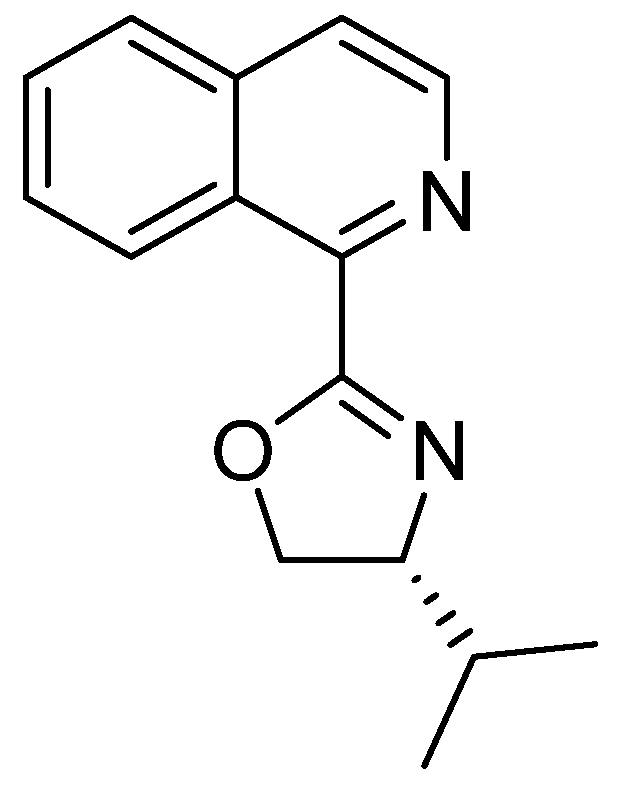
8]. For asymmetric induction, a well-established isoquinoline–oxazoline ligand was employed,
(S)-iPr-IsoQuinox, bearing an isopropyl substituent (
Figure 1).
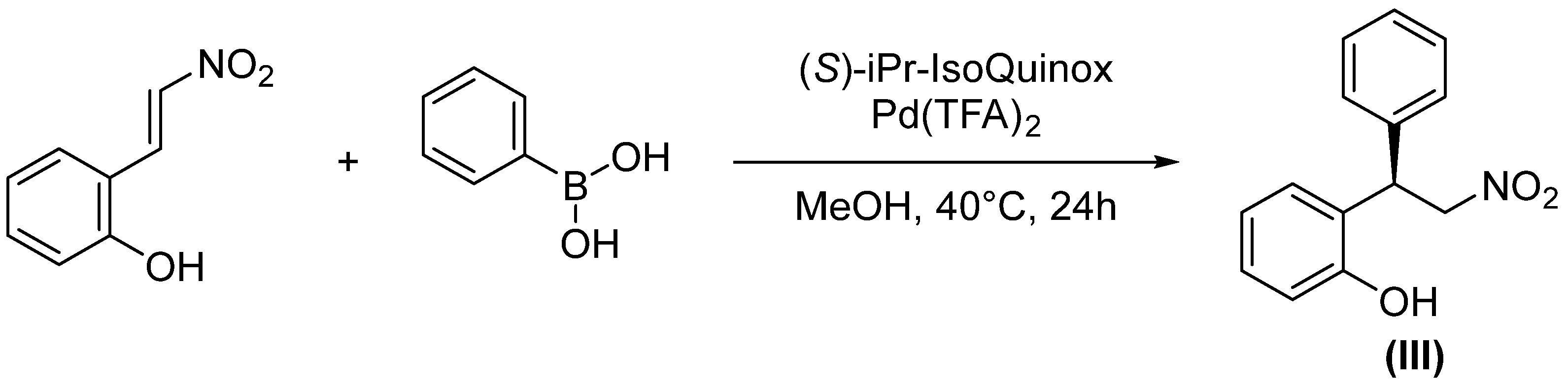
In addition to homogeneous catalysis (
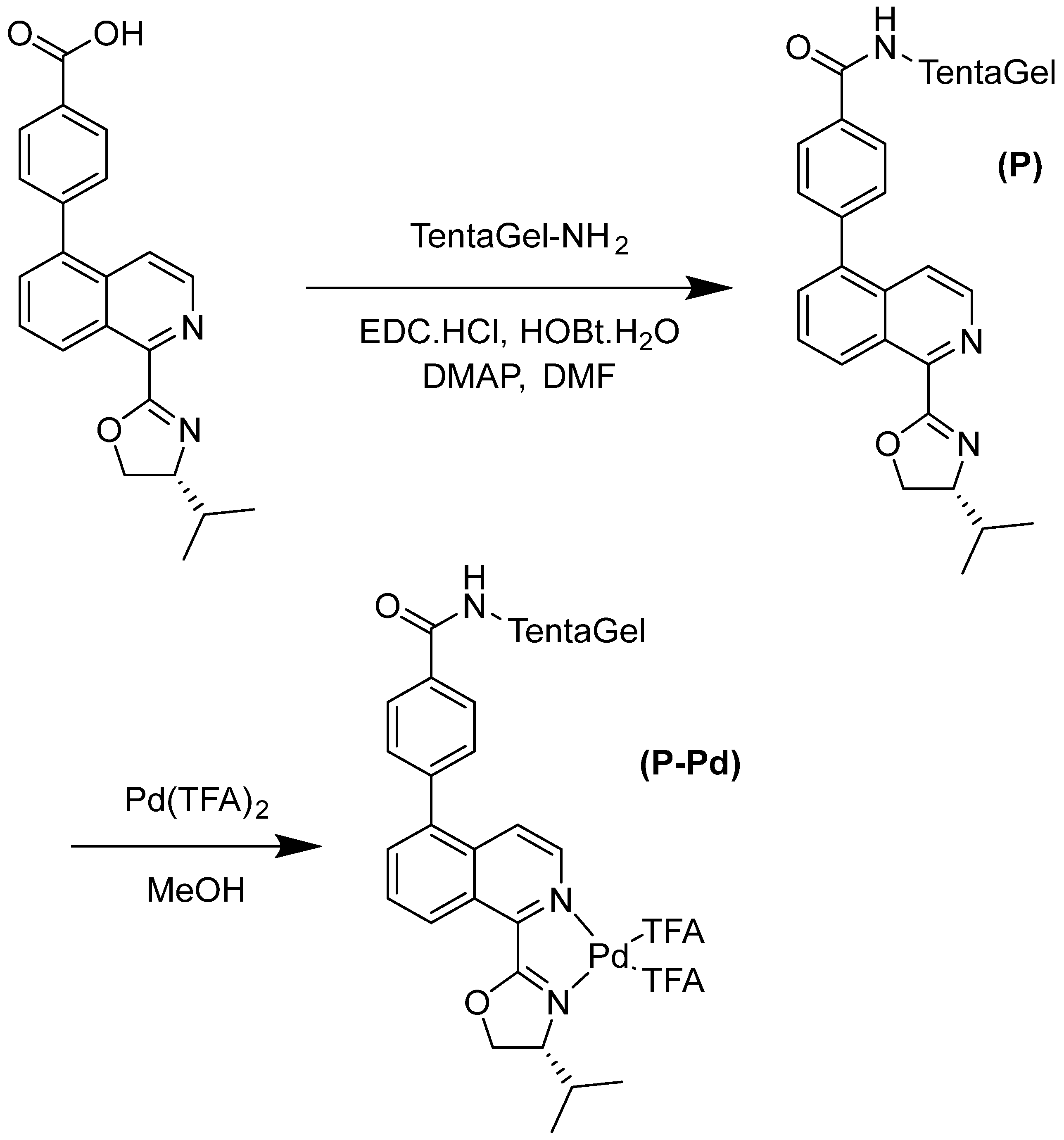
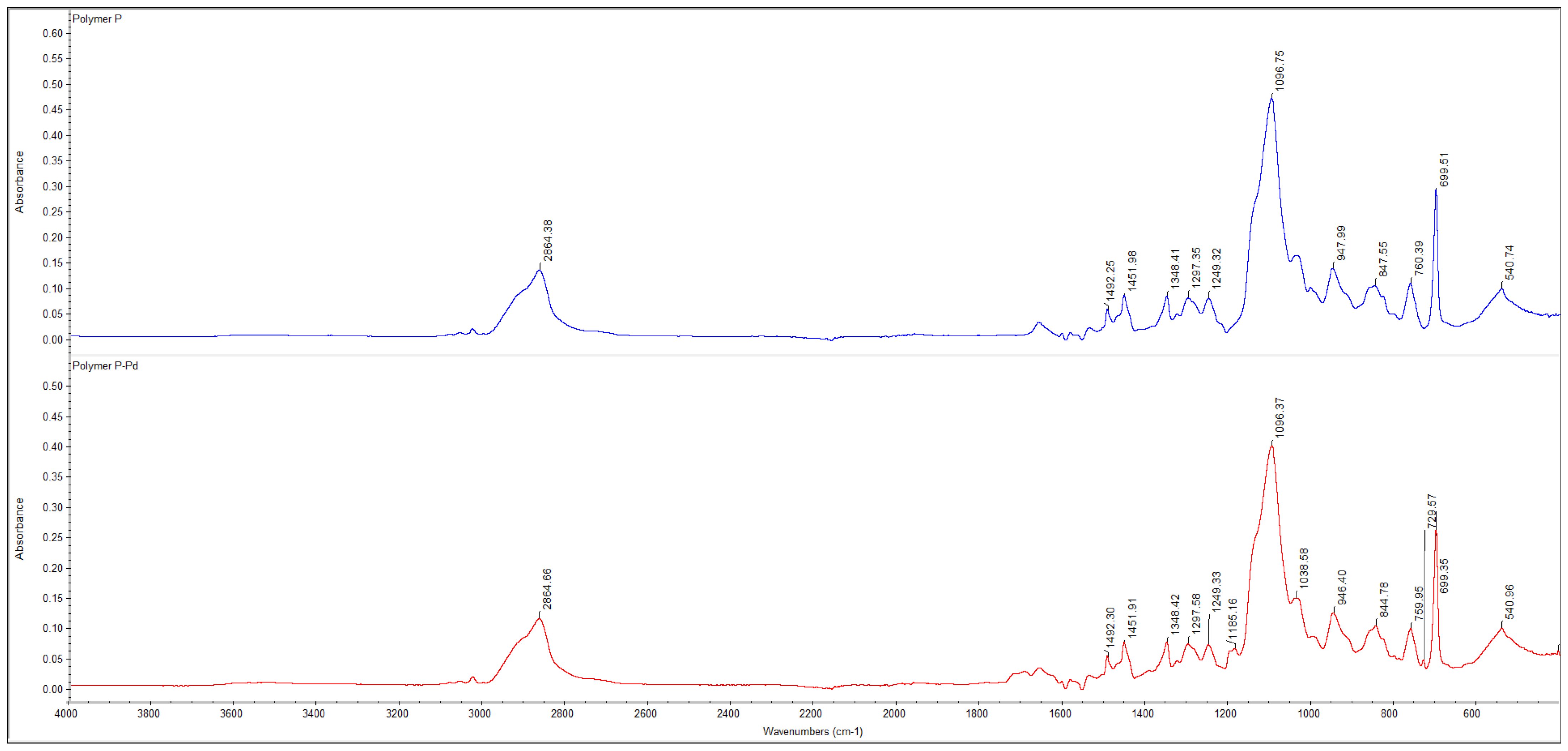
Figure 2), a polymer-supported analog was prepared. The ligand was covalently immobilized onto a TentaGel™ resin, which was subsequently complexed with palladium (
Figure 3 and
Figure 4). This allowed the preparation of a heterogeneous catalyst (
P–
Pd) that could be filtered, washed, and reused. The performance of this recyclable system was then compared with the homogeneous analog under identical reaction conditions [
6].
3. Results and Discussion
In the homogeneous reactions, a number of trends became evident (
Table 1). First, reactions involving unsubstituted or
para-substituted arylboronic acids generally proceeded efficiently, affording the desired 2,2-diarylnitroethanes in yields ranging from 60% to over 90%. Importantly, enantioselectivities were high, with several reactions delivering products with more than 90% ee. These results confirm the effectiveness of the palladium–IsoQuinox catalytic system under the conditions employed.
When steric hindrance was introduced, however, significant challenges arose. Ortho-substituted arylboronic acids reacted sluggishly or not at all, highlighting the strong negative impact of steric congestion near the reactive site of the boronic acid. This trend is consistent with previous observations in the literature and reinforces the need for careful substrate selection in such transformations. In contrast, ortho-substitution on the nitrostyrene component was surprisingly well tolerated. The difference illustrates how steric effects are highly context-dependent: while a bulky substituent on the incoming aryl fragment prevents efficient coordination and transfer, the same substituent on the nitrostyrene is accommodated without preventing productive reaction.
The tolerance of the system to hydroxyl-substituted substrates was another key finding. Both 2-hydroxy- and 4-hydroxy-β-nitrostyrenes participated successfully in the addition reactions. Although the yields were somewhat diminished relative to unsubstituted substrates, the enantioselectivities remained high. This suggests that potential coordination of the hydroxyl group to the palladium center does not irreversibly deactivate the catalyst. From a synthetic perspective, this tolerance is highly advantageous, since hydroxyl groups provide convenient handles for further functionalization.
The transition to the heterogeneous
P–
Pd catalyst was particularly instructive. Despite the increased steric complexity of the polymeric environment, the immobilized catalyst provided products with enantioselectivities comparable to those obtained in homogeneous solution (
Table 2). Reactivity did decline somewhat, with isolated yields typically reduced by 10–20%, but this was offset by the ability to recover and reuse the catalyst. In practice, the resin-bound catalyst could be filtered from the reaction mixture, washed, and reused with only modest decreases in activity. This demonstrates that immobilization is a viable strategy for sustainable asymmetric catalysis.
Overall, the results paint a coherent picture of both opportunities and limitations. On the one hand, the methodology clearly tolerates a wide variety of substrates, including those containing hydroxyl groups, and delivers products with high enantiomeric purities. On the other hand, severe steric hindrance on the arylboronic acid remains a major limitation, and efforts to circumvent this challenge will require new ligand designs or alternative strategies. Nevertheless, the successful demonstration of recyclable, immobilized catalysts marks an important step toward implementing these reactions in a more sustainable manner.
4. Conclusions
This work has provided new insights into the palladium-catalyzed asymmetric arylation of β-nitrostyrenes. The findings establish that chiral 2,2-diarylnitroethanes can be synthesized in good yields and excellent enantioselectivities even when challenging functional groups such as hydroxyl substituents are present. The study also clarifies the detrimental impact of ortho-substituted arylboronic acids, a limitation that will guide future ligand and catalyst design. Finally, the successful application of a polymer-supported catalyst demonstrated that heterogenization is possible without major loss of enantioselectivity, thus offering a promising route toward recyclable asymmetric catalysts.
In a broader context, these results underline the potential of 2,2-diarylnitroethanes as chiral building blocks in the synthesis of biologically relevant molecules. By demonstrating both reactivity and enantioselectivity across a diverse set of substrates, the present work contributes to expanding the synthetic toolbox available to chemists seeking sustainable, enantioselective methods. The insights gained here will support further efforts to design catalysts that combine efficiency, selectivity, and recyclability, ultimately bringing the field closer to practical, scalable applications in pharmaceutical and fine chemical synthesis.
Author Contributions
Conceptualization, J.B.; experiments and writing, T.H.; HPLC, P.D.; NMR spectra, J.B.; proof-reading, J.V. and J.B.; supervision, J.B. All authors have read and agreed to the published version of the manuscript.
Funding
This research was funded by the University of Pardubice, grant number SGS_2025_003.
Institutional Review Board Statement
Not applicable.
Informed Consent Statement
Not applicable.
Data Availability Statement
Data will be made available upon reasonable request from the corresponding author T.H.
Conflicts of Interest
The author declares no conflicts of interest.
Abbreviations
The following abbreviations are used in this manuscript:
| TFA | Trifluoroacetate |
| MeOH | Methanol |
| EDC.HCl | 1-Ethyl-3-(3-dimethylaminopropyl)carbodiimide hydrochloride |
| HOBt.H2O | Hydroxybenzotriazole hydrate |
| DMAP | 4-(dimethylamino)pyridine |
| DMF | N,N-dimethylformamide |
| ee | Enantiomeric excess |
| HFIP | 1,1,1,3,3,3-hexafluoroisopropylalcohol |
References
- Huang, K.-C.; Gopula, B.; Kuo, T.-S.; Chiang, C.-W.; Wu, P.-Y.; Henschke, J.P.; Wu, H.-L. Rhodium-Catalyzed Asymmetric Addition of Arylboronic Acids to β-Nitroolefins: Formal Synthesis of (S)-SKF 38393. Org. Lett. 2013, 15, 5730–5733. [Google Scholar] [CrossRef] [PubMed]
- Bridges, A.J.; Bruns, R.F.; Ortwine, D.F.; Priebe, S.R.; Szotek, D.L.; Trivedi, B.K. N6-[2-(3,5-dimethoxyphenyl)-2-(2-methylphenyl)ethyl]adenosine and its uronamide derivatives. Novel adenosine agonists with both high affinity and high selectivity for the adenosine A2 receptor. J. Med. Chem. 1988, 31, 1282–1285. [Google Scholar] [CrossRef] [PubMed]
- Takaya, Y.; Ogasawara, M.; Hayashi, T.; Sakai, M.; Miyaura, N. Rhodium-Catalyzed Asymmetric 1,4-Addition of Aryl- and Alkenylboronic Acids to Enones. J. Am. Chem. Soc. 1998, 120, 5579–5580. [Google Scholar] [CrossRef]
- Lu, X.; Lin, S. Pd(II)-Bipyridine Catalyzed Conjugate Addition of Arylboronic Acid to α,β-Unsaturated Carbonyl Compounds. J. Org. Chem. 2005, 70, 9651–9653. [Google Scholar] [CrossRef] [PubMed]
- He, Q.; Xie, F.; Fu, G.; Quan, M.; Shen, C.; Yang, G.; Gridnev, I.D.; Zhang, W. Palladium-Catalyzed Asymmetric Addition of Arylboronic Acids to Nitrostyrenes. Org. Lett. 2015, 17, 2250–2253. [Google Scholar] [CrossRef] [PubMed]
- Pochobradský, J.; Bartáček, J.; Váňa, J.; Svoboda, J.; Svobodová, M.; Drabina, P.; Patočka, J.; Sedlák, M. Addressing polar solvent challenges in the heterogenization of palladium catalysed Hayashi-Miyaura reaction on polymer support. React. Funct. Polym. 2023, 193, 105747. [Google Scholar] [CrossRef]
- Liu, X.-L.; Zhang, X.-L.; Xia, A.-B.; Guo, Y.-J.; Meng, C.-H.; Xu, D.-Q. Tryptophan/copper-catalyzed aromatization reaction of chiral cyclohexanones to phenols. Org. Biomol. Chem. 2017, 15, 5126–5130. [Google Scholar] [CrossRef] [PubMed]
- Lang, F.; Chen, G.; Li, L.; Xing, J.; Han, F.; Cun, L.; Liao, J. Rhodium-Catalyzed Highly Enantioselective Addition of Arylboronic Acids to 2-Nitrostyrenes by tert-Butanesulfinylphosphine Ligand. Chem.–Eur. J. 2011, 17, 5242–5245. [Google Scholar] [CrossRef] [PubMed]
| Disclaimer/Publisher’s Note: The statements, opinions and data contained in all publications are solely those of the individual author(s) and contributor(s) and not of MDPI and/or the editor(s). MDPI and/or the editor(s) disclaim responsibility for any injury to people or property resulting from any ideas, methods, instructions or products referred to in the content. |
© 2025 by the authors. Licensee MDPI, Basel, Switzerland. This article is an open access article distributed under the terms and conditions of the Creative Commons Attribution (CC BY) license (https://creativecommons.org/licenses/by/4.0/).