Review

Clinical Utility of Genetic Testing in Obesity: A Case-Based Review in the Context of Type 2 Diabetes


by
Ahmed W. Al-Humadi
1,2,*,
Claire H. Parker
3,
Marcela Rodríguez-Flores
1,4,
Daniah A. Alwash
5 and
Charis Liapi
2,*
1
Diabetes Complications Research Centre, Conway Institute, School of Medicine, University College Dublin, D04V1W8 Dublin, Ireland
2
Laboratory of Pharmacology, Medical School of Athens, National and Kapodistrian University of Athens, 11527 Athens, Greece
3
Renaissance School of Medicine at Stony Brook University, Stony Brook, NY 11794, USA
4
Metabolic Disease Research Unit, Instituto Nacional de Ciencias Médicas y Nutrición Salvador Zubirán, Mexico City C.P. 14080, Mexico
5
Department of Laboratory Pathology, Baghdad Medical City, Baghdad 10047AA1, Iraq
*
Authors to whom correspondence should be addressed.
Diabetology 2026, 7(8), 147; https://doi.org/10.3390/diabetology7080147
Submission received: 2 May 2026 / Revised: 16 July 2026 / Accepted: 24 July 2026 / Published: 6 August 2026
(This article belongs to the Section Diagnosis, Screening and Monitoring of Diabetes)

Abstract

Background: Obesity has a significant genetic component, accounting for up to an estimated 70% of individual susceptibility. Advances in genome-wide association studies (GWASs) and next-generation sequencing (NGS) have enhanced identification and characterization of genetic forms of obesity, facilitating more precise and individualized treatment approaches. The phenotypic heterogenicity of the disease of obesity, along with the limited predictive value of clinical features, hinders the accurate identification of genetic forms of the disease. Therefore, genetic testing represents a critical diagnostic modality to confirm etiology and inform precision-based therapeutic strategies. Aim: To compare the clinical utility, interpretation and potential impact of direct-to-consumer (DTC-GT) and clinician-directed genetic testing for obesity in the context of type 2 diabetes. Methods: This case-based review evaluated a patient with severe obesity and type 2 diabetes who underwent both DTC-GT and clinician-directed genetic testing for obesity. A structured literature review using PubMed, Scopus, Web of Science, and Google was undertaken to identify the resources of both testing approaches. Tables and a schematic figure were developed to summarize the findings. Results: Neither testing approach identified clinically actionable obesity-associated genetic variants or a monogenic cause of obesity. However, the DTC-GT report concluded that the patient was at “high risk” of obesity and was provided to the patient without a referral to genetic counseling which contributed to patient misunderstanding. Conclusions: This case, interpreted alongside the reviewed literature, suggests that clinician-directed genetic testing may better support reliable interpretation of obesity-associated genetic findings and disease management than DTC-GT. Larger studies are warranted to confirm these observations.

1. Introduction

Obesity and diabetes mellitus are complex disorders influenced by genetic predisposition, ranging from rare monogenic variants to common polygenic architectures [1]. Their pathogenesis reflects a complex interplay between environmental, metabolic and genetic predispositions [2]. To quantify inherited susceptibility, researchers integrate the effects of numerous common genetic variants into polygenic risk scores [3]. Clinically, these scores predict BMI trajectories from birth, stratify the risk of severe obesity, inform response to intentional weight loss interventions, with high cumulative genetic burden conferring risk approaching that of rare monogenic variants [3,4]. Environmental determinants, including dietary patterns, physical activity, socioeconomic context, and early-life onset, alongside gene–environment interactions, modulate the phenotype expression of genetic risk for obesity. Polygenic risk score is emerging as useful tools for risk stratification, biological insight, and personalized disease prevention and therapeutic strategies [4,5,6]. Polygenic predisposition is not deterministic. Individuals with severe obesity may have multiple rare, predicted deleterious variants in established monogenic obesity genes, supporting an oligogenic mode of inheritance. These variants typically follow autosomal dominant patterns with incomplete penetrance [5]. Advances in genomic research have identified monogenic and polygenic contributors to obesity, supporting the integration of genetic testing into personalized clinical care [6,7,8]. These developments underscore the value of combining genetic stratification with targeted lifestyle or public health interventions. Environmental exposures can modulate genetic risk, with favorable conditions attenuating and adverse conditions exacerbating susceptibility to obesity [9]. Genetic testing has become an increasingly valuable tool for understanding the shared biological mechanisms underlying obesity and type 2 diabetes mellitus (T2DM) [6,10,11].
Direct-to-consumer genetic testing (DTC-GT) has expanded public access to genomic information by offering risk assessments based on common variants, often without clinical oversight, and may increase awareness of genetic susceptibility [12,13,14].
A clinical genetic diagnostic test is fundamental to precision medicine, providing clinically meaningful information that informs diagnosis, prognosis, individualized treatment, and shared decision-making between clinicians and patients [15]. This is particularly important for monogenic obesity caused by pathogenic variants in genes such as MC4R, POMC, and LEPR, and for rare monogenic forms of diabetes, including maturity-onset diabetes of the young (MODY), where early diagnosis enables timely, targeted management and is associated with improved long-term outcomes [16,17]. However, the test uptake remains limited.
This study aimed to evaluate the clinical utility of DTC-GT and clinician-directed genetic testing for obesity through a case-based review of a patient with severe obesity and type 2 diabetes mellitus, while examining how the shared genetic architecture of obesity and type 2 diabetes informs the interpretation, clinical application, and metabolic relevance of obesity-associated genetic variants.
Study Key Points:
  • This case-based review directly compares direct-to-consumer and clinician-directed genetic testing for obesity in a patient with severe obesity and type 2 diabetes mellitus.
  • This case highlights the potential for patient misunderstanding when DTC-GT results are interpreted without appropriate clinical guidance, underscoring the importance of specialist genetic evaluation, counseling, and referral for obesity care, where appropriate.
  • Clinician-directed genetic testing may improve the interpretation of genetic findings and support informed clinical decision-making in obesity care.

2. Case Overview

A 63-year-old woman from a middle socioeconomic background with severe obesity and T2DM presented to the Obesity Complications Clinic seeking specialized care. She reported a history of obesity beginning in childhood, progressing to class IV obesity in her 30s, with a maximum BMI of 55 kg/m2 in her 50s (140 kg/159 cm). Patient’s medical history included T2DM, hypertension, dyslipidemia, obstructive sleep apnea, osteoarthritis, and lumbar disk prolapse. A strong family history of obesity suggested a potential hereditary contribution. No clinical features of syndromic obesity (e.g., intellectual disability, cardiac and/or renal disorders, visual impairments, red hair, or syndactyly) were identified.
In 2019, following the diagnosis of T2DM, she was initiated on oral orlistat three times daily for weight management and liraglutide 1.8 mg administered subcutaneously once daily for glycemic control. Although modest weight loss (~5%) was reported, orlistat was discontinued after nine months due to gastrointestinal side effects. Glycemic control during this period remained suboptimal on 1.8 mg liraglutide alone.
At presentation, her weight was 136.7 kg, waist circumference at 136.3 cm, fasting glucose 120 mg/dL, HbA1c 6.4%, and blood pressure 148/89 mmHg. Liraglutide was escalated to 3 mg once daily targeting both obesity management and glycemic control. After 12 months, she demonstrated significant clinical improvement, with weight reduced 116 kg, waist circumference to 118 cm, HbA1c to 5.6%, and blood pressure to 122/85 mmHg. Arthralgia improved, and the patient reported better control of food intake and enhanced functional status; however, mild-to-moderate chronic constipation developed.
Given her family history of obesity and diagnosis of T2DM, the patient underwent DTC-GT through Atlas Biomed in 2019, following online consultation with medical representative who suggested genetic predisposition to obesity. The patient interpreted the results as confirmation of a genetic cause for her obesity. No management was undertaken after the DTC-GT’s result.
Based on her clinical phenotype, including a history of early-onset obesity, persistent hyperphagia, and severity of the disease of obesity, clinician-directed genetic testing was subsequently performed through the Rare Obesity Advanced Diagnosis (ROAD) program in Europe [18]. Results were negative, with no identifiable monogenic or heterogenic cause of obesity.
The discrepancies between the DTC-GT report’s conclusions and the clinician-directed results led to patient confusion and emotional distress. A thorough review of both tests results was undertaken, followed by detailed genetic counseling. This focused on clarifying the clinical interpretation of findings, highlighting the limitations of DTC-GT, and emphasizing the disease mechanisms and diagnostic criteria of clinician-directed testing. The multifactorial and polygenic nature of the disease of obesity, particularly in the context of T2DM, was also discussed to support informed disease understanding and management.

3. Methods

This study was designed as a case report with a structured review, in accordance with the CAse-BAsed REview (CABARET) reporting guidance for integrating clinical case reports with literature reviews [19]. The study evaluated an adult Irish patient with severe obesity and type 2 diabetes mellitus who underwent both direct-to-consumer genetic testing (Atlas Biomed, London, UK) and clinician-directed genetic testing through the Rare Obesity Advanced Diagnosis (ROAD) program, performed by an accredited laboratory (Unilabs, Porto, Portugal).
A structured literature search was undertaken to identify and synthesize evidence relating to the genetics of obesity, DTC-GT, clinician-directed genetic testing, monogenic and polygenic obesity, obesity-related genetic variants, and the shared genetic architecture of obesity and type 2 diabetes mellitus. Electronic database searches were conducted in PubMed, Scopus, and Web of Science, while Google was used to identify publicly available information, including official resources from genetic testing providers. Searches used combinations of keywords including genetic testing for obesity, direct-to-consumer genetic testing (DTC-GT), monogenic obesity, polygenic obesity, obesity-related genetic variants, and type 2 diabetes genetics. Priority was given to peer-reviewed original research articles, systematic reviews, clinical practice guidelines, consensus statements, and official documentation published in English, with emphasis on the literature published within the past 25 years. The retrieved evidence was critically appraised and synthesized to compare clinical validity, interpretation, and potential clinical utility of direct-to-consumer and clinician-directed genetic testing. Tables and a schematic figure were developed to summarize the findings.
Patient outcomes were assessed descriptively through clinical observation before and after genetic testing, including a review of the patient’s understanding, interpretation of the genetic test results, emotional response during clinical consultations, and the influence of genetic testing on subsequent clinical management and decision-making. These assessments were qualitative and intended to illustrate the clinical implications of the two testing approaches rather than to provide formal psychometric evaluation.
The study was approved by the Institutional Research Ethics Committee and was conducted in accordance with the ethical principles of the Declaration of Helsinki. Written informed consent was obtained from the patient for genetic testing and publication of the case.

4. Overview of Direct-to-Consumer Genetic Testing

DTC-GT refers to genetic tests that are marketed directly to consumers without medical referral or counseling. Over the past decade, their use has expanded substantially, evolving from a niche service to a mainstream commercial product, reflecting increasing public interest in personal genomics. By 2018, more than 12 million people worldwide had undergone DTC-GT [20,21,22]. These tests typically analyze saliva or buccal swab samples, with results often related to ancestry, physical traits, or health risks are delivered directly to the consumers. Among the most popular offerings are reports on genetic predispositions to complex, polygenic conditions such as obesity and T2DM. Although DTC-GT may enhance individual access to personal genomic data, its clinical utility remains limited and controversial [21,23], particularly for multifactorial diseases influenced by both genetic and environmental factors.
Proponents of DTC-GT highlight its potential to enhance accessibility and promote patient autonomy by providing insights into genetic risk profiles, thereby encouraging proactive engagement with health. These services allow individuals to gain insight into their genetic risk profiles for various conditions, such as obesity and T2DM, potentially enabling more proactive healthcare engagement [23].
DTC-GT platforms typically evaluate common genetic variants associated with complex, polygenic conditions. However, the clinical relevance of these variants at the individual level is limited given their small effect sizes and context-dependent interpretation.
In the present case, the patient’s DTC-GT results were derived from imputed rather than directly measured genotypes using the Atlas Biomed platform (code: AB1316-23). Atlas Biomed is certified under ISO 13485:2016 for medical device quality management and employs Illumina genotyping arrays processed in an EU-accredited laboratory [24].
The platform analyses approximately 660,000 single nucleotide variants (SNVs), providing insights into over 400 health-related traits and ancestry markers. The cost of testing ranges from £120 to £200, with additional charges for shipping and optional genetic consultations (≥£50). These services are not covered by insurance and are paid out-of-pocket [25]. According to the company’s privacy policy, user data are stored on Amazon Web Services (AWS) servers located in the UK. Biological samples are retained for a minimum of one year, with the possibility of indefinite storage at the company’s discretion. De-identified data may be aggregated and used for research purposes, including disease mapping [26].
Seven SNVs associated with obesity risk were identified on the patient report. Of these, three variants were reported to increase risk of obesity, while four were classified as protective, resulting in a “protective” genetic influence of 6.13% as estimated by the testing provider. The risk-increasing variants included rs6749921 (TMEM18) G/G, rs12507026 (GNPDA2) T/T, and rs7132908 (FAIM2) G/A, associated with relative risk increases at 2.17%, 4.49%, and 1.17%, respectively. The four protective variants included rs9930333 (FTO) T/T, rs2168711 (MC4R) T/T, rs506589 (SEC16B) T/T, and rs13135092 (SLC39A8) A/A, associated with relative risk reductions at 8.03%, 2.62%, 2.24%, and 1.06%, respectively. The report provided to the patient concluded that she carried a “high risk” for obesity.
Although these findings appear informative, they left the patient uncertain about the cause of the disease, highlighting the need for cautious interpretation. All reported variants were flagged with an asterisk, meaning it is imputed rather than directly genotyped [27]. Genotype imputation is a statistical approach that infers unobserved genotypes based on reference panels and haplotype structure [16,28].

Apparent Discrepancy Between DTC-GT Result Interpretation and Evidence for Obesity-Associated Variants

In the present case, the patient interpreted DTC-GT results as indicating a genetic predisposition to obesity and T2DM because FTO and MC4R are widely established diseases susceptibility genes (Table 1); this was reinforced by the report’s conclusion of “high risk”. However, obesity susceptibility is variant-specific, and the patient’s genotypes corresponded to rs9930333 (FTO) and rs2168711 (MC4R), which are uncommon and are not the established obesity-associated risk variants reported in genome-wide association studies. This misunderstanding arose from interpreting gene names rather than the specific SNP identifiers (rsIDs) and the documented effects of the corresponding alleles. All obesity-related SNVs were imputed rather than directly genotyped, raising concerns regarding the analytical validity and clinical reliability of the results. Consequently, these factors may contribute to interpretative discordance between DTC-GT reports and clinician-directed genetic evaluation. This is particularly relevant when assessing individual risk for complex, multifactorial conditions such as obesity, especially in the context of coexisting T2DM, where genetic and environmental factors interact in highly individualized ways.

5. Clinician-Guided Genetic Testing for Obesity in Medical Practice

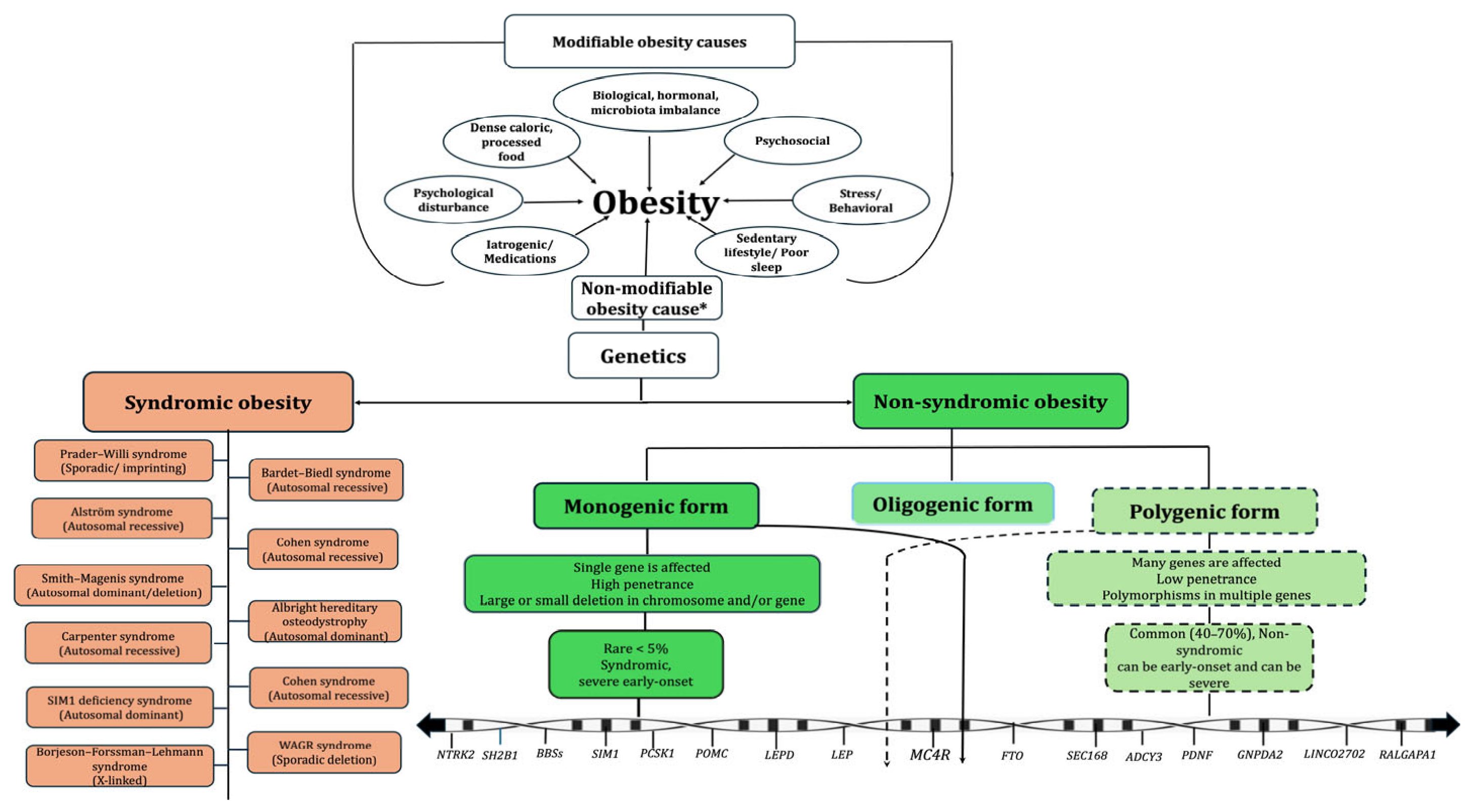
Advances in sequencing and genomic analysis have significantly expanded the understanding of genetic components of the heterogeneous nature of obesity. Obesity can be broadly classified into syndromic and non-syndromic forms, with the latter further subdivided into monogenic and polygenic types. Syndromic obesity is rare and typically associated with additional clinical features such as developmental deteriorations, systemic disorders and dysmorphic features [49,50,51]. Monogenic obesity results from high penetrance genetic variants and mainly presents as early-onset, severe obesity, primarily driven by dysregulation of appetite. In contrast, polygenic obesity arises from the cumulative effect of multiple genetic variants, typically acting on related pathways of appetite regulation, energy expenditure, and adipogenesis (Figure 1) [50]. This polygenic form is also closely associated with increased risk for metabolic complications such as insulin resistance and T2DM. Furthermore, oligogenic obesity represents an intermediate form of genetic obesity in which cumulative rather than deterministic effect of rare or infrequent obesity-related variants with incomplete penetrance act synergistically, typically resulting in a more heterogeneous phenotype and variable clinical severity compared with monogenic obesity [5] (Figure 1).
Genetic research has shown that many forms of monogenic obesity share common neuroendocrine mechanisms, particularly involving central regulation of appetite and energy balance through the MC4R pathway in the brain. However, obesity is genetically heterogeneous, and polygenic forms involve multiple biological pathways beyond central appetite regulation [3,18]. Although rare variants causing monogenic obesity lead to severe clinical phenotypes, the same biological pathways are influenced more subtly by the cumulative effects of common variants underlying polygenic obesity [4,6,52]. This convergence suggests that both monogenic and polygenic forms of genetic susceptibility may act, at least in part, through shared neural mechanisms regulating energy homeostasis. The leptin–melanocortin pathway plays a central role in the regulation of appetite and energy expenditure in humans and animal models [50]. Among the genes involved, MC4R is the most frequently implicated, with pathogenic variants representing the most common cause of non-syndromic severe early-onset obesity and accounting for up to 2–6% of such cases [53].
The assessment of genetic obesity typically begins with the identification of suggestive clinical features, followed by targeted genetic testing where appropriate [18]. Genetic variants are classified according to the American College of Medical Genetics and Genomics (ACMG) guidelines as benign, likely benign, variants of uncertain significance, likely pathogenic, or pathogenic [54,55,56] (Supplementary Table S1). Both homozygous and heterozygous variants can result in a spectrum of clinical phenotypes, ranging from severe early-onset obesity with neuroendocrine dysfunction to milder presentations in heterozygous carriers. However, clinical features alone are often poor predictors of underlying genetic mutations in adults with obesity [18], underscoring the importance of genomic testing in selected cases. Whole-exome sequencing (WES) can facilitate the identification of rare variants across multiple obesity-related genes [5], enabling exploration of potential oligogenic contributions and incomplete penetrance, although the clinical significance of such findings remains an area of ongoing research.
Several of obesity-related variants also play roles in glucose homeostasis, providing a biological link between obesity and increased susceptibility to type 2 diabetes mellitus [32,33,34,35,36,37,38,39,40,41,42,43,44,45,46,47,48,57,58] (Table 1). Genetic findings can guide treatment. Patients with LEP mutations may benefit from recombinant leptin therapy, while those with MC4R pathway defects, such as POMC, LEPR, or Bardet–Biedl syndrome, may be eligible for treatment with setmelanotide, an MC4R agonist that has shown promising efficacy in reducing both weight and HbA1c levels [59].
Table 2 summarizes monogenic obesity-associated gene variants currently approved for setmelanotide treatment in Europe, as well as additional genes within the MC4R pathway that may have emerging clinical relevance but are not yet included in approved indications or ongoing trials. Ongoing genomic research continues to refine their therapeutic significance in obesity and related metabolic disorders. The EMANATE trial (NCT05093634) is currently evaluating the efficacy and safety of setmelanotide in patients with a broader range of genetic variants affecting the MC4R signaling pathway, with the potential to expand the scope of precision therapy in rare genetic obesity [60].
Beyond monogenic causes, several polygenic loci have been strongly associated with obesity, including BDNF, NEGR1, TCF7L2, IRS1, RPTOR, MAP2K5, and FTO [61,62]. Multiple loci, such as FTO, MC4R, TCF7L2, IRS1, KCNQ1, and PPARG, have been implicated in obesity and T2DM conditions, underscoring their close biological relationship [10,63,64,65,66]. These genes contribute to metabolic disease through distinct but often converging mechanisms (Table 1).
Functional studies have demonstrated that variants in the FTO gene influence appetite regulation by modulating hypothalamic pathways and increasing ghrelin expression, thereby promoting positive energy balance and increased susceptibility to obesity [29,67,68,69]. In addition to behavioral effects, FTO variants may exert metabolic effects through the regulation of downstream genes such as IRX3 and IRX5, which influence adipocyte differentiation toward energy-storing white adipose tissue and reduced thermogenesis [30,31]. TCF7L2 and KCNQ1 are more directly associated with glucose metabolism and pancreatic β-cell function, although modest associations with BMI have been reported in certain populations [10]. Furthermore, IRS1 and PPARG show roles in insulin signaling and adipocyte biology, contributing to both insulin resistance and obesity [30,31].
Variants in FTO and MC4R increase the risk of T2DM primarily through their effects on adiposity and energy balance, whereas loci such as TCF7L2 exert more direct effects on glucose homeostasis [29,66,67]. Collectively, these findings highlight the complex genetic architecture underlying obesity and T2DM, where some variants influence diabetes risk indirectly via adiposity, while others act through independent metabolic pathways [32,33,34,35,36,37,38,39,40,41,42,43,44,45,46,47,48,57,58] (Table 1). In the United Kingdom, NHS provides clinical genetic testing for obesity through the National Genomic Test Directory [68]. The R149 gene panel is indicated for individuals with severe early-onset obesity, defined as BMI ≥ 3 standard deviations above the mean before the age of five, in the absence of a recognized syndromic cause. This panel includes 43 genes, many of which are associated with eligibility for targeted therapies such as setmelanotide when biallelic pathogenic variants are identified [69,70] (Table 3). Genetic testing is performed through NHS Genomic Laboratory Hubs (GLHs) using next-generation sequencing approaches, including whole-exome sequencing, with additional copy number variation (CNV) analysis performed using multiplex ligation-dependent probe amplification (MLPA) where appropriate [71].
Given the rarity and underdiagnosis of monogenic obesity, industry-supported initiatives have been developed to improve access to genetic testing. Rhythm Pharmaceuticals has introduced no-cost testing programs, including the Rare Obesity Advanced Diagnosis (ROAD) and LEAD (Listen, Educate, Advocate, Drive) programs, aimed at facilitating diagnosis, targeted treatment, and enhance awareness of genetic forms of obesity among healthcare professionals and patients [70,72]. The ROAD program analyzes an expanded panel of approximately 80 genes related to the MC4R pathway, selected based on established gene–disease validity frameworks such as those proposed by ClinGen [54]. Testing is conducted by accredited laboratories (Unilabs, Porto, Portugal), with logistical and financial support provided by the Rhythm Pharmaceuticals. The ROAD panel largely overlaps with the NHS R149 panel, with minor differences in gene inclusion (CEP19, AKR1C2, and MYT1L) (Table 3).

6. Discussion

The present case illustrates how differences in the interpretation of obesity-associated genetic findings between DTC-GT and clinician-directed genetic evaluation may influence patient understanding, clinical decision-making, and the application of precision medicine in obesity care. Though the patient’s clinical presentation was suggestive of a genetic etiology [67,73], no widely recognized obesity-associated genetic variants were reported in either DTC-GT or clinician-directed genetic testing. This finding is inconsistent with previous evidence indicating that the phenotypic characteristics are poor predictors of underlying obesity-related genetic mutations [18].
The clinician-directed ROAD panel provides wide assessment of rare variants within established MC4R obesity-related pathways [74]; however, it does not capture broader polygenic risk or epigenetic influences. Conversely, DTC-GT platforms assess a broad scope of common variants that carry minor associations with polygenic obesity, such as those within the FTO locus, which influences adipocyte biology through regulation of downstream genes including IRX3 and IRX5 [62,75]. Despite this, the patient in this case did not carry the tested FTO risk alleles. The lack of overlapping loci between both testing panels highlights methodological heterogeneity in variant selection and risk modeling, which may contribute to variability in risk estimation across the providers. Lack of overlapping loci between both tests and the concordance of negative results across both testing approaches may suggest consistency; however, this does not confirm diagnostic accuracy, particularly in the absence of a reference standard.
The DTC-GT platform relied primarily on imputed genotypes rather than direct genotyping for the obesity-associated variants reported. Although genotype imputation is widely used in GWAS, its reliability for individual-level clinical interpretation remains limited. Lau et al. reported low concordance between imputed and directly measured genotypes at T2DM susceptibility loci, with only 5 of 23 imputed variants matching observed genotypes and a tendency to assign the reference (non-risk) allele, potentially leading to false-negative results and underestimation of individual genetic risk [28].
Atlas Biomed bases its obesity reports on findings from large GWAS investigating common genetic variants associated with body weight and adiposity [13,23,28,76]. While these studies have identified variants involved in appetite regulation, satiety, and energy homeostasis, the clinical significance of many common obesity-associated variants remains uncertain [27]. Riveros-McKay et al. demonstrated that constitutional thinness and severe childhood obesity share several loci, including MC4R, CADM2, and FTO, highlighting the complex and overlapping genetic architecture of body weight regulation across the BMI spectrum [61]. These findings underscore the need for cautious interpretation of DTC-GT results, particularly when applied to individual clinical decision-making.
One of the most important observations in this case was the discrepancy between the patient’s interpretation of the DTC-GT report with the current scientific evidence regarding obesity-associated variants. The patient interpreted the report as indicating a genetic predisposition to obesity because it concluded a “high risk for obesity” and identified variants in FTO and MC4R, two genes widely implicated in obesity susceptibility. However, genetic susceptibility to obesity is variant-specific, and the patient’s genotypes corresponded to FTO rs9930333 and MC4R rs2168711, which do not represent the established obesity-associated risk variants identified in genome-wide association studies. This case highlights the complexity of interpreting DTC genetic results, particularly when proprietary polygenic risk algorithms, imputed variants, and variant-specific associations are not transparently reported. Without appropriate clinical interpretation, such reports may lead to misunderstanding of individual genetic risk for complex multifactorial disorders such as obesity. Regarding patient perception of the test undertaken, the patient misinterpreted her DTC-GT results, incorrectly attributing a definitive genetic predisposing to the disease, which contributed to a delay of years in seeking specialist care. Furthermore, misinterpretation of DTC-GT results may contribute to confusion, undue anxiety, or false reassurance, particularly when findings are interpreted without appropriate clinical guidance. This risk is further compounded by false-positive and false-negative results. Tandy-Connor et al. reported false-positive rates of 40–50% in DTC-GT findings, reinforcing the importance of confirmatory testing and clinician-directed interpretation before integrating genetic information into patient care [13].
These highlight a significant limitation of DTC-GT: in the absence of clinical interpretation, results may lead to misunderstanding [13,28,77], increased disease stigma, false reassurance, increased risk of complications, and adverse impacts on both physical and psychological health, and lack of empathy leads to reduced engagement with essential care by the therapist. In contrast, physician-directed genetic testing offers several advantages, including higher analytical validity, clinically relevant gene selection, access to face-to-face genetic counseling and provide the appropriate sense care for the patient which is very important particularly in terms of chronic disease. This approach has been associated with improved patient understanding about the disease, reduced stigma, and better engagement with long-term care. These results are consistent with a recent study by Tak et al., which revealed that clinician-guided genetic testing provides important psychosocial benefits and that the integration of genetic counseling and patient education is critical to optimizing its clinical utility within obesity services [15]. This can lead to better engagement with long-term care. Indeed, long-term management of chronic diseases such as obesity and T2DM has been shown to improve weight loss maintenance, glycemic control, treatment adherence, and overall cardiometabolic outcomes by addressing the complex biological, behavioral, and psychosocial determinants of both diseases.
Although the era of artificial intelligence has expanded patient access to health information, it does not substitute for the essential care provided by clinicians or the need for ethically precise approach, reliable interpretation of individual health data, personalized guidance, and empathy that healthcare professionals provide [78,79]. Despite its advantages, clinician-guided genetic testing remains underutilized [15], partly due to limited awareness of available testing pathways and insufficient consistent guidance in current clinical recommendations for obesity management and emphasis on syndromic, rare monogenic obesity [17,70,80] may inadvertently restrict broader clinical application, contributing to under-referral and increasing reliance on DTC-GT.
The polygenic nature of obesity, involving numerous variants with small individual effects, further limits the clinical utility of DTC-GT and its integration into routine clinical practice. Even large-scale GWAS has not fully accounted for the heritability of obesity, underscoring the complex interplay between genetic, environmental, and behavioral factors [8,80,81]. In addition, variability across DTC-GT platforms, including differences in gene panels that are not well-guided with clinical treatment, imputation methods, and risk prediction algorithms, may result in inconsistent or incomplete findings, thereby complicating clinical interpretation [13,22,28,77]. Furthermore, studies indicate that only approximately 10–20% of DTC-GT users share their results with their clinicians [82,83], further limiting clinical integration and appropriate interpretation of findings.
Integrating validated genetic testing into clinical pathways for individuals with severe early-onset obesity could improve diagnostic accuracy, enable earlier identification of candidates for targeted therapies, and reduce patient uncertainty. However, only a minority of patients currently qualify for treatments such as setmelanotide, genetic testing remains valuable for informing prognosis, guiding management, and supporting research into emerging therapies. Importantly, the benefits of testing are maximized when combined with pre- and post-test genetic counseling.
The outlined clinician genetic test panels highlight the shared genetic architecture of obesity and T2DM. While monogenic forms are driven by rare, high-impact mutations, the overlap between the two conditions is primarily mediated by shared polygenic variants influencing energy balance, adiposity, and glucose metabolism. Understanding these interactions is essential for developing integrated approaches to prevention and treatment, particularly in genetically susceptible individuals.
Distinguishing between polygenic risk variants and clinically actionable monogenic mutations is essential in obesity and T2DM. In practice, targeted gene panels are used, with MC4R, LEPR, POMC, and PCSK1 assessed in suspected monogenic obesity [73,84], and HNF1A and GCK in monogenic diabetes (MODY) [85]. The genetic overlap between obesity and T2DM is therefore primarily driven by shared polygenic variants, such as FTO, rather than rare high-penetrance mutations [5]. This highlights the need for careful genomic interpretation and supports more integrated approaches to metabolic disease management. A deeper understanding of these overlapping pathways could facilitate the development of targeted therapeutic interventions that address both weight regulation and glycemic control and/or diabetes prevention particularly in genetically predisposed individuals.
Beyond its diagnostic utility, genetic testing may help inform obesity management. Emerging evidence suggests that both rare and common obesity-related variants can influence treatment response to pharmacological interventions, such as GLP-1 receptor agonists, as well as outcomes following bariatric surgery [70,86,87]. However, these associations are not yet consistently established, and their application in routine clinical practice remains limited. Nevertheless, these findings highlight the potential role of genetic stratification in guiding more personalized therapeutic approaches.
To our knowledge, this is the first study to directly compare the clinical impact of DTC-GT and clinician-directed genetic testing within a dedicated obesity service. Our findings demonstrate that physician-guided testing not only enhances diagnostic precision but also improves patient understanding and engagement with obesity care.
The coexistence of obesity and T2DM in this patient provided the clinical context for examining the shared genetic architecture of both conditions. As summarized in Table 2, several obesity-associated genes and pathways, including those involved in appetite regulation, insulin signaling, adipogenesis, and energy homeostasis, have also been implicated in the development and progression of T2DM. Although no clinically actionable variant was identified in this case, understanding these shared mechanisms may improve biological risk stratification and inform future precision medicine approaches. Nevertheless, the clinical utility of many common obesity-associated variants remains limited and requires further validation before routine implementation in clinical practice. This study has several limitations. First, its findings are based on a single patient and should therefore be considered illustrative rather than generalizable. Second, patient understanding, emotional response, and the perceived impact of genetic counseling were assessed through routine clinician–patient consultations rather than standardized or validated assessment instruments. Consequently, these observations should be regarded as descriptive clinical impressions and interpreted with appropriate caution. Finally, clinician-directed genetic testing was undertaken through the ROAD program with logistical and financial support from Rhythm Pharmaceuticals. Although this support was limited to genetic testing and the authors received no personal financial compensation, it represents a potential source of bias that should be considered when interpreting the findings and discussion of clinician-directed testing pathways and targeted therapies, including setmelanotide.

7. Conclusions

This case, interpreted alongside the reviewed literature, suggests that clinician-directed genetic testing may improve the clinical interpretation and application of genetic findings in obesity and support personalized patient management. In contrast, DTC-GT testing may present challenges in result interpretation and contribute to misunderstanding of genetic risk without appropriate clinical guidance. Although these observations are consistent with the reviewed literature, they should be interpreted cautiously given the single-patient nature of the case. Future research should evaluate these observations in larger prospective studies and further explore the integration of genomic and epigenetic data to improve risk stratification and advance precision medicine in obesity care.

Supplementary Materials

The following supporting information can be downloaded at https://www.mdpi.com/article/10.3390/diabetology7080147/s1, Table S1: Obesity-related genetic variants panel and risk assessments.

Author Contributions

A.W.A.-H.: conceived and designed the presented idea of the study. A.W.A.-H.: ran the study, acquisition, interpretation of data, and supervised the study. A.W.A.-H. and C.H.P.: wrote the main draft of the manuscript. A.W.A.-H., C.H.P., M.R.-F., D.A.A. and C.L.: participated in reviewing the manuscript. All authors have read and agreed to the published version of the manuscript.

Funding

The logistics and cost of the genetic testing was supported by Rhythm Pharmaceuticals Inc. (Boston, USA) as part of their Rare Obesity Advanced Diagnosis (ROAD) program. The authors declare not receiving any compensation for conducting the study from Rhythm Pharmaceuticals.

Institutional Review Board Statement

This study was conducted in accordance with the principles of the Declaration of Helsinki (1964). All study procedures were reviewed and approved by the Institutional Research Board of St Vincent’s Hospital and carried out in compliance with its ethical standards.

Informed Consent Statement

Inform consent was obtained.

Data Availability Statement

No new datasets were generated or analyzed during this study. The clinical information presented is derived from a single patient case and is not publicly available because of patient confidentiality and privacy considerations.

Acknowledgments

The authors gratefully acknowledge Carel le Roux for his substantial contributions to genetic testing and for his valuable technical input.

Conflicts of Interest

The authors declare no conflicts of interest.

References

  1. Singh, R.K.; Kumar, P.; Mahalingam, K. Molecular genetics of human obesity: A comprehensive review. Comptes Rendus Biol. 2017, 340, 87–108. [Google Scholar] [CrossRef] [PubMed]
  2. Mokdad, A.H.; Ford, E.S.; Bowman, B.A.; Dietz, W.H.; Vinicor, F.; Bales, V.S.; Marks, J.S. Prevalence of obesity, diabetes, and obesity-related health risk factors, 2001. JAMA 2003, 289, 76–79. [Google Scholar] [CrossRef] [PubMed]
  3. Kavaja, F.; Liehr, T.; Temaj, G. Genetic architecture of obesity and advances in precision pharmacotherapy: A comprehensive review. Acta Biochim. Pol. 2026, 73, 15484. [Google Scholar] [CrossRef] [PubMed]
  4. Khera, A.V.; Chaffin, M.; Wade, K.H.; Zahid, S.; Brancale, J.; Xia, R.; Distefano, M.; Senol-Cosar, O.; Haas, M.E.; Bick, A.; et al. Polygenic prediction of weight and obesity trajectories from birth to adulthood. Cell 2019, 177, 587–596.e9. [Google Scholar] [CrossRef] [PubMed]
  5. Almansoori, S.; Alsters, S.I.; Yiorkas, A.M.; Hashim, N.A.N.; Walters, R.G.; Chahal, H.S.; Purkayastha, S.; Lessan, N.; Blakemore, A.I.F. Oligogenic inheritance in severe adult obesity. Int. J. Obes. 2024, 48, 815–820. [Google Scholar] [CrossRef] [PubMed]
  6. Loos, R.J.F.; Yeo, G.S.H. The genetics of obesity: From discovery to biology. Nat. Rev. Genet. 2022, 23, 120–133. [Google Scholar] [CrossRef] [PubMed]
  7. Choquet, H.; Meyre, D. Genetics of obesity: What have we learned? Curr. Genom. 2011, 12, 169–179. [Google Scholar] [CrossRef] [PubMed]
  8. Heianza, Y.; Qi, L. Gene–diet interaction and precision nutrition in obesity. Int. J. Mol. Sci. 2017, 18, 787. [Google Scholar] [CrossRef] [PubMed]
  9. van Uhm, J.; van Rossum, E.F.C.; van Haelst, M.M.; Jansen, P.R.; van den Akker, E.L.T. Polygenic childhood obesity: Integrating genetics and environment for early intervention. Horm. Res. Paediatr. 2026, 99, 228–236. [Google Scholar] [CrossRef] [PubMed]
  10. Grant, S.F.A.; Thorleifsson, G.; Reynisdottir, I.; Benediktsson, R.; Manolescu, A.; Sainz, J.; Helgason, A.; Stefansson, H.; Emilsson, V.; Helgadottir, A.; et al. Variant of transcription factor 7-like 2 (TCF7L2) gene confers risk of type 2 diabetes. Nat. Genet. 2006, 38, 320–323. [Google Scholar] [CrossRef] [PubMed]
  11. Locke, A.E.; Kahali, B.; Berndt, S.I.; Justice, A.E.; Pers, T.H.; Day, F.R.; Powell, C.; Vedantam, S.; Buchkovich, M.L.; Yang, J.; et al. Genetic studies of body mass index yield new insights for obesity biology. Nature 2015, 518, 197–206. [Google Scholar] [CrossRef] [PubMed]
  12. Rubanovich, C.K.; Cheung, C.; Mandel, J.; Bloss, C.S. Physician preparedness for big genomic data: A review of genomic medicine education initiatives in the United States. Hum. Mol. Genet. 2018, 27, R250–R258. [Google Scholar] [CrossRef] [PubMed]
  13. Tandy-Connor, S.; Guiltinan, J.; Krempely, K.; LaDuca, H.; Reineke, P.; Gutierrez, S.; Gray, P.; Tippin Davis, B. False-positive results released by direct-to-consumer genetic tests highlight the importance of clinical confirmation testing for appropriate patient care. Genet. Med. 2018, 20, 1515–1521. [Google Scholar] [CrossRef] [PubMed]
  14. Caulfield, T.; McGuire, A.L. Direct-to-consumer genetic testing: Perceptions, problems, and policy responses. Annu. Rev. Med. 2012, 63, 23–33. [Google Scholar] [CrossRef] [PubMed]
  15. Ko, T.Y.L.; McGillicuddy, D.; Al-Humadi, A.W.; Al-Najim, W.; Miras, A.D.; Pournaras, D.J.; le Roux, C.W. The role of genetic testing in obesity care: The patient perspective. Obes. Endocrinol. 2025, 1, wjaf001. [Google Scholar] [CrossRef]
  16. Choi, H.; Tak, S.H.; Song, Y.A.; Park, J. Nurses’ perspectives on the adoption of new smart technologies for patient care: Focus group interviews. BMC Health Serv. Res. 2025, 25, 391. [Google Scholar] [CrossRef] [PubMed]
  17. Apovian, C.M.; Aronne, L.J.; Bessesen, D.H.; McDonnell, M.E.; Murad, M.H.; Pagotto, U.; Ryan, D.H.; Still, C.D. Pharmacological management of obesity: An Endocrine Society clinical practice guideline. J. Clin. Endocrinol. Metab. 2015, 100, 342–362. [Google Scholar] [CrossRef] [PubMed]
  18. Al-Humadi, A.W.; Alabduljabbar, K.; Alsaqaaby, M.S.; Talaee, H.; le Roux, C.W. Obesity characteristics are poor predictors of genetic mutations associated with obesity. J. Clin. Med. 2023, 12, 6396. [Google Scholar] [CrossRef] [PubMed]
  19. Benlidayi, I.C.; Gupta, L. CAse-BAsed REview sTandards (CABARET): Considerations for Authors, Reviewers, and Editors. J. Korean Med. Sci. 2024, 39, e225. [Google Scholar] [CrossRef] [PubMed]
  20. Saey, T.H. More than 12 million people have taken consumer DNA tests. Science News, 2018. Available online: https://www.sciencenews.org/article/consumer-genetic-testing-dna-genome (accessed on 17 January 2026).
  21. Majumder, M.A.; Guerrini, C.J.; McGuire, A.L. Direct-to-consumer genetic testing: Value and risk. Annu. Rev. Med. 2021, 72, 151–166. [Google Scholar] [CrossRef] [PubMed]
  22. McCarthy, A.M.; Bristol, M.; Domchek, S.M.; Groeneveld, P.W.; Kim, Y.; Motanya, U.N.; Shea, J.A.; Armstrong, K. Health care segregation, physician recommendation, and racial disparities in BRCA1/2 testing among women with breast cancer. J. Clin. Oncol. 2016, 34, 2610–2618. [Google Scholar] [CrossRef] [PubMed]
  23. Martins, M.F.; Murry, L.T.; Telford, L.; Moriarty, F. Direct-to-consumer genetic testing: An updated systematic review of healthcare professionals’ knowledge, views, and ethical and legal concerns. Eur. J. Hum. Genet. 2022, 30, 1331–1343. [Google Scholar] [CrossRef] [PubMed]
  24. ISO 13485:2016; Medical Devices—Quality Management Systems—Requirements for Regulatory Purposes. International Organization for Standardization: Geneva, Switzerland, 2016. Available online: https://www.iso.org/standard/59752.html (accessed on 23 July 2026).
  25. Atlas Biomed. Frequently Asked Questions. Available online: https://atlasbiomed.co.uk/uk/questions (accessed on 10 August 2025).
  26. Atlas Biomed. Information Governance Policy. Available online: https://atlasbiomed.co.uk/uk/privacy (accessed on 10 August 2025).
  27. Atlas Biomed. A Guide to Obesity: How to Identify, Prevent, and Treat the Condition. Available online: https://atlasbiomed.com/blog/a-guide-to-obesity-how-to-identify-prevent-and-treat-excess-weight/ (accessed on 26 June 2025).
  28. Lau, W.; Ali, A.; Maude, H.; Andrew, T.; Swallow, D.M.; Maniatis, N. The hazards of genotype imputation when mapping disease susceptibility variants. Genome Biol. 2024, 25, 7. [Google Scholar] [CrossRef] [PubMed]
  29. Frayling, T.M.; Timpson, N.J.; Weedon, M.N.; Zeggini, E.; Freathy, R.M.; Lindgren, C.M.; Perry, J.R.; Elliott, K.S.; Lango, H.; Rayner, N.W.; et al. A common variant in the FTO gene is associated with body mass index and predisposes to childhood and adult obesity. Science 2007, 316, 889–894. [Google Scholar] [CrossRef] [PubMed]
  30. Poosri, S.; Boonyuen, U.; Chupeerach, C.; Soonthornworasiri, N.; Kwanbunjan, K.; Prangthip, P. Association of FTO variants rs9939609 and rs1421085 with elevated sugar and fat consumption in adult obesity. Sci. Rep. 2024, 14, 25618. [Google Scholar] [CrossRef] [PubMed]
  31. Kumar, R.; Ningombam, S.S.; Kumar, R.; Goel, H.; Gogia, A.; Khurana, S.; Deo, S.V.S.; Mathur, S.; Tanwar, P. Comprehensive mutational analyses of FTO (fat mass and obesity-associated gene) and their effects on FTO’s substrate binding implicated in obesity. Front. Nutr. 2022, 9, 852944. [Google Scholar] [CrossRef] [PubMed]
  32. Loos, R.J.F.; Lindgren, C.M.; Li, S.; Wheeler, E.; Zhao, J.H.; Prokopenko, I.; Inouye, M.; Freathy, R.M.; Attwood, A.P.; Beckmann, J.S.; et al. Common variants near MC4R are associated with fat mass, weight and risk of obesity. Nat. Genet. 2008, 40, 768–775. [Google Scholar] [CrossRef] [PubMed]
  33. Gouda, H.N.; Sagoo, G.S.; Harding, A.H.; Yates, J.; Sandhu, M.S.; Higgins, J.P.T. The association between the peroxisome proliferator-activated receptor-gamma2 (PPARG2) Pro12Ala gene variant and type 2 diabetes mellitus: A huge review and meta-analysis. Am. J. Epidemiol. 2010, 171, 645–655. [Google Scholar] [CrossRef] [PubMed]
  34. Kubota, T.; Kubota, N.; Kadowaki, T. Imbalanced insulin actions in obesity and type 2 diabetes: Key mouse models of insulin signaling pathway. Cell Metab. 2017, 25, 797–810. [Google Scholar] [CrossRef] [PubMed]
  35. Yasuda, K.; Miyake, K.; Horikawa, Y.; Hara, K.; Osawa, H.; Furuta, H.; Hirota, Y.; Mori, H.; Jonsson, A.; Sato, Y.; et al. Variants in KCNQ1 are associated with susceptibility to type 2 diabetes mellitus. Nat. Genet. 2008, 40, 1092–1097. [Google Scholar] [CrossRef] [PubMed]
  36. Liu, Y.; Zhou, D.Z.; Zhang, D.; Chen, Z.; Zhao, T.; Zhang, Z.; Ning, M.; Hu, X.; Yang, Y.F.; Zhang, Z.F.; et al. Variants in KCNQ1 are associated with susceptibility to type 2 diabetes in the population of mainland China. Diabetologia 2009, 52, 1315–1321. [Google Scholar] [CrossRef] [PubMed]
  37. Sun, Q.; Song, K.; Shen, X.; Cai, Y. The association between KCNQ1 gene polymorphism and T2DM risk: A meta- analysis. PLoS ONE 2012, 7, e48578. [Google Scholar] [CrossRef] [PubMed]
  38. Zeng, Q.; Tan, B.; Han, F.; Huang, X.; Huang, J.; Wei, Y.; Guo, R. Association of solute carrier family 30 A8 zinc transporter gene variantions with gestational diabetes mellitus risk in a Chinese population. Front. Endocrinol. 2023, 14, 1159714. [Google Scholar] [CrossRef] [PubMed]
  39. Cheng, L.; Zhang, D.; Zhou, L.; Zhao, J.; Chen, B. Association between SLC30A8 rs13266634 polymorphism and T2DM risk: A meta-analysis. Med. Sci. Monit. 2015, 21, 2178–2189. [Google Scholar] [CrossRef] [PubMed]
  40. World Health Organization. Obesity: Preventing and Managing the Global Epidemic; WHO: Geneva, Switzerland, 2024. [Google Scholar]
  41. Wabitsch, M.; Funcke, J.B.; Lennerz, B.; Kuhnle-Krahl, U.; Lahr, G.; Debatin, K.M.; Vatter, P.; Gierschik, P.; Moepps, B.; Fischer-Posovszky, P. Biologically inactive leptin and early-onset extreme obesity. N. Engl. J. Med. 2015, 372, 48–54. [Google Scholar] [CrossRef] [PubMed]
  42. Hanssen, R.; Auwerx, C.; Jõeloo, M.; Sadler, M.C.; Henning, E.; Keogh, J.; Bounds, R.; Smith, M.; Firth, H.V.; Kutalik, Z.; et al. Chromosomal deletions on 16p11.2 encompassing SH2B1 are associated with accelerated metabolic disease. Cell Rep. Med. 2023, 4, 101155. [Google Scholar] [CrossRef] [PubMed]
  43. Larder, R.; Sim, M.F.M.; Gulati, P.; Antrobus, R.; Tung, Y.C.L.; Rimmington, D.; Ayuso, E.; Polex-Wolf, J.; Lam, B.Y.H.; Dias, C.; et al. Obesity-associated gene TMEM18 has a role in the central control of appetite and body weight regulation. Proc. Natl. Acad. Sci. USA 2017, 114, 9421–9426. [Google Scholar] [CrossRef] [PubMed]
  44. Akbarian, S.A.; Salehi-Abargouei, A.; Pourmasoumi, M.; Kelishadi, R.; Nikpour, P.; Heidari-Beni, M. Association of BDNF gene polymorphisms and body mass index: A systematic review and meta-analysis. Adv. Med. Sci. 2018, 63, 43–56. [Google Scholar] [CrossRef] [PubMed]
  45. Zhang, T.; Park, S. Energy intake-dependant genetic associations with obesity risk: BDNF Val66Met polymorphism and interactions with dietary bioactive compounds. Antioxidants 2025, 14, 170. [Google Scholar] [CrossRef] [PubMed]
  46. Abbas, S.N.; Obeid, H.A.; Alwan, T.S.; Hassan, S.M.; Jawad, M.J.; Hadi, N.R. Correlation between RS6265 SNP in BDNF and the context of diabetes type 2 involvement in Iraqi patients. Wiad. Lek. 2022, 75, 787–790. [Google Scholar] [CrossRef] [PubMed]
  47. Gonsalves, R.; Aleck, K.; Newbern, D.; Shaibi, G.; Kapadia, C.; Oatman, O. Severe early onset obesity and hypopituitarism in a child with a novel SIM1 gene mutation. Endocrinol. Diabetes Metab. Case Rep. 2020, 2020, 20-0042. [Google Scholar] [CrossRef] [PubMed]
  48. Yu, H.; Xu, L.; Liu, H.; Huang, J.; Luo, L.; Chen, R.; Xu, J.; Lin, C.; Chen, W.; Xie, Y.; et al. Association analysis of LEP signaling pathway with type 2 diabetes mellitus in Chinese han population from south China. BioMed Res. Int. 2021, 2021, 5517364. [Google Scholar] [CrossRef] [PubMed]
  49. Mahmoud, R.; Kimonis, V.; Butler, M.G. Genetics of obesity in humans: A clinical review. Int. J. Mol. Sci. 2022, 23, 11005. [Google Scholar] [CrossRef] [PubMed]
  50. Yazdi, F.A.; Clee, M.G.; Meyre, D. Obesity genetics in mouse and human: Back and forth, and back again. PeerJ 2015, 3, e856. [Google Scholar] [CrossRef] [PubMed]
  51. Wardle, J.; Carnell, S.; Haworth, C.M.A.; Farooqi, I.S.; O’Rahilly, S.; Plomin, R. Obesity-associated genetic variation in FTO is associated with diminished satiety. J. Clin. Endocrinol. Metab. 2008, 93, 3640–3643. [Google Scholar] [CrossRef] [PubMed]
  52. Hinney, A.; Vogel, C.I.; Hebebrand, J. From monogenic to polygenic obesity: Recent advances. Eur. Child Adolesc. Psychiatry 2010, 19, 297–310. [Google Scholar] [CrossRef] [PubMed]
  53. Künzel, R.; Faust, H.; Bundalian, L.; Blüher, M.; Jasaszwili, M.; Kirstein, A.; Kobelt, A.; Körner, A.; Popp, D.; Wenzel, E.; et al. Detecting monogenic obesity: A systematic exome-wide workup of over 500 individuals. Int. J. Obes. 2025, 49, 1400–1411. [Google Scholar] [CrossRef] [PubMed]
  54. Richards, S.; Aziz, N.; Bale, S.; Bick, D.; Das, S.; Gastier-Foster, J.; Grody, W.W.; Hegde, M.; Lyon, E.; Spector, E.; et al. Standards and guidelines for the interpretation of sequence variants: A joint consensus recommendation of the American College of Medical Genetics and Genomics and the Association for Molecular Pathology. Genet. Med. 2015, 17, 405–424. [Google Scholar] [CrossRef] [PubMed]
  55. Alsters, S.I.M.; Goldstone, A.P.; Buxton, J.L.; Zekavati, A.; Sosinsky, A.; Yiorkas, A.M.; Holder, S.; Klaber, R.E.; Bridges, N.; van Haelst, M.M.; et al. Truncating homozygous mutation of CPE in a morbidly obese female with type 2 diabetes mellitus, intellectual disability and hypogonadotrophic hypogonadism. PLoS ONE 2015, 10, e0131417. [Google Scholar] [CrossRef] [PubMed]
  56. Landrum, M.J.; Lee, J.M.; Riley, G.R.; Jang, W.; Rubinstein, W.S.; Church, D.M.; Maglott, D.R. ClinVar: Public archive of relationships among sequence variation and human phenotype. Nucleic Acids Res. 2014, 42, D980–D985. [Google Scholar] [CrossRef] [PubMed]
  57. Sirivarasai, J.; Tristitworn, P.; Shantavasinkul, P.C.; Roytrakul, S.; Chansirikarnjana, S.; Ruangritchankul, S.; Chanprasertyothin, S.; Charernwat, P.; Panpunuan, P.; Sura, T.; et al. Genetic polymorphism of zinc transporter-8 gene (SLC30A8), serum zinc concentrations, and proteome profiles related to type 2 diabetes and elderly. J. Clin. Med. 2025, 14, 790. [Google Scholar] [CrossRef] [PubMed]
  58. Funcke, J.B.; Moepps, B.; Roos, J.; von Schnurbein, J.; Verstraete, K.; Fröhlich-Reiterer, E.; Kohlsdorf, K.; Nunziata, A.; Brandt, S.; Tsirigotaki, A.; et al. Rare antagonistic leptin variants and severe, early-onset obesity. N. Engl. J. Med. 2023, 388, 2253–2261. [Google Scholar] [CrossRef] [PubMed]
  59. Shoemaker, A. Bardet–Biedl syndrome: Clinical overview focusing on diagnosis, outcomes and best-practice management. Diabetes Obes. Metab. 2024, 26, 25–33. [Google Scholar] [CrossRef] [PubMed]
  60. ClinicalTrials.gov. EMANATE: Setmelanotide in MC4R Pathway Variants (NCT05093634). Available online: https://clinicaltrials.gov/study/NCT05093634 (accessed on 17 March 2026).
  61. Riveros-McKay, F.; Mistry, V.; Bounds, R.; Hendricks, A.; Keogh, J.M.; Thomas, H.; Henning, E.; Corbin, L.J.; O’Rahilly, S.; Zeggini, E.; et al. Genetic architecture of human thinness compared to severe obesity. PLoS Genet. 2019, 15, e1007603. [Google Scholar] [CrossRef] [PubMed]
  62. Rohde, K.; Keller, M.; la Cour Poulsen, L.; Blüher, M.; Kovacs, P.; Böttcher, Y. Genetics and epigenetics in obesity. Metabolism 2019, 92, 37–50. [Google Scholar] [CrossRef] [PubMed]
  63. Loos, R.J.F. Genetics reveal why people respond differently to GLP-1 weight-loss drugs. Nature 2026, 653, 680–681. [Google Scholar] [CrossRef] [PubMed]
  64. Suleman, S.; Ängquist, L.; Linneberg, A.; Hansen, T.; Grarup, N. Exploring the genetic intersection between obesity-associated genetic variants and insulin sensitivity indices. Sci. Rep. 2025, 15, 15761. [Google Scholar] [CrossRef] [PubMed]
  65. Ruze, R.; Liu, T.; Zou, X.; Song, J.; Chen, Y.; Xu, R.; Yin, X.; Xu, Q. Obesity and type 2 diabetes mellitus: Epidemiology, pathogenesis, and treatment. Front. Endocrinol. 2023, 14, 1161521. [Google Scholar] [CrossRef] [PubMed]
  66. Zeggini, E. A new era for type 2 diabetes genetics. Diabet. Med. 2007, 24, 1181–1186. [Google Scholar] [CrossRef] [PubMed]
  67. Loos, R.J.F.; Yeo, G.S.H. The bigger picture of FTO: The first GWAS-identified obesity gene. Nat. Rev. Endocrinol. 2014, 10, 51–61. [Google Scholar] [CrossRef] [PubMed]
  68. NHS England. National Genomic Test Directory, R149: Severe Early-Onset Obesity Gene Panel. Available online: https://www.england.nhs.uk/publication/national-genomic-test-directories/ (accessed on 17 March 2026).
  69. UK Genomic Laboratory Hubs. NHS R149 Obesity Gene Panel, Version 2024. Available online: https://nhsgms-panelapp.genomicsengland.co.uk/panels/130/v4.0 (accessed on 17 March 2026).
  70. Clément, K.; van den Akker, E.; Argente, J.; Bahm, A.; Chung, W.K.; Connors, H.; De Waele, K.; Gonneau-Lejeune, J.; Gordon, G.; Kohlsdorf, K.; et al. Efficacy and safety of setmelanotide, an MC4R agonist, in individuals with severe obesity due to LEPR or POMC deficiency: Single-arm, open-label, multicentre, phase 3 trials. Lancet Diabetes Endocrinol. 2020, 8, 960–970. [Google Scholar] [CrossRef] [PubMed]
  71. Ellard, S.; Baple, E.L.; Callaway, A.; Forrester, N.; Turnbull, C.; Owens, M.; Eccles, D.M.; Abbs, S.; Scott, R.; Deans, Z.C.; et al. ACGS Best Practice Guidelines for Variant Classification; Association for Clinical Genomic Science: London, UK, 2020. [Google Scholar]
  72. Rhythm Pharmaceuticals, Inc. Uncovering Rare Obesity Full Gene Panel. Available online: www.rareobesity.com/resources (accessed on 29 June 2024).
  73. Farooqi, I.S.; O’Rahilly, S. Genetics of obesity in humans. Endocr. Rev. 2006, 27, 710–718. [Google Scholar] [CrossRef] [PubMed]
  74. Rhythm Pharmaceuticals, Inc. Uncovering Rare Obesity Program Announcement. Available online: https://ir.rhythmtx.com/news-releases/news-release-details/rhythm-pharmaceuticals-launches-free-genetic-testing-program (accessed on 23 December 2025).
  75. Claussnitzer, M.; Dankel, S.N.; Kim, K.H.; Quon, G.; Meuleman, W.; Haugen, C.; Glunk, V.; Sousa, I.S.; Beaudry, J.L.; Puviindran, V.; et al. FTO obesity variant circuitry and adipocyte browning in humans. N. Engl. J. Med. 2015, 373, 895–907. [Google Scholar] [CrossRef] [PubMed]
  76. Toussaint, P.A.; Thiebes, S.; Schmidt-Kraepelin, M.; Sunyaev, A. Perceived fairness of direct-to-consumer genetic testing business models. Electron. Mark. 2022, 32, 1621–1638. [Google Scholar] [CrossRef] [PubMed]
  77. Malgorzata, M.; Maria, S.; Michał, W. Genetic testing, whether to allow complete freedom? Direct-to-consumer tests versus genetic tests for medical purposes. J. Appl. Genet. 2022, 63, 119–126. [Google Scholar] [CrossRef] [PubMed]
  78. The Lancet Digital Health. ChatGPT: Friend or foe? Lancet Digit. Health 2023, 5, e102. [Google Scholar] [CrossRef] [PubMed]
  79. World Health Organization. Ethics and Governance of Artificial Intelligence for Health: Guidance on Large Multi-Modal Models; World Health Organization: Geneva, Switzerland, 2023. [Google Scholar]
  80. Tirthani, E.; Said, M.S.; Rehman, A. Genetics and obesity. In StatPearls; StatPearls Publishing: Treasure Island, FL, USA, 2024. Available online: https://www.ncbi.nlm.nih.gov/books/NBK573068/ (accessed on 17 March 2026).
  81. Riggs, E.R.; Andersen, E.F.; Cherry, A.M.; Kantarci, S.; Kearney, H.; Patel, A.; Raca, G.; Ritter, D.I.; South, S.T.; Thorland, E.C.; et al. Technical standards for the interpretation and reporting of constitutional copy-number variants: A joint consensus recommendation of the American college of medical genetics (ACMG) and the clinical genome resource (ClinGen). Genet. Med. 2020, 22, 245–257. [Google Scholar] [CrossRef] [PubMed]
  82. Howard, H.C.; Borry, P. Survey of European clinical geneticists on awareness, experiences and attitudes towards direct-to-consumer genetic testing. Genome Med. 2013, 5, 45. [Google Scholar] [CrossRef]
  83. Kaufman, D.J.; Bollinger, J.M.; Dvoskin, R.L.; Scott, J.A. Risk perception and the use of medical services among customers of DTC personal genetic testing. J. Genet. Couns. 2012, 21, 413–422. [Google Scholar] [CrossRef] [PubMed]
  84. Yu, H.; Yu, H.; Zhang, R.; Peng, D.; Yan, D.; Gu, Y.; Bao, Y.; Jia, W.; Zhang, H.; Hu, C. Targeted gene panel provides advantages over whole-exome sequencing for diagnosing obesity and diabetes mellitus. J. Mol. Cell Biol. 2023, 15, mjad040. [Google Scholar] [CrossRef] [PubMed]
  85. Delvecchio, M.; Pastore, C.; Giordano, P. Treatment options for MODY patients: A systematic review of literature. Diabetes Ther. 2020, 11, 1667–1685. [Google Scholar] [CrossRef] [PubMed]
  86. German, J.; Cordioli, M.; Tozzo, V.; Urbut, S.; Arumäe, K.; Smit, R.A.J.; Lee, J.; Li, J.H.; Janucik, A.; Ding, Y.; et al. Association between plausible genetic factors and weight loss from GLP1-RA and bariatric surgery. Nat. Med. 2025, 31, 2269–2276. [Google Scholar] [CrossRef] [PubMed]
  87. Su, Q.J.; Ashenhurst, J.R.; Xu, W.; Tran, V.; Wu, R.R.; Weldon, C.H.; Shi, J.; Hicks, B.; Bell, R.K.; Bond, K.K.; et al. Genetic predictors of GLP1 receptor agonist weight loss and side effects. Nature 2026, 653, 770–775. [Google Scholar] [CrossRef] [PubMed]
Figure 1. Schematic representation of the primary causes of obesity, emphasizing on forms of genetic obesity. * Race, age and gender are also considered nonmodifiable causes of obesity.
Diabetology 07 00147 g001
Table 1. Obesity-associated genetic variants, their associations with type 2 diabetes mellitus, biological mechanisms, and potential clinical implication.
Gene/VariantPhenotypic AssociationAssociation with T2DMProposed MechanismClinical Implications/Therapeutic NoteReferences
FTO (rs9939609, rs1421085, rs17817449 and rs12149832)↑ BMI and obesity riskHigher adiposity → ↑ T2D risk via insulin resistanceHypothalamic regulation of appetite/energy balance; enhancer effects on IRX3/IRX5 influencing adipocyte thermogenesisLifestyle response still effective; no specific drug targeted to FTO(Frayling TM, et al., 2007 [29])
(Poosri S et al. 2024 [30])
(Kumar R, et al., 2022 [31])
MC4R (rs17782313, rs17700633, and rs12970134 near MC4R)Appetite/energy balance; ↑ obesity riskObesity from MC4R pathway increases T2D risk indirectlyLoss of melanocortin signalingSetmelanotide indicated for BBS and for POMC/PCSK1/LEPR deficiency; not generally for common polygenic obesity(Loos RJF, et al., 2008 [32]);
(Loos, RJF; Yeo, GSH, 2022 [6])
TCF7L2 (rs7903146)Strongest common variant for T2D (β-cell function/insulin secretion)Modest/indirect link to adiposity; effect on diabetes can occur with or without obesityWnt/β-catenin signaling in islet cells; ↓ GLP-1-mediated insulin secretionPharmacogenetic interactions with incretin pathways studied(Grant SFA, et al., 2006 [10])
PPARG (Pro12Ala; rs1801282)Insulin sensitivity/adipocyte biology; T2D riskAlso influences fat distribution/obesity susceptibilityNuclear receptor governing adipogenesis/insulin sensitivityThiazolidinediones are PPARG agonists (glitazones)(Gouda HN, et al., 2010 [33])
IRS1 (rs2943641 near IRS1)Body-fat distribution/insulin resistance↑ T2D risk via insulin resistanceInsulin-receptor signaling adaptorGenotype may modify response to weight-loss interventions(Kubota T, et al., 2017 [34])
KCNQ1 (multiple intron 15 SNPs) T2D risk via impaired insulin secretionNot primarily an obesity gene; effect is glycemic controlAffects β-cell function (voltage-gated K+ channel) and imprinting effectsNo targeted therapy; risk is polygenic(Yasuda K, et al., 2008 [35]);
(Liu Y, et al., 2009 [36]);
(Sun Q, et al. 2012 [37])
SLC30A8 (ZnT8) (rs1326663)No consistent obesity effect↑ T2D risk; variants lower β-cell Zn2+ transport and insulin processing/secretionZnT8 in insulin granules; some rare LOF alleles may protectTherapeutic targeting under study(Zeng Q, et al., 2023 [38]);
(Cheng L, et al., 2015 [39])
POMCEarly-onset obesity (plus adrenal insufficiency for POMC; endocrine features for PCSK1)T2D risk mainly via obesityDefective production of α-MSH (POMC) or prohormone processing (PCSK1) → reduced MC4R signalingSetmelanotide approved for pathogenic/likely pathogenic/VUS variants in monozygous genetic mutation under FDA label(FDA, WHO, 2024 [40])
PCSK1 (rare LOF)Early-onset obesity (plus adrenal insufficiency for POMC; endocrine features for PCSK1)T2D risk mainly via obesityDefective production of α-MSH (POMC) or prohormone processing (PCSK1) → reduced MC4R signalingSetmelanotide approved for pathogenic/likely pathogenic/VUS variants in monozygous genetic mutation under FDA label(Wabitsch M, et al., 2015 [41])
SH2B1 (16p11.2 BP2–BP3 deletion)Early-onset severe obesity, hyperphagia, neurodevelopmental featuresInsulin resistance and higher T2D prevalence are commonSH2B1 is an adaptor that amplifies leptin and insulin receptor signalingConsider genetic diagnosis for syndromic obesity; investigational MC4R-(Hanssen R, et al., 2023 [42])
Genetic mutation can cause an indirect relation to T2DM through increase in adiposity
TMEM18 (common)Robust GWAS signal for ↑ BMI, particularly in childrenDiabetes risk via adiposityCentral control of energy balance; emerging role in adipogenesisNo approved target therapy(Larder R, et al., 2017 [43])
BDNF (Val66Met/rs6265)Multiple studies/meta-analyses link to obesity and eating behaviorIndirect via adiposity; mixed findings for T2DBDNF affects hypothalamic circuits for satiety and energy expenditureNot a current diagnostic/therapeutic biomarker(Akbarian SA, et al., 2018 [44]);
(Zhang T& Park S, 2025 [45]);
(Abbas SN, et al., 2022 [46])
SIM1Severe obesity; sometimes PWS-like features/hypopituitarismDiabetic risk via obesityHypothalamic development and MC4R-neuronal functionCase series/functional studies support pathogenicity in subset of carriers(Gonsalves R, et al., 2020 [47])
LEP (rare LOF)Extreme early-onset obesity, hyperphagiaInsulin resistance/T2D can improve with therapyAbsent or inactive leptin → no hypothalamic satiety signalMetreleptin replacement normalizes hyperphagia and causes marked weight loss(Wabitsch M, et al., 2015 [41])
LEPR (rare LOF)Severe early-onset obesity, hyperphagiaMay show insulin resistance/T2DLeptin signaling failure at receptorSetmelanotide (downstream MC4R agonist) has indication in genetically confirmed LEPR deficiency(Wabitsch M, et al., 2015 [41]);
(Yu H, et al., 2021 [48])
Abbreviations: →: lead to; ↑: increase; ↓: decrease; FTO: fat mass and obesity-associated gene; MC4R: melanocortin 4 receptor; TCF7L2: transcription factor 7-like 2; PPARG: peroxisome proliferator-activated receptor gamma; IRS1: insulin receptor substrate 1; KCNQ1: potassium voltage-gated channel subfamily Q member 1; SLC30A8 (ZnT8): solute carrier family 30 member 8/Zinc transporter 8; POMC: pro-opiomelanocortin; PCSK1: proprotein convertase subtilisin/kexin type 1; SH2B1: SH2B adaptor protein 1; TMEM18: transmembrane protein 18; T2DM: type 2 diabetes mellitus; BDNF: brain-derived neurotrophic factor; SIM1: single-minded homolog 1; LEP: leptin; LEPR: leptin receptor.
Table 2. Actionable obesity-associated genetic variants for setmelanotide.
Obesity-Related Genetic Variants
Gene SymbolGene SymbolGene SymbolGene Symbol
ADCY3GNASPPARGAFF4
INPP5EPROK2ALMS1KIDINS220
RAB23BDNFMC4RRAI1
CUL4BNR0B2RPS6KA3DYRK1B
NTRK2UCP3EP300PCNT
VPS13BPHF6
Abbreviation: ADCY3: adenylate cyclase 3; AFF4: af4/fmr2 family member 4; ALMS1: Alström syndrome 1; BDNF: brain-derived neurotrophic factor; CUL4B: cullin 4B; DYRK1B: dual specificity tyrosine phosphorylation regulated kinase 1b; EP300:E1 A binding protein P300; GNAS: complex locus guanine nucleotide-binding protein, alpha stimulating; KIDINS220: kinase d-interacting substrate of 220 kDa; INPP5E: inositol polyphosphate-5-phosphatase E; MC4R: melanocortin 4 receptor; NR0B2: nuclear receptor subfamily 0 group b member 2; NTRK2: neurotrophic receptor tyrosine kinase 2; PPARG: peroxisome proliferator-activated receptor gamma; PCNT: Pericentrin; PROK2: Prokineticin 2; PHF6: PHD finger protein 6; RAB23: member RAS oncogene family; RAI1: retinoic acid induced 1; RPS6KA3: ribosomal protein s6 kinase A3; UCP3: uncoupling protein 3; VPS13B: vacuolar protein sorting 13 homolog B.
Table 3. NHS R149 obesity-associated genetic variants panel: genes associated with syndromic and non-syndromic obesity, with relevant syndromes and clinical features.
Genetic VariantsAssociated Syndrome/Notes
ADCY3-
AKR1C2Developmental delay
ALMS1Alström syndrome
ARL6
BBS1–BBS12, BBS16 (SDCCAG8)Bardet–Biedl syndrome
CEP19
CEP290NNS14
CPELearning disability, HH, TSH deficiency, insulin processing defect
GNAS-
INPP5ELearning disability, retinal dystrophy, micropenis
KIDINS220-
KSR2-
LEP-
LEPR-
MAGEL2-
MC4R-
MKKS (BBS6)Bardet–Biedl syndrome
MKS1 (BBS13)Bardet–Biedl syndrome
MRAP2
MYT1LLearning disability
NR0B2-
NTRK2-
PCSK1Learning disability, HH, chronic diarrhea, DI, insulin processing defect
PGM2L1Hypotonia, dysmorphic facies, skin abnormalities
PHF6Börjeson–Forssman–Lehmann syndrome
PHIPDevelopmental delay, learning disability, behavioral abnormalities, dysmorphic facies
POMC-
PPARGInsulin resistance
SH2B1Insulin resistance
SIM1-
TRIM32 (BBS11)Bardet–Biedl syndrome
TTC8 (BBS8)Bardet–Biedl syndrome
TUBRetinal dystrophy
VPS13BCohen syndrome
WDPCP-
List of the genes included in the NHS Genomic Medicine Service (GMS) R149 Severe Early Onset Obesity gene panel. The table includes genes associated with syndromic and non-syndromic obesity, with notes on relevant syndromes or associated features. Inclusion criteria for genetic testing: BMI > 3 SDS and onset before age 5 years. Abbreviations: ADCY3: adenylate cyclase 3; AKR1C2: aldo-keto reductase family 1 member C2; ALMS1: Alström syndrome 1; ARL6: ADP-ribosylation factor-like 6; BBS1–BBS12: Bardet–Biedl syndrome genes 1–12; BBS16 (SDCCAG8), Bardet–Biedl syndrome 16 (serologically defined colon cancer antigen 8); CEP19: centrosomal protein 19; CEP290: centrosomal protein 290; CPE: carboxypeptidase E; GNAS: GNAS complex locus; INPP5E: inositol polyphosphate-5-phosphatase E; KIDINS220: kinase D-interacting substrate of 220 kDa; KSR2: kinase suppressor of Ras 2; LEP: leptin; LEPR: leptin receptor; MAGEL2: MAGE-like 2; MC4R, melanocortin 4 receptor; MKKS (BBS6): McKusick–Kaufman syndrome (Bardet–Biedl syndrome 6); MKS1 (BBS13): Meckel syndrome 1 (Bardet–Biedl syndrome 13); MRAP2: melanocortin 2 receptor accessory protein 2; MYT1L: myelin transcription factor 1-like; NR0B2: nuclear receptor subfamily 0 group B member 2; NTRK2: neurotrophic receptor tyrosine kinase 2; PCSK1, proprotein convertase subtilisin/kexin type 1; PGM2L1: phosphoglucomutase 2-like 1; PHF6: PHD finger protein 6; PHIP: pleckstrin homology domain-interacting protein; POMC: proopiomelanocortin; PPARG: peroxisome proliferator-activated receptor gamma; SH2B1: SH2B adaptor protein 1; SIM1: single-minded homolog 1; TRIM32 (BBS11): tripartite motif-containing 32 (Bardet–Biedl syndrome 11); TTC8 (BBS8): tetratricopeptide repeat domain 8 (Bardet–Biedl syndrome 8); TUB: tubby bipartite transcription factor; VPS13B: vacuolar protein sorting 13 homolog B; WDPCP: WD repeat-containing planar cell polarity effector.
Disclaimer/Publisher’s Note: The statements, opinions and data contained in all publications are solely those of the individual author(s) and contributor(s) and not of MDPI and/or the editor(s). MDPI and/or the editor(s) disclaim responsibility for any injury to people or property resulting from any ideas, methods, instructions or products referred to in the content.