Article

A Pragmatic Cluster-Randomized Trial of Insulin Therapy for Dexamethasone-Induced Hyperglycemia Amongst Diabetes Patients with COVID-19


1
Department of Diabetes and Endocrinology, Westmead Hospital, Westmead, NSW 2145, Australia
2
Faculty of Medicine and Health, The University of Sydney, Parramatta Road, Camperdown, NSW 2006, Australia
3
Westmead Applied Research Centre, The University of Sydney, Westmead Hospital, Westmead, NSW 2145, Australia
4
Department of Diabetes and Endocrinology, Blacktown Mt Druitt Hospital, Blacktown, NSW 2148, Australia
5
School of Medicine, Western Sydney University, Locked Bag 1797, Penrith, NSW 2751, Australia
*
Author to whom correspondence should be addressed.
Diabetology 2026, 7(5), 94; https://doi.org/10.3390/diabetology7050094
Submission received: 23 March 2026 / Revised: 29 April 2026 / Accepted: 6 May 2026 / Published: 9 May 2026
(This article belongs to the Special Issue Advances in Inpatient Diabetes Care)

Abstract

Background: Glucocorticoid-induced hyperglycemia is common amongst hospitalized patients. Isophane insulin has been proposed as part of the optimal insulin regimen for managing this, but there are few randomized controlled trials to support this. Our aim was to determine if the addition of a morning dose of isophane insulin would improve glycemic control amongst patients with COVID-19 who had dexamethasone-induced hyperglycemia (DIH) in hospital. Methods: Patients with diabetes admitted to hospital with COVID-19 respiratory infection and treated with dexamethasone were cluster-randomized by ward to receive either basal bolus insulin (BBI) or isophane-augmented BBI (IaBBI) in equipotent doses. Insulin commencement and titration were guided by standardized protocols. The primary outcome was overall finger-prick blood glucose (BG) levels, with predefined secondary outcomes of BGs on day 3 and the final day of admission. Results: A total of 40 patients were included, 25 in the IaBBI group and 15 in the BBI only group, for a duration of 5.4 ± 2.2 days. Both recruitment and the trial were terminated early because of a rapid decline in COVID-19 admissions. There were no differences in overall mean BG levels (IaBBI 11.9 ± 2.5 mmol/L vs. BBI 12.6 ± 2.4 mmol/L, p = 0.193) between the groups. Mean day 3 BGs were lower in the IaBBI group than in the BBI group (11.1 ± 3.5 mmol/L vs. 12.7 ± 3.5 mmol/L, p = 0.029) and on the final day (9.6 ± 2.8 mmol/L vs. 10.7 ± 2.5 mmol/L, respectively, p = 0.011). Conclusions: The restricted sample size in this study limits any conclusions that can be made regarding the effectiveness of the addition of isophane insulin to a BBI insulin regimen for diabetes patients with COVID-19 infection and DIH. However, some improvements in glycemic control were observed, suggesting that this is a glucose management strategy that warrants further evaluation.

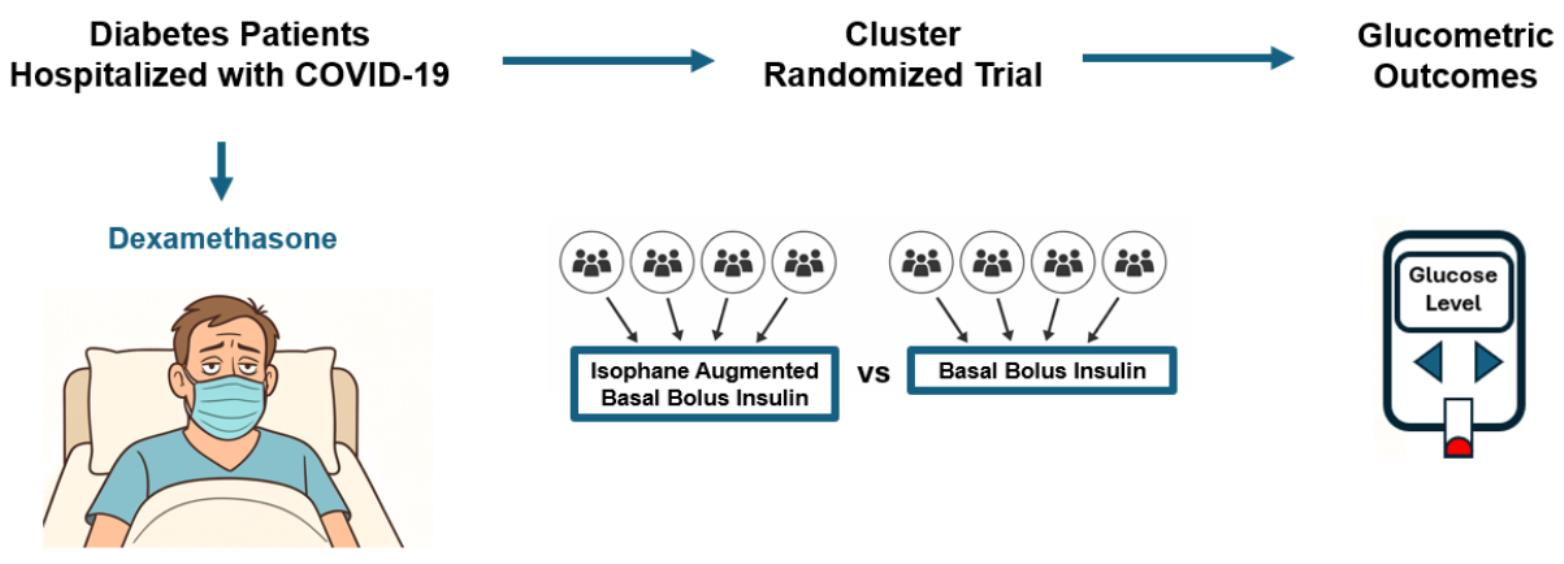
Graphical Abstract

1. Introduction

Hyperglycemia is common amongst hospitalized patients treated with glucocorticoids. Glucocorticoids elevate glucose levels among people with diabetes and even affect 50–70% of patients who did not have prior diabetes [1,2,3]. Its management is challenging and there have been few randomized controlled trials (RCT). Major contributory factors to the difficulties obtaining supportive evidence for the treatment of glucocorticoid-induced hyperglycemia (GIH) include the heterogeneity of the underlying disease processes and indications for glucocorticoid therapy; variations in the type, dose, route of administration, and duration of glucocorticoid therapy; and inter-individual variability in the hyperglycemic response to glucocorticoids.
There has therefore been little evidence upon which to base guidelines for the management of GIH. Similarities in the time course of action of prednisone and isophane (Neutral Protamine Hagedorn) insulin [2,3] have led to the latter’s use in the management of GIH. The Joint British Diabetes Societies for Inpatient Care has indicated that for patients on once-daily steroid therapy, morning intermediate-acting basal insulin may be appropriate if hyperglycemia is present through the day and into the evening [4]. Prandial and correctional insulin may also be required. Based on the limited data, it has been recently concluded that a combination of isophane and basal bolus insulin (BBI) therapy provides the greatest likelihood of effectiveness [5].
The paucity of evidence regarding the management of GIH has been further highlighted by the recent COVID-19 pandemic, with the routine use of dexamethasone to treat patients with respiratory failure [6]. In this situation, which is also characterized by significant infection-associated insulin resistance [7], dexamethasone-induced hyperglycemia (DIH) occurs frequently [8]. Whilst the benefit of dexamethasone on reducing COVID-19 severity is preserved in patients with diabetes, there is a potential risk of developing diabetic ketoacidosis and a hyperglycemic hyperosmolar state [9]. Initial guidelines for the management of COVID-19-associated DIH were largely based on expert opinion [10], reflecting the paucity of evidence concerning the management of DIH.
Dexamethasone’s glycemic impact in non-diabetic patients with COVID-19, with an increase in blood glucose within 3 h and a peak hyperglycemic effect between 7 and 9 h following dexamethasone administration [8], led us to hypothesize that isophane insulin added to a basal bolus insulin (BBI) regimen would result in more effective blood glucose control in diabetes patients with DIH. The aim of the current study was to test this hypothesis in a cluster RCT.

2. Materials and Methods

The CRITICal Trial (Cluster-Randomised Trial of Insulin Therapy for Dexamethasone-Induced Hyperglycemia amongst Diabetes Patients with COVID-19) was approved by the Western Sydney Local Health District Human Research Ethics COVID-19 Committee (reference 2021/ETH11485). Given the challenging clinical situation at the time, with difficulties obtaining individual consent and considering that the insulins being compared in the study were in common use, we utilized a cluster-randomized design with a waiver for individual participant consent. The trial was registered with the Australian New Zealand Clinical Trials Registry, ACTRN12621001340820, on 6 October 2021. It was conducted at a single hospital in Western Sydney (Westmead Hospital), a quaternary referral hospital. At the time of ethics approval, Westmead Hospital was receiving the majority of COVID-19 patients requiring hospitalization in Western Sydney [11], an area with a population of over 2.5 million people.

2.1. Participants

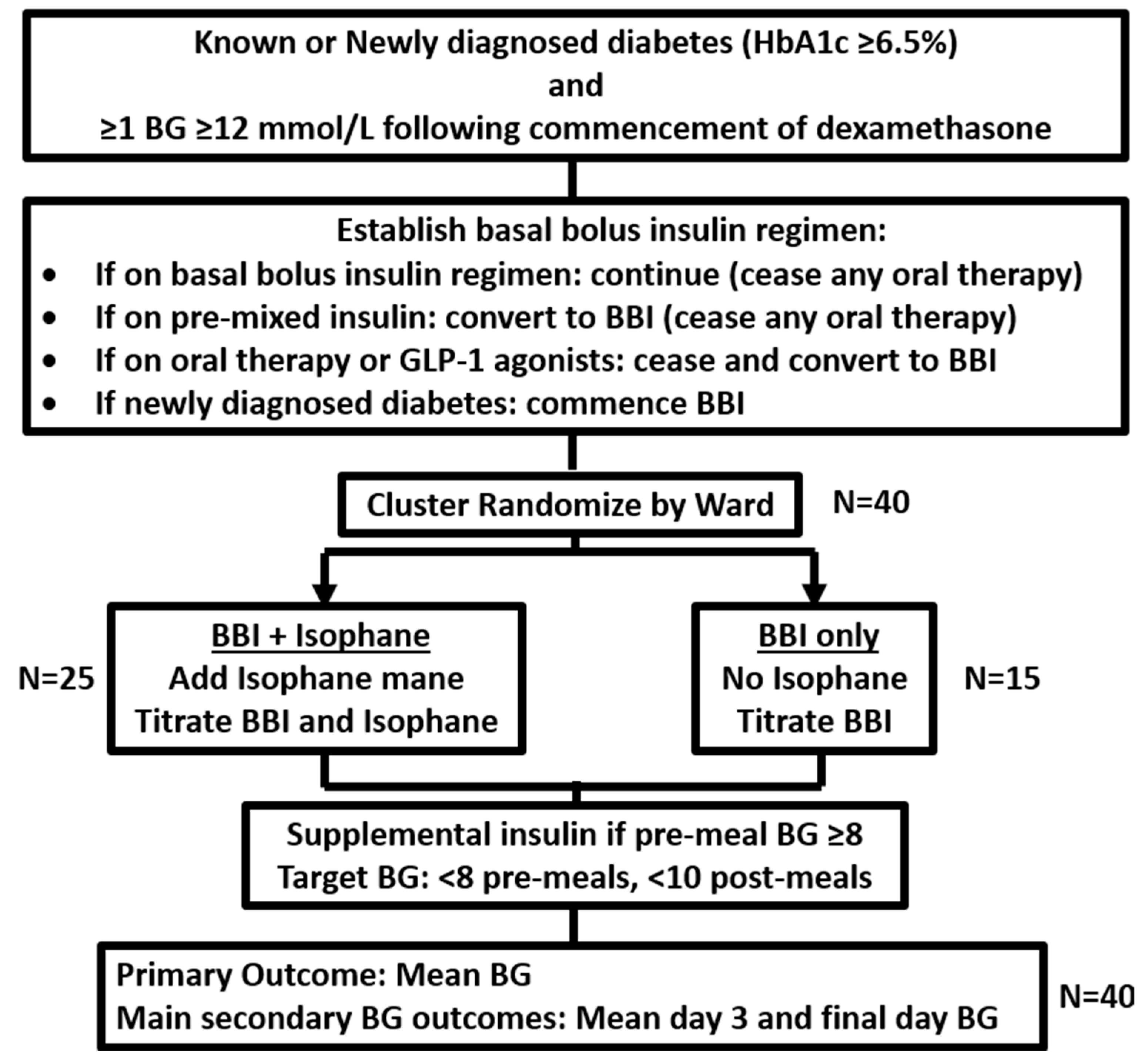
In accordance with protocol, all patients admitted with COVID-19 who commenced dexamethasone irrespective of diabetes status commenced blood glucose monitoring. Patients with hyperglycemia, defined as the presence of a random serum or finger-prick capillary blood glucose (BG) level ≥12 mmol/L, were identified from the electronic medical record (eMR) through a diabetes dashboard that displayed glucose levels for all patients in the hospital. Patients with diabetes (both known and newly diagnosed [HbA1c ≥ 6.5%, ≥48 mmol/mol]) admitted with COVID-19, not requiring admission to the intensive care unit (ICU) and who were hyperglycemic after commencing dexamethasone 6 mg/day orally (usually administered in the morning), were included in the trial. Patients aged <18 or >80 years, pregnant patients, and patients with type 1 diabetes or with eGFR < 30 mL/min/1.73 m2 were excluded. The overall study protocol is displayed in Figure 1.

2.2. Randomization

Eligible patients were cluster-randomized by treating ward and by 2-week time blocks (i.e., wards were re-randomized every 2 weeks), so as to reduce ward-based bias, in a 1:1 ratio to receive either a standard BBI regimen or an isophane-augmented BBI regimen (IaBBI). There were eight wards or ward groups. Computer randomization was undertaken by a statistician SM who was not involved in any clinical aspect of the trial. The clinical trials team were unaware of the randomization assigned to each ward until the first patient in that ward was randomized in the fortnight. Patients who changed wards, or whose ward was re-randomized to the alternative insulin regimen, continued to receive their initial insulin regimen.

2.3. Interventions

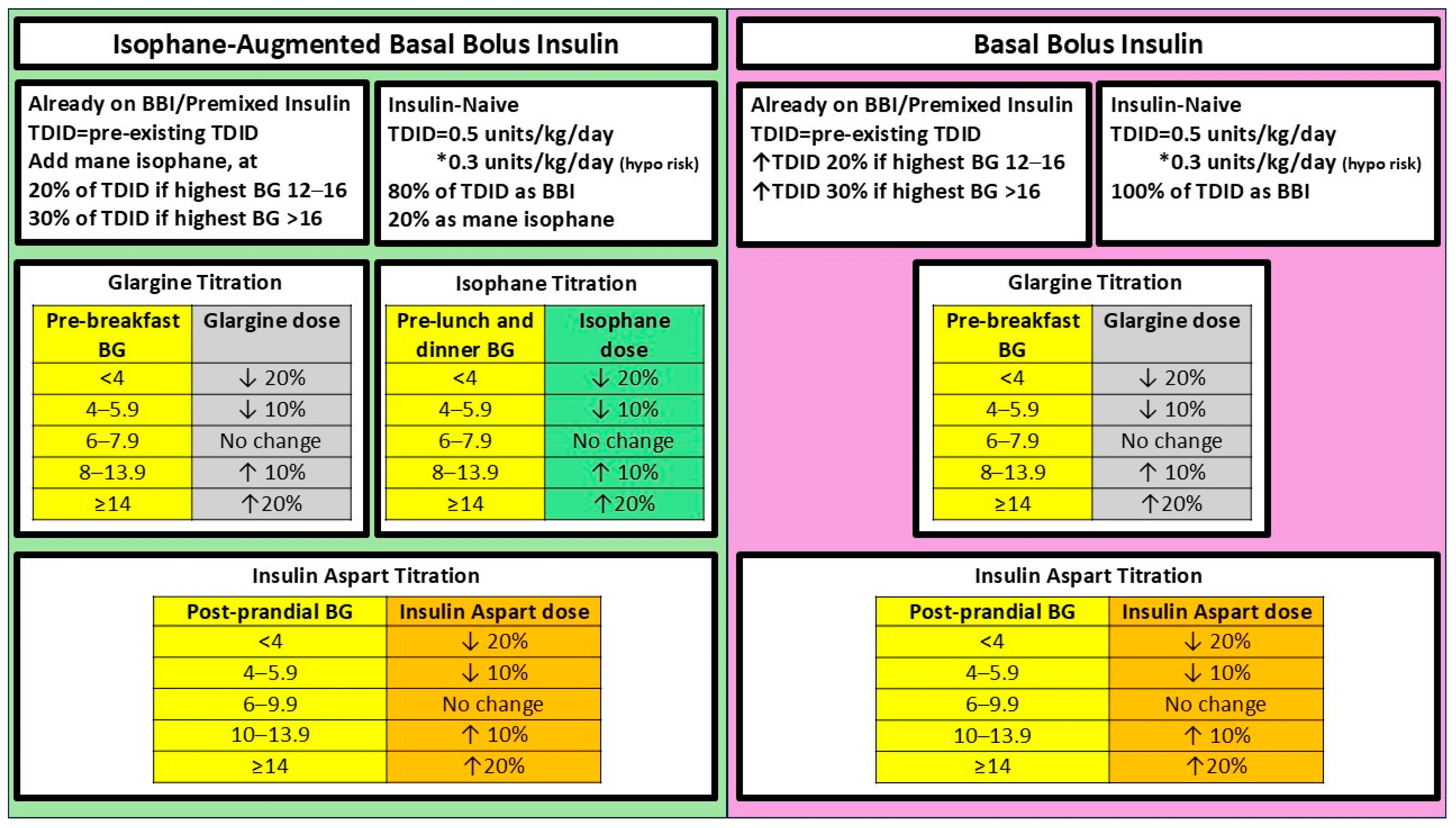
The insulin initiation and titration protocols for the two arms of the study are depicted in Figure 2. The BBI regimen consisted of a single bedtime injection of basal insulin (glargine) and three prandial injections of rapid-acting insulin (insulin aspart). The IaBBI regimen comprised the same BBI regimen, but with an additional single morning injection of isophane insulin. For each patient, the initial total daily insulin dose was determined. The initial total daily insulin dose was the same whether the patient was assigned to the BBI or IaBBI arm. All oral anti-diabetic agents were stopped upon admission.
For patients already on BBI, they either continued BBI alone or isophane insulin was added to their BBI regimen (IaBBI), depending on randomization. A standard protocol based on peak glucose levels to date was used to calculate the initial insulin doses, which were up to 130% of their preadmission daily insulin dosage [12] (Figure 2). For patients not already receiving BBI, they were converted to BBI or IaBBI using a similar standardized protocol based on peak glucose levels and weight (Figure 2). When starting BBI, half the total daily insulin dose was given as basal insulin (glargine) and the other half split evenly between the three meals as insulin aspart [13].
The total starting dose of insulin was 0.5 units/kg/day for insulin-naive patients [13]. Patients at greater risk of hypoglycemia, i.e., aged >70 years, with an eGFR 30–59 mL/min/1.73 m2 or only modest hyperglycemia (initial BG 12–16 mmol/L) were commenced on a reduced insulin dose of 0.3 units/kg/day.
Patients received supplemental insulin in accordance with the same protocol for both arms of the study (Table 1). Insulin doses were adjusted daily according to a standardized protocol (Figure 2), with the aim of achieving a BG target of <8 mmol/L before meals and <10 mmol/L 2 h after meals. Our protocol specified BGs to be monitored before and 2 h after each meal. Both treatment groups had all their insulin doses adjusted daily by the Inpatient Diabetes Management Service, with most insulin management occurring virtually, given the isolation requirements for inpatients with COVID-19. With the medical and nursing challenges of managing patients with COVID-19 in hospital, we took a pragmatic approach by minimizing any variation to usual care in what was a volatile environment of very unwell patients with varying insulin requirements and food intake.

2.4. Outcomes

The primary outcome was the mean BG for each participant, calculated from the mean of all BGs performed at the standard times (before and after meals) each day while they were in the study, from the first day with at least two BG readings until the last day with at least two BG readings when the patient experienced any of the following: cessation of dexamethasone, change to a different diabetes medication regimen, discharge from hospital, transfer to the ICU, or decision to commence palliative care. Whilst the mean BG does not necessarily reflect the time-dependent hyperglycemic effect of dexamethasone, this was a pragmatic and simple outcome, and we reasoned that if the intervention is effective, some effect on mean glucose will be discerned.
Predefined secondary outcomes included the following: mean of the BGs on day 3 and the final day, mean of all pre-meal and post-meal BGs, proportion of BGs in the target range, proportion of pre-meal and post-meal BGs in the target range, difference between mean BGs on enrollment day and at the conclusion of the study, and incidence of secondary infections. The mean of BGs on day 3 were of particular interest as this gave 2 days for insulin titration to achieve BG targets.
Episodes of hypoglycemia were recorded and graded according to American Diabetes Association criteria: level 1 (3.0–3.9 mmol/L); level 2, severe hypoglycemia (<3.0 mmol/L); and level 3, hypoglycemia, resulting in altered mental or physical functioning requiring assistance [14].

2.5. Statistical Power and Analysis

We aimed to recruit 77 patients to each treatment arm to give 80% power to detect a difference in a mean BG of 1.5 mmol/L at a significance level of 0.05, assuming an intraclass correlation of 0.05 and five patients per ward at each time point. Based on the number of admissions at the time this trial was conceived, it was estimated that it would require 2–3 months to recruit sufficient patients for the study. The study was analyzed on an intention to treat basis. To assess the primary and secondary objectives, a linear mixed regression model was used with adjustment for ward as a random effect and treatment as a fixed effect.
Analyses were conducted using R (version 3.5.2; R Foundation for Statistical Computing) packages. Statistical tests were two-tailed, with a 5% significance threshold.

3. Results

The study commenced in November 2021. However, beginning in December 2021, there was a dramatic decline in the number of eligible subjects due to a reduction in the number of patients requiring hospitalization and a government decision to disseminate patients with COVID-19 to multiple hospitals. In October 2022, it was decided to terminate the trial before achieving the target sample size.

3.1. Participant Details

A total of 40 patients were recruited, 25 to the IaBBI arm and 15 to the BBI arm, with good balance across the treatment groups and no significant differences in baseline characteristics (Table 2). Thirty-three (82.5%) patients had known diabetes prior to admission, with 13/33 (39.4%) already being treated with insulin, 26/33 (79%) receiving metformin, and seven patients (17.5%) being diagnosed with diabetes in hospital.
Of the 27 patients not treated with insulin prior to admission, 21 (fifteen IaBBI and six BBI) were commenced on 0.3 units/kg/day of insulin, given their higher risk of hypoglycemia. The mean initial total dose of insulin was 0.44 ± 0.75 units/kg/day in the IaBBI group and 0.47 ± 0.31 units/kg/day in the BBI group (NS). The initial dose of isophane insulin in the IaBBI group was 14.0 ± 17.6 units/day. The mean duration of treatment in the trial was 5.4 ± 2.2 days, with 23.6 ± 11.7 BGLs recorded per patient (Table 3).

3.2. Study Outcomes

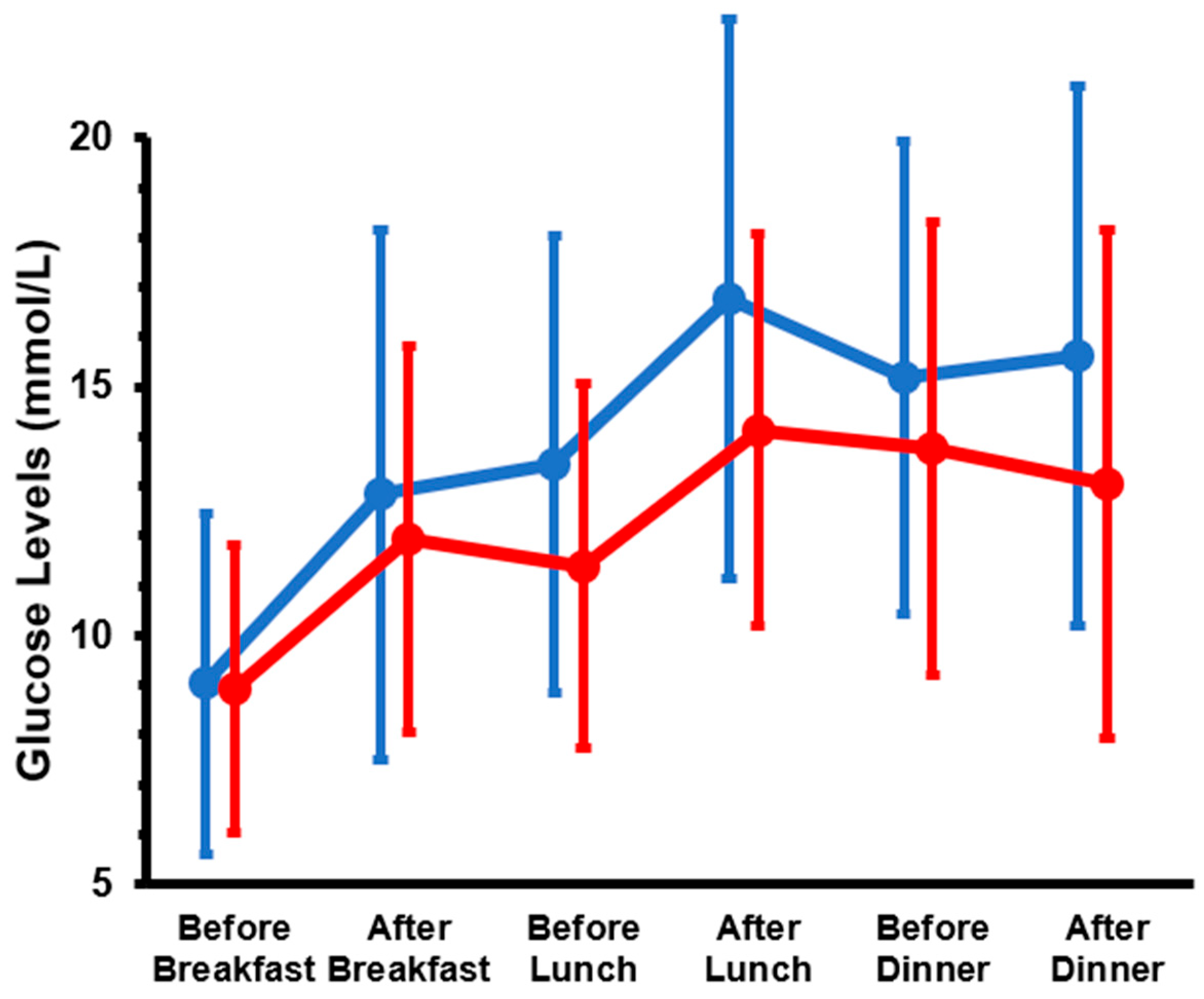
The study outcomes are recorded in Table 3. The primary outcome of the mean BG across the duration of the study was not different between the treatment groups at 11.9 ± 2.4 mmol/L for the IaBBI group and 12.6 ± 2.4 mmol/L for the BBI group; p = 0.193. There was, however, a difference between the treatment groups in the mean BG on day 3 (IaBBI 11.1 ± 3.5 vs. BBI 12.7 ± 3.5, p = 0.029) and on the last day of the study (IaBBI 9.6 ± 2.8 vs. BBI 10.7 ± 2.5 mmol/L, p = 0.011), but no difference in the other secondary outcomes of pre-meal or post-meal BGs. The mean of all the pre- and post-meal BGs by randomization groups are displayed in Figure 3.
The mean proportion of BGs within the target at the end of the study was 47.6% for the IaBBI group and 31.8% for the BBI group (p = 0.04). There was no difference in the number of secondary infections (3/25 vs. 2/15) between the treatment groups. There were no differences in hypoglycemia between the groups, with seven episodes of hypoglycemia in the IaBBI group (28%) and four (26.7%) in the BBI group, and two episodes vs. one episode of level 2 or 3 hypoglycemia, respectively.
Insulin requirements increased overall throughout the study period in both treatment groups. There were no differences in total insulin dosage between the groups at baseline or at the end of the study, nor in the increase in insulin doses from baseline to the end of the study. Insulin requirements decreased from baseline in 4/25 patients in the IaBBI group and 6/15 in the BBI group. Four of these ten patients (two from each group) were previously insulin-naive and had commenced a lower initial insulin dose of 0.3 units/kg/day.

4. Discussion

The CRITICal Trial is one of the few RCTs examining insulin regimens for GIH, and the first RCT to evaluate the use of isophane insulin for the treatment of DIH amongst hospitalized COVID-19 patients with diabetes. The trial was terminated early because of a rapid decline in the number of patients admitted to hospital with COVID-19. It therefore failed to enroll sufficient patients and lacked the power to detect whether the addition of isophane insulin to a BBI regimen would achieve the primary outcome of a reduction in overall mean blood glucose, and indeed we did not find an improvement in the primary outcome.
However, the trial achieved the secondary outcomes of a modest reduction in the mean BG of 1.6 mmol/L on day 3 and 1.1 mmol/L on the final day of the study, as well as an increase in the proportion of BGs within the target range with IaBBI. This at least provides some data to suggest that the peak glycemic impact of dexamethasone in COVID-19-affected patients with diabetes [8], similar to that of prednisone [2,3], can potentially be counter-balanced by the addition of morning isophane to a BBI regimen. Whilst the clinical significance of our findings are unclear, other RCTs of (non-GIH) diabetes management in hospital have shown reduced rates of infection with interventions, which achieved decreases in BG of 0.3–0.5 mmol/L [15,16]. In a cluster-randomized trial, Kyi et al. found that hospital patients who received early specialist diabetes management had a daily mean glucose level that was 0.5 mmol/L less than for the control subjects, and this was associated with an 0.2 adjusted odds ratio of hospital-acquired infection [15]. Another RCT examining the effectiveness of early specialist diabetes management achieved a median daily glucose difference of 0.3 mmol/L, with a 4.6% reduction in hospital-acquired infections [16].
Isophane insulin has been recommended as the preferred basal insulin for people with GIH as its profile is similar to the glycemic profile of prednisone [2,3]. Prior to COVID-19, there had been four randomized trials that compared the use of isophane insulin to glargine for the management of GIH. In two studies of patients with GIH, isophane added to BBI resulted in lower mean BGs than BBI alone [17,18]. However, in one of these studies, the amount of insulin administered to the isophane with the BBI group was more than double that of the BBI group [17]. In two other studies comparing insulin regimens using isophane against glargine for patients with GIH, no differences in glycemic outcomes were observed [13,19].
For patients with COVID-19 and DIH, there have been two previously published clinical trials examining insulin management. The first was a retrospective study comparing an overall management protocol based around basal and correctional insulin and Linagliptin, rather than a specific insulin regimen, to standard care [20]. This found improvements in glycemic control and reduced in-hospital mortality in the protocol group, only 38% of whom had diabetes. Recently, a BBI-based algorithm for managing DIH in patients with COVID-19 with seven weight-based treatment options, which did not incorporate isophane insulin, was published [21]. A comparison of the protocol in 65 patients (85% with diabetes) against historical controls demonstrated improvements in fasting BGs but not overall BGs with a greater proportion of BBI utilization in the protocol group.
A strength of the design of the CRITICal Trial was that it was conducted in a relatively homogenous group of patients. All patients had diabetes, were treated with the same dose and type of glucocorticoid, and were suffering from the same primary illness. Variations in glucocorticoid type and dose and the proportion of patients with pre-existing diabetes in other trials make comparisons between studies problematic and raises doubts about the generalizability of guidelines for the management of GIH [4].
By including only people with diabetes, all subjects required insulin, and at substantially higher insulin doses than in the other COVID-19 study where insulin dosage was reported [22]. This gave a better opportunity to test the IaBBI regimen. We used either weight-based doses of isophane insulin or a dose proportionate to the pre-admission insulin dose, with subsequent adjustments in total insulin doses also being proportionate. This ensured that initial insulin doses in the two treatment arms were equipotent, thereby enabling comparison of insulin regimens rather than dosage. Failure to ensure insulin equipotency may invalidate the perceived glycemic benefits of the therapeutic intervention [17].
Whilst we did not adjust the initial insulin dose based on the HbA1c, two other studies of GIH have done so [20,22]. Our finding of an association between the final total daily insulin dose and HbA1c suggests that the incorporation of HbA1c may refine our algorithm, but requires validation. More recently, insulin requirements have been linked to increasing HbA1c in patients with COVID-19 and DIH [23]. Similar findings linking HbA1c to insulin requirements have been identified in patients with prednisone-induced hyperglycemia without COVID-19 [24].
The major limitation of our study is that we were unable to reach our planned sample size to adequately test our hypothesis concerning the benefit of adding morning isophane insulin to a BBI regimen. We were, however, able to demonstrate that such a regimen is feasible even in the difficult circumstances of patient isolation with COVID-19, without an increase in hypoglycemia.

5. Conclusions

The inability to reach an adequate sample size in this study prevents any definitive conclusions from being made regarding the effectiveness of the addition of morning isophane insulin to BBI insulin among diabetes patients with COVID-19 and GIH. We did not find an improvement in overall glucose levels with this insulin regimen, but we did observe an improvement in some secondary glucose outcomes. This suggests that the use of isophane insulin for the management of GIH is a reasonable strategy and provides some evidence for guidelines recommending this. Further, larger studies using isophane insulin for the management of GIH are worthwhile and much needed.

Author Contributions

Conceptualization, N.W.C. and D.R.C.; methodology, N.W.C. and D.R.C.; formal analysis, S.M. and H.M.; investigation, A.H., C.C., Y.J.J.R., Y.-F.W. and M.W.; data curation, S.M., H.M., A.H., C.C. and L.L.; writing—original draft preparation, D.R.C. and N.W.C.; writing—review and editing, N.W.C., D.R.C., S.M., A.H., C.C., H.M., T.-M.H., Y.J.J.R., Y.-F.W. and M.W.; supervision, N.W.C.; project administration, N.W.C. All authors have read and agreed to the published version of the manuscript.

Funding

This research received no external funding.

Institutional Review Board Statement

This study was conducted in accordance with the Declaration of Helsinki and approved by the Western Sydney Local Health District Human Research Ethics COVID-19 Committee (reference 2021/ETH11485, approved 30 September 2021).

Informed Consent Statement

Patient consent was waived due to the impracticality and risk of obtaining individual consent at that time, and because the study was conducted as a cluster randomized trial.

Data Availability Statement

Data from the CRITICal Study may be shared upon reasonable request.

Acknowledgments

We would like to express our appreciation to the medical and nursing staff of the COVID-19 wards of the hospital, as well as the staff of the Inpatient Diabetes Service, for their exemplary care of these patients in challenging clinical circumstances. We would also like to acknowledge the contribution of the Drug Monitoring Safety Board (Mark McLean and Robert Moses).

Conflicts of Interest

The authors declare no conflicts of interest.

Abbreviations

The following abbreviations are used in this manuscript:
BBIBasal bolus insulin
IaBBIIsophane augmented basal bolus insulin
GIHGlucocorticoid-induced hyperglycemia
DIHDexamethasone-induced hyperglycemia
RCTRandomized controlled trial
BGBlood glucose
ICUIntensive care unit

References

  1. Donihi, A.C.; Raval, D.; Saul, M.; Korytkowski, M.T.; DeVita, M.A. Prevalence and predictors of corticosteroid-related hyperglycemia in hospitalized patients. Endocrinol. Pract. 2006, 12, 358–362. [Google Scholar] [CrossRef] [Scilit] [PubMed]
  2. Burt, M.G.; Roberts, G.W.; Aguilar-Loza, N.R.; Frith, P.; Stranks, S.N. Continuous monitoring of circadian glycemic patterns in patients receiving prednisolone for COPD. J. Clin. Endocrinol. Metab. 2011, 96, 1789–1996. [Google Scholar] [CrossRef] [Scilit]
  3. Fong, A.C.; Cheung, N.W. The high incidence of steroid-induced hyperglycemia in hospital. Diabetes Res. Clin. Pract. 2013, 99, 277–280. [Google Scholar] [CrossRef] [Scilit] [PubMed]
  4. Joint British Diabetes Societies for Inpatient Care. Management of Hyperglycemia and Steroid (Glucocorticoid) Therapy Revised January 2023. Available online: https://abcd.care/sites/default/files/site_uploads/JBDS_Guidelines_Current/JBDS_08_Management_of_Hyperglycaemia_and_Steroid_%28Glucocorticoid%29_Therapy_with_QR_code_January_2023.pdf (accessed on 10 March 2026).
  5. Brooks, D.; Schulman-Rosenbaum, R.; Griff, M.; Lester, J.; Low Wang, C.C. Glucocorticoid-induced hyperglycemia including dexamethasone-associated hyperglycemia in COVID-19 infection: A systematic review. Endocr. Pract. 2022, 28, 1166–1177. [Google Scholar] [CrossRef] [Scilit]
  6. The Recovery Collaborative Group. Dexamethasone in hospitalized Patients with COVID-19. N. Engl. J. Med. 2021, 384, 693–704. [Google Scholar] [CrossRef] [Scilit]
  7. Wu, L.; Girgis, C.M.; Cheung, N.W. COVID-19 and diabetes: Insulin requirements parallel illness severity in critically unwell patients. Clin. Endocrinol. 2020, 93, 390–393. [Google Scholar] [CrossRef] [Scilit]
  8. Rhou, Y.J.J.; Hor, A.; Wang, M.; Wu, Y.F.; Jose, S.; Chipps, D.R.; Cheung, N.W. Dexamethasone-induced hyperglycemia in COVID-19: Glycaemic profile in patients without diabetes and factors associated with hyperglycemia. Diabetes Res. Clin. Pract. 2022, 194, 110151. [Google Scholar] [CrossRef] [Scilit]
  9. Eng, P.C.; Distaso, W.; Durreshahwar, H.; Shaikhali, Y.; Narendranathan, D.; Cassin-Scott, R.; Misra, S.; Hill, N.E.; Tharakan, G.; Oliver, N.S.; et al. The benefit of dexamethasone in patients with COVID-19 infection is preserved in patients with diabetes. Diabetes Obes. Metab. 2022, 24, 1385–1389. [Google Scholar] [CrossRef] [Scilit]
  10. Rayman, G.; Lumb, A.N.; Kennon, B.; Cottrel, C.; Nagi, G.; Page, E.; Voigt, D.; Courtney, H.C.; Atkins, H.; Higgins, K.; et al. Dexamethasone therapy in COVID-19 patients: Implications and guidance for the management of blood glucose in people with and without diabetes. Diabetes Med. 2021, 38, e14378. [Google Scholar] [CrossRef] [Scilit]
  11. Cheung, N.W.; Gilroy, N.; Hor, A.; Jose, S.; Karaitis, K.; Nayyar, V.; O’Sullivan, M.V.N.; Wheatley, J.; Chipps, D.R. Diabetes and hyperglycemia among hospitalized patients with COVID-19 in Western Sydney: A retrospective cohort study. Intern. Med. J. 2023, 53, 194–201. [Google Scholar] [CrossRef] [Scilit] [PubMed]
  12. Radhakutty, A.; Stranks, J.L.; Mangelsdorf, B.L.; Drake, S.M.; Roberts, G.W.; Zimmerman, A.T.; Stranks, S.N.; Thompson, C.H.; Burt, M.G. Treatment of prednisolone-induced hyperglycemia in hospitalized patients: Insights from a randomized, controlled Study. Diabetes Obes. Metab. 2017, 19, 571–578. [Google Scholar] [CrossRef] [Scilit]
  13. Umpierrez, G.E.; Smile, D.; Zisman, A.; Prieto, L.M.; Palacio, A.; Ceron, M.; Puig, A.; Mejia, R. Randomized study of basal-bolus insulin therapy in the inpatient management of patients with type 2 diabetes (RABBIT 2 Trial). Diabetes Care 2007, 30, 2181–2186. [Google Scholar] [CrossRef] [Scilit]
  14. ElSayed, N.A.; Aleppo, G.; Aroda, V.R.; Bannuru, R.R.; Brown, F.M.; Bruemmer, D.; Collins, B.S.; Hillard, M.E.; Isaacs, D.; Johnson, E.L.; et al. Glycemic targets: Standards of care in diabetes—2023. Diabetes Care 2023, 46, S97–S110. [Google Scholar] [CrossRef] [Scilit]
  15. Kyi, M.; Colman, P.G.; Wraight, P.R.; Reid, J.; Gorelik, A.; Galligan, A.; Kumar, S.; Rowan, L.M.; Marley, K.A.; Nankervis, A.J.; et al. Early intervention for diabetes in medical and surgical inpatients decreases hyperglycemia and hospital-acquired infections: A cluster randomized trial. Diabetes Care 2019, 42, 832–840. [Google Scholar] [CrossRef] [Scilit]
  16. Barmanray, R.D.; Kyi, M.; Colman, P.G.; Rowan, L.; Raviskanthan, M.; Collins, L.; Donaldson, L.; Montalto, S.; Tsan, J.; Sun, E.; et al. The specialist treatment of inpatients: Caring for diabetes in surgery (STOIC-D Surgery) trial: A randomized controlled trial of early intervention with an electronic specialist-led model of diabetes care. Diabetes Care 2024, 47, 948–955. [Google Scholar] [CrossRef] [Scilit] [PubMed]
  17. Khowaja, A.; Alkhaddo, J.B.; Rana, Z.; Fish, L. Glycemic control in hospitalized patients with diabetes receiving corticosteroids using a neutral protamine Hagedorn insulin protocol: A randomized clinical trial. Diabetes Ther. 2018, 9, 1647–1655. [Google Scholar] [CrossRef] [Scilit]
  18. Grommesh, B.; Lausch, M.J.; Vannelli, A.J.; Mullen, D.M.; Bergenstal, R.M.; Richter, S.A. Hospital insulin protocol aims for glucose control in glucocorticoid-induced hyperglycemia. Endocr. Pract. 2016, 22, 180–189. [Google Scholar] [CrossRef] [Scilit] [PubMed]
  19. Ruiz de Adana, M.S.; Colomo, N.; Maldonado-Araque, C.; Fontalba, M.I.; Linares, F.; Garcia-Torres, F.; Fernandez, R.; Bautista, C.; Olveira, G.; de la Cruz, J.L.; et al. Randomized clinical trial of the efficacy and safety of insulin glargine vs. NPH insulin as basal insulin for the treatment of glucocorticoid induced hyperglycemia using continuous glucose monitoring in hospitalized patients with type 2 diabetes and respiratory disease. Diabetes Res. Clin. Pract. 2015, 110, 158–165. [Google Scholar]
  20. Asiri, A.A.; Alguwaihes, A.M.; Jammah, A.A.; Alfadda, A.A.; Al-Sofiani, M.E. Assessment of the effectiveness of a protocol to manage dexamethasone-induced hyperglycemia among hospitalized patients with COVID-19. Endocr. Pract. 2021, 27, 1232–1241. [Google Scholar] [CrossRef] [Scilit] [PubMed]
  21. Karol, A.B.; Viera, N.; Ogyaadu, S.J.; Brooks, D.; Shah, N.A.; Linker, A.S.; Lam, D.W.; Levy, C.J.; O’Malley, G. A novel algorithm for the management of inpatient COVID-19 glucocorticoid-induced hyperglycemia. Clin. Diabetes 2023, 41, 378–385. [Google Scholar] [CrossRef] [Scilit]
  22. Lakhani, O.J.; Kumar, S.; Tripathi, S.; Desai, M.; Seth, C. Comparison of two protocols in the management of glucocorticoid-induced hyperglycemia among hospitalized patients. Indian J. Endocrinol. Metab. 2017, 21, 836–844. [Google Scholar] [CrossRef] [Scilit]
  23. Gordon, C.; Kamel, B.; McKeon, L.; Brooks, D.; Schulman-Rosenbaum, R. Dexamethasone use and insulin requirements in coronovirus-19 (COVID-19) infection stratified by hemoglobinA1c. Diabetes Epidemiol. Manag. 2023, 10, 100123. [Google Scholar] [CrossRef] [Scilit]
  24. Chen, A.X.; Radhakutty, A.; Zimmermann, A.; Stranks, S.N.; Thompson, C.H.; Burt, M.G. Clinical determinants of insulin requirements during treatment of prednisolone-induced hyperglycemia. Diabetes Res. Clin. Pract. 2023, 197, 110557. [Google Scholar] [CrossRef] [Scilit] [PubMed]
Figure 1. Overall study protocol and consort diagram. BG = blood glucose, BBI = basal bolus insulin.
Diabetology 07 00094 g001
Figure 2. Insulin titration schedule. TDID = total daily insulin dose. * patients at increased risk of hypoglycemia (blood glucose 12–16, age ≥ 70, or chronic kidney disease 3).
Diabetology 07 00094 g002
Figure 3. Mean (± SD) of all the pre- and post-meal blood glucose levels by randomization group. There were no significant differences at any time point. Blue: Basal Bolus Insulin-Only group; Red: Isophane-Augmented Basal Bolus Insulin group.
Diabetology 07 00094 g003
Table 1. Pre-meal insulin aspart supplemental scale.
Glucose Level (mmol/L)A
TDID ≤ 50 Units/Day
OR
Weight < 50 kg
B
TDID 50–100 Units/Day
OR
Weight 50–100 kg
C
TDID > 100 Units/Day
OR
Weight > 100 kg
8.0–9.91 unit2 units3 units
10.0–13.92 units4 units5 units
14.0–17.93 units6 units7 units
≥184 units8 units9 units
If a was scale ineffective, then the patient moved to the next scale: A to B to C. TDID = total daily insulin dose.
Table 2. Baseline participant characteristics.
Isophane-Augmented BBI
n = 25
BBI Only
n = 15
Overall
n = 40
Age (years)66.9 ± 10.162.3 ± 12.865.2 ± 11.2
Known diabetes22 (88%)11 (73%)33 (83%)
Newly diagnosed diabetes3 (12%)4 (27%)7 (18%)
Diabetes medication prior to admission *
Insulin8 (32%)5 (33%)13 (33%)
Metformin19 (76%)7 (47%)26 (65%)
Sulphonylurea7 (28%)4 (27%)11 (28%)
DPP4 inhibitor7 (28%)4 (27%)11 (28%)
SGLT-2 inhibitor7 (28%)3 (20%)10 (25%)
GLP-1 agonist1 (4%)1 (7%)2 (5%)
Weight (kg)97.0 ± 19.494.2 ± 21.295.9 ± 19.9
HbA1c (%)8.2 ± 2.18.4 ± 1.78.3 ± 1.9
HbA1c (mmol/mol)66.6 ± 23.067.7 ± 18.267.1 ± 21.1
Estimated GFR (ml/min/1.73 m2)71.8 ± 19.580.9 ± 12.275.2 ± 17.5
Glucose level on admission (mmol/L)11.0 ± 4.311.5 ± 5.011.2 ± 4.5
Data are mean ± SD or n (%). BBI = basal bolus insulin. * Some participants were on more than one class of medication.
Table 3. Study outcomes. Data are mean ± SD or n (%). BG = blood glucose. BBI = basal bolus insulin. All BGs are mmol/L.
Isophane-Augmented BBIBBI Onlyp-Value
n = 25n = 15
Blood Glucose (mmol/L)
Primary outcome: All BGs throughout study11.9 ± 2.512.6 ± 2.40.19
Secondary glucose outcomes:
Day 3 BGs11.1 ± 3.512.7 ± 3.50.03
Last day BGs9.6 ± 2.810.7 ± 2.50.01
Change in BGs from day 1 to last day−4.1 ± 4.7−4.4 ± 4.30.90
All pre-meal BGs throughout study11.4 ± 2.411.9 ± 2.00.21
All post-meal BGs throughout study13.1 ± 2.713.8 ± 2.90.13
Proportion BGs in target on last day (%)47.6 ± 38.431.8 ± 29.30.04
Proportion pre-meal BGs in target on the last day (%)48.0 ± 39.236.6 ± 34.10.13
Proportion post-meal BGs in target on the last day (%)42.7 ± 44.319.4 ± 32.40.05
Insulin dose (units/day)
Day 145.2 ± 84.841.7 ± 19.40.76
Last day83.8 ± 84.361.7 ± 41.00.50
Change from day 1 to last day38.6 ± 54.619.9 ± 37.40.56
Mean throughout study77.9 ± 77.367.4 ± 25.50.70
Weight-adjusted insulin dose (units/kg/day)
Day 10.4 ± 0.70.5 ± 0.30.97
Last day0.9 ± 0.90.7 ± 0.50.62
Change from day 1 to last day0.4 ± 0.70.2 ± 0.40.49
Mean throughout study0.8 ± 0.70.8 ± 0.40.86
Secondary infection
One or more secondary infection3 (12.0%)2 (13.3%)1
Incidence of hypoglycemia
Level 1 or higher7 (28.0%)4 (26.7%)1
Level 2 or higher2 (8.0%)1 (6.7%)1
Disclaimer/Publisher’s Note: The statements, opinions and data contained in all publications are solely those of the individual author(s) and contributor(s) and not of MDPI and/or the editor(s). MDPI and/or the editor(s) disclaim responsibility for any injury to people or property resulting from any ideas, methods, instructions or products referred to in the content.