


Abstract
Diabetic gastroparesis (DGp) is a chronic complication of diabetes characterized by delayed gastric emptying with nausea, vomiting, early satiety, bloating, and poor glycemic control. Diagnosis requires objective testing, preferably a 4-h gastric emptying scan, along with assessment of symptom severity and quality of life for affected patients. Diabetic gastroparesis is the result of complex and overlapping mechanisms: autonomic (vagal) neuropathy, loss/dysfunction of interstitial cells of Cajal (ICC), enteric neuropathy, pyloric dysfunction (increased pyloric tone), and altered gut–brain signaling. Chronic hyperglycemia precipitates and worsens gastric dysmotility. Management remains multimodal: optimize glycemic control and nutrition, use evidence-based prokinetics and antiemetics, and consider targeted procedural/device therapies (G-POEM, gastric electrical stimulation) for refractory cases. The present is characterized by renewed drug development (ghrelin agonists such as relamorelin, with promising efficacy but a not-yet-well-established commercial pathway) and growing evidence for selective prokinetics already in use for other indications (prucalopride). Neuromodulation (Enterra GES) remains an option for selected refractory patients. Recent guidelines and studies define when and how to use these options, but no randomized head-to-head comparisons of the various therapeutic options are yet available, nor are long-term, real-world safety/efficacy registries for drugs and minimally invasive surgical procedures. There is still unsatisfactory evidence on how to safely manage GLP-1 receptor agonist therapy in diabetic patients predisposed to gastroparesis (balancing cardiorenal glycemic benefits versus gastrointestinal adverse effects), considering that these drugs can worsen gastric emptying and symptoms, requiring careful clinical judgment. This review aims to analyze and update clinicians on new evidence in the diagnosis and treatment of these conditions, starting from earlier recognition to achieving more rational treatment that balances the need for good glycemic control, control of gastrointestinal symptoms related to these complications, and an acceptable quality of life for the diabetic patient.
1. Introduction
Diabetic gastroparesis represents a digestive pathology characterized by retarded gastric evacuation occurring without evidence of mechanical blockage. This condition typically arises in patients with chronic type 1 and type 2 diabetes, compromising the quality of life of affected patients [1]. This condition results from the gradual onset in the natural history of diabetes of gastric motility abnormalities due to various mechanisms, including autonomic neuropathy and enteric nervous system inflammation. Typical symptoms encompass nausea, emesis, premature satiation, a sense of postprandial fullness, and abdominal distension [2,3,4]. It is estimated that delayed gastric transit may affect as many as half of all individuals with type 1 and type 2 diabetes, documented by gastric emptying tests, such as scintigraphy or breath testing [4,5,6,7]. Idiopathic and diabetic-related forms of gastroparesis, both type 1 and type 2, account for the majority of cases, with documented population prevalence ranging from 13.8 cases per 100,000 people in the United Kingdom to 267.7 cases per 100,000 adults in the United States [8,9]. It is important to note that patients suffering from the diabetic form of gastroparesis face a higher risk of mortality compared to those with idiopathic forms of the disease and that approximately 31.6% do not receive recognized pharmacological treatments after diagnosis [8]. The condition is further linked to a higher frequency of emergency department visits and increased expenditures related to hospital admissions [10,11]. Severe gastroparetic symptoms lead to profound disability for 11% of sufferers, a reduction in yearly earnings for 28.5% of cases, and a reduction in everyday activities for 67.5% of the affected population [12].
Many parameters can determine a poor quality of life in patients affected by gastroparesis such as the severity of gastrointestinal symptoms, the presence of concomitant co-existing morbidities and psychological distress, notably anxiety and depression, while as an aggravating element it would seem that cigarette smoking can worsen and speed up the progression of the condition [13]. It has also been observed that the diabetic form of gastroparesis exerts a deleterious impact on the caregivers of patients, affecting in particular the economic conditions of the family unit, absences from work and the possibility of dedicating hours to free time and to the satisfaction of one’s individual well-being [14]. The diagnosis of diabetic gastroparesis can be extremely difficult especially at the onset of the condition, since other functional pathologies of the upper gastrointestinal tract such as functional dyspepsia can begin or present with similar symptoms and this can lead to an underestimation of the condition linked to diabetes or to a delay in diagnosis. The latter is mainly linked to the voluptuous use of prokinetic drugs or proton pump inhibitors which often produce an apparent clinical benefit but which can delay medical intervention in recognising the relationship between glycemic control and symptoms [15,16,17,18,19].
The clinical diagnosis of diabetic gastroparesis, which includes such generic gastrointestinal symptoms, can be validated with a tool called Gastroparesis Cardinal Symptom Index (GCSI) [20], which has been validated by the same authors during subsequent clinical observations and has been widely validated [21,22,23,24] (Figure 1). The diagnosis of DGp, in addition to the clinical presentation and the compilation of the GCSI, is based on the demonstration of a delay in gastric emptying, which can be performed by gastric scintigraphy or PMID breath tests [25,26,27,28,29]. In all these studies, the results were validated in symptomatic patients with a GCI index suggestive of DGp, but it is also important to consider that up to 50% of patients may be asymptomatic [30,31,32]. Currently, the management of diabetic gastroparesis is based on pharmacological, therapeutic and dietary approaches. Treatments may include dietary modifications to promote gastric emptying, the introduction of antiemetic and prokinetic drugs, and in some cases even surgical interventions, such as gastrostomy and gastric stimulation [15,33,34,35,36,37]. Recent research is evaluating new pharmacological options, such as tradipitant and relamorelin, which show promising results in improving symptoms [38,39,40,41]. Diabetic gastroparesis represents an underdiagnosed but clinically relevant complication of diabetes, with substantial repercussions for glycemic control, the overall quality of life, and the effectiveness of therapies, especially the most modern and unconventional ones. An updated review allows diabetologists and other specialists to recognize it early, understand its pathophysiological mechanisms and adopt optimized diagnostic and therapeutic strategies. While traditional pathophysiology involving autonomic neuropathy and ICC depletion is well-documented, several critical knowledge gaps persist in the contemporary management of diabetic gastroparesis. Most existing reviews primarily summarize established neuromuscular damage without fully integrating emerging paradigms such as the ‘gut–brain–microbiota axis’ or the potential for precision medicine through genetic profiling (e.g., HMOX1 variants) [42,43,44]. Furthermore, the rapid clinical adoption of potent incretin-based therapies, including GLP-1 and dual GLP-1/GIP receptor agonists, has introduced a modern ‘therapeutic paradox’: the necessity to balance their profound cardiorenal and glycemic benefits against the potential for exacerbating gastric stasis [42,43,44]. This review advances the field by synthesizing these novel mechanistic insights and offering a contemporary perspective on navigating the complexities of 21st-century diabetes pharmacotherapy. By bridging the gap between classical pathophysiology and personalized clinical management, we provide a more nuanced and integrated diagnostic and therapeutic roadmap for clinicians [42,43,44].
Figure 1.
The Gastroparesis Cardinal Symptom Index (GCSI). This figure illustrates the three main symptom clusters of diabetic gastroparesis: postprandial fullness/early satiety, nausea/vomiting, and bloating. Each category is visually linked to the clinical assessment criteria used to evaluate symptom severity in diabetic patients.
2. Materials and Methods
This manuscript is a narrative review developed through a comprehensive literature search conducted across the PubMed, Scopus, and Web of Science databases, covering publications up to December 2025. The search strategy was designed to identify high-impact original research, clinical trials, and meta-analyses. The primary keywords and MeSH terms utilized included: “diabetic gastroparesis”, “gastric emptying”, “pathophysiology of gastroparesis”, “interstitial cells of Cajal”, “GLP-1 receptor agonists”, and “gut microbiota”. Study selection was based on scientific relevance, methodological quality, and the provision of novel mechanistic or therapeutic insights [45,46,47]. To ensure the consistency and international relevance of the evidence discussed, only articles published in the English language were included.
3. Physiopathology
Diabetic gastroparesis represents a prominent clinical manifestation of diabetic gastroenteropathy. However, its complex pathophysiology remains incompletely understood. The pathophysiological mechanisms involved in the development of this complication are multifactorial and of significant clinical importance [48]. To provide a comprehensive overview, the most relevant pathophysiological mechanisms underlying diabetic gastroparesis are discussed below (Figure 2).
Figure 2.
Pathophysiological Mechanisms of Diabetic Gastroparesis. This cartoon depicts the pathogenic cascade triggered by chronic hyperglycemia, illustrating the interplay between oxidative stress, mitochondrial dysfunction, the loss of interstitial cells of Cajal (ICCs), and the resulting autonomic neuropathy.
3.1. Autonomic Neuropathy
One of the primary pathophysiological mechanisms underlying diabetic gastrointestinal dysfunction is the damage to the autonomic nervous system triggered by chronic hyperglycemia [49,50,51]. This impairment compromises the coordination and regulation of gastric motility. Mechanistically, this occurs via the hyperglycemia-induced activation of canonical biochemical pathways driving chronic diabetic complications, such as the polyol pathway, increased oxidative stress, the upregulation of protein kinase C (PKC) signaling, and the accumulation of advanced glycation end-products (AGEs). Some of these mechanisms directly damage neurons, such as the formation of reactive oxygen species (ROS) or the triggering of the polyol flux, which precipitates sorbitol accumulation alongside alterations in the NAD+/NADH ratio. Other mechanisms may compromise cellular function while simultaneously reducing neuronal blood flow [52,53,54].
Indeed, increased oxidative stress, mediated by ROS production, leads to both direct damage to neuronal and smooth muscle elements of the gastrointestinal tract and altered nitric oxide (NO) bioavailability. This contributes to endothelial damage, thereby reducing neuronal blood flow [55,56,57,58]. Furthermore, the formation of AGEs in endoneural blood vessels, as well as the activation of PKC [53], leads to decreased endoneural blood supply and hypoxia within the nerve, resulting in impaired nerve tissue function [53,54,59]. Some studies also suggest a role for immune mechanisms [57,60,61] and reduced neurotrophic growth factors [62] in triggering poly-ADP-ribosylation activation and ATP depletion. This leads to necrotic cell death and the expression of gene patterns associated with neuronal damage and dysfunction, ultimately disrupting enteric nervous system integrity [60,61].
Mitochondrial Dysfunction in Enteric Neuropathy
Emerging evidence suggests that mitochondrial dysfunction is a primary driver of enteric nerve injury in diabetes. Chronic hyperglycemia triggers excessive mitochondrial fission and impairs mitophagy, leading to an accumulation of dysfunctional mitochondria within enteric neurons [63]. This mitochondrial “energy crisis” results in a significant depletion of adenosine triphosphate (ATP) and a concomitant surge in mitochondrial reactive oxygen species (mtROS). Such energetic failure is particularly detrimental to the long axons of the vagus nerve, promoting a “dying-back” axonal degeneration. Furthermore, the disruption of mitochondrial calcium buffering in enteric nerves alters neurotransmitter release, contributing to the early stages of gastric dysmotility before irreversible structural damage occurs [63].
3.2. Inflammation and Immune Dysfunction
The chronic low-grade inflammatory state characterizing diabetes [62] may also affect the gastrointestinal system through the action of inflammatory mediators. Indeed, certain cytokines and chemokines may influence the function of enteric neurons, myocytes, and the interstitial cells of Cajal (ICCs), integral components for gastrointestinal motor activity. In this regard, the occurrence of inflammatory infiltrates has been documented within the esophagus [63,64,65,66] alongside autonomic ganglia [64], but notably, they have not been observed in gastric specimens from individuals with diabetes and gastroparesis [62,63,64,65].
3.3. Hormonal Dysregulation and High-Fat Diet
The function of the gastrointestinal (GI) tract relies on a balanced interplay between hormones that play a significant role in regulating motility [60]. While ghrelin and motilin promote gastric emptying, cholecystokinin (CCK), glucagon-like peptide-1 (GLP-1), and glucose-dependent insulinotropic polypeptide (GIP) directly or indirectly delay it [65]. In the context of diabetes, disruptions in the secretion and feedback of these hormones have been reported. These changes disrupt the balance between inhibitory and excitatory neuromuscular signaling, thus contributing to impaired intestinal motility and delayed gastric emptying [66]. Similarly, altered ghrelin function has been observed in patients with diabetes, which may contribute to the pathogenesis of gastroparesis [67]. Furthermore, weight gain and the accumulation of visceral adipose tissue induced by a high-fat diet promote the development of insulin resistance, which can trigger mechanisms contributing to gastric motility impairment [68]. In diabetic states, the mobilization of elevated free fatty acids (FFAs) can drive oxidative stress through augmented ROS generation, further exacerbating insulin resistance [69]. This metabolic dysfunction impairs gastrointestinal motor activity, leading to the slowed gastric transit observed in gastroparesis [70]. Additionally, elevated levels of circulating FFAs [65], notably palmitic acid [71], play a pivotal role in mediating damage to the enteric nervous system, specifically affecting glial cells and neurons [72,73,74]. A significant debate in the field concerns the nature of the inflammatory process in DGp. While classical models suggested a lymphocytic-driven injury, recent critical assessments highlight a ‘biopsy paradox’: most clinical studies rely on mucosal biopsies, which often fail to show significant inflammatory infiltrates, whereas full-thickness gastric biopsies reveal profound loss of ICCs and an increase in CD206+ anti-inflammatory macrophages [75,76]. This suggests that the damage may be mediated by a loss of protective macrophage signalling rather than a direct inflammatory attack. The conflicting results in the literature are likely due to these sampling limitations, underscoring the need for more standardized tissue analysis beyond the mucosa [75,76].
3.4. Gut Microbiota
The relationship between the gut microbiota and intestinal motility is bidirectional. When motility in the stomach and small intestine is delayed, ingested food resides in the digestive tract for prolonged periods. This creates an ideal environment for excessive bacterial proliferation [69,70,71]. In diabetic gastroparesis, colon-resident bacteria often migrate proximally or proliferate within the small bowel, ultimately manifesting as Small Intestinal Bacterial Overgrowth (SIBO) [72,73]. Consequently, these bacteria alter the fermentation processes of undigested food, inducing gas production and local inflammation, which further impair gastrointestinal function [74,77].
Similarly, the dysbiosis associated with diabetes often leads to compromised intestinal barrier integrity [78]. Thus, bacterial toxins, such as lipopolysaccharide (LPS), translocate from the intestine into the bloodstream, contributing to the chronic low-grade inflammation typical of diabetes mellitus. This inflammation, in turn, induces damage to the enteric nervous system, further exacerbating gastroparesis [78]. A study [79] indicates that a dysbiotic state within the gut microbiota contributes to reduced circulating levels of short-chain fatty acids (SCFAs), thereby fostering inflammatory pathways and altered secretion of GLP-1 via the regulation of G protein-coupled receptor (GPCR) signaling. Given that these hormones are essential to the physiology regulating gastric transit, their impaired function in diabetic dysbiosis likely exacerbates gastric stasis [80,81,82,83,84]. Despite the established association between diabetes and gut dysbiosis, the causal role of the microbiota in DGp remains a subject of intense debate. A critical question is whether altered microbial composition is a primary driver of dysmotility or a secondary consequence of intraluminal stasis and altered gastric pH [85]. Current evidence is primarily cross-sectional, and longitudinal studies are lacking to determine if microbiota-targeted interventions can truly restore gastric motility [86,87]. Furthermore, the variability in results across studies often stems from inconsistent sampling sites (fecal vs. mucosal) and the confounding influence of diet and concurrent medications, such as proton pump inhibitors and metformin.
3.5. Gastric Neuropathy and Cajalopathy in Diabetic Gastroparesis
Although the exact pathophysiology of diabetic gastroenteropathy remains elusive and incompletely understood, several proposed mechanisms help delineate the pathogenic cascade culminating in these complications [48]. Chronic hyperglycemia induces a reduction in nerve fiber density within the gastrointestinal tract and alters neurotransmission [84] via segmental demyelination and axonal degeneration of the autonomic nerves, including the vagus nerve [88]. These alterations trigger an impairment in gastric smooth muscle contractile activity, impaired fundic relaxation, and compromised synchrony of gastric peristaltic waves, eventually resulting in prolonged gastric transit times. ICCs function as specialized pacemaking units crucial for gastrointestinal motility. Situated within the gastric smooth muscle layer, ICCs autonomously generate rhythmic electrical slow waves that mediate peristalsis. They also act as intermediaries, transducing signals from enteric nerves to muscle cells to coordinate digestion. In diabetes, chronic hyperglycemia, along with insulin and insulin-like growth factor 1 (IGF-1) deficiency, contributes to the depletion of ICCs [89], resulting in slowed gastric emptying [90]. The depletion of ICCs represents the hallmark enteric lesion in both diabetic (DGp) and idiopathic forms of gastroparesis, a condition known under the term cajalopathy [50]. Gastric neuropathy and cajalopathy interact synergistically to drive the pathogenesis of diabetic gastroparesis. Consequently, diabetes causes a progressive reduction in ICC counts, impairment of electrical signaling (which becomes weak or irregular), loss of pacemaker function, and disruption of synaptic and mechanical coupling between enteric nerves and myocytes. This leads to aberrant gastric electromechanical waves, profound gastroparesis symptoms, and reduced responsiveness to gastric electrical stimulation [50]. Simultaneously, neuropathic nerve signaling impedes ICC activation, further impairing gastric motility [49]. The consequence of these bidirectional mechanisms is delayed gastric emptying and the onset of clinical features including nausea, postprandial fullness, abdominal bloating, and erratic glycemic management [90,91].
Beyond ICCs: Smooth Muscle Cell (SMC) Biology
While the loss of ICCs is a hallmark of DGp, primary alterations in smooth muscle cell (SMC) biology also play a critical role. In the diabetic environment, SMCs can undergo a phenotypic switch from a contractile to a synthetic/fibroblastic state [92,93]. This remodeling is characterized by increased deposition of extracellular matrix and interstitial fibrosis, which stiffens the gastric wall and impairs fundic accommodation. Additionally, impaired signaling through the insulin/IGF-1 pathway reduces the expression of contractile proteins and disrupts calcium sensitization mechanisms within the myocytes. Consequently, even in the presence of functioning nerves, the myogenic response to gastric distension is significantly diminished, further exacerbating antral hypomotility [92,93].
3.6. Genetic Correlates of Diabetic Gastroparesis
The genetic architecture predisposing to DGp remains largely uncharacterized. In animal studies, variants within the NOS1 gene, encoding neuronal nitric oxide synthase, have been associated with an increased risk of gastroparesis. These variants may reduce nitric oxide production, thereby predisposing to pyloric spasms [89,90]. Polymorphisms in the heme oxygenase-1 (HMOX1) gene, an enzyme with protective effects against oxidative stress, have also been linked to gastroparesis development. Research conducted by Gibbons and colleagues [94] demonstrated that extended HOMX1 variants, specifically long-rang poly-GT repetitions, are correlated with heightened DGp severity within African American cohorts [95]. It has been suggested that allelic variants associated with reduced enzymatic activity render gastric nerves and ICCs more vulnerable to diabetic damage, accelerating the progression to gastroparesis.
The involvement of the innate immune response in DGp has been increasingly highlighted, with macrophage polarization emerging as a key pathological driver [96,97]. This is further supported by genomic investigations identifying specific pathways associated with macrophage activation states [89]. In particular, transcriptomic profiling of patients with DGp has revealed a marked reduction in the expression of CCL2, IL6, IL1RL1, and ADAMTS4 [97]. Nevertheless, the correlation between these transcriptional signatures and actual protein expression remains a critical knowledge gap [98]. These data underscore the importance of shifting toward personalized management in DGp, accounting for both the genetic landscape and individual clinical factors.
3.7. The Central Gut–Brain Axis and Sensitization
Diabetic gastroparesis is increasingly conceptualized as a disorder of the bidirectional gut–brain axis [99]. Chronic hyperglycemia and fluctuating metabolic signals (e.g., ghrelin and leptin) affect central nervous system (CNS) regions involved in emetic control and autonomic regulation, such as the area postrema and the nucleus tractus solitarius. Chronic delay in gastric emptying leads to persistent afferent signaling, which can trigger “central sensitization.” This phenomenon explains why some patients experience severe symptoms, such as refractory nausea and abdominal pain, that are disproportionate to the objective degree of gastric stasis. Furthermore, central dysregulation of the efferent vagal tone creates a feedback loop that further inhibits peripheral gastric motor activity, highlighting the need for neuromodulatory approaches in refractory cases [100,101].
3.8. Synthesis of the Pathogenic Cascade: From Hyperglycemia to Dysmotility
To summarize the complex pathophysiology of DGp, a clear mechanistic hierarchy can be identified. The cascade is initiated by chronic hyperglycemia, which activates harmful biochemical pathways, including the polyol flux, protein kinase C (PKC) upregulation, and the accumulation of advanced glycation end-products (AGEs). The common denominator of these pathways is the massive generation of reactive oxygen species (ROS) and mitochondrial dysfunction. This sustained oxidative stress acts as the primary driver for two convergent cellular injuries: (1) Neurodegeneration: ROS directly damage the long axons of the vagus nerve and enteric neurons (Autonomic Neuropathy), leading to impaired nitrergic signaling and defective fundic relaxation. (2) Cajalopathy: Oxidative injury, coupled with a loss of protective M2-macrophage signaling, triggers the depletion and fragmentation of ICCs.
The synergy between neuropathy (loss of inhibitory/excitatory coordination) and cajalopathy (loss of electrical pacemaking and slow-wave conduction) culminates in the failure of the gastric pump. This manifest clinically as impaired gastric accommodation, antral hypomotility, and pyloric dyssynchrony, collectively resulting in the retarded gastric evacuation and the hallmark symptoms of gastroparesis [93,101,102].
4. Relationship Between Diabetic Gastroparesis and H. pylori Infection-Related Gastritis
The pathogen Helicobacter pylori (H. pylori) is a widespread chronic infection globally and acts as the fundamental etiologic factor for gastritis, peptic ulcer disease, and gastric adenocarcinoma. It is well-documented that individuals with diabetes mellitus exhibit a heightened susceptibility to various chronic infections [103]. A substantial body of research [103,104,105,106,107] has focused on determining the prevalence of H. pylori within the diabetic population, while investigating its potential influence on glycemic homeostasis (Figure 3). Results across different studies remain divergent: some reports link the infection to poorer metabolic control and higher prevalence rates, whereas other investigations fail to establish a significant association between H. pylori status and glycemic parameters. To date, the literature regarding H. pylori clearance success in diabetic cohorts remains limited. However, the majority of available data [103,104,106] suggest that conventional antimicrobial therapy yields markedly lower eradication rates in diabetic subjects compared to those achieved in age- and sex-matched control populations. Several pathophysiological factors may drive this discrepancy, including microvascular alterations that impede antibiotic bioavailability, the presence of delayed gastric emptying, and the selection of resistant strains due to frequent antimicrobial exposure for concurrent infections. While quadruple therapy is an effective second-line option, tailoring the treatment regimen based on specific antimicrobial susceptibility testing is currently regarded as the clinical gold standard for these patients [103]. Regarding the clinical presentation, evidence indicates that dyspeptic symptoms in H. pylori-positive individuals with type 1 diabetes occur at a frequency similar to that of the general population [103,107,108]. Nevertheless, the rate of H. pylori recurrence at 12-month follow-up is significantly higher in the type 1 diabetic cohort than in healthy controls [103]. This increased reinfection risk may be attributed to impaired lymphocytic activity, defective neutrophil chemotaxis, and the potential role of dental plaque as a persistent reservoir for the bacterium [108,109]. Diabetic gastroparesis is associated with a number of acid-related diseases, including peptic ulcers, often associated with Helicobacter pylori infection. H. pylori is known to cause chronic gastritis, peptic ulcers, and gastric cancer, affecting approximately 50% of the world’s population. Furthermore, the infection leads to intestinal dysbiosis that can affect the absorption of medications such as levodopa, worsening the symptoms of gastroparesis. Recent guidelines [110] emphasize the importance of effective treatments for the eradication of H. pylori to prevent the risk of peptic ulcers and other gastrointestinal complications. The relationship between diabetic gastroparesis, Helicobacter pylori infection, and acid-related diseases is complex and significant. H. pylori is well known as the main etiological agent of peptic ulcers, with a prevalence reaching approximately 50% globally, and an estimated 42% of patients with peptic ulcers are infected with this bacterium [110]. The presence of H. pylori is not only associated with gastritis and ulcers, but can also contribute to intestinal disorders such as gastroparesis, exacerbating symptoms related to digestion and nutrient absorption. While H. pylori prevalence is notably increased in diabetic patients compared to healthy subjects, the precise link between the infection and persistent diabetic gastroparesis (DGP) remains to be fully elucidated. Current evidence suggests a significantly higher frequency of H. pylori colonization among those with DGP than in individuals with uncomplicated diabetes or non-diabetic controls. Furthermore, observations indicate a parallel rise in both the incidence of DGP and H. pylori infection rates as the duration of diabetes lengthens. Specifically, the markedly elevated infection rate in type 2 diabetic patients with gastroparetic symptoms—compared to those without—indicates that H. pylori positivity may predispose individuals to the clinical manifestations of gastric stasis. Several pathophysiological factors may explain the increased H. pylori burden in this population: (a) hyperglycemia-induced impairments in cellular and humoral immunity likely heighten susceptibility to the pathogen; (b) autonomic neuropathy-driven alterations in gastric motor function may compromise the mucosal ability to clear bacteria; and (c) the non-enzymatic glycation of mucosal glycoproteins may enhance the binding affinity of H. pylori to the gastric epithelium [109,110,111,112].
Figure 3.
Interaction between H. pylori and Gastric Dysmotility. The figure summarizes how H. pylori infection exacerbates gastric stasis through mucosal inflammation, D-cell injury, and subsequent hormonal dysregulation (hypergastrinemia).
The presence of H. pylori appears to exacerbate dyspeptic symptoms through multifaceted pathways. Primarily, diabetic microangiopathy triggers demyelinating autonomic neuropathy, which subsequently impairs gastrointestinal transit and dysregulates gastric acid secretion, creating a favorable environment for H. pylori proliferation. Once established, the pathogen promotes the release of pro-inflammatory cytokines—such as interleukins and tumor necrosis factor—which further stimulate gastrin secretion [112]. Secondly, chronic diabetes leads to capillary depletion and basement membrane thickening, resulting in localized tissue hypoxia. H. pylori infection further compounds this by inducing structural injury to somatostatin-producing D cells in the gastric antrum. The resulting depletion of D-cell populations leads to a significant reduction in somatostatin synthesis, thereby altering gastrointestinal electromyography (EMG) patterns and motor function. Current data suggest that the hypergastrinemia associated with H. pylori is not driven by G-cell hyperplasia, but rather by the functional deterioration of D cells and the subsequent loss of somatostatin’s inhibitory influence [113,114]. Additionally, the dysregulation of various gastrointestinal peptides, including pancreatic polypeptide, glucagon, and cholecystokinin, may further impede gastric emptying [113,114,115]. Moreover, fluctuations in endogenous nitric oxide levels appear to play a role in altering gastric motility [116,117,118].
Consequently, the eradication of H. pylori has the potential to enhance gastric emptying and alleviate dyspeptic symptoms, reinforcing the link between this pathogen and DGP. While it remains to be definitively established whether H. pylori is a primary causative agent or a secondary trigger, the benefits of eradication may involve the restoration of hormonal balance and the protection of D-cell integrity [1]. However, the specific underlying mechanisms necessitate further exploration. Notably, clearance rates for H. pylori in type 1 diabetic cohorts (reported at approximately 50.9%) are substantially lower than those observed in type 2 diabetic and non-diabetic populations [119,120]. This reduced efficacy in diabetic settings may stem from recurrent exposure to antimicrobial agents for unrelated infections, leading to the emergence of resistant H. pylori strains [119,120]. Furthermore, diabetic microvascular changes may compromise antibiotic pharmacokinetics, preventing the attainment of therapeutic drug concentrations within the gastric tissue. In summary, a strong association exists between gastric dyspepsia and H. pylori infection in diabetic settings. Therefore, antimicrobial eradication is advised, as it contributes to symptomatic relief and the restoration of gastric emptying kinetics in patients with DGp [119,120].
The clinical benefit of H. pylori eradication in patients with DGp remains controversial. While eradication is a global standard for preventing peptic ulcers, its impact on objective gastric emptying kinetics is inconsistent across trials. Critical analysis suggests that while eradication may alleviate dyspeptic symptoms by reducing mucosal inflammation, it often fails to reverse the underlying neuromuscular damage caused by long-standing diabetes. This discrepancy highlights the importance of distinguishing between ‘symptomatic relief’ and ‘functional recovery,’ suggesting that H. pylori infection might be an aggravating factor rather than a primary cause of gastric stasis in this population [121].
5. Gender Differences in Diabetic Gastroparesis
Diabetic gastroparesis exhibits significant gender differences, with females being more susceptible than males, a phenomenon substantiated by various studies highlighting distinct clinical presentations and outcomes (Figure 4) [122]. Females experience more severe symptoms, including early satiety and bloating, and exhibit differences in treatment responsiveness, particularly to medications like metoclopramide. Furthermore, female sex is identified as a predictor for symptomatic severity and the development of gastroparesis, correlating with factors such as obesity and poor glycemic control [122]. Gastroparesis is a complex condition associated with delayed gastric emptying and various gastrointestinal symptoms, and it is markedly more prevalent in females, especially those with diabetes mellitus. Studies indicate that diabetic gastroparesis has a cumulative incidence of about 5% in type 1 and 1% in type 2 diabetes, with a higher prevalence and severity of symptoms in women compared to men [122]. Women commonly present with symptoms like nausea, bloating, and early satiety more frequently and severely than men, who tend to have a greater proportion of diabetic etiology linked to their condition [123]. Several studies [124,125,126] have explored the underlying mechanisms contributing to this gender disparity. For instance, hormonal influences, particularly from estrogen, may modulate gastric motility, where 17β-estradiol has shown protective effects against gastric inflammatory responses and improved gastric emptying in preclinical models. This suggests that hormonal fluctuations across a woman’s life stages may impact the risk of developing these symptoms [127]. Clinical management also diverges between genders. A phase 2B study on metoclopramide nasal spray revealed that while it significantly alleviated symptoms in women, it did not demonstrate the same efficacy in men, highlighting important considerations for sex-specific therapies [128]. Factors such as obesity, diabetes duration, and glycemic control were noted as significant predictors for developing gastroparesis symptoms, especially among women [129]. These gender differences underscore the necessity for tailored treatment approaches that consider the unique pathophysiological aspects of diabetic gastroparesis as they manifest in women versus men. A better understanding of these disparities can lead to improved management strategies and health outcomes for those affected by this debilitating condition.
Figure 4.
Gender Differences in Gastroparesis Pathophysiology. This visual comparison highlights the distinct roles of sex hormones (estrogen/progesterone), visceral sensitivity, and central gut–brain axis processing that contribute to the increased symptom severity observed in female patients.
5.1. Prevalence and Incidence of Diabetic Gastroparesis and Gender
Research has consistently shown that diabetic gastroparesis is more prevalent among females. A study analyzing the Clinical Practice Research Datalink reported that the standard prevalence of gastroparesis was 13.8 per 100,000 persons in 2016, with diabetic gastroparesis accounting for 37.5% of cases [8]. The gender distribution exhibited a significant bias, with females making up 84% of the patient cohort in a multicenter study [122].
5.2. Symptom Severity and Gender Variations
Gender-specific differences in symptoms are profound in gastroparesis. In a comparative analysis, women reported higher severity scores for early satiety (3.5 vs. 2.9) and postprandial fullness (3.7 vs. 3.1) compared to men [122]. Additionally, females tend to experience more severe symptoms of bloating and abdominal pain, which are crucial factors impacting their quality of life. A retrospective study highlighted that while both genders share common symptoms, women often present with a broader symptom profile that includes greater overall symptom severity [130].
5.3. Pathophysiological Mechanisms and Gender Disparities
The increased susceptibility of females to diabetic gastroparesis is rooted in a complex interplay of hormonal, metabolic, and neurogastroenterological factors. Central to this disparity is the role of sex hormones, particularly estrogen and progesterone, in modulating gastric motility. Estrogen receptors (ERα and ERβ) are widely expressed throughout the enteric nervous system and gastric smooth muscle, and their activation appears to have a dual role. In animal models, the administration of 17β-estradiol has demonstrated protective effects by ameliorating gastric emptying and reducing inflammatory responses [131]. However, in human physiology, fluctuating levels of these hormones—particularly during the luteal phase of the reproductive cycle—can significantly delay gastric transit by inhibiting antral contractility and modulating nitrergic neurotransmission [131].
Furthermore, neurogastroenterological insights suggest that women exhibit an inherently lower vagal tone compared to men, which may lower the physiological threshold for developing symptomatic dysmotility when diabetic autonomic neuropathy supervenes. From a metabolic perspective, female patients often demonstrate a heightened sensitivity to the gastric-slowing effects of acute hyperglycemia; even at comparable HbA1c levels, women frequently report more severe postprandial symptoms [132,133,134,135]. This is often compounded by increased visceral sensitivity and distinct central processing patterns of gastric signals in the brain. This “central sensitization” may exacerbate the perception of nausea and bloating, explaining why symptom severity in women often correlates more closely with sensory processing rather than the objective degree of gastric stasis [132,133,134,135].
5.4. Treatment Responses Based on Gender
Treatment efficacy in diabetic gastroparesis is also contingent upon gender-specific responses. A randomized phase 2B study on metoclopramide nasal spray demonstrated significant symptom relief in women, whereas men either did not benefit or experienced more symptom relief from placebo [128]. This discrepancy points to a critical need for recognizing gender when prescribing treatments and highlights the potential for developing female-centric therapeutic options [131].
5.5. Predictors for Severity Based on Gender
Research identifies several predictors influencing the manifestation of diabetic gastroparesis symptoms, particularly among women. A study found that obesity and a duration of diabetes greater than ten years were significant predictors of symptom onset, reflecting the multifaceted nature of this condition [129]. In addition, associations with poor glycemic control, indicated by high HbA1c levels, further establish a clinical imperative for closely monitoring female patients to prevent progression of gastroparesis symptoms [129].
5.6. Conclusions
In summary, diabetic gastroparesis represents a complex interplay of gender-specific factors that significantly influence both prevalence and symptomatology. Females are disproportionately affected by the condition, exhibiting more severe symptoms and divergent treatment responses, necessitating gender-sensitive management approaches. Further studies are needed to elucidate the underlying mechanisms that contribute to these disparities, which could enhance diagnosis, treatment strategies, and overall patient care in diabetic gastroparesis [130]. As research evolves, it is crucial to integrate gender considerations into clinical guidelines to optimize treatment outcomes for all patients suffering from gastroparesis.
6. Therapy
The options for the treatment of gastroparesis are diverse and include dietary modifications, the use of prokinetics and/or antiemetics, and various endoscopic-surgical techniques. Unfortunately, the efficacy of these treatments is limited in many cases: the whole thing is further complicated by the fact that there is often no correlation between gastrointestinal symptoms and the degree of gastric emptying. In many cases, therefore, the management strategy for gastroparesis in diabetic patients is often based on empirical reasoning [136]. The patient’s pharmacological history should not be forgotten, to avoid the use of drugs that could cause a slowing of gastric emptying [GLP-1 (Glucagon-like peptide 1) analogues, anticholinergic drugs, opiates] or the possible formation of bezoars. In patients with type 2 diabetes mellitus, it is important to evaluate the possible therapy with drugs that act on the incretin system: GLP-1 analogues reduce postprandial glycaemia, through direct effects on glucose metabolism, such as the suppression of glucagon secretion and the stimulation of insulin secretion by pancreatic islet cells, as well as slowing gastric emptying. It is therefore advisable to suspend this therapy which could be replaced, for example, by a DDP-4 (dipeptidyl-peptidase 4) inhibitor: these drugs increase the levels of endogenous GLP-1 without causing alterations in gastric emptying [136,137]. It is possible to classify gastroparesis based on the severity of the symptoms, which corresponds to a different therapeutic approach. The first step in treating diabetic gastroparesis does not involve drug therapy: the key is ensuring good long-term glycemic control and educating the patient about a diet divided into small meals, low in fat and fiber [138]. In cases of severe gastroparesis, micronutrient deficiencies may occur, requiring external support: in the most severe cases, up to 60% of patients consume less than the recommended caloric intake, and many of these suffer from vitamin A, B6, C, K, iron, potassium, and zinc deficiencies [139,140,141]. Eating smaller meals spread over several periods also improves gastric symptoms, reducing nausea, vomiting, and bloating. It is important to evaluate the patient’s level of hydration and nutritional status, also based on the severity of the gastroparesis, in order to evaluate the possible integration of liquids (keeping in mind that emptying of non-solid compounds is preserved in gastroparesis) and the possibility of using intermittent or permanent enteral or parenteral nutrition [142,143]. The close relationship between blood glucose levels and gastric emptying is well known; therefore, ensuring good glycemic control must be one of the therapeutic targets of gastroparesis [144]. There are different methods: multiple-injection therapy, or even better, continuous subcutaneous administration of insulin via microinfusor (CSII), are just some of the means available, without forgetting to personalize the objectives based on the patient’s status and the degree of gastroparesis [136,145,146]. In most cases, however, lifestyle changes are not sufficient to reduce symptoms, and drug therapy with prokinetics is therefore necessary, especially if symptoms such as nausea, vomiting, postprandial fullness, or persistent impaired glycemic control persist, as well as antiemetics and tricyclic antidepressants. Many prokinetic drugs stimulate gastric motility and also have an antiemetic effect: metoclopramide, domperidone, and erythromycin are just a few examples [147]. The drug cisapride, also a prokinetic with a serotonin 5-HT4 receptor agonist mechanism, was previously a drug of choice due to its mechanism of action based on the release of acetylcholine at the myenteric plexus. However, due to its significant side effects on the cardiovascular system (the onset of fatal cardiac arrhythmias), it was withdrawn from clinical practice and its use was reserved only for selected cases or cases refractory to other therapies [148,149,150,151]. Metoclopramide, a molecule with a dopamine D2 receptor antagonist mechanism, is well known for its effects on gastric emptying, associated symptoms, and as an antiemetic [152]. However, episodes of tachyphylaxis may develop six months after starting therapy, requiring discontinuation, as is the case with erythromycin. Adverse effects of this therapy may include the onset of extrapyramidal symptoms, which occur in up to 20% of cases [148,149,150,151,152]. Therefore, due to these known effects, both the US Food and Drug Administration (FDA) and the European Medicines Agency (EMA) recommend its use for short periods of time [147,152]. Numerous studies [152,153,154] have demonstrated the efficacy of domperidone in improving symptoms, reducing hospitalizations, and improving gastric emptying. This drug, not crossing the blood–brain barrier, does not cause extrapyramidal side effects and, furthermore, appears to be less burdened by episodes of tachyphylaxis than metoclopramide, with efficacy up to one year after the start of treatment [152,153,154,155]. Finally, with regard to erythromycin, which acts as a motilin receptor agonist, its greater efficacy is achieved with parenteral administration especially in the most severe cases [156]. This molecule has an important effect on the speed of gastric emptying, increasing it, and on the reduction in symptoms, but being an antibiotic it is important to consider the problems of bacterial resistance [156]. Both domperidone and erythromycin can induce a prolongation of the QT interval on the electrocardiogram with subsequent risk of arrhythmias and also influence the metabolism of other drugs through inhibition of CYP2D6, by the former, and of CYP3A4, by the latter [157,158]. There is little evidence on the use of antiemetics without prokinetic activity, such as phenothiazines, selective 5-hydroxytryptamine 3A receptor antagonists and cannabinoids, which however have a lesser impact on symptoms [159,160]. Given the side effects of other drugs, new pharmacological therapies are being developed such as 5-HT 4 receptor agonists, motilin agonists without antibiotic effect, dopamine D2 receptor antagonists and ghrelin agonists. There are also new drugs, for example, an acetylcholinesterase inhibitor and a combination molecule between this and a D2 receptor agonist [152]. As regards endoscopic-surgical techniques, it should be underlined that their efficacy has not yet been proven in controlled studies [161,162,163,164,165,166,167,168,169,170]. Among these we can mention the use of botulinum toxin, which leads to an improvement in symptoms as well as gastric transit in the various forms of gastroparesis, but its efficacy is often only transitory [158,159]. Electrical stimulation techniques must also be considered, such as high-frequency neurostimulation and low-frequency gastric pacing [163,164,165]. However, even in this case, the studies conducted have involved small population samples and therefore further investigation is necessary. Finally, low-frequency stimulation is also able to normalise the electrical dysrhythmia in this case and accelerate gastric emptying [166,167]. There are also a large number of surgical techniques in the case of gastroparesis refractory to other treatments: among these it is possible to remember the gastrostomy by decompression, the endoscopic pneumatic dilation, the pyloroplasty or pylorostomy, the total or partial gastrectomy with esophagojejunostomy or the gastrojejunostomy with Roux Y loop [166,167,168,169,170]. To summarise, among emerging pharmacological options, the ghrelin receptor agonist relamorelin has shown promising efficacy in reducing vomiting frequency and accelerating gastric emptying in Phase 2 trials, and is currently undergoing Phase 3 clinical evaluation to confirm its long-term safety and commercial viability [171,172]. Conversely, recent data regarding the neurokinin-1 (NK-1) receptor antagonist tradipitant have been more complex [173]; while initial studies were encouraging, a recent Phase 3 randomized controlled trial (RCT) yielded neutral results in achieving its primary symptomatic endpoint, suggesting that its clinical role remains to be fully defined [174,175].
6.1. Incretin-Based Therapies and Gastric Motility
The widespread clinical adoption of GLP-1 receptor agonists (GLP-1RAs) and dual GLP-1/GIP receptor agonists (e.g., tirzepatide) has introduced significant complexities in the management of diabetic gastroparesis [173,175]. Mechanistically, GLP-1 slows gastric emptying by stimulating receptors on vagal afferent fibers and within the area postrema and nucleus tractus solitarius in the brainstem, while also directly inhibiting antral and duodenal contractility. While the GIP component in dual agonists primarily enhances insulin secretion and lipid metabolism, its impact on gastric motility is less pronounced than GLP-1, though it may synergistically contribute to early postprandial satiety [174,176].
A critical distinction for clinicians is the difference between short-acting GLP-1RAs (e.g., lixisenatide, exenatide) and long-acting GLP-1RAs (e.g., semaglutide, dulaglutide, tirzepatide). Short-acting agents maintain a robust and sustained inhibitory effect on gastric emptying over time, making them highly effective for postprandial glucose control but potentially more problematic for patients with underlying dysmotility [177]. In contrast, long-acting agents induce significant tachyphylaxis (vagal desensitization) at the level of the gastric antrum within 2 to 4 weeks of treatment initiation. Consequently, while long-acting agents still provide metabolic benefits, their impact on gastric emptying is often transient, whereas their effect on weight loss and glycemia persists [178].
In real-world clinical settings, the tolerability of these agents is frequently limited by gastrointestinal adverse events. Symptoms such as nausea, vomiting, and abdominal bloating often mirror the clinical presentation of DGp, leading to diagnostic confusion or the exacerbation of pre-existing stasis. Recent data suggest that up to 10–15% of patients may discontinue therapy due to these side effects, particularly during the dose-escalation phase [178].
Current ADA/EASD Standards of Care and recent specialist consensus statements emphasize a cautious approach. For patients with established or suspected gastroparesis, a “start low, go slow” titration strategy is imperative. In cases of severe, symptomatic DGp, the use of GLP-1RAs should be carefully weighed against the risk of worsening gastric retention and potential aspiration risks during anesthesia [178]. In such scenarios, DPP-4 inhibitors remain a safer alternative, as they increase endogenous GLP-1 levels without significantly delaying gastric transit or inducing the profound motor inhibition associated with pharmacological doses of GLP-1Ras [174,175,176,177,178]. While the development of ghrelin receptor agonists like relamorelin represents a significant step forward, their translation into routine clinical practice is not yet finalized [171]. Although Phase 2 data demonstrated significant reductions in vomiting frequency, the clinical readiness of these agents remains tempered by the lack of completed large-scale Phase 3 trials and, crucially, the absence of head-to-head comparisons with conventional prokinetics like metoclopramide or domperidone [171]. Consequently, their long-term efficacy and safety profile compared to current standards of care remain to be definitively established [179,180].
6.2. Role of Surgery
Patients with diabetic gastroparesis who undergo bariatric surgery have previously taken antiemetics or prokinetics, and still present chronic symptoms that cannot be resolved with pharmacological therapy [167,168,169,170]. Therefore, in the case of diabetic and obese patients, RYGB could be effective for both problems. The possible mechanism of action for improving gastroparesis could be inherent in the surgical technique itself, which consists in separating the upper tract of the stomach from the remaining part that is not removed. The upper tract is then connected to the first part of the small intestine, the jejunum. In this way, the largest part of the stomach is excluded from the transit of food, which passes directly into the bypass [167,168,169,170]. Another procedure to consider is sleeve gastrectomy, which consists in removing the body and fundus of the stomach and creating a clamp along the lesser curvature so as to have a “tubular stomach” [181,182]. These studies [181,182] have demonstrated the resolution of symptoms related to diabetic gastroparesis and also an improvement in gastric emptying, demonstrated with diagnostic-instrumental techniques. The advent of surgical techniques performed with this less invasive technique has allowed a reduction in morbidity in a complex and complicated population such as the diabetic population, which is also more predisposed to morbidity secondary to chronic malnutrition, typical of obese patients [161,180].
To summarise, regarding endoscopic interventions, the use of intrapyloric botulinum toxin injection, though technically feasible, is now largely discouraged in clinical guidelines. Despite early positive open-label reports, subsequent high-quality RCTs failed to demonstrate a significant clinical benefit over placebo, highlighting the importance of distinguishing preliminary observations from high-level evidence [183,184]. Similarly, while Gastric Per-Oral Endoscopic Myotomy (G-POEM) represents a significant breakthrough, current evidence is primarily based on small-scale, single-center prospective studies [183,184]. Large-scale multicenter trials are still required to establish its long-term superiority over traditional pyloroplasty. Similarly, the rapid adoption of G-POEM and other pylorus-directed therapies has outpaced the generation of high-level evidence. Most available data are derived from open-label, single-center prospective cohorts with relatively short follow-up periods [185,186]. A major knowledge gap persists regarding how these procedural interventions compare directly to optimal pharmacological therapy or gastric electrical stimulation in a randomized setting. Until such direct comparison trials are conducted, these approaches should be considered primarily for selected refractory patients rather than as first-line clinical options [185,186].
7. Future Perspectives
The management of diabetic gastroparesis is transitioning toward a precision medicine approach [187,188,189,190,191]. Future research should prioritize the identification of reliable biomarkers, such as specific genetic variants (e.g., HMOX1 or NOS1 polymorphisms) and microbial signatures, to identify high-risk patients before irreversible neuromuscular damage occurs [189]. Furthermore, the development of stabilized ghrelin agonists and selective 5-HT4 receptor agonists with improved cardiovascular safety profiles remains a clinical priority [188]. A major upcoming challenge will be the long-term integration of potent weight-loss therapies, such as triple agonists (GLP-1/GIP/Glucagon), into the treatment algorithms of diabetic patients with underlying dysmotility [189]. Future clinical trials must focus not only on gastric emptying times but also on “patient-reported outcomes” (PROs) to better correlate physiological changes with quality of life [190]. Finally, the role of neuromodulation and regenerative medicine, including the potential for stem cell-based recovery of ICC networks, represents the next frontier in reversing the pathogenesis of this debilitating condition [190,191]. Specifically, the lack of head-to-head randomized controlled trials (RCTs) comparing novel pharmacological agents and endoscopic procedures against established treatments remains a significant hurdle in defining the optimal therapeutic hierarchy for diabetic gastroparesis.
Author Contributions
G.L.: Conceptualization, Methodology, Software, Investigation, Writing—Original Drat, Writing—Review & Editing Supervision, Project Administration; P.C.: Methodology, Investigation, Data Curation, Writing—Review & Editing; A.V.: Validation, Writing—Review & Editing; V.C.: Validation, Writing—Review & Editing. All authors have read and agreed to the published version of the manuscript.
Funding
This research received no external funding.
Institutional Review Board Statement
Not applicable.
Informed Consent Statement
Not applicable.
Data Availability Statement
The original contributions presented in this study are included in the article. Further inquiries can be directed to the corresponding author.
Conflicts of Interest
The authors declare no conflicts of interest.
References
- Bharucha, A.E.; Kudva, Y.C.; Prichard, D.O. Diabetic Gastroparesis. Endocr. Rev. 2019, 40, 1318–1352. [Google Scholar] [CrossRef] [Scilit] [PubMed] [PubMed Central]
- Camilleri, M.; Sanders, K.M. Gastroparesis. Gastroenterology 2022, 162, 68–87.e1. [Google Scholar] [CrossRef] [Scilit] [PubMed] [PubMed Central]
- Schol, J.; Wauters, L.; Dickman, R.; Drug, V.; Mulak, A.; Serra, J.; Enck, P.; Tack, J.; ESNM Gastroparesis Consensus Group. United European Gastroenterology (UEG), European Society for Neurogastroenterology Motility (ESNM) consensus on gastroparesis. United Eur. Gastroenterol. J. 2021, 9, 287–306, Erratum in United Eur. Gastroenterol. J. 2021, 9, 883–884. https://doi.org/10.1002/ueg2.12090. [Google Scholar] [CrossRef] [Scilit] [PubMed] [PubMed Central]
- Kulkarni, S.; Pasricha, P.J. Decoding the Enteric Nervous System: The Beginning of Our Understanding of Enteric Neuromuscular Disorders? Gastroenterology 2021, 160, 651–652. [Google Scholar] [CrossRef] [Scilit] [PubMed]
- Camilleri, M.; Bharucha, A.E.; Farrugia, G. Epidemiology, mechanisms, and management of diabetic gastroparesis. Clin. Gastroenterol. Hepatol. 2011, 9, 5–12. [Google Scholar] [CrossRef] [Scilit] [PubMed] [PubMed Central]
- Bharucha, A.E.; Batey-Schaefer, B.; Cleary, P.A.; Murray, J.A.; Cowie, C.; Lorenzi, G.; Driscoll, M.; Harth, J.; Larkin, M.; Christofi, M.; et al. Diabetes Control and Complications Trial–Epidemiology of Diabetes Interventions and Complications Research Group. Delayed Gastric Emptying Is Associated with Early and Long-term Hyperglycemia in Type 1 Diabetes Mellitus. Gastroenterology 2015, 149, 330–339. [Google Scholar] [CrossRef] [Scilit] [PubMed] [PubMed Central]
- Dimino, J.; Kuo, B. Current Concepts in Gastroparesis and Gastric Neuromuscular Disorders-Pathophysiology, Diagnosis, and Management. Diagnostics 2025, 15, 935. [Google Scholar] [CrossRef] [Scilit] [PubMed] [PubMed Central]
- Ye, Y.; Jiang, B.; Manne, S.; Moses, P.L.; Almansa, C.; Bennett, D.; Dolin, P.; Ford, A.C. Epidemiology and outcomes of gastroparesis, as documented in general practice records, in the United Kingdom. Gut 2021, 70, 644–653. [Google Scholar] [CrossRef] [Scilit] [PubMed] [PubMed Central]
- Ye, Y.; Yin, Y.; Huh, S.Y.; Almansa, C.; Bennett, D.; Camilleri, M. Epidemiology, Etiology, and Treatment of Gastroparesis: Real-World Evidence from a Large US National Claims Database. Gastroenterology 2022, 162, 109–121.e5. [Google Scholar] [CrossRef] [Scilit] [PubMed]
- Hirsch, W.; Nee, J.; Ballou, S.; Petersen, T.; Friedlander, D.; Lee, H.N.; Cheng, V.; Lembo, A. Emergency Department Burden of Gastroparesis in the United States, 2006 to 2013. J. Clin. Gastroenterol. 2019, 53, 109–113. [Google Scholar] [CrossRef] [Scilit] [PubMed] [PubMed Central]
- Wadhwa, V.; Mehta, D.; Jobanputra, Y.; Lopez, R.; Thota, P.N.; Sanaka, M.R. Healthcare utilization and costs associated with gastroparesis. World J. Gastroenterol. 2017, 23, 4428–4436. [Google Scholar] [CrossRef] [Scilit] [PubMed] [PubMed Central]
- Lacy, B.E.; Crowell, M.D.; Mathis, C.; Bauer, D.; Heinberg, L.J. Gastroparesis: Quality of Life and Health Care Utilization. J. Clin. Gastroenterol. 2018, 52, 20–24. [Google Scholar] [CrossRef] [Scilit] [PubMed]
- Parkman, H.P.; Wilson, L.A.; Yates, K.P.; Koch, K.L.; Abell, T.L.; McCallum, R.W.; Sarosiek, I.; Kuo, B.; Malik, Z.; Schey, R.; et al. Factors that contribute to the impairment of quality of life in gastroparesis. Neurogastroenterol. Motil. 2021, 33, e14087. [Google Scholar] [CrossRef] [Scilit] [PubMed] [PubMed Central]
- Jehangir, A.; Collier, A.; Shakhatreh, M.; Malik, Z.; Parkman, H.P. Caregiver Burden in Gastroparesis and GERD: Correlation with Disease Severity, Healthcare Utilization and Work Productivity. Dig. Dis. Sci. 2019, 64, 3451–3462. [Google Scholar] [CrossRef] [Scilit] [PubMed]
- Camilleri, M.; Jencks, K.J. Pharmacologic treatments for gastroparesis. Pharmacol. Rev. 2025, 77, 100019. [Google Scholar] [CrossRef] [Scilit] [PubMed] [PubMed Central]
- Ksiądzyna, D.; Szeląg, A.; Paradowski, L. Overuse of proton pump inhibitors. Pol. Arch. Med. Wewn. 2015, 125, 289–298. [Google Scholar] [CrossRef] [Scilit] [PubMed]
- Savarino, V.; Dulbecco, P.; de Bortoli, N.; Ottonello, A.; Savarino, E. The appropriate use of proton pump inhibitors (PPIs): Need for a reappraisal. Eur. J. Intern. Med. 2017, 37, 19–24. [Google Scholar] [CrossRef] [Scilit] [PubMed]
- Van Oudenhove, L.; Jasper, F.; Walentynowicz, M.; Witthöft, M.; Van den Bergh, O.; Tack, J. The latent structure of the functional dyspepsia symptom complex: A taxometric analysis. Neurogastroenterol. Motil. 2016, 28, 985–993. [Google Scholar] [CrossRef] [Scilit] [PubMed]
- Tack, J.; Van den Houte, K.; Carbone, F. The Unfulfilled Promise of Prokinetics for Functional Dyspepsia/Postprandial Distress Syndrome. Am. J. Gastroenterol. 2019, 114, 204–206. [Google Scholar] [CrossRef] [Scilit] [PubMed]
- Revicki, D.A.; Camilleri, M.; Kuo, B.; Norton, N.J.; Murray, L.; Palsgrove, A.; Parkman, H.P. Development and content validity of a gastroparesis cardinal symptom index daily diary. Aliment. Pharmacol. Ther. 2009, 30, 670–680. [Google Scholar] [CrossRef] [Scilit] [PubMed]
- Revicki, D.A.; Camilleri, M.; Kuo, B.; Szarka, L.A.; McCormack, J.; Parkman, H.P. Evaluating symptom outcomes in gastroparesis clinical trials: Validity and responsiveness of the Gastroparesis Cardinal Symptom Index-Daily Diary (GCSI-DD). Neurogastroenterol. Motil. 2012, 24, 456–463.e215. [Google Scholar] [CrossRef] [Scilit] [PubMed]
- Heckert, J.; Parkman, H.P. Therapeutic response to domperidone in gastroparesis: A prospective study using the GCSI-daily diary. Neurogastroenterol. Motil. 2018, 30, e13246. [Google Scholar] [CrossRef] [Scilit] [PubMed]
- Revicki, D.A.; Speck, R.M.; Lavoie, S.; Puelles, J.; Kuo, B.; Camilleri, M.; Almansa, C.; Parkman, H.P. The American neurogastroenterology and motility society gastroparesis cardinal symptom index-daily diary (ANMS GCSI-DD): Psychometric evaluation in patients with idiopathic or diabetic gastroparesis. Neurogastroenterol. Motil. 2019, 31, e13553. [Google Scholar] [CrossRef] [Scilit] [PubMed]
- Revicki, D.A.; Lavoie, S.; Speck, R.M.; Puelles, J.; Kuo, B.; Camilleri, M.; Almansa, C.; Parkman, H.P. The content validity of the ANMS GCSI-DD in patients with idiopathic or diabetic gastroparesis. J. Patient Rep. Outcomes 2018, 2, 61. [Google Scholar] [CrossRef] [Scilit] [PubMed] [PubMed Central]
- Abell, T.L.; Camilleri, M.; Donohoe, K.; Hasler, W.L.; Lin, H.C.; Maurer, A.H.; McCallum, R.W.; Nowak, T.; Nusynowitz, M.L.; Parkman, H.P.; et al. Consensus recommendations for gastric emptying scintigraphy: A joint report of the American Neurogastroenterology and Motility Society and the Society of Nuclear Medicine. Am. J. Gastroenterol. 2008, 103, 753–763. [Google Scholar] [CrossRef] [Scilit] [PubMed]
- Camilleri, M.; Iturrino, J.; Bharucha, A.E.; Burton, D.; Shin, A.; Jeong, I.D.; Zinsmeister, A.R. Performance characteristics of scintigraphic measurement of gastric emptying of solids in healthy participants. Neurogastroenterol. Motil. 2012, 24, 1076–1562. [Google Scholar] [CrossRef] [Scilit] [PubMed] [PubMed Central]
- Szarka, L.A.; Camilleri, M.; Vella, A.; Burton, D.; Baxter, K.; Simonson, J.; Zinsmeister, A.R. A stable isotope breath test with a standard meal for abnormal gastric emptying of solids in the clinic and in research. Clin. Gastroenterol. Hepatol. 2008, 6, 635–643.e1. [Google Scholar] [CrossRef] [Scilit] [PubMed] [PubMed Central]
- Varma, R.; Williams, C.E.; McClain, E.S.; Bailey, K.R.; Ordog, T.; Bharucha, A.E. Utility of a 13C-Spirulina Stable Isotope Gastric Emptying Breath Test in Diabetes Mellitus. Neurogastroenterol. Motil. 2025, 37, e15008. [Google Scholar] [CrossRef] [Scilit] [PubMed] [PubMed Central]
- Kovacic, K.; Zhang, L.; Nugent Liegl, M.; Pawela, L.; Simpson, P.; Sood, M.R. Gastric emptying in healthy children using the Spirulina breath test: The impact of gender, body size, and pubertal development. Neurogastroenterol. Motil. 2021, 33, e14063. [Google Scholar] [CrossRef] [Scilit] [PubMed]
- Dyck, P.J.; Kratz, K.M.; Karnes, J.L.; Litchy, W.J.; Klein, R.; Pach, J.M.; Wilson, D.M.; O’Brien, P.C.; Melton, L.J., 3rd; Service, F.J. The prevalence by staged severity of various types of diabetic neuropathy, retinopathy, and nephropathy in a population-based cohort: The Rochester Diabetic Neuropathy Study. Neurology 1993, 43, 817–824, Erratum in Neurology 1993, 43, 2345. [Google Scholar] [CrossRef] [Scilit] [PubMed]
- Maleki, D.; Locke, G.R., 3rd; Camilleri, M.; Zinsmeister, A.R.; Yawn, B.P.; Leibson, C.; Melton, L.J., 3rd. Gastrointestinal tract symptoms among persons with diabetes mellitus in the community. Arch. Intern. Med. 2000, 160, 2808–2816. [Google Scholar] [CrossRef] [Scilit] [PubMed]
- Baumgardner, D.J. Suffering in Silence: Is Gastroparesis Underdiagnosed? J. Patient Cent. Res. Rev. 2019, 6, 133–134. [Google Scholar] [CrossRef] [Scilit] [PubMed] [PubMed Central]
- Farmer, A.D.; Bruckner-Holt, C.; Schwartz, S.; Sadler, E.; Kadirkamanthan, S. Diabetic Gastroparesis: Perspectives From a Patient and Health Care Providers. J. Patient Cent. Res. Rev. 2019, 6, 148–157. [Google Scholar] [CrossRef] [Scilit] [PubMed] [PubMed Central]
- Lin, D.; Wang, H.; Ou, Y.; Li, L.; Zhang, Q.; Yan, J.; Peng, D.; Peng, S. The role of diet in diabetes gastroparesis treatment: A systematic review and meta-analysis. Front. Endocrinol. 2024, 15, 1379398. [Google Scholar] [CrossRef] [Scilit] [PubMed] [PubMed Central]
- Olausson, E.A.; Störsrud, S.; Grundin, H.; Isaksson, M.; Attvall, S.; Simrén, M. A small particle size diet reduces upper gastrointestinal symptoms in patients with diabetic gastroparesis: A randomized controlled trial. Am. J. Gastroenterol. 2014, 109, 375–385. [Google Scholar] [CrossRef] [Scilit] [PubMed]
- Ramprasad, C.; Douglas, J.Y.; Moshiree, B. Parkinson’s Disease and Current Treatments for Its Gastrointestinal Neurogastromotility Effects. Curr. Treat. Options Gastroenterol. 2018, 16, 489–510. [Google Scholar] [CrossRef] [Scilit] [PubMed]
- Sanger, G.J.; Andrews, P.L.R. A History of Drug Discovery for Treatment of Nausea and Vomiting and the Implications for Future Research. Front. Pharmacol. 2018, 9, 913. [Google Scholar] [CrossRef] [Scilit] [PubMed] [PubMed Central]
- Zahid, S.A.; Tated, R.; Mathew, M.; Rajkumar, D.; Karnik, S.B.; Pramod Roy, A.; Jacob, F.P.; Baskara Salian, R.; Razzaq, W.; Shivakumar, D.; et al. Diabetic Gastroparesis and its Emerging Therapeutic Options: A Narrative Review of the Literature. Cureus 2023, 15, e44870. [Google Scholar] [CrossRef] [Scilit] [PubMed] [PubMed Central]
- Lembo, A.; Camilleri, M.; McCallum, R.; Sastre, R.; Breton, C.; Spence, S.; White, J.; Currie, M.; Gottesdiener, K.; Stoner, E. RM-131-004 Trial Group. Relamorelin Reduces Vomiting Frequency and Severity and Accelerates Gastric Emptying in Adults with Diabetic Gastroparesis. Gastroenterology 2016, 151, 87–96.e6. [Google Scholar] [CrossRef] [Scilit] [PubMed]
- Camilleri, M.; Acosta, A. Emerging treatments in Neurogastroenterology: Relamorelin: A novel gastrocolokinetic synthetic ghrelin agonist. Neurogastroenterol. Motil. 2015, 27, 324–332. [Google Scholar] [CrossRef] [Scilit] [PubMed] [PubMed Central]
- Carlin, J.L.; Lieberman, V.R.; Dahal, A.; Keefe, M.S.; Xiao, C.; Birznieks, G.; Abell, T.L.; Lembo, A.; Parkman, H.P.; Polymeropoulos, M.H. Efficacy and Safety of Tradipitant in Patients with Diabetic and Idiopathic Gastroparesis in a Randomized, Placebo-Controlled Trial. Gastroenterology 2021, 160, 76–87.e4. [Google Scholar] [CrossRef] [Scilit] [PubMed]
- Camilleri, M. New Drugs on the Horizon for Functional and Motility Gastrointestinal Disorders. Gastroenterology 2021, 161, 761–764. [Google Scholar] [CrossRef] [Scilit] [PubMed] [PubMed Central]
- Jalleh, R.J.; Rayner, C.K.; Hausken, T.; Jones, K.L.; Camilleri, M.; Horowitz, M. Gastrointestinal effects of GLP-1 receptor agonists: Mechanisms, management, and future directions. Lancet Gastroenterol. Hepatol. 2024, 9, 957–964. [Google Scholar] [CrossRef] [Scilit] [PubMed]
- Pasricha, P.J.; Grover, M.; Yates, K.P.; Abell, T.L.; Koch, K.L.; McCallum, R.W.; Sarosiek, I.; Bernard, C.E.; Kuo, B.; Bulat, R.; et al. Progress in Gastroparesis—A Narrative Review of the Work of the Gastroparesis Clinical Research Consortium. Clin. Gastroenterol. Hepatol. 2022, 20, 2684–2695.e3. [Google Scholar] [CrossRef] [Scilit] [PubMed] [PubMed Central]
- Gasparyan, A.Y.; Ayvazyan, L.; Blackmore, H.; Kitas, G.D. Writing a narrative biomedical review: Considerations for authors, peer reviewers, and editors. Rheumatol. Int. 2011, 31, 1409–1417. [Google Scholar] [CrossRef] [Scilit] [PubMed]
- Green, B.N.; Johnson, C.D.; Adams, A. Writing narrative literature reviews for peer-reviewed journals: Secrets of the trade. J. Chiropr. Med. 2006, 5, 101–117. [Google Scholar] [CrossRef] [Scilit] [PubMed] [PubMed Central]
- Baethge, C.; Goldbeck-Wood, S.; Mertens, S. SANRA-a scale for the quality assessment of narrative review articles. Res. Integr. Peer Rev. 2019, 4, 5. [Google Scholar] [CrossRef] [Scilit] [PubMed] [PubMed Central]
- Petri, M.; Singh, I.; Baker, C.; Underkofler, C.; Rasouli, N. Diabetic gastroparesis: An overview of pathogenesis, clinical presentation and novel therapies, with a focus on ghrelin receptor agonists. J. Diabetes Complicat. 2021, 35, 107733. [Google Scholar] [CrossRef] [Scilit]
- Yarandi, S.S.; Srinivasan, S. Diabetic gastrointestinal motility disorders and the role of enteric nervous system: Current status and future directions. Neuro Gastroenterol. Motil. 2014, 26, 611–624. [Google Scholar] [CrossRef] [Scilit]
- Krishnasamy, S.; Abell, T.L. Diabetic gastroparesis: Principles and current trends in management. Diabetes Ther. Res. Treat. Educ. Diabetes Relat. Disord. 2018, 9, 1–42. [Google Scholar] [CrossRef] [Scilit] [PubMed]
- Bharucha, A.E.; Camilleri, M.; Low, P.A.; Zinsmeister, A.R. Autonomic dysfunction in gastrointestinal motility disorders. Gut 1993, 34, 397–401. [Google Scholar] [CrossRef] [Scilit]
- Greene, D.A.; Lattimer, S.A. Impaired rat sciatic nerve sodium-potassium adenosine triphosphatase in acute streptozocin diabetes and its correction by dietary myo-inositol supplementation. J. Clin. Investig. 1983, 72, 1058–1063. [Google Scholar] [CrossRef] [Scilit]
- Greene, D.A.; Lattimer, S.A.; Sima, A.A. Are disturbances of sorbitol, phosphoinositide, and Na+-K+-ATPase regulation involved in pathogenesis of diabetic neuropathy? Diabetes 1988, 37, 688–693. [Google Scholar] [CrossRef] [Scilit]
- Veves, A.; King, G.L. Can VEGF reverse diabetic neuropathy in human subjects? J. Clin. Investig. 2001, 107, 1215–1218. [Google Scholar] [CrossRef] [Scilit] [PubMed]
- Chandrasekharan, B.; Anitha, M.; Blatt, R.; Shahnavaz, N.; Kooby, D.; Staley, C.; Mwangi, S.; Jones, D.P.; Sitaraman, S.V.; Srinivasan, S. Colonic motor dysfunction in human diabetes is associated with enteric neuronal loss and increased oxidative stress. Neuro Gastroenterol. Motil. 2011, 23, 131–138. [Google Scholar] [CrossRef] [Scilit] [PubMed]
- Cameron, N.E.; Cotter, M.A. Metabolic and vascular factors in the pathogenesis of diabetic neuropathy. Diabetes 1997, 46, S31–S37. [Google Scholar] [CrossRef] [Scilit] [PubMed]
- Low, P.A.; Nickander, K.K.; Tritschler, H.J. The roles of oxidative stress and antioxidant treatment in experimental diabetic neuropathy. Diabetes 1997, 46, S38–S42. [Google Scholar] [CrossRef] [Scilit]
- Vinik, A.I.; Maser, R.E.; Mitchell, B.D.; Freeman, R. Diabetic autonomic neuropathy. Diabetes Care 2003, 26, 1553–1579. [Google Scholar] [CrossRef] [Scilit]
- Vinik, A.I.; Erbas, T.; Park, T.S.; Stansberry, K.B.; Scanelli, J.A.; Pittenger, G.L. Dermal neurovascular dysfunction in type 2 diabetes. Diabetes Care 2001, 24, 1468–1475. [Google Scholar] [CrossRef] [Scilit] [PubMed]
- Vinik, A.I. Diagnosis and management of diabetic neuropathy. Clin. Geriatr. Med. 1999, 15, 293–320. [Google Scholar] [CrossRef] [Scilit]
- Sundkvist, G.; Lind, P.; Bergström, B.; Lilja, B.; Rabinowe, S.L. Autonomic nerve antibodies and autonomic nerve function in type 1 and type 2 diabetic patients. J. Intern. Med. 1991, 229, 505–510. [Google Scholar] [CrossRef] [Scilit] [PubMed]
- Pittenger, G.L.; Malik, R.A.; Burcus, N.; Boulton, A.J.; Vinik, A.I. Specific fiber deficits in sensorimotor diabetic polyneuropathy correspond to cytotoxicity against neuroblastoma cells of sera from patients with diabetes. Diabetes Care 1999, 22, 1839–1844. [Google Scholar] [CrossRef] [Scilit]
- Qin, B.; Wang, Y.; Ding, J. The role of mitochondrial function in the pathogenesis of diabetes. Front. Endocrinol. 2025, 16, 1607641. [Google Scholar] [CrossRef] [Scilit] [PubMed] [PubMed Central]
- Brownlee, M. Glycation products and the pathogenesis of diabetic complications. Diabetes Care 1992, 15, 1835–1843. [Google Scholar] [CrossRef] [Scilit] [PubMed]
- Apfel, S.C.; Arezzo, J.C.; Brownlee, M.; Federoff, H.; Kessler, J.A. Nerve growth factor administration protects against experimental diabetic sensory neuropathy. Brain Res. 1994, 634, 7–12. [Google Scholar] [CrossRef] [Scilit] [PubMed]
- Pacher, P.; Liaudet, L.; Soriano, F.G.; Mabley, J.G.; Szabó, E.; Szabó, C. The role of poly (ADP-ribose) polymerase activation in the development of myocardial and endothelial dysfunction in diabetes. Diabetes 2002, 51, 514–521. [Google Scholar] [CrossRef] [Scilit]
- Obrosova, I.G. How does glucose generate oxidative stress in peripheral nerve? Int. Rev. Neurobiol. 2002, 50, 3–35. [Google Scholar] [CrossRef] [Scilit] [PubMed]
- Devaraj, S.; Dasu, M.R.; Jialal, I. Diabetes is a proinflammatory state: A translational perspective. Expet. Rev. Endocrinol. Metab. 2010, 5, 19–28. [Google Scholar] [CrossRef] [Scilit]
- Duchen, L.W.; Anjorin, A.; Watkins, P.J.; Mackay, J.D. Pathology of autonomic neuropathy in diabetes mellitus. Ann. Intern. Med. 1980, 92, 301–303. [Google Scholar] [CrossRef] [Scilit]
- Moscoso, G.J.; Driver, M.; Guy, R.J. A form of necrobiosis and atrophy of smooth muscle in diabetic gastric autonomic neuropathy. Pathol. Res. Pract. 1986, 181, 188–194. [Google Scholar] [CrossRef] [Scilit]
- Smith, B. Neuropathology of the oesophagus in diabetes mellitus. J. Neurol. Neurosurg. Psychiatry 1974, 37, 1151–1154. [Google Scholar] [CrossRef] [Scilit]
- Parikh, A.; Thevenin, C. Physiology, gastrointestinal hormonal control. In StatPearls; StatPearls Publishing: Treasure Island, FL, USA, 2023. Available online: http://www.ncbi.nlm.nih.gov/books/NBK537284/ (accessed on 14 July 2023).
- Phillips, L.K.; Deane, A.M.; Jones, K.L.; Rayner, C.K.; Horowitz, M. Gastric emptying and glycaemia in health and diabetes mellitus. Nat. Rev. Endocrinol. 2015, 11, 112–128. [Google Scholar] [CrossRef] [Scilit]
- Churm, R.; Davies, J.S.; Stephens, J.W.; Prior, S.L. Ghrelin function in human obesity and type 2 diabetes: A concise review. Obes. Rev. 2017, 18, 140–148. [Google Scholar] [CrossRef] [Scilit]
- Grover, M.; Farrugia, G.; Lurken, M.S.; Bernard, C.E.; Faussone-Pellegrini, M.S.; Smyrk, T.C.; Parkman, H.P.; Abell, T.L.; Snape, W.J.; Hasler, W.L.; et al. Cellular changes in diabetic and idiopathic gastroparesis. Gastroenterology 2011, 140, 1575–1585.e8. [Google Scholar] [CrossRef] [Scilit] [PubMed] [PubMed Central]
- Grover, M.; Bernard, C.E.; Pasricha, P.J.; Lurken, M.S.; Faussone-Pellegrini, M.S.; Smyrk, T.C.; Parkman, H.P.; Abell, T.L.; Snape, W.J.; Hasler, W.L.; et al. Clinical-histological associations in gastroparesis: Results from the Gastroparesis Clinical Research Consortium. Neurogastroenterol. Motil. 2012, 24, 531–539.e249. [Google Scholar] [CrossRef] [Scilit] [PubMed] [PubMed Central]
- Hardy, O.T.; Czech, M.P.; Corvera, S. What causes the insulin resistance underlying obesity? Curr. Opin. Endocrinol. Diabetes Obes. 2012, 19, 81–87. [Google Scholar] [CrossRef] [Scilit] [PubMed]
- Han, C.Y. Roles of reactive oxygen species on insulin resistance in adipose tissue. Diabetes Metab. J. 2016, 40, 272–279. [Google Scholar] [CrossRef] [Scilit] [PubMed]
- Kaji, M.; Nomura, M.; Tamura, Y.; Ito, S. Relationships between insulin resistance, blood glucose levels and gastric motility: An electrogastrography and external ultrasonography study. J. Med. Investig. JMI 2007, 54, 168–176. [Google Scholar] [CrossRef] [Scilit] [PubMed]
- Qi, R.; Yang, W.; Chen, J. Role of enteric glial cells in gastric motility in diabetic rats at different stages. J. Huazhong Univ. Sci. Technol.-Med. Sci. 2013, 33, 496–500. [Google Scholar] [CrossRef] [Scilit]
- Stenkamp-Strahm, C.; Patterson, S.; Boren, J.; Gericke, M.; Balemba, O. High-fat diet and age-dependent effects on enteric glial cell populations of mouse small intestine. Auton. Neurosci. Basic. Clin. 2013, 177, 199–210. [Google Scholar] [CrossRef] [Scilit]
- Nezami, B.G.; Mwangi, S.M.; Lee, J.E.; Jeppsson, S.; Anitha, M.; Yarandi, S.S.; Farris, A.B.; Srinivasan, S. MicroRNA 375 mediates palmitate-induced enteric neuronal damage and high-fat diet-induced delayed intestinal transit in mice. Gastroenterology 2014, 146, 473–483.e3. [Google Scholar] [CrossRef] [Scilit]
- Voss, U.; Sand, E.; Olde, B.; Ekblad, E. Enteric neuropathy can be induced by high fat diet in vivo and palmitic acid exposure in vitro. PLoS ONE 2013, 8, e81413. [Google Scholar] [CrossRef] [Scilit] [PubMed]
- Gagliardi, A.; Totino, V.; Cacciotti, F.; Iebba, V.; Neroni, B.; Bonfiglio, G.; Trancassini, M.; Passariello, C.; Pantanella, F.; Schippa, S. Rebuilding the Gut Microbiota Ecosystem. Int. J. Environ. Res. Public Health 2018, 15, 1679. [Google Scholar] [CrossRef] [Scilit]
- Kashyap, P.C.; Chia, N.; Nelson, H.; Segal, E.; Elinav, E. Microbiome at the Frontier of Personalized Medicine. Mayo Clin. Proc. 2017, 92, 1855–1864. [Google Scholar] [CrossRef] [Scilit] [PubMed] [PubMed Central]
- Sanders, K.M.; Ward, S.M.; Koh, S.D. Interstitial cells: Regulators of smooth muscle function. Physiol. Rev. 2014, 94, 859–907. [Google Scholar] [CrossRef] [Scilit] [PubMed] [PubMed Central]
- Farrugia, G. Pathogenesis of Gastroparesis. Gastroenterology 2015, 148, 1305–1312. [Google Scholar] [CrossRef] [Scilit] [PubMed]
- Dupré, J.O.; O’Malley, M.A. Varieties of living things: Life at the intersection of lineage and metabolism. In Vitalism and the Scientific Image in Post-Enlightenment Life Science, 1800–2010; Normandin, S., Wolfe, C., Eds.; History, Philosophy and Theory of the Life Sciences; Springer: Dordrecht, The Netherlands, 2009. [Google Scholar]
- Jandhyala, S.M.; Talukdar, R.; Subramanyam, C.; Vuyyuru, H.; Sasikala, M.; Nageshwar Reddy, D. Role of the normal gut microbiota. World J. Gastroenterol. 2015, 21, 8787–8803. [Google Scholar] [CrossRef] [Scilit]
- Marchesi, J.R.; Ravel, J. The vocabulary of microbiome research: A proposal. Microbiome 2015, 3, 31. [Google Scholar] [CrossRef] [Scilit]
- Zheng, T.; Camilleri, M. Management of Gastroparesis. Gastroenterol. Hepatol. 2021, 17, 515–525. [Google Scholar] [PubMed]
- Sanders, K.M. Spontaneous Electrical Activity and Rhythmicity in Gastrointestinal Smooth Muscles. Adv. Exp. Med. Biol. 2019, 1124, 3–46. [Google Scholar] [CrossRef] [Scilit] [PubMed]
- Forster, J.; Damjanov, I.; Lin, Z.; Sarosiek, I.; Wetzel, P.; McCallum, R.W. Absence of the interstitial cells of Cajal in patients with gastroparesis and correlation with clinical findings. J. Gastrointest. Surg. 2005, 9, 102–108. [Google Scholar] [CrossRef] [Scilit] [PubMed]
- Gibbons, S.J.; Grover, M.; Choi, K.M.; Wadhwa, A.; Zubair, A.; Wilson, L.A.; Wu, Y.; Abell, T.L.; Hasler, W.L.; Koch, K.L.; et al. Repeat polymorphisms in the Homo sapiens heme oxygenase-1 gene in diabetic and idiopathic gastroparesis. PLoS ONE 2017, 12, e0187772. [Google Scholar] [CrossRef] [Scilit] [PubMed]
- Grover, M.; Gibbons, S.J.; Nair, A.A.; Bernard, C.E.; Zubair, A.S.; Eisenman, S.T.; Wilson, L.A.; Miriel, L.; Pasricha, P.J.; Parkman, H.P.; et al. Transcriptomic signatures reveal immune dysregulation in human diabetic and idiopathic gastroparesis. BMC Med. Genom. 2018, 11, 62. [Google Scholar] [CrossRef] [Scilit]
- Cipriani, G.; Gibbons, S.J.; Kashyap, P.C.; Farrugia, G. Intrinsic gastrointestinal macrophages: Their phenotype and role in gastrointestinal motility. Cell. Mol. Gastroenterol. Hepatol. 2016, 2, 120–130.e1. [Google Scholar] [CrossRef] [Scilit] [PubMed]
- Smieszek, S.P. 1285-P: Differentiating between diabetic and idiopathic gastroparesis: A genetic perspective. Diabetes 2022, 71, 1285-P. [Google Scholar] [CrossRef] [Scilit]
- Lu, H.L.; Huang, X.; Wu, Y.S.; Zhang, C.M.; Meng, X.M.; Liu, D.H.; Kim, Y.C.; Xu, W.X. Gastric nNOS reduction accompanied by natriuretic peptides signaling pathway upregulation in diabetic mice. World J. Gastroenterol. 2014, 20, 4626–4635. [Google Scholar] [CrossRef] [Scilit]
- Chandrasekharan, B.; Srinivasan, S. Diabetes and the enteric nervous system. Neurogastroenterol. Motil. 2007, 19, 951–960. [Google Scholar] [CrossRef] [Scilit]
- Li, X.; Cao, Y.; Wong, R.K.; Ho, K.Y.; Wilder-Smith, C.H. Visceral and somatic sensory function in functional dyspepsia. Neurogastroenterol. Motil. 2013, 25, 246–253.e165. [Google Scholar] [CrossRef] [Scilit] [PubMed]
- Camilleri, M.; Chedid, V.; Ford, A.C.; Haruma, K.; Horowitz, M.; Jones, K.L.; Low, P.A.; Park, S.Y.; Parkman, H.P.; Stanghellini, V. Gastroparesis. Nat. Rev. Dis. Primers 2018, 4, 41. [Google Scholar] [CrossRef] [Scilit] [PubMed]
- Jalleh, R.J.; Marathe, C.S.; Jones, K.L.; Horowitz, M.; Rayner, C.K. Digesting the pathogenesis of diabetic gastroparesis. J. Diabetes Complicat. 2021, 35, 107992. [Google Scholar] [CrossRef] [Scilit] [PubMed]
- Ojetti, V.; Migneco, A.; Silveri, N.G.; Ghirlanda, G.; Gasbarrini, G.; Gasbarrini, A. The role of H. pylori infection in diabetes. Curr. Diabetes Rev. 2005, 1, 343–347. [Google Scholar] [CrossRef] [Scilit] [PubMed]
- Huang, J. Analysis of the Relationship between Helicobacter pylori Infection and Diabetic Gastroparesis. Chin. Med. J. 2017, 130, 2680–2685. [Google Scholar] [CrossRef] [Scilit] [PubMed] [PubMed Central]
- Koch, K.L.; Calles-Escandón, J. Diabetic gastroparesis. Gastroenterol. Clin. N. Am. 2015, 44, 39–57. [Google Scholar] [CrossRef] [Scilit]
- Goni, E.; Franceschi, F. Helicobacter pylori and extragastric diseases. Helicobacter 2016, 21, 45–48. [Google Scholar] [CrossRef] [Scilit]
- Nasif, W.A.; Mukhtar, M.H.; Nour Eldein, M.M.; Ashgar, S.S. Oxidative DNA damage and oxidized low density lipoprotein in Type II diabetes mellitus among patients with Helicobacter pylori infection. Diabetol. Metab. Syndr. 2016, 8, 34. [Google Scholar] [CrossRef] [Scilit]
- Kayar, Y.; Pamukçu, Ö.; Eroglu, H.; Kalkan Erol, K.; Ilhan, A.; Kocaman, O. Relationship between Helicobacter pylori infections in diabetic patients and inflammations, metabolic syndrome, and complications. Int. J. Chronic Dis. 2015, 2015, 290128. [Google Scholar] [CrossRef] [Scilit]
- Suzuki, H.; Matsuzaki, J.; Hibi, T. Ghrelin and oxidative stress in gastrointestinal tract. J. Clin. Biochem. Nutr. 2011, 48, 122–125. [Google Scholar] [CrossRef] [Scilit]
- Vakil, N. Peptic Ulcer Disease: A Review. JAMA 2024, 332, 1832–1842. [Google Scholar] [CrossRef] [Scilit] [PubMed]
- Joseph, I.M.; Kirschner, D. A model for the study of Helicobacter pylori interaction with human gastric acid secretion. J. Theor. Biol. 2004, 228, 55–80. [Google Scholar] [CrossRef] [Scilit] [PubMed]
- Czaja, M.; Szarszewski, A.; Kamińska, B.; Bogotko-Szarszewska, M.; Łuczak, G.; Kozielska, E.; Delińska-Galińska, A.; Korzon, M. Serum gastrin concentration and changes in G and D cell densities in gastric antrum in children with chronic gastritis. Int. J. Clin. Pract. 2008, 62, 1044–1049. [Google Scholar] [CrossRef] [Scilit] [PubMed]
- Liu, Y.; Vosmaer, G.D.; Tytgat, G.N.; Xiao, S.D.; Ten Kate, F.J. Gastrin (G) cells and somatostatin (D) cells in patients with dyspeptic symptoms: Helicobacter pylori associated and non-associated gastritis. J. Clin. Pathol. 2005, 58, 927–931. [Google Scholar] [CrossRef] [Scilit]
- Alvarez, A.; Ibiza, S.; Hernández, C.; Alvarez-Barrientos, A.; Esplugues, J.V.; Calatayud, S. Gastrin induces leukocyte-endothelial cell interactions in vivo and contributes to the inflammation caused by Helicobacter pylori. FASEB J. 2006, 20, 2396–2398. [Google Scholar] [CrossRef] [Scilit] [PubMed]
- Schubert, M.L. Gastric secretion. Curr. Opin. Gastroenterol. 2008, 24, 659–664. [Google Scholar] [CrossRef] [Scilit]
- Sanger, G.J.; Wang, Y.; Hobson, A.; Broad, J. Motilin: Towards a new understanding of the gastrointestinal neuropharmacology and therapeutic use of motilin receptor agonists. Br. J. Pharmacol. 2013, 170, 1323–1332. [Google Scholar] [CrossRef] [Scilit]
- Chaturvedi, R.; Asim, M.; Barry, D.P.; Frye, J.W.; Casero, R.A.; Wilson, K.T., Jr. Spermine oxidase is a regulator of macrophage host response to Helicobacter pylori: Enhancement of antimicrobial nitric oxide generation by depletion of spermine. Amino Acids 2014, 46, 531–542. [Google Scholar] [CrossRef] [Scilit]
- Tsikas, D.; Hanff, E.; Brunner, G. Helicobacter pylori, Its Urease and Carbonic Anhydrases, and Macrophage Nitric Oxide Synthase. Trends Microbiol. 2017, 25, 601–602. [Google Scholar] [CrossRef] [Scilit]
- Candelli, M.; Rigante, D.; Marietti, G.; Nista, E.C.; Crea, F.; Schiavino, A.; Cammarota, G.; Pignataro, G.; Petrucci, S.; Gasbarrini, G.; et al. Helicobacter pylori eradication rate and glycemic control in young patients with type 1 diabetes. J. Pediatr. Gastroenterol. Nutr. 2004, 38, 422–425. [Google Scholar] [CrossRef] [Scilit] [PubMed]
- Ojetti, V.; Migneco, A.; Nista, E.C.; Gasbarrini, G.; Gasbarrini, A.; Pitocco, D.; Ghirlanda, G. H. pylori re-infection in type 1 diabetes: A 5 years follow-up. Dig. Liver Dis. 2007, 39, 286–287. [Google Scholar] [CrossRef] [Scilit] [PubMed]
- Malfertheiner, P.; Megraud, F.; Rokkas, T.; Gisbert, J.P.; Liou, J.M.; Schulz, C.; Gasbarrini, A.; Hunt, R.H.; Leja, M.; O’Morain, C.; et al. Management of Helicobacter pylori infection: The Maastricht VI/Florence consensus report. Gut 2022, 71, 327745. [Google Scholar] [CrossRef] [Scilit] [PubMed]
- Parkman, H.P.; Yamada, G.; Van Natta, M.L.; Yates, K.; Hasler, W.L.; Sarosiek, I.; Grover, M.; Schey, R.; Abell, T.L.; Koch, K.L.; et al. Ethnic, Racial, and Sex Differences in Etiology, Symptoms, Treatment, and Symptom Outcomes of Patients with Gastroparesis. Clin. Gastroenterol. Hepatol. 2019, 17, 1489–1499.e8. [Google Scholar] [CrossRef] [Scilit] [PubMed] [PubMed Central]
- Parkman, H.P.; Yates, K.; Hasler, W.L.; Nguyen, L.; Pasricha, P.J.; Snape, W.J.; Farrugia, G.; Koch, K.L.; Abell, T.L.; McCallum, R.W.; et al. Clinical features of idiopathic gastroparesis vary with sex, body mass, symptom onset, delay in gastric emptying, and gastroparesis severity. Gastroenterology 2011, 140, 101–115. [Google Scholar] [CrossRef] [Scilit] [PubMed] [PubMed Central]
- Sprouse, J.; Sampath, C.; Gangula, P. 17β-Estradiol Suppresses Gastric Inflammatory and Apoptotic Stress Responses and Restores nNOS-Mediated Gastric Emptying in Streptozotocin (STZ)-Induced Diabetic Female Mice. Antioxidants 2023, 12, 758. [Google Scholar] [CrossRef] [Scilit] [PubMed] [PubMed Central]
- Sprouse, J.C.; Sampath, C.; Gangula, P.R. Supplementation of 17β-Estradiol Normalizes Rapid Gastric Emptying by Restoring Impaired Nrf2 and nNOS Function in Obesity-Induced Diabetic Ovariectomized Mice. Antioxidants 2020, 9, 582. [Google Scholar] [CrossRef] [Scilit] [PubMed] [PubMed Central]
- Sampath, C.; Sprouse, J.C.; Freeman, M.L.; Gangula, P.R. Activation of Nrf2 attenuates delayed gastric emptying in obesity induced diabetic (T2DM) female mice. Free Radic. Biol. Med. 2019, 135, 132–143. [Google Scholar] [CrossRef] [Scilit] [PubMed] [PubMed Central]
- Zia, J.K.; Heitkemper, M.M. Upper Gastrointestinal Tract Motility Disorders in Women, Gastroparesis, and Gastroesophageal Reflux Disease. Gastroenterol. Clin. N. Am. 2016, 45, 239–251. [Google Scholar] [CrossRef] [Scilit] [PubMed]
- Parkman, H.P.; Carlson, M.R.; Gonyer, D. Metoclopramide Nasal Spray Reduces Symptoms of Gastroparesis in Women, but not Men, with Diabetes: Results of a Phase 2B Randomized Study. Clin. Gastroenterol. Hepatol. 2015, 13, 1256–1263.e1. [Google Scholar] [CrossRef] [Scilit] [PubMed]
- Watkins, C.C.; Sawa, A.; Jaffrey, S.; Blackshaw, S.; Barrow, R.K.; Snyder, S.H.; Ferris, C.D. Insulin restores neuronal nitric oxide synthase expression and function that is lost in diabetic gastropathy. J. Clin. Investig. 2000, 106, 373–384. [Google Scholar] [CrossRef] [Scilit] [PubMed]
- Asghar, S.; Asghar, S.; Shahid, S.; Sajjad, H.; Abdul Nasir, J.; Usman, M. Gastroparesis-Related Symptoms in Patients with Type 2 Diabetes Mellitus: Early Detection, Risk Factors, and Prevalence. Cureus 2023, 15, e35787. [Google Scholar] [CrossRef] [Scilit] [PubMed] [PubMed Central]
- Gill, R.C.; Murphy, P.D.; Hooper, H.R.; Bowes, K.L.; Kingma, Y.J. Effect of the menstrual cycle on gastric emptying. Digestion 1987, 36, 168–174. [Google Scholar] [CrossRef] [Scilit] [PubMed]
- Kim, Y.S.; Kim, N. Sex-Gender Differences in Irritable Bowel Syndrome. J. Neurogastroenterol. Motil. 2018, 24, 544–558. [Google Scholar] [CrossRef] [Scilit] [PubMed] [PubMed Central]
- Moshiree, B.; McDonald, R.; Hou, W.; Toskes, P.P. Comparison of the effect of azithromycin versus erythromycin on antroduodenal pressure profiles of patients with chronic functional gastrointestinal pain and gastroparesis. Dig. Dis. Sci. 2010, 55, 675–683. [Google Scholar] [CrossRef] [Scilit] [PubMed]
- Narayanan, S.P.; Anderson, B.; Bharucha, A.E. Sex- and Gender-Related Differences in Common Functional Gastroenterologic Disorders. Mayo Clin. Proc. 2021, 96, 1071–1089. [Google Scholar] [CrossRef] [Scilit] [PubMed] [PubMed Central]
- Chen, C.; Gong, X.; Yang, X.; Shang, X.; Du, Q.; Liao, Q.; Xie, R.; Chen, Y.; Xu, J. The roles of estrogen and estrogen receptors in gastrointestinal disease. Oncol. Lett. 2019, 18, 5673–5680. [Google Scholar] [CrossRef] [Scilit] [PubMed] [PubMed Central]
- Cangemi, D.J.; Lacy, B.E. Gastroparesis: Myths, Misconceptions, and Management. Clin. Exp. Gastroenterol. 2023, 16, 65–78. [Google Scholar] [CrossRef] [Scilit] [PubMed]
- Nauck, M.A.; Quast, D.R.; Wefers, J.; Meier, J.J. GLP-1 receptor agonists in the treatment of type 2 diabetes—State-of-the-art. Mol. Metab. 2021, 46, 101102. [Google Scholar] [CrossRef] [Scilit] [PubMed]
- Marathe, C.S.; Pham, H.; Wu, T.; Trahair, L.G.; Rigda, R.S.; Buttfield, M.D.M.; Hatzinikolas, S.; Lange, K.; Rayner, C.K.; Mari, A.; et al. Acute Administration of the GLP-1 Receptor Agonist Lixisenatide Diminishes Postprandial Insulin Secretion in Healthy Subjects But Not in Type 2 Diabetes, Associated with Slowing of Gastric Emptying. Diabetes Ther. 2022, 13, 1245–1249. [Google Scholar] [CrossRef] [Scilit] [PubMed] [PubMed Central]
- Törnblom, H. Treatment of gastrointestinal autonomic neuropathy. Diabetologia 2016, 59, 409–413. [Google Scholar] [CrossRef] [Scilit] [PubMed]
- Ahmed, S.S.; El-Hafez, H.A.A.; Mohsen, M.; El-Baiomy, A.A.; Elkhamisy, E.T.; El-Eshmawy, M.M. Is vitamin B12 deficiency a risk factor for gastroparesis in patients with type 2 diabetes? Diabetol. Metab. Syndr. 2023, 15, 33. [Google Scholar] [CrossRef] [Scilit] [PubMed] [PubMed Central]
- Da Silva, L.M.; da Silva, R.C.M.V.A.F.; Maria-Ferreira, D.; Beltrame, O.C.; da Silva-Santos, J.E.; Werner, M.F.P. Vitamin C Improves Gastroparesis in Diabetic Rats: Effects on Gastric Contractile Responses and Oxidative Stress. Dig. Dis. Sci. 2017, 62, 2338–2347. [Google Scholar] [CrossRef] [Scilit] [PubMed]
- Parkman, H.P.; Yates, K.P.; Hasler, W.L.; Nguyan, L.; Pasricha, P.J.; Snape, W.J.; Farrugia, G.; Calles, J.; Koch, K.L.; Abell, T.L.; et al. Dietary intake and nutritional deficiencies in patients with diabetic or idiopathic gastroparesis. Gastroenterology 2011, 141, 486–498.e7. [Google Scholar] [CrossRef] [Scilit] [PubMed] [PubMed Central]
- Kedar, A.; Nikitina, Y.; Henry, O.R.; Abell, K.B.; Vedanarayanan, V.; Griswold, M.E.; Subramony, C.; Abell, T.L. Gastric dysmotility and low serum vitamin D levels in patients with gastroparesis. Horm. Metab. Res. 2013, 45, 47–53. [Google Scholar] [CrossRef] [Scilit] [PubMed]
- Olausson, E.A.; Alpsten, M.; Larsson, A.; Mattsson, H.; Andersson, H.; Attvall, S. Small particle size of a solid meal increases gastric emptying and late postprandial glycaemic response in diabetic subjects with gastroparesis. Diabetes Res. Clin. Pract. 2008, 80, 231–237. [Google Scholar] [CrossRef] [Scilit] [PubMed]
- Kasem, F.; Franz, A.; Omer, E. Gastroparesis and its Nutritional Implications. Curr. Gastroenterol. Rep. 2025, 27, 24. [Google Scholar] [CrossRef] [Scilit] [PubMed]
- Jalleh, R.; Marathe, C.S.; Rayner, C.K.; Jones, K.L.; Horowitz, M. Diabetic Gastroparesis and Glycaemic Control. Curr. Diabetes Rep. 2019, 19, 153. [Google Scholar] [CrossRef] [Scilit] [PubMed]
- Keyu, G.; Jiaqi, L.; Liyin, Z.; Jianan, Y.; Li, F.; Zhiyi, D.; Qin, Z.; Xia, L.; Lin, Y.; Zhiguang, Z. Comparing the effectiveness of continuous subcutaneous insulin infusion with multiple daily insulin injection for patients with type 1 diabetes mellitus evaluated by retrospective continuous glucose monitoring: A real-world data analysis. Front. Public Health 2022, 10, 990281. [Google Scholar] [CrossRef] [Scilit] [PubMed] [PubMed Central]
- Ekhlaspour, L.; Town, M.; Raghinaru, D.; Lum, J.W.; Brown, S.A.; Buckingham, B.A. Glycemic Outcomes in Baseline Hemoglobin A1C Subgroups in the International Diabetes Closed-Loop Trial. Diabetes Technol. Ther. 2022, 24, 588–591. [Google Scholar] [CrossRef] [Scilit] [PubMed] [PubMed Central]
- Kalas, M.A.; Sarosiek, I.; McCallum, R.W. Current and emerging pharmacotherapy for the treatment of gastroparesis. Expert Opin. Pharmacother. 2024, 25, 541–549. [Google Scholar] [CrossRef] [Scilit] [PubMed]
- Annese, V.; Lombardi, G.; Frusciante, V.; Germani, U.; Andriulli, A.; Bassotti, G. Cisapride and erythromycin prokinetic effects in gastroparesis due to type 1 (insulin-dependent) diabetes mellitus. Aliment. Pharmacol. Ther. 1997, 11, 599–603. [Google Scholar] [CrossRef] [Scilit] [PubMed]
- Lu, Y.; Xie, Y.; Yang, X.; Nie, L.; Cheng, Z.; He, Y.; Lv, T.; Wu, Q.; Zhou, X. Cisapride for gastric emptying in diabetic patients: A meta-analysis on its efficacy and safety. Hormones 2025, 24, 1131–1139. [Google Scholar] [CrossRef] [Scilit] [PubMed]
- Gajendran, M.; Sarosiek, I.; McCallum, R. Metoclopramide nasal spray for management of symptoms of acute and recurrent diabetic gastroparesis in adults. Expert Rev. Endocrinol. Metab. 2021, 16, 25–35. [Google Scholar] [CrossRef] [Scilit] [PubMed]
- Staller, K.; Parkman, H.P.; Greer, K.B.; Leiman, D.A.; Zhou, M.J.; Singh, S.; Camilleri, M.; Altayar, O.; AGA Clinical Guidelines Committee. AGA Clinical Practice Guideline on Management of Gastroparesis. Gastroenterology 2025, 169, 828–861. [Google Scholar] [CrossRef] [Scilit] [PubMed]
- Sarosiek, I.; Van Natta, M.; Parkman, H.P.; Abell, T.; Koch, K.L.; Kuo, B.; Shulman, R.J.; Farrugia, G.; Grover, M.; Hamilton, F.A.; et al. Effect of Domperidone Therapy on Gastroparesis Symptoms: Results of a Dynamic Cohort Study by NIDDK Gastroparesis Consortium. Clin. Gastroenterol. Hepatol. 2022, 20, e452–e464. [Google Scholar] [CrossRef] [Scilit] [PubMed] [PubMed Central]
- Dumitrascu, D.L.; Weinbeck, M. Domperidone versus metoclopramide in the treatment of diabetic gastroparesis. Am. J. Gastroenterol. 2000, 95, 316–317. [Google Scholar] [CrossRef] [PubMed]
- Yurkowski, P.J.; Calis, K.A. Erythromycin, motilin, and gastroparesis. Clin. Pharm. 1992, 11, 917–918. [Google Scholar] [PubMed]
- Janssens, J.; Peeters, T.L.; Vantrappen, G.; Tack, J.; Urbain, J.L.; De Roo, M.; Muls, E.; Bouillon, R. Improvement of gastric emptying in diabetic gastroparesis by erythromycin. Preliminary studies. N. Engl. J. Med. 1990, 322, 1028–1031. [Google Scholar] [CrossRef] [Scilit] [PubMed]
- Schey, R.; Saadi, M.; Midani, D.; Roberts, A.C.; Parupalli, R.; Parkman, H.P. Domperidone to Treat Symptoms of Gastroparesis: Benefits and Side Effects from a Large Single-Center Cohort. Dig. Dis. Sci. 2016, 61, 3545–3551. [Google Scholar] [CrossRef] [Scilit] [PubMed]
- Crowell, M.D.; Mathis, C.; Schettler, V.A.; Yunus, T.; Lacy, B.E. The effects of tegaserod, a 5-HT receptor agonist, on gastric emptying in a murine model of diabetes mellitus. Neurogastroenterol. Motil. 2005, 17, 738–743. [Google Scholar] [CrossRef] [Scilit] [PubMed]
- Hasler, W.L. Emerging drugs for the treatment of gastroparesis. Expert Opin. Emerg. Drugs 2014, 19, 261–279. [Google Scholar] [CrossRef] [Scilit] [PubMed]
- Zehetner, J.; Ravari, F.; Ayazi, S.; Skibba, A.; Darehzereshki, A.; Pelipad, D.; Mason, R.J.; Katkhouda, N.; Lipham, J.C. Minimally invasive surgical approach for the treatment of gastroparesis. Surg. Endosc. 2013, 27, 61–66. [Google Scholar] [CrossRef] [Scilit]
- Bugeja, L.; Camilleri, L.; Schembri, J. Pyloric Botulinum Toxin for Diabetic Gastroparesis: A Case of Sustained Glycaemic Improvement. Eur. J. Case Rep. Intern. Med. 2025, 12, 005495. [Google Scholar] [CrossRef] [Scilit] [PubMed] [PubMed Central]
- Majanović, S.K.; Zelić, M.; Belančić, A.; Licul, V.; Vujičić, B.; Girotto, N.; Štimac, D. Gastric Electrical Stimulation Improves Symptoms of Diabetic Gastroparesis in Patients on Peritoneal Dialysis-2 Case Reports. Perit. Dial. Int. 2018, 38, 458–462. [Google Scholar] [CrossRef] [Scilit] [PubMed]
- Heckert, J.; Sankineni, A.; Hughes, W.B.; Harbison, S.; Parkman, H. Gastric Electric Stimulation for Refractory Gastroparesis: A Prospective Analysis of 151 Patients at a Single Center. Dig. Dis. Sci. 2016, 61, 168–175. [Google Scholar] [CrossRef] [Scilit] [PubMed]
- Zoll, B.; Jehangir, A.; Malik, Z.; Edwards, M.A.; Petrov, R.V.; Parkman, H.P. Gastric Electric Stimulation for Refractory Gastroparesis. J. Clin. Outcomes Manag. 2019, 26, 27–38. [Google Scholar] [PubMed] [PubMed Central]
- Eriksson, S.E.; Gardner, M.; Sarici, I.S.; Zheng, P.; Chaudhry, N.; Jobe, B.A.; Ayazi, S. Efficacy of gastric stimulator as an adjunct to pyloroplasty for gastroparesis: Characterizing patients suitable for single procedure vs. dual procedure approach. J. Gastrointest. Surg. 2024, 28, 1769–1776. [Google Scholar] [CrossRef] [Scilit] [PubMed]
- Marowski, S.; Xu, Y.; Greenberg, J.A.; Funk, L.M.; Lidor, A.O.; Shada, A.L. Both gastric electrical stimulation and pyloric surgery offer long-term symptom improvement in patients with gastroparesis. Surg. Endosc. 2021, 35, 4794–4804. [Google Scholar] [CrossRef] [Scilit] [PubMed]
- McCarty, T.R.; Rustagi, T. Endoscopic treatment of gastroparesis. World J. Gastroenterol. 2015, 21, 6842–6849. [Google Scholar] [CrossRef] [Scilit] [PubMed] [PubMed Central]
- Papasavas, P.K.; Ng, J.S.; Stone, A.M.; Ajayi, O.A.; Muddasani, K.P.; Tishler, D.S. Gastric bypass surgery as treatment of recalcitrant gastroparesis. Surg. Obes. Relat. Dis. 2014, 10, 795–799. [Google Scholar] [CrossRef] [Scilit] [PubMed]
- Sarosiek, I.; Davis, B.; Eichler, E.; McCallum, R.W. Surgical approaches to treatment of gastroparesis: Gastric electrical stimulation, pyloroplasty, total gastrectomy and enteral feeding tubes. Gastroenterol. Clin. N. Am. 2015, 44, 151–167. [Google Scholar] [CrossRef] [Scilit] [PubMed]
- Camilleri, M.; McCallum, R.W.; Tack, J.; Spence, S.C.; Gottesdiener, K.; Fiedorek, F.T. Efficacy and Safety of Relamorelin in Diabetics with Symptoms of Gastroparesis: A Randomized, Placebo-Controlled Study. Gastroenterology 2017, 153, 1240–1250.e2. [Google Scholar] [CrossRef] [Scilit] [PubMed] [PubMed Central]
- Friedenberg, F.K.; Palit, A.; Parkman, H.P.; Hanlon, A.; Nelson, D.B. Botulinum toxin A for the treatment of delayed gastric emptying. Am. J. Gastroenterol. 2008, 103, 416–423. [Google Scholar] [CrossRef] [Scilit] [PubMed]
- Drucker, D.J. Mechanisms of Action and Therapeutic Application of Glucagon-like Peptide-1. Cell Metab. 2018, 27, 740–756. [Google Scholar] [CrossRef] [Scilit] [PubMed]
- American Diabetes Association Professional Practice Committee. 9. Pharmacologic Approaches to Glycemic Treatment: Standards of Care in Diabetes-2024. Diabetes Care 2024, 47, S158–S178, Erratum in Diabetes Care 2024, 47, 1238. https://doi.org/10.2337/dc24-er07a. [Google Scholar] [CrossRef] [Scilit] [PubMed] [PubMed Central]
- Camilleri, M. Incretin impact on gastric function in obesity: Physiology, and pharmacological, surgical and endoscopic treatments. J. Physiol. 2025, 603, 7713–7729. [Google Scholar] [CrossRef] [Scilit] [PubMed]
- Podder, D.; Stala, O.; Miah, A.; Agyapong, A.; Moore, M.E.; Hirani, R.; Diegisser, D.; Garcia, V.; Etienne, M. Incretin-Based Multi-Agonist Therapies for Type 2 Diabetes Mellitus and Obesity: Mechanisms, Clinical Efficacy, and Future Directions. Diabetology 2026, 7, 46. [Google Scholar] [CrossRef] [Scilit]
- Jensterle, M.; Ferjan, S.; Ležaič, L.; Sočan, A.; Goričar, K.; Zaletel, K.; Janez, A. Semaglutide delays 4-hour gastric emptying in women with polycystic ovary syndrome and obesity. Diabetes Obes. Metab. 2023, 25, 975–984. [Google Scholar] [CrossRef] [Scilit] [PubMed]
- Wharton, S.; Davies, M.; Dicker, D.; Lingvay, I.; Mosenzon, O.; Rubino, D.M.; Pedersen, S.D. Managing the gastrointestinal side effects of GLP-1 receptor agonists in obesity: Recommendations for clinical practice. Postgrad. Med. 2022, 134, 14–19. [Google Scholar] [CrossRef] [Scilit] [PubMed]
- Camilleri, M.; Kuo, B.; Nguyen, L.; Vaughn, V.M.; Petrey, J.; Greer, K.; Yadlapati, R.; Abell, T.L. ACG Clinical Guideline: Gastroparesis. Am. J. Gastroenterol. 2022, 117, 1197–1220. [Google Scholar] [CrossRef] [Scilit] [PubMed]
- Schol, J.; Huang, I.H.; Carbone, F.; Fernandez, L.M.B.; Gourcerol, G.; Ho, V.; Kohn, G.; Lacy, B.E.; Colombo, A.L.; Miwa, H.; et al. Rome Foundation and international neurogastroenterology and motility societies’ consensus on idiopathic gastroparesis. Lancet Gastroenterol. Hepatol. 2025, 10, 68–81. [Google Scholar] [CrossRef] [Scilit] [PubMed]
- Alicuben, E.T.; Samaan, J.S.; Houghton, C.C.; Soffer, E.; Lipham, J.C.; Samakar, K. Sleeve Gastrectomy as a Novel Procedure for Gastroparesis. Am. Surg. 2021, 87, 1287–1291. [Google Scholar] [CrossRef] [Scilit] [PubMed]
- Onafowokan, O.O.; Khairat, A.; Jamal, M.; Chatrath, H.; Bonatti, H.J.R. Longitudinal Gastrectomy for Nonbariatric Indications. Minim. Invasive Surg. 2021, 2021, 9962130. [Google Scholar] [CrossRef] [Scilit] [PubMed] [PubMed Central]
- Essilfie-Quaye, K.; Creamer, C.; Abuassi, M.; Kalsi, H.; Akhavan, N.; Brar, T.; Perbtani, Y. Redefining the Treatment Landscape in Gastroparesis: A Clinical Review of Gastric Peroral Endoscopic Myotomy Outcomes and Therapeutic Integration. DEN Open 2025, 6, e70260. [Google Scholar] [CrossRef] [Scilit] [PubMed] [PubMed Central]
- Chavez, L.O.; Galura, G.; Robles, A.; Bustamante-Bernal, M.A.; McCallum, R. Per Oral Pyloromyotomy for Gastroparesis: A Systematic Review of the Current Literature and Future Recommendations. Gastrointest. Disord. 2020, 2, 415–422. [Google Scholar] [CrossRef] [Scilit]
- Podboy, A.; Hwang, J.H.; Nguyen, L.A.; Garcia, P.; Zikos, T.A.; Kamal, A.; Triadafilopoulos, G.; Clarke, J.O. Gastric per-oral endoscopic myotomy: Current status and future directions. World J. Gastroenterol. 2019, 25, 2581–2590. [Google Scholar] [CrossRef] [Scilit] [PubMed] [PubMed Central]
- Yang, D.; Hasan, M.K.; Bani Fawwaz, B.; Farooq, A.; Zhang, Y.; Khan, H.M.; Brar, T.S.; Singh, S.; Viana, A.; Singh, G.; et al. Quantification of interstitial cells of Cajal and fibrosis during gastric per-oral endoscopic myotomy and its association with clinical outcomes. Endosc. Int. Open. 2024, 12, E585–E592. [Google Scholar] [CrossRef] [Scilit] [PubMed] [PubMed Central]
- Pasricha, P.J.; Yates, K.P.; Nguyen, L.; Clarke, J.; Abell, T.L.; Farrugia, G.; Hasler, W.L.; Koch, K.L.; Snape, W.J.; McCallum, R.W.; et al. Outcomes and Factors Associated with Reduced Symptoms in Patients with Gastroparesis. Gastroenterology 2015, 149, 1762–1774.e4. [Google Scholar] [CrossRef] [Scilit] [PubMed] [PubMed Central]
- Mandarino, F.V.; Sinagra, E.; Barchi, A.; Verga, M.C.; Brinch, D.; Raimondo, D.; Danese, S. Gastroparesis: The Complex Interplay with Microbiota and the Role of Exogenous Infections in the Pathogenesis of the Disease. Microorganisms 2023, 11, 1122. [Google Scholar] [CrossRef] [Scilit] [PubMed]
- Herring, B.P.; Hoggatt, A.M.; Gupta, A.; Griffith, S.; Nakeeb, A.; Choi, J.N.; Idrees, M.T.; Nowak, T.; Morris, D.L.; Wo, J.M. Idiopathic gastroparesis is associated with specific transcriptional changes in the gastric muscularis externa. Neurogastroenterol. Motil. 2018, 30, e13230. [Google Scholar] [CrossRef] [Scilit] [PubMed] [PubMed Central]
- Young, C.F.; Moussa, M.; Shubrook, J.H. Diabetic Gastroparesis: A Review. Diabetes Spectr. 2020, 33, 290–297, Erratum in Diabetes Spectr. 2020, 33, 358. https://doi.org/10.2337/ds20-er04. [Google Scholar] [CrossRef] [Scilit] [PubMed] [PubMed Central]
- Sharma, A.; Coles, M.; Parkman, H.P. Gastroparesis in the 2020s: New Treatments, New Paradigms. Curr. Gastroenterol. Rep. 2020, 22, 23. [Google Scholar] [CrossRef] [Scilit] [PubMed]
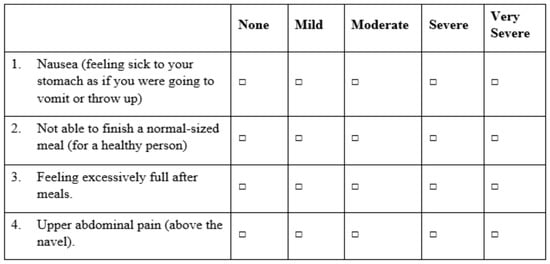
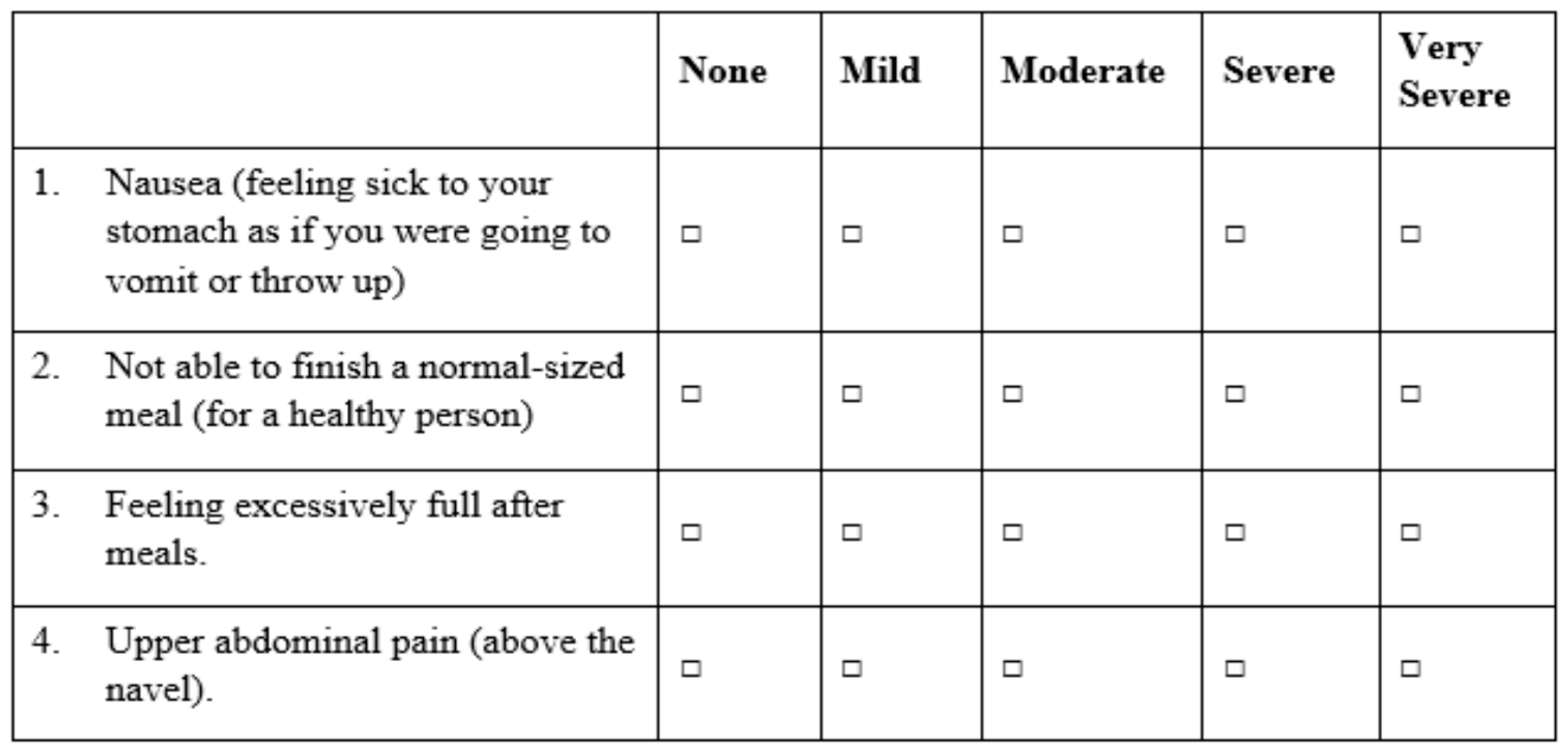
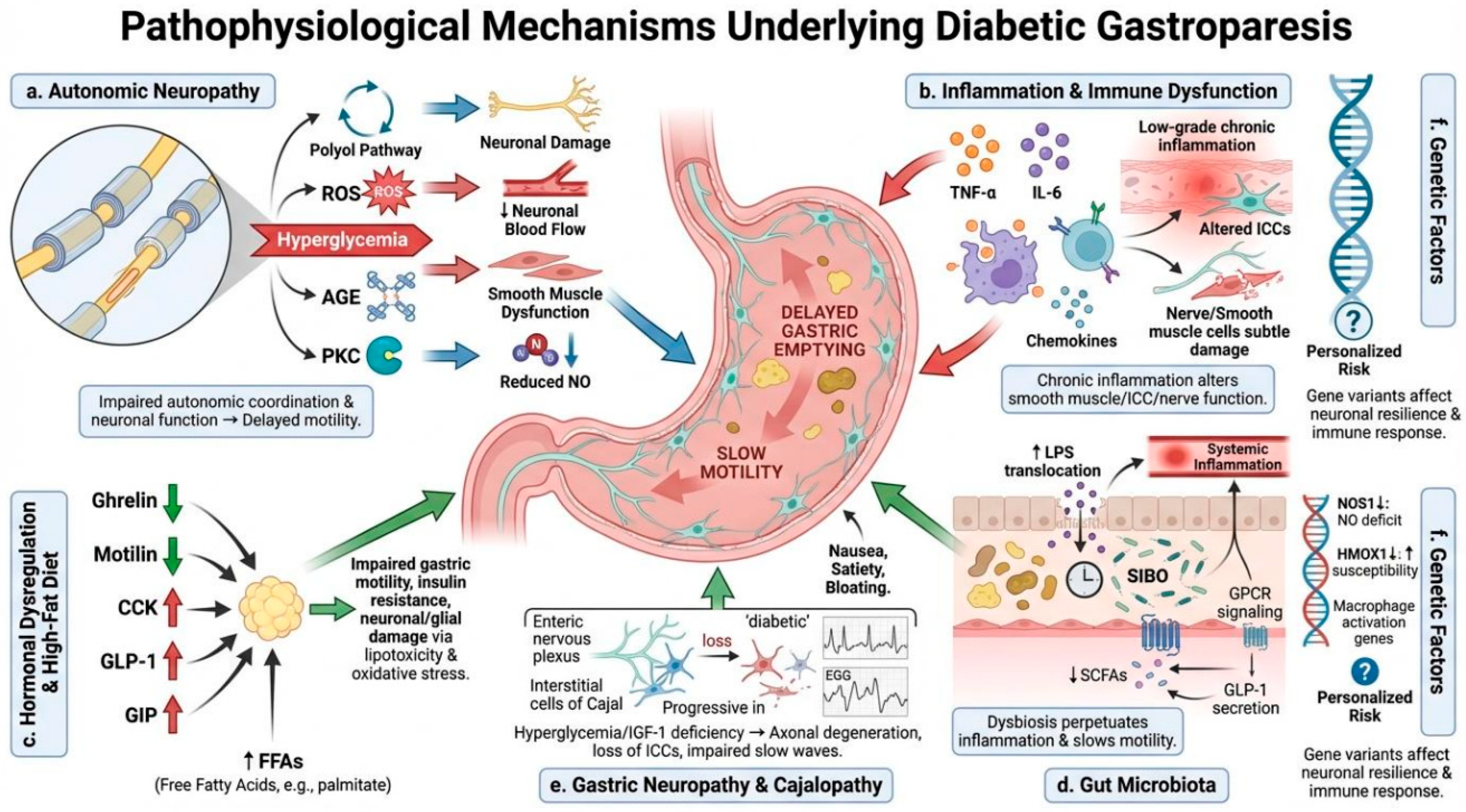
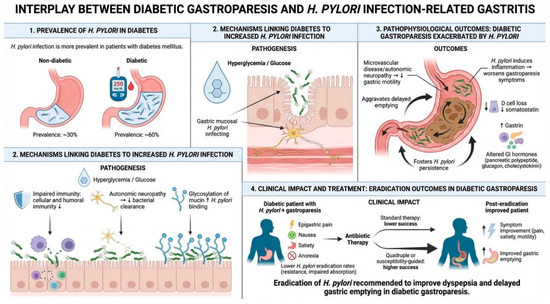
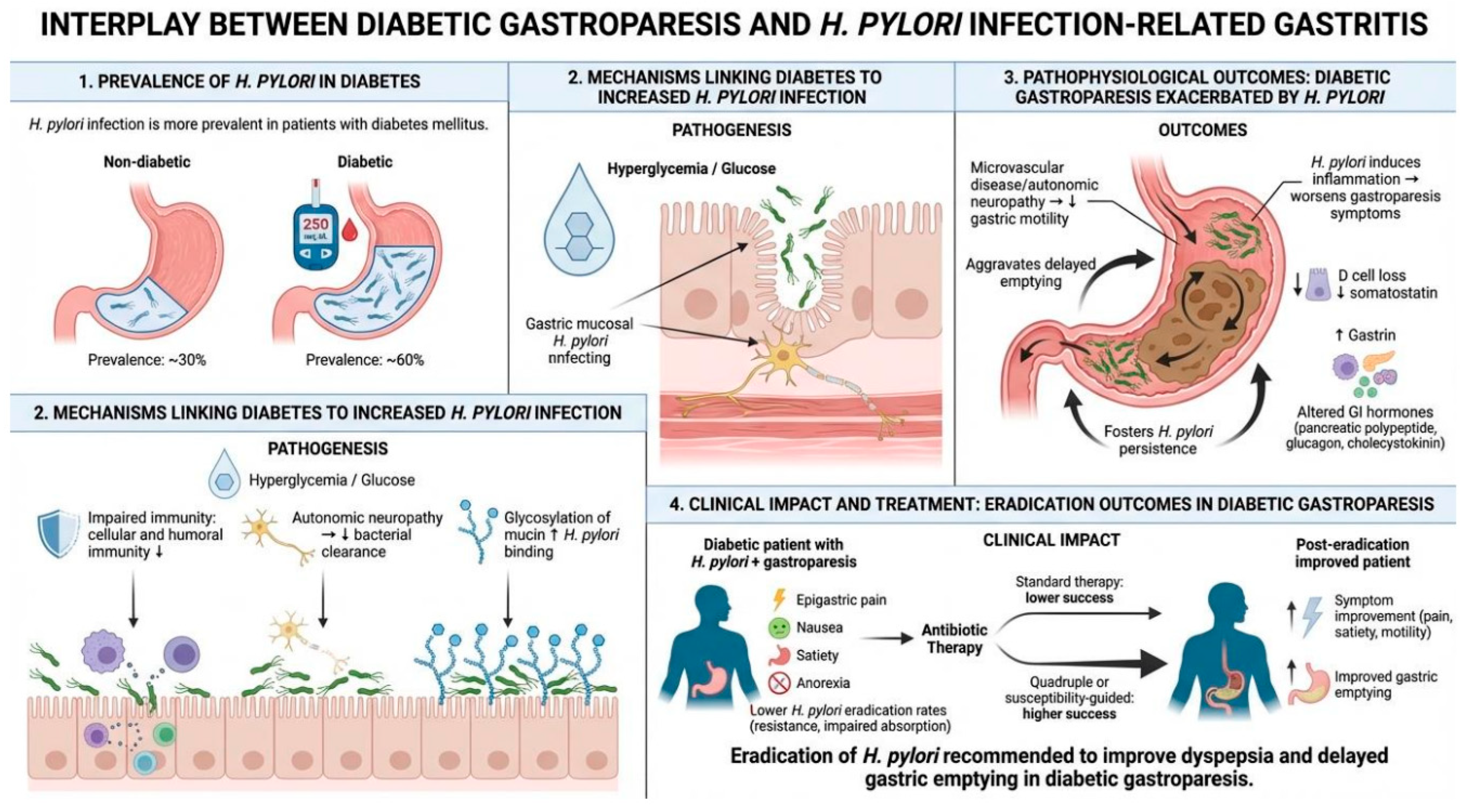
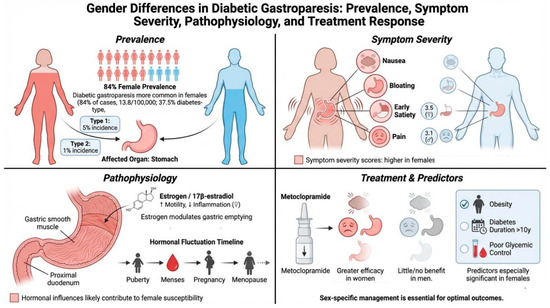
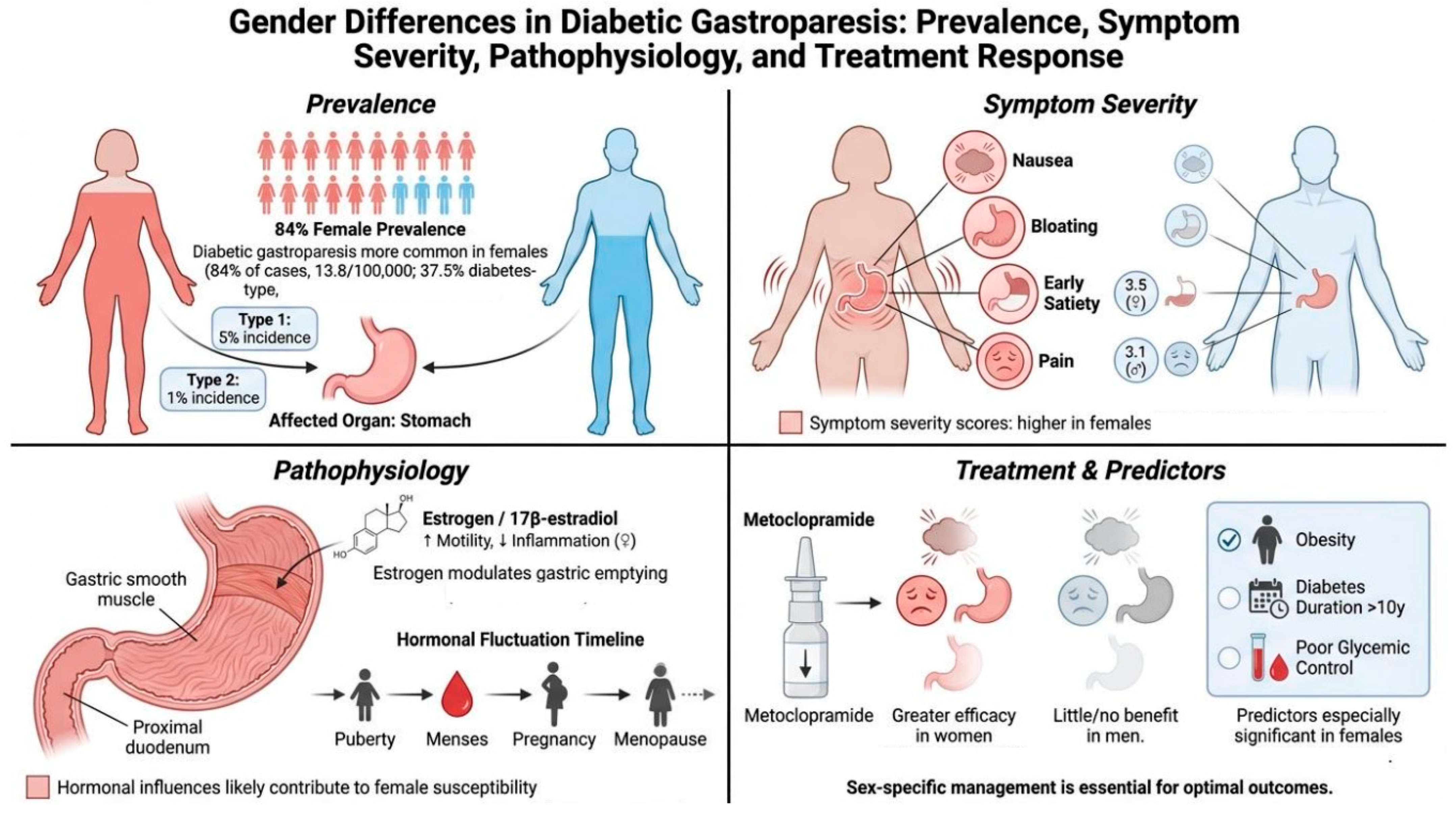
Disclaimer/Publisher’s Note: The statements, opinions and data contained in all publications are solely those of the individual author(s) and contributor(s) and not of MDPI and/or the editor(s). MDPI and/or the editor(s) disclaim responsibility for any injury to people or property resulting from any ideas, methods, instructions or products referred to in the content. |
© 2026 by the authors. Licensee MDPI, Basel, Switzerland. This article is an open access article distributed under the terms and conditions of the Creative Commons Attribution (CC BY) license.