
Article

A Holistic Picture of the Relationships Between Dietary Intake and Physical and Behavioral Health in Youth with Type 1 Diabetes Mellitus: A Pilot Study

by
Megan Beardmore
and
Michelle M. Perfect
*
Disability and Psychoeducational Studies, College of Education, University of Arizona, Tucson, AZ 85721, USA
*
Author to whom correspondence should be addressed.
Diabetology 2026, 7(1), 21; https://doi.org/10.3390/diabetology7010021
Submission received: 27 August 2025 / Revised: 19 November 2025 / Accepted: 23 December 2025 / Published: 21 January 2026

Abstract

Background/Objectives: Youth with type 1 diabetes (T1DM) face unique challenges in balancing dietary choices, physical health outcomes, and social–emotional well-being in school settings. This cross-sectional exploratory pilot study examined the associations of diet with physical health and teacher-reported social–emotional functioning in students with T1DM. Methods: Students with T1DM (mean age = 13.42; 47 female, 50 male; 50% White, Non-Hispanic, 50% minority) self-reported their nutritional habits using the KBlock Dietary Screener for Children when school was in session. Teacher-rated school-related behaviors were assessed through the Behavior Assessment Scale for Children-2nd Edition (BASC-2). Canonical correlation analysis was conducted to determine whether the variable sets (diet with physical health and school-related behavioral health) shared a significant multivariate relationship. Results: Youth with lower glycemic loads and consuming more sugar, dairy, and meat/poultry/fish but fewer legumes, fruit, and less saturated fat exhibited fewer externalizing symptoms and higher BMI. Diet uniquely accounted for modest variance in combined social–emotional and physical health, controlling for demographics and T1DM duration. Findings support increasing the availability of whole, nutrient-rich foods, integrating comprehensive nutrition education into curricula, and ensuring access for all students, regardless of socioeconomic status. Conclusions: Comprehensive dietary assessments and school-based randomized control trials are needed to enact more evidence-based dietary recommendations or interventions for youth, aiming for a balanced approach that addresses both mental and physical health outcomes.

1. Introduction

Type 1 Diabetes Mellitus (T1DM) is a chronic autoimmune disease where the body attacks insulin-producing cells, leading to high blood sugar [1]. Children with T1DM experience higher rates of mental health problems than peers [2,3], yet the links between diet, physical health, and psychological well-being in this group remain understudied. To that end, this pilot study examined the physical and school-related behavioral consequences of nutritional habits in students with T1DM.

1.1. Nutrition Recommendations and Dietary Patterns in T1DM

Current recommendations for youth with T1DM have emphasized personalized nutrition delivered by registered dietitians. To promote glycemic stability, the American Diabetes Association Standards of Care has suggested prioritizing high-fiber carbohydrates and plant-based diets consisting of whole fruits and legumes [4,5]. However, many youth with T1DM consume insufficient nutrient-rich foods and excessive unhealthy fats [6,7,8,9]. This pattern may contribute to cardiometabolic and behavioral challenges that can disrupt students’ school experience. Therefore, it is essential to identify modifiable dietary factors most relevant to school behavior and overall health in youth with T1DM.

1.2. Mental Health

Research over several decades has shown that individuals with T1DM are at greater risk for depression and anxiety [10,11,12,13]. Both internalizing and externalizing symptoms have been associated with consuming a “Western” diet (e.g., nutrient-sparse, takeout, animal-based, and/or highly processed foods) in children and adolescents without diabetes [14,15,16,17,18,19,20,21,22,23]. Conversely, though not always the case [13], greater consumption of plant-based foods, particularly fruits, vegetables, legumes, and whole grains, has typically been associated with fewer behavioral and emotional symptoms [16,21,22]. One contrasting finding occurred in a Colombian study, in which higher consumption of animal protein sources (e.g., meat, veggies, dairy) was linked to fewer disruptive behaviors [23]. Promoting healthier dietary choices may, therefore, serve as a protective factor for the mental health of students with diabetes.

1.3. Physical Health (PH)

Obesity is a complication that affects insulin absorption, which may contribute to insulin resistance in adolescence [24]. Currently, approximately one-third of youth with T1DM are overweight or obese, with some studies indicating a higher prevalence compared to controls [25,26,27]. Specific food groups, such as inadequate fruit and whole grain consumption and greater fat consumption, have been associated with higher body mass index (BMI) [5,28]. Pre-hypertension and hypertension are described as abnormally high blood pressure (BP) based on age, sex, and height [29]. Higher incidences of pre-hypertension and hypertension have been documented in youth with T1DM compared to peers without diabetes [30,31,32]. Diets rich in fruits and vegetables have been associated with lower BP [33].

1.4. Current Study

This pilot study aimed to fill a critical research gap regarding the influence of diet on PH and social–emotional (SE) functioning among youth with T1DM. Teachers provide unique insights into students’ behavior and well-being within the school environment. By leveraging teachers as valuable informants, this research sought to inform dietary interventions aimed at improving overall health outcomes and enhancing school experiences. This study posed the following hypotheses: (1) dietary measures would account for a modest amount of variance (r2 ≥ 0.20) in teacher-reported behavioral ratings and PH parameters; (2) animal-based dietary variables (i.e., meat/poultry/fish, dairy) and variables heavily influenced by animal-based foods (i.e., saturated fat) would demonstrate the most significant explanatory power to the SE/PH composite; and (3) the relationship between diet and SE/PH would be attenuated by sociodemographic characteristics such as biological sex, race/ethnicity, age, and socioeconomic status (SES), as well as diabetes-related factors such as T1DM duration and glycemic status [hemoglobin A1c (HbA1c), 3-month average of glucose levels]. Ultimately, these findings can elucidate the role of nutrition in supporting the holistic health of students with T1DM.

2. Method

2.1. Participants

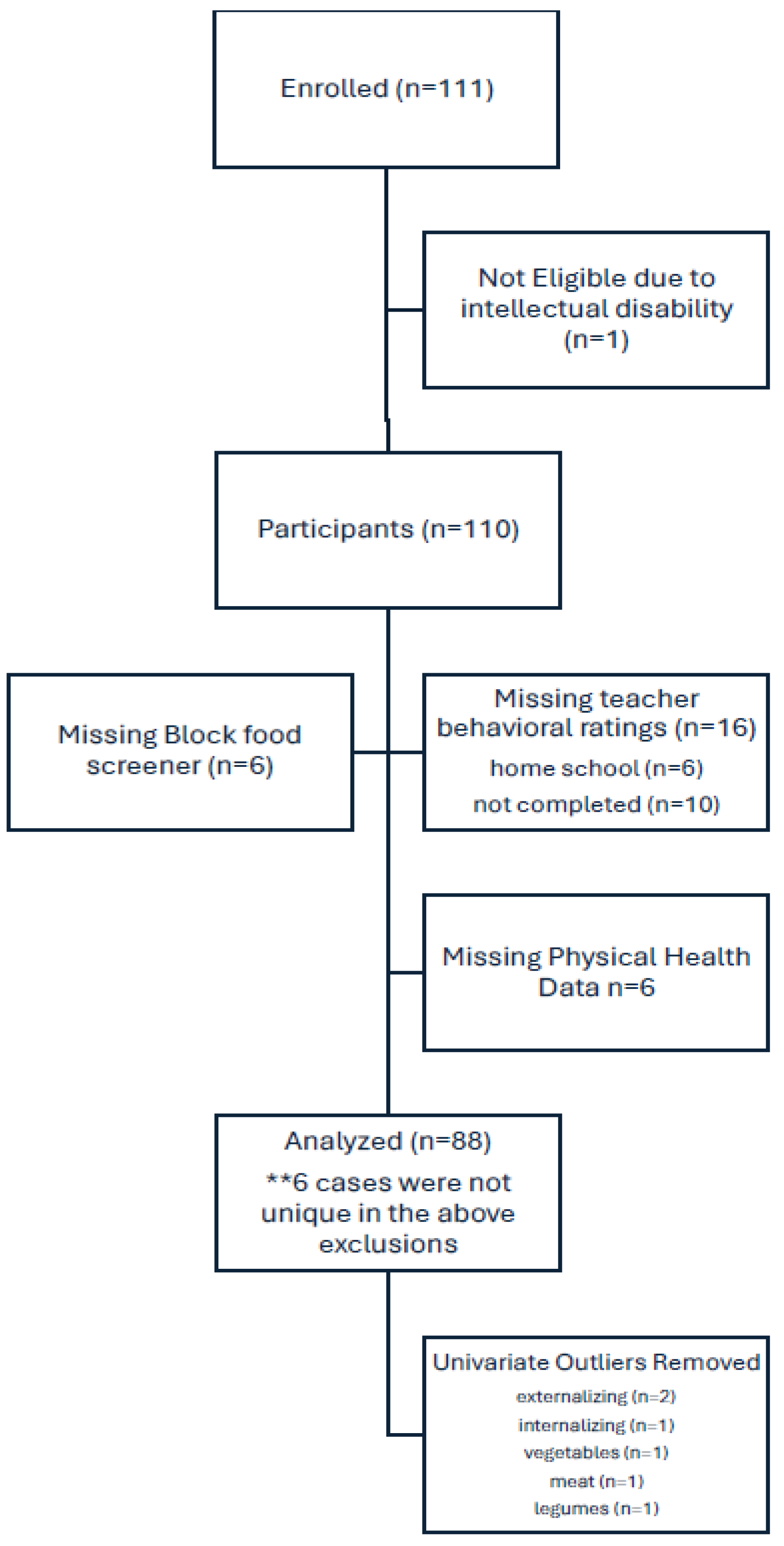
Participants included students with T1DM and their teachers from the Southwestern U.S. who participated in a larger randomized control trial (RCT) referred to as the Glucose Regulation And Neurobehavioral Effects of Sleep (GRANES) study [34]. Inclusion criteria for the parent study included T1DM diagnosis, ages 10–16, caregiver participation, and ability to read/speak English. Exclusion criteria included having a known psychiatric, cognitive, genetic, and/or neurological condition that could interfere with participation and diabetes-related hospitalization within the previous enrollment. Given that the primary outcome was school SE, participants who were homeschooled (n = 6) or for whom no teacher completed the behavior rating were excluded from analysis (n = 10; Figure 1).
Mean age was 13.42 (SD = 2.11); 47 (48.45%) identified as female and 40 (51.55%) as male. Race/ethnicity was reported to be 50% White, Non-Hispanic, 39.9% Latinx, and 10.0% Black or Native American and Latinx. Estimated median income ranged from USD 25,811.00 to USD 101,888.00, with a mean of USD 53,058.66 (SD = 19,095.69). The average duration of diabetes was 58.85 months (SD = 45.04; range:1.00 to 178.00 months). The mean HbA1c was 9.05 (SD = 1.96).

2.2. Measures

2.2.1. Block Kids Food Screener (BKFS)

The digitally administered BKFS queries about food and beverage consumption over the past week using a Likert-scale response format (“none last week” to “every day last week”) to indicate the number of days the child consumed the item. Follow-up items record portion sizes by amount (i.e., 1 bowl, 1 egg, 1 slice) or descriptor (i.e., a little, some, a lot). Raw data are quantified into nutrient and food group estimates, adjusted for age/sex [35]. Validation studies comparing the BKFS with the Block Food Frequency Questionnaire and 24 h recalls yielded deattenuated Pearson correlation coefficients from 0.53 for vegetables to 0.88 for potatoes, nutrient estimates between 0.58 and 0.77, and test–retest reliability of 0.73 [36]. The exposure variables selected represent the core dietary intake patterns influencing metabolic and inflammatory processes. BKFS dairy, meat/poultry/fish, fruit, vegetables, and legumes capture macronutrient diversity and plant-based food consumption, consistent with dietary quality indices. Saturated fat and added sugar quantify components of poor dietary quality. Glycemic load (GL) captures carbohydrate intake. Table 1 lists the food content and units (e.g., cups, grams).

2.2.2. Behavior Assessment System for Children, 2nd Edition-Teacher Report Scale (BASC-2 TRS)

The BASC-2 TRS [37] was used to measure school-related SE functioning. The response format is based on a Likert scale; responses ranged from “Never”, “Sometimes”, “Often”, and “Almost always”. A computer-assisted scoring system converted raw to age- and sex-based T-scores (M = 50, SD = 10). Higher T-scores indicate more difficulties in that area of functioning; 60–69 are considered “At-risk”, and 69+ are considered “Clinically Significant”. The selected variables used in the SE component of the health outcomes set included the following Composites: internalizing problems (Anxiety, Depression, Somatization), school problems (Attention Problems, Learning Problems), and externalizing problems (Hyperactivity, Aggression, Conduct).

2.2.3. PH Parameters

BP and BMI were the predictors for the PH component of the dependent variable. A pediatric endocrinologist obtained values for height, weight, Tanner stage (i.e., puberty development scale), and BP. BMI was calculated from weight (pounds) divided by height (centimeters) and converted into percentiles based on the 2000 CDC Reference Standards [38]. Systolic and diastolic BP, measured using an automated oscillometric device (Welch Allyn 4200B-E1 Spot Vital Signs®, Welch Allyn, Skaneateles Falls, NY, USA) with varying cuff sizes, were converted into percentiles based on the Pediatric Task Force Standards [29].

2.2.4. Demographic and Health-Related Information

Participants and caregivers reported the child’s sex and race/ethnicity. Family income was estimated using census tract data based on zip codes. T1DM diagnosis dates were available in medical records.

2.3. Procedures

For a complete description of the parent RCT, see Perfect et al. [34]. The parent study received local Institutional Review Board approval. After obtaining parental consent, minor assent, and a Family Education Rights and Privacy Act release, participants and caregivers identified two teachers to complete the BASC-2 and an academic performance measure. Teachers most familiar with the student or teaching their first academic course were prioritized. Teachers could decline participation.
Teachers were invited to complete the forms by the end of the Naturalistic period. If multiple teachers completed the BASC-2, we prioritized responses from teachers who knew the child the longest or taught a core subject. Alternative teachers were used if the primary teacher’s data were absent or incomplete.

2.4. Statistical Analyses

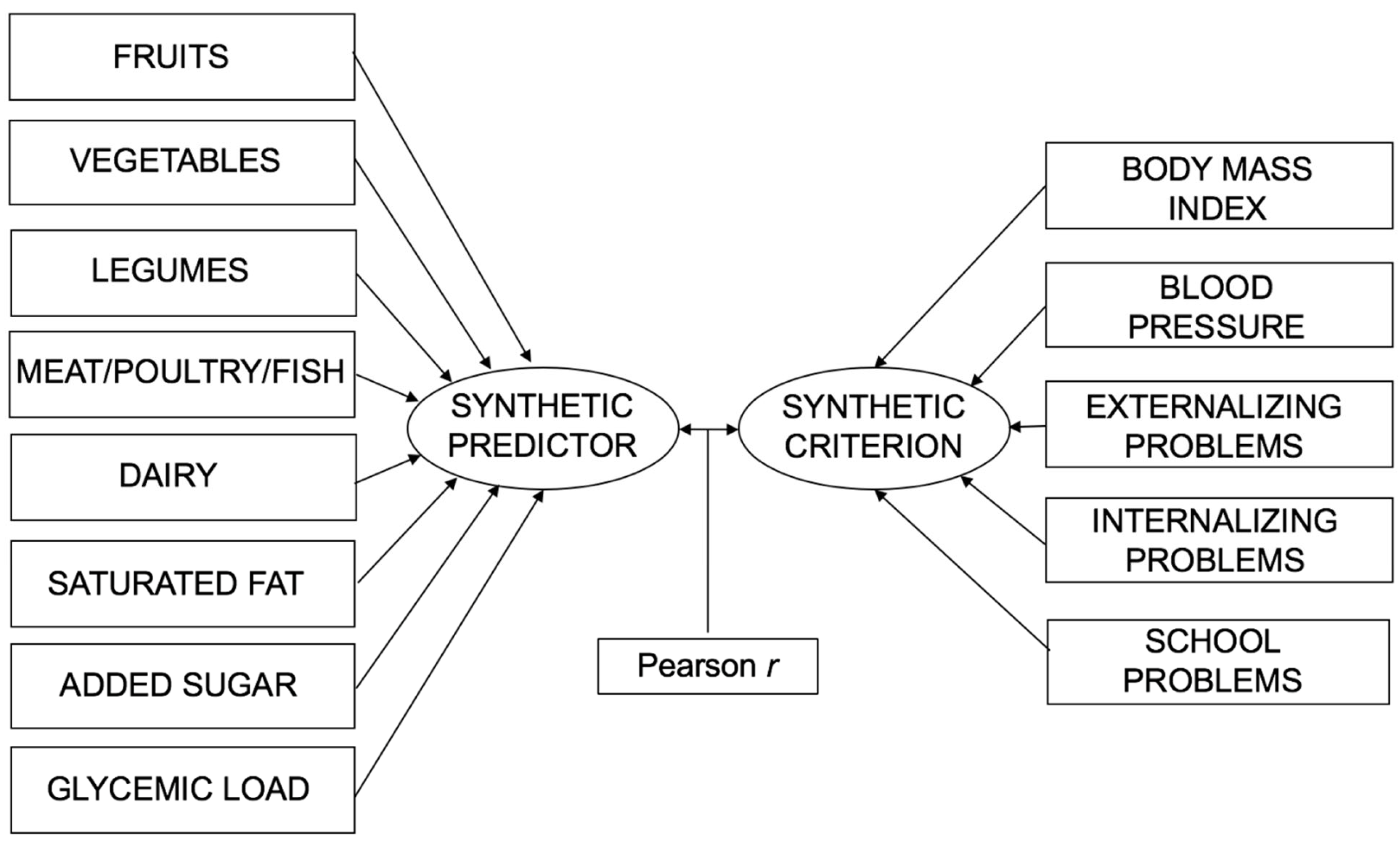
Canonical correlation analysis (CCA) examined relationships among diet, teacher-reported well-being, and PH in youth with T1DM because it evaluates multiple variable sets without assuming causality (Figure 2). Unlike Factor Analysis (FA), where variables are correlated, CCA produces orthogonal (uncorrelated) weighted sums that maximize relationships between rather than within the variable sets [39,40]. In this study, diet comprised multiple food groups and nutrients, and SE functioning included externalizing and internalizing behaviors, allowing CCA to reveal their multivariate contributions in a single analysis. CCA also controls for intercorrelations within each variable set and provides a holistic picture of shared variance by creating new linear combinations (axes or weighted sums) from each set (i.e., food consumption and SE/PH functioning).
There is no statistical software to determine power analysis for canonical correlation.
However, canonical correlation is simply a Pearson’s correlation between two weighted sums, rather than two raw variables. Thus, G*Power 3.1 was used to conduct a power analysis for Pearson correlation coefficients. With a modest effect size (p = 0.20) for a two-tailed alpha of 0.05, a sample size of 34 would be required to achieve sufficient power (1 − β ≥ 0.80). Therefore, the final sample of 88 participants provided ample power to determine whether a significant relation existed between diet, PH, and SE.
Research Question 1 Analysis (RQ1). The full CCA model provides a wealth of information relevant to RQ1. First, canonical variates (or canonical functions) represent the weighted sums of the variables. Standardized canonical coefficients are then calculated; these coefficients describe the unique influence of each original variable on its composite score, controlling for all other variables in that set. The number of functions produced is the same as the number of variables in the smaller of the two variable sets, so a total of five functions is provided. The first function represents the maximum correlation possible between the dietary set and the SE/PH set. The residual, or leftover, variance is used to create the next strongest correlation, represented by the second function. This process continues until all variance is accounted for. When determining the significance of the model, only the functions explaining a modest amount of variance should be interpreted [39,40].
Second, the strength of the association between two canonical variates (e.g., the dietary composite and the SE/PH composite) is measured by the canonical correlation coefficient. Based on the direction of each canonical correlation, a pattern could be determined to suggest whether higher or lower scores on the dietary composite resulted in higher or lower scores on the SE/PH composite. Third, squaring those canonical correlation coefficients provides a measure of effect size, specifically, how much of the variance in SE/PH is explained by the dietary composite for each pair of weighted sums.
Research Question 2 Analysis (RQ2). The same analysis was applied to address RQ2, but additional statistical output was utilized. CCA provides two groups of structure coefficients, correlations for each variable with weighted sum scores in its own composite or set and correlations for each variable with weighted sum scores from the other variable composite. The latter group of structure coefficients is particularly important for RQ2, representing the shared relationship between each individual dietary variable and the SE/PH set [40,41]. Thus, structure coefficients can be utilized to determine which dietary variable (e.g., fruits, vegetables, meat/poultry/fish, dairy, legumes) explains the most variance in SE/PH.
Research Question 3 Analysis (RQ3). CCA is inherently unable to control possible confounding variables, and typically, follow-up analyses are not used in CCA. Thus, partial correlations were conducted to determine whether gender, race, age, SES, T1DM duration, and HbA1c attenuate the relationship between diet and SE/PH. The synthetic predictor (i.e., dietary set) and synthetic criterion (i.e., SE/PH set) from the CCA were used in this analysis, with each possible confounder partialled out. To follow-up, partial correlations were conducted to test how much the relationship between diet and health was attenuated by the control variables: sex, race, age, SES (median income), T1DM duration (months), and glycemic control (baseline HbA1c). Semi-partial correlations represented the unique relationship between each variable and the health composite.

3. Results

3.1. Data Screening

3.1.1. Assumptions

Mardia’s tests revealed that the data were multivariate non-normal using an alpha value of 0.01, violating a statistical assumption of CCA. As CCA is sensitive to extreme cases, variables exceeding three standard deviations—externalizing (n = 2), internalizing (n = 1), vegetables (n = 1), meat (n = 1), and legumes (n = 1)—were removed (Figure 1), significantly improving Mardia’s skew and kurtosis [41].

3.1.2. Preliminary Analyses

Descriptive statistics (Table 1) revealed that mean T-scores for SE problems (i.e., BASC scores) were in the average range. After removing outliers, only two children (2.3%) were identified as being At Risk for externalizing problems, whereas 16.9% of the sample was flagged as having either At Risk or clinically significant internalizing problems. Relatedly, 14.6% of the sample had scores in either the At Risk or clinically significant range on the school problems composite. Within the PH variables, 20.7% of the sample were overweight, and 18.9% were obese. Additionally, 11.1% of youth qualified for hypertension, while 19.6% met the criteria for pre-hypertension.

3.2. Research Question 1

The first hypothesis predicted that dietary intake (i.e., fruit, vegetables, meat/poultry/fish, dairy, legume, saturated fat, added sugar, GL) would account for a modest amount of variance (r2 ≥ 0.20) in BASC-2-TRS scores (i.e., internalizing, externalizing, school Problems) and PH parameters (i.e., BMI, BP). First, as shown in Table 2, weak relationships were revealed between both fruit and BMI and glycemic load and BMI, such that greater fruit consumption and higher glycemic load were associated with lower BMI, r(104) = −0.24, p = 0.019 and r(104) = −0.22, p = 0.025, respectively.
Regarding the multivariate relationship between the dietary intake set and the EH and PH functioning variables, the full model was statistically significant, Wilk’s Λ = 0.49, F(40, 403.81) = 1.78, p = 0.003. Moreover, all canonical correlate pairs explained a substantial amount of variance (η2 = 0.51; Table 3). Only the first function, representing the maximum correlation possible between the two variable sets, explained a modest amount of variance (r2 = 0.26). Therefore, in response to the first research question, the dietary composite explained 26% of the variance in the health composite (RCan = 0.51). A cutoff of 0.30 was used for interpreting the standardized canonical coefficients [37], as reflected in Table 4. Nine out of the fourteen variables provided significant contributions to the first canonical variate. Youth who had lower GL (b = −0.75); fewer legumes (b = −0.80), less saturated fat (b = −0.63), and fruit (b = −0.51); and consumed more sugar (b = 0.89), dairy (b = 0.63), and meat/poultry/fish (b = 0.62) had higher BMI (b = 0.52) but fewer externalizing problems (b = −0.89). The opposite pattern was also true—youth with higher GLs and consuming more legumes, saturated fat, and fruit while consuming less sugar, dairy, and meat/poultry/fish had lower BMI but greater externalizing problems.

3.3. Research Question 2

The second research question focused on which specific dietary variables (i.e., meat/poultry/fish, dairy, fruit, vegetables, legumes, saturated fat, added sugar, GL) provided the greatest explanatory power (or explained the most variance) to the SE/PH composite. The statistically significant structure coefficients and their squared values, which showed the strongest, albeit small, correlations and overlapping variance between the variables and the composite, respectively, were as follows: fruits (r = −0.26, r2 = 0.07), vegetables, (r = −0.18, r2 = 0.03) and legumes (r = −0.16, r2 = 0.03; Table 5). The remaining variables—meat/poultry/fish (r = −0.03, r2 < 0.01), dairy (r = −0.03, r2 < 0.01), added sugar (r = 0.06, r2 < 0.01), saturated fat (r = −0.04, r2 < 0.01), and GL (r = −0.1, r2 = 0.01)—did not significantly contribute to the SE/PH composite.

3.4. Research Question 3

As shown in Table 6, the model summary that included only control variables was non-significant, R2 = 0.083, F(6, 92) = 1.395, p = 0.225. When diet was added, the model became statistically significant, R2 = 0.19, F(7, 91) = 3.058, p = 0.006, and the total variance increased from 8.3% to 19.0%. Accordingly, diet was moderately correlated with PH/SE after controlling for all other independent variables, r = 0.342, p = 0.001, with diet accounting for 10.7% of the variance not explained by the other predictors. Partial correlations revealed that gender shared a significant but weak correlation with the health composite after controlling for all other independent variables, r = 0.248, p = 0.017 (Table 7).

4. Discussion

Results revealed that dietary measures (fruit, vegetables, meat/poultry/fish, dairy, legumes, saturated fat, sugar, GL) explained variations in teacher-reported behavioral ratings (externalizing problems, internalizing problems, school problems) and PH parameters (BMI, BP). Further corroborating the emphasis in the Dietary Guidelines for Americans (2020–2025) [42] on dietary patterns rather than specific foods, this investigation showed that while no single dietary factor had a strong independent effect, these dietary measures significantly predicted behavioral and physical outcomes, even after accounting for potential confounding variables.

4.1. Dietary Patterns and School Health

The dietary patterns observed in this study are consistent with broader national pediatric trends in the United States [43], reflecting inadequate consumption of nutrient-dense foods and overconsumption of foods with limited nutritional value. Prior research has supported that individuals with T1DM often have eating habits characterized by protein within recommended levels, insufficient fruit and vegetable intake, and often surpassing saturated fat limits [42]. Students in this study consumed less than recommended amounts of fruits, vegetables, protein foods, and dairy while reporting excessive saturated fat intake. Schools are positioned to influence students’ eating habits through nutrition education programs, school meal planning, and supportive food environments.

4.1.1. PH: Connection Between Diet and BMI

The effect size of the full model suggested that diet, health, and classroom behaviors were related (η2 = 0.51). Supporting the first hypothesis, dietary measures accounted for a significant portion of variance in PH and SE functioning (r2 = 0.26). The first function also suggested that children who reported lower GL and consumed more sugar, dairy, meat/poultry/fish but fewer legumes and less fruit and saturated fat had higher BMIs and fewer externalizing problems.
Despite previous evidence linking saturated fat consumption to higher BMI [44,45,46], our study found the opposite. Nonetheless, the relationship between higher BMI, under-consumption of fruit and greater intake of processed meats aligns with other studies [8,47,48,49]. The current study also suggested links between higher BMI with increased sugar and dairy intake and less legume consumption. One explanation for these findings might be that, beyond fat, the high sugar content in processed foods [50] could impact weight, which is consistent with the finding that ultra-processed food consumption increases metabolic syndrome risk, especially when fruit and vegetable intake is low [51]. These findings suggest that school-based nutrition education, particularly for weight management, should move beyond simplistic fat reduction messaging. Instead, it should provide more comprehensive dietary guidance inclusive of whole, unprocessed foods and legumes [52].

4.1.2. Teacher-Reported SE

Despite some research supporting a connection with unhealthy diets (fast food, desserts, fried food, sweetened beverages, etc.) [16,19,53], a specific pattern did not emerge in exclusively explaining internalizing symptoms [23]. Although the findings pertaining to externalizing behaviors align with results from a prospective study associating Western dietary patterns with such behaviors in adolescent females [18], they were also linked to greater fruit consumption. Classroom-specific dynamics may influence how dietary intake affects behavior, potentially differing from broader adolescent or clinical populations. Further, if the consumption of fruit occurs in the form of added sugars (e.g., fruit-flavored drinks or desserts), participants’ blood glucose profiles may have been impacted [54], which in turn, may have contributed to alterations in behavioral regulation [55]. Nonetheless, without additional data on the context of fruit consumption, the association should be interpreted with caution given the preponderance of evidence regarding the benefits and drawbacks of having or lacking fruits, respectively [15,16,21,22,56,57].

4.2. Plant-Based Foods

Rather than the prediction that animal-based dietary variables would have the most explanatory power, the data supported modest associations between plant-based foods, including fruits, vegetables, and legumes, and improved health outcomes. These findings suggest that even small shifts toward plant-based eating could offer meaningful health benefits, though low consumption levels (skewed distributions) and reduced variability in the study population may have masked stronger effects. Schools and public health programs should consider promoting plant-based dietary patterns as a scalable strategy to enhance both physical and mental well-being in students, particularly given the additional socioeconomic and environmental advantages associated with plant-based diets [58]; however, these factors require further investigation in more controlled studies.

4.3. Unique Role of Diet in Health Outcomes for Adolescents with T1DM

This pilot study yielded surprising results regarding the influence of control variables on the diet–health relationship in adolescents with T1DM. Contrary to research suggesting significant associations of factors like race/ethnicity [16,28,32,33,59,60], age [22,25,61], SES [57,62,63], T1DM duration, and HbA1c [1,7,33,64,65] with health outcomes, the current analysis found no such collective influence on SE/PH. An exception emerged, aligning with research on sex differences in health parameters [18,59,60]. Importantly, the study identified diet as the sole remaining factor, suggesting a potentially unique role for dietary patterns in influencing health, particularly school-related behaviors, for adolescents with T1DM. Given our findings on links between diet and student behaviors, schools may need to address common obstacles reported in prior research, including food insecurity, limited access to healthy (nutrient-dense) foods, restrictive meal schedules, lack of nutrition information, peer influences, and prohibitive classroom food policies [66,67,68,69,70,71]. Building on these insights, future research can explore the impact of dietary interventions specifically designed for T1DM and all students within the school environment. These interventions can examine the effects on both glycemic control (diabetes management) and non-diabetes-related health outcomes in adolescents with T1DM.

4.4. Limitations

Self-reported diet and teacher-reported SE introduced subjective bias. Dietary assessment is inherently challenging due to issues of cost, convenience, validity, participants’ developmental stage and recall ability, and its inability to fully capture the timing and context of food consumption [72]. Future studies could benefit from incorporating frequent and objective measures of diet, such as ecological momentary assessments or biomarkers, respectively, alongside reports from parents and students, as well as observations. CCA does not establish causal relationships and is further limited by instability, as canonical weights can vary substantially across samples, and it only reflects the variance shared by linear composites, not the variances extracted from the variables [73]. Despite these limitations, CCA’s ability to examine relationships between multiple dependent and independent variables simultaneously is a significant strength, making it a valuable tool for exploring complex multivariate relationships that may not be apparent in simpler analyses.

4.5. Enhancing Nutritional Care in Standard Practice

Diabetes care models have typically overemphasized carbohydrate counting, overlooking overall dietary quality. This study supports the more contemporary recommendations for personalized nutrition assessments and culturally designed meal plans that prioritize whole foods, fiber, and macronutrients. Adopting a multidisciplinary team approach, including individualized Diabetes Medical Management Plans (DMMPs) developed in collaboration with healthcare providers, families, and students would help to ensure congruence with the medical, cultural, and academic needs for students with T1DM [74]. To effectively support these plans, mandatory training for school personnel on DMMP implementation, recognition and management of hypoglycemia and hyperglycemia, and inclusive meal planning is critical. Such training equips staff with the knowledge and skills needed to understand the vital role of diet in overall health, respond promptly to diabetes-related events, and create a nurturing environment that fosters better mental health and academic success [75,76,77,78]. These programs should integrate federal protections under Section 504 of the Rehabilitation Act and the Individuals with Disabilities Education Act (IDEA) [79,80] to guarantee accommodations for students with T1DM, such as flexible meal schedules, access to glucose monitoring devices, and diabetes care during extracurricular activities [77].

5. Conclusions and Future Research Directions

The results of this exploratory, pilot study illustrate the holistic shared relationship between diet, social–emotional functioning, and physical health in youth with T1DM. Many students are undernourished, overconsume nutrient-sparse foods, and are affected by increasingly high rates of obesity and hypertension, all of which are known to precipitate chronic, life-threatening health conditions. Importantly, although effect sizes were modest, the findings suggest that dietary patterns meaningfully relate to both physical and psychological well-being in adolescents with T1DM, independent of other known influencing factors. Future research should employ school-based longitudinal or intervention-based designs in larger and more diverse samples within school contexts to determine how dietary patterns influence metabolic control and psychosocial functioning in youth with T1DM and their classmates. Such efforts have the potential to benefit all students, ensure seamless integration with and relevance to individualized care plans for students with T1DM, and serve as a model for universal best practices.

Author Contributions

Conceptualization, M.M.P. and M.B.; methodology, M.M.P. and M.B.; formal analysis: investigation, M.M.P.; writing, M.M.P. and M.B.; supervision, M.M.P.; project administration, M.M.P.; funding acquisition, M.M.P. All authors have read and agreed to the published version of the manuscript.

Funding

This study was supported by a grant from the American Diabetes Association (#7-CE-13-72), co-sponsored by the Order of the Amaranth Diabetes Foundation. Preparation of the manuscript was supported by the National Institute of Diabetes and Digestive and Kidney Diseases of the National Institutes of Health under award number R01-DK-11052.

Institutional Review Board Statement

The study was conducted according to the guidelines of the Declaration of Helsinki and approved by the Institutional Review Board of University of Arizona, approval number 1200000733, on 3 December 2013.

Informed Consent Statement

Informed consent was obtained from all subjects involved in the study.

Data Availability Statement

The raw data supporting the conclusions of this article will be made available by the authors on request.

Acknowledgments

The parent study was executed with support from Mark Wheeler, Cindy Chin, and Stuart Quan from the University of Arizona. The authors further acknowledge the support of all the undergraduate and graduate research team members who assisted with data collection. In particular, Vicky Mullins was instrumental in recruitment and coordination of the project.

Conflicts of Interest

The authors declare no conflicts of interest.

Abbreviations

Diet, Social–Emotional Functioning, Physical Health, Body Mass Index (BMI), Glycated hemoglobin (HbA1c), Type 1 Diabetes Mellitus (T1DM).

References

  1. ElSayed, N.A.; Aleppo, G.; Aroda, V.R.; Bannuru, R.R.; Brown, F.M.; Bruemmer, D.; Collins, B.S.; Hilliard, M.E.; Isaacs, D.; Johnson, E.L.; et al. Children and adolescents: Standards of care in diabetes—2023. Diabetes Care 2023, 46, S230–S253. [Google Scholar] [CrossRef]
  2. Bernstein, C.M.; Stockwell, M.S.; Gallagher, M.P.; Rosenthal, S.L.; Soren, K. Mental health issues in adolescents and young adults with type 1 diabetes: Prevalence and impact on glycemic control. Clin. Pediatr. 2013, 52, 10–15. [Google Scholar] [CrossRef]
  3. Butwicka, A.; Fendler, W.; Zalepa, A.; Szadkowska, A.; Zawodniak-Szalapska, M.; Gmitrowicz, A.; Mlynarski, W. Psychiatric disorders and health-related quality of life in children with type 1 diabetes mellitus. Psychosomatics 2016, 57, 185–193. [Google Scholar] [CrossRef] [PubMed]
  4. American Diabetes Association Professional Practice Committee. Facilitating positive health behaviors and well-being to improve health outcomes: Standards of Care in Diabetes—2025. Diabetes Care 2025, 48, S86–S127. [Google Scholar] [CrossRef] [PubMed]
  5. American Diabetes Association Professional Practice Committee. Children and adolescents: Standards of Care in Diabetes—2025. Diabetes Care 2025, 48, S283–S305. [Google Scholar] [CrossRef] [PubMed]
  6. Rovner, A.J.; Nansel, T.R. Are children with type 1 diabetes consuming a healthful diet? A review of the current evidence and strategies for dietary change. Diabetes Educ. 2009, 35, 97–107. [Google Scholar] [CrossRef] [PubMed]
  7. Lamichhane, A.P.; Liese, A.D.; Urbina, E.M.; Crandell, J.L.; Jaacks, L.M.; Dabelea, D.; Black, M.H.; Merchant, A.T.; Mayer-Davis, E.J. Associations of dietary intake patterns identified using reduced rank regression with markers of arterial stiffness among youth with type 1 diabetes. Eur. J. Clin. Nutr. 2014, 68, 1327–1333. [Google Scholar] [CrossRef] [PubMed]
  8. Nansel, T.R.; Haynie, D.L.; Lipsky, L.M.; Laffel, L.M.; Mehta, S.N. Multiple indicators of poor diet quality in children and adolescents with type 1 diabetes are associated with higher body mass index percentile but not glycemic control. J. Acad. Nutr. 2012, 112, 1728–1735. [Google Scholar] [CrossRef]
  9. Pancheva, R.; Zhelyazkova, D.; Ahmed, F.; Gillon-Keren, M.; Usheva, N.; Bocheva, Y.; Boyadzhieva, M.; Valchev, G.; Yotov, Y.; Iotova, V. Dietary intake and adherence to the recommendations for healthy eating in patients with type 1 diabetes: A narrative review. Front. Nutr. 2021, 8, 782670. [Google Scholar] [CrossRef]
  10. Perfect, M.M.; Levine-Donnerstein, D.; Swartz, N.E.; Wheeler, L.E.; Amaya, G.M. Adolescents with diabetes and their parents’ perceptions of mental health screening, assessment, and feedback. Adm. Policy Ment. Health Ment. Health Serv. Res. 2011, 38, 181–192. [Google Scholar] [CrossRef]
  11. van Duinkerken, E.; Snoek, F.J.; de Wit, M. The cognitive and psychological effects of living with type 1 diabetes: A narrative review. Diabet. Med. 2020, 37, 555–563. [Google Scholar] [CrossRef]
  12. Buchberger, B.; Huppertz, H.; Krabbe, L.; Lux, B.; Mattivi, J.T.; Siafarikas, A. Symptoms of depression and anxiety in youth with type 1 diabetes: A systematic review and meta-analysis. Psychoneuroendocrinology 2016, 70, 70–84. [Google Scholar] [CrossRef] [PubMed]
  13. Majidi, S.; Driscoll, K.A.; Raymond, J.K. Anxiety in children and adolescents with type 1 diabetes. Curr. Diabetes Rep. 2015, 15, 47. [Google Scholar] [CrossRef] [PubMed]
  14. Khalid, S.; Williams, C.M.; Reynolds, S.A. Is there an association between diet and depression in children and adolescents? A systematic review. Br. J. Nutr. 2016, 116, 2097–2108. [Google Scholar] [CrossRef] [PubMed]
  15. Oddy, W.H.; Robinson, M.; Ambrosini, G.L.; O'Sullivan, T.A.; de Klerk, N.H.; Beilin, L.J.; Silburn, S.R.; Zubrick, S.R.; Stanley, F.J. The association between dietary patterns and mental health in early adolescence. Prev. Med. 2009, 49, 39–44. [Google Scholar] [CrossRef]
  16. O’neil, A.; Quirk, S.E.; Housden, S.; Brennan, S.L.; Williams, L.J.; Pasco, J.A.; Berk, M.; Jacka, F.N. Relationship between diet and mental health in children and adolescents: A systematic review. Am. J. Public Health 2014, 104, e31–42. [Google Scholar] [CrossRef]
  17. Gratao, L.H.; Pessoa, M.C.; Rodrigues da Silva, T.P.; Rocha, L.L.; Louise Cassimiro Inácio, M.; Resende Prado Rangel de Oliveira, T.; de Freitas Cunha, C.; Mendes, L.L. Dietary patterns, breakfast consumption, meals with family and associations with common mental disorders in adolescents: A school-based cross-sectional study. BMC Public Health 2022, 22, 980. [Google Scholar] [CrossRef]
  18. Jacka, F.N.; Kremer, P.J.; Berk, M.; de Silva-Sanigorski, A.M.; Moodie, M.; Leslie, E.R.; Pasco, J.A.; Swinburn, B.A. A prospective study of diet quality and mental health in adolescents. PLoS ONE 2011, 6, e24805. [Google Scholar] [CrossRef]
  19. Orlando, L.; Savel, K.A.; Madigan, S.; Colasanto, M.; Korczak, D.J. Dietary patterns and internalizing symptoms in children and adolescents: A meta-analysis. Aust. N. Zeal. J. Psychiatry 2022, 56, 617–641. [Google Scholar] [CrossRef]
  20. Trapp, G.S.A.; Allen, K.L.; Black, L.J.; Ambrosini, G.L.; Byrne, S.M.; Oddy, W.H. A prospective investigation of dietary patterns and internalizing and externalizing mental health problems in adolescents. Food Sci. Nutr. 2016, 4, 888–896. [Google Scholar] [CrossRef]
  21. Huang, P.; O’Keeffe, M.; Elia, C.; Karamanos, A.; Goff, L.M.; Maynard, M.; Cruickshank, J.K.; Harding, S. Fruit and vegetable consumption and mental health across adolescence: Evidence from a diverse urban British cohort study. Int. J. Behav. Nutr. Phys. Act. 2019, 16, 19. [Google Scholar] [CrossRef] [PubMed]
  22. Robinette Lisa, M.; Irene, E.H.; Johnstone, J.M.; Tost, G.; Bruton, A.M.; Leung, B.M.Y.; Odei, J.B.; Orchard, T.; Gracious, B.L.; Arnold, L.E. Fruit and Vegetable Intake Is Inversely Associated with Severity of Inattention in a Pediatric Population with ADHD Symptoms: The MADDY Study. Nutr. Neurosci. 2022, 26, 572–581. [Google Scholar] [CrossRef] [PubMed]
  23. Robinson, S.L.; Mora-Plazas, M.; Oliveros, H.; Marin, C.; Lozoff, B.; Villamor, E. Dietary patterns in middle childhood and behavior problems in adolescence. Eur. J. Clin. Nutr. 2021, 75, 1809–1818. [Google Scholar] [CrossRef] [PubMed]
  24. Rosenbloom, A.L. Obesity, insulin resistance, β-cell autoimmunity, and the changing clinical epidemiology of childhood diabetes. Diabetes Care 2003, 26, 2954–2956. [Google Scholar] [CrossRef][Green Version]
  25. da Costa, V.M.; de Carvalho Padilha, P.; de Lima, G.C.; Ferreira, A.A.; Luescher, J.L.; Porto, L.; Peres, W.A. Overweight among children and adolescent with type I diabetes mellitus: Prevalence and associated factors. Diabetol. Metab. Syndr. 2016, 8, 39. [Google Scholar] [CrossRef]
  26. Liu, L.L.; Lawrence, J.M.; Davis, C.; Liese, A.D.; Pettitt, D.J.; Pihoker, C.; Dabelea, D.; Hamman, R.; Waitzfelder, B.; Kahn, H.S. Prevalence of overweight and obesity in youth with diabetes in USA: The SEARCH for Diabetes in Youth study. Pediatr. Diabetes 2010, 11, 4–11. [Google Scholar] [CrossRef]
  27. Minges, K.E.; Whittemore, R.; Grey, M. Overweight and obesity in youth with type 1 diabetes. Annu. Rev. Nurs. Res. 2013, 31, 47. [Google Scholar] [CrossRef]
  28. Meissner, T.; Wolf, J.; Kersting, M.; Fröhlich-Reiterer, E.; Flechtner-Mors, M.; Salgin, B.; Stahl-Pehe, A.; Holl, R.W. Carbohydrate intake in relation to BMI, HbA1c and lipid profile in children and adolescents with type 1 diabetes. Clin. Nutr. 2014, 33, 75–78. [Google Scholar] [CrossRef]
  29. National High Blood Pressure Education Program Working Group on High Blood Pressure in Children and Adolescents. The fourth report on the diagnosis, evaluation, and treatment of high blood pressure in children and adolescents. Pediatrics 2004, 114, 555–576. [CrossRef]
  30. Giacchi, V.; Timpanaro, T.; Presti, D.L.; Passanisi, S.; Mattia, C.; Betta, P.; Grasso, C.; Caruso, M.; Sciacca, P. Prehypertension in adolescents with cardiovascular risk: A comparison between type 1 diabetic patients and overweight subjects. BMC Res. Notes 2016, 9, 122. [Google Scholar] [CrossRef]
  31. Margeirsdottir, H.D.; Larsen, J.R.; Brunborg, C.; Øverby, N.C.; Dahl-Jørgensen, K. Norwegian Study Group for Childhood Diabetes. High prevalence of cardiovascular risk factors in children and adolescents with type 1 diabetes: A population-based study. Diabetologia 2008, 51, 554–561. [Google Scholar] [CrossRef] [PubMed]
  32. Rodriguez, B.L.; Dabelea, D.; Liese, A.D.; Fujimoto, W.; Waitzfelder, B.; Liu, L.; Bell, R.; Talton, J.; Snively, B.M.; Kershnar, A.; et al. Prevalence and correlates of elevated blood pressure in youth with diabetes mellitus: The SEARCH for diabetes in youth study. J. Pediatr. 2010, 157, 245–251. [Google Scholar] [CrossRef] [PubMed]
  33. Günther, A.L.; Liese, A.D.; Bell, R.A.; Dabelea, D.; Lawrence, J.M.; Rodriguez, B.L.; Standiford, D.A.; Mayer-Davis, E.J. Association between the dietary approaches to hypertension diet and hypertension in youth with diabetes mellitus. Hypertension 2009, 53, 6–12. [Google Scholar] [CrossRef] [PubMed]
  34. Perfect, M.M.; Beebe, D.W.; Levine-Donnerstein, D.; Frye, S.S.; Bluez, G.P.; Quan, S.F. The Development of a Clinically Relevant Sleep Modification Protocol for Youth with Type 1 Diabetes. Clin. Pr. Pediatr. Psychol. 2016, 4, 227–240. [Google Scholar] [CrossRef] [PubMed]
  35. Garcia-Dominic, O.; Treviño, R.P.; Echon, R.M.; Mobley, C.; Block, T.; Bizzari, A.; Michalek, J. Improving quality of food frequency questionnaire response in low-income Mexican American children. Health Promot. Pract. 2012, 13, 763–771. [Google Scholar] [CrossRef]
  36. Hunsberger, M.; O'Malley, J.; Block, T.; Norris, J.C. Relative validation of Block Kids Food Screener for dietary assessment in children and adolescents. Matern. Child Nutr. 2015, 11, 260–270. [Google Scholar] [CrossRef]
  37. Reynolds, C.R.; Kamphaus, R.W. Behavior Assessment System for Children, 2nd. ed; AGS Publishing: Circle Pines, MN, USA, 2004. [Google Scholar]
  38. Kuczmarski, R.J.; Ogden, C.L.; Guo, S.S.; Grummer-Strawn, L.M.; Flegal, K.M.; Mei, Z.; Wei, R.; Curtin, L.R.; Roche, A.F.; Johnson, C.L. 2000 CDC Growth Charts for the United States: Methods and development. Vital Health Stat. 2002, 109, 45–60. [Google Scholar]
  39. Wimmer, R. Canonical correlation/factor analysis: Similarities and differences. J. Broadcast. Electron. Media 1977, 21, 211–213. [Google Scholar] [CrossRef]
  40. Sherry, A.; Henson, R.K. Conducting and interpreting canonical correlation analysis in personality research: A user-friendly primer. J. Personal. Assess. 2005, 84, 37–48. [Google Scholar] [CrossRef]
  41. Seo, T.; Kanda, T.; Fujikoshi, Y. The effects of nonnormality of tests for dimensionality in canonical correlation and MANOVA models. J. Multivar. Anal. 1995, 52, 325–337. [Google Scholar] [CrossRef]
  42. US Department of Agriculture and US Department of Health and Human Services. Dietary Guidelines for Americans, 2020–2025, 9th ed.; DietaryGuidelines.gov; US Government Publishing Office: Washington, DC, USA, 2020.
  43. Slining, M.M.; Popkin, B.M. Trends in intakes and sources of solid fats and added sugars among US children and adolescents: 1994–2010. Pediatr Obes. 2013, 8, 307–324. [Google Scholar] [CrossRef] [PubMed]
  44. Ruiz, L.D.; Zuelch, M.L.; Dimitratos, S.M.; Scherr, R.E. Adolescent obesity: Diet quality, psychosocial health, and cardiometabolic risk factors. Nutrients 2019, 12, 43–65. [Google Scholar] [CrossRef] [PubMed]
  45. Allioua, M.; Djaziri, R.; Mahdad, M.Y.; Gaouar, S.B.; Derradji, H.; Boudjemaa, B.M.; Belbraouet, S. Dietary fat intake, micronutritient and obesity among adolescent in Tlemcen (Western Algeria). Food Nutr. Sci. 2015, 6, 860–868. [Google Scholar] [CrossRef]
  46. Gillis, L.J.; Kennedy, L.C.; Gillis, A.M.; Bar-Or, O. Relationship between juvenile obesity, dietary energy and fat intake and physical activity. Int. J. Obes. Relat. Metab. Disord. 2002, 26, 458–463. [Google Scholar] [CrossRef]
  47. Zou, Y.; Huang, L.; Zhao, D.; He, M.; Han, D.; Su, D.; Zhang, R. Food and nutrient intake in children and adolescents with or without overweight/obesity. Nutrients 2023, 15, 4450. [Google Scholar] [CrossRef] [PubMed]
  48. Hosseinpour-Niazi, S.; Malmir, H.; Mirmiran, P.; Shabani, M.; Hasheminia, M.; Azizi, F. Fruit and vegetable intake modifies the association between ultra-processed food and metabolic syndrome. Nutr Metab. 2024, 58, 2–10. [Google Scholar] [CrossRef] [PubMed]
  49. Alinia, S.; Hels, O.; Tetens, I. The potential association between fruit intake and body weight–a review. Obes. Rev. 2009, 10, 639–647. [Google Scholar] [CrossRef]
  50. Gillis, L.J.; Bar-Or, O. Food away from home, sugar-sweetened drink consumption and juvenile obesity. J. Am. Coll. Nutr. 2003, 22, 539–545. [Google Scholar] [CrossRef]
  51. Nicklas, T.A.; Yang, S.J.; Baranowski, T.; Zakeri, I.; Berenson, G. Eating patterns and obesity in children: The Bogalusa Heart Study. Am. J. Prev. Med. 2003, 25, 9–16. [Google Scholar] [CrossRef]
  52. Teshome, G.B.; Haileslassie, H.A.; Shand, P.; Lin, Y.; Lieffers, J.R.L.; Henry, C. Pulse-based nutrition education intervention among high school students to enhance knowledge, attitudes, and practices: Pilot for a formative survey study. JMIR Form. Res. 2023, 7, e45908. [Google Scholar] [CrossRef]
  53. Chiu, D.; Hurley, K.; Riley, A.; Wang, Y. Internalizing and externalizing behaviors: Associations with food consumption in US Adolescents. FASEB J. 2015, 29, 900–916. [Google Scholar] [CrossRef]
  54. Vetrani, C.; Bozzetto, L.; Della Pepa, G.; Rivellese, A.A.; Annuzzi, G. Fruitarian diet and blood glucose control in type 1 diabetes: A case report. Front. Nutr. 2022, 9, 752832. [Google Scholar] [CrossRef]
  55. Luyckx, K.; Seiffge-Krenke, I.; Missotten, L.; Rassart, J.; Casteels, K.; Goethals, E. Parent–adolescent conflict, treatment adherence and glycemic control in Type 1 diabetes: The importance of adolescent externalising symptoms. Psychol. Health 2013, 28, 1082–1097. [Google Scholar] [CrossRef] [PubMed]
  56. Ren, Y.; Sun, S.; Su, Y.; Ying, C.; Luo, H. Effect of fruit on glucose control in diabetes mellitus: A meta-analysis of nineteen randomized controlled trials. Front. Endocrinol. 2023, 14, 1174545. [Google Scholar] [CrossRef] [PubMed]
  57. Renzaho, A.M.; Kumanyika, S.; Tucker, K.L. Family functioning, parental psychological distress, child behavioural problems, socio-economic disadvantage and fruit and vegetable consumption among 4–12 year-old Victorians, Australia. Health Promot. Int. 2011, 26, 263–275. [Google Scholar] [CrossRef] [PubMed]
  58. Klapp, A.L.; Feil, N.; Risius, A. A Global Analysis of National Dietary Guidelines on Plant-Based Diets and Substitutions for Animal-Based Foods. Curr. Dev. Nutr. 2022, 6, nzac144. [Google Scholar] [CrossRef]
  59. Batis, C.; Hernandez-Barrera, L.; Barquera, S.; Rivera, J.A.; Popkin, B.M. Food acculturation drives dietary differences among Mexicans, Mexican Americans, and non-Hispanic whites. J. Nutr. 2011, 141, 1898–1906. [Google Scholar] [CrossRef]
  60. de Ferranti, S.D.; de Boer, I.H.; Fonseca, V.; Fox, C.S.; Golden, S.H.; Lavie, C.J.; Magge, S.N.; Marx, N.; McGuire, D.K.; Orchard, T.J.; et al. Type 1 diabetes mellitus and cardiovascular disease: A scientific statement from the American Heart Association and American Diabetes Association. Circulation 2014, 130, 1110–1130. [Google Scholar] [CrossRef]
  61. Katz, M.; Giani, E.; Laffel, L. Challenges and opportunities in the management of cardiovascular risk factors in youth with type 1 diabetes: Lifestyle and beyond. Curr. Diab Rep. 2015, 15, 1110–1130. [Google Scholar] [CrossRef]
  62. Sebastian-Valles, F.; Martínez-Alfonso, J.; Arranz Martin, J.A.; Jiménez-Díaz, J.; Alday, I.H.; Navas-Moreno, V.; Joya, T.A.; García, M.d.M.F.; Gómez, G.L.R.; Hierro, J.G.; et al. Impact of socioeconomic status on chronic control and complications of type 1 diabetes mellitus in users of glucose flash systems: A follow-up study. BMC Med. 2024, 22, 37. [Google Scholar] [CrossRef]
  63. Borschuk, A.P.; Everhart, R.S. Health disparities among youth with type 1 diabetes: A systematic review of the current literature. Fam. Syst. Health 2015, 33, 297–313. [Google Scholar] [CrossRef] [PubMed]
  64. Leonard, B.J.; Jang, Y.P.; Savik, K.; Plumbo, P.M.; Christensen, R. Psychosocial factors associated with levels of metabolic control in youth with type 1 diabetes. J. Pediatr. Nurs. 2002, 17, 28–37. [Google Scholar] [CrossRef] [PubMed]
  65. Hilliard, M.E.; Hagger, V.; Hendrieckx, C.; Anderson, B.J.; Trawley, S.; Jack, M.M.; Pouwer, F.; Skinner, T.; Speight, J. Strengths, risk factors, and resilient outcomes in adolescents with type 1 diabetes: Results from Diabetes MILES Youth-Australia. Diabetes Care 2017, 40, 849–855. [Google Scholar] [CrossRef] [PubMed]
  66. Mackey, E.R.; O’Brecht, L.; Holmes, C.S.; Jacobs, M.; Streisand, R. Teens with type 1 diabetes: How does their nutrition measure up? J. Diabetes Res. 2018, 2018, 5094569. [Google Scholar] [CrossRef]
  67. Nabors, L.; Lehmkuhl, H.; Christos, N.; Andreone, T.L. Children with diabetes: Perceptions of supports for self-management at school. J. Sch. Health 2003, 73, 216–221. [Google Scholar] [CrossRef]
  68. Hayes-Bohn, R.; Neumark-Sztainer, D.; Mellin, A.; Patterson, J. Adolescent and parent assessments of diabetes mellitus management at school. J. Sch. Health 2004, 74, 166–169. [Google Scholar] [CrossRef]
  69. Jacquez, F.; Stout, S.; Alvarez-Salvat, R.; Fernandez, M.; Villa, M.; Sanchez, J.; Eidson, M.; Nemery, R.; Delamater, A. Parent Perspectives of Diabetes Management in Schools. Diabetes Educ. 2008, 34, 996–1003. [Google Scholar] [CrossRef]
  70. An, R.; Li, D.; Cole, M.; Park, K.; Lyon, A.R.; White, N.H. Implementation of school diabetes care in the United States: A scoping review. J. Sch. Nurs. 2022, 38, 61–73. [Google Scholar] [CrossRef]
  71. Freeborn, D.; Loucks, C.A.; Dyches, T.; Roper, S.O.; Mandleco, B. Addressing school challenges for children and adolescents with type 1 diabetes: The nurse practitioner’s role. J. Nurse Pract. 2013, 9, 11–16. [Google Scholar] [CrossRef]
  72. Ravelli, M.N.; Schoeller, D.A. Traditional self-reported dietary Instruments are prone to inaccuracies and new approaches are needed. Front. Nutr. 2020, 7, 90. [Google Scholar] [CrossRef]
  73. Lambert, Z.V.; Durand, R.M. Some precautions in using canonical analysis. J. Mark. Res. 1975, 12, 468–475. [Google Scholar] [CrossRef]
  74. Jackson, C.C.; Albanese-O’Neill, A.; Butler, K.L.; Chiang, J.L.; Deeb, L.C.; Hathaway, K.; Kraus, E.; Weissberg-Benchell, J.; Yatvin, A.L.; Siminerio, L.M. Diabetes care in the school setting: A position statement of the American Diabetes Association. Diabetes Care 2015, 38, 1958–1966. [Google Scholar] [CrossRef]
  75. Sparapani, V.D.; Liberatore, R.D., Jr.; Damião, E.B.; de Oliveira Dantas, I.R.; de Camargo, R.A.; Nascimento, L.C. Children with type 1 diabetes mellitus: Self-management experiences in school. J. Sch. Health 2017, 87, 623–629. [Google Scholar] [CrossRef]
  76. Wodrich, D.L.; Hasan, K.; Parent, K.B. Type 1 diabetes mellitus and school: A review. Pediatr. Diabetes 2011, 12, 63–70. [Google Scholar] [CrossRef]
  77. Kise, S.S.; Hopkins, A.; Burke, S. Improving school experiences for adolescents with type 1 diabetes. J. Sch. Health 2017, 87, 363–375. [Google Scholar] [CrossRef]
  78. Armas Junco, L.; Fernández-Hawrylak, M. Teachers and parents' perceptions of care for students with type 1 diabetes mellitus and their needs in the school setting. Children 2022, 9, 143. [Google Scholar] [CrossRef]
  79. United States Department of Health Human Services. Section 504 of the Rehabilitation Act of 1973; 34, C.F.R. Part 104; Department of Health, Education, and Welfare, Office of the Secretary, Office for Civil Rights: Washington, DC, USA, 1978. [Google Scholar]
  80. Klingensmith, G.; Kaufman, F.; Schatz, D.; Clarke, W. Diabetes care in the school and day care setting. Diabetes Care 2004, 27, S122. [Google Scholar] [CrossRef] [PubMed][Green Version]
Figure 1. Flow Diagram of Reasons for Exclusion. ** participants contributing more than one of the 28 missing data points (6 participants total); thus, 22 participants were missing data (110 enrolled, 88 included).
Diabetology 07 00021 g001
Figure 2. Canonical correlation analysis. Depiction of the first function in the CCA, with eight predictor variables (i.e., dietary intake set) and five criterion variables (i.e., social–emotional and physical health set). The linear equations (denoted by arrows) are used to produce a synthetic variable for predictors, and a synthetic variable for criterion. The resulting Pearson r yields the greatest possible correlation between those two synthetic variables.
Diabetology 07 00021 g002
Table 1. Descriptive statistics of teacher-reported behaviors and self-reported dietary intake for the sample of youth with Type 1 Diabetes Mellitus.
VariableMeasurementnMinimumMaximumMeanMedianStandard Deviation
Externalizing problems aT-Scores8841.0066.0045.9944.005.15
Internalizing problems aT-Scores8939.0083.0051.4750.009.98
School problems aT-Scores8937.0073.0049.3150.008.96
Body mass index (BMI)Percentile1055.0099.1069.4875.0025.78
Blood pressurePercentile10111.1097.2068.4573.7521.16
Fruit bCups1040.003.060.940.740.76
Vegetables bCups1040.082.130.660.480.46
Meat, poultry, fishOunces1040.0310.552.542.161.96
Dairy bCups1040.014.691.521.400.97
Legumes bCups1040.000.600.080.030.11
Added sugar bTeaspoons1040.0522.496.094.554.75
Saturated fat bGrams1041.0260.7617.3614.799.89
Glycemic load bGlucose Scale1048.63161.8061.0758.3231.49
Note: a Teacher-reported behaviors were obtained by administering the Behavior Assessment Scale for Children-Teacher Rating Scale, 2nd edition. b Self-reported diet was based on responses to the BLOCK Food Screener.
Table 2. Correlation coefficients for dietary intake, physical, and behavioral health variables.
Physical and
Behavioral
Health
Functioning
Dietary Intake
FruitVegetables *Meat, Poultry, Fish *Dairy *Legumes *Added Sugar *Saturated Fat *Glycemic Load *
Externalizing problems *0.070.070.11−0.050.21−0.02−0.04−0.03
Internalizing problems *−0.070.01−0.07−0.150.04−0.17−0.17−0.15
School problems−0.010.000.05−0.020.06−0.030.04−0.04
Body mass index−0.24 **0.01−0.09−0.01−0.01−0.13−0.13−0.22 **
Blood pressure−0.11−0.06−0.03−0.22 **−0.07−0.10−0.15−0.13
* Spearman correlation coefficients used for non-normally distributed variables, ** p < 0.05. Externalizing Problems and Internalizing Problems are subscales on the Behavior Assessment Scale for Children-Teacher Rating Scale, 2nd edition. Dietary intake variables were derived from the BLOCK Food Screener.
Table 3. Results of canonical correlations.
FunctionRCanr2Eigenvalue%ΛFHypothesis dfError dfp
10.510.260.3645.170.491.784003.810.003 **
20.400.160.1924.220.671.4228336.740.080
30.380.140.1721.300.801.2418266.360.228
40.230.050.056.880.930.7010190.000.726
50.140.020.022.440.980.46496.000.763
** p < 0.01.
Table 4. Standardized coefficients for dietary intake, physical, and behavioral health variables.
VariableStandardized Coefficients
Diet
Fruit−0.51
Vegetables0.09
Meat, poultry, fish0.62
Dairy0.63
Legumes−0.80
Added sugar0.89
Saturated fat−0.63
Glycemic load−0.75
Social-Emotional
Externalizing problems−0.89
Internalizing problems0.12
School problems0.01
Physical Health
Body mass index0.52
Blood pressure−0.01
Note: Externalizing Problems and Internalizing Problems are subscales on the Behavior Assessment Scale for Children-Teacher Rating Scale, 2nd edition. Dietary intake variables were derived from the BLOCK Food Screener.
Table 5. Structure coefficients for dietary intake variables.
VariableStructure Coefficients
(Health)
Structure Coefficients
(Diet)
Fruit−0.26−0.62
Vegetables−0.18−0.31
Meat, poultry, fish−0.03−0.15
Dairy0.030.02
Legumes−0.16−0.66
Added sugar0.060.12
Saturated fat−0.04−0.19
Glycemic load−0.10−0.24
Note: Dietary intake variables were derived from the BLOCK Food Screener.
Table 6. Multiple regression model summaries with and without diet.
ModelRR2Adjusted RStd. Error of EstimateSum of SquaresdfMean SquareFSig
Without Diet0.290.080.020.947.3361.2221.400.225
Including Diet0.440.190.130.8816.7472.3923.060.006 **
** p < 0.01.
Table 7. Control variables and diet in predicting physical and behavioral health.
ModelUnstandardized CoefficientsStandardized CoefficientsCorrelations
BSE BβPartialSemi-PartialSig
(Constant)−1.040.87 0.238
Gender0.450.180.240.250.230.017 *
Race0.010.030.040.040.030.726
Age0.030.050.070.070.060.500
Socioeconomic status<0.001<0.0010.080.090.080.418
Duration of D1TM diagnosis−0.000.00−0.08−0.09−0.080.414
HbA1c−0.030.05−0.05−0.06−0.050.594
Diet composite0.270.080.340.340.320.001 **
Dependent variable: physical/social–emotional health composite * p < 0.05, ** p < 0.01.
Disclaimer/Publisher’s Note: The statements, opinions and data contained in all publications are solely those of the individual author(s) and contributor(s) and not of MDPI and/or the editor(s). MDPI and/or the editor(s) disclaim responsibility for any injury to people or property resulting from any ideas, methods, instructions or products referred to in the content.