Article

Acetone Sensor Based on a Composite of Calcium Itaconate and Graphene Oxide

by
Igor E. Uflyand
*,
Anastasiya O. Zarubina
,
Aleksandr A. Shcherbatykh
and
Vladimir A. Zhinzhilo
Department of Chemistry, Southern Federal University, 344090 Rostov-on-Don, Russia
*
Author to whom correspondence should be addressed.
Analytica 2026, 7(1), 8; https://doi.org/10.3390/analytica7010008
Submission received: 24 October 2025 / Revised: 28 December 2025 / Accepted: 7 January 2026 / Published: 9 January 2026
(This article belongs to the Section Sensors)

Abstract

The present paper reports the preparation of a nanocomposite thin film consisting of calcium itaconate and graphene oxide (GO). The composite is a black powder consisting of individual shiny prismatic crystals at varying degrees of maturity. The crystal size distribution is quite narrow: from 3.6 to 6.2 μm in length and from 0.7 to 1.1 μm in width. Thin-film-based acetone sensor made of a nanocomposite was fabricated by spin coating of calcium itaconate–GO nanoparticles on glass plates. The thin-film acetone sensor was characterized using FTIR, XRD, SEM, TEM, and the low-temperature nitrogen sorption–desorption method. The sensor response time is 7.66 ± 0.07 s (sr = 0.92%), and the relaxation time when blowing the surface with clean air or inert gas (nitrogen, argon) is 9.26 ± 0.12 s (sr = 1.28%). The sensing mechanism of the sensor for detecting acetone at room temperature was also is proposed based on phenomenological understanding due to the absence of direct electronic/charge-transport evidence.

1. Introduction

Volatile organic compounds (VOCs) are now widely used in both industrial processes and everyday life. They are the primary solvents in the production of paints, surface degreasers, adhesives, air fresheners, and cosmetics [1,2,3,4,5]. As industry and everyday activities develop, and fossil fuels are burned, harmful gases and VOCs are released into the environment. These VOCs and hazardous gases are toxic to living beings, including humans and pets, when inhaled. Moreover, the threat to our biosphere and other living beings is alarming [6].
Perhaps the most popular solvent in this regard is acetone, which has good dissolving power, a low boiling point, and, therefore, is highly volatile. In industry, it is the main solvent in the production of pharmaceuticals, household chemicals and other products. Acetone has been known as a solvent for quite some time, but its short-term and long-term effects on human health are still being intensively studied, especially after its narcotic effects on the human body were established [7,8,9,10,11,12]. Among many VOCs, acetone vapor is hazardous and causes serious health problems in humans [13]. At concentrations of 300–500 parts per million (ppm), the potential effects of acetone vapor inhalation in adults include nausea and skin irritation [14]. Therefore, there is a definite need for early detection systems for acetone in air. Furthermore, early detection of acetone is crucial in a number of disciplines, including indoor air quality monitoring, medical diagnostics, and the industrial sector, to reduce health risks [15]. As a result, the development of high-performance gas monitoring sensors capable of detecting minute amounts of acetone has become increasingly important in recent years. Standardized methods, including high-performance liquid chromatography, proton transfer reaction, mass spectrometry, and gas chromatography-mass spectrometry (GC-MS), can be used to determine VOC concentrations. These devices cannot be used in portable medical facilities due to their complexity, labor-intensive nature, and the time-consuming nature of target gas analysis [16].
Due to their ease of manufacture, low cost, and high sensitivity, chemiresistive gas-sensing materials have been used for several years to detect a range of hazardous VOCs. Operation at high temperatures consumes more energy, reduces the stability and service lifespan of the sensor, and exposes the environment to a fire hazard [17]. The main function of each sensor is to provide information about the variable necessary for its operation. Every measuring device requires at least one sensing element. Another element present in most measuring devices is a transducer [18]. There are different types of gas sensors: chemiresistive, electrochemical, and infrared. Due to their excellent accuracy, ease of use, and relatively low cost, chemiresistive sensors have received more attention than other types [19]. A chemiresistive gas sensor detects gas by adjusting the electrical resistance of the sensor, which depends on the sensing materials and the target gas, through a chemical process that occurs when the target gases come into direct contact with the sensing element [20]. This explains why chemical sensors have so many applications, especially in medicine, where they are used in portable health monitoring systems [21].
One of the most pressing issues in the field of gas detection is the development of high-performance sensor materials at room temperature (RT) [22]. Traditional methods for detecting various VOCs have good sensitivity and accuracy. However, these methods require bulky, complex, expensive, and labor-intensive equipment, as well as the use of professional gas monitoring instruments. As a result, small, transportable, and fast dynamic instruments for acetone detection are needed [23]. Gas/vapor sensors are still used to determine the concentration of toxic and non-toxic gases and calculate their quantities. VOC and acetone sensors are gaining popularity due to their potential applications in health monitoring and self-monitoring. An effective gas sensor should have high sensitivity, selectivity, speed, stability, and availability, as well as low cost and low power consumption [24,25,26].
Although gas sensors offer certain potential advantages in gas sensing, further research is needed to meet real-world requirements. It is well known that the properties of gas-sensing materials depend significantly on their microstructure and electronic properties. Therefore, the use of various composite materials in gas sensors appears promising.
This paper describes the production of a composite based on calcium itaconate and graphene oxide capable of capturing acetone vapor and likely oxidizing it, creating an electronic circuit. As a result, the resistance of the composite layer decreases, and the degree of reduction correlates with the concentration of acetone in the air, at least in the range of 1 to 100 ppm.

2. Materials and Methods

2.1. Chemicals

All chemicals are of analytical grade or higher purity and were used without further purification. All the aqueous solutions were made using ultra-pure deionized water. Calcium carbonate (CaCO3), sodium nitrate, sulfuric acid (98%), itaconic acid, poly(dimethylsiloxane) and hydrogen peroxide (38%) were purchased from Acros Organics, Tokyo, Japan. To obtain graphene oxide (GO), graphite from the Aldrich Company (Burlington, MA, USA), grade 230U, containing more than 99% carbon and 0.6% ash (combustion in an oxygen stream at 1100 °C) was used [27].

2.2. Characterization

X-ray diffraction (XRD) analysis was performed on a Phywe XR 4.0 instrument (PHYWE Göttingen, Germany, CuKα, λ = 0.15418 nm, scan rate 2°/min, step size 0.02°). ourier transform infrared (FTIR) spectra were recorded on a Perkin-Elmer Spectrum 100 FTIR spectrometer (Perkin Elmer, Waltham, MA, USA) using KBr tablets and SpectrumTM 10 software for the data analysis (Perkin Elmer, Shelton, CT, USA). Scanning electron microscopy (SEM) was performed on a ZEISS Crossbeam 340 instrument (Carl Zeiss, Jena, Germany) with an accelerating voltage of 3 kV using an Everhart-Thornley secondary electron detector (SE2) with a magnification ranging from 1.92 to 50,000 times. The distribution of chemical elements on the surface of the samples was determined by X-ray energy-dispersive microanalysis (EDX) on an Oxford X-max 80 microanalyzer (Oxford Instruments, Abingdon, Oxfordshire, UK) with an electron probe energy of ≤10 keV. Transmission microscope Tecnai G2 Spirit BioTWIN FEI (Tecnai Osiris FEI, Hillsboro, OR, USA) was used for transmission electron microscopy (TEM). The nitrogen adsorption/desorption experiments were performed at 77 K (liquid N2) using the AUTOSORB-1 system (Quantachrome, Boynton Beach, FL, USA) by the static volumetric method; before the analysis, the samples were degassed by heating at 150 °C for 12 h in vacuum. The Brunauer–Emmett–Teller surface area (SBET) was obtained from the amount of N2 physically sorbed at various relative pressures (P/P0) based on the linear part of the six-point adsorption data at P/P0 = 0.02–0.10. A STA 409CLuxx synchronous thermal analyzer coupled with a QMS 403CAeolos quadrupole mass spectrometer (NETZSCH, Selb, Germany) and a Perkin-Elmer Diamond TG/DTA derivatograph (Perkin Elmer, Waltham, MA, USA) was used to perform thermal (TA) and differential scanning calorimetric (DSC) analyzes at helium stream (powders, m = 0.3–0.4 g) with the standard α-Al2O3 at a rate of 2 deg/min in the range of 20–500 °C. Elemental analysis was performed on a Vario EL cube CHNOS analyzer (Elementar Analysensysteme GmbH, Langenselbold, Germany). Calcium was determined on an AAS-3 atomic absorption spectrometer (Carl Zeiss, Jena, Germany) after transferring the solid sample into a solution using mineral acids and subsequent ultrasonic spraying. Atomization was performed in an acetylene-air flame.

2.3. Synthesis of Calcium Itaconate

Calcium itaconate was obtained by an exchange reaction between calcium carbonate and itaconic acid. In total, 100 mL of bi-distilled water wasplaced in a 250 mL beaker and heated with constant stirring to 60 °C. Then 2.6 g (0.02 mol) of itaconic acid were added. After the acid dissolved, 4.00 g of calcium carbonate (0.04 mol) were added in small portions. After all the calcium carbonate had been added, stirring was continued for 30 min. The hot suspension was filtered through a porous glass plate, and the resulting clear solution was heated on a magnetic stirrer at 80 °C. After some time, a voluminous white gel-like precipitate of calcium itaconate hydrogel formed. The resulting filtrate was heated again, and the precipitate was separated. This procedure was repeated until, with prolonged heating, the precipitate practically ceased to form. All portions of the separated precipitate were combined and dried in air at 60 °C. The yield of the product was 83.68%, calculated for itaconic acid. Elemental analysis, %: C—39.12; H—2.72; Ca—13.78. Calculated for C10H8O8Ca, %: C—40.54; H—2.70; Ca—13.51.

2.4. Synthesis of Graphene Oxide

GO was synthesized using a modified Hummers method. In a typical example, 1 g of graphite flakes and 1 g of sodium nitrate were mixed in a porcelain mortar and thoroughly ground until a homogeneous mixture was obtained. A total of 33 mL of sulfuric acid (98%) wasplaced in a 0.5 L beaker and placed in an ice bath, cooling to 10 °C. The sodium nitrate and graphite mixture was added to the beaker with acid in small portions with constant stirring until a homogeneous state, while lowering the temperature to 4–5 °C. Then, 6 g of potassium permanganate was added in small portions, stirring constantly and carefully. The beaker was kept in an ice bath throughout, and the temperature was not allowed to rise above 10 °C. After adding the last portion of potassium permanganate, stirring was continued for at least another 10 min. The beaker containing the resulting mixture was placed in a water bath, and the temperature was slowly raised to 35 °C, stirring gently and continuously. The mixture was held at this temperature for 90 min and then left at room temperature for 12 h to successfully break the bonds between the graphite layers. After the specified time, 40 mL of distilled water was slowly added to the resulting homogeneous suspension of graphite in the acid mixture, taking care to keep the temperature of the mixture below 60 °C, reaching 80 °C at the end of the water addition. The hot mixture was slowly heated to 95 °C and maintained for 35 min with constant stirring. The mixture was left at room temperature until it cooled to room temperature. To the cooled mixture, 10 mL of hydrogen peroxide (38%) was added in small portions with constant stirring. The mixture was left to settle for 12 h, after which it was separated first by decantation and then by centrifugation at 8000 rpm. The mixture was washed with distilled water and further purified by reverse osmosis until sulfate and nitrate ions disappeared. The precipitate was separated by centrifugation, and the yellow-brown precipitate was briefly air-dried and stored as a paste. In a separate portion of the resulting paste, the moisture content required to calculate the mass of anhydrous GO when it was introduced into the reaction mass was determined.

2.5. Synthesis of Calcium Itaconate–Graphene Oxide Composite

A 250 mL beaker was filled with 100 mL bi-distilled water, heated to 60 °C, and then 2.6 g (0.02 mol) of itaconic acid wasadded. After the acid dissolved, the calculated amount of GO paste was added, calculated to yield a GO content of 20% of the planned mass of calcium itaconate. The mixture was stirred for 30 min until a homogeneous suspension was formed. Then, 2.00 g of calcium carbonate (0.02 mol) were added in small portions and stirred for 10 min. The temperature was raised to 80 °C, and the procedure was then carried out similarly to the synthesis of calcium itaconate.

2.6. Manufacturing of the Active Layer of the Sensor

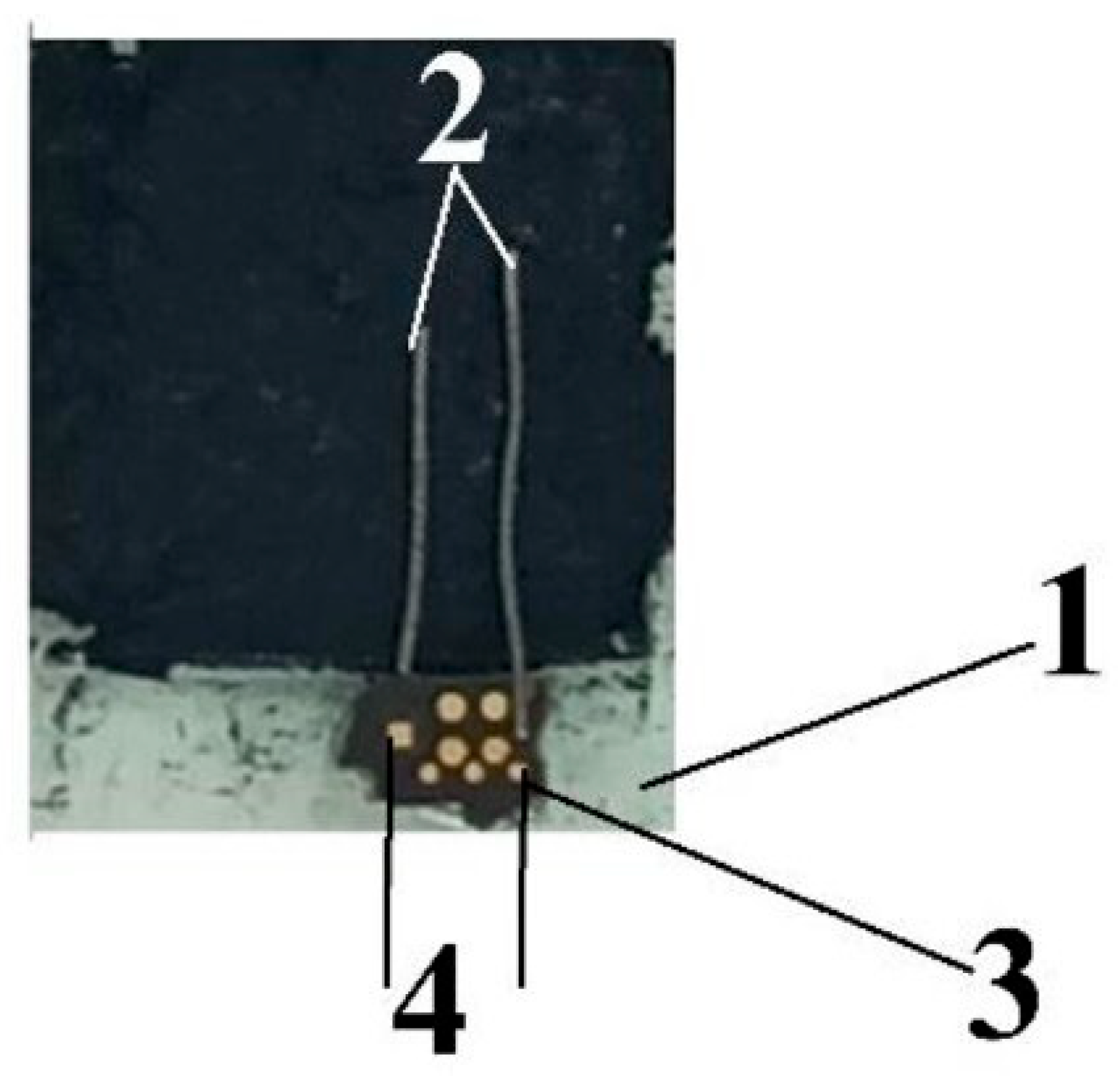
Glass plates measuring 2 × 3 cm were prepared as described in [28]. A composite sample weighing 0.02 g is applied to the central part of the glass and distributed over the surface. A second glass measuring 2 × 5 cm is prepared in thesame way and treated with steam at a temperature of 95 °C, after which the first glass is covered. Both glasses are pressed under a pressure of 80 MPa at a temperature of 90 °C for 4 h. After pressing, the composite sample forms a film with a thickness of 32 ± 2 µm. Using a sharp scalpel, the edges of the prepared active layer are smoothed, forming a square measuring 1 × 1 cm. Two holes with a diameter of 0.3 mm are drilled with a diamond drill at a distance of 0.5 mm from each other at a shaft rotation speed of 8000 rpm. Two nickel wire electrodes with a diameter of 0.4 mm are fixed through the holes so that the electrodes protrude above the surface of the active layer by approximately 5–7 mm. The defects of the sensor layer, which were formed when the electrodes were passed through the sensor layer, were additionally compacted with a composite using a dissecting needle. The electrodes are curved toward the edge of the active layer so that they run parallel to each other and are located at a distance of 0.5 mm from each other (Figure 1). The electrodes are connected to the contact pad through micro-clamps with connecting wires and then to a multimeter.

2.7. Preparation of Mixtures of Acetone Vapors with Air

A mixture of air and acetone was prepared by blowing air pumped by a compressor through liquid acetone. Vapor-saturated air was mixed in a mixer with clean air until the required vapor concentration was achieved. The accuracy of determining the concentrations in the calibration mixtures was controlled by gas chromatography (GC).GC analysis was performed using an Agilent 8860 (Agilent, Santa Clara, CA, USA) gas chromatograph. An ultra-inert Agilent J&W DB-WAX column (30 m × 0.25 mm × 0.50 μm) was used as the analysis column. The GC inlet temperature was maintained at 120 °C. Helium was used as the carrier gas at a flow rate of 52.4 mL/min. The limit of detection (LOD) for acetone was 0.157 μg/mL. The percentage relative standard deviation is less than 3%.

3. Results and Discussion

3.1. Characterization of Calcium Itaconate

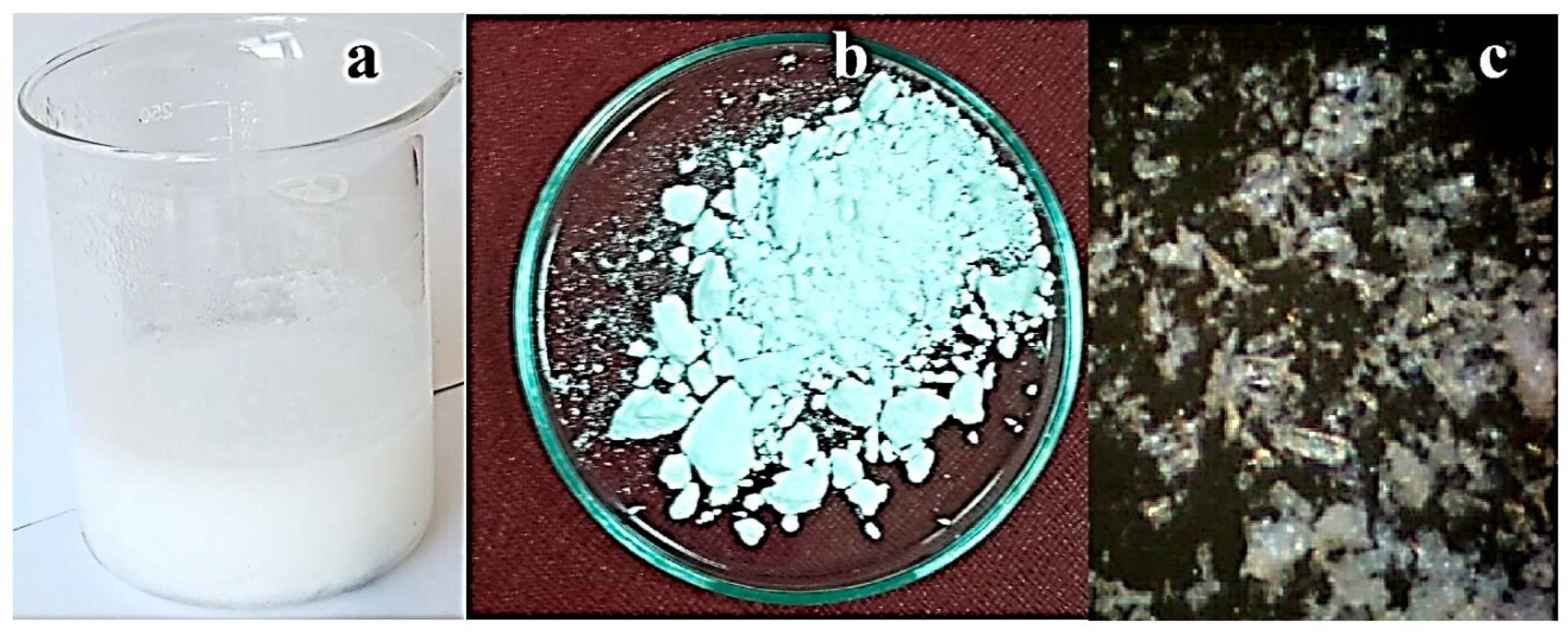
Calcium itaconate was prepared by reacting the starting components (calcium carbonate and itaconic acid) in water. Initially, a voluminous white gel-like precipitate of calcium itaconate hydrogel was formed (Figure 2a). After drying, a fibrous substance was formed (Figure 2b) with randomly oriented fibers, due to which the resulting compound has a low bulk density of 0.52 g/mL. Calcium itaconate in the resulting substance is represented by prismatic crystals of varying degrees of maturity, ranging in size from 52 × 21 µm to 250 × 100 µm (Figure 2c).
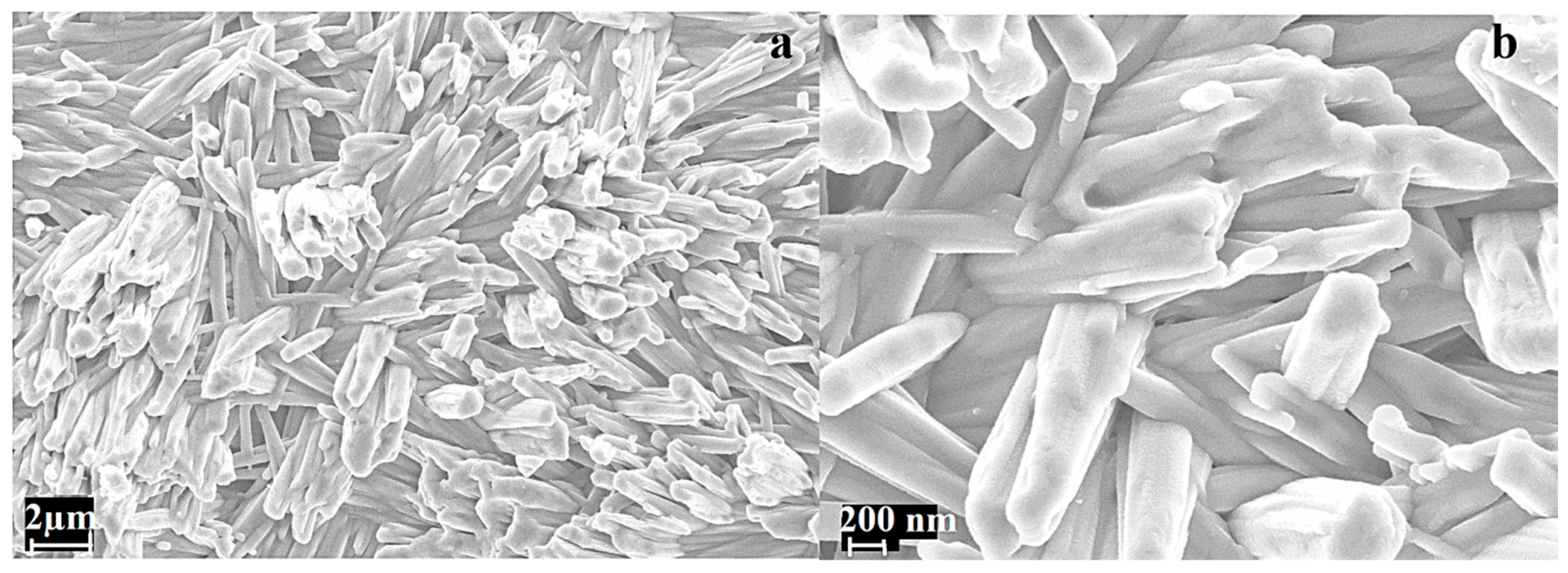
A more precise morphological picture of calcium itaconate was obtained using SEM and is presented in Figure 3. From the presented figure, it can be seen that calcium itaconate is formed by not quite regular prisms (Figure 3a), inside of which there are thin hollow channels with a diameter of about 40 nm (Figure 3b).
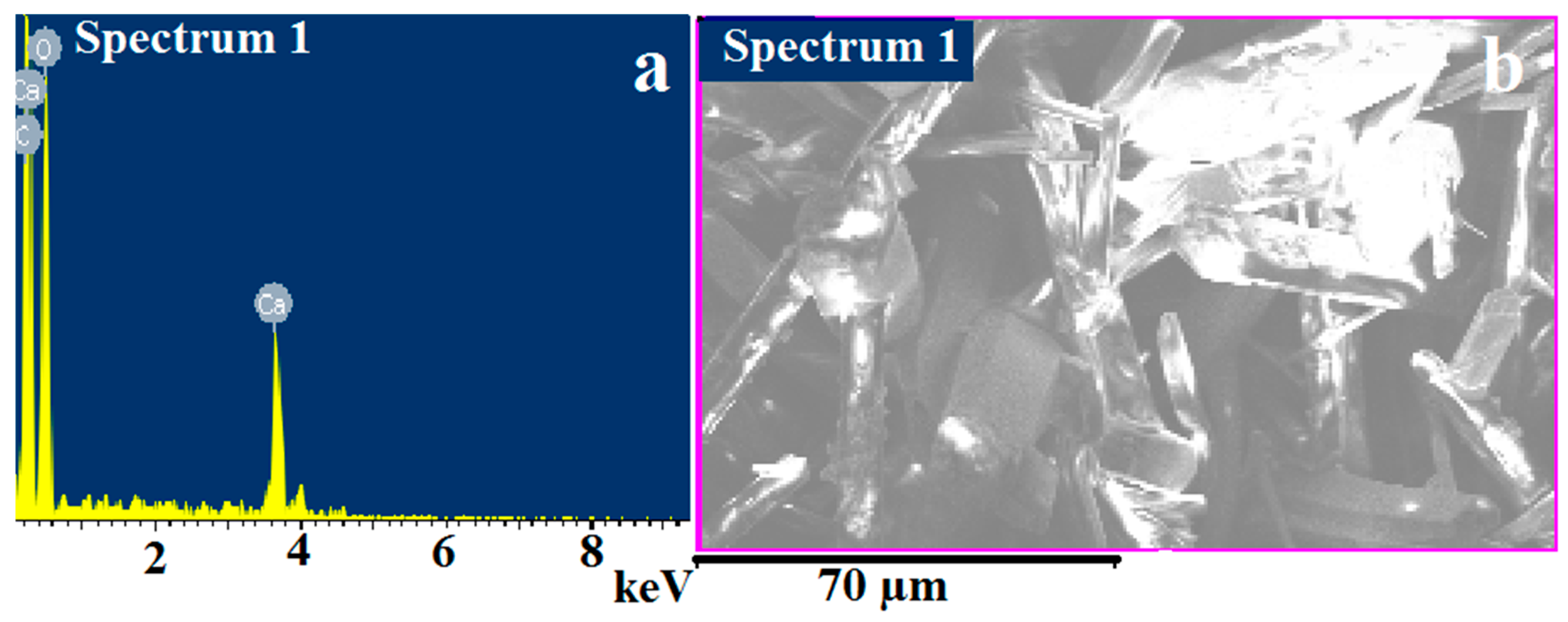
Energy-dispersive analysis (Figure 4), carried out for one sample at five points, shows good agreement with elemental analysis carried out chemically (Table 1).
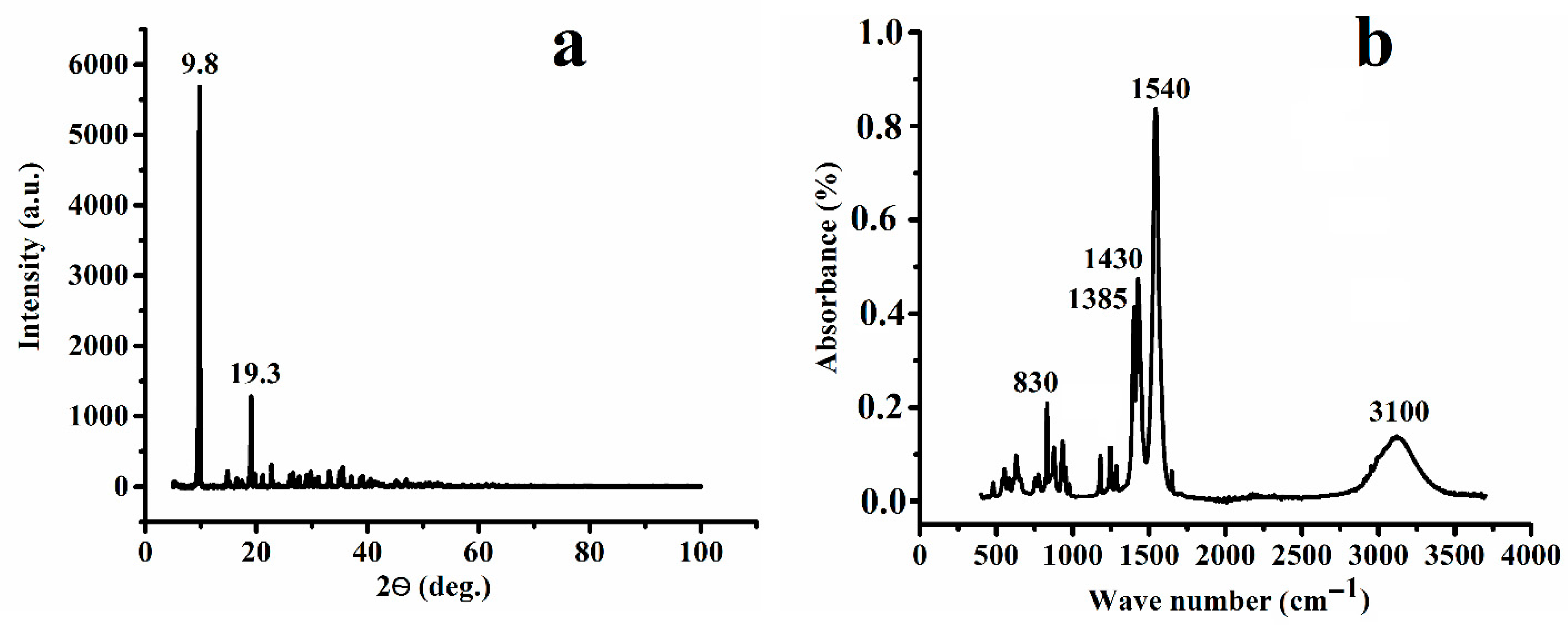
Calcium itaconate was studied by XRD and IR methods;the results are presented in Figure 5.
It can be seen from the figure that calcium itaconate is characterized by phase purity and is a polycrystalline sample with two clearly defined peaks at 9.8 and 19.3° (Figure 5a). The reflections are very intense and are obtained by reflection from fairly large crystals. The IR spectrum contains a low-intensity band at 3100 cm−1 (Figure 5b), characteristic of the stretching vibrations of the CH2 group at the double bond, which is very typical for the itaconic acid residue. The intense band at 1540 cm−1 corresponds to asymmetric vibrations of the carboxylate ion, and the medium-strength band at 1385 cm−1 corresponds to symmetric vibrations of the carboxylate ion. The band at 1430 cm−1 can be attributed to scissor vibrations of CH2 groups located near the carbonyl group, which is also characteristic of the itaconic acid residue. Vibrations in the region of 830 cm−1 of average intensity correspond to the Ca–O bond.

3.2. Characterization of Graphene Oxide

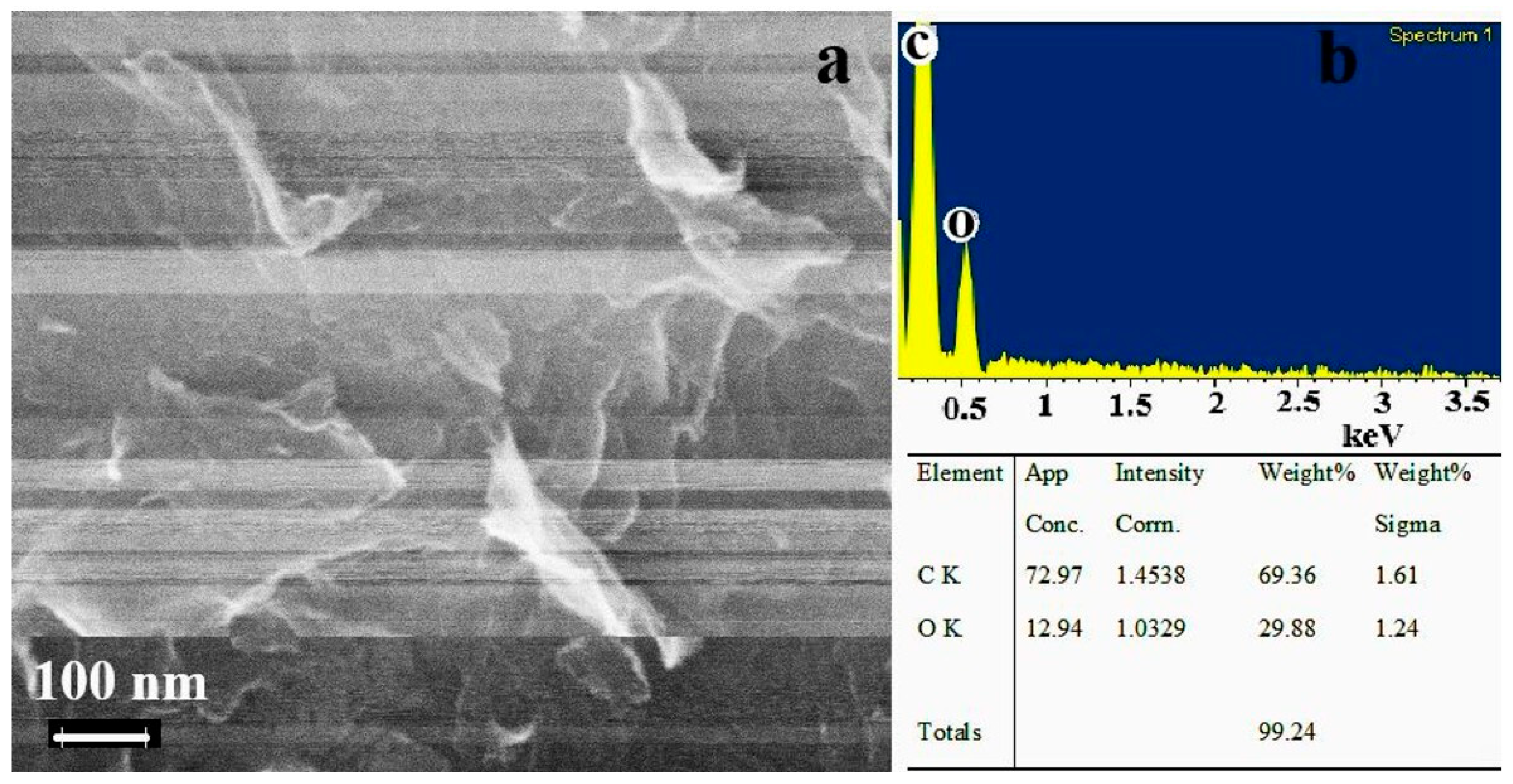
The GO sample was analyzed by elemental analysis, scanning electron microscopy, X-ray diffraction, and IR spectroscopy. The morphology of the GO sample had a folded texture typical of GO (Figure 6a).
The elemental analysis of the GO sample, carried out by chemical methods and energy-dispersive X-ray spectroscopy, is in satisfactory agreement, as shown in Table 2.
In the presented GO sample, the C:O ratio indicates that the graphene of GO is in a highly oxidized state.
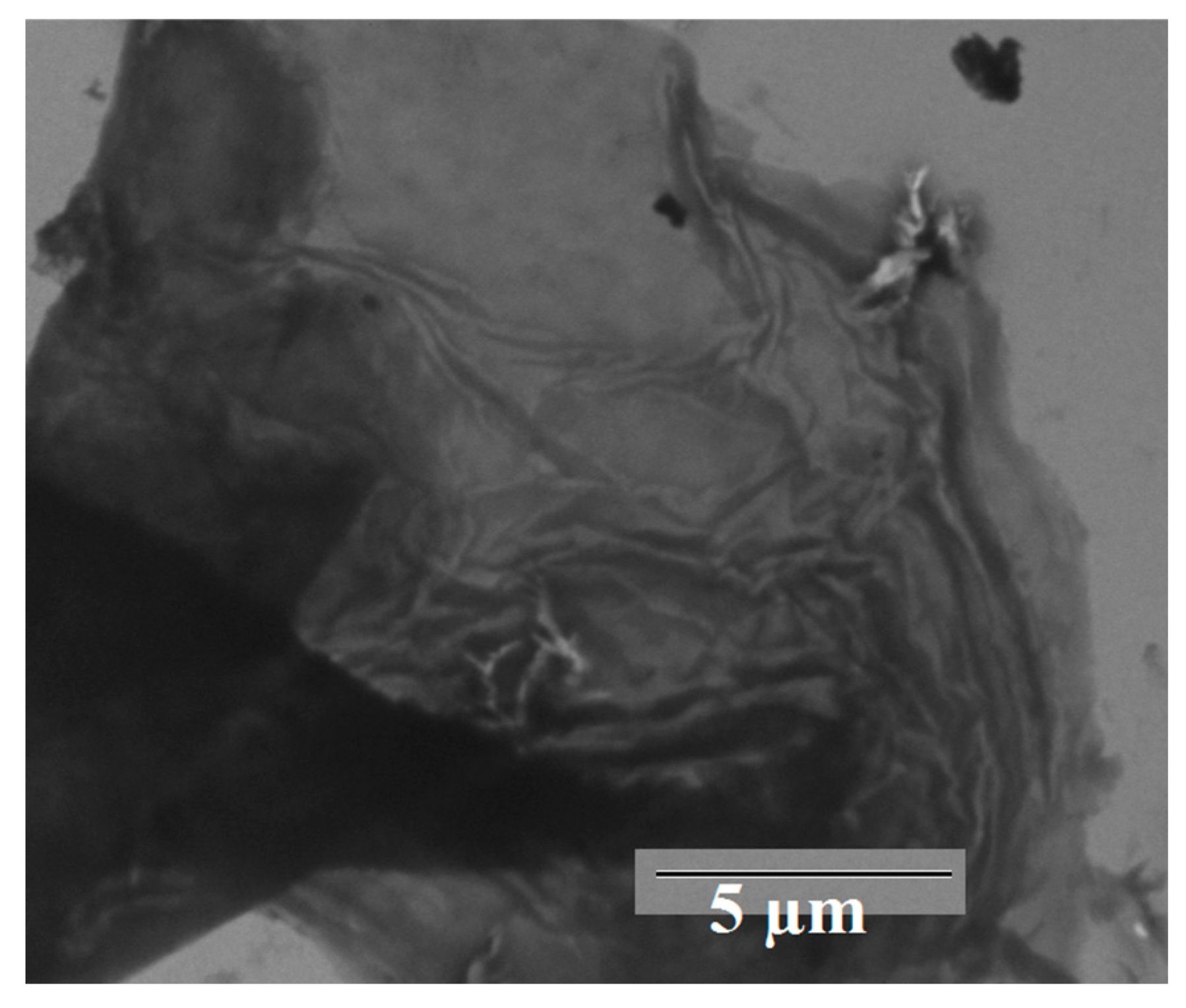
The TEM image confirms the texture of the resulting GO (Figure 7), which is characterized as a structure with a folded surface and layer thicknesses of about 100 nm [29].
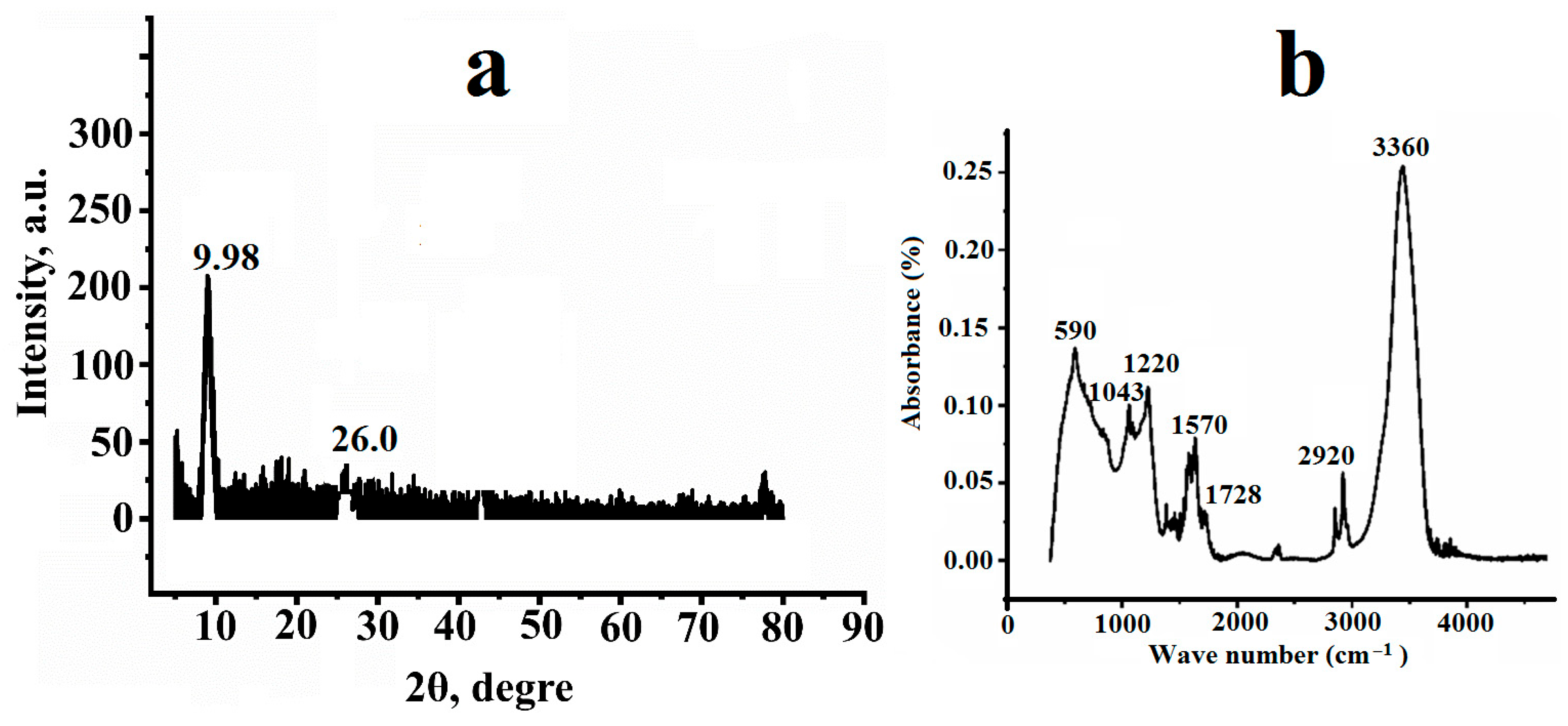
The XRD pattern of the resulting GO sample shows a peak at 2θ = 9.98° (Figure 8a), which corresponds to the interlayer distance of 7.24 Å calculated using the Bragg formula and is in good agreement with previously published data [30,31,32,33,34].
The IR spectrum of the obtained GO sample is shown in Figure 8b. It exhibits a wide and intense absorption band with a maximum at 3360 cm−1, corresponding to vibrations of the hydroxyl groups of water molecules. A narrow band of medium intensity with a maximum at 2920 cm−1 indicates the presence of sp3-hybridized carbon atoms of the C–C bond, which indirectly proves the presence of acidic properties of this product, i.e., terminal carboxyl groups formed under acidic conditions. Vibrations with an absorption peak at 1728 cm−1 indicate the presence of bending vibrations of carboxyl groups. A fairly pronounced absorption peak at 1570 cm−1 corresponds to vibrations of the C=C bond, and the peak at 1220 cm−1 can be attributed to the stretching vibrations of the C–O bond in epoxy groups, and at 1043 cm−1 to the stretching vibrations of the C–O bond in alkoxy groups [35,36,37].

3.3. Synthesis and Characterization of Calcium Itaconate–Graphene Oxide Composite

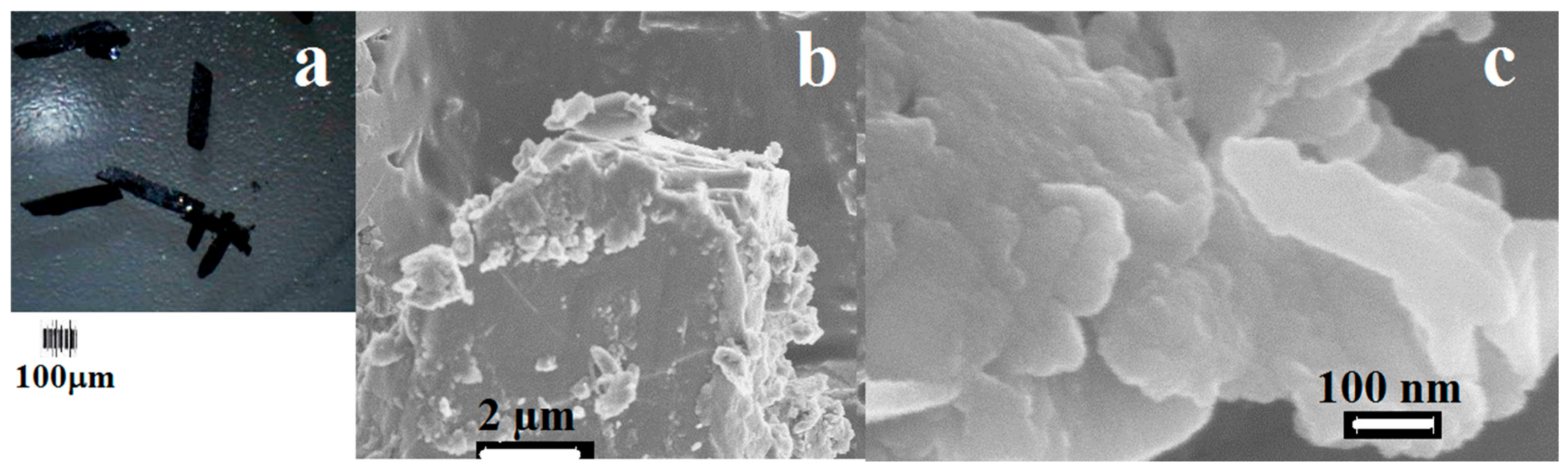
The composite was obtained by introducing the calculated mass of GO during the synthesis of calcium itaconate. The morphology of calcium itaconate undergoes significant changes when GO is introduced at the synthesis stage. The composite is a black powder consisting of individual shiny prismatic crystals at varying degrees of maturity. The crystal size distribution is quite narrow: from 3.6 to 6.2 μm in length and from 0.7 to 1.1 μm in width (Figure 9a). A more detailed morphology of the composite was examined using SEM and revealed that the crystals have a layered texture (Figure 9b) with an uneven vesicular surface (Figure 9c).
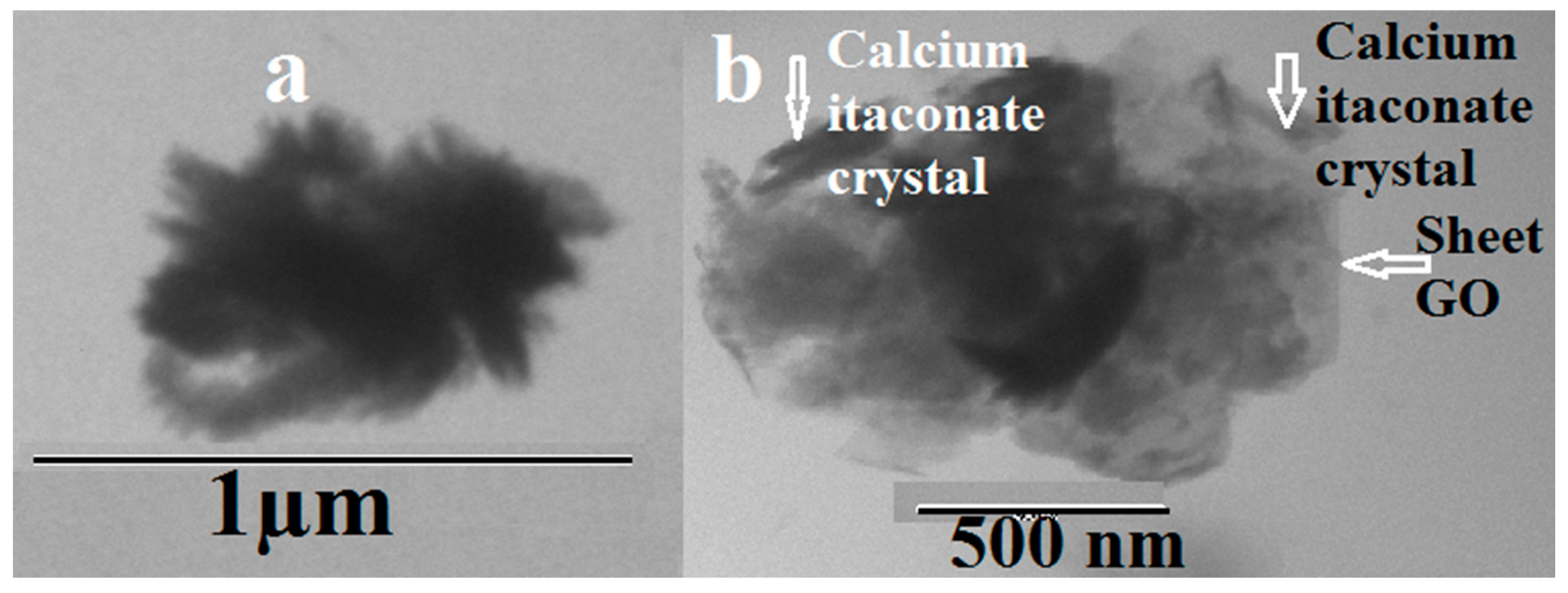
TEM revealed the exact location of the precursor particles in the composite (Figure 10). The figure shows that individual particles of the composite (Figure 10a) are formed by small crystals of calcium itaconate up to 250 nm in size, embedded in individual layers of GO (Figure 10b).
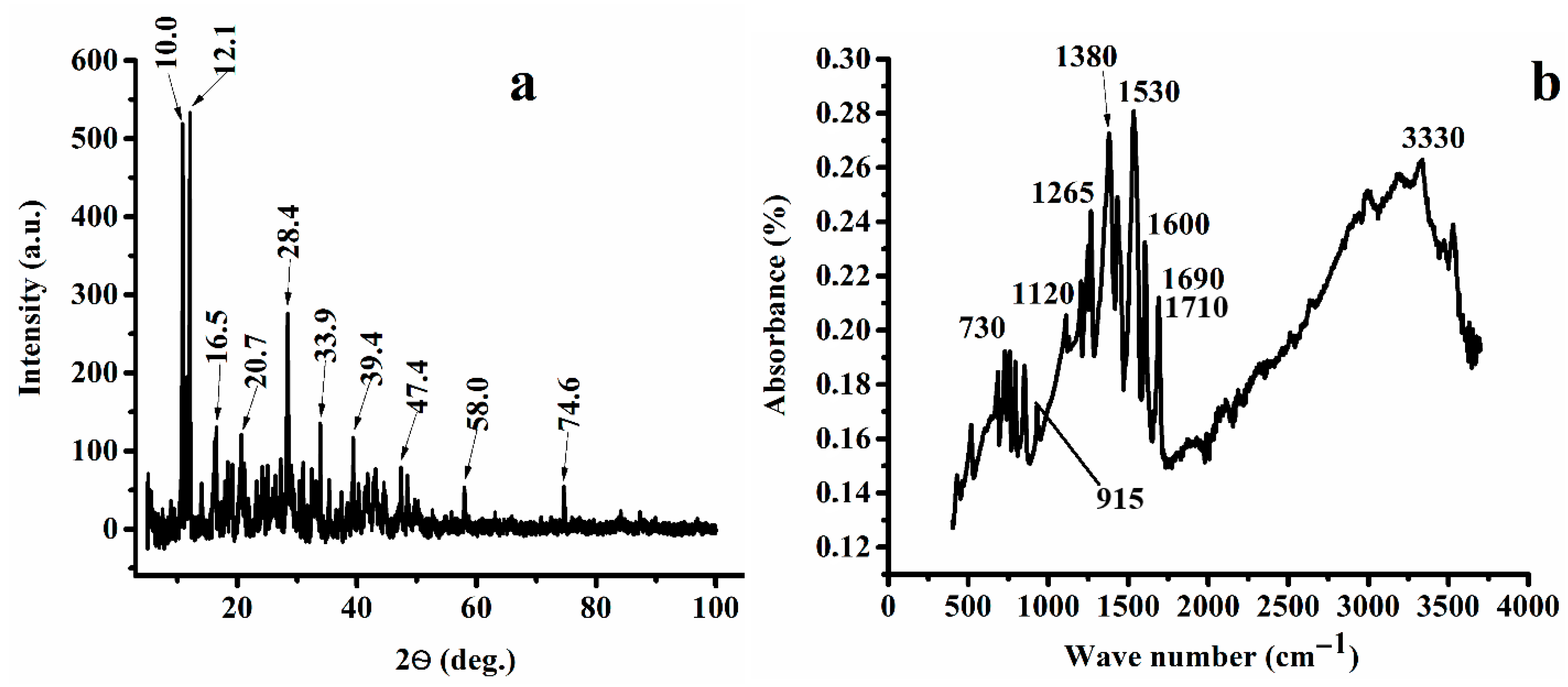
The composite was examined using XRD and IR spectroscopy, and the results are presented in Figure 11. One might expect that the diffraction pattern of the composite would be represented by a simple superposition of the peaks from the diffraction patterns of the precursors—the matrix and the filler (Figure 5a and Figure 8a). These figures demonstrate that the structure of the XRD profile differs significantly from the diffraction patterns of the precursors (Figure 11a). The profile shows a significant number of intense reflections over a wide range of 2 theta angles. In the range of 9.8–100, a doublet of bands is observed, apparently corresponding to calcium itaconate and GO. However, the intensity of the calcium itaconate band in this region is significantly reduced (almost 10-fold) for the composite, while the band characteristic of GO remains virtually unchanged. This phenomenon may indicate that calcium itaconate crystallized on GO sheets during composite formation. The peak at 16.30, characteristic of calcium itaconate, also significantly decreases in intensity in the composite. The appearance of new peaks indicates the formation of crystals of varying degrees of maturity and is associated with the interaction of phases in the composite, leading to the formation of new structures. Qualitative analysis of the XRD profile suggests that the crystallite size is quite large, clearly exceeding 200 nm, which precludes the use of the Debye-Scherrer formula for calculating crystallite sizes.
The IR spectrum of the composite is a combination of the characteristic absorption bands of each precursor (Figure 11b) with some shifts toward the long-wavelength or short-wavelength region. The broad and intense band at 3330 cm−1 is attributed to the stretching vibrations of the hydroxyl group, while the presence of stretching vibrations of the N–H group is completely excluded in this case, since no nitrogen was detected in the sample according to elemental analysis. A number of important absorption peaks are visible in the fingerprint region. The vibrational band at 1710 cm−1 can be attributed to vibrations of the unionized carboxyl group in the GO composition, while the band at 1690 cm−1 corresponds to the stretching vibrations of C=C bonds, which are present in both the composite matrix and its filler. The vibrational band at 1600 cm−1 corresponds to deformation vibrations of the same group in the GO composition. Two intense bands at 1530 and 1380 cm−1 are attributed to asymmetric and symmetric vibrations of the carboxylate ion, respectively, which are part of calcium itaconate. The medium-intensity absorption peak may correspond to the stretching vibrations of the C–O bond in phenols, which is characteristic of GO. The medium-intensity band with a peak at 1120 cm−1 corresponds to the asymmetric stretching vibrations of the C–O–C atomic groups, characteristic of GO. The absorption band characteristic of epoxy groups is located at 915 cm−1, which is also characteristic of GO. The bond characteristic of medium-intensity Ca–O bond vibrations is located in the region of 730 cm−1.
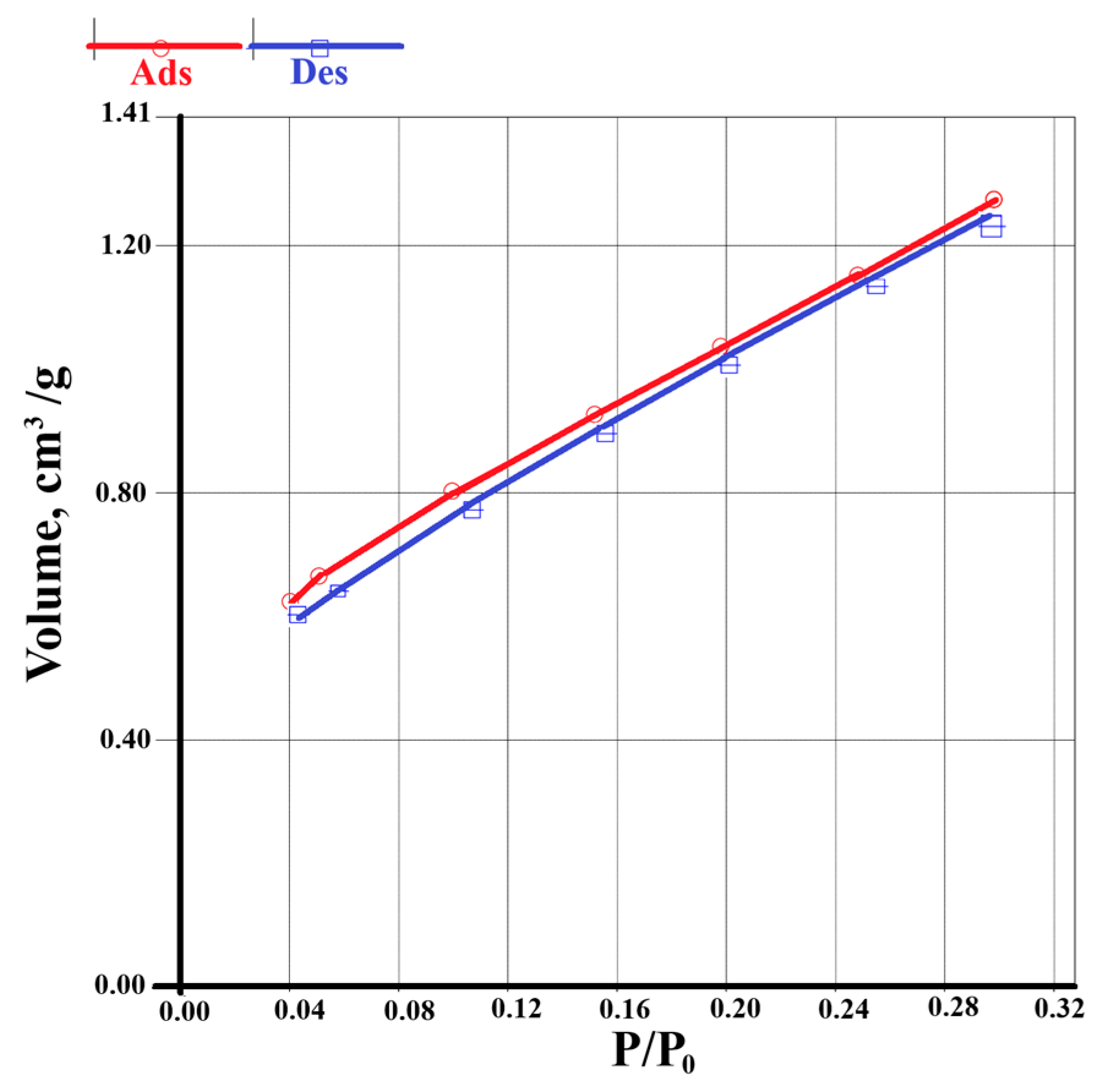
In order to predict the adsorption properties of the composite, the internal surface area of the composite was studied using the BET low-temperature nitrogen sorption–desorption method (Figure 12).
During the experiment, it turned out that the composite has a small surface area, calculated by the BET method and amounting to 4.331 m2/g. The constructed sorption–desorption isotherm belongs to type II according to the IUPAC classification, corresponding to polymolecular adsorption and characterizing the substance as a macroporous material. Despite the relatively small internal surface area of the composite and considering the overall morphology of the composite material, good results in terms of sensor activity can be expected. This may be due to several factors, one of the determining ones being the morphology of the composite. As can be seen from Figure 10a, the composite has a highly developed external surface formed by elongated structures up to 71.4 nm long and 14.3 nm wide. A more detailed morphological analysis reveals a regular arrangement of calcium itaconate crystalline units on the surface of the GO sheets, forming virtually infinite structures with more or less regularly repeating “islands” of individual structural elements of the composite against the background of the binder (GO). It is assumed that this structure influences the average electron concentration in the composite and the height of the potential barrier at the interface of the crystallites forming the gas-sensitive layer, and, consequently, controls the resistance of this layer. Thus, the resulting structure fits well into the description of percolation theory. Of crucial importance in this case is the presence of edge carbon atoms in the binding film, which, as shown above, acquire additional functionalization during the oxidative preparation of graphene sheets and exhibit new properties, both chemical and electrophysical [38,39,40,41]. This modification of the edge zones, together with the percolation effect, provides charge transfer pathways, which ensure the measured sensory activity.
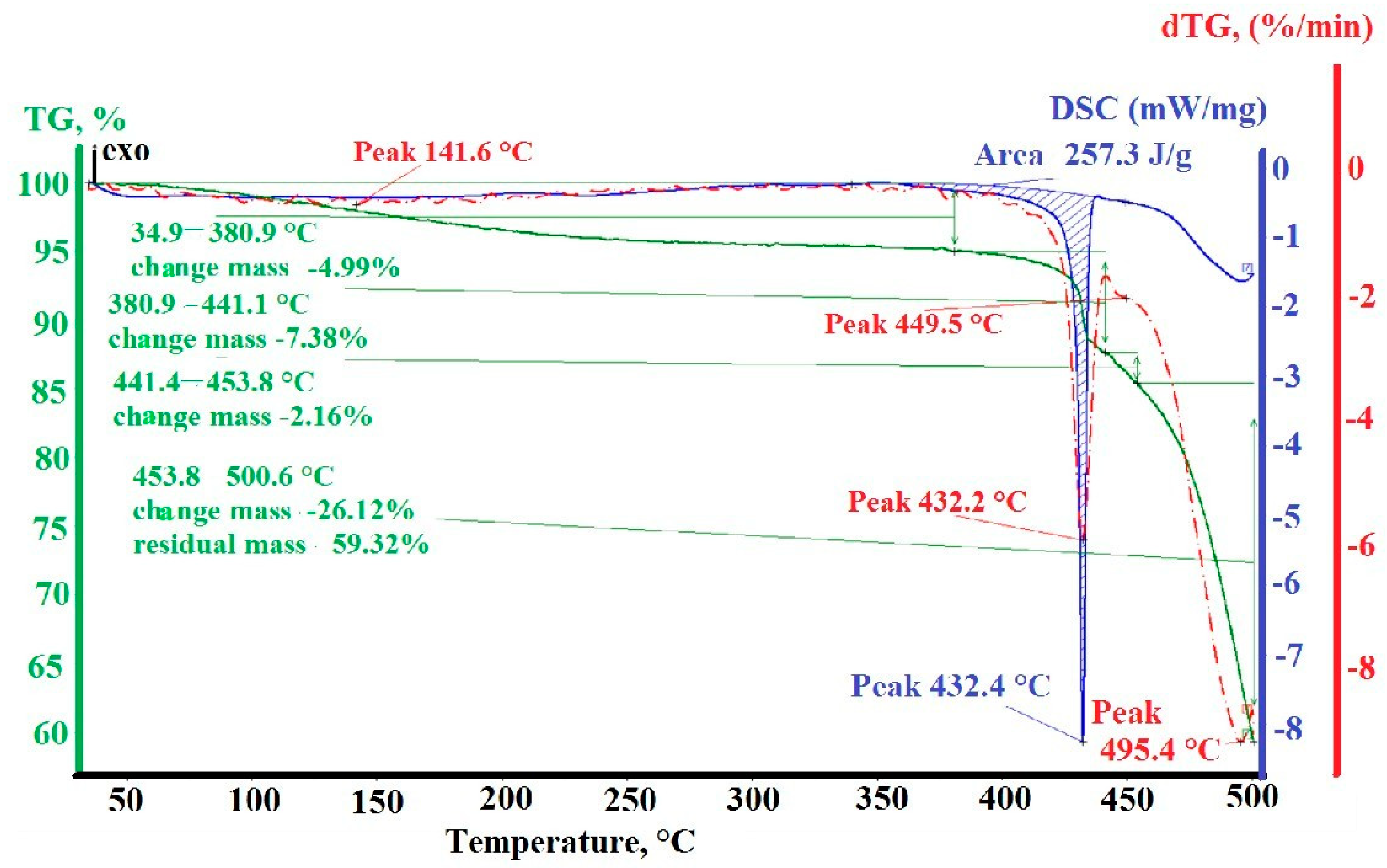
We investigated the thermal behavior of the composite up to 500 °C; the results are presented in Figure 13.
The figure shows that the composite material exhibits sufficient stability over a wide temperature range. When heated to 380 °C, a very smooth and insignificant decrease in the mass of the initial sample (about 5%) is observed, which is associated with the loss of moisture and solvents physically sorbed on the composite, remaining from previous syntheses. In the temperature range of 381–441 °C, a more significant weight loss is observed, exceeding 7%, which may be due to the initial process of decarboxylation and the formation of radicals that initiate the polymerization of itaconic acid residues. We assume that this process is short-lived and, with further heating, goes into the stage of rapid deep thermal destruction of the substance with significant loss of mass in the temperature range of 450–500 °C. The mass loss at this stage is about 26%, and the total residual mass at 500.6 °C is 59.32% of the mass of the sample taken for the study. According to the analysis data, the residue after heating consists of various forms of carbon material, calcium carbonate and GO introduced into the composite.

3.4. Manufacturing of a Composite-Based Touch-Sensitive Multilayer Film

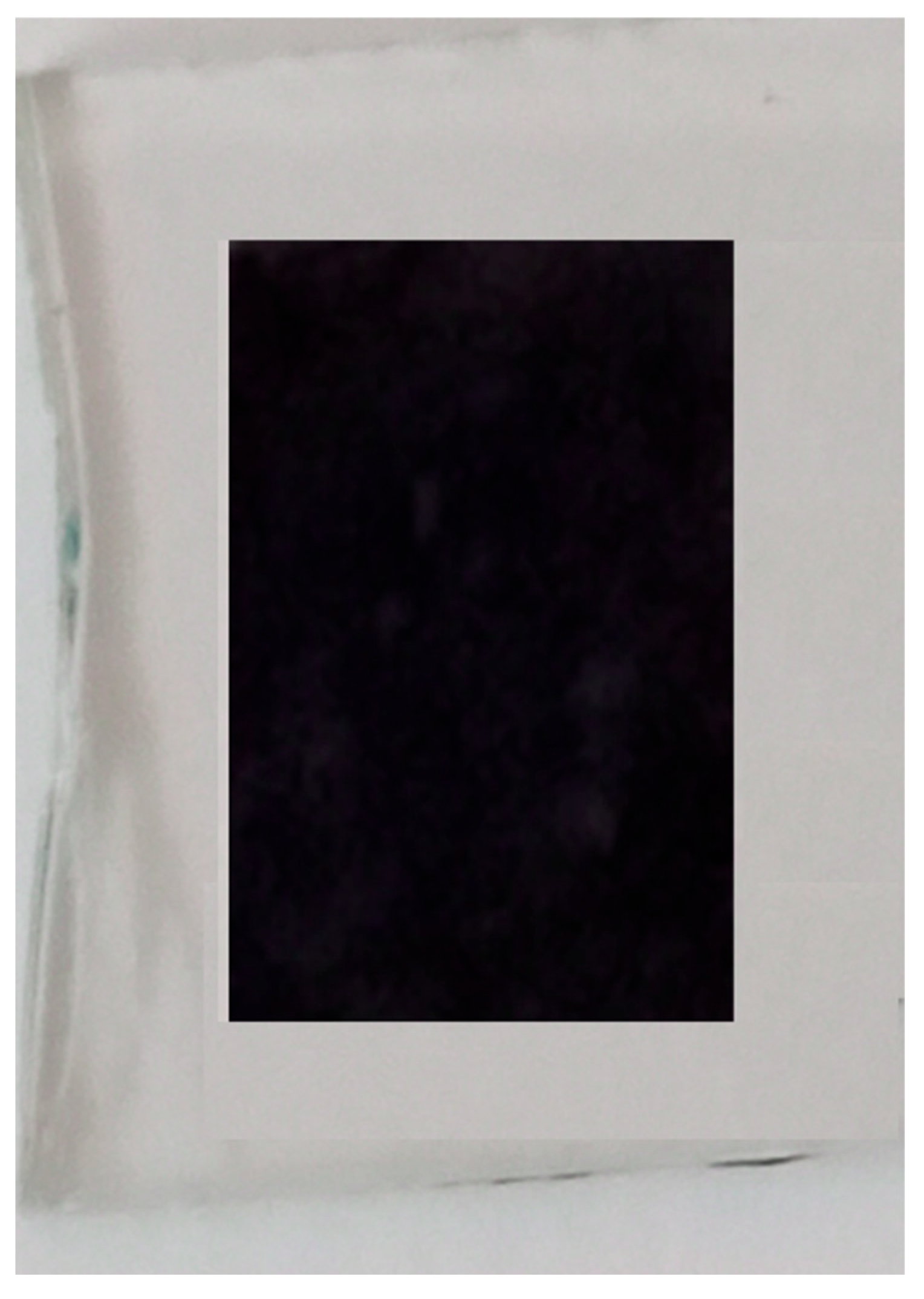
To manufacture the active layer, a glass substrate is used, which is pre-prepared as described above. A composite sample weighing 0.05 g is placed on a glass substrate and evenly distributed over the surface in the area of the prepared holes. Another glass plate is wiped with a soft cloth with a few drops of poly(dimethylsiloxane) with a kinematic viscosity of 1000 cSt (10 m2/s), achieving uniform distribution of the substance over the glass surface. The plate is polished with a cloth until the surface becomes dry. A plate coated with a layer of poly(dimethylsiloxane) is covered with the plate with the composite, manually compressed with force and heated to 80 °C for 15 min. When hot, it is pressed under a pressure of 200 MPa for 24 h. After the specified time, the plate is removed from the press, and the edges of the film are aligned with a knife (Figure 14).

3.5. Conducting an Experiment to Determine the Content of Acetone in the Air

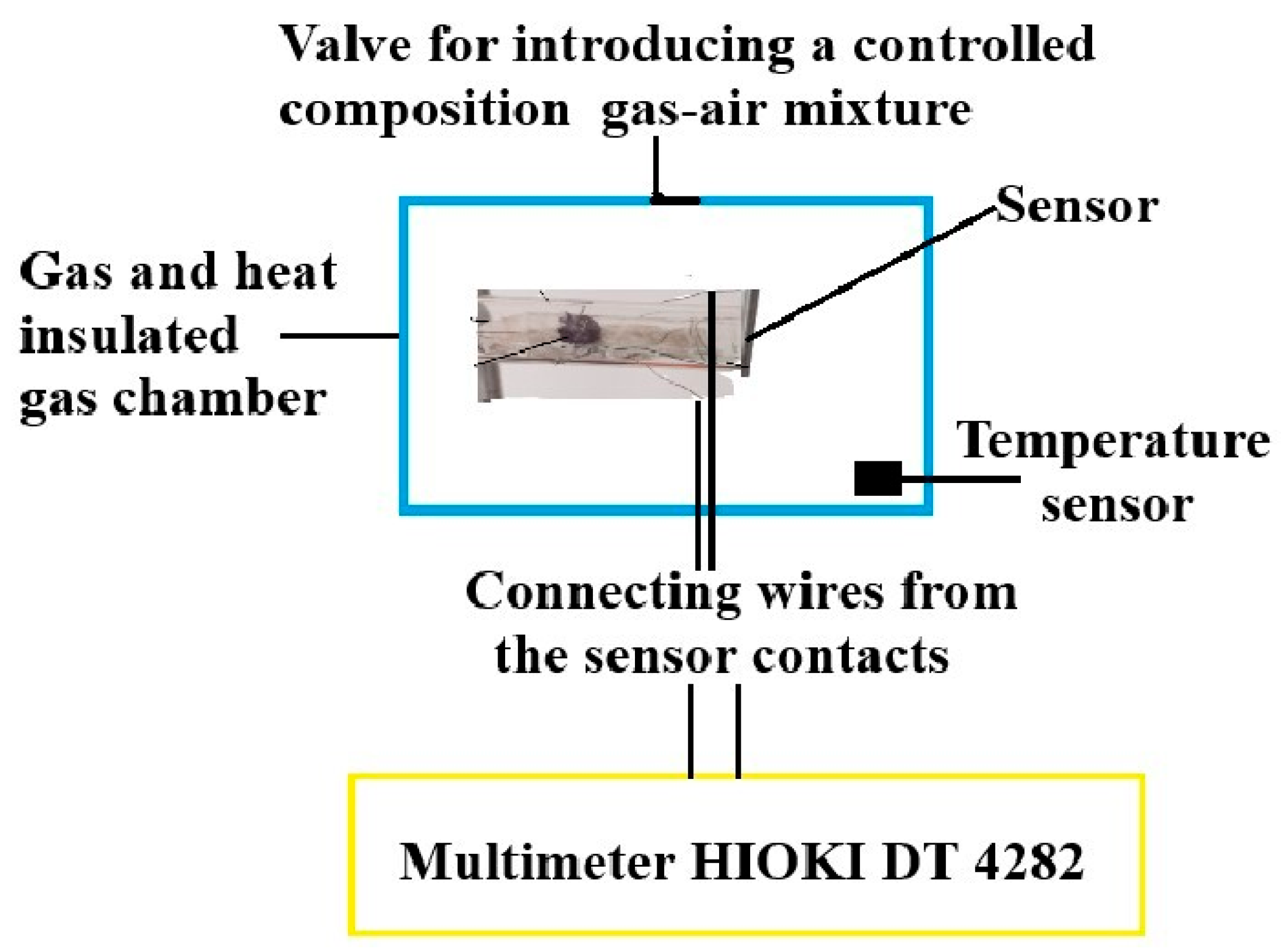
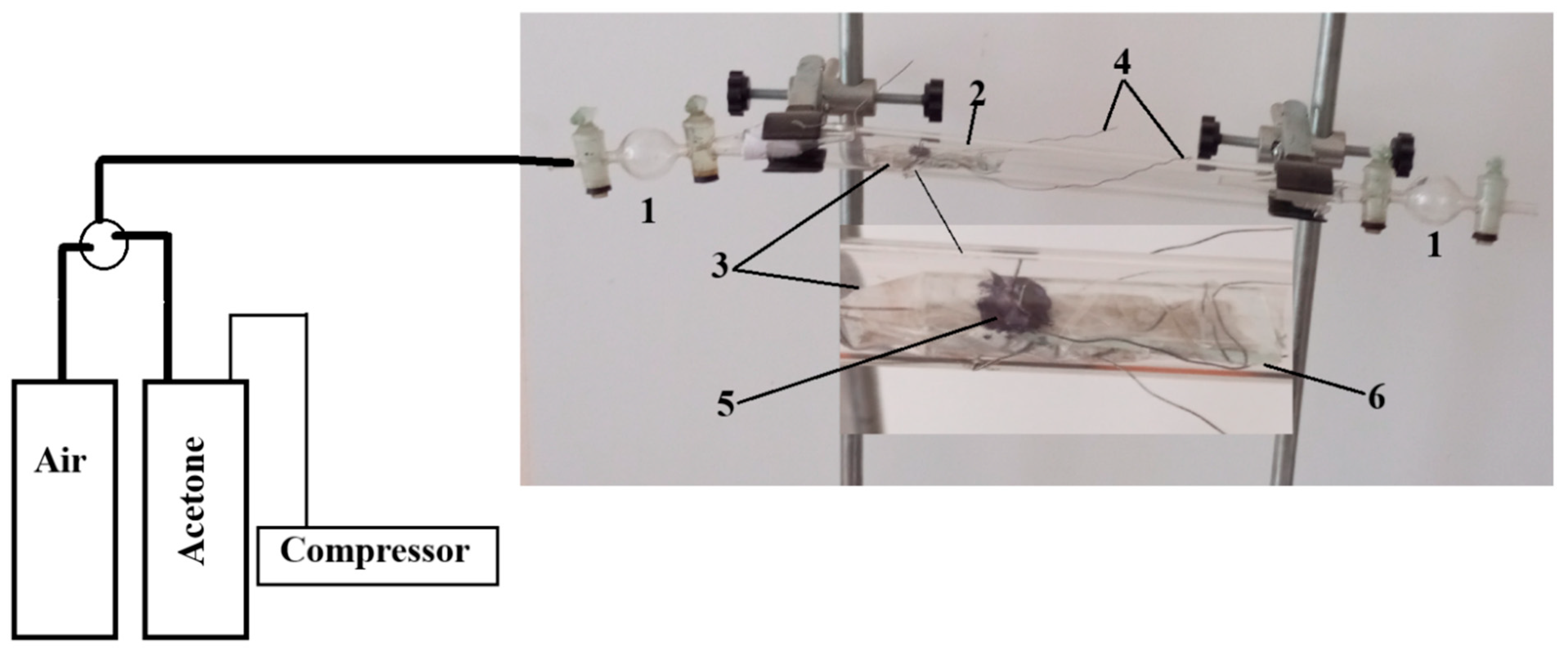
To conduct the experiment, the gas mixture was directed into a device containing a sensor element (Figure 15).
The electrodes were connected to the multimeter, forming a single thermostatted measuring unit, the diagram of which is presented in Figure 16. The prepared plate was placed in a thermostatted device to test the operation of the sensor under static conditions.
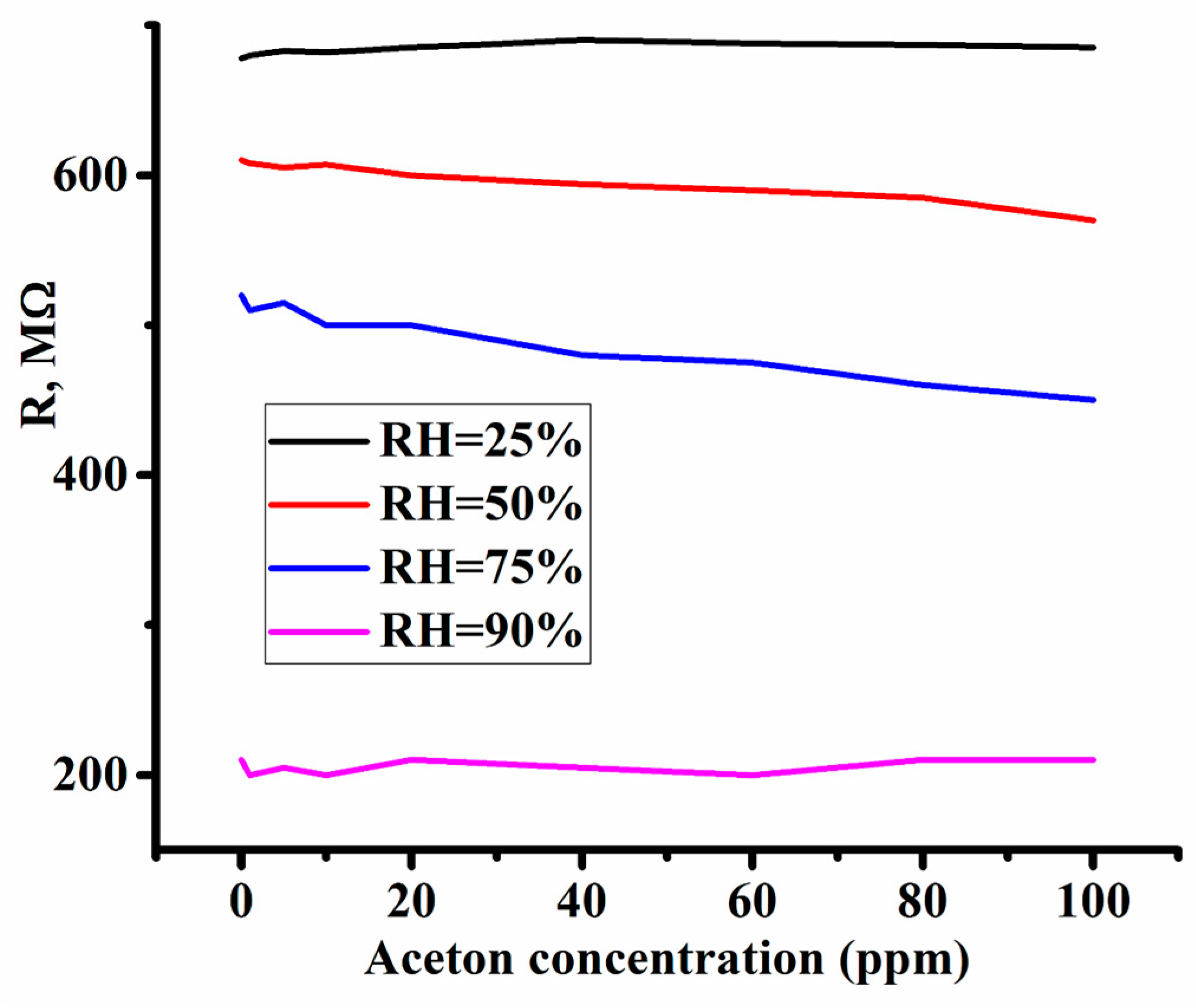
To accurately study the sensory activity of the composite material, the sensory activity of each component was studied, and itsmechanical properties were determined. When applied to a substrate, calcium itaconate forms a highly uneven film due to the formation of crystals of varying sizes, which complicates the determination of the film’s resistance. Furthermore, the calcium itaconate film is extremely sensitive to air humidity, preventing reliable determination of the target analyte concentration due to the interfering effects of water vapor (Figure 17).
The figure shows that calcium itaconate’s response to relative humidity is much greater than that to increasing acetone concentration in the gas–air mixture. It is likely that the active layer’s low sensitivity to acetone can be explained by the solubility of acetone in water droplets as atmospheric moisture condenses within the pores of calcium itaconate or on its surface, which ultimately leads to a significant reduction in resistance due to the formation of a weak salt solution.
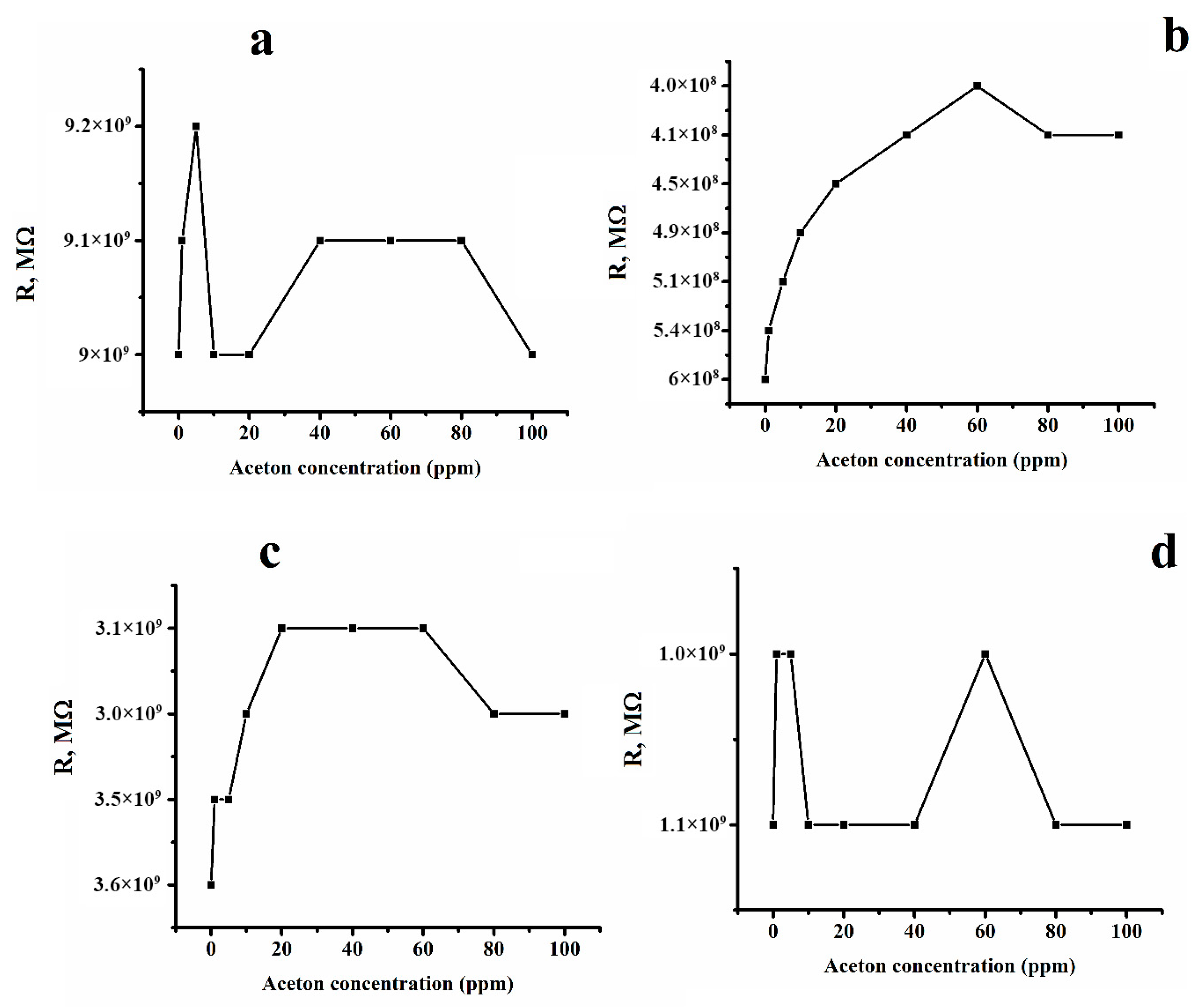
The response to changes in the GO layer resistance depending on the acetone concentration in the air mixture is even more ambiguous. In this regard, it is worth noting several factors that make it impossible to use pure GO as the base for the sensor layer. First, GO film adheres extremely poorly to various substrates (glass, quartz, metal). Attaching the film topolymers slightly alters the film mechanics and affects its surface properties. Mechanical pressing of GO powder also does not produce the desired effect. Second, initial experiments studying the dependence of GO film resistance on acetone concentration in the air mixture show unstable experimental characteristics, with resistance strongly dependent on relative air humidity. Third, GO resistance in air exhibits relatively high resistance values, which ultimately complicates the interpretation of the experimental results (Figure 18).
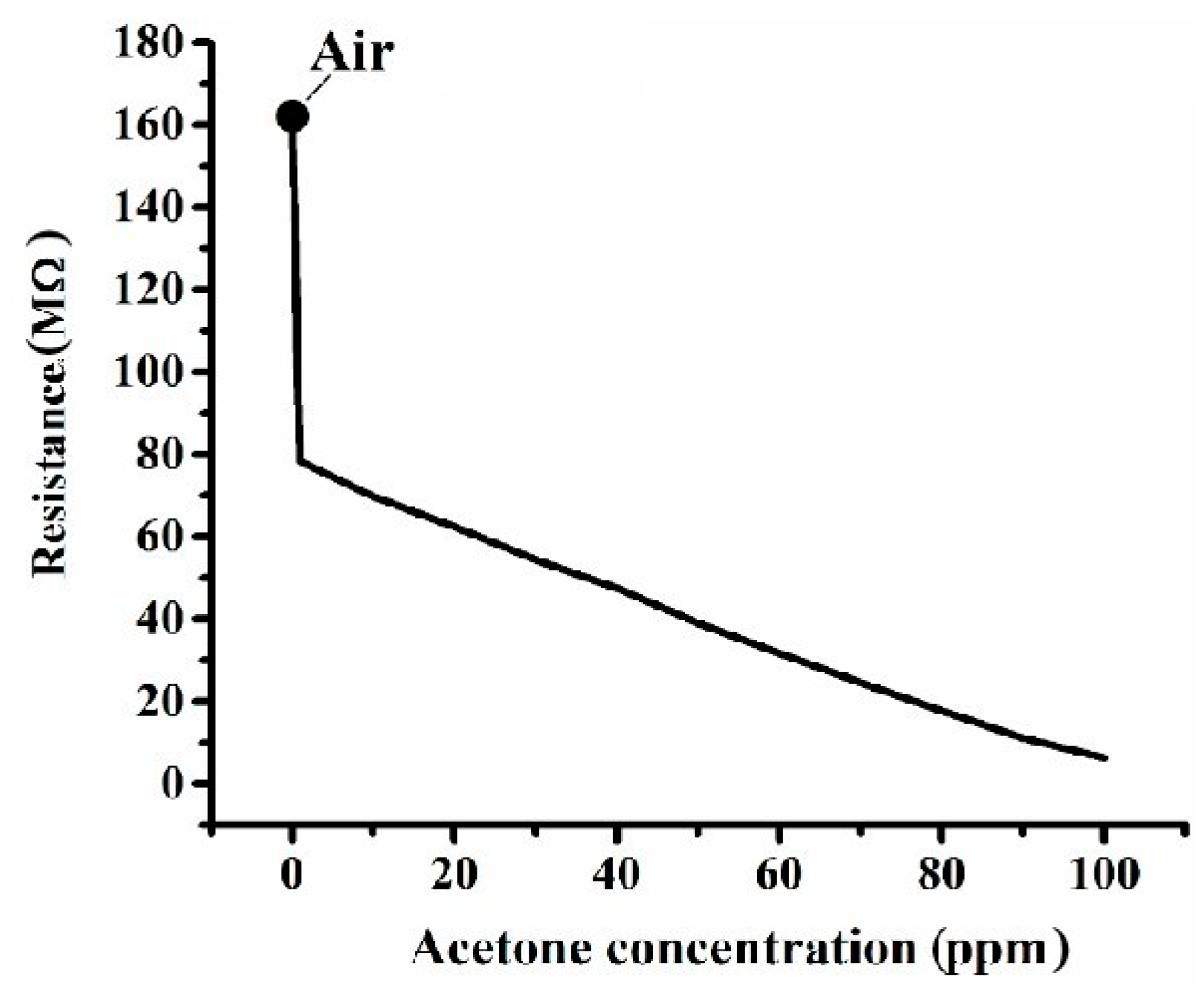
Initial tests were carried out to determine the dependence of the resistance of the active layer on the acetone content in the gas–air mixture. The experimental results are shown in Figure 19.
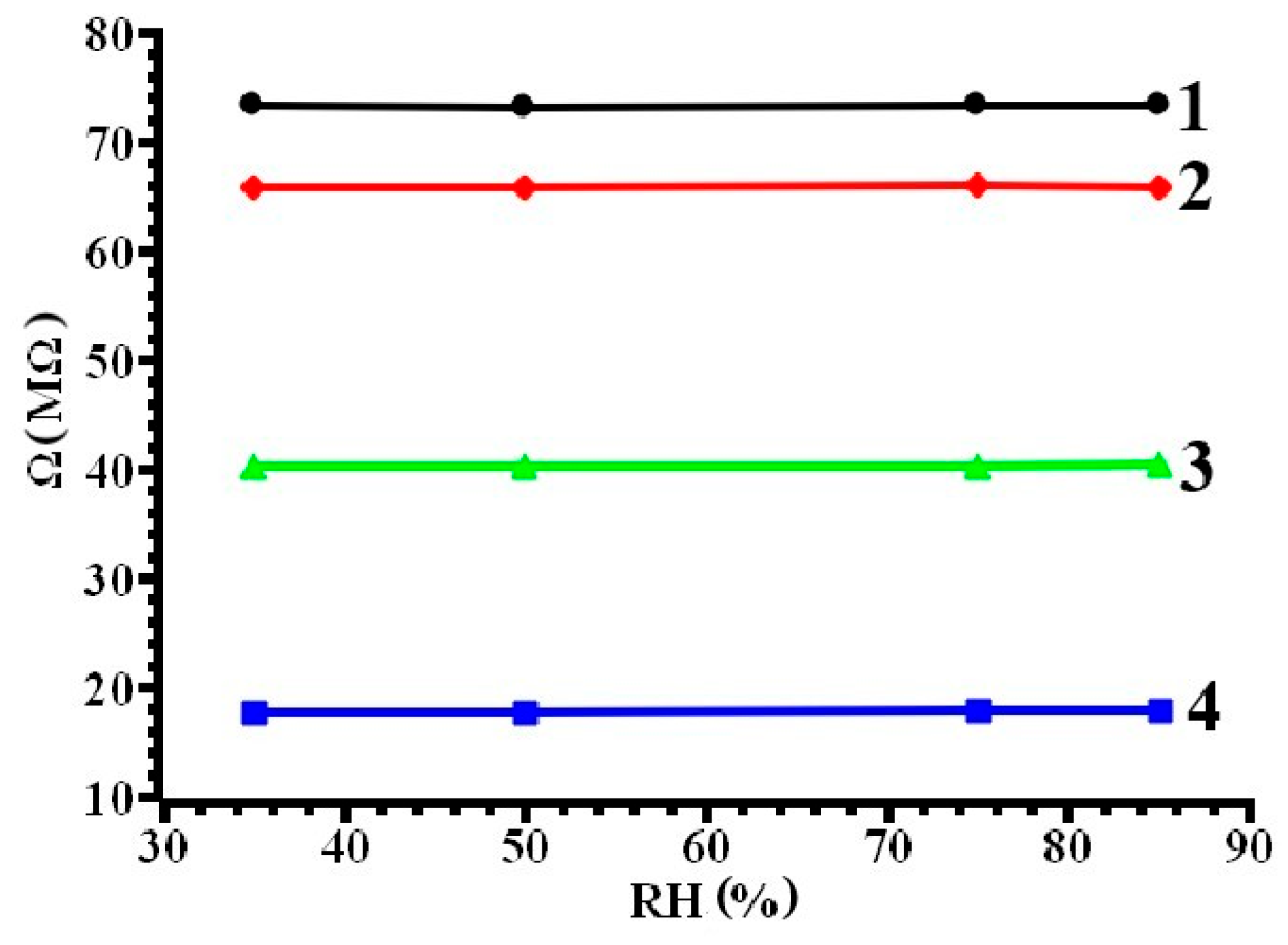
The figure shows that the resistance of the sensor layer decreases significantly after introducing even small amounts of analyte into the system, and then an almost linear relationship is observed between the resistance and the concentration of acetone in the air. The dependence of the resistance of the active sensor layer on relative humidity (RH) was studied by measuring the resistance in a climate chamber under isothermal conditions. The experimental results are shown in Figure 20.
From the presented figure, it can be seen that the relative air humidity does not have a significant effect on the measurements.As an example, deviations from the nominal resistance values for each acetone concentration gradient in a gas–air environment at RH = 85% are presented in Table 3.
Analyzing the data presented in the table, it is clear that with increasing concentration of acetone in the air, the interfering value of relative air humidity has a slight effect.
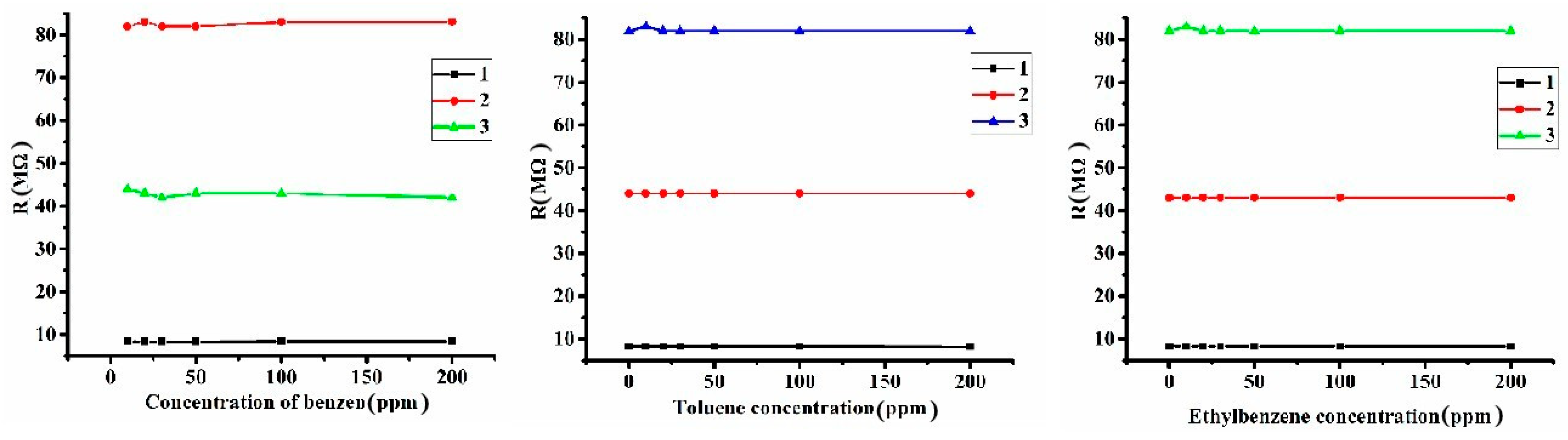
In this study, selectivity tests of the studied sensor were conducted in the presence of other VOCs, particularly aromatic hydrocarbons. It was found that benzene, toluene, and ethylbenzene had no significant effect on the sensor’s acetone determination (Figure 21).

3.6. Determining the Response and Relaxation Time of the Sensor

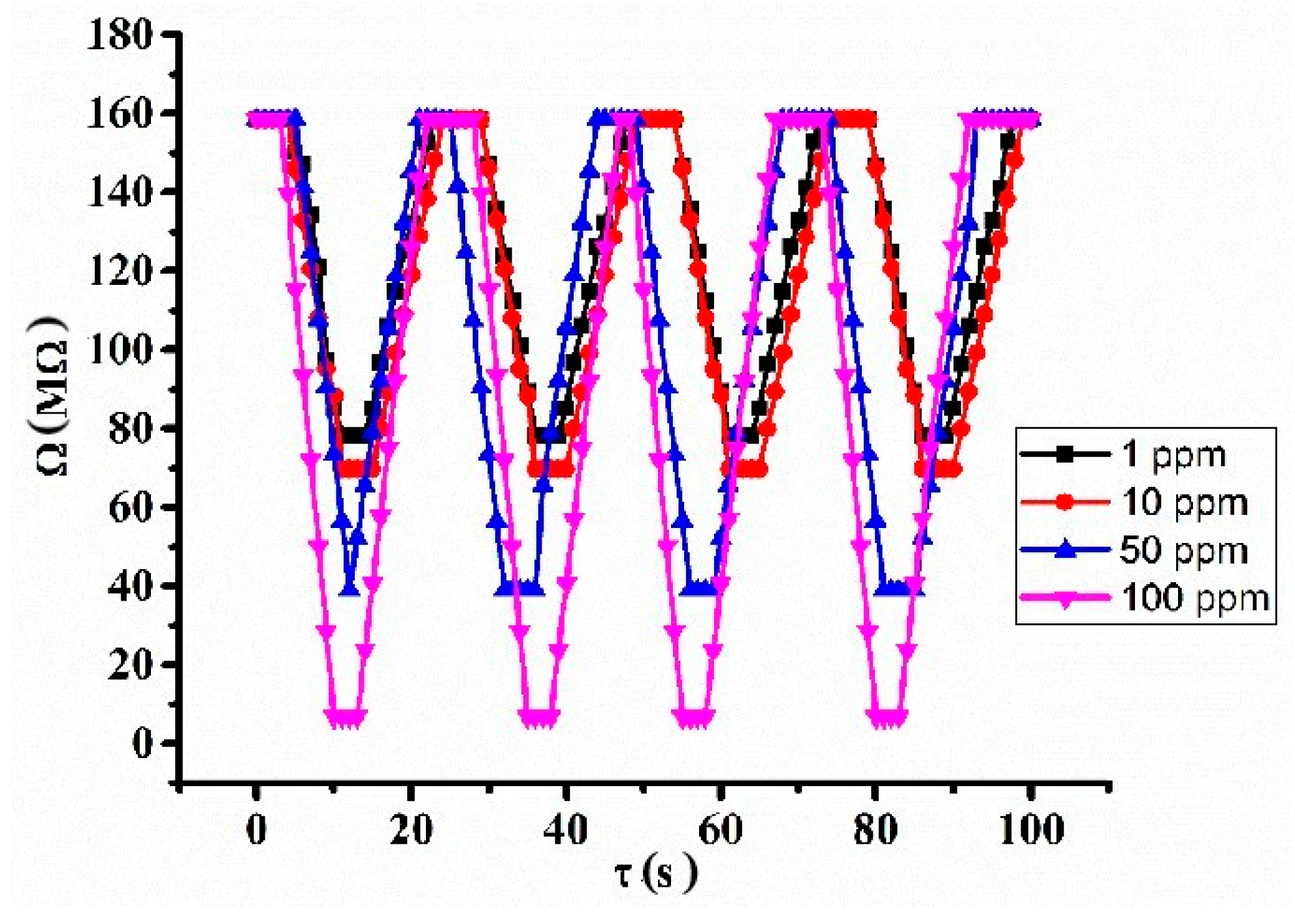
The sensor response time was defined as the time required to achieve stable sensor resistance values when reaching 90% of the active layer resistance value at a given analyte concentration compared to the sensor resistance in clean air. The relaxation time was determined by purging the device with air or an inert gas containing a gas–air mixture containing the analyte at the maximum concentration. The response time required for the sensor to reach 90% of the stabilized resistance value after contact of the sensing gas with the sensing surface. The recovery time required for the sensor to restore its resistance value to 10% above its original value after the sensing gas has been removed. The sensor response time calculated in this way is 7.66 ± 0.07 s (sr = 0.92%), and the relaxation time when blowing the surface with clean air or inert gas (nitrogen, argon) is 9.26 ± 0.12 s (sr = 1.28%) (Figure 22).
From the presented figure, it can be seen that in a fairly wide concentration range, the sensor demonstrates satisfactory characteristics in terms of response time and relaxation time, with satisfactory analytical characteristics. These characteristics include satisfactory repeatability of the obtained results over at least four consecutive working cycles, which is also shown in Figure 22. This figure allows us to conclude that, in the range of high analyte concentrations, the repeatability of the result can be assessed as excellent. In the range of medium and low concentrations, discrepancies between the experimental values are somewhat more noticeable, but not critical. A quantitative assessment of the repeatability of the obtained experimental data (precision under repeatability conditions) was also determined under the conditions of this experiment, taking into account the reliability of the results (p = 0.95) with a fivefold reproducibility of each measurement cycle. The calculation of the actual discrepancy between parallel measurements was estimated using the formula
r k = X m a x X m i n
or in relative units:
r k =   X m a x X m i n X m a x · 100 %
The actual discrepancy between parallel tests in the 50–100 ppm concentration range was no more than 1.8%, and in the 1–40 ppm concentration range, it was up to 4.3%. The data in Figure 19 and Figure 22 allow us to estimate the lowest LOD of the analyte for this sensor. At low analyte concentrations, a strong influence of instrument noise is observed, manifested in the appearance of random resistance fluctuations at acetone concentrations in the mixture below 0.3 ppm. Since the concentration is low in this range and the resistance is quite high, a deviation from the reliable values occurs, and a measurement error exceeding 10% appears. The slope of the calibration graph in this region is characterized by a large slope; however, the error is directly proportional to the analyte concentration, which causes this slope of the calibration graph. Following the 3s (3σ) principle, we adopted a concentration of 0.9 ppm as the minimum detectable concentration. For ease of calculation and experimentation, we adopted a minimum working analyte concentration of 1 ppm. At high concentrations above 100 ppm, the calibration curve exhibits a deviation from linearity due to the small change in the analytical signal being determined, necessitating the introduction of special correction factors. Based on these considerations, we set the upper LOD at 100 ppm. It is worth noting that the introduction of a dual-circuit design into this sensor device allows for an increase in the upper limit of the measurement scale and demonstrates potential for design improvement.

3.7. Determining the Sensitivity and Duration of the Sensor Operation

The sensitivity of the sensor (%) was determined by the formula
S = ( R a R g ) R a · 100 %
Here, Ra and Rg represent the resistance of the sensorin the atmosphere and in the presence of the target gas, respectively.
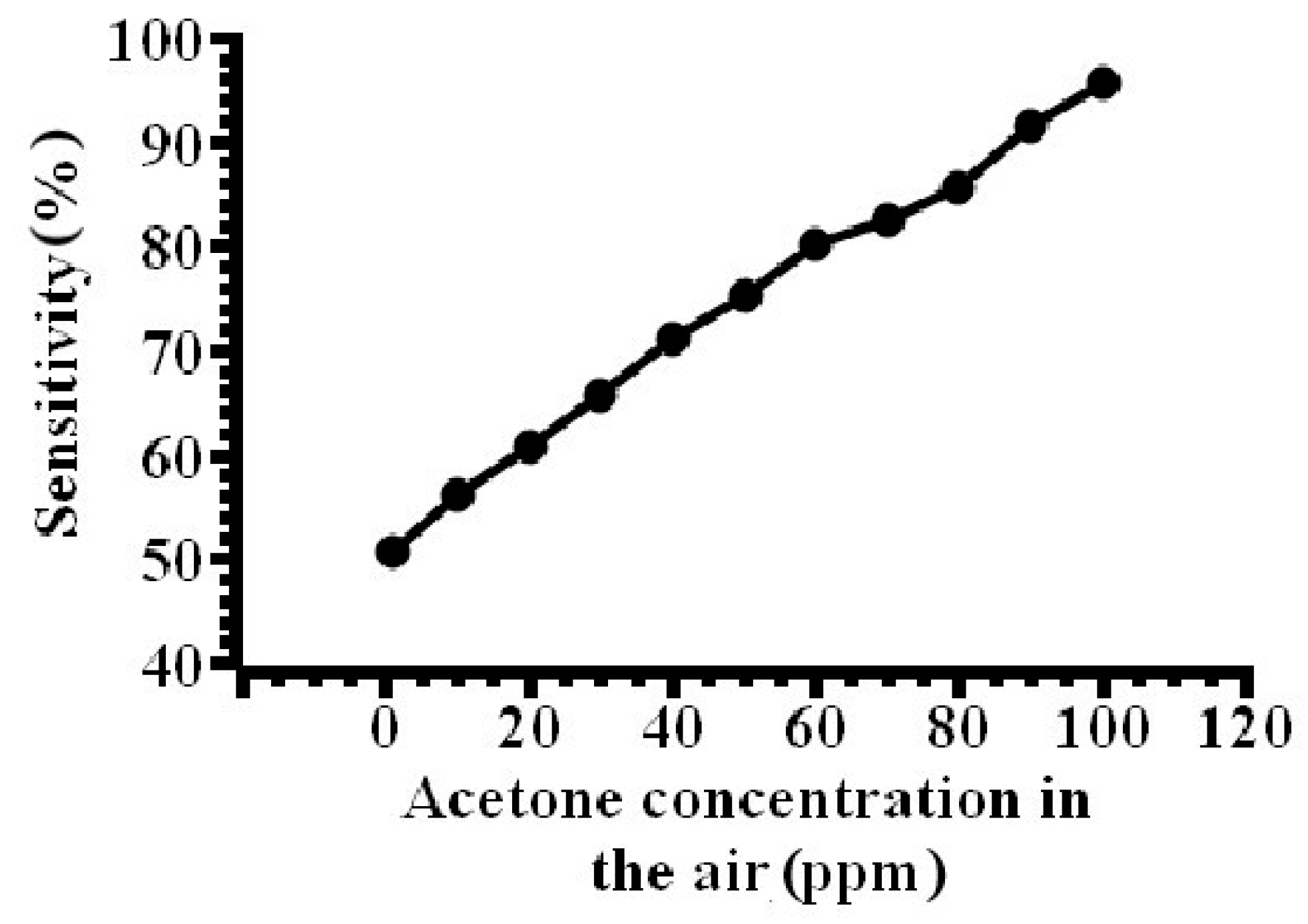
The dependence of the sensitivity of the sensor on the concentration of acetone in the air is presented in Figure 23. The figure shows that the sensitivity of the sensor in the range of low concentrations is quite high and, as expected, increases almost linearly with increasing concentration of the analyte in the air.
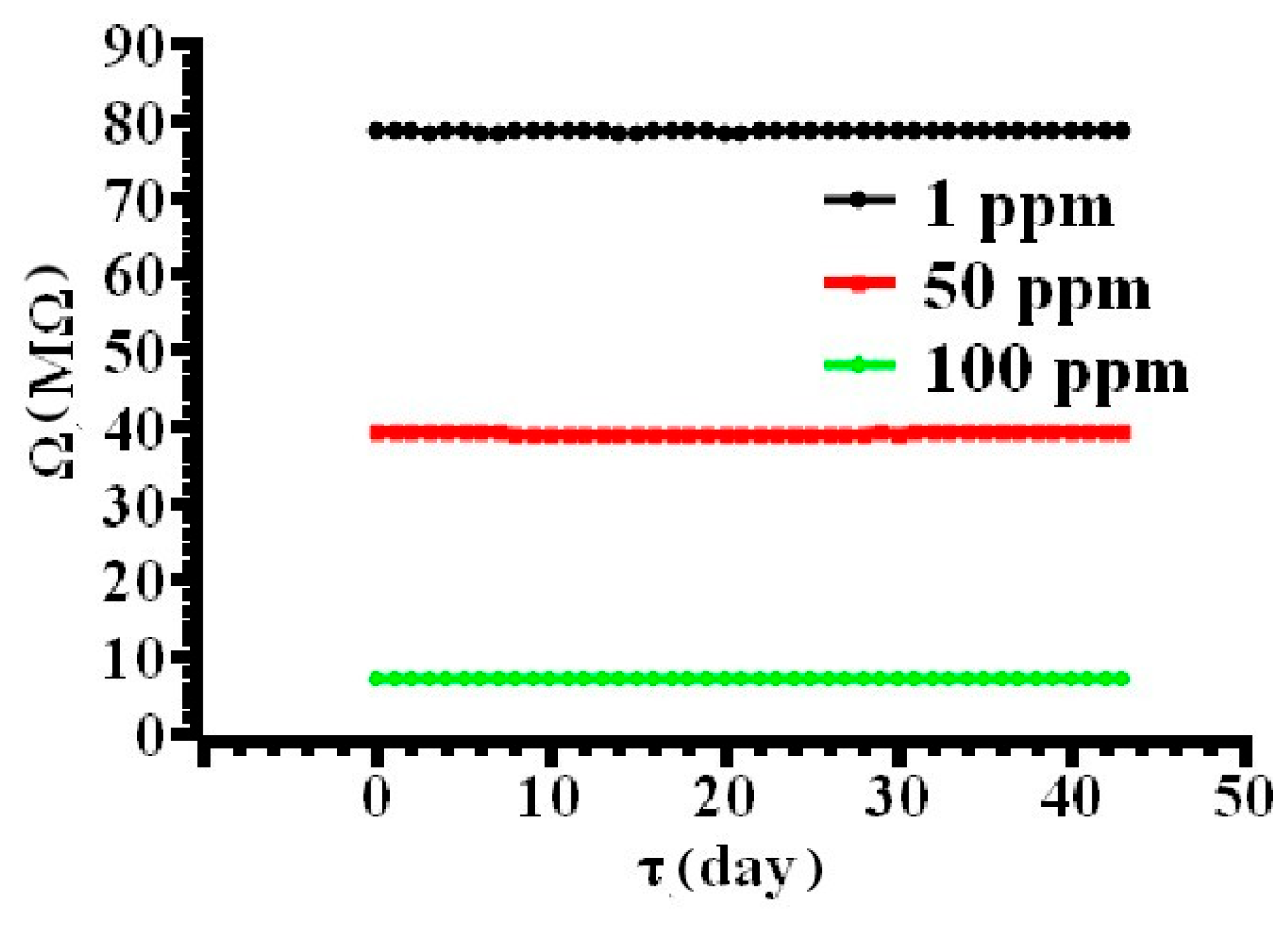
The device has been tested for long-term operation, with at least 43 days of continuous operation. The results of the experiment are presented in Figure 24. The figure shows that during the test period, the device showed minor deviations from its original values under continuous operation conditions.

3.8. Sensing Mechanism

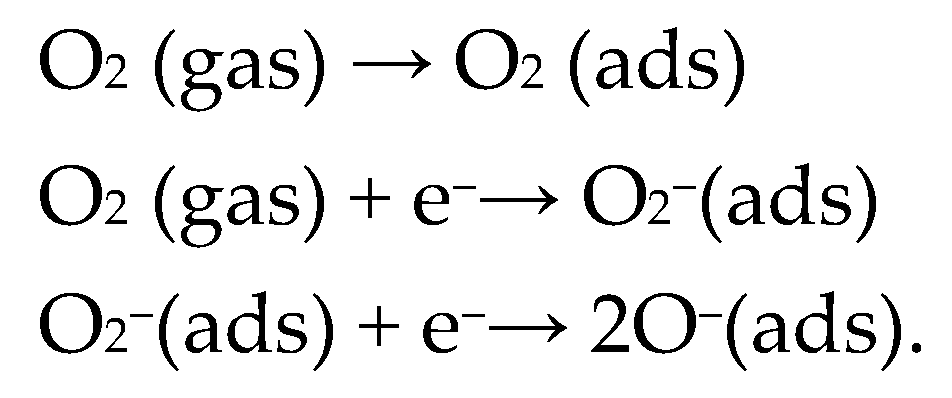
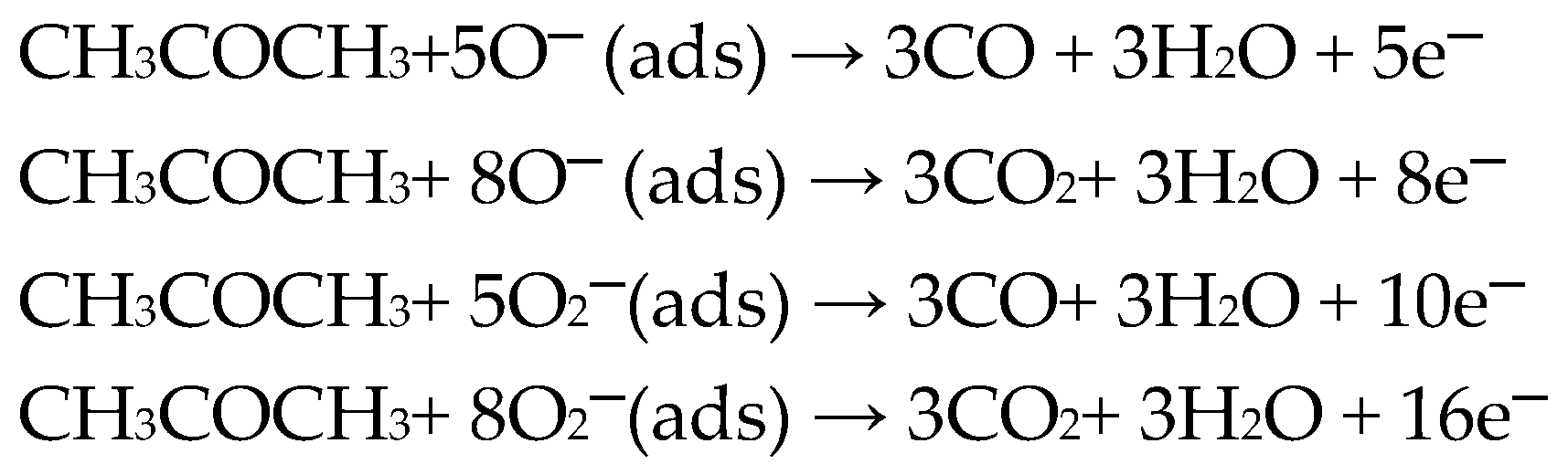
The most suitable explanation for the mechanism of sensitivity of the presented sensor layer to acetone can be given by describing the process as a reaction at the gas–solid interface. At the first stage, oxygen molecules are adsorbed in near-surface layers of the active layer of the sensor. Adsorbed oxygen molecules are able to capture free electrons present in sufficient quantities in GO, forming oxygen anions (O2, O) in the system, which can be expressed by the diagram presented in Figure 25.
In the first stage, shown in the diagram, molecular oxygen is sorbed through van der Waals or Coulomb electrostatic interactions. Some of the adsorbed oxygen molecules accept surface electrons from the out-of-plane π-bonds of O, forming a mixture of oxygen anions and superoxide radicals. In real-world conditions, it is difficult to determine the dominant form of oxygen; a more optimal approach would be to consider a mixture of radical species as the active species.
At the second stage of the process, acetone molecules are also adsorbed on the surface of the sensor layer, come into contact with oxygen anions and are oxidized, resulting in a chain of electrons returning to the sensor layer, which ultimately helps to reduce the resistance of the system (Figure 26).
The formation of O, O2, or O2 ions by absorbed oxygen species via electron capture from the valence band, depending on the operating temperature, has been demonstrated previously in [42,43,44]. This leads to increased positive charge accumulation (holes) on the surface and increased conductivity. A distinctive feature of this model is the specificity of the composite material. The key feature of this phenomenological approach may be the percolation model, which assumes the formation of cluster structures of the filler—the coordination polymer—and the matrix, represented by the GO sheets. The role of the matrix in this system is that the edge zone of the GO sheets initiates local accumulations of electron density. The coordination polymer in this system promotes the retention of molecular oxygen on the surface, which is capable of accepting electrons in areas of electron accumulation, which initiates the transfer mechanism with subsequent oxidation of the organic molecule. The internal cavities of calcium itaconate, having small dimensions, can accommodate a mixture of air and the target analyte. GO, with its diverse functional groups and film defects, can exhibit quite real catalytic activity, reducing the activation energy of acetone oxidation. Considering that some areas of the GO film have a low oxidation state (usually the central regions) and sp2-hybridization of the graphene carbon atoms. A picture is created of individual sp2 islands, creating all the possibilities for electron and proton conductivity due to out-of-plane π-bonds, creating a network of decentralized electrons [45].
It should be noted that the sensor we obtained showed response time values close to those obtained in recently published works, and in most cases exceeding them (Table 4), while the presented sensor is capable of operating at room temperature.

4. Conclusions

In the present study, we successfully fabricate the calcium itaconate–GO composite thin films for acetone sensing at RT. Surface morphological analysis using SEM of the composite film exhibited the formation of individual shiny prismatic crystals at varying degrees of maturity. The individual particles of the composite are formed by small crystals of calcium itaconate up to 250 nm in size, embedded in individual layers of GO. The composite material exhibits sufficient stability over a wide temperature range. The IR spectrum of the composite is a combination of the characteristic absorption bands of each precursor with some shifts toward the long-wavelength or short-wavelength region. The gas-sensing properties of the composite to acetone were studied. RH in the range from 38.2 to 85.1% does not have a significant effect on the measurements. In a fairly wide concentration range, the sensor demonstrates satisfactory characteristics in terms of response time and relaxation time, with satisfactory analytical characteristics.

Author Contributions

Conceptualization, I.E.U. and V.A.Z.; methodology, I.E.U., A.O.Z. and V.A.Z.; validation, visualization A.O.Z. and A.A.S.;writing—original draft, I.E.U. and V.A.Z.; writing—review and editing, I.E.U., A.A.S. and V.A.Z.; supervision, I.E.U. All authors have read and agreed to the published version of the manuscript.

Funding

This research was funded by the Russian Science Foundation, grant number 22-13-00260-P.

Data Availability Statement

The data presented in this study are available in the article.

Conflicts of Interest

The authors declare no conflicts of interest.

References

  1. Mallya, A.N.; Kottokkaran, R.; Ramamurthy, P.C. Conducting polymer–carbon black nanocomposite sensor for volatile organic compounds and correlating sensor response by molecular dynamics. Sens. Actuators B Chem. 2014, 201, 308–320. [Google Scholar] [CrossRef]
  2. Zhou, X.; Zhou, X.; Wang, C.; Zhou, H. Environmental and human health impacts of volatile organic compounds: A perspective review. Chemosphere 2023, 313, 137489. [Google Scholar] [CrossRef]
  3. Lee, H.E.; Yoon, S.J.; Kim, J.H. Analysis of VOC Emission Characteristics in the Petrochemical Industry and Study on Fenceline Monitoring Techniques. Atmosphere 2025, 16, 543. [Google Scholar] [CrossRef]
  4. Moura, P.C.; Raposo, M.; Vassilenko, V. Breath volatile organic compounds (VOCs) as biomarkers for the diagnosis of pathological conditions: A review. Biomed. J. 2023, 46, 100623. [Google Scholar] [CrossRef] [PubMed]
  5. Mangotra, A.; Singh, S.K. Volatile organic compounds: A threat to the environment and health hazards to living organisms—A review. J. Biotechnol. 2024, 382, 51–69. [Google Scholar] [CrossRef] [PubMed]
  6. Xuan, L.; Ma, Y.; Xing, Y.; Meng, Q.; Song, J.; Chen, T.; Wang, H.; Wang, P.; Zhang, Y.; Gao, P. Source, temporal variation and health risk of volatile organic compounds (VOCs) from urban traffic in Harbin, China. Environ. Pollut. 2021, 270, 116074. [Google Scholar] [CrossRef]
  7. Luttrell, W.E.; LaGrow, A.L. Acetone. J. Chem. Health Saf. 2014, 21, 29–31. [Google Scholar] [CrossRef]
  8. Yan, J.; Kang, Y.; Fang, W.; Zhu, B.; Song, Z. Tuning Gas Sensing Properties through Metal-Nanocluster Functionalization of 3D SnO2 Nanotube Arrays for Selective Gas Detection. ACS Sens. 2025, 10, 6084–6094. [Google Scholar] [CrossRef]
  9. Sampath, D.; Narasimhan, V. One-Dimensional Defect Layer Photonic Crystal Sensor for Purity Assessment of Organic Solvents. ACS Omega 2024, 9, 9625–9632. [Google Scholar] [CrossRef] [PubMed]
  10. Wu, H.; Zhu, H.; Zhang, J.; Yu, J.; Tang, Z.; Yao, G.; Zhao, W.; Wu, G.; Jin, X. Enhanced Acetone-Sensing Performance of a Bilayer Structure Gas Sensor Composed of a ZnO Nanorod Top Layer and a ZnFe2O4 Nanoparticle Decorated ZnO Nanorod Bottom Layer. Sensors 2024, 24, 7851. [Google Scholar] [CrossRef]
  11. Nagare, A.; Dhadage, A.; Ghare, P.; Naval, R.; Athare, A.; Gogoi, P.; Datir, A.; Navgire, M. Room temperature acetone sensing activity of β-Cyclodextrin coated MoO3-ZrO2 nanocomposite. Surf. Interfaces 2024, 53, 105068. [Google Scholar] [CrossRef]
  12. Litra, D.; Chiriac, M.; Ababii, N.; Lupan, O. Acetone Sensors Based on Al-Coated and Ni-Doped Copper Oxide Nanocrystalline Thin Films. Sensors 2024, 24, 6550. [Google Scholar] [CrossRef]
  13. Cho, S.H.; Suh, J.M.; Eom, T.H.; Kim, T.; Jang, H.W. Colorimetric sensors for toxic and hazardous gas detection: A review. Electron. Mater. Lett. 2021, 17, 1–17. [Google Scholar] [CrossRef]
  14. Srinivasan, P.; Kulandaisamy, A.J.; Mani, G.K.; Babu, K.J.; Tsuchiya, K.; Rayappan, J.B.B. Development of an acetone sensor using nanostructured Co3O4 thin films for exhaled breath analysis. RSC Adv. 2019, 9, 30226–30239. [Google Scholar] [CrossRef]
  15. Longo, V.; Forleo, A.; Ferramosca, A.; Notari, T.; Pappalardo, S.; Siciliano, P.; Capone, S.; Montano, L. Blood, urine and semen Volatile Organic Compound (VOC) pattern analysis for assessing health environmental impact in highly polluted areas in Italy. Environ. Pollut. 2021, 286, 117410. [Google Scholar] [CrossRef]
  16. Halder, S.; Xie, Z.; Nantz, M.H.; Fu, X.-A. Integration of a Micropreconcentrator with Solid-phase Microextraction for Analysis of Trace Volatile Organic Compounds by Gas Chromatography-Mass Spectrometry. J. Chromatogr. A 2022, 1673, 463083. [Google Scholar] [CrossRef] [PubMed]
  17. Singh, A.; Sikarwar, S.; Verma, A.; Yadav, B.C. The recent development of metal oxide heterostructures based gas sensor, their future opportunities and challenges: A review. Sens.Actuators A 2021, 332, 113127. [Google Scholar] [CrossRef]
  18. Catelani, M.; Ciani, L.; Venzi, M. Failure modes, mechanisms and effect analysis on temperature redundant sensor stage. Reliab. Eng. Syst. Saf. 2018, 180, 425–433. [Google Scholar] [CrossRef]
  19. Rana, K.; Sonker, R.K. Gas Sensors Based on Metal Oxide. In Smart Nanostructure Materialsand Sensor Technology; Sonker, R.K., Singh, K., Sonkawade, R., Eds.; Springer: Singapore, 2022; pp. 179–199. [Google Scholar]
  20. Verma, A.; Yadav, D.; Singh, A.; Gupta, M.; Thapa, K.B.; Yadav, B.C. Detection of acetone via exhaling human breath for regular monitoring of diabetes by low-cost sensing device based on perovskite BaSnO3 nanorods. Sens. Actuators B 2022, 361, 131708. [Google Scholar] [CrossRef]
  21. Teymourian, H.; Tehrani, F.; Mahato, K.; Wang, J. Lab under the Skin: Microneedle Based Wearable Devices. Adv. Healthc. Mater. 2021, 10, 2002255. [Google Scholar] [CrossRef]
  22. Wang, J.; Shen, H.; Xia, Y.; Komarneni, S. Light-activated room-temperature gas sensors based on metal oxide nanostructures: A review on recent advances. Ceram. Int. 2021, 47, 7353–7368. [Google Scholar] [CrossRef]
  23. Chen, T.; Liu, T.; Li, T.; Zhao, H.; Chen, Q. Exhaled breath analysis in disease detection. Clin. Chim. Acta 2021, 515, 61–72. [Google Scholar] [CrossRef]
  24. Buckley, D.J.; Black, N.C.G.; Castanon, E.G.; Melios, C.; Hardman, M.; Kazakova, O. Frontiers of graphene and 2D material-based gas sensors for environmental monitoring. 2D Mater. 2020, 7, 32002. [Google Scholar] [CrossRef]
  25. Amiri, V.; Roshan, H.; Mirzaei, A.; Neri, G.; Ayesh, A.I. Nanostructured Metal Oxide-Based Acetone Gas Sensors: A Review. Sensors 2020, 20, 3096. [Google Scholar] [CrossRef]
  26. Ward, S.J.; Layouni, R.; Arshavsky-Graham, S.; Segal, E.; Weiss, S.M. Signal processing techniques to reduce the limit of detection for thin film biosensors. ACS Sens. 2021, 6, 2967–2978. [Google Scholar] [CrossRef] [PubMed]
  27. Poluektov, P.P.; Kashcheev, V.A.; Ustinov, O.A.; Musatov, N.D.; Yakunin, S.A.; Karlina, O.K.; Diordii, M.N. Physicochemical Aspects of Reactor Graphite Incineration. At. Energy 2014, 116, 105–109. [Google Scholar] [CrossRef]
  28. Uflyand, I.E.; Zhinzhilo, V.A.; Kugabaeva, G.D.; Kydralieva, K.K.; Dzhardimalieva, G.I. Synthesis of nickel-containing metal-polymer nanocomposites and their use as a humidity sensor. Synth. Met. 2024, 307, 117709. [Google Scholar] [CrossRef]
  29. Malaichamy, K. Transmission Electron Microscope—Principle, Components and Applications Illumination system (Electron gun and condenser lenses) Electron gun. In A Textbook on Fundamentals and Applications of Nanotechnology; Ramasamy, K., Ed.; Daya Publishing House: New Delhi, India, 2018; pp. 93–101. [Google Scholar]
  30. Nasrollahzadeh, M.; Babaei, F.; Fakhri, P.; Jaleh, B. Synthesis, characterization, structural, optical properties and catalytic activity of reduced graphene oxide/copper nanocomposites. RSC Adv. 2015, 5, 10782–10789. [Google Scholar] [CrossRef]
  31. Sadek, R.; Sharawi, M.S.; Dubois, C.; Tantawy, H.; Chaouki, J. Superior quality chemically reduced graphene oxide for high performance EMI shielding materials. RSC Adv. 2022, 12, 22608–22622. [Google Scholar] [CrossRef]
  32. Sadek, R.; Sharawi, M.S.; Dubois, C.; Tantawy, H.; Chaouki, J. Reduced Graphene Oxide/Barium Ferrite Ceramic Nanocomposite Synergism for High EMI Wave Absorption. ACS Omega 2023, 8, 15099–15113. [Google Scholar] [CrossRef]
  33. Wang, H.; Zhang, L.; Li, C. Ultrathin and Flexible ANF/APP/PRGO Composite Films for High-Performance Electromagnetic Interference Shielding and Joule Heating. Ind. Eng. Chem. Res. 2023, 62, 6425–6433. [Google Scholar] [CrossRef]
  34. Davoudi, M.; Nezhad, F.K.; Rahdar, S.; Igwegbe, C.A. Current applications of functionalized reduced graphene oxide-based semiconductors for photocatalytic removal of pollutants from wastewater: A review. Chem. Pap. 2025, 79, 637. [Google Scholar] [CrossRef]
  35. Eigler, S.; Dotzer, C.; Hof, F.; Bauer, W.; Hirsch, A. Sulfur Species in Graphene Oxide. Chem.–Eur. J. 2013, 19, 9490–9496. [Google Scholar] [CrossRef]
  36. Aliyev, E.; Filiz, V.; Khan, M.M.; Lee, Y.J.; Abetz, C.; Abetz, V. Structural Characterization of Graphene Oxide: Surface Functional Groups and Fractionated Oxidative Debris. Nanomaterials 2019, 9, 1180. [Google Scholar] [CrossRef]
  37. Brusko, V.; Khannanov, A.; Rakhmatullin, A.; Dimiev, A.M. Unraveling the infrared spectrum of graphene oxide. Carbon 2024, 229, 119507. [Google Scholar] [CrossRef]
  38. Castro Neto, A.H.; Guinea, F.; Peres, N.M.R.; Novoselov, K.S.; Geim, A.K. The electronic properties of grapheme. Rev. Mod. Phys. 2009, 81, 109–162. [Google Scholar] [CrossRef]
  39. Choi, S.-H. Unique properties of graphene quantum dots and their applications in photonic/electronic devices. J. Phys. D Appl. Phys. 2017, 50, 103002–103012. [Google Scholar] [CrossRef]
  40. Dimeev, A.M.; Eigler, S. Graphite Oxide: Fundamentals and Applications; John Wiley and Sons: West Sussex, UK, 2017; 438p. [Google Scholar]
  41. Enoki, T.; Ando, T. Physics and Chemistry of Graphene: Graphene to Nanographene; Pan Stanford Pub.: Singapore, 2013; 476p. [Google Scholar]
  42. Chakraborty, S.; Pal, M. Improved sensitivity of CdS nanoparticles by virtue of calcium doping: Promising candidate for monitoring alcohol in exhale human breath. Mater. Des. 2017, 126, 18–28. [Google Scholar] [CrossRef]
  43. Chakraborty, S.; Pal, M. Improved ethanol sensing behaviour of cadmium sulphide nanoflakes: Beneficial effect of morphology. Sens. Actuators B Chem. 2017, 242, 1155–1164. [Google Scholar] [CrossRef]
  44. Zhang, Y.; Xu, H.; Dong, S.; Han, R.; Liu, X.; Wang, Y.; Li, S.; Bu, Q.; Xiang, X.L. A fast response & recovery acetone gas sensor based on BiFeO3 nanomaterials with high sensitivity and low detection limit. J. Mater. Sci. Mater. Electron. 2018, 29, 2193–2200. [Google Scholar]
  45. Alipour, S.; Hassani, M.; Hosseini, S.M.H.; Mousavi-Khoshdel, S.M. Facile preparation of covalently functionalized graphene with 2,4-dinitrophenylhydrazine and investigation of its characteristics. RSC Adv. 2023, 13, 558–569. [Google Scholar] [CrossRef] [PubMed]
  46. Zhou, T.; Zhang, T.; Deng, J.; Zhang, R.; Lou, Z.; Wang, L. P-type Co3O4 nanomaterials-based gas sensor: Preparation and acetone sensing performance. Sens. Actuators B Chem. 2017, 242, 369–377. [Google Scholar] [CrossRef]
  47. Liang, S.; Li, J.; Wang, F.; Qin, J.; Lai, X.; Jiang, X. Highly sensitive acetone gas sensor based on ultrafine α-Fe2O3 nanoparticles. Sens. Actuators B Chem. 2017, 238, 923–927. [Google Scholar] [CrossRef]
  48. Chakraborty, S.; Pal, M. Highly selective and stable acetone sensor based on chemically prepared bismuth ferrite nanoparticles. J. Alloys Compd. 2019, 787, 1204–1211. [Google Scholar] [CrossRef]
  49. Khan, S.B.; Faisal, M.; Rahman, M.M.; Jamal, A. Low temperature growth of ZnO nanoparticles: Photocatalyst and acetone sensor. Talanta 2011, 85, 943. [Google Scholar] [CrossRef]
  50. Kao, K.W.; Hsu, M.C.; Chang, H.Y.; Gwo, S.; Yeh, J.A. A sub-ppm acetone gas sensor for diabetes detection using 10 nm thick ultrathin InN FETs. Sensors 2012, 12, 7157–7168. [Google Scholar] [CrossRef] [PubMed]
Figure 1. Image of a glass plate with an applied active layer and interdigitated electrodes: 1—glass plate; 2—interdigitated electrodes; 3—contact plate; 4—connecting wires.
Analytica 07 00008 g001
Figure 2. Calcium itaconate hydrogel (a), dried calcium itaconate preparation (b) and light microscopic view of calcium itaconate crystals at 200× magnification (c).
Analytica 07 00008 g002
Figure 3. SEM image of a calcium itaconate sample: (a)—scale bar 2 µm; (b)—scale bar 200 nm.
Analytica 07 00008 g003
Figure 4. EDX spectrum of a calcium itaconate sample: (a)—EDX spectrum; (b)—area of study.
Analytica 07 00008 g004
Figure 5. Powder XRD pattern (a) and IR spectrum (b) of a calcium itaconate sample.
Analytica 07 00008 g005
Figure 6. SEM image (a), energy-dispersive spectrum and elemental analysis results (b) of the GO sample.
Analytica 07 00008 g006
Figure 7. TEM image of GO sample.
Analytica 07 00008 g007
Figure 8. XRD pattern (a) and IR spectrum (b) of the obtained GO.
Analytica 07 00008 g008
Figure 9. Morphology of composite crystals under a light microscope at 200× magnification (a), SEM image of composite crystals at a scale of 2 μm (b) and 100 nm (c).
Analytica 07 00008 g009
Figure 10. TEM images of a composite particle: (a)—scale bar 1 μm; (b)—scale bar 500 nm.
Analytica 07 00008 g010
Figure 11. XRD profile (a) and IR spectrum (b) of a composite based on calcium itaconate and GO (20%).
Analytica 07 00008 g011
Figure 12. Nitrogen sorption–desorption isotherm at 77 K for a composite sample based on calcium itaconate and GO (20%).
Analytica 07 00008 g012
Figure 13. Thermal behavior of a composite based on calcium itaconate and GO (20%).
Analytica 07 00008 g013
Figure 14. An example of a prepared substrate with an active layer fixed by pressing.
Analytica 07 00008 g014
Figure 15. Schematic diagram of a device for determining the concentration of acetone in a gas–air mixture: 1—gas pipette; 2—glass tube; 3—sensitive element; 4—connecting wires; 5—active layer of the sensitive element; 6—glass substrate.
Analytica 07 00008 g015
Figure 16. Block diagram of the measuring system.
Analytica 07 00008 g016
Figure 17. Dependence of the resistance of calcium itaconate film on the concentration of acetone in gas–air mixtures at different levels of relative air humidity.
Analytica 07 00008 g017
Figure 18. Dependence of the resistance of the active layer based on GO as a function of the concentration of acetone in the gas–air mixture at different levels of relative air humidity. (a)—RH = 25%; (b)—RH = 50%; (c)—RH = 75%; (d)—RH = 90%.
Analytica 07 00008 g018
Figure 19. Resistance of the sensor layer depending on the concentration of acetone in the gas–air mixture. The starting point is the resistance of the active layer in air.
Analytica 07 00008 g019
Figure 20. Dependence of the sensor layer resistance on relative air humidity. Concentration of acetone in the air mixture: 1—5 ppm; 2—20 ppm; 3—50 ppm; 4—100 ppm. t—29.2 °C.
Analytica 07 00008 g020
Figure 21. Interfering effect of aromatic hydrocarbons on the determination of acetone in the air by the sensor. Acetone concentration in the air: 1—10 ppm; 2—50 ppm; 3—100 ppm.
Analytica 07 00008 g021
Figure 22. Response time and relaxation time of the sensor: t = 22 °C; RH = 64.8%; n = 5; p = 0.95.
Analytica 07 00008 g022
Figure 23. The sensitivity of the sensor depends on the concentration of acetone in the air mixture.
Analytica 07 00008 g023
Figure 24. Long-term operation of the sensor.
Analytica 07 00008 g024
Figure 25. Diagram illustrating the process of oxygen sorption on the sensor surface.
Analytica 07 00008 g025
Figure 26. Diagram illustrating the oxidation process of acetone on the surface of the sensor layer of the device.
Analytica 07 00008 g026
Table 1. Elemental analysis data obtained by EDX for a calcium itaconate sample.
ElementAppIntensityWeight %Weight %Atomic %
Conc.Corrn. Sigma
C K19.831.447839.420.8945.36
O K15.560.825045.871.4246.89
Ca K7.580.970414.710.647.75
Totals 100.00
Table 2. Data on elemental analysis and total content of acid groups (X) of exhaust GO samples.
Elemental Analysis Data, %X, mmol/g, P = 0.95; n = 5
Chemical MethodEDX
CHSCO
69.360.76-69.2729.881.97 ± 0.12
Table 3. Deviations from nominal resistance values for each acetone concentration gradient (RH = 85%).
C(acetone), ppm52050100
Deviation from nominal resistance value, % no more than0.130.150.51.7
Table 4. Literature review on acetone sensing behavior of the sensors.
S. No.MaterialAcetone Conc. ppm Temp. (°C)ResponseRes./Rec. TimeRef.
1.Co3O4500RT4.882 s/5 s[46]
2.α-Fe2O3100RT8.8-/-[47]
3.Bismuth ferrite13501.825 s/17 s[48]
4.ZnO100 RT10-/-[49]
5.InN1200 150 s/2000 s[50]
6.Calcium itaconate–GO composite100RT7.67.66 s/9.26 sPresent Work
Disclaimer/Publisher’s Note: The statements, opinions and data contained in all publications are solely those of the individual author(s) and contributor(s) and not of MDPI and/or the editor(s). MDPI and/or the editor(s) disclaim responsibility for any injury to people or property resulting from any ideas, methods, instructions or products referred to in the content.