
Integrative Profiling of Metabolic CYP Expression, DNA Mutation Rates, and Immune Cell Infiltration for Survival Prognosis in Hepatocellular Carcinoma

 , , ,
, , ,  ,
,  and
and
Abstract
1. Introduction
2. Materials and Methods
2.1. Kaplan–Meier Survival Analysis
2.2. Cox Regression Analysis
2.3. Kaplan–Meier Analysis of CYP Expression and Mutation Status
2.4. Evaluation of CYP Expression and Tumor Immune Cell Infiltration
2.5. Comparison of CYP mRNA Expression in HCC and Normal Liver
3. Results
3.1. Kaplan–Meier Survival Analyses
3.2. Cox Regression Analyses
3.3. Survival Analysis Using Kaplan–Meier for CYP Expression and Mutational Status
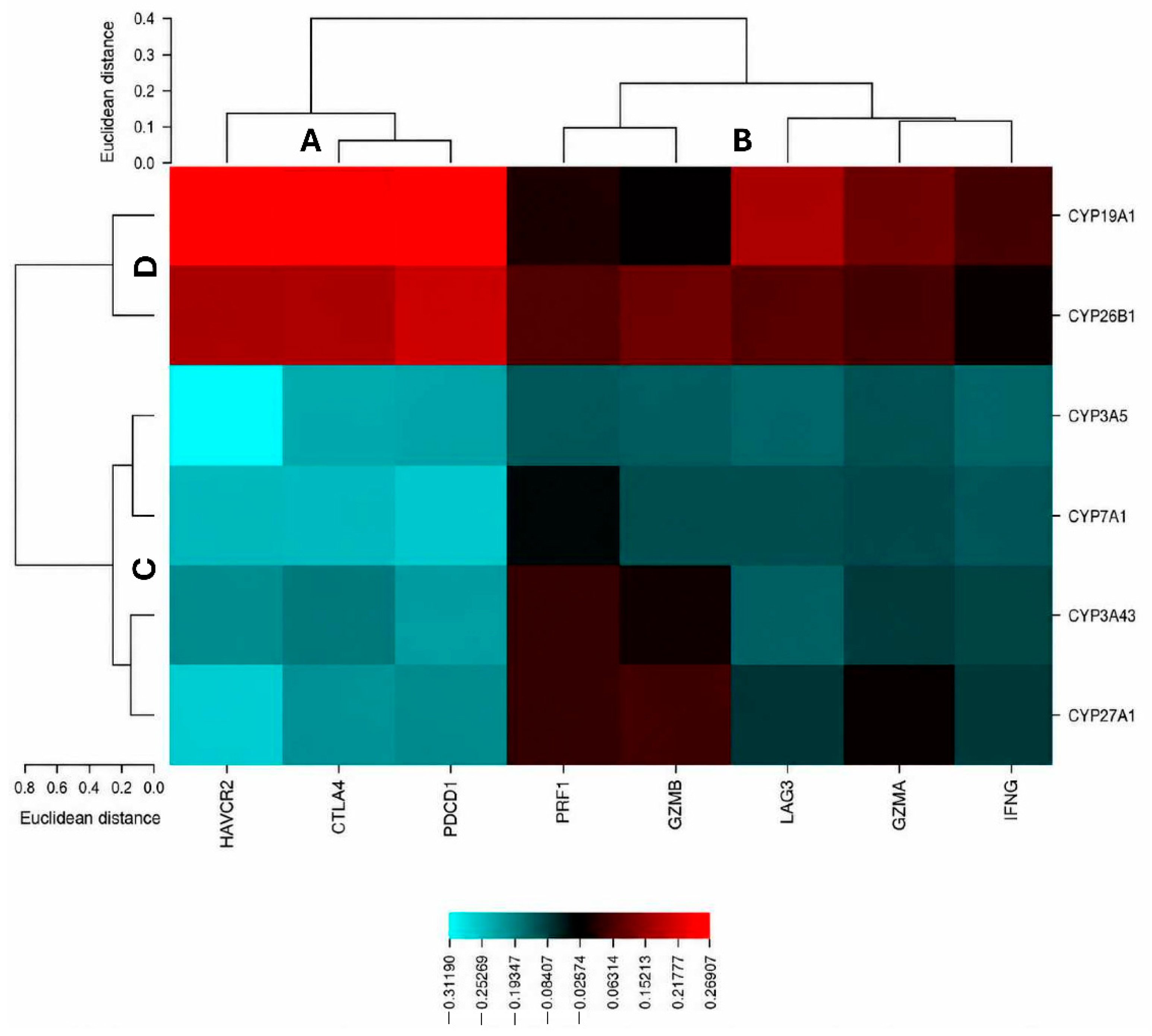
3.4. CYP Expression and Tumor Immune Cell Infiltration
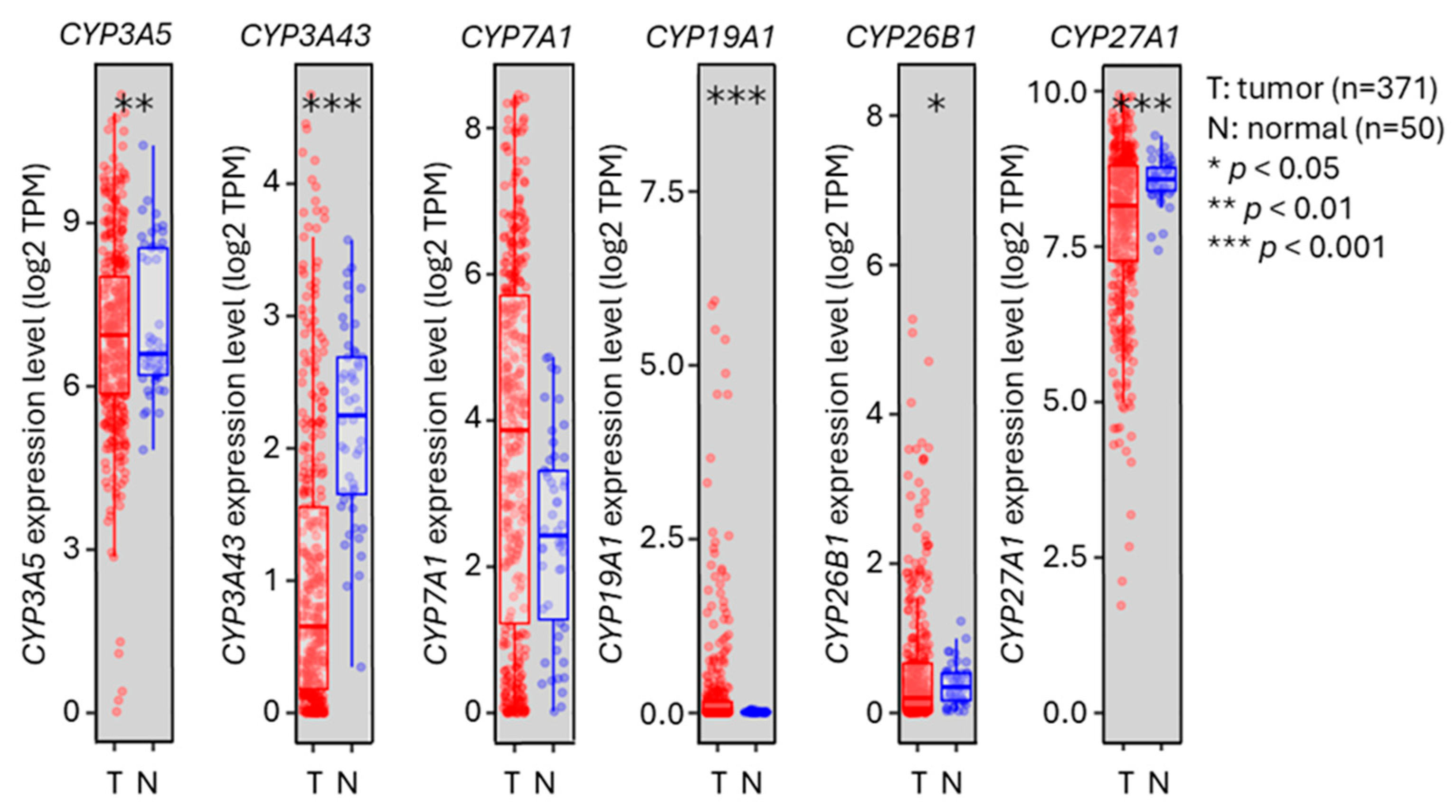
3.5. CYP mRNA Expression Levels in HCC Versus Normal Liver Tissue
4. Discussion
5. Conclusions
Supplementary Materials
Author Contributions
Funding
Institutional Review Board Statement
Informed Consent Statement
Data Availability Statement
Conflicts of Interest
Abbreviations
| CD | Cluster of differentiation |
| CYP | Cytochrome P450 monooxygenase |
| FDR | False discovery rate |
| HBV | Chronic hepatitis B virus |
| HCC | Hepatocellular carcinoma |
| HCV | Hepatitis C virus |
| KM | Kaplan–Meier |
| MWA | Microwave ablation |
| NAFLD | Non-alcoholic fatty liver disease |
| NASH | Non-alcoholic steatohepatitis |
| PD-L1 | Programmed cell death1 ligand 1 |
| RFA | Radiofrequency ablation |
| ROS | Reactive oxygen species |
| SIRT | Selective internal radiotherapy |
| TACE | Transarterial chemoembolization |
| TARE | Transarterial radioembolization |
| TCGA | The Cancer Genome Atlas |
| VEGF | Vascular endothelial growth factor |
References
- Lafaro, K.J.; Demirjian, A.N.; Pawlik, T.M. Epidemiology of hepatocellular carcinoma. Surg. Oncol. Clin. 2015, 24, 1–17. [Google Scholar] [CrossRef] [Scilit] [PubMed]
- Seven, İ.; Bayram, D.; Arslan, H.; Köş, F.T.; Gümüşlü, K.; Aktürk Esen, S.; Şahin, M.; Şendur, M.A.N.; Uncu, D. Predicting hepatocellular carcinoma survival with artificial intelligence. Sci. Rep. 2025, 15, 6226. [Google Scholar] [CrossRef] [Scilit] [PubMed]
- Vogel, A.; Meyer, T.; Sapisochin, G.; Salem, R. Saborowski A Hepatocellular carcinoma. Lancet 2022, 400, 1345. [Google Scholar] [CrossRef] [Scilit]
- Chen, L.; Wang, Y.; Li, S.; Lu, S.; Luo, Y.; Ning, Y.; Chen, J.; Zhou, S. Metabolic syndrome-related gene signature for prognosis and immune microenvironment prediction in hepatocellular carcinoma. Sci. Rep. 2025, 15, 39048. [Google Scholar] [CrossRef] [Scilit]
- Tang, R.; Liu, H.; Yuan, Y.; Xie, K.; Xu, P.; Liu, X.; Wen, J. Genetic factors associated with risk of metabolic syndrome and hepatocellular carcinoma. Oncotarget 2017, 8, 35403–35411. [Google Scholar] [CrossRef] [Scilit]
- Cornellà, H.; Alsinet, C.; Villanueva, A. Molecular Pathogenesis of Hepatocellular Carcinoma. Alcohol. Clin. Exp. Res. 2011, 35, 821–825. [Google Scholar] [CrossRef] [Scilit] [PubMed]
- Sakamoto, M.; Effendi, K.; Masugi, Y. Molecular diagnosis of multistage hepatocarcinogenesis. Jpn. J. Clin. Oncol. 2010, 40, 891–896. [Google Scholar] [CrossRef] [Scilit]
- Wu, M.-Y.; Yiang, G.-T.; Cheng, P.-W.; Chu, P.-Y.; Li, C.-J. Molecular targets in hepatocarcinogenesis and implications for therapy. J. Clin. Med. 2018, 7, 213. [Google Scholar] [CrossRef] [Scilit]
- de Alcântara, J.; Götz, G. Transarterial Radioembolization with Yttrium-90 and SIRT Versus Conventional Transarterial Chemoembolization for Hepatocellular Carcinoma: A Systematic Review and Meta-analysis. Acad. Radiol. 2025, 32, 6739–6750. [Google Scholar] [CrossRef] [Scilit]
- Zane, K.E.; Makary, M.S. Locoregional Therapies for Hepatocellular Carcinoma with Portal Vein Tumor Thrombosis. Cancers 2021, 13, 5430. [Google Scholar] [CrossRef] [Scilit]
- Finn, R.S.; Qin, S.; Ikeda, M.; Galle, P.R.; Ducreux, M.; Kim, T.-Y.; Kudo, M.; Breder, V.; Merle, P.; Kaseb, A.O.; et al. Atezolizumab plus bevacizumab in unresectable hepatocellular carcinoma. N. Engl. J. Med. 2020, 382, 1894–1905. [Google Scholar] [CrossRef] [Scilit] [PubMed]
- Dai, S.; Chen, Y.; Cai, W.; Dong, S.; Zhao, J.; Chen, L.; Cheng, C.S. Combination immunotherapy in hepatocellular carcinoma: Synergies among immune checkpoints, TKIs, and chemotherapy. J. Hematol. Oncol. 2025, 18, 85. [Google Scholar] [CrossRef] [Scilit] [PubMed]
- Forner, A.; Reig, M.; Bruix, J. Hepatocellular carcinoma. Lancet 2018, 391, 1301–1314. [Google Scholar] [CrossRef] [Scilit]
- Ikeda, M.; Morizane, C.; Ueno, M.; Okusaka, T.; Ishii, H.; Furuse, J. Chemotherapy for hepatocellular carcinoma: Current status and future perspectives. Jpn. J. Clin. Oncol. 2018, 48, 103–114. [Google Scholar] [CrossRef] [Scilit]
- Garg, A.D.; More, S.; Rufo, N.; Mece, O.; Sassano, M.L.; Agostinis, P.; Zitvogel, L.; Kroemer, G.; Galluzzi, L. Trial watch: Immunogenic cell death induction by anticancer chemotherapeutics. Oncoimmunology 2017, 6, e1386829. [Google Scholar] [CrossRef] [Scilit]
- Pinato, D.J.; Murray, S.M.; Forner, A.; Kaneko, T.; Fessas, P.; Toniutto, P.; Mínguez, B.; Cacciato, V.; Avellini, C.; Diaz, A.; et al. Trans-arterial chemoembolization as a loco-regional inducer of immunogenic cell death in hepatocellular carcinoma: Implications for immunotherapy. J. Immunother. Cancer 2021, 9, e003311. [Google Scholar] [CrossRef] [Scilit]
- Zhang, Y.; Yang, J.; Xie, S.; Chen, H.; Zhong, J.; Lin, X.; Yu, Z.; Xia, J. A novel prognostic signature based on immunogenic cell death score predicts outcomes and response to transcatheter arterial chemoembolization and immunotherapy in hepatocellular carcinoma. J. Cancer Res. Clin. Oncol. 2023, 149, 11411–11429. [Google Scholar] [CrossRef] [Scilit]
- Zhu, H.; Shan, Y.; Ge, K.; Lu, J.; Kong, W.; Jia, C. Oxaliplatin induces immunogenic cell death in hepatocellular carcinoma cells and synergizes with immune checkpoint blockade therapy. Cell. Oncol. 2020, 43, 1203–1214. [Google Scholar] [CrossRef] [Scilit]
- Liu, Q.Q.; Wang, X.X.; Ji, H.; Dou, Q.Y.; Zhang, H.M. The efficacy and safety of PD-1 inhibitor combined with TACE in the first-line treatment of unresectable hepatocellular carcinoma. Med. Oncol. 2024, 41, 91. [Google Scholar] [CrossRef] [Scilit] [PubMed]
- Hao, L.; Li, S.; Ye, F.; Wang, H.; Zhong, Y.; Zhang, X.; Hu, X.; Huang, X. The current status and future of targeted-immune combination for hepatocellular carcinoma. Front. Immunol. 2024, 15, 1418965. [Google Scholar] [CrossRef] [Scilit]
- Abu-Bakar, A.; Tan, B.H.; Halim, H.; Ramli, S.; Pan, Y.; Ong, C.E. Cytochromes P450: Role in Carcinogenesis and Relevance to Cancers. Curr. Drug Metab. 2022, 23, 355–373. [Google Scholar] [CrossRef] [Scilit] [PubMed]
- Bagdasaryan, A.A.; Chubarev, V.N.; Smolyarchuk, E.A.; Drozdov, V.N.; Krasnyuk, I.I.; Liu, J.; Fan, R.; Tse, E.; Shikh, E.V.; Sukocheva, O.A. Pharmacogenetics of Drug Metabolism: The Role of Gene Polymorphism in the Regulation of Doxorubicin Safety and Efficacy. Cancers 2022, 14, 5436. [Google Scholar] [CrossRef] [Scilit]
- McGill, M.R.; Kaufman, Y.J.; LoBianco, F.V.; Schleiff, M.A.; Aykin-Burns, N.; Miller, G.P. The role of cytochrome P450 3A4-mediated metabolism in sorafenib and lapatinib hepatotoxicity. Livers 2023, 3, 310–321. [Google Scholar] [CrossRef] [Scilit]
- Lévesque, J.F.; Day, S.H.; Jones, A.N. Protocols of in vitro protein covalent binding studies in liver. Methods Mol. Biol. 2011, 691, 283–301. [Google Scholar] [CrossRef] [Scilit]
- Győrffy, B. Integrated analysis of public datasets for the discovery and validation of survival-associated genes in solid tumors. Innovation 2024, 5, 100625. [Google Scholar] [CrossRef] [Scilit] [PubMed]
- Ooko, E.; Efferth, T. Identification of Prognostic Gene Signatures for Survival of Patients With Phaeochromocytoma, Paraganglioma, and Other Tumor Types. Cancer Diagn. Progn. 2025, 5, 808–832. [Google Scholar] [CrossRef] [Scilit]
- Benjamini, Y.; Hochberg, Y. Controlling the False Discovery Rate: A Practical and Powerful Approach to Multiple Testing. J. R. Stat. Soc. Ser. B (Methodol.) 1995, 57, 289–300. [Google Scholar] [CrossRef] [Scilit]
- Heath, A.P.; Ferretti, V.; Agrawal, S.; An, M.; Angelakos, J.C.; Arya, R.; Bajari, R.; Baqar, B.; Barnowski, J.H.B.; Burt, J.; et al. The NCI Genomic Data Commons. Nat. Genet. 2021, 53, 257–262. [Google Scholar] [CrossRef] [Scilit]
- Goldman, M.J.; Craft, B.; Hastie, M.; Repečka, K.; McDade, F.; Kamath, A.; Banerjee, A.; Luo, Y.; Rogers, D.; Brooks, A.N.; et al. Visualizing and interpreting cancer genomics data via the Xena platform. Nat. Biotechnol. 2020, 38, 675–678. [Google Scholar] [CrossRef] [Scilit]
- Ellrott, K.; Bailey, M.H.; Saksena, G.; Covington, K.R.; Kandoth, C.; Stewart, C.; Hess, J.; Ma, S.; Chiotti, K.E.; McLellan, M.; et al. Scalable Open Science Approach for Mutation Calling of Tumor Exomes Using Multiple Genomic Pipelines. Cell Syst. 2018, 6, 271–281.E7. [Google Scholar] [CrossRef] [Scilit] [PubMed]
- Li, T.; Fu, J.; Zeng, Z.; Cohen, D.; Li, J.; Chen, Q.; Li, B.; Liu, X.S. TIMER2.0 for analysis of tumor-infiltrating immune cells. Nucleic Acids Res. 2020, 48, W509–W514. [Google Scholar] [CrossRef] [Scilit] [PubMed]
- Noble, W.S. How does multiple testing correction work? Nat. Biotechnol. 2009, 27, 1135–1137. [Google Scholar] [CrossRef] [Scilit] [PubMed]
- Fiorucci, S.; Marchianò, S.; Urbani, G.; Di Giorgio, C.; Distrutti, E.; Zampella, A.; Biagioli, M. Immunology of bile acids regulated receptors. Prog. Lipid Res. 2024, 95, 101291. [Google Scholar] [CrossRef] [Scilit]
- Jia, W.; Li, Y.; Cheung, K.C.P.; Zheng, X. Bile acid signaling in the regulation of whole body metabolic and immunological homeostasis. Sci. China Life Sci. 2024, 67, 865–878. [Google Scholar] [CrossRef] [Scilit]
- Tilg, H.; Adolph, T.E.; Trauner, M. Gut-liver axis: Pathophysiological concepts and clinical implications. Cell Metab. 2022, 34, 1700–1718. [Google Scholar] [CrossRef] [Scilit]
- Cali, J.J.; Russell, D.W. Characterization of human sterol 27-hydroxylase. A mitochondrial cytochrome P-450 that catalyzes multiple oxidation reaction in bile acid biosynthesis. J. Biol. Chem. 1991, 266, 7774–7778. [Google Scholar] [CrossRef] [Scilit]
- Chambers, K.F.; Day, P.E.; Aboufarrag, H.T.; Kroon, P.A. Polyphenol Effects on Cholesterol Metabolism via Bile Acid Biosynthesis, CYP7A1: A Review. Nutrients 2019, 11, 2588. [Google Scholar] [CrossRef] [Scilit]
- Chiang, J.Y.L.; Ferrell, J.M. Up to date on cholesterol 7 alpha-hydroxylase (CYP7A1) in bile acid synthesis. Liver Res. 2020, 4, 47–63. [Google Scholar] [CrossRef] [Scilit] [PubMed]
- Escher, G.; Krozowski, Z.; Croft, K.D.; Sviridov, D. Expression of sterol 27-hydroxylase (CYP27A1) enhances cholesterol efflux. J. Biol. Chem. 2003, 278, 11015–11019. [Google Scholar] [CrossRef] [Scilit]
- Klyushova, L.S.; Perepechaeva, M.L.; Grishanova, A.Y. The Role of CYP3A in Health and Disease. Biomedicines 2022, 10, 2686. [Google Scholar] [CrossRef] [Scilit]
- Niwa, T.; Murayama, N.; Imagawa, Y.; Yamazaki, H. Regioselective hydroxylation of steroid hormones by human cytochromes P450. Drug Metab. Rev. 2015, 47, 89–110. [Google Scholar] [CrossRef] [Scilit]
- Pikuleva, I.A. Cholesterol-metabolizing cytochromes P450. Drug Metab. Dispos. Biol. Fate Chem. 2006, 34, 513–520. [Google Scholar] [CrossRef] [Scilit]
- Lee, Y.B.; Kim, C.; Hong, J.; Kim, D. Molecular insights into CYP19A1 mutations and their role in estrogen production. Arch. Biochem. Biophys. 2025, 772, 110573. [Google Scholar] [CrossRef] [Scilit]
- Topletz, A.R.; Thatcher, J.E.; Zelter, A.; Lutz, J.D.; Tay, S.; Nelson, W.L.; Isoherranen, N. Comparison of the function and expression of CYP26A1 and CYP26B1, the two retinoic acid hydroxylases. Biochem. Pharmacol. 2012, 83, 149–163. [Google Scholar] [CrossRef] [Scilit]
- Ally, A.; Balasundaram, M.; Carlsen, R.; Chuah, E.; Clarke, A.; Dhalla, N.; Holt, R.A.; Jones, S.J.M.; Lee, D.; Ma, Y.; et al. Comprehensive and Integrative Genomic Characterization of Hepatocellular Carcinoma. Cell 2017, 169, 1327–1341.E23. [Google Scholar] [CrossRef] [Scilit]
- Marina, R.; Forner, A.; Rimola, J. BCLC strategy for prognosis prediction and treatment recommendation: The 2022 update. J. Hepatol. 2021, 19, S0168–S8278. [Google Scholar]
- Brown, Z.J.; Ruff, S.M.; Pawlik, T.M. The effect of liver disease on hepatic microenvironment and implications for immune therapy. Front. Pharmacol. 2023, 14, 1225821. [Google Scholar] [CrossRef] [Scilit]
- Llovet, J.M.; Castet, F.; Heikenwalder, M.; Maini, M.K.; Mazzaferro, V.; Pinato, D.J.; Pikarsky, E.; Zhu, A.X.; Finn, R.S. Immunotherapies for hepatocellular carcinoma. Nat. Rev. Clin. Oncol. 2022, 19, 151–172. [Google Scholar] [CrossRef] [Scilit] [PubMed]
- Kinsey, E.; Lee, H.M. Management of hepatocellular carcinoma in 2024: The multidisciplinary paradigm in an evolving treatment landscape. Cancers 2024, 16, 666. [Google Scholar] [CrossRef] [Scilit] [PubMed]
- Zangar, R.C.; Davydov, D.R.; Verma, S. Mechanisms that regulate production of reactive oxygen species by cytochrome P450. Toxicol. Appl. Pharmacol. 2004, 199, 316–331. [Google Scholar] [CrossRef] [Scilit] [PubMed]
- McLean, L.; Soto, U.; Agama, K.; Francis, J.; Jimenez, R.; Pommier, Y.; Sowers, L.; Brantley, E. Aminoflavone induces oxidative DNA damage and reactive oxidative species-mediated apoptosis in breast cancer cells. Int. J. Cancer 2008, 122, 1665–1674. [Google Scholar] [CrossRef] [Scilit]
- Panigrahy, D.; Kaipainen, A.; Greene, E.R.; Huang, S. Cytochrome P450-derived eicosanoids: The neglected pathway in cancer. Cancer Metastasis Rev. 2010, 29, 723–735. [Google Scholar] [CrossRef] [Scilit] [PubMed]
- Li, Z.; Chen, G.; Cai, Z.; Dong, X.; He, L.; Qiu, L.; Zeng, Y.; Liu, X.; Liu, J. Profiling of hepatocellular carcinoma neoantigens reveals immune microenvironment and clonal evolution related patterns. Chin. J. Cancer Res. 2021, 33, 364–378. [Google Scholar] [CrossRef] [Scilit] [PubMed]
- Vitale, I.; Sistigu, A.; Manic, G.; Rudqvist, N.P.; Trajanoski, Z.; Galluzzi, L. Mutational and Antigenic Landscape in Tumor Progression and Cancer Immunotherapy. Trends Cell Biol. 2019, 29, 396–416. [Google Scholar] [CrossRef] [Scilit] [PubMed]
- Brodeur, C.M.; Thibault, P.; Durand, M.; Perreault, J.P.; Bisaillon, M. Dissecting the expression landscape of cytochromes P450 in hepatocellular carcinoma: Towards novel molecular biomarkers. Genes Cancer 2019, 10, 97–108. [Google Scholar] [CrossRef] [Scilit]
- Koh, W.P.; Yuan, J.M.; Wang, R.; Govindarajan, S.; Oppenheimer, R.; Zhang, Z.Q.; Yu, M.C.; Ingles, S.A. Aromatase (CYP19) promoter gene polymorphism and risk of nonviral hepatitis-related hepatocellular carcinoma. Cancer 2011, 117, 3383–3392. [Google Scholar] [CrossRef] [Scilit]
- Belboul, A.; Ashworth, J.; Fadel, A.; McLoughlin, J.; Mahmoud, A.; El Mohtadi, M. Estrogen induces the alternative activation of macrophages through binding to estrogen receptor-alpha. Exp. Mol. Pathol. 2025, 143, 104971. [Google Scholar] [CrossRef] [Scilit]
- Bengtsson, A.K.; Ryan, E.J.; Giordano, D.; Magaletti, D.M.; Clark, E.A. 17beta-estradiol (E2) modulates cytokine and chemokine expression in human monocyte-derived dendritic cells. Blood 2004, 104, 1404–1410. [Google Scholar] [CrossRef] [Scilit]
- Nadkarni, S.; McArthur, S. Oestrogen and immunomodulation: New mechanisms that impact on peripheral and central immunity. Curr. Opin. Pharmacol. 2013, 13, 576–581. [Google Scholar] [CrossRef] [Scilit]
- Polanczyk, M.J.; Hopke, C.; Vandenbark, A.A.; Offner, H. Estrogen-mediated immunomodulation involves reduced activation of effector T cells, potentiation of Treg cells, and enhanced expression of the PD-1 costimulatory pathway. J. Neurosci. Res. 2006, 84, 370–378. [Google Scholar] [CrossRef] [Scilit]
- Guo, Y.; Lee, Y.C.; Brown, C.; Zhang, W.; Usherwood, E.; Noelle, R.J. Dissecting the role of retinoic acid receptor isoforms in the CD8 response to infection. J. Immunol. 2014, 192, 3336–3344. [Google Scholar] [CrossRef] [Scilit]
- Manicassamy, S.; Pulendran, B. Retinoic acid-dependent regulation of immune responses by dendritic cells and macrophages. Semin. Immunol. 2009, 21, 22–27. [Google Scholar] [CrossRef] [Scilit]
- Raverdeau, M.; Mills, K.H. Modulation of T cell and innate immune responses by retinoic Acid. J. Immunol. 2014, 192, 2953–2958. [Google Scholar] [CrossRef] [Scilit] [PubMed]
- Farazuddin, M.; Ludka, N.; Friesen, L.; Landers, J.J.; O’Konek, J.J.; Kim, C.H.; Baker, J.R. Retinoic Acid Signaling Is Required for Dendritic Cell Maturation and the Induction of T Cell Immunity. ImmunoHorizons 2023, 7, 480–492. [Google Scholar] [CrossRef] [Scilit] [PubMed]
- Gilardi, F.; Mitro, N.; Godio, C.; Scotti, E.; Caruso, D.; Crestani, M.; De Fabiani, E. The pharmacological exploitation of cholesterol 7alpha-hydroxylase, the key enzyme in bile acid synthesis: From binding resins to chromatin remodelling to reduce plasma cholesterol. Pharmacol. Ther. 2007, 116, 449–472. [Google Scholar] [CrossRef] [Scilit]
- Chen, X.; Yang, D.; Shen, W.; Dong, H.F.; Wang, J.M.; Oppenheim, J.J.; Howard, M.Z. Characterization of chenodeoxycholic acid as an endogenous antagonist of the G-coupled formyl peptide receptors. Inflamm. Res. 2000, 49, 744–755. [Google Scholar] [CrossRef] [Scilit]
- Chiang, J.Y.L.; Ferrell, J.M. Bile acid receptors FXR and TGR5 signaling in fatty liver diseases and therapy. Am. J. Physiol. Gastrointest. Liver Physiol. 2020, 318, G554–G573. [Google Scholar] [CrossRef] [Scilit] [PubMed]
- Godlewska, U.; Bulanda, E.; Wypych, T.P. Bile acids in immunity: Bidirectional mediators between the host and the microbiota. Front. Immunol. 2022, 13, 949033. [Google Scholar] [CrossRef] [Scilit]
- Lin, B.S.; Yin, M.Y.; Xie, S.A.; Li, P.; Li, X. Pleiotropic immunoregulation by bile acids in pathophysiology. Front. Immunol. 2026, 17, 1719092. [Google Scholar] [CrossRef] [Scilit]
- Ma, C.; Han, M.; Heinrich, B.; Fu, Q.; Zhang, Q.; Sandhu, M.; Agdashian, D.; Terabe, M.; Berzofsky, J.A.; Fako, V.; et al. Gut microbiome-mediated bile acid metabolism regulates liver cancer via NKT cells. Science 2018, 360, eaan5931. [Google Scholar] [CrossRef] [Scilit]
- Wang, L.; Gong, Z.; Zhang, X.; Zhu, F.; Liu, Y.; Jin, C.; Du, X.; Xu, C.; Chen, Y.; Cai, W.; et al. Gut microbial bile acid metabolite skews macrophage polarization and contributes to high-fat diet-induced colonic inflammation. Gut Microbes 2020, 12, 1819155. [Google Scholar] [CrossRef] [Scilit] [PubMed]
- Wei, H.; Suo, C.; Gu, X.; Shen, S.; Lin, K.; Zhu, C.; Yan, K.; Bian, Z.; Chen, L.; Zhang, T.; et al. AKR1D1 suppresses liver cancer progression by promoting bile acid metabolism-mediated NK cell cytotoxicity. Cell Metab. 2025, 37, 1103–1118.E7. [Google Scholar] [CrossRef] [Scilit]
- Kivistö, K.T.; Niemi, M.; Schaeffeler, E.; Pitkälä, K.; Tilvis, R.; Fromm, M.F.; Schwab, M.; Eichelbaum, M.; Strandberg, T. Lipid-lowering response to statins is affected by CYP3A5 polymorphism. Pharmacogenetics 2004, 14, 523–525. [Google Scholar] [CrossRef] [Scilit]
- Huang, H.; Zhou, J.; Chen, H.; Li, J.; Zhang, C.; Jiang, X.; Ni, C. The immunomodulatory effects of endocrine therapy in breast cancer. J. Exp. Clin. Cancer Res. 2021, 40, 19. [Google Scholar] [CrossRef] [Scilit] [PubMed]
- Thompson, D.J.; O’Mara, T.A.; Glubb, D.M.; Painter, J.N.; Cheng, T.; Folkerd, E.; Doody, D.; Dennis, J.; Webb, P.M.; Gorman, M.; et al. CYP19A1 fine-mapping and Mendelian randomization: Estradiol is causal for endometrial cancer. Endocr.-Relat. Cancer 2016, 23, 77–91. [Google Scholar] [CrossRef] [Scilit]
- Grindstad, T.; Skjefstad, K.; Andersen, S.; Ness, N.; Nordby, Y.; Al-Saad, S.; Fismen, S.; Donnem, T.; Khanehkenari, M.R.; Busund, L.T.; et al. Estrogen receptors α and β and aromatase as independent predictors for prostate cancer outcome. Sci. Rep. 2016, 6, 33114. [Google Scholar] [CrossRef] [Scilit] [PubMed]
- Kanda, S.; Tsuchiya, N.; Narita, S.; Inoue, T.; Huang, M.; Chiba, S.; Akihama, S.; Saito, M.; Numakura, K.; Tsuruta, H.; et al. Effects of functional genetic polymorphisms in the CYP19A1 gene on prostate cancer risk and survival. Int. J. Cancer 2015, 136, 74–82. [Google Scholar] [CrossRef] [Scilit]
- Aragon-Ching, J.B.; Williams, K.M.; Gulley, J.L. Impact of androgen-deprivation therapy on the immune system: Implications for combination therapy of prostate cancer. Front. Biosci. 2007, 12, 4957–4971. [Google Scholar] [CrossRef] [Scilit]
- Sommer, U.; Ebersbach, C.; Beier, A.K.; Baretton, G.B.; Thomas, C.; Borkowetz, A.; Erb, H.H.H. Influence of Androgen Deprivation Therapy on the PD-L1 Expression and Immune Activity in Prostate Cancer Tissue. Front. Mol. Biosci. 2022, 9, 878353. [Google Scholar] [CrossRef] [Scilit]
- Dyhl-Polk, A.; Mikkelsen, M.K.; Ladekarl, M.; Nielsen, D.L. Clinical Trials of Immune Checkpoint Inhibitors in Hepatocellular Carcinoma. J. Clin. Med. 2021, 10, 2662. [Google Scholar] [CrossRef] [Scilit]
- Cheng, A.L.; Qin, S.; Ikeda, M.; Galle, P.R.; Ducreux, M.; Kim, T.Y.; Lim, H.Y.; Kudo, M.; Breder, V.; Merle, P.; et al. Updated efficacy and safety data from IMbrave150: Atezolizumab plus bevacizumab vs. sorafenib for unresectable hepatocellular carcinoma. J. Hepatol. 2022, 76, 862–873. [Google Scholar] [CrossRef] [Scilit]
- Guo, Y.; Pan, Z.; Kan, X.; Li, T.; Gong, B.; Li, Y.; Yang, L.; Zheng, C. Immunotherapy improved the efficacy of TACE or TACE plus MTTs in HCC patients: A meta-analysis. Int. Immunopharmacol. 2025, 147, 114006. [Google Scholar] [CrossRef] [Scilit] [PubMed]
- Barjij, I.; Meliani, M. Immunogenic Cell Death as a Target for Combination Therapies in Solid Tumors: A Systematic Review Toward a New Paradigm in Immuno-Oncology. Cureus 2025, 17, e85776. [Google Scholar] [CrossRef] [Scilit]
- Dou, L.; Fang, Y.; Yang, H.; Ai, G.; Shen, N. Immunogenic cell death: A new strategy to enhancing cancer immunotherapy. Hum. Vaccines Immunother. 2024, 20, 2437918. [Google Scholar] [CrossRef] [Scilit] [PubMed]
- Li, C.; Qi, X.; Yan, M. Chemotherapy-induced immunogenic cell death in combination with ICIs: A brief review of mechanisms, clinical insights, and therapeutic implications. Front. Pharmacol. 2025, 16, 1572195. [Google Scholar] [CrossRef] [Scilit]
- Özkan, A.; Stolley, D.L.; Cressman, E.N.K.; McMillin, M.; DeMorrow, S.; Yankeelov, T.E.; Rylander, M.N. Tumor Microenvironment Alters Chemoresistance of Hepatocellular Carcinoma Through CYP3A4 Metabolic Activity. Front. Oncol. 2021, 11, 662135. [Google Scholar] [CrossRef] [Scilit]
- Aoki, T.; Nishida, N.; Kurebayashi, Y.; Sakai, K.; Fujiwara, N.; Tsurusaki, M.; Hanaoka, K.; Morita, M.; Chishina, H.; Takita, M.; et al. Molecular classification of hepatocellular carcinoma based on zoned metabolic feature and oncogenic signaling pathway. Clin. Mol. Hepatol. 2025, 31, 981–1002. [Google Scholar] [CrossRef] [Scilit]
- Qin, R.; Jin, T.; Xu, F. Biomarkers predicting the efficacy of immune checkpoint inhibitors in hepatocellular carcinoma. Front. Immunol. 2023, 14, 1326097. [Google Scholar] [CrossRef] [Scilit] [PubMed]
- Ye, L.; Yang, X.; Guo, E.; Chen, W.; Lu, L.; Wang, Y.; Peng, X.; Yan, T.; Zhou, F.; Liu, Z. Sorafenib metabolism is significantly altered in the liver tumor tissue of hepatocellular carcinoma patient. PLoS ONE 2014, 9, e96664. [Google Scholar] [CrossRef] [Scilit]
- Zhang, Y.; Wang, Z.; Wang, Y.; Jin, W.; Zhang, Z.; Jin, L.; Qian, J.; Zheng, L. CYP3A4 and CYP3A5: The crucial roles in clinical drug metabolism and the significant implications of genetic polymorphisms. PeerJ 2024, 12, e18636. [Google Scholar] [CrossRef] [Scilit]
- Liu, L.; Mo, M.; Chen, X.; Chao, D.; Zhang, Y.; Chen, X.; Wang, Y.; Zhang, N.; He, N.; Yuan, X.; et al. Targeting inhibition of prognosis-related lipid metabolism genes including CYP19A1 enhances immunotherapeutic response in colon cancer. J. Exp. Clin. Cancer Res. 2023, 42, 85. [Google Scholar] [CrossRef] [Scilit]
- Tong, Y.; Lou, X. Interplay between bile acids, gut microbiota, and the tumor immune microenvironment: Mechanistic insights and therapeutic strategies. Front. Immunol. 2025, 16, 1638352. [Google Scholar] [CrossRef] [Scilit]
- Varanasi, S.K.; Chen, D.; Liu, Y.; Johnson, M.A.; Miller, C.M.; Ganguly, S.; Lande, K.; LaPorta, M.A.; Hoffmann, F.A.; Mann, T.H.; et al. Bile acid synthesis impedes tumor-specific T cell responses during liver cancer. Science 2025, 387, 192–201. [Google Scholar] [CrossRef] [Scilit]
- Chen, F.; Cai, Y.; Zhou, J. Relationship between retinol metabolism and hepatocellular carcinoma: A comprehensive analysis of Mendelian randomization, prognostic characteristic and experiment. Discov. Oncol. 2025, 16, 513. [Google Scholar] [CrossRef] [Scilit]
- Nelson, C.H.; Buttrick, B.R.; Isoherranen, N. Therapeutic potential of the inhibition of the retinoic acid hydroxylases CYP26A1 and CYP26B1 by xenobiotics. Curr. Top. Med. Chem. 2013, 13, 1402–1428. [Google Scholar] [CrossRef] [Scilit]
- Bi, G.; Liang, J.; Bian, Y.; Shan, G.; Besskaya, V.; Wang, Q.; Zhan, C. The immunomodulatory role of all-trans retinoic acid in tumor microenvironment. Clin. Exp. Med. 2023, 23, 591–606. [Google Scholar] [CrossRef] [Scilit]
- Li, X.; Luo, X.; Chen, S.; Chen, J.; Deng, X.; Zhong, J.; Wu, H.; Huang, X.; Wang, C. All-trans-retinoic acid inhibits hepatocellular carcinoma progression by targeting myeloid-derived suppressor cells and inhibiting angiogenesis. Int. Immunopharmacol. 2023, 121, 110413. [Google Scholar] [CrossRef] [Scilit]



| Symbol | Name | Additional Name | Function | Localization |
|---|---|---|---|---|
| CYP11A1 | Cytochrome P450, family 11, subfamily A, polypeptide 1 | Cholesterol side-chain cleavage enzyme, mitochondrial | Catalyzes the conversion of cholesterol to pregnenolone in the synthesis of steroid hormones. | Mit |
| CYP11B1 | Cytochrome P450, family 11, subfamily B, polypeptide 1 | Steroid 11-β-hydroxylase | Converts progesterone to cortisol in the adrenal cortex. | Mit |
| CYP11B2 | Cytochrome P450, family 11, subfamily B, polypeptide 2 | Aldosterone-synthesizing enzyme | Steroid 18-hydroxylase activity to synthesize aldosterone and 18-oxocortisol; steroid 11β-hydroxylase activity. | Mit |
| CYP17A1 | Cytochrome P450, family 17, subfamily A, polypeptide 1 | 17-α-Hydroxyprogesterone aldolase | Corticoid and androgen biosynthesis. | ER |
| CYP19A1 | Cytochrome P450, family 19, subfamily A, polypeptide 1 | Flavoprotein-linked monooxygenase | Estrogen biosynthesis. | ER |
| CYP1A1 | Cytochrome P450, family 1, subfamily A, polypeptide 1 | Aryl hydrocarbon hydroxylase | Metabolizes PAHs to carcinogenic intermediates. Associated with lung cancer risk. | ER |
| CYP1A2 | Cytochrome P450, family 1, subfamily A, polypeptide 2 | Cholesterol 25-hydroxylase | Metabolizes some PAHs to carcinogenic intermediates. | ER |
| CYP1B1 | Cytochrome P450, family 1, subfamily B, polypeptide 1 | Hydroperoxy icosatetraenoate dehydratase | Metabolizes procarcinogens, e.g., polycyclic aromatic hydrocarbons and 17β-estradiol. | ER |
| CYP20A1 | Cytochrome P450, family 20, subfamily A, polypeptide 1 | Iron ion binding and oxidoreductase activity. | N.D. | |
| CYP21A2 | Cytochrome P450, family 21, subfamily A, polypeptide 2 | Steroid 21-hydroxylase | Synthesis of steroid hormones, e.g., cortisol and aldosterone. | ER |
| CYP24A1 | Cytochrome P450, family 24, subfamily A, polypeptide 1 | Vitamin D 24-hydroxylase | Degradation of 1,25-dihydroxyvitamin D3. | Mit |
| CYP26A1 | Cytochrome P450, family 26, subfamily A, polypeptide 1 | Retinoic acid 4-hydroxylase | 4-Hydroxylation and 18-hydroxylation activities on retinoids, including all-trans-retinoic acid. | ER |
| CYP26B1 | Cytochrome P450, family 26, subfamily B, polypeptide 1 | Retinoic acid-metabolizing cytochrome | Inactivation of all-trans retinoic acid to hydroxylated forms. | ER |
| CYP26C1 | Cytochrome P450, family 26, subfamily C, polypeptide 1 | Inactivation of all-trans retinoic acid to hydroxylated forms. | N.D. | |
| CYP27A1 | Cytochrome P450, family 27, subfamily A, polypeptide 1 | 5-β-Cholestane-3-α,7-α,12-α-triol 26-hydroxylase | Oxidizes cholesterol intermediates as part of the bile synthesis pathway. | Mit |
| CYP27B1 | Cytochrome P450, family 27, subfamily B, polypeptide 1 | 25-Hydroxyvitamin D3 1α-hydroxylase | Hydroxylates 25-hydroxyvitamin D3 at the 1α position. | Mit |
| CYP27C1 | Cytochrome P450, family 27, subfamily C, polypeptide 1 | All-trans retinol 3,4-desaturase | Iron ion binding and oxidoreductase activity. | N.D. |
| CYP39A1 | Cytochrome P450, family 39, subfamily A, polypeptide 1 | Oxysterol 7-α-hydroxylase | Substrates include the oxysterols 25-hydroxycholesterol, 27-hydroxycholesterol, and 24-hydroxycholesterol. | ER |
| CYP3A4 | Cytochrome P450, family 3, subfamily A, polypeptide 4 | Glucocorticoid-inducible P450 | Metabolism of approximately half the drugs in use today, including acetaminophen, codeine, cyclosporin A, diazepam, erythromycin, and chloroquine. The enzyme also metabolizes some steroids and carcinogens. | ER |
| CYP3A43 | Cytochrome P450, subfamily IIIA, polypeptide 43 | Hydroxylates testosterone; role in aging mechanisms and cancer progression. | N.D. | |
| CYP3A5 | Cytochrome P450, family 3, subfamily A, polypeptide 5 | Metabolizes drugs and steroid hormones (testosterone and progesterone). | N.D. | |
| CYP3A7 | Cytochrome P450, family 3, subfamily A, polypeptide 5 | Xenobiotic monooxygenase | Hydroxylates testosterone and dehydroepiandrosterone 3-sulfate in estriol formation during pregnancy. | N.D. |
| CYP46A1 | Cytochrome P450, Family 46, Subfamily A, Polypeptide 1 | Cholesterol 24S-hydroxylase | Converts cholesterol to 24S-hydroxycholesterol. | ER |
| CYP4A11 | Cytochrome P450, family 4, subfamily A, polypeptide 11 | Long-chain fatty acid ω-monooxygenase | Hydroxylates medium-chain fatty acids, e.g., laurate and myristate. | ER |
| CYP4A22 | Cytochrome P450, family 4, subfamily A, polypeptide 22 | Long-chain fatty acid ω-monooxygenase | Hydroxylates medium-chain fatty acids, e.g., laurate and myristate. | ER |
| CYP4B1 | Cytochrome P450, family 4, subfamily B, polypeptide 1 | Cytochrome P450-HP | Metabolizes specific carcinogens. | ER |
| CYP4F11 | Cytochrome P450, family 4, subfamily F, polypeptide 11 | Phylloquinone ω-hydroxylase | Metabolizes fatty acids and catalyzes N- and O-demethylation of specific drugs. | N.D. |
| CYP4F12 | Cytochrome P450, family 4, subfamily F, polypeptide 12 | Catalyzes the epoxidation of 22:6n-3 and 22:5n-3 polyunsaturated long-chain fatty acids; oxidizes arachidonic acid. | ER | |
| CYP4F2 | Cytochrome P450, family 4, subfamily F, polypeptide 2 | Leukotriene-B(4) ω-hydroxylase 1 | Degrades leukotriene B4 (inflammation mediator). | ER |
| CYP4F22 | Cytochrome P450, family 4, subfamily F, polypeptide 22 | Ultra-long-chain fatty acid ω-hydroxylase | Role in the 12(R)-lipoxygenase pathway (inflammation mediator). | N.D. |
| CYP4F3 | Cytochrome P450, family 4, subfamily F, polypeptide 3 | Leukotriene B4 ω hydroxylase | Degrades leukotriene B4 (inflammation mediator). | ER |
| CYP51A1 | Cytochrome P450, family 51, subfamily A, polypeptide 1 | Lanosterol 14-α demethylase | Participates in the synthesis of cholesterol by catalyzing the removal of the 14α-methyl group from lanosterol. | ER |
| CYP7A1 | Cytochrome P450, family 7, subfamily A, polypeptide 1 | Cholesterol 7α-hydroxylase | Converts cholesterol to bile acids. | ER |
| CYP7B1 | Cytochrome P450, family 7, subfamily B, polypeptide 1 | 25-Hydroxycholesterol 7-α-hydroxylase | Converts cholesterol to bile acids. | ER |
| CYP8B1 | Cytochrome P450, family 8, subfamily B, polypeptide 1 | 7-α-Hydroxycholest-4-en-3-one 12-α-hydroxylase | Catalyzes the conversion of 7 α-hydroxy-4-cholesten-3-one into 7-α,12-α-dihydroxy-4-cholesten-3-one. | ER |
| Gene | Number | Hazard Ratio | Log Rank (p) | FDR | Relationship |
|---|---|---|---|---|---|
| High mutation rates | |||||
| CYP3A5 | 180 | 0.36 (0.2–0.62) | 0.00016 | 1% | high expression—long survival |
| CYP7A1 | 180 | 0.35 (0.21–0.61) | 8.1 × 10⁻⁵ | 1% | high expression—long survival |
| CYP19A1 | 180 | 2.71 (1.6–4.61) | 0.00013 | 1% | high expression—short survival |
| CYP26B1 | 180 | 2.41 (1.47–3.97) | 0.00035 | 1% | high expression—short survival |
| CYP27A1 | 180 | 0.37 (0.23–0.61) | 4.6 × 10⁻⁵ | 1% | high expression—long survival |
| High neoantigen loads | |||||
| CYP7A1 | 246 | 0.41 (0.26–0.63) | 2.4 × 10⁻⁵ | 1% | high expression—long survival |
| CYP26B1 | 246 | 1.93 (1.26–2.97) | 0.0022 | 1% | high expression—short survival |
| CYP27A1 | 236 | 0.46 (0.3–0.71) | 3 × 10⁻⁴ | 3% | high expression—long survival |
| Low neoantigen loads | |||||
| CYP19A1 | 104 | 2.61 (1.25–5.45) | 3.9 × 10⁻⁵ | 3% | high expression—short survival |
| (A) | |||
|---|---|---|---|
| Gene | Univariable HR (95% CI) | p-Value | Forest Plot |
| CYP3A5 | 0.893 (0.823–0.969) | 0.007 |  |
| CYP3A43 | 0.900 (0.835–0.970) | 0.006 | |
| CYP7A1 | 0.921 (0.877–0.967) | <0.001 | |
| CYP27A1 | 0.847 (0.755–0.951) | 0.005 | |
| CYP19A1 | 1.109 (1.045–1.176) | <0.001 | |
| CYP26B1 | 1.126 (1.039–1.220) | 0.004 | |
| (B) | |||
| Gene | Multivariable HR (95% CI) | p-Value | Forest Plot |
| CYP3A5 | 0.907 (0.833–0.987) | 0.024 |  |
| CYP3A43 | 0.931 (0.862–1.005) | 0.069 | |
| CYP7A1 | 0.945 (0.897–0.995) | 0.032 | |
| CYP27A1 | 0.905 (0.797–1.026) | 0.120 | |
| CYP19A1 | 1.087 (1.021–1.157) | 0.009 | |
| CYP26B1 | 1.098 (1.009–1.195) | 0.031 | |
| CYP | CYP ↓ TP53_WT | CYP ↑ TP53_WT | CYP ↓ TP53_Mut | CYP ↑ TP53_Mut | Log-Rank p | ||||
|---|---|---|---|---|---|---|---|---|---|
| No. of Patients | Mean OS (Months) | No. of Patients | Mean OS (Months) | No. of Patients | Mean OS (Months) | No. of Patients | Mean OS (Months) | ||
| CYP3A5 | 114 | 59 | 120 | 73 | 48 | 46 | 43 | 61 | 0.040 |
| CYP3A43 | 108 | 59 | 126 | 74 | 54 | 43 | 37 | 68 | 0.002 |
| CYP7A1 | 117 | 57 | 117 | 73 | 45 | 45 | 46 | 59 | 0.016 |
| CYP19A1 | 133 | 68 | 101 | 62 | 29 | 64 | 62 | 45 | 0.031 |
| CYP26B1 | 124 | 69 | 110 | 62 | 38 | 58 | 53 | 46 | 0.079 |
| CYP27A1 | 102 | 61 | 132 | 70 | 60 | 48 | 31 | 60 | 0.066 |
| CYP | CYP ↓ CTNNB1_WT | CYP ↑ CTNNB1_WT | CYP ↓ CTNNB1_Mut | CYP ↑ CTNNB1_Mut | Log-Rank p | ||||
|---|---|---|---|---|---|---|---|---|---|
| No. of Patients | Mean OS (Months) | No. of Patients | Mean OS (Months) | No. of Patients | Mean OS (Months) | No. of Patients | Mean OS (Months) | ||
| CYP3A5 | 121 | 57 | 117 | 73 | 41 | 54 | 46 | 56 | 0.029 |
| CYP3A43 | 128 | 53 | 110 | 80 | 34 | 47 | 53 | 57 | 0.007 |
| CYP7A1 | 125 | 56 | 113 | 74 | 37 | 41 | 50 | 57 | 0.030 |
| CYP19A1 | 102 | 68 | 136 | 64 | 60 | 65 | 27 | 34 | 0.023 |
| CYP26B1 | 105 | 71 | 133 | 59 | 57 | 58 | 30 | 40 | 0.163 |
| CYP27A1 | 141 | 60 | 97 | 72 | 21 | 43 | 66 | 60 | 0.041 |
Disclaimer/Publisher’s Note: The statements, opinions and data contained in all publications are solely those of the individual author(s) and contributor(s) and not of MDPI and/or the editor(s). MDPI and/or the editor(s) disclaim responsibility for any injury to people or property resulting from any ideas, methods, instructions or products referred to in the content. |
© 2026 by the authors. Licensee MDPI, Basel, Switzerland. This article is an open access article distributed under the terms and conditions of the Creative Commons Attribution (CC BY) license.
Share and Cite
Dawood, M.; Guthart, A.; Ooko, E.; Weiskirchen, R.; Efferth, T.; Boulos, J.C. Integrative Profiling of Metabolic CYP Expression, DNA Mutation Rates, and Immune Cell Infiltration for Survival Prognosis in Hepatocellular Carcinoma. Livers 2026, 6, 50. https://doi.org/10.3390/livers6030050
Dawood M, Guthart A, Ooko E, Weiskirchen R, Efferth T, Boulos JC. Integrative Profiling of Metabolic CYP Expression, DNA Mutation Rates, and Immune Cell Infiltration for Survival Prognosis in Hepatocellular Carcinoma. Livers. 2026; 6(3):50. https://doi.org/10.3390/livers6030050
Chicago/Turabian StyleDawood, Mona, Axel Guthart, Ednah Ooko, Ralf Weiskirchen, Thomas Efferth, and Joelle C. Boulos. 2026. "Integrative Profiling of Metabolic CYP Expression, DNA Mutation Rates, and Immune Cell Infiltration for Survival Prognosis in Hepatocellular Carcinoma" Livers 6, no. 3: 50. https://doi.org/10.3390/livers6030050
APA StyleDawood, M., Guthart, A., Ooko, E., Weiskirchen, R., Efferth, T., & Boulos, J. C. (2026). Integrative Profiling of Metabolic CYP Expression, DNA Mutation Rates, and Immune Cell Infiltration for Survival Prognosis in Hepatocellular Carcinoma. Livers, 6(3), 50. https://doi.org/10.3390/livers6030050