Article

Albumin–Bilirubin Grade and HIV Status in Hepatocellular Carcinoma as Predictors of Survival in Zimbabwe


by
Tinashe A. Mazhindu
1,2,*,
Vincent Nyangwara
2,3,
Michalina A. Montaño
4,
Edith Matsikidze
1,
Onesai Chihaka
5,
Charley Jang
6,
Margaret Z. Borok
7,
Collen Masimirembwa
2,3 and
Ntokozo Ndlovu
1,2
1
Department of Oncology, Medical Physics & Imaging Sciences, Faculty of Medicine and Health Sciences, University of Zimbabwe, Harare P.O Box A178, Zimbabwe
2
Department of Bioanalytics, African Institute of Biomedical Science and Technology, Harare P.O Box 2294, Zimbabwe
3
Sydney Brenner Institute for Molecular Bioscience, University of the Witwatersrand, Johannesburg 2050, South Africa
4
Vaccine and Infectious Diseases Division, Fred Hutchinson Cancer Center, Seattle, WA 98109, USA
5
Surgical Gastroenterology Clinic, Harare P.O Box A700, Zimbabwe
6
Department of Medicine, New York University Langone Health, New York, NY 10016, USA
7
Department of Internal Medicine, Faculty of Medicine and Health Sciences, University of Zimbabwe, Harare P.O Box A178, Zimbabwe
*
Author to whom correspondence should be addressed.
Livers 2026, 6(3), 49; https://doi.org/10.3390/livers6030049 (registering DOI)
Submission received: 10 October 2025 / Revised: 13 February 2026 / Accepted: 11 May 2026 / Published: 9 June 2026

Abstract

Background: Infection with HIV increases the risk of developing hepatocellular carcinoma, and the albumin–bilirubin grade assesses liver function and has been shown to be prognostic. We evaluated the albumin–bilirubin score/grade and the HIV status of hepatocellular carcinoma patients in Zimbabwe and explored the impact on median survival. Methods: A 10-year retrospective observational study of hepatocellular carcinoma patients was conducted at a single tertiary-level cancer center in Harare, Zimbabwe. Survival probabilities were estimated using the Kaplan–Meier method, and differences between groups were compared using the log-rank test and Cox proportional hazards regression. Results: A total of 95 participants were evaluated, of whom 72.6% were male. Most HCC cases were diagnosed using imaging and serum alpha-fetoprotein, with 59% presenting at Barcelona Clinic Liver Cancer stage C or D. Compared with patients who were HIV-negative, patients who were HIV-positive (OR 2.2; 95% CI 1.54–5.26, p = 0.0008) or had an unknown HIV status (OR 4.2; 95% CI 2.2–8; p < 0.0001) had higher odds of being at ALBI grade 3 at the time of HCC diagnosis. ALBI grade 1 patients had better median survival compared to grade 2 and 3 patients, though this result was statistically insignificant (grade 2: HR = 1.45, 95% CI: 0.30–7.13; grade 3: HR = 1.47, 95% CI: 0.28–7.60). Regarding HIV status, median survival was 2.4 months for HIV-positive patients and 2.6 months for HIV-negative patients (p = 0.51); HIV positivity was not significantly associated with median survival (HR = 1.50, 95% CI: 0.46–4.91). Only 30.5% of patients received cancer therapy, all of which was palliative, with no observed survival benefit. Conclusions: The majority of hepatocellular carcinoma patients in Zimbabwe were diagnosed at an advanced stage, with hepatitis B or C viral infections and alcohol consumption identified as primary risk factors. Median survival rates were low. Neither HIV infection nor ALBI score grading had a significant impact on median survival.

1. Introduction

Hepatocellular carcinoma (HCC) is the sixth most common cancer worldwide, representing 4.4% of new cases and 7.8% of cancer-related deaths [1]. In 2020, Africa reported more than 66,000 deaths associated with liver cancer [2]. According to the Zimbabwe National Cancer Registry (ZNCR), a population-based cancer registry, liver cancer ranked as the fifth most common cancer among men and the eighth most common among women in 2019 [3]. In low- and middle-income countries (LMICs), a significant proportion of HCC cases are attributable to hepatotropic viral liver infections, specifically hepatitis B virus (HBV) and hepatitis C virus (HCV) [4]. HBV, an enveloped DNA virus from the hepadnaviridae family, commonly causes severe liver disease, including cirrhosis, end-stage liver disease, and HCC [5]. HCV is a small, spherical, enveloped RNA virus in the Flaviviridae family that can cause chronic conditions similar to HBV, including HCC [6]. HIV infection is associated with a threefold increased risk of developing hepatocellular carcinoma (HCC), and the prevalence of HIV among individuals aged 15–49 years has previously been reported to be 13% in Zimbabwe [7,8,9]. HIV and viral hepatitis co-infection contribute to HCC development through several mechanisms: accelerated liver fibrosis and cirrhosis due to immune suppression, impaired HBV control, chronic inflammation, reduced immune clearance, and direct oncogenic effects from the viral inhibition of tumor suppressors like p53. Additionally, HIV-specific factors further diminish antitumor immunity. Other key risk factors for HCC include the following: Aflatoxin B1 exposure is a major risk factor in Sub-Saharan Africa and can also be synergistic with chronic viral hepatitis. Alcohol abuse remains a significant but less discussed factor Africa, while metabolic syndrome, inherited disorders, and iron overload contribute fewer cases, especially among Black Sub-Saharan Africans [10].
Hepatocellular carcinoma (HCC) is frequently identified at an advanced stage, often after substantial clinical decline has occurred, particularly within populations lacking systematic surveillance for high-risk individuals. In most low- and middle-income countries (LMICs), such monitoring of asymptomatic people at elevated risk is limited, despite the considerable prevalence of hepatitis B virus (HBV) infection [11]. According to a pan-African study, health centers in Africa predominantly diagnose HCC in symptomatic patients using AFP testing and imaging modalities such as ultrasonography or CT scanning. Histopathological confirmation is utilized in approximately 20% of cases [12]. For unresectable HCC, survival rates are generally low, and systemic treatment options are limited due to the restricted availability of targeted therapies and immunotherapies.
Several approaches have been developed to assess residual liver function capacity in patients, serving to evaluate whether the remnant liver can sufficiently maintain hepatic function in postoperative candidates for surgery. The albumin–bilirubin (ALBI) score/grade, originally introduced as a prognostic tool for patients with hepatocellular carcinoma (HCC), has since been adopted more broadly across hepatology clinics for assessing liver function [13,14]. The accurate assessment of hepatic functional reserve is central to prognosis and treatment selection in HCC. Conventional tools such as the Child–Pugh score remain widely used but include clinically subjective variables that may reduce reproducibility [15]. The ALBI score/grade offers a simpler and objective alternative using routinely available laboratory tests only, removing the more subjective ascites and encephalopathy assessments, enabling the more refined stratification of liver function and prognostic risk. In Zimbabwe, where access to specialist hepatology services and advanced diagnostics may be variable, such low-cost tools may be particularly valuable for risk assessment and clinical decision-making. In a comparative study with 190 patients, the prognostic sensitivity and specificity of the ALBI score was superior to the Child–Pugh and Model for End-Stage Liver Disease (MELD) scores [16]. The ALBI score has been shown to be a prognostic marker for HCC after liver resection, non-surgical local therapies, and the systemic treatment of advanced disease [13,17].
A previous study found that the ABLI scoring system has prognostic significance for HCC patients with underlying HIV infections in nine countries in Europe and North America [18]. In these studies, most participants received treatment for localized or locally advanced liver cancer, which differs from what is commonly observed in Zimbabwe and other low- and middle-income countries, where disease is more advanced and there is limited access to any efficacious cancer-specific treatment [19,20,21]. This study evaluated the ALBI score and HIV status in patients with hepatocellular carcinoma in Zimbabwe and performed a pilot evaluation of how these factors relate to median survival.

2. Materials and Methods

2.1. Study Design

We retrospectively reviewed HCC patients aged ≥18 who presented between January 2012 and December 2021. Inclusion required HCC diagnosis by AFP testing (>400 ng/mL), with imaging or histology-based tests used to identify liver function results and adequate information for reaching survival outcome conclusions. Excluded patients were those who first presented outside of the period reviewed despite having follow-up visits during the period under review. During the period reviewed and up to the time of conducting this study, no active HCC screening was performed in the public health system.

2.2. Study Setting

This study was conducted at the Parirenyatwa Group of Hospitals, the largest tertiary referral center in Zimbabwe. Zimbabwe, classified as a lower-middle-income country, operates a referral-based public health system currently transitioning from a predominance of infectious diseases to an increasing burden of non-communicable diseases [22,23]. The primary challenges in cancer diagnosis and treatment stem from policy and funding limitations, the loss of skilled personnel due to brain drain, persistent equipment failures, and restricted access to advanced medical therapies [24]. The country lacks a national HCC screening program; as a result, routine surveillance for high-risk chronic hepatitis B patients is non-existent. Diagnostic capabilities are limited to absent—triphasic cross-sectional imaging is unavailable, and histopathological confirmation is rarely feasible within the public sector mainly due to the lack of image-guided tissue biopsy capacity. Curative or locoregional interventions, such as transplantation, surgical resection, and ablation, are not available in the public health system, leaving palliative care and self-funded oral targeted therapies as the only available options for patients and their families. This environment exemplifies a resource-limited health delivery system, which is the reality of HCC management in LMICs [25].

2.3. Data Collection

Demographic information, comorbidities, diagnostic criteria, Barcelona Clinic Liver Cancer (BCLC) stage, laboratory results, treatment intent, and treatments given were collected from patient medical records. Vital status was determined either by reviewing medical records or through follow-up phone calls. HBV infection was assessed using HBV surface antigen measurements. Patients were grouped into three sub-cohorts based on HIV status: positive, negative, and unknown. Unknown HIV status participants were included if there were baseline results for ALBI score calculation and grade allocation. Baseline laboratory tests were defined as those performed at the time of HCC diagnosis and recorded at the patient’s first presentation to the oncology clinic.

2.4. Albumin–Bilirubin Score Calculation

The ALBI score was determined as follows: Linear predictor = (log10 bilirubin × 0.66) + (albumin × −0.085); here, bilirubin was measured in μmol/L and albumin was measured in g/L. Prognostic stratification was based on three ALBI grades: grade 1 (less than −2.60), grade 2 (between −2.60 and −1.39), and grade 3 (greater than −1.39) [14].

2.5. Ethical Consideration

This study was approved by the Medical Research Council of Zimbabwe (MRCZ/A/3159) and the Joint Research Ethics Committee of the University of Zimbabwe Faculty of Medicine & Health Sciences and the Parirenyatwa Group of Hospitals (JREC/263/2023). As this was a retrospective study utilizing existing records with no direct participant contact or intervention, informed consent was not required in accordance with the regulations and standard practices of the respective ethics committees. All aspects of the study were conducted in accordance with the principles of the Declaration of Helsinki and the applicable regulations and laws governing research in Zimbabwe.

2.6. Statistical Analysis

Time-to-event was defined as the interval (in months) from the date of hepatocellular carcinoma diagnosis to either death from any cause or last hospital contact, whichever occurred first. Continuous variables were summarized as the mean/median and range, while categorical variables were summarized as frequencies and percentages. Group differences for categorical variables were assessed using the χ2 test or Fisher’s exact test, as appropriate. Overall survival probabilities were estimated using the Kaplan–Meier method, with differences between groups evaluated using the log-rank test. Numbers at risk were displayed below Kaplan–Meier curves at predefined time points. Independent predictors of survival were assessed using Cox proportional hazards regression. Variables included in the multivariable Cox model were selected a priori based on clinical relevance and prior evidence, and they included age, sex, HIV status, alcohol use, smoking status, and ALBI grade determined using a complete-case approach. The proportional hazards assumption was evaluated using Schoenfeld residuals, with no evidence of violation observed. Adjusted survival curves were generated from the fitted Cox model. All statistical analyses were performed using Stata version 15 and R version 3.4.3, with statistical significance defined as a two-sided p < 0.05.

3. Results

3.1. Baseline Characteristics of Patients at Diagnosis

A total of 95 patients met the inclusion criteria. The median age at diagnosis was 52 years (IQR 25–86). The patient population consisted of 69 (72.6%) males. Seventy-three (76.8%) patients had a known HIV status at diagnosis, of which 17 (23.3%) were HIV-positive. Most diagnoses of HCC were made using imaging and serum alpha-fetoprotein testing, while fewer were confirmed by biopsy histopathological assessment. More than half of the patients, 56 (59%) in total, had BCLC stage C or D disease (Table 1). Other baseline physiological measurements and comorbidity frequencies are provided in Appendix A Table A1.
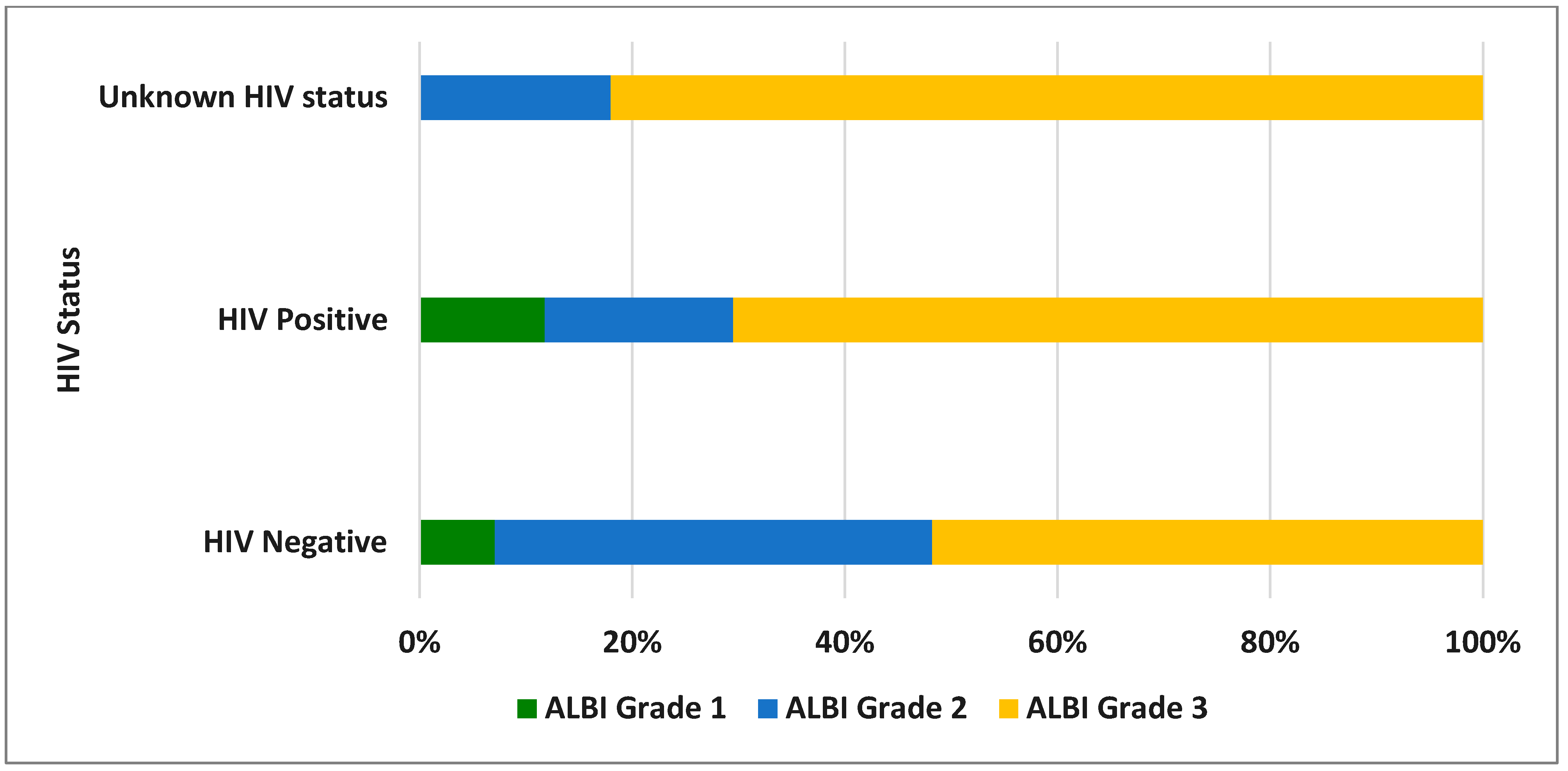
Among the patients reviewed, the majority were at ALBI grade 3. Compared with patients who were HIV-negative, patients who were HIV-positive (OR 2.2; 95% CI 1.54–5.26, p = 0.0008) or had an unknown HIV status (OR 4.2; 95% CI 2.2–8; p < 0.0001) had higher odds of having at ALBI grade 3 at the time of HCC diagnosis (Figure 1). Among all patients, 29 (30.5%) underwent cancer-directed therapy, with all such therapy provided with palliative intent. Systemic treatment was observed for only 29 individuals, comprising single-agent sorafenib (n = 8), doxorubicin (n = 19), and capecitabine (n = 2). Notably, none of the patients received immunotherapy.

3.2. Survival Analysis

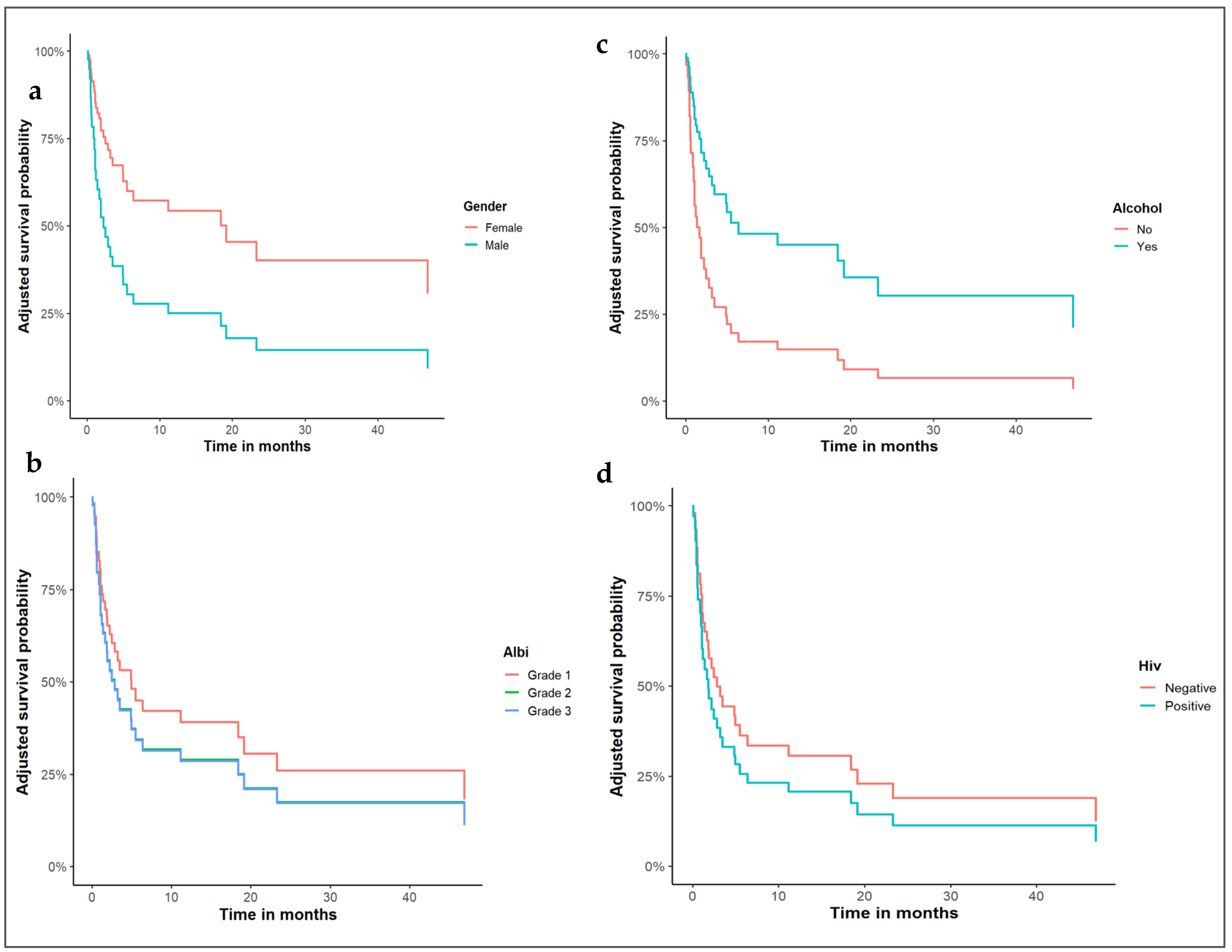
Median survival was 2.3 months for males and 18.5 months for females, respectively (p = 0.11). For Cox regression, male sex was associated with a higher risk of death (HR = 2.82, 95% CI: 0.80–9.97) compared to females. Categorized by HIV status, median survival was 2.4 months for HIV-positive patients and 2.6 months for HIV-negative patients (p = 0.51); HIV positivity was not significantly associated with mortality (HR = 1.50, 95% CI: 0.46–4.91). For ALBI grade, median survival was 8.1 months for grade 1 patients, 4.6 months for grade 2 patients, and 4.7 months for grade 3 patients (p = 0.64). For Cox regression, higher ALBI grades were associated with poorer survival (grade 2: HR = 1.45, 95% CI: 0.30–7.13; grade 3: HR = 1.47, 95% CI: 0.28–7.60). Patients with a history of alcohol use had a median survival of 8.4 months, compared with 5.2 months for non-users (p = 0.04); an alcohol use-free history was associated with worse survival (HR = 0.33, 95% CI: 0.11–0.97). Notably, the median survival time was 3.6 months for patients ≤45 years of age and 4.6 months for patients >45 years old (p= 0.28) Additionally, receiving cancer-directed treatment showed no significant improvement in median survival (median survival time 3.4 months for treated patients vs. 4.6 months for non-treated patients (p = 0.93)). Figure 2a–d illustrate survival distributions by gender, alcohol use, ALBI grade, and HIV status.

4. Discussion

In our study, HIV-positive HCC patients showed lower median survival than HIV-negative patients, though this difference was not statistically significant. Likewise, ALBI grade 1 patients had the longest median survival and grade 2 and grade 3 patients had similarly shorter median survival, but these trends were also not significant. Previous Sub-Saharan African studies showed an association between HIV status and HCC survival, though in our sample this was not observed with statistical significance [26,27]. Various studies have reported this trend with statistical significance, however, and it has been validated across different BCLC stages and treatments [16,17,23]. Several studies have documented ALBI score grading in Sub-Saharan Africa, focusing on changes in grading during active treatment as a prognostic factor, rather than cross-sectional findings at diagnosis, which can be compared directly with our findings [28].
In this study, HIV status was determined for 76% of the sampled population. This proportion falls short of the World Health Organization’s 95-95-95 target for member states [9]. A recent study found that 86% of patients at the study site had a known HIV status, with known status primarily recorded among those with cervical and breast cancer [29]. Our study found an HIV positivity rate of 23.3%, consistent with the rate in Sub-Saharan African countries (17–22%). In these countries, HIV rates among HCC patients were consistently higher than national averages due to the etiological association [26,27,30]. In Zimbabwe, adult HIV prevalence is 16.7% for females and 12.4% for males, both lower that what we observed in this study [31]. Few studies have been conducted reporting survival in Zimbabwe; however, a hospital-based study on HCC conducted in 1988 did not report the HIV positivity rate but reported a similarly poor survival, with 99% of patients receiving supportive care only [32].
Treatment rates were similar between HIV-positive and -negative patients, and all patients received palliative therapy, so differences in survival were not linked to cancer-specific treatment [33]. HIV infection increases the risk of developing HCC, possibly by promoting tumor growth and weakening immune responses. Individuals with uncontrolled HIV or who are not on antiretroviral therapy face a greater risk, while those receiving treatment have a lower chance of chronic HBV infection [7]. Studies indicate that HIV-positive patients with HCC exhibit a reduced duration of symptoms and lower median survival at clinical presentation when compared to HIV-negative patients [27]. In our study, prevalence of ALBI grade 3 status was significantly higher in the HIV-positive and unknown HIV status groups than the HIV-negative group. Previous Sub-Saharan African HCC studies only considered Child–Pugh scores, and our report of ALBI grade distribution at diagnosis and its prognostic significance in an African population is a pilot in evaluating the grading system. Fewer than 1% of oncologists surveyed in Africa reported using the ALBI grading system for HCC. This survey did not probe the reasons behind this lack of adoption, which we postulate could be due to a lack of knowledge about its existence, preference, or the natural difficulty of employing a log-based calculation daily in clinics [12]. An ALBI score grading system is an index of ‘reserve liver function’ that has been validated for assessing prognosis in patients with HCC, despite the severity of the underlying liver fibrosis, and in standard care in which HCC patients albumin and bilirubin levels are recorded, so it does not require any more investigation but rather requires less [13,14]. This validation has been performed for early-, intermediate-, and late-stage HCC and across the treatment spectrum, but none of these tests have been conducted locally [17,34,35]. The association between ALBI score grade and observed median survival indicated that grade 1 was linked to longer median survival compared to grades 2 and 3.
The median survival difference that we found between females and males was statistically insignificant. In other studies, a significant differences has been observed, with females showing longer intervals [4,17,36,37]. Several reasons have been suggested for the better female survival observation, including lower rates of severe liver impairment in females at diagnosis, smaller tumor sizes, and lower massive and diffuse HCC subtypes, which infer poorer prognosis [38]. In addition, investigators have reported that there is a protective effect of premenopausal status and estrogen hormone replacement in HCC risk and mortality, though reports contradicting this have also been published [37,39,40]. In this study, alcohol consumption, which is predominately observed in males and a known risk factor for HCC, was observed to infer better median survival. This inverse association warrants cautious interpretation; it may reflect confounding factors, such as alcohol users being diagnosed earlier or receiving better care, or it could be a statistical artifact due to the small sample size. Additionally, the study did not sub-categorize alcohol consumers by current drinking status, cessation history, timing of cessation, type of alcoholic beverage consumed, or daily consumption quantity due to limitations in the source documentation. Forty-three (45.3%) patients consumed alcohol but only three of these were women. This is consistent with the observed and reported low alcohol consumption rates among Zimbabwean women [41,42].
Our study cohort’s median age was 6 years higher than that of the 1988 Zimbabwe HCC survival study and 7 years higher than the median found in a Sub-Saharan Africa HCC meta-analysis [32,43]. Age was not associated with median survival using the 45-year cut-off, which is the median age for HCC diagnosis in Sub-Saharan Africa reported in the meta-analysis. Though this is the age cutoff that we used in this study, this may not detect differences in this sample. Males also made up the majority of patients in most prior studies, and between HIV-positive and -negative patients, we observed a similar median age at diagnosis.
Among those with known HBV infection, the prevalence of HBV in our study was 67.3%. This was higher compared to a previous study conducted at our center over 15 years ago, which reported an HBV prevalence of 48% among HCC patients at the time [44]. Our finding is closer to the 64% positivity rate reported among HCC patients in a cross-sectional study conducted in South Africa in 2020. It should be noted that a population-based cross-sectional study conducted among adults in Zimbabwe found the prevalence rate of HBV infection to be 13%. It is important to note that the HBV infection prevalence rate among adult Zimbabweans is 13% [26,44]. However, the rate of HCV positivity in our study was similar to the prevalence previously reported in Zimbabwe [44]. In Sub-Saharan Africa, over half of HCC cases are HBV-related, and the HBV prevalence among non-HCC adults averages 12% [44,45]. HBV-associated risk of HCC can be addressed in several ways falling under primary and secondary prevention, including hepatitis B vaccinations and active HBV treatment [46]. The Zimbabwe Expanded Programme on Immunization introduced early childhood HBV vaccination in 1999 and reports coverage of over 90% [47]. The benefits in terms of HCC incidence are obviously realized in the long term given the median age of diagnosis. In a 37-year-long follow-up study evaluating the efficacy of hepatitis B vaccination on liver cancer prevention in China, children who received the HBV vaccination had a 70% protective efficacy against HCC [48]. Active treatment of HBV infection with antivirals using the ‘test and treat’ method is feasible in countries like Zimbabwe given drug availability and health worker familiarity with these agents as part of standard HIV treatment. Early detection can be enhanced by wider HBV testing and HCC screening/surveillance follow-up in clinics given the high prevalence of HBV among the asymptomatic adult population [44,49]. An effective viral hepatitis control plan needs to be sustainable and comprehensive, with good treatment access and community engagement. HCC sits at the crossroads of communicable and non-communicable disease, and as Africa goes through the disease burden transition period with resultant polypharmacy, looking both ways is needed [50].
As expected, most patients were diagnosed using imaging and serum alpha-fetoprotein testing. This diagnostic criteria is more feasible in limited-resource settings and is the prevalent mode of HCC diagnosis in Africa, despite the diagnostic uncertainty it introduces. Failure to conduct surveillance is a frequent HCC screening issue and correlates with the presence of more advanced tumors at diagnosis and poorer outcomes [45]. Strengthening surveillance protocols and improving patient adherence can boost early detection, leading to better intervention rates and prognosis [51]. At diagnosis, most patients had BCLC stage C and D disease, which ultimately showed no significant association with median survival. Diagnosis and staging for these patients included imaging with ultrasound scans, which may under-stage the HCC diagnosis, leading to this finding. Access to more advanced imaging techniques is limited by cost and equipment availability and long periods of uninterrupted machine breakdowns [52]. No patients in this study received treatment with curative intent, and of those who received treatment, only eight received sorafenib, which has some efficacy compared to all the other treatments given [28,43,53]. None of the patients received bevacizumab plus immunotherapy or had curative surgery. The cost of the recommended bevacizumab/atezolizumab combination for treating unresectable HCC is not feasible for our patient population [54]. There was no statistically significant difference in median survival between patients who received any cancer-specific treatments compared to no treatment in this study. This is likely due to several factors, including poor liver function at diagnosis due to advanced disease, as shown by the higher ALBI grade and the fact that the majority of those treated received cancer medicine that was likely ineffective for HCC. Only eight patients received targeted therapy with some effect on HCC, although such therapy may be of little benefit to the majority of the patients due to diminished liver function [55].
This study has several limitations, among which are retrospective design and limited sample size, though we captured all the HCC cases that presented to the center over a 10-year period. The retrospective design may introduce selection bias, and the limited sample size could affect the generalizability of our results, potentially limiting the strength of associations observed and the interpretation of non-significant findings. This real-world survival study included all HCC patients diagnosed over a 10-year period, which was determined by the records available at the center. The small sample size was unavoidable in this context and limits the power of the study. Also limiting this real-world data analysis from a single center in our limited-resource setting is the unavailability of other prognostic factors like liver cirrhosis, occupational history, and HIV status for all patients. Furthermore, the predominant use of sonographic imaging and AFP-based diagnosis affects accuracy. However, though this was a single-institution study, it is worth noting that the study site is the larger of just two public oncology centers in the country and, therefore, gives better validity to our findings regarding this geographical region. Despite these limitations, the study offers valuable insights into the survival outcomes of HCC patients within this specific healthcare setting. The findings may inform future research and clinical practice by highlighting the challenges faced in data collection and the importance of comprehensive record-keeping for longitudinal analyses. Further investigations with larger cohorts and multi-center collaboration could enhance the generalizability of the results and provide a more robust understanding of patient prognoses over time. This is an index study evaluating the distribution of HIV status and ALBI grade at the time of HCC diagnosis and their association with observed median survival in Zimbabwe. Our study, despite the limitations, highlights the poor prognosis for HCC in Zimbabwe, like in other Sub-Saharan African countries. This poor median survival in Zimbabwe is undoubtedly a multifactorial issue needing preventative measures, early detection, and effective treatment actions. This study further highlights the limited availability of the current advances in HCC diagnostics and novel treatments in Zimbabwe and the need for access programs.

5. Conclusions

The majority of hepatocellular carcinoma patients in Zimbabwe were diagnosed at an advanced stage, with hepatitis B or C viral infections and alcohol consumption identified as primary risk factors. Median survival rates were low. Neither HIV infection nor ALBI score grading had a significant impact on median survival.

Author Contributions

Conceptualization, T.A.M., V.N. and C.J.; methodology, T.A.M., V.N., M.Z.B., C.M. and N.N.; formal analysis, by T.A.M., V.N., and M.A.M. data curation, V.N.; writing—original draft preparation, T.A.M., V.N. and C.J.; writing—review and editing, T.A.M., V.N., M.A.M., M.Z.B., C.M., O.C., E.M., C.J. and N.N.; visualization, T.A.M. and V.N.; supervision, M.Z.B., C.M., O.C. and N.N. All authors have read and agreed to the published version of the manuscript.

Funding

This research was funded by the American Association for Cancer Research, grant number MAZH 24-15-75 and the Bill and Melinda Gates Foundation (BGMF) grant investment ID INV-036801.

Institutional Review Board Statement

The study was conducted in accordance with the Declaration of Helsinki, and it was approved by the Ethics Committee of the Medical Research Council of Zimbabwe on 24 October 2023 (MRCZ/A/3159) and the Joint Research Ethics Committee of the University of Zimbabwe Faculty of Medicine & Health Sciences and the Parirenyatwa Group of Hospitals on 26 June 2023 (JREC/263/2023).

Informed Consent Statement

As this was a retrospective study utilizing existing records with no direct participant contact or intervention, informed consent was not required in accordance with the regulations and standard practices of the Medical Research Council of Zimbabwe and the Joint Research Ethics Committee of the University of Zimbabwe Faculty of Medicine & Health Sciences and the Parirenyatwa Group of Hospitals. The approved protocol involved retrospective review of medical records and analysis of anonymized data, and the individual informed consent requirement was waived. All aspects of the study were conducted in accordance with the principles of the Declaration of Helsinki and the applicable regulations and laws governing research in Zimbabwe.

Data Availability Statement

The data that support the findings of this study are available from the corresponding author upon reasonable request.

Acknowledgments

Thank you to colleagues and patients at the Parirenyatwa Group of Hospitals, Division of Radiotherapy & Oncology, for all their assistance. We also wish to show much gratitude to Nicholas Sithole, who was the project assistant and followed the study through to its intended completion.

Conflicts of Interest

The authors declare no conflicts of interest.

Abbreviations

The following abbreviations are used in this manuscript:
HCCHepatocellular carcinoma
LMICLow- and middle-income countries
HBVHepatitis B virus
HCVHepatitis C virus
AFPAlpha-fetoprotein
ALBIAlbumin–bilirubin
MELDModel for End-Stage Liver Disease
MRCZThe Medical Research Council of Zimbabwe
BCLCBarcelona Clinic Liver Cancer
HIVHuman immunodeficiency virus
NCCNNational Comprehensive Cancer Network

Appendix A

Table A1. Baseline physiological measurements and comorbidities for the analyzed patients with hepatocellular carcinoma.
CharacteristicHIV-Positive N/RangeHIV-Negative
N/Range
Unknown HIV
N/Range
p-Value
Karnofsky performance(n/%)
≤60
≥70

11 (64.7)
6 (35.3)

27 (48.2)
29 (51.8)

14 (63.6)
8 (36.4)
0.04
White blood cells8.26 (3.91–11.7)8.29 (2.90–26.4)9.70 (4.5–21.4)0.928
Platelet count254 (176–446)282 (163–382)244 (149–335)0.037
Hemoglobin (g/dL)10.5 (9.75–11.6)12.8 (10.8–13.7)11.9 (9.63–12.70.34
Creatinine (μmol/L)73 (53–112)69 (61.2–104.6)102 (65–137)0.36
Creatinine clearance (L/min)56.4 (30.6–95.7)64.8 (48–88.6)44.1 (25–56.7)0.07
Total protein (g/L)74.5 (65–80.7)74 (70–78)80 (73–86)0.584
Albumin (g\L)33.4 (30.8–35.3)34 (30.5–39)29 (25.5–33.5)0.014
Total bilirubin (μmol/L)35.4 (7.32–76.7)31.2 (18.8–53.5)26.5 (14.3–36.5)0.424
ALP (IU/L)285 (173–496)245 (154–327)291 (228–402)0.314
AST (IU/L)92 (76–201)133 (91–234)158 (109.5–197)0.66
ALT (IU/L)43 (35.2–48)56 (31–103)53 (38–78)0.369
Hypertension
Yes
No

3 (17.7)
14 (82.3)

9 (16.1)
47 (83.9)

5 (22.7)
17 (77.3)
0.342
Diabetes
Yes
No

0 (0)
17 (100)

2 (3.6)
54 (96.4)

1 (4.6)
21 (95.4)
0.455
Table A2. Numbers at risk.
Group (Gender)0 Months10 Months20 Months30 Months
Female261488
Male6933126
Group (Alcohol)0 months10 months20 months30 months
Non-drinker50292017
Drinker431685
Group (ALBI)0 months10 months20 months30 months
Grade 18422
Grade 238241412
Grade 336191110
Group (HIV])0 months10 months20 months30 months
Negative56221712
Positive17954

References

  1. Bray, F.; Laversanne, M.; Sung, H.; Ferlay, J.; Siegel, R.L.; Soerjomataram, I.; Jemal, A. Global Cancer Statistics 2022: GLOBOCAN Estimates of Incidence and Mortality Worldwide for 36 Cancers in 185 Countries. CA. Cancer J. Clin. 2024, 74, 229–263. [Google Scholar] [CrossRef] [PubMed]
  2. Sharma, R.; Aashima; Nanda, M.; Fronterre, C.; Sewagudde, P.; Ssentongo, A.E.; Yenney, K.; Arhin, N.D.; Oh, J.; Amponsah-Manu, F.; et al. Mapping Cancer in Africa: A Comprehensive and Comparable Characterization of 34 Cancer Types Using Estimates From GLOBOCAN 2020. Front. Public Health 2022, 10, 839835. [Google Scholar] [CrossRef]
  3. Chokunonga, E.; Borok, M.Z.; Chingonzoh, T.; Chirenje, E.Z.M.; Makunike-Mutasa, R.; Mudavanhu, J.; Ndlovu, N. Pattern of Cancer in Zimbabwe: Zimbabwe National Cancer Registry 2018 Annual Report; Zimbabwe National Cancer Registry: Harare, Zimbabwe, 2018. [Google Scholar]
  4. Han, Y.-F.; Zhao, J.; Ma, L.-Y.; Yin, J.-H.; Chang, W.-J.; Zhang, H.-W.; Cao, G.-W. Factors Predicting Occurrence and Prognosis of Hepatitis-B-Virus-Related Hepatocellular Carcinoma. World J. Gastroenterol. 2011, 17, 4258–4270. [Google Scholar] [CrossRef]
  5. Saeed, U.; Waheed, Y.; Ashraf, M. Hepatitis B and Hepatitis C Viruses: A Review of Viral Genomes, Viral Induced Host Immune Responses, Genotypic Distributions and Worldwide Epidemiology. Asian Pac. J. Trop. Dis. 2014, 4, 88–96. [Google Scholar] [CrossRef] [PubMed Central]
  6. Choo, Q.-L.; Kuo, G.; Weiner, A.J.; Overby, L.R.; Bradley, D.W.; Houghton, M. Isolation of a cDNA cLone Derived from a Blood-Borne Non-A, Non-B Viral Hepatitis Genome. Science 1989, 244, 359–362. [Google Scholar] [CrossRef]
  7. McGee-Avila, J.K.; Argirion, I.; Engels, E.A.; O’Brien, T.R.; Horner, M.-J.; Qiao, B.; Monterosso, A.; Luo, Q.; Shiels, M.S. Risk of Hepatocellular Carcinoma in People with HIV in the United States, 2001–2019. JNCI J. Natl. Cancer Inst. 2024, 116, 61–68. [Google Scholar] [CrossRef]
  8. Gonese, E.; Musuka, G.; Ruangtragool, L.; Hakim, A.; Parekh, B.; Dobbs, T.; Duong, Y.T.; Patel, H.; Mhangara, M.; Mugurungi, O.; et al. Comparison of HIV Incidence in the Zimbabwe Population-Based HIV Impact Assessment Survey (2015–2016) with Modeled Estimates: Progress Toward Epidemic Control. AIDS Res. Hum. Retroviruses 2020, 36, 656–662. [Google Scholar] [CrossRef]
  9. Hakim, A.J.; Tippett Barr, B.A.; Kinchen, S.; Musuka, G.; Manjengwa, J.; Munyati, S.; Gwanzura, L.; Mugurungi, O.; Ncube, G.; Saito, S.; et al. Progress Toward the 90-90-90 HIV Targets in Zimbabwe and Identifying Those Left Behind. JAIDS J. Acquir. Immune Defic. Syndr. 2021, 88, 272–281. [Google Scholar] [CrossRef]
  10. Mukthinuthalapati, V.V.P.K.; Sewram, V.; Ndlovu, N.; Kimani, S.; Abdelaziz, A.O.; Chiao, E.Y.; Abou-Alfa, G.K. Hepatocellular Carcinoma in Sub-Saharan Africa. JCO Glob. Oncol. 2021, 7, 756–766. [Google Scholar] [CrossRef]
  11. Singal, A.G.; Marrero, J.A.; Yopp, A. Screening Process Failures for Hepatocellular Carcinoma. J. Natl. Compr. Cancer Netw. JNCCN 2014, 12, 375–382. [Google Scholar] [CrossRef]
  12. Abou-Alfa, G.K.; Afihene, M.; Capanu, M.; Li, Y.; Chou, J.F.; Asombang, A.; Alatise, O.I.; Bounedjar, A.; Cunha, L.; Mekonnen, H.D.; et al. Africa Guidelines for Hepatocellular Carcinoma Buildup Process. JCO Glob. Oncol. 2023, 9, e2300159. [Google Scholar] [CrossRef] [PubMed]
  13. Toyoda, H.; Johnson, P.J. The ALBI Score: From Liver Function in Patients with HCC to a General Measure of Liver Function. JHEP Rep. Innov. Hepatol. 2022, 4, 100557. [Google Scholar] [CrossRef]
  14. Johnson, P.J.; Berhane, S.; Kagebayashi, C.; Satomura, S.; Teng, M.; Reeves, H.L.; O’Beirne, J.; Fox, R.; Skowronska, A.; Palmer, D.; et al. Assessment of Liver Function in Patients With Hepatocellular Carcinoma: A New Evidence-Based Approach—The ALBI Grade. J. Clin. Oncol. 2015, 33, 550–558. [Google Scholar] [CrossRef]
  15. Tsoris, A.; Marlar, C.A. Use Of The Child Pugh Score In Liver Disease. In StatPearls; StatPearls Publishing: Treasure Island, FL, USA, 2026. [Google Scholar]
  16. Fragaki, M.; Sifaki-Pistolla, D.; Orfanoudaki, E.; Kouroumalis, E. Comparative Evaluation of ALBI, MELD, and Child-Pugh Scores in Prognosis of Cirrhosis: Is ALBI the New Alternative? Ann. Gastroenterol. 2019, 32, 626–632. [Google Scholar] [CrossRef]
  17. Chan, A.W.H.; Leung, H.H.W.; Chong, C.C.N.; Chan, S.L. Validating the ALBI Grade: Its Current and Future Use in HCC Prognostication. J. Hepatol. 2017, 66, 661–663. [Google Scholar] [CrossRef]
  18. Pinato, D.J.; Sharma, R.; Citti, C.; Platt, H.; Ventura-Cots, M.; Allara, E.; Chen, T.-Y.; Dalla Pria, A.; Jain, M.; Mínguez, B.; et al. The Albumin-bilirubin Grade Uncovers the Prognostic Relationship between Hepatic Reserve and Immune Dysfunction in HIV -associated Hepatocellular Carcinoma. Aliment. Pharmacol. Ther. 2018, 47, 95–103. [Google Scholar] [CrossRef]
  19. Nyangwara, V.A.; Mazhindu, T.; Chikwambi, Z.; Masimirembwa, C.; Campbell, T.B.; Borok, M.; Ndlovu, N. Cardiotoxicity and Pharmacogenetics of Doxorubicin in Black Zimbabwean Breast Cancer Patients. Br. J. Clin. Pharmacol. 2023, 90, 1782–1789. [Google Scholar] [CrossRef]
  20. Chibonda, S.; Ndlovu, N.; Tsikai, N.; Munangaidzwa, L.; Ndarukwa, S.; Nyamhunga, A.; Mazhindu, T. High Dose Rate Intra-Cavitary Brachytherapy with Cobalt 60 Source for Locally Advanced Cervical Cancer: The Zimbabwean Experience. Infect. Agent. Cancer 2021, 16, 1. [Google Scholar] [CrossRef]
  21. Mazhindu, T.A.; Ndlovu, N.; Matsikidze, E.; Chibonda, S.; Kadzatsa, W. Pulmonary Tuberculosis: A Comorbidity or Misdiagnosis of Primary Lung Cancer in Africa? Proceedings 2024, 100, 2. [Google Scholar] [CrossRef]
  22. Kpolovie, P.J.; Ewansiha, S.; Esara, M. Continental Comparison of Human Development Index (HDI). Int. J. Humanit. Soc. Sci. Educ. 2017, 4, 9–27. [Google Scholar] [CrossRef]
  23. Sanders, D.; Kravitz, J.; Lewin, S.; Mckee, M. Zimbabwe’s Hospital Referral System: Does It Work? Health Policy Plan 1998, 13, 359–370. [Google Scholar] [CrossRef]
  24. Maiden, J. Half of Zimbabweans Faced Extreme Poverty in 2020 Due to COVID-19: Rapid Poverty Income Consumption and Expenditure Survey (PICES). Available online: https://www.unicef.org/zimbabwe/press-releases/half-zimbabweans-faced-extreme-poverty-2020-due-covid-19-rapid-poverty-income (accessed on 5 March 2025).
  25. Kurtovic-Kozaric, A.; Vranic, S.; Kurtovic, S.; Hasic, A.; Kozaric, M.; Granov, N.; Ceric, T. Lack of Access to Targeted Cancer Treatment Modalities in the Developing World in the Era of Precision Medicine: Real-Life Lessons From Bosnia. J. Glob. Oncol. 2018, 4, 1–5. [Google Scholar] [CrossRef]
  26. Maponga, T.G.; Glashoff, R.H.; Vermeulen, H.; Robertson, B.; Burmeister, S.; Bernon, M.; Omoshoro-Jones, J.; Ruff, P.; Neugut, A.I.; Jacobson, J.S.; et al. Hepatitis B Virus-Associated Hepatocellular Carcinoma in South Africa in the Era of HIV. BMC Gastroenterol. 2020, 20, 226. [Google Scholar] [CrossRef]
  27. Okeke, E.; Mark Davwar, P.; Mullen, B.; Duguru, M.; Agbaji, O.; Sagay, A.; Murphy, R.; Hawkins, C. The Impact of HIV on Hepatocellular Cancer Survival in Nigeria. Trop. Med. Int. Health 2021, 26, 335–342. [Google Scholar] [CrossRef]
  28. Fidan, E.; Fidan, S.; Merev, E.; Kazaz, N. The Relationship between Albumin–Bilirubin Grade and Survival in Hepatocelluler Carcinoma Patients Treated with Sorefanib. Niger. J. Clin. Pract. 2022, 25, 173–177. [Google Scholar] [CrossRef] [PubMed]
  29. Montaño, M.A.; Mtisi, T.; Ndlovu, N.; Borok, M.; Bula, A.; Joffe, M.; Bender Ignacio, R.; Chagomerana, M.B. Characterizing HIV Status Documentation among Cancer Patients at Regional Cancer Centers in Malawi, Zimbabwe, and South Africa. Infect. Agent. Cancer 2023, 18, 65. [Google Scholar] [CrossRef] [PubMed]
  30. Otedo, A.; Simbiri, K.O.; Were, V.; Ongati, O.; Estambale, B.A. Risk Factors for Liver Cancer in HIV Endemic Areas of Western Kenya. Infect. Agent. Cancer 2018, 13, 41. [Google Scholar] [CrossRef]
  31. U.S. Embassy in Zimbabwe. National HIV Survey (ZIMPHIA 2020) Results Indicate Zimbabwe Is On Track to Achieve HIV Epidemic Control by 2030. Available online: https://zw.usembassy.gov/national-hiv-survey-zimphia-2020-results-indicate-zimbabwe-is-on-track-to-achieve-hiv-epidemic-control-by-2030/ (accessed on 7 November 2022).
  32. Kiire, C.F. Hepatocellular Carcinoma in Zimbabwe. Trop. Gastroenterol. Off. J. Dig. Dis. Found. 1988, 9, 127–131. [Google Scholar]
  33. Davwar, P.M.; Okeke, E.; Duguru, M.; Nyam, D.; Bell, K.; Odeghe, E.A.; Oyeleke, G.; Lesi, O.A.; Singh, R.; Kim, K.-Y.; et al. Hepatocellular Carcinoma Presentation and Prognosis among Nigerian Adults with and without HIV. PLoS ONE 2023, 18, e0282539. [Google Scholar] [CrossRef] [PubMed]
  34. Demirtas, C.O.; D’Alessio, A.; Rimassa, L.; Sharma, R.; Pinato, D.J. ALBI Grade: Evidence for an Improved Model for Liver Functional Estimation in Patients with Hepatocellular Carcinoma. JHEP Rep. 2021, 3, 100347. [Google Scholar] [CrossRef]
  35. Huo, T.-I. ALBI Grade as a New Player in Hepatocellular Carcinoma. J. Chin. Med. Assoc. 2019, 82, 1. [Google Scholar] [CrossRef] [PubMed]
  36. Pang, C.; Li, J.-M.; Wang, Z.; Luo, Y.-C.; Cheng, Z.-G.; Han, Z.-Y.; Liu, F.-Y.; Yu, X.-L.; Liang, F.; Xi, H.-Q.; et al. Age-Dependent Female Survival Advantage in Hepatocellular Carcinoma: A Multicenter Cohort Study. Clin. Gastroenterol. Hepatol. 2024, 22, 305–314. [Google Scholar] [CrossRef] [PubMed]
  37. Liou, W.-L.; Tan, T.J.-Y.; Chen, K.; Goh, G.B.-B.; Chang, J.P.-E.; Tan, C.-K. Gender Survival Differences in Hepatocellular Carcinoma: Is It All Due to Adherence to Surveillance? A Study of 1716 Patients over Three Decades. JGH Open Open Access J. Gastroenterol. Hepatol. 2023, 7, 377–386. [Google Scholar] [CrossRef]
  38. Tangkijvanich, P.; Mahachai, V.; Suwangool, P.; Poovorawan, Y. Gender Difference in Clinicopathologic Features and Survival of Patients with Hepatocellular Carcinoma. World J. Gastroenterol. 2004, 10, 1547–1550. [Google Scholar] [CrossRef]
  39. Hassan, M.M.; Botrus, G.; Abdel-Wahab, R.; Wolff, R.A.; Li, D.; Tweardy, D.; Phan, A.T.; Hawk, E.; Javle, M.; Lee, J.-S.; et al. Estrogen Replacement Reduces Risk and Increases Survival Times of Women With Hepatocellular Carcinoma. Clin. Gastroenterol. Hepatol. Off. Clin. Pract. J. Am. Gastroenterol. Assoc. 2017, 15, 1791–1799. [Google Scholar] [CrossRef]
  40. Guo, Y.; Wu, G.; Yi, J.; Yang, Q.; Jiang, W.; Lin, S.; Yang, X.; Cai, X.; Mao, L. Anti-Hepatocellular Carcinoma Effect and Molecular Mechanism of the Estrogen Signaling Pathway. Front. Oncol. 2021, 11, 763539. [Google Scholar] [CrossRef]
  41. Bandason, T.; Rusakaniko, S. Prevalence and Associated Factors of Smoking among Secondary School Students in Harare Zimbabwe. Tob. Induc. Dis. 2010, 8, 12. [Google Scholar] [CrossRef]
  42. Munyati, S.S.; Redzo, N.; Dauya, E.; Matambo, R.; Makamure, B.; Bandason, T.; Butterworth, A.E.; Gwanzura, L.; Rusakaniko, S.; Mason, P.R.; et al. Human Immunodeficiency Virus, Smoking and Self-Rated Health in Harare, Zimbabwe. Int. J. Tuberc. Lung Dis. 2006, 10, 1279–1285. [Google Scholar]
  43. Sobnach, S.; Kotze, U.; Spearman, C.W.; Sonderup, M.; Nashidengo, P.R.; Ede, C.; Keli, E.; Chihaka, O.; Zerbini, L.F.; Li, Y.J.; et al. The Management and Outcomes of Hepatocellular Carcinoma in Sub-Saharan Africa: A Systematic Review. HPB 2024, 26, 21–33. [Google Scholar] [CrossRef]
  44. Chin’ombe, N.; Chavhunduka, E.; Matarira, H.T. Seroprevalence of HBV and HCV in Primary Hepatocellular Carcinoma Patients in Zimbabwe. Infect. Agent Cancer 2009, 4, 15. [Google Scholar] [CrossRef]
  45. El-Kassas, M.; Elbadry, M. Hepatocellular Carcinoma in Africa: Challenges and Opportunities. Front. Med. 2022, 9, 899420. [Google Scholar] [CrossRef]
  46. Schütte, K.; Balbisi, F.; Malfertheiner, P. Prevention of Hepatocellular Carcinoma. Gastrointest. Tumors 2016, 3, 37–43. [Google Scholar] [CrossRef]
  47. Dzingirai, B.; Katsidzira, L.; Matyanga, C.M.J.; Postma, M.J.; Van Hulst, M.; Mafirakureva, N. Progress on the Elimination of Viral Hepatitis in Zimbabwe: A Review of the Policies, Strategies and Challenges. J. Viral Hepat. 2021, 28, 994–1002. [Google Scholar] [CrossRef] [PubMed]
  48. Cao, M.; Fan, J.; Lu, L.; Fan, C.; Wang, Y.; Chen, T.; Zhang, S.; Yu, Y.; Xia, C.; Lu, J.; et al. Long Term Outcome of Prevention of Liver Cancer by Hepatitis B Vaccine: Results from an RCT with 37 Years. Cancer Lett. 2022, 536, 215652. [Google Scholar] [CrossRef] [PubMed]
  49. Pan, L.-X.; Wang, Y.-Y.; Li, Z.-H.; Luo, J.-X.; Wu, K.-J.; Liu, Z.-X.; Wu, P.-S.; Chen, K.; Ma, L.; Fan, X.-H.; et al. Entecavir versus Tenofovir for Prevention of Hepatitis B Virus-Associated Hepatocellular Carcinoma after Curative Resection: Study Protocol for a Randomized, Open-Label Trial. Trials 2024, 25, 25. [Google Scholar] [CrossRef] [PubMed]
  50. Facciorusso, A.; Del Prete, V.; Crucinio, N.; Muscatiello, N.; Carr, B.I.; Di Leo, A.; Barone, M. Angiotensin Receptor Blockers Improve Survival Outcomes after Radiofrequency Ablation in Hepatocarcinoma Patients. J. Gastroenterol. Hepatol. 2015, 30, 1643–1650. [Google Scholar] [CrossRef]
  51. Anderson, B.O. NCCN Harmonized Guidelines for Sub-Saharan Africa: A Collaborative Methodology for Translating Resource-Adapted Guidelines Into Actionable In-Country Cancer Control Plans. JCO Glob. Oncol. 2020, 6, 1419–1421. [Google Scholar] [CrossRef]
  52. Hennedige, T.; Venkatesh, S.K. Imaging of Hepatocellular Carcinoma: Diagnosis, Staging and Treatment Monitoring. Cancer Imaging 2012, 12, 530–547. [Google Scholar] [CrossRef]
  53. Li, D.; Gruber, S.B.; Iyer, S.; Gupta, S.; Tejani, M. Real-World Clinical Effectiveness of Sorafenib among Patients with Unresectable Hepatocellular Carcinoma at Two Centers in the United States. World J. Gastrointest. Oncol. 2023, 15, 1796–1806. [Google Scholar] [CrossRef]
  54. Cai, H.; Fang, L.; Lin, J.; Zheng, Z. Atezolizumab plus Bevacizumab and Chemotherapy versus Bevacizumab plus Chemotherapy for Metastatic Cervical Cancer: A Cost-Effectiveness Analysis. Front. Pharmacol. 2024, 15, 1476256. [Google Scholar] [CrossRef]
  55. Kim, D.W.; Talati, C.; Kim, R. Hepatocellular Carcinoma (HCC): Beyond Sorafenib—Chemotherapy. J. Gastrointest. Oncol. 2017, 8, 256–265. [Google Scholar] [CrossRef] [PubMed]
Figure 1. The albumin–bilirubin (ALBI) score distribution in hepatocellular carcinoma patients by HIV infection status.
Livers 06 00049 g001
Figure 2. Adjusted survival curves by patient characteristics. Shown above are overall survival curves stratified by gender (a), alcohol use (b), ALBI grade (c), and HIV status (d). For the corresponding number at risk table, see Appendix A Table A2.
Livers 06 00049 g002
Table 1. Patient and baseline clinical characteristics.
CharacteristicHIV-Positive, Frequency (%)
N = 17
HIV-Negative, Frequency (%)
N = 56
Unknown HIV Status, Frequency (%)
N = 22
Age (yrs) (median, IQR)50 (28–70)49 (25–86)60 (26–81)
Gender
Male
Female

11 (64.7)
6 (35.3)

45 (80.4)
11 (19.6)

13 (59.1)
9 (40.9)
Method of diagnosis
Histological specimen
Imaging + serum AFP

6 (35)
11 (65)

24 (43)
32 (57)

7 (32)
15 (68)
BCLC stage
Stage A + B
Stage C +D

4 (23.5)
13 (76.5)

24 (42.90)
32 (57.1)

8 (36.4)
14 (63.6)
Cancer-specific treatment
Yes
No

6 (35.3)
11 (64.7)

19 (33.9)
37 (66.1)

4 (18.2)
18 (81.8)
Hepatitis B infection
Yes
No
Unknown

5 (29.4)
4 (23.5)
8 (47.1)

20 (35.7)
9 (16.1)
27 (48.2)

8 (36.4)
3 (13.5)
11 (50)
Hepatitis C infection
Yes
No
Unknown

1 (6)
8 (47)
8 (47)

8 (14.3)
21 (37.5)
27 (48.2)

2 (9.1)
9 (40.9)
11 (50)
Alcohol
Yes
No
Unknown

7 (41.2)
10 (58.8)
0 (0.0)

30 (53.6)
25 (44.6)
1 (1.8)

6 (27.2)
15 (68.2)
1 (4.6)
Smoker
Yes
No
Unknown

4 (23.5)
13 (76.5)
0 (0.0)

15 (26.8)
41 (73.2)
0 (0.0)

4 (18.2)
17 (77.2)
1 (4.6)
HIV—human immunodeficiency virus; IQR—interquartile range; AFP—alpha-fetoprotein; BCLC—Barcelona Clinic Liver Cancer.
Disclaimer/Publisher’s Note: The statements, opinions and data contained in all publications are solely those of the individual author(s) and contributor(s) and not of MDPI and/or the editor(s). MDPI and/or the editor(s) disclaim responsibility for any injury to people or property resulting from any ideas, methods, instructions or products referred to in the content.