

The Future of Liver-Targeted Protein Synthesis Inhibition: Current Treatments, Emerging Strategies, and Next-Generation Therapeutics


Abstract
1. Introduction
2. Diseases Stemming from Liver Protein Synthesis Dysregulation
3. Mechanisms to Block Protein Synthesis in the Liver
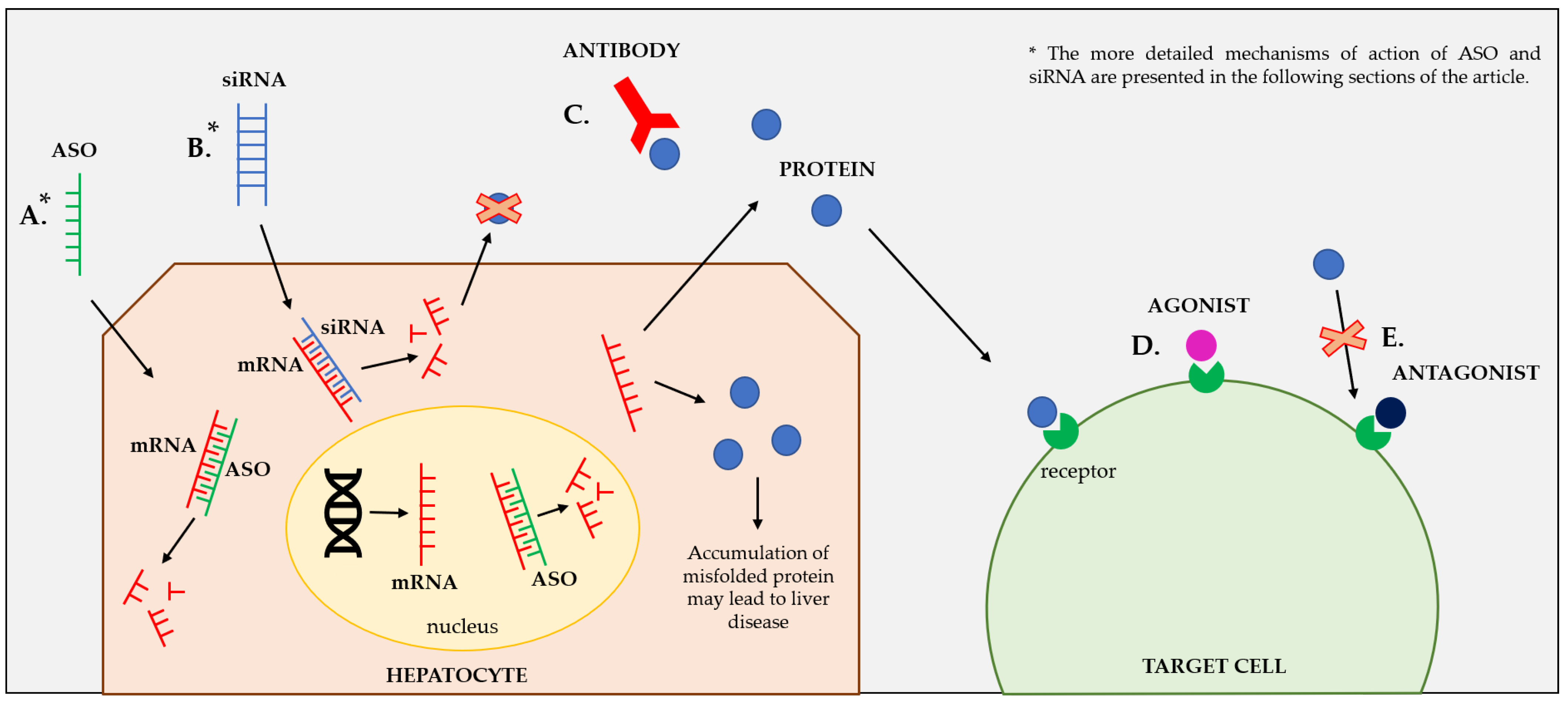
3.1. RNA-Based Therapeutics
3.2. Gene Editing (CRISPR/Cas)
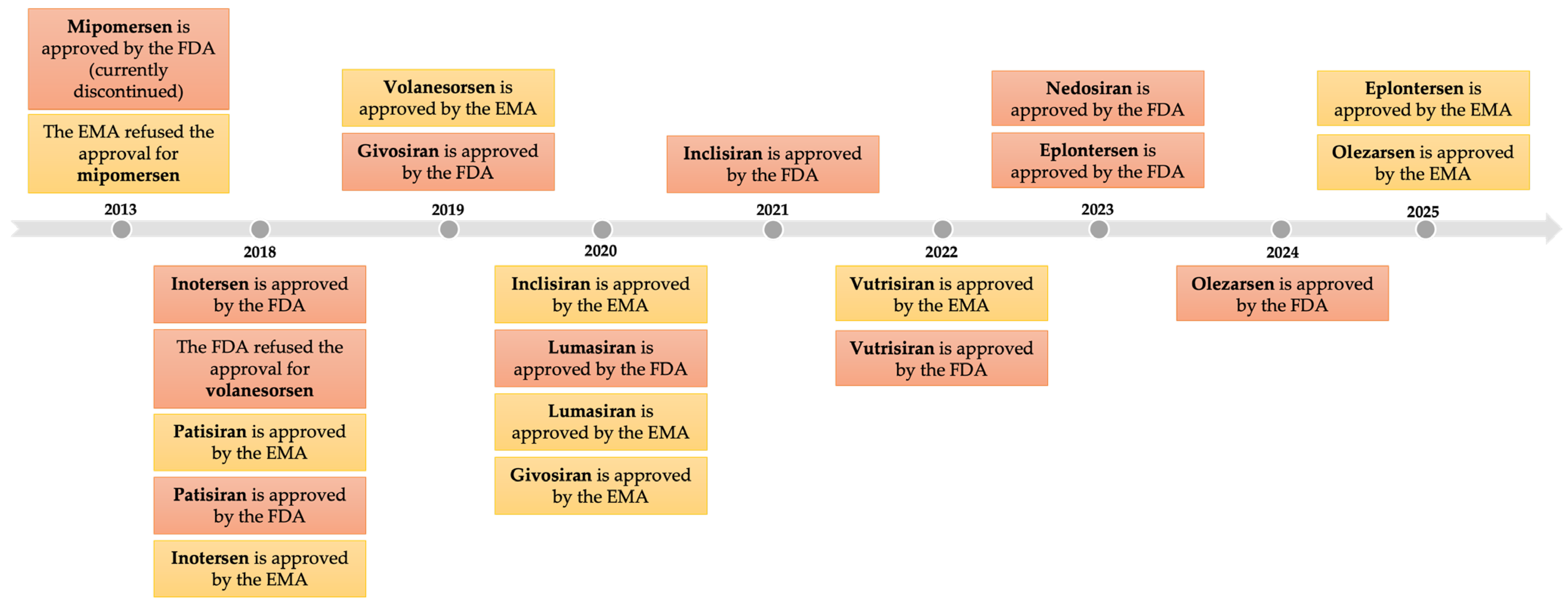
4. Currently Available Drugs and Their Mechanisms
4.1. Amyloidosis
4.1.1. Patisiran
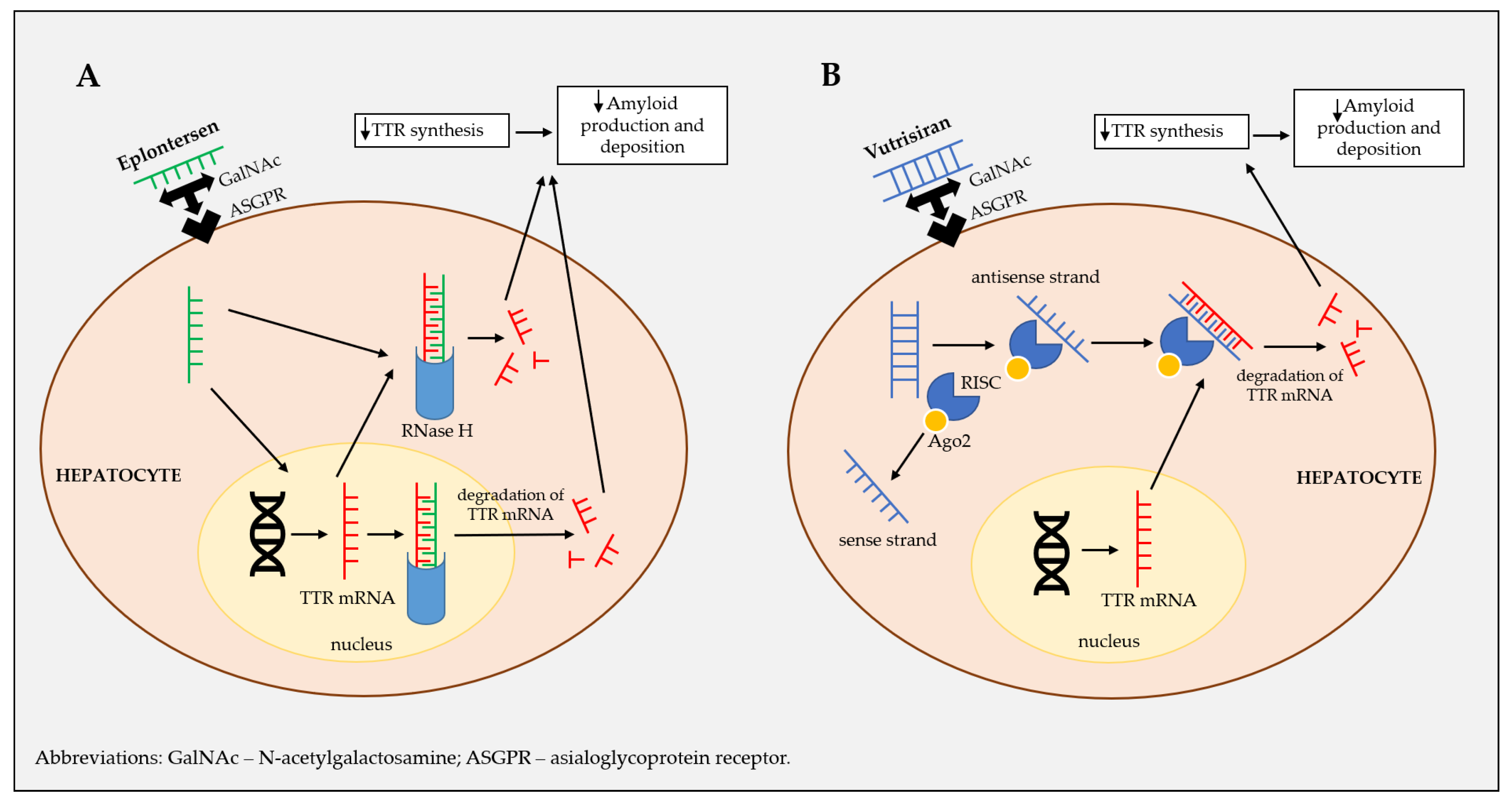
4.1.2. Vutrisiran
4.1.3. Inotersen
4.1.4. Eplontersen
4.2. Porphyria
Givosiran
4.3. Primary Hyperoxaluria
4.3.1. Lumasiran
4.3.2. Nedosiran
4.4. Familial Hypercholesterolemia
4.4.1. Inclisiran
4.4.2. Mipomersen
4.5. Hypertriglyceridemia
4.5.1. Volanesorsen
4.5.2. Olezarsen
5. Drugs in Development and Emerging Strategies
5.1. siRNA Therapies
5.1.1. Familial Hypercholesterolemia
5.1.2. Severe Hypertriglyceridemia and Familial Chylomicronemia Syndrome
5.1.3. Hyperlipoproteinemia (a)
5.1.4. Alpha-1 Antitrypsin Deficiency
5.1.5. Metabolic Dysfunction-Associated Steatotic Disease
5.1.6. Hypertension
5.2. Novel ASOs
5.2.1. Hyperlipoproteinemia (a)
5.2.2. Metabolic Dysfunction-Associated Steatotic Liver Disease
5.3. CRISPR and Gene Editing
5.3.1. Familial Hypercholesterolemia
5.3.2. Alpha-1 Antitrypsin Deficiency
5.3.3. Primary Hyperoxaluria
5.3.4. Transthyretin Amyloidosis
6. Challenges and Limitations of RNA-Based Therapeutics
7. Perspectives for Developing New Liver Protein Synthesis Blockers
8. Limitations
9. Summary
Author Contributions
Funding
Institutional Review Board Statement
Informed Consent Statement
Data Availability Statement
Conflicts of Interest
Abbreviations
| AAT | Alpha-1 antitrypsin |
| AATD | Alpha-1 antitrypsin deficiency |
| AGT | Angiotensinogen |
| AGXT | Alanine-glyoxylate aminotransferase |
| AHP | Acute hepatic porphyria |
| AL | Light chain amyloidosis |
| ALAD | Delta-aminolevulinic acid dehydratase |
| ALAS1 | Delta-aminolevulinate synthase 1 |
| ALT | Alanine aminotransferase |
| ANGPTL3 | Angiopoietin-like 3 |
| apo(a) | Apolipoprotein(a) |
| APOA5 | Apolipoprotein A-V |
| apoB | Apolipoprotein B |
| APOC2 | Apolipoprotein C-II |
| apoC-III | Apolipoprotein C-III |
| Ago2 | Argonaute 2 |
| ASCVD | Atherosclerotic cardiovascular disease |
| ASGPR | Asialoglycoprotein receptor |
| ASO | Antisense oligonucleotide |
| ATTR | Transthyretin amyloidosis |
| ATTRwt | Wild-type transthyretin amyloidosis |
| CaOx | Calcium oxalate |
| CKD | Chronic kidney disease |
| COPD | Chronic obstructive pulmonary disease |
| CPOX | Coproporphyrinogen oxidase |
| CRISPR/Cas | Clustered regularly interspaced short palindromic repeats/CRISPR-associated |
| dsRNA | Double-stranded RNA |
| eGFR | Estimated glomerular filtration rate |
| EMA | European Medicines Agency |
| ESRD | End-stage renal disease |
| FCS | Familial chylomicronemia syndrome |
| FDA | Food and Drug Administration |
| FH | Familial hypercholesterolemia |
| GalNAc | N-acetylgalactosamine |
| GO | Glyoxylate oxidase |
| GP1HBP1 | High-density lipoprotein binding protein 1 |
| GR/HPR | Glyoxylate reductase/hydroxypyruvate reductase |
| HAO1 | Hydroxyacid oxidase 1 |
| hATTR | Hereditary transthyretin amyloidosis |
| HCC | Hepatocellular carcinoma |
| HeFH | Heterozygous familial hypercholesterolemia |
| HoFH | Homozygous familial hypercholesterolemia |
| HOGA | 4-hydroxy-2-oxogluterate aldolase |
| HMBS | Hydroxymethylbilane synthase |
| HSD17B13 | 17-beta hydroxysteroid dehydrogenase 13 |
| IHD | Ischemic heart disease |
| LDH | Lactate dehydrogenase |
| LDL-C | Low-density lipoprotein cholesterol |
| LDL-c | Low-density lipoprotein cholesterol concentration |
| LDLR | Low-density lipoprotein receptor |
| LMF1 | Lipase maturation factor 1 |
| LNP | Lipid nanoparticle |
| Lp(a) | Lipoprotein(a) |
| LPL | Lipoprotein lipase |
| MACE | Major adverse cardiovascular event |
| MAFLD | Metabolic dysfunction-associated steatotic liver disease |
| MASH | Metabolic dysfunction-associated steatohepatitis |
| mNIS + 7 | Modified Neuropathy Impairment Score + 7 |
| mRNA | Messenger RNA |
| Norfolk QoL-DN | Norfolk Quality of Life-Diabetic Neuropathy |
| OLE | Open-label extension |
| PAS-D | Periodic acid-Schiff-diastase |
| PBG | Porphobilinogen |
| PCSK9 | Proprotein convertase subtilisin/kexin 9 |
| PH | Primary hyperoxaluria |
| PH1 | Primary hyperoxaluria type 1 |
| PH2 | Primary hyperoxaluria type 2 |
| PH3 | Primary hyperoxaluria type 3 |
| PPOX | Protoporphyrinogen oxidase |
| PNPLA3 | Patatin-like phospholipase domain-containing 3 |
| RISC | RNA-induced silencing complex |
| RNAi | RNA interference |
| RNaseH1 | Ribonuclease H1 |
| SBP | Systolic blood pressure |
| SERPINA1 | Serine proteinase inhibitor, group A, member 1 |
| siRNA | Small interfering RNA |
| TG | Triglyceride |
| TM6SF2 | Transmembrane 6 superfamily member 2 |
| TRL | Triglyceride-rich lipoprotein |
| TTR | Transthyretin |
| UOx | Urinary oxalate |
| UOx:Cr | Urinary oxalate to creatinine ratio |
| VLDL | Very low-density lipoprotein |
References
- Trefts, E.; Gannon, M.; Wasserman, D.H. The Liver. Curr. Biol. 2017, 27, R1147–R1151. [Google Scholar] [CrossRef] [Scilit]
- Kuscuoglu, D.; Janciauskiene, S.; Hamesch, K.; Haybaeck, J.; Trautwein, C.; Strnad, P. Liver—Master and Servant of Serum Proteome. J. Hepatol. 2018, 69, 512–524. [Google Scholar] [CrossRef] [Scilit] [PubMed]
- Trefts, E.; Williams, A.S.; Wasserman, D.H. Exercise and the Regulation of Hepatic Metabolism. Prog. Mol. Biol. Transl. Sci. 2015, 135, 203–225. [Google Scholar] [CrossRef] [Scilit] [PubMed]
- Gligorijević, N.; Minić, S.; Nedić, O. Structural Changes of Proteins in Liver Cirrhosis and Consequential Changes in Their Function. World J. Gastroenterol. 2022, 28, 3780–3792. [Google Scholar] [CrossRef] [Scilit] [PubMed]
- Kwo, P.Y.; Cohen, S.M.; Lim, J.K. ACG Clinical Guideline: Evaluation of Abnormal Liver Chemistries. Am. J. Gastroenterol. 2017, 112, 18–35. [Google Scholar] [CrossRef] [Scilit]
- Kallapur, A.; Sallam, T. Pharmacotherapy in Familial Hypercholesterolemia—Current State and Emerging Paradigms. Trends Cardiovasc. Med. 2023, 33, 170–179. [Google Scholar] [CrossRef] [Scilit]
- Di Taranto, M.D.; Giacobbe, C.; Palma, D.; Iannuzzo, G.; Gentile, M.; Calcaterra, I.; Guardamagna, O.; Auricchio, R.; Di Minno, M.N.D.; Fortunato, G. Genetic Spectrum of Familial Hypercholesterolemia and Correlations with Clinical Expression: Implications for Diagnosis Improvement. Clin. Genet. 2021, 100, 529–541. [Google Scholar] [CrossRef] [Scilit]
- Mirzai, S.; Chevli, P.A.; Rikhi, R.; Shapiro, M.D. Familial Hypercholesterolemia: From Clinical Suspicion to Novel Treatments. Rev. Cardiovasc. Med. 2023, 24, 311. [Google Scholar] [CrossRef] [Scilit]
- Ogura, M. PCSK9 Inhibition in the Management of Familial Hypercholesterolemia. J. Cardiol. 2018, 71, 1–7. [Google Scholar] [CrossRef] [Scilit]
- Chemello, K.; García-Nafría, J.; Gallo, A.; Martín, C.; Lambert, G.; Blom, D. Lipoprotein Metabolism in Familial Hypercholesterolemia. J. Lipid Res. 2021, 62, 100062. [Google Scholar] [CrossRef] [Scilit]
- Kosmas, C.E.; Bousvarou, M.D.; Tsamoulis, D.; Gianniou, M.; Papakonstantinou, E.J.; Rallidis, L.S. Novel RNA-Based Therapies in the Management of Dyslipidemias. Int. J. Mol. Sci. 2025, 26, 1026. [Google Scholar] [CrossRef] [Scilit]
- Esan, O.; Wierzbicki, A.S. Volanesorsen in the Treatment of Familial Chylomicronemia Syndrome or Hypertriglyceridaemia: Design, Development and Place in Therapy. Drug Des. Dev. Ther. 2020, 14, 2623–2636. [Google Scholar] [CrossRef] [Scilit] [PubMed]
- Witztum, J.L.; Gaudet, D.; Arca, M.; Jones, A.; Soran, H.; Gouni-Berthold, I.; Stroes, E.S.G.; Alexander, V.J.; Jones, R.; Watts, L.; et al. Volanesorsen and Triglyceride Levels in Familial Chylomicronemia Syndrome: Long-Term Efficacy and Safety Data from Patients in an Open-Label Extension Trial. J. Clin. Lipidol. 2023, 17, 342–355. [Google Scholar] [CrossRef] [Scilit] [PubMed]
- Izar, M.C.; Fonseca, F.A.H. Novel Therapeutics for Familial Chylomicronemia Syndrome. Curr. Atheroscler. Rep. 2025, 27, 51. [Google Scholar] [CrossRef] [Scilit] [PubMed]
- Karatas, E.; Bouchecareilh, M. Alpha 1-Antitrypsin Deficiency: A Disorder of Proteostasis-Mediated Protein Folding and Trafficking Pathways. Int. J. Mol. Sci. 2020, 21, 1493. [Google Scholar] [CrossRef] [Scilit]
- Dasí, F. Alpha-1 Antitrypsin Deficiency. Med. Clin. 2024, 162, 336–342. [Google Scholar] [CrossRef] [Scilit]
- Strnad, P.; Mandorfer, M.; Choudhury, G.; Griffiths, W.; Trautwein, C.; Loomba, R.; Schluep, T.; Chang, T.; Yi, M.; Given, B.D.; et al. Fazirsiran for Liver Disease Associated with Alpha1-Antitrypsin Deficiency. N. Engl. J. Med. 2022, 387, 514–524. [Google Scholar] [CrossRef] [Scilit]
- Stoller, J.K.; Aboussouan, L.S. A Review of α1-Antitrypsin Deficiency. Am. J. Respir. Crit. Care Med. 2012, 185, 246–259. [Google Scholar] [CrossRef] [Scilit]
- Pipitone, R.M.; Ciccioli, C.; Infantino, G.; La Mantia, C.; Parisi, S.; Tulone, A.; Pennisi, G.; Grimaudo, S.; Petta, S. MAFLD: A Multisystem Disease. Ther. Adv. Endocrinol. Metab. 2023, 14, 20420188221145549. [Google Scholar] [CrossRef] [Scilit]
- Li, Y.; Yang, P.; Ye, J.; Xu, Q.; Wu, J.; Wang, Y. Updated Mechanisms of MASLD Pathogenesis. Lipids Health Dis. 2024, 23, 117. [Google Scholar] [CrossRef] [Scilit]
- Bołdys, A.; Bułdak, Ł.; Maligłówka, M.; Surma, S.; Okopień, B. Potential Therapeutic Strategies in the Treatment of Metabolic-Associated Fatty Liver Disease. Medicina 2023, 59, 1789. [Google Scholar] [CrossRef] [Scilit]
- Sangro, P.; de la Torre Aláez, M.; Sangro, B.; D’Avola, D. Metabolic Dysfunction-Associated Fatty Liver Disease (MAFLD): An Update of the Recent Advances in Pharmacological Treatment. J. Physiol. Biochem. 2023, 79, 869–879. [Google Scholar] [CrossRef] [Scilit] [PubMed]
- Caddeo, A.; Romeo, S. Precision Medicine and Nucleotide-Based Therapeutics to Treat Steatotic Liver Disease. Clin. Mol. Hepatol. 2025, 31, S76–S93. [Google Scholar] [CrossRef] [Scilit] [PubMed]
- Milliner, D.S.; Harris, P.C.; Sas, D.J.; Cogal, A.G.; Lieske, J.C. Primary Hyperoxaluria Type 1. In GeneReviews®; Adam, M.P., Feldman, J., Mirzaa, G.M., Pagon, R.A., Wallace, S.E., Amemiya, A., Eds.; University of Washington: Seattle, WA, USA, 1993. [Google Scholar]
- Hopp, K.; Cogal, A.G.; Bergstralh, E.J.; Seide, B.M.; Olson, J.B.; Meek, A.M.; Lieske, J.C.; Milliner, D.S.; Harris, P.C. Rare Kidney Stone Consortium. Phenotype-Genotype Correlations and Estimated Carrier Frequencies of Primary Hyperoxaluria. J. Am. Soc. Nephrol. 2015, 26, 2559–2570. [Google Scholar] [CrossRef] [Scilit] [PubMed]
- Singh, P.; Viehman, J.K.; Mehta, R.A.; Cogal, A.G.; Hasadsri, L.; Oglesbee, D.; Olson, J.B.; Seide, B.M.; Sas, D.J.; Harris, P.C.; et al. Clinical Characterization of Primary Hyperoxaluria Type 3 in Comparison with Types 1 and 2. Nephrol. Dial. Transplant. 2022, 37, 869–875. [Google Scholar] [CrossRef] [Scilit]
- Hoppe, B.; Beck, B.B.; Milliner, D.S. The Primary Hyperoxalurias. Kidney Int. 2009, 75, 1264–1271. [Google Scholar] [CrossRef] [Scilit]
- Fargue, S.; Acquaviva Bourdain, C. Primary Hyperoxaluria Type 1: Pathophysiology and Genetics. Clin. Kidney J. 2022, 15, i4–i8. [Google Scholar] [CrossRef] [Scilit]
- Moochhala, S.H.; Worcester, E.M. Primary Hyperoxaluria: The Adult Nephrologist’s Point of View. Clin. Kidney J. 2022, 15, i29–i32. [Google Scholar] [CrossRef] [Scilit]
- Garrelfs, S.F.; Rumsby, G.; Peters-Sengers, H.; Erger, F.; Groothoff, J.W.; Beck, B.B.; Oosterveld, M.J.S.; Pelle, A.; Neuhaus, T.; Adams, B.; et al. Patients with Primary Hyperoxaluria Type 2 Have Significant Morbidity and Require Careful Follow-Up. Kidney Int. 2019, 96, 1389–1399. [Google Scholar] [CrossRef] [Scilit]
- Milliner, D.S.; Wilson, D.M.; Smith, L.H. Phenotypic Expression of Primary Hyperoxaluria: Comparative Features of Types I and II. Kidney Int. 2001, 59, 31–36. [Google Scholar] [CrossRef] [Scilit]
- Riedel, T.J.; Knight, J.; Murray, M.S.; Milliner, D.S.; Holmes, R.P.; Lowther, W.T. 4-Hydroxy-2-Oxoglutarate Aldolase Inactivity in Primary Hyperoxaluria Type 3 and Glyoxylate Reductase Inhibition. Biochim. Biophys. Acta 2012, 1822, 1544–1552. [Google Scholar] [CrossRef] [Scilit] [PubMed]
- Phillips, J.D. Heme Biosynthesis and the Porphyrias. Mol. Genet. Metab. 2019, 128, 164–177. [Google Scholar] [CrossRef] [Scilit] [PubMed]
- Dickey, A.K.; Leaf, R.K.; Balwani, M. Update on the Porphyrias. Annu. Rev. Med. 2024, 75, 321–335. [Google Scholar] [CrossRef] [Scilit] [PubMed]
- Majeed, C.N.; Ma, C.D.; Xiao, T.; Rudnick, S.; Bonkovsky, H.L. Spotlight on Givosiran as a Treatment Option for Adults with Acute Hepatic Porphyria: Design, Development, and Place in Therapy. Drug Des. Dev. Ther. 2022, 16, 1827–1845. [Google Scholar] [CrossRef] [Scilit]
- Thapar, M.; Singh, A.; Robinson, K.M.; Bonkovsky, H.L. Obstacles to Early Diagnosis of Acute Hepatic Porphyria: Current Perspectives on Improving Early Diagnosis and Clinical Management. Clin. Exp. Gastroenterol. 2024, 17, 1–8. [Google Scholar] [CrossRef] [Scilit]
- Muchtar, E.; Dispenzieri, A.; Magen, H.; Grogan, M.; Mauermann, M.; McPhail, E.D.; Kurtin, P.J.; Leung, N.; Buadi, F.K.; Dingli, D.; et al. Systemic Amyloidosis from A (AA) to T (ATTR): A Review. J. Intern. Med. 2021, 289, 268–292. [Google Scholar] [CrossRef] [Scilit]
- Leung, N.; Nasr, S.H. 2024 Update on Classification, Etiology, and Typing of Renal Amyloidosis: A Review. Am. J. Kidney Dis. 2024, 84, 361–373. [Google Scholar] [CrossRef] [Scilit]
- Adrogue, H.E. Amyloidosis of the Heart and Kidney. Methodist Debakey Cardiovasc. J. 2022, 18, 27–33. [Google Scholar] [CrossRef] [Scilit]
- Siddiqi, O.K.; Ruberg, F.L. Cardiac Amyloidosis: An Update on Pathophysiology, Diagnosis, and Treatment. Trends Cardiovasc. Med. 2018, 28, 10–21. [Google Scholar] [CrossRef] [Scilit]
- Senigarapu, S.; Driscoll, J.J. A Review of Recent Clinical Trials to Evaluate Disease-Modifying Therapies in the Treatment of Cardiac Amyloidosis. Front. Med. 2024, 11, 1477988. [Google Scholar] [CrossRef] [Scilit]
- Zhu, Y.; Zhu, L.; Wang, X.; Jin, H. RNA-Based Therapeutics: An Overview and Prospectus. Cell Death Dis. 2022, 13, 644. [Google Scholar] [CrossRef] [Scilit] [PubMed]
- Sparmann, A.; Vogel, J. RNA-based Medicine: From Molecular Mechanisms to Therapy. EMBO J. 2023, 42, e114760. [Google Scholar] [CrossRef] [Scilit] [PubMed]
- Adachi, H.; Hengesbach, M.; Yu, Y.-T.; Morais, P. From Antisense RNA to RNA Modification: Therapeutic Potential of RNA-Based Technologies. Biomedicines 2021, 9, 550. [Google Scholar] [CrossRef] [Scilit] [PubMed]
- Dhuri, K.; Bechtold, C.; Quijano, E.; Pham, H.; Gupta, A.; Vikram, A.; Bahal, R. Antisense Oligonucleotides: An Emerging Area in Drug Discovery and Development. J. Clin. Med. 2020, 9, 2004. [Google Scholar] [CrossRef] [Scilit]
- Takakusa, H.; Iwazaki, N.; Nishikawa, M.; Yoshida, T.; Obika, S.; Inoue, T. Drug Metabolism and Pharmacokinetics of Antisense Oligonucleotide Therapeutics: Typical Profiles, Evaluation Approaches, and Points to Consider Compared with Small Molecule Drugs. Nucleic Acid Ther. 2023, 33, 83–94. [Google Scholar] [CrossRef] [Scilit]
- Buchon, N.; Vaury, C. RNAi: A Defensive RNA-Silencing against Viruses and Transposable Elements. Heredity 2006, 96, 195–202. [Google Scholar] [CrossRef] [Scilit]
- Bajan, S.; Hutvagner, G. RNA-Based Therapeutics: From Antisense Oligonucleotides to miRNAs. Cells 2020, 9, 137. [Google Scholar] [CrossRef] [Scilit]
- Yin, W.; Rogge, M. Targeting RNA: A Transformative Therapeutic Strategy. Clin. Transl. Sci. 2019, 12, 98–112. [Google Scholar] [CrossRef] [Scilit]
- Tang, Q.; Khvorova, A. RNAi-Based Drug Design: Considerations and Future Directions. Nat. Rev. Drug Discov. 2024, 23, 341–364. [Google Scholar] [CrossRef] [Scilit]
- Jinek, M.; Chylinski, K.; Fonfara, I.; Hauer, M.; Doudna, J.A.; Charpentier, E. A Programmable Dual-RNA–Guided DNA Endonuclease in Adaptive Bacterial Immunity. Science 2012, 337, 816–821. [Google Scholar] [CrossRef] [Scilit]
- Cong, L.; Ran, F.A.; Cox, D.; Lin, S.; Barretto, R.; Habib, N.; Hsu, P.D.; Wu, X.; Jiang, W.; Marraffini, L.A.; et al. Multiplex Genome Engineering Using CRISPR/Cas Systems. Science 2013, 339, 819–823. [Google Scholar] [CrossRef] [Scilit] [PubMed]
- Qi, L.S.; Larson, M.H.; Gilbert, L.A.; Doudna, J.A.; Weissman, J.S.; Arkin, A.P.; Lim, W.A. Repurposing CRISPR as an RNA-Guided Platform for Sequence-Specific Control of Gene Expression. Cell 2013, 152, 1173–1183. [Google Scholar] [CrossRef] [Scilit] [PubMed]
- Hille, F.; Charpentier, E. CRISPR-Cas: Biology, Mechanisms and Relevance. Philos. Trans. R. Soc. B 2016, 371, 20150496. [Google Scholar] [CrossRef] [Scilit] [PubMed]
- Laurent, M.; Geoffroy, M.; Pavani, G.; Guiraud, S. CRISPR-Based Gene Therapies: From Preclinical to Clinical Treatments. Cells 2024, 13, 800. [Google Scholar] [CrossRef] [Scilit]
- Rueda, J.; De Miguel Beriain, Í.; Montoliu, L. Affordable Pricing of CRISPR Treatments Is a Pressing Ethical Imperative. CRISPR J. 2024, 7, 220–226. [Google Scholar] [CrossRef] [Scilit]
- Sehgal, I.; Eells, K.; Hudson, I. A Comparison of Currently Approved Small Interfering RNA (siRNA) Medications to Alternative Treatments by Costs, Indications, and Medicaid Coverage. Pharmacy 2024, 12, 58. [Google Scholar] [CrossRef] [Scilit]
- Shahid, U. Advances in RNA Therapeutics: Classes, Innovations and Clinical Applications. J. Precis. Med. Health Dis. 2025, 3, 100016. [Google Scholar] [CrossRef] [Scilit]
- Zhang, X.; Goel, V.; Attarwala, H.; Sweetser, M.T.; Clausen, V.A.; Robbie, G.J. Patisiran Pharmacokinetics, Pharmacodynamics, and Exposure-Response Analyses in the Phase 3 APOLLO Trial in Patients with Hereditary Transthyretin-Mediated (hATTR) Amyloidosis. J. Clin. Pharmacol. 2020, 60, 37–49. [Google Scholar] [CrossRef] [Scilit]
- Moazzam, M.; Zhang, M.; Hussain, A.; Yu, X.; Huang, J.; Huang, Y. The Landscape of Nanoparticle-Based siRNA Delivery and Therapeutic Development. Mol. Ther. 2024, 32, 284–312. [Google Scholar] [CrossRef] [Scilit]
- Adams, D.; Gonzalez-Duarte, A.; O’Riordan, W.D.; Yang, C.-C.; Ueda, M.; Kristen, A.V.; Tournev, I.; Schmidt, H.H.; Coelho, T.; Berk, J.L.; et al. Patisiran, an RNAi Therapeutic, for Hereditary Transthyretin Amyloidosis. N. Engl. J. Med. 2018, 379, 11–21. [Google Scholar] [CrossRef] [Scilit]
- Adams, D.; Wixner, J.; Polydefkis, M.; Berk, J.L.; Conceição, I.M.; Dispenzieri, A.; Peltier, A.; Ueda, M.; Bender, S.; Capocelli, K.; et al. Five-Year Results with Patisiran for Hereditary Transthyretin Amyloidosis with Polyneuropathy: A Randomized Clinical Trial with Open-Label Extension. JAMA Neurol. 2025, 82, 228–236. [Google Scholar] [CrossRef] [Scilit] [PubMed]
- Fontana, M.; Ioannou, A.; Cuddy, S.; Dorbala, S.; Masri, A.; Moon, J.C.; Singh, V.; Clerc, O.; Hanna, M.; Ruberg, F.; et al. The Last Decade in Cardiac Amyloidosis. JACC Cardiovasc. Imaging 2025, 18, 478–499. [Google Scholar] [CrossRef] [Scilit] [PubMed]
- Maurer, M.S.; Kale, P.; Fontana, M.; Berk, J.L.; Grogan, M.; Gustafsson, F.; Hung, R.R.; Gottlieb, R.L.; Damy, T.; González-Duarte, A.; et al. Patisiran Treatment in Patients with Transthyretin Cardiac Amyloidosis. N. Engl. J. Med. 2023, 389, 1553–1565. [Google Scholar] [CrossRef] [Scilit] [PubMed]
- APOLLO-B: A Study to Evaluate Patisiran in Participants with Transthyretin Amyloidosis with Cardiomyopathy (ATTR Amyloidosis with Cardiomyopathy). Available online: https://clinicaltrials.gov/study/NCT03997383 (accessed on 2 November 2025).
- Ferrari Chen, Y.F.; Aimo, A.; Castiglione, V.; Chubuchna, O.; Morfino, P.; Fabiani, I.; Buda, G.; Emdin, M.; Vergaro, G. Etiological Treatment of Cardiac Amyloidosis: Standard of Care and Future Directions. Curr. Heart Fail. Rep. 2025, 22, 16. [Google Scholar] [CrossRef] [Scilit]
- Adams, D.; Tournev, I.L.; Taylor, M.S.; Coelho, T.; Planté-Bordeneuve, V.; Berk, J.L.; González-Duarte, A.; Gillmore, J.D.; Low, S.-C.; Sekijima, Y.; et al. Efficacy and Safety of Vutrisiran for Patients with Hereditary Transthyretin-Mediated Amyloidosis with Polyneuropathy: A Randomized Clinical Trial. Amyloid 2023, 30, 18–26. [Google Scholar] [CrossRef] [Scilit]
- Fontana, M.; Berk, J.L.; Gillmore, J.D.; Witteles, R.M.; Grogan, M.; Drachman, B.; Damy, T.; Garcia-Pavia, P.; Taubel, J.; Solomon, S.D.; et al. Vutrisiran in Patients with Transthyretin Amyloidosis with Cardiomyopathy. N. Engl. J. Med. 2025, 392, 33–44. [Google Scholar] [CrossRef] [Scilit]
- Alnylam Pharmaceuticals Inc. US Prescribing Information: AMVUTTRA (Vutrisiran) Injection, for Subcutaneous Use. Available online: https://www.alnylam.com/sites/default/files/pdfs/amvuttra-us-prescribing-information.pdf (accessed on 2 November 2025).
- Benson, M.D.; Waddington-Cruz, M.; Berk, J.L.; Polydefkis, M.; Dyck, P.J.; Wang, A.K.; Planté-Bordeneuve, V.; Barroso, F.A.; Merlini, G.; Obici, L.; et al. Inotersen Treatment for Patients with Hereditary Transthyretin Amyloidosis. N. Engl. J. Med. 2018, 379, 22–31. [Google Scholar] [CrossRef] [Scilit]
- Coelho, T.; Yarlas, A.; Waddington-Cruz, M.; White, M.K.; Sikora Kessler, A.; Lovley, A.; Pollock, M.; Guthrie, S.; Ackermann, E.J.; Hughes, S.G.; et al. Inotersen Preserves or Improves Quality of Life in Hereditary Transthyretin Amyloidosis. J. Neurol. 2020, 267, 1070–1079. [Google Scholar] [CrossRef] [Scilit]
- Anwar, I.M.B.; Ahmed, I.M.F.; Mahmood, F.M.; Haseeb, A.M.; Ahmed, K.M.A.H.M. Hope on the Horizon: FDA Approves Eplontersen for Hereditary Transthyretin-Mediated Amyloidosis. Ann. Med. Surg. 2025, 87, 20–23. [Google Scholar] [CrossRef] [Scilit]
- Coelho, T.; Marques, W.; Dasgupta, N.R.; Chao, C.-C.; Parman, Y.; França, M.C.; Guo, Y.-C.; Wixner, J.; Ro, L.-S.; Calandra, C.R.; et al. Eplontersen for Hereditary Transthyretin Amyloidosis with Polyneuropathy. J. Am. Med. Assoc. 2023, 330, 1448–1458. [Google Scholar] [CrossRef] [Scilit]
- CARDIO-TTRansform: A Study to Evaluate the Efficacy and Safety of Eplontersen (Formerly Known as ION-682884, IONIS-TTR-LRx and AKCEA-TTR-LRx) in Participants with Transthyretin-Mediated Amyloid Cardiomyopathy (ATTR CM). Available online: https://clinicaltrials.gov/study/NCT04136171 (accessed on 3 November 2025).
- ENVISION: A Study to Evaluate the Efficacy and Safety of Givosiran (ALN-AS1) in Patients with Acute Hepatic Porphyrias (AHP). Available online: https://clinicaltrials.gov/study/NCT03338816 (accessed on 6 October 2025).
- Balwani, M.; Sardh, E.; Ventura, P.; Peiró, P.A.; Rees, D.C.; Stölzel, U.; Bissell, D.M.; Bonkovsky, H.L.; Windyga, J.; Anderson, K.E.; et al. Phase 3 Trial of RNAi Therapeutic Givosiran for Acute Intermittent Porphyria. N. Engl. J. Med. 2020, 382, 2289–2301. [Google Scholar] [CrossRef] [Scilit]
- Traber, G.M.; Yu, A.-M. RNAi-Based Therapeutics and Novel RNA Bioengineering Technologies. J. Pharmacol. Exp. Ther. 2023, 384, 133–154. [Google Scholar] [CrossRef] [Scilit] [PubMed]
- Ventura, P.; Bonkovsky, H.L.; Gouya, L.; Aguilera-Peiró, P.; Montgomery Bissell, D.; Stein, P.E.; Balwani, M.; Anderson, D.K.E.; Parker, C.; Kuter, D.J.; et al. Efficacy and Safety of Givosiran for Acute Hepatic Porphyria: 24-Month Interim Analysis of the Randomized Phase 3 ENVISION Study. Liver Int. 2022, 42, 161–172. [Google Scholar] [CrossRef] [Scilit] [PubMed]
- Kang, C. Lumasiran: A Review in Primary Hyperoxaluria Type 1. Drugs 2024, 84, 219–226. [Google Scholar] [CrossRef] [Scilit] [PubMed]
- Gang, X.; Liu, F.; Mao, J. Lumasiran for Primary Hyperoxaluria Type 1: What We Have Learned? Front. Pediatr. 2023, 10, 1052625. [Google Scholar] [CrossRef] [Scilit]
- A Study to Evaluate Lumasiran in Children and Adults with Primary Hyperoxaluria Type 1 (ILLUMINATE-A). Available online: https://clinicaltrials.gov/study/NCT03681184 (accessed on 12 October 2025).
- Garrelfs, S.F.; Frishberg, Y.; Hulton, S.A.; Koren, M.J.; O’Riordan, W.D.; Cochat, P.; Deschênes, G.; Shasha-Lavsky, H.; Saland, J.M.; Van’T Hoff, W.G.; et al. Lumasiran, an RNAi Therapeutic for Primary Hyperoxaluria Type 1. N. Engl. J. Med. 2021, 384, 1216–1226. [Google Scholar] [CrossRef] [Scilit]
- Frishberg, Y.; Hayes, W.; Shasha-Lavsky, H.; Sas, D.J.; Michael, M.; Sellier-Leclerc, A.-L.; Hogan, J.; Willey, R.; Gansner, J.M.; Magen, D. Efficacy and Safety of Lumasiran for Infants and Young Children with Primary Hyperoxaluria Type 1: 30-Month Analysis of the Phase 3 ILLUMINATE-B Trial. Front. Pediatr. 2024, 12, 1392644. [Google Scholar] [CrossRef] [Scilit]
- A Study of Lumasiran in Infants and Young Children with Primary Hyperoxaluria Type 1 (ILLUMINATE-B). Available online: https://www.clinicaltrials.gov/study/NCT03905694 (accessed on 13 October 2025).
- A Study to Evaluate Lumasiran in Patients with Advanced Primary Hyperoxaluria Type 1 (ILLUMINATE-C). Available online: https://clinicaltrials.gov/study/NCT04152200 (accessed on 13 October 2025).
- Michael, M.; Groothoff, J.W.; Shasha-Lavsky, H.; Lieske, J.C.; Frishberg, Y.; Simkova, E.; Sellier-Leclerc, A.-L.; Devresse, A.; Guebre-Egziabher, F.; Bakkaloglu, S.A.; et al. Lumasiran for Advanced Primary Hyperoxaluria Type 1: Phase 3 ILLUMINATE-C Trial. Am. J. Kidney Dis. 2023, 81, 145–155.e1. [Google Scholar] [CrossRef] [Scilit]
- Zhang, S.; Gamallo, P.; Rawson, V. Population Pharmacokinetic and Pharmacodynamic Modelling and Simulation for Nedosiran Clinical Development and Dose Guidance in Pediatric Patients with Primary Hyperoxaluria Type 1. Clin. Pharmacokinet. 2025, 64, 1395–1411. [Google Scholar] [CrossRef] [Scilit]
- Bacchetta, J.; Lieske, J.C. Primary Hyperoxaluria Type 1: Novel Therapies at a Glance. Clin. Kidney J. 2022, 15, i17–i22. [Google Scholar] [CrossRef] [Scilit]
- Wanders, R.J.A.; Groothoff, J.W.; Deesker, L.J.; Salido, E.; Garrelfs, S.F. Human Glyoxylate Metabolism Revisited: New Insights Pointing to Multi-organ Involvement with Implications for siRNA-based Therapies in Primary Hyperoxaluria. J. Inherit. Metab. Dis. 2025, 48, e12817. [Google Scholar] [CrossRef] [Scilit]
- Syed, Y.Y. Nedosiran: First Approval. Drugs 2023, 83, 1729–1733. [Google Scholar] [CrossRef] [Scilit]
- Baum, M.A.; Langman, C.; Cochat, P.; Lieske, J.C.; Moochhala, S.H.; Hamamoto, S.; Satoh, H.; Mourani, C.; Ariceta, G.; Torres, A.; et al. PHYOX2: A Pivotal Randomized Study of Nedosiran in Primary Hyperoxaluria Type 1 or 2. Kidney Int. 2023, 103, 207–217. [Google Scholar] [CrossRef] [Scilit]
- Long Term Extension Study in Patients with Primary Hyperoxaluria (PHYOX3). Available online: https://clinicaltrials.gov/study/NCT04042402 (accessed on 14 October 2025).
- Safety & Efficacy of DCR-PHXC in Patients with PH1 and ESRD (PHYOX7). Available online: https://clinicaltrials.gov/study/NCT04580420 (accessed on 14 October 2025).
- Dec, A.; Niemiec, A.; Wojciechowska, E.; Maligłówka, M.; Bułdak, Ł.; Bołdys, A.; Okopień, B. Inclisiran—A Revolutionary Addition to a Cholesterol-Lowering Therapy. Int. J. Mol. Sci. 2023, 24, 6858. [Google Scholar] [CrossRef] [Scilit] [PubMed]
- Marrs, J.C.; Anderson, S.L. Inclisiran for the Treatment of Hypercholesterolaemia. Drugs Context 2024, 13. [Google Scholar] [CrossRef] [Scilit] [PubMed]
- European Medicines Agency. Leqvio: EPAR—Product Information. Available online: https://www.ema.europa.eu/en/medicines/human/EPAR/leqvio (accessed on 1 November 2025).
- Ray, K.K.; Wright, R.S.; Kallend, D.; Koenig, W.; Leiter, L.A.; Raal, F.J.; Bisch, J.A.; Richardson, T.; Jaros, M.; Wijngaard, P.L.J.; et al. Two Phase 3 Trials of Inclisiran in Patients with Elevated LDL Cholesterol. N. Engl. J. Med. 2020, 382, 1507–1519. [Google Scholar] [CrossRef] [Scilit] [PubMed]
- Raal, F.J.; Kallend, D.; Ray, K.K.; Turner, T.; Koenig, W.; Wright, R.S.; Wijngaard, P.L.J.; Curcio, D.; Jaros, M.J.; Leiter, L.A.; et al. Inclisiran for the Treatment of Heterozygous Familial Hypercholesterolemia. N. Engl. J. Med. 2020, 382, 1520–1530. [Google Scholar] [CrossRef] [Scilit]
- Wright, R.S.; Raal, F.J.; Koenig, W.; Landmesser, U.; Leiter, L.A.; Vikarunnessa, S.; Lesogor, A.; Maheux, P.; Talloczy, Z.; Zang, X.; et al. Inclisiran Administration Potently and Durably Lowers LDL-C over an Extended-Term Follow-up: The ORION-8 Trial. Cardiovasc. Res. 2024, 120, 1400–1410. [Google Scholar] [CrossRef] [Scilit]
- Raal, F.; Durst, R.; Bi, R.; Talloczy, Z.; Maheux, P.; Lesogor, A.; Kastelein, J.J.P.; on behalf of the ORION-5 Study Investigators. Efficacy, Safety, and Tolerability of Inclisiran in Patients with Homozygous Familial Hypercholesterolemia: Results From the ORION-5 Randomized Clinical Trial. Circulation 2024, 149, 354–362. [Google Scholar] [CrossRef] [Scilit]
- A Study of Inclisiran to Prevent Cardiovascular Events in High-Risk Primary Prevention Patients. Available online: https://clinicaltrials.gov/study/NCT05739383 (accessed on 1 November 2025).
- A Randomized Trial Assessing the Effects of Inclisiran on Clinical Outcomes Among People with Cardiovascular Disease (ORION-4). Available online: https://clinicaltrials.gov/study/NCT03705234 (accessed on 1 November 2025).
- Study of Inclisiran to Prevent Cardiovascular (CV) Events in Participants with Established Cardiovascular Disease (VICTORION-2P). Available online: https://www.clinicaltrials.gov/study/NCT05030428 (accessed on 1 November 2025).
- Parham, J.S.; Goldberg, A.C. Mipomersen and Its Use in Familial Hypercholesterolemia. Expert Opin. Pharmacother. 2019, 20, 127–131. [Google Scholar] [CrossRef] [Scilit]
- Chambergo-Michilot, D.; Alur, A.; Kulkarni, S.; Agarwala, A. Mipomersen in Familial Hypercholesterolemia: An Update on Health-Related Quality of Life and Patient-Reported Outcomes. Vasc. Health Risk Manag. 2022, 18, 73–80. [Google Scholar] [CrossRef] [Scilit]
- Zhao, H.; Wang, Y.; Li, Y.; Cheng, R.; Chen, W. Research Advances in Current Drugs Targeting Hyperlipidemia (Review). Mol. Med. Rep. 2025, 32, 258. [Google Scholar] [CrossRef] [Scilit] [PubMed]
- Witztum, J.L.; Gaudet, D.; Freedman, S.D.; Alexander, V.J.; Digenio, A.; Williams, K.R.; Yang, Q.; Hughes, S.G.; Geary, R.S.; Arca, M.; et al. Volanesorsen and Triglyceride Levels in Familial Chylomicronemia Syndrome. N. Engl. J. Med. 2019, 381, 531–542. [Google Scholar] [CrossRef] [Scilit] [PubMed]
- Gouni-Berthold, I.; Alexander, V.J.; Yang, Q.; Hurh, E.; Steinhagen-Thiessen, E.; Moriarty, P.M.; Hughes, S.G.; Gaudet, D.; Hegele, R.A.; O’Dea, L.S.L.; et al. Efficacy and Safety of Volanesorsen in Patients with Multifactorial Chylomicronaemia (COMPASS): A Multicentre, Double-Blind, Randomised, Placebo-Controlled, Phase 3 Trial. Lancet Diabetes Endocrinol. 2021, 9, 264–275. [Google Scholar] [CrossRef] [Scilit] [PubMed]
- Akcea and Ionis Receive Complete Response Letter for WAYLIVRA from FDA. Available online: https://ir.ionis.com/news-releases/news-release-details/akcea-and-ionis-receive-complete-response-letter-waylivra-fda (accessed on 17 October 2025).
- Oral, E.A.; Garg, A.; Tami, J.; Huang, E.A.; O’Dea, L.S.L.; Schmidt, H.; Tiulpakov, A.; Mertens, A.; Alexander, V.J.; Watts, L.; et al. Assessment of Efficacy and Safety of Volanesorsen for Treatment of Metabolic Complications in Patients with Familial Partial Lipodystrophy: Results of the BROADEN Study. J. Clin. Lipidol. 2022, 16, 833–849. [Google Scholar] [CrossRef] [Scilit]
- Tardif, J.-C.; Karwatowska-Prokopczuk, E.; Amour, E.S.; Ballantyne, C.M.; Shapiro, M.D.; Moriarty, P.M.; Baum, S.J.; Hurh, E.; Bartlett, V.J.; Kingsbury, J.; et al. Apolipoprotein C-III Reduction in Subjects with Moderate Hypertriglyceridaemia and at High Cardiovascular Risk. Eur. Heart J. 2022, 43, 1401–1412. [Google Scholar] [CrossRef] [Scilit]
- Stroes, E.S.G.; Alexander, V.J.; Karwatowska-Prokopczuk, E.; Hegele, R.A.; Arca, M.; Ballantyne, C.M.; Soran, H.; Prohaska, T.A.; Xia, S.; Ginsberg, H.N.; et al. Olezarsen, Acute Pancreatitis, and Familial Chylomicronemia Syndrome. N. Engl. J. Med. 2024, 390, 1781–1792. [Google Scholar] [CrossRef] [Scilit]
- TRYNGLOZA® (Olezarsen) Approved in the European Union for Familial Chylomicronemia Syndrome (FCS). Available online: https://ir.ionis.com/news-releases/news-release-details/tryngolzar-olezarsen-approved-european-union-familial (accessed on 18 October 2025).
- A Study of Olezarsen Administered Subcutaneously to Participants with Severe Hypertriglyceridemia. Available online: https://www.clinicaltrials.gov/study/NCT05552326 (accessed on 18 October 2025).
- A Study of Olezarsen (ISIS 678354) Administered to Participants with Severe Hypertriglyceridemia. Available online: https://www.clinicaltrials.gov/study/NCT05079919 (accessed on 18 October 2025).
- Olezarsen Significantly Reduces Triglycerides and Acute Pancreatitis Events in Landmark Pivotal Studies for People with Severe Hypertriglyceridemia (sHTG). Available online: https://ir.ionis.com/news-releases/news-release-details/olezarsen-significantly-reduces-triglycerides-and-acute (accessed on 18 October 2025).
- Kersten, S. ANGPTL3 as Therapeutic Target. Curr. Opin. Lipidol. 2021, 32, 335–341. [Google Scholar] [CrossRef] [Scilit]
- Pawlos, A.; Khoury, E.; Gaudet, D. Emerging Therapies for Refractory Hypercholesterolemia: A Narrative Review. Future Cardiol. 2024, 20, 317–334. [Google Scholar] [CrossRef] [Scilit]
- Maligłówka, M.; Sojka, A.; Dec, A.; Okopień, B.; Bułdak, Ł. Achieving the Impossible: Effective Reduction of Low-Density Lipoprotein Cholesterol (LDL-C) in a Patient with Homozygous Familial Hypercholesterolemia. Endokrynol. Pol. 2025, 76, 688–689. [Google Scholar] [CrossRef] [Scilit]
- A Phase 3 Study of Zodasiran in Adolescent and Adult Subjects with Homozygous Familial Hypercholesterolemia (YOSEMITE). Available online: https://clinicaltrials.gov/study/NCT07037771 (accessed on 6 November 2025).
- Arrowhead Presents Interim Data from ARO-ANG3 Phase 2 GATEWAY Study in Patients with HoFH. Available online: https://ir.arrowheadpharma.com/news-releases/news-release-details/arrowhead-presents-interim-data-aro-ang3-phase-2-gateway-study (accessed on 6 November 2025).
- Rosenson, R.S.; Gaudet, D.; Hegele, R.A.; Ballantyne, C.M.; Nicholls, S.J.; Lucas, K.J.; San Martin, J.; Zhou, R.; Muhsin, M.; Chang, T.; et al. Zodasiran, an RNAi Therapeutic Targeting ANGPTL3, for Mixed Hyperlipidemia. N. Engl. J. Med. 2024, 391, 913–925. [Google Scholar] [CrossRef] [Scilit] [PubMed]
- Gouni-Berthold, I.; Schwarz, J.; Berthold, H.K. Updates in Drug Treatment of Severe Hypertriglyceridemia. Curr. Atheroscler. Rep. 2023, 25, 701–709. [Google Scholar] [CrossRef] [Scilit]
- Watts, G.F.; Rosenson, R.S.; Hegele, R.A.; Goldberg, I.J.; Gallo, A.; Mertens, A.; Baass, A.; Zhou, R.; Muhsin, M.; Hellawell, J.; et al. Plozasiran for Managing Persistent Chylomicronemia and Pancreatitis Risk. N. Engl. J. Med. 2025, 392, 127–137. [Google Scholar] [CrossRef] [Scilit]
- Study of ARO-APOC3 (Plozasiran) in Adults with Familial Chylomicronemia Syndrome (FCS) (PALISADE). Available online: https://www.clinicaltrials.gov/study/NCT05089084 (accessed on 18 October 2025).
- Gaudet, D.; Pall, D.; Watts, G.F.; Nicholls, S.J.; Rosenson, R.S.; Modesto, K.; San Martin, J.; Hellawell, J.; Ballantyne, C.M. Plozasiran (ARO-APOC3) for Severe Hypertriglyceridemia: The SHASTA-2 Randomized Clinical Trial. JAMA Cardiol. 2024, 9, 620–630. [Google Scholar] [CrossRef] [Scilit] [PubMed]
- Study of Plozasiran (ARO-APOC3) in Adults with Severe Hypertriglyceridemia (SHASTA-3). Available online: https://clinicaltrials.gov/study/NCT06347003 (accessed on 19 October 2025).
- Study of Plozasiran in Adults with Severe Hypertriglyceridemia (SHASTA-4). Available online: https://clinicaltrials.gov/study/NCT06347016 (accessed on 19 October 2025).
- Phase 3 Study of Plozasiran in Adults with Hypertriglyceridemia (MUIR-3). Available online: https://clinicaltrials.gov/study/NCT06347133 (accessed on 19 October 2025).
- Ray, K.K.; Oru, E.; Rosenson, R.S.; Jones, J.; Ma, X.; Walgren, J.; Haupt, A.; Verma, S.; Gaudet, D.; Nicholls, S.J.; et al. Durability and Efficacy of Solbinsiran, a GalNAc-Conjugated siRNA Targeting ANGPTL3, in Adults with Mixed Dyslipidaemia (PROLONG-ANG3): A Double-Blind, Randomised, Placebo-Controlled, Phase 2 Trial. Lancet 2025, 405, 1594–1607. [Google Scholar] [CrossRef] [Scilit] [PubMed]
- Boffa, M.B.; Koschinsky, M.L. Lipoprotein(a) and Cardiovascular Disease. Biochem. J. 2024, 481, 1277–1296. [Google Scholar] [CrossRef] [Scilit]
- Lampsas, S.; Xenou, M.; Oikonomou, E.; Pantelidis, P.; Lysandrou, A.; Sarantos, S.; Goliopoulou, A.; Kalogeras, K.; Tsigkou, V.; Kalpis, A.; et al. Lipoprotein(a) in Atherosclerotic Diseases: From Pathophysiology to Diagnosis and Treatment. Molecules 2023, 28, 969. [Google Scholar] [CrossRef] [Scilit]
- O’Donoghue, M.L.; Rosenson, R.S.; Gencer, B.; López, J.A.G.; Lepor, N.E.; Baum, S.J.; Stout, E.; Gaudet, D.; Knusel, B.; Kuder, J.F.; et al. Small Interfering RNA to Reduce Lipoprotein(a) in Cardiovascular Disease. N. Engl. J. Med. 2022, 387, 1855–1864. [Google Scholar] [CrossRef] [Scilit]
- Olpasiran Trials of Cardiovascular Events and Lipoprotein(a) Reduction (OCAEAN(a))—Outcomes Trial. Available online: https://clinicaltrials.gov/study/NCT05581303 (accessed on 14 November 2025).
- Nissen, S.E.; Wang, Q.; Nicholls, S.J.; Navar, A.M.; Ray, K.K.; Schwartz, G.G.; Szarek, M.; Stroes, E.S.G.; Troquay, R.; Dorresteijn, J.A.N.; et al. Zerlasiran—A Small-Interfering RNA Targeting Lipoprotein(a): A Phase 2 Randomized Clinical Trial. J. Am. Med. Assoc. 2024, 332, 1992. [Google Scholar] [CrossRef] [Scilit]
- Nissen, S.E.; Ni, W.; Shen, X.; Wang, Q.; Navar, A.M.; Nicholls, S.J.; Wolski, K.; Michael, L.; Haupt, A.; Krege, J.H. Lepodisiran —A Long-Duration Small Interfering RNA Targeting Lipoprotein(a). N. Engl. J. Med. 2025, 392, 1673–1683. [Google Scholar] [CrossRef] [Scilit]
- A Study to Investigate the Effect of Lepodisiran on the Reduction of Major Adverse Cardiovascular Events in Adults with Elevated Lipoprotein(a)—ACCLAIM-Lp(a). Available online: https://clinicaltrials.gov/study/NCT06292013 (accessed on 14 November 2025).
- Liaquat, T.; Malik, B.T.; Hashmi, T.H.; Arain, H.; Ali, M.H.; Haque, M.A. Fazirsiran for the Treatment of Alpha-1 Antitrypsin Deficiency-Associated Liver Disease Findings from the SEQUOIA Phase 2 Trial. Ann. Med. Surg. 2025, 87, 4014–4016. [Google Scholar] [CrossRef] [Scilit]
- Fromme, M.; Klebingat, F.; Ellis, P.; Strnad, P. Alpha-1 Antitrypsin Deficiency-Associated Liver Disease: From Understudied Disorder to the Poster Child of Genetic Medicine. Hepatol. Commun. 2025, 9, e0699. [Google Scholar] [CrossRef] [Scilit]
- Clark, V.C.; Strange, C.; Strnad, P.; Sanchez, A.J.; Kwo, P.; Pereira, V.M.; Van Hoek, B.; Barjaktarevic, I.; Corsico, A.G.; Pons, M.; et al. Fazirsiran for Adults with Alpha-1 Antitrypsin Deficiency Liver Disease: A Phase 2 Placebo Controlled Trial (SEQUOIA). Gastroenterology 2024, 167, 1008–1018.e5. [Google Scholar] [CrossRef] [Scilit]
- Phase 2b Study of GSK4532990 in Adults with NASH (HORIZON). Available online: https://www.clinicaltrials.gov/study/NCT05583344 (accessed on 9 November 2025).
- Mak, L.-Y.; Gane, E.; Schwabe, C.; Yoon, K.T.; Heo, J.; Scott, R.; Lee, J.-H.; Lee, J.I.; Kweon, Y.O.; Weltman, M.; et al. A Phase I/II Study of ARO-HSD, an RNA Interference Therapeutic, for the Treatment of Non-Alcoholic Steatohepatitis. J. Hepatol. 2023, 78, 684–692. [Google Scholar] [CrossRef] [Scilit] [PubMed]
- A Precision Medicine Approach Using Gene Silencing to Treat a Chronic Liver Disease Called Metabolic Dysfunction-Associated Steatohepatitis (MASH) in Adult Participants at Increased Genetic Risk of This Condition (NASHGEN-2). Available online: https://clinicaltrials.gov/study/NCT05519475 (accessed on 9 November 2025).
- Sanyal, A.J.; Taubel, J.; Badri, P.; Bond, S.; Makarova, N.; Zhao, W.; Duggal, S.; Kajbaf, F.; Olenchock, B.A.; Gansner, J.M. Phase I Randomized Double-Blind Study of an RNA Interference Therapeutic Targeting HSD17B13 for Metabolic Dysfunction-Associated Steatohepatitis. J. Hepatol. 2025, 83, 838–848. [Google Scholar] [CrossRef] [Scilit] [PubMed]
- A Single-Ascending and Repeated Dose Study of LY3849891 in Participants with Metabolic Dysfunction-Associated Steatotic Liver Disease (MASLD). Available online: https://clinicaltrials.gov/study/NCT05395481 (accessed on 9 November 2025).
- A Trial to Learn If ALN-PNP Is Safe and Well Tolerated in Healthy Adults and Adult Participants with Non-Alcoholic Fatty Liver Disease (NAFLD). Available online: https://clinicaltrials.gov/study/NCT05648214 (accessed on 9 November 2025).
- Morosan, P.A.; Bobu, A.M.; Carauleanu, A.; Popa, R.; Costea, C.F.; Filip, C.; Buzduga, C.M.; Patrascanu, E.; Cucu, A.I.; Tudosa, R.I.; et al. Zilebesiran as an Innovative siRNA-Based Therapeutic Approach for Hypertension: Emerging Perspectives in Cardiovascular Medicine. Int. J. Mol. Sci. 2025, 26, 10717. [Google Scholar] [CrossRef] [Scilit] [PubMed]
- Siddiqui, E.; Siddiqui, A.H.; Moeed, A.; Laique, F.; Najeeb, H.; Al Hasibuzzaman, M. Advancing Hypertension Management: The Role of Zilebesiran as an siRNA Therapeutic Agent. Ann. Med. Surg. 2025, 87, 577–582. [Google Scholar] [CrossRef] [Scilit]
- Bakris, G.L.; Saxena, M.; Gupta, A.; Chalhoub, F.; Lee, J.; Stiglitz, D.; Makarova, N.; Goyal, N.; Guo, W.; Zappe, D.; et al. RNA Interference with Zilebesiran for Mild to Moderate Hypertension: The KARDIA-1 Randomized Clinical Trial. J. Am. Med. Assoc. 2024, 331, 740–749. [Google Scholar] [CrossRef] [Scilit]
- Desai, A.S.; Karns, A.D.; Badariene, J.; Aswad, A.; Neutel, J.M.; Kazi, F.; Park, W.; Stiglitz, D.; Makarova, N.; Havasi, A.; et al. Add-On Treatment with Zilebesiran for Inadequately Controlled Hypertension: The KARDIA-2 Randomized Clinical Trial. J. Am. Med. Assoc. 2025, 334, 46. [Google Scholar] [CrossRef] [Scilit]
- Roche and Alnylam Advance Zilebesiran into Global Phase III Cardiovascular Outcomes Trial for People with Uncontrolled Hypertension. Available online: https://www.roche.com/media/releases/med-cor-2025-08-30 (accessed on 25 November 2025).
- Zilebesiran in Patients with Hypertension Not Adequately Controlled and with Either Established Cardiovascular Disease or High Risk for Cardiovascular Disease (ZENITH). Available online: https://clinicaltrials.gov/study/NCT07181109 (accessed on 25 November 2025).
- Tsimikas, S.; Karwatowska-Prokopczuk, E.; Gouni-Berthold, I.; Tardif, J.-C.; Baum, S.J.; Steinhagen-Thiessen, E.; Shapiro, M.D.; Stroes, E.S.; Moriarty, P.M.; Nordestgaard, B.G.; et al. Lipoprotein(a) Reduction in Persons with Cardiovascular Disease. N. Engl. J. Med. 2020, 382, 244–255. [Google Scholar] [CrossRef] [Scilit]
- Armisen, J.; Rauschecker, M.; Sarv, J.; Liljeblad, M.; Wernevik, L.; Niazi, M.; Knöchel, J.; Eklund, O.; Sandell, T.; Sherwood, J.; et al. AZD2693, a PNPLA3 Antisense Oligonucleotide, for the Treatment of MASH in 148M Homozygous Participants: Two Randomized Phase I Trials. J. Hepatol. 2025, 83, 31–42. [Google Scholar] [CrossRef] [Scilit] [PubMed]
- AstraZeneca. 9M and Q3 2025 Results. Clinical Trials Appendix. Available online: https://www.astrazeneca.com/investor-relations/clinical-trials-appendix.html (accessed on 9 November 2025).
- A Study of VERVE-101 in Patients with Familial Hypercholesterolemia and Cardiovascular Disease. Available online: https://clinicaltrials.gov/study/NCT05398029 (accessed on 5 November 2025).
- Hooper, A.J.; Tang, X.L.; Burnett, J.R. VERVE-101, a CRISPR Base-Editing Therapy Designed to Permanently Inactivate Hepatic PCSK9 and Reduce LDL-Cholesterol. Expert Opin. Investig. Drugs 2024, 33, 753–756. [Google Scholar] [CrossRef] [Scilit] [PubMed]
- Nonclinical Data Demonstrate Potent and Precise Inactivation of Liver PCSK9 in Vivo with Clinical Stage GalNAc Base Editing Medicine, VERVE-102. In Proceedings of the European Atherosclerosis Society 93rd Congress, Glasgow, UK, 4–7 May 2025; Available online: https://www.vervetx.com/sites/default/files/2025-05/EAS%2725%20DRAFT%20Presentation%20FINAL_for%20website.pdf (accessed on 5 November 2025).
- A Study of VERVE-102 in Patients with Familial Hypercholesterolemia or Premature Coronary Artery Disease. Available online: https://clinicaltrials.gov/study/NCT06164730 (accessed on 5 November 2025).
- Transforming the Care of Cardiovascular Disease Through Single-Course Gene Editing Medicines. Initial Data from Heart-2 Clinical Trial of VERVE-102. Available online: https://www.vervetx.com/sites/default/files/2025-04/VERV%20Heart-2%20Data%20Call%20Deck_041425_PP%20page.pdf (accessed on 5 November 2025).
- VERVE-201. ANGPTL3 Program. Available online: https://www.vervetx.com/our-programs/verve-201 (accessed on 5 November 2025).
- Phase 1b Study of VERVE-201 in Patients with Refractory Hyperlipidemia. Available online: https://clinicaltrials.gov/study/NCT06451770 (accessed on 5 November 2025).
- Pires Ferreira, D.; Gruntman, A.M.; Flotte, T.R. Gene Therapy for Alpha-1 Antitrypsin Deficiency: An Update. Expert Opin. Biol. Ther. 2023, 23, 283–291. [Google Scholar] [CrossRef] [Scilit]
- A Phase 1b/2a, Open-Label Single Ascending Doses and Multiple Ascending Doses Study in Participants with Pi*ZZ AATD. Available online: https://clinicaltrials.gov/study/NCT06405633 (accessed on 5 October 2025).
- Monian, P.; Shivalila, C.; Lu, G.; Bowman, K.; Byrne, M.; Xie, L.; Desai, J.; Ghosh, A.; Kawamoto, T.; Kandasamy, P.; et al. An RNA Editing Approach for the Treatment of Alpha-1 Antitrypsin Deficiency (AATD). In Proceedings of the B70. Copd in the Spotlight: Insights into Disease Pathogenesis, San Diego, CA, USA, 6 May 2024; American Thoracic Society: New York, NY, USA, 2024; p. A4287. [Google Scholar]
- A Study to Evaluate the Safety and Efficacy of BEAM-302 in Adult Patients with Alpha-1 Antitrypsin Deficiency (AATD). Available online: https://clinicaltrials.gov/study/NCT06389877 (accessed on 5 October 2025).
- Beam Therapeutics Announces Positive Initial Data for BEAM-302 in the Phase 1/2 Trial in Alpha-1 Antitrypsin Deficiency (AATD), Demonstrating First Ever Clinical Genetic Correction of a Disease-Causing Mutation. Available online: https://investors.beamtx.com/news-releases/news-release-details/beam-therapeutics-announces-positive-initial-data-beam-302-phase (accessed on 5 October 2025).
- Phase 1/2 Study of ABO-101 in Primary Hyperoxaluria Type 1 (redePHine). Available online: https://clinicaltrials.gov/study/NCT06839235 (accessed on 13 October 2025).
- Arbor Biotechnologies to Present Preclinical Data for ABO-101 in PH1 at the American Society of Gene and Cell Therapy (ASGCT) 28th Annual Meeting. Available online: https://arbor.bio/arbor-biotechnologies-to-present-preclinical-data-for-abo-101-in-ph1-at-the-american-society-of-gene-and-cell-therapy-asgct-28th-annual-meeting (accessed on 14 October 2025).
- YOLT-203 Awarded EMA Orphan Drug Designation for Treatment of Primary Hyperoxaluria Type 1. Available online: https://crisprmedicinenews.com/news/yolt-203-awarded-ema-orphan-drug-designation-for-treatment-of-primary-hyperoxaluria-type-1 (accessed on 14 October 2025).
- Clinical Exploration Study of YOLT-203 in the Treatment of Type 1 Primary Hyperoxaluria (PH1). Available online: https://clinicaltrials.gov/study/NCT06511349 (accessed on 14 October 2025).
- YOLT-203 Receives Orphan Drug Designation from EMA. Available online: https://www.yoltx.com/news/press-release/101 (accessed on 14 October 2025).
- MAGNITUDE: A Phase 3 Study of NTLA-2001 in Participants with Transthyretin Amyloidosis with Cardiomyopathy (ATTR-CM). Available online: https://clinicaltrials.gov/study/NCT06128629 (accessed on 3 November 2025).
- Gillmore, J.D.; Gane, E.; Taubel, J.; Kao, J.; Fontana, M.; Maitland, M.L.; Seitzer, J.; O’Connell, D.; Walsh, K.R.; Wood, K.; et al. CRISPR-Cas9 In Vivo Gene Editing for Transthyretin Amyloidosis. N. Engl. J. Med. 2021, 385, 493–502. [Google Scholar] [CrossRef] [Scilit] [PubMed]
- Finn, J.D.; Smith, A.R.; Patel, M.C.; Shaw, L.; Youniss, M.R.; Van Heteren, J.; Dirstine, T.; Ciullo, C.; Lescarbeau, R.; Seitzer, J.; et al. A Single Administration of CRISPR/Cas9 Lipid Nanoparticles Achieves Robust and Persistent In Vivo Genome Editing. Cell Rep. 2018, 22, 2227–2235. [Google Scholar] [CrossRef] [Scilit]
- Kotit, S. Lessons from the First-in-Human in Vivo CRISPR/Cas9 Editing of the TTR Gene by NTLA-2001 Trial in Patients with Transthyretin Amyloidosis with Cardiomyopathy. Glob. Cardiol. Sci. Pract. 2023, 2023, e202304. [Google Scholar] [CrossRef] [Scilit]
- Study to Evaluate Safety, Tolerability, Pharmacokinetics, and Pharmacodynamics of NTLA-2001 in Patients with Hereditary Transthyretin Amyloidosis with Polyneuropathy (ATTRv-PN) and Patients with Transthyretin Amyloidosis-Related Cardiomyopathy (ATTR-CM). Available online: https://clinicaltrials.gov/study/NCT04601051 (accessed on 3 November 2025).
- Chery, J. RNA Therapeutics: RNAi and Antisense Mechanisms and Clinical Applications. Postdoc J. 2016, 4, 35. [Google Scholar] [CrossRef] [Scilit]
- Makkar, S.K. Advances in RNA-Based Therapeutics: Current Breakthroughs, Clinical Translation, and Future Perspectives. Front. Genet. 2025, 16, 1675209. [Google Scholar] [CrossRef] [Scilit]
- Dong, Y.; Siegwart, D.J.; Anderson, D.G. Strategies, Design, and Chemistry in siRNA Delivery Systems. Adv. Drug Deliv. Rev. 2019, 144, 133–147. [Google Scholar] [CrossRef] [Scilit]
- Debacker, A.J.; Voutila, J.; Catley, M.; Blakey, D.; Habib, N. Delivery of Oligonucleotides to the Liver with GalNAc: From Research to Registered Therapeutic Drug. Mol. Ther. 2020, 28, 1759–1771. [Google Scholar] [CrossRef] [Scilit]
- Wang, J.; Ding, Y.; Chong, K.; Cui, M.; Cao, Z.; Tang, C.; Tian, Z.; Hu, Y.; Zhao, Y.; Jiang, S. Recent Advances in Lipid Nanoparticles and Their Safety Concerns for mRNA Delivery. Vaccines 2024, 12, 1148. [Google Scholar] [CrossRef] [Scilit]
- Liu, Y.; Ou, Y.; Hou, L. Advances in RNA-Based Therapeutics: Challenges and Innovations in RNA Delivery Systems. Curr. Issues Mol. Biol. 2024, 47, 22. [Google Scholar] [CrossRef] [Scilit]
- Dufour, J.-F.; Caussy, C.; Loomba, R. Combination Therapy for Non-Alcoholic Steatohepatitis: Rationale, Opportunities and Challenges. Gut 2020, 69, 1877–1884. [Google Scholar] [CrossRef] [Scilit] [PubMed]
- Kumar, K.; Rani, V.; Mishra, M.; Chawla, R. New Paradigm in Combination Therapy of siRNA with Chemotherapeutic Drugs for Effective Cancer Therapy. Curr. Res. Pharmacol. Drug Discov. 2022, 3, 100103. [Google Scholar] [CrossRef] [Scilit] [PubMed]
- Jia, D.; Jiang, Z.; Cui, M.; Ding, X. Proteomics Efforts for Hepatocellular Carcinoma Drug Development. Clin. Cancer Bull. 2024, 3, 22. [Google Scholar] [CrossRef] [Scilit]
- Zhang, X.-M.; Yang, T.; Zeng, Y.-X.; Yang, X.; Rao, H.-T.; Hu, N.; Xia, G.-D. Revealing Potential Drug Targets in Liver Dysfunction through Proteome-Wide Mendelian Randomization. Medicine 2025, 104, e44628. [Google Scholar] [CrossRef] [Scilit]
- Xiao, Q.-A.; Zhao, W.-J.; Yu, J.; Qin, L.; Zhang, X.-L.; Yu, J. Identification of Novel Drug Targets for Liver Cirrhosis and Its Potential Side-Effects by Human Plasma Proteome. Sci. Rep. 2024, 14, 28884. [Google Scholar] [CrossRef] [Scilit]
- Zhang, J.; Chen, B.; Gan, C.; Sun, H.; Zhang, J.; Feng, L. A Comprehensive Review of Small Interfering RNAs (siRNAs): Mechanism, Therapeutic Targets, and Delivery Strategies for Cancer Therapy. Int. J. Nanomed. 2023, 18, 7605–7635. [Google Scholar] [CrossRef] [Scilit]
- Hui, R.W.-H.; Mak, L.-Y.; Seto, W.-K.; Yuen, M.-F. Investigational RNA Interference Agents for Hepatitis B. BioDrugs 2025, 39, 21–32. [Google Scholar] [CrossRef] [Scilit]



| Disease | Description of Disease | Genes Involved in the Disease | Current Therapeutic Targets | References |
|---|---|---|---|---|
| Familial hypercholesterolemia (FH) | FH leads to a lifelong highly elevated LDL-C concentration, enhancing the risk of premature ASCVD, including IHD. The liver is one of the key regulators of LDL serum concentration. The LDL particle, with apoB as its ligand, binds to the LDLR located on the hepatocyte, which results in cholesterol endocytosis and subsequent decrease in LDL-c in plasma. The process is inhibited by PCSK9, which binds with LDLRs and promotes their degradation, thereby increasing the level of plasma LDL-c. The clinical phenotype of FH is further described as heterozygous (HeFH) or homozygous (HoFH). | LDLR, APOB, PCSK9 | PCSK9, APOB-100, ANGPTL3 | [6,7,8,9,10] |
| Familial chylomicronemia syndrome (FCS) | FCS is caused by a defect of LPL (the enzyme that degrades TGs in TRLs, such as chylomicrons and VLDL particles). In FCS, the inability to break down TRLs causes severe elevation in circulating TG concentration, enhancing the risk of complications (e.g., acute pancreatitis). ApoC-III, mainly secreted by the liver, reduces LPL activity, subsequently leading to increased plasma TG levels. Therefore, apoC-III has become a target for inhibition by therapeutic intervention in patients with FCS. | LPL, APOC2, APOA5, GP1HBP1, LMF1 | APOC3 | [11,12,13,14] |
| Alpha-1 antitrypsin deficiency (AATD) | The main function of AAT (a glycoprotein synthesized by hepatocytes) is the protection of lung tissues from proteolytic damage during infectious or inflammatory processes. In AATD, the most severe disease-causing Z allele results in polymerization of the misfolded AAT, leading to the accumulation of protein called Z-ATT in hepatocytes. AATD, characterized by low serum levels of AAT, predisposes to lung diseases (e.g., emphysema, COPD and bronchiectasis) and, due to its toxic hepatic retention, may also result in chronic liver diseases (e.g., hepatitis, cirrhosis and hepatoma). | SERPINA1 | SERPINA1 | [15,16,17,18] |
| Metabolic dysfunction-associated steatotic liver disease (MASLD) | MASLD is currently a global health issue as a result of the worldwide epidemic of obesity and its complications. Hepatic steatosis, defined as an excess of lipids deposition in the liver, is the first stage of MASLD. It results in lipotoxicity, leading to induction of stress signals and inflammatory responses, and consequently, to the activation of death cell program. Therefore, when untreated, MASLD may progress to MASH, and then to fibrosis, followed by cirrhosis, and eventually HCC. MASLD is a disease of a complex origin; however, some genetic determinants have been identified. | e.g., PNPLA3, TM6SF2, HSD17B13 | PNPLA3, HSD17B13 | [19,20,21,22,23] |
| Primary hyperoxaluria (PH) | Each of the three known types of PH is caused by mutations in gene-encoding enzymes relevant for the hepatic metabolism of glyoxylate. The cause of PH is, driven by the liver, the excess endogenous synthesis of oxalate, which cannot be metabolized and has to be eliminated by the kidneys. It results in high UOx excretion and then formation of insoluble CaOx crystals. Urinary CaOx crystals aggregate, leading to recurrent kidney stone disease, nephrocalcinosis, and ultimately, development of CKD. Patients with advanced CKD may present symptoms of systemic oxalosis due to deposition of CaOx in other than kidney tissues, including i.e., bone, retina, or myocardium. | AGXT, GRHPR, HOGA1 | HAO1, LDH | [24,25,26,27,28,29,30,31,32] |
| Acute hepatic porphyria (AHP) | Each type of AHP is caused by a deficiency in one of the enzymes involved in the heme biosynthetic pathway in hepatocytes, leading to depletion of the free heme pool and induction of ALAS1. ALAS1 is the first and rate-limiting step in heme biosynthesis. The increased activity of ALAS1 leads to overproduction and accumulation of porphyrins and porphyrin precursors, including the toxic metabolites ALA and PBG in AHP cases. Patients with AHP suffer from acute attacks, mostly of severe, generalized and poorly localized abdominal pain, typically with a non-focal abdominal exam in physical examination. The other symptoms that may occur are, i.e., vomiting, constipation, tachycardia, hypertension, or altered mental status. | HMBS, CPOX, PPOX, ALAD | ALAS1 | [33,34,35,36] |
| Transthyretin amyloidosis (ATTR) | Amyloidosis is a systemic disorder resulting from deposition of protein aggregates of diverse origin. ATTR is the subtype directly stemming from dysregulation of liver protein synthesis. TTR is a plasma protein, which in its correct tetramer form is responsible for transport of thyroxin and retinol. The dissociation of TTR into monomers results in its misfolding and aggregation into amyloid fibrils. Amyloid, which is an insoluble and degradation-resistant product of misfolded proteins, may accumulate in different organs. ATTRwt is often primarily diagnosed as a cause of heart failure in the older population, whereas hATTR has a wider clinical presentation, i.e., polyneuropathy, cardiomyopathy and visual impairment, and it also affects patients of younger age. | TTR | TTR | [37,38,39,40,41] |
| ASO | siRNA | Gene Editing (CRISPR/Base/Prime Editors) | |
|---|---|---|---|
| Mechanism of action | Single-stranded oligonucleotides hybridize to target RNA, recruit RNase H or block translation/splicing. | Double-stranded RNA incorporated into RISC, catalyzing mRNA cleavage. | Precise modification of DNA sequence via CRISPR nucleases or editors (base/prime), altering genomic code permanently. |
| Duration of effect | Weeks to months, often requires repeated dosing. | Weeks to months, usually with lower dosing frequency. | Long-lasting or permanent—potentially one-time corrective therapy. |
| Safety considerations | Off-target interactions, immune activation, dosing-related toxicity. | Immune activation, off-target cleavage, endosomal delivery stress. | Off-target genome changes, chromosomal rearrangements, immune responses to gene editors, potential long-term consequences. |
| Cost | Chronic therapy, high annual cost, usually similar to siRNA (~$300–$700 k/year). | Chronic therapy, high annual cost, usually similar to ASO (~$300–$700 k/year). | Very high cost; however, potential one-time administration (~$1–3 M +). |
| Clinical maturity | Over a dozen approved ASOs to date, some in phase 3 clinical trials. | Seven FDA-approved siRNAs to date, many more in phase 3 clinical trials. | One approved gene therapy to date, multiple agents in early clinical trials, one in phase 3 clinical trials. |
| Agent | Type | Target | Condition | Clinical Trial | Phase | Estimated Completion Date |
|---|---|---|---|---|---|---|
| Zodasiran | siRNA | ANGPTL3 | HoFH | YOSEMITE | Phase 3 | August 2027 |
| Dyslipidemia | ARCHES-2 | Phase 2 | Completed | |||
| Plozasiran | siRNA | APOC3 | FCS | PALISADE | Phase 3 | April 2026 |
| Severe hypertriglyceridemia | SHASTA-3, SHASTA 4 | Phase 3 | September 2026 | |||
| Dyslipidemia | SHASTA-2 and MUIR extension study | Phase 2 | September 2025 | |||
| Solbinsiran | siRNA | ANGPTL3 | Dyslipidemia | PROLONG-ANG3 | Phase 2 | Completed |
| Olpasiran | siRNA | LPA | Hyperlipoproteinemia (a) | OCEAN(a)-Outcomes | Phase 3 | December 2026 |
| Lepodisiran | siRNA | LPA | Hyperlipoproteinemia (a) | ACCLAIM-Lp(a) | Phase 3 | March 2029 |
| Zerlasiran | siRNA | LPA | Hyperlipoproteinemia (a) | ALPACAR-360 | Phase 2 | Completed |
| Pelacarsen | ASO | LPA | Hyperlipoproteinemia (a) | Lp(a)HORIZON | Phase 3 | February 2026 |
| VERVE-102 | Gene editing | PCSK9 | HeFH, Premature coronary artery disease | Heart-2 | Phase 1 | August 2026 |
| VERVE-201 | Gene editing | ANGPLT3 | Refractory hypercholesterolemia | Pulse-1 | Phase 1 | March 2027 |
| GSK4532990 | siRNA | HSD17B13 | MASH | HORIZON | Phase 2 | April 2027 |
| Rapirosiran | siRNA | HSD17B13 | MASH | NASHGEN-2 | Phase 2 | September 2027 |
| ALN-PNP | siRNA | PNPLA3 | MASLD | NCT05648214 | Phase 1 | October 2025 |
| LY3849891 | siRNA | PNPLA3 | MASLD | NCT05395481 | Phase 1 | October 2026 |
| Zilebesiran | siRNA | AGT | Hypertension | ZENITH | Phase 3 | October 2030 |
| Fazirsiran | siRNA | SERPINA1 | AATD | NCT05677971 | Phase 3 | August 2030 |
| WVE-006 | Gene editing | SERPINA1 | AATD | RestorAATion-2 | Phase 1/2 | September 2026 |
| BEAM-302 | Gene editing | SERPINA1 | AATD | NCT06389877 | Phase 1/2 | August 2027 |
| ABO-101 | Gene editing | HAO1 | PH1 | redePHine | Phase 1/2 | February 2043 |
| YOLT-203 | Gene editing | HAO1 | PH1 | NCT06511349 | Early Phase 1 | December 2026 |
| NTLA-2001 | Gene editing | TTR | ATTR | MAGNITUDE | Phase 3 | April 2028 |
Disclaimer/Publisher’s Note: The statements, opinions and data contained in all publications are solely those of the individual author(s) and contributor(s) and not of MDPI and/or the editor(s). MDPI and/or the editor(s) disclaim responsibility for any injury to people or property resulting from any ideas, methods, instructions or products referred to in the content. |
© 2026 by the authors. Licensee MDPI, Basel, Switzerland. This article is an open access article distributed under the terms and conditions of the Creative Commons Attribution (CC BY) license.
Share and Cite
Horwacik, J.; Maligłówka, M.; Bułdak, Ł.; Okopień, B. The Future of Liver-Targeted Protein Synthesis Inhibition: Current Treatments, Emerging Strategies, and Next-Generation Therapeutics. Livers 2026, 6, 25. https://doi.org/10.3390/livers6020025
Horwacik J, Maligłówka M, Bułdak Ł, Okopień B. The Future of Liver-Targeted Protein Synthesis Inhibition: Current Treatments, Emerging Strategies, and Next-Generation Therapeutics. Livers. 2026; 6(2):25. https://doi.org/10.3390/livers6020025
Chicago/Turabian StyleHorwacik, Julia, Mateusz Maligłówka, Łukasz Bułdak, and Bogusław Okopień. 2026. "The Future of Liver-Targeted Protein Synthesis Inhibition: Current Treatments, Emerging Strategies, and Next-Generation Therapeutics" Livers 6, no. 2: 25. https://doi.org/10.3390/livers6020025
APA StyleHorwacik, J., Maligłówka, M., Bułdak, Ł., & Okopień, B. (2026). The Future of Liver-Targeted Protein Synthesis Inhibition: Current Treatments, Emerging Strategies, and Next-Generation Therapeutics. Livers, 6(2), 25. https://doi.org/10.3390/livers6020025