
Aromatherapy in Women’s Mental Health: A Narrative Review on Anxiety, Depression, and Stress Management



Abstract
1. Introduction
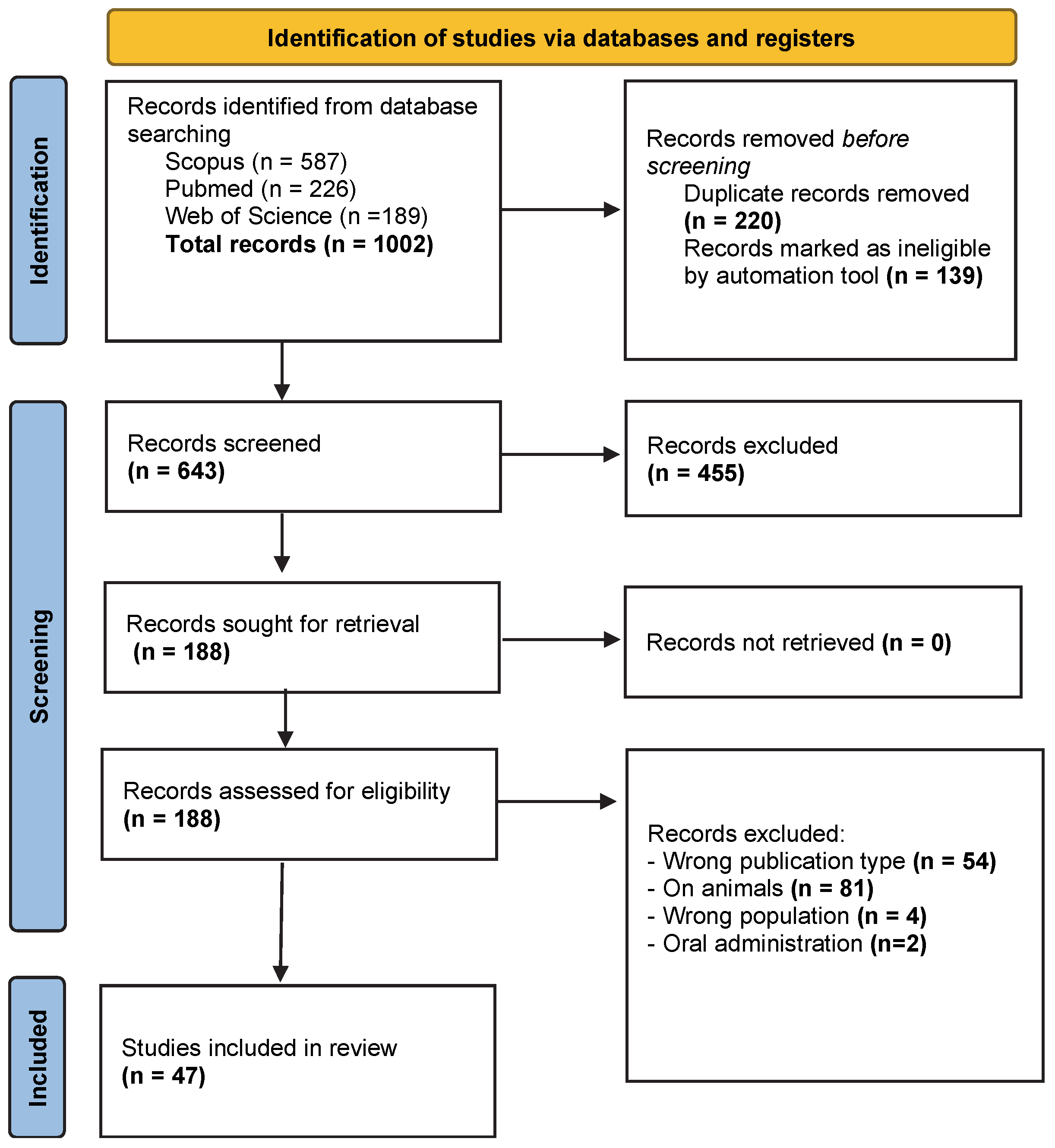
2. Search Results and Study Selection
3. Mechanisms of Action in Aromatherapy
3.1. Neurobiological Basis (Olfactory Pathways and Limbic System Activation)
3.1.1. Olfactory Signal Transduction
3.1.2. Limbic System and Emotional Regulation
3.1.3. Hypothalamus and Neuroendocrine Modulation
3.1.4. Neuroplasticity and Long-Term Effects
3.2. Neurochemical Effects of Essential Oils in Mental Health
3.2.1. GABAergic Modulation
3.2.2. Serotonergic Pathways
3.2.3. Dopaminergic and Noradrenergic Effects
3.2.4. Endocrine and Hormonal Interactions
3.3. Physiological Effects of Aromatherapy in Mental Health
3.3.1. Autonomic Nervous System Regulation
3.3.2. Heart Rate Variability (HRV)
3.3.3. Cortisol and Neuroendocrine Markers
3.3.4. Other Physiological Indicators
- Improved respiratory rate and oxygen saturation during stress or panic episodes [57].
- Reduced muscle tension, particularly with oils used in massage (e.g., marjoram, chamomile) [58].
- Improved sleep architecture, with decreased night-time awakenings and longer deep sleep cycles following lavender exposure [59].
3.4. Psychosocial Mechanisms of Aromatherapy in Mental Health
3.4.1. The Therapeutic Power of Ritual
3.4.2. Induction of the Relaxation Response
3.4.3. Expectation and Placebo Effects
4. Therapeutic Essential Oils: Mechanisms and Clinical Evidence
4.1. Lavender (Lavandula angustifolia)
4.1.1. Mechanisms of Action
4.1.2. Clinical Evidence
- Anxiety: Inhalation of lavender essential oil before surgical or obstetric procedures significantly reduced preoperative anxiety and salivary cortisol levels compared with controls [71]. In postpartum women, regular lavender inhalation for four weeks lowered anxiety scores and improved sleep quality [72,73,74].
- Depression: Inhaled preparations of lavender essential oil have demonstrated meaningful reductions in depressive symptoms in individuals with mild to moderate depression, with reported improvements in mood, sleep quality, and overall emotional well-being, and with a favorable safety and tolerability profile [75,76].
- Stress: A study involving women undergoing surgery found that preoperative inhalation of lavender significantly reduced anxiety levels. Participants who inhaled lavender essential oil for 30 min before entering the operating room had lower Visual Analog Scale scores than those who received standard care [77].
4.1.3. Safety and Use
4.2. Bergamot (Citrus bergamia)
4.2.1. Mechanisms of Action
4.2.2. Clinical Evidence
4.2.3. Safety and Use
4.3. Rose (Rosa × damascena)
4.3.1. Mechanisms of Action
4.3.2. Clinical Evidence
4.3.3. Safety and Use
4.4. Ylang-Ylang (Cananga odorata)
4.4.1. Mechanisms of Action
4.4.2. Clinical Evidence
4.4.3. Safety and Use
- Potential skin irritant in high concentrations—always dilute to 0.8–1.0% for topical use.
- May cause headaches or nausea in sensitive individuals due to its intensity.
- Not known to be contraindicated in pregnancy but should be used in low doses.
4.5. Clary Sage (Salvia sclarea)
4.5.1. Mechanisms of Action
4.5.2. Clinical Evidence
4.5.3. Safety and Use
- Avoid in early pregnancy but often used in late pregnancy and labor under professional supervision.
- May cause drowsiness; not recommended before driving or operating machinery.
- Rare skin sensitivity—always dilute to 1–2% for topical use [78].
4.6. Chamomile (Matricaria chamomilla)
4.6.1. Mechanisms of Action
4.6.2. Clinical Evidence
4.6.3. Safety and Use
4.7. Summary of Key Essential Oils and Clinical Applications
5. Methods of Delivery and Practical Use
5.1. Inhalation
- Diffusers (ultrasonic or nebulizing): disperse essential oils into the air and are suitable for ambient therapeutic environments (e.g., homes, clinics, birthing rooms).
- Steam inhalation involves adding essential oils to hot water and inhaling the vapors; it is often used for simultaneous respiratory support and stress relief.
- Direct inhalation: via inhaler sticks, cotton balls, or drops on clothing or pillows; ideal for acute anxiety or panic episodes.
5.2. Topical Application
- Massage therapy: Essential oils are diluted in carrier oils (e.g., almond, jojoba) and massaged into the skin, often in areas of emotional or hormonal significance (e.g., the abdomen, lower back, and shoulders). Massage enhances circulation, oxytocin release, and relaxation [108].
- Aromatic baths: Essential oils are diluted in a dispersant (e.g., full-fat milk, bath gel) and added to warm water. This combines skin absorption with inhalation, offering holistic relaxation benefits [109].
- Compresses: warm or cool cloths soaked in a diluted essential oil solution, applied to the abdomen or forehead for menstrual cramps or stress-related headaches.
5.3. Dosage, Duration, and Frequency
5.4. Patient Preference and Cultural Relevance
- Childhood associations.
- Cultural symbolism (e.g., rose essential oil in Middle Eastern postpartum care).
- Religious/spiritual beliefs (e.g., frankincense in Christian or ritualistic settings).
- Socioeconomic access to natural therapies.
6. Safety, Contraindications, and Regulation
6.1. Skin Sensitivity, Phototoxicity, and Allergic Reactions
6.1.1. Skin Sensitization and Irritation
6.1.2. Phototoxicity
6.1.3. Allergic Reactions
6.1.4. Best Practices to Minimize Risk
- Perform a patch test before using any essential oil topically for the first time.
- Use proper dilution: typically 1–2% for healthy adults, and lower (e.g., 0.5–1%) for pregnant women, older adults, or individuals with chronic illness.
- Avoid applying to damaged, broken, or inflamed skin, and exercise caution around mucosal areas.
6.2. General Guidelines
- Lavender (Lavandula angustifolia)
- Chamomile (Matricaria recutita or Chamaemelum nobile)
- Sweet orange (Citrus sinensis)
- Frankincense (Boswellia carterii)
- Clary sage (may stimulate uterine contractions—best reserved for labor)
- Rosemary, thyme, cinnamon, oregano, and fennel (can be emmenagogic or hormone-influencing)
- Wintergreen and camphor (contain constituents such as methyl salicylate and camphor that warrant avoidance during pregnancy due to safety concerns at inappropriate doses)
- Postpartum aromatherapy may support emotional recovery, sleep quality, and bonding, particularly through gentle massage or inhalation.
- Infant exposure should be minimized, as newborns have immature detoxification systems and heightened sensitivity to volatile compounds.
6.3. Regulation and Standardization
7. Challenges and Limitations in the Literature
7.1. Methodological Heterogeneity
7.2. Small Sample Sizes and Lack of Blinding
7.3. Variability in Essential Oils Quality and Chemical Composition
- Botanical species (including chemotypes)
- Extraction method (e.g., steam distillation vs. solvent extraction)
- Purity and presence of possible adulterants
- Batch-specific composition (e.g., GC-MS analysis)
7.4. Placebo and Control Challenges
7.5. Publication and Reporting Bias
7.6. Challenges in Conducting Meta-Analyses
7.7. Individual Variability and Paradoxical Effects
7.8. Additional Limitations
8. Future Directions
8.1. Addressing Methodological Limitations
- Standardized Protocols: Future studies should develop and adhere to standardized protocols for essential oil administration, including consistent dosages, delivery methods (e.g., inhalation, massage), and treatment durations. This will improve the comparability of results across studies and facilitate meta-analyses.
- Larger Sample Sizes: Many existing studies are limited by small sample sizes, which reduces statistical power and the ability to generalize findings. Future research should aim to recruit larger, more diverse populations to ensure robust and reliable results.
- Blinding and Placebo Controls: To minimize bias, future studies should employ double-anonymized, placebo-controlled designs. Innovative approaches to blinding, such as using neutral scents or synthetic fragrances as controls, should be explored.
8.2. Exploring Individualized and Culturally Relevant Approaches
- Individual Factors: Research should examine how factors such as age, hormonal status, olfactory preferences, and mental health history influence the efficacy of aromatherapy interventions. Personalized approaches may enhance treatment outcomes.
- Cultural Context: Cross-cultural studies are needed to explore how traditional uses of essential oils align with contemporary clinical applications. This could help develop culturally sensitive aromatherapy protocols that are more widely accepted and effective.
8.3. Investigating Long-Term Effects and Mechanisms of Action
- Long-Term Studies: Most existing studies focus on short-term outcomes. Longitudinal studies are needed to evaluate the sustained effects of aromatherapy on mental health and its potential role in preventing anxiety, depression, and stress.
- Mechanistic Research: Further research is needed to elucidate the neurobiological and neurochemical mechanisms underlying the effects of essential oils. Advanced techniques, such as functional neuroimaging and biomarker analysis, could provide valuable insights into how essential oils interact with the brain and endocrine system.
8.4. Integrating Aromatherapy into Clinical Practice
- Clinical Guidelines: Developing evidence-based clinical guidelines for aromatherapy use in mental health care is essential. These guidelines should address safety, efficacy, and best practices for integrating aromatherapy into existing mental health care frameworks.
- Cost-Effectiveness: Future research should evaluate the cost-effectiveness of aromatherapy as a complementary therapy, particularly in resource-limited settings where access to conventional mental health care may be restricted.
8.5. Leveraging Emerging Technologies
- Digital Aromatherapy: Integrating aromatherapy with mobile health (mHealth) platforms and wearable devices offers new opportunities for personalized, scalable interventions. Future research should explore the feasibility and efficacy of these technologies in improving mental health outcomes.
- AI-Driven Personalization: Artificial intelligence could be used to develop personalized aromatherapy protocols based on individual preferences, stress levels, and biometric data.
9. Materials and Methods
9.1. Inclusion Criteria
- Studies published in any language
- Studies published in the last 5 years
- Adult women
- Interventional or observational studies evaluating essential oils or aromatherapy for mental health outcomes
- Studies reporting on anxiety, depression, stress, or related mood symptoms
9.2. Exclusion Criteria
- Animal studies
- Studies not reporting on women or without gender stratification
- Non-mental health outcomes (e.g., purely dermatological or antimicrobial effects)
- Reviews, editorials, and conference abstracts without primary data
9.3. Risk of Bias
10. Conclusions
Author Contributions
Funding
Institutional Review Board Statement
Informed Consent Statement
Data Availability Statement
Conflicts of Interest
Abbreviations
| ANS | Autonomic Nervous System |
| EPDS | Edinburgh Postnatal Depression Scale |
| FCF | Furocoumarin-free |
| GABA | Gamma-aminobutyric acid |
| GAD | Generalized anxiety disorder |
| HPA | Hypothalamic–pituitary–adrenal |
| HRV | Heart Rate Variability |
| ISO | International Organization for Standardization |
| PMS | Premenstrual syndrome |
| RCT | Randomized controlled trial |
References
- Lassi, Z.S.; Wade, J.M.; Ameyaw, E.K. Stages and future of women’s health: A call for a life-course approach. Womens Health 2025, 21, 17455057251331721. [Google Scholar] [CrossRef]
- Soares, C.N. Depression in peri- and postmenopausal women: Prevalence, pathophysiology and pharmacological management. Drugs Aging 2013, 30, 677–685. [Google Scholar] [CrossRef]
- Barat, S.; Ghanbarpour, A.; Mirtabar, S.M.; Kheirkhah, F.; Basirat, Z.; Shirafkan, H.; Hamidia, A.; Khorshidian, F.; Talari, D.H.; Pahlavan, Z.; et al. Psychological distress in pregnancy and postpartum: A cross-sectional study of Babol pregnancy mental health registry. BMC Pregnancy Childbirth 2023, 23, 793. [Google Scholar] [CrossRef] [PubMed]
- Gonçalves, S.; Marques, P.; Matos, R.S. Exploring Aromatherapy as a Complementary Approach in Palliative Care: A Systematic Review. J. Palliat. Med. 2024, 27, 1247–1266. [Google Scholar] [CrossRef] [PubMed]
- Cao, X.; Zhou, J.; Liu, J.; Chen, H.; Zheng, W. Aromatherapy in anxiety, depression, and insomnia: A bibliometric study and visualization analysis. Heliyon 2023, 9, e18380. [Google Scholar] [CrossRef]
- Diogo Gonçalves, S.; Santos, A.L.; Ramos, C.; Valente, F.; Jesus, L.; Pereira Alexandre, J.; Chyczij, F. Mental Health in Europe After COVID-19: A Systematic Review of Depression, Anxiety, and Stress Among Adult Primary Health Care Users. Psychiatry Int. 2025, 6, 109. [Google Scholar] [CrossRef]
- Lei, A.A.; Phang, V.W.X.; Lee, Y.Z.; Kow, A.S.F.; Tham, C.L.; Ho, Y.-C.; Lee, M.T. Chronic Stress-Associated Depressive Disorders: The Impact of HPA Axis Dysregulation and Neuroinflammation on the Hippocampus—A Mini Review. Int. J. Mol. Sci. 2025, 26, 2940. [Google Scholar] [CrossRef]
- Ouzzani, M.; Hammady, H.; Fedorowicz, Z.; Elmagarmid, A. Rayyan—A web and mobile app for systematic reviews. Syst. Rev. 2016, 5, 210. [Google Scholar] [CrossRef]
- Page, M.J.; McKenzie, J.E.; Bossuyt, P.M.; Boutron, I.; Hoffmann, T.C.; Mulrow, C.D.; Shamseer, L.; Tetzlaff, J.M.; Akl, E.A.; Brennan, S.E.; et al. The PRISMA 2020 statement: An updated guideline for reporting systematic reviews. BMJ 2021, 372, n71. [Google Scholar] [CrossRef]
- Sowndhararajan, K.; Kim, S. Influence of Fragrances on Human Psychophysiological Activity: With Special Reference to Human Electroencephalographic Response. Sci. Pharm. 2016, 84, 724–752. [Google Scholar] [CrossRef]
- Fung, T.K.H.; Lau, B.W.M.; Ngai, S.P.C.; Tsang, H.W.H. Therapeutic Effect and Mechanisms of Essential Oils in Mood Disorders: Interaction between the Nervous and Respiratory Systems. Int. J. Mol. Sci. 2021, 22, 4844. [Google Scholar] [CrossRef]
- Malnic, B.; Gonzalez-Kristeller, D.C.; Gutiyama, L.M. Odorant Receptors. In The Neurobiology of Olfaction [Internet]; Menini, A., Ed.; Frontiers in Neuroscience; CRC Press/Taylor & Francis: Boca Raton, FL, USA, 2010. Available online: http://www.ncbi.nlm.nih.gov/books/NBK55985/ (accessed on 25 July 2025).
- Purves, D.; Augustine, G.J.; Fitzpatrick, D.; Katz, L.C.; LaMantia, A.S.; McNamara, J.O.; Williams, S.M. The Olfactory Epithelium and Olfactory Receptor Neurons. In Neuroscience [Internet], 2nd ed.; Sinauer Associates: Sunderland, MA, USA, 2001. Available online: https://www.ncbi.nlm.nih.gov/books/NBK10896/ (accessed on 25 July 2025).
- Šimić, G.; Tkalčić, M.; Vukić, V.; Mulc, D.; Španić, E.; Šagud, M.; Olucha-Bordonau, F.E.; Vukšić, M.; Hof, P.R. Understanding Emotions: Origins and Roles of the Amygdala. Biomolecules 2021, 11, 823. [Google Scholar] [CrossRef] [PubMed]
- Richter-Levin, G. The Amygdala, the Hippocampus, and Emotional Modulation of Memory. Neuroscientist 2004, 10, 31–39. [Google Scholar] [CrossRef]
- Sattayakhom, A.; Wichit, S.; Koomhin, P. The Effects of Essential Oils on the Nervous System: A Scoping Review. Molecules 2023, 28, 3771. [Google Scholar] [CrossRef]
- Koulivand, P.H.; Ghadiri, M.K.; Gorji, A. Lavender and the Nervous System. Evid.-Based Complement. Altern. Med. 2013, 2013, 681304. [Google Scholar]
- Satou, T.; Koutoku, Y.; Touma, T.; Tomiyama, R.; Ishikawa, A.; Odato, K. Effect of Lavender Essential Oil Topical Treatment on the Autonomic Nervous System in Human Subjects Without Olfactory Influence: A Pilot Study. Nat. Prod. Commun. 2024, 19, 1934578X241275321. [Google Scholar] [CrossRef]
- Sheng, J.A.; Bales, N.J.; Myers, S.A.; Bautista, A.I.; Roueinfar, M.; Hale, T.M.; Handa, R.J. The Hypothalamic-Pituitary-Adrenal Axis: Development, Programming Actions of Hormones, and Maternal-Fetal Interactions. Front. Behav. Neurosci. 2021, 14, 601939. [Google Scholar] [CrossRef] [PubMed]
- Choi, N.Y.; Wu, Y.T.; Park, S.A. Effects of Olfactory Stimulation with Aroma Oils on Psychophysiological Responses of Female Adults. Int. J. Environ. Res. Public Health 2022, 19, 5196. [Google Scholar] [CrossRef]
- Lizarraga-Valderrama, L.R. Effects of essential oils on central nervous system: Focus on mental health. Phytother. Res. 2021, 35, 657–679. [Google Scholar] [CrossRef] [PubMed]
- Jimbo, D.; Kimura, Y.; Taniguchi, M.; Inoue, M.; Urakami, K. Effect of aromatherapy on patients with Alzheimer’s disease. Psychogeriatr. Off. J. Jpn. Psychogeriatr. Soc. 2009, 9, 173–179. [Google Scholar] [CrossRef]
- Mouly, A.M.; Sullivan, R. Memory and Plasticity in the Olfactory System: From Infancy to Adulthood. In The Neurobiology of Olfaction [Internet]; Menini, A., Ed.; Frontiers in Neuroscience; CRC Press/Taylor & Francis: Boca Raton, FL, USA, 2010. Available online: http://www.ncbi.nlm.nih.gov/books/NBK55967/ (accessed on 25 July 2025).
- de Leon, A.S.; Tadi, P. Biochemistry, Gamma Aminobutyric Acid. In StatPearls [Internet]; StatPearls Publishing: Treasure Island, FL, USA, 2025. Available online: http://www.ncbi.nlm.nih.gov/books/NBK551683/ (accessed on 25 July 2025).
- López, V.; Nielsen, B.; Solas, M.; Ramírez, M.J.; Jäger, A.K. Exploring Pharmacological Mechanisms of Lavender (Lavandula angustifolia) Essential Oil on Central Nervous System Targets. Front. Pharmacol. 2017, 8, 280. [Google Scholar] [CrossRef] [PubMed]
- Diogo Gonçalves, S. Pruritus in Palliative Care: A Narrative Review of Essential Oil-Based Strategies to Alleviate Cutaneous Discomfort. Diseases 2025, 13, 232. [Google Scholar] [CrossRef] [PubMed]
- Cardoso, C.; Silva, F. The Impact of Lavender Essential Oil on the Human Nervous System: A Review. Braz. J. Health Aromather. Essent. Oil 2025, 2, bjhae22. [Google Scholar] [CrossRef]
- Bamalan, O.A.; Moore, M.J.; Al Khalili, Y. Physiology, Serotonin. In StatPearls [Internet]; StatPearls Publishing: Treasure Island, FL, USA, 2025. Available online: http://www.ncbi.nlm.nih.gov/books/NBK545168/ (accessed on 25 July 2025).
- Diogo Gonçalves, S. Anorexia—Aromatic strategies in managing dietary changes in end-of-life patients. Nutr. Clin. Métab. 2025, 39, 180–192. Available online: https://www.sciencedirect.com/science/article/pii/S0985056225000512 (accessed on 25 July 2025). [CrossRef]
- Diogo Gonçalves, S. Evaluating aromatherapy interventions for dysphagia management in end-of-life care: A review. Biomed. Biopharm. Res. 2025, 22, 142–169. [Google Scholar] [CrossRef]
- Eddin, L.B.; Jha, N.K.; Meeran, M.F.N.; Kesari, K.K.; Beiram, R.; Ojha, S. Neuroprotective Potential of Limonene and Limonene Containing Natural Products. Molecules 2021, 26, 4535. [Google Scholar] [CrossRef]
- Agarwal, P.; Sebghatollahi, Z.; Kamal, M.; Dhyani, A.; Shrivastava, A.; Singh, K.K.; Sinha, M.; Mahato, N.; Mishra, A.K.; Baek, K.-H. Citrus Essential Oils in Aromatherapy: Therapeutic Effects and Mechanisms. Antioxidants 2022, 11, 2374. [Google Scholar] [CrossRef]
- Matias Nascimento Maia, W.; Das Chagas Pereira de Andrade, F.; Alves Filgueiras, L.; Nogueira Mendes, A.; Fonseca Costa Assunção, A.; Davidson Sérvulo Rodrigues, N.; Marques, R.B.; Filho, A.L.M.M.; de Sousa, D.P.; Da Silva Lopes, L. Antidepressant activity of rose oxide essential oil: Possible involvement of serotonergic transmission. Heliyon 2021, 7, e06620. [Google Scholar] [CrossRef]
- Seol, G.H.; Shim, H.S.; Kim, P.-J.; Moon, H.K.; Lee, K.H.; Shim, I.; Suh, S.H.; Min, S.S. Antidepressant-like effect of Salvia sclarea is explained by modulation of dopamine activities in rats. J. Ethnopharmacol. 2010, 130, 187–190. [Google Scholar] [CrossRef]
- Vora, L.K.; Gholap, A.D.; Hatvate, N.T.; Naren, P.; Khan, S.; Chavda, V.P.; Da Silva Lopes, L.; Da Silva Lopes, L.; Khatri, D.K. Essential Oils for Clinical Aromatherapy: A comprehensive review. J. Ethnopharmacol. 2024, 330, 118180. [Google Scholar] [CrossRef]
- Lee, K.B.; Cho, E.; Kang, Y.S. Changes in 5-hydroxytryptamine and cortisol plasma levels in menopausal women after inhalation of clary sage oil. Phytother. Res. 2014, 28, 1599–1605. [Google Scholar] [CrossRef]
- Caballero-Gallardo, K.; Quintero-Rincón, P.; Olivero-Verbel, J. Aromatherapy and Essential Oils: Holistic Strategies in Complementary and Alternative Medicine for Integral Wellbeing. Plants 2025, 14, 400. [Google Scholar] [CrossRef] [PubMed]
- Cui, J.; Li, M.; Wei, Y.; Li, H.; He, X.; Yang, Q.; Li, Z.; Duan, J.; Wu, Z.; Chen, Q.; et al. Inhalation Aromatherapy via Brain-Targeted Nasal Delivery: Natural Volatiles or Essential Oils on Mood Disorders. Front. Pharmacol. 2022, 13, 860043. [Google Scholar] [CrossRef] [PubMed]
- Waxenbaum, J.A.; Reddy, V.; Varacallo, M.A. Anatomy, Autonomic Nervous System. In StatPearls [Internet]; StatPearls Publishing: Treasure Island, FL, USA, 2025. Available online: http://www.ncbi.nlm.nih.gov/books/NBK539845/ (accessed on 25 July 2025).
- Chang, K.M.; Shen, C.W. Aromatherapy Benefits Autonomic Nervous System Regulation for Elementary School Faculty in Taiwan. Evid.-Based Complement. Altern. Med. 2011, 2011, 946537. [Google Scholar]
- Lin, P.H.; Lin, Y.P.; Chen, K.L.; Yang, S.Y.; Shih, Y.H.; Wang, P.Y. Effect of aromatherapy on autonomic nervous system regulation with treadmill exercise-induced stress among adolescents. PLoS ONE 2021, 16, e0249795. [Google Scholar] [CrossRef]
- Jung, D.J.; Cha, J.Y.; Kim, S.E.; Ko, I.G.; Jee, Y.S. Effects of Ylang-Ylang aroma on blood pressure and heart rate in healthy men. J. Exerc. Rehabil. 2013, 9, 250–255. [Google Scholar] [CrossRef]
- Han, X.; Gibson, J.; Eggett, D.L.; Parker, T.L. Bergamot (Citrus bergamia) Essential Oil Inhalation Improves Positive Feelings in the Waiting Room of a Mental Health Treatment Center: A Pilot Study. Phytother. Res. 2017, 31, 812–816. [Google Scholar] [CrossRef] [PubMed]
- Kim, H.G.; Cheon, E.J.; Bai, D.S.; Lee, Y.H.; Koo, B.H. Stress and Heart Rate Variability: A Meta-Analysis and Review of the Literature. Psychiatry Investig. 2018, 15, 235–245. [Google Scholar] [CrossRef]
- Wu, C.Y.; Lee, H.F.; Chang, C.W.; Chiang, H.C.; Tsai, Y.H.; Liu, H.E. The Immediate Effects of Lavender Aromatherapy Massage versus Massage in Work Stress, Burnout, and HRV Parameters: A Randomized Controlled Trial. Evid.-Based Complement. Altern. Med. 2020, 2020, 8830083. [Google Scholar] [CrossRef]
- Apriany, D.; Rakhmawati, W.; Iskandarsyah, A.; Hilmanto, D. The Effect of The Mindfulness-Based Relaxation, Aromatherapy, and Prayer (RADO) Intervention on Anxiety and Quality of Life Among Children With Cancer. J. Multidiscip. Healthc. 2025, 18, 1381–1392. [Google Scholar] [CrossRef]
- Chien, L.W.; Cheng, S.L.; Liu, C.F. The Effect of Lavender Aromatherapy on Autonomic Nervous System in Midlife Women with Insomnia. Evid.-Based Complement. Altern. Med. 2012, 2012, 740813. [Google Scholar]
- Gong, M.; Dong, H.; Tang, Y.; Huang, W.; Lu, F. Effects of Aromatherapy on Anxiety: A Meta-analysis of Randomized Controlled Trials. J. Affect. Disord. 2020, 274, 1028–1040. [Google Scholar] [CrossRef]
- Moreira, C.; Barroso, I.; Pereira Mda, C.; Monteiro, M.J.; Caramelo, A. Bem-estar psicológico em cuidadores informais. Motricidade 2024, 20, 23–28. [Google Scholar]
- Dziurkowska, E.; Wesolowski, M. Cortisol as a Biomarker of Mental Disorder Severity. J. Clin. Med. 2021, 10, 5204. [Google Scholar] [CrossRef]
- Knezevic, E.; Nenic, K.; Milanovic, V.; Knezevic, N.N. The Role of Cortisol in Chronic Stress, Neurodegenerative Diseases, and Psychological Disorders. Cells 2023, 12, 2726. [Google Scholar] [CrossRef]
- Kim, I.H.; Kim, C.; Seong, K.; Hur, M.H.; Lim, H.M.; Lee, M.S. Essential oil inhalation on blood pressure and salivary cortisol levels in prehypertensive and hypertensive subjects. Evid.-Based Complement. Altern. Med. 2012, 2012, 984203. [Google Scholar] [CrossRef] [PubMed]
- Özer, E.; Döner, Ş.İ.; Dağ Tüzmen, H. The effect of aromatherapy intervention with Bergamot and Grapefruit essential oils on premenstrual syndrome and menstrual symptoms: A randomized controlled trial. BMC Complement. Med. Ther. 2025, 25, 162. [Google Scholar] [CrossRef]
- Hung, C.L.; Lin, Y.L.; Chou, C.M.; Wang, C.J. Efficacy of Aromatherapy at Relieving the Work-Related Stress of Nursing Staff from Various Hospital Departments During COVID-19. Healthcare 2023, 11, 157. [Google Scholar] [CrossRef]
- Choi, S.Y.; Kang, P.; Lee, H.S.; Seol, G.H. Effects of Inhalation of Essential Oil of Citrus aurantium L. var. amara on Menopausal Symptoms, Stress, and Estrogen in Postmenopausal Women: A Randomized Controlled Trial. Evid.-Based Complement. Altern. Med. 2014, 2014, 796518. [Google Scholar] [CrossRef] [PubMed]
- Scandurra, C.; Mezzalira, S.; Cutillo, S.; Zapparella, R.; Statti, G.; Maldonato, N.M.; Locci, M.; Bochicchio, V. The Effectiveness of Neroli Essential Oil in Relieving Anxiety and Perceived Pain in Women During Labor: A Randomized Controlled Trial. Healthcare 2022, 10, 366. [Google Scholar] [CrossRef] [PubMed]
- Hedigan, F.; Sheridan, H.; Sasse, A. Benefit of inhalation aromatherapy as a complementary treatment for stress and anxiety in a clinical setting—A systematic review. Complement. Ther. Clin. Pract. 2023, 52, 101750. [Google Scholar] [CrossRef] [PubMed]
- Lakhan, S.E.; Sheafer, H.; Tepper, D. The Effectiveness of Aromatherapy in Reducing Pain: A Systematic Review and Meta-Analysis. Pain Res. Treat. 2016, 2016, 8158693. [Google Scholar] [CrossRef]
- Her, J.; Cho, M.K. Effect of aromatherapy on sleep quality of adults and elderly people: A systematic literature review and meta-analysis. Complement. Ther. Med. 2021, 60, 102739. [Google Scholar] [CrossRef]
- Brennan, S.E.; McDonald, S.; Murano, M.; McKenzie, J.E. Effectiveness of aromatherapy for prevention or treatment of disease, medical or preclinical conditions, and injury: Protocol for a systematic review and meta-analysis. Syst. Rev. 2022, 11, 148. [Google Scholar] [CrossRef]
- Kuriyama, H.; Watanabe, S.; Nakaya, T.; Shigemori, I.; Kita, M.; Yoshida, N.; Masaki, D.; Tadai, T.; Ozasa, K.; Fukui, K.; et al. Immunological and Psychological Benefits of Aromatherapy Massage. Evid.-Based Complement. Altern. Med. 2005, 2, 179–184. [Google Scholar]
- Kedare, J.S.; Kadiani, A.; Patkar, P.; Gautam, A. Mental health and well-being of women (menarche, perinatal, and menopause). Indian J. Psychiatry 2024, 66, S320–S330. [Google Scholar] [CrossRef]
- Vaziri, F.; Shiravani, M.; Najib, F.S.; Pourahmad, S.; Salehi, A.; Yazdanpanahi, Z. Effect of Lavender Oil Aroma in the Early Hours of Postpartum Period on Maternal Pains, Fatigue, and Mood: A Randomized Clinical Trial. Int. J. Prev. Med. 2017, 8, 29. [Google Scholar] [CrossRef]
- Norelli, S.K.; Long, A.; Krepps, J.M. Relaxation Techniques. In StatPearls [Internet]; StatPearls Publishing: Treasure Island, FL, USA, 2025. Available online: http://www.ncbi.nlm.nih.gov/books/NBK513238/ (accessed on 25 July 2025).
- Howard, S.; Hughes, B.M. Expectancies, not aroma, explain impact of lavender aromatherapy on psychophysiological indices of relaxation in young healthy women. Br. J. Health Psychol. 2008, 13, 603–617. [Google Scholar] [CrossRef] [PubMed]
- Cho, K.; Kim, M. Effects of Aromatherapy on Depression: A Meta-Analysis of Randomized Controlled Trials. Gen. Hosp. Psychiatry 2023, 84, 215–225. [Google Scholar] [CrossRef] [PubMed]
- Wager, T.D.; Atlas, L.Y. The neuroscience of placebo effects: Connecting context, learning and health. Nat. Rev. Neurosci. 2015, 16, 403–418. [Google Scholar] [CrossRef]
- Malcolm, B.J.; Tallian, K. Essential oil of lavender in anxiety disorders: Ready for prime time? Ment. Health Clin. 2018, 7, 147–155. [Google Scholar] [CrossRef]
- Gonçalves, S.; Fernandes, L.; Caramelo, A.; Martins, M.; Rodrigues, T.; Matos, R.S. Soothing the Itch: The Role of Medicinal Plants in Alleviating Pruritus in Palliative Care. Plants 2024, 13, 3515. [Google Scholar] [CrossRef] [PubMed]
- Pokajewicz, K.; Białoń, M.; Svydenko, L.; Fedin, R.; Hudz, N. Chemical Composition of the Essential Oil of the New Cultivars of Lavandula angustifolia Mill. Bred in Ukraine. Molecules 2021, 26, 5681. Available online: https://pmc.ncbi.nlm.nih.gov/articles/PMC8465323/ (accessed on 6 November 2025). [CrossRef] [PubMed]
- Hancı, E.; Uslu, Y.; Arıbal, E.; Hancı, E.; Uslu, Y.; Arıbal, E. The Effect of Aromatherapy on Pain and Anxiety Levels Before Breast Biopsy: A Randomized Controlled Trial. Eur. J. Breast Health 2025, 21, 223. Available online: https://eurjbreasthealth.com/articles/the-effect-of-aromatherapy-on-pain-and-anxiety-levels-before-breast-biopsy-a-randomized-controlled-trial/ejbh.galenos.2025.2025-2-11 (accessed on 10 October 2025). [CrossRef]
- Nouira, M.; Souayeh, N.; Kanzari, S.A.; Rouis, H.; Lika, A.; Mbarki, C.; Rahali, F.Z.; Bettaieb, H. Aromatherapy Using Lavender Oil Effectiveness on Pain and Anxiety After C-Section: A Randomized Controlled Trial. J. Epidemiol. Glob. Health 2024, 14, 1536–1544. [Google Scholar] [CrossRef] [PubMed]
- Tsai, S.S.; Wang, H.H.; Chou, F.H. The Effects of Aromatherapy on Postpartum Women: A Systematic Review. J. Nurs. Res. JNR 2019, 28, e96. [Google Scholar] [CrossRef]
- Keshavarz Afshar, M.; Behboodi Moghadam, Z.; Taghizadeh, Z.; Bekhradi, R.; Montazeri, A.; Mokhtari, P. Lavender Fragrance Essential Oil and the Quality of Sleep in Postpartum Women. Iran. Red Crescent Med. J. 2015, 17, e25880. [Google Scholar]
- Kim, M.; Nam, E.; Lee, Y.; Kang, H.J. Effects of lavender on anxiety, depression and physiologic parameters: Systematic Review and Meta-Analysis. Asian Nurs. Res. 2021, 15, 279–290. [Google Scholar] [CrossRef]
- Ogata, K.; Ataka, K.; Suzuki, H.; Yagi, T.; Okawa, A.; Fukumoto, T.; Zhang, B.; Nakata, M.; Yada, T.; Asakawa, A. Lavender Oil Reduces Depressive Mood in Healthy Individuals and Enhances the Activity of Single Oxytocin Neurons of the Hypothalamus Isolated from Mice: A Preliminary Study. Evid.-Based Complement Altern. Med. 2020, 2020, 5418586. [Google Scholar] [CrossRef]
- Wotman, M.; Levinger, J.; Leung, L.; Kallush, A.; Mauer, E.; Kacker, A. The Efficacy of Lavender Aromatherapy in Reducing Preoperative Anxiety in Ambulatory Surgery Patients Undergoing Procedures in General Otolaryngology. Laryngoscope Investig. Otolaryngol. 2017, 2, 437–441. [Google Scholar] [CrossRef]
- Tisserand, R.; Young, R. Essential Oil Safety, 2nd ed.; Churchill Livingstone: London, UK, 2013. [Google Scholar]
- Farrar, A.J.; Farrar, F.C. Clinical Aromatherapy. Nurs. Clin. N. Am. 2020, 55, 489–504. [Google Scholar] [CrossRef] [PubMed]
- Avila-Sosa, R.; Navarro-Cruz, A.R.; Sosa-Morales, M.E.; López-Malo, A.; Palou, E. Bergamot (Citrus bergamia) Oils. In Essential Oils in Food Preservation, Flavor and Safety [Internet]; Preedy, V.R., Ed.; Academic Press: San Diego, CA, USA, 2016; pp. 247–252. Available online: https://www.sciencedirect.com/science/article/pii/B9780124166417000274 (accessed on 25 July 2025).
- Wakui, N.; Togawa, C.; Ichikawa, K.; Matsuoka, R.; Watanabe, M.; Okami, A.; Shirozu, S.; Yamamura, M.; Machida, Y. Relieving psychological stress and improving sleep quality by bergamot essential oil use before bedtime and upon awakening: A randomized crossover trial. Complement. Ther. Med. 2023, 77, 102976. [Google Scholar] [CrossRef] [PubMed]
- Pasyar, N.; Rambod, M.; Araghi, F. The effect of bergamot orange essence on anxiety, salivary cortisol, and alpha amylase in patients prior to laparoscopic cholecystectomy: A controlled trial study. Complement. Ther. Clin. Pract. 2020, 39, 101153. [Google Scholar] [CrossRef] [PubMed]
- Salehi-Pourmehr, H.; Mojtahedi, M.; Asnaashari, S.; Farshbaf-Khalili, A.; Ostadrahimi, A. The impact of aromatherapy with Citrus bergamia- Lavandula angustifolia essential oil and/or mindfulness-based therapy on postmenopausal health: A factorial randomized controlled trial. Complement. Ther. Med. 2025, 91, 103190. [Google Scholar] [CrossRef]
- Xia, N.; Wang, J.; Guo, Q.; Duan, J.; Wang, X.; Zhou, P.; Li, J.; Tang, T.; Li, T.; Li, H.; et al. Deciphering the antidepressant effects of Rosa damascena essential oil mediated through the serotonergic synapse signaling pathway. J. Ethnopharmacol. 2024, 328, 118007. [Google Scholar] [CrossRef]
- Hartley, N.; McLachlan, C.S. Aromas Influencing the GABAergic System. Molecules 2022, 27, 2414. [Google Scholar] [CrossRef]
- Kheirkhah, M.; Vali Pour, N.S.; Nisani, L.; Haghani, H. Comparing the Effects of Aromatherapy With Rose Oils and Warm Foot Bath on Anxiety in the First Stage of Labor in Nulliparous Women. Iran. Red Crescent Med. J. 2014, 16, e14455. [Google Scholar] [CrossRef]
- Conrad, P.; Adams, C. The effects of clinical aromatherapy for anxiety and depression in the high risk postpartum woman—A pilot study. Complement. Ther. Clin. Pract. 2012, 18, 164–168. [Google Scholar] [CrossRef]
- Uysal, M.; Doğru, H.Y.; Sapmaz, E.; Tas, U.; Çakmak, B.; Ozsoy, A.Z.; Sahin, F.; Ayan, S.; Esen, M. Investigating the effect of rose essential oil in patients with primary dysmenorrhea. Complement. Ther. Clin. Pract. 2016, 24, 45–49. [Google Scholar] [CrossRef]
- IFRA. Standards Documentation [Internet]. Available online: https://ifrafragrance.org/initiatives-positions/safe-use-fragrance-science/ifra-standards/ifra-standards-documentation (accessed on 6 November 2025).
- Tan, L.T.H.; Lee, L.H.; Yin, W.F.; Chan, C.K.; Kadir, H.A.; Chan, K.G.; Goh, B.H. Traditional Uses, Phytochemistry, and Bioactivities of Cananga odorata (Ylang-Ylang). Evid.-Based Complement. Altern. Med. 2015, 2015, 896314. [Google Scholar]
- Zhang, N.; Yao, L. Anxiolytic Effect of Essential Oils and Their Constituents: A Review. J. Agric. Food Chem. 2019, 67, 13790–13808. [Google Scholar] [CrossRef]
- Gnatta, J.R.; Piason, P.P.; Lopes, C.D.L.B.C.; Rogenski, N.M.B.; Silva, M.J.P.D. Aromatherapy with ylang ylang for anxiety self-esteem: A pilot study. Rev. Esc. Enferm. USP 2014, 48, 492–499. [Google Scholar] [CrossRef] [PubMed][Green Version]
- Mitic, M.; Zrnić, A.; Wanner, J.; Stappen, I. Clary Sage Essential Oil and Its Effect on Human Mood and Pulse Rate: An In Vivo Pilot Study. Planta Med. 2020, 86, 1125–1132. [Google Scholar] [CrossRef]
- Wang, Z.J.; Heinbockel, T. Essential Oils and Their Constituents Targeting the GABAergic System and Sodium Channels as Treatment of Neurological Diseases. Molecules 2018, 23, 1061. [Google Scholar] [CrossRef]
- Son, J.W.; Kang, P.; Min, S.S.; Seol, G.H. Differential Effects of Clary Sage (Salvia sclarea L.) Oil and Linalyl Acetate on Depression Levels in Diabetic Foot Ulcer Patients with T2DM: A Randomized Blinded Controlled Trial. Front. Med. 2025, 12. [Google Scholar] [CrossRef]
- dos Santos, É.R.; Maia, J.G.S.; Fontes-Júnior, E.A.; do Socorro Ferraz Maia, C. Linalool as a Therapeutic and Medicinal Tool in Depression Treatment: A Review. Curr. Neuropharmacol. 2022, 20, 1073–1092. [Google Scholar] [CrossRef]
- Abdel-Massih, R.M.; El Beyrouthy, M. Chapter 2—Plants used in Lebanon and the Middle East as Antimicrobials. In Medicinal Plants as Anti-Infectives [Internet]; Chassagne, F., Ed.; Academic Press: San Diego, CA, USA, 2022; pp. 59–101. Available online: https://www.sciencedirect.com/science/article/pii/B9780323909990000124 (accessed on 28 July 2025).
- Matsumoto, Y.; Horikawa, K. Transdermal Absorption of Sclareol, an Active Ingredient in Clary Sage Oil: A Complementary and Alternative Medicine for Menopausal Symptoms. Women 2022, 2, 304–312. [Google Scholar] [CrossRef]
- Lee, M.K.; Hur, M.H. Effects of the Spouse’s Aromatherapy Massage on Labor Pain, Anxiety and Childbirth Satisfaction for Laboring Women. Korean J. Women Health Nurs. 2011, 17, 195–204. [Google Scholar] [CrossRef]
- Tadokoro, Y.; Horiuchi, S.; Takahata, K.; Shuo, T.; Sawano, E.; Shinohara, K. Changes in salivary oxytocin after inhalation of clary sage essential oil scent in term-pregnant women: A feasibility pilot study. BMC Res. Notes 2017, 10, 717. [Google Scholar] [CrossRef]
- Geethanjali, S.; Venugopal, V.; Poonguzhali, S.; Maheshkumar, K. Effect of clary sage oil as an aromatherapy on cardiac autonomic function among patients with premenstrual syndrome—A randomized controlled study. Obes. Med. 2020, 18, 100193. Available online: https://www.sciencedirect.com/science/article/pii/S2451847620300130 (accessed on 6 November 2025). [CrossRef]
- Alvarado García, P.; Soto Vásquez, M.R.; Villanueva, E.; Gavidia, J.; Rodriguez, N.; Rengifo-Penadillos, R.A.; Campos-Florián, J.V.; de Guzmán, Y.E.R. Chamomile (Matricaria chamomilla L.) Essential Oil and its Potential Against Stress, Anxiety, and Sleep Quality. Pharmacogn. J. 2024, 16, 100–107. [Google Scholar] [CrossRef]
- Wilkinson, S. Aromatherapy and massage in palliative care. Int. J. Palliat. Nurs. 1995, 1, 21–30. [Google Scholar] [CrossRef]
- Kütük, B.; Hanzade Savaş, E.; Akarsu Akkaya, O. Use of Aromatherapy in Neonatal Care: Benefits, Risks, and Nursing Practices. CURARE J. Nurs. 2025, 8, 82–88. [Google Scholar] [CrossRef]
- Zafar, S.; Najam, Y.; Arif, Z.; Hafeez, A. A randomized controlled trial comparing Pentazocine and Chamomilla recutita for labor pain relief. Homeopathy 2016, 105, 66–70. [Google Scholar] [CrossRef] [PubMed]
- Avonto, C.; Rua, D.; Lasonkar, P.B.; Chittiboyina, A.G.; Khan, I.A. Identification of a compound isolated from German chamomile (Matricaria chamomilla) with dermal sensitization potential. Toxicol. Appl. Pharmacol. 2017, 318, 16–22. Available online: https://www.sciencedirect.com/science/article/pii/S0041008X17300297 (accessed on 6 November 2025). [CrossRef]
- Lyra, C.; Nakai, L.; Marques, A. Effectiveness of Aromatherapy in Reducing Stress and Anxiety Levels in Un-dergraduate Health Science Students: A Preliminary Study. Fisioterapia e Pesquisa 2010, 17, 13–17. [Google Scholar] [CrossRef]
- Michalak, M. The use of carrier oils in aromatherapy massage and their effect on skin. Arch. Physiother. Glob. Res. 2018, 22, 23–31. [Google Scholar]
- Diogo Gonçalves, S. Practical non-pharmacological interventions to improve quality of life for cancer patients and caregivers. Explor. Med. 2025, 6, 1001355. [Google Scholar] [CrossRef]
- Horváth, G.; Ács, K. Essential oils in the treatment of respiratory tract diseases highlighting their role in bacterial infections and their anti-inflammatory action: A review. Flavour Fragr. J. 2015, 30, 331–341. [Google Scholar] [CrossRef]
- Worwood, V.A. The Complete Book of Essential Oils and Aromatherapy, 25th Anniversary ed.; New World Library: Novato, CA, USA, 2016. [Google Scholar]
- Bath Safety: How to Use Essential Oils Safely in the Bath [Internet]; Tisserand Institute: West Sussex, UK, 2017; Available online: https://tisserandinstitute.org/safety/bath-safety/ (accessed on 29 July 2025).
- Sindle, A.; Martin, K. Art of Prevention: Essential Oils—Natural Products Not Necessarily Safe. Int. J. Women’s Dermatol. 2020, 7, 304–308. [Google Scholar] [CrossRef]
- Jackson, J.B. Phototoxicity. In xPharm: The Comprehensive Pharmacology Reference [Internet]; Enna, S.J., Bylund, D.B., Eds.; Elsevier: New York, NY, USA, 2007; pp. 1–4. Available online: https://www.sciencedirect.com/science/article/pii/B9780080552323607974 (accessed on 29 July 2025).
- Hagvall, L.; Berglund, V.; Bråred Christensson, J. Air-oxidized linalyl acetate—An emerging fragrance allergen? Contact Dermat. 2015, 72, 216–223. [Google Scholar] [CrossRef] [PubMed]
- Bertone, A.; Dekker, R. Aromatherapy in Obstetrics: A Critical Review of the Literature. Clin. Obstet. Gynecol. 2021, 64, 572–588. [Google Scholar] [CrossRef] [PubMed]
- Mugao, L. Factors influencing yield, chemical composition and efficacy of essential oils. Int. J. Multidiscip. Res. Growth Eval. 2024, 5, 169–178. [Google Scholar] [CrossRef]
- Ivanova, S.; Ivanov, K.; Gvozdeva, Y.; Staynova, R.; Grekova-Kafalova, D.; Hristozova, M.; Koleva, N. Essential oils—A review of the regulatory framework in the European Union. Pharmacia 2025, 72, 1–12. [Google Scholar] [CrossRef]
- Sharmeen, J.B.; Mahomoodally, F.M.; Zengin, G.; Maggi, F. Essential Oils as Natural Sources of Fragrance Compounds for Cosmetics and Cosmeceuticals. Molecules 2021, 26, 666. [Google Scholar] [CrossRef]
- ISO 9235:2021(en); Aromatic Natural Raw Materials—Vocabulary. ISO: Geneva, Switzerland, 2021. Available online: https://www.iso.org/obp/ui/#iso:std:iso:9235:ed-3:v1:en (accessed on 9 October 2025).


| Essential Oil | Primary Constituents | Key Mental Health Benefits | Mechanisms of Action | Common Applications | Cautions/Notes |
|---|---|---|---|---|---|
| Lavender (Lavandula angustifolia) | Linalool, linalyl acetate | Anxiety reduction, sleep support, and mood stabilization | GABA modulation, autonomic regulation, serotonergic pathways | Inhalation, massage, bath | Generally safe; patch test for skin sensitivity |
| Bergamot (Citrus bergamia) | Limonene, linalool, linalyl acetate | Stress relief, cortisol reduction, uplifted mood | Serotonergic and GABAergic modulation, antioxidant effects | Inhalation, topical (FCF type), diffuser | Avoid sunlight unless FCF; mild skin sensitivity possible |
| Rose (Rosa × damascena) | Citronellol, geraniol, nerol, phenyl ethanol | Depression support, emotional grounding, PMS relief | Mild estrogenic and serotonergic activity, parasympathetic activation | Inhalation, massage, bath, compress | Use verified, unadulterated oil due to frequent adulteration |
| Ylang-Ylang (Cananga odorata) | Linalool, benzyl acetate, beta-caryophyllene | Reduction in nervous tension, anger, and stress | GABAergic enhancement, dopaminergic modulation, and autonomic suppression | Inhalation, topical, bath | Use low dilution; may cause headache or nausea if concentrated |
| Clary Sage (Salvia sclarea) | Linalyl acetate, sclareol, linalool | Hormonal mood stabilization, PMS, and menopausal support | Phytoestrogenic modulation, GABAergic modulation, and cortisol reduction | Inhalation, abdominal massage, diffuser | Avoid in early pregnancy; caution with drowsiness |
| Chamomile (Matricaria chamomilla) | Bisabolol, chamazulene | General anxiety relief, sleep aid, and emotional calming | GABA_A receptor activation, anti-inflammatory, and mild sedative | Inhalation, massage, bath, compress | Avoid in individuals allergic to ragweed; otherwise, very safe |
Disclaimer/Publisher’s Note: The statements, opinions and data contained in all publications are solely those of the individual author(s) and contributor(s) and not of MDPI and/or the editor(s). MDPI and/or the editor(s) disclaim responsibility for any injury to people or property resulting from any ideas, methods, instructions or products referred to in the content. |
© 2026 by the authors. Licensee MDPI, Basel, Switzerland. This article is an open access article distributed under the terms and conditions of the Creative Commons Attribution (CC BY) license.
Share and Cite
Diogo Gonçalves, S.; Esteves, V.; Matos, R.S.; Caramelo, A. Aromatherapy in Women’s Mental Health: A Narrative Review on Anxiety, Depression, and Stress Management. Women 2026, 6, 11. https://doi.org/10.3390/women6010011
Diogo Gonçalves S, Esteves V, Matos RS, Caramelo A. Aromatherapy in Women’s Mental Health: A Narrative Review on Anxiety, Depression, and Stress Management. Women. 2026; 6(1):11. https://doi.org/10.3390/women6010011
Chicago/Turabian StyleDiogo Gonçalves, Sara, Verónica Esteves, Rita S. Matos, and Ana Caramelo. 2026. "Aromatherapy in Women’s Mental Health: A Narrative Review on Anxiety, Depression, and Stress Management" Women 6, no. 1: 11. https://doi.org/10.3390/women6010011
APA StyleDiogo Gonçalves, S., Esteves, V., Matos, R. S., & Caramelo, A. (2026). Aromatherapy in Women’s Mental Health: A Narrative Review on Anxiety, Depression, and Stress Management. Women, 6(1), 11. https://doi.org/10.3390/women6010011