
Article

Seaweed Carrageenan as Promoter of Plant Growth and Elicitor of Natural Defenses Against Magnaporthe oryzae in Rice

by
Jannatun Nayeema
,
Mahabuba Mostafa
and
Md. Motaher Hossain
*
Department of Plant Pathology, Gazipur Agricultural University, Gazipur 1706, Bangladesh
*
Author to whom correspondence should be addressed.
Polysaccharides 2026, 7(3), 79; https://doi.org/10.3390/polysaccharides7030079
Submission received: 15 April 2026 / Revised: 12 June 2026 / Accepted: 1 July 2026 / Published: 3 July 2026

Abstract

Rice (Oryza sativa L.) is one of the world’s major staple foods. However, its production is severely constrained by rice blast disease, caused by Magnaporthe oryzae, which leads to substantial yield losses. Conventional management relies on fungicides and chemical treatments; however, these methods raise concerns regarding the development of pathogen resistance and potential environmental impacts. This study evaluated carrageenan from Hypnea musciformis, collected from the coast of Saint Martin (92°19′21.28″ E and 20°37′38.12″ N), located in the Bay of Bengal, Bangladesh, as a natural plant growth promoter as well as a biocontrol agent. Carrageenan was characterized by high sulfate (19–35%) and galactose (12–18%) contents, with FT-IR confirming characteristic κ-carrageenan functional groups. Application of 15% carrageenan significantly increased the germination of seed (27%), seedling vigor (93%), shoot and root lengths (54% and 47%), and biomass compared with untreated controls. Carrageenan markedly suppressed M. oryzae, inhibiting mycelial growth (83%), reducing conidiogenesis and conidial germination, and decreasing lesion length in detached leaves and potted plants. Treated rice seedlings exhibited improved soluble sugars, photosynthetic pigments, proline, phenolic and flavonoid contents, and enhanced antioxidant enzyme activities such as CAT (catalase) and POD (peroxidase), while lowering oxidative stress markers such as H2O2 and MDA (malondialdehyde). These results demonstrate that carrageenan from H. musciformis enhances rice growth and elicits defense responses against rice blast, offering a sustainable and environmentally friendly alternative to chemical-based fungicides for integrated M. oryzae management.

1. Introduction

Rice (Oryza sativa L.) ranks among the three main staple foods globally, nourishing over half of the world’s population. Rice farming plays a crucial role in the livelihoods of countless smallholder farmers in various communities, especially in Asia and Africa. Approximately 168 million hectares of land are dedicated to rice cultivation, yielding around 800 million tons [1]. The demand for rice continues to rise due to increasing population figures and evolving dietary preferences. The Food and Agriculture Organization of the United Nations (FAO) forecasts that the global demand for rice will rise by 33% from 2019 to 2050 [2]. Beyond its critical role in food security, rice is also deeply intertwined with economic growth and social stability [3]. Given its critical role as a food crop, a decline in rice productivity significantly affects global food production patterns and food security [4]. However, rice productivity is significantly constrained by a wide range of diseases, among which rice blast disease, caused by the phyto-fungal pathogen Magnaporthe oryzae (syn. Pyricularia oryzae), is the most devastating. Rice blast remains a serious and persistent threat to rice production in both lowland and upland systems worldwide, causing annual yield reductions of about 10% to 30%, corresponding to an estimated loss of roughly 157 million tons [5]. Under favorable conditions, this disease can rapidly destroy entire crops, leading to losses of up to 100% within a short period [6]. Traditional approaches for controlling rice blast disease primarily rely on chemical fungicides, which pose risks of environmental contamination, pathogen resistance, and negative effects on human health. As a result, there is an urgent need for sustainable, eco-friendly alternatives that provide effective, broad-spectrum, durable protection against rice blast.
Beyond conventional fungicides, diverse biostimulants and resistance-inducing agents have been investigated as sustainable strategies to enhance rice growth and disease management. Natural and synthetic compounds—including silica, salicylic acid (SA), jasmonic acid (JA), β-aminobutyric acid (BABA), chitosan, plant extracts, and marine-derived products—have shown promise in boosting productivity and strengthening resistance against major diseases such as rice blast [7,8,9]. Chitosan, a polysaccharide derived from chitin, promotes growth, activates antioxidant defenses, and induces resistance by triggering defense-related genes and phytohormone signaling [7]. Silicon supplementation enhances blast resistance by reinforcing cell walls and stimulating biochemical defenses [8]. SA and JA function as key signaling molecules, orchestrating systemic acquired resistance and induced systemic resistance, thereby improving resilience to both biotic and abiotic stresses [9]. While these compounds have demonstrated promising effects, the potential of marine-derived polysaccharides such as carrageenan in rice blast management remains underexplored, providing the rationale for the present study.
Seaweeds contain structurally diverse polysaccharides that exhibit a wide range of biological activities, including plant growth promotion and induction of stress tolerance [10]. Among these, carrageenans are the most prominent sulfated, linear, hydrophilic polysaccharides. Carrageenans are extracted from red algae such as Hypnea musciformis by hot alkali separation and consist of 3,6-anhydrogalactose units linked by α-1,3-galactose and β-1,4-glycosidic bonds in alternating sequence, allowing for the formation of curling helical structures [11,12].
Carrageenans significantly enhance traits associated with plant growth, including plant height, number of pods, branches, and leaves, while promoting earlier flowering and increasing levels of resistance-related metabolites [10]. These effects occur through multiple metabolic pathways, such as carbon fixation, chlorophyll metabolism, protein synthesis, photosynthesis, detoxification of reactive oxygen species, and secondary metabolite production. They are thought to be mediated by modulation of plant hormonal balance, improved nutrient uptake, and stimulation of metabolic activities [13,14]. Additionally, their growth-promoting properties, carrageenans, have been shown to act as elicitors of plant defense responses [15]. Due to their structural similarity to pathogen-associated molecular patterns (PAMPs), they can be recognized by plant receptors, thereby triggering immune signaling pathways. Moreover, these compounds may suppress pathogens through direct antimicrobial activity and/or enhance plant resilience by inducing biochemical changes through the salicylate (SA), jasmonate (JA), and ethylene (ET) signaling pathways. This leads to increased production of antioxidants, defense-related proteins, and secondary metabolites [10]. Furthermore, carrageenan treatments have been reported to strengthen cell walls, thereby enhancing resistance against insects and wave-induced stress [10].
While seaweed-derived polysaccharides such as carrageenan have been explored for their biostimulant and elicitor properties in some crops, their potential role in enhancing rice growth and triggering natural defense mechanisms against blast (M. oryzae) remains largely under-investigated. Moreover, there is a limited understanding of the physiological and biochemical mechanisms through which carrageenan may modulate rice immunity and growth under pathogen stress. Addressing this gap, this research was undertaken to evaluate the efficacy of carrageenan extracted from Hypnea musciformis as a natural growth promoter and biocontrol agent in rice. The main goal of this study is to develop an eco-friendly and sustainable strategy for integrated management of rice blast disease while simultaneously enhancing rice growth and productivity.

2. Materials and Methods

2.1. Seaweed Collection and Carrageenan Preparation

In June 2022, seaweeds were collected from the coast of Saint Martin (92°19′21.28″ E and 20°37′38.12″ N), located in the Bay of Bengal, Bangladesh, during their mature stage. The collected seaweeds were taxonomically identified as Hypnea musciformis by Dr. S. M. Rafiquzzaman, Department of Fisheries Biology and Aquatic Environment, Gazipur Agricultural University, Bangladesh, following Rafiquzzaman et al. [11]. The seaweed was washed under running tap water and dried in the sunlight for two days. For extraction, 4 g of sun-dried seaweed was hydrated in 100 mL of deionized water at room temperature for 12 h. After that, the depigmentation was performed using 100 mL of a methanol–acetone (1:1) mixture to remove organic-soluble components. The depigmented seaweed was subsequently treated with either 3% KOH (alkaline treatment) at ~150 mL per gram of seaweed and heated at 80 °C for 4 h. The extract was filtered and washed repeatedly with deionized water to remove residual KOH salts. It was then redissolved in 1 L of deionized water and heated at 90 °C for 4 h, followed by coarse filtration through cotton cloth and fine filtration using a glass microfiber filter (Whatman GF/D). The concentrated extract was precipitated with three volumes of 95% ethanol (1:3, v/v), centrifuged, dried, and milled into a fine powder passing through a 500 μm mesh.

2.2. Fourier Transform Infrared (FT-IR) Spectroscopy Analysis

The freeze-dried extracted carrageenan was analyzed using Fourier Transform Infrared (FT-IR) spectroscopy in the frequency range of 4000–650 cm−1 with a PerkinElmer Spectrum X instrument (Waltham, MA, USA). The sample spectrum was generated by averaging 128 scans at four different resolutions [11].

2.3. Preparation of Carrageenan Solutions

A stock solution of carrageenan was prepared by dissolving the extracted carrageenan powder in sterile distilled water. Working solutions of 10%, 15%, and 20% (w/v) were prepared by dissolving 10, 15, and 20 g of carrageenan, respectively, in 100 mL distilled water. These solutions were used in all subsequent experiments unless otherwise stated.

2.4. Host Plant, Rice Blast Pathogen and Inoculum Preparation

Blast-susceptible rice variety BRRI Dhan28 was used as the host plant, and Magnaporthe oryzae isolate BR3 was used as the pathogen throughout the experiment. Both were collected from the Plant Pathology Division, Bangladesh Rice Research Institute (BRRI), Gazipur. For inoculum preparation, the blast fungus was grown on Oatmeal Agar medium and incubated at 25 °C for 2 weeks. Then, the culture was rubbed gently with a sterile toothbrush and placed under continuous light for 4 days to promote substantial sporulation. The conidia produced were collected from the plates into sterilized distilled water containing 0.01% Tween 20. The spore suspensions were then filtered through four layers of gauze mesh, and the concentration was adjusted to 1 × 10⁵ conidia per mL using a haemocytometer.

2.5. Effect of Carrageenan on Seed Germination, Seedling Vigor and Growth Parameters

The effects of carrageenan (10%, 15%, and 20% w/v) on seed germination, seedling vigor and growth parameters were assessed, following the methods outlined by the Association of Official Seed Analysts [16]. For each treatment, four groups of 100 seeds were used. The experimental units were arranged in a Completely Randomized Design (CRD) with four replicates. The rice seeds were placed on Whatman No. 5 filter paper in sterilized 90 mm Petri dishes. Each dish contained 25 seeds and received 5 mL of the carrageenan solutions (10%, 15%, and 20%) prepared as described in Section 2.3. Petri dishes treated with an equal volume of distilled water served as the untreated control. A positive biostimulant control was not included in this study. The plates were then incubated at 25 ± 1 °C under a 16 h light/8 h dark photoperiod. Germination was defined as the emergence of a radicle longer than 2 mm. Seven days after imbibition, the germination percentage and seedling vigor index were calculated.
A hydroponic experiment was conducted to evaluate the effects of carrageenan solutions (10%, 15%, and 20% w/v) on rice plant growth. Twenty-five surface-sterilized, pregerminated rice seeds were placed on metal nets positioned over plastic pots containing 250 mL of MGRL nutrient medium, as described by Hossain et al. [17]. Each treatment consisted of three replicates. For carrageenan treatments, each pot received an initial application of 5 mL carrageenan solution, followed by weekly additions of 5 mL throughout the experimental period. Control pots received equal volumes of sterile distilled water, while a positive biostimulant control was not included in this study. After three weeks of growth, plant height, shoot and root fresh weights, and shoot and root dry weights were measured, and mean values were calculated for each treatment.

2.6. Effect of Carrageenan on Mycelial Growth Inhibition of Magnaporthe oryzae

To evaluate the effect of carrageenan on the mycelial growth of M. oryzae, 100 mL of potato dextrose agar (PDA) medium was supplemented with 10 mL of carrageenan stock solution (10%, 15%, or 20% w/v), thoroughly mixed, and poured into Petri dishes. PDA medium supplemented with an equal volume of sterile distilled water served as the negative control, whereas PDA medium amended with 0.001% Nativo 75 WG served as the positive control. After solidification, a mycelial plug of M. oryzae was placed at the center of each plate and incubated at 28 °C for 1 week. Radial mycelial growth was measured on both treated and control plates. Each treatment consisted of three replicates. The percentage inhibition of mycelial growth was calculated using the following equation:
% Inhibition of growth = (X − Y)/X × 100
where
  • X = Mycelial growth of the pathogen in the absence of carrageenan
  • Y = Mycelial growth of the pathogen in the presence of carrageenan

2.7. Effect of Carrageenan on Inhibition of Conidial Germination

For conidial germination assays, 100 µL of a conidial suspension (1 × 10⁵ conidia mL−1) was mixed with carrageenan solutions (10%, 15%, and 20%, w/v) or 0.001% Nativo 75 WG to a final volume of 200 µL in 2 mL microcentrifuge tubes. Sterile distilled water served as the negative control. The mixtures were incubated at 25 °C in a moist chamber under dark conditions and examined at 0, 6, 12, and 24 h after incubation. Conidial germination percentage and morphological changes in germ tubes and appressoria were assessed using a light microscope at 40× magnification. Conidia exhibiting either normal or abnormal germ tube formation were initially scored as germinated. However, lysed or collapsed conidia observed during subsequent incubation periods were excluded from the final viable germination count. In addition, morphological abnormalities, including excessive germ tube elongation, germ tube distortion, and appressorial deformation, were recorded at each observation time point. Each treatment consisted of three replicates and the experiment was repeated independently three times. The percentage inhibition of conidial germination (%) was calculated as
CG% = (C − T)/C × 100
where
  • CG = Conidial germination;
  • C = Number of germinated conidia in control;
  • T = Number of germinated conidia in treated sample.

2.8. Effect of Carrageenan on Suppression of Rice Blast in Detached Leaf Assays

Surface-sterilized pre-germinated rice seeds were sown in pots (22 cm × 30 cm) filled with sterile paddy soil, with 20 seeds per pot. The seedlings were grown in a net house under natural light (average 13.5 h of daylight) and temperature (26 ± 2 °C) conditions. When the seedlings reached 21 days (4–5 leaf stage), apparently healthy leaves were selected and excised (7 to 9 cm). After rinsing with sterilized distilled water, the leaves were placed onto a moistened filter paper in a 9 cm Petri dish. Both ends of the excised leaves were wrapped with two layers of moistened paper strips. Each treatment had three Petri dishes, each containing four leaves. Each leaf was gently punctured at the center with a sterile needle to facilitate infection by M. oryzae. Then, a 10 µL droplet of carrageenan solution (10%, 15% and 20% w/v) was applied to the puncture sites. The leaves were kept in darkness at 25 °C. After 24 h, the puncture sites were inoculated with 10 µL of freshly prepared M. oryzae spore suspension (1 × 10⁵ spores/mL) and incubated again at 25 °C in darkness for 24 h. The leaves were then transferred to a growth chamber at 25 °C under light conditions. Lesion diameters were measured and compared after seven days. Leaves treated with water and Nativo 75 WG (0.001%) instead of carrageenan served as negative and positive controls, respectively [18]. Blast lesion length was measured on two leaves per plant for each treatment and concentration.

2.9. Effect of Carrageenan on Suppression of Rice Blast in Pot Assays

Carrageenan solutions at concentrations of 10%, 15%, and 20% (w/v) were evaluated for their efficacy in suppressing rice blast disease under pot conditions. Pregerminated rice seeds were sown in pots (22 cm × 30 cm) containing sterile paddy soil with 20 seeds per pot. Seedlings were grown under natural light and temperature in a net house. There were three replications for each treatment. Carrageenan solutions (10%, 15%, and 20%) were applied from 1-week-old seedlings at 5-day intervals. Seedlings treated with sterile distilled water served as the negative control, while those treated with Nativo 75 WG (0.001%) served as the positive control. After 21 days, seedlings were transferred to an inoculation chamber. The pathogen inoculum was prepared by culturing the blast fungus on PDA medium at 25 °C for 2–3 weeks. Spores were harvested by adding 5–7 mL of sterile water containing 0.5% Tween 20 to the culture plates, followed by filtration through 0.2 µm nylon mesh. The spore suspension was kept on ice to prevent germination and adjusted to a final concentration of 1 × 10⁵ spores/mL. After 24 h in the chamber, seedlings were spray-inoculated with freshly prepared M. oryzae spore suspension. Plants were then incubated overnight in a humid chamber at 28–30 °C before being returned to the net house. Leaf samples were collected from three replicates per treatment at three days post-inoculation for biochemical analysis, frozen in liquid nitrogen, and stored at −80 °C. Disease severity was assessed seven days after inoculation using a 0–6 scoring scale, where 0 = No evidence of disease, 1 = Brown specks smaller than 0.5 mm in diameter, no sporulation, 2 = Brown specks about 0.5 to 1 mm in diameter, no sporulation, 3 = Roundish to elliptical lesions about 1 to 3 mm in diameter, with gray centers surrounded by a brown margin; lesions capable of sporulation, 4 = Typical spindle-shaped blast lesions capable of sporulation, 3 mm or longer, with necrotic gray centers and water-soaked brown margins, 5 = Similarly to 4 but with about half of one or two leaf blades killed by coalescing lesions and 6 = One or two leaf blades killed by coalescing lesions [19,20].

2.10. Quantifying Chlorophylls and Carotenoids

Chlorophyll a (Chl a), chlorophyll b (Chl b), total chlorophyll (Chls), and carotenoids were measured from supernatant extracts obtained using 80% (v/v) acetone, with analysis performed via spectrophotometry. The concentrations of Chl a, Chl b, Chls, and carotenoids were determined based on the equations described by Arnon [21] and Lichtenthaler and Wellburn [22].

2.11. Quantifying Malondialdehyde and Hydrogen Peroxide Levels

The levels of hydrogen peroxide and malondialdehyde in rice leaf tissues were accurately determined using a spectrophotometer, following the protocols described by Yu et al. [23] and Kim et al. [24], respectively. For these time-course assays, rice seedlings were treated with 15% carrageenan, the concentration previously identified as most effective in reducing disease severity.

2.12. Determination of Enzymatic and Non-Enzymatic Antioxidant Activities

Enzyme extracts were obtained from the leaves of rice seedlings (Control, 15% carrageenan and 0.001% Nativo 75 WG), and the activities of key antioxidant enzymes catalase (CAT) and peroxidase (POD) were determined following the procedure described by Rahman et al. [25]. The concentrations of total phenolics and flavonoids in fresh samples of the third leaf were measured using the method of Das et al. [26] to evaluate non-enzymatic antioxidant components. Furthermore, the overall antioxidant capacity of the plant material in each sample was assessed using a modified version of the Girennavar [27] method, based on the stable free radical 2,2-diphenyl-1-picrylhydrazyl (DPPH).

2.13. Determination of Proline and Total Soluble

Proline content was quantified by extracting leaf tissue of rice seedlings from various treatments (Control, 15% carrageenan and 0.001% Nativo 75 WG) with 3% sulfosalicylic acid, followed by reaction with an acidic ninhydrin reagent, according to the procedure described by Bates et al. [28]. Total soluble sugars were estimated using the anthrone assay [29], with 80% ethanol employed as the extraction buffer.

2.14. Statistical Analysis

The data were analyzed using either a one-way or two-way analysis of variance (ANOVA) in RStudio (version 2025.09.2+418), depending on the experimental design. For seed germination and growth stimulation assays, a one-way ANOVA under a Completely Randomized Design (CRD) was used, with differences among treatments considered statistically significant at p < 0.05 and denoted using different letters. For time-course experiments, a two-way ANOVA model was applied with treatment (carrageenan concentration) and time as fixed factors, treating time as a categorical variable. The model included main effects and their interaction, and mean separation was performed using Fisher’s LSD test at p < 0.05. All results were based on three to four biological replicates, and values are presented as means ± standard errors (SEs) in the corresponding figures and tables.

3. Results

3.1. Fourier Transform Infrared (FT-IR) Spectral Analysis of Carrageenan

Fourier-transform infrared spectroscopy (FT-IR) was performed on alkali-treated carrageenan extracted from H. musciformis (Figure 1). The FT-IR spectra displayed absorption bands at 1220–1226 cm−1, corresponding to sulfate esters. Strong bands at 926–930 cm−1 indicated the presence of agarose (AG), while a distinct band at 845 cm−1 was attributed to D-galactose-4-sulfate (G4S). Peaks within the range of 3000–3600 cm−1 represented O–H stretching, whereas lipid content was identified by peaks between 2800 and 2900 cm−1. The weak absorption bands observed around 1650 cm−1 and 1550 cm−1 might be associated with amide- and amine-containing compounds. These signals could originate from residual proteins or other nitrogen-containing polymers remaining after extraction rather than from carrageenan itself. Carbohydrate content was indicated by absorption peaks between 1200 cm−1 and 950 cm −1.

3.2. Carrageenan Application in Enhancement of Seed Germination, Growth and Morphological Attributes of Rice Plants

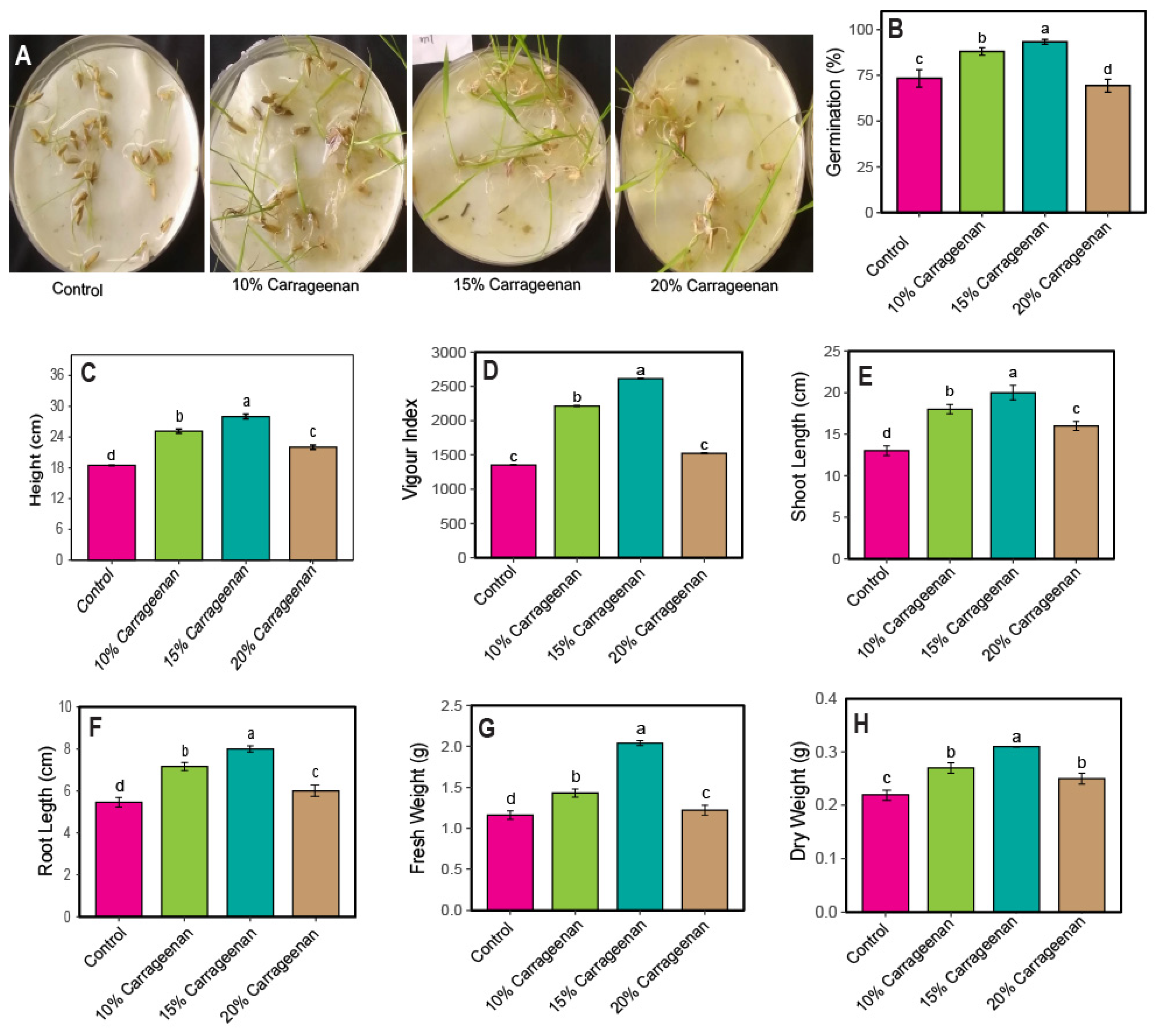
The application of carrageenan increased seed germination, seedling vigor, plant height, shoot length, root length, fresh weight and dry weight (Figure 2). Rice plants with 15% carrageenan concentration exhibited the highest germination rate at 93.33%, whereas those treated with 10% carrageenan concentration showed a germination rate of 88.00% (Figure 2A,B). The average seedling height of the untreated control plants was 18.46 cm, while carrageenan-treated seedlings showed markedly enhanced growth, with 15% carrageenan exhibiting 28.00 cm (Figure 2C). In addition, the seedling vigor index of the control was 1353.67, but carrageenan application significantly elevated this parameter, with 15% carrageenan attaining the maximum vigor index of 2613.24 (Figure 2D). Moreover, the highest shoot length of 20.00 cm and root length of 8.00 cm were observed in the application of 15% carrageenan (Figure 2E,F). Both fresh and dry biomass were significantly increased in 15% carrageenan concentration, with values of 2.04 g and 0.31 g, respectively (Figure 2G,H).

3.3. Mycelial Growth Inhibition of Magnaporthe oryzae by Carrageenan

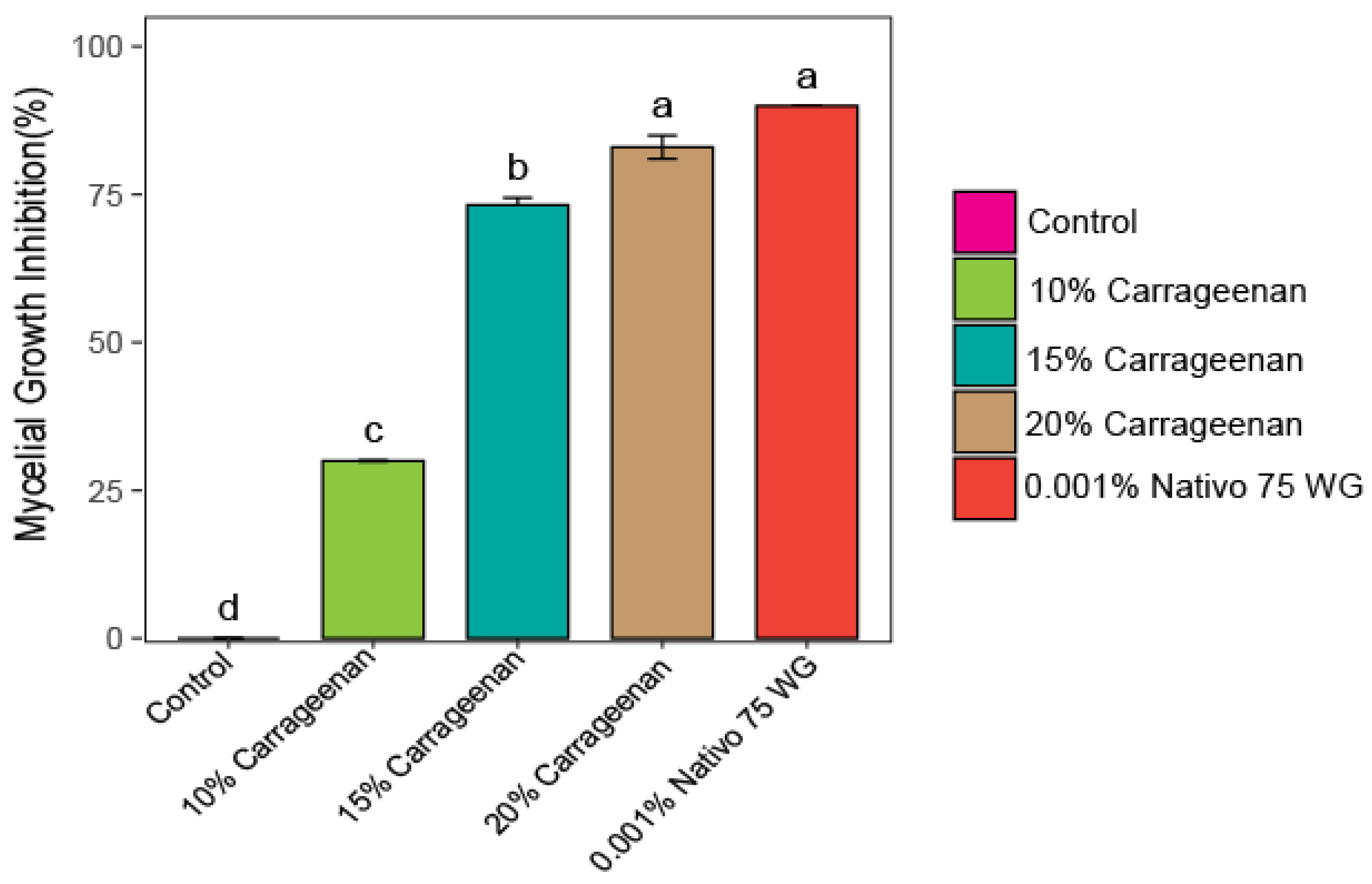
The results showed that all the concentrations of carrageenan and Nativo 75 WG significantly inhibited the hyphal growth of Magnaporthe oryzae on PDA plates (Figure 3). Nativo 75 WG showed a higher inhibition rate of 90%. The 20% carrageenan concentration showed inhibition at 83%, followed by 73.22% inhibition at 15% carrageenan concentration, while 10% carrageenan concentration showed only 30%, whereas the control plates exhibited no inhibition. Moreover, the fungal cell wall is a complex structure that plays a key role in determining cell shape. The microscopic data showed that untreated control samples produced polar, cylindrical hyphae that were smooth, hyaline, branching, plump, septate, and unbroken. In contrast, carrageenan and fungicide treatments caused irregular hyphal growth with a higher branching rate per unit length.

3.4. Effects of Carrageenan on the Inhibition of Conidial Germination

The germination of conidia by Magnaporthe oryzae was significantly reduced by all carrageenan and fungicide concentrations compared to the control (Table 1). The 10%, 15%, and 20% carrageenan concentrations, along with the fungicide Nativo 75 WG at a concentration of 10 µg/mL, significantly reduced conidial germination of Magnaporthe oryzae. All treatments demonstrated substantial inhibition after 24 h compared to the control. No germination occurred in either the carrageenan- or fungicide-treated groups after 6 h, while the control group had a 13.80% germination rate. Similarly, after 12 and 24 h, the control group exhibited 100% germination. The carrageenan concentrations and fungicide-treated group showed progressively lower germination rates of 32.03%, 38.34%, 69.04%, and 29.08% after 12 h, respectively. In addition, the 20% carrageenan treatment exhibited the lowest germination at 17.12%, while the fungicide-treated group had 9.11% after 24 h (Table 1). Microscopic examination also showed the presence of broken hyphal tips and the complete suppression of conidiophore formation in fungal colonies grown on Petri plates treated with these concentrations of carrageenan and fungicide.

3.5. Inhibition of Rice Blast Disease in Detached Leaves

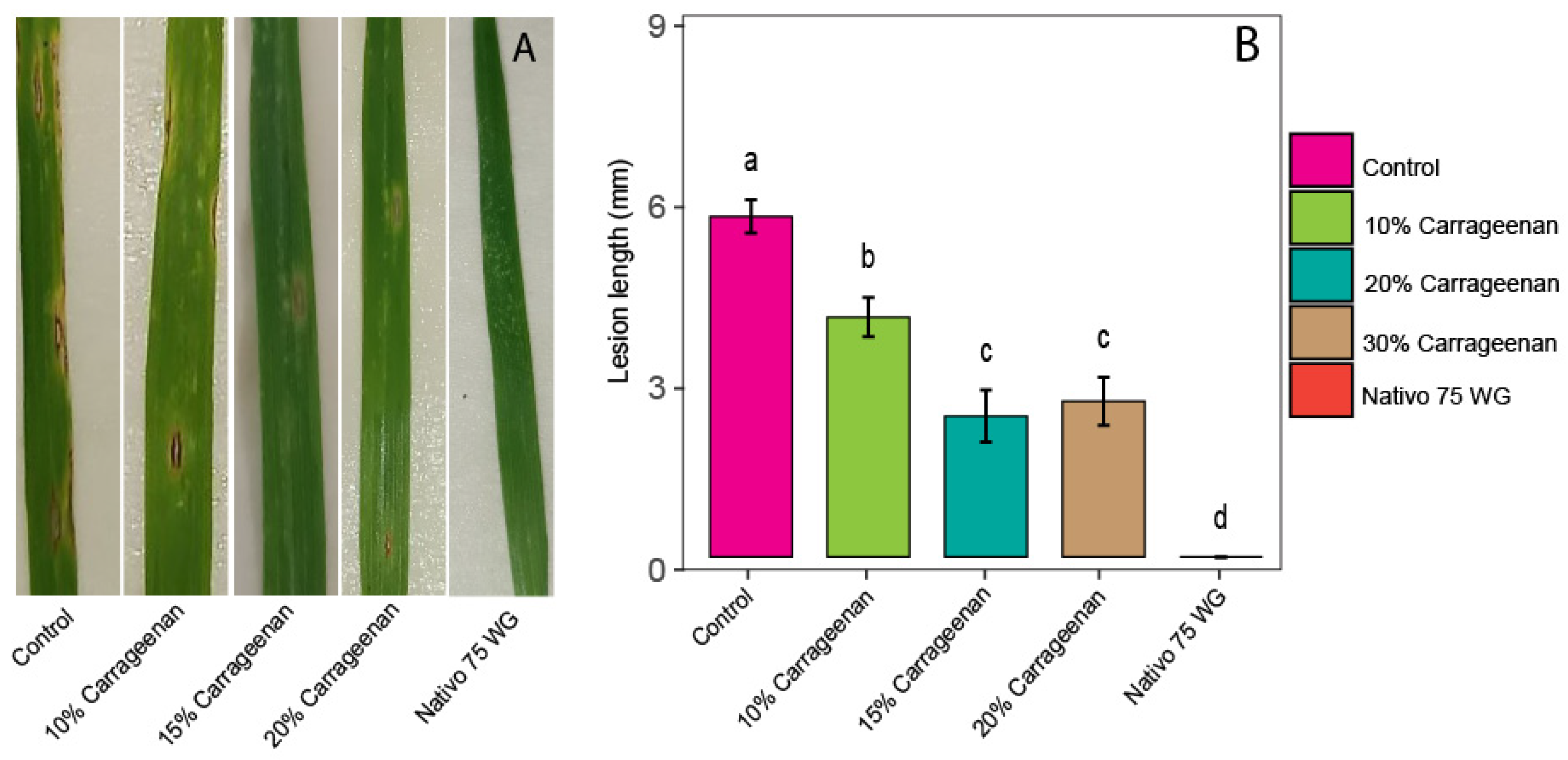
The application of 10%, 15% and 20% carrageenan concentrations and 10 µg/mL Nativo 75 WG significantly inhibited rice blast symptoms in detached leaves inoculated with the Magnaporthe oryzae (Figure 4A,B). The average lesion lengths in leaves pretreated with carrageenan were 4.17 mm for 10% carrageenan concentration, 2.95 mm for 15% carrageenan concentration, and 2.71 mm for 20% carrageenan concentration. However, water-treated control leaves displayed typical blast lesions with an average length of 5.92 mm. Notably, rice leaves treated with Nativo 75 WG at 10 µg/mL showed no blast symptoms.

3.6. Suppression of Rice Blast Disease in Pot Assay

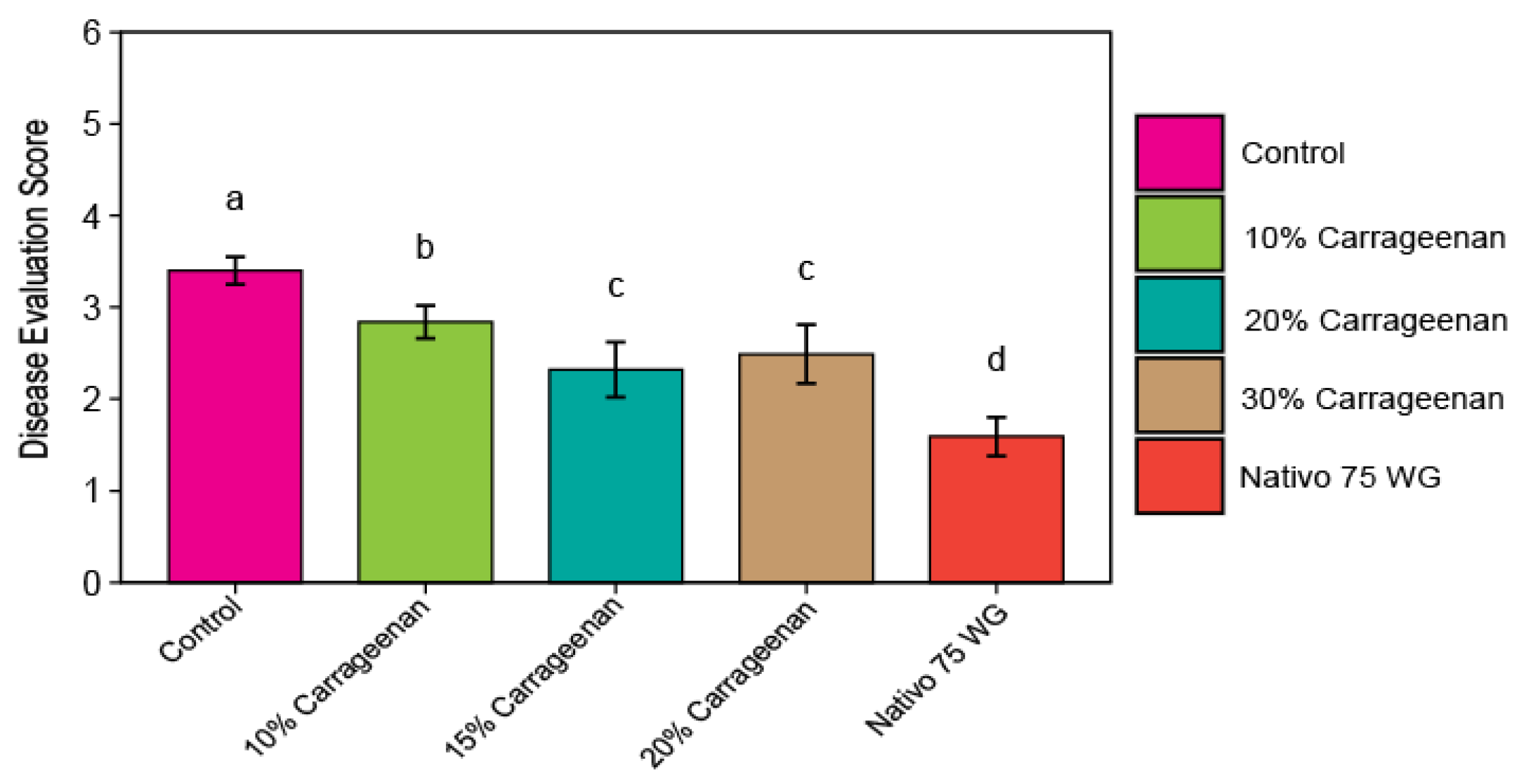
The study evaluated the potential of carrageenan to control rice blast disease in pot culture (Figure 5). The control plants exhibited the highest disease severity (3.4), indicating substantial infection. However, all treatments significantly reduced disease severity compared to the control. Application of 10% carrageenan resulted in a moderate but significant reduction in disease severity (2.8), suggesting partial protection. Further reductions were observed at higher concentrations, with 15% and 20% carrageenan treatments showing lower disease scores (2.3–2.5), indicating enhanced suppression of disease progression. The fungicide treatment (Nativo 75 WG) showed the strongest effect, with the lowest disease score (1.6), significantly lower than all carrageenan treatments. These results indicate that while 15% and 20% carrageenan performed similarly, they were more effective than 10% carrageenan but less effective than the fungicide.

3.7. Carrageenan Application Improves Photosynthetic Pigment Levels in Rice Leaves Under Rice Blast Disease Conditions

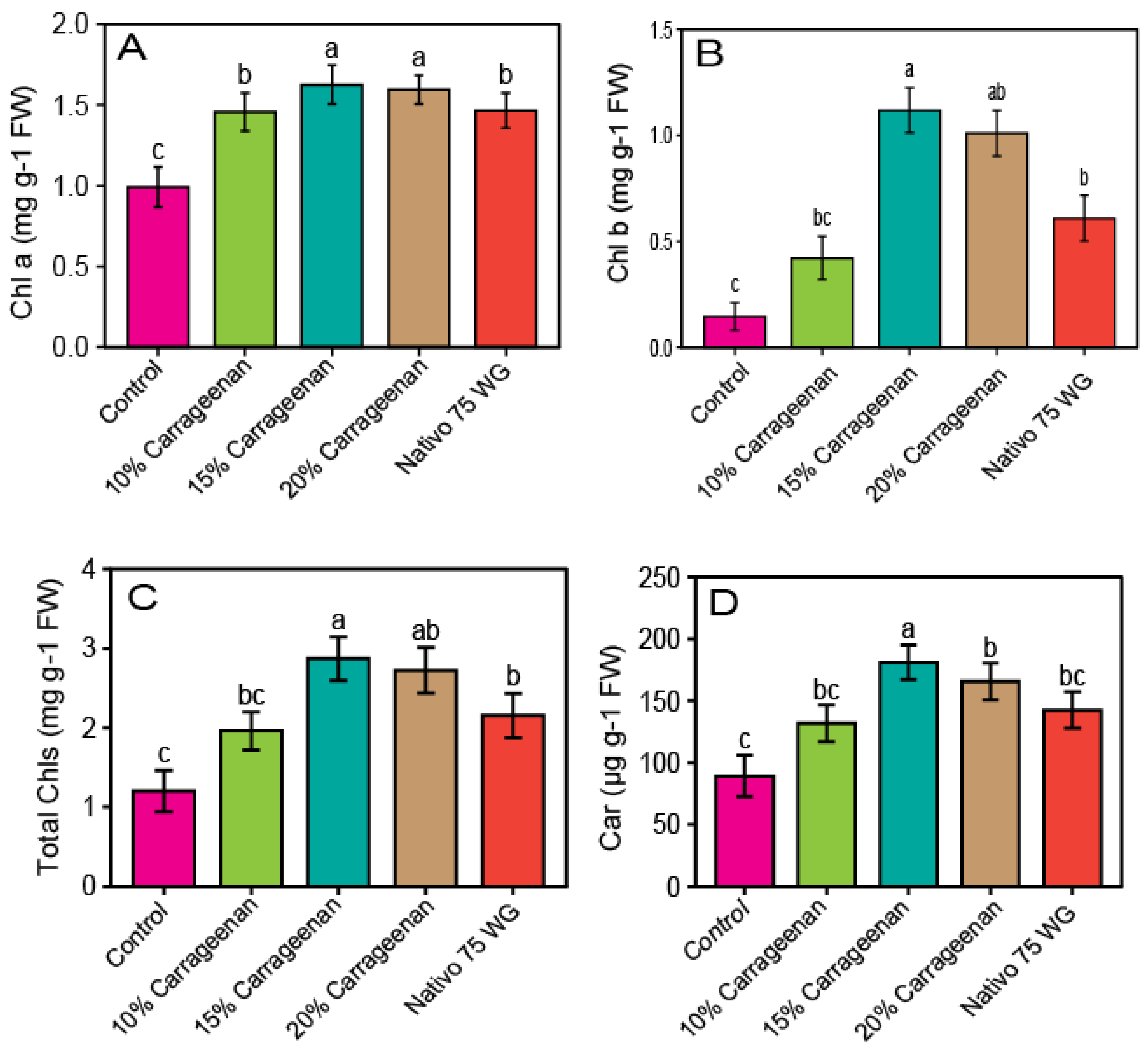
Rice plants inoculated with M. oryzae resulted in the lowest concentrations of chlorophyll a, chlorophyll b, total chlorophyll, and carotenoids, highlighting the negative effect of the fungal infection on pigment accumulation. Among the treatments, the highest chlorophyll a concentration was observed at 10% carrageenan concentration, which exhibited 1.62 mg g−1 FW, significantly higher than the control at 0.99 mg g−1 FW. Chl a levels were also higher in the fungicide treatment (1.46 mg g−1 FW) compared to the control group (Figure 6A). Chl b concentration was lower in the control (0.14 mg g−1 FW) but increased to 0.60 mg g−1 FW in the fungicide treatment. Among the carrageenan treatments, 15% carrageenan concentration showed the highest Chl b concentration (1.11 mg g−1 FW), followed by 20% carrageenan concentration at 1.01 mg g−1 FW, and 10% carrageenan concentration at 0.42 mg g−1 FW (Figure 6B). Furthermore, 15% carrageenan concentration exhibited the highest total Chls and carotenoid levels (Figure 6C,D), with 2.87 mg g−1 FW and 180.99 µg g−1 FW, respectively. These values were notably higher than those of the fungicide treatment, which had 2.15 mg g−1 FW for total chlorophyll and 142.40 µg g−1 FW for carotenoids.

3.8. Carrageenan Application Reduced Oxidative Damage in Rice Leaves Under Rice Blast Disease Conditions

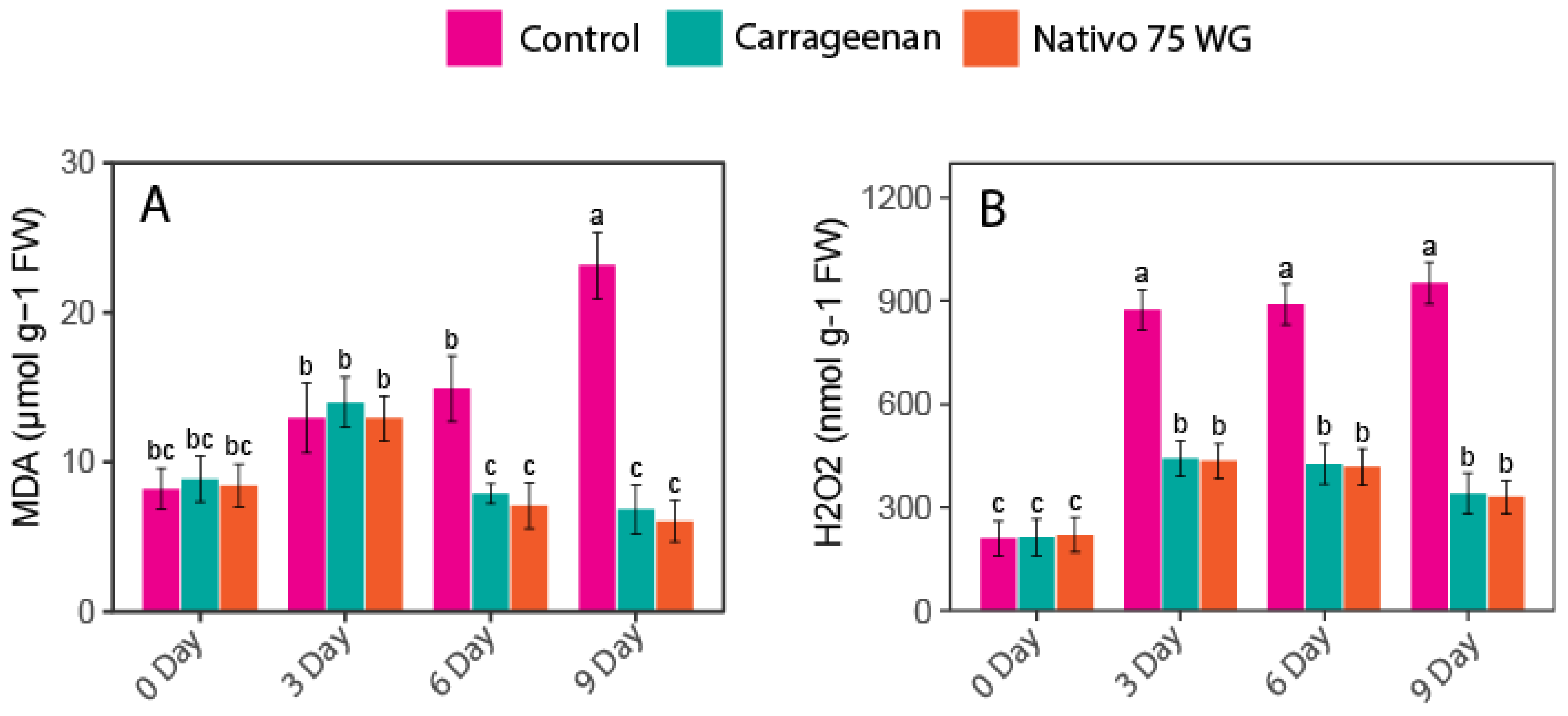
Leaves of rice plants inoculated with M. oryzae showed the highest levels of hydrogen peroxide (H2O2) and malondialdehyde (MDA) over time (Figure 7). At day 0, all treatments had statistically similar H2O2 and MDA levels. In control plants, H2O2 and MDA were 874.77 nmol g−1 FW and 12.92 µmol g−1 FW on day 3, increasing to 889.59 nmol g−1 FW and 17.90 µmol g−1 FW by day 6, and reaching 951.44 nmol g−1 FW and 23.13 µmol g−1 FW by day 9, indicating a progressive rise in oxidative stress. In contrast, M. oryzae-inoculated plants treated with 15% carrageenan showed the lowest H2O2 and MDA levels. On day 3, values (442.18 nmol g−1 FW H2O2; 13.97 µmol g−1 FW MDA) were comparable to fungicide-treated plants (434.77 nmol g−1 FW; 12.92 µmol g−1 FW). By day 6, levels declined to 426.25 and 7.88 µmol g−1 FW, respectively, similar to those in the fungicide treatment (417.00 and 7.07 µmol g−1 FW). By day 9, both treatments showed further reductions, with carrageenan-treated plants at 340.70 nmol g−1 FW H2O2 and 6.81 µmol g−1 FW MDA, and fungicide-treated plants at 330.33 nmol g−1 FW and 6.02 µmol g−1 FW.

3.9. Carrageenan Application Improved the Levels of Osmoprotectants in Rice Leaves Under Rice Blast Disease Conditions

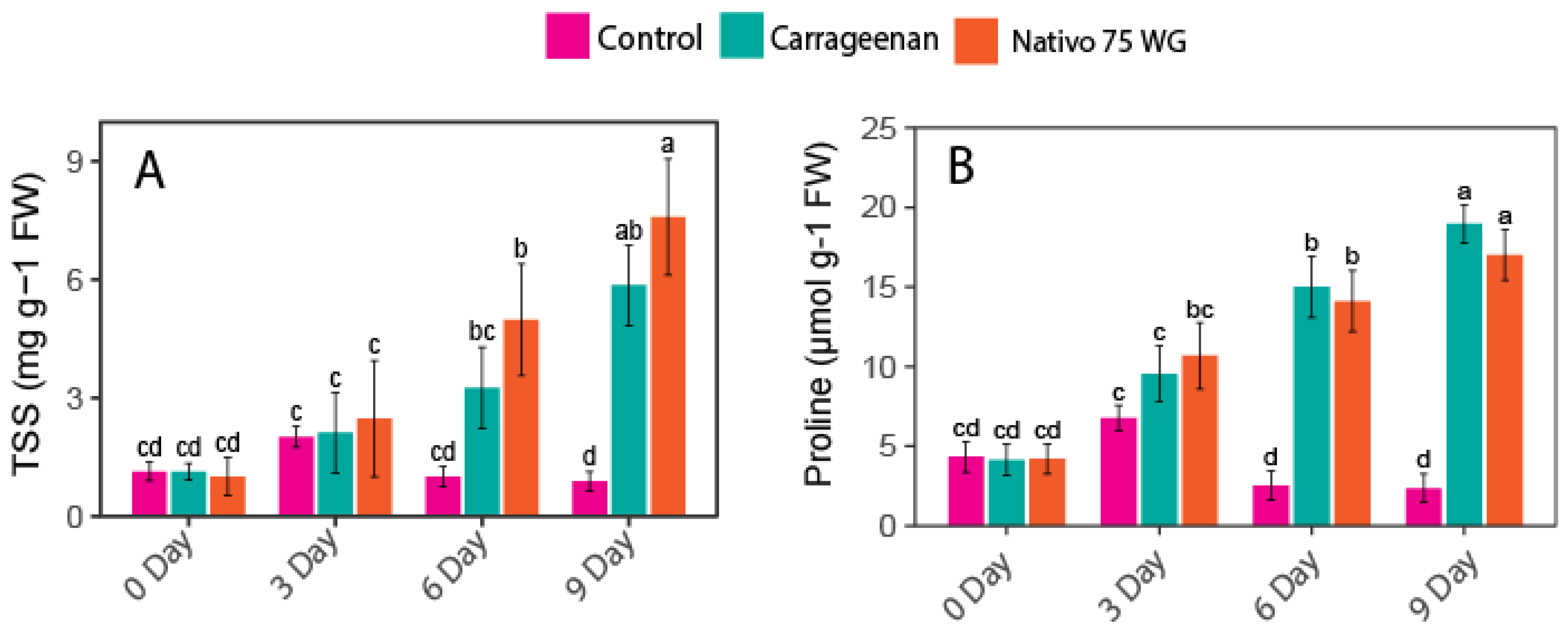
Proline and soluble sugar levels significantly decreased in rice plants infected with M. oryzae, but this reduction was reversed by carrageenan and fungicide treatments (Figure 8). Among the three sampling intervals, both proline and soluble sugar contents were highest on the 9th day in treated and fungicide-applied plants, and lowest in the control. Before inoculation, proline and soluble sugar contents were statistically similar across the control (4.32 µmol g−1 FW; 1.32 mg g−1 FW), treatment (4.12 µmol g−1 FW; 1.13 mg g−1 FW), and fungicide (4.19 µmol g−1 FW; 1.00 mg g−1 FW) groups. By day 3 after inoculation, levels remained statistically comparable among control (6.77 µmol g−1 FW; 2.01 mg g−1 FW), treatment (9.53 µmol g−1 FW; 2.11 mg g−1 FW), and fungicide (10.67 µmol g−1 FW; 2.47 mg g−1 FW). However, by day 6, both parameters increased significantly in carrageenan-treated (14.99 µmol g−1 FW; 3.25 mg g−1 FW) and fungicide-treated plants (24.11 µmol g−1 FW; 4.98 mg g−1 FW) compared to the control (2.51 µmol g−1 FW; 1.00 mg g−1 FW). By day 9, carrageenan-treated (18.96 µmol g−1 FW; 5.84 mg g−1 FW) and fungicide-treated plants (17.02 µmol g−1 FW; 7.58 mg g−1 FW) showed the highest levels, while the control remained lowest (2.35 µmol g−1 FW; 0.88 mg g−1 FW).

3.10. Carrageenan Application Enhanced Antioxidant Defense Responses in Rice Leaves Under Rice Blast Disease Conditions

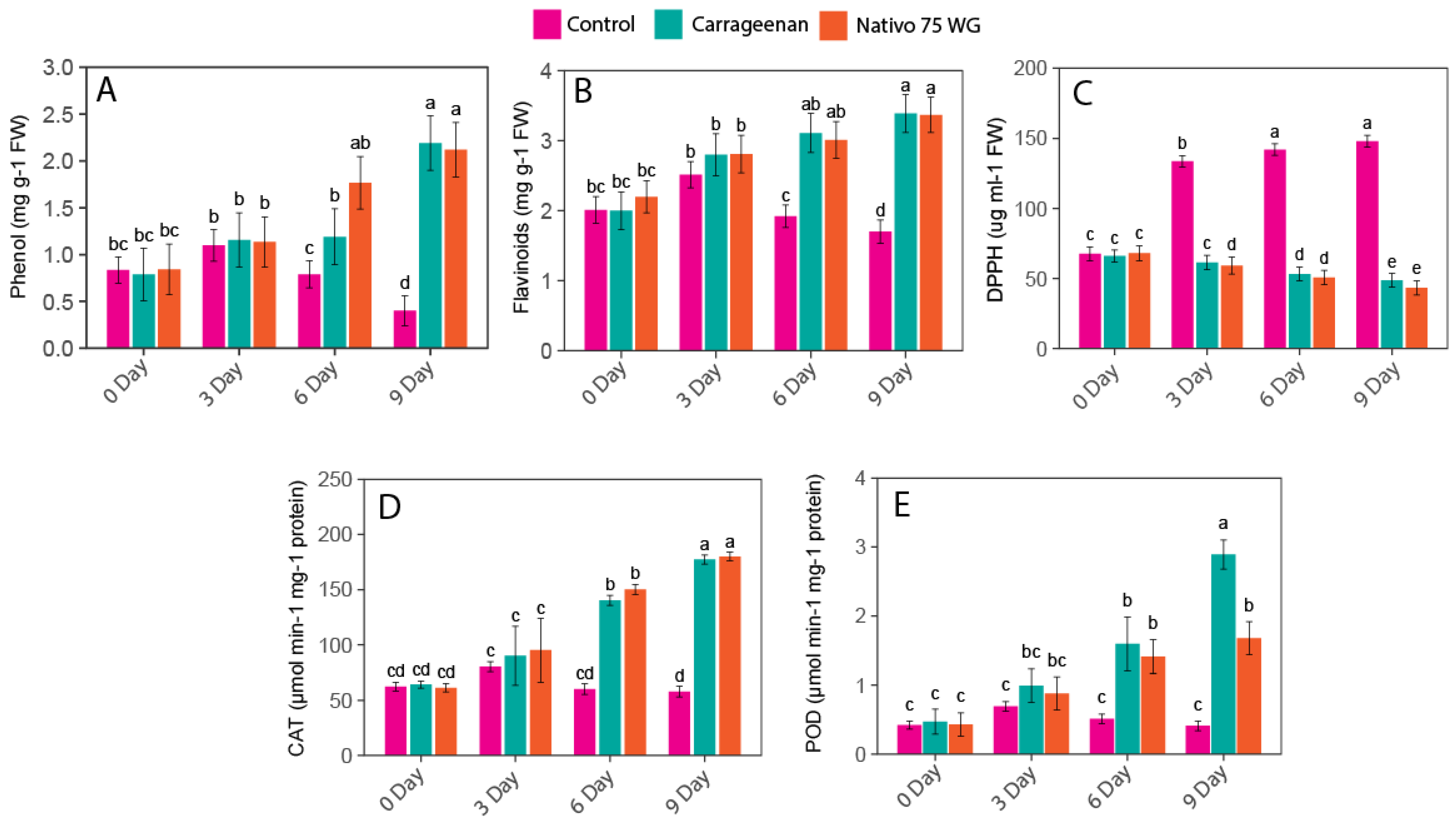
To assess the effect of carrageenan on antioxidant defense regulation, we measured total flavonoids, phenolic compounds, overall antioxidant content, and the activities of key enzymes CAT and POD (Figure 9A,E). Before inoculation with M. oryzae, phenolic and flavonoid contents were similar across treatments. Control plants contained 0.83 mg g−1 FW phenolics and 2.01 mg g−1 FW flavonoids, while carrageenan-treated plants (15%) had 0.78 and 2.00 mg g−1 FW, respectively. Fungicide-treated plants showed slightly higher values (0.84 and 2.19 mg g−1 FW). By day 6 post-inoculation, both carrageenan and fungicide treatments significantly increased phenolic and flavonoid contents compared to the control. Carrageenan-treated plants reached 1.18 and 3.11 mg g−1 FW, and fungicide-treated plants 1.76 and 3.01 mg g−1 FW, while the control remained lower (0.78 and 1.92 mg g−1 FW). By day 9, the highest levels were observed in treated plants: carrageenan (2.19 and 3.38 mg g−1 FW) and fungicide (2.12 and 3.36 mg g−1 FW), both significantly exceeding the control (0.40 and 1.70 mg g−1 FW) (Figure 9A,B).
Catalase and peroxidase showed significantly higher activity in carrageenan- and fungicide-treated plants compared to untreated controls (Figure 9D,E). 15% carrageenan concentration notably enhanced enzyme activity after inoculation. The highest CAT and POD activities were recorded in carrageenan-treated plants (177.32 and 2.89 µmol min−1 mg−1 protein) and fungicide-treated plants (180.11 and 1.67 µmol min−1 mg−1 protein), compared to the control (59.78 and 0.41 µmol min−1 mg−1 protein). Before inoculation, enzyme activities were similar across all groups. Over time, CAT and POD activities increased in treated plants but declined in controls.
Antioxidant activity was further evaluated using the DPPH assay. A clear relationship was observed between antioxidant concentration and free radical scavenging activity, with higher antioxidant levels corresponding to greater DPPH reduction (Figure 9C). Control plants exhibited significantly higher DPPH levels than carrageenan- and fungicide-treated plants, indicating lower scavenging activity. By day 9, the lowest DPPH values were observed in carrageenan (48.58 µg/mL FW) and fungicide-treated plants (43.32 µg/mL FW), while the control showed the highest level (148.00 µg/mL FW). Before inoculation, DPPH levels were similar across treatments. Over time, DPPH increased in controls but decreased in treated plants, indicating enhanced scavenging activity in the latter.

4. Discussion

In recent years, phytopathogens have caused substantial yield losses in economically and agriculturally important crops. Consequently, considerable attention has been directed toward identifying new classes of antipathogenic compounds that are environmentally safe yet effective for crop protection [10]. However, options for directly controlling phytopathogens using conventional chemical approaches remain limited. In this context, seaweed-derived carrageenans have emerged as promising candidates for sustainable disease management.
Our findings demonstrate that FT-IR spectral analysis confirmed the presence of characteristic functional groups such as sulfate esters, 3,6-anhydrogalactose, and D-galactose-4-sulfate, which are typical structural features of carrageenan (Figure 1). Specifically, the band at 1220–1226 cm−1 corresponds to sulfate esters, while bands at 926–930 cm−1 and 845 cm−1 are associated with agarose and D-galactose-4-sulfate. Additional peaks at 3000–3600 cm−1, 2800–2900 cm−1, 1650 cm−1, 1550 cm−1, 1200 cm−1, and 950 cm−1 correspond to O–H stretching, aliphatic C–H vibrations, possible amide/amine-containing compounds, and carbohydrate-related functional groups, respectively [30,31,32]. The bands observed at 1650–1550 cm−1 may be attributable to residual proteins or other biomass-derived materials co-extracted with carrageenan.
Carrageenan significantly enhanced rice growth attributes, including seed germination, seedling vigor, plant height, shoot and root length, and both fresh and dry biomass compared to the control (Figure 2A–H), highlighting its potential as a natural growth promoter. The enhancement of seed germination (93.33%), seedling vigor, and biomass observed in the present study is consistent with previous reports demonstrating the growth-promoting effects of seaweed-derived polysaccharides across multiple crops. For example, κ-carrageenan treatment increased plant height, branch number, yield-related traits, and overall productivity in chickpea [13], while λ-carrageenan improved growth in infected plants [33]. Similarly, extracts of Ulva lactuca enhanced biomass accumulation [34], and combined extracts of Ulva lactuca and Caulerpa scalpelliformis improved germination and seedling growth in green gram [35]. Seaweed biostimulant application has also been reported to improve growth and nutrient uptake in maize [36]. In the present study, the superior performance of the 15% carrageenan treatment may be attributed to an optimal balance between bioactive sulfate groups and plant physiological responses, whereas higher concentrations did not confer additional benefits. Collectively, these findings support the role of seaweed-derived polysaccharides, particularly carrageenan, as effective natural elicitors of plant growth and development.
Carrageenan exhibited strong antifungal activity against Magnaporthe oryzae, with all tested concentrations inhibiting hyphal growth on PDA plates and Treatment 3 showing the most pronounced effect (Figure 3). The 83% inhibition of mycelial growth achieved with 20% carrageenan indicates a dose-dependent response, consistent with previous studies reporting the suppressive effects of carrageenan and other sulfated polysaccharides on phytopathogenic fungi under both in vitro and greenhouse conditions [37,38]. Similarly, Machado et al. [37] demonstrated significant inhibition of Fusarium spp. by sulfated polysaccharides from red algae, while Kumar et al. [39] reported that chitosan–carrageenan nanocomposites inhibited more than 80% of Alternaria solani spore germination. In contrast, laminarin has been reported to enhance mycelial growth relative to untreated controls [40]. Microscopic observations in the present study revealed distorted, highly branched, and irregular hyphal structures in treated samples, suggesting disruption of fungal cell wall integrity and organization. These morphological abnormalities are characteristic of antifungal agents that interfere with cell wall synthesis or membrane permeability [41] and are similar to the effects reported for other polysaccharide-based antifungal compounds.
The suppression of conidial germination is particularly critical, as these processes are essential for pathogen dissemination and infection. Carrageenan treatments completely inhibited conidial germination at early time points (6 h) and significantly reduced germination at later stages, with only 17.12% germination observed at 24 h under 20% carrageenan treatment. Additionally, abnormal germ tube development and conidial lysis indicate that carrageenan disrupts cellular differentiation and membrane stability (Table 1). Comparable results have been reported for chitosan–carrageenan nanocomposites, which inhibited 83.1% of Alternaria solani germination, comparable to mancozeb (84.6%) and completely suppressed Sclerotinia sclerotiorum at 1.0–1.5 ppm [39]. Similarly, Halymenia floresii extracts inhibited Pseudocercospora fijiensis, preventing germination for up to 30 days [42].
In planta assays further demonstrated that carrageenan significantly reduced lesion length in detached leaves and disease severity in pot experiments, confirming its protective role against rice blast disease. Lesion length decreased from 5.92 mm in control plants to 2.71 mm in carrageenan-treated plants (Figure 4A,B), representing an approximately 54% reduction, while disease severity was also markedly reduced under pot conditions, with the 15% carrageenan treatment showing the greatest efficacy (Figure 5). Although Nativo 75 WG completely suppressed disease symptoms, carrageenan still exhibited substantial disease-control potential. The superior performance of the 15% treatment, together with the comparable efficacy of 15% and 20% carrageenan, suggests that disease suppression may be more strongly associated with the induction of host defense responses than with concentration-dependent direct toxicity. The observed reduction in lesion length is biologically significant because lesion expansion is directly associated with pathogen colonization, destruction of photosynthetically active tissue, and disease progression. Smaller lesions can restrict fungal spread within leaf tissues, preserve green leaf area, and maintain photosynthetic activity. Previous studies have shown that increased blast lesion development reduces carbon assimilation and accelerates leaf senescence, ultimately leading to declines in grain filling and yield [43,44]. Thus, the substantial reduction in lesion length observed here is not only a marker of disease suppression but also an indicator of yield protection, as limiting lesion expansion helps safeguard grain filling capacity and overall productivity. These findings are consistent with previous reports demonstrating the elicitor activity of carrageenan and other seaweed-derived biostimulants. For example, Sangha et al. [33] reported that carrageenans, particularly λ-carrageenan, reduced symptom severity caused by Tomato Chlorotic Dwarf Viroid, while Ramkissoon et al. [45] observed similar reductions in disease severity using extracts of Ulva lactuca, Sargassum filipendula, and Gelidium serrulatum. Likewise, Sahana et al. [46] demonstrated that seaweed extracts derived from Kappaphycus and Eucheuma reduced rice blast incidence and enhanced disease resistance under greenhouse conditions. Collectively, these results support the effectiveness of carrageenan as a natural disease-management agent capable of reducing pathogen damage through both protective and defense-inducing mechanisms.
Beyond seaweed-derived extracts, other biostimulants have also been reported to enhance rice growth and resistance against blast. For example, chitosan promotes seedling vigor and activates antioxidant defenses through phytohormone signaling, while silicon supplementation reinforces cell walls and stimulates biochemical defenses [7,8]. The comparable efficacy of carrageenan in promoting growth and eliciting defense responses suggests that marine-derived polysaccharides may serve as a sustainable alternative or complementary strategy to these established compounds, thereby broadening the toolkit for integrated rice blast management.
The observed increase in photosynthetic pigments, including Chl a, Chl b, total Chls, and carotenoids, indicates enhanced photosynthetic efficiency and overall plant performance in carrageenan-treated rice plants (Figure 6A–D). These findings are consistent with previous studies reporting increased chlorophyll content and photosynthetic pigment accumulation following the application of seaweed extracts under optimal growth conditions [47,48,49]. Enhanced chlorophyll and carotenoid levels may improve photosynthetic efficiency and carbon assimilation, thereby contributing to the increased growth and biomass production observed in treated plants. Importantly, these physiological improvements further support the potential of carrageenan to mitigate yield losses under blast pressure by maintaining photosynthetic capacity and plant vigor. Collectively, these results support the role of carrageenan and other seaweed-derived biostimulants in promoting photosynthetic capacity and plant productivity [47,49].
Pathogen infection typically induces oxidative stress, as reflected by elevated levels of H2O2 and MDA in control plants. In contrast, carrageenan-treated plants exhibited significantly reduced levels of these oxidative stress markers, indicating effective mitigation of cellular damage (Figure 7A,B). These findings are consistent with Farahmand and Nasibi [50], who reported reductions in ion leakage, MDA, and H2O2 following carrageenan application. Overall, these results suggest that carrageenan enhances plant resilience by alleviating oxidative stress. Moreover, carrageenan treatment significantly increased proline and soluble sugar accumulation under pathogen stress. These osmoprotectants play a vital role in maintaining cellular integrity and osmotic balance under stress conditions [51,52]. The elevated levels observed at later stages (day 9) suggest that carrageenan induces sustained stress tolerance mechanisms (Figure 8A,B).
The study also revealed a strong induction of antioxidant defense systems in carrageenan-treated plants. Increased levels of phenolics, flavonoids, and antioxidant activity (DPPH assay) indicate enhanced secondary metabolism. Additionally, significant increases in catalase (CAT) and peroxidase (POD) activities confirm the activation of enzymatic antioxidant defenses (Figure 9A–E). These findings align with previous reports linking elevated phenolic and flavonoid content to enhanced antifungal activity [53]. Similarly, seaweed-derived compounds have been shown to upregulate defense-related enzymes and genes [54,55,56,57]. The strong DPPH scavenging activity observed in carrageenan-treated plants is attributed to its hydrogen-donating capacity and sulfate-rich polysaccharide structure [58], as well as contributions from protein-mediated electron donation [59,60]. The decline in DPPH levels in treated plants after inoculation further indicates enhanced free radical scavenging, whereas higher levels in control plants reflect increased oxidative stress [61,62].
Overall, these findings demonstrate that carrageenan enhances plant growth, strengthens antioxidant defense systems, and suppresses disease progression. This highlights its significant potential as a sustainable biostimulant for improving crop productivity and resilience to pathogen-induced stress.

5. Conclusions

The study establishes carrageenan derived from the red seaweed H. musciformis as a promising bioelicitor for sustainable rice production. Among the tested concentrations, 15% carrageenan exhibited the most pronounced effects, significantly enhancing seed germination, seedling vigor, biomass accumulation, and photosynthetic pigment content while concurrently suppressing Magnaporthe oryzae growth, conidiogenesis, and lesion development. The treatment further improved non-enzymatic and enzymatic antioxidant defenses and reduced oxidative stress markers, underscoring its role in both promoting growth and inducing host resistance. These findings highlight the potential of carrageenan as an eco-friendly alternative to synthetic fungicides for the integrated management of rice blast disease. Future studies should evaluate the effects of carrageenan on later developmental stages of rice, including tiller production, panicle development, grain yield, and yield-related traits under greenhouse and field conditions to further validate its agronomic potential.

Author Contributions

J.N. and M.M.; formal analysis, investigation, resources, data curation, writing—original draft preparation, M.M.H.; supervision, project administration, funding acquisition, conceptualization, review and editing. All authors have read and agreed to the published version of the manuscript.

Funding

This research acknowledges the funding received from the University Grants Commission of Bangladesh for the research project titled “Carrageenan as a promoter of plant growth and elicitor of natural defenses in rice plants (Grant Number-37.01.0000.073.01.111.22.1329)”.

Data Availability Statement

The original contributions presented in this study are included in the article. Further inquiries can be directed to the corresponding author.

Conflicts of Interest

The authors declare no conflicts of interest.

References

  1. Kou, S.; Ci, Z.; Liu, W.; Wu, Z.; Peng, H.; Yuan, P.; Huang, P. Conservation and sustainable development of rice landraces for enhancing resilience to climate change, with a case study of ‘Pantiange Heigu’ in China. Life 2026, 16, 143. [Google Scholar] [CrossRef] [PubMed]
  2. Falcon, W.P.; Naylor, R.L.; Shankar, N.D. Rethinking global food demand for 2050. Popul. Dev. Rev. 2022, 48, 921–957. [Google Scholar] [CrossRef]
  3. Arouna, A.; Devkota, K.P.; Yergo, W.G.; Saito, K.; Frimpong, B.N.; Adegbola, P.Y.; Usman, S. Assessing rice production sustainability performance indicators and their gaps in twelve sub-Saharan African countries. Field Crops Res. 2021, 271, 108263. [Google Scholar] [CrossRef] [PubMed]
  4. Ding, Y.; Zhang, H.; Xu, L.; Guo, Z.; Duan, H.; Song, M.; Wang, C. Regional differences in the impact of climate extremes on future global rice yield variability. Geomat. Nat. Hazards Risk 2026, 17, 2619862. [Google Scholar] [CrossRef]
  5. Amin, Z.; Mohiddin, F.A.; Ashraf, S.; Parveen, S.; Bhat, T.A.; Nabi, S.U.; Krishnamoorthy, R. Evaluation of botanical extracts and molecular docking approaches for sustainable management of rice blast disease in Mushk Budji rice. Appl. Biol. Chem. 2026, 69, 18. [Google Scholar] [CrossRef]
  6. Simkhada, K.; Thapa, R. Rice blast, a major threat to rice production and its various management techniques. Turk. J. Agric. Food Sci. Technol. 2022, 10, 147–157. [Google Scholar] [CrossRef]
  7. Mukarram, M.; Ali, J.; Dadkhah-Aghdash, H.; Kurjak, D.; Kačík, F.; Ďurkovič, J. Chitosan-induced biotic stress tolerance and crosstalk with phytohormones, antioxidants, and other signalling molecules. Front. Plant Sci. 2023, 14, 1217822. [Google Scholar] [CrossRef] [PubMed]
  8. Siah, A.; Magnin-Robert, M.; Randoux, B.; Choma, C.; Rivière, C.; Halama, P.; Reignault, P. Natural agents inducing plant resistance against pests and diseases. In Natural Antimicrobial Agents; Springer International Publishing: Cham, Switzerland, 2018; pp. 121–159. [Google Scholar]
  9. Lyon, G.D. Agents that can elicit induced resistance. In Induced Resistance for Plant Defense; John Wiley & Sons: Hoboken, NJ, USA, 2014; pp. 11–40. [Google Scholar]
  10. Hossain, M.M.; Sultana, F.; Khan, S.; Nayeema, J.; Mostafa, M.; Ferdus, H.; Mostofa, M.G. Carrageenans as biostimulants and bio-elicitors: Plant growth and defense responses. Stress Biol. 2024, 4, 3. [Google Scholar] [CrossRef] [PubMed]
  11. Rafiquzzaman, S.M.; Ahmed, R.; Lee, J.M.; Noh, G.; Jo, G.A.; Kong, I.S. Improved methods for isolation of carrageenan from Hypnea musciformis and its antioxidant activity. J. Appl. Phycol. 2016, 28, 1265–1274. [Google Scholar]
  12. Kang, H.; Fan, T.; Lin, Z.; Shi, Y.; Xie, X.; Li, L.; Chai, A. Development of chitosan/carrageenan macrobeads for encapsulation of Paenibacillus polymyxa and its biocontrol efficiency against clubroot disease in Brassica crops. Int. J. Biol. Macromol. 2024, 264, 130323. [Google Scholar] [CrossRef] [PubMed]
  13. Bi, F.; Iqbal, S.; Arman, M.; Ali, A.; Hassan, M.U. Carrageenan as an elicitor of induced secondary metabolites and its effects on various growth characters of chickpea and maize plants. J. Saudi Chem. Soc. 2011, 15, 269–273. [Google Scholar] [CrossRef]
  14. Mohamed, M.H.; Abdelhamid, A.N.; Ali, M.A.; Abd-Elhalim, B.T.; Kandeel, A.M.; Hassan, K.M. Influence of exogenously applied κ-carrageenan at various concentrations on plant growth, phytochemical content, macronutrients, and essential oils of Ocimum basilicum. Sci. Rep. 2025, 15, 11124. [Google Scholar] [CrossRef] [PubMed]
  15. Shukla, P.S.; Borza, T.; Critchley, A.T.; Prithiviraj, B. Carrageenans from red seaweeds as promoters of growth and elicitors of defense response in plants. Front. Mar. Sci. 2016, 3, 81. [Google Scholar] [CrossRef]
  16. AOSA. Rules for Testing Seeds; Association of Official Seed Analysts: Las Cruces, NM, USA, 2001; Available online: https://www.scirp.org/reference/referencespapers?referenceid=386581 (accessed on 7 February 2026).
  17. Hossain, M.M.; Sultana, F.; Kubota, M.; Koyama, H.; Hyakumachi, M. The plant growth-promoting fungus Penicillium simplicissimum GP17-2 induces resistance in Arabidopsis thaliana by activation of multiple defense signals. Plant Cell Physiol. 2007, 48, 1724–1736. [Google Scholar] [CrossRef] [PubMed]
  18. Li, H.; Guan, Y.; Dong, Y.; Zhao, L.; Rong, S.; Chen, W.; Xu, Z. Isolation and evaluation of endophytic Bacillus tequilensis GYLH001 with potential application for biological control of Magnaporthe oryzae. PLoS ONE 2018, 13, e0203505. [Google Scholar] [CrossRef] [PubMed]
  19. Hayashi, N.; Fukuta, Y. Proposal for a New International System of Differentiating Races of Blast (Pyricularia oryzae Cavara) by Using LTH Monogenic Lines in Rice (Oryza sativa L.); Japan International Research Center for Agricultural Sciences: Tsukuba, Japan, 2009; Volume 63, pp. 11–15. [Google Scholar]
  20. Khan, M.A.; Ali, M.A.; Monsur, M.A.; Kawasaki-Tanaka, A.; Hayashi, N.; Yanagihara, S.; Fukuta, Y. Diversity and distribution of rice blast (Pyricularia oryzae Cavara) races in Bangladesh. Plant Dis. 2016, 100, 2025–2033. [Google Scholar] [CrossRef] [PubMed]
  21. Arnon, D.I. Copper enzymes in isolated chloroplasts. Polyphenoloxidase in Beta vulgaris. Plant Physiol. 1949, 24, 1–15. [Google Scholar] [CrossRef] [PubMed]
  22. Lichtenthaler, H.K.; Wellburn, A.R. Determinations of total carotenoids and chlorophylls a and b of leaf extracts in different solvents. Biochem. Soc. Trans. 1983, 11, 591–592. [Google Scholar] [CrossRef]
  23. Yu, C.W.; Murphy, T.M.; Lin, C.H. Hydrogen peroxide-induced chilling tolerance in mung bean mediated through ABA-independent glutathione accumulation. Funct. Plant Biol. 2003, 30, 955–963. [Google Scholar] [CrossRef] [PubMed]
  24. Kim, T.Y.; Ku, H.; Lee, S.Y. Crop enhancement of cucumber plants under heat stress by shungite carbon. Int. J. Mol. Sci. 2020, 21, 4858. [Google Scholar] [CrossRef] [PubMed]
  25. Rahman, M.; Mostofa, M.G.; Rahman, A.; Islam, R.; Keya, S.S.; Das, A.K.; Miah, G.; Kawser, A.Q.M.R.; Ahsan, S.M.; Hashem, A.; et al. Acetic acid: A cost-effective agent for mitigation of seawater-induced salt toxicity in mung bean. Sci. Rep. 2019, 9, 15186. [Google Scholar] [CrossRef] [PubMed]
  26. Das, A.K.; Anik, T.R.; Rahman, M.M.; Keya, S.S.; Islam, M.R.; Rahman, M.A.; Sultana, S.; Ghosh, P.K.; Khan, S.; Ahamed, T.; et al. Ethanol treatment enhances physiological and biochemical responses to mitigate saline toxicity in soybean. Plants 2022, 11, 272. [Google Scholar] [CrossRef] [PubMed]
  27. Girennavar, B.; Jayaprakasha, G.K.; Jadegoud, Y.; Gowda, G.N.; Patil, B.S. Radical scavenging and cytochrome P450 3A4 inhibitory activity of bergaptol and geranylcoumarin from grapefruit. Bioorg. Med. Chem. 2007, 15, 3684–3691. [Google Scholar] [CrossRef] [PubMed]
  28. Bates, L.S.; Waldren, R.P.; Teare, I.D. Rapid determination of free proline for water-stress studies. Plant Soil 1973, 39, 205–207. [Google Scholar] [CrossRef]
  29. Somogyi, M. Notes on sugar determination. J. Biol. Chem. 1952, 195, 19–23. [Google Scholar] [CrossRef]
  30. Chopin, T.; Kerin, B.F.; Mazerolle, R. Phycocolloid chemistry as a taxonomic indicator of phylogeny in the Gigartinales, Rhodophyceae: A review and current developments using Fourier transform infrared diffuse reflectance spectroscopy. Phycol. Res. 1999, 47, 167–188. [Google Scholar] [CrossRef]
  31. Ghannam, A.; Abbas, A.; Alek, H.; Al-Waari, Z.; Al-Ktaifani, M. Enhancement of local plant immunity against tobacco mosaic virus infection after treatment with sulphated carrageenan from red alga (Hypnea musciformis). Physiol. Mol. Plant Pathol. 2013, 84, 19–27. [Google Scholar] [CrossRef]
  32. Ramlov, F.; Carvalho, T.J.G.; Costa, G.B.; Rodrigues, E.R.D.O.; Bauer, C.M.; Schmidt, E.C.; Maraschin, M. Hypnea musciformis (Wulfen) J.V. Lamouroux (Gigartinales, Rhodophyta) responses to gasoline short-term exposure: Biochemical and cellular alterations. Acta Bot. Bras. 2019, 33, 116–127. [Google Scholar] [CrossRef]
  33. Sangha, J.S.; Kandasamy, S.; Khan, W.; Bahia, N.S.; Singh, R.P.; Critchley, A.T.; Prithiviraj, B. Λ-carrageenan suppresses tomato chlorotic dwarf viroid (TCDVd) replication and symptom expression in tomato. Mar. Drugs 2015, 13, 2875–2889. [Google Scholar] [CrossRef] [PubMed]
  34. Castellanos-Barriga, L.G.; Santacruz-Ruvalcaba, F.; Hernández-Carmona, G.; Ramírez-Briones, E.; Hernández-Herrera, R.M. Effect of seaweed liquid extracts from Ulva lactuca on seedling growth of mung bean (Vigna radiata). J. Appl. Phycol. 2017, 29, 2479–2488. [Google Scholar] [CrossRef]
  35. Kavipriya, R.; Dhanalakshmi, P.K.; Jayashree, S.; Thangaraju, N. Seaweed extract as a biostimulant for legume crop, green gram. J. Ecobiotechnol. 2011, 3, 16–19. [Google Scholar]
  36. Shukla, P.S.; Mantin, E.G.; Adil, M.; Bajpai, S.; Critchley, A.T.; Prithiviraj, B. Ascophyllum nodosum-based biostimulants: Sustainable applications in agriculture for the stimulation of plant growth, stress tolerance, and disease management. Front. Plant Sci. 2019, 10, 462648. [Google Scholar] [CrossRef] [PubMed]
  37. Machado, L.P.; de Godoy Gasparoto, M.C.; Santos Filho, N.A.; Pavarini, R. Seaweeds in the control of plant diseases and insects. In Seaweeds as Plant Fertilizer, Agricultural Biostimulants and Animal Fodder; CRC Press: Boca Raton, FL, USA, 2019; pp. 100–127. [Google Scholar]
  38. Paulert, R.; Talamini, V.; Cassolato, J.E.F.; Duarte, M.E.R.; Noseda, M.D.; Smania, A., Jr.; Stadnik, M.J. Effects of sulfated polysaccharide and alcoholic extracts from green seaweed Ulva fasciata on anthracnose severity and growth of common bean (Phaseolus vulgaris L.). J. Plant Dis. Prot. 2009, 116, 263–270. [Google Scholar] [CrossRef]
  39. Kumar, R.; Najda, A.; Duhan, J.S.; Kumar, B.; Chawla, P.; Klepacka, J.; Poonia, A.K. Assessment of antifungal efficacy and release behavior of fungicide-loaded chitosan–carrageenan nanoparticles against phytopathogenic fungi. Polymers 2021, 14, 41. [Google Scholar] [CrossRef] [PubMed]
  40. Ben Salah, I.; Aghrouss, S.; Douira, A.; Aissam, S.; El Alaoui-Talibi, Z.; Filali-Maltouf, A.; El Modafar, C. Seaweed polysaccharides as bio-elicitors of natural defenses in olive trees against verticillium wilt of olive. J. Plant Interact. 2018, 13, 248–255. [Google Scholar] [CrossRef]
  41. Latgé, J.P.; Fontaine, T.; Beauvais, A.; Clavaud, C.; Mouyna, I.; Morelle, W.; Kumar, V. Cell wall polysaccharides of fungi and plants. In Proceedings of the First International Fungal/Plant Cell Wall Meeting, Biarritz, France, 10–14 March 2007; p. 11. [Google Scholar]
  42. Gómez-Hernández, M.; Rodríguez-García, C.M.; Peraza-Echeverría, L.; Peraza-Sánchez, S.R.; Torres-Tapia, L.W.; Pérez-Brito, D.; Cauich-Rodríguez, J.V. In vitro antifungal activity screening of beach-cast seaweeds collected in Yucatán, Mexico. J. Appl. Phycol. 2021, 33, 1229–1237. [Google Scholar] [CrossRef]
  43. Talbot, N.J. On the trail of a cereal killer: Exploring the biology of Magnaporthe grisea. Annu. Rev. Microbiol. 2003, 57, 177–202. [Google Scholar] [CrossRef] [PubMed]
  44. Dean, R.; Van Kan, J.A.; Pretorius, Z.A.; Hammond-Kosack, K.E.; Di Pietro, A.; Spanu, P.D.; Rudd, J.J.; Dickman, M.; Kahmann, R.; Ellis, J.; et al. The Top 10 fungal pathogens in molecular plant pathology. Mol. Plant Pathol. 2012, 13, 414–430. [Google Scholar] [CrossRef] [PubMed]
  45. Ramkissoon, A.; Ramsubhag, A.; Jayaraman, J. Phytoelicitor activity of three Caribbean seaweed species on suppression of pathogenic infections in tomato plants. J. Appl. Phycol. 2017, 29, 3235–3244. [Google Scholar] [CrossRef]
  46. Sahana, B.N.; PrasannaKumar, M.K.; Mahesh, H.B.; Buela Parivallal, P.; Puneeth, M.E.; Gautam, C.; Suryanarayan, S. Biostimulants derived from red seaweed stimulate the plant defense mechanism in rice against Magnaporthe oryzae. J. Appl. Phycol. 2022, 34, 659–665. [Google Scholar]
  47. Yao, Y.; Wang, X.; Chen, B.; Zhang, M.; Ma, J. Seaweed extract improved yields, leaf photosynthesis, ripening time, and net returns of tomato (Solanum lycopersicum Mill.). ACS Omega 2020, 5, 4242–4249. [Google Scholar] [CrossRef] [PubMed]
  48. Thye, K.L.; Wan Abdullah, W.M.A.N.; Balia Yusof, Z.N.; Wee, C.Y.; Ong-Abdullah, J.; Loh, J.Y.; Lai, K.S. Λ-carrageenan promotes plant growth in banana via enhancement of cellular metabolism, nutrient uptake, and cellular homeostasis. Sci. Rep. 2022, 12, 19639. [Google Scholar] [CrossRef] [PubMed]
  49. Mannan, M.A.; Yasmin, A.; Sarker, U.; Bari, N.; Dola, D.B.; Higuchi, H.; Alarifi, S. Biostimulant red seaweed (Gracilaria tenuistipitata var. liui) extracts spray improves yield and drought tolerance in soybean. PeerJ 2023, 11, e15588. [Google Scholar] [CrossRef] [PubMed]
  50. Farahmand, H.; Nasibi, F. A study on the effect of seaweed extract carrageenan and salicylic acid (as biostimulants) on growth and tolerance to chilling stress in bedding plant Impatiens walleriana. J. Plant Process Funct. 2023, 11, 159–171. [Google Scholar]
  51. Cai, F.; Yu, G.; Wang, P.; Wei, Z.; Fu, L.; Shen, Q.; Chen, W. Harzianolide, a novel plant growth regulator and systemic resistance elicitor from Trichoderma harzianum. Plant Physiol. Biochem. 2013, 73, 106–113. [Google Scholar] [CrossRef] [PubMed]
  52. Gupta, B.; Huang, B. Mechanism of salinity tolerance in plants: Physiological, biochemical, and molecular characterization. Int. J. Genom. 2014, 2014, 701596. [Google Scholar] [CrossRef]
  53. Elansary, H.O.; Norrie, J.; Ali, H.M.; Salem, M.Z.; Mahmoud, E.A.; Yessoufou, K. Enhancement of Calibrachoa growth, secondary metabolites and bioactivity using seaweed extracts. BMC Complement. Altern. Med. 2016, 16, 341. [Google Scholar] [CrossRef] [PubMed]
  54. Panjehkeh, N.; Abkhoo, J. Influence of marine brown alga extract (Dalgin) on damping-off tolerance of tomato. J. Mater. Environ. Sci. 2016, 7, 2369–2374. [Google Scholar]
  55. Abouraïcha, E.F.; El Alaoui-Talibi, Z.; Tadlaoui-Ouafi, A.; El Boutachfaiti, R.; Petit, E.; Douira, A.; El Modafar, C. Glucuronan and oligoglucuronans isolated from green algae activate natural defense responses in apple fruit and reduce postharvest blue and gray mold decay. J. Appl. Phycol. 2017, 29, 471–480. [Google Scholar] [CrossRef]
  56. Bajpai, S.; Shukla, P.S.; Asiedu, S.; Pruski, K.; Prithiviraj, B. A biostimulant preparation of brown seaweed Ascophyllum nodosum suppresses powdery mildew of strawberry. Plant Pathol. J. 2019, 35, 406. [Google Scholar] [CrossRef] [PubMed]
  57. Banakar, S.N.; PrasannaKumar, M.K.; Mahesh, H.B.; Parivallal, P.B.; Puneeth, M.E.; Gautam, C.; Narayan, S.S. Red-seaweed biostimulants differentially alleviate the impact of fungicidal stress in rice (Oryza sativa L.). Sci. Rep. 2022, 12, 5993. [Google Scholar] [CrossRef] [PubMed]
  58. Das Chagas Faustino Alves, M.G.; Dore, C.M.P.G.; Castro, A.J.G.; do Nascimento, M.S.; Cruz, A.K.M.; Soriano, E.M.; Leite, E.L. Antioxidant, cytotoxic and hemolytic effects of sulfated galactans from edible red alga Hypnea musciformis. J. Appl. Phycol. 2012, 24, 1217–1227. [Google Scholar] [CrossRef]
  59. Bradford, M.M. A rapid and sensitive method for the quantitation of microgram quantities of protein utilizing the principle of protein-dye binding. Anal. Biochem. 1976, 72, 248–254. [Google Scholar] [CrossRef] [PubMed]
  60. Kim, E.Y.; Kim, Y.R.; Nam, T.J.; Kong, I.S. Antioxidant and DNA protection activities of a glycoprotein isolated from a seaweed, Saccharina japonica. Int. J. Food Sci. Technol. 2012, 47, 1020–1027. [Google Scholar] [CrossRef]
  61. Fenglin, H.; Ruili, L.; Liang, M. Free radical scavenging activity of extracts prepared from fresh leaves of selected Chinese medicinal plants. Fitoterapia 2004, 75, 14–23. [Google Scholar] [CrossRef]
  62. Ghaisas, M.M.; Navghare, V.V.; Takawale, A.R.; Zope, V.S.; Deshpande, A.D. In vitro antioxidant activity of Tectona grandis Linn. Pharmacologyonline 2008, 3, 296–305. [Google Scholar]
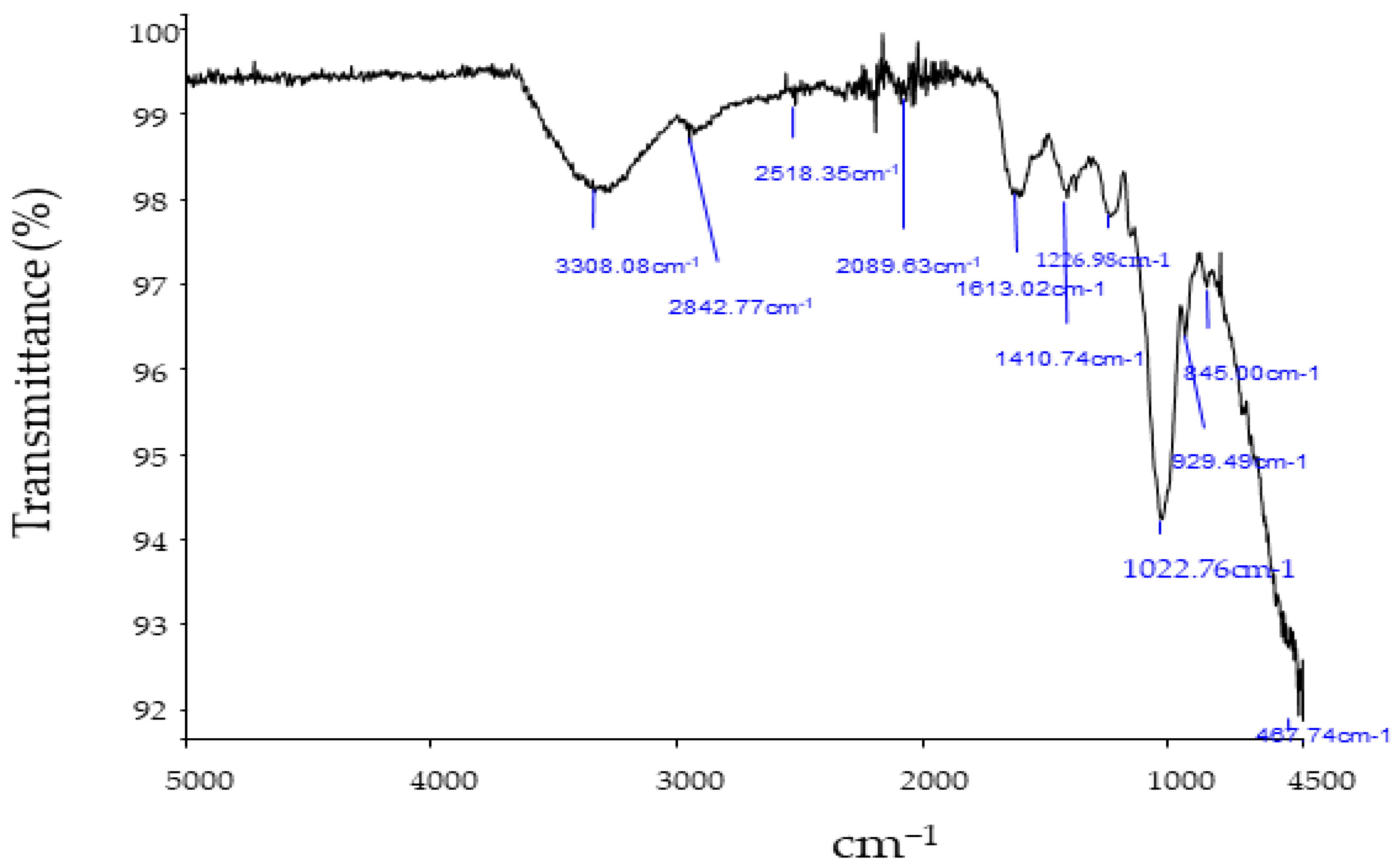
Figure 1. FT-IR-based structural characterization of carrageenan isolated from H. musciformis. The spectrum shows characteristic absorption bands associated with key functional groups of carrageenan, including sulfate esters, 3,6-anhydrogalactose, and D-galactose-4-sulfate. Broad absorption in the higher wavenumber region corresponds to O–H stretching vibrations, while peaks in the aliphatic region indicate lipid-associated C–H stretching. Minor bands near the amide region may be associated with trace residual proteinaceous compounds or other biomass-derived materials that co-existed during carrageenan isolation.
Polysaccharides 07 00079 g001
Figure 2. Effect of carrageenan treatments (10%, 15%, and 20% w/v) on seed germination, seedling vigor, and growth of rice. (A) Representative seed germination under various treatments, (B) Germination percentage, (C) Seedling height and (D) seedling vigor index were assessed in Petri dish assays. (E) Shoot length, (F) root length, (G) fresh weight, and (H) dry weight were measured in hydroponically grown seedlings. Error bars represent the standard error of the mean (SE). Different lowercase letters above the bars indicate significant differences among treatments according to Fisher’s LSD test at p ≤ 0.05.
Polysaccharides 07 00079 g002
Figure 3. Effect of carrageenan treatments on the inhibition of mycelial growth of Magnaporthe oryzae in vitro. Bars represent the percentage inhibition of radial mycelial growth under different treatments: control, 10%, 15%, and 20% carrageenan, and Nativo 75 WG (0.001%). Error bars represent the standard error of the mean (SE). Different lowercase letters above the bars indicate significant differences among treatments according to Fisher’s LSD test at p ≤ 0.05.
Polysaccharides 07 00079 g003
Figure 4. Effect of carrageenan treatments on rice blast symptom development in a detached leaf assay. (A) Representative blast lesions on detached rice leaves following inoculation with Magnaporthe oryzae under different treatments. (B) Mean lesion length (mm) in leaves treated with 10%, 15%, and 20% carrageenan, water-treated control, and Nativo 75 WG (0.001%). Error bars represent the standard error of the mean (SE). Different lowercase letters above the bars indicate significant differences among treatments according to Fisher’s LSD test at p ≤ 0.05.
Polysaccharides 07 00079 g004
Figure 5. Effect of carrageenan treatments on rice blast disease severity caused by Magnaporthe oryzae under pot conditions. Disease severity was assessed using a 0–6 rating scale in plants treated with 10%, 15%, and 20% carrageenan, water-treated control, and Nativo 75 WG (0.001%). Error bars represent the standard error of the mean (SE). Different lowercase letters above the bars indicate significant differences among treatments according to Fisher’s LSD test at p ≤ 0.05.
Polysaccharides 07 00079 g005
Figure 6. Effect of carrageenan and Nativo 75 WG treatments on photosynthetic pigment contents in rice plants inoculated with Magnaporthe oryzae (A) Chl a (Chlorophyll a), (B) Chl b (Chlorophyll b), (C) Total Chls (total chlorophyll), and (D) Car (Carotenoids). Values of Chl a, Chl b and total Chls were calculated as mg g−1 fresh weight (FW), while those of carotenoid contents were expressed as μg g−1 FW. Error bars represent the standard error of the mean. Different lowercase letters above the bars indicate statistically significant differences among treatments at p ≤ 0.05 according to Fisher’s LSD test.
Polysaccharides 07 00079 g006
Figure 7. Effect of carrageenan (15%) and Nativo 75 WG (0.001%) treatments on oxidative stress markers in rice plants inoculated with Magnaporthe oryzae. (A) Malondialdehyde (MDA) and (B) hydrogen peroxide (H2O2) contents were measured at different time points (0 to 9 days) after inoculation. Error bars represent the standard error of the mean (SE). Different lowercase letters above the bars indicate significant differences among treatments according to Fisher’s LSD test following two-way ANOVA at p ≤ 0.05.
Polysaccharides 07 00079 g007
Figure 8. Effect of carrageenan (15%) and fungicide Nativo 75 WG (0.001%) treatments on proline and soluble sugar contents in rice plants inoculated with Magnaporthe oryzae. (A) TSS and (B) Proline were measured at different time points (0 to 9 days) after inoculation. Error bars represent the standard error of the mean (SE). Different lowercase letters above the bars indicate significant differences among treatments according to Fisher’s LSD test following two-way ANOVA at p ≤ 0.05.
Polysaccharides 07 00079 g008
Figure 9. Effect of carrageenan (15%) and fungicide Nativo 75 WG (0.001%) treatments on antioxidant defense responses in rice plants inoculated with Magnaporthe oryzae. (A) Phenol, (B) flavonoids, (C) Total Antioxidant activity (DPPH), (D) CAT and (E) POD were measured at different time points (0 to 9 days) after inoculation. Error bars represent the standard error of the mean (SE). Different lowercase letters above the bars indicate significant differences among treatments according to Fisher’s LSD test following two-way ANOVA at p ≤ 0.05.
Polysaccharides 07 00079 g009
Table 1. Effects of carrageenan on conidia germination and their subsequent developmental transitions of inhibition percentage of Magnaporthe oryzae in vitro.
TreatmentTime (h)Effects of Compounds on Developmental Transitions of Conidia of Rice Blast Fungus M. oryzae
Germinated Conidia (%)Major Morphological Change/Developmental
Transitions in the Treated Conidia
Control00.0 ± 0.00 gNo germination
613.80 ± 0.60 e*No germination
12100.00 ± 00 aGerminated with a short germ tube and appressoria developed
24100.00 ± 00 aFully developed germ tube.
T1 (10%)00.0 ± 0.00 gNo germination
60.0 ± 0.00 gNo germination
1269.04 ± 0.50 bGerminated with 28.05%normal germ tube and 40.99% abnormal germ tube formation
2452.04 ± 0.30 cAbnormally long hyphae-like germ tube
T2 (15%)00.0 ± 0.00 gNo germination
60.0 ± 0.00 gNo germination
1238.34 ± 0.00 dGerminated with a short germ tube, and abnormal appressoria were formed
2431.64 ± 0.80 d19.65% normal germ tube and 12.03%abnormally elongated germ tube and lysed thereafter
T3 (20%)00.0 ± 0.00 gNo germination
60.0 ± 0.00 gNo germination
1232.03 ± 0.60 dGerminated with an abnormally elongated germ tube
2417.12 ± 0.50 e9.00% normal germ tube, 8.12%abnormally elongated germ tube and some conidia are lysed
Nativo 75 WG (0.001%)00.0 ± 0.0 gNo germination
60.0 ± 0.0 gNo germination
1229.08 ± 0.30 deGerminated with a short germ tube.
2409.11 ± 0.70 fAbnormally elongated germ tube and appressoria formed.
* Different lowercase letters within the column indicate significant differences among treatments according to Fisher’s LSD test at p ≤ 0.05.
Disclaimer/Publisher’s Note: The statements, opinions and data contained in all publications are solely those of the individual author(s) and contributor(s) and not of MDPI and/or the editor(s). MDPI and/or the editor(s) disclaim responsibility for any injury to people or property resulting from any ideas, methods, instructions or products referred to in the content.