


Abstract
As the world moves toward a circular bioeconomy, starch nanoparticles (SNPs) have emerged as key components for sustainable development. Traditional production methods have historically relied on harsh acid treatments; however, their substantial environmental footprint has catalyzed a much-needed shift toward “green” chemistry. This review explores the rise of eco-friendly synthesis strategies—including high-power ultrasound, mechanical milling, nanoprecipitation, and enzymatic hydrolysis—and explains how these “clean” methods allow us to precisely define the nanoparticles’ properties. Furthermore, the functional applications of SNPs are analyzed, focusing on their role as reinforcing agents in biodegradable packaging, natural stabilizers in food emulsions, and encapsulation matrices for targeted nutrient delivery. By connecting recent breakthroughs, this work identifies technological synergy, the integration of physical and biological methods, as the most promising route to overcome current yield and scalability limitations. Finally, a future perspective is proposed, focusing on what is needed to move these innovations from the lab to industrial applications, ensuring they are safe, effective, and truly sustainable for the global food sector.
1. Introduction
In the current context of environmental crisis and fossil resource depletion, the search for sustainable materials has positioned starch as one of the most promising biopolymers due to its abundance, low cost, renewability, and biodegradability [1]. Although native starch possesses intrinsic functional limitations, its transformation to the nanoscale allows for the unlocking of unique physicochemical properties, significantly different from those of the bulk material. Starch nanomaterials present a high surface-to-volume ratio and drastic rheological changes, making them ideal candidates for advanced applications in the food and pharmaceutical sectors [2,3]. Among the various nanomaterials, starch nanoparticles (SNPs) have gained significant attention due to their biocompatibility, biodegradability, and the abundance of their precursors. Terminologically, “SNPs” serves as a broad term encompassing various starch-based nanomaterials. Within this category, starch nanocrystals (SNCs) represent a specific crystalline subgroup typically produced via top-down methods, such as acid hydrolysis, which isolate the crystalline lamellae by removing amorphous regions. In contrast, other nanomaterials—often synthesized through bottom-up processes or combinations of top-down and bottom-up approaches—result in structures with varying degrees of crystallinity. Therefore, to ensure scientific fidelity, the original nomenclature reported by the authors of each cited study has been strictly maintained. This approach preserves the accuracy of the original findings while acknowledging the broad nature of the SNP category. Traditionally, starch nanomaterials production has relied on acid hydrolysis. While effective for isolating nanocrystals, this process presents critical disadvantages: it requires long reaction times (often days), offers low yields, and generates large volumes of acidic effluents requiring neutralization, rendering it environmentally and economically costly [4,5]. Furthermore, the use of aggressive chemical reagents in conventional methods compromises the safety of the final material, limiting its application in sensitive biological systems and food packaging [6].
To overcome these barriers, recent research has reoriented towards the development of “green” and sustainable methodologies. These strategies seek to minimize or eliminate the use of hazardous organic solvents and reduce energy consumption through process intensification [7]. Prominent alternatives include physical methods such as high-power ultrasound, which uses cavitation forces to fragment granules without chemical additives; ball milling, which leverages mechanical energy for dry size reduction; and nanoprecipitation, a solvent displacement technique that allows precise particle size control. Likewise, enzymatic hydrolysis has emerged as a selective and mild biological route that preserves the functional integrity of the polymer.
Despite the advances in those new ecological methodologies, the lack of systematization in the evaluation hinders direct comparison of how processing parameters influence final physicochemical properties. This review provides a comprehensive analysis of these sustainable technologies, examining how they influence the physicochemical properties of SNPs. Furthermore, it explores their functional applications as reinforcing agents in biopolymers, as Pickering emulsion ingredients, and as delivery systems for bioactive compounds, establishing a strategic roadmap for the industrial scale-up of sustainable starch nanotechnology.
2. Starch: Composition and Structural Characteristics
Starch is a natural, renewable, and ubiquitous biopolymer that serves as the primary energy reserve in plant tissues [8]. This polysaccharide is industrially extracted from various botanical sources, mainly cereals (corn, wheat, rice), tubers (potato, yam), roots (cassava), and legumes (peas, beans), contributing between 60% and 70% of the caloric intake in the global human diet [9]. However, beyond its nutritional relevance, its importance in nanotechnology lies in its multiscale architecture and inherent structural heterogeneity.
2.1. Macromolecular Composition
Starch is a homopolymer of anhydroglucose units organized into two structurally distinct macromolecules: amylose and amylopectin, whose proportions dictate the rheological behavior, thermal properties, and self-assembly capacity of the material.
On the one hand, amylose is defined as a primarily linear polymer of α-D-glucopyranose units linked by α-(1,4) glycosidic bonds, with a marginal degree of α-(1,6) branching [9]. It typically exhibits a relative molecular weight of 105 to 106 Da. In conventional cultivars, amylose constitutes between 10% and 30% of the granular mass; however, this range expands drastically in high-amylose varieties (>40%) or is reduced to vestigial levels (0–8%) in waxy starches [8,10]. Structurally, its ability to adopt single-helical conformations allows it to form inclusion complexes with iodine (generating the characteristic blue chromophore) or lipid ligands [11]. Functionally, it is the determinant component in retrogradation processes and the formation of rigid polymer networks.
On the other hand, amylopectin is defined as a macromolecule of massive dimensions and a highly branched structure, with molecular weights reaching 107 to 109 Da [10]. Its backbone consists of short glucose chains linked by α-(1,4) bonds, interconnected by α-(1,6) branch points approximately every 22–30 glucose units [12]. Representing 70% to 90% of the total mass in normal starches, its side chains are organized into double helices that form the basis of the granule’s crystalline domains [10].
2.2. Hierarchical Structural Organization
Native starch occurs as discrete, semi-crystalline granules that are insoluble in cold water, with diameters ranging from 1 to 100 µm depending on their botanical origin [11]. The internal architecture of the granule exhibits a four-level hierarchical organization (Figure 1) that defines its recalcitrance and functionality:
Figure 1.
Schematic representation of the hierarchical and multiscale architecture of the native starch granule. Figure created using Google Gemini 1.5 Pro and subsequently edited with Adobe Photoshop for final presentation.
Granular and Intermediate Level (Growth Rings): At the micrometric scale, the granule develops radially from a core called the hilum. This ontogeny results in concentric growth rings (120–400 nm thick) that alternate between amorphous zones and semi-crystalline regions [9,13].
Supramolecular Level (Blocklets): Within the semi-crystalline regions, the structure is organized into spherical domains known as blocklets, with dimensions between 20 and 50 nm, acting as intermediate packing units [9].
Lamellar Level (Nanoscale): Blocklets are composed of a periodic repetition of alternating crystalline and amorphous lamellae, with a constant periodicity of 9 to 10 nm. The crystalline lamella arises from the lateral packing of amylopectin double helices, while the amorphous lamella concentrates α-(1,6) branch points, amylose chains, and non-crystalline fractions [14].
2.3. Crystalline Polymorphism
The degree of starch crystallinity typically ranges between 15% and 45% and can be classified into three main polymorphs, distinguishable by X-ray diffraction (XRD) according to the packing pattern of the amylopectin helices:
Type A: Predominant in cereals (e.g., corn, wheat). The double helices are arranged in a densely packed monoclinic unit cell with low structural water content. It exhibits characteristic diffraction signals at 2θ angles of approximately 15°, 17°, 18°, and 23° [8].
Type B: Characteristic of tubers (e.g., potato, yam) and high-amylose starches. It possesses a less dense, pseudohexagonal packing that accommodates a larger amount of water within its structure. Its distinctive peaks appear at 2θ near 5.6°, 15°, 17°, 22°, and 24° [11]. Due to their lower packing density, these structures are often more susceptible to physical or mechanical disruption (e.g., via ultrasound).
Type C: Represents a hybrid structure or mixture of A- and B-type polymorphs, typical of legumes and certain roots [15].
Type V: An induced polymorphism resulting from the crystallization of amylose into left-handed single V-helices upon complexation with lipids, alcohol, or iodine, showing a diagnostic peak around 20° [10].
2.4. Minor Components and Their Functional Influence
Although polymeric carbohydrates represent more than 98% of the dry matter, trace fractions (<1.5%) of lipids, proteins, and minerals significantly modulate the techno-chemical functionality of the granule. Surface proteins and lipids act as a hydrophobic barrier that restricts swelling and hydration during gelatinization [10]. Conversely, the presence of minerals such as phosphorus—covalently linked as phosphate esters to amylopectin, especially in potato starches—induces electrostatic repulsion between chains. This net negative charge locally destabilizes the crystalline network, promoting greater hydration capacity and lowering thermal transition temperatures [10].
3. Eco-Friendly Methods for Starch Nanoparticles Production
3.1. Ultrasonication
High-power ultrasound (US) has established itself as an emerging and sustainable physical technology for the structural modification of starch and the production of starch nanomaterials. Unlike conventional chemical methods, its efficacy does not rely on hydrolytic reagents but on the physical phenomenon of acoustic cavitation. As low-frequency ultrasonic waves (typically 20 kHz) propagate through an aqueous suspension, they generate alternating cycles of compression and rarefaction, inducing the nucleation, growth, and subsequent violent collapse of vacuum microbubbles [5,11]. The collapse of these bubbles generates localized “hotspots” with extreme pressures and temperatures, alongside high-velocity micro-jets and shock waves. These intense mechanical forces induce the erosion of starch granules by preferentially attacking the amorphous regions, leading to the fragmentation of the semi-crystalline architecture into nanoscale particles [11]. This results in surface erosion, pore formation, and the eventual disintegration of the granular structure into nanoscale particles (Figure 2) [16,17].
Figure 2.
Schematic overview of starch granule disruption via high-power ultrasonication. Figure created using Google Gemini 1.5 Pro and subsequently edited with Adobe Photoshop for final presentation.
In addition, ultrasonic treatment induces significant transformations beyond physical fragmentation. The released energy causes the cleavage of glycosidic bonds (α-1,4 and α-1,6), resulting in the degradation of amylose and amylopectin chains [18]. Crystallographic studies using X-ray diffraction have demonstrated that this process reduces the relative crystallinity of the material (whether type A, B, or C) and decreases gelatinization enthalpy. This suggests a destruction of crystalline lamellae and a disorganization of double helices, conferring a predominantly amorphous character to the resulting nanoparticles (Figure 2) [17,19].
The efficiency of the US-induced SNPs production process is intrinsically linked to the control of operational parameters (Table 1). Power density and amplitude determine the magnitude of shear forces; an increase in amplitude (e.g., up to 80%) maximizes size reduction, although excessive energy may induce particle re-agglomeration due to high surface energy [5]. Similarly, temperature must be strictly maintained at low levels (4–25 °C) via external cooling systems. This not only prevents premature thermal gelatinization of native starch but also maximizes the intensity of cavitation bubble collapse, which is thermodynamically more efficient in cold media [16]. Finally, solid concentration and sonication play a critical role in the homogeneity of the final product. Dilute suspensions (1–10% w/v) favor the propagation of ultrasonic waves, allowing for finer and more uniform size distributions after prolonged processing times (30–90 min), at which point size reduction reaches a steady state [18,19].
Table 1.
Experimental parameters and characterization of starch nanoparticles obtained via ultrasonication.
Moreover, Table 1 demonstrates that the efficacy of US for obtaining SNPs depends not only on acoustic power but fundamentally on the initial state of the polymer matrix. A clear trend is observed for treatments applied to pre-gelatinized starch or starch subjected to prior nanoprecipitation, which allows achieving significantly smaller particle sizes (<60 nm) and narrower distributions compared to direct sonication of native granules that frequently results in sizes exceeding 100 nm or cluster formation. This suggests that the US is more efficient at dispersing molecular aggregates in an already unstructured network than at eroding the dense granular structure from scratch.
From an environmental perspective, this methodology eliminates the need for corrosive mineral acids and organic solvents, drastically reducing reaction times and the generation of toxic effluents compared to classical acid hydrolysis [5,17].
3.2. Ball Milling
Ball milling, particularly in its high-energy planetary configuration, has been established as a fundamental top-down mechanical technology for the micronization and nanonization of biopolymers. This technique represents a sustainable physical alternative for the structural modification of starch, dispensing with the use of toxic solvents [6,21]. The process relies on the transfer of kinetic energy from the grinding media to the starch matrix (Figure 3). The orbital and axial rotation of the system generates a complex field of centrifugal and Coriolis forces, inducing high-velocity collisions [22]. From a thermodynamic perspective, process efficiency depends on the energy dose (energy density) transferred; this energy is partially dissipated as plastic deformation and the accumulation of lattice defects, overcoming Van der Waals forces and provoking the catastrophic fracture of the starch granule [23,24].
Figure 3.
Schematic overview of starch granule disruption in planetary ball milling. Figure created using Google Gemini 1.5 Pro and subsequently edited with Adobe Photoshop for final presentation.
At the molecular and structural level, the intensity of the mechanical treatment induces phenomena of “mechanolysis”. Friction and shear forces rupture hydrogen bonds and cleave glycosidic linkages, resulting in degradation that reduces the molecular weight of amylose and amylopectin [25]. Crystallographic (XRD) and spectroscopic (FTIR) analyses confirm that this bombardment preferentially destroys crystalline lamellae and disorganizes double helices, driving a phase transition toward an amorphous state (amorphization) [24] and exposing previously hidden hydroxyl (-OH) groups, which significantly enhance the chemical reactivity and hydration capacity of the starch [21].
The efficacy of nanonization is governed by the precise calibration of operating parameters (Table 2). Milling time and rotation speed (rpm) are critical; while short times and low speeds only fracture the granule, intensified conditions (e.g., >400 rpm, 6 h) favor reduction to the nanoscale. However, excessive energy may induce particle re-agglomeration (“cold welding”) [25,26]. Likewise, a high Ball-to-Powder Ratio (BPR) maximizes collision frequency and contact points, accelerating the kinetics of structural degradation [22,27]. Likewise, the importance of impact energy is highlighted since larger-diameter grinding media (13 mm) proved paradoxically more effective than smaller ones for initial fracture [26], challenging the convention that “smaller balls produce smaller particles” if the threshold kinetic energy is not adjusted.
Unlike US, ball milling has some difficulties in achieving the true nanoscale (<100 nm), presenting notable disparities in size results, ranging from fine particles of ~120 nm to microparticles of >20 µm (Table 2). This variability is primarily attributed to the phenomenon of “cold welding” or re-agglomeration during prolonged dry milling, where excess surface energy causes fractured particles to fuse [25,28]. A significant advancement in this technology is the implementation of wet milling, where the presence of a liquid medium (water or ethanol) acts as an energy transfer agent and lubricant that mitigates agglomeration, although it does not automatically guarantee total nanonization [8,29]. The fluid penetrates microcracks induced by impact (Rehbinder effect), reducing the cohesive resistance of the granule and facilitating fracture propagation [30]. Furthermore, the liquid medium promotes the plasticization of amorphous regions, allowing for more efficient transmission of shock waves and resulting in finer and more homogeneous particles [31,32].
Finally, ball milling stands out for its sustainability and safety. By operating in closed systems and eliminating the need for chemical effluents, it drastically reduces environmental impact compared to acid hydrolysis [6,21]. Furthermore, its versatility enables simultaneous mechanochemical processes, where physical modification and chemical functionalization occur in a single high-efficiency stage [23,33].
Table 2.
Experimental parameters and characterization of starch nanoparticles obtained via Ball Milling.
3.3. Enzymatic Hydrolysis
Enzymatic hydrolysis has emerged as a high-precision ‘green’ alternative to acid treatments, leveraging the stereospecificity and mild operating conditions (pH and temperature) of biocatalysts. Unlike the non-selective degradation caused by mineral acids, enzymes such as α-amylase, glucoamylase, and pullulanase act as molecular scissors, cleaving specific glycosidic bonds (α-1,4 or α-1,6) without generating toxic effluents [13,35]. This approach allows for the modulation of starch architecture at the nanoscale through two primary mechanisms: selective erosion (top-down) and self-assembly (bottom-up).
In the top-down route, the α-amylase randomly cleaves α-(1,4) glycosidic bonds across both the amorphous and crystalline regions of the starch granule, but the reaction proceeds at different rates due to variations in steric accessibility [10,36]. The loosely organized amorphous domains are hydrolyzed rapidly, whereas the more compact crystalline areas and regions near branching points are degraded more slowly because their dense packing imposes greater steric hindrance to enzyme binding [36]. This “layer-by-layer erosion” process increases material porosity and, after controlled reaction times, isolates the remaining crystalline lamellae, yielding SNCs with high structural integrity (Figure 4) [37,38]. Conversely, exo-enzymes like glucoamylase act from non-reducing ends, refining the crystalline structure by removing imperfect side chains.
Figure 4.
Schematic overview of starch granule disruption by enzymatic hydrolysis. Figure created using Google Gemini 1.5 Pro and subsequently edited with Adobe Photoshop for final presentation.
In the bottom-up route, the use of pullulanase allows debranching and recrystallization. By utilizing pullulanase to specifically cleave α-1,6 linkages, long-branched amylopectin molecules are reduced to short linear glucans (short-chain amylose). Under controlled storage conditions, these chains undergo self-assembly and retrogradation, forming highly stable SNPs (Figure 4) [13,39]. This methodology not only ensures high purity but also allows for the tailored design of SNP size and functionality by adjusting the degree of polymerization (DP) of the released chains.
The experimental data highlight the versatility of enzymatic hydrolysis (Table 3). The bottom-up approach proves superior for generating spherical and uniform nanoparticles (100–200 nm), whereas the top-down erosion approach tends to produce porous structures or nanocrystals with angular morphologies [37,38,40]. The efficiency of biocatalysis is governed by Michaelis–Menten kinetics, where substrate saturation and enzyme conformational stability are limiting factors. Temperature and pH must be strictly maintained within the enzyme’s optimal range (typically 40–60 °C; pH 4.0–6.0) using buffer systems (e.g., acetate/citrate) to prevent thermal or ionic denaturation of the active site [13,41].
Table 3.
Experimental parameters and characterization of starch nanomaterials obtained via Enzymatic Hydrolysis.
However, the primary technical challenge of enzymatic hydrolysis lies in the low accessibility of the starch granule. Due to their high molecular weight, enzymes face significant steric hindrance, limiting their action primarily to the surface or porous channels of the native starch. To overcome this bottleneck, the strategic path forward requires process intensification through hybrid methodologies. Specifically, the application of physical pretreatments (such as US, mechanical milling, or jet cavitation) is recommended as an actionable solution to open the granular architecture, increasing the surface area, facilitating enzyme diffusion into the semi-crystalline matrix, and accelerating hydrolysis rates up to 3-fold compared to native starch [17]. Consequently, this hybrid approach represents a critical avenue for future research to transition enzymatic synthesis into a commercially viable nanotechnology platform.
From an environmental perspective, enzymatic hydrolysis eliminates toxicity risks associated with acid residues and organic solvents, ensuring the biological safety of SNPs and SNCs for biomedical and food applications [4,39]. Furthermore, the high specificity of the reaction minimizes the formation of degradation by-products (such as hydroxymethylfurfural) and maximizes solid recovery yield, consolidating this technique as a low-environmental-impact and high-energy-efficiency alternative to conventional chemical processes [17].
3.4. Nanoprecipitation
Nanoprecipitation, technically defined as solvent displacement, constitutes a cutting-edge bottom-up strategy for the design of nanomaterials under the principles of Green Chemistry. Unlike top-down methods that require intensive energy input for mechanical fracture, this technique leverages phase thermodynamics to induce the spontaneous self-assembly of starch molecules [12,42]. The process is founded on the generation of a state of transient supersaturation through the abrupt modification of solvent quality, forcing the system to minimize its free energy via phase segregation [42,43].
The nucleation phenomenon is not merely physical precipitation but a complex conformational reorganization. This phenomenon occurs because the addition of the antisolvent (ethanol) induces controlled desolvation and decreases the dielectric constant of the solvent mixture, which reduces the solubility of the starch chains. This thermodynamic shift leads to their aggregation and precipitation into self-assembled nanoparticles, primarily mediated by the strengthening of intermolecular hydrogen bonding, rather than hydrophobic interactions [42]. Recent studies have elucidated that amylose plays a leading role in this mechanism: its linear structure allows it to rapidly form helical inclusion complexes with ethanol molecules, crystallizing into a V-type structure. These amylose microcrystals act as stable primary nuclei upon which amylopectin deposits or co-precipitates. Due to its branched structure and higher solubility, amylopectin tends to stabilize on the particle surface, acting as a natural capping agent (Figure 5) [12,44].
Figure 5.
Schematic overview of starch nanoparticle production by nanoprecipitation. Figure created using Google Gemini 1.5 Pro and subsequently edited with Adobe Photoshop for final presentation.
The key to obtaining monodisperse nanoparticles lies in controlling the kinetic competition between nucleation (J) and growth (G). To ensure small and uniform sizes, the mixing hydrodynamics must be optimized so that the nucleation rate significantly outweighs the growth rate (J > G). This is typically achieved through precise control of the stirring speed, the antisolvent injection rate, and the starch-to-antisolvent ratio. Advanced technologies such as Flash Nanoprecipitation (FNP) or the use of continuous-flow micromixers ensure instantaneous turbulent mixing, homogenizing supersaturation in milliseconds and preventing the formation of concentration gradients that lead to polydispersity [43,45].
The final architecture of the nanoparticle is modulable via operating parameters (Table 4). The Antisolvent/Solvent ratio (AS/S) defines the depth of penetration into the metastable zone (Ouzo Effect), with high ratios (10:1) ensuring rapid precipitation. However, a critical trend, observed in some studies [12,46], is the successful reduction in the AS/S ratio from the traditional 10:1 to a sustainable 1:1 ratio. This reduction is made possible not by chemical excess, but by optimizing mixing hydrodynamics (FNP /CIJM) and using US-assisted dissolution, which ensures rapid supersaturation without the massive waste of ethanol [12]. Likewise, starch concentration must be maintained below the chain overlap threshold (<10 mg/mL) to prevent irreversible aggregation or macroscopic gelation, favoring the formation of discrete nanospheres instead of being stabilized sterically [45,47]. Furthermore, it has been demonstrated that benign weak acids (vinegar) combined with US can replace corrosive mineral acids [48], while GRAS solvents like ethanol have been confirmed to be physically superior to aggressive options like acetone for inducing controlled nucleation [42]. Finally, the synergy between methods proves that combining low-energy precipitation with brief physical treatment yields the smallest particle sizes (~60 nm) with minimal energy expenditure [19].
Table 4.
Experimental parameters and characterization of starch nanomaterials obtained via the nanoprecipitation approach.
From an eco-friendly perspective, nanoprecipitation overcomes the environmental limitations of other chemical methods. Its low-energy nature (a spontaneous process at room temperature) and the possibility of recovering and recycling ethanol (a low-toxicity solvent) via simple distillation confer upon its high atom economy and a low carbon footprint [12,48]. Moreover, the absence of synthetic surfactants or toxic cross-linking agents guarantees the biocompatibility of the final product, facilitating its direct application in food and pharmaceutical systems [49].
3.5. Advanced Physical Pretreatments
To overcome the recalcitrance of starch granules and facilitate their nanometric conversion without toxic reagents (e.g., sulfuric acid), advanced physical pretreatments represent highly efficient strategies. Technologies such as supercritical carbon dioxide (SC-CO2) and high-pressure homogenization (HPH) operate under the principles of green chemistry to mitigate environmental impact, optimize processing times, and ensure biosafety.
SC-CO2 leverages its high diffusivity (gas-like) and solvating power (liquid-like) to act as an ideal green solvent: non-flammable, non-toxic, recyclable, and residue-free upon depressurization [13]. The mechanism relies on the deep penetration of the fluid into the starch micropores under controlled pressure and temperature (e.g., 2000 PSI, 70 °C, 1 h) [13]. The subsequent abrupt depressurization induces a rapid volumetric expansion of the fluid, causing severe structural disruption of the polymeric matrix [1]. This alteration generates surface microcracks that expose the internal crystalline regions, promoting a strong synergistic effect with subsequent treatments [13]. For instance, SC-CO2 pretreatment drastically increases pullulanase accessibility in potato starch, improving hydrolysis yields by up to 90% and promoting chain self-association into highly crystalline nanocrystals (20–150 nm) [13].
HPH is a purely mechanical fragmentation technique in aqueous media, notable for its intrinsic sustainability and biocompatibility as it avoids the use of chemical additives [50]. The process forces the starch suspension through a micrometric valve at high velocity (typically under 100–500 bar), generating a field of simultaneous forces—severe shear, turbulence, and cavitation—that directly fracture the granule to the nanoscale [50]. At optimal pressures (e.g., 300 bar), HPH effectively fragments starch into homogeneous nanoparticles (38–96 nm) [50]. However, excessive or prolonged pressure raises the system’s temperature through viscous dissipation, inducing partial gelatinization and subsequent irreversible agglomeration mediated by van der Waals forces [50]. To mitigate this challenge, coupling an aqueous US pretreatment prior to HPH has been proposed [50]. This synergy decreases the required pressure severity, optimizes energy consumption, and prevents re-agglomeration, consolidating a robust method for synthesizing starch nanoparticles ideal for stabilizing Pickering nanoemulsions [50].
3.6. Comprehensive Analysis of Green Methodologies for Starch Nanoparticle Production
A critical analysis of the reported data so far reveals that the final dimensions and morphology of SNPs are not merely a function of the botanical source but are primarily driven by the energy density and mass-transfer kinetics of the chosen methodology. In top-down physical methods like US (Table 1), a direct correlation is observed between acoustic power density and size reduction; however, this relationship is non-linear. Beyond a critical threshold, increasing the amplitude leads to “acoustic shielding”, often resulting in stagnant particle sizes or even re-agglomeration due to increased surface energy. Similarly, in high-energy ball milling (Table 2), the BPR emerges as the decisive parameter. While higher BPRs accelerate the amorphization of the crystalline lamellae, they also promote higher PDI due to the random nature of the mechanical impact, explaining the irregular fragment morphology often reported. Conversely, in bottom-up strategies like nanoprecipitation (Table 4), the resulting size is governed by the nucleation-to-growth ratio. High stirring speeds and rapid antisolvent addition favor high supersaturation levels, which trigger explosive nucleation and result in smaller, more uniform spherical SNPs. These operational trends underscore that achieving “precision nanotechnology” with starch requires rigorous control of the process-induced structural transitions rather than relying solely on the precursor’s native properties. Nevertheless, it must be emphasized that drawing definitive, universal conclusions remains a significant challenge due to the high degree of experimental heterogeneity in the literature. The lack of standardized protocols—combined with the use of diverse botanical sources (with varying amylose/amylopectin ratios) and disparate equipment configurations (e.g., varying ultrasonication probe geometries or milling vessel materials)—makes a speculative direct comparison between studies. This methodological fragmentation underscores the urgent need for harmonized experimental frameworks to ensure that starch nanotechnology moves toward reproducible and industrially transferable “precision engineering”.
Moreover, the collective evidence condensed in Table 5 demonstrates that the advancement of sustainable starch nanotechnology depends on methodological adaptability. As evidenced by the techno-economic profiles, no single technique is currently without limitations: while mechanical methods offer high scalability, they often sacrifice native crystallinity; conversely, biological and chemical approaches provide structural precision but struggle with low yields, long processing times, or high solvent consumption. Consequently, the current scientific consensus strongly advocates for the integration of dual or combined systems to overcome these individual shortcomings. Synergistic approaches—such as US-assisted gelatinization followed by nanoprecipitation, or the coupling of SC-CO2 with enzymatic hydrolysis—effectively compensate for standalone limitations. These strategies are designed to maximize process efficiency and reduce operational costs, ultimately optimizing the techno-functional attributes of the resulting nanomaterials.
Table 5.
Comprehensive analysis of green methodologies for starch nanoparticle production: Techno-economic profile, particle quality, and applications.
However, a significant limitation identified in the current literature is the scarcity of reported production yields. While most studies focus extensively on characterizing particle size, polydispersity, and morphology, mass balance data are rarely detailed with precision. Where quantitative values are available, the disparities are notable: conventional acid hydrolysis typically achieves low yields ranging between 2% and 15% [9]. On the other hand, purely physical methods such as US treatments report yields ranging from 12% to 13.6% [9,18]. Furthermore, combined approaches have shown improved efficiency; for instance, coupling ball milling with acid hydrolysis yields approximately 19.3% [32], while weak-acid hydrolysis coupled with US and nanoprecipitation can achieve yields up to 39% [48]. This widespread lack of clarity regarding production yield represents a critical gap for industrial scalability and techno-economic feasibility. Without standardized reporting of yield, it remains challenging to objectively weigh energy and resource consumption against the final amount of recovered nanomaterial, a fundamental prerequisite for performing comprehensive life-cycle assessments in the industry [54].
4. Applications of Starch Nanoparticles in the Food Industry
The versatility of SNPs is evidenced by their broad range of technological applications within the food industry, where their biocompatibility, biodegradability, and functional adaptability offer sustainable alternatives to conventional materials. These applications can be classified into four main areas: (i) Active packaging and coatings; (ii) Encapsulation and controlled release of bioactive compounds; (iii) Stabilization of Pickering emulsions; and (iv) Reinforcement of polymeric matrices.
4.1. Active Packaging and Coatings
The incorporation of SNPs into biodegradable polymer matrices represents a strategic advancement in sustainable food packaging. This application transcends simple mechanical reinforcement; its primary value lies in the ability to selectively modulate the package’s interaction with both the environment (barrier properties and biodegradability) and the food matrix (release systems and active protection). This functional duality positions SNPs as key components in the design of smart and sustainable materials, addressing the inherent mechanical and barrier limitations of biopolymers such as TPS, poly(butylene adipate-co-terephthalate) (PBAT), and chitosan.
From a physical barrier perspective, SNPs significantly restrict the mass transfer (moisture and gases) between the environment and the product. For instance, recent works reported that the addition of 1% (w/w) US-generated SNPs into PBAT/TPS matrices reduced Water Vapor Permeability (WVP) by 53% [55]. This improvement is attributed to the increased compactness of the composite and the creation of a “tortuous path”, which forces water molecules to navigate a more complex and elongated route through the polymer matrix. Additionally, the presence of these nanostructures influences the optical properties of the material, modifying opacity and potentially providing UV-shielding benefits that protect photosensitive foods from photodegradation [55].
However, the relationship between nanoparticle loading and barrier properties is not always linear and depends critically on the filler-plasticizer interface. A counterproductive effect was observed in glycerol-plasticized systems, where waxy maize SNPs, obtained via conventional acid hydrolysis, formed hydroxyl-rich nanowires, which acted as preferential channels for water diffusion, increasing permeability by 79% with a 2.5% loading, highlighting the importance of formulation design to avoid hydrophilic percolation [56]. Regarding end-of-life, the development of these materials seeks to mitigate the environmental impact of synthetic polymers. It has been demonstrated that cassava starch-based films reinforced with nanocapsules of lycopene encapsulated within a polycaprolactone (PCL) shell, which were produced using the interfacial deposition of preformed polymers technique, exhibit a high rate of biodegradability, achieving significant degradation in compost soil in just 15 days. The hydrophilic nature of the components facilitates microbial colonization and action, closing the packaging life cycle sustainably [57].
Moreover, SNPs are pivotal for active packaging through the encapsulation and controlled release of bioactive agents. In the realm of protection against lipid oxidation, it has been demonstrated that the incorporation of lycopene nanocapsules in cassava starch films significantly delayed the formation of peroxides and conjugated dienes in sunflower oil under accelerated tests. Similar results were reported in films containing potato SNPs and tea polyphenols, which exhibited potent free radical scavenging activity (DPPH), improving the oxidative stability of the system. In this study, the SNPs were obtained via jet-cavitation-assisted enzymatic hydrolysis [17]. Chemical modification of starch, such as esterification (acetate or oleate), enhances the retention of antimicrobial preservatives like potassium sorbate (up to 90 mg/g) by forming inclusion complexes and hydrogen bonds that protect the preservative prior to its release [16]. Furthermore, in coating applications via electrospinning, starch nanofibers have demonstrated the ability to encapsulate volatile essential oils, protecting them against degradation even at temperatures up to 100 °C [58]. This suggests that such coatings maintain their active functionality even if the processed food requires thermal treatments, consolidating SNPs as a dynamic and robust interface for food preservation.
4.2. Encapsulation and Controlled Release of Bioactive Compounds
Encapsulation using SNPs has established itself as a “green” and efficient strategy to overcome the physicochemical limitations inherent to numerous bioactive compounds, such as polyphenols, vitamins, and essential oils. These molecules often present critical challenges, such as low water solubility, high volatility, and marked sensitivity to environmental (light, oxygen) or physiological (gastric pH) degradation factors. The distinct advantage of SNPs lies in their high surface-to-volume ratio and their capacity to form dense matrices, which act simultaneously as robust protective barriers and intelligent transport vehicles.
One of the primary challenges in nutraceutics is preventing the premature degradation of actives before reaching their site of action. For example, the nanoencapsulation of catechin in horse chestnut and lotus stem SNPs, obtained via US, conferred significant protection against the acidic pH (1.2) of simulated gastric fluid [59]. While free catechin suffered a massive loss of its antioxidant and antidiabetic activity (α-glucosidase inhibition), the encapsulated form retained these bioactivities until intestinal release, thanks to the formation of a compact matrix that restricts proton diffusion [59].
In the realm of thermal processing, the potato starch nanofibers produced by electrospinning effectively protected thyme essential oil against volatilization [57]. After exposure to 100 °C, the nanofibers retained more than 50% of the volatile phenolic compounds (thymol and p-cymene), in contrast to the nearly total loss observed in free oil. Similar results were observed for SNPs obtained via a combination of nanoprecipitation and US, which substantially improved the stability of curcumin against UV photodegradation and thermal stress, surpassing the performance of conventional dispersions [42].
The versatility of SNPs allows the design of release profiles that respond to specific physiological stimuli or follow sustained diffusion kinetics, e.g., a curcumin release system using sago SNPs (via microemulsion), achieving a slow and sustained profile over 10 days [47]. In this system, the starch matrix acted as a physical barrier that slowed the diffusion of the hydrophobic compound into the aqueous medium, eliminating the undesirable initial “burst effect.” On the other hand, a recent advancement highlights the use of SNPs for the oral delivery of sinigrin in the treatment of colitis [60]. This system demonstrated “intelligent” behavior: it protected sinigrin in the stomach and facilitated its controlled release in the colon, where the gut microbiota converted the prodrug in situ into its bioactive form (allyl isothiocyanate), improving therapeutic efficacy and reducing systemic inflammation.
Comparison between different botanical sources also reveals critical functional differences. Particularly, Du et al. (2023) prepared Pickering emulsions stabilized by corn, potato, and sago SNPs loaded with curcumin, which were synthesized via a combination of nanoprecipitation and US [19]. The authors observed that sago SNPs produced emulsions with the smallest droplet size, the strongest gel-like network, and the highest curcumin bioavailability. They found that sago SNPs offered the best bioavailability, due to the formation of a dense interfacial layer around oil droplets that prevented premature gastric digestion (<10% release) but allowed efficient release (>50%) in the intestine, facilitated by the enzymatic action of pancreatin and bile salts on the starch structure.
Finally, the reduction in starch to the nanoscale frequently entails the loss of its native crystalline structure and the formation of amorphous particles or V-type inclusion complexes, which drastically increase the apparent solubility of hydrophobic compounds. By transforming poorly soluble molecules, such as curcumin or catechin, into stable colloidal dispersions, their contact surface with the intestinal epithelium is maximized. This results in a significant improvement in cellular permeability and systemic absorption, validating SNPs not merely as a physical barrier but as a dynamic system capable of modulating host–guest interaction [47,59].
4.3. Stabilization of Pickering Emulsions
Pickering emulsions, stabilized by solid colloidal particles rather than synthetic molecular surfactants, have emerged as a superior technological alternative due to their high resistance to coalescence, low toxicity, and environmental compatibility. In this context, SNPs obtained via green methods (US, nanoprecipitation, or enzymatic hydrolysis) act as effective stabilizers by irreversibly adsorbing at the oil–water interface. This adsorption generates a robust mechanical barrier (steric barrier) that physically prevents contact and aggregation of oil droplets, overcoming the thermodynamic limitations of conventional emulsifiers [20,61].
The efficacy of SNPs as Pickering stabilizers depends intrinsically on their wettability and geometric characteristics. To stabilize oil-in-water (O/W) emulsions, particles must possess dual affinity, ideally with a contact angle (Ө) close to 90°. Validated this principle by comparing SNPs obtained via nanoprecipitation and enzymic hydrolysis combined with recrystallization methods from various botanical sources, concluding that corn, tapioca, and sweet potato nanoparticles (100–220 nm) exhibited “quasi-neutral” contact angles (89–95°), facilitating interfacial anchoring and generating highly stable emulsions. In contrast, waxy corn SNPs, being excessively hydrophilic (Ө ≃ 45), failed to reduce interfacial tension sufficiently to stabilize the system [62].
Furthermore, particle morphology plays a crucial role in interfacial packing. It has been demonstrated that oxidized rod-shaped SNPs possess functional advantages over spherical ones, as their higher aspect ratio (~2) promotes better particle alignment and interlocking at the oil–water interface, which yields stronger interfacial adsorption energy and enhanced steric hindrance. In this specific case, the rod-shaped SNPs were obtained by recrystallizing short-chain glucans from debranched starch, followed by a selective anisotropic oxidative etching process [59]. The former exhibited higher hydrophobicity (Ө = 72° vs. 60°) and a superior aspect ratio (~2), allowing for denser droplet coverage and greater electrostatic repulsion [39]. This configuration conferred stability to emulsions even under extreme conditions of acidity and temperature (e.g., coffee at 80 °C), scenarios where conventional spherical particles tended to flocculate.
The physical and oxidative stability of the emulsion is not static but improves significantly with increasing nanoparticle concentration, inducing rheological transitions toward 3D gel-like networks. Some studies reported that elevating SNP concentration (from water chestnut or resistant starch) up to 5% (w/v) shifted emulsions from liquid behavior to viscoelastic gels. Specifically, the water chestnut SNPs were obtained via green ultrasonication [59], while the resistant starch SNPs were produced through a sequential three-step physical process involving hydrothermal gelatinization, nanoprecipitation, and ultrasonic treatment [61,63]. This structural network traps oil droplets, hindering Brownian motion and eliminating the creaming phenomenon (zero creaming index) during prolonged storage of up to 30 days.
Processing assisted by emerging technologies potentiates this effect, as highlighted by US application during emulsification, which not only disperses particles but also reduces their size in situ (from ~117 nm to ~55 nm) [20]. An optimized sonication time (9 min) facilitates faster and more uniform adsorption at the interface, resulting in smaller oil droplets with monomodal distribution, drastically improving kinetic stability against gravitational destabilization.
Recent innovation is oriented towards designing binary systems to overcome the hydrophilicity limitations of native starch without resorting to aggressive chemical modifications. For instance, it has been demonstrated that the formulation of “ultra-stable” Pickering emulsions can be achieved by leveraging the electrostatic interaction between zein nanoparticles (positive and partially hydrophobic) and SNCs (negative and highly hydrophilic). In this specific system, the SNCs were obtained via a conventional sulfuric acid hydrolysis procedure [63]. Through confocal microscopy (CLSM), they confirmed the formation of a unique bilayer structure: zein adsorbs primarily at the oil surface, while SNCs self-assemble over it, forming a dense outer shell. This design protected encapsulated β-carotene against UV and thermal degradation, superior to individual stabilizers. In this specific system, the zein nanoparticles were obtained via the antisolvent precipitation method, whereas the SNCs were produced through conventional sulfuric acid hydrolysis [64].
Finally, interfacial structuring of starch has direct implications for biological functionality. For instance, the use of sago SNPs (~59 nm), obtained via a combination of nanoprecipitation and US, to stabilize curcumin-loaded Pickering emulsions significantly enhances the bioavailability of the encapsulated bioactive compound, achieving the highest bioaccessibility rate when compared to emulsions stabilized by nanoparticles from other botanical sources [19].
4.4. Reinforcement of Polymeric Matrices
The incorporation of SNPs into biopolymer matrices aims to overcome the intrinsic mechanical limitations of these materials, primarily their low stiffness and high moisture sensitivity. Unlike conventional macroscopic fillers, SNPs act as “nano-reinforcements” where the high specific surface area dominates material behavior. The reinforcement is not merely additive but arises from the alteration of polymer chain dynamics in the vicinity of the nanoparticle.
The increase in nanocomposite rigidity is governed by percolation theory. This phenomenon describes the formation of a continuous three-dimensional network of rigid nanoparticles interconnected throughout the softer polymer matrix. It has been demonstrated that in PCL matrices, a critical percolation threshold (∅c) exists around 5 wt%. Below this threshold, particles act as isolated inclusions; above it, they form a rigid skeleton that supports direct mechanical load [65]. This is rheologically evidenced by the transition from “liquid-like” to “gel-like” behavior (G′ > G″) in the melt, indicating that SNPs restrict the long-range viscous flow of PCL chains in this study. The SNPs were obtained via chemical modification (acetylation) of corn starch to produce starch acetate nanospheres [65].
In plasticized systems like TPS, the mechanism is dominated by interfacial interactions, as reported in a 470% increase in storage modulus (E′) with only 2.5% SNCs, obtained via conventional acid hydrolysis using sulfuric acid [56]. This massive stiffening is explained by the formation of an “immobilized polymer layer” around each nanoparticle. Strong hydrogen-bonding interactions between SNC hydroxyls and the TPS matrix create a rigid interface zone several nanometers thick, effectively increasing the solid-phase volume fraction and raising the local glass transition temperature (Tg), thereby restricting molecular mobility.
Classically, adding rigid fillers increases brittleness. However, an anomalous phenomenon was observed in PBAT/TPS blends: a simultaneous increase in tensile strength and elongation at break (+35%) with a low SNP loading (1%) [55]. This behavior is attributed to the perfect nanometric dispersion achieved via US, allowing SNPs to act as anchoring points or “physical knots” connecting polymer chains. During deformation, these nanoparticles facilitate stress transfer and dissipate energy via crack deflection or crazing mechanisms, delaying catastrophic failure. However, this balance is precarious. When concentration exceeds the dispersion limit, Van der Waals forces induce the formation of micrometric agglomerates. These agglomerates act as stress concentrators () that initiate premature cracks, drastically reducing ductility and rendering the material brittle.
The efficiency of load transfer (τ) depends critically on the chemical compatibility between the hydrophilic SNPs and the hydrophobic matrix. The interfacial weakness in chitosan films was addressed via the esterification of SNPs with citric acid, which significantly improved the mechanical properties of the nanocomposite. In this study, the SNPs (derived from Cyperus esculentus starch) were obtained via a combination of citric acid esterification and US treatment [66]. Chemical modification reduced the polar surface energy of the nanoparticles, improving their wettability by the matrix. SEM micrographs revealed that this compatibilization, assisted by US, eliminated interfacial voids (debonding), allowing the material to withstand higher stresses before fracture.
Additionally, the nanoparticle network exerts a thermal barrier effect; starch reinforcements create a “tortuous path” that hinders the diffusion of free radicals and volatile degradation products during heating [67]. This not only improves the dimensional stability of the material (hardness +163%) but also delays its thermal decomposition, widening the industrial processing window.
4.5. Safety, Digestibility, and Regulatory Status
The global transition toward “clean label” formulations in the food and pharmaceutical sectors has positioned SNPs as a sustainable alternative to conventional synthetic polymers and surfactants. By nature, starch is an intrinsically biocompatible and non-toxic biopolymer. When reduced to the nanoscale through “green” methodologies—specifically, physical or physicochemical processes, such as nanoprecipitation in safe solvent/antisolvent systems (e.g., water/ethanol)—SNPs generally align with the Generally Recognized as Safe (GRAS) designation established by the U.S. Food and Drug Administration (FDA) [19].
However, the regulatory framework becomes more rigorous when the biopolymer undergoes chemical modifications to modulate its surface chemistry or optimize interfacial adsorption. As highlighted by the recent literature [68], regulatory agencies such as the FDA (under 21 CFR-172.892) and the European Food Safety Authority (EFSA) establish strict toxicological limits for the use of these derivatives as food additives. For instance, in the synthesis of esterified starches, the incorporation of octenyl succinic anhydride groups is limited to a maximum of 3.0% based on starch weight. Similarly, acetylation requires a degree of substitution below 0.1, corresponding to a maximum of 2.5% acetyl groups in the finished product. Strict compliance with these stoichiometric thresholds is an essential prerequisite to guarantee the legal viability and safety of functionalized nanostructures in matrices intended for human consumption.
Regarding physiological behavior, although the principles of heterogeneous kinetics suggest that a drastic reduction in particle size and the consequent increase in specific surface area would accelerate enzymatic degradation, empirical evidence often reveals a different dynamic. Evaluating hydrolysis kinetics against pancreatic α-amylase and amyloglucosidase, studies have demonstrated that the digestion rate of self-assembled SNPs (via bottom-up methods) can be significantly lower than that of native, gelatinized starch or even SNCs obtained by acid hydrolysis [36]. This atypical resistance stems from the fact that, during desolvation and self-assembly, the polymer chains develop a dense network of inter- and intramolecular hydrogen bonds. This generates highly compact domains homologous to Type III resistant starch. This structural densification imposes steric hindrance, physically restricting the accessibility and catalytic coupling of amylases onto the substrate [69,70].
This profound structural alteration confers significant technological and metabolic values to SNPs. From a matrix engineering perspective, their resistance to gastric hydrolysis allows them to serve as colloidal delivery platforms. Trials in simulated gastric fluids confirm that SNPs can act as protective shields, preventing the premature degradation of labile bioactive compounds (e.g., catechins or sinigrin) under extreme acidic conditions. Subsequently, in the intestinal environment, the polymer matrix undergoes gradual erosion, facilitating a sustained release profile that maximizes bioaccessibility [58,60]. Furthermore, from a nutritional standpoint, the behavior of SNPs as resistant starch contributes to modulating carbohydrate digestion and delaying glucose absorption, aiding in the mitigation of postprandial hyperglycemia mechanism that aligns with health claims formally endorsed by the EFSA for resistant starch [70].
5. Future Perspectives
The transition of starch nanotechnology from laboratory-scale innovation to full industrial adoption requires overcoming kinetic, operational, and techno-economic barriers. Future research trajectories converge on four strategic axes, highlighting process hybridization and the disruptive impact of predictive engineering:
5.1. Transition to Continuous Processing and Industrial Scaling
The inherent kinetic inefficiency and low productivity of batch systems—such as dropwise nanoprecipitation in ultra-dilute regimes—constitute the primary bottleneck for the commercial viability of “green” methods [45]. Consequently, industrial scaling demands a migration toward continuous-flow configurations. Emerging technologies such as micromixer-assisted FNP and pulsed electric fields allow the modulation of hydrodynamic forces to induce desolvation and nucleation in fractions of a millisecond. This maximizes nanoparticle homogeneity and drastically reduces antisolvent requirements, enabling large-scale operation without inducing severe structural degradation [45,54].
5.2. Process Intensification Through Hybrid Innovation
Current scientific trends advocate for moving beyond isolated techniques, recognizing that mechanical methods suffer from extreme amorphization and polydispersity [25], while enzymatic pathways exhibit limiting kinetics [54]. The technological vanguard lies in process intensification via synergistic hybrid treatments. Coupling high-intensity physical forces (acoustic cavitation, high-pressure homogenization, or supercritical fluids like SC-CO2) with mild enzymatic treatments disrupts the initial steric hindrance of the granule. This hybridization accelerates catalytic accessibility, compressing reaction times from days to mere hours and optimizing the overall energy balance [13,54].
5.3. Integration of Artificial Intelligence (AI) and Predictive Engineering
Historically anchored in empiricism and trial-and-error optimizations, the design of biopolymeric nanostructures is being transformed by the integration of AI and predictive engineering. By employing AI-driven approaches—specifically through machine learning (ML) algorithms and artificial neural network architectures—researchers can now predict critical variables, such as final particle size, without resorting to exhaustive, expensive, and heuristic experimental trials [22]. Specifically, in thermomechanical processes such as planetary ball milling, computational predictive models can accurately correlate the material’s properties with kinematic parameters, mitigating overheating and energy waste while simulating the exact particle size reduction [22]. Similarly, the implementation of AI and in silico predictive modeling for emerging technologies, such as electric-field-assisted systems, ensures that the starch acquires the exact required functionalization and structural modification with a minimal environmental footprint [54].
5.4. Standardization of Techno-Economic and Life Cycle Assessments (LCA)
Despite the narrative surrounding green chemistry, the empirical validation of sustainability at the pilot scale remains a critical gap. It is imperative that future research transcends exclusively morphological reporting and institutionalizes the execution of LCA and comprehensive techno-economic analyses [54]. The viability of nanotechnology platforms will depend on transparent mass balances that certify actual recovery yields, atom economy efficiency, and the energy costs associated with nanoparticle purification and solvent recycling. Without these metrics, technological adoption will remain restricted to the academic realm.
6. Conclusions
The production of SNPs has undergone a fundamental paradigm shift. The field has evolved beyond the exclusive reliance on acid hydrolysis—an effective but environmentally aggressive method—to embrace a new generation of “green” methodologies grounded in physical and biological principles. This evolution is driven not only by the urgency of eliminating toxic solvents but also by the critical need to improve the energy efficiency of industrial-scale processes.
An analysis of the current State of the Art reveals that no single SNP production technique offers a universal solution. While physical methods, such as ball milling, offer the scalability required by industry, they often lack control over product homogeneity. Conversely, the molecular precision of enzymatic hydrolysis is frequently hindered by reaction kinetics too slow for mass production. Consequently, the most robust path forward lies in technological synergy. Strategies that couple physical force to disrupt the granule semi-crystalline structure, followed by the biological precision of enzymatic hydrolysis to refine it, have proven to be the most promising route. This process intensification overcomes the temporal and yield barriers of individual technologies, establishing a new standard for sustainable production.
Beyond synthesis, the role of SNPs in the modern food industry has transcended their original function as simple additives. Their true potential lies in a functional duality: the ability to act simultaneously as structural reinforcement and as active vehicles. In the field of new materials, these particles function as reinforcing agents within biopolymer matrices, facilitating the development of internal networks that provide the strength and moisture barrier necessary for biodegradable packaging to finally compete with synthetic plastics. Simultaneously, in the realm of nutrition, SNPs have emerged as intelligent delivery systems, capable of protecting sensitive compounds through the gastrointestinal tract and ensuring targeted release.
Ultimately, SNPs represent a versatile interface between materials engineering and biotechnology. The final challenge for their global adoption now depends on the successful translation of laboratory-scale efficiency to pilot-plant production while consistently ensuring safety, regulatory compliance, and economic viability.
Author Contributions
Conceptualization, J.C.-O., R.R.-C.-V. and D.M.C.; methodology, J.C.-O., D.E.I. and D.M.C.; investigation, J.C.-O.; writing—original draft preparation, J.C.-O.; writing—review and editing, J.C.-O., D.E.I., R.R.-C.-V., L.M.P.-M. and D.M.C.; supervision, D.E.I. and D.M.C. All authors have read and agreed to the published version of the manuscript.
Funding
This research was funded by the National Council for Science, Technology, and Technological Innovation (CONCYTEC) and the National Program for Scientific Research and Advanced Studies (PROCIENCIA) under call E077-2023-01-BM (“Scholarships for Doctoral Programs in Interinstitutional Alliances”; grant number: PE501091505-2024) and call E033-2023-01-BM (“Interinstitutional Alliances for Doctoral Programs”; grant number: PE501084298-2023).
Institutional Review Board Statement
Not applicable.
Informed Consent Statement
Not applicable.
Data Availability Statement
No new data were created or analyzed in this study. Data sharing is not applicable to this article.
Acknowledgments
The authors thank the Doctoral Program in Agro-industrial Engineering, with a specialization in Advanced Processing of Andean Grains and Tubers, at the National University of Santa, for their support in the development of this research. This work is part of a doctoral training program promoted by the National System for Science and Innovation of Peru, within the framework of initiatives promoted by the National Council of Science, Technology and Technological Innovation (CONCYTEC) and the National Program for Scientific Research and Advanced Studies (PROCIENCIA) Call E077-2023-01-BM “Scholarships for Doctoral Programs in Interinstitutional Alliances”, under grant number PE501084298-2023. In addition, the authors thank the Universidad Nacional Agraria La Molina (UNALM) and the Universidad Nacional de Quilmes (UNQ) for their contribution to this work. During the preparation of this manuscript, the authors used Google Gemini 1.5 Pro for the purposes of generating the schematics base of figures and subsequently edited the visual presentation with Adobe Photoshop. The exact prompt provided for the graphical abstract was: “Generate a professional, high-resolution scientific Graphical Abstract (GA) for a review article titled “Sustainable Preparation of Starch Nanoparticles: A Review of Eco-Friendly Methodologies and Their Food Applications”. The GA must visually summarize the core content of the paper, illustrate four eco-friendly synthesis pathways pathways (ultrasonication, planetary ball milling, enzymatic hydrolysis, and nanoprecipitation) and connect them to their specific food sector applications, using a clean, academic color palette with precise laboratory vectors”. For Figure 1, the specific prompt was: “Generate a detailed scientific diagram illustrating the hierarchical and multiscale architecture of a native starch granule, progressing from the macroscopic granule with growth rings down to the molecular level of amylopectin and amylose chains”. For Figure 2, Figure 3, Figure 4 and Figure 5, a unified prompt template was utilized, modifying only the core methodology: “Generate a sequential, six-panel scientific flowchart illustrating the disruption of starch granules via [Insert Method: Ultrasonication/Planetary Ball Milling/Enzymatic Hydrolysis/Nanoprecipitation]. The panels must detail: I. The energy source or attack mechanism, II. The conditions or physical cause, III. Operating parameters and kinetics, IV. The target starch matrix, V. The specific disruption mechanism, and VI. The final tailored nanomaterial products, using a professional academic style”. Following the AI generation, all images were manually edited and refined using Adobe Photoshop to correct typographical errors, standardize color codes, and ensure full compliance with the scientific definitions and metrics established throughout the review. The authors take full responsibility for the content of this publication.
Conflicts of Interest
The authors declare no conflicts of interest. The funders had no role in the design of the study; in the collection, analyses, or interpretation of data; in the writing of the manuscript; or in the decision to publish the results.
Abbreviations
The following abbreviations are used in this manuscript:
| AI | Artificial Intelligence |
| AFM | Atomic Force Microscopy |
| AS/S | Antisolvent/Solvent Ratio |
| BPR | Ball-to-Powder Ratio |
| CCRD | Central Composite Rotatable Design |
| CIJM | Confined Impinging Jet Mixer |
| CLSM | Confocal Laser Scanning Microscopy |
| D50 | Median Particle Diameter |
| DP | Degree of Polymerization |
| DPPH | 2,2-diphenyl-1-picrylhydrazyl |
| E′ | Storage Modulus |
| FNP | Flash Nanoprecipitation |
| FTIR | Fourier Transform Infrared Spectroscopy |
| G′ | Storage Modulus |
| G″ | Loss Modulus |
| GRAS | Generally Recognized As Safe |
| HPU | High-power Ultrasound |
| HPH | High-pressure Homogenization |
| LCA | Life Cycle Assessments |
| ML | Machine Learning |
| nkat | Nanokatal |
| O/W | Oil-in-water |
| PBAT | Poly(butylene adipate-co-terephthalate) |
| PDI | Polydispersity Index |
| PCL | Polycaprolactone |
| RPM | Revolutions per Minute |
| RSM | Response Surface Methodology |
| SC-CO2 | Supercritical Carbon Dioxide |
| SDR | Spinning Disc Reactor |
| SEM | Scanning Electron Microscopy |
| SNCs | Starch Nanocrystals |
| SNPs | Starch Nanoparticles |
| SSA | Specific Surface Area |
| TEM | Transmission Electron Microscopy |
| Tg | Glass Transition Temperature |
| TPS | Thermoplastic Starch |
| US | Ultrasonication |
| UV | Ultraviolet |
| WVP | Water Vapor Permeability |
| XRD | X-ray Diffraction |
| 2θ | Diffraction Angle (degrees) |
References
- Lecorre, D.; Vahanian, E.; Dufresne, A.; Bras, J. Enzymatic Pretreatment for Preparing Starch Nanocrystals. Biomacromolecules 2012, 13, 132–137. [Google Scholar] [CrossRef] [Scilit]
- Dong, Y.; Chang, Y.; Wang, Q.; Tong, J.; Zhou, J. Effect of Operating Conditions on Size and Morphology of Amylose Nanoparticles Prepared by Precipitation. Starch/Staerke 2015, 67, 365–372. [Google Scholar] [CrossRef] [Scilit]
- Campelo, P.H.; Sant’Ana, A.S.; Pedrosa Silva Clerici, M.T. Starch Nanoparticles: Production Methods, Structure, and Properties for Food Applications. Curr. Opin. Food Sci. 2020, 33, 136–140. [Google Scholar] [CrossRef] [Scilit]
- Hashemilar, H.; Jafarizadeh-Malmiri, H.; Ahmadi, O.; Jodeiri, N. Enzymatically Preparation of Starch Nanoparticles Using Freeze Drying Technique—Gelatinization, Optimization and Characterization. Int. J. Biol. Macromol. 2023, 237, 124137. [Google Scholar] [CrossRef] [Scilit] [PubMed]
- García-Gurrola, A.; Rincón, S.; Escobar-Puentes, A.A.; Zepeda, A.; Pérez-Robles, J.F.; Martínez-Bustos, F. Synthesis and Succinylation of Starch Nanoparticles by Means of a Single Step Using Sonochemical Energy. Ultrason. Sonochem. 2019, 56, 458–465. [Google Scholar] [CrossRef] [Scilit] [PubMed]
- Bangar, S.P.; Singh, A.; Ashogbon, A.O.; Bobade, H. Ball-Milling: A Sustainable and Green Approach for Starch Modification. Int. J. Biol. Macromol. 2023, 237, 124069. [Google Scholar] [CrossRef] [Scilit] [PubMed]
- El-Sheikh, M.A. New Technique in Starch Nanoparticles Synthesis. Carbohydr. Polym. 2017, 176, 214–219. [Google Scholar] [CrossRef] [Scilit] [PubMed]
- Patel, C.M.; Chakraborty, M.; Murthy, Z.V.P. Fast and Scalable Preparation of Starch Nanoparticles by Stirred Media Milling. Adv. Powder Technol. 2016, 27, 1287–1294. [Google Scholar] [CrossRef] [Scilit]
- Minakawa, A.F.K.; Faria-Tischer, P.C.S.; Mali, S. Simple Ultrasound Method to Obtain Starch Micro- and Nanoparticles from Cassava, Corn and Yam Starches. Food Chem. 2019, 283, 11–18. [Google Scholar] [CrossRef] [Scilit] [PubMed]
- Mounir, S.; Ghandour, A.; Shatta, A.; Farid, E. Starch: Properties and Functionality. In Starch: Structure, Properties, and Modifications for Food Applications; Bangar, S., Punia Sunooj, K.V., Siroha, A.K., Eds.; CRC Press: Boca Raton, FL, USA, 2025; pp. 1–46. ISBN 9781032655598. [Google Scholar]
- Andrade, I.H.P.; Otoni, C.G.; Amorim, T.S.; Camilloto, G.P.; Cruz, R.S. Ultrasound-Assisted Extraction of Starch Nanoparticles from Breadfruit (Artocarpus altilis (Parkinson) Fosberg). Colloids Surf. A Physicochem. Eng. Asp. 2020, 586, 124277. [Google Scholar] [CrossRef] [Scilit]
- Dong, H.; Chen, L.; Zhang, Q.; Gao, J.; Vasanthan, T. Optimization of Processing Parameters to Produce Nanoparticles Prepared by Rapid Nanoprecipitation of Pea Starch. Food Hydrocoll. 2021, 121, 106929. [Google Scholar] [CrossRef] [Scilit]
- Chorfa, N.; Nlandu, H.; Belkacemi, K.; Hamoudi, S. Physical and Enzymatic Hydrolysis Modifications of Potato Starch Granules. Polymer 2022, 14, 2027. [Google Scholar] [CrossRef] [Scilit] [PubMed]
- Bel Haaj, S.; Magnin, A.; Pétrier, C.; Boufi, S. Starch Nanoparticles Formation via High Power Ultrasonication. Carbohydr. Polym. 2013, 92, 1625–1632. [Google Scholar] [CrossRef] [Scilit] [PubMed]
- Iswalal, M.; Mellem, J.J. Characterization of Starch Nanocrystals from Lablab purpureus (L.) Sweet and Its Application as a Stabilizer in Pickering Emulsions. Starch Staerke 2023, 75, 2300030. [Google Scholar] [CrossRef] [Scilit]
- Alzate, P.; Gerschenson, L.; Flores, S. Ultrasound Application for Production of Nano-Structured Particles from Esterified Starches to Retain Potassium Sorbate. Carbohydr. Polym. 2020, 247, 116759. [Google Scholar] [CrossRef] [Scilit] [PubMed]
- Yang, Q.; Hu, X.; Bao, Q.; Zhao, Y.; Zhang, S.; Li, S.; Li, T. Preparation of Starch Nanoparticles by Jet Cavitation and Enzymatic Hydrolysis and Their Application in Starch Films. LWT 2023, 185, 115138. [Google Scholar] [CrossRef] [Scilit]
- Hidayat, B.; Elsyana, V.; Simorangkir, S.G. Application of the Ultrasonic Method to Produce Starch Nanoparticles from Cassava Starch. Pertanika J. Sci. Technol. 2024, 32, 943–953. [Google Scholar] [CrossRef] [Scilit]
- Du, C.; Jiang, F.; Hu, W.; Ge, W.; Yu, X.; Du, S. kui Comparison of Properties and Application of Starch Nanoparticles Optimized Prepared from Different Crystalline Starches. Int. J. Biol. Macromol. 2023, 235, 123735. [Google Scholar] [CrossRef] [Scilit] [PubMed]
- Guida, C.; Aguiar, A.C.; Magalhães, A.E.R.; Soares, M.G.; Cunha, R.L. Impact of Ultrasound Process on Cassava Starch Nanoparticles and Pickering Emulsions Stability. Food Res. Int. 2024, 192, 114810. [Google Scholar] [CrossRef] [Scilit] [PubMed]
- de Oliveira Barros, M.; Mattos, A.L.A.; de Almeida, J.S.; de Freitas Rosa, M.; de Brito, E.S. Effect of Ball-Milling on Starch Crystalline Structure, Gelatinization Temperature, and Rheological Properties: Towards Enhanced Utilization in Thermosensitive Systems. Foods 2023, 12, 2924. [Google Scholar] [CrossRef] [Scilit] [PubMed]
- Pohshna, C.; Mailapalli, D.R. Modeling the Particle Size of Nanomaterials Synthesized in a Planetary Ball Mill. OpenNano 2023, 14, 100191. [Google Scholar] [CrossRef] [Scilit]
- Yaro, S.A.; Olajide, O.S.; Asuke, F.; Popoola, A.P.I. Synthesis of Groundnut Shell Nanoparticles: Characterization and Particle Size Determination. Int. J. Adv. Manuf. Technol. 2017, 91, 1111–1116. [Google Scholar] [CrossRef] [Scilit]
- Ahmad, M.; Gani, A.; Masoodi, F.A.; Rizvi, S.H. Influence of Ball Milling on the Production of Starch Nanoparticles and Its Effect on Structural, Thermal and Functional Properties. Int. J. Biol. Macromol. 2020, 151, 85–91. [Google Scholar] [CrossRef] [Scilit] [PubMed]
- Sánchez, Y.G.; Loubes, M.A.; González, L.C.; Tolaba, M.P. Energy-Size Relationship and Starch Modification in Planetary Ball Milling of Quinoa. J. Cereal Sci. 2024, 119, 104004. [Google Scholar] [CrossRef] [Scilit]
- Lin, H.; Qin, L.; Hong, H.; Li, Q. Preparation of Starch Nanoparticles via High-Energy Ball Milling. J. Nano Res. 2016, 40, 174–179. [Google Scholar] [CrossRef] [Scilit]
- Zhang, W.; Ding, W.; Ndeurumi, K.H.; Wang, Z.; Feng, Y. Effect of Wet Ball Milling on Physicochemical Properties and Crosslinking Reaction Performance of Corn Starch. Starch/Staerke 2015, 67, 958–963. [Google Scholar] [CrossRef] [Scilit]
- Li, S.; Wang, Z.; Pan, Y.; Sun, C.; Li, E.; Gilbert, R.G. Effects of Amylose and Amylopectin Molecular Structures on the Emulsification Performance of Starch Nanoparticles. Int. J. Biol. Macromol. 2025, 308, 142717. [Google Scholar] [CrossRef] [Scilit] [PubMed]
- Zhang, Z.; Qiu, C.; Li, X.; McClements, D.J.; Jiao, A.; Wang, J.; Jin, Z. Advances in Research on Interactions between Polyphenols and Biology-Based Nano-Delivery Systems and Their Applications in Improving the Bioavailability of Polyphenols. Trends Food Sci. Technol. 2021, 116, 492–500. [Google Scholar] [CrossRef] [Scilit]
- Zhang, B.; Yuan, Z.; Qiao, D.; Zhao, S.; Lin, Q.; Xie, F. Wet Ball Milling of Indica Rice Starch Effectively Modifies Its Multilevel Structures and Pasting Behavior. ACS Food Sci. Technol. 2021, 1, 636–643. [Google Scholar] [CrossRef] [Scilit]
- Li, J.J.; Wu, C.Y.; Zhang, Y.Y.; Zhang, L.Z.; Li, X.Y.; Li, X.; Liu, Q.Q.; Zhang, C. Exploring the Effect of Ball Milling on Enhancing the Synergistic Interaction between Potato Starch and Tamarind Seed Gum. LWT 2025, 217, 117390. [Google Scholar] [CrossRef] [Scilit]
- Dai, L.; Li, C.; Zhang, J.; Cheng, F. Preparation and Characterization of Starch Nanocrystals Combining Ball Milling with Acid Hydrolysis. Carbohydr. Polym. 2018, 180, 122–127. [Google Scholar] [CrossRef] [Scilit] [PubMed]
- Ahmed, J.; Alazemi, A.; Ponnumani, P.; Bini, B.T.; Soliman, M.; Emmanuval, L.; Thomas, N.M. Transformation of Quinoa Seeds to Nanoscale Flour by Ball Milling: Influence of Ball Diameter and Milling Time on the Particle Sizing, Microstructure, and Rheology. J. Food Eng. 2024, 379, 112127. [Google Scholar] [CrossRef] [Scilit]
- Palavecino, P.M.; Penci, M.C.; Ribotta, P.D. Effect of Planetary Ball Milling on Physicochemical and Morphological Properties of Sorghum Flour. J. Food Eng. 2019, 262, 22–28. [Google Scholar] [CrossRef] [Scilit]
- Kim, J.Y.; Park, D.J.; Lim, S.T. Fragmentation of Waxy Rice Starch Granules by Enzymatic Hydrolysis. Cereal Chem. 2008, 85, 182–187. [Google Scholar] [CrossRef] [Scilit]
- Liu, C.; Jiang, S.; Han, Z.; Xiong, L.; Sun, Q. In Vitro Digestion of Nanoscale Starch Particles and Evolution of Thermal, Morphological, and Structural Characteristics. Food Hydrocoll. 2016, 61, 344–350. [Google Scholar] [CrossRef] [Scilit]
- Hao, Y.; Chen, Y.; Li, Q.; Gao, Q. Preparation of Starch Nanocrystals through Enzymatic Pretreatment from Waxy Potato Starch. Carbohydr. Polym. 2018, 184, 171–177. [Google Scholar] [CrossRef] [Scilit]
- Qian, J.; Chen, X.; Ying, X.; Lv, B. Optimisation of Porous Starch Preparation by Ultrasonic Pretreatment Followed by Enzymatic Hydrolysis. Int. J. Food Sci. Technol. 2011, 46, 179–185. [Google Scholar] [CrossRef] [Scilit]
- Adra, H.J.; Kwon, S.-M.; Kang, D.G.; Lim, M.C.; Kim, Y.R. Engineering Morphology and Surface Chemistry of Starch Nanoparticles for Pickering Emulsions in Non-Dairy Coffee Creamers. Food Hydrocoll. 2026, 172, 111903. [Google Scholar] [CrossRef] [Scilit]
- Sun, Q.; Li, G.; Dai, L.; Ji, N.; Xiong, L. Green Preparation and Characterisation of Waxy Maize Starch Nanoparticles through Enzymolysis and Recrystallisation. Food Chem. 2014, 162, 223–228. [Google Scholar] [CrossRef] [Scilit] [PubMed]
- Collares, R.M.; Miklasevicius, L.V.S.; Bassaco, M.M.; Salau, N.P.G.; Mazutti, M.A.; Bisognin, D.A.; Terra, L.M. Optimization of Enzymatic Hydrolysis of Cassava to Obtain Fermentable Sugars. J. Zhejiang Univ. Sci. B 2012, 13, 579–586. [Google Scholar] [CrossRef] [Scilit] [PubMed]
- Sadeghi, R.; Daniella, Z.; Uzun, S.; Kokini, J. Effects of Starch Composition and Type of Non-Solvent on the Formation of Starch Nanoparticles and Improvement of Curcumin Stability in Aqueous Media. J. Cereal Sci. 2017, 76, 122–130. [Google Scholar] [CrossRef] [Scilit]
- Hernández-Giottonini, K.Y.; Quiñones-Rabago, J.A.; Peñuñuri-Miranda, O.; Rodríguez-Córdova, R.J.; Zavala-Rivera, P.; Lucero-Acuña, A. Starch Nanoparticle Preparation by the Nanoprecipitation Technique: Effects of Formulation Parameters. Colloids Surf. A Physicochem. Eng. Asp. 2024, 702, 135022. [Google Scholar] [CrossRef] [Scilit]
- Roger, K.; Shcherbakova, N.; Raynal, L. Nanoprecipitation through Solvent-Shifting Using Rapid Mixing: Dispelling the Ouzo Boundary to Reach Large Solute Concentrations. J. Colloid Interface Sci. 2023, 650, 2049–2055. [Google Scholar] [CrossRef] [Scilit] [PubMed]
- Dong, H.; Zhang, Q.; Gao, J.; Chen, L.; Vasanthan, T. Preparation and Characterization of Nanoparticles from Field Pea Starch by Batch versus Continuous Nanoprecipitation Techniques. Food Hydrocoll. 2022, 122, 107098. [Google Scholar] [CrossRef] [Scilit]
- Saari, H.; Fuentes, C.; Sjöö, M.; Rayner, M.; Wahlgren, M. Production of Starch Nanoparticles by Dissolution and Non-Solvent Precipitation for Use in Food-Grade Pickering Emulsions. Carbohydr. Polym. 2017, 157, 558–566. [Google Scholar] [CrossRef] [Scilit] [PubMed]
- Chin, S.F.; Azman, A.; Pang, S.C. Size Controlled Synthesis of Starch Nanoparticles by a Microemulsion Method. J. Nanomater. 2014, 2014, 763736. [Google Scholar] [CrossRef] [Scilit]
- Agi, A.; Junin, R.; Gbadamosi, A.; Abbas, A.; Azli, N.B.; Oseh, J. Influence of Nanoprecipitation on Crystalline Starch Nanoparticle Formed by Ultrasonic Assisted Weak-Acid Hydrolysis of Cassava Starch and the Rheology of Their Solutions. Chem. Eng. Process.-Process Intensif. 2019, 142, 107556. [Google Scholar] [CrossRef] [Scilit]
- Sana, S.; Boodhoo, K.; Zivkovic, V. Production of Starch Nanoparticles through Solvent-Antisolvent Precipitation in a Spinning Disc Reactor. Green Process. Synth. 2019, 8, 507–515. [Google Scholar] [CrossRef] [Scilit]
- Chutia, H.; Mahanta, C.L. Properties of Starch Nanoparticle Obtained by Ultrasonication and High Pressure Homogenization for Developing Carotenoids-Enriched Powder and Pickering Nanoemulsion. Innov. Food Sci. Emerg. Technol. 2021, 74, 102822. [Google Scholar] [CrossRef] [Scilit]
- Chang, Y.; Yan, X.; Wang, Q.; Ren, L.; Tong, J.; Zhou, J. High Efficiency and Low Cost Preparation of Size Controlled Starch Nanoparticles through Ultrasonic Treatment and Precipitation. Food Chem. 2017, 227, 369–375. [Google Scholar] [CrossRef] [Scilit] [PubMed]
- Le Corre, D.; Angellier-Coussy, H. Preparation and Application of Starch Nanoparticles for Nanocomposites: A Review. React. Funct. Polym. 2014, 85, 97–120. [Google Scholar] [CrossRef] [Scilit]
- Nlandu, H.M.; Chorfa, N.; Bekacemi, K.; Hamoudi, S. Potato Starch Nanocrystal Preparation via Supercritical Carbon Dioxide Pretreatment Combined With Enzymatic Hydrolysis. Bioresources 2021, 16, 7671–7683. [Google Scholar] [CrossRef] [Scilit]
- Singh, R.; Salvi, D.; Nguyen, L.T. Electric-Field-Assisted Starch Modification and Processing: Recent Advances and Applications. LWT 2025, 228, 118110. [Google Scholar]
- Da Silva, N.M.C.; Correia, P.R.C.; Druzian, J.I.; Fakhouri, F.M.; Fialho, R.L.L.; De Albuquerque, E.C.M.C. PBAT/TPS Composite Films Reinforced with Starch Nanoparticles Produced by Ultrasound. Int. J. Polym. Sci. 2017, 2017, 4308261. [Google Scholar] [CrossRef] [Scilit]
- Assis, R.Q.; Lopes, S.M.; Costa, T.M.H.; Flôres, S.H.; Rios, A.d.O. Active Biodegradable Cassava Starch Films Incorporated Lycopene Nanocapsules. Ind. Crops Prod. 2017, 109, 818–827. [Google Scholar] [CrossRef] [Scilit]
- Fonseca, L.M.; Radünz, M.; dos Santos Hackbart, H.C.; da Silva, F.T.; Camargo, T.M.; Bruni, G.P.; Monks, J.L.F.; da Rosa Zavareze, E.; Dias, A.R.G. Electrospun Potato Starch Nanofibers for Thyme Essential Oil Encapsulation: Antioxidant Activity and Thermal Resistance. J. Sci. Food Agric. 2020, 100, 4263–4271. [Google Scholar] [CrossRef] [Scilit] [PubMed]
- Ahmad, M.; Mudgil, P.; Gani, A.; Hamed, F.; Masoodi, F.A.; Maqsood, S. Nano-Encapsulation of Catechin in Starch Nanoparticles: Characterization, Release Behavior and Bioactivity Retention during Simulated in-Vitro Digestion. Food Chem. 2019, 270, 95–104. [Google Scholar] [CrossRef] [Scilit] [PubMed]
- Rayees, R.; Gani, A.; Gani, A.; Muzzaffar, S. Water Chestnut Starch Nanoparticle Pickering Emulsion for Enhanced Apricot Seed Oil Stability: A Sustainable Functionality Approach. Int. J. Biol. Macromol. 2024, 282, 137110. [Google Scholar] [CrossRef] [Scilit] [PubMed]
- Adra, H.J.; Cha, H.; Chang, M.H.; Kang, D.G.; Kwon, S.-M.; You, S.M.; Jeong, Y.R.; Lee, C.H.; Park, K.S.; Pack, S.P.; et al. Starch Nanoparticle Platform for Oral Delivery of Sinigrin in Colitis Therapy. Carbohydr. Polym. 2025, 367, 124032. [Google Scholar] [CrossRef] [Scilit] [PubMed]
- Apostolidis, E.; Gerogianni, A.; Anagnostaki, E.; Paximada, P.; Mandala, I. Assembly of Spherical-Shaped Resistant Starch Nanoparticles to the Oil Droplet Surface Promotes the Formation of Stable Oil in Water Pickering Emulsions. Food Hydrocoll. 2024, 151, 109775. [Google Scholar] [CrossRef] [Scilit]
- Ge, S.; Xiong, L.; Li, M.; Liu, J.; Yang, J.; Chang, R.; Liang, C.; Sun, Q. Characterizations of Pickering Emulsions Stabilized by Starch Nanoparticles: Influence of Starch Variety and Particle Size. Food Chem. 2017, 234, 339–347. [Google Scholar] [CrossRef] [Scilit] [PubMed]
- Tao, S.; Jiang, H.; Wang, R.; Yang, C.; Li, Y.; Ngai, T. Ultra-Stable Pickering Emulsion Stabilized by a Natural Particle Bilayer. Chem. Commun. 2020, 56, 14011–14014. [Google Scholar] [CrossRef] [Scilit] [PubMed]
- Tao, S.; Jiang, H.; Gong, S.; Yin, S.; Li, Y.; Ngai, T. Pickering Emulsions Simultaneously Stabilized by Starch Nanocrystals and Zein Nanoparticles: Fabrication, Characterization, and Application. Langmuir 2021, 37, 8577–8584. [Google Scholar] [CrossRef] [Scilit] [PubMed]
- García, N.L.; Ribba, L.; Dufresne, A.; Aranguren, M.; Goyanes, S. Effect of Glycerol on the Morphology of Nanocomposites Made from Thermoplastic Starch and Starch Nanocrystals. Carbohydr. Polym. 2011, 84, 203–210. [Google Scholar] [CrossRef] [Scilit]
- Yan, X.; Diao, M.; Yu, Y.; Gao, F.; Wang, E.; Wang, Z.; Zhang, T. Influence of Esterification and Ultrasound Treatment on Formation and Properties of Starch Nanoparticles and Their Impact as a Filler on Chitosan Based Films Characteristics. Int. J. Biol. Macromol. 2021, 179, 154–160. [Google Scholar] [CrossRef] [Scilit] [PubMed]
- Rodríguez-Castellanos, W.; Flores-Ruiz, F.J.; Martínez-Bustos, F.; Chiñas-Castillo, F.; Espinoza-Beltrán, F.J. Nanomechanical Properties and Thermal Stability of Recycled Cellulose Reinforced Starch-Gelatin Polymer Composite. J. Appl. Polym. Sci. 2015, 132, 41787. [Google Scholar] [CrossRef] [Scilit]
- Nobakht-Nia, M.; Niakousari, M.; Eskandari, M.H.; Golmakani, M.T.; Hosseini, S.M.H. Fabrication and Characterization of Decanoyl Chloride/Curcumin-Modified Potato Starch Nanoparticles and the Potential Application in the Stabilization of Flaxseed Oil-in-Water Pickering Emulsions. Int. J. Biol. Macromol. 2025, 307, 141888. [Google Scholar] [CrossRef] [Scilit] [PubMed]
- Liu, C.; Ge, S.; Yang, J.; Xu, Y.; Zhao, M.; Xiong, L.; Sun, Q. Adsorption Mechanism of Polyphenols onto Starch Nanoparticles and Enhanced Antioxidant Activity under Adverse Conditions. J. Funct. Foods 2016, 26, 632–644. [Google Scholar] [CrossRef] [Scilit]
- Apostolidis, E.; Stergiou, A.; Kioupis, D.; Amin, S.; Paximada, P.; Kakali, G.; Mandala, I. Production of Nanoparticles from Resistant Starch via a Simple Three-Step Physical Treatment. Food Hydrocoll. 2023, 137, 108412. [Google Scholar] [CrossRef] [Scilit]
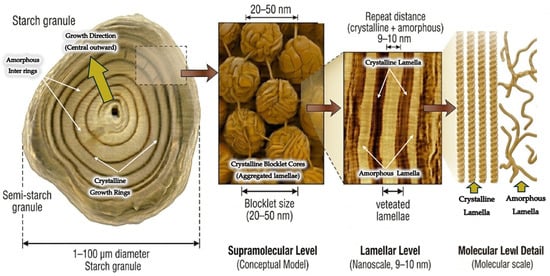
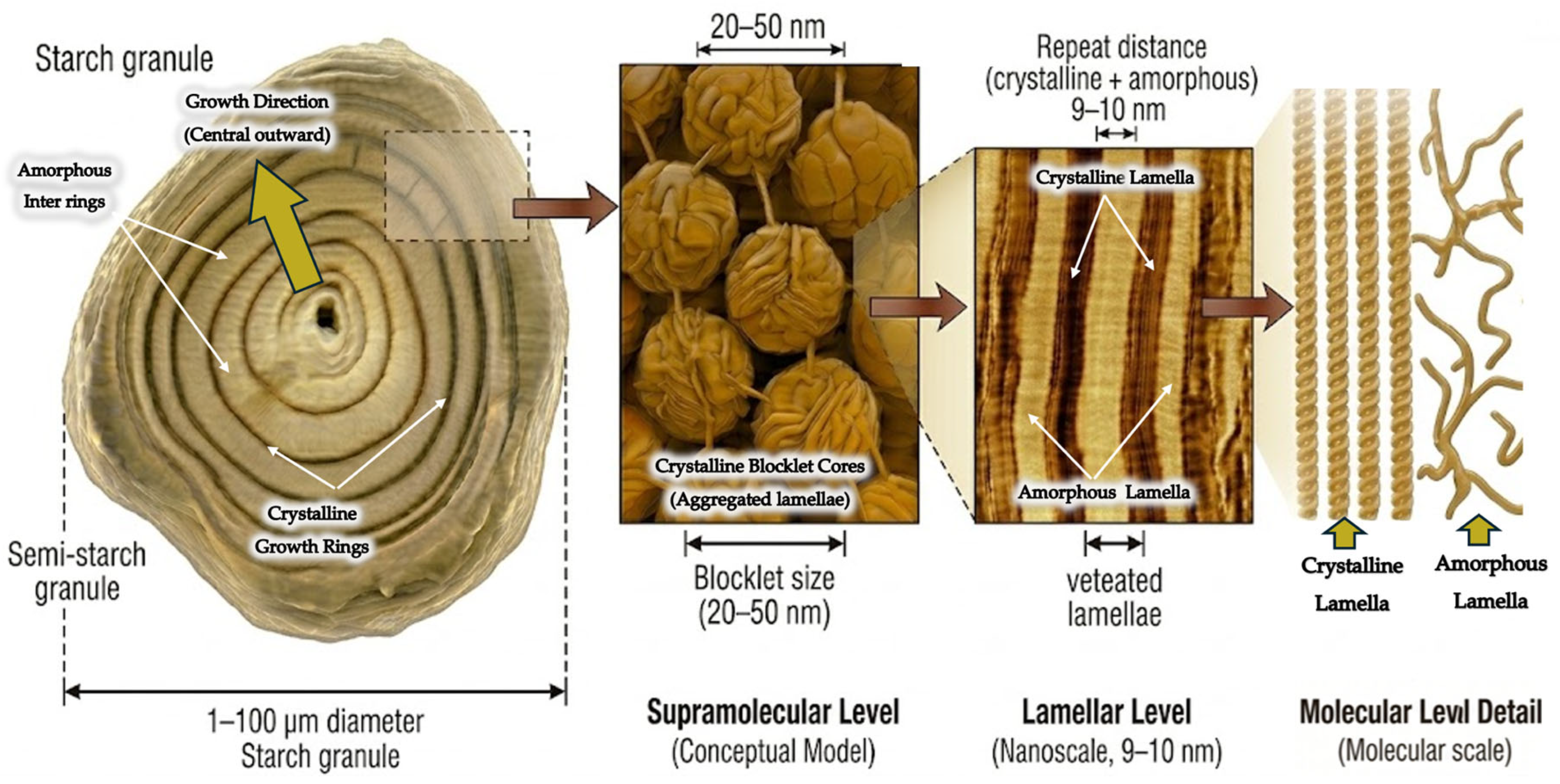
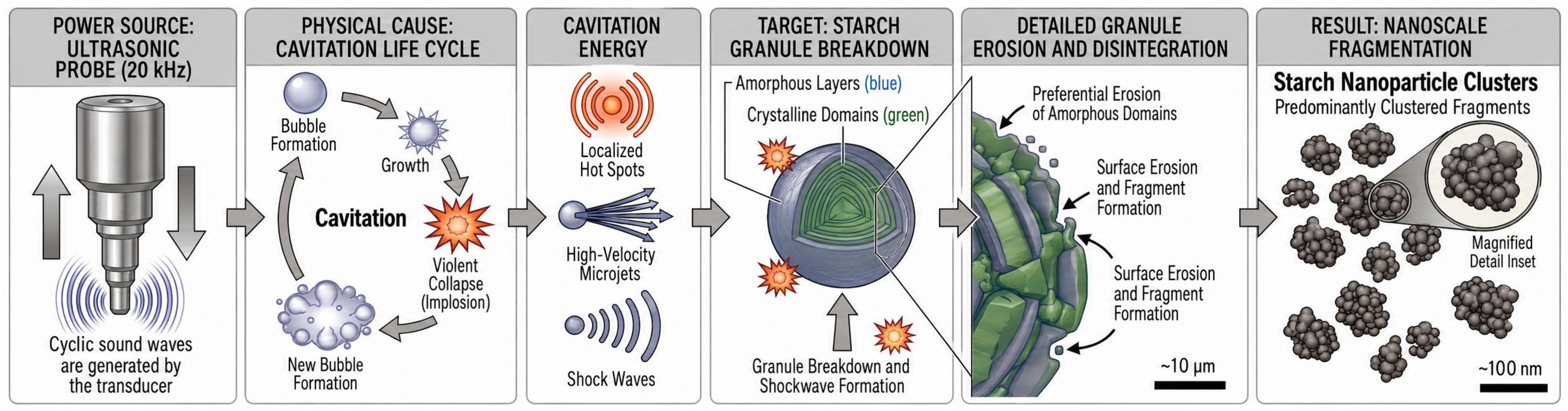
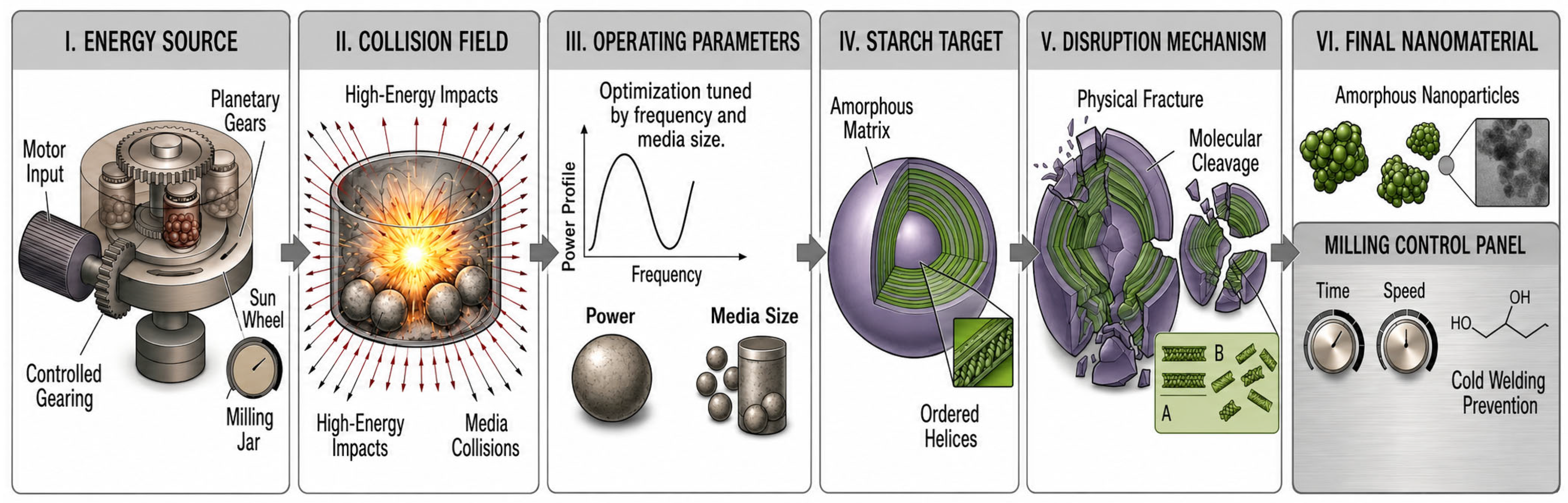
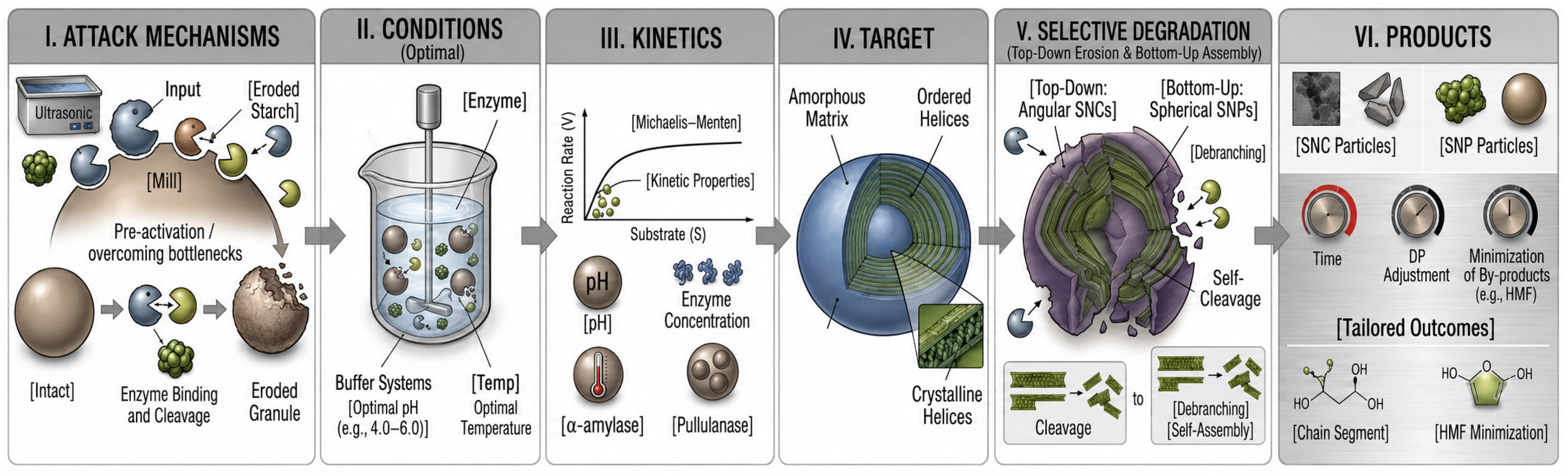
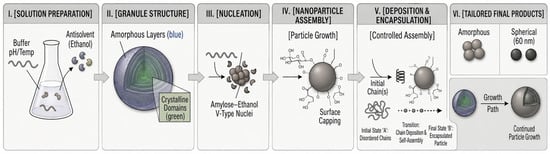
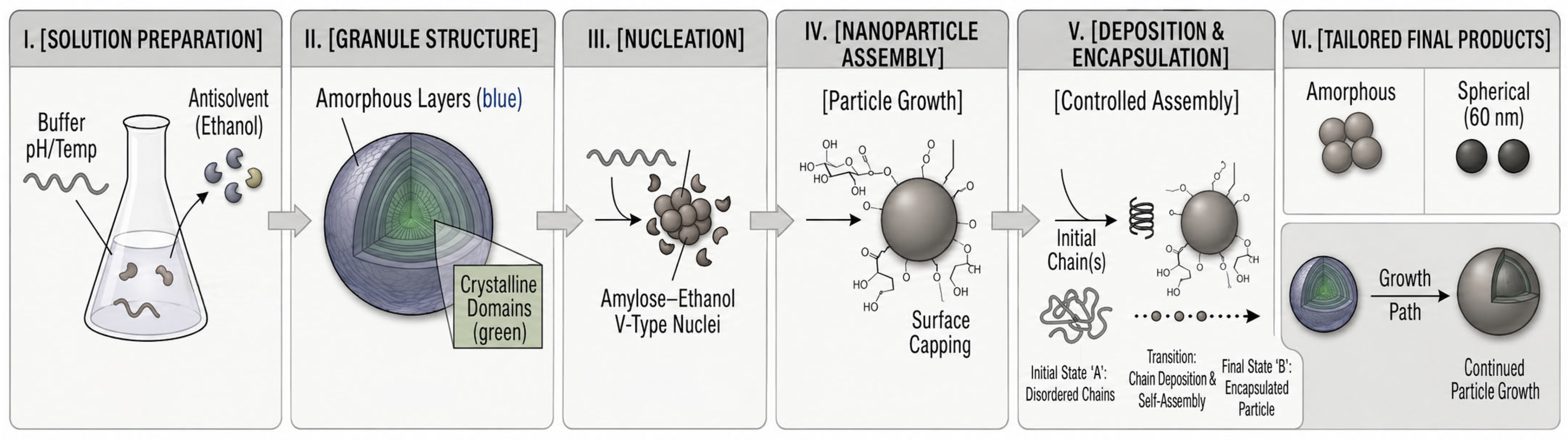

Disclaimer/Publisher’s Note: The statements, opinions and data contained in all publications are solely those of the individual author(s) and contributor(s) and not of MDPI and/or the editor(s). MDPI and/or the editor(s) disclaim responsibility for any injury to people or property resulting from any ideas, methods, instructions or products referred to in the content. |
© 2026 by the authors. Licensee MDPI, Basel, Switzerland. This article is an open access article distributed under the terms and conditions of the Creative Commons Attribution (CC BY) license.