

Polysaccharide-Modified Liposomes: Advances in Surface Engineering for Targeted Drug Delivery




Abstract
1. Introduction
2. Materials and Methods
3. Surface Modification of Liposomes: Methods, Interactions and Functions
3.1. Methods of Surface Modification
3.2. Interaction Mechanisms Between Coating Agents and Liposomes
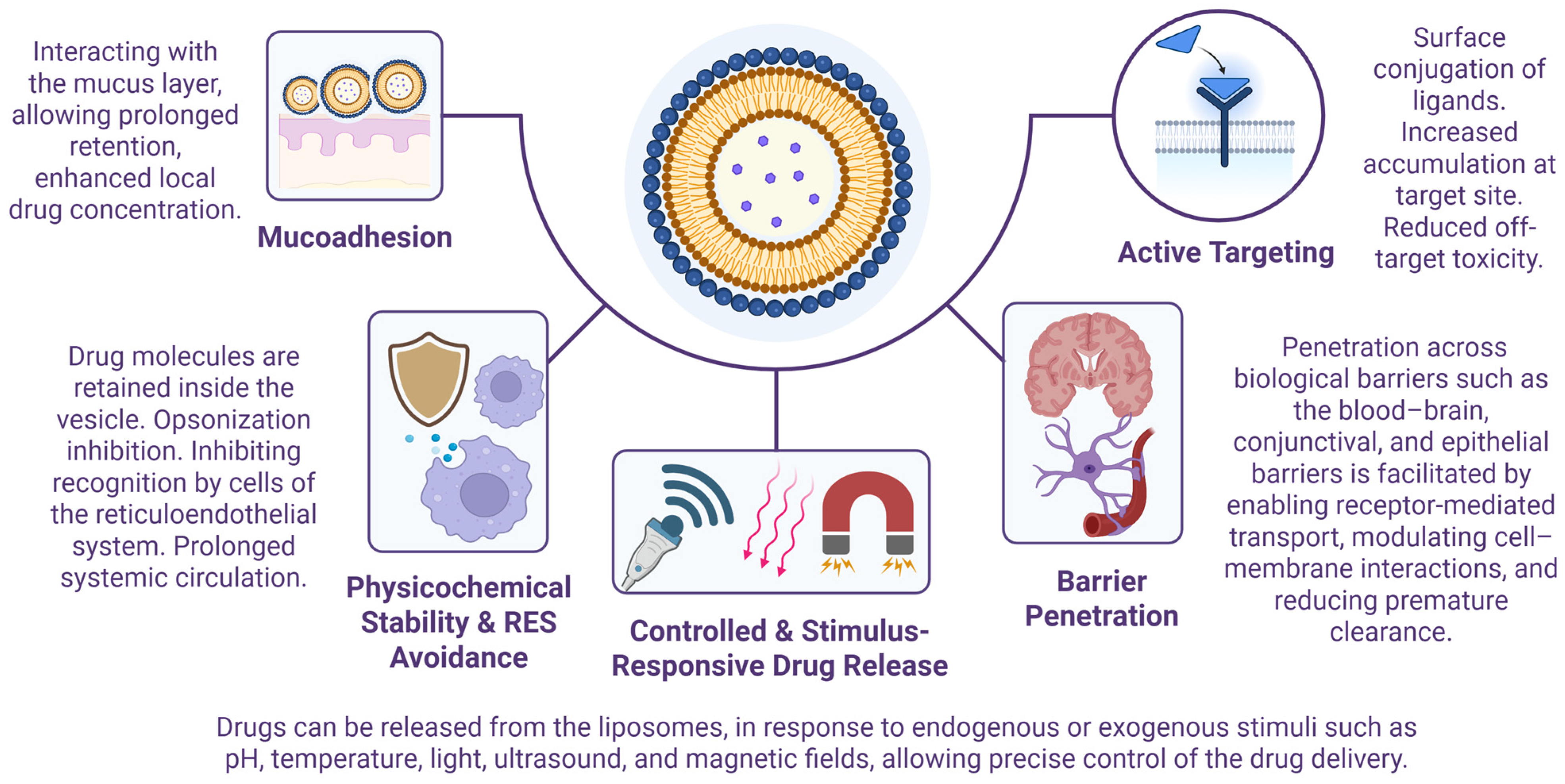
3.3. Functional Outcomes of Surface Modification
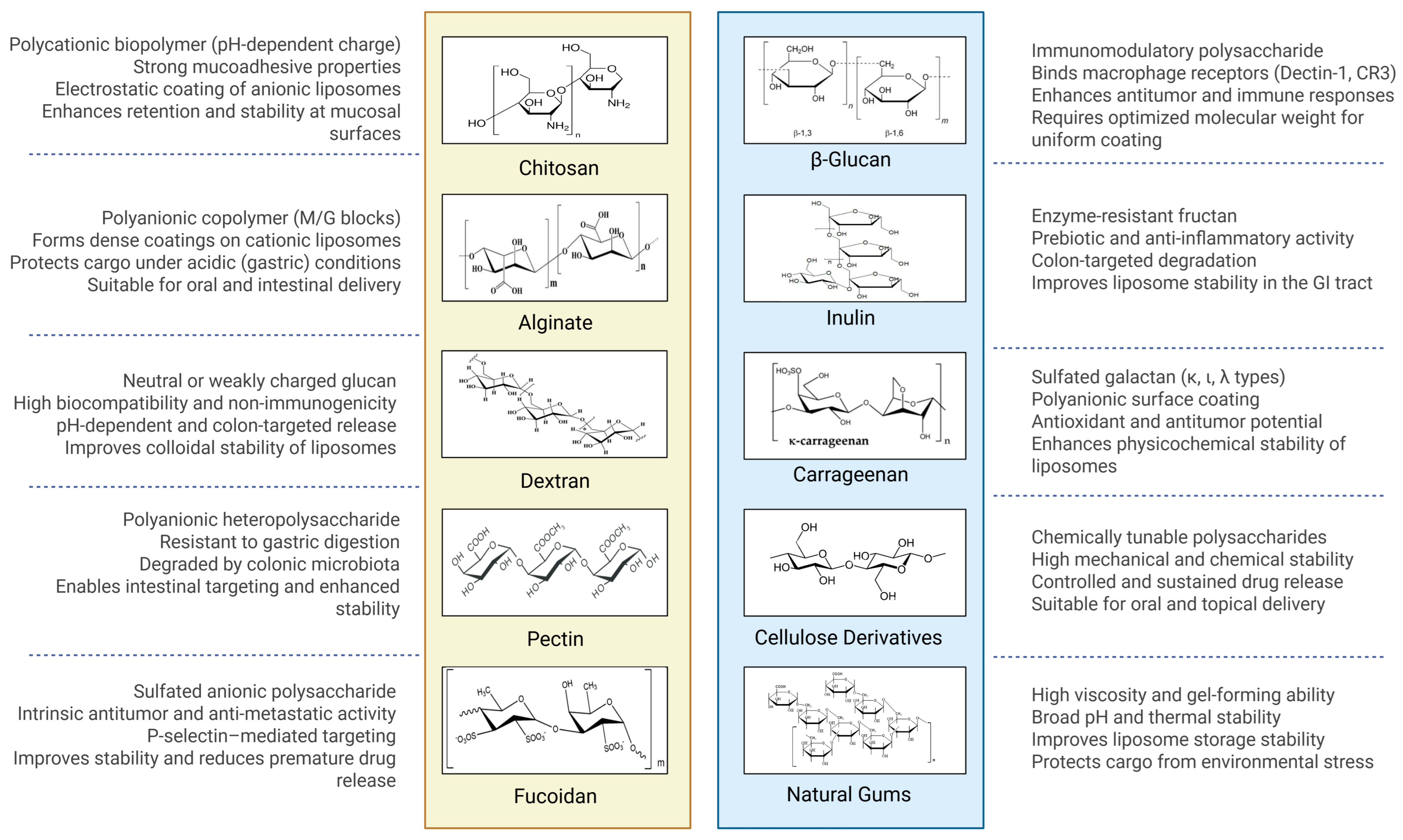
4. Polysaccharides Used for Surface Modification of Liposomes
4.1. Chitosan
4.2. Alginate
4.3. Dextran
4.4. Pectin
4.5. Fucoidan
4.6. Beta-Glucan
4.7. Inulin
4.8. Carrageenan
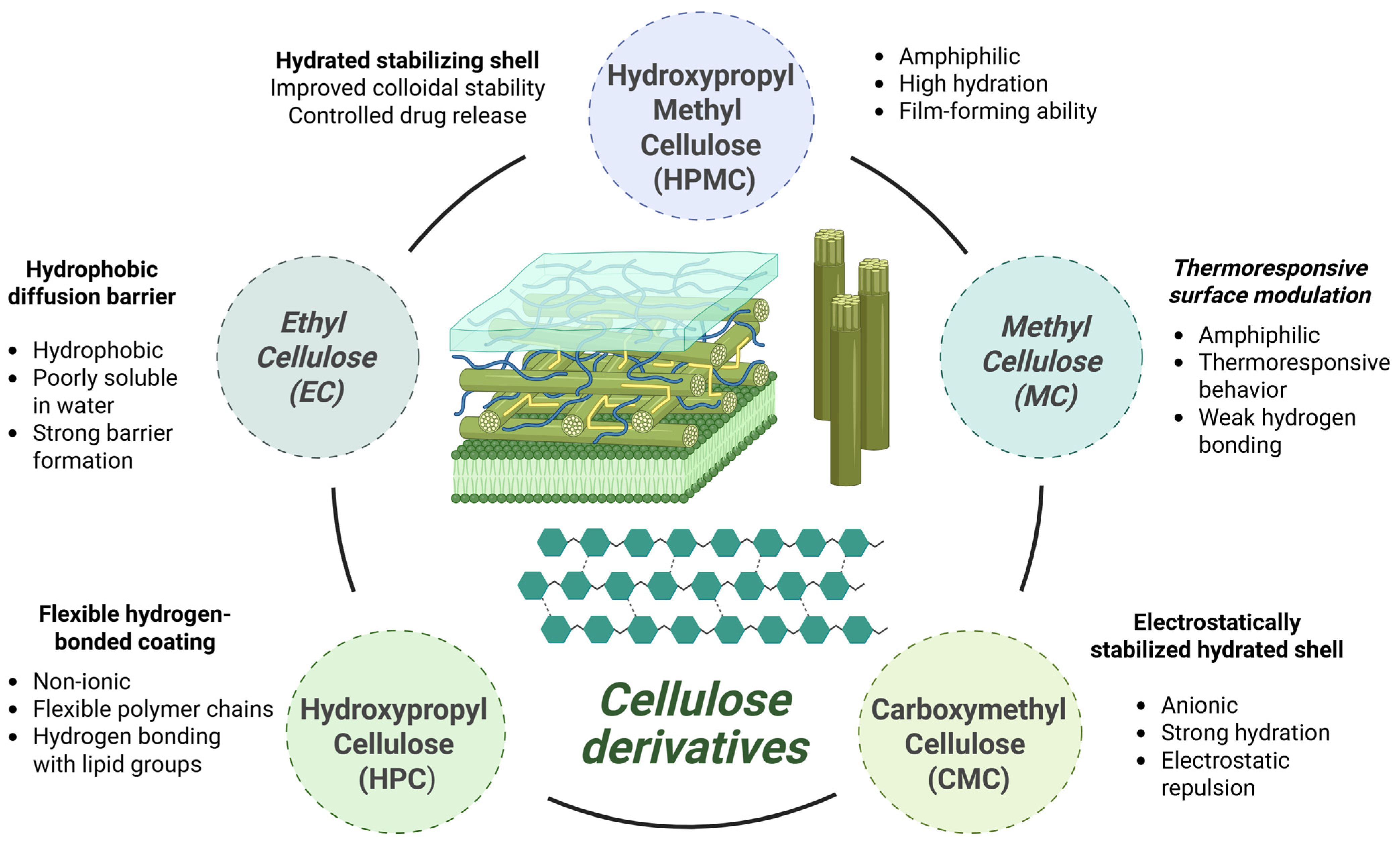
4.9. Cellulose
4.10. Natural Gums
5. Conclusions
Supplementary Materials
Author Contributions
Funding
Institutional Review Board Statement
Informed Consent Statement
Data Availability Statement
Acknowledgments
Conflicts of Interest
References
- Hoang, C.N.M.; Nguyen, S.H.; Tran, M.T. Nanoparticles in Cancer Therapy: Strategies to Penetrate and Modulate the Tumor Microenvironment—A Review. Smart Mater. Med. 2025, 6, 270–284. [Google Scholar] [CrossRef]
- Izadiyan, Z.; Misran, M.; Kalantari, K.; Webster, T.; Kia, P.; Basrowi, N.; Rasouli, E.; Shameli, K. Advancements in Liposomal Nanomedicines: Innovative Formulations, Therapeutic Applications, and Future Directions in Precision Medicine. Int. J. Nanomed. 2025, 20, 1213–1262. [Google Scholar] [CrossRef] [PubMed]
- Semple, S.C.; Harasym, T.O.; Clow, K.A.; Ansell, S.M.; Klimuk, S.K.; Hope, M.J. Immunogenicity and Rapid Blood Clearance of Liposomes Containing Polyethylene Glycol-Lipid Conjugates and Nucleic Acid. J. Pharmacol. Exp. Ther. 2005, 312, 1020–1026. [Google Scholar] [CrossRef] [PubMed]
- Sobol, Ż.; Chiczewski, R.; Wątróbska-Świetlikowska, D. Advances in Liposomal Drug Delivery: Multidirectional Perspectives on Overcoming Biological Barriers. Pharmaceutics 2025, 17, 885. [Google Scholar] [CrossRef]
- Kyung-Oh, D.; Yeo, Y. Application of Polysaccharides for Surface Modification of Nanomedicines. Ther. Deliv. 2012, 3, 1447–1456. [Google Scholar] [CrossRef]
- Ly, P.-D.; Ly, K.-N.; Phan, H.-L.; Nguyen, H.H.T.; Duong, V.-A.; Nguyen, H.V. Recent Advances in Surface Decoration of Nanoparticles in Drug Delivery. Front. Nanotechnol. 2024, 6, 1456939. [Google Scholar] [CrossRef]
- Gunning, A.P.; Bongaerts, R.J.; Morris, V.J. Recognition of galactan components of pectin by galectin-3. FASEB J. 2009, 23, 415–424. [Google Scholar] [CrossRef]
- Peng, P.; Chen, Z.; Wang, M.; Wen, B.; Deng, X. Polysaccharide-modified Liposomes and Their Application in Cancer Research. Chem. Biol. Drug Des. 2023, 101, 998–1011. [Google Scholar] [CrossRef]
- Page, M.J.; McKenzie, J.E.; Bossuyt, P.M.; Boutron, I.; Hoffmann, T.C.; Mulrow, C.D.; Shamseer, L.; Tetzlaff, J.M.; Akl, E.A.; Brennan, S.E.; et al. The PRISMA 2020 Statement: An Updated Guideline for Reporting Systematic Reviews. BMJ 2021, 372, n71. [Google Scholar] [CrossRef]
- Lima, P.H.C.D.; Butera, A.P.; Cabeça, L.F.; Ribeiro-Viana, R.M. Liposome Surface Modification by Phospholipid Chemical Reactions. Chem. Phys. Lipids 2021, 237, 105084. [Google Scholar] [CrossRef]
- e Silva, A.T.M.; Maia, A.L.C.; De Oliveira Silva, J.; De Barros, A.L.B.; Soares, D.C.F.; De Magalhães, M.T.Q.; José Alves, R.; Ramaldes, G.A. Synthesis of Cholesterol-Based Neoglycoconjugates and Their Use in the Preparation of Liposomes for Active Liver Targeting. Carbohydr. Res. 2018, 465, 52–57. [Google Scholar] [CrossRef] [PubMed]
- Lee, R.J.; Zhang, M.; Yung, B.; Li, H.; Zhou, C.; Lee, L.J.; Zhou, X. Lactosylated Liposomes for Targeted Delivery of Doxorubicin to Hepatocellular Carcinoma. Int. J. Nanomed. 2012, 7, 5465. [Google Scholar] [CrossRef] [PubMed]
- Sharmin, A.; Salassa, L.; Rosenberg, E.; Ross, J.B.A.; Abbott, G.; Black, L.; Terwilliger, M.; Brooks, R. Photophysical Studies of Bioconjugated Ruthenium Metal–Ligand Complexes Incorporated in Phospholipid Membrane Bilayers. Inorg. Chem. 2013, 52, 10835–10845. [Google Scholar] [CrossRef] [PubMed]
- Silvius, J.R.; Leventis, R. A Novel “Prebinding” Strategy Dramatically Enhances Sortase-Mediated Coupling of Proteins to Liposomes. Bioconjugate Chem. 2017, 28, 1271–1282. [Google Scholar] [CrossRef]
- Xia, G.; An, Z.; Wang, Y.; Zhao, C.; Li, M.; Li, Z.; Ma, J. Synthesis of a Novel Polymeric Material Folate-Poly(2-Ethyl-2-Oxazoline)-Distearoyl Phosphatidyl Ethanolamine Tri-Block Polymer for Dual Receptor and pH-Sensitive Targeting Liposome. Chem. Pharm. Bull. 2013, 61, 390–398. [Google Scholar] [CrossRef]
- Hattori, Y.; Shimizu, S.; Ozaki, K.; Onishi, H. Effect of Cationic Lipid Type in Folate-PEG-Modified Cationic Liposomes on Folate Receptor-Mediated siRNA Transfection in Tumor Cells. Pharmaceutics 2019, 11, 181. [Google Scholar] [CrossRef]
- Cao, Y.; Dong, X.; Chen, X. Polymer-Modified Liposomes for Drug Delivery: From Fundamentals to Applications. Pharmaceutics 2022, 14, 778. [Google Scholar] [CrossRef]
- Fujimoto, K.; Toyoda, T.; Fukui, Y. Preparation of Bionanocapsules by the Layer-by-Layer Deposition of Polypeptides onto a Liposome. Macromolecules 2007, 40, 5122–5128. [Google Scholar] [CrossRef]
- Takeuchi, H.; Kojima, H.; Yamamoto, H.; Kawashima, Y. Evaluation of Circulation Profiles of Liposomes Coated with Hydrophilic Polymers Having Different Molecular Weights in Rats. J. Control. Release 2001, 75, 83–91. [Google Scholar] [CrossRef]
- Xie, A.F.; Granick, S. Phospholipid Membranes as Substrates for Polymer Adsorption. Nat. Mater. 2002, 1, 129–133. [Google Scholar] [CrossRef]
- Borges, J.; Mano, J.F. Molecular Interactions Driving the Layer-by-Layer Assembly of Multilayers. Chem. Rev. 2014, 114, 8883–8942. [Google Scholar] [CrossRef] [PubMed]
- Zhao, S.; Caruso, F.; Dähne, L.; Decher, G.; De Geest, B.G.; Fan, J.; Feliu, N.; Gogotsi, Y.; Hammond, P.T.; Hersam, M.C.; et al. The Future of Layer-by-Layer Assembly: A Tribute to ACS Nano Associate Editor Helmuth Möhwald. ACS Nano 2019, 13, 6151–6169. [Google Scholar] [CrossRef] [PubMed]
- Alkekhia, D.; Hammond, P.T.; Shukla, A. Layer-by-Layer Biomaterials for Drug Delivery. Annu. Rev. Biomed. Eng. 2020, 22, 1–24. [Google Scholar] [CrossRef] [PubMed]
- Ruano, M.; Mateos-Maroto, A.; Ortega, F.; Ritacco, H.; Rubio, J.E.F.; Guzmán, E.; Rubio, R.G. Fabrication of Robust Capsules by Sequential Assembly of Polyelectrolytes onto Charged Liposomes. Langmuir 2021, 37, 6189–6200. [Google Scholar] [CrossRef]
- Kashcooli, Y.; Park, K.; Bose, A.; Greenfield, M.; Bothun, G.D. Patchy Layersomes Formed by Layer-by-Layer Coating of Liposomes with Strong Biopolyelectrolytes. Biomacromolecules 2016, 17, 3838–3844. [Google Scholar] [CrossRef]
- Lee, S.-M.; Chen, H.; Dettmer, C.M.; O’Halloran, T.V.; Nguyen, S.T. Polymer-Caged Lipsomes: A pH-Responsive Delivery System with High Stability. J. Am. Chem. Soc. 2007, 129, 15096–15097. [Google Scholar] [CrossRef]
- Sriwidodo; Umar, A.K.; Wathoni, N.; Zothantluanga, J.H.; Das, S.; Luckanagul, J.A. Liposome-Polymer Complex for Drug Delivery System and Vaccine Stabilization. Heliyon 2022, 8, e08934. [Google Scholar] [CrossRef]
- Pasquardini, L.; Lunelli, L.; Vanzetti, L.; Anderle, M.; Pederzolli, C. Immobilization of Cationic Rifampicin-Loaded Liposomes on Polystyrene for Drug-Delivery Applications. Colloids Surf. B Biointerfaces 2008, 62, 265–272. [Google Scholar] [CrossRef]
- Chen, Y.; Xia, G.; Zhao, Z.; Xue, F.; Gu, Y.; Chen, C.; Zhang, Y. 7,8-Dihydroxyflavone Nano-Liposomes Decorated by Crosslinked and Glycosylated Lactoferrin: Storage Stability, Antioxidant Activity, in Vitro Release, Gastrointestinal Digestion and Transport in Caco-2 Cell Monolayers. J. Funct. Foods 2020, 65, 103742. [Google Scholar] [CrossRef]
- Simões, M.G.; Hugo, A.; Alves, P.; Pérez, P.F.; Gómez-Zavaglia, A.; Simões, P.N. Long Term Stability and Interaction with Epithelial Cells of Freeze-Dried pH-Responsive Liposomes Functionalized with Cholesterol-Poly(Acrylic Acid). Colloids Surf. B Biointerfaces 2018, 164, 50–57. [Google Scholar] [CrossRef]
- ElBayoumi, T.A.; Torchilin, V.P. Current Trends in Liposome Research. In Liposomes; Weissig, V., Ed.; Methods in Molecular Biology; Humana Press: Totowa, NJ, USA, 2010; Volume 605, pp. 1–27. ISBN 978-1-60327-359-6. [Google Scholar]
- Chiang, Y.-T.; Lyu, S.-Y.; Wen, Y.-H.; Lo, C.-L. Preparation and Characterization of Electrostatically Crosslinked Polymer–Liposomes in Anticancer Therapy. Int. J. Mol. Sci. 2018, 19, 1615. [Google Scholar] [CrossRef]
- De Leo, V.; Milano, F.; Agostiano, A.; Catucci, L. Recent Advancements in Polymer/Liposome Assembly for Drug Delivery: From Surface Modifications to Hybrid Vesicles. Polymers 2021, 13, 1027. [Google Scholar] [CrossRef]
- Charoensit, P.; Pompimon, W.; Khorana, N.; Sungthongjeen, S. Effect of Amide Linkage of PEG-Lipid Conjugates on the Stability and Cytotoxic Activity of Goniodiol Loaded in PEGylated Liposomes. J. Drug Deliv. Sci. Technol. 2019, 50, 1–8. [Google Scholar] [CrossRef]
- Karn, P.R.; Vanić, Z.; Pepić, I.; Škalko-Basnet, N. Mucoadhesive liposomal delivery systems: The choice of coating material. Drug Dev. Ind. Pharm. 2011, 37, 482–488. [Google Scholar] [CrossRef] [PubMed]
- Alcantara, K.P.; Pajimna, R.M.B.; Aliga, P.J.S.; Malabanan, J.W.T.; Tangwongsiri, C.; Haworth, I.S.; Rojsitthisak, P. Review of chitosan-coated nanoscale liposomes for enhanced drug delivery. ACS Appl. Nano Mater. 2025, 8, 21125–21147. [Google Scholar] [CrossRef]
- Gangadaran, P.; Hong, C.M.; Ahn, B.-C. An Update on in Vivo Imaging of Extracellular Vesicles as Drug Delivery Vehicles. Front. Pharmacol. 2018, 9, 169. [Google Scholar] [CrossRef]
- Poornima, K.; Puri, A.; Gupta, A. Understanding the Stealth Properties of PEGylated Lipids: A Mini-Review. Int. J. Lipids 2020, 1, 1–20. [Google Scholar] [CrossRef]
- Gubernator, J. Active Methods of Drug Loading into Liposomes: Recent Strategies for Stable Drug Entrapment and Increased in Vivo Activity. Expert Opin. Drug Deliv. 2011, 8, 565–580. [Google Scholar] [CrossRef]
- Perez, A.T.; Domenech, G.H.; Frankel, C.; Vogel, C.L. Pegylated Liposomal Doxorubicin (Doxil®®) for Metastatic Breast Cancer: The Cancer Research Network, Inc., Experience. Cancer Investig. 2002, 20, 22–29. [Google Scholar] [CrossRef]
- Juang, V.; Gan, J.; Xia, Z.; Wang, Y.; Schwendeman, A. Development and Optimization of an in Vitro Release Assay for Evaluation of Liposomal Irinotecan Formulation. Int. J. Pharm. 2024, 667, 124854. [Google Scholar] [CrossRef]
- Jaradat, E.; Weaver, E.; Meziane, A.; Lamprou, D.A. Synthesis and Characterization of Paclitaxel-Loaded PEGylated Liposomes by the Microfluidics Method. Mol. Pharm. 2023, 20, 6184–6196. [Google Scholar] [CrossRef]
- Momekova, D.; Rangelov, S.; Yanev, S.; Nikolova, E.; Konstantinov, S.; Romberg, B.; Storm, G.; Lambov, N. Long-Circulating, pH-Sensitive Liposomes Sterically Stabilized by Copolymers Bearing Short Blocks of Lipid-Mimetic Units. Eur. J. Pharm. Sci. 2007, 32, 308–317. [Google Scholar] [CrossRef] [PubMed]
- Ichihara, M.; Shimizu, T.; Imoto, A.; Hashiguchi, Y.; Uehara, Y.; Ishida, T.; Kiwada, H. Anti-PEG IgM response against PEGylated liposomes in mice and rats. Pharmaceutics 2010, 3, 1–11. [Google Scholar] [CrossRef] [PubMed]
- Zhang, Q.; Deng, C.; Fu, Y.; Sun, X.; Gong, T.; Zhang, Z. Repeated administration of hyaluronic acid coated liposomes with improved pharmacokinetics and reduced immune response. Mol. Pharm. 2016, 13, 1800–1808. [Google Scholar] [CrossRef] [PubMed]
- Kean, T.; Thanou, M. Biodegradation, biodistribution and toxicity of chitosan. Adv. Drug Deliv. Rev. 2010, 62, 3–11. [Google Scholar] [CrossRef]
- Dicker, K.T.; Gurski, L.A.; Pradhan-Bhatt, S.; Witt, R.L.; Farach-Carson, M.C.; Jia, X. Hyaluronan: A simple polysaccharide with diverse biological functions. Acta Biomater. 2014, 10, 1558–1570. [Google Scholar] [CrossRef]
- Huang, Y.Z.; Gao, J.Q.; Liang, W.Q.; Nakagawa, S. Preparation and characterization of liposomes encapsulating chitosan nanoparticles. Biol. Pharm. Bull. 2005, 28, 387–390. [Google Scholar] [CrossRef][Green Version]
- Riaz, M.; Riaz, M.; Zhang, X.; Lin, C.; Wong, K.; Chen, X.; Zhang, G.; Lu, A.; Yang, Z. Surface Functionalization and Targeting Strategies of Liposomes in Solid Tumor Therapy: A Review. Int. J. Mol. Sci. 2018, 19, 195. [Google Scholar] [CrossRef]
- Kato, Y.; Ozawa, S.; Miyamoto, C.; Maehata, Y.; Suzuki, A.; Maeda, T.; Baba, Y. Acidic Extracellular Microenvironment and Cancer. Cancer Cell Int. 2013, 13, 89. [Google Scholar] [CrossRef]
- Soares, D.C.F.; De Oliveira, M.C.; De Barros, A.L.B.; Cardoso, V.N.; Ramaldes, G.A. Liposomes Radiolabeled with 159Gd: In Vitro Antitumoral Activity, Biodistribution Study and Scintigraphic Image in Ehrlich Tumor Bearing Mice. Eur. J. Pharm. Sci. 2011, 43, 290–296. [Google Scholar] [CrossRef]
- Connor, J.; Norley, N.; Huang, L. Biodistribution of pH-Sensitive Immunoliposomes. Biochim. Biophys. Acta (BBA) Gen. Subj. 1986, 884, 474–481. [Google Scholar] [CrossRef]
- Jelezova, I.; Drakalska, E.; Momekova, D.; Shalimova, N.; Momekov, G.; Konstantinov, S.; Rangelov, S.; Pispas, S. Curcumin Loaded pH-Sensitive Hybrid Lipid/Block Copolymer Nanosized Drug Delivery Systems. Eur. J. Pharm. Sci. 2015, 78, 67–78. [Google Scholar] [CrossRef] [PubMed]
- Lee, S.-M.; Lee, O.-S.; O’Halloran, T.V.; Schatz, G.C.; Nguyen, S.T. Triggered Release of Pharmacophores from [Ni(HAsO3)]-Loaded Polymer-Caged Nanobin Enhances Pro-Apoptotic Activity: A Combined Experimental and Theoretical Study. ACS Nano 2011, 5, 3961–3969. [Google Scholar] [CrossRef]
- Kumar, S.; Dutta, J.; Dutta, P.K.; Koh, J. A systematic study on chitosan-liposome based systems for biomedical applications. Int. J. Biol. Macromol. 2020, 160, 470–481. [Google Scholar] [CrossRef] [PubMed]
- Abri Aghdam, M.; Bagheri, R.; Mosafer, J.; Baradaran, B.; Hashemzaei, M.; Baghbanzadeh, A.; De La Guardia, M.; Mokhtarzadeh, A. Recent Advances on Thermosensitive and pH-Sensitive Liposomes Employed in Controlled Release. J. Control. Release 2019, 315, 1–22. [Google Scholar] [CrossRef]
- Hossann, M.; Kneidl, B.; Peller, M.; Lindner, L.; Winter, G. Thermosensitive Liposomal Drug Delivery Systems: State of the Art Review. Int. J. Nanomed. 2014, 9, 4387. [Google Scholar] [CrossRef]
- Kari, O.K.; Tavakoli, S.; Parkkila, P.; Baan, S.; Savolainen, R.; Ruoslahti, T.; Johansson, N.G.; Ndika, J.; Alenius, H.; Viitala, T.; et al. Light-Activated Liposomes Coated with Hyaluronic Acid as a Potential Drug Delivery System. Pharmaceutics 2020, 12, 763. [Google Scholar] [CrossRef]
- Ichikawa, H.; Fukumori, Y. Negatively thermosensitive release of drug from microcapsules with hydroxypropyl cellulose membranes prepared by the Wurster process. Chem. Pharm. Bull. 1999, 47, 1102–1107. [Google Scholar] [CrossRef]
- Ta, T.; Convertine, A.J.; Reyes, C.R.; Stayton, P.S.; Porter, T.M. Thermosensitive liposomes modified with poly (N-isopropylacrylamide-co-propylacrylic acid) copolymers for triggered release of doxorubicin. Biomacromolecules 2010, 11, 1915–1920. [Google Scholar] [CrossRef]
- Pippa, N.; Meristoudi, A.; Pispas, S.; Demetzos, C. Temperature-dependent drug release from DPPC: C12H25-PNIPAM-COOH liposomes: Control of the drug loading/release by modulation of the nanocarriers’ components. Int. J. Pharm. 2015, 485, 374–382. [Google Scholar] [CrossRef]
- Kono, K.; Kaiden, T.; Yuba, E.; Sakanishi, Y.; Harada, A. Synthesis of Oligo(Ethylene Glycol)-Modified Hyperbranched Poly(Glycidol)s for Dual Sensitization of Liposomes to pH and Temperature. J. Taiwan Inst. Chem. Eng. 2014, 45, 3054–3061. [Google Scholar] [CrossRef]
- Torres, C.E.; Cifuentes, J.; Gómez, S.C.; Quezada, V.; Giraldo, K.A.; Puentes, P.R.; Rueda-Gensini, L.; Serna, J.A.; Muñoz-Camargo, C.; Reyes, L.H.; et al. Microfluidic Synthesis and Purification of Magnetoliposomes for Potential Applications in the Gastrointestinal Delivery of Difficult-to-Transport Drugs. Pharmaceutics 2022, 14, 315. [Google Scholar] [CrossRef]
- T.S., A.; Lu, Y.-J.; Chen, J.-P. Optimization of the Preparation of Magnetic Liposomes for the Combined Use of Magnetic Hyperthermia and Photothermia in Dual Magneto-Photothermal Cancer Therapy. Int. J. Mol. Sci. 2020, 21, 5187. [Google Scholar] [CrossRef] [PubMed]
- Zhou, L.; Zou, M.; Yang, J.; Yan, H.; Zhang, X.; Xia, X. Aptamer-Conjugated Dual-Loaded Liposomes Exhibit Synergistic Effects in Hepatic Tumor Treatment. Appl. Mater. Today 2025, 43, 102659. [Google Scholar] [CrossRef]
- Li, J.; Yan, A.; Wang, M.; Li, D. Aptamer and Phosphorothioated DNA Engineered Liposomes as a Targeted Intracellular Protein Delivery System. Chin. J. Anal. Chem. 2024, 52, 100400. [Google Scholar] [CrossRef]
- Kim, M.; Lee, J.S.; Kim, W.; Lee, J.H.; Jun, B.-H.; Kim, K.-S.; Kim, D.-E. Aptamer-Conjugated Nano-Liposome for Immunogenic Chemotherapy with Reversal of Immunosuppression. J. Control. Release 2022, 348, 893–910. [Google Scholar] [CrossRef]
- Sun, L.; Zhao, L.; Huang, Z.; Wu, F.; Pan, M.; Yu, D. Electroformation and Characterization of Soybean Protein Isolate Hydrolysates-Modified Liposomes. Food Hydrocoll. 2025, 160, 110781. [Google Scholar] [CrossRef]
- Liu, C.; Wen, C.; Wang, X.; Wei, Y.; Xu, C.; Mu, X.; Zhang, L.; Wang, X.; Tian, J.; Ma, P.; et al. Golgi Membrane Protein GP73 Modified-Liposome Mediates the Antitumor Effect of Survivin Promoter-Driven HSVtk in Hepatocellular Carcinoma. Exp. Cell Res. 2019, 383, 111496. [Google Scholar] [CrossRef]
- Wang, X.; Cui, L.; Kong, L.; Zou, S.; Zhao, X. ApoE-T807-Modified Tanshinone IIA Liposomes Enhance Cognitive Function in APP/PS1 Mice by Inhibiting Tau Phosphorylation via the PI3K/AKT Signaling Pathway. J. Drug Deliv. Sci. Technol. 2025, 112, 107219. [Google Scholar] [CrossRef]
- Meagher, R.B.; Lewis, Z.A.; Ambati, S.; Lin, X. DectiSomes: C-Type Lectin Receptor-Targeted Liposomes as Pan-Antifungal Drugs. Adv. Drug Deliv. Rev. 2023, 196, 114776. [Google Scholar] [CrossRef]
- Hirata, Y.; Tashima, R.; Mitsuhashi, N.; Yoneda, S.; Ozono, M.; Fukuta, T.; Majima, E.; Kogure, K. A Simple, Fast, and Orientation-Controllable Technology for Preparing Antibody-Modified Liposomes. Int. J. Pharm. 2021, 607, 120966. [Google Scholar] [CrossRef] [PubMed]
- Liu, M.; Li, M.; Sun, S.; Li, B.; Du, D.; Sun, J.; Cao, F.; Li, H.; Jia, F.; Wang, T.; et al. The Use of Antibody Modified Liposomes Loaded with AMO-1 to Deliver Oligonucleotides to Ischemic Myocardium for Arrhythmia Therapy. Biomaterials 2014, 35, 3697–3707. [Google Scholar] [CrossRef] [PubMed]
- Elbayoumi, T.A.; Torchilin, V.P. Enhanced Cytotoxicity of Monoclonal Anticancer Antibody 2C5-Modified Doxorubicin-Loaded PEGylated Liposomes against Various Tumor Cell Lines. Eur. J. Pharm. Sci. 2007, 32, 159–168. [Google Scholar] [CrossRef] [PubMed]
- Qhattal, H.S.S.; Liu, X. Characterization of CD44-mediated cancer cell uptake and intracellular distribution of hyaluronan-grafted liposomes. Mol. Pharm. 2011, 8, 1233–1246. [Google Scholar] [CrossRef]
- Arpicco, S.; Lerda, C.; Pozza, E.D.; Costanzo, C.; Tsapis, N.; Stella, B.; Donadelli, M.; Dando, I.; Fattal, E.; Cattel, L.; et al. Hyaluronic acid-coated liposomes for active targeting of gemcitabine. Eur. J. Pharm. Biopharm. 2013, 85, 373–380. [Google Scholar] [CrossRef]
- Sharma, R.; Yadav, V.; Katari, O.; Jain, S. Hyaluronic acid functionalized liposomes for co-delivery of paclitaxel and ursolic acid for enhanced efficacy against triple negative breast cancer. J. Drug Deliv. Sci. Technol. 2025, 104, 106451. [Google Scholar] [CrossRef]
- Wei, P.; Ye, Z.; Cao, S.; Bai, S.; Seeberger, P.H.; Yin, J.; Hu, J. Combination therapy with amphotericin B and doxorubicin encapsulated in mannosylated nanomicelles for visceral leishmaniasis. Colloids Surf. A Physicochem. Eng. Asp. 2020, 598, 124804. [Google Scholar] [CrossRef]
- Nishikawa, M.; Takemura, S.; Takakura, Y.; Hashida, M. Targeted delivery of plasmid DNA to hepatocytes in vivo: Optimization of the pharmacokinetics of plasmid DNA/galactosylated poly(L-lysine) complexes by controlling their physicochemical properties. J. Pharmacol. Exp. Ther. 1998, 287, 408–415. [Google Scholar] [CrossRef]
- Björgvinsdóttir, U.J.; Larsen, J.B.; Bak, M.; Andresen, T.L.; Münter, R. Targeting Antibodies Dissociate from Drug Delivery Liposomes during Blood Circulation. J. Control. Release 2025, 379, 982–992. [Google Scholar] [CrossRef]
- Kumar, R.; Islam, T.; Nurunnabi, M. Mucoadhesive Carriers for Oral Drug Delivery. J. Control. Release 2022, 351, 504–559. [Google Scholar] [CrossRef]
- Zhang, Y.; Xiong, G.M.; Ali, Y.; Boehm, B.O.; Huang, Y.Y.; Venkatraman, S. Layer-by-Layer Coated Nanoliposomes for Oral Delivery of Insulin. Nanoscale 2021, 13, 776–789. [Google Scholar] [CrossRef] [PubMed]
- Gottesmann, M.; Goycoolea, F.M.; Steinbacher, T.; Menogni, T.; Hensel, A. Smart Drug Delivery against Helicobacter Pylori: Pectin-Coated, Mucoadhesive Liposomes with Antiadhesive Activity and Antibiotic Cargo. Appl. Microbiol. Biotechnol. 2020, 104, 5943–5957. [Google Scholar] [CrossRef] [PubMed]
- Forte, J.; Hanieh, P.N.; Poerio, N.; Olimpieri, T.; Ammendolia, M.G.; Fraziano, M.; Fabiano, M.G.; Marianecci, C.; Carafa, M.; Bordi, F.; et al. Mucoadhesive Rifampicin-Liposomes for the Treatment of Pulmonary Infection by Mycobacterium Abscessus: Chitosan or ε-Poly-L-Lysine Decoration. Biomolecules 2023, 13, 924. [Google Scholar] [CrossRef] [PubMed]
- Refai, H.; Hassan, D.; Abdelmonem, R. Development and Characterization of Polymer-Coated Liposomes for Vaginal Delivery of Sildenafil Citrate. Drug Deliv. 2017, 24, 278–288. [Google Scholar] [CrossRef]
- Narsinh, K.H.; Perez, E.; Haddad, A.F.; Young, J.S.; Savastano, L.; Villanueva-Meyer, J.E.; Winkler, E.; De Groot, J. Strategies to Improve Drug Delivery Across the Blood–Brain Barrier for Glioblastoma. Curr. Neurol. Neurosci. Rep. 2024, 24, 123–139. [Google Scholar] [CrossRef]
- Yuan, B.; Zhao, Y.; Dong, S.; Sun, Y.; Hao, F.; Xie, J.; Teng, L.; Lee, R.J.; Fu, Y.; Bi, Y. Cell-Penetrating Peptide-Coated Liposomes for Drug Delivery Across the Blood–Brain Barrier. Anticancer. Res. 2019, 39, 237–243. [Google Scholar] [CrossRef]
- Zhang, Y.; He, J.; Shen, L.; Wang, T.; Yang, J.; Li, Y.; Wang, Y.; Quan, D. Brain-Targeted Delivery of Obidoxime, Using Aptamer-Modified Liposomes, for Detoxification of Organophosphorus Compounds. J. Control. Release 2021, 329, 1117–1128. [Google Scholar] [CrossRef]
- Moiseev, R.V.; Kaldybekov, D.B.; Filippov, S.K.; Radulescu, A.; Khutoryanskiy, V.V. Maleimide-Decorated PEGylated Mucoadhesive Liposomes for Ocular Drug Delivery. Langmuir 2022, 38, 13870–13879. [Google Scholar] [CrossRef]
- Abu Elella, M.H.; Kolawole, O.M. Recent Advances in Modified Chitosan-Based Drug Delivery Systems for Transmucosal Applications: A Comprehensive Review. Int. J. Biol. Macromol. 2024, 277, 134531. [Google Scholar] [CrossRef]
- Gao, X.; Xiong, Y.; Chen, H.; Gao, X.; Dai, J.; Zhang, Y.; Zou, W.; Gao, Y.; Jiang, Z.; Han, B. Mucus Adhesion vs. Mucus Penetration? Screening Nanomaterials for Nasal Inhalation by MD Simulation. J. Control. Release 2023, 353, 366–379. [Google Scholar] [CrossRef]
- Haider, A.; Khan, S.; Iqbal, D.N.; Shrahili, M.; Haider, S.; Mohammad, K.; Mohammad, A.; Rizwan, M.; Kanwal, Q.; Mustafa, G. Advances in Chitosan-Based Drug Delivery Systems: A Comprehensive Review for Therapeutic Applications. Eur. Polym. J. 2024, 210, 112983. [Google Scholar] [CrossRef]
- Esposto, B.S.; Jauregi, P.; Tapia-Blácido, D.R.; Martelli-Tosi, M. Liposomes vs. Chitosomes: Encapsulating Food Bioactives. Trends Food Sci. Technol. 2021, 108, 40–48. [Google Scholar] [CrossRef]
- Peng, J.; Wang, Q.; Guo, M.; Liu, C.; Chen, X.; Tao, L.; Zhang, K.; Shen, X. Development of Inhalable Chitosan-Coated Oxymatrine Liposomes to Alleviate RSV-Infected Mice. Int. J. Mol. Sci. 2022, 23, 15909. [Google Scholar] [CrossRef] [PubMed]
- Mazzotta, E.; Marazioti, A.; Mourtas, S.; Muzzalupo, R.; Antimisiaris, S.G. Liposomes Coated with Novel Synthetic Bifunctional Chitosan Derivatives as Potential Carriers of Anticancer Drugs. Pharmaceutics 2024, 16, 319. [Google Scholar] [CrossRef] [PubMed]
- Kannavou, M.; Karali, K.; Katsila, T.; Siapi, E.; Marazioti, A.; Klepetsanis, P.; Calogeropoulou, T.; Charalampopoulos, I.; Antimisiaris, S.G. Development and Comparative In Vitro and In Vivo Study of BNN27 Mucoadhesive Liposomes and Nanoemulsions for Nose-to-Brain Delivery. Pharmaceutics 2023, 15, 419. [Google Scholar] [CrossRef]
- Gil-Gonzalo, R.; Durante-Salmerón, D.A.; Pouri, S.; Doncel-Pérez, E.; Alcántara, A.R.; Aranaz, I.; Acosta, N. Chitosan-Coated Liposome Formulations for Encapsulation of Ciprofloxacin and Etoposide. Pharmaceutics 2024, 16, 1036. [Google Scholar] [CrossRef]
- Metkar, S.P.; Fernandes, G.; Nikam, A.N.; Soman, S.; Birangal, S.; Seetharam, R.N.; Joshi, M.B.; Mutalik, S. Mannosylated-Chitosan-Coated Andrographolide Nanoliposomes for the Treatment of Hepatitis: In Vitro and In Vivo Evaluations. Membranes 2023, 13, 193. [Google Scholar] [CrossRef]
- Han, M.; Shen, N.; Tan, W.; Wang, X.; Liu, Y.; Liang, J.; Li, H.; Gao, Z. Layer-by-Layer Coated Probiotics with Chitosan and Liposomes Exhibit Enhanced Therapeutic Effects for DSS-Induced Colitis in Mice. Int. J. Biol. Macromol. 2024, 269, 132063. [Google Scholar] [CrossRef]
- Wen, Y.; Li, W.; Ma, S.; Sha, Y.; Sheng, J.; Li, L.; Tian, Y. Preparation and Characterization of Moringin-Loaded Chitosan-Coated Liposomes and Their Antibacterial Activity against Staphylococcus Aureus. Int. J. Biol. Macromol. 2024, 282, 136815. [Google Scholar] [CrossRef]
- Rubaka, C.; Gathirwa, J.W.; Malebo, H.M.; Swai, H.; Sibuyi, N.R.S.; Hilonga, A.; Dube, A. Chitosan-Coated Liposomes of Carrisa Spinarum Extract: Synthesis, Analysis and Anti-Pneumococcal Potency. Bioinspired Biomim. Nanobiomater. 2023, 12, 12–23. [Google Scholar] [CrossRef]
- Abourehab, M.A.S.; Rajendran, R.R.; Singh, A.; Pramanik, S.; Shrivastav, P.; Ansari, M.J.; Manne, R.; Amaral, L.S.; Deepak, A. Alginate as a Promising Biopolymer in Drug Delivery and Wound Healing: A Review of the State-of-the-Art. Int. J. Mol. Sci. 2022, 23, 9035. [Google Scholar] [CrossRef] [PubMed]
- Lai, J.; Azad, A.K.; Sulaiman, W.M.A.W.; Kumarasamy, V.; Subramaniyan, V.; Alshehade, S.A. Alginate-Based Encapsulation Fabrication Technique for Drug Delivery: An Updated Review of Particle Type, Formulation Technique, Pharmaceutical Ingredient, and Targeted Delivery System. Pharmaceutics 2024, 16, 370. [Google Scholar] [CrossRef] [PubMed]
- Wu, P.; Chen, L.; Chen, M.; Chiou, B.-S.; Xu, F.; Liu, F.; Zhong, F. Use of Sodium Alginate Coatings to Improve Bioavailability of Liposomes Containing DPP-IV Inhibitory Collagen Peptides. Food Chem. 2023, 414, 135685. [Google Scholar] [CrossRef] [PubMed]
- Zhong, H.; Xu, J.; Wang, L.; Abdullah; Hussain, M.; Chen, L.; Guan, R. Preparation, Physicochemical Characterization, Stability, and in Vitro Digestion Kinetics of Polysaccharide-Coated Cyanidin-3-O-Glucoside-Loaded Liposomes. Int. J. Biol. Macromol. 2025, 318, 145329. [Google Scholar] [CrossRef]
- Tan, F.; Li, H.; Zhang, K.; Xu, L.; Zhang, D.; Han, Y.; Han, J. Sodium Alginate/Chitosan-Coated Liposomes for Oral Delivery of Hydroxy-α-Sanshool: In Vitro and In Vivo Evaluation. Pharmaceutics 2023, 15, 2010. [Google Scholar] [CrossRef]
- Tan, X.; Liu, Y.; Wu, X.; Geng, M.; Teng, F. Layer-by-Layer Self-Assembled Liposomes Prepared Using Sodium Alginate and Chitosan: Insights into Vesicle Characteristics and Physicochemical Stability. Food Hydrocoll. 2024, 149, 109606. [Google Scholar] [CrossRef]
- Tan, X.; Liu, Y.; Shang, B.; Geng, M.; Teng, F. Layer-by-Layer Self-Assembled Liposomes Fabricated Using Sodium Alginate and Chitosan: Investigation of Co-Encapsulation of Folic Acid and Vitamin E. Int. J. Biol. Macromol. 2024, 281, 136464. [Google Scholar] [CrossRef]
- Šeremet, D.; Štefančić, M.; Petrović, P.; Kuzmić, S.; Doroci, S.; Jarić, A.M.; Vojvodić Cebin, A.; Pjanović, R.; Komes, D. Development, Characterization and Incorporation of Alginate-Plant Protein Covered Liposomes Containing Ground Ivy (Glechoma hederacea L.) Extract into Candies. Foods 2022, 11, 1816. [Google Scholar] [CrossRef]
- Díaz-Montes, E. Dextran: Sources, Structures, and Properties. Polysaccharides 2021, 2, 554–565. [Google Scholar] [CrossRef]
- Shingel, K.I. Current Knowledge on Biosynthesis, Biological Activity, and Chemical Modification of the Exopolysaccharide, Pullulan. Carbohydr. Res. 2004, 339, 447–460. [Google Scholar] [CrossRef]
- Hu, Q.; Lu, Y.; Luo, Y. Recent Advances in Dextran-Based Drug Delivery Systems: From Fabrication Strategies to Applications. Carbohydr. Polym. 2021, 264, 117999. [Google Scholar] [CrossRef] [PubMed]
- Ning, S.; Huang, Q.; Li, J.; Zhang, Y.; Liu, Y.-N. Functionalized Dextran-Coated Liposomes for Doxorubicin Loading. J. Control. Release 2011, 152, e49–e51. [Google Scholar] [CrossRef] [PubMed]
- Menon, P.; Yin Yin, T.; Misran, M. Preparation and Characterization of Liposomes Coated with DEAE-Dextran. Colloids Surf. A Physicochem. Eng. Asp. 2015, 481, 345–350. [Google Scholar] [CrossRef]
- Letourneur, D.; Parisel, C.; Prigent-Richard, S.; Cansell, M. Interactions of Functionalized Dextran-Coated Liposomes with Vascular Smooth Muscle Cells. J. Control. Release 2000, 65, 83–91. [Google Scholar] [CrossRef]
- Roy, S.; Priyadarshi, R.; Łopusiewicz, Ł.; Biswas, D.; Chandel, V.; Rhim, J.-W. Recent Progress in Pectin Extraction, Characterization, and Pectin-Based Films for Active Food Packaging Applications: A Review. Int. J. Biol. Macromol. 2023, 239, 124248. [Google Scholar] [CrossRef]
- Moslemi, M. Reviewing the Recent Advances in Application of Pectin for Technical and Health Promotion Purposes: From Laboratory to Market. Carbohydr. Polym. 2021, 254, 117324. [Google Scholar] [CrossRef]
- Roman-Benn, A.; Contador, C.A.; Li, M.-W.; Lam, H.-M.; Ah-Hen, K.; Ulloa, P.E.; Ravanal, M.C. Pectin: An Overview of Sources, Extraction and Applications in Food Products, Biomedical, Pharmaceutical and Environmental Issues. Food Chem. Adv. 2023, 2, 100192. [Google Scholar] [CrossRef]
- Picot-Allain, M.C.N.; Neergheen, V.S. Pectin a Multifaceted Biopolymer in the Management of Cancer: A Review. Heliyon 2023, 9, e22236. [Google Scholar] [CrossRef]
- Li, Y.; Zhao, H.; Duan, L.-R.; Li, H.; Yang, Q.; Tu, H.-H.; Cao, W.; Wang, S.-W. Preparation, Characterization and Evaluation of Bufalin Liposomes Coated with Citrus Pectin. Colloids Surf. A Physicochem. Eng. Asp. 2014, 444, 54–62. [Google Scholar] [CrossRef]
- Ferreira, L.S.; Da Silva, B.B.; Chaves, M.A.; Pinho, S.C. Physicochemical Characterization of Liposomes Produced by Ultrasonication and Coated with Pectin for the Coencapsulation of Vitamins D3 and B12. Food Chem. 2025, 485, 144441. [Google Scholar] [CrossRef]
- Ren, K.; Cao, X.; Zheng, L.; Tian, T.; Zhang, X.; Dai, J.; Zhang, H.; Wang, H.; Jiang, L. Pectin-Modified 7S Protein Liposomes: Focus on Structural Properties, Stability, and Digestive Properties Loaded with Morin. Food Chem. 2025, 474, 143164. [Google Scholar] [CrossRef] [PubMed]
- Lopes, N.A.; Pinilla, C.M.B.; Brandelli, A. Pectin and Polygalacturonic Acid-Coated Liposomes as Novel Delivery System for Nisin: Preparation, Characterization and Release Behavior. Food Hydrocoll. 2017, 70, 1–7. [Google Scholar] [CrossRef]
- Su, L.; Zhao, D.; Huang, Q.; Zhao, X.; Chen, Q.; Rao, H.; Guo, L.; Hao, J. Preparation of Pectin-Coated and Chitosan-Coated Phenylethanoside Liposomes: Studies on Characterization, Stability, Digestion and Release Behavior. Int. J. Biol. Macromol. 2024, 261, 129442. [Google Scholar] [CrossRef] [PubMed]
- Xian, J.; Zhong, X.; Gu, H.; Wang, X.; Li, J.; Li, J.; Wu, Y.; Zhang, C.; Zhang, J. Colonic Delivery of Celastrol-Loaded Layer-by-Layer Liposomes with Pectin/Trimethylated Chitosan Coating to Enhance Its Anti-Ulcerative Colitis Effects. Pharmaceutics 2021, 13, 2005. [Google Scholar] [CrossRef]
- Jayawardena, T.U.; Nagahawatta, D.P.; Fernando, I.P.S.; Kim, Y.-T.; Kim, J.-S.; Kim, W.-S.; Lee, J.S.; Jeon, Y.-J. A Review on Fucoidan Structure, Extraction Techniques, and Its Role as an Immunomodulatory Agent. Mar. Drugs 2022, 20, 755. [Google Scholar] [CrossRef]
- Yu, H.; Zhang, Q.; Farooqi, A.A.; Wang, J.; Yue, Y.; Geng, L.; Wu, N. Opportunities and Challenges of Fucoidan for Tumors Therapy. Carbohydr. Polym. 2024, 324, 121555. [Google Scholar] [CrossRef]
- Abbas, M.F.; Karim, D.K.; Kareem, H.R.; Kamil, M.M.; Al-Musawi, M.H.; Asker, M.H.; Ghanami, M.; Shahriari-Khalaji, M.; Sattar, M.; Mirhaj, M.; et al. Fucoidan and Its Derivatives: From Extraction to Cutting-Edge Biomedical Applications. Carbohydr. Polym. 2025, 357, 123468. [Google Scholar] [CrossRef]
- Venkatesan, J.; Murugan, S.S.; Seong, G.H. Fucoidan-Based Nanoparticles: Preparations and Applications. Int. J. Biol. Macromol. 2022, 217, 652–667. [Google Scholar] [CrossRef]
- Zheng, Z.; Peng, D.; Li, M.; Lu, X.; Gong, S.; Yuan, Y.; Silli, E.K.; Tang, J.; Zhao, Q.; Xu, H.; et al. Gemcitabine and Pin1 siRNA Co-Delivery with Fucoidan-Coated Nano-Liposomes for Therapy of Pancreatic Cancer. J. Drug Deliv. Sci. Technol. 2023, 87, 104872. [Google Scholar] [CrossRef]
- Han, J.; Pang, Y.; Shen, X. Fucoidan and Chitosan Electrostatically Coated Nanoliposomes Enhance Physicochemical Stability and Bioavailability of Rutin. Int. J. Biol. Macromol. 2025, 301, 140450. [Google Scholar] [CrossRef]
- Ettoumi, F.; Zhang, R.; Xu, Y.; Li, L.; Huang, H.; Luo, Z. Synthesis and Characterization of Fucoidan/Chitosan-Coated Nanoliposomes for Enhanced Stability and Oral Bioavailability of Hydrophilic Catechin and Hydrophobic Juglone. Food Chem. 2023, 423, 136330. [Google Scholar] [CrossRef] [PubMed]
- Edo, G.I.; Ndudi, W.; Makia, R.S.; Ainyanbhor, I.E.; Yousif, E.; Gaaz, T.S.; Zainulabdeen, K.; Jikah, A.N.; Opiti, R.A.; Akpoghelie, P.O.; et al. Beta-Glucan: An Overview in Biological Activities, Derivatives, Properties, Modifications and Current Advancements in Food, Health and Industrial Applications. Process. Biochem. 2024, 147, 347–370. [Google Scholar] [CrossRef]
- Schmidt, M. Cereal Beta-Glucans: An Underutilized Health Endorsing Food Ingredient. Crit. Rev. Food Sci. Nutr. 2022, 62, 3281–3300. [Google Scholar] [CrossRef] [PubMed]
- Van Steenwijk, H.P.; Bast, A.; De Boer, A. Immunomodulating Effects of Fungal Beta-Glucans: From Traditional Use to Medicine. Nutrients 2021, 13, 1333. [Google Scholar] [CrossRef]
- Mishra, V.; Tripathi, V.; Yadav, P.; Singh, M.P. Beta Glucan as an Immune Stimulant in Tumor Microenvironment—Insight into Lessons and Promises from Past Decade. Int. J. Biol. Macromol. 2023, 234, 123617. [Google Scholar] [CrossRef]
- Mundada, P.A.; Mahajan, H.S. Pharmaceutical Application of Beta-Glucan: A Comprehensive Overview. Futur. J. Pharm. Sci. 2025, 11, 77. [Google Scholar] [CrossRef]
- Yanagihara, S.; Yuba, E.; Harada, A. The Impact of Size for Liposomes Modified with pH-Responsive β-Glucan Derivatives on the Initiation of Cellular and Humoral Immune Responses in Murine Models. Biotechnol. Biotechnol. Equip. 2024, 38, 2358992. [Google Scholar] [CrossRef]
- Niaz, T.; Mackie, A. Effect of Beta Glucan Coating on Controlled Release, Bioaccessibility, and Absorption of β-Carotene from Loaded Liposomes. Food Funct. 2024, 15, 1627–1642. [Google Scholar] [CrossRef]
- De Carvalho, M.M.; Eltvik, A.A.; Ellefsen, C.F.; Hiorth, M.; Samuelsen, A.B.C. Coating of Liposomes with β-Glucans from the King Oyster Mushroom (Pleurotus eryngii). Colloids Surf. A Physicochem. Eng. Asp. 2024, 700, 134783. [Google Scholar] [CrossRef]
- De Carvalho, M.M.; Meyer, J.; Abahra, W.S.; Tomic, I.; Hiorth, M.; Samuelsen, A.B.C. Chemical Structure of β-Glucans from the Mushrooms of Lactarius Spp. for Development of Polysaccharide-Coated Liposomes. Carbohydr. Polym. Technol. Appl. 2025, 11, 100902. [Google Scholar] [CrossRef]
- Alonso-Allende, J.; Milagro, F.I.; Aranaz, P. Health Effects and Mechanisms of Inulin Action in Human Metabolism. Nutrients 2024, 16, 2935. [Google Scholar] [CrossRef] [PubMed]
- Sheng, W.; Ji, G.; Zhang, L. Immunomodulatory Effects of Inulin and Its Intestinal Metabolites. Front. Immunol. 2023, 14, 1224092. [Google Scholar] [CrossRef] [PubMed]
- Zou, Y.; Zhang, Y.; Zhu, Z.; Fu, Y.; Paulsen, B.S.; Huang, C.; Feng, B.; Li, L.; Chen, X.; Jia, R.; et al. Characterization of Inulin-type Fructans from Two Species of Radix Codonopsis and Their Oxidative Defense Activation and Prebiotic Activities. J. Sci. Food Agric. 2021, 101, 2491–2499. [Google Scholar] [CrossRef] [PubMed]
- Wang, N.; Hu, J.; Jin, L.; Wang, S.; Zeng, B.; Liu, Y.; Jin, A.; Piao, J.; Chen, L.; Huang, W.; et al. Inulin and Hyaluronic Acid-Based Oral Liposome for Enhanced Photo-Chemotherapy against Orthotopic Colon Cancer and Its Reversal Effects on Tumor Hypoxia and Intestinal Microbiota. Int. J. Biol. Macromol. 2025, 304, 140996. [Google Scholar] [CrossRef]
- Xue, M.; Wang, J.; Huang, M. Inulin-Modified Liposomes as a Novel Delivery System for Cinnamaldehyde. Foods 2022, 11, 1467. [Google Scholar] [CrossRef]
- Román-Aguirre, M.; Leyva-Porras, C.; Cruz-Alcantar, P.; Aguilar-Elguézabal, A.; Saavedra-Leos, M.Z. Comparison of Polysaccharides as Coatings for Quercetin-Loaded Liposomes (QLL) and Their Effect as Antioxidants on Radical Scavenging Activity. Polymers 2020, 12, 2793. [Google Scholar] [CrossRef]
- Guo, Z.; Wei, Y.; Zhang, Y.; Xu, Y.; Zheng, L.; Zhu, B.; Yao, Z. Carrageenan Oligosaccharides: A Comprehensive Review of Preparation, Isolation, Purification, Structure, Biological Activities and Applications. Algal Res. 2022, 61, 102593. [Google Scholar] [CrossRef]
- Khotimchenko, M.; Tiasto, V.; Kalitnik, A.; Begun, M.; Khotimchenko, R.; Leonteva, E.; Bryukhovetskiy, I.; Khotimchenko, Y. Antitumor Potential of Carrageenans from Marine Red Algae. Carbohydr. Polym. 2020, 246, 116568. [Google Scholar] [CrossRef]
- Huang, M.; Cong, L.; Ying, R.; Ahmad, M.; Hao, G.; Hayat, K.; Salamatullah, A.M. Polysaccharide-Coated Quercetin-Loaded Nanoliposomes Mitigate Bitterness: A Comparison of Carrageenan, Pectin, and Trehalose. Int. J. Biol. Macromol. 2024, 259, 129410. [Google Scholar] [CrossRef]
- Raghav, N.; Vashisth, C.; Mor, N.; Arya, P.; Sharma, M.R.; Kaur, R.; Bhatti, S.P.; Kennedy, J.F. Recent Advances in Cellulose, Pectin, Carrageenan and Alginate-Based Oral Drug Delivery Systems. Int. J. Biol. Macromol. 2023, 244, 125357. [Google Scholar] [CrossRef]
- Aziz, T.; Farid, A.; Haq, F.; Kiran, M.; Ullah, A.; Zhang, K.; Li, C.; Ghazanfar, S.; Sun, H.; Ullah, R.; et al. A Review on the Modification of Cellulose and Its Applications. Polymers 2022, 14, 3206. [Google Scholar] [CrossRef]
- Smistad, G.; Nyström, B.; Zhu, K.; Grønvold, M.K.; Røv-Johnsen, A.; Hiorth, M. Liposomes Coated with Hydrophobically Modified Hydroxyethyl Cellulose: Influence of Hydrophobic Chain Length and Degree of Modification. Colloids Surf. B Biointerfaces 2017, 156, 79–86. [Google Scholar] [CrossRef] [PubMed]
- Lopez-Polo, J.; Silva-Weiss, A.; Zamorano, M.; Osorio, F.A. Humectability and Physical Properties of Hydroxypropyl Methylcellulose Coatings with Liposome-Cellulose Nanofibers: Food Application. Carbohydr. Polym. 2020, 231, 115702. [Google Scholar] [CrossRef] [PubMed]
- Cao, C.B.; Ong, P.X.; Nguyen, T.X. Study on formulation of bacterial cellulose nanofibers-coated nanoliposomes containing paclitaxel for oral administration. Int. J. App. Pharm. 2024, 16, 202–208. [Google Scholar] [CrossRef]
- Koyyada, A.; Orsu, P. Natural Gum Polysaccharides as Efficient Tissue Engineering and Drug Delivery Biopolymers. J. Drug Deliv. Sci. Technol. 2021, 63, 102431. [Google Scholar] [CrossRef]
- Bhat, I.M.; Wani, S.M.; Mir, S.A.; Masoodi, F.A. Advances in Xanthan Gum Production, Modifications and Its Applications. Biocatal. Agric. Biotechnol. 2022, 42, 102328. [Google Scholar] [CrossRef]
- Layek, B. A Comprehensive Review of Xanthan Gum-Based Oral Drug Delivery Systems. Int. J. Mol. Sci. 2024, 25, 10143. [Google Scholar] [CrossRef]
- Li, Z.; Zhou, X.; Pan, M.-H.; Chiou, Y.-S.; Ding, B. Improved Ability of Liposomes to Encapsulate Ascorbic Acid via Coating with Xanthan Gum. Int. J. Food Sci. Technol. 2025, 60, vvae078. [Google Scholar] [CrossRef]
- Cheng, Z.; Wang, J.; Bian, Y.; Tan, M.; Chen, Y.; Wang, Y.; Li, B. Oral Polysaccharide-Coated Liposome-Modified Double-Layered Nanoparticles Containing Anthocyanins: Preparation, Characterization, Biocompatibility and Evaluation of Lipid-Lowering Activity in Vitro. Food Chem. 2024, 439, 138166. [Google Scholar] [CrossRef]
- Al-Hamayda, A.; Abu-Jdayil, B.; Ayyash, M.; Tannous, J. Advances in Microencapsulation Techniques Using Arabic Gum: A Comprehensive Review. Ind. Crops Prod. 2023, 205, 117556. [Google Scholar] [CrossRef]
- Patel, R.; Khumkar, R.; Suvarna, V. Gum Arabic in Drug Delivery Systems: A Route-Specific Overview and Functional Insights. Carbohydr. Polym. 2025, 368, 124139. [Google Scholar] [CrossRef] [PubMed]
- Mandal, S.; Hwang, S.; Shi, S.Q. Guar Gum, a Low-Cost Sustainable Biopolymer, for Wastewater Treatment: A Review. Int. J. Biol. Macromol. 2023, 226, 368–382. [Google Scholar] [CrossRef] [PubMed]
- Verma, D.; Sharma, S.K. Recent Advances in Guar Gum Based Drug Delivery Systems and Their Administrative Routes. Int. J. Biol. Macromol. 2021, 181, 653–671. [Google Scholar] [CrossRef]
- Paul, B.; Han, Q.; Xie, L.; Rashwan, A.K.; Yahia, Z.O.; Liu, Q.; Liu, S.; Xu, Y.; Chen, W. Development and Evaluation of Guar Gum-Coated Nano-Nutriosomes for Cyanidin-3-O-Glucoside Encapsulation. Int. J. Biol. Macromol. 2024, 271, 132537. [Google Scholar] [CrossRef] [PubMed]
- Pu, C.; Tang, W.; Li, X.; Li, M.; Sun, Q. Stability Enhancement Efficiency of Surface Decoration on Curcumin-Loaded Liposomes: Comparison of Guar Gum and Its Cationic Counterpart. Food Hydrocoll. 2019, 87, 29–37. [Google Scholar] [CrossRef]
- Andersen, T.; Vanić, Ž.; Flaten, G.E.; Mattsson, S.; Tho, I.; Škalko-Basnet, N. Pectosomes and Chitosomes as Delivery Systems for Metronidazole: The One-Pot Preparation Method. Pharmaceutics 2013, 5, 445–456. [Google Scholar] [CrossRef]
- Li, Q.; Ran, C.; Chen, J.; Jin, J.; He, J.; Li, Y.; Wang, Q. Chitosan-Coated Double-Loaded Liposomes as a Promising Delivery System for Clove Essential Oil. J. Food Eng. 2024, 376, 112084. [Google Scholar] [CrossRef]
- Wang, X.; Lv, L.; Liu, T.; Yang, F.; Han, X.; Guan, Q. Catechol Chitosan Coated Dual-Loaded Liposomes Based on Oxidation and Saccharification Mechanisms for Enhancing Skin Anti-Aging Effects. Int. J. Biol. Macromol. 2024, 256, 128342. [Google Scholar] [CrossRef]
- Wang, X.; Liu, L.; Xia, S.; Muhoza, B.; Cai, J.; Zhang, X.; Duhoranimana, E.; Su, J. Sodium Carboxymethyl Cellulose Modulates the Stability of Cinnamaldehyde-Loaded Liposomes at High Ionic Strength. Food Hydrocoll. 2019, 93, 10–18. [Google Scholar] [CrossRef]



| Polysaccharide | Modification Method | Active Substance | Potential Application | Reference |
|---|---|---|---|---|
| Pectin/Chitosan | Layer-by-layer technique | Celastrol | Colon-targeted drug delivery | [125] |
| Pectin | Single layer deposition technique | Metronidazole | Local treatment of vaginal infections | [167] |
| Pectin | Single layer deposition technique | Vitamin D3/Vitamin B12 | To increase the colloidal stability of liposomes | [121] |
| Pectin DE > 55% | Single layer deposition technique | Cistanche phenylethanoid glycosides | To study the influence of pectin coating on the entrapment efficiency, stability under GIT conditions, influence on the release process, and in vitro bioavailability | [124] |
| Pectin DE > 74%/Soy-β-conglycinin | Layer-by-layer technique | Morin | To investigate the influence of the coating on the membrane structure under storage conditions and under GIT conditions, as well as the influence of the coating on the antioxidant activity of the active ingredient. | [122] |
| Pectin DE 70% > 75% | Single layer deposition technique | Nisin | To examine the influence of the coating on stability, its effect on the release process of the active ingredient, as well as the influence on the antimicrobial effect of Nisin. | [123] |
| Pectin DE < 26% | Single layer deposition technique | Bufalin | To investigate the influence of the coating on the stability of liposomes during storage, the mucoadhesion of the resulting structure, and the antitumor effect of the active ingredient. | [120] |
| Folic acid/Cysteine/Thiolated Chitosan | Single layer deposition technique | Doxorubicin | To create a dual-targeting system (folate receptor + redox-responsive release) for melanoma cancer therapy. | [95] |
| Mannosylated Chitosan | Single layer deposition technique | Andrographolide | To target liver mannose receptors and enhance oral bioavailability/stability for hepatitis treatment. | [98] |
| Chitosan | Single layer deposition technique | BNN27 (Synthetic microneurotrophin | To compare liposomes vs. nanoemulsions for nose-to-brain delivery and enhance mucoadhesion. | [96] |
| Chitosan | Single layer deposition technique | Moringin | To improve the stability of the volatile active compound and enhance its antibacterial mechanism against S. aureus. | [100] |
| Chitosan | Single layer deposition technique | Clove Essential Oil | To improve thermal stability and antioxidant activity of the active ingredient. | [168] |
| Chitosan and Gelatin | Layer-by-layer technique | Curcumin + E. coli Nissle 1917 (Probiotic) | To protect probiotics in the GI tract and achieve synergistic therapy for ulcerative colitis. | [99] |
| Catechol-modified Chitosan | Single layer deposition technique | Resveratrol + Carnosine | To enhance skin adhesion and penetration for synergistic anti-aging effects (anti-oxidation/anti-glycation). | [169] |
| Chitosan | Encapsulation by polysaccharide cross-linking | Carissa spinarum extract | To enhance bioavailability and antibacterial potency against Klebsiella pneumoniae. | [101] |
| Chitosan/Sodium Alginate | Layer-by-layer technique | Hydroxy-α-Sanshool | To enhance oral bioavailability, improve stability (pH sensitivity), and achieve sustained release of the drug. | [106] |
| Alginate (reinforced with plant proteins) | Encapsulation by polysaccharide cross-linking | Glechoma hederacea L. extract | To formulate delivery systems for candies, reduce leakage, and provide prolonged controlled release during digestion. | [109] |
| Chitosan, Sodium Alginate, Pectin, Inulin | Single layer deposition technique | Cyanidin-3-O-glucoside | To improve physicochemical stability, inhibit degradation in the GI tract, and prolong release. | [105] |
| Sodium Alginate/Chitosan | Layer-by-layer technique | Folic acid and Vitamin E | To co-encapsulate hydrophilic and hydrophobic nutrients, improve stability, and enhance bioavailability/release in the GI tract. | [108] |
| Sodium Alginate | Single layer deposition technique | DPP-IV inhibitory collagen peptides | To protect the peptides from gastric inactivation, improve stability, and enhance intestinal absorption/bioavailability. | [104] |
| Oat-beta-glucan | Encapsulation by polysaccharide cross-linking | Beta-carotene | To investigate the effect of beta-glucan coating on stability, controlled release, bioaccessibility, and intestinal absorption of the lipophilic active agent. | [139] |
| Beta-glucan from Pleurotus eryngii | Single layer deposition technique | - | To investigate the ability of different P. eryngii glucan fractions to coat liposomes and activate the dectin-1b receptor. | [140] |
| Beta-glucan from Lactarius spp. | Single layer deposition technique | - | To determine the chemical structure of Lactarius glucans and correlate it with their ability to coat liposomes and improve stability. | [141] |
| pH-responsive beta-glucan derivative | Surface modification via hydrophobic anchoring | Ovalbumin | To evaluate the effect of liposome size on the induction of cellular and humoral immune responses for cancer immunotherapy. | [138] |
| K-carrageenan | Single layer deposition technique | Quercetin | To mitigate the intense bitterness of quercetin, improve stability, and facilitate its application in functional foods. | [150] |
| Fucoidan/Chitosan | Layer-by-layer technique | Rutin | To enhance the physicochemical stability and oral bioavailability of the hydrophobic flavonoid rutin. | [131] |
| Fucoidan | Single layer deposition technique | Gemcitabine and Pin1 siRNA | To co-deliver a chemotherapeutic agent and gene therapy (siRNA) for a synergistic effect against pancreatic cancer. | [130] |
| Fucoidan/Chitosan | Layer-by-layer technique | Catechin and Juglone | To simultaneously encapsulate hydrophilic and hydrophobic actives, improving their stability and oral bioavailability. | [132] |
| Hyaluronic Acid/Inulin | Chemical conjugation | 5-Fluorouracil Metformin Chlorin e6 | To develop an oral colon-targeted delivery system for synergistic photo-chemotherapy, utilizing Inulin for colon targeting and HA for CD44 receptor targeting on tumor cells. | [145] |
| Chitosan/Lactose/Inulin | Layer-by-layer technique | Quercetin | To compare how different polysaccharide coatings (charged vs. neutral, different molecular weights) affect the microstructure and radical scavenging (antioxidant) activity of the liposomes. | [147] |
| Inulin | Single layer deposition technique | Cinnamaldehyde | To improve the physical stability, thermal stability, and antioxidant activity of the volatile essential oil component by modifying the liposome surface. | [146] |
| Guar Gum | Single layer deposition technique | Cyanidin-3-O-glucoside | To improve physicochemical stability, cellular uptake, and controlled release of the anthocyanin using a plant-derived fiber coating. | [165] |
| Xanthan Gum | Single layer deposition technique | Ascorbic Acid | To significantly improve the encapsulation efficiency and retention of Vitamin C in simulated gastric/intestinal fluids. | [159] |
| Cationic Guar Gum | Single layer deposition technique | Curcumin | To compare the stabilizing effects of native vs. cationically modified guar gum, finding that cationic guar gum offered superior membrane stabilization. | [166] |
| Diethylaminoethyl-Dextran | Single layer deposition technique | Curcumin | To stabilize soy lecithin liposomes, prevent aggregation, and enhance the encapsulation efficiency of the hydrophobic drug. | [114] |
| Hydrophobized Carboxymethyl Dextran | Hydrophobic anchoring | Doxorubicin | To reduce plasma protein adsorption (stealth properties), provide ligand attachment sites, and achieve sustained release. | [113] |
| Hydrophobically modified Hydroxyethyl cellulose | Hydrophobic anchoring | 5(6)-carboxyfluorescein | To investigate the influence of hydrophobic chain length and degree of modification on stability and release properties of uncharged liposomes. | [153] |
| Sodium carboxymethyl cellulose | Single layer deposition technique | Cinnamaldehyde | To improve the stability and salt tolerance of liposomes in high ionic strength environments | [170] |
| Bacterial Cellulose Nanofibers | Single layer deposition technique | Paclitaxel | To develop a sustained-release oral delivery system with enhanced stability in gastrointestinal fluids for cancer treatment. | [155] |
Disclaimer/Publisher’s Note: The statements, opinions and data contained in all publications are solely those of the individual author(s) and contributor(s) and not of MDPI and/or the editor(s). MDPI and/or the editor(s) disclaim responsibility for any injury to people or property resulting from any ideas, methods, instructions or products referred to in the content. |
© 2026 by the authors. Licensee MDPI, Basel, Switzerland. This article is an open access article distributed under the terms and conditions of the Creative Commons Attribution (CC BY) license.
Share and Cite
Simeonov, P.; Ivanova, S.; Ardasheva, R.; Katsarov, P. Polysaccharide-Modified Liposomes: Advances in Surface Engineering for Targeted Drug Delivery. Polysaccharides 2026, 7, 27. https://doi.org/10.3390/polysaccharides7010027
Simeonov P, Ivanova S, Ardasheva R, Katsarov P. Polysaccharide-Modified Liposomes: Advances in Surface Engineering for Targeted Drug Delivery. Polysaccharides. 2026; 7(1):27. https://doi.org/10.3390/polysaccharides7010027
Chicago/Turabian StyleSimeonov, Plamen, Stanislava Ivanova, Raina Ardasheva, and Plamen Katsarov. 2026. "Polysaccharide-Modified Liposomes: Advances in Surface Engineering for Targeted Drug Delivery" Polysaccharides 7, no. 1: 27. https://doi.org/10.3390/polysaccharides7010027
APA StyleSimeonov, P., Ivanova, S., Ardasheva, R., & Katsarov, P. (2026). Polysaccharide-Modified Liposomes: Advances in Surface Engineering for Targeted Drug Delivery. Polysaccharides, 7(1), 27. https://doi.org/10.3390/polysaccharides7010027