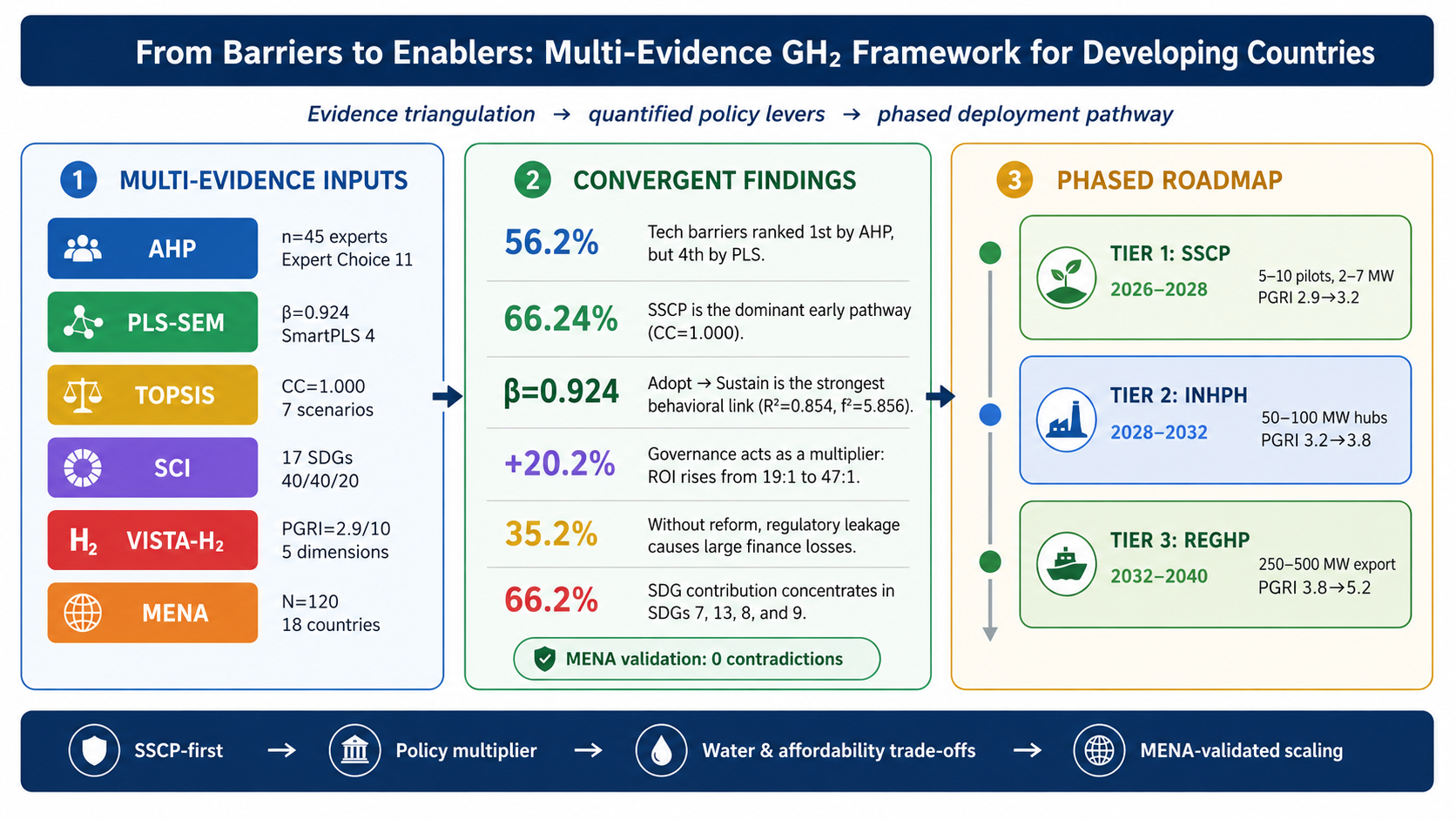

From Barriers to Enablers: A Multi-Evidence Strategic Framework for Green Hydrogen Adoption in Conflict-Affected Developing Economies: The Case of Palestine



Abstract
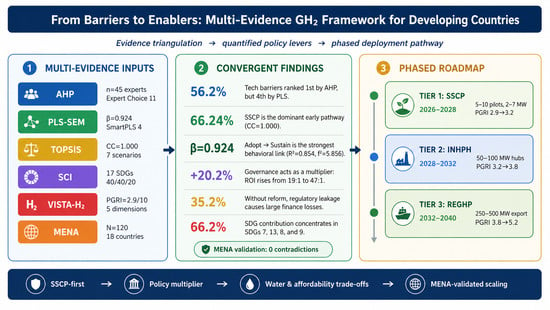
1. Introduction
1.1. Global Context and Rationale
1.2. The Conflict-Affected Developing Economies Gap
1.3. Research Questions, Objectives, and Contributions
- Significance Statement
2. Literature Review and Theoretical Framework
2.1. Green Hydrogen in Developing and Conflict-Affected Economies
Critical Uncertainties in Green-Hydrogen Deployment
2.2. Policy, Governance, and Institutional Determinants
2.3. Sustainability Assessment and SDG Integration
2.4. Strategic Planning and Multi-Evidence Approaches
2.5. Theoretical Framework
2.6. Hypothesis Development
3. Methodology
3.1. Integrated Research Design
3.2. Expert Panel Profile
3.3. PLS-SEM Specification
Statistical Power and Minimum Detectable Effect
3.4. Mathematical Formulation of Key Methods
3.5. SDG Contribution Index (SCI)
3.6. External Validation via MENA Survey
3.7. Advanced Robustness Checks: PLSpredict, MICOM, and Alternative Model Specifications
3.7.1. PLSpredict (Out-of-Sample Predictive Validity)
3.7.2. MICOM (Measurement Invariance Across Sub-Groups)
3.7.3. Alternative Model Specifications
3.8. Monte Carlo Cost Simulation and Economic Translation
4. Results
4.1. AHP Barrier Prioritization
4.2. PLS-SEM Structural Estimates and Hypothesis Tests (H1–H6)
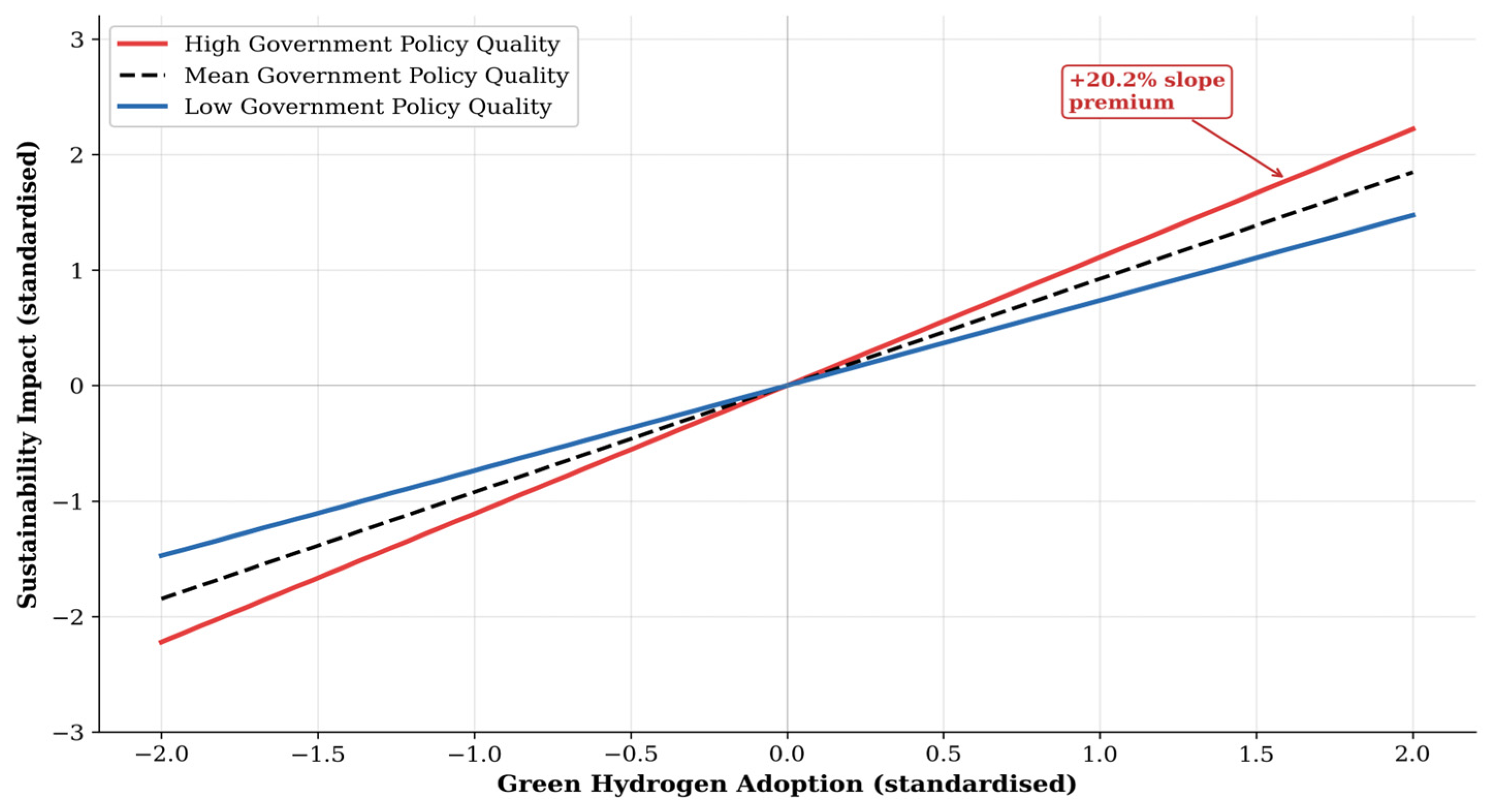
4.2.1. Government Policy Moderation and Regulatory Mediation
4.2.2. PLSpredict and MICOM Robustness
4.2.3. Common-Method Bias and Collinearity Assessment
4.3. TOPSIS Cross-Validation of Strategic Alternatives
Why the TOPSIS Result Is Deterministic, and Its Sensitivity
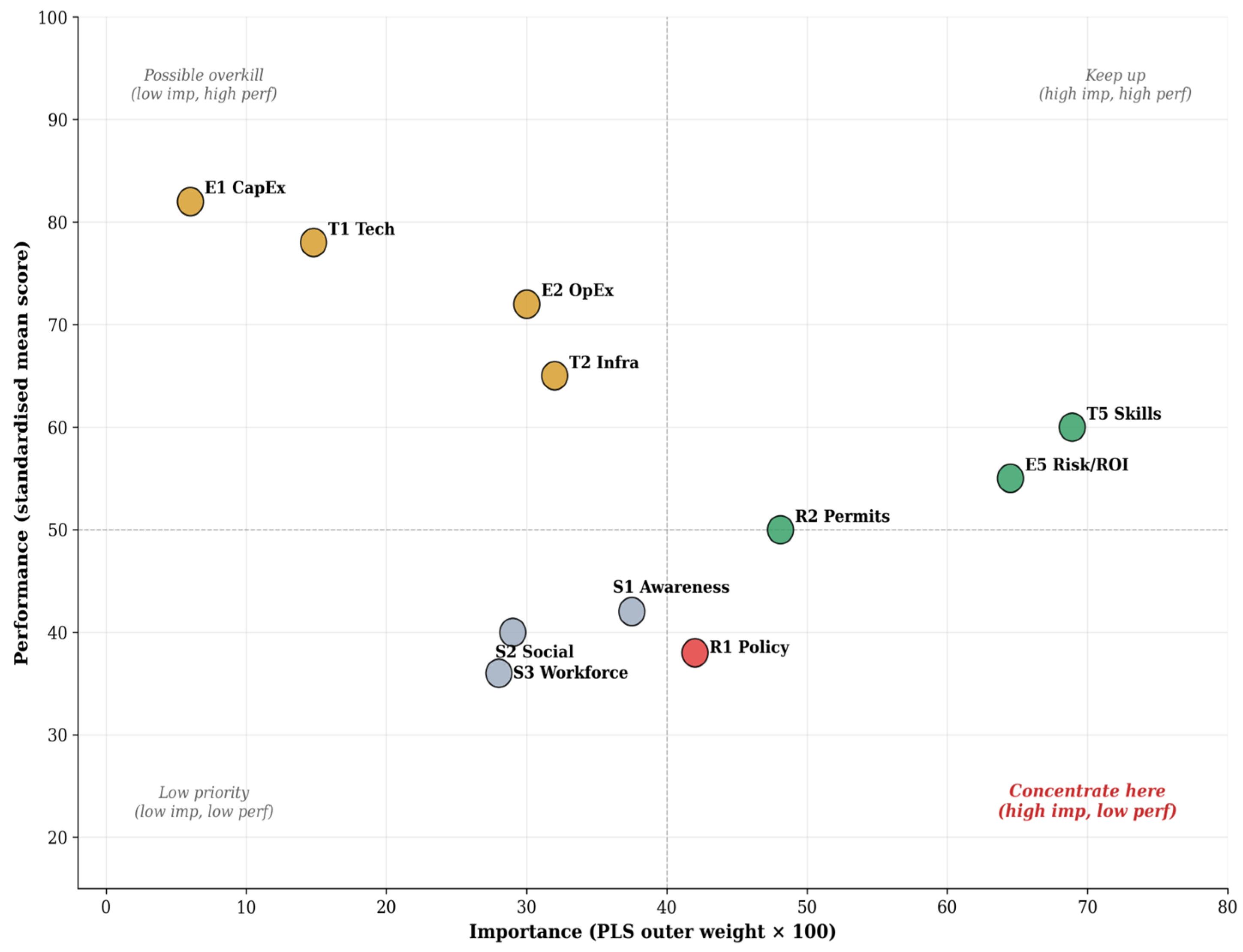
4.4. Importance–Performance Map Analysis
4.5. SDG Contribution Index Results and Economic Translation
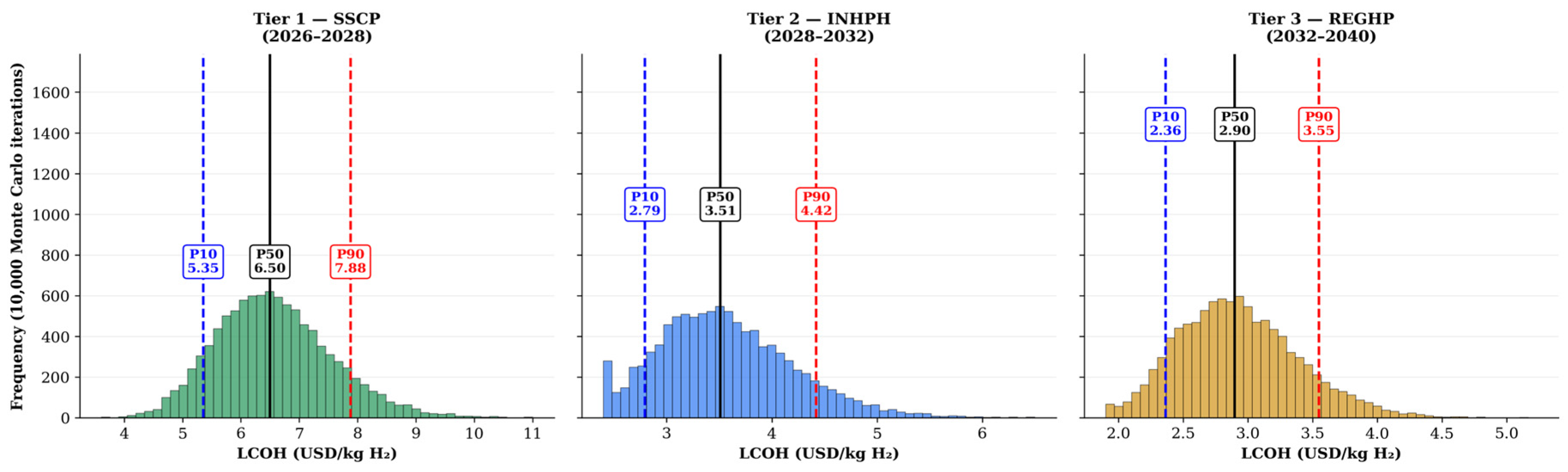
4.5.1. Monte Carlo Cost Simulation Across Deployment Tiers
4.5.2. Assumptions Underlying Emission and Diesel-Displacement Estimates
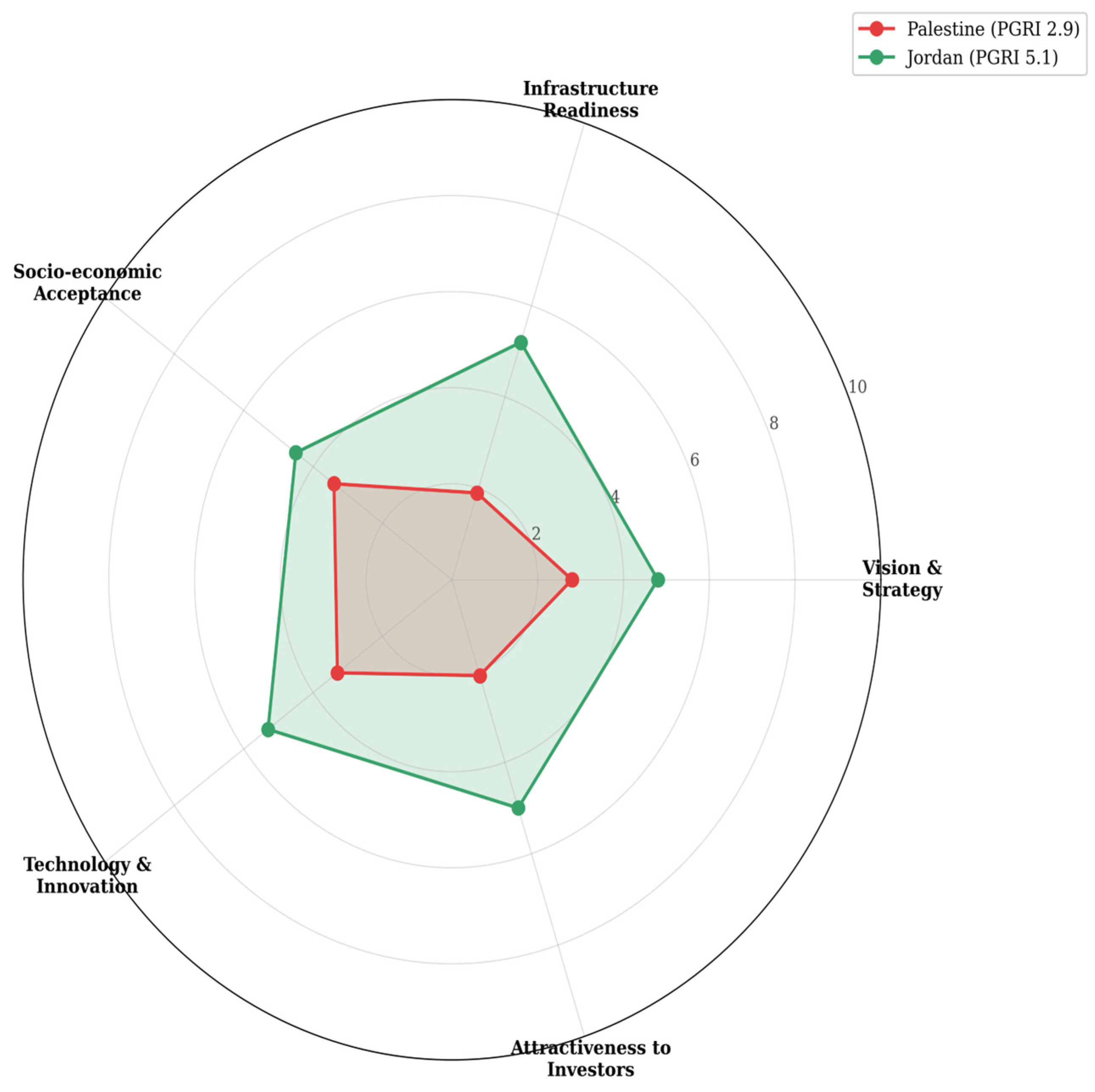
4.6. VISTA-H2 Readiness Assessment
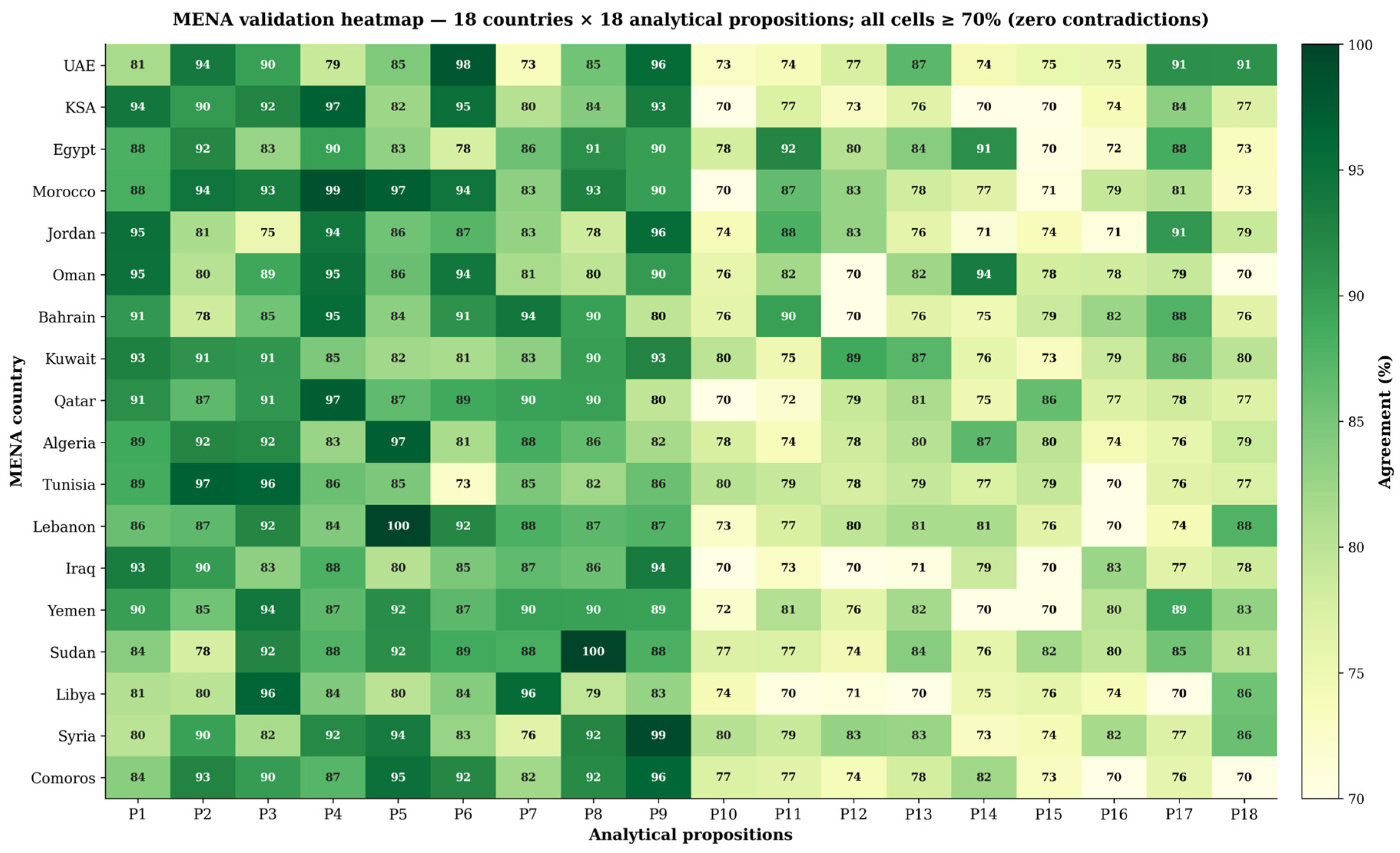
4.7. MENA Validation
5. Discussion
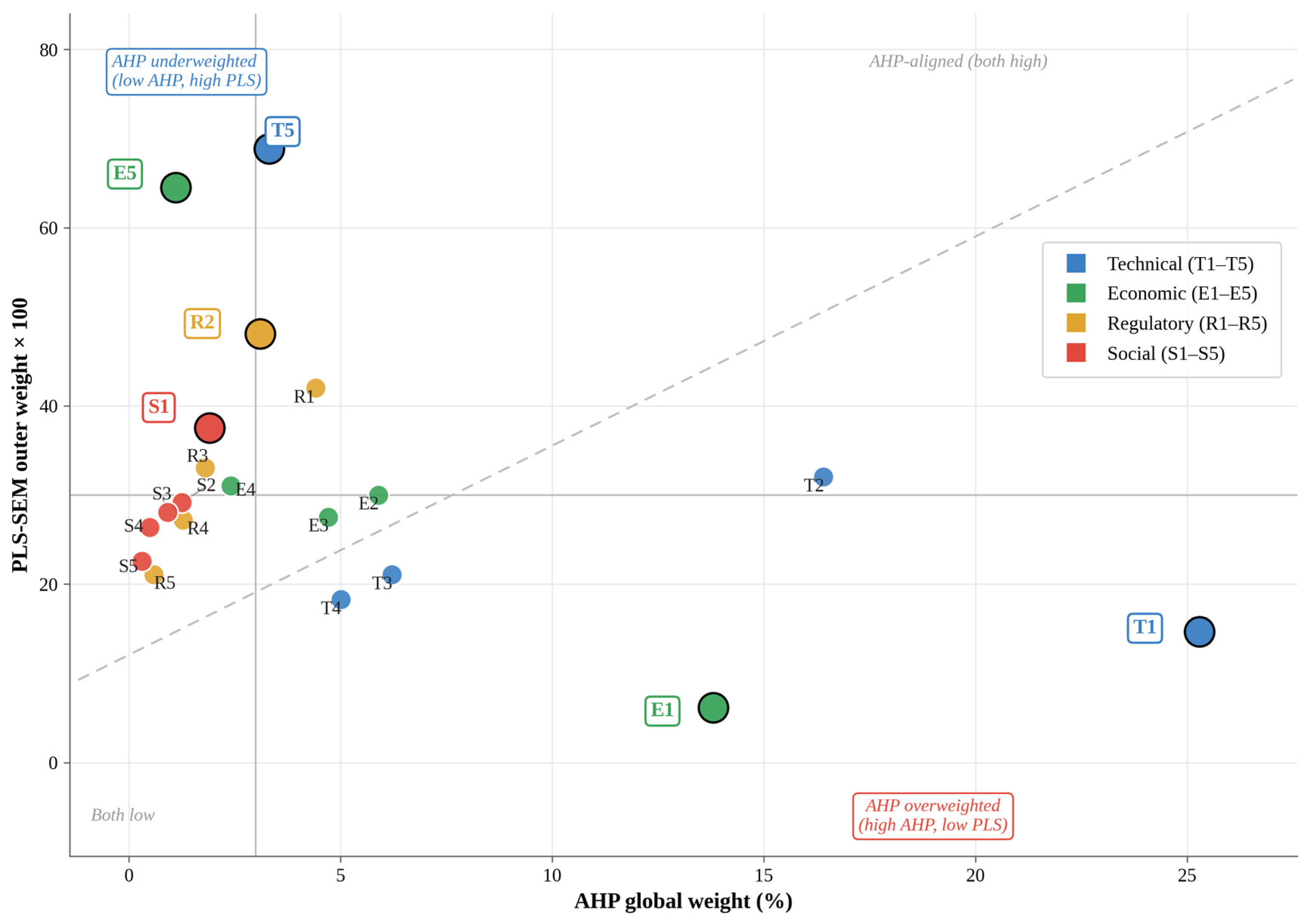
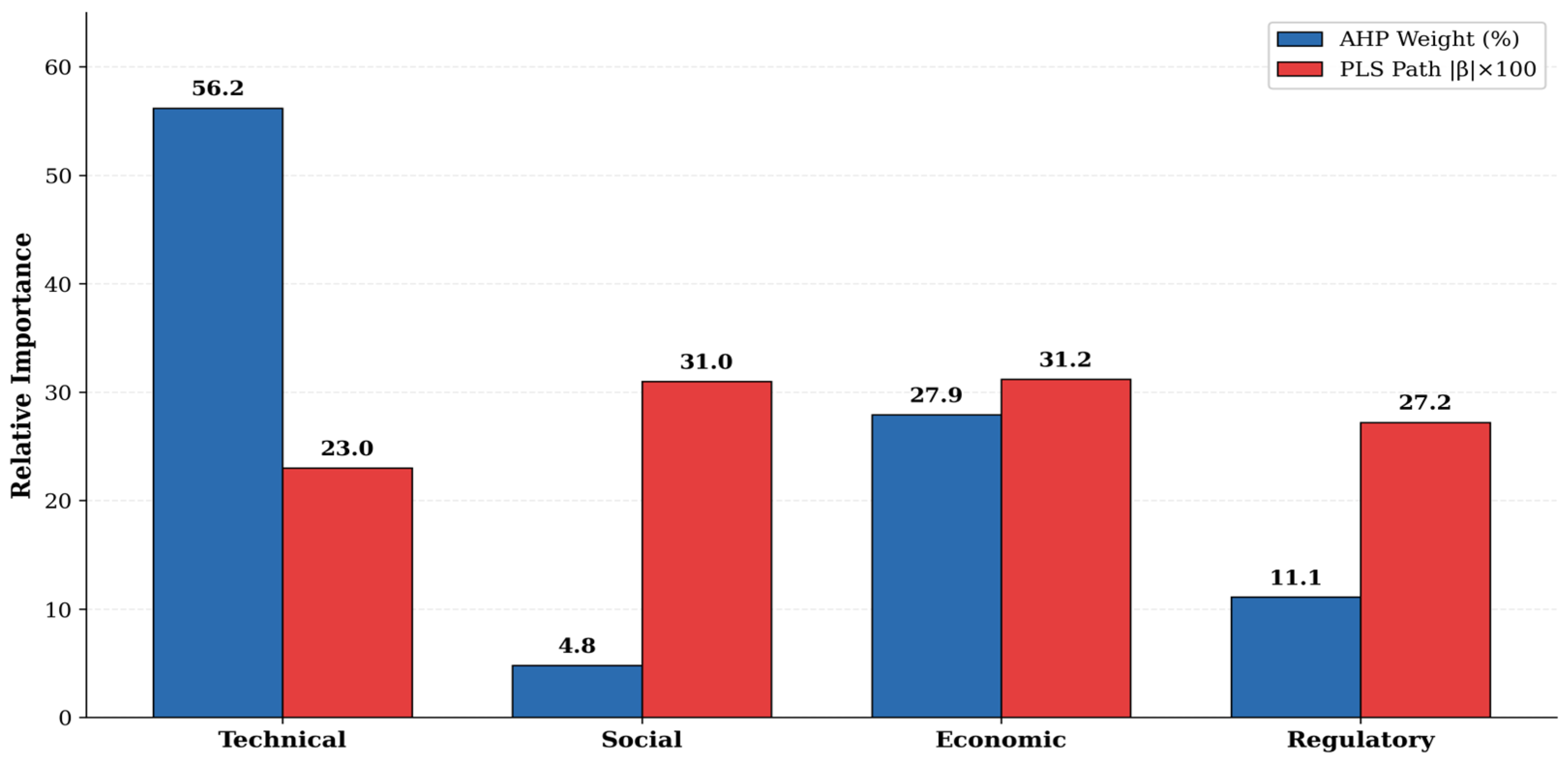
5.1. The AHP–PLS Dissociation in an Analytical Context
Interpreting the Social-Barrier Paradox
5.2. SSCP as the Fit-for-Purpose Strategy for Conflict-Affected Economies
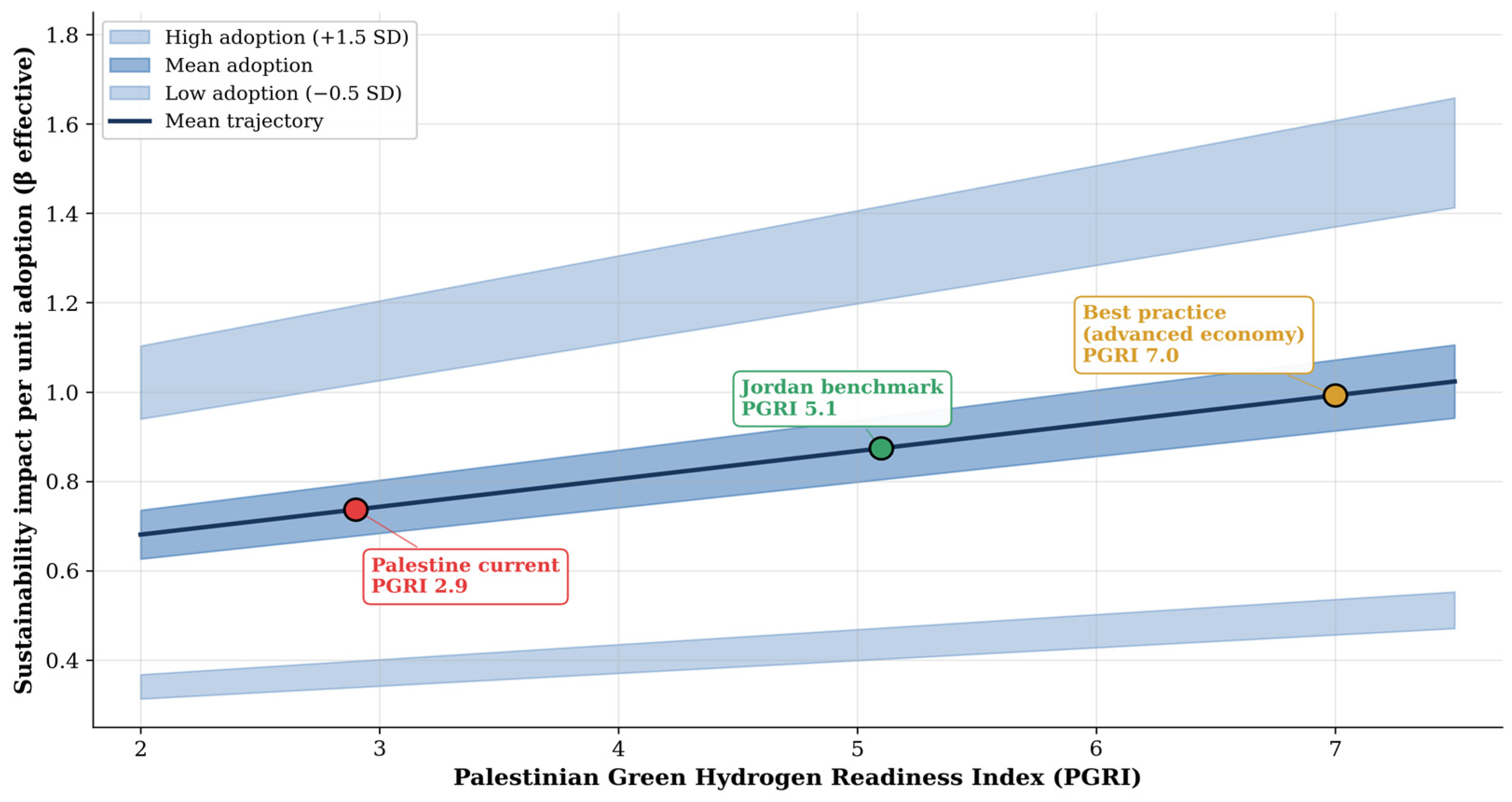
5.3. The Governance Multiplier and Counterfactual Analysis
5.4. Why Conflict-Affected Economies Require a Distinct Framework
Contextual Boundaries and Transferability
5.5. Theoretical and Practical Implications
5.5.1. Theoretical Implications
5.5.2. Practical Implications for Policymakers, Investors, and Donors
5.5.3. Implications for Infrastructure Planners and Energy Authorities
5.5.4. Practical Feasibility: Water, Infrastructure, and Grid Integration
6. Strategic Framework, Recommendations, and Roadmap
6.1. Seven Strategic Goals Mapped to Hypotheses
6.2. Fourteen Policy Recommendations
6.3. Three-Tier Phased Roadmap
Contingency Planning Under Conflict Conditions
6.4. Future Research Agenda
7. Conclusions
Limitations
Supplementary Materials
Author Contributions
Funding
Institutional Review Board Statement
Informed Consent Statement
Data Availability Statement
Acknowledgments
Conflicts of Interest
Abbreviations
References
- International Energy Agency (IEA). Global Hydrogen Review 2025; IEA: Paris, France, 2025; Available online: https://www.iea.org/reports/global-hydrogen-review-2025 (accessed on 15 June 2026).
- Odenweller, A.; Ueckerdt, F. The green hydrogen ambition and implementation gap. Nat. Energy 2025, 10, 110–123. [Google Scholar] [CrossRef] [Scilit]
- Hydrogen Council; McKinsey & Company. Hydrogen: Closing the Cost Gap; Hydrogen Council: Brussels, Belgium, 2025; Available online: https://hydrogencouncil.com/en/hydrogen-closing-the-cost-gap/ (accessed on 15 June 2026).
- Terlouw, T.; Rosa, L.; Bauer, C.; McKenna, R. Future hydrogen economies imply environmental trade-offs and a supply-demand mismatch. Nat. Commun. 2024, 15, 7043. [Google Scholar] [CrossRef] [Scilit] [PubMed]
- Sovacool, B.K. What are we doing here? Analyzing fifteen years of energy scholarship and proposing a social science research agenda. Energy Res. Soc. Sci. 2014, 1, 1–29. [Google Scholar] [CrossRef] [Scilit]
- Geels, F.W. Technological transitions as evolutionary reconfiguration processes: A multi-level perspective and a case-study. Res. Policy 2002, 31, 1257–1274. [Google Scholar] [CrossRef] [Scilit]
- Alkhalidi, A.; Battikhi, H.; Almanasreh, M.; Khawaja, M.K. A review of renewable energy status and regulations in the MENA region to explore green hydrogen production–Highlighting the water stress effect. Int. J. Hydrogen Energy 2024, 67, 898–911. [Google Scholar] [CrossRef] [Scilit]
- Alkhalidi, A.; Al-Mohamad, R.; Khawaja, M.K. Comparative technical analysis of different methods for green hydrogen production from humid air and seawater. Clean Energy 2026, 10, 87–99. [Google Scholar] [CrossRef] [Scilit]
- Khawaja, M.K.; Al-Mohamad, R.; Salameh, T.; Alkhalidi, A. Strategies to promote nuclear energy utilization in hydrogen production. Int. J. Hydrogen Energy 2024, 82, 36–46. [Google Scholar] [CrossRef] [Scilit]
- Alkhalidi, A.; Alyazouri, S.; Almomani, B.; Olabi, A.G.; Alami, A.H.; Vũ, T.M.; Al-Halhouli, A.; Khawaja, M.K. Nuclear hydrogen prospects in MENA region with economic insights. Int. J. Thermofluids 2026, 32, 101568. [Google Scholar] [CrossRef] [Scilit]
- Bergek, A.; Jacobsson, S.; Carlsson, B.; Lindmark, S.; Rickne, A. Analyzing the functional dynamics of technological innovation systems: A scheme of analysis. Res. Policy 2008, 37, 407–429. [Google Scholar] [CrossRef] [Scilit]
- Jacobsson, S.; Johnson, A. The diffusion of renewable energy technology: An analytical framework and key issues for research. Energy Policy 2000, 28, 625–640. [Google Scholar] [CrossRef] [Scilit]
- North, D.C. Institutions, Institutional Change and Economic Performance; Cambridge University Press: Cambridge, UK, 1990; ISBN 978-0-521-39734-6. [Google Scholar] [CrossRef] [Scilit]
- Agyekum, E.B. Is Africa ready for green hydrogen energy takeoff? A multi-criteria analysis approach to the opportunities and barriers of hydrogen production on the continent. Int. J. Hydrogen Energy 2024, 49, 219–233. [Google Scholar] [CrossRef] [Scilit]
- Ocenic, E.; Sandu, M. Experts’ perceptions on barriers and incentives to green hydrogen adoption: Evidence from Europe and beyond. Societies 2026, 16, 73. [Google Scholar] [CrossRef] [Scilit]
- Almassry, H. Making occupation and energy apartheid bankable: How European Union green hydrogen standards reproduce sovereignty theft in Palestine. Energy Res. Soc. Sci. 2026, 131, 104522. [Google Scholar] [CrossRef] [Scilit]
- Flyvbjerg, B. Five misunderstandings about case-study research. Qual. Inq. 2006, 12, 219–245. [Google Scholar] [CrossRef] [Scilit]
- Juaidi, A.; Montoya, F.G.; Ibrik, I.H.; Manzano-Agugliaro, F. An overview of renewable energy potential in Palestine. Renew. Sustain. Energy Rev. 2016, 65, 943–960. [Google Scholar] [CrossRef] [Scilit]
- Hattab, T. Potential, Current Status, and Renewable Energy in Energy Sector of Palestine: A Review. Aksaray Univ. J. Sci. Eng. 2025, 9, 63–77. [Google Scholar] [CrossRef] [Scilit]
- Palestinian Central Bureau of Statistics (PCBS). Annual Energy Tables and Energy Balance 2023; PCBS: Ramallah, Palestine, 2023. Available online: https://www.pcbs.gov.ps/site/lang__en/1030/Default.aspx (accessed on 15 June 2026).
- World Bank. Impacts of the Conflict in the Middle East on the Palestinian Economy: April 2025 Update; World Bank: Washington, DC, USA, 2025; Available online: https://www.worldbank.org/en/country/westbankandgaza (accessed on 15 June 2026).
- Palestinian Central Bureau of Statistics (PCBS). Labour Force Survey 2024; PCBS: Ramallah, Palestine, 2024. Available online: https://www.pcbs.gov.ps/PCBS-Metadata-en-v5.2/index.php/catalog/740/study-description (accessed on 15 June 2026).
- Palestine Economic Policy Research Institute (MAS). Strategic Paths for the Energy Sector in Palestine; MAS: Ramallah, Palestine, 2024; Available online: https://mas.ps/en/publications/10600.html (accessed on 15 June 2026).
- Dwaikat, A.H.; Abu-Eisheh, S.A. Strategic planning for renewable energy in developing countries: Palestine as a case study. In Proceedings of the 2020 5th International Conference on Renewable Energies for Developing Countries (REDEC), Marrakech, Morocco, 29–30 June 2020; pp. 1–6. [Google Scholar] [CrossRef] [Scilit]
- Abu-Eisheh, S.; Kuckshinrichs, W.; Dwaikat, A. Strategic Planning for Sustainable Transportation in Developing Countries: The Role of Vehicles. Transp. Res. Procedia 2020, 48, 3019–3036. [Google Scholar] [CrossRef] [Scilit]
- Segovia-Hernández, J.G.; Hernández, S.; Cossío-Vargas, E.; Juarez-García, M.; Sánchez-Ramírez, E. Green hydrogen production for sustainable development: A critical examination of barriers and strategic opportunities. RSC Sustain. 2025, 3, 134–157. [Google Scholar] [CrossRef] [Scilit]
- Toufighi, S.P.; Vang, J.; Ghasemian Sahebi, I.; Masoomi, B.; Aghajani, H. AI-enabled green hydrogen adoption for sustainable transportation: The moderating role of network capability. Int. J. Hydrogen Energy 2026, 219, 154078. [Google Scholar] [CrossRef] [Scilit]
- Glenk, G.; Reichelstein, S. Reversible Power-to-Gas systems for energy conversion and storage. Nat. Commun. 2022, 13, 2010. [Google Scholar] [CrossRef] [Scilit] [PubMed]
- Yue, M.; Lambert, H.; Pahon, E.; Roche, R.; Jemei, S.; Hissel, D. Hydrogen energy systems: A critical review of technologies, applications, trends and challenges. Renew. Sustain. Energy Rev. 2021, 146, 111180. [Google Scholar] [CrossRef] [Scilit]
- Nikolaidis, P.; Poullikkas, A. A comparative overview of hydrogen production processes. Renew. Sustain. Energy Rev. 2017, 67, 597–611. [Google Scholar] [CrossRef] [Scilit]
- Hosseini, S.E.; Wahid, M.A. Hydrogen production from renewable and sustainable energy resources: Promising green energy carrier for clean development. Renew. Sustain. Energy Rev. 2016, 57, 850–866. [Google Scholar] [CrossRef] [Scilit]
- Alremeithi, A.; Alkhalidi, A.; Fayyad, M. Seaports Readiness Framework for Hydrogen Export—A United Arab Emirates Case Study. Hydrogen 2026, 7, 45. [Google Scholar] [CrossRef] [Scilit]
- Benalcazar, P.; Komorowska, A. Techno-economic analysis and uncertainty assessment of green hydrogen production in future exporting countries. Renew. Sustain. Energy Rev. 2024, 199, 114512. [Google Scholar] [CrossRef] [Scilit]
- Rezaei, M.; Akimov, A.; Gray, E.M. Cost-competitiveness of green hydrogen and its sensitivity to major financial and technical variables. Int. J. Hydrogen Energy 2024, 90, 1365–1377. [Google Scholar] [CrossRef] [Scilit]
- Mochi, P. Hydrogen Integration in Future Local Energy Markets. Energies 2026, 19, 1234. [Google Scholar] [CrossRef] [Scilit]
- Tunn, J.; Kalt, T.; Müller, F.; Simon, J.; Hennig, J.; Ituen, I.; Glatzer, N. Green hydrogen transitions deepen socioecological risks and extractivist patterns: Evidence from 28 prospective exporting countries in the Global South. Energy Res. Soc. Sci. 2024, 117, 103731. [Google Scholar] [CrossRef] [Scilit]
- Garcia-Navarro, J.; Isaacs, M.A.; Favaro, M.; Ren, D.; Ong, W.-J.; Grätzel, M.; Jiménez-Calvo, P. Updates on hydrogen value chain: A strategic roadmap. Glob. Chall. 2023, 8, 2300073. [Google Scholar] [CrossRef] [Scilit] [PubMed]
- Geels, F.W.; Schot, J. Typology of sociotechnical transition pathways. Res. Policy 2007, 36, 399–417. [Google Scholar] [CrossRef] [Scilit]
- Martins, F.P.; De-León Almaraz, S.; Botelho Junior, A.B.; Azzaro-Pantel, C.; Parikh, P. Hydrogen and the sustainable development goals: Synergies and trade-offs. Renew. Sustain. Energy Rev. 2024, 204, 114796. [Google Scholar] [CrossRef] [Scilit]
- León, C.; Molina, P.; Ríos, C.; Brey, J.J. Green hydrogen production’s impact on sustainable development goals. Int. J. Hydrogen Energy 2025, 142, 642–653. [Google Scholar] [CrossRef] [Scilit]
- Martínez-Gómez, J.; Avilés-Sacoto, S.V.; Riofrío-Pino, V. Integration of UN sustainable development goals in national hydrogen strategies: A text analysis approach. Int. J. Hydrogen Energy 2025, 102, 1282–1294. [Google Scholar] [CrossRef] [Scilit]
- Pradhan, P.; Costa, L.; Rybski, D.; Lucht, W.; Kropp, J.P. A systematic study of Sustainable Development Goal (SDG) interactions. Earth’s Future 2017, 5, 1169–1179. [Google Scholar] [CrossRef] [Scilit]
- Nilsson, M.; Griggs, D.; Visbeck, M. Policy: Map the interactions between Sustainable Development Goals. Nature 2016, 534, 320–322. [Google Scholar] [CrossRef] [Scilit] [PubMed]
- Miola, A.; Schiltz, F. Measuring sustainable development goals performance: How to monitor policy action in the 2030 Agenda implementation? Ecol. Econ. 2019, 164, 106373. [Google Scholar] [CrossRef] [Scilit] [PubMed]
- Kahraman, C.; Kaya, İ.; Cebi, S. A comparative analysis for multiattribute selection among renewable energy alternatives using fuzzy axiomatic design and fuzzy analytic hierarchy process. Energy 2009, 34, 1603–1616. [Google Scholar] [CrossRef] [Scilit]
- Büyüközkan, G.; Güleryüz, S. An integrated DEMATEL-ANP approach for renewable energy resources selection in Turkey. Int. J. Prod. Econ. 2016, 182, 435–448. [Google Scholar] [CrossRef] [Scilit]
- Shmueli, G.; Sarstedt, M.; Hair, J.F.; Cheah, J.-H.; Ting, H.; Vaithilingam, S.; Ringle, C.M. Predictive model assessment in PLS-SEM: Guidelines for using PLSpredict. Eur. J. Mark. 2019, 53, 2322–2347. [Google Scholar] [CrossRef] [Scilit]
- Sarstedt, M.; Hair, J.F.; Pick, M.; Liengaard, B.D.; Radomir, L.; Ringle, C.M. Progress in partial least squares structural equation modeling use in marketing research in the last decade. Psychol. Mark. 2022, 39, 1035–1064. [Google Scholar] [CrossRef] [Scilit]
- Henseler, J.; Ringle, C.M.; Sarstedt, M. Testing measurement invariance of composites using partial least squares. Int. Mark. Rev. 2016, 33, 405–431. [Google Scholar] [CrossRef] [Scilit]
- Tornatzky, L.G.; Fleischer, M.; Chakrabarti, A.K. The Processes of Technological Innovation; Lexington Books: Lexington, MA, USA, 1990; ISBN 978-0-669-20348-6. [Google Scholar]
- Baker, J. The technology-organization-environment framework. In Information Systems Theory: Explaining and Predicting Our Digital Society; Dwivedi, Y.K., Wade, M.R., Schneberger, S.L., Eds.; Springer: New York, NY, USA, 2012; Volume 1, pp. 231–245. [Google Scholar] [CrossRef] [Scilit]
- Hekkert, M.P.; Suurs, R.A.A.; Negro, S.O.; Kuhlmann, S.; Smits, R.E.H.M. Functions of innovation systems: A new approach for analysing technological change. Technol. Forecast. Soc. Change 2007, 74, 413–432. [Google Scholar] [CrossRef] [Scilit]
- Saaty, T.L. The Analytic Hierarchy Process: Planning, Priority Setting, Resource Allocation; McGraw-Hill: New York, NY, USA, 1980; ISBN 978-0-07-054371-3. [Google Scholar]
- Saaty, T.L. Decision making with the analytic hierarchy process. Int. J. Serv. Sci. 2008, 1, 83–98. [Google Scholar] [CrossRef] [Scilit]
- Hair, J.F.; Risher, J.J.; Sarstedt, M.; Ringle, C.M. When to use and how to report the results of PLS-SEM. Eur. Bus. Rev. 2019, 31, 2–24. [Google Scholar] [CrossRef] [Scilit]
- Hair, J.F.; Hult, G.T.M.; Ringle, C.M.; Sarstedt, M. A Primer on Partial Least Squares Structural Equation Modeling (PLS-SEM), 3rd ed.; Sage: Thousand Oaks, CA, USA, 2021; ISBN 978-1-5443-9640-8. [Google Scholar]
- Hwang, C.-L.; Yoon, K. Multiple Attribute Decision Making: Methods and Applications; Springer: Berlin, Germany, 1981. [Google Scholar] [CrossRef] [Scilit]
- Ringle, C.M.; Sarstedt, M. Gain more insight from your PLS-SEM results: The importance–performance map analysis. Ind. Manag. Data Syst. 2016, 116, 1865–1886. [Google Scholar] [CrossRef] [Scilit]
- Henseler, J.; Ringle, C.M.; Sarstedt, M. A new criterion for assessing discriminant validity in variance-based structural equation modeling. J. Acad. Mark. Sci. 2015, 43, 115–135. [Google Scholar] [CrossRef] [Scilit]
- Kock, N. Common method bias in PLS-SEM: A full collinearity assessment approach. Int. J. e-Collab. 2015, 11, 1–10. [Google Scholar] [CrossRef] [Scilit]
- Cohen, J. Statistical Power Analysis for the Behavioral Sciences, 2nd ed.; Lawrence Erlbaum Associates: Hillsdale, NJ, USA, 1988; ISBN 978-0-8058-0283-2. [Google Scholar]
- Kock, N.; Hadaya, P. Minimum sample size estimation in PLS-SEM: The inverse square root and gamma-exponential methods. Inf. Syst. J. 2018, 28, 227–261. [Google Scholar] [CrossRef] [Scilit]
- Zhao, X.; Lynch, J.G.; Chen, Q. Reconsidering Baron and Kenny: Myths and truths about mediation analysis. J. Consum. Res. 2010, 37, 197–206. [Google Scholar] [CrossRef] [Scilit]
- ICSU; ISSC. A Guide to SDG Interactions: From Science to Implementation; International Council for Science: Paris, France, 2017; Available online: https://council.science/publications/a-guide-to-sdg-interactions-from-science-to-implementation/ (accessed on 15 June 2026).
- International Renewable Energy Agency (IRENA). Global Hydrogen Trade to Meet the 1.5 °C Climate Goal: Part I—Trade Outlook for 2050 and Way Forward; IRENA: Abu Dhabi, United Arab Emirates, 2022; Available online: https://www.irena.org/Publications/2022/Jul/Global-Hydrogen-Trade-Outlook (accessed on 15 June 2026).
- Luthra, S.; Kumar, S.; Garg, D.; Haleem, A. Barriers to renewable/sustainable energy technologies adoption: Indian perspective. Renew. Sustain. Energy Rev. 2015, 41, 762–776. [Google Scholar] [CrossRef] [Scilit]
- Lyu, X.; Zailani, S.; Mohamad, M.N. Differential effects of environmental regulations on sustainable energy technologies adoption in China’s renewable energy sector with energy transition capabilities as moderators. Discov. Sustain. 2026. [Google Scholar] [CrossRef] [Scilit]
- Lindell, M.K.; Whitney, D.J. Accounting for common method variance in cross-sectional research designs. J. Appl. Psychol. 2001, 86, 114–121. [Google Scholar] [CrossRef] [Scilit] [PubMed]
- ISO 31000:2018; Risk Management—Guidelines. ISO: Geneva, Switzerland, 2018.
- ISO 14687:2019; Hydrogen Fuel Quality—Product Specification. ISO: Geneva, Switzerland, 2019.
- CertifHy. CertifHy EU Hydrogen Certification Schemes. Available online: https://www.certifhy.eu/ (accessed on 15 June 2026).
- European Commission. Commission Delegated Regulation (EU) 2023/1184 of 10 February 2023 supplementing Directive (EU) 2018/2001 by establishing a Union methodology setting out detailed rules for the production of renewable liquid and gaseous transport fuels of non-biological origin. Off. J. Eur. Union 2023, L157, 11–19. Available online: http://data.europa.eu/eli/reg_del/2023/1184/oj (accessed on 15 June 2026).
- European Commission. Commission Delegated Regulation (EU) 2023/1185 of 10 February 2023 supplementing Directive (EU) 2018/2001 by establishing a minimum threshold for greenhouse gas emissions savings of recycled carbon fuels and by specifying a methodology for assessing greenhouse gas emissions savings from renewable liquid and gaseous transport fuels of non-biological origin and from recycled carbon fuels. Off. J. Eur. Union 2023, L157, 20–33. Available online: http://data.europa.eu/eli/reg_del/2023/1185/oj (accessed on 15 June 2026).
- Kumar, P.; Date, A.; Shabani, B. Techno-economic analysis of an integrated desalination–renewable–hydrogen system for zero-emission freshwater and electricity production. Energy Convers. Manag. 2026, 353, 121231. [Google Scholar] [CrossRef] [Scilit]
- Kumar, P.; Date, A.; Das, R.K.; Shabani, B. Electrolyser and fuel cell waste-heat-powered desalination enabling water–energy circularity in renewable hydrogen systems: An experimental proof of concept. Appl. Therm. Eng. 2026, 293, 130429. [Google Scholar] [CrossRef] [Scilit]
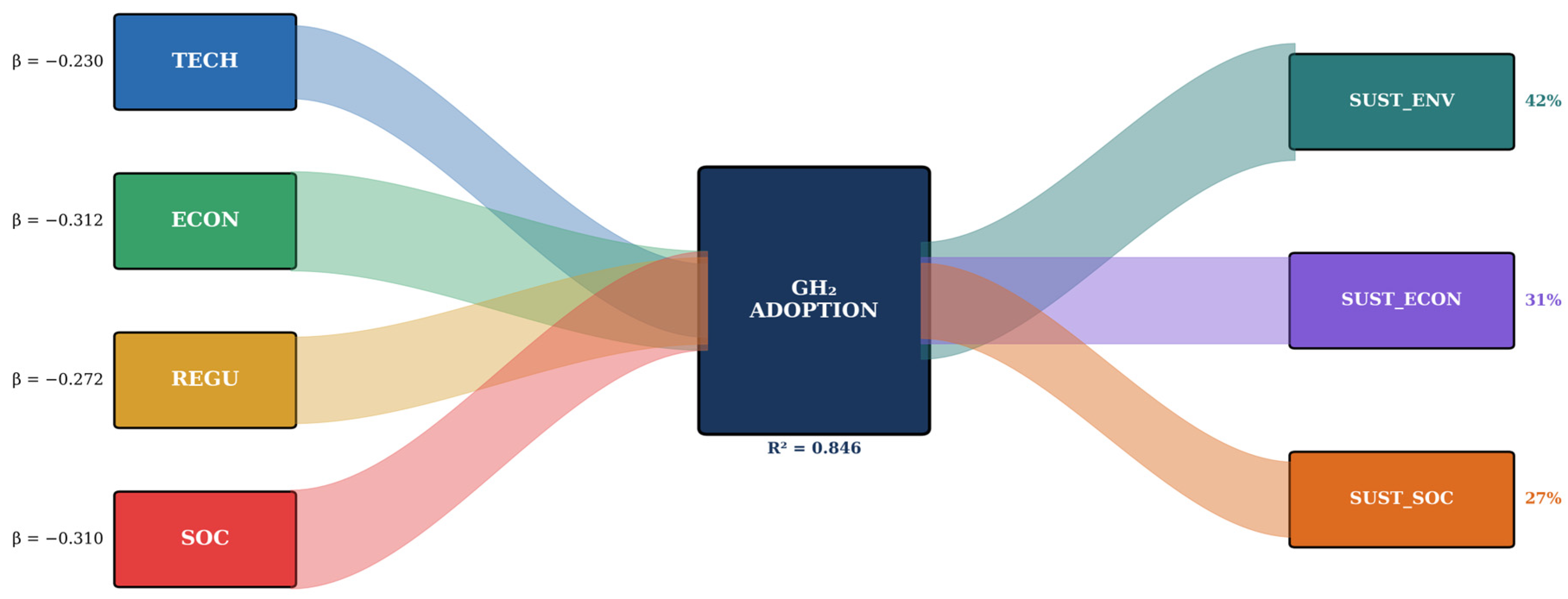


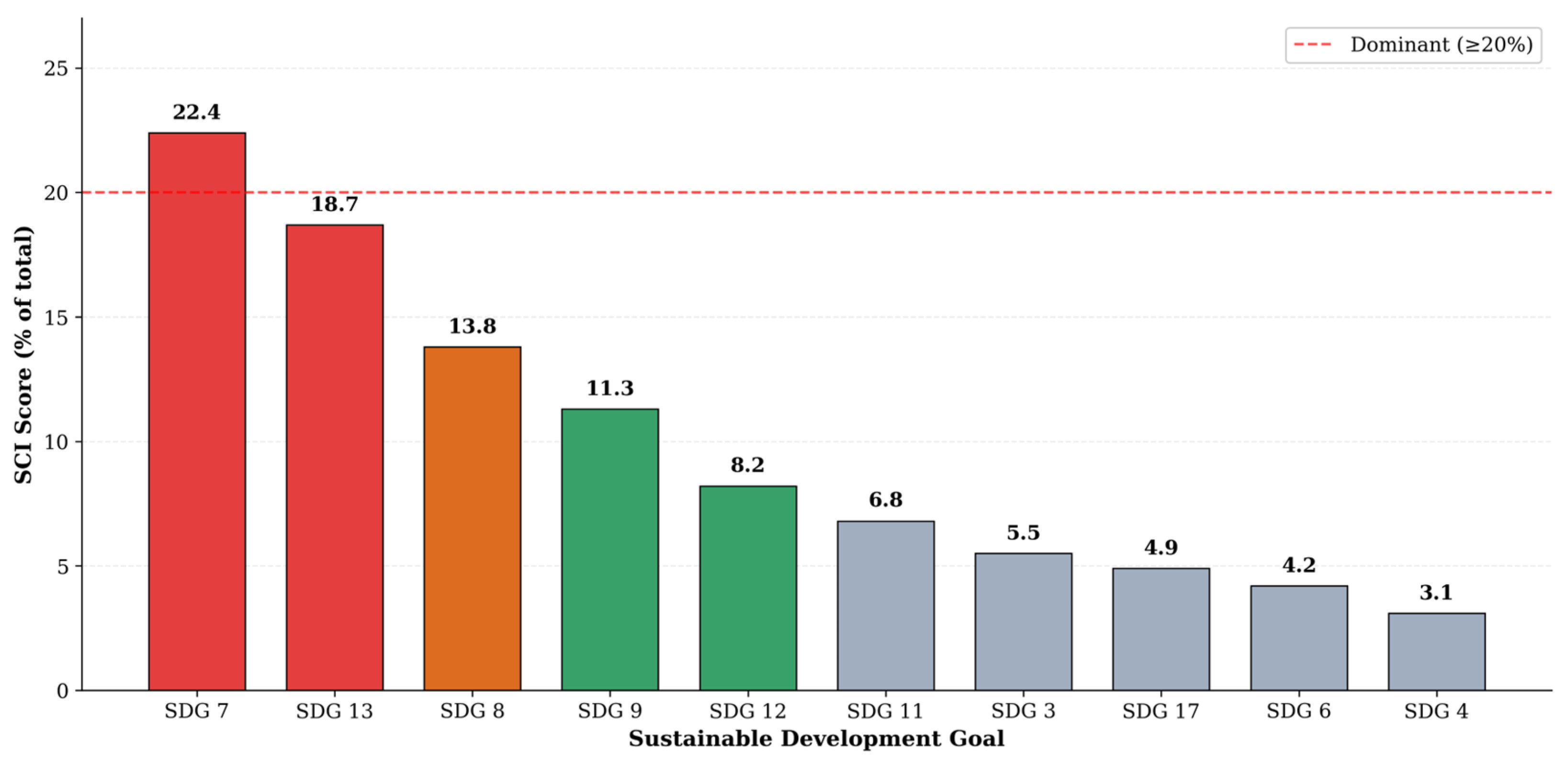


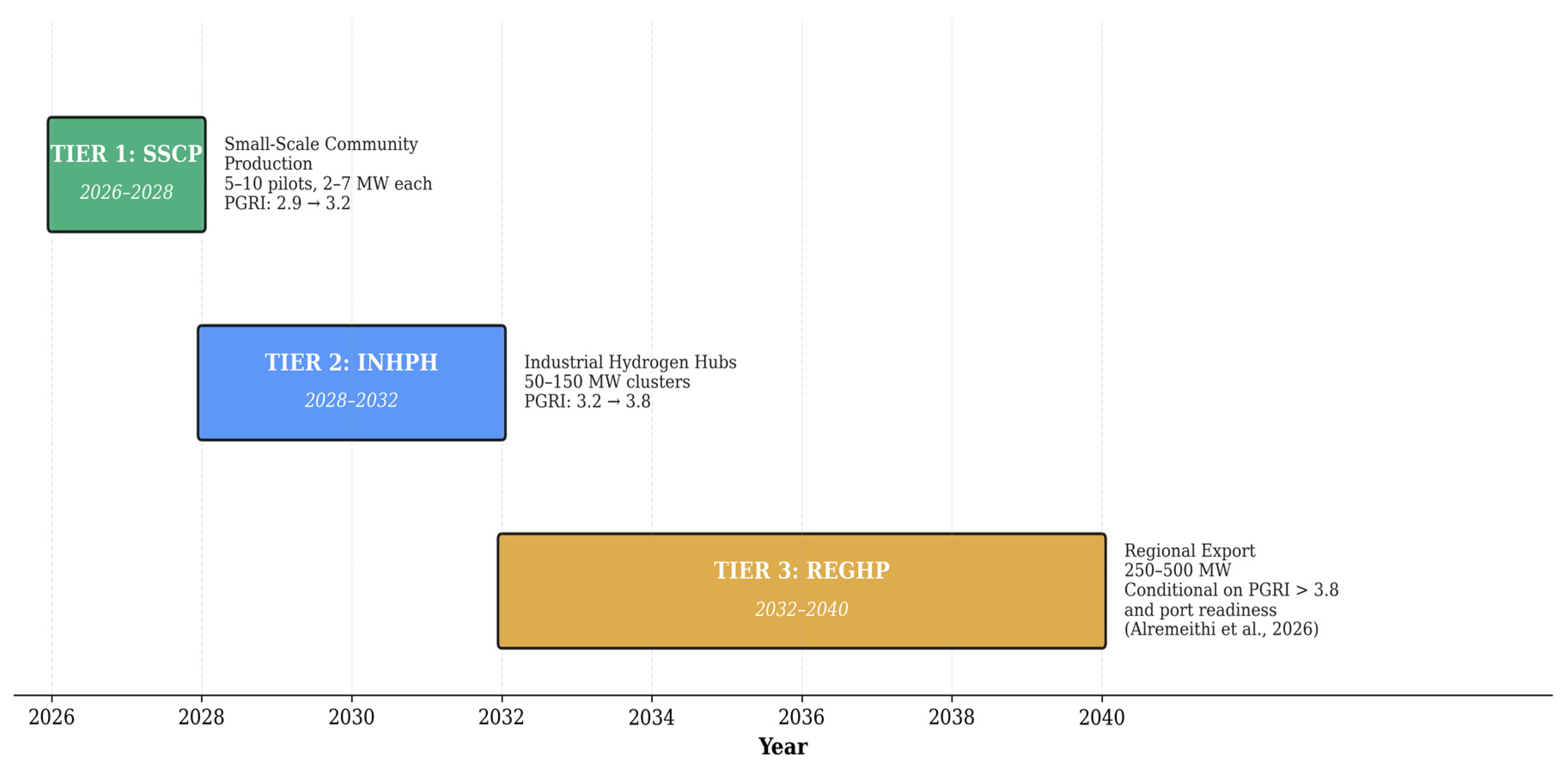

| Code | Field of Expertise | Qualification | Institutional Sector | Exp. (yrs) | Relevance |
|---|---|---|---|---|---|
| A01–A06 | Renewable energy systems | PhD Engineering | University (Palestine) | 10–25 | R/E/T |
| A07–A12 | Energy economics and policy | PhD Economics/Policy | University (Palestine) | 8–20 | E/P |
| A13–A18 | Water resources and environment | PhD/MSc in Energy and Environment | University/Research Institute | 5–18 | W/S |
| I01–I06 | Power generation and grid | MSc/BSc Engineering | Utility/IPP (Palestine) | 10–22 | T/I |
| I07–I12 | Project development/finance | MBA/MSc Finance | Private developers/banks | 7–18 | F/E |
| G01–G04 | Energy regulation and policy | MSc/BSc | Governmental and Semi-Governmental (Palestinian Energy Authority/Ministry of Economy) | 12–25 | R/P |
| G05–G08 | Infrastructure planning | MSc Civil/Urban Planning | Ministries/municipalities | 8–20 | I/P |
| N01–N07 | Sustainability/donor programs | MSc/MA/BSc | NGOs/donor agencies | 6–15 | S/P |
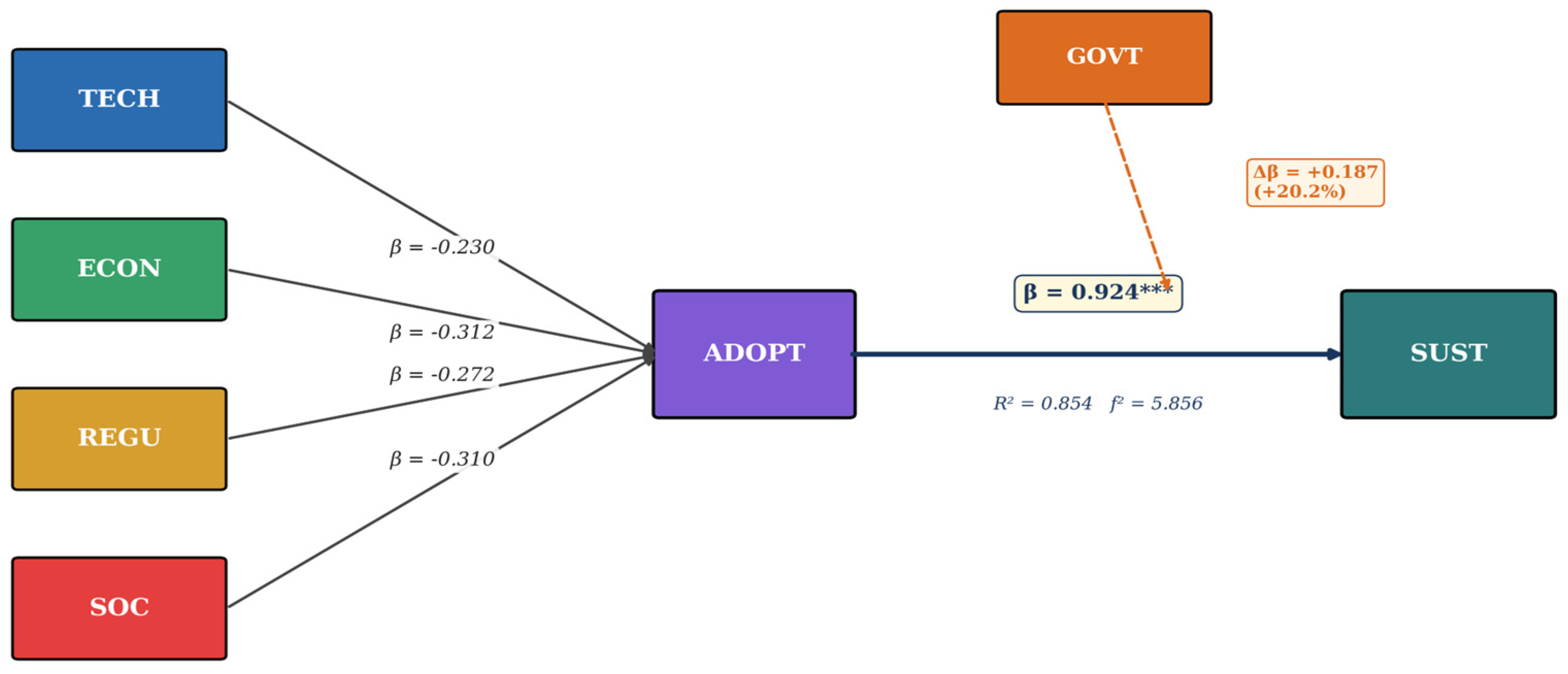
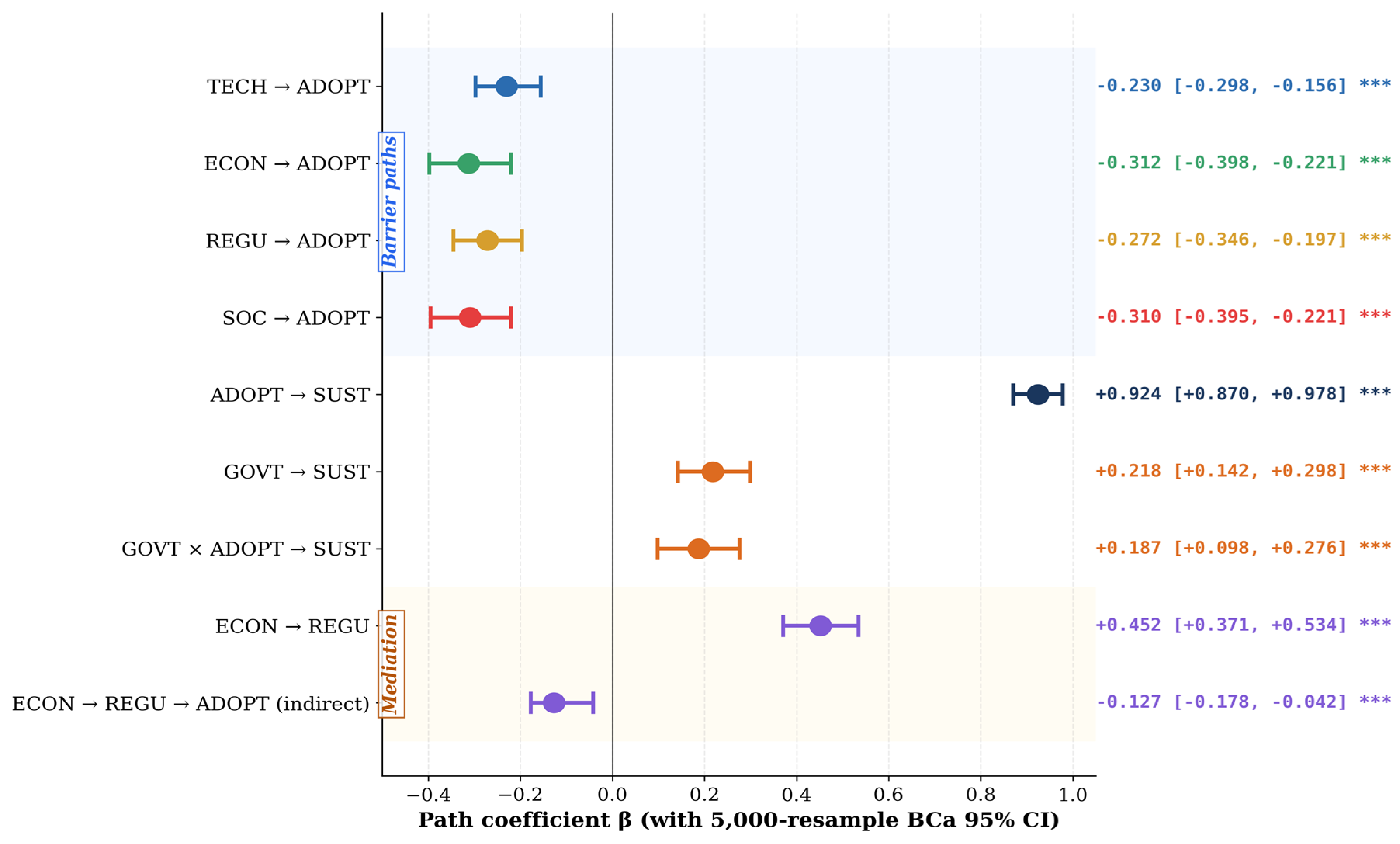
| H# | Hypothesized Path | β | BCa 95% CI | p | f2 | Effect | Decision |
|---|---|---|---|---|---|---|---|
| H1 | TECH → ADOPT (negative) | −0.230 | [−0.298, −0.156] | <0.001 | 1.657 | Large | Supported |
| H2 | ECON → ADOPT (negative) | −0.312 | [−0.398, −0.221] | <0.001 | 2.254 | Large | Supported |
| H3 | REGU → ADOPT (negative) | −0.272 | [−0.346, −0.197] | <0.001 | 2.147 | Large | Supported |
| H3’ | SOC → ADOPT (negative) | −0.310 | [−0.395, −0.221] | <0.001 | 3.360 | Large | Supported |
| H4 | GOVT × ADOPT → SUST (positive moderation) | +0.187 | [+0.098, +0.276] | <0.001 | 0.124 | Med. | Supported |
| H5 | ECON → REGU → ADOPT (mediation) | −0.127 | [−0.178, −0.042] | <0.001 | VAF = 35.2% | Partial | Supported |
| H6 | PGRI → strategic feasibility | Composite | Sec. 4.6, 6.3 | — | — | Sup. | Supported (benchmarking) |
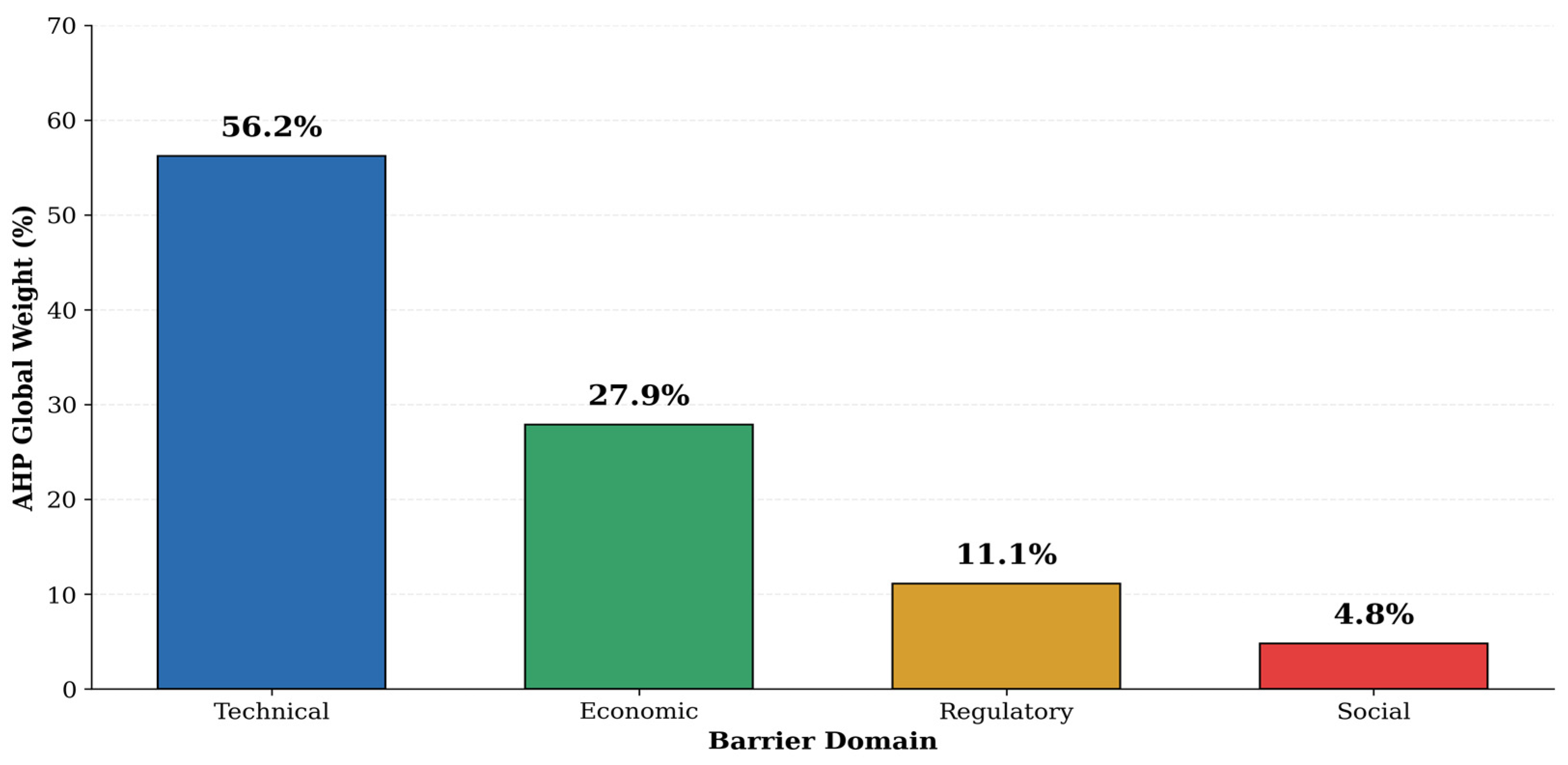
| Barrier Domain | AHP % | AHP Rank | PLS β | PLS Rank | f2 | Interpretation |
|---|---|---|---|---|---|---|
| Technical | 56.2 | 1st | −0.230 | 4th | 1.657 | AHP overweights; lowest structural impact |
| Economic | 27.9 | 2nd | −0.312 | 1st | 2.254 | Consistent with the literature on EMDEs |
| Regulatory | 11.1 | 3rd | −0.272 | 3rd | 2.147 | Ranks align; mediator confirmed (Section 4.2.1) |
| Social | 4.8 | 4th | −0.310 | 2nd | 3.360 | Severely underweighted in AHP—central finding |
| Construct | Indicator | Q2_Predict | PLS RMSE | LM RMSE | PLS < LM? |
|---|---|---|---|---|---|
| ADOPT | ADOPT_1 | 0.583 | 0.642 | 0.681 | Yes |
| ADOPT | ADOPT_2 | 0.612 | 0.621 | 0.665 | Yes |
| ADOPT | ADOPT_3 | 0.547 | 0.658 | 0.689 | Yes |
| ADOPT | ADOPT_4 | 0.412 | 0.704 | 0.692 | No |
| SUST | SUST_ENV | 0.618 | 0.612 | 0.658 | Yes |
| SUST | SUST_ECON | 0.591 | 0.629 | 0.671 | Yes |
| SUST | SUST_SOC | 0.524 | 0.671 | 0.698 | Yes |
| SUST | SUST_global | 0.598 | 0.615 | 0.659 | Yes |
| Construct | Subgroup Split | Compositional Invariance c | Equal Mean p-Value | Conclusions |
|---|---|---|---|---|
| TECH | Acad. vs. Industry + Gov + NGO | 0.989 (p > 0.05) | 0.382 | Full invariance |
| ECON | Acad. vs. Industry + Gov + NGO | 0.992 (p > 0.05) | 0.247 | Full invariance |
| REGU | Acad. vs. Industry + Gov + NGO | 0.974 (p > 0.05) | 0.158 | Full invariance |
| SOC | Acad. vs. Industry + Gov + NGO | 0.967 (p > 0.05) | 0.092 | Full invariance |
| SOC | High-exp. (≥15 y) vs. Mid-exp. | 0.971 (p > 0.05) | 0.041 | Partial invariance |
| Dimension | Generic Hydrogen Frameworks | Present Multi-Evidence Framework |
|---|---|---|
| Theoretical foundation | Implicit or absent | Institutional + TOE + TIS triangulation |
| Hypothesis testing | Often absent or implicit | Six explicit hypotheses (H1–H6) tested |
| Barrier analysis | Single MCDA (AHP or TOPSIS only) | AHP + PLS-SEM + TOPSIS triangulation |
| Predictive validity | Rarely tested | PLSpredict cross-validation reported |
| Measurement invariance | Rarely tested | MICOM full or partial invariance demonstrated |
| Role of policy | Descriptive: Policy is important | Quantified moderation (+20.2%) with f2 and CI |
| Cost analysis | Single-point LCOH | Monte Carlo LCOH (10,000 iterations) per tier |
| SDG assessment | Qualitative synergy mapping | Quantitative SCI (40/40/20 formula, 17 SDGs) |
| Readiness scoring | None or ad hoc | VISTA-H2 5-dimension + PGRI benchmarked |
| External validation | Single country, no cross-validation | n = 120, 18 MENA countries, no direct contradictions |
| Deployment logic | Technology-led (large-scale first) | SSCP-first, then national, then export |
| Roadmap conditionality | Time-based (fixed dates) | PGRI-conditional (evidence triggers) |
| Standards linkage | Occasional ISO reference | ISO 31000, ISO 14687, CertifHy, RFNBO |
| Port/export readiness | Assumed or not addressed | Tier 3 conditional on Alremeithi et al. [32] |
Disclaimer/Publisher’s Note: The statements, opinions and data contained in all publications are solely those of the individual author(s) and contributor(s) and not of MDPI and/or the editor(s). MDPI and/or the editor(s) disclaim responsibility for any injury to people or property resulting from any ideas, methods, instructions or products referred to in the content. |
© 2026 by the authors. Licensee MDPI, Basel, Switzerland. This article is an open access article distributed under the terms and conditions of the Creative Commons Attribution (CC BY) license.
Share and Cite
Dwaikat, A.; Abu-Eisheh, S.; Alkhalidi, A. From Barriers to Enablers: A Multi-Evidence Strategic Framework for Green Hydrogen Adoption in Conflict-Affected Developing Economies: The Case of Palestine. Hydrogen 2026, 7, 86. https://doi.org/10.3390/hydrogen7020086
Dwaikat A, Abu-Eisheh S, Alkhalidi A. From Barriers to Enablers: A Multi-Evidence Strategic Framework for Green Hydrogen Adoption in Conflict-Affected Developing Economies: The Case of Palestine. Hydrogen. 2026; 7(2):86. https://doi.org/10.3390/hydrogen7020086
Chicago/Turabian StyleDwaikat, Abdelnaser, Sameer Abu-Eisheh, and Ammar Alkhalidi. 2026. "From Barriers to Enablers: A Multi-Evidence Strategic Framework for Green Hydrogen Adoption in Conflict-Affected Developing Economies: The Case of Palestine" Hydrogen 7, no. 2: 86. https://doi.org/10.3390/hydrogen7020086
APA StyleDwaikat, A., Abu-Eisheh, S., & Alkhalidi, A. (2026). From Barriers to Enablers: A Multi-Evidence Strategic Framework for Green Hydrogen Adoption in Conflict-Affected Developing Economies: The Case of Palestine. Hydrogen, 7(2), 86. https://doi.org/10.3390/hydrogen7020086