1. Introduction
The global imperative to decarbonize energy systems has positioned hydrogen as a pivotal energy carrier, particularly when derived from renewable sources. Global clean hydrogen demand is projected to reach 125–585 million tons per annum by 2050, with the IEA estimating that 38 Mt of low-emission hydrogen could be produced by 2030 if planned projects are completed [
1]. While fossil fuel-based production methods such as steam methane reforming remain dominant, cleaner blue and green hydrogen alternatives are gaining traction across hard-to-abate sectors, including heavy-duty transportation and steel manufacturing. Policy frameworks such as the European Green Deal and Horizon Europe are accelerating this transition through public–private investment in the full hydrogen value chain.
Renewable-based hydrogen production has attracted considerable research attention. Comparative assessments of solar PV, geothermal, and biomass pathways reveal biomass gasification as the most efficient, achieving energy and exergy efficiencies of 53.6% and 49.8%, respectively, followed by solar PV at 17.45%/16.95% and geothermal at 10.4%/10.2% [
2]. Comprehensive reviews of green, blue, and purple hydrogen processes further highlight trade-offs in cost, emissions, and infrastructure requirements [
3,
4], while solar-integrated plasmolysis has been proposed as an optimal zero-emission production pathway [
5]. Electrolyzer performance under fluctuating renewable inputs remains a critical research gap, necessitating standardized degradation protocols and optimized grid-integration strategies [
6]. Hybrid renewable systems combining solar, wind, and storage have demonstrated strong techno-economic performance. Studies report CO
2-minimizing configurations integrating solar, wind, diesel backup, and hydrogen storage for residential applications [
7], system efficiencies reaching 57.5% with emission-related healthcare savings of approximately €1.1 M over 20 years [
8], and levelized costs of hydrogen (LCOH) ranging from 4.54 to 7.48 USD/kg across varying sites [
9].
Tunisia presents a compelling case for green hydrogen development, targeting 8.3 Mt of annual production by 2050, largely for European export, supported by partnerships with the EU and Germany’s GIZ [
10,
11]. North Africa’s strategic position and renewable resource endowment are increasingly recognized as assets for global hydrogen supply chains [
12], with Tunisia’s most viable solar hydrogen production sites identified in its southeastern and southwestern regions, spanning 1591 km
2 [
13]. Techno-economic analyses of Tunisian projects report an LCOH of 3.32 €/kg for photovoltaic hydrogen refueling stations with an 8-year payback period [
14], and 2.25 €/kg for PV-integrated agricultural hydrogen systems [
15], underscoring the country’s potential as a competitive green hydrogen producer and exporter.
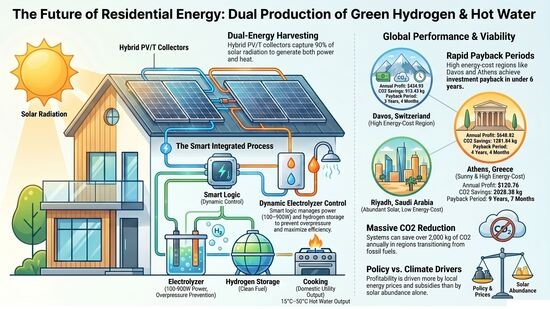
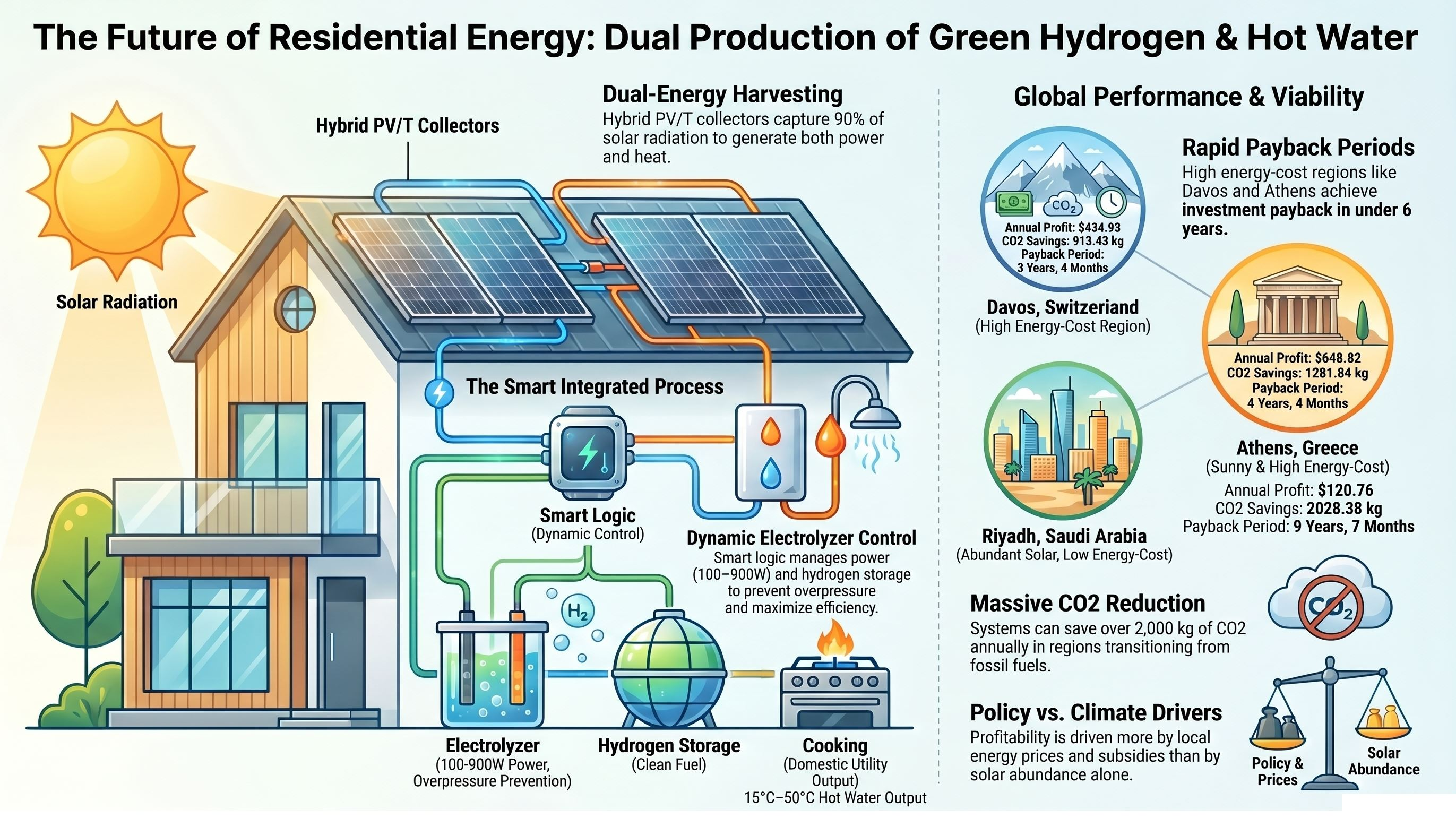
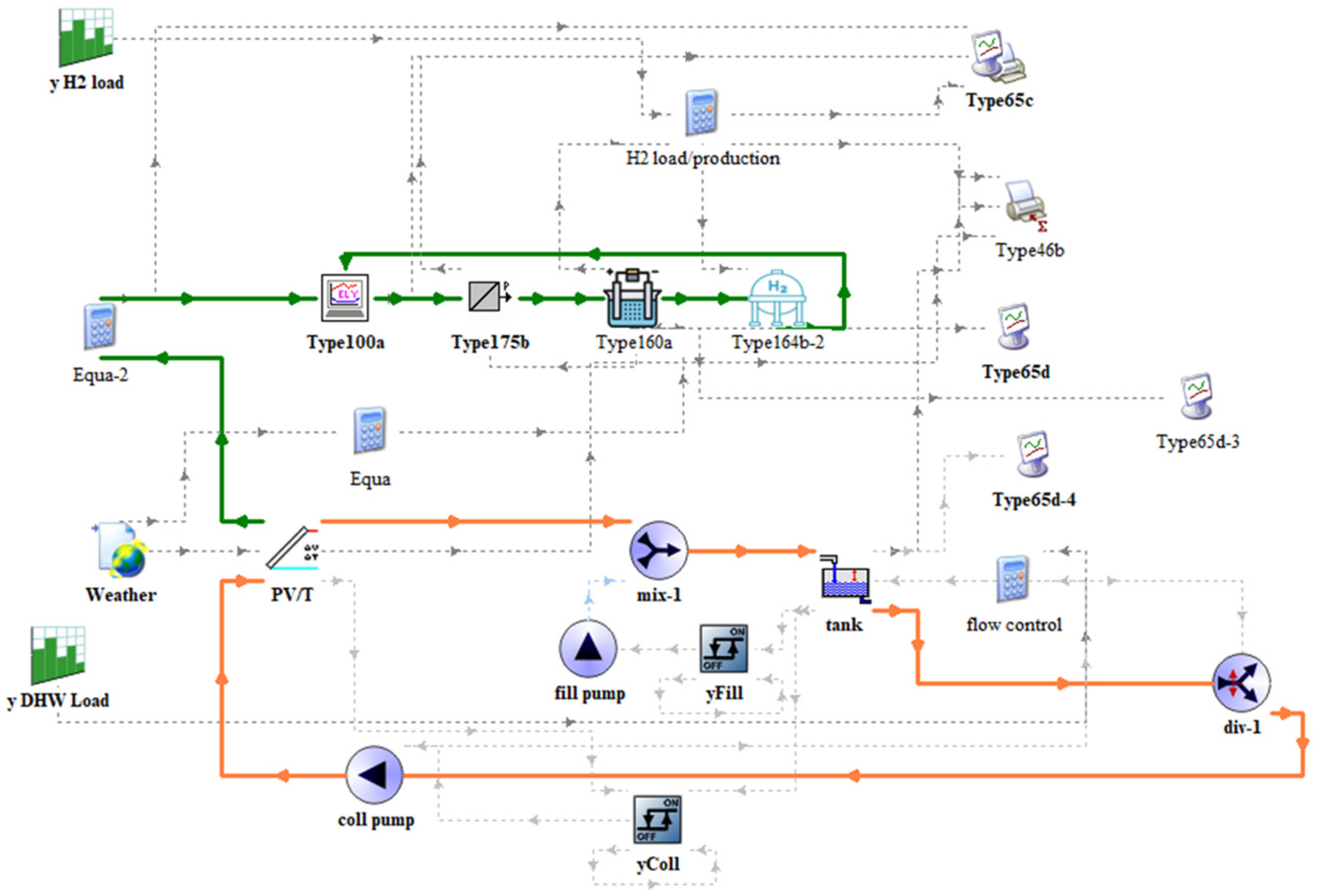
PV/T systems, also known as hybrid photovoltaic solar collectors, are systems that use solar radiation to produce both thermal and electrical energy. These systems combine solar cells, which use light from the sun to create electricity, with a solar thermal collector, which eliminates waste heat from the photovoltaic module and collects any remaining energy. Hybrid photovoltaic thermal (PVT) collectors are an emerging technology that combines photovoltaic and solar thermal systems in a single solar collector, producing heat and electricity simultaneously. Numerous investigations conducted in recent years [
16,
17] have demonstrated the feasibility of these systems. Gül and Akyüz [
18] analyzed the electrical, electrochemical, and thermodynamic performance of a PV/T electrolyzer system, validating experimental results with a numerical model. The system produced 556.8 kWh of electrical energy and 1912 kWh of thermal energy annually, yielding 4.49 kg of hydrogen compared to 3.96 kg from a PV-only system, with production rising to 4.59 kg at 65 °C. Hourly energy efficiencies ranged between 12 and 13.8% (electrical), 36.1 and 45.2% (thermal), and 49.1 and 58.4% (total), while exergy efficiency varied from 13.8 to 14.32%. The research conducted by Conti et al. [
19] gave a comprehensive analysis to determine optimal equipment sizing and design aimed at minimizing total costs and non-renewable primary energy consumption throughout the system’s lifespan. Their findings indicated that PV/T technology can lower non-renewable primary energy consumption below the nearly zero-energy buildings threshold of 15 kWh/(m
2·yr) and reduce overall costs by up to 8% compared to non-solar alternatives.
In renewable energy systems integrating hydrogen production [
20,
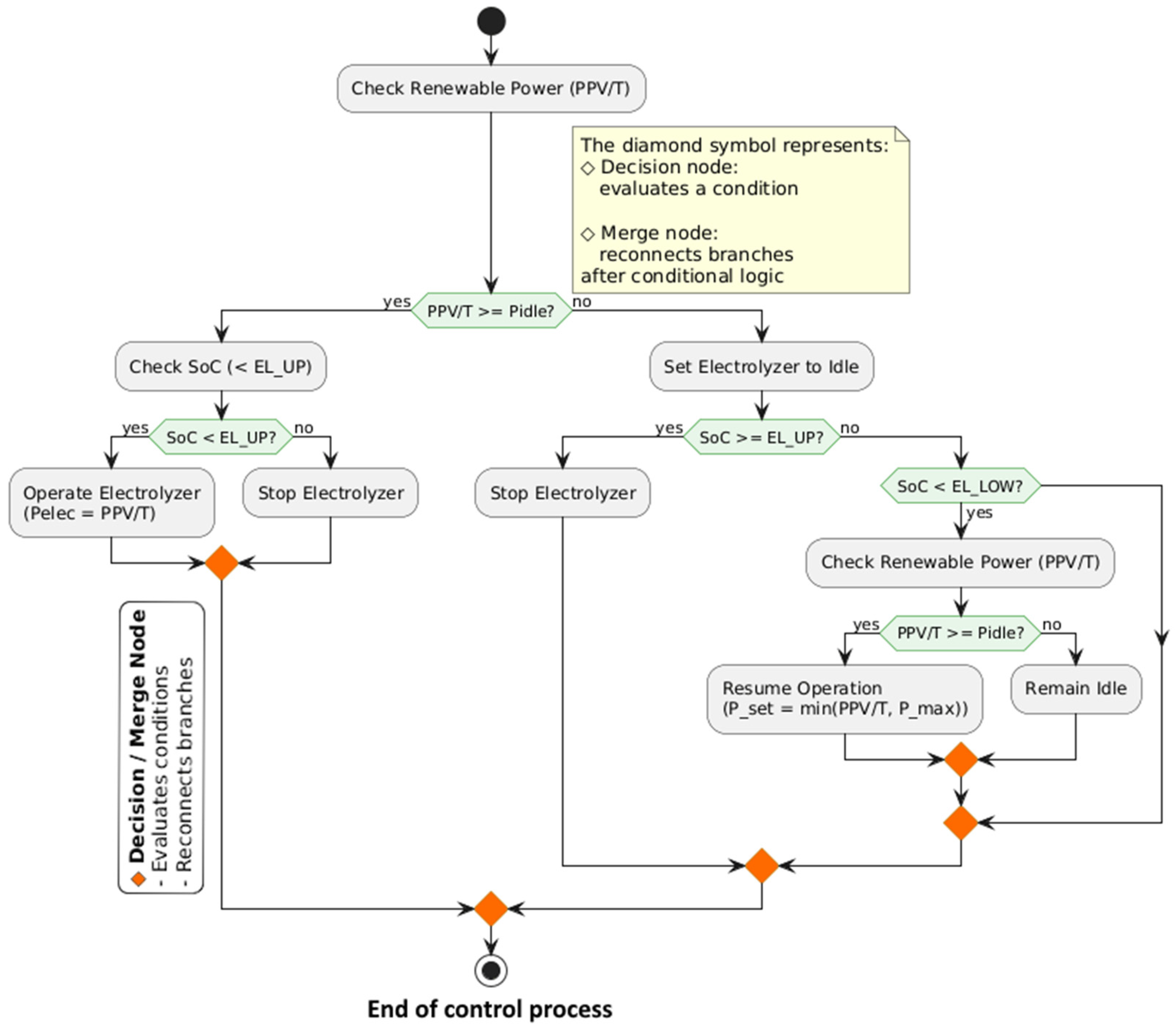
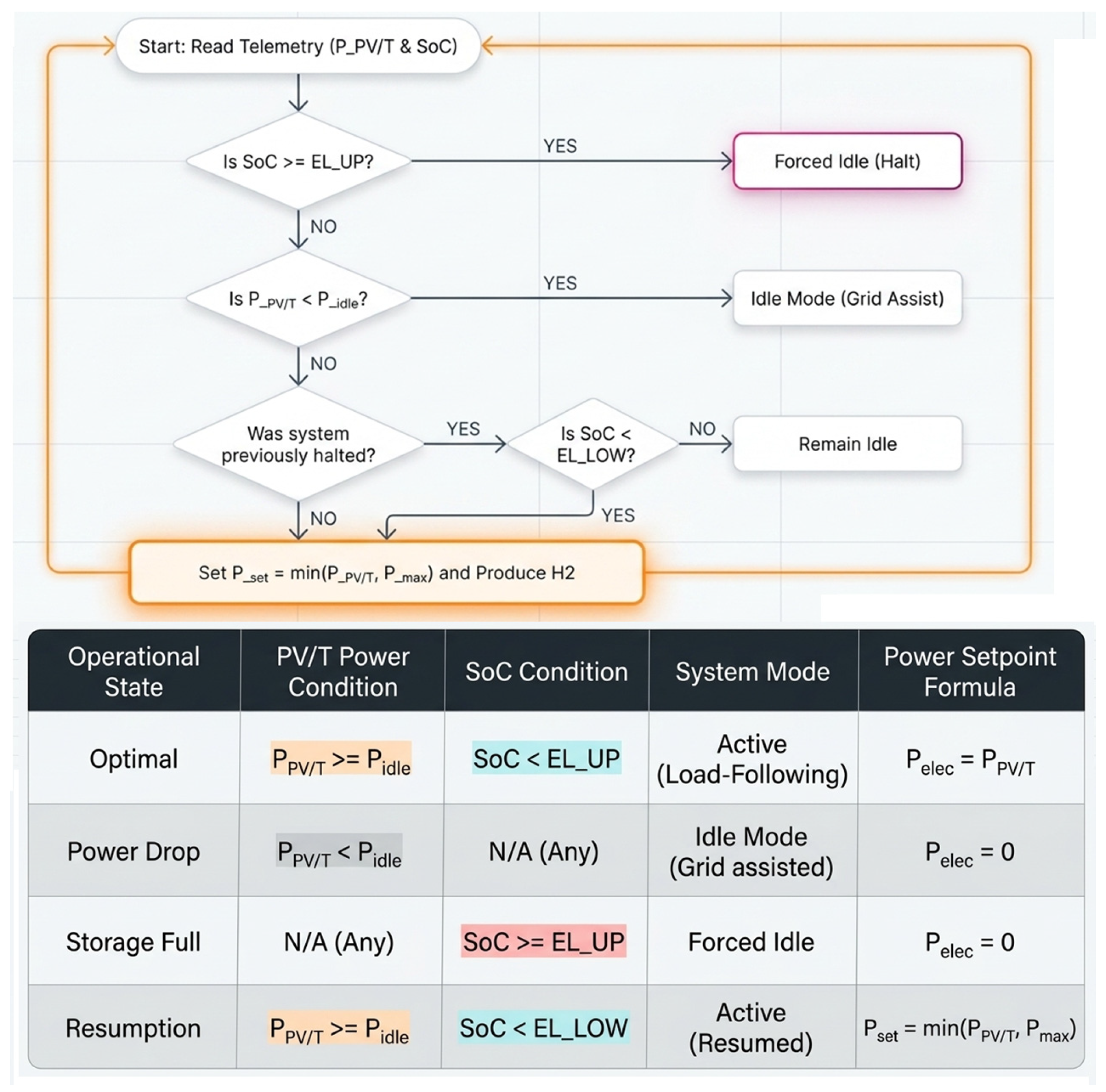
21], managing variable power output while ensuring safe and optimal operation of hydrogen production and storage subsystems remains a central challenge. PV/T systems generate both electricity and thermal energy; however, their electrical output is inherently intermittent, fluctuating with solar irradiance, weather conditions, and diurnal cycles. Such variability complicates consistent electrolyzer operation, given the minimum power threshold required for efficient hydrogen generation. A dedicated control strategy is therefore essential to regulate electrolyzer operation in accordance with available PV/T power output and hydrogen storage state of charge (SoC), ensuring renewable energy utilization when sufficient power is available, minimizing unnecessary shutdowns and restarts during low-irradiance periods, and preventing overproduction when storage capacity is reached.
It is important to mention that while the optimization of photovoltaic (PV) generation has been extensively studied, the control and optimization of PV/T systems based on hydrogen production remain relatively underexplored. This gap presents an opportunity to enhance the efficiency of hydrogen generation by integrating thermal energy capture with photovoltaic technology. Recent studies, such as those by Usman et al. [
22], highlight innovative approaches like the single inductor multiple output (SIMO) DC-DC boost converter, which allows for independent power control across multiple outputs. Similarly, Ahessab et al. [
23] developed a hybrid maximum power point tracking (MPPT) strategy combining intelligent artificial neural networks (IANNs) and particle swarm optimization (PSO) to address shading issues in PV systems. Additionally, Hu et al. [
24] designed a dynamic compensation strategy for DC microgrids to improve voltage stability. These studies highlight advancements in PV system control, yet the optimization of PV/T systems based on hydrogen production remains underexplored, presenting an opportunity for further research in this area. According to Kong [
25], aligning investments in green energy with carbon neutrality targets plays a vital role in accelerating the adoption of emerging energy technologies. This perspective underscores the need to assess not only the technical capabilities of PV/T systems but also their financial and ecological impacts. In parallel, Zhang et al. [
26] investigated the influence of climate change on solar power generation, underscoring the necessity of incorporating regional climate patterns into renewable energy assessments. Their findings reveal that fluctuations in solar radiation directly affect power output, emphasizing the importance of thorough environmental evaluations in PV/T-driven hydrogen production. Guided by these insights, this study takes a holistic approach, carefully balancing economic viability with the operational challenges posed by varying climate conditions.
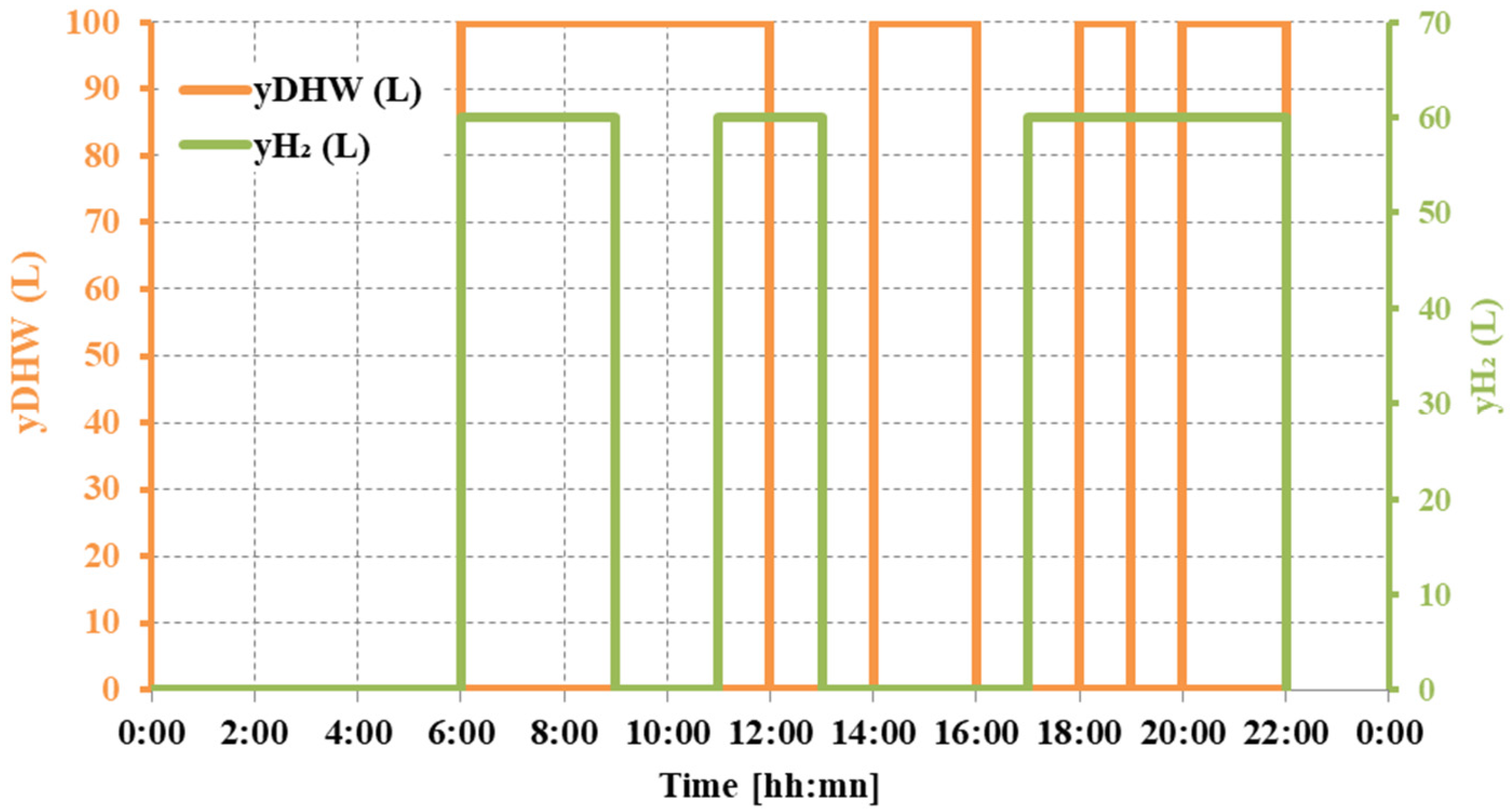
The aim of this study is to address several critical gaps in the existing literature regarding the optimization of photovoltaic/thermal (PV/T) systems for the dual production of hydrogen fuel and domestic hot water. As global efforts intensify to reduce carbon emissions and transition to sustainable energy solutions, understanding how to effectively harness renewable resources becomes increasingly important. This research specifically seeks to answer the following key question: First, how can dynamic control mechanisms enhance the efficiency of PV/T systems? While previous studies have explored various aspects of PV/T technology, there remains a limited understanding of the role that dynamic control systems can play in optimizing energy generation and storage. This study investigates how implementing a dynamic control mechanism can lead to improved system efficiency by balancing real-time energy demands with production capabilities. It aims to demonstrate that such a system can adaptively manage energy flows, which is crucial for maximizing output and minimizing waste. Second, what is the impact of variable power mode operation on system performance? The literature has not sufficiently addressed the effects of operating the electrolyzer in a variable power mode within PV/T systems. This study explores how directing excess PV/T power to the electrolyzer when it exceeds a minimum idle threshold can enhance overall system performance. Additionally, it examines the implications of drawing from grid power during periods of insufficient solar energy, providing insights into how this approach can optimize hydrogen production while maintaining system stability. Third, how does the integration of energy storage solutions affect the adaptability of PV/T systems across different climates? Existing research has often overlooked the adaptability of PV/T systems in varying climatic conditions. This study investigates how dynamic control strategies can make these systems more versatile and effective in diverse environments. By regulating electrolyzer operation based on hydrogen storage levels and environmental factors, this research aims to demonstrate that PV/T systems can be tailored for residential applications, ensuring reliable hot water and hydrogen supply regardless of local climate variations. Lastly, what are the implications of using excess PV/T power for hydrogen production in terms of overall system efficiency? There is a pressing need for further exploration into how directing excess power generated by PV/T systems towards hydrogen production influences overall energy management and efficiency.
This study aims to quantify the benefits of this approach, examining how it contributes to reducing reliance on grid power and enhancing sustainability. By analyzing the relationship between excess energy utilization and system performance, this research seeks to provide a clearer understanding of how hybrid renewable energy systems can be optimized for dual output. By addressing these critical questions, this study aims to contribute valuable insights into the development of more efficient and adaptable hybrid renewable energy systems that leverage solar energy for both hydrogen production and domestic hot water supply. On the other hand, achieving carbon neutrality requires not only the deployment of renewable technologies but also advanced planning strategies for power system expansion and market integration [
27]. Recent literature has shown that hydrogen deployment is closely linked to renewable penetration and energy market dynamics, particularly in power system planning studies. While these investigations mainly address grid-scale applications, the present work focuses on the residential scale by evaluating the techno-economic performance of a PV/T-based hydrogen and DHW production system for household energy substitution. Leveraging the advancements in PV/T-based hydrogen production, this research also dives into the economic and environmental feasibility of this technology across different climatic regions. Such evaluations are essential to ensure that renewable energy initiatives remain both sustainable and financially sound. The findings are expected to advance knowledge in this field and support ongoing efforts toward sustainable energy solutions that meet growing global demands while reducing carbon footprints.
Although the proposed control strategy includes threshold-based rules for managing PV/T power, electrolyzer idling conditions, and hydrogen storage state of charge, its contribution goes beyond conventional heuristic control widely reported in PV–hydrogen and PV/T–hydrogen systems. The novelty of this work lies in the integration of a dual-energy PV/T configuration simultaneously supplying hydrogen production and domestic hot water (DHW) under a unified dynamic management framework. Unlike previous studies that typically focus on single-output hydrogen systems [
28] or isolated residential energy management strategies [
29], this study incorporates real-time coupling between thermal and electrical energy flows, ensuring coordinated operation between DHW demand, electrolyzer constraints, and hydrogen storage safety limits. In addition, the control strategy is embedded within a comprehensive multi-regional techno-economic and environmental assessment, explicitly linking system behavior to climate conditions, electricity pricing, and policy structures across diverse locations. This coupling between operational control and region-dependent performance evaluation represents a key advancement over existing approaches, which generally treat control logic and economic analysis separately.
3. Results
To validate the numerical model, we compared its results with those from the photovoltaic–PEM water electrolysis model developed by Sharifian et al. [
31]. The original model, initially implemented in MATLAB, was reproduced in TRNSYS environment and executed under the weather conditions of Vienna, Austria. The photovoltaic (PV)-based electrolyzer system described by Sharifian et al. [
31] integrated two series-connected modules, with each series containing 12 parallel units. Every module comprises 72 individual cells, collectively capable of delivering a peak current of 35 A. These units span a 10 m
2 surface area, tilted at 45° to optimize solar energy absorption. The electrolyzer, as described by Harrison et al. [
35], itself features a membrane with an active area of 86 cm
2, arranged into stacks containing 20 cells each, with one stack per unit. The membrane, with a thickness of 178 μm, operates under a pressure of 7 bar. To maintain operational stability, the system circulates water at a rate of 0.25 m
3/hr, with an inlet temperature of 15 °C. A conductivity of 0.075 S/cm enhances the efficiency of converting solar energy into hydrogen, ensuring an optimal balance between performance and thermal regulation.
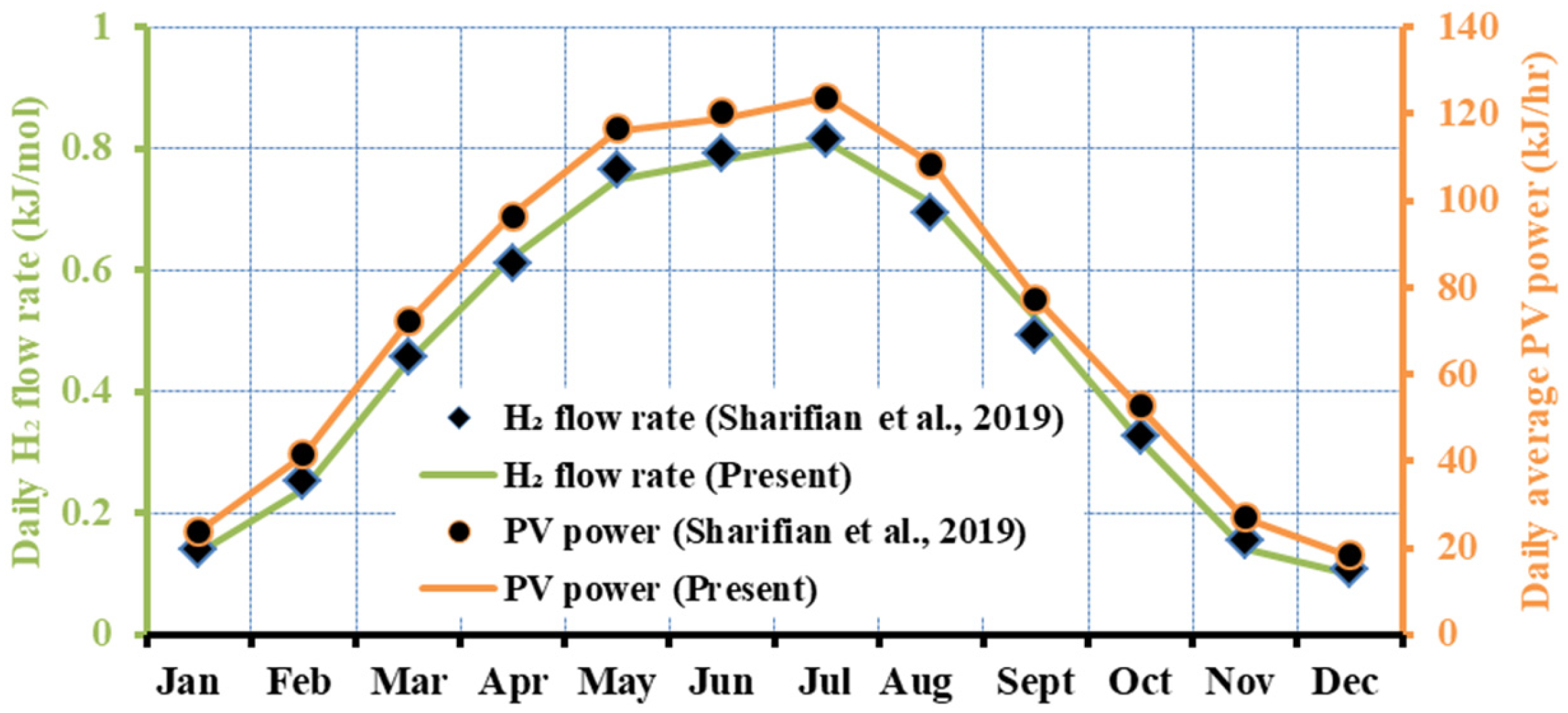
Figure 6 illustrates the variation in daily hydrogen outflow rate and the daily power output from the photovoltaic (PV) system over the course of a typical year in Vienna. The results presented in this study are compared with those reported by Sharifian et al. [
31], highlighting the annual trends and transient behavior of power generation. The analysis reflects the dynamic power conditions throughout the year, based on weather data specific to Vienna, which was sourced from Meteonorm. The Root Mean Square Error (RMSE) for hydrogen flow rates is approximately 0.015 kmol/hr, while for PV power outputs, it is around 0.85 kJ/hr. Additionally, the Mean Absolute Error (MAE) for hydrogen production is about 0.012 kmol/hr, and for PV power, it stands at 0.75 kJ/hr. These statistical parameters indicate a high level of accuracy in the predicted values compared to the observed data, with an R
2 value of 0.95 signifying that 95% of the variance in hydrogen production can be explained by the corresponding PV power output. The close alignment between our findings and those obtained by Sharifian et al. [
31] confirms the accuracy and reliability of the present model. Moreover, the validation of the PV-based electrolyzer using results from Sharifian et al. [
31] provides a strong foundation for applying the numerical model to PV/T-based electrolysis systems. By establishing a reliable benchmark for hydrogen production and power output in traditional PV systems, this validation allows us to confidently extend the model’s applicability to PV/T configurations.
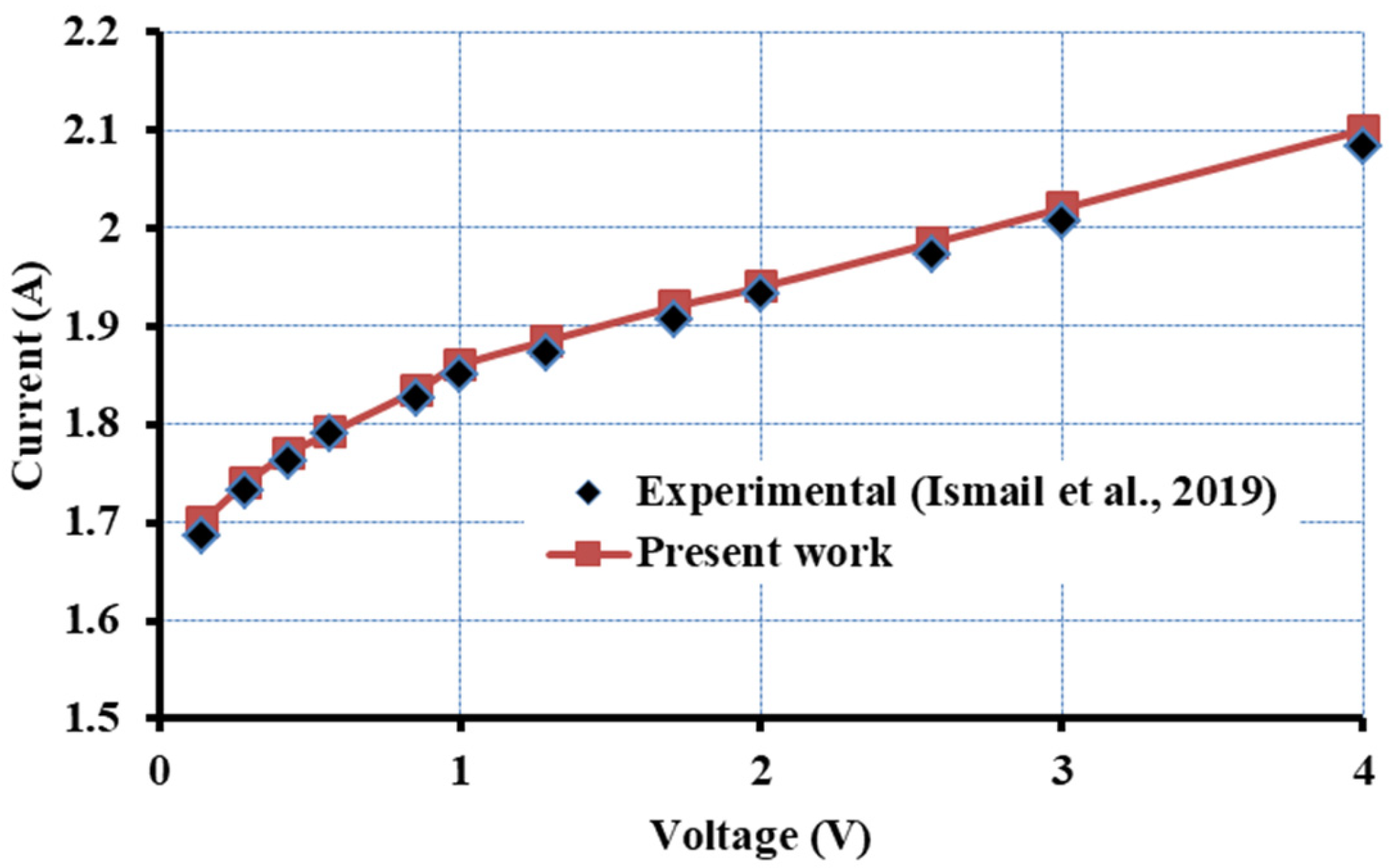
The second step of the validation process for the PV/T-based electrolyzer is assessed through the MAE and RMSE, which provide insights into the model’s accuracy in predicting voltage outputs compared to experimental data from Ismail et al. [
36].
Figure 7 shows that the absolute errors between the experimental values and the model predictions were computed for each current value, yielding a range of discrepancies that reflect how well the model aligns with real-world measurements. The MAE, calculated as approximately 0.008, indicates that, on average, the model’s predictions deviate from the experimental values by only about 8 mV, suggesting a high level of precision in the model’s output. Furthermore, the RMSE, calculated to be approximately 0.003, reinforces this finding by emphasizing that while there are some variations in individual predictions, these discrepancies are relatively small and do not significantly impact overall performance. The RMSE gives more weight to larger errors, yet its low value indicates that there are few significant outliers affecting the model’s reliability. Together, these metrics demonstrate that the TRNSYS model is robust and capable of accurately simulating the electrolysis process under varying operational conditions.
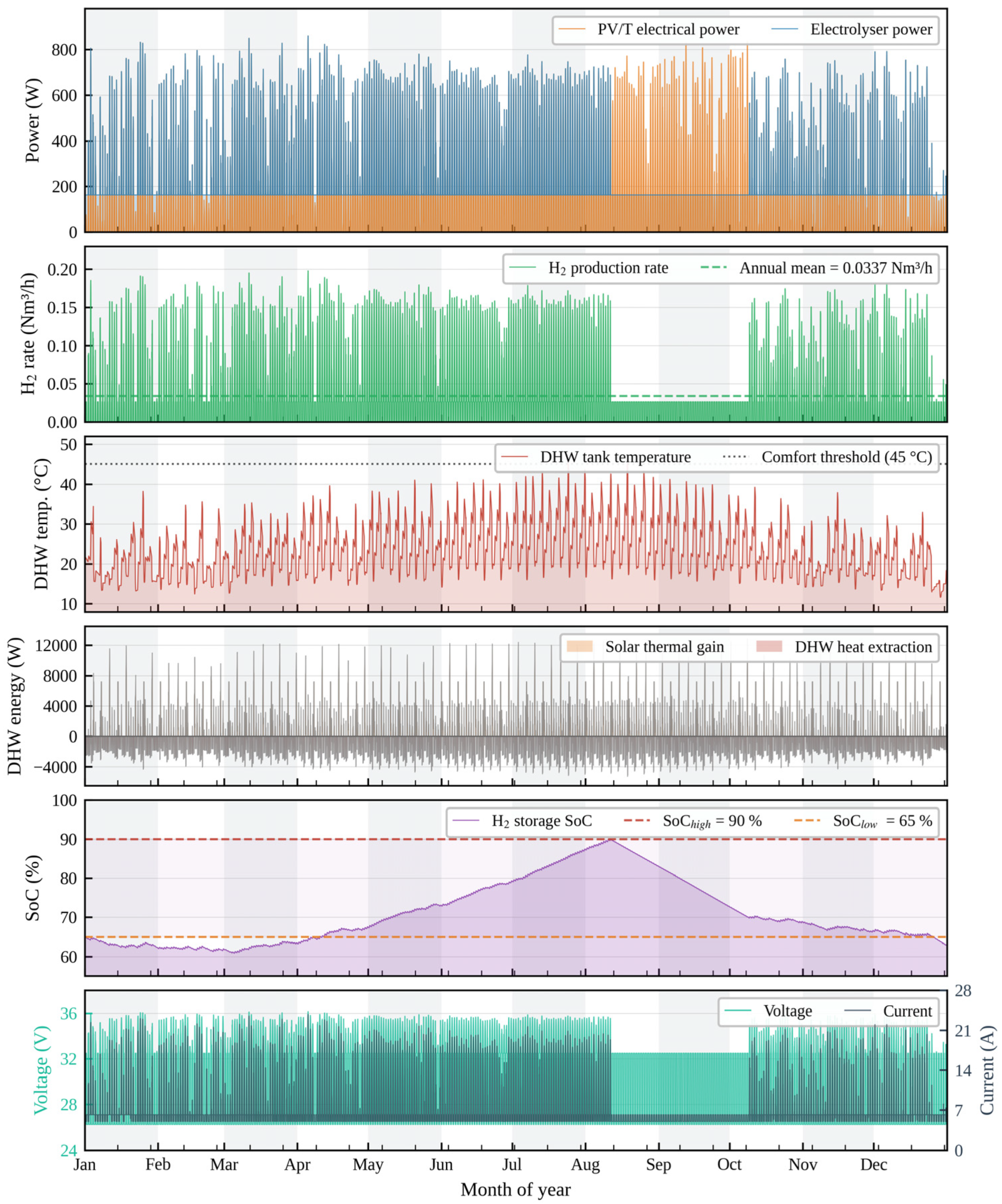
Figure 8 present the instantaneous response of the PV/T–hydrogen–DHW system under Tunis meteorological conditions. The PV/T collector generates electrical power during 4573 h per year (52.2% of annual hours), with instantaneous output rising from near zero at dawn to a peak of 859.9 W at solar noon under peak summer irradiance—a ceiling that coincides precisely with the electrolyzer’s upper operating limit of 860 W, confirming that the collector is sized to match electrolyzer capacity with no instantaneous electrical surplus at any point in the year. When averaged over daylight hours only, the mean output is 307 W, ranging from a monthly daylight mean of 266 W in December to 337 W in August, the latter reflecting the longer and more intense summer irradiance profile of Tunis (36.8°N). On an all-hour basis, monthly means span 111 W (December) to 201 W (July), with an annual all-hour mean output of 160 W and a total annual yield of 1404 kWh. The dynamic control confines electrolyzer operation exclusively within the 162–860 W permissible band; the electrolyzer is never switched off completely throughout the year, always drawing, at minimum, its 162 W idle power. Above this floor, the electrolyzer operates actively—tracking PV/T output—for 2316 h (26.4%) of the year, consuming 240.9 Nm
3-equivalent of hydrogen at a mean instantaneous power of 464 W during those hours. During the remaining 6444 h (73.6%), the unit holds at idle (162 W): of these, 5940 h (67.8% of the year) occur when PV/T output falls below the 162 W threshold and auxiliary grid power sustains standby, while 504 h (5.8%) occur when solar power is technically available (≥162 W) but the upper SoC threshold prevents active dispatch. This confirms a solar-priority, grid-assisted configuration rather than autonomous operation. Total annual electrolyzer consumption reaches 2118 kWh, of which 1244 kWh (58.7%) is met directly by PV/T output and the remaining 874 kWh (41.3%) is drawn from the grid to sustain the idle baseline. The ratio of electrolyzer consumption to PV/T yield is 150.8%, reflecting that the idle grid draw exceeds the fraction of solar energy not consumed by the electrolyzer—an inherent feature of a continuously on standby configuration. The hysteresis logic generates only 630 on–off transitions annually (~1.7 per day), demonstrating effective suppression of start–stop cycling. At idle, the electrolyzer sustains a small but continuous minimum hydrogen production rate of approximately 0.026 Nm
3/h, which contributes 54.7 Nm
3/yr (18.5%) of total annual production—a non-negligible baseline that would be absent in a fully on/off control strategy.
The storage SoC oscillates within a 60.9–90.0% band throughout the year with an annual mean of 71.0%, never breaching either the lower or upper limits, which validates the sizing of the storage vessel relative to seasonal production and consumption patterns. The system spends 474 h below 62% (concentrated in February–March, which together account for all 474 h), when low winter irradiance keeps production near the idle baseline, and 323 h above 88% (entirely in August), when peak summer production saturates storage before the SoC ceiling triggers curtailment. The relatively narrow operating band (<30 percentage points) and the ~1.7 daily transitions confirm that the hysteresis thresholds successfully dampen oscillatory switching while maintaining a stable hydrogen inventory throughout the annual cycle. More importantly, the sharp reduction in hydrogen production observed in September coincides with sustained operation of the hydrogen storage system at its upper state-of-charge limit. Under these conditions, the supervisory control strategy disables the electrolyzer to prevent overfilling, leading to extended shutdown periods despite available PV/T power. As the storage level decreases in mid-October, normal electrolyzer operation resumes, resulting in a recovery of hydrogen output.
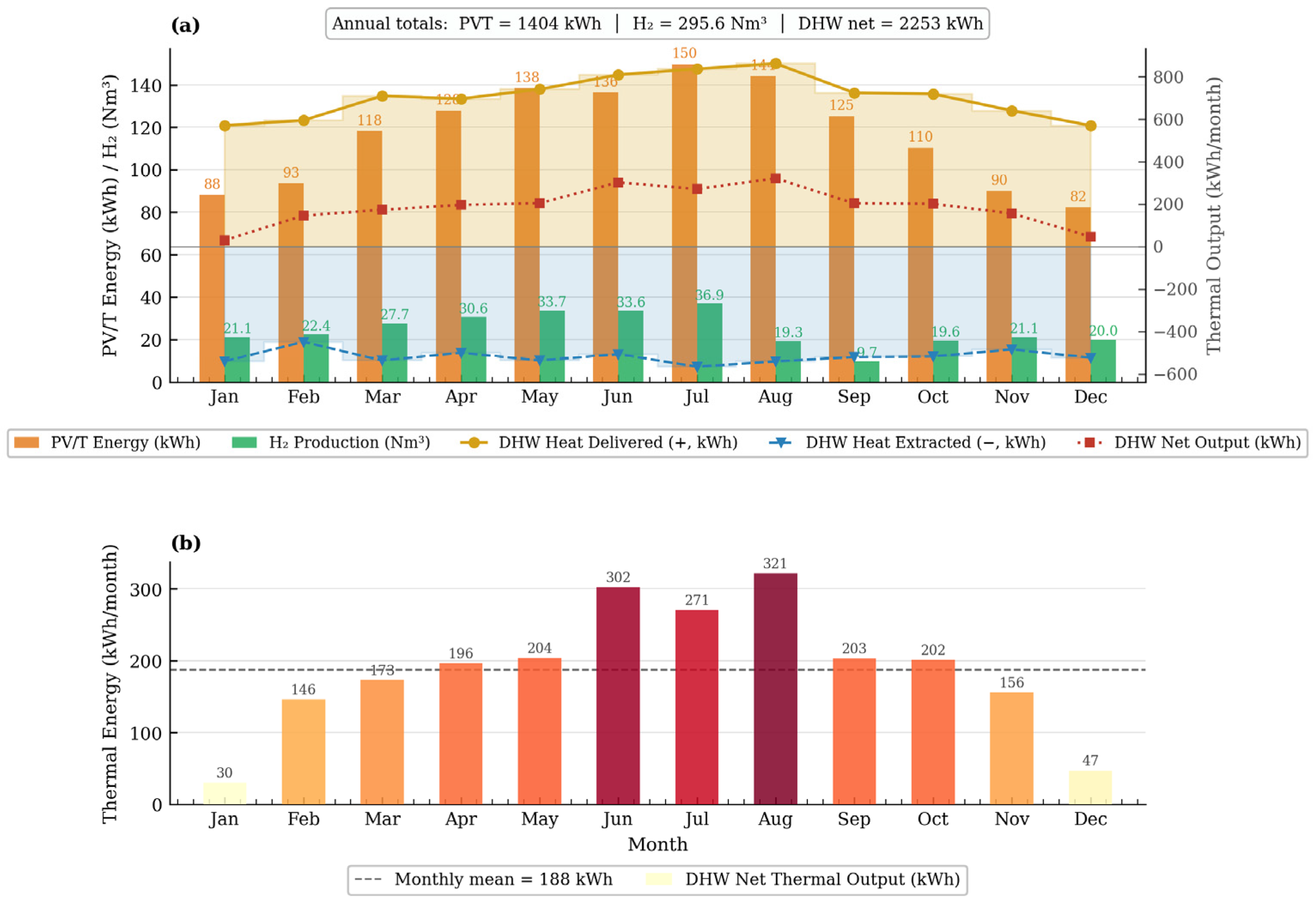
Figure 9 shows the monthly variation in PV/T energy output and hydrogen production, as well as the corresponding monthly domestic hot water (DHW) thermal energy under Tunisian climatic conditions. The DHW circuit receives 8473 kWh/yr of solar thermal energy from the PV/T collector and exports 6220 kWh/yr to meet load, yielding a net annual DHW energy balance of 2253 kWh. Tank temperature ranges from a winter minimum of 11.6 °C (December) to a summer maximum of 46.1 °C (August), with an annual mean of 23.7 °C. The system exceeds 45 °C—the comfort threshold—for only 6 h per year (0.1%), all in July–August, indicating that thermal disinfection by temperature cannot be relied upon as a passive safeguard, and an auxiliary boosting strategy would be required for sanitary compliance. Conversely, the tank remains below 25 °C for 5467 h (62.4%) of the year, confirming that the PV/T thermal output alone is insufficient to maintain the required temperatures during night hours and overcast periods.
Monthly net DHW output (heat delivered minus heat extracted) varies from 30.4 kWh in January to 321.3 kWh in August, with a marked asymmetry: winter months (November–February) contribute only 379.6 kWh (16.8% of annual net), while summer months (June–August) account for 894.4 kWh (39.7%). Heat delivered to the tank (gross input) is more uniform, ranging from 570 kWh in January and December to 862 kWh in August, indicating that the large winter deficit arises primarily from high heat extraction (load) relative to solar gain, rather than from substantially lower collector output. Mean tank temperature rises from 19.5 °C in December to a peak of 28.5 °C in July, with maximum instantaneous values of 38–46 °C reached only in summer months (June–August), underscoring the seasonally limited capacity of the PV/T thermal loop to satisfy domestic hot water requirements at sanitary temperatures year-round.
Monthly production tracks solar availability closely from January (21.1 Nm3) through July (36.9 Nm3), then declines sharply in August (19.3 Nm3) and collapses to the lowest annual value in September (9.7 Nm3)—despite September delivering 125 kWh of PV/T energy and 381 daylight hours, both fully comparable to spring months. This decoupling between irradiance and hydrogen output is the direct signature of the upper SoC threshold: the storage approaches its 90% ceiling in late summer (mean SoC reaches 87.2% in August, peaking at 90%), causing the control to lock the electrolyzer at idle for all 2316 nominally active hours in September—confirmed by zero above-idle dispatch hours in that month. Production recovers in October (19.6 Nm3) as consumption draws SoC back below the upper threshold, reinstating active dispatch.
Total annual hydrogen production is 295.6 Nm3/yr, produced across 4406 h (50.3%) of the year. The instantaneous peak rate is 0.198 Nm3/h, reached at maximum electrolyzer power (≈860 W) during summer noon hours. During active (above-idle) operation, the mean production rate is 0.104 Nm3/h, whereas at idle the fixed minimum rate is 0.026 Nm3/h.
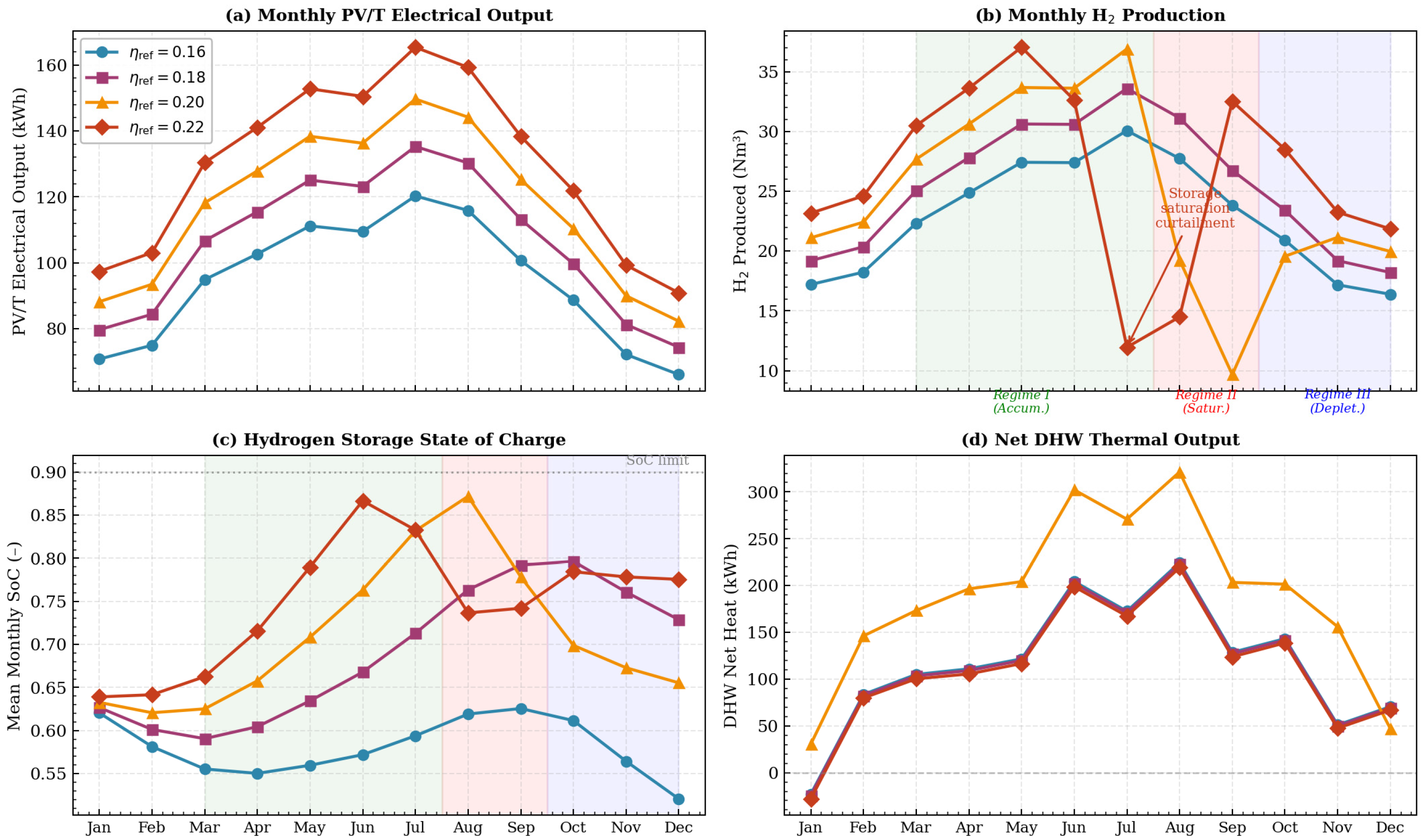
An extended sensitivity analysis was performed on the coupled PV/T–electrolyzer–storage system using PV/T cell efficiency as a controlling parameter.
Figure 10 highlights the nonlinear relationship between PV/T cell efficiency and hydrogen production under storage-constrained operation. The annual hydrogen yield to PV/T cell efficiency is sub-linear and is punctuated by locally negative marginal returns during peak irradiance months. Across the four cases examined (
= 0.16–0.22), annual electrical output increases monotonically from 1128 to 1551 kWh (+37.5%), consistent with the direct proportionality between cell efficiency and electrical conversion at reference irradiance. Annual hydrogen production, however, follows a non-monotonic behavior: it rises from 273.6 Nm
3 at
= 0.16 to 305.9 Nm
3 at
= 0.18 (+11.8%), then falls to 295.6 Nm
3 at
= 0.20 (−3.4%), before partially recovering to 314.1 Nm
3 at
= 0.22 (+14.8% relative to η = 0.16). This behavior is governed by two coupled constraints. First, the supervisory energy management strategy enforces electrolyzer shutdown once hydrogen storage SoC reaches its upper operational limit. Higher cell efficiency accelerates the spring accumulation rate, causing the storage ceiling to be reached earlier in the season and sustained for a longer period, thereby increasing cumulative curtailment time. Second, once electrolysis is suppressed, surplus electrical energy is redirected to the DHW subsystem—annual DHW net output peaks at 2253 kWh for
= 0.20, compared to 1393 kWh at
= 0.16, confirming that energy is conserved but redistributed away from hydrogen production. The reversal in electrolyzer input at
= 0.22 in July (120 kWh absorbed against 165 kWh generated, versus 190 kWh absorbed at
= 0.16 in the same month) directly evidences curtailment rather than smooth saturation. Collectively, these results indicate that electrolyzer capacity and hydrogen storage volume are co-limiting factors: increasing PV/T efficiency beyond a system-specific threshold yields diminishing, and transiently negative, marginal returns on hydrogen output unless downstream conversion and storage capacity are scaled proportionally. Overall, the results demonstrate physically consistent nonlinear interactions between generation, storage saturation, electrolyzer curtailment, and DHW energy recovery, confirming that the present implementation captures the expected operational dynamics of an integrated hydrogen-energy system under transient climatic conditions. The emergence of storage-constrained regimes, seasonal SoC accumulation, and efficiency-dependent curtailment behavior further supports the internal consistency and stability of the model predictions.
Table 4 presents a summary of the estimated prices associated with components of a photovoltaic/thermal (PV/T) electrolyzer system. The prices are provided for informational purposes only and may vary based on market conditions, supplier, and specific system configurations. In this study, the capital expenditure (CAPEX) of the PV/T system is taken as 892 USD/kW for the overall system, as reported by Alghool et al. [
37]. For modeling purposes, the total costs are further disaggregated, with 542 USD/kW attributed to the photovoltaic subsystem, while the remainder accounts for balance-of-system components such as plumbing and thermal storage. According to the International Energy Agency [
38], electrolyzer CAPEX ranges from 750 to 1300 USD/kW for low-cost alkaline systems, with values around 1000 USD/kW representing an optimistic cost-reduction scenario in competitive manufacturing contexts. The capital costs and lifetimes of the auxiliary components are derived from prevailing market prices. Accordingly, the pumps with a rated power of 100 W are estimated at 150 USD with a 20-year lifetime, whereas the water storage tank with 5 m
3 of volume and the hydrogen storage tank with 1 m
3 of volume are considered to cost 100 USD and 150 USD, respectively, both with an expected operational lifetime of 25 years. It should be noted that the economic results reported in this study are based on unsubsidized cost assumptions, and the inclusion of region-specific policy incentives, feed-in tariffs, or hydrogen subsidy schemes—such as those currently being implemented under the European Hydrogen Strategy or national renewable energy support programs—could substantially improve the financial performance indicators, including the LCOH, payback period, and net cash flow, particularly in locations with favorable regulatory frameworks.
The economic input data, specifically electricity and LPG prices, were sourced from the Global Petrol Prices database [
39], whereas the meteorological datasets, including global horizontal irradiation and ambient climatic parameters, were derived from the Meteonorm database. The selection of the locations is based on the need to capture statistically significant variability in both solar resource availability and energy market conditions, which are the two dominant drivers of system performance. Specifically, the chosen sites span a wide range of annual global horizontal irradiation (Gh), from low-solar climates such as Moscow (≈983 kWh/m
2·yr), Stockholm (≈1009 kWh/m
2·yr), Helsinki (≈973 kWh/m
2·yr), and Berlin (≈1278 kWh/m
2·yr), to high-solar regions such as Riyadh (≈2253 kWh/m
2·yr), Abu Dhabi (≈2044 kWh/m
2·yr), Cairo (≈1889 kWh/m
2·yr), and Brasília (≈2023 kWh/m
2·yr), ensuring that the photovoltaic/thermal yield and hydrogen production are evaluated under both limiting and optimal insolation conditions. In parallel, the dataset integrates strongly heterogeneous energy price structures, with electricity costs ranging from extremely low values in subsidized economies (e.g., Iran at 0.03 USD/kWh, Egypt at 0.024 USD/kWh, and Saudi Arabia at 0.053 USD/kWh) to high-cost markets such as Germany (0.406 USD/kWh), Denmark-/Switzerland-level conditions represented by Davos (0.395 USD/kWh), and other Western European cities. Similarly, LPG prices vary widely from heavily subsidized levels (≈0.15–0.30 USD/L in Egypt and Iran, and ~0.28–0.30 USD/L in Gulf countries) to high retail prices exceeding 1.2–1.7 USD/L in Western Europe and South America, reflecting realistic global dispersion in fuel substitution value. This combination of climatic and economic heterogeneity allows the dataset to form a structured parametric envelope, ensuring that observed variations in levelized cost of hydrogen (LCOH), thermal cost, and payback period are not site-specific artifacts but statistically consistent responses to underlying input variability, thereby strengthening the robustness and generalizability of the results.
Based on the results reported in
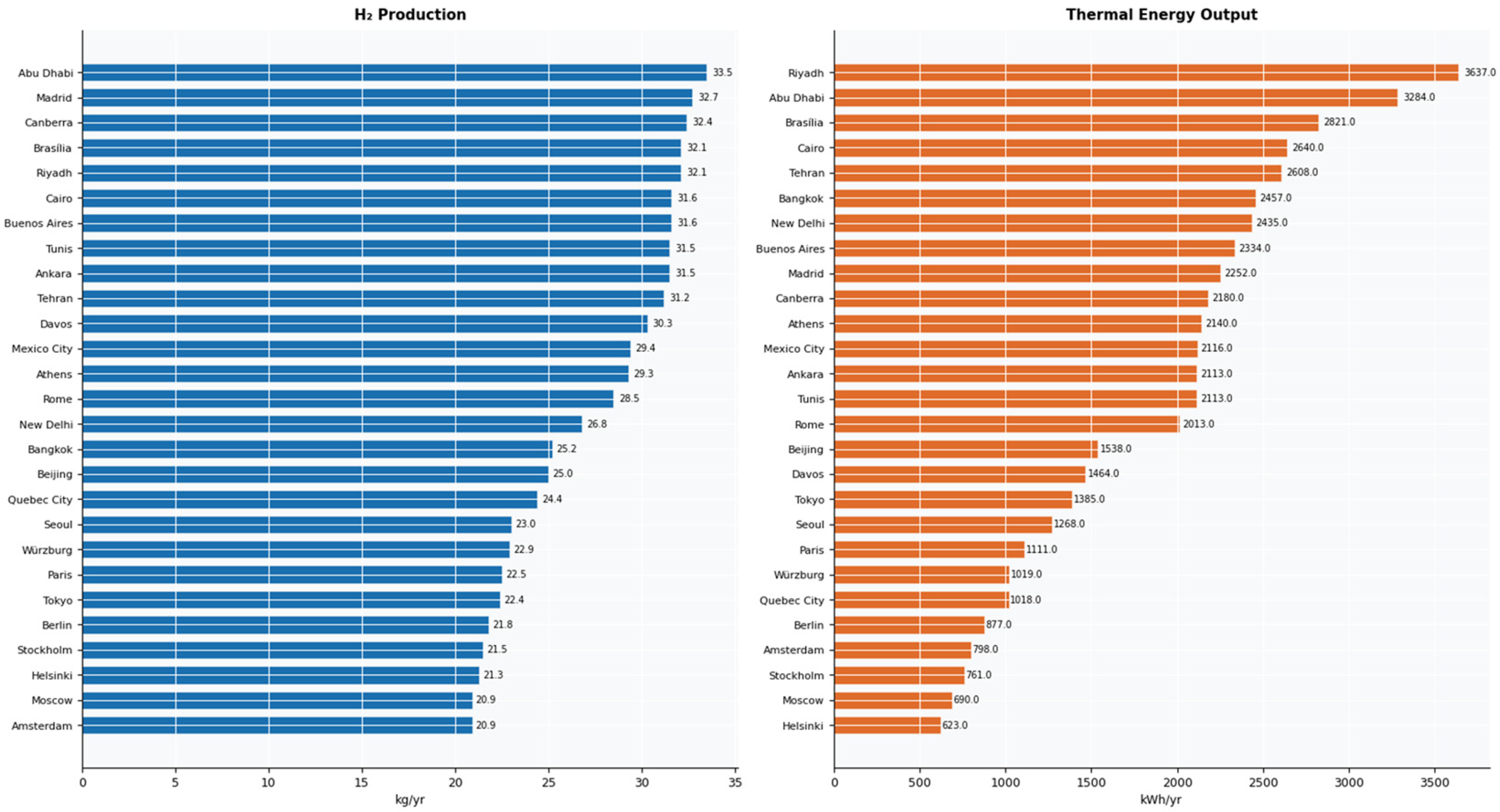
Figure 11, the hydrogen production (H
2) and domestic hot water (DHW) thermal output exhibit a clear dependence on the solar resource, with a secondary modulation due to climatic and system operating conditions. Locations with high global horizontal irradiation, such as Abu Dhabi, Riyadh, Brasília, Cairo, and Madrid, consistently achieve the highest hydrogen production levels, ranging approximately between 31 and 33.5 kg/year, reflecting the strong direct coupling between photovoltaic availability and electrolysis performance. These same locations also deliver elevated thermal outputs, often exceeding 2100–3600 kWh/year, confirming that abundant solar input simultaneously enhances both electrical and thermal energy recovery in the PV/T system. In contrast, low-irradiation climates such as Helsinki, Stockholm, Moscow, and Beijing show significantly reduced hydrogen yields (≈20–25 kg/year) and lower DHW production (≈600–1500 kWh/year), highlighting the limiting role of solar availability in northern and cloudy regions. Intermediate climates, including most European and Asian cities such as Paris, Tokyo, Berlin, Amsterdam, and Seoul, present moderate and relatively clustered values for both outputs, indicating more stable but constrained energy production. Overall, the table demonstrates a strong positive correlation between solar irradiation and both hydrogen and thermal outputs, with hydrogen production showing slightly higher sensitivity to Gh variations, while thermal energy recovery remains comparatively more resilient due to its ability to utilize diffuse and low-grade heat.
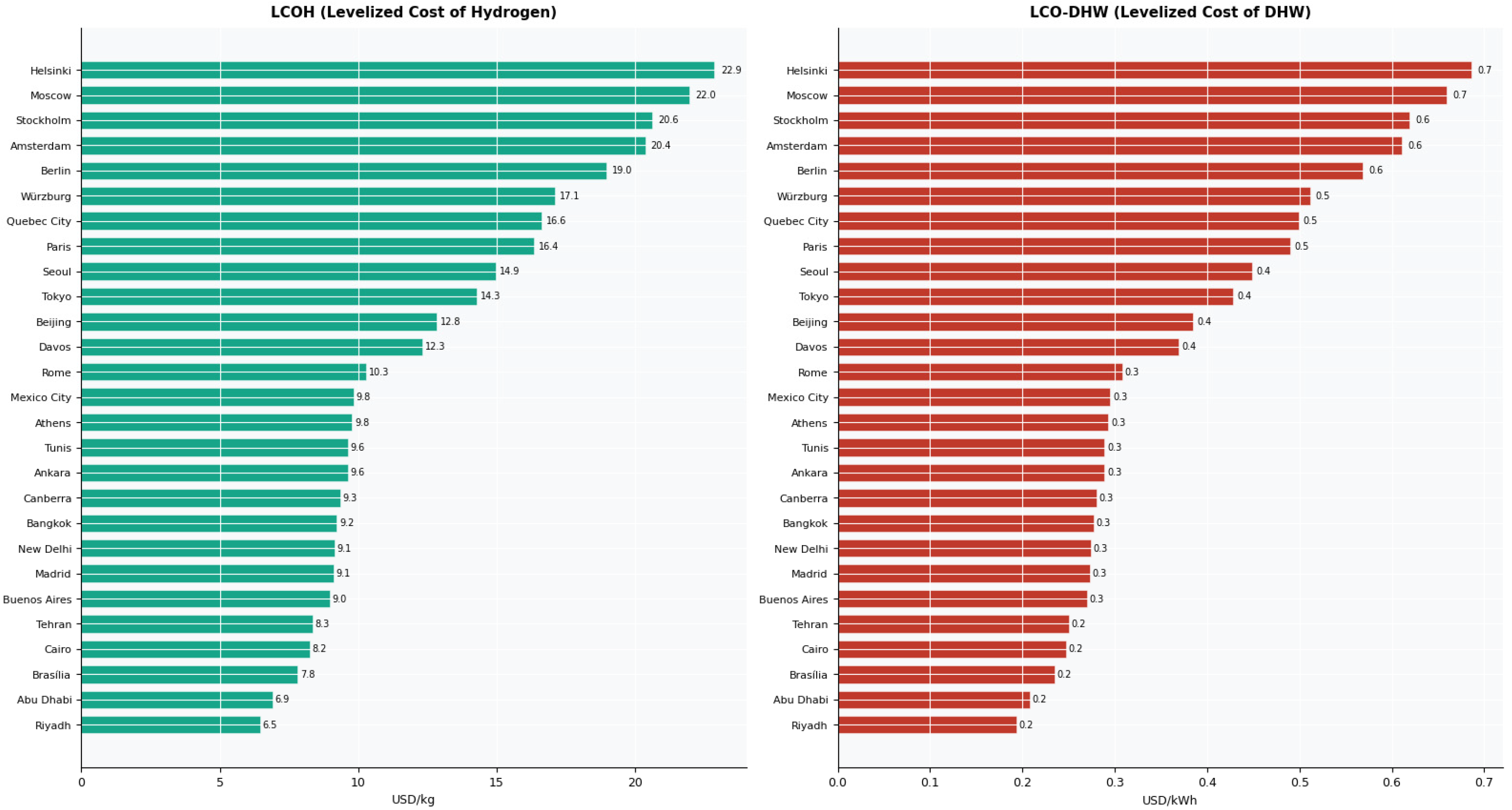
The results of the levelized cost indicators shown in
Figure 12 clearly demonstrate a strong data-driven dependency of both LCOH and LCO-DHW on the combined effects of solar resource availability and local energy price structures, as reported across the full dataset. For hydrogen production, the LCOH exhibits a wide dispersion, ranging from low values in high-irradiation, low-energy-cost regions such as Riyadh (6.47 USD/kg), Abu Dhabi (6.92 USD/kg), Brasília (7.82 USD/kg), Cairo (8.24 USD/kg), and Tehran (8.34 USD/kg), to significantly higher values in low-solar or high-electricity-cost regions such as Helsinki (22.86 USD/kg), Moscow (21.96 USD/kg), Stockholm (20.62 USD/kg), Amsterdam (20.36 USD/kg), and Berlin (18.96 USD/kg). Intermediate values are observed in temperate and mixed climates such as Paris (16.35 USD/kg), Tokyo (14.27 USD/kg), and Seoul (14.95 USD/kg), confirming a systematic transition between extreme climatic-economic regimes. This pattern indicates that LCOH is strongly governed by both solar-driven hydrogen yield and the marginal cost of displaced electricity, with irradiation acting as the primary physical driver and electricity price as the dominant economic amplifier. In parallel, the LCO-DHW results show a narrower but still significant variation, ranging from low-cost regions such as Riyadh (0.194 USD/kWh), Abu Dhabi (0.208 USD/kWh), Brasília (0.235 USD/kWh), Cairo (0.247 USD/kWh), and Tehran (0.25 USD/kWh), to higher-cost regions such as Helsinki (0.686 USD/kWh), Stockholm (0.619 USD/kWh), Moscow (0.659 USD/kWh), Amsterdam (0.611 USD/kWh), and Berlin (0.569 USD/kWh). Mid-range values are observed in cities such as Paris (0.49 USD/kWh), Tokyo (0.428 USD/kWh), and Seoul (0.449 USD/kWh), indicating that thermal cost is less volatile than hydrogen cost due to the more stable contribution of recovered low-grade heat across climatic zones. Overall, the data confirm that LCOH is highly sensitive to both irradiation and electricity price variability, whereas LCO-DHW is comparatively more stable but still significantly influenced by solar resource availability and regional energy pricing structures, leading to a consistent global clustering between low-cost solar-rich regions and high-cost low-solar/high-electricity-price regions.
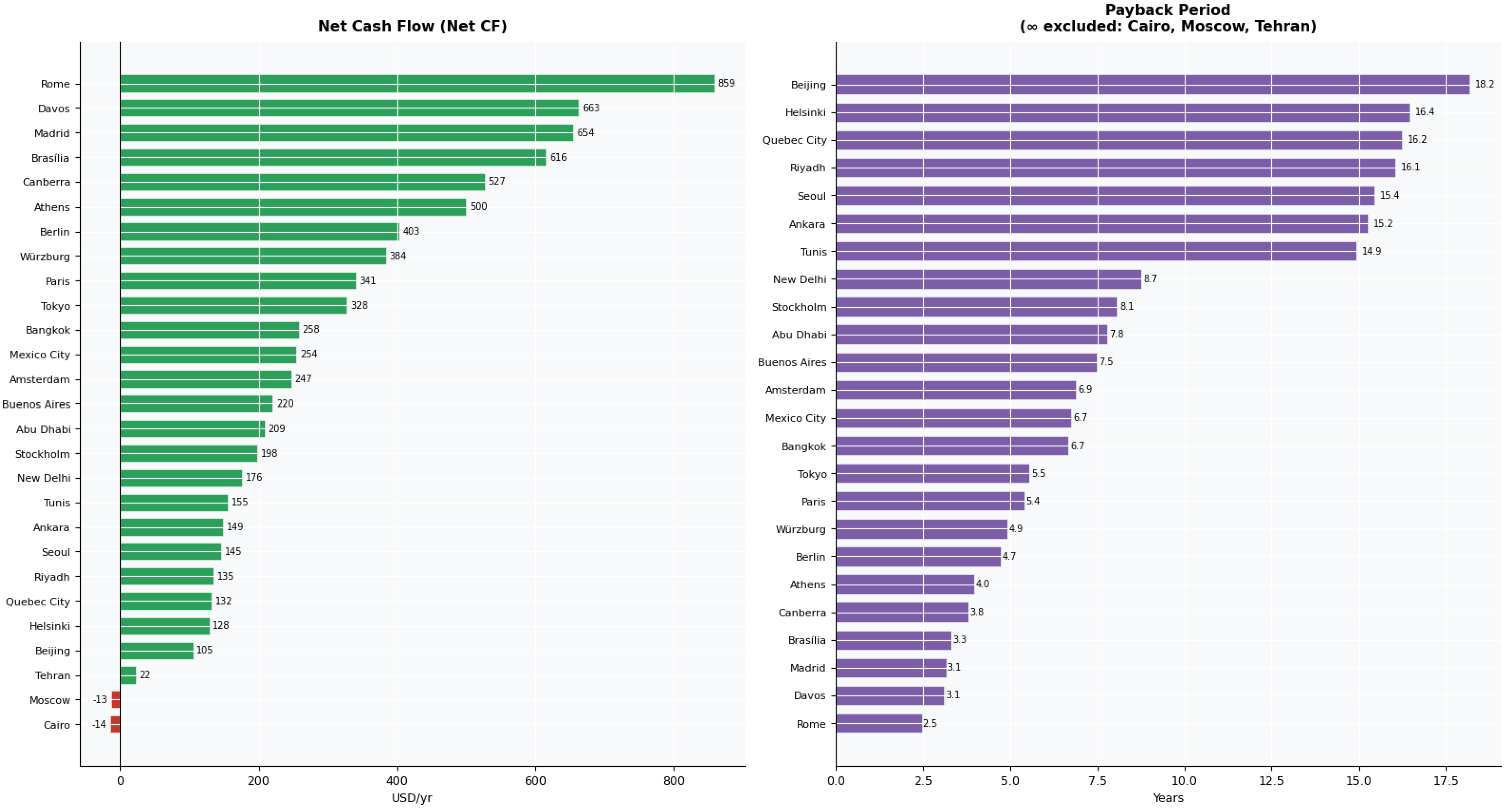
Figure 13 shows the net cash flow and payback period expected in different locations. The figure reveals a clear data-driven stratification of economic viability across the investigated locations, primarily governed by the interaction between solar availability and local energy prices, which together determine the magnitude of avoided electricity and LPG costs. High-performing regions such as Brasília (615.6 USD/yr, 3.31 years), Davos (662.6 USD/yr, 3.11 years), Canberra (527.0 USD/yr, 3.78 years), Madrid (654.1 USD/yr, 3.15 years), and Rome (858.9 USD/yr, 2.47 years) exhibit the strongest economic performance, characterized by high net cash flows and short payback periods, reflecting the synergistic effect of strong solar irradiation and/or high displaced energy prices. These conditions accelerate capital recovery, making the system highly competitive in these regions. In contrast, moderate-performing locations such as Tunis, Athens, Tokyo, Paris, and Mexico show intermediate cash flows (≈150–500 USD/yr) and payback periods typically ranging between 4 and 8 years, indicating viable but less aggressive economic returns. At the lower end of performance, regions such as Helsinki, Stockholm, Quebec, Beijing, and Seoul exhibit reduced net cash flows and extended payback periods exceeding 15 years, mainly due to lower solar resource availability combined with either moderate or relatively low marginal energy savings. Finally, economically constrained cases such as Moscow, Cairo, and Tehran show very low or even negative net cash flows and non-converging payback periods, reflecting insufficient economic offset to recover investment costs under prevailing energy price structures. Overall, the results demonstrate a strong clustering behavior, where high-irradiation and high-energy-cost environments systematically shift the system toward rapid profitability, while low-irradiation or low-value-energy contexts significantly delay or prevent economic feasibility.
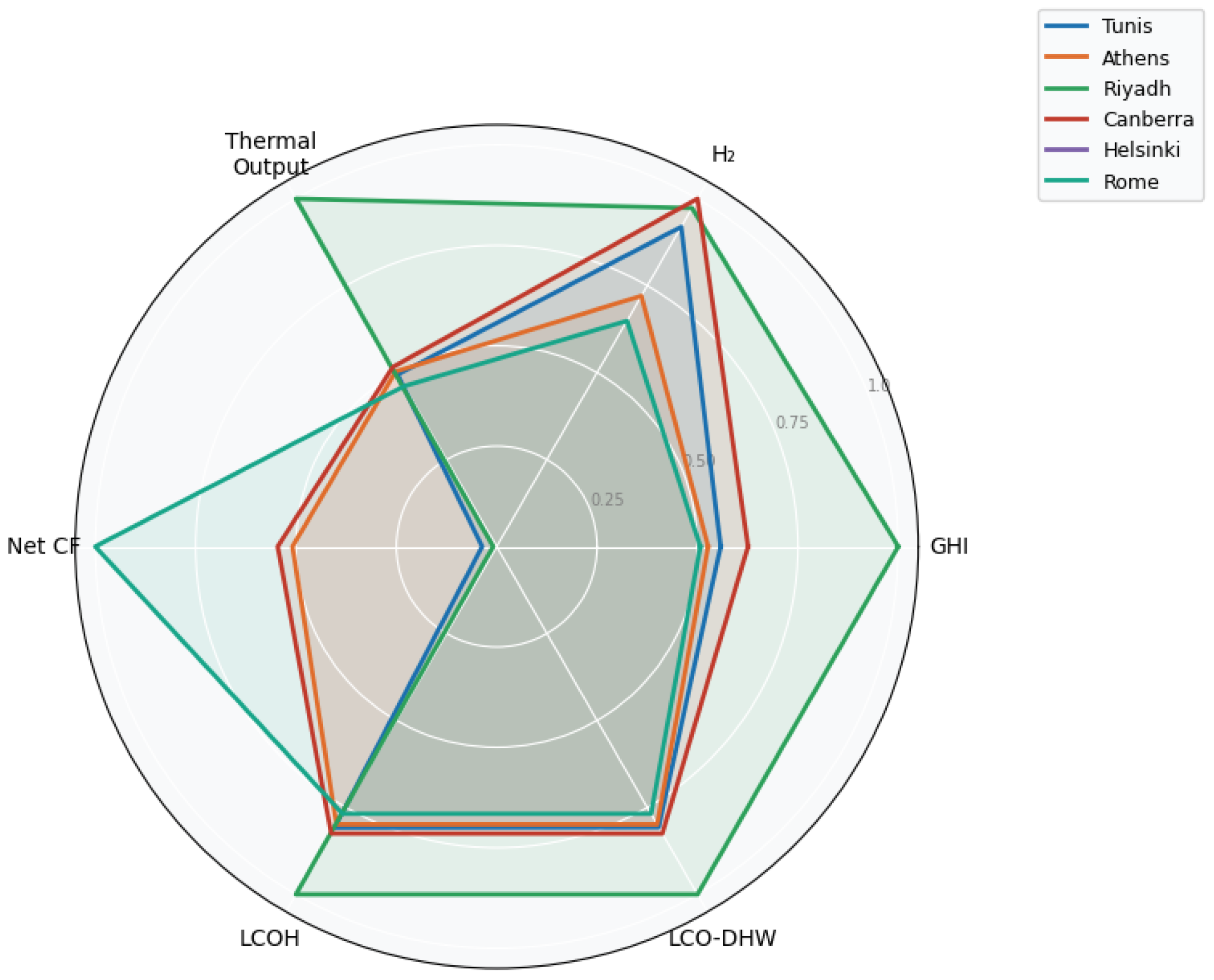
Figure 14 quantitatively profiles six cities across five performance dimensions, normalized so that radial extent uniformly reflects system attractiveness. Rome commands the largest overall polygon, driven by the highest Net CF (858.9 USD/yr) and shortest payback (2.47 yr) in the entire dataset, paired with strong GHI (1622 kWh/m
2·yr) and competitive levelized costs (LCOH 10.27 USD/kg), making it the unambiguous economic front-runner among the selected cities. Canberra presents a nearly equally expansive profile, underpinned by the highest GHI in the selection (1774 kWh/m
2·yr), the highest H
2 yield (32.4 kg/yr), and a payback of just 3.78 yr, confirming that its solar advantage translates directly into system economics. Athens occupies an intermediate position with a payback of 3.96 yr and Net CF of 500 USD/yr, but its slightly lower thermal output (2140 kWh/yr) relative to Canberra moderates its resource axes. Tunis, despite recording the highest GHI (1687 kWh/m
2·yr) and competitive thermal output (2113 kWh/yr), scores poorly on the economic axes due to a suppressed Net Cash Flow (155 USD/yr) and long payback (14.93 yr) driven by the lowest electricity tariff in the dataset (0.068 USD/kWh), which erodes the avoided-cost benefit. Helsinki produces the smallest attractiveness overall, reflecting the convergence of the lowest GHI (973 kWh/m
2·yr), lowest H
2 yield (21.3 kg/yr), weakest thermal output (623 kWh/yr), and the highest LCOH (22.86 USD/kg) and LCO-DHW (0.686 USD/kWh) in the full 27-city dataset, confirming that high-latitude, low-irradiance environments present the greatest structural barrier to solar-driven system viability regardless of energy price levels.
The sensitivity results shown in
Table 5 indicate a clear hierarchy in the influence of input parameters on the economic performance of the PV/T hydrogen–DHW system under Tunisian conditions. Both LCOH and LCODHW are exclusively sensitive to CAPEX variations, exhibiting identical relative sensitivities of approximately 0.70, which confirms that capital investment is the dominant cost driver in the system’s levelized performance. A ±20% variation in CAPEX leads to a noticeable spread in LCOH (8.27–10.97 USD/kg) and LCODHW (0.248–0.329 USD/kWh), while changes in operational prices have no measurable effect on these two indicators. In contrast, the simple payback period demonstrates a more distributed sensitivity pattern, with CAPEX producing the largest impact (range of 8.23 years), followed closely by electricity price (8.12 years) and LPG price (7.49 years), reflecting the strong coupling between operational savings and financial recovery time. The relative sensitivity values further confirm this behavior, with CAPEX showing the strongest influence (1.38), while electricity and LPG prices remain moderately influential (1.36 and 1.25, respectively). Overall, the results highlight that system cost-effectiveness is primarily capital-driven, whereas financial viability in terms of payback is governed by both capital and operational cost fluctuations, with a stronger dependence on CAPEX.
The environmental performance of the system is assessed by estimating the avoided CO
2 emissions associated with the substitution of conventional LPG and grid electricity by the produced hydrogen and thermal energy. The CO
2 emission factor for LPG is taken as 63.1 tCO
2/TJ according to Intergovernmental Panel on Climate Change guidelines (2006) [
40], while the electricity emission factor is derived from country-specific grid data reported by Brander et al. [
41] and the Our World in Data database [
42]. As shown in
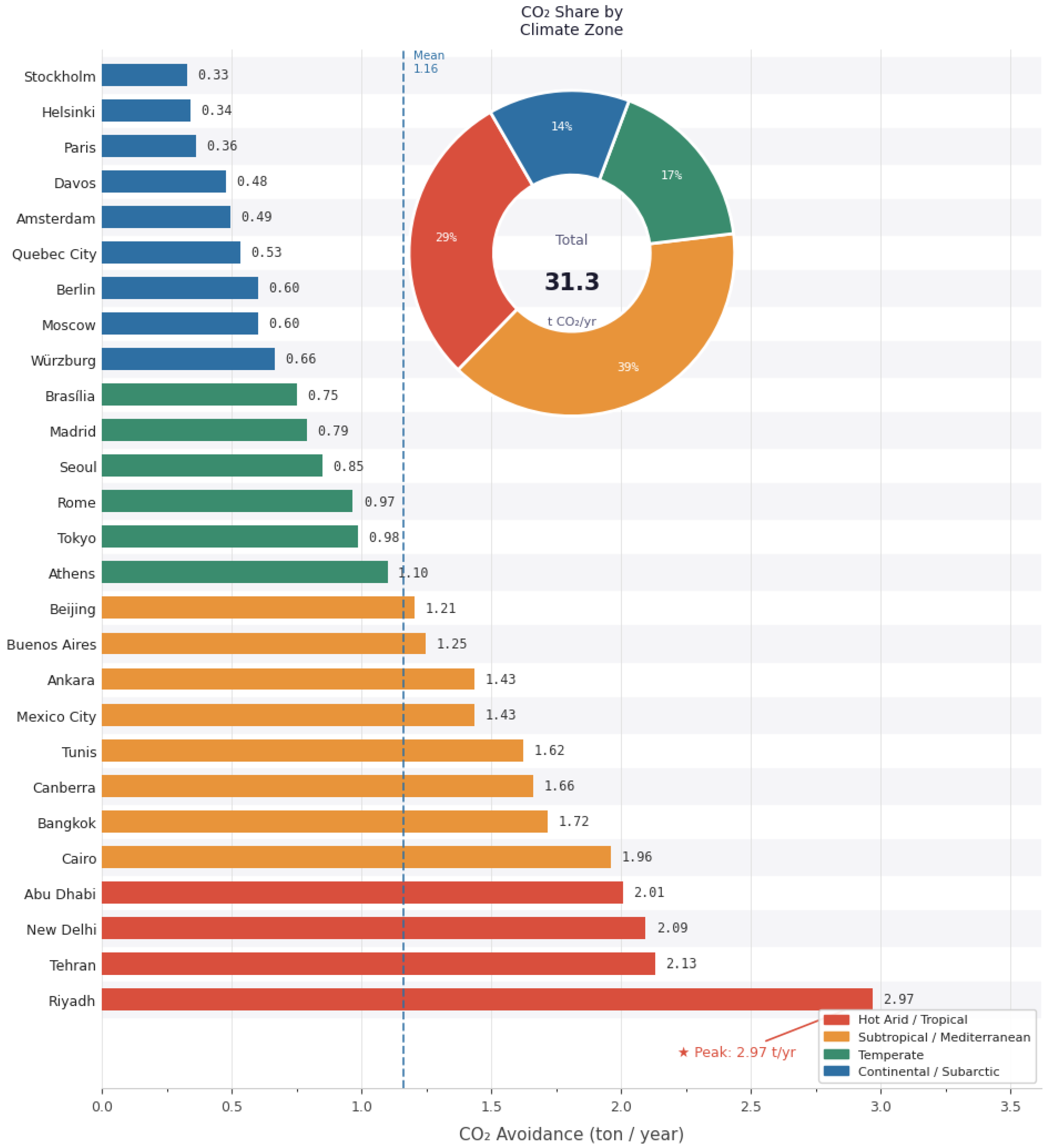
Figure 15, the annual CO
2 avoidance exhibits substantial geographical variability, ranging from 0.328 ton/yr in Stockholm to 2.967 ton/yr in Riyadh, with a global mean of 1.095 ton/yr across the 27 cities examined. Cities located in hot arid and tropical climates—including Riyadh, Tehran, New Delhi, Abu Dhabi, and Cairo—consistently yield the highest avoidance values (≥1.96 ton/yr), attributable to their elevated solar irradiance and relatively carbon-intensive electricity grids, both of which amplify the displacement benefit of renewable thermal and electrochemical energy generation. Subtropical and Mediterranean locations such as Bangkok, Canberra, Tunis, and Mexico City occupy an intermediate tier (1.20–1.72 ton/yr), reflecting moderate irradiance coupled with partially fossil-dependent grids. Temperate cities—including Rome, Tokyo, Seoul, Madrid, and Brasília—yield more modest but still meaningful reductions (0.75–1.10 ton/yr), while continental and subarctic capitals such as Stockholm, Paris, Helsinki, and Davos record the lowest avoidance figures (0.33–0.54 ton/yr), a consequence of lower annual insolation and, in several cases, low-carbon electricity mixes that reduce the marginal benefit of on-site renewable generation. Although intended for small-scale domestic applications, the proposed system avoids approximately 29.6 tons of CO
2 annually across the 27 examined locations, highlighting its potential contribution to climate change mitigation, particularly in high solar irradiation and fossil-fuel-dependent regions where deployment yields the highest environmental benefit.
4. Discussions
The investigation into the capabilities of a photovoltaic/thermal (PV/T)-based electrolysis system for the simultaneous production of hydrogen fuel and domestic hot water highlights its potential as a sustainable energy solution amidst rising global carbon emissions. The implementation of a dynamic control mechanism significantly enhances the system’s efficiency and adaptability, allowing it to optimize energy generation and storage based on variable solar conditions. This finding is consistent with existing literature [
43], such as the work by M’Sirdi et al. [
44], which emphasizes the importance of robust dynamic control strategies in improving the performance of PV systems under fluctuating environmental conditions. The system’s ability to effectively manage excess PV/T power while regulating electrolyzer operation according to hydrogen storage levels ensures that pressure remains below critical limits for safety. When creating supportive policies, policymakers must take into account the significant uncertainties surrounding the cost-effective deployment of green hydrogen technology [
45]. In this context, the economic analysis reveals notable variations in annual gross profits across different geographic locations. This disparity underscores the influence of local climatic conditions and policy frameworks on profitability, a point supported by Timmerberg et al. [
10], who noted that regions with favorable renewable resources could achieve lower production costs for hydrogen, thereby enhancing profitability.
The cost of hydrogen produced from a PV/T system varies significantly by location, with estimates ranging from 6.47 USD/kg in Riyadh to 22.86 USD/kg. These figures align with recent literature that highlights the economic viability of renewable hydrogen production through innovative technologies. For instance, according to a report by the Australian Renewable Energy Agency [
46], the current cost of hydrogen production from PV and electrolysis is approximately 18.70 USD/kg, with projections suggesting a reduction to about 9.10 USD/kg by 2030 due to technological advancements and economies of scale.
In this context, the recent study by Alghoul et al. [
37] reports hydrogen production costs from PV/T systems dedicated solely to hydrogen generation in the range between 4.92 and 16.8 USD/kg, which is consistent with the range obtained in the present work, particularly when accounting for the added functionality of the proposed system, which simultaneously delivers DHW and thereby enhances overall system value. Further analysis [
47] found that green hydrogen production costs in Iraq can range from 3.23 USD/kg to 5.39 USD/kg depending on system configurations and local conditions, which aligns closely with the values obtained for Riyadh and Cairo, which share similar arid climatic characteristics. In contrast, another published study [
48] indicates that hybrid electricity-based solutions for hydrogen production could achieve costs between 2.02 USD/kg and 2.88 USD/kg, emphasizing the potential for renewable pathways to become more economical than fossil-based methods.
In particular, the lower bounds reported in previous studies typically assume high-capacity utilization factors, low-cost renewable electricity, and optimized electrolyzer operation profiles, whereas the present model incorporates seasonal intermittency in solar availability. Consequently, although literature benchmarks suggest near-grid-parity hydrogen costs under controlled conditions, the present findings demonstrate that in real geographically distributed PV/T configurations, economic performance is highly site-dependent and can deviate substantially from optimistic centralized scenarios. This highlights that achieving the lower cost range requires not only technological efficiency improvements but also optimal site selection and improved system integration strategies to mitigate solar intermittency and enhance capacity factors.
More importantly, the integration of DHW into PV/T systems not only enhances their economic viability but also provides additional value by utilizing waste heat for domestic applications, thereby improving overall system efficiency. The costs for DHW using flat plate solar collectors, as reported by Ertekin et al. [
49] in Turkey’s climatic conditions (0.173 to 0.179 USD/kWh), are in accordance with those found using PV/T systems in various locations. For example, the PV/T system costs range from 0.194 USD/kWh in Riyadh, Saudi Arabia, to 0.659 USD/kWh in Moscow, Russia, with costs in Tunis (0.289 USD/kWh) and Athens (0.293 USD/kWh) also demonstrating significant savings. This comparison highlights that, despite the competitive range found in certain locations using PV/T technology, regions like Helsinki, Finland (0.686 USD/kWh), show higher costs.
The feasibility and profitability of the PV/T-based electrolyzer system vary significantly due to local energy prices, policies, and climatic conditions. Regions with high energy prices and strong solar energy potential, like Rome, Italy, achieve shorter payback periods through favorable incentives and higher gross profits. In contrast, locations such as Tunis, Riyadh, and Quebec experience longer paybacks—in Quebec, for instance, the 16.62-year payback period reflects the impact of cold climatic conditions that limit the efficiency of PV/T systems, despite higher energy prices. Similarly, subsidized LPG and electricity prices in Tunis and Riyadh reduce the economic gains from switching to hydrogen, prolonging their payback periods. Hence, the economic feasibility remains constrained without robust policy support.
To facilitate the interpolation of the results—specifically, the hydrogen cost, DHW cost, and payback periods—a machine learning (ML) model is developed.
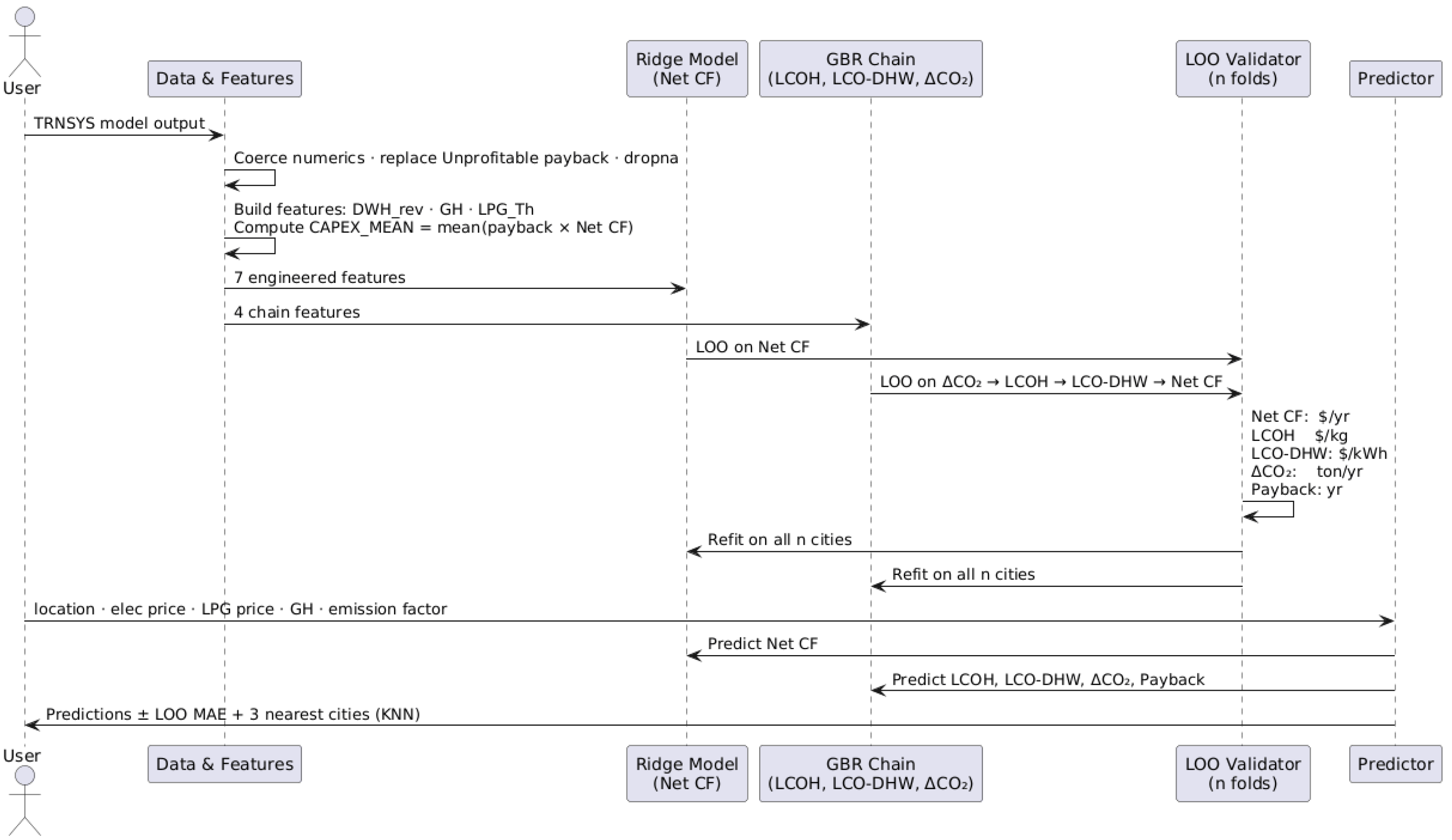
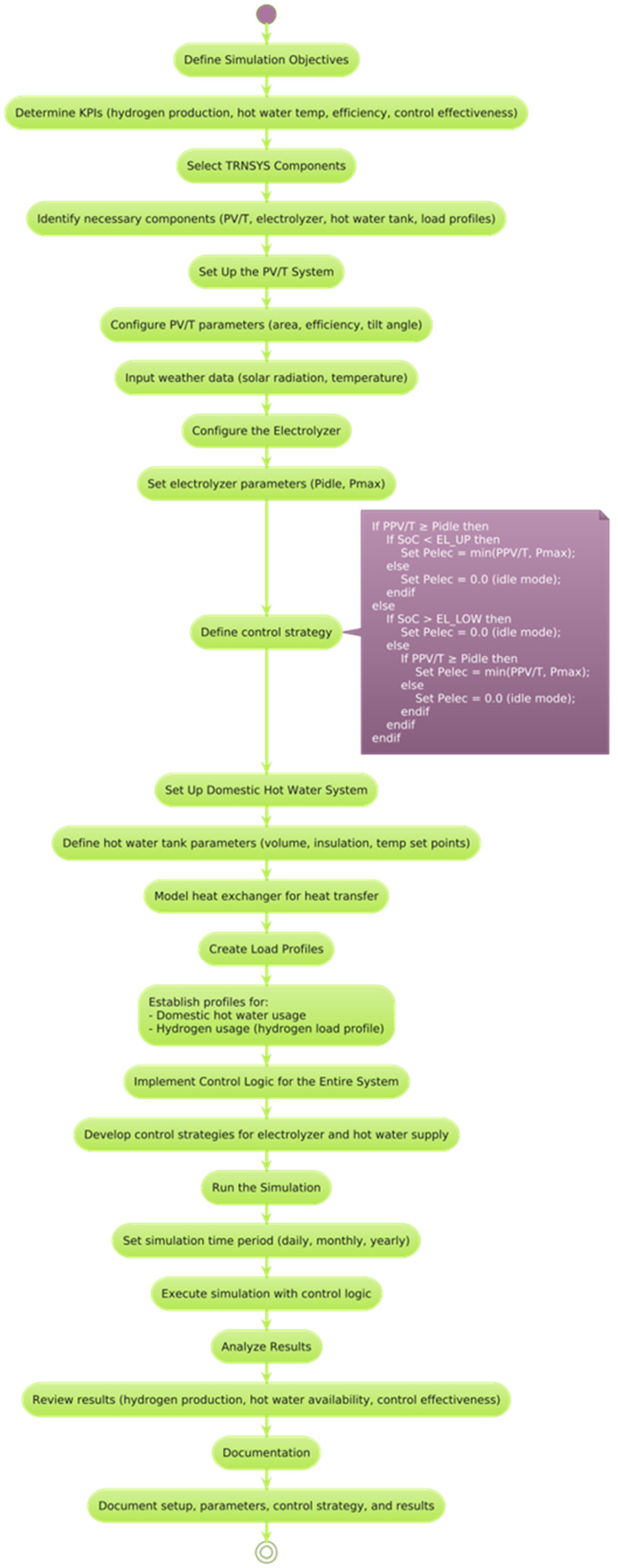
Figure 16 depicts the flowchart showing the step-by-step workflow for developing the predictive machine learning model, focusing on PV/T-based electrolyzer system outcomes.
Four site-specific inputs were used as predictors—local electricity price (/kWh), LPG price (kWh/L), annual global horizontal irradiation (kWh/m2·yr), and grid electricity emission factor (kg CO2/kWh)—from which three physics-informed interaction features were derived: the DHW monetary savings, electricity–irradiation revenue, and a raw DHW value term, encoding the multiplicative structure of the system’s cash flows directly as linear features. LCOH, LCO-DHW, annual CO2 avoidance (ΔCO2), and net annual cash flow were predicted via two complementary models: a Ridge regression model (α = 0.1) fitted on the seven engineered features for Net CF—chosen over gradient boosting after systematic cross-validated comparison, as the physics-informed features render the relationship approximately linear—and a Gradient Boosting Regressor Chain (300 estimators, depth = 3, learning rate = 0.05) for the remaining targets, where the chain ordering (ΔCO2 → LCOH → LCO-DHW → Net CF) explicitly propagates inter-target correlations by using each predicted output as an additional input to subsequent estimators.
As shown by
Table 6, model generalization was assessed via leave-one-out cross-validation (LOO-CV, n = 27 folds), which yielded LOO R
2 values of 0.953, 0.935, 0.947, 0.796, and 0.934 for Net CF, LCOH, LCO-DHW, ΔCO
2, and payback period, respectively, confirming strong predictive skill across all five performance indicators with LOO mean absolute errors of ±32.2 USD/yr, ±0.98 USD/kg, ±0.03 USD/kWh, ±0.21 ton/yr, and ±1.00 yr. The table further illustrates the model’s applicability through the Oslo validation case, where the predicted outputs remained within the corresponding LOO mean absolute error ranges, confirming the robustness and reliability of the proposed surrogate model for techno-economic assessment under varying climatic and economic conditions.
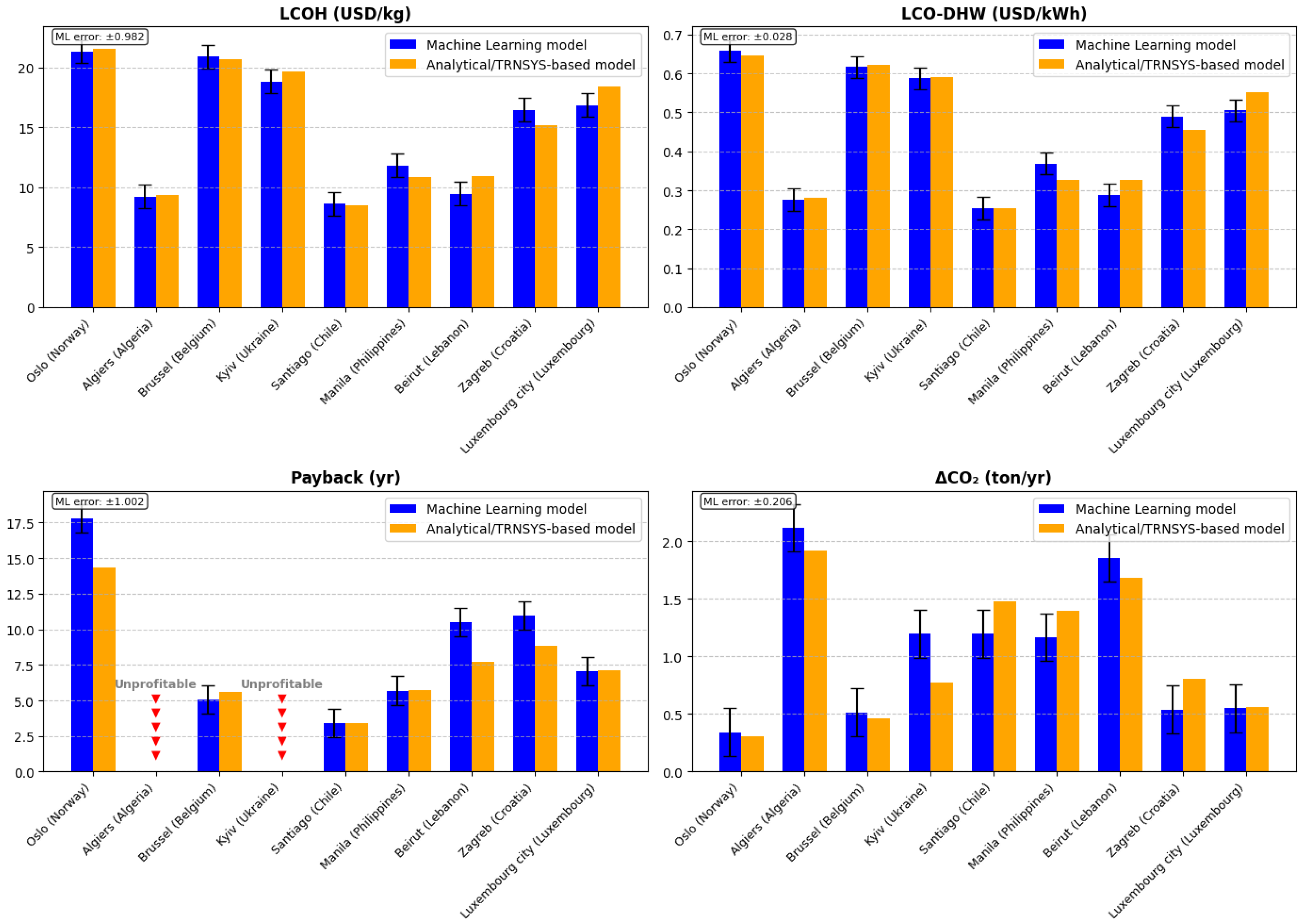
The ML-based economic predictions are compared with analytical model predictions in
Figure 17. Both models yield closely aligned predictions across all nine studied cities, with mean absolute differences of 0.74 USD/kg for LCOH, 0.027 USD/kWh for LCO-DHW, 1.35 yrs for payback, and 0.12 ton/yr for ΔCO
2, validating the analytical derivation as a physically consistent alternative to purely data-driven inference. Economically, the system performs best in sun-rich, low-electricity-cost cities: Santiago (Chile) and Algiers (Algeria) achieve the lowest LCOH (8.47–9.34 USD/kg) and LCO-DHW (0.25–0.28 USD/kWh), with Santiago returning the shortest profitable payback (3.39–3.41 yr) owing to its combination of high irradiation (1866 kWh/m
2·yr), moderate LPG prices, and a significant grid emission factor (0.408 kg/kWh). Manila and Beirut follow with intermediate LCOH (10.86–11.83 USD/kg) and strong CO
2 avoidance (1.40–1.86 ton/yr), driven by high emission factors (0.527 and 0.694 kg/kWh, respectively) and good solar resource. At the opposite extreme, Oslo and the three Central/Northern European cities (Brussels, Zagreb, and Luxembourg) exhibit the highest LCOH (15.15–21.51 USD/kg) and LCO-DHW (0.45–0.66 USD/kWh), a consequence of low irradiation (937–1209 kWh/m
2·yr) despite elevated electricity and LPG prices that partially offset the cost penalty; Oslo’s near-zero grid emission factor (0.0022 kg/kWh) further suppresses its ΔCO
2 avoidance to a mere 0.31–0.34 ton/yr, the lowest in the study. Algiers and Kyiv are identified as economically unviable deployment sites under current tariff structures—Algiers due to an extremely low electricity price (0.041 USD/kWh) that eliminates the financial incentive for on-site hydrogen generation despite strong solar irradiation (1683 kWh/m
2·yr), and Kyiv due to a low electricity tariff (0.083 USD/kWh) combined with modest irradiation. Overall, the results confirm that grid carbon intensity and solar resource jointly govern environmental performance, while the economic viability of the PV/T system is primarily sensitive to the local electricity price, with markets offering both high irradiation and electricity prices above approximately 0.20 USD/kWh representing the most promising deployment targets.