
Article

Seaports Readiness Framework for Hydrogen Export—A United Arab Emirates Case Study
1
Sustainable and Renewable Energy Engineering Department, University of Sharjah, Sharjah 27272, United Arab Emirates
2
Mechanical and Maintenance Engineering Department, German Jordanian University, Amman 11180, Jordan
3
Department of Private Law, College of Law, University of Sharjah, Sharjah 27272, United Arab Emirates
*
Author to whom correspondence should be addressed.
Hydrogen 2026, 7(2), 45; https://doi.org/10.3390/hydrogen7020045
Submission received: 2 March 2026 / Revised: 16 March 2026 / Accepted: 23 March 2026 / Published: 26 March 2026

Abstract

Countries are increasingly adopting hydrogen, leading to growing interest in developing sustainable hydrogen supply chains. Ports, being essential nodes in supply chains, must be prepared to facilitate hydrogen exports. However, there is a shortage of thorough port readiness studies for hydrogen exports. Existing research remains fragmented or confined to individual case studies, offering no transferable framework. This study fills this gap by creating a framework that covers four essential aspects of port readiness for exporting hydrogen: infrastructure, safety, legal, and management. The ports of the United Arab Emirates served as a case study, and the Delphi method was used to validate and contextualize the proposed framework. This study demonstrates the framework’s capacity to identify deficiencies in port readiness across multiple dimensions, helping stakeholders to plan and make decisions more easily.

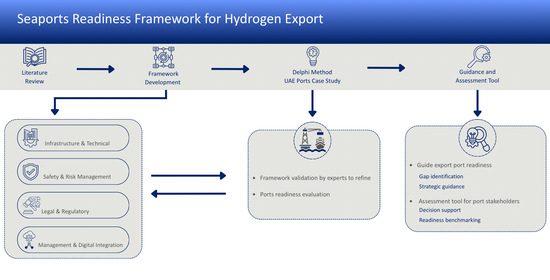
Graphical Abstract

1. Introduction

Over the past decade, there has been a notable shift in global energy sources, with a growing emphasis on clean energy initiatives to achieve a sustainable future [1]. This future is expected to be driven by hydrogen, which will be a pivotal contributor to the advancement of green energy. It is more efficient due to its superior qualities as a clean energy carrier, which enable it to store and transfer energy effectively. [2]. At COP26 in 2021, hydrogen was recognized as a key element in the transition to a net-zero energy system [3]. Following this trend, international demand for hydrogen is surging and is projected to meet 12 percent of the world’s energy needs by 2050 [4,5,6]. Due to its strategic importance in the global energy environment, hydrogen has created new economic opportunities in the global energy markets [7]. The spread and increase in hydrogen are tied to international trade, which influences its future development, and its trade relies on ports as a key component of the international supply chain.
Ports serve as crucial links within the global supply chain between nations and are poised to play a key role in hydrogen distribution [8]. The port’s strategic position, advanced logistics services, and infrastructure are contributing to its progress in the hydrogen trade and to strengthening its global economic standing [6]. Consequently, investigating the preparations for hydrogen transfer has become imperative owing to the increasing contemporary demand for hydrogen [6,8]. Hydrogen export ports require infrastructure and specialized facilities to ensure safe and efficient operation. These consist of storage tanks for hydrogen and its derivatives. Additionally, a conversion plant is a facility that converts hydrogen into exportable carriers, such as ammonia or other hydrogen derivatives, enabling transportation and international shipping. Furthermore, the port must be equipped with marine docks designated for the loading and unloading of hydrogen [9,10]. In terms of safety, hydrogen requires a highly accurate, specialized monitoring system [11,12,13,14]. Hydrogen possesses unique characteristics and higher risks; thus, it demands specialized preparedness. Having infrastructure and equipment by themselves is not enough to handle hydrogen exports. Safety remains a top priority, making it crucial to understand the risks and how to handle them effectively, as well as aligning with explicit legislative frameworks, laws, and standards that regulate hydrogen handling in ports. The port’s readiness to export hydrogen requires a comprehensive study of the conditions required to ensure it is fully prepared and operates safely and effectively.
Given the crucial role that ports play in the hydrogen trade, it is essential to conduct a country-level case study of a port. The UAE holds a significant position in the global energy sector and is committed to developing a sustainable energy industry and achieving a zero-carbon-emission future. This initiative aligns with international trends toward the Sustainable Development Goals and the Paris Agreement. These initiatives are backed by national programs, including the Net Zero by 2050 Strategic Initiative and the UAE National Energy Strategy 2050 [15,16,17,18,19]. Hydrogen has become a key driver of these strategies, leading the way to sustainable growth. In 2023, the UAE Ministry of Energy and Infrastructure launched the National Hydrogen Strategy, aiming to establish the country as a key producer and exporter of low-emissions hydrogen by 2031 [16,20,21]. These ambitious objectives illustrate the UAE’s commitment to establishing a robust capacity for hydrogen production and export, leveraging its capabilities to address future energy needs. Because the goal includes exports, ports play a crucial role. Therefore, it is essential to understand the fundamentals of equipping a port for efficient hydrogen export and to identify the key aspects to address.
Previous studies indicate that guidelines and coverage exist for various aspects of hydrogen, including production, transportation, storage, safety, infrastructure, cost, and regulations [22,23,24]. However, only a limited number of these studies explicitly address hydrogen ports and their preparedness, particularly for exports. For example, numerous studies discuss strategies for mitigating the risks associated with handling hydrogen during production, storage, and transportation [11,25,26]. Other studies review the essential requirements that a hydrogen export port must meet under international standards and codes. For example, ISO certifications must be applied to exported hydrogen, such as ISO/TC 197, ISO 26142, and ISO 21009 [27,28,29,30]. Moreover, the port must be licensed to export hazardous materials (IMDG Code) and must also have approval from the maritime authority. Moreover, coordination and compliance with IMO regulations are necessary [6,27]. Other studies focus primarily on technological and infrastructure requirements [10,31,32]. Some studies also include strategic management in exporting, but only in general terms [33,34,35]. However, most of these studies focus on one to three aspects within a single study. This reveals shortcomings in the port’s readiness to export hydrogen as an integrated system and rarely provides a comprehensive framework.
According to the literature review, current studies primarily focus on hydrogen in various forms, including its applications, infrastructure, technical, safety, and regulatory aspects, treating each as a separate topic. However, these aspects are rarely combined into a single, integrated port preparedness for hydrogen export. Recent research, including a 2024 study by Peggy Shu-Ling Chen et al. [10], presents an interesting framework for the potential and limitations of hydrogen ports, highlighting evidence-based studies, particularly in Australia and Japan. However, their framework is operational, focused on port operations, and specifically on logistics. Furthermore, a 2023 study by Chen et al. [8] reviewed ports’ preparedness for international hydrogen trade, examining key aspects, including hydrogen port infrastructure, risk factors, and regulatory requirements. Although these studies provide a solid basis for understanding port preparedness, they do not offer practical guidelines or a systematic list to assist in the initial phases of hydrogen export, particularly in technical, regulatory, and safety aspects. Additionally, one paper notes a lack of connection between ISO and other requirements-based codes. This highlights the importance of having a comprehensive framework to assess the port’s readiness for hydrogen exports, supported by empirical evidence.
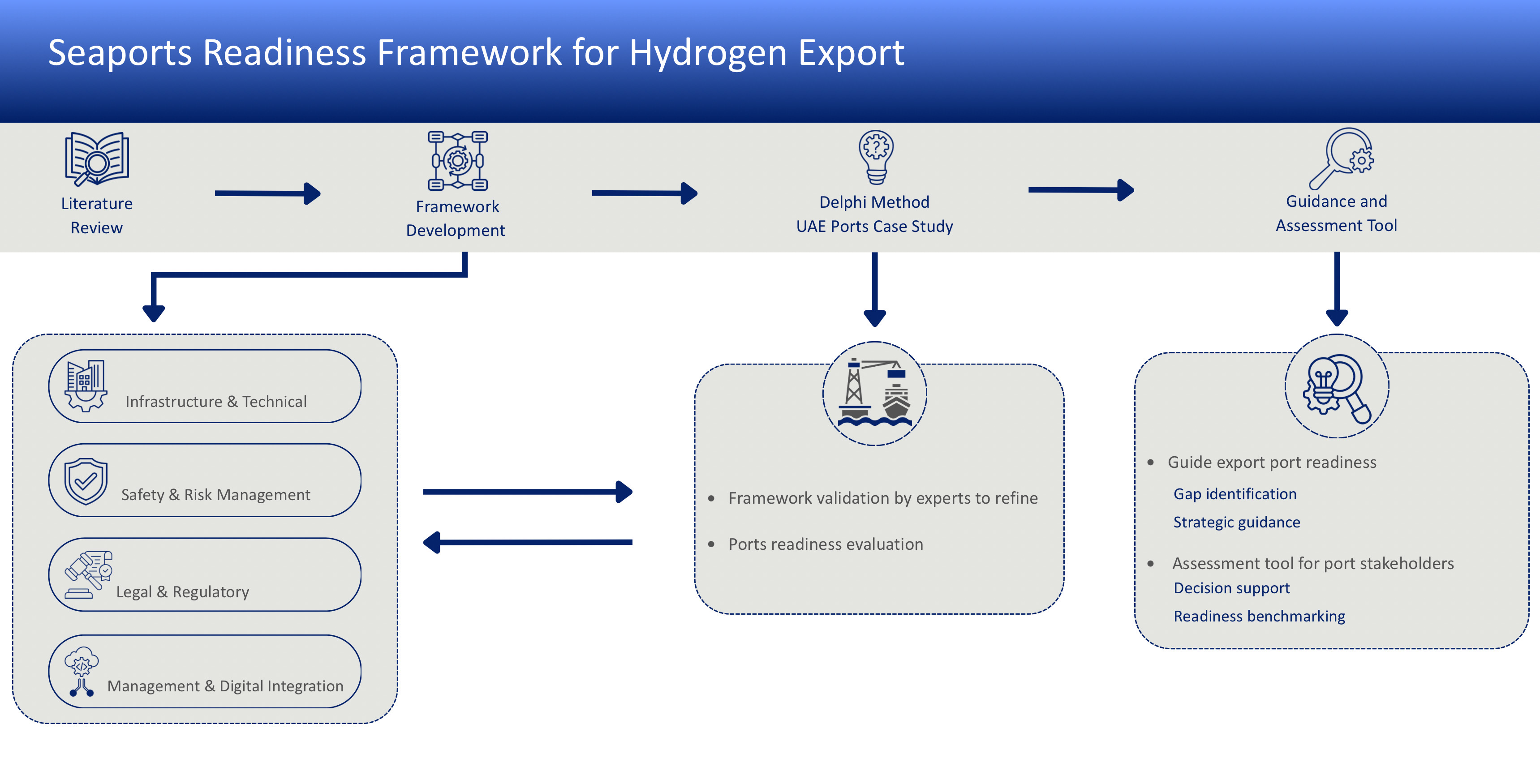
This study aims to fill these gaps by providing a framework for port readiness for hydrogen exports. The framework covers four aspects: infrastructure, risks and safety, legal and regulation, and management and strategy. This work is achieved by compiling and summarizing the literature to highlight the key aspects of port preparation. The framework is then validated using the Delphi method to conduct a field study of UAE ports and assess the current situation. This framework identifies the critical requirements for hydrogen export, serving as a roadmap for decision makers and stakeholders involved in the port’s completion to ensure efficient hydrogen export operations. Analyzing the existing state of ports and identifying gaps will facilitate early corrections and development, thus enabling field workers to develop the necessary plans. Overall, these goals are aimed at achieving export targets on time.

2. Hydrogen Export Port Readiness Framework

This framework was developed through a review of scattered literature on hydrogen, ports, and exports. As a first step, the themes revealed by these sources were identified and compiled in this paper, which led to the development of a framework. This framework encompasses the fundamentals of infrastructure readiness, safety, regulations, and strategy. The framework was then evaluated using the Delphi method to assess the current state of hydrogen export ports in the UAE. After, the framework was validated through expert input.

2.1. Hydrogen Export Port Readiness Requirements

Hydrogen has a promising future in the energy sector, but it cannot be widely adopted by countries unless export and import infrastructure is established and normal trade is facilitated. Sea-based transmission options are crucial for transporting hydrogen between countries, facilitating large-scale international hydrogen trade [36,37]. Thus, the most vulnerable part of trade is the port, the preparation of which, as the place of exporting hydrogen, is under development. Based on the scattered literature on hydrogen exports and port infrastructure, a summary of the four main themes was prepared. Table 1 shows the four fields adopted. Additionally, international standards and codes specific to requirements have been added where relevant to provide an easy reference for linking them to internationally recognized guidelines.
Table 1 summarizes the port’s requirements for hydrogen export. The requirements are distributed across four distinct areas: infrastructure, safety, regulations, and strategy [10,31,38,39,40]. The table specifies whether the requirements are essential or proposed improvements to the port [32]. Some of these requirements are based on international standards, such as ISO, and codes, such as IGC and IBC [41,42,43,44,45]. Therefore, the explanation is based on well-established regulatory and technical references.
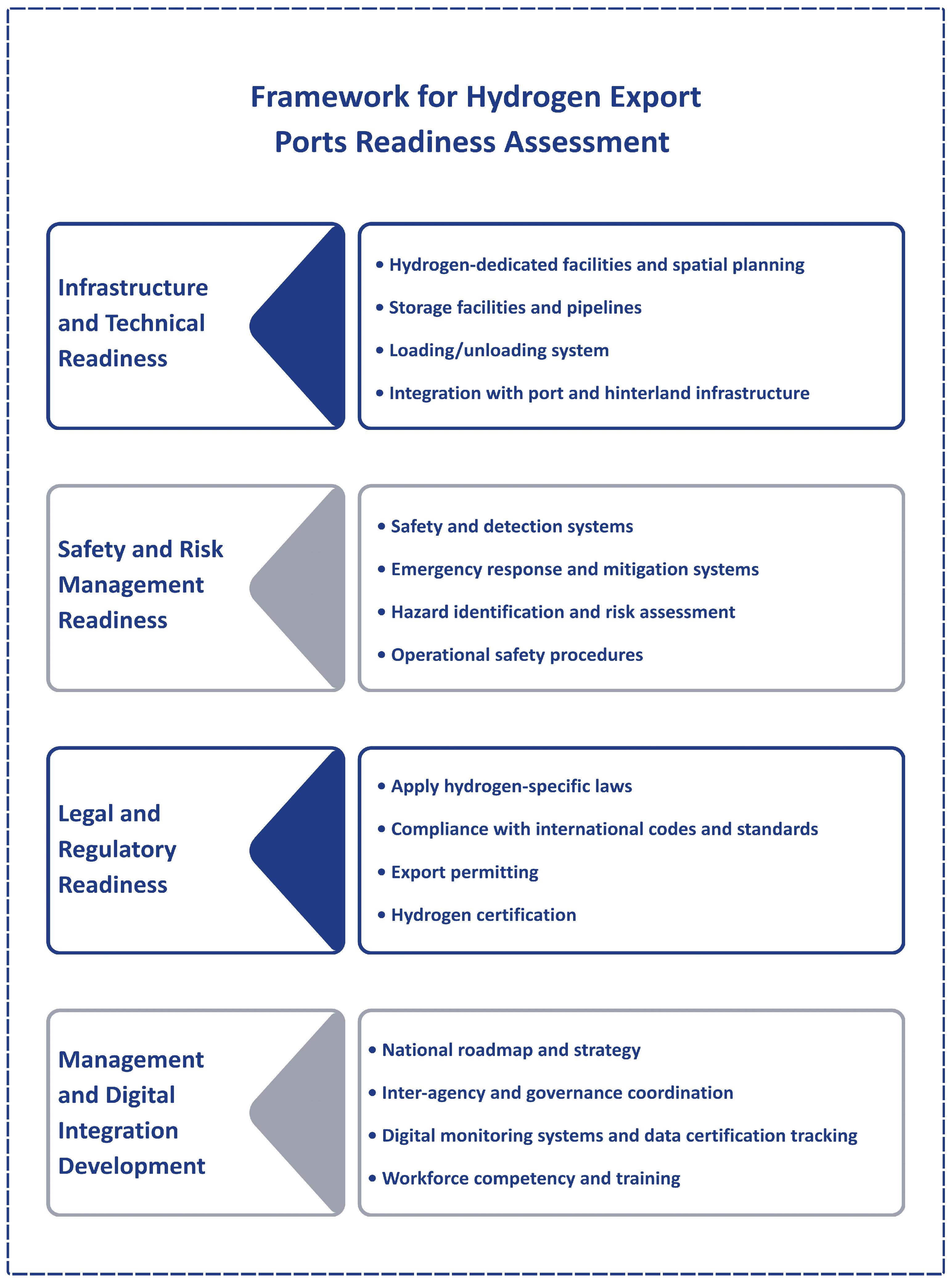
A port’s readiness to export hydrogen requires qualified infrastructure facilities [9,46]. Equally important is that security preparations must be adequately and fully implemented to prevent and minimize damage from future incidents. Moreover, workers in this field must possess a thorough understanding of the dangers associated with hydrogen and how to handle it safely and effectively [11,25,26]. When it comes to trade and national policies, the adoption of appropriate policies by nations supports the hydrogen strategy both domestically and internationally. Standardized laws and policies adopted internationally boost confidence in international hydrogen trading and are necessary to facilitate development [47]. The regulatory framework will promote equality, competition, and transparency in the hydrogen market; safeguard consumers; and enhance the efficiency of network operations. These three elements are complemented by management development and digital integration, and proper management and strategy are key to facilitating and streamlining the process [33,34,35]. Based on these four requirements, a framework for determining a port’s readiness for hydrogen exports was developed and is presented in Figure 1. To clarify the study’s system boundary, the proposed framework for hydrogen export port readiness addresses hydrogen export broadly instead of focusing on a specific carrier pathway. The framework considers hydrogen export via well-known carriers in the hydrogen supply chain, as described in the literature, including liquefied hydrogen (LH2) and hydrogen-derived carriers such as ammonia (NH3). Therefore, the framework emphasizes port readiness requirements regardless of the specific hydrogen carrier involved.
Figure 1 presents a proposed framework for determining port readiness for hydrogen exports. This framework organizes the requirements into four fields, reflecting the key dimensions identified through the literature review. The framework was then validated using the case study’s findings, which were analyzed using the Delphi method. The key fields were organized into integrated pillars, each with specific requirements, as shown in Figure 1. These cover substantial areas, including infrastructure, legal, safety, and management, ensuring smooth and safe operation. This framework indicates that the preparedness of hydrogen ports for export relies on coordinated development across various dimensions.

2.2. Framework Description

This section delineates the framework for the fundamental prerequisites to ensure the operational readiness of hydrogen export ports. It establishes the foundation for addressing the existing research gap.

2.2.1. Infrastructure and Technical Readiness

The port’s infrastructure and technology readiness highlight four key dimensions that facilitate hydrogen export. These aspects begin with site planning to establish dedicated hydrogen facilities and support hydrogen-related activities. This guarantees sufficient separation and compatibility with existing port operations. Facilities such as storage and pipelines support temporary storage and processing within the port. The pipeline also facilitates the efficient transport of hydrogen between port facilities, including storage and export points. Providing the port with dedicated hydrogen-specific transport, loading, and unloading systems is also essential. This setup ensures a smooth, efficient export process. Furthermore, the integration with the port’s infrastructure and inland areas constitutes a crucial efficiency point for the port, as it incorporates hydrogen supply chains into its broader logistics, industrial, energy systems, and other related sectors [10,31,38,41,42,43,44,48]. Overall, these four elements function as a single, integrated infrastructure system that provides the physical foundation for efficient hydrogen export operations at ports.

2.2.2. Legal and Regulatory Readiness

The port’s legal and regulatory readiness to support organized, legal exports comprises four main requirements. It is important that the port be sufficiently aware of hydrogen-specific laws and apply them when handling it. Aligning national regulations with codes and other standards is important because it helps unify hydrogen standards across countries. The more standardized global regulations are, the greater the potential for hydrogen trade and confidence between nations—for example, IMO and ISO [49]. Trading in hydrogen, like any other commodity, requires both domestic and international permits and certificates. The hydrogen-exporting country must be aware of the laws, regulations, and certifications of the hydrogen-importing country. Ports, in particular, must obtain prior approvals and ensure legislative compatibility between the exporting and importing countries to avoid financial loss due to incompatibility [50]. Since the hydrogen trade is in its early stages, studies recommend establishing a unified international organization for hydrogen certification and licensing to ensure the import and export process proceeds smoothly and is regulated [51]. Overall, the hydrogen export process is incomplete without a comprehensive legislative framework, which is initially defined by these four elements.

2.2.3. Safety and Risk Management Readiness

Safety and risk management preparedness at the hydrogen export port is demonstrated in four key points, beginning with safety and detection systems. Hydrogen is a highly diffusible gas and invisible when leaked. Therefore, the port must be equipped with highly accurate, continuously operational leak detection systems, and the best locations for their placement must be chosen [25,39]. This situation demands more than sensors alone; the port must establish emergency response systems to handle leaks, explosions, and other hazards and create a mitigation plan to lessen their effects. Additionally, conducting regular risk assessments is essential for maintaining safety and preventing incidents [10,11,52,53]. Adequate emergency response plans extend beyond on-site workers and employees. It is crucial to develop a protocol that connects civil defense and police forces, enabling quicker incident containment and minimizing damage [10,43]. All these steps must be carried out in accordance with operational safety procedures to guarantee safe operations, including during hydrogen handling at the port, storage, and export activities [11]. Overall, these measures establish a protective framework that minimizes risks and ensures the safe management of hydrogen export activities at ports. Safety protocols and risk management preparations should be aligned with infrastructure development and legal compliance, as these elements are closely linked.

2.2.4. Management and Digital Integration Development

Leading port management is a key component of successful hydrogen export operations, especially if it is digitally integrated and advanced. This point comprises four complementary elements, beginning with the national roadmap and strategy. When a country plans to start trading and exporting hydrogen, it must have a clear strategy and a detailed plan. This strategy builds confidence in the importing country regarding the exporting country’s intentions. As a result, bilateral agreements between the exporting and importing countries are essential to ensure a sustainable hydrogen market. Through this process, it becomes evident that this point is essential. Internal coordination is no less important than international coordination. Therefore, inter-agency coordination and governance simplify many of the complexities of the hydrogen supply chain. The process involves several entities beyond the port, such as the environmental authority, the transport authority, the energy authority, and customs; thus, coordination between entities and clarity regarding each entity’s role facilitate the export process. Effective governance is enhanced by digital tracking systems and certifications that support monitoring, reporting, and compliance across all hydrogen export operations. Tracking shipments with a unique code from the start of production through export has already been achieved for gas and oil. This framework could be applied to hydrogen as new technologies, such as Integrated Blockchain and IoT, are developed for sustainable and connected supply chains [33,40,54]. To ensure effective handling of all these factors in the hydrogen export process, the workforce must be prepared. Workforce efficiency includes structured education, certifications, and continuing professional development programs that prepare individuals to handle hydrogen, ensure safety, and operate digital systems [55]. Overall, effective external and internal management, along with continuous development, overseen by competent experts, leads to the success of hydrogen export operations.

3. Method

This paper employed a qualitative, evaluative methodology to validate the proposed framework for hydrogen export port readiness. The UAE’s ports served as a case study, and data were collected and analyzed using the Delphi method. The framework guided the development of the research questions posed to the experts, but the framework itself was not presented to them so they could provide independent insights based on their professional experience.

3.1. Research Design

This study employs a qualitative case study approach. Since the hydrogen export industry is relatively new, historical data are scarce, making expert opinions particularly valuable for analysis. The Delphi Method is particularly appropriate for this case, as it entails a systematic aggregation of expert opinions across port operations, engineering, safety management, regulatory affairs, and strategic planning.
Because ports are a crucial part of the hydrogen export process, UAE ports were chosen as a case study to implement the proposed framework. This selection aligns with the UAE’s goal, as outlined in its National Hydrogen Strategy, to become a hydrogen exporter starting in 2031 [21]. The framework guided the construction of questions, the organization of data, and the definition of the analysis’s logic.

3.2. Case Study Context: UAE Ports

The UAE is among the countries moving into hydrogen energy and revitalizing its use in the trading sector, aiming to start exporting hydrogen through its ports. The current supply chain infrastructure underpins the expansion of its hydrogen industry. The UAE has exemplary industrial and export infrastructure, comprising twelve commercial ports designated for trade, four of which are classified as major ports. Khalifa Port in Abu Dhabi is among the principal ports through which the UAE’s first experimental hydrogen export to Germany was shipped. The remaining primary ports are Zayed Port in Abu Dhabi, Mina Rashid in Dubai, and Jebel Ali in Dubai [21]. As a result, the variety of ports, combined with the country’s national ambitions, positions the UAE as an ideal case for this study.

3.3. Delphi Method

The research method used is the Delphi Method, which involves multiple rounds of discussion to gather and synthesize participants’ opinions and achieve consensus. This approach is typically employed in studies where experimental data are unavailable and the subject is novel [56].
This study employed the Delphi Method over three rounds. The initial round included 12 structured questions for all participants. The development of the Delphi questions was informed by the framework, which delineates key port-readiness elements. In the second round, responses were validated and revised based on summarized feedback. The final round compiled the results and aimed for complete consensus. Throughout the process, all participants remained anonymous.
The credibility of the Delphi method mainly relies on the quality and diversity of the expert panel. The selection of experts was conducted in collaboration with the UAE Ministry of Energy and Infrastructure, specifically the Future Energy Department. The researchers initially contacted this department to explain the objectives and scope of the study, including the main themes of the interview questions. Given their direct engagement with stakeholders across the UAE port sector, the department identified and nominated professionals with relevant expertise in port operations and related activities. Based on their institutional knowledge and professional networks, the department recommended suitable experts from the UAE ports to participate in the study. The researchers later contacted these nominated experts and invited them to participate in the Delphi study, and the final sample included 20 professionals selected based on their roles and years of experience. Since this study focuses on ports in the UAE, all experts were currently working within the UAE ports. The selection process was designed to encompass key areas of port operations, including engineering, logistics, regulatory affairs, and management, to ensure a variety of perspectives. Participants were required to have at least 5 years of professional experience in port-related activities. Table 2 provides an overview of the professional backgrounds of the Delphi panel participants.
The variety of positions and experience levels enhanced the validity of the Delphi process’s conclusions. This diversity of expertise ensures that the proposed framework includes several fields relevant to port-based hydrogen export.
A list of the 20 participants’ roles and years of experience is presented in Table 2. To preserve participant confidentiality, the identities of the experts and the names of the ports they represent are not disclosed in the study.

3.4. Data Collection Procedure

Prior to participating, the experts were briefed on the study’s title, objectives, and overall scope. Their participation was voluntary, and all participants provided informed consent. They were also assured that the information provided would be used solely for academic research. To ensure confidentiality, the participants’ identities and the specific ports where they work are not disclosed in the published results.
The implementation began by inviting potential experts to volunteer based on their professional experience. The first round of interviews used 12 direct questions, with all 20 participants interviewed individually. The second round was conducted via email and focused on providing feedback and revising the content. The respondents, whose answers were summarized, reviewed them and provided clarifications or additional input. Last round: validating the synthesized findings. They were contacted via email, and the analysis results were provided. The data were gathered over a 3-month period, including all three rounds of the Delphi. All the participants and their answers were collected and published anonymously.

3.5. Data Analysis Procedure

A thematic analysis of qualitative interview data was conducted to identify key factors affecting ports’ readiness to export hydrogen in the UAE. During the first phase, the research team carefully read the respondents’ answers to extract recurring concepts and ideas. The responses were then systematically coded by breaking them down into smaller, meaningful units that represent specific ideas or observations. Finally, analytical codes were assigned to each idea to reflect its content. In the second phase, similar codes were grouped into broader analytical categories that assess the readiness of ports in the UAE to export hydrogen. This process helped categorize key ideas into the main analytical dimensions that represent the fundamental factors for assessing port readiness, in line with the proposed framework: infrastructure, legal, safety, and management. This classification helped organize the experts’ opinions into clear, specific themes, facilitating comparisons of their assessments. In the final phase, the results were analyzed to reach a consensus. The data analysis process was systematic, with repeated stages to ensure consistent, unbiased results. Table 3 summarizes the objectives and outcomes of the three Delphi rounds and shows the convergence of expert responses throughout the iterative process.
As shown in Table 3, expert responses became increasingly consistent across the three Delphi rounds, leading to a stable set of readiness themes with no significant new suggestions in the last round.
To determine the degrees of agreement and disagreement among respondents, the research team analyzed the frequency of each idea or analytical category in participants’ responses by counting the number of experts who mentioned each element of readiness in their narrative responses, then converting these frequencies into percentages to measure the level of agreement and disagreement among them.
This study adopted a criterion commonly used in Delphi studies to assess consensus among experts: ideas endorsed by more than 70% of participants were considered indicative of high agreement, while those with a frequency of 50–69% were considered to reflect moderate agreement. Ideas that appeared less than 50% of the time were considered to be points of disagreement [57]. This numerical assessment helped identify elements that enjoyed clear consensus on port readiness and development requirements.

4. Results

This section summarizes the results of three rounds of the Delphi method, involving 20 qualified practitioners. The data were analyzed according to the framework’s four axes. The results provide insight into the domestic preparedness of the UAE’s seaports for hydrogen exports, highlighting four key areas: infrastructure, safety, regulatory, and strategic development.
The full set of study questions is provided in Appendix A.

4.1. Infrastructure and Technical Readiness

This summarizes the expert assessments of the UAE export port’s operational preparedness. The findings demonstrate that UAE ports have a high level of overall preparedness in infrastructure and technical aspects. Nonetheless, this preparedness is not yet complete or fully developed for the specific hydrogen-related needs.
At the technical level, all participants agreed that the UAE’s ports have not yet developed the infrastructure needed to support the physical and chemical characteristics of hydrogen for stable hydrogen operations. 15 of 20 participants added that the infrastructure is primarily designed to accommodate traditional hazardous products, including fuels, chemicals, and liquefied natural gas (LNG). Consequently, respondents say that hydrogen is still classified as a dangerous commodity today.
The majority of respondents (18 of 20) emphasized the need for specialized hydrogen facilities. As one expert (A5) emphasized, “UAE ports still need special storage tanks, pipelines, loading/unloading, and bunkering systems.” A total of 6 out of 20 participants noted that limiting port capacity and relying on temporary or non-custom solutions are unsustainable in the long run.

4.2. Safety and Risk Management Readiness

The following results reflect experts’ views on safety and security measures for the UAE’s hydrogen export ports. The results indicate that the UAE ports have strong, advanced, and modern emergency response mechanisms. Nevertheless, no such hydrogen-specific emergency plan has been created yet.
Most responses (18 out of 20) indicate that existing safety and detection systems are insufficient and not calibrated to address the risk posed by hydrogen due to its physical and chemical properties. A total of 15 of 20 participants emphasized the use of online monitoring technologies, real-time sensors, cameras, and AI tools to enhance safety controls and compliance monitoring.
A total of 16 of 20 participants identified primary weaknesses in port safety preparedness and risk management. These issues include the lack of hydrogen-specific protocols, limited staff training and knowledge, and insufficient risk scenarios. A total of 15 of 20 participants noted that current emergency response procedures are tailored to conventional hazardous materials rather than to hydrogen-related incidents. As one expert explained (B2), “We have challenges in integrating new safety systems into existing port layouts.” A total of 13 of 20 experts suggested enhancing integrated safety governance for hydrogen activities at the port level.

4.3. Legal and Regulatory Readiness

This subsection outlines the findings regarding the UAE ports’ readiness in regulatory and legal aspects for hydrogen export. The data indicate that, currently, hydrogen-related laws fall under the same legal framework as those for hazardous materials. However, specific regulations for exporting hydrogen via maritime transport have not yet been established.
Most participants (18 of 20) emphasized that UAE ports should adhere to internationally recognized standards and regulations, such as ISO, NFPA, and IMO. A total of 14 of 20 respondents identified a major legal gap: the lack of a single, comprehensive national law governing hydrogen exports. An expert (C4) noted that “We have a gap in coordination, incomplete legal frameworks, missing certifications, and outdated safety regulations.” Most interviewees, 16 out of 20, also pointed out deficiencies in emergency legislation, insurance, liability frameworks, and workforce certification requirements. Furthermore, there is insufficient clarity on the licensing procedures for ships transporting hydrogen.
A total of 14 of 20 participants highlighted challenges, including the ongoing development and lack of finalization of international hydrogen standards. They also noted that unifying legal interpretations across regulatory bodies is challenging due to coordination issues. To pragmatically reduce regulatory complexity, 12 of 20 respondents proposed adopting a single Hydrogen Handling Code, supported by a unified permitting system aligned with IMO and ISO standards.

4.4. Management and Digital Integration Development

This examines how the interface among governance frameworks, digital technology, and strategic planning facilitates the safe and compliant export of hydrogen from UAE ports. The findings highlight the need to combine infrastructure upgrades with regulatory reforms, to utilize digital and innovative technologies, to promote cross-institutional collaboration, and to adopt practical strategies. Collectively, these actions can position the ports as leaders in hydrogen exports. As one expert (D4) suggested, “Collaboration can be strengthened through cross-department committees, unified hydrogen taskforces, regular joint workshops, and standardized guidelines shared between engineering, safety, and legal teams.”
Most experts (18 out of 20) agreed that a unified system integrating infrastructure, safety, and regulations functions smoothly, enhancing safety and operational efficiency. The findings also highlight the importance of effective cross-functional committees, including port authorities, engineering, civil defense, and legal regulators, in improving preparedness and compliance. For strategic development, 17 of 20 suggested creating a national hydrogen export roadmap for ports and establishing a unified framework for hydrogen port readiness. A total of 12 of 20 experts advocated a single-window approval system to simplify processes and attract investment. Additionally, 17 of 20 participants stressed the significance of forming international alliances with key hydrogen-importing markets.
Almost all participants, 19 out of 20, emphasized that collaborative governance is essential for defining roles, reducing regulatory fragmentation, and ensuring consistent implementation of hydrogen standards across all ports. Most experts (16 out of 20) acknowledged that advanced solutions could be valuable for monitoring hydrogen supply chains, managing documentation, and supporting green hydrogen certification. As one expert (E3) recommends, “Blockchain or secure platforms for tracking hydrogen supply chain movements.” This enhances international trust and transparency.

5. Discussion

This section discusses the results of the Delphi method and links them to the existing literature, particularly the framework for evaluating the proposed hydrogen port’s readiness. The discussion is organized around the framework’s core dimensions: infrastructure, safety, regulation, and management. It also examines how expert insights can support, refine, or challenge current assumptions about readiness.

5.1. Interpretation of Key Findings

The Delphi study’s overall results show that experts view the readiness of hydrogen export ports as multidimensional. Each component is interconnected, creating a comprehensive and balanced view that supports the integrated export of hydrogen from the port. The findings suggest that readiness varies across different framework dimensions, indicating both structural strengths and systemic gaps.

5.1.1. Infrastructure and Technical Readiness

The interpretation of findings on infrastructure and technical readiness suggests that ports have a strong foundation for developing hydrogen export. However, their current state of preparedness is still evolving and in transition. This aligns with existing research indicating that global ports, even modern ones, are still determining their hydrogen requirements [58]. The findings indicate that the problem is not a lack of systems but rather an insufficient degree of specialization. Therefore, the main challenge is not capacity but the need to develop specialized infrastructure.
Many large commercial ports operate with advanced technologies but are not yet prepared for hydrogen export activities. This is because the hydrogen sector is still relatively new, but efforts are underway to develop port infrastructure to facilitate hydrogen exports. Development faces challenges, including space limitations that affect the placement of hydrogen equipment and the need to meet all operational requirements. Additionally, integrating new infrastructure with existing port operations while managing ongoing development requires careful, comprehensive planning. Although the UAE’s ports are examples of advanced commercial ports, they currently lack dedicated hydrogen facilities, including storage tanks, pipelines connecting the port to the interior, and proper loading and unloading systems. To support the UAE’s national ambitions for hydrogen export, a phased development approach is being pursued. Studies indicate that hydrogen export ports are still in their early stages [10,31]. However, export process efficiency depends not just on infrastructure but also on a comprehensive chain that encompasses safety, regulatory, and management.

5.1.2. Safety and Risk Management Readiness

Safety is crucial to the port’s readiness for hydrogen export, given the inherent nature of hydrogen. The safety and risk management study shows that the ports already have a hazardous materials safety system, which includes hydrogen since it is classified as a hazardous material. However, dedicated plans or systems specifically for hydrogen are not yet in place. The literature supports this view, emphasizing that purpose-built hydrogen safety systems are essential for ensuring safe and efficient port operations [39]. The primary challenge is in assigning safety readiness and adjusting it for hydrogen.
Large commercial ports generally have comprehensive risk management plans that ensure ongoing safety; however, they often lack specialized safety strategies and protocols tailored to hydrogen. This deficiency stems largely from the recent emergence of the hydrogen export sector. Nonetheless, hydrogen’s distinctive properties, including its high flammability, invisible flame, tendency to leak, and related operational hazards, necessitate safety measures distinct from those for conventional hazardous materials. Consequently, it is imperative for the port to implement dedicated safety and detection systems, establish specialized emergency response protocols, and develop operational safety procedures [10,11,43]. The UAE’s commercial ports are well-developed, yet they lack hydrogen-specific safety and risk management protocols. This situation is part of a broader global transitional phase, as documented in the literature. Achieving progress requires coordination across various elements, including developing regulations that define procedures and strong management to oversee their implementation.

5.1.3. Legal and Regulatory Readiness

Legal and regulatory readiness is vital for preparing hydrogen exports. Standardized international laws and policies enhance confidence in global hydrogen trade. However, current findings show that hydrogen is legally classified as a hazardous material, and ports lack specific legal provisions for it. This aligns with the existing literature, which states that international legislation in this field remains incomplete. Conversely, the literature suggests that successful hydrogen export hubs should be supported by coordinated legal frameworks rather than relying solely on physical infrastructure [49,59]. Therefore, the primary issue is not the lack of laws overall, but the absence of specific legislation regulating hydrogen exports.
Current seaports rely on general hazardous materials laws to oversee hydrogen exports, as the hydrogen sector is still in its early stages. However, hydrogen’s unique properties compared with traditional gases require a distinct regulatory framework. Despite this regulatory gap, some countries have managed to export hydrogen under temporary general frameworks. The UAE, for example, exports hydrogen under non-specific hydrogen legal frameworks. Establishing a dedicated, specialized international hydrogen regulatory system would promote fairness and competition. It would also protect consumers, improve transparency, and increase efficiency in hydrogen markets. Achieving legal and regulatory readiness involves adopting hydrogen-specific laws and certifications, establishing clear permitting procedures, and ensuring compliance with international standards and codes [50,51]. Achieving these points requires cooperation between management and institutions.

5.1.4. Management and Digital Integration Development

The management component is crucial for coordination. It combines infrastructure, regulatory reforms, cross-institutional collaboration, and digital technologies to facilitate safe and compliant hydrogen exports from ports. This indicates that ports need to undergo infrastructure restructuring through regulatory changes, foster inter-agency cooperation, and implement digital solutions. Strategic coordination enhances safety and compliance. Literature supports that effective hydrogen export hubs depend not only on physical infrastructure but also on strong governance, smart policies, and long-term planning [33]. Administrative readiness remains incomplete due to the sector’s early stage of development. The challenge involves not just technical issues but also organizational and strategic aspects.
Existing commercial ports highlight the significance of administrative preparedness and efficient execution in export processes. Yet the absence of specialized hydrogen management that covers both operations and governance leads to poor coordination, siloed roles, and a lack of a unified operational vision. This gap arises from the hydrogen sector’s novelty and the lack of established operating models. The situation also affects UAE ports, where coordination among relevant entities on hydrogen is still evolving. Achieving readiness in management and digital integration requires developing a national roadmap and strategy, as well as enhancing coordination among stakeholders. Key components include digital monitoring, certification, and traceability systems. For example, blockchain-based solutions combined with IoT technologies can enable secure tracking of hydrogen shipments and streamline documentation processes such as certificates of origin and regulatory compliance. This supports the legal aspects of hydrogen export supply chains, all reliant on trained and certified personnel [33,55,60]. The port’s ability to export hydrogen depends on an integrated process involving several key elements, with management serving as the central element that unites them.

5.1.5. Conventional Fuels Export Port Requirements vs. Hydrogen Export Port Requirements

The findings across the four framework dimensions demonstrate a distinct distinction between conventional port operations supporting fossil fuel exports and the supplementary capabilities necessary for hydrogen export readiness. Table 4 summarizes these differences across the four dimensions of the proposed framework. This comparison highlights the gap in specialization between conventional fuel export infrastructure and the new needs for hydrogen export.
Table 4 shows that hydrogen export readiness requires additional technical, regulatory, and organizational skills beyond those typically needed for oil and gas export ports. The differences arise from hydrogen’s unique physical and chemical properties compared with traditional fuels such as oil and natural gas. Hydrogen has a much lower volumetric energy density, higher diffusivity, and greater flammability, which require specialized storage systems, improved safety measures, and adapted regulatory frameworks [9,10,14,25,64].

5.2. Implications for Hydrogen Port Readiness Framework

The proposed framework details the key requirements for ports to export hydrogen in an integrated approach. These include infrastructure, safety, regulations, and strategic management. It could provide practical insights for decision makers to assess and steer phased port development.
Port authorities are responsible for development and modification decisions and should play a central role in preparing for hydrogen exports. The analysis indicates that ports require specific hydrogen-readiness criteria rather than relying on general guidelines used in the hydrogen export process. Additionally, better internal coordination within ports is needed to integrate operations, safety planning, and regulations, thereby reducing siloed approaches. These preparations occur in stages until the port is fully integrated. The framework potentially enables prioritization based on current readiness, facilitating phased deployment.

5.3. Limitations and Future Study

This study has several limitations, including its qualitative approach, which relied on expert interviews to provide in-depth information, potentially limiting the generalizability of the findings. Additionally, the sample size is relatively limited due to the new state of the hydrogen export operation and the limited number of experts. Furthermore, the study was limited to the UAE ports and may therefore not be generalized to other countries. Moreover, as the hydrogen sector grows, the relevance of these findings to future regulatory and technological changes may evolve. Addressing these limitations will advance future research in this field.
Quantitative or mixed-methods research may be implemented in the future to estimate the indicators of readiness, investment needs, and the risk level associated with the hydrogen export infrastructure.

6. Conclusions

This study’s main contribution is the development of a framework for hydrogen export port readiness, comprising four interconnected pillars: infrastructure, safety, legal, and management. This framework translates empirical research into a practical tool to help port authorities identify readiness gaps in hydrogen export ports.
It is important to assess the readiness of UAE ports for hydrogen exports using the Delphi method and empirically validate the relevance of the proposed framework. The findings indicate that the UAE’s ports have a strong background and experience in handling hazardous substances. Nevertheless, their preparation for hydrogen-specific operations is still in progress rather than fully developed. Several key gaps were identified, including the lack of hydrogen-specific infrastructure, the incomplete adoption of international hydrogen standards in national regulations, and insufficient coordination among major stakeholders. These issues highlight the need for a more coordinated effort to improve hydrogen export readiness.
The success of hydrogen export port readiness relies on ongoing engagement from policymakers and regulators, who shape the overall framework and either enable or hinder progress. Complete port readiness occurs only when supported by a clear regulatory framework, governance, and policies that foster certainty and attract investment. Although the four key aspects of port readiness for hydrogen exports have been identified, their realization can be influenced by a range of contextual, institutional, and developmental factors.

Author Contributions

A.A. (Amani Alremeithi)—conception, methodology, data acquisition, analysis, drafting of the initial manuscript, and reviewing and editing the content; A.A. (Ammar Alkhalidi) and M.F.—conceptualization, writing—review and editing, and supervision. All authors have read and agreed to the published version of the manuscript.

Funding

This research received no external funding.

Institutional Review Board Statement

This study was conducted in accordance with the University of Sharjah’s ethical guidelines and was approved by the Research Ethics Committee. Approval No. UOS-REC-25-11-27-01-Other. Approval date: 9 February 2026.

Informed Consent Statement

Informed consent was obtained from all participants, as required by the University of Sharjah Institutional Research Ethics Committee. This was necessary due to the study’s nature, which involves collecting expert opinions.

Data Availability Statement

Data can be obtained from the respective author upon reasonable request.

Conflicts of Interest

The authors declare no conflicts of interest.

Abbreviations

The following abbreviations are used in this manuscript:
ISOInternational Organization for Standardization.
IECInternational Electrotechnical Commission.
IGCThe International Code of the Construction and Equipment of Ships Carrying Liquefied Gases in Bulk.
IBCInternational Code for the Construction and Equipment of Ships Carrying Dangerous Chemicals in Bulk.

Appendix A. Interview Questions

Theme One: The present Technical and Legal Preparedness of the UAE Ports.
  • How would you evaluate the overall readiness of UAE ports to manage hydrogen export operations from both technical and legal perspectives?
  • To what extent do current UAE port and maritime regulations facilitate or hinder the development of hydrogen export capabilities?
  • How effective are the existing emergency response mechanisms and legal frameworks in managing potential hydrogen-related incidents at ports?
Theme Two: Infrastructural and Technology Problems.
4.
What are the main infrastructural and technological constraints that could impact the safe and efficient management of hydrogen exports?
5.
What difficulties do port authorities encounter when aligning technical safety measures with evolving hydrogen legislation and policies?
Theme Three: International Law Requirement and Regulatory Lapses.
6.
What safety and legal standards should UAE ports implement to comply with international hydrogen export regulations?
7.
What institutional or legal gaps must be filled to ensure effective management of hydrogen storage, transportation, and export activities?
8.
Which technical and legal factors should be prioritized initially to ensure global competitiveness in hydrogen export readiness?
Theme Four: Governance, Digital Integration, and Strategic Development.
9.
How can infrastructure upgrades and regulatory reforms be combined to improve operational safety and ensure compliance?
10.
How can cooperation among engineering specialists, legal officials, and port regulators enhance preparedness and ensure compliance?
11.
In what ways can data sharing, digital systems, or smart technologies facilitate both regulatory oversight and technical monitoring within hydrogen export processes?
12.
What actionable steps can be taken to establish UAE ports as regional leaders in hydrogen export readiness?

References

  1. Zohuri, B. Navigating the Global Energy Landscape Balancing Growth, Demand, and Sustainability. J. Mater. Sci. Eng. 2023, 2, 1–7. [Google Scholar]
  2. Alsunousi, M.; Kayabasi, E. The role of hydrogen in synthetic fuel production strategies. Int. J. Hydrogen Energy 2024, 54, 1169–1178. [Google Scholar] [CrossRef]
  3. International Energy Agency. IEA at COP26: The Role of Hydrogen in the Transition to Net Zero; International Energy Agency: Paris, France, 2021; Available online: https://www.iea.org/events/iea-at-cop26-the-role-of-hydrogen-in-the-transition-to-net-zero (accessed on 20 November 2025).
  4. Kovač, A.; Paranos, M.; Marciuš, D. Hydrogen in energy transition: A review. Int. J. Hydrogen Energy 2021, 46, 10016–10035. [Google Scholar] [CrossRef]
  5. Le, T.T.; Sharma, P.; Bora, B.J.; Tran, V.D.; Truong, T.H.; Le, H.C.; Nguyen, P.Q.P. Fueling the future: A comprehensive review of hydrogen energy systems and their challenges. Int. J. Hydrogen Energy 2024, 54, 791–816. [Google Scholar] [CrossRef]
  6. Notteboom, T.; Haralambides, H. Seaports as green hydrogen hubs: Advances, opportunities and challenges in Europe. Marit. Econ. Logist. 2023, 25, 1–27. [Google Scholar] [CrossRef]
  7. Zhang, Q.; Wang, L.; Chen, W.; Zhang, C. Assessing the impact of hydrogen trade towards low-carbon energy transition. Appl. Energy 2024, 376, 124233. [Google Scholar] [CrossRef]
  8. Chen, P.S.L.; Fan, H.; Enshaei, H.; Zhang, W.; Shi, W.; Abdussamie, N.; Miwa, T.; Qu, Z.; Yang, Z. A review on ports’ readiness to facilitate international hydrogen trade. Int. J. Hydrogen Energy 2023, 48, 17351–17369. [Google Scholar] [CrossRef]
  9. Ta, D.C.; Le, T.H.; Pham, H.L. An assessment potential of large-scale hydrogen export from Vietnam to Asian countries: Techno-economic analysis, transport options, and energy carriers’ comparison. Int. J. Hydrogen Energy 2024, 65, 687–703. [Google Scholar] [CrossRef]
  10. Chen, P.S.-L.; Fan, H.; Enshaei, H.; Zhang, W.; Shi, W.; Abdussamie, N.; Miwa, T.; Qu, Z.; Yang, Z. Opportunities and Challenges of Hydrogen Ports: An Empirical Study in Australia and Japan. Hydrogen 2024, 5, 436–458. [Google Scholar] [CrossRef]
  11. Calabrese, M.; Portarapillo, M.; Di Nardo, A.; Venezia, V.; Turco, M.; Luciani, G.; Di Benedetto, A. Hydrogen Safety Challenges: A Comprehensive Review on Production, Storage, Transport, Utilization, and CFD-Based Consequence and Risk Assessment. Energies 2024, 17, 1350. [Google Scholar] [CrossRef]
  12. Ustolin, F.; Campari, A.; Taccani, R. An Extensive Review of Liquid Hydrogen in Transportation with Focus on the Maritime Sector. J. Mar. Sci. Eng. 2022, 10, 1222. [Google Scholar] [CrossRef]
  13. Noh, H.; Kang, K.; Seo, Y. Environmental and energy efficiency assessments of offshore hydrogen supply chains utilizing compressed gaseous hydrogen, liquefied hydrogen, liquid organic hydrogen carriers and ammonia. Int. J. Hydrogen Energy 2023, 48, 7515–7532. [Google Scholar] [CrossRef]
  14. Li, H.; Zhang, X.; Zhang, C.; Ding, Z.; Jin, X. Application and Analysis of Liquid Organic Hydrogen Carrier (LOHC) Technology in Practical Projects. Energies 2024, 17, 1940. [Google Scholar] [CrossRef]
  15. Fekete, H.; Outlaw, I. The Role of Green Hydrogenin a Just, Paris-Compatibletransition; NewClimate Institute: Cologne, Germany, 2023; Available online: https://newclimate.org/sites/default/files/2023-06/the_role_of_green_hydrogen_in_a_just_paris-compatible_transition.pdf (accessed on 16 March 2026).
  16. MOEI. UAE Energy Strategy 2050. 2023. Available online: https://u.ae/en/about-the-uae/strategies-initiatives-and-awards/strategies-plans-and-visions/environment-and-energy/uae-energy-strategy-2050 (accessed on 15 August 2025).
  17. UAE Ministry of Foreign Affairs. Climate Change. 2022. Available online: https://www.mofa.gov.ae/en/missions/paris/the-uae/climate-change (accessed on 17 August 2025).
  18. Mneimneh, F.; Ghazzawi, H.; Abu Hejjeh, M.; Manganelli, M.; Ramakrishna, S. Roadmap to Achieving Sustainable Development via Green Hydrogen. Energies 2023, 16, 1368. [Google Scholar] [CrossRef]
  19. Ma, N.; Zhao, W.; Wang, W.; Li, X.; Zhou, H. Large scale of green hydrogen storage: Opportunities and challenges. Int. J. Hydrogen Energy 2024, 50, 379–396. [Google Scholar] [CrossRef]
  20. ADNOC. Hydrogen; ADNOC: Abu Dhabi, United Arab Emirates, 2021; Available online: https://www.adnoc.ae/en/our-business/hydrogen (accessed on 25 August 2025).
  21. Ministry of Energy and Infrastructure (MoEI). National Hydrogen Strategy; Ministry of Energy and Infrastructure: Abu Dhabi, United Arab Emirates, 2023; p. 40. Available online: https://u.ae/en/about-the-uae/strategies-initiatives-and-awards/strategies-plans-and-visions/environment-and-energy/national-hydrogen-strategy (accessed on 16 March 2026).
  22. Cava, C.; Gagliardi, G.G.; Piscolla, E.; Borello, D. Techno-Economic Analysis of Hydrogen Transport via Truck Using Liquid Organic Hydrogen Carriers. Processes 2025, 13, 1081. [Google Scholar] [CrossRef]
  23. Reuß, M.; Dimos, P.; Léon, A.; Grube, T.; Robinius, M.; Stolten, D. Hydrogen road transport analysis in the energy system: A case study for germany through 2050. Energies 2021, 14, 3166. [Google Scholar] [CrossRef]
  24. Aziz, M. Liquid Hydrogen: A Review on Liquefaction, Storage, Transportation, and Safety. Energies 2021, 14, 5917. [Google Scholar] [CrossRef]
  25. Moradi, R.; Groth, K.M. Hydrogen storage and delivery: Review of the state of the art technologies and risk and reliability analysis. Int. J. Hydrogen Energy 2019, 44, 12254–12269. [Google Scholar] [CrossRef]
  26. Patel, P.; Garaniya, V.; Baalisampang, T.; Arzaghi, E.; Abbassi, R.; Salehi, F. A technical review on quantitative risk analysis for hydrogen infrastructure. J. Loss Prev. Process Ind. 2024, 91, 105403. [Google Scholar] [CrossRef]
  27. Moretto, P.; Quong, S. Legal Requirements, Technical Regulations, Codes, and Standards for Hydrogen Safety; Elsevier: Amsterdam, The Netherlands, 2022. [Google Scholar] [CrossRef]
  28. ISO/TC 197; Hydrogen Technologies. International Organization for Standardization (ISO): Geneva, Switzerland, 1990. Available online: https://www.iso.org/committee/54560.html (accessed on 11 October 2025).
  29. ISO 26142; Hydrogen Detection Apparatus—Stationary Applications. International Organization for Standardization (ISO): Geneva, Switzerland, 2010. Available online: https://www.iso.org/standard/52319.html (accessed on 11 October 2025).
  30. ISO 14067; Greenhouse Gases—Carbon Footprint of Products—Requirements and Guidelines for Quantification. International Organization for Standardization (ISO): Geneva, Switzerland, 2018. Available online: https://www.iso.org/standard/71206.html (accessed on 15 October 2025).
  31. Mohebbi, K.; Kordi, A.; Ledari, M.B.; Shirafkan, S.M.; Fani, M. Developing a sustainable nexus model for hydrogen port development in fossil-based economies. Int. J. Hydrogen Energy 2025, 105, 294–307. [Google Scholar] [CrossRef]
  32. Kim, S.W.; Park, M.; Kim, D.; Lee, J. Online monitoring of hydrogen quality at the hydrogen production plant. Int. J. Hydrogen Energy 2025, 126, 210–215. [Google Scholar] [CrossRef]
  33. Tetouani, A.; Taouil, A.; Rouky, N.; Fri, M. Integrated Blockchain, IoT, and Green Hydrogen Approach for Sustainable and Connected Supply Chain—Application Case in Morocco. Eng. Proc. 2025, 97, 55. [Google Scholar] [CrossRef]
  34. UAE Ministry of Energy and Infrastructure. A Cooperation Agreement Between UAE and Japan to Explore the Opportunities Available in the Field of Hydrogen Development; UAE Ministry of Energy and Infrastructure: Abu Dhabi, United Arab Emirates, 2021. Available online: https://www.moei.gov.ae/en/media-center/news/11/4/2021/a-cooperation-agreement-between-uae-and-japan-to-explore-the-opportunities-available-in-the-field (accessed on 10 September 2025).
  35. ADNOC. ADNOC Delivers First Ever Bulk Shipment of CCS-Enabled Certified Low-Carbon Ammonia to Japan; ADNOC: Abu Dhabi, United Arab Emirates, 2024; Available online: https://www.adnoc.ae/en/news-and-media/press-releases/2023/adnoc-delivers-first-ever-bulk-shipment-of-ccs-enabled-certified-low-carbon-ammonia-to-japan (accessed on 10 September 2025).
  36. (IRENA) International Renewable Energy Agency. Shaping Sustainable International Hydrogen Value Chains. 2024. Available online: https://www.irena.org/Publications/2024/Sep/Shaping-sustainable-international-hydrogen-value-chains (accessed on 15 September 2025).
  37. Faye, O.; Szpunar, J.; Eduok, U. A critical review on the current technologies for the generation, storage, and transportation of hydrogen. Int. J. Hydrogen Energy 2022, 47, 13771–13802. [Google Scholar] [CrossRef]
  38. Monteith, W.; Escobar, V.B. Speculative connections: Port authorities, littoral territories and the assembling of the green hydrogen frontier. Polit. Geogr. 2025, 118, 103271. [Google Scholar] [CrossRef]
  39. Menon, S.K.; Kumar, A.; Mondal, S. Advancements in hydrogen gas leakage detection sensor technologies and safety measures. Clean. Energy 2025, 9, 263–277. [Google Scholar] [CrossRef]
  40. Zhou, Y.; Swidler, D.; Searle, S.; Baldino, C. Life-Cycle Greenhouse Gas Emissions of Biomethane and Hydrogen Pathways in the European Union; Institution of Gas Engineers Managers: Derby, UK, 2021; Volume 8, Available online: https://www.h2knowledgecentre.com/content/policypaper2554 (accessed on 22 October 2025).
  41. ISO 19880-1:2020; Gaseous Hydrogen—Fuelling Stations. International Standard Organization: Geneva, Switzerland, 2020. Available online: https://www.iso.org/standard/71940.html (accessed on 22 October 2025).
  42. ISO 21009-1:2022; Cryogenic Vessels—Static Vacuum-Insulated Vessels. International Standard Organization: Geneva, Switzerland, 2022. Available online: https://www.iso.org/standard/76098.html (accessed on 15 October 2025).
  43. International Maritime Organization. IGC Code; International Maritime Organization: London, UK, 2014; Available online: https://www.imo.org/en/ourwork/safety/pages/igc-code.aspx (accessed on 2 October 2025).
  44. International Maritime Organization. IBC Code; International Maritime Organization: London, UK, 2004; Available online: https://www.imo.org/en/ourwork/safety/pages/ibc-code.aspx (accessed on 10 October 2025).
  45. ISO 14687:2025; Hydrogen Fuel Quality—Product Specification. International Standard Organization: Geneva, Switzerland, 2025. Available online: https://www.iso.org/standard/82660.html (accessed on 10 October 2025).
  46. Marnate, K.; Grönkvist, S. Unlocking Sweden’s hydrogen export potential: A Techno-Economic analysis of compressed hydrogen and chemical carriers. Sustain. Energy Technol. Assess. 2025, 80, 104359. [Google Scholar] [CrossRef]
  47. Aghakhani, A.; Haque, N.; Saccani, C.; Pellegrini, M.; Guzzini, A. Hydrogen Transportation and Distribution, 1st ed.; Elsevier Ltd.: Amsterdam, The Netherlands, 2023. [Google Scholar] [CrossRef]
  48. ISO 21012:2024; Cryogenic vessels—Hoses. International Standard Organization: Geneva, Switzerland, 2024. Available online: https://www.iso.org/standard/81290.html (accessed on 18 November 2025).
  49. Youn, D.; Kim, S.; Park, C. Regulatory Analysis and Reform Directions for the Operational Deployment of Liquid Hydrogen Carriers. J. Hydrog. New Energy 2025, 36, 140–149. [Google Scholar] [CrossRef]
  50. White, L.V.; Fazeli, R.; Beck, F.J.; Baldwin, K.G.H.; Li, C. Implications for cost-competitiveness of misalignment in hydrogen certification: A case study of exports from Australia to the EU. Energy Policy 2025, 204, 114661. [Google Scholar] [CrossRef]
  51. Zahraee, S.M.; Shiwakoti, N. A review of sustainable hydrogen energy by 2050: Supply chain, export markets, circular economy, social dimensions, and future prospects: Australia vs. worldwide. Sustain. Futur. 2025, 10, 101070. [Google Scholar] [CrossRef]
  52. ISO 22320:2018; Security and Resilience—Emergency Management—Guidelines for Incident Management. International Standard Organization: Geneva, Switzerland, 2018. Available online: https://www.iso.org/standard/67851.html (accessed on 10 November 2025).
  53. ISO 31000:2018; Risk Management—Guidelines. International Standard Organization: Geneva, Switzerland, 2018. Available online: https://www.iso.org/standard/65694.html (accessed on 11 November 2025).
  54. ISO 14040:2006/Amd 1:2020; Environmental Management—Life Cycle Assessment—Principles and Framework. International Standard Organization: Geneva, Switzerland, 2020. Available online: https://www.iso.org/standard/76121.html (accessed on 11 November 2025).
  55. Cekerevac, Z.; Cekerevac, D. Hydrogen Hazards, Risks, and Protection: An in-Depth Review. MEST J. 2025, 13, 23–48. [Google Scholar] [CrossRef]
  56. Skulmoski, G.J.; Hartman, F.T.; Krahn, J. The Delphi Method for Graduate Research. J. Inf. Technol. Educ. 2007, 6, 1–21. [Google Scholar] [CrossRef] [PubMed]
  57. Diamond, I.R.; Grant, R.C.; Feldman, B.M.; Pencharz, P.B.; Ling, S.C.; Moore, A.M.; Wales, P.W. Defining consensus: A systematic review recommends methodologic criteria for reporting of Delphi studies. J. Clin. Epidemiol. 2014, 67, 401–409. [Google Scholar] [CrossRef] [PubMed]
  58. International Energy Agency. Global Hydrogen Review 2024. 2024. Available online: https://www.iea.org/reports/global-hydrogen-review-2024 (accessed on 15 March 2026).
  59. Semchukova, V.; Polemis, K.; Abdin, Z.; Solanki, B.; Cary, S. Hydrogen Infrastructure Analysis for Port Applications. 2024. Available online: https://docs.nrel.gov/docs/fy25osti/91396.pdf (accessed on 1 December 2025).
  60. Goodwin, D.; Gale, F.; Lovell, H.; Beasy, K.; Murphy, H.; Schoen, M. Expert views on the legitimacy of renewable hydrogen certification schemes. Energy Res. Soc. Sci. 2025, 121, 103970. [Google Scholar] [CrossRef]
  61. International Energy Agency (IEA). The Future of Hydrogen Seizing Today’s Opportunities; International Energy Agency: Paris, France, 2019; Volume 6, Available online: https://www.iea.org/reports/the-future-of-hydrogen (accessed on 5 December 2025).
  62. Adamkiewicz, A.; Kamiński, W. LNG Terminal Safe Operation Management. Manag. Syst. Prod. Eng. 2012, 3, 38–42. [Google Scholar]
  63. Stopford, M. Maritime Economics; Routledge: Oxfordshire, UK, 2009. [Google Scholar]
  64. Niermann, M.; Timmerberg, S.; Drünert, S.; Kaltschmitt, M. Liquid Organic Hydrogen Carriers and alternatives for international transport of renewable hydrogen. Renew. Sustain. Energy Rev. 2021, 135, 110171. [Google Scholar] [CrossRef]
Figure 1. Framework for hydrogen export port readiness assessment.
Hydrogen 07 00045 g001
Table 1. Hydrogen export port requirement (The background color in the table footer is used to distinguish between the ‘Essential’ and ‘Recommendation’ fields).
FieldExport Port RequirementsStandards/CodesEssentialRecommendation
InfrastructureStorage facilitiesISO 19880-1:2020
ISO 21009-1:2022
Loading/unloading—berths/quaysISO 21012:2024
IGC/IBC Codes
Conversion facilities-
Connections to production sources-
Quality testing stationISO 14687
Safety and RiskEmergency response planISO 22320:2018
Leak detection and early warning systemISO 26142:2010
Trained personnel-
Regular risk assessmentsISO 31000:2018
Coordination with civil defense and the police-
Alternative operating plan in shutdown -
Comply with international safety standards-
Legal and RegulatoryExport licenses-
Regulations for hydrogen handling-
Compliance with international agreements/standards/codes-
Management and StrategyExistence of a hydrogen export strategy, partnerships with importers-
Workforce competency-
System for container tracking and documentation-
Experimental shipment-
LCA for each shipmentISO 14067:2018
ISO 14040:2006/Amd 1:2020
Intelligent navigation systems-
Digital platforms for certificates of conformity and documentation-
Table 2. A profile of the Delphi panel experts.
CodeGenderDepartment/PositionExperience (Years)
Department of Engineering/Infrastructure
A1MaleSenior Infrastructure Manager15
A2MalePort Infrastructure Engineering Expert15
A3MaleEnergy Engineer Specialist14
A4MalePrincipal Port Development Engineer11
A5FemalePrincipal Infrastructure Engineer10
A6MaleSenior Infrastructure Engineer8
Department of Safety
B1FemaleSenior Safety Engineer12
B2FemaleAssistant Safety Project Manager9
B3MaleSenior operational safety Engineer9
B4FemaleSenior Safety Systems Project Engineer7
Department of Logistics
C1MalePort Logistics Manager12
C2MaleSenior Port Logistics Engineer9
C3MaleMaritime Logistics Specialist8
C4MalePort Operations Specialist10
Department of Management/Strategy
E1FemaleSenior Port Strategy Manager13
E2MaleDevelopment Project Manager12
E3MaleStrategic Project Manager11
E4FemaleAssistant Strategy Manager7
Department of Legal/Regulatory
F1FemaleMaritime Legal Expert12
F2MaleMaritime Legal Consultant8
Table 3. A summary of Delphi rounds.
Delphi RoundPurpose of the RoundAnalytical ApproachConsensus IndicatorOutcome
Round 1Explore expert insights on preparing for hydrogen export at UAE ports through 12 open-ended questions.Initial coding and identification of main points related to infrastructure, safety, regulatory aspects, and management readiness.Initial variety of expert opinions.Analytical codes were given to each idea to represent its content.
Round 2R-evaluate and refine themes identified in Round 1.Thematic comparison and consolidation of recurring responses.Increasing convergence of expert opinions.Themes refined and clarified.
Round 3Confirm the final readiness of the UAE hydrogen export port.Final review of expert feedback and validation of themes.Consistent responses and no additional suggestions.Experts reached a consensus.
Table 4. Key differences between conventional fuel export ports and hydrogen export ports.
Framework DimensionConventional Fuel Export PortsHydrogen Export Ports
InfrastructureConventional storage terminals, fuel loading systems, and existing pipeline networks are specifically designed for oil and gas products [61].Specialized hydrogen storage systems, cryogenic handling facilities (for liquefied hydrogen or derivatives), dedicated pipelines, and integration with hydrogen production or conversion facilities.
SafetyStandard industrial and maritime safety protocols are typically used in hydrocarbon transport and storage [62].Hydrogen-specific safety systems, including leak detection technologies, explosion prevention mechanisms, specialized emergency response procedures, and additional training for port personnel.
LegalEstablished maritime regulations and national policies oversee hydrocarbon export activities [61].Development and adaptation of regulatory frameworks for hydrogen storage, transport, and export, incorporating emerging international standards and safety codes.
ManagementStandard coordination between port operators, shipping companies, and energy exporters [63].Promotion of collaboration among port authorities, hydrogen producers, regulators, logistics providers, and infrastructure planners to facilitate the development of new hydrogen supply chains.
Disclaimer/Publisher’s Note: The statements, opinions and data contained in all publications are solely those of the individual author(s) and contributor(s) and not of MDPI and/or the editor(s). MDPI and/or the editor(s) disclaim responsibility for any injury to people or property resulting from any ideas, methods, instructions or products referred to in the content.