

Decarbonizing CHP Systems via Hydrogen: Specific Drivers and Hurdles in Highly Industrialized Regions Like Saarland, Germany



Abstract
1. Introduction
2. Hydrogen Combined Heat and Power Systems
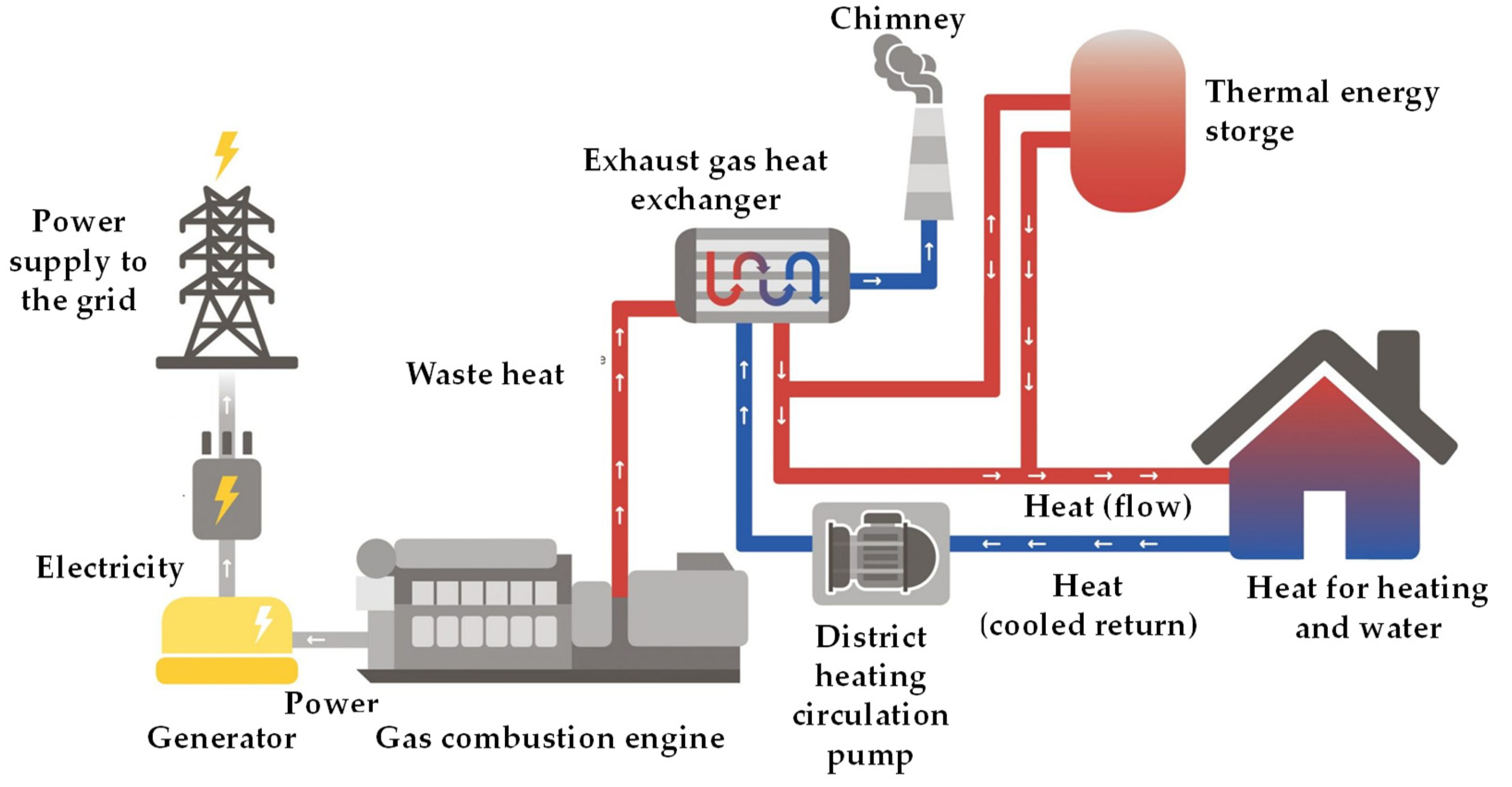
2.1. The Idea of Cogeneration
2.2. Hydrogen Technologies
2.2.1. Thermochemical
- Fuel train and burner sizing: pipelines, nozzles, and blower capacity scaled for 3× volumetric flow; combustion chamber volume and port velocity adjusted for higher flame speed and shorter residence time.
- Materials: refractory and heat-exposed components specified for >1800 °C service; avoidance of susceptible alloys to prevent hydrogen attack and embrittlement.
- Burner design: typically premix or diffusion multi-fuel burners with advanced controls for turndown and fuel switching; high excess air or staged combustion to manage flame stability.
- NOx control: flue gas recirculation (FGR) dilutes O2 partial pressure, reducing peak flame temperature and NOx to <100 mg/Nm3 (at 3% O2); enables retrofits to maintain rated capacity within regulatory limits.
- Flashback prevention: static arrestors (deflagration/detonation flame arresters) or dynamic quenching via exit velocities > flame speed (e.g., >25 m/s at nozzles).
- Regulatory gap: no dedicated standard exists for hydrogen firing; each installation requires individual hazard and operability (HAZOP) assessment and type examination.
- Condensing technology: fully applicable; exhaust contains high H2O content (stoichiometric), enabling latent heat recovery. Reducing flue gas from 130 °C to 60 °C via condensing heat exchangers yields fuel savings; system efficiency reaches high levels with low-temperature return (e.g., <57 °C). Caution: FGR plus condensing requires corrosion-resistant materials (e.g., stainless steel or polymer) and control of return temperature to avoid low-temperature corrosion.
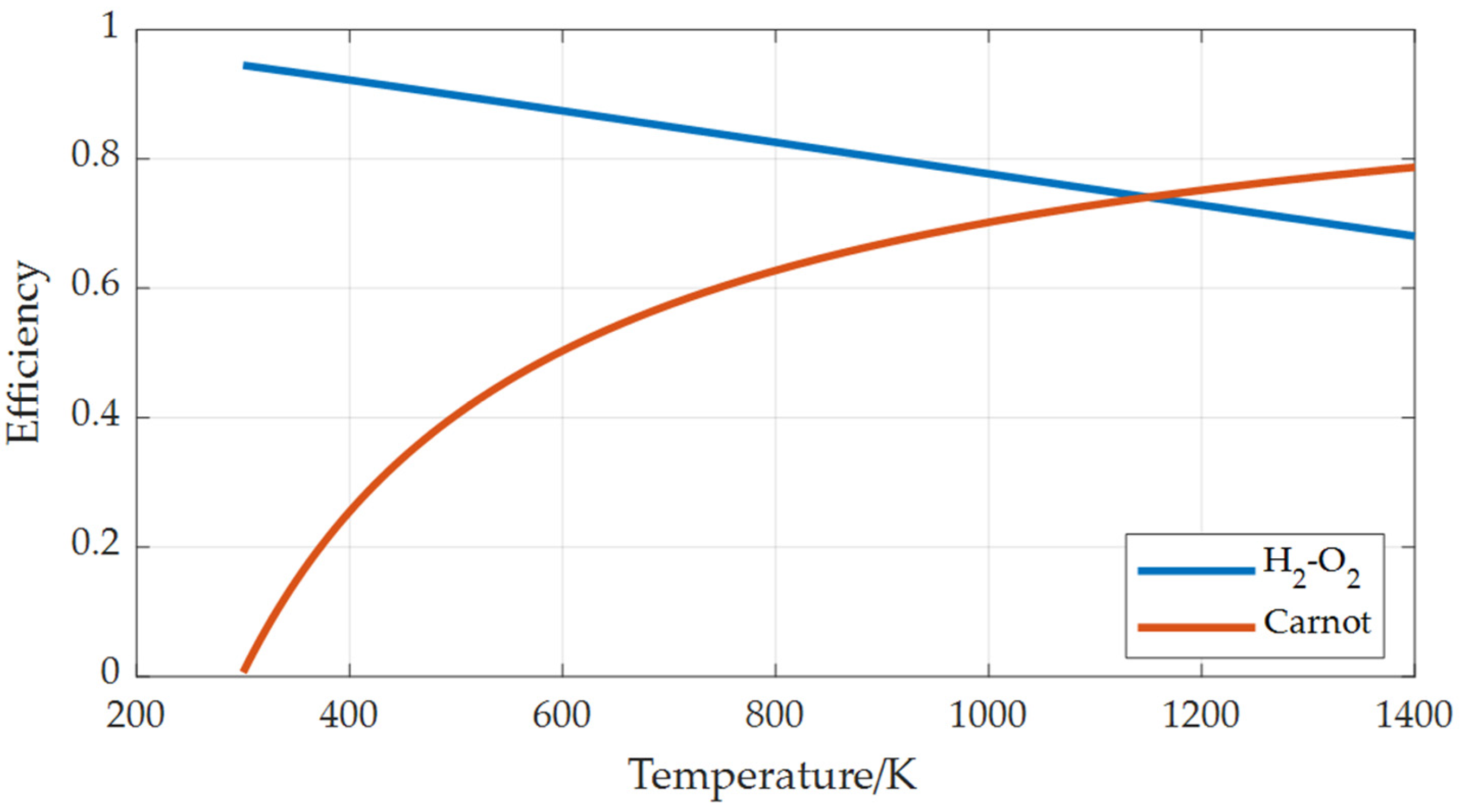
2.2.2. Electrochemical
2.3. Literature Review
2.3.1. Combined Heat and Hydrogen (CHH) Systems
2.3.2. Techno-Economic Optimization and Market Integration in Hydrogen-CHP Systems
2.3.3. Retrofitting and Hydrogen Blending in Existing CHP Plants
2.3.4. Flexibility Enhancements for CHP Integration with Renewables
2.3.5. System-Level Planning for Hydrogen-Integrated Multi-Energy Systems
2.3.6. LCOH and Breakeven Pricing
2.4. Application to Saarland
2.4.1. Relevance of System Designs
2.4.2. Efficiency and Cost Benchmarks
2.4.3. Lessons for Regional Feasibility
3. Saarland
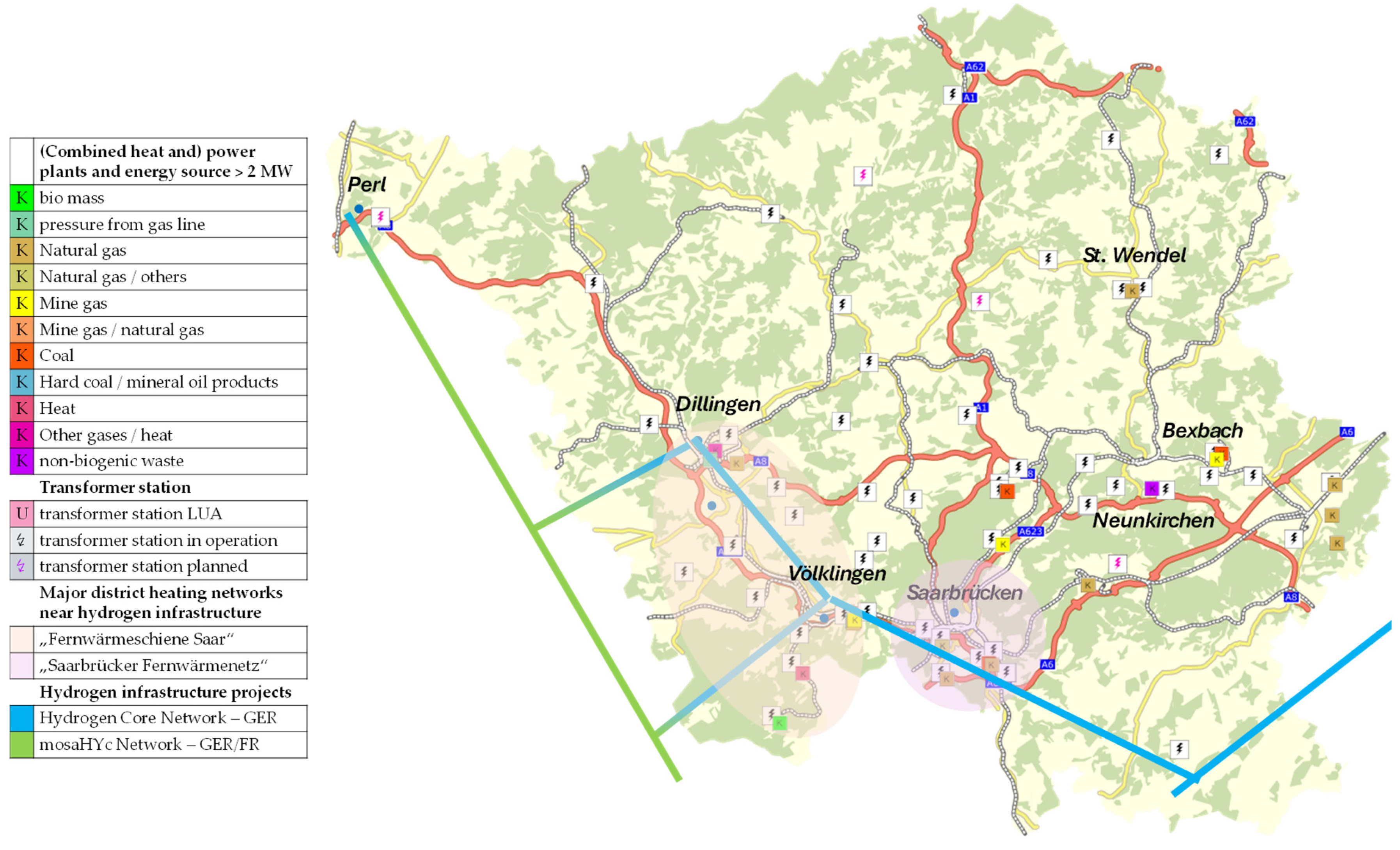
3.1. Overview
- Electricity Price Volatility: Electrolysis-based hydrogen production is sensitive to electricity prices, which are increasingly volatile due to renewable intermittency and fluctuating carbon prices. This undermines the business case for on-site hydrogen generation and necessitates long-term power purchase agreements (PPAs) or grid-friendly operating strategies.
- Fragmented Market Design: Existing market mechanisms fail to adequately reward the grid-stabilizing and decarbonization benefits of hydrogen CHP. Current regulatory frameworks, especially in Germany’s energy law, do not prioritize fuel-flexible or hydrogen-ready CHP units in district heating tenders or funding schemes [28].
- Technological Investments: The region is actively investing in H2-ready technologies, increasing the value proposition of hydrogen in distributed CHP applications.
- Hydrogen Infrastructure: The HY4Link and MoSaHYc corridors offer unique synergies. By leveraging transnational funding mechanisms (e.g., IPCEI Hydrogen), Saarland can lower infrastructure costs while gaining early-mover advantages in regional hydrogen markets. These corridors could also unlock access to lower-cost hydrogen produced in the Grand Est region.
- Supportive Policy Signals: The German and EU hydrogen strategies offer significant funding for regional pilots and infrastructure buildouts. Saarland has already been identified as a “Hydrogen Model Region,” granting access to technical assistance and early-stage capital.
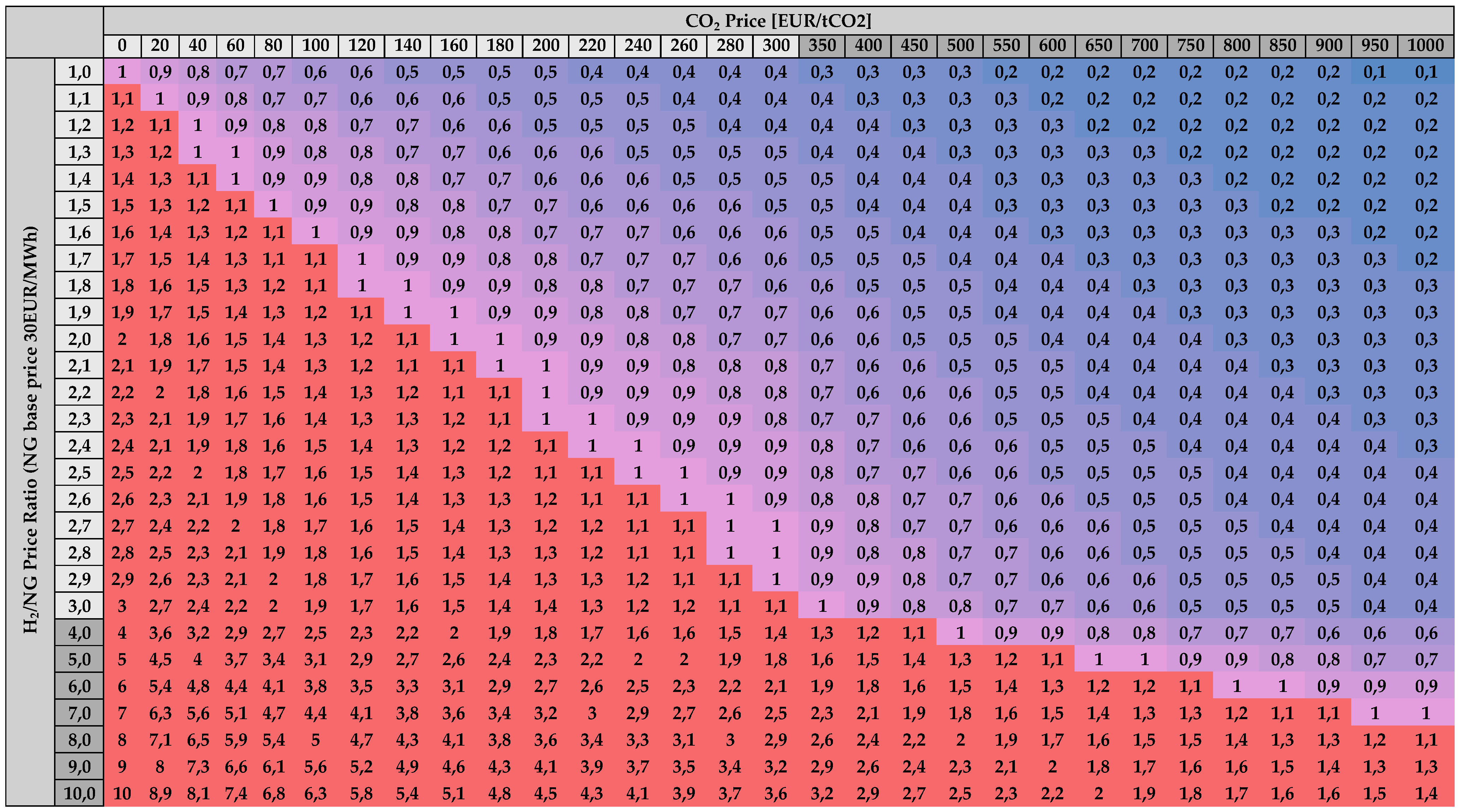
3.2. Economic Ratio for Hydrogen Integration Examplified in Saarland
3.3. Optimization Model for Hydrogen CHP
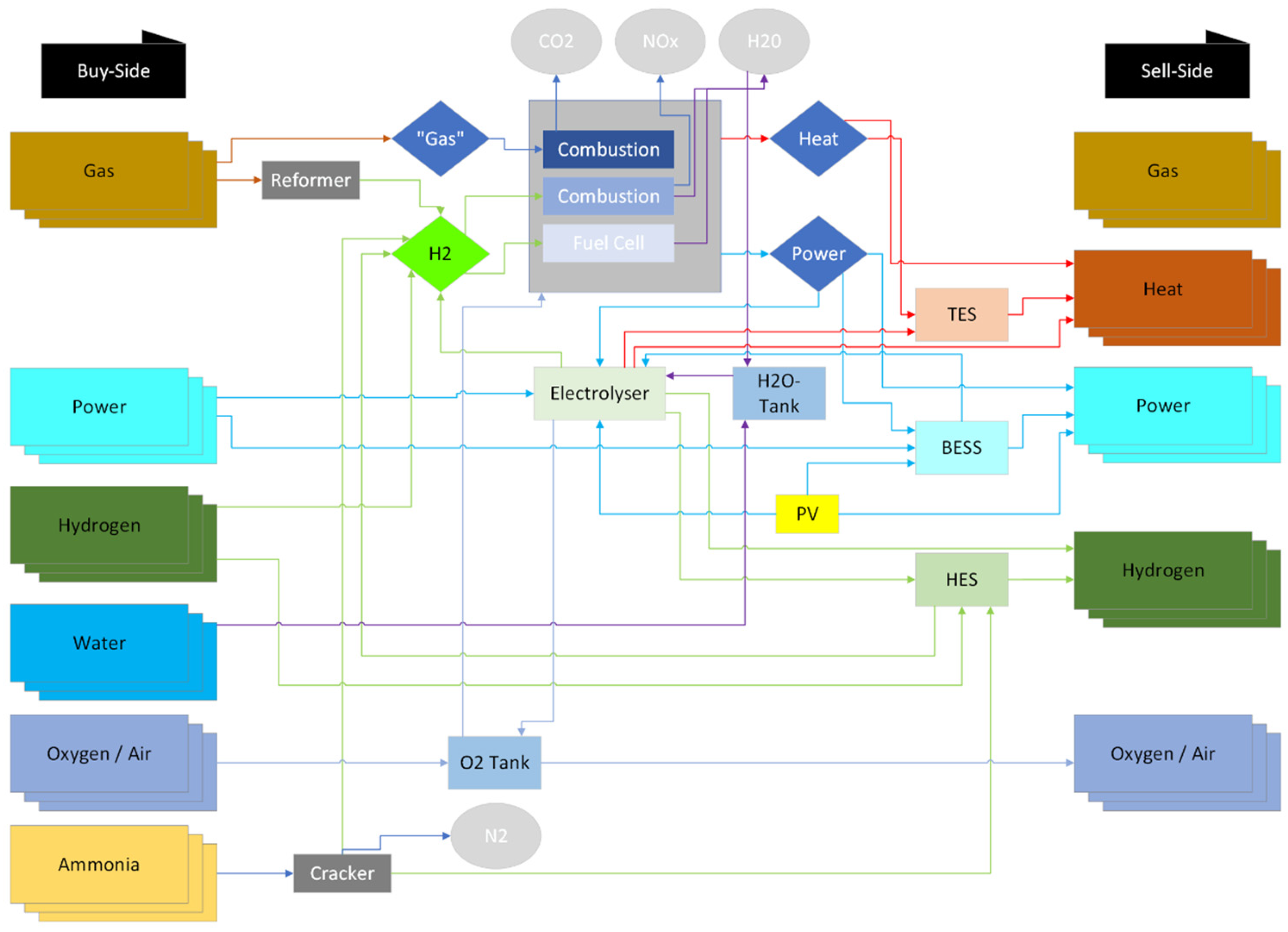
- An electrolyser
- A fuel cell
- A combustion-based CHP unit
- Thermal storage
- Battery storage
- Hydrogen storage
- Ancillary material storage
- Market interfaces for electricity, hydrogen, oxygen, and water.
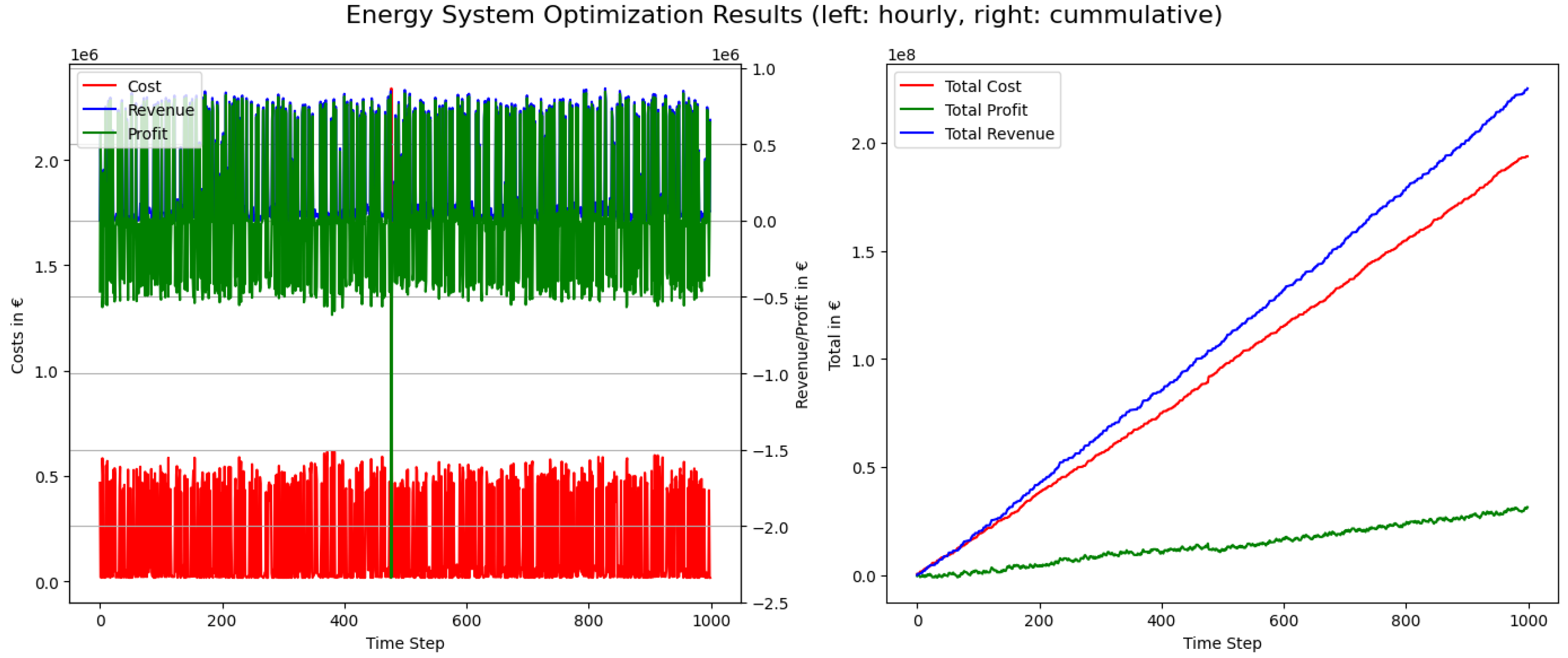
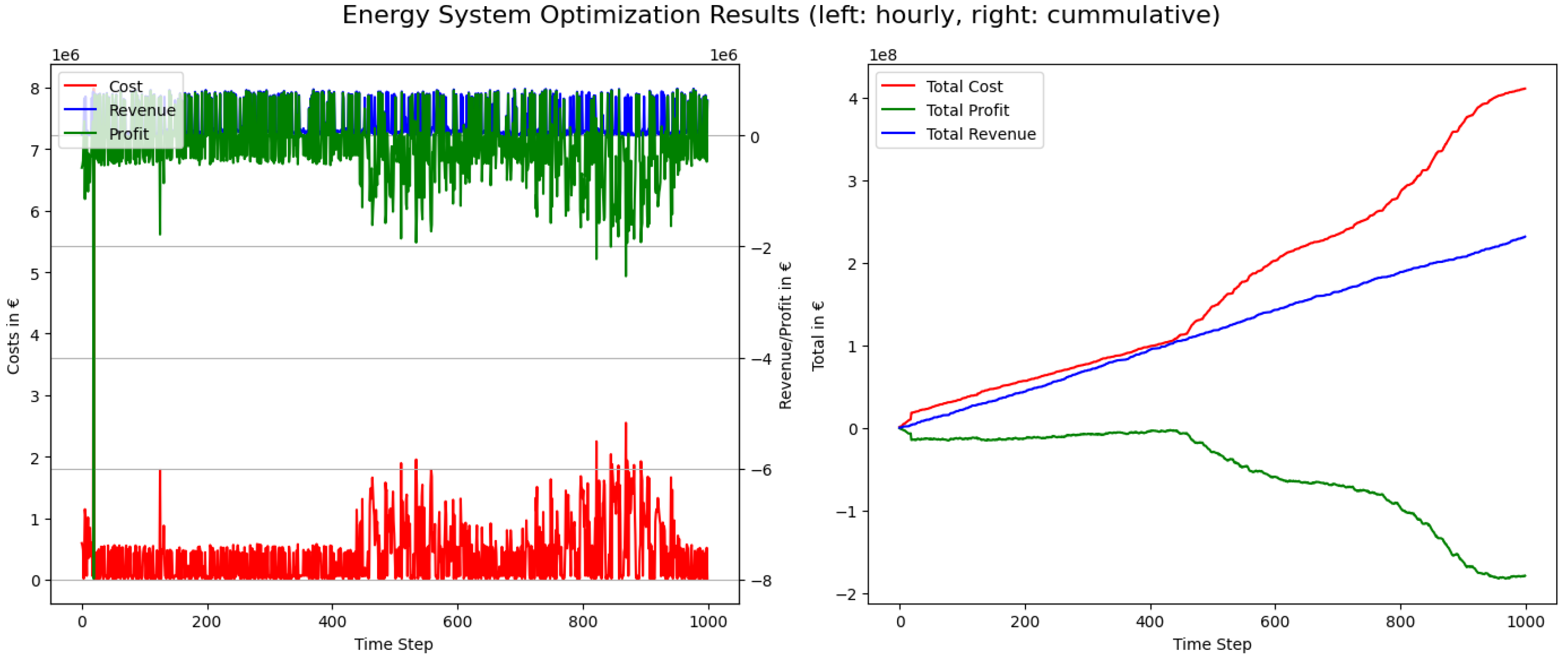
3.4. Comparative Analysis
4. Discussion
4.1. Conclusions
- Technical Key Findings
- Validation of literature-identified technical barriers for hydrogen-based CHP systems in the Saarland context, including system integration and performance constraints
- Technical Recommendations
- Accelerated development of fuel cells and H2-ready engines or turbines optimized for CHP applications in dense urban or industrial areas
- Evaluation of hybrid system architectures (e.g., electrolysis + storage + CHP) in real-world settings to assess their dynamic performance under fluctuating renewable inputs and thermal demand
- Role of the Python Optimization Model
- Methodological foundation through integrated modelling of hydrogen, heat, and electricity subsystems within a unified environment for dynamic evaluation of operational strategies under varying market, policy, and cost conditions.
- Modular structure enables the inclusion of additional technologies (e.g., hydrogen storage, district heating expansions) and policy instruments (e.g., carbon pricing, CfDs), facilitating analysis of their impact on system economics and emissions.
- Potential for future validation of model performance via dynamic multi-year simulations using real data from Saarland’s CHP plants
- Exploring scalability across other industrial regions
- Economic Implications:
- Persistent Cost Barriers: Even in regions with renewable potential and industrial demand, high costs remain a key challenge, underscoring the need for parallel evolution in market mechanisms alongside technological cost reductions
- Market Design Inefficiencies: Undervaluation of ancillary services, such as grid balancing, represents a structural hurdle for hydrogen CHP adoption
- Economic and Policy Recommendations (economic dimension):
- Introduction of targeted subsidies or Contracts for Difference (CfDs) for hydrogen-based CHP to close the current cost gap with natural gas. These instruments should reflect not only energy output but also system services and decarbonization value.
- Internalization of externalities (e.g., CO2, NOx, and methane emissions from fossil fuels) via dynamic carbon pricing to improve hydrogen’s competitiveness, particularly in industrial applications
- Policy and Market Design Conclusions:
- Confirmation of policy and regulatory gaps identified in the literature, with Saarland illustrating how these gaps manifest in practice
- Economic and Policy Recommendations (policy dimension):
- Reform of balancing markets and capacity mechanisms to allow hydrogen CHP units to bid based on their full value stack—including heat production, peak shaving, and flexibility.
- Regional Scaling Strategies:
- Replicating of Saarland’s “anchor load” model using large, stable industrial consumers to justify early infrastructure investment and help aggregate demand across sectors.
- Development of cross-border hydrogen corridors in regions where energy systems are fragmented across national borders but integrated in practice (e.g., North Rhine-Westphalia–Belgium–Netherlands; Upper Austria–Czech Republic).
- A more proactive role for regional governments in stakeholder coordination, permitting and alignment with national and EU hydrogen strategies and roadmaps.
4.2. Limitations and Future Research
- Geographic Scope: Focusing on a single region inherently limits generalizability. Although Saarland offers a rich case, its specific industrial structure, governance culture, and infrastructure legacy may not be directly transferable to other contexts.
- Data Availability: Infrastructure cost assumptions and technology performance metrics rely on secondary sources or ranges reported in the literature, rather than proprietary or empirical datasets specific to Saarland.
- Temporal Constraints: The analysis assumes a static cost and policy environment. Incorporating dynamic modelling of hydrogen price trajectories and policy shifts (e.g., EU Green Deal implementation, fit for 55 revisions [1]) would enable more robust long-term projections.
4.3. Directions for Future Research
- Comparative Case Studies: Investigating other industrial regions implementing hydrogen CHP systems to enable cross-contextual learning and evaluate transferability of findings.
- Dynamic Techno-Economic Modelling: Expanding optimization to incorporate renewable variability, hydrogen storage economics, and market response to policy changes, providing more realistic and robust system projections.
- Stakeholder-Based Analysis: Engaging utilities, regulators, and industry players through interviews and decision-making frameworks to assess real-world feasibility, adoption barriers, and practical implementation strategies.
Author Contributions
Funding
Data Availability Statement
Acknowledgments
Conflicts of Interest
Abbreviations
| BHHP | Block Heat and Power Plant |
| CfD | Contracts for Difference |
| CHP | Combined heat and power |
| CHH | Combined Heat and Hydrogen |
| DHN | District heating network |
| EHB | European Hydrogen Backbone |
| ETS | Emissions Trading System |
| FGR | Flue gas recirculation |
| HHV | Higher heating value |
| HEC-MES | Hydrogen energy chain-integrated multi-energy systems |
| LHV | Lower heating value |
| NG | Natural gas |
| NPV | Net present value |
| PCI | Projects of Common Interest |
| PMI | Projects of Mutual Interest |
| PPA | Power purchase agreement |
| P2G | Power to gas |
| RFNBO | Renewable Fuels of Non-Biologic Origin |
| TLA | Three letter acronyms |
| VRE | Variable renewable energy |
References
- European Union. Der Europäische Grüne Deal—Europäische Kommission. Available online: https://commission.europa.eu/strategy-and-policy/priorities-2019-2024/european-green-deal_de (accessed on 5 November 2025).
- IEA. District Heating—Energy System. Available online: https://www.iea.org/energy-system/buildings/district-heating (accessed on 5 November 2025).
- IEA. Global Hydrogen Review 2025. Available online: https://www.iea.org/reports/global-hydrogen-review-2025 (accessed on 12 November 2025).
- Lu, T.; Yi, X.; Li, J.; Wu, S. Collaborative Planning of Integrated Hydrogen Energy Chain Multi-Energy Systems: A Review. Appl. Energy 2025, 393, 126019. [Google Scholar] [CrossRef] [Scilit]
- ASUE. Arbeitsgemeinschaft für Sparsamen und Umweltfreundlichen Energieverbrauch e.V. Blockheizkraftwerke in Krankenhäuern. Available online: https://www.gewerbegas.info/wp-content/uploads/2023/08/BHKW_Krankenhaus.pdf (accessed on 12 November 2025).
- Escalante Soberanis, M.A.; Fernandez, A.M. A Review on the Technical Adaptations for Internal Combustion Engines to Operate with Gas/Hydrogen Mixtures. Int. J. Hydrogen Energy 2010, 35, 12134–12140. [Google Scholar] [CrossRef] [Scilit]
- Frey, H. Energieautarke Gebäude: Auf dem Weg zu Smart Energy Systems; Springer: Berlin/Heidelberg, Germany, 2019; ISBN 978-3-662-57873-5. [Google Scholar]
- Yu, S.; Fan, Y.; Shi, Z.; Li, J.; Zhao, X.; Zhang, T.; Chang, Z. Hydrogen-Based Combined Heat and Power Systems: A Review of Technologies and Challenges. Int. J. Hydrogen Energy 2023, 48, 34906–34929. [Google Scholar] [CrossRef] [Scilit]
- Burrin, D.; Roy, S.; Roskilly, A.P.; Smallbone, A. A Combined Heat and Green Hydrogen (CHH) Generator Integrated with a Heat Network. Energy Convers. Manag. 2021, 246, 114686. [Google Scholar] [CrossRef] [Scilit]
- Hou, Q.; Ge, P.; Lu, G.; Zhang, H. A Novel PEMFC-CHP System for Methanol Reforming as Fuel Purified by Hydrogen Permeation Alloy Membrane. Case Stud. Therm. Eng. 2022, 36, 102176. [Google Scholar] [CrossRef] [Scilit]
- Skordoulias, N.; Koytsoumpa, E.I.; Karellas, S. Techno-Economic Evaluation of Medium Scale Power to Hydrogen to Combined Heat and Power Generation Systems. Int. J. Hydrogen Energy 2022, 47, 26871–26890. [Google Scholar] [CrossRef] [Scilit]
- Sokil, O.; Podolchak, N.; Stetsiv, I.; Zuiev, M.; Chepil, B. Hydrogen for Heating: Technologies, Challenges, and Opportunities. Open Res. Eur. 2025, 5, 143. [Google Scholar] [CrossRef] [Scilit] [PubMed]
- Öberg, S.; Odenberger, M.; Johnsson, F. Exploring the Competitiveness of Hydrogen-Fueled Gas Turbines in Future Energy Systems. Int. J. Hydrogen Energy 2022, 47, 624–644. [Google Scholar] [CrossRef] [Scilit]
- Wang, J.; Shao, Z.; Wu, J.; Wu, L. Day-Ahead Strategic Bidding of Multi-Energy Microgrids Participating in Electricity, Thermal Energy, and Hydrogen Markets: A Stochastic Bi-Level Approach. Int. J. Electr. Power Energy Syst. 2024, 163, 110319. [Google Scholar] [CrossRef] [Scilit]
- Haakana, J.; Tikka, V.; Lassila, J.; Partanen, J. Methodology to Analyze Combined Heat and Power Plant Operation Considering Electricity Reserve Market Opportunities. Energy 2017, 127, 408–418. [Google Scholar] [CrossRef] [Scilit]
- Kander, A.; Wedding, K.H. A Techno-Economic Case Study of the Implementation of Hydrogen Technology in Connection to a CHP Plant. Available online: https://lup.lub.lu.se/luur/download?func=downloadFile&recordOId=9110288&fileOId=9110308 (accessed on 13 November 2025).
- Öhman, A. Green Hydrogen Production at Igelsta CHP Plant. Available online: https://www.soderenergi.se/wp-content/uploads/2021/08/Green-hydrogen-production-at-Igelsta-CHP-plant.-Exjobb-Axel-Ohman-KTH.pdf (accessed on 13 November 2025).
- Ribeiro, C.; Delmonte, B.; Sliepen, J.; Maas, S. Techno-Economic Analysis on Implementing Hydrogen in a Combined Heat and Power Plant in Luxembourg to Reduce Carbon Emissions. Sustainability 2025, 17, 3369. [Google Scholar] [CrossRef] [Scilit]
- Alhuyi Nazari, M.; Fahim Alavi, M.; Salem, M.; Assad, M.E.H. Utilization of Hydrogen in Gas Turbines: A Comprehensive Review. Int. J. Low-Carbon Technol. 2022, 17, 513–519. [Google Scholar] [CrossRef] [Scilit]
- Salman, C.A.; Li, H.; Li, P.; Yan, J. Improve the Flexibility Provided by Combined Heat and Power Plants (CHPs)—A Review of Potential Technologies. e-Prime—Adv. Electr. Eng. Electron. Energy 2021, 1, 100023. [Google Scholar] [CrossRef] [Scilit]
- Wang, J.; You, S.; Zong, Y.; Træholt, C.; Dong, Z.Y.; Zhou, Y. Flexibility of Combined Heat and Power Plants: A Review of Technologies and Operation Strategies. Appl. Energy 2019, 252, 113445. [Google Scholar] [CrossRef] [Scilit]
- Sayed-Ahmed, H.; Toldy, Á.I.; Lappalainen, M.; Himanen, O.; Bajamundi, C.; Santasalo-Aarnio, A. Strategies and Challenges for Reducing Green Hydrogen Cost: Operation Mode and Revenue Streams. Renew. Sustain. Energy Rev. 2025, 223, 116065. [Google Scholar] [CrossRef] [Scilit]
- Gómez, J.; Castro, R. Green Hydrogen Energy Systems: A Review on Their Contribution to a Renewable Energy System. Energies 2024, 17, 3110. [Google Scholar] [CrossRef] [Scilit]
- Osman, A.I.; Nasr, M.; Mohamed, A.R.; Abdelhaleem, A.; Ayati, A.; Farghali, M.; Al-Muhtaseb, A.H.; Al-Fatesh, A.S.; Rooney, D.W. Life Cycle Assessment of Hydrogen Production, Storage, and Utilization toward Sustainability. WIREs Energy Environ. 2024, 13, e526. [Google Scholar] [CrossRef] [Scilit]
- Campana, P.E. Optimal Design and Dispatch of Hydrogen Systems Integrated in Combined Heat and Power Plants for Improving Hydrogen Economy Through Excess Heat and Electricity Grid Services. Appl. Energy 2024, 398, 126378. [Google Scholar] [CrossRef] [Scilit]
- Ibáñez-Rioja, A.; Järvinen, L.; Puranen, P.; Kosonen, A.; Ruuskanen, V.; Hynynen, K.; Ahola, J.; Kauranen, P. Off-Grid Solar PV–Wind Power–Battery–Water Electrolyzer Plant: Simultaneous Optimization of Component Capacities and System Control. Appl. Energy 2023, 345, 121277. [Google Scholar] [CrossRef] [Scilit]
- Bundesnetzagentur. Netzentwicklungsplan Strom. Available online: https://www.bundesnetzagentur.de/DE/Fachthemen/ElektrizitaetundGas/NEP/Strom/start.html (accessed on 4 November 2025).
- Ministerium für Wirtschaft, Innovation, Digitales und Energie. Die Saarländische Wasserstoffstrategie 2025–2032. Available online: https://www.saarland.de/mwide/DE/portale/wasserstoff/wasserstoffstrategie/wasserstoffstrategie (accessed on 5 November 2025).
- Natran Groupe. mosaHYc. Natrangroupe.Com. Available online: https://www.natrangroupe.com/en/our-energy-transition/hydrogen-transport/mosahyc (accessed on 4 November 2025).
- Natran Groupe. HY4Link. Natrangroupe.Com. Available online: https://www.natrangroupe.com/en/medias/press-releases/hy4link-hydrogen-infrastructure-project (accessed on 4 November 2025).
- European Hydrogen Backbone; Gas Infrastructure Europe. European Hydrogen Backbone: Boosting EU Resilience and Competitiveness. Available online: https://www.ehb.eu/files/downloads/1732103116_EHB-Boosting-EU-Resilience-and-Competitiveness-20-11-VF.pdf (accessed on 3 November 2025).
- SHS—Stahl-Holding-Saar Power4Steel. Der Weg der CO2-Transformation ist klar Definiert. Available online: https://www.pure-steel.com/power4steel/ (accessed on 4 November 2025).
- Ministerium für Wirtschaft, Innovation, Digitales und Energie. Aufteilung der erneuerbaren Energien im Saarland. Available online: https://www.saarland.de/mwide/DE/portale/energie/energiewende/fakten_erneuerbare_energien/_documents/dos01_ee_allgemein (accessed on 5 November 2025).
- Stadtwerke Saarbrücken GmbH. Methangas BHKWs im Busdepot. Available online: https://www.saarbruecker-stadtwerke.de/media/download-56c6db6206b51 (accessed on 2 February 2026).
- Bundesnetzagentur. Aktuelle Lage Gasversorgung—Gaspreise Großhandel in EUR/MWh. Available online: https://www.bundesnetzagentur.de/DE/Gasversorgung/aktuelle_gasversorgung/_svg/Gaspreise/Gaspreise.html (accessed on 6 November 2025).
- Ruhnau, O.; Muessel, J. When2Heat Heating Profiles. Available online: https://data.open-power-system-data.org/when2heat/2023-07-27 (accessed on 13 March 2026).
- SMARD. Download Market Data. Available online: https://www.smard.de/en/downloadcenter/download-market-data/ (accessed on 13 March 2026).
- Tadayon, L.; Frey, G. Multi-Level Simulation Framework for Degradation-Aware Operation of a Large-Scale Battery Energy Storage Systems. Energies 2025, 18, 2708. [Google Scholar] [CrossRef] [Scilit]
- Boait, P.J.; Greenough, R. Can Fuel Cell Micro-CHP Justify the Hydrogen Gas Grid? Operating Experience from a UK Domestic Retrofit. Energy Build. 2019, 194, 75–84. [Google Scholar] [CrossRef] [Scilit]
- EWI; BET. Energiewende. Effizient. Machen.—Monitoringbericht zum Start der 21. Legislaturperiode, im Auftrag des Bundesministerium für Wirtschaft und Energie. 2015. Available online: https://www.bundeswirtschaftsministerium.de/Redaktion/DE/Publikationen/Energie/energiewende-effizient-machen.html (accessed on 19 November 2025).
- Rundfunk, S. Vorerst Keine Wasserstoff-Fabrik im Kraftwerk Fenne. Available online: https://www.sr.de/sr/home/nachrichten/politik_wirtschaft/wasserstofffabrik_kraftwerk_voelklingen_fenne_wird_vorerst_nicht_gebaut_100.html (accessed on 4 November 2025).


| Property | Unit | Fuel Type | |
|---|---|---|---|
| Hydrogen | Natural Gas (Methane) | ||
| Lower Heating Value | (MJ/kg) | ~120 | ~50 |
| Lower Heating Value | (MJ/Nm3) | ~10.8 | ~35.8 |
| Adiabatic Flame Temperature | (°C) | ~2200 | ~1950 |
| Laminar Flame Speed | (m/s) | ~3 | ~0.3–0.4 |
| Flammability Limits | (% vol in air) | 4–75 | 5–15 |
| Minimum Ignition Energy | (mJ) | ~0.02 | ~0.28 |
| Diffusivity in Air | (cm2/s at STP) | ~0.61 | ~0.16 |
| Flame Colour | Non-luminous | Blue | |
| FC Type | AFC | SOFC | PEMFC | PAFC | MCFC |
|---|---|---|---|---|---|
| Anode reaction | H2 + 2OH− → 2H2O + 2e− | H2 + O2− → H2O + 2e− H2 → 2H+ + 2e− | H2 → 2H+ + 2e− | H2 → 2H+ + 2e− | H2 + CO32− → H2O + CO2 + 2e− |
| Ion | OH− | O2−, H+ | H+ | H+ | CO32− |
| Cathode reaction | ½O2 + H2O + 2e− → 2OH− | ½O2 + 2e− → O2− ½O2 + 2H+ + 2e− → H2O | ½O2 + 2H+ + 2e− → H2O | ½O2 + 2H+ + 2e− → H2O | ½O2 + CO2 + 2e− → CO32− |
| Temperature (°C) | 60–220 | 600–1000 (O2−) 400–800 (H+) | 60–85 (LT) 130–220 (HT) | 160–220 | 600–700 |
| Pressure (MPa) | 0.5 | 0.3 | 1–2 | 0.1 | 0.2 |
| Electrolyte | 35 wt–85 wt% KOH | Ceramics, e.g., YSZ | Polymer membrane | Phosphoric acid | Carbonates, e.g., Na2CO3, Li2CO3 |
| Anode catalyst | Ni, Pt/C | Ni, Zr | Pt/C | Pt/C | Ni (Cr, Al) |
| Cathode catalyst | Ag, Pt/C | LaMnO3 | Pt/C | Pt/C | NiO |
| Electrical efficiency | 45–60% | 50–60% | 40–60% | 40–45% | 45–55% |
| CHP efficiency | 68–76% | 79–87% | 60–80% | 85–90% | 85% |
| Available fuel | Pure hydrogen | Natural gas, Hydrogen, CO, HC | Hydrogen | Natural gas, Hydrogen, LPG | Natural gas, Hydrogen, LPG |
| Oxidant | O2 | Air | Air | Air | Air |
| Sensitive impurity | S, CO2 | S | S, CO, NH3 | S | S |
| Electrolyte storage matrix | Asbestos | – | – | SiC | LiAlO2 |
| Lifetime (h) | 8 k | 80 k | 80 k | 60 k | 20 k |
| Stack output power (kW) | 1–100 | 5–3000 | 1–100 | 150–400 | 300–1000 |
| Start time | 1–10 min | >30 min | 1–5 s | 1–10 min | >30 min |
| CO tolerance | <10 ppm | <10% | <10 ppm (LT) <1% (HT) | <1% | <10% |
| CO2 tolerance | <100 ppm | <10% (O2−) < 5% (H+) | <15% | <15% | <15% |
| NH3 tolerance | – | <0.5% | <0.1 ppm | <4% | – |
| Parameter | Bus Depot CHP Plant |
|---|---|
| Plant Type | Combustion Engine (3 units) |
| Manufacturer | Caterpillar (packaged by Zeppelin) |
| Electrical Output | 3 × 2 MWel = 6 MWel total |
| Thermal Output | 3 × 2.4 MWth = 7.2 MWth total |
| Fuel Type | Methane (50% CH4) enriched. with natural gas (93% CH4) |
| Fuel Consumption | ~500 m3/h natural gas per unit at full load |
| Electrical Efficiency | 39% |
| Total Efficiency | 87% |
| NOx Emissions | 500 mg/m3, TA-Luft compliant |
| Air–Fuel Ratio (Lambda) | 1.76 |
| Engine/Turbine Details | 20 cylinders, 3 bar boost pressure |
| Thermal Storage | None |
| Grid Connection | 10 kV transformer |
Disclaimer/Publisher’s Note: The statements, opinions and data contained in all publications are solely those of the individual author(s) and contributor(s) and not of MDPI and/or the editor(s). MDPI and/or the editor(s) disclaim responsibility for any injury to people or property resulting from any ideas, methods, instructions or products referred to in the content. |
© 2026 by the authors. Licensee MDPI, Basel, Switzerland. This article is an open access article distributed under the terms and conditions of the Creative Commons Attribution (CC BY) license.
Share and Cite
Senol, B.; Meiers, J.; Frey, G. Decarbonizing CHP Systems via Hydrogen: Specific Drivers and Hurdles in Highly Industrialized Regions Like Saarland, Germany. Hydrogen 2026, 7, 46. https://doi.org/10.3390/hydrogen7020046
Senol B, Meiers J, Frey G. Decarbonizing CHP Systems via Hydrogen: Specific Drivers and Hurdles in Highly Industrialized Regions Like Saarland, Germany. Hydrogen. 2026; 7(2):46. https://doi.org/10.3390/hydrogen7020046
Chicago/Turabian StyleSenol, Batuhan, Josef Meiers, and Georg Frey. 2026. "Decarbonizing CHP Systems via Hydrogen: Specific Drivers and Hurdles in Highly Industrialized Regions Like Saarland, Germany" Hydrogen 7, no. 2: 46. https://doi.org/10.3390/hydrogen7020046
APA StyleSenol, B., Meiers, J., & Frey, G. (2026). Decarbonizing CHP Systems via Hydrogen: Specific Drivers and Hurdles in Highly Industrialized Regions Like Saarland, Germany. Hydrogen, 7(2), 46. https://doi.org/10.3390/hydrogen7020046