1. Introduction
Hydrogen is increasingly deployed as an energy carrier in high-pressure applications, including refueling stations, compression skids, storage modules, and test benches for component qualification. Within these systems, valves provide isolation, metering, and safe shutdown functions and are routinely operated under large pressure differentials and repeated actuation. In many practical cases, the limiting factor for “leak-free” operation is not the structural integrity of the valve body but the performance of dynamic sealing locations, notably the stem/bonnet interface where the stem must move while the valve remains externally tight since the stem is a critical pressure-containing and operating element [
1]. From a safety perspective [
2], this aspect is particularly relevant for hydrogen due to its low ignition energy, broad flammability range, and the potential for accumulation in partially enclosed spaces. From an operational perspective, leakage reduces hydrogen availability and can trigger detection alarms, shutdowns, or unplanned maintenance. Consequently, robust and reproducible stem sealing is a critical design element for valves in hydrogen service.
Industrial practice usually addresses external valve leakage through fugitive emissions standards and qualification procedures; EN ISO 15848-1 is commonly referenced [
3] for the measurement and classification of fugitive emissions from industrial valves to the atmosphere, including dynamic stem seals, and typically uses helium as a tracer gas due to practical detection advantages [
4]. Field experience also shows that re-tightening/adjusting packing does not necessarily eliminate stem leakage once degradation mechanisms are active [
5]. Helium mass spectrometer methods allow the detection of very small leak rates and provide a consistent basis for comparative screening. In addition to fugitive emissions protocols, hydrostatic or pneumatic pressure tests (e.g., API 598 principles [
6]) are routinely used to validate pressure boundary integrity and internal seat sealing. While these standards provide structured frameworks, the selection and optimization of stem packing solutions for high-pressure hydrogen remains challenging because packing performance depends on multiple interacting mechanisms that are not fully captured by a single test.
Two broad families of drivers determine packing performance. The first is the geometry of the packing system and stuffing box assembly. Geometry controls how axial gland tightening is translated into radial contact pressure against the stem and bonnet bore, how stress is distributed over the contact area, and whether the packing benefits from pressure-assisted self-energizing behavior [
7].
The second family of drivers is the behavior of the packing material itself. Polymers and polymer composites used in high-pressure valve packing may exhibit time-dependent deformation (creep), stress relaxation, wear debris formation, and changes in friction as a function of temperature, surface finish, and lubrication. These effects can be intensified by cyclic actuation and by pressure cycling, which may repeatedly load and unload the seal interfaces.
Hydrogen service imposes additional constraints that influence both geometry and material selection. Firstly, hydrogen’s small molecular size and high diffusivity can make external leak performance more sensitive to micro gaps in dynamic seals. Secondly, repeated pressurization and depressurization cycles can drive gas transport into non-metallic materials; in elastomeric seals, this may lead to blistering or rapid gas decompression damage, motivating the use of more stable thermoplastics or high-performance polymers in certain high-pressure applications. Thirdly, hydrogen infrastructure is often operated at nominal pressures around 350 bar or 700 bar for refueling, with pressure transients and frequent cycling during normal operation. In such environments, sealing strategies that work reliably for oil and gas services may require re-qualification.
Needle valves represent a particularly relevant class of components in high-pressure hydrogen systems including hydrogen refueling station architectures [
8]. They are commonly used for the isolation and fine control of flow in instrumentation and high-pressure lines. Their compact geometry and fine-thread stem mechanism typically allow precise throttling and reliable shutoff, but the same compactness means the stuffing box volume is limited, packing elements are small, and surface effects (wear, debris, surface finish) can be proportionally more influential. Moreover, needle valves are often actuated frequently and may be operated in both fully closed and partially open positions, increasing the importance of dynamic packing behavior and stable friction.
Within polymer packing options, several materials are widely used in severe service due to their chemical stability and mechanical performance. PTFE is attractive for its low friction and broad chemical compatibility, but virgin PTFE can creep under sustained load, which may reduce contact stress over time [
9]. Reinforced PTFE grades (rPTFE), such as glass-filled PTFE, improve dimensional stability and creep resistance compared with virgin PTFE, though fillers may also modify wear behavior and debris formation.
PEEK is a high-performance thermoplastic with high mechanical strength, good wear resistance, and superior creep resistance compared with PTFE; it is frequently used as a back-up or anti-extrusion ring and can also serve as a primary sealing element when compliance is sufficient [
10,
11].
Polyimides (such as Vespel grades) are another class of high-performance polymers with excellent temperature capability and mechanical stability; certain grades incorporate solid lubricants or fillers to reduce friction and wear. However, polyimides can be significantly more expensive than PTFE- or PEEK-based solutions, which makes material selection a balance between cost, manufacturability, and performance. Both PEEK and polyimide (e.g., Vespel SP-1) have been benchmarked as vacuum sealing materials, including helium-related tightness/permeation considerations [
12].
Packing geometry can be as influential as material selection, especially in high-pressure service. Conical V-ring or V-pack concepts are often considered “self-energizing” because internal pressure can assist in expanding the lips of the packing against the stem and the stuffing box wall. V-ring sealing stacks are known to show leakage sensitivity to pressure, temperature and motion frequency [
13]. This pressure-assisted effect can compensate for relaxation and small dimensional changes and may allow the use of lower initial gland loads. In contrast, traditional flat disc stacks rely primarily on axial compression from the gland to generate radial sealing stress. Although flat stacks can be effective and easy to manufacture, they may be more sensitive to stress relaxation in polymers and may require higher gland loads, which can increase friction and wear at the stem interface.
Despite the broad industrial use of both polymer packings and V-type geometries, there remains limited openly described experimental information focused on stem packing solutions for compact PN650 needle valves under hydrogen service conditions, particularly combining (i) comparative leak screening across geometries and materials, (ii) high-pressure helium validation under external vacuum, and (iii) endurance cycling under pure hydrogen followed by microscopy and elemental analysis of wear and deposits. Such combined evidence is valuable because leak rate performance alone does not reveal how the seal evolves under mechanical cycling, and post-test inspection can clarify whether the observed sealing stability is achieved without progressive damage mechanisms that may compromise long-term reliability.
The present study provides an experimentally grounded comparison of packing geometry and polymer material effects on stem sealing in a PN650 needle valve intended for high-pressure hydrogen service. Two packing geometries (conical V-ring and flat three-disc stack) and two polymer material sets (Vespel® SP-1/SP-21 and glass-filled rPTFE combined with a PEEK back-up ring) are evaluated on the same valve platform. The assessment combines hydrostatic overpressure hold testing to exclude gross leakage, helium mass spectrometer leak measurements under vacuum for high-sensitivity ranking, and a high-pressure helium test at 700 bar under external vacuum. The best-performing configuration from the screening stage is then demonstrated in a 2500-cycle endurance campaign in 650 bar hydrogen, followed by post-cycling leak checks and microscopy/EDX. While the program is not intended to constitute a full ISO 15848-1-type test, it is designed to support early-stage packing selection by linking leak tightness ranking to representative high-pressure hydrogen cycling exposure. The overall setup configurations are described in the following sections.
2. Materials and Methods
2.1. Valve Specimen Definition
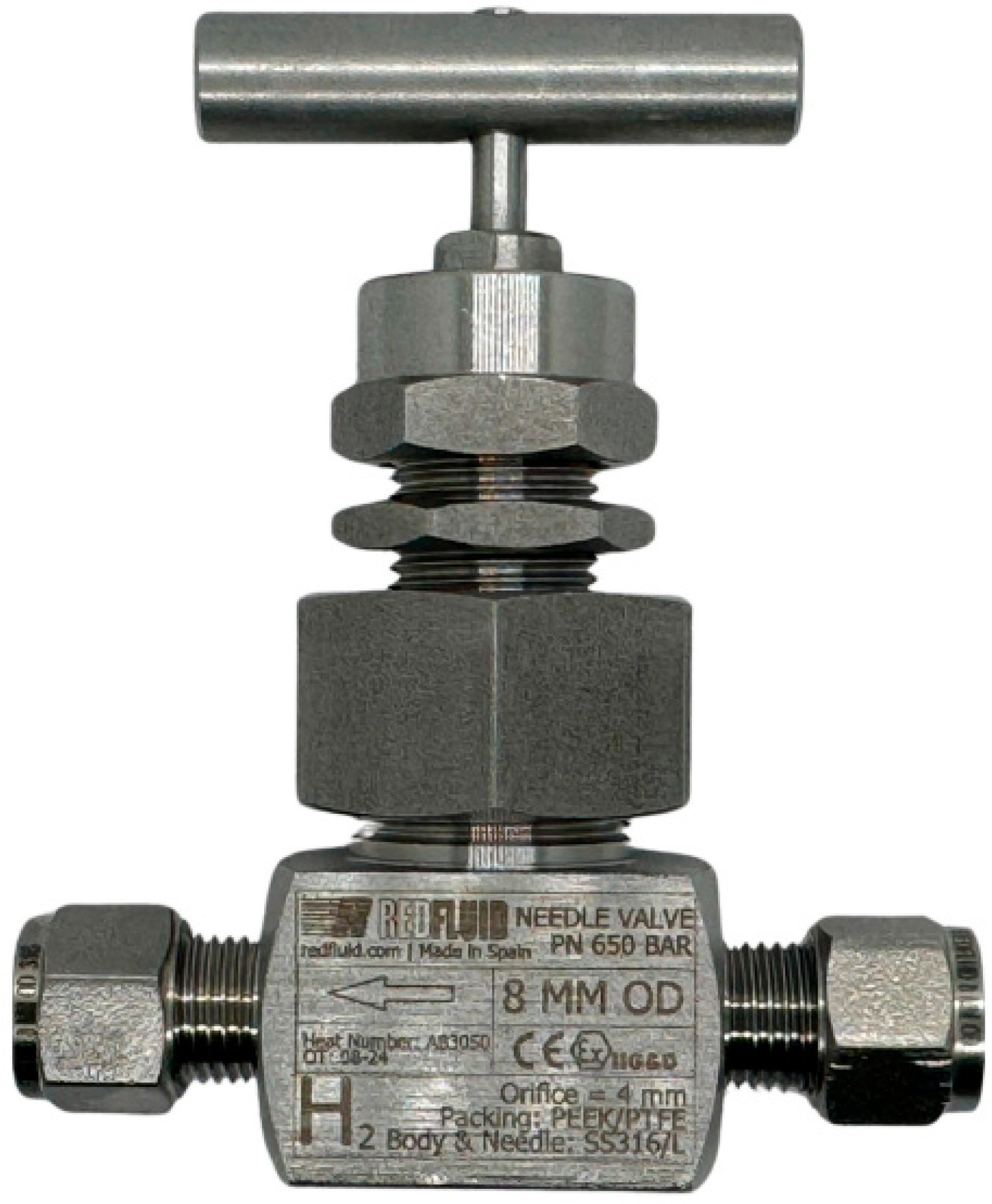
All tests were performed in a needle valve designed for high-pressure hydrogen service, manufactured by Redfluid S.L. (08227 Terrassa, Spain), and rated PN650 (
Figure 1).The valve is configured for 8 mm outside diameter tubing connections, with a nominal orifice diameter of 4 mm. The pressure boundary components (body and bonnet) and the stem/needle are manufactured from 316L stainless steel. This material is widely used in hydrogen and industrial gas applications due to its corrosion resistance and general compatibility with hydrogen environments for valve bodies under moderate temperatures, while also offering suitable machinability for small high-pressure valve components.
The stem sealing system is located in the bonnet/stuffing box region and is loaded by a gland element and nut arrangement. In this region, the packing elements must provide a dynamic seal while the stem is actuated and must maintain a stable seal under high internal pressure. The stuffing box volume and available packing height are characteristic of compact needle valves, which motivates careful selection of geometry and material to achieve both tight sealing and manageable operating torque.
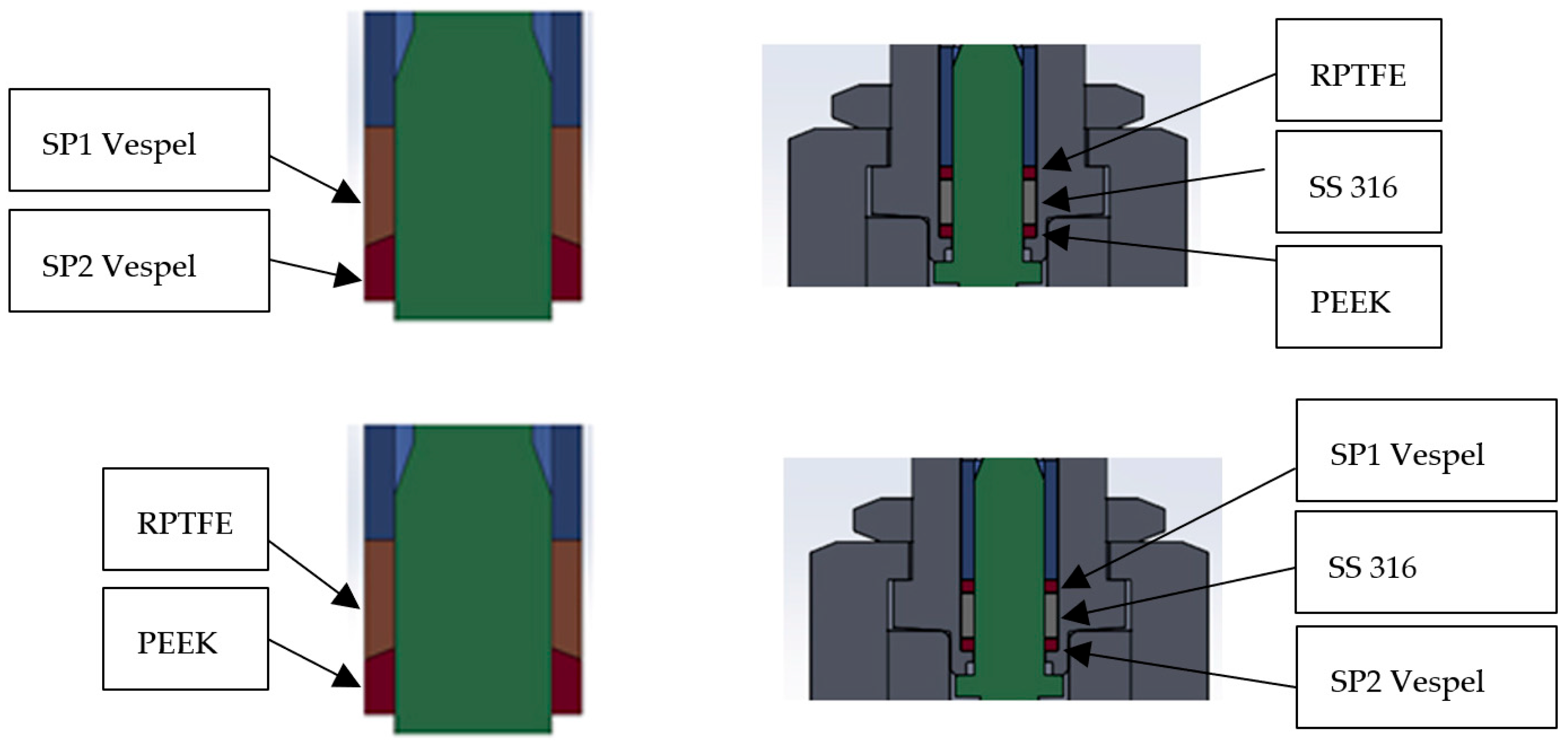
A total of four valve assemblies were prepared for the comparative screening stage. Each assembly used the same valve model and metallic hardware, differing only in the packing geometry and polymer material set. Macroscopically, the visible difference between assemblies is limited to the gland/packing region; enlarged gland region views are provided in
Figure 2. This approach was chosen to minimize confounding variables such as stem surface condition, stuffing box dimensions, and gland hardware tolerances.
2.2. Packing Geometry and Material Sets
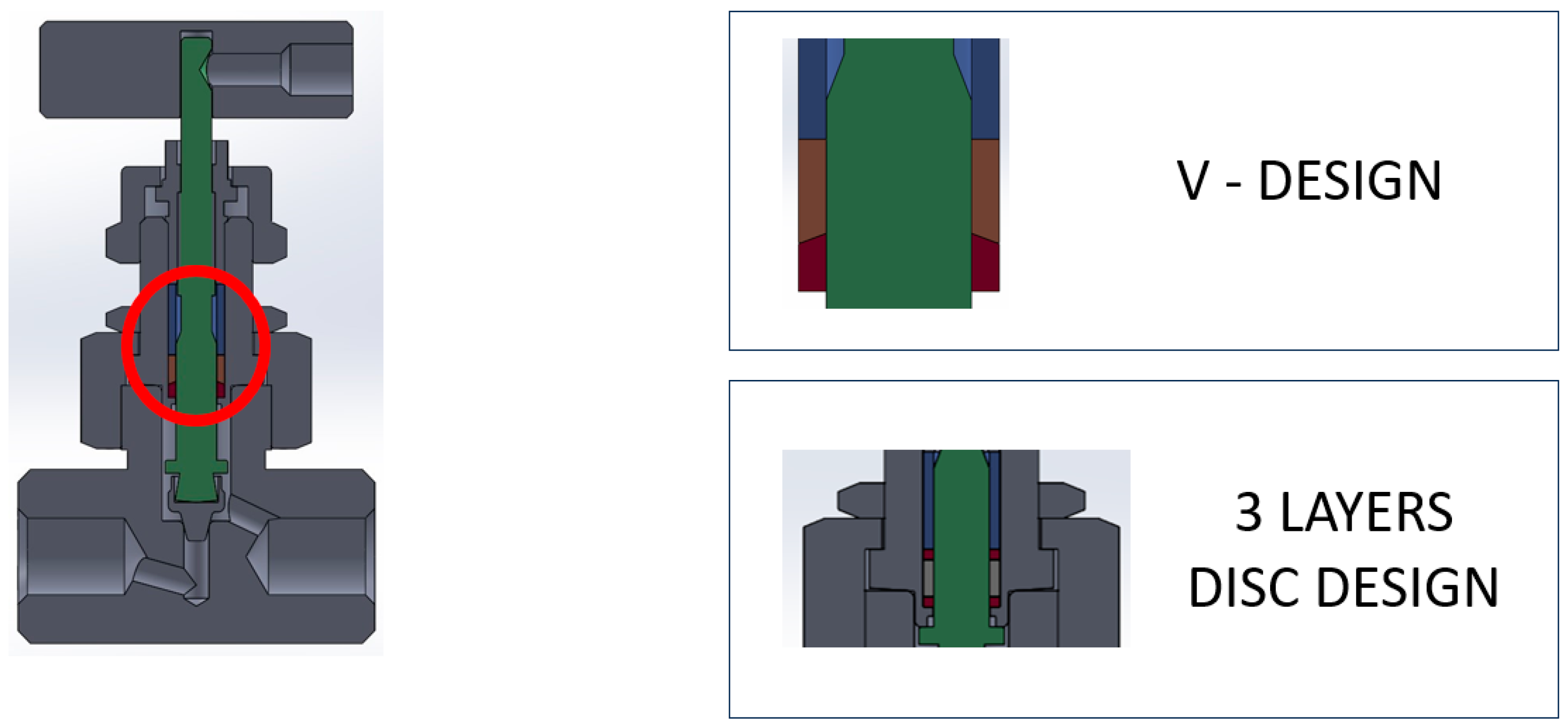
Two packing geometries were evaluated (
Figure 3). Enlarged views of the stuffing box/gland region for the four packing configurations are shown in
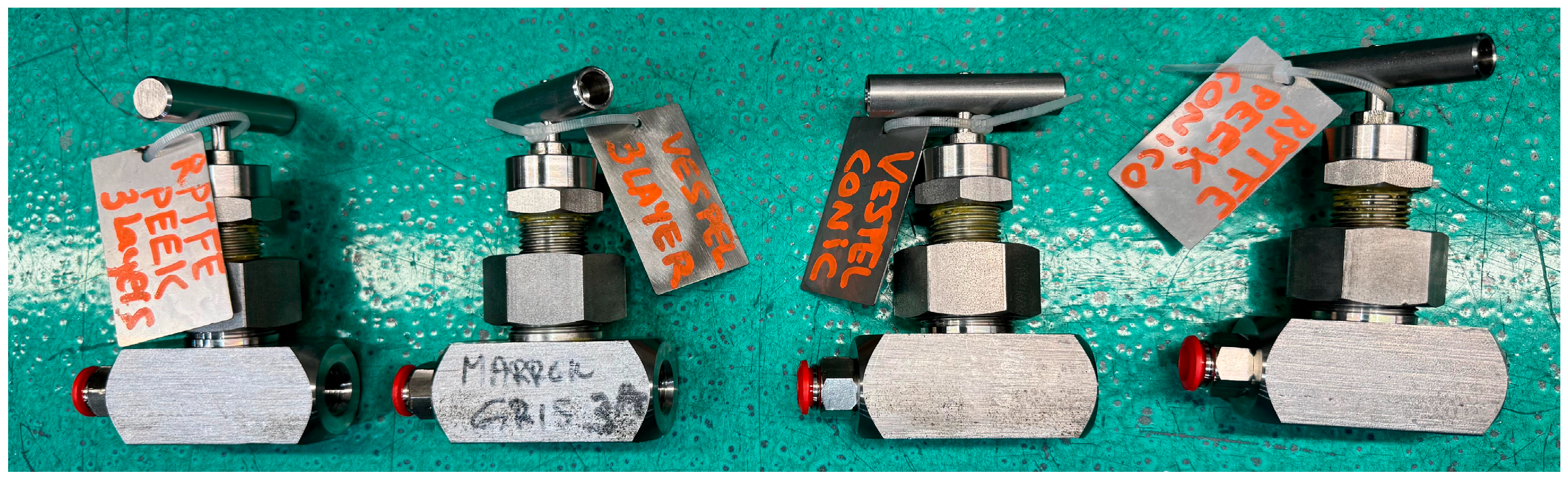
Figure 2, and a whole-valve overview of the four assemblies is shown in
Figure 4.
2.2.1. Conical V-Ring Geometry
V-pack (also termed chevron or V-ring) packing sets represent a widely used sealing concept for stems and reciprocating shafts when a combination of high sealing capability and maintainable friction is required. The basic architecture relies on one or more V-shaped rings that are axially compressed by a gland; the lip geometry transforms axial compression into radial contact pressure at the inner diameter (stem) and outer diameter (stuffing box bore). In many designs, male/female adaptor rings are included to stabilize the stack and to distribute the axial load into the lip region. Unlike conventional flat compression rings, V-pack systems can exhibit an inherent pressure-energizing mechanism: process pressure acts on exposed areas of the V-shaped lips and tends to drive the lips outward, increasing radial contact stress as pressure rises. This behavior is often cited as a key advantage in services where polymer stress relaxation and dimensional tolerances can otherwise reduce contact pressure over time [
7].
The first concept is a conical V-ring geometry, also referred to as a V-pack-type arrangement. In such designs, the packing elements present angled sealing lips that can be driven radially outward under axial compression and can also be assisted by internal pressure. The geometry is intended to be more tolerant to small dimensional changes, vibration, or relaxation because internal pressure tends to increase sealing stress at the lips. In compact needle valves, this self-energizing characteristic is attractive because it may reduce the required gland preload while still achieving low leak rates.
2.2.2. Flat Three-Layer Disc Geometry
The second concept is a flat three-layer disc stack, consisting of three flat annular rings stacked axially in the stuffing box. This arrangement represents a straightforward compression packing approach in which gland tightening generates axial compression that is converted into radial sealing pressure through polymer deformation. Flat disc stacks are simple to manufacture and assemble but may be more sensitive to creep and stress relaxation, especially in softer polymers, because the contact pressure is largely determined by the initial gland load and the ability of the material to maintain stress over time.
Two polymer material sets were evaluated in each geometry.
2.2.3. Vespel Grade V-Shape
Packings in the polyimide family were manufactured using Vespel grades SP-1 and SP-21. Polyimides are selected for demanding service due to high mechanical stability, low creep relative to many thermoplastics, and strong wear performance. The inclusion of more than one grade reflects typical engineering practice where different filler contents may be used to balance compliance, friction, and wear resistance. In the present work, the polyimide set is treated as a high-performance polymer option with the potential to maintain sealing stress under high pressure and repeated actuation.
2.2.4. rPTFE/PEEK Set
The second material concept combines reinforced PTFE (rPTFE) with virgin PEEK. rPTFE is a glass-filled grade with approximately 15% glass content. The reinforcement increases stiffness and creep resistance compared with virgin PTFE while preserving relatively low friction. Finite element-based analyses of PTFE packing systems highlight the strong effect of initial preload and contact stress distribution on sealing [
14]. PEEK provides high strength and excellent creep resistance, and in packing systems, it can function as an anti-extrusion element and a wear-resistant support component. The combined rPTFE/PEEK stack is representative of a practical “composite” strategy in which a lower-friction, more compliant material is combined with a higher-strength polymer to manage extrusion and wear in high-pressure service.
2.3. Assembly Procedure and Gland Preload Strategy
Each packing set was installed into the same needle valve platform, creating four valve assemblies corresponding to the geometry/material matrix. Prior to assembly, the stuffing box, gland components and stem sliding surfaces were cleaned, dried and visually inspected.
Conical V-ring stacks were assembled in a pressure-assisted orientation. The rPTFE/PEEK concept used the PEEK element as a back-up/anti-extrusion ring on the high-pressure side. Flat stacks consisted of three discs stacked axially in the stuffing box.
To minimize assembly-to-assembly variability, gland preload was applied using the same repeatable incremental tightening sequence for all assemblies, to the same practical assembly end point.
For the initial screening tests, assemblies were evaluated in dry condition (no lubricant) to isolate intrinsic geometry/material effects. For the hydrogen cycling campaign, a fluorinated lubricant was applied in a controlled amount (thin film) to reflect typical service practice and to stabilize friction and wear.
2.4. Pressure and Leak Test Protocols
The experimental program combines pressure hold tests (to evaluate pressure boundary integrity and gross leakage) with helium mass spectrometer leak tests (to quantify very small external leaks associated with fugitive emissions). The use of helium is motivated by the availability of sensitive mass spectrometer detection and by the long-standing industrial practice of using helium as a tracer gas for leak qualification.
2.4.1. Hydrostatic Pressure Hold Screening up to 1500 Bar
Hydrostatic pressure hold tests were performed following the general principles of API 598. The test medium used was a water and oil mixture. Each valve was closed and pressurized to a target pressure of 1500 bar, which substantially exceeds the nominal PN650 rating and is therefore intended as a conservative screening for pressure boundary robustness and sealing stability under high load. The hold time was 2 min.
Pressure was monitored using a pressure transmitter with a resolution of 0.1 bar. The reported metric is the pressure change between the start and end of the hold period. An acceptance allowance of a 1% pressure drop was used as a pragmatic internal screening threshold for short-duration pressure hold testing and gross leak exclusion. This type of test does not provide a fugitive emissions leak rate in the sense of helium tracer methods; rather, it provides a practical indication that no gross leakage path is present and that the assembled valve maintains pressure for the specified time.
2.4.2. Vacuum-Based Helium Leak Screening
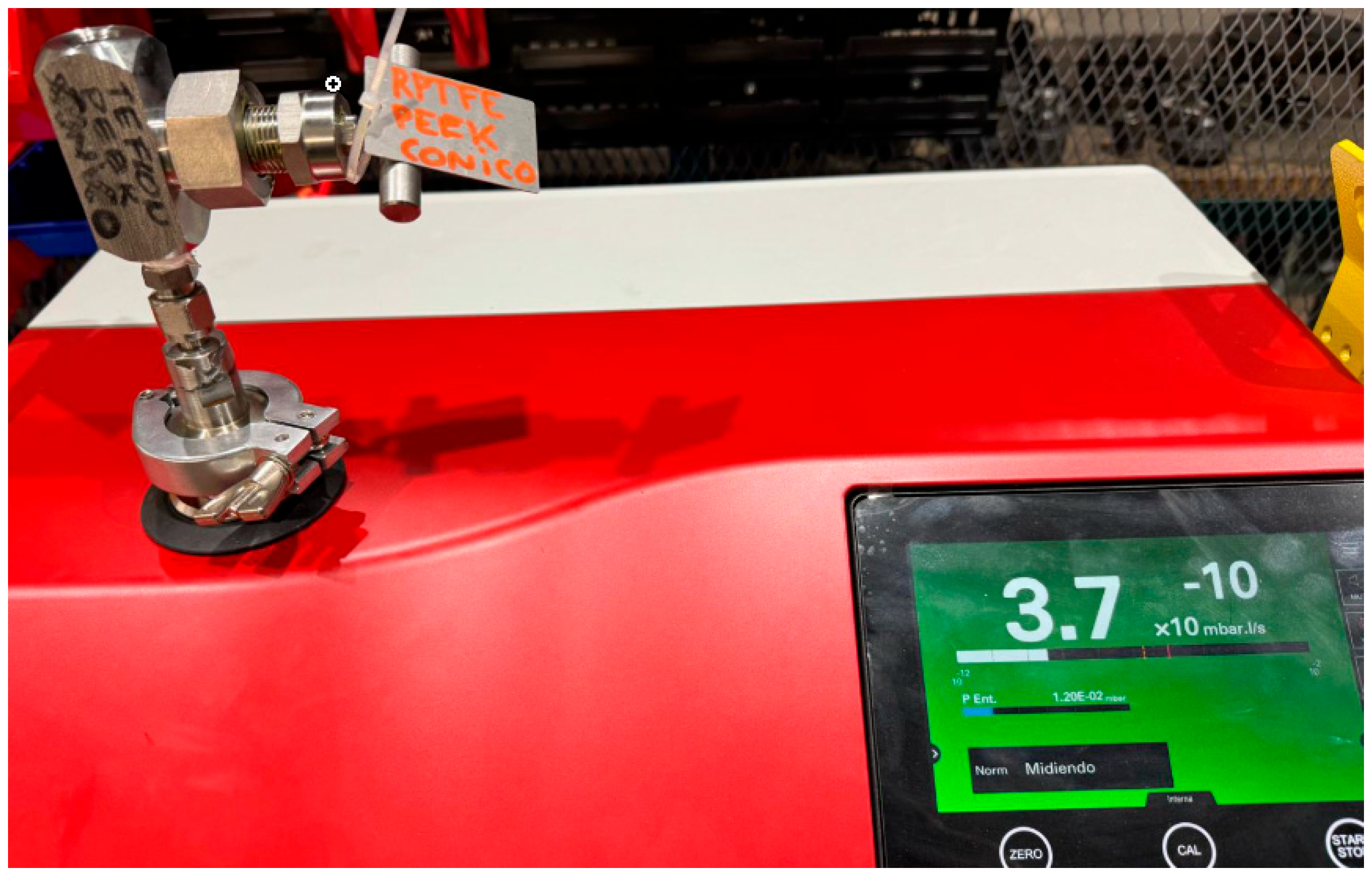
Vacuum-based helium leak screening was performed using a helium mass spectrometer leak detector (ASM 340 from Pfeiffer, Asslar, Germany) in vacuum/spraying mode. Vacuum mode was selected because it is more sensitive than sniffing mode measurements for very small external leaks. Sniffing mode is consistent with the helium rationale used in EN ISO 15848-1 fugitive emission screening. The valve internal volume was connected to the leak detector and evacuated to a stable base pressure. Background was allowed to stabilize for 10 min before each measurement.
Helium was then locally applied (spray) to the stem/bonnet region and other potential external leak paths (gland nut, bonnet joint, body joints). The maximum stable reading during a controlled exposure time of 60 s was recorded as the apparent leak rate. Vacuum-based leak screening was performed 5 times for each assembly to quantify external leakage in terms of leak rate (mbar·l·s−1). The objective of this screening test is comparative: to differentiate packing configurations by leak tightness under sensitive measurement conditions. The reported values should therefore be interpreted as comparative screening results rather than as a full uncertainty-qualified metrological dataset. The mean leak rate values reported for the four packing assemblies are in the 10−10 mbar·l·s−1 range, indicating very low leakage signals for all configurations in this screening stage.
2.4.3. High-Pressure Helium Test at 700 Bar with External Vacuum
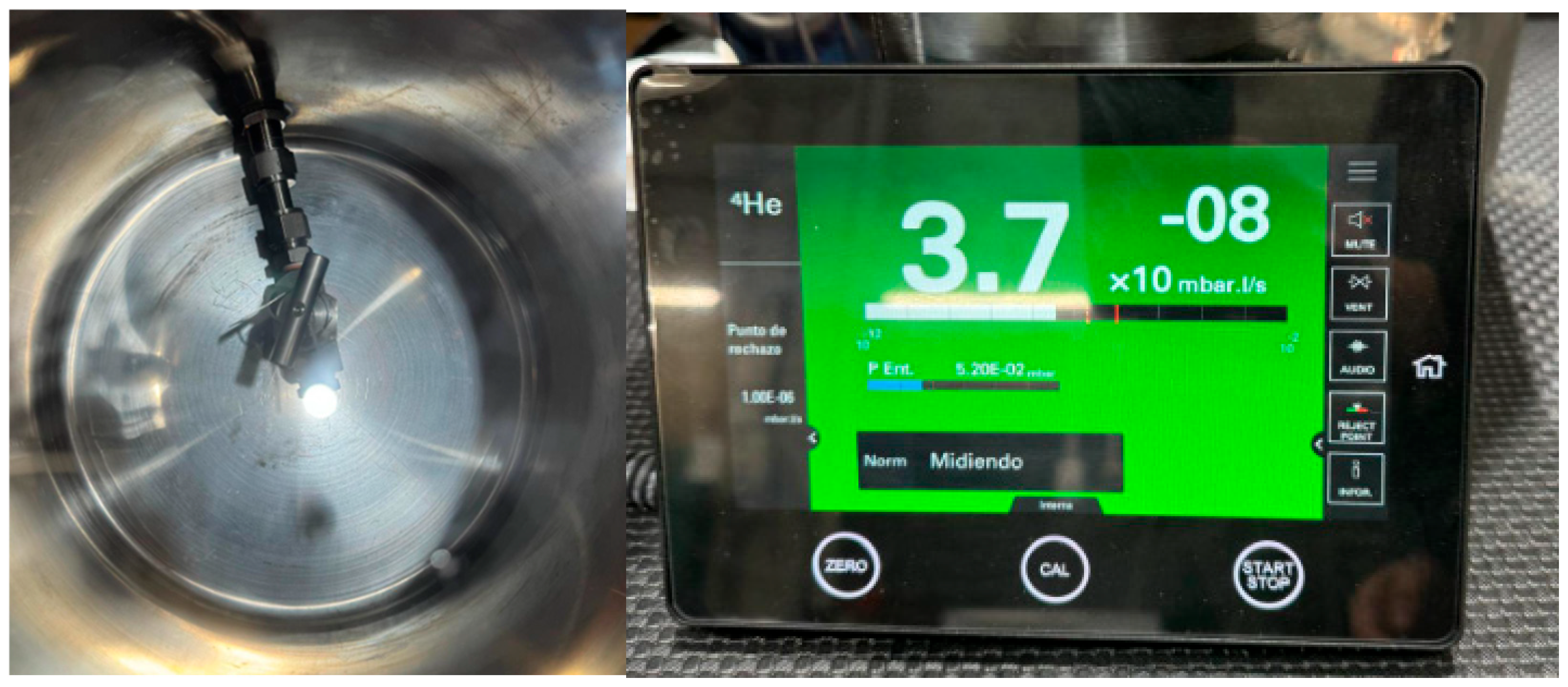
A high-pressure helium leak test was performed with the valve pressurized internally to 700 bar helium and placed under external vacuum, with leak detection by a mass spectrometer. This configuration directly probes helium leakage from the pressurized interior through potential leak paths to the external environment under vacuum, providing a demanding evaluation of external sealing integrity under a large pressure differential. The leak detector used was a Pfeiffer ASM 340. Representative detector readings are reported in mbar·l·s−1.
This test differs from the vacuum screening stage in both boundary conditions and driving forces: the internal pressure is high (700 bar) and the outside is vacuum, which increases the driving force for gas flow through micro gaps and may also increase the contribution of permeation through polymers depending on exposure time and thickness. As a result, leak rate values in this test are expected to be larger than low-pressure screening values, even for the same physical assembly, and should be interpreted as a separate performance metric rather than a direct repetition.
2.4.4. Hydrogen Cycling Endurance at 650 Bar
Endurance cycling was performed in pure hydrogen at a nominal pressure of 650 bar. The selected test specimen for cycling was the rPTFE/PEEK valve assembly operated with an electromechanical actuator. The cycling consisted of 2500 open–close cycles under pressure. During cycling, the valve was operated while pressurized and configured as “closed and plugged”, meaning that the test fixture prevented flow while maintaining pressure exposure across the valve and the packing region.
The cycling rate was approximately 6–10 cycles per minute. The packing was not re-tightened during cycling; the gland preload remained at the initial assembly condition. This approach is deliberately conservative in the sense that it evaluates the ability of the packing system to maintain sealing performance and structural integrity without periodic adjustment, which is a relevant requirement for hydrogen infrastructure components where maintenance intervals may be extended.
Safety measures included ventilation and hydrogen detection with automatic stop criteria. No hydrogen safety events were reported during the 2500-cycle campaign.
2.4.5. Post-Cycling Leak Checks and Seat Tightness Test
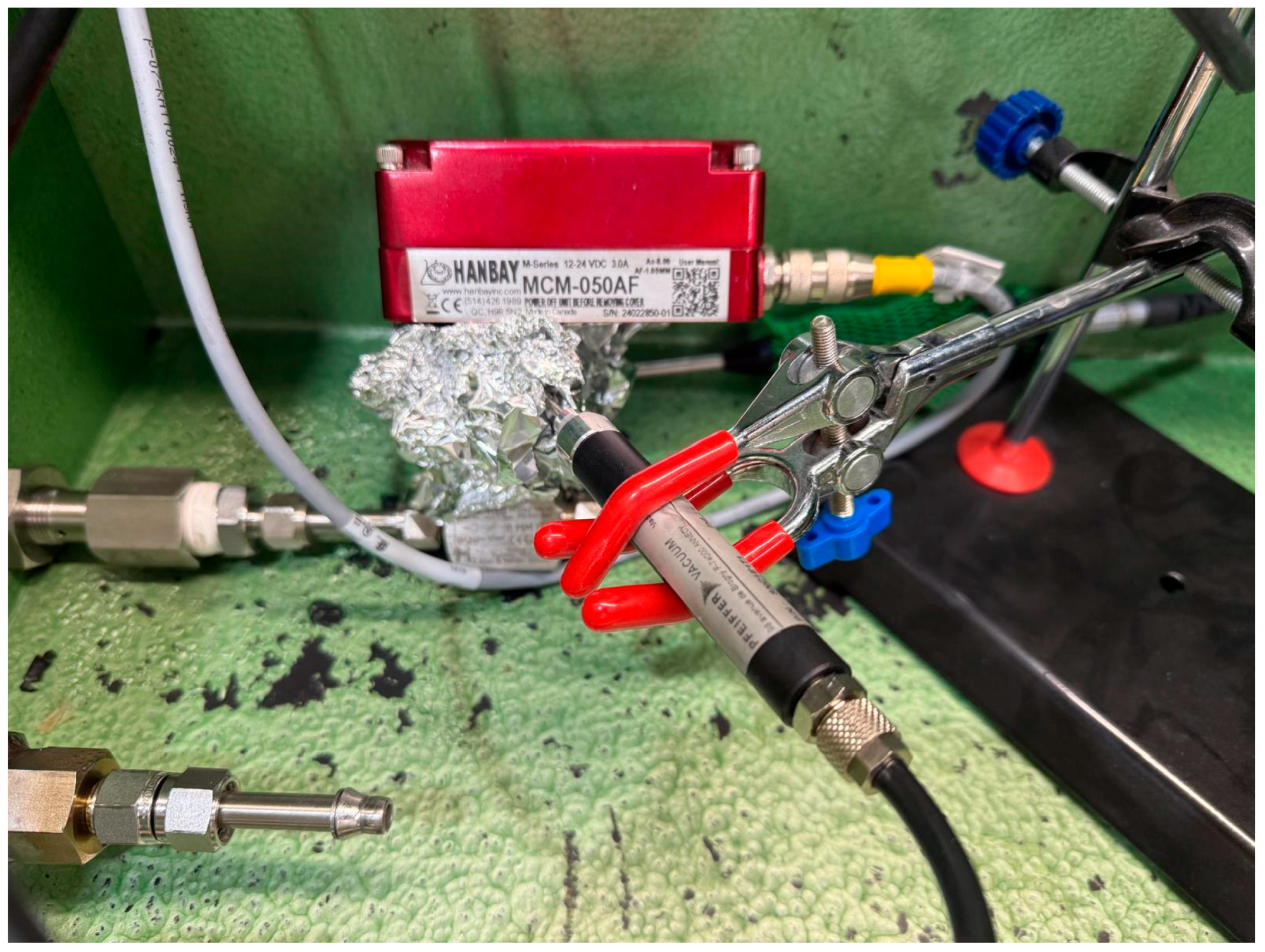
After completion of hydrogen cycling, the valve was subjected to leak checks and pressure hold evaluations using helium. A post-cycling helium test was performed at 20 bar with detector readings reported for valve open and closed states. Additionally, a helium pressure hold test was performed at approximately 700 bar over 10 min, and the observed pressure decrease was used only as a qualitative pressure hold indicator rather than converted into a leak rate, since the enclosed test volume was not recorded. Seat tightness was also evaluated following EN 12266-1 [
15] principles at approximately PN × 1.1 (~715 bar), with the downstream side connected to a calibrated laser bubble leak detector. Results are reported as bubble counts over 10 min.
2.5. Post-Test Inspection and Material Characterization
Post-test inspection was used to relate sealing performance to physical changes in the polymer packing surfaces and to identify potential wear or debris mechanisms. The inspection program included:
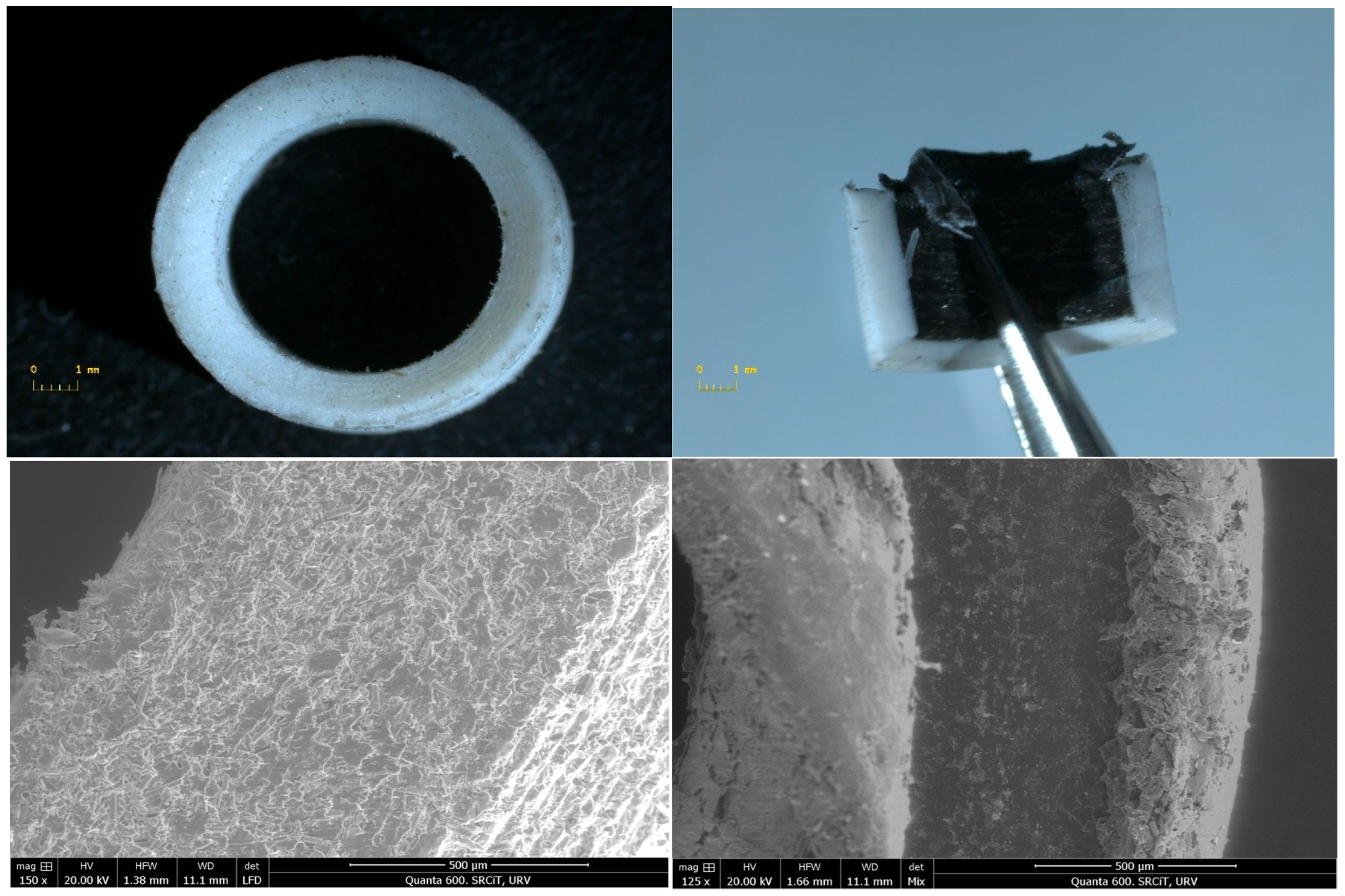
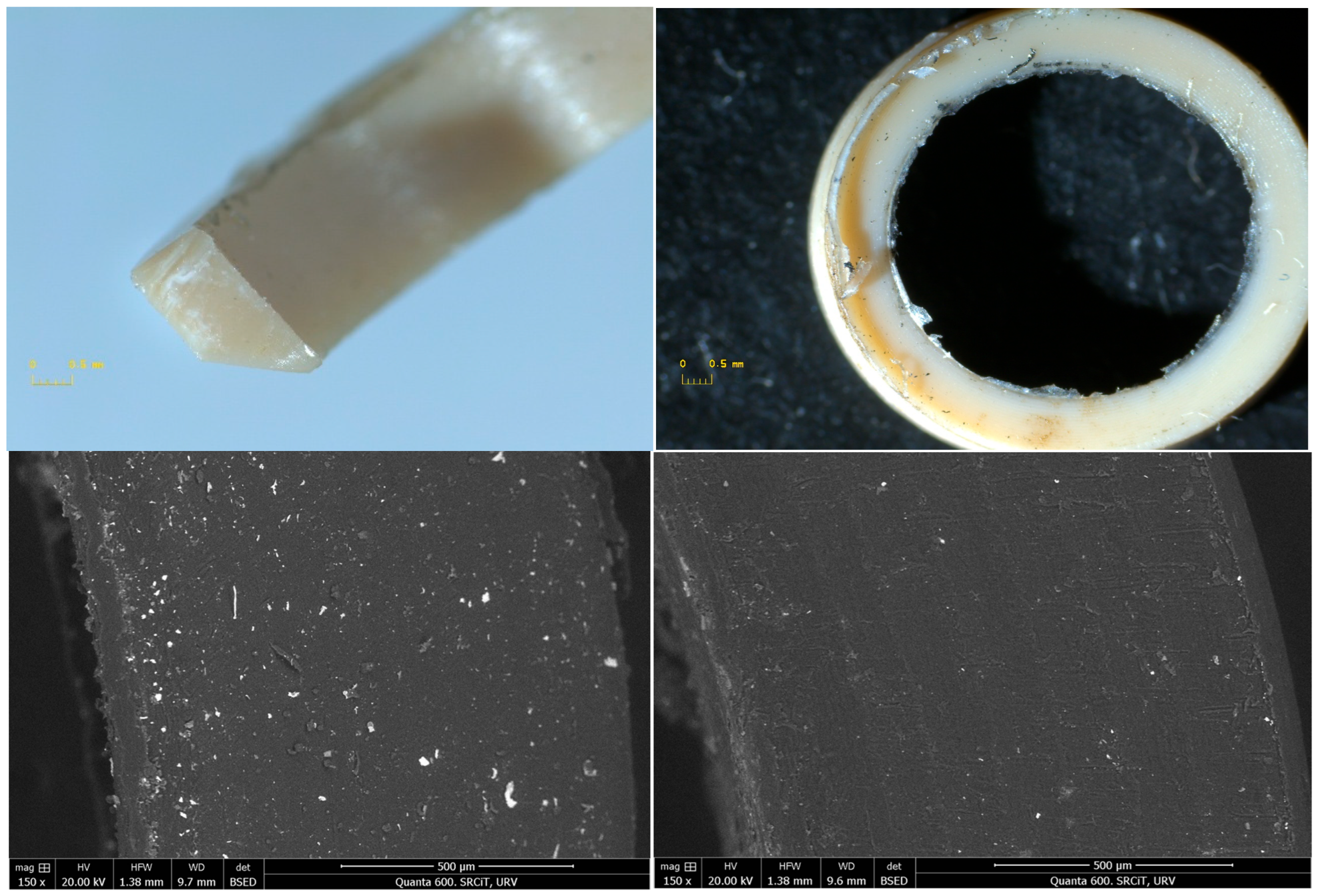
Optical stereomicroscopy of rPTFE and PEEK packing components before and after cycling to identify macroscopic wear, deposits, and local damage features.
SEM/ESEM imaging before and after cycling to characterize surface texture changes, deformation features, and possible exposure of filler or debris.
EDX spot analyses on polymer surfaces to identify elemental composition changes associated with deposits or material transfer (reported as atomic% and/or weight% where available). EDX does not detect hydrogen; therefore, the primary aim is to identify metallic transfer (e.g., Fe, Cr, Ni) from stainless-steel components and to confirm the presence of filler-related elements in reinforced polymers. In the present work, EDX was used as a qualitative or semi-quantitative tool; no total transferred mass or volume was quantified.
2.6. Data Reporting Approach and Study Scope
The present work is intentionally structured as a screening and comparative study. The geometry/material matrix includes one valve per configuration in the initial stage, which allows clear ranking trends but does not provide statistical distributions. Leak rate values are therefore reported as measured screening results and should be interpreted as representative outcomes for the assembled specimens under the described procedures, not as a full uncertainty-qualified dataset. Similarly, the endurance cycling campaign is performed on a selected configuration rather than replicated across all configurations, focusing on the durability of the candidate packing design. These choices reflect typical industrial qualification workflows where early-stage design decisions are informed by comparative screening followed by deeper endurance testing on the most promising concepts.
4. Discussion
4.1. Packing Geometry as a Primary Driver of Leak Performance
The vacuum leak screening results show a consistent and practically relevant trend: the conical V-ring geometry yields lower leak rate readings than the flat three-layer disc stack for both polymer material sets. This outcome is consistent with the fundamental mechanics of self-energizing seals. In conical V-ring geometries, axial compression from the gland creates an initial radial load, but internal pressure can further assist sealing by driving the lips outward against the stem and stuffing box wall. V-shaped sealing rings tend to concentrate stress at the vertex/shoulder regions, so geometry details can govern damage and leakage [
16]. As internal pressure rises, the effective contact stress can increase, which reduces the likelihood that micro gaps remain open under pressure. In addition, the V-ring geometry can better accommodate small misalignments or surface irregularities because the lips can flex locally, creating a more conformal contact.
In contrast, flat disc stacks generate radial contact stress primarily through the conversion of axial compression into lateral expansion. Packing failure is often linked to non-uniform contact pressure among packing rings, motivating the optimization of geometry and load distribution [
14].
A practical implication is that conical V-ring packings may reduce the sensitivity of leak performance to assembly variability. When gland preload is controlled only approximately (as in compact hand-assembly situations), a geometry that can “self-correct” via pressure assistance is advantageous. This point matters for hydrogen service because field maintenance and assembly may not always deliver precisely measured gland loads, and consistent external tightness is still required.
4.2. Polymer Material Effects and Trade-Offs in High-Pressure Hydrogen Service
While geometry dominates the ranking, material effects are still relevant, particularly for endurance behavior. The screening stage indicates that both Vespel polyimide and rPTFE/PEEK can deliver leak rates in the 10−10 mbar·l·s−1 range under vacuum screening conditions. Polyimides are generally stiffer and more creep-resistant than PTFE-based materials, which can be beneficial for maintaining sealing stress during long dwells. Compared with virgin PTFE, glass-filled PTFE is stiffer and more creep-resistant; however, within the present composite packing concept, the PTFE-based sealing element remains more conformable and typically lower-friction than the PEEK support element.
The post-cycling microscopy suggests that rPTFE experienced more visible deposit accumulation and local edge damage than PEEK under hydrogen cycling. This observation is consistent with known wear behavior: a softer polymer (rPTFE) can deform and smear under contact and is more prone to embedding or retaining debris, particularly when fillers (glass) and counterface materials (stainless steel) interact under sliding motion. The detection of Fe and Cr on rPTFE by EDX supports that metallic transfer occurred. PEEK, being harder and more dimensionally stable, may resist smearing and may instead show micro-abrasion marks without large-scale fragment loss.
Importantly, the present data do not indicate catastrophic degradation such as cracking, blistering, or gross extrusion of polymer elements after 2500 cycles at 650 bar hydrogen. This is a favorable outcome for thermoplastic/polyimide packing approaches and suggests that, under the tested conditions, mechanical wear and debris management are more prominent concerns than hydrogen-specific chemical attack. However, this conclusion should be framed within the limits of the test: the study focuses on 2500 cycles, a single selected configuration for cycling, and does not explicitly probe rapid decompression extremes or elevated temperature exposure, both of which can alter polymer behavior.
4.3. Interpreting Vacuum Leak Screening Versus High-Pressure Helium Under Vacuum
The study reports two helium-based leak metrics with different boundary conditions: vacuum screening values in the 10−10 mbar·l·s−1 range and a high-pressure helium test at 700 bar with external vacuum giving values around 10−8 mbar·l·s−1. This difference should not be interpreted as a contradiction; rather, it reflects the strong influence of the pressure differential and test configuration on the measured leak rates.
At high internal pressure, gas flow through micro gaps can increase because the driving force is larger and the gas density is higher. Additionally, permeation through polymers can contribute to measured leak rates when high pressure and sufficient exposure time are present, particularly in thin sections. In vacuum screening, the driving forces and time constants may differ, and the measurement may be dominated by the smallest microleak paths or by background limits. Therefore, both tests are useful, but they answer slightly different questions: vacuum screening provides a sensitive comparative ranking at low-to-moderate driving forces, while the 700 bar helium under external vacuum provides a direct high-pressure validation closer to hydrogen refueling pressures.
From a qualification perspective, it is often desirable to use both types of tests: one to screen and optimize geometry and assembly procedures, and one to validate performance under high-pressure gas conditions.
4.4. Significance of 650 Bar Hydrogen Cycling and Implications for Valve Design
The endurance test demonstrates that a polymer packing configuration selected from leak screening can remain operational after 2500 open–close cycles at 650 bar pure hydrogen. Post-cycling qualitative helium pressure hold and seat tightness checks indicate that the valve remained operationally tight under the applied acceptance criteria, and microscopy indicates that wear and deposits occur but do not necessarily compromise sealing within the tested cycle count.
For practical hydrogen infrastructure, this finding is valuable because it supports the feasibility of polymer-based stem packing systems in compact PN650 needle valves under repeated actuation. The conical geometry appears to offer a favorable combination: improved leak performance in screening and maintained sealing after cycling. However, the microscopy results also indicate that rPTFE can accumulate debris and exhibit local damage, which suggests that long-term reliability may depend on managing wear debris and selecting appropriate material pairing (e.g., using PEEK as a support element, controlling surface finish on the stem, and applying suitable lubrication strategies).
Design implications that follow from the results include:
Preference for conical V-ring geometry in high-pressure hydrogen needle valves when low leak rates are prioritized under practical assembly constraints.
Use of composite polymer stacks that balance compliance (for sealing) with strength (to reduce extrusion and wear), as illustrated by rPTFE/PEEK concepts.
Attention to tribological interactions between polymer packings and stainless-steel stems, including the possibility of metallic transfer and the need for surface finish control and lubrication selection.
4.5. Limitations and Future Work
The study is intentionally a comparative screening and endurance demonstration, and several limitations should be acknowledged:
The screening stage uses one specimen per configuration; further replication would be required to establish statistical confidence bounds on leak rate distributions.
Gland preload is applied via a practical procedure rather than a fully instrumented axial load measurement; future studies could correlate leak rates with measured gland force and operating torque.
The endurance test is conducted on a selected configuration rather than across all configurations; extending cycling to other materials (e.g., Vespel conical) would clarify whether similar wear behavior occurs.
The test program does not explicitly include rapid decompression cycles, temperature cycling, or long dwell periods under pressure, all of which can influence polymer relaxation and gas transport behavior.
Future work that would strengthen qualification for hydrogen infrastructure could include higher cycle counts, controlled torque and gland force measurements, systematic lubrication studies, and finite element modeling of contact stress evolution in conical versus flat packing geometries. In addition, combining helium leak tests with hydrogen permeation characterization could further clarify the relationship between helium-based qualification and actual hydrogen leakage behavior in service. Future work as well could incorporate condition monitoring using friction evolution and data-driven prediction of packing performance [
17]. Extending the study to cryogenic hydrogen (LH
2) is relevant because packing hardening/freezing at cryogenic temperatures can drive leakage, requiring thermal design strategies [
18]. Other advanced packing geometries beyond the conical V-ring and flat three-disc concepts were not evaluated in the present work and remain a relevant direction for future research. To provide brief context without expanding the manuscript into a broad review,
Table 3 summarizes additional polymer options that may merit future screening in compact high-pressure hydrogen valve packings.
5. Conclusions
This study experimentally evaluated the influence of packing geometry and polymer material selection on the external sealing performance of a PN650 hydrogen service needle valve and combined screening leak measurements with an endurance cycling demonstration in pure hydrogen. Within the scope of the tests performed, all four packing configurations sustained hydrostatic pressure hold screening up to 1500 bar with small relative pressure changes over 2 min, indicating mechanically functional sealing and pressure boundary integrity under severe overpressure conditions. Vacuum-based leak screening measured leak rates between 3.7 × 10⁻¹⁰ and 9.5 × 10⁻¹⁰ mbar·l·s−1 across the geometry/material matrix. For both polymer material sets, the conical V-ring geometry produced lower leak rate readings than the flat three-layer disc stack, indicating that packing geometry is a primary driver of leak performance in this valve platform. A high-pressure helium test with the valve pressurized internally to 700 bar and placed under external vacuum yielded representative leak rates around 3.6–3.7 × 10⁻⁸ mbar·l·s−1 for conical assemblies, showing that both Vespel and rPTFE/PEEK conical packings can provide comparable external sealing under high-pressure helium conditions.
The selected packing configuration subjected to 2500 open–close cycles at 650 bar pure hydrogen maintained acceptable post-cycling performance, including a qualitative helium pressure hold result near 700 bar and a seat tightness result of 0 bubbles in 10 min at approximately PN × 1.1 using helium. Post-test microscopy revealed dark deposits and local edge damage on rPTFE packing surfaces and milder wear features on PEEK, while EDX spot analyses indicated localized metallic transfer elements (e.g., Fe and Cr) on polymer surfaces after cycling, consistent with tribological interaction between polymer packing and stainless-steel components. Overall, the study supports the use of conical V-ring packing geometries as a robust approach for reducing external leak rates in PN650 needle valves for hydrogen service. The endurance test indicates that polymer-based packings can remain functional under 650 bar hydrogen cycling, while also highlighting that wear and debris management should be explicitly addressed in design and qualification to support long-term reliability.