Communication

A Scalable Strategy for Enhancing MgH2 Hydrogen Storage: Pre-Hydrogenation and Catalyst Integration


by
Robinson Aguirre Ocampo
1,*,
Julian Arias-Velandia
1,
Julian A. Lenis
1,
Alejandro A. Zuleta Gil
2,
Sindy Bello
3,
Esteban Correa
3,
Carlos E. Arrieta
4,
Francisco J. Bolívar
1 and
Félix Echeverria Echeverria
1
1
Centro de Investigación, Innovación y Desarrollo de Materiales—CIDEMAT, Facultad de Ingeniería, Universidad de Antioquia UdeA, Calle 70 No 52-21, Medellín 050010, Colombia
2
Grupo de Investigación de Estudios en Diseño—GED, Facultad de Diseño Industrial, Universidad Pontificia Bolivariana, Sede Medellín, Circular 1 No 70-01, Medellín 050031, Colombia
3
Grupo de Investigación Materiales con Impacto—MAT&MPAC, Facultad de Ingenierías, Universidad de Medellín UdeM, Carrera 87 No 30-65, Medellín 050026, Colombia
4
Grupo de Investigación en Energía—GRINEN, Facultad de Ingenierías, Universidad de Medellín UdeM, Carrera 87 No 30-65, Medellín 050026, Colombia
*
Author to whom correspondence should be addressed.
Hydrogen 2026, 7(1), 17; https://doi.org/10.3390/hydrogen7010017
Submission received: 12 December 2025 / Revised: 19 January 2026 / Accepted: 20 January 2026 / Published: 26 January 2026

Abstract

Magnesium has significant potential for hydrogen storage in the solid state because its capacity is about 7.6 wt%. However, the high stability of magnesium hydride requires operating temperatures superior to 380 °C for hydrogen release. It is well known that Ni could catalyze the hydrogen absorption and desorption in magnesium. In this study, carbon-coated nickel nanoparticles were employed as catalysts to enhance the hydrogen absorption and desorption kinetics of pre-hydrogenated magnesium particles. The carbon-coated nickel nanoparticles were uniformly dispersed across the surface of the pre-hydrogenated magnesium particles. In dehydrogenation at 375 °C and 350 °C, the best sample desorbs 4.90 and 4.1 wt%, respectively, in 10 min. After 45 cycles at 375 °C, the hydrogen desorption capacity is 4.91 wt%, indicating a retention capacity of 100%. Our results demonstrate that carbon-coated nickel nanoparticles can be effectively incorporated into pre-hydrogenated magnesium without the need for ball milling, significantly enhancing hydrogen absorption and desorption performance.

1. Introduction

The global energy transition toward a sustainable future has positioned hydrogen as a key energy vector. Its zero carbon emissions at the point of use and high gravimetric energy density make it an ideal substitute for fossil fuels [1]. However, large-scale adoption, particularly in transportation or mobile applications, faces a critical bottleneck: the development of safe, compact, and reversible storage methods that operate under ambient temperature and pressure conditions [2]. Among emerging technologies, solid-state storage using metal hydrides offers a promising solution due to their high volumetric densities. Magnesium-based hydrides have been extensively studied for their high theoretical storage capacity (up to 7.6 wt%), abundance, and low cost. Nevertheless, practical use of magnesium is hindered by two fundamental limitations: slow hydrogenation/dehydrogenation kinetics and the high stability of magnesium hydride (MgH2), which requires operating temperatures above 350 °C for hydrogen release [3,4]. To overcome these challenges, research has focused on two main strategies: nanostructuring and catalyst addition. In this regard, our research group has demonstrated the positive impact of reducing Mg particle size (e.g., through the production of thin flakes) to improve kinetics, as well as the success of microwave-assisted synthesis in obtaining nanometric magnesium hydrides [5,6].
Magnesium nickel alloys are compounds attractive for hydrogen storage; these compounds are generally produced by melt casting and high-energy ball milling (HEBM). However, melt casting of Mg-Ni alloys has several disadvantages due to the differences in melting points between Mg and Ni, including the formation of heterogeneous microstructures and undesired phases resulting from the uneven distribution of alloying elements [7]. On the other hand, the HEBM could solve the issues associated with melt casting, producing Mg-Ni alloys with a high surface area due to the lower grain size [7,8]. However, it is well known that HEBM has issues with scaling up, mainly due to batch size limitations, because HEBM is only effective when used with small sample amounts [9].
Catalyst addition is a more direct route to modulate kinetic barriers and lower desorption temperatures. Nickel is a well-known additive that reacts with Mg to form the intermetallic phase Mg2Ni, which acts as a diffusion pathway for H2 [10,11,12]. Carbon, on the other hand, not only serves as a structural support that prevents grain growth but also promotes the hydrogen spillover effect [13,14]. Previous work by our team has explored the catalytic effect of carbon-coated nickel nanoparticles (Ni&C) on the storage performance of magnesium hydride. While the effectiveness of this additive has been confirmed, the final properties of the material are highly dependent on the incorporation method and the initial state of the magnesium [15]. The remaining challenge lies in optimizing the catalyst-substrate interface to maximize activity.
Considering the above, this study focuses on an optimized synthesis strategy that combines the pre-hydrogenation of Mg particles under high pressure and temperature conditions (80 bar, 375 °C), followed by high-energy mixing with Ni&C nanoparticles. This methodology aims to enhance the homogeneity and dispersion of the catalyst within the already formed MgH2 matrix, thereby improving its kinetics. Therefore, the main objective of this work is to investigate the synergistic impact of pre-hydrogenation followed by high-energy mechanical mixing between MgH2 and commercial Ni&C nanoparticles on the hydrogen absorption and desorption properties, with the goal of establishing a scalable and highly efficient preparation protocol for magnesium hydrides.

2. Materials and Methods

The magnesium powder (96% purity) used in this study was sourced from Tangshan Weihao Magnesium Powder Co., Ltd., Qian’an, China, while the carbon-coated nickel nanoparticles (Ni&C, ≥99.9% purity) were obtained from Nanostructured & Amorphous Materials, Katy, TX, USA, Los Alamos. The magnesium particles were hydrided in a custom-built reactor vessel connected to a manifold system, under a pressure of approximately 80 bar and a temperature of 375 °C. The process consisted of five cycles, each involving one hour of hydrogenation at high pressure followed by one hour of vacuum treatment at 0.025 bar. The mixing of pre-hydrogenated magnesium with Ni&C nanoparticles was carried out using a Retsch Emax high-energy ball mill, Haan, Germany, equipped with a stainless-steel jar coated with ZrO2, operating at 800 RPM for 1 h without grinding media. All samples were manipulated in a glovebox filled with Ar (O2 and H2O levels were maintained under 1 ppm).
ThermoFisher Scientific Apreo 2 field emission scanning electron (FESEM) microscope, Waltham, MA, USA, equipped with an energy-dispersive X-ray (EDX) microprobe, was used for morphological characterization. X-ray diffraction (XRD) studies were performed using a PANanalytical EMPYREAM model, Malvern, UK, with Cu Ka radiation and a 2θ sweep from 5 to 90°. A polycarbonate domed sample holder for air-sensitive samples was used to measure the samples in the XRD apparatus. The polycarbonate dome in the sample holder for air-sensitive samples is associated with the wide peak around 17°. Using the XRD data, the following compounds were identified: MgH2 (ICSD 98–016–8831), Mg (98-005-2260), and Mg2NiH4 (ICSD 98–016–2413).
Hydrogen absorption and desorption essays were developed in a self-constructed Sievert-type apparatus. The hydrogen absorption experiments were carried out at a hydrogen pressure of 2.5 MPa. The hydrogen desorption tests were conducted at a vacuum pressure of 0.003 MPa. The temperature-programmed desorption (TPD) profile was developed in the self-constructed Sievert-type apparatus at a vacuum pressure of 0.003 MPa at 5 °C/min from 100 to 400 °C.
The activation energy (Ea) can be estimated using the Arrhenius equation:
ln ( k ) = E a R T + l n ( k 0 )
R represents the universal gas constant, T is the temperature in Kelvin, and k0 is a constant. The reaction rate constant (k) is calculated through Johnson-Mehl-Avrami-Kolmogorov (JMAK) equation:
ln ( ln ( 1 α ) ) = n   ln ( k ) + n   l n ( t )
n is the Avrami exponent and α is the reaction rate fraction.

3. Results and Discussion

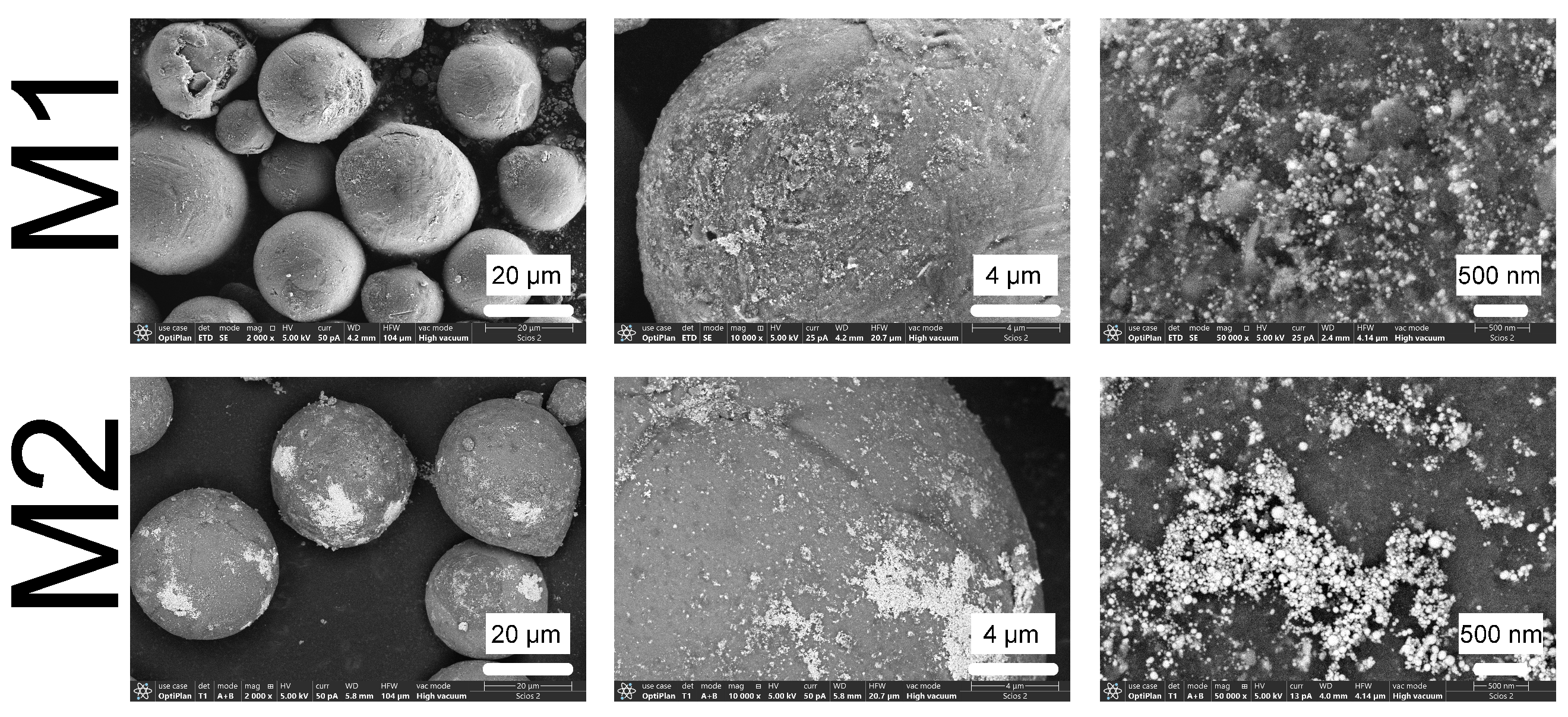
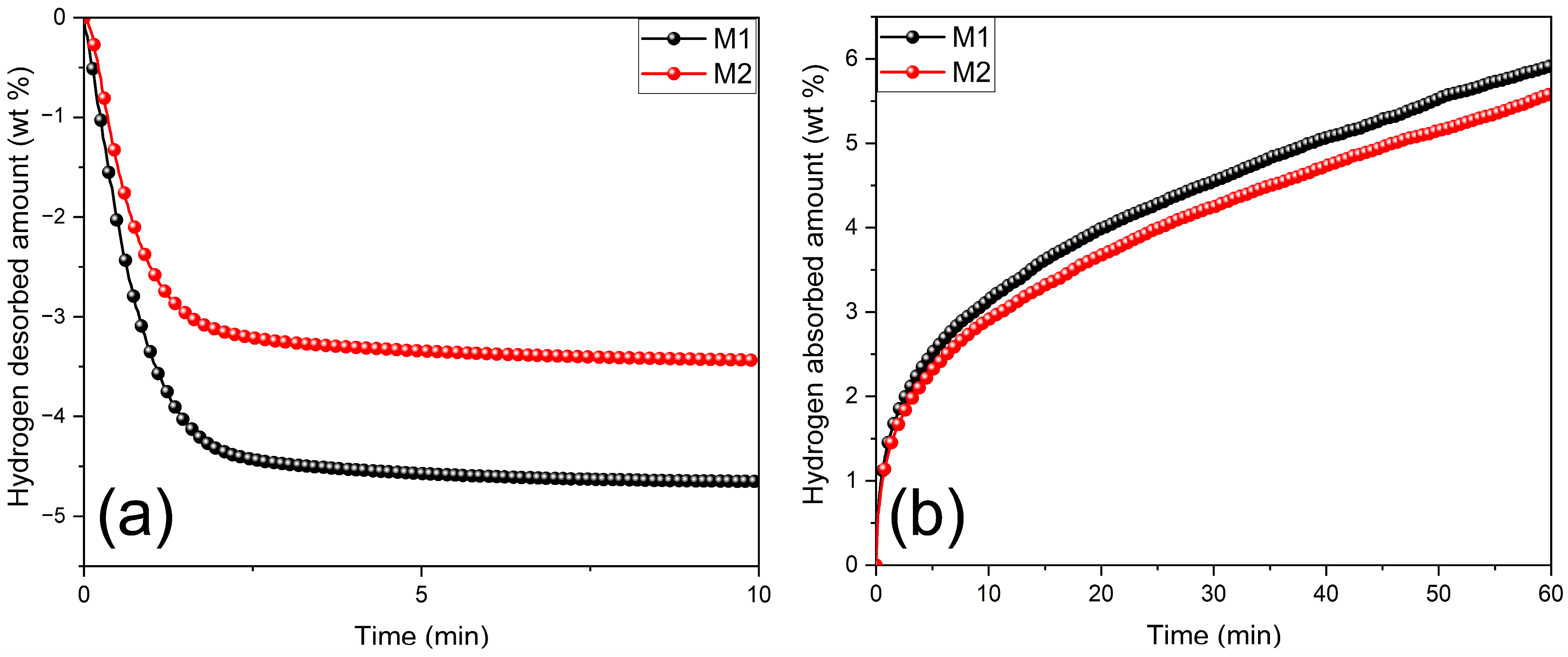
Figure 1 shows SEM images of samples M1 and M2. In sample M2, visible agglomerations of Ni&C nanoparticles are observed, in contrast to sample M1, where the Ni&C particles appear uniformly distributed across the surface of the pre-hydrogenated magnesium. Table 1 shows the production conditions for all samples. Figure 2 presents the hydrogen absorption and desorption curves at 375 °C for samples M1 and M2. The data indicate that increasing the amount of Ni&C nanoparticles does not lead to improved hydrogen storage capacity or enhanced kinetics during absorption and desorption. Sample M1 exhibited superior performance, desorbing 4.65 wt% of hydrogen in just 10 min, compared to 3.43 wt% for sample M2. Based on these results, along with the morphological observations from Figure 1, we selected the synthesis conditions of sample M1 for process scaling.
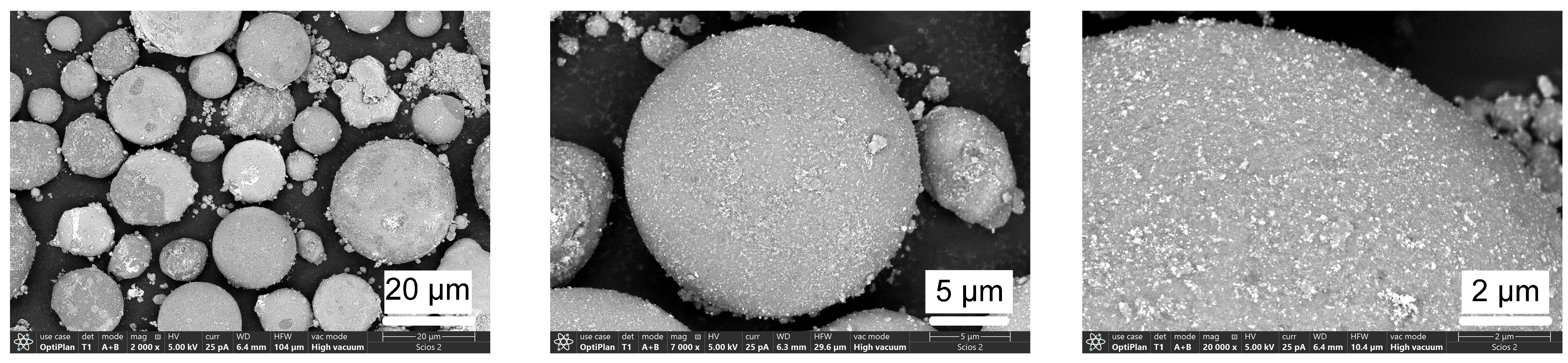
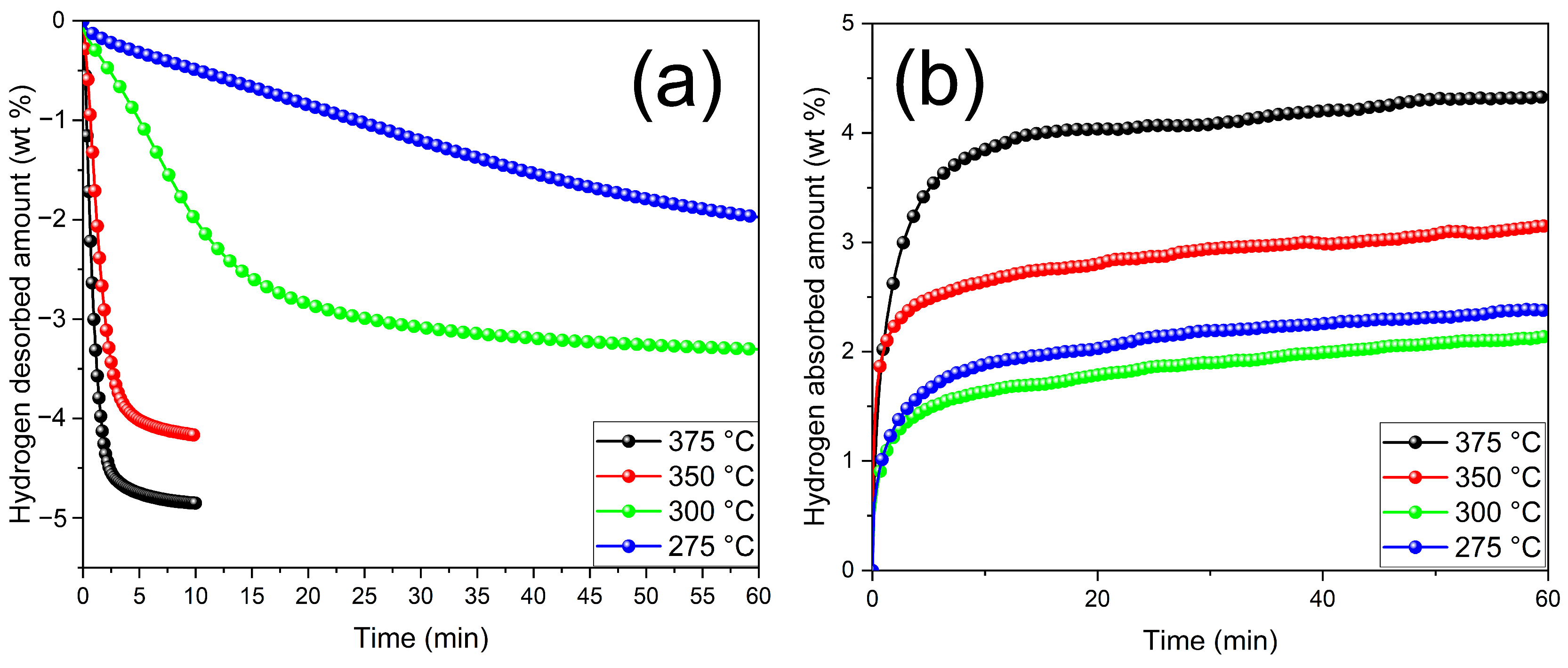
Figure 3 presents SEM micrographs of sample M3, revealing a uniform distribution of Ni&C nanoparticles across the surface of the pre-hydrogenated magnesium, with no significant agglomeration issues observed during process scale-up. This observation is supported by EDS analysis (Figure S1), which confirms a fine dispersion of nickel within the magnesium matrix. Figure 4 displays the hydrogen absorption and desorption curves for sample M3 at 375, 350, 300, and 275 °C. As the temperature decreases, a corresponding reduction in hydrogen storage capacity is observed. Notably, the sample retains the ability to desorb approximately 3 wt% at 300 °C and around 2 wt% at 275 °C. In previous reports, MgH2 materials with various catalysts, including nickel compounds, achieve at least a 5 wt% hydrogen desorption at temperatures of 300 °C or higher [16,17,18]. At lower temperatures (250–300 °C), the capacity may decrease to 4 wt% or to lower values [16,17,18]. It is important to note that these results are obtained after several hours of ball milling [18]; however, we emphasize that the material developed in this work can desorb at 300 °C and 275 °C without ball milling.
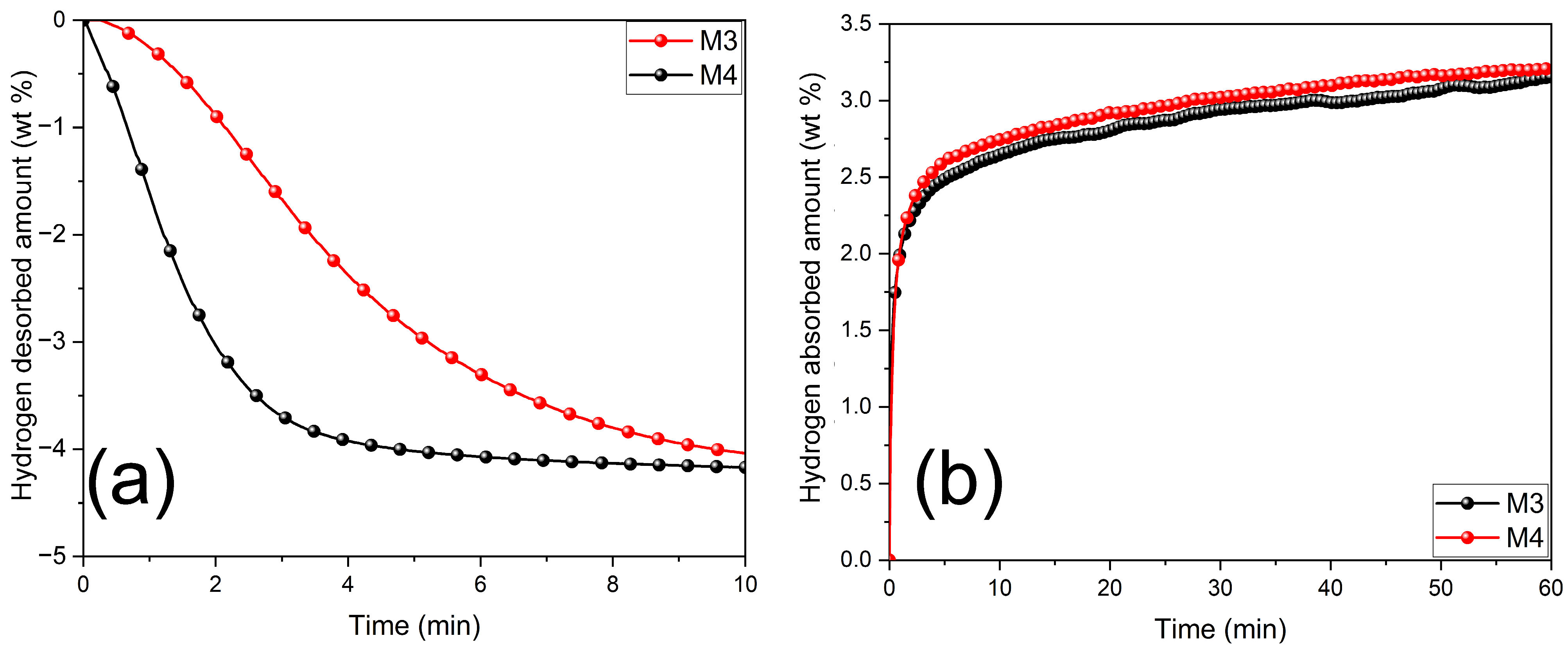
To assess the effect of a second hydrogenation step on storage performance, an additional hydriding process was carried out after mixing pre-hydrogenated magnesium with Ni&C nanoparticles, using the same conditions as the initial treatment. Figure 5 displays the hydrogen absorption and desorption curves at 350 °C for samples M3 and M4. The desorption kinetics show only minor differences between the two samples, and their hydrogen storage capacities are nearly equivalent. Likewise, no significant variation was observed in the absorption behavior. These findings suggest that a second hydrogenation cycle does not provide any substantial improvement in hydrogen absorption or desorption performance.
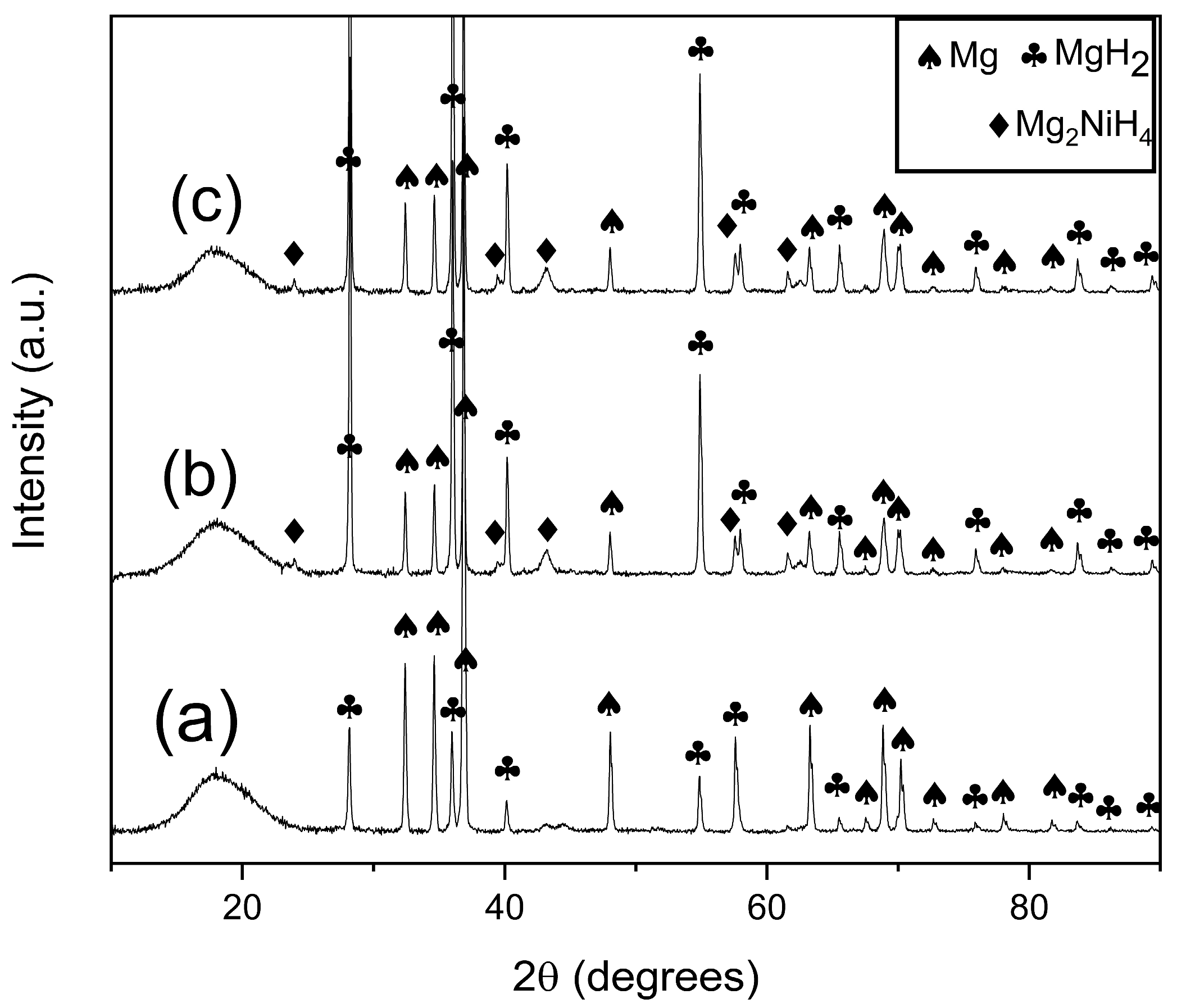
Figure 6 displays the XRD spectra of samples M1, M3 (after Sieverts analysis), and M4. Prior to the Sieverts test, sample M1 exhibits diffraction peaks corresponding exclusively to MgH2 and metallic magnesium, with no additional phases detected. In contrast, sample M3 shows new diffraction signals after Sieverts analysis, which are attributed to the formation of Mg2NiH4. This phase is also present in sample M4. The emergence of Mg2NiH4 is noteworthy, as it has been referred to by several authors as a ‘hydrogen pump’ due to its ability to facilitate hydrogen dissociation and enhance diffusion within the MgH2 matrix [19,20,21,22].
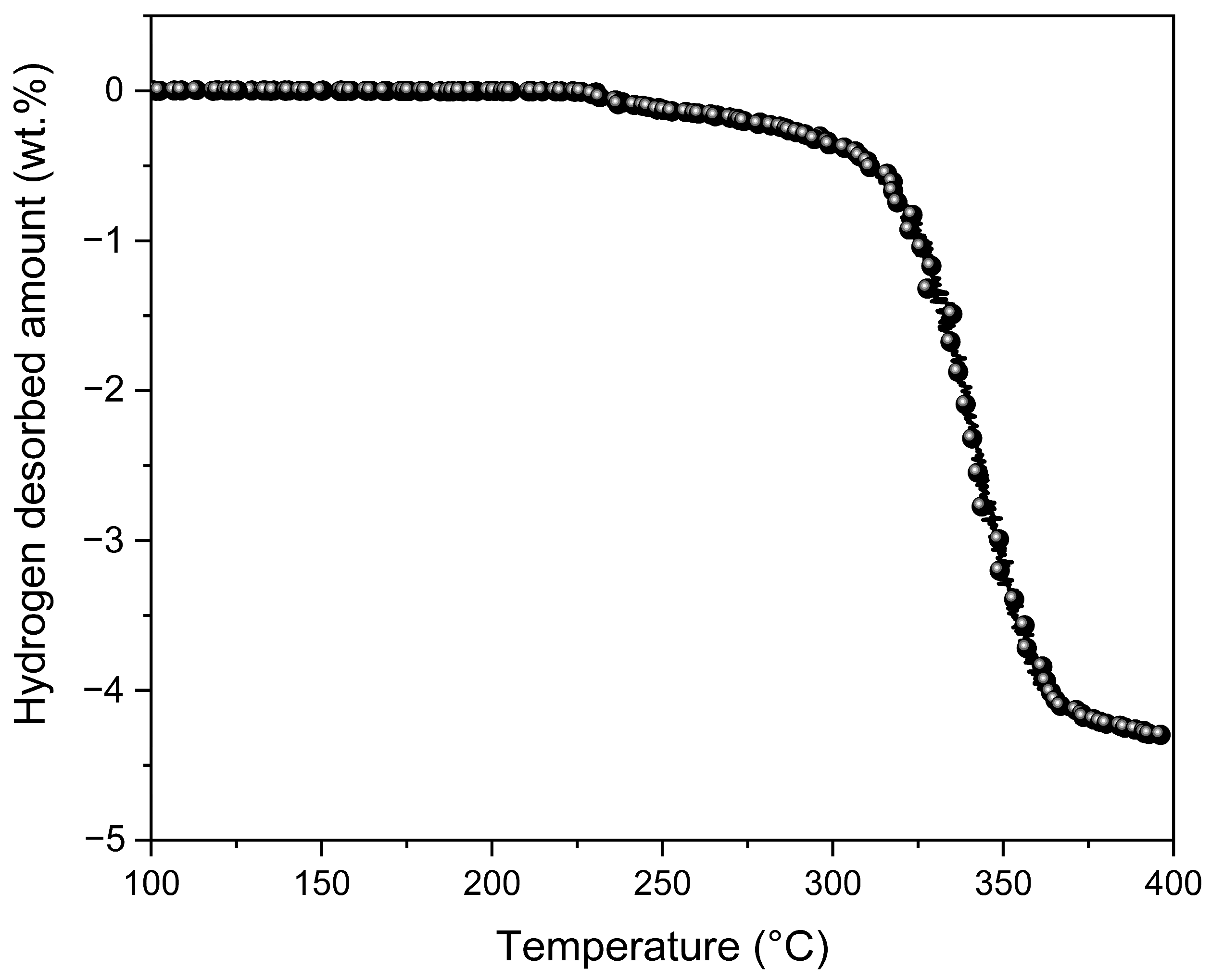
Figure 7 presents the temperature-programmed desorption (TPD) profile for sample M3. As shown, hydrogen desorption begins at approximately 250 °C, although the initial release is minimal. A more pronounced desorption event occurs around 300 °C. These results are consistent with the kinetic data, confirming the temperature-dependent behavior of hydrogen release in the material.
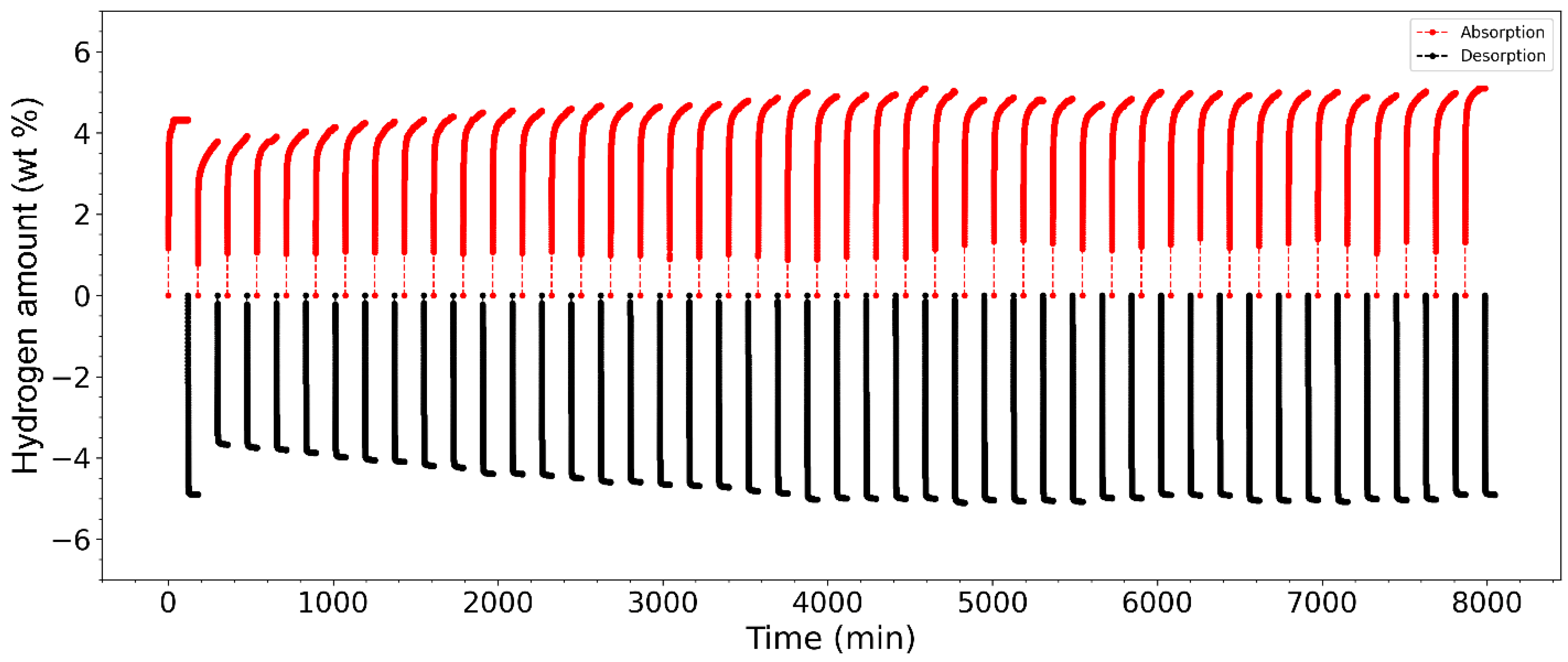
Figure 8 illustrates the hydrogen absorption and desorption cycles of sample M3 at 375 °C. In the first cycle, the sample desorbs 4.90 wt% hydrogen, and after 45 cycles, the desorption capacity remains 4.91 wt%, corresponding to a retention rate of 100%. In contrast, the absorption capacity shows an increase, rising from 4.32 wt% to 5.10 wt% over the same number of cycles. Figure S2 presents SEM micrographs of sample M3 post-cycling. As observed, the sample undergoes morphological changes such as pulverization and segregation into small particles; nevertheless, the original shape and dimensions of the Mg particles remain discernible. Pulverization resulting from hydrogen absorption and desorption in solid materials for hydrogen storage has been previously reported by Okumura et al. [23]. According to the authors, the pulverization could increase after several cycles of hydrogenation and dehydrogenation. Pulverization could benefit hydrogen absorption and desorption by promoting the formation of small magnesium particles. Figure S3 presents the EDX analysis of sample M3 post-cycling. The results indicate that nickel remains uniformly distributed across the Mg particles following the hydrogen cycling process.
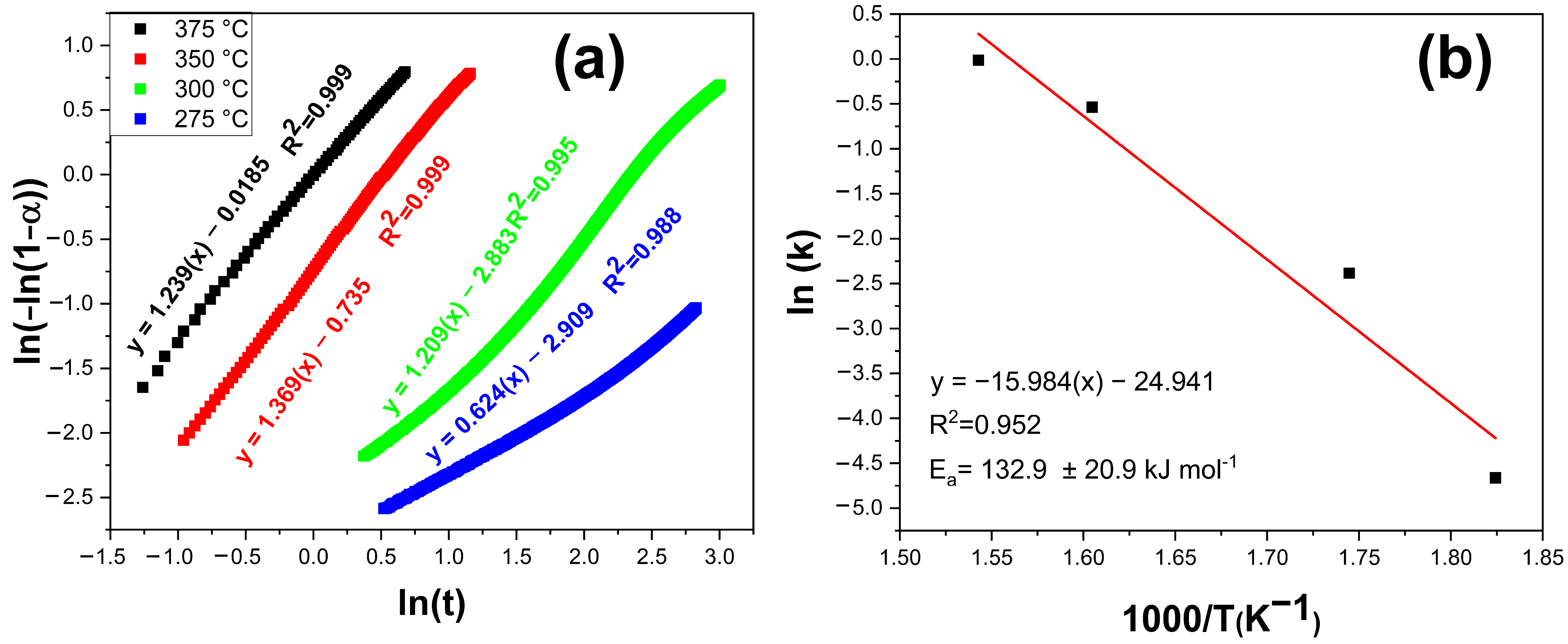
Figure 9 presents the JMAK and Arrhenius plots used to calculate the activation energy for hydrogen desorption. Based on the linear fit, the activation energy was determined to be 132.9 ± 20.9 kJ/mol. According to the literature, activation energies for magnesium dehydrogenation typically range between 150 and 240 kJ/mol [15,24,25]. These results indicate that the catalyzed magnesium in this study exhibits a significantly lower activation energy compared to untreated magnesium, confirming the beneficial effect of Ni&C nanoparticles on the desorption kinetics. Typically, values for MgH2 catalyzed with nickel compounds (including nanoparticles) range from 115 to 66 kJ/mol [15]. However, our results show a moderate decrease in the activation energy relative to values reported in scientific literature. Regarding the Avrami exponent (slope of the JMAK equation), at all temperatures, these values remain below 2, indicating one-dimensional nucleation and growth of the magnesium phase [26].
Compared to previously reported ball-milled MgH2 systems combined with nickel nanoparticles [20,27,28,29], the material developed in this study shows competitive hydrogen desorption kinetics; however, there is a reduction in hydrogen capacity and absorption kinetics. This could be related to particle size and incomplete hydrogenation. This reduction in capacity may be attributed to the presence of unreacted metallic Mg in the larger-scale samples, as evidenced by the residual Mg peaks observed in Figure 6. During the pre-hydrogenation step, the increased batch mass (5 g vs. 400 mg) limits hydrogen diffusion into the particle core, leading to incomplete conversion to MgH2. Notably, this synthesis approach eliminates the need for ball milling, simplifying the preparation process, reducing energy consumption and cost, but more importantly, it preserves the original high-activity structure of the Ni&C nanoparticles, preventing potential agglomeration. An alternative strategy for catalyzing magnesium involves the formation of Mg–Ni alloys to enhance hydrogenation and dehydrogenation kinetics. However, due to the significant difference in melting points between Mg and Ni, conventional casting methods are not feasible [30]. Consequently, researchers have explored techniques such as high-energy ball milling (HEBM) and hydriding combustion synthesis (HCS). While HEBM requires prolonged milling times to promote the Mg–Ni reaction [30], HCS demands temperatures above 600 °C and high hydrogen pressures [31,32,33]. Regarding the hydrogen absorption/desorption behavior of the Mg-Ni alloys, it is essential to highlight that the maximum gravimetric storage capacity is 3.6 wt% at operating temperatures above or higher than 300 °C [30,32,34]. In contrast, the method proposed in this work offers a simpler and more energy-efficient alternative, achieving comparable or even superior hydrogen storage performance.

4. Conclusions

In this work, we demonstrate that carbon-coated nickel nanoparticles can be uniformly incorporated into pre-hydrogenated magnesium without ball milling, producing a catalyst–hydride interface that delivers competitive or superior performance compared with existing Ni- or carbon-modified MgH2 systems prepared by traditional high-energy milling routes.
The developed material achieves 4.90 wt% H2 desorption in 10 min at 375 °C, which is comparable to the fastest Ni-based catalysts reported in the literature that require several hours of ball milling. More importantly, our material desorbs ~3 wt% at 300 °C and ~2 wt% at 275 °C, whereas most Ni-catalyzed MgH2 composites exhibit significant performance degradation below 300 °C despite extensive mechanical activation.
The material retains 100% of its desorption capacity after 45 cycles, whereas Ni-based MgH2 systems commonly report 10–20% capacity loss over 20–50 cycles due to catalyst agglomeration or structural coarsening. SEM/EDS analyses confirm that the carbon shell prevents Ni particle migration, enabling the exceptional stability observed.
Our process demonstrates the ability to scale from 400 mg to 5 g while preserving catalyst dispersion and kinetics, something not achievable using high-energy ball milling because of its batch-size and energy-efficiency limitations.
The technological readiness level of the developed material is TRL 3–4, corresponding to laboratory scale validation. The demonstrated desorption behavior (300–375 °C), fast kinetics, excellent cycling stability, and scalable preparation suggest strong potential for medium temperature applications such as waste heat assisted hydrogen reactors, stationary storage, and solar thermal systems.

Supplementary Materials

The following supporting information can be downloaded at: https://www.mdpi.com/article/10.3390/hydrogen7010017/s1, Figure S1: EDX analysis of sample M3; Figure S2: SEM micrographs of sample M3 after cycling; Figure S3: EDX analysis of sample M3 after cycling.

Author Contributions

R.A.O.: Formal Analysis, Investigation, Writing—review & editing, Writing—original draft. J.A.-V.: Formal analysis, Resources, Software. J.A.L.: Conceptualization, Data curation, Visualization. A.A.Z.G.: Project administration, Supervision. S.B.: Conceptualization, Data curation, Visualization. E.C.: Project administration, Supervision. C.E.A.: Project administration, Supervision. F.J.B.: Project administration, Supervision. F.E.E.: Funding acquisition, Project administration, Supervision, Writing—review & editing. All authors have read and agreed to the published version of the manuscript.

Funding

This research was funded by the “Sistema General de Regalías—SGR” through the project BPIN 2022000100089.

Data Availability Statement

The original contributions presented in this study are included in the article/Supplementary Materials. Further inquiries can be directed to the corresponding author(s).

Acknowledgments

The authors are pleased to acknowledge the financial assistance of the “Sistema General de Regalías—SGR” through the project BPIN 2022000100089, Centro de Investigación para el Desarrollo de la Innovación (CIDI) from Universidad Pontificia Bolivariana (Rad: 822C-06/23-35), Centro de Investigación en Ingenierías (CEIN) from Universidad de Medellín and “Estrategia de Sostenibilidad de la Universidad de Antioquia”.

Conflicts of Interest

The authors declare no conflicts of interest.

References

  1. Rezaei, S.; Hormaza Mejia, A.; Wu, Y.; Reed, J.; Brouwer, J. Global Warming Impacts of the Transition from Fossil Fuel Conversion and Infrastructure to Hydrogen. Appl. Energy 2025, 397, 126363. [Google Scholar] [CrossRef]
  2. Elazab, M.A.; Elgohr, A.T.; Bassyouni, M.; Kabeel, A.E.; Attia, M.E.H.; Elshaarawy, M.K.; Hamed, A.K.; Alzahrani, H.A.H. Green Hydrogen: Unleashing the Potential for Sustainable Energy Generation. Results Eng. 2025, 27, 106031. [Google Scholar] [CrossRef]
  3. Klopčič, N.; Grimmer, I.; Winkler, F.; Sartory, M.; Trattner, A. A Review on Metal Hydride Materials for Hydrogen Storage. J. Energy Storage 2023, 72, 108456. [Google Scholar] [CrossRef]
  4. Lutz, M.; Bhouri, M.; Linder, M.; Bürger, I. Adiabatic Magnesium Hydride System for Hydrogen Storage Based on Thermochemical Heat Storage: Numerical Analysis of the Dehydrogenation. Appl. Energy 2019, 236, 1034–1048. [Google Scholar] [CrossRef]
  5. Cortinez, J.S.; Gómez, A.; Zuleta Gil, A.A.; Tamayo, J.A.; Correa, E.; Bolívar, F.J.; Echeverria, F.E. Production of Mg Thin Flakes with Enhanced Hydrogen Storage Performance. Int. J. Hydrogen Energy 2024, 71, 1191–1200. [Google Scholar] [CrossRef]
  6. Aguirre Ocampo, R.; Velandia-Arias, J.; Lenis, J.A.; Zuleta Gil, A.A.; Bello, S.; Correa, E.; Arrieta, C.; Bolívar, F.J.; Echeverria Echeverria, F. Microwave-Assisted Synthesis of MgH2 Nanoparticles for Hydrogen Storage Applications. J. Nanoparticle Res. 2025, 27, 52. [Google Scholar] [CrossRef]
  7. Bu, W.; Wang, R.; Liu, Z.; Wang, X.; Hao, J.; Yong, H.; Hu, Z.; Liang, X. Thermodynamic Performance of Vanadium-Modified Mg2Ni Alloy for Hydrogen Storage. Adv. Compos. Hybrid Mater. 2025, 8, 390. [Google Scholar] [CrossRef]
  8. Xu, Y.; Zhou, Y.; Li, Y.; Hao, Y.; Wu, P.; Ding, Z. Magnesium-Based Hydrogen Storage Alloys: Advances, Strategies, and Future Outlook for Clean Energy Applications. Molecules 2024, 29, 2525. [Google Scholar] [CrossRef]
  9. Doroszuk, B.; Bortnowski, P.; Ozdoba, M.; Król, R. Scaling Energy Transfer in Ball Mills: A Scale-Agnostic Approach through a Universal Scaling Constant. Energies 2024, 17, 2693. [Google Scholar] [CrossRef]
  10. Kuganathan, N.; Dornheim, M.; Grant, D.M.; Ling, S. Enhancing Destabilization of MgH2 with Reactive Elemental Additives. J. Energy Storage 2025, 133, 117959. [Google Scholar] [CrossRef]
  11. Tome, K.C.; Xi, S.; Fu, Y.; Lu, C.; Lu, N.; Guan, M.; Zhou, S.; Yu, H. Remarkable Catalytic Effect of Ni and ZrO2 Nanoparticles on the Hydrogen Sorption Properties of MgH2. Int. J. Hydrogen Energy 2022, 47, 4716–4724. [Google Scholar] [CrossRef]
  12. Tang, Q.K.; Liu, J.C.; Shi, R.; Zhu, Y.F.; Zhang, J.G.; Liu, Y.N.; Wang, J.; Zhang, Y.; Hu, X.H.; Liu, Z.B.; et al. Synthesis of Highly Stable Ni Nanoparticles via Electrostatic Self-Assembly for Enhanced Hydrogen Storage of MgH2. Rare Met. 2024, 43, 4356–4366. [Google Scholar] [CrossRef]
  13. Zhang, M.; Wang, Y.; Jia, W.; Ma, D.; Huang, X.; Yu, S.; Wu, Y. Ta2O5-Doped TiO2 Nanotubes on Ti6Al4V Alloy with Improved Cytocompatibility to Endothelial Cells. Vacuum 2022, 195, 110713. [Google Scholar] [CrossRef]
  14. Galey, B.; Auroux, A.; Sabo-Etienne, S.; Dhaher, S.; Grellier, M.; Postole, G. Improved Hydrogen Storage Properties of Mg/MgH2 Thanks to the Addition of Nickel Hydride Complex Precursors. Int. J. Hydrogen Energy 2019, 44, 28848–28862. [Google Scholar] [CrossRef]
  15. Aguirre Ocampo, R.; Arias-velandia, J.; Lenis, J.A.; Zuleta, A.A.; Bello, S.; Correa, E.; Arrieta, C.; Bolívar, F.J.; Echeverría Echeverría, F. Catalytic Effect of Commercial Carbon-Coated Nickel Nanoparticles on the Hydrogen Storage Performance of Magnesium Hydride. Int. J. Hydrogen Energy 2025, 129, 91–100. [Google Scholar] [CrossRef]
  16. Ding, Z.; Li, Y.; Yang, H.; Lu, Y.; Tan, J.; Li, J.; Li, Q.; Chen, Y.; Shaw, L.L.; Pan, F. Tailoring MgH2 for Hydrogen Storage through Nanoengineering and Catalysis. J. Magnes. Alloy. 2022, 10, 2946–2967. [Google Scholar] [CrossRef]
  17. Yang, H.; Ding, Z.; Li, Y.T.; Li, S.Y.; Wu, P.K.; Hou, Q.H.; Zheng, Y.; Gao, B.; Huo, K.F.; Du, W.J.; et al. Recent Advances in Kinetic and Thermodynamic Regulation of Magnesium Hydride for Hydrogen Storage. Rare Met. 2023, 42, 2906–2927. [Google Scholar] [CrossRef]
  18. Xu, Y.; Li, Y.; Hou, Q.; Hao, Y.; Ding, Z. Ball Milling Innovations Advance Mg-Based Hydrogen Storage Materials Towards Practical Applications. Materials 2024, 17, 2510. [Google Scholar] [CrossRef]
  19. Chu, H.; Yin, C.; Xia, Y.; Chua, Y.S.; Qiu, S.; Xu, F.; Sun, L. Highly Dispersed Ni Nanoparticles Decorated TiO2 Microspheres for Enhancing Hydrogen Storage Properties of Magnesium Hydride. J. Alloys Compd. 2024, 997, 174927. [Google Scholar] [CrossRef]
  20. Babić, B.; Prvulović, M.; Filipović, N.; Mravik, Ž.; Sekulić, Z.; Govedarović, S.M.; Milanović, I. Hydrogen Storage Properties of MgH2–Tm: Ni-Catalysis vs. Mechanical Milling. Int. J. Hydrogen Energy 2024, 54, 446–456. [Google Scholar] [CrossRef]
  21. Sazelee, N.A.; Ali, N.A.; Yahya, M.S.; Din, M.F.M.; Ismail, M. Enhancing Hydrogen Storage Performance of MgH2 through the Addition of BaMnO3 Synthesized via Solid-State Method. Int. J. Hydrogen Energy 2023, 48, 30844–30857. [Google Scholar] [CrossRef]
  22. Liu, C.; Yuan, Z.; Li, X.; Sun, Y.; Zhai, T.; Han, Z.; Zhang, L.; Li, T. Review on Improved Hydrogen Storage Properties of MgH2 by Adding New Catalyst. J. Energy Storage 2024, 97, 112786. [Google Scholar] [CrossRef]
  23. Okumura, M.; Ikado, A.; Saito, Y.; Aoki, H.; Miura, T.; Kawakami, Y. Pulverization Mechanism of Hydrogen Storage Alloys on Microscale Packing Structure. Int. J. Hydrogen Energy 2012, 37, 10715–10723. [Google Scholar] [CrossRef]
  24. Kudiiarov, V.N.; Kurdyumov, N.; Elman, R.R.; Svyatkin, L.A.; Terenteva, D.V.; Semyonov, O. Microstructure and Hydrogen Storage Properties of MgH2/MIL-101(Cr) Composite. J. Alloys Compd. 2024, 976, 173093. [Google Scholar] [CrossRef]
  25. Chawla, K.; Yadav, D.K.; Sharda, P.; Lal, N.; Sharma, S.; Lal, C. Hydrogenation Properties of MgH2- x Wt% AC (X = 0, 5, 10, 15) Nanocomposites. Int. J. Hydrogen Energy 2020, 45, 23971–23976. [Google Scholar] [CrossRef]
  26. Mooij, L.; Dam, B. Nucleation and Growth Mechanisms of Nano Magnesium Hydride from the Hydrogen Sorption Kinetics. Phys. Chem. Chem. Phys. 2013, 15, 11501–11510. [Google Scholar] [CrossRef]
  27. Chen, G.; Zhang, Y.; Chen, J.; Guo, X.; Zhu, Y.; Li, L. Enhancing Hydrogen Storage Performances of MgH2 by Ni Nano-Particles over Mesoporous Carbon CMK-3. Nanotechnology 2018, 29, 265705. [Google Scholar] [CrossRef]
  28. Ma, Z.; Zhang, J.; Zhu, Y.; Lin, H.; Liu, Y.; Zhang, Y.; Zhu, D.; Li, L. Facile Synthesis of Carbon Supported Nano-Ni Particles with Superior Catalytic Effect on Hydrogen Storage Kinetics of MgH2. ACS Appl. Energy Mater. 2018, 1, 1158–1165. [Google Scholar] [CrossRef]
  29. Xie, L.; Liu, Y.; Zhang, X.; Qu, J.; Wang, Y.; Li, X. Catalytic Effect of Ni Nanoparticles on the Desorption Kinetics of MgH2 Nanoparticles. J. Alloys Compd. 2009, 482, 388–392. [Google Scholar] [CrossRef]
  30. Matheus, F.H.; Zepon, G.; Oliveira, V.B.; Leiva, D.R. Highly Reactive Hydrogen Storage Mg2Ni Alloy Prepared by Mechanochemistry and H-Cycling. Int. J. Hydrogen Energy 2024, 51, 320–328. [Google Scholar] [CrossRef]
  31. Liu, X.; Zhu, Y.; Li, L. Hydrogen Storage Properties of Mg100-XNix (x = 5, 11.3, 20, 25) Composites Prepared by Hydriding Combustion Synthesis Followed by Mechanical Milling (HCS + MM). Intermetallics 2007, 15, 1582–1588. [Google Scholar] [CrossRef]
  32. Saita, I.; Li, L.; Saito, K.; Akiyama, T. Hydriding Combustion Synthesis of Mg2NiH4. J. Alloys Compd. 2003, 356–357, 490–493. [Google Scholar] [CrossRef]
  33. Li, L.; Akiyama, T.; Yagi, J.I. Production of Hydrogen Storage Alloy of Mg2NiH4 by Hydriding Combustion Synthesis in Laboratory Scale. J. Mater. Synth. Process. 2000, 8, 7–14. [Google Scholar] [CrossRef]
  34. Aguiar, V.B.; Júnior, W.O.; Gonzalez Cruz, E.D.; Leiva, D.R.; Pereira da Silva, E. Casting of Mg-Based Alloy with Ni and Mishmetal Addition (Mg88Ni8MM4) for Hydrogen Storage. Int. J. Hydrogen Energy 2025, 109, 63–66. [Google Scholar] [CrossRef]
Figure 1. SEM micrographs of samples M1 and M2. (White nanoparticles: Ni&C nanoparticles, gray particles: Mg particles).
Hydrogen 07 00017 g001
Figure 2. (a) Hydrogen desorption and (b) hydrogen absorption curves at 375 °C of samples M1 and M2.
Hydrogen 07 00017 g002
Figure 3. SEM micrographs of sample M3. (White nanoparticles: Ni&C nanoparticles, gray particles: Mg particles).
Hydrogen 07 00017 g003
Figure 4. (a) Hydrogen desorption and (b) hydrogen absorption curves at 375, 350, 300 and 275 °C of sample M3.
Hydrogen 07 00017 g004
Figure 5. (a) Hydrogen desorption and (b) hydrogen absorption curves at 350 °C of samples M3 and M4.
Hydrogen 07 00017 g005
Figure 6. XRD patterns of samples M1 (a), M3 after Sieverts analysis (b), and M4 (c).
Hydrogen 07 00017 g006
Figure 7. Temperature-programmed desorption (TPD) profile of sample M3.
Hydrogen 07 00017 g007
Figure 8. Hydrogen absorption and desorption cycles of sample M3 at 375 °C.
Hydrogen 07 00017 g008
Figure 9. JMAK (a) and Arrhenius (b) plots for sample M3.
Hydrogen 07 00017 g009
Table 1. Sample production conditions.
SampleAmount of Hydriding MgAmount of Ni&C/wt.%Post-Hydriding Process After Mixing with Ni&C
M1400 mg12 mg/3No
M2400 mg20 mg/5No
M35 g0.15 g/3No
M45 g0.15 g/3Yes
Disclaimer/Publisher’s Note: The statements, opinions and data contained in all publications are solely those of the individual author(s) and contributor(s) and not of MDPI and/or the editor(s). MDPI and/or the editor(s) disclaim responsibility for any injury to people or property resulting from any ideas, methods, instructions or products referred to in the content.