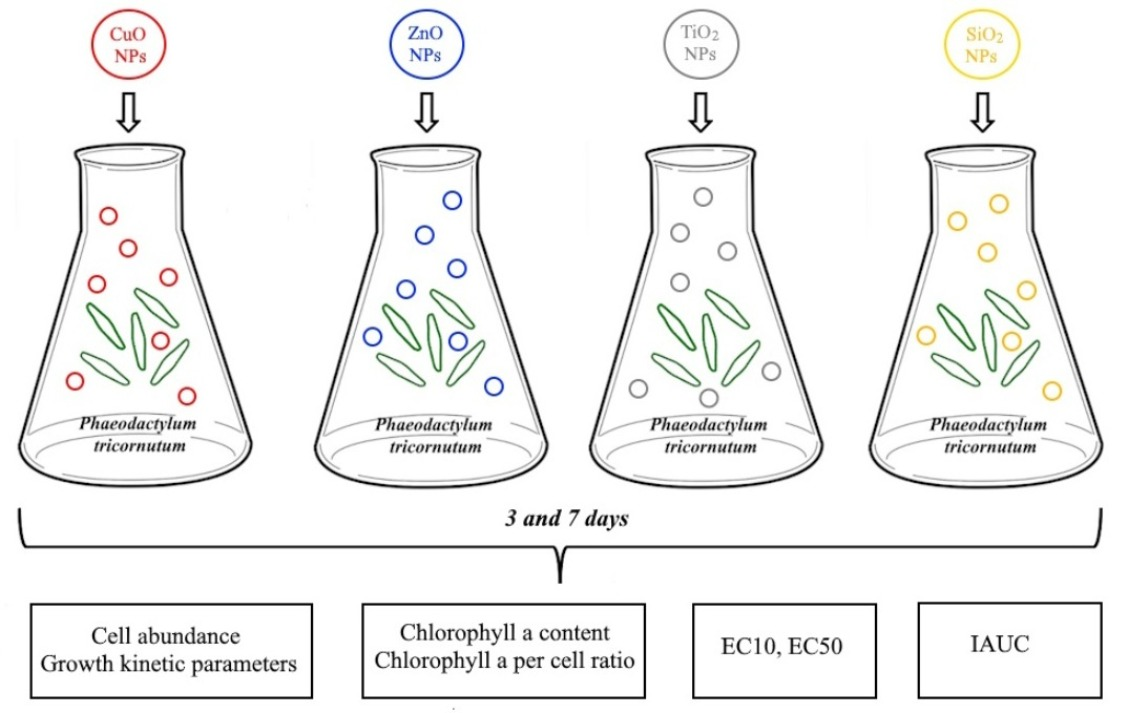

Comparative Toxicity of Four Industrially Important Nanoparticles to the Marine Diatom Phaeodactylum tricornutum: Temporal Dynamics, Hazard Classification, and Phenotypic Response Patterns


Abstract
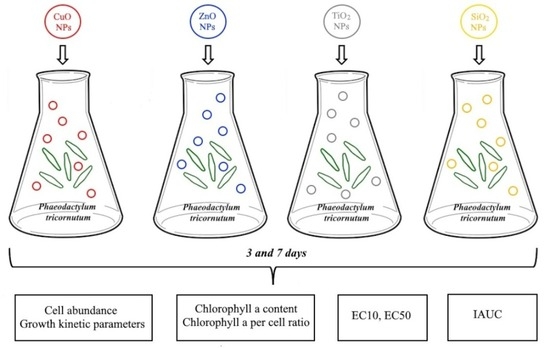
1. Introduction
2. Materials and Methods
2.1. Object of Investigation
2.2. The Characterization of Nanoparticles
2.3. Phaeodactylum tricornutum Tests
2.4. Calculation of Growth Kinetic Parameters: Specific Growth Rate (µ), Doubling Time (td), Number of Divisions per Day (M)
2.5. Calculation of Integral Area Under the Curve (IAUC)
2.6. Chlorophyll a Determination
2.7. Statistical Analysis
3. Results
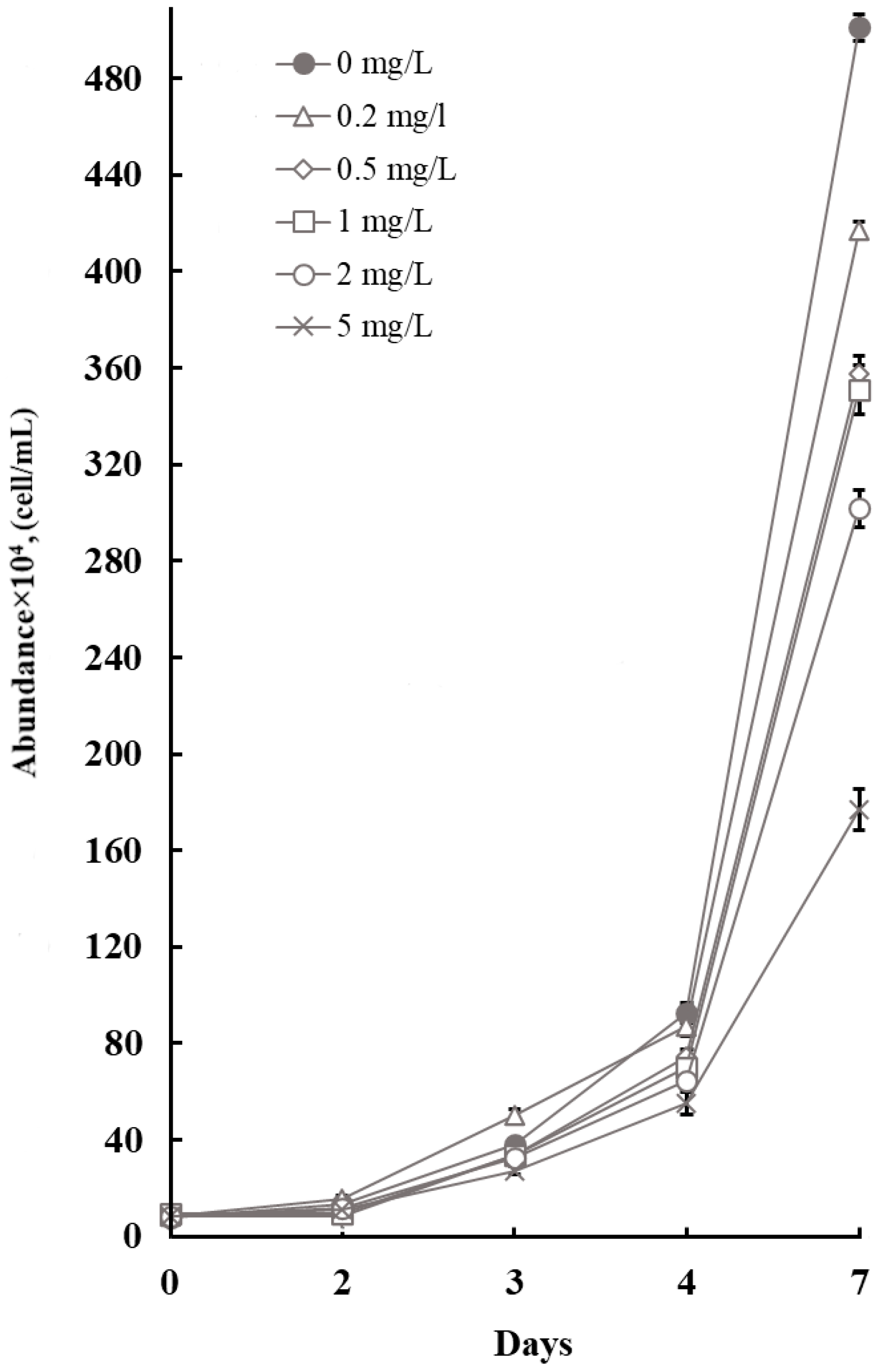
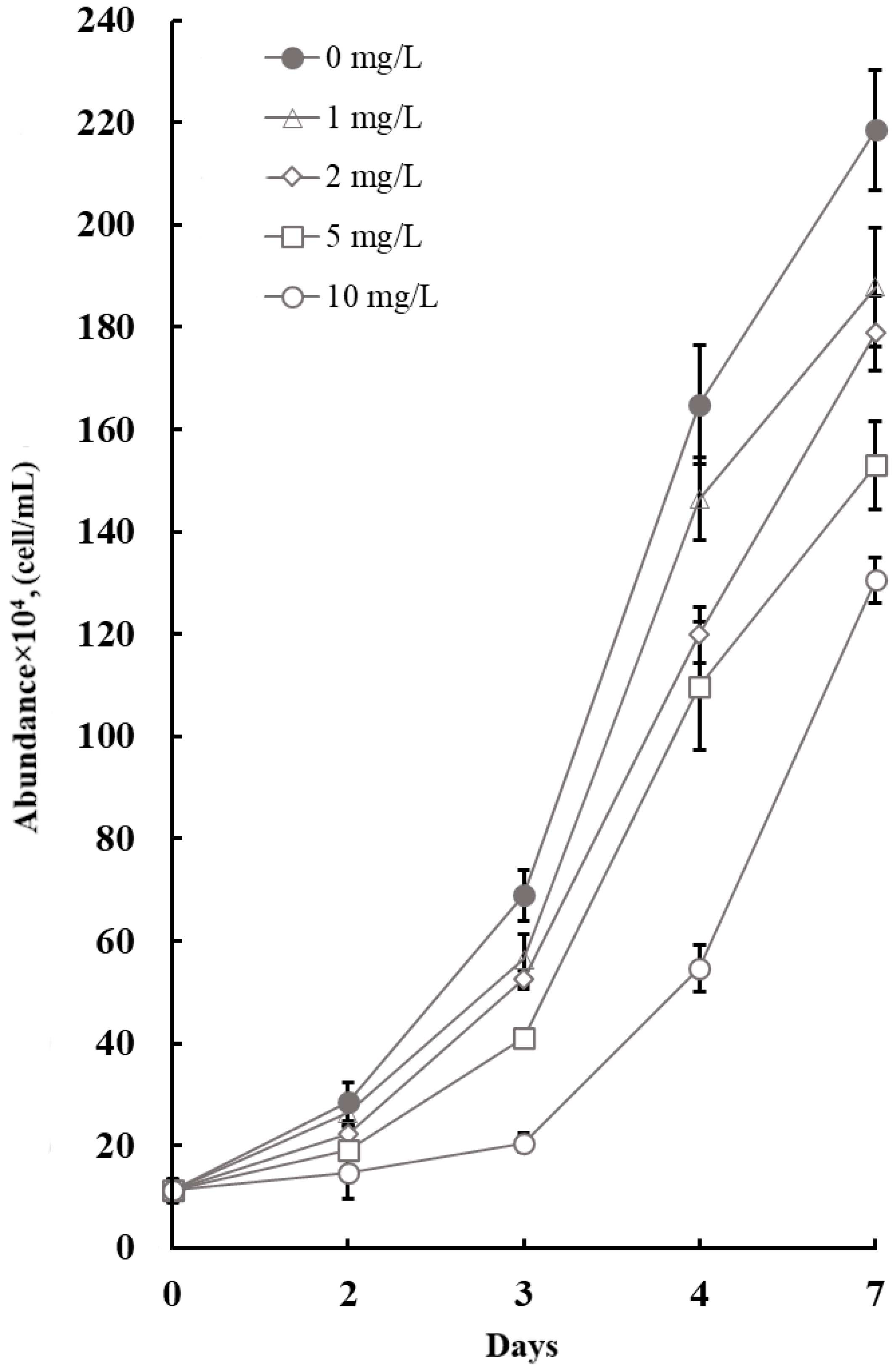
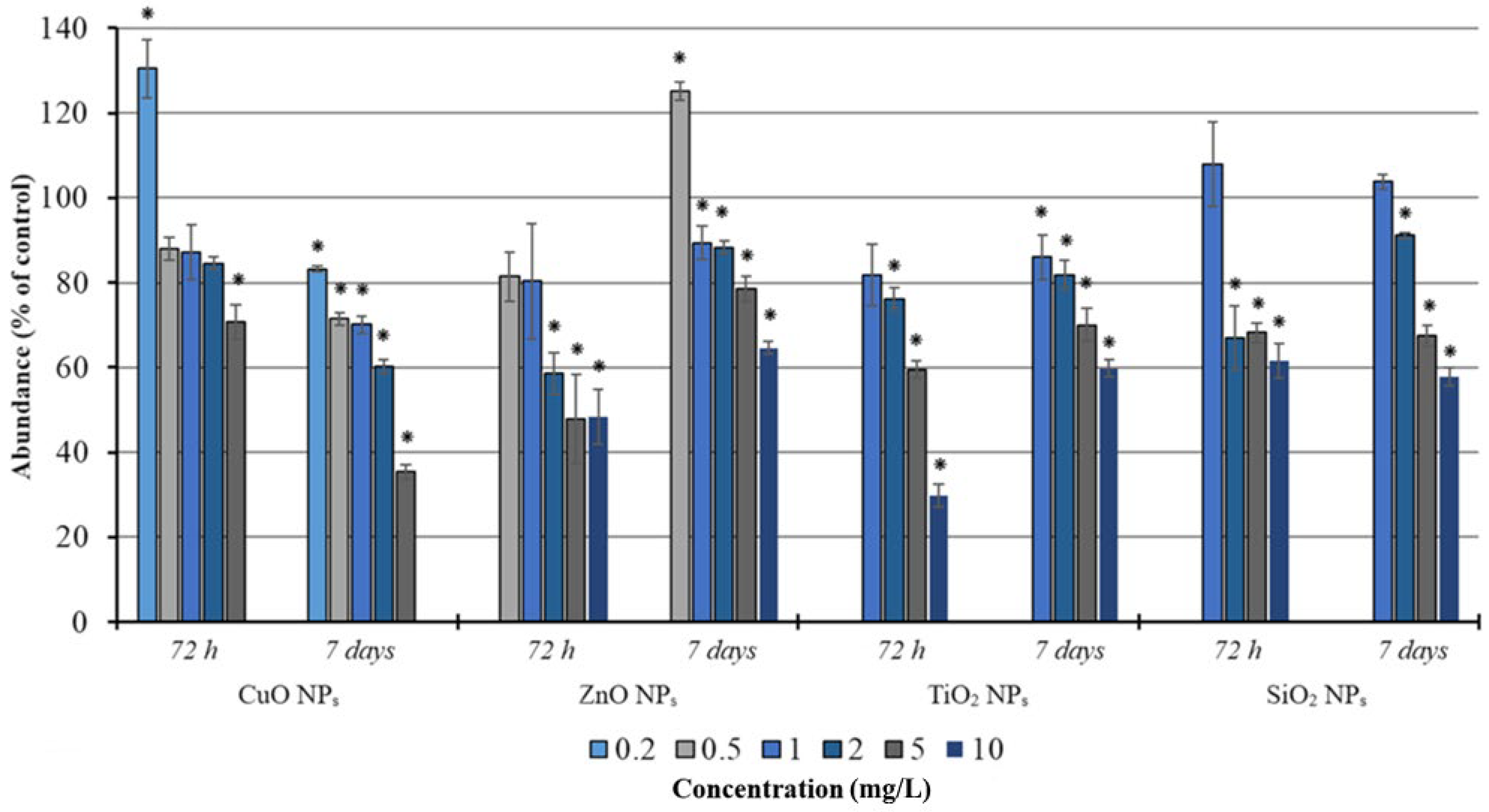
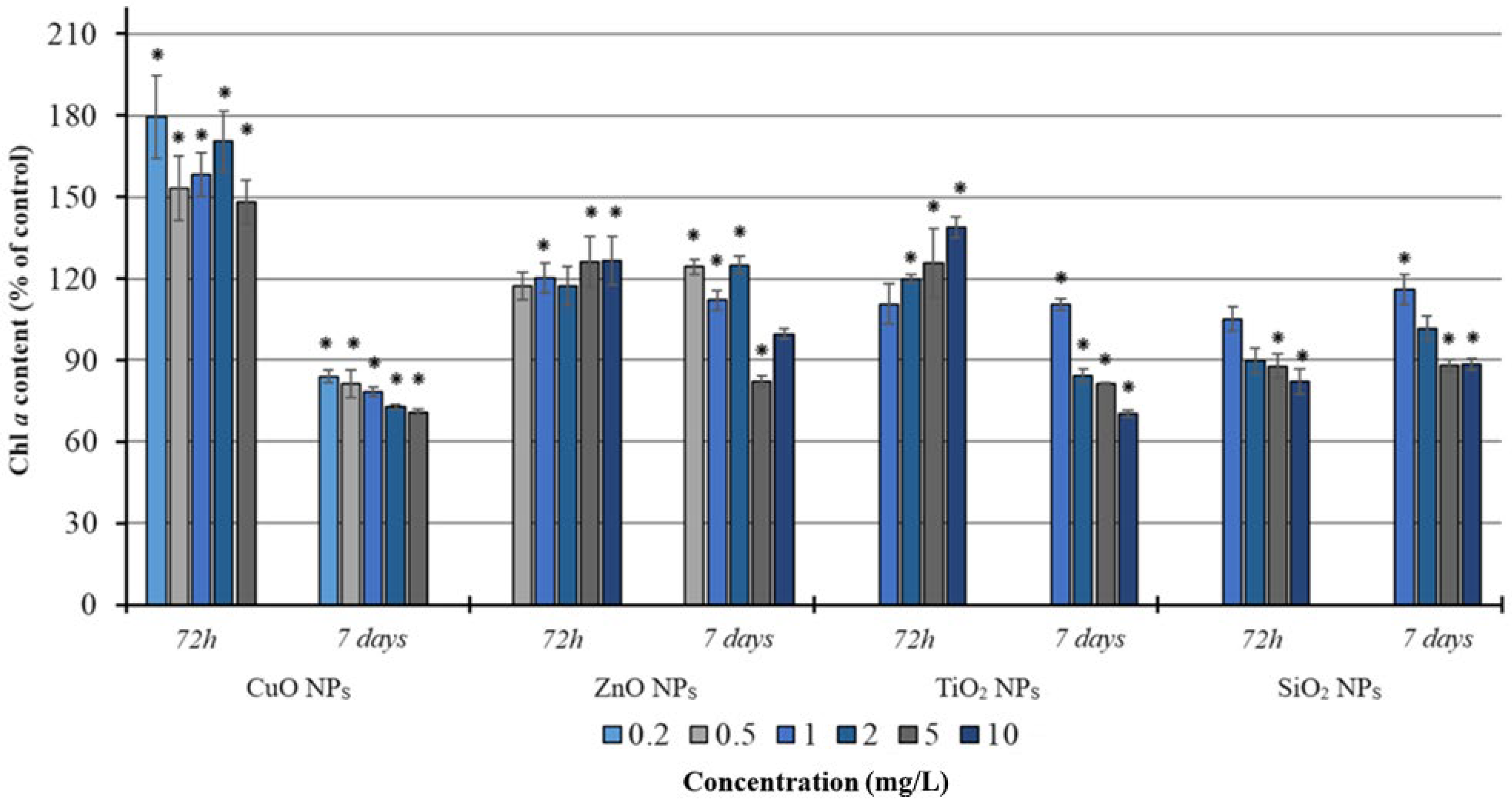
3.1. Effect of CuO NPs on Cell Abundance Dynamics and Chlorophyll a Content in Phaeodactylum tricornutum
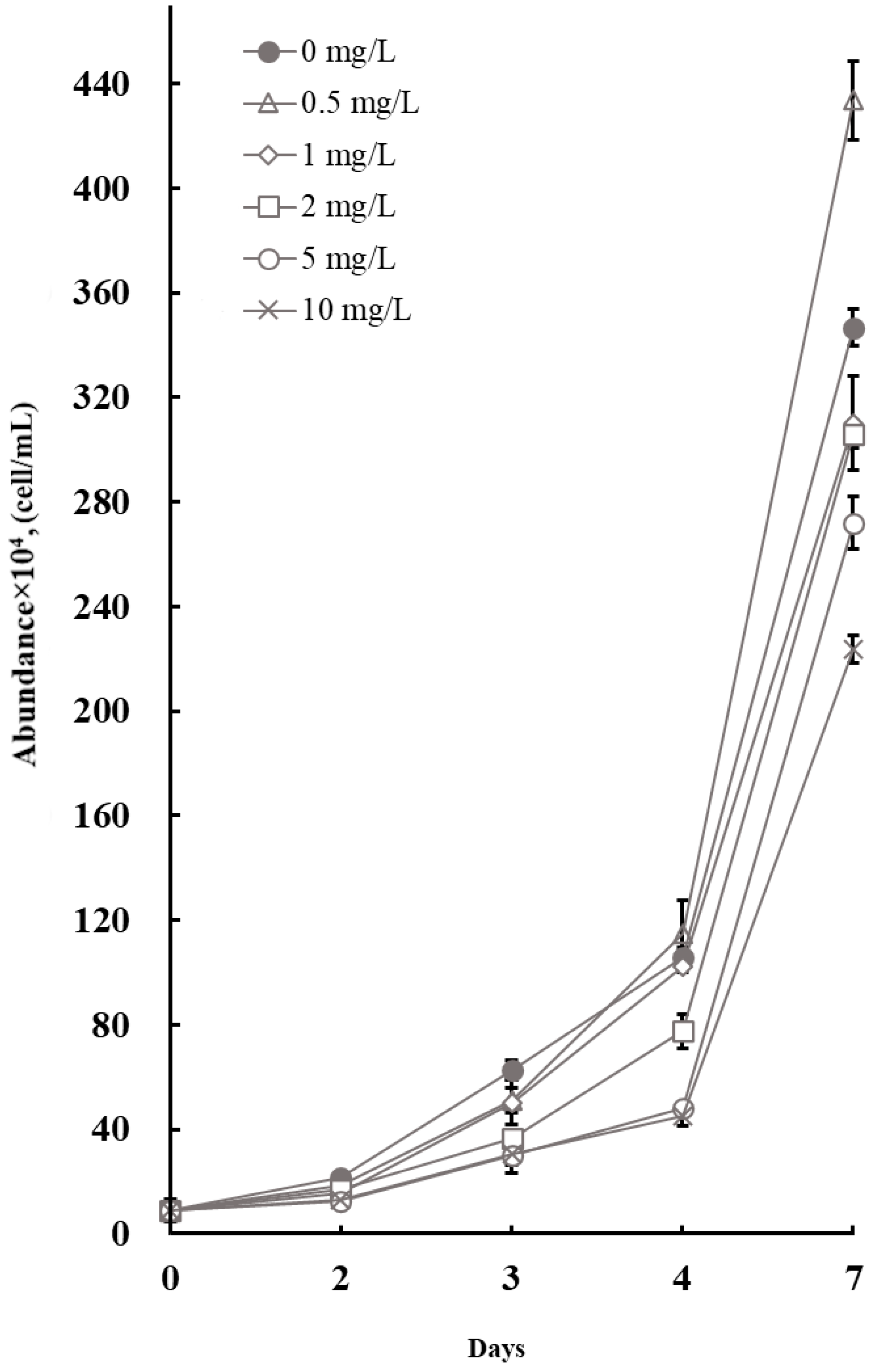
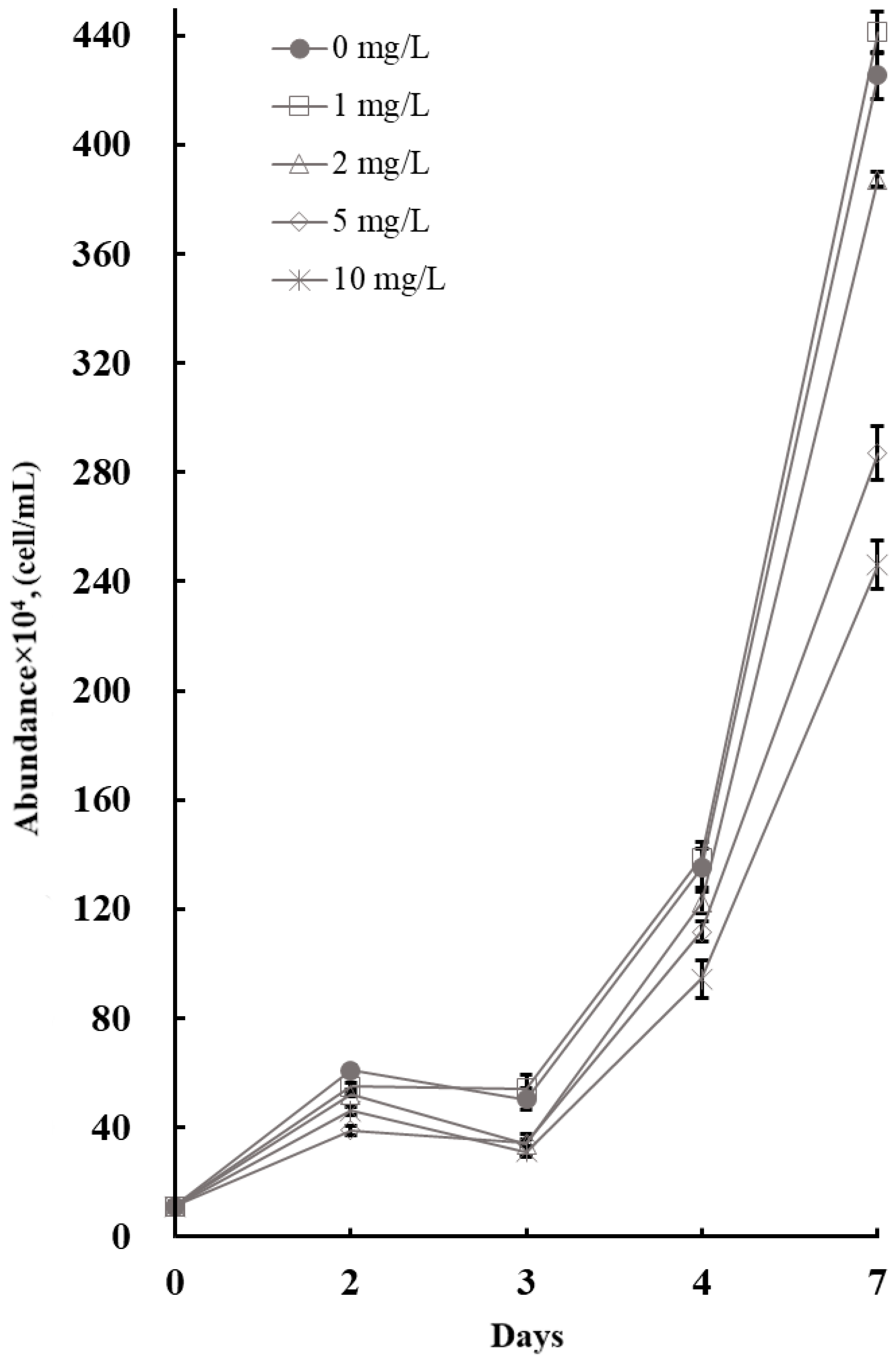
3.2. Effect of ZnO NPs on Cell Abundance and Chlorophyll a Content in Phaeodactylum tricornutum
3.3. Effect of TiO2 NPs on Cell Abundance Dynamics and Chlorophyll a Content in Phaeodactylum tricornutum
3.4. Effect of SiO2 NPs on Cell Abundance Dynamics and Chlorophyll a Content in Phaeodactylum tricornutum
4. Discussion
4.1. Comparative Toxicity Ranking and Phenotypic Response Patterns of CuO, ZnO, TiO2, and SiO2 NPs in Phaeodactylum tricornutum
4.2. Hormesis: Growth Stimulation Induced by Low Doses of CuO NPs
4.3. Types of Toxic Effects of the Studied Nanoparticles
4.3.1. Acute Toxicity of TiO2 NPs
4.3.2. Cumulative Toxicity of CuO NPs
4.3.3. Adaptive Toxicity of ZnO NPs (Delayed Hormesis)
4.3.4. Algostatic Effect of SiO2 NPs
4.4. Environmental Implications and Hazard Classification
- EC50 ≤ 1 mg/L—“Very Toxic” (GHS Acute Category 1; H400);
- 1 < EC50 ≤ 10 mg/L—“Toxic” (GHS Acute Category 2; H401);
- 10 < EC50 ≤ 100 mg/L—“Harmful” (GHS Acute Category 3; H402).
4.5. Study Limitations and Future Perspectives
- A limitation of this study is the use of nominal nanoparticle concentrations without measuring actual concentrations and/or ion fractions. This precludes the determination of absolute toxicity thresholds. However, it does not affect the comparative ranking of particles under identical experimental conditions. Future studies should include measurements of actual concentrations for more precise quantitative assessment.
- To directly confirm the contribution of the photocatalytic mechanism to TiO2 toxicity, the experiment should be repeated under complete darkness.
- Expanding the temperature range (15–25 °C), salinity (25–35‰), and organic matter concentration would bring the experimental conditions closer to real-world environmental scenarios.
- A limitation of the present study is the lack of post-incubation physicochemical characterization of the nanoparticles in seawater. These parameters are critical for interpreting particle behavior, aggregation state, and bioavailability. Future investigations should incorporate such measurements to better elucidate the relationship between nanoparticle physicochemical properties and their toxicity in marine environments.
- One limitation of this study is the lack of systematic assessment of nanoparticle interference in spectrophotometric Chl a determination. Nanoparticles may affect the measurements through light scattering or interaction with extracted pigments, potentially leading to artifacts.
- Concentrations of dissolved metal ions (Cu2+ and Zn2+) were not determined in the test medium. This precluded a quantitative assessment of the relative contributions of ionic and particulate mechanisms to the observed toxicity. Future studies should incorporate measurements of dissolved fractions, e.g., via filtration or ultracentrifugation, to better differentiate between these pathways.
- Since some NPs—particularly CuO—exhibited cumulative toxicity in this study, their impact on algal growth and viability should be assessed over several division cycles.
- Transmission electron microscopy (TEM) analysis of P. tricornutum cells after exposure would provide visual confirmation of nanoparticle adhesion, aggregation, and internalization. It would also reveal ultrastructural damage to membranes, chloroplasts, and nuclei.
5. Conclusions
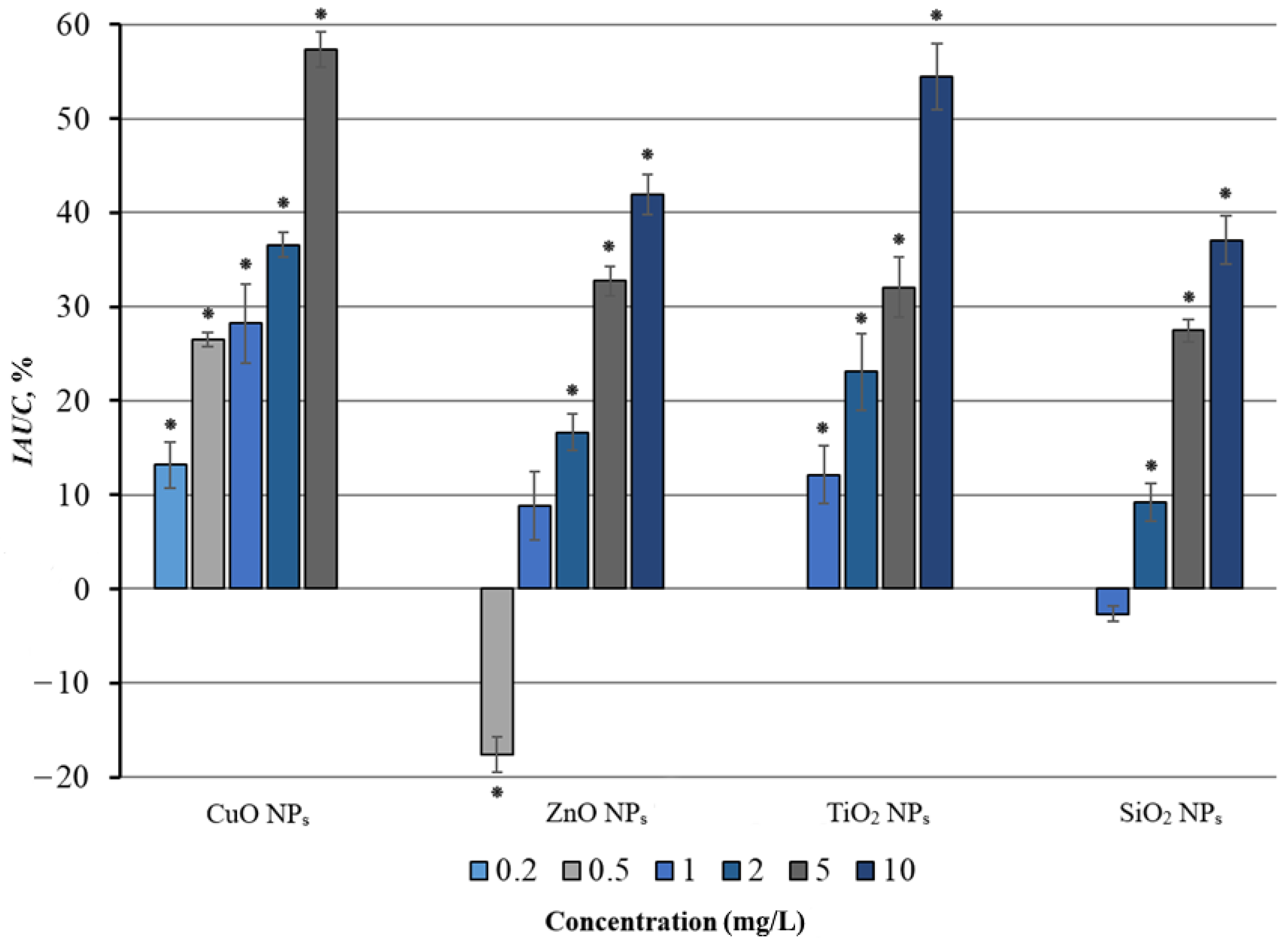
- Based on the integral toxicity index (IAUC) and final cell counts on day 7, the toxicity ranking was as follows: CuO > (TiO2 ≈ ZnO) > SiO2. CuO NPs proved to be the most toxic (IAUC 57.3%), while SiO2 NPs were the least toxic (IAUC 37.1%). Although TiO2 NPs exhibited higher integral toxicity than ZnO NPs, the final cell counts at 5–10 mg/L for both particle types were comparable in our experiments, which provided a basis for considering them together in the comparative assessment. However, the EC50-based acute toxicity ranking differed (ZnO > TiO2 > CuO > SiO2), reflecting the distinction between short-term and cumulative effects.
- Classic hormesis was observed for CuO NPs at 0.2 mg/L (130% of the control). Delayed hormesis was characteristic of ZnO NPs at 0.5 mg/L, where inhibition on day 3 was followed by stimulation (125% of the control) on day 7. The observed hormetic effects highlight the complexity of nanoparticle-biota interactions and the importance of considering non-monotonic dose–response relationships in environmental risk assessment.
- Based on EC50 values, CuO, ZnO, and TiO2 NPs were classified as “Toxic” (Acute Category 2; H401), while SiO2 NPs were classified at the “Toxic/Harmful” boundary (Acute Categories 2/3). The lowest EC10 value was recorded for CuO NPs (0.21–0.33 mg/L), indicating a high chronic hazard.
- The EC10 and EC50 values obtained in this study can support the development of reference values for NPs in seawater. However, direct application to regulatory thresholds such as MPCs would require additional data (e.g., multi-species chronic tests). The variability of phenotypic response patterns identified must be considered when assessing both short- and long-term risks.
Supplementary Materials
Author Contributions
Funding
Data Availability Statement
Conflicts of Interest
References
- Eker, F.; Duman, H.; Akdaşçi, E.; Bolat, E.; Sarıtaş, S.; Karav, S.; Witkowska, A.M. A Comprehensive Review of Nanoparticles: From Classification to Application and Toxicity. Molecules 2024, 29, 3482. [Google Scholar] [CrossRef] [Scilit] [PubMed]
- Wu, D.; Kusada, K.; Yamamoto, T.; Toriyama, T.; Matsumura, S.; Kawaguchi, S.; Kubota, Y.; Kitagawa, H. Platinum-group-metal high-entropy-alloy nanoparticles. J. Am. Chem. Soc. 2020, 142, 13833–13838. [Google Scholar] [CrossRef] [Scilit] [PubMed]
- Zhang, N.; Xiong, G.; Liu, Z. Toxicity of metal-based nanoparticles: Challenges in the nano era. Front. Bioeng. Biotechnol. 2022, 10, 1001572. [Google Scholar] [CrossRef] [Scilit] [PubMed]
- Hochella, M.F.; Mogk, D.W.; Ranville, J.; Allen, I.C.; Luther, G.W.; Marr, L.C.; McGrail, B.P.; Murayama, M.; Qafoku, N.P.; Rosso, K.M.; et al. Natural, incidental, and engineered nanomaterials and their impacts on the Earth system. Science 2019, 363, 8299. [Google Scholar] [CrossRef] [Scilit] [PubMed]
- Raut, S.S.; Singh, R.; Lekhak, U.M. Naturally occurring nanoparticles (NONPs): A review. Next Sustain. 2024, 3, 100037. [Google Scholar] [CrossRef] [Scilit]
- Adassooriya, N.M.; Manipura, A.; Husen, A. Industrial Scale-Up Production of Nanoparticles—Challenges and Opportunities. In Industrial Scale Production of Nanoparticles; Adassooriya, N.M., Manipura, A., Husen, A., Eds.; Smart Nanomaterials Technology; Springer: Singapore, 2025; pp. 1–20. [Google Scholar] [CrossRef] [Scilit]
- Ale, A.; Gutierrez, M.F.; Rossi, A.S.; Bacchetta, C.; Desimone, M.F.; Cazenave, J. Ecotoxicity of silica nanoparticles in aquatic organisms: An updated review. Environ. Toxicol. Pharmacol. 2021, 87, 103689. [Google Scholar] [CrossRef] [Scilit] [PubMed]
- Pilling, R.; Patwardhan, S.V. Recent Advances in Enabling Green Manufacture of Functional Nanomaterials: A Case Study of Bioinspired Silica. ACS Sustain. Chem. Eng. 2022, 10, 12048–12064. [Google Scholar] [CrossRef] [Scilit] [PubMed]
- Nayl, A.A.; Abd-Elhamid, A.I.; Aly, A.A.; Bräse, S. Recent progress in the applications of silica-based nanoparticles. RSC Adv. 2022, 12, 13706–13726. [Google Scholar] [CrossRef] [Scilit] [PubMed]
- Chandoliya, R.; Sharma, S.; Sharma, V.; Joshi, R.; Sivanesan, I. Titanium Dioxide Nanoparticle: A Comprehensive Review on Synthesis, Applications and Toxicity. Plants 2024, 13, 2964. [Google Scholar] [CrossRef] [Scilit] [PubMed]
- Shen, M.; Liu, W.; Zeb, A.; Lian, J.; Wu, J.; Lin, M. Bioaccumulation and phytotoxicity of ZnO nanoparticles in soil-grown Brassica chinensis L. and potential risks. J. Environ. Manag. 2022, 306, 114454. [Google Scholar] [CrossRef] [Scilit] [PubMed]
- Labanni, A.; Nasir, M.; Arief, S. Research progress and prospect of copper oxide nanoparticles with controllable nanostructure, morphology, and function via green synthesis. Mater. Today Sustain. 2023, 24, 100526. [Google Scholar] [CrossRef] [Scilit]
- Naz, S.; Gul, A.; Zia, M.; Javed, R. Synthesis, biomedical applications, and toxicity of CuO nanoparticles. Appl. Microbiol. Biotechnol. 2023, 107, 1039–1061. [Google Scholar] [CrossRef] [Scilit] [PubMed]
- Wang, F.; Zhou, L.; Mu, D.; Zhang, H.; Zhang, G.; Huang, X.; Xiong, P. Current research on ecotoxicity of metal-based nanoparticles: From exposure pathways, ecotoxicological effects to toxicity mechanisms. Front. Public Health 2024, 12, 1390099. [Google Scholar] [CrossRef] [Scilit] [PubMed]
- Cai, P.; Li, Q.; Wang, S.; Tan, L.; Wang, J. Cytotoxicity of Single and Binary Mixtures of Copper and Silica Nanoparticles Exposed to Nitzschia closterium f. minutissima. Aquat. Toxicol. 2024, 279, 107211. [Google Scholar] [CrossRef] [Scilit] [PubMed]
- Wang, D.; Mao, W.; Zhao, L.; Meng, D.; Wu, T. Effects of Aggregation and Settling of Photoactive TiO2 Nanoparticles on Microcystis aeruginosa and Extracellular Matters Release. Algal Res. 2024, 82, 103626. [Google Scholar] [CrossRef] [Scilit]
- Akimov, A.; Solomonova, E.; Shoman, N.; Rylkova, O. Changes in growth rate, fluorescence and cytometric parameters in the microalga Thalassiosira weissflogii and the development of its adaptive potential upon exposure to zinc oxide nanoparticles. J. Appl. Phycol. 2025, 37, 419. [Google Scholar] [CrossRef] [Scilit]
- Zakharova, O.V.; Vasyukova, I.A.; Chebotaryova, S.P.; Koiava, E.Y.; Razlivalova, S.S.; Grigoriev, G.V.; Baranchikov, P.A.; Gusev, A.A. Dose-Dependent Effects of ZnO Nanoparticles Towards the Microalgae Lobosphaera: Compensation of Salt Stress at Low Concentration and Toxicity at High Concentrations. Int. J. Mol. Sci. 2025, 26, 9455. [Google Scholar] [CrossRef] [Scilit] [PubMed]
- Bameri, L.; Sourinejad, I.; Ghasemi, Z.; Fazelian, N. Toxicological Impacts of TiO2 Nanoparticles on Growth, Photosynthesis Pigments, and Protein and Lipid Content of the Marine Microalga Tetraselmis suecica. Bull. Environ. Contam. Toxicol. 2023, 111, 29. [Google Scholar] [CrossRef] [Scilit] [PubMed]
- Shoman, N.; Solomonova, E.; Akimov, A.; Rylkova, O.; Meger, Y. The comprehensive effect of copper oxide nanoparticles on the physiology of the diatom microalga Thalassiosira weissflogii. Funct. Plant Biol. 2023, 50, 612–622. [Google Scholar] [CrossRef] [Scilit] [PubMed]
- Solomonova, E.; Shoman, N.; Akimov, A. Effect of zinc oxide and copper oxide nanoparticles on picophytoplankton of the Black sea during the winter season. Aquat. Sci. 2026, 88, 93. [Google Scholar] [CrossRef] [Scilit]
- Broccoli, A.; Anselmi, S.; Cavallo, A.; Ferrari, V.; Prevedelli, D.; Pastorino, P.; Renzi, M. Ecotoxicological Effects of New Generation Pollutants (Nanoparticles, Amoxicillin and White Musk) on Freshwater and Marine Phytoplankton Species. Chemosphere 2021, 279, 130623. [Google Scholar] [CrossRef] [Scilit] [PubMed]
- Sheng, P.; Xv, L.; Lin, F.; Ding, Y.; Wang, Y.; Sun, B.; Fu, J.; He, Y.; Zhou, D. Toxicity of Engineered Nanomaterials to Microalgae: Mechanisms, Modulating Factors, Combined Effects, and Methodological Advances. Molecules 2026, 31, 2069. [Google Scholar] [CrossRef] [Scilit] [PubMed]
- Franzitta, M.; Feijão, E.; Cabrita, M.T.; Gameiro, C.; Matos, A.R.; Marques, J.C.; Goessling, J.W.; Reis-Santos, P.; Fonseca, V.F.; Pretti, C.; et al. Toxicity Going Nano: Ionic Versus Engineered Cu Nanoparticles Impacts on the Physiological Fitness of the Model Diatom Phaeodactylum tricornutum. Front. Mar. Sci. 2020, 7, 539827. [Google Scholar] [CrossRef] [Scilit]
- Zhang, Y.; Liu, C.; Li, B.; Chen, L.; Xiang, Z.; Tian, X.; Sun, C.; Gao, J.; Qiao, R.; Hu, S. Mechanisms of ROS-induced mitochondria-dependent apoptosis in Phaeodactylum tricornutum under AgNPs exposure. Front. Mar. Sci. 2024, 11, 1499109. [Google Scholar] [CrossRef] [Scilit]
- Nalbantlar, B.; Çakal Arslan, Ö. Which Chemical Poses Greater Ecotoxicological Risk: Bisphenol Z or Bisphenol A Diglycidyl Ether? A Comparative Study on Phaeodactylum tricornutum and Mytilus galloprovincialis in Aquatic Environments. Toxicol. Environ. Chem. 2025, 107, 1186–1207. [Google Scholar] [CrossRef] [Scilit]
- Sendra, M.; Moreno-Garrido, I.; Yeste, M.P.; Gatica, J.M.; Blasco, J. Toxicity of TiO2, in nanoparticle or bulk form to freshwater and marine microalgae under visible light and UV-A radiation. Environ. Pollut. 2017, 227, 39–48. [Google Scholar] [CrossRef] [Scilit] [PubMed]
- GOST 31960-2012; State standard. Water. Methods for Determining Toxicity by Growth Inhibition of Marine Unicellular Algae Phaeodactylum tricornutum Bohlin and Sceletonema costatum (Greville) Cleve. Order of the Federal Agency for Technical Regulation and Metrology. State Standard (GOST): Moscow, Russian Federation, 2012. Available online: https://files.stroyinf.ru/cat0/3962-3.htm (accessed on 30 June 2026).
- ISO 10253:2024; Water Quality—Marine Algal Growth Inhibition Test with Skeletonema sp. and Phaeodactylum tricornutum. International Organization for Standardization. (Replaces ISO 10253:2016); ISO: Geneva, Switzerland, 2024. Available online: https://www.iso.org/standard/85458.html (accessed on 30 June 2026).
- Mercado, B.; Valero, N.; Roca-Pérez, L.; Bernabeu-Berni, E.; Andreu-Sánchez, O. Investigation of Metal Toxicity on Microalgae Phaeodactylum tricornutum, Hipersaline Zooplankter Artemia salina, and Jellyfish Aurelia aurita. Toxics 2023, 11, 716. [Google Scholar] [CrossRef] [Scilit] [PubMed]
- Rico, M.; Santiago-Díaz, P.; Rivero, A.; Santana-Casiano, J.M. Characterization of polyphenols and carbohydrates exuded by Phaeodactylum tricornutum diatom grown under Cu stress. Sci. Rep. 2024, 14, 9367. [Google Scholar] [CrossRef] [Scilit] [PubMed]
- Zhao, D.-S.; Farooq, M.A.; Li, M.; Chen, Y.-T.; Xu, J.-M.; Liu, X.-L.; Zhang, A.; Yan, X.; Zou, H.-X.; Pang, Q. Acute Toxicity of Salicylic Acid and Its Derivatives on the Diatom Phaeodactylum tricornutum: Physico-Biochemical and Transcriptomic Insights. Aquat. Toxicol. 2024, 276, 107116. [Google Scholar] [CrossRef] [Scilit] [PubMed]
- Obanya, H.E.; Couceiro, F.; Ford, A.T.; Cabada-Blanco, F. Toxicological assessment of tyre-derived compounds: Effects of 6PPD-quinone, diphenylguanidine, and mercaptobenzothiazole on Phaeodactylum tricornutum. Aquat. Toxicol. 2025, 286, 107457. [Google Scholar] [CrossRef] [Scilit] [PubMed]
- Shi, R.; Chen, W.; Hu, Y.; Chen, B.; Yu, X.; Huang, H.; Wang, D.; Hu, S. Responses of Phaeodactylum tricornutum to short-chain chlorinated paraffins: Growth inhibition, photosynthetic damage and oxidative stress. Front. Mar. Sci. 2026, 13, 1826197. [Google Scholar] [CrossRef] [Scilit]
- Shi, C.; Yuan, Z.; Zhong, X.; Yang, Q.; Yin, Y.; Hu, L.; Wang, Y.; Liang, Y. Light Intensity Can Significantly Regulate Cadmium Transformation into CdS Nanoparticles in Microalgae (Dunaliella salina and Phaeodactylum tricornutum). Ecotoxicol. Environ. Saf. 2025, 293, 118032. [Google Scholar] [CrossRef] [Scilit] [PubMed]
- Kukla, S.; Slobodskova, V.; Mazur, A.; Chelomin, V.; Kamenev, Y. Genotoxic testingof titanium dioxide nanoparticles in far eastern mussels, Mytilus Trossulus. Pollution 2021, 7, 129–140. [Google Scholar] [CrossRef] [Scilit]
- Kukla, S.P.; Slobodskova, V.V.; Zhuravel, E.V.; Mazur, A.A.; Chelomin, V.P. Exposure of adult sand dollars (Scaphechinus mirabilis) (Agassiz, 1864) to copper oxide nanoparticles induces gamete DNA damage. Environ. Sci. Pollut. Res. 2022, 29, 39451–39460. [Google Scholar] [CrossRef] [Scilit] [PubMed]
- Kukla, S.P.; Chelomin, V.P.; Mazur, A.A.; Slobodskova, V.V.; Mazur, M.A. SiO2 Nanoparticles Suspension Exposures with Marine Invertebrates: Genotoxicity Response. Water 2023, 15, 162. [Google Scholar] [CrossRef] [Scilit]
- Kukla, S.; Chelomin, V.; Mazur, A.; Dovzhenko, N.; Slobodskova, V.; Elovskiy, E. Ecotoxicological effects of CuO and TiO2 nanoparticles dietary exposure on the marine gastropod Littorina brevicula. PeerJ 2025, 13, e19838. [Google Scholar] [CrossRef] [Scilit] [PubMed]
- Mazur, A.A.; Slobodskova, V.V.; Kukla, S.P.; Chelomin, V.P.; Zhuravel, E.V.; Mazur, M.A. Waterborne exposure of adult sand dollar Scaphechinus mirabilis (Agassiz, 1864), to zinc ions and zinc oxide nanoparticles affects early development of its offspring. Water Air Soil Pollut. 2020, 231, 115. [Google Scholar] [CrossRef] [Scilit]
- Deng, X.Y.; Cheng, J.; Hu, X.L.; Wang, L.; Li, D.; Gao, K. Biological effects of TiO2 and CeO2 nanoparticles on the growth, photosynthetic activity, and cellular components of a marine diatom Phaeodactylum tricornutum. Sci. Total Environ. 2017, 575, 87–96. [Google Scholar] [CrossRef] [Scilit] [PubMed]
- Li, J.; Schiavo, S.; Rametta, G.; Lucia Miglietta, M.; La Ferrara, V.; Wu, C.; Manzo, S. Comparative toxicity of nano ZnO and bulk ZnO towards marine algae Tetraselmis suecica and Phaeodactylum tricornutum. Environ. Sci. Pollut. Res. 2017, 24, 6543–6553. [Google Scholar] [CrossRef] [Scilit] [PubMed]
- Minetto, D.; Libralato, G.; Marcomini, A.; Volpi Ghirardini, A. Potential effects of TiO2 nanoparticles and TiCl4 in saltwater to Phaeodactylum tricornutum and Artemia franciscana. Sci. Total Environ. 2017, 579, 1379–1386. [Google Scholar] [CrossRef] [Scilit] [PubMed]
- Wang, J.; Tan, L.; Li, Q.; Wang, J. Toxic effects of nSiO2 and mPS on diatoms Nitzschia closterium f. minutissima. Mar. Environ. Res. 2024, 193, 106298. [Google Scholar] [CrossRef] [Scilit] [PubMed]
- Tzanakis, N.; Aravantinou, A.F.; Manariotis, I.D. Short-Term Toxicity of ZnO Nanoparticles on Microalgae at Different Initial Nutrient Concentrations. Sustainability 2023, 15, 7853. [Google Scholar] [CrossRef] [Scilit]
- Sabine, D.; Stephan, B.; Linda, H.; Marco, K.; Magali, S.; Joern, W.; Silvia, P. A critical examination of the protection level for primary producers in the first tier of the aquatic risk assessment for plant protection products. Environ. Sci. Eur. 2023, 35, 70. [Google Scholar] [CrossRef] [Scilit]
- Jeffrey, S.W.; Mantoura, R.F.C.; Wright, S.W. Phytoplankton Pigments in Oceanography: Guidelines to Modern Methods; UNESCO Publishing: Paris, France, 2002. [Google Scholar]
- Baltar, B.J.; Vieira, J.T.; Meire, R.O.; Suguihiro, N.M.; Rodrigues, S.P. The currently knowledge on toxicity of TiO2 nanoparticles in microalgae: A systematic review. Aquat. Toxicol. 2025, 287, 107530. [Google Scholar] [CrossRef] [Scilit] [PubMed]
- Zhu, L.; Feng, S.; Li, Y.; Sun, X.; Sui, Q.; Chen, B.; Qu, K.; Xia, B. Physiological and Transcriptomic Analysis Reveals the Toxic and Protective Mechanisms of Marine Microalga Chlorella pyrenoidosa in Response to TiO2 Nanoparticles and UV-B Radiation. Sci. Total Environ. 2024, 912, 169174. [Google Scholar] [CrossRef] [Scilit] [PubMed]
- Bakir, M.; Abad-Alvaro, I.; Laborda, F.; Slaveykova, V.I. Comparative assessment of uptake and effects of TiO2 and CeO2 nanoparticles in Algae using advanced single-entity analytical techniques. Aquat. Toxicol. 2025, 286, 107430. [Google Scholar] [CrossRef] [Scilit] [PubMed]
- Sivakumar, M.; Dhinakarasamy, I.; Chakraborty, S.; Clements, C.; Thirumurugan, N.K.; Chandrasekar, A.; Vinayagam, J.; Kumar, C.; Thirugnanasambandam, R.; Kumar, V.R.; et al. Effects of titanium oxide nanoparticles on growth, biochemical composition, and photosystem mechanism of marine microalgae Isochrysis galbana COR-A3. Nanotoxicology 2025, 19, 156–179. [Google Scholar] [CrossRef] [Scilit] [PubMed]
- Shoman, N.; Solomonova, E.; Akimov, A.; Rylkova, O.; Mansurova, I. Activation of stress reactions in the dinophyte microalga Prorocentrum cordatum as a consequence of the toxic effect of ZnO nanoparticles and zinc sulfate. Aquat. Toxicol. 2024, 272, 106964. [Google Scholar] [CrossRef] [Scilit] [PubMed]
- Tan, S.; Wen, F.; Liu, D.; Lu, H.; Li, L.; Zhu, L. Physiological Responses and Lipid Accumulation of Freshwater Microalgae Chlorella sorokiniana under Short-Term Zinc Stress in Water Solution. Algal Res. 2024, 80, 103528. [Google Scholar] [CrossRef] [Scilit]
- Liu, J.; Feng, X.; Wei, L.; Chen, L.; Song, B.; Shao, L. The toxicology of ion-shedding zinc oxide nanoparticles. Crit. Rev. Toxicol. 2016, 46, 348–384. [Google Scholar] [CrossRef] [Scilit] [PubMed]
- Hazeem, L. Single and Combined Toxicity Effects of Zinc Oxide Nanoparticles: Uptake and Accumulation in Marine Microalgae, Toxicity Mechanisms, and Their Fate in the Marine Environment. Water 2022, 14, 2669. [Google Scholar] [CrossRef] [Scilit]
- Baysal, A.; Saygin, H.; Ustabasi, G.S. Physicochemical Transformation of ZnO and TiO2 Nanoparticles in Sea Water and Its Impact on Bacterial Toxicity. Environ. Health Eng. Manag. 2019, 6, 73–80. [Google Scholar] [CrossRef] [Scilit]
- Bamary, S.; Einali, A.; Azizian-Shermeh, O. Oxidative stress tolerance induced by copper oxide nanoparticles in the green microalga Dunaliella bardawil is independent of β-carotene accumulation and osmoprotectant metabolites. Aquaculture 2025, 605, 742426. [Google Scholar] [CrossRef] [Scilit]
- Rudi, L.; Cepoi, L.; Chiriac, T.; Djur, S. Interactions Between Potentially Toxic Nanoparticles (Cu, CuO, ZnO, and TiO2) and the Cyanobacterium Arthrospira platensis: Biological Adaptations to Xenobiotics. Nanomaterials 2025, 15, 46. [Google Scholar] [CrossRef] [Scilit] [PubMed]
- Shoman, N.; Solomonova, E.; Akimov, A.; Rylkova, O. Interaction of copper oxide nanoparticles with the cyanobacterium Synechococcus sp.: Toxic effects and oxidative stress development. J. Appl. Phycol. 2025, 37, 2497–2508. [Google Scholar] [CrossRef] [Scilit]
- Wang, F.; Guan, W.; Xu, L.; Ding, Z.; Ma, H.; Ma, A.; Terry, N. Effects of Nanoparticles on Algae: Adsorption, Distribution, Ecotoxicity and Fate. Appl. Sci. 2019, 9, 1534. [Google Scholar] [CrossRef] [Scilit]
- Tanaka, A.; De Martino, A.; Amato, A.; Huysman, M.J.J.; Mathieu, B.; Rostaing, P.; Tirichine, L.; Bowler, C. Ultrastructure and Membrane Traffic During Cell Division in the Marine Pennate Diatom Phaeodactylum tricornutum. Protist 2015, 166, 506–521. [Google Scholar] [CrossRef] [Scilit] [PubMed]
- Rocha, G.S.; Lombardi, A.T.; Espíndola, E.L.G. Effects of copper and cadmium mixtures on photosynthetic parameters of the freshwater microalga Ankistrodesmus densus (Chlorophyceae). J. Appl. Phycol. 2025, 37, 3771–3783. [Google Scholar] [CrossRef] [Scilit]
- Castanha, R.F.; Pereira, A.D.E.S.; Villarreal, G.P.U.; Vallim, J.H.; Pertrini, F.S.; Jonsson, C.M.; Fraceto, L.F.; Castro, V.L.S.S.D. Ecotoxicity Studies of Two Atrazine Nanoformulations: From the Evaluation of Stability in Media to the Effects on Aquatic Organisms. Environ. Pollut. 2023, 335, 122235. [Google Scholar] [CrossRef] [Scilit] [PubMed]
- Li, G.; Liu, X.; Wang, H.; Liang, S.; Xia, B.; Sun, K.; Li, X.; Dai, Y.; Yue, T.; Zhao, J.; et al. Detection, distribution and environmental risk of metal-based nanoparticles in a coastal bay. Water Res. 2023, 242, 120242. [Google Scholar] [CrossRef] [Scilit] [PubMed]
- Wang, H.; Perron, M.M.; Cantwell, M.G.; Wu, F.; Burgess, R.M.; Portis, L.M.; Ho, K.T. Stability and aggregation of silver and titanium dioxide nanoparticles in seawater: Role of salinity and dissolved organic carbon. Environ. Toxicol. Chem. 2014, 33, 1023–1029. [Google Scholar] [CrossRef] [Scilit] [PubMed]
- Gelabert, A.; Sivry, Y.; Ferrari, R.; Akrout, A.; Cordier, L.; Nowak, S.; Menguy, N.; Benedetti, M.F. Uncoated and coated ZnO nanoparticle life cycle in synthetic seawater. Environ. Toxicol. Chem. 2014, 33, 341–349. [Google Scholar] [CrossRef] [Scilit] [PubMed]
- Hanna, S.K.; Miller, R.J.; Zhou, D.; Keller, A.A.; Lenihan, H.S. Accumulation and toxicity of metal oxide nanoparticles in a soft-sediment estuarine amphipod. Aquat. Toxicol. 2013, 142–143, 441–446. [Google Scholar] [CrossRef] [Scilit] [PubMed]
- Mbanga, O.; Cukrowska, E.; Gulumian, M. Dissolution of titanium dioxide nanoparticles in synthetic biological and environmental media to predict their biodurability and persistence. Toxicol. Vitr. 2022, 84, 105457. [Google Scholar] [CrossRef] [Scilit] [PubMed]
- Spitzmüller, L.; Nitschke, F.; Rudolph, B.; Berson, J.; Schimmel, T.; Kohl, T. Dissolution control and stability improvement of silica nanoparticles in aqueous media. J. Nanoparticle Res. 2023, 25, 40. [Google Scholar] [CrossRef] [Scilit]
- Zhu, Y.; Xu, J.; Lu, T.; Zhang, M.; Ke, M.; Fu, Z.; Pan, X.; Qian, H. A comparison of the effects of copper nanoparticles and copper sulfate on Phaeodactylum tricornutum physiology and transcription. Environ. Toxicol. Pharmacol. 2017, 56, 43–49. [Google Scholar] [CrossRef] [Scilit] [PubMed]
- Zhou, B.; Ma, J.; Chen, F.; Zou, Y.; Wei, Y.; Zhong, H.; Pan, K. Mechanisms underlying silicon-dependent metal tolerance in the marine diatom Phaeodactylum tricornutum. Environ. Pollut. 2020, 262, 114331. [Google Scholar] [CrossRef] [Scilit] [PubMed]
- Wan, J.K.; Chu, W.L.; Kok, Y.Y.; Cheong, K.W. Assessing the toxicity of copper oxide nanoparticles and copper sulfate in a tropical Chlorella. J. Appl. Phycol. 2018, 30, 3153–3165. [Google Scholar] [CrossRef] [Scilit]
- Agathokleous, E.; Feng, Z.Z.; Iavicoli, I.; Calabrese, E.J. The two faces of nanomaterials: A quantification of hormesis in algae and plants. Environ. Int. 2019, 131, 105044. [Google Scholar] [CrossRef] [Scilit] [PubMed]
- European Parliament; Council of the European Union. Regulation (EC) No 1907/2006 of the European Parliament and of the Council of 18 December 2006 concerning the Registration, Evaluation, Authorisation and Restriction of Chemicals (REACH). Off. J. Eur. Union 2006, L396, 1–849. Available online: https://eur-lex.europa.eu/legal-content/EN/TXT/?uri=CELEX:32006R1907 (accessed on 30 June 2026).
- European Parliament; Council of the European Union. Regulation (EC) No 1272/2008 of the European Parliament and of the Council of 16 December 2008 on classification, labelling and packaging of substances and mixtures, amending and repealing Directives 67/548/EEC and 1999/45/EC, and amending Regulation (EC) No 1907/2006. Off. J. Eur. Union. 2008, L353, 1–1355. Available online: https://eur-lex.europa.eu/legal-content/EN/TXT/?uri=CELEX:32008R1272 (accessed on 30 June 2026).
- GOST 32424-2013; State standard. Classification of Hazard of Chemical Products for Environmental Impact. General Principles. Order of the Federal Agency for Technical Regulation and Metrology No. 834-st; State Standard (GOST): Moscow, Russian Federation, 2013. Available online: https://base.garant.ru/71109674/ (accessed on 30 June 2026).
- European Parliament; Council of the European Union. Directive 2000/60/EC of the European Parliament and of the Council of 23 October 2000 establishing a framework for Community action in the field of water policy. Off. J. Eur. Union. 2000, L327, 1–73. Available online: https://eur-lex.europa.eu/legal-content/EN/TXT/?uri=CELEX:32000L0060 (accessed on 30 June 2026).
- Kuznetsova, O.V.; Keppler, B.K.; Timerbaev, A.R. Analysis of Engineered Nanoparticles in Seawater Using ICP-MS-Based Technology: From Negative to Positive Samples. Molecules 2023, 28, 994. [Google Scholar] [CrossRef] [Scilit] [PubMed]
- Bruvold, A.S.; Bienfait, A.M.; Ervik, T.K.; Loeschner, K.; Valdersnes, S. Vertical distribution of inorganic nanoparticles in a Norwegian fjord. Mar. Environ. Res. 2023, 188, 105975. [Google Scholar] [CrossRef] [Scilit] [PubMed]
- ECHA. Guidance on Information Requirements and Chemical Safety Assessment. Chapter R.10: Characterisation of Dose [Concentration]-Response for Environment; European Chemicals Agency: Helsinki, Finland, 2008; Available online: https://echa.europa.eu/guidance-documents/guidance-on-information-requirements-and-chemical-safety-assessment (accessed on 3 September 2026).
- ECHA. Appendix R10-2: Recommendations for Nanomaterials Applicable to Chapter R.10; European Chemicals Agency: Helsinki, Finland, 2012. [Google Scholar]



| Parameters | Cultivation Conditions | |
|---|---|---|
| Temperature | 22 ± 1 °C | |
| pH | 8.0 ± 0.2 | |
| Salinity | 32.48 ± 0.12‰ | |
| Light intensity | 3500 lx, cool white fluorescent | |
| Light cycle | 16:8 h light:dark | |
| Nutrient medium | f/2 medium (without vitamins) | |
| Component concentrations (g/L): | NaNO3 | 75 |
| NaH2PO4·2H2O | 5 | |
| Na2SiO39H2O | 30 | |
| CuSO45H2O | 0.01 | |
| ZnSO4∙7H2O | 0.022 | |
| CoCl2∙6H2O | 0.01 | |
| MnCl2∙4H2O | 0.18 | |
| Na2MoO42H2O | 0.0063 | |
| Na2EDTA·2H2O | 4.36 | |
| FeCl36H2O | 3.15 | |
| Control | f/2 medium (without ENP addition) | |
| NPs | Size, nm | Hydrodynamic Size, nm | Purity, % | Total Surface Area, m2/g | Zeta Potential, mV |
|---|---|---|---|---|---|
| CuO | 50 ± 8 | 100 ± 12 | 99.8 | 29 ± 6 | −57 ± 4.2 |
| ZnO | 45 ± 5 | 200 ± 27 | 99.5 | 58 ± 9 | −39.4 ± 2.7 |
| TiO2 | 27 ± 4 | 190.5 ± 18 | 99.5 | 50 ± 15 | −13.9 ± 1.1 |
| SiO2 | 20 ± 5 | 576 ± 104 | 99.5 | 613 ± 47 | −11.5 ± 0.7 |
| NPs | EC50(48/72), mg/L | EU Category | GHS Category |
|---|---|---|---|
| CuO | 5.12/6.84 | Toxic | Acute 2 (H401) |
| ZnO | 2.15/3.18 | Toxic | Acute 2 (H401) |
| TiO2 | 6.47/5.28 | Toxic | Acute 2 (H401) |
| SiO2 | 10.84/5.18 | Harmful/Toxic | Acute 2/Acute 3 |
Disclaimer/Publisher’s Note: The statements, opinions and data contained in all publications are solely those of the individual author(s) and contributor(s) and not of MDPI and/or the editor(s). MDPI and/or the editor(s) disclaim responsibility for any injury to people or property resulting from any ideas, methods, instructions or products referred to in the content. |
© 2026 by the authors. Licensee MDPI, Basel, Switzerland. This article is an open access article distributed under the terms and conditions of the Creative Commons Attribution (CC BY) license.
Share and Cite
Mazur, M.A.; Zhuravel, E.V.; Mazur, A.A. Comparative Toxicity of Four Industrially Important Nanoparticles to the Marine Diatom Phaeodactylum tricornutum: Temporal Dynamics, Hazard Classification, and Phenotypic Response Patterns. Ecologies 2026, 7, 99. https://doi.org/10.3390/ecologies7030099
Mazur MA, Zhuravel EV, Mazur AA. Comparative Toxicity of Four Industrially Important Nanoparticles to the Marine Diatom Phaeodactylum tricornutum: Temporal Dynamics, Hazard Classification, and Phenotypic Response Patterns. Ecologies. 2026; 7(3):99. https://doi.org/10.3390/ecologies7030099
Chicago/Turabian StyleMazur, Marina Alexandrovna, Elena Vladimirovna Zhuravel, and Andrey Alexandrovich Mazur. 2026. "Comparative Toxicity of Four Industrially Important Nanoparticles to the Marine Diatom Phaeodactylum tricornutum: Temporal Dynamics, Hazard Classification, and Phenotypic Response Patterns" Ecologies 7, no. 3: 99. https://doi.org/10.3390/ecologies7030099
APA StyleMazur, M. A., Zhuravel, E. V., & Mazur, A. A. (2026). Comparative Toxicity of Four Industrially Important Nanoparticles to the Marine Diatom Phaeodactylum tricornutum: Temporal Dynamics, Hazard Classification, and Phenotypic Response Patterns. Ecologies, 7(3), 99. https://doi.org/10.3390/ecologies7030099