
Mesoscopic Fatigue Damage and Critical Frequency Response of Saturated AC-20 Asphalt Concrete Based on Discrete Element Simulation

 , ,
, ,
Abstract
1. Introduction
2. Methods
2.1. Discrete Element Method and Fluid–Solid Coupling Theory
2.2. AC-20 Discrete Element Model
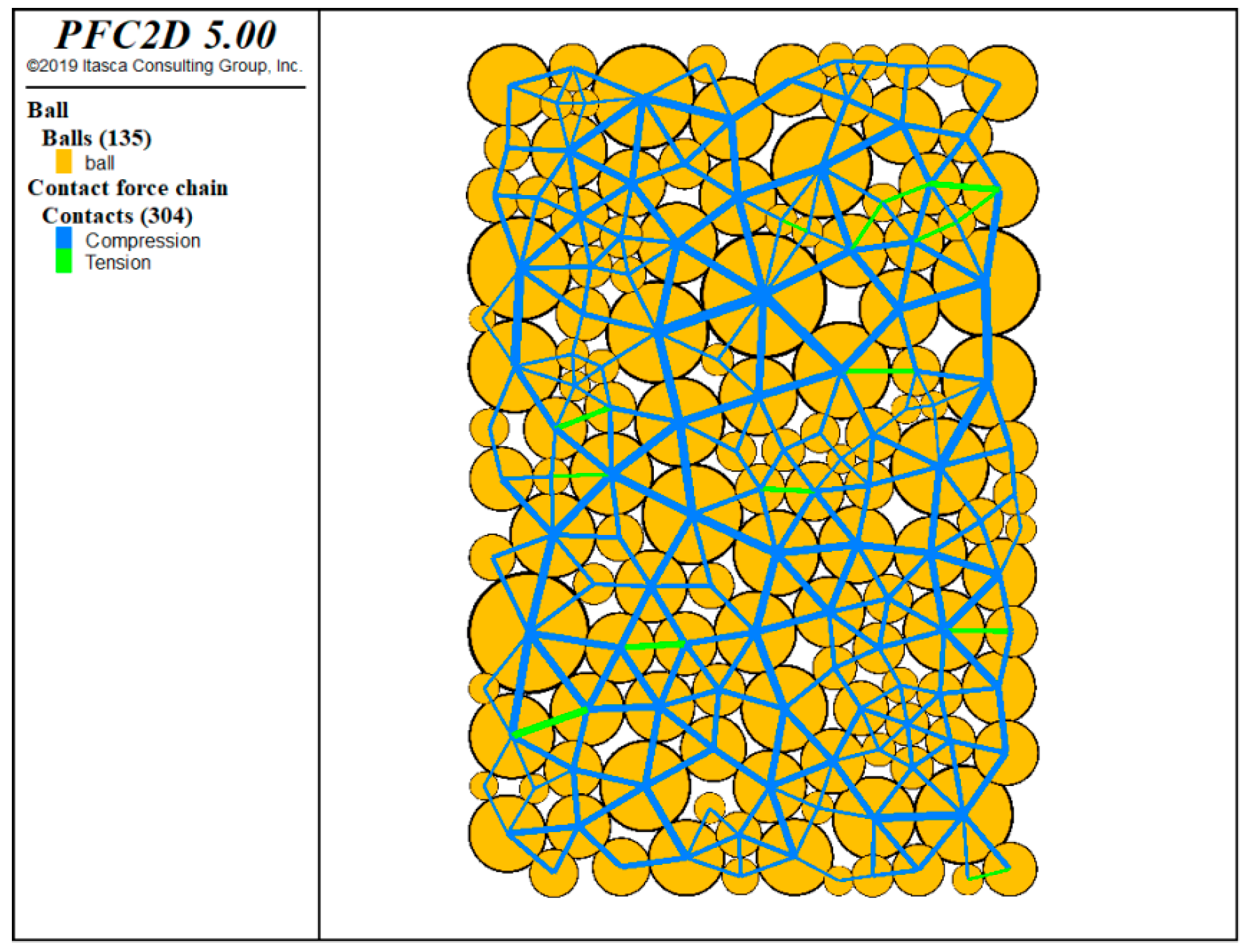
2.2.1. PFC2D Model of AC-20
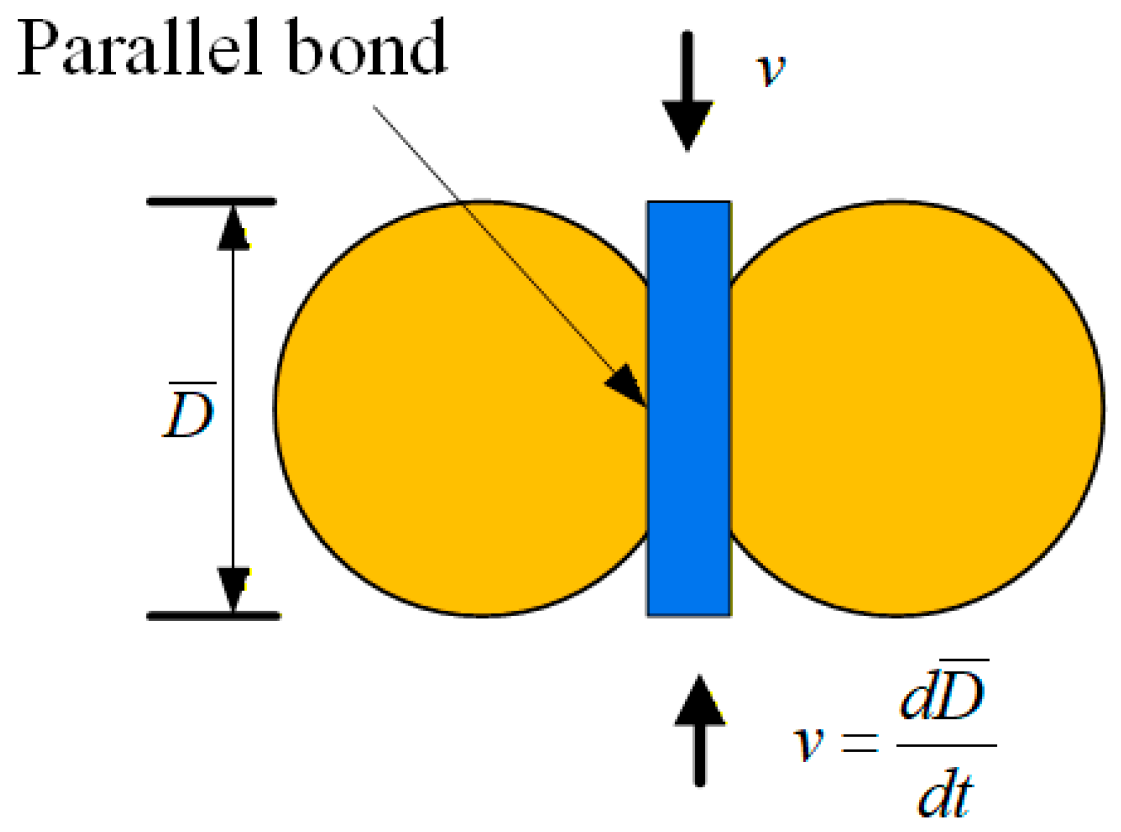
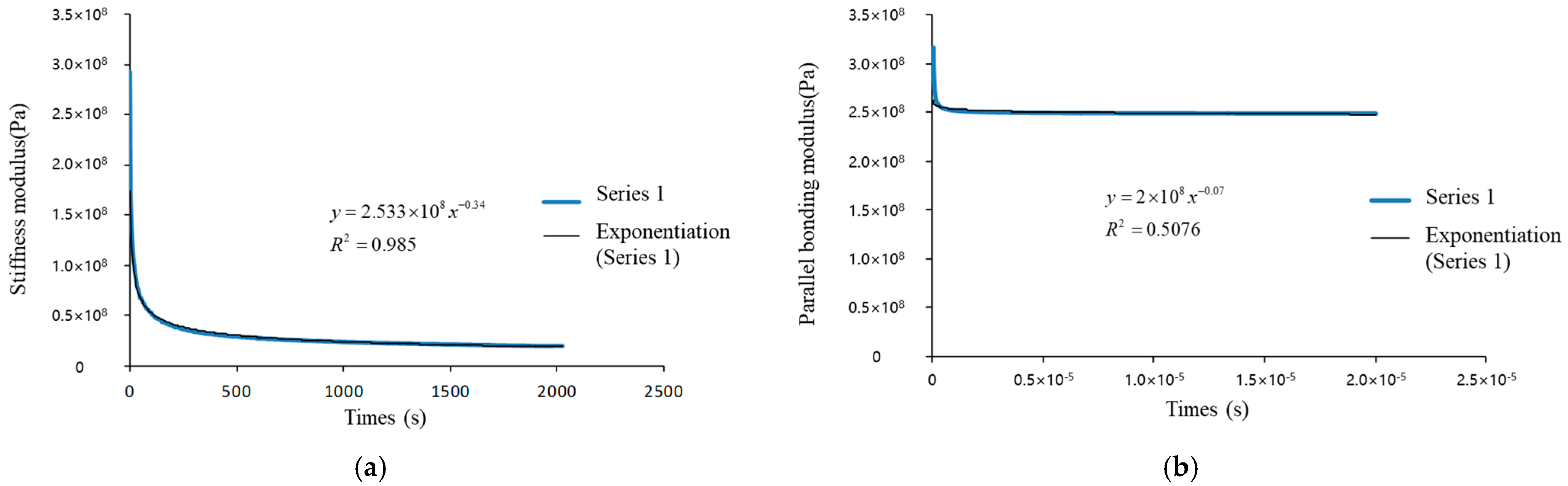
2.2.2. Parallel-Bonded Stress Corrosion Model
2.2.3. Loading Conditions and Boundary Settings
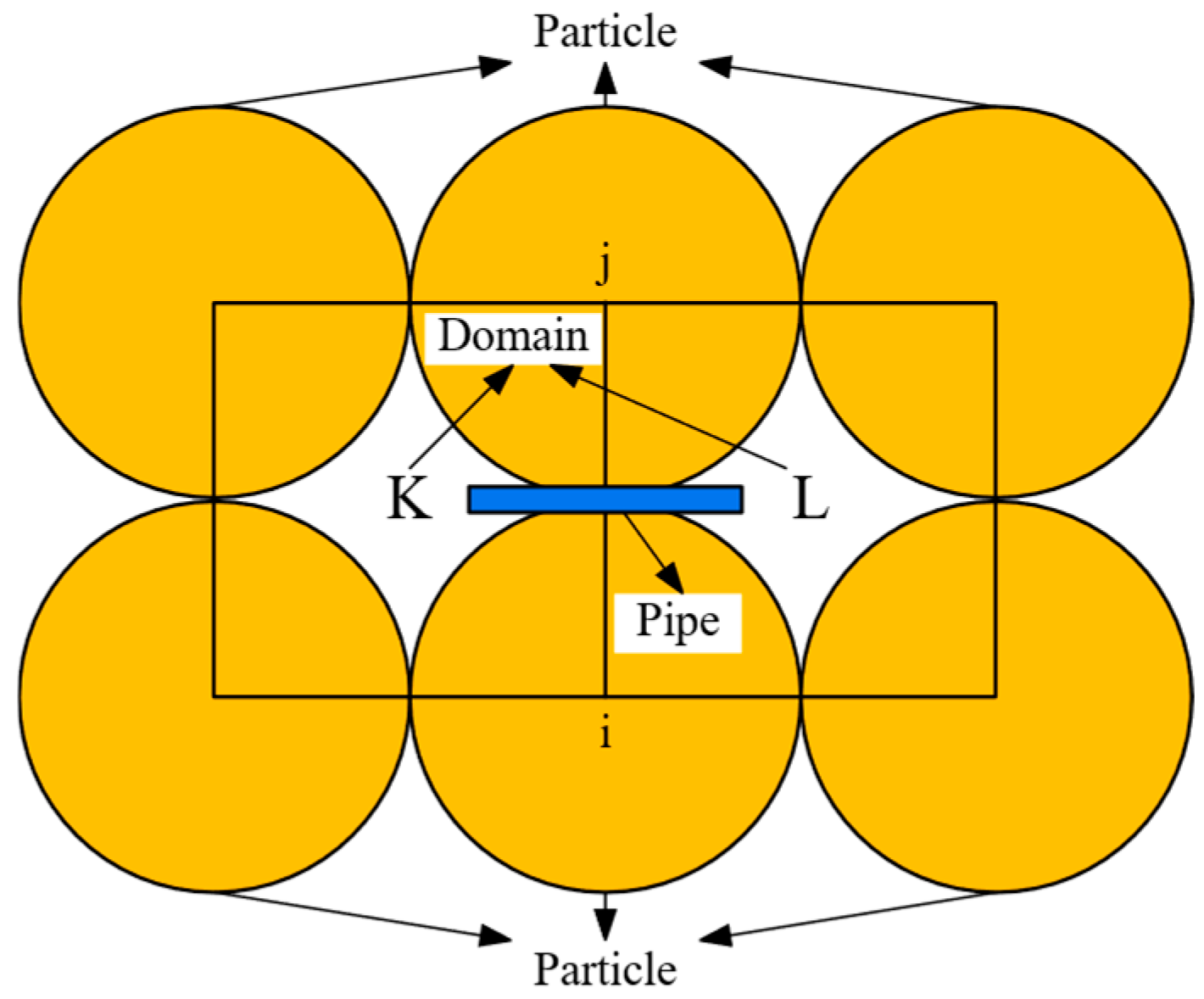
2.3. Implementation of Fluid Coupling in PFC2D
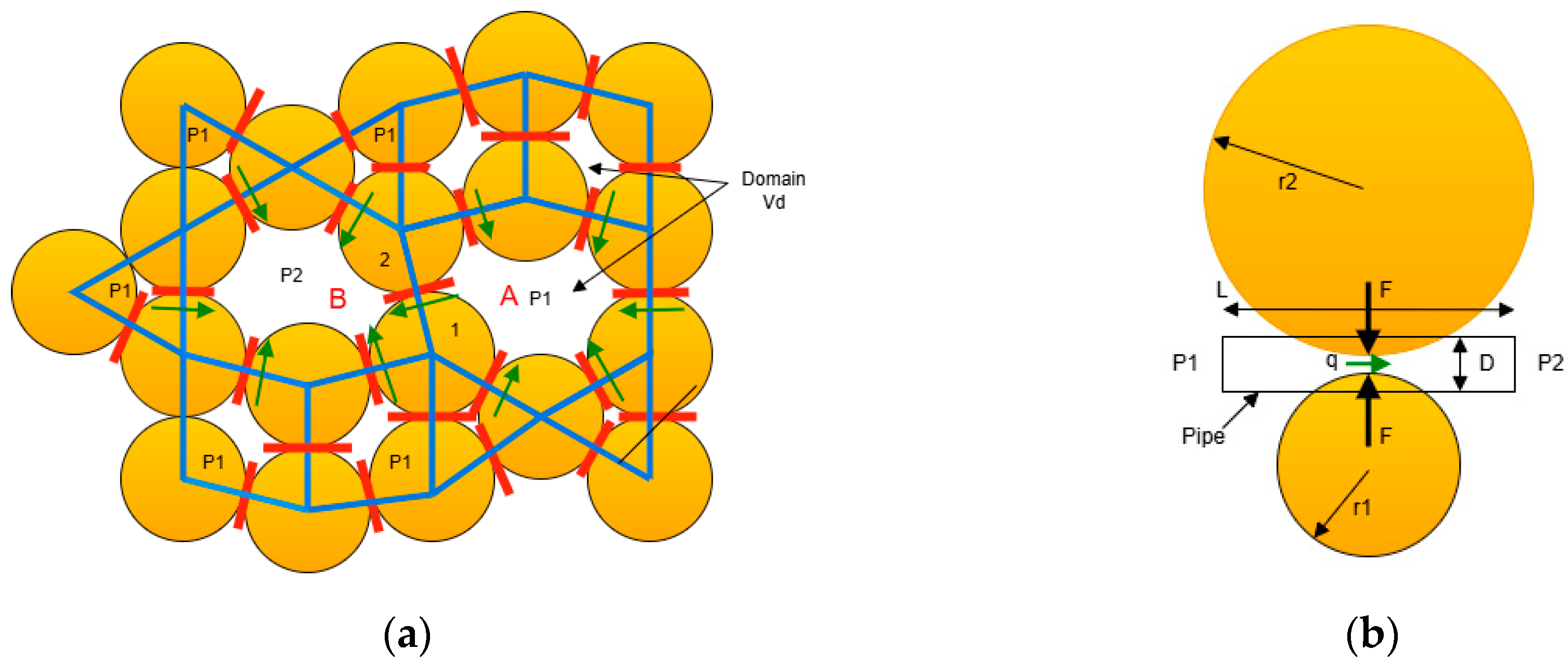
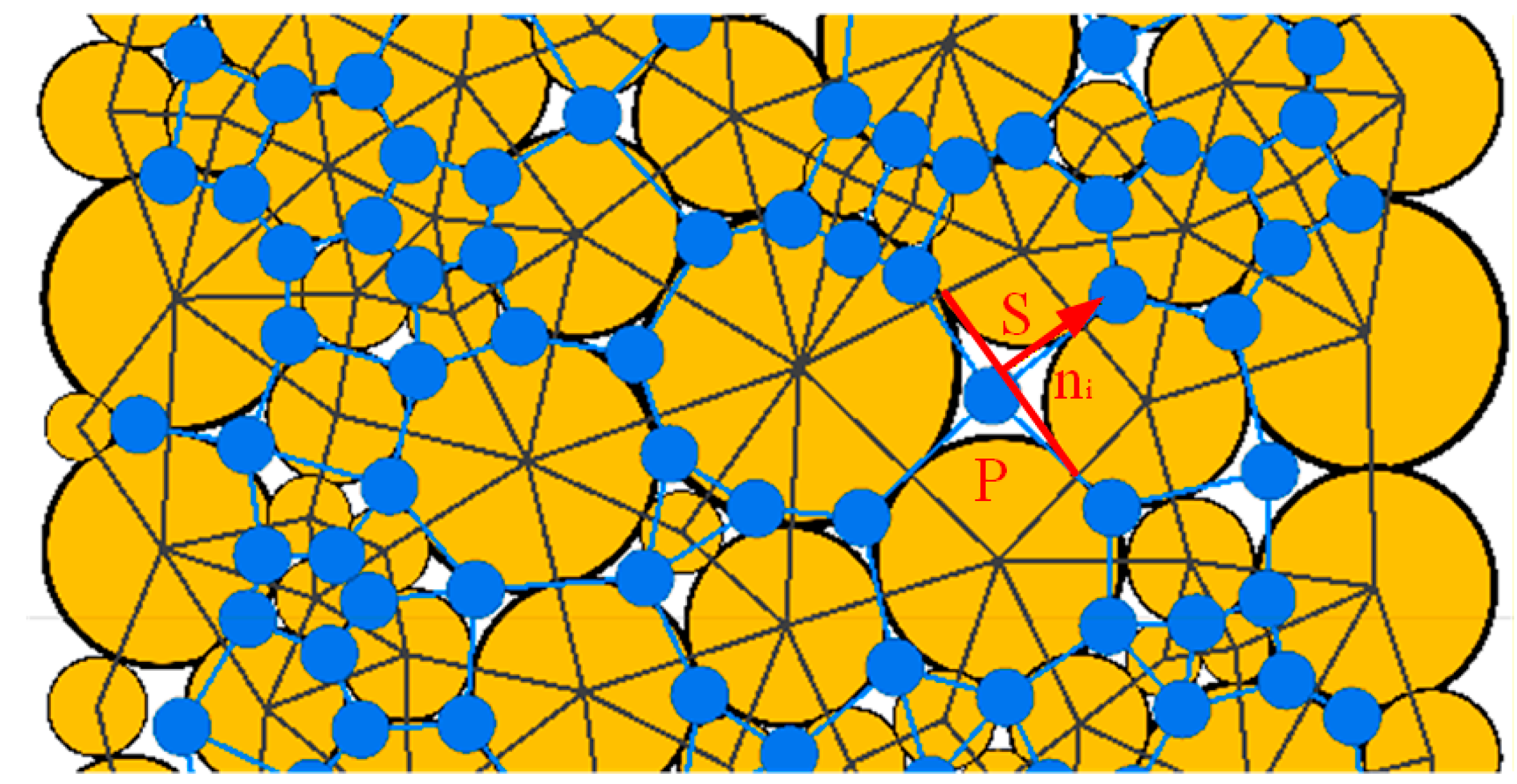
2.3.1. Fluid Formulation for PFC2D
2.3.2. Mechanical Coupling
3. Results and Discussion
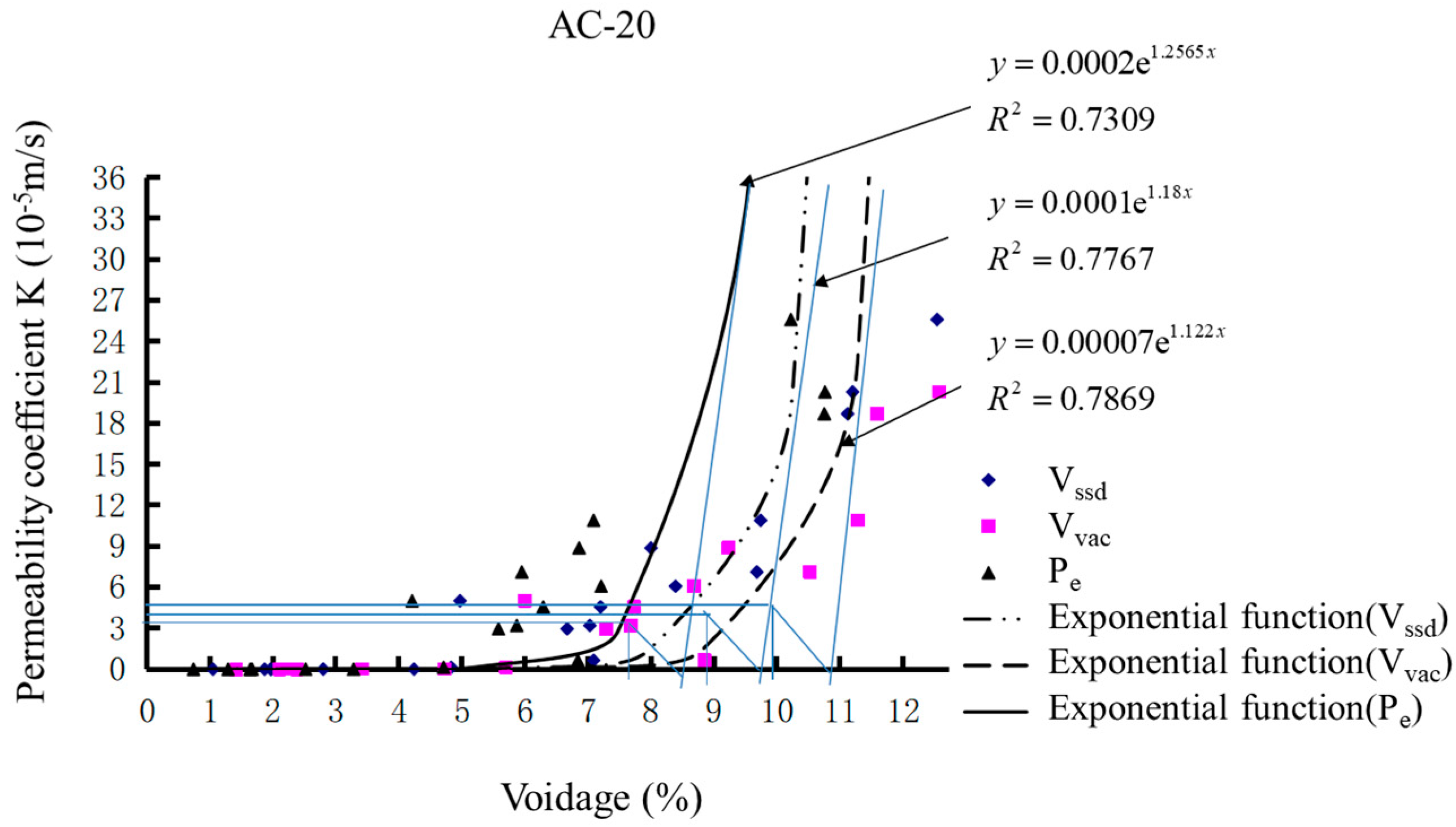
3.1. Effect of Load on PWP
3.2. Effect of Loading Frequency on PWP
3.3. Effect of Loading Frequency on Fatigue Life
3.4. Hysteresis Characteristics Between Load and Maximum PWP
4. Conclusions
- (1)
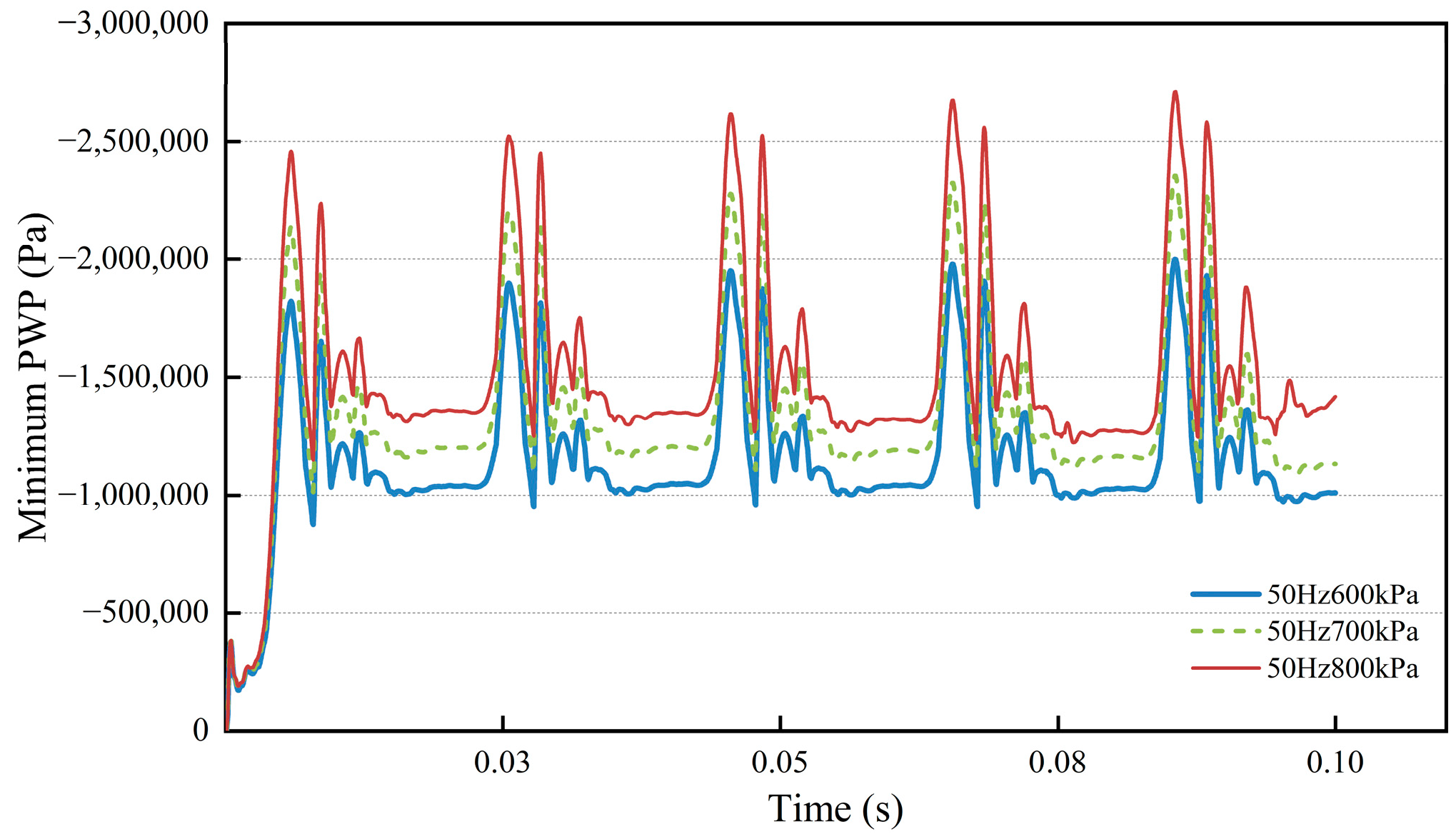
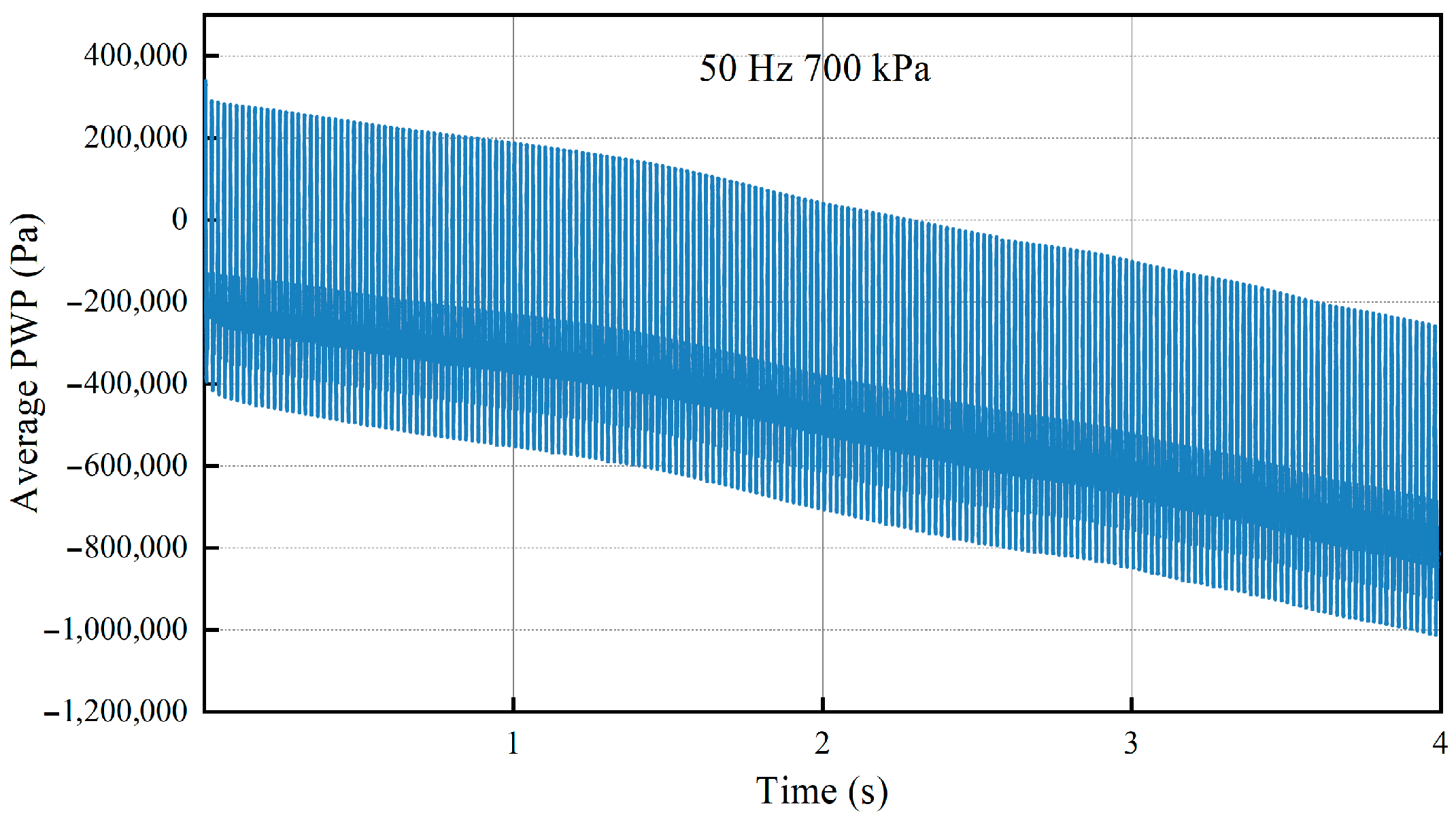
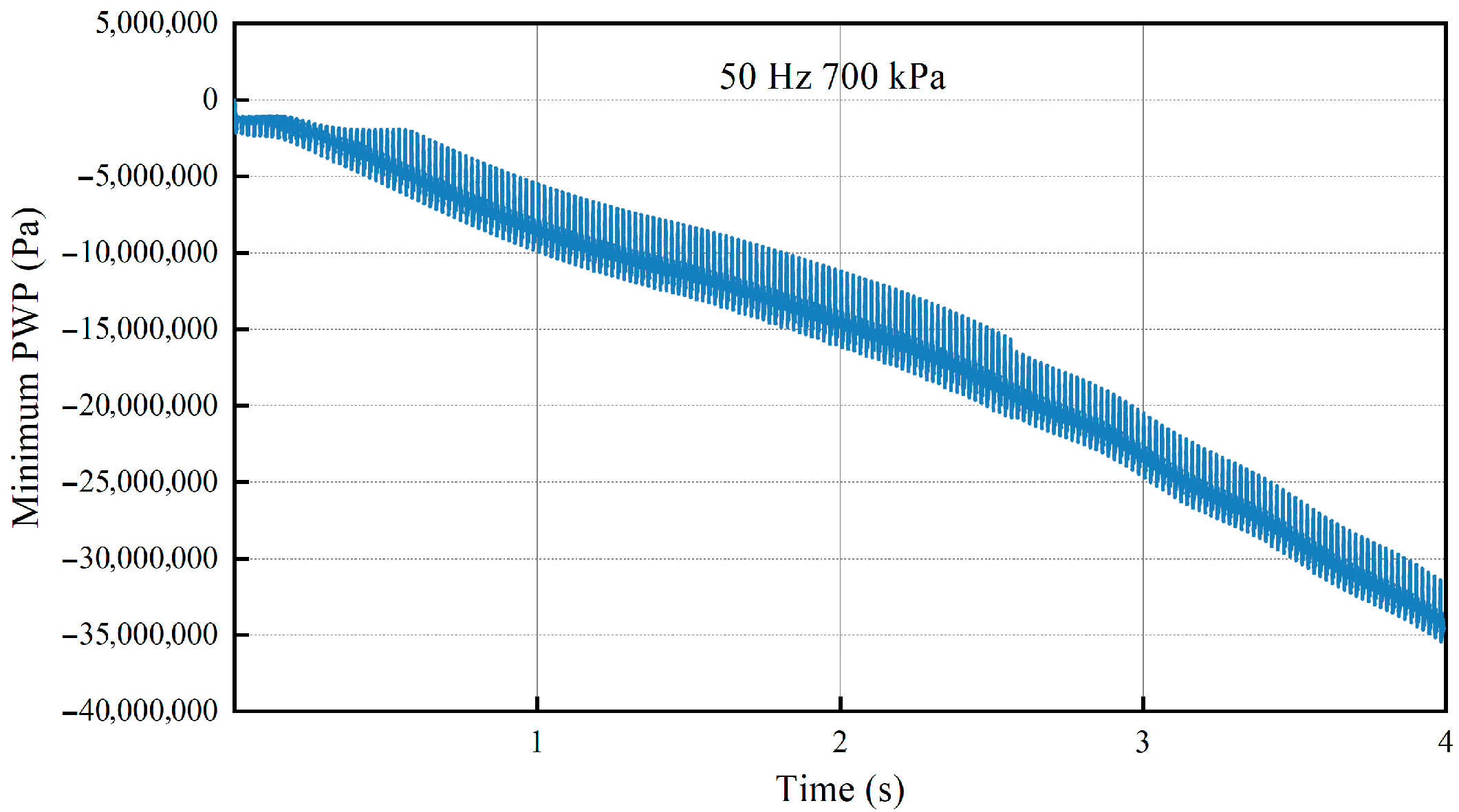
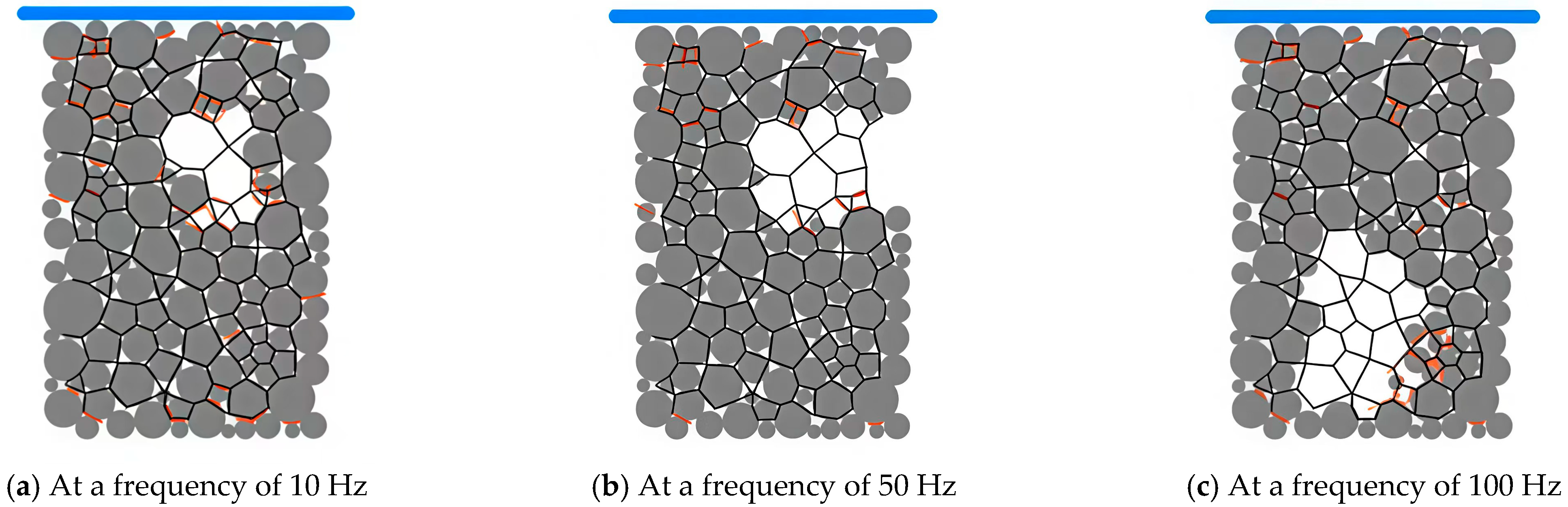
- Under cyclic loading, both positive and negative PWPs are generated simultaneously inside the AC-20 model. Positive PWP originates from pore volume compression, while negative PWP (vacuum suction effect) is caused by elastic recovery during unloading. As fatigue damage accumulates, the absolute value of negative PWP continuously increases, indicating expanding regions with vacuum suction effect—a key mesomechanical mechanism of asphalt film stripping.
- (2)
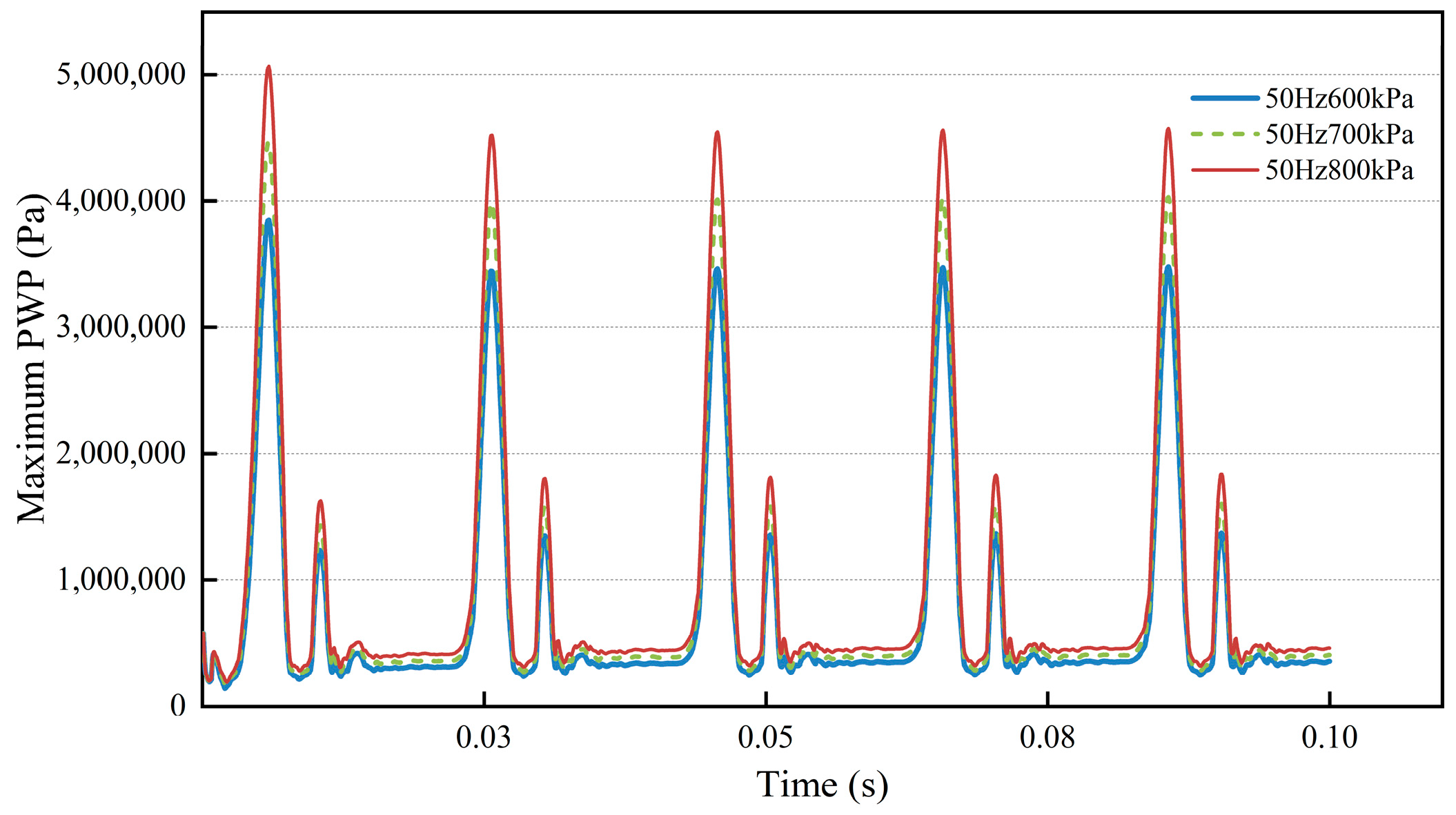
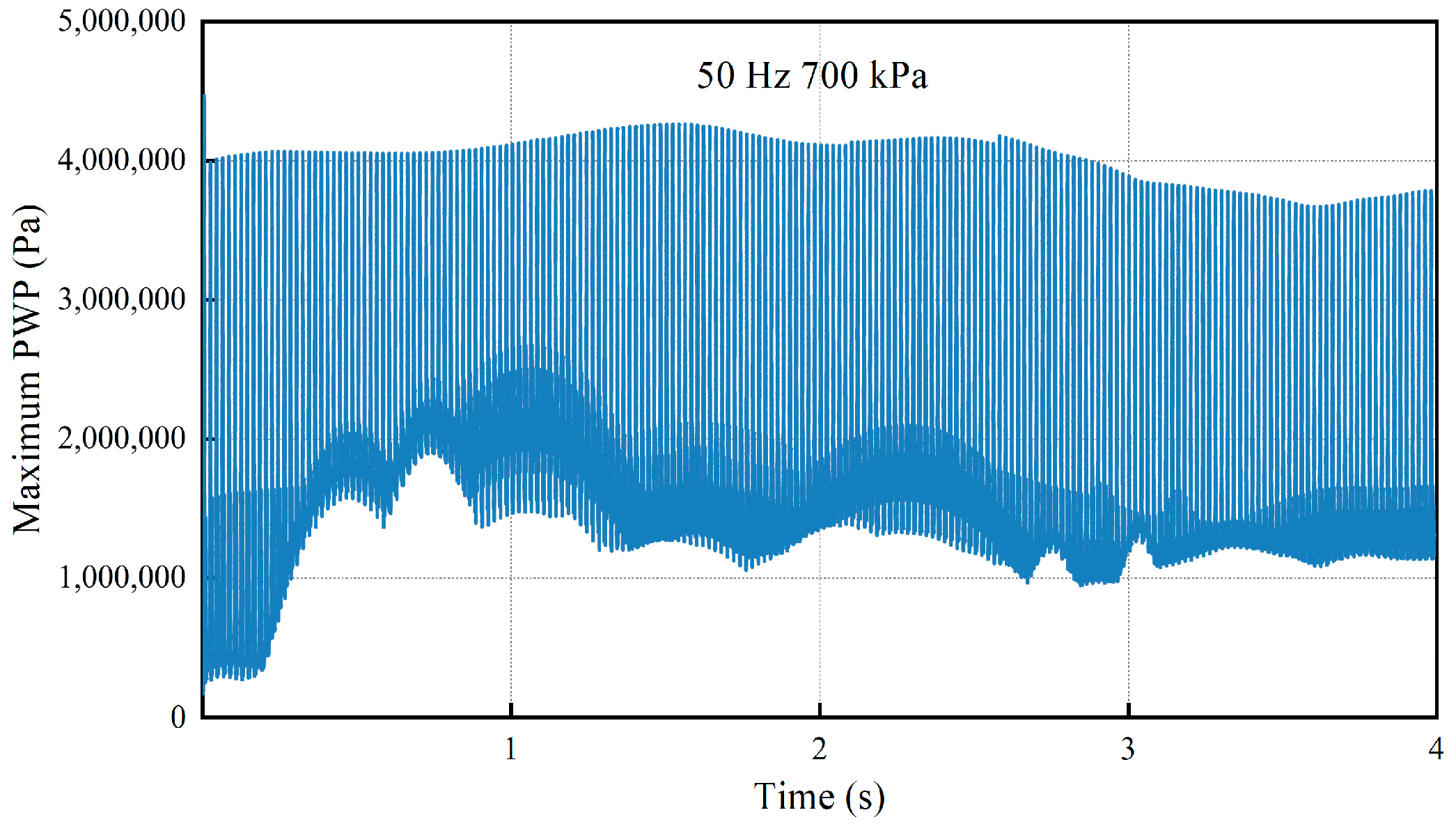
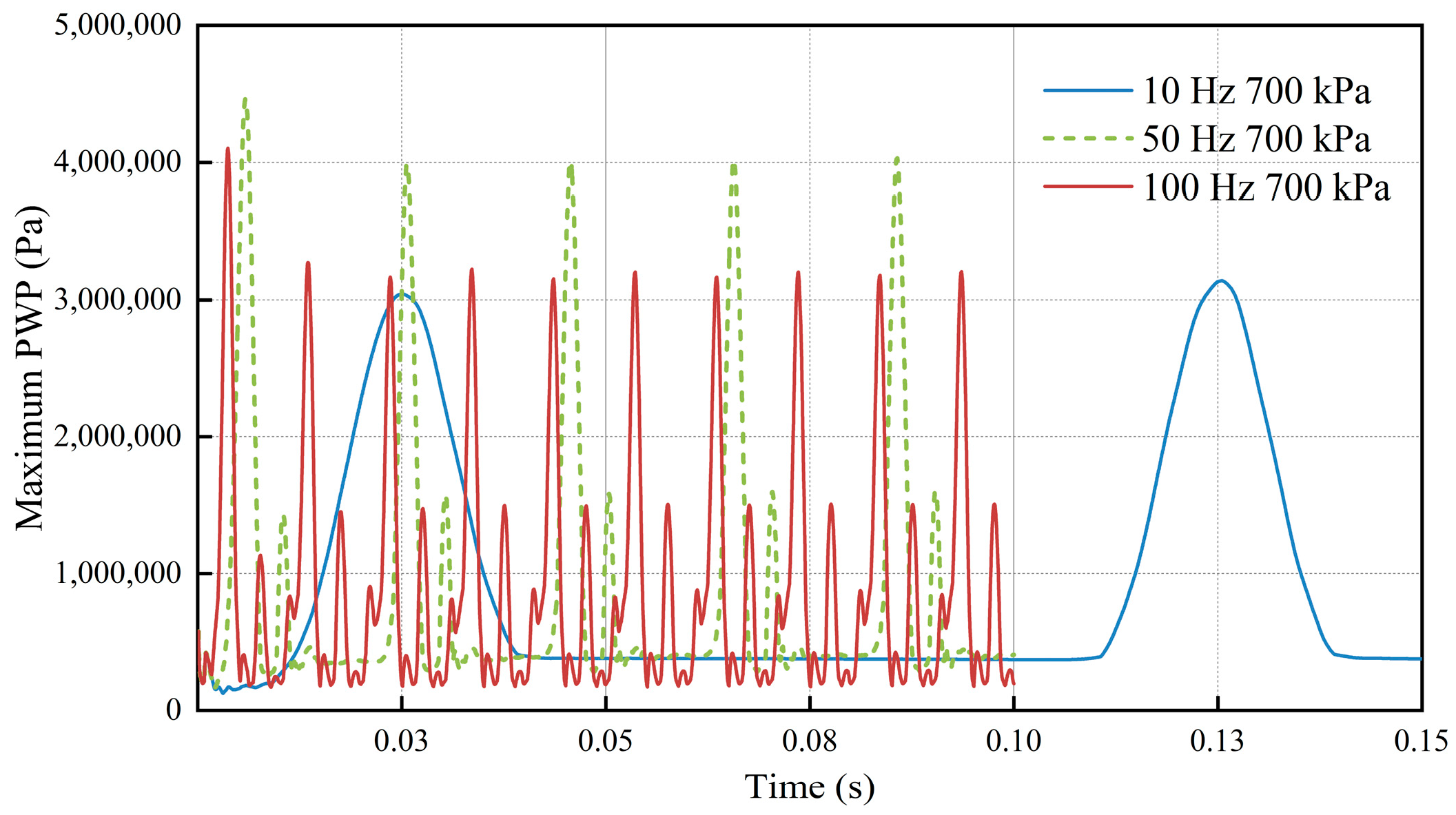
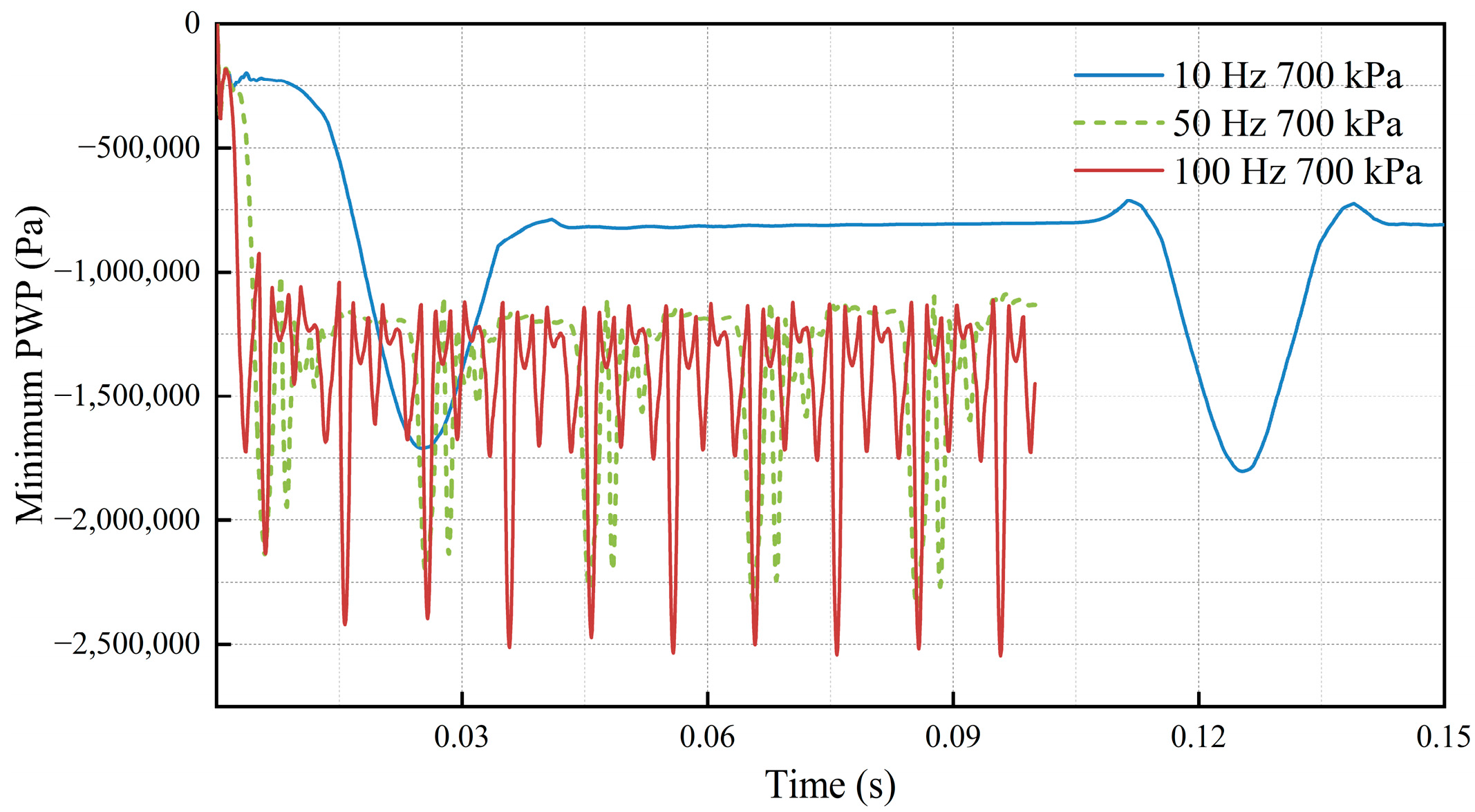
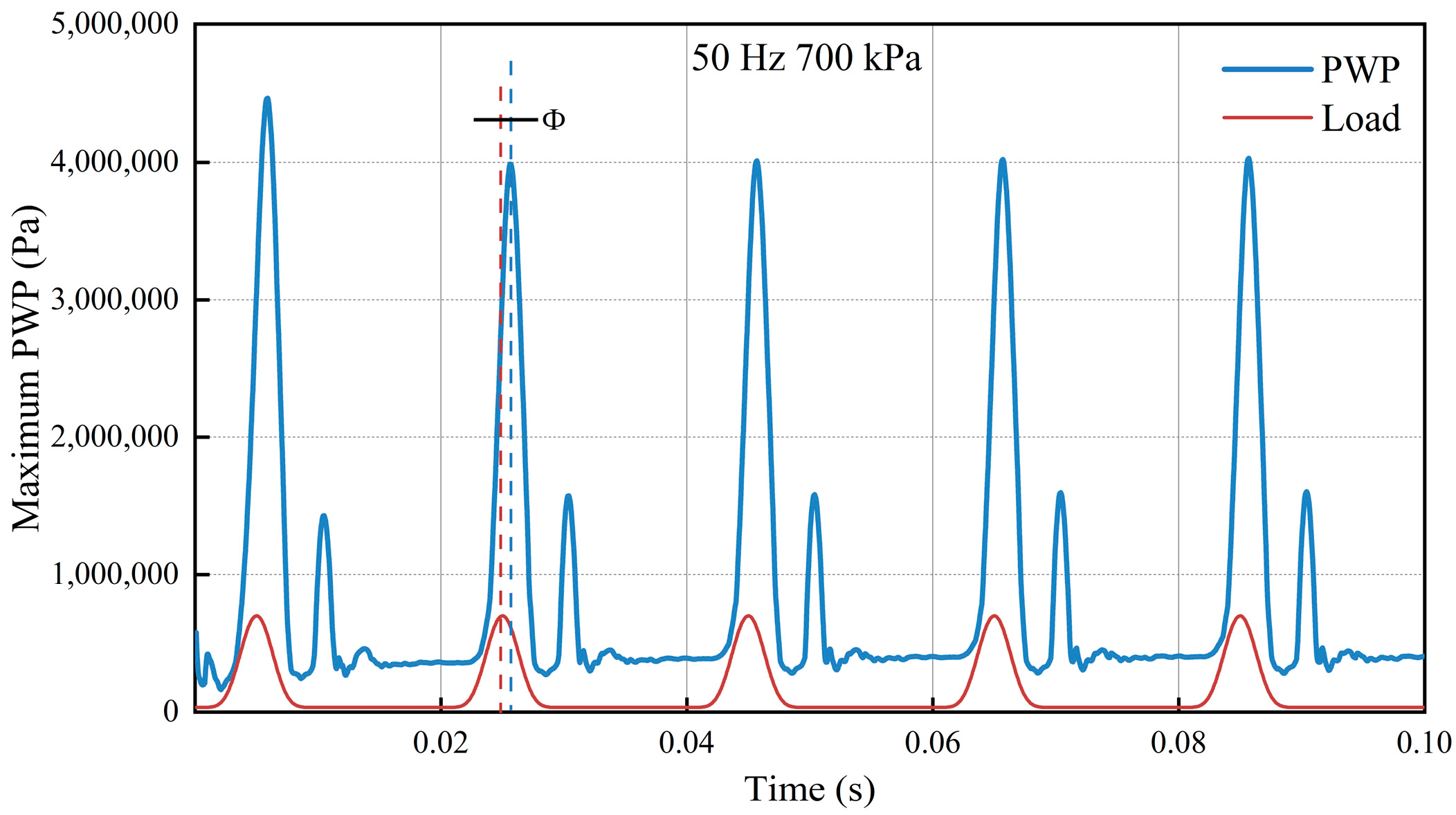
- The loading frequency exhibits a non-monotonic effect on PWP. At 50 Hz, the maximum positive PWP reaches a peak of approximately 4.6 MPa, while values at 10 Hz and 100 Hz are significantly lower. This 50 Hz peak corresponds to a Womersley number of approximately 0.89, where inertial and viscous forces are comparable, leading to resonant PWP accumulation. Meanwhile, the absolute value of minimum PWP increases with frequency, indicating that high-frequency conditions enhance the vacuum suction effect.
- (3)
- The fatigue life of the saturated AC-20 model is shortest at 50 Hz (48 h 16 min 40 s), approximately 58% shorter than at 10 Hz (114 h 13 min 50 s). This non-monotonic relationship between frequency and fatigue life is consistent with the frequency–PWP relationship, confirming that excess PWP is a critical factor affecting fatigue performance.
- (4)
- The PWP response exhibits a clear time lag relative to the applied load, with the hysteresis angle increasing from 0.6° at 10 Hz to 6.9° at 100 Hz. This hysteresis is attributed to alternating positive and negative seepage processes in the pore structure—higher frequencies allow less time for pore water to complete a full seepage response cycle, leading to increasing phase difference.
Author Contributions
Funding
Institutional Review Board Statement
Informed Consent Statement
Data Availability Statement
Conflicts of Interest
Abbreviations
| DEM | Discrete Element Method |
| PFC2D | Particle Flow Code in 2 Dimensions |
| PWP | Pore Water Pressure |
| AC | Asphalt Concrete |
| MRT-LBM | Multi-Relaxation-Time Lattice Boltzmann Method |
References
- Wang, W.; Wang, L.; Xiong, H.; Luo, R. A review and perspective for research on moisture damage in asphalt pavement induced by dynamic pore water pressure. Constr. Build. Mater. 2019, 204, 631–642. [Google Scholar] [CrossRef]
- Li, S.; Xu, H.; Shi, H.; Bian, X. Pore water pressure dynamic response in asphalt mixture: A measurement system development. Measurement 2025, 242, 115882. [Google Scholar] [CrossRef]
- Shiyuan, L.; Xinxing, B.; Huining, X. Dynamic pore water pressure in asphalt mixtures under steady state vibration: Response and machine-learning-assisted prediction. Constr. Build. Mater. 2025, 469, 140473. [Google Scholar] [CrossRef]
- Gao, J.; Guo, C.; Liu, Y. Measurement of pore water pressure in asphalt pavement and its effects on permeability. Measurement 2015, 62, 81–87. [Google Scholar] [CrossRef]
- Wang, C.; Zhang, D.; Liu, C.; Pan, Y.; Pourfatollah, A.; Gong, Z. Fatigue damage characteristics and degradation mechanism of mechanical properties in shale under different water saturation durations. Phys. Fluids 2025, 37, 026622. [Google Scholar] [CrossRef]
- Min, W.; Lu, P.; Liu, S.; Wang, H. A Review of Crack Sealing Technologies for Asphalt Pavement: Materials, Failure Mechanisms, and Detection Methods. Coatings 2025, 15, 836. [Google Scholar] [CrossRef]
- Yue, X.; Zheng, J.; Luo, Y.; Xie, Y.; Chen, G.; Ren, D.; Ai, C. Quantitative evaluation of the effect of dynamic pore water pressure on fracture and fatigue damage of asphalt mixture based on semi-circular bending (SCB) and digital image correlation (DIC) technology. Case Stud. Constr. Mater. 2025, 23, e05548. [Google Scholar] [CrossRef]
- Demchuk, Y.; Gunka, V.; Sidun, I.; Korchak, B.; Donchenko, M.; Drapak, I.; Poliuzhyn, I.; Pyshyev, S. Study of Road Bitumen Operational Properties Modified with Phenol–Cresol–Formaldehyde Resin. Resources 2025, 14, 91. [Google Scholar] [CrossRef]
- Chen, G.; Wu, X.; Hu, L.; Chi, Y.; Jia, T.; Luo, Y. Numerical Analysis of 3D Slope Stability in a Rainfall-Induced Landslide: Insights from Different Hydrological Conditions and Soil Layering. Water 2025, 17, 3316. [Google Scholar] [CrossRef]
- Fredlund, D.G. Engineering Decisions Associated with Applying Unsaturated Soil Mechanics. Geotech. Geol. Eng. 2026, 44, 211. [Google Scholar] [CrossRef]
- Liu, M.; Duan, W.; Dong, R.; Al-Ammari, M. A Review of Pavement Damping Characteristics for Mitigating Tire-Pavement Noise: Material Composition and Underlying Mechanisms. Materials 2026, 19, 476. [Google Scholar] [CrossRef] [PubMed]
- Kringos, N.; Scarpas, T.; Kasbergen, C.; Selvadurai, P. Modelling of combined physical–mechanical moisture-induced damage in asphaltic mixes, Part 1: Governing processes and formulations. Int. J. Pavement Eng. 2008, 9, 115–128. [Google Scholar] [CrossRef]
- Mu, K. Damage evolution and fluid–solid coupling fine-scale simulation of sandstones under osmotic pressure–stress effects. AIP Adv. 2025, 15, 055318. [Google Scholar] [CrossRef]
- Zhang, T.; Xu, Z.; Zhu, C.; Li, W.; Nie, Y.; Gao, Y.; Zhang, X. Numerical Investigation of Micromechanical Failure Evolution in Rocky High Slopes Under Multistage Excavation. Appl. Sci. 2026, 16, 739. [Google Scholar] [CrossRef]
- Zhu, F.; Zhao, J.; Duan, L.; Zhuang, B. Microscopic finite element modeling and fracture properties of particulate filled polymer composites. Polym. Compos. 2025, 46, 7012–7026. [Google Scholar] [CrossRef]
- Asadi, F.; André, D.; Emam, S.; Doumalin, P.; Huger, M. Advances in micro-mechanical modeling using a bonded-particle model and periodic homogenization within discrete element framework applied to heterogeneous ceramics. J. Eur. Ceram. Soc. 2025, 43, 1205–1219. [Google Scholar] [CrossRef]
- Cundall, P.A. A computer model for simulating progressive, large-scale movements in blocky rock systems. In Proceedings of the ISRM International Symposium, Nancy, France, 4 October 1971; p. ISRM-IS-1971-029. [Google Scholar]
- Cundall, P.A.; Strack, O.D. A discrete numerical model for granular assemblies. Geotechnique 1979, 29, 47–65. [Google Scholar] [CrossRef]
- Zhang, T.; Zhang, C.; Zou, J.; Wang, B.; Song, F.; Yang, W. DEM exploration of the effect of particle shape on particle breakage in granular assemblies. Comput. Geotech. 2020, 122, 103542. [Google Scholar] [CrossRef]
- Qingyun, Z.; Mingxin, Z.; Dan, H. Numerical simulation of impact and entrainment behaviors of debris flow by using SPH–DEM–FEM coupling method. Open Geosci. 2022, 14, 1020–1047. [Google Scholar] [CrossRef]
- Vashishtha, G.; Chauhan, S.; Singh, R.; Singh, M.; Tejani, G.G. A Review of Numerical Techniques for Frictional Contact Analysis. Lubricants 2025, 13, 18. [Google Scholar] [CrossRef]
- Liu, W.; Su, Q.; Fang, M.; Zhang, J.; Zhang, W.; Yu, Z. Parameters Calibration of Discrete Element Model for Corn Straw Cutting Based on Hertz-Mindlin with Bonding. Appl. Sci. 2023, 13, 1156. [Google Scholar] [CrossRef]
- Xu, L.; Wang, F.; Yu, H.; Li, H.; Zhao, J.; Pei, J. Freeze-thaw damage characteristics and discrete element simulation analysis of composite fibers asphalt mixture. Constr. Build. Mater. 2025, 472, 140918. [Google Scholar] [CrossRef]
- Yang, D. Study on Fatigue Damage of Asphalt Concrete Pavemen Under Seepage-Load Coupling. Doctoral Dissertation, Chongqing Jiaotong University, Chongqing, China, 2019. [Google Scholar] [CrossRef]
- Zhang, L. Asphalt Concrete Pavement Rutting Research Based on Discrete Element Method. Master’s Thesis, Chongqing Jiaotong University, Chongqing, China, 2013. [Google Scholar] [CrossRef]
- Potyondy, D.O. Simulating stress corrosion with a bonded-particle model for rock. Int. J. Rock Mech. Min. Sci. 2007, 44, 677–691. [Google Scholar] [CrossRef]
- Al-Busaidi, A.; Hazzard, J.; Young, R. Distinct element modeling of hydraulically fractured Lac du Bonnet granite. J. Geophys. Res. Solid Earth 2005, 110, B06302. [Google Scholar] [CrossRef]
- Cheng, H.; Liu, L.; Sun, L. Bridging the gap between laboratory and field moduli of asphalt layer for pavement design and assessment: A comprehensive loading frequency-based approach. Front. Struct. Civ. Eng. 2022, 16, 267–280. [Google Scholar] [CrossRef]
- Likrama, F. Study of Mechanical and Flow Properties of Weakly Cemented and Uncemented Sands Using a Discrete Element Method. Master’s Thesis, University of Texas at Austin, Austin, TX, USA, 2008. [Google Scholar] [CrossRef]
- Zhang, J.; Zhu, X.; Wang, W.; Chu, H. Experimental simulation for moisture damage of saturated asphalt mixture and evolution of mixture’s pore water pressure, accumulative strain. Constr. Build. Mater. 2023, 369, 130274. [Google Scholar] [CrossRef]
- Yang, D. Investigation of the excess pore water pressure inside compacted asphalt mixture by dynamic triaxial tests. Constr. Build. Mater. 2017, 138, 363–371. [Google Scholar] [CrossRef]
- Wang, X.; Sun, H.; Niu, F. Microstructure study of natural marine clay in loading and unloading processes. Eng. Geol. 2023, 327, 107363. [Google Scholar] [CrossRef]





| Size (mm) | 0.075 | 0.15 | 0.3 | 0.6 | 1.18 | 2.36 | 4.75 | 9.5 | 13.2 | 16 | 19 | 26.5 |
|---|---|---|---|---|---|---|---|---|---|---|---|---|
| Percent passing (%) | 5 | 8.9 | 13.1 | 16.2 | 23.4 | 31.3 | 39.5 | 52.9 | 67.2 | 79.9 | 94.8 | 100 |
| Linear Contact Modulus (Pa) | Parallel Bond Modulus (Pa) | Kn/ks | pb_ten (Pa) | pb_coh (Pa) | pb_fa (°) |
|---|---|---|---|---|---|
| 4.3 × 10⁷ | 3.2 × 10⁸ | 2.8 | 4.04 × 10⁶ | 2.04 × 10⁶ | 35 |
| Load Frequencies (Hz) | Fatigue Lives (h:min:s) |
|---|---|
| 10 | 114 h 13 min 50 s |
| 50 | 48 h 16 min 40 s |
| 100 | 90 h 44 min 22 s |
| Frequency (Hz) | Lag Angle (°) |
|---|---|
| 10 | 0.6 |
| 50 | 2.6 |
| 100 | 6.9 |
Disclaimer/Publisher’s Note: The statements, opinions and data contained in all publications are solely those of the individual author(s) and contributor(s) and not of MDPI and/or the editor(s). MDPI and/or the editor(s) disclaim responsibility for any injury to people or property resulting from any ideas, methods, instructions or products referred to in the content. |
© 2026 by the authors. Licensee MDPI, Basel, Switzerland. This article is an open access article distributed under the terms and conditions of the Creative Commons Attribution (CC BY) license.
Share and Cite
Zhang, X.; He, R.; Liu, X.; Yang, D.; Zhang, B.; Ding, P.; Liu, P. Mesoscopic Fatigue Damage and Critical Frequency Response of Saturated AC-20 Asphalt Concrete Based on Discrete Element Simulation. Eng 2026, 7, 298. https://doi.org/10.3390/eng7060298
Zhang X, He R, Liu X, Yang D, Zhang B, Ding P, Liu P. Mesoscopic Fatigue Damage and Critical Frequency Response of Saturated AC-20 Asphalt Concrete Based on Discrete Element Simulation. Eng. 2026; 7(6):298. https://doi.org/10.3390/eng7060298
Chicago/Turabian StyleZhang, Xingmei, Ruizhe He, Xing Liu, Datian Yang, Bin Zhang, Peng Ding, and Peng Liu. 2026. "Mesoscopic Fatigue Damage and Critical Frequency Response of Saturated AC-20 Asphalt Concrete Based on Discrete Element Simulation" Eng 7, no. 6: 298. https://doi.org/10.3390/eng7060298
APA StyleZhang, X., He, R., Liu, X., Yang, D., Zhang, B., Ding, P., & Liu, P. (2026). Mesoscopic Fatigue Damage and Critical Frequency Response of Saturated AC-20 Asphalt Concrete Based on Discrete Element Simulation. Eng, 7(6), 298. https://doi.org/10.3390/eng7060298