


Abstract
Earthquake-induced landslides represent a critical threat to transportation infrastructure in tectonically active mountainous regions, particularly in tropical volcanic settings where weak, highly weathered geomaterials dominate. This study develops an integrated framework that directly links physically based seismic threshold modelling with real-time landslide monitoring and operational early warning. The approach is demonstrated in the Cugenang area of Cianjur Regency, West Java, Indonesia, which was severely impacted by the moment magnitude (Mw) 5.6 earthquake in 2022. Slopes composed of highly weathered pyroclastic deposits [Plasticity Index (PI) = 54–68%; porosity > 60%] exhibit low shear strength and high sensitivity to seismic loading. Limit equilibrium analysis using the Morgenstern–Price method that combines the influence of seismic loading and groundwater conditions suggests that a horizontal seismic coefficient (kh) of approximately 0.06, corresponding to a Peak Ground Acceleration (PGA) of about 0.12 gravitational acceleration (g), is a critical threshold for initial landsliding. This comparatively low threshold challenges commonly reported values and demonstrates that slope failure in tropical volcanic terrains can occur under moderate ground shaking, reinforcing the need for site-specific hazard characterisation. The derived thresholds are operationalised within a multi-sensor early warning system integrating Micro-Electro-Mechanical Systems (MEMS) accelerometers and inclinometer measurements. Three hazard levels—Normal (<0.06 g), Alert (0.06–0.12 g), and Emergency (≥0.12 g)are combined with deformation thresholds [<10 milimeter (mm), 10–30 mm, >30 mm] to capture progressive failure processes and minimise false alarms. By coupling geotechnical modelling and real-time monitoring, this study provides a transferable and scalable framework for enhancing infrastructure resilience in landslide-prone regions.
1. Introduction
Earthquake-induced landslides represent some of the most widespread and destructive cascading hazards associated with strong ground shaking in mountainous regions. The combination of steep slopes, complex geological structures, and active tectonics in these areas increases slope instability [1]. These secondary hazards not only cause direct slope failures but also amplify the societal and economic impacts of earthquakes by disrupting infrastructure, reducing connectivity, and prolonging the isolation of affected communities [2]. In Indonesia, a country marked by high seismicity and rugged topography, earthquake-induced landslides have repeatedly triggered significant mass movements following major seismic events. Notable examples include the 2009 Padang earthquake [3], the 2018 Palu moment magnitude (Mw) 7.5 earthquake [4], the 2018 Lombok sequence that generated thousands of landslides [5], and the 2022 Cianjur earthquake [6]. These events resulted in widespread landsliding, ranging from small slope failures to large-scale mass movements. Landslides disrupted settlements, damaged critical infrastructure, and severed land transportation links. Globally, recent research on earthquake-induced landslides has focused on understanding spatial patterns, failure mechanisms, and hazard relationships. This body of work includes inventories and modelling of landslides triggered by the 2015 Gorkha earthquake in Nepal and other major events on the Tibetan Plateau [7], as well as susceptibility assessments in Mediterranean basins where seismically induced landslides threaten road networks [2].
Recent research shows that managing landslide hazards effectively now relies on integrated strategies rather than just mapping and compiling inventories after events. New approaches to landslide risk management highlight the need to combine susceptibility assessments, engineered stabilisation, and real-time monitoring in early warning systems to better account for how landslides change over time [8].
Multi-sensor monitoring and early warning systems show strong potential to improve transportation network resilience, though large-scale validation remains limited. Previous studies demonstrate that such systems enable real-time detection of slope instability and support timely responses, including early warning and traffic control [9,10]. Improvements in multi-sensor monitoring, data-driven warning thresholds, and operational early warning systems have demonstrated strong potential to support timely decision-making, including traffic control and risk communication, by enabling real-time detection of slope instability and reliable dissemination of warning information [11,12,13].
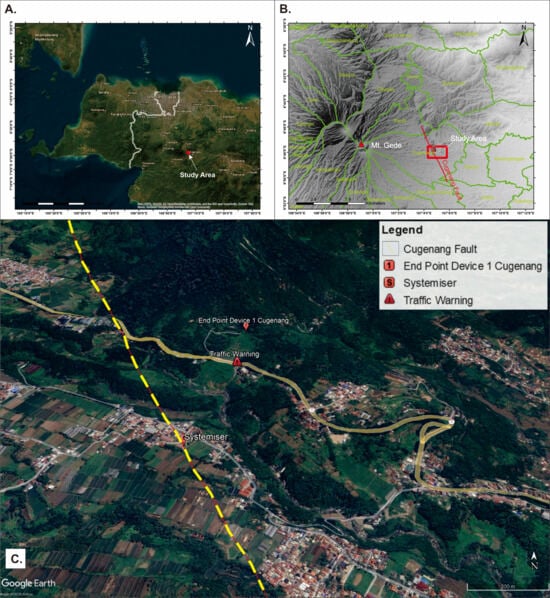
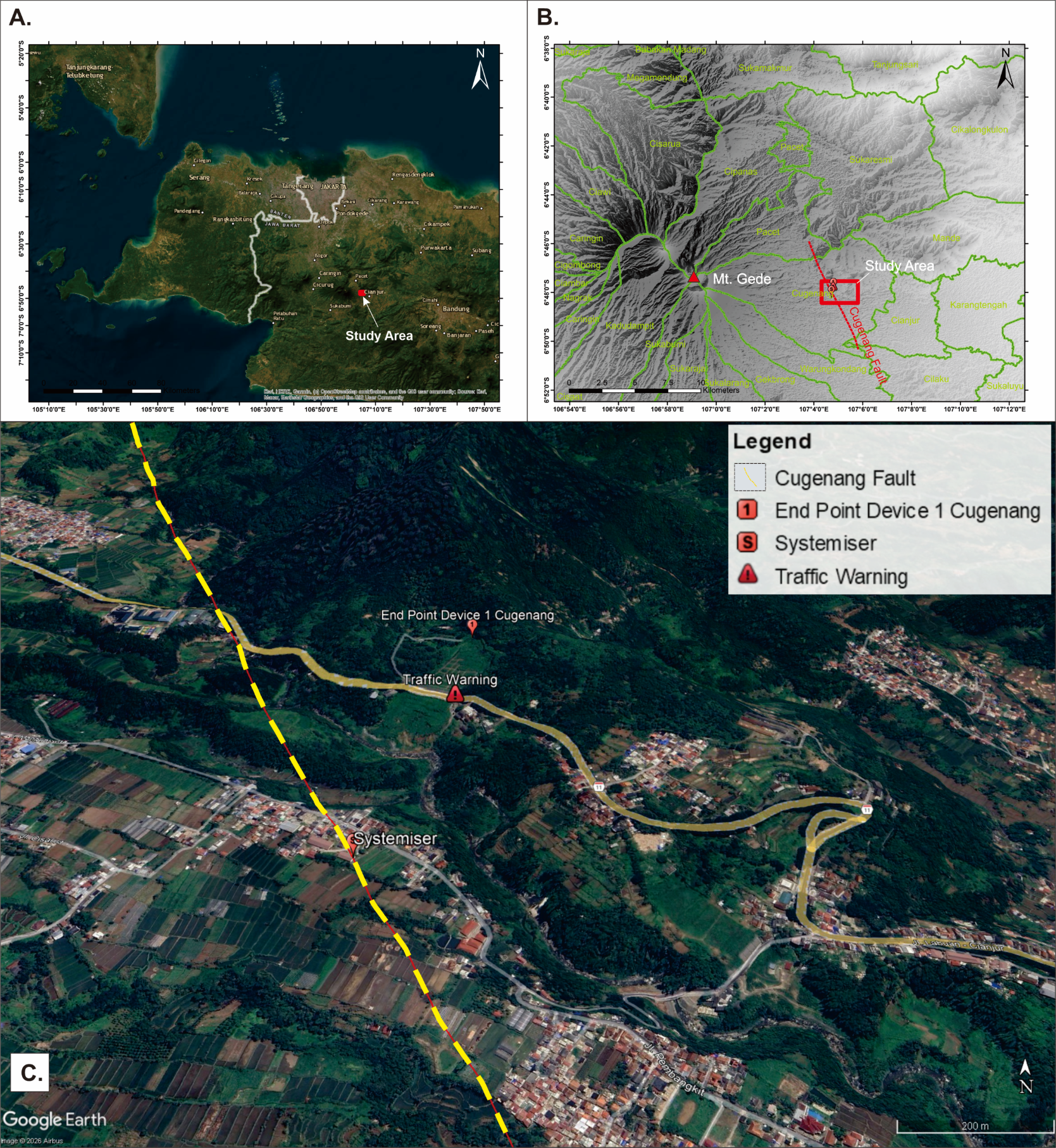
Indonesia faces significant risks from earthquake-induced landslides. Most research focuses only on post-event analysis. No comprehensive framework yet integrates hazard assessment, real-time monitoring, and risk communication for transportation routes. Most existing studies address regional susceptibility mapping or post-event inventories. Few attempts have been made to quantify site-specific seismic thresholds for slope failure under different geotechnical and hydrogeological conditions. Early warning systems are mainly based on rainfall thresholds or empirical observations, with little integration of seismic triggers or slope deformation. This study is the first to propose such an integrated approach for road corridors. Major roads remain vulnerable, since the lack of warning systems makes it harder to reduce risks and prevent casualties. In 2022, earthquake-triggered landslides along roads in Cugenang, Cianjur, killed at least 36 people. This study presents an integrated framework for analysing and managing earthquake-induced landslides in tropical volcanic terrains, using the Cugenang case in West Java (Figure 1). Unlike conventional methods, which separate slope stability analysis from early warning systems, this research links seismic threshold modelling with operational monitoring and traffic risk management. It also quantifies site-specific seismic thresholds for slope failure in highly weathered pyroclastic materials, often overlooked in current research. The study develops a multi-parameter early warning system combining seismic and deformation indicators to improve detection and reduce false alarms. This framework offers a transferable approach to integrating geotechnical analysis and monitoring, thereby enhancing infrastructure resilience in seismically active regions.
Figure 1.
Overview of the study area. Shows proximity to Jakarta (A). Includes geomorphological features (B,C) and locations of landslide monitoring and traffic warning systems (C). Modified from Google Earth.
2. Materials and Methods
2.1. Study Area
The study area is located in the Cugenang Sub-district, Cianjur Regency, West Java, Indonesia, within a tectonically active zone of southern Java (Figure 1A). To the west of Cugenang is Mount Gede, an active volcano that has produced volcanic deposits in the area and caused typical concentric geomorphology (Figure 1B). National and local road networks connect Cugenang, on the east flank of Mount Gede, to Bogor in the west and Cianjur in the east (Figure 1C). Shallow crustal faulting, especially the Cugenang Fault, affects the region (Figure 1B,C). The Cugenang Fault was newly identified as the source of the Mw 5.6 Cianjur earthquake on 21 November 2022 [14,15]. Figure 1 shows the study area, its geomorphological features, and the distribution of landslide monitoring instruments and traffic warning systems.
The region is characterised by steep slopes, eroded volcanic rocks, and numerous roads traversing unstable ground, which increases its susceptibility to landslides during seismic events. Following the 2022 earthquake, multiple landslides of varying magnitudes occurred in the Cugenang area. The largest event, known as the Cugenang landslide, blocked the national road connecting Bogor and Cianjur, resulting in more than 36 fatalities [6]. This study examines the Cugenang landslide due to the strategic and economic significance of the affected road corridor.
2.2. Data and Information Collections
Literature and secondary data, including geological data, geographical conditions, and historical landslides, were collected and analysed. Field investigations in the Cugenang landslide collected undisturbed soil samples with a Shelby tube sampler. These were analysed in the laboratory to determine soil classification and engineering properties. Additional data on groundwater indications and vegetation conditions in the landslide area were collected. The potential for in situ earthquake-induced landslide hazard was identified based on the risk of future reactivation. Peak ground acceleration (PGA) data from national agencies were used to characterise ground-shaking conditions at the time of initiation. Spatial data for this study included administrative boundaries, road networks, digital elevation models (DEMs), which represent surface elevation data, geological maps (showing rock types and structures), and landslide inventory data (records of previous landslide locations and characteristics).
2.3. Determination of Earthquake-Induced Landslide Thresholds
Slope stability was assessed using the limit equilibrium method (LEM). Seismic effects were incorporated through the pseudo-static approach to quantify reductions in the factor of safety under earthquake loading [16,17,18,19,20]. As a preliminary step [21], the design earthquake was defined as an event with a 10% probability of exceedance within 50 years, corresponding to a return period of 475 years and based on the Indonesian seismic hazard map [22]. A minimum FoS of 1.1 was adopted, while the horizontal seismic coefficient (kh) was taken as one-half of the peak ground acceleration (PGA). The PGA in the study area ranges from 0.5 to 0.6 g [23]; therefore, a conservative PGA value of 0.6 gravitational acceleration (g) was selected for the analysis. According to Indonesian National Standard (SNI) 1726:2019 [21], the site is classified as Site Class SD, characterised by a Vs30 value between 175 and 350 m/s, resulting in a site amplification factor of 1.2.
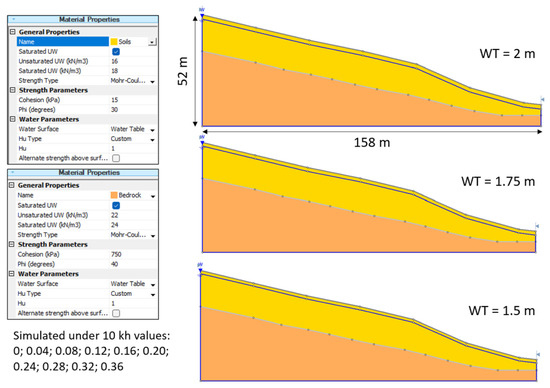
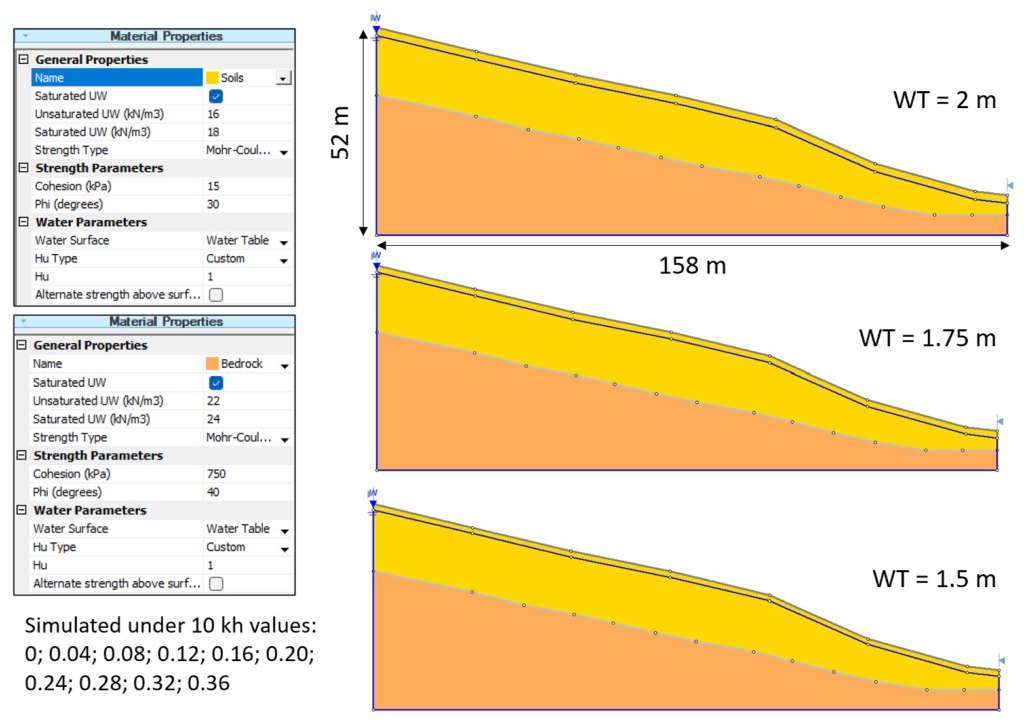
Consequently, the maximum horizontal seismic coefficient applied in the modelling was calculated as kh = 0.5 × 0.6 × 1.2 = 0.36. Slope stability analyses were conducted using ten kh values: 0, 0.04, 0.08, 0.12, 0.16, 0.20, 0.24, 0.28, 0.32 and 0.36. Furthermore, based on post-earthquake investigations conducted by PusGen following the 2022 Cianjur earthquake [23], groundwater depths in the Cugenang area were reported to range between 1.5 and 2.0 m below ground surface. Accordingly, three groundwater table scenarios (1.5, 1.75, and 2 m) were incorporated into the slope stability simulations to evaluate the influence of groundwater conditions on slope performance under seismic loading.
The Cugenang slope was modelled in Slide2 using geotechnical parameters derived from field investigations and a comprehensive review of relevant literature. Slope stability analyses were conducted using the General Limit Equilibrium (GLE) framework, with the Morgenstern–Price method employed to determine the Factor of Safety (FoS). The slope geometry was developed based on geomorphological and geological observations obtained during field surveys and was further refined using satellite imagery from Google Earth. Material properties, including unit weight, cohesion, and internal friction angle, were assigned based on values reported in the literature for comparable geological materials. As mentioned previously, groundwater and seismic parameters were adopted from the official post-event investigation report of the 2022 Cianjur earthquake [23].
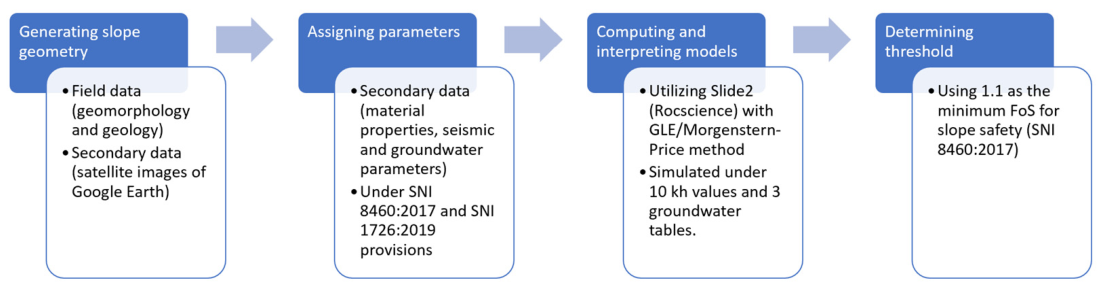
The GLE/Morgenstern–Price method was adopted due to its rigorous treatment of slope stability, satisfying both force and moment equilibrium for all slices within the potential failure mass. By considering interslice forces in both horizontal and vertical directions, the method provides a comprehensive assessment of slope stability and yields reliable estimates of the Factor of Safety (FoS). In addition, the method can accommodate both circular and non-circular failure surfaces, allowing its application to complex geological and geomorphological settings [24]. The governing equation of the Morgenstern–Price method is given in Equation 1, while the procedural settings used in Slide2 are illustrated in Figure 2. The overall workflow adopted for earthquake-threshold determination is presented in Figure 3.
where
T = E λ f(x)
- T = inter-slice shear force
- E = inter-slice normal force
- λ = scale factor of the assumed function
- f(x) = inter-slice force function along sliding surface
Figure 2.
The procedural settings of the GLE/Morgenstern-Price method used in Slide2.
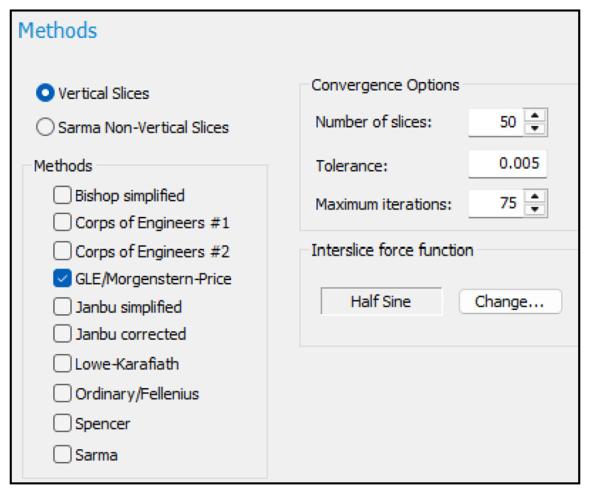
Figure 3.
The workflow of earthquake threshold determination.
2.4. Landslide Monitoring and Traffic Warning Systems
A local landslide monitoring and traffic warning system was developed by integrating accelerometers across critical slopes. Real-time data transmission used a low-power wireless sensor network (WSN). Warning levels were defined using a traffic-light system with green and red indicators and audible alerts via speakers, triggered by the exceedance of calculated earthquake thresholds. A multi-parameter monitoring approach captured slope behaviour and identified failure precursors along critical road sections affected by earthquake-induced instability. The framework combined ground-based instrumentation, seismic observations, and slope movement data to support near-real-time hazard assessment.
In situ instruments consist of accelerometer sensors installed in unstable slope sections to measure ground vibration and inclination trends. Monitoring data were recorded either continuously or at predefined intervals, then transmitted for analysis to detect acceleration patterns that indicate increasing instability. Monitoring thresholds were set using quantitative calculations, and these thresholds were used to classify slope conditions into warning levels. These classifications form the basis for operational decision-making about traffic control and risk communication. All monitoring data were integrated into a centralised system, enabling systematic evaluation of slope behaviour and supporting timely warnings for road users and authorities.
3. Results
3.1. Geological and Geographical Conditions
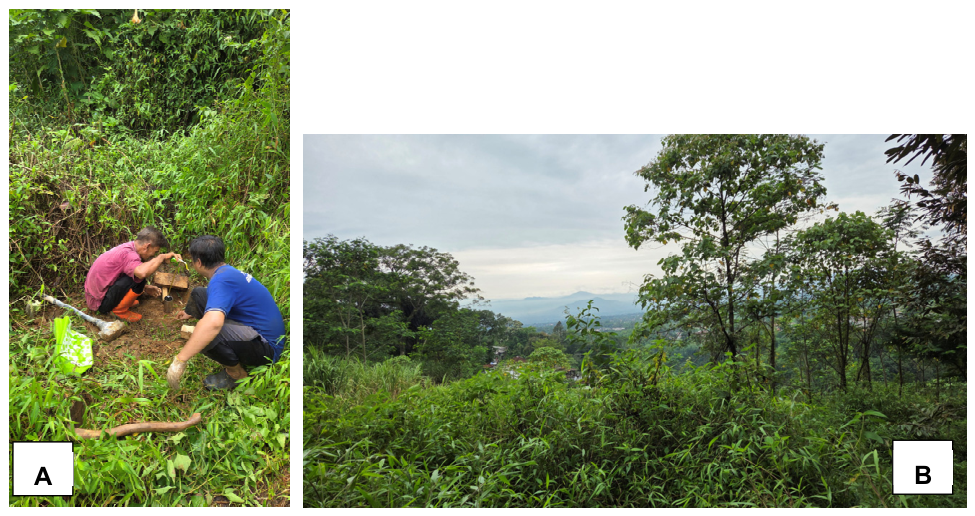
According to the geological map [25], the Cugenang area is composed of pyroclastic rocks originating from historical eruptions of Mount Gede (Figure 1), including volcanic breccia, volcanic tuff, and lava. At the time of fieldwork, about 2 years after the landslide, the landslide site was covered by vegetation. However, geological field investigations in the landslide area revealed two geotechnical units that were most distinguishable, as limited geological outcrops were obscured by vegetation (Figure 4). Outcrops in the landslide area reveal predominantly residual soil on top, as a weathering of mainly tuff and volcanic ash deposits, reaching thicknesses of up to 10 m (m) at the headscarp, with andesitic breccia present at the base in others. The residual soil is brown, clayey silt with a grain size consisting of 73.97–82.91% silt, 11.89–14.75% clay, and 5.2–11.22% sand, porosity 61.71–64.33%, and high plasticity (plasticity index (PI) 54.48–68.07%). These lithological units are susceptible to progressive degradation under repeated seismic loading. The geomorphology is characterised by convex and concave slopes with gradients often exceeding 30 degrees, intersected by road cuts and drainage lines that locally disrupt natural slope stability. Shallow crustal faulting, notably the Cugenang Fault, shapes the regional geological context and directly contributes to increased ground-shaking intensity and localised strain concentration. Prior to the earthquake, slope instability was primarily influenced by prolonged weathering, rainfall-induced increases in pore pressure, and anthropogenic changes associated with road construction and land use. Following the earthquake, widespread co-seismic slope failures were observed. These geological and geographical conditions underscore the need for continuous monitoring and adaptive risk management along transportation networks in earthquake-affected regions.
Vegetation in the Cugenang area is predominantly composed of tropical forest characterised by a structurally diverse assemblage of tree species, reflecting the high biodiversity typical of West Java, and is dominated by Castanopsis argentea, Heptapleurum aromaticum, and Engelhardia spicata, with understory and secondary-growth species such as Portulaca oleracea, Ageratum conyzoides, Galinsoga parviflora, and Ludwigia octovalvis, as well as planted and naturally regenerated species including Falcataria moluccana, Swietenia macrophylla, Bambusa spp., Ficus spp., and tree ferns, Cyathea spp. Changes in vegetation cover and land use are one of the key factors controlling landslide susceptibility in Cianjur Regency. Satellite imagery indicates a decline in natural vegetation between 2013 and 2022. During the same period, there is an increase in low-vegetation areas and built-up land. This has led to habitat fragmentation and reduced connectivity of natural vegetation [26,27]. As a result, these shifts are associated with expanding landslide-prone zones. This is due to the loss of root reinforcement and altered hydrological responses in slopes, such as increased surface runoff and reduced infiltration. The occurrence of landslides is increasingly influenced by the combined effects of land use and land cover (LULC) change and climate variability [28]. These factors alter geomorphological and hydrological conditions in mountainous regions. Vegetation degradation clearly increases landslide susceptibility. Deforestation increases landslide susceptibility by +20% [29]. The combined effects of deforestation and climate change can reach 40% or more. Slopes with tall vegetation cover significantly reduce failure probability, particularly when soil layers are thin (<3 m) [30]. Figure 4B illustrates the vegetation conditions within the landslide-affected area.
Figure 4.
Field investigation showing (A) undisturbed soil sampling using a Shelby tube and (B) vegetation conditions in the landslide-affected area.
3.2. Earthquake Threshold for Landslide
As described previously, the slope geometry was developed using a combination of field observations and secondary datasets. Geomorphological and geological mapping, supplemented by satellite imagery obtained from Google Earth, indicated that the Cugenang slope has an approximate height of 52 m and a length of 158 m. The slope stratigraphy comprises two principal units: a fresh volcanic breccia bedrock and an overlying residual soil layer with an average thickness of approximately 10 m, as revealed by the geological investigation.
The engineering properties adopted in the preliminary slope stability model were based on published ranges for volcanic rock masses and residual volcanic soils. The fresh volcanic breccia bedrock was assigned a unit weight (γ) of 22 kN/m3, a saturated unit weight (γs) of 24 kN/m3, a cohesion (c) of 750 kPa, and an internal friction angle (φ) of 40°. These values fall within the range reported for volcanic rock masses and are consistent with rock-mass strength parameters derived through Hoek–Brown-based upscaling of intact volcanic rock properties [31]. The residual soil layer was assigned a unit weight (γ) of 16 kN/m3, a saturated unit weight (γs) of 18 kN/m3, a cohesion (c) of 15 kPa, and an internal friction angle (φ) of 30°, representing typical values reported for highly weathered residual volcanic soils [32]. These parameters were adopted as preliminary estimates for the back-analysis and were subsequently assessed through sensitivity analyses to evaluate their influence on slope stability. Figure 5 summarises the slope geometry, material properties, and modelling conditions incorporated into the Slide2 slope stability analysis.
Figure 5.
The summary of slope geometries, material properties, and conditions used in the stability modelling in Slide2. Abbreviation: WT = water table, kh = horizontal seismic coefficient.
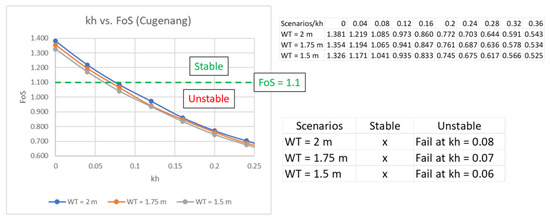
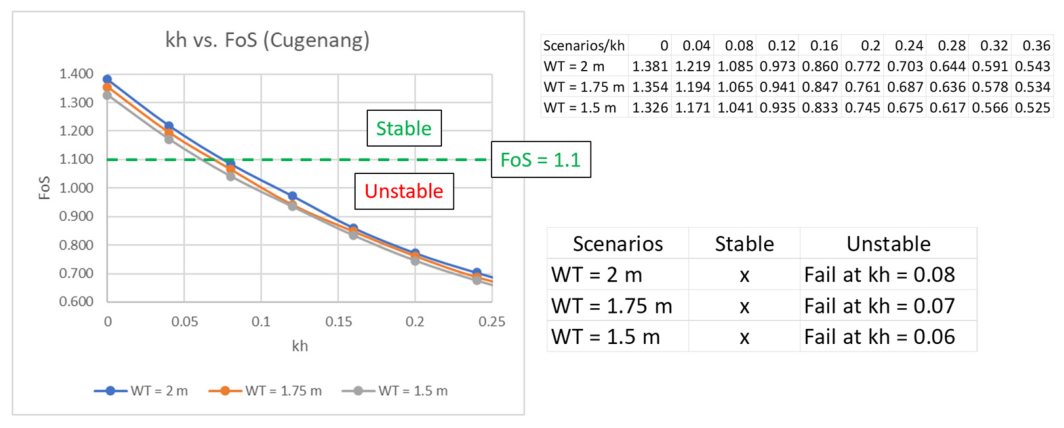
The Slide2 simulations, conducted under ten horizontal seismic coefficients (kh) values and three groundwater table scenarios, demonstrate a systematic reduction in the Factor of Safety (FoS) with increasing seismic loading and rising groundwater levels. The critical kh values at which the FoS = 1.1 were determined to be 0.08, 0.07, and 0.06 for groundwater table depths of 2.0 m, 1.75 m, and 1.5 m, respectively (Figure 6). These results highlight the combined influence of seismic loading and groundwater conditions on slope stability. Adopting a conservative approach, the analyses suggest that a horizontal seismic coefficient of approximately (kh = 0.06), corresponding to a PGA of about 0.12 g under the assumed pseudostatic relationship, represents the minimum seismic demand required to initiate landsliding in the study area.
Figure 6.
The results of slope stability modelling. The plot between kh and FoS utilised to obtain seismic threshold values.
3.3. Landslide Monitoring and Traffic Warning Instrumentation
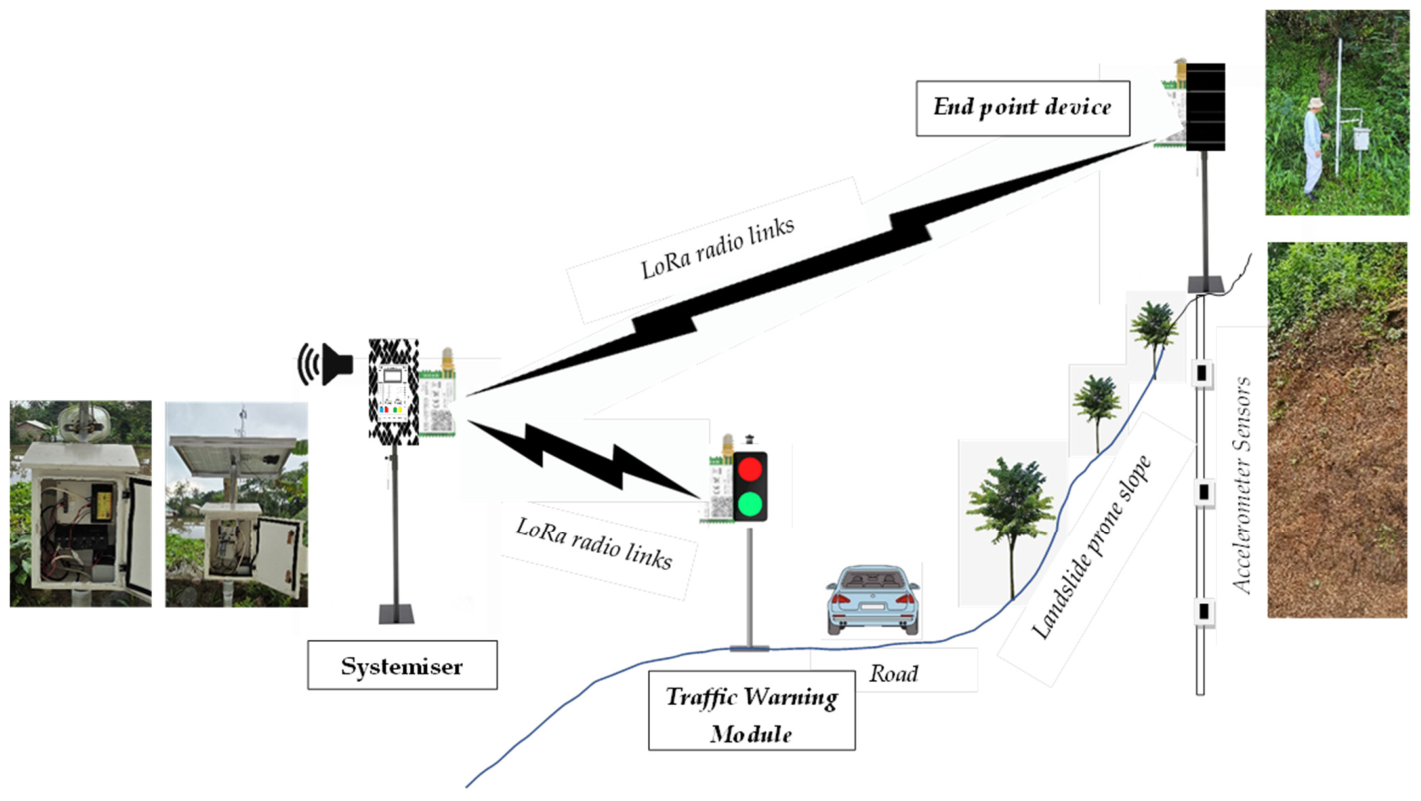
A standalone automated system was developed to monitor slopes and provide early warnings of slope movement, ensuring rapid alerts for road users. The system employs multiple accelerometers at landslide-prone locations. These detect seismic vibrations that exceed predefined threshold values. Vibrations may result from active fault activity or other seismic sources. In addition to seismic detection, the system concurrently monitors slope inclination to identify potential ground movement. The monitoring unit is integrated with a traffic warning module. This module activates signal lights to visually alert road users to potential hazards. Figure 7 presents the system’s architecture and operational setup. Figure 1 displays the locations of the landslide monitoring and traffic warning systems.
Figure 7.
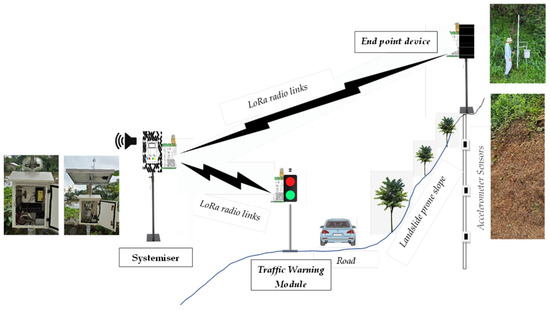
Schematic representation of an earthquake-induced landslide monitoring and early warning system that integrates multi-accelerometer sensors and a traffic warning system. The connectivity architecture employs LoRa radio links.
Figure 7 and Figure 8 illustrate the system architecture and device connectivity. The network incorporates a systemiser unit that serves as the central controller and coordinator of the WSN. Endpoint devices collect sensor data and transmit it to the systemiser. The systemiser handles data aggregation, processing, and network management. It communicates with the traffic warning module, issuing commands when sensor data exceeds predefined thresholds. In response, the traffic warning module activates visual indicators to instruct road users to stop during potential slope movement. Endpoint devices use sleep mode to conserve power when not actively monitoring. This integrated architecture supports automated detection, centralised processing, and rapid hazard alerts for road users.
Figure 8.
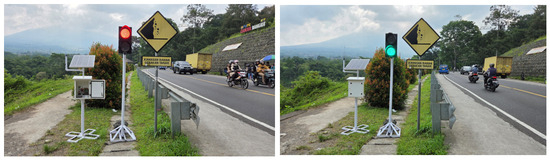
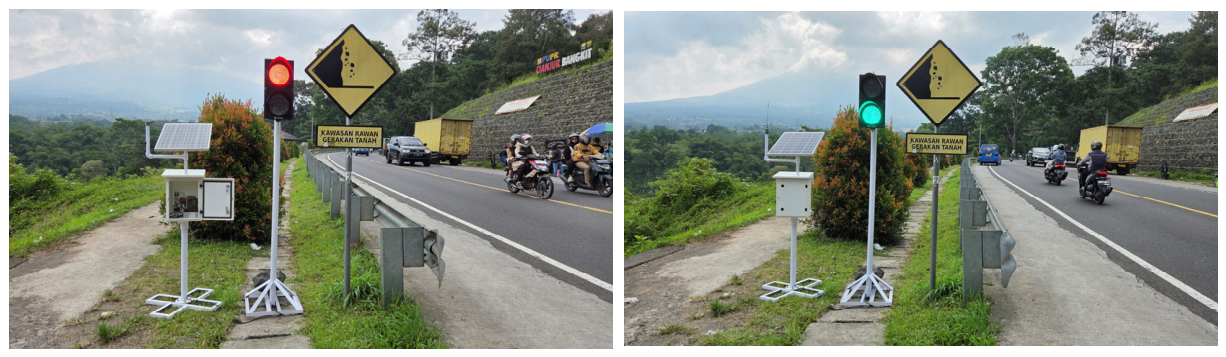
Traffic warning system instrumentation. In the figure, the Indonesian term kawasan rawan gerakan tanah refers to a landslide-prone area.
The endpoint device monitors areas prone to slope movement. It detects and measures ground shaking from earthquakes and tracks changes in ground inclination to provide early landslide warnings. The device features a microcontroller, a battery, a clock, a radio, memory, and multiple sensors that detect shaking and inclination. Micro-Electro-Mechanical Systems (MEMS) accelerometer and inclinometer sensors are placed underground at depths of 3, 6, and 9 m to monitor subsurface changes. The monitoring sensor depths were selected based on field interpretation of the inferred slip surface geometry. Sensors were installed at depths of 3 m and 6 m to capture progressive deformation within the shallow-to-medium-depth portions of the residual soil, and a sensor at 9 m depth represents conditions at the bedrock, a relatively stable layer at a maximum depth of 10 m. These sensors send data to the microcontroller, which stores it in memory and controls periodic transmissions. Once deployed, each endpoint device periodically transmits vibration and inclination data to the systemiser via Long Range (LoRa) radio. The systemiser aggregates this data, providing real-time insights into seismic activity and possible slope movement (Figure 8).
The systemiser acts as the central unit for data aggregation and processing. It receives data from the endpoint device via the radio communication module. Data are periodically transmitted through a GSM modem integrated within the system to designated receivers, where the information is recorded and evaluated. If the received data exceeds predefined thresholds, the microcontroller triggers the acoustic alert system. The integrated loudspeaker then emits an audible early warning signal.
Both the systemiser and endpoint device operate with dedicated embedded programming routines. The endpoint device collects sensor data, timestamps it, configures its sensors, stores the data, and transmits data packets. The systemiser receives these packets through a WSN over a LoRa radio link. This setup enables the endpoint device and the systemiser to transmit data over long distances with low power consumption.
The traffic warning subsystem consists of a microcontroller, power supply, timer, radio module, and a roadside two-colour traffic light. Green signals normal conditions, and red signals a potential hazard. Through LoRa telemetry, the unit receives commands from the systemiser and activates when slope instability is detected. The red warning light flashes at two speeds: slow and fast, which indicate increasing hazard levels from potential slope movement along the road: alert and emergency. This graded visual signal helps drivers know when to stop or avoid the area, reducing landslide risk.
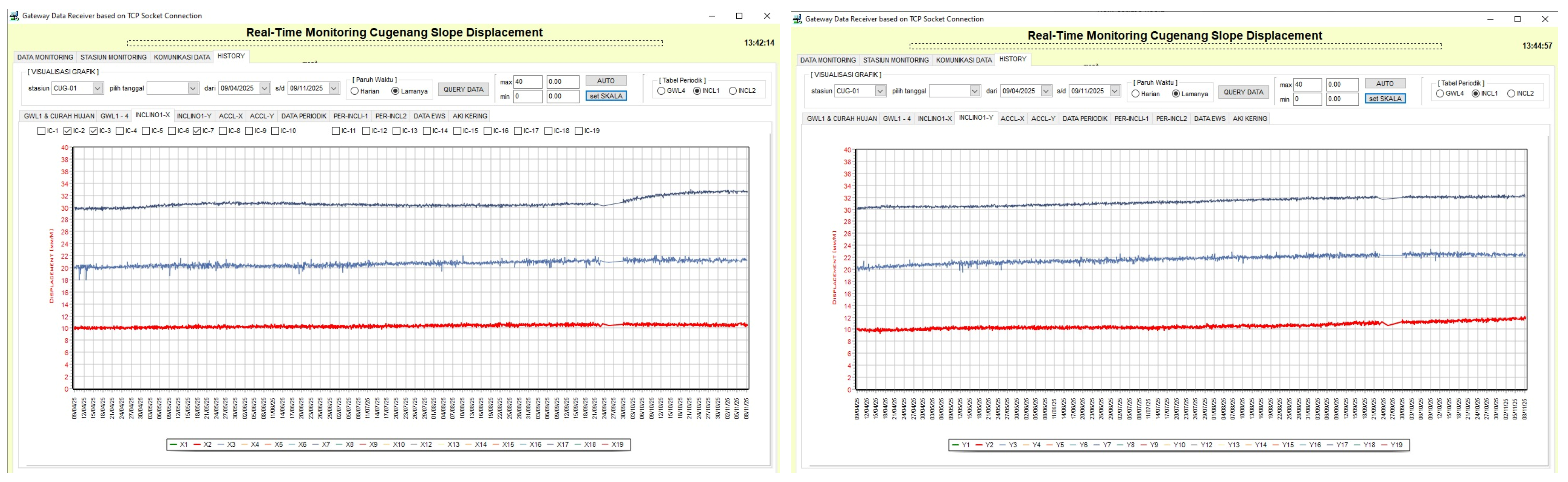
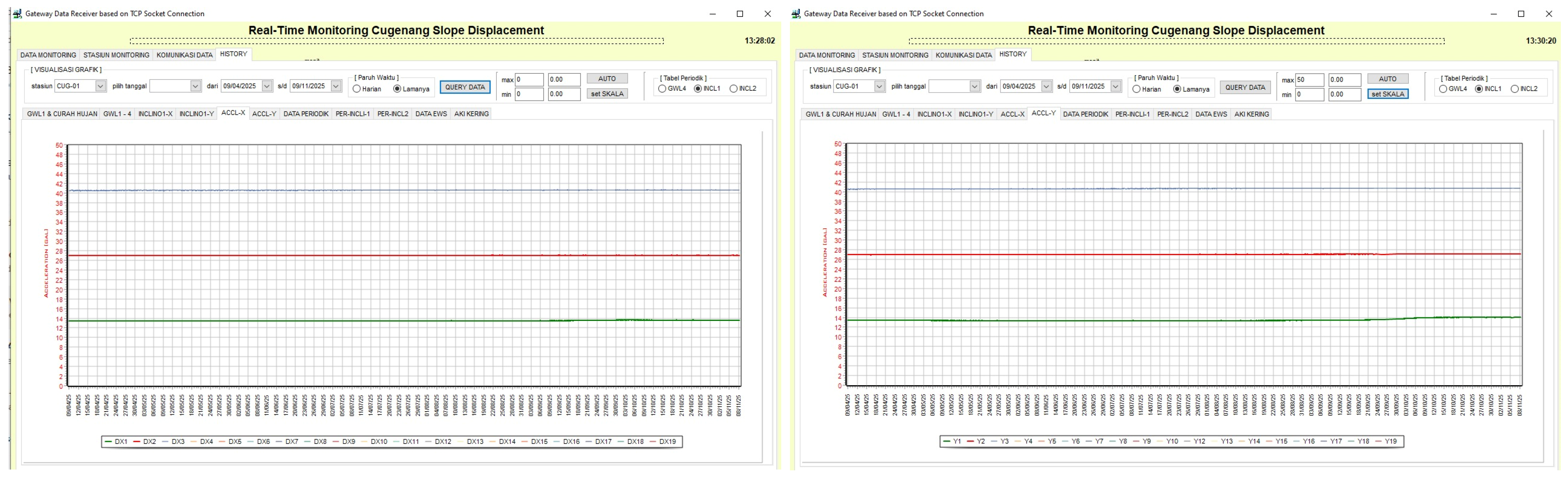
The warning system uses three levels based on PGA: Normal (<0.06 g), Alert (0.06–0.12 g), and Emergency (≥0.12 g). The upper threshold indicates a critical condition for slope instability, as determined by limit-equilibrium analysis. Besides PGA levels, warning escalation may use slope deformation rates from inclinometer data to reduce false alarms. Inclinometer thresholds were determined based on field analyses on the nature of the previous landslide movement that is compared with landslide classification [33], are: <10 mm (stable), 10–30 mm (progressive deformation), and >30 mm (critical acceleration). These were combined with seismic criteria to improve the reliability of early warning. Table 1 summarises how different warning levels, based on PGA thresholds and observed slope conditions, trigger specific system responses and corresponding traffic actions to ensure safety and timely intervention in the event of potential landslides. Figure 9 and Figure 10 present time series of inclination and ground vibration measurements recorded by the accelerometer from 9 April 2025 to 9 November 2025, respectively. The x-axis (left) and y-axis (right) components are displayed, with monitoring lines arranged from bottom to top to represent sensor readings at depths of 3 m, 6 m, and 9 m, respectively. The data indicate that vibration levels remained generally stable across all depths for both axes, with no significant changes detected over the monitoring period.
Table 1.
Warning levels and system response for landslide early warning based on PGA and inclinometer thresholds.
Figure 9.
Time series of ground inclination measurements obtained using the inclinometer between 9 April 2025 and 9 November 2025. The monitoring lines, arranged from bottom to top, correspond to sensor readings at depths of 3 m, 6 m, and 9 m, respectively.
Figure 10.
Time series of ground vibration measurements recorded by the accelerometer from 9 April 2025 to 9 November 2025. The x-axis (left) and y-axis (right) components are shown, with monitoring lines from bottom to top representing sensor readings at depths of 3 m, 6 m, and 9 m.
The monitoring data presented in this study primarily correspond to non-seismic periods and therefore do not yet provide quantitative validation of system success rate or false alarm performance under actual earthquake conditions. The current implementation focuses on operational early warning through real-time threshold detection, with PGA and deformation thresholds embedded in the endpoint device microcontroller to automatically trigger warning alarms during potential slope instability. Although the system was designed for rapid hazard detection and traffic warning dissemination, future work will include long-term seismic recording, waveform replay analysis, and validation during actual earthquake events to further evaluate response reliability and false alarm performance.
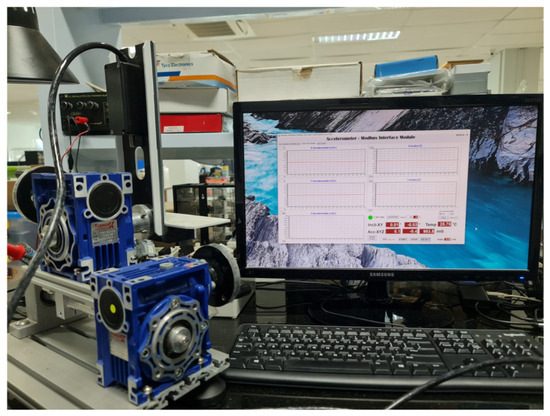
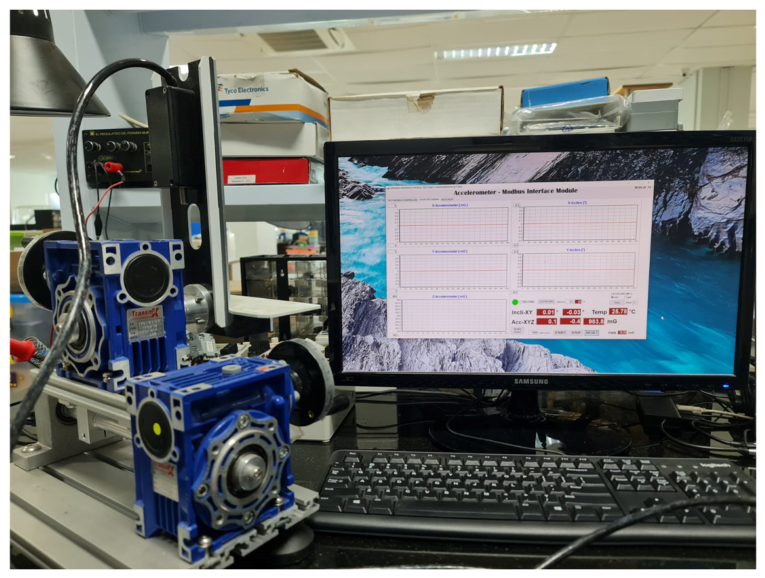
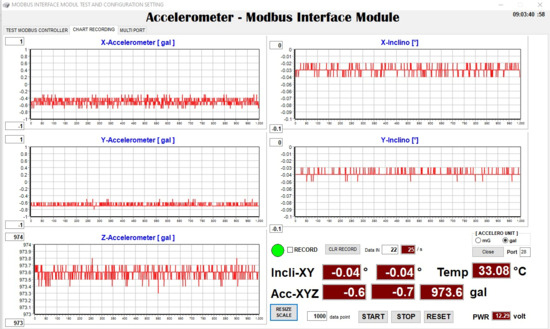
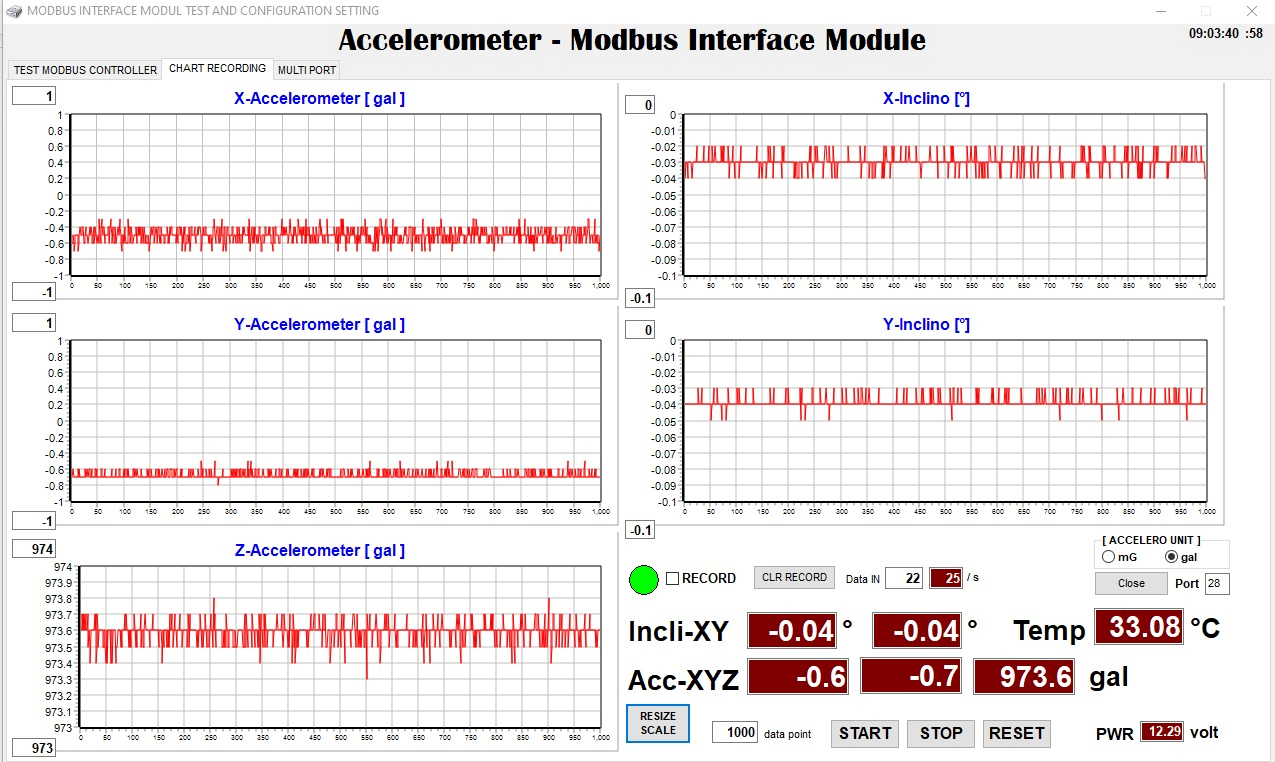
Sensor calibration and data validation were conducted using a Zero Angle Positioner from PT Terradata Komputindo, Jakarta, Indonesia (Figure 11) prior to field deployment by operating the sensors at a sampling rate of 20 Hz and evaluating the recorded signal noise characteristics under controlled conditions. The calibration process involved assessing sensor response consistency, baseline stability, and noise behaviour from accelerometer and inclinometer measurements. The resulting noise patterns and signal stability were used to verify the operational reliability of the sensors and validate the recorded monitoring data. Figure 12 shows the calibration results, where the sensor noise for Accelerometer-X is 0.2 Gal, Accelerometer-Y is 0.1 Gal, and Accelerometer-Z is 0.2 Gal, whereas the Inclinometer-X is at 0.02° and the Inclinometer-Y is at 0.01–0.02°, indicating reliable and valid data readings.
Figure 11.
Sensor calibration using Zero Angle Positioner.
Figure 12.
Sensor calibration data at a 20 Hz sampling rate show noise of 0.2 Gal at Accelerometer-X, 0.1 Gal at Accelerometer-Y, and 0.2 Gal at Accelerometer-Z, whereas Inclinometer-X is at 0.02° and Inclinometer-Y at 0.01–0.02°, respectively (1 g = 981 Gal).
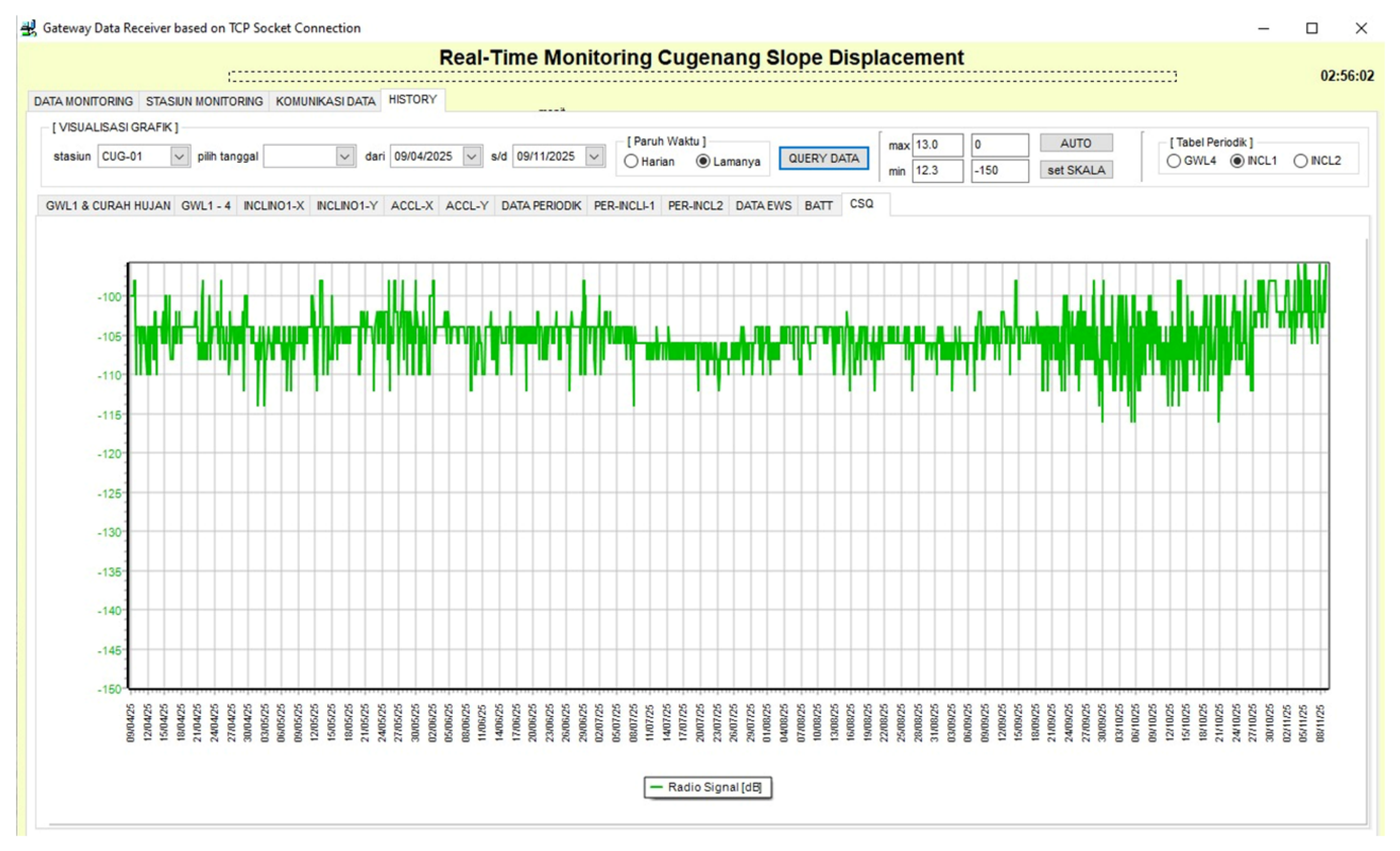
The communication performance of the LoRa-based wireless sensor network was evaluated using the Received Signal Strength Indicator (RSSI), expressed in dBm (decibels per milliwatt), which represents the received radio signal strength between the systemiser, endpoint devices, and traffic warning units. RSSI values are automatically generated by the LoRa communication module and monitored through a custom-developed software application, namely the Modem Setting Application.The monitoring results (Figure 13) show RSSI values generally above −120 dBm, indicating stable communication performance under field conditions. In the current system configuration, a minimum RSSI of approximately −120 dBm is required for reliable LoRa communication and data transmission.
Figure 13.
Time series of RSSI measurements recorded from 9 April 2025 to 9 November 2025. The RSSI values are generally above −120 dBm, indicating stable communication performance under field conditions.
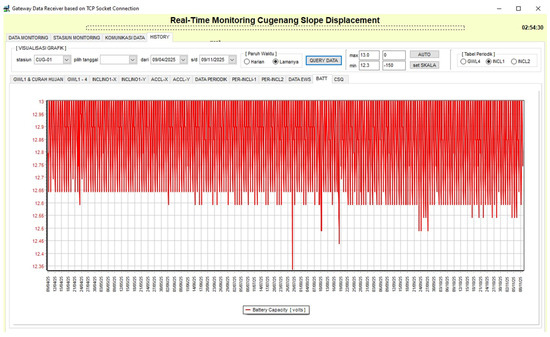
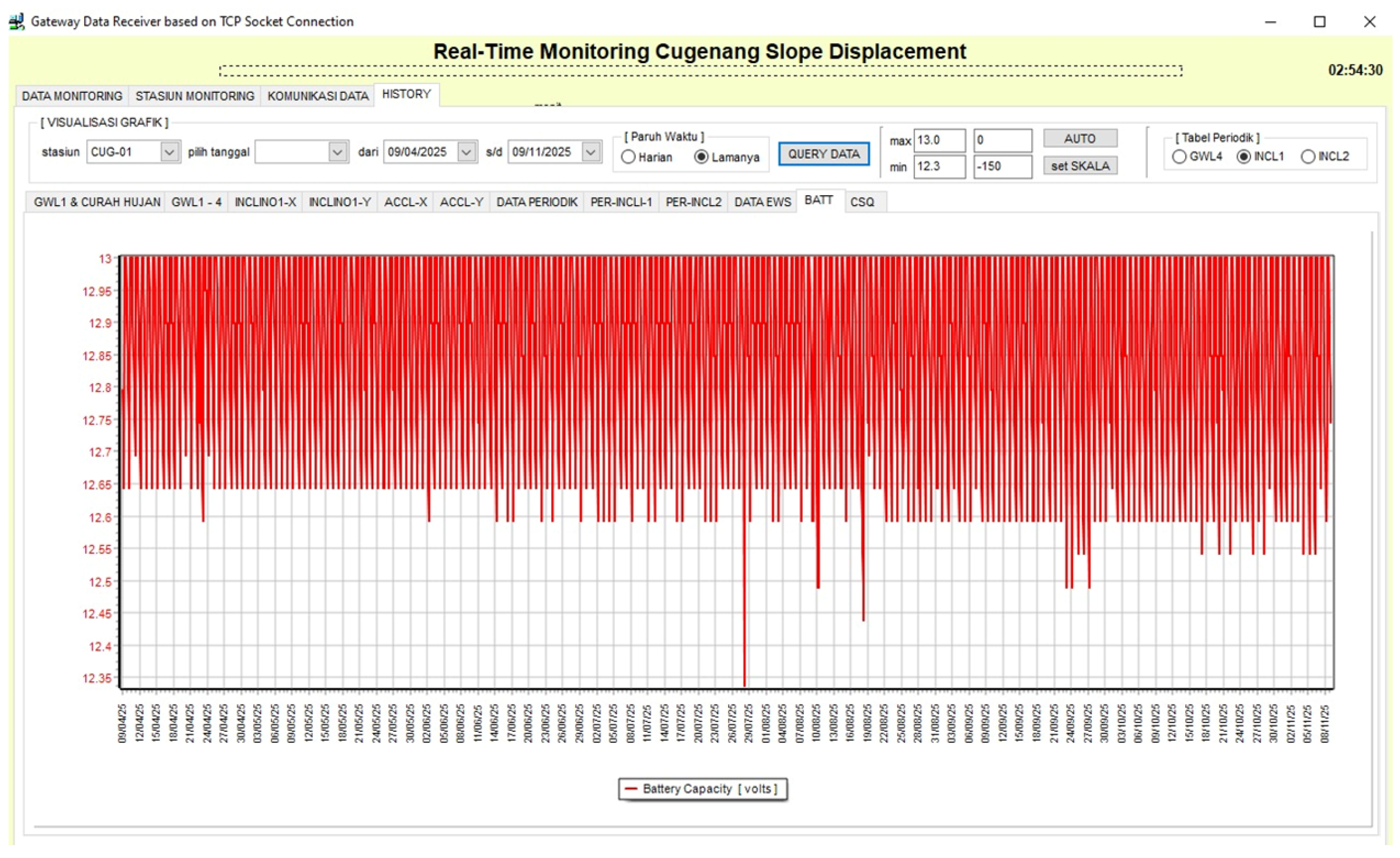
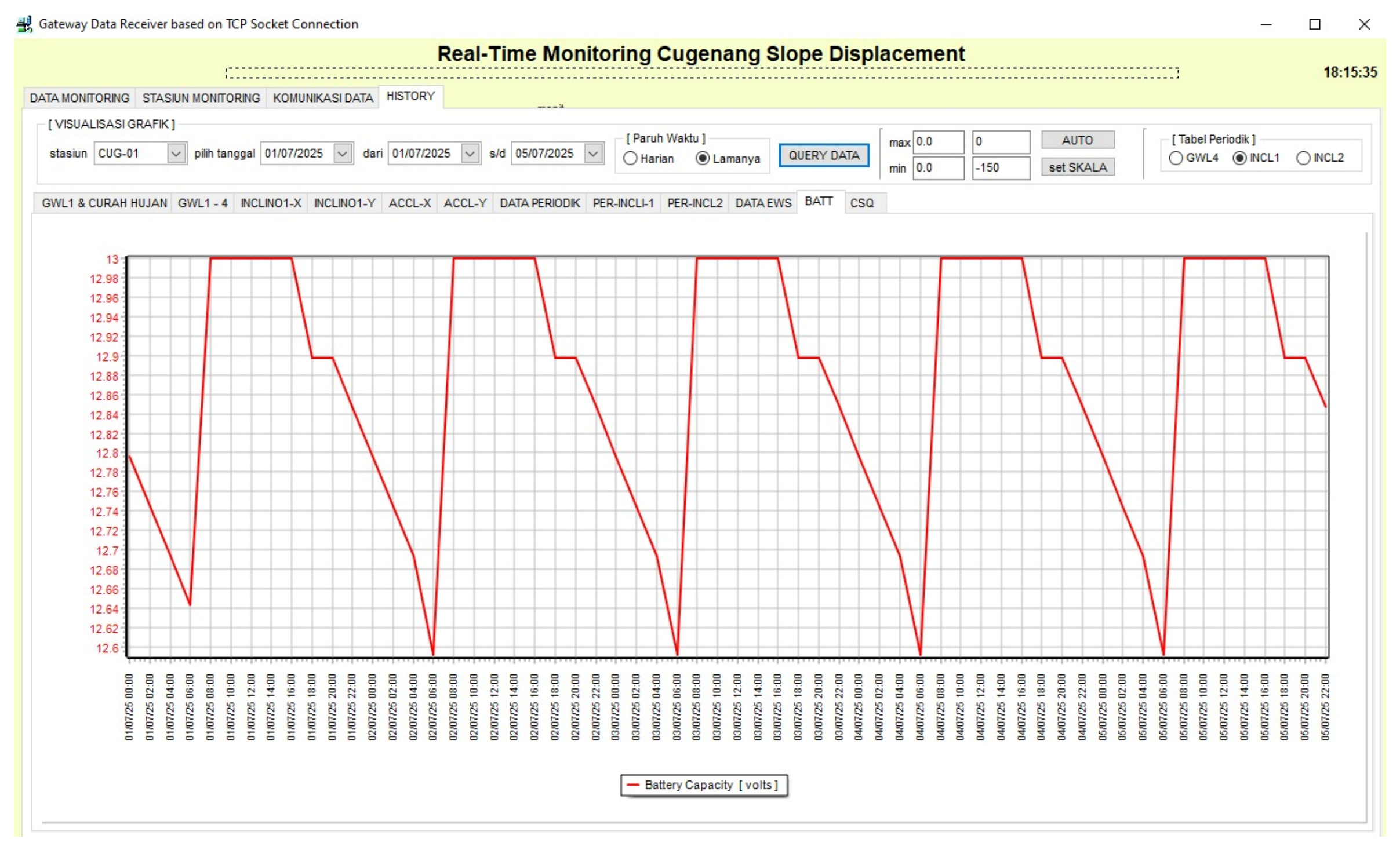
The performance and stability of the wireless sensor network (WSN/LoRa) power supply system remained relatively stable during the monitoring period from 9 April to 9 November 2025, as shown in Figure 14. The recorded voltage generally ranged from approximately 12.6 to 13.0 V, indicating that the instrumentation’s power consumption remained well below the charging capacity of the solar panel system, thereby preventing power supply deficits within the WSN/LoRa instrumentation. When the battery voltage reached approximately 13 V, the solar panel charging process became active, typically between 08:00 and 12:00 local time (Figure 15). Longer durations at approximately 13 V indicate greater electrical energy transfer from the solar panel to the battery system. When the battery voltage decreased below 13 V, the early warning system instrumentation operated primarily using stored battery power.
Figure 14.
Time series of voltage measurements from 9 April 2025 to 9 November 2025.
Figure 15.
Time series of voltage measurements from 1 July 2025 to 5 July 2025.
The stable RSSI and voltage measurements indicate that both the battery system and radio communication modules operated properly during the monitoring period and did not require significant maintenance or component replacement. Maintenance is primarily condition-based; when anomalies appear in the voltage or RSSI time-series data, such as sudden signal drops or unstable power supply behaviour, field inspection, maintenance, or component replacement is conducted as necessary. This approach supports low-maintenance, energy-efficient long-term operation in remote, mountainous areas.
4. Discussions
4.1. Landslide Hazard
Landslide potential in Cugenang is mainly determined by geological (rock and soil types) and seismotectonic (earthquake and fault-related) factors. These include highly weathered volcanic materials, which are rocks and soils broken down by long-term exposure to weather, steep slopes, and proximity to active fault systems (areas where the earth’s tectonic plates move). Earthquake-induced ground shaking (ground vibrations caused by seismic activity) can directly trigger slope failures and weaken these materials. This process increases the likelihood of reactivation during subsequent seismic events (future earthquakes). Similar geological and seismic environments worldwide show that moderate ground shaking, when combined with unfavourable lithology (the physical characteristics of rocks) and topography (the arrangement of the land’s surface), can cause extensive landsliding [34,35,36]. These observations highlight the need for integrated monitoring and mitigation strategies along road corridors in seismically active regions such as Cugenang.
The identified ground-shaking threshold of approximately 0.12 g serves as a lower-bound value for earthquake-induced landslides. Previous studies have documented widespread landsliding primarily at PGA (the maximum increase in ground velocity during an earthquake) values exceeding 0.1–0.2 g. However, localised failures have also occurred at 0.05–0.1 g under adverse conditions, including steep slopes, highly weathered (broken-down) materials, site amplification (increased shaking at specific locations due to local geology), and elevated groundwater levels [34]. In tropical and volcanic terrains, relatively low accelerations can initiate shallow failures or reactivate pre-existing instabilities. This reflects high slope sensitivity to moderate shaking. Earthquake magnitude alone cannot reliably predict slope failure. Instead, ground-shaking characteristics and local geotechnical conditions are key determinants. Recent studies demonstrate that slope stability is shaped by the intensity, frequency, and duration of shaking combined with site-specific factors, such as soil strength, rock structure, and moisture content [37,38,39,40].
4.2. Landslide Monitoring Dan Warning Systems
The proposed monitoring and warning system integrates in situ sensing, data coordination, and traffic warning to address the rapid onset of earthquake-triggered landslides along road corridors. Warning classification is established using a critical PGA threshold of 0.12 g, derived from the lower limit equilibrium analysis and corresponding to near-failure conditions (FoS ≈ 1.1). A lower bound threshold of 0.06 g, corresponding to approximately 50–60% of the critical value, captures the onset of a nonlinear slope response and potential micro-deformation under seismic loading. Three warning levels are defined: Normal (<0.06 g), Alert (0.06–0.12 g), and Emergency (≥0.12 g). This classification enables progressive risk identification and supports staged operational responses, ranging from monitoring to immediate traffic restriction. The approach aligns with geotechnical principles of progressive failure and provides a practical basis for real-time early warning in data-limited environments. The system comprises an endpoint device equipped with MEMS accelerometers to detect ground shaking and slope inclination, a coordinator unit that aggregates seismic and deformation data, and a traffic warning system that provides visual and acoustic alerts to road users (Figure 5 and Figure 6).
Integrated multi-sensor landslide monitoring systems utilising wireless networks enable real-time data acquisition and multi-level early warning, offering cost-effective, wide-area coverage and timely automated alerts [41]. Similarly, MEMS-based monitoring systems detect landslide precursors in real time and support effective, graded early warning, though adaptive threshold development and improved long-term accuracy are still needed [11]. Additionally, site-specific monitoring, when combined with simplified thresholds and expert judgement, further mitigates landslide infrastructure risk [8]. Building on this approach, the implementation of radio-frequency telemetry without subscription costs increases system robustness and applicability in remote regions.
Previous studies have demonstrated the growing potential of wireless sensor networks, MEMS-based monitoring, IoT technologies, and data-driven approaches for landslide early warning applications in both international and Indonesian contexts [10,11,12,42,43,44,45]. Existing systems commonly use tilt sensors, accelerometers, rainfall monitoring, and multi-parameter threshold approaches to support real-time detection of slope instability and the dissemination of warnings. Several studies have also demonstrated the applicability of LoRa-based telemetry and low-power wireless communication for monitoring in remote mountainous environments. More recent studies [12], have further explored artificial intelligence and machine learning approaches for landslide prediction and susceptibility assessment without direct field instrumentation. However, most previous studies primarily focus on rainfall-induced landslides, prototype-scale implementations, or data-driven susceptibility analysis, with limited integration between physically based seismic threshold modelling, real-time field instrumentation, and operational traffic warning functions.
Compared with previous studies (Table 2), the proposed framework represents one of the first integrated operational applications in the region, combining slope stability-derived PGA thresholds with real-time accelerometer and inclinometer monitoring within a LoRa and GSM-based wireless sensor network specifically designed for earthquake-induced landslides in highly weathered tropical volcanic slopes. The system further incorporates operational warning functions for transportation management, including automated traffic warning activation and graded hazard response. This integrated approach provides a practical, scalable framework for improving transportation resilience and reducing landslide risk in seismically active, mountainous regions.
Table 2.
Comparison of the proposed framework with previous international and Indonesian landslide early warning studies.
Rainfall is an important factor influencing slope stability and can affect both seismic threshold conditions and the operational reliability of landslide early warning systems, particularly in highly weathered tropical volcanic terrains. Increased pore-water pressure and reduced effective shear strength resulting from antecedent rainfall may increase slope susceptibility to earthquake-induced failure. Local information indicates that no large landslide events have occurred in Cugenang in recent years, despite high rainfall during the rainy season. This observation suggests that the earthquake was likely the primary triggering factor of the 2022 landslides. However, future research could integrate rainfall threshold analysis, rain gauge monitoring, and coupled hydro-mechanical modelling to assess the influence of antecedent rainfall conditions on seismic thresholds and the performance of landslide early warning systems, thereby enhancing their reliability and robustness.
The framework for this landslide monitoring and traffic warning instrumentation can be scaled up to regional or corridor-wide implementation by deploying multiple endpoint devices across different landslide-prone slopes. Each slope may have different threshold values depending on local slope stability conditions, geological characteristics, and geotechnical analysis results. The corresponding threshold values can be individually programmed into the microcontroller of each endpoint device based on site-specific stability analysis. In the proposed architecture, the systemiser functions as a central processing unit capable of simultaneously receiving and integrating monitoring data from multiple endpoint devices and triggering warning alarms when thresholds are exceeded. In addition, threshold values can be adjusted remotely without direct access to endpoint devices via GSM-based communication over the internet or SMS services, enabling automatic threshold updates.
5. Conclusions
Earthquake-induced landslide hazard in the Cugenang area, Cianjur Regency, West Java, is governed by the combined effects of weak volcanic materials, steep slope geometry, and active seismotectonic conditions associated with the Cugenang Fault. The slopes, composed of highly weathered pyroclastic deposits from Mount Gede, exhibit high plasticity, high porosity, and low shear strength, which increases their susceptibility to degradation under seismic loading. These intrinsic material properties, along with groundwater conditions and anthropogenic slope modifications, substantially increase slope instability.
Limit equilibrium analyses using the Morgenstern–Price method indicate a systematic reduction in the factor of safety as seismic loading and groundwater levels increase. A critical seismic threshold was identified at a horizontal seismic coefficient (kh) of approximately 0.06, corresponding to a peak ground acceleration of about 0.12 g. This relatively low threshold indicates that slope failure in tropical volcanic terrains can be triggered by moderate ground shaking, underscoring the need for site-specific hazard characterisation beyond earthquake magnitude.
Based on these findings, an integrated early warning framework was developed to translate physically based thresholds into operational decision-making. The system incorporates MEMS accelerometers, inclinometer measurements, and wireless sensor networks to enable continuous monitoring of ground motion and slope deformation. A three-level warning classification—Normal (<0.06 g; <10 mm), Alert (0.06–0.12 g; 10–30 mm), and Emergency (≥0.12 g; >30 mm)—captures progressive slope behaviour, enhances detection reliability, and reduces false alarms.
This study presents a transferable framework that integrates geotechnical analysis, seismic threshold modelling, and real-time monitoring for managing earthquake-induced landslides. The approach is particularly suited to data-limited, seismically active volcanic regions. Future research should incorporate probabilistic analysis, refine threshold calibration using long-term monitoring data, and extend the framework to broader spatial scales to further enhance reliability and applicability.
Author Contributions
Conceptualization, methodology, writing—original draft preparation, I.G.T., E.B.B. and E.H.S.; software, formal analysis, drawing, writing—original draft preparation, W.C. and H.E.H.F.; formal analysis, investigation, writing—original draft preparation, T.H., A.M., M.D. and I.S.; writing—review and editing, supervision, I.G.T., E.B.B., E.H.S., Z.Z. and T.P.; visualisation, data curation, formal analysis, F.S., M.L.A. and R.A.S.; project administration, funding acquisition, E.H.S., I.G.T. and T.H. All authors have read and agreed to the published version of the manuscript.
Funding
The implementation of landslide monitoring and traffic warning instrumentation has been supported by the National Research and Innovation Agency (BRIN) for the fiscal year 2025, under number 1/III.4/Hk/2025.
Institutional Review Board Statement
Not applicable.
Informed Consent Statement
Not applicable.
Data Availability Statement
The original data used in this study are not directly included in the article. For access to the relevant data, please contact the corresponding author.
Acknowledgments
The research team thanks Ocky Karna Rajasa and Luki Subehi, the Head and Acting Head of the Earth and Maritime Research Organisation (ORKM), and Adrin Tohari, Head of the Research Center for Geological Disaster of the National Research and Innovation Agency (BRIN), for providing crucial administrative coordination and technical expertise that facilitated the project’s progress.
Conflicts of Interest
Author Michele Daly was employed by the company Earth Sciences NZ. The remaining authors declare that the research was conducted in the absence of any commercial or financial relationships that could be construed as a potential conflict of interest.
Abbreviations
The following abbreviations are used in this manuscript:
| PGA | Peak Ground Acceleration |
| MEMS | Micro-Electro-Mechanical Systems |
| PI | Plasticity Index |
| LoRa | Long Range |
| Mw | Moment Magnitude |
| DEM | Digital Elevation Model |
| LEM | Limit Equilibrium Method |
| WSN | Wireless Sensor Network |
| FoS | Factor of Safety |
| SW | Surface Water |
| SHBTS | Slope Height Behind the Toe of the Slope |
| Kh | Horizontal Seismic Coefficient |
| kPA | Kilo Pascal |
| kN | Kilo Newton |
| dBm | Decibels Per Miliwatt |
| RSSI | Received Signal Strength Indicator |
| V | Volt |
References
- Alcántara-Ayala, I. Landslides in a Changing World. Landslides 2025, 22, 2851–2865. [Google Scholar] [CrossRef] [Scilit]
- Román-Herrera, J.C.; Delgado, J.; Rodríguez-Peces, M.J.; Peláez, J.A.; Garrido, J. Evaluation of Road Network Slopes Susceptibility to Seismically-Induced Landslides in the Granada Basin (S Spain). Front. Earth Sci. 2023, 11, 1226894. [Google Scholar] [CrossRef] [Scilit]
- Faris, F.; Fawu, W. Investigation of the Initiation Mechanism of an Earthquake-Induced Landslide during Rainfall: A Case Study of the Tandikat Landslide, West Sumatra, Indonesia. Geoenvironmental Disasters 2014, 1, 4. [Google Scholar] [CrossRef] [Scilit]
- Zhao, B. Landslides Triggered by the 2018 Mw 7.5 Palu Supershear Earthquake in Indonesia. Eng. Geol. 2021, 294, 106406. [Google Scholar] [CrossRef] [Scilit]
- Zhao, B.; Liao, H.; Su, L. Landslides Triggered by the 2018 Lombok Earthquake Sequence, Indonesia. CATENA 2021, 207, 105676. [Google Scholar] [CrossRef] [Scilit]
- Gunawan Tejakusuma, I.; Prawiradisastra, F.; Sugianti, K.; Tohari, A.; Zakaria, Z.; Trisnafiah, S.; Fitriani, R.; Biwas Putra, D.; Pri Martireni, A.; Budiman, B. Characteristics of Landslides Induced by an Earthquake from a Hidden Strike-Slip Active Fault in the Cianjur Area of West Java. E3S Web Conf. 2023, 447, 01009. [Google Scholar] [CrossRef] [Scilit]
- Zhao, B.; Su, L.; Xu, Q.; Li, W.; Xu, C.; Wang, Y. A Review of Recent Earthquake-Induced Landslides on the Tibetan Plateau. Earth-Sci. Rev. 2023, 244, 104534. [Google Scholar] [CrossRef] [Scilit]
- Intrieri, E.; Gigli, G.; Mugnai, F.; Fanti, R.; Casagli, N. Design and Implementation of a Landslide Early Warning System. Eng. Geol. 2012, 147–148, 124–136. [Google Scholar] [CrossRef] [Scilit]
- Towhata, I. Damage of Heavy Rain on Local Transportation Line; Springer: Singapore, 2019; pp. 247–265. [Google Scholar]
- Wang, L.; Seko, I.; Fukuhara, M.; Towhata, I.; Uchimura, T.; Tao, S. Risk Evaluation and Warning Threshold of Unstable Slope Using Tilting Sensor Array. Nat. Hazards 2022, 114, 127–156. [Google Scholar] [CrossRef] [Scilit]
- Liao, Y.; Wu, L.; Liu, P.; Yang, Y. A Novel High-Frequency Landslide Monitoring Device Based on MEMS Sensors and Real-Time Early Warning Method. Appl. Sci. 2025, 16, 282. [Google Scholar] [CrossRef] [Scilit]
- Chen, Y.; Yuan, H.; Chen, J.; Pan, R.; Deng, L.; Huang, L.; Zhang, M.; Yang, Q. Landslide Early Warning Model Based on Multi-Source Monitoring Data and Unsupervised Machine Learning. Eng. Appl. Artif. Intell. 2026, 164, 113156. [Google Scholar] [CrossRef] [Scilit]
- Omprakash, N.; Santhanalakshmi, V.; Balan, D.P.S. Qualitative Analysis on Early Warning Systems on Land Slide through Sensor Technology and Environmental Monitoring in Disaster Preparedness. Int. J. Innov. Sci. Res. Technol. 2025, 10, 434–437. [Google Scholar] [CrossRef] [Scilit]
- BMKG. Gempa Cianjur Disebabkan Sesar Cugenang, BMKG Dorong Pemkab Cianjur Relokasi 9 Desa. Available online: https://www.bmkg.go.id/siaran-pers/gempa-cianjur-disebabkan-sesar-cugenang-bmkg-dorong-pemkab-cianjur-relokasi-9-desa (accessed on 17 November 2025).
- Ardha, Y.K.; Satyarno, I.; Marliyani, G.I. Probabilistic Seismic Hazard Analysis Assessment in Cianjur Following the Mw 5.6, 2022 Earthquake. J. Civ. Eng. Forum 2025, 11, 245–256. [Google Scholar] [CrossRef]
- Sassa, K.; Tiwari, B.; Liu, K.-F.; McSaveney, M.; Strom, A.; Setiawan, H. (Eds.) Landslide Dynamics: ISDR-ICL Landslide Interactive Teaching Tools; Springer International Publishing: Cham, Switzerland, 2018. [Google Scholar]
- Wang, C.; Hawlader, B.; Islam, N.; Soga, K. Implementation of a Large Deformation Finite Element Modelling Technique for Seismic Slope Stability Analyses. Soil. Dyn. Earthq. Eng. 2019, 127, 105824. [Google Scholar] [CrossRef] [Scilit]
- Azarafza, M.; Akgün, H.; Ghazifard, A.; Asghari-Kaljahi, E.; Rahnamarad, J.; Derakhshani, R. Discontinuous Rock Slope Stability Analysis by Limit Equilibrium Approaches—A Review. Int. J. Digit. Earth 2021, 14, 1918–1941. [Google Scholar] [CrossRef] [Scilit]
- Toha, M.T.; Setiabudidaya, D.; Ghadafi, M.A.; Adiwarman, M.; Irvan, M. Pseudo-Static Slope Stability Analysis around the Landslide at Railway Tunnel, South Sumatera, Indonesia. IOP Conf. Ser. Mater. Sci. Eng. 2019, 620, 012129. [Google Scholar] [CrossRef] [Scilit]
- Macedo, J.; Candia, G. Performance-Based Assessment of the Seismic Pseudo-Static Coefficient Used in Slope Stability Analysis. Soil. Dyn. Earthq. Eng. 2020, 133, 106109. [Google Scholar] [CrossRef] [Scilit]
- SNI 1726:2019; BSN Tata Cara Perencanaan Ketahanan Gempa Untuk Struktur Bangunan Gedung Dan Nongedung. Badan Standardisasi Nasional: Jakarta, Indonesia, 2019.
- SNI 8460:2017; BSN Persyaratan Perancangan Geoteknik. Badan Standardisasi Nasional: Jakarta, Indonesia, 2017.
- Kementerian PUPR. Kajian Gempa Cianjur Provinsi Jawa Barat 21 November 2022 (M5,6); Kementerian PUPR: Jakarta, Indonesia, 2023; 467p. [Google Scholar]
- Duncan, J.M.; Wright, S.G. Soil Strength and Slope Stability; John Wiley & Sons Inc.: Hoboken, NJ, USA, 2005; 295p. [Google Scholar]
- Sudjatmiko. Geologic Map of the Cianjur Quadrangle, Jawa; Direktorat Geologi: Bandung, Indonesia, 1972. [Google Scholar]
- Rahmadi; Wibowo, A. Perubahan Tutupan Vegetasi Terhadap Daerah Rawan Longsor Di Kabupaten Cianjur, Provinsi Jawa-Barat. J. Spat. Wahana Komun. Inf. Geogr. 2023, 23, 180–185. [Google Scholar] [CrossRef] [Scilit]
- Astuty, Y.I.; Mardalena, A.; WIbowo, A. Analisis Perubahan Penggunaan Lahan di Kabupaten Cianjur. J. Spat. Wahana Komun. Inf. Geogr. 2023, 23, 48–59. [Google Scholar] [CrossRef] [Scilit]
- Verma, R.; Kaur, H.; Dwivedi, A. Land Use/Land Cover Changes and Climate Change as Conditioning Factors for Landslide: A Review. Econ. Environ. Geol. 2026, 59, 159–175. [Google Scholar] [CrossRef] [Scilit]
- Bozzolan, E.; Holcombe, E.A.; Pianosi, F.; Marchesini, I.; Alvioli, M.; Wagener, T. A Mechanistic Approach to Include Climate Change and Unplanned Urban Sprawl in Landslide Susceptibility Maps. Sci. Total Environ. 2023, 858, 159412. [Google Scholar] [CrossRef] [Scilit]
- Fiolleau, S.; Uhlemann, S.; Falco, N.; Dafflon, B. Assessing Probability of Failure of Urban Landslides through Rapid Characterization of Soil Properties and Vegetation Distribution. Geomorphology 2023, 423, 108560. [Google Scholar] [CrossRef] [Scilit]
- Villeneuve, M.C.; Heap, M.J. Calculating the cohesion and internal friction angle of volcanic rocks and rock masses. Volcanica 2021, 4, 279–293. [Google Scholar] [CrossRef] [Scilit]
- Indrawan, I.G.B.; Tamado, D.; Abrar, M.; Warmada, I.W. Mineralogical and Engineering Properties of Soils Derived from In Situ Weathering of Tuff in Central Java, Indonesia. Geosciences 2024, 14, 213. [Google Scholar] [CrossRef] [Scilit]
- Cruden, D.M.; Varnes, D.J. Landslide Types and Processes. In Landslides, Investigation and Mitigation; Turner, A.K., Schuster, R.L., Eds.; National Research Council, National Academy Press: Washington, DC, USA, 1996; pp. 36–75. [Google Scholar]
- Harp, E.L.; Keefer, D.K.; Sato, H.P.; Yagi, H. Landslide Inventories: The Essential Part of Seismic Landslide Hazard Analyses. Eng. Geol. 2011, 122, 9–21. [Google Scholar] [CrossRef] [Scilit]
- Keefer, D.K. Investigating Landslides Caused by Earthquakes—A Historical Review. Surv. Geophys. 2002, 23, 473–510. [Google Scholar] [CrossRef] [Scilit]
- Bai, S.; Lu, P.; Thiebes, B. Comparing Characteristics of Rainfall- and Earthquake-Triggered Landslides in the Upper Minjiang Catchment, China. Eng. Geol. 2020, 268, 105518. [Google Scholar] [CrossRef] [Scilit]
- Murphy, B. Coseismic Landslides. In Landslide Hazards, Risks, and Disasters; Elsevier: Amsterdam, The Netherlands, 2022; pp. 99–138. [Google Scholar]
- He, J.; Fu, H.; Zhang, Y.; Wan, A. The Effect of Surficial Soil on the Seismic Response Characteristics and Failure Pattern of Step-like Slopes. Soil. Dyn. Earthq. Eng. 2022, 161, 107441. [Google Scholar] [CrossRef] [Scilit]
- Tian, Y.; Xu, C.; Yuan, R. Earthquake-Triggered Landslides. In Treatise on Geomorphology; Elsevier: Amsterdam, The Netherlands, 2022; pp. 583–614. [Google Scholar]
- Singeisen, C.; Massey, C.; Wolter, A.; Kellett, R.; Bloom, C.; Stahl, T.; Gasston, C.; Jones, K. Mechanisms of Rock Slope Failures Triggered by the 2016 Mw 7.8 Kaikōura Earthquake and Implications for Landslide Susceptibility. Geomorphology 2022, 415, 108386. [Google Scholar] [CrossRef] [Scilit]
- Chaulya, S.K.; Mishra, P.K.; Kumar, N.; Kumar, V.; Rawani, V.K. Landslide Monitoring and Prediction System Using Geosensors and Wireless Sensor Network. Discov. Geosci. 2024, 2, 6. [Google Scholar] [CrossRef] [Scilit]
- Hidayat, R.; Sutanto, S.J.; Hidayah, A.; Ridwan, B.; Mulyana, A. Development of a Landslide Early Warning System in Indonesia. Geosciences 2019, 9, 451. [Google Scholar] [CrossRef] [Scilit]
- Gamperl, M.; Singer, J.; Thuro, K. Internet of Things Geosensor Network for Cost-Effective Landslide Early Warning Systems. Sensors 2021, 21, 2609. [Google Scholar] [CrossRef] [Scilit]
- Poetra, A.G.E.; Wagyana, A.; Febrian, M.R. Rancang Bangun Perangkat Keras Sistem Pemantau Potensi Tanah Longsor dengan Wireless Sensor Network Berbasis LoRa. Spektral 2024, 5, 252–260. [Google Scholar] [CrossRef] [Scilit]
- Satrio, B.; Rachmawardani, A.; Martha, A.A.; Prasetyo, D.I. Wireless Sensor Network-Based Landslide Monitoring System Using ESP32 and LoRaWAN Technology. Pros. Semin. Nas. Fis. 2025, 14, 10–18. [Google Scholar] [CrossRef]

Disclaimer/Publisher’s Note: The statements, opinions and data contained in all publications are solely those of the individual author(s) and contributor(s) and not of MDPI and/or the editor(s). MDPI and/or the editor(s) disclaim responsibility for any injury to people or property resulting from any ideas, methods, instructions or products referred to in the content. |
© 2026 by the authors. Licensee MDPI, Basel, Switzerland. This article is an open access article distributed under the terms and conditions of the Creative Commons Attribution (CC BY) license.