Article

Correlation Between Dynamic Response and Mineralogical Micro-Structures in Mineralized and Metamorphic Geological Formations: A Vibration-Based Approach


by
Haitham M. Ahmed
1 and
Essam B. Moustafa
2,3,*
1
Mining Engineering Department, King Abdulaziz University, Jeddah 21589, Saudi Arabia
2
Center for Converging Sciences and Emerging Technology (CoSET), Benha National University (BNU), Al Obour 13518, Egypt
3
Faculty of Engineering, Benha National University (BNU), Al Obour 13518, Egypt
*
Author to whom correspondence should be addressed.
Eng 2026, 7(6), 276; https://doi.org/10.3390/eng7060276
Submission received: 29 April 2026 / Revised: 22 May 2026 / Accepted: 23 May 2026 / Published: 3 June 2026
(This article belongs to the Section Chemical, Civil and Environmental Engineering)

Abstract

This study examines the complex interplay between dynamic response and mineralogical microstructures across various geological formations, particularly differentiating between mineralized and metamorphic rocks. Utilizing a comprehensive vibration-based approach, in conjunction with petrographic analysis and ultrasonic wave propagation, the study clarifies the significant impact of microstructural features, such as disseminated sulfides and foliated planes, on the complex’s global dynamic behavior. This study investigates six representative rock samples from mineralized and metamorphic geological zones using integrated petrographic analysis, ultrasonic wave velocity testing, density and physical property measurements, and free-vibration dynamic analysis. The results show that the composition and mechanical properties differ significantly. Mineralized rocks contain a high proportion of sulfide minerals, reaching approximately 75% in some samples, and exhibit significantly higher densities, with the APZ sample reaching 3950 kg/m3. In contrast, metamorphic rocks have an average density of 2700 kg/m3. This difference in composition leads to different dynamic responses. Mineralized zones have dynamic elastic moduli that are much higher than those of metamorphic rocks, with Young’s Modulus reaching up to 134.17 GPa and shear moduli ranging from 49.78 GPa to 56.14 GPa, which is about 50% higher than metamorphic rocks (28.9 GPa to 30.5 GPa). However, macro-mechanical deflection tests show that highly foliated metamorphic rocks (like PFT) exhibit the largest deflection of 0.52 mm, while demineralized rocks (like CP) exhibit the smallest deflection of 0.26 mm. Dynamic vibration analysis shows that microstructural “flaws” significantly affect energy dissipation. For example, the Transitional Phase Zone (TPZ) in mineralized rocks has the highest damping ratio (1.67%) and the lowest natural frequency (270 Hz) in its suite. This is different from the more rigid Advanced Pyritization Zone (APZ), which has a damping ratio of 1.1% and a frequency of 395 Hz. These new correlations provide a more accurate basis for the non-destructive assessment of structural stability in mineralized settings, highlighting that local micro-stiffness does not necessarily indicate macroscopic dynamic rigidity.

1. Introduction

In geotechnical engineering, mining, and seismology, it is crucial to understand the mechanical and dynamic properties of geological formations. Rocks are heterogeneous, anisotropic materials that exhibit complex behavior when subjected to different loads [1,2]. This is because of the minerals they are composed of and how they are arranged at the microscopic level [3]. Heavy metallic sulfides in mineralized zones alter the bulk physical properties, such as density and elastic moduli, significantly compared to the metamorphic host rocks [4]. To keep underground excavations stable and extract the maximum amount of minerals, it is important to understand these differences. Destructive testing is often used to evaluate rock properties using traditional methods. This can take a long time and may not fully show how the rock mass behaves in its natural state [5,6]. As a result, non-destructive testing (NDT) methods such as ultrasonic wave propagation and vibration-based analysis have become more popular because they can quickly and accurately assess the integrity of materials [7,8]. People often use ultrasonic pulse velocity (UPV) measurements to determine elastic constants and detect flaws within rock matrices [9,10]. Nonetheless, the efficacy of UPV may be affected by micro-fractures, pore fluids, and mineralogical heterogeneity [11,12]. Metamorphic rocks, characterized by foliated textures and secondary mineral assemblages, pose distinctive challenges for dynamic characterization [13,14]. Metamorphism often causes minerals to align in certain ways and silica matrices to form, which can “heal” existing microcracks and improve the rock’s acoustic connectivity [15].
On the other hand, mineralized ores, such as massive sulfides, are composed mostly of dense minerals, including Pyrite, Sphalerite, and chalcopyrite [16,17]. These minerals not only increase the bulk density but also create large impedance differences at grain boundaries, thereby altering the propagation of elastic waves through the material [18]. Recent research has underscored the importance of vibration-based techniques, including free-vibration analysis, for determining the fundamental natural frequencies and damping properties of geological, metallic, and non-metallic materials [19,20,21]. The natural frequency of a rock specimen is a global parameter that reflects its overall stiffness and weight [22]. Damping, conversely, elucidates the mechanisms of energy dissipation within the rock matrix, which are often influenced by internal friction at mineral interfaces and microstructural defects [23,24]. Even though these methods could be useful, there are not many studies that examine how the dynamic response of rocks relates to their detailed mineralogical microstructures, especially when moving from metamorphic host rocks to large mineralized ores [25,26]. The interaction between solid phases and pore spaces also affects rock elastic behavior [27,28]. Many studies have been developed to explain seismic velocities in porous and cracked media [29,30,31]. These models frequently assume idealized geometries and may inadequately represent the intricate intergrowths and hydrothermal alteration products present in mineralized systems [32,33]. The foliation and lineation in metamorphic rocks make them anisotropic, which means that wave speeds and mechanical strength depend on direction [34]. This anisotropy is frequently overlooked in conventional correlation studies, potentially leading to inaccurate forecasts of rock mass behavior. While conventional correlation studies frequently overlook this anisotropy—potentially leading to inaccurate forecasts of rock mass behavior this work takes a deliberate approach to bridge the micro- and macro-scales. Rather than mapping isolated directional variations, this study aims to characterize the rock mass’s global, macroscopic bulk dynamic behavior. To achieve this, ultrasonic and free-vibration measurements were carried out along a standardized longitudinal axis. This comprehensive, vibration-based methodology allows us to assess the integrated response of the complex rock matrix as a single structural component. It provides vital insight into how collective internal planes of compliance, including disseminated sulfides and foliated planes, control bulk energy dissipation and structural deformation under uniform boundary conditions. Ultimately, the main goal of this research is to examine the relationship between these dynamic responses and mineralogical microstructures, specifically focusing on the effects of hydrothermal alteration and secondary silica flooding on the rock matrix’s acoustic properties. By moving beyond a strict reliance on ultrasonic velocities, this study establishes novel correlations, offering a more precise framework for the non-destructive evaluation of structural stability in mineralized environments.

2. Experimental Work

2.1. Sample Preparation and Microscopic Examination

The samples were first examined in hand specimens (core sample and rock slab), and then a standard petrographic polished thin section was prepared from representative areas. Microscopic examination of a polished thin section was conducted under transmitted light. It reflected light using a research polarizing microscope (Leica DM2500 P; Wetzlar, Germany) at the laboratories of the Department of Mineral Resources and Rocks, Faculty of Earth Sciences, King Abdulaziz University. Representative photomicrographs of mineral constituents and textures were captured using a digital camera (Leica MC170 HD; Wetzlar, Germany) mounted on the microscope. Petrographic analysis employs a range of magnification objectives (typically 1.25×, 4×, 10×, 20×, and 50×) to examine both silicate and ore minerals in detail. Table 1 shows that the rock samples investigated in this study were classified into six distinct structural zones based on their mineralogical and textural characteristics. To provide essential geological and spatial context for these classifications, it is critical to clarify that these six designated zones do not represent isolated regional outcrops or disconnected geological units. Instead, they constitute distinct, sequential hydrothermal and mineralogical structural zones mapped continuously from core profiles extracted within the same deposit footprint. They capture a genetic and spatial transition zone from the altered metamorphic host rocks to the heavily mineralized ore core. The metamorphic suite—comprising Pervasive Foliated Tuff (PFT), Veined Fracture Tuff (AVT), and Homogeneous Foliated Tuff (SVT)—represents the surrounding country host rocks that experienced varying degrees of localized tectonic shearing and post-deformational alteration. Conversely, the mineralized suite—consisting of the Coarse Phase Zone (CPZ), Transitional Phase Zone (TPZ), and Advanced Pyritization Zone (APZ)—captures the progressive stages of a high-intensity hydrothermal replacement event. Within these specific core subdivisions, intense hydrothermal fluids systematically leached primary silicates and precipitated a dense, interlocking matrix of base-metal sulfides. Treating these groups as a continuous alteration-mineralization continuum provides the framework for interpreting the multiscale dynamic and physical comparisons presented in this study.

2.2. Measurement of Physical Properties

This study utilized Archimedes’ principle to determine the bulk density, relative density, and total porosity of mineralized and metamorphic rocks using fluid-displacement measurements. After that, the longitudinal and shear ultrasonic wave speeds traversing the material were measured at room temperature using a pulse-echo method [25]. The compressional (Vp) and shear (Vs) wave velocities were determined from the time it took the reflected ultrasonic pulses to travel the exact length of each sample.

2.3. The Flexural Examination

The three-point bend test is a basic mechanical test used to determine a material’s flexibility. The flexural test in this investigation was conducted on a (SANS; Shenzhen SANS Testing Machine Co., Ltd., Shenzhen, China) UTM 300kN testing machine with a span length of 130 mm. The test is performed according to ASTM E290 [35], using standardized specimens that were 160 mm long overall to ensure the structure remained stable across the supports. The technique was carried out using a displacement-control system with a crosshead speed of 1 mm/min. This allowed the testing equipment to bend accurately.

2.4. Measurement of the Dynamic Properties

A free-vibration method is used to examine the dynamic and elastic properties of mineralized and metamorphic rock samples without breaking them. The rock samples were cut into rectangular prisms, on average 145 mm long, 21 mm wide, and 21 mm thick. Each sample was evaluated without any restrictions, with free-free boundary conditions and soft supports to reduce external damping and boundary constraints. To guarantee the reproducibility of the free-vibration spectra and fulfill the mathematical requirements of the free-free boundary condition equations, all acoustic and impulse excitations were consistently applied along a uniform single orientation (the longitudinal axis of the rectangular prisms). While this single-orientation testing introduces a characterized framework constraint regarding directional anisotropy, it ensures that the calculated dynamic elastic moduli and damping ratios represent the global effective properties of the bulk specimens. The influence of internal anisotropy, such as foliation-induced planes of weakness, is thus integrated into the bulk matrix response and is independently validated through macro-mechanical flexural testing.
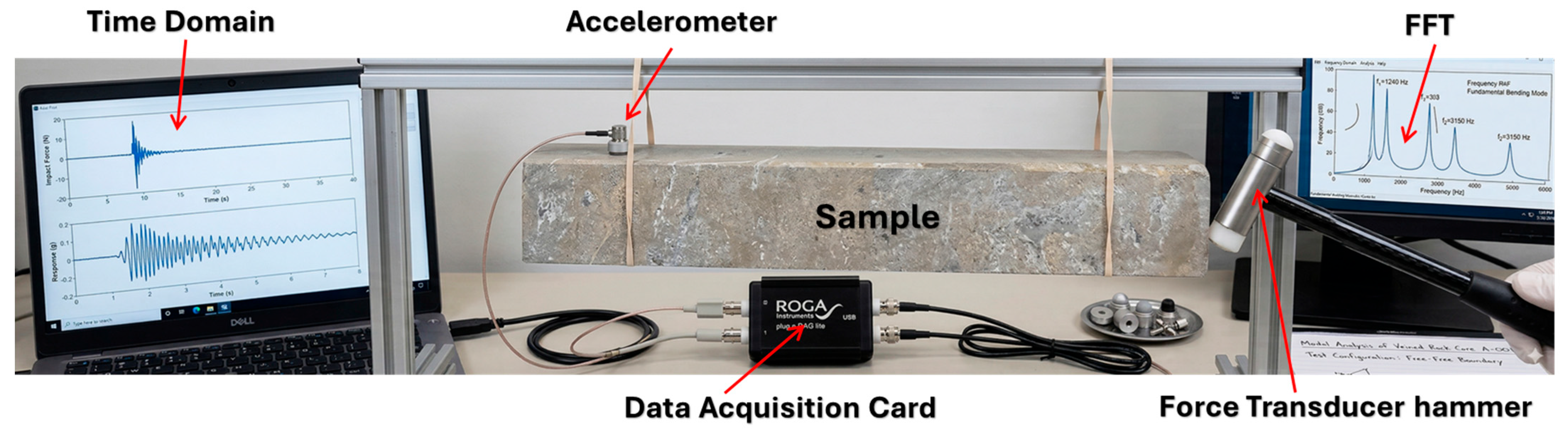
The equipment featured a dynamic signal acquisition system (Plug.n.G Lite; ROGA Instruments, Waldems, Germany) that interfaced with a PC running proprietary LabVIEW software (version 2024; National Instruments, Austin, TX, USA) to record and analyze signals. A small, calibrated modal impact hammer was used to impart a wide-frequency impulse to the specimen, causing it to vibrate freely, as seen in Figure 1. A tiny accelerometer was securely attached to the specimen at the optimal anti-nodes for different vibration modes to monitor the structure’s motion (acceleration). The LabVIEW environment turned the time-domain signals from both the impact hammer (input force) and the accelerometer (reaction acceleration) into digital data. The Fast Fourier Transform (FFT) is used to analyze the collected data and compute the Frequency Response Function (FRF). This enabled the exact fundamental natural frequencies of the longitudinal, torsional, and flexural modes to be determined. Using well-known acoustic methods, the resonant frequencies obtained, combined with the measured sample’s shape and density, were used to determine the dynamic Young’s modulus and shear modulus.
The dimensionless viscous damping ratios ( ζ ) for the complete suite of investigated rock specimens were quantitatively determined through post-processing of time-domain free-vibration response data, employing the classical logarithmic decrement technique in accordance with established experimental mechanics protocols (ASTM E756−05) [36,37]. Accordingly, the governing formulations for damping estimation are adopted from established literature [21,38].
The damping ratio was computed via the exact analytical relationship:
ζ = δ 4 π 2 + δ 2
where δ denotes the logarithmic decrement, evaluated from the natural logarithm of the ratio between successive peak amplitudes ( A n and A n + 1 ) in the envelope of the recorded acceleration–time histories:
δ = 1 n l n A 1 A n + 1
To enhance statistical robustness and mitigate noise-induced bias, δ w was averaged over multiple consecutive half-cycles within the linear decay regime, after band-pass filtering and baseline correction of the raw acceleration signals. This methodology ensures a physically consistent estimate of energy-dissipation characteristics under small-strain dynamic loading conditions.

3. Results and Discussions

3.1. Microstructural Characterization and Physical Density

The physical and dynamic responses of the investigated samples are fundamentally rooted in their diverse microstructural configurations. Petrographic examinations were conducted to delineate these microstructural variations between the metamorphic and mineralized rock suites.

3.1.1. Petrography of the Metamorphic Rocks

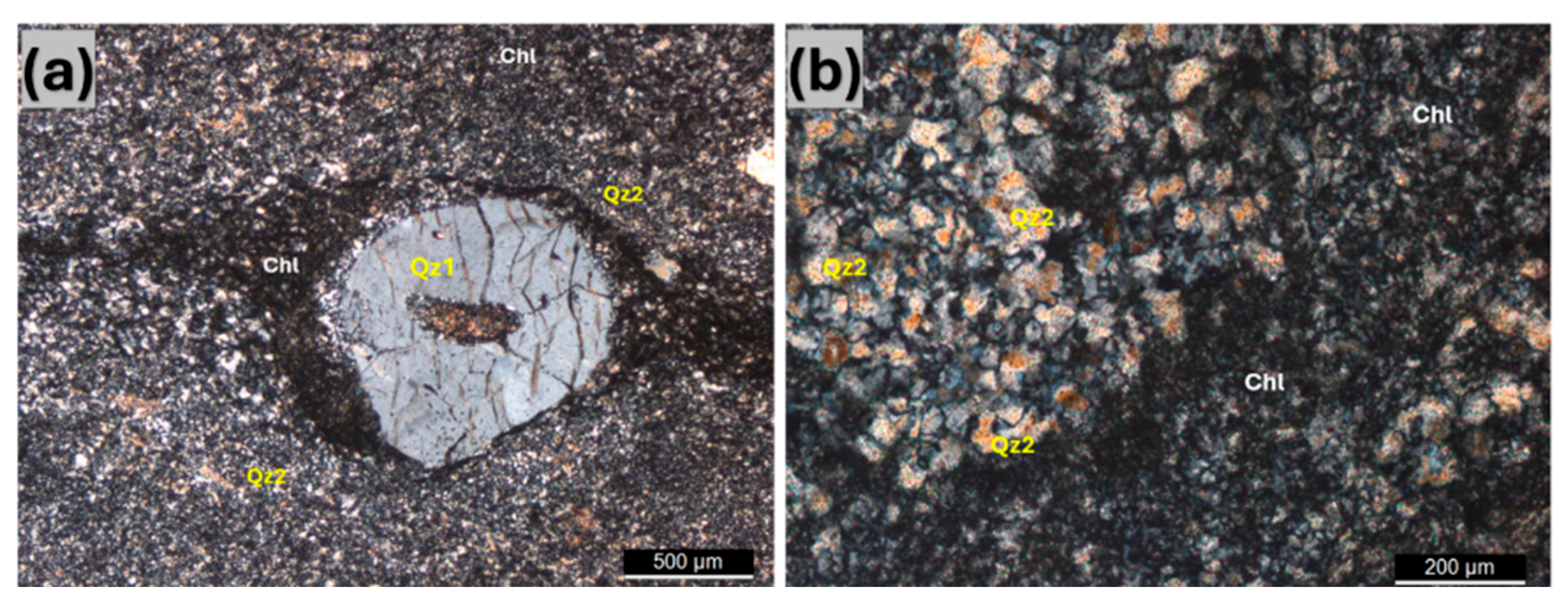
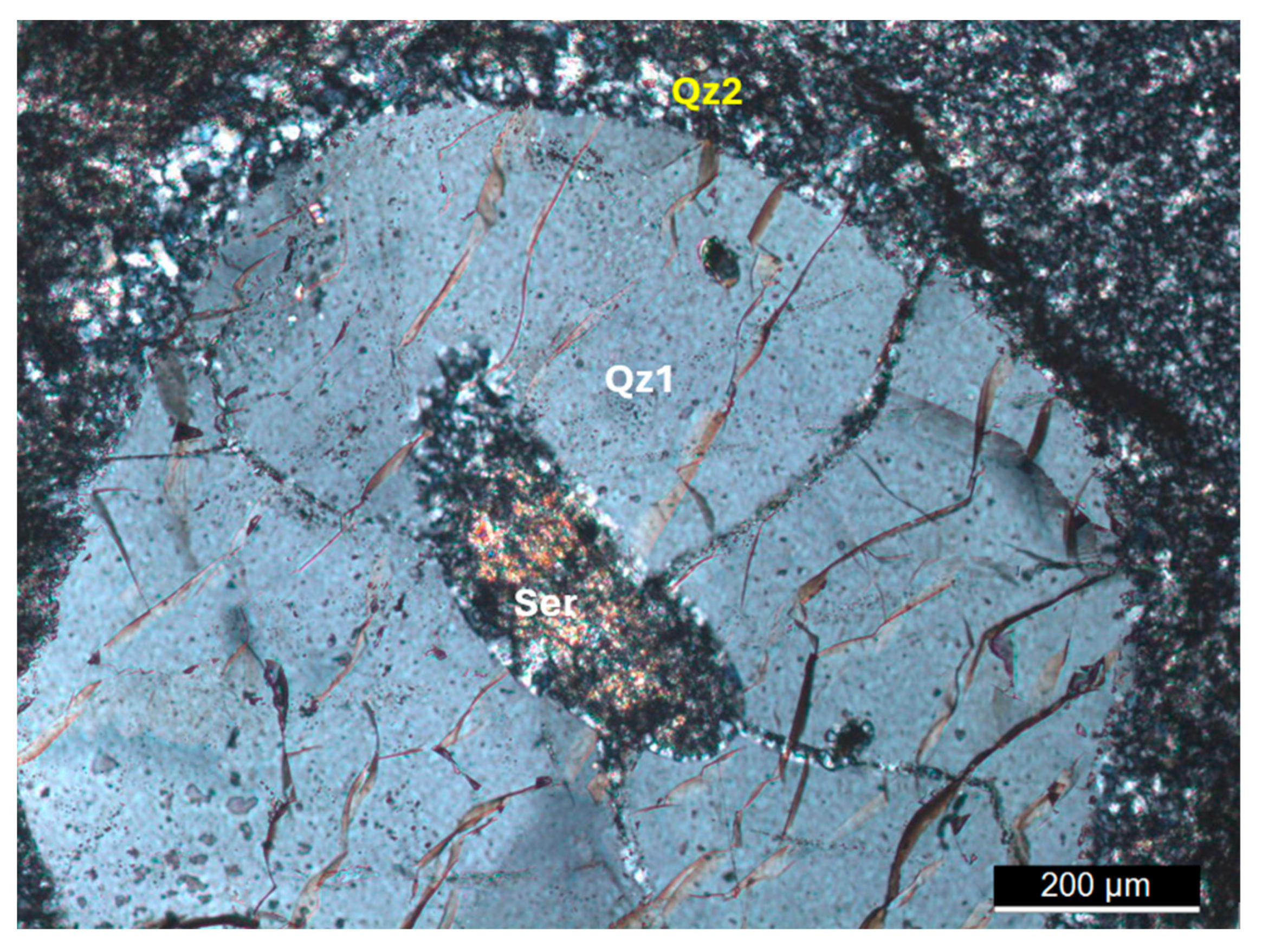
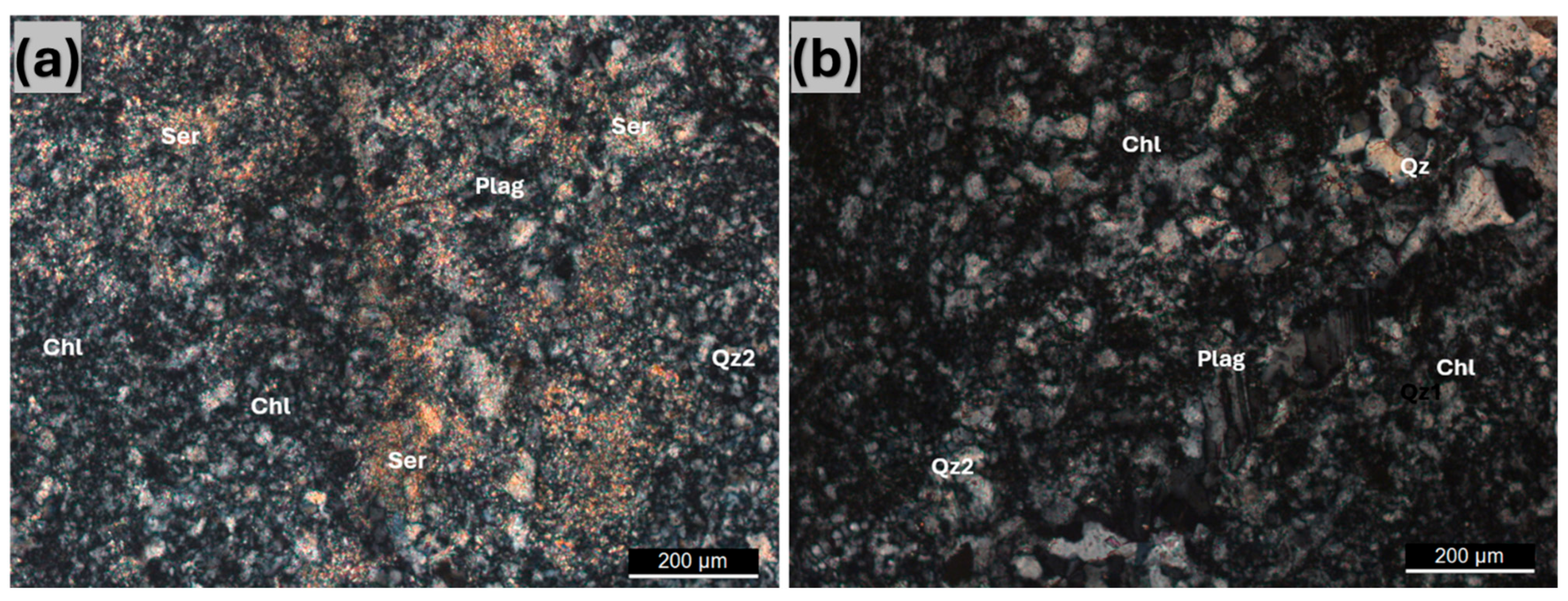
The metamorphic suite’s thin sections (PFT, AVT, SVT) are mostly made up of a fine-grained secondary silica matrix that makes up a dense quartz mosaic with microcrystalline to cryptocrystalline crystals (Figure 2a). Most of the primary quartz phenocrysts still have their original shape. However, they show signs of strain, undulose extinction, intragranular cracking, and local mosaic sub-grain formation (Figure 3). These strained phenocrysts have uneven, resorbed edges, covered by thin syntaxial quartz overgrowths that connect to the fine quartz groundmass. This shows that silica was added after the deformation. In this silicified matrix, softer alteration minerals are clearly spread out. Very fine chlorite is spread out in thin streaks and small flaky groups that fill in old mafic sites and microfractures (Figure 2b). Plagioclase is highly sericitized (Figure 4a), making it look murky. Only a few small lathes keep sharp polysynthetic twinning (Figure 4b). The presence of highly strained quartz alongside widespread soft alteration minerals (chlorite and sericite) establishes a heterogeneous micro-mechanical framework, with silica flooding serving as a stiff continuous binder. The foliated chlorite/sericite networks, on the other hand, create small areas of mechanical compliance.

3.1.2. Petrography of the Mineralized Rocks

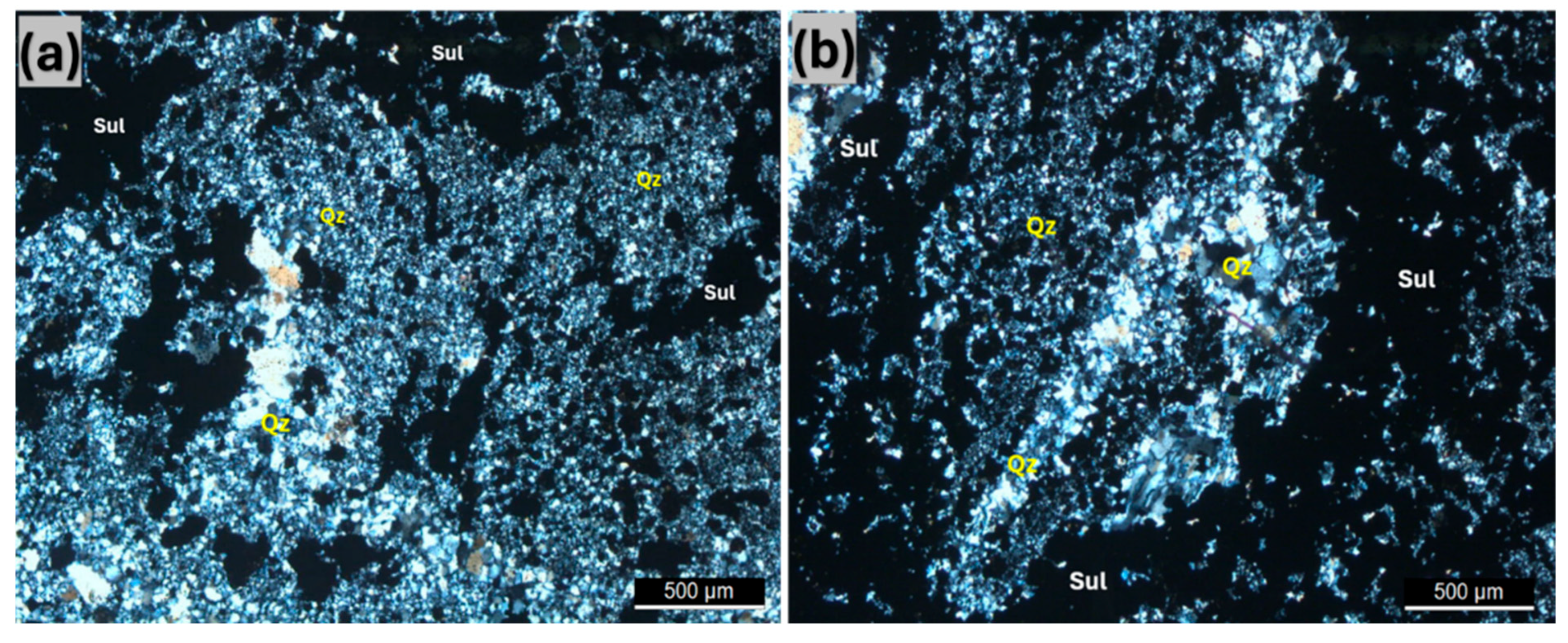
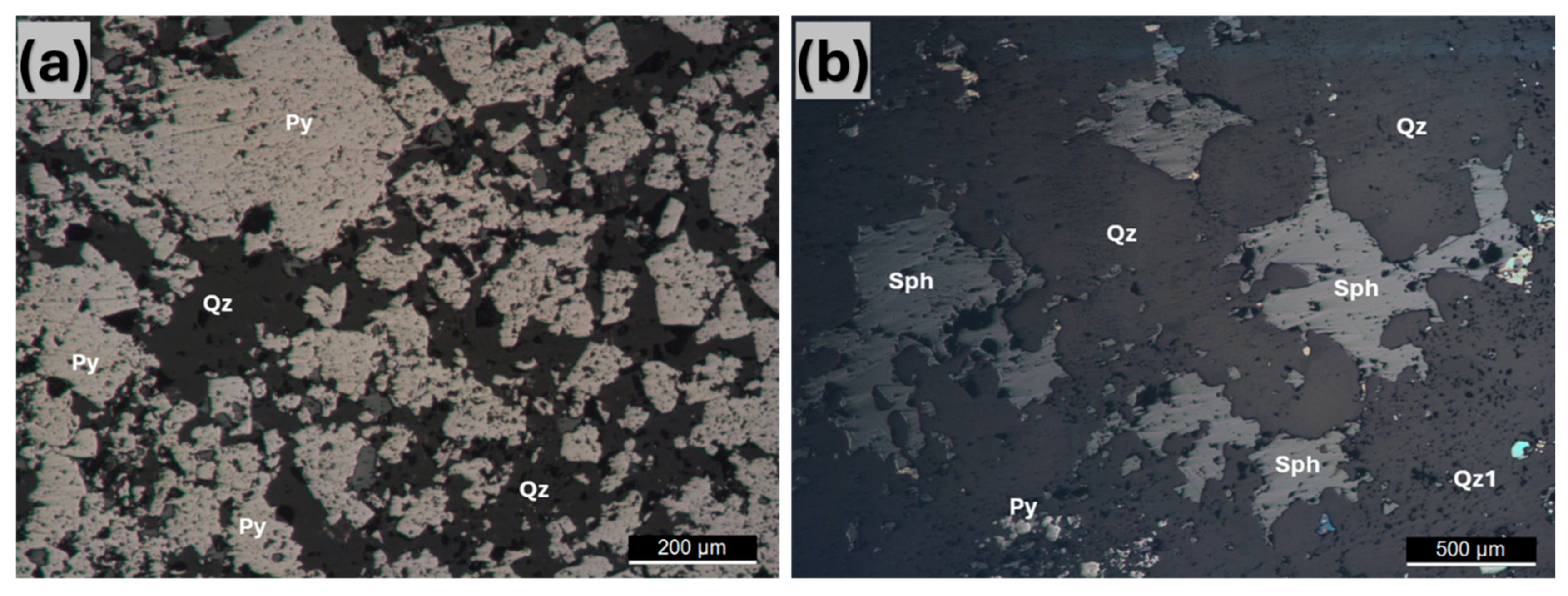
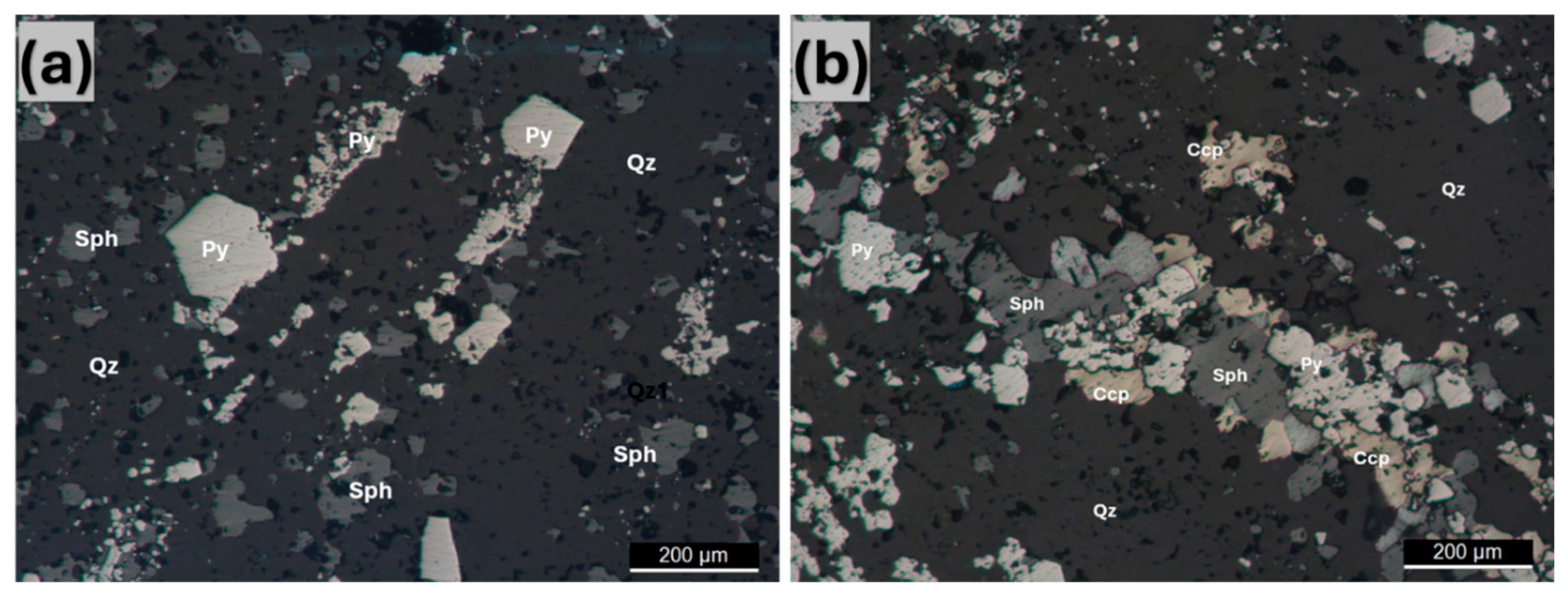
The mineralized samples (CPZ, TPZ, APZ), on the other hand, exhibit a well-defined, highly silicified ore structure. Fine-grained quartz fills the groundmass (Figure 5a), while medium- to coarse-grained quartz pockets make up irregular aggregates and thin streaks between sulfide minerals (Figure 5b). Fine-grained silica and a little bit of chlorite take the place of Plagioclase. Silicification is the most important part of the non-metallic phase. Sulfide minerals are the most important section of the rock, making up around 75% of its volume and giving it a large to semi-massive look (Figure 6a). Pyrite is the main ore mineral. It is found in large euhedral to subhedral aggregates that create dense, continuous metallic clusters. Sphalerite can be found in both patchy coarse-grained areas (Figure 6b). As fine-grained grains that are spread out and buried in the fine quartz groundmass (Figure 7a). Minor chalcopyrite is also found as little blebs next to Sphalerite (Figure 7b). This close relationship between huge, heavy sulfides that are securely bonded by fine silica makes for a very strong and dense microarchitecture.

3.1.3. Influence of Microstructure on Physical Density

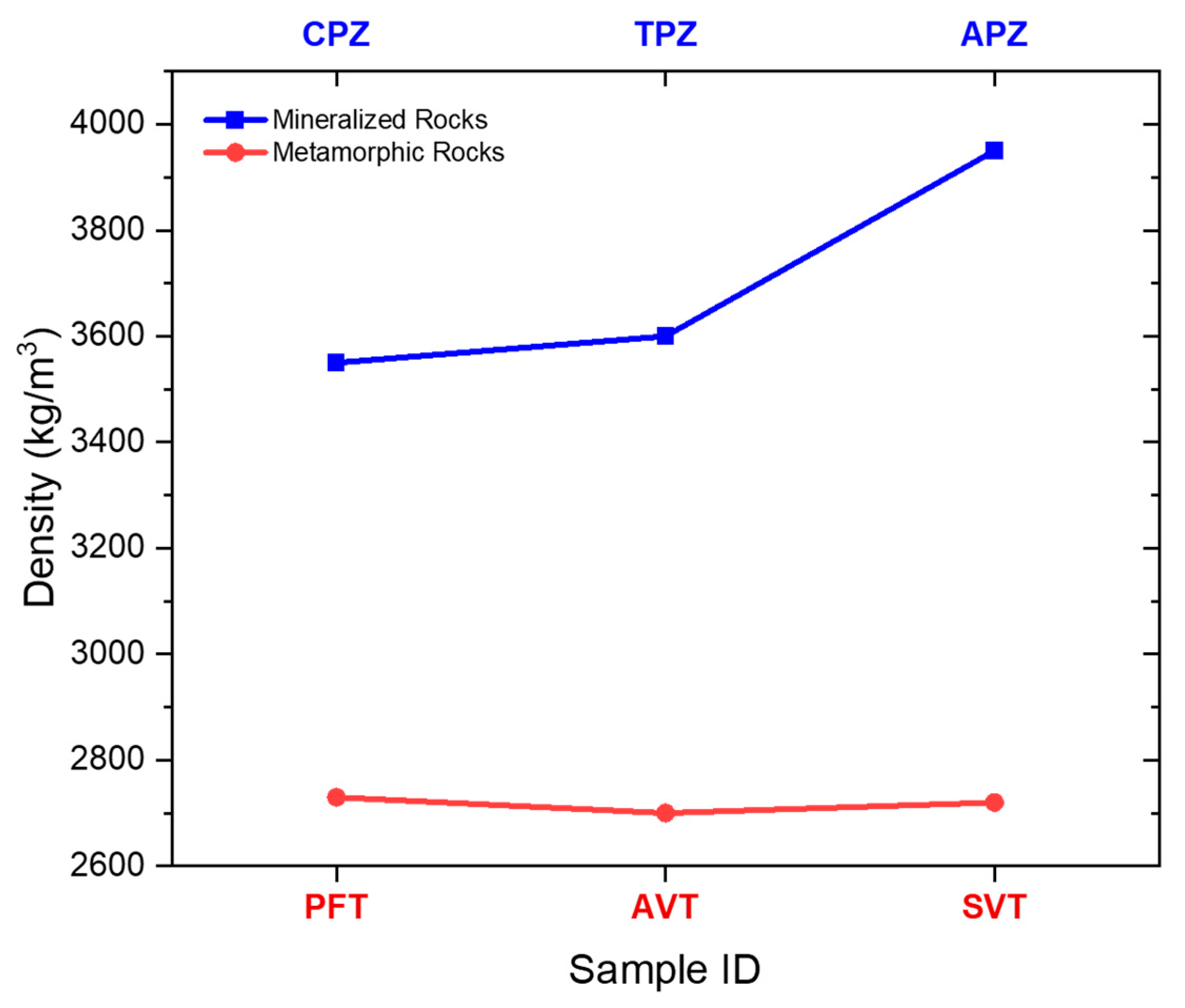
The macroscopic physical density of the samples examined is fundamentally associated with their distinct petrographic and mineralogical compositions. Figure 8 shows that the metamorphic host rocks and the mineralized suites have quite different densities. This is mostly because the heavy metallic sulfides are far more common than the lighter silicate minerals. The metamorphic rocks (samples PFT, AVT, and SVT) have an average density of about 2700 kg/m3, which is low and remains constant (Table 2 shows a range of 2.70–2.73 g/cm3). The mineralized samples (CPZ, TPZ, and APZ), on the other hand, have much higher densities, with the APZ sample reaching 3950 kg/m3. This sudden rise is due to intensive pyritization and the formation of a large sulfide network, which accounts for up to 75% of the sample volume. The change from the CPZ (3550 kg/m3) to the APZ (3950 kg/m3) shows that these dense sulfide phases are becoming more concentrated. A significant result from the fluid-displacement studies (Table 2) is that both rock suites demonstrate zero effective porosity and zero absorption following both immersion and boiling. Because the volume of permeable pore space is 0%, the mechanical and acoustic behavior of these rocks—specifically acoustic velocities and dynamic damping—is not affected by fluid or air moving through the pores. These features are determined solely by solid–solid phase interactions, including mineral grain boundaries, sealed micro-fractures, and foliation planes. The mineralized rocks’ high density and inflexible micro-stiffness suggest that they will allow waves to move faster and to lose energy in ways different from those of metamorphic rocks. The measured absorption and permeability values were extremely low, approaching zero. Minor mass differences observed during repeated measurements are attributed primarily to residual surface moisture during SSD preparation, as reported in Table 2.
A comparative investigation of the modal mineralogy reveals a significant difference in hydrothermal alteration and metalliferous input between the two investigated lithologies, as illustrated in Table 3. The metamorphic rock is largely composed of a silicate framework, with a high proportion of secondary silica (45–60 vol.%), chlorite (15–20 vol.%), sericitized Plagioclase (10–20 vol.%), and no sulfide minerals. The enormous mineralized ore, on the other hand, is a very different type of hydrothermal system. In this one, the original primary silicates, such as quartz phenocrysts and Plagioclase, have been broken down. This rock is largely composed of minerals, with sulfide minerals accounting for about 75% of the rock’s mass. Pyrite (approximately 45 vol.%), Sphalerite (about 25 vol.%), and chalcopyrite (less than 3 vol.%) make up most of this sulfide group. So, the big ore only has a little bit of silicate (around 25 vol.% secondary silica) and a few minor amounts of chlorite/epidote. This demonstrates that the rock changed from being bare and altered by silica and sericite to a sulfide ore body rich in minerals.
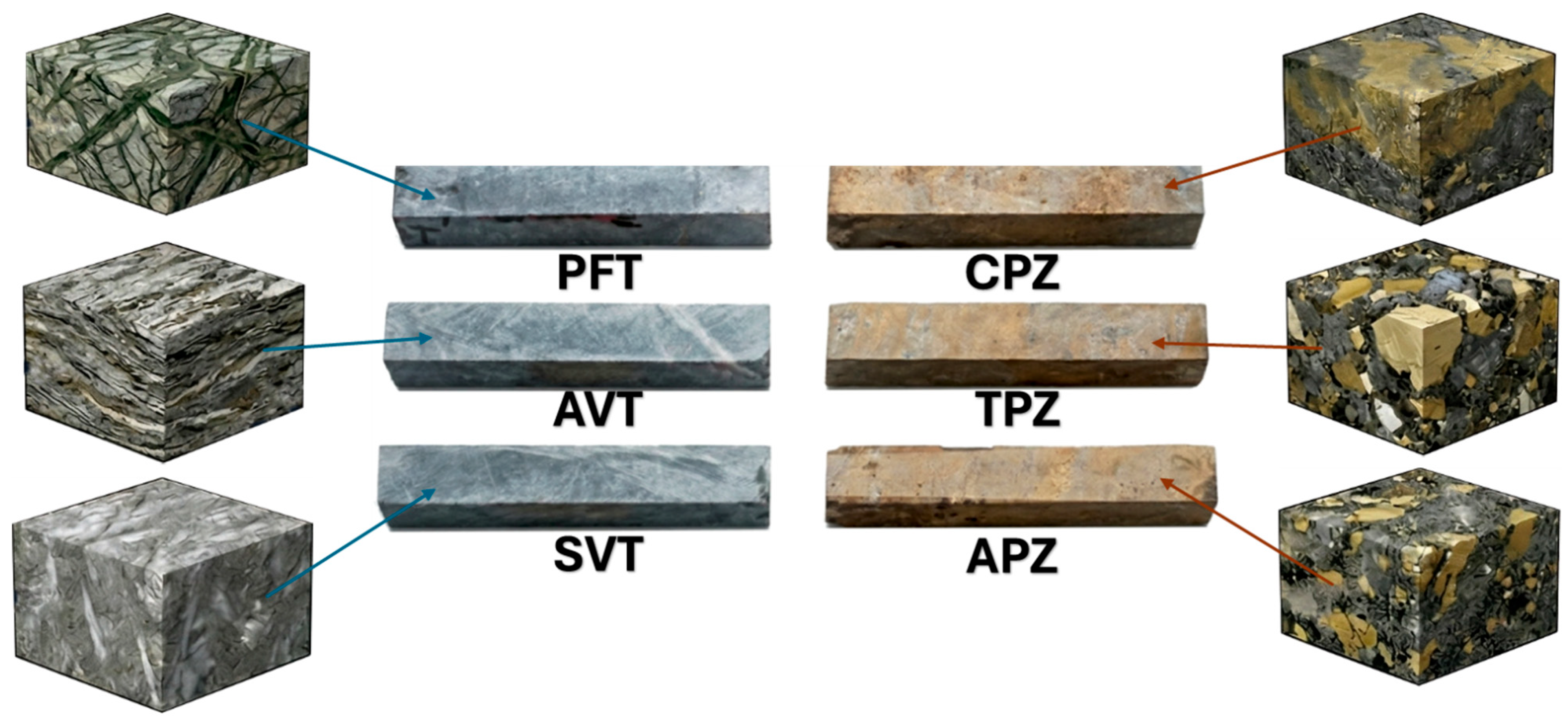
The combined study of mineralogical compositions and macro-structural findings shows a deep hydrothermal replacement process. The metamorphic host rocks (samples PFT and AVT) have a primary silicate mineralogy, with secondary silica/quartz accounting for 45–60% of the volume and chlorite accounting for 15–20%. The large mineralized ore (samples CPZ and TPZ), on the other hand, shows almost complete changes in both texture and chemistry. The 3D models for CPZ and TPZ clearly show the typical brassy-yellow luster of euhedral pyrite crystals and the dark, interstitial metallic matrices of Sphalerite. The spatial arrangement of the core bars and the mineralogical models in Figure 9 shows that the mineralization is not only a covering but also a replacement of the entire rock volume. The change from metamorphic rock to massive ore is marked by the systematic leaching of silica and the large-scale precipitation of base-metal sulfides, a sign of a high-intensity hydrothermal event.

3.2. Local Stiffness and Ultrasonic Wave Propagation

As a non-destructive testing (NDT) method, ultrasonic wave propagation is very sensitive to the transmission medium’s intrinsic microstructural continuity, density, and elastic properties. The Elastic Moduli are calculated and represented in Table 4 from data on the propagation of ultrasonic waves through geological formations under dynamic loading. By combining the rock’s bulk density (ρ) with the speeds of the longitudinal (Vp) and transverse (Vs) waves, it can be determined how resistant it is to different types of deformation. These calculated parameters, including shear resistance, volumetric compressibility, and overall axial stiffness, provide a comprehensive basis for assessing the strength and mechanical soundness of the mineralized suite. Hence, (G), (ν), (E), (K), and (M) are the Shear Modulus, Poisson’s Ratio, Young’s Modulus, Bulk Modulus, and P-wave modulus, respectively, as mentioned in Equations (1)–(5).
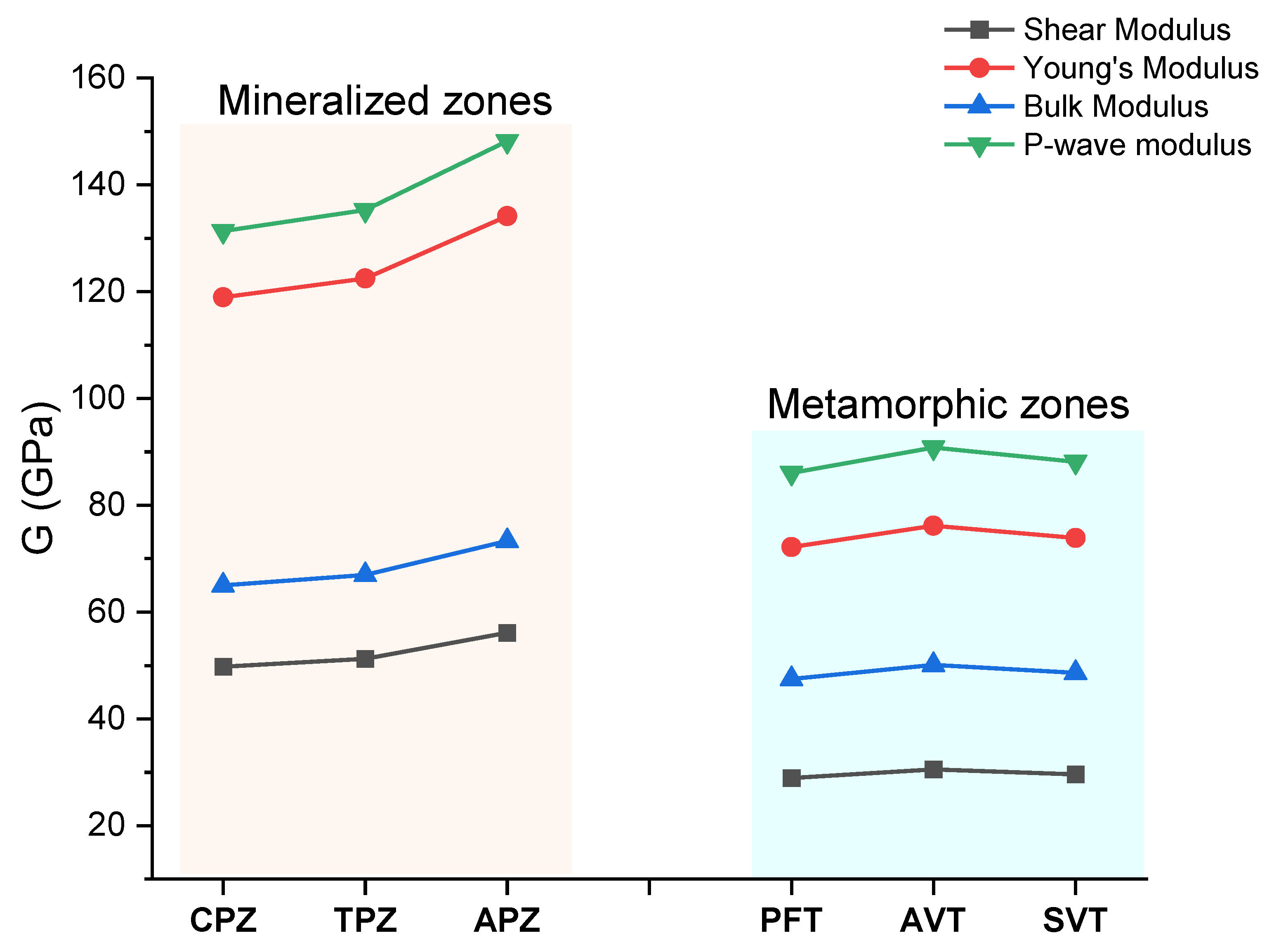
Figure 10 shows a clear difference in mechanical performance between the two geological suites. The Mineralized zones (CPZ, TPZ, and APZ) exhibit dynamic elastic moduli that are much higher across all parameters. For example, Young’s Modulus (E) is highest for the APZ sample at about 134.17 GPa. The “healing” effect of sulfide mineralization, in which heavy minerals like Pyrite fill pre-existing micro-voids, makes the matrix more cohesive and stiffer. The Metamorphic zones (PFT, AVT, and SVT), on the other hand, have a much lower mechanical profile, and their values remain relatively unchanged even when density changes slightly.
The measured longitudinal (Vp) and shear (Vs) wave velocities, in conjunction with the computed nominal dynamic shear modulus (G) [39], indicate a pronounced mechanical bifurcation between the two examined rock suites, which corresponds precisely with their petrographic attributes (Table 5).
G = ρ V s 2
ν = V p 2 2 V s 2 2 ( V p 2 V s 2 )
E = 2 G ( 1 + ν )
K = ρ V p 2 4 3 V s 2
M = ρ V p 2
Acoustic impedance was used to assess how well the rock matrix impedes the propagation of ultrasonic waves, as shown in Equation (8). The mineralized suite had very high acoustic impedance, reaching a peak of 24.19 MRayls in the APZ sample. In contrast, the metamorphic suite had an average of about 15.49 Mrayls, as illustrated in Table 5. The large difference in acoustic impedance between the heavy sulfide clusters and the lighter silica/chlorite matrix in the ore samples is a major reason for dynamic energy scattering. During macroscopic vibration, these internal interfaces with very different impedance values reflect and trap kinetic energy. This supports the higher damping ratios seen in the heterogeneous samples (e.g., TPZ and AVT).
Z = ρ V P
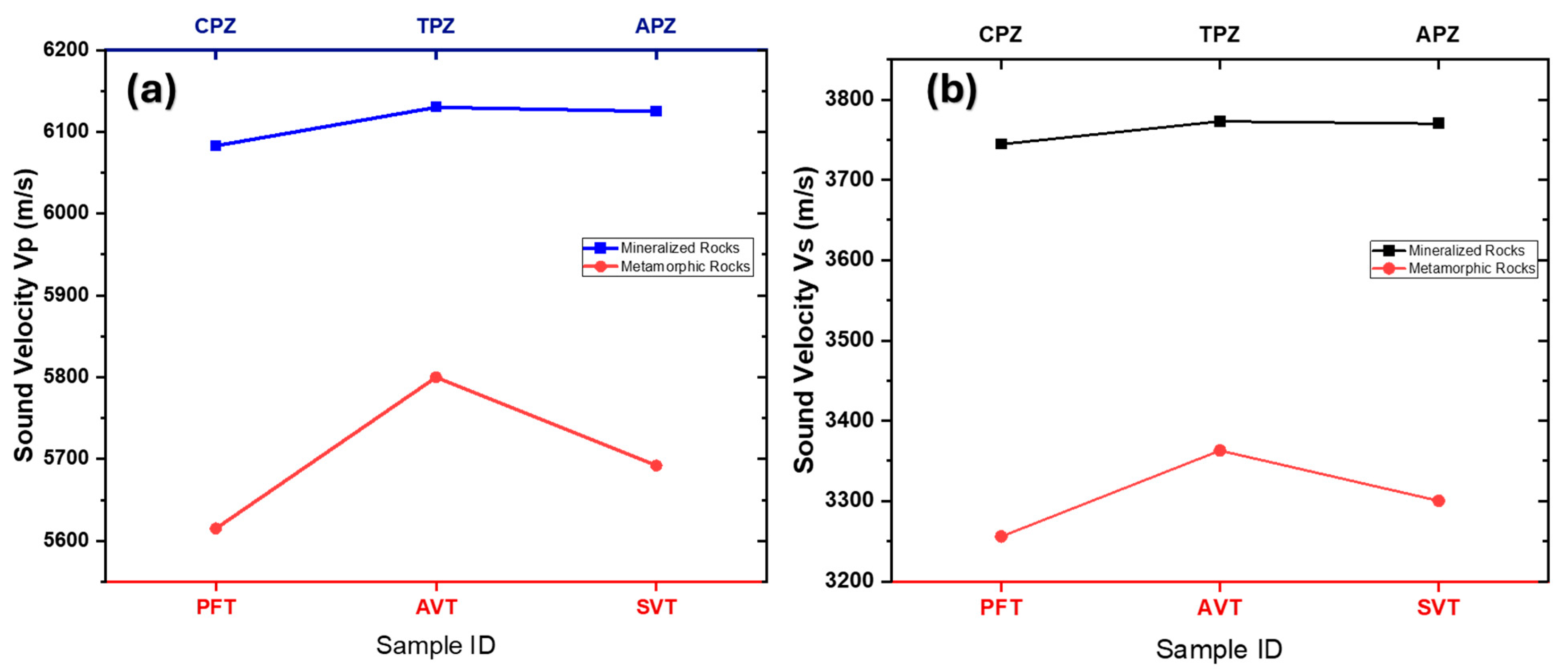
Figure 11 shows the experimental measurements of how ultrasonic waves travel through two different rock suites. These measurements show a clear difference in the acoustic properties of the two suites. The Mineralized Rocks (CPZ, TPZ, and APZ) consistently have higher velocities. For example, Vp values are over 6000 (Figure 11a) and Vs values are over 3700 [26] (Figure 11b). This high-velocity regime indicates that the mineral matrix is very rigid and strong.
On the other hand, the Metamorphic Rocks (PFT, AVT, and SVT) exhibit lower velocity profiles, indicating that their structures are more flexible and contain greater microporosity or structural defects. The metamorphic suite shows more pronounced changes in speed than the mineralized samples, which exhibit relatively stable, high-speed plateaus. While the primary mineralogy inherently bounds the variations in ultrasonic wave propagation, the elevated acoustic velocity plateaus (Vp) ranging from 5615 to 5800 m/s are heavily modulated by textural fabric and post-deformational modifications. Petrographic examination reveals that although highly strained quartz phenocrysts exhibit widespread intragranular micro-cracking, secondary silica flooding (Qz) forms syntaxial overgrowths that structurally bridge these discontinuities. This interlocking solid–solid fabric acts as a rigid, continuous framework that minimizes acoustic wave attenuation, allowing rapid high-frequency transmission despite the presence of softer phyllosilicates.

3.2.1. Acoustic Response of the Mineralized Suite

The mineralized samples (CPZ, TPZ, and APZ) exhibit exceptionally high acoustic velocities, with V p exceeding 6080 m/s and V s exceeding 3740 m/s across the entire suite. Consequently, the nominal dynamic shear modulus ( G ) derived for these samples reaches elevated magnitudes, ranging from 49.78 GPa in the CPZ to 56.14 GPa within the Advanced Pyritization Zone (APZ). While this rigid acoustic profile was initially interpreted primarily as a single “cementation” effect, a more comprehensive microstructural evaluation indicates that an integrated combination of textural fabric, spatial connectivity, and grain-size distribution governs this performance. In the APZ, petrographic observations reveal that Pyrite is arranged in dense, large euhedral to subhedral aggregates that establish continuous, interlocking metallic clusters welded by a secondary fine-grained silica matrix. This high spatial connectivity forms a cohesive, multi-phase structural framework that effectively minimizes active crack density under small acoustic strains.
Furthermore, fluid-displacement tests confirmed that the mineralized rock suite exhibits negligible effective connected porosity, with values approaching the detection limit. The near-complete occlusion of permeable pore spaces demonstrates that ancient micro-fractures have been structurally sealed by intensive hydrothermal mineral infill and secondary silica flooding. Therefore, the rapid, high-frequency transmission of ultrasonic waves is a direct function of this continuous, dense solid–solid phase network rather than simple physical density variations alone.

3.2.2. The ‘Healing Effect’ in the Metamorphic Suite

On the other hand, the metamorphic samples (PFT, AVT, and SVT) had lower, but still significant, acoustic velocities (Vp) ranging from 5615 to 5800 m/s and Vs ranging from 3256 to 3363 m/s. Because of this, their nominal G values are much lower, ranging from 28.9 to 30.5 GPa. From a purely micro-mechanical standpoint, the presence of strained quartz exhibiting intragranular cracking, along with widespread soft alteration minerals such as chlorite and sericite, would generally result in significant acoustic attenuation and substantial decreases in wave velocity. The measured velocities, on the other hand, are still very high for changed volcanic rocks. This shows how important the secondary silica flooding (Qz2) is to the structure. The dense microcrystalline silica matrix and the syntaxial quartz overgrowths work together to create a “healing agent” or hard acoustic bridge that is everywhere. This silica cement fills microfractures and holds together the softer phyllosilicates, ensuring the matrix stays connected enough for ultrasonic pulses to travel through it quickly, even though the alteration minerals make it less flexible in some places.
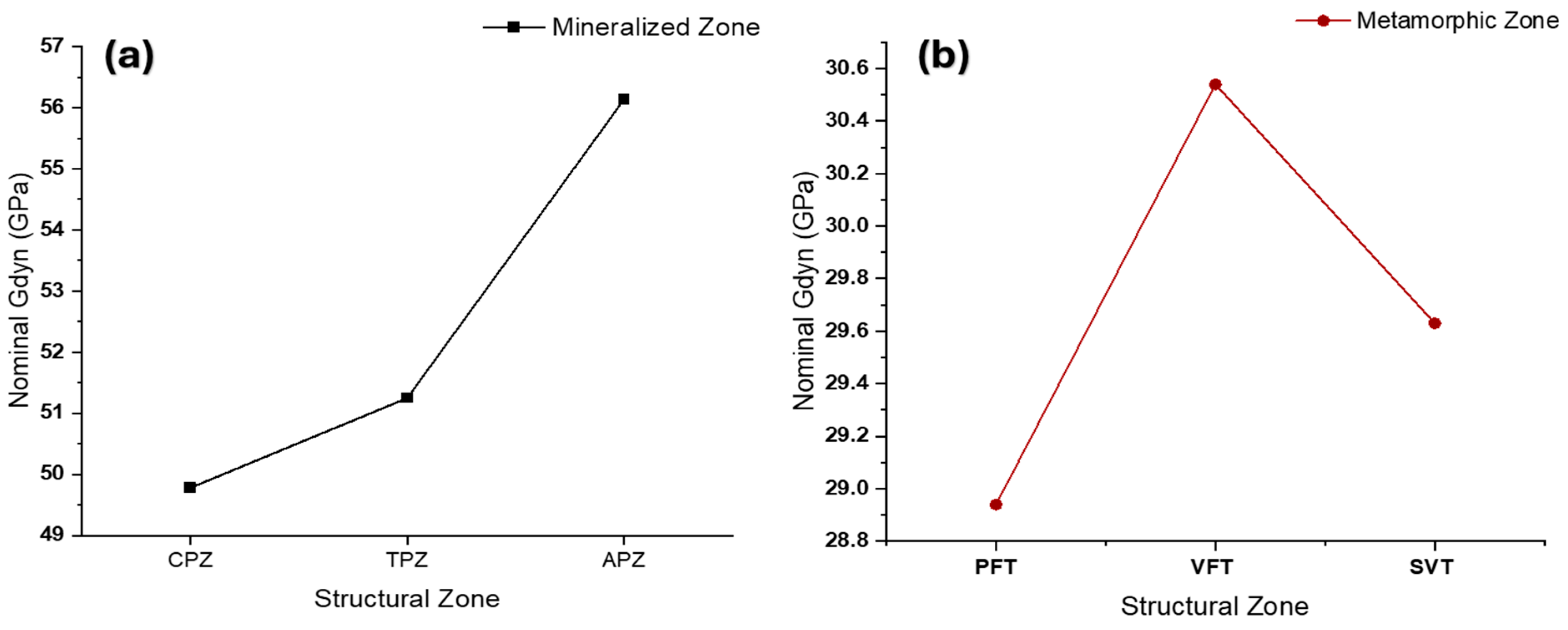
Figure 12 shows the distribution of the nominal dynamic shear modulus G across the structural zones studied [21]. There is a clear difference in mechanical magnitude between the two geological settings. The shear modulus in the Mineralized Zone (Figure 12a) shows a strong upward trend, going from 49.78 GPa in the CPZ sample to a maximum of 56.14 Gpa in the APZ sample. This trend indicates that increased mineralization directly enhances the rock’s resistance to shear deformation. In contrast, Figure 12b shows that the Metamorphic Zone exhibits much lower stiffness, with Gdyn values ranging from approximately 28.9 GPa to 30.5 GPa. The VFT sample shows a small increase in stiffness in one area, but the overall magnitudes remain about 50% lower than those in the mineralized suite. Furthermore, since fluid-displacement tests confirmed a very low porosity % effective porosity across these samples, and all dynamic tests were conducted under unconfined conditions, stress-induced crack closure during testing can be definitively ruled out. Consequently, the high ultrasonic velocities observed are fundamentally attributed to structural consolidation via physical mineral infill and widespread secondary silicification, rather than transient stress effects or simple density variations.

3.3. Static Macro-Mechanical Response: Deflection Behavior

Ultrasonic velocities and dynamic shear moduli provide essential information on the localized micro-stiffness of the rock matrix; however, they inadequately reflect the macroscopic deformation capacity of the bulk material under applied quasi-static loads. The empirical results of the maximum deflection tests reveal a distinct macro-mechanical response that diverges significantly from the trends observed in acoustic stiffness. This divergence underscores that localized microstructural defects and spatial mineral arrangements govern the bulk structural behavior. To evaluate the bulk macroscopic structural response and flexural compliance of the examined lithologies, three-point bending tests were conducted using a 300 kN SANS Universal Testing Machine (UTM). The experiments were conducted in a displacement-controlled mode at a constant crosshead speed of 1 mm/min to ensure precise monitoring of post-yielding behavior. Rather than relying solely on the maximum deflection as a static geometric limit, this displacement rate enabled comprehensive capture of continuous structural deformation. The measured maximum deflection serves as a direct indicator of the bulk flexural yielding behavior, reflecting how the distinct internal microstructural networks, ranging from the rigid, quartz-flooded matrices to the highly compliant, sulfide-rich grain boundaries, mobilize and accommodate macroscopic strain before ultimate structural failure.

3.3.1. Deformation in the Metamorphic Suite: The Foliation Effect

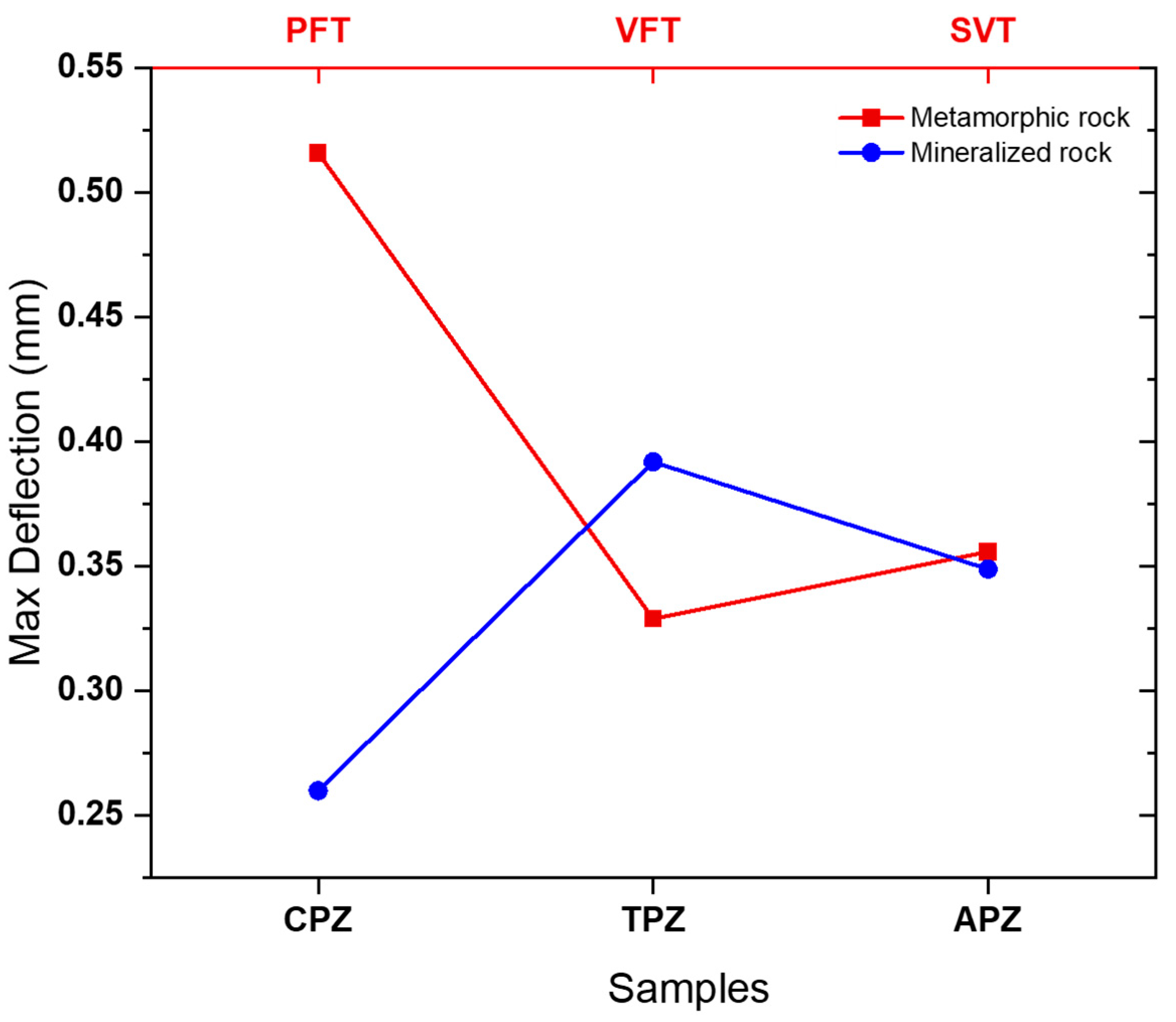
The Pervasive Foliated Tuff (PFT) exhibited the most pronounced deflection of all examined specimens, measuring approximately 0.52 mm. Although it is healed, the silicified matrix facilitates high acoustic wave propagation; its overall macroscopic stiffness appears to be substantially influenced by the extensive foliation fabric. Under static loading conditions, this anisotropic microarchitecture is suggested to respond similarly to a macro-leaf-spring mechanism, potentially accommodating inter-layer sliding and enhanced compliance before ultimate structural failure.

3.3.2. Deformation in the Mineralized Suite: The Dissemination Effect

A similar behavior is observed in the mineralized suite, but the petrographic conditions differ. The Coarse Phase Zone (CPZ) has a large, fully cemented structure, making it difficult to change shape (the lowest deflection is around 0.26 mm). The Transitional Phase Zone (TPZ), in contrast, showed a distinctive peak in flexural deflection at approximately 0.39 mm, as shown in Figure 13. This enhanced mechanical compliance correlates strongly with the high density of internal mineral interfaces and multi-phase grain boundaries documented during the petrographic evaluation. The mixing of fine-grained disseminated Sphalerite with patchy sulfide domains within the secondary silica groundmass introduces structural heterogeneities that likely act as preferential planes of compliance. Under applied static stress, these interfacial boundaries are interpreted to facilitate localized micro-yielding and micro-sliding, thereby allowing the bulk rock matrix to accommodate larger structural strains than its massive, homogeneous counterparts. To provide the reader with a clear evolutionary roadmap across the examined scales, Table 6 synthesizes the sequential connections between the multiscale characterization datasets, mapping the transition from microstructural causes to global dynamic responses.

3.4. Dynamic Vibration and Energy Dissipation

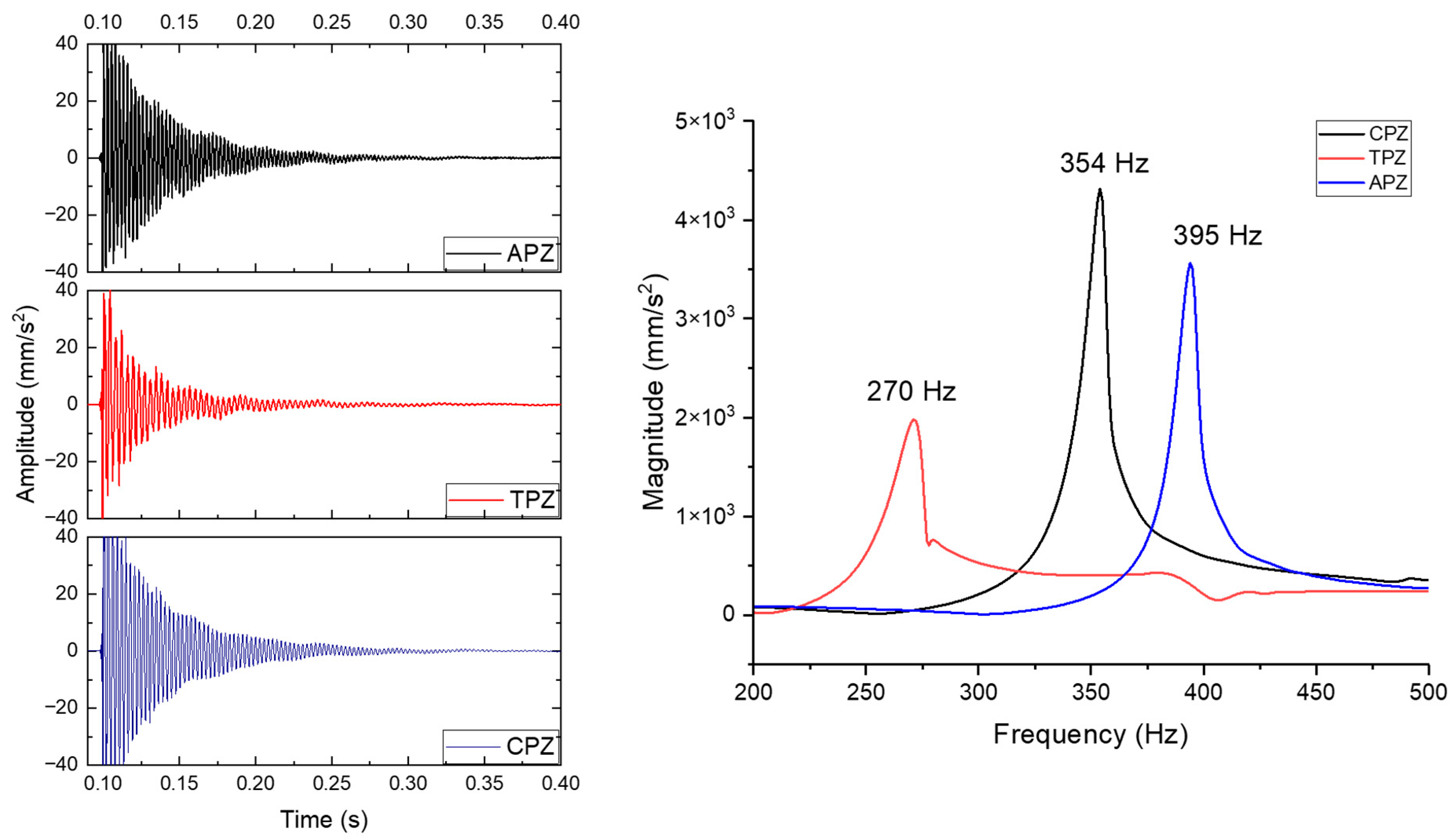
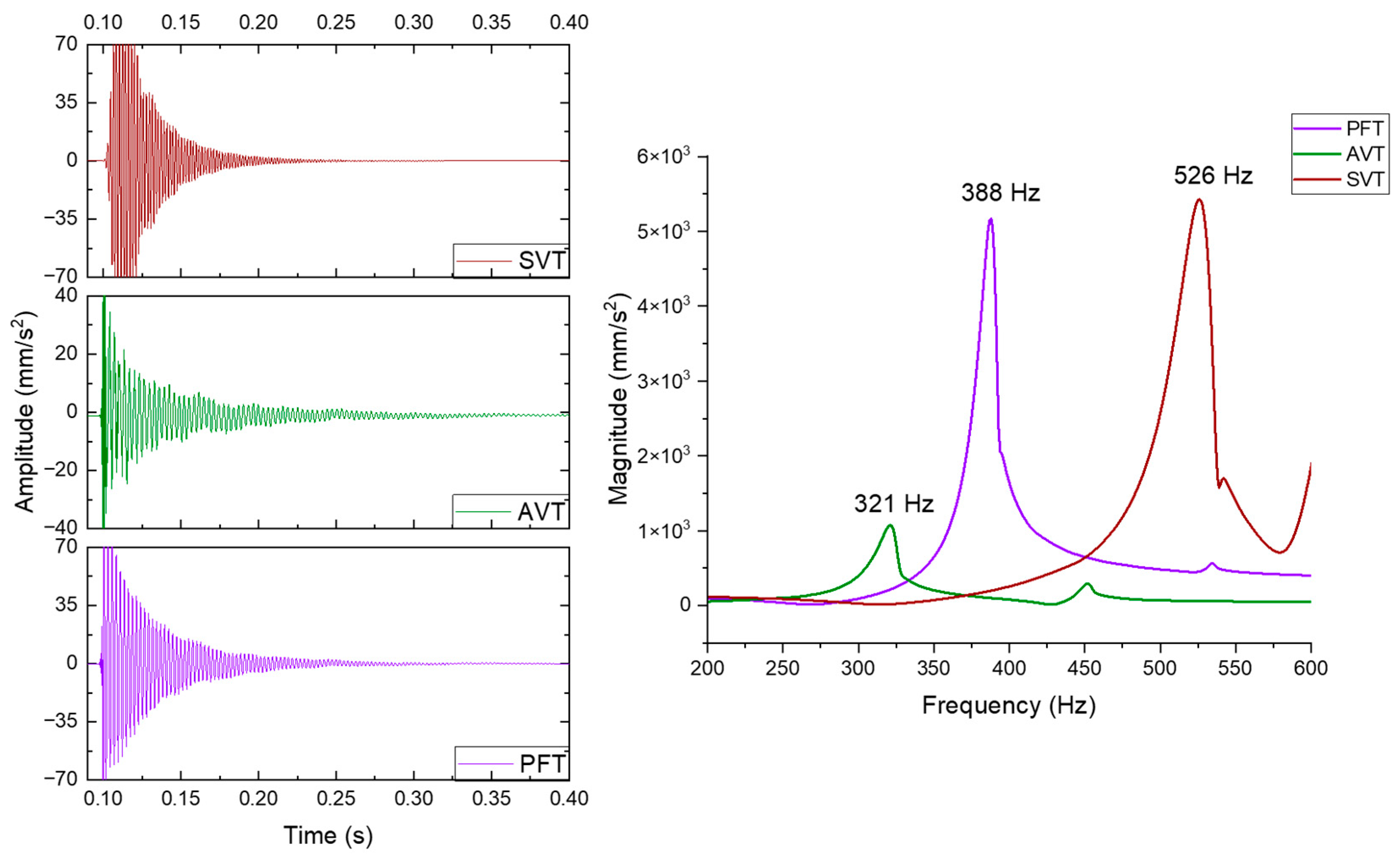
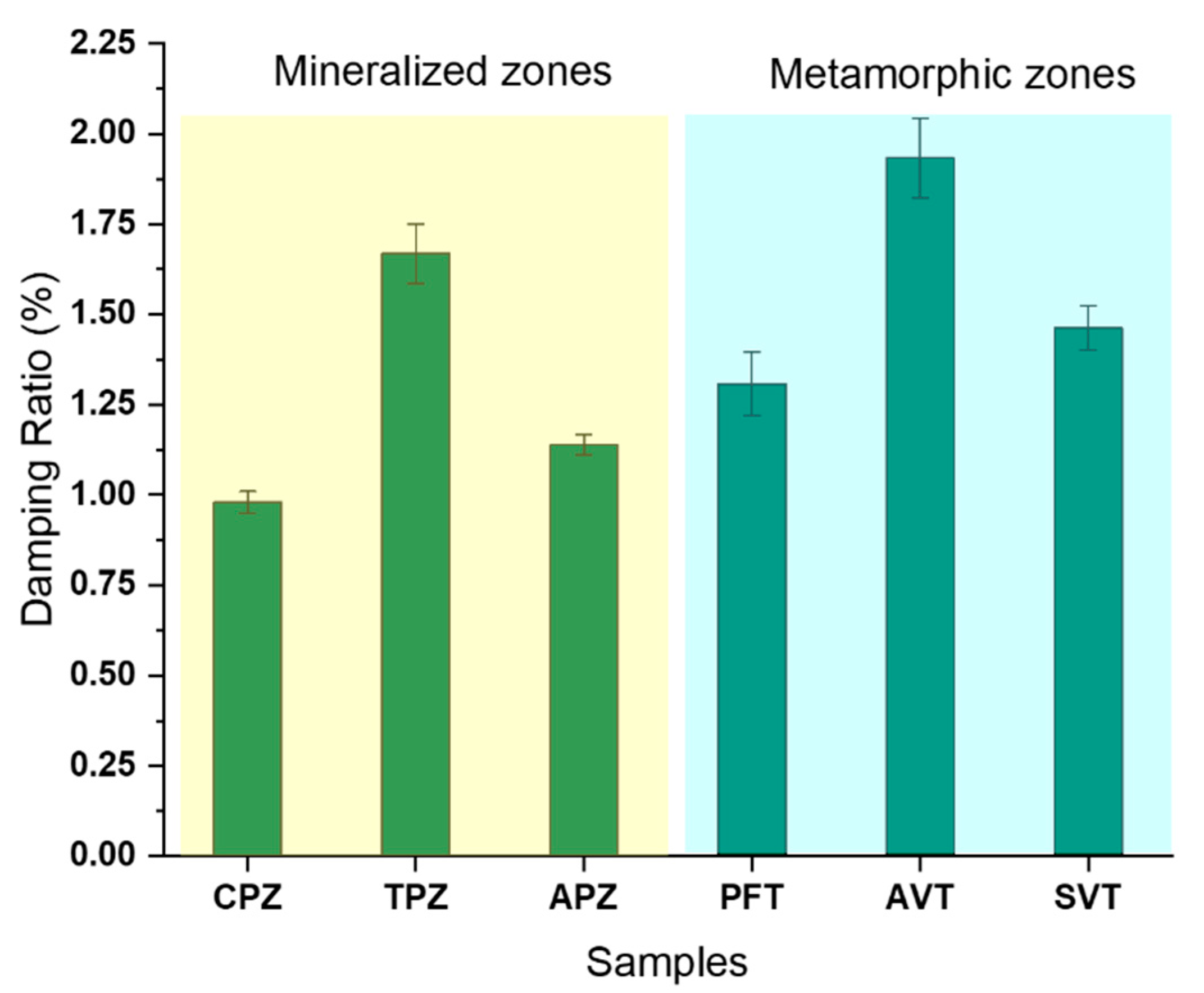
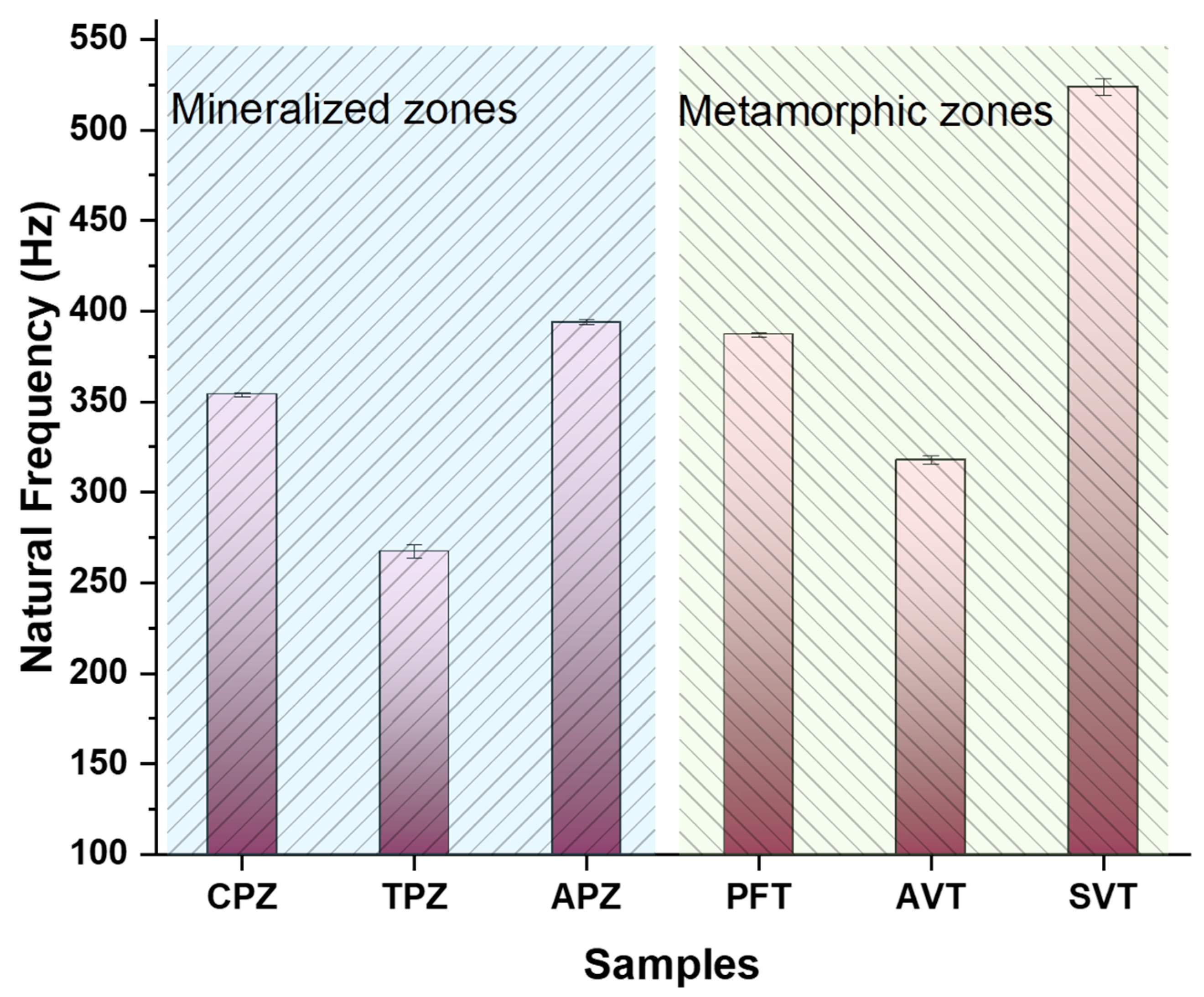
The free-vibration response, especially the natural frequency and damping ratio (Figure 14 and Figure 15), shows how the rock matrix dissipates energy dynamically. A surprising structural contradiction arises when you compare these dynamic results with the acoustic velocities; maximum micro-stiffness does not imply maximum dynamic rigidity. On the other hand, internal friction based on morphology does a good job of controlling dynamic behavior. The Amphibole-Veined Tuff (AVT) is a good example of this structural problem. The metamorphic suite had the highest AVT acoustic velocity (indicating a dense, healed matrix). Still, it also had the lowest natural frequency (321 Hz) and the largest damping ratio (close to 2.0%).
The fact that it can easily lose kinetic energy is directly related to its complex microstructure. When dynamic excitation occurs, the radial mineral intergrowths and quartz phenocrysts under high stress (and with microcracks) act as large internal friction interfaces. These traits effectively capture and disperse vibration energy, functioning as an intrinsic shock-absorbing system. The Silica-Veined Tuff (SVT), on the other hand, is a brittle, fully healed system. The secondary veinlets that cross the matrix eliminate micro-sliding planes, which keep the structure in place. Because of this, SVT behaves like a rigid body, with the highest natural frequency in its suite (526 Hz) and a lower damping ratio.

3.4.1. Damping in the Mineralized Suite: The Function of Disseminated Sulfides

The mineralized rocks behave the same way when they are shaped. The Transitional Phase Zone (TPZ) of the ore suite has the lowest natural frequency (270 Hz) and the highest damping ratio (1.67%) (Figure 16). This reaction is dynamically compliant due to the different microstructural types (Figure 7a). The close intergrowths and scattered patches of Sphalerite within the silica matrix create a vast network of grain boundaries, each distinct from the others. When the load changes, these boundaries act as active sliding interfaces that use internal friction to dissipate vibration energy, helping them remain stable. The Advanced Pyritization Zone (APZ) is the opposite of this. It has a very high density and large, interlocking euhedral pyrite clusters (Figure 6a), making it very hard for anything to slide around inside. As a result, it has a much higher natural frequency (395 Hz) and a lower damping ratio (~1.1%) (Figure 17). It also responds to dynamic forces like an ultra-rigid, continuous metallic block.
The integration of microstructural, acoustic, and mechanical data establishes a significant multiscale framework. Non-destructive acoustic velocities (Vp and Vs) provide very accurate assessments of the strength of the stiff matrix (e.g., high pyrite content or silica flooding). But it cannot really guess how macrostructures will act. The arrangement of “micro-flaws” determines both static structural compliance (deflection) and dynamic energy dissipation (damping); local stiffness does not affect them. These small differences in rock structure make them flexible and able to absorb vibrations. In PFT, they look like widespread foliation; in AVT, they look like radial intergrowths; and in TPZ, they look like dispersed sulfides.

3.4.2. Scale Dependencies and Elastodynamic Assumptions

It is critical to evaluate the foundational assumptions underlying the dynamic elastic moduli derived in this study. The calculation of parameters such as Young’s modulus (E) and shear modulus (G) from ultrasonic pulse velocity (UPV) measurements via Equations (3)–(7) relies on the idealized assumption of homogeneous, isotropic, and linear elastic material behavior. While this represents a standard, widely accepted engineering convention in rock mechanics, it does not fully capture the inherently heterogeneous, anisotropic, and microfractured fabric characteristic of foliated metamorphic rocks and complex sulfide-bearing hydrothermal systems. Rather than a methodological oversight, the divergence between these datasets serves as a core multiscale finding of this investigation. Ultrasonic wave propagation reflects small-strain, high-frequency acoustic behavior operating at the localized microstructural scale. At this high frequency, the compressional (Vp) waves propagate preferentially along the fastest, most rigid pathways, effectively bypassing localized compliance features by traveling through the highly stiff, continuous networks of secondary silica flooding (Qz) or interlocking pyrite clusters.
In contrast, macro-mechanical three-point bending tests and free-vibration analyses capture the low-frequency, large-strain macroscopic bulk response of the entire specimen volume. Under bulk-loading conditions, the material is forced to deform as a unified component, actively engaging macroscopic defects, complex grain-boundary sliding interfaces, and foliation planes of weakness. This scale dependency is clearly demonstrated by the Transitional Phase Zone (TPZ) sample within the mineralized suite. At the small-strain micro-scale, the TPZ exhibits a highly rigid acoustic plateau with a high longitudinal velocity (Vp = 6130 m/s) and an elevated calculated dynamic Young’s modulus (E = 122.49 GPa). However, when subjected to bulk static and dynamic loading, its scattered sulfide patches and mineral interfaces facilitate localized micro-yielding and internal friction. This results in a pronounced macroscopic compliance, characterized by a large static flexural deflection (0.39 mm), a significantly low fundamental natural frequency (270 Hz), and a high dynamic damping ratio (1.67%). Acknowledging these elastodynamic limitations and scale differences is essential for accurately applying non-destructive testing protocols to characterize structural stability in heterogeneous geological environments.

4. Conclusions

This study developed a multiscale framework that integrates microstructural, acoustic, and mechanical data to elucidate the dynamic behavior of mineralized and metamorphic rock formations. The study shows that although non-destructive acoustic velocities (Vp and Vs) are effective for assessing the strength of the stiff matrix, they do not always predict how the structure will behave at larger scales. The configuration of microflaws, such as pervasive foliation in metamorphic rocks or scattered sulfides in mineralized ores, predominantly governs both static structural compliance (deflection) and dynamic energy dissipation (damping). For example, metamorphic rocks, even though they had a “healed” silicified matrix, had much lower dynamic elastic moduli (e.g., shear moduli about 50% lower than those of mineralized rocks) and higher deflections (up to 0.52 mm in PFT). On the other hand, mineralized rocks, which have a lot of sulfides (up to 75 vol.%), were stiffer and had better acoustic properties (Vp > 6000 m/s). However, certain microstructural arrangements in these rocks (such as disseminated sulfides in TPZ) resulted in higher damping ratios (1.67%) and lower natural frequencies (270 Hz). This structural contradiction—where maximum micro-stiffness does not imply maximum dynamic rigidity—highlights the vital role of internal friction, influenced by morphology, in regulating dynamic behavior. The results are very important for geotechnical engineering, mining, and seismology because they help us better understand how to evaluate the stability of structures in complex geological settings without damaging them. They do this by showing how mineralogical composition, microstructural architecture, and dynamic response all work together.

Author Contributions

Methodology, H.M.A. and E.B.M.; Formal analysis, E.B.M.; Investigation, H.M.A. and E.B.M.; Writing—original draft, E.B.M.; Writing—review & editing, E.B.M.; Supervision, H.M.A.; Project administration, H.M.A. All authors have read and agreed to the published version of the manuscript.

Funding

This research was funded by the Deanship of Scientific Research grant number [IPP: 1668-135-2025], And The APC was funded by the authors.

Institutional Review Board Statement

Not applicable.

Informed Consent Statement

Not applicable.

Data Availability Statement

The original contributions presented in this study are included in the article. Further inquiries can be directed to the corresponding author.

Acknowledgments

This Project was funded by the Deanship of Scientific Research (DSR) at King Abdulaziz University, Jeddah, Saudi Arabia, under grant no. (IPP: 1668-135-2025). The authors, therefore, acknowledge with thanks DSR for technical and financial support.

Conflicts of Interest

The authors declare no conflict of interest.

References

  1. Singh, B.; Goel, R.K. (Eds.) Chapter 2—Shear Zone Treatment in Tunnels and Foundations. In Engineering Rock Mass Classification; Butterworth-Heinemann: Boston, MA, USA, 2011; pp. 7–11. [Google Scholar]
  2. Jaeger, C. Rock Mechanics and Engineering; Cambridge University Press: Cambridge, UK, 1979. [Google Scholar]
  3. Mavko, G.; Mukerji, T.; Dvorkin, J. The Rock Physics Handbook, 3rd ed.; Cambridge University Press: Cambridge, UK, 2020. [Google Scholar]
  4. Nejati, M.; Aminzadeh, A.; Amann, F.; Saar, M.O.; Driesner, T. Mode I fracture growth in anisotropic rocks: Theory and experiment. Int. J. Solids Struct. 2020, 195, 74–90. [Google Scholar] [CrossRef]
  5. Eberhardt, E. Twenty-ninth Canadian Geotechnical Colloquium: The role of advanced numerical methods and geotechnical field measurements in understanding complex deep-seated rock slope failure mechanisms. Can. Geotech. J. 2008, 45, 484–510. [Google Scholar] [CrossRef]
  6. Kumar Singh, S.; Pratap Banerjee, B.; Raval, S. A review of laser scanning for geological and geotechnical applications in underground mining. Int. J. Min. Sci. Technol. 2023, 33, 133–154. [Google Scholar] [CrossRef]
  7. Spagnoli, G.; Weymer, B.A.; Jegen, M.; Spangenberg, E.; Petersen, S. P-wave velocity measurements for preliminary assessments of the mineralization in seafloor massive sulfide mini-cores during drilling operations. Eng. Geol. 2017, 226, 316–325. [Google Scholar] [CrossRef][Green Version]
  8. Ahmed, H.M.; Ahmed, H.A.M.; Hefni, M.; Moustafa, E.B. Effect of Grain Refinement on the Dynamic, Mechanical Properties, and Corrosion Behaviour of Al-Mg Alloy. Metals 2021, 11, 1825. [Google Scholar] [CrossRef]
  9. Li, X.; Zhang, X.; Liu, Q.; Tang, S.; Zhang, Q.; Liu, Y. Evaluation of rock mass quality and its mechanical properties through digital drilling process monitoring. J. Rock Mech. Geotech. Eng. 2025, 17, 4490–4511. [Google Scholar] [CrossRef]
  10. Hassani, S.; Dackermann, U. A Systematic Review of Advanced Sensor Technologies for Non-Destructive Testing and Structural Health Monitoring. Sensors 2023, 23, 2204. [Google Scholar] [CrossRef]
  11. Bačić, M.; Kovačević, M.S.; Jurić Kaćunić, D. Non-Destructive Evaluation of Rock Bolt Grouting Quality by Analysis of Its Natural Frequencies. Materials 2020, 13, 282. [Google Scholar] [CrossRef]
  12. Shi, G.; Yang, D. Determination of the elastic wave velocities in porous rocks with the change of overburden pressure and its universal significance. Sci. China Ser. D Earth Sci. 2002, 45, 635–642. [Google Scholar] [CrossRef]
  13. Birch, F. The velocity of compressional waves in rocks to 10 kilobars: 1. J. Geophys. Res. 1960, 65, 1083–1102. [Google Scholar] [CrossRef]
  14. Nur, A.; Simmons, G. The effect of saturation on velocity in low porosity rocks. Earth Planet. Sci. Lett. 1969, 7, 183–193. [Google Scholar] [CrossRef]
  15. Desmons, J. KORNPROBST, J. 2002. Metamorphic Rocks and Their Geodynamic Significance. A Petrological Handbook. Petrology and Structural Geology Series Vol. 12. Originally published as Métamorphisme et roches métamorphiques. Signification géodynamique by Dunod, Paris, 2001. Translated by E. H. Chown. xvi+208 pp. Dordrecht, Boston, London: Kluwer. Price Euros 55, US $61, £38 (hard covers). ISBN 1 4020 0893 7. Geol. Mag. 2004, 141, 646. [Google Scholar] [CrossRef]
  16. Mao, R.; Mao, X.; Zhang, L.; Liu, R. Effect of loading rates on the characteristics of thermal damage for mudstone under different temperatures. Int. J. Min. Sci. Technol. 2015, 25, 797–801. [Google Scholar] [CrossRef]
  17. Hertwig, A.T.; Defouilloy, C.; Kita, N.T. Formation of chondrules in a moderately high dust enriched disk: Evidence from oxygen isotopes of chondrules from the Kaba CV3 chondrite. Geochim. Cosmochim. Acta 2018, 224, 116–131. [Google Scholar] [CrossRef] [PubMed]
  18. Gegenhuber, N.; Krueger, M. Linking static and dynamic mechanical properties for metamorphic rocks from Austria including their anisotropic effect. Acta Geophys. 2021, 69, 539–546. [Google Scholar] [CrossRef]
  19. Moustafa, E.B.; Mousa, G.; Abdel-Wanees, A.S.; Mahmoud, T.S.; Mosleh, A.O. Impact of Recycled Rubber Mesh Size and Volume Fraction on Dynamic Mechanical and Fracture Characteristics of Polyester/Fiberglass Composites. J. Compos. Sci. 2026, 10, 53. [Google Scholar] [CrossRef]
  20. Mousa, G.; Basha, M.; Moustafa, E.B. Evaluation of the mechanical and dynamic properties of scrimber wood produced from date palm fronds. J. Mech. Behav. Mater. 2024, 33, 20220305. [Google Scholar] [CrossRef]
  21. Almutairi, S.S.; Mosleh, A.O.; Mohamed, S.S.; Mahmoud, T.S.; Moustafa, E.B. Max-phase Ti3SiC2 and diverse nanoparticle reinforcements for enhancement of the mechanical, dynamic, and microstructural properties of AA5083 aluminum alloy via FSP. Nanotechnol. Rev. 2024, 13, 20240130. [Google Scholar] [CrossRef]
  22. Dong, J.; Xu, F.; Zhang, Q.; Leng, W.; Li, Y.; Wu, S.; Yang, Q. Study on vibration characteristics of fine breccia soil subgrade reinforced with a new prestressed structure under train cyclic loading. Constr. Build. Mater. 2023, 397, 132364. [Google Scholar] [CrossRef]
  23. Fang, X.; Wang, Y.; Zhang, Y.; Li, F. Experimental investigation on identification of lithologies and layered rock interface based on drilling vibration response. Geoenergy Sci. Eng. 2024, 233, 212556. [Google Scholar] [CrossRef]
  24. Li, Z.; Wang, S.; Wang, J.; Song, C.; Chen, B. Study on the Effect of Mineral Particle Sizes on the Spectral Characteristics of Sound and Vibrations in Rock Drilling. Shock Vib. 2020, 2020, 9036371. [Google Scholar] [CrossRef]
  25. Moustafa, E.B.; Taha, M.A. Evaluation of the microstructure, thermal and mechanical properties of Cu/SiC nanocomposites fabricated by mechanical alloying. Int. J. Miner. Metall. Mater. 2021, 28, 475–486. [Google Scholar] [CrossRef]
  26. Chi, G.; Xue, C. An overview of hydrodynamic studies of mineralization. Geosci. Front. 2011, 2, 423–438. [Google Scholar] [CrossRef]
  27. Julia, F.; Vladimir, L.; Sergey, R.; David, Z. Effects of hydrothermal alterations on physical and mechanical properties of rocks in the Kuril–Kamchatka island arc. Eng. Geol. 2014, 183, 80–95. [Google Scholar] [CrossRef]
  28. Meller, C.; Kohl, T. The significance of hydrothermal alteration zones for the mechanical behavior of a geothermal reservoir. Geotherm. Energy 2014, 2, 12. [Google Scholar] [CrossRef]
  29. Hoek, E.; Brown, E.T. Practical estimates of rock mass strength. Int. J. Rock Mech. Min. Sci. 1997, 34, 1165–1186. [Google Scholar] [CrossRef]
  30. Weger, R.J.; Eberli, G.P.; Massaferro, J.L.; Sun, Y.; Baechle, G.T. Theoretically derived pore geometry in carbonates using the extended biot theory. Mar. Pet. Geol. 2023, 155, 106359. [Google Scholar] [CrossRef]
  31. Mikhaltsevitch, V.; Lebedev, M. Measurements of the Effective Stress Coefficient for Elastic Moduli of Sandstone in Quasi-Static Regime Using Semiconductor Strain Gauges. Sensors 2024, 24, 1122. [Google Scholar] [CrossRef] [PubMed]
  32. Biot, M.A. Theory of Propagation of Elastic Waves in a Fluid-Saturated Porous Solid. I. Low-Frequency Range. J. Acoust. Soc. Am. 1956, 28, 168–178. [Google Scholar] [CrossRef]
  33. Pride, S. Governing equations for the coupled electromagnetics and acoustics of porous media. Phys. Rev. B 1994, 50, 15678–15696. [Google Scholar] [CrossRef]
  34. Waqas, U.; Qureshi, M.U.; Saqib, S.; Rashid, H.M.; Rasool, A.M. Evaluation of Strength Anisotropy in Foliated Metamorphic Rocks: A Review Focused on Microscopic Mechanisms. Geosciences 2024, 14, 253. [Google Scholar] [CrossRef]
  35. ASTM E290-14; Standard Test Methods for Bend Testing of Material for Ductility. ASTM International: West Conshohocken, PA, USA, 2022.
  36. ASTM E756−05; Standard Test Method for Measuring Vibration-Damping Properties of Materials. ASTM International: West Conshohocken, PA, USA, 2005.
  37. Alfahmi, O.; Alzahrani, M.A.; Afifi, M.A.; Mosleh, A.O.; Moustafa, E.B. Multifunctional Performance for Single and Hybrid AA5083 Nanocomposites: Improving Wear Resistance, Strength, and Dynamic Behavior. Crystals 2026, 16, 313. [Google Scholar] [CrossRef]
  38. Tweten, D.J.; Ballard, Z.; Mann, B.P. Minimizing error in the logarithmic decrement method through uncertainty propagation. J. Sound Vib. 2014, 333, 2804–2811. [Google Scholar] [CrossRef]
  39. Basha, M.; Moustafa, E.B.; Melaibari, A. The Dynamic and Flexural Behavior of Coated GFRP Rebars after Exposure to Elevated Temperatures. Coatings 2022, 12, 902. [Google Scholar] [CrossRef]
Figure 1. Laboratory experimental setup for the dynamic characterization.
Eng 07 00276 g001
Figure 2. Cross-polarized light (XPL) photomicrographs of the altered volcanic samples. (a) Highly silicified porphyritic quartz andesite, (b) Silicified and chloritized porphyritic andesite.
Eng 07 00276 g002
Figure 3. Photomicrograph of cross-polarized light of porphyritic quartz andesite.
Eng 07 00276 g003
Figure 4. Cross-polarized light (XPL) photomicrographs of the altered porphyritic andesite. (a) An area showing extensively sericitized (Ser) plagioclase (Plag) and chloritized (Chl) mafic minerals set within a fine-grained silica matrix (Qz2). (b) Preserved relics of twinned Plagioclase (Plag) laths alongside platy chlorite (Chl) and fine-grained secondary silica (Qz2).
Eng 07 00276 g004
Figure 5. Cross-polarized light (XPL) photomicrographs of the silicified ore. (a) Highly silicified massive to semi-massive sulfide (Sul). (b) Silicified massive ore displaying various quartz sizes (Qz).
Eng 07 00276 g005
Figure 6. Reflected light (RL) photomicrographs of the ore minerals. (a) Massive euhedral to subhedral Pyrite (Py) cemented by fine-grained silica (Qz), (b) Coarse-grained patchy Sphalerite (Sph) within fine-grained silica (Qz) of the massive to semi-massive ore.
Eng 07 00276 g006
Figure 7. Reflected light (RL) photomicrographs of the ore. (a) Disseminated fine-grained Sphalerite (Sph) and Pyrite (Py) embedded within fine-grained silica (Qz) of the semi-massive ore. (b) Dominant disseminated euhedral to subhedral pyrite (Py), patchy sphalerite (Sph), and minor chalcopyrite (Ccp).
Eng 07 00276 g007
Figure 8. Quantitative comparison of bulk density between the mineralized suite (CPZ, TPZ, APZ) and metamorphic host rocks (PFT, AVT, SVT).
Eng 07 00276 g008
Figure 9. Representative core samples and 3D reconstructed mineralogical models showing the transition from metamorphic host rocks.
Eng 07 00276 g009
Figure 10. Dynamic elastic moduli distribution for the mineralized and metamorphic rock samples.
Eng 07 00276 g010
Figure 11. Measured ultrasonic pulse velocities m/s for the studied structural zones: (a) Longitudinal compressional wave velocity (Vp) and (b) Shear wave velocity (Vs). Plot axes explicitly denote metric parameters and high-contrast sample distributions.
Eng 07 00276 g011
Figure 12. Quantitative distribution of the nominal dynamic shear modulus (Gdyn) in GPa across the distinct geological settings: (a) The Mineralized Zone and (b) The Metamorphic Zone.
Eng 07 00276 g012
Figure 13. Comparative multiscale analysis of the maximum flexural deflection (mm) under static load across the metamorphic and mineralized rock suites, illustrating bulk structural compliance before ultimate failure.
Eng 07 00276 g013
Figure 14. Free-vibration response and frequency spectra of the mineralized zone samples.
Eng 07 00276 g014
Figure 15. Free-vibration response and frequency spectra of the metamorphic zone samples.
Eng 07 00276 g015
Figure 16. Comparison of damping ratios (ζ%) for mineralized and metamorphic rock. Precision error bars denote the standard error derived from multi-cycle signal averaging.
Eng 07 00276 g016
Figure 17. Quantitative distribution of fundamental resonant natural frequencies (fn) in Hz for the mineralized and metamorphic specimens isolated through Fast Fourier Transform (FFT) analysis. Precision error bars denote the standard error of measured resonant modes.
Eng 07 00276 g017
Table 1. Sample abbreviations.
Sample IDDefinition
CPZCoarse Phase ZoneMineralized rocks
TPZTransitional Phase Zone
APZAdvanced Pyritization Zone
PFTPervasive Foliated TuffMetamorphic rocks
AVTVeined Fracture Tuff
SVTHomogeneous Foliated Tuff
Table 2. Physical properties and porosity measurements of the investigated rocks.
Sample IDOven-Dry Mass (g)Saturated Mass After Immersion (g)Immersed Apparent Mass (g)Bulk Density, Dry (kg/m3)Bulk Density After Immersion (kg/m3)Volume of Permeable Pore Space (%)
CPZ235.2235.2168.9355035500
TPZ236.3236.3170.6360036000
APZ275.3275.3205.6395039500
PFT182182115.4273027300
VFT185.3185.3116.7270027000
SVT164.2164.2103.9272027200
Table 3. Comparative modal mineralogical composition of the metamorphic rocks and massive mineralized ore samples.
Mineral/ComponentStandard AbbreviationMetamorphic RocksMassive Mineralized Ore
Secondary Silica/QuartzQz45–60 vol.%~25 vol.%
Primary Quartz PhenocrystsQz5 vol.%None preserved
Sericitized PlagioclasePlag/Ser10–20 vol.%None intact (Obliterated)
ChloriteChl15–20 vol.%<2–3 vol.% (combined with Epidote)
Accessory Minerals <2 vol.%<2–3 vol.% (combined with chlorite)
Total Sulfide Minerals0 vol.% ~75 vol.%
PyritePy0 vol.%~45 vol.% of whole rock (~60% of total sulfides)
SphaleriteSph0 vol.%~25 vol.% of whole rock (~35% of total sulfides)
ChalcopyriteCcp0 vol.%<3 vol.% of whole rock (<5% of total sulfides)
Table 4. Summary of calculated dynamic elastic moduli for the mineralized and metamorphic rock samples derived from ultrasonic pulse velocity measurements.
Sample IDG (GPa)νE (GPa)K (GPa)M (GPa)
CPZ49.780.195118.9764.99131.36
TPZ51.250.195122.4966.95135.28
APZ56.140.195134.1773.33148.19
PFT28.940.24772.1847.4886.07
AVT30.540.24776.1750.1190.83
SVT29.630.24773.948.6288.12
Table 5. Density and acoustic impedance values across the different structural zones.
Structural ZoneSample IDDensity (kg/m3)Measured Vp (m/s)Acoustic Impedance (MRayls)
Mineralized ZonesCPZ3550608321.59
TPZ3600613022.07
APZ3950612524.19
Metamorphic ZonesPFT2730561515.33
AVT/VFT2700580015.66
SVT/HFT2720569215.48
Table 6. Methodological integration and scale relationships across the examined datasets.
Scale of ObservationCharacterization MethodMeasured Physical/Mechanical ParametersScientific Interpretation & Cross-Scale Correlation
Micro-scalePetrographic microscopy (transmitted & reflected light)Mineralogical assemblages, textural fabric, and microstructural discontinuitiesDelineates the primary load-bearing framework and identifies compliant phases (e.g., interlocking pyrite networks versus foliated chlorite-rich domains).
Micro-scale (small-strain regime)Ultrasonic pulse velocity (UPV)Compressional ( V p ) and shear ( V s ) wave velocities; calculated dynamic elastic moduli ( E , G )It confirms the preferential propagation of high-frequency waves through rigid, continuous mineralized matrices, with minimal coupling to localized compliant heterogeneities.
Macro-scale (static loading)Three-point bending testMacroscopic flexural deflection and load-deformation responseInduces bulk deformation that mobilizes interlayer shear along previously identified mechanical-weakening planes.
Macro-scale (dynamic excitation)Free-vibration (resonant) analysisFundamental resonant frequency ( f n ) and structural damping ratio ( ζ )Quantifies energy attenuation mechanisms, demonstrating that macroscopic compliance and hysteretic damping originate from interfacial friction and micro-slip along grain contacts during resonant oscillation
Disclaimer/Publisher’s Note: The statements, opinions and data contained in all publications are solely those of the individual author(s) and contributor(s) and not of MDPI and/or the editor(s). MDPI and/or the editor(s) disclaim responsibility for any injury to people or property resulting from any ideas, methods, instructions or products referred to in the content.