Article

Experimental Investigation of Printing Parameters in SLA 3D Printing of Plant-Based Resin Using Taguchi Method: Effects on Tensile Properties and Fracture Surface Morphology


1
Department of Mechanics (CAD-CAM), Sulaimani Technology Institute, Sulaimani Polytechnic University, Sulaimani 46001, Kurdistan Region, Iraq
2
Department of Mechanical and Manufacturing Engineering, College of Engineering, Sulaimani Polytechnic University, Sulaimani 46001, Kurdistan Region, Iraq
*
Author to whom correspondence should be addressed.
Eng 2026, 7(5), 237; https://doi.org/10.3390/eng7050237
Submission received: 17 March 2026 / Revised: 2 May 2026 / Accepted: 11 May 2026 / Published: 14 May 2026
(This article belongs to the Section Materials Engineering)

Abstract

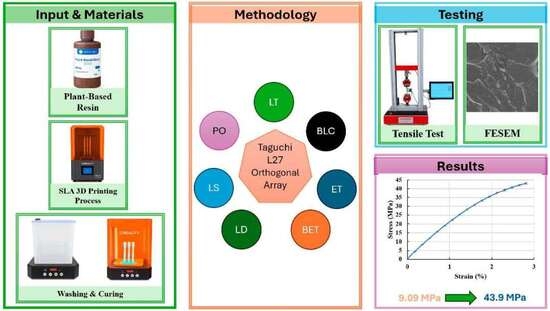
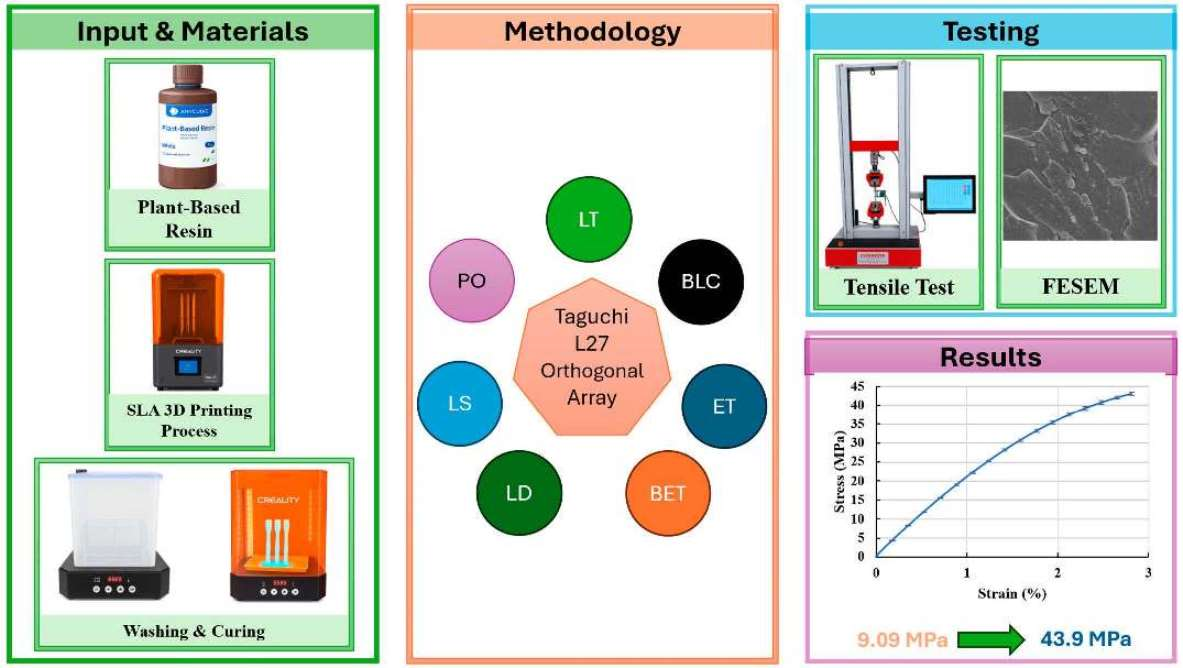
This research utilizes stereolithography (SLA) technology to analyze the mechanical properties of the fabricated parts. SLA operates by precisely hardening liquid resin layer by layer with a focused ultraviolet (UV) light, enabling the creation of precise shapes and intricate details. Plant-based resins are becoming increasingly popular as alternatives to conventional polymer resins. However, the mechanical performance of SLA-printed parts made from bio-based materials can vary significantly depending on the printing parameters. To achieve acceptable performance, the optimization of the printing parameters is crucial. This study investigates the impact of print parameters on the mechanical and morphological characteristics through the use of L27 Taguchi’s orthogonal array. For this purpose, a combination of the most influential controlled parameters, including layer thickness, exposure time, bottom layer count, bottom exposure time, lifting distance, lifting speed, and print orientation, was assessed. The mechanical properties of the samples were evaluated after washing and UV curing. The optimal parameter combination was identified using the signal-to-noise (S/N) ratio, and analysis of variance (ANOVA) identified the significant parameters affecting the mechanical properties. The findings confirmed by the morphology analysis revealed that layer thickness, followed by bottom exposure time and exposure time, strongly influenced interlayer bonding and mechanical performance.

Graphical Abstract

1. Introduction

3D printing, also known as additive manufacturing, is a technology for fabricating 3D objects. It has the ability to create complex and geometric pieces in a single process. Unlike traditional manufacturing methods, 3D printing builds objects layer by layer using plastic, resin, metal, and composites. This layer-wise building enables sophisticated designs, less material waste, and rapid prototyping [1,2,3].
Among the different types of additive manufacturing, vat photopolymerization technologies, such as SLA and digital light processing (DLP), rapidly entered the ranks of manufacturing technologies due to their ability to fabricate complex geometries with high resolution and very good surface quality. These technologies work through the selective curing of liquid photopolymer resins using a light source. Therefore, the choice of 3D printing technology plays an important role in applications that require precision, detailed specifications, and complex geometrical designs [4]. The SLA category is extensively employed to produce components necessitating precise characteristics. It facilitates accurate layer management and consistent curing behaviors, crucial for dependable mechanical properties [5,6].
The mechanical behavior of photopolymerized vat fractions is entirely related to the properties of the photopolymer resin. Recent studies have demonstrated that modified, multi-component resin systems can be utilized to adjust and control mechanical properties according to specific functional demands. These results suggest that resin selection represents a critical design factor in additive manufacturing, in addition to the optimization of processing parameters [7,8]. Material compositions play an important role in governing the mechanical response of photopolymer resin parts produced by SLA. Studies of biological, chemically modified and reinforced photopolymers show that resin chemistry has large effects on stiffness, strength and deformation behavior [5,9,10,11]. Furthermore, studies related to medical and pharmaceutical applications highlight that SLA continues to be a widely used resin-based printing technology due to its high dimensional accuracy, smooth surface quality, and compatibility with various photopolymer materials [12,13].
The mechanical behavior of parts produced by SLA has commonly been assessed using tensile, flexural, and wear testing methods. Experimental results consistently indicate that the layer-by-layer fabrication process introduces heterogeneity, with the improvement of interlayer bond quality playing a dominant influence in strength and failure behavior [14]. Comparative analysis shows that SLA-imprinted polymers often exhibit higher tensile strength and more-uniform mechanical response than their extrusion-based counterparts, mainly due to improved curing uniformity [15].
Printing parameters are considered as the main factors for controlling the mechanical properties. Parameters such as layer thickness, exposure time and printing direction directly influence curing uniformity, interlayer adhesion and tensile performance. It was shown that improper parameter selection reduces mechanical properties, whereas optimized settings greatly enhance both dimensional accuracy and mechanical consistency in SLA-based fabrication, ensuring a more reliable outcome [16,17,18,19]. The printing parameters remain the influential factor controlling the mechanical performance and manufacturing efficiency in SLA printing. Studies show that the mentioned parameters, as well as lifting parameters, affect tensile strength and printing time, confirming the need for systematic parameter optimization in resin-based printing processes. These studies emphasize that parameter optimization must consider both treatment behavior and post-processing effects [20,21,22,23,24].
The properties of photopolymer resins play an important role in introducing the mechanical and thermal performance of SLA-printed components, emphasizing the need for improved resin formulations when targeting performance improvements [25,26]. It has shown that post-curing enhances tensile strength and modulus by increasing cross-linking density, while after UV curing, laser power and layer thickness collectively control mechanical performance in SLA processes [27,28]. Recent research on SLA-printed parts proves that the direction of printing and the layer thickness are the important parameters that improve the tensile strength. Thinner layers (≈0.05 mm) and flat orientations improve interlayer bonding, leading to better tensile strength and stiffness, while thicker layers increase defects and unevenness [29]. In a study conducted by Badea et al. [30] to compare SLA and FDM in the fabrication of accurate geometries for parts, it was shown that SLA has good resolution and surface finish. Similarly, an experimental study conducted by Hozdić [31] to compare the tensile properties of SLA-printed ABS-like resin and FDM showed that SLA consistently exhibits higher tensile strength and Young’s modulus. Furthermore, Lube et al. [32] and Golubović et al. [33] have confirmed that SLA/DLP technologies are capable of fabricating in-depth geometries, homogeneity, and microstructure control and are more suitable for precision-requiring parts. On the other hand, researchers have extensively studied the effect of printing parameters on the tensile behavior of printed parts. Temiz [20,34] investigated the effect of exposure time and layer thickness on tensile strength and tensile behavior. The effect of layer thickness and printing orientation on tensile properties of SLA dental resin was evaluated by Farkas et al. [35], and the results showed that lower thickness enhances tensile strength, while orientation changes failure behavior. Rao and Neigapula [36] demonstrated, using the Taguchi method, that exposure time and layer height were the most important factors affecting the dimensional correctness. These findings highlight the need for systematic optimization of SLA parameters when targeting mechanically reliable photopolymer-made components.
Recent research on resin-based additive manufacturing using SLA technology indicated that the mechanical performance of printed parts is governed by the interaction between printing parameters and by resin formulation. While individual studies often focus on isolated parameters or specific material systems, the collective literature indicates that achieving reliable properties of the printed parts requires multi-parameter optimization. Despite numerous studies in the areas of SLA-based resin printing, several gaps still exist. Most current studies on petrochemical photopolymer resins have applied them to SLA systems, while studies on plant-based UV resins using SLA printers are very scarce. In addition, previous works have commonly focused on a limited number of printing parameters among the wide range of parameters available in SLA technology. Consequently, a comprehensive understanding of how parameter interactions affect mechanical properties in continuous resin systems remains lacking.
In this study, the focus is to investigate and optimize the mechanical properties through tensile testing of printed parts using a desktop SLA printer and an eco-friendly plant-based UV photopolymer resin that poses no adverse chemical effects to human skin and does not emit harmful odors during use, considering a combination effect of the seven most influential printing parameters. An experimental design-based Taguchi method followed by statistical analysis is used to determine the most effective parameters and their optimal levels to enhance the tensile properties in resin-based additive manufacturing. In addition, field emission scanning electron microscopy (FESEM) was used to examine fracture surfaces and microstructural features, providing insight into failure mechanisms and interlayer bonding.

2. Materials and Methods

2.1. Materials

The material used in this study was plant-based UV photopolymer resin (PB-UV PR) ordered from Anycubic, Commerce, CA, USA. The resin is designed for SLA applications and receives relevant UV radiation in the wavelength range of 365–405 nm. The resin formulation is derived from soybean-based extracts, giving it a bio-based origin. According to the manufacturer’s technical information, the resin does not produce a strong chemical odor during handling, which reduces laboratory discomfort. Also, this material is compatible with most commercially available LCD and SLA-based 3D printing systems. The physical and mechanical properties of the resin, as reported in the manufacturer’s technical datasheet, are presented in Table 1. These properties provide a general reference for the material.

2.2. Equipment

2.2.1. SLA 3D Printing

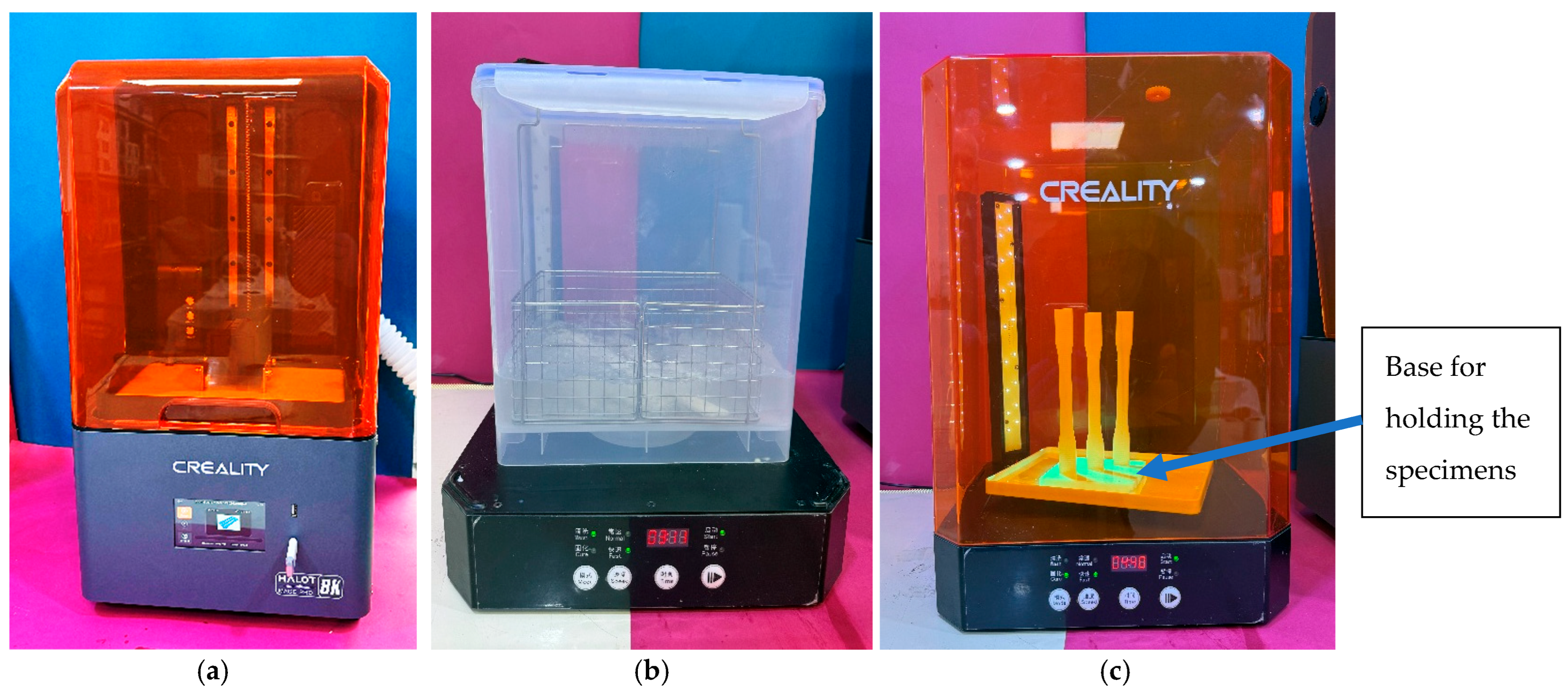
The SLA 3D printer used in this study was the Creality HALOT MAGE PRO as shown in Figure 1a. It supports a 10.3-inch monochrome LCD that provides an ultra-high resolution of 7680 × 4320 pixels, which helps with controlled UV light exposure and accurate feature reproduction. The printer works with an efficient UV light source at a wavelength of 405 nm. The available build volume of the printer is 228 × 128 × 230 mm, suitable for the fabrication of all test specimens in this study. According to the manufacturer’s technical specifications, the printer is capable of printing speeds of up to 170 mm/h under appropriate operating conditions.

2.2.2. Washing and Curing

The printed samples’ post-processing was done through the wash-and-cure device offered by Creality (Houston, TX, USA). The device is capable of performing washing and UV curing actions in one system. First, a washing process was performed to clean the printed samples with isopropyl alcohol (IPA, 96%) to remove uncured resin from the sample surfaces. It supports time control between 5 and 30 min for both washing and curing processes. The system has two operation modes, normal mode and fast mode, used for both washing and curing. In the UV curing step, the samples were subjected to a UV light source of wavelength 405 nm, to perform the post-curing process and ensure sufficient polymerization within the samples. The washing and curing units are shown in Figure 1b,c.

2.2.3. Universal Testing Machine

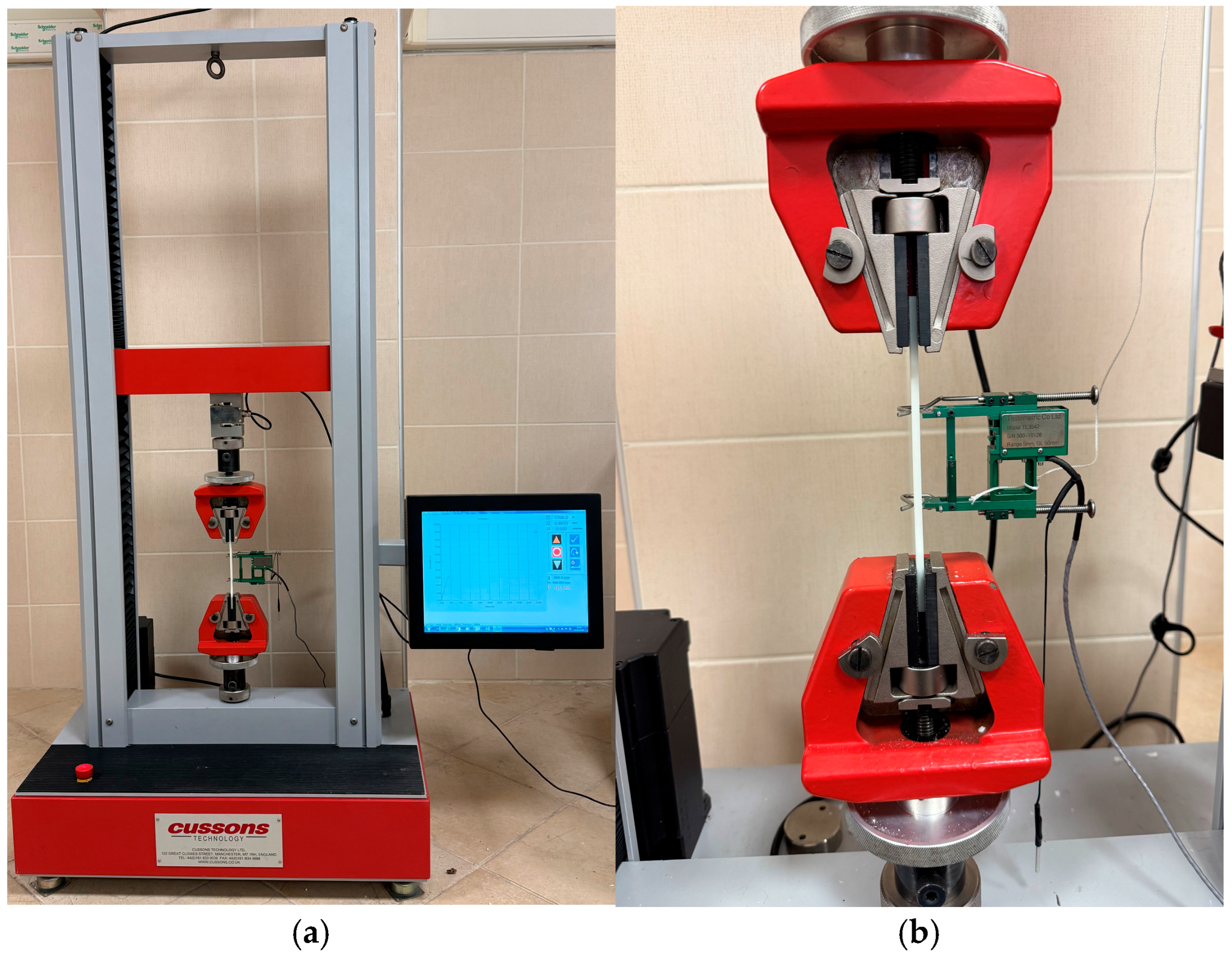
The universal testing machine Cussons Technology Ltd. (Salford, Manchester, UK) is used to perform uniaxial tensile tests under controlled conditions. The testing system has a maximum load capacity of 100 kN. The machine and the experimental setup are shown in Figure 2.

2.3. Design of Experiment

In the current work, seven key printing parameters, namely layer thickness (LT), bottom layer count (BLC), exposure time (ET), bottom exposure time (BET), lifting distance (LD), lifting speed (LS), and print orientation (PO) of each of three levels, were selected to study their effect on the tensile properties of the printed specimens. The selected parameters with their corresponding levels are shown in Table 2. The limits of the parameters were determined according to the operational capabilities of the SLA 3D printer and the results of preliminary trials.
To organize systematic experimental runs and reduce the number of trials while maintaining statistical reliability, Taguchi experimental design was used. The test setup has been performed according to the Taguchi L27 orthogonal array using Minitab statistical software 22.4.0, as shown in Table 3, to evaluate the individual and joint effects of the printing parameters on the tensile properties. All samples were printed using a Halot-Mage Pro SLA 3D printer and PB-UV PR, and all non-printing conditions were kept constant throughout the experimental runs to ensure comparability of results.

2.4. Sample Preparation

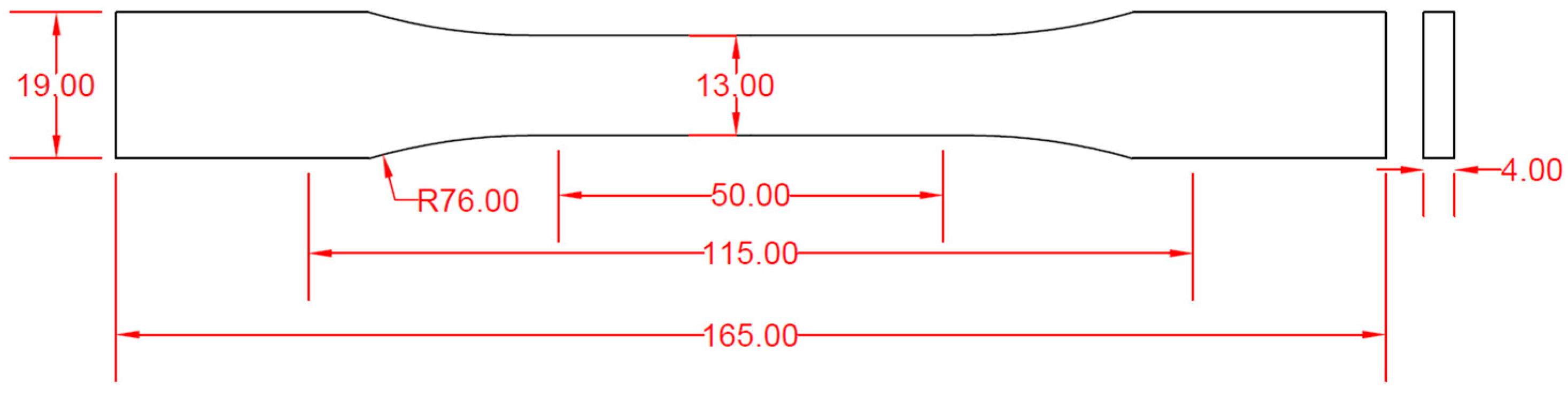
The tensile test specimens (Figure 3) were prepared according to the ASTM D638-I standard [37] and designed using AutoCAD 3D modeling software 2026 and then exported in stereolithography (STL) format for printing process.
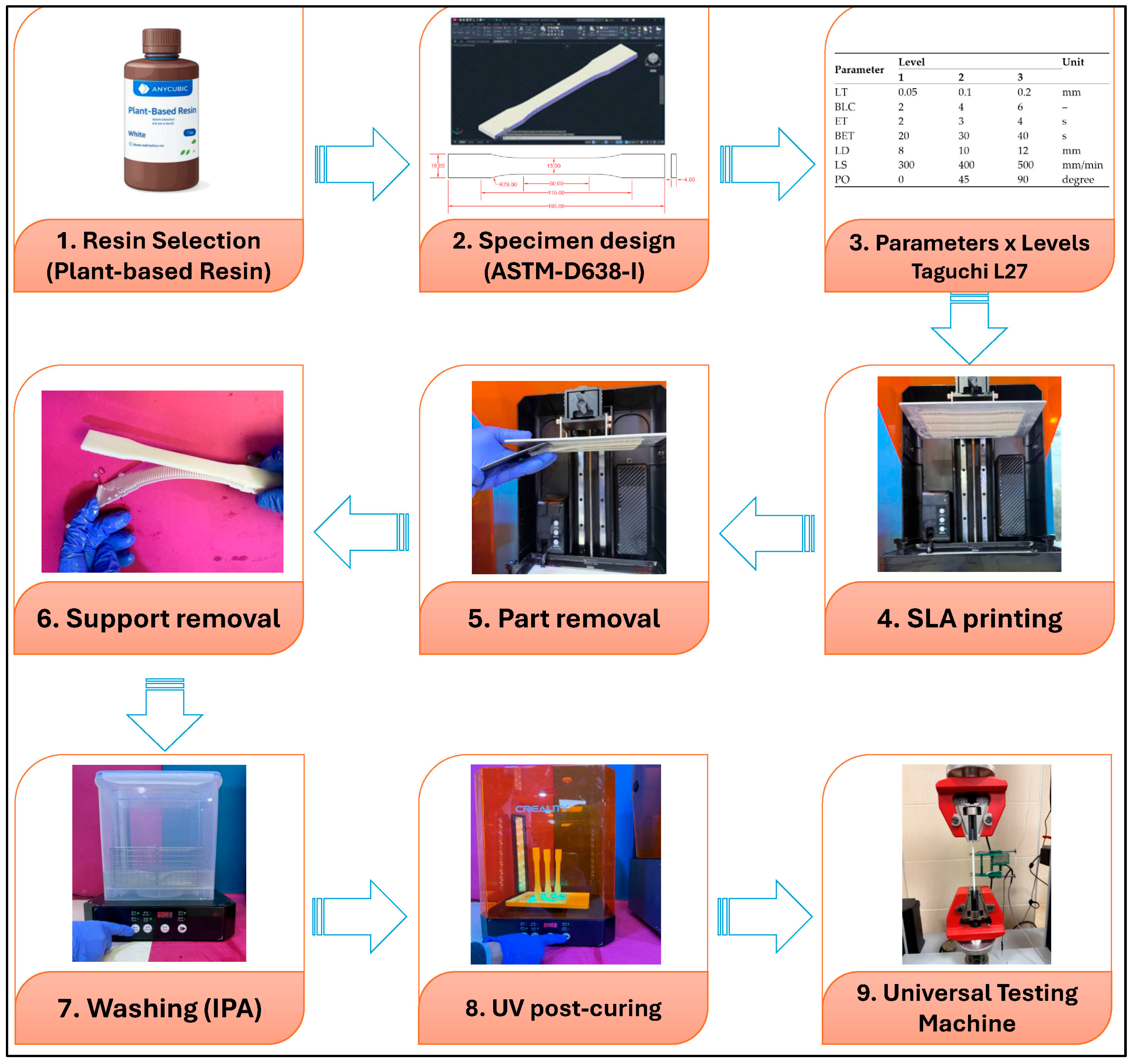
Figure 4 shows a schematic diagram of the sample preparation and testing. As shown in the figure, the STL files were imported into Chitubox-Pro slicing software 3.3.0 in which printing parameters were first determined based on Taguchi experimental design. Suitable support structures were then designed to ensure the dimensional stability of the samples. All samples were printed using the same SLA 3D printer and under the same processing conditions, so that the differences were only in the printing parameters. Layer by layer, the designed samples were shaped by applying UV to cure the resin and solidify it in an iterative process, depending on the selected printing parameters. Thereafter, the printed samples were removed from the platform and prepared for washing and curing. After conducting extensive experiments to identify an appropriate washing and curing environment, the supports were removed from the specimens immediately after they were taken from the printer. The specimens were then placed in the washing device for 6 min using the fast mode. Following this, they underwent UV curing for 5 min at a wavelength of 405 nm. Each group of specimens was secured in a specially fabricated base made with a 3D printer (Figure 1c), which held the parts vertically to ensure that the UV light reached every point on the specimens. After curing, the specimens were removed from the device and placed in the lab environment for further observation. For each Taguchi combination three specimens were made and tested to ensure repeatability and reduce test error. The specimens were subjected to an evaluation of tensile properties using universal testing machines. A gauge length of 50 mm was used, and the crosshead speed was kept at 5 mm/min. All tensile tests were performed at room temperature.
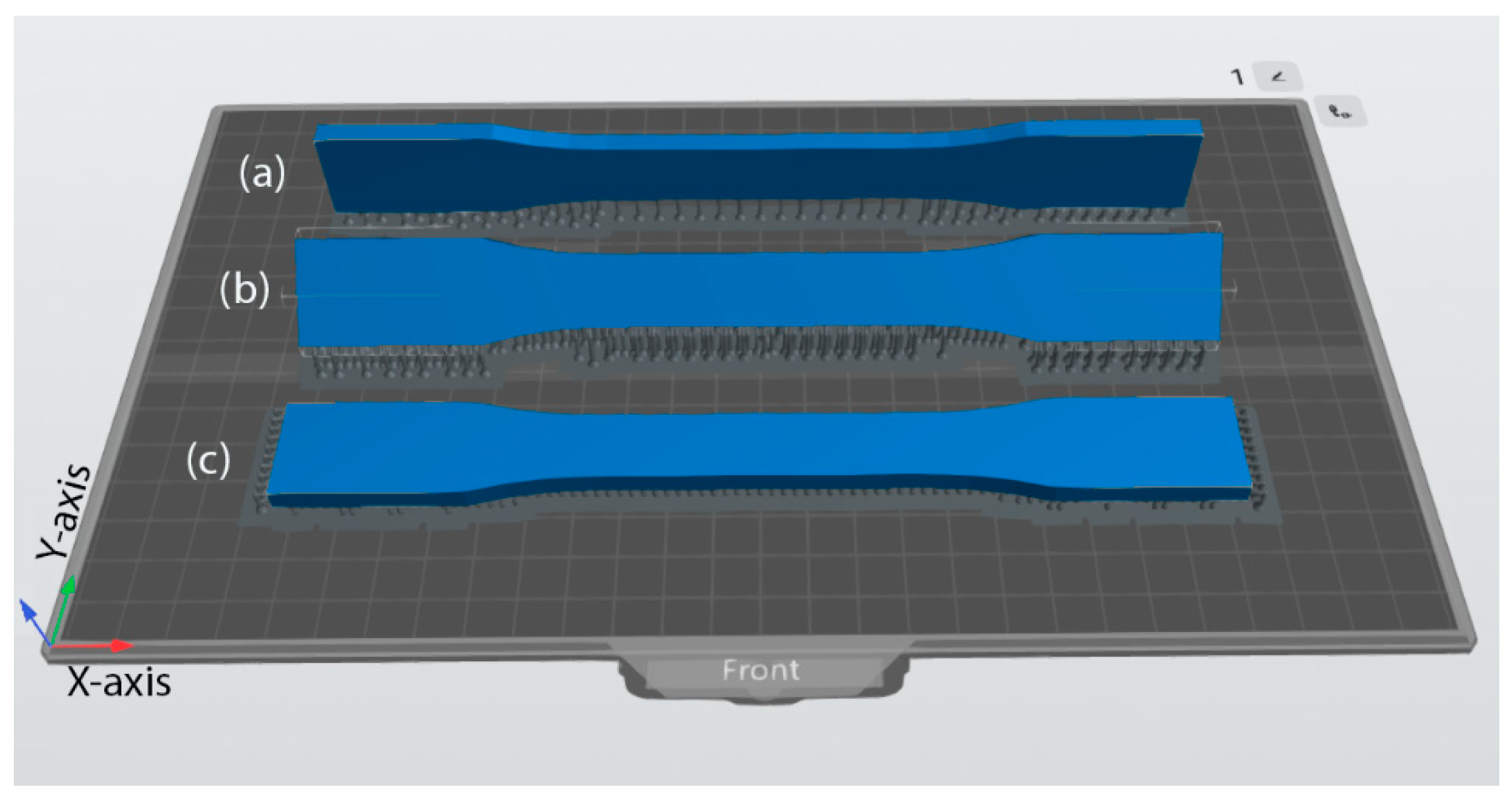
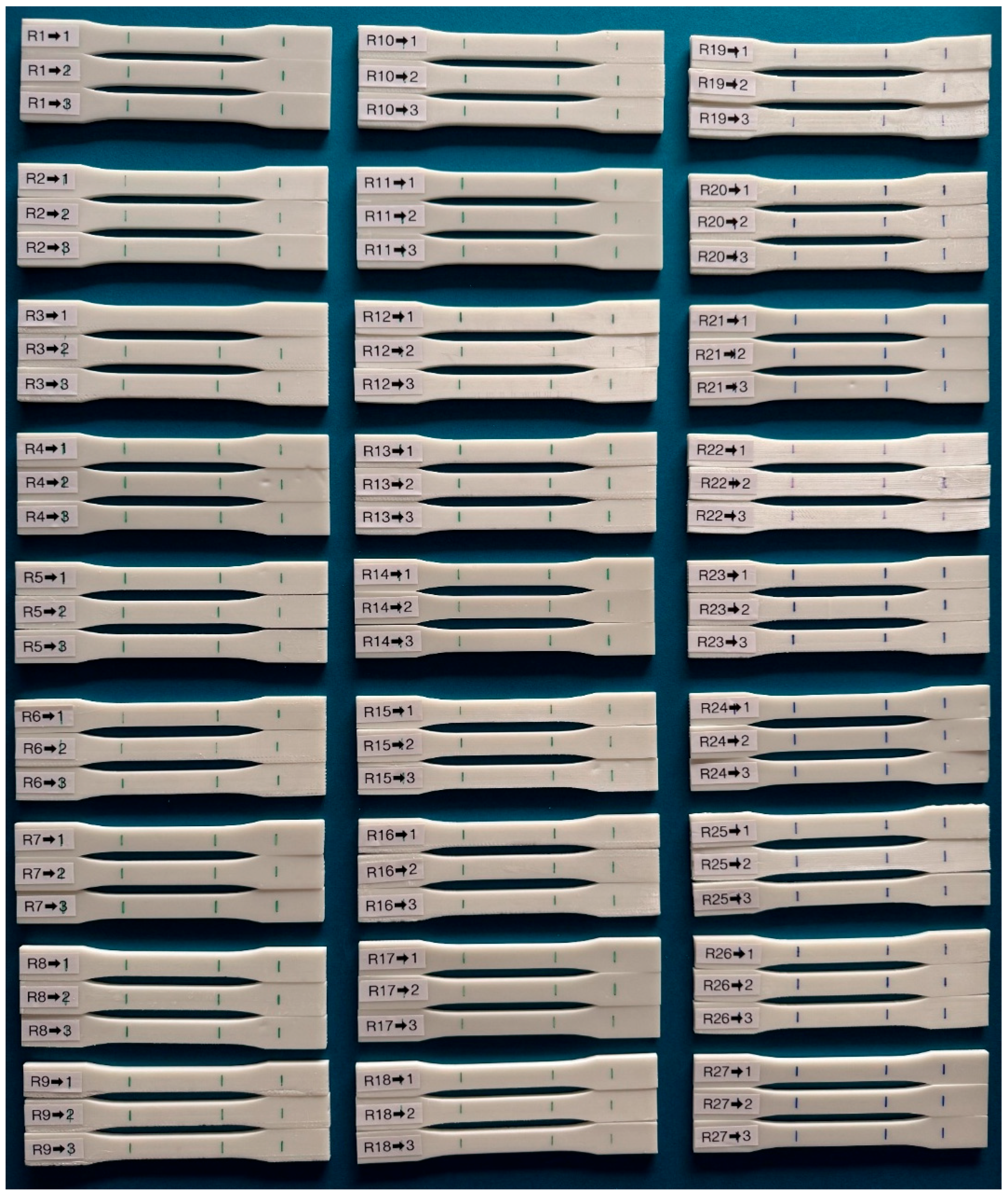
It is worth mentioning that specimens were fabricated with three different orientation angles of 0°, 45°, and 90°. Unlike many previous studies these orientations were determined by changing directions around the X-axis, rather than the Y-axis, as shown in Figure 5. These are the deadlines for changing the number of layers, length and width of the layers. Eighty-one printed specimens (Figure 6), three for each run (combinations of different printing parameters), were prepared and tested.

3. Results

3.1. Tensile Properties

Tensile tests were performed on all SLA-printed specimens. For each experimental condition, three specimens were tested, and mean tensile properties with their standard deviation (SD) and S/N ratios were calculated to ensure result reliability as shown in Table 4.
The tensile properties results showed clear differences between the different printing conditions, which are related to the selected processing parameters (Table 2). Specimens printed with lower layer thickness (0.05 mm) generally showed higher tensile strength, while increasing layer thickness was in most cases accompanied by a decrease in tensile strength. The highest value of ultimate tensile strength (UTS) was recorded in Run 3, which reached 43.90 MPa when the specimens were printed with a layer thickness of 0.05 mm. The tensile strength obtained in this study is aligned with the range provided in the manufacturer’s datasheet and exceeds the stated range of 35–40 MPa. This highlighted the potential for successfully printing parts with the resin, taking into consideration the combination of key influential parameters. However, the goal of this work was not just to establish baseline properties but also to systematically optimize the printing parameters using plant-based resin. An analysis of 27 runs and 81 printed and tested samples lead to the identification of the optimal predicted parameters and higher tensile strength than that mentioned above, which will be demonstrated later in the confirmation test. In contrast, the lowest UTS value was recorded in Run 20 of only 9.09 MPa printed with a layer thickness of 0.2 mm. The increase in tensile strength at a layer thickness of 0.05 mm is due to the improved interlayer bonding and the uniformity of the curing process. Thinner layers allow UV rays to penetrate better through the material, which leads to a higher crosslink density, which helps to improve load transfer between layers, ultimately leading to increased tensile strength. The opposite is also true, increasing layer thickness leads to incomplete polymerization and decreases tensile strength. These results are similar to those of previous studies in vat photopolymerization systems [38,39].
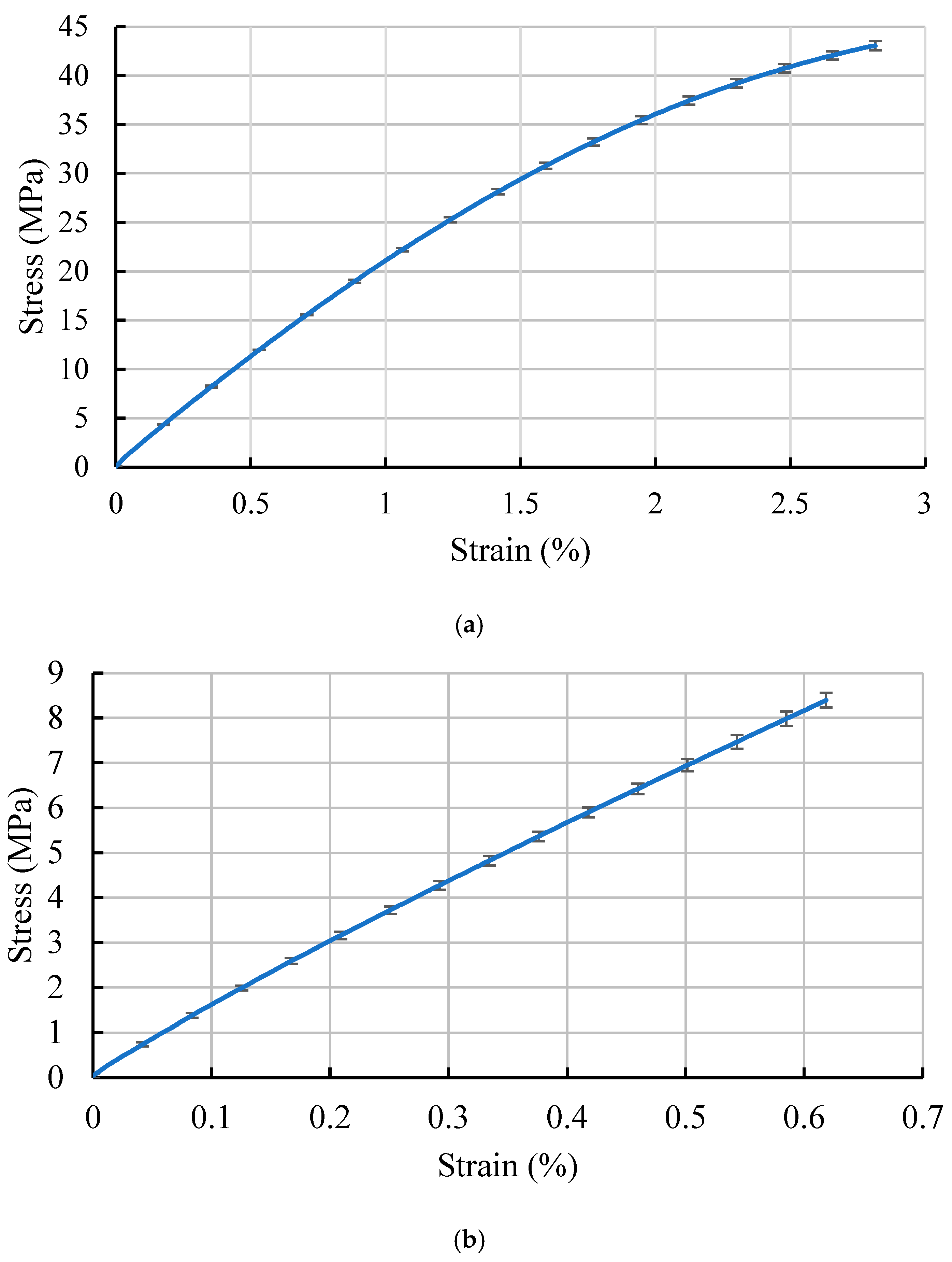
The stress–strain curves associated with the highest and lowest tensile responses are shown in Figure 7, which clearly show the differences in the mechanical behavior of the samples. From the curve, a significant difference in stiffness and deformation capacity of the two conditions can be observed. In Figure 7a, with a layer thickness of 0.05 mm, a strain at break of 2.97% was recorded, in contrast, in Figure 7b, for 0.2 mm, it was only 0.66%. This indicates that, under optimized conditions, the specimen has higher strength and load carrying capacity until before failure. Regarding the elongation at break of 1.48 mm in (a), compared with 0.33 mm in (b), it confirms that the printed samples have more-sustained deformation before failure. Based on that, the improved results are not only limited to the increase in tensile strength but also directly evident in stiffness and ductility, both of which are hallmarks of credible mechanical performance in SLA-printed plant-based resin.

3.2. Signal-to-Noise Ratio Analysis

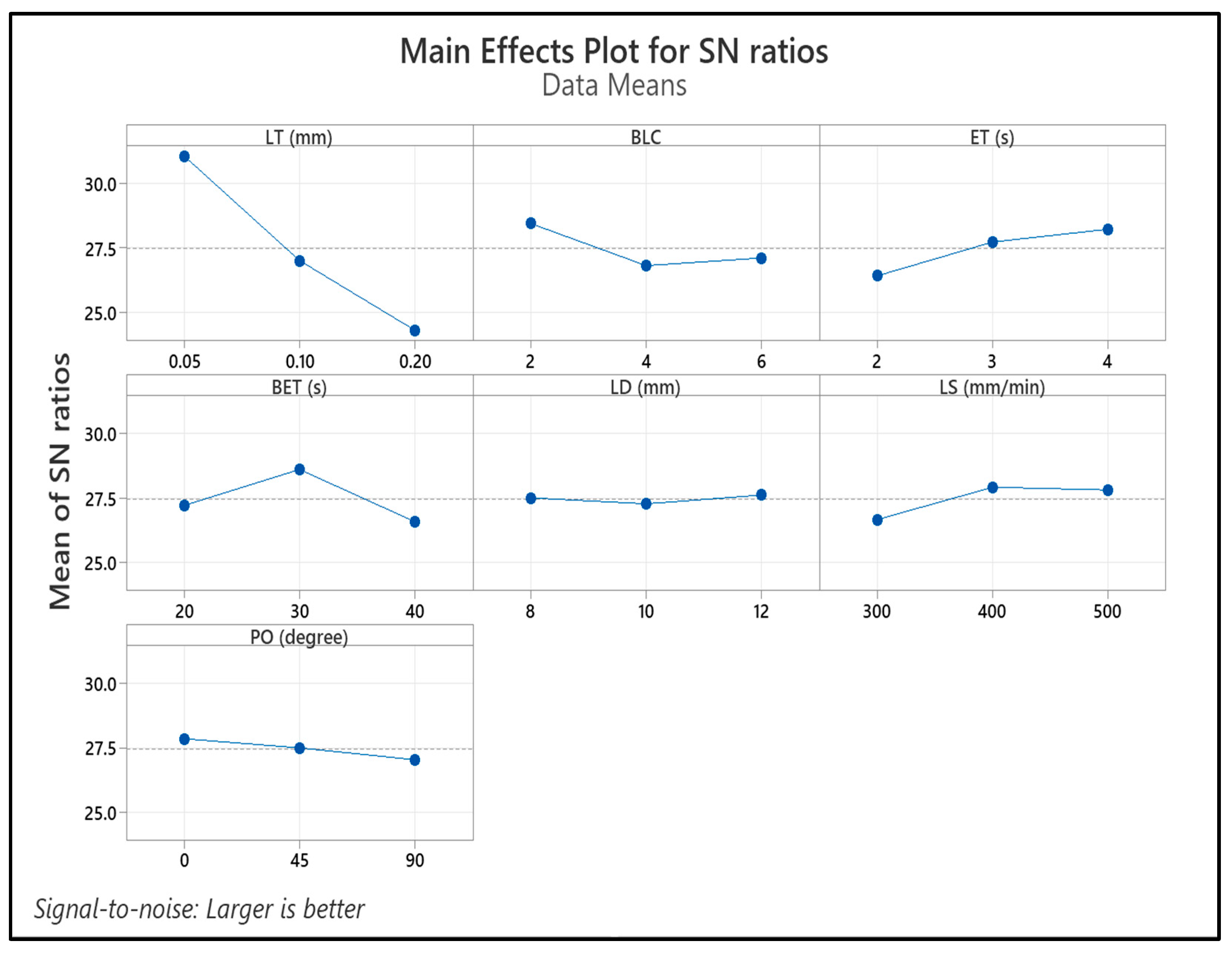
S/N ratio analysis was used to evaluate the robustness of SLA printing parameters and to determine the optimal levels for improving tensile properties, following the larger-is-better criterion. Average performances for S/N ratios at different levels of printing parameters are summarized in Table 5. The results show that LT has a very significant effect on tensile properties, as evidenced by the highest delta value and Rank 1, confirming the key role of this parameter in mechanical performance. BET and ET showed a moderate effect and hold Rank 2 and Rank 3, respectively, while BLC showed a smaller effect compared with the mentioned parameters. Against those, LS and PO show a weak effect, while LD has the least effect among the evaluated parameters. These trends emerged from the S/N ratio analysis and were confirmed by the main effect plots shown in Figure 8.
According to these results, optimal parameter levels were determined to achieve the highest tensile properties, which provides a clear numerical basis for performing ANOVA analysis in the subsequent stage. The results of Table 5 show that LT with delta of 6.73 dB and Rank 1 has the greatest influence on S/N ratio, which is confirmed by ANOVA (Table 6) with a percentage contribution (P%) of 64.58%. The change in layer thickness from 0.05 mm to 0.2 mm caused a significant change in the tensile strength, as explained in Table 4 (43.90 MPa to 9.09 MPa).

3.3. Optimization of Printing Parameters

According to the S/N ratio analysis results shown in Table 5, optimization of printing parameters was performed to obtain the highest tensile properties. For each process parameter, the level that showed the highest average S/N ratio was selected, following the larger-is-better criterion, to provide robust tensile performance. According to these results, optimal parameter combination represented by LT1 (0.05 mm), BLC1 (2 layers), ET3 (4 s), BET2 (30 s), LD3 (12 mm), LS2 (400 mm/min) and PO1 (0°) was determined to be used in the printing phase. The effectiveness of this combination was checked by the confirmation test, as described in Section 3.6.
This specific combination shows that achieving high tensile performance in SLA printing of plant-based resin is related to the combination of the parameters not to the enhancement of only a single parameter. The selection of levels is such that layer formation, exposure control and lifting stability work together, enabling the printed structure to form evenly and the tensile response to be recorded in a sustainable manner. Thus, this optimization not only determines the best strength level but also provides an appropriate basis for producing reproducible and reliable mechanical properties.

3.4. Analysis of Variance

ANOVA (Table 6) for S/N ratios was used to evaluate the statistical significance and determine the percentage contribution of each printing parameter to tensile properties. According to the table, LT is the only parameter that is statistically significant, with a p-value of 0.001. Furthermore, the table indicates that LT contributes the most, with a contribution of 64.58%, confirming its significant role in determining tensile performance. Following LT, each of BET, ET, and BLC demonstrated a moderate effect, contributing 6.88%, 6.41%, and 5.48%, respectively. In contrast, LS and PO exhibited weaker effects. Lastly, LD had the least impact, with a percentage contribution of only 0.40%.
According to the analysis of Table 5 and Table 6, the S/N analysis and ANOVA are complementary in identifying the key parameters in determining tensile performance.

3.5. Interaction Effects of Printing Parameters

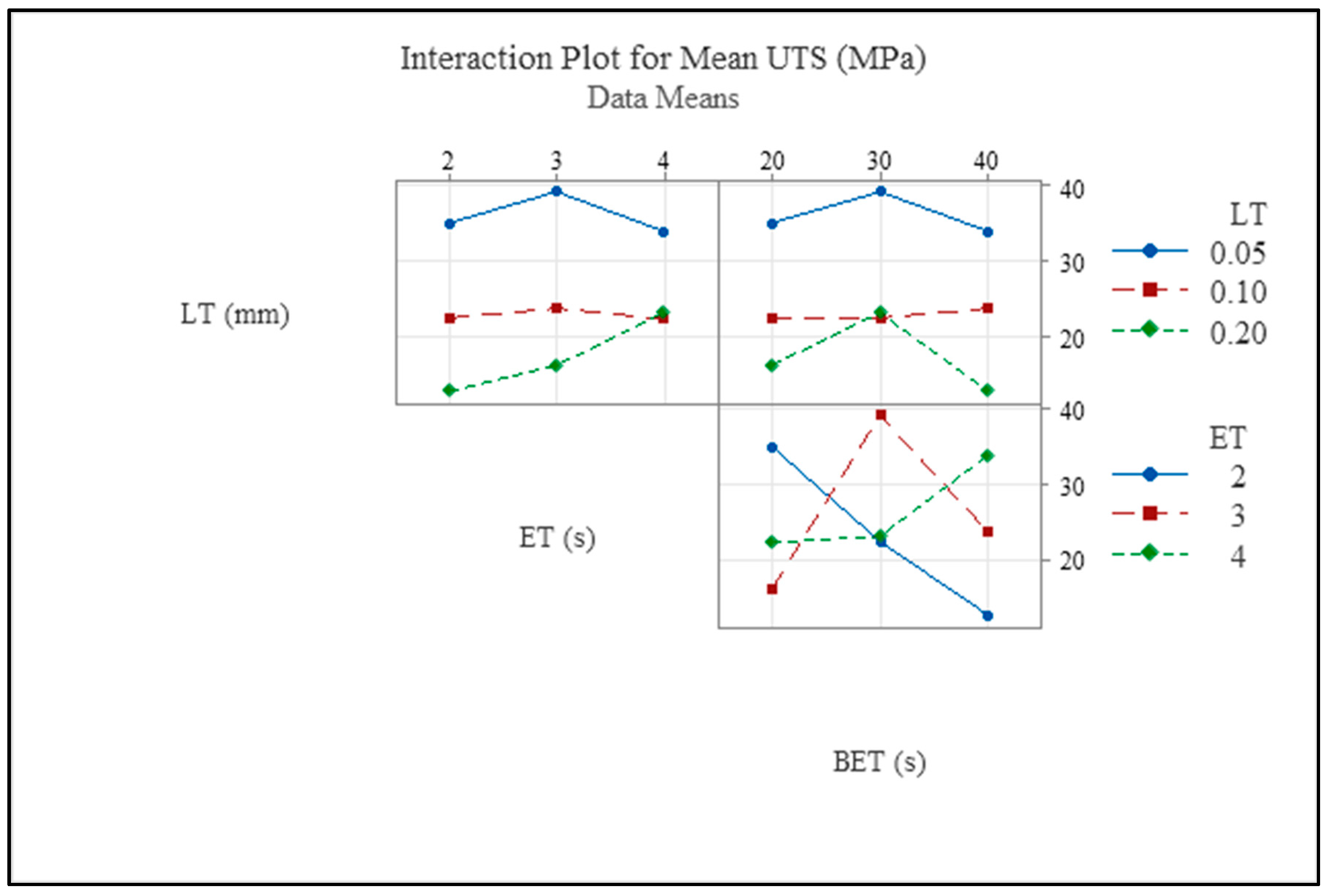
Interaction plots for ultimate tensile strength were used to examine the joint effect between the printing parameters identified as the higher contributors, in particular LT, ET and BET. The plots show that the effect of each parameter depends on the levels of the other parameters and does not just act independently. As obviously shown in Figure 9, there is a clear interaction between LT and ET, where the effect of exposure conditions varies with layer thickness. Also, interaction between ET and BET is shown to be asymmetric, confirming the nonlinear behavior of the tensile response.
The results show that obtaining the best tensile properties is not achieved by choosing the optimal level of one parameter alone, but the synergistic effect between LT, ET and BET should be taken into account. These results align with the S/N ratio analysis, optimization results and ANOVA analysis and suggest the importance of interaction effects in SLA parameter optimization. For instance, at an LT of 0.05 mm, the effect of exposure parameters (ET and BET) is more pronounced, which shows that optimization must be done with a balance of key parameters [20,35].

3.6. Confirmation Test

To verify the optimal parameter combinations determined in Section 3.3, a confirmation tensile test was performed. Three specimens were printed using the optimal printing parameters of 0.05 mm, two layers, 4 s, 30 s, 12 mm, 400 mm/min and 0° for LT, BLC, ET, BET, LD, LS and PO respectively and then subjected to tensile testing. The test gives a mean UTS of 47.21 MPa with an SD of 1.62 MPa, indicating good reproducibility and stable tensile performance among the specimens. Also, the S/N ratio was determined according to the larger-is-better criterion with a value of 33.47 dB.
An analysis of 27 runs and 81 printed and tested samples led to the identification of the optimal predicted parameters and a higher tensile strength (47.21 MPa), exceeding the manufacturer’s specified range of 35–40 MPa. This finding demonstrates that adjusting process conditions can significantly enhance mechanical performance.
The effective sample size, standard error, and confidence interval were calculated based on the Taguchi method and using equations [40,41]:
n e f f = N 1 + D O F
The standard error was obtained using
S E = V e n e f f
At a 99% confidence level t 0.005,12 = 3.055 , the confidence interval was determined by
C I = t × S E
where V e represents the residual mean square error obtained from ANOVA; D O F denotes the degree of freedom of the significant factor; and N is the total number of experiments.
Accordingly, the predicted tensile strength at the optimal setting was 43.79 ± 5.06 MPa in the range of 38.73–48.85 MPa. The experimental test, 47.21 MPa, falls within this confidence interval, confirming the adequacy of the Taguchi prediction model. The percentage error between predicted and experimental values was about 7.8%. Consequently, the confirmation test result shows that the optimization performed with S/N ratio analysis and ANOVA analysis is equivalent and suitable for obtaining reliable tensile performance in SLA printing.
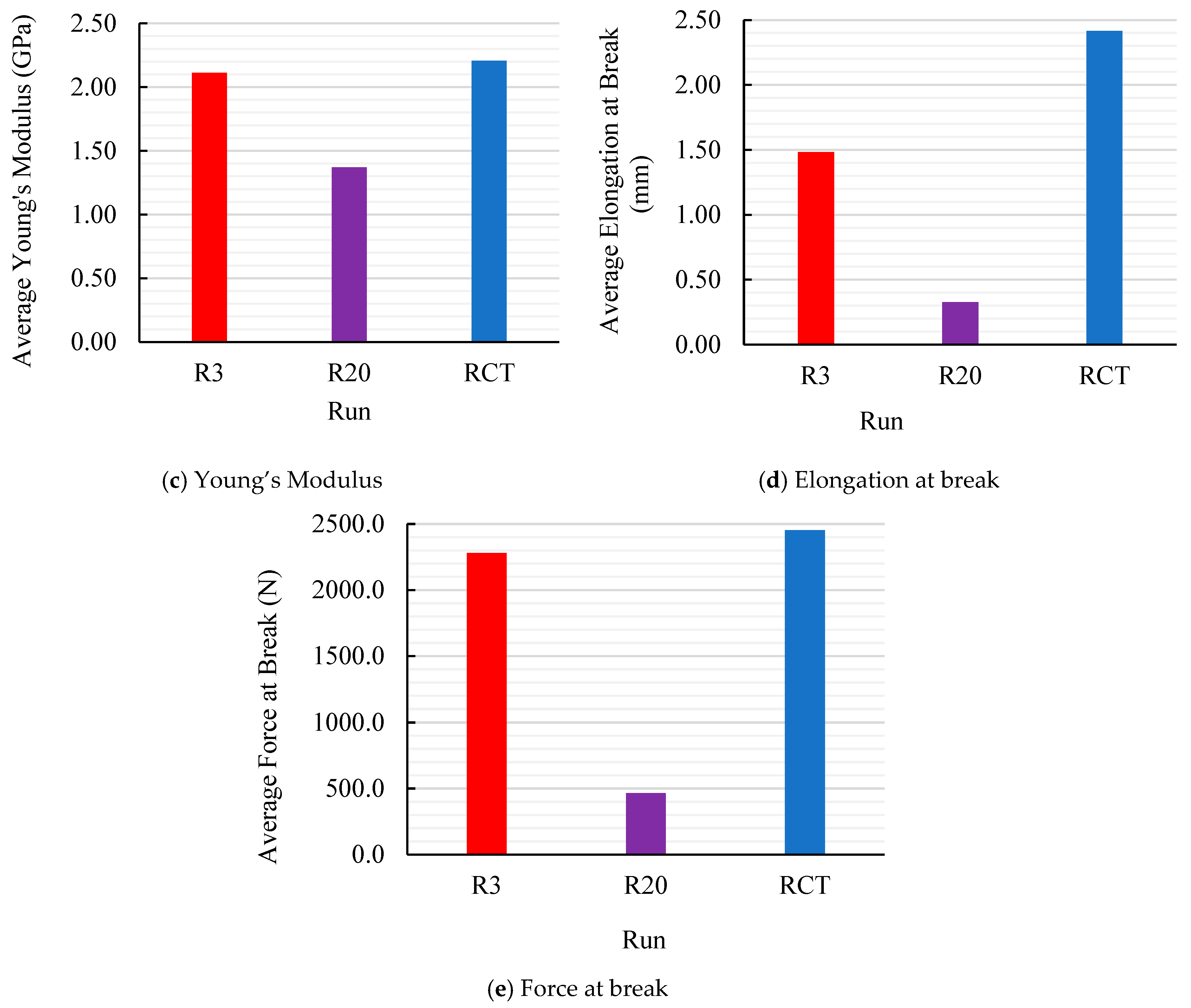
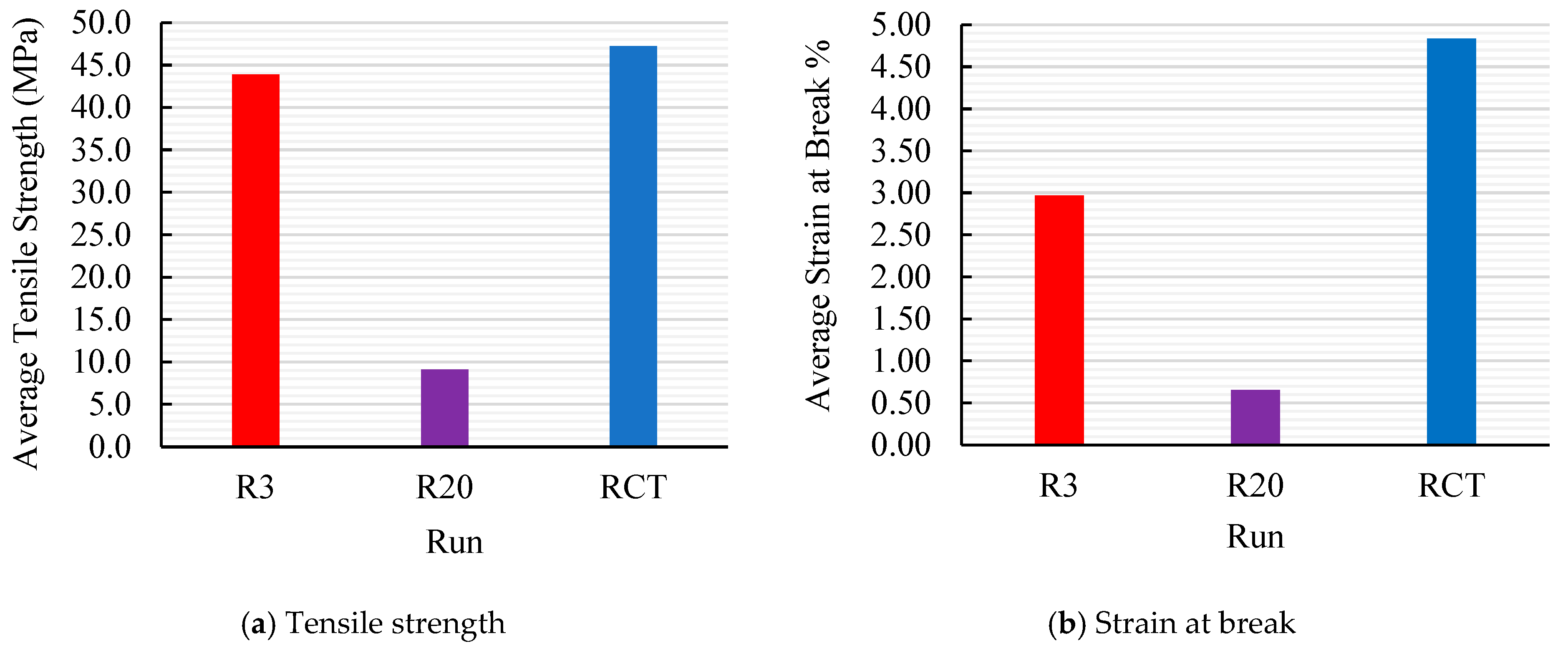
As a summary of the results, the mechanical performances for maximum strength (R3), minimum strength (R20), and the confirmation test (RCT) are displayed in Figure 10. The figure shows enhanced mechanical performance at the optimized level for both R3 and RCT when the specimens were printed using 0.05 mm layer thickness, in comparison to R20 where the layer thickness was 0.2 mm. For instance, for the average tensile strength (Figure 10a), significant improvements of 47.017% (RCT) and 43.69% (R3) were achieved. Average strain (Figure 10b) was also enhanced by 86.33% and 77.77% for RCT and R3, respectively. A similar pattern can be observed for the average Young’s modulus (Figure 10c), the average elongation at break (Figure 10d), and the average force at break (Figure 10e). The figures show a clear improvement in the mechanical properties. This is acknowledged by the optimization process utilized in the current research and the proper methodology followed at the design, printing, and post-printing stages.

3.7. Morphology Analysis

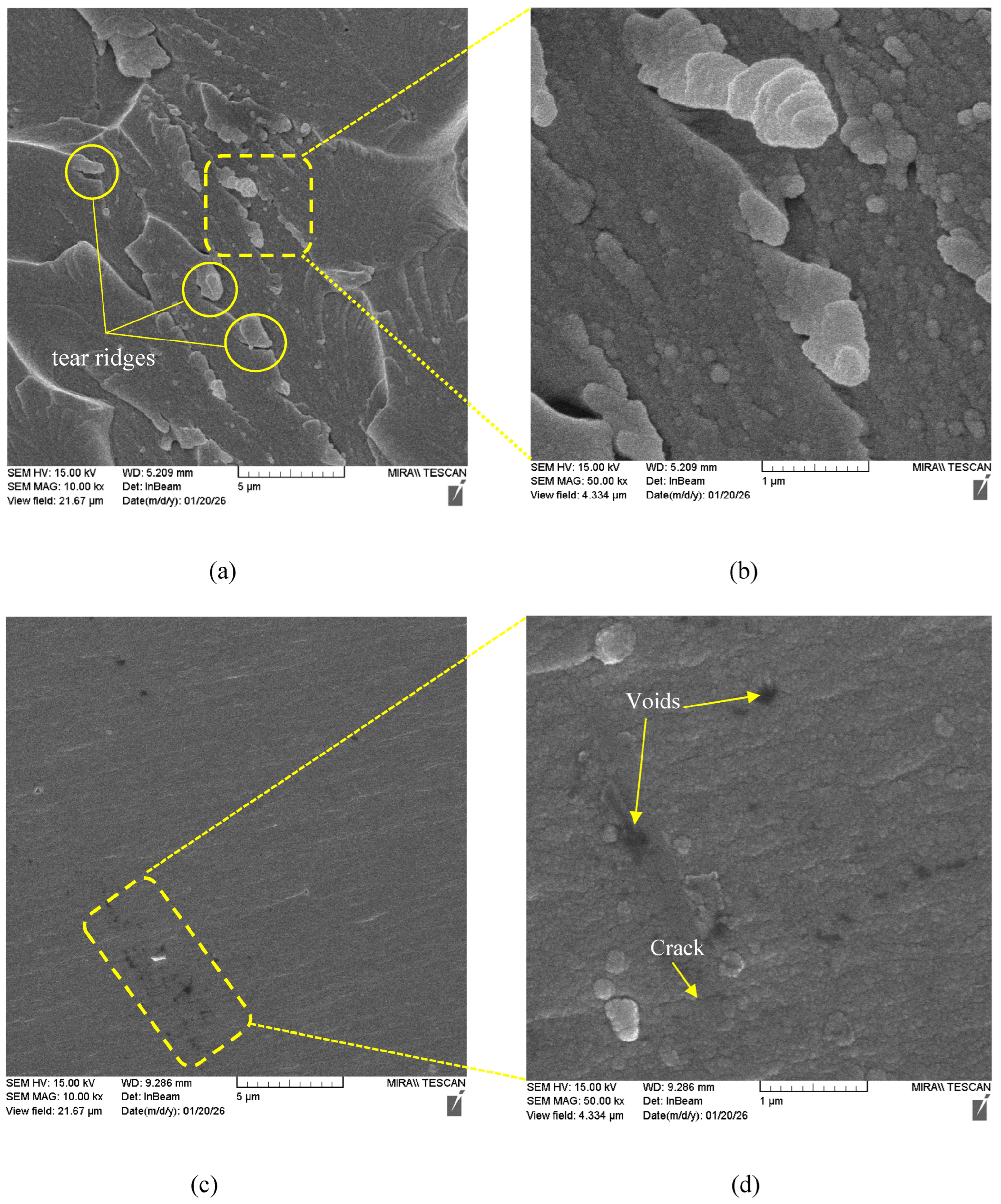
FESEM was used to examine the fracture surface of two representative tensile specimens. One specimen showed the highest UTS (43.9 MPa) with 0.05 mm layer thickness, while the second specimen had the lowest UTS (9.09 MPa) with 0.2 mm layer thickness. The purpose of this analysis was to understand the relationship between fracture morphology and tensile testing results. As shown in Figure 11a,b, the fracture surface of the sample shows a mixed brittle–ductile behavior. The fracture surface is relatively smooth and uniform, and the number of microcracks is very low, indicating controlled crack propagation. In addition, the presence of tear ridges indicates some plastic deformation prior to fracture. These characteristics are compatible with the tensile test results, which showed high strength and moderate elongation.
On the contrary, as shown in Figure 11c,d, the fracture surface of the defective sample has a larger number of microcracks and plump fractures, which is a sign of stress concentration and unstable crack growth. Clear signs of plastic deformation were not observed, which caused early fracture and brittle fracture behavior. This morphology is directly related to the low tensile strength and minimal elongation observed in the tensile test.
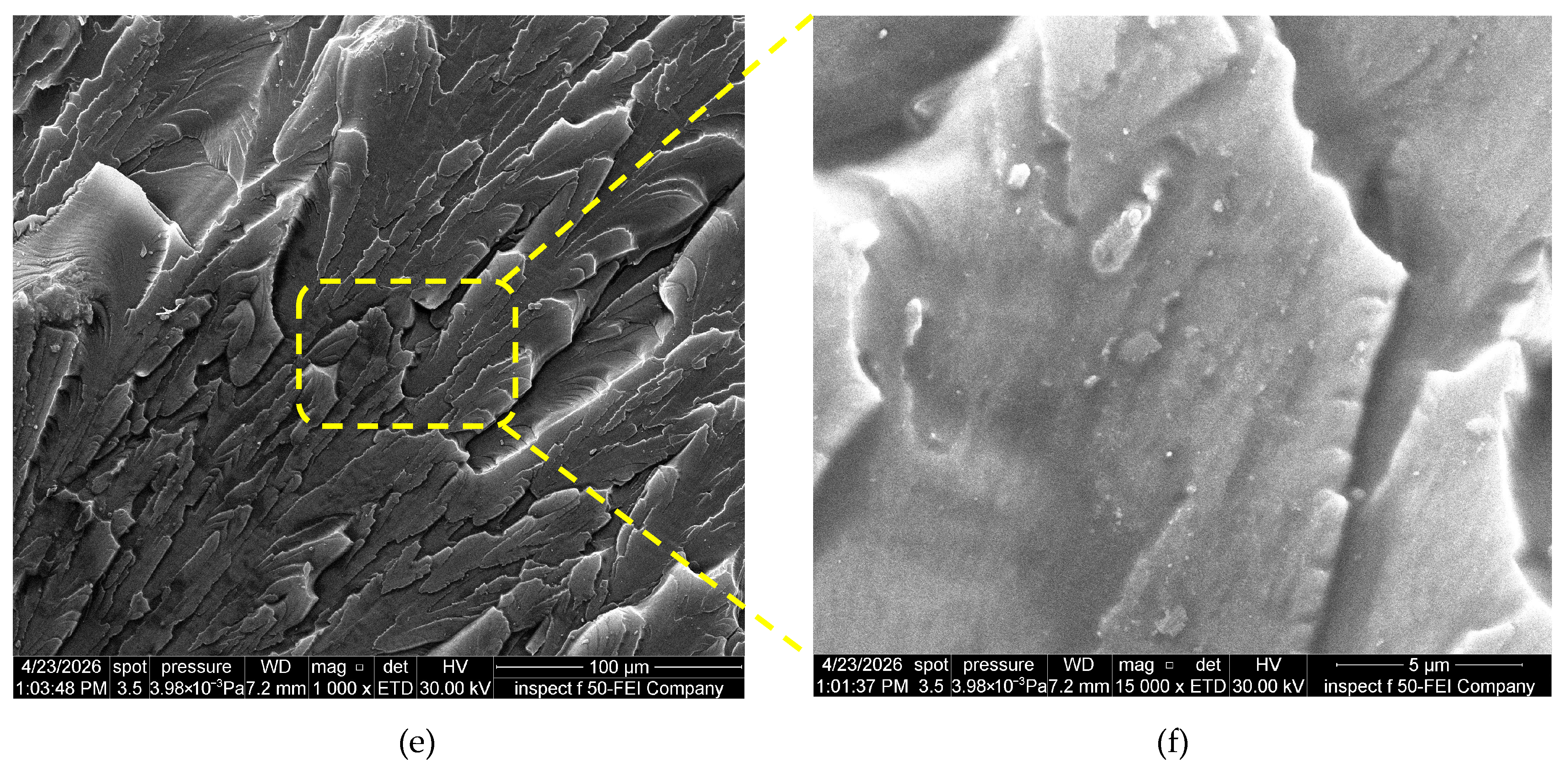
To support and complete the analysis, Figure 11e,f display FESEM images of the fracture surface from the confirmation-test specimens. The images clearly show a more homogeneous texture on the fracture surface, with almost no voids and cracks present. This improvement, resulting from the optimized printing parameters, contributed to the enhanced strength of the printed samples.
From that, it can be concluded that the impact of the printing parameters’ optimization by selecting the proper combination of the parameters is evident in the achievement of the specimens thus providing an acceptable benchmark for SLA 3D-printed plant based-resin in producing parts.
The exposure conditions (ET and BET) play a crucial role in determining the degree of polymerization, which affects both interlayer bonding and the formation of internal defects. Consequently, the curing conditions directly influence the degree of polymerization of the SLA plant-based resin. Higher curing energy enhances crosslink density and interfacial bonding. However, excessive curing can lead to shrinkage-induced internal defects, voids, or microcracks, which act as stress concentrators and reduce strength. These competing effects determine the final mechanical performance. As observed in the strength of the tested samples, reducing layer thickness helps to achieve more-uniform UV curing and increases crosslink density. This improvement enhances interlayer bonding and minimizes internal defects and microcracks, as seen in the FESEM analysis, resulting in higher strength values. In contrast, increasing layer thickness can result in incomplete polymerization and a greater number of defects, which directly diminishes mechanical performance.

4. Conclusions

This study investigated the impact of seven SLA printing parameters on the mechanical performance and morphology analysis of plant-based UV photopolymer resin using the Taguchi L27 orthogonal array method. The S/N ratio analysis according to the larger-is-better criterion identified the optimal parameter combination for maximizing tensile strength as 0.05 mm (LT), two layers (BLC), 4 s (ET), 30 s (BET), 12 mm (LD), 400 mm/min (LS), and 0° (PO). Under these conditions, the predicted tensile strength was 38.73–48.85 MPa with a 99% confidence level, where the confirmation test recorded a tensile strength of 47.21 MPa.
ANOVA statistical evaluation confirmed that layer thickness was the most significant parameter influencing the variation in tensile properties. In contrast, both bottom exposure time and exposure time had a central effect, while lifting parameters had the least impact.
Morphological analysis using FESEM confirmed these findings; the specimen with the highest tensile strength exhibited controlled crack propagation behavior, while the specimen with the lowest strength displayed numerous microcracks and unstable crack growth.
A comprehensive understanding of the printing process, structure, and mechanical performance of the printed parts was provided through the integration of Taguchi-based optimization, ANOVA, and morphological analysis in SLA-fabricated bio-based resins. The results support that careful optimization of key printing parameters, followed by proper post-processing of washing and curing environments, can significantly improve the mechanical performance and structural integrity of plant-based resin, supporting its potential as a sustainable alternative to petrochemical-based resins.
It is evident from the results that optimizing printing parameters and selecting the right settings is a key factor in achieving desirable mechanical properties and high-performance parts.
The findings of the current study reveal the potential for using plant-based resins in SLA applications, emphasizing that further work, including additional mechanical tests and characterization analysis, is necessary to enhance the mechanical performance and minimize internal defects of the printed parts, taking into account the customer requirements and the application environments for the end-user parts.

Author Contributions

Conceptualization, Z.J. and S.R.; methodology, Z.J. and S.R.; software, Z.J.; validation, Z.J.; formal analysis, Z.J. and S.R.; investigation, Z.J. and S.R.; resources, Z.J.; data curation, Z.J. and S.R.; writing—original draft preparation, Z.J.; writing—review and editing, S.R.; visualization, Z.J.; supervision, S.R. All authors have read and agreed to the published version of the manuscript.

Funding

This research received no external funding.

Institutional Review Board Statement

Not applicable.

Informed Consent Statement

Not applicable.

Data Availability Statement

The original contributions presented in this study are included in the article. Further inquiries can be directed to the corresponding author.

Conflicts of Interest

The authors declare no conflicts of interest.

References

  1. Golubović, Z.; Tanasković, J.; Milovanović, A.; Bojović, B. Experimental and Numerical Research of 3D DLP-Printed Solid and Voronoi PLA Resin Specimens Under Tensile and Bending Loads. Polymers 2025, 17, 1180. [Google Scholar] [CrossRef] [PubMed]
  2. Kadauw, A.A.A. Neural Network Optimization of Mechanical Properties of ABS-like Photopolymer Utilizing Stereolithography (SLA) 3D Printing. J. Manuf. Mater. Process. 2025, 9, 116. [Google Scholar] [CrossRef]
  3. Susanto, B.; Putro, A.J.N.; Ristyawan, M.R.; Kumar, V.V.; Nugraha, A.D.; Kusumawanto, A.; Muflikhun, M.A. Enhanced Mechanical Properties of the Additively Manufactured Modified Hybrid Stereolithography (SLA)–Glass Powder. J. Compos. Sci. 2025, 9, 205. [Google Scholar] [CrossRef]
  4. Barreto, D.N.; Gelamo, R.; Mizaikoff, B.; Petruci, J.F.D.S. Fabrication of Low-Cost Miniaturized Gas Cells via SLA 3D-Printing for UV-Based Gas Sensors. ACS Omega 2024, 9, 8374–8380. [Google Scholar] [CrossRef]
  5. Lublin, D.; Hao, T.; Malyala, R.; Kisailus, D. Multiscale mechanical characterization of biobased photopolymers towards sustainable vat polymerization 3D printing. RSC Adv. 2024, 14, 10422–10430. [Google Scholar] [CrossRef]
  6. Malekan, M.; Sigurjónsson, B. On the mechanical behavior of polymeric lattice structures fabricated by stereolithography 3D printing. Eng. Rep. 2024, 6, e13003. [Google Scholar] [CrossRef]
  7. Stark, B.L.; Gamboa, M.; Esparza, A.; Cavendar-Word, T.J.; Bermudez, D.; Carlon, L.; Natividad-Diaz, S. Materials Characterization of Stereolithography 3D Printed Polymer to Develop a Self-Driven Microfluidic Device for Bioanalytical Applications. ACS Appl. Bio Mater. 2024, 7, 7883–7894. [Google Scholar] [CrossRef]
  8. Zhu, G.; von Coelln, N.; Hou, Y.; Vazquez-Martel, C.; Spiegel, C.A.; Tegeder, P.; Blasco, E. Digital Light 3D Printing of Double Thermoplastics with Customizable Mechanical Properties and Versatile Reprocessability. Adv. Mater. 2024, 36, 2401561. [Google Scholar] [CrossRef]
  9. Grygier, D.; Kurzawa, A.; Stachowicz, M.; Krawiec, K.; Stępczak, M.; Roszak, M.; Pyka, D. Investigations into the Material Characteristics of Selected Plastics Manufactured Using SLA-Type Additive Methods. Polymers 2024, 16, 1607. [Google Scholar] [CrossRef]
  10. Alshihabi, M.; Kayacan, M.Y. Effect of nanosized carbon nanotubes, Titanium Nitride and cubic Boron Nitride powders on mechanical and thermal properties of SLA 3D printed resin composites. Polym. Compos. 2024, 45, 15561–15573. [Google Scholar] [CrossRef]
  11. Garcia, G.E.S.; de Sousa Junior, R.R.; Gouveia, J.R.; Dos Santos, D.J. Graphene Oxide-Based Nanocomposites for Stereolithography (SLA) 3D Printing: Comprehensive Mechanical Characterization under Combined Loading Modes. Polymers 2024, 16, 1261. [Google Scholar] [CrossRef]
  12. Lakkala, P.; Munnangi, S.R.; Bandari, S.; Repka, M. Additive manufacturing technologies with emphasis on stereolithography 3D printing in pharmaceutical and medical applications: A review. Int. J. Pharm. X 2023, 5, 100159. [Google Scholar] [CrossRef]
  13. Mhmood, T.R.; Al-Karkhi, N.K. A Review of the Stereo lithography 3D Printing Process and the Effect of Parameters on Quality. Al-Khwarizmi Eng. J. 2023, 19, 82–94. [Google Scholar] [CrossRef]
  14. Simeon, P.; Unkovskiy, A.; Sarmadi, B.S.; Nicic, R.; Koch, P.J.; Beuer, F.; Schmidt, F. Wear resistance and flexural properties of low force SLA- and DLP-printed splint materials in different printing orientations: An in vitro study. J. Mech. Behav. Biomed. Mater. 2024, 152, 106458. [Google Scholar] [CrossRef]
  15. Tavangarian, F.; Sadeghzade, S.; Fani, N.; Khezrimotlagh, D.; Davami, K. 3D-printed bioinspired spicules: Strengthening and toughening via stereolithography. J. Mech. Behav. Biomed. Mater. 2024, 155, 106555. [Google Scholar] [CrossRef] [PubMed]
  16. Li, Y.; Teng, Z. Effect of printing orientation on mechanical properties of SLA 3D-printed photopolymer. Fatigue Fract. Eng. Mater. Struct. 2024, 47, 1531–1545. [Google Scholar] [CrossRef]
  17. Kafkaslıoğlu Yıldız, B. Assessment of mechanical performance of Al2O3 ceramic honeycomb sandwich structures produced with SLA 3D-printing regarding unpolymerized slurry removal strategy. J. Aust. Ceram. Soc. 2024, 60, 1199–1208. [Google Scholar] [CrossRef]
  18. Forstmeier, M.; LeBlanc, J.; Warner, E.; Merlo, K. Quantification of the effects of print parameters on the mechanical performance of low force stereolithography parts. Int. J. Lightweight Mater. Manuf. 2024, 7, 958–967. [Google Scholar] [CrossRef]
  19. Msallem, B.; Vavrina, J.J.; Beyer, M.; Halbeisen, F.S.; Lauer, G.; Dragu, A.; Thieringer, F.M. Dimensional Accuracy in 3D Printed Medical Models: A Follow-Up Study on SLA and SLS Technology. J. Clin. Med. 2024, 13, 5848. [Google Scholar] [CrossRef]
  20. Temiz, A. The Effects of Process Parameters on Tensile Characteristics and Printing Time for Masked Stereolithography Components, Analyzed Using the Response Surface Method. J. Mater. Eng. Perform. 2024, 33, 9356–9365. [Google Scholar] [CrossRef]
  21. Mu, Y.; Chen, J.; An, X.; Liang, J.; Li, J.; Zhou, Y.; Sun, X. Effect of synergism of solid loading and sintering temperature on microstructural evolution and mechanical properties of 60 vol% high solid loading ceramic core obtained through stereolithography 3D printing. J. Eur. Ceram. Soc. 2023, 43, 661–675. [Google Scholar] [CrossRef]
  22. Chen, H.; Pan, Y.; Chen, B.; Li, J.; Gui, Z.; Chen, J.; Chen, J. Fabrication of porous aluminum ceramics beyond device resolution via stereolithography 3D printing. Ceram. Int. 2023, 49, 18463–18469. [Google Scholar] [CrossRef]
  23. Fan, J.; Li, Q.; Jin, F.; Yang, K.; Qiu, Y.; Yue, X.; Li, J. High solid loading, low viscosity stereolithography 3D printing ceramic cores slurry. Ceram. Int. 2023, 49, 40705–40715. [Google Scholar] [CrossRef]
  24. Khoo, H.; Allen, W.S.; Arroyo-Currás, N.; Hur, S.C. Rapid prototyping of thermoplastic microfluidic devices via SLA 3D printing. Sci. Rep. 2024, 14, 17646. [Google Scholar] [CrossRef] [PubMed]
  25. Jasek, V.; Melčová, V.; Figalla, S.; Fučík, J.; Mencik, P.; Přikryl, R. Study of the Thermomechanical Properties of Photocured Resins Based on Curable Monomers from PLA and PHB for SLA 3D Printing. ACS Appl. Polym. Mater. 2023, 5, 9909–9917. [Google Scholar] [CrossRef]
  26. Shah, M.; Ullah, A.; Azher, K.; Ur Rehman, A.; Akturk, N.; Juan, W.; Salamci, M.U. The Influence of Nanoparticle Dispersions on Mechanical and Thermal Properties of Polymer Nanocomposites Using SLA 3D Printing. Crystals 2023, 13, 285. [Google Scholar] [CrossRef]
  27. Diab, R.R.; Enzi, A.; Hassoon, O.H. Effect of Printing Parameters and Post-Curing on Mechanical Properties of Photopolymer Parts Fabricated via 3d Stereolithography Printing. IIUM Eng. J. 2023, 24, 225–238. [Google Scholar] [CrossRef]
  28. Zeng, Y.S.; Hsueh, M.H.; Hsiao, T.C. Effect of ultraviolet post-curing, laser power, and layer thickness on the mechanical properties of acrylate used in stereolithography 3D printing. Mater. Res. Express 2023, 10, 025303. [Google Scholar] [CrossRef]
  29. Saha, R.K.; Rahman, M.M.; Islam, M.T.; Mumin, M.M.; Ray, N.C. Investigating the Impact of Layer Thickness and Print Orientation on Strength and Structural Integrity of SLA 3D Printed Composites. Int. J. Lightweight Mater. Manuf. 2025, 9, 165–181. [Google Scholar] [CrossRef]
  30. Badea, R.A.; Voicu, A.M.; Paraschiv, B.A.; Orian, A.S.; Antohe, A.; Luca, A.; Ioan, M.R. Comparing 3D printing techniques (SLA vs. FDM) for their use in radionuclide metrology. Rom. Rep. Phys. 2024, 76, 802. [Google Scholar] [CrossRef]
  31. Hozdić, E. Characterization and Comparative Analysis of Mechanical Parameters of FDM- and SLA-Printed ABS Materials. Appl. Sci. 2024, 14, 649. [Google Scholar] [CrossRef]
  32. Lube, T.; Staudacher, M.; Hofer, A.K.; Schlacher, J.; Bermejo, R. Stereolithographic 3D Printing of Ceramics: Challenges and Opportunities for Structural Integrity. Adv. Eng. Mater. 2023, 25, 2200520. [Google Scholar] [CrossRef]
  33. Golubović, Z.; Danilov, I.; Bojović, B.; Petrov, L.; Sedmak, A.; Mišković, Ž.; Mitrović, N. A Comprehensive Mechanical Examination of ABS and ABS-like Polymers Additively Manufactured by Material Extrusion and Vat Photopolymerization Processes. Polymers 2023, 15, 4197. [Google Scholar] [CrossRef]
  34. Temiz, A. The Tensile Properties of Functionally Graded Materials in MSLA 3D Printing as a Function of Exposure Time. J. Mater. Mechatron. A 2024, 5, 49–59. [Google Scholar] [CrossRef]
  35. Farkas, A.Z.; Galatanu, S.V.; Nagib, R. The Influence of Printing Layer Thickness and Orientation on the Mechanical Properties of DLP 3D-Printed Dental Resin. Polymers 2023, 15, 1113. [Google Scholar] [CrossRef] [PubMed]
  36. Borra, N.D.; Neigapula, V.S.N. Parametric optimization for dimensional correctness of 3D printed part using masked stereolithography: Taguchi method. Rapid Prototyp. J. 2022, 29, 166–184. [Google Scholar] [CrossRef]
  37. ASTM D638-14; Standard Test Method for Tensile Properties of Plastics. ASTM International: West Conshohocken, PA, USA, 2014.
  38. Song, Y.; Li, Y.; Song, W.; Yee, K.; Lee, K.Y.; Tagarielli, V.L. Measurements of the mechanical response of unidirectional 3D-printed PLA. Mater. Des. 2017, 123, 154–164. [Google Scholar] [CrossRef]
  39. Chacón, J.M.; Caminero, M.A.; García-Plaza, E.; Núnez, P.J. Additive manufacturing of PLA structures using fused deposition modelling: Effect of process parameters on mechanical properties and their optimal selection. Mater. Des. 2017, 124, 143–157. [Google Scholar] [CrossRef]
  40. Roy, R. A Primer on the Taguchi Method, 2nd ed.; Society of Manufacturing Engineers: Dearborn, MI, USA, 2010. [Google Scholar]
  41. Montgomery, D.C.; Runger, G.C. Applied Statistics and Probability for Engineers, 3rd ed.; John Wiley & Sons: New York, NY, USA, 2003. [Google Scholar]
Figure 1. SLA 3D printing package. (a) 3D printer. (b) Washing unit. (c) UV curing unit.
Eng 07 00237 g001
Figure 2. Universal testing machine. (a) The machine. (b) Experimental setup.
Eng 07 00237 g002
Figure 3. Tensile test specimen geometry according to ASTM D638-I (dimensions in mm).
Eng 07 00237 g003
Figure 4. Schematic diagram of the sample preparation and testing.
Eng 07 00237 g004
Figure 5. Print orientations of tensile test specimens defined by rotation around the X-axis with respect to the build platform: (a) 90°, (b) 45°, and (c) 0°.
Eng 07 00237 g005
Figure 6. Printed tensile test specimens fabricated for tensile property evaluation.
Eng 07 00237 g006
Figure 7. Stress–strain curve for (a) Run 3 the maximum tensile strength, (b) Run 20 the minimum tensile stregth.
Eng 07 00237 g007
Figure 8. Main effects plot for S/N ratios of tensile properties.
Eng 07 00237 g008
Figure 9. Interaction plots illustrate the combined effects of LT, ET, and BET on the mean tensile properties.
Eng 07 00237 g009
Figure 10. Mechanical parameters for maximum strength, minimum strength and conformation test.
Eng 07 00237 g010aEng 07 00237 g010b
Figure 11. FESEM micrographs: (a) highest tensile strength, (b) magnified view of the highest tensile strength, (c) lowest tensile strength, (d) magnified view of lowest tensile strength, (e) confirmation test, (f) magnified view of confirmation test.
Eng 07 00237 g011aEng 07 00237 g011b
Table 1. SLA plant-based resin properties.
PropertyValue Unit
UV wavelength365–405 nm
Density1.09–1.1 g/cm3
Viscosity300–350 mPa·s
Flexural modulus1400–1600 MPa
Tensile strength35–40 MPa
Bottom exposure time25–40 s
Heat deflection temperature60–65 °C
Elongation at break18–20 %
Flexural strength42–48 MPa
Hardness81–83 HD (Shore D)
Young’s modulus1300–1500 MPa
Normal exposure time2–2.5 s
Resin structureSoybean oil derivatives, acrylate oligomers, reactive monomers, photo-initiators and additives-
Resin washAlcohol-
Table 2. Process parameters and their corresponding levels.
ParameterLevelUnit
123
LT0.050.10.2mm
BLC246
ET234s
BET203040s
LD81012mm
LS300400500mm/min
PO04590degree (°)
Table 3. Taguchi L27 orthogonal array and corresponding process parameters used in the experimental design.
RunLTBLCETBETLDLSPO
10.05222083000
20.0522201040045
30.0522201250090
40.05433083000
50.0543301040045
60.0543301250090
70.05644083000
80.0564401040045
90.0564401250090
100.16230840090
110.16230105000
120.162301230045
130.12340840090
140.12340105000
150.123401230045
160.14420840090
170.14420105000
180.144201230045
190.24240850045
200.242401030090
210.24240124000
220.26320850045
230.263201030090
240.26320124000
250.22430850045
260.224301030090
270.22430124000
Table 4. Tensile test results, S/N ratios and SD for SLA-printed specimens (bold means the maximum and minimum values of tensile strength).
RunLTBLCETBETLDLSPOMean UTS (MPa)SDS/N (dB)
10.0522208300029.640.9529.43
20.052220104004531.511.4829.95
30.052220125009043.901.0232.84
40.0543308300039.961.0432.03
50.054330104004543.501.0732.77
60.054330125009034.080.7930.65
70.0564408300033.801.0930.57
80.056440104004536.780.7231.31
90.056440125009031.161.5929.85
100.1623084009027.511.5028.76
110.1623010500023.450.8527.39
120.16230123004516.081.1224.09
130.1234084009020.020.8026.01
140.1234010500023.060.7327.25
150.12340123004527.780.5628.87
160.1442084009020.980.1526.43
170.1442010500025.191.0328.01
180.14420123004520.450.8826.20
190.2424085004515.530.6123.81
200.2424010300909.090.7619.11
210.2424012400013.040.2522.30
220.2632085004516.250.9424.19
230.26320103009013.050.8722.27
240.2632012400018.800.7825.47
250.2243085004520.420.4426.20
260.22430103009023.100.0727.27
270.2243012400025.571.1128.14
Table 5. Average performance of S/N ratios for tensile properties (bold means the highest S/N ratio for each parameter).
LevelLTBLCETBETLDLSPO
131.0428.4426.4127.2027.4926.6527.84
227.0026.8127.7228.5927.2627.9127.49
324.3127.1028.2226.5727.6027.8027.02
Delta6.731.631.812.020.341.260.82
Rank1432756
Table 6. ANOVA for S/N ratios.
SourceDFSeq SSAdj SSAdj MSFP%p-Value
LT221.3421.3410.6734.4864.580.001
BLC21.811.810.902.925.480.093
ET22.112.111.063.416.410.067
BET22.272.271.133.676.880.057
LD20.130.130.060.210.400.815
LS21.151.150.581.863.510.197
PO20.470.470.240.761.440.488
Residual error123.713.710.31 11.27 
Total2632.99     
Disclaimer/Publisher’s Note: The statements, opinions and data contained in all publications are solely those of the individual author(s) and contributor(s) and not of MDPI and/or the editor(s). MDPI and/or the editor(s) disclaim responsibility for any injury to people or property resulting from any ideas, methods, instructions or products referred to in the content.