Article

TPR-BBGAN: A Twister Pseudo-Random and Barzilai–Borwein Optimised Neural Cryptography Model for Secure Image Communication


Department of Computer Science and Systems Engineering, GITAM School of Computer Science and Engineering, GITAM University, Bengaluru 562163, India
*
Author to whom correspondence should be addressed.
Eng 2026, 7(5), 228; https://doi.org/10.3390/eng7050228
Submission received: 9 April 2026 / Revised: 5 May 2026 / Accepted: 6 May 2026 / Published: 10 May 2026

Abstract

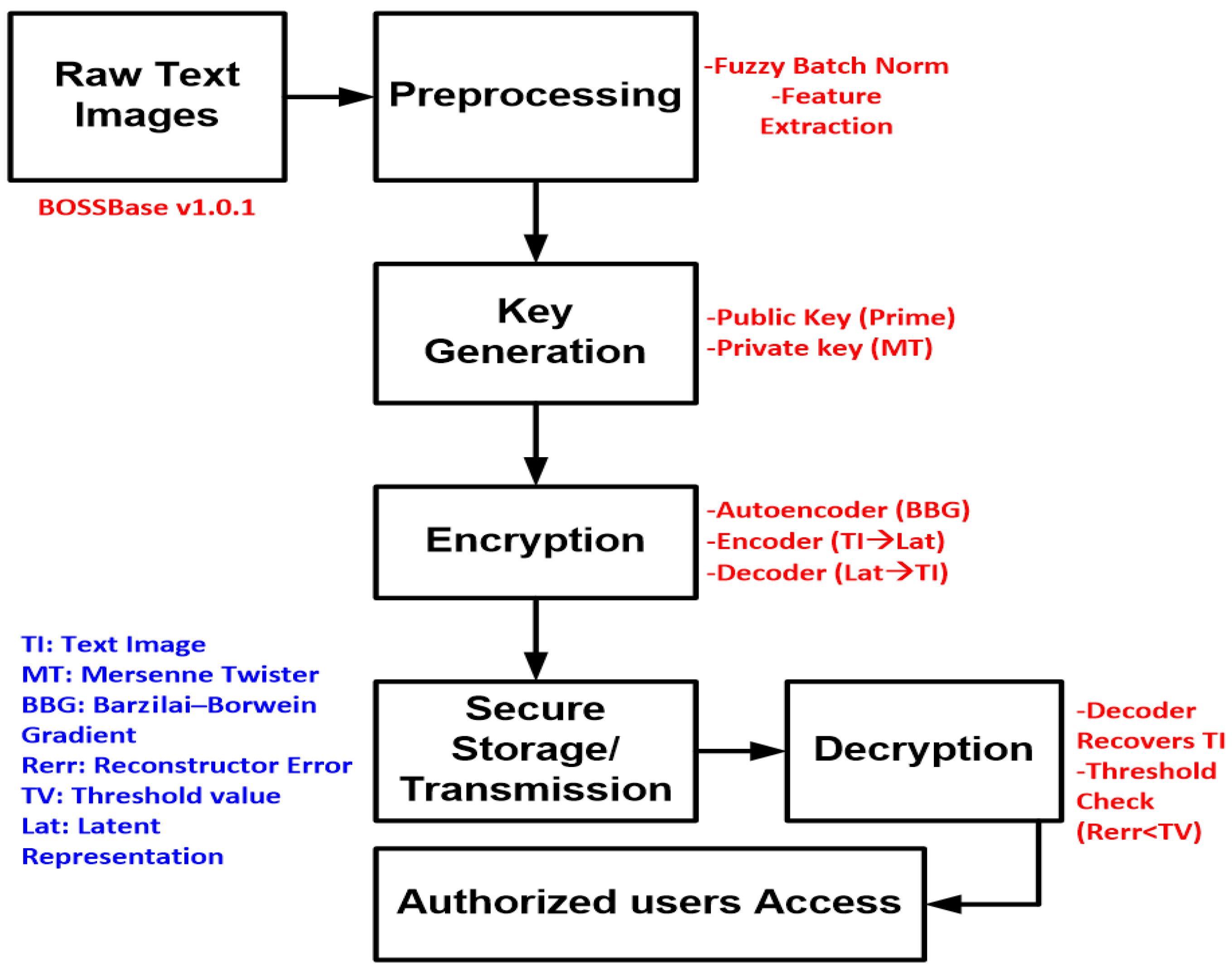
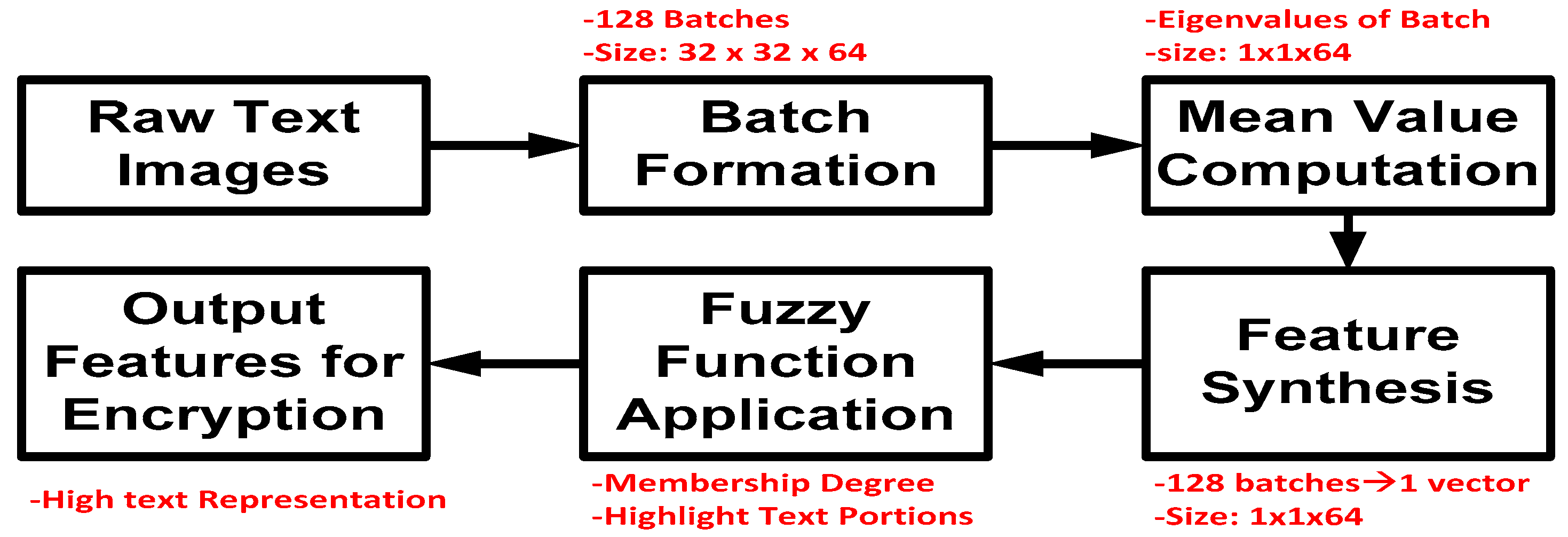
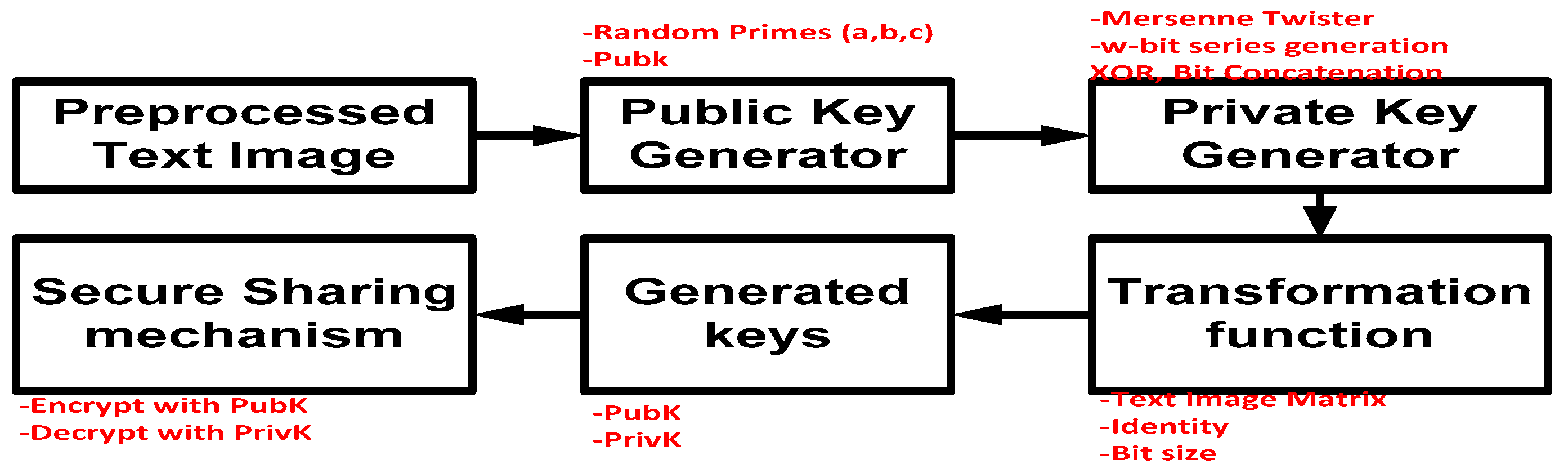
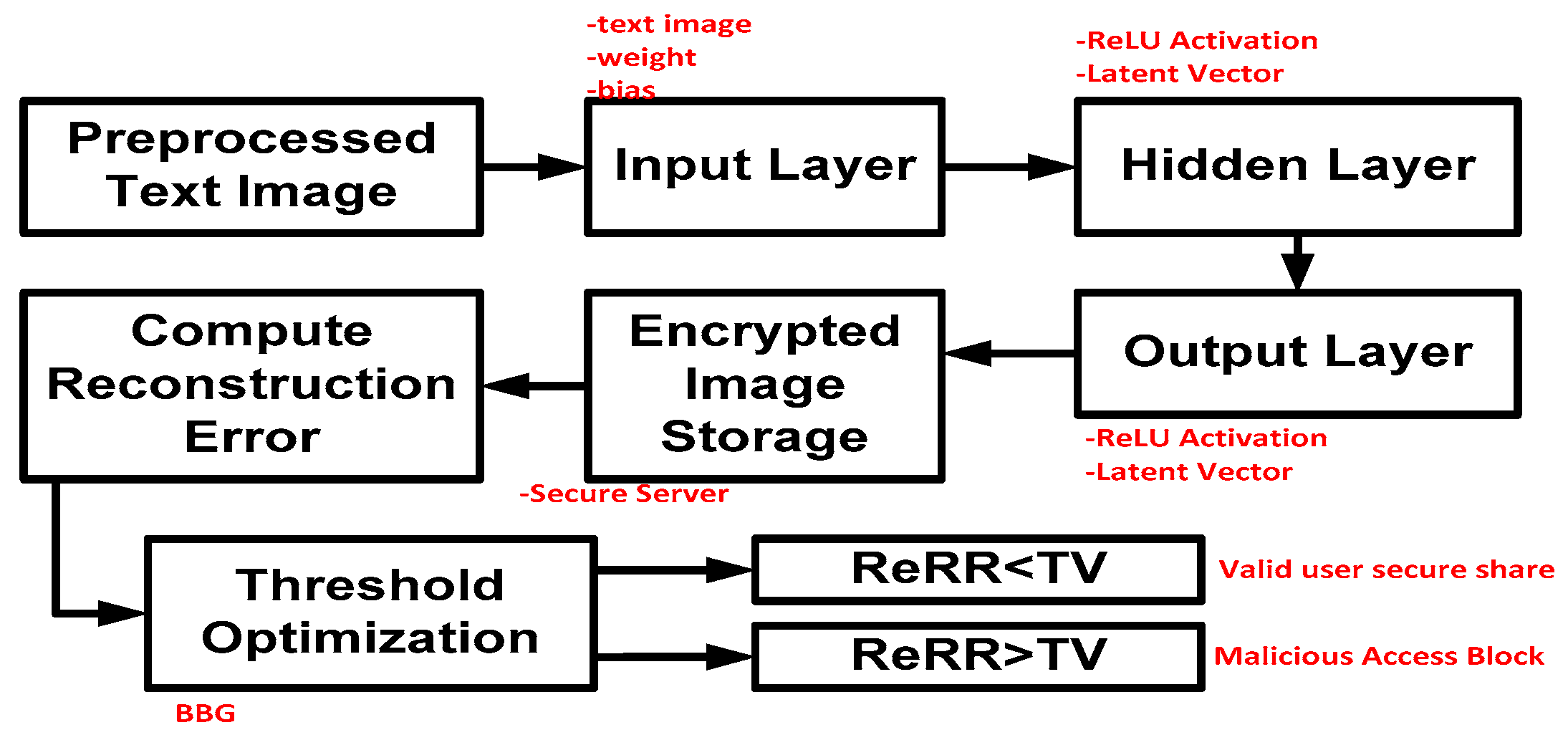
The possibility of securing textual image data sharing exponentially strengthens when it harnesses the potential of cryptography as well as deep learning methods. A review of the existing literature showcases some interesting and productive initiatives; however, they are noted with issues, viz., increased reconstruction error, weak generation of pseudorandom keys, static threshold-based validation, etc. All these issues lead to suboptimal data integrity as well as confidentiality, which is a leading gap in research on neural optimised-based solutions. Therefore, the proposed system introduces an innovative Twister Pseudo Random and Barzilai–Borwein Gradient Autoencoder Neural Network (TPR-BBGAN) for secure textual image data sharing. The model introduces various novel operations, viz., feature extraction using fuzzy batch-normalised preprocessing, key extraction using the Barzilai–Borwein method, an autoencoder, and Mersenne Twister. The TPR-BBGAN determines the optimal threshold dynamically, contributing to a reduction in the reconstruction error while convergence performance is boosted. The experimental outcome shows that the TPR-BBGAN achieves a 12–20% enhancement in data confidentiality, a 6–17% enhancement in data integrity, a 30–46% reduction in bit-error rate, and a 6–20% increase in the Peak Signal-to-Noise Ratio (PSNR) in contrast to existing models.
Keywords: textual image; cryptography; integrity; confidentiality; autoencoder; reconstruction error textual image; cryptography; integrity; confidentiality; autoencoder; reconstruction error