Article

Material Properties of Historic Stone Masonry Components from the Kvarner Littoral of Croatia: A Case Study with Earth Mortar †

Faculty of Civil Engineering, University of Rijeka, Radmile Matejčić 3, 51000 Rijeka, Croatia
*
Author to whom correspondence should be addressed.
This paper is an extended version of our paper published in Šćulac, P.; Mihaljević, J.; Štimac Grandić, I.; Grandić, D. Assessing mechanical properties of historic stone masonry: Case study in Jurdani (Rijeka). In Proceedings of the 3rd Croatian Conference on Earthquake Engineering, Split, Croatia, 19–22 March 2025; Atalić, J., Torić, N., Šavor Novak, M. et al., Eds.; University of Zagreb Faculty of Civil Engineering, Zagreb, Croatia, 2025; pp. 370–379.
Eng 2026, 7(5), 188; https://doi.org/10.3390/eng7050188
Submission received: 4 March 2026 / Revised: 16 April 2026 / Accepted: 18 April 2026 / Published: 22 April 2026
(This article belongs to the Section Chemical, Civil and Environmental Engineering)

Abstract

The mechanical properties of stone masonry and its behavior under monotonic and cyclic loading depend significantly on the local properties of the masonry and the wall typology. This paper presents preliminary results from in situ inspection of stone masonry typologies at several locations in the Kvarner Littoral of Croatia, which revealed the use of earth mortar in a building over 200 years old instead of the commonly used lime mortar. This finding prompted the selection of this building as a case study, for which a detailed visual survey was conducted and laboratory testing employed to characterize the masonry components. The visual inspection showed that the walls of the case study building are constructed from non-degraded stones, with wedges between the blocks and larger corner blocks. The earth mortar is degraded on the wall surface, so non-destructive testing was unsuccessful. Laboratory tests on stone specimens confirmed high compressive strength (over 135 MPa), while laboratory tests on earth mortar specimens indicated compressive strength between 2.22 and 2.65 MPa. The stone compressive strength is comparable to that of high-quality Croatian limestones, while the compressive strength of the earth mortar is comparable to that of historic lime mortars. Microscopic analysis and FTIR spectroscopy of the earth mortar revealed that it does not contain sand or gravel, what distinguishes it from commonly used historic earth mortars, where clay minerals serve as a binder for sand and silt particles. This study presents the first comprehensive research on the material properties of an earth mortar in Croatia.

1. Introduction

Analysis of buildings for earthquake resistance is an important step in determining the seismic vulnerability and risk of buildings [1], as well as those of specific areas. A large proportion of existing stone masonry buildings were constructed before earthquake-resistant design standards were established. Many of these buildings are listed as cultural monuments or historic buildings of cultural value within historic urban areas. Such historic buildings are often built of poor-quality materials (weak lime mortar); the walls are frequently too far apart, and their connections are weak. The existing floor structures are mostly flexible in-plane and often not adequately connected to the walls.
The most earthquake-vulnerable structures are those made of rubble masonry, due to the weak mechanical properties of such masonry [2], and therefore pose a high seismic risk in areas where these buildings predominate.
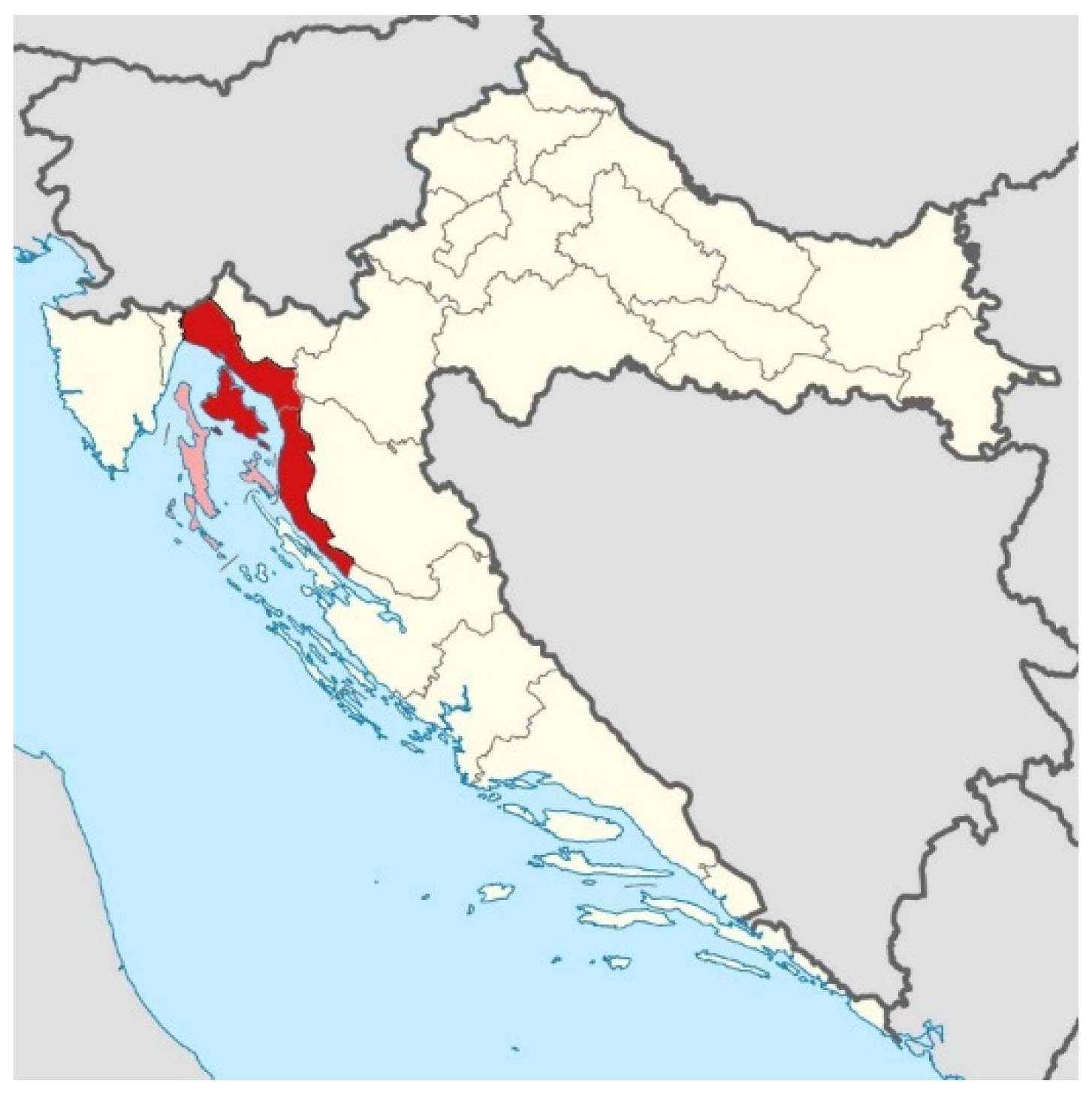
The Kvarner Littoral (marked in red in Figure 1), together with the Dalmatia region and the capital Zagreb, and its surroundings, are the areas with the highest earthquake risk in Croatia, as shown in the Seismic map of the Republic of Croatia [3]. The highest peak ground acceleration with a return period of 475 years in the Kvarner Littoral is 0.26 g in the town of Senj. In Rijeka, the largest city in the Kvarner Littoral, the peak ground acceleration with a return period of 475 years is 0.22 g [3].
There are many stone masonry buildings in this area, many of which are made of rubble masonry [5,6]. Preliminary research in the town of Senj, the city of Rijeka and on the island of Krk [7,8] revealed that the masonry is generally of poor quality and is mainly made of limestone from local deposits, but it may occasionally also be made of travertine from nearby areas [9].
The mechanical properties of masonry, such as strengths, modulus of elasticity, and shear modulus, and its behavior under monotonic and cyclic loading depend significantly on the local properties of the masonry [10,11]. The shape, size and type of stone stacking in the wall (typology) are in fact controlled by the local availability of stone and the availability of skilled masons. To the best of the authors’ knowledge, studies on the classification of stone masonry, including detailed research and description of the typology, have not yet been conducted in Croatia.
The classification of existing masonry types and the data for the assessment of mechanical properties of masonry in [10,11,12,13,14,15,16] are based on databases collected in studies conducted outside Croatia (in Italy, Switzerland, Slovenia, and Portugal).
The application of the Masonry Quality Index (MQI) method, developed for a specific dataset related to Italian masonry typologies, to assess the mechanical properties (compressive strength, shear strength, elastic modulus and shear modulus) based on the visual analysis of qualitative criteria showed a significant unreliability for some walls in case studies on historic buildings in Portugal, as reported by Ferreira Pinto et al. [17]. Hence, Simoes et al. [18] proposed new analytical expressions that correlate the mechanical properties with the MQI, to be included in the future generation of the Portuguese Annex of Eurocode 8 Part 3. Regarding the brick masonry in Croatia, Lulić [19] calibrated the MQI method to the brick masonry typology in Zagreb and Sisak—he proposed new exponential correlation curves based on results obtained from flat-jack tests on more than twenty brick masonry buildings. Therefore, it can be assumed with high probability that significant deviations between the actual mechanical properties of masonry (obtained by testing) and the estimated properties using the MQI method could also occur for the masonry in the Kvarner Littoral.
Relatively few experimental studies have been carried out on the behavior of rubble stone walls in their own plane under monotonic and cyclic loading—each characteristic for a specific masonry typology prevalent in a country [20,21,22,23,24,25,26]. Some of the studies also included testing on accompanying strengthened masonry panels [27,28,29,30,31].
Magenes et al. [20] studied the cyclic behavior of undressed two-leaf masonry panels having the topology characteristic for Italy. Silva et al. [27] studied the behavior of three-leaf masonry panels of Central Italy typology and the effects of NHL grout injections. As a peculiarity, walls were constructed as a whole and were later cut into individual panels for testing. Milosevic et al. [21] performed an experimental campaign on one-leaf panels in diagonal compression in order to assess the shear parameters of traditional Lisbon construction. The typology characteristic of the northern part of Portugal (one-leaf masonry made of granite stone blocks) was studied by Almedia et al. [25], who conducted an experimental campaign of uniaxial compression tests, and Vasconcelos and Lourenço [23], who carried an extensive experimental study on panels subjected to cyclic in-plane loading. Pinho [28] conducted a comprehensive experimental study on more than sixty rubble masonry panels to evaluate different strengthening solutions for the typology characteristic of the Lisbon area, while Ponte, Penna and Bento [29] studied two-leaf panels with partial interlocking, typical of southern Portugal. Rezaie et al. [24] performed shear–compression tests on masonry panels containing pebbles and irregular stones.
The statistical analysis of numerous stone masonry tests conducted in Vanin et al. [16], apart from the fact that these tests were carried out on walls that are not typical of stone masonry in Croatia, has the following shortcomings: the experimental tests involved a very small number of identical walls, and the test methods, including the cyclic loading protocols, varied considerably.
Although research on stone masonry, including testing of masonry walls, was carried out in Croatia after the Montenegro earthquake in 1979 [32], the results provide only approximate estimates of the material strengths [33] for a few generally described stone masonry typologies.
From the above, it is clear that existing research on the mechanical properties and behavior of masonry cannot be applied to the local masonry typology of the Kvarner Littoral, where the widespread use of rubble stone masonry has been observed. Therefore, it necessary to develop a new methodology for assessing the mechanical properties of masonry and behavior models for the seismic assessment of buildings constructed with rubble masonry, taking into account the local typology and properties of stone and mortar specific to the Kvarner Littoral.
To achieve this, it is first necessary to research the local typology of rubble masonry buildings in the Kvarner Littoral, including the peculiarities of traditional construction, representative geometric features of the walls, floor types, the presence of metal ties and the material properties of the masonry and its components (blocks and mortar), in order to improve the seismic assessment of rubble masonry buildings in the Kvarner Littoral.
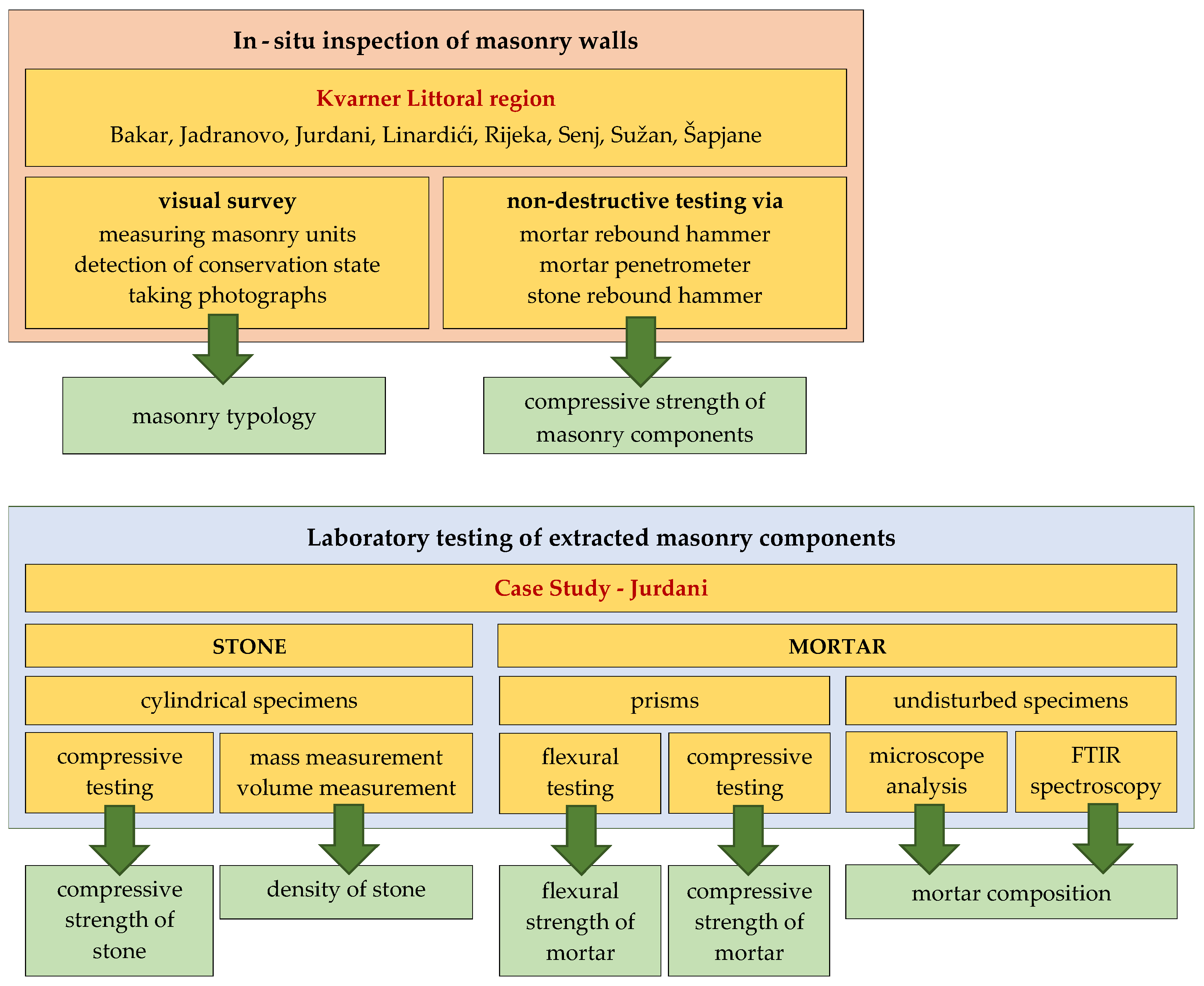
The research method (Figure 2) consisted of the following steps: (1) in situ masonry survey of several locations in the Kvarner Littoral, and (2) laboratory testing of masonry constituents of the case study building. The in situ inspection included visual inspection of the masonry typology and non-destructive tests (not in focus of this paper). Laboratory testing of stone specimens comprised uniaxial compression tests and density measurements on cylindrical specimens, while mortar testing included flexural strength tests, compressive strength tests, Fourier transform infrared spectroscopy (FTIR spectroscopy) and microscopic analysis.
This case study aims to contribute to a better understanding of the variability of the mechanical properties of stone masonry components in the Kvarner Littoral.

2. Preliminarily Research

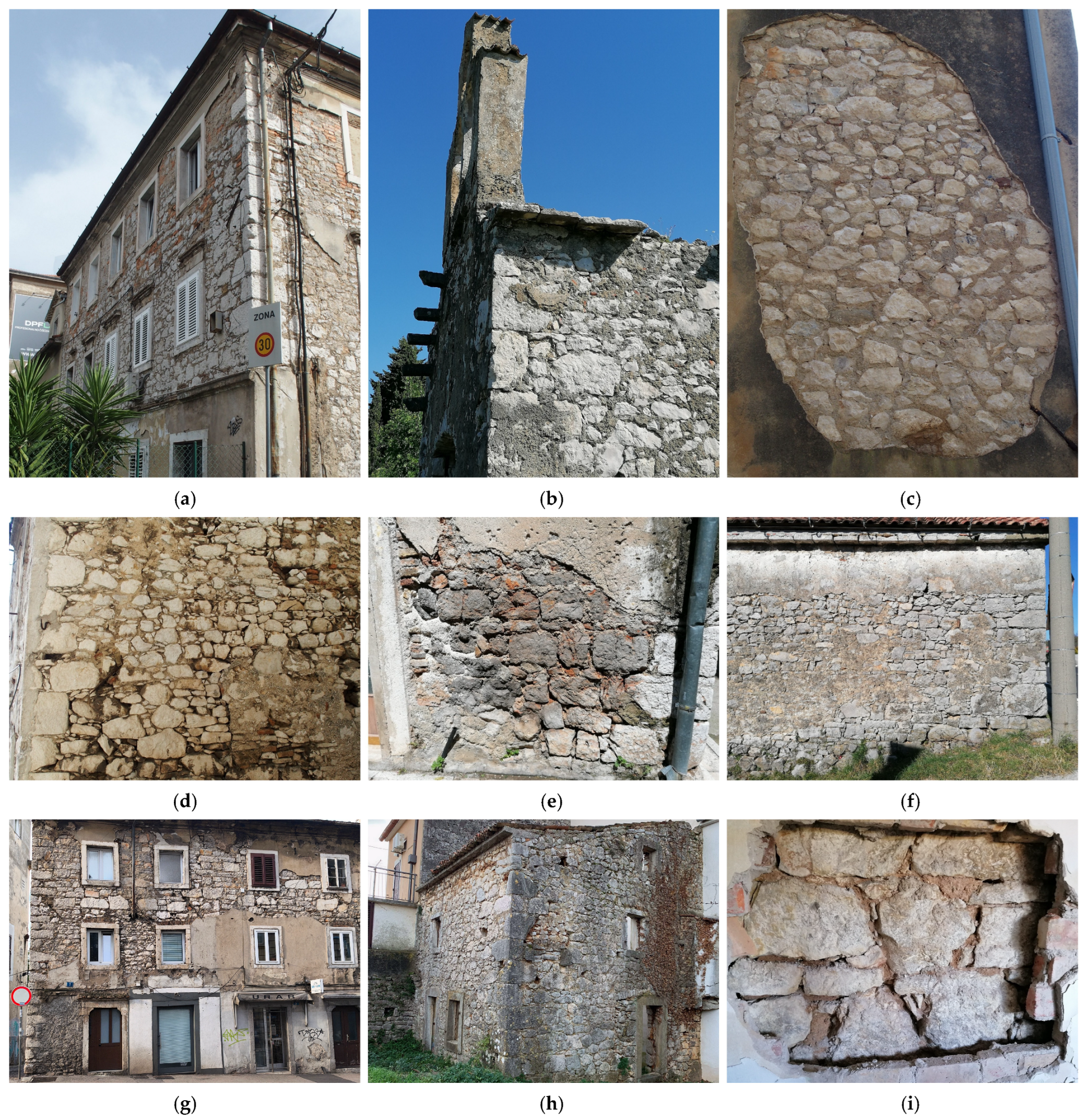
As part of the research project “Adjustment of the methodology for assessing the seismic resistance of existing masonry buildings in the Kvarner Littoral” [34], in situ visual inspection and non-destructive methods such as the mortar penetrometer and the rebound hammer (both for mortar and stone) have been applied in order to gain a better insight into the stone masonry properties typical of the observed area. The locations were chosen to cover the area of Kvarner Littoral, which included Bakar, Jadranovo, Jurdani, Linardići (on Krk island), Rijeka, Senj, Sužan (on Krk island) and Šapjane. Some of the masonry typologies from the in situ visual survey are presented in Figure 3.
What can generally be observed in Figure 3 is that there is great variability in both the size and the shape of the stone units. Most are irregular in shape and are not laid in regular courses, with no horizontal alignment of joints. The stone blocks are generally of good quality and are not degraded. Larger blocks are used as quoins; note that they are hammer-dressed only on four sides: the lower, upper, and two visible sides, with only one edge (the corner edge) dressed. Stone lintels are used around the openings, but only on the external side of the wall. In some cases, the reuse of old bricks can be observed around the openings (Figure 3a,g).
In addition to the requirement that masonry walls have sufficient deformation capacity to absorb seismic energy without major damage, masonry buildings should have adequate structural integrity, i.e., they should behave as a box in order to shift from undesirable out-of-plane failure mechanisms to in-plane failure mechanisms. This includes features such as quoins—larger stone blocks at the corners of the building—appropriate bond patterns at the wall intersections, metal ties between the floor structure and the walls, tie rods, ring beams and similar elements [35]. Iron end bars connected to the timber beams at the floor level are visible in Figure 3a,g.
Detecting the elements that ensure the integrity of an existing building is rarely possible, as the skeleton of a building is usually covered by render, cladding and façade. The in-depth inspection of the skeleton of the building is only possible during renovation or in partially collapsed buildings. For this reason, the first destructive testing, as part of the research project [34], was carried out on materials extracted from a partially collapsed building (case study shown in this paper) and from a building undergoing renovation [8].

3. Case Study

The building in the case study (Figure 4) is located approximately 20 km northwest of Rijeka, in the settlement of Jurdani. The property comprises a main building, behind which stands a former livestock facility. The year of construction is unknown, but the depiction on the Second Habsburg cadastral survey from 1819 [36] indicates that the house and livestock facility are over 200 years old.
The building in Jurdani was selected as a case study for the following reasons:
  • It represents a typical rural house in the Kvarner Littoral in Croatia built of rubble stone masonry.
  • It is partially collapsed—with the owner’s consent, it was possible to explore the building interior, take measurements, remove the wall plaster in order to reveal the wall structure, and collect stone and mortar samples from the building walls.

3.1. In Situ Inspection

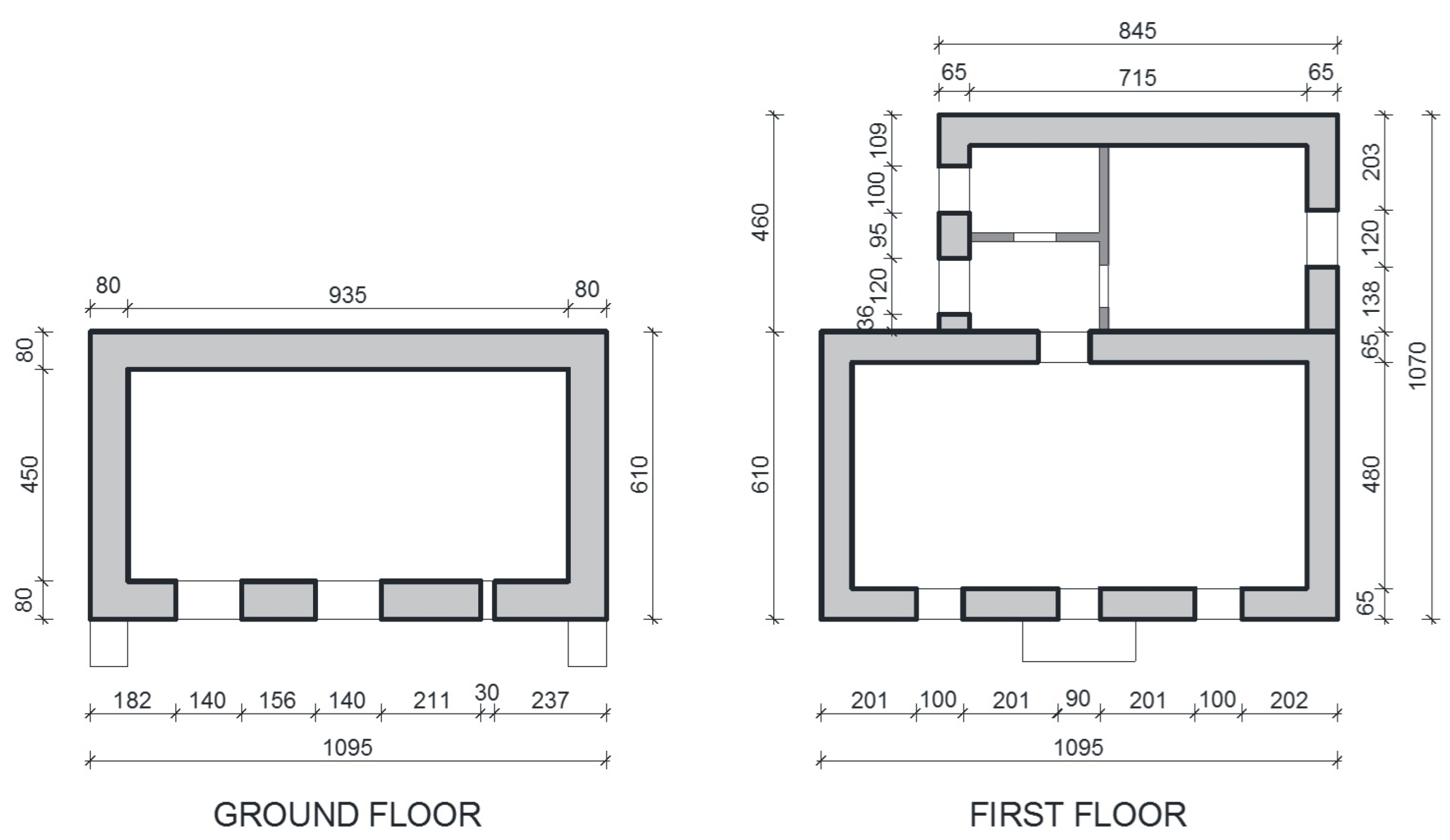
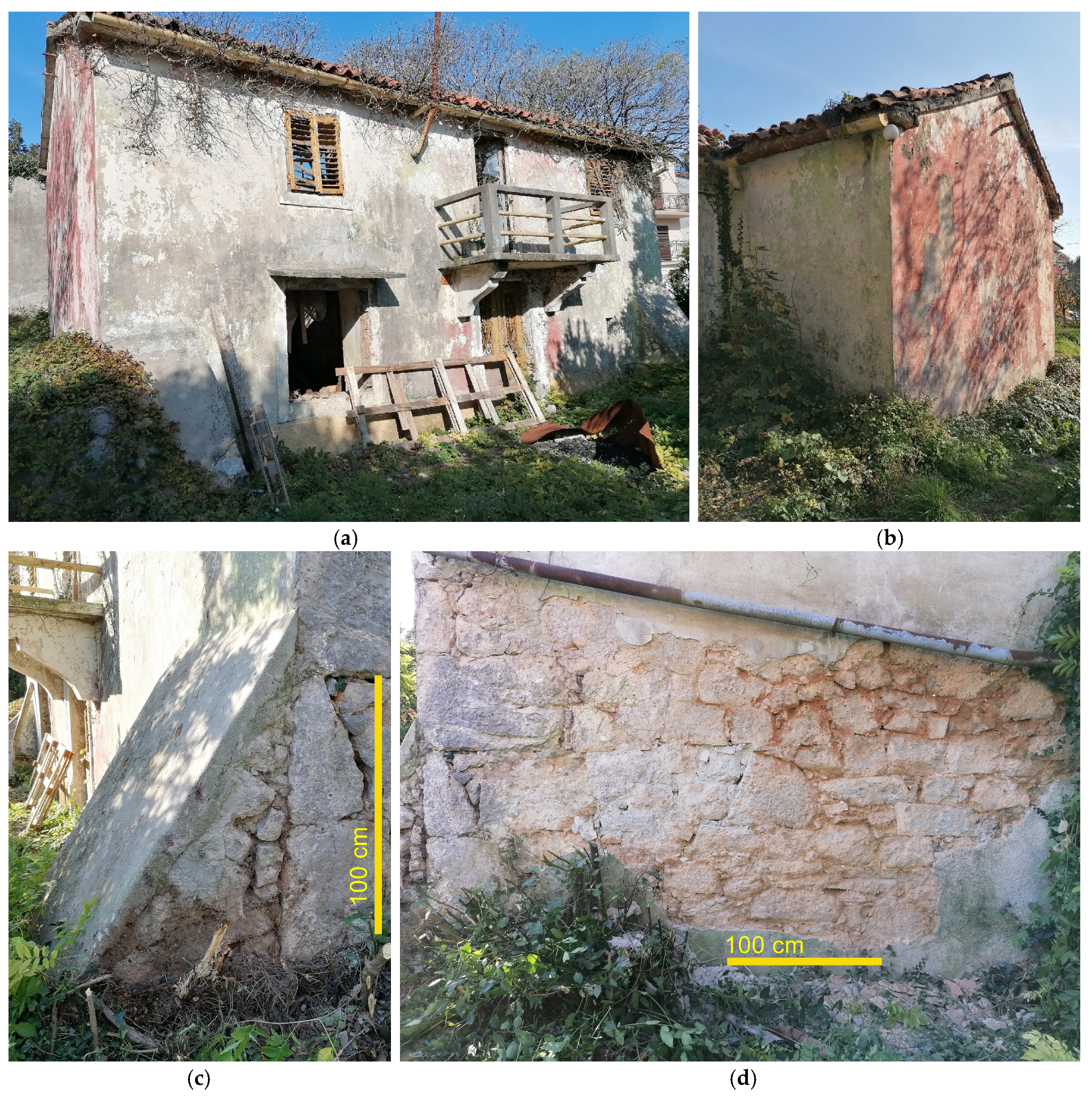
The case study building has a rectangular floor plan measuring 11.0 × 6.1 m (Figure 4) and consists of a partially buried ground floor and an upper floor (Figure 5a,b). This two-floor house type is the most widespread type of rural house in the Kvarner Littoral. The ground floor is usually used as a cellar (or sometimes even as a stable for cows or sheep), while the first floor is used for living.
The load-bearing walls are 80 cm thick at the ground floor and 65 cm thick on the first floor (including the plaster layer). Earthquake-resisting elements such as metal ties between the floor structure and the walls or tie rods have not been detected within the building.
The arrangement of the openings on the front façade is asymmetrical, and their dimensions differ between the ground floor and the first floor (the ground-floor openings are slightly larger). The building has a gable roof with a ridge height of 6.5 m. However, the roof structure, and consequently the timber floor structure, have collapsed, so the interior of the building is exposed to the weather.
The masonry consists of irregular rubble limestone blocks of varying dimensions, primarily with widths, heights and lengths of 25, 35 and 40 cm, respectively. The largest stone blocks, exceeding 60 cm in length, are concentrated at the corners of the building (Figure 5c,d). The stone blocks are non-degraded. The horizontal joints are discontinuous, while the vertical joints are mostly aligned (Figure 5d). Due to the large dimensions of the blocks, the masonry contains a sufficient number of wedges to ensure the monolithic character of the wall. It was not possible to collect information regarding the wall-leaf characteristics and their transverse connections.
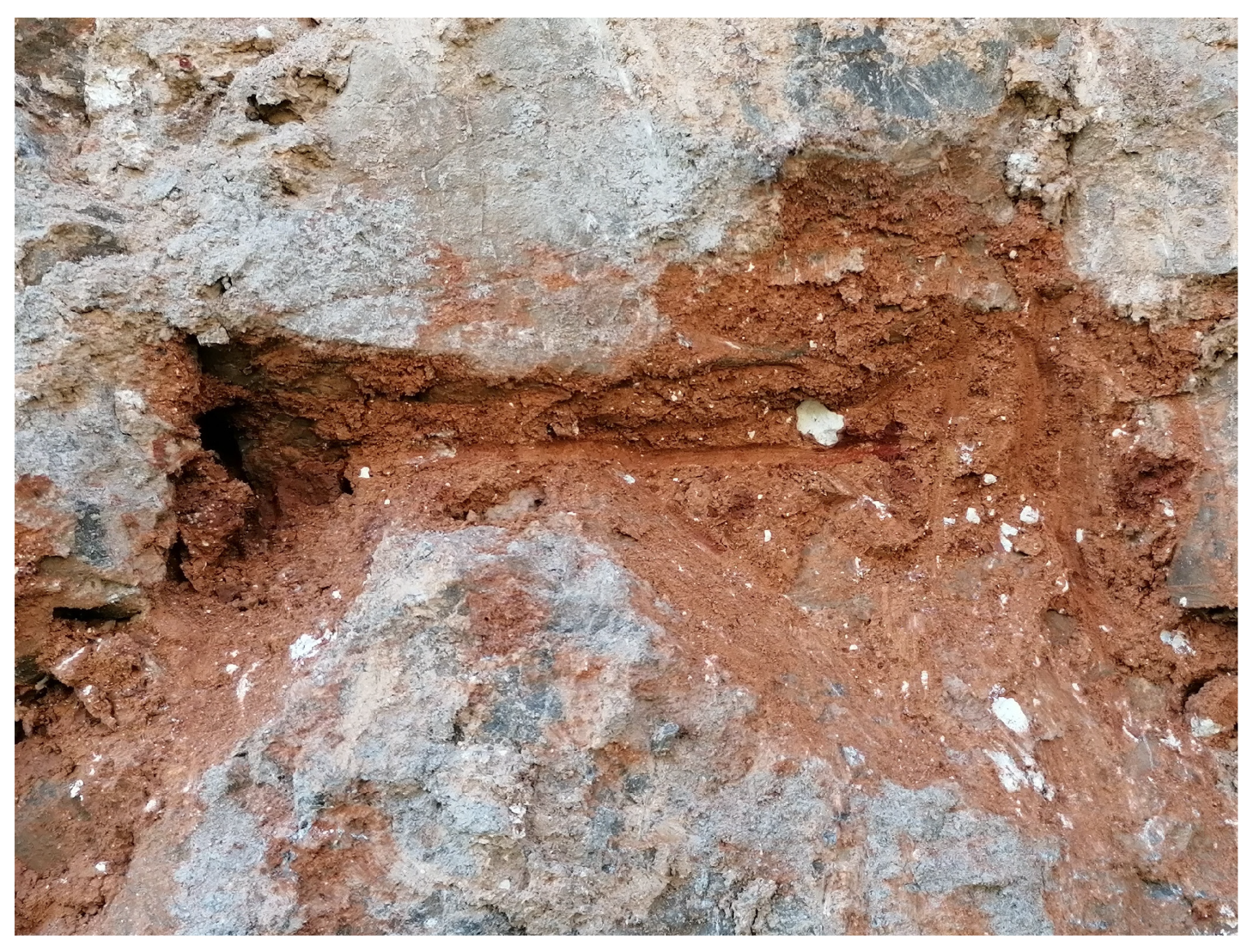
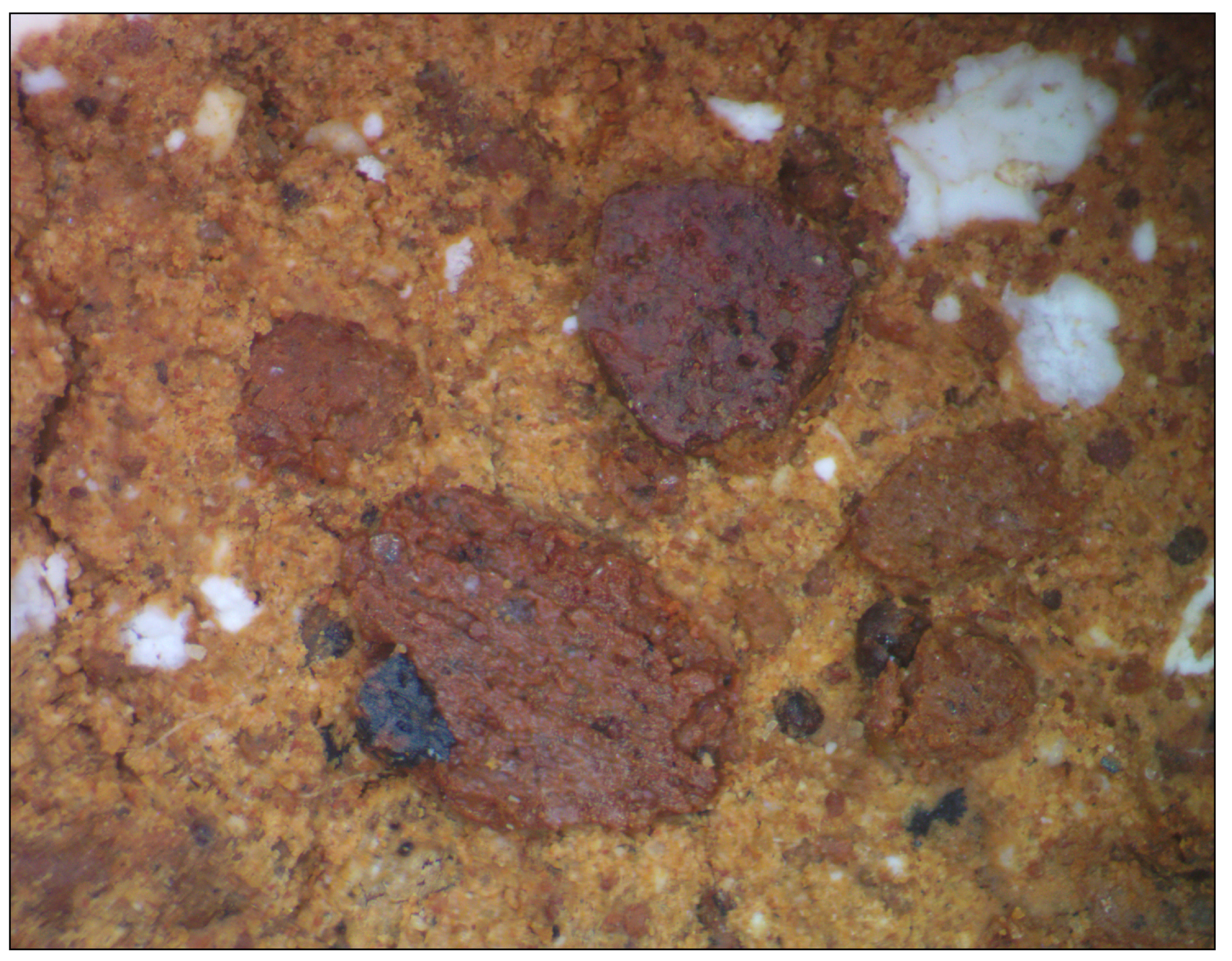
In this case study, instead of lime mortar, an earth mortar with a small addition of lime was encountered, as indicated by the presence of white lumps in Figure 6. The surface layer of the mortar is crumbling.
The plan to assess the mechanical properties of the mortar in situ using non-destructive methods such as the mortar penetrometer or the mortar rebound hammer was unsuccessful. The mortar was not lime-based and was severely degraded in the bed joints near the wall surface due to moisture exposure. As a result, the penetration depth of the needle in the mortar penetrometer test was very high, while in the mortar rebound hammer test, the impact plunger was simply pressed into the mortar, making it impossible to establish correlations with the mechanical properties [37].

3.2. Laboratory Tests of Material Properties of Historic Stone Masonry Components

Laboratory tests on stone and mortar specimens were carried out at the Laboratory for Materials—Faculty of Civil Engineering in Rijeka, while mortar characterization using an optical microscope and FTIR analysis was carried out by an external laboratory [38].

3.2.1. Mechanical and Physical Properties of Stone

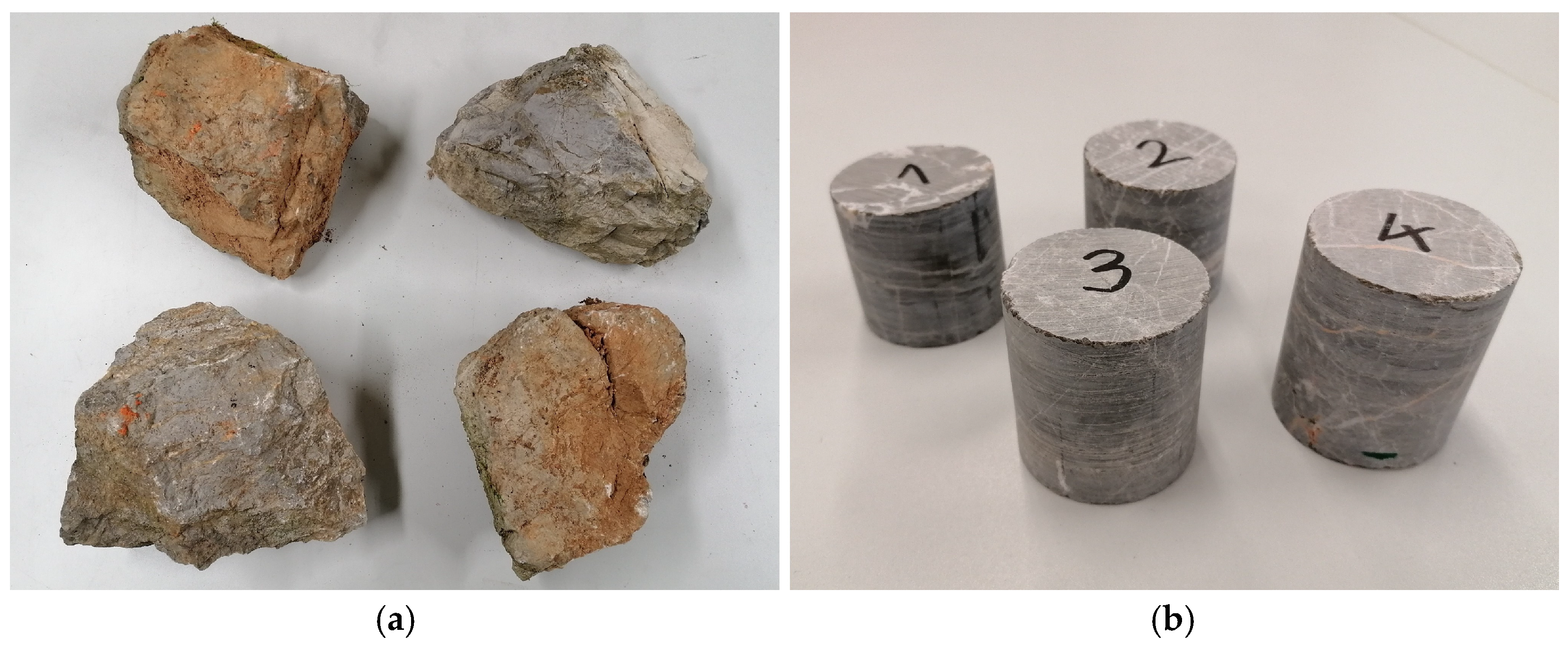
Four stone blocks were extracted from the neighboring livestock facility, which is now connected to the case study building (assumed to have been built at the same time, as it is also listed on the cadastral survey from 1819), in order to determine the compressive strength and density. From each block, one cylindrical specimen was prepared (Figure 7), labeled S1–S4, so that the diameter and the height matched the dimensions prescribed by the standard [39], equal to 50 ± 5 mm.
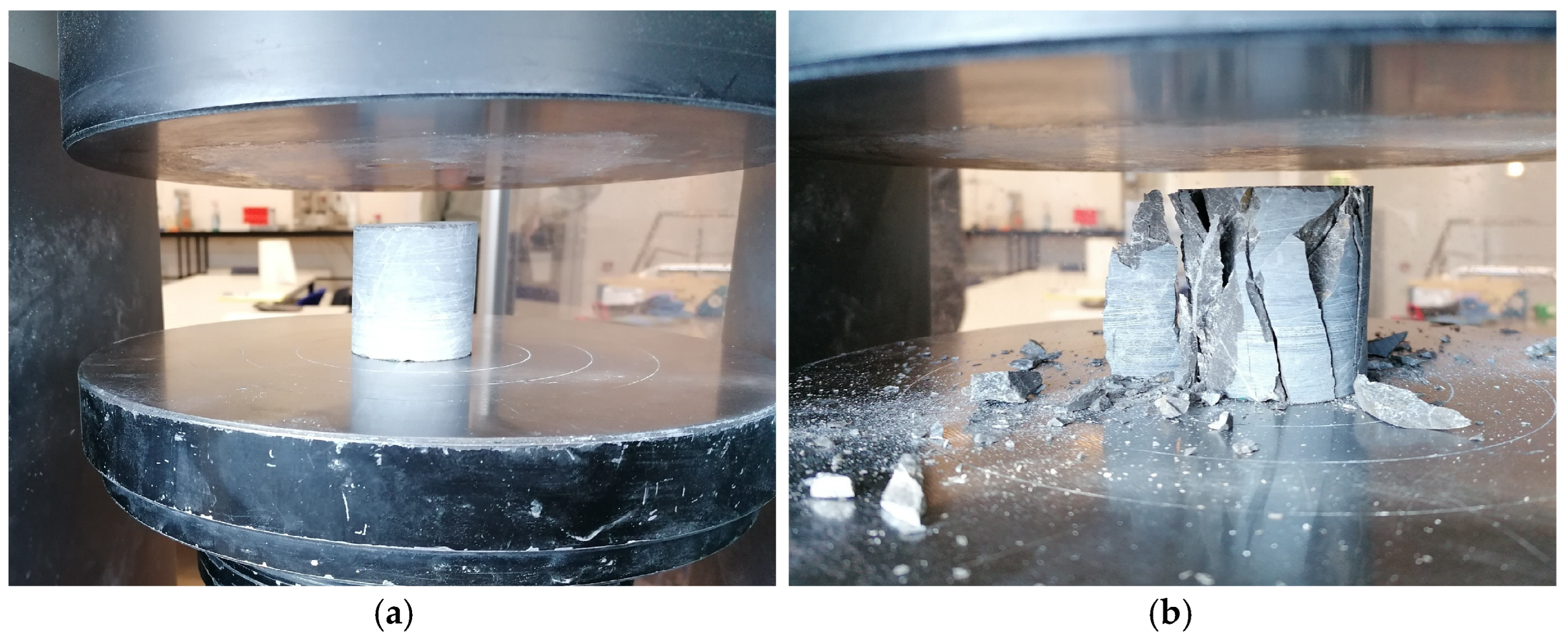
The compressive strength of stone specimens was tested using a Controls 3000 servo-hydraulic compression frame (CONTROLS S.p.A., Liscate, Italy). The specimens were loaded continuously at a constant stress rate of 1 MPa/s until failure (Figure 8), in accordance with [39]. The maximum force F during the test was recorded, and the stone compressive strength fs is calculated using the following expression:
fs = 4·F/(D2·π),
where D is the diameter of the tested specimen. The density of each stone specimen γ is also estimated based on the measured mass and volume of the specimen.
The values of the obtained compressive strengths of the stone specimens are presented in Table 1, together with specimen dimensions, mass and density. Specimen S4 exhibited a greater difference in compressive strength and failure mode during testing compared to the other specimens. This is due to an observed defect in the specimen (note a crack at the specimen’s bottom in Figure 7b); therefore, it was excluded from the statistical analysis.

3.2.2. Chemical Properties of Mortar

After removing the plaster from the ground floor wall of the building, it was detected that earth mortar had been used (Figure 5 and Figure 6). The mortar specimen, extracted undisturbed from the bed joint, was examined by a light microscope at 20× magnification to study its structure. FTIR spectroscopy was applied to identify the mortar composition [38]. Two milligrams of both the white lumps and the brown matrix were mixed with potassium bromide (KBr) and then pressed into pellets. The resulting spectra represent the mean value of 20 recorded spectra per sample, with a recording resolution of 4 cm−1 in the spectral range from 4000 to 400 cm−1.
Figure 9 shows an image of a mortar specimen, which was extracted undisturbed from the bed joints, obtained using a light microscope (Zeiss Axio Imager M1, Carl Zeiss AG, Oberkochen, Germany) at 20× magnification. It consists of the brown matrix—earth (soil)—with a small proportion of lime in the form of white lumps. Admixtures of organic origin (plant remains) are also visible as black areas [38].
The FTIR analysis of the mortar [38] showed that the brown-colored binding matrix consists of minerals typically found in soil: silicates and iron-aluminosilicates, such as illite and montmorillonite, and white lime lumps. Additionally, a band at 1385 cm−1 is visible in both spectra (for the white lumps and for the brown matrix), indicating the presence of nitrates in the sample. Salts containing nitrates are typically found in buildings in rural areas or tombstones, that is, in structures that are in direct contact with the soil. Considering that this sample contains a high proportion of the soil, it is possible that nitrates were present from the beginning as components of the soil from which the mortar was made [38].
Note that the results of the chemical characterization are specific for this case study only. The research is exploratory and representative of a preliminary investigation.

3.2.3. Mechanical Properties of Mortar

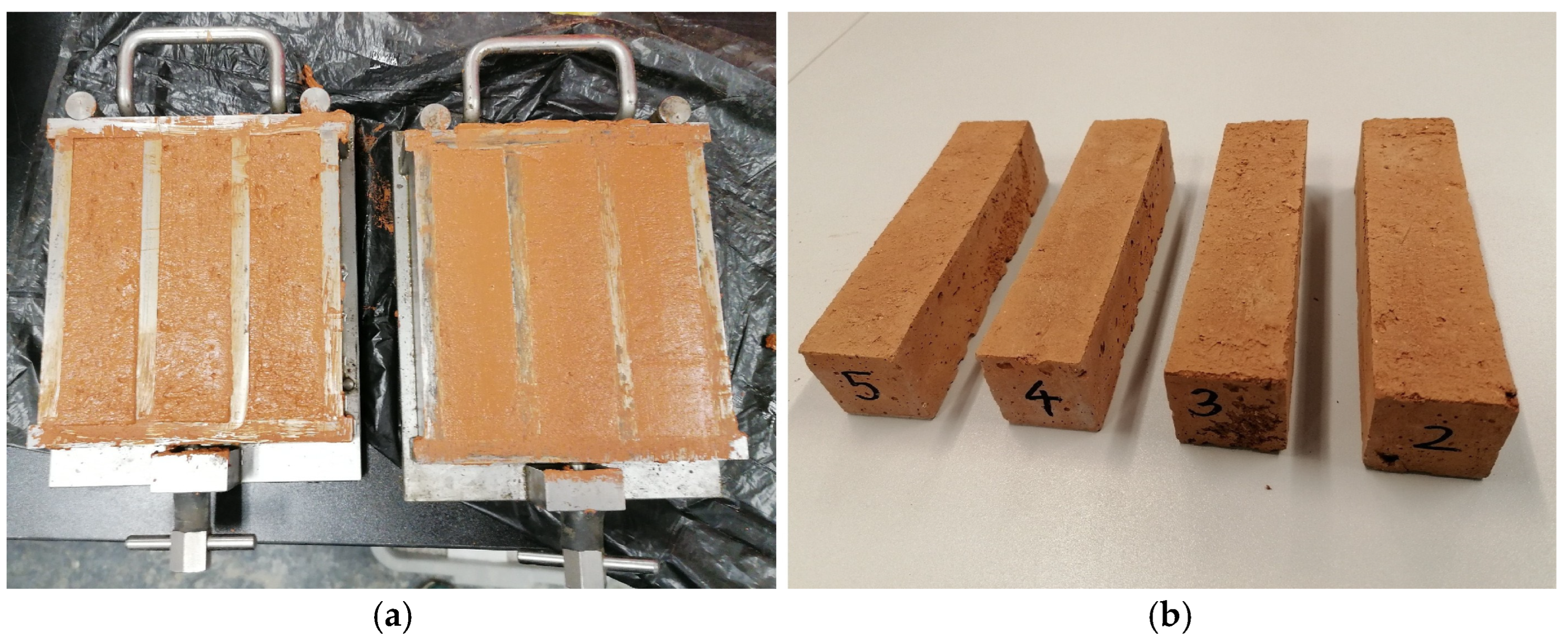
Since the mortar in the bed joints had degraded due to moisture exposure, it was possible to extract it from the joints in powder form by simple scratching. The extracted powder was then used to prepare mortar prisms measuring 160 × 40 × 40 mm for flexural and compressive strength testing. Sufficient water was added to the powder to ensure good workability, although some air pockets were observed in the prisms after drying.
The steel molds were filled with mortar in two approximately equal layers, each compacted by 25 strokes of the tamper. The specimens were first stored in polyethylene bags for 7 days and then for a further 21 days under laboratory conditions. A total of six specimens were prepared (Figure 10). The specimens, labeled M1–M6, were tested at an age of 28 days after casting.
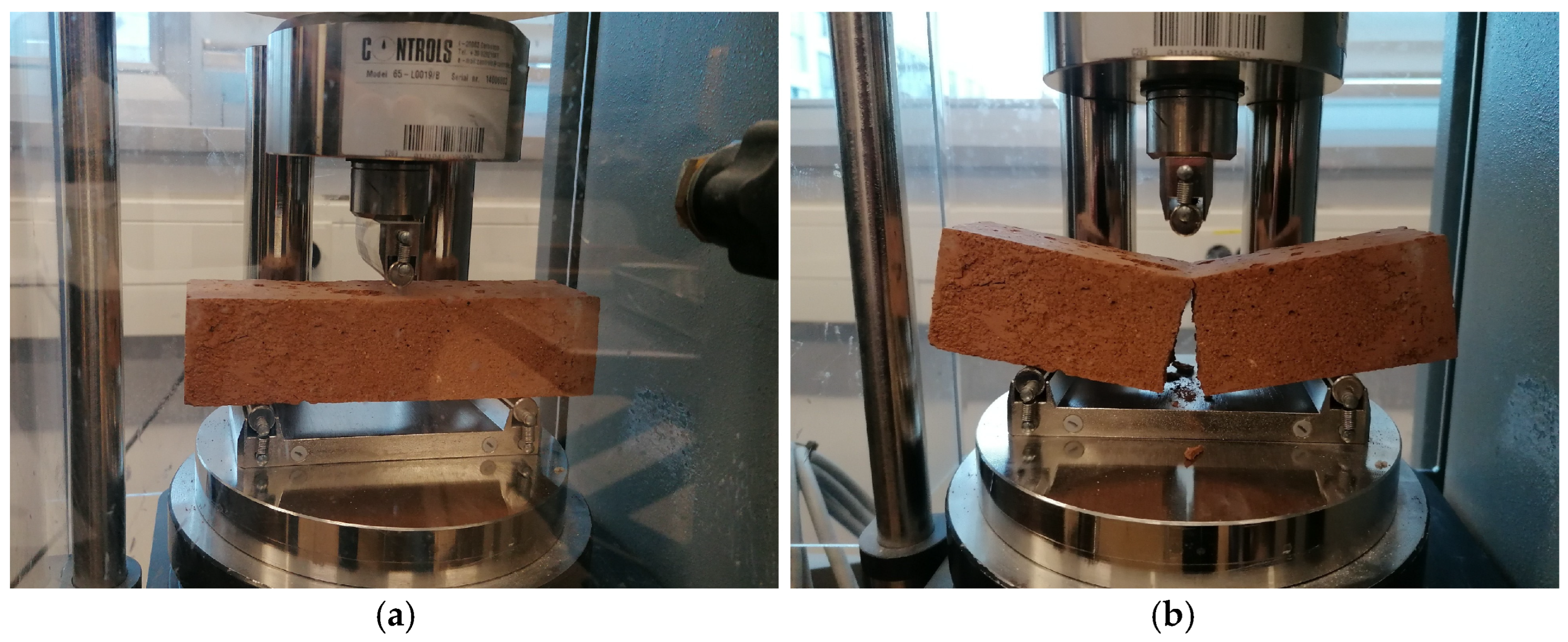
The flexural strength of mortar was tested by three-point loading to failure (Figure 11) according to HRN EN 1015-11:2019 [40] using a Controls 15/600 universal compression/tension testing machine (CONTROLS S.p.A., Liscate, Italy), at a constant speed 1 N/s.
The flexural strength of mortar specimens fb is calculated via:
fb = 1.5·(F·l)/(b·d2),
where F is the maximum recorded force, b is the width of the specimen, d is the depth of the specimen, while l is the distance between the support rollers, equal to 100 mm.
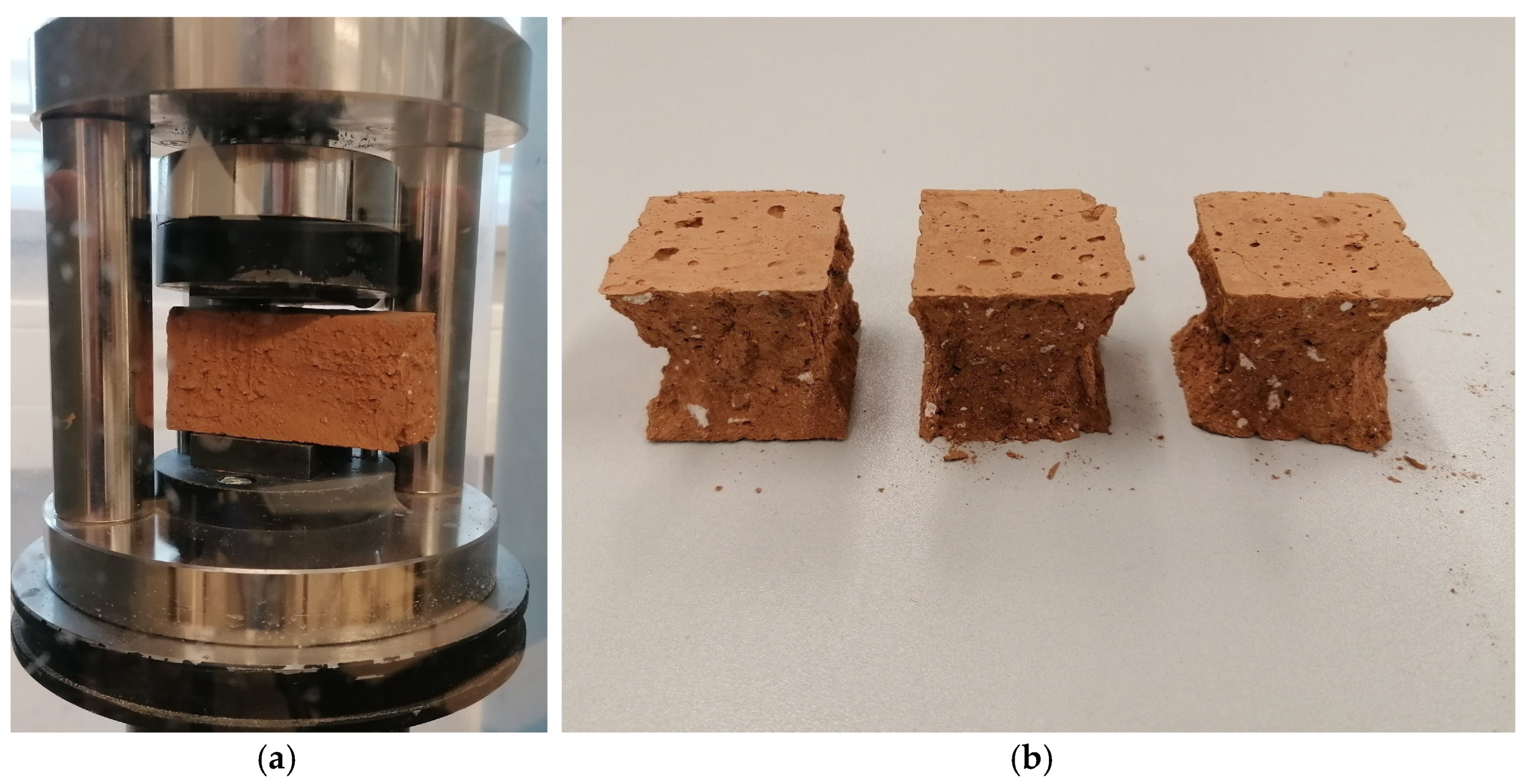
The compressive strength of mortar is determined in accordance with HRN EN 1015-11:2019 [40] on the two specimens resulting from the flexural strength test (Figure 12), using a Controls 15/600 universal compression/tension testing machine at a constant rate of 50 N/s. The specimens labeled M1-1 and M1-2 are two parts of specimen M1 resulting from the flexural test. The other specimens are labeled accordingly (M2-1, M2-2, M3-1, M3-2, etc.).
The compressive strength of mortar specimens fc is calculated using the expression
fc = F/(b·a),
where F is the maximum recorded force, b is the width of the specimen, while a is the length of the bearing plate, equal to 40 mm.
The values of the mechanical properties of the tested mortar specimens, as well as their dimensions and maximum load, are presented in Table 2 and Table 3.

4. Discussion

The density of the tested stone specimens ranges from 2648 to 2677 kg/m3, with a mean value of 2667 kg/m3 (standard deviation 13.4 kg/m3). The compressive strength of the stone specimens was determined in the range of 58.6 MPa to 145.0 MPa.
Although some studies have examined the mechanical properties of limestone in the Kvarner Littoral [41], only the density values can be compared with the case study results, as the uniaxial compressive strength in [41] was determined according to the ISRM suggested method [42], where the sample size ratio (height/diameter ratio between 2.5 and 3.0) differs from those tested according to HRN EN 1926:2008 [39] (1:1 height/diameter ratio). The densities determined for the stone samples in Vračević et al. [41] range from 2732 to 2752 kg/m3, which is in good agreement with the densities of the case study stone specimens.
As there are no comparable studies on the compressive strength of limestone from the Kvarner Littoral, studies published in Briševac et al. [43] on limestone from the neighboring region of Istria are used for comparison. The density values of limestone samples taken from 10 locations on the Istrian peninsula range from 2386 to 2727 kg/m3 (mean value 2669 kg/m3 and standard deviation 100 kg/m3), while the compressive strength is between 39.5 and 165.0 MPa (mean value 100.06 MPa and standard deviation 54.49 MPa). This indicates that the limestone from the case study building, with a mean compressive strength of 136.2 MPa (standard deviation 7.6 MPa), can be classified as high-quality limestone. The obtained stone compressive strength falls within the same quality range as other Croatian limestones [43,44].
Based on their previous knowledge of masonry buildings in the Croatian coastal region, the authors did not expect earth mortar to be used in the case study building, as lime mortar is usually used in traditional buildings in the coastal area of Croatia [45]. Earth-based mortars (also known as mud mortars or clay mortars) are widespread worldwide [46], especially in rural areas [47,48,49,50,51,52,53], but can also be found in European historical centers [18,35,54]. Studies by Kuruscu, Güney, and Görün [50] and Günaydin et al. [49] confirm the production of earthen mortar and its use in traditional unreinforced buildings in rural areas until the 1960s. To the best of the authors’ knowledge, the characterization of earth mortars has not yet been carried out in Croatia—only the properties of rammed earth have been investigated within the research project RE-forMS [55,56].
The earth mortar from the case study building does not contain sand or gravel, unlike most earth-based mortars [57], although the use of clay mortars without aggregates or straw was noted by Curtis [48] and Sorrentino et al. [54].
The results of the FTIR spectroscopy of the earth mortar indicate that the mortar was made from local soil deposits [38]. The use of local soil deposits is not unexpected and is also reported in other examples in the literature, such as [48,54], due to the lower processing requirements and local availability of the material. Earth mortar was undoubtedly cheaper and quicker to obtain than lime mortar in the past. The presence of silicates and iron-aluminosilicates is also found in earth mortars from other local soil deposits, as shown in [57,58].
The presence of lime in the mortar of the case study building is also not unexpected. Lime has been added to earthen mortars in order to produce a more robust material [48,54,59,60]. According to Historic Environment Scotland [61], quicklime is added to earth mortars to improve bonding and plasticity, enabling masons to increase the amount built in a day by accelerating the initial stiffness. Adding a small amount of quicklime to earth (about 5% by volume) can fundamentally alter the material properties of earth mortar. Besides providing additional binder and plasticity, the quicklime draws moisture out of the earth and causes ion exchange between the clay and lime minerals, improving its durability in wet conditions [61].
Cantù et al. [60] studied the earth mortars from the town of Cremona in Northern Italy, where they distinguished three types of earthen mortars differing in the amount of lime added: lime-free, lime-rich, and lime-poor earth mortars. Prior to the 17th century none or little lime was added. Other additives of organic origin (like wood ashes) were applied from the 18th century onwards in order to improve the formation of cementing compounds and calcium carbonate. All mortars consisted of quartz, muscovite/illite, clinochlore, kaolinite, albite and calcite [60].
The preparation of mortar specimens from extracted powder is a rather non-standard procedure. The amount of water added, selected to ensure good workability, may have affected the mechanical properties. However, the correct selection of fresh mortar consistency was a skill of old stonemasons, which has largely been lost.
Higher water content will yield improved workability, but on the other hand, it can have an adverse effect on the mortar strength [62]. Zhang et al. [63] studied the influence of varying water content on the compressive strength of loess earthen mortars. Loess was mixed with water at water-to-soil ratios of 0.25, 0.30 and 0.35. Mortar specimens (cubes with an edge length of 70.7 mm) were tested at an age of 28 days: with the increase in water content, the compressive strength decreased—the measured compressive strengths were 3.06, 2.80 and 2.67 MPa, respectively.
It should also be noted that the beneficial effect of lime in the reconstituted mortar specimens is definitely not to be accounted for, since lime had already carbonated in the wall before the mortar was extracted in powder form (these chemical reactions cannot be reversed by adding water [61]).
Traditional earth mortars can vary greatly in quality, reflecting local subsoil geology and different mixtures. Earth-based mortars typically show a wide scatter in the compressive strength, most often ranging between 1.0 and 3.0 MPa [64], although both lower and higher values have been observed [57,58]. The compressive strength of the case study mortar, which ranges from 2.22 MPa to 2.65 MPa, falls within the range reported for earth mortars in [64].
The compressive strength of the case study mortar is comparable with results reported in [47], where mortar samples were made from local soil pits characterized by a high percentage of fines in the soil: average compressive strength of the mortar cubes measuring 50.8 × 50.8 × 50.8 mm according to ASTM C-109 was 1.73 MPa (CoV 29.2%).
It is particularly interesting to point out that the compressive strengths of the tested mortar correlate well with the compression strengths of lime mortars [65,66,67].
The flexural strength of case study mortar is rather low (ranging from 0.18 to 0.3 MPa, with a mean value of 0.26 MPa and a standard deviation 0.04 MPa), as expected [68]. The ratio of flexural to compressive strength of the case study mortars ranges from 0.07 to 0.13, which is in good relation with the usual recommendation to use a mortar tensile strength equal to 0.1 times the mortar compressive strength [69], although some researchers have found much greater ratios in the case of earth mortars [57,64].
The test results showed a relatively high compressive strength of the earth mortar, but this applies to ideal conditions where the mortar is enclosed inside the wall without the exposure to water. As reported in [48], clay mortars do not necessarily indicate a problem with the structure of the wall, as long as the wall it is kept dry and undisturbed—the fundamental function of the mortar to serve as a bedding material that distributes the load evenly on the wall, will be ensured.
This type of mortar has been proved to be effective and durable, for example in Scotland [48], which is a region not prone to earthquakes. However, recent earthquakes have shown that masonry structures with earth mortars are very vulnerable to earthquakes due to their low tensile strength and inadequate bond strength. Sorrentino et al. [54] report rubble masonry buildings in which the walls, consisting of two or three unconnected leaves with earth mortar, were severely damaged during the 2016 central Italy earthquakes. The damage mode was the disintegration of the masonry (local failure), thus highlighting the essential role of mortar. The same problem with multi-leaves rubble masonry and disintegration is also reported by Vlachakis et al. [53] after the 2017 Lesvos earthquake in Greece., Günaydin et al. [49] following the 2020 Elazığ-Sivrice earthquake in Turkey, and Adhikari and D’Ayala [70] following the 2015 Nepal earthquake.
Note that the behavior of masonry does not depend only on the mortar properties and stone–mortar interaction, but also on the wall structure and the bonding pattern. If the integrity of the multi-leaf masonry is not ensured, the improvement in connections of structural elements (wall-to-wall and wall-to-floor) will not enhance the seismic performance of the masonry structure [53,54].
So far, only few experimental studies have been conducted on stone masonry with earth mortars, built only with dressed or semi-dressed stone blocks. Meimaroglou and Mouzakis [71] investigated the compressive behavior of three-leaf masonry wallets built with semi-dressed stones and mud mortar. Dressed or semi-dressed stone masonry walls in mud mortar with Nepal typology, subjected to uniaxial compression and diagonal compression was studied by Paudel et al. [72] and Bothara et al. [47].
In order to assess the mechanical properties of masonry and to capture the comprehensive behavior of stone masonry needed for the seismic assessment of historic buildings additional masonry testing is required. The mechanical properties of masonry may be determined using two different approaches: (1) testing the masonry assemblages in situ or in the laboratory, or (2) using analytical expression based on the mechanical properties of masonry components.
Testing of rubble stone masonry panels in situ (like the diagonal compression test) is highly demanding and rather expensive. The option of extracting the panel from the wall and transporting it in an undisturbed condition to the laboratory for testing is not feasible. Similarly, making a replica of the rubble stone wall with earth mortar, at the moment, due to too many unknown data about this masonry type, would not give reliable results.
The in situ testing of masonry can include the flat-jack test (for determining the in situ stress level of masonry and its deformability properties) and bed joint shear strength tests. The flat-jack test can be successful on brick and regular stone masonry structures, but it is not easy to perform on rubble stone masonry due to the irregular block pattern. In regular masonry, the cut is usually made through the mortar joints, but if the masonry is highly irregular or the mortar is soft, the cut is made through the stone blocks [73]. It is often not possible to cut only through the stone blocks, i.e., the cut is both in the blocks and the mortar [17]. Another problem concerns earth mortars (or mortars without cohesion): if water is used during cutting, the mortar may weaken [74]. The inhomogeneity of the masonry can significantly influence the results (non-uniform stress distribution) [73].
The bed joint shear strength test is also suited for regular masonry units, but may also be applied to rubble masonry. The method is based on pressing a stone block horizontally with a hydraulic jack [75]. Special attention must be given to the selection of the appropriate position in the wall, since the blocks are rather irregular in shape. The in situ shear test will provide valuable results for the seismic assessment of the building.
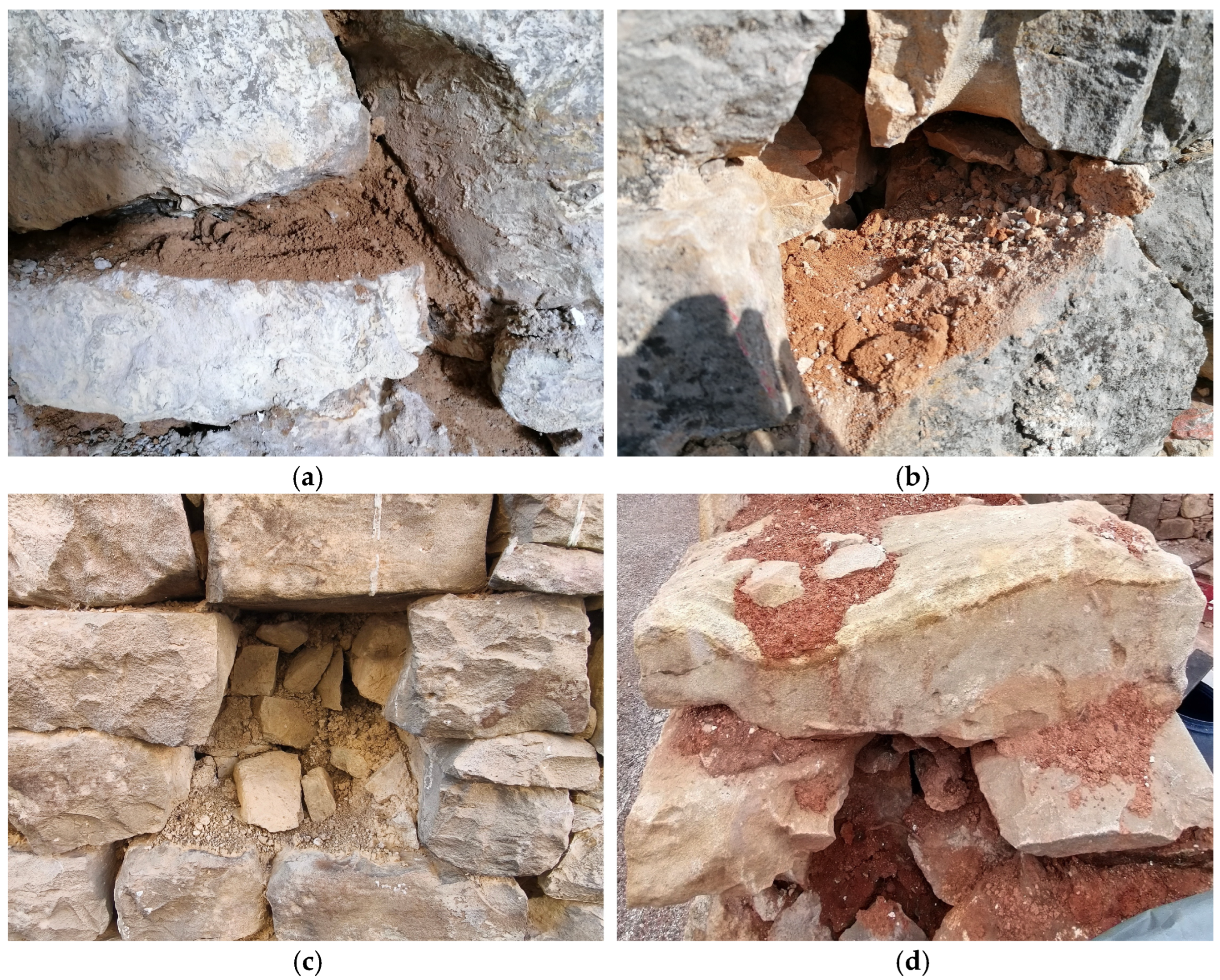
Earth mortars are actually much more common than we previously assumed. After the identification of earth mortar in this case study, we encountered several other cases, some of which are presented in Figure 13. The problem with the identification of mortar type arises from the fact that the load-bearing walls are usually plastered (and sometimes pointed with cement- or lime-based mortars), so the mortar joints and the inner core of the wall are not visible (accessible).
Besides in the Kvarner Littoral (Figure 13a,b), earth mortar was also identified in the neighboring region of Istria: in Vrh near Buzet (Figure 13c) and in Škropeti near Pazin (Figure 13d). In all cases, mortars contain only earth—neither sand/gravel nor lime were detected—and are characterized by low coherence (they can be easily crushed between the fingers). The different colors of mortar (brown, light yellow and red) clearly indicate their origin from local soil pits. In Figure 13d, where a cross-section of the masonry wall is shown, it can be observed that earth mortar, in combination with small flat stones, serves as bedding to ensure uniform load transfer between the irregular blocks.

5. Conclusions

This paper presents the results of an in situ inspection of a stone masonry building over 200 years old in Jurdani near Rijeka, as well as laboratory tests on material properties of stone and earth mortar extracted from the load-bearing walls.
The laboratory tests of stone indicate that the stone blocks have a high compressive strength, with a mean value of 136.2 MPa, which is typical of high-quality limestone.
FTIR spectroscopy results indicate that the earth mortar was made from local soil deposits. The compressive strength of earth mortar specimens varies from 2.22 MPa to 2.65 MPa (mean value of 2.36 MPa), which is comparable to the compressive strength of earth mortars from the literature and to that of lime mortars. The flexural strength of the earth mortar specimens is low, ranging from 0.18 to 0.30 MPa (mean value of 0.26 MPa). The ratio of flexural to compressive strength ranges from 0.07 to 0.13, which corresponds to the usual recommendation of using a value of mortar tensile strength equal to 0.1 times the mortar compressive strength.
The most significant finding of this case study is the use of earth mortar with a small amount of added lime, which was unexpected. Although there is extensive research on various aspects of earthen mortars worldwide, this type of mortar has not yet been studied in Croatia.
This study presents the first comprehensive results of testing the mechanical and chemical properties of an earth mortar in Croatia. The earth mortar from the case study building is of particular interest, as it does not contain sand or gravel, distinguishing it from commonly used historic earth mortars, where clay minerals serve as a binder for sand and silt particles. The results of the mortar characterization are specific to this case study only. The research is exploratory and representative of a preliminary investigation.
Using a small number of specimens (three specimens for the stone compressive strength and six specimens for the mortar strengths) can be limiting and may lead to reduced statistical reliability of the reported mean strength. However, these results may still be valuable as part of a preliminary study. A comprehensive expansion of the database for masonry constituents in the Kvarner Littoral is planned in the forthcoming period.
Since mortar properties have a significant influence on the behavior of stone masonry during earthquakes, and it is very likely that much more earth mortar is used in the Kvarner Littoral than assumed, additional research is needed to determine the mechanical properties of rubble stone masonry in which this type of earth mortar is used. Since the stone blocks have high compressive strength, the failure of masonry will always occur through the weak mortar.
Further research will focus on the detection of new case studies with earth mortar, the identification of the raw materials used for mortar production, grain size distribution and deeper chemical analysis of the mortars. The accompanying in situ research will include bed joints shear strength testing and inspection of the wall cross-section, including the bonding pattern, since these properties play a major role in the seismic assessment of masonry structures.

Author Contributions

Conceptualization, P.Š.; methodology, P.Š., I.Š.G. and D.G.; validation, I.Š.G.; formal analysis, P.Š.; investigation, P.Š., I.Š.G., J.M. and D.G.; data curation, J.M.; writing—original draft preparation, P.Š. and J.M.; writing—review and editing, P.Š., I.Š.G., J.M. and D.G.; visualization, P.Š. and J.M.; supervision, P.Š., I.Š.G. and D.G.; funding acquisition, D.G. All authors have read and agreed to the published version of the manuscript.

Funding

This research was funded by the University of Rijeka under Grant No. uniri-iskusni-tehnic-23-198 and by the European Union—NextGenerationEU—REMOK: Development of Representative Rubble Masonry Member Behaviour Model in the Kvarner Region for Seismic Assessment of Existing Buildings—uniri-iz-25-138.

Institutional Review Board Statement

Not applicable.

Informed Consent Statement

Not applicable.

Data Availability Statement

The original contributions presented in this study are included in the article. Further inquiries can be directed to the corresponding author.

Acknowledgments

The authors are grateful to Tea Lusičić, owner of the case study building, for providing the stone blocks and mortar for testing.

Conflicts of Interest

The authors declare no conflicts of interest.

References

  1. Hadzima-Nyarko, M.; Nikić, D.; Morić, D. Potresno Inženjerstvo—Procjena Oštetljivosti Zgrada; Građevinski fakultet Sveučilišta J.J. Strossmayera u Osijeku: Osijek, Croatia, 2018. [Google Scholar]
  2. Grünthal, G. European Macroseismic Scale 1998; European Seismological Commission: Luxembourg, 1998; Available online: https://media.gfz.de/gfz/sec26/resources/documents/PDF/EMS-98_Original_englisch.pdf (accessed on 15 December 2025).
  3. Herak, M. Seismic Hazard Map of Croatia; Department for Geophysics, Faculty of Natural Sciences and Mathematics, University of Zagreb: Zagreb, Croatia, 2011. Available online: http://seizkarta.gfz.hr/hazmap/ (accessed on 22 September 2025).
  4. Tomobe03—Own Work Using File:Croatia Location map.svg by NordNordWest, CC BY-SA 3.0. Available online: https://commons.wikimedia.org/w/index.php?curid=19244689 (accessed on 10 March 2025).
  5. Mihaljević, J.; Grandić, D. A preliminary assessment of buildings of the historic city centre of Senj. In Book of Abstracts—My First Conference 2022, Rijeka, Croatia, 22 September 2022; University of Rijeka: Rijeka, Croatia, 2022. [Google Scholar]
  6. Živković, Z. Hrvatsko Tradicijsko Graditeljstvo; Ministarstvo Kulture, Uprava za Zaštitu Kulturne Baštine: Zagreb, Croatia, 2013. Available online: https://min-kulture.gov.hr/UserDocsImages/arhiva/Bastina/HTG_web.pdf (accessed on 9 March 2025).
  7. Mihaljević, J.; Grandić, D.; Šćulac, P. Preliminary earthquake survey of buildings—Case study of Senj. In Proceedings of the 2nd Croatian Conference on Earthquake Engineering; Atalić, J., Šavor Novak, M., Gidak, P., Haladin, I., Frančić Smrkić, M., Baniček, M., Dasović, I., Demšić, M., Uroš, M., Kišiček, T., Eds.; University of Zagreb Faculty of Civil Engineering: Zagreb, Croatia, 2023; pp. 387–393. [Google Scholar] [CrossRef]
  8. Šćulac, P.; Galjanić, K.; Grandić, D.; Mihaljević, J.; Smolčić, Ž. Ties in unreinforced masonry structures: Case study in Krk. In Proceedings of the 3rd Croatian Conference on Earthquake Engineering; Atalić, J., Torić, N., Šavor Novak, M., Uroš, M., Demšić, M., Nastev, M., Lazarević, D., Košćak, J., Krolo, J., Sigmund, Z., Duvnjak, I., Eds.; Faculty of Civil Engineering, University of Zagreb: Zagreb, Croatia, 2025; pp. 380–389. [Google Scholar] [CrossRef]
  9. Glavičić, A. Kamena pročelja srednjovjekovnih kuća u Senju. Anthol. Senj Contrib. Geogr. Ethnol. Econ. Hist. Cult. 1995, 22, 111–138. [Google Scholar] [CrossRef]
  10. Borri, A.; Corradi, M.; Castori, G.; De Maria, A. A method for the analysis and classification of historic masonry. Bull. Earthq. Eng. 2015, 13, 2647–2665. [Google Scholar] [CrossRef]
  11. Kržan, M.; Gostič, S.; Cattari, S.; Bosiljkov, V. Acquiring reference parameters of masonry for the structural performance analysis of historical buildings. Bull. Earthq. Eng. 2015, 13, 203–236. [Google Scholar] [CrossRef]
  12. Borri, A.; Corradi, M.; De Maria, A. The Failure of Masonry Walls by Disaggregation and the Masonry Quality Index. Heritage 2020, 3, 1162–1198. [Google Scholar] [CrossRef]
  13. Circolare 2 Febbraio 2009, n. 617; Istruzioni per l’Applicazione Delle “Nuove Norme Tecniche per le Costruzioni” di cui al Decreto Ministeriale 14 Gennaio 2008. Ministry of Infrastructures and Transportation: Rome, Italy, 2009. Available online: https://www.gazzettaufficiale.it/eli/id/2009/02/26/09A01318/sg (accessed on 20 May 2025).
  14. Circolare 21 Gennaio 2019, n. 7; Istruzioni per l’Applicazione dell’ Aggiornamento Delle “Norme Tecniche per le Costruzioni” di cui al Decreto Ministeriale 17 Gennaio 2018. Ministry of Infrastructures and Transportation: Rome, Italy, 2019. Available online: https://www.gazzettaufficiale.it/eli/id/2019/02/11/19A00855/sg (accessed on 20 May 2025).
  15. prEN 1998-3, Draft; Eurocode 8—Design of Structures for Earthquake Resistance—Part 3: Assessment and Retrofitting of Buildings and Bridges. European Committee for Standardization (CEN): Brussels, Belgium, 2023.
  16. Vanin, F.; Zaganelli, D.; Penna, A.; Beyer, K. Estimates for the stiffness, strength and drift capacity of stone masonry walls based on 123 quasi-static cyclic tests reported in the literature. Bull. Earthq. Eng. 2017, 15, 5435–5479. [Google Scholar] [CrossRef]
  17. Pinto, A.P.F.; da Fonseca, B.S.; Vaz Silva, D. Mechanical characterization of historical rubble stone masonry and its correlation with the masonry quality assessment. Constr. Build. Mater. 2021, 281, 122168. [Google Scholar] [CrossRef]
  18. Simões, A.; Bento, R.; Ferreira, T. Mechanical properties of masonry structures in Portugal: Proposal of new correlations with the Masonry Quality Index (MQI). Bull. Earthq. Eng. 2026, 24, 2255–2277. [Google Scholar] [CrossRef]
  19. Lulić, L. Određivanje Mehaničkih Svojstava Nearmiranoga Ziđa od Pune Opeke Nerazornim i Polurazornim Metodama. Doctoral’s Thesis, Faculty of Civil Engineering, University of Zagreb, Zagreb, Croatia, 2024. [Google Scholar]
  20. Magenes, G.; Penna, A.; Galasco, A.; Da Paré, M. In-plane cyclic shear tests of undressed double-leaf stone masonry panels. In Proceedings of the 8th International Masonry Conference; Jager, W., Fried, A., Haseltine, B., Eds.; International Masonry Society: Whyteleafe, UK, 2010; pp. 1–10. [Google Scholar]
  21. Milosevic, J.; Gago, A.S.; Lopes, M.; Bento, R. Experimental assessment of shear strength parameters on rubble stone masonry specimens. Constr. Build. Mater. 2013, 47, 1372–1380. [Google Scholar] [CrossRef]
  22. Uranjek, M.; Bosiljkov, V.; Žarnić, R.; Bokan-Bosiljkov, V. In situ tests and seismic assessment of a stone-masonry building. Mater. Struct. 2011, 45, 861–879. [Google Scholar] [CrossRef]
  23. Vasconcelos, G.; Lourenço, P.B. In-Plane Experimental Behavior of Stone Masonry Walls under Cyclic Loading. J. Struct. Eng. 2009, 135, 1269–1277. [Google Scholar] [CrossRef]
  24. Rezaie, A.; Godio, M.; Beyer, K. Experimental investigation of strength, stiffness and drift capacity of rubble stone masonry walls. Constr. Build. Mater. 2020, 251, 118972. [Google Scholar] [CrossRef]
  25. Almeida, C.; Guedes, J.M.; Arêde, A.; Costa, A. Compressive behaviour of old one-leaf stone masonry walls; the influence of patterns’ regularity and constructive process. Constr. Build. Mater. 2021, 311, 125339. [Google Scholar] [CrossRef]
  26. Pereira, J.M.; Correia, A.A.; Lourenço, P.B. In-plane behaviour of rubble stone masonry walls: Experimental, numerical and analytical approach. Constr. Build. Mater. 2021, 271, 121548. [Google Scholar] [CrossRef]
  27. Silva, B.; Dalla Benetta, M.; da Porto, F.; Modena, C. Experimental assessment of in-plane behaviour of three-leaf stone masonry walls. Constr. Build. Mater. 2014, 53, 149–161. [Google Scholar] [CrossRef]
  28. Pinho, F.F.S. Ordinary Masonry Walls–Experimental Study with Unstrengthened and Strengthened Specimens. Ph.D. Thesis, Faculdade de Ciências e Tecnologia, Universidade Nova de Lisboa, Caparica, Portugal, 2007. (In Portuguese) [Google Scholar]
  29. Ponte, M.; Penna, A.; Bento, R. In-plane cyclic tests of strengthened rubble stone masonry. Mater. Struct. 2023, 56, 41. [Google Scholar] [CrossRef]
  30. Gattesco, N.; Rizzi, E.; Boem, I.; Dudine, A.; Gams, M. A new method of seismic strengthening stone masonry with CRM coatings on one side. Constr. Build. Mater. 2023, 407, 133565. [Google Scholar] [CrossRef]
  31. Del Zoppo, M.; Di Ludovico, M.; Balsamo, A.; Prota, A. Diagonal compression testing of masonry panels with irregular texture strengthened with inorganic composites. Mater. Struct. 2020, 53, 107. [Google Scholar] [CrossRef]
  32. Aničić, D.; Fajfar, P.; Petrović, B.; Szavitz-Nossan, A.; Tomaževič, M. Zemljotresno inženjerstvo—Visokogradnja; Građevinska knjiga: Beograd, Serbia, 1990. [Google Scholar]
  33. Sorić, Z. Zidane Konstrukcije; Sveučilište u Zagrebu: Zagreb, Croatia, 2016; ISBN 978-953-97661-1-3. [Google Scholar]
  34. Adjustment of the Methodology for Assessing the Seismic Resistance of Existing Masonry Buildings in the Kvarner Littoral. Research Project. Available online: https://www.croris.hr/projekti/projekt/10158 (accessed on 9 June 2025).
  35. D’Ayala, D.F.; Paganoni, S. Assessment and analysis of damage in L’Aquila historic city centre after 6th April 2009. Bull. Earthq. Eng. 2011, 9, 81–104. [Google Scholar] [CrossRef]
  36. Mappa Catastale del Comune di Giordani Foglio II, Sezione II (1819—Sec. XIX Primo Quarto). Available online: https://a4view.archiviodistatotrieste.it/patrimonio/d59786d9-0a27-41b9-8627-209af8655d94/204-b-02-mappa-catastale-del-comune-di-giordani-foglio-ii-sezione-ii-1819-sec-xix-primo-quarto (accessed on 20 November 2024).
  37. Šćulac, P.; Mihaljević, J.; Štimac Grandić, I.; Grandić, D. Assessing mechanical properties of historic stone masonry: Case study in Jurdani (Rijeka). In Proceedings of the 3rd Croatian Conference on Earthquake Engineering; Atalić, J., Torić, N., Šavor Novak, M., Uroš, M., Demšić, M., Nastev, M., Lazarević, D., Košćak, J., Krolo, J., Sigmund, Z., Duvnjak, I., Eds.; Faculty of Civil Engineering, University of Zagreb: Zagreb, Croatia, 2025; pp. 370–379. [Google Scholar]
  38. Zubin Ferri, T. Test Report 26/2024: Mortar Characterization by Optical Microscope and FTIR Analysis, Unpublished report; Pula, Croatia, 2024.
  39. HRN EN 1926:2008; Natural Stone Test Methods—Determination of Uniaxial Compressive Strength. Croatian Standards Institute: Zagreb, Croatia, 2008.
  40. HRN EN 1015-11:2019; Methods of Test for Mortar for Masonry—Part 11: Determination of Flexural and Compressive Strength of Hardened Mortar. Croatian Standards Institute: Zagreb, Croatia, 2019.
  41. Vračević, D.; Dugonjić Jovančević, S.; Peranić, J.; Hodanić, M. Determination of Uniaxial Compressive Strength of Limestone. Proc. Fac. Civ. Eng. 2019, 22, 123–140. [Google Scholar] [CrossRef]
  42. Bieniawski, Z.T.; Bernede, M.J. Suggested methods for determining the uniaxial compressive strength and deformability of rock materials: Part 1. Suggested method for determining deformability of rock materials in uniaxial compression. Int. J. Rock Mech. Min. Sci. 1979, 16, 138–140. [Google Scholar] [CrossRef]
  43. Briševac, Z.; Maričić, A.; Kujundžić, T.; Hrženjak, P. Saturation Influence on Reduction of Compressive Strength for Carbonate Dimension Stone in Croatia. Minerals 2023, 13, 1364. [Google Scholar] [CrossRef]
  44. Crnković, B.; Šarić, L.J. Građenje Prirodnim Kamenom; Institut građevinarstva Hrvatske: Zagreb, Croatia, 2003. [Google Scholar]
  45. Belamarić, J.; Buble, S.; Gamulin, A.; Krstulović-Opara, A.; Nikšić, G.; Plejić, J.; Šverko, A. Pouke baštine za gradnju u hrvatskom priobalju; Hrvatska Gospodarska Komora: Zagreb, Croatia, 2007. [Google Scholar]
  46. Gambilongo, L.; Barontini, A.; Silva, R.A.; Lourenço, P.B. Evaluation of non-destructive techniques for mechanical characterisation of earth-based mortars in masonry joints. Constr. Build. Mater. 2023, 392, 131960. [Google Scholar] [CrossRef]
  47. Bothara, J.K.; Ahmad, N.; Ingham, J.M.; Dizhur, D. Mechanical properties of stone masonry set in mud mortar and contained by steel wire mesh. Constr. Build. Mater. 2023, 405, 133348. [Google Scholar] [CrossRef]
  48. Curtis, R. Clay Mortars for Masonry Buildings. INFORM-Information for Historic Building Owners; Historic Scotland: Edinburgh, UK, 2015; Available online: https://publ.icomos.org/publicomos/jlbSai?html=Bur&base=technica&ref=42708&file=1389.pdf&path=Historic%20Environment%20Scotland_Mortars%20for%20Masonry%20Buildings.pdf (accessed on 20 December 2024).
  49. Günaydin, M.; Atmaca, B.; Demir, S.; Altunişik, A.C.; Hüsem, M.; Adanur, S.; Ateş, S.; Angin, Z. Seismic damage assessment of masonry buildings in Elazığ and Malatya following the 2020 Elazığ-Sivrice earthquake, Turkey. Bull. Earthq. Eng. 2021, 19, 2421–2456. [Google Scholar] [CrossRef]
  50. Kuruscu, A.O.; Güney, D.; Görün, A. Seismic behaviour of vernacular masonry buildings during 2010 and 2011 earthquakes in Turkey. In Proceedings of the 9th International Masonry Conference; Lourenço, P.B., Haseltine, B., Vasconcelos, G., Eds.; International Masonry Society: Whyteleafe, UK, 2014; pp. 1–10. [Google Scholar]
  51. Wang, M.; Liu, K.; Lu, H.; Shrestha, H.; Guragain, R.; Pan, W.; Yang, X. In-plane cyclic tests of seismic retrofits of rubble-stone masonry walls. Bull. Earthq. Eng. 2018, 16, 1941–1959. [Google Scholar] [CrossRef]
  52. Liu, Y.; Zhou, Z.; Chang, M.; Pei, Z. Experimental Study on Seismic Performance of Rammed Earth and Rubble Masonry Walls. Buildings 2026, 16, 149. [Google Scholar] [CrossRef]
  53. Vlachakis, G.; Vlachaki, E.; Lourenço, P.B. Learning from failure: Damage and failure of masonry structures, after the 2017 Lesvos earthquake (Greece). Eng. Fail. Anal. 2020, 117, 104803. [Google Scholar] [CrossRef]
  54. Sorrentino, L.; Cattari, S.; Da Porto, F.; Magenes, G.; Penna, A. Seismic behaviour of ordinary masonry buildings during the 2016 central Italy earthquakes. Bull. Earthq. Eng. 2019, 17, 5583–5607. [Google Scholar] [CrossRef]
  55. RE-forMS. Research Project. Rammed Earth for Modelling and Standardization in Seismically Active Areas (UIP-2020-02-7363). Available online: https://www.croris.hr/projekti/projekt/5837 (accessed on 16 May 2025).
  56. Brkanić Mihić, I.; Kraus, I.; Kaluđer, J.; Perić Fekete, A. Architectural features and soil properties of traditional rammed earth houses: Eastern Croatia case study. Buildings 2024, 14, 2049. [Google Scholar] [CrossRef]
  57. Duriez, M.; Vieux-Champagne, F.; Trad, R.; Maillard, P.; Aubert, J.E. A methodology for the mix design of earth bedding mortar. Mater. Struct. 2020, 53, 16. [Google Scholar] [CrossRef]
  58. Meimaroglou, N.; Mouzakis, C. The role of intrinsic soil properties in the compressive strength and volume change behavior of unstabilized earth mortars. Mater. Struct. 2024, 57, 50. [Google Scholar] [CrossRef]
  59. Artioli, G.; Secco, M.; Mazzoli, C.; Coletti, C.; Valuzzi, M.R.; da Porto, F. Characterization of stone masonry panels consolidated by injection of grouts in buildings damaged by the 2009 Abruzzo earthquake. In Proceedings of the pro078: 2nd Conference on Historic Mortars—HMC2010 and RILEM TC 203-RHM Final Workshop, Prague; Válek, J., Groot, C., Hughes, J.J., Eds.; RILEM Publications: Champs-sur-Marne, France, 2010; pp. 871–881. [Google Scholar]
  60. Cantù, M.; Giacometti, F.; Landi, A.G.; Riccardi, M.P.; Tarantino, S.C.; Grimoldi, A. Earthen mortars from Cremona (Northern Italy): The evolution through centuries of a manufacturing tradition. Constr. Build. Mater. 2016, 125, 520–532. [Google Scholar] [CrossRef]
  61. Historic Environment Scotland. Earth Mortars Research Project—Stage 1: Knowledge Review and Research Strategy (Arc Ref: 21032.1.31). 2022. Available online: https://static1.squarespace.com/static/5fb285c4af49fe7c859c049e/t/6319c685a91f582b89cb3998/1662633618920/Earth+Mortars+Research+Stage+1+Report+compressed.pdf (accessed on 21 April 2025).
  62. Affan, H.; Arairo, W.; Barraj, F.; Khatib, M.; Saba, M.; El Mendili, Y. Mechanical Characteristics of Clay-Based Masonry Walls. Eng 2025, 6, 260. [Google Scholar] [CrossRef]
  63. Zhang, T.; Xue, J.; Wu, C.; Sui, Y.; Feng, Y. Experimental and Finite Element Investigation of Bond Strength of Earthen Mortar–Brick Interfaces in Historic Masonry Structures. Buildings 2025, 15, 3278. [Google Scholar] [CrossRef]
  64. Sabbà, M.F.; Tesoro, M.; Falcicchio, C.; Foti, D. Rammed Earth with Straw Fibers and Earth Mortar: Mix Design and Mechanical Characteristics Determination. Fibers 2021, 9, 30. [Google Scholar] [CrossRef]
  65. Chever, L.; Pavía, S.; Howard, R. Physical properties of magnesian lime mortars. Mater. Struct. 2010, 43, 283–296. [Google Scholar] [CrossRef]
  66. Espitia-Morales, A.F.; Torres-Castellanos, N. Assessment of the Compressive Strength of Lime Mortars with Admixtures Subjected to Two Curing Environments. Ing. Investig. 2022, 42, e91364. [Google Scholar] [CrossRef]
  67. Válek, J.; Veiga, R. Characterisation of mechanical properties of historic mortars—Testing of irregular samples. In Structural Studies, Repairs and Maintenance of Heritage Architecture IX; Brebbia, C.A., Torpiano, A., Eds.; WIT Press: Southampton, UK, 2005; pp. 365–374. [Google Scholar]
  68. Morton, T.; Copsey, N.; Little, R. Earth Mortars. Buildingconservation. Available online: https://www.buildingconservation.com/articles/earth-mortars/earth-mortars.htm (accessed on 30 June 2025).
  69. CNR-DT 200 R1/2013; Guide for the Design and Construction of Externally Bonded FRP Systems for Strengthening Existing Structures. CNR—Advisory Committee on Technical Recommendations for Construction: Rome, Italy, 2014.
  70. Adhikari, R.K.; D’Ayala, D. 2015 Nepal earthquake: Seismic performance and post-earthquake reconstruction of stone in mud mortar masonry buildings. Bull. Earthq. Eng. 2020, 18, 3863–3896. [Google Scholar] [CrossRef]
  71. Meimaroglou, N.; Mouzakis, N.H. Mechanical properties of three-leaf masonry walls constructed with natural stones and mud mortar. Eng. Struct. 2018, 172, 869–876. [Google Scholar] [CrossRef]
  72. Paudel, S.; Maskey, P.N.; Adhikari, R.; Bhatt, L. Material characterization and seismic performance of Himalayan dressed stone masonry in mud mortar. J. Build. Rehabil. 2026, 11, 119. [Google Scholar] [CrossRef]
  73. Binda, L.; Tiraboschi, C. Flat-Jack Test: A slightly destructive technique for the diagnosis of brick and stone masonry structures. Int. J. Restor. Build. Monum. 1999, 5, 449–472. [Google Scholar]
  74. Andreini, M.; De Falco, A.; Giresini, L.; Sassu, M. Mechanical Characterization of Masonry Walls with Chaotic Texture: Procedures and Results of In-Situ Tests. Int. J. Archit. Herit. 2014, 8, 376–407. [Google Scholar] [CrossRef]
  75. RILEM TC 127-MS: Tests for masonry materials and structures. Mater. Struct. 1996, 29, 459–475. Available online: https://www.rilem.net/images/publis/119203.pdf (accessed on 3 March 2026).
Figure 1. Position of Kvarner Littoral in Croatia [4]. The region encompasses the coastal area from Opatija in the west to Senj in the east, including the islands of Krk, Cres, Lošinj and Rab.
Eng 07 00188 g001
Figure 2. Graphical summary of the research methodology.
Eng 07 00188 g002
Figure 3. In situ research on the rubble masonry typology in the Kvarner Littoral: (a) Rijeka; (b) Sužan (Krk island); (c,d) Bakar; (e) Senj; (f) Šapjane; (g) Rijeka; (h) Linardići (Krk island); (i) Jadranovo.
Eng 07 00188 g003
Figure 4. Case study building layout (dimensions in cm). It represents a typical small rural house, with a partially buried ground floor and without internal load-bearing walls. The annex on the first floor was added in 1897 (year carved on the door lintel).
Eng 07 00188 g004
Figure 5. Case study building: (a) Front façade; (b) side view; (c) detail of the triangular buttress at the front façade providing lateral support; (d) masonry typology at the ground floor after removal of the plaster.
Eng 07 00188 g005
Figure 6. Detail of the earth mortar with visible white lime lumps.
Eng 07 00188 g006
Figure 7. Stone specimens: (a) Stone blocks extracted from the building; (b) cylindrical specimens prepared for testing.
Eng 07 00188 g007
Figure 8. Uniaxial compression test of stone specimen S3: (a) Before testing; (b) after testing.
Eng 07 00188 g008
Figure 9. Microscope image of a mortar specimen at 20× magnification. The brown matrix represents soil, the white forms are lime, while the black areas are of organic origin. Reproduced with permission from [38].
Eng 07 00188 g009
Figure 10. Mortar specimens: (a) Preparation of prisms in steel molds; (b) prisms before testing.
Eng 07 00188 g010
Figure 11. Flexural strength test (three-point loading scheme) of specimen M1: (a) Before testing; (b) after testing.
Eng 07 00188 g011
Figure 12. (a) Compression test setup; (b) mortar specimens after testing with a characteristic hour-glass shape.
Eng 07 00188 g012
Figure 13. Lime-free earth mortars detected in other locations: (a) Jadranovo; (b) Šapjane; (c) Buzet; (d) Škropeti. Note the diversity of the mortar color due to the different soils used.
Eng 07 00188 g013
Table 1. Uniaxial compressive strength and density of stone specimens.
SpecimenHeight, h
(mm)
Diameter, D
(mm)
Mass
(g)
Density, γ
(kg/m3)
Max Load, F
(kN)
Strength, fs
(MPa)
S153.254.23252648305.1132.3
S254.854.13372675333.4145.0
S357.754.23552667303.1131.4
S462.454.13842677134.658.6
Mean value 2667 136.2 *
St. dev. 13.4 7.6 *
Note: * only for specimens S1–S3.
Table 2. Flexural strength of mortar specimens.
SpecimenWidth, b
(mm)
Depth, d
(mm)
Max Load, F
(N)
Strength, fb
(MPa)
M13938.51000.26
M23938.31000.26
M338.638.6700.18
M438.538112.50.30
M538.738.21130.30
M638.638.31030.27
Mean value 0.26
St. dev. 0.04
Table 3. Compressive strength of mortar specimens.
SpecimenWidth, b
(mm)
Max Load, F
(N)
Strength, fc
(MPa)
M1-13934702.22
M1-23936302.33
M2-13937102.38
M2-23934602.22
M3-138.636702.38
M3-238.637302.42
M4-138.540802.65
M4-238.536202.35
M5-138.737702.44
M5-238.735902.32
M6-138.636302.35
M6-238.634202.22
Mean value 2.36
St. dev. 0.12
Disclaimer/Publisher’s Note: The statements, opinions and data contained in all publications are solely those of the individual author(s) and contributor(s) and not of MDPI and/or the editor(s). MDPI and/or the editor(s) disclaim responsibility for any injury to people or property resulting from any ideas, methods, instructions or products referred to in the content.