Article

Development of Cementless Concrete Pipes Incorporating Bundled Fibers: An Alternate to Cement Concrete Pipes


1
Civil Engineering Department, University of Management and Technology, Lahore 54770, Pakistan
2
Civil Engineering Department, University of Engineering and Technology, Lahore 54890, Pakistan
*
Authors to whom correspondence should be addressed.
Eng 2026, 7(4), 157; https://doi.org/10.3390/eng7040157
Submission received: 26 January 2026 / Revised: 29 March 2026 / Accepted: 31 March 2026 / Published: 1 April 2026
(This article belongs to the Section Chemical, Civil and Environmental Engineering)

Abstract

The use of cementless concrete (geopolymer concrete (GPC)) incorporating fly ash and bundled steel fibers to produce full-scale precast concrete pipes is an economical, viable and sustainable solution for sewer infrastructure for decreasing the overall carbon impacts. This research explores the mechanical behavior of precast full-scale pipes (450 mm inner diameter) incorporating cementless concrete and bundled steel fibers. The GPC mixture was produced by completely substituting cement with fly ash generated by the local coal power plant. The bundled steel fibers were locally manufactured from long wires. The proportions investigated of the bundled steel fibers in the GPC pipes were 20 and 40 kg/m3. A total of six full-scale GPC pipes and two conventional cement concrete pipes were cast in a commercial precast pipe unit. The crushing strength under external load was evaluated using the three-edge bearing test (TEBT) on the pipes without fibers, showing comparable cracking and ultimate loads of GPC pipes and conventional cement concrete pipes. Both types of pipes satisfied the strength requirement of ASTM C76 class III. The use of bundled steel fibers in GPC pipes improved the cracking and ultimate loads by 18% and 22%, respectively, when 40 kg/m3 of bundled steel fibers were added. This upgraded the ASTM C76 strength class from class III to IV due to the improved crack resistance and ultimate load. Conventional cement concrete pipes and GPC pipes exhibited similar cracks at the critical regions (springlines, invert and crown). However, GPC pipes with bundled steel fibers showed a well distributed pattern of multiple secondary cracks along the longitudinal axis of the pipes. The final failure was governed by the flexure action and radial tension in the tested pipes. The economic analysis of cement concrete and GPC pipes showed comparable costs. However, the incorporation of fibers increased the cost of GPC pipes due to the limited local availability of proprietary fibers. This study highlights a new horizon of GPC for the manufacturing of sustainable and economical precast pipes as an environmentally friendly substitute to conventional cement concrete pipes for sustainable sewer infrastructure and adds novelty to the current state-of-the-art knowledge.

1. Introduction

The sewer system is very old in human civilization and can be tracked back to the 1800s [1,2]. At that time, natural materials such as stone and clay were used, which eventually evolved to high-durability and high-strength materials, for example, concrete. In the current era, concrete pipes are very frequently used for sewerage schemes. Precast reinforced concrete full-scale pipes are cast through various techniques such as spun-cast methodology and the vibro-compaction method, among others. The steel rebar reinforcement cage may be single, double or triple, depending on the diameter of the pipe. Typically, zero to 25 mm slump was maintained in concrete used for producing concrete pipes [3,4,5,6]. Two methods are used for the structural design of precast concrete pipes: the indirect design technique and direct design methodology. The crushing strength test (TEBT) is an extensively used setup in many parts of the world to assess the performance of concrete pipes. The crack load at a crack width of 0.30 mm and ultimate load values are used to establish the class of pipes, as per ASTM C76 [7].
Numerous studies have previously explored the behavior of full-scale concrete pipes under various loadings. For instance, Wen et al. (2018) [8] inspected the strength of a pipe’s wall cast through the centrifugal method. It was observed that the outer side (wall) of the pipe demonstrated increased strength compared to the inner side of the wall. Erdogmus et al. (2010) [9] recommended design guidelines for precast pipes with an emphasis on bedding factor. Xian et al. (2023) [10] studied the manufacture of pipes using carbonation curing. It was reported that the carbonation curing technique can replace traditional steam curing for concrete pipe manufacturing. Wang et al. (2023) [11] studied the performance of 1000 to 2000 mm reinforced concrete pipe using TEBT, digital image correlation, acoustic emission and infrared thermography. It was reported that the D-load at a crack width of 0.3 mm was more comparable with the acoustic emission method. Younis et al. (2020) [12] suggested a new rationale method for predicting the crack load at 0.30 mm instead of manually measuring using leaf gages. Chao and Kuo (2018) [13] used the Taguchi method for optimizing the steel fiber reinforcement in precast pipes. The factors studied were the fiber diameter, winding pitch and concrete water to cement ratio. The optimized factors for the pipe were 6.5 mm, 33 mm, and 0.33 for the fiber diameter, winding pitch and water–cement ratio for the concrete mixture, respectively. Al Rikabi et al. (2018) [14] inspected the performance of 1200 mm concrete pipe with 50% reduced wall thickness having 9 kg/m3 of steel fibers. It was reported that the strain capacity increased owing to the addition of fibers in the tested pipe. Faisal et al. (2023) [15] studied the mixture design for various proportions of polypropylene and steel fibers for the casting of spun-cast full-scale pipes. It was reported that the utilization of hybrid fibers (polypropylene and steel fibers) in concrete mixture led to controlling the tensile stresses on both sides of the pipe wall efficiently for smaller wall-thickness pipes. Similarly, Faisal et al. (2023) [16], in another study, investigated the full-scale pipes without any reinforcement, pipes with only steel fibers, conventional steel rebar reinforced pipes, and pipes incorporating both conventional rebars and steel fibers. It was opinioned that the tested pipe having 40 kg/m3 of straight steel fibers exhibited around 30% higher ultimate load in comparison with the pipe specimen without fibers. It was concluded in their study that the use of hybrid conventional steel rebars and steel fibers in the manufacturing of spun-cast pipe is an economical solution considering the higher crack and ultimate load capacities [16]. Also, Faisal et al. (2024) [4] explored the behavior of buried reinforced concrete pipes under different traffic loads. No damage or cracks were observed on the buried pipes when various vehicular loads were passed, indicating the better functioning of reinforced concrete pipes casted through the spun-cast technique. Travers (1997) [17] used the acoustic method for evaluating the damage in prestressed concrete pipes. Similarly, Goldaran et al. (2020) [18] studied the monitoring of rusting in prestressed concrete pipes using acoustic emission techniques. Wang et al. (2023) [19] conducted a detailed study on concrete pipes subjected to microbiologically induced corrosion. Specimens were immersed in microbial solution. After 90 days, various tests, including the visual monitoring of surface deterioration and straining, pH values, cracks and their width and micro-structural changes, were conducted. Kong et al. (2021) [20] investigated the durability performance of concrete sewer pipes. Specimens were subjected to sewage sulphuric acid solutions for up to 6 months. It was reported that an alkaline layer was formed due to sewage flushing leading to enhanced concrete damage due to microbial activity [20]. Ramadan et al. (2020) [21] and Younis et al. (2021) [22] studied the use of single elliptical rebar cage in concrete pipes. A reduction in load capacity was noted for pipes with an elliptical cage in comparison to those with a conventional circular cage due to a rotation issue of the cage while pipe casting. Mohamed (2015) [6] cast various concrete pipes with steel fibers of different types and tested them in the laboratory and field buried conditions. Mercuri et al. (2023) [23] employed polyvinyl alcohol (PVA) fiber-reinforced mixtures for strengthening structures. The inclusion of PVA fibers enhanced the flexural and direct tensile strengths of the mortar mixture. Rezakhani et al. (2021) [24] reported that the type of steel fibers is the main factor influencing the performance of steel fibrous concrete. This calls for the investigation of diverse types of steel fibers, especially the potential of locally available fibers which needs to be explored.
The ongoing progress in materials science has led to the development of various alternate materials for construction purposes with similar properties to cement concrete. Geopolymer concrete is a relatively new material having comparable material properties to cement concrete. It can be produced when alkali reacts with alumino-silicate compounds (waste materials, i.e., fly ash, slag, and metakaolin, among others) [25]. It was estimated that the production of GPC leads to around 80% less carbon dioxide (CO2) emission than ordinary cement concrete [25,26]. Several studies have been carried out to characterize the mechanical and long-term performance of GPC. For instance, Khan et al. (2019) [27] studied the early-age behavior of GPC. It was reported that the creep and shrinkage characteristics of GPC are greatly influenced by the curing conditions and their duration. Heat curing was found to be the efficient way of controlling the early-age properties of GPC [27]. On the other hand, Nath and Sarker (2014) [28] optimized the GPC mixture at ambient conditions without heat curing. Jena and Panigrahi (2019) [29] investigated the performance of GPC incorporating slag. It was stated that the incorporation of slag in GPC exhibited enhanced the mechanical properties compared to an identical GPC mixture without slag. Huang and Wang (2024) [30] optimized the GPC mixture using discrete element modeling. Kantarcı et al. (2019) [31] investigated the effect of activator concentration and its type and curing settings on the properties of GPC incorporating volcanic tuff. Ghafoor et al. (2021) [32] reported an optimum concentration of alkaline activator from 14 M to 16 M and ratio of sodium silicate (Na2SiO3) to sodium hydroxide (NaOH) of 1.5 for achieving the desired GPC properties. Similarly, Hu et al. (2024) [33] examined the influence of slag content, alkaline activator dosage, water-to-binder ratio, and fiber incorporation on the chloride resistance of geopolymer concrete (GPC). Their results showed that chloride resistance improved as the slag proportion increased from 40% to 100%. In addition, a decreasing trend in the chloride diffusion coefficient was observed when the alkaline activator content increased from 4% to 6%, indicating enhanced resistance to chloride penetration. Tauqir et al. (2023) [34] studied the shear behavior of beams incorporating GPC mixtures. Kanwal et al. (2023) [35] explored the mechanical behavior of FRP tubes filled with GPC mixture. Various studies have been reported in the past for the use of various types of fibers in the production of GPC. For instance, Sharma et al. (2024) [36] reviewed the literature on the effect of fibers in GPC and reported an improved performance of GPC mixtures due to the inclusion of fibers. Moreover, it was reported that the inclusion of fibers limits the brittleness behavior of GPC mixtures, leading to improving the tension weakness and enhancing the fracture behavior of GPC [36]. In another study, Feng et al. (2024) [37] inspected the effect of cellulose nanocrystal content on the mechanical properties of alkali-activated fly ash and slag pastes. It was stated that a mixture having 0.3% of cellulose crystals enhanced the compressive strength by approximately 18% and the flexural strength by about 60%. Similarly, Li et al. (2022) [38] reviewed the micro-structure and durability performance of GPC incorporating fibers. It was demonstrated that the utilization of fibers improved the mechanical behavior of GPC [38,39]. Moujoud et al. (2023) [40] studied the incorporation of various sizes of natural fibers (hemp, jute, and bamboo) on the performance of GPC, and concluded that the fibers are suitable in building infrastructures due to GPC’s improved thermal, acoustic, mechanical and fire-resistant behavior. Furthermore, GPC mixtures with fibers exhibited improved toughness and durability properties [41].
The sustainability advantages, along with the improved mechanical and durability performance of GPC, can be further utilized in the production of precast pipes. However, only limited studies have explored the performance of GPC full-scale pipes. For example, Glasby et al. (2019) [42] evaluated various GPC mixtures and highlighted their potential benefits for sewer infrastructure, particularly due to their enhanced resistance to biogenic acid attack. Similarly, Gourley and Johnson (2019) [43] examined the performance of GPC pipes under the aggressive effects of hydrogen sulfide and stated that GPC pipes showed greater resistance to corrosive environments in comparison with cement concrete pipes. Dangol (2023) [44] examined the structural performance of GPC pipes using finite element analysis and reported that pipes made with GPC demonstrated higher load carrying capacity and improved mechanical performance compared with ordinary cement concrete pipes. Despite these promising findings, the large-scale application of geopolymer concrete pipes remains limited due to the absence of full-scale experimental testing, comprehensive design guidelines and standards. Therefore, this study aims to explore the feasibility of full-scale pipes using geopolymer concrete. Although several studies in developed countries have examined the structural behavior of concrete pipes manufactured using advanced vibro-compaction techniques, very limited research is available on full-scale concrete pipes produced via the spun-cast technique. This method is commonly adopted in developing countries because of its cost efficiency and the ease of its installation technique. Accordingly, the GPC pipes in this study were manufactured using the spun-cast technique. Another challenge lies in the strength development of geopolymer mixtures (cementless concrete systems) incorporating locally available fly ash under regular conventional curing conditions, which requires detailed investigation. The use of such industrial by-products for geopolymer production also offers significant conservational benefits by reducing carbon dioxide emissions compared with conventional cement-based concrete. Furthermore, previous research programs have mainly targeted the use of conventional straight or wavy steel fibers in GPC mixtures, while limited research has explored the use of bundled steel fibers. These bundled fibers consist of several thin steel filaments wrapped together with a spiral steel wire, similar to conventional strand windings. Therefore, the use of a cementless fly ash geopolymer mixture incorporating locally manufactured wire-cut bundled steel fibers for the production of full-scale precast concrete pipes using the spun-cast technique introduces an innovative approach for the precast industry. This approach has the potential to provide an economical, sustainable, and practical solution for infrastructure development. Moreover, the outcome of this research may pave the path for the future development of design approaches for geopolymer concrete pipes, facilitating their wider adoption in sewer infrastructure projects and advancing the existing body of knowledge. The developed GPC pipes were experimentally tested using the TEBT to evaluate their structural performance. The cracking patterns and load-deflection behavior of GPC pipes were also compared with those of conventional cement concrete pipes. In short, this study highlights a new avenue for the application of geopolymer concrete (GPC) in the fabrication of full-scale precast pipes, supporting the development of economical, eco-friendly, and more resilient sewer infrastructure. The findings underscore the significance of this research and provide novel contributions to the current state of knowledge.

2. Materials

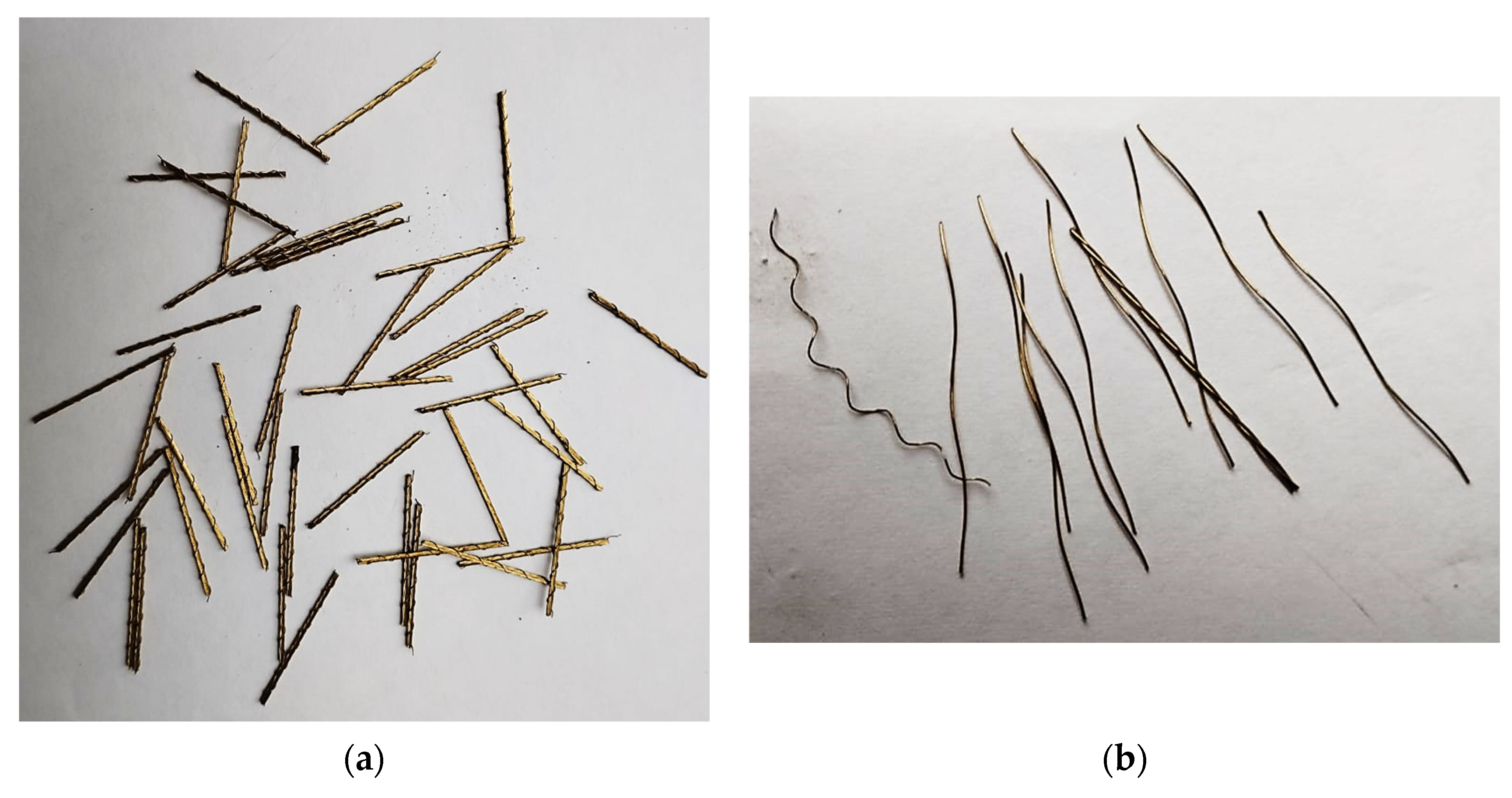
In this study, bundled steel fibers were used (Figure 1a). Those fibers were 21 mm long and were locally fabricated by segmenting long bundled steel wires. Twelve individual steel wires were enclosed in a spiral to form one bundled steel fiber with a roughened surface leading to improved interfacial properties (Figure 1b).
Table 1 presents the characteristics of the used fibers. Conventional steel rebars of size 6 mm diameter were used to manufacture the rebar cage for the reinforced concrete pipes.
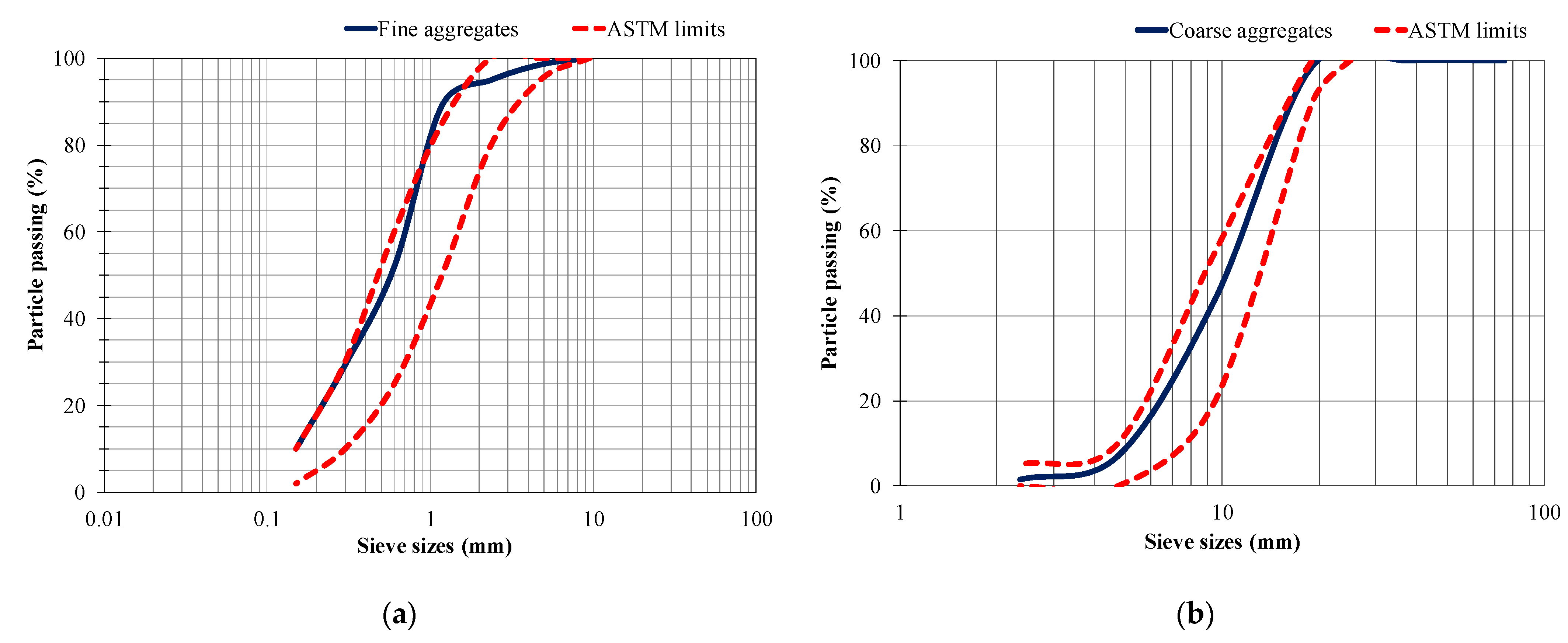
Crush and sand were locally acquired and used as coarse and fine aggregates, respectively. Figure 2a,b show the particle gradation plots for the used aggregates. Similar particle gradation curves were also reported in a previous study [45].
Table 2 shows the characteristics of the used aggregates. Ordinary Portland cement served as the binder for the production of conventional cement concrete pipes, whereas the geopolymer concrete (GPC) pipes were fabricated by substituting 100% of the cement with fly ash (FA). FA was sourced from the local coal-based power plant.
The chemical properties of the used cement and FA are shown in Table 3. For the casting of the GPC mixture, FA was activated using Na2SiO3 and NaOH chemicals. The NaOH solution had a molarity of 14, with a NaOH to Na2SiO3 ratio of 1.5. Ordinary tap water was used for casting the pipes.
The used concrete mixture design is shown in Table 4. The concrete mixture proportions were selected based on a series of preliminary trial mixtures to ensure that the compressive strength requirement specified by ASTM C76 [7] (i.e., >27.6 MPa) was satisfied while achieving suitable workability for pipe manufacturing using the spun-cast technique. Moreover, steel fiber dosages of 20 kg/m3 and 40 kg/m3 were selected to investigate the effect of moderate and relatively higher fiber dosage on the cracking and structural performance of the pipes.

3. Casting Procedure of Full-Scale Concrete Pipes

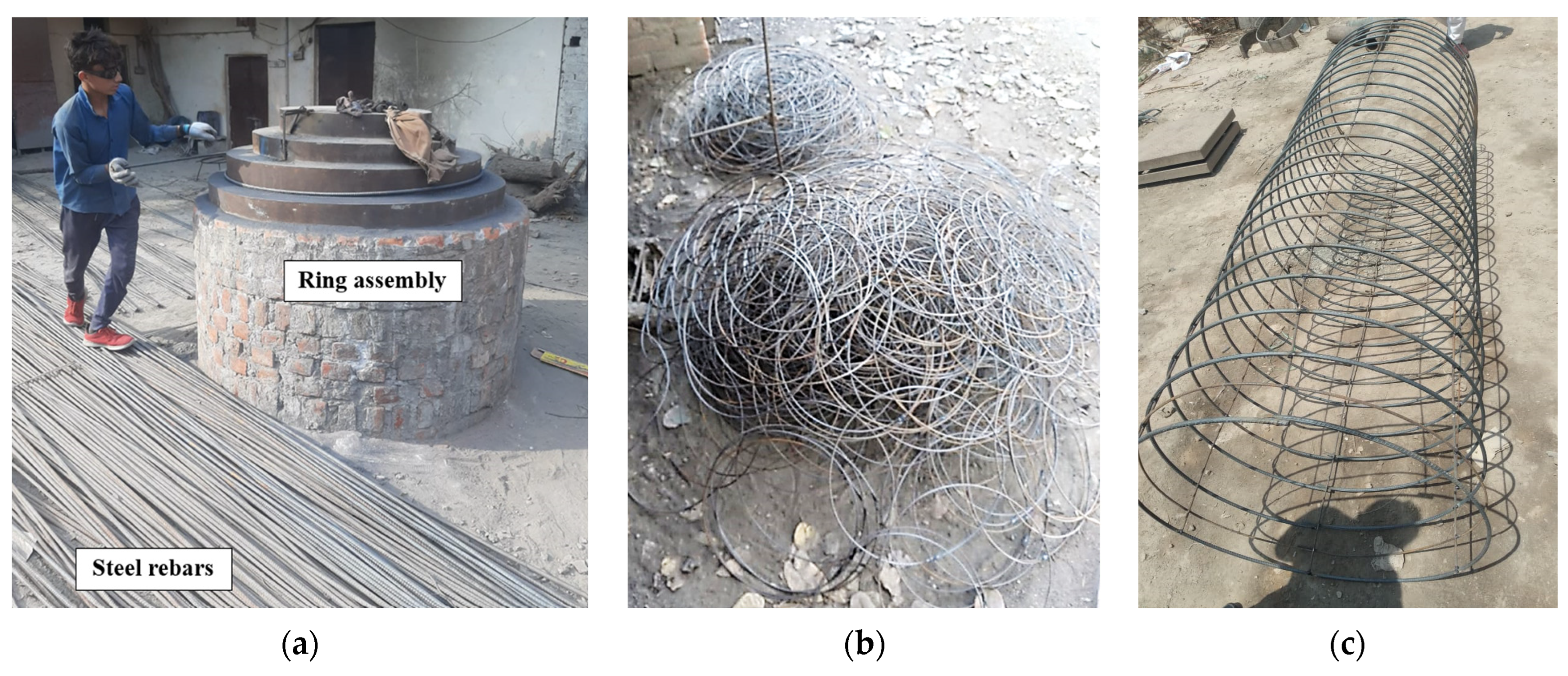
In this research, full-scale reinforced concrete pipes were cast in a commercial precast unit (Lahore, Punjab, Pakistan) using the spun-cast centrifugal technique. First of all, a reinforcement cage was formed by joining the longitudinal steel reinforcement with the circular reinforcement. Circular reinforcement/rings were formed manually using a ring assembly (Figure 3a). Straight bars of desired size were rotated along the ring assembly to obtain circular bars (Figure 3b). Six longitudinal bars were used to hold/support the circular reinforcement in their exact position (Figure 3c).
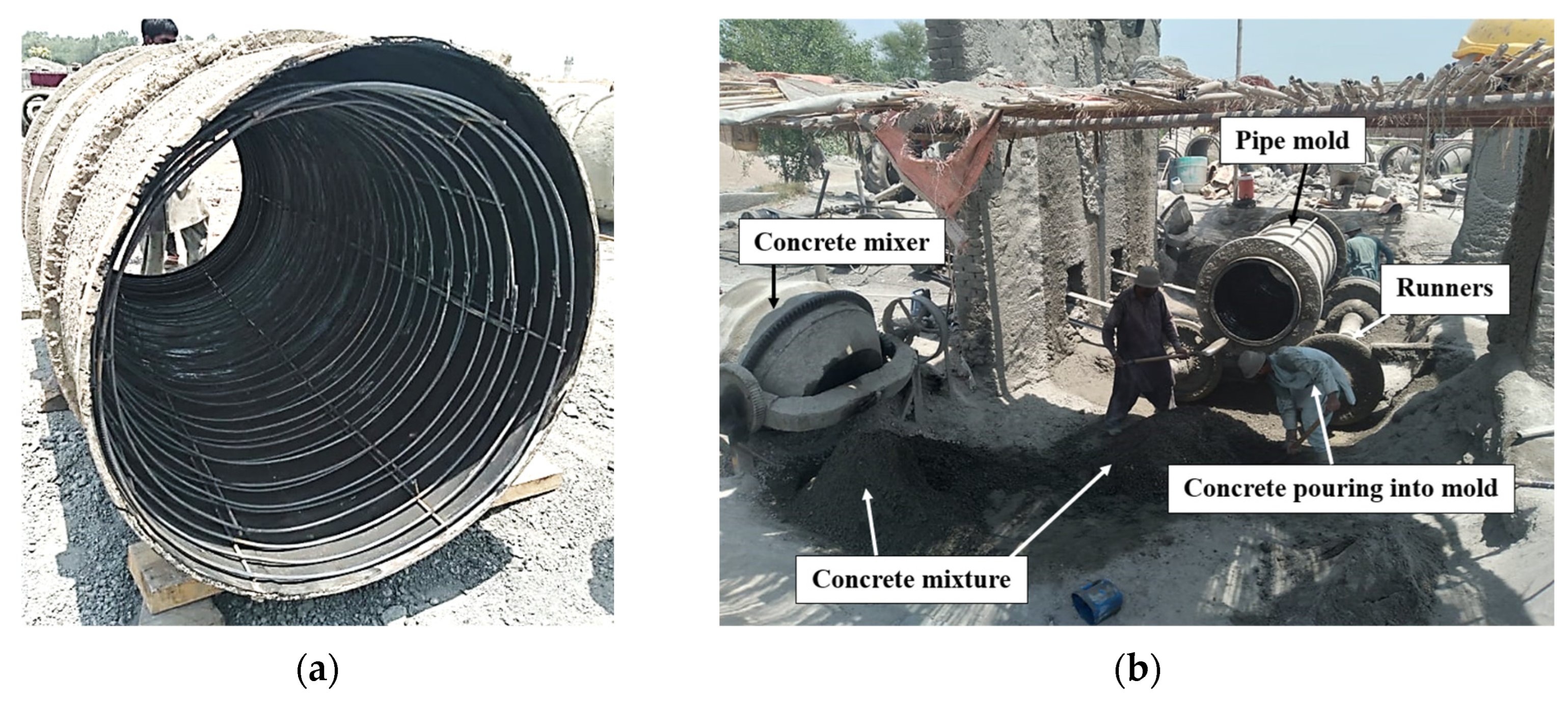
Afterwards, a rebar cage was placed into the mold (Figure 4a) and transferred to the spun-cast arrangement. The desired concrete mixture was prepared using a rotating-type mixer. Initially, fly ash, crush and sand were dry-mixed for 2 min. The required quantity of water was then introduced along with NaOH and Na2SiO3 solution gradually while the mixing process continued. At the end, bundled fibers were added into the mixture. The total mixing time for all the ingredients of concrete was around 8 to 12 min. In the spun-cast assembly, the pipe mold was positioned on two rotating wheels and the concrete mixture was added into the pipe mold while rotating (Figure 4b). The concrete mixture was driven towards the outer side of pipe wall due to centrifugal force. While rotating, it was observed that there was additional water at the top surface, which was removed with a long brush.
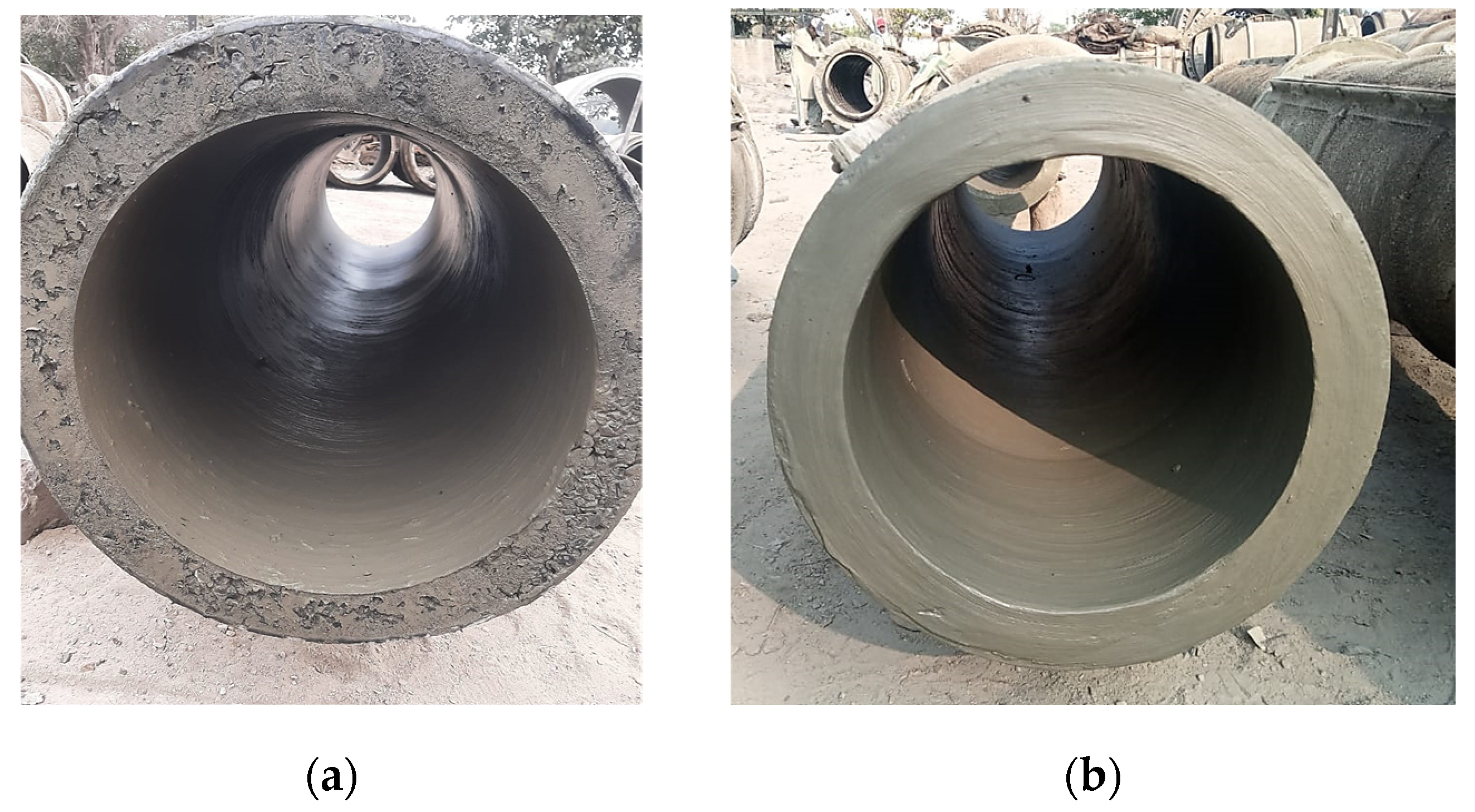
At the end, a dry mixture of binder and sand was sprinklered at the inner side of the mold to make the top surface even and parallel while rotating. The speed of rotation of the runners in the spun-cast assembly was lower while placing the concrete mixture into the pipe mold (80 to 100 rpm). When concrete placement was finished, the runner rotation speed was increased (180–200 rpm). When the casting procedure was finished, the pipe steel mold was removed from the spun-cast runner and shifted to the storage area. After 24 h, the pipes were demolded. Cosmetic repair of the pipe specimens was performed (Figure 5a,b) before placing the specimens in the curing region.
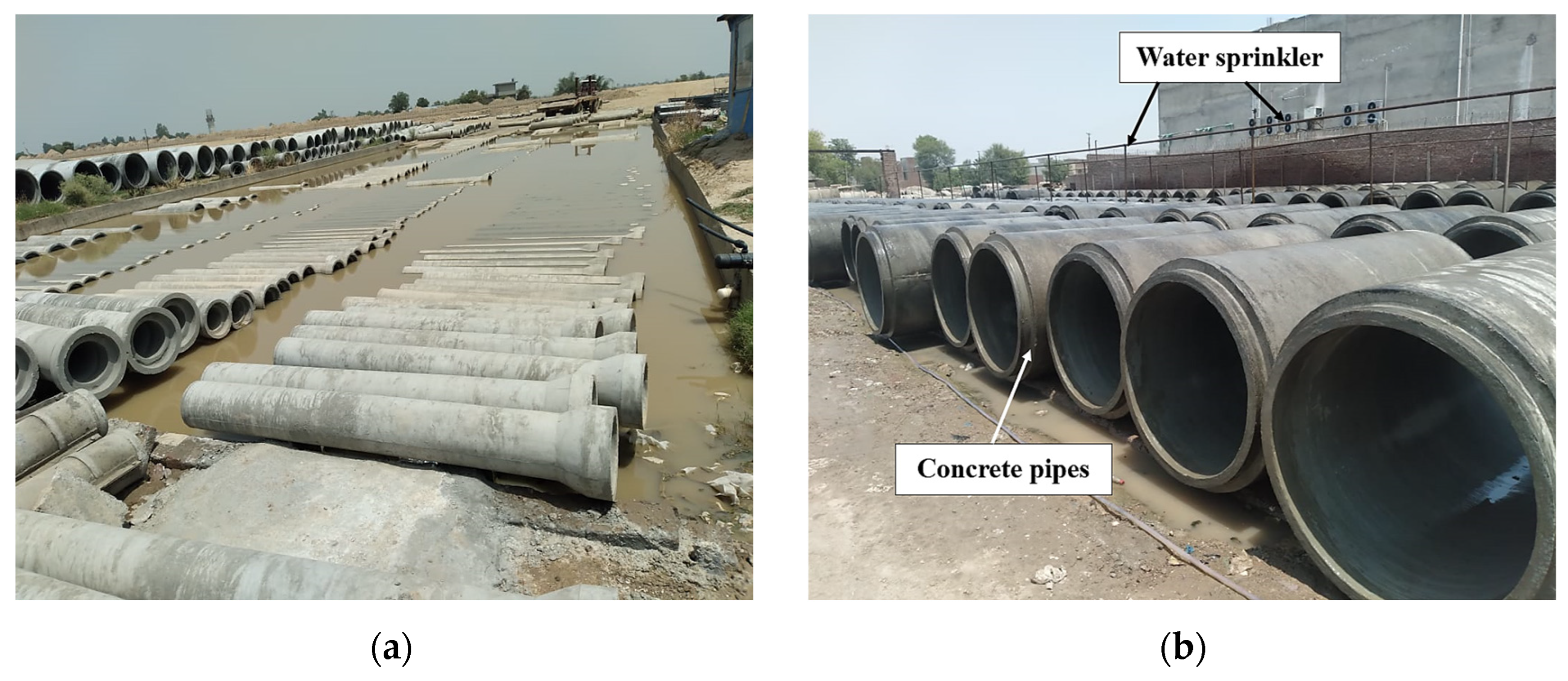
Curing was performed in two stages (Figure 6). For the first 21 days, pipe specimens were cured by immersing them in a water pond (Figure 6a). In the second stage, pipe specimens were transferred into a sprinkler yard, where curing was performed using water sprinklers (Figure 6b).
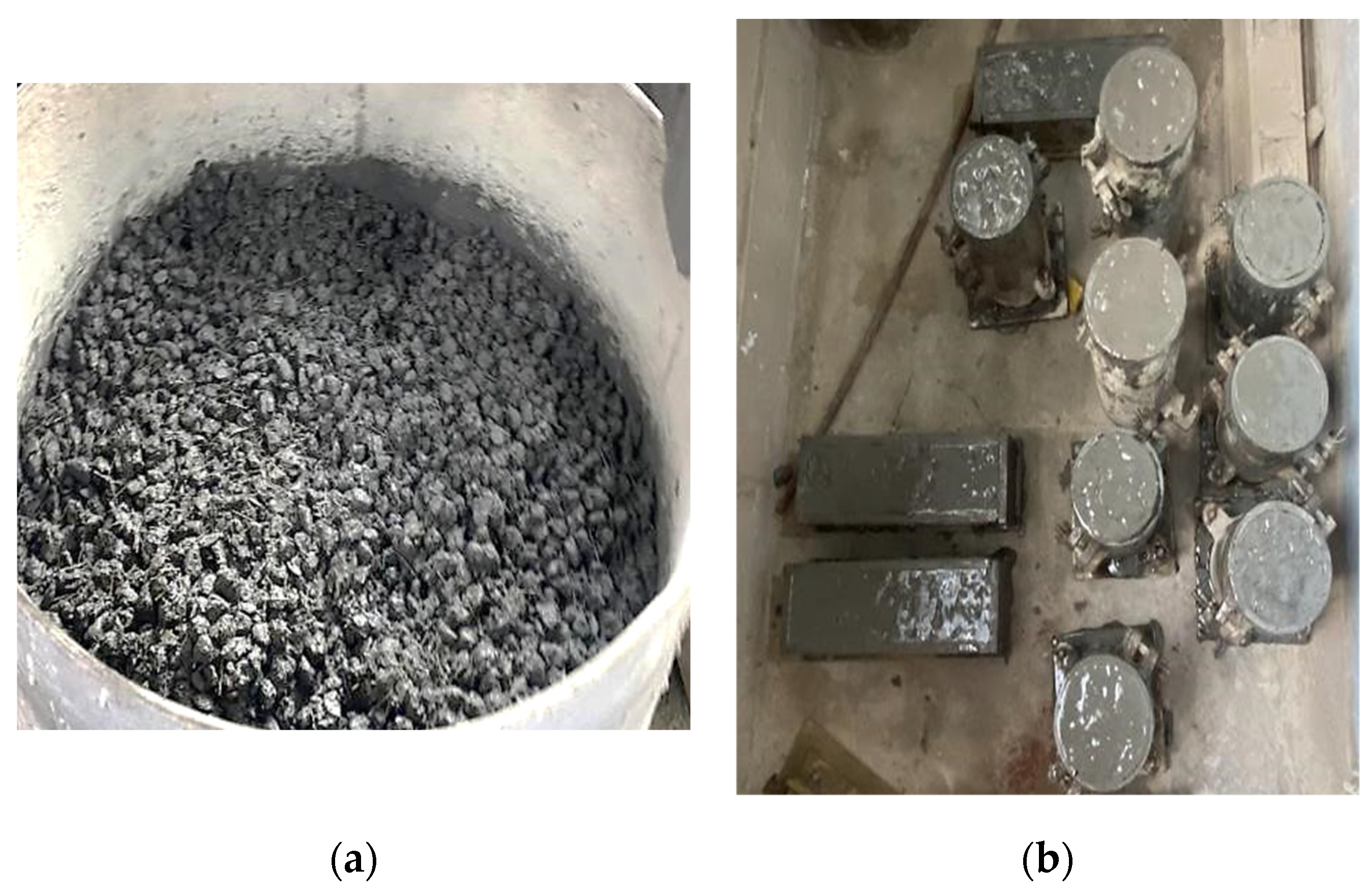
During each pipe casting, cylindrical and prismatic specimens were also casted to examine the material properties of the concrete mixtures (Figure 7a,b). The cylindrical specimens had dimensions of 100 × 200 mm, whereas the prism specimens measured 75 × 75 × 280 mm.
The number of pipe specimens and their details are shown in Table 5. The inner diameter and wall thickness of all pipes were 450 mm and 65 mm, respectively (wall B as per ASTM C76 [7]). All the pipes were reinforced using steel cages consisting of 150 mm2/m of circular steel rings welded to six longitudinal bars. The GPC1-SF20 and GPC1-SF40 pipes were reinforced with 20 kg/m3 and 40 kg/m3 of bundled steel fibers, respectively, in addition to the steel cage reinforcement. A total of 20 kg/m3 and 40 kg/m3 of bundled steel fibers correspond to 0.25% and 0.50% of concrete volume, respectively. The length of each pipe was 2.42 m.

4. Test Methods for Full-Scale Pipes

4.1. Tests on Concrete Mixtures

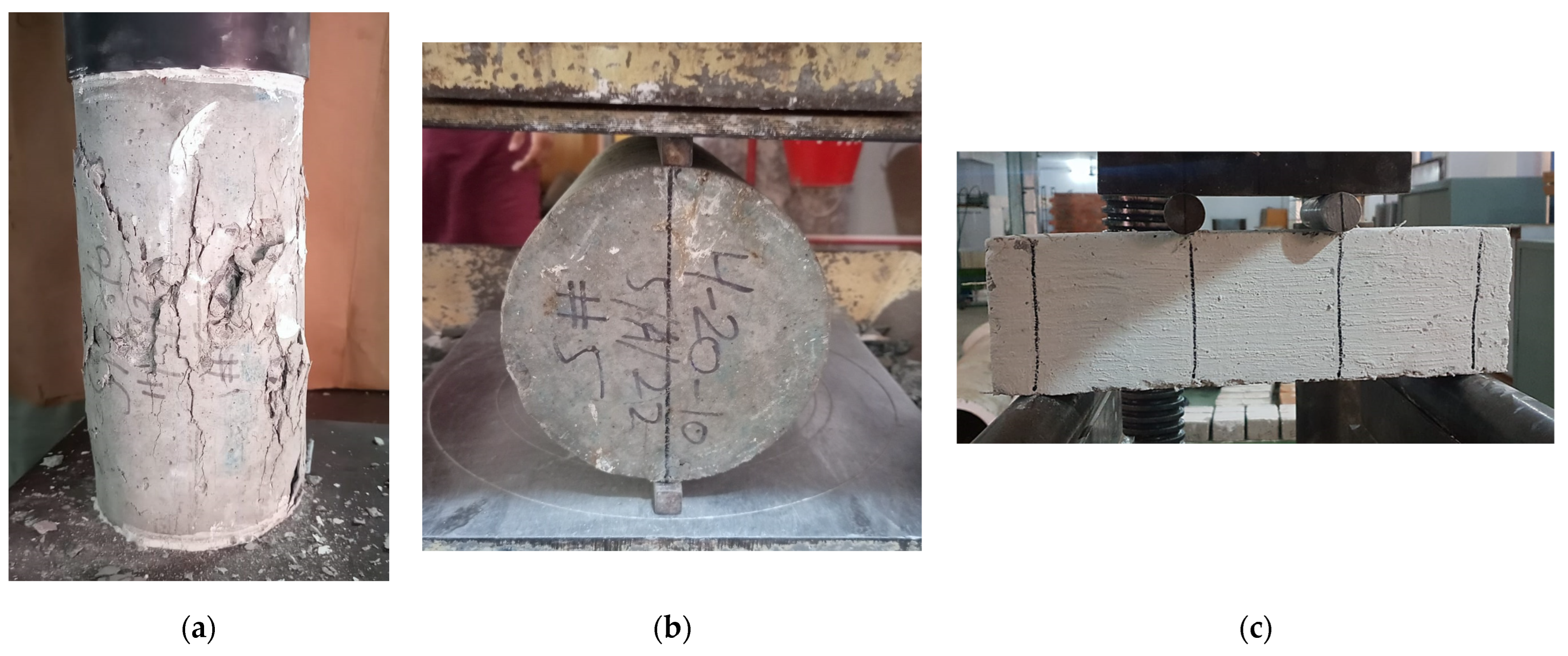
A compressive strength test on the cylinder specimens was performed in accordance with ASTM C39 [51] guidelines. The applied loading on the cylinders was 0.48 MPa/s. A splitting tensile strength test was performed as per ASTM C496 [52]. The loading rate for the splitting test was 0.95 MPa/s. A flexural test was conducted on the prism specimens as per ASTM C1609 [53]. The applied loading was displacement-controlled at 0.05 mm/min on the prism specimens. Four identical samples were cast for each test. Figure 8a–c show the experimental test setup for various tests conducted on the cylinder and prism specimens.

4.2. Crushing Strength Under External Load Using Three-Edge Bearing Test (TEBT)

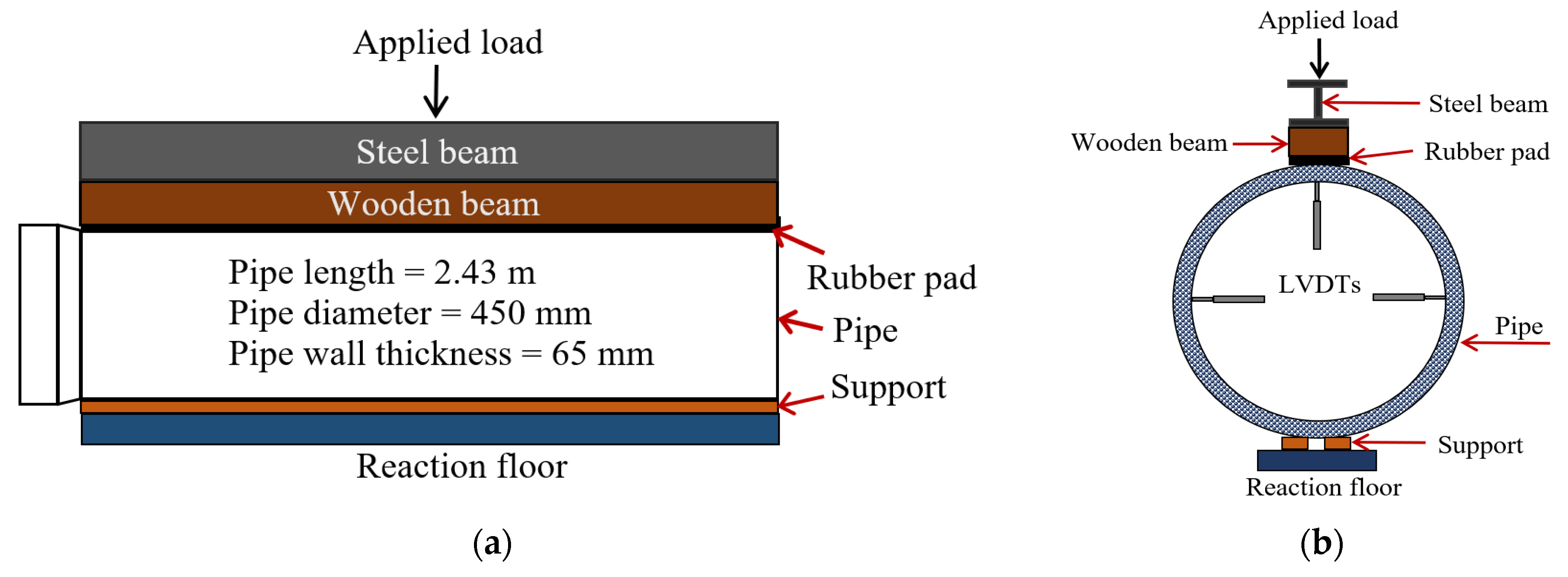
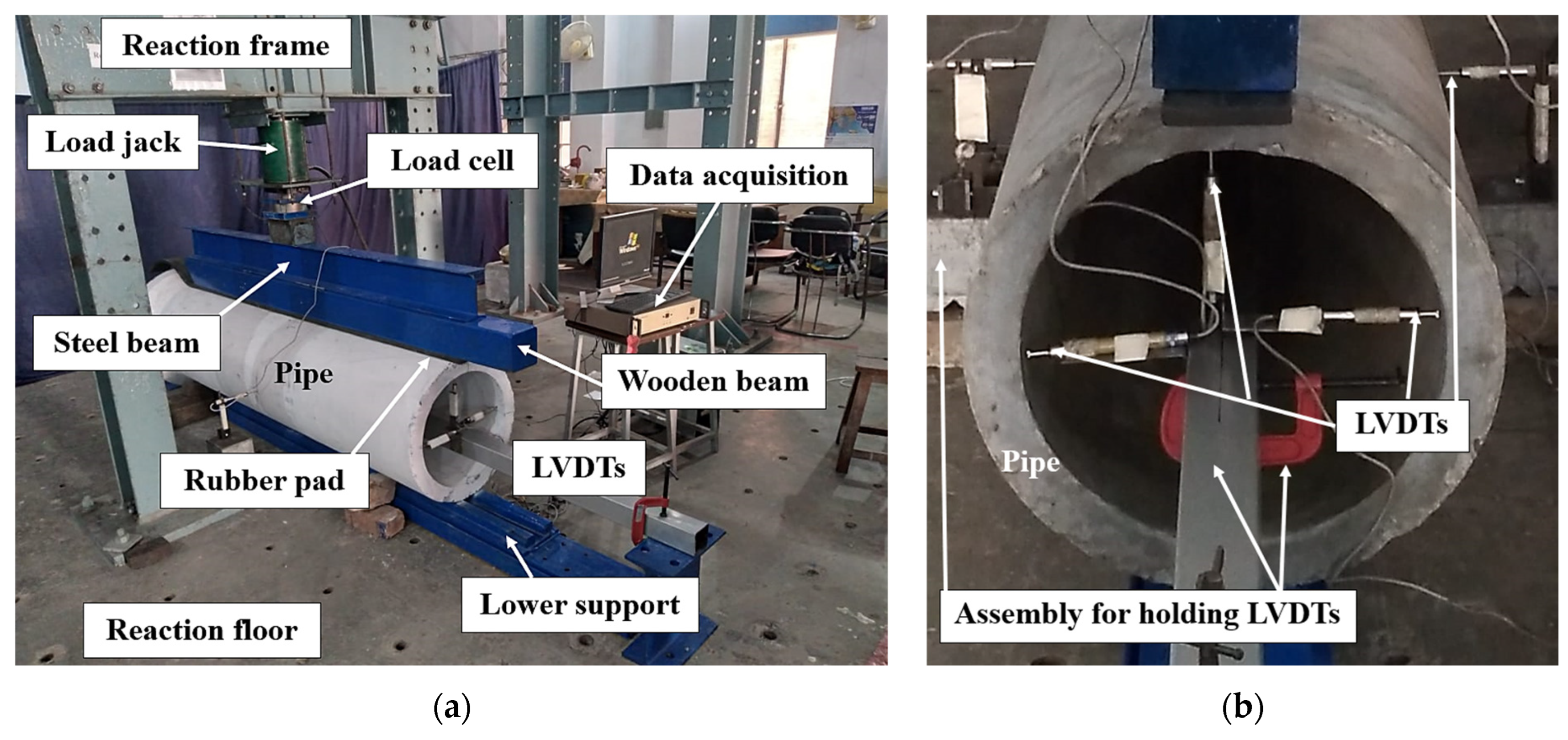
The crushing strength test was performed using the three-edge bearing test (TEBT) method as per ASTM C497 [54] on the pipes to examine their structural performance. Figure 9 and Figure 10 show the experimental and schematic setups, respectively, for the conducted test.
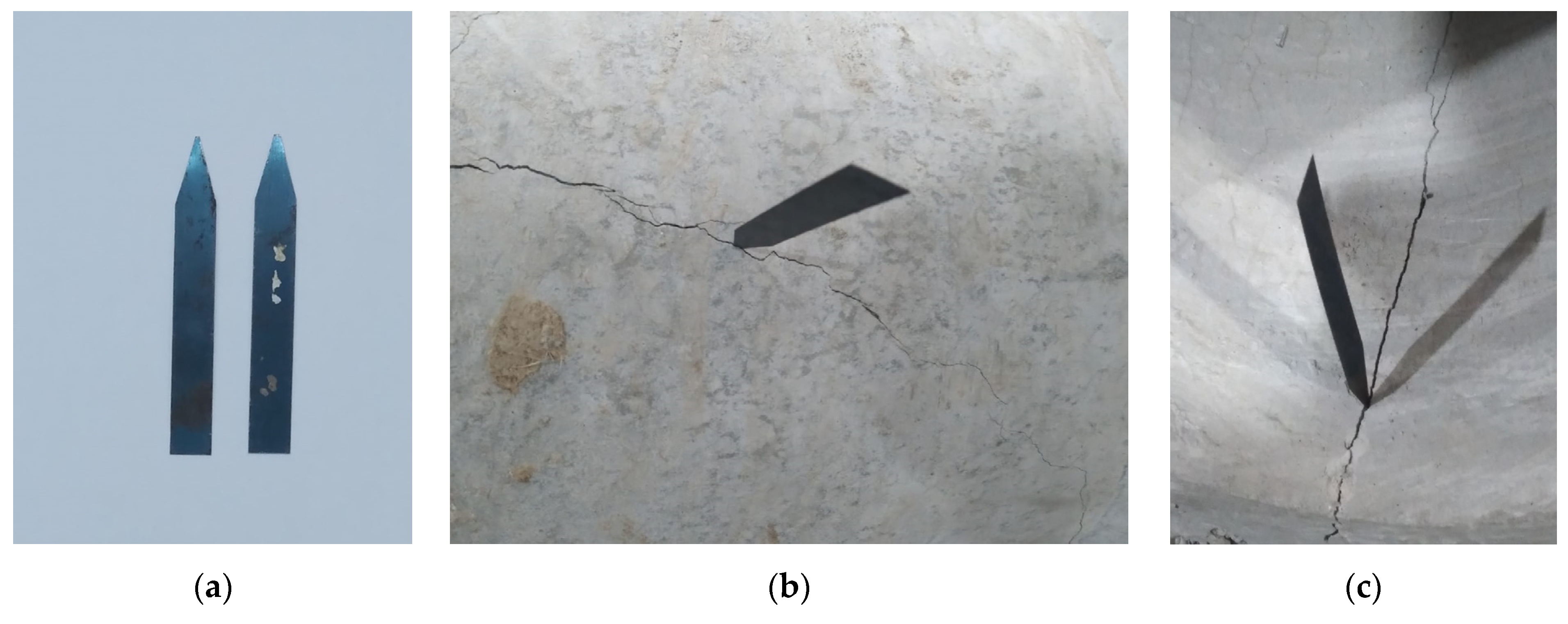
The test setup was placed on a reaction floor. The test setup consisted of two lower wooden bearings of size 55 × 30 mm, connected with the steel base. The distance between these two bearings was 55 mm. Pipe specimens were placed on these two bearings using an overhead crane system. The pipe specimens were painted white to clearly capture the crack patterns. The upper bearing consisted of a square cross-sectional wooden beam of size 125 × 125 mm. A 20 mm-thick rubber pad was also positioned in between the wooden beam and the pipe specimen to facilitate the uniform application of load over the entire pipe’s length. The rubber strip is part of the standardized setup to promote uniform line loading. ASTM C497 specifies a durometer hardness range (45 to 60) for hard rubber bearing strips. The rubber strips in this research comply with this requirement. Because capacity is based on applied load/crack width and deformation was measured independently, a separate “energy absorption correction” for the rubber pad was not applied. A steel I-section beam was also rested at the top of the wooden beam for the application of line load. Load was subjected at the full length of the pipe. Load was applied using a loading jack which is connected to the reaction frame. The applied load was measured using a 200 kN load cell connected to the data logger system for continuous recording of the load response. Pipe deformations were monitored using linear variable differential transformers (LVDTs) with a maximum travel range of 50 mm. The LVDTs are high-precision magnetic-core displacement transducers that provide an output voltage proportional to the stem position, with 10 V DC input, infinite resolution, and 0.50% linearity. Three LVDTs were installed at the cross-section of the pipe to capture the vertical and horizontal displacements upon the application of load. The LVDTs were firmly fixed using a hollow steel square section that passes through the longitudinal axis of the pipe without interacting with the pipe (independent with the pipe specimen). The pipe deformation was measured using LVDTs mounted on an independent reference frame. The net vertical diameter change was computed using differential readings from the two vertical LVDTs, minimizing influence of support/jack/beam compliance. Another two LVDTs were also positioned at the mid span of the pipe at the springlines to monitor the horizontal displacements. All load cell and LVDTs were connected to a 24-channel computerized data acquisition system to enable synchronized real-time recording of data during each testing. A digital camera was also placed to record all the changes in the pipe during the loading. Crack patterns were visually monitored through four operators assigned at various locations of the pipe. Crack width was measured using leaf gauges (Figure 11a). Figure 11b,c illustrate the crack width measurements using various sizes of crack width strips. The approximate lengths of the cracks were recorded where possible. Load values at various cracks were manually noted. During testing, various pictures were taken to record the crack patterns. The loading was stopped when excessive vertical displacement took place in the tested pipe. The D-load was calculated by dividing the 0.30 mm crack width load and maximum/ultimate load by the length and diameter of the pipe (expressed in kN/m/m or N/m/mm).

5. Results and Discussion

5.1. Concrete Mixture Properties

The concrete mixture used in the casting of RC1 and GPC1 pipes exhibited a slump of 19 mm. It should also be noted that the slump range of concrete mixtures used for the manufacturing of precast concrete pipes can be as low as zero. It was observed that the specimens including fibers demonstrated a decreased slump compared to that of the identical mixtures without fibers. A decrease in slump of 10 mm was observed for a tested pipe containing 40 kg/m3 of steel fibers (GPC1-SF40). Since the concrete was cast through spinning and not through conventional pouring, it was possible to cast the pipes with the developed concrete mixture. Mohamed (2015) [6] reported manufacturing fiber-reinforced full-scale concrete pipes using a zero-slump concrete mixture through a vibro-compression method of casting pipes. Moreover, other researchers [55,56,57,58] also reported casting concrete pipes using zero-slump concrete. Table 6 shows the strength results of cast concrete mixtures along with their standard deviation and coefficient of variation (COV). GPC specimens incorporating fibers showed improved mechanical properties compared to identical specimens without fibers (Table 6).

5.2. Cracking Patterns of Tested Pipes

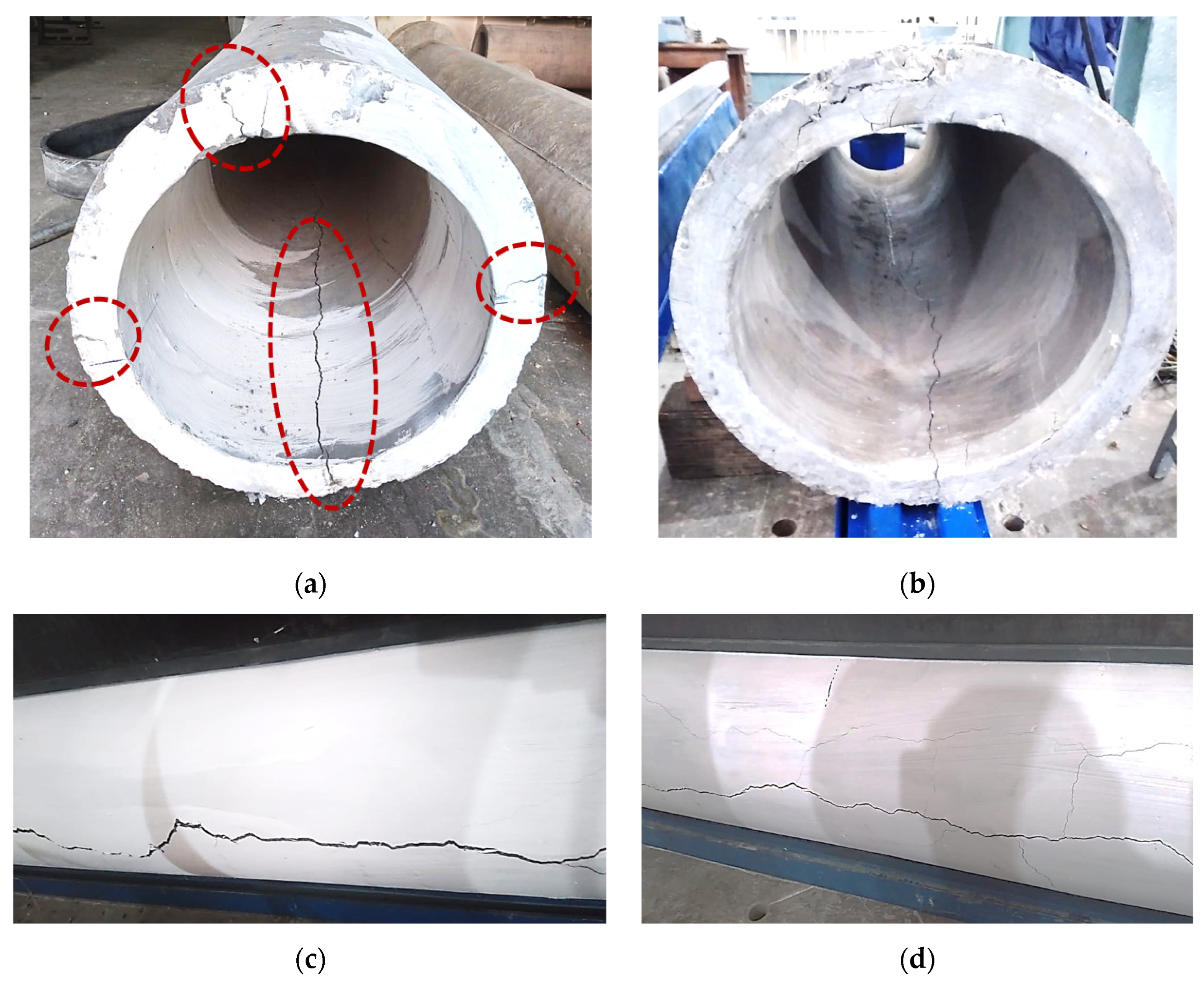
Figure 12 illustrates the cracking patterns in the tested RC1 pipes. The initial hairline cracks were noted at the crown and invert regions of the RC1 pipe at approximately 27% of the ultimate load. The hairline cracks widened up, reaching the threshold of 0.3 mm crack width. The cracks at the springlines appeared before the crack widths at the invert and crown locations reached 0.3 mm. The cracking was predominantly flexure in nature, with primary cracks running along the pipe’s length. Few discontinuous secondary cracks at the invert were also observed parallel to the initially developed cracks. Moreover, at other locations of the pipes (the crown and springlines), secondary cracks also appeared at approximately 90% of the ultimate load. These cracks were around 55 to 95 mm apart from each other, and their length ranged from 250 to 500 mm, which further spread along the pipe’s length. Due to the development of cracks, the moment of inertia of the pipe’s wall decreased, leading to increased vertical deflection. Near to ultimate load, radial cracks in the diagonal direction were also detected. The final crack patterns in the tested RC1 pipe were governed by the combined action of flexure and radial tension. Similar cracking patterns in reinforced cement concrete pipes were also reported elsewhere [3].
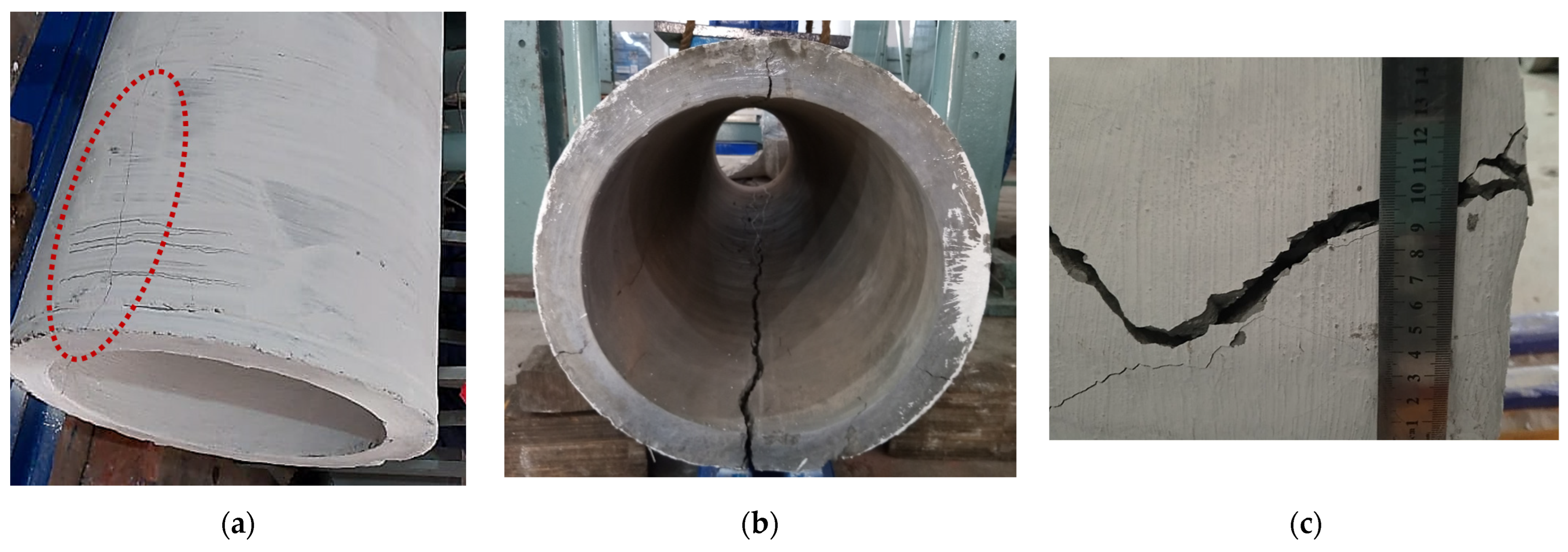
Similar crack patterns were observed in the GPC1 pipe. Hairline cracks in the GPC1 pipe were observed at slightly lower load level than the tested RC1 pipe (Figure 13a). The first visible crack through which no available crack gage could be inserted was declared as the hairline crack in this research. The distinction between the crack widths of the hairline cracks has not been recorded in this research due to the limitation of the crack gages used to monitor the crack widths. The authors agree with the subjective nature of the crack gaging adopted in the ASTM C497 standard. More details can be found in Younis et al. (2020) [12]. As the load progressed, cracks appeared at various invert and crown locations of GPC1 at around 28% of the ultimate load of the GPC1 pipe. The 0.30 mm crack width at invert was measured at approximately 69% of the ultimate load. At that load level, more cracks were also noticed at other critical locations (springlines) of the GPC1 pipe. These discontinuous cracks propagated longitudinally and ranged from 200 to 600 mm in length in various locations of the GPC pipes. At approximately 90% of the ultimate load, the previously developed discontinuous cracks coalesced to form a single continuous crack along the longitudinal axis of the GPC1 pipe at the critical location (springlines, invert and crown). Moreover, a few discontinuous secondary cracks parallel to the development of the main continuous cracks were noted near the pipe failure. The final failure in the tested GPC1 pipe was mainly governed by the flexural action (Figure 13b). Figure 13c shows the crack width observed for the tested GPC pipe at the springlines near the failure point.
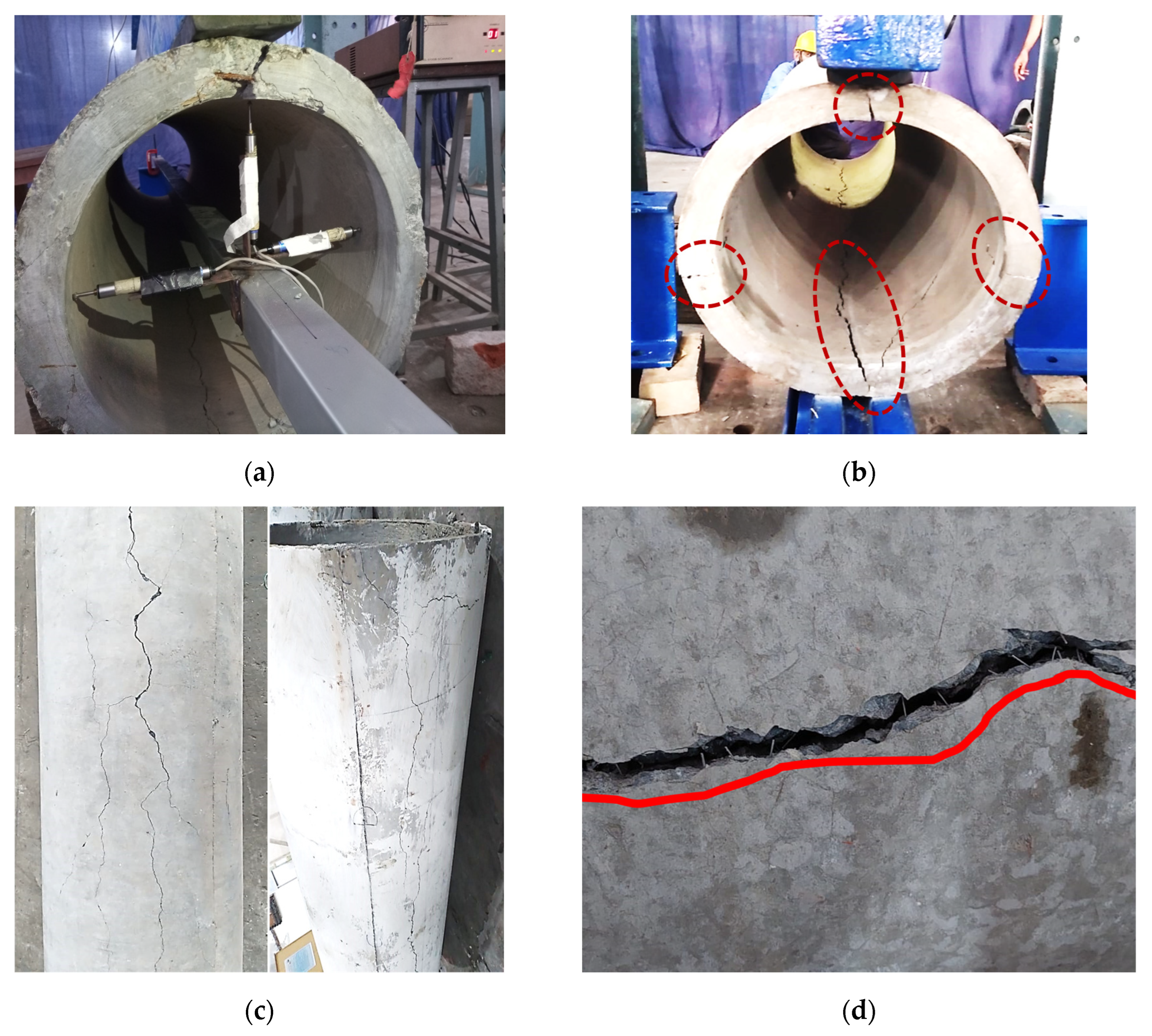
The tested GPC pipes with 20 kg/m3 of bundled steel fibers (GPC1-SF20) exhibited initially similar cracking behavior to the tested RC1 and GPC1 pipes without fibers (Figure 14a,b). Initially, hairline cracks were around 153 mm long and developed at the invert location at around 32% of the ultimate/maximum load. As the load proceeded, further cracks were developed at the crown, but their crack width was limited. Due to further progression in load, discontinuous cracks were continuously developed at different locations over the length of the GPC1-SF20 pipe. At around 73% of the maximum load, multiple cracking developed parallel to the previously developed cracks. These multiple cracks ranged from 30 to 100 mm apart from each other at various locations. Cracks also developed at springline locations at around 77% of the maximum load.
It was also observed that fibers played their role in bridging the cracks and restricting the crack propagation at various locations. Near to the failure point, it was observed that the previously developed discontinuous cracks were merged with each other along the length of the pipe at various locations. The final failure of the tested GPC1-SF20 pipe exhibited multiple cracking at critical locations of the pipe, demonstrating the flexure failure.
The tested GPC1-SF40 pipe closely resembled the GPC1-SF20 pipe in terms of cracking pattern and failure mode. Like the GPC1-SF20 pipe, the GPC1-SF40 pipe exhibited widening of the hairline crack formed at the invert and crown of the pipe. The crack reached 0.30 mm crack width when the load was 2.72 times the load, at which the first hairline crack initiated. When the crack widths at the invert and crown were 0.40 mm and 0.70 mm, respectively, the cracks at the springlines also developed. This delayed occurrence of springline cracks could be due to the potentially higher concentration of the bundled steel fibers near the springlines. With further loading, multiple cracking at various locations occurred parallel to the already developed cracks. These secondary cracks were discontinuous along the length and within 100 mm distance apart from each other. The final failure of the GPC1-SF40 pipe took place when all the cracks developed at critical locations became continuous along the pipe length (Figure 14c) and a substantial widening of the crack was observed. The 0.30 mm crack is a standardized test threshold for three-edge bearing classification and is not intended to indicate overstress/failure in service. No radial crack was observed in the tested GPC1-SF40 pipe. Moreover, fiber bridging was also evident at various locations of the pipe, demonstrating the role of fibers in dispensing the developed stresses (Figure 14d). Similar cracking behavior in GPC pipes containing fibers has also been reported in earlier studies [45,59].
In the tested pipes, steel fibers played a significant role in influencing crack initiation, propagation, the number of cracks, and the post-peak branch of the load–deformation response. The fibers acted as crack-bridging members within the GPC matrix. When the tensile stresses in the surrounding concrete exceeded its tensile capacity, the stresses were effectively transferred to the fibers, which helped restrain crack opening and delayed further crack propagation. Consequently, the pipes incorporating fibers exhibited a greater number of distributed cracks with relatively smaller crack widths compared to the pipes without fibers. Furthermore, the use of fibers enhanced the energy absorption capacity and improved the ductility of the GPC pipes. The geopolymer matrix, characterized by its dense aluminosilicate gel structure, also contributes to improved bonding among the fibers and the surrounding matrix. This enhanced fiber-matrix interaction facilitates efficient stress transfer and helps to control the failure mechanism of the fiber-reinforced GPC pipes. As a result, multiple cracks developed at different locations, leading to a more gradual and ductile failure pattern rather than an abrupt brittle failure.

5.3. Load-Deflection Behavior

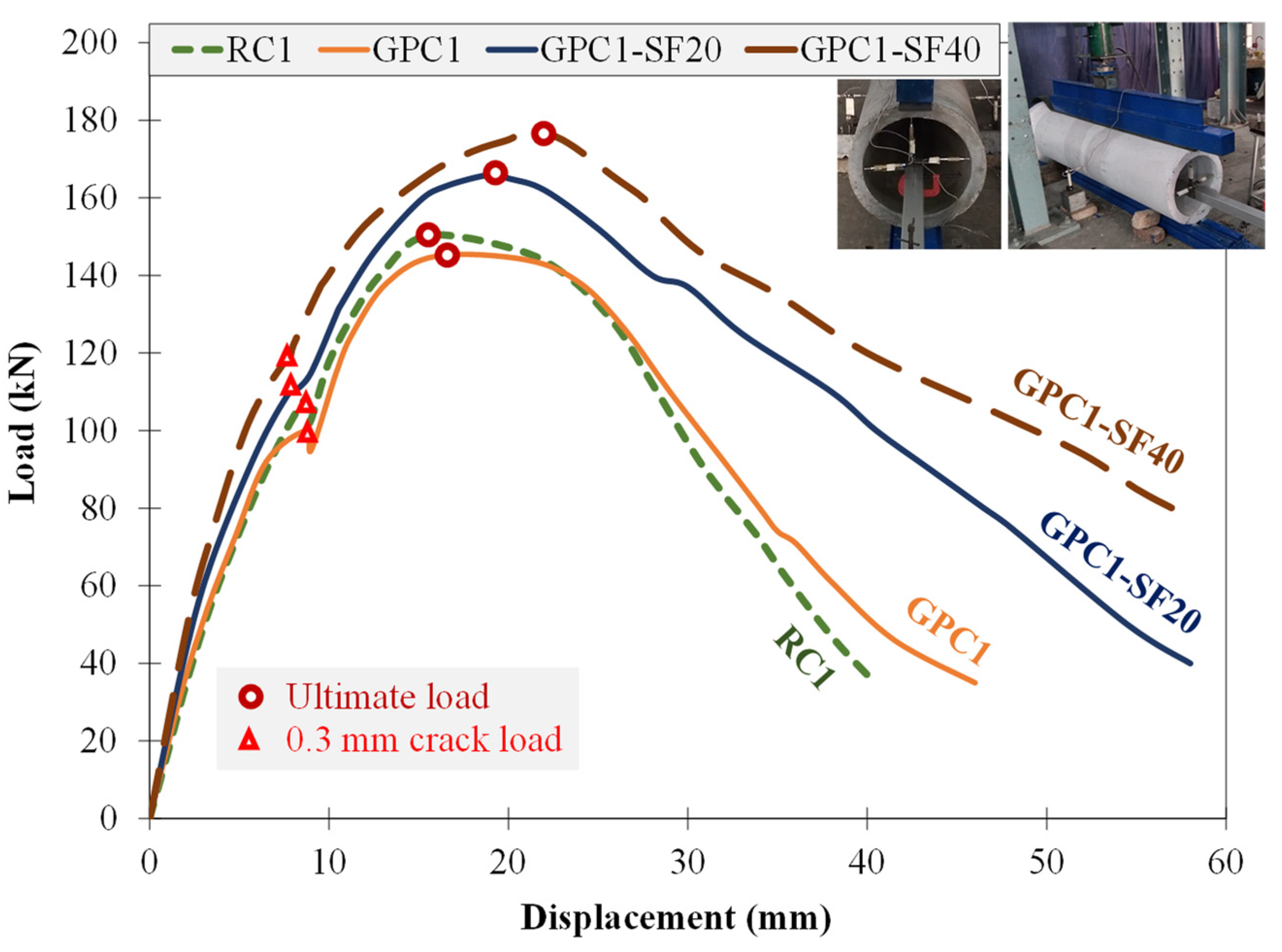
Figure 15 shows the load versus displacement response of the tested concrete pipes. Two samples of each category of pipe were casted and subjected to TEBT. The load-deflection plots shown in Figure 16 represent the average of two tested samples for each type of pipe. The load–displacement curve can be categorized into ascending and descending regions. It was found that the preliminary grades of the curves for the RC1 and GPC1 pipes were almost similar up to the initial hairline cracks, representing an identical initial stiffness. Similarly, the tested pipes GPC1-SF20 and GPC1-SF40 have a comparable initial plot slope up to the development of hairline cracks and exhibited relatively higher slope compared to that of GPC1 and RC1 pipes. After the growth of hairline cracks, the grade/slope of the plot changed and reached the 0.3 mm crack load.
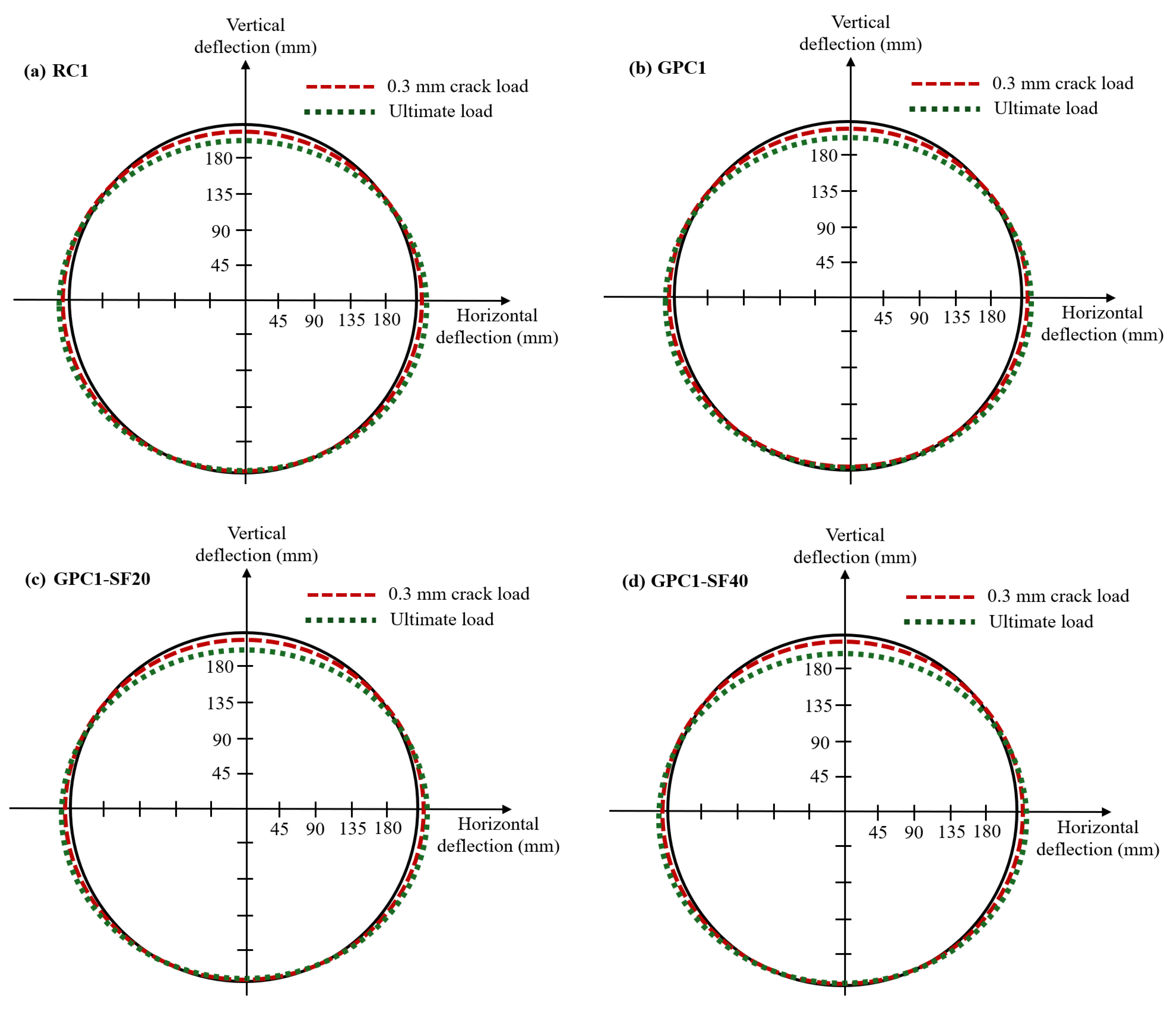
The vertical displacement at the 0.3 mm crack width load was 8.65, 8.70, 8.30 and 7.80 mm for the tested RC1, GPC1, GPC1-SF20 and GPC1-SF40, respectively. The slope of the plot continuously changed/decreased after 0.3 mm crack load and became flat at the ultimate capacity for all the pipes. The vertical displacement at the ultimate load was 15.50, 16.10, 19.40 and 21.20 mm for the tested RC1, GPC1, GPC1-SF20 and GPC1-SF40, respectively (Figure 16). It can be argued that the pipes with steel fibers exhibited relatively higher vertical displacement at ultimate load in comparison to the tested pipes without fibers.
After achieving the maximum load, the descending region of the load–displacement curve began. In the descending region of the load–displacement plot, the tested RC1 and GPC1 pipes without fibers showed a steeper continuous drop in load with an almost identical slope as in the ascending region of the plot. However, the GPC1-SF20 and GPC1-SF40 pipes showed a relatively less steep slope due to the role of the fibers. All the pipes exhibited adequate load carrying capacity after reaching 0.3 mm crack width load. This is also evident from their ratios of ultimate load to the 0.3 mm crack width load, which varied between 1.39 and 1.49 for all the tested pipes. This represented a sufficient margin of safety for all the pipes. A comparison of the load–deflection curves for the tested pipes showed that the steel reinforcement prescribed in the ASTM C76 for concrete pipes fabricated with OPC is also adequate for the concrete pipes manufactured using GPC. The recording of the load–displacement curve was stopped when excessive vertical displacement took place, in order to take care of the safety of the attached LVDTs and associated cables.
Table 7 presents the results of TEBT conducted on the pipes. It was observed that the RC1 pipe exhibited 0.3 mm crack and ultimate loads of 108 and 150 kN, respectively. The standard deviation in the crack and ultimate loads range from 2 kN to 5 kN. Mohamed (2015) [6] tested 450 mm inside-diameter concrete pipes manufactured using cement concrete incorporating steel fibers, and reported a standard deviation ranging from 3 kN to 16 kN. The tested pipe GPC1 had comparable 0.3 mm crack and ultimate loads compared with the tested pipe RC1. An increase in crack and ultimate load was observed for the GPC pipe incorporating bundled steel fibers. For instance, 11% and 15% increases in the 0.3 mm crack load and ultimate/maximum load were observed, respectively, for a GPC pipe incorporating 20 kg/m3 of steel fibers (GPC1-SF20) compared to an identical GPC pipe without steel fibers (GPC1). Similarly, the tested pipe GPC1-SF40 showed 18% and 23% higher 0.3 mm crack load and maximum load, respectively, compared to the GPC1 pipe. This increase in the crack and maximum loads in the GPC1-SF20 and GPC1-SF40 pipes was mainly due to the role of bundled steel fibers, which limit the crack propagation due to their bridging and crack arrestment properties, leading to them restricting the stress accumulation and achieving higher loads.
ASTM C76/C76M defines D-load as the test load described in N per meter length per millimeter of diameter (N/m/mm), which is the conventional unit for concrete pipe classification under the three-edge bearing test technique. Equivalently, the units can be kN/m/m. The test results in this research were reported to comply with the ASTM C76 units for reporting the test results. According to ASTM C76 [7], if the pipe showed D0.3 and Dult load greater than 65 and 100 kN/m/m, respectively, it represents class III. Likewise, for a pipe satisfying the requirement of class IV, it should have D0.3 mm and Dult greater than 100 and 150 kN/m/m, respectively. Therefore, the tested GPC1 and RC1 pipes represented class III of ASTM C76 (Table 8). The inclusion of steel fibers in GPC pipes had a positive effect and changed the class type. For example, GPC1-SF20 and GPC1-SF40 pipes showed D0.3 and Dult greater than 100 and 150 kN/m/m, respectively, demonstrating class IV for ASTM C76 (Table 8).
TEBT on OPC pipes of 450 mm diameter reported elsewhere [40] showed that OPC pipes without a steel cage required approximately 40 kg/m3 of hook-ended steel fibers to achieve structural performance comparable to traditional OPC pipes reinforced with a steel cage only. The TEBT conducted in this study revealed that the GPC pipes of 450 mm diameter can be manufactured using a conventional steel cage if the target strength is ASTM C76 class III. A higher strength class (class IV) could be achieved by introducing hybrid reinforcement of a steel cage and bundled steel fibers.
Table 9 presents a comparison between the experimentally obtained and theoretically predicted D-load values. The theoretical predictions for the tested pipes were calculated using Heger’s equations [60]. A complete set of equations, along with detailed calculations of the theoretical capacities of cement concrete pipes, was also presented in a previous study [3]. The results indicate that the experimentally measured pipe capacities were in good agreement with the theoretically predicted values.
In the present study, the manufacturing procedure for full-scale geopolymer concrete pipes followed a process similar to the local industrial practice used for producing reinforced cement concrete pipes through the spun-cast centrifugal technique. Therefore, it can be argued that the fabrication process of fiber-reinforced GPC pipes is practically feasible using existing pipe manufacturing setups available in the local industry. A detailed study on other casting methods of precast pipes has been reported elsewhere [61]. The ability to manufacture these pipes using conventional precast pipe manufacturing infrastructure supports their potential for economical, environmentally friendly, and resilient infrastructure development, highlighting their practical applicability for real-world engineering systems.

5.4. Economic Analysis

The economic analysis was conducted by comparing the cost of reinforced cement concrete pipes (RC1) with geopolymer concrete pipes with an internal diameter of 450 mm. Material and manufacturing costs were evaluated for the RC1, GPC1, GPC1-SF20, and GPC1-SF40 pipes based on prevailing local market rates. The detailed cost analysis results (economic analysis) of the tested pipes are shown in Table 10.
The findings indicate that the GPC1 pipe without fibers exhibited a relatively lower cost compared to the cement concrete pipe (RC1). In the GPC1 pipe, the cost associated with cement was eliminated due to the use of fly ash, which was freely available from the deposition site of a coal-fired power plant. In contrast, the GPC1-SF20 and GPC1-SF40 pipes demonstrated relatively higher costs than both GPC1 and RC1 due to the inclusion of steel fibers. These steel bundled fibers were locally fabricated by segmenting long wires, as proprietary steel fibers were not locally available in the market. The availability and local manufacturing of steel fibers in accordance with international specifications may reduce the total cost of GPC pipes incorporating fibers. A similarly higher cost for geopolymer concrete pipes containing steel fibers has also been reported in an earlier study by Amin et al. (2025) [45].

6. Summary and Conclusions

This study was conducted on evaluating cementless concrete (geopolymer concrete) for its efficient use in full-scale precast pipes. The manufacturing procedure for full-scale geopolymer concrete pipes followed a process similar to the local industrial practice used for producing reinforced cement concrete pipes through the spun-cast centrifugal technique. Due to the induced centrifugal force, the concrete mixture was pushed outward against the mold surface, forming the required pipe wall thickness. The casting process on the spun-cast assembly required approximately 14 to 18 min to complete. It was noted that the addition of steel fibers at dosages of 20 kg/m3 and 40 kg/m3 did not create any significant difficulties during mixing or placement of the GPC mixture into the pipe mold. This observation suggests that existing precast pipe manufacturing facilities could potentially be used for producing fiber-reinforced GPC pipes without major modifications. After one day of casting, the cast pipes were detached from the molds, and minor cosmetic repairs were carried out when necessary. The curing procedure adopted in this study was also consistent with the practices commonly used by the local pipe manufacturing industry for conventional reinforced concrete pipes. The cast GPC pipes were initially cured by placing them in a water pond for 21 days. Subsequently, they were transferred to a storage yard where curing was continued using water sprinklers until the pipes were transported for testing. During pipe manufacturing, cylindrical and prismatic samples were also casted to examine the compressive and flexural strengths of the cast concrete.
It was noted that the slump of the RC1 and GPC1 mixtures was similar (19 mm); however, a decrease in slump was evident for the GPC mixture incorporating bundled steel fibers, due to the fibers restricting mixture flow (barrier/interlocking effect). The mean compressive strengths of RC1, GPC1, GPC1-SF20, and GPC1-SF40 were 30.5, 28.7, 32.6, and 35.8 MPa, respectively. The corresponding splitting tensile strengths were 3.1, 2.9, 3.5, and 3.9 MPa, while the flexural strengths were 4.7, 4.4, 5.2, and 6.1 MPa, respectively, showing a clear enhancement in mechanical performance with the addition of bundled steel fibers, especially at 40 kg/m3 dosage.
The developed pipes were evaluated under three-edge loading. The 0.3 mm crack load and maximum/ultimate load of the tested RC1 and GPC1 pipes were comparable. GPC pipe specimens incorporating fibers showed higher crack and maximum loads. For instance, 18% and 23% higher 0.30 mm crack load and ultimate load, respectively, were observed for the GPC1-SF40 pipe compared to those of the GPC1 pipe. This study concluded a comparable performance of GPC pipe (GPC1) with conventional cement concrete pipe (RC1). Moreover, the utilization of bundled steel fibers in GPC pipe exhibited enhanced mechanical performance, owing to the contribution of the fibers. The experimentally obtained D-load values were in good agreement with the theoretically predicted values for the tested pipes.
A comparable structural performance was observed for both the GPC1 and RC1 test pipes, indicating the promising potential of geopolymer concrete for pipe manufacturing. The GPC pipes of 450 mm diameter with a traditional steel rebar cage could satisfy the class III strength requirement of ASTM C76. A higher strength class (class IV) could be achieved by using additional reinforcement in the form of steel bundled fibers at a dosage of 40 kg/m3. The replacement of OPC with GPC in the precast concrete pipes did not alter the cracking behavior typically observed in the concrete pipes. That is, the typically observed flexural cracks are dominant modes of cracking in both types of pipes.
The cost comparison between traditional pipes made with cement concrete and pipes made with geopolymer concrete was found to be comparable. However, GPC pipes with steel bundled fibers exhibited higher costs than both GPC1 and RC1 pipes due to the addition of steel fibers. The experimental findings indicate that fiber-reinforced GPC pipes can be successfully produced using existing pipe manufacturing facilities available in the local industry without compromising the structural performance of the pipe infrastructure. A detailed life-cycle assessment, along with an evaluation of the long-term performance of full-scale GPC pipes under extreme exposure conditions, is essential and represents a promising future direction. Such studies would provide practitioners with the confidence needed for wider-scale GPC pipe infrastructure implementation.

Author Contributions

Concept and initial idea, S.A. and R.H.; experimental methodology, F.A., A.F., M.H.A. and R.H.; analysis of data, F.A., S.A., A.F. and M.H.A.; initial writing, F.A., S.A. and M.H.A.; review of manuscript, A.F., R.H., S.A. and M.H.A.; project supervision and administration, S.A., A.F. and R.H.; and funding acquisition, S.A., R.H. and A.F. All authors have read and agreed to the published version of the manuscript.

Funding

This research was funded by Higher Education Commission Pakistan (HEC-NRPU 87985).

Institutional Review Board Statement

Not applicable.

Informed Consent Statement

Not applicable.

Data Availability Statement

The original contributions presented in this study are included in the article. Further inquiries can be directed to the corresponding author.

Acknowledgments

The authors are thankful to the laboratory staff of the Civil Engineering Department, UET Lahore, Pakistan, for their assistance during the experimental work. The authors also acknowledge the financial assistance of the Higher Education Commission, Pakistan through the ongoing HEC-NRPU 87985 research project.

Conflicts of Interest

The authors declare no conflicts of interest.

References

  1. Wong, L.S.; Nehdi, M.L. Critical analysis of international precast concrete pipe standards. Infrastructures 2018, 3, 18. [Google Scholar] [CrossRef]
  2. ACPA. Concrete Pipe Handbook; American Concrete Pipe Association: Vienna, VA, USA, 1981. [Google Scholar]
  3. Najimi, M.; Sobhani, J.; Pourkhorshidi, A.R. A Comprehensive Study on No-Slump Concrete: From Laboratory towards Manufactory. Constr. Build. Mater. 2012, 30, 529–536. [Google Scholar] [CrossRef]
  4. Faisal, A.; Abbas, S.; Khan, A.H.; Ahmed, I.; Shaukat, S. Field buried and laboratory investigation of Full-Scale eco-friendly Spun-Cast concrete pipes under various construction loading regimes. Tunn. Undergr. Space Technol. 2024, 149, 105813. [Google Scholar] [CrossRef]
  5. ACI211.3R-02 2009; Guide for Selecting Proportions for No-Slump Concrete. American Concrete Institute (ACI) Committee 211: Indianapolis, IN, USA, 2009.
  6. Mohamed, N. Experimental and Numerical Study on Full-Scale Precast Steel Fibre-Reinforced Concrete Pipes. Ph.D. Thesis, Western University, London, ON, Canada, 2015; p. 184. [Google Scholar]
  7. ASTMC76; Standard Specification for Reinforced Concrete Culvert, Storm Drain, and Sewer Pipe. American Society for Testing and Materials: West Conshohocken, PA, USA, 2022.
  8. Wen, Q.-J.; Jing, H.-W.; Sanda, S.; Zhuang, S.-S. Experimental investigation of mechanical properties of centrifugal concrete in circular pipes. J. Mater. Civ. Eng. 2018, 29, 1–9. [Google Scholar]
  9. Erdogmus, E.; Skourup, B.N.; Tadros, M. Recommendations for design of reinforced concrete pipe. J. Pipeline Syst. Eng. Pract. 2010, 1, 25–32. [Google Scholar]
  10. Xian, X.; Mahoutian, M.; Shao, Y. Production of concrete pipes by carbonation curing in an inflatable enclosure. Constr. Build. Mater. 2023, 363, 129861. [Google Scholar] [CrossRef]
  11. Wang, Y.; Li, P.; Liu, H.; Wang, W.; Liu, Y.; Wang, L. Multiple laboratory characterization methods to identify the D-Load of reinforced concrete pipes based on three edge bearing tests. Constr. Build. Mater. 2023, 366, 130156. [Google Scholar] [CrossRef]
  12. Younis, A.A.; Ramadan, A.S.; Wong, L.S.; Nehdi, M.L. New rational test for reinforced-concrete pipe eliminating subjective crack-width criteria. Structures 2020, 28, 2507–2522. [Google Scholar] [CrossRef]
  13. Chao, L.C.; Kuo, C.P. Optimizing the ultimate strength of precast reinforced concrete pipes in three-edge bearing tests. Structural Concrete 2018, 19, 1174–1184. [Google Scholar] [CrossRef]
  14. Al Rikabi, F.; Sargand, S.M.; Kurdziel, J.; Hussein, H.H. Thin-walled steel fiber reinforced concrete pipes performance under three-edge bearing load. In Pipelines 2018: Planning and Design; American Society of Civil Engineers: Reston, VA, USA, 2018. [Google Scholar]
  15. Faisal, A.; Abbas, S.; Kazmi, S.M.S.; Munir, M.J. Development of concrete mixture for spun-cast full-scale precast concrete pipes incorporating bundled steel and polypropylene fibers. Materials 2023, 16, 512. [Google Scholar] [CrossRef]
  16. Faisal, A.; Abbas, S.; Ahmed, A. Mechanical performance of spun-cast full-scale precast pipes incorporating hybrid conventional rebar cage and steel fibers. Structures 2023, 52, 104–116. [Google Scholar] [CrossRef]
  17. Travers, F.A. Acoustic monitoring of prestressed concrete pipe. Constr. Build. Mater. 1997, 11, 175–187. [Google Scholar] [CrossRef]
  18. Goldaran, R.; Turer, A.; Kouhdaragh, M.; Ozlutas, K. Identification of corrosion in a prestressed concrete pipe utilizing acoustic emission technique. Constr. Build. Mater. 2020, 242, 118053. [Google Scholar] [CrossRef]
  19. Wang, Y.; Su, Y.; Li, P.; Wang, W.; Yang, H.; Wang, L. Microbiologically induced concrete corrosion in the cracked sewer pipe under sustained load. Constr. Build. Mater. 2023, 369, 130521. [Google Scholar] [CrossRef]
  20. Kong, L.; Lu, H.; Fu, S.; Zhang, G. Effect of corrosion layer on the deterioration of concrete in gravity sewers. Constr. Build. Mater. 2021, 272, 121663. [Google Scholar] [CrossRef]
  21. Ramadan, A.; Younis, A.; Wong, L.S.; Nehdi, M.L. Investigation of structural behavior of precast concrete pipe with single elliptical steel cage reinforcement. Eng. Struct. 2020, 219, 110881. [Google Scholar] [CrossRef]
  22. Younis, A.A.; Shehata, A.; Ramadan, A.; Wong, L.S.; Nehdi, M.L. Modeling structural behavior of reinforced-concrete pipe with single, double and triple cage reinforcement. Eng. Struct. 2021, 240, 112374. [Google Scholar] [CrossRef]
  23. Mercuri, M.; Vailati, M.; Gregori, A. Lime-based mortar reinforced with randomly oriented polyvinyl-alcohol (PVA) fibers for strengthening historical masonry structures. Dev. Built Environ. 2023, 14, 100152. [Google Scholar] [CrossRef]
  24. Rezakhani, R.; Scott, D.A.; Bousikhane, F.; Pathirage, M.; Moser, R.D.; Green, B.H.; Cusatis, G. Influence of steel fiber size, shape, and strength on the quasi-static properties of ultra-high performance concrete: Experimental investigation and numerical modeling. Constr. Build. Mater. 2021, 296, 123532. [Google Scholar] [CrossRef]
  25. Provis, J.L.; Deventer, J.S. Alkali Activated Materials, State-of-the-Art Report; RILEM TC 224-AAM; Springer: Dordrecht, The Netherlands, 2014; Volume 13, p. 388. [Google Scholar] [CrossRef]
  26. Duxson, P.; Provis, J.L.; Lukey, G.C.; Mallicoat, S.W.; Kriven, W.M.; Van Deventer, J.S. Understanding the relationship between geopolymer composition, microstructure and mechanical properties. Colloids Surf. A Physicochem. Eng. Asp. 2005, 269, 47–58. [Google Scholar] [CrossRef]
  27. Khan, I.; Xu, T.; Castel, A.; Gilbert, R.I.; Babaee, M. Risk of early age cracking in geopolymer concrete due to restrained shrinkage. Constr. Build. Mater. 2019, 229, 116840. [Google Scholar] [CrossRef]
  28. Nath, P.; Sarker, P.K. Effect of GGBFS on setting, workability and early strength properties of fly ash geopolymer concrete cured in ambient condition. Constr. Build. Mater. 2014, 66, 163–171. [Google Scholar] [CrossRef]
  29. Jena, S.; Panigrahi, R. Performance assessment of geopolymer concrete with partial replacement of ferrochrome slag as coarse aggregate. Constr. Build. Mater. 2019, 220, 525–537. [Google Scholar] [CrossRef]
  30. Huang, W.; Wang, H. Optimization of geopolymer pervious concrete design using multi-phase discrete element modeling. Constr. Build. Mater. 2024, 438, 137034. [Google Scholar] [CrossRef]
  31. Kantarcı, F.; Turkmen, I.; Ekinci, E. Optimization of production parameters of geopolymer mortar and concrete: A comprehensive experimental study. Constr. Build. Mater. 2019, 228, 116770. [Google Scholar] [CrossRef]
  32. Ghafoor, M.T.; Khan, Q.S.; Qazi, A.U.; Sheikh, M.N.; Hadi, M. Influence of alkaline activators on the mechanical properties of fly ash based geopolymer concrete cured at ambient temperature. Constr. Build. Mater. 2021, 273, 121752. [Google Scholar] [CrossRef]
  33. Hu, F.; Xin, X.; Guo, A.; Yu, Z.; Shao, Q.; Sheikh, M.N.; Sun, Z. Effect of Mix Proportion Parameters on Chloride Erosion Resistance of Fly Ash/Slag-Based Engineered Geopolymer Composites. J. Clean. Prod. 2024, 438, 140785. [Google Scholar] [CrossRef]
  34. Tauqir, M.; Qazi, A.U.; Khan, Q.S.; Munir, M.J.; Kazmi, S.M.S. Shear behavior of geopolymer concrete slender beams. Buildings 2023, 13, 1191. [Google Scholar] [CrossRef]
  35. Kanwal, S.; Qasim, S.K.; Sheikh, M.N.; Qazi, A.U.; Hadi, M.N.S. Axial compressive behaviour of GPC filled FRP Tubes: Experimental and analytical investigations. Structures 2023, 55, 650–663. [Google Scholar] [CrossRef]
  36. Sharma, U.; Gupta, N.; Bahrami, A.; Özkılıç, Y.O.; Verma, M.; Berwal, P.; Althaqafi, E.; Khan, M.A.; Islam, S. Behavior of Fibers in Geopolymer Concrete: A Comprehensive Review. Buildings 2024, 14, 136. [Google Scholar] [CrossRef]
  37. Feng, H.; Bilal, I.; Sun, Z.; Guo, A.; Yu, Z.; Du, Y.; Su, Y.; Zheng, Y. Mechanical and Shrinkage Properties of Cellulose Nanocrystal Modified Alkali-Activated Fly Ash/Slag Pastes. Cem. Concr. Compos. 2024, 154, 105753. [Google Scholar] [CrossRef]
  38. Li, W.; Shumuye, E.D.; Shiying, T.; Wang, Z.; Zerfu, K. Eco-friendly fibre reinforced geopolymer concrete: A critical review on the microstructure and long-term durability properties. Case Stud. Constr. Mater. 2022, 16, e00894. [Google Scholar] [CrossRef]
  39. Wang, T.; Fan, X.; Gao, C.; Qu, C.; Liu, J.; Yu, G. The Influence of Fiber on the Mechanical Properties of Geopolymer Concrete: A Review. Polymers 2023, 15, 827. [Google Scholar] [CrossRef] [PubMed]
  40. Moujoud, Z.; Sair, S.; Ousaleh, H.A.; Ayouch, I.; El Bouari, A.; Tanane, O. Geopolymer composites reinforced with natural Fibers: A review of recent advances in processing and properties. Constr. Build. Mater. 2023, 388, 131666. [Google Scholar] [CrossRef]
  41. Qin, L.; Yan, J.; Zhou, M.; Liu, H.; Wang, A.; Zhang, W.; Duan, P.; Zhang, Z. Mechanical properties and durability of fiber reinforced geopolymer composites: A review on recent progress. Eng. Rep. 2023, 5, e12708. [Google Scholar] [CrossRef]
  42. Glasby, T.; Day, J.; Genrich, R.; Kemp, M. The Use of a proprietary geopolymer concrete in sewer infrastructure applications. In Proceedings of the Concrete 2019 Conference, Sydney, Australia, 8–11 September 2019; Available online: https://www.wagner.com.au/media/9111/full-paper_cia-2019.pdf (accessed on 9 November 2024).
  43. Gourley, T.; Johnson, G. The corrosion resistance of geopolymer concrete sewer pipe. Concr. Aust. 2019, 43, 39–44. [Google Scholar]
  44. Dangol, S. Development of Geopolymer Concrete for Precast Pipe Application. Ph D. Dissertation, Faculty of Engineering and Information Technology, University of Technology Sydney, Sydney, Australia, 2023; p. 288. [Google Scholar]
  45. Amin, F.; Abbas, S.; Nehdi, M.L.; Baig, Z. Performance assessment of fly ash-based geopolymer concrete pipes and its comparison with cement reinforced concrete pipes. Prog. Eng. Sci. 2025, 2, 100122. [Google Scholar] [CrossRef]
  46. ASTM C127; Standard Test Method for Relative Density (Specific Gravity) and Absorption of Coarse Aggregate. ASTM: West Conshohocken, PA, USA, 2015.
  47. ASTM C128; Standard Test Method for Relative Density (Specific Gravity) and Absorption of Fine Aggregate. ASTM: West Conshohocken, PA, USA, 2015.
  48. ASTM C29; Standard Test Method for Bulk Density (“Unit Weight”) and Voids in Aggregate. American Society for Testing and Materials, Annual Book: West Conshohocken, PA, USA, 2009.
  49. BS 812-110; Testing Aggregates-Part 110: Methods for Determination of Aggregate Crushing Value (ACV). British Standards Institution: London, UK, 1990.
  50. BS 812-112; Testing Aggregates-Part 112, Methods for Determination of Aggregate Impact Value. British Standards Institution: London, UK, 1990.
  51. ASTM C39; Standard Test Method for Compressive Strength of Cylindrical Concrete Specimens. American Society for Testing and Materials: West Conshohocken, PA, USA, 2021.
  52. ASTM C496; Standard Test Method for Splitting Tensile Strength of Cylindrical Concrete Specimens. American Society for Testing and Materials: West Conshohocken, PA, USA, 2017.
  53. ASTM C1609; Standard Test Method for Flexural Performance of Fiber-Reinforced Concrete (Using Beam with Third-Point Loading). American Society for Testing and Materials: West Conshohocken, PA, USA, 2019.
  54. ASTM C497; Standard Test Methods for Concrete Pipe, Concrete Box Sections, Manhole Sections, or Tile. American Society for Testing and Materials: West Conshohocken, PA, USA, 2020.
  55. Berryman, C.; Zhu, J.; Jensen, W.; Tadros, M. High-percentage replacement of cement with fly ash for reinforced concrete pipe. Cem. Concr. Res. 2005, 35, 1088–1091. [Google Scholar] [CrossRef]
  56. Haktanir, T.; Ari, K.; Altun, F.; Karahan, O. A comparative experimental investigation of concrete, reinforced-concrete and steel-fibre concrete pipes under three-edge-bearing test. Constr. Build. Mater. 2007, 21, 1702–1708. [Google Scholar] [CrossRef]
  57. Park, Y.; Abolmaali, A.; Attiogbe, E.; Lee, S.H. Time-Dependent Behavior of Synthetic Fiber–Reinforced Concrete Pipes under Long-Term Sustained Loading. Transp. Res. Rec. 2014, 2407, 71–79. [Google Scholar] [CrossRef]
  58. Park, Y.; Abolmaali, A.; Mohammadagha, M.; Lee, S. Structural performance of dry-cast rubberized concrete pipes with steel and synthetic fibers. Constr. Build. Mater. 2015, 77, 218–226. [Google Scholar] [CrossRef]
  59. Abbas, S.; Nehdi, M.; Ahmed, A.; Khan, M.A.; Ajmal, M.M.; Amir, A.; Kashif, M.Z.; Ain, Q.T. Sustainable cementless concrete reinforced with recycled steel fibers for spun-cast precast pipes: An innovative solution. Innov. Infrastruct. Solut. 2025, 10, 522. [Google Scholar] [CrossRef]
  60. Heger, F.J. A Theory for the Structural Behavior of Reinforced Concrete Pipe; Massachusetts Institute of Technology: Cambridge, MA, USA, 1962. [Google Scholar]
  61. Abbas, S.; Faisal, A.; Khan, M.A.; Nehdi, M.L.; Hameed, R.; Shaukat, S. Systematic state-of-the-art review on precast concrete pipes. Results Eng. 2025, 25, 103826. [Google Scholar] [CrossRef]
Figure 1. Bundled steel fibers: (a) Bundled fibers. (b) Unwinding of fibers.
Eng 07 00157 g001
Figure 2. Particle gradation plots: (a) Used fine aggregates. (b) Coarse aggregates.
Eng 07 00157 g002
Figure 3. Construction process of the rebar cage: (a) Steel ring manufacturing setup. (b) Prepared circular rings. (c) Fabrication of the steel rebar cage.
Eng 07 00157 g003
Figure 4. Industrial spun-cast assembly for pipe manufacturing: (a) Steel rebar cage inside the mold. (b) Spun-cast setup.
Eng 07 00157 g004
Figure 5. Demolding of the pipes from their molds: (a) Surface roughness of the pipe. (b) External and internal surfaces of the pipe were made plain and groove-free with cement slurry.
Eng 07 00157 g005
Figure 6. Curing process for pipes: (a) Water ponding. (b) Water sprinklers for pipe casting.
Eng 07 00157 g006
Figure 7. Casting of cylinder and prism specimens: (a) Concrete mixture preparation. (b) Casted cylinder and prism specimens.
Eng 07 00157 g007
Figure 8. Material characterization test: (a) Compression test. (b) Splitting tensile test. (c) Flexural strength test.
Eng 07 00157 g008
Figure 9. Testing setup: (a) Experimental assembly for pipe testing. (b) Cross-sectional view of the pipe showing the installation of LVDTs.
Eng 07 00157 g009
Figure 10. Schematic representation of the pipe testing setup: (a) Longitudinal view. (b) Cross-sectional illustration.
Eng 07 00157 g010
Figure 11. Crack width measurement using steel strips: (a) Crack width gauge or strip. (b) Crack width measurement on the pipe using a crack width gauge (0.3 mm crack width). (c) Measurement of a 1 mm crack width using a steel strip gauge.
Eng 07 00157 g011
Figure 12. Cracking pattern in the two replicates of the RC1 pipe: (a) Cracks in the end-view. (b) Radial cracks. (c) Cracks in the longitudinal direction. (d) Multiple cracks along the longitudinal axis of the pipe after ultimate load.
Eng 07 00157 g012
Figure 13. Cracking pattern in the tested GPC1 pipe: (a) Hairline cracks on the tested GPC1 pipe. (b) Cracks at the cross-section of the GPC1 pipe after the ultimate load. (c) Crack observed at springlines near the failure point.
Eng 07 00157 g013
Figure 14. Cracking behavior in tested GPC pipes: (a) Cracks in the tested GPC1 pipe at 0.30 mm crack width. (b) Cracks in a cross-section of the tested GPC1-SF20 pipe after ultimate load. (c) Multiple cracking in the tested GPC1-SF20 pipe. (d) Crack bridging in the tested GPC1-SF40 pipe after ultimate load.
Eng 07 00157 g014
Figure 15. Crushing strength (three-edge bearing) test results on tested pipes.
Eng 07 00157 g015
Figure 16. Deformation along the cross-section of the pipes at 0.3 mm crack width and ultimate loads under the crushing strength test.
Eng 07 00157 g016
Table 1. Characteristics of bundled fibers.
Diameter (mm)Length (mm)Tensile Strength (MPa)Modulus of Elasticity (GPa)
0.70211415200
Table 2. Characteristics of coarse and fine aggregates.
CharacteristicsCoarse
Aggregates
Fine
Aggregates
Standards
Bulk apparent specific gravity3.102.91ASTM C127 [46]
Water absorption (%)1.822.28ASTM C128 [47]
Bulk density (kg/m3)15301655ASTM C29 [48]
Crushing value (%)13.81-BS 812-110 [49]
Impact value (%)12.70-BS 812-112 [50]
Table 3. Chemical characteristics of cement and fly ash.
ComponentsCaOMgOFe2O3SiO2Al2O3SO3LOI
Cement (%)61.592.053.4220.154.582.152.32
Fly ash (%)7.160.822.7469.138.661.563.42
Table 4. Concrete mixture used for manufacturing various pipes.
Mixtures *Binder
(kg/m3)
Fine Aggregates
(kg/m3)
Coarse Aggregates
(kg/m3)
Water
(kg/m3)
Fibers
(kg/m3)
Pipes
1375600855187.5--RC1
2375600855187.5--GPC1
3375600835187.520GPC1-SF20
4375600815187.540GPC1-SF40
* For all mixtures, the concentrations of NaOH and Na2SiO3 were 75 kg/m3 and 116 kg/m3, respectively.
Table 5. Details of the casted pipes.
PipesBinderSteel Fibers (kg/m3)Number of SpecimensRemarks
RC1Cement-2Conventional reinforced cement concrete pipe
GPC1Fly ash-2Geopolymer reinforced concrete (RC) pipe
GPC1-SF20Fly ash202Geopolymer RC pipe with 20 kg/m3 of fibers
GPC1-SF40Fly ash402Geopolymer RC pipe with 40 kg/m3 of fibers
Table 6. Concrete mixture properties used for manufacturing full-scale pipes.
PropertiesMixturesSpecimensMean
(MPa)
Standard DeviationCOV (%)Concrete Types
1234
Compressive strength (MPa)RC129.630.231.230.830.50.702.30Cement concrete
GPC129.228.429.527.528.70.903.14Geopolymer fly ash concrete
GPC1-SF2032.133.431.832.932.60.732.24
GPC1-SF4034.935.135.736.835.80.852.39
Splitting tensile strength (MPa)RC13.13.22.93.13.10.134.22Cement concrete
GPC12.83.02.92.82.90.103.45Geopolymer fly ash concrete
GPC1-SF203.73.43.63.43.50.154.29
GPC1-SF403.93.84.03.73.90.133.33
Flexural strength (MPa)RC14.84.94.54.64.70.183.83Cement concrete
GPC14.24.64.54.34.40.184.09Geopolymer fly ash concrete
GPC1-SF204.95.45.35.25.20.224.23
GPC1-SF405.96.26.16.06.10.132.13
Table 7. External load crushing strength test results.
PipesP0.30 (kN) *Pult (kN) *
Pipe 1Pipe 2MeanStandard DeviationPipe 1Pipe 2MeanStandard Deviation
RC1105.9110.1108.02.97147.2153.4150.34.38
GPC1102.198.5100.32.55142.2147.8145.03.96
GPC1-SF20108.1115.3111.75.09163.8169.2166.53.82
GPC1-SF40121.4116.2118.83.68175.3179.1177.22.69
* P0.30 represents the load corresponding to a 0.3 mm crack width, while Pᵤₗₜ denotes the ultimate/maximum load.
Table 8. External load crushing test results of the tested pipes (as D-loads).
PipesD0.3 Load (kN/m/m) *Dult Load (kN/m/m) *ASTM C76 Classes
RC199.1138.0Class III
GPC192.1133.1Class III
GPC1-SF20102.5152.8Class IV
GPC1-SF40109.0162.7Class IV
* D0.30 represents the D-load corresponding to a 0.3 mm crack width, while Dᵤₗₜ denotes the D-load at maximum load.
Table 9. Comparison between the experimental and theoretical D-load for the tested pipes.
PipesExperimentalTheoretical
D0.3 Load (kN/m/m)Dult Load
(kN/m/m)
D0.3 Load
(kN/m/m)
Dult Load
(kN/m/m)
RC199.1138.091.2132.4
GPC192.1133.188.7129.4
GPC1-SF20102.5152.890.2141.3
GPC1-SF40109.0162.799.2151.1
Table 10. Economic analysis of the tested pipes (450 mm of the pipe’s diameter).
Items/MaterialsPipes (Rupees, Local Currency)
RC1GPC1GPC1-SF20GPC1-SF40
Cement 2492---
Fly ash----
Sodium hydroxide-110511051105
Sodium silicate -112111211121
Aggregate 1057836836836
Sand 473241241241
Steel cage7500750075007500
Steel fiber --11002200
Manufacturing cost2000200020002000
Total cost in Rupees (Rs.)13,52212,80313,90315,003
Cost in US Dollar (US $) *$48$45$49$53
* 1 US $ = 282 Rupees.
Disclaimer/Publisher’s Note: The statements, opinions and data contained in all publications are solely those of the individual author(s) and contributor(s) and not of MDPI and/or the editor(s). MDPI and/or the editor(s) disclaim responsibility for any injury to people or property resulting from any ideas, methods, instructions or products referred to in the content.