1. Introduction
Recent developments in hydropower technologies, focusing on their role in improving operation, monitoring, performance, and sustainability within modern power systems, are presented by [
1]. It examines how innovations in electro-mechanical equipment and digital tools, supported by the regulatory frameworks that drive the modernization and development of hydropower, can be exploited in the EU. Hydropower in Europe is undergoing a major technological evolution driven by digitalization, innovative turbine concepts, and sustainability-oriented solutions [
1]. Hydropower remains a key component of the European energy system due to its flexibility, storage capacity, and contribution to grid stability under increasing renewable energy penetration [
2]. Significant additional energy production can be achieved by modernizing the existing hydropower fleet without constructing new dams through upgrades of turbines, generators, and control systems [
3]. On the other hand, digitalization and real-time control strategies are increasingly adopted to mitigate the ecological impacts of artificial river barriers and hydropower infrastructures [
4]. A residual and hidden potential for small and micro hydropower exists in Europe, particularly within existing hydraulic structures such as canals, pipelines, and weirs [
5]. The introduction of innovative materials in turbines, bearings, and hydraulic structures improves system efficiency, durability, and environmental compatibility [
6]. Pumped storage hydropower represents the most mature and large-scale electricity storage technology in Europe, playing a crucial role in energy security and system resilience [
7,
8]. Substantial untapped energy can be recovered from tailrace flows, methane degassing, and waste heat within hydropower plants [
9].
Environmentally enhanced turbines are being developed to reduce fish mortality and improve ecological continuity while maintaining acceptable hydraulic efficiency [
10]. The digital transformation of the European water and energy sectors enables smart monitoring, automation, and data-driven optimization of hydropower assets [
11]. Pump-as-turbine (PAT) technology has emerged as a low-cost and reliable solution for energy recovery in water transmission mains [
12]. Energy recovery strategies in water distribution networks support the net-zero transition by converting excess hydraulic head into usable electricity [
13]. Hydropower-based pressure reduction in water networks provides combined energy, economic, and environmental benefits within the water–energy–food nexus framework [
14]. Low-cost PAT systems are particularly suitable for peripheral and branched water networks where conventional turbines are economically infeasible [
15]. Real-time control of PATs enables the simultaneous achievement of pressure regulation and hydropower generation under unsteady flow conditions [
16]. Fine-tuning and adaptive management of PAT installations improve hydraulic performance and overall system effectiveness [
17]. Excitation tuning of generators enhances the operational efficiency of isolated PAT systems subjected to variable hydraulic regimes [
18].
Optimized operational strategies for combined pressure regulation and energy production improve the reliability and performance of integrated water–energy systems [
19]. Zero-net energy management approaches allow smart water systems to operate autonomously while preserving service standards [
20]. Energy recovery-oriented design methods reduce operational costs and greenhouse gas emissions in water distribution networks [
21]. Mixed-integer nonlinear programming models enable optimal placement of PATs and pressure-reducing valves in complex water network topologies [
22].
Design strategies focused on maximizing recovered energy contribute to the development of smart water grids [
23]. New cross-flow turbine geometries developed for high-head and low-flow applications demonstrate improved hydraulic efficiency compared to traditional designs [
24] and the multi-objective optimization in small energy communities [
25].
Building Information Modeling (BIM) is a digital representation of the physical and functional characteristics of facilities that supports decision-making throughout the entire project lifecycle, from design to construction and operation [
26]. The application of BIM in hydropower infrastructure improves design accuracy, interdisciplinary coordination, and asset management by integrating geometric, technical, and operational data into a unified digital model [
27]. BIM-based collaboration platforms enhance the management of engineering–procurement–construction (EPC) hydropower projects by enabling real-time information sharing and coordinated workflows among stakeholders [
28]. BIM can be integrated with sustainability assessment methods to support environmental, economic, and social performance evaluation in power plant projects [
29]. BIM-assisted workflows improve preliminary architectural design through better visualization, automation of repetitive tasks, and facilitation of early-stage decision-making [
30]. The integration of BIM with three-dimensional web-based geographic information systems (GIS) enables advanced visualization, spatial data management, and analytical capabilities for hydraulic and hydropower engineering projects [
31].
The Levenberg–Marquardt algorithm is commonly applied for nonlinear parameter estimation and calibration in energy and hydraulic system modeling [
32]. Scaled Conjugate Gradient algorithms provide efficient learning methods for neural network-based forecasting and optimization of energy systems [
33].
This body of research highlights the growing importance of optimization frameworks, hybridization strategies, storage systems and forecasting tools in the design of resilient energy communities. Smart hybrid renewable systems integrate diverse sources—solar, wind, hydropower, biomass, and storage units such as batteries or compressed air vessels—through optimized mathematical models and data-driven decision-making. Novel algorithms, including swarm-based and multi-criteria approaches, are applied to select the most efficient micro-grid configurations, balancing technical, economic, environmental, and social parameters. Forecasting tools, such as advanced energy management systems and predictive battery models, support day-ahead scheduling, load balancing, and adaptive dispatch. Together, these methods enable hybrid smart energy solutions (HySEC) to achieve self-sufficiency, enhance resilience, and promote sustainable decentralized energy generation through reproducible and scalable optimization frameworks.
2. Materials and Methods
2.1. Building Information Modeling (BIM)
The methodology comprises a physical modeling centered on Building Information Modeling (BIM). BIM simulations visualize energy flows, spatial constraints, and infrastructure interactions, providing a dynamic environment for assessing renewable energy solutions. Through its visualization and analytical capabilities, BIM enables a robust evaluation of alternatives based on criteria such as cost, efficiency, environmental impact, and social acceptance, ensuring that the selected solution is technically thorough, socially endorsed, and economically justified. Following the selection, the implementation phase uses BIM visualization tools to communicate the strategy, while renewable technologies are deployed and BIM-integrated monitoring systems track performance, maintenance, and energy savings in real time, ensuring adaptability to changing conditions. The final phase involves reflection and projection, evaluating the effectiveness of the integration and exploring opportunities for scaling or replication (
Figure 1). Throughout, environmental data from sources like ArcGIS and sustainability criteria are referenced to maintain alignment with broader goals. In the context of hydropower projects, this methodology demonstrates a sophisticated application of BIM [
16]. Topographic data sourced from ArcGIS Pro 3.6 is processed in AutoCAD 2025 to generate contour lines and elevation profiles, which are then imported into Revit. Using tools such as “Toposolid and Toposurface,” as well as “Twinmotion,” a three-dimensional terrain model is constructed, accurately reflecting elevation changes and natural landforms. The model is further enriched with environmental and structural features, including access roads, vegetation zones, water channels, and nearby buildings, modeled with simplified geometry to preserve spatial relationships and support environmental assessments and stakeholder presentations [
17]. Hydrological data—including river flow paths, reservoir boundaries, and flood zones—is integrated using ArcGIS overlays, enabling dynamic analysis of water behavior in relation to infrastructure [
18]. The model supports interoperability with other BIM tools, facilitating clash detection, construction sequencing, and performance simulations.
2.2. Internet of Things (IoT)
The Internet of Things (IoT) plays a transformative role in hybrid energy solutions by embedding sensors, controllers, and communication protocols into renewable energy infrastructures, enabling them to operate as intelligent, interconnected systems. Hybrid energy setups, which combine sources such as solar, wind, hydropower, and storage, benefit from IoT through real-time monitoring of environmental and operational variables including irradiance, wind speed, water flow, battery charge, and grid demand. This continuous data exchange allows adaptive energy management, where IoT-enabled controllers dynamically balance energy flows between sources and storage, ensuring efficiency and stability even under fluctuating conditions. By integrating lightweight communication protocols such as Message Queuing Telemetry Transport (MQTT) and Constrained Application Protocol (CoAP), Internet of Things (IoT) networks provide secure and scalable data transfer, supporting distributed devices across smart grids and micro-grids. The result is a system that not only optimizes technical performance but also reduces costs, improves reliability, and minimizes environmental impact. In practical applications, IoT-driven hybrid systems enhance smart homes by coordinating solar panels, wind turbines, and batteries to lower energy bills and emissions, while in hydropower contexts, IoT sensors monitor river flows, turbine efficiency, and reservoir levels to improve predictive maintenance and operational safety. Beyond monitoring, IoT architectures enable interoperability with digital platforms, allowing the visualization of energy savings, demand-side management, and integration with broader sustainability frameworks. This adaptability makes hybrid energy solutions modular and scalable, suitable for communities, industrial facilities, or remote regions. Ultimately, IoT transforms hybrid energy systems into dynamic infrastructures that are not only technically optimized but also economically viable and environmentally aligned, ensuring resilience and sustainability in the transition toward renewable energy.
2.3. Storage Systems
Battery energy storage systems (BESSs) encompass a range of technologies designed to store and release electrical energy efficiently, each with distinct characteristics that make them suitable for different applications. The most widely deployed today are lithium-ion batteries, which offer a high energy density, long cycle life, and fast response times, making them ideal for residential solar storage, utility-scale projects, and electric vehicles. Solid-state batteries represent the next generation of storage, replacing liquid electrolytes with solid materials to achieve greater safety, higher energy density, and longer lifespans, though they remain costly and are still in early stages of commercialization. Lead-acid batteries, one of the oldest technologies, are inexpensive and reliable but limited by a shorter cycle life, lower energy density, and heavy weight, restricting them mainly to backup power and small-scale storage. Flow batteries, such as vanadium redox or zinc-bromine systems, store energy in liquid electrolytes contained in external tanks, offering a long cycle life, scalability, and easy rechargeability, though they have a lower energy density and higher upfront costs, making them more suitable for large-scale renewable integration and grid balancing. Sodium-ion batteries are emerging as a cost-effective alternative to lithium-ion, using abundant sodium resources to reduce material costs, though they currently deliver a lower energy density. Zinc-air batteries, which generate power through zinc oxidation with oxygen from the air, promise a high energy density and environmental friendliness, but their rechargeability remains limited for large-scale use. Nickel–cadmium batteries, though durable and tolerant of extreme conditions, face declining use due to the toxicity of cadmium and environmental concerns, but they still serve specialized industrial and aviation applications. Altogether, lithium-ion dominates current deployments, solid-state is seen as the most promising future technology, flow batteries are attractive for utility-scale renewable integration, and sodium-ion is gaining traction as a sustainable low-cost option, while other chemistries fill niche roles depending on performance and environmental trade-offs.
The hybrid micro-grid architecture integrates multiple energy sources across AC and DC domains. On the AC side, grid power, wind turbines, and a hydro unit with a pump and CAV are connected through Maximum Power Point Tracking (MPPT) devices to maximize energy extraction. On the DC side, photovoltaic panels are linked to a battery energy storage system (BESS) via an MPPT controller. At the same time, a bidirectional converter bridges the AC and DC buses, enabling flexible energy exchange. A smart controller coordinates real-time energy flows, balancing loads and enhancing system efficiency.
Batteries are fundamental components of micro-grid energy storage, providing decentralized, reliable, and adaptable solutions that facilitate the integration of renewable energy sources. Whether operating in isolation or connected to the main grid, battery energy storage systems (BESSs) act as a stabilizing buffer, balancing supply and demand, safeguarding power quality, and ensuring grid stability during fluctuations or outages. In practice, batteries capture surplus electricity produced by distributed resources such as solar panels and wind turbines, storing it for later use during periods of low generation or peak demand. This capability allows micro-grids to function continuously without depending on fossil-fuel-based backup systems. Lithium-ion batteries dominate current applications due to their high energy density, rapid response, and falling costs, though alternative chemistries—including flow, sodium-ion, and solid-state batteries—are emerging for scenarios that demand a longer duration or enhanced safety.
Within micro-grids, batteries fulfill several critical roles: they enable load shifting by storing energy during off-peak periods and releasing it at peak demand; provide frequency regulation by quickly correcting voltage and frequency deviations; offer black start capability to restore micro-grid operation after outages; and deliver renewable smoothing by absorbing short-term variability in solar and wind generation. Beyond these technical functions, batteries improve the economic performance of micro-grids by lowering energy costs, reducing renewable curtailment, and supporting participation in demand response programs. In remote or underserved areas, battery-supported micro-grids create pathways to energy independence, reducing reliance on diesel generation and advancing environmental sustainability. As global energy systems move toward decarbonization and distributed architectures, batteries are increasingly recognized as a cornerstone technology for resilient and future-ready micro-grids.
2.4. Machine Learning
In the context of the global energy transition, machine learning (ML) provides the analytical backbone for managing complexity, variability, and uncertainty across renewable energy systems. As the share of variable renewable energy (VRE) such as solar and wind increases, ML algorithms are used to forecast generation patterns with high accuracy, allowing operators to balance supply and demand in real time. These predictive capabilities reduce reliance on fossil-fuel backup systems and enhance grid stability.
Another critical application is smart grid optimization, where ML models process massive streams of sensor data to detect anomalies, predict equipment failures, and recommend corrective actions before costly downtime occurs. This predictive maintenance not only lowers operational costs but also extends the lifespan of infrastructure. In parallel, ML supports energy demand forecasting, analyzing consumer behavior, weather data, and economic indicators to anticipate consumption trends. Such insights enable utilities to design dynamic pricing schemes and demand-response programs that align consumption with renewable availability.
In hybrid energy systems, ML algorithms orchestrate the interplay between multiple sources—solar, wind, hydropower, and battery storage—by continuously learning from operational data. This ensures adaptive energy management, where the system autonomously decides when to store, release, or shift energy flows to maximize efficiency. For hydropower, ML can model river flow variability, optimize turbine scheduling, and integrate reservoir management with broader renewable portfolios, enhancing both reliability and sustainability.
Beyond operations, ML contributes to low-carbon planning and policy support. By simulating scenarios and analyzing environmental, social, and economic trade-offs, ML helps policymakers and engineers identify pathways that minimize emissions while maintaining affordability. It also supports decentralized energy systems, enabling micro-grids and prosumer networks to self-regulate through distributed intelligence.
The new era of AI in energy transition is characterized by the convergence of ML with IoT, digital twins, and BIM-based infrastructure modeling. Together, these technologies create a feedback-rich environment where data from sensors, simulations, and user behavior continuously refine decision-making. This integration fosters transparency, reproducibility, and adaptability—qualities essential for scaling renewable solutions globally.
In summary, machine learning empowers the energy transition by forecasting renewable generation, optimizing grid operations, enabling predictive maintenance, managing hybrid systems, and guiding low-carbon strategies. Its role is not just technical but systemic, bridging engineering, economics, and sustainability to accelerate the shift toward resilient, intelligent, and carbon-neutral energy systems. A nonlinear autoregressive neural network with exogenous inputs (NARX) was employed in this integrated methodology to simulate the time series of total energy production (kWh), comprising photovoltaic (PV), wind, and micro-hydropower sources. The predictors considered in the analysis are the time series of air temperature (°C), wind speed (m/s), and discharge (m
3/s).
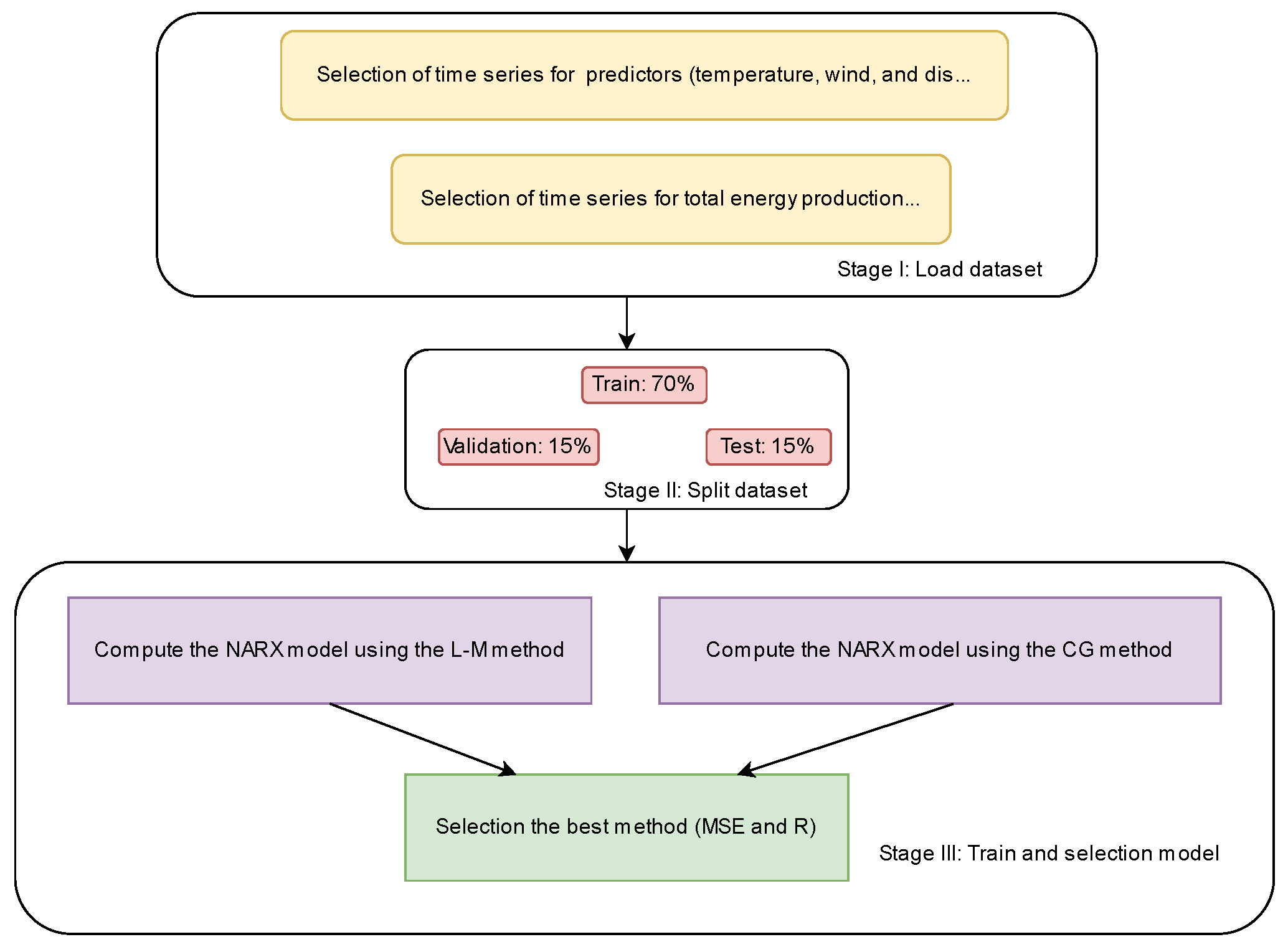
Figure 1 illustrates the methodological framework for the neural network architecture implemented. The novelty in this work lies in its integration within a hybrid renewable energy framework, where photovoltaic, wind, and micro hydropower generation are jointly modeled as a single time-series output. This is integrated forecasting of total hybrid energy production—rather than individual sources.
To compute the response time series corresponding to total energy production, a nonlinear autoregressive neural network with exogenous inputs (NARX) was employed, following the formulation given in Equation (1):
where the response variable
depends on its previous values and on the lagged values of the exogenous input variables
.
The NARX network architecture is based on a feedforward neural network structure and is designed to predict future values by accounting for both historical values of the response variable and past values of the predictors . For all simulations, the hidden layer consisted of 10 neurons, and a time delay of two time steps was adopted. Regarding data partitioning, 70% of the dataset was used for training, while 15% was allocated to validation and 15% to testing. All computations were carried out using MATLAB R2024b.
The Levenberg–Marquardt (L–M) algorithm was adopted as one of the training strategies for the neural network [
32]. This method is characterized by its rapid convergence and is well suited for time-series estimation using feedforward neural networks. The Hessian matrix is approximated as
The weight regulation for this method is expressed as
where
= constant value,
= Jacobian matrix, and
= vector of network errors.
In addition, the gradient provides the value of following the relationship .
In addition to the L–M algorithm, the neural network performance was also evaluated using the Conjugate Gradient (CG) method [
33]. This approach is based on gradient optimization and updates the network parameters according to a conjugate search direction, enabling efficient training with reduced memory requirements. The corresponding parameter update rule is given by
2.5. Optimization Algorithms
The hybrid renewable energy system is optimized by adjusting the capacities of solar PV and wind components to maximize the net present value (NPV). Hydropower capacity is fixed due to its low levelized cost of energy (LCOE) and stable output. The optimization process uses an iterative approach:
- •
The model simulates hourly energy generation and demand interactions for each configuration.
- •
Economic metrics are calculated for each scenario.
- •
The sizes of solar PV and wind components are varied within feasible ranges to find the configuration yielding the highest NPV.
- •
This optimization framework ensures the selection of the most financially viable and technically feasible hybrid system for the local context.
2.5.1. Solver Tool
The Solver tool can be applied to optimize hybrid renewable energy systems by formulating the problem as a set of decision variables, constraints, and an objective function that reflects the desired performance of the system. In practice, the objective function often seeks to minimize the total lifecycle cost or levelized cost of energy, or alternatively to maximize renewable penetration, reliability, or net present value. The decision variables typically include the installed capacities of solar panels, wind turbines, hydropower units, and battery energy storage systems, as well as operational schedules for charging, discharging, and dispatch. Constraints ensure that the system remains feasible and realistic, such as enforcing power balance at each time step, limiting component outputs to their rated capacities, maintaining the battery state of charge within bounds, and respecting hydropower inflow and reservoir management rules. Environmental or policy constraints can also be added, such as minimum renewable fractions or emissions caps.
To implement this in Excel, time-series data for demand and renewable resources are imported, along with technical and economic parameters like efficiency, capital and operating costs, and discount rates. Component models are built using formulas that convert resource inputs into power outputs, track battery state of charge, and calculate costs. Solver then adjusts the decision variables to satisfy all constraints while optimizing the objective function. For nonlinear relationships such as turbine efficiency curves or battery charge–discharge dynamics, Solver’s generalized reduced gradient (GRG) nonlinear or evolutionary algorithms are used, while linearized models can be handled by the Simplex LP method. Robustness can be improved by piecewise linearization of nonlinear curves, penalty functions for unmet demand or emissions, and careful initialization of decision variables.
This approach allows for exploring different configurations of hybrid systems, testing the sensitivity to fuel prices or resource variability, and evaluating trade-offs between cost, reliability, and sustainability. Although Solver is not as specialized as dedicated energy optimization software, it provides a flexible and accessible platform for scenario analysis and decision support, making it a valuable tool for preliminary design and feasibility studies of hybrid renewable energy systems.
The Excel Solver was applied to perform single-objective optimization using the generalized reduced gradient (GRG) nonlinear method. Since the GRG tends to converge to local optima depending on initial values, the multistart option was activated to combine the GRG’s computational speed with the precision of the evolutionary method based on genetic algorithms (GAs). This hybrid approach allowed the search for global solutions. A population size of 200 was used, with default convergence criteria (0.0001). The decision variables—hydropower factor, grid factor, and solar factor—were constrained between 0 and 1, with irrigation needs enforced by setting zero hours of unmet demand. Three optimization objectives were defined: maximize lifetime cash flow, minimize grid energy consumption for pumping, and maximize hydropower generation. Later, an additional objective was introduced for off-grid scenarios with batteries, aiming to minimize the required storage capacity and reduce investment and O&M costs.
To address this, different optimization objectives can be pursued using a combination of nonlinear and evolutionary approaches. The generalized reduced gradient (GRG) method is employed to exploit gradient patterns and deliver efficient solutions, though its accuracy is strongly influenced by the initial decision variables. To enhance precision, a multistart strategy is adopted, combining the computational speed of a GRG with the robustness of evolutionary techniques such as genetic algorithms (GAs). This hybrid approach enables the search for global solutions rather than local optima.
2.5.2. Python Algorithms
A second optimization framework was developed in Python 3.14.2 using the Non-dominated Sorting Genetic Algorithm II (NSGA-II), a multi-objective evolutionary method used to identify trade-offs between minimizing grid energy for pumping and maximizing hydropower generation. The aim is to reduce dependence on external electricity while assessing the performance of pumped-hydro storage relative to conventional pumping. The initial formulation used hourly decision variables for hydropower, grid input, and solar generation, offering a high temporal resolution but resulting in prohibitive computation times. To improve tractability, these variables were aggregated into daily and monthly periods, substantially reducing dimensionality while preserving the seasonal dynamics essential for evaluating the long-term energy balance. This streamlined structure enables efficient convergence and supports a comparative analysis of hybrid system configurations across different scenarios [
25].
The NSGA-II framework is particularly well suited to hybrid energy systems because it generates a Pareto front of solutions, offering planners and engineers a spectrum of trade-offs between grid reliance and hydropower output rather than a single deterministic outcome. This enables a comparative analysis across different scenarios, such as varying levels of solar penetration, reservoir capacities, or pumping strategies, and supports decision-making that balances technical feasibility with economic and environmental considerations. By applying this algorithm to multiple configurations, stakeholders can evaluate how pumped-hydro storage enhances system resilience, reduces operational costs, and integrates with other renewable sources. In this way, the Python-based NSGA-II optimization framework provides a flexible and powerful tool for exploring hybrid system performance under diverse conditions, advancing the methodological rigor of energy transition studies and supporting the design of sustainable, adaptive infrastructures.
2.6. Hybridization
Hybrid renewable energy systems are becoming increasingly essential for strengthening and advancing micro-grids, as they provide an effective response to the challenges of fluctuating generation and variable demand. By integrating diverse renewable sources—such as solar, wind, and small-scale hydropower—with storage technologies and advanced control mechanisms, these hybrid configurations improve the reliability, adaptability, and sustainability of decentralized energy networks. Micro-grids, which may function independently or in connection with the central grid, gain significant advantages from this approach, ensuring a continuous supply of electricity even when one source is limited by weather or resource variability.
The combination of multiple energy sources within a hybrid framework helps overcome the shortcomings of relying on a single renewable technology. For example, solar power is plentiful during daylight but absent at night, while wind energy can be highly unpredictable. By complementing these with storage options such as batteries, compressed air vessels, or pumped-hydro systems, micro-grids can deliver a more stable output and reduce dependence on fossil-fuel-based backup generation. This integration not only strengthens energy security but also supports decarbonization targets and improves the financial sustainability of renewable projects.
Hybrid systems further enable critical operational functions such as load shifting, peak demand reduction, and demand-side management, thereby optimizing energy use and minimizing waste. They are particularly valuable in remote or underserved areas where extending the main grid is either impractical or too costly, offering communities dependable and clean electricity that supports essential services, local development, and resilience to climate impacts. As the global energy landscape moves toward decentralization and low-carbon solutions, hybrid renewable systems are emerging as a fundamental element of future-ready micro-grids. Their capacity to align generation, storage, and consumption under diverse operating conditions positions them as a cornerstone of resilient and sustainable energy infrastructure.
Hybrid energy systems are inherently complex and highly adaptable, as they involve the simultaneous operation and coordination of multiple energy sources, varying demand profiles, and diverse constraints. Achieving optimal performance requires identifying the most efficient values for each sector or unit, since even minor changes in seasonal energy balances can lead to significant deviations from the desired outcomes. Once input data is established and preliminary simulations are completed, advanced optimization routines are applied to refine water allocation and system performance, with results depending on the chosen configuration.
2.7. Methodology
The methodology integrates digital modeling, real-time monitoring, advanced analytics, and optimization to design and manage hybrid renewable energy systems. Building Information Modeling (BIM) provides the spatial and physical foundation, creating detailed three-dimensional models of terrain, hydropower infrastructure, and environmental features using ArcGIS, AutoCAD, and Revit. These models visualize energy flows, spatial constraints, and infrastructure interactions, enabling robust evaluation of alternatives and supporting stakeholder communication. The Internet of Things (IoT) complements BIM by embedding sensors and controllers across solar, wind, hydropower, and storage units, transmitting real-time data on irradiance, wind speed, river flow, reservoir levels, battery state of charge, and grid demand through lightweight protocols such as MQTT and CoAP. This continuous data exchange allows adaptive energy management, predictive maintenance, and interoperability with smart grids and digital platforms.
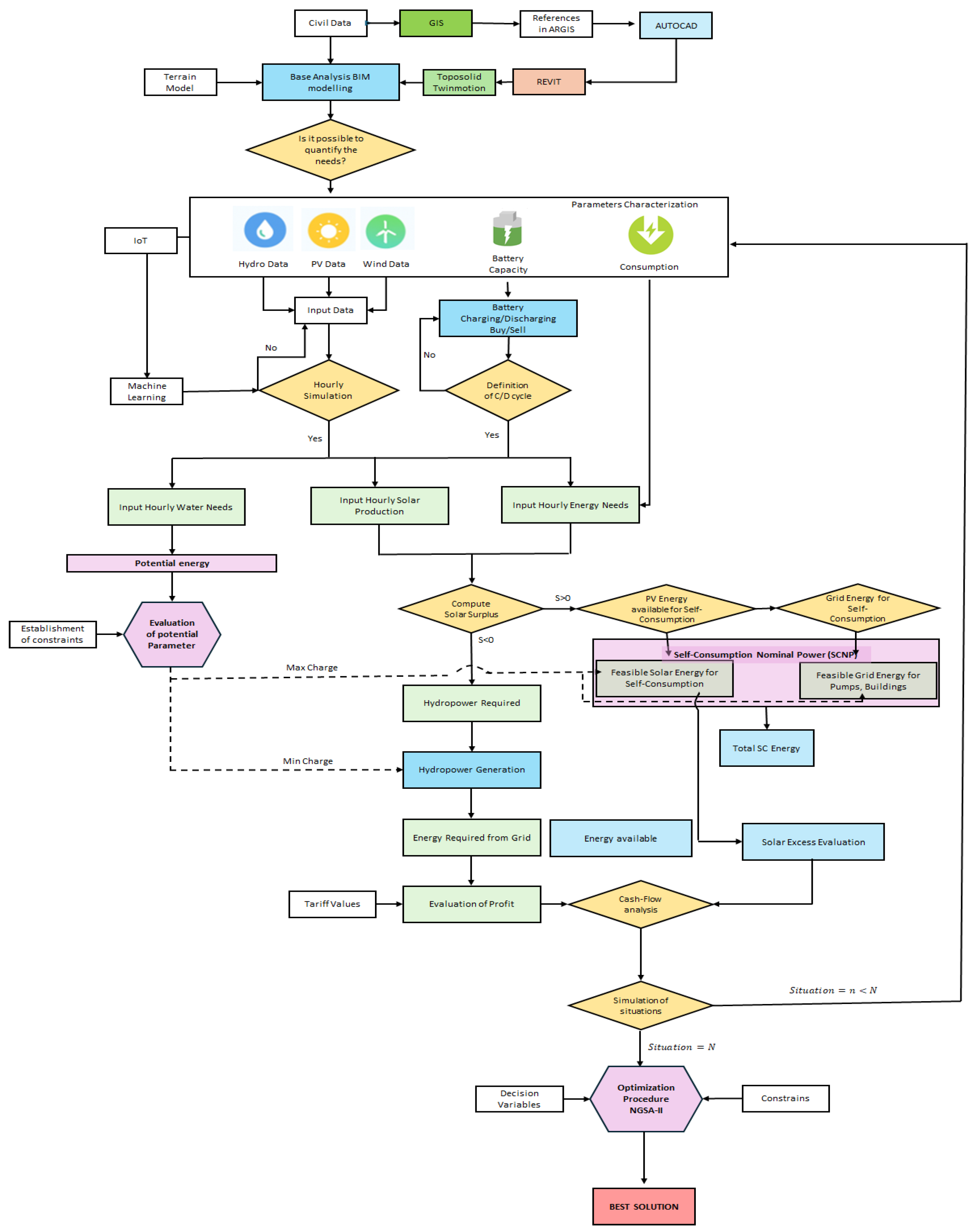
Storage systems, particularly battery energy storage systems (BESSs), are modeled to capture efficiency, degradation, and cost across different chemistries, with lithium-ion as the dominant technology and solid-state, flow, and sodium-ion batteries considered for longer-duration or safety-driven scenarios. Machine learning enhances this layer by forecasting renewable generation and demand, detecting anomalies, and orchestrating energy flows across hybrid systems. Neural network models such as NARX are employed to predict the battery state of charge dynamically, improving dispatch decisions and reducing curtailment. Optimization is carried out in two complementary frameworks. Excel Solver provides single-objective optimization using GRG nonlinear and evolutionary methods, minimizing lifecycle costs, maximizing hydropower generation, or reducing grid energy consumption for pumping, with constraints on reservoir operation, battery limits, and irrigation demand. Python-based optimization employs the Non-dominated Sorting Genetic Algorithm II (NSGA-II), a multi-objective evolutionary method that generates Pareto fronts to balance minimizing grid dependence with maximizing hydropower output. To improve computational efficiency, decision variables are aggregated into daily or monthly periods, preserving seasonal dynamics while reducing complexity. Finally, hybridization integrates diverse renewable sources—solar, wind, hydropower, and storage—within coordinated micro-grid architectures managed by smart controllers. This hybrid framework ensures reliability, adaptability, and sustainability by balancing variable generation with storage and demand-side management. Together, BIM, IoT, machine learning, and optimization algorithms create a comprehensive methodology that supports resilient, efficient, and scalable renewable energy solutions aligned with environmental and social objectives (
Figure 2).
This methodology ensures a comprehensive evaluation of both technical performance and economic resilience, where the full process is summarized in
Figure 2.
2.8. Basic Parameters’ Estimation
Hydropower generation can be estimated based on the power installed as follows:
where
P is the hydraulic power output in W;
ρ is the water density, considering 1000 kg/m
3;
g is the gravitational acceleration, considering 9.81 m/s
2;
Q is the flow rate in m
3/s;
H is the net head in m w.c.; and
η is the overall system efficiency, which is dimensionless.
The solar PV output is estimated by
where
EPV is the daily energy output in kWh;
Gtilted is the daily global tilted irradiation in kWh/m
2;
PPV is the installed PV capacity in kW; and
PRE is the performance ratio, considered typically as 0.75.
The wind turbine yield is modeled by
where
Pwind is the instantaneous wind power output in W;
ρair is the air density, considered as 1.225 kg/m
3; PW is the installed capacity in kW;
A is the swept area of the turbine in m
2;
v is the wind speed in m/s;
Cp is the power coefficient, considered typically as 0.3–0.4; and
η is the system efficiency, considering electrical/mechanical losses.
The battery storage dynamics include the state of charge (SoC) update defined by
where
SoCt is the battery state of charge at time t;
Cbat is the battery capacity in kWh;
ηdischarge is the charge/discharge efficiency, typically 0.95; and
Echarge or
Edischarge is the energy charged/discharged in kWh.
Another important key parameter is the levelized cost of energy (LCOE):
where
It is the investment cost in € in year
t;
Ot is the operational cost in € in year
t;
Mt is the maintenance cost in € in year
t;
Et is the generated energy in kWh in year
t;
r is the discount rate (adimensional); and
n is the project lifetime in years.
The definition of the objective function uses the net present value (NPV), which is defined by
where
Rt is the revenue in € in year
t; and
Ct is the cost in € in year
t.
The estimation of the internal rate of return is defined as
where IRR is the internal rate of return.
The payback period is the number of years required for the cumulative net cash flow to become positive, i.e., for the initial investment to be recovered.
3. Case Study
3.1. System Description
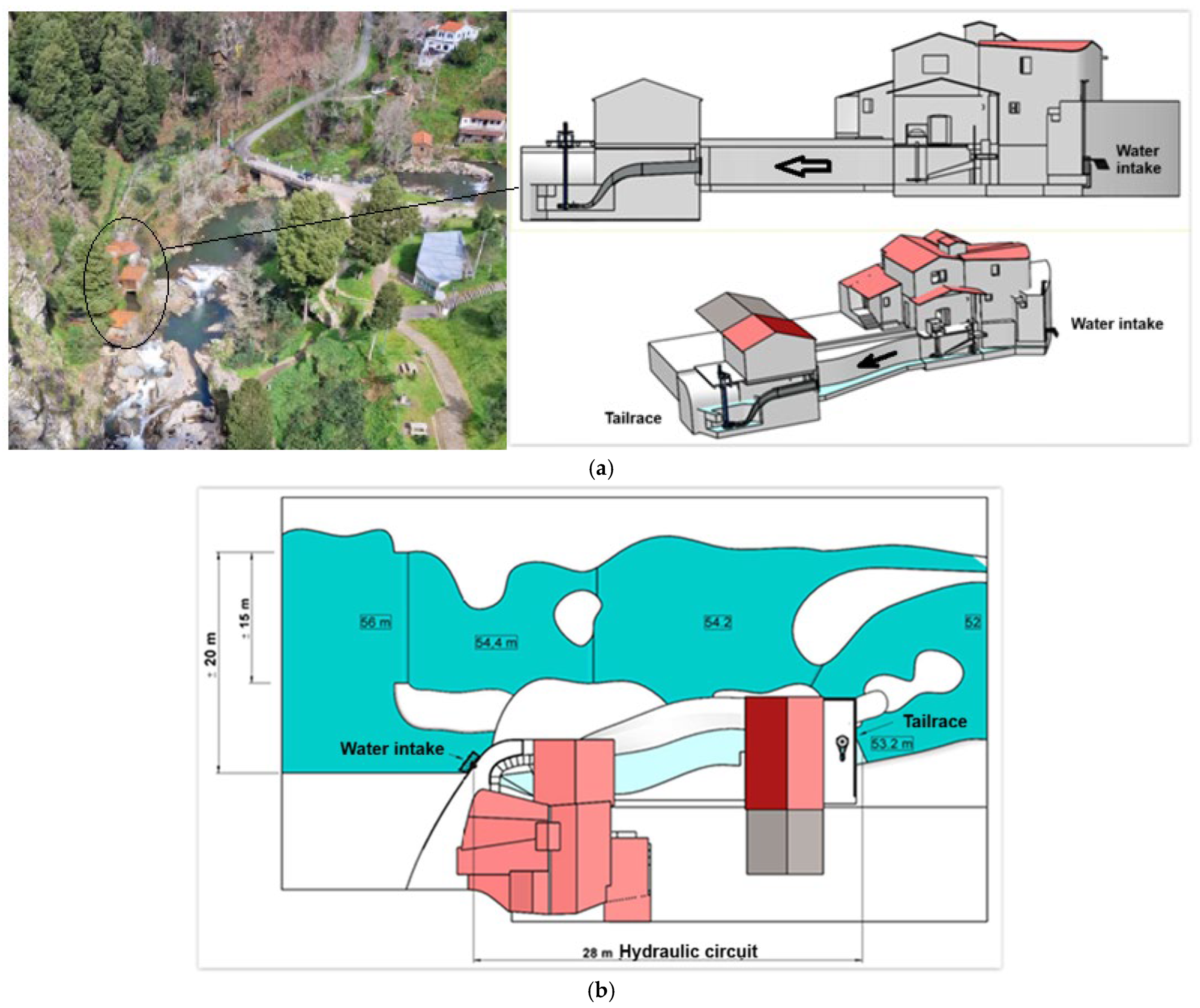
The mill complex is composed of several historical structures associated with the capture, conduction, and use of hydraulic energy (
Figure 3a). The century-old weir, built of stone masonry, is responsible for capturing water for the mill’s hydraulic circuit. It is approximately 15 m long, 1.6 m high on average, and between 0.8 and 1.2 m wide at the crest. The sill corresponds to an elevation of 56.00 m. At the end of the mill complex, the elevation is 51.6 m, corresponding to a maximum gross head of 4.4 m. The Tailrace occurs at an elevation of 53.20 m, resulting in a gross design head of 2.8 m (
Figure 3b). The construction of these old mills was developed using local materials such as stone and clay. They operated through a wheel system driven by the force of the water for grinding cereals to produce flour. They were essential to the rural economy and the survival of the local population. These mills were not only functional structures but also an integral part of the social life of the regions. Today, numerous mills stand in decay, yet they continue to provide a captivating experience for visitors, blending breathtaking scenery, cultural legacy, and a profound bond with nature. These mills are a significant part of the cultural heritage of several countries in the last two centuries, reflecting the lifestyle of pre-industrial societies.
The water mills of the Sousa River, primarily around areas like Jancido and Aguiar de Sousa in Portugal, are historical remnants of traditional milling, now often restored as cultural sites, part of tourism routes like the Rota do Românico, and integrated into nature trails for their ecological value, showcasing local heritage with structures of stone and wood used for grinding grain and sawing wood. They offer insights into the region’s past, with some serving as museums where visitors can see the mechanisms, and highlight efforts in local conservation and the potential for sustainable tourism.
A significant group of historic mills is along the riverbanks, featuring traditional architecture and landscapes, part of a trail highlighting local flora, fauna, and a “citizen’s movement” for heritage preservation, featuring waterfalls and recreational spots like a tire swing. Mills are key attractions on routes like the “Route of the Romanesque,” attracting visitors interested in history, nature, and traditional architecture. They represent the history of local life, grain production (flour, bread), and industries like wood sawing. Their surrounding riverbanks support rich ecosystems, and projects focus on restoring the environment around them, sometimes attracting rare species like the Moroccan freshwater pearl mussel.
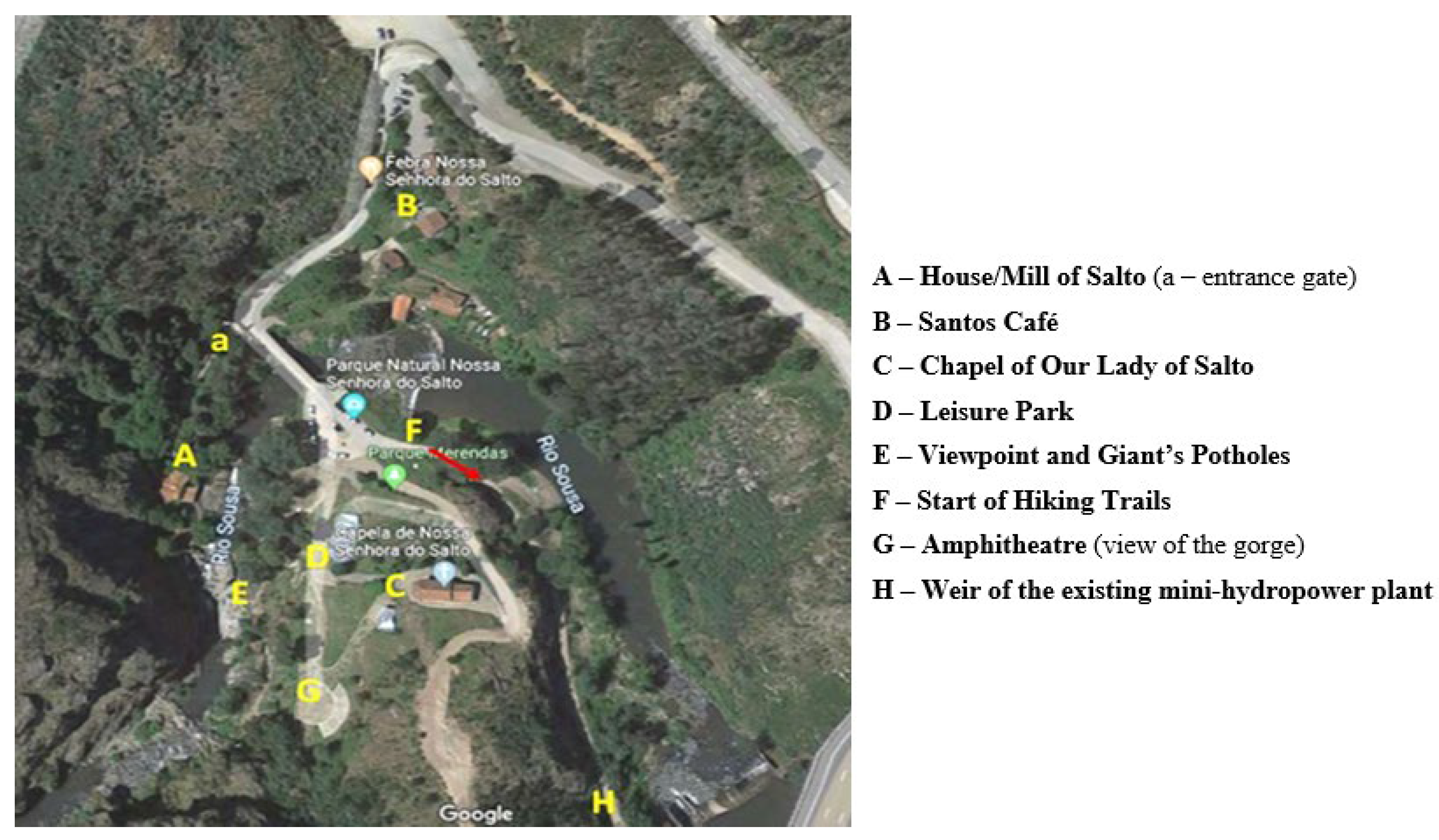
There are six buildings identified as possible beneficiaries of renewable energy production (i.e., four family houses, a cafe/restaurant, and a scout’s chapel place) in the palace of Moinho do Salto (
Figure 4).
3.2. BIM
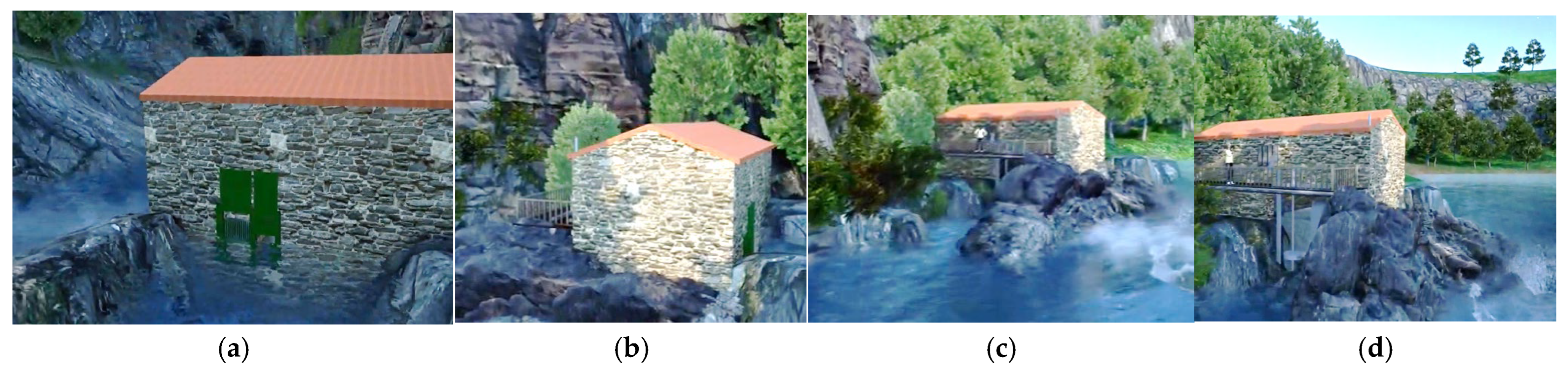
The BIM application through Revit enabled the integration of topographic data, AutoCAD drawings, and real images into a unified digital model, allowing the geometry of the system to be represented with accuracy and contextual realism. By situating the system within its actual environment, the model provided a clear spatial understanding of how the infrastructure interacts with its surroundings. Although some limitations were identified in the elevation data, particularly regarding the resolution of the digital terrain model, the use of Twinmotion complemented the BIM workflow by enhancing the visualization of the surrounding landscape. This combination of Revit for precise modeling and Twinmotion for immersive visualization ensured that both technical accuracy and communicative clarity were achieved, supporting design validation and stakeholder engagement while bridging the gap between engineering representation and realistic environmental perception (
Figure 5).
3.3. IoT
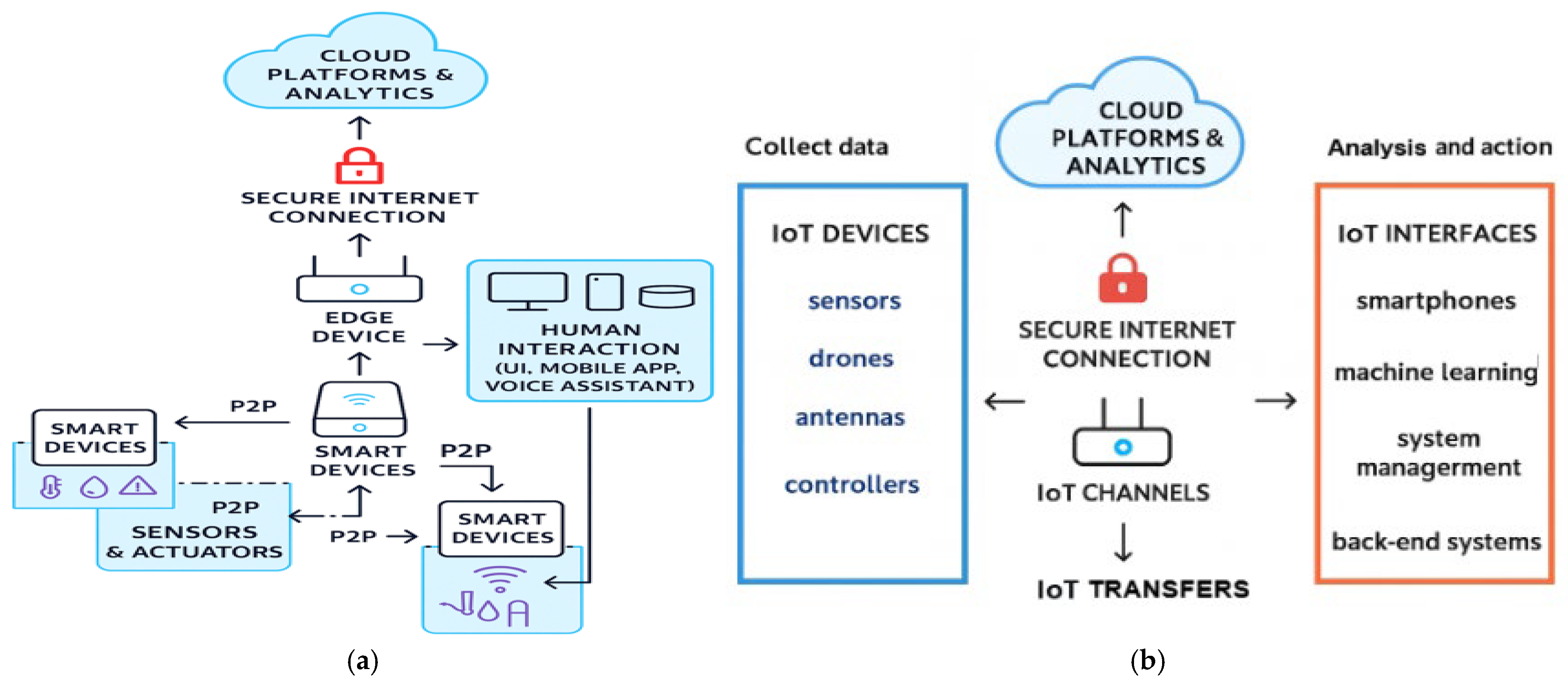
An Internet of Things (IoT) ecosystem is a distributed network of smart, web-enabled devices equipped with embedded systems such as processors, sensors, actuators, and communication hardware that allow them to collect, transmit, and process data from their surrounding environment. These devices connect to IoT gateways or edge devices, which act as intermediaries between the field and the cloud, performing tasks such as preprocessing, protocol translation, and local analytics before data is either sent to cloud platforms for large-scale storage and advanced analysis or processed locally for immediate decision-making. Communication among devices is often decentralized, with peer-to-peer exchanges enabling interoperability and adaptive responses without requiring centralized control. The system is designed to operate autonomously, executing predefined machine learning algorithms with minimal human intervention, while still allowing users to interact through dashboards and mobile applications to configure devices, set operational rules, or access performance data. Security and reliability are fundamental, with encryption, authentication, and redundancy mechanisms ensuring data integrity and system resilience. Altogether, the IoT ecosystem integrates sensing, computation, and communication into a seamless framework that supports real-time monitoring, predictive analytics, and automated control across diverse domains such as energy systems, hydropower monitoring, smart grids, and industrial automation (
Figure 6).
Figure 6a shows the flow from sensors and smart devices through gateways and edge devices, up to cloud platforms and analytics, with user interfaces connected for monitoring and control, where P2P (peer-to-peer) communication refers to a decentralized network model where devices (or “peers”) communicate directly with each other without needing a central server or controller. IoT devices can exchange data or commands autonomously, and they are useful for mesh networks, where sensors or smart nodes relay information across the system, and enhancing resilience and reducing latency, especially in remote or distributed setups. The UI (user interface) is the layer through which humans interact with IoT systems. It can include dashboards for monitoring sensor data and the system status, mobile apps for remote control and configuration and voice assistants for hands-free interaction. UI design affects usability, accessibility, and how effectively users can interpret and act on system insights. IoT organizes the flow into three distinct stages—collect data, group and transfer data, and analyze and action—with modern icons and directional arrows to enhance readability (
Figure 6b).
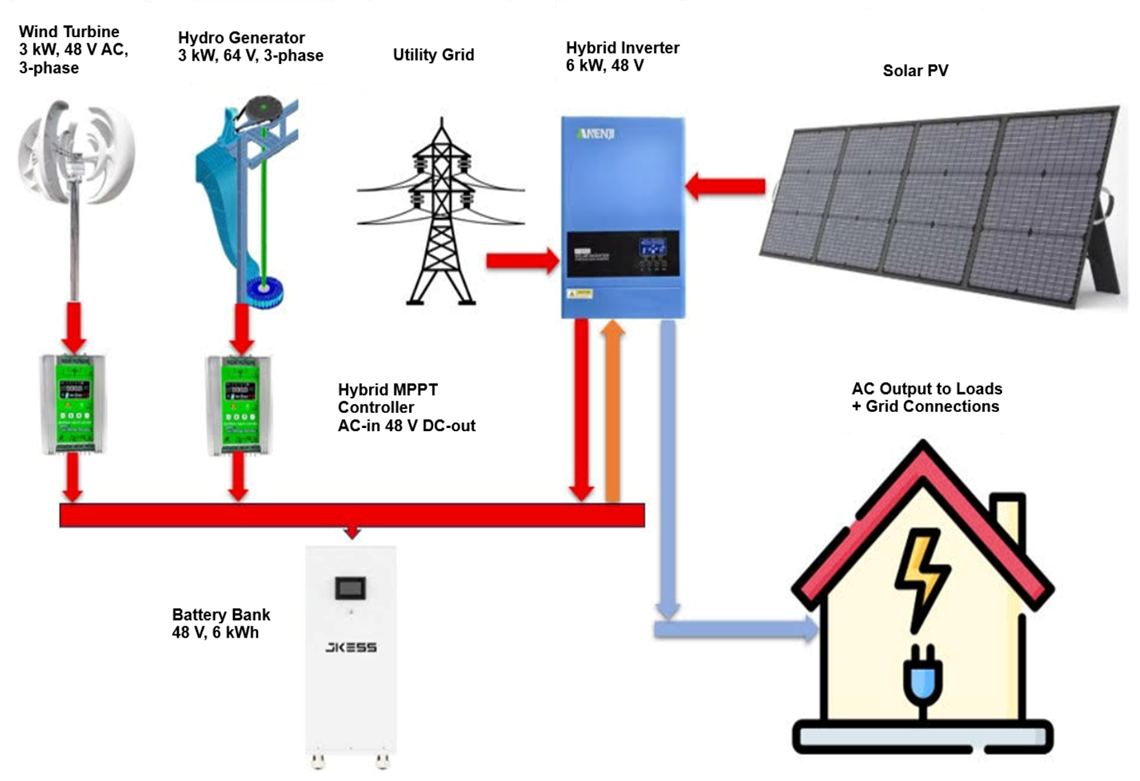
As a result, a hybrid installation combines hydropower, wind, and solar photovoltaic energy, operating in island mode (off-grid), with 48 V batteries and the possibility of grid connection only as a backup, all controlled by IoT (
Figure 7).
Figure 7 illustrates the hybrid renewable energy system designed to supply electricity to a small energy community by integrating multiple distributed energy sources. The system combines a wind turbine rated at 3 kW, 48 V AC, 3-phase, which converts kinetic wind energy into an alternating current and feeds it into a hybrid MPPT (Maximum Power Point Tracking) controller, and a hydro generator rated at 3 kW, 64 V AC, 3-phase, which harnesses hydraulic energy and also routes it to the same controller. A solar photovoltaic (PV) array generates direct current electricity from solar radiation and connects directly to a hybrid inverter. The hybrid MPPT controller accepts AC inputs from the wind and hydro sources, converts them to DC, and optimizes energy capture before directing the output to a battery bank rated at 48 V, 6 kWh for storage. The hybrid inverter, rated at 6 kW, 48 V, manages bidirectional power flow by converting DC from the battery and solar PV into AC for household loads and grid export. The system includes a utility grid connection for supplemental power and grid-tied operation, with the inverter synchronizing to enable seamless energy exchange. The AC output supplies electricity to the energy community loads and can export surplus energy to the grid. This configuration exemplifies a robust, decentralized energy architecture that enhances reliability, sustainability, and autonomy in small energy community power systems.
3.4. ML Application
In this research, the predictors temperature, wind speed, and water discharge were used to train the time series of total energy production. The input time series comprise 8760 data points, corresponding to hourly observations over one year. To implement the NARX neural network in combination with the Levenberg–Marquardt (L–M) and Conjugate Gradient (CG) training algorithms, 6132 data points (70% of the dataset) were used for model training. The remaining 30% of the dataset was equally divided between the validation and testing stages, with 1314 data points assigned to each subset.
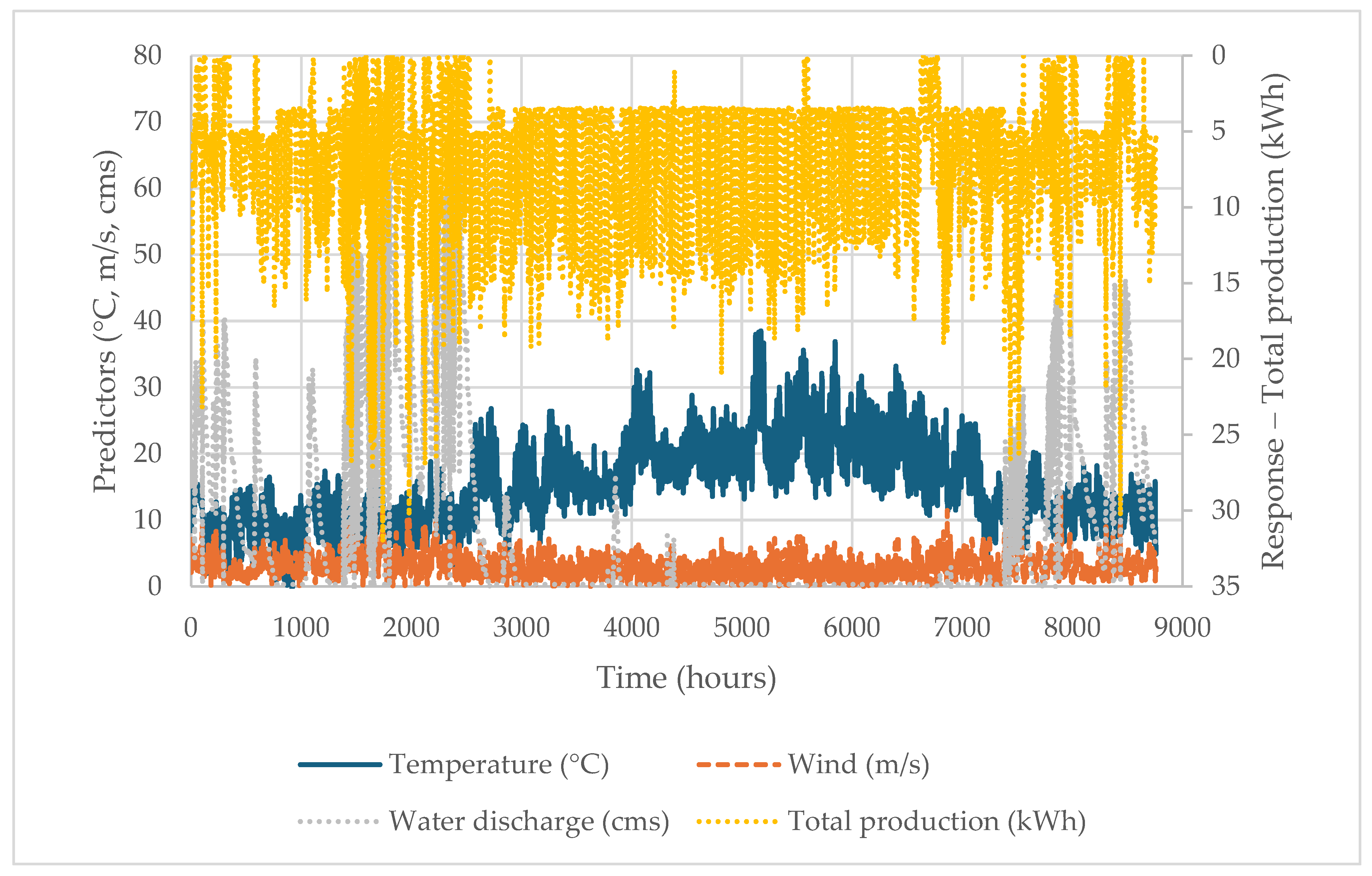
Figure 2 illustrates the temporal evolution of the predictor variables—temperature (°C), wind speed (m/s), and water discharge (m
3/s)—together with the corresponding total energy production (kWh) (
Figure 8).
Figure 8 illustrates the temporal evolution of the three environmental predictors—air temperature, wind speed, and water discharge—together with the total hybrid energy production over the same period. Displaying these variables on a common timeline makes it possible to observe how fluctuations in the physical conditions that drive photovoltaic, wind, and micro hydropower generation relate to variations in the aggregated energy output. The temperature curve reflects seasonal and daily weather cycles that influence PV performance, while the wind speed series captures the inherent intermittency of wind resources. The discharge data represent hydrological variability, which directly affects micro hydropower generation. The total production curve, plotted on a secondary axis to preserve scale readability, shows the combined response of the hybrid system to these changing inputs. This integrated visualization highlights the nonlinear and time-dependent relationships between environmental drivers and total energy output, reinforcing the suitability of using a NARX neural network to model a multi-input, single-output dynamic system.
Table 1 presents the results of the statistical performance measures—mean squared error (MSE) and coefficient of determination (R)—obtained for the NARX model using the Levenberg–Marquardt (L–M) and Conjugate Gradient (CG) training algorithms. The model performance was evaluated at the training, validation, and testing stages using both metrics.
Overall, the L–M method outperforms the CG method during the training and validation stages, as indicated by its lower MSE values and higher R coefficients. In particular, during the validation stage, the L–M algorithm achieved an MSE of 2.3460, compared to 2.5677 obtained using the CG method, while also exhibiting a slightly higher correlation coefficient. These results indicate a better generalization capability of the L–M approach during model calibration.
The CG method exhibits marginally better performance during the testing stage in terms of MSE; however, the observed differences between the two methods are relatively small and do not significantly affect the overall predictive capability of the model. Considering the consistently superior performance of the L–M algorithm during the training and validation stages, as well as its stable behavior across all stages, the L–M method was selected for subsequent calculations and analyses. The best results are highlighted in gray cells.
Table 1.
Comparison of statistical performance measures for the NARX model using the L–M and CG training methods.
Table 1.
Comparison of statistical performance measures for the NARX model using the L–M and CG training methods.
| Method | Stage | MSE | R |
|---|
| L–M | Training | 2.2439 | 0.9329 |
| Validation | 2.3460 | 0.9306 |
| Test | 2.5997 | 0.9264 |
| CG | Training | 2.8742 | 0.9155 |
| Validation | 2.5677 | 0.9179 |
| Test | 2.588 | 9.9233 |
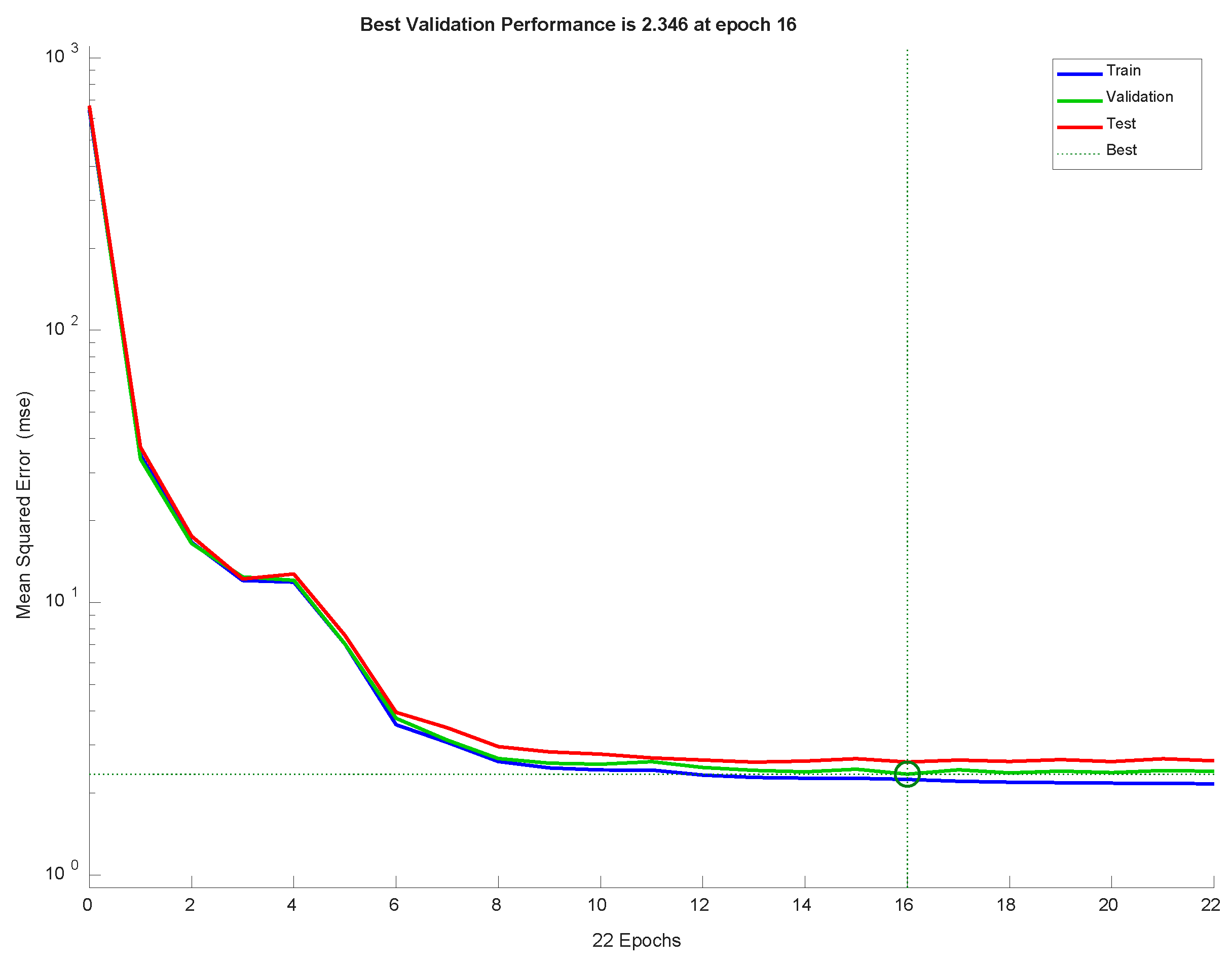
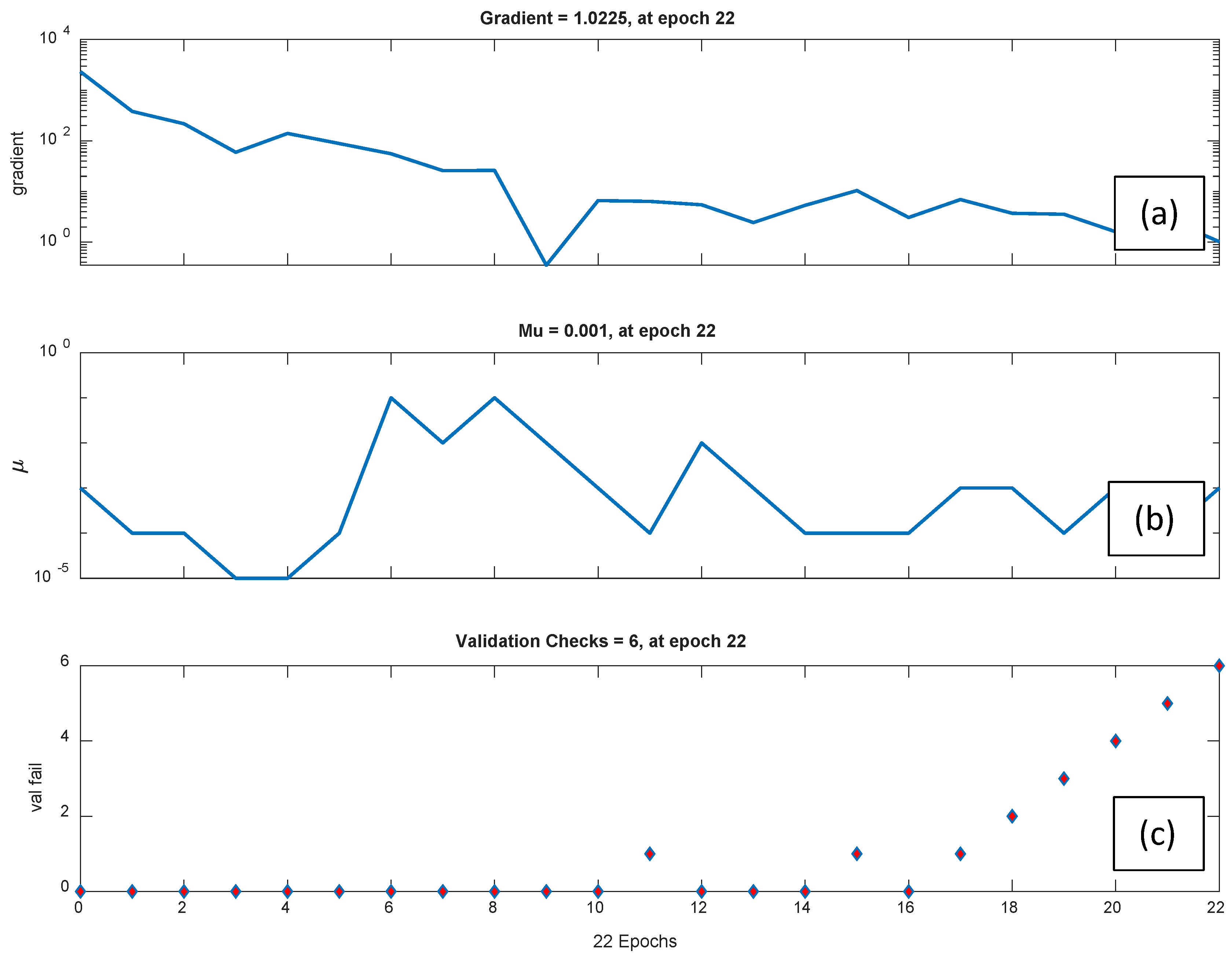
Figure 9 illustrates the training state for the Levenberg–Marquardt method. The gradient evolution shows a decreasing trend over the training epochs, reaching a value of 1.02 at epoch 22 (
Figure 9a).
Figure 9b presents the evolution of the mu parameter (μ), which further confirms the stability of the training process. The damping factor fluctuates within a narrow range and reaches a value of μ = 0.001 at epoch 22. Validation errors remain low for most epochs and reach a maximum of six consecutive validation checks at epoch 22 (
Figure 9c). Overall, the combined analysis of gradient reduction, controlled μ adjustment, and validation behavior confirms that the Levenberg–Marquardt-trained NARX model converges efficiently and exhibits a stable generalization performance. These results support the selection of the L–M algorithm for simulating the time series of total energy production and reinforce its suitability for modeling nonlinear dynamics in hybrid renewable energy systems.
Figure 10 presents the evolution of the mean squared error (MSE) for the training, validation, and testing datasets during the learning process of the NARX neural network trained using the L–M method. During the initial epochs, all three error curves exhibit a reduction, indicating an efficient learning phase in which the network is suitable for capturing the dominant nonlinear relationships between the predictors (temperature, wind speed, and discharge) and the total energy production. As training progresses beyond approximately epoch 6, the rate of error reduction decreases, and the MSE curves gradually stabilize. The best validation performance, corresponding to an MSE value of 2.346, is achieved at epoch 16.
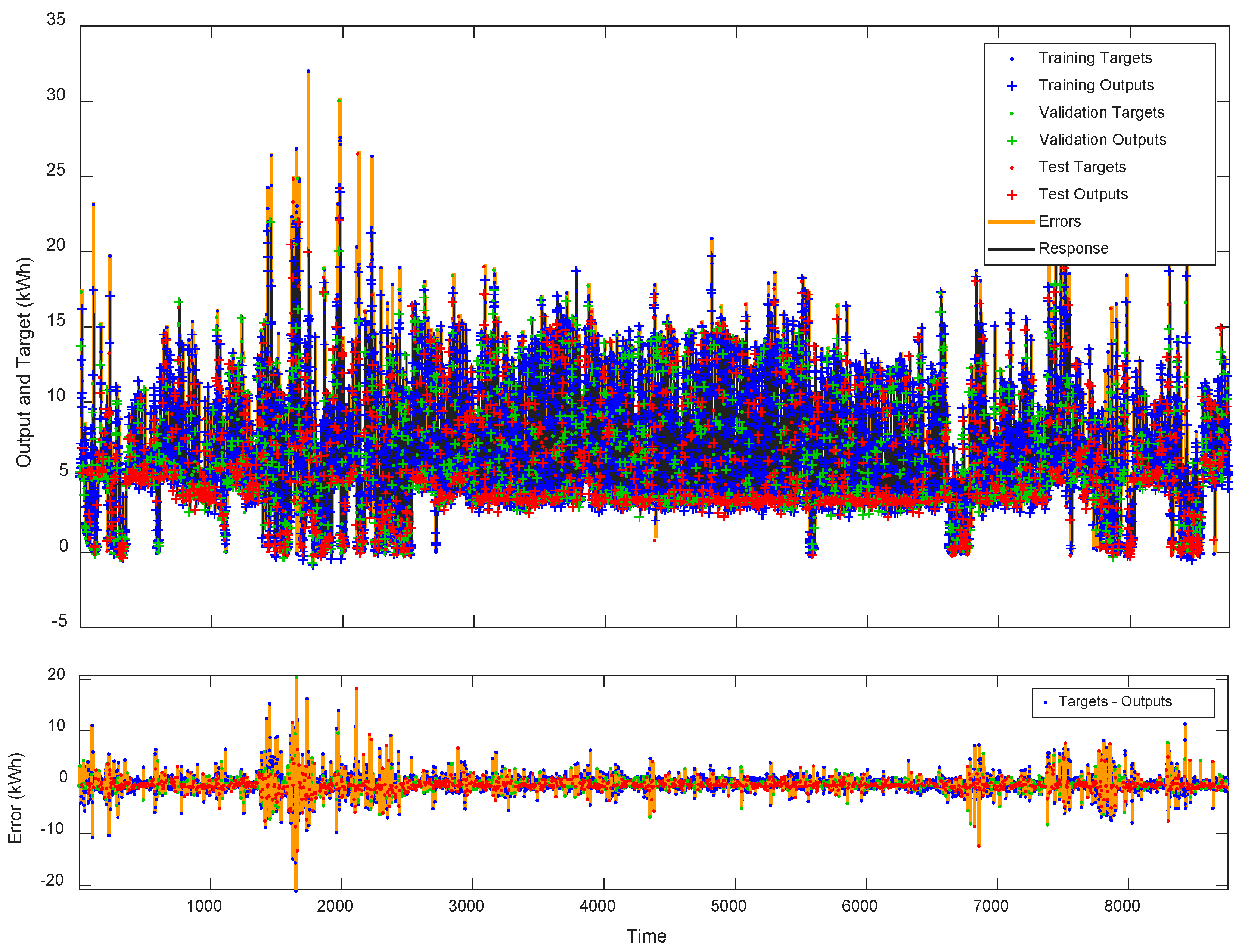
Figure 11 presents a comparison between the observed (targets) and predicted (outputs) values of total energy production obtained from the NARX neural network, together with the corresponding prediction errors, over the complete time series.
Figure 11 shows the temporal evolution of the targets and outputs for the training, validation, and testing datasets, and illustrates the error distribution as a function of time. The NARX model captures the temporal dynamics governing the hybrid energy production system since the discrepancies between predicted and observed values are minimal.
The temporal evolution of total energy production predicted by the NARX neural network is shown, with strong agreement between observed and predicted values across training, validation, and test datasets, indicating accurate modeling of system dynamics. This analysis confirms low and stable prediction errors over time, validating the model’s reliability for hybrid energy forecasting.
3.5. Energy Balancing
To evaluate the performance of each configuration, a daily energy balance is calculated over one year. This balance is based on the interaction between energy consumption, renewable production, and the battery system. The main objective is to determine, for each day, whether energy must be purchased from the grid or can be sold to the grid, depending on system behavior. For each day, the following steps are performed: (i) Production: Total daily generation from photovoltaic panels and wind turbine. Although the wind turbine was sized at around 3 kW as a reference, its actual production varies daily based on wind conditions and the system optimization; (ii) Demand: The fixed daily electricity consumption of the household or additional demands; (iii) Excess Energy: When production exceeds demand, the surplus energy is first stored in the battery (if there is capacity). If the battery is full, the remaining excess is sold to the grid; (iv) Deficit Energy: When demand exceeds production, the system draws energy from the battery. If the battery is depleted, the remaining deficit must be bought from the grid; (v) Battery State of Charge (SoC): The battery charge level is updated daily, constrained by its maximum and minimum operating limits to prevent degradation; (vi) Grid Transactions: Buy: Energy purchased from the grid during deficit periods after battery depletion; Sell: Energy sold to the grid when there is excess production and the battery is already fully charged.
These daily values are accumulated over the year to determine the total amount of energy bought and sold, which are essential inputs for techno-economic assessment.
To assess the technical viability of the proposed renewable energy system, four different consumption scenarios were defined based on the existing infrastructure and potential energy users in the surrounding area.
The estimations are based on the annual electricity consumption of a real household located next to the mill, occupied by two people, with a total annual consumption of 6 MWh. This value was used as the base for both individual and combined consumption cases.
For the modeling, we used realistic daily and seasonal profiles to reflect typical variations in demand throughout the year. These profiles were compiled into tables that display consumption by hour of the day and month of the year. To aid in interpretation, two color scales were applied: one representing unit consumption (e.g., kWh), which highlights usage intensity patterns; another based on absolute totals, emphasizing the contribution of each time segment to the overall energy demand.
This dual representation enables a better understanding of both temporal usage behavior and cumulative energy needs, helping to identify optimal system sizing and energy balancing strategies under each scenario.
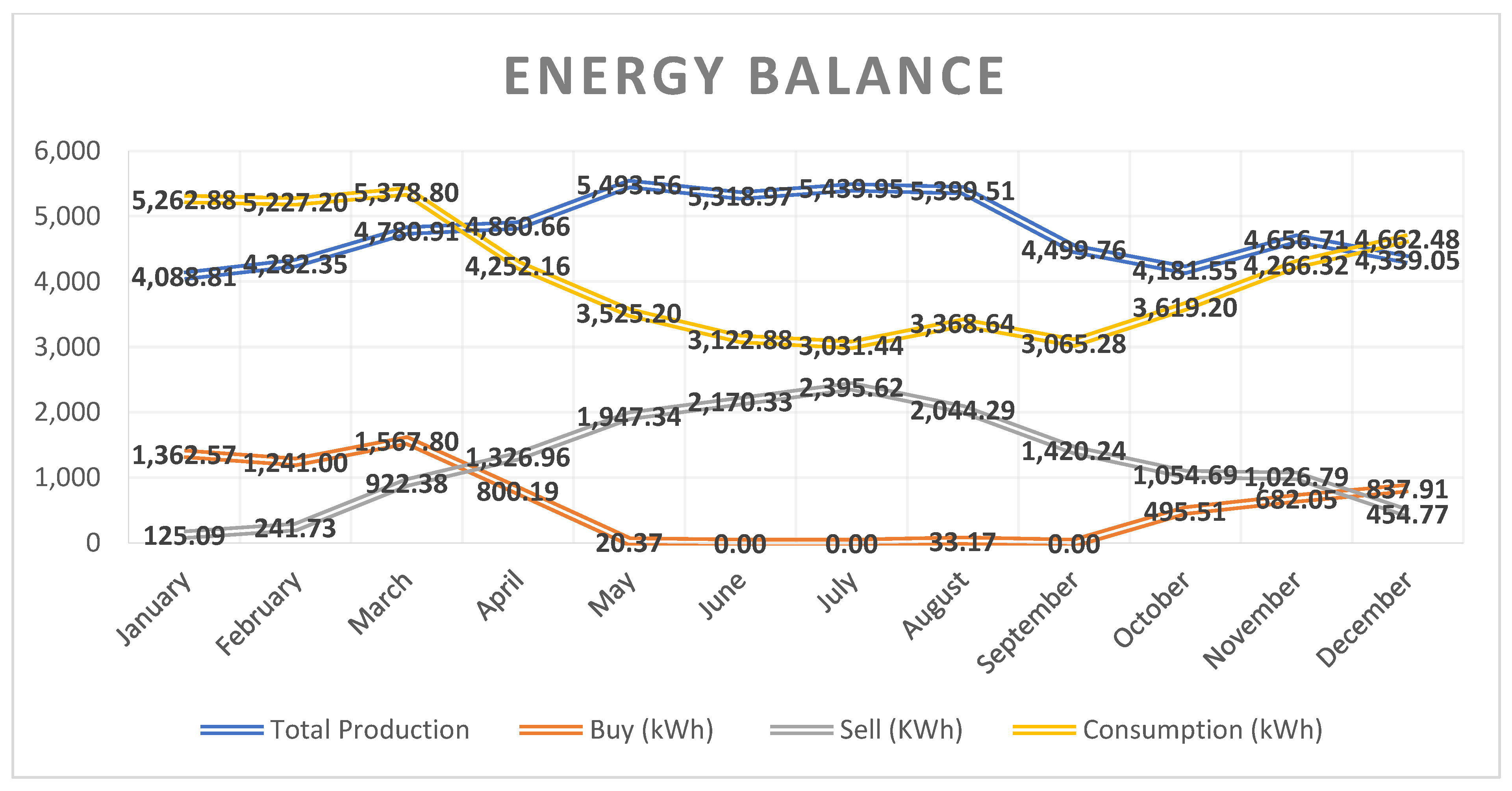
For the system complex system, six buildings were considered, and it estimated a total annual consumption of 48.8 MWh. The peak consumption shifts to the summer months, especially between June and September. This pattern suggests the influence of seasonal tourism, with the cafe/restaurant nearby likely contributing to increased activity during the high season. The data highlights a marked rise in usage during the warmer months, likely due to increased refrigeration, lighting, and air conditioning (
Table 2,
Figure 12).
Table 2.
Energy balance.
| Months | Total Production (kWh) | Buy
(kWh) | Sell
(KWh) | Consumption (kWh) |
|---|
| January | 4088.81 | 1362.57 | 125.09 | 5262.88 |
| February | 4282.35 | 1241.00 | 241.73 | 5227.20 |
| March | 4780.91 | 1567.80 | 922.38 | 5378.80 |
| April | 4860.66 | 800.19 | 1326.96 | 4252.16 |
| May | 5493.56 | 20.37 | 1947.34 | 3525.20 |
| June | 5318.97 | 0.00 | 2170.33 | 3122.88 |
| July | 5439.95 | 0.00 | 2395.62 | 3031.44 |
| August | 5399.51 | 33.17 | 2044.29 | 3368.64 |
| September | 4499.76 | 0.00 | 1420.24 | 3065.28 |
| October | 4181.55 | 495.51 | 1054.69 | 3619.20 |
| November | 4656.71 | 682.05 | 1026.79 | 4266.32 |
| December | 4339.05 | 837.91 | 454.77 | 4662.48 |
| Total general | 57,341.78 | 7040.57 | 15,130.26 | 48,782.48 |
3.6. Techno-Economic Assessment
The economic assessment of hybrid renewable energy system configurations was conducted using a 5% discount rate, with capital expenditures of €9700/kW for hydropower, €1650/kW for solar PV, €2185/kW for wind, and €560/kWh for battery storage. Annual operation and maintenance costs were set at 3% for hydropower, 1.5% for solar PV and batteries, and 2.5% for wind. Electricity purchases from the grid were priced at €0.26/kWh, while exports were valued at €0.06/kWh. Battery replacement and residual values at the project end were incorporated into cash flow projections. Economic performance was evaluated through the levelized cost of energy (LCOE), net present value (NPV), internal rate of return (IRR), and payback period, ensuring comparability across scenarios. Revenue streams derived from reduced grid dependence and energy exports were included alongside capital, O&M, and replacement costs. The regional regulatory framework provided strong incentives, including subsidies covering up to 85% of solar/battery costs (€2500 per installation), 40–60% EU financing for hydro-solar projects, reduced VAT (6% vs. 23%), municipal tax deductions, and simplified licensing (<3 months for <1 MW). These instruments significantly reduced upfront costs and shortened payback periods, transforming marginally viable systems into profitable configurations.
For the six buildings, a combined annual demand of 48,782 kWh/yr is obtained, where the optimal capacities are 14.44 kW solar PV and 9.87 kW wind, while hydropower is equal to 5.5 kW. This requires approximately 65 m2 of PV surface area, averaging 8.12 m2 per household. Total renewable generation reaches 57,341 kWh, with grid imports at 7041 kWh and exports of 15,130 kWh. Battery cycling involves 4472 kWh charged and 445 kWh discharged. The financial metrics show an NPV of €35,359, a payback period of 8.7 years, an IRR of 9%, and an LCOE of €0.09/kWh.
Limiting the rooftop PV area to a conservative 6 m2 per unit (compared to an available 12 m2) results in a slight decrease in NPV to €34,856 and a shift in generation mix to 10.67 kW solar and 11.33 kW wind capacity.
3.7. Model Validation
A comparison is made between the developed research model (HySEC) and HOMER—a well-known commercial model. HySEC (Hybrid Smart Energy Communities) is a research-oriented modeling framework developed to support advanced analysis of hybrid energy systems in smart micro-energy communities within an EU project, particularly emphasizing the environmental performance, system dynamics, and integration flexibility. It allows for customized input structures and detailed tracking of emissions, energy flows, and component interactions, making it well-suited for academic and technical investigations. In contrast, HOMER is a commercially available optimization tool widely used in industry and research for designing and simulating micro-grids and hybrid energy systems. The adapted HOMER inputs in this study leverage its robust economic modeling capabilities, user-friendly interface, and extensive component libraries. HOMER offers several advantages, including streamlined techno-economic analysis, reliable financial metrics (e.g., NPV, IRR, LCOE), and proven applicability across diverse geographic and operational contexts. Together, the integration of HySEC and HOMER-adapted inputs enables a comprehensive evaluation of hybrid configurations, combining the methodological rigor of research modeling with the practical strengths of commercial simulation.
Energy consumption, production, and supply values reveal small differences between HOMER-adapted and HySEC outputs. The highest consumption (48,776 kWh/year) exhibits a consistent trend (
Table 3).
The comparative assessment between the HOMER adapted and HySEC models highlights several enhanced technical, economic, and environmental values that make HySEC a more optimized solution despite some trade-offs. Technically, both systems employ the same solar PV capacity of 14.44 kW, but HySEC slightly reduces wind turbine capacity to 9.87 kW, reflecting a refined sizing approach. While grid purchases are marginally higher in HySEC (7041 kWh/year compared to 6602 kWh/year), the model achieves a dramatic increase in grid sell capacity, exporting 15,130 kWh/year versus HOMER’s 8274 kWh/year. This indicates superior surplus energy management and integration with the grid. Battery cycling is also significantly reduced in HySEC, with only 445 kWh discharged annually compared to HOMER’s 9181 kWh, suggesting more efficient load matching and reduced reliance on storage, which prolongs the battery lifespan and lowers operational stress.
Economically, HySEC demonstrates clear advantages in cost efficiency. Its levelized cost of energy (LCOE) is halved at €0.09/kWh compared to HOMER’s €0.180/kWh, making it far more competitive. Although HOMER achieves a higher net present value (€89,080 versus €35,359), HySEC delivers stronger investment metrics, with a higher internal rate of return (9% versus 6%) and a shorter payback period (8.7 years versus 10.5 years). These indicators show that HySEC provides faster capital recovery and better profitability relative to the investment size, positioning it as a more attractive option for investors focused on efficiency and sustainability. From an environmental perspective, HySEC achieves a striking improvement. While HOMER produces 101 tons of CO2 annually, HySEC reports a net-negative total of −9.4 tons, effectively reaching carbon neutrality or even surplus offsetting. Although HOMER earns slightly more CO2 credits (223 tons compared to 217 tons), HySEC’s ability to eliminate net emissions underscores its superior environmental performance. This outcome is likely driven by its higher grid exports and minimized battery cycling, which reduce indirect emissions associated with storage inefficiencies.
In summary, HySEC enhances the main technical, economic, and environmental values compared to HOMER by optimizing grid interaction, lowering energy costs, accelerating financial returns, and achieving net-zero carbon performance. While HOMER offers a higher NPV, HySEC’s balance of efficiency, sustainability, and profitability makes it a more advanced and future-oriented energy system configuration. Although HOMER is a robust commercial tool, its optimization routines rely primarily on predefined techno-economic assumptions and standard component libraries, which limit the level of customization and the ability to represent system dynamics in detail, in particular, in this micro-grid. In contrast, HySEC was developed as a research-oriented framework that allows full control over input structures, environmental variables, and system interactions. This flexibility enables a more accurate representation of hybrid energy behavior, particularly regarding the coupling between renewable sources.
3.8. Limitations and Possible Improvements
The methodology faces some limitations, beginning with its strong dependence on high-quality datasets, where missing or noisy IoT inputs can distort machine learning-based simulations. The scalability may need some adaptations, especially since terrain modeling and BIM integration may not generalize across diverse topographies or urban densities. The combination of hourly simulations with NSGA-II optimization is computationally demanding, reducing real-time applicability, while simplified battery modeling overlooks degradation, temperature effects, and nonlinear efficiencies. Economic analyses rely on static tariff and market assumptions that may not reflect real-world volatility, and the framework lacks explicit integration of social, regulatory, and behavioral factors that shape energy use and infrastructure planning.
Regarding the potential improvements, adopting probabilistic validation methods such as Monte Carlo simulations can help better handle uncertainty and variability in input data. Integrating dynamic tariffs and evolving policy frameworks would enhance the realism of financial projections, while advanced battery and grid models could capture aging, thermal behavior, and demand–response interactions more accurately. A more participatory, user-centric design would incorporate stakeholder preferences and community feedback, improving alignment with real-world needs. Deploying the system through cloud or edge computing would address scalability and the computational load, and adding environmental impact assessments—such as lifecycle or carbon footprint analysis—would extend the methodology’s sustainability scope beyond purely technical and economic metrics.
4. Conclusions
HySEC introduces several innovations that distinguish it from the existing literature on hybrid renewable energy systems. It integrates BIM, IoT, and data-driven modeling into a single operational framework, whereas most studies treat these components separately. The use of a Revit–Twinmotion BIM model enriched with topographic, CAD, and real-image data provides a level of spatial accuracy and stakeholder communication rarely achieved in micro-grid research. HySEC also advances the field by combining a fully digital–physical architecture—linking sensors, gateways, edge devices, and cloud platforms—to enable decentralized peer-to-peer communication and real-time monitoring, bridging the gap between simulation and deployable smart community infrastructure. Methodologically, it applies a hydropower–wind–solar PV hybrid configuration in off-grid island mode, a combination seldom optimized jointly in the literature, and models six buildings (48.8 MWh/year) using high-resolution hourly Open-Meteo data. The inclusion of a NARX neural network trained on 8760 hourly observations, achieving an MSE of 2.346 at epoch 16, adds a predictive capability that surpasses typical deterministic or simplified models. A major innovation is the quantitative benchmarking against HOMER, demonstrating a superior performance in grid exports (15,130 vs. 8274 kWh/year), battery cycling (445 vs. 9181 kWh/year), LCOE (€0.09 vs. €0.180/kWh), IRR (9% vs. 6%), payback (8.7 vs. 10.5 years), and CO2 emissions (−9.4 vs. 101 tons). This comparative validation shows that HySEC is not only conceptually novel but also empirically more efficient and environmentally advantageous. Overall, the research contributes an integrated, data-rich, and operationally realistic framework that enhances energy autonomy, supports heritage site rehabilitation, and promotes sustainable rural development.