Article

Performance Evolution of Mass Concrete Under Multi-Factor Coupling Effects: Influence of Manufactured Sand, Water–Binder Ratio, and Fly Ash


1
Yunnan Trading Group Yunling Construction Co., Ltd., Kunming 650200, China
2
School of Civil Engineering, Guizhou University, Guiyang 550025, China
3
Chongqing Jiaotong University Construction Engineering Quality Testing Center Co., Ltd., Chongqing 400074, China
*
Author to whom correspondence should be addressed.
Eng 2026, 7(3), 131; https://doi.org/10.3390/eng7030131
Submission received: 9 February 2026 / Revised: 27 February 2026 / Accepted: 11 March 2026 / Published: 13 March 2026
(This article belongs to the Section Chemical, Civil and Environmental Engineering)

Abstract

This study evaluates the feasibility of utilizing manufactured sand as a full or partial replacement for river sand in mass concrete production, motivated by the growing scarcity of natural river sand and stringent environmental regulations on mining. The influence of the manufactured sand replacement level, water-to-cement ratio, and fly ash content on key properties including workability, mechanical strength, early-age shrinkage, and thermal stress was systematically investigated. The results demonstrate that, while the incorporation of manufactured sand marginally impairs workability, it contributes to an improved particle size distribution of the fine aggregate. At 100% replacement, the 56-day compressive, flexural, and tensile strengths, as well as the elastic modulus of manufactured sand concrete, exceed those of river sand concrete, accompanied by a notable reduction in early-age shrinkage. A decrease in the water–binder ratio enhances mechanical performance but concurrently elevates the risk of cracking due to the increased autogenous shrinkage and adiabatic temperature rise associated with a higher cement content. The addition of an optimal amount of fly ash (e.g., 25%) effectively improves both workability and mechanical properties while substantially mitigating hydration heat, thereby reducing temperature differentials and the associated cracking risks. Microscopic analysis reveals that unhydrated particles, including fly ash and quartz, may act as initial defects within the microstructure. Overall, the replacement of river sand with manufactured sand in mass concrete is technically feasible, and an appropriate mix design optimization can achieve a desirable balance between performance and crack resistance.

1. Introduction

With the continuous advancement of infrastructure construction, particularly the rapid development of bridge engineering toward long-span and high-pier structures, the demand for high-performance concrete is steadily increasing. Concrete with strength grades of C50 and above, owing to its excellent mechanical properties and durability, has become the mainstream material for the critical load-bearing components of large bridges, such as main girders and piers. However, such high-performance concrete is highly sensitive to the quality of raw materials. Among them, fine aggregates like sand directly influence the workability, strength development mechanism, and long-term durability of concrete due to their particle shape, gradation, and clay content. Based on the cautious control of engineering quality, most local current specifications in China explicitly restrict or prohibit the use of manufactured sand in C50-strength concrete for bridge engineering. This “blanket” restriction is now facing serious practical challenges: river sand resources are becoming increasingly scarce due to long-term exploitation and are unevenly distributed. Long-distance transportation not only significantly increases construction costs but also contradicts the philosophy of green and low-carbon construction. The tension between resource constraints and specification requirements has emerged as a prominent bottleneck hindering the sustainable development of bridge engineering.
Manufactured sand, as an important alternative to natural sand, has been widely used in concrete engineering due to its extensive raw material sources, controllable quality, and contribution to sustainable resource utilization. In recent years, scholars both domestically and internationally have conducted extensive research on the impact of manufactured sand on concrete performance, covering aspects such as mechanical properties, durability, microstructure, and predictive models. The physical and mineral characteristics of manufactured sand directly affect the comprehensive performance of concrete.
Liu Le et al. (2025) [1] reviewed and noted that the stone powder content in manufactured sand, within a reasonable range, can enhance the mechanical properties and resistance to ion erosion of concrete. Zhao Jing et al. (2014) [2] found through durability tests that manufactured sand concrete outperforms natural sand concrete in terms of impermeability, frost resistance, and carbonation resistance. They also observed that stone powder content significantly affects long-term strength but has limited impact on other durability indicators. Deng Chong et al. (2018) [3] studied the effects of manufactured sand content on the mechanical properties and volume stability of concrete, finding that a 70% content yielded optimal mechanical performance, while excessive addition increased drying shrinkage and creep. The particle morphology parameters of manufactured sand (such as aspect ratio, roundness, and sphericity) are key factors influencing the microstructure and macroscopic performance of concrete. Wang Qing et al. (2025) [4] used digital image analysis to find that irregular particle morphology increases the critical pore size and most probable pore size of concrete, thereby affecting frost resistance. Zhu Qichuan et al. (2025) [5] further pointed out that the particle shape of manufactured sand significantly affects the flowability of freshly mixed UHPC, while its impact on mechanical properties is relatively minor. Chen Hao et al. (2024) [6] discovered through microscopic testing that the interfacial transition zone in manufactured sand mortar is wider, but interfacial cracks are smaller. They also noted that microcracks are prone to form at edges and corners, affecting material durability. Mineral admixtures and chemical additives can effectively improve the workability, mechanical properties, and durability of manufactured sand concrete. Song Shaomin et al. (2025) [7] systematically studied the effects of fly ash and slag powder on the strength development of manufactured sand concrete and provided strength influence coefficients for different ages. Liu Baozhong et al. (2023) [8] developed a composite admixture that outperforms single fly ash addition in enhancing concrete workability and mechanical properties. Wu Jicheng et al. (2023) [9] demonstrated that the combined use of retarders and water-absorbing resins significantly improves the time-dependent stability of the rheological properties of manufactured sand concrete. The mechanical behavior and long-term performance of manufactured sand concrete have attracted significant attention. Guo Qi et al. (2025) [10] established a GA-BP neural network model through early-age uniaxial compression tests, achieving the accurate prediction of stress–strain peaks. Huang Weirong et al. (2022) [11,12] studied the long-term performance of C50 self-compacting manufactured sand concrete, proving its excellent resistance to chloride ion erosion, frost, and impermeability. Then, they used low-field nuclear magnetic resonance and SEM analysis to show that the incorporation of manufactured sand optimizes the pore structure of concrete and enhances its mechanical properties. Liu Fei et al. (2022) [13] revealed the temperature variation patterns of manufactured sand concrete during steam curing through steam curing tests and numerical simulations, providing a basis for construction control. The microstructure and pore characteristics of concrete directly affect its durability. Zhang Xin et al. (2023) [14] used nuclear magnetic resonance technology to find that a 10% stone powder content yields the optimal pore structure in concrete, while negative temperature curing leads to pore deterioration. Yang Zhanfeng et al. (2025) [15] and Li Shunkai et al. (2023) [16] both pointed out that a high mica content in manufactured sand deteriorates concrete performance. Reducing mica content or incorporating enhancers can significantly improve the interfacial structure and mechanical properties. Mixed sand (a combination of manufactured and natural sand) holds significant value in engineering applications. Fang Wen (2014) [17] and Zhao Huaisheng (2010) [18] both demonstrated that mixed sand concrete can match the performance of natural sand concrete and is suitable for high-performance concrete engineering. Zhang Meixiang et al. (2016) [19] studied the feasibility of using sandstone as a substitute for fine aggregates, showing that concrete with an appropriate substitution rate can meet engineering requirements, though attention must be paid to gradation and clay content control.
G. Murali et al. (2025) [20] summarized the durability and performance of mass concrete under hydrodynamic forces, and the results indicated that geopolymer concrete exhibits superior durability compared to conventional concrete. Benahsina et al. [21] explored the feasibility of using copper mine waste rocks as a substitute for natural sand in the preparation of C25-grade concrete. The results showed that the physical–mechanical and geotechnical properties of copper mine waste rock sand are very close to those of natural sand used in concrete manufacturing. Environmental testing confirmed that copper mine waste rock is classified as a non-hazardous material. In terms of mechanical strength, the measured values all exceeded the standard requirements. Regarding the water absorption rate, which affects concrete durability, the measured values were below the standard limit. Barbara et al. [22] found that concrete performance is significantly influenced by crusher type, particle morphology, and fines content. Manufactured sand produced by vertical shaft impact (VSI) crushers typically exhibits a superior gradation and particle shape, thereby enhancing the packing density and compressive strength of concrete. However, the increased angularity and higher fines content of manufactured sand can reduce workability, necessitating higher dosages of superplasticizer. Incorporating 5–15% fines, particularly around 10%, enhances the durability and strength of concrete, while the optimal replacement level of natural sand with manufactured sand ranges between 30% and 50%. Rachit Sharma et al. [23] investigated the effects of recycled coarse aggregate (RCA), manufactured sand (M-sand), a combination of RCA and M-sand, wire mesh, and steel reinforcement under impact loading. The results indicated that the slab incorporating only M-sand exhibited a 15% reduction in peak impact force under the applied loading conditions. Beniwal et al. [24] reviewed the effects of replacing river sand with manufactured sand (M-sand) on the durability of concrete. The findings indicated that, compared to river sand concrete, M-sand concrete also exhibits satisfactory durability performance. Saravanan et al. [25] investigated the substitution of natural sand with manufactured sand (M-sand) in concrete and conducted durability studies on M40 and M50 grade concrete using M-sand as a fine aggregate. The results indicated that, when the replacement level of natural sand with M-sand as a fine aggregate reached up to 70%, the durability properties were enhanced. Furthermore, even at 100% replacement, M-sand concrete exhibited a better durability performance compared to conventional river sand concrete. Shanmugavadivu et al. [26] used manufactured sand as a fine aggregate in concrete and assessed its suitability for this purpose by conducting a series of tests, including chloride attack tests, corrosion tests, and rapid chloride penetration tests. The results indicated that manufactured sand performed better than conventional sand concrete. Shanmugapriya et al. [27] replaced natural sand with manufactured sand at replacement levels of 0%, 20%, 40%, 60%, 80%, and 100%. Tests were conducted to determine the compressive strength, flexural strength, splitting tensile strength, and modulus of elasticity. The results indicated that manufactured sand could fully replace natural sand. Flávio et al. [28] conducted experimental studies on concrete prepared with manufactured sand as a replacement for river sand. The results indicated that the performance of concrete using a manufactured aggregate was comparable to that of concrete using natural sand. Kannan et al. [29] investigated the influence of manufactured sand on the compressive strength and split tensile strength of concrete, and assessed the prospects of using manufactured sand as a full replacement for natural sand. The results indicated that the manufactured sand–concrete mix is a viable and better alternative to the use of natural sand. Vimalanathan et al. [30] experimentally evaluated the relative performance of concrete prepared using stone dust (M Sand). The results showed that the strength of concrete made with manufactured sand was approximately 15% higher than that of concrete made with normal sand. Furthermore, the strength of manufactured sand concrete was about 10% higher than that of both normal sand concrete and stone chip concrete. Vinod et al. [31] and Miah et al. [32] investigated the mechanical strength, shrinkage, durability, and structural performance of concrete prepared with waste tire fine aggregate (WTFA) as a replacement for sand at contents up to 75%, using two water-to-cement ratios of 0.30 and 0.55. The results indicated that the slump, dry density, and mechanical strength of the concrete all decreased as the WTFA content increased. Le et al. [33] discussed the key physical, physicochemical, and chemical factors influencing the rheological properties of ultra-high-performance concrete (UHPC). They provided rheological measurement methods and interpretations of test results to accurately determine the rheological parameters. Qian et al. [34] investigated concretes of two strength grades prepared with manufactured sands derived from tunnel-excavated tuff muck and granite cutting waste. The results showed that the manufactured sand concretes met workability requirements and achieved a higher mechanical strength. The early-age shrinkage of manufactured sand concretes was 8.5% to 32.4% higher than that of river sand concrete at 3 days, but after three days of adequate curing, the long-term shrinkage decreased by 4.3% to 13.9%. Dinh et al. [35] explored the potential reuse of five industrial by-products as fine aggregates. The study indicated that copper slag and recycled glass, with replacement levels ranging from 0% to 100%, had the least impact on both the mechanical and durability properties of concrete. Rachit et al. [36] investigated the use of manufactured sand (100%) and recycled coarse aggregates (25%) as sustainable replacements for river sand and natural coarse aggregates in concrete, examining their mechanical and microstructural properties. The findings concluded that manufactured sand performs comparably to natural fine sand and offers a more economical concrete mix design. Bhargav et al. [37] used waste from the production of autoclaved aerated concrete (AAC) blocks to replace river sand at ratios of 25%, 35%, and 50%. The results showed that incorporating this waste material significantly improved the fresh properties of the concrete, and the compressive strength at later ages reached the desired range. Reddy et al. [38] tested the performance of concrete prepared using natural sand, manufactured sand, and copper slag as fine aggregates. The results showed that cellular lightweight concrete mixes incorporating manufactured sand and copper slag exhibited significantly higher compressive, split tensile, and flexural strengths. Kumar et al. [39] investigated the impact of elevated temperatures on the transport properties of self-compacting concrete (SCC). The results indicated that the degradation of transport properties was more significant compared to that of compressive strength. The deterioration of transport properties began at 300 °C. Xin et al. [40] investigated the effect of high-volume fly ash on the mechanical properties and thermal cracking resistance of concrete with a high water-to-binder ratio using a temperature stress testing machine. The results showed that the mechanical properties of the concrete mixture decreased with an increasing fly ash replacement level. Furthermore, a 50% fly ash replacement rate demonstrated a desirable effect on enhancing the thermal cracking resistance of the high-water-to-binder-ratio concrete mixture.
Current research has made significant progress in the mechanical properties, microscopic mechanisms, durability enhancement, and predictive models of manufactured sand concrete. This paper aims to break through the rigid mindset imposed by local specifications by conducting systematic comparative experiments and performance evaluations. It seeks to explore the key technological pathways for using high-quality locally sourced manufactured sand as a substitute for river sand in producing high-performance concrete, and to verify whether its workability, mechanical properties, and long-term durability meet bridge engineering standards. The study aims to provide robust data support and theoretical basis for alleviating resource pressure, reducing engineering costs, and promoting the scientific revision of local specifications. Therefore, under the dual background of resource constraints and technological evolution, re-evaluating and systematically studying the feasibility of applying manufactured sand in bridge concrete holds significant practical relevance and engineering value.

2. Experimental Plan

2.1. Raw Materials

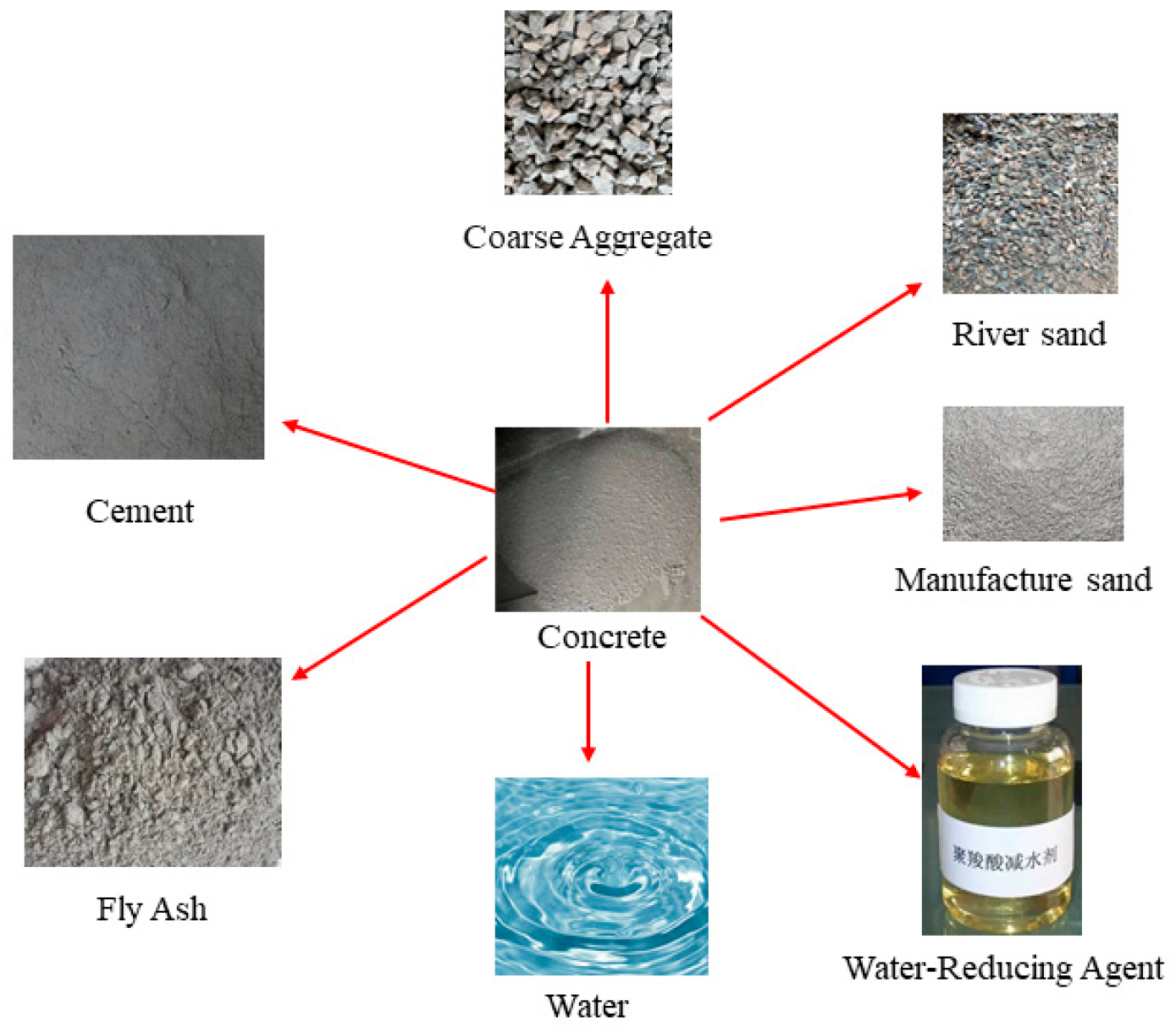
This study primarily investigates the effects of manufactured sand, the water–cement ratio, and fly ash on concrete performance. Therefore, the primary materials used in the concrete for this study are shown in Figure 1.
The cement used was P·O 42.5 ordinary Portland cement produced by Yunnan Far East Cement Co., Ltd. (Qujing City, Yunnan Province, China). In accordance with the Test Methods of Cement and Concrete for Highway Engineering (JTG 3420-2020) [41], the physicochemical properties, initial and final setting times, and strength indices of the P·O 42.5 ordinary Portland cement produced by Yunnan Far East Cement Co., Ltd. were tested. The specific test results are shown in Table 1 and Table 2.
The fly ash used in this study was sourced from Yunnan Jiashiji Technology Co., Ltd. in accordance with the specifications of GB/T 1596-2017 [42]. For the fly ash used for cement and concrete, tests were conducted on indices such as fineness and activity of the fly ash. The fly ash has a fineness of 26% and a 28-day activity index of 75%.
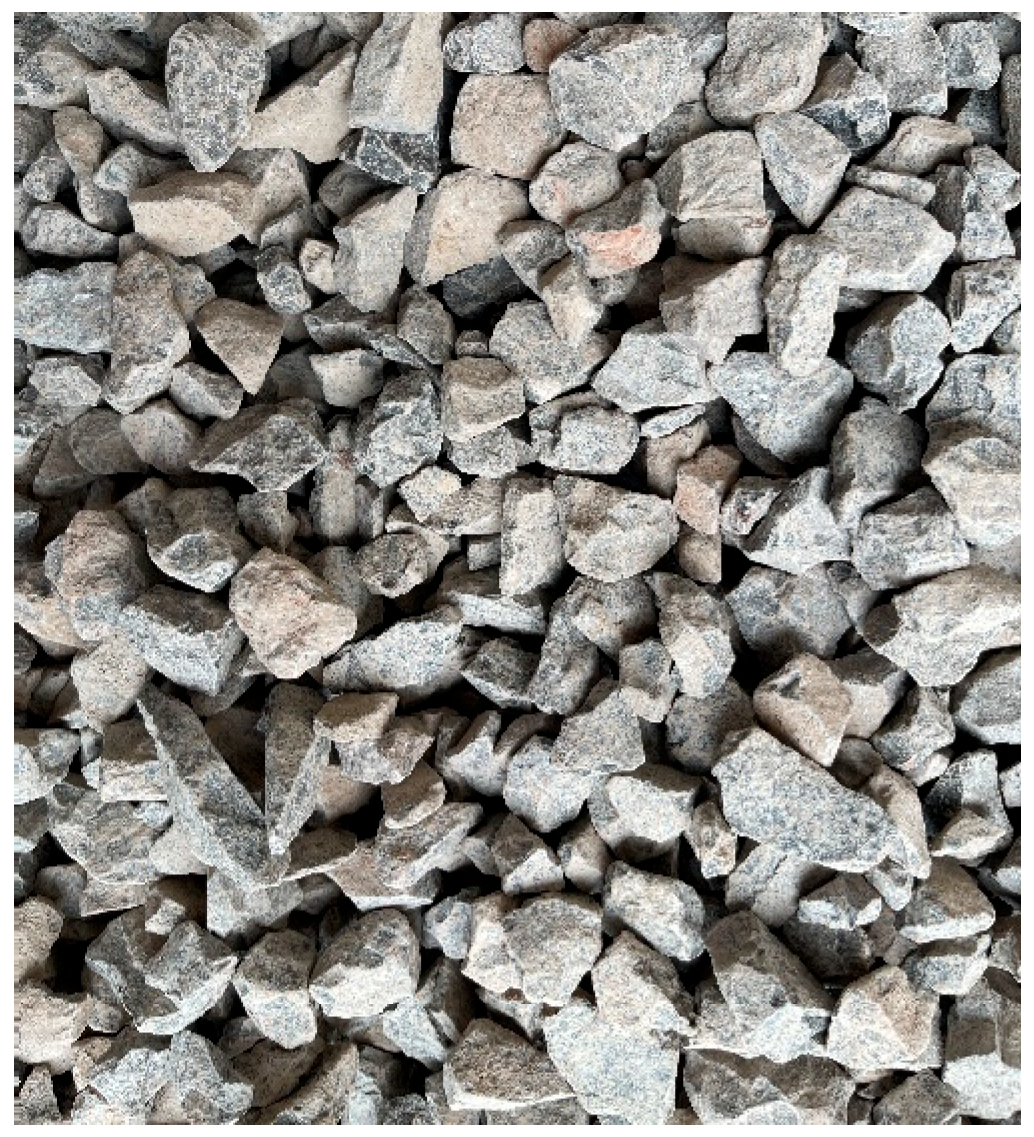
The coarse aggregate used in this study (as shown in Figure 2) is 5–20 mm continuously graded crushed stone, with a blending ratio of 70% for 5–10 mm and 30% for 10–20 mm. The stone powder content is 4%, the crushing value is 8%, and the elongated and flat particle content is 4%.
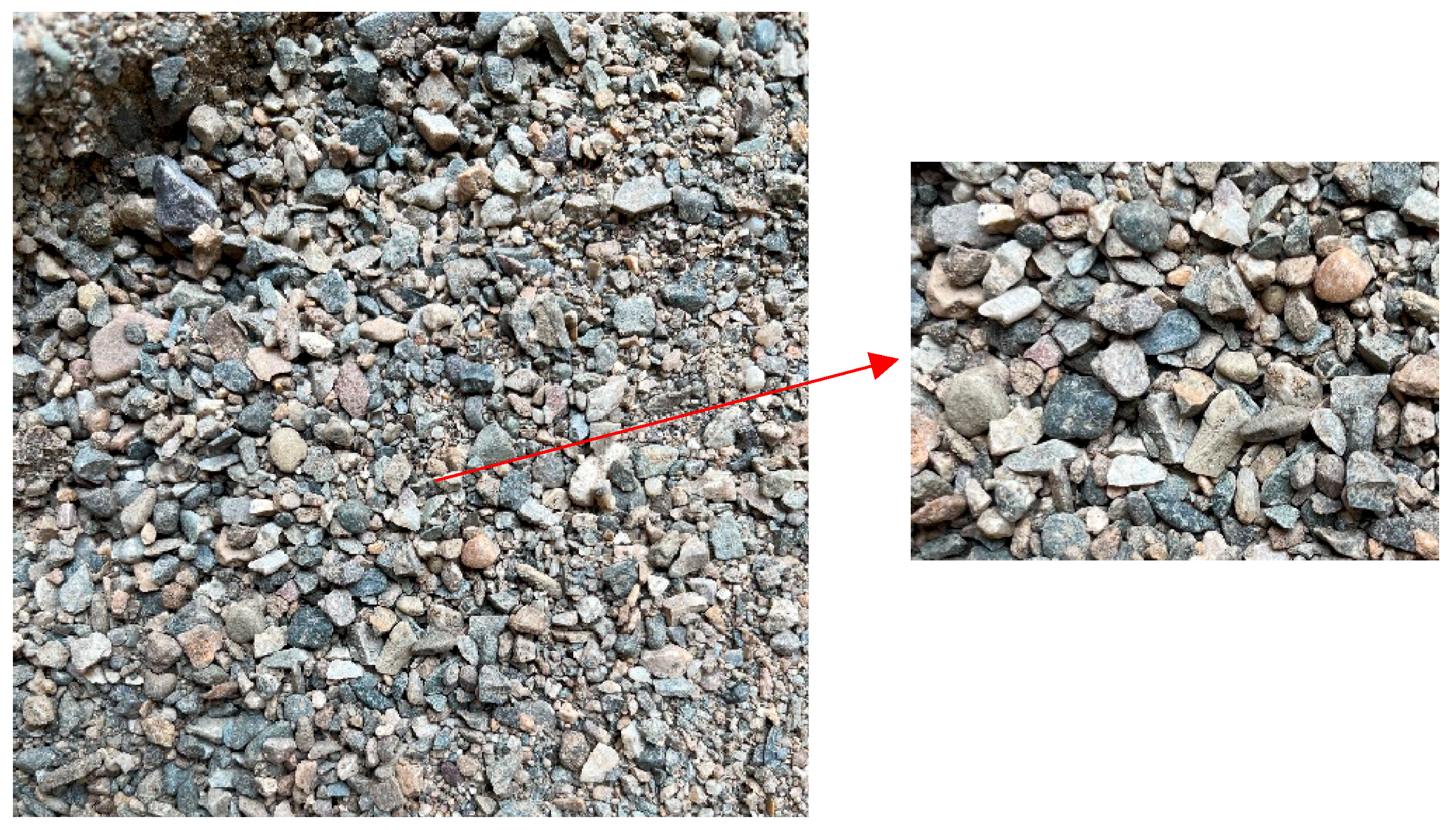
The fine aggregates used in this study consist of natural river sand and manufactured sand with a particle size range of 0.75–4.75 mm. As shown in Figure 3, the river sand used in this test exhibits a relatively discrete particle size distribution, with a maximum particle size of approximately 6 mm. It also contains a significant amount of flaky and elongated mica particles, which is related to the local geological conditions. This results in an unreasonable gradation curve and an excessively high fineness modulus for the river sand.
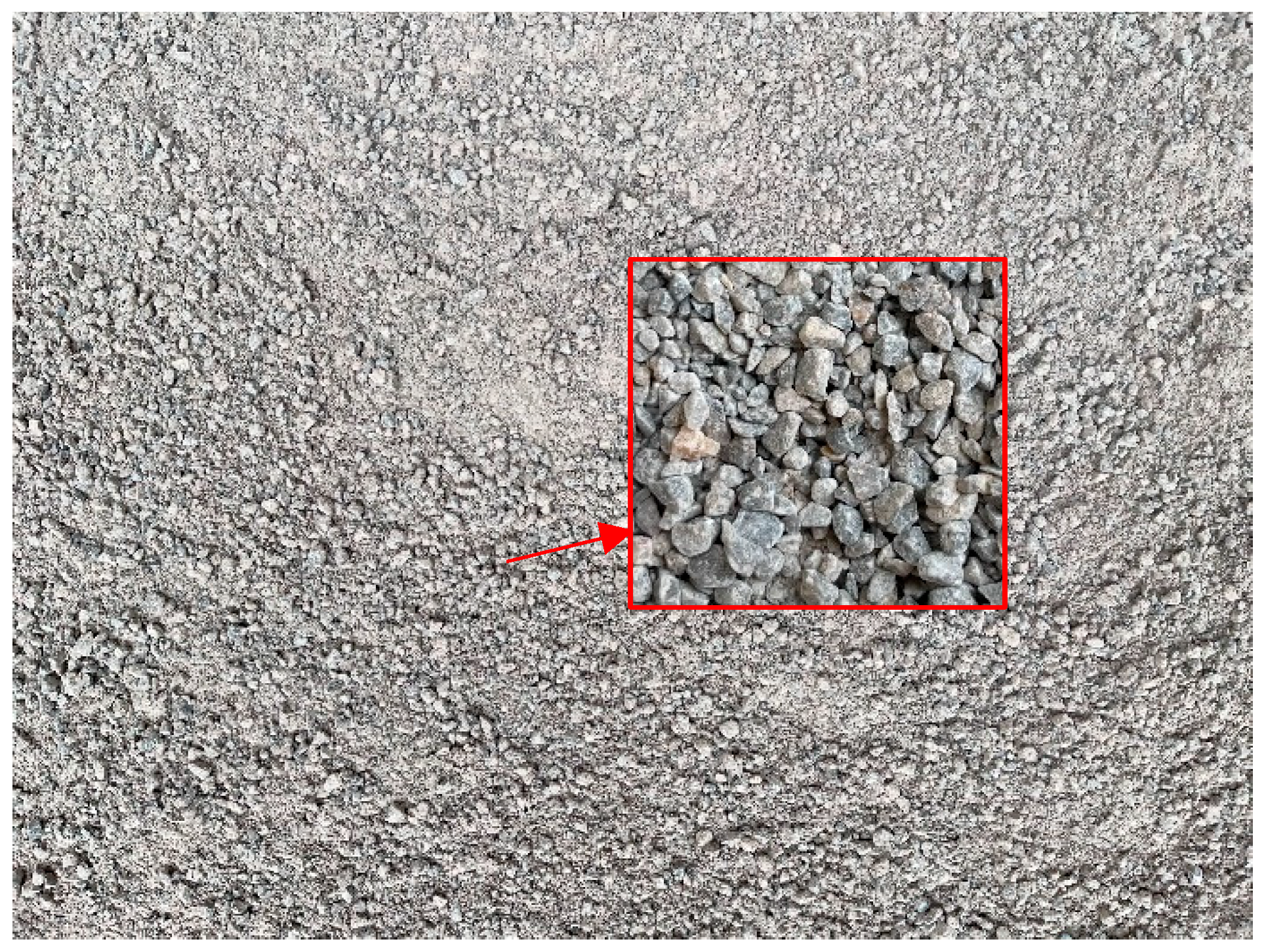
As shown in Figure 4, the manufactured sand used in this experiment is artificial and is produced through the secondary reverse crushing of coarse aggregates. The core principle of the vertical shaft sand maker lies in utilizing self-impact crushing between materials. After entering the high-speed rotating rotor (with a linear velocity of up to 60–80 m/s), the materials are accelerated and ejected, repeatedly colliding with surrounding falling materials or the lining in the vortex chamber, ultimately breaking into sand. This “stone-on-stone” or “stone-on-iron” mode reduces direct equipment wear and effectively improves the particle shape, while allowing controllable stone powder and clay content in the finished sand.
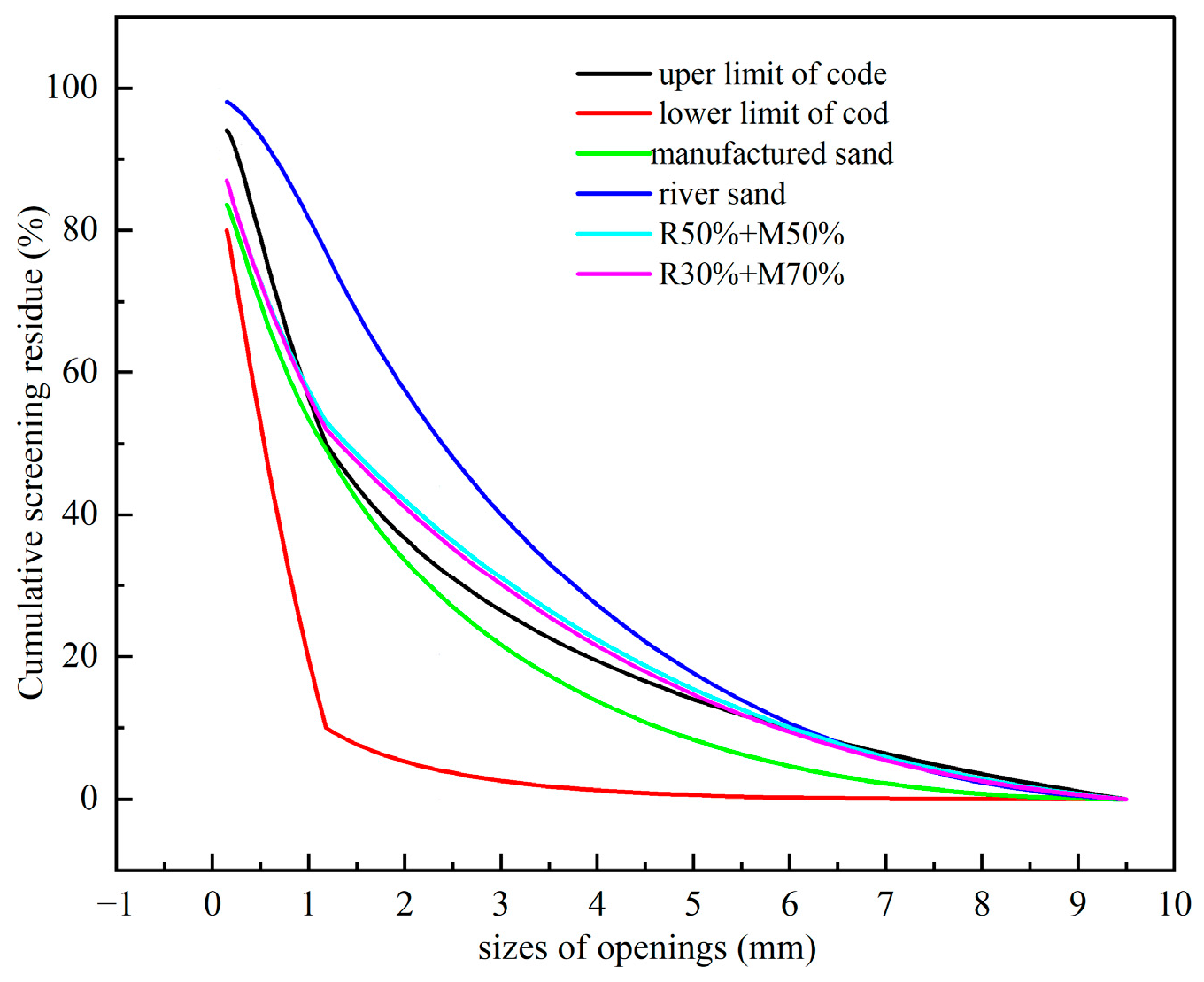
To investigate the influence of manufactured sand blending ratios on concrete performance, the blending ratios of manufactured sand were set at 50%, 70%, and 100%. The gradation curves of river sand, manufactured sand, and blended sand are shown in Figure 5. The test results indicate that the fineness modulus of river sand is 3.1, with a clay content of 0.6% and a crushing value of 4.7%. The manufactured sand has a fineness modulus of 2.9, a clay content of 0.4%, and a crushing value of 14%. Both blended sands (with manufactured sand ratios of 50% and 70%) exhibit a fineness modulus of 3.1.
The admixture used in this study is a composite high-performance polycarboxylate water reducer provided by Yunnan Wuxi Technology Co., Ltd. (Kunming, Yunnan Province, China), which features high water reduction, slump retention, and air-entraining functions. Tests show a water reduction rate of 27.5%. Clean tap water with a pH ≈ 7.0 was used as the mixing water.

2.2. Mix Design

This study aims to prepare C50 concrete, primarily investigating the effects of three factors, the mixed sand ratio, water–binder ratio, and fly ash content, on the workability and mechanical properties of concrete. The mix design was based on the unit weight method, with a target unit weight of 2500 kg/m3. The mix design is shown in Table 3.

2.3. Specimen Preparation and Curing

In accordance with the Standard for Test Methods of Concrete Physical and Mechanical Properties (GB/T50081-2019) [43], the following specimen dimensions were used: 150 mm cubes for compressive strength tests, 150 mm cubes for splitting tensile tests, 150 mm × 150 mm × 600 mm prisms for flexural strength tests, and 150 mm × 150 mm × 300 mm prisms for static elastic modulus tests. For shrinkage performance tests, following the Standard for Test Methods of Long-term Performance and Durability of Concrete (GB/T50082-2024) [44], prism specimens with dimensions of 100 mm × 100 mm × 515 mm were used, with three specimens per test group.
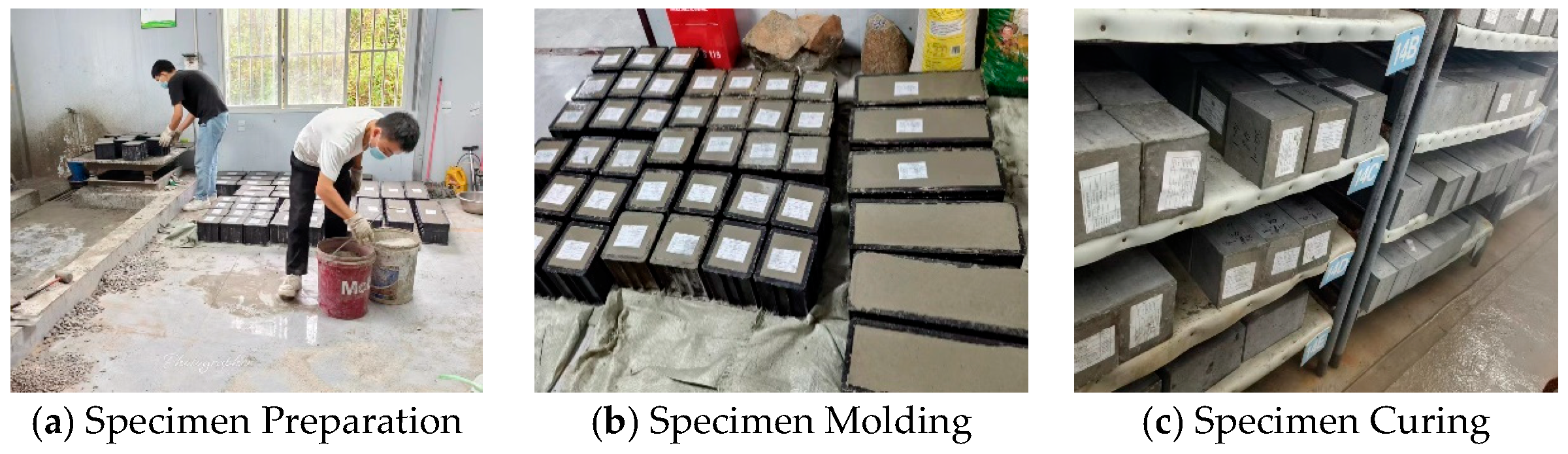
As shown in Figure 6, Prior to casting, the inner walls of the molds were cleaned and coated with a release agent. The freshly mixed concrete was placed into the molds in two layers, with each layer uniformly compacted to remove air bubbles. Surface finishing: After casting, the surface was struck off level with the top of the mold. After molding, the specimens were cured in their molds for 24 h. Demolding was performed carefully to avoid damaging the specimens. Following demolding, the specimens were transferred to a standard curing room maintained at a temperature of (20 ± 2) °C and a relative humidity of not less than 95% for curing until the designated testing ages, depending on the specific test objectives.

2.4. Test Methods

2.4.1. Workability Test Methods

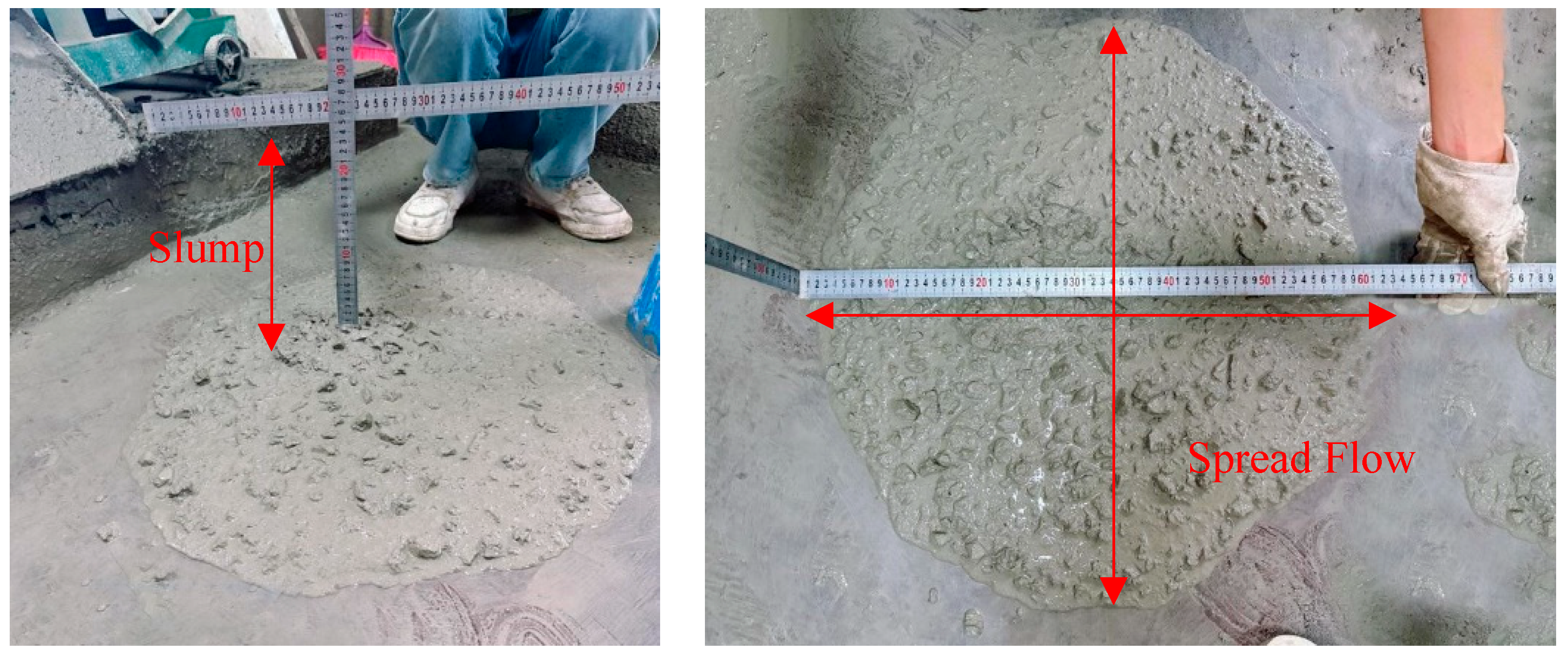
For the workability of concrete, this study tested indicators including slump, spread flow, and inverted slump cone emptying time. As shown in Figure 7, the slump and spread flow were measured using the direct measurement method. The concrete to be tested was filled in three layers into a steel slump cone with a bottom inner diameter of 200 mm, a top inner diameter of 100 mm, and a height of 300 mm. After each layer was filled, the concrete was rodded 25 times evenly from the periphery towards the center using a tamping rod. After filling, excess concrete on the top was struck off level with a trowel. Any spilled concrete around the base of the cone was cleared away. Then, within 5–10 s, the slump cone was lifted vertically and steadily upwards.
Slump Measurement: The slump cone was inverted and placed beside the concrete cone. The tamping rod was placed horizontally on top of the inverted cone. A steel ruler was used to vertically measure the distance from the bottom surface of the tamping rod to the highest point of the slumped concrete cone, with an accuracy of 1 mm. This value is the slump value.
Spread Flow Measurement: A steel ruler or tape measure was used to measure the maximum diameter of the slumped concrete patty, as well as the diameter in the direction perpendicular to it. The average of these two diameters was calculated, with an accuracy of 5 mm. This value is the spread flow value.

2.4.2. Mechanical Performance Test Methods

This study primarily tested the mechanical performance indicators of concrete at different ages, including compressive strength (3 days, 7 days, 28 days, 56 days), splitting tensile strength (28 days, 56 days), flexural strength (28 days, 56 days), and elastic modulus (28 days, 56 days). As shown in Figure 1, a universal testing machine was used for loading during the tests of concrete mechanical performance indicators.
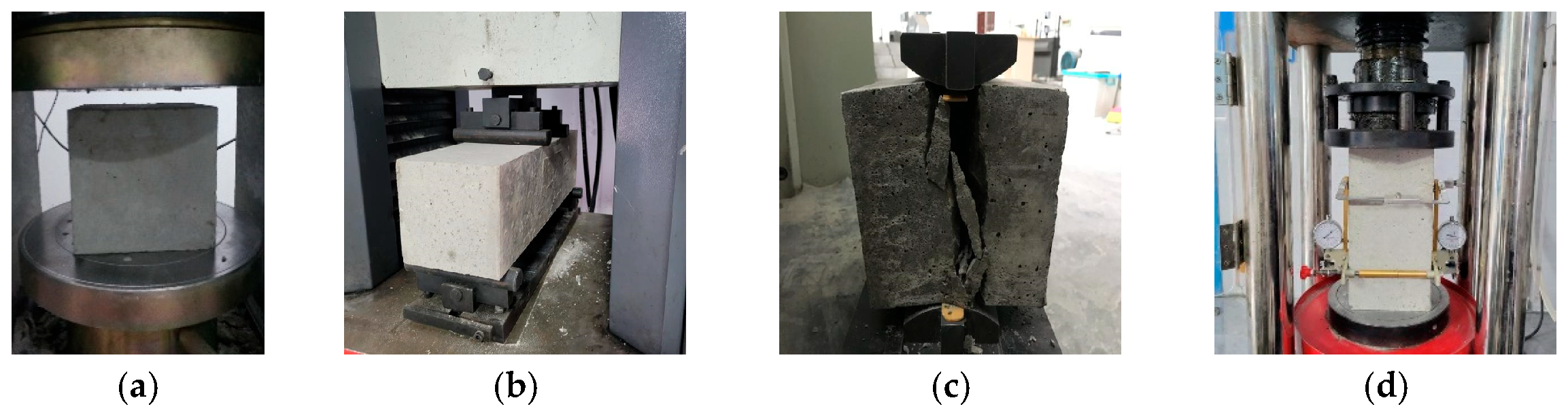
When conducting the compressive strength test, as shown in Figure 8a, a cube specimen with a side length of 150 mm is placed at the center of the lower platen of the testing machine, ensuring that the bearing surface of the specimen is perpendicular to the top surface formed during molding. A load is continuously and uniformly applied at a rate of 0.5–0.8 MPa/s until the specimen fails. The failure load is recorded. The compressive strength of concrete is calculated according to Formula (1), and the arithmetic mean of the strengths of the three specimens in a group is taken as the compressive strength value for that group.
f c c = F A
Note: fcc represents the cube compressive strength of concrete; F is the failure load of the specimen (N); and A is the bearing area of the specimen (mm2).
When conducting the flexural strength test, as shown in Figure 8b, a prismatic specimen with dimensions of 150 mm × 150 mm × 600 mm is used, adopting a third-point loading method. The specimen is placed on two support rollers, and two loading rollers apply concentrated loads at the third points of the span. A load is continuously and uniformly applied at a specified rate (e.g., 0.05–0.08 MPa/s) until the specimen fails. The flexural strength is calculated according to Formula (2), and the arithmetic mean of the strengths of the three specimens in a group is taken as the flexural strength value for that group.
f f = F l b h 2
Note: ff represents the flexural strength of concrete; F is the failure load of the specimen (N); l is the span between supports (mm); b is the width of the specimen cross-section (mm); and h is the height of the specimen cross-section (mm).
As shown in Figure 8c, for the splitting tensile strength test, a cube specimen with a side length of 150 mm is placed at the center of the lower platen of the testing machine. Strips and cushion layers are positioned parallel to each other along the centerlines of the upper and lower bearing surfaces of the specimen. A load is continuously and uniformly applied at a specified rate (e.g., 0.05–0.08 MPa/s) until the specimen undergoes splitting failure. The splitting tensile strength is calculated according to Formula (3), and the arithmetic mean of the strengths of the three specimens in a group is taken as the splitting tensile strength value for that group.
f t s = 2 F π A = 0.637 F A
Note: fts represents the splitting tensile strength of concrete; F is the failure load of the specimen (N); and A is the area of the splitting surface of the specimen (mm2).
Elastic Modulus Testing: As shown in Figure 8d, a prismatic specimen with dimensions of 150 mm × 150 mm × 600 mm is centrally placed on the testing machine. Deformation measuring devices are symmetrically installed on both sides of the specimen to measure deformation within the gauge length (typically 150 mm).
Preloading: The specimen is loaded to an initial load value corresponding to a baseline stress of 0.5 MPa, and the load is held constant for 60 s. It is then unloaded to the initial load at the same rate. This process is repeated twice to eliminate plastic deformation within the specimen and verify the stability of the testing setup.
Formal Testing: During the third loading cycle, the deformation value under the initial load is first recorded. The specimen is then loaded at the same rate to one-third of its axial compressive strength, and the deformation value under this load is recorded.
The static elastic modulus is calculated according to Formula (4), and the arithmetic mean of the results from the three specimens in a group is taken as the static elastic modulus value for that group.
E c = F a F 0 A × L Δ n Δ n = ε a ε 0
Note: Ec is the static elastic modulus of concrete (MPa); Fa is the load at one-third of the axial compressive strength (N); F0 is the initial load at 0.5 MPa (N); A is the bearing area of the specimen (mm2); L is the gauge length (mm); Δn is the average deformation on both sides of the specimen when loading from F0 to Fa during the final cycle (mm); ε a is the average deformation on both sides of the specimen at Fa (mm); and ε 0 is the average deformation on both sides of the specimen at F0 (mm).

2.4.3. Shrinkage Performance Test

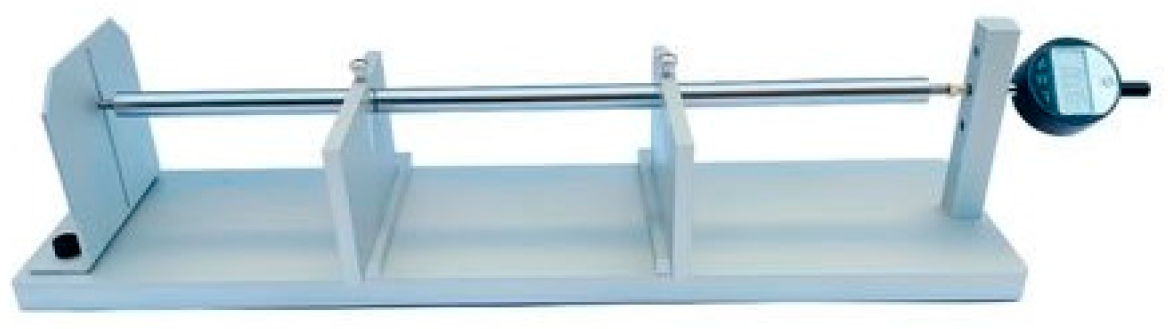
In accordance with the Standard for Test Methods of Long-term Performance and Durability of Concrete (GB/T 50082-2024) [44], this test employed the contact method to measure the early-age shrinkage performance of concrete (Figure 9), specifically the shrinkage ratios at 1, 3, 7, 14, and 28 days. A horizontal comparator was used for the measurements. Three specimens were tested per group, and the shrinkage values for each group at different ages were sequentially obtained. The test results were calculated according to Formula (5).
ε s t = L 0 L t L b
Note: εst is the shrinkage ratio of concrete at test period t (d), where t is counted from the time of initial length measurement; Lb is the gauge length of the specimen (mm); L0 is the initial reading of the specimen length (mm); and Lt is the length reading of the specimen measured at test period t (d).

3. Results and Analysis

3.1. Workability Results

3.1.1. Slump

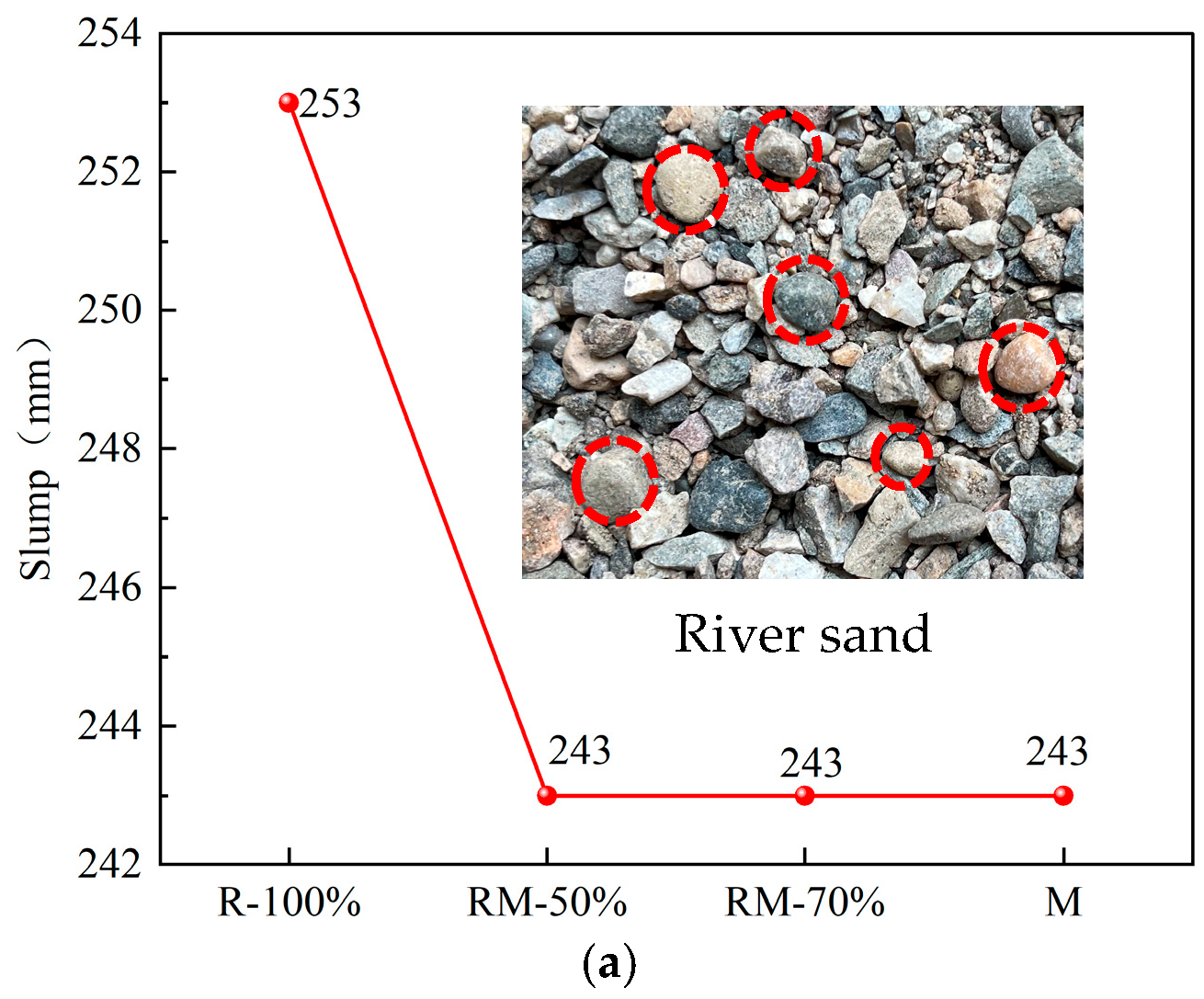
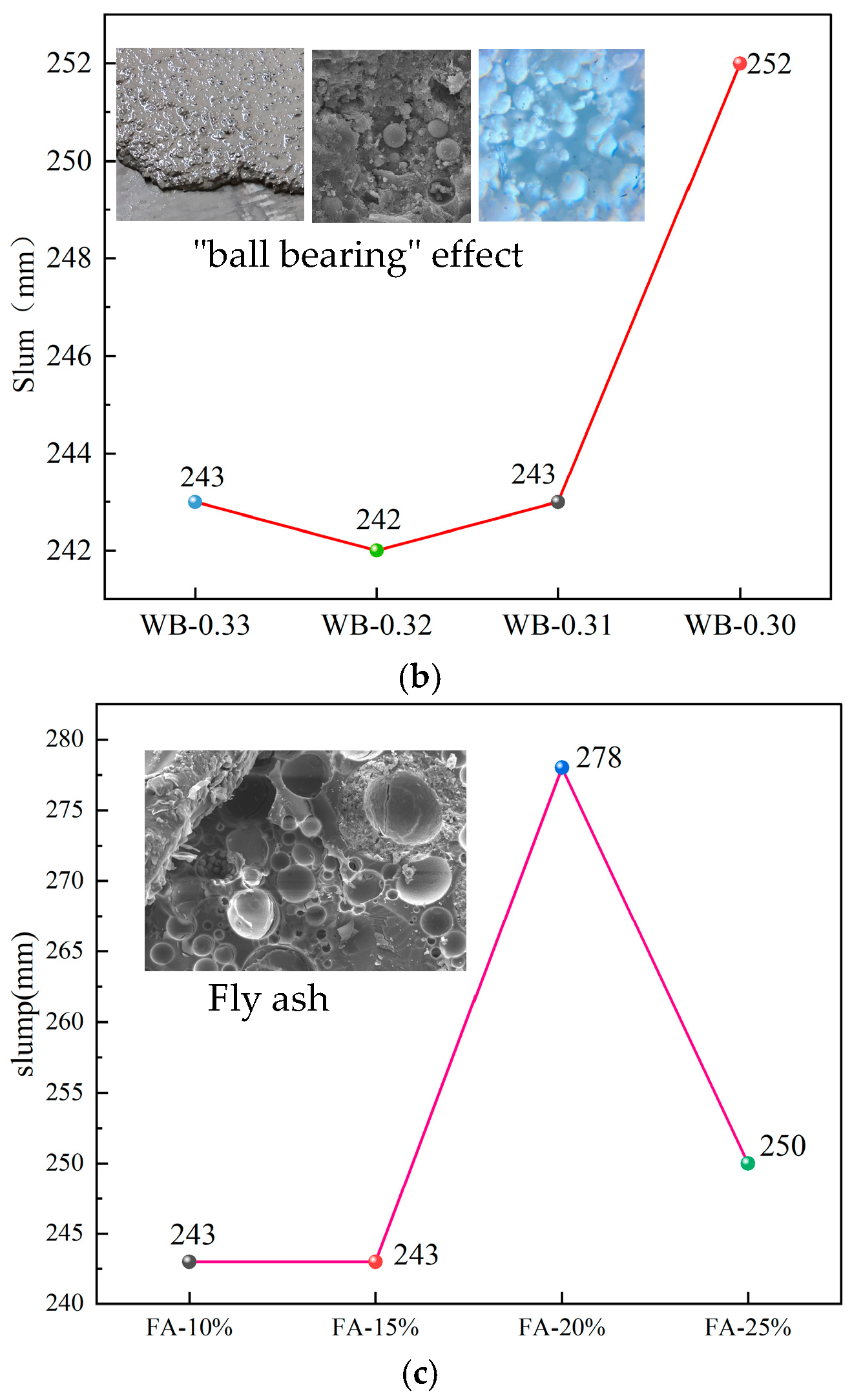
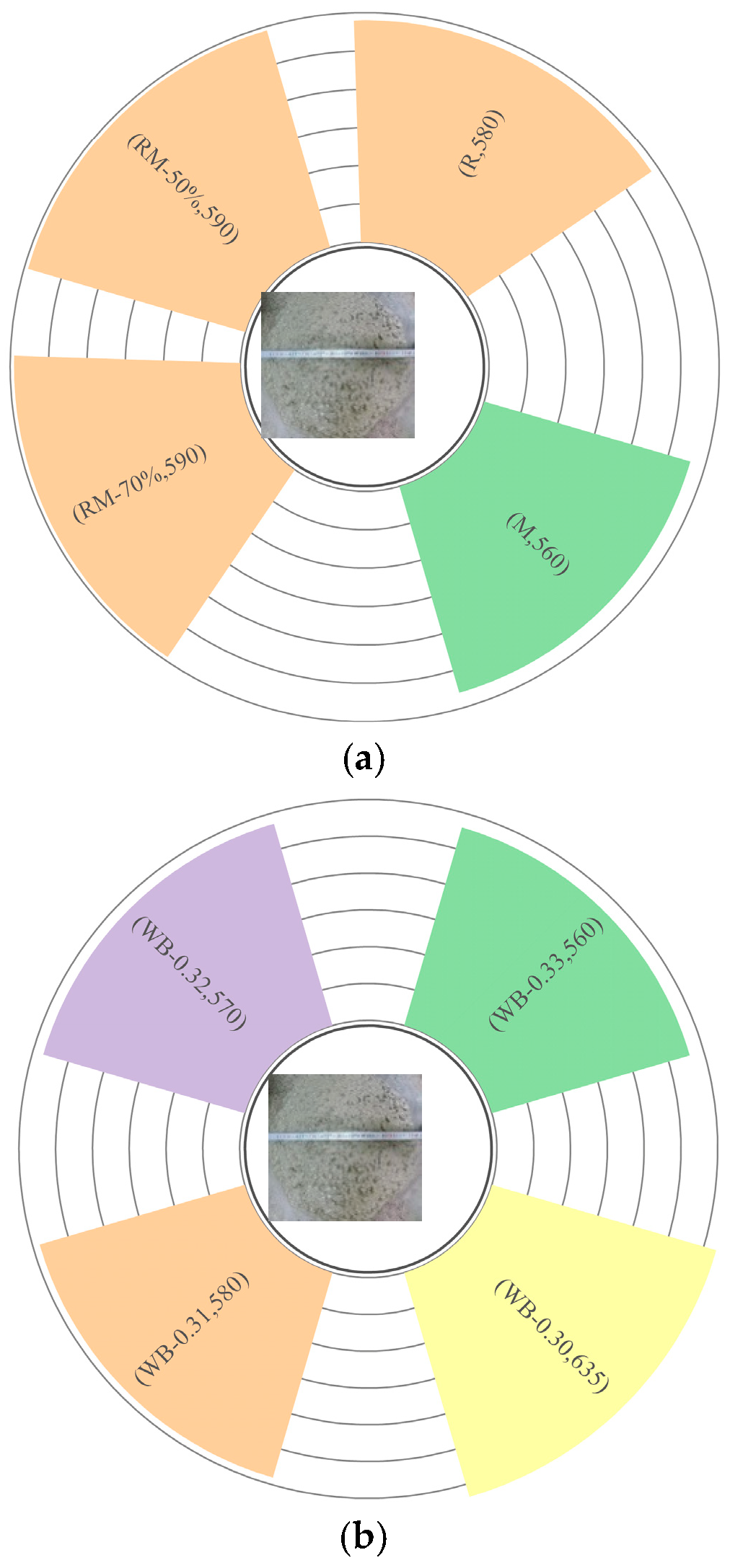
Figure 10 illustrates the workability of concrete under different mix proportions. It can be observed that the mix proportion specimen M-03 exhibits the highest slump, with a maximum value of 278 mm, while the mix proportion specimen M-01 shows the lowest slump, with a minimum value of 242 mm.
Figure 10a depicts the influence of the manufactured sand content on the slump of concrete. It can be seen that the incorporation of manufactured sand reduces the slump of concrete, but the amount of manufactured sand content has no significant effect on the slump. The slump of mixed sand and manufactured sand concrete is lower than that of river sand concrete because the particle shape of river sand fine aggregates is mostly rounded, providing better lubrication and lower internal frictional resistance in the concrete.
Figure 10b shows the effect of the water–binder ratio on the slump of concrete. It can be observed that, as the water–binder ratio decreases, the slump of concrete tends to increase. This is due to the use of high-efficiency water reducers and a higher amount of binder materials in low-water–binder-ratio concrete, forming a binder paste with low viscosity, strong coating and lubrication capabilities, and a low water demand. Additionally, cement and fly ash particles, which are mostly smooth spherical glassy bodies, act as “ball bearings” in the paste, significantly reducing frictional resistance between particles and thereby enhancing fluidity.
Figure 10c presents the influence of the fly ash content on the slump of concrete. It can be seen that, as the fly ash content increases, the slump of concrete tends to rise. However, when the fly ash content reaches 25%, the slump begins to decline. This is because an appropriate amount of fly ash can significantly improve the workability of concrete (as shown in Figure 10b with the “ball bearing” effect). However, when the content is excessive, the specific surface area of fly ash increases sharply, requiring more water for wetting. Under a fixed water-to-binder ratio, the amount of free water available for lubricating the particles is limited. The excessive surface area “competes” for water, leading to insufficient effective free water for coating and lubricating the particles. As a result, the paste becomes more viscous, and fluidity decreases.

3.1.2. Spread Flow

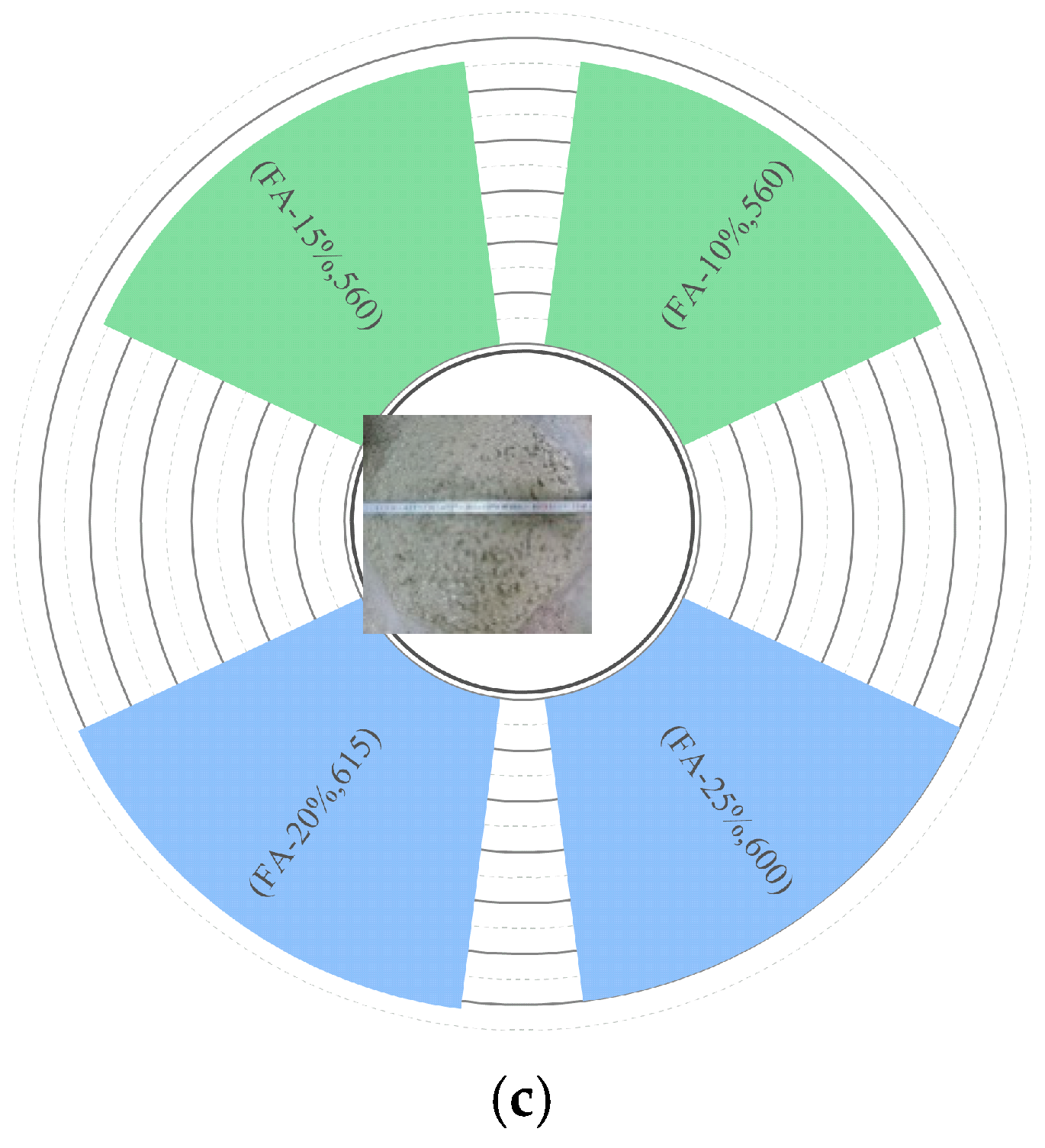
Figure 11 presents the flow spread performance of concrete under different mix proportions. It can be observed that the mix proportion specimen M-03 exhibits the highest flow spread, with a maximum value of 635 mm, while the specimens M and M-04 show the lowest flow spread, with a minimum value of 242 mm.
Figure 11a illustrates the influence of the manufactured sand content on the flow spread of concrete. It can be seen that incorporating an appropriate amount of manufactured sand increases the flow spread of concrete. However, when manufactured sand fully replaces river sand (100% substitution), the flow spread decreases. This is because mixed sand combines the “lubrication effect” of river sand with the “skeleton and filling effect” of manufactured sand, creating a system with a more continuous particle gradation (as shown in Figure 5), reduced internal friction, and more uniform paste distribution. As a result, resistance during flow deformation is minimized. Additionally, the moderate amount of stone powder introduced by manufactured sand in mixed sand provides a valuable “micro-aggregate filling effect” and acts as a “paste consistency regulator.” These particles fill the micro-voids between cement particles, release free water, and enhance the cohesiveness and water retention of the paste. This allows the concrete to maintain uniformity and avoid segregation during the spreading process, forming a well-rounded circular spread cake with full edges. In contrast, pure manufactured sand concrete is highly sensitive to fluctuations in stone powder content and moisture content. Excessive stone powder can easily “lock in water” or “adsorb water reducers,” leading to drastic changes in fluidity.
Figure 11b shows the effect of the water–binder ratio on the flow spread of concrete. It can be observed that, as the water–binder ratio decreases, the flow spread of concrete tends to increase, which is consistent with the trend observed for slump. Low-water–binder-ratio concrete incorporates high-efficiency water reducers and a higher amount of binder materials, forming a binder paste with low viscosity, strong coating and lubrication capabilities, and a low water demand. Moreover, cement and fly ash particles, which are predominantly smooth spherical glassy bodies, act as “ball bearings” in the paste, significantly reducing interparticle friction and thereby enhancing the flow spread of concrete.
Figure 11c demonstrates the influence of the fly ash content on the flow spread of concrete. It can be seen that, as the fly ash content increases, the flow spread of concrete tends to rise. However, when the fly ash content reaches 25%, the flow spread begins to decline. The initial increase in flow spread is due to the "ball bearing effect" of fly ash, which reduces internal friction (Figure 10b). The subsequent decline occurs when fly ash content surpasses the optimum. The large surface area of the excess fly ash particles absorbs a significant portion of the mixing water. Under a fixed water-to-binder ratio, this reduces the thickness of the water film lubricating the solid particles, thereby increasing the paste’s viscosity and hindering flow.

3.2. Mechanical Properties

3.2.1. Analysis of Compressive Strength Influence

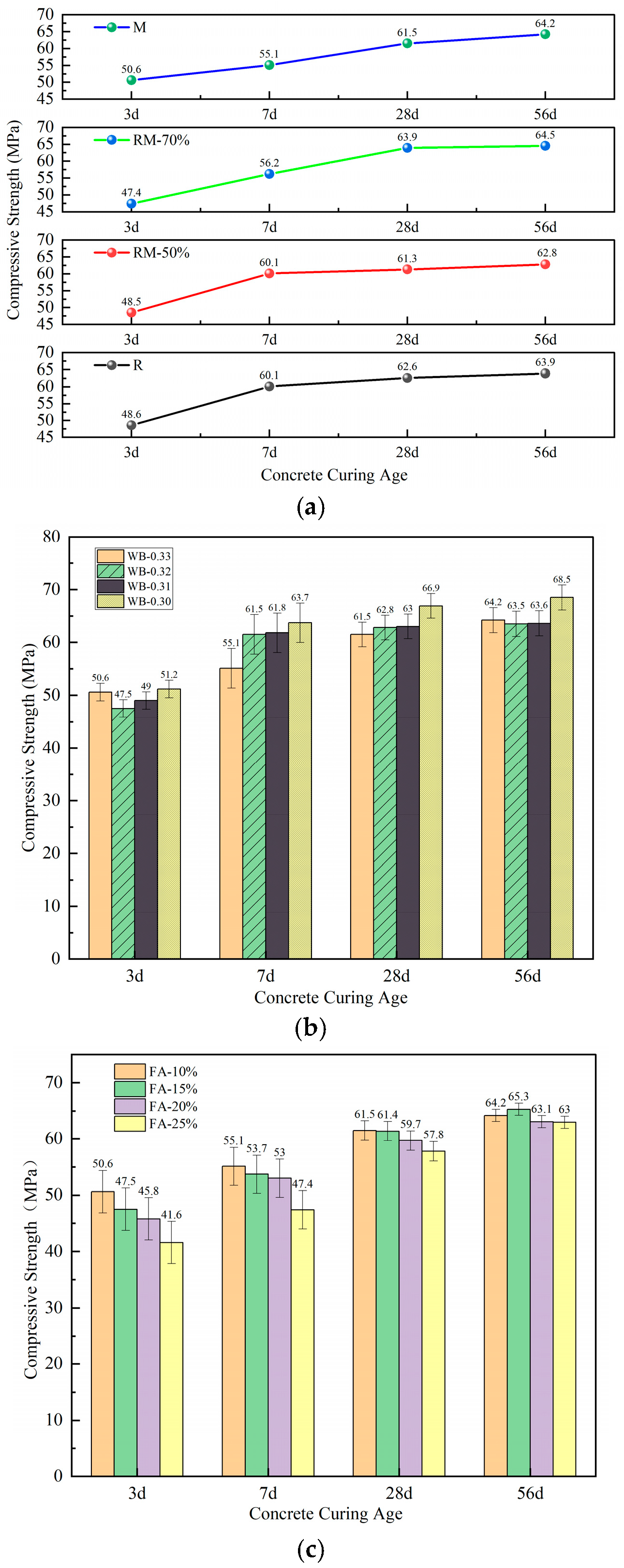
Figure 12 shows the distribution of the cube compressive strength of concrete at different ages under various mix design conditions. Figure 12a illustrates the effect of the manufactured sand replacement rate on the compressive strength. It can be observed that, at 3 days, the specimen with fine aggregates entirely composed of manufactured sand achieved the highest strength of 50.6 MPa, while at 56 days the specimen with 70% manufactured sand in the fine aggregates exhibited the highest strength of 64.5 MPa. The compressive strength increased notably from 3 to 7 days, but showed limited growth from 28 to 56 days. This is attributed to the fine particle size of the cement, which allowed hydration to proceed sufficiently by 28 days, resulting in minimal strength gains thereafter. Figure 12b presents the influence of the water–binder ratio on the concrete compressive strength. As the water–binder ratio decreased, the strength of the concrete increased. At 56 days, specimen M-03, with a water–cement ratio of 0.30, showed a 6.7% increase in compressive strength compared to specimen M, with a water–binder ratio of 0.33. Figure 12c demonstrates the effect of the fly ash content on the concrete compressive strength. As the fly ash content increased, the strength tended to decrease. At 3 days, a 25% fly ash content resulted in a 17.8% lower compressive strength compared to a 10% content. However, at 28 and 56 days, the reductions were only 6% and 1.9%, respectively. This indicates that, with extended curing time, the hydration of fly ash becomes more complete, leading to a more significant improvement in later-age strength.

3.2.2. Analysis of Flexural Strength Influence

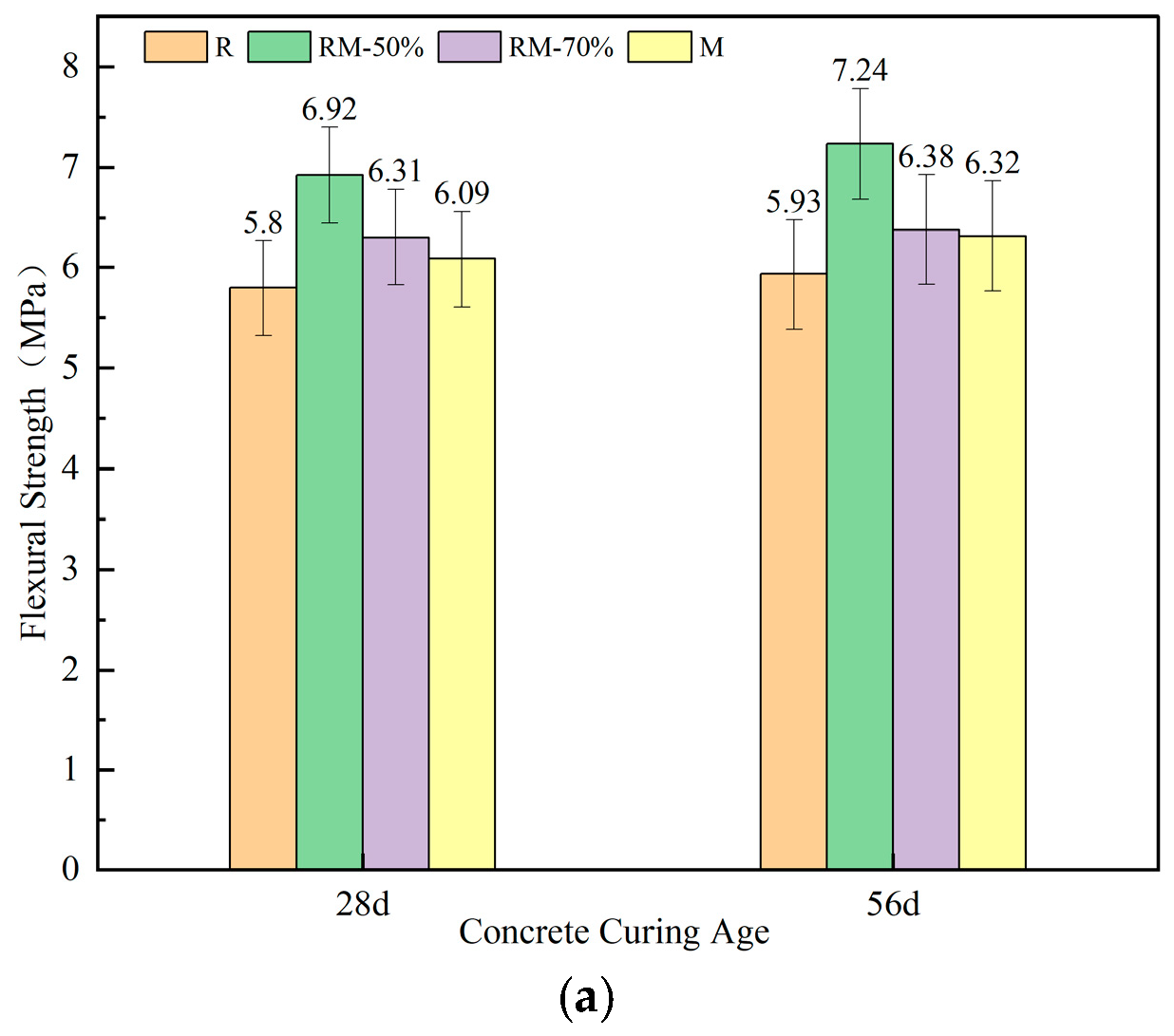
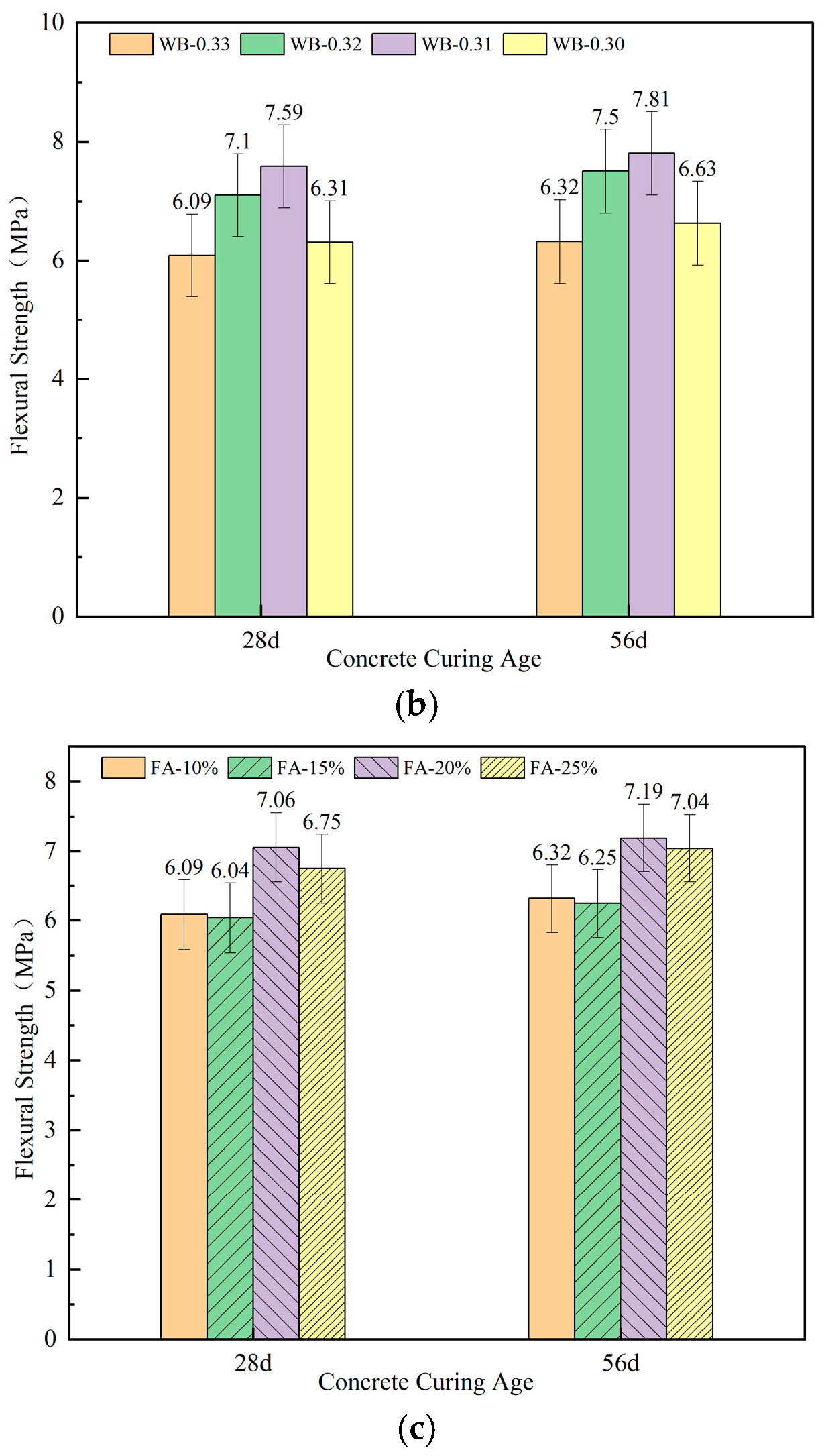
Figure 13 presents the distribution of flexural strength for concrete cured for 28 days and 56 days under different mix design conditions. Figure 13a illustrates the effect of the manufactured sand replacement rate on the flexural strength. The mix with the highest flexural strength was RM-50%, achieving values of 6.92 MPa and 7.24 MPa at 28 and 56 days, respectively. This represents increases of 12.2% and 12.8% compared to specimen M, which had the optimal fine aggregate gradation curve. The reason for this lies in the particle size distribution below 1.18 mm. Although specimen M had the optimal gradation curve, the proportion of manufactured sand below 1.18 mm was 50.8%. In contrast, this proportion in RM-50% was 61%, indicating that RM-50% can more effectively fill internal voids, thereby enhancing flexural strength.
Figure 13b shows the effect of the water–binder ratio on the flexural strength. As the water–binder ratio decreased, the flexural strength generally increased. However, when the ratio dropped to 0.30, the flexural strength decreased instead. The highest flexural strengths of 7.59 MPa and 7.81 MPa at 28 and 56 days, respectively, were observed at a water–binder ratio of 0.31. The above results can be attributed to the fact that, the lower the water–binder ratio of the concrete, the more severe the self-desiccation phenomenon. This occurs because, when the paste shrinks, the aggregate (with its high elastic modulus) remains largely undeformed, generating tensile stress at the aggregate–paste interface. If this tensile stress exceeds the early-age tensile strength of the interface, microcracks will develop. During flexural testing (bending tension), these microcracks rapidly propagate and interconnect, leading to a reduction in strength. Secondly, the lower the water–binder ratio, the less complete the hydration of cement particles. Although unhydrated particles can act as micro-fillers, if they are not uniformly distributed, they may instead become defects. The subsequent microstructural results also confirm that a portion of the cementitious materials remained unhydrated within the concrete, forming initial defects and consequently leading to a decrease in the flexural strength of the concrete.
Figure 13c demonstrates the effect of the fly ash content on the concrete flexural strength. As the fly ash content increased, the variation in flexural strength showed considerable discreteness. The highest flexural strengths at 28 and 56 days, 7.06 MPa and 7.19 MPa, respectively, were achieved at a fly ash content of 20%. This variability is primarily caused by the combined effects of the “inherent variability in the quality” of fly ash and the “non-linear influence of its dosage.” Specifically, within the same batch of fly ash, the mineral content can vary significantly between different usage amounts, leading to considerable discreteness in its effects on the hydration reaction and, consequently, the strength development.

3.2.3. Analysis of Splitting Tensile Strength Influence

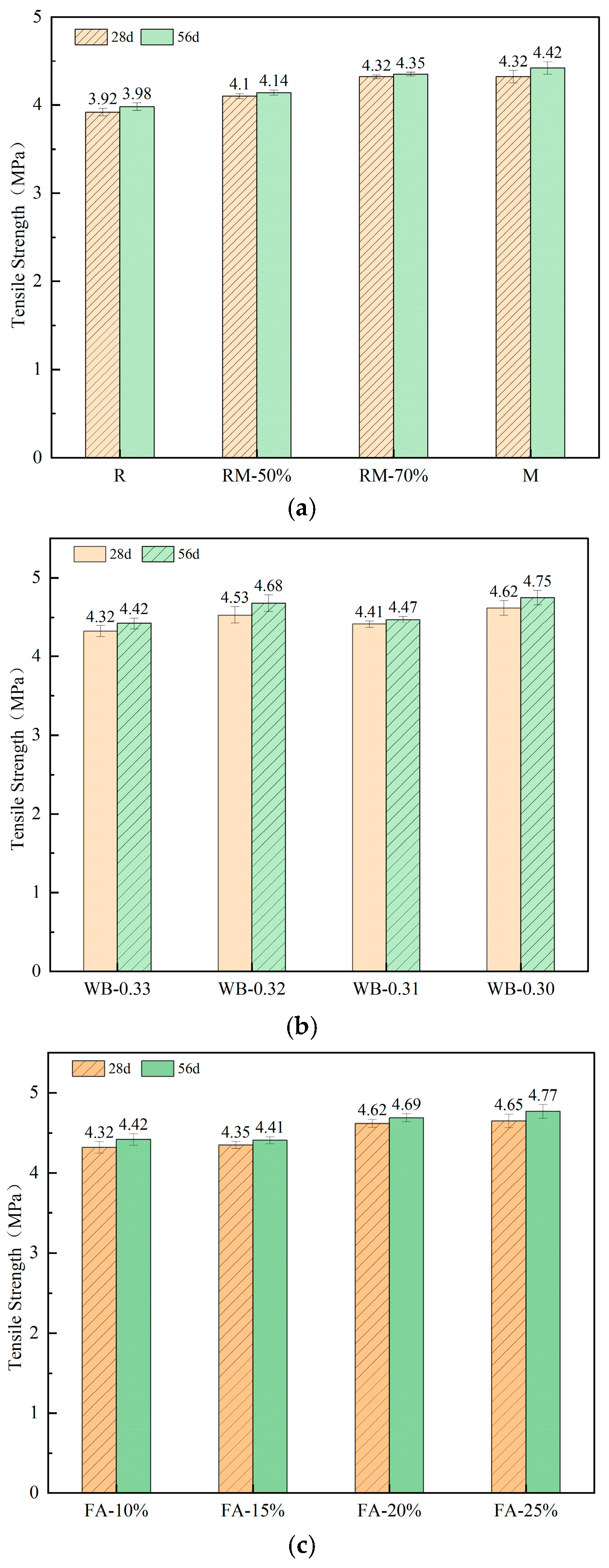
Figure 14 illustrates the distribution of splitting tensile strength for concrete cured for 28 and 56 days under different mix design conditions. Figure 14a demonstrates the effect of the manufactured sand replacement rate on the splitting tensile strength. It can be observed that the splitting tensile strength increases with a higher replacement rate of manufactured sand. Specimen M, with fine aggregates entirely composed of manufactured sand, exhibited the highest splitting tensile strengths of 4.32 MPa and 4.42 MPa at 28 and 56 days, respectively. The reason lies in the rougher surface texture of manufactured sand compared to the smoother surface of river sand, which provides stronger mechanical interlocking. Furthermore, river sand often contains a higher proportion of flaky and elongated particles, which tend to create stress concentrations and become weak points under load. Consequently, Specimen M demonstrated a superior splitting tensile resistance.
Figure 14b presents the influence of the water–cement ratio on splitting tensile strength. As the water–binder ratio decreases, the splitting tensile strength of concrete increases. When the water–binder ratio was 0.3, the concrete achieved splitting tensile strengths of 4.62 MPa and 4.75 MPa at 28 and 56 days, respectively. This is primarily because reducing the water–binder ratio directly minimizes the capillary pores within the concrete, resulting in a denser cement paste matrix. It also significantly strengthens the interface transition zone (ITZ) between the cement paste and the aggregate. The combined effect of a stronger matrix and enhanced interfacial bonding contributes to an improved capacity to resist tensile stresses.
Figure 14c shows the effect of the fly ash content on the splitting tensile strength of concrete. The splitting tensile strength increases with a higher fly ash content. In addition to its pore-filling and densifying effects, fly ash possesses pozzolanic activity. With prolonged curing, the hydration of fly ash becomes more complete, leading to a more pronounced contribution to strength development. At a dosage of 25%, the splitting tensile strengths reached 4.65 MPa and 4.77 MPa at 28 and 56 days, respectively.

3.2.4. Analysis of Static Elastic Modulus Influence

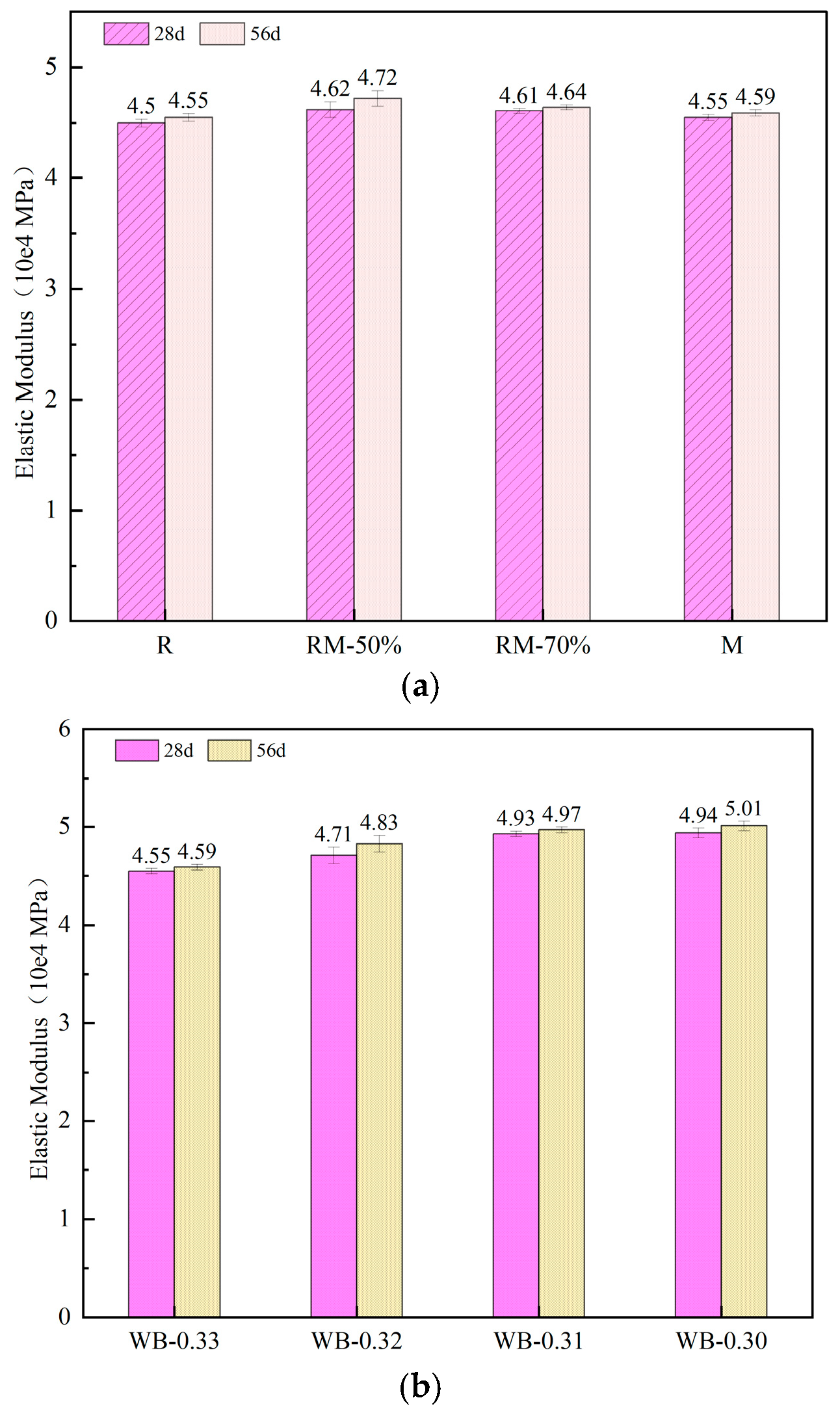
Figure 15 illustrates the distribution of the static elastic modulus for concrete cured for 28 and 56 days under different mix design conditions. Figure 15a shows the effect of the manufactured sand replacement rate on the static elastic modulus. The variation in the replacement rate of manufactured sand has little impact on the static elastic modulus. Specimen RM-50% exhibited the highest elastic modulus, reaching maximum values of 4.62 × 10⁴ MPa and 4.72 × 10⁴ MPa at 28 and 56 days, respectively. This represents an increase of only 2.7% compared to specimen R.
Figure 15b presents the influence of the water–binder ratio on the static elastic modulus. As the water–binder ratio decreases, the static elastic modulus of concrete increases. At a water–binder ratio of 0.3, the concrete achieved static elastic moduli of 4.94 × 10⁴ MPa and 5.01 × 10⁴ MPa at 28 and 56 days, respectively. This is attributed to the cement paste formed at a low water–cement ratio, which inherently has fewer pores and a greater stiffness, resulting in a higher elastic modulus.
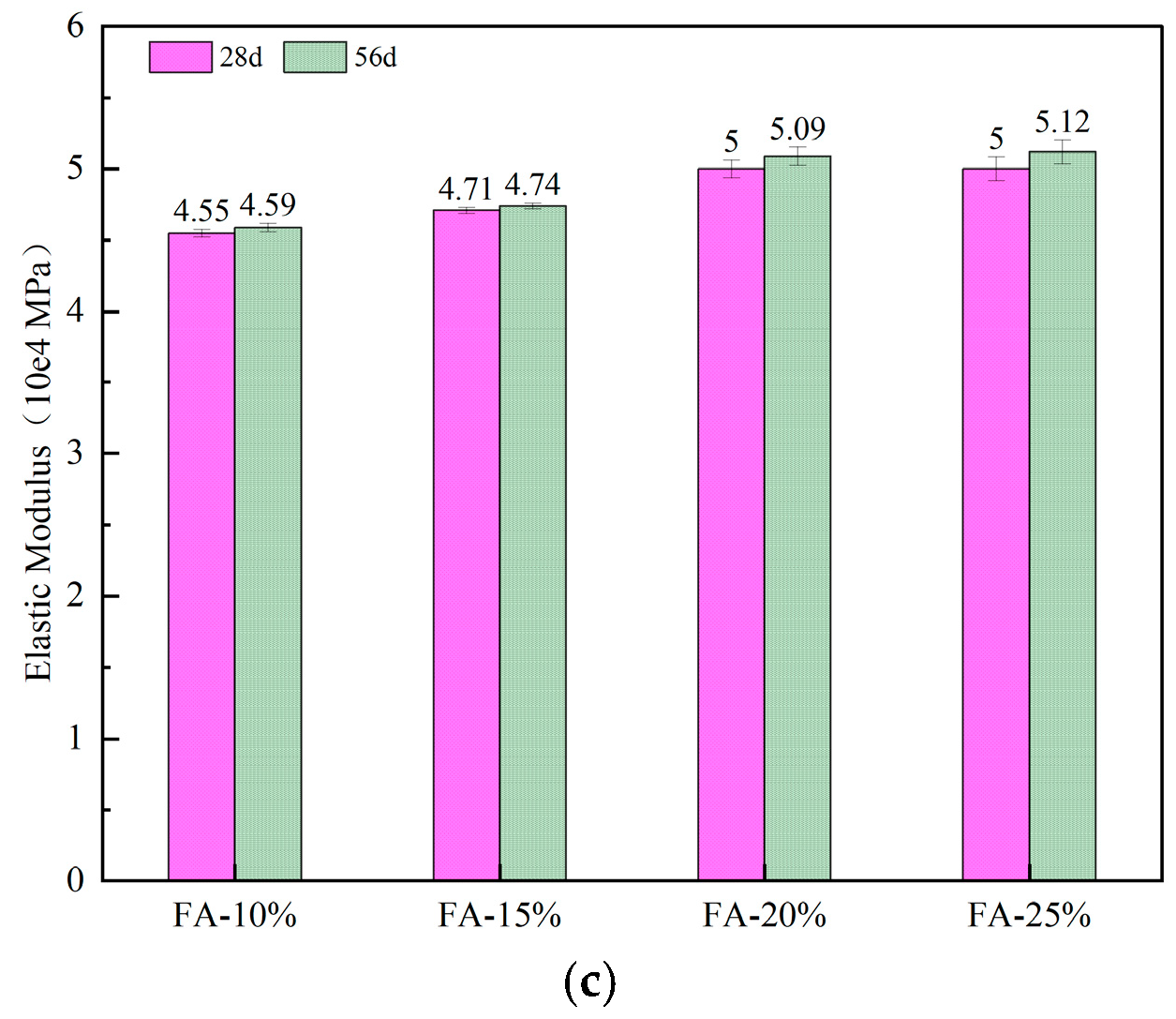
Figure 15c demonstrates the effect of the fly ash content on the static elastic modulus of concrete. As the fly ash content increases, the static elastic modulus of concrete also increases. At a dosage of 25%, the concrete attained static elastic moduli of 5.0 × 10⁴ MPa and 5.12 × 10⁴ MPa at 28 and 56 days, respectively. The underlying reason is that, with prolonged curing, the active components in the fly ash undergo a “secondary hydration reaction” with calcium hydroxide produced from cement hydration, generating additional calcium silicate hydrate gel. This refines the pore structure and strengthens the interfacial transition zone between the cement paste and aggregates, thereby enhancing the later-age density and stiffness and increasing the elastic modulus.

3.2.5. Early-Age Shrinkage Performance

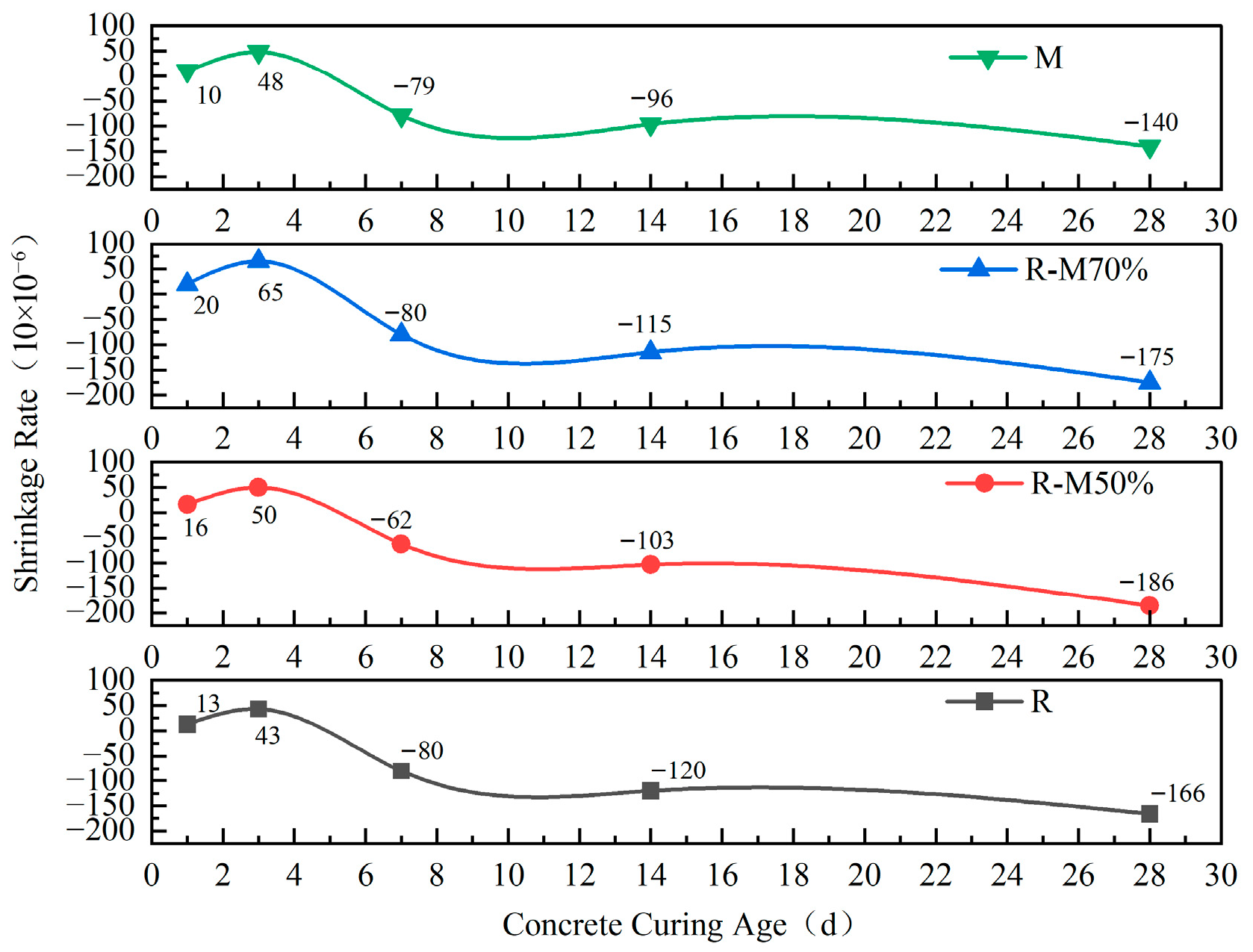
For mass concrete, early-age shrinkage performance is not only an important indicator but is also one of the core controlling factors determining its success or failure. This study primarily investigates the influence of the manufactured sand replacement rate on the early-age shrinkage performance of concrete. As shown in Figure 16, all concrete specimens exhibited expansion before 3 days, and all showed shrinkage by 7 days. As the curing age increased, the total shrinkage deformation of the concrete progressively increased. The differences in expansion and shrinkage deformation among river sand, mixed sand, and manufactured sand were relatively small. The maximum differences in expansion and shrinkage deformation between river sand and manufactured sand were 5 µm/m and −26 µm/m, respectively. The maximum expansion deformation was observed in specimen R-M70% at 3 days, with an expansion value of 65 µm/m, while the minimum was in specimen R, with an expansion rate of 43 µm/m. The maximum shrinkage deformation occurred in specimen R-M50% at 28 days, with a shrinkage rate of −186 µm/m.
The phenomenon of initial expansion followed by shrinkage after concrete pouring is primarily caused by physicochemical changes in the following two stages:
Early-age expansion (from a few hours to 1–2 days after pouring): The hydration reaction between cement and water releases significant heat (especially in mass concrete), causing a notable rise in the internal temperature of the concrete. Aluminate phases in the cement (such as C3A) react with gypsum to form needle-like ettringite crystals.
Later-age shrinkage (from 3 days onward to the long term): After the dissipation of hydration heat, the concrete temperature gradually decreases to the ambient temperature, leading to volume reduction due to thermal contraction. Furthermore, moisture within the concrete evaporates into the drier environment, forming menisci in the capillary pores. This generates capillary tension, resulting in volume shrinkage.

4. Thermal Stress Analysis

4.1. Adiabatic Temperature Rise

According to the relevant provisions of the Code for Construction of Mass Concrete (GB 50496-2018) [45] and the Test Code for Hydraulic Concrete (DL/T 5150) [46], the adiabatic temperature rise of concrete can be calculated using Equation (6):
T ( t ) = W Q C ρ ( 1 e m t )
Note: T(t) is the adiabatic temperature rise of concrete at age t (°C); W is the binder content per cubic meter of concrete (kg/m3); W is the mass density of concrete (kg/m3); t is the concrete age (d); and m is the adjustment coefficient.
m = k m 0
m 0 = A W + B
W = λ W C
Note: m0 is the corresponding coefficient for equivalent Portland cement; W is the dosage of equivalent Portland cement (kg); A, B are the formwork entry temperature coefficients; WC is the dosage of other Portland cement per unit volume (kg); and λ is the correction coefficient.

4.2. Calculation of Thermal Stress

The temperature difference between the interior and surface of the concrete pour can be calculated using Equation (10):
Δ T 1 ( t ) = T m ( t ) T b ( t )
Note: Δ T 1 ( t ) is the temperature difference between the interior and surface of the concrete pour at age t (°C); T m ( t ) is the maximum temperature inside the concrete pour at age t (°C); and T b ( t ) is the ambient temperature at age t (°C).
The maximum self-restraint tensile stress generated by the temperature difference between the interior and surface during concrete pouring can be calculated using Equation (11):
σ zmax = α 2 · E i ( t ) · Δ T 1 max ( t ) · H ( t , τ )
Note: σ zmax is the maximum self-restraint stress (MPa); α is the coefficient of linear expansion of concrete; Δ T 1 max ( t ) is the maximum possible temperature difference between the interior and surface of the concrete pour at age t (°C); E ( t ) is the elastic modulus of concrete; and H ( t , τ ) is the relaxation coefficient from age τ to age t.
Taking C50 concrete as an example, with an elastic modulus E ( t ) = 2.0 × 10⁴ MPa, an ambient temperature of 20 °C, and after 2 days of pouring, where the coefficient of linear expansion of concrete α = 1 × 10⁻⁵/°C and the concrete relaxation coefficient H ( t , τ ) = 1.0, the self-restraint stress generated by temperature differences under different mix proportions can be calculated using Table 4, Equations (10) and (11).
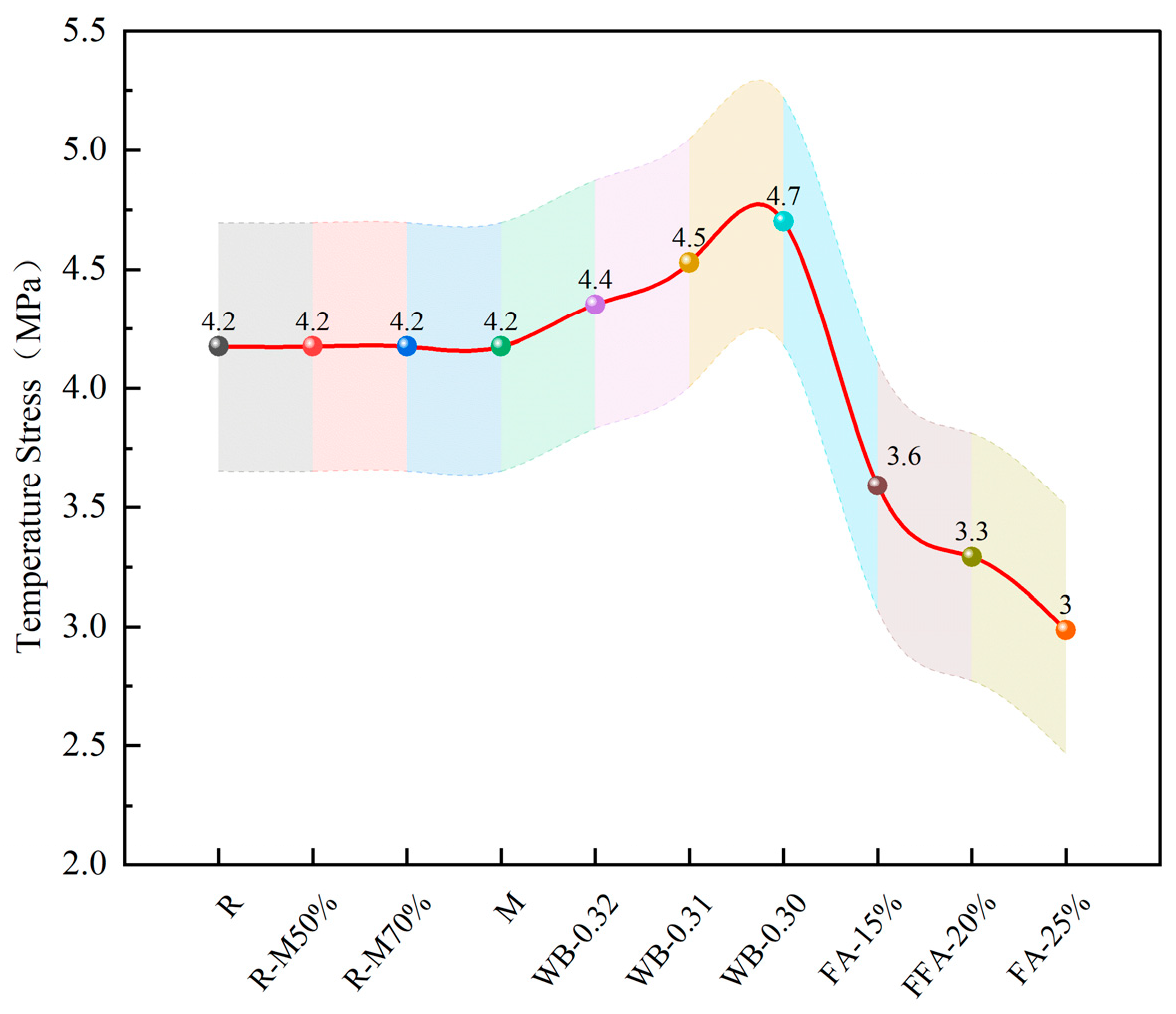
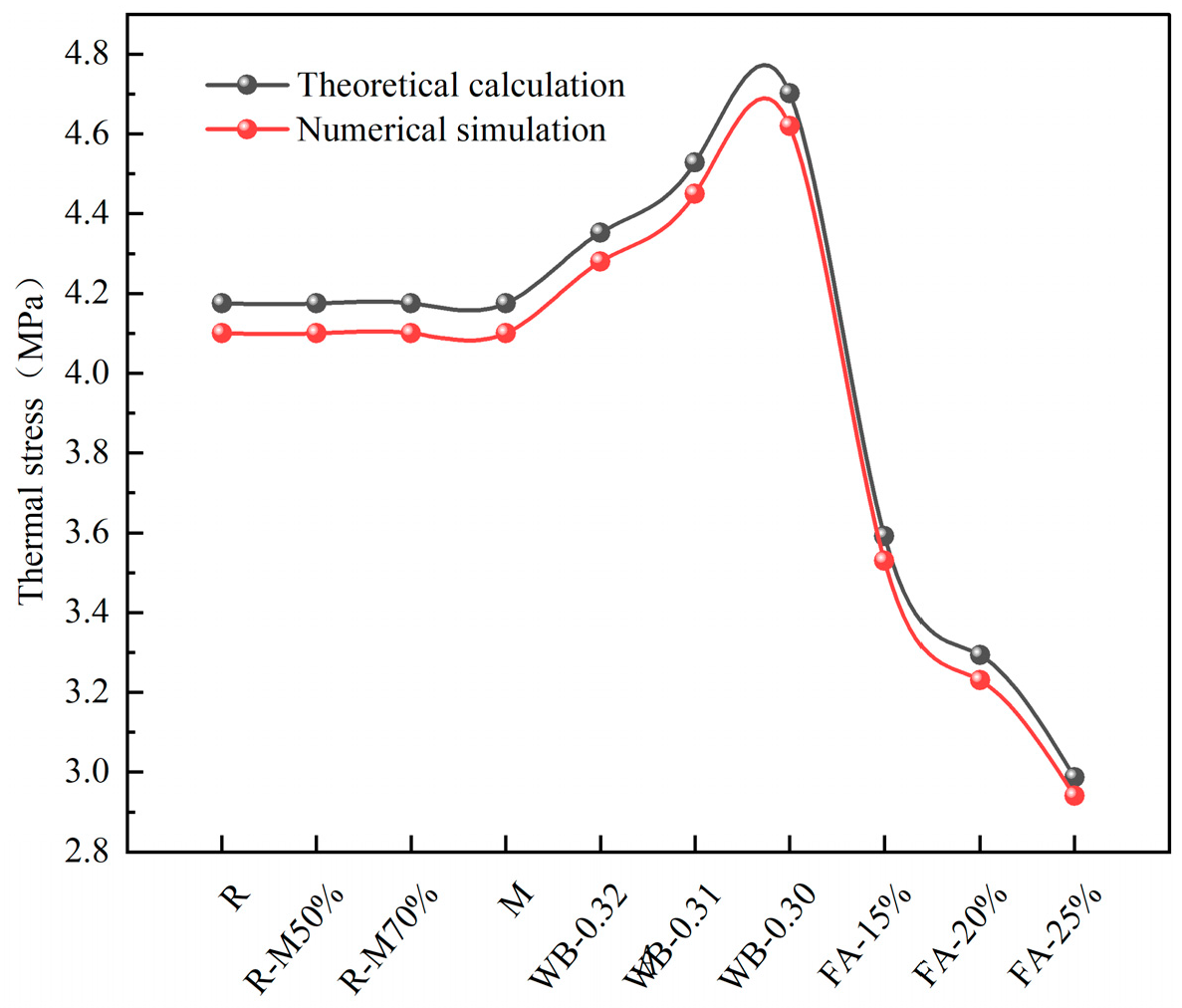
The results are shown in Figure 17. It can be observed that the maximum thermal stress caused by the temperature difference occurs in specimen M-03, which has the smallest water–cement ratio, with a stress value of 4.7 MPa. The minimum stress is found in specimen M-06, which contains 25% fly ash, with a stress value of 3.0 MPa.

4.3. Numerical Simulation

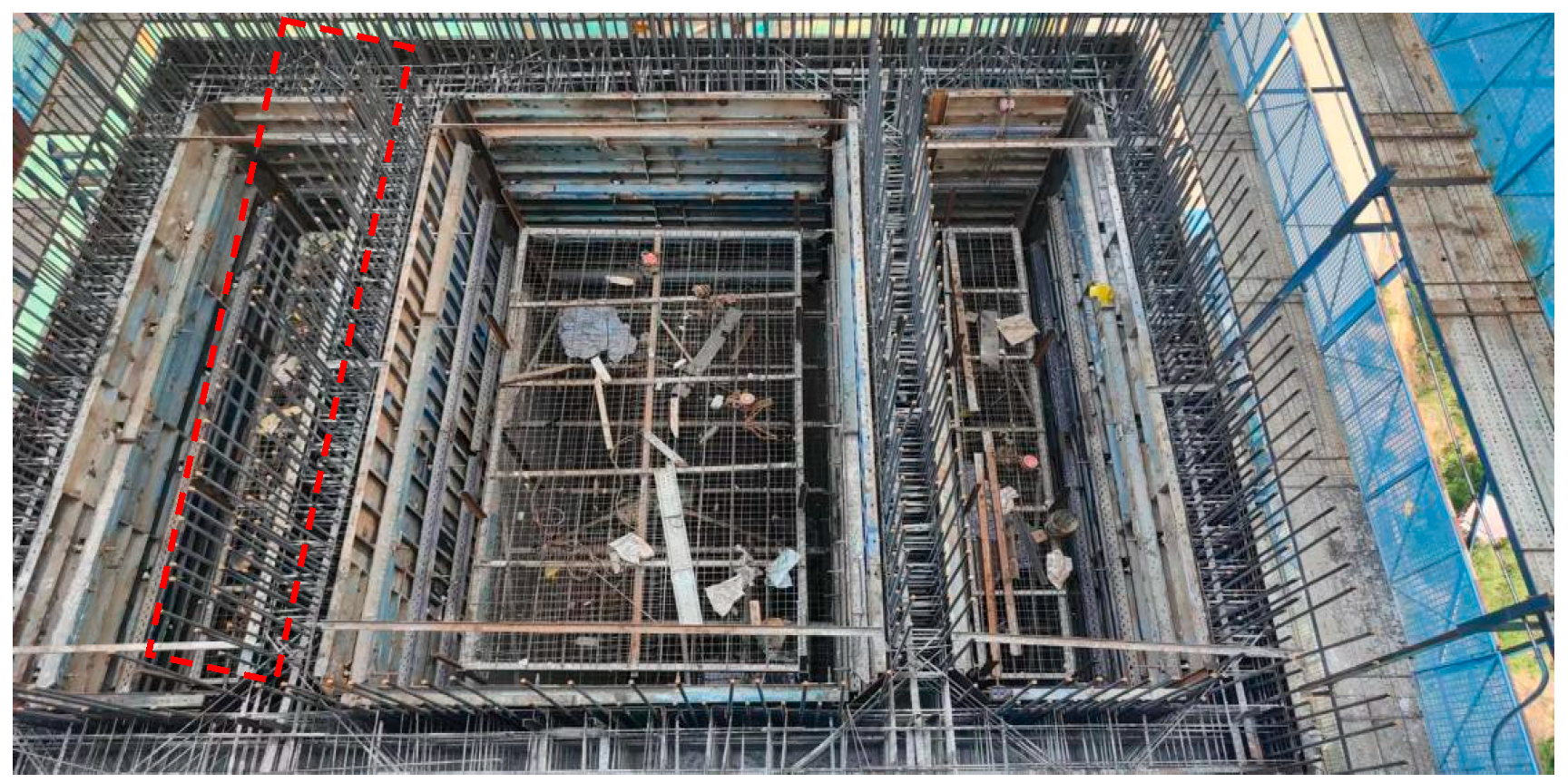
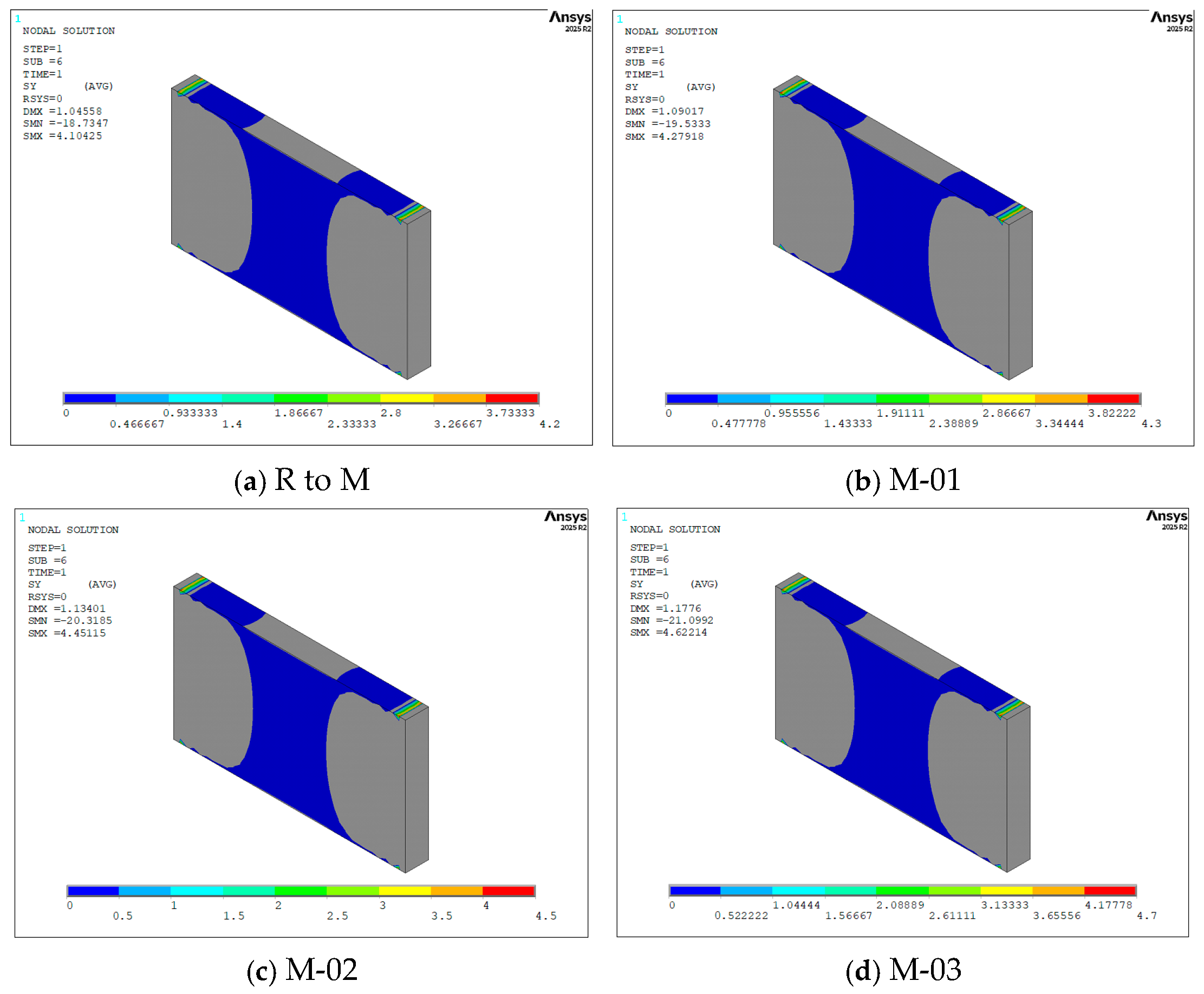
Figure 18 shows the construction site of a hollow thin-walled pier for a bridge project. This study takes the ribbed slab within the red box as an example. Using the ANSYS 2025R2 finite element analysis software, the stress state of the concrete under the influence of internal and external temperature differences is analyzed. The finite element model employs the Solid186 element. The example dimensions are 7000 mm × 4000 mm × 700 mm. The calculation parameters are as follows: elastic modulus E ( t ) = 2.0 × 10⁴ MPa, an ambient temperature of 20 °C, and after 2 days of pouring, with a coefficient of linear expansion of concrete α = 1 × 10⁻⁵/°C and a concrete relaxation coefficient H ( t , τ ) = 1.0. The maximum hydration temperature is selected from the calculated values in Table 4 based on the different mix proportions.
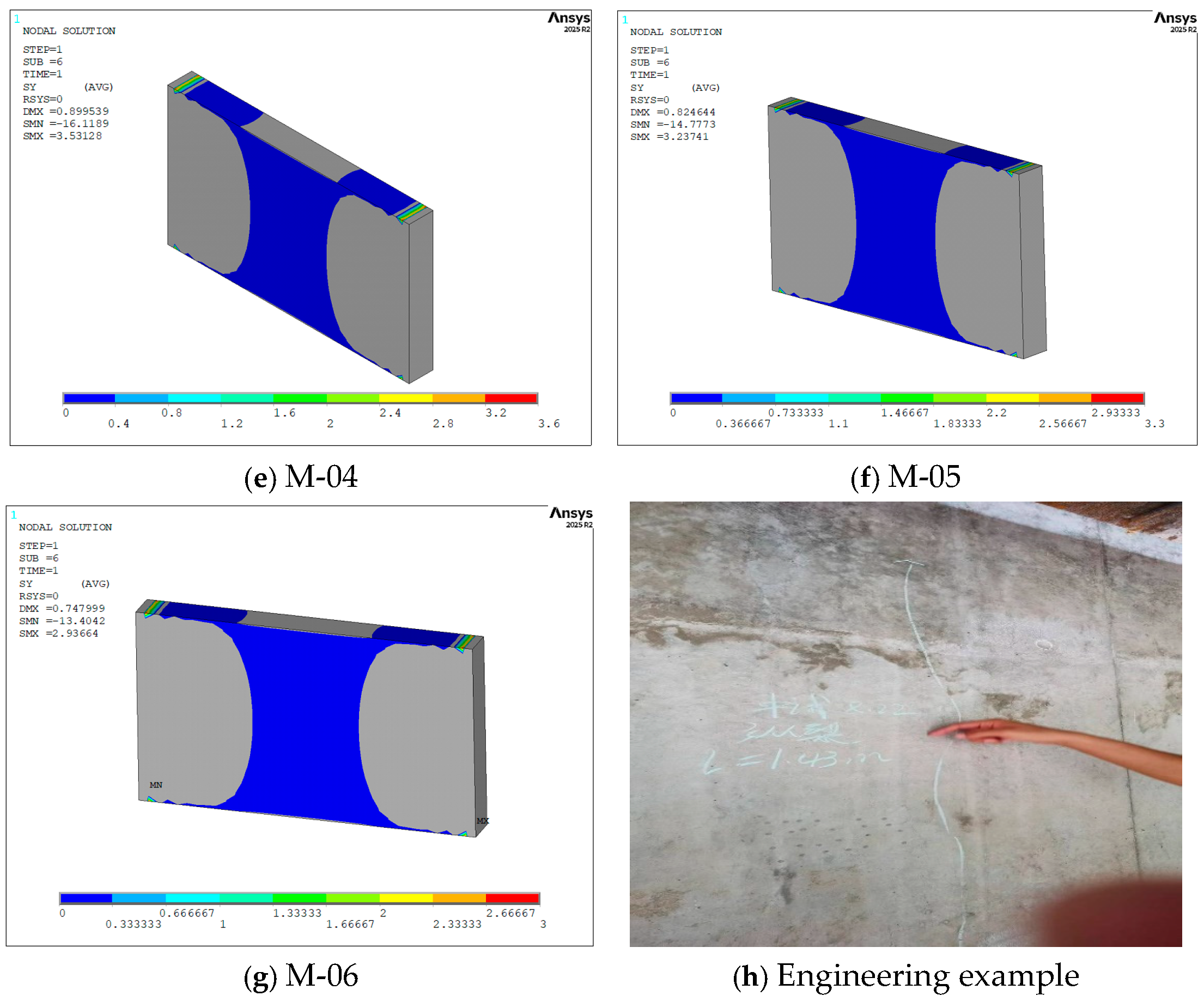
Figure 19 shows the distribution of thermal stress on one side of the ribbed slab of the hollow thin-walled pier under the influence of internal and external temperature differences, as illustrated in Figure 18. It can be observed that the mix proportion M-03 exhibits the highest thermal stress, with a maximum tensile stress of 4.62 MPa, while the mix proportion M-06 shows the lowest thermal stress at 2.94 MPa. Figure 19h depicts the cracking phenomenon that occurred at the ribbed slab during actual construction, which aligns with the finite element calculation results. This indicates that mass concrete is prone to cracking under significant thermal stress.
Figure 20 illustrates the distribution of the maximum thermal stress in concrete under different mix proportion conditions, as obtained from code-based calculations and numerical simulation. It can be observed that the finite element analysis results show a high degree of consistency with the theoretical calculation results. This holds certain guiding significance for controlling the thermal effects in mass concrete.

5. Microstructural Analysis

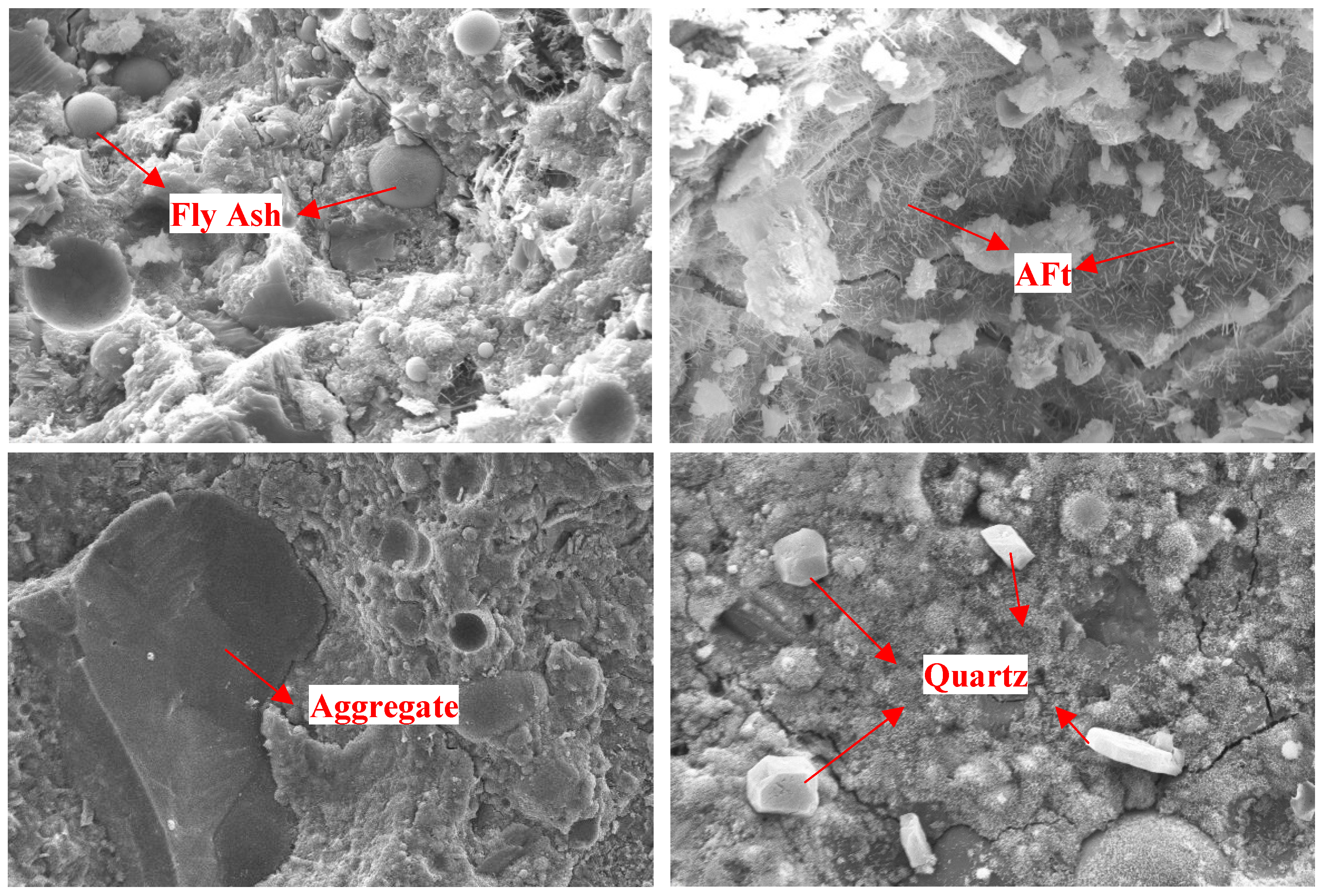
Figure 21 shows the microstructure of concrete obtained using scanning electron microscopy (SEM). Based on the SEM results, a certain amount of unreacted fly ash particles exist within the concrete. These unreacted spherical particles are prone to spalling under load, creating pores that lead to crack propagation, thereby reducing the mechanical properties of the concrete. During the hydration process, a certain quantity of ettringite is formed. While ettringite provides some early-age strength, its excessive formation in the later hardening stage can generate expansive stress, leading to cracking. Furthermore, since both the coarse and fine aggregates contain a certain amount of dolomitic rock, unreacted quartz particles are present in the internal structure of the concrete. These particles have smooth surfaces and exhibit poor bonding strength with the cementitious materials. Under external load, they are highly susceptible to initiating cracks, which adversely affects the mechanical performance of the concrete.

6. Conclusions

This study systematically investigated the effects of the manufactured sand replacement ratio, water–cement ratio, and fly ash content on the workability, mechanical properties, and temperature effects of concrete through a combination of experimental research and theoretical analysis. The conclusions are as follows:
(1) Regarding workability, the replacement ratio of manufactured sand (50%, 70%, and 100%) had a minor impact on the workability of concrete. In fact, incorporating a certain amount of manufactured sand could optimize the gradation curve of the fine aggregate, thereby improving the concrete’s workability. In terms of mechanical properties, all indicators of manufactured sand concrete were superior to those of river sand concrete, demonstrating the feasibility of using manufactured sand as a replacement for river sand.
(2) Reducing the water–cement ratio can effectively enhance the mechanical properties of concrete. However, the increased cement content leads to a rapid decrease in the amount of free water available for internal hydration. This results in significant self-desiccation shrinkage within the concrete. Due to the low early-age tensile strength of concrete, it cannot resist this tensile stress, leading to the formation of early-age micro- or even macro-cracks. Furthermore, the reduction in the water–cement ratio causes an excessively high adiabatic temperature rise in the concrete, generating substantial thermal stress and increasing the risk of cracking.
(3) The incorporation of fly ash reduces the compressive strength of concrete but improves its flexural and tensile strength to some extent. Concurrently, a higher fly ash content in the concrete leads to a lower heat of hydration. At a 25% fly ash content, the adiabatic temperature rise decreased by 17.15 °C and the thermal stress was reduced by 56.7% compared to concrete with a 10% fly ash content. This significantly lowers the risk of concrete cracking due to excessive internal and external temperature differences during pouring.

Author Contributions

Conceptualization, E.Z.; Methodology, L.W.; Formal analysis, P.L.; Investigation, E.Z., X.H., P.Y. and J.Y.; Writing—original draft, L.W.; Writing—review & editing, L.W.; Project administration, X.H. and P.Y.; Funding acquisition, E.Z. All authors have read and agreed to the published version of the manuscript.

Funding

This research was funded by [Science and Technology Project of Yunnan Communications Investment & Construction Group Yunling Construction Co., Ltd.] grant number [YLJS-KF-2024-04] and The APC was funded by [YLJS-KF-2024-04].

Institutional Review Board Statement

Not applicable.

Informed Consent Statement

Informed consent was obtained from all subjects involved in the study.

Data Availability Statement

The original contributions presented in this study are included in the article. Further inquiries can be directed to the corresponding author.

Acknowledgments

This project is funded by the Science and Technology Project of Yunnan Communications Investment & Construction Group Yunling Construction Co., Ltd. (YLJS-KF-2024-04). The experiments for mechanical strength, the softening coefficient, material density and water absorption were conducted at the Testing Center of the College of Civil Engineering, Guizhou University. The authors greatly appreciate this support.

Conflicts of Interest

Authors Enjin Zhu, Xiaojun He, Peiying Yan and Jianwei Yang were employed by the company Yunnan Trading Group Yunling Construction Co., Ltd. Author Peiguo Li was employed by the company Chongqing Jiaotong University Construction Engineering Quality Testing Center Co., Ltd. The remaining authors declare that the research was conducted in the absence of any commercial or financial relationships that could be construed as a potential conflict of interest. The authors declare that this study received funding from Yunnan Communications Investment & Construction Group Yunling Construction Co., Ltd. The funder was not involved in the study design, collection, analysis, interpretation of data, the writing of this article or the decision to submit it for publication.

References

  1. Liu, L.; Yang, W.; Huang, Y.; Liu, L.; Zhang, X.; Zhou, H.; Yu, J.; Huang, Q.; Lin, P.; Liu, C. A Review on the Influence of Machine-Made Sand on the Basic Mechanical Properties of Concrete. Concrete 2025, 81–87. Available online: https://kns.cnki.net/kcms2/article/abstract?v=L9QYEmxDei1l9g2-b4axn69igKfTR0qOB42EfHGqXHEgLKq8Yc00vWJKMW5k9XPYZPLOV8hu4og63ZUMJhDYcNjvzpyqDQdLgYN590zKve6kVVWpyqiNWYVAlusK-8yuX80pI1zn680uO-1B-F9HyV2-h62RdePcPzXOe2ElJupFN1b1Ie2FQw==&uniplatform=NZKPT&language=CHS (accessed on 1 November 2025).
  2. Zhao, J.; Ai, C.; Xin, C.; You, H.; Zhou, Y. Experimental Study on Durability of C50 Concrete with Different Types of Sand. J. China Foreign Highw. 2014, 34, 306–310. [Google Scholar] [CrossRef]
  3. Deng, C.; Yan, J.; Ye, X. Study on the Influence of Machine-Made Sand Content on Mechanical Properties and Volume Stability of Concrete. New Build. Mater. 2018, 45, 42–46. [Google Scholar]
  4. Wang, Q.; Zhu, C.; Yang, Q.; Ding, J.; Ding, Z.; Zhao, M. Study on the Influence of Machine-Made Sand Particle Morphology on Concrete Frost Resistance and Pore Structure. Concrete 2025, 84–87. Available online: https://kns.cnki.net/kcms2/article/abstract?v=L9QYEmxDei1pTpbR4TO5KYAfAHNxnLfWPmK359nyZAdrvyPqj3bp-oxDSPnBXl7zDWptGB1dszqMy-tLdM06ct8M1vOD7Qpj2c7hSkTxwJMyetP7GSuGMD9WPLN54EZxGQhu5r6i11POFSi0psi_-rC4xAbeZvgVkVFBkpM4wdwdckbFgS57ww==&uniplatform=NZKPT&language=CHS (accessed on 1 November 2025).
  5. Zhu, Q.; Liu, X.; Li, D.; Kong, D.; Zhang, B.; Duan, A.; Xu, Q.; Chen, Z. Influence of Machine-Made Sand and Its Particle Shape on the Performance of Ultra-High Performance Concrete. Concrete 2025, 134–137+145. Available online: https://kns.cnki.net/kcms2/article/abstract?v=L9QYEmxDei3QZPRcAwUVhvL7pbv9lBKcHbCtnfNQzi0ud474DkjThXv3lw6lygN9drfEgw7I18zqA7FJEkgiF1_N1PnM5TapwmFs6vCdTjIpkSl4uX_TMO6tpu4iKSNrYBAowEghpyWshh9Yl8YbBRLlBGRLnGSpsLX12x5o2rHH3gdoT5E30A==&uniplatform=NZKPT&language=CHS (accessed on 1 November 2025).
  6. Chen, H.; Wang, H.; Wang, P.; Xiao, M.; Wu, J.; Tang, Y.; Li, F.; Wei, J. Study on Characteristics of Interfacial Transition Zone in Machine-Made Sand Mortar. Bull. Chin. Ceram. Soc. 2024, 43, 1992–1998. [Google Scholar] [CrossRef]
  7. Song, S.; Jiao, L.; Zhang, M.; Xu, Z.; Yi, Y.; Zhang, Q.; Wan, W. Research on the Development Law of Mechanical Properties of Modern Machine-Made Sand Concrete. Concrete 2025, 53–58. Available online: https://kns.cnki.net/kcms2/article/abstract?v=L9QYEmxDei0uNgat3t_dp5wu2axksNa_bfcPxVAXUSN2S4cVc_uHecBUeVySXDHvmcZ4TLAZtcSmaPXdDjI2DPjIiZF38yLRufLtj-hYFJFYWdQo0H6m1O8-r0irmwEc9M9O3jja1xVqaOOFj7qDQtyMjmI4aMgxX08AHZIs18-LLHUuMuDtoA==&uniplatform=NZKPT&language=CHS (accessed on 1 November 2025).
  8. Liu, B.; Gong, T. Analysis of the Influence of Composite Admixtures on the Properties of Machine-Made Sand Concrete. Concrete 2023, 180–182. Available online: https://kns.cnki.net/kcms2/article/abstract?v=L9QYEmxDei0MQsiQJKvLSdk1rIabWiMaExJY0KKVqWR4uM_EAOYRa7AHILD4WbctOfW2Rh70tlPjjAdS0v9K9fJXvuqXOfOAcRcQq7uCWvBoz4X3exfuEB015WCAs42k0exgOUAudIAHA8T3HMooe75cJVsfQe-d2qsklZFNRm88DS9gdsjCGg==&uniplatform=NZKPT&language=CHS (accessed on 1 November 2025).
  9. Wu, J.; Yao, L.; Du, H.; Liang, J.; Rong, H.; Yan, Z.; Wang, L.; Liang, H. Study on Time-Dependent Variation of Rheological Properties of Machine-Made Sand Concrete. Concrete 2023, 135–140. Available online: https://kns.cnki.net/kcms2/article/abstract?v=L9QYEmxDei16Z1umxlPKyKtI2m1n7LRLB8PHBBl8hXJ5XiYUZUDhk_wSJ_rncLQPR_k15sh1XRCYz4D3HflQ86Xo0550sxH50O__RfYN2JXDDj26-SHuBB5wDOKW42fDUMgRIKhijqehXuD7RcO4efOOGLxUYlQ7M4gD2kpSMbVvOShDefIa-Q==&uniplatform=NZKPT&language=CHS (accessed on 1 November 2025).
  10. Guo, Q.; Hu, Q.; Zhou, X.; Li, J.; Chen, B.; Pu, G. Uniaxial Compression Test and Compressive Peak Stress Prediction of Machine-Made Sand Concrete at Early Age. J. Xi’an Univ. Archit. Technol. (Nat. Sci. Ed.) 2025, 57, 641–651. [Google Scholar] [CrossRef]
  11. Huang, W.; He, Y.; Cui, J.; Chen, H.; Yan, M.; Wang, J. Study on Long-Term Performance of C50 Self-Compacting Concrete with Machine-Made Sand. Concrete 2022, 106–109+114. Available online: https://kns.cnki.net/kcms2/article/abstract?v=L9QYEmxDei3f3med7WWpGC6Pv7VjqLW35Clm8Axt8dCvDPY4-muLto7bGU7o6ah5jxlX--AxjPgkFMfH-xTteZlo7CyuOAESQEUrJtVzIr8SD-WC78clzFHV1_7GO2tIqSwPyKRwj1kB8H-Lc4aVVvNY-GNK0T8G8gO4Y7drxpEMMSieEAKqxA==&uniplatform=NZKPT&language=CHS (accessed on 1 November 2025).
  12. Huang, W.; Yan, M.; Tong, Z.; He, Y.; Wang, J.; Chen, H. Influence of Mixed Sand on Mechanical Properties and Pore Structure of Concrete. J. Chongqing Jiaotong Univ. (Nat. Sci.) 2023, 42, 23–29. [Google Scholar]
  13. Liu, F.; Wang, Q.; Duan, Y.; Zhang, R.; Ma, Y.; Wei, D. Study on Temperature Variation Law and Calculation Model of C50 Machine-Made Sand Concrete during Steam Curing Stage. Concrete 2022, 6–10. Available online: https://kns.cnki.net/kcms2/article/abstract?v=L9QYEmxDei23ZiXLYrbbbd1udJfnsu4vrZlIyWb8FHUytIjQrLuZ9SyZaoXQyNLNH0Gk5T3cBBIC1GfVxJueDZdatMdO4lKDmR2BE9UiEPG1DbL1qxrYCHoE9AZ_bv33sVlNTwWF8O5ZcSGXrYDSIvswWlUWfpdvanJ9Tvr2qC6OWLNtt63NWw==&uniplatform=NZKPT&language=CHS (accessed on 1 November 2025).
  14. Zhang, X.; Wang, Q.; Dai, J.; Liu, Y.; Bi, R.; Wang, J. Study on the Influence of Stone Powder Content and Curing Temperature on the Properties of Machine-Made Sand Concrete. Concrete 2023, 109–113. Available online: https://kns.cnki.net/kcms2/article/abstract?v=L9QYEmxDei1ZDHfnMMHHp42B0l9Cey0fIMzuuZK3HpKKX-Ac9qYs0_2do7Ao7ZA08-XnRewOiCYpmbNMVFADRtiIQm_KwiqnMQ0onRPJW69UBxbkvxLlvnLOF1Qs557mtbH1YzXdIDMR-ekhgi1eGPvBs93I1r5ANxTQUn5-xJGfIFY9WfElOg==&uniplatform=NZKPT&language=CHS (accessed on 1 November 2025).
  15. Yang, Z.; Li, S.; Zhao, H. Influence of Mica Content in Machine-Made Sand on Mechanical and Durability Properties of C50 Concrete. Highway 2025, 70, 350–354. [Google Scholar]
  16. Li, S.; Qin, M.; Zhang, Z.; Ming, Y.; Chen, P. Influence of Mica Content in Machine-Made Sand on Concrete Performance. J. Guilin Univ. Technol. 2023, 43, 96–99. [Google Scholar]
  17. Fang, W. Study on Long-Term Performance and Durability of Mixed Sand Concrete. China Concr. Cem. Prod. 2014, 2, 20–22. [Google Scholar] [CrossRef]
  18. Zhao, H. Application of High-Performance Concrete Prepared with Mixed Sand in Railway Engineering. Railw. Eng. 2010, 147–149. Available online: https://kns.cnki.net/kcms2/article/abstract?v=L9QYEmxDei2Be7Gizl8DPqU9c7DN_hQgAe98fIBNFCjAqkyUY4WnFq7K0BzkvxPInVNJ1HpcvceCNAZW1GIHX62HIiE40KfQwimz4YRIoMiKidi3Lp83MUJlvmdrhkhuayAl17isxhMuAITgu77ScO9Z9jlEgFFkEUzF5vq2X1vh0qFWjnXx_g==&uniplatform=NZKPT&language=CHS (accessed on 1 November 2025).
  19. Zhang, M.; Luo, Z.; Yin, H.; Lu, B.; Zheng, Y.; Yang, J. Study on Concrete Prepared with Pisha Sandstone as Fine Aggregate Substitute and Its Anti-Erosion Performance. Concrete 2016, 158–160. Available online: https://kns.cnki.net/kcms2/article/abstract?v=L9QYEmxDei0spmIOTFdTRDTCG3VXO8fNbPY8UxGc-NTdcHd1kLDn5SxYL1YsUinQb7j43dsj7iGd2JUWAdHq3HzVfOE90bVYCJEYXfpKl7UrF-WV-LNZw7juN-m_SIrmeYkS0ruSfZlpGM4VXpaRL2z4K2sGoonrQn20WuHXV8B3ID5cBfqt8A==&uniplatform=NZKPT&language=CHS (accessed on 1 November 2025).
  20. Murali, G.; Wong, L.S.; Karthikeyan, K.; Abdellatief, M.; Dixit, S. Concrete Resilience Under the Impact of Water Forces: A Review of Abrasion Resistance in Hydraulic Structures. Results Eng. 2025, 26, 104654. [Google Scholar] [CrossRef]
  21. Benahsina, A.; Haloui, Y.E.; Taha, Y.; Elomari, M.; Bennouna, M.A. Natural sand substitution by copper mine waste rocks for concrete manufacturing. J. Build. Eng. 2021, 47, 103817. [Google Scholar] [CrossRef]
  22. Aboagye, B.; Gosselin, R.; Wilson, W. Influence of manufactured sand on concrete properties: A review. Can. J. Civ. Eng. 2025, 53, 1–21. [Google Scholar] [CrossRef]
  23. Sharma, R.; Senthil, K. Influence of manufactured sand, recycled aggregate, reinforcement ratio and wire mesh on the response of reinforced concrete slabs under impact loading. Constr. Build. Mater. 2024, 440, 27. [Google Scholar] [CrossRef]
  24. Beniwal, A.S.; Mathur, N.; Meena, R.V. Durability of Manufactured Sand (m-Sand) Concrete. Adv. Chem. Mater. Eng. 2025, 157–166. [Google Scholar] [CrossRef]
  25. Saravanan, S.S.; Jagadeesh, P. Effect of manufactured sand on the durability characteristics of concrete. Carbon-Sci. Technol. 2016, 8, 70–81. [Google Scholar]
  26. Shanmugavadivu, P.M.; Malathy, R. Effects of chloride attack on concrete with the replacement of natural sand by manufactured sand as fine aggregate. J. Struct. Eng. 2012, 39, 564–573. [Google Scholar]
  27. Shanmugapriya, T.; Raja, K.S.; Balaji, C. Strength and durability properties of High Performance Concrete with manufactured sand. J. Eng. Appl. Sci. 2016, 11, 6036–6045. [Google Scholar]
  28. André, F.P.; Miceli, H.; Moura, L.C.; Neumann, R.; Tavares, L.M. Upgrading a manufactured fine aggregate for use in concrete using dry rare-earth magnetic separation. Miner. Eng. 2019, 143, 105942. [Google Scholar] [CrossRef]
  29. Kannan, M.; Jesanth, A.F.; Imbrish, P. Replacement of River Sand by M Sand Concrete. Int. J. Eng. Res. Technol. 2019, 7. Available online: https://www.semanticscholar.org/paper/Replacement-of-River-Sand-by-M-Sand-Concrete-Kannan-FantinJesanth./0df348e9ed645d1d6f7e4a314b26f24dbc09ed71 (accessed on 1 November 2025).
  30. Vimalanathan, M. Use of m-sand in concrete and mortar as an alternative of river sand. Int. J. Adv. Res. Innov. Ideas Educ. 2019, 5, 3189–3191. [Google Scholar]
  31. Vinod, B.R.; Gopinath, R.; Prasad, S.; Kavitha, H.M.; Mohta, M.; Ganapathy, A. Analysis of E-Waste Ceramics as a Fine Aggregate for Rigid Pavements for Replacement of M-Sand and River Sand. In Recent Developments in Waste Management: Select Proceedings of Recycle 2018; Springer: Singapore, 2020. [Google Scholar] [CrossRef]
  32. Miah, M.J.; Huaping, R.; Paul, S.C.; Babafemi, A.J.; Sharma, R.; Jang, J.G. Performance of eco-friendly concrete made from recycled waste tire fine aggregate as a replacement for river sand. Structures 2023, 58, 105463. [Google Scholar] [CrossRef]
  33. Teng, L.; Khayat, K.H.; Liu, J. Recent Advances in the Rheological Properties of Ultra-High-Performance Concrete: A Critical Review. Engineering 2025, 4. [Google Scholar] [CrossRef]
  34. Qian, K.; Zhang, L.; Miao, C.; Qian, C.; Fan, T.; Yan, D.; Qian, X. The shrinkage and durability of concrete prepared with waste rock manufactured sand. Case Stud. Constr. Mater. 2026, 24, e05699. [Google Scholar] [CrossRef]
  35. Dinh, H.L.; Liu, J.; Ong, D.E.L.; Doh, J.H. A sustainable solution to excessive river sand mining by utilizing by-products in concrete manufacturing: A state-of-the-art review. Clean. Mater. 2022, 6, 100140. [Google Scholar] [CrossRef]
  36. Sharma, R.; Senthil, K. An investigation on mechanical and microstructural properties of hybrid fiber reinforced concrete with manufactured sand and recycled coarse aggregate. J. Build. Eng. 2023, 69, 106236. [Google Scholar] [CrossRef]
  37. Tewar, B.; Shah, P.M.; Patel, P.B. Effect of Partial Replacement of Sand with Wastage of Manufactured AAC Block in Concrete. Mater. Today Proc. 2017, 4, 9817–9821. [Google Scholar] [CrossRef]
  38. Reddy, C.R.; Rao, H.S.; Ghorpade, V.G. Mechanical Performance of Cellular Lightweight Concrete Incorporating Sand, M-Sand, and Copper Slag as Fine Aggregates with Protein-Based Foam and Hybrid Fibers. Procedia Struct. Integr. 2025, 70, 263–270. [Google Scholar] [CrossRef]
  39. Kumar, P.; Sharma, U.K.; Roy, A.B. Degradation of transport properties in self-compacting concrete under thermal stress. J. Build. Eng. 2025, 111, 113361. [Google Scholar] [CrossRef]
  40. Xin, J.; Liu, Y.; Zhang, G.; Wang, Z.; Wang, J.; Yang, N.; Qiao, Y. Evaluation of early-age thermal cracking resistance of high w/b, high volume fly ash (HVFA) concrete using temperature stress testing machine. Case Stud. Constr. Mater. 2022, 16, e00825. [Google Scholar] [CrossRef]
  41. JTG 3420-2020; Highway Engineering Cement and Cement Concrete Testing Methods. Communications Press: Beijing, China, 2020. Available online: https://www.gov.cn/zhengce/zhengceku/2020-11/20/content_5562854.htm (accessed on 1 November 2025).
  42. GB/T 1596-2017; Fly Ash Used in Cement and Concrete. Academy of Building Research: Beijing, China, 2017. Available online: https://openstd.samr.gov.cn/bzgk/gb/newGbInfo?hcno=55F3B96AC1260FCD3C9452FF47C087E5 (accessed on 1 November 2025).
  43. GB/T50081-2019; Standard for Test Methods of Mechanical Properties of Ordinary Concrete. Academy of Building Research: Beijing, China, 2019. Available online: https://www.mohurd.gov.cn/gongkai/zc/wjk/art/2019/art_17339_242198.html (accessed on 1 November 2025).
  44. GB/T50082-2024; Standard for Test Methods of Long-Term Performance and Durability of Ordinary Concrete. Academy of Building Research: Beijing, China, 2024. Available online: https://www.mohurd.gov.cn/gongkai/zc/wjk/art/2024/art_17339_780101.html (accessed on 1 November 2025).
  45. GB50496-2018; Standard for Construction of Mass Concrete. Academy of Building Research: Beijing, China, 2018. Available online: https://www.mohurd.gov.cn/gongkai/zc/wjk/art/2020/art_17339_246272.html (accessed on 1 November 2025).
  46. DL/T 5150-2017; Hydraulic Concrete Test Code. Electric Power Press: Beijing, China, 2018. Available online: https://www.biaozhuns.com/archives/20190612/show-215279-86-1.html (accessed on 1 November 2025).
Figure 1. Main constituent materials of concrete.
Eng 07 00131 g001
Figure 2. Coarse aggregate.
Eng 07 00131 g002
Figure 3. River sand.
Eng 07 00131 g003
Figure 4. Manufactured sand.
Eng 07 00131 g004
Figure 5. Fine aggregate gradation curve.
Eng 07 00131 g005
Figure 6. Specimen preparation and curing.
Eng 07 00131 g006
Figure 7. Test methods for concrete workability.
Eng 07 00131 g007
Figure 8. Mechanical performance test methods. (a) Compressive Strength; (b) Flexural Strength; (c) Splitting Tensile Strength; (d) Elastic Modulus.
Eng 07 00131 g008
Figure 9. Concrete shrinkage and expansion apparatus.
Eng 07 00131 g009
Figure 10. Influence of parameters on concrete slump. (a) Effect of Manufactured Sand Replacement Rate on Slump; (b) Effect of Water–Binder Ratio on Slump; (c) Effect of Fly Ash Content on Slump.
Eng 07 00131 g010aEng 07 00131 g010b
Figure 11. Influence of parameters on concrete spread flow. (a) Effect of Manufactured Sand Replacement Rate on Spread Flow; (b) Effect of Water–Binder Ratio on Spread Flow; (c) Effect of Fly Ash Content on Spread Flow.
Eng 07 00131 g011aEng 07 00131 g011b
Figure 12. Influence of parameters on concrete compressive strength. (a) Effect of Manufactured Sand Replacement Rate on Compressive Strength; (b) Effect of Water–Binder Ratio on Compressive Strength; (c) Effect of Fly Ash Content on Compressive Strength.
Eng 07 00131 g012
Figure 13. Influence of parameters on concrete flexural strength. (a) Effect of Manufactured Sand Replacement Rate on Flexural Strength; (b) Effect of Water–Binder Ratio on Flexural Strength; (c) Effect of Fly Ash Content on Flexural Strength.
Eng 07 00131 g013aEng 07 00131 g013b
Figure 14. Influence of parameters on concrete splitting tensile strength. (a) Effect of Manufactured Sand Replacement Rate on Splitting Tensile Strength; (b) Effect of Water–Binder Ratio on Splitting Tensile Strength; (c) Effect of Fly Ash Content on Splitting Tensile Strength.
Eng 07 00131 g014
Figure 15. Influence of parameters on concrete elastic modulus. (a) Effect of Manufactured Sand Replacement Rate on Elastic Modulus; (b) Effect of Water–Binder Ratio on Elastic Modulus; (c) Effect of Fly Ash Content on Elastic Modulus.
Eng 07 00131 g015aEng 07 00131 g015b
Figure 16. Early-age shrinkage performance.
Eng 07 00131 g016
Figure 17. Thermal stress in concrete under different mix proportions.
Eng 07 00131 g017
Figure 18. Hollow thin-walled pier.
Eng 07 00131 g018
Figure 19. Finite element results of concrete thermal stress.
Eng 07 00131 g019aEng 07 00131 g019b
Figure 20. Comparison of concrete thermal stress.
Eng 07 00131 g020
Figure 21. SEM results of concrete.
Eng 07 00131 g021
Table 1. Properties of cement.
Chemical Composition (g/kg)
CaSiAlSFeMgKTi
314.343.45.916.70.00.07.31.3
Table 2. Main physical properties of cement.
Setting Time (min)SoundnessCompressive Strength (MPa)
Initial settingFinal SettingPass3 d28 d
25233137.152.6
Table 3. Concrete mix design (kg).
IDCementFly AshFine AggregateCoarse AggregateWater
River SandManufactured Sand
R432.0 48.0 839.7 0.0 1012.0 158.0 
R-M50%432.0 48.0 419.8 419.8 1012.0 158.0 
R-M70%432.0 48.0 253.0 586.7 1012.0 158.0 
M/WB-0.33/
FA-10%
432.0 48.0 0.0 839.7 1012.0 158.0 
WB-0.32447.0 48.0 0.0 839.7 1012.0 158.0 
WB-0.31462.0 48.0 0.0 839.7 1012.0 158.0 
WB-0.30477.0 48.0 0.0 839.7 1012.0 158.0 
FA-15%384.0 96.0 0.0 839.7 1012.0 158.0 
FA-20%360.0 120.0 0.0 839.7 1012.0 158.0 
FA-25%336.0 144.0 0.0 839.7 1012.0 158.0 
Note: R indicates fine aggregates entirely composed of river sand; R-M50% and R-M70% denote that manufactured sand accounts for 50% and 70% of the fine aggregates, respectively; M indicates fine aggregates entirely composed of manufactured sand; for WB-0.33, WB-0.32, WB-0.31, and WB-0.30, the water–binder ratios are 0.33, 0.32, 0.31, and 0.30, respectively; For FA-10%, FA-15%, FA-20%, and FA-25%, the fly ash contents are 10%, 15%, 20%, and 25%, respectively.
Table 4. Maximum adiabatic temperature rise under different mix proportions (°C).
IDCement (kg)Fly Ash (kg)Adiabatic Temperature Rise (°C)
R432.0 48.0 61.75
R-M50%432.0 48.0 61.75
R-M70%432.0 48.0 61.75
M432.0 48.0 61.75
WB-0.32447.0 48.0 63.53
WB-0.31462.0 48.0 65.28
WB-0.30477.0 48.0 67.02
FA-15%384.0 96.0 55.92
FA-20%360.0 120.0 52.93
FA-25%336.0 144.0 49.87
Disclaimer/Publisher’s Note: The statements, opinions and data contained in all publications are solely those of the individual author(s) and contributor(s) and not of MDPI and/or the editor(s). MDPI and/or the editor(s) disclaim responsibility for any injury to people or property resulting from any ideas, methods, instructions or products referred to in the content.