Article

Influence of Wired Twisted Tape on Heat Transfer Enhancement, Friction Factor and Thermal Performance Behaviors in a Heat Exchanger Tube


by
Jianyu Lin
1,
Ponepen Laphirattanakul
2,*,
Suvanjan Bhattacharyya
3,
Piphatpong Thapmanee
4,
Khwanchit Wongcharee
1,
Pichit Kaewkosum
2,
Suriya Chokphoemphun
5 and
Smith Eiamsa-ard
1
1
School of Engineering and Industrial Technology, Mahanakorn University of Technology, Bangkok 10530, Thailand
2
School of Engineering, King Mongkut’s Institute of Technology Ladkrabang, Bangkok 10520, Thailand
3
Department of Mechanical Engineering, Birla Institute of Technology and Science Pilani, Pilani Campus, Vidya Vihar, Pilani Rajasthan 333031, India
4
Department of Service Industries, Faculty of Business Administration, Ramkhamhaeng University, Bangkok 10240, Thailand
5
Department of Mechanical and Manufacturing Engineering, Faculty of Science and Engineering, Kasetsart University Chalermphrakiat Sakonnakhon Province Campus, Sakonnakhon 47000, Thailand
*
Author to whom correspondence should be addressed.
Eng 2026, 7(3), 128; https://doi.org/10.3390/eng7030128
Submission received: 17 December 2025 / Revised: 4 February 2026 / Accepted: 13 February 2026 / Published: 11 March 2026

Abstract

This study experimentally investigates the thermal–hydraulic performance of heat exchanger tubes fitted with wired twisted tapes, with particular emphasis on the effects of the hole spacing-to-width ratio (s/W) and edge margin-to-width ratio (e/W). Experiments were conducted over a Reynolds number range of 6000–20,000, and the results were compared with those of plain tubes and tubes equipped with conventional twisted tapes. The findings revealed that the incorporation of wires significantly enhanced heat transfer due to the combined action of longitudinal eddies generated by wire protrusions and swirling flow induced by the twisted tape. At identical Reynolds numbers, tubes with a smaller hole spacing (s/W = 0.16) exhibited superior heat transfer performance, achieving Nusselt number enhancements of up to 107.7% relative to plain tubes and 51.6% relative to conventional twisted tapes. Similarly, reducing the edge margin ratio intensified near-wall eddies and further disrupted the boundary layer. The friction factor was found to increase with decreasing hole spacing and edge margin, primarily due to additional flow obstructions and enhanced near-wall shear stresses. For wired twisted tapes with s/W = 0.16, the friction factor reached nearly six times that of a plain tube. Despite this penalty, the thermal performance factor (TPF) remained favorable, with values of up to 1.2, indicating that the heat transfer benefits outweighed the corresponding pressure losses.

1. Introduction

Heat exchangers are widely utilized in numerous engineering and industrial applications, including air conditioning, solar air/water heaters, gas turbines, and in pharmaceutical applications. Improving the performance of heat exchangers is an important task for energy conservation. Heat transfer enhancement techniques are commonly divided into two categories, active and passive methods. Passive heat transfer enhancement techniques offer several advantages by improving thermal performance without requiring additional energy input. Common passive approaches include surface modifications such as ribs or baffles [1,2,3,4,5,6], flow inserts such as twisted tapes [7,8,9,10,11,12,13,14,15,16,17,18,19,20], and the use of nanofluids as working media [21,22,23]. These techniques are widely favored because they can be readily implemented in existing systems with minimal operational complexity.
Numerous studies have investigated the effects of rib geometry, orientation, and arrangement on thermal performance and pressure drop, highlighting the importance of rib design in optimizing heat transfer efficiency. Stalin et al. [1] investigated the thermal performance of a novel cinque-faced rib-roughened triangular channel in solar air heaters (SAHs). The study focused on the effects of relative roughness pitch and height on heat transfer efficiency. Their results demonstrated that under optimal roughness configurations, the system achieved a peak efficiency of 80.7%, highlighting the potential of innovative rib geometries in enhancing solar thermal systems. Singh et al. [2] examined the influence of various obstacle shapes, such as isosceles trapezoids and triangles with curved apexes, on heat transfer and flow resistance in SAH ducts. Their findings revealed that rectangular obstacles with curved edges arranged in a staggered layout yielded the highest Nusselt number and friction factor enhancements, achieving an average thermal enhancement factor of 4.37. Additionally, the study evaluated the overall thermo-hydraulic performance to identify optimal configurations. Kumar et al. [3] explored the thermal efficiency enhancement of parabolic trough solar collectors (PTSCs) through the integration of oval-ribbed receiver tubes and using nanofluids as working media. The modified geometry facilitated improved flow mixing and surface contact, significantly enhancing both thermal and hydraulic performance across various flow parameters. Dash et al. [4] analyzed the heat transfer characteristics of cylindrical ribs with variable sector angles in microchannel passages conducted across a Reynolds number range of 100–900. The study demonstrated that a rib sector angle of 80° yielded the highest enhancements in both the Nusselt number and friction factor. This was due to optimal flow disruption and surface interaction. Chokphoemphun et al. [5] experimental studies were conducted on enhancing heat transfer and pressure loss characteristics in pipes with uniform heat-fluxed wall using small dual channels. The experimental results reveal that the maximum TEF for the triple counter-twisted tapes smaller twist ratio is about 1.26. Promvonge and Skullong [6] study experimentally the enhanced thermal-hydraulic performance in a constant heat-fluxes tube inserted with V-winglet-attached twin counter-twisted tapes. The measured results have been revealed that the VW-CTT can augment considerably f and Nu above the smooth tube alone. Using VW-CTT, the increase in Nu is about 1.56–2.3 times the plain tube whilst that in f is around 2.63–5.76 times, depending on Re and BR. The VW-CTT with BR = 0.09 has the optimal thermal performance at about 1.76 for the same pumping power.
Twisted tape inserts enhance convective heat transfer by inducing swirl flow and disrupting the thermal boundary layer. Research has demonstrated that the thermal performance of twisted tape-enhanced systems is highly sensitive to design parameters, including twist ratio, tape width, and pitch. Moreover, modifying or combining twisted tapes with additional devices can further modify flow patterns and significantly improve heat transfer [7,8,9,10,11,12,13,14,15,16,17,18,19,20]. Several studies have investigated the integration of twisted tapes with wire coils, demonstrating that this combination enhances fluid mixing and increases the effective heat transfer surface area. Overall, the incorporation of wire coils has shown promising potential for improving heat transfer performance, with only a moderate penalty in friction losses. This is due to the complementary geometrical characteristics of the two structures. Matani and Dahake [15] conducted an experimental investigation on the combined use of twisted tapes and wire coils for Reynolds numbers between 5000 and 18,000. Their results confirmed significant improvements in heat transfer, with higher Nusselt numbers compared to plain and twisted tape-only tubes. Emani et al. [16] also employed wire coils and twisted tape in laminar flow. Their results revealed that twisted tape-wire coil combinations effectively disrupted flow, improving mixing and heat exchange. Keklikcioglu and Ozceyhan [17] provided a detailed review of passive heat transfer enhancement methods, highlighting the effectiveness of twisted tape and coiled wire inserts. Their work emphasized the role of turbulence generation and secondary flows in boosting thermal performance. Garg et al. [18] reviewed twisted tape enhancement techniques in various heat exchanger applications. They concluded that compound techniques such as twisted tape-wire coil combinations yield superior heat transfer performance compared to single-method enhancements. Shelare et al. [19] analyzed the effect of various twisted tape geometries, including those integrated with wire elements. The study emphasized that wire coil integration significantly enhances flow turbulence and surface contact, contributing to greater heat exchanger efficiency. Patil et al. [20] explored the implementation of twisted tape inserts to improve the performance of conventional heat exchangers. Their findings showed that wire-supported twisted tapes offered a balance between heat transfer enhancement and manageable pressure drops. They are particularly effective at moderate Reynolds numbers. Recently, novel hybrid MWCNTs–SiO2 EG-based nanofluids [21] have been employed to improve the performance of heat transfer in plate heat exchangers. They observed that the heat transfer coefficient increased with the addition of the hybrid nanofluid, reaching a highest enhancement of 11.2% relative to EG, while the pressure loss remained negligible at lower Reynolds numbers. However, a closer examination of the existing literature reveals that most wired twisted tape configurations rely on helical wire coils that largely follow the primary swirling motion induced by the twisted tape. As a result, the additional turbulence generated by the wire coil is often distributed within the core flow region, while its direct influence on the near-wall thermal boundary layer remains limited. Despite the extensive body of work on twisted tapes, wire coils, and their combined use, limited attention has been given to the spatial placement of the wire element relative to the twisted tape geometry. In particular, the edge region of the twisted tape, where strong shear layers, flow separation, and secondary vortices naturally develop has not been systematically exploited for targeted heat transfer enhancement. This represents a notable gap in current research, as localized enhancement near the tube wall is critical for maximizing convective heat transfer efficiency while controlling pressure drop penalties. According to Table 1, the Nusselt number enhancement (Nu/Nup), friction factor penalty (f/fp), and thermal performance factor (TPF) ranges can be reported from the previous work.
To address this gap, the present study proposes a novel wired twisted tape configuration in which woven wire is strategically placed near the edge of the twisted tape rather than helically wrapped around it. By directly interacting with the high-shear and near-wall flow region, the woven wire is expected to intensify local turbulence, disrupt the thermal boundary layer more effectively, and enhance radial mixing without excessively obstructing the core flow. This approach aims to achieve a more favorable balance between heat transfer enhancement and pressure drop.

2. Experimental Methods

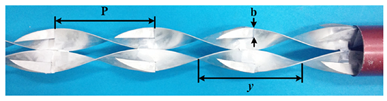
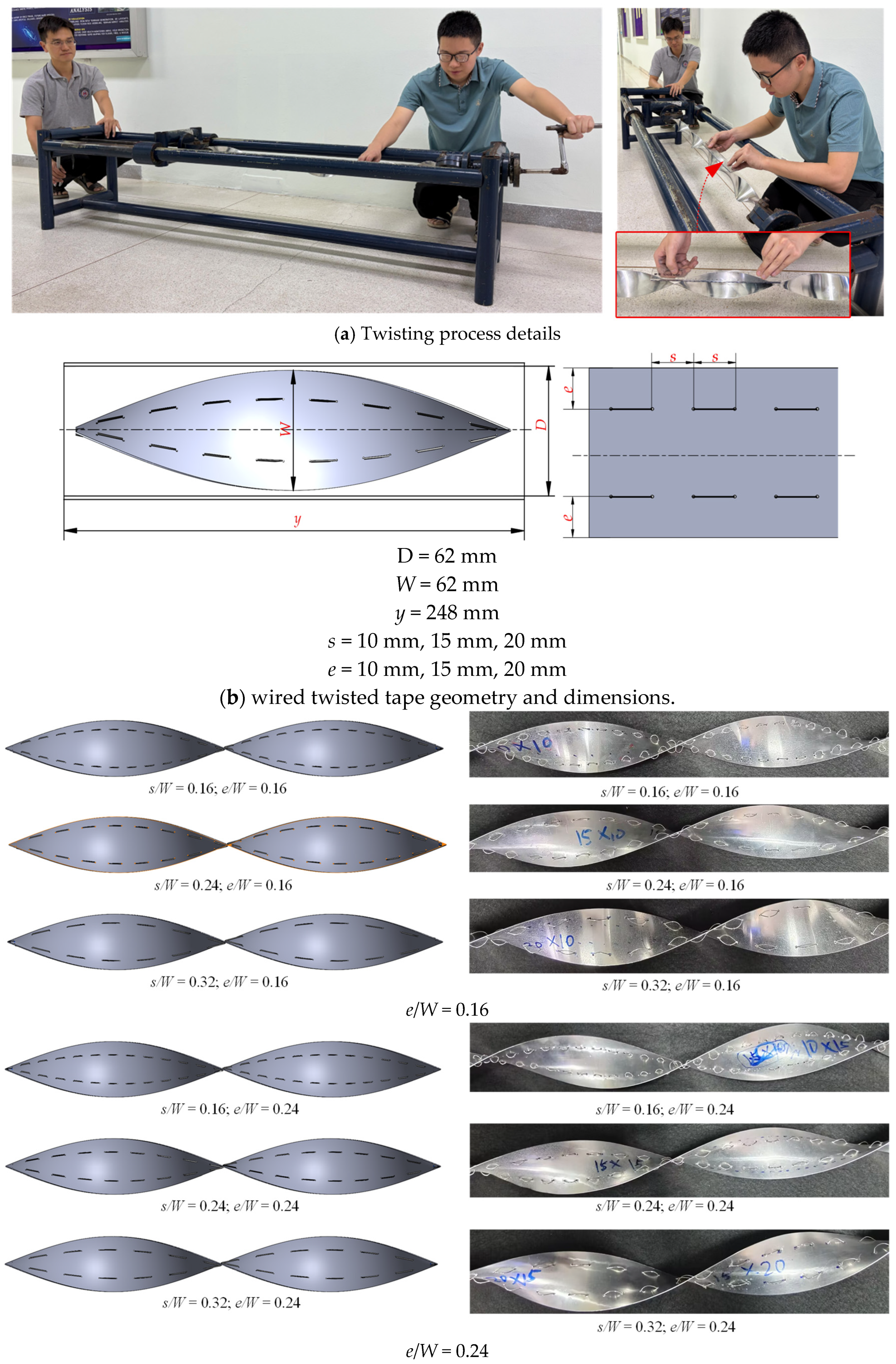
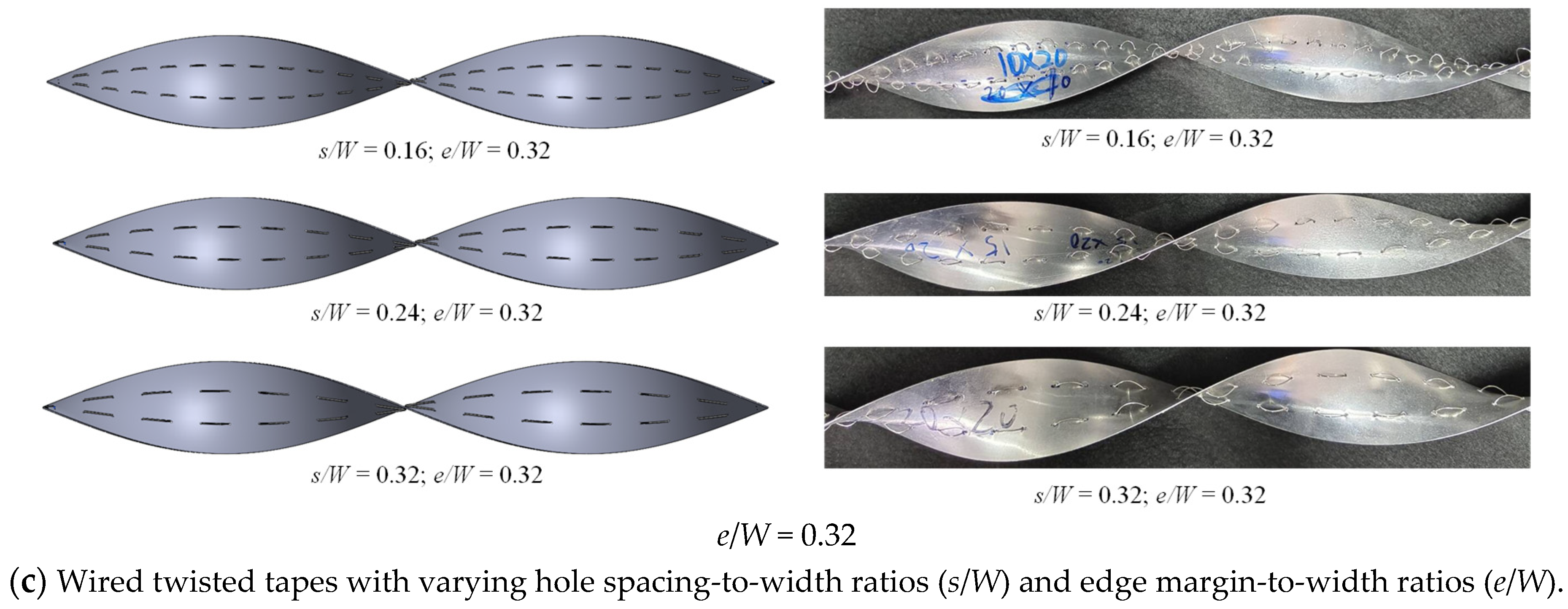
Figure 1 and Figure 2 depict the wired twisted tape and schematic diagram of the heat transfer enhancement apparatus. Each wired twisted tape was fabricated from a straight aluminum plate with dimensions of 1600 mm in length, 62 mm in width, and 0.9 mm in thickness. The tape’s width deviation is intentionally designed to ensure a loose fit with the inner wall of the heat exchange tube. The fabrication process involved two stages. In the first stage, conventional twisted tapes were prepared by marking reference points at predetermined intervals on the aluminum plate, positioning the plate in a twisting machine, and rotating it counterclockwise until the desired twisted tape was obtained. In the second stage, wired twisted tapes were produced with additional modifications. Equidistant 1.0 mm diameter holes were drilled along the aluminum plate to form a perforated tape. A 1.0 mm iron wire was threaded through the holes and tightened to secure the structure firmly in place. In the experiment, each twisted tape was fabricated from aluminum strips with a thickness of 0.9 mm and a width of 62 mm (W). They were produced by twisting a straight tape along its longitudinal axis while maintaining tension, with the process’s uniformity of twist and tolerances controlled by two individuals as illustrated in Figure 1a. A uniform twisted tape or standard twisted tape was twisted at a consistent twist ratio (y/W) of 4.0. The twist ratio, represented as y/W, is defined as the axial length (y) necessary for the tape to execute a 180° twist, measured between two corresponding points on co-planar surfaces perpendicular to the tape axis, and normalized by the tape width (W). Wired twisted tapes were fabricated with three different hole spacing-to-width ratios (s/W = 0.16, 0.24, and 0.32), corresponding to hole spacings of 10, 15, and 20 mm, respectively. Additionally, considering the fabrication possibility, the holes should be place at a certain distance from the edge, so three different edge margin-to-width ratios (e/W = 0.16, 0.24, and 0.32) were employed, corresponding to edge margins of 10, 15, and 20 mm. Throughout all configurations, the hole diameter (1.0 mm) and twist length (248 mm). In total, nine distinct configurations were produced. The dimensional parameters of these twisted tapes are summarized in Figure 1a–c. After fabrication, the wired twisted tape was inserted into the testing tube without additional centering mechanisms. Although occasional contact between the insert and the tube wall may occur, this does not affect the overall thermal–hydraulic performance, and the insert can be easily installed and removed.
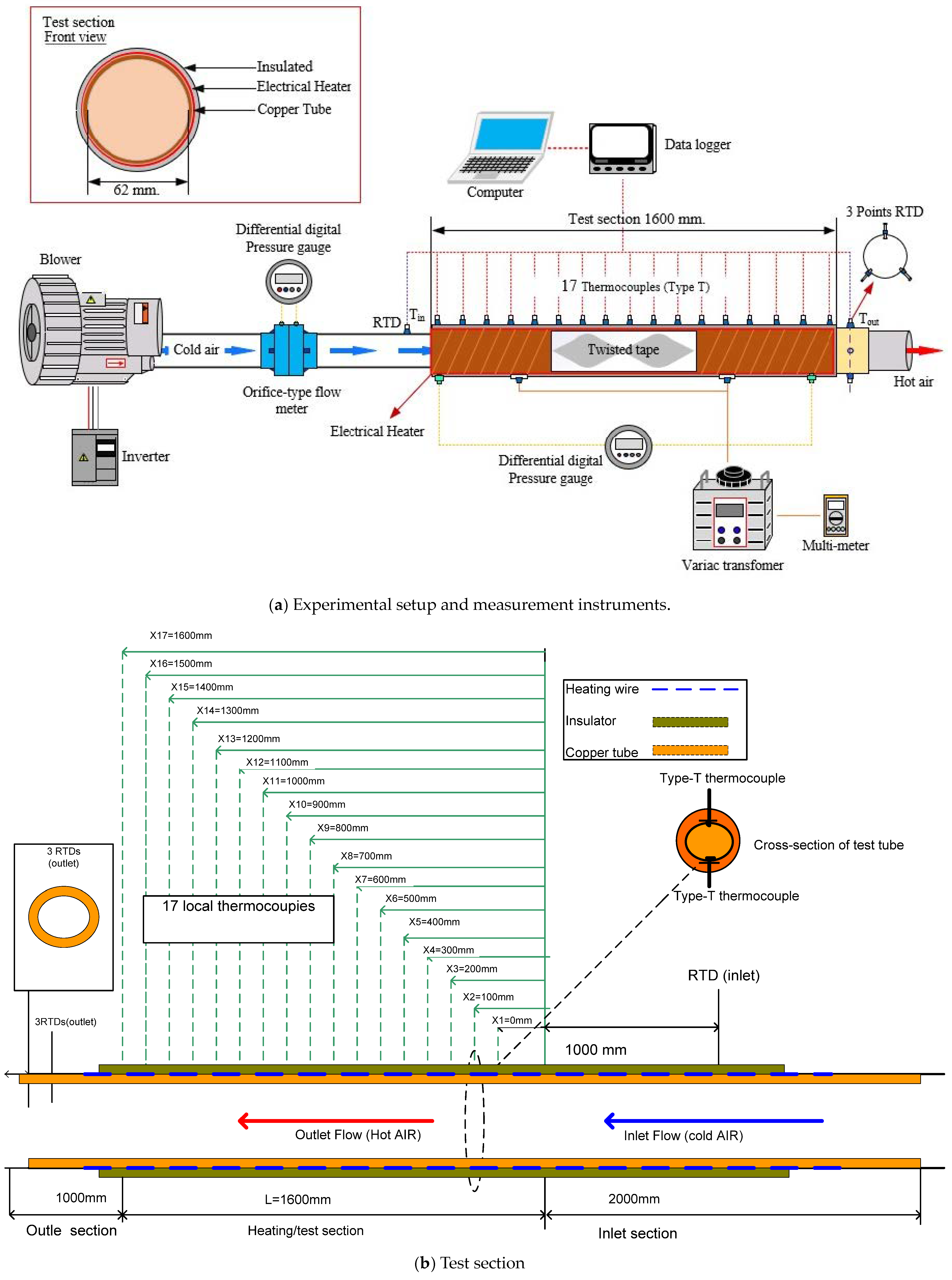
The experimental setup is illustrated in Figure 2. The test loop was composed of (1) a high-pressure fan, (2) an ABB inverter, (3) an orifice flow meter, (4) a differential digital pressure gauge, (5) a temperature controller, (6) RTDs, (7) a test section equipped with twisted tape and wire coil inserts under uniform wall heat flux conditions, (8) seventeen T-type thermocouples, (9) a Variac transformer, and (10) a multimeter. The heating section, 1600 mm in length, was fabricated from copper tubing with an outer diameter of 64 mm, an inner diameter of 62 mm, and a wall thickness of 1.0 mm. A nickel–chromium alloy heater wire (AWG 21, 0.7 mm in diameter, 46 Ω resistance) was wound around the pipe circumference to provide uniform heating. The heating tube was insulated with ceramic beads to minimize heat loss and prevent leakage. Seventeen T-type thermocouples (0.3 mm diameter) were mounted along the outer surface of the copper tube at intervals of 100 mm to measure local wall temperatures. Each probe was installed in a V-shaped groove, 0.8 mm deep, machined into the tube surface to ensure accurate temperature measurement. The temperature controller maintained the inlet air at 26 °C. Two pressure sensors were positioned at the tube inlet and outlet to monitor the pressure drop (ΔP) across the test section.
Uncertainty analysis is crucial when evaluating the reliability and accuracy of test results, helping to ensure the validity of the final research conclusions. This study employs the methods reported in references [23] to conduct uncertainty analysis, focusing on the quantitative analysis of core parameters such as Reynolds number (Re), Nusselt number (Nu), and friction coefficient (f) to verify the reliability of the experimental data as seen in equations below. It should be noted that the calculation of Nusselt number and pressure drop has inherent uncertainties, and the definition of relevant uncertainties strictly follows the standardized methods in the existing literature. Furthermore, the uncertainty data of all test parameters involved in this study are summarized in Table 2. These levels of uncertainty are within acceptable ranges for experimental heat transfer studies and confirm the reliability of the reported results. Variability for the Reynolds number (Re), Nusselt number (Nu), friction factor (f) and thermal performance factor (TPF) were ±4.77%, ±4.98%, ±5.12%, and ±3.92%, respectively.
Nusselt Number (Nu)
Δ N u N u = 1 N u h N u Δ h 2 + D N u Δ D 2 + k N u Δ k a 2 0.5 = Δ h h 2 + Δ D D 2 0.5
where h = q T w T b .
Δ h h = 1 h h q Δ q 2 + h T w Δ T w 2 + h T b Δ T b 2 0.5 = Δ q q 2 + Δ T w T w T b 2 + Δ T b T w T b 2 0.5
where q = 0.5 π D L V 2 / R + m ˙ C p T o T i .
Friction factor (f)
Δ f f = 1 f f Δ P Δ Δ P 2 + f L Δ L 2 + f D Δ D 2 + f Re Δ Re 2 0.5 = Δ Δ P Δ P 2 + Δ L L 2 + 3 Δ D D 2 + 2 Δ Re Re 2 0.5
where Δ Δ P Δ P = Δ h h and Δ R e R e = Δ m ˙ m ˙ 2 + Δ D D 2 0.5 .

3. Mathematical Formulation

To evaluate the thermal and hydraulic performance of the enhanced tube configurations, several key parameters were evaluated. In the experimental setup, air was drawn through a heated copper tube. The convective heat transfer was assumed to be equivalent to the heat transferred to the air under equilibrium conditions [24,25]:
Qair = Qconv
The heat absorbed by the air, Qair, was calculated as [24,25]:
Q air   =   m ˙ C p , air ( T out T in )
Here, m ˙ is the mass flow rate, Cp,air is the specific heat of air, and Tin and Tout are the inlet and outlet air temperatures, respectively.
Q V I Q a i r Q V I × 100 % 8.5 %
The actual heat transferred to the air (Qair) was found to be approximately 3.2–8.5% lower than the electrical input power (QVI = V × I) supplied to the heating wire. This difference was evaluated through a separate calibration experiment based on an energy balance between the electrical input and the air-side heat gain and was attributed to heat loss to the surroundings. The heat loss was mainly determined by the insulation condition and showed no pronounced dependence on the Reynolds number.
The convective heat transfer is expressed as [24,25]:
Qconv = hA(TwTb)
Accordingly, the convective heat transfer coefficient, h, is obtained as [23]:
h = m ˙ C p , air ( T out     T in ) / ( A   ( T ~ w T b ) )
The bulk air temperature, Tb, is defined as [24]:
Tb = (Tout + Tin)/2
The average surface temperature was measured from 17 T-type thermocouples:
T ~ w = T s / 17
The convection process was characterized using the Nusselt number [24,25]:
Nu = hD/k
The Reynolds number can be expressed as [26]:
Re = ρUD/μ
The pressure drop along the heated tube was used to determine the friction factor [26,27]:
f = ΔP(2D)/(ρLU2)
At equal pumping power, the relationship between the Reynolds number and friction factor for a plain tube and an enhanced tube (with wired twisted tape) can be expressed as [28,29]:
( V ˙ Δ P ) p   =   ( V ˙ Δ P )
(fRe3)p = (fRe3)
Thus, the equivalent Reynolds number for the plain tube, Rep, is:
Rep = Re(f/fp)1/3
For heat exchangers, the thermal performance factor (TPF) is commonly used as an indicator of overall performance [28,29]. The TPF evaluates thermodynamic effectiveness by considering both heat transfer enhancement and the associated pressure drop penalty. It is defined as:
TPF = (Nu/Nup)/(f/fp)−1/3
where Nup and fp represent the Nusselt number and friction factor for the plain tube, respectively.

4. Experimental Results and Discussion

4.1. Validation Test of a Plain Tube and Test-Tube Temperature Distributions

To ensure the accuracy and reliability of the experimental results, the measured Nusselt numbers and friction factors were validated against well-established correlations for fully developed turbulent flow in smooth tubes [25]. The correlations are as follows.
The Dittus–Boelter correlation for turbulent flow in tubes for Re > 10,000 and 0.6 ≤ Pr ≤ 160 is:
Nu = 0.023Re0.8Pr0.4
Gnielinski’s correlation for turbulent flow in tubes for 3000 ≤ Re ≤ 5 × 10⁶ and 0.5 ≤ Pr ≤ 2000 is:
Nu = (f/8) (Re − 1000)Pr/(1 + 12.7(f/8)0.5(Pr0.66 − 1)
The Blasius equation for turbulent flow in tubes for 3000 ≤ Re ≤ 5 × 10⁴ is:
f = 0.316Re−0.25
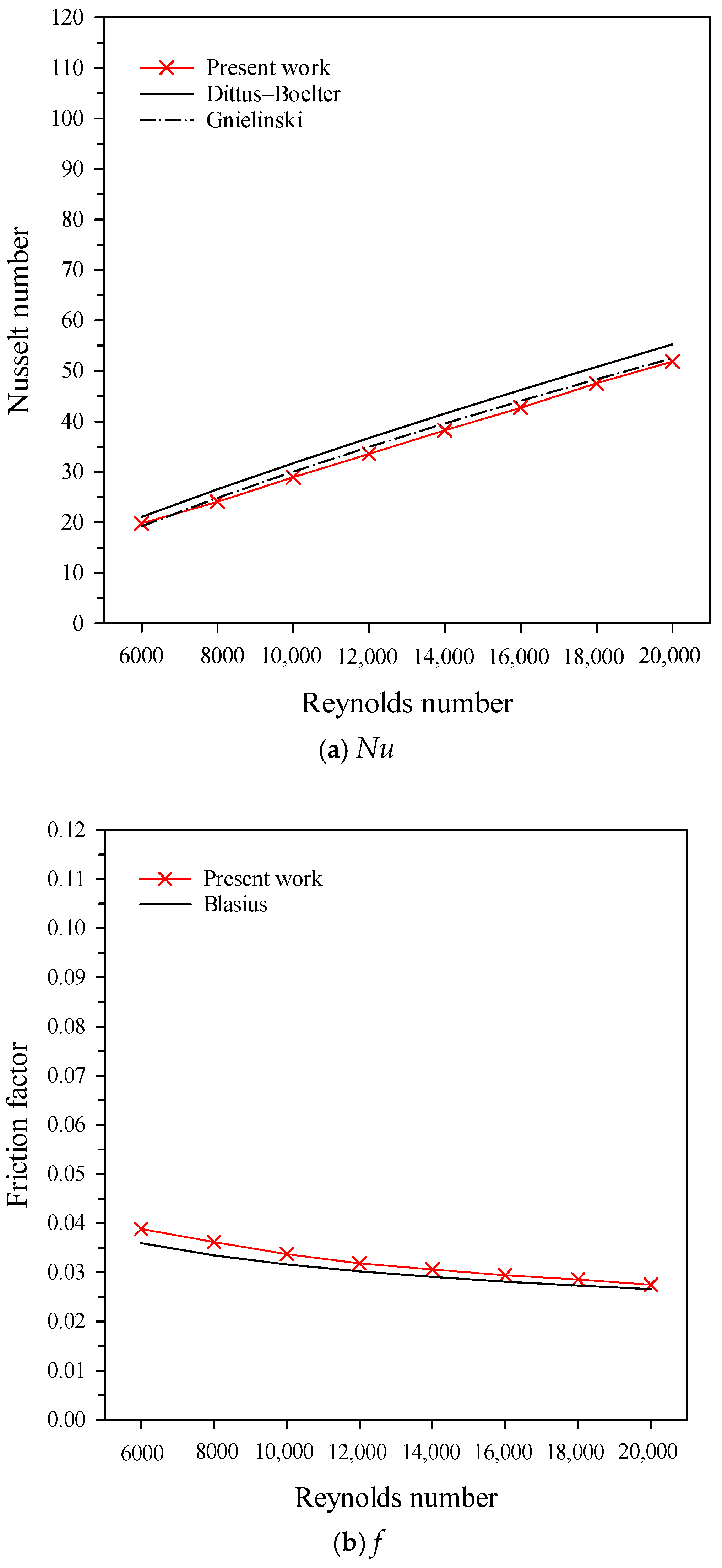
Figure 3 presents the validation of the Nusselt number (Nu) obtained in the present study against standard correlations. The experimental Nu values show good agreement with the predictions from the Dittus–Boelter and Gnielinski equations, with maximum deviations of 8.28% and 2.97%, respectively. Figure 3 compares the friction factor (f) from the current experiments with values calculated from the Blasius correlation. The measured friction factor closely matches the predictions, with a maximum error of 5.74%. It can be observed that current Nusselt number results closely align with the Gnielinski equation across the entire range of Reynolds numbers studied, due to the more comprehensive test criteria compared to the Dittus–Boelter correlation. Additionally, it is evident that the friction factor of the present results approaches the Blasius correlation at high Reynolds numbers, whereas at low Reynolds numbers, the accuracy of the instrument in capturing pressure loss is comparatively lower than at high Reynolds numbers. These results confirm the reliability of the experimental data. The results obtained can serve as a benchmark for comparisons with experiments employing wired twisted tapes for heat transfer enhancement.
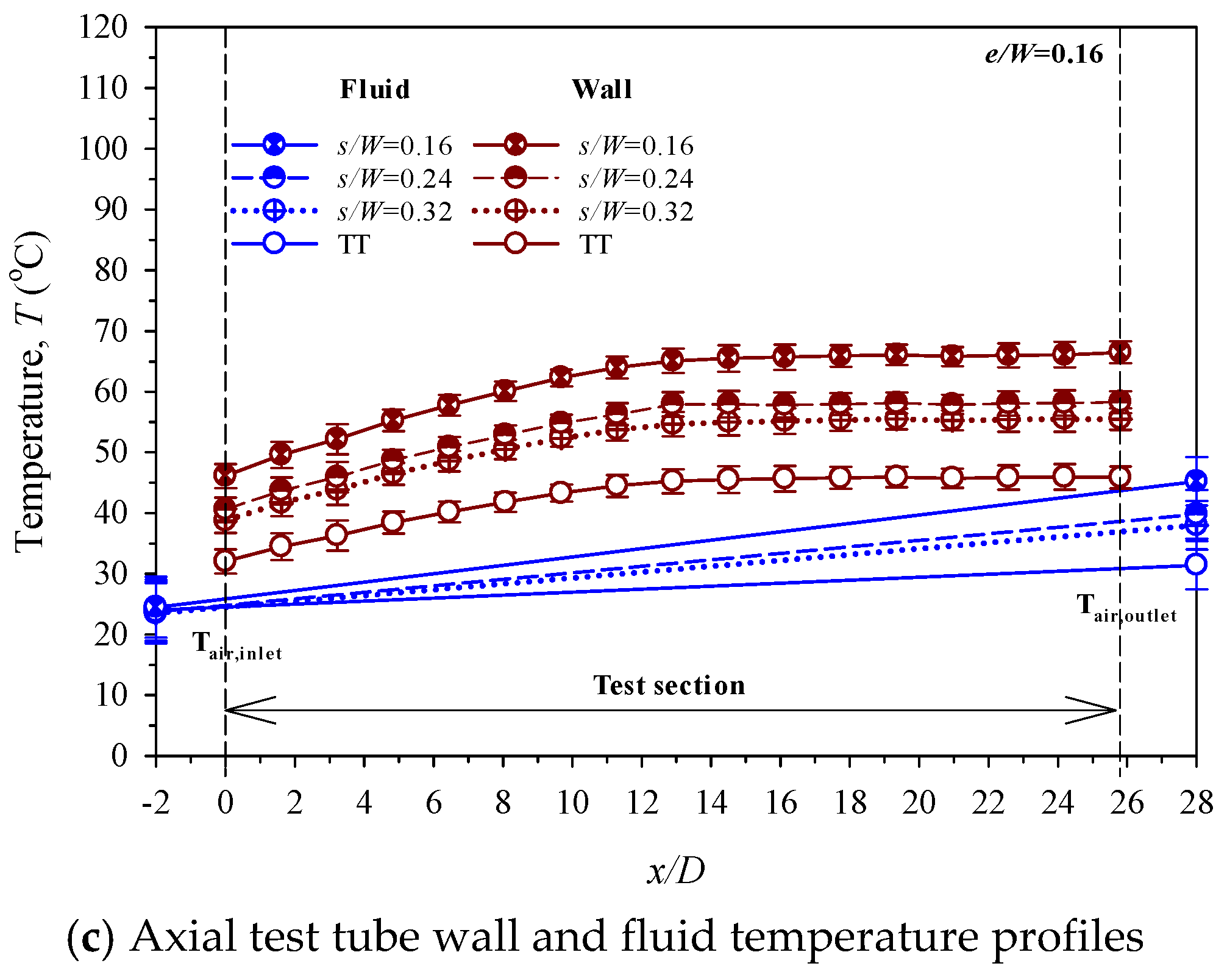
Figure 3c illustrates the axial distributions of the tube wall temperature (Tw) and the fluid inlet and outlet temperatures (Tin and Tout) along the test section fitted with a wired twisted tape, at an edge margin-to-width ratio of e/W = 0.16. The results are presented for hole spacing-to-width ratios of s/W = 0.16, 0.24, and 0.32 at a Reynolds number of 10,000. Here, x denotes the axial location of the thermocouples measured from the tube entrance. As the axial position (x/D) increases, Tw generally exhibits an increasing trend for all s/W values.

4.2. Effect of Hole Spacing-to-Width Ratio (s/W)

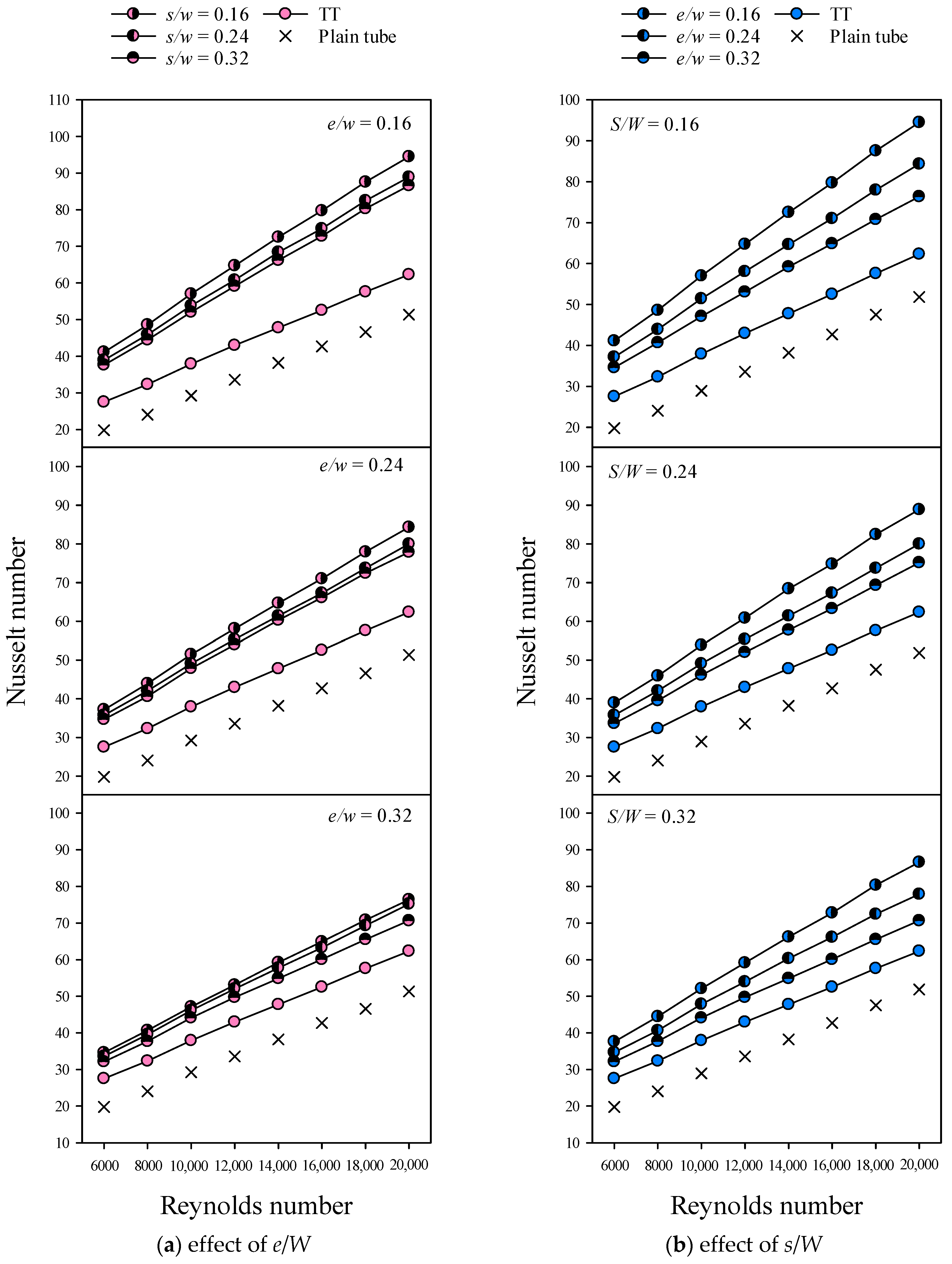
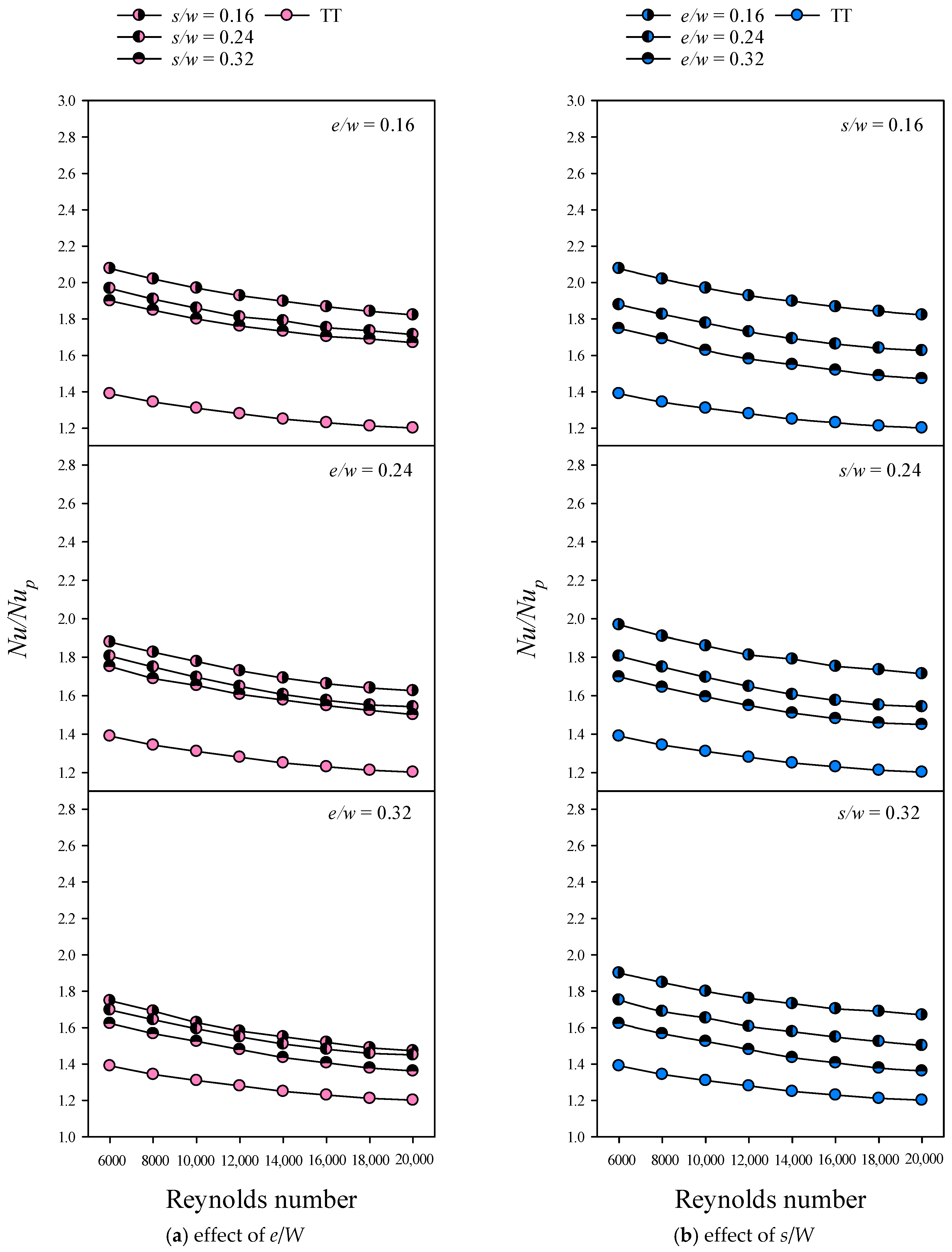
Figure 4a,b and Figure 5a,b present the Nusselt number (Nu) and Nusselt number ratio (Nu/Nup) for tubes equipped with wired twisted tapes, over a Reynolds number range of 6000 to 20,000. The results for a tube with a conventional twisted tape and a plain tube are also included for comparison. Generally, the Nusselt number increased with the Reynolds number, while the Nusselt number ratio decreased. The thickness of boundary layer is at lower Reynolds number is thicker than turbulent flow, and the Nusselt number ratio is higher at lower Reynolds numbers due to stronger swirl effects [28]. At elevated flow velocities, the baseline case already exhibits strong turbulence and enhanced fluid mixing, which naturally improves convective heat transfer. Consequently, the additional disturbances introduced by enhancement devices provide only marginal improvements. This behavior indicates that passive enhancement techniques deliver the most significant gains under low to moderate Reynolds number conditions, where inherent turbulence is relatively weak. At a given Reynolds number, tubes with wired twisted tapes exhibited significantly higher Nusselt numbers and Nusselt number ratios compared to both the conventional twisted tape and plain tube, demonstrating the enhanced heat transfer performance induced by the wire inserts. The heat transfer enhancement achieved by the modified wired twisted tape can be explained by the combined influence of two distinct flow mechanisms and their interaction: (1) swirling flow generated by the twisted tape; and (2) longitudinal vortex generated by the metal wire. The twisted tape causes the fluid inside the pipe to generate a global swirling flow that rotates around the axis, which is beneficial for the mixing of hot and cold fluids inside the pipe and can also extend the contact path between the fluid and the pipe wall, avoiding continuous thickening of the boundary layer in the axial direction. The inserted wire along the direction of fluid movement induces longitudinal vortices parallel to the axis inside the tube, which disrupts the uniform axial flow inside the tube and forms clusters of longitudinal vortices around the wire, which extend along the axis. The longitudinal vortices disrupt the near-wall laminar sublayer, enhance the secondary flow structure, intensify the radial disturbance of the fluid inside the pipe, and improve fluid mixing. These two flow mechanisms form a synergistic effect from the two dimensions of global mixing and local disturbance, jointly breaking the flow and heat transfer limitations inside the pipe and improving heat transfer.
At a given Reynolds number, the wired twisted tape demonstrated superior heat transfer performance compared to both the plain tube and the conventional twisted tape (TT). Specifically, for hole spacing-to-width ratios (s/W) of 0.16, 0.24, and 0.32, the Nusselt numbers were enhanced by 92.8, 72.92, and 58.49%, respectively, relative to a plain tube. Compared to a tube fitted with a conventional TT, the corresponding improvements were 51, 35.4, and 24.1%. When the spacing-to-width ratio (s/W) of the wired twisted tape is reduced, the wire is threaded more frequently along the tape length, resulting in a higher density of wire protrusions exposed to the flow. From a fluid dynamic perspective, each wire protrusion acts as a localized flow disturbance that interrupts the otherwise coherent swirling motion induced by the twisted tape. At smaller s/W ratios, these disturbances occur repeatedly over short axial distances, preventing the redevelopment of a stable hydrodynamic and thermal boundary layer.
This frequent interruption significantly enhances turbulence intensity and generates strong secondary vortices, particularly in the near-wall region where heat transfer resistance is dominant. The wire elements promote radial momentum exchange by forcing high-temperature fluid away from the wall and simultaneously sweeping cooler core fluid toward the wall. As a consequence, the thermal boundary layer is continuously thinned and re-energized, leading to higher local temperature gradients at the wall and, therefore, an increase in the convective heat transfer coefficient. In addition, Figure 5b shows that the Nusselt number ratio (Nu/Nup) slightly decreased with increasing Reynolds number. This can be explained by the fact that at a lower Reynolds number, a thermal boundary becomes thicker; therefore, the swirl flows induced by twisted tapes possess more significant effect on disruption of thermal boundary.
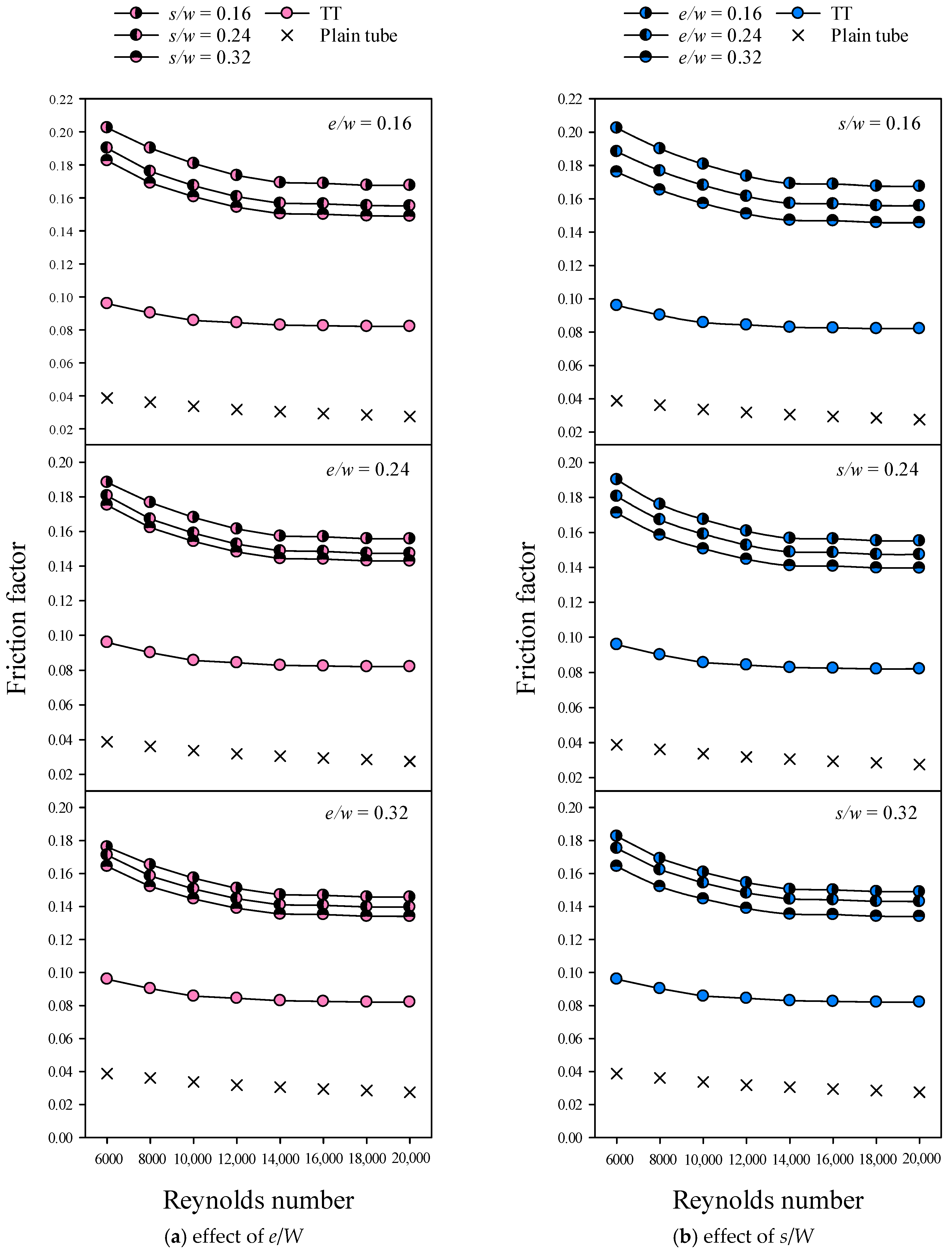
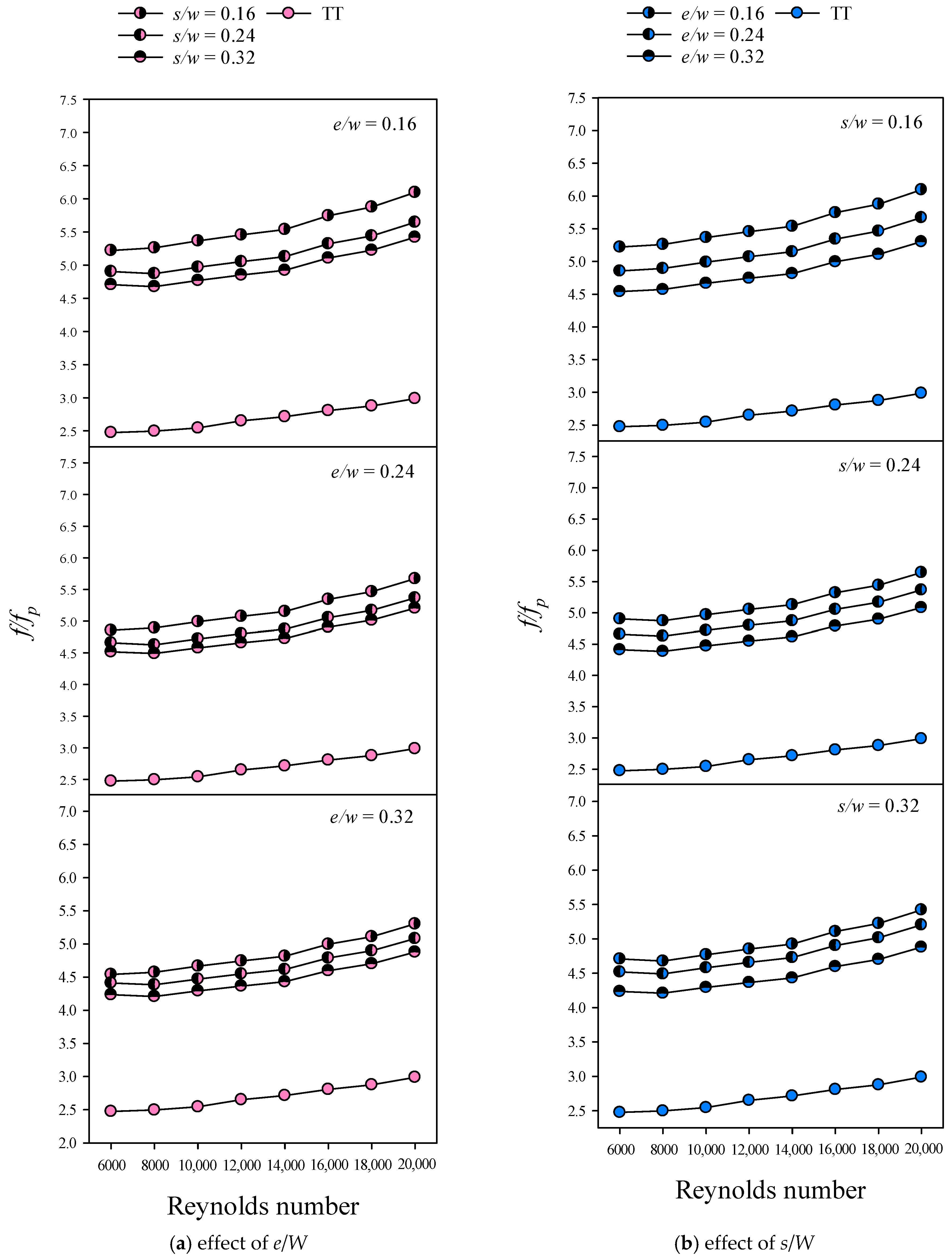
Figure 6a,b and Figure 7a,b show that the presence of twisted tapes led to increasing friction loss due to the secondary flows. The increase in friction loss observed with wired twisted tapes compared to conventional twisted tapes is primarily due to the additional flow obstruction created by the wire protrusions. In a wired twisted tape, the wire is threaded along the length of the twisted tape, forming multiple small protrusions that project into the flow path. These protrusions increase the surface roughness and create repeated flow separations and reattachments, which enhance turbulence but also increase viscous resistance. As a result, the flow experiences higher shear stress at the walls and more energy dissipation throughout the duct. The frequent interactions between the fluid and the wire protrusions amplify local pressure drops, leading to an overall higher friction factor. In contrast, a conventional TT provides only the helical disturbance without the additional obstructions, resulting in a lower friction loss for the same Reynolds number. For all the cases, friction factor slightly decreased while friction factor ratio (f/fp) slightly increased with increasing Reynolds number. The effect of twisted tape on friction factor was found that friction factors generated in the tube with tape insert(s) were considerably higher than those in the plain tube. The use of wired twisted tapes with smaller hole spacing resulted in higher friction losses. For tapes with s/W ratios of 0.16, 0.24, and 0.32, the measured friction factor (f) values were 5.57, 5.18, and 4.84 times greater than those of a plain tube, respectively. Compared to conventional twisted tape (TT) in the test tubes, these values correspond to increases of 2.07, 1.92, and 1.8 times, respectively. The higher friction losses observed with wired twisted tapes at reduced hole spacing can be attributed to the increased frequency of wire protrusions along the tape. The dense arrangement of wire protrusions at low s/W ratios increases the effective flow blockage and surface roughness, which elevates viscous shear stress at the wall. In addition, repeated flow separation and reattachment around the wire elements contribute to form drag, while intensified swirl and secondary flow structures increase energy dissipation through turbulence production. As a result, the pressure drop rises markedly as s/W decreases.
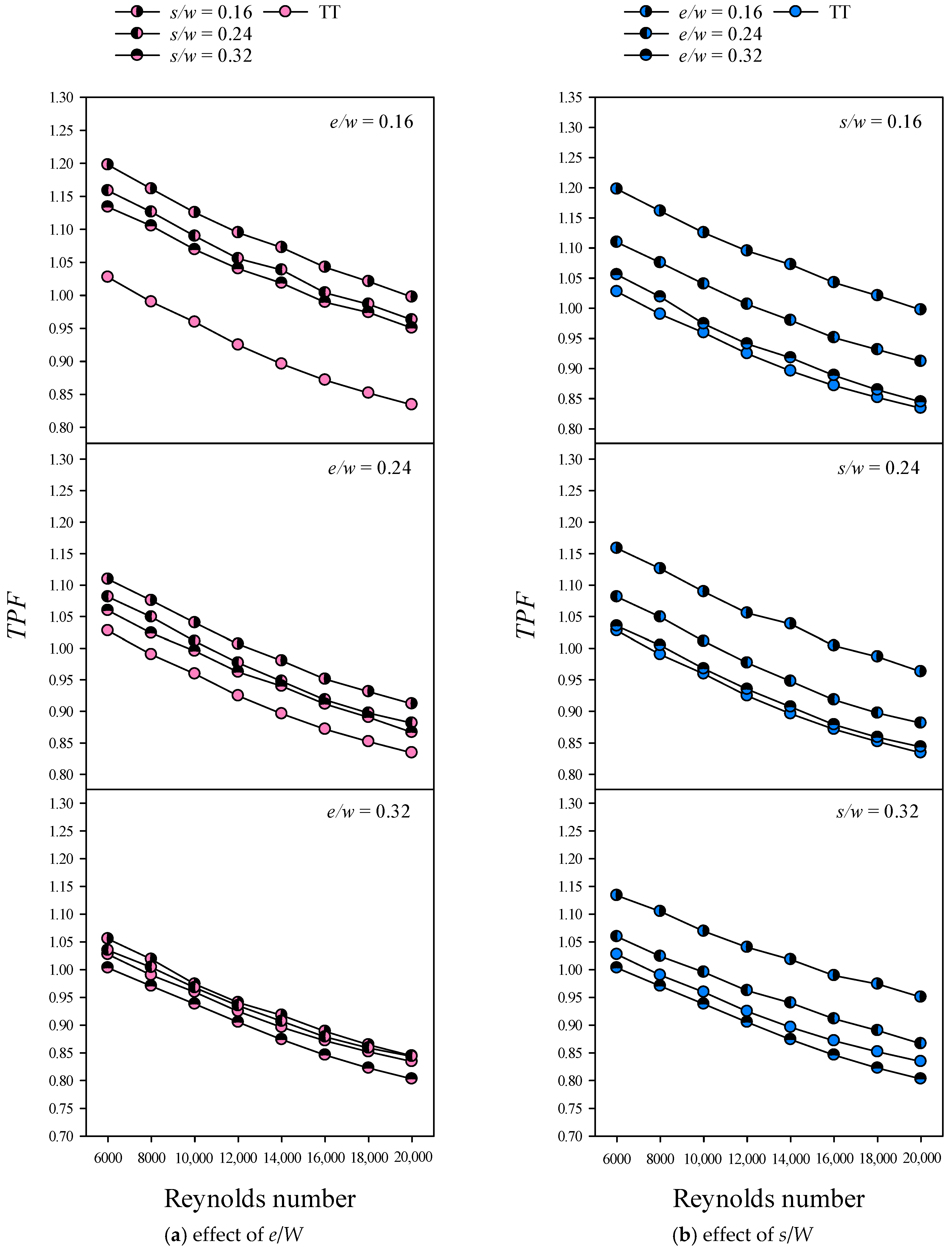
Figure 8a,b show that the thermal performance factor (TPF) varied with the Reynolds number due to the combined influence of heat transfer enhancement and frictional losses. At higher Reynolds numbers, lower TPF values were observed. As the Reynolds number increases, the flow becomes more turbulent, and although the heat transfer rate continues to rise, the frictional penalty becomes dominant, leading to a reduction in the TPF. The thermal performance factor (TPF) of the wired twisted tape exceeded that of the typical twisted tape (TT), as the heat transfer enhancement predominates over the increase in frictional losses. Although the wired structure introduces additional flow resistance, the enhanced turbulence and disruption of the thermal boundary layer strengthen convective heat transfer, leading to a net gain in thermal performance. Moreover, the TPF increased with decreasing hole spacing, reaching maximum values of 1.19, 1.11, and 1.05 at s/W = 0.16, 0.24, and 0.32, respectively. Reduced spacing increases the frequency of wire protrusions, intensifying flow disturbance and fluid mixing, which elevates the Nusselt number more than the corresponding frictional penalty, thus improving overall performance.

4.3. Effect of Edge Margin-to-Width Ratio (e/W)

A smaller edge margin-to-width ratio (e/W) in wired twisted tapes leads to a noticeable increase in heat transfer performance, as reflected by the higher Nusselt numbers observed in Figure 4a,b and Figure 5a,b. When the edge margin is reduced, the woven wire is positioned closer to the tube wall, where the thermal boundary layer is thinnest but also dominates the overall thermal resistance. This proximity allows the wire to directly interact with the near-wall flow, intensifying velocity gradients and generating strong longitudinal and streamwise vortices along the tube wall. Quantitatively, the heat exchanger tube equipped with wired twisted tapes at edge margin ratios (e/W) of 0.16, 0.24, and 0.32 exhibited Nusselt numbers that were 92.8, 81.8, and 76.3% higher, respectively, than those of a plain tube. When compared with a tube fitted with a conventional twisted tape, the corresponding enhancements were 51, 42.3, and 38.1%. From a fluid dynamic perspective, the edge region of the twisted tape is characterized by high shear stress and periodic flow separation due to the swirling motion imposed by the tape. Placing the wire closer to this region enhances the disruption of the viscous and thermal boundary layers by repeatedly forcing flow impingement and reattachment at the wall. As a result, colder fluid from the core region is more effectively transported toward the heated surface, while hotter fluid near the wall is swept away, leading to a substantial increase in convective heat transfer.
Figure 6a,b and Figure 7a,b illustrate that the friction factor increased with a decrease in the edge margin ratio (e/W). At e/W values of 0.16, 0.24, and 0.32, the friction factors (f) were 5.57, 5.17, and 4.96 times higher than those of a plain tube, respectively. Compared with the use of twisted tape (TT), the corresponding increases were 2.07, 1.92, and 1.84 times higher, respectively. When the wire is threaded closer to the edge of the twisted tape, the generated longitudinal eddies interact more strongly with the wall region, where viscous effects are dominant. This proximity intensifies boundary layer disruption and increases near-wall shear stresses, thereby elevating the pressure drop across the duct. As a result, the friction factor rises because the momentum loss due to wall shear is augmented by the stronger eddy–wall interaction.
Both heat transfer, expressed as the Nusselt number, and frictional loss, expressed as the friction factor, were considered to evaluate the thermal performance factor (TPF), as shown in Figure 8a,b. The results indicate that the enhancement in heat transfer outweighs the penalty from increased friction, leading to an increased TPF with decreasing edge margins. In particular, at e/W = 0.16, 0.24, and 0.32, the maximum TPF values were 1.19, 1.16, and 1.13, respectively. These findings emphasize the importance of edge margin optimization in passive heat transfer enhancement.

4.4. Empirical Correlation of the Tube with Wired Twisted Tape

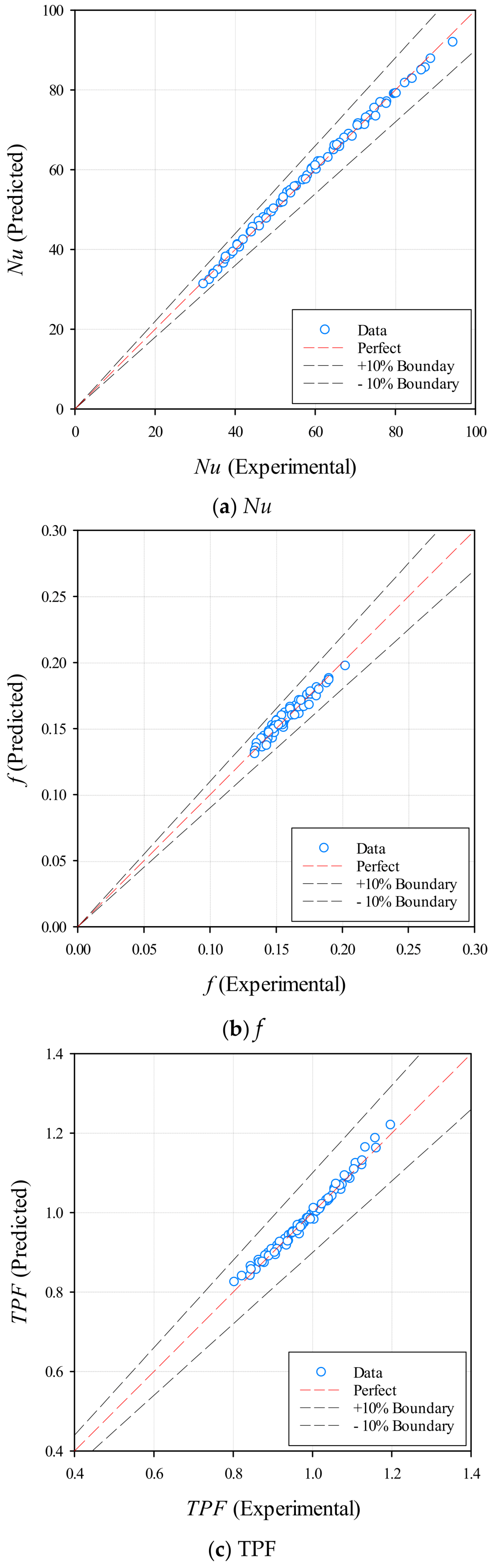
Experimental data for the Nusselt number (Nu), friction factor (f), and aerodynamic thermal performance factor (TPF) of tubes fitted with wired twisted tapes were collected to develop empirical correlations, presented in Figure 9a–c. The wired tapes have the hole spacing-to-width ratios (s/W) of 0.16, 0.24, and 0.32, and edge margin-to-width ratios (e/W) of 0.16, 0.24 and 0.32, respectively. These correlations express Nu, f, and TPF as functions of the Reynolds number (Re), Prandtl number (Pr), hole spacing-to-width ratio (s/W), and edge margin-to-width ratio (e/W). Nonlinear regression analysis was employed to establish the empirical relationships, and the resulting correlations are as follows.
N u = 0.063 Re 0.6802 e / w 0.1135 s / w 0.2584 P r 0.4
f = 0.4904 Re 0.1683 e / w 0.1356 s / w 0.1664
T P F = 3.2341 Re 0.1692 e / w 0.0683 s / w 0.2029
The predictions of the Nusselt number (Nu), friction factor (f), and thermal performance factor (TPF) using the proposed correlations deviated from the experimental results by up to ±3%, ±4%, and ±2%, respectively. These results suggest that the correlations can reliably estimate Nu, f, and TPF within the specified range of conditions (Re = 6000–20,000, wire diameter = 1.0 mm, s/W = 0.16, 0.24, and 0.32, and e/W = 0.16, 0.24 and 0.32). To evaluate the predictive correlation performance, the coefficient of determination (R2) and the root mean squared error (RMSE) were employed, as illustrated in Equations (24) and (25), respectively. The most accurate predictive performance is demonstrated by an R2 of 0.994 and an RMSE of 0.012, as predicted by this correlation.
RMSE =   1 N i = 1 N E i P i 2
R 2 =   1 i = 1 N E i P i 2 i = 1 N E m P i 2
where N is the number of data points, E is the target data (experimental result), Em is the mean of experimental result and P is the predicted result.
In addition, the power law of both parameters (s/W and e/W) has a negative value, as indicated by the correlation. This suggests that the Nusselt number (Nu), friction factor (f), and thermal performance factor (TPF) are higher at the lower values of those parameters. As a result, the power law of s/W has a greater magnitude than that of e/W, suggesting that s/W has a more significant effect on the Nu, f, and TPF.

4.5. Comparison with the Previous Studies

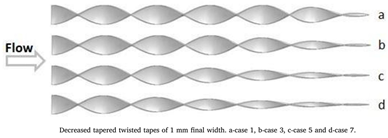
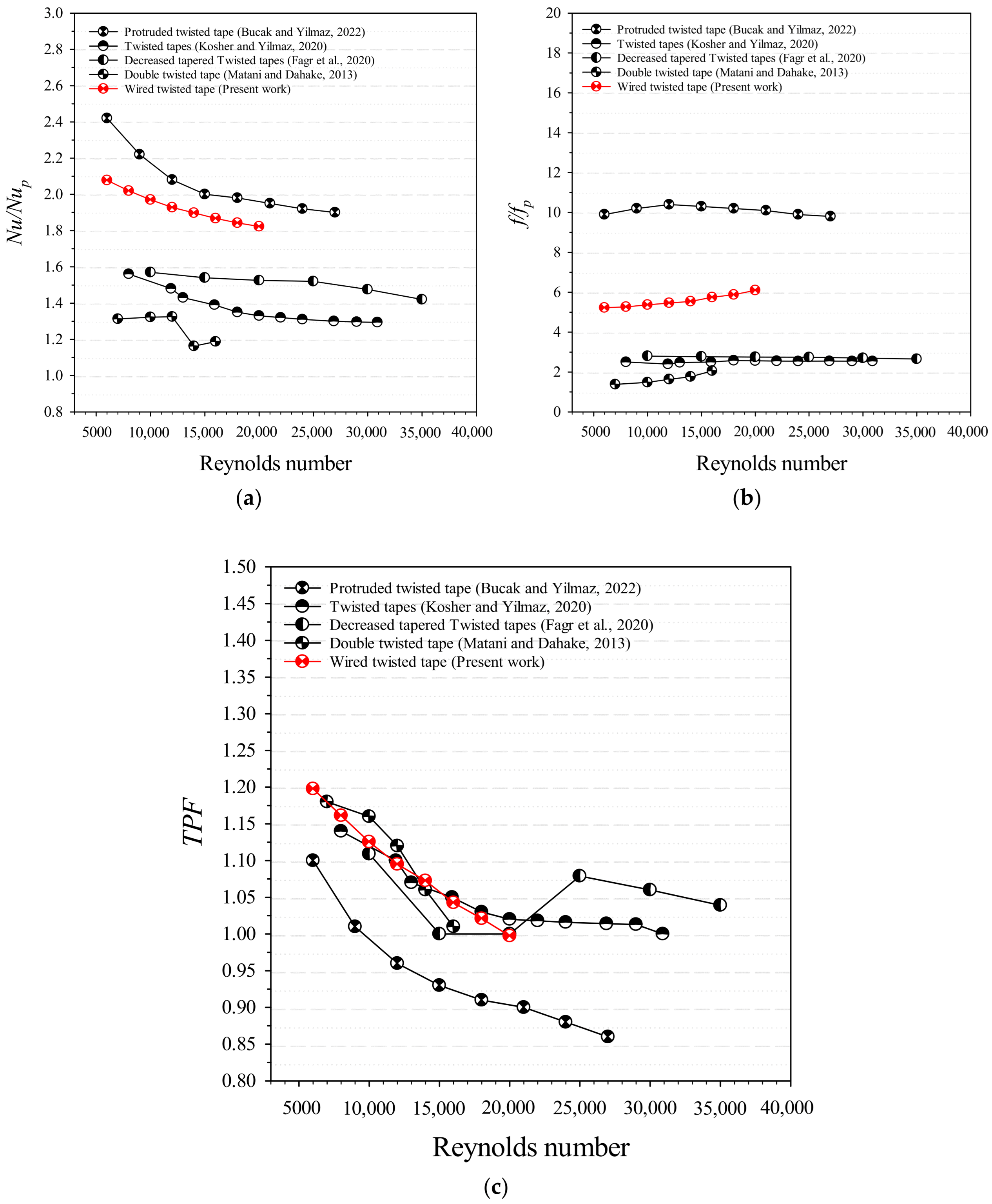
Figure 10 presents a benchmark comparison of the Nusselt number, friction factor and thermal performance factor (TPF) for the wired twisted tape investigated in this study against various twisted tape configurations reported in the literature. The comparison includes decreased tapered twisted tapes (DTTTs) [7], curved cross-sectional twisted tape [11], periodically spherical dimple-protrusion patterned walls of twisted tape [13], twisted tapes combined with wire coils [15]. As compared to previous studies with decreasing tapered twisted tapes (DTTTs) [7], curved cross-sectional twisted tape [11], and twisted tapes coupled with wire coils [15], the current work demonstrated a greater Nusselt number and friction factor. The Nusselt number and friction factor of repeatedly spherical dimple-protrusion patterned walls of twisted tape were found to be higher. According to the findings, wired twisted tape outperforms all other geometries examined, including decreased tapered twisted tapes (DTTTs) [7] and periodically spherical dimple-protrusion patterned walls of twisted tape [13]. This suggests that the wired twisted tape provides a good compromise between pressure drop and heat transfer enhancement.

5. Conclusions

Based on the experimental investigation of tubes equipped with wired twisted tapes, the following findings are highlighted:
  • Wired twisted tapes provided significantly higher Nu and Nu/Nup values compared with both conventional twisted tapes and plain tubes. This was due to the combined effects of longitudinal eddies generated by the wires and swirl flow induced by the twisted tape.
  • Reducing the hole spacing-to-width ratio (s/W) enhanced both Nu and the friction factor (f). More frequent wire protrusions intensified turbulence and disrupted the boundary layer more effectively.
  • A smaller edge margin-to-width ratio (e/W) improved heat transfer performance by bringing the wire closer to the tube wall, thereby strengthening near-wall turbulence, but also led to higher frictional losses.
  • Wired twisted tapes exhibited higher TPF values than conventional twisted tapes, with maximum values achieved at smaller s/W and e/W ratios, where the enhancement in heat transfer outweighed the penalty from friction.
  • The maximum thermal performance factor (TPF), 1.2, was achieved under the optimal condition at s/W and e/W ratios of 0.16.
  • Correlations for Nu, f, and TPF were developed as functions of Re, Pr, s/W, and e/W, with prediction deviations from experimental data within ±3%, ±4%, and ±2%, respectively, demonstrating their reliability within the studied ranges.
  • The parameters and results studied in this study are presented in dimensionless form. Due to the dimensionless nature of these parameters, they can be directly applied to larger pipe diameters without additional correction, providing a reliable theoretical reference and engineering guidance for the design and performance analysis of heat exchange systems with different pipe diameters and working fluids.

Author Contributions

Conceptualization, S.E.-a. and P.L.; methodology, J.L. and P.K.; validation, P.K.; formal analysis, S.B. and S.E.-a.; investigation, J.L., P.T. and S.C.; resources, P.T. and S.C.; data curation, J.L. and P.K.; writing—original draft preparation, J.L. and S.E.-a.; writing—review and editing, K.W. and P.L.; visualization, P.K.; supervision, P.L. and S.E.-a.; project administration, P.L.; funding acquisition, P.L. All authors have read and agreed to the published version of the manuscript.

Funding

The authors acknowledge with appreciation the School of Engineering, King Mongkut’s Institute of Technology Ladkrabang for financial support of this research (Grant No. 2568-02-01-025).

Institutional Review Board Statement

Not applicable.

Informed Consent Statement

Informed consent was obtained from all subjects involved in the study.

Data Availability Statement

The raw data supporting the conclusions of this article will be made available by the authors on request.

Conflicts of Interest

The authors declare no competing interests.

Nomenclature

AArea, m2
Cp,airspecific heat capacity, kJ kg−1K−1
Ddiameter of heating tube, m
egap of edge margin-to-width, m
e/Wedge margin-to-width ratio
ffriction factor, -
hheat transfer coefficient, W m−2K−1
Ielectrical current, A
kthermal conductivity, W m−1K−1
Lheating tube length, m
m ˙ mass flow rate, kg s−1
NuNusselt number, -
Ppressure, Pa
ΔPpressure drop, Pa
PrPrandtl number, -
qheat flux W m−2
Qairheat transfer rate of working fluid/air, W
Qconvconvection heat transfer rate of the wall, W
ReReynolds number, -
sgap of hole spacing-to-width
s/Whole spacing-to-width ratio
T ~ mean temperature, K
Ttemperature, K
ytwist/pitch length, m
Uvelocity, m s−1
Vvoltage, V
V ˙ volume flow rate, m3 s−1
Wtwisted tape width, m
Greek symbols
θcorrugation angle, °
µkinematic viscosity, m2 s−1
ρdensity of air, kg m−3
Subscripts
bbulk
ininlet
outoutlet
pplain tube
wwall
Abbreviations
TPFthermal performance factor
TTtwisted-tape

References

  1. Stalin, P.M.J.; Lokanadham, R.; Naveen, G.; Singh, B.; Tayyab, S.A.; Panchal, H.; Kumar, A.; Siddiqui, M.I.H.; Natrayan, L.; Shah, M.A. Innovative cinque rib roughened stimulators on performance improvement in triangular channel solar air heater. Int. J. Low Carbon Technol. 2024, 19, 227–235. [Google Scholar] [CrossRef]
  2. Singh, H.; Alam, T.; Siddiqui, M.I.H.; Ali, M.A.; Sagar, D. Experimental investigation of heat transfer augmentation due to obstacles mounted in solar air heater duct. Exp. Heat Tran. 2024, 37, 162–181. [Google Scholar] [CrossRef]
  3. Kumar, A.; Kunwer, R.; Donga, R.K.; Priyanka, S.K.; Alam, T.; Siddiqui, M.I.H.; Dobrota, D. Effect of oval rib parameters on heat transfer enhancement of TiO2/water nanofluid flow through parabolic trough collector. Case Stud. Therm. Eng. 2024, 55, 104080. [Google Scholar] [CrossRef]
  4. Dash, A.P.; Alam, T.; Siddiqui, M.I.H.; Blecich, P.; Kumar, M.; Gupta, N.K.; Ali, M.A.; Yadav, A.S. Impact on heat transfer rate due to an extended surface on the passage of microchannel using cylindrical ribs with varying sector angle. Energies 2022, 15, 8191. [Google Scholar] [CrossRef]
  5. Chokphoemphun, S.; Hinthao, C.; Eiamsa-ard, S.; Promvonge, P.; Thianpong, C. Thermal performance in circular tube with co/counter-twisted tapes. Adv. Mater. Res. 2014, 931–932, 1198–1202. [Google Scholar] [CrossRef]
  6. Promvonge, P.; Skullong, S. Heat transfer in a tube with combined V-winglet and twin counter-twisted tape. Case Stud. Therm. Eng. 2021, 26, 101033. [Google Scholar] [CrossRef]
  7. Fagr, M.H.; Rishak, Q.A.; Mushatet, K.S. Performance evaluation of the characteristics of flow and heat transfer in a tube equipped with twisted tapes of new configurations. Int. J. Therm. Sci. 2020, 153, 106–323. [Google Scholar] [CrossRef]
  8. Mashayekhi, R.; Eisapour, A.H.; Eisapour, M.; Talebizadehsardari, P.; Rahbari, A. Hydrothermal performance of twisted elliptical tube equipped with twisted tape insert. Int. J. Therm. Sci. 2022, 172, 107233. [Google Scholar] [CrossRef]
  9. Hasanpour, A.; Farhadi, M.; Sedighi, K. Intensification of heat exchangers performance by modified and optimized twisted tapes. Chem. Eng. Process. Intensif. 2017, 120, 276–285. [Google Scholar] [CrossRef]
  10. Dehankar, P.B.; Joshi, K.; Bhosale, V.A.; Patil, K.I. Investigation of newly designed Alternate Perforated V-Notch (APVN) twisted tape with heat transfer characteristics. Results Eng. 2022, 14, 100425. [Google Scholar] [CrossRef]
  11. Kosker, M.; Yilmaz, F. The cross-sectional curvature effect of twisted tapes on heat transfer performance. Chem. Eng. Process. Process Intensif. 2020, 154, 108008. [Google Scholar] [CrossRef]
  12. Dagdevir, T.; Uyanik, M.; Ozceyhan, V. The experimental thermal and hydraulic performance analyses for the location of perforations and dimples on the twisted tapes in twisted tape inserted tube. Int. J. Therm. Sci. 2021, 167, 107033. [Google Scholar] [CrossRef]
  13. Bucak, H.; Yilmaz, F. Heat transfer augmentation using periodically spherical dimple-protrusion patterned walls of twisted tape. Int. J. Therm. Sci. 2022, 171, 107211. [Google Scholar] [CrossRef]
  14. Suri, A.R.S.; Kumar, A.; Maithani, R. Effect of square wings in multiple square perforated twisted tapes on fluid flow and heat transfer of heat exchanger tube. Case Stud. Therm. Eng. 2017, 10, 28–43. [Google Scholar] [CrossRef]
  15. Matani, A.; Dahake, S. Experimental study of heat transfer enhancement in a pipe using twisted tapes and wire coils. Int. J. Mech. Eng. Technol. 2013, 4, 100–111. [Google Scholar]
  16. Emani, M.S.; Ranjan, H.R.; Bharti, A.K.; Meyer, J.P.; Saha, S.K. Laminar flow heat transfer enhancement in square and rectangular channels having wire-coil, axial and spiral corrugation combined with helical screw-tape with and without oblique teeth, and spiral corrugation combined with twisted tapes with oblique teeth. Int. J. Heat Mass Transf. 2019, 144, 118707. [Google Scholar] [CrossRef]
  17. Keklikcioglu, O.; Ozceyhan, V. A review of heat transfer enhancement methods using coiled wire and twisted tape inserts. In Heat Transfer—Models, Methods and Applications; IntechOpen: London, UK, 2018. [Google Scholar] [CrossRef]
  18. Garg, V.; Varun, M.O.; Nautiya, H.; Khurana, S.; Shukla, M.K. Heat transfer augmentation using twisted tape inserts: A review. Renew. Sustain. Energy Rev. 2016, 63, 193–225. [Google Scholar] [CrossRef]
  19. Shelare, S.D.; Aglawe, K.; Belkhode, P. A review on twisted tape inserts for enhancing the heat transfer. Mater. Today Proc. 2021, 47, 2062–2066. [Google Scholar] [CrossRef]
  20. Patil, S.T.; Phalle, O.; Dehankar, P.B. Twisted-tape inserts: A method for improving heat transfer efficiency in heat exchangers. Jabirian J. Biointerface Res. Pharmaceut. Appl. Chem. 2024, 1, 7–10. [Google Scholar] [CrossRef]
  21. Heris, S.Z.; Zolfagharian, N.; Mousavi, S.B.; Nami, S.H. Enhancing the synergistic properties of plate heat exchangers using nanohybrid MWCNTs–SiO2 EG-based nanofluids. J. Therm. Anal. Calorim. 2025, 150, 6225–6244. [Google Scholar] [CrossRef]
  22. Khouri, O.; Goshayeshi, H.R.; Mousavi, S.B.; Nami, S.H.; Heris, S.Z. Heat transfer enhancement in industrial heat exchangers using graphene oxide nanofluids. ACS Omega 2024, 9, 24025–24038. [Google Scholar] [CrossRef]
  23. Kline, S.J.; McClintock, F.A. Describing Uncertainties in Single Sample Experiments. Mech. Eng. 1953, 75, 3–8. [Google Scholar]
  24. Promvonge, P.; Thianpong, C.; Jayranaiwachira, N.; Nakhchi, M.E.; Skullong, S. Effect of trapezoidal louvered winglets on increased heat transfer and exergy in tubular heat exchanger. Int. J. Therm. Sci. 2024, 204, 109214. [Google Scholar] [CrossRef]
  25. Bergman, T.L.; Lavine, A.S.; Incropera, F.P.; Dewitt, P.D. Fundamentals of Heat and Mass Transfer, 7th ed.; John Wiley & Sons Inc.: Hoboken, NJ, USA, 2011. [Google Scholar]
  26. White, F.M. Fluid Mechanics, 9th ed.; McGraw Hill: New York, NY, USA, 2021; p. 885. [Google Scholar]
  27. Mousavi, S.B.; Heris, S.Z.; Estellé, P. Experimental comparison between ZnO and MoS2 nanoparticles as additives on performance of diesel oil-based nano lubricant. Sci. Rep. 2020, 10, 5813. [Google Scholar] [CrossRef]
  28. Webb, R.L.; Kim, N.H. Principles of Enhanced Heat Transfer, 2nd ed.; Taylor & Francis: New York, NY, USA, 2005; p. 785. [Google Scholar]
  29. Poonpakdee, P.; Samutpraphut, B.; Thianpong, C.; Chokphoemphun, S.; Eiamsa-ard, S.; Maruyama, N.; Hirota, M. Heat Transfer intensification in a heat exchanger by means of twisted tapes in rib and sawtooth forms. Energies 2022, 15, 8855. [Google Scholar] [CrossRef]
Figure 1. Geometric configurations of wired twisted tapes with varying hole spacing-to-width ratios (s/W) and edge margin-to-width ratios (e/W).
Eng 07 00128 g001aEng 07 00128 g001b
Figure 2. Details of experimental facility and heat transfer section.
Eng 07 00128 g002
Figure 3. Validation of experimental data against standard correlations for plain tubes and axial test tube wall and fluid temperature profiles.
Eng 07 00128 g003aEng 07 00128 g003b
Figure 4. Effect of e/W and s/W ratios on the Nusselt number (Nu).
Eng 07 00128 g004
Figure 5. Effect of e/W and s/W ratios on the Nusselt number ratio (Nu/Nup).
Eng 07 00128 g005
Figure 6. Effect of e/W and s/W ratios on the friction factor (f).
Eng 07 00128 g006
Figure 7. Effects of e/W and s/W ratios on the friction factor ratio (f/fp).
Eng 07 00128 g007
Figure 8. Effect of e/W and s/W on the thermal performance factor (TPF).
Eng 07 00128 g008
Figure 9. Predictions versus experimental data.
Eng 07 00128 g009
Figure 10. Comparison study (wired twisted tape) with decreased tapered twisted tapes (DTTTs) [7], curved cross-sectional twisted tape [11], periodically spherical dimple-protrusion patterned walls of twisted tape [13], twisted tapes combined with wire coils [15].
Eng 07 00128 g010
Table 1. The reported ranges of Nusselt number enhancement (Nu/Nup), friction factor penalty (f/fp), and thermal performance factor (TPF).
AuthorType of InsertModel or ImageReNu/Nupf/fpTPF
Chokphoemphun et al. [5]Circular Tube with Co/Counter-Twisted tapesEng 07 00128 i0015300–20,0001.19–1.521.62–1.771.025–1.26
Promvonge and Skullong [6]Combined V-winglet and twin counter-twisted tapeEng 07 00128 i0025300–24,0001.56–2.32.63–5.761.76
Fagr, Rishak, and Mushatet [7]Decreased tapered twisted tapesEng 07 00128 i00310,000–40,0001.25–1.751.8–3.00.96–1.28
Mashayekhi et al. [8]Twisted elliptical tube equipped with twisted tapeEng 07 00128 i004250–10000.98–2.121.01–2.320.96–1.6
Hasanpour et al. [9]Corrugated tube with modified twisted tapeEng 07 00128 i0055000–15,0001.4–2.31.2–2.81.0–1.47
Dehankar et al. [10]Alternate perforated V-notch twisted tapeEng 07 00128 i0062246–16,2241.83–2.282.16–4.551.78–1.84
Kosker and Yilmaz [11]Cross-sectional curvature twisted tapes Eng 07 00128 i0075840–30,9001.68~1.892.22–3.061.07–1.3
Dagdevir, Uyanik, and Ozceyhan [12]Dimples on twisted tapeEng 07 00128 i0086000–33,0001.32–2.131.7–2.631.47–1.58
Bucak and Yilmaz [13]Spherical dimple-protrusion patterned walls of twisted tape Eng 07 00128 i0093000–27,0001.7~6.83.2~131.478–1.508
Suri, Kumar, and Maithani [14]Multiple square perforated twisted tapeEng 07 00128 i0105000–27,0002.6–6.968.34–11.22.5–4.1
Matani, and Dahake [15]Twisted tapes and wire coil Eng 07 00128 i0115000–18,0001.2–3.21.8–5.51.7–1.75
Emani et al. [16]Corrugated tube with oblique toothed twisted tapeEng 07 00128 i0123000–20,0001.3–3.01.5–6.01.6–1.65
Table 2. Primary and secondary quantities’ uncertainty analyses.
Major Quantities
   InstrumentDisplayError limits (%)
   Digital pressure manometer±0.5 mm±5.5
   Inclined pressure manometer±0.1 °C±0.5
   Vane-type anemometer±0.1 m/s±4.5
   RTD (pt100)±0.1 °C±0.5
   Thermocouple (T-type)±1 mm±0.5
Minor Quantities
   Parameter Uncertainty (%)
   Nusselt number ±4.98
   Friction factor ±5.12
   Reynolds number ±4.77
Disclaimer/Publisher’s Note: The statements, opinions and data contained in all publications are solely those of the individual author(s) and contributor(s) and not of MDPI and/or the editor(s). MDPI and/or the editor(s) disclaim responsibility for any injury to people or property resulting from any ideas, methods, instructions or products referred to in the content.