Article

SOC-Dependent Thermal Analysis of a 5P4S Lithium-Ion Battery Pack Using TiO2 Nano-Enhanced Phase Change Material Cooling

by
Anumut Siricharoenpanich
1,
Smith Eiamsa-ard
2 and
Paisarn Naphon
1,*
1
Department of Mechanical Engineering, Faculty of Engineering, Srinakharinwirot University, 63 Rangsit-Nakhornnayok Rd., Ongkharak 26120, Nakhorn-Nayok, Thailand
2
Department of Mechanical Engineering, School of Engineering and Industrial Technology, Mahanakorn University of Technology, Bangkok 10530, Thailand
*
Author to whom correspondence should be addressed.
Eng 2026, 7(3), 122; https://doi.org/10.3390/eng7030122
Submission received: 17 January 2026 / Revised: 18 February 2026 / Accepted: 2 March 2026 / Published: 5 March 2026

Abstract

This study aims to experimentally evaluate and compare the electrical–thermal performance of a 20-cell 18650 lithium-ion battery pack cooled by a pure phase change material (PCM) and a PCM/TiO2 nanoparticle composite to identify an effective passive thermal management approach for EV battery applications. Using a controlled charging–discharging system, thermocouple-based temperature mapping, and systematic tests across multiple C-rates (0.75 C–1.5 C), the study measures the variations in battery temperature, generated heat, and voltage behavior as functions of depth of discharge (DOD) and state of charge (SOC). The results show that the PCM/nanoparticle mixture markedly improves thermal conductivity, reduces peak temperature by approximately 8–10 °C compared with pure PCM, delays thermal saturation at higher C-rates, and enables a wider safe DOD range with reduced voltage sag and lower heat accumulation. Based on the experimental temperature/voltage trends in this study, limit DOD to ≤40–50% at high power (≈1.5 C), ≤50–60% at moderate power (≈1 C), and ≤60–70% at low power (≈0.75 C) (i.e., target SOC windows roughly 60–100% SOC at 1.5 C, 40–100% SOC at 1 C, and 30–100% SOC at 0.75 C), with an absolute practical upper DOD limit of ~70% to avoid frequent deep discharge damage; these limits keep peak temperatures below ~40–45 °C, reduce severe voltage sag near cutoff, and greatly extend cycle life because shallower cycling (e.g., 50% vs. 100% DOD) produces many times more cycles. These improvements enhance battery safety, performance stability, and cycle life, making the nanoparticle-enhanced PCM a practical, compact, and energy-efficient solution for passive battery thermal management in electric vehicles.

1. Introduction

Heat transfer enhancement plays a critical role in numerous technological applications, including energy production; chemical processing; heating, ventilation, and air conditioning (HVAC) systems; and electronic device cooling. Efficient thermal management is essential to ensure operational reliability, improve energy efficiency, and extend system lifespan. Phase change materials (PCMs) have attracted considerable attention due to their high latent heat storage capacity and ability to maintain nearly constant temperature during phase transition. During melting, PCMs absorb substantial heat without a significant temperature rise, while during solidification, the stored heat is released to the surroundings. Owing to these characteristics, PCMs are widely used for thermal energy storage, temperature stabilization, and passive cooling.
In recent years, PCM-based thermal management has been increasingly investigated for lithium-ion battery systems, particularly in energy storage devices, portable electronics, and electric vehicles. Effective thermal regulation is crucial for battery safety, electrochemical performance, and service life. High charge–discharge rates generate significant heat, which can lead to thermal runaway, accelerated aging, and capacity degradation if not properly controlled. Conventional cooling approaches, such as air and liquid cooling, often increase system complexity, energy consumption, and overall weight. In contrast, PCM-based cooling systems provide a passive, compact, and reliable solution due to their high heat absorption capacity during phase transition. Typically, an encapsulated PCM is positioned in direct contact with battery cells, functioning as a thermal buffer that absorbs excess heat during operation. The PCM maintains the battery temperature within a safe operating range during melting and, upon solidification, releases the stored latent heat to the environment or to a secondary cooling system. Therefore, PCM-based thermal management systems offer an effective, energy-efficient approach to mitigating temperature rise and improving thermal stability in lithium-ion battery modules.
Recent studies have investigated hybrid and active cooling strategies to enhance lithium-ion battery thermal management performance. Wang et al. [1] developed a Z-type BTMS with adaptive fan control, reducing temperature non-uniformity by 65.5% compared with the baseline model. Yang et al. [2] optimized airflow distribution in an air-cooled BTMS using intake manifold spoilers, achieving a maximum temperature difference of 3.64 K. Sarchami et al. [3] experimentally demonstrated that AgO nanofluids (1–4% volume fraction) improved cooling performance in 21,700-format batteries, reducing peak temperature by up to 4.83 °C at 5 C discharge. Oyewola et al. [4] enhanced airflow using a step-like divergence plenum, lowering maximum temperature by 3.94 K relative to the conventional Z-type system. Goodarzi et al. [5] proposed a liquid–vapor phase transition cooling system that achieved reduced pack temperature and improved uniformity at low ambient temperatures. Liu et al. [6] reported that a graphite-enhanced PCM combined with fin structures reduced battery temperature by 7.66 °C under high-load conditions, while Ghafoor et al. [7] applied GA-SVM optimization to an air-cooled BTMS, reducing maximum temperature by 3.5 K and improving uniformity by 70%. Although these studies demonstrate significant improvements using active cooling, nanofluids, structural modifications, and optimization techniques, experimental validation of nano-enhanced PCM systems at the battery pack level remains limited, particularly for electrically insulating nanoparticles such as TiO2, thereby motivating the present investigation.
Sun et al. [8] investigated a hybrid battery thermal management system combining phase change materials and liquid cooling, in which a composite PCM comprising 10% expanded graphite in paraffin wax was used to regulate battery temperature and enhance heat dissipation. Xie et al. [9] developed a compact and lightweight integrated battery thermal management system that enhanced both cooling and preheating performance through structural optimization, reporting optimal performance at channel width ratios of 0.60–0.65. Wu et al. [10] proposed an online temperature regulation strategy for electric vehicle batteries using dynamic programming to optimize energy consumption during operation. Afraz et al. [11] presented a simplified thermal model for a Tesla Model S battery pack and showed that increasing the discharge rate from 0.5 C to 5 C raised the average battery temperature to 84.5 °C, significantly increasing the risk of thermal runaway; moreover, every 15–30 °C rise in initial coolant temperature increased battery temperature by approximately 13.2 °C. Zhong et al. [12] demonstrated that flow instability in electric vehicle cooling systems adversely affects heat dissipation and applied two-dimensional topology optimization to redesign cooling plates, achieving temperature reductions of up to 3.5 K compared with conventional plate configurations.
An et al. [13] developed a bionic capillary–honeycomb hybrid battery thermal management system (CH-HBTMS) that integrates biomimetic cooling conduits with cellular cold plates to improve heat dissipation and coolant distribution. The combined honeycomb framework and multi-branch capillary channels enhanced flow uniformity, increased heat transfer contact area, and improved overall channel efficiency, leading to superior thermal regulation performance. Yi et al. [14] proposed a compact BTMS incorporating an ultra-thin vapor chamber and reported maximum temperature reductions of 23.2%, 24.4%, and 25.5% at 1 C discharge. The system maintained temperature differences below 2 °C under various discharge rates and limited the maximum temperature difference to 2.28 °C even under demanding conditions (2 C discharge and 30 °C coolant inlet temperature), demonstrating robust thermal stability. Daniels et al. [15] introduced a machine learning-based method to optimize temperature sensor placement in air-cooled lithium-ion battery modules, enabling early prediction and mitigation of thermal runaway propagation. Zhang et al. [16] designed a leak-proof, large-scale BTMS that combines PCM with liquid-cooling channels. Compared with conventional liquid cooling, the PCM–liquid hybrid system reduced the maximum temperature difference (ΔT_max) by 34.9% within an inlet flow velocity range of 0.001–0.005 m/s, indicating improved temperature uniformity and enhanced cooling performance.
Yang et al. [17] investigated air-cooled mini-channel heat sinks with porous structures for cell-level battery cooling and demonstrated that porosity significantly influences thermal performance; mini-channels with 10% porous blocks achieved cooling effectiveness comparable with that of fully porous channels. Suo et al. [18] combined air cooling with PCM for prismatic batteries and reported a 64% improvement in thermal regulation. Their optimized design reduced the temperature difference by 11.91%, PCM volume by 43.16% (from 215,544 mm3 to 123,000 mm3), and pressure drop by 11.61%. Kou et al. [19] examined scalable integration and phase transition behavior in advanced materials, while Suzuki et al. [20] demonstrated that acetonitrile enhanced charge transfer kinetics in lithium-ion batteries. Xu et al. [21] evaluated nanofluids in micro-channel heat exchangers and found that CuO–H2O nanofluid improved the heat transfer coefficient by 4.89% and increased the Nusselt number by 1.64% compared with water. Jiao et al. [22] highlighted the potential of implantable battery technologies for bioelectronic applications. Enmark et al. [23] developed graphene-enhanced vapor chambers with 21.6% lower thermal resistance than conventional copper designs. Shi et al. [24] proposed a multi-timescale optimization strategy for electric heavy-duty vehicle battery-swapping stations, achieving cost reductions of 4.26% and 6.03% compared with baseline operation.
Drummond et al. [25] improved the performance of large-format lithium-ion pouch cells by addressing non-uniform distributions of current density, temperature, and state of charge, which become more pronounced at high C-rates and can accelerate degradation. Youk et al. [26] investigated the stability of the solid electrolyte interphase (SEI) and dendritic lithium growth in lithium metal batteries, emphasizing that unstable lithium deposition significantly limits battery safety and cycle life. Choi et al. [27] analyzed the thermal and power management of a hybrid battery–hydrogen fuel cell multicopter for urban air mobility applications, reporting reductions of 1.63% in both parasitic power consumption and hydrogen usage. Liu et al. [28] studied a functional microencapsulated phase change material for thermal management. Choudhari et al. [29] numerically analyzed different fin structures in a phase change material module for a battery thermal management system and its optimization. Chen et al. [30] experimentally studied the thermal design of the fast-charging process of a lithium-ion battery module with liquid cooling. Next, Naphon and co-workers [31,32,33,34,35,36,37] have made extensive contributions to battery thermal management research, particularly for cylindrical and prismatic battery packs. Their studies explored liquid and nanofluid cooling systems, considering the effects of coolant flow direction [31,32], inverse zigzag channel ferrofluid flow [33], various structural configurations [34], mini-channel heat sinks [35], and embedded copper foam sheets [36,37], all demonstrating significant improvements in heat transfer and temperature uniformity.
Although extensive studies have investigated air cooling, liquid cooling, hybrid PCM–liquid systems, and optimization-based battery thermal management strategies [1,2,3,4,5,6,7,8,9,10,11,12,13,14,15,16,17,18,19,20,21,22,23,24,25,26,27,28,29,30,31,32,33,34,35,36,37], several gaps remain. Many previous works focus primarily on active cooling methods or numerical modeling, while experimental validation of passive nano-enhanced PCM systems at the battery pack level remains limited. In particular, most PCM enhancement studies emphasize graphite or carbon-based additives, whereas experimental investigations of electrically insulating TiO2 nanoparticles incorporated into PCM for cylindrical lithium-ion battery modules are scarce. Furthermore, direct comparisons between pure PCM and nano-enhanced PCM under identical operating conditions, along with detailed SOC-dependent thermal behavior analysis, have not been sufficiently reported. Therefore, this study experimentally evaluates the thermal performance of a 5P4S cylindrical lithium-ion battery pack using paraffin PCM and TiO2-enhanced PCM under controlled 1 C discharge conditions, aiming to provide a simple, safe, and effective passive thermal management solution for electric vehicle applications.
This study presents the first comprehensive experimental pack-level investigation of TiO2 nano-enhanced phase change material (NePCM) for passive thermal management of a 5P4S cylindrical lithium-ion battery module under controlled 1 C discharge conditions. Unlike prior studies that primarily emphasize active cooling strategies, graphite-enhanced PCM, or numerical optimization approaches, this work isolates and quantifies the direct impact of electrically insulating TiO2 nanoparticles on PCM thermal conductivity and battery cooling performance under identical operating conditions. The study systematically evaluates peak temperature reduction, inter-cell temperature uniformity, and SOC-dependent thermal evolution, thereby providing a deeper understanding of dynamic heat transport behavior in nano-enhanced PCM systems. By integrating conductivity enhancement with latent heat storage while maintaining electrical safety and structural simplicity, this research establishes a scalable, energy-efficient, and practically deployable passive cooling solution for next-generation electric vehicle battery modules.

2. Experimental Apparatus and Procedure

2.1. Experimental System

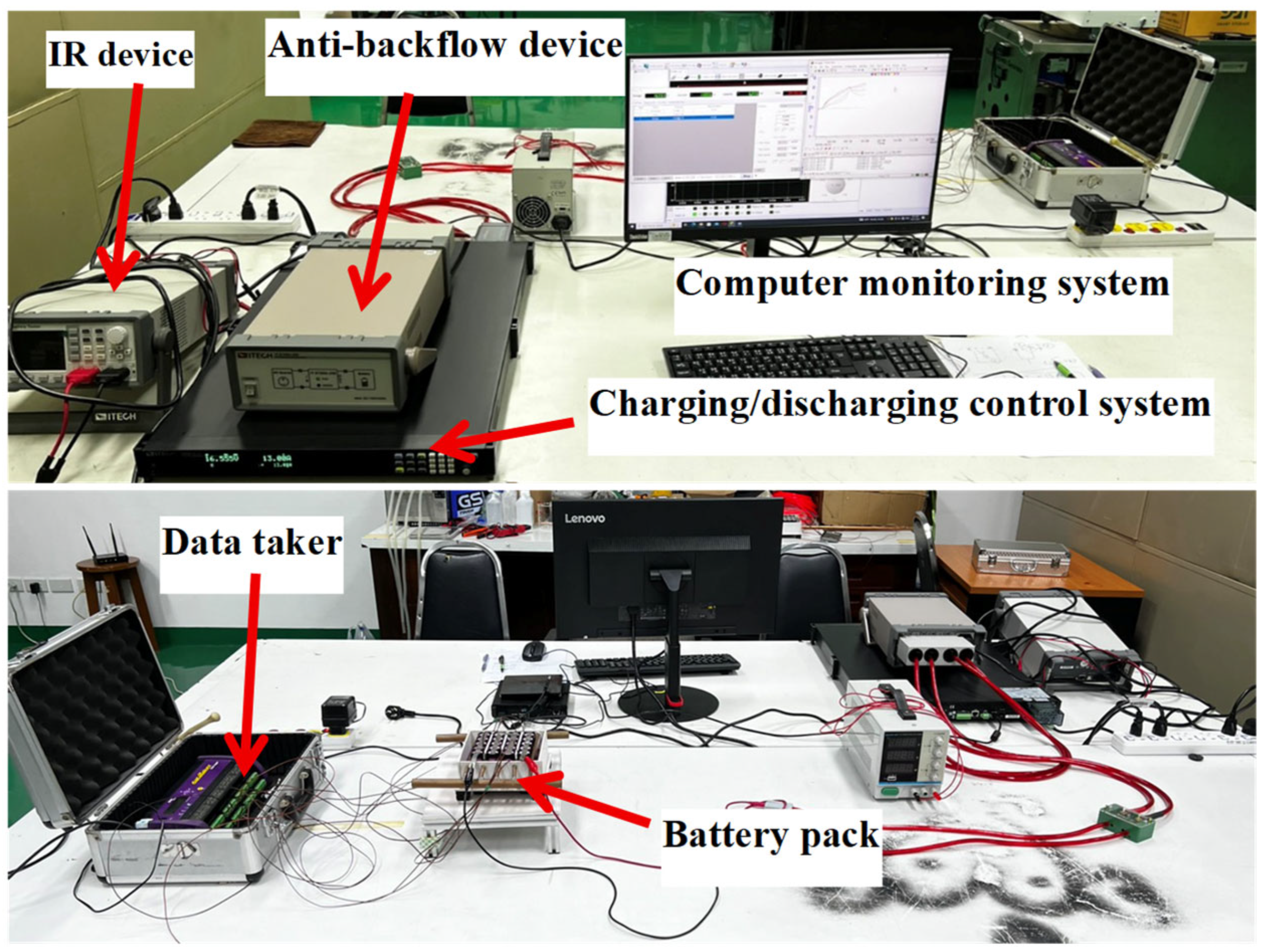
The battery cycle test apparatus comprises a temperature tracking device, a software-controlled charging and discharging device, a battery pack, and a data collection device. Figure 1 shows this. To charge and discharge the battery pack, an ITECH bidirectional power supply (IT3906C-80-120, ITECH Electronics Co., Ltd., Nanjing, China) was utilized. We measured the internal resistance using an IT5101 battery tester from ITECH. To avoid electrical backflow, the IT-165A-250 anti-reverse prevention device was in place. As part of their data-gathering method, they used the Data Taker (DT85) device (Thermo Fisher Scientific, Waltham, MA, USA). During the experiment, the apparatus that charged and discharged the batteries was connected to the battery pack module. Maintaining a temperature between 26 and 27 °C was required once we reached the control room. Eight Type-T thermocouples were attached to the battery surface to detect any temperature changes. The margin of error for this collection of thermocouples was less than 0.5 °C.

2.2. Battery Cell and Pack

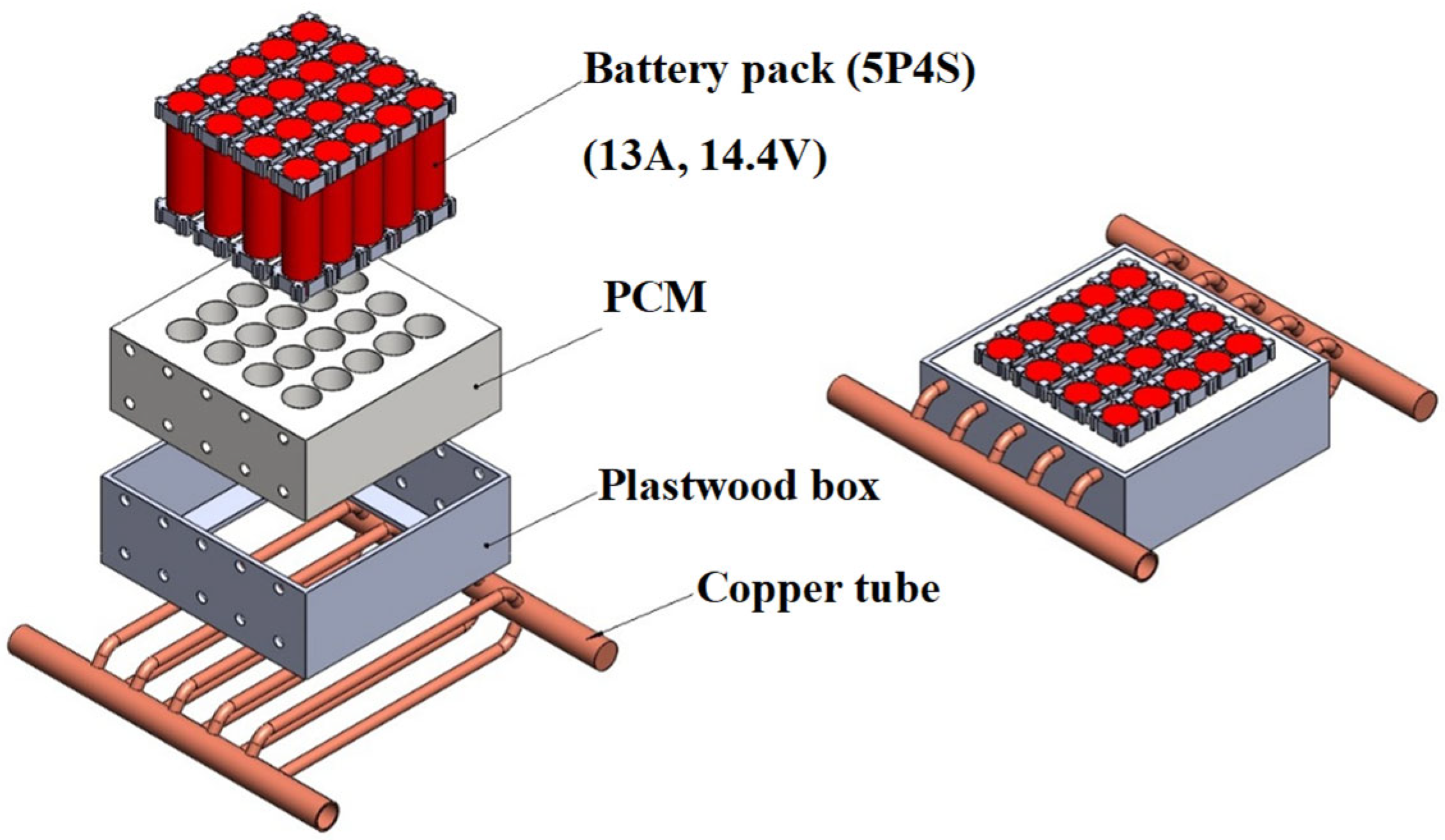
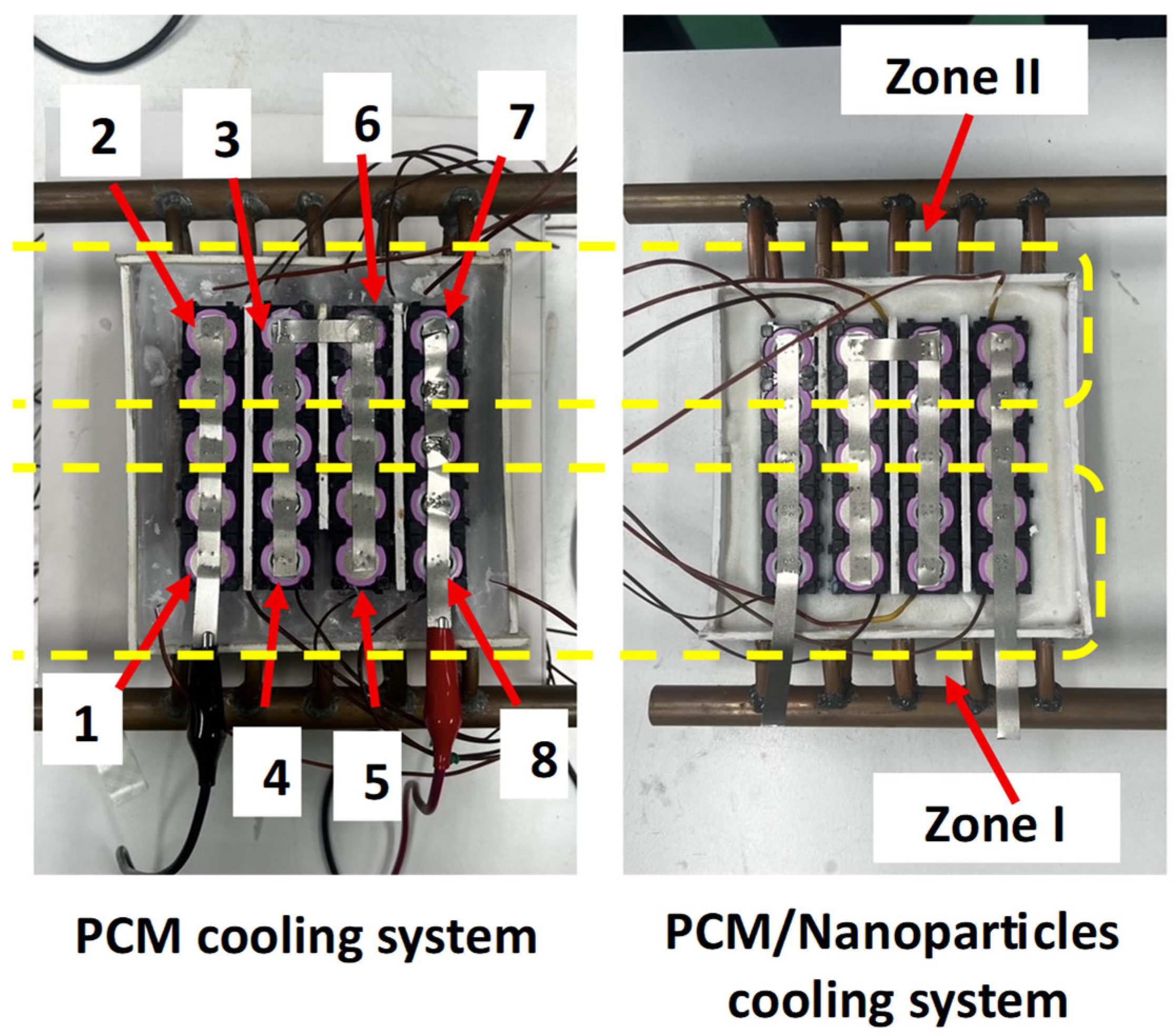
The battery module consists of the following parts: a battery pack, a block of PCM/nanoparticle composites, a plastic wood box, and a unit of copper tubes (as shown in Figure 2). Figure 3 shows the results of two separate cooling operations for battery modules that use different charging and discharging methods. Detailed in Table 1 are the novel cylindrical 18650 LIB batteries investigated. The model for the battery heat management system comprised 18650 batteries organized in 4 rows and 5 columns, with paraffin wax filling the gaps between batteries and polycrystalline magnesium (PCM) forming the case. The battery pack consists of 20 individual cells arranged in a 5P4S configuration. Their total voltage and current capacities are 14.5 volts and 13 amps, respectively. The nickel plates that connect the battery cell’s poles are brazed together using a pulse spot welding machine (SUNKKO 709A, SUNKKO, Foshan, China). Nickel plates linked to copper wires through the control system are typical of BTMs in electric vehicles. Each battery in the research had a 4 mm space between its terminals. The battery heat management system, seen in Figure 2, was constructed from a 2.5 mm plast wood sheet and had the following dimensions: 14.5 × 14.5 × 5.5 cm (length × width × height). Figure 3 shows the locations of the temperature monitoring stations, which are part of a larger data gathering system that continuously takes readings. It is possible to get information on temperature distribution using a network of thermocouples connected to a computer. We investigated how air conditioning affects heat dissipation by conducting charge and discharge tests on PCM–nanoparticle mixed battery heat dissipation modules with different topologies.

2.3. Phase Change Material/Nanoparticle Mixture Preparation

The TiO2 nanofluids (paraffin wax/TiO2), with a purity above 99.9 percent and an average particle size of 21 nanometers, were used as the coolant in this investigation at a volume concentration of 2.5 percent. Nanofluid production begins by dispersing TiO2 nanoparticles in DELTA, or distilled water, through an ultrasonic bath. Slowly adding magnetically rotating weighted nanoparticles to the base fluid creates a coarse suspension. To improve the suspension’s thermal properties and stability, clumps are broken up by submerging the suspension in an ultrasonic bath for 30 to 60 min. Before ultrasonication, add SDS or PVP to the solution to improve dispersion and reduce sedimentation. It is clear that stable, homogeneous nanofluids work better, and that heat conductivity and cooling are also improved. The ferrofluid is ultrasonically stabilized after being spun at 40 kHz for one hour. Please ensure that the absorbance spectrum is facing the optical path when placing the mixed iron oxide nanofluid in a sterile quartz cuvette in the sample holder of the UV-1800 spectrophotometer (Shimadzu, Kyoto, Japan). Nanoparticles of iron oxide between 200 and 800 nm in size can be detected by adjusting the scanning speed and slit width. Modifications to the baseline lessen the absorbency of the pure base fluid background. It may measure particle concentration, dispersion, and aggregation by creating UV–Vis absorbance spectra, which plot the absorbance of nanofluid samples as a function of wavelength. Nanofluid absorbance spectra are recorded on days one and two. A 1.03% difference separated the absorbance spectra recorded on the two occasions. Based on the thermo-physical properties of paraffin (fluid-based) and TiO2 (nanoparticles) as shown in Table 2, the properties of nanofluids are revealed via correlations [38,39,40,41].
μ n f = ( 1 + 2.5 ϕ ) μ w
k n f = k p + 2 k w 2 φ ( k w k p ) k p + 2 k w + φ ( k w k p ) k w
ρ n f = ϕ ρ P + ( 1 ϕ ) ρ w
ρ C p n f = ϕ ρ C p p + ( 1 ϕ ) ρ C p w
where φ is the nanoparticles volume fraction, k n f is the nanofluid thermal conductivity, k w is the base fluid’s thermal conductivity, k p is the nanoparticles’ thermal conductivity, ρ C p n f  is the nanofluid heat capacity, ρ C p w is the base fluid heat capacity, ρ C p p is the nanoparticles’ heat capacity, ρ n f is the nanofluid density, ρ p is the nanoparticles’ density, ρ w is the base fluid density, μ n f is the nanofluid viscosity, and μ w is the base fluid viscosity.
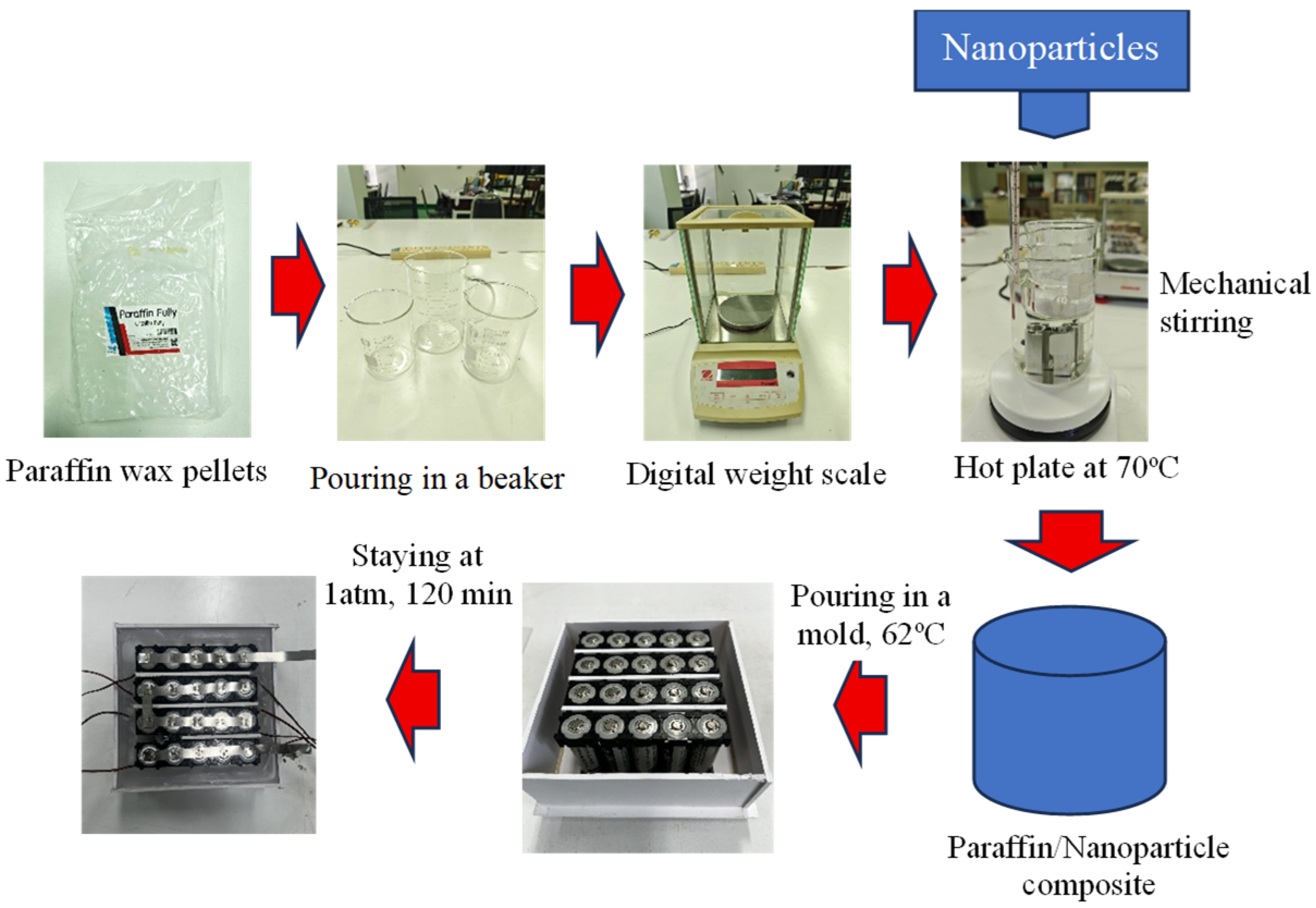
Paraffin wax (www.worldchemical.co.th) is an appropriate starting material due to its high phase transition enthalpy and appropriate melting temperature. The expanded nanoparticles (worldchemical.co.th) are a highly conductive filler when used at a volume concentration of 0.25%. The following procedures are followed (as seen in Figure 4) to get the PCM ready: To create the final paraffin–nanoparticle composite surrounding the batteries, the following steps are taken: weighing out the paraffin and any selected nanoparticles into separate beakers; heating the mixture to around 70 °C while stirring mechanically to melt the paraffin and distribute the nanoparticles; pouring the homogeneous paraffin/nanoparticle mix into the battery mold, which is kept at about 62 °C, to encase the cells; and finally, leaving the filled mold to cool/solidify under atmospheric pressure for about 120 min. As soon as it reaches room temperature, the mold may be removed. The physical properties of paraffin and titanium nanoparticles are described in Table 2. Nanoparticles of titanium dioxide improve the thermal characteristics and heat management of fluids used to cool batteries. They have high thermal conductivity, which helps eliminate hotspots and improve pack temperature uniformity by speeding heat transport within the battery cell. Due to their chemical stability, non-toxicity, and corrosion resistance, TiO2 nanoparticles do not cause system deterioration when used for extended periods. Additionally, the increased surface area from their diminutive size enhances fluid circulation, which, in turn, increases convective heat transfer and reduces viscosity changes. Particularly when exposed to high loads or temperatures, these upgrades enhance the performance, lifespan, and safety of batteries.
A nanoparticle volume concentration of 0.25% was selected to achieve a balanced enhancement between thermal conductivity and latent heat preservation. At low volume fractions, the effective thermal conductivity of PCM increases due to the formation of conductive heat pathways, while the reduction in latent heat storage capacity remains negligible. Higher nanoparticle loadings may lead to agglomeration, sedimentation during repeated phase transitions, and degradation of thermal energy storage capability. Previous studies on nano-enhanced PCM and nanofluid cooling systems have demonstrated that small volume fractions are sufficient to improve heat transfer while maintaining stability and energy storage efficiency [3,6,21,28,29,30,31,32]. Therefore, 0.25 vol% was considered an optimal and practical concentration for passive battery thermal management applications.
To prevent nanoparticles from settling or agglomerating during melting and solidification, a homogeneous, long-lasting dispersion is used during manufacturing to ensure the stability of PCM–nanoparticle combinations. Most investigations have employed mechanical stirring, ultrasonic vibration, or high-shear mixing to disperse nanoparticles in the PCM’s liquid phase, thereby improving their uniformity and reducing the likelihood of clustering. This enhances stability. To prevent particles from adhering to one another and attracting one another, a small amount of stabilizing chemicals or surfactants can be used. After cooling and solidifying, the PCM produces a stable matrix that encases nanoparticles. To construct a PCM nanocomposite that reliably stores and releases heat, the nanoparticles must be designed to maintain their enhanced thermal conductivity throughout multiple cycles, without sedimentation, phase separation, or performance degradation.

2.4. Experimental Procedure

Before testing, each battery undergoes a one-cycle charging and draining operation following the CCC-CCD pattern. When charging a battery for the first time, a constant current (CC) of 13 A is used until the voltage reaches 18 V. Upon the current dropping below 100 mA, the battery should be charged at CV. As a further step, a 13 A CC is used to reduce their voltage by 6 V. The batteries’ stability is checked after they have rested at room temperature for 1 day. Considering that the thermal performance of the EV battery pack is affected by ambient temperature, this is indeed the case. Consequently, the testing room is kept at a temperature between 26 and 27 degrees Celsius. Table 3 displays the reliability and precision of the relevant equipment. The experiment began by testing the battery unit’s transient thermal and electrical responses during charging and discharging operations using free-convection air cooling at varied current rates (0.75 C–1.5 C). Research on thermal behavior under moderate and high load may be conducted with C-rates ranging from 0.75 C to 1.5 C, which also represent normal and realistic charging and discharging circumstances for modern EV batteries. Driving or charging at 0.75 C produces a reasonable amount of heat, making it an appropriate benchmark for typical operating conditions. Fast acceleration, regenerative braking, high-power discharge, and moderate fast charging all fall within the 1 C to 1.5 C range, which is more demanding on current electric car systems and their cooling solutions. Electric vehicle operation is feasible within the study’s temperature range of 0.75 C to 1.5 C. In addition to evaluating the cooling system under normal and extreme heat conditions, it also accounts for safety-related instrument restrictions.
The discharge experiments were not extended to 100% DOD because the battery pack was operated under a safety-based cutoff voltage constraint (2.2 V/cell, Table 1), consistent with the manufacturer’s recommended operating limits and the protection protocol implemented in the battery cycler. Extending discharge beyond this cutoff would lead to over-discharge conditions, which can accelerate irreversible degradation mechanisms (e.g., sharp resistance rise, voltage instability, and potential current collector dissolution), causing abnormal heat generation and compromising test repeatability and safety. Moreover, practical battery management systems (BMSs) in EV applications typically restrict operation before reaching true 0% SOC; therefore, limiting the discharge depth provides a more realistic operating range for evaluating thermal performance.
During discharge, the cell’s internal heat generation Q g is generally separated into two principal contributions: irreversible heating from resistive and polarization losses (dissipative Joule and overpotential heating) and reversible (entropic) heating due to the entropy change of the electrode reactions. A compact representation is Q g   =   I 2 ( R e ) I ( T d E d T ) ; the first (irreversible) term scales strongly with current and internal resistance (which depends on SOC, temperature, and SOH), while the second (reversible) term depends on the entropic coefficient d E d T , which varies with SOC and electrode material and may be exothermic or endothermic. The generated heat in this study is affected by the following variables: the cell battery resistance, the cell battery temperature, and the power input (amps and voltage provided to the cell battery). Based on the accuracy and uncertainty of the instruments (Table 3), the maximum absolute uncertainty [42], Qg, is <10%.
Uncertainty   of   Q g = Q g I Δ I 2 + Q g E Δ E 2 + Q g R e Δ R e 2 + Q g T b Δ T b 2

3. Data Reduction

Table 1 summarizes the specifications of the LiMn2O4 battery used in the module, a specific commercial 18650 lithium-ion battery. An important part of the transient simulation of the lithium-ion battery module is figuring out the power output in the form of heat during discharge. Two main factors contribute to heat generation (Qg) in a battery cell, as reported in the literature [43,44,45].
During discharge, the cell’s internal heat generation Q g is generally separated into two principal contributions: irreversible heating from resistive and polarization losses (dissipative Joule and overpotential heating) and reversible (entropic) heating due to the entropy change of the electrode reactions. A compact representation is Q g   =   I 2 ( R e ) I ( T d E d T ) ; the first (irreversible) term scales strongly with current and internal resistance (which depends on SOC, temperature, and SOH), while the second (reversible) term depends on the entropic coefficient d E d T , which varies with SOC and electrode material and may be exothermic or endothermic. For high-power transient simulations, include polarization and mixing contributions and couple cell heat to the pack thermal model for accurate temperature predictions.
Q g = Q i r r + Q r e v
The irreversible heat generated during the electrochemical reaction in a lithium-ion battery is represented by the first term (Qirr) in the heat generation equation. This term is based on the total internal resistance (Re) and is due to Joule heating.
Q i r r = I E V = I 2 ( R e )
Due to electrochemical processes occurring within the battery, the second component (Qrev) in the heat production equation represents the reversible reaction heat [46]. It is important to consider the reversible heat production rate, which is given by [47], particularly at low current rates.
Q r e v = T S   I n F = I ( T d E d T )
Finding Re and dE/dT is crucial to obtaining the total heat generation of the lithium-ion battery, according to the study above. Consequently, Figure 1 shows the experimental facilities, and the next experiments center on acquiring the parameters; fitting results are displayed later.
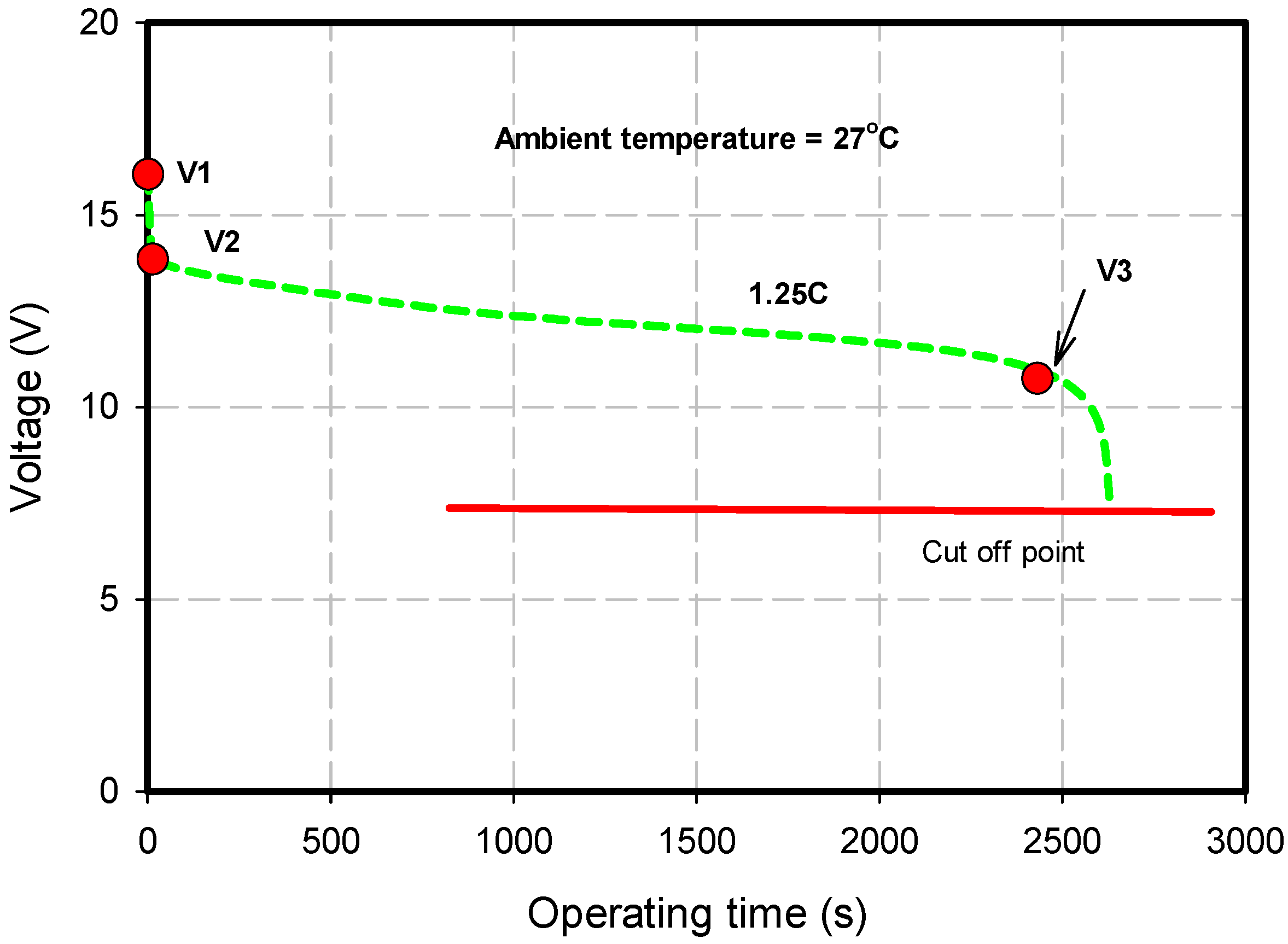
In general, electric resistance, according to the electrochemical principle, is composed of two components: the fixed (ohmic) cell resistance and the cell polarization resistance. Both the temperature and the battery’s state of charge (SOC) influence the Re. As shown in Figure 5, the voltage drop from V1 to V2 due to ohmic resistance, and the drop from V2 to V3 due to cell polarization resistance, are both necessary to obtain Re at different temperatures. Hence, the following is how Re may be obtained at 100% SOC and 0 °C [43]:
R e   =   V 1 V 2 I + V 2 V 3 I =   V 1 V 3 I
The following may be done to acquire the total internal resistance Re using the nonlinear curve fitting approach using multiple variables [43]:
R e   =   2.258 × 10 6 S O C 0.3952   for   293 T b 303 1.857 × 10 6 S O C 0.2787   for   303 T b 313 1.659 × 10 6 S O C 0.1695     for                           T b 313
An integral part of the entropy coefficient, denoted as dE/dT, is the cell temperature, SOC, and charge density. In SOC, however, dE/dT is largely unaffected by cell temperature and charge density. Consequently, we presume that the entropy coefficient dE/dT is a function of SOC for the lithium-ion battery. The formula to determine the parameter dE/dT under a specified state of charge (SOC) is:
d E d T   =   V T   =   V 1 V 2 T 1 T 2
The nonlinear polynomial fitting approach yields the following function for dE/dT [39]:
d E d T   =   0.342 + 0.979 S O C 1.49 × S O C 2 + 0.741 × S O C 3 × 10 3
S O C = 1 I × t C 0 = 1 D O D

4. Results and Discussion

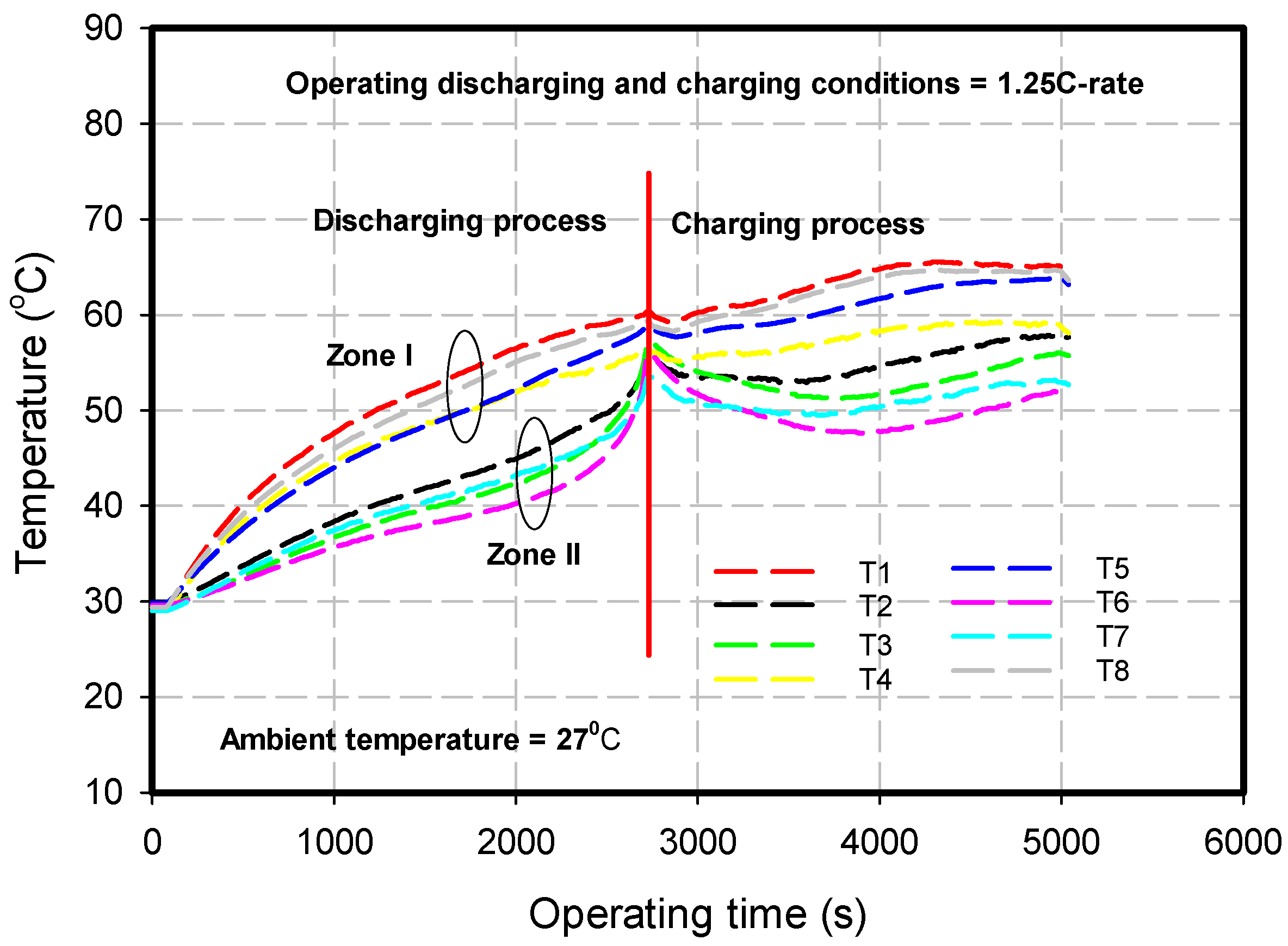
Figure 6 shows a full thermal history of the battery pack under a 1.25 C discharge–charge cycle using an air cooling system at 27 °C ambient temperature, measured at eight locations (T1–T8). During the discharge stage (0–~2800 s), all thermocouples rise steadily from ~30 °C to roughly 50–60 °C, but the curves split into two clear thermal regions (Zone I and Zone II); Zone I sensors (notably T1 and T5) consistently record the highest temperatures, reaching about 60 °C, while Zone II sensors (such as T6–T8) remain lower, typically 5–10 °C cooler, indicating a strong temperature gradient across the pack. This non-uniformity is mainly caused by uneven convective heat transfer in air cooling, where airflow distribution and local heat transfer coefficients vary with sensor position, leading to regions with weaker airflow or higher thermal resistance becoming hot spots. In addition, at 1.25 C, the internal heat generation rate is relatively high because irreversible heat (I2R and polarization losses) increases sharply with current, leading to rapid thermal accumulation; once the pack temperature rises, internal resistance and reaction kinetics also change, further influencing heat generation and temperature rise. After the discharge ends (vertical red line), the charging stage (~2800–5200 s) begins, and temperatures drop slightly due to reduced instantaneous load and partial recovery, but they soon rise again because charging also produces heat through overpotential and resistive losses; importantly, the highest-temperature locations remain the same, showing that the pack has persistent thermal weak points. The peak charging temperature approaches ~65 °C, indicating that air cooling cannot effectively remove the accumulated heat, and the thermal imbalance between Zone I and Zone II persists throughout the cycle. Overall, the figure confirms that under moderate-to-high C-rate operation, air cooling leads to significant thermal stratification, hotspot formation, and delayed heat rejection, which can accelerate ageing, worsen cell imbalance, and increase the risk of performance degradation in repeated cycling.
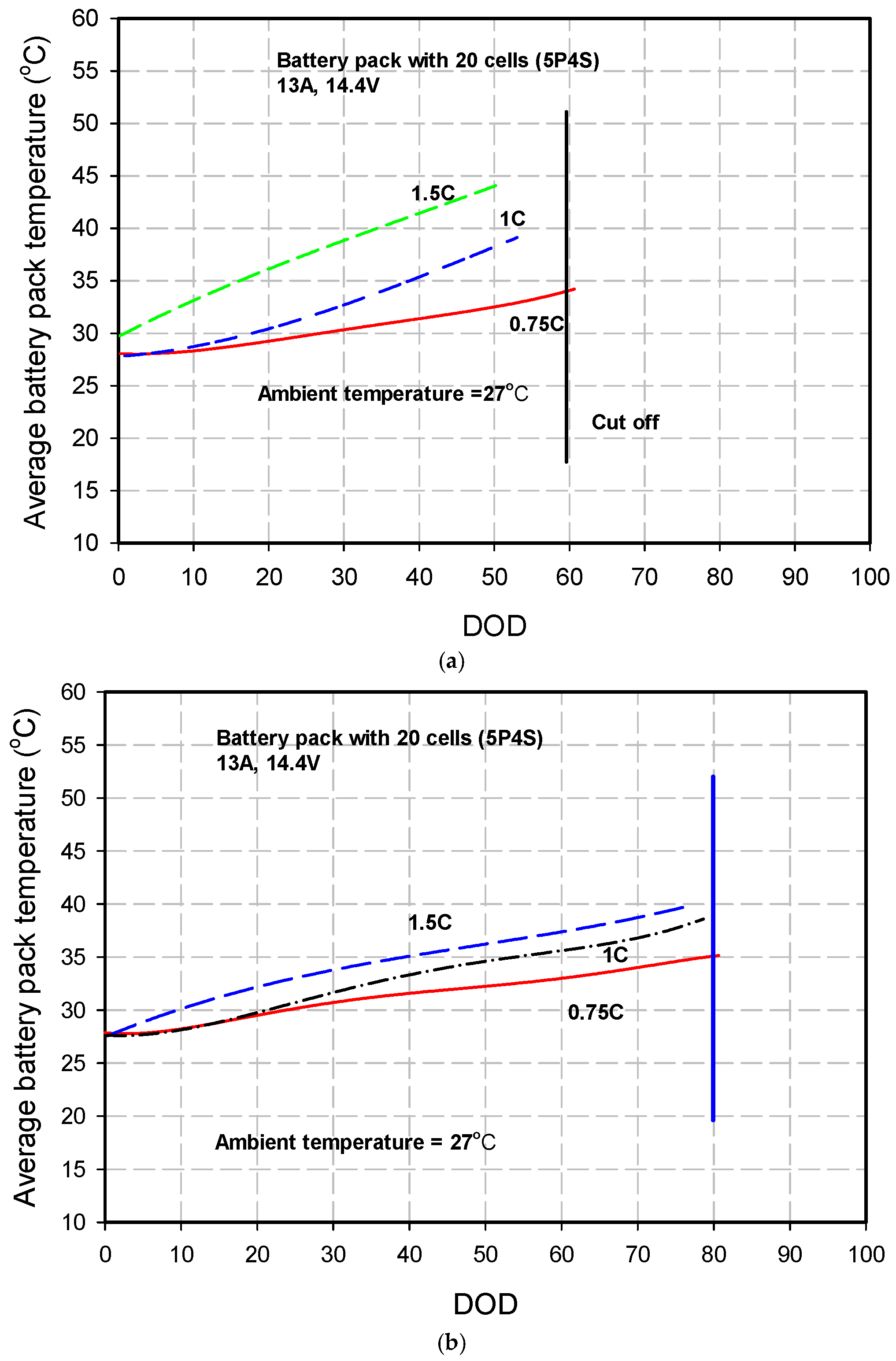
At 27 °C ambient temperature, Figure 7 compares two cooling strategies: (a) a pure PCM cooling system and (b) a PCM/nanoparticle mixture cooling system. The two systems were tested at discharge rates of 0.75 C, 1 C, and 1.5 C. The average battery pack temperature changes with depth of discharge (DOD) for a 20-cell (5P4S) module under each strategy. Both instances exhibit a progressive rise in temperature with DOD due to the accumulation of electrochemical reaction heat and internal ohmic losses as the battery continues to discharge; nevertheless, there is a noticeable disparity in the thermal performance of the two subfigures. Ohmic (Joule) and entropic heating are the two main ways a battery produces heat during discharge. Higher discharge rates cause ohmic heating to occur more rapidly because the current flowing through the cell’s internal resistance generates heat. Entropic heat is a byproduct of the electrochemical reactions occurring within the battery. The exact nature of this contribution to the total thermal rise during high-rate discharges depends on the cells’ chemistry and current state of charge, but it can be slightly exothermic or endothermic. The internal resistance of the battery tends to rise with continued discharge, particularly at deeper depths of discharge, leading to greater heat accumulation. Particularly in high-power applications such as electric vehicles, this heat generation raises cell temperature, degrades performance, accelerates aging, and can pose a challenge for thermal management systems. An important metric for assessing thermal behavior and performance throughout the discharge period is the depth of discharge (DOD), which is the proportion of a battery’s capacity that has been utilized; a higher DOD indicates a more depleted battery, and 100% DOD signifies the battery is fully depleted. Discharge current is equal to the C-rate multiplied by the battery capacity. C-rate describes the rate of charging or discharging relative to a battery’s rated capacity; a value of 1 C means the battery can be fully charged or discharged in one hour, 0.5 C in two hours, and 2 C in half an hour, because of the direct relationship between DOD and C-rate, which governs temperature rise, stress, and overall safety during battery operation, increasing the C-rate results in higher currents, which, in turn, generate more internal heat owing to increased electrochemical activity and I2R losses. The 1 C and 1.5 C curves in (a) rise significantly toward 40–45 °C until they reach a cutoff at about 55–60% DOD, suggesting poor thermal buffering at high loads, as the PCM absorbs heat until it approaches saturation.
On the other hand, the PCM/nanoparticle mixture speeds up heat spreading and delays PCM saturation, resulting in lower overall temperatures for all C-rates in (b). The outcome is a flatter temperature distribution, a longer effective safe DOD range before thermal limits are reached, and reduced thermal increase from high-rate discharge. By lowering the battery’s maximum temperature and preventing heat accumulation during high-power discharge, the comparison shows that PCM augmented with nanoparticles significantly enhances thermal regulation.
It should be noted that the present experiments were performed under a controlled ambient temperature of 27 °C in order to isolate the thermal contribution of PCM and PCM/nanoparticle enhancement. In practical EV applications, ambient temperature strongly affects both battery heat generation and PCM phase change behavior. At low ambient temperatures, the PCM may remain partially solid, reducing latent heat utilization but improving effective thermal conduction, while battery internal resistance increases, potentially increasing irreversible heat generation. Conversely, at high ambient temperatures, the PCM may begin closer to its melting point and reach full melting sooner, shortening the effective latent heat buffering period and potentially accelerating thermal saturation. In addition, deeper discharge windows (higher DOD) can cause a rapid voltage drop and increased polarization losses, resulting in stronger heat generation near end of discharge. Therefore, future studies should extend the investigation to a wider range of ambient temperatures (sub-ambient and elevated) and broader discharge windows, using an environmental chamber to improve real-world applicability.
Enhancing the thermal conductivity of the PCM/TiO2 composite improves battery cooling performance by modifying the internal heat transport mechanisms within the PCM. Pure paraffin has a low thermal conductivity (0.2–0.4 W/m·K), which limits heat transfer from the battery surface into the bulk PCM. When TiO2 nanoparticles (8.9 W/m·K) are uniformly dispersed within the PCM matrix, they form conductive micro-networks that reduce overall thermal resistance and facilitate faster heat spreading. According to Fourier’s law, increasing the effective thermal conductivity decreases temperature gradients for a given heat generation rate, thereby improving radial and lateral heat diffusion between adjacent cells. This enhanced heat distribution reduces localized heat accumulation, suppresses hotspot formation, and improves inter-cell temperature uniformity in the 5P4S battery module. Additionally, improved conductivity enables deeper heat penetration into the PCM volume, allowing more material to participate in phase transition and thus improving latent heat utilization during melting. Consequently, the PCM/TiO2 composite achieves lower peak temperature, enhanced temperature stability, and more effective passive thermal regulation under 1 C discharge conditions.
Adding non-phase change nanoparticles (such as TiO2) to paraffin wax generally reduces the composite’s total latent heat storage capacity compared with pure paraffin, since only the paraffin undergoes the solid–liquid phase transition. In contrast, the nanoparticles contribute no latent heat, leading primarily to a dilution effect proportional to the nanoparticle mass fraction (i.e., the effective latent heat decreases as the PCM fraction decreases). In addition to this direct reduction, nanoparticles may slightly suppress the crystallization and phase change enthalpy of nearby paraffin molecules due to interfacial confinement and restricted molecular mobility, further lowering the measured latent heat. Although nanoparticles can also act as heterogeneous nucleation sites that reduce supercooling and improve solidification behavior, the overall latent heat of the composite is typically lower than that of pure paraffin, especially at higher loadings; however, at low concentrations (e.g., 0.25 wt%), the latent heat reduction is usually minimal while thermal conductivity and heat spreading performance are significantly improved.
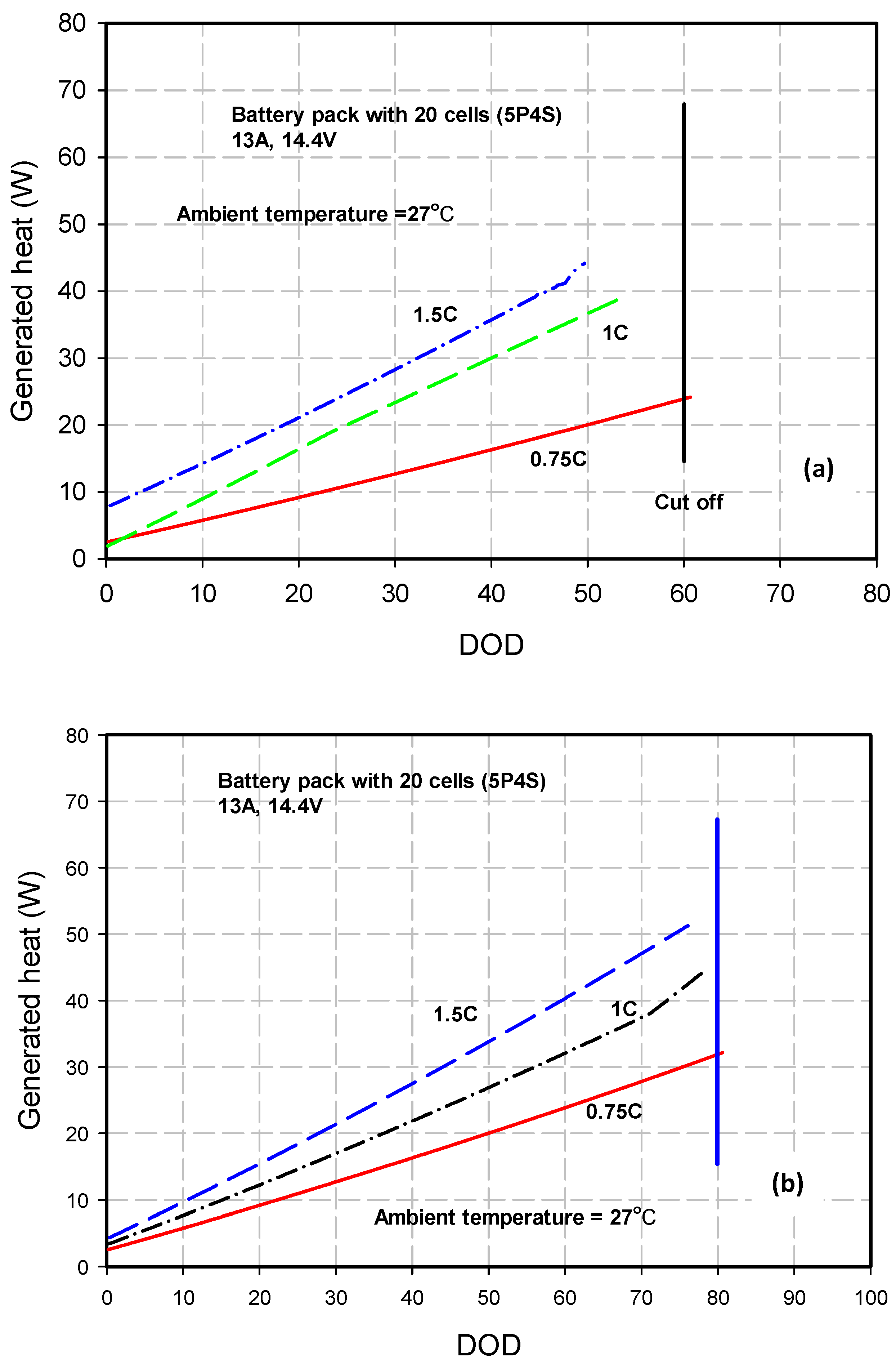
Figure 8 shows that at an ambient temperature of 27 °C, the heat generated by a 20-cell (5P4S) battery pack increases with depth of discharge (DOD) at three discharge rates: 0.75 C, 1 C, and 1.25 C. The cooling systems used are (a) pure PCM and (b) a PCM/nanoparticle mixture. Since the internal current flow and electrochemical reaction activity are both increased by continuous discharging, leading to larger ohmic (I2R) losses and polarization heat, the heat generation increases practically linearly with DOD in both subfigures. The steepest increase in heat production is observed at 1.25 C, indicating that thermal output is highly dependent on the current size, and this trend is consistent across all C-rates. Although the particle-enhanced PCM system (b) does not decrease intrinsic heat generation (which is caused by the electrical behavior of the battery and not by cooling), it does increase the discharge depth (DOD) before thermal limits are reached (as shown by the extended discharge range) due to better thermal conductivity and heat spreading, which prevent the battery from overheating. When the battery is discharged more deeply and faster, heat accumulates due to the fundamental link between discharge current, internal resistance, and electrochemical kinetics.
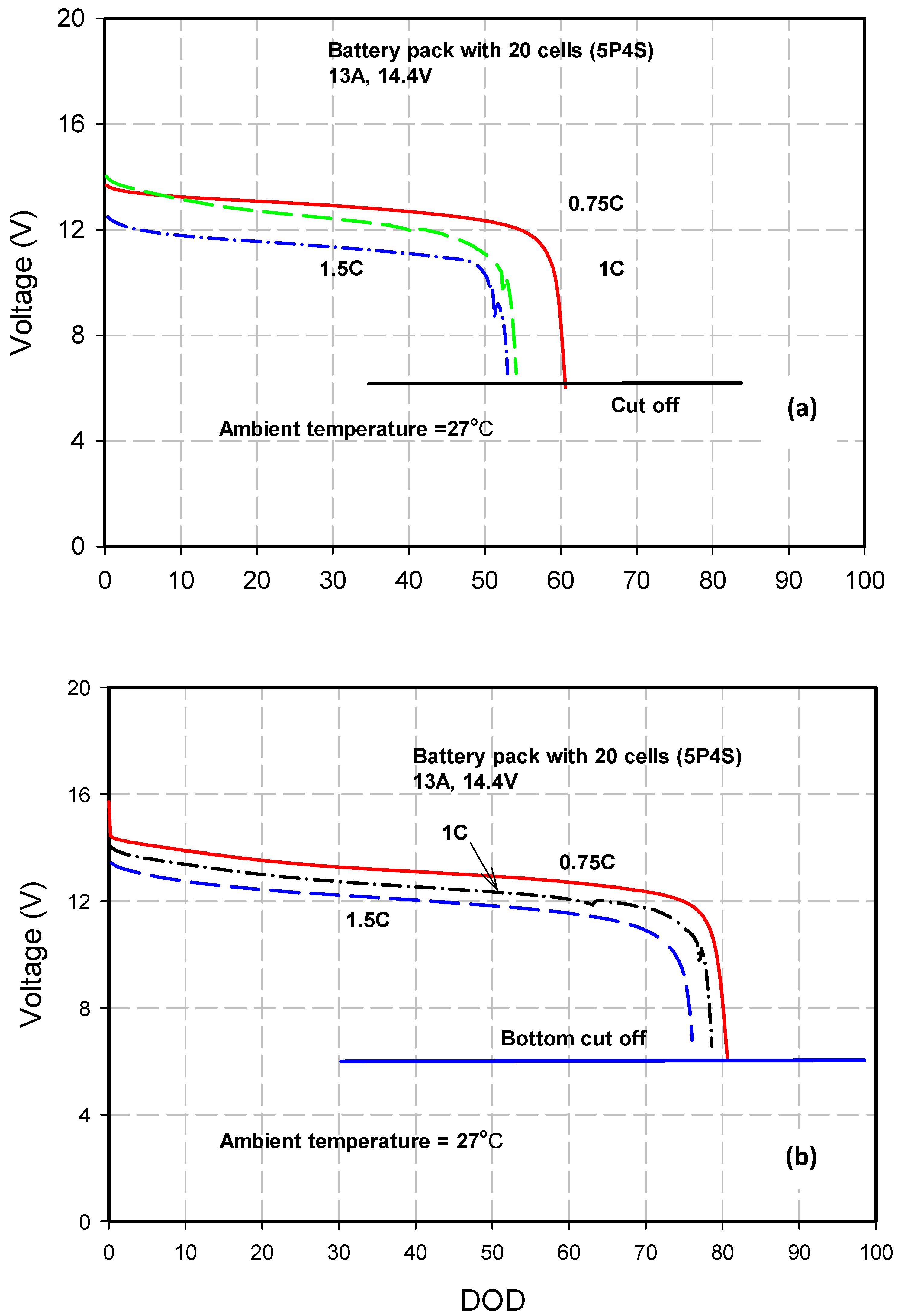
At three different discharge rates (0.75 C, 1 C, and high-load 1.25 C), Figure 9 shows how the battery pack voltage changes with depth of discharge (DOD) for a 20-cell (5P4S) module in two different cooling systems: (a) a PCM cooling system and (b) a PCM/nanoparticle combination cooling system. Both situations exhibit a progressive decrease in voltage as DOD increases, owing to electrochemical potential loss and increasing internal resistance; however, the decline becomes substantially steeper towards the end of discharge when the active material is depleted and polarization spikes. Since higher currents amplify ohmic losses (I2R) and reaction overpotential, higher C-rates lead to quicker voltage decay. On the other hand, the PCM/nanoparticle system enables the battery to discharge further before reaching the voltage cutoff due to improved heat dissipation, which keeps internal temperatures low and, consequently, lowers the effective resistance. Because power (P = VI) drops as voltage decreases, particularly at high DOD and C-rates, this voltage–DOD relationship directly impacts power output. This is because thermal stress and voltage sag limit usable power capacity. The coupled thermal–electrical feedback that establishes the safe and efficient operating window of the battery pack is determined by the trends and heat generation shown in earlier figures. This is because, in addition to accelerating voltage drop, high currents generate greater heat, which in turn increases internal resistance and further deepens voltage sag.
Determining a discharge window that balances usable capacity, thermal safety, voltage stability, and long-term cycle life is essential to optimizing the DOD range of this battery pack. In the figure, the voltage loss and thermal stress in the battery pack start to accelerate beyond about 50–55% DOD, when all discharge rate curves quickly approach the cutoff region. Regularly operating the pack at this high DOD would yield greater energy extraction per cycle, but it would also subject the cells to a sharper voltage drop, higher internal resistance, and greater heat generation, all of which hasten aging. For many lithium-ion systems, keeping the usable depth of discharge (DOD) within a moderate range—usually 60–80% of total capacity, meaning discharging only to 20–40% SOC remaining—greatly extends cycle life. This is because the cell avoids the deep discharge region, where the risks of electrode structural degradation, SEI thickening, and lithium plating become more pronounced. The depth and frequency of discharge (DOD) cycles are the primary determinants of battery cycle life; shorter DOD cycles result in more cycles, while longer DOD cycles shorten lifespan, even when the total energy delivered over the lifetime of the battery remains constant. As an illustration, a battery that is cycled at 100% DOD can only manage approximately 500–800 cycles, the same battery that is cycled at 50% DOD can surpass 1500–3000 cycles, and at 20–30% DOD, it might reach 5000 cycles and more, all subservient to operating temperature and chemistry. So, to maximize cycle life and minimize excessive voltage sag and thermal stress, it is recommended to avoid discharging the battery pack beyond about 50% DOD during high-C-rate operation. This recommendation is based on both the voltage drop profile and temperature trends from previous figures.
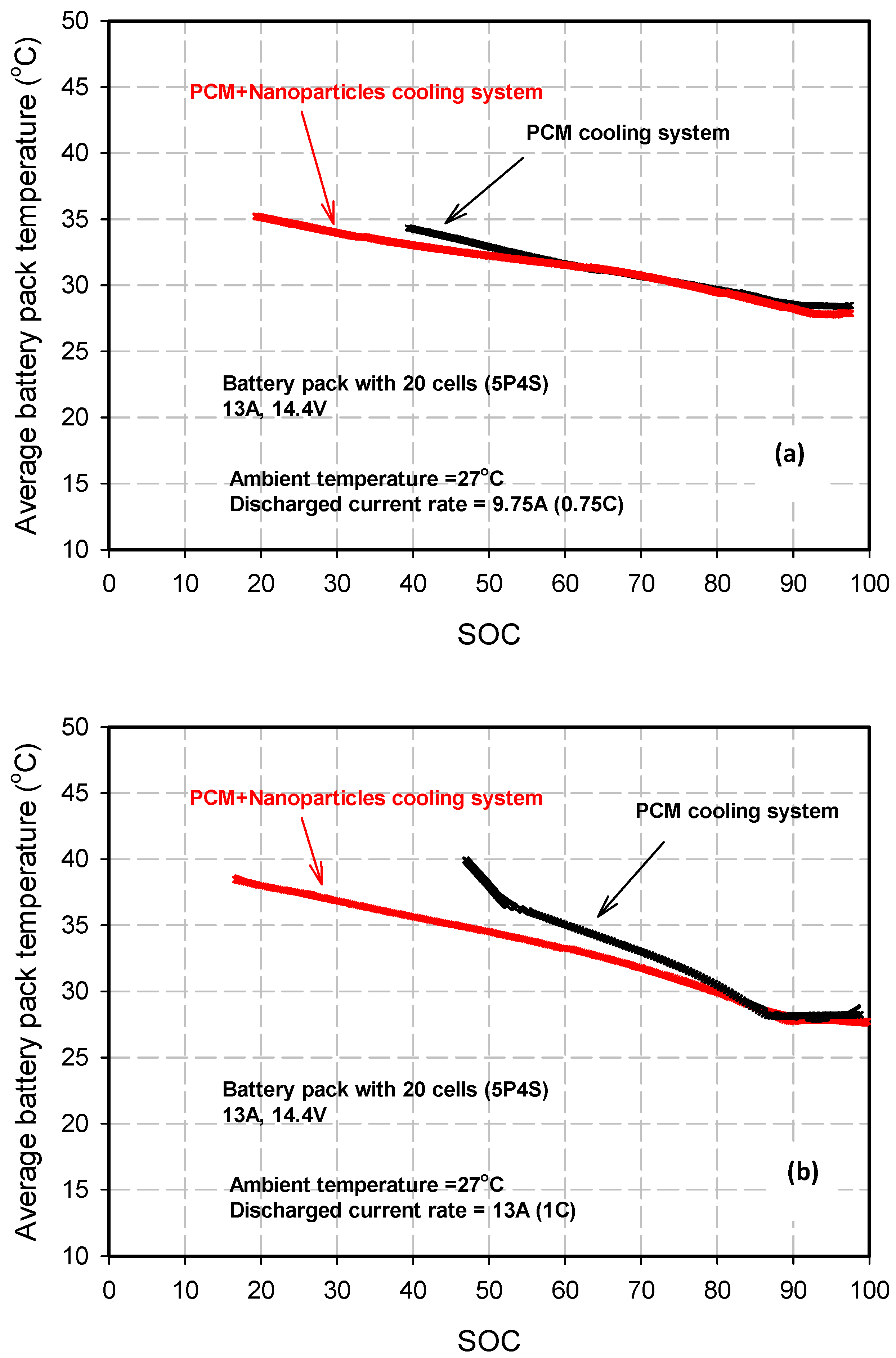
At discharge rates of (a) 0.75 C and (b) 1 C, Figure 10 compares the average battery pack temperature versus state of charge (SOC) for a 20-cell (5P4S) module under two cooling strategies: pure PCM and a PCM/nanoparticle mixture. The results show that the nanoparticle-enhanced PCM consistently maintains lower temperatures than pure PCM, particularly at lower SOC (high DOD), when heat generation increases and internal resistance rises. Using a nanoparticle mixture improves heat transfer, delays saturation, and leads to cooler operation throughout the discharge. This contrasts with pure PCM, which experiences greater electrical and thermal stress as SOC decreases. Pure PCM’s thermal conductivity and heat-spreading ability are limited once it approaches saturation, so temperature rises more sharply. As polarization losses rise and the battery’s electrochemical potential drops, the trend shows that thermal behavior worsens with deeper discharge, leading to greater heat generation.
The percentage of a battery’s capacity that is usable is called its “state of charge” (SOC). The state of charge (SOC) of a battery is represented as a percentage, with 100% SOC indicating a fully charged battery and 0% SOC indicating a fully discharged battery. It is like a “fuel gauge” for batteries; SOC shows how much energy the battery has at any given moment. As a battery empties, chemical energy is converted to electrical energy, and the state of charge (SOC) decreases; conversely, as energy is restored during charging, the SOC increases. SOC and DOD (depth of discharge) are strongly related by the simple relationship: S O C + D O D   =   1 .
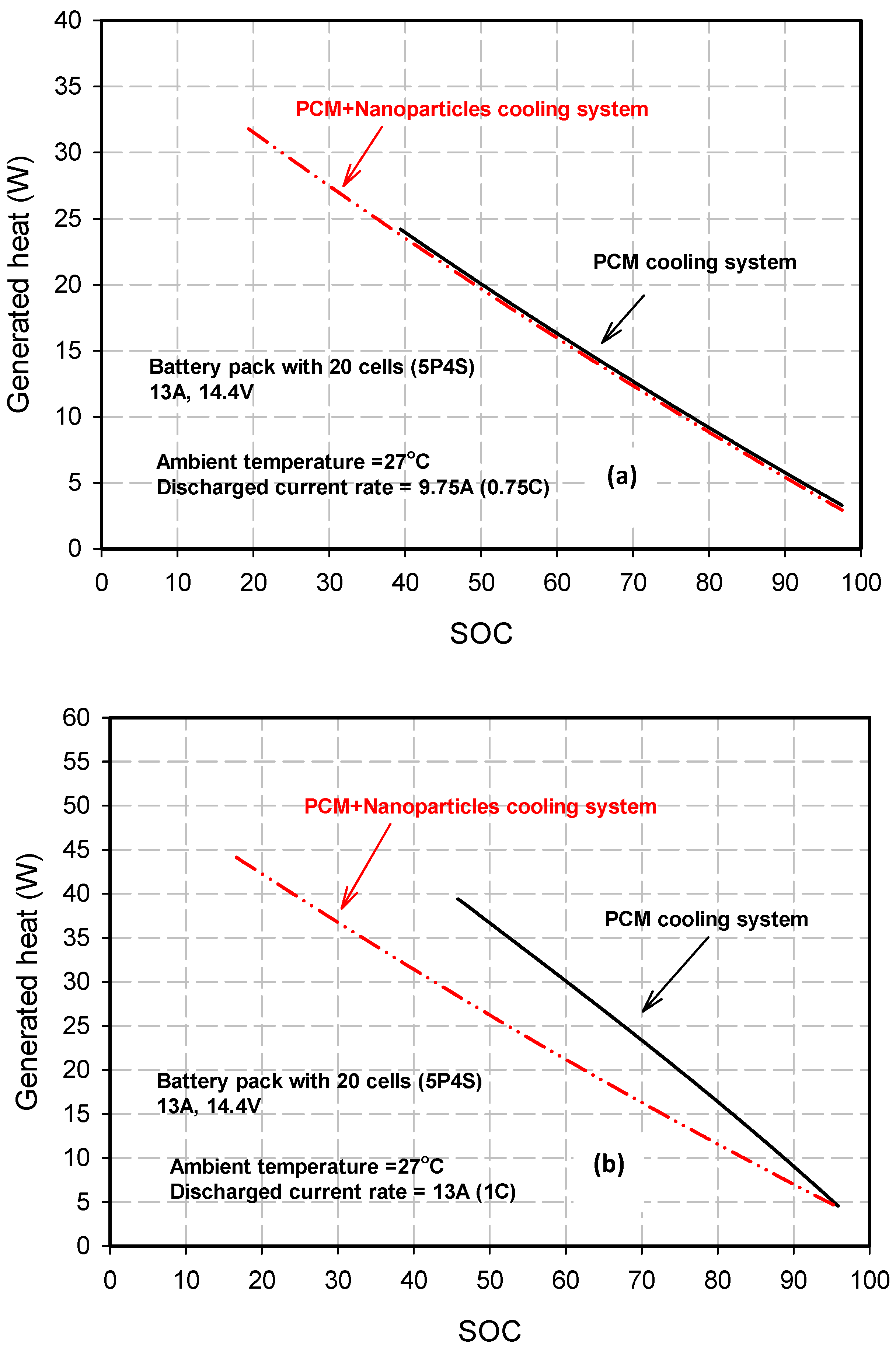
Heat generation increases significantly as SOC decreases due to deeper discharge (higher DOD), rising internal resistance, stronger polarization effects, and higher I2R losses. Figure 11 shows how the heat generated by a 20-cell (5P4S) battery pack changes with state of charge (SOC) for two cooling strategies—a PCM/nanoparticle mixture and pure PCM—under discharge rates of (a) 0.75 C and (b) 1 C, respectively. The nanoparticle-enhanced PCM system, as shown in both subfigures, consistently shows slightly higher apparent heat generation values than the pure PCM system. This is not due to the battery producing more heat intrinsically, but rather to the enhanced heat transfer allowing for more accurate or less suppressed measurement of the heat released. As the reactant concentration decreases, the electrochemical efficiency decreases and the current increases, leading to a dramatic increase in heat generation at lower SOC, especially under the 1 C condition. The phenomenon as a whole shows that as the battery approaches deeper discharge, heat output rises due to electrical losses, and the cooling method affects the dissipation of this heat but has no effect on the fundamental thermal behavior driven by the discharge rate and electrochemical limitations.


5. Conclusions

This study experimentally evaluated the thermal performance of a 5P4S cylindrical lithium-ion battery module using paraffin phase change material (PCM) and TiO2 nano-enhanced PCM under controlled 1 C discharge conditions. The results confirm that incorporating a small volume fraction of electrically insulating TiO2 nanoparticles improves the effective thermal conductivity, thereby enhancing heat diffusion within the PCM matrix. This conductivity enhancement reduces internal thermal resistance, promotes more uniform heat spreading between adjacent cells, and improves latent heat utilization during phase transition. Compared with pure PCM, the PCM/TiO2 composite demonstrated improved temperature uniformity and suppressed localized heat accumulation, particularly during the mid-to-high state of charge (SOC) region where heat generation is more significant. The enhanced conductive pathways formed by TiO2 nanoparticles facilitated deeper thermal penetration into the PCM, thereby enabling more effective activation of its latent heat storage capacity. Importantly, the low nanoparticle concentration preserved the PCM’s dominant thermal buffering function while maintaining material stability and electrical safety. Future work should investigate higher nanoparticle concentrations, long-term thermal cycling stability, and coupled electrochemical–thermal behavior at higher C-rates to further optimize the balance between conductivity enhancement and latent heat preservation. Additionally, integrating hybrid passive–active cooling strategies may further improve performance for high-power battery systems.

Author Contributions

Conceptualization, A.S. and P.N.; Methodology, A.S. and P.N.; Investigation, A.S. and S.E.-a.; Data curation, A.S., S.E.-a. and P.N.; Writing—original draft, S.E.-a.; Writing—review & editing, P.N. All authors have read and agreed to the published version of the manuscript.

Funding

Financial support is provided by the Faculty of Engineering, Srinakharinwirot University, through research grant No. XXX/2568.

Institutional Review Board Statement

Not applicable.

Informed Consent Statement

Not applicable.

Data Availability Statement

All data that support the findings of this study are included within the article.

Conflicts of Interest

According to the authors, there are no known competing financial interests or personal links that may have influenced any of the material provided in this study.

Nomenclatures

CpSpecific heat, J/(kg °C)
C0Battery pack capacity, Ah
EOpen circuit voltage, V
FFaraday’s constant, C/mol
ICurrent, A
nNumber of flow of electron, mol
QgHeat generation, W
QirrIrreversible heat generation, W
QrevReversible heat generation, W
ReInternal resistance, Ω
ΔSChange of entropy, J/°C
TbBattery temperature, °C
tTime, s
Greek symbols
φ Nanoparticles volume fraction
k n f Nanofluid thermal conductivity, kW/(m °C)
k w Base fluid’s thermal conductivity, kW/(m °C)
k p Nanoparticles thermal conductivity, kW/(m °C)
ρ n f Nanofluid density, kg/m3
ρ p Nanoparticles density, kg/m3
ρ w Base fluid density, kg/m3
μ n f Nanofluid viscosity, kg/ms
μ w Base fluid viscosity, kg/ms
Acronyms
BTMSBattery thermal management system
CCCConstant current charging
CCDConstant current discharging
CCConstant current
CVConstant voltage
CDischarge/charge rate relative to maximum capacity
CPCMComposite phase change material
DODDepth of discharge
EVElectrical vehicle
GAGenetic algorithm
LIBLithium-ion battery
Ni-CdNickel cadmium
PCMPhase change material
SOCState of charge
TRThermal runaway

References

  1. Wang, C.; Xu, J.; Wang, M.; Xi, H. Experimental investigation on reciprocating air-cooling strategy of battery thermal management system. J. Energy Storage 2023, 58, 106406. [Google Scholar] [CrossRef]
  2. Yang, C.; Xi, H.; Wang, M. Structure optimization of air cooling battery thermal management system based on lithium-ion battery. J. Energy Storage 2023, 59, 106538. [Google Scholar] [CrossRef]
  3. Sarchami, A.; Kiani, M.T.; Najafi, M.; Houshfar, E. Experimental investigation of the innovated indirect-cooling system for Li-ion battery packs under fast charging and discharging. J. Energy Storage 2023, 61, 106730. [Google Scholar] [CrossRef]
  4. Oyewola, O.M.; Awonusi, A.; Ismail, O.S. Design optimization of Air-Cooled Li-ion battery thermal management system with Step-like divergence plenum for electric vehicles. Alex. Eng. J. 2023, 71, 631–644. [Google Scholar] [CrossRef]
  5. Goodarzi, M.; Jannesari, H.; Ameri, M. Experimental study of Li-ion battery thermal management based on the liquid-vapor phase change in direct contact with the cells. J. Energy Storage 2023, 62, 106834. [Google Scholar] [CrossRef]
  6. Liu, Z.; Wang, B.; Tan, Y.F.; Li, P. Thermal management of lithium-ion battery pack under demanding conditions and long operating cycles using fin-enhanced PCMs/water hybrid cooling system. Appl. Therm. Eng. 2023, 23, 121214. [Google Scholar] [CrossRef]
  7. Ghafoor, U.; Yaqub, M.W.; Qureshi, M.U.; Khan, M.N.A. Thermal optimization of Li-ion battery pack using genetic algorithm integrated with machine learning. Therm. Sci. Eng. Prog. 2023, 44, 102069. [Google Scholar] [CrossRef]
  8. Sun, J.; Dan, D.; Wei, M.; Cai, S.; Zhao, Y.; Wright, E. Pack-level modeling and thermal analysis of a battery thermal management system with phase change materials and liquid cooling. Energies 2023, 16, 5815. [Google Scholar] [CrossRef]
  9. Xie, J.; Luo, Y.; Zhang, G.; Mo, C.; Yang, X.Q. Compact design of integrated battery thermal management systems enabled by bi-functional heating-cooling plates and temperature-equalizing strategy. Renew. Energy 2024, 222, 119909. [Google Scholar] [CrossRef]
  10. Wu, Y.; Huang, Z.; Li, D.; Li, H.; Peng, J.; Stroe, D.; Song, Z. Optimal battery thermal management for electric vehicles with battery degradation minimization. Appl. Energy 2024, 353, 122090. [Google Scholar] [CrossRef]
  11. Afraz, M.V.; Mohammadi, Z.; Karimi, G. A novel compact thermal management model for performance evaluation of tesla-like lithium-ion battery packs. Energy Convers. Manag. 2024, 300, 117927. [Google Scholar] [CrossRef]
  12. Zhong, Q.; Chandra, P.K.; Li, W.; Gao, L.; Garg, A.; Lv, S.; Tai, K. A comprehensive numerical study based on topology optimization for cooling plates thermal design of battery packs. Appl. Therm. Eng. 2024, 236, 121918. [Google Scholar] [CrossRef]
  13. Gao, W.; Zhang, J.; Liu, H.; Gao, Z. Bionic capillary/honeycomb hybrid lithium-ion battery thermal management system for electric vehicle. Appl. Therm. Eng. 2024, 242, 122444. [Google Scholar] [CrossRef]
  14. Yi, F.; Gan, Y.; Li, R. Experimental investigation on battery thermal management with ultra-thin vapor chamber. Appl. Therm. Eng. 2024, 244, 122668. [Google Scholar] [CrossRef]
  15. Daniels, R.K.; Kumar, V.; Chouhan, S.S.; Prabhakar, A. Thermal runaway fault prediction in air-cooled lithium-ion battery modules using machine learning through temperature sensors placement optimization. Appl. Energy 2024, 355, 122352. [Google Scholar] [CrossRef]
  16. Zhang, W.; Zhang, J.; Zhang, G.; Hu, Y.; Shao, D.; Jiang, L.; Wen, Y. A novel leak-proof thermal conduction slot battery thermal management system coupled with phase change materials and liquid-cooling strategies. Energies 2024, 17, 939. [Google Scholar] [CrossRef]
  17. Yang, M.; Mathew, G.; Nemati, H.; Moghimi, M.A. A novel approach for active cooling of a battery at cell level: Air-cooled mini-channel heat sink, enhanced with intermittent metal foam. J. Energy Storage 2024, 81, 110374. [Google Scholar] [CrossRef]
  18. Suo, Y.; Tang, C.; Jia, Q.; Zhao, W. Influence of PCM configuration and optimization of PCM proportion on the thermal management of a prismatic battery with a combined PCM and air cooling structure. J. Energy Storage 2024, 80, 110340. [Google Scholar] [CrossRef]
  19. Kou, X.; Jiang, J.; Xie, B.; He, S.; Poredoš, P.; Wang, J. Fewer temperature ties: Scalable integration and broad selection of phase change materials for both heating and cooling. Energy Environ. Sci. 2025, 18, 2499–2510. [Google Scholar] [CrossRef]
  20. Suzuki, T.; Miyaura, Y.; Okazaki, K.; Zhong, C.; Shimoda, K.; Kondo, F.; Fujii, M.; Kinoshita, H.; Orikasa, Y. Enhanced charge transfer kinetics at electrode/electrolyte interface in acetonitrile solvent for lithium-ion battery cathodes. Chem. Commun. 2025, 14, 2953–2956. [Google Scholar] [CrossRef]
  21. Xu, J.; Shang, Z.; Qing, S. Thermal performance analysis of nanofluids for heat dissipation based on fluent. Energies 2025, 18, 204. [Google Scholar] [CrossRef]
  22. Jiao, Y.; He, E.; Ye, T.; Wang, Y.; Yin, H.; Zhang, Y. Implantable batteries for bioelectronics. Acc. Mater. Res. 2025, 6, 221–232. [Google Scholar] [CrossRef]
  23. Enmark, M.; Murugesan, M.; Zhang, H.; Nilsson, T.; Kallio, K.J.; Kamal, A.M.; Liu, J. Design and characterization of novel graphene-enhanced vapor chambers for lightweight and high-performance electronics cooling. Nanotechnology 2025, 36, 105701. [Google Scholar] [CrossRef]
  24. Shi, P.; Ni, G.L.; Jin, R.; Wang, H.; Wang, J.; Sun, Z.; Qiu, G. Multi-timescale battery-charging optimization for electric heavy-duty truck battery-swapping stations, considering source–load–storage uncertainty. Energies 2025, 18, 241. [Google Scholar] [CrossRef]
  25. Drummond, R.; Tredenick, E.C.; Kirk, T.L.; Forghani, M.; Grant, P.S.; Duncan, S.R. Graded lithium-ion battery pouch cells to homogenise current distributions and reduce lithium plating. J. Electrochem. Soc. 2025, 172, 010518. [Google Scholar] [CrossRef]
  26. Youk, G.; Kim, J.; Chae, O.B. Improving Performance and Safety of Lithium Metal Batteries Through Surface Pretreatment Strategies. Energies 2025, 18, 261. [Google Scholar] [CrossRef]
  27. Choi, J.H.; Park, H.J.; Han, J. Development of hydrogen fuel cell–Bbattery hybrid multicopter system thermal management and power management system based on AMESim. Energies 2025, 18, 447. [Google Scholar] [CrossRef]
  28. Liu, C.; Du, P.; Fang, B.; Li, Z.; Chen, B.; Rao, Z. Experimental study on a functional microencapsulated phase change material for thermal management. Int. Commun. Heat Mass Transf. 2020, 118, 104876. [Google Scholar] [CrossRef]
  29. Choudhari, V.G.; Dhoble, A.S.; Panchal, S. Numerical analysis of different fin structures in phase change material module for battery thermal management system and its optimization. Int. J. Heat Mass Transf. 2020, 163, 120434. [Google Scholar] [CrossRef]
  30. Chen, S.; Bao, N.; Peng, X.; Garg, A.; Chen, Z. A Thermal design and experimental investigation for the fast charging process of a lithium-ion battery module with liquid cooling. J. Electrochem. Energy Convers. Storage 2020, 17, 021109. [Google Scholar] [CrossRef]
  31. Sirikasemsuk, S.; Wiriyasart, S.; Naphon, N.; Naphon, P. Flow direction effects on Li-ion cylindrical battery management cooling system with water/ferrofluid as coolants. Front. Heat Mass Transf. 2022, 19, 1–14. [Google Scholar] [CrossRef]
  32. Sirikasemsuk, S.; Naphon, N.; Naphon, P. Analysis of nanofluid flow and heat transfer behavior of Li-ion battery modules. Int. J. Heat Mass Transf. 2023, 208, 124058. [Google Scholar] [CrossRef]
  33. Sirikasemsuk, S.; Vengsungnle, P.; Eiamsa-ard, S.; Naphon, P. Thermal management of prismatic LiFePO4 battery module with inversed-zigzag channeled ferrofluid flows. Eng. Sci. 2024, 27, 1017. [Google Scholar] [CrossRef]
  34. Sirikasemsuk, S.; Naphon, N.; Naphon, P. Investigation into thermal cooling with different ferrofluid flow arrangements for a Lithium-Ion battery pack. Heat Transf. Eng. 2024, 45, 1257–1273. [Google Scholar] [CrossRef]
  35. Sirikasemsuk, S.; Vengsungnle, P.; Jongpluempiti, J.; Eiamsa-ard, S.; Tangmunpoowadol, P.; Naphon, P. Thermal cooling enhancement of 18650 cylindrical electric vehicle battery module with mini-channel fins heat sink units using nanofluids mixed flow channel. Eng. Sci. 2025, 33, 1299. [Google Scholar] [CrossRef]
  36. Jongpluempiti, J.; Vengsungnle, P.; Poojeera, S.; Manatura, K.; Naphon, P. Thermal profile analysis of 18650 Li-ion battery module with embedded copper foam in the nanofluid cooling jacket. Case Stud. Chem. Environ. Eng. 2025, 11, 101208. [Google Scholar] [CrossRef]
  37. Poojeera, S.; Vengsungnle, P.; Jongpluempiti, J.; Sirikasemsuk, S.; Naphon, N.; Srichat, A.; Manatura, K.; Naphon, P. Embedded copper foam effect on the nanofluids thermal cooling performance of the electric vehicle battery pack. Eng. Sci. 2025, 33, 1389. [Google Scholar] [CrossRef]
  38. Pak, B.C.; Cho, Y.I. Hydrodynamic and heat transfer study of dispersed fluids with submicron metallic oxide particles. Exp. Heat Transf. 1998, 11, 151–170. [Google Scholar] [CrossRef]
  39. YXuan, Y.; Roetzel, W. Conceptions of heat transfer correlation of nanofluids. Int. J. Heat Mass Transf. 2000, 43, 3701–3707. [Google Scholar] [CrossRef]
  40. Drew, D.A.; Passman, S.L. Theory of Multi Component Fluids; Springer: Berlin/Heidelberg, Germany, 1999. [Google Scholar]
  41. Maxwell, J.C. A Treatise on Electricity and Magnetism, 2nd ed.; Clarendon Press: Oxford, UK; Oxford University: Oxford, UK, 1881. [Google Scholar]
  42. Coleman, H.W.; Steele, W.G. Experimental and Uncertainty Analysis for Engineers; John Wiley & Sons: New York, NY, USA, 1989. [Google Scholar]
  43. Jiaqiang, E.; Yue, M.; Chen, J.; Zhu, H.; Deng, Y.; Zhu, Y.; Zhang, F.; Wen, M.; Zhang, B.; Kang, S. Effects of the different air cooling strategies on cooling performance of a lithium-ion battery module with baffle. Appl. Therm. Eng. 2018, 144, 231–241. [Google Scholar] [CrossRef]
  44. Pals, C.R. Thermal modeling of the lithium/polymer battery. J. Electrochem. Soc. 1995, 142, 3282–3288. [Google Scholar] [CrossRef]
  45. Chen, Y.; Evans, J.W. Three-dimensional thermal modeling of lithium-polymer batteries under galvanostatic discharge and dynamic power profile. J. Electrochem. Soc. 1994, 141, 2947–2955. [Google Scholar] [CrossRef]
  46. Al Hallaj, S.; Venkatachalapathy, R.; Prakash, J.; Selman, J.R. Entropy changes due to structural transformation in the graphite anode and phase change of the LiCoO2 cathode. J. Electrochem. Soc. 2000, 147, 2432–2436. [Google Scholar] [CrossRef]
  47. Fathabadi, H. A novel design including cooling media for Lithium-ion batteries pack used in hybrid and electric vehicles. J. Power Sources 2014, 245, 495–500. [Google Scholar] [CrossRef]
Figure 1. Photograph of the experimental system.
Eng 07 00122 g001
Figure 2. Details of battery module.
Eng 07 00122 g002
Figure 3. Two different cooling systems.
Eng 07 00122 g003
Figure 4. Phase change materials preparation process for the battery mold.
Eng 07 00122 g004
Figure 5. Variation of voltage with operating time.
Eng 07 00122 g005
Figure 6. Battery temperature distributions at 1.25 C for the air cooling system.
Eng 07 00122 g006
Figure 7. Variation of average battery pack temperature with DOD for (a) PCM cooling system and (b) PCM/nanoparticles mixture cooling system.
Eng 07 00122 g007
Figure 8. Variation of the generated heat with DOD for a (a) PCM cooling system and (b) PCM/nanoparticles mixture cooling system.
Eng 07 00122 g008
Figure 9. Variation of the voltage with DOD for the (a) PCM cooling system, and (b) PCM/nanoparticles mixture cooling system.
Eng 07 00122 g009
Figure 10. Effect of cooling systems on the temperature distribution for (a) 0.75 C-rate and (b) 1 C-rate.
Eng 07 00122 g010
Figure 11. Effect of cooling systems on the generated heat for (a) 0.75 C-rate and (b) 1 C-rate.
Eng 07 00122 g011
Table 1. Details of the 18650-type cylindrical battery cell.
PropertiesSpecification
5P4S (20 cells)13 A, 14.4 V
Electrolyte material chemistryLiMn2O4
Diameter18.43 mm
Height65.21 mm
Weight40.6 g
Nominal capacity2600 mAh
Nominal voltage3.6 V
Charge cutoff voltage3.6 V/cell
Discharge cutoff voltage2.2 V/cell
Calculated internal resistance54.175 mR
Internal resistance of battery cell54.175 mΩ
Cathode and anode materialsAluminum
Cathode and anode thermal conductivity205 W/(mK)
Energy per cell9.36 Wh
Gravimetric energy density230.5 Wh/kg
Volumetric energy density538 Wh/L
ElectrolyteLiPF6 in carbonate solvent (commercial)
Cathode materialLiMn2O4 (spinel structure)
Anode materialGraphite (C)
Table 2. Thermo-physical properties of paraffin, TiO2 (25 ± 1 °C).
PropertiesParaffinTiO2
Density, (kg/m3)9004250
Thermal conductivity, (W/m·K)0.2–0.48.9
Viscosity, (mPa S)--
Specific heat, (J/kg·K)Varies widely686.2
Purity, %->99.9
Average diameter, nm-25
Melting point, °C62-
Latent heat, kJ/kg184-
Table 3. Uncertainty and accuracy of the instruments.
InstrumentsAccuracyUncertainty
Voltage supplied by power source, voltage0.20%±0.50
Current supplied by power source, ampere0.20%±0.50
Digital weight scale, gram0.01%±0.01
Thermocouple type T, data logger, °C0.10%±0.10
Charging/Discharging control system0.2%±0.03
IR device0.4%±0.01
Disclaimer/Publisher’s Note: The statements, opinions and data contained in all publications are solely those of the individual author(s) and contributor(s) and not of MDPI and/or the editor(s). MDPI and/or the editor(s) disclaim responsibility for any injury to people or property resulting from any ideas, methods, instructions or products referred to in the content.