
Article

Effects of Mean Stress and Multiaxial Loading on the Fatigue Life of Springs

Department of Natural Sciences, University Siegen, Fak. IV, 57078 Siegen, Germany
Eng 2023, 4(2), 1684-1697; https://doi.org/10.3390/eng4020095
Submission received: 26 April 2023 / Revised: 5 June 2023 / Accepted: 12 June 2023 / Published: 13 June 2023
(This article belongs to the Special Issue REPER Recent Materials Engineering Performances)

Abstract

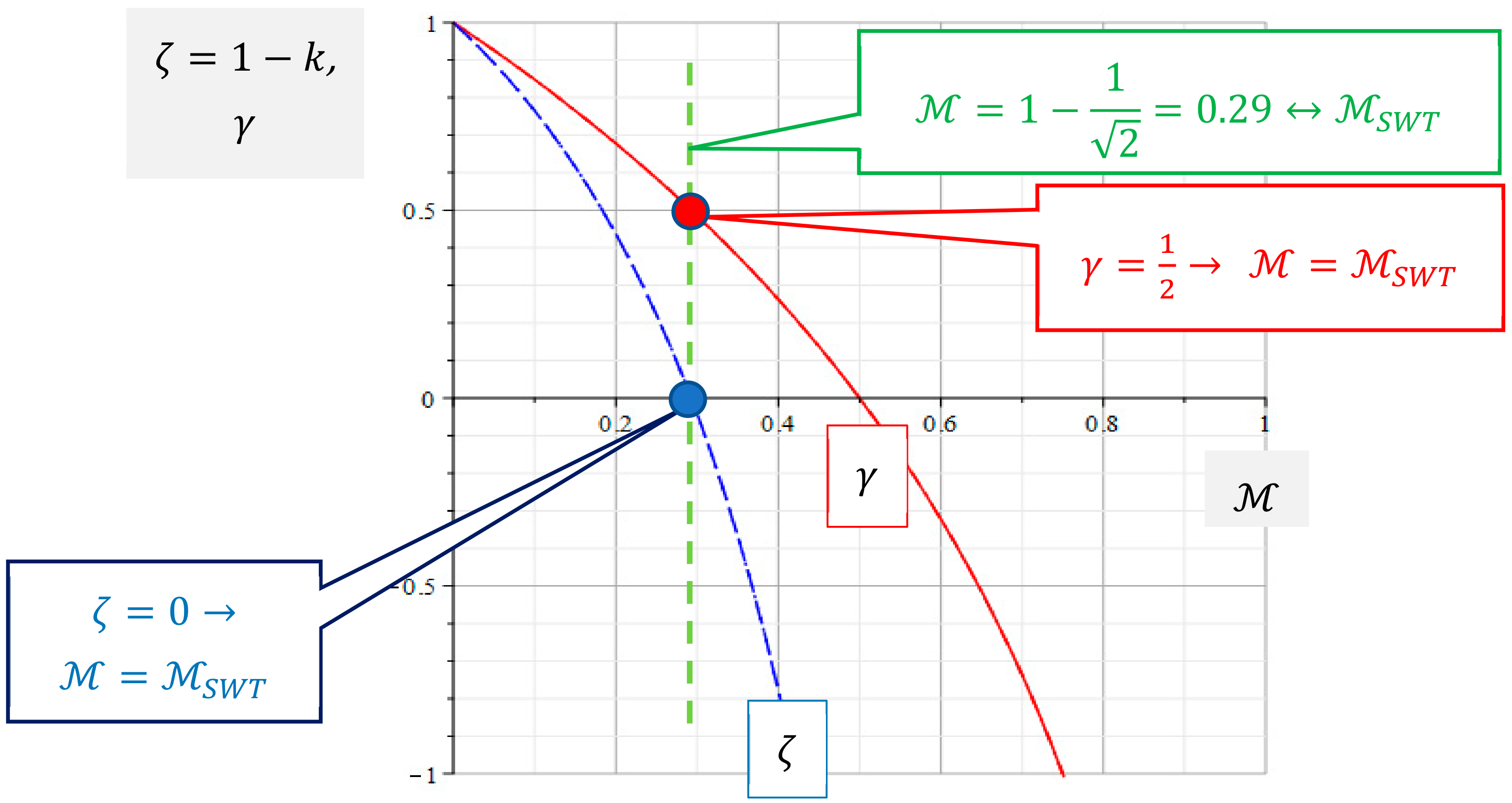
In this paper, the effects of mean stress and damage accumulation on the fatigue life of springs are theoretically studied. The study examines the fatigue life of homogeneously stressed material subjected to cyclic loading. The mean stress of a load cycle is non-zero. Goodman and Haigh diagrams are commonly used for estimating fatigue life in engineering applications. Alternatively, conventional hypotheses by Smith–Watson–Topper, Walker and Bergmann have been successfully used to describe uniaxial cyclic fatigue with non-zero mean value over the whole range of the fatigue life. However, the physical characteristics of the mean stress sensitivities in these hypotheses are different. The mean stress sensitivity according to Smith–Watson–Topper is identical for all materials and stress levels. This weakness reduces the applicability of the Smith–Watson–Topper parameter. At first glance, the mean stress sensitivities according to Walker and Bergmann are diverse. The mean stress sensitivities depend upon two different additional correction parameters, namely the Bergmann parameter and the Walker exponent. The possibility of fitting the mean stress sensitivity in these hypotheses overcomes the significant drawback of the Smith–Watson–Topper schema. The principal task of this actual study is to reveal the dependence between the Bergmann parameter and the Walker exponent, which leads to a certain mean stress sensitivity. The manuscript establishes the simple relationship between both fitting parameters, which causes the equivalent mean stress sensitivity for the Bergmann and Walker criteria. As known from the state of the technology, fabrication and operation yield several impacts with a significant influence on the fatigue life of springs. One effect deals with the sequence of low and high stress amplitudes and amplitude-dependent damage accumulation. Particularly, during the load cycle a certain microscopical creep occurs. This creep causes damage. The accumulation hypothesis for creep damage is introduced. The hypothesis can be verified experimentally.
Keywords: fatigue life of springs; Smith–Watson–Topper approach; Walker approach; Bergmann approach; accumulation of damage; sequence effects in fatigue fatigue life of springs; Smith–Watson–Topper approach; Walker approach; Bergmann approach; accumulation of damage; sequence effects in fatigue