Article

Direct Antiviral Agents May Obviate the Need for Liver Transplantation for HCV Cirrhosis by the End of the Decade


1
Division of Abdominal Transplantation, Department of Surgery, Carolinas Medical Center, Atrium Health, Wake Forest University School of Medicine, Charlotte, NC 28204, USA
2
Center for Surgical Outcomes Science, Atrium Health, Wake Forest University School of Medicine, Charlotte, NC 28204, USA
3
Division of Hepatology, Carolinas Medical Center, Atrium Health, Wake Forest University School of Medicine, Charlotte, NC 28204, USA
*
Author to whom correspondence should be addressed.
Surgeries 2026, 7(2), 51; https://doi.org/10.3390/surgeries7020051
Submission received: 31 January 2026 / Revised: 21 March 2026 / Accepted: 17 April 2026 / Published: 23 April 2026
(This article belongs to the Special Issue Novel Insights into Liver Transplantation Surgery)

Abstract

Background: Hepatitis C viral infection (HCV) has historically been a leading indication for liver transplantation (LTx), primarily due to its progression to cirrhosis and hepatocellular carcinoma (HCC). However, the advent of direct-acting antiviral agents (DAAs) over a decade ago has revolutionized HCV treatment, achieving sustained virologic response (SVR) in over 90% of patients and potentially altering LTx indications. Aim: To investigate the impact of DAAs on HCV-related indications, with or without HCC, and model future trends in LTx indications. Methods: We retrospectively reviewed 1504 liver transplants performed between 2000 and 2024 at a single center. Patients were categorized into three cohorts: HCV-only, HCC-only, and HCC with HCV co-infection (HCC/HCV). Relative transplant volumes by-year, post-operative outcomes, and HCC recurrence rates were analyzed across pre- and post-DAA eras. ARIMA modeling was employed to project trends in transplant indications through the year 2030. Results: The proportion of transplants for HCV alone declined by 82.3% from 2015 to 2020, while HCC/HCV transplants decreased by 68.8%. Conversely, the total number of transplants for HCC alone increased during this period, with a modest proportional decrease of 8.3% from 2015 to 2020. ARIMA modeling suggests that by 2030, LTxs for HCV alone may be nearly eliminated. The projected proportion of transplants conducted for HCC alone remains the highest of all three study indications at 4.3%. Conclusions: DAAs have reduced LTx due to HCV. By 2030, LTx for HCV-related cirrhosis, particularly without HCC, may be obviated. This underscores the need to reevaluate allocation for emerging oncologic indications.

1. Introduction

Hepatitis C viral (HCV) infection is one of the primary etiologies of chronic liver disease worldwide, affecting 50 million people and adding 1 million de novo cases annually [1]. In 2022, HCV was responsible for an estimated 242,000 deaths, underscoring its substantial global health burden [1]. This excess mortality is largely mediated through progression to cirrhosis and hepatocellular carcinoma (HCC), with HCV accounting for 21% of HCC cases internationally and increasing risk of de novo HCC by 15- to 20-fold [1,2,3,4,5]. As such, timely diagnosis and effective antiviral therapy are essential to lessen the clinical and oncologic sequelae of the infection.
Until the development of direct acting antiviral (DAA) medications, HCV infections were largely treated with ineffective interferon (IFN)-based therapies [6]. During this “IFN era”, almost half of the liver transplants (LTx) performed in the United States were for recipients with HCV-associated liver disease [7]. The advent of efficacious DAAs in 2014 heralded a new era for HCV treatment, as over 90% of HCV-infected patients treated with DAAs had sustained virologic responses (SVR) [8]. Unfortunately, while quite effective in eliminating infection, DAA treatment does not reverse existing fibrotic disease, and thus still poses risk for de novo HCC [9]. In fact, early case series raised concerns that DAA therapy may precipitate early HCC recurrence after curative treatment, reporting unexpectedly high short-term recurrence rates [10,11]. However, more recent studies now show that achieving an SVR with DAAs does lower the incidence of both de novo and recurrent HCC, dispelling this initial controversy [12].
Given that treatment for patients with liver failure associated with HCV or HCC are conventionally treated with orthotopic LTx, research has surrounded the effect of DAAs on LTx [13,14,15,16]. Studies have evaluated their impact on HCC incidence, recurrence, and survival in both transplanted and non-transplanted cohorts. Additional work has charted the shifting etiologic profile of potential recipients—particularly a decline in HCV-related HCC and changing patterns of HCV-HCC co-infection—attributable to DAA high cure rates [17]. However, comprehensive analyses of how DAAs have reshaped overall indications for LTx are limited, and no projections for future volume among HCV-infected patients, with or without HCC, are described [9]. As such, this study sought to retrospectively review LTx cases performed at a high-volume quaternary transplant center, detailing annual changes in proportion and outcomes of HCV-positive recipients, with and without concomitant HCC. These data informed predictive models of future HCV-related transplant indications.

2. Materials and Methods

A single-center, retrospective cohort study of all adult LTx performed between 2000–2024 was performed at a high-volume quaternary referral center. Case identification and clinical variables were extracted from a prospectively maintained institutional transplant database with supplemental chart review when required. This study was approved by the Atrium Health—Wake Forest Baptist Institutional Review Board and adhered to all institutional guidelines and best practices.
Patients were excluded if they did not meet criteria for inclusion in the study groups: a primary transplant indication of malignancy (HCC), a primary transplant indication of HCV with concurrent malignancy at transplant (HCC), or a primary transplant indication of HCV. Patients undergoing a multi-organ transplant, re-transplantation, or transplants for acute liver failure were excluded.
Recipients were stratified into three indication groups based on pre-transplant diagnosis: (1) HCC-only; (2) HCV-only; and (3) HCC/HCV co-infection. Patients were defined as “HCC-only” if their primary indication to transplant was “malignancy,” and their malignancy was defined as hepatocellular carcinoma (HCC). Patients were defined as “HCV-only” if their primary indication to transplant was active “hepatitis C” at listing or history of HCV treated/untreated with sustained virologic response, and patients did not have a history of HCC. Finally, patients were defined as “HCC/HCV co-infection” if their primary indication to transplant was active “hepatitis C” at listing or history of HCV treated/untreated with sustained virologic response, and patients had a history of malignancy defined as HCC. To examine the influence of DAAs, all transplants were further categorized into a pre-DAA era (before 1 January 2015) and a post-DAA era (on or after 1 January 2015).
For each recipient, demographic and baseline characteristics, operative variables, and postoperative outcomes were captured from the index transplant hospitalization through all available postoperative follow-up within the electronic medical record. Because this was a retrospective study spanning multiple decades, follow-up duration varied between patients depending on the availability of clinical documentation, and outcomes data availability varied widely across the study population. Recurrence rates were determined by cross-sectional imaging or histology. A minimum of 24 months of radiological surveillance was required for inclusion in recurrence analyses.

2.1. Statistical Analysis

Continuous variables were assessed for normality and reported as medians and interquartile ranges. Categorical variables were reported as counts, total sample size, and percentage. Kruskal-Wallis ANOVA tests were performed for continuous variables, and Chi-square and Fisher’s exact were performed for categorical variables as appropriate. Proportions of transplants were created by disease type (HCC-only, HCC/HCV coinfection, and HCV-only), where the numerator was the number of that transplant type and the denominator was the total number of transplants occurring in that year.

2.2. ARIMA Model

An interrupted time series analysis was performed using autoregressive integrated moving average (ARIMA) models with intervention regressors (a step change in 2015 and a post-2015 slope change) fit to logit-transformed annual proportions to respect the bounded nature of the outcomes. Because the logit is undefined at 0 and 1, proportions were bounded prior to transformation. Candidate ARIMA orders were restricted a priori to p (0,1,2), d (0,1), and q (0,1,2) to limit overfitting, and the final model for each series was selected by minimum AIC. The intervention point was set at 2015, corresponding to the introduction of HCV direct-acting antiviral therapy, and forecasts were generated for 2025–2030. Stationarity was evaluated using Dickey–Fuller tests, residual autocorrelation was assessed using Ljung–Box tests, statistical significance was set at p < 0.05 and all analyses were performed using Stata (StataCorp, v.17).

3. Results

3.1. Demographics

Of the 1504 LTx cases reviewed between 1 January 2000 and 31 December 2024, 534 recipients met study criteria and were included. Over this period, 195 patients were transplanted for HCC-only (81% male, median age of 62.3 at transplantation), 150 patients for HCC/HCV co-infection (81.3% male, median age of 58.7 at transplantation), and 189 patients for HCV without HCC (73.0% male, median age of 54.4 at transplantation) (Table 1). Removal MELD score was significant between groups (p < 0.001), with the highest median score in patients transplanted for HCV without HCC (MELD of 24); the HCC/HCV co-infection group represented the lowest median MELD score at time of transplant (MELD of 13). Hypertension represented the most common comorbidity present at transplant for all three study groups, followed by diabetes and chronic kidney disease (Table 1).

3.2. Post-Operative Outcomes

Given the available follow-up data, hospital length of stay (LOS) was significant between the three study groups, with the HCC-only group having the highest median LOS (13.6 days). ICU LOS was comparable between the three study groups (Supplementary Table S2). Although not statistically significant, the HCC/HCV group showed proportionally higher rates of biliary stricture (40.0%), central line-associated bloodstream infection (CLABSi; 10.0%), and ventral hernia (VH) occurrence (11.1%) (Supplementary Table S2). Interpretation is, however, constrained by the small proportion of this study group with evaluable data (16.7%, 13.3%, 18.0% respectively). Conversely, the HCC-only group exhibited the highest—though statistically non-significant—rates of unplanned reoperation (7.1%), portal vein thrombosis (6.8%), neurologic complications (24.1%), chronic renal failure (48.3%), and graft loss (6.8%), based on 28.7%, 30.3%, 29.7%, 29.7%, and 30.3% of patients with complete data, respectively (Supplementary Table S2). Additionally, the acute renal failure (ARF) postoperative outcome exhibited a statistically significant difference between groups, of which the HCC-only group exhibited the highest proportion (89.3%). Of note, the limited sample sizes for several endpoints reduce statistical power and may inflate proportion estimates, yet the observed discrepancies highlight postoperative domains deserving further investigation. Thus, given the retrospective nature of this study, and due to an inability to access EMR outcomes data extraction prior to 2017, outcomes data must be interpreted with caution.

3.3. Recurrence

One-year recurrence data were available for a limited subset of patients, including 14 of 150 patients (9.3%) in the HCC/HCV cohort and 31 of 195 patients (15.9%) in the HCC-only cohort (Supplementary Table S1). Given the small number of patients with complete recurrence follow-up, recurrence outcomes were assessed descriptively. Among patients with available recurrence information, a greater proportion of recurrence events was observed in the HCC/HCV cohort; however, these findings should be interpreted cautiously and are not intended to support comparative inference.

3.4. Annual Indications for Transplant

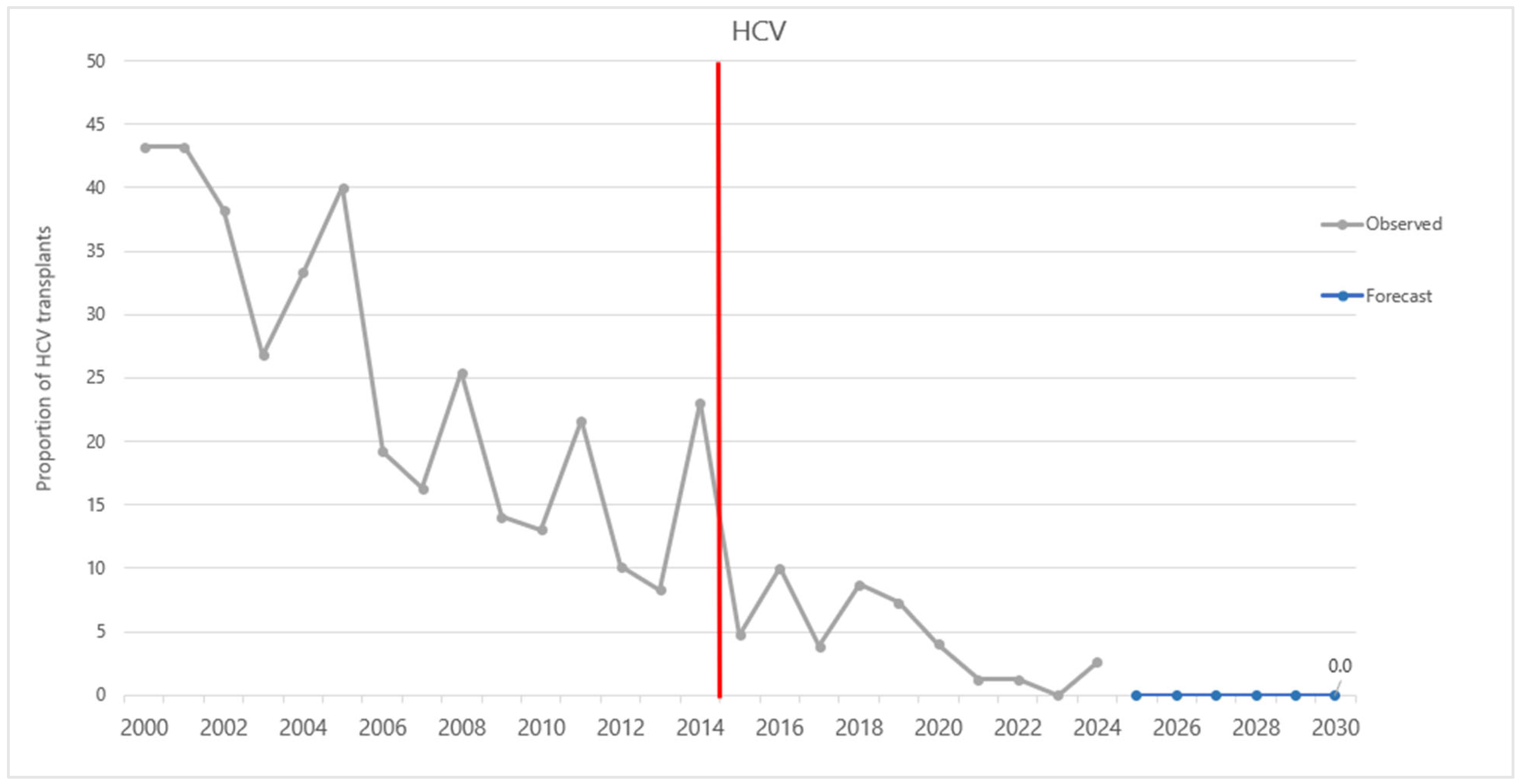
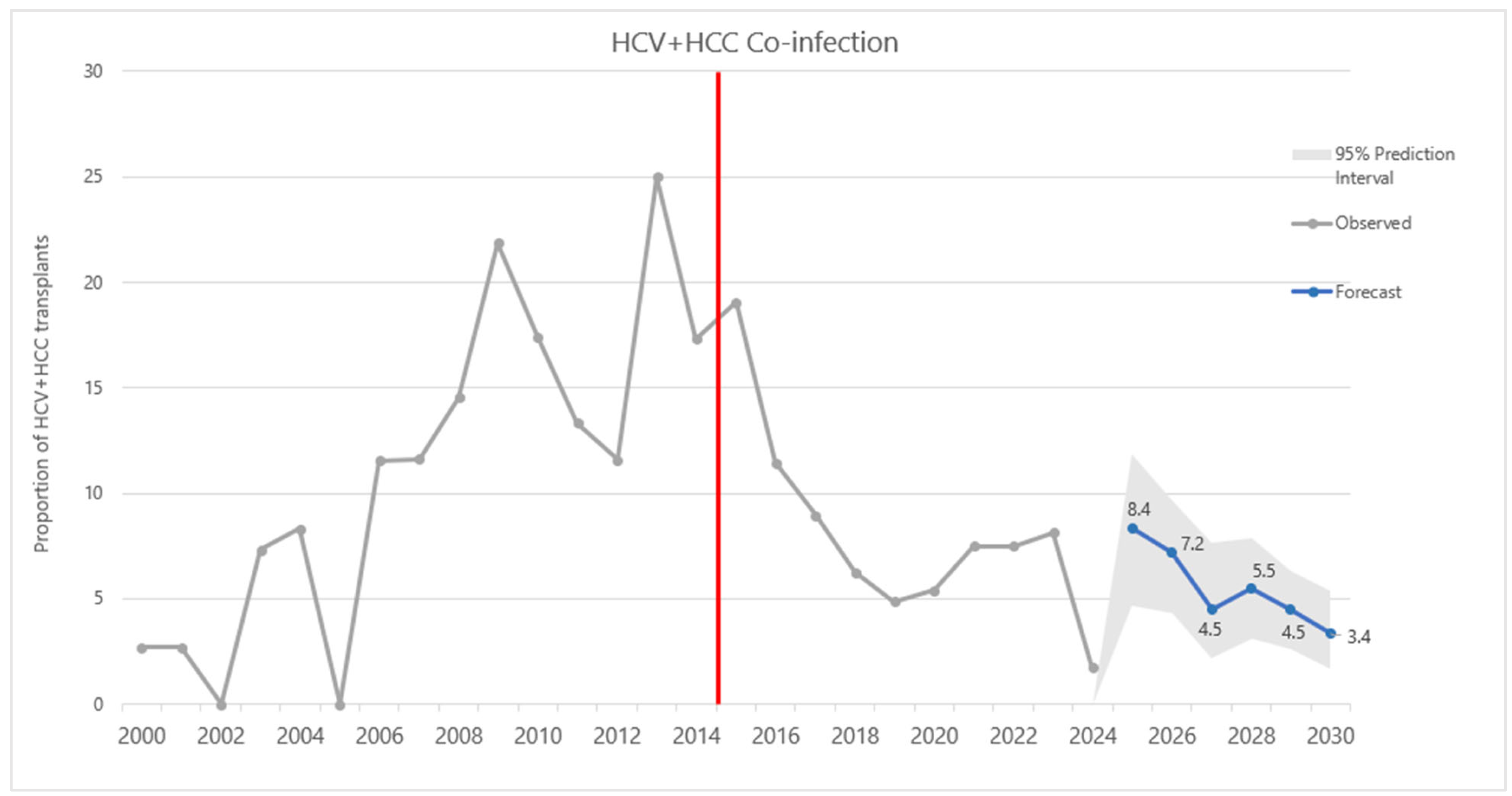
The by-year proportion of total transplants conducted for the HCC-only study group (Figure 1), HCV-only study group (Figure 2), and HCC/HCV study group (Figure 3) were described. Notably, the number transplanted solely for HCV transitioning into the post-DAA era decreased from 12 patients to 3 patients from the end of 2014 to 2020, exhibiting an 82.3% decrease (23.1% to 4.1% of total transplants) in the proportion transplanted. Likewise, the number transplanted for HCC/HCV co-infection saw a sustained decrease of 9 patients to 4 patients, exhibiting a 68.8% (17.3% to 5.4% of total transplants) reduction in the proportion transplanted. Finally, the number transplanted for HCC without history of an HCV infection increased from 10 patients to 13 patients across the post-DAA era, with a modest decrease of 8.3% (19.2% to 17.6% of total transplants) in the proportion transplanted. Additionally, the total number of cases (n) performed each year for any indication at our high-volume quaternary transplant center are shown in Supplementary Figure S1.

3.5. Forecasted Transplant Indications

Utilizing the annual proportion of patients transplanted in each study indication between 2000–2024, an ARIMA model was developed for each series to project indication trends through 2030. The forecasted proportion of total transplants performed for HCV-only at our center is predicted to reach near zero by 2025 and remain near zero through 2030 (Figure 2). The forecasted proportion for HCC/HCV coinfection was predicted to be 8.4% in 2025, continuing to decline to 3.4% by 2030 (Figure 3). In contrast, the HCC-only series is expected to remain the largest of the three indications, with a forecasted proportion of 4.3% by 2030 (Figure 1).
Model diagnostics are summarized in Table 2. Stationarity tests suggested the HCC-only and HCC/HCV coinfection series were stationary in levels on the logit scale, whereas HCV-only and coinfection were consistent with non-stationarity in levels. Despite these differences, residual diagnostics supported model adequacy: Ljung–Box tests at lag 10 showed no evidence of residual autocorrelation for any final model (all p ≥ 0.24). Intervention effects are reported in Supplementary Table S4, which presents model-based estimates of the 2015 level change and post-2015 slope change. Post-2015 slope changes were negative and statistically significant for the Combined series (p = 0.019) and HCV-only (p < 0.001), but not for HCC-only or HCC/HCV coinfection. Level-change effects were not statistically significant across any series.

4. Discussion

To our knowledge, this long-term, single-center study is one of the first to investigate the role of DAAs in obviating the need for liver transplantation for HCV-related cirrhosis and to provide formal forecasting for indications through the end of the decade. Longitudinal analysis of our program’s case mix over the last several decades reveals a steep, sustained decline in HCV-driven transplants after DAA adoption. ARIMA modeling predicts that HCV cirrhosis may virtually disappear as a transplant indication by the close of the current decade.
The advent of DAA agents has markedly improved management of HCV infection, with greater than 90% of patients experiencing a treatment response [18]. Accordingly, substantial research has examined outcomes in HCV-positive patients treated exclusively with DAAs, demonstrating significantly improved SVR and high cure rates [19,20,21]. DAAs have been studied in the setting of LTx and fared favorably in respect to effects on HCC recurrence and post-operative outcomes in HCV positive recipients [7]. However, the future effect of DAAs on LTx indications has not been well-evaluated, specifically in relation to the changing landscape of HCV related indications. The year-by-year analysis highlights how the DAA era is substantially altering the case mix. After DAA introduction, the proportion of total transplants with HCV indications alone dropped by 82.3% from the end of 2014 to 2020. Coinfected HCC and HCV recipients declined by a comparatively smaller 68.8%, yet a more recent uptick in this subgroup may have influenced ARIMA projections (Figure 3). This rebound may reflect a lingering carcinogenic impact of pre-DAA fibrosis rather than antiviral therapy failure. Likewise, multiple revisions to HCC exception points in 2015, 2019, and 2020 resulting in a decrease in HCC transplant proportions may contribute to the observed decrease in HCC/HCV and HCC indications [22]. Notably, our center recorded a steeper overall drop in HCC/HCV transplants compared to the national Scientific Registry for Transplant Recipients (SRTR) database [17]. In contrast, of the study groups, HCC-only was the sole indication that remained elevated during the DAA era, and was accompanied by a very modest proportional decrease of 8.3% as compared to other cohorts. The expansion of HCC-only listings mirrors a wider shift in transplant oncology—driven by a vacancy created through successful HCV treatment and the growing burden of metabolic dysfunction-associated steatotic liver disease (MASLD)-related HCC [17]. Looking forward, grafts once allocated to HCV candidates may increasingly be redirected to emerging indications such as colorectal metastases or unresectable intrahepatic cholangiocarcinoma, further altering the transplant landscape [23].
The observed frequency trends in Figure 2 and Figure 3 indicate a substantial decrease in transplant indications for HCV patients with or without HCC at our institution, as well as a preservation of the proportion of total transplants conducted for HCC-alone through 2024. ARIMA projections suggest that isolated HCV cirrhosis may disappear as a transplant indication by 2030, with HCC/HCV coinfection decreasing approximately 60% to a yearly volume of 3.4% of total transplants during 2025–2030. By contrast, HCC-alone is projected to remain the largest proportion of total transplants by the end of the decade amongst these three indications, with a forecasted proportion of 4.3% of transplants at our institution. Consistent with these projections, the results indicate that changes after 2015 were best described as sustained post-2015 trend (slope) reductions rather than abrupt stepwise shifts: slope changes were negative and statistically significant for the coinfection series and for HCV-only, whereas level-change effects were not statistically significant across any series. This may be explained by a gradual, sustained post-2015 pivot away from HCV-driven transplantation rather than a single-step drop at the breakpoint, perhaps due to transitions in case-mix over time. Collectively, these data signal a continuing pivot away from HCV-related transplant towards a larger oncology-focused case-mix by the end of this decade, though effect sizes should be cautiously interpreted given the sample size of the study.
Retrospective review of post-operative outcomes revealed mainly comparable outcomes to those previously described, although a lower graft loss rate was observed in the HCC/HCV co-infection cohort (3.7% vs. 8.9%) [24]. Additionally, hospital LOS was significantly different amongst study groups, with an expected increase in LOS amongst oncologic indications despite a higher median removal MELD score observed in patients transplanted for HCV alone. Although few differences in observed outcomes reached statistical significance between study groups, perhaps largely due to incomplete data capture, several remain clinically noteworthy. These include biliary stricture in 40.0% of coinfected recipients; acute and chronic renal failure in 89.3% and 48.3%, respectively, of HCC only recipients; and CMV infection in 68.2% of HCC/HCV co-infection and 100% of HCV only recipients. Such disparities may stem from graft quality, allocation patterns, recipient comorbidities, or underlying disease severity, as inferred from the significantly different removal and native MELD scores observed among groups. Descriptive HCC recurrence rates in our series—14.3% for coinfected recipients and 6.4% for HCC alone—are comparable to prior retrospective (9%) and systematic-review (8%) estimates [22,25,26]. Interpretation, however, again must be tempered by the limited proportion of patients with complete postoperative data (Supplementary Table S3).
This study was not without limitations. First, given the retrospective nature of this study, a portion of the cohort lacked detailed clinical characteristics and post-operative outcomes data. This is largely due to an inability to access EMR outcomes data extraction prior to 2017. Thus, outcomes data must be interpreted with caution. It is of note, however, that detailed patient data regarding malignancy and HCV status at transplant was available for all our LTx patients, increasing the reliability of our analysis surrounding the shift in HCV-related LTx indications. Additionally, we acknowledge that increased utilization of HCV-positive donors in the DAA era may also influence transplant activity and recipient selection. However, donor HCV status was not consistently captured in our institutional dataset across the full study period and therefore could not be formally analyzed. Next, this retrospective study was conducted at a single center, and may be subject to regional epidemiological differences, limited sample size, center-specific influence, and decreased generalizability. Finally, with 25 annual time points, ARIMA intervention models may be sensitive to model specification and risk overfitting. To address this, we restricted ARIMA models a priori, reported diagnostics, and interpret our results with caution.

5. Conclusions

This single-center longitudinal analysis underscores the transformative impact of DAAs on liver-transplant practice. Since adoption, HCV—whether alone or with concomitant HCC—has contracted sharply as an indication for transplantation, whereas HCC in the absence of HCV has expanded. ARIMA modeling suggests that isolated HCV cirrhosis could all but disappear from our waiting list by 2030, with residual HCV/HCC cases persisting at a lower frequency. These shifts have important implications for listing policy and graft allocation, potentially freeing organs for emerging transplant-oncology indications. Multicenter studies are necessary to validate our results, yet accumulating real-world evidence already points toward an era in which effective antiviral therapy relegates HCV-driven liver transplantation to history.

Supplementary Materials

The following supporting information can be downloaded at: https://www.mdpi.com/article/10.3390/surgeries7020051/s1, Supplementary Figure S1. Total liver transplant volume by year, for any indication at our center; Supplementary Table S1. One-year recurrence data for HCC-only and HCC/HCV transplant population; Supplementary Table S2. Surgical outcomes; Supplementary Table S3. Observed variable missingness, by study group; Supplementary Table S4. Estimated intervention effects from each ARIMA model, including level-change and slope-change coefficients.

Author Contributions

Conceptualization, N.H., M.B.-G., W.A., D.V.; methodology, N.H., A.C., M.B.-G., W.A., D.V.; software, A.C.; validation, N.H., A.C., D.V.; formal analysis, A.C.; investigation, N.M., N.H., M.B.-G., W.A., V.C., J.S., P.Z., A.D., P.S., S.Z., N.A., R.D., M.R., L.E., D.V.; resources, D.V.; data curation, N.H., A.C., M.B.-G., W.A., D.V.; writing—original draft preparation, N.H., A.C., M.B.-G., W.A., D.V.; writing—review and editing, N.M., N.H., M.B.-G., W.A., V.C., J.S., P.Z., A.D., P.S., S.Z., N.A., R.D., M.R., L.E., D.V.; visualization, A.C.; supervision, M.B.-G., D.V.; project administration, N.H., D.V.; funding acquisition, D.V. All authors have read and agreed to the published version of the manuscript.

Funding

This research received no external funding.

Institutional Review Board Statement

This study was conducted in accordance with the Declaration of Helsinki, and approved by the Institutional Review Board of Atrium Health—Wake Forest Baptist (IRB00097121). This study was conducted in accordance with institutional guidelines and best practices for retrospective research, including appropriate data handling and confidentiality.

Informed Consent Statement

Patient consent was waived given the retrospective nature of this study. This study was conducted in accordance with institutional guidelines and best practices for retrospective research, including appropriate data handling and confidentiality.

Data Availability Statement

Data were retrospectively queried from institutional databases that are not available to the public, to maintain patient confidentiality and to ensure appropriate data handling.

Acknowledgments

We would like to thank Marina Sycheva for her invaluable support in publishing this manuscript.

Conflicts of Interest

The authors declare no conflicts of interest.

Abbreviations

The following abbreviations are used in this manuscript:
HCVHepatitis C viral infection
LTxLiver transplantation
DAADirect-acting antiviral
SVRSustained virologic response
HCCHepatocellular carcinoma
IFNInterferon
ARIMAAutoregressive integrated moving average
MELDModel for end-stage liver disease
LOSLength of stay
MASLDMetabolic dysfunction-associated steatotic liver disease
SRTRScientific registry for transplant recipients
EMRElectronic medical record
CKDChronic kidney disease
COPDChronic obstructive pulmonary disease
CADCoronary artery disease
SSISurgical site infection
UPROUnplanned reoperation
BSBiliary stricture
BLBiliary leak
CMVICytomegalovirus infection
CLABSiCentral line-associated bloodstream infection
HATHepatic artery thrombosis
PVTPortal vein thrombosis
IVCInferior vena cava
ARejAcute rejection
CRejChronic rejection
ARFAcute renal failure
CRFChronic renal failure
DNMDe novo malignancy
LDLymphoproliferative disease
VHVentral hernia

References

  1. Axley, P.; Ahmed, Z.; Ravi, S.; Singal, A.K. Hepatitis C Virus and Hepatocellular Carcinoma: A Narrative Review. J. Clin. Transl. Hepatol. 2017, 6, 79–84. [Google Scholar] [CrossRef] [PubMed]
  2. Khullar, V.; Firpi, R.J. Hepatitis C cirrhosis: New perspectives for diagnosis and treatment. World J. Hepatol. 2015, 7, 1843–1855. [Google Scholar] [CrossRef] [PubMed]
  3. Fattovich, G.; Stroffolini, T.; Zagni, I.; Donato, F. Hepatocellular carcinoma in cirrhosis: Incidence and risk factors. Gastroenterology 2004, 127, S35–S50. [Google Scholar] [CrossRef] [PubMed]
  4. El-Serag, H.B. Epidemiology of viral hepatitis and hepatocellular carcinoma. Gastroenterology 2012, 142, 1264–1273.e1. [Google Scholar] [CrossRef]
  5. GBD 2015 Mortality and Causes of Death Collaborators. Mortality GBD, Causes of Death C. Global, regional, and national life expectancy, all-cause mortality, and cause-specific mortality for 249 causes of death, 1980–2015: A systematic analysis for the Global Burden of Disease Study 2015. Lancet 2016, 388, 1459–1544. [Google Scholar] [CrossRef]
  6. Ali, H.; Vikash, F.; Moond, V.; Khalid, F.; Jamil, A.R.; Dahiya, D.S.; Sohail, A.H.; Gangwani, M.K.; Patel, P.; Satapathy, S.K. Global trends in hepatitis C-related hepatocellular carcinoma mortality: A public database analysis (1999–2019). World J. Virol. 2024, 13, 89469. [Google Scholar] [CrossRef]
  7. Seifert, L.L.; Perumpail, R.B.; Ahmed, A. Update on hepatitis C: Direct-acting antivirals. World J. Hepatol. 2015, 7, 2829–2833. [Google Scholar] [CrossRef]
  8. Khan, A.S.; Adams, N.; Vachharajani, N.; Dageforde, L.; Wellen, J.; Shenoy, S.; Crippin, J.S.; Doyle, M.B.; Chapman, W.C. Liver transplantation for hepatitis C patients in the era of direct-acting antiviral treatment: A retrospective cohort study. Int. J. Surg. 2020, 75, 84–90. [Google Scholar] [CrossRef]
  9. Geddawy, A.; Ibrahim, Y.F.; Elbahie, N.M.; Ibrahim, M.A. Direct Acting Anti-Hepatitis C Virus Drugs: Clinical Pharmacology and Future Direction. J. Transl. Intern. Med. 2017, 5, 8–17. [Google Scholar] [CrossRef]
  10. Cotter, T.G.; Paul, S.; Sandıkçı, B.; Couri, T.; Bodzin, A.S.; Little, E.C.; Sundaram, V.; Charlton, M. Improved Graft Survival After Liver Transplantation for Recipients with Hepatitis C Virus in the Direct-Acting Antiviral Era. Liver Transpl. 2019, 25, 598–609. [Google Scholar] [CrossRef]
  11. Conti, F.; Buonfiglioli, F.; Scuteri, A.; Crespi, C.; Bolondi, L.; Caraceni, P.; Foschi, F.G.; Lenzi, M.; Mazzella, G.; Verucchi, G.; et al. Early occurrence and recurrence of hepatocellular carcinoma in HCV-related cirrhosis treated with direct-acting antivirals. J. Hepatol. 2016, 65, 727–733. [Google Scholar] [CrossRef]
  12. Roche, B.; Coilly, A.; Duclos-Vallee, J.C.; Samuel, D. The impact of treatment of hepatitis C with DAAs on the occurrence of HCC. Liver Int. 2018, 38, 139–145. [Google Scholar] [CrossRef]
  13. Muzica, C.M.; Stanciu, C.; Huiban, L.; Singeap, A.-M.; Sfarti, C.; Zenovia, S.; Cojocariu, C.; Trifan, A. Hepatocellular carcinoma after direct-acting antiviral hepatitis C virus therapy: A debate near the end. World J. Gastroenterol. 2020, 26, 6770–6781. [Google Scholar] [CrossRef] [PubMed]
  14. Verna, E.C.; Brown, R.S., Jr. Hepatitis C virus and liver transplantation. Clin. Liver Dis. 2006, 10, 919–940. [Google Scholar] [CrossRef] [PubMed]
  15. Kwong, A.J.; Kim, W.R.; Flemming, J.A. De Novo Hepatocellular Carcinoma Among Liver Transplant Registrants in the Direct Acting Antiviral Era. Hepatology 2018, 68, 1288–1297. [Google Scholar] [CrossRef] [PubMed]
  16. Tabrizian, P.; Saberi, B.; Holzner, M.L.; Rocha, C.; Jung, Y.K.; Myers, B.; Florman, S.S.; Schwartz, M.E. Outcomes of transplantation for HBV- vs. HCV-related HCC: Impact of DAA HCV therapy in a national analysis of >20,000 patients. HPB 2022, 24, 1082–1090. [Google Scholar] [CrossRef]
  17. Okumura, K.; Sogawa, H.; Samson, D.; Butler, J.; Veillette, G.; John, D.; Diflo, T.; Bodin, R.; Wolf, D.C.; Latifi, R.; et al. Improving Liver Transplant Outcomes for Hepatitis C Virus Hepatocellular Carcinoma in the Direct-Acting Antiviral Therapy Era. Transplant. Proc. 2022, 54, 1834–1838. [Google Scholar] [CrossRef]
  18. Puigvehí, M.; Hashim, D.; Haber, P.K.; Dinani, A.; Schiano, T.D.; Asgharpour, A.; Kushner, T.; Kakked, G.; Tabrizian, P.; Schwartz, M.; et al. Liver transplant for hepatocellular carcinoma in the United States: Evolving trends over the last three decades. Am. J. Transplant. 2019, 20, 220–230. [Google Scholar] [CrossRef]
  19. Dietz, C.; Maasoumy, B. Direct-Acting Antiviral Agents for Hepatitis C Virus Infection-From Drug Discovery to Successful Implementation in Clinical Practice. Viruses 2022, 14, 1325. [Google Scholar] [CrossRef]
  20. Lynch, E.N.; Russo, F.P. Outcomes and Follow-Up after Hepatitis C Eradication with Direct-Acting Antivirals. J. Clin. Med. 2023, 12, 2195. [Google Scholar] [CrossRef]
  21. Ogawa, E.; Chien, N.; Kam, L.; Yeo, Y.H.; Ji, F.; Huang, D.Q.; Cheung, R.; Nguyen, M.H. Association of Direct-Acting Antiviral Therapy with Liver and Nonliver Complications and Long-term Mortality in Patients with Chronic Hepatitis C. JAMA Intern. Med. 2023, 183, 97–105. [Google Scholar] [CrossRef]
  22. Shah, R.H.; Chyou, D.; Goldberg, D.S. Impact of major hepatocellular carcinoma policy changes on liver transplantation for hepatocellular carcinoma in the United States. Liver Transplant. 2022, 28, 1857–1864. [Google Scholar] [CrossRef]
  23. Baimas-George, M.; Russo, M.; Soto, J.R.; Eskind, L.; Levi, D.; Vrochides, D. Liver Transplantation for Colorectal Cancer Metastasis: An Evolving Option with Hope in Selected Patients. Gastroenterology 2024, 168, 444–449. [Google Scholar] [CrossRef]
  24. Younossi, Z.M.; Stepanova, M.; Saab, S.; Ahmed, A.; Lam, B.; Srishord, M.; Venkatesan, C.; Wai, H.; Henry, L. The impact of viral hepatitis-related hepatocellular carcinoma to post-transplant outcomes. J. Viral Hepat. 2015, 23, 53–61. [Google Scholar] [CrossRef]
  25. Straś, W.A.; Wasiak, D.; Łągiewska, B.; Tronina, O.; Hreńczuk, M.; Gotlib, J.; Lisik, W.; Małkowski, P. Recurrence of Hepatocellular Carcinoma After Liver Transplantation: Risk Factors and Predictive Models. Ann. Transplant. 2022, 27, e934924-1–e934924-11. [Google Scholar] [CrossRef]
  26. Tse, C.S.; Yang, J.D.; Mousa, O.Y.; Nelson, K.M.; Pungpapong, S.; Keaveny, A.; Aqel, B.A.; Vargas, H.; Dickson, R.C.; Watt, K.; et al. Direct-Acting Antiviral Therapy in Liver Transplant Patients with Hepatocellular Carcinoma and Hepatitis C. Transplant. Direct 2020, 7, e635. [Google Scholar] [CrossRef]
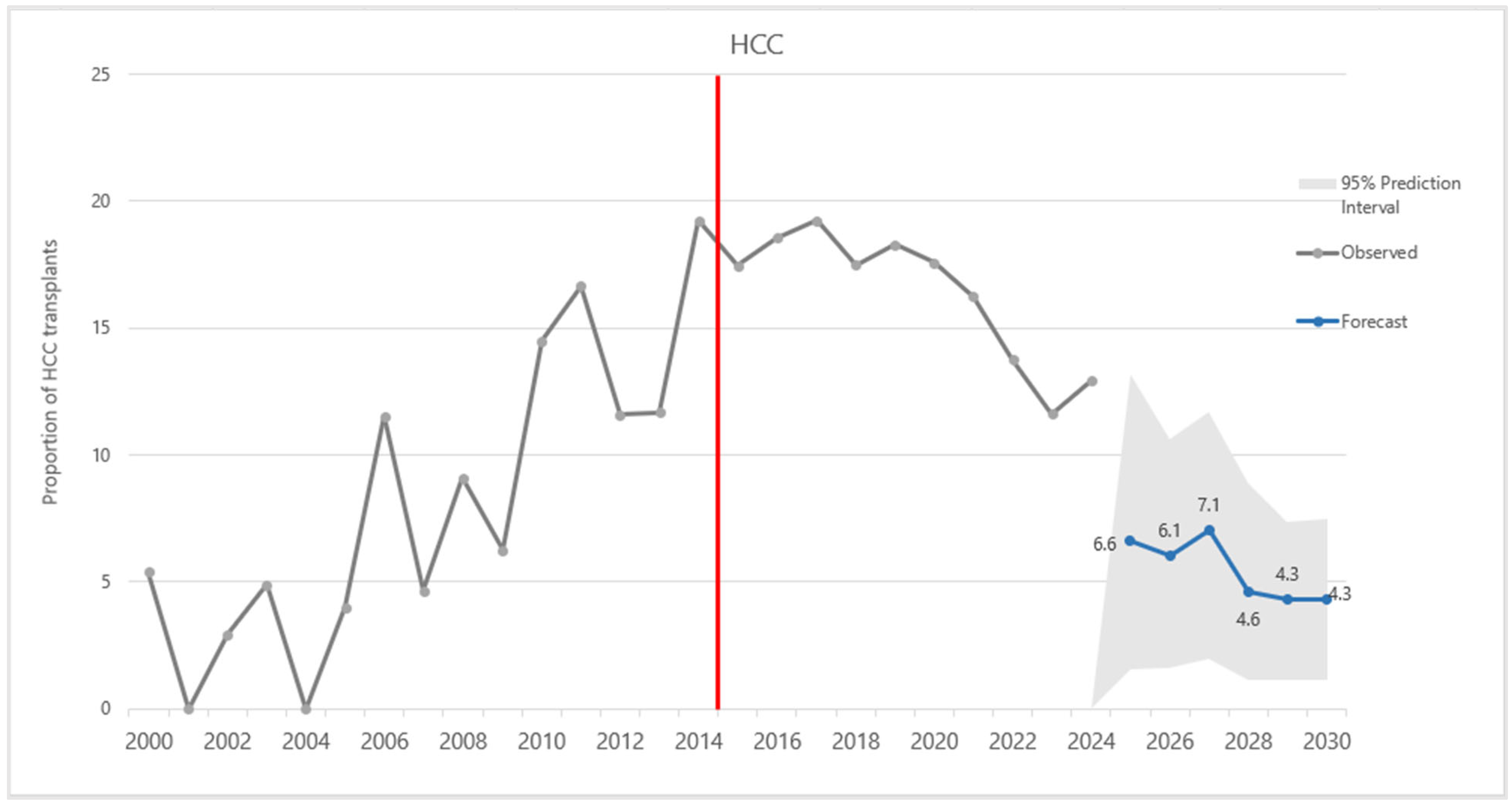
Figure 1. Annual proportion of total transplants conducted for HCC only separated by pre- and post- DAA era (red line), with ARIMA modeling to forecast proportions through the year 2030.
Surgeries 07 00051 g001
Figure 2. Annual proportion of total transplants conducted for HCV only separated by pre- and post- DAA era (red line), with ARIMA modeling to forecast proportions through the year 2030.
Surgeries 07 00051 g002
Figure 3. Annual proportion of total transplants conducted for HCC/HCV co-infection separated by pre- and post- DAA era (red line), with ARIMA modeling to forecast proportions through the year 2030.
Surgeries 07 00051 g003
Table 1. Demographic characteristics of transplants for HCC, HCC/HCV co-infection, and HCV, 2000–2024.
VariablesHCC-Only (n = 195)HCC/HCV (n = 150)HCV-Only
(n = 189)
p-Value
Age at Liver Transplant Surgery
(years) Median (IQR)
62.3 (57–66.2)58.7 (53.9–63.5)54.4 (49.6–59)<0.000
Sex 0.092
Female n, total n, (%)37, 195 (19.0)28, 150 (18.7)51, 189 (27.0)
Male n, total n, (%)158, 195 (81.0)122, 150 (81.3)138, 189 (73.0)
Removal MELD Score
Median (IQR)
23 (15–32)13 (8–17)24 (18–30)<0.000
Native MELD Score
Median (IQR)
26 (16–31)15 (9–19)19.5 (16–28)<0.000
CKD n, total n, (%)24, 80 (30.0)6, 30 (20.0)3, 14 (21.4)0.513
COPD n, total n, (%)6, 80 (7.5)4, 31 (12.9)1, 14 (7.1)0.648
CAD n, total n, (%)26, 79 (32.9)6, 31 (19.3)1, 14 (7.1)0.076
Diabetes n, total n, (%)33, 80 (41.2)5, 31 (16.1)2, 14 (14.3)0.013
Dyslipidemia n, total n, (%)18, 78 (23.1)7, 30 (23.3)00.130
Hypertension n, total n, (%)50, 80 (62.5)15, 30 (50.0)4, 14 (28.6)0.048
Demographic and clinical characteristics are reported for all patients with clearly documented transplant indications. Patients were excluded from variable-specific analyses if relevant data were missing, given the nature of this retrospective study. Comorbidity data reflect diagnoses documented in the peri-transplant period. As a result, sample sizes may vary across characteristics due to differences in data completeness. Statistical significance was defined as α = 0.05. MELD = model for end-stage liver disease. CKD = chronic kidney disease. COPD = chronic obstructive pulmonary disease. CAD = coronary artery disease. Total n represents number of patients with available follow-up data.
Table 2. ARIMA model specification, selection criterion, and diagnostic tests (annual series; no seasonal terms).
SeriesFinal ARIMA (p,d,q)Seasonal TermsSelection MethodAICN (Years)Stationarity Check (ADF Lag 1)Residual Autocorrelation (Ljung–Box Q, Lag 10)
HCC-only(2,1,2)None (annual)Min AIC over p = 0–2, d = 0–1, q = 0–2116.5524Level: Z(t) = −3.77, p = 0.003; First diff: Z(t) = −11.41, p < 0.0001Q(10) = 6.42, p = 0.78
HCC/HCV Coinfection(2,1,2)None (annual)Min AIC over p = 0–2, d = 0–1, q = 0–2121.8324Level: Z(t) = −3.14, p = 0.024; First diff: Z(t) = −11.81, p < 0.0001Q(10) = 6.56, p = 0.76
HCV-only(0,0,2)None (annual)Min AIC over p = 0–2, d = 0–1, q = 0–2103.0425No drift: Z(t) = 2.01, p = 0.998; Drift: p = 0.971; Trend: Z(t) = 0.628, p = 0.997Q(10) = 2.56, p = 0.989
Combined(0,0,2)None (annual)Min AIC over p = 0–2, d = 0–1, q = 0–2−0.7125No drift: Z(t) = −0.42, p = 0.907; Drift: p = 0.339; Trend: Z(t) = −1.48, p = 0.834Q(10) = 12.69, p = 0.241
Disclaimer/Publisher’s Note: The statements, opinions and data contained in all publications are solely those of the individual author(s) and contributor(s) and not of MDPI and/or the editor(s). MDPI and/or the editor(s) disclaim responsibility for any injury to people or property resulting from any ideas, methods, instructions or products referred to in the content.