The Evolution of Inguinal Hernia Repair from the Langenbeck–Gerdy Subcutaneous Technique to Durham and Subsequent Dissection Procedures: A Historical Review


Abstract
1. Introduction
“Whoever discovers a safe and harmless surgical method could rightly be considered a benefactor of humanity. Thousands of people would be spared great inconveniences; thousands would avoid the dangers and horrific suffering of strangulation.”(Reverdin, 1881)
2. Materials and Methods
3. Results
3.1. Lister and the Antiseptic Method
3.2. From Subcutaneous Surgery to Dissection: When Is the AOEM Incised?
3.3. Participation of the Founding Fathers
4. Conclusions
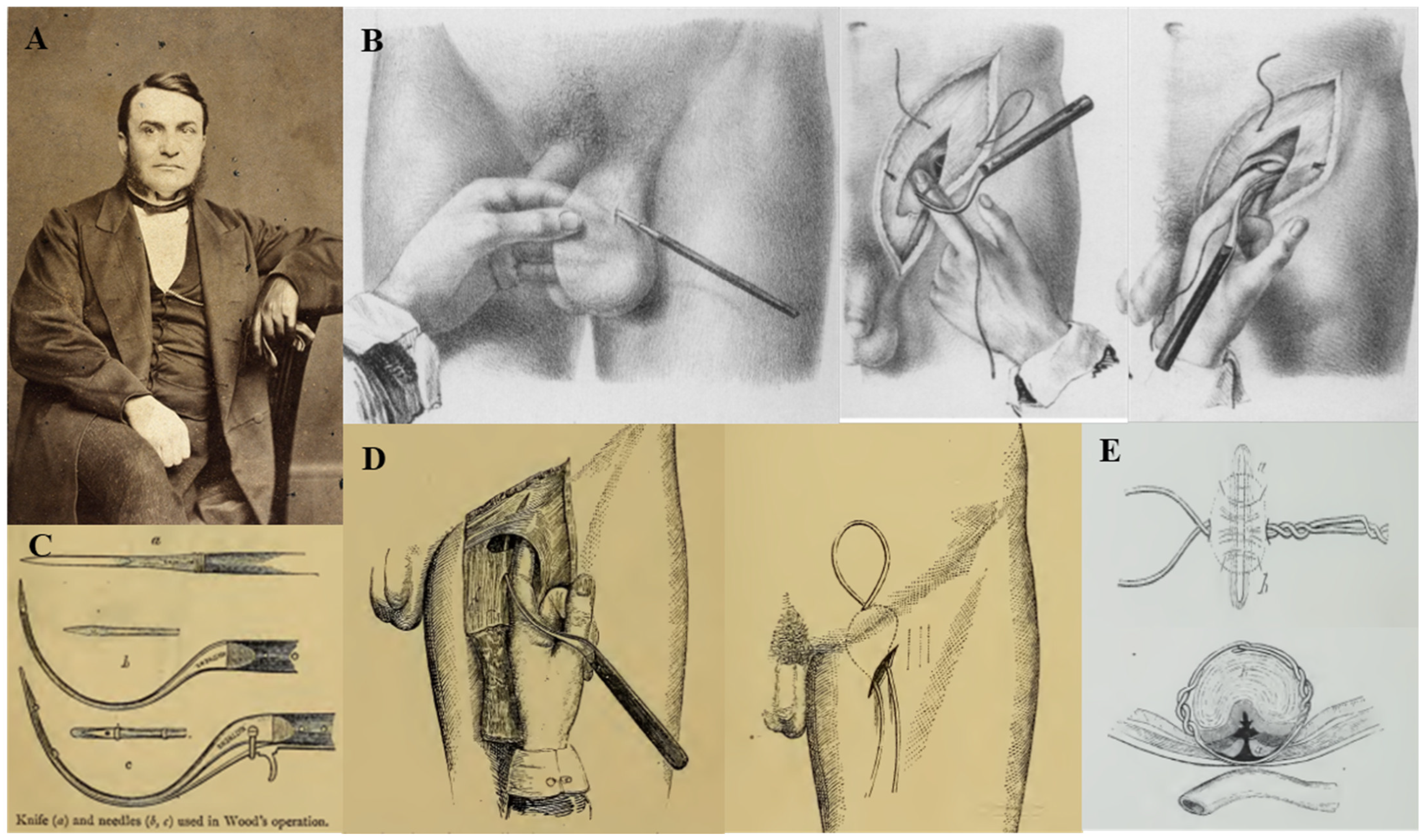
- The reduction in recurrence, or the increase in the effectiveness, of radical hernia repair was made possible by the introduction of the principle of closing the walls of the inguinal canal (Wood, 1860) [27]. All operations based on closing the sac or the pillars were ineffective. Therefore, the surgeon–anatomist Wood should be considered the first specialist in abdominal wall surgery due to his extensive contributions to this pathology from the pre-antiseptic era.
- The evolution of radical hernia repair incorporated knowledge from several countries, from England to Germany, and was finally completed in Italy.
- 4.
- There are numerous errors in historical references, validated by comments based on the publications, and these have been reused year after year without verification of the original source.
- 5.
- Full dissection surgery, involving opening the abdominal wall layer by layer to reach the hernial sac, was initiated by anatomist surgeons in England and Germany, not in France.
- 6.
- The influence of the French literature on the history of hernia surgery is undeniable, to the detriment of the notable contributions of English, German, and American surgeons, primarily.
*”No one can write anything about the subject of hernias without referring to Wood’s work, and although his original operation is no longer practiced, modifications to it are simply the natural result of the introduction of antiseptics into surgery.”(The Lancet, 1892)
Author Contributions
Funding
Institutional Review Board Statement
Informed Consent Statement
Data Availability Statement
Conflicts of Interest
References
- Watson, L.F. Hernia; Mosby Co.: St. Louis, MO, USA, 1924. [Google Scholar]
- Sachs, M.; Damm, M.; Encke, A. Historical evolution of inguinal hernia repair. World J. Surg. 1997, 21, 218–223. [Google Scholar] [CrossRef] [PubMed]
- Malangoni, M.A.; Rosen, M.J. Hernias. In Sabiston. Tratado de Cirugía, 20th ed.; Townsend, C.M., Beauchamp, R.D., Evers, B.M., Mattox, K.L., Eds.; Elsevier: Madrid, Spain, 2018. [Google Scholar]
- Bittner, R.R.; Felix, E.L. History of inguinal hernia repair, laparoendoscopic techniques, implementation in surgical praxis, and future perspectives: Considerations of two pioneers. Int. J. Abd Wall Hernia Surg. 2021, 4, 133–155. [Google Scholar] [CrossRef]
- Segond, P. Cure Radicale des Hernies; These présentee au concours de l´agrégation (section de chirurgie et d´accouchements); Masson: Paris, France, 1883. [Google Scholar]
- Thierry, A. Des Diverses Méthodes Operatoires pour la Cure Radicale des Hernies. Ph.D. Thesis, Faculté de Medecine de Paris, Moquet et Compagnie, Paris, France, 1841. [Google Scholar]
- Roustan, A. De la Hernie Interstitielle. Ph.D. Thesis, Faculté de Medecine de Paris, Fonderie de Rignoux, Paris, France, 1843. [Google Scholar]
- Boinet, A.A. De la Cure Radicale des Hernies. Ph.D. Thesis, Faculté de Medecine de Paris, Maulde et Renou, Paris, France, 1839. [Google Scholar]
- Moreno-Egea, A.; Moreno-Latorre, C.; Moreno-Latorre, A. El Último Cirujano Anatomista: Conrad Martin Johann Langenbeck (1776–1851). Int. J. Morphol. 2024, 42, 1328–1337. [Google Scholar] [CrossRef]
- Wood, J. Lectures on Hernia and Its Radical Cure: Delivered at the Royal College of Surgeons of England in June, 1885—With a Clinical Lecture on Trusses and Their Application to Ruptures; Henry Renshaw: London, UK, 1886. [Google Scholar]
- Lister, B.J. On the antiseptic principle in the practice of surgery. Lancet 1867, 90, 353–356. [Google Scholar] [CrossRef]
- Alderson, J.; Toynbee, J.; Durham, A.E.; Smith, W.T. Reports of Societies. Brit Med. J. 1866, 1, 674–677. Available online: http://www.jstor.org/stable/25205725 (accessed on 5 February 2025).
- Marcy, H.O. Carbolized catgut sutures (buried in the tissues) for the cure of hernia. Boston Med. Surg. J. 1871, 85, 315–316. [Google Scholar] [CrossRef]
- Steele, C. On Operations for the Radical Cure of Hernia. Brit. Med. J. 1874, 2, 584. Available online: http://www.jstor.org/stable/25239741 (accessed on 5 February 2025).
- Riesel, O. Versuche zur Radicalheilung freier Hernien (Schluss aus No. 38.). Dtsch. Med. Wochenschr. 1877, 3, 467–469. [Google Scholar] [CrossRef][Green Version]
- Czerny, V. Studien zur radikalbe-handlung der hernien. Wein Med. Wschr. 1877, 27, 497–500. [Google Scholar]
- Reverdin, J.-L. Des Opérations Modernes de Cure Radicale des Hernies; Revue Médicale de la suisse romande; Libraire-Editeur H. George; Genève: Geneva, Switzerland, 1881. [Google Scholar]
- Kocher, E.T. Zur radicalcur der hernien. Cor. Bl. Für Schweiz. Aerzte 1892, 18, 12. [Google Scholar]
- Lucas-Championnière, J. Sur la cure radicale des hernies. Bull. Mem. Soc. Chir. 1887, 13, 737–742. [Google Scholar]
- Macewen, W.I. On the Radical Cure of Oblique Inguinal Hernia by Internal Abdominal Pad and the Restoration of the Valved Form of the Inguinal Canal. Ann. Surg. 1886, 4, 89–119. [Google Scholar] [CrossRef] [PubMed]
- Bassini, E. Sopra 100 casi di cura radicale dell’ernia inguinale operata col metodo dell-autore. Arch. ed Atti Sot ltal Chir. 1888, 5, 315–319. [Google Scholar]
- Ashhurst, J. The International Encyclopaedia of Surgery: A Systematic Treatise on the Theory and Practice of Surgery; William Wood & Co.: New York, NY, USA, 1883. [Google Scholar]
- le Dentu, J.F.K.; Delbet, P. Traité de Chirurgie Clinique et Opératoire; J.B. Bailliere et Fils: Paris, France, 1898. [Google Scholar]
- Biographical Sketch of Dr. Henry O. Marc; Physicians and Surgeons of America: Boston, MA, USA, 1896.
- Stoppa, R. Survol historique de la chirurgie des hernies De la castration à la haute technologie. Hist. Des Sci. Mëd. 2001, 35, 57–70. [Google Scholar]
- Lucas-Championnière, J. Chirurgie Opératorie: Cure Radicale des Hernies; Avec une Etude Statistique de Deux Cents Soixante-Quinze Operations; Rueff et Cie: Paris, France, 1892. [Google Scholar]
- Wood, J. On a new method of operation for the radical cure of hernia. Med. -Chir. Trans. 1860, 43, 71. [Google Scholar] [CrossRef] [PubMed][Green Version]
- Wood, J. On Rupture Inguinal, Crural, and Umbilical: The Anatomy, Pathology, Diagnosis, Cause and Prevention with New Methods of Effecting a Radical and Permanent Cure Embodying the Jacksonian Prize Essay of The Royal College of Surgeons; John W. Davies: London, UK, 1863. [Google Scholar]
- Death of professor John Wood. Lancet 1892, 139, 39. [CrossRef]
- Riesel, O. Versuche zur Radicalheilung freier Hernien. Dtsch. Med. Wochenschr. 1877, 3, 449–452. [Google Scholar] [CrossRef][Green Version]
- Marcy, H.O. The cure of hernia by the antiseptic use of animal ligature. Trans. Int. Med. Congr. 1881, 2, 446. [Google Scholar]
- Marcy, H.O. A Treatise on Hernia: The Radical Cure by the Use of the Buried Antiseptic Animal Suture; GS Davis: Detroit, MI, USA, 1889. [Google Scholar]
- Lucas-Championnière, J. Cure Radicale des Hernies: Avec une Étude Statistique de Deux Cent Soixante-Quinze Opérations, et 50 Figures Intercalées dans le Texte; Rueff & Cie: Paris, France, 1892. [Google Scholar]
- Bassini, E. Nuovo Metodo per la Cura Radicale Dell’Ernia Inguinale; Prosperini: Padua, Italy, 1889. [Google Scholar]
- Bassini, E. Ueber de behandlung des leistenbruches. Arch. Klin. Chir. 1890, 40, 429–476. [Google Scholar]



| Year | Technique | Author (Country) | Reference |
|---|---|---|---|
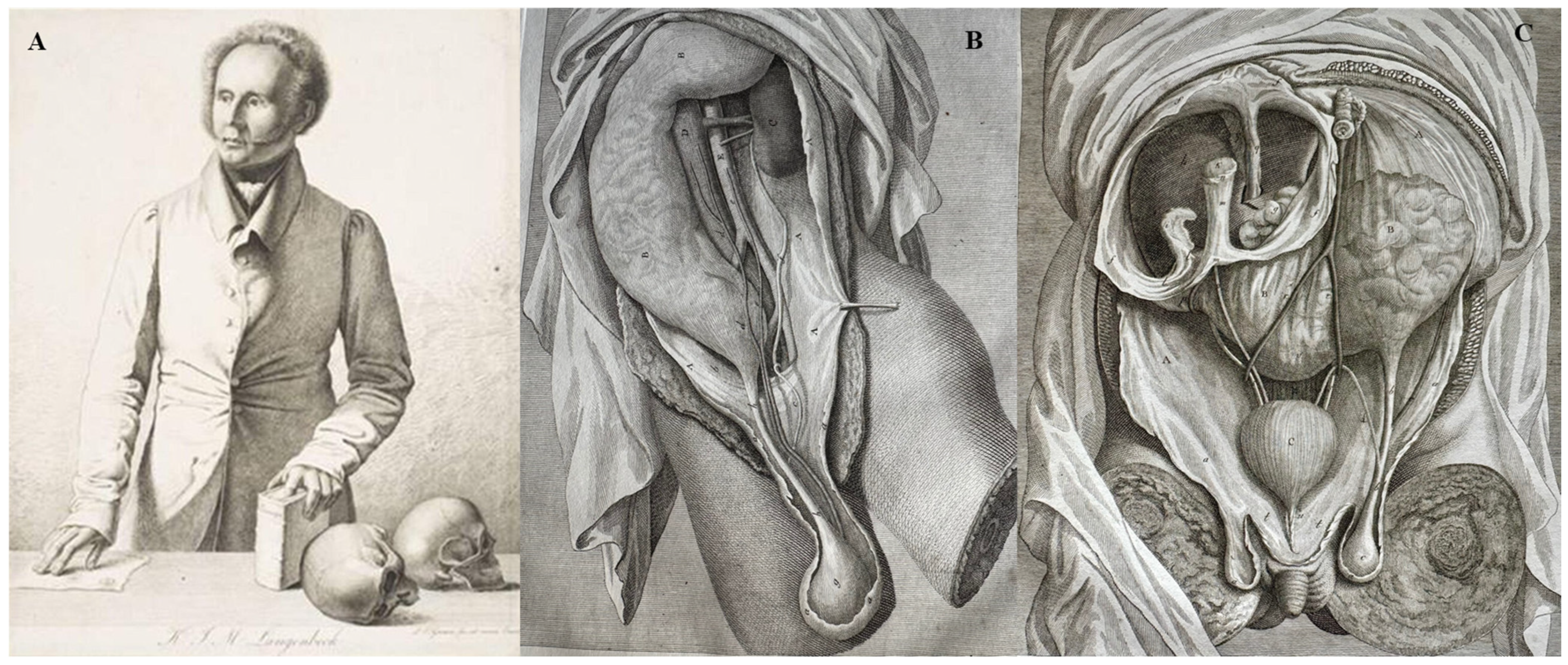
| 1808 | Open surgery: (1) Sac dissection and ligation (2) Autoplastic flap obturation | Langenbeck (Hanover, Germany) | [9] |
| 1835 | Closed or subcutaneous surgery: Intussusception operation | Gerdy (Paris, France) | [6,7] |
| 1846 | Anesthesia | Morton (Boston, EEUU) | [9] |
| 1858 | Open surgery: Closure of the inguinal canal (invasive suture) | Wood (London, England) | [10] |
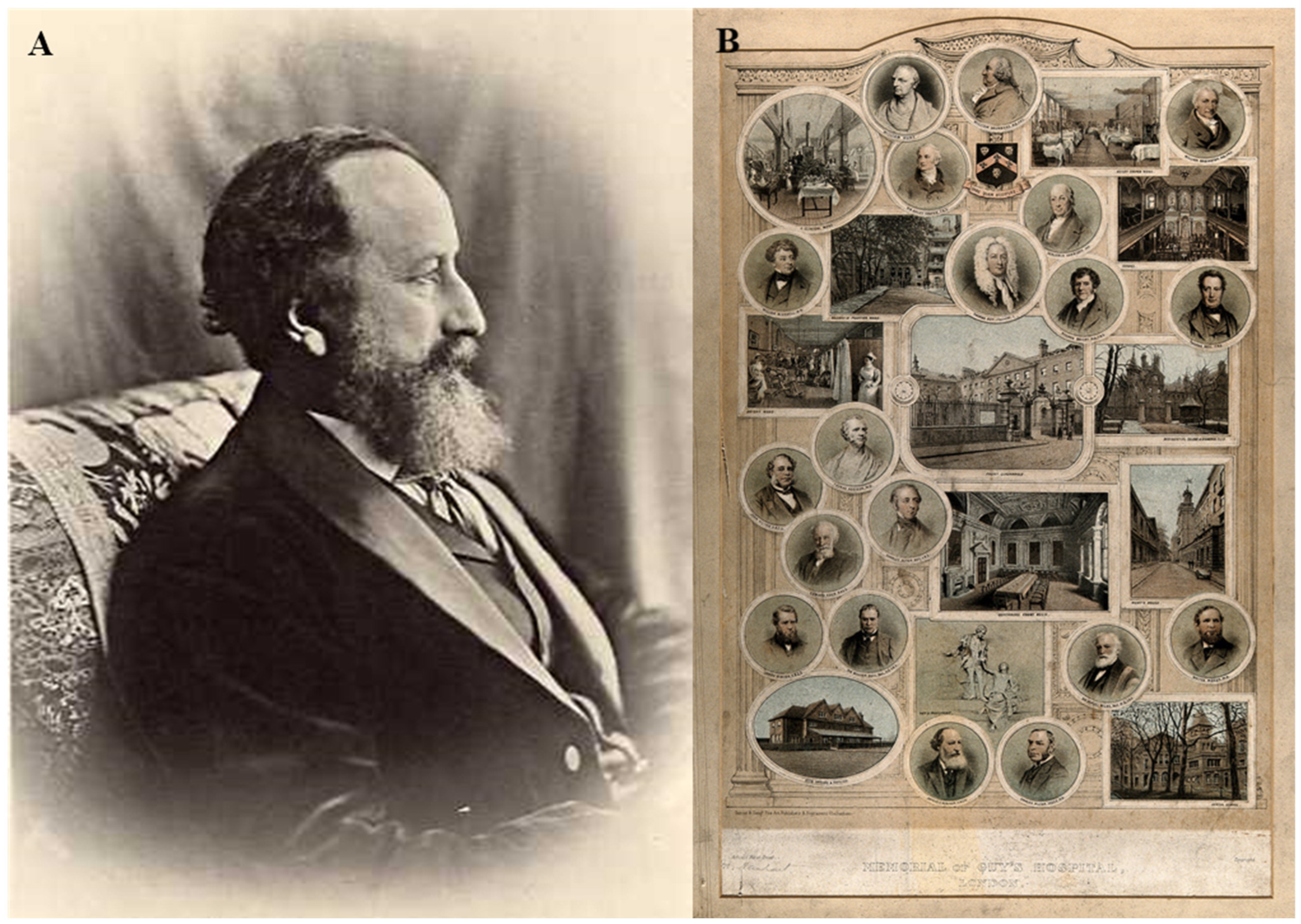
| 1865 | Antisepsis | Lister (Glasgow, England) | [11] |
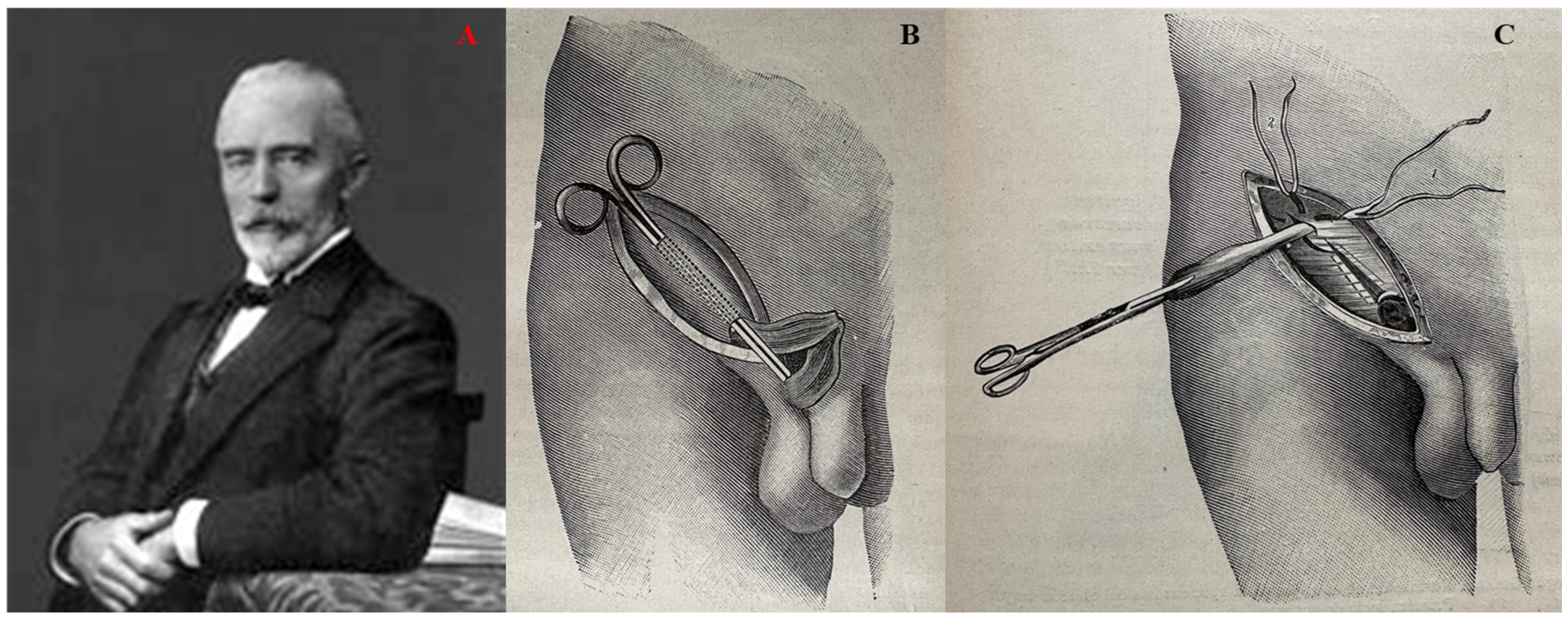
| 1866 | Dissection surgery: Opening of the AEOM | Durham (London, England) | [12] |
| 1871 | Open surgery: Closure of the abdominal ring | Marcy (Boston, EEUU) | [13] |
| 1874 | Open surgery: Closure of the superficial ring | Steele (Bristol, England) | [14] |
| 1877 | Dissection surgery: Opening of the AEOM (Riesel method) | Riesel (Halle, Germany) | [15] |
| 1877 | Open surgery: Tamponade of the IIR with the folded sac, suture of the EIR pillars, reinforcement of the AEOM (without opening it) | Czerny (Berlin, Germany) | [16] |
| 1881 | Open surgery: Incisions in the AEOM, in two alternating and overlapping series | Reverdin (Geneva, Switzerland) | [17] |
| 1885 | Open surgery: Transplanting the remodeled sac laterally under the AEOM | Kocher (Bern, Switzerland) | [18] |
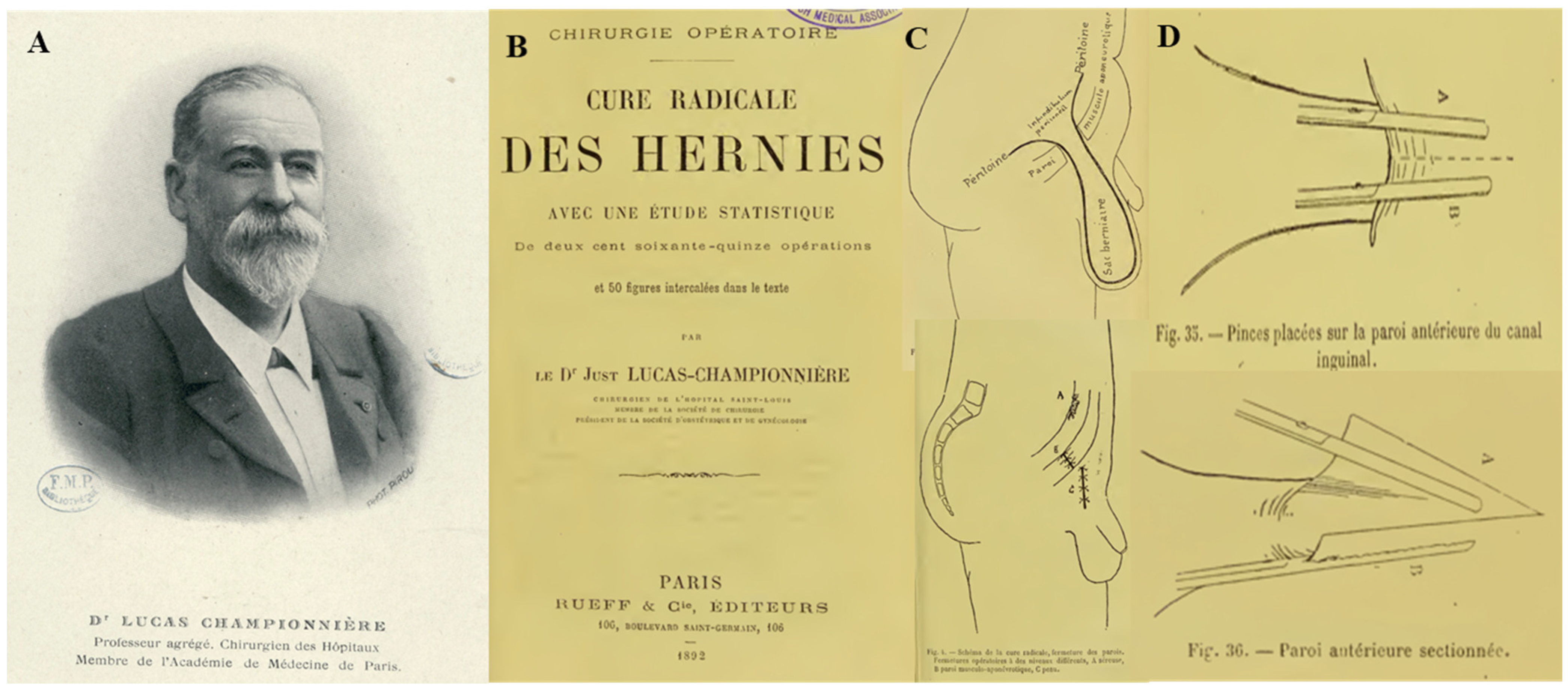
| 1885 | Dissection surgery: Opening of the inguinal canal; resection of the peritoneal diverticulum (Lucas-Ch. concept); overlap of the AEOM | Lucas-Ch. (Paris, France) | [19] |
| 1886 | Open surgery: Valve closure of the canal with the sac as a plug | Macewen (Glasgow, England) | [20] |
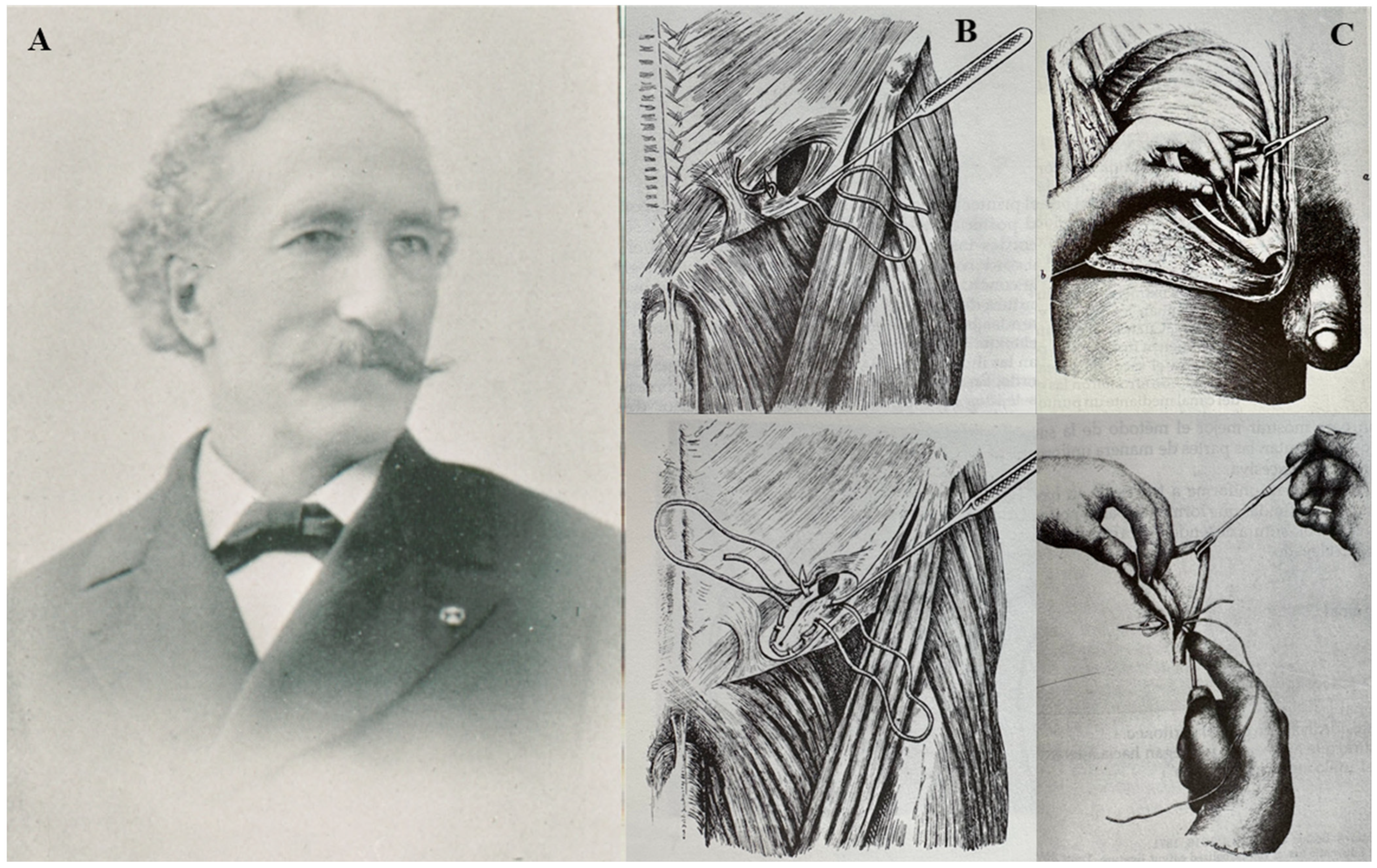
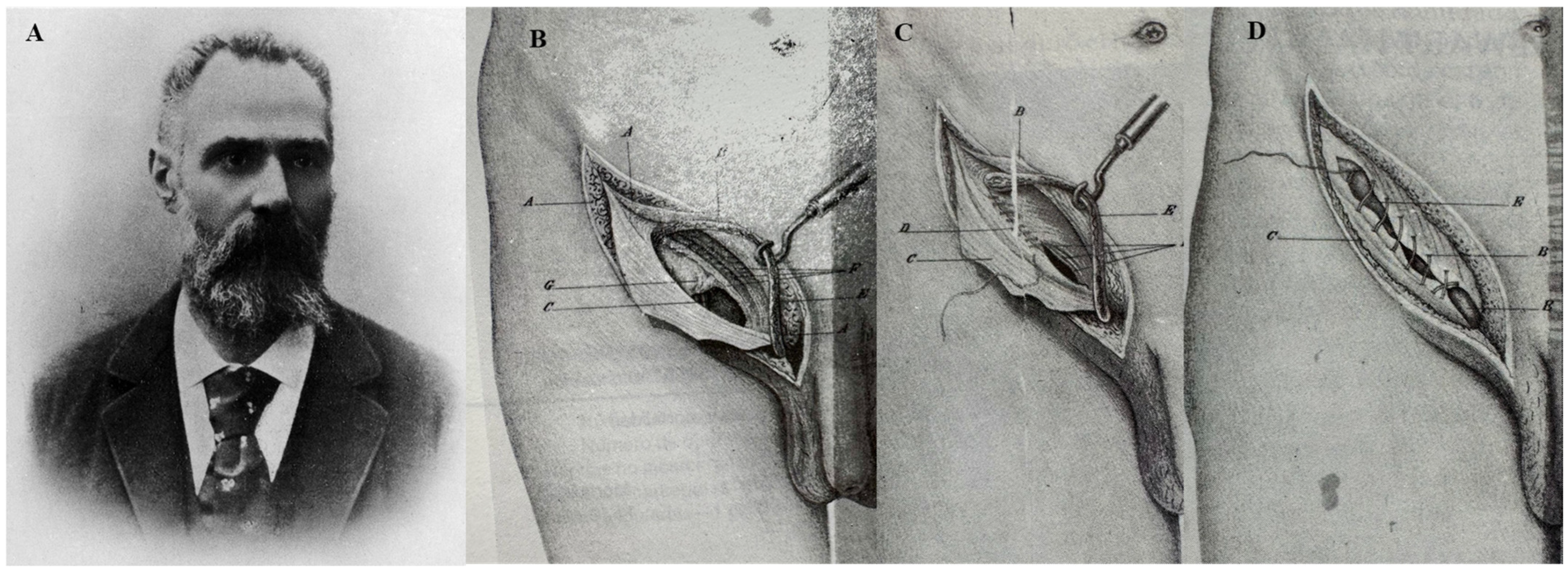
| 1888 | Total dissection surgery: Posterior floor closure with three layers | Bassini (Padua, Italy) | [21] |
Disclaimer/Publisher’s Note: The statements, opinions and data contained in all publications are solely those of the individual author(s) and contributor(s) and not of MDPI and/or the editor(s). MDPI and/or the editor(s) disclaim responsibility for any injury to people or property resulting from any ideas, methods, instructions or products referred to in the content. |
© 2026 by the authors. Licensee MDPI, Basel, Switzerland. This article is an open access article distributed under the terms and conditions of the Creative Commons Attribution (CC BY) license.
Share and Cite
Moreno-Egea, A.; Moreno-Latorre, C.; Moreno-Latorre, A. The Evolution of Inguinal Hernia Repair from the Langenbeck–Gerdy Subcutaneous Technique to Durham and Subsequent Dissection Procedures: A Historical Review. Surgeries 2026, 7, 27. https://doi.org/10.3390/surgeries7010027
Moreno-Egea A, Moreno-Latorre C, Moreno-Latorre A. The Evolution of Inguinal Hernia Repair from the Langenbeck–Gerdy Subcutaneous Technique to Durham and Subsequent Dissection Procedures: A Historical Review. Surgeries. 2026; 7(1):27. https://doi.org/10.3390/surgeries7010027
Chicago/Turabian StyleMoreno-Egea, Alfredo, Carlos Moreno-Latorre, and Alfredo Moreno-Latorre. 2026. "The Evolution of Inguinal Hernia Repair from the Langenbeck–Gerdy Subcutaneous Technique to Durham and Subsequent Dissection Procedures: A Historical Review" Surgeries 7, no. 1: 27. https://doi.org/10.3390/surgeries7010027
APA StyleMoreno-Egea, A., Moreno-Latorre, C., & Moreno-Latorre, A. (2026). The Evolution of Inguinal Hernia Repair from the Langenbeck–Gerdy Subcutaneous Technique to Durham and Subsequent Dissection Procedures: A Historical Review. Surgeries, 7(1), 27. https://doi.org/10.3390/surgeries7010027