1. Introduction
Malignant melanoma (MM) is responsible for nearly 80% of deaths associated with skin cancer. MM spreads first via the lymphatic system (lymph nodes and skin), then via the bloodstream, with distant metastases (lung, liver, bone, brain, intestine, adrenal gland) [
1].
Stage III melanoma is characterized by regional lymph node involvement and represents a biologically and clinically heterogeneous group, in which nodal status is the most powerful prognostic factor after the features of the primary tumor [
2].
In this setting, lymph node surgery has a dual role: it provides accurate pathological staging and offers locoregional disease control. Sentinel lymph node biopsy (SLNB) has become the standard staging procedure for clinically node-negative patients, allowing the identification of microscopic nodal disease while limiting the morbidity associated with more extensive lymphadenectomy [
3,
4,
5].
“Nodal involvement is stratified as N1 (one positive node), N2 (two–three), and N3 (≥4). The AJCC 8th edition further classifies nodal disease as ‘a’ (SLN biopsy–detected), ‘b’ (clinically detected), or ‘c’ (with in-transit/satellite lesions or microsatellite metastases) [
6]. Ten-year melanoma-specific survival varies markedly by nodal stage: 75% for N1, 68% for N2, and 47% for N3 [
7].
For many years, completion lymph node dissection (CLND) after a positive SLNB was considered mandatory, based on the assumption that removal of additional non-sentinel nodes would improve regional control and survival. However, two large randomized trials—the German Dermatologic Cooperative Oncology Group (DeCOG-SLT) and the Multicenter Selective Lymphadenectomy Trial II (MSLT-2)—have demonstrated that CLND does not improve melanoma-specific survival compared with nodal observation with ultrasound-based surveillance, despite reducing the risk of regional nodal recurrence [
8,
9]. At the same time, these trials and subsequent series have consistently highlighted the non-negligible morbidity associated with CLND, including wound complications, chronic lymphorrhea, and lymphedema [
5]. As a result, current practice has progressively shifted away from routine CLND in SLNB-positive patients towards a more selective, risk-adapted approach [
10].
Therapeutic lymph node dissection (TLND), on the other hand, remains the standard of care for patients with clinically evident nodal metastases at presentation or nodal relapse during follow-up, and refers specifically to lymph node dissection performed in the presence of radiologically and/or clinically detectable nodal metastatic disease [
11]. These procedures—cervical, axillary, or inguino-iliac-obturator lymphadenectomy—are technically demanding and require specific expertise. Reported complication rates vary widely between studies, but inguinal and ilio-obturator dissections are generally associated with higher rates of wound dehiscence, surgical site infection, persistent seroma, and lower-limb lymphedema compared with axillary or cervical dissections [
12]. Long-term complications can significantly impair quality of life and may influence access to, and tolerance of, systemic therapies [
13].
Although the oncologic role of SLNB and CLND has been clarified by high-level evidence, the literature is less informative on real-world outcomes after therapeutic lymph node dissection for clinically apparent nodal disease. Specifically, there is a lack of contemporary series combiningbasin-stratified morbidity, mature follow-up, and an explicit assessment of the association between complications and survival endpoints. Furthermore, the impact of the post–MSLT-II practice shift on the extent of nodal surgery and its clinical consequences remains insufficiently documented [
14,
15]. The post–MSLT-II period was defined as starting in 2017, following the publication of the MSLT-II trial in 2016 and its subsequent adoption in clinical practice.
The aim of the present single-center study was therefore to describe postoperative complications after cervical, axillary, and inguino-iliac-obturator lymphadenectomy for stage III melanoma, to identify risk factors for these complications with particular attention to the nodal basin involved, and to assess the association between postoperative morbidity and long-term overall and disease-free survival. A secondary objective was to explore how the introduction of SLNB and the subsequent change in indications for CLND influenced the extent of lymphadenectomy over time.
1.1. Surgical Techniques
1.1.1. Modified Laterocervical Dissection
Modified laterocervical dissection consisted of en bloc removal of cervical lymphatic tissue according to a functional template, including levels I–VI, with preservation of non-lymphatic structures whenever feasible (spinal accessory nerve, internal jugular vein, and sternocleidomastoid muscle). Parotidectomy was performed selectively for head/neck primaries when intraparotid nodal involvement was suspected or confirmed (e.g., facial/scalp melanoma), and adjacent involved structures (e.g., platysma) were resected when directly infiltrated.
1.1.2. Axillary Dissection
Axillary dissection included removal of levels I–III lymph nodes, defined by their relationship to the pectoralis minor muscle (level I lateral, level II posterior, level III medial). The long thoracic and thoracodorsal nerves were systematically identified and preserved. Level III clearance (with division or mobilization of the pectoralis minor when required) was performed when clinically indicated, acknowledging its added technical complexity and potential morbidity compared with level I–II dissection.
1.1.3. Inguinal-Iliac-Obturator Dissection
Groin lymphadenectomy consisted of removal of superficial and deep inguinal lymph nodes (including the deep node at the femoral canal/Cloquet area when encountered). Pelvic extension (external iliac and obturator nodal dissection, with/without internal iliac clearance according to intraoperative anatomy) was performed when deep/pelvic involvement was clinically and/or radiologically evident, such as: imaging findings suggestive of external iliac/obturator nodal disease, and/or clinically palpable disease extending above the inguinal ligament or involving deep nodal stations, and/or intraoperative evidence of deep femoral/Cloquet nodal involvement raising suspicion for pelvic spread. The pelvic phase was performed via an extraperitoneal approach with preservation of the obturator nerve. Particular attention was paid to soft-tissue handling and flap thickness to reduce the risk of skin-flap ischemia/necrosis. When appropriate, coverage of femoral vessels was achieved using a sartorius transposition (sartorius flap).
2. Materials and Methods
This study included all patients with MM in stage III who underwent CLND and TLND in the Surgical Department of Morgagni-Pierantoni Hospital, Forlì, Italy, from January 2004 to August 2025. Patients with stage III disease, as defined by the AJCC staging system in use at the time of surgery, were included. The cohort comprised patients undergoing completion lymph node dissection for a positive sentinel lymph node until 2016, as well as patients treated from 2017 onward for clinically and/or radiologically evident regional nodal involvement, including those receiving neoadjuvant systemic therapy prior to nodal debulking. Patients with isolated regional nodal recurrence after previous surgery were also included, in accordance with NCCN recommendations supporting surgical debulking for isolated nodal relapse. Patients with in-transit metastases or distant metastatic disease were excluded. Baseline staging with contrast-enhanced total-body CT and/or PET/CT was performed in all cases to confirm the absence of extraregional or distant disease. All patients were initially assessed by a multidisciplinary oncology team including, at a minimum, a medical oncologist, a dermatologist, and a surgeon. Patients were staged according to the AJCC edition in use at the time of diagnosis (6th edition until 2009, 7th edition from 2010 to 2017, and 8th edition from 2018 onward). Formal re-staging to a single AJCC edition was not feasible due to the lack of complete anatomo-pathological variables required for harmonization across editions. Therefore, all cases were analyzed under the umbrella of stage III disease without substage classification. Over the years, patients received systemic treatments in addition to surgery according to the protocols in place at the time (immunotherapy, targeted therapy, and neoadjuvant or adjuvant chemotherapy). In Stage III Melanoma, the algorithm for adjuvant treatment in clinical practice is: in case of BRAF-mutation (in approximately 50% of non-uveal melanomas), the first choice is dabrafenib + trametinib; second one, nivolumab or pembrolizumab. In case of BRAF wild-type, nivolumab or pembrolizumab. Neoadjuvant therapy, intended to reduce the tumor burden before CLND, has been added as a treatment option for clinically node-positive disease.
The drugs in use are, in base of the ongoing clinical trials, low-dose ipilimumab combined with nivolumab and also BRAF + MEK inhibitors, with a low rate of severe toxicities [
16,
17].The surgical procedures performed were: modified “functional” laterocervical dissection (this involves the removal of lymph nodes at levels I, II, III, IV, V, and VI), axillary dissection (this involves excision of level I, II, and III lymph nodes) and Inguinal-iliac-obturator dissection (this involves the inguinal and iliac-obturator sections, with removal of the superficial and deep inguinal lymph nodes, the external and internal iliac nodes, and the obturator) [
18,
19,
20]. In patients with clinically and/or radiologically evident inguinal nodal metastases, an ilio-inguinal-obturator lymphadenectomy was routinely performed to ensure adequate oncological clearance. Closed-suction drainage was routinely placed in all patients, consisting of a single drain after axillary lymph node dissection and two drains after inguinal dissection (one deep in the obturator space and one superficial in the inguinal site). Drains were removed when output was <100 mL/day. Postoperative complications were captured within 90 days from surgery through a combination of scheduled outpatient follow-up, chart review, and telephone contact. During the first two postoperative weeks, all patients underwent frequent outpatient assessments approximately every 3 days, primarily for wound evaluation and seroma aspiration when indicated. Clinically infected seromas were treated with clarithromycin 500 mg twice daily for at least seven days. In cases of persistent seroma beyond two weeks, taping was applied by physiotherapists, and lymphatic drainage massage was routinely recommended starting one month after surgery. Standardized outpatient visits were then performed at 15 days and at 1 month after surgery. Patients who developed postoperative complications were subsequently followed with additional visits according to clinical need. For patients without complications documented during scheduled follow-up, a structured telephone contact at 90 days postoperatively was conducted to assess health status and the occurrence of any postoperative events, including those managed outside our institution.
Postoperative morbidity was initially graded using the Clavien–Dindo classification [
21]. However, Clavien–Dindo grade ≤II events accounted for 99% of patients and encompassed a heterogeneous spectrum with limited discriminatory value for the study’s aims. Therefore, to specifically capture morbidity attributable to lymph node dissection, the main outcome was defined as locoregional ‘surgical field–related complications,’ including persistent seroma, wound dehiscence, surgical site infection, and limb lymphedema [
22]. In the absence of universally accepted cut-offs, postoperative complications were defined using pragmatic and clinically reproducible criteria. Persistent seroma was defined as a seroma that did not resolve spontaneously within 6 months after surgery. Surgical site infection was defined as an infection occurring within 30 days after surgery involving the incision or deep tissues at the operative site, and was diagnosed based on clinical criteria including purulent wound discharge, fever >38 °C, and patient-reported local pain; wound swabs and targeted antibiotic therapy were performed when clinically indicated, with subsequent resolution. Wound dehiscence was defined as partial or complete separation of previously approximated wound edges due to impaired wound healing, occurring from the day of surgery up to 15 days postoperatively. Lymphedema was defined as secondary lymphedema and diagnosed clinically, based on physical examination and patient-reported symptoms. Lymphorrhea was defined as wound dehiscence associated with leakage of clear serous fluid attributable to lymphatic vessel injury, occurring within 1 year from surgery. Detailed lymphorrhea-burden variables (duration, number of aspirations, readmissions) were not consistently available; however, lymphorrhea was managed conservatively, and no cases required radiologic or surgical re-intervention.
These events were grouped into a composite endpoint representing the occurrence of any postoperative morbidity, defined as at least one surgical-site related complication (seroma, wound infection, wound dehiscence, or lymphedema), and were used to evaluate the impact of postoperative morbidity on survival. Lymphorrhea was not included in this composite endpoint, as it was considered mainly a manifestation of delayed wound epithelialization rather than a true surgical complication and, in the setting of superficial lymph node dissections, was transient and occurred in very few patients [
23,
24].
Nonetheless, given its clinical relevance in terms of prolonged drainage and hospital stay, we specifically assessed potential risk factors for lymphorrhea in a separate analysis.
Follow-up was performed according to our institutional protocol for stage III melanoma. This included lymph node ultrasound, abdominal ultrasound, and chest X-ray every 6 months for 10 years. Additional, individualized imaging (CT, PET-CT, and/or MRI) was obtained when clinically indicated (e.g., suspicious findings or new symptoms). Clinical examination was scheduled every 4 months for the first 5 years, every 6 months for the subsequent 5 years, and annually thereafter.
Statistical Analysis
Lymph node dissections were operationally classified according to the pre- and post-MSLT-II era, reflecting completion LND for SLNB-positive disease before the paradigm shift and therapeutic LND for clinically and/or radiologically evident nodal disease thereafter; this variable was included in the adjusted complication and survival models as appropriate.
Overall survival (OS) was calculated from the date of lymph node dissection to death from any cause and was assessed in the entire study population. Melanoma-specific survival (MSS) was calculated from the date of lymph node dissection to death from melanoma; deaths from other causes and early postoperative deaths (<90 days, considered treatment-related) were treated as non–melanoma-related events and were therefore excluded from MSS event counting. Patients lost to follow-up were censored at the date of last contact. Disease-free survival (DFS) was calculated from the date of lymph node dissection to first recurrence (local, regional, or distant) or melanoma-related death, and was restricted to patients who achieved no evidence of disease after surgery; patients with persistent disease (never disease-free) were excluded from DFS analyses. Patients lost to follow-up were censored at the date of last contact.
Continuous variables were summarized as mean or median, and categorical variables as counts and percentages. Group comparisons were assessed using the Mann–Whitney U test for continuous variables and the chi-square test for categorical variables.
Univariate logistic regression models with robust standard errors were used to evaluate associations between dehiscence or surgical site infection and demographic or tumor-related variables. Because the type of lymph node dissection included a very small cervical subgroup (n = 5), resulting in quasi-separation for several outcomes, Firth’s penalized logistic regression was applied to estimate bias-corrected odds ratios for total and specific postoperative complications. Odds ratios (OR) with 95% confidence intervals (CI) were reported; robust variance estimates were applied. OS, MSS and DFS were estimated by the Kaplan–Meier method and compared using the log-rank test.
Prognostic factors for MSS and DFS were identified using Cox proportional hazards models, expressed as hazard ratios (HR) with 95% CI.
All tests were two-sided, and p-values < 0.05 were considered statistically significant. Statistical analyses were performed using Stata/SE 18.0 (StataCorp LLC, College Station, TX, USA).
3. Results
A total of 185 patients who underwent lymph node dissection for stage III melanoma were included in the analysis. Baseline clinicopathologic features are summarized in
Table 1. Systemic treatments, follow-up status, and melanoma-specific deaths are summarized in
Table 2. The median follow-up was 105 months (IQR: 58–149 months; range: 1–251 months).
3.1. Postoperative Complications and Severity
Overall, surgical field–related postoperative complications occurred in 16.8% of patients (31/185), including persistent seroma in 4.9% (9/185), wound dehiscence in 10.3% (19/185), surgical site infection in 3.8% (7/185), and limb lymphedema in 1.6% (3/185).
When stratified by nodal basin, no surgical field–related complications were observed after cervical lymph node dissection (0/5). Following axillary dissection, postoperative complications included persistent seroma in 3.7% of patients (4/109), wound dehiscence in 4.6% (5/109), surgical site infection in 0.9% (1/109), and limb lymphedema in 0.9% (1/109). After inguinal dissection, persistent seroma occurred in 7.0% of patients (5/71), wound dehiscence in 19.7% (14/71), surgical site infection in 8.5% (6/71), and limb lymphedema in 2.8% (2/71). Postoperative mortality was 1.0% (2/185).
3.2. Analysis of Risk Factors for Postoperative Complications
At univariate analysis using standard logistic regression, no significant predictors were identified for persistent seroma, wound dehiscence, or surgical site infection, including age, sex, primary tumor site, clinically suspicious lymph nodes, total number of retrieved nodes, or lymph node ratio. No variables were significantly associated with the occurrence of lymphedema, although the total number of retrieved lymph nodes showed a trend toward significance (OR 0.81, 95% CI 0.65–1.01, p = 0.057). For lymphorrhea, older age was associated with increased risk (OR 1.02, 95% CI 1.00–1.04; p = 0.025), while inguinal dissection demonstrated an independent association on Firth’s penalized logistic regression (OR 2.71; p = 0.002). The total number of nodes retrieved showed a borderline correlation (p = 0.06). Given the very small cervical subgroup (n = 5) and evidence of quasi-separation, Firth’s penalized logistic regression was used to assess the impact of dissection type on postoperative complications. Absolute complication rates differed across dissection basins, with postoperative complications occurring in 29.6% (21/71) of patients undergoing inguinal dissections, compared with 9.2% (10/109) of those undergoing axillary dissections, while no complications were observed following cervical dissections (0/5), although this estimate is based on a very limited sample. Cervical dissections showed no meaningful differences compared with axillary dissections (OR 0.86; p = 0.92), although the sample size precludes interpretation. In contrast, inguinal dissections were independently associated with a significantly higher risk of overall postoperative complications (OR 4.03, 95% CI 1.79–9.09; p = 0.001). When specific complications were examined, no significant association was observed for persistent seroma or lymphedema. Conversely, inguinal dissection was strongly associated with increased rates of wound dehiscence (OR 4.79; CI 1.7–13.46; p = 0.003) and surgical site infection (OR 7.18; CI 1.18–43.5; p = 0.032) relative to axillary dissection. Again, comparisons involving cervical dissections should be interpreted with extreme caution due to the minimal sample size.
3.3. Lymph Node Dissection Following MSLT-2 Trial
The median number of retrieved lymph nodes was significantly higher in the pre-MSLT period compared with the post-MSLT era (p = 0.026), consistent with a reduction in the extent of lymphadenectomy after the introduction of the MSLT-2 trial.
3.4. Survival Analysis
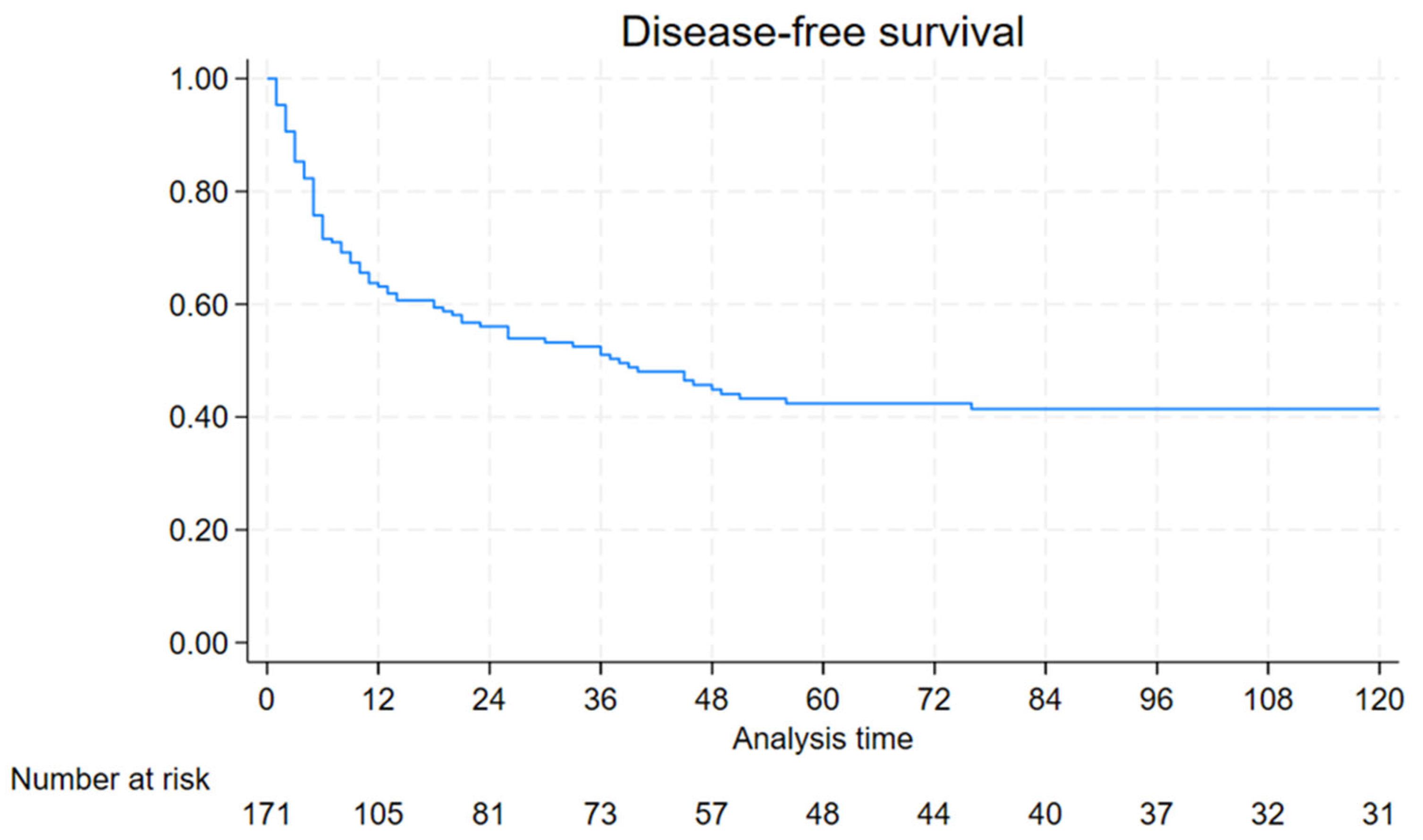
Survival analyses were performed in the available cohort. For MSS, non–melanoma-related deaths and early postoperative deaths (<90 days) were not counted as MSS event; MSS was therefore assessed in 179 patients (78 melanoma-related deaths). DFS was assessed in 171 patients, after excluding patients those who were never rendered disease-free and those lost to follow-up.
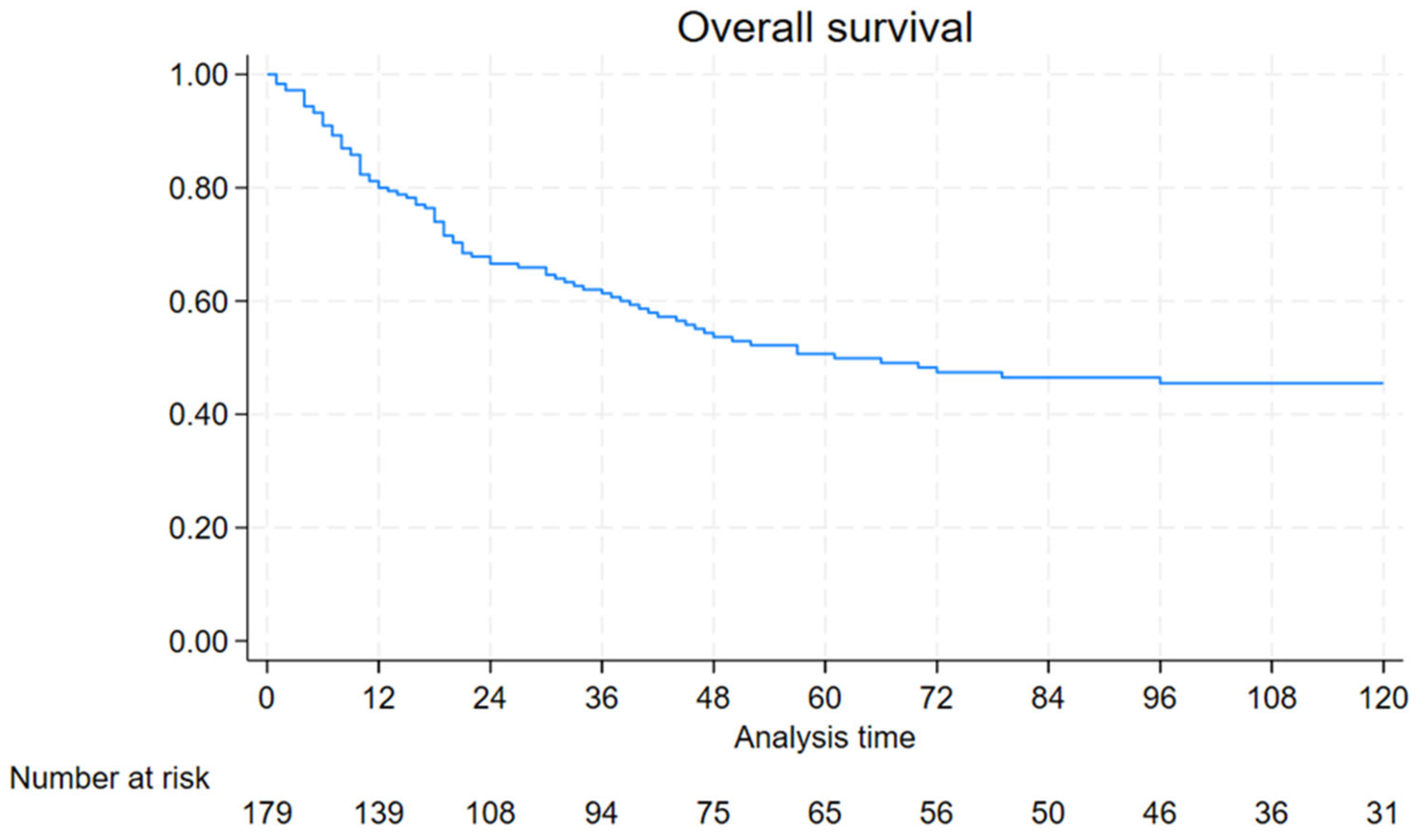
The estimated median OS was 96 months, while median DFS was 38 months. According to Kaplan–Meier analysis, MSS rates were 82% at 1 year (95% CI 0.75–0.86), 55% at 5 years (95% CI 0.46–0.62), and 49% at 10 years (95% CI 0.40–0.57) (
Figure 1). Corresponding DFS rates were 63% at 1 year (95% CI 0.50–0.69), 42% at 5 years (95% CI 0.34–0.50), and 41% at 10 years (95% CI 0.33–0.49) (
Figure 2).
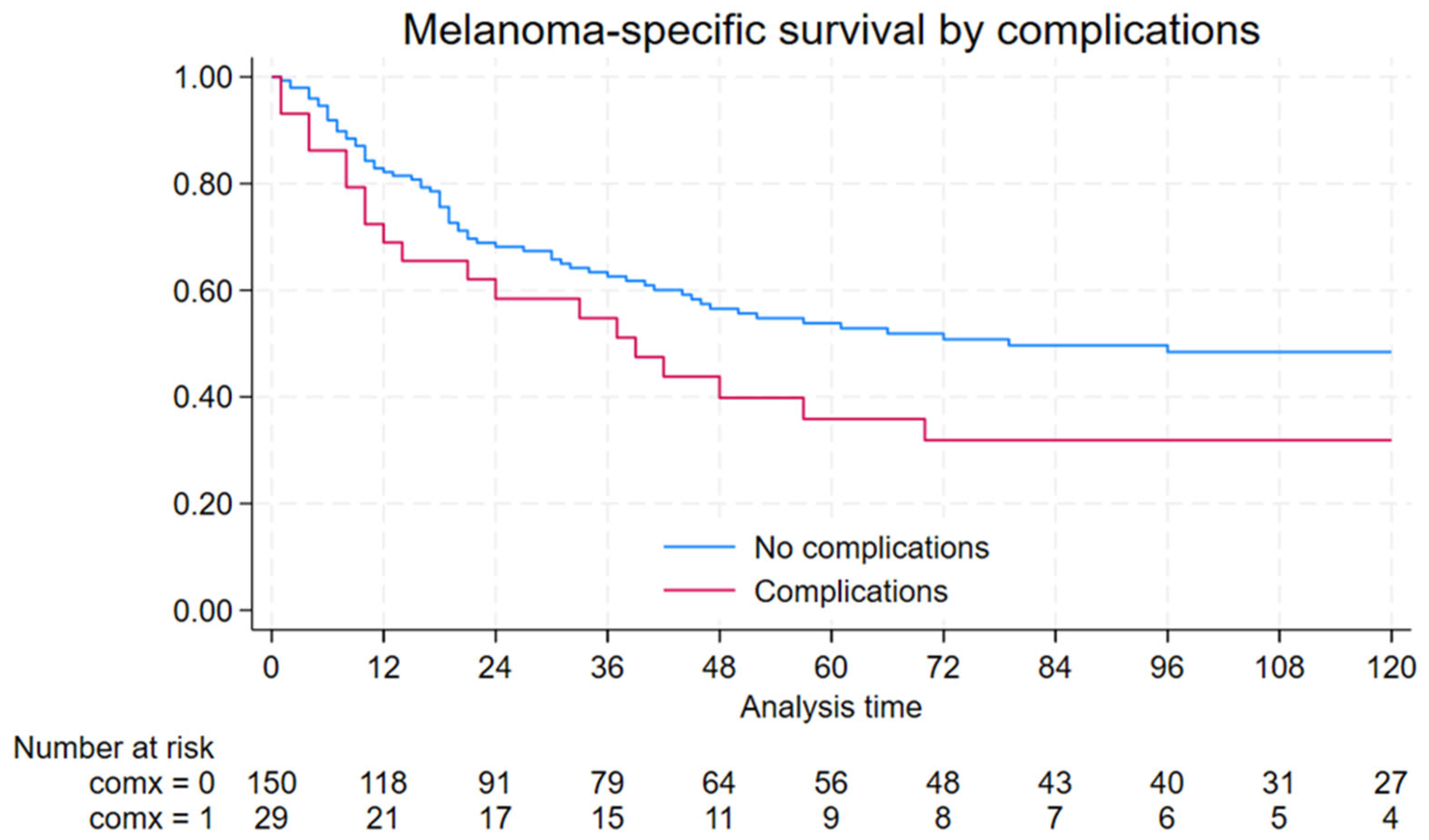
Postoperative morbidity was associated with worse prognosis in unadjusted analyses. Kaplan–Meier MSS differed significantly according to postoperative complication status/type (log-rank
p < 0.001), with wound dehiscence, surgical site infection, and lymphedema showing poorer survival compared with patients without complications. (
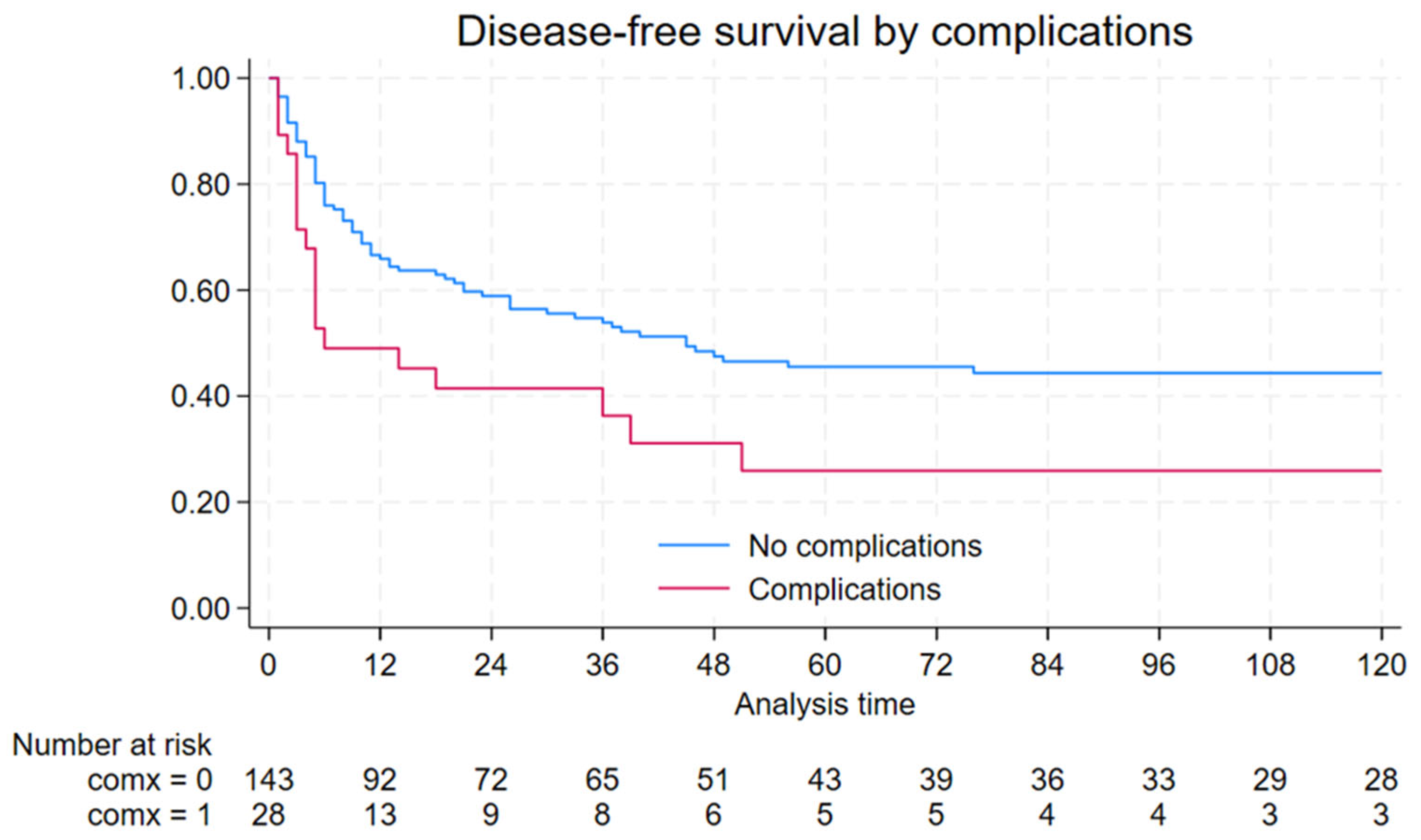
Figure 3) Kaplan–Meier DFS curves stratified by the same complications showed a similar pattern: patients who developed complications (n = 28) experienced an earlier and more pronounced decline in DFS than those without complications (n = 143), resulting in a substantially lower long-term recurrence-free probability (
Figure 4). For completeness, the Kaplan–Meier curves with 95% confidence intervals corresponding to
Figure 3 and
Figure 4 are provided in the
Supplementary Material (
Figures S1 and S2, respectively).
Although Kaplan–Meier analysis with log-rank testing showed a significant difference in MSS between patients with and without postoperative complications, this association was not confirmed by univariable or multivariable Cox regression. (
Table 3) In univariate Cox regression analysis for DFS, the occurrence of postoperative complications was significantly associated with an increased risk of recurrence (HR 1.86, 95% CI 1.14–3.03;
p = 0.013). When individual complications were analyzed separately, infection (HR 2.24, 95% CI 1.19–4.22;
p = 0.013) and lymphorrhea (HR 1.50, 95% CI 1.01–2.23;
p = 0.044) were significantly associated with worse DFS. In multivariable Cox regression including overall complications, infection, and lymphorrhea, none of these variables retained an independent association with melanoma-specific DFS after adjustment (
Table 4).
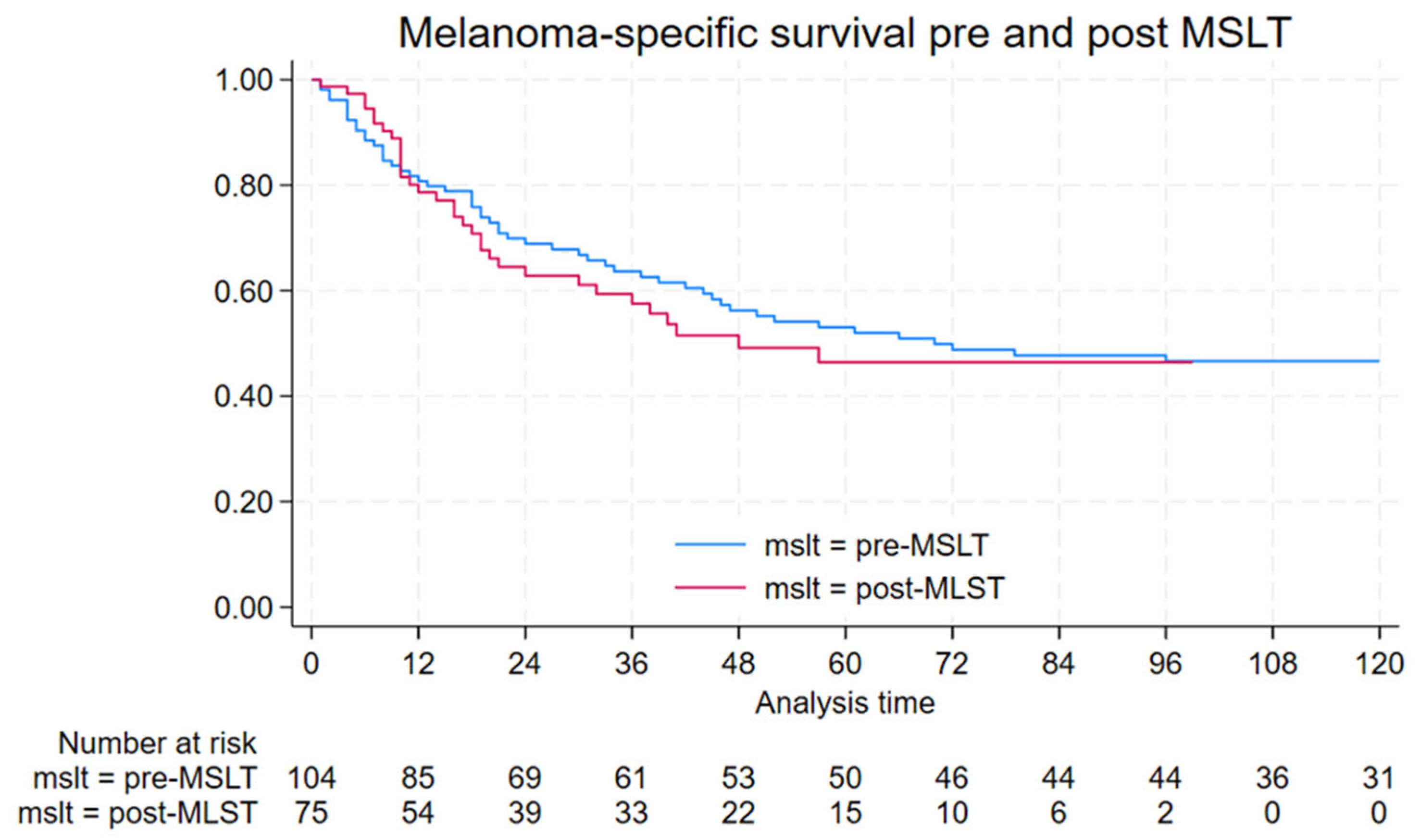
When patients were stratified by treatment era, no statistically significant differences in MSS were observed between those treated before (n = 104) and after (n = 75) the publication of the MSLT-2 trial. Despite a reduction in the extent of lymphadenectomy in the post–MSLT-2 period, the MSS curves were largely overlapping, indicating comparable long-term outcomes across eras (
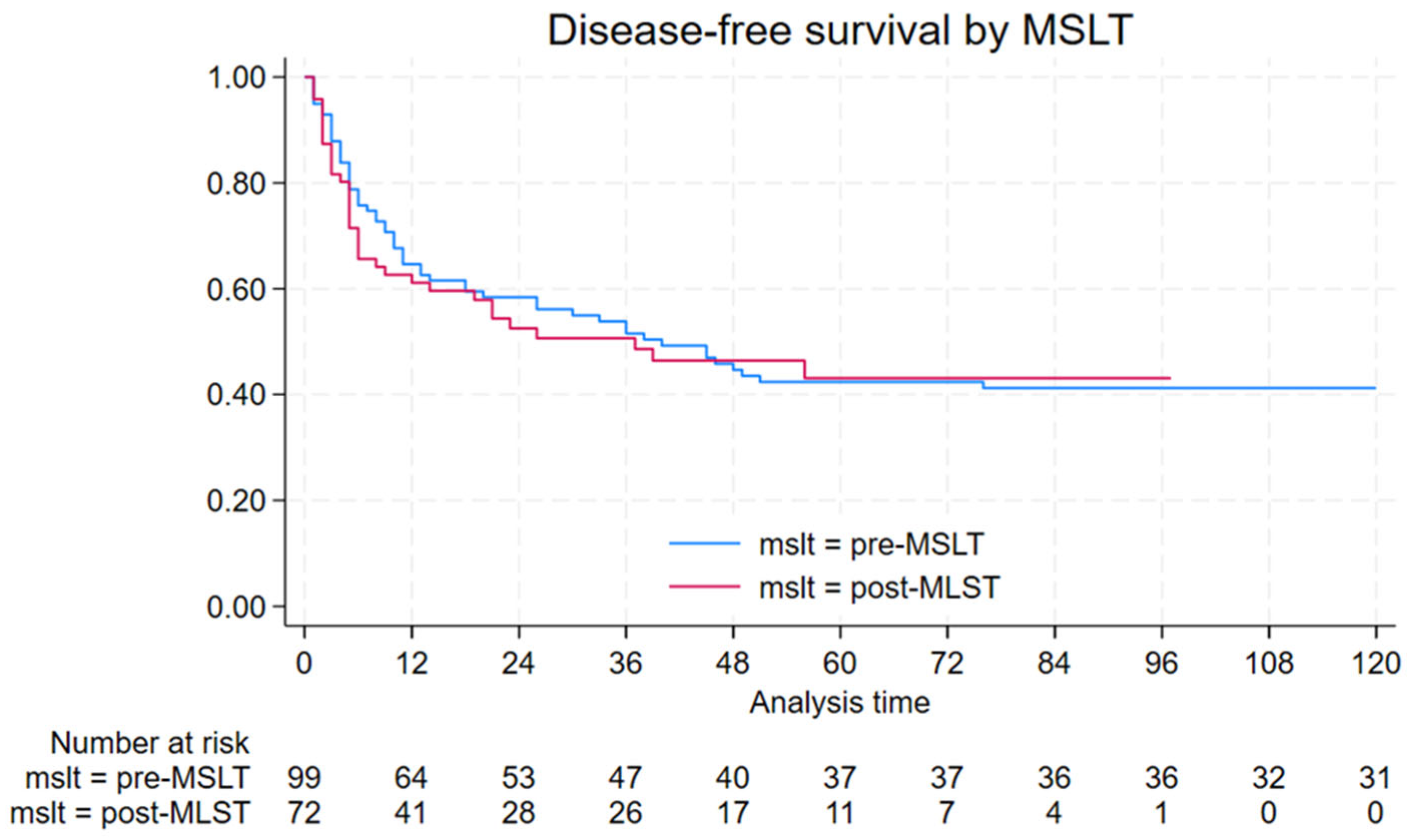
Figure 5). Likewise, DFS did not differ meaningfully between the pre-MSLT-2 (n = 99) and post-MSLT-2 (n = 72) cohorts, with broadly superimposable Kaplan–Meier curves suggesting that the change in nodal management did not substantially modify the risk of recurrence among patients who ultimately underwent lymph node dissection (
Figure 6).
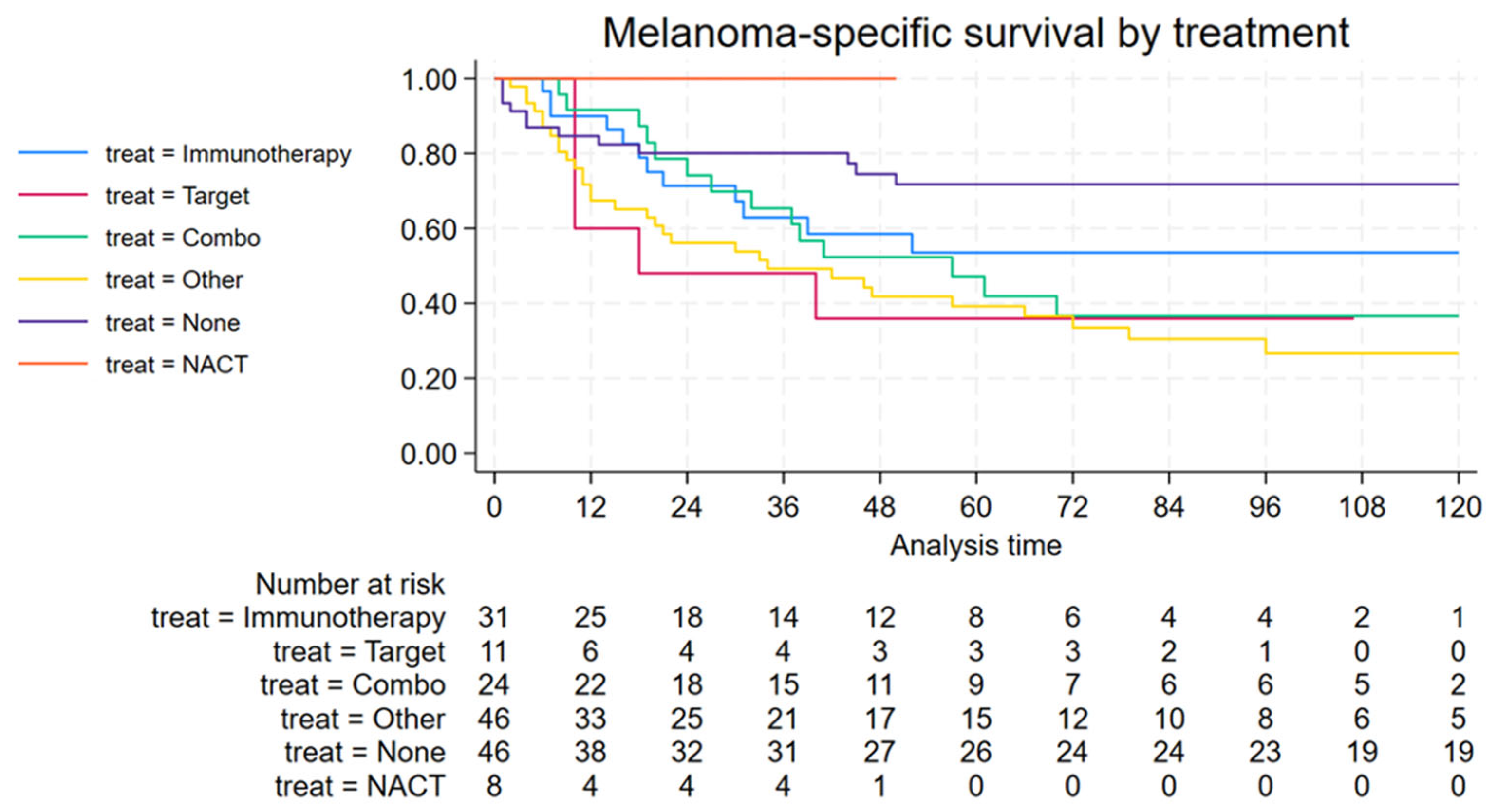
Exploratory Kaplan–Meier curves were generated for MSS after stratification by systemic therapy regimen (
Figure 7). These descriptive curves suggested the most favorable MSS among patients who did not receive systemic therapy; however, this pattern is most consistent with confounding by indication (and disease severity), as systemic treatments are preferentially administered to patients with higher-risk features, making the untreated subgroup not directly comparable. Among treated patients, immunotherapy alone and combined immunotherapy plus targeted therapy appeared to show more favorable long-term MSS than targeted therapy alone or other regimens, while no melanoma-specific deaths were observed in the small neoadjuvant chemotherapy subgroup. No formal hypothesis testing was performed for these subgroup curves.
4. Discussion
In this retrospective single-center series of 185 patients undergoing lymph node dissection for stage III melanoma, we observed favorable long-term outcomes, with a median overall survival of 96 months and a median disease-free survival of 38 months. Ten-year overall and disease-free survival rates of approximately 50% and 40%, respectively, are comparable to those reported in contemporary cohorts of surgically treated stage III melanoma. These results confirm that, in a specialized setting, therapeutic lymphadenectomy can provide durable oncologic control for a substantial proportion of patients [
25].
Clinically relevant complications occurred in approximately one sixth of patients, and postoperative mortality was low—findings consistent with rates reported in the existing literature [
13,
26]. Nevertheless, when specific complications were analyzed, lymphorrhea was observed in nearly one third of patients, while wound dehiscence, surgical site infection, persistent seroma, and lymphedema, although less frequent, represented clinically meaningful adverse events. These figures fall within the broad range reported in the literature, but they underscore that postoperative morbidity after lymphadenectomy remains far from negligible, even in an experienced unit [
5].
A key finding of our study is the strong association between the nodal basin dissected and the risk of complications. In multivariable Firth logistic regression, inguino-iliac-obturator lymphadenectomy was associated with significantly higher odds of overall complications, wound dehiscence, surgical site infection, and lymphorrhea compared with axillary dissection. The magnitude of these associations—approximately a four-fold increase in the risk of any complication and dehiscence, more than a seven-fold increase for infection, and nearly a three-fold increase for lymphorrhea—highlights the particularly vulnerable profile of the inguinal basin. In contrast, cervical dissections were not significantly associated with increased morbidity, although the small numbers in this subgroup limit definitive conclusions.
These observations are consistent with previous reports indicating that groin dissections carry the greatest functional and wound-related burden among nodal basins, likely due to the complex local anatomy, limb dependency, and frequent coexistence of unfavorable host factors such as obesity and diabetes [
27,
28].
From a clinical perspective, our data support a careful risk–benefit assessment when planning inguino-iliac-obturator lymphadenectomy, emphasizing the importance of preoperative optimization, meticulous surgical technique, and early physiotherapy and lymphedema management to mitigate postoperative morbidity.
Importantly, we found that the occurrence of postoperative complications was associated with worse overall survival at univariate survival analysis. Given the observational design, the reported relationships between postoperative complications and oncologic outcomes should be interpreted as associations, and no causal inference can be drawn. Patients who experienced complications—particularly wound dehiscence, surgical site infection, or lymphedema—had significantly poorer survival compared with those with an uncomplicated postoperative course. While the observational nature of the study precludes causal inference, several mechanisms may underlie this association. Complications can delay the initiation of, or reduce adherence to, adjuvant systemic therapies; they may reflect a more fragile host status or more extensive disease; and they may contribute to a sustained inflammatory and immunosuppressive milieu that favors tumor progression. This prognostic signal reinforces the concept that postoperative morbidity after lymphadenectomy is not merely a quality-of-life issue, but may also have tangible implications for long-term oncologic outcomes [
22].
Our results should also be interpreted in the context of the evolving therapeutic landscape of melanoma. During the study period, indications for CLND after positive SLNB were progressively restricted following the publication of pivotal randomized trials showing no survival benefit of routine CLND over nodal observation [
9]. At the same time, immunotherapy and targeted agents emerged as standard adjuvant and, more recently, neoadjuvant options for resectable stage III disease [
29,
30,
31]. These changes have led to a reduction in the number and extent of lymphadenectomies performed for microscopic nodal disease, whereas therapeutic dissections for clinically apparent metastases remain essential in selected patients. The significant decrease in the median number of lymph nodes retrieved after the “MSLT-2 era” in our series reflects this paradigm shift and suggests that real-world practice has rapidly aligned with trial data. Importantly, the lower lymph node yield observed in the post–MSLT-2 era was not associated with worse long-term outcomes; however, residual confounding related to the concurrent evolution and uptake of systemic therapies cannot be excluded.
A formal comparative assessment of systemic therapies was beyond the primary scope of this study; nevertheless, descriptive MSS curves stratified by treatment regimen (
Figure 7) provide useful context for interpreting outcomes after lymph node dissection. The apparently most favorable MSS observed in patients who did not receive systemic therapy is best explained by confounding by indication (and disease severity), whereby systemic treatments are preferentially offered to individuals with higher-risk baseline features; therefore, the untreated subgroup is not directly comparable and this finding should not be interpreted as a benefit of omitting therapy. Among treated patients, immunotherapy alone and combined immunotherapy plus targeted therapy appeared to be associated with more favorable long-term MSS than targeted therapy alone or other regimens. The neoadjuvant chemotherapy subgroup showed no melanoma-specific deaths, but the small sample size and limited follow-up preclude meaningful inference. Overall, these exploratory observations underscore that the prognostic interpretation of lymphadenectomy should be contextualized within contemporary systemic treatment strategies.
Within this framework, our findings may help refine the multidisciplinary decision-making process. On one hand, they confirm that, when indicated, lymphadenectomy can provide durable disease control with acceptable major morbidity in a high-volume unit. On the other hand, they highlight the disproportionate morbidity associated with inguinal dissections and the potential survival impact of postoperative complications. These elements should be carefully discussed with patients when weighing surgical options against alternative strategies, including systemic therapy-first or neoadjuvant approaches, particularly in those with borderline performance status or significant comorbidities.
This study has limitations inherent to its retrospective, single tertiary referral center design. The long accrual period encompasses substantial changes in staging methods, surgical indications, and systemic therapies; detailed information on adjuvant treatments was not uniformly available, and we could not formally adjust for the effect of modern immunotherapies and targeted agents on survival. Because AJCC definitions, particularly stage III substage groupings, evolved over the study period, the stage III category encompasses biologically heterogeneous subgroups with different prognoses. While the overarching definition of stage III as regional metastatic disease remained consistent across editions, changes in substage criteria may limit direct comparability across eras and could contribute to residual heterogeneity in survival analyses. Minor complications may have been under-reported, and the sample size for some specific adverse events was limited, reducing the power of subgroup analyses. Furthermore, patient-reported outcomes and quality-of-life measures were not collected, preventing a comprehensive assessment of the functional impact of lymphadenectomy.
Despite these limitations, the strengths of this study include the relatively large cohort for a single institution, the long follow-up, and the systematic classification of complications and survival outcomes. Taken together, our data support the continued role of therapeutic lymphadenectomy in stage III melanoma within a multidisciplinary framework, while emphasizing the need to minimize postoperative morbidity—particularly in the inguinal basin—and to recognize complications as potential markers of impaired prognosis. Future prospective studies incorporating modern systemic treatments and patient-reported outcomes will be essential to further define the optimal integration of surgery and systemic therapy in the management of nodal melanoma.
Looking ahead, our findings on the morbidity and oncologic yield place therapeutic lymphadenectomy within the broader trajectory of surgical de-escalation; the next research frontier will be to define which patients, if any, can safely forgo nodal surgery altogether. Ongoing gene expression profiling (GEP) studies—using assays such as DecisionDx-Melanoma, MelaGenix, and related platforms—aim to identify patients at sufficiently low risk to safely forgo SLNB despite traditional high-risk features [
32,
33]. In parallel, neoadjuvant immunotherapy trials such as PRADO and NADINA are testing response-adapted strategies, in which lymph nodes are used as in vivo markers of systemic treatment efficacy and surgery is tailored accordingly, with smaller, more targeted dissections or even omission of extensive nodal clearance [
34,
35]. In this evolving landscape, our data underscore that while radical lymphadenectomy still has a role in selected stage III patients, its indications must be carefully weighed against its complication profile. Future integration of molecular risk stratification and response-guided surgery may further restrict the need for extensive nodal dissection, moving toward a more individualized—and potentially less invasive—management of regional disease in melanoma.




 ,
,