1. Introduction
Electrochemical carbon dioxide reduction (CO
2RR) has emerged as a promising pathway for converting captured CO
2 into fuels and value-added chemicals while supporting long-term decarbonization strategies. Over the past decade, substantial progress has been achieved in catalyst development, membrane-electrode assembly (MEA) design, reactor engineering, and process integration. Consequently, the central challenge has shifted from demonstrating CO
2 conversion toward achieving high product selectivity, long-term operational stability, efficient carbon utilization, and economically viable performance at industrially relevant current densities. Recent studies increasingly recognize that electrochemical CO
2 conversion must be evaluated as an integrated system in which catalyst properties, electrolyte composition, membrane transport, reactor configuration, and downstream separation are strongly interconnected rather than independent optimization targets [
1,
2,
3,
4,
5,
6,
7,
8].
Among the various CO2RR products, ethanol is particularly attractive because it combines high energy density, compatibility with existing fuel infrastructure, ease of storage and transportation, and significant industrial demand as both a fuel additive and chemical feedstock. Unlike C1 products such as carbon monoxide or formate, ethanol synthesis requires twelve-electron transfer, stabilization of adsorbed *CO intermediates, efficient C–C coupling, and multiple proton-coupled electron transfer steps. The formation of ethanol therefore depends strongly on the local reaction environment, including pH, reactant availability, ionic transport, water management, and catalyst–electrolyte interactions. Furthermore, ethanol production presents challenges that differ from those of other multicarbon products, including competition with ethylene formation, relatively low product concentrations under industrially relevant conditions, energy-intensive product separation, and the need to maximize carbon efficiency throughout the process chain.
Membrane selection plays a decisive role in controlling these local reaction environments. Historically, proton exchange membranes (PEMs) have been widely used because of their high ionic conductivity and established commercial maturity. However, acidic operation often promotes hydrogen evolution, reduces selectivity toward multicarbon products, and requires expensive noble-metal components. Anion exchange membranes (AEMs) have therefore attracted increasing attention because they enable alkaline cathode environments that suppress hydrogen evolution and favor C
2+ product formation. Nevertheless, AEM operation introduces significant challenges associated with carbonate and bicarbonate formation, CO
2 consumption through acid–base reactions, carbon crossover, membrane degradation, and reduced overall carbon utilization efficiency [
9,
10,
11,
12,
13]. Common degradation pathways include nucleophilic substitution, Hofmann elimination, oxidative attack, membrane swelling, and conductivity loss under prolonged alkaline operation.
Bipolar membranes (BPMs) have emerged as an alternative strategy to address several of these limitations. Through water dissociation at the membrane junction, BPMs generate separate acidic and alkaline environments while potentially reducing carbonate crossover and improving carbon management. However, the water dissociation process introduces additional voltage penalties, increases system complexity, and may reduce overall energy efficiency if not carefully optimized [
14,
15,
16,
17,
18,
19,
20,
21,
22]. Consequently, the selection of AEM, BPM, or hybrid membrane architectures should not be based solely on Faradaic efficiency or current density. A comprehensive assessment must also consider carbon utilization, cell voltage, energy consumption, membrane durability, product crossover, electrolyte management, system integration, and downstream separation requirements.
Although numerous reviews have discussed membrane materials, reactor configurations, or catalyst development individually, relatively few studies have examined membrane selection specifically from the perspective of ethanol-oriented CO2 electroreduction and its broader system-level implications. Moreover, recent advances have highlighted that membrane transport phenomena, local pH regulation, carbon crossover pathways, and catalyst–membrane interactions exert a direct influence on ethanol selectivity, process economics, and environmental performance. Therefore, a mechanistic and system-level evaluation is required to identify the membrane characteristics most suitable for future commercial CO2-to-ethanol technologies.
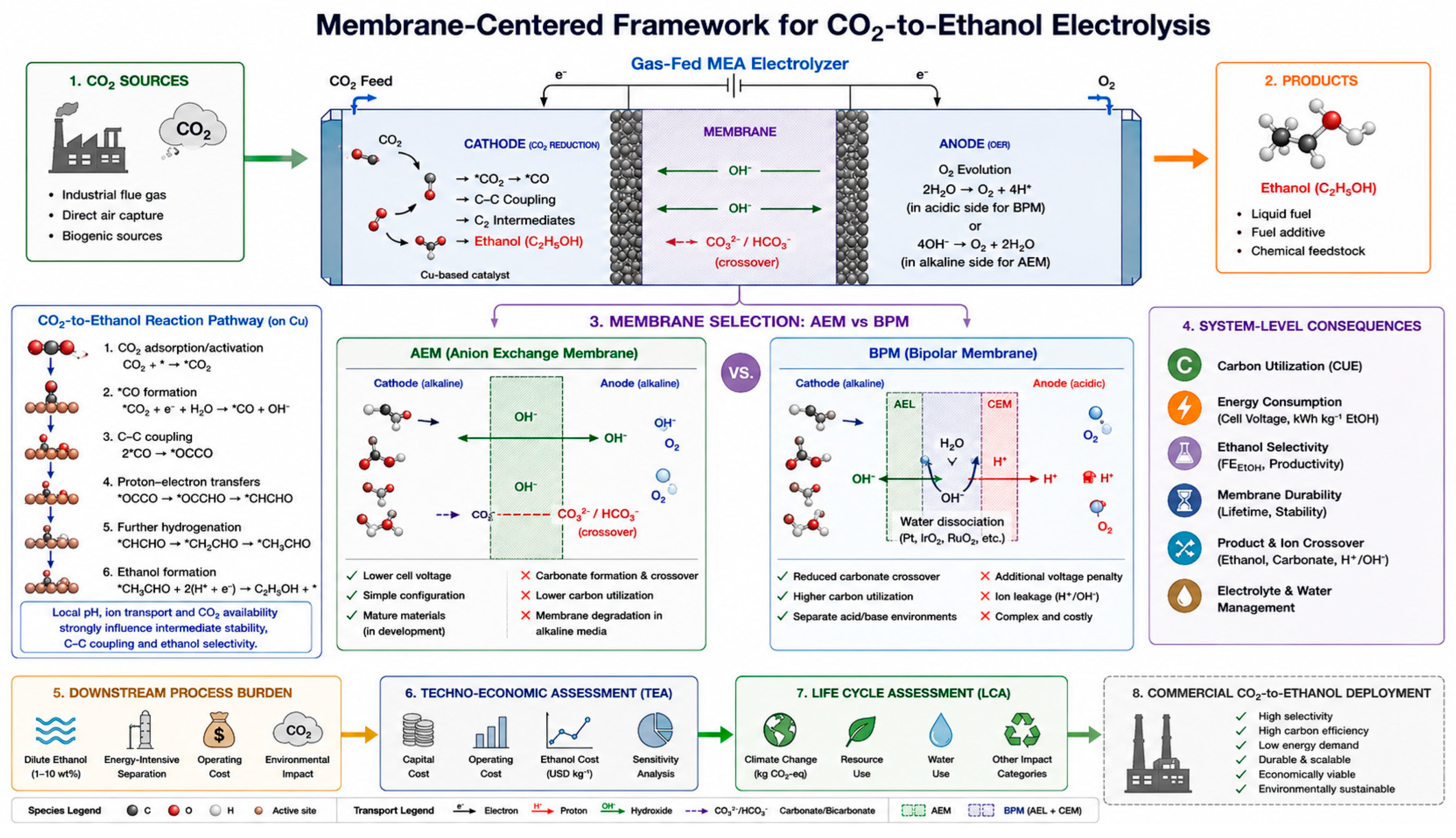
Accordingly, this Communication synthesizes recent developments while incorporating the foundational understanding that established current membrane design principles. Rather than providing a comprehensive historical review, the manuscript presents a focused interpretative framework that evaluates membrane selection as an active system-design parameter governing carbon utilization, energy demand, product selectivity, durability, and downstream processing requirements. Particular emphasis is placed on mechanistic transport phenomena, ethanol-specific challenges, membrane degradation pathways, and emerging strategies involving AEMs, BPMs, acidic zero-gap configurations, hybrid membrane architectures, and catalyst–membrane interface engineering. The overall conceptual framework of the present Communication is illustrated in
Figure 1. By integrating these aspects, the present work aims to provide practical guidance for the development of efficient and scalable CO
2-to-ethanol electrolysis systems.
2. Literature Selection, Scope and Communication Framework
This Communication integrates both foundational and recent literature to provide a mechanistic and system-level assessment of membrane selection for CO2-to-ethanol electroreduction. Foundational studies were included to establish the scientific basis of key phenomena such as carbonate crossover, membrane-electrode assembly (MEA) operation, bipolar membrane water dissociation, local pH regulation, catalyst–electrolyte interactions, and carbon-utilization pathways. Recent publications from 2024–2026 were then used to evaluate emerging advances in membrane materials, reactor architectures, ethanol-selective electrocatalysts, carbon-management strategies, and techno-economic and environmental performance. This approach avoids the omission of seminal contributions while ensuring that the analysis reflects the current state of the field.
The literature survey was conducted using a structured narrative-review methodology. Publications were identified through searches of Scopus, Web of Science, ScienceDirect, and Google Scholar using combinations of the keywords “CO2 electroreduction”, “CO2-to-ethanol”, “anion exchange membrane”, “bipolar membrane”, “membrane electrode assembly”, “carbon crossover”, “ethanol electrosynthesis”, “techno-economic assessment”, and “life-cycle assessment”. Priority was given to peer-reviewed journal articles, review papers, article-in-press records, and highly cited foundational studies directly relevant to membrane-controlled CO2 conversion.
The selected literature was organized into the following interconnected thematic domains:
Membrane-electrode assemblies (MEAs) and carbon crossover phenomena [
9].
Bipolar membrane (BPM) transport mechanisms, water dissociation behavior, and membrane stability [
14,
15,
16,
17,
18].
Anion-exchange membrane (AEM) development, membrane screening strategies, and acidic or zero-gap operation [
10,
11,
12,
13,
23,
24].
BPM, forward-bias, and hybrid membrane configurations for CO
2 electroreduction systems [
19,
20,
21,
22,
25].
Ethanol-selective catalyst design, catalyst–membrane interactions, and system-level process evaluation [
26,
27,
28,
29,
30,
31,
32,
33,
34,
35,
36,
37,
38,
39,
40,
41,
42,
43,
44,
45,
46,
47,
48,
49,
50,
51,
52,
53,
54,
55,
56,
57,
58,
59,
60,
61,
62,
63,
64,
65].
The following studies were excluded from detailed discussion:
Studies focusing exclusively on CO2 reduction products other than ethanol.
Studies lacking direct relevance to membrane performance or membrane-controlled transport phenomena.
Studies providing insufficient experimental, modelling, or methodological detail for meaningful evaluation.
Particular attention was given to recent advances in AEM development because membrane stability remains one of the major barriers to commercial deployment. Modern AEM research increasingly focuses on improving hydroxide-ion conductivity while simultaneously mitigating degradation caused by nucleophilic substitution, Hofmann elimination, oxidative attack, membrane swelling, and conductivity loss under alkaline conditions. Recent ether-free polymer architectures, including poly(N-aryl piperidinium)-based membranes, have demonstrated enhanced alkaline stability, hydroxide conductivity exceeding 180 mS cm−1 at elevated temperatures, and durability exceeding 1000 h under accelerated alkaline testing conditions, highlighting the rapid progress being made toward practical electrochemical energy-conversion systems.
Rather than providing a comprehensive catalogue of membrane materials and catalyst architectures, this Communication adopts a focused interpretative framework aimed at understanding how membrane-controlled transport phenomena influence ethanol production. The framework explicitly evaluates the relationships between ionic transport, water management, local pH, carbon crossover, catalyst microenvironments, energy consumption, and downstream process requirements. Particular emphasis is placed on ethanol because its formation requires multiple proton-coupled electron-transfer steps, stabilization of adsorbed *CO intermediates, and efficient C–C coupling, making membrane-controlled reaction environments especially important.
The contribution of this Communication is threefold. First, it reframes membrane selection as a coupled carbon-efficiency versus energy-efficiency optimization problem rather than a simple comparison between membrane classes. Second, it integrates recent advances in ethanol-selective catalyst development with membrane-regulated variables including local pH, water activity, cation concentration, anion transport, interfacial wettability, and carbon-species management [
26,
27,
28,
29,
30,
31,
32,
33,
34,
35,
36,
37,
38,
39,
40,
41,
42,
43,
44]. Third, it extends the discussion beyond conventional electrochemical metrics by connecting membrane behavior to techno-economic and environmental indicators, including single-pass CO
2 utilization, carbonate crossover losses, cell voltage, electricity demand, separation energy, membrane lifetime, catalyst durability, and electricity carbon intensity [
7,
8,
54,
55,
56,
57,
58,
59,
60,
61,
62,
63,
64,
65,
66].
The resulting framework enables membrane technologies to be compared at the level of the complete CO2-to-ethanol production system rather than through isolated electrochemical performance metrics alone. By linking mechanistic transport phenomena with process-level performance, the Communication aims to provide practical guidance for the design, scale-up, and sustainable deployment of future CO2-to-ethanol electrolysis systems.
To improve the initial database search identified 312 records. After removal of 48 duplicate records, 264 records were screened based on title and abstract. Of these, 143 records were excluded because they were unrelated to ethanol formation, membrane-controlled CO2 electroreduction, or system-level TEA/LCA assessment. A total of 121 full-text articles were assessed for eligibility. After excluding studies without sufficient membrane relevance, inadequate experimental or modelling detail, or exclusive focus on non-ethanol products, 65 studies were included in the final thematic analysis. These selected studies were grouped into MEA and carbon crossover, BPM operation, AEM development, hybrid membrane architectures, ethanol-selective catalyst design, and TEA/LCA assessment.
3. AEM Operation: Alkaline Promotion of Ethanol Formation and the Carbonate Utilization Challenge
Anion-exchange membrane (AEM)-based CO
2 electrolyzers have attracted considerable attention because they can operate at high current densities while maintaining alkaline cathodic environments that favor multicarbon product formation. Compared with bipolar membrane systems, AEM configurations generally exhibit lower membrane-associated voltage losses and simpler reactor architectures, making them attractive for industrial-scale deployment. The alkaline environment suppresses the hydrogen evolution reaction (HER), increases surface coverage of adsorbed carbon monoxide (*CO), and promotes C–C coupling reactions that are essential for the formation of ethanol and other C
2+ products [
10,
11,
12,
26,
27,
28,
29,
30,
31,
32,
33,
34].
The production of ethanol is particularly sensitive to the catalyst microenvironment because it requires a complex sequence of proton-coupled electron-transfer reactions involving multiple adsorbed intermediates. Following CO
2 adsorption and activation on Cu-based catalyst surfaces, *CO intermediates are generated and subsequently undergo dimerization to form *OCCO species. These intermediates are further transformed through hydrogenation pathways involving *CHO, *CHCO, *CHCHO, and related oxygenated species before ultimately producing ethanol. The relative abundance and stability of these intermediates depend strongly on local pH, water activity, hydroxide concentration, cation availability, and catalyst–electrolyte interactions. Consequently, membrane-controlled transport processes indirectly influence ethanol selectivity by regulating the reaction environment at the catalyst surface. Small variations in local proton availability can significantly alter product distributions, shifting selectivity between ethanol, ethylene, acetate, methane, formate, and hydrogen [
26,
31,
32,
33,
34,
35,
36,
37,
38].
The principal advantage of AEM operation is therefore not simply alkaline conductivity, but the creation of a cathode environment that promotes CO accumulation and C–C coupling while suppressing competing hydrogen evolution. Under optimized conditions, Cu-based catalysts in alkaline membrane-electrode assemblies have demonstrated ethanol Faradaic efficiencies ranging from approximately 15–45%, with total C2+ product selectivities often exceeding 60% at current densities above 200 mA cm−2. However, these benefits are accompanied by a significant carbon-management challenge that remains one of the major barriers to commercial deployment.
Under alkaline conditions, dissolved CO
2 readily reacts with hydroxide ions according to:
As a result, a substantial fraction of the incoming CO
2 feed can be converted into bicarbonate and carbonate species before participating in electrochemical reduction. These anions migrate through the AEM to maintain charge neutrality, carrying carbon away from the cathode without contributing to ethanol formation. Once transported to the anode compartment, the carbon may be released as CO
2, mixed with oxygen, or accumulate within electrolyte-management systems, thereby reducing overall carbon efficiency and increasing downstream separation requirements [
7,
8,
9,
10,
13]. Representative performance characteristics of AEM-based CO
2-to-ethanol electrolysis are summarized in
Table 1, highlighting the influence of membrane properties, operating conditions, and catalyst–electrolyte interfaces on ethanol selectivity, current density, and reactor stability.
This phenomenon highlights an important distinction between Faradaic efficiency and true carbon utilization. While many laboratory studies report high ethanol selectivity and current density, these metrics alone do not capture the amount of feed carbon ultimately retained within the ethanol product. Carbon utilization efficiencies in AEM systems are frequently much lower than Faradaic efficiencies because of carbonate crossover losses. Consequently, evaluation of membrane performance should include not only electrochemical metrics but also single-pass carbon utilization, carbon recovery efficiency, product purification requirements, and overall process energy demand.
Recent advances in AEM development demonstrate that membrane performance is governed by a complex interplay of transport and materials properties rather than membrane classification alone. Important parameters include ion-exchange capacity, hydroxide conductivity, water uptake, fixed-charge density, membrane thickness, carbonate permeability, mechanical robustness, catalyst-layer compatibility, and interfacial wettability [
10,
11,
12,
13,
18]. Modern ether-free AEM architectures have shown significant improvements in alkaline stability and hydroxide conductivity. For example, poly(N-aryl piperidinium)-based membranes have demonstrated hydroxide conductivities exceeding 180 mS cm
−1 at elevated temperatures together with alkaline stability exceeding 1000 h under accelerated testing conditions, illustrating the progress being made toward practical electrochemical systems. Nevertheless, long-term durability remains a critical challenge because AEMs remain susceptible to degradation mechanisms including nucleophilic substitution, Hofmann elimination, oxidative attack, membrane swelling, and conductivity loss under strongly alkaline operating conditions. These degradation pathways can gradually reduce ionic conductivity, alter water-management characteristics, and ultimately compromise reactor performance.
Several alternative approaches have been proposed to reduce carbonate losses while preserving the kinetic advantages of alkaline operation. These include acidic zero-gap configurations, porous membrane architectures, local pH engineering, catalyst-layer hydrophobicity control, and hybrid membrane strategies designed to minimize carbonate formation while maintaining high CO
2 transport rates [
12,
13,
23,
24]. However, these approaches introduce additional trade-offs involving proton management, membrane conductivity, flooding behavior, catalyst stability, and product selectivity.
For ethanol production, the optimal membrane environment is therefore not one that maximizes alkalinity, but one that balances alkaline promotion of C–C coupling with efficient carbon utilization and long-term stability. Future AEM development should focus on controlling local reaction environments, suppressing carbonate crossover, improving membrane durability, and integrating membrane design with catalyst engineering to simultaneously enhance ethanol selectivity, carbon efficiency, and overall process sustainability.
4. BPM Operation: Carbon Management, pH Decoupling, and the Water-Dissociation Energy Penalty
Bipolar membranes (BPMs) have emerged as one of the most promising approaches for improving carbon utilization in CO
2 electroreduction systems. Unlike conventional membrane architectures, BPMs consist of an anion-exchange layer (AEL) and a cation-exchange layer (CEL) joined at an internal junction. Under reverse-bias operation, an electric field is established across this interface, driving water dissociation according to:
The generated protons migrate through the cation-exchange layer toward the cathode, while hydroxide ions migrate through the anion-exchange layer toward the anode. This unique transport mechanism enables independent control of cathodic and anodic pH environments, allowing acidic and alkaline conditions to coexist within the same electrochemical reactor [
14,
15,
16,
17].
One of the principal advantages of BPM operation is its ability to improve carbon management. In conventional AEM systems, a substantial fraction of the supplied CO2 is converted into bicarbonate and carbonate species that subsequently cross the membrane. In BPM systems, proton generation near the membrane interface can reconvert bicarbonate and carbonate ions into gaseous CO2 close to the catalyst layer, increasing local CO2 availability and reducing net carbon crossover. As a result, BPMs have attracted significant interest as enabling technologies for high-carbon-utilization electrolysis systems rather than merely as physical separators between electrodes.
The effectiveness of this carbon-management strategy depends strongly on the kinetics of water dissociation and ion transport at the BPM junction. Efficient operation requires rapid generation of H+ and OH− ions while minimizing parasitic transport losses. To accelerate water dissociation, catalytic interlayers containing materials such as metal oxides, ionomer blends, or specialized junction catalysts are often incorporated into the BPM interface. When properly designed, these structures can significantly improve proton generation and reduce junction resistance. However, water dissociation is inherently energy-intensive and introduces an additional voltage requirement that is absent in conventional AEM systems. Consequently, BPM-based electrolyzers often exhibit higher operating voltages, typically ranging from approximately 3.5–5.0 V depending on current density, membrane architecture, and operating conditions.
The additional voltage demand represents the primary trade-off associated with BPM operation. Although BPMs can improve carbon utilization and reduce carbonate crossover, the energy required for water dissociation may partially offset these gains. Furthermore, insufficient water supply at the junction can limit proton generation, increase local resistance, and destabilize pH separation. Conversely, excessive hydration may promote membrane swelling, catalyst-layer flooding, or mechanical instability. Long-term operation can also be affected by co-ion leakage, which gradually reduces the effectiveness of pH separation and may compromise reactor performance over extended operating periods [
16,
17,
18,
19,
20,
21,
22].
Recent developments have explored alternative BPM operating modes, including forward-bias BPM configurations and pure-water-fed electrolyzers. These approaches can reduce electrolyte circulation requirements, simplify system design, and mitigate salt accumulation within the reactor. However, they introduce additional challenges including gas evolution at the membrane junction, localized pH fluctuations, membrane delamination, and increased mechanical stress arising from interfacial gas generation [
20,
21,
22]. Consequently, BPM performance is determined not only by membrane chemistry but also by the coupled optimization of water management, catalyst-layer architecture, ionomer distribution, and junction engineering.
For ethanol production, BPM operation introduces particularly complex interactions between ionic transport and reaction selectivity. Ethanol synthesis requires stabilization of oxygenated intermediates and multiple proton-coupled electron-transfer reactions following *CO dimerization. Controlled proton flux from the BPM interface can facilitate bicarbonate reconversion to CO2 and support the hydrogenation steps necessary for ethanol formation. However, excessive proton availability may increase hydrogen evolution activity or alter the competition between ethanol and ethylene formation pathways. The resulting product distribution therefore depends strongly on the spatial balance between proton transport, hydroxide transport, local pH, water activity, and catalyst-surface chemistry.
Recent BPM-based membrane-electrode assembly studies demonstrate that catalyst-layer architecture and local transport phenomena are often as important as catalyst composition itself in determining reactor performance [
14,
15,
16,
17,
21]. Variations in catalyst-layer thickness, ionomer distribution, porosity, and wettability can significantly influence CO
2 availability, intermediate stabilization, proton transport, and product selectivity. Consequently, BPM selection should not be treated as an independent reactor-design decision. Instead, membrane properties and catalyst characteristics must be optimized simultaneously to maximize carbon utilization, maintain stable ethanol selectivity, and minimize energy consumption.
From a system-design perspective, BPM technology can be viewed as a strategy for exchanging increased electrical energy demand for improved carbon efficiency. The key challenge for future BPM development is therefore to reduce water-dissociation overpotentials while preserving the carbon-management benefits that distinguish BPM systems from conventional AEM architectures. Achieving this balance will be essential for the commercial deployment of carbon-efficient CO
2-to-ethanol electrolysis systems. The selection criteria for AEM, BPM, and hybrid membrane architectures under different development objectives are summarized in
Table 2.
5. Catalyst–Membrane Coupling for Ethanol Selectivity
Recent advances in CO2-to-ethanol electrocatalysis increasingly demonstrate that product selectivity is governed not only by catalyst composition but also by the membrane-controlled reaction environment surrounding the catalyst layer. Ethanol formation requires stabilization of multiple oxygenated intermediates following *CO generation and C–C coupling, making local ionic transport, proton availability, water activity, and carbon-species management as important as catalyst surface structure itself. Consequently, catalyst performance should be evaluated within membrane-electrode assemblies (MEAs) operating under realistic transport conditions rather than exclusively in laboratory-scale H-cell configurations.
Mechanistic studies have identified several catalyst characteristics that promote ethanol formation. Zhan et al. highlighted the importance of catalyst sites capable of stabilizing oxygenated C
2 intermediates while suppressing competing pathways toward ethylene and methane [
26]. Liu et al. reported stable high-rate ethanol electrosynthesis using CuAg@NTA catalysts, while Gu et al. demonstrated that subsurface engineering can direct CO
2 electroreduction toward ethanol under both flow-cell and MEA conditions [
27,
28]. These studies collectively indicate that ethanol selectivity depends strongly on the ability of catalyst surfaces to regulate intermediate adsorption energies, local proton activity, and reaction kinetics beyond the initial CO
2 activation step.
Copper-based catalysts remain the dominant platform for ethanol electrosynthesis because they uniquely facilitate C–C coupling during CO
2 reduction. Recent approaches have focused on stabilizing Cu
+ species, engineering Cu(I)/Cu(0) interfaces, creating grain-boundary-rich structures, introducing Cu
2Mg intermetallic phases, constructing Cu dual-atom sites, and developing inverse oxide/Cu architectures [
29,
30,
31,
32,
33,
34,
35,
36,
37,
38,
39,
40]. Although these materials frequently report enhanced ethanol selectivity, the underlying mechanistic theme remains consistent: ethanol formation is favored when oxygenated intermediates such as *CHO, *CHCO, *CHCHO, and related C
2 species are stabilized sufficiently to undergo hydrogenation while avoiding excessive reduction to methane or dehydration toward ethylene.
Importantly, many catalyst studies reporting high ethanol Faradaic efficiencies are conducted under conditions that differ substantially from practical membrane-electrode assemblies. High bicarbonate concentrations, low current densities, short operating durations, and idealized mass-transfer conditions may not accurately represent industrial operation. As a result, catalyst performance reported in H-cell experiments cannot always be directly translated to gas-fed MEA systems operating at current densities exceeding 200–300 mA cm−2. Catalyst stability, water management, flooding behavior, carbonate accumulation, and membrane interactions often become dominant factors under commercially relevant conditions. Therefore, future catalyst evaluation should increasingly emphasize long-duration MEA testing, industrial current densities, and integrated system performance rather than peak Faradaic efficiency alone.
Membrane selection directly influences catalyst behavior through its control of local reaction environments. In AEM systems, alkaline conditions suppress hydrogen evolution and increase surface *CO coverage, generally promoting C–C coupling and multicarbon product formation. However, carbonate formation can alter local carbon availability and affect catalyst utilization. In BPM systems, proton generation at the membrane interface can facilitate hydrogenation of oxygenated intermediates but may simultaneously increase hydrogen evolution activity if proton flux becomes excessive. Consequently, identical catalysts may exhibit substantially different product distributions depending on membrane architecture, ionomer composition, and operating conditions.
Several recent studies directly demonstrate the importance of catalyst–membrane coupling. Cation-induced hydrophobic microenvironments have been shown to increase *CO coverage and promote C–C coupling [
34]. Anion engineering strategies influence local electric fields, interfacial pH, and reaction energetics, leading to improvements in ethanol selectivity and energy efficiency [
38]. Amine-functionalized copper catalysts have enabled multicarbon alcohol production under acidic conditions by modifying local proton transport and intermediate stabilization [
49]. Similarly, polymer and ionomer microenvironments have been shown to alter reaction pathways between ethanol and ethylene by controlling water activity, ionic transport, and intermediate adsorption behavior [
41,
54].
These findings collectively suggest that catalyst development and membrane engineering should no longer be treated as independent optimization problems. The most promising future strategies are likely to involve catalyst–membrane–ionomer co-design, in which catalyst active sites, membrane transport properties, ionomer chemistry, and water-management characteristics are optimized simultaneously. Such integrated approaches offer a more realistic pathway toward achieving high ethanol selectivity, stable long-term operation, efficient carbon utilization, and industrially relevant productivity.
Despite significant progress, several challenges remain unresolved. Long-term catalyst stability beyond 1000 h, maintenance of ethanol selectivity at industrial current densities, mitigation of catalyst restructuring under operating conditions, and reproducible scale-up of advanced catalyst architectures remain major barriers to commercialization. Future research should therefore focus not only on increasing ethanol Faradaic efficiency but also on demonstrating catalyst durability, manufacturing scalability, and compatibility with practical membrane-electrode assembly configurations. Representative catalyst strategies together with their principal advantages and current limitations are summarized in
Table 3.
6. Membrane Electrode Assembly Design and Interfacial Transport Phenomena
Membrane-electrode assemblies (MEAs) represent the most technologically relevant reactor architecture for industrial CO2 electroreduction because they enable operation at current densities substantially higher than those typically achieved in conventional H-cell configurations. By minimizing electrode spacing and reducing electrolyte resistance, MEAs can achieve current densities exceeding 200–500 mA cm−2 while improving reactor compactness and scalability. However, these advantages are accompanied by increasingly complex transport phenomena that strongly influence carbon utilization, energy efficiency, product selectivity, and long-term operational stability.
In zero-gap MEA configurations, gaseous CO2, liquid water, dissolved ions, electrons, reaction intermediates, and products must simultaneously move through catalyst layers that are often only a few tens of micrometers thick. These transport processes generate steep gradients in local pH, reactant concentration, water activity, ionic composition, and electrochemical potential. Consequently, electrochemical performance cannot be understood solely through catalyst activity because local transport limitations often become dominant under industrial operating conditions. In many cases, product selectivity is controlled as much by mass transport and ionic transport as by catalyst surface chemistry itself.
Recent studies have demonstrated that CO
2 reduction and carbon crossover are fundamentally coupled phenomena within MEA systems [
9,
13,
23,
24]. The same ionic species responsible for maintaining electrical conductivity also participate in carbon transport pathways. In AEM-based MEAs, hydroxide ions generated at the cathode react with CO
2 to form bicarbonate and carbonate species that subsequently migrate through the membrane. Although this transport maintains charge neutrality, it simultaneously reduces carbon utilization efficiency and increases downstream separation requirements. Consequently, membrane conductivity and carbon efficiency must be optimized simultaneously rather than independently.
The transport environment within the catalyst layer is equally important. Effective ethanol production requires high local CO2 availability, elevated *CO coverage, controlled water activity, and balanced proton transport. Excessive water accumulation can promote flooding and restrict gas transport, while insufficient hydration may reduce ionic conductivity and increase cell resistance. Similarly, localized carbonate accumulation can obstruct catalyst pores, alter ionic pathways, and contribute to performance degradation during long-term operation. Therefore, water management, gas transport, ionic transport, and carbon management should be considered as interconnected design variables rather than isolated optimization targets.
The requirements for AEM- and BPM-based MEAs differ significantly. AEM systems generally require careful control of carbonate precipitation, membrane swelling, water transport, ionomer stability, and anolyte contamination. Long-term operation may also be affected by membrane degradation mechanisms including nucleophilic substitution, Hofmann elimination, oxidative attack, and conductivity loss under alkaline conditions. In contrast, BPM-based systems require optimization of water-dissociation catalysts, junction resistance, hydration management, co-ion rejection, and interfacial mechanical stability. Additional challenges include gas accumulation at the bipolar junction, membrane delamination, and gradual deterioration of pH separation during extended operation [
14,
15,
16,
17,
18,
19,
20,
21,
22].
To address these limitations, several advanced MEA architectures have recently been proposed. Pure-water-fed reactors aim to reduce electrolyte complexity while minimizing salt accumulation. Porous membrane structures seek to improve reactant transport and reduce concentration polarization. Permeable-interface and hybrid membrane designs attempt to combine the carbon-utilization advantages of BPM systems with the lower-voltage characteristics of AEM operation [
13,
20,
23,
24]. Although these approaches have demonstrated promising laboratory-scale performance, future evaluations should incorporate complete carbon balances, energy consumption metrics, and long-term durability assessments rather than relying exclusively on Faradaic efficiency measurements.
Increasingly, interface engineering is emerging as a critical determinant of reactor performance. The catalyst–ionomer interface governs ionic transport, reactant accessibility, intermediate stabilization, and water distribution within the catalyst layer. Parameters such as ionomer chemistry, hydrophilicity, catalyst-layer porosity, cation transport pathways, gas–liquid–solid triple-phase boundaries, and catalyst-layer thickness can significantly influence both ethanol selectivity and overall energy efficiency [
21,
23,
24,
41,
54,
64]. Small variations in interfacial structure can alter local pH, modify *CO surface coverage, change intermediate stabilization energies, and ultimately shift product distributions between ethanol, ethylene, methane, and hydrogen.
For ethanol-oriented CO2 electroreduction, the ideal membrane–electrode interface should simultaneously maintain high local CO2 concentration, promote sustained *CO coverage for C–C coupling, regulate proton delivery for oxygenate formation, and facilitate rapid product removal. At the same time, it must suppress flooding, minimize carbonate precipitation, limit ethanol crossover, and maintain stable ionic conductivity over extended operating periods. Achieving these objectives will require integrated optimization of catalyst architecture, membrane properties, ionomer chemistry, and transport processes rather than independent development of individual reactor components.
The growing importance of interfacial transport phenomena suggests that future advances in CO2-to-ethanol electrolysis will be driven less by incremental catalyst improvements alone and more by the development of highly integrated catalyst–membrane–ionomer assemblies capable of simultaneously maximizing carbon utilization, ethanol selectivity, energy efficiency, and operational durability.
7. System-Level Assessment: Techno-Economic Analysis, Life-Cycle Assessment, and Carbon Accounting
Key system-level performance indicators commonly used for comparing AEM- and BPM-based CO
2-to-ethanol electrolysis systems are summarized in
Table 4.
Techno-economic analysis (TEA) and life-cycle assessment (LCA) have become essential tools for evaluating the practical viability of CO
2-to-ethanol electrolysis. Recent studies increasingly emphasize that electrochemical performance alone cannot determine commercial feasibility because reactor efficiency, carbon utilization, separation requirements, and electricity consumption are strongly interconnected [
7,
8,
54,
55,
56,
57,
58,
59,
60,
61,
62,
63,
64]. Consequently, membrane selection should be considered a system-level design decision rather than a component-level optimization variable.
From a techno-economic perspective, ethanol production costs are governed by multiple interacting factors, including cell voltage, Faradaic efficiency, current density, single-pass CO2 conversion, product concentration, membrane lifetime, catalyst durability, downstream separation requirements, and electricity price. Among these parameters, electricity consumption typically represents the dominant operating cost because ethanol synthesis requires a twelve-electron reduction process. Small increases in cell voltage can therefore significantly influence production economics, particularly at industrial scale.
Membrane selection directly affects several of these economic drivers. AEM-based systems generally operate at lower cell voltages and therefore consume less electrical energy per unit ethanol produced. However, the benefits of reduced energy demand may be partially offset by carbonate crossover losses that decrease carbon utilization efficiency and increase CO2 recycle, purification, compression, and recovery requirements. Conversely, BPM-based systems often exhibit higher operating voltages because of the additional energy required for water dissociation, but they may achieve improved carbon management by reducing carbonate crossover and increasing effective utilization of captured CO2. As a result, the economically optimal membrane is not necessarily the one that minimizes voltage, but the one that minimizes the combined costs associated with electricity consumption, carbon losses, separation requirements, and component replacement.
Recent TEA studies indicate that ethanol production economics are highly sensitive to several key parameters, including electricity price, ethanol Faradaic efficiency, current density, membrane lifetime, stack capital cost, and carbon utilization efficiency [
54,
55,
56,
57,
58,
59,
60,
61,
62,
63,
64,
65]. In many scenarios, improvements in carbon utilization can have an economic impact comparable to reductions in cell voltage because carbon losses increase both CO
2 feed requirements and downstream processing costs. Therefore, membrane technologies should be evaluated using integrated process metrics rather than isolated electrochemical performance indicators.
Life-cycle assessment provides a complementary perspective by evaluating the environmental implications of membrane selection throughout the entire process chain. For meaningful comparison, the functional unit should be defined as purified ethanol, for example, 1 kg of ethanol produced at a specified product purity, leaving the separation section. The system boundary should include CO2 capture or supply, gas compression, humidification, electrolysis, product recovery, electrolyte management, membrane replacement, catalyst replacement, separation energy requirements, and electricity generation. Excluding any of these stages may lead to misleading conclusions regarding overall environmental performance.
A critical component of both TEA and LCA is comprehensive carbon accounting. The carbon balance should explicitly distinguish between incoming CO
2, electrochemically converted CO
2, carbonate-crossed CO
2, vented CO
2, recycled CO
2, and carbon retained within final products. This distinction is particularly important for AEM systems because substantial carbonate crossover can create discrepancies between Faradaic efficiency and true carbon utilization. Without complete carbon accounting, claims regarding carbon efficiency, sustainability, or climate benefits remain incomplete [
7,
8,
9].
The environmental performance of CO2-to-ethanol electrolysis is also strongly dependent on the carbon intensity of electricity supply. Even highly selective ethanol production pathways may exhibit unfavorable greenhouse-gas emissions if powered by carbon-intensive electricity grids. Conversely, membrane configurations associated with slightly higher cell voltages may achieve superior environmental performance when coupled with low-carbon electricity sources if they simultaneously reduce carbon losses, separation energy requirements, and material replacement frequencies. Therefore, comparisons between membrane technologies should always consider electricity-source assumptions alongside electrochemical performance.
From a system-level perspective, the optimal membrane is not necessarily the one that maximizes local current density or Faradaic efficiency. Instead, the preferred configuration is the one that minimizes the combined economic and environmental burden associated with producing purified ethanol. This requires simultaneous consideration of electricity demand, carbon utilization efficiency, membrane durability, catalyst lifetime, separation requirements, and electricity carbon intensity. Future membrane development should therefore be guided by integrated TEA–LCA frameworks that link electrochemical performance with process-scale sustainability metrics.
Sensitivity analyses consistently identify electricity price, cell voltage, carbon utilization efficiency, membrane lifetime, and product concentration as the most influential variables governing overall process performance. Consequently, future research should focus not only on improving catalyst activity and selectivity but also on reducing energy consumption, minimizing carbon losses, extending membrane durability, and increasing ethanol concentrations at the reactor outlet to reduce downstream separation requirements.
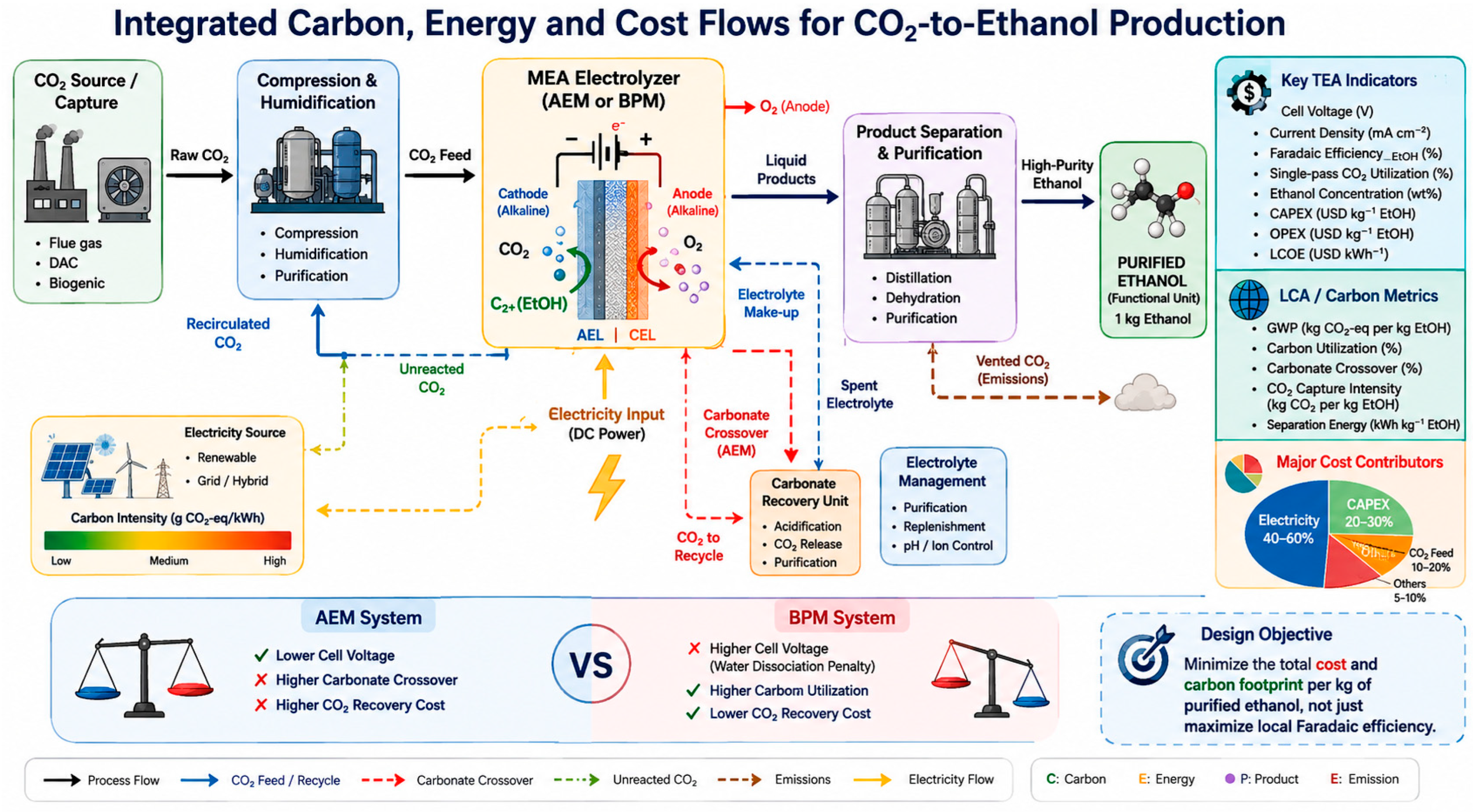
Figure 2 illustrates the integrated carbon, energy, and cost flows associated with CO
2-to-ethanol production, highlighting the principal differences between AEM- and BPM-based systems.
8. Decision Framework for AEM, BPM, and Hybrid Membrane Architectures
The selection of membrane architecture for CO2-to-ethanol electrolysis should be viewed as a multi-objective optimization problem rather than a binary choice between anion-exchange membranes (AEMs) and bipolar membranes (BPMs). Membrane performance influences not only local electrochemical behavior but also carbon utilization, energy consumption, catalyst stability, downstream separation requirements, and overall process sustainability. Consequently, membrane selection should be based on the specific performance objective of the electrolysis system rather than on isolated electrochemical metrics.
AEM-based systems are generally advantageous when the primary objective is achieving high current density, reduced cell voltage, and strong alkaline promotion of C–C coupling reactions. The alkaline environment suppresses hydrogen evolution, increases *CO surface coverage, and favors the formation of multicarbon products, including ethanol. However, these benefits are accompanied by significant carbonate formation and crossover, which reduce carbon utilization efficiency and increase CO
2 recovery requirements. Therefore, AEM systems are most suitable when energy efficiency and reactor productivity are prioritized over maximum carbon efficiency [
9,
10,
11,
12,
13].
In contrast, BPM-based systems are advantageous when carbon utilization and carbon management are the dominant design objectives. Water dissociation at the bipolar junction enables pH decoupling, facilitates bicarbonate acidification, and promotes local CO
2 regeneration near the cathode. These characteristics can substantially reduce carbonate crossover losses and improve carbon accounting. However, the additional voltage required for water dissociation increases electricity consumption and may reduce overall energy efficiency. BPM systems are therefore most attractive when carbon utilization efficiency, integration with carbon-capture infrastructure, and environmental performance are prioritized over minimum cell voltage [
14,
15,
16,
17,
18,
19,
20,
21,
22].
Hybrid membrane architectures, porous membrane systems, and permeable-interface designs seek to combine the advantages of both approaches. These configurations aim to maintain high CO
2 availability and favorable catalyst microenvironments while minimizing carbonate accumulation and transport losses. Although still at relatively early stages of development, hybrid designs may provide an effective compromise between carbon efficiency and energy efficiency, particularly for industrial-scale ethanol production [
13,
23,
24].
A key conclusion emerging from recent literature is that membrane selection cannot be separated from catalyst selection. Ethanol-selective catalysts rely on carefully controlled local reaction environments involving pH, water activity, proton availability, cation transport, and intermediate stabilization. Catalysts containing stabilized Cu
+ species, mixed Cu(I)/Cu(0) interfaces, intermetallic structures, or engineered grain boundaries frequently require different transport environments to maximize ethanol formation [
29,
30,
31,
32,
33,
34,
35,
36,
37,
38,
39,
40]. Consequently, catalyst performance observed in one membrane architecture may not be directly transferable to another.
For example, catalysts that depend on sustained alkaline environments and high *CO surface coverage may perform optimally in AEM-based systems or hybrid alkaline architectures. In contrast, catalysts employing amine-modified surfaces, anion-engineered interfaces, or acidic microenvironments may be better suited to BPM-based or acid-compatible membrane configurations [
12,
13,
23,
24,
38,
49]. These observations highlight the need for catalyst–membrane–ionomer co-design rather than independent optimization of individual reactor components.
The most realistic commercialization pathway is therefore unlikely to involve a universally superior membrane technology. Instead, membrane selection should reflect the primary process objective. Systems targeting maximum ethanol productivity may prioritize current density, catalyst performance, and energy efficiency. Systems targeting maximum carbon utilization may prioritize BPM-based architectures. Systems targeting minimum greenhouse-gas emissions may prioritize renewable electricity integration, durable materials, and efficient carbon management. Likewise, systems optimized for minimum production cost must simultaneously consider cell voltage, membrane lifetime, carbon utilization, product concentration, separation energy, and electricity price.
Accordingly, the proposed framework evaluates membrane technologies using four interconnected performance dimensions: (i) electrochemical performance, (ii) carbon utilization efficiency, (iii) techno-economic performance, and (iv) environmental sustainability. This multidimensional approach provides a more realistic basis for membrane selection than simple comparisons of Faradaic efficiency or current density alone.
9. Future Research Directions and Outstanding Scientific Challenges
Despite significant advances in membrane engineering, catalyst development, and membrane-electrode assembly (MEA) design, several fundamental challenges continue to limit the commercial deployment of CO2-to-ethanol electrolysis. Recent studies increasingly demonstrate that improvements in individual performance metrics such as Faradaic efficiency or current density do not necessarily translate into superior system-level performance. Future research should therefore focus on integrated optimization strategies that simultaneously address carbon utilization, energy efficiency, catalyst stability, membrane durability, and process economics.
A primary research priority is the implementation of complete carbon accounting in experimental studies. Many reports continue to evaluate performance primarily through cathodic Faradaic efficiency, while neglecting carbonate crossover, bicarbonate formation, anode-side CO
2 release, and carbon-recycle requirements [
9,
13,
16]. Because carbon losses can substantially influence both techno-economic and environmental performance, future studies should routinely report single-pass carbon utilization, carbon recovery efficiency, carbonate crossover rates, and complete carbon balances. Standardized carbon-accounting methodologies would significantly improve the comparability of membrane technologies and reactor architectures.
For AEM systems, future research should focus on simultaneously improving hydroxide conductivity, carbon-utilization efficiency, and long-term membrane stability. Although substantial progress has been achieved through ether-free polymer architectures and advanced cationic functional groups, membrane degradation remains a critical limitation. Key unresolved issues include nucleophilic substitution, Hofmann elimination, oxidative degradation, membrane swelling, conductivity loss, and carbonate accumulation under prolonged alkaline operation. Future membrane development should prioritize materials capable of maintaining high ionic conductivity while achieving operational lifetimes exceeding several thousand hours under industrially relevant conditions.
For BPM systems, the principal challenge remains reducing the energy penalty associated with water dissociation while preserving carbon-management benefits. Future investigations should therefore quantify water-dissociation efficiency, co-ion leakage, junction resistance, pH stability, hydration dynamics, and long-term mechanical integrity under realistic operating conditions [
14,
15,
16,
17,
18,
19,
20,
21,
22]. Particular attention should be given to catalytic junction layers capable of lowering water-dissociation overpotentials without compromising membrane durability. Achieving stable operation beyond 5000–10,000 h remains a major milestone for future BPM commercialization.
Another critical research need involves the transition from catalyst-centered optimization toward catalyst–membrane–ionomer co-design. Ethanol-selective catalysts are highly sensitive to local reaction environments, including pH, water activity, cation concentration, ion transport pathways, and intermediate stabilization. Consequently, catalyst performance reported in H-cell experiments often differs substantially from performance observed in gas-fed membrane-electrode assemblies. Future catalyst studies should therefore evaluate ethanol selectivity, carbon utilization, and durability using the intended membrane architecture and ionomer composition rather than relying exclusively on half-cell measurements [
26,
27,
28,
29,
30,
31,
32,
33,
34,
35,
36,
37,
38,
39,
40,
41,
42,
43,
44].
The development of industrially relevant testing protocols also represents an important research priority. Many reported catalysts demonstrate promising selectivity over short operating periods but lack evidence of long-term stability, reproducibility, and scalability. Future studies should increasingly report operation at current densities exceeding 200–300 mA cm−2, continuous operation beyond 1000 h, complete carbon balances, membrane degradation rates, catalyst restructuring behavior, and product-separation requirements. Such metrics are essential for assessing the practical viability of proposed technologies.
From a process-engineering perspective, future progress will depend on improving product concentration and reducing downstream separation requirements. Ethanol concentrations produced by current CO2 electrolysis systems remain relatively low, leading to significant energy demands during purification and recovery. Research efforts should therefore focus on increasing outlet ethanol concentration, improving single-pass conversion, reducing water consumption, and minimizing ethanol crossover through membrane and reactor design. These factors are often as important as catalyst selectivity in determining overall process economics.
Emerging operational strategies may provide additional opportunities for performance enhancement. Pulsed electrolysis, dynamic potential control, pressure optimization, hydration cycling, and adaptive reactor operation have shown potential for maintaining active copper structures, reducing salt precipitation, controlling local reaction environments, and influencing the competition between ethanol and ethylene formation pathways [
31,
47,
48]. However, future evaluations of these strategies should include comprehensive assessments of energy consumption, durability, carbon utilization, and product-recovery requirements rather than focusing solely on electrochemical performance improvements.
Finally, future membrane research should increasingly incorporate integrated techno-economic analysis (TEA) and life-cycle assessment (LCA) from the earliest stages of technology development. Sensitivity analyses consistently identify electricity price, cell voltage, carbon utilization efficiency, membrane lifetime, catalyst durability, and product concentration as dominant factors influencing overall process viability. Therefore, future innovations should be evaluated according to their impact on the complete CO2-to-ethanol production chain rather than isolated laboratory metrics.
Ultimately, the most promising pathway toward commercial CO2-to-ethanol electrolysis is likely to involve highly integrated systems that combine ethanol-selective copper-based catalysts, advanced membrane architectures, tailored ionomers, optimized transport environments, and low-carbon electricity sources. Success will depend not on maximizing a single performance metric, but on achieving a balanced combination of carbon efficiency, energy efficiency, durability, scalability, and environmental sustainability.
10. Novelty and Contribution of This Communication
Unlike previous reviews that primarily focus on membrane materials, reactor configurations, or catalyst performance independently, this Communication presents an integrated membrane-centered framework for CO2-to-ethanol electroreduction. The contribution is not the introduction of a new membrane material or catalyst system, but the synthesis of recent mechanistic and system-level evidence into a unified decision framework for membrane selection.
Three specific contributions are made. First, membrane selection is reframed as a coupled carbon-efficiency versus energy-efficiency optimization problem, highlighting the fundamental trade-off between carbon utilization and electrical energy consumption. Second, the Communication integrates membrane transport phenomena, catalyst microenvironment effects, and ethanol-selective reaction pathways to demonstrate how local pH, water activity, ionic transport, and carbon-species management collectively influence ethanol formation. Third, membrane performance is evaluated using techno-economic, life-cycle, and carbon-accounting perspectives, enabling comparison of AEM, BPM, and hybrid architectures according to specific deployment objectives rather than isolated electrochemical metrics.
The resulting framework provides practical guidance for selecting membrane architectures based on current density requirements, carbon-utilization targets, energy consumption, environmental impact, and long-term scalability. This integrated perspective distinguishes the present Communication from previous reviews that have generally considered these factors separately.
11. Conclusions
This Communication demonstrates that membrane selection for CO2-to-ethanol electroreduction should not be treated as a simple choice between anion-exchange membranes (AEMs) and bipolar membranes (BPMs), but rather as a system-level optimization problem that directly influences carbon utilization, energy consumption, product selectivity, durability, techno-economic performance, and environmental sustainability. The analysis highlights that membrane architecture governs not only ionic transport but also local reaction environments, catalyst behavior, carbon-management pathways, and downstream process requirements.
AEM-based systems provide favorable alkaline environments that promote *CO accumulation, C–C coupling, and ethanol formation while generally operating at lower cell voltages. However, these advantages are frequently offset by carbonate formation, carbon crossover, electrolyte-management challenges, and increased CO2 recovery requirements. In contrast, BPM-based systems offer improved carbon management through pH decoupling and bicarbonate reconversion, potentially increasing carbon-utilization efficiency and reducing carbon losses. These benefits are accompanied by additional water-dissociation energy requirements, junction-related stability challenges, and increased system complexity. Consequently, neither membrane technology can be considered universally superior across all operating objectives.
A key finding emerging from recent literature is that ethanol selectivity is governed by the combined influence of catalyst structure, membrane transport properties, ionomer chemistry, water activity, local pH, cation and anion transport, interfacial wettability, and membrane-electrode assembly transport phenomena. Therefore, catalyst, membrane, ionomer, and reactor design should not be optimized independently. Instead, future progress will depend on integrated catalyst–membrane–ionomer co-design strategies capable of simultaneously controlling reaction environments, carbon transport, and product formation pathways.
The framework proposed in this Communication reframes membrane selection as a coupled carbon-efficiency versus energy-efficiency optimization problem. From this perspective, AEM technologies generally favor lower electrical energy consumption but may suffer greater carbon losses, whereas BPM technologies may improve carbon utilization at the expense of higher voltage requirements. Hybrid membrane architectures offer a promising pathway for balancing these competing objectives, although their long-term performance and scalability remain to be demonstrated.
Importantly, the results indicate that the preferred membrane configuration is not necessarily the one that maximizes current density or ethanol Faradaic efficiency. Rather, the optimal system is the one that minimizes the total economic and environmental burden associated with producing purified ethanol while maintaining stable long-term operation. This requires simultaneous consideration of carbon utilization, electricity demand, membrane durability, catalyst lifetime, product concentration, separation energy, and electricity carbon intensity.
Looking forward, future advances in CO2-to-ethanol electrolysis will depend on the development of membrane architectures that simultaneously achieve high carbon utilization, low energy consumption, long-term durability, and compatibility with industrially relevant catalyst systems. The integration of mechanistic membrane design, advanced catalyst engineering, rigorous carbon accounting, and system-level techno-economic and environmental assessment will be essential for translating laboratory-scale achievements into commercially viable and environmentally sustainable CO2-to-ethanol technologies.